EP2968150B1 - Liposome enthaltend europium cryptanden und deren verwendung - Google Patents
Liposome enthaltend europium cryptanden und deren verwendung Download PDFInfo
- Publication number
- EP2968150B1 EP2968150B1 EP14779079.4A EP14779079A EP2968150B1 EP 2968150 B1 EP2968150 B1 EP 2968150B1 EP 14779079 A EP14779079 A EP 14779079A EP 2968150 B1 EP2968150 B1 EP 2968150B1
- Authority
- EP
- European Patent Office
- Prior art keywords
- composition
- liposome
- dentate ligand
- following formula
- europium metal
- Prior art date
- Legal status (The legal status is an assumption and is not a legal conclusion. Google has not performed a legal analysis and makes no representation as to the accuracy of the status listed.)
- Not-in-force
Links
- 0 Cc(c(C)c1*)c(C)c(*=I)c1[Cn] Chemical compound Cc(c(C)c1*)c(C)c(*=I)c1[Cn] 0.000 description 5
Images



Classifications
-
- A—HUMAN NECESSITIES
- A61—MEDICAL OR VETERINARY SCIENCE; HYGIENE
- A61K—PREPARATIONS FOR MEDICAL, DENTAL OR TOILETRY PURPOSES
- A61K49/00—Preparations for testing in vivo
- A61K49/06—Nuclear magnetic resonance [NMR] contrast preparations; Magnetic resonance imaging [MRI] contrast preparations
- A61K49/08—Nuclear magnetic resonance [NMR] contrast preparations; Magnetic resonance imaging [MRI] contrast preparations characterised by the carrier
- A61K49/10—Organic compounds
- A61K49/101—Organic compounds the carrier being a complex-forming compound able to form MRI-active complexes with paramagnetic metals
-
- A—HUMAN NECESSITIES
- A61—MEDICAL OR VETERINARY SCIENCE; HYGIENE
- A61K—PREPARATIONS FOR MEDICAL, DENTAL OR TOILETRY PURPOSES
- A61K9/00—Medicinal preparations characterised by special physical form
- A61K9/10—Dispersions; Emulsions
- A61K9/127—Synthetic bilayered vehicles, e.g. liposomes or liposomes with cholesterol as the only non-phosphatidyl surfactant
-
- A—HUMAN NECESSITIES
- A61—MEDICAL OR VETERINARY SCIENCE; HYGIENE
- A61K—PREPARATIONS FOR MEDICAL, DENTAL OR TOILETRY PURPOSES
- A61K49/00—Preparations for testing in vivo
- A61K49/06—Nuclear magnetic resonance [NMR] contrast preparations; Magnetic resonance imaging [MRI] contrast preparations
- A61K49/08—Nuclear magnetic resonance [NMR] contrast preparations; Magnetic resonance imaging [MRI] contrast preparations characterised by the carrier
- A61K49/10—Organic compounds
- A61K49/101—Organic compounds the carrier being a complex-forming compound able to form MRI-active complexes with paramagnetic metals
- A61K49/106—Organic compounds the carrier being a complex-forming compound able to form MRI-active complexes with paramagnetic metals the complex-forming compound being cyclic, e.g. DOTA
-
- A—HUMAN NECESSITIES
- A61—MEDICAL OR VETERINARY SCIENCE; HYGIENE
- A61K—PREPARATIONS FOR MEDICAL, DENTAL OR TOILETRY PURPOSES
- A61K49/00—Preparations for testing in vivo
- A61K49/06—Nuclear magnetic resonance [NMR] contrast preparations; Magnetic resonance imaging [MRI] contrast preparations
- A61K49/18—Nuclear magnetic resonance [NMR] contrast preparations; Magnetic resonance imaging [MRI] contrast preparations characterised by a special physical form, e.g. emulsions, microcapsules, liposomes
- A61K49/1806—Suspensions, emulsions, colloids, dispersions
- A61K49/1812—Suspensions, emulsions, colloids, dispersions liposomes, polymersomes, e.g. immunoliposomes
-
- C—CHEMISTRY; METALLURGY
- C07—ORGANIC CHEMISTRY
- C07F—ACYCLIC, CARBOCYCLIC OR HETEROCYCLIC COMPOUNDS CONTAINING ELEMENTS OTHER THAN CARBON, HYDROGEN, HALOGEN, OXYGEN, NITROGEN, SULFUR, SELENIUM OR TELLURIUM
- C07F5/00—Compounds containing elements of Groups 3 or 13 of the Periodic Table
- C07F5/003—Compounds containing elements of Groups 3 or 13 of the Periodic Table without C-Metal linkages
Definitions
- the domain of the invention relates to formation and uses of europium.
- the present invention is related to magnetic resonance imaging contrast agents.
- MRI magnetic resonance imaging
- Molecular information can also be obtained with MRI using responsive paramagnetic complexes (contrast agents) that alter water proton signal intensities in response to chemical events.
- Some contrast agents respond to changes in pH, temperature, or metal ion concentration; enzyme activity; the presence of free radicals, antioxidants, phosphate diesters, or singlet oxygen; or changes in the partial pressure of oxygen.
- targets that cause changes in redox behavior because they are associated with cancer, inflammation, and cardiovascular diseases. Therefore, responsive contrast agents that target redox changes have the potential to greatly improve the diagnostic capabilities of MRI.
- the present invention provides an MRI contrast composition.
- the composition includes a liposome and a europium metal complex disposed within the liposome.
- the europium metal complex includes a europium metal ion and a multi-dentate ligand selected from the group consisting of cryptands and thiacryptands and if necessary counter-ions to maintain charge neutrality (i.e., balances a charge of the europium metal ion and the multi-dentate ligand), the europium metal ion being switchable between a 2+ and 3+ oxidation state.
- the present embodiment advantageously provides an oxidation-responsive dual-mode contrast agent because it would enhance either T 1 -weighted images or CEST images depending on the oxidation state of Eu
- a liposome comprising a europium metal complex having formula (VIII) is provided: wherein:
- a method of magnetic resonance imaging of an organ or organ structure in a subject includes a step of administering a liposome composition to the subject.
- the liposome composition includes a liposome and a europium metal complex disposed within the liposome.
- the europium metal complex includes a europium metal ion and a first multi-dentate ligand selected from the group consisting of cryptands and thiacryptands and one or more counter-ions that balance a charge of the europium metal ion.
- Images of an organ in the subject are taken by magnetic resonance imagining.
- the document WO2011090977 describes a method of forming an oxidatively-stable aqueous Eu(II) complex by synthesizing ligands that coordinate to large, soft, electron rich metals like Eu(II).
- the complex can be used for a variety of purposes some of which include, but are not limited to, in paramagnetic chemical exchange saturation transfer, as a medical diagnostic, as a semiconductor, and for use in forming materials.
- the document WO2006032705 describes a a contrast agent compound for CEST imaging wherein said contrast agent comprises a proton pool encapsulating system that contains a pool of water mobile shifted protons.
- the document WO0160417 describes a a conjugator system comprising liposomes with ionophores, and with chelator solution and alpha-particle emitting radionuclide(s) located inside of the liposome. Furthermore, the method for the preparation of this type of radioactive liposomes is described, as well as use of the system and a kit for preparing the system.
- Cryptate relaxivity was found to be higher at ultrahigh field strengths (7 and 9.4 T) relative to clinically relevant field strengths (1.4 and 3 T).
- the efficiency of these cryptates decreased as the temperature increased.
- a variation in pH did not yield significant changes in the efficacy of the cryptates.
- percent, "parts of,” and ratio values are by weight; the description of a group or class of materials as suitable or preferred for a given purpose in connection with the invention implies that mixtures of any two or more of the members of the group or class are equally suitable or preferred; description of constituents in chemical terms refers to the constituents at the time of addition to any combination specified in the description, and does not necessarily preclude chemical interactions among the constituents of a mixture once mixed; the first definition of an acronym or other abbreviation applies to all subsequent uses herein of the same abbreviation and applies mutatis mutandis to normal grammatical variations of the initially defined abbreviation; and, unless expressly stated to the contrary, measurement of a property is determined by the same technique as previously or later referenced for the same property.
- R groups include H, C 1-12 alkyl, C 1-12 alkynyl, C 1-12 alkenyl, C 1-12 fluoroalkyl, Cl, F, Br, nitro, cyano, or C 6-14 aryl, or C 5-14 hetereoaryl.
- a composition useful for magnetic resonance imaging applications includes a plurality of liposomes, europium (Eu) metal complexes disposed within the liposomes.
- Each europium metal complex including a europium metal ion and a first multi-dentate ligand selected from the group consisting of cryptands and thiacryptands.
- the composition also includes if necessary counter ions to maintain charge neutrality (e.g., one or more counter-ions that balance the charge of the europium metal ion and the multi-dentate ligand).
- the europium metal atom typically has a formal charge of +2 or +3 depending on the oxidation state.
- the ligand may also have a formal charge under physiological conditions.
- carboxylates may have a negative charge under physiological conditions.
- the counter-ions render the europium metal complex neutral.
- Examples of counter-ions when the combination of europium metal atom and multi-dentate ligand are positive include, but are not limited to, halide, hydroxide, bicarbonate, phosphate, and the like.
- Examples of counter-ions when the combination of europium metal atom and multi-dentate ligand are negative include, but are not limited to, alkali metal ions (e.g., Na + , K + ), H + , other metal ions, and the like.
- Figure 1 illustrates a liposome 10 encapsulating europium metal complex 12.
- the europium metal ions are switchable between a 2+ and 3+ oxidation state even when encapsulated in the liposome as illustrated in Figure 1 .
- the oxidation of Eu 2+ to Eu 3+ provides orthogonal modes of detection by MRI.
- the Eu 2+/3+ oxidation state switch offers an ideal platform for oxygen-responsive contrast enhancement.
- changes to ligand structure made the corresponding oxidation potential of Eu 2+ tunable over a physiologically relevant range.
- Figure 2 provides the oxidation potential for several complexes thereby demonstrating the tenability and stability of these compounds.
- the encapsulation of the europium metal complexes in liposomes advantageously provides concentration-independent diagnostic imaging of redox-active disease states using the chemistry of Eu.
- each liposome includes a phospholipid such as fatty acid di-esters of phosphatidylcholine, ethylphosphatidylcholine, phosphatidylglycerol, phosphatidic acid, phosphatidylethanolamine, phosphatidylserine or sphingomyelin.
- a particularly useful phospholipid is 1-palmitoyl-2-oleoyl- sn -glycero-3-phosphocholine.
- the composition also includes a pharmaceutically acceptable aqueous carrier such as an aqueous buffer.
- the liposomes have an average diameter less than about 200 nm.
- the liposomes have an average diameter less than about, in increasing order of preference, 200 nm, 150 nm, 130 nm, 120 nm, and 100 nm. In yet other refinements, the liposomes have an average diameter greater than about, in increasing order of preference, 40 nm, 50 nm, 60 nm, 70 nm, and 80 nm.
- the europium metal complex may be included in the liposomes by any of the methods known to those skilled in the art for including drugs into liposomes. Examples of such techniques are set forth in J.S. Dua et al., Liposome: Methods of Preparation and Applications, International Journal of Pharmaceutical Studies and Research, Vol. III/ Issue II/April-June (2012), p. 14-20 . In general, an aqueous solution of the europium metal complex set forth above is combined with a liposome forming precursor or a preformed liposome resulting in inclusion of the complex in the cavity of the liposome.
- the liposomes and incorporating the europium metal complex into the liposome include, but are not limit to, the thin-film hydration method, the ether injection method, ethanol injection method, detergent removal method, and the like.
- the liposomes are unilamellar.
- the liposomes are multilamellar.
- the liposomes further include additional amphiphilic compound such as cholesterol.
- the multi-dentate ligand is a substituted 2.2.2-Cryptand, an unsubstituted 2.2.2-Cryptand, a substituted 2.2.2-thiacryptand, or an unsubstituted 2.2.2-thiacryptand.
- the europium metal complexes used herein are oxidatively stable in aqueous medium with the degree of stabilization being dependent on the substituents on the cryptand.
- the multi-dentate ligand is generally described by formula I: wherein:
- Figure 3 provides specific examples of cryptands and thiacryptands that are useful as multi-dentate ligands in the present invention.
- Figures 4 and 5 provide synthetic pathways for preparing some of the Eu complexes of the present embodiment.
- the following formula provides a representation of the Eu complex with the ligand of formula I: where c is the charge of the combination of the europium metal atom and the multi-dentate ligand. In a refinement, c is from -3 to +3. When the multi-dentate ligand is neutral, c is 2 or 3.
- Xp represents a number of counter-ions necessary for charge neutrality. X is a counter-ion as set forth above and p is the number of counter-ion necessary for charge neutrality. Typically, p is an integer from 0 to 3.
- the composition further includes an antioxidant.
- an antioxidant limits the toxicity of europium metal complexes and improves the stability (i.e., oxidative stability). Both in vitro (T 1 -based assays in the air) and in vivo (maximum tolerated dose assays coupled with biodistribution studies) studies can be used to evaluate the toxicity of the complexes.
- antioxidants include, but are not limited to, glutathione, 2-mercaptoethanol, dithiothreitol, S-adenosylmethionine, dithiocarbamate, dimethylsulfoxide, cysteine, methionine, cysteamine, oxo-thiazolidine-carboxylate, timonacic acid, malotilate, 1,2-dithiol 3-thione, 1,3-dithiol 2-thione, lipoamide, sulfarlem, oltipraz, , taurine, N-acetylcysteine, and combinations thereof.
- Y, Z, Y 1 and Y 2 are each independently O or S;
- X 1 , X 2 , X 3 are independently nitro, Cl, F, Br, I, CH 3 , NH 2 , or CH 2 CO 2 H; and
- R, R' are independently nitro, Cl, F, Br, I, CH 3 , NH 2 , or CH 2 CO 2 H.
- multi-dentate ligand has the following formula: wherein x, y, and z are 0, 1, 2, or 3 with the proviso that the sum of x, y, and z is 3.
- multi-dentate ligand has the following formula: wherein x and y are 0, 1, 2, or 3 with the proviso that the sum of x and y is 3.
- Examples of Sp include: -(CH 2 ) n -HNCONH-, -(CH 2 ) n -HNCSNH-, and -(CH 2 ) n -.
- L 1 is described by the following formula: with at least one R 1 , R 2 , or R 3 being a bond to Sp or having a bond to Sp.
- Y 1 , Y 2 , Y 3 , Y 4 , Y 5 , and Y 6 are each independently O or S;
- R 1 on adjacent carbon atoms or R 2 and R 3 on adjacent carbon atoms form a phenyl group.
- R 1 , R 2 , R 3 are each independently H, phenyl, or biphenyl.
- L 2 include a plurality of groups having formula IV:
- L 2 includes a moiety having the following formula:
- a europium metal complex comprising a europium metal ion, a multi-dentate having formula VIII, and if necessary counter-ions to maintain charge neutrality
- the europium metal complex is represented by the following formula: wherein:
- a europium metal complex comprising a europium metal ion, a multi-dentate having formula IX, and if necessary counter-ions to maintain charge neutrality is provided:
- the europium metal complex is represented by the following formula: wherein:
- a europium metal complex comprising a europium metal ion, a multi-dentate having formula X, and if necessary counter-ions to maintain charge neutrality is provided:
- the europium metal complex is represented by the following formula: wherein:
- a method of magnetic resonance imaging of an organ or organ structure in a subject in another embodiment, a method of magnetic resonance imaging of an organ or organ structure in a subject.
- Eu 2+ -based complexes encapsulated inside liposomes can be detected with conventional T 1 -weighted MR imaging while oxidation to Eu 3+ will result in a contrast agent that can be detected with paramagnetic chemical exchange saturation transfer (PARACEST) imaging.
- the method includes a step of administering a liposome composition to the subject and then taking images of the organ of interest in the subject by magnetic resonance imaging.
- the liposome composition including a liposome; and a europium metal complex disposed within the liposome.
- the europium metal complex includes a europium metal ion and a first multi-dentate ligand selected from the group consisting of cryptands and thiacryptands, and one or more counter-ions that balances the charge of the europium metal ion.
- the details of the liposome, europium metal complex, and the multi-dentate ligands are set forth above.
- the magnetic resonance imaging is T 1 -weighted imaging.
- the magnetic resonance imaging is by chemical exchange saturation transfer (CEST) and in particular, PARACEST.
- the method tracks the migration of the contrast agent with T 1 -weighted imaging and then upon disappearance of T 1 enhancement, the imaging mode of detection is changed to CEST.
- the magnetic resonance imaging involves positioning the subject in a magnetic field typically having a spatial gradient.
- AN electromagnetic pulse i.e., radiofrequency pulse
- the frequency being varied over a region where hydrogen atoms resonate.
- absorption occurs with the signal subsequently emitted being monitored to provide the T 1 -weighted image.
- the hydrogen atoms for water in the liposomes are brought to saturation by the applied electromagnetic pulse.
- the resulting magnetization is transferred to mobile water molecules outside of the liposomes with the emission from the hydrogen atoms on these mobile water molecules being monitored to provide the data required for CEST imaging.
- compositions set forth above use liposomes because their aqueous inner cavity can encapsulate water-soluble contrast agents to improve the sensitivity of CEST by increasing the ratio of chemically shifted water protons (inside liposomes) to bulk water protons (outside liposomes) ( Aime, S.; Castelli, D. D.; Terreno, E. Angew. Chem. Int. Ed. 2005, 44, 5513-5515 ).
- Liposome composition was adapted from a report that used 1-palmitoyl-2-oleoyl- sn -glycero-3-phosphocholine and cholesterol ( Gianolio, E.; Porto, S.; Napolitano, R.; Baroni, S.; Giovenzana, G. B.; Aime, S. Inorg. Chem. 2012, 51, 7210-7217 ), and liposomes were characterized using dynamic light scattering. The average diameter measured before and after air exposure was 110 ⁇ 7 and 106 ⁇ 7 nm, respectively, where the error is the standard error calculated from the average polydispersity index values.
- the average liposome polydispersity index value before and after air exposure was 0.14 ⁇ 0.01 and 0.10 ⁇ 0.06, respectively, where the polydispersity index error is the standard error at the 95% confidence interval.
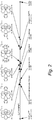
- MTR asym A magnetization transfer ratio asymmetry analysis (MTR asym , Figure 7 ) was performed because the exchangeable signals appeared partially overlapped with the bulk water signal. MTR asym analysis removes the effect of direct saturation of bulk water to reveal asymmetries in the CEST spectrum. MTR asym values were calculated from the Lorentzian fitting using (S - ⁇ - S ⁇ )/S 0 , where S - ⁇ and S ⁇ are the bulk water signal intensities at the negative and positive frequency offsets, respectively, from the bulk proton frequency referenced to 0 ppm; and S 0 is the bulk water signal intensity after presaturation at -5 ppm.
- the MTR asym spectrum confirmed the existence of exchangeable pools of intraliposomal water protons and also revealed increased CEST enhancement for liposomes after air exposure.
- increased CEST after air exposure is that the presence of Eu 3+ chemically shifted intraliposomal water protons and added to the CEST enhancement.
- oxidation to Eu 3+ decreased intraliposomal osmolality, which shrunk the liposomes and increased CEST intensity. This explanation is consistent with our observations because shrinking of liposomes through an osmotic pressure gradient is not easily detected by dynamic light scattering. The latter explanation is based on the kinetic stability of Eu(2.2.2) 3+ being lower than that of Eu(2.2.2) 2+ .
- Eu 3+ is likely present as a mixture of species within the liposomes including Eu(2.2.2) 3+ , Eu 3+ aqua, and phosphate complexes.
- a third possible explanation for the change in observed CEST is that the presence of multiple Eu 3+ -containing species altered the water-permeability of the liposome membrane to increase CEST enhancement after air exposure. Investigations exploring these three possibilities, which might also explain the incomplete saturation of bulk water after air exposure, are currently underway.
- the CEST map confirmed the presence of exchangeable intraliposomal water before and after oxidation and that %CEST increased from 52% to 77% after air exposure. These data demonstrate a distinct dual-mode response and reveal the oxidation state of Eu without knowledge of its concentration. With this demonstration of distinct orthogonal imaging, we envision tracking the migration of the contrast agent with T 1 -weighted imaging. Upon disappearance of T 1 enhancement, the imaging mode of detection would be changed to CEST. The presence of CEST would indicate oxidation, and an absence of CEST enhancement would indicate clearance of the contrast agent. Furthermore, CEST enhancement could be used to indicate one or more specific disease states because the oxidation potential, and consequently loss of T 1 enhancement, of Eu 2+ is tunable through ligand structure modifications. Accordingly, our in vitro data provide a strong framework for optimizing our system for in vivo imaging.
- the oxidized liposomes were filtered, and the Eu concentration of the filtrate was measured to be below the detection limit ( ⁇ 66 nM) of inductively coupled plasma optical emission spectroscopy.
- embodiments of the invention provide the first oxidation-responsive dual-mode contrast agent for MRI based on the redox chemistry of Eu. Contrast enhancement in orthogonal imaging modes allows for the detection of Eu oxidation states without knowledge of contrast agent concentration. For these reasons, we expect this system to open the door for molecular imaging using the Eu 2+/3+ redox switch.
- Inversion-recovery T 1 measurements were obtained using a Varian VNMRS 500 (499.48 MHz, 11.7 T) spectrometer before air exposure or after 24 h of air exposure.
- Deuterium oxide 300 mOsm NaCl was added to make liposome suspensions 5% D 2 O (v/v) for the purpose of locking and shimming.
- MRI scans were performed with a 7 T Varian small animal MRI scanner (299.44 MHz, 7.0 T) equipped with a 12 cm bore magnet and a 38 mm diameter homemade transmit/receive quadrature birdcage coil. Samples included liposomes that were not exposed to air, liposomes that were exposed to air for 24 h, and water.
- the T 1 -weighted images were acquired at ambient temperature (echo time: 11 ms; repetition time: 320 ms; seven image slices at 1 mm thickness; 24 ⁇ 24 mm 2 field of view; and four averages).
- the liposome-encapsulated Eu 3+ (chemical exchange saturation transfer, CEST) effects were measured at ambient temperature under the same parameters used in a previous CEST MRI study.
- a RARE MRI pulse sequence with a RARE factor of 8 (repetition time/echo time, 4.0 s/11 ms) was applied with a 17 ⁇ T saturation power for 2 s.
- a total of 64 s was required to acquire a single MR image with 128 ⁇ 128 pixels that covered a 24 ⁇ 24 mm 2 field of view, a single slice with a thickness of 1 mm, and a single average.
- the water signal was measured for each phantom when saturation was applied between 5 and -5 ppm in 0.2 ppm increments to measure the CEST effect of liposomes, and Figure 4 in the manuscript was acquired at 1.2 ppm (S ⁇ ) and -1.2 ppm (S - ⁇ ).
- FDF Varian flexible data format
- TIFF tagged image file format
- CEST chemical exchange saturation transfer
- MTR asym magnetization transfer ratio asymmetry analysis
- S- ⁇ and S ⁇ are the bulk water signal intensities at the negative and positive frequency offsets, respectively, from the bulk water proton frequency referenced to 0.00 ppm; and S 0 is the bulk water signal intensity after presaturation at -5 ppm.
- Mon and Moff are the average signal intensities (calculated with ImageJ) of the same phantom tube slice at 360 Hz (1.2 ppm) and -360 Hz (-1.2 ppm), respectively.
- the CEST image was created by subtracting the TIFF slice at 360 Hz (1.2 ppm) from the identical slice at -360 Hz (-1.2 ppm) and the difference was divided by the slice at 360 Hz (-1.2 ppm).
- the %CEST scale bar was created by calibrating the pixel range of the CEST image to the maximum %CEST value obtained from eq 2 using a linear fit.
- Dynamic light scattering data were obtained using a Malvern Zetasizer Nano-ZS instrument (ZEN3600) operating with a 633 nm wavelength laser. Dust was removed from samples by filtering through 0.2 ⁇ m hydrophilic filters (Millex-LG, SLLGR04NL). Liposome samples were prepared for light scattering experiments by diluting (1:10) purified liposome suspensions in iso-osmolar phosphate-buffered saline [PBS; Na 2 HPO 4 (29 mM), NaH 2 PO 4 (46 mM), NaCl (57 mM), and KCl (2.1 mM); pH 7.0]. For liposome size measurements with no air exposure, air-tight cuvettes were filled in a glovebox under an atmosphere of Ar.
- ICP-OES measurements were acquired on a Jobin Yvon Horiba Ultima spectrometer. All samples were diluted with 2% HNO 3 , which was also used for blank samples during calibration. The calibration curve was created using the Eu emission intensity at 381.965 nm for a 1-10 ppm concentration range (diluted from Alfa Aesar Specpure AAS standard solution, Eu 2 O 3 in 5% HNO 3 , 1000 ⁇ g/mL), and all samples were diluted to fall within this range.
- the hydration solution was prepared by stirring an aqueous solution of EuCl 2 and 4,7,13,16,21,24-hexaoxa-1,10-diazabicyclo[8.8.8]hexacosane (cryptand) for 12 h under an atmosphere of Ar followed by a phosphate-buffer-workup. 6
- a PBS stock solution was prepared with a high concentration of phosphate (1 M). The purpose of the high phosphate concentration was to ensure PBS buffer capacity was not lost upon phosphate precipitation in the presence of uncomplexed Eu 3+ in the oxygen-exposed samples and to maintain physiological osmolality (300 mOsm).
- This PBS solution was prepared in a glovebox under an atmosphere of Ar by dissolving anhydrous dibasic sodium phosphate (42.6 g, 0.300 mol), monobasic sodium phosphate monohydrate (27.6 g, 0.200 mol), sodium chloride (22.3 g, 0.381 mol), and potassium chloride (1.01 g, 13.6 mmol) in H 2 O (500 mL). The pH of the resulting solution was brought to 7.0 with the addition of solid sodium hydroxide (3.87 g, 96.8 mmol).
- Liposomes were prepared via the thin-film hydration technique ( Liu, G.; Liang, Y.; Bar-Shir, A.; Chan, K. W. Y.; Galpoththawela, C. S.; Bernard, S. M.; Tse, T.; Yadav, N. N.; Walczak, P.; McMahon, M. T.; Bulte, J. W. M.; van Zijl, P. C. M.; Gilad, A. A. J. Am. Chem. Soc. 2011, 133, 16326-16329 ).
- the resulting white suspension was stirred at 55 °C for 1 h.
- Extrusion of the suspension was accomplished using a mini-extruder and heating block (Avanti Polar Lipids, Alabaster, AL, USA) heated to 55 °C (4 passes through a 0.2 ⁇ m polycarbonate filter followed by 15 passes through a 0.1 ⁇ m polycarbonate filter). After extrusion, the suspension was allowed to cool to ambient temperature within the Ar-filled glovebox for 1 h.
- Non-encapsulated Eu 2+ -containing cryptate was removed from the liposome suspension in an Ar-filled glovebox via spin filtering (Amicon Ultra regenerated cellulose 3,000 molecular weight cut off).
- the liposome suspension was filtered in aliquots because the volume of the suspension exceeded the volume of the spin filter.
- the volume of suspension in the filter reached 0.3 mL after spinning, the volume was brought to 0.5 mL with the addition of iso-osmolar (300 mOsm) PBS prepared by dilution of the PBS solution described above. Spin-filtered fractions were collected until Eu was not detectable by ICP-OES (14 fractions).
- Figure 9 shows a Plot of T 1 vs time of the EuII-containing complex of ligand 4 (3 mM) in the absence ( ⁇ ) and presence ( ⁇ ) of glutathione (325 mM).
- compositions of the invention are useful at magnetic fields greater than 3 T (e.g., 7 to 11 T).
- the present invention represents the first step toward the use of the complexes as contrast agents at ultra-high field strengths in preclinical research and diagnostic medicine.
- these improved contrast agents are expected to facilitate earlier detection of disease when used in combination with higher field strength MRI, and early diagnoses correspond to higher rates of successful treatment. Furthermore, the Eu II -based contrast agents will enable better monitoring of therapies, especially when both high resolution and contrast enhancement are vital for success.
- a degassed aqueous solution of EuCl 2 (1 equiv) is mixed with a degassed aqueous solution of a cryptand (2 equiv).
- the resulting mixture is stirred for 12 hours at ambient temperature under Ar.
- Degassed PBS (10 ⁇ ) is added to make the entire reaction mixture 1 ⁇ in PBS, and stirring is continued for 30 min.
- the concentration of Eu in the resulting solution is verified by ICP-MS.
- GdCl 3 ⁇ 6H 2 O (63.4 mg, 0.171 mmol) was dissolved in water (2 mL) and pH adjusted to pH 6 using NaOH. The metal solution was then added to a solution containing 1 (103 mg, 0.159 mmol) in water (4 mL), pH adjusted to 6 using NaOH. The reaction mixture was purged with argon and allowed to stir at ambient temperature for 24 h. Dialysis was performed using a 100-500 Da membrane. The dialysis water was changed three times over the course of 10 h. The solution was then transferred from the dialysis membrane to a flask, and solvent was removed under reduced pressure.
- This complex is mixed with one equivalent of EuCl 2 to produce the final complex.
Landscapes
- Health & Medical Sciences (AREA)
- Chemical & Material Sciences (AREA)
- Nuclear Medicine, Radiotherapy & Molecular Imaging (AREA)
- Public Health (AREA)
- Veterinary Medicine (AREA)
- Epidemiology (AREA)
- Life Sciences & Earth Sciences (AREA)
- Animal Behavior & Ethology (AREA)
- General Health & Medical Sciences (AREA)
- Radiology & Medical Imaging (AREA)
- Medicinal Chemistry (AREA)
- Dispersion Chemistry (AREA)
- Organic Chemistry (AREA)
- Immunology (AREA)
- Pharmacology & Pharmacy (AREA)
- Medicinal Preparation (AREA)
- Medicines Containing Antibodies Or Antigens For Use As Internal Diagnostic Agents (AREA)
Claims (17)
- Zusammensetzung, umfassend:ein Liposom;einen Europiummetallkomplex, der innerhalb des Liposoms angeordnet ist, wobei der Europiummetallkomplex ein Europiummetallion und einen mehrzähnigen Liganden, ausgewählt aus der Gruppe bestehend aus Cryptanden und Thiacryptanden, umfasst, wobei der Europiummetallkomplex Eu2+ enthält; undfalls erforderlich, Gegenionen zur Aufrechterhaltung der Ladungsneutralität, wobei das Europiummetallion von einem Oxidationszustand 2+ in einen Oxidationszustand 3+ umschaltbar ist, wenn es in das Liposom eingekapselt ist.
- Zusammensetzung nach Anspruch 1, bei der das Liposom ein Phospholipid umfasst.
- Zusammensetzung nach Anspruch 2, bei der das Phospholipid ein Fettsäurediester von Phosphatidylcholin, Ethylphosphatidylcholin, Phosphatidylglycerin, Phosphatidinsäure, Phosphatidylethanolamin, Phosphatidylserin oder Sphingomyelin ist.
- Zusammensetzung nach Anspruch 1, bei der der mehrzähnige Ligand ein substituierter 2.2.2-Cryptand, ein substituierter 2.2.2-Thiacryptand oder ein unsubstituierter 2.2.2-Thiacryptand ist.
- Zusammensetzung nach Anspruch 1, die ferner ein Antioxidationsmittel umfasst.
- Zusammensetzung nach Anspruch 1, bei der der mehr zähnige Ligand durch Formel I beschrieben ist:
 Y1, Y2, Y3, Y4, Y5 und Y6 jeweils unabhängig voneinander O oder S sind;R1, R2, R3 jeweils unabhängig voneinander H, C1-12-Alkyl, C1-12-Fluoralkyl, Cl, F, Br, I, N(R)2, NH2, CH2CO2H, Nitro, Cyano oder C6-14-Aryl, Phenyl, Biphenyl, C5-14-Hetereoaryl oder 5- und 6-gliedrige Ringe, die durch Kombination von R1 an benachbarten Kohlenstoffatomen oder von R2 und R3 an benachbarten Kohlenstoffatomen gebildet sind, =O durch Kombination von R1, R2 oder R3 am gleichen Kohlenstoffatom, =S durch Kombination von R1, R2 oder R3 am gleichen Kohlenstoffatom oder =NR durch Kombination von R1, R2 oder R3 am gleichen Kohlenstoffatom sind; undR H oder C1-12-Alkyl ist.
 - Zusammensetzung nach Anspruch 1, bei der der mehrzähnige Ligand die folgende Formel hat:

Y1 und Y2 jeweils unabhängig voneinander O oder S sind. - Zusammensetzung nach Anspruch 1, bei der der mehrzähnige Ligand die folgende Formel hat:

X1, X2, X3 unabhängig voneinander Nitro, Cl, F, Br, I, CH3, NH2, oder CH2CO2H sind. - Zusammensetzung nach Anspruch 1, bei der der mehrzähnige Ligand die folgende Formel hat:

Y O oder S ist. - Zusammensetzung nach Anspruch 1, bei der der mehrzähnige Ligand die folgende Formel hat:

x, y, und z 0, 1, 2, oder 3 sind, mit der Einschränkung, dass die Summe von x, y und z 3 ist. - Zusammensetzung nach Anspruch 1, bei der der mehrzähnige Ligand die folgende Formel hat:

x, und y 0, 1, 2, oder 3 sind, mit der Einschränkung, dass die Summe von x, und y 3 ist. - Zusammensetzung nach Anspruch 1, bei der der mehrzähnige Ligand die folgende Formel hat:

Y O oder S ist. - Zusammensetzung nach Anspruch 1, bei der der mehrzähnige Ligand die folgende Formel hat:

- Zusammensetzung nach Anspruch 1, bei der der mehrzähnige Ligand die folgende Formel hat:

R, R' unabhängig voneinander Nitro, Cl, F, Br, I, CH3, NH2, oder CH2CO2H sind. - Zusammensetzung nach Anspruch 1, bei der der mehrzähnige Ligand die folgende Formel hat:
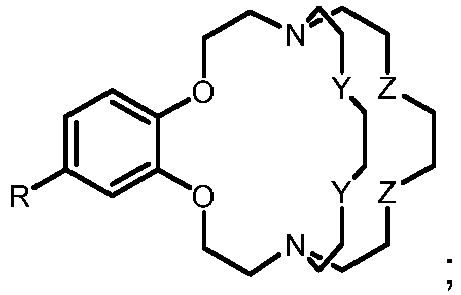 X und Y unabhängig voneinander O oder S sind, undR Nitro, Cl, F, Br, I, CH3, NH2, oder CH2CO2H ist.
 - Zusammensetzung nach Anspruch 1, bei der der mehrzähnige Ligand die folgende Formel hat:

- Verfahren zur Magnetresonanz-Bildgebung eines Organs oder einer Organstruktur in einem Probanden, wobei das Verfahren umfasst:a) Verabreichen einer Liposom-Zusammensetzung an das Subjekt, wobei die Liposom-Zusammensetzung umfasst:ein Liposom; undeinen Europiummetallkomplex, der innerhalb des Liposoms angeordnet ist, wobei der Europiummetallkomplex ein Europiummetallion und einen ersten mehrzähnigen Liganden, ausgewählt aus der Gruppe bestehend aus Cryptanden und Thiacryptanden, und ein oder mehrere Gegenionen, die eine Ladung des Europiummetallions ausgleichen, umfasst, wobei das Europiummetallion Eu2+ umfasst und von einem Oxidationszustand 2+ in einen Oxidationszustand 3+ umschaltbar ist, wenn es in das Liposom eingekapselt ist; undb) Aufnehmen von Bildern eines Organs des Probanden mittels Magnetresonanztomographie.
Applications Claiming Priority (2)
| Application Number | Priority Date | Filing Date | Title |
|---|---|---|---|
| US201361776354P | 2013-03-11 | 2013-03-11 | |
| PCT/US2014/023283 WO2014164712A1 (en) | 2013-03-11 | 2014-03-11 | Formation and uses of europium |
Publications (3)
| Publication Number | Publication Date |
|---|---|
| EP2968150A1 EP2968150A1 (de) | 2016-01-20 |
| EP2968150A4 EP2968150A4 (de) | 2017-02-15 |
| EP2968150B1 true EP2968150B1 (de) | 2020-08-19 |
Family
ID=51658950
Family Applications (1)
| Application Number | Title | Priority Date | Filing Date |
|---|---|---|---|
| EP14779079.4A Not-in-force EP2968150B1 (de) | 2013-03-11 | 2014-03-11 | Liposome enthaltend europium cryptanden und deren verwendung |
Country Status (4)
| Country | Link |
|---|---|
| US (3) | US20160022842A1 (de) |
| EP (1) | EP2968150B1 (de) |
| ES (1) | ES2820734T3 (de) |
| WO (1) | WO2014164712A1 (de) |
Families Citing this family (5)
| Publication number | Priority date | Publication date | Assignee | Title |
|---|---|---|---|---|
| US10828379B2 (en) * | 2015-03-11 | 2020-11-10 | Wayne State University | In vivo differentiation of relative oxygen levels and tumor necrosis using divalent europium |
| CN111062994B (zh) * | 2019-11-26 | 2021-07-30 | 厦门大学 | 一种化学交换饱和转移对比图像的重建方法及系统 |
| WO2021244801A1 (en) | 2020-06-04 | 2021-12-09 | Beeoled Gmbh | Metal-organic coordination compound and method for producing the same |
| US20240251658A1 (en) | 2021-04-16 | 2024-07-25 | Beeoled Gmbh | Metal-organic coordination compound and method for producing the same |
| EP4501933B1 (de) | 2023-08-04 | 2025-11-12 | beeOLED GmbH | Zweiwertige europium-organische koordinationsverbindung und verfahren zu deren herstellung |
Family Cites Families (4)
| Publication number | Priority date | Publication date | Assignee | Title |
|---|---|---|---|---|
| NO312708B1 (no) * | 2000-02-21 | 2002-06-24 | Anticancer Therapeutic Inv Sa | Radioaktive liposomer til terapi |
| US20070292354A1 (en) * | 2004-09-23 | 2007-12-20 | Guerbet | Contrast Agents Encapsulating Systems for Cest Imaging |
| WO2011006510A1 (en) * | 2009-07-17 | 2011-01-20 | Technical University Of Denmark | Loading technique for preparing radionuclide and ionophore containing liposomes in which the ionophore is 2-hydroxyquionoline (carbostyril) or structurally related 2-hydroxyquinolines |
| US9655982B2 (en) | 2010-01-19 | 2017-05-23 | Wayne State University | Formation and uses of europium complexes |
-
2014
- 2014-03-11 EP EP14779079.4A patent/EP2968150B1/de not_active Not-in-force
- 2014-03-11 US US14/775,032 patent/US20160022842A1/en not_active Abandoned
- 2014-03-11 WO PCT/US2014/023283 patent/WO2014164712A1/en not_active Ceased
- 2014-03-11 ES ES14779079T patent/ES2820734T3/es active Active
-
2019
- 2019-06-25 US US16/451,921 patent/US11185599B2/en active Active
-
2021
- 2021-10-27 US US17/511,769 patent/US20220047726A1/en not_active Abandoned
Non-Patent Citations (1)
| Title |
|---|
| None * |
Also Published As
| Publication number | Publication date |
|---|---|
| WO2014164712A1 (en) | 2014-10-09 |
| US20220047726A1 (en) | 2022-02-17 |
| EP2968150A1 (de) | 2016-01-20 |
| ES2820734T3 (es) | 2021-04-22 |
| US11185599B2 (en) | 2021-11-30 |
| EP2968150A4 (de) | 2017-02-15 |
| US20200023082A1 (en) | 2020-01-23 |
| US20160022842A1 (en) | 2016-01-28 |
Similar Documents
| Publication | Publication Date | Title |
|---|---|---|
| US11185599B2 (en) | Formation and uses of europium | |
| Botta et al. | Mn (II) compounds as an alternative to Gd-based MRI probes | |
| Kalman et al. | Mn (II)-based MRI contrast agent candidate for vascular imaging | |
| EP0222886B2 (de) | Kontrastmittel zur darstellung des leber-gallensystems mittels nmr-kontrastmittel | |
| Gianolio et al. | Relaxometric investigations and MRI evaluation of a liposome-loaded pH-responsive gadolinium (III) complex | |
| Terreno et al. | Determination of water permeability of paramagnetic liposomes of interest in MRI field | |
| US5387410A (en) | Method for enhancing magnetic resonance with compositions containing paramagnetic elements carried by liposomes | |
| Xie et al. | Iron (III)‐t CDTA derivatives as MRI contrast agents: Increased T1 relaxivities at higher magnetic field strength and pH sensing | |
| HU194741B (en) | Process for the preparation of contrast substances used for nmr exposures | |
| Castelli et al. | Design and testing of paramagnetic liposome-based CEST agents for MRI visualization of payload release on pH-induced and ultrasound stimulation | |
| JP2015143262A (ja) | 腫瘍の磁気共鳴画像化法のためのリポソームナノ粒子 | |
| Torres et al. | Improved paramagnetic liposomes for MRI visualization of pH triggered release | |
| Herynek et al. | Low-molecular-weight paramagnetic 19F contrast agents for fluorine magnetic resonance imaging | |
| Ratnakar et al. | A frequency‐selective pH‐responsive paraCEST agent | |
| EP2065058A1 (de) | Nicht kugelförmige Kontrastmittel für CEST-MRI auf der Basis des magnetischen Bulk-Suszeptibilitätseffekts | |
| Opina et al. | TmDOTA-tetraglycinate encapsulated liposomes as pH-sensitive LipoCEST agents | |
| Cittadino et al. | In vivo magnetic resonance imaging detection of paramagnetic liposomes loaded with amphiphilic Gadolinium (III) complexes: impact of molecular structure on relaxivity and excretion efficiency | |
| Di Gregorio et al. | Supramolecular adducts between macrocyclic Gd (iii) complexes and polyaromatic systems: a route to enhance the relaxivity through the formation of hydrophobic interactions | |
| Chowdhury et al. | Liposomal MRI probes containing encapsulated or amphiphilic Fe (III) coordination complexes | |
| Galisova et al. | Frontiers in 19 F-MR imaging: nanofluorides and 19 F-CEST as novel extensions to the 19 F-MRI toolbox | |
| Terreno et al. | Gadolinium-doped LipoCEST agents: A potential novel class of dual 1 H-MRI probes | |
| Agulla et al. | Quick adjustment of imaging tracer payload, for in vivo applications of theranostic nanostructures in the brain | |
| Ferrauto et al. | Chemical exchange saturation transfer (CEST) contrast agents | |
| Pushparaj et al. | Trinuclear Gd (III) metal complex with amide core display remarkable enhancement in relaxivity | |
| Evbuomwan et al. | CEST and PARACEST agents for molecular imaging |
Legal Events
| Date | Code | Title | Description |
|---|---|---|---|
| PUAI | Public reference made under article 153(3) epc to a published international application that has entered the european phase |
Free format text: ORIGINAL CODE: 0009012 |
|
| 17P | Request for examination filed |
Effective date: 20151007 |
|
| AK | Designated contracting states |
Kind code of ref document: A1 Designated state(s): AL AT BE BG CH CY CZ DE DK EE ES FI FR GB GR HR HU IE IS IT LI LT LU LV MC MK MT NL NO PL PT RO RS SE SI SK SM TR |
|
| AX | Request for extension of the european patent |
Extension state: BA ME |
|
| DAX | Request for extension of the european patent (deleted) | ||
| RIC1 | Information provided on ipc code assigned before grant |
Ipc: A61K 47/48 20060101ALI20161012BHEP Ipc: A61K 31/43 20060101ALI20161012BHEP Ipc: A61K 51/02 20060101ALI20161012BHEP Ipc: A61K 9/08 20060101ALI20161012BHEP Ipc: A61K 9/127 20060101AFI20161012BHEP |
|
| A4 | Supplementary search report drawn up and despatched |
Effective date: 20170118 |
|
| RIC1 | Information provided on ipc code assigned before grant |
Ipc: A61K 9/08 20060101ALI20170120BHEP Ipc: A61K 9/127 20060101AFI20170120BHEP Ipc: A61K 31/43 20060101ALI20170120BHEP Ipc: A61K 51/02 20060101ALI20170120BHEP Ipc: A61K 47/50 20170101ALI20170120BHEP |
|
| REG | Reference to a national code |
Ref country code: DE Ref legal event code: R079 Ref document number: 602014069184 Country of ref document: DE Free format text: PREVIOUS MAIN CLASS: A61K0009127000 Ipc: A61K0049180000 |
|
| GRAP | Despatch of communication of intention to grant a patent |
Free format text: ORIGINAL CODE: EPIDOSNIGR1 |
|
| STAA | Information on the status of an ep patent application or granted ep patent |
Free format text: STATUS: GRANT OF PATENT IS INTENDED |
|
| RIC1 | Information provided on ipc code assigned before grant |
Ipc: A61K 49/18 20060101AFI20200319BHEP Ipc: A61K 9/127 20060101ALI20200319BHEP Ipc: A61K 49/10 20060101ALI20200319BHEP |
|
| INTG | Intention to grant announced |
Effective date: 20200401 |
|
| GRAS | Grant fee paid |
Free format text: ORIGINAL CODE: EPIDOSNIGR3 |
|
| GRAA | (expected) grant |
Free format text: ORIGINAL CODE: 0009210 |
|
| STAA | Information on the status of an ep patent application or granted ep patent |
Free format text: STATUS: THE PATENT HAS BEEN GRANTED |
|
| AK | Designated contracting states |
Kind code of ref document: B1 Designated state(s): AL AT BE BG CH CY CZ DE DK EE ES FI FR GB GR HR HU IE IS IT LI LT LU LV MC MK MT NL NO PL PT RO RS SE SI SK SM TR |
|
| REG | Reference to a national code |
Ref country code: CH Ref legal event code: EP |
|
| REG | Reference to a national code |
Ref country code: DE Ref legal event code: R096 Ref document number: 602014069184 Country of ref document: DE |
|
| REG | Reference to a national code |
Ref country code: AT Ref legal event code: REF Ref document number: 1303199 Country of ref document: AT Kind code of ref document: T Effective date: 20200915 |
|
| REG | Reference to a national code |
Ref country code: IE Ref legal event code: FG4D |
|
| REG | Reference to a national code |
Ref country code: LT Ref legal event code: MG4D |
|
| REG | Reference to a national code |
Ref country code: NL Ref legal event code: MP Effective date: 20200819 |
|
| PG25 | Lapsed in a contracting state [announced via postgrant information from national office to epo] |
Ref country code: NO Free format text: LAPSE BECAUSE OF FAILURE TO SUBMIT A TRANSLATION OF THE DESCRIPTION OR TO PAY THE FEE WITHIN THE PRESCRIBED TIME-LIMIT Effective date: 20201119 Ref country code: BG Free format text: LAPSE BECAUSE OF FAILURE TO SUBMIT A TRANSLATION OF THE DESCRIPTION OR TO PAY THE FEE WITHIN THE PRESCRIBED TIME-LIMIT Effective date: 20201119 Ref country code: SE Free format text: LAPSE BECAUSE OF FAILURE TO SUBMIT A TRANSLATION OF THE DESCRIPTION OR TO PAY THE FEE WITHIN THE PRESCRIBED TIME-LIMIT Effective date: 20200819 Ref country code: HR Free format text: LAPSE BECAUSE OF FAILURE TO SUBMIT A TRANSLATION OF THE DESCRIPTION OR TO PAY THE FEE WITHIN THE PRESCRIBED TIME-LIMIT Effective date: 20200819 Ref country code: GR Free format text: LAPSE BECAUSE OF FAILURE TO SUBMIT A TRANSLATION OF THE DESCRIPTION OR TO PAY THE FEE WITHIN THE PRESCRIBED TIME-LIMIT Effective date: 20201120 Ref country code: LT Free format text: LAPSE BECAUSE OF FAILURE TO SUBMIT A TRANSLATION OF THE DESCRIPTION OR TO PAY THE FEE WITHIN THE PRESCRIBED TIME-LIMIT Effective date: 20200819 Ref country code: FI Free format text: LAPSE BECAUSE OF FAILURE TO SUBMIT A TRANSLATION OF THE DESCRIPTION OR TO PAY THE FEE WITHIN THE PRESCRIBED TIME-LIMIT Effective date: 20200819 Ref country code: PT Free format text: LAPSE BECAUSE OF FAILURE TO SUBMIT A TRANSLATION OF THE DESCRIPTION OR TO PAY THE FEE WITHIN THE PRESCRIBED TIME-LIMIT Effective date: 20201221 |
|
| REG | Reference to a national code |
Ref country code: AT Ref legal event code: MK05 Ref document number: 1303199 Country of ref document: AT Kind code of ref document: T Effective date: 20200819 |
|
| PG25 | Lapsed in a contracting state [announced via postgrant information from national office to epo] |
Ref country code: RS Free format text: LAPSE BECAUSE OF FAILURE TO SUBMIT A TRANSLATION OF THE DESCRIPTION OR TO PAY THE FEE WITHIN THE PRESCRIBED TIME-LIMIT Effective date: 20200819 Ref country code: NL Free format text: LAPSE BECAUSE OF FAILURE TO SUBMIT A TRANSLATION OF THE DESCRIPTION OR TO PAY THE FEE WITHIN THE PRESCRIBED TIME-LIMIT Effective date: 20200819 Ref country code: LV Free format text: LAPSE BECAUSE OF FAILURE TO SUBMIT A TRANSLATION OF THE DESCRIPTION OR TO PAY THE FEE WITHIN THE PRESCRIBED TIME-LIMIT Effective date: 20200819 Ref country code: PL Free format text: LAPSE BECAUSE OF FAILURE TO SUBMIT A TRANSLATION OF THE DESCRIPTION OR TO PAY THE FEE WITHIN THE PRESCRIBED TIME-LIMIT Effective date: 20200819 Ref country code: IS Free format text: LAPSE BECAUSE OF FAILURE TO SUBMIT A TRANSLATION OF THE DESCRIPTION OR TO PAY THE FEE WITHIN THE PRESCRIBED TIME-LIMIT Effective date: 20201219 |
|
| REG | Reference to a national code |
Ref country code: ES Ref legal event code: FG2A Ref document number: 2820734 Country of ref document: ES Kind code of ref document: T3 Effective date: 20210422 |
|
| PG25 | Lapsed in a contracting state [announced via postgrant information from national office to epo] |
Ref country code: CZ Free format text: LAPSE BECAUSE OF FAILURE TO SUBMIT A TRANSLATION OF THE DESCRIPTION OR TO PAY THE FEE WITHIN THE PRESCRIBED TIME-LIMIT Effective date: 20200819 Ref country code: EE Free format text: LAPSE BECAUSE OF FAILURE TO SUBMIT A TRANSLATION OF THE DESCRIPTION OR TO PAY THE FEE WITHIN THE PRESCRIBED TIME-LIMIT Effective date: 20200819 Ref country code: DK Free format text: LAPSE BECAUSE OF FAILURE TO SUBMIT A TRANSLATION OF THE DESCRIPTION OR TO PAY THE FEE WITHIN THE PRESCRIBED TIME-LIMIT Effective date: 20200819 Ref country code: RO Free format text: LAPSE BECAUSE OF FAILURE TO SUBMIT A TRANSLATION OF THE DESCRIPTION OR TO PAY THE FEE WITHIN THE PRESCRIBED TIME-LIMIT Effective date: 20200819 Ref country code: SM Free format text: LAPSE BECAUSE OF FAILURE TO SUBMIT A TRANSLATION OF THE DESCRIPTION OR TO PAY THE FEE WITHIN THE PRESCRIBED TIME-LIMIT Effective date: 20200819 |
|
| REG | Reference to a national code |
Ref country code: DE Ref legal event code: R097 Ref document number: 602014069184 Country of ref document: DE |
|
| PG25 | Lapsed in a contracting state [announced via postgrant information from national office to epo] |
Ref country code: AT Free format text: LAPSE BECAUSE OF FAILURE TO SUBMIT A TRANSLATION OF THE DESCRIPTION OR TO PAY THE FEE WITHIN THE PRESCRIBED TIME-LIMIT Effective date: 20200819 Ref country code: AL Free format text: LAPSE BECAUSE OF FAILURE TO SUBMIT A TRANSLATION OF THE DESCRIPTION OR TO PAY THE FEE WITHIN THE PRESCRIBED TIME-LIMIT Effective date: 20200819 |
|
| PLBE | No opposition filed within time limit |
Free format text: ORIGINAL CODE: 0009261 |
|
| STAA | Information on the status of an ep patent application or granted ep patent |
Free format text: STATUS: NO OPPOSITION FILED WITHIN TIME LIMIT |
|
| PG25 | Lapsed in a contracting state [announced via postgrant information from national office to epo] |
Ref country code: SK Free format text: LAPSE BECAUSE OF FAILURE TO SUBMIT A TRANSLATION OF THE DESCRIPTION OR TO PAY THE FEE WITHIN THE PRESCRIBED TIME-LIMIT Effective date: 20200819 |
|
| 26N | No opposition filed |
Effective date: 20210520 |
|
| PG25 | Lapsed in a contracting state [announced via postgrant information from national office to epo] |
Ref country code: SI Free format text: LAPSE BECAUSE OF FAILURE TO SUBMIT A TRANSLATION OF THE DESCRIPTION OR TO PAY THE FEE WITHIN THE PRESCRIBED TIME-LIMIT Effective date: 20200819 |
|
| PG25 | Lapsed in a contracting state [announced via postgrant information from national office to epo] |
Ref country code: MC Free format text: LAPSE BECAUSE OF FAILURE TO SUBMIT A TRANSLATION OF THE DESCRIPTION OR TO PAY THE FEE WITHIN THE PRESCRIBED TIME-LIMIT Effective date: 20200819 |
|
| REG | Reference to a national code |
Ref country code: CH Ref legal event code: PL |
|
| REG | Reference to a national code |
Ref country code: BE Ref legal event code: MM Effective date: 20210331 |
|
| PG25 | Lapsed in a contracting state [announced via postgrant information from national office to epo] |
Ref country code: IE Free format text: LAPSE BECAUSE OF NON-PAYMENT OF DUE FEES Effective date: 20210311 Ref country code: CH Free format text: LAPSE BECAUSE OF NON-PAYMENT OF DUE FEES Effective date: 20210331 Ref country code: LU Free format text: LAPSE BECAUSE OF NON-PAYMENT OF DUE FEES Effective date: 20210311 Ref country code: LI Free format text: LAPSE BECAUSE OF NON-PAYMENT OF DUE FEES Effective date: 20210331 |
|
| PG25 | Lapsed in a contracting state [announced via postgrant information from national office to epo] |
Ref country code: BE Free format text: LAPSE BECAUSE OF NON-PAYMENT OF DUE FEES Effective date: 20210331 |
|
| PG25 | Lapsed in a contracting state [announced via postgrant information from national office to epo] |
Ref country code: HU Free format text: LAPSE BECAUSE OF FAILURE TO SUBMIT A TRANSLATION OF THE DESCRIPTION OR TO PAY THE FEE WITHIN THE PRESCRIBED TIME-LIMIT; INVALID AB INITIO Effective date: 20140311 |
|
| PG25 | Lapsed in a contracting state [announced via postgrant information from national office to epo] |
Ref country code: CY Free format text: LAPSE BECAUSE OF FAILURE TO SUBMIT A TRANSLATION OF THE DESCRIPTION OR TO PAY THE FEE WITHIN THE PRESCRIBED TIME-LIMIT Effective date: 20200819 |
|
| P01 | Opt-out of the competence of the unified patent court (upc) registered |
Effective date: 20230530 |
|
| PG25 | Lapsed in a contracting state [announced via postgrant information from national office to epo] |
Ref country code: MK Free format text: LAPSE BECAUSE OF FAILURE TO SUBMIT A TRANSLATION OF THE DESCRIPTION OR TO PAY THE FEE WITHIN THE PRESCRIBED TIME-LIMIT Effective date: 20200819 |
|
| PGFP | Annual fee paid to national office [announced via postgrant information from national office to epo] |
Ref country code: DE Payment date: 20240327 Year of fee payment: 11 Ref country code: GB Payment date: 20240327 Year of fee payment: 11 |
|
| PGFP | Annual fee paid to national office [announced via postgrant information from national office to epo] |
Ref country code: IT Payment date: 20240321 Year of fee payment: 11 Ref country code: FR Payment date: 20240325 Year of fee payment: 11 |
|
| PG25 | Lapsed in a contracting state [announced via postgrant information from national office to epo] |
Ref country code: TR Free format text: LAPSE BECAUSE OF FAILURE TO SUBMIT A TRANSLATION OF THE DESCRIPTION OR TO PAY THE FEE WITHIN THE PRESCRIBED TIME-LIMIT Effective date: 20200819 |
|
| PGFP | Annual fee paid to national office [announced via postgrant information from national office to epo] |
Ref country code: ES Payment date: 20240401 Year of fee payment: 11 |
|
| PG25 | Lapsed in a contracting state [announced via postgrant information from national office to epo] |
Ref country code: MT Free format text: LAPSE BECAUSE OF FAILURE TO SUBMIT A TRANSLATION OF THE DESCRIPTION OR TO PAY THE FEE WITHIN THE PRESCRIBED TIME-LIMIT Effective date: 20200819 |
|
| REG | Reference to a national code |
Ref country code: DE Ref legal event code: R119 Ref document number: 602014069184 Country of ref document: DE |
|
| GBPC | Gb: european patent ceased through non-payment of renewal fee |
Effective date: 20250311 |
|
| PG25 | Lapsed in a contracting state [announced via postgrant information from national office to epo] |
Ref country code: DE Free format text: LAPSE BECAUSE OF NON-PAYMENT OF DUE FEES Effective date: 20251001 |
|
| PG25 | Lapsed in a contracting state [announced via postgrant information from national office to epo] |
Ref country code: GB Free format text: LAPSE BECAUSE OF NON-PAYMENT OF DUE FEES Effective date: 20250311 |
|
| PG25 | Lapsed in a contracting state [announced via postgrant information from national office to epo] |
Ref country code: FR Free format text: LAPSE BECAUSE OF NON-PAYMENT OF DUE FEES Effective date: 20250331 Ref country code: IT Free format text: LAPSE BECAUSE OF NON-PAYMENT OF DUE FEES Effective date: 20250311 |
|
| REG | Reference to a national code |
Ref country code: ES Ref legal event code: FD2A Effective date: 20260430 |