EP2978745B1 - Procédé de préparation de (r)-5-[2-(5,6-diéthylindan-2-ylamino)-1-hydroxyéthyl]-8-hydroxy-(1h)-quinolin-2-one - Google Patents
Procédé de préparation de (r)-5-[2-(5,6-diéthylindan-2-ylamino)-1-hydroxyéthyl]-8-hydroxy-(1h)-quinolin-2-one Download PDFInfo
- Publication number
- EP2978745B1 EP2978745B1 EP14712694.0A EP14712694A EP2978745B1 EP 2978745 B1 EP2978745 B1 EP 2978745B1 EP 14712694 A EP14712694 A EP 14712694A EP 2978745 B1 EP2978745 B1 EP 2978745B1
- Authority
- EP
- European Patent Office
- Prior art keywords
- acid
- compound
- formula
- iii
- formula iii
- Prior art date
- Legal status (The legal status is an assumption and is not a legal conclusion. Google has not performed a legal analysis and makes no representation as to the accuracy of the status listed.)
- Active
Links
Images





Classifications
-
- C—CHEMISTRY; METALLURGY
- C07—ORGANIC CHEMISTRY
- C07D—HETEROCYCLIC COMPOUNDS
- C07D215/00—Heterocyclic compounds containing quinoline or hydrogenated quinoline ring systems
- C07D215/02—Heterocyclic compounds containing quinoline or hydrogenated quinoline ring systems having no bond between the ring nitrogen atom and a non-ring member or having only hydrogen atoms or carbon atoms directly attached to the ring nitrogen atom
- C07D215/16—Heterocyclic compounds containing quinoline or hydrogenated quinoline ring systems having no bond between the ring nitrogen atom and a non-ring member or having only hydrogen atoms or carbon atoms directly attached to the ring nitrogen atom with hetero atoms or with carbon atoms having three bonds to hetero atoms with at the most one bond to halogen, e.g. ester or nitrile radicals, directly attached to ring carbon atoms
- C07D215/20—Oxygen atoms
- C07D215/24—Oxygen atoms attached in position 8
- C07D215/26—Alcohols; Ethers thereof
Definitions
- the present invention provides a process for manufacturing ( R )-5-[2-(5,6-diethyl-indan-2-yl-amino)-1-hydroxyethyl]-8-hydroxy-(1H)-quinolin-2-one, also known as indacaterol, or a pharmaceutically acceptable salt or co-crystal thereof, in high yield and high purity.
- Indacaterol as a chirally pure compound having formula I , is an ultra-long-acting ⁇ 2 -adrenoreceptor agonist, commercialized as its maleate salt under the brand name of Onbrez Breezhaler® for the once daily treatment of chronic obstructive pulmonary disease (COPD), which is one of the major causes of morbidity and mortality in the developed countries despite the many treatment modalities available.
- COPD chronic obstructive pulmonary disease
- Indacaterol and related compounds were first disclosed in WO00/75114 .
- the synthesis of indacaterol maleate was also described in WO00/75114 as depicted in Scheme 1.
- the process involved the reaction of an epoxide of formula V with an amine intermediate of formula VI to give a compound of formula VII .
- the compound of formula VII which was isolated by flash chromatography, was then converted into indacaterol maleate after removing the benzyl group and treating the resulting indacaterol base with maleic acid. Yields and purities were not disclosed in WO00/75114 .
- indacaterol directly obtained by the processes described in WO2004/76422 had low purity and had to be further purified in order to be used in the manufacture of pharmaceutical compositions.
- the purification was carried out by means of chromatographic methods, which are generally expensive, environmentally unfriendly and time consuming, therefore not feasible for industrial application.
- the present inventors have surprisingly found that the process of the invention provides indacaterol in high chemical and enantiomeric purity and high yield, which makes it appropriate for the preparation of pharmaceutically acceptable salts or co-crystals thereof, particularly indacaterol maleate at industrial scale.
- a first aspect of the present invention provides a process for manufacturing indacaterol of formula I , ( R )-5-[2-(5,6-diethyl-indan-2-yl-amino)-1-hydroxyethyl]-8-hydroxy-(1H)-quinolin-2-one, or a pharmaceutically acceptable salt or co-crystals thereof, which comprises the following steps;
- the process of the present invention which comprises a reduced number of steps, is easily reproducible at industrial scale and leads to indacaterol in high yield. Moreover, significant reduction of byproducts is obtained. In particular, indacaterol is also obtained in high chemical and enantiomeric purity so that the corresponding pharmaceutically acceptable salt, especially its maleate salt, can be prepared in an efficient manner.
- the term acid refers to a substance that tends to release a proton.
- the term acid contemplates all inorganic or organic acids. Suitable acids for the present invention are hydrochloric acid, hydrobromic acid, hydroiodic acid, sulfuric acid, phosphoric acid (also known as ortho phosphoric acid), formic acid, acetic acid, dichloroacetic acid, methanesulfonic acid, ethanesulfonic acid, p -toluensulfonic acid and camphorsulfonic acid.
- organic solvent refers to an organic molecule capable of at least partially dissolving another substance (i.e., the solute).
- Organic solvents may be liquids at room temperature.
- examples of organic solvents that may be used for the present invention include, but are not limited to: hydrocarbon solvents (e.g., n-pentane, n-hexane, n-heptane, n-octane, paraffin, cyclohexane, methylcyclohexane, decahydronaphthalene, mineral oil, crude oils, etc.) which also includes aromatic hydrocarbon solvents (e.g., benzene, toluene, o-xylene, m-xylene, and p-xylene), halogenated hydrocarbon solvents (e.g., carbon tetrachloride, 1,2-dichloroethane, dichloromethane, chloroform, etc.), ester solvents (e.g., ethy
- polar solvent means a solvent that tends to interact with other compounds or itself through acid-base interactions, hydrogen bonding, dipole-dipole interactions, or by dipole-induced dipole interactions.
- polar solvents are dichloromethane, tetrahydrofuran, ester solvents (e.g., ethyl formate, methyl acetate, ethyl acetate, ethyl malonate, etc.), ketone solvents (e.g., acetone, methyl ethyl ketone or 2-butanone, cyclohexanone, cyclopentanone, 3-pentanone, etc.), amine solvents (e.g., propyl amine, diethylamine, triethylamine, aniline, pyridine), alcohol solvents (e.g., methanol, ethanol, isopropanol, 1-propanol, 1-butanol, 1-octanol, benzy
- aprotic solvent as used herein means any molecular solvent which cannot donate H + .
- aprotic solvents that may be used for the present invention include, but are not limited to: tetrahydrofuran, 2-methyltetrahydrofuran, toluene, methylcyclohexane, acetonitrile, N,N-dimethylformamide, N,N,-dimethylacetamide, dimethyl sulfoxide, N-methyl-2-pyrrolidone, methyl ethyl ketone or 2-butanone, and methyl isobutyl ketone.
- alcohol refers to a hydrocarbon derivative in which one or more hydrogen atoms have been replaced by an -OH group, known as hydroxyl group.
- Suitable alcohols for the present invention include linear, cyclic or branched C 1 -C 6 alkyl alcohols and any mixtures thereof. It also includes commercially available alcohols. Examples of alcohols are methanol, ethanol, isopropanol, 1-propanol and 1-butanol.
- inorganic base refers to a substance that tends to accept a proton. It contains a metal cation and does not contain an organic moiety, as compared to an organic base, which is a substance that contains an organic moiety.
- Suitable inorganic bases for the present invention are hydroxides, carbonates and bicarbonates of calcium, sodium, magnesium, potassium, lithium and caesium.
- tertiary amine refers to an amine compound containing three alkyl groups.
- examples of tertiary amines include triethylamine, diisopropylethylamine and the like.
- one-pot process refers to a process comprising simultaneously or successively adding all reactants into a reactor to have them react together, in which no separation and/or purification of the intermediate state is required before the final product is produced.
- conventional purification techniques refers to the process wherein a product can be obtained in high purity, which can be carried out on an industrial scale such as solvent extraction, filtration, distillation, slurring, washing, phase separation, evaporation, centrifugation, isolation or crystallization.
- solvent extraction refers to the process of separating components of a mixture by using a solvent which possesses greater affinity for one component, and may therefore separate said one component from at least a second component which is less miscible than said one component with said solvent.
- filtration refers to the act of removing solid particles greater than a predetermined size from a feed comprising a mixture of solid particles and liquid.
- filtrate refers to the mixture less the solid particles removed by the filtration process. It will be appreciated that this mixture may contain solid particles smaller than the predetermined particle size.
- filter cake refers to residual solid material remaining on a feed side of a filtration element.
- the term slurring refers to any process which employs a solvent to wash or disperse a crude product.
- washing refers to the process of purifying a solid mass (e.g., crystals) by passing a liquid over and/or through the solid mass, as to remove soluble matter.
- the process includes passing a solvent, such as distilled water, over and/or through a precipitate obtained from filtering, decanting, or a combination thereof.
- washing includes contacting solids with solvent or solvent mixture, vigorously stirring (e.g., for two hours), and filtering.
- the solvent can be water, can be an aqueous solvent system, or can be an organic solvent system.
- the washing can be carried out with the solvent having any suitable temperature.
- the washing can be carried out with the solvent having a temperature between about 0 °C and about 100 °C.
- phase separation refers to a solution or mixture having at least two physically distinct regions.
- evaporation refers to the change in state of solvent from liquid to gas and removal of that gas from the reactor. Generally gas is removed by vacuum applied across the membrane.
- Various solvents may be evaporated during the synthetic route disclosed herein. As known to those of skill in the art, each solvent may have a different evaporation time and/or temperature.
- crystallization refers to any method known to a person skilled in the art such as crystallization from single solvent or combination of solvents by dissolving the compound, optionally at elevated temperature, and precipitating or allowing to precipitate (crystallize) the compound by cooling the solution, allowing it to cool, removing the solvent from the solution, or any combination thereof. It further includes methods such as those comprising the use of a solvent (for dissolving the compound)/antisolvent (for precipitating the compound) or precipitation.
- purification and/or purifying refer to the process wherein a purified drug substance can be obtained, preferably having a purity greater than 80%, more preferably greater than 85%, more preferably greater than 90%, more preferably greater than 95%, more preferably greater than 99%, more preferably greater than 99.5%, even more preferably greater than 99.9%.
- industrial purification refers to purifications, which can be carried out on an industrial scale such as solvent extraction, filtration, slurring, washing, phase separation, evaporation, centrifugation or crystallization.
- pure indacaterol refers to indacaterol of a purity obtained by HPLC of at least 98% (w/w), preferably of at least 99% (w/w), most preferably of at least 99.5% (w/w).
- enantiomerically pure indacaterol refers to an enantiomeric purity of the desired R-configuration obtained by chiral HPLC of at least 97% (w/w), preferably of at least 98% (w/w), more preferably of at least 99% (w/w), more preferably of at least 99.5% (w/w), more preferably of at least 99.9% (w/w), even more preferably of at least 99.99% (w/w), even more preferably of 100% (w/w).
- pharmaceutically acceptable salt refers to a salt prepared from a base or acid or their respectives conjugated acids or bases, which is acceptable for administration to a patient, such as a mammal.
- Such salts can be derived from pharmaceutically acceptable inorganic or organic bases and from pharmaceutically acceptable inorganic or organic acids.
- Salts derived from pharmaceutically acceptable acids include, but are not limited to, acetic, benzenesulfonic, benzoic, camphosulfonic, citric, ethanesulfonic, fumaric, gluconic, glutamic, hydrobromic, hydrochloric, lactic, maleic, malic, mandelic, methanesulfonic, mucic, nitric, pantothenic, phosphoric, succinic, sulfuric, tartaric, p-toluenesulfonic, xinafoic (1-hydroxy-2-naphthoic acid), 1,5 - naphthalene disulfonic, cinnamic, and the like.
- Salts derived from pharmaceutically acceptable bases include alkali metal (e.g. sodium or potassium) and alkali earth metal (e.g. calcium or magnesium) hydroxides and organic bases, such as alkyl amines, arylalkyl amines and heterocyclic amines.
- the pharmaceutically acceptable salt refers to a salt with a pharmaceutically acceptable acid. More preferably, the pharmaceutically acceptable acid is maleic acid, acetic acid and 1-hydroxy-2-naphthoic acid.
- co-crystal refers to a unique crystalline structure consisting of the parent compound (indacaterol) and a pharmaceutically acceptable acid, such as those that have been defined above, bounded by weak interactions and/or non-covalent interactions such as hydrogen bond, ionic interactions, van der Waals interactions and ⁇ - ⁇ interactions,wherein the difference of pKa between the pKa of the base (indacaterol) and the pKa of the pharmaceutically acceptable acid is of at least below 3. More preferably, the difference of pKa between the pKa of the base (indacaterol) and the pKa of the pharmaceutically acceptable acid is of at least below 0.
- the present inventors have surprisingly found that the process of the invention provides indacaterol in high chemical and enantiomeric purity and high yield, which makes it appropriate for the preparation of pharmaceutically acceptable salts thereof such as indacaterol maleate at industrial scale.
- a first aspect of the present invention provides a process for manufacturing indacaterol, ( R )-5-[2-(5,6-diethyl-indan-2-yl-amino)-1-hydroxyethyl]-8-hydroxy-(1H)-quinolin-2-one, or a pharmaceutically acceptable salt or co-crystal thereof, comprising the steps of:
- step i) of the process of the present invention the molar ratio of the compound of Formula II to the acid of formula HX is form 1:1 to 1:15.
- step i) of the present invention comprises a one-pot process wherein the R 2 hydroxyl protecting group is removed with an acid HX in the presence of an organic solvent, preferably wherein the molar ratio of the compound of Formula II to the acid of formula HX is form 1:1 to 1:15, and an acid addition salt of the corresponding compound of Formula III is provided.
- R 1 and R 2 defined in the compounds of formula II , and R 1 defined in the compounds of formula III , III.HA and III.B are hydroxyl protecting groups. In the compounds of formula II , R 1 and R 2 are different.
- alkyl means straight-chain or branched hydrocarbon chain radical containing no insaturation having from 1 to 10 carbon atoms, represented as C 1 -C 10 alkyl.
- alkyl groups may be selected from methyl, ethyl, n-propyl, isopropyl, n-butyl, isobutyl, sec-butyl, tert-butyl, straight- or branched-pentyl, straight- or branched-hexyl, straight- or branched-heptyl, straight- or branched-nonyl or straight- or branched-decyl.
- the alkyl group is C 1 -C 4 alkyl.
- Alkoxy means straight chain or branched radical of the formula -OR, wherein R is an alkyl radical as defined above.
- Alkoxy may be C 1 -C 10 alkoxy.
- alkoxy groups are methoxy, ethoxy, n-propoxy, isopropoxy, n-butoxy, isobutoxy, sec-butoxy, tert-butoxy or straight- or branched-pentoxy, -hexyloxy, -heptyloxy, -octyloxy, -nonyloxy or -decyloxy.
- the alkoxy group is C 1 -C 4 alkoxy.
- Alkenyl means straight chain or branched hydrocarbon chain radical containing one or more double bonds and having 2 to 10 carbon atoms, represented as C 2 -C 10 alkenyl.
- alkenyl groups may be selected from vinyl, 1-propenyl, 2-propenyl, 1-butenyl, isobutenyl, or straight- or branched-pentenyl, -hexenyl, -heptenyl, -octenyl, -nonenyl or -decenyl.
- the alkenyl is C 2 -C 4 alkenyl.
- Aryl means an aromatic hydrocarbon radical having 6 to 10 carbon atoms such as phenyl or naphthyl.
- the aryl radical may be optionally substituted by one or more substituents such as OH, SH, halo, alkyl, phenyl, alkoxy, haloalkyl, nitro, cyano, acyl as defined herein.
- Cycloalkyl means a 3- to 10-membered cyclic radical which is saturated or partially saturated, consisting of carbon and hydrogen atoms any of which can be substituted by one, two or more C 1 -C 4 alkyl groups, particularly methyl groups.
- Examples of cycloalkyl are cyclopropyl, cyclobutyl, cyclopentyl, cyclohexyl or cycloheptyl, any of which can be substituted by one, two or more C 1 -C 4 alkyl groups, particularly methyl groups.
- the cycloalkyl is C 3 -C 6 cycloalkyl.
- Benzocycloalkyl means a cycloalkyl as previously defined, which includes one of the C 3 -C 10 cycloalkyl groups mentioned hereinbefore, fused to a benzene ring.
- the benzocycloalkyl is a benzo-C 5 -C 6 cycloalkyl; more preferably, the benzocycloalkyl is benzocyclohexyl (tetrahydronaphthyl).
- Cycloalkylalkyl means a C 1 -C 10 alkyl as defined above substituted with a C 3 -C 10 cycloalkyl as defined above, particularly one of the C 1 -C 4 alkyl groups, substituted by one of the C 3 -C 10 cycloalkyl groups mentioned hereinbefore.
- the cycloalkylalkyl is C 3 -C 6 cycloalkyl-C 1 -C 4 alkyl.
- Aralkyl means C 1 -C 10 alkyl as defined above substituted with C 6 -C 10 aryl as defined above.
- the aralkyl group is a C 1 -C 4 alkyl group, substituted by a C 6 -C 10 aryl group such as, phenyl, tolyl, xylyl and naphthyl.
- the C 6 -C 10 aryl groups may also be substituted by one or more substituents on the ring. Suitable substituents are selected from alkyl, alkoxy, halogen, as defined herein and nitro.
- the preferred substituents are alkyl and alkoxy groups.
- Preferred aralkyl groups are 4-methylbenzyl, 2-methylbenzyl, 4-methoxybenzyl or p -methoxybenzyl, 2-methoxybenzyl, 2,4-dimethoxybenzyl, 3,4-dimethoxybenzyl, 2,6-dimethoxybenzyl, 4-nitrobenzyl, 2-nitrobenzyl or o-nitrobenzyl, 2,4-dinitrobenzyl, 4-chlorobenzyl and 2-chlorobenzyl. More preferably, the aralkyl is benzyl or p -methoxybenzyl. Still more preferably, the aralkyl is benzyl.
- Heteroaralkyl means straight-chain or branched aralkyl as defined above, which may include one of the C 6 -C 10 aryl-C 1 -C 10 alkyl groups mentioned hereinbefore, substituted by one or more heterocyclic groups.
- the aralkyl group is C 6 -C 10 aryl-C 1 -C 4 alkyl substituted by one or more heterocyclic groups.
- Halo and halogen as used herein refer to an atom selected from fluorine, chlorine, bromine and iodine.
- Haloalkyl means straight-chain or branched alkyl as defined above, such as C 1 -C 10 alkyl mentioned hereinbefore, substituted by one or more, one, two or three, halogen atoms, preferably fluorine and/or chlorine atoms.
- the haloalkyl is C 1 -C 4 alkyl substituted by one, two or three fluorine and/or chlorine atoms.
- Acyl means C 1 -C 6 alkylcarbonyl or C 6 -C 10 arylcarbonyl, wherein alkyl and aryl are as defined above.
- the preferred acyl group is a C 6 -C 10 arylcarbonyl.
- Cycled C 6 -C 10 arylcarbonyl may have one or more substituents selected from alkyl, alkoxy, halogen, previously defined and nitro.
- the preferred substituent is the nitro group.
- C 6 -C 10 arylcarbonyl groups are 4-methylbenzoyl, 2-methylbenzoyl, 4-methoxybenzoyl or p-methoxybenzoyl, 2-methoxybenzoyl, 2,4-dimethoxybenzoyl, 3,4-dimethoxybenzoyl, 2,6-dimethoxybenzoyl, 4-nitrobenzoyl, 2-nitrobenzoyl or o-nitrobenzoyl, 2,4-dinitrobenzoyl, 4-chlorobenzoyl, 2-chlorobenzoyl, 4-bromobenzoyl and the like.
- the C 6 -C 10 arylcarbonyl group is 2,4-dinitrobenzoyl.
- Suitable C 1 -C 6 alkylcarbonyl groups are selected from acetyl, propionyl, isobutyryl, butyryl, valeroyl and pivaloyl.
- the preferred acyl group is 2,4-dinitrobenzoyl.
- silyl means a silyl group substituted with at least one C 1 -C 10 alkyl group as defined above, such as trimethylsilyl, triethylsilyl, dimethylisopropylsilyl, diethylisopropylsilyl, tert-butyldimethylsilyl, triisopropylsilyl and the like.
- the silyl group is tert-butyldimethylsilyl or triethylsilyl. Still more preferably, the silyl group is tert-butyldimethylsilyl.
- the R 1 hydroxyl protecting group is an aralkyl group.
- the R 1 is a C 1 -C 4 alkyl group, substituted by a C 6 -C 10 aryl group.
- R 1 is selected from the group consisiting of 4-methylbenzyl, 2-methylbenzyl, 4-methoxybenzyl or p-methoxybenzyl, 2-methoxybenzyl, 2,4-dimethoxybenzyl, 3,4-dimethoxybenzyl, 2,6-dimethoxybenzyl, 4-nitrobenzyl, 2-nitrobenzyl or o-nitrobenzyl, 2,4-dinitrobenzyl, 4-chlorobenzyl and 2-chlorobenzyl. More preferably, R 1 is benzyl or p -methoxybenzyl. Even more preferably R 1 is benzyl.
- the R 2 hydroxyl protecting group is a silyl group.
- R 2 is selected from the group consisiting of trimethylsilyl, triethylsilyl, dimethylisopropylsilyl, diethylisopropylsilyl, tert-butyldimethylsilyl, triisopropylsilyl. More preferably, R 2 is selected from the group consisiting of tert-butyldimethylsilyl and triethylsilyl. Even more preferably R 2 is tert-butyldimethylsilyl.
- R 1 and R 2 of compound of formula II are respectively benzyl and tert-butyldimethylsilyl.
- R 1 of compound of formula III is benzyl.
- the acid of Formula HX used in step i) according to the first aspect of the present invention is preferably hydrochloric acid, which may be present either as gas or as an aqueous solution or generated in situ, for example from an alkylsilyl halogenide in the presence of a protic solvent.
- the molar ratio of the compound of formula II to the acid of Formula HX is from 1:1 to 1:15. More preferably, the molar ratio is from 1:1 to 1:10. Most preferably, the molar ratio of the compound of formula II to the acid, HX, is from 1:1 to 1:8.
- step i) according to the first aspect of the present invention is conducted in the presence of an organic solvent.
- Suitable organic solvents may be selected from alcohols, ethers, esters, chlorinated hydrocarbons and mixtures thereof and aqueous mixtures thereof, preferably the organic solvent is selected from the group consisting of alcohols, ethers and esters.
- Suitable alcohols include linear, cycled or branched C 1 -C 6 alcohols, preferably methanol, ethanol, isopropanol and mixtures thereof.
- Suitable ethers include diethyl ether, tert-butyldimethyl ether, tetrahydrofuran, dioxane and mixtures thereof and aqueous mixtures thereof.
- Suitable esters include ethyl acetate, isopropyl acetate and mixtures thereof.
- Suitable chlorinated hydrocarbons include dichloromethane, chloroform and mixtures thereof. More preferably, the solvents used in step i) are methanol, ethanol, isopropanol and mixtures thereof, more preferably, methanol, ethanol and mixtures thereof. Also, step i) may be carried out by stirring the reaction mixture containing intermediate II , the acid and the suitable organic solvent for a period of time sufficient to form the compound of formula III .
- the one-pot process of step i), i.e. removal of the R 2 protecting group and salt formation, is carried out at the refluxing temperature of the selected solvent or mixture of solvents that can vary from 25 °C to 150 °C depending on the solvent or solvents used.
- the reaction temperature of step i) is from 50 °C to 100 °C. More preferably, the reaction temperature is from 60 °C to 80 °C which helps controlling the reaction rate of step i). Completion of the reaction can be monitored by methods known in the art, as TLC of HPLC. Then, after the reaction is substantially completed, the reaction mixture is further cooled down to a temperature between room temperature to 0 °C.
- room temperature in the context of the present invention means that the temperature is between 10 °C and 40 °C, preferably between 15 °C and 30 °C, more preferably between 20 °C and 25 °C.
- step i) of the first aspect the compound of formula II wherein R 1 is benzyl and R 2 is tert-butyldimethylsilyl is reacted with hydrochloric acid in the presence of an organic solvent to provide the corresponding hydrochloride salt.
- the compound of formula III may be further purified by known methods to those skilled in the art.
- Examples of conventional purification techniques which can be carried out on an industrial scale are solvent extraction, filtration, slurring, washing, phase separation, evaporation, centrifugation or crystallization.
- the compound of formula III preferably wherein R 1 is benzyl and HX is hydrochloric acid
- the purification is conducted by removing the solvent used in step i) and adding a second solvent which acts as antisolvent to provide a suspension.
- Suitable second solvents used are those in which compound of formula III , preferably wherein R 1 is benzyl and HX is hydrochloric acid, are insoluble. These solvents may be selected from alcohols, ketones, ethers and esters.
- Suitable alcohols include but are not limited to isopropanol, 2-metyl-1-propanol, 1-butanol, 2-butanol, 1-pentanol, 3-methyl-1-butanol, tert-butanol and mixtures thereof.
- Suitable ketones include acetone, methyl ethyl ketone and methyl isobutyl ketone.
- Suitable ethers include diethyl ether, isopropyl ether and tert -butyl methyl ether.
- Suitable esters include methyl acetate, ethyl acetate, isopropyl acetate, butyl acetate and isobutyl acetate.
- the second solvent is selected from acetone or isopropanol and mixtures thereof.
- the slurry may be carried out at a temperature range from 0 °C to 80 °C. Afterwards, the suspension obtained may be further cooled down, when needed, from room temperature to about 0 °C.
- the compound of formula III preferably wherein R 1 is benzyl and HX is hydrochloric acid, may be isolated by means of known isolation techniques.
- the compound of formula III preferably wherein R 1 is benzyl and HX is hydrochloric acid, may be purified and isolated as a solid, preferably, as a crystalline solid, which is advantageous since its manipulation and purification is easier to carry out, especially if an enrichment of the optical purity is desired.
- the obtained hydrochloride salt of compound of formula III wherein HX is hydrochloric acid and R 1 is benzyl, is isolated as a crystalline solid.
- compound of formula III can be converted to a compound of formula III.B in step ii) by treatment with a base in the presence of a solvent, wherein the solvent is a mixture of organic solvent a water.
- Suitable base of step ii) may be hydroxides of alkali or alkali earth metals, and carbonates and/or bicarbonates of alkali or alkali earth metals.
- the base is selected from the group consisting of hydroxides, carbonates and bicarbonates of sodium, potassium, lithium, calcium, magnesium or caesium.
- the molar ratio of base to compound of formula III used in step ii) may be of at least 1:2.
- the organic solvent is selected from the group consisting of alcohols, ketones, ethers, esters and aromatic hydrocarbons.
- the organic solvents are esters and aromatic hydrocarbons. Suitable esters are methyl acetate, ethyl acetate, isopropyl acetate and butyl acetate. Suitable aromatic hydrocarbons are toluene and xylenes.
- the quantity of organic solvent and water used in step ii) may be at least the sufficient quantity to dissolve the compound of formula III and the base, respectively. Moreover, the ratio of organic solvent and water may be about 100:1.
- the ratio of organic solvent and water may be about 50:1. More preferably, the ratio of organic solvent and water may be about 10:1. Even more preferably, the ratio of organic solvent and water may be about 1:1. In addition, the ratio of organic solvent and water may be about 1:10.
- compound of formula III is converted to a compound of formula III.B in step ii) by treatment with a base in the presence of a solvent, wherein the solvent is a mixture of organic solvent a water.
- a solvent is a mixture of organic solvent a water.
- R 1 of compound III is benzyl and HX is hydrochloric acid.
- step ii) may be further purified to increase the enantiomeric purity.
- step ii) further comprises the treatment of the compound of formula III.B with a chiral organic acid HA selected from the group consisting of tartaric acid and derivates thereof in the presence of an organic solvent to provide a compound of formula III.HA .
- Suitable chiral organic acid HA is selected from the group consisting of L-tartaric acid, dibenzoyl-L-tartaric acid, dibenzoyl-D-tartaric acid, ditoluyl-L-tartaric acid and ditoluyl-D-tartaric acid.
- Suitable organic solvents are selected from the group consisting of alcohols, ketones, ethers and esters and mixtures thereof.
- the organic solvent is selected from the group consisting of methanol, ethanol, isopropanol, acetone, methyl ethyl ketone, methyl isobutyl ketone, 3-pentanone and mixtures thereof.
- the molar ratio of chiral organic acid HA to compound of formula III.B is at least 1:2.
- compounds of formula III.HA may be of hemi- (i.e. the molar ratio of chiral organic acid HA to compound of formula III.B is 1:2, i.e. 0.5:1), mono- (i.e. the molar ratio of chiral organic acid HA to compound of formula III.B is 1:1) or di-salts (i.e. the molar ratio of chiral organic acid HA to compound of formula III.B is 2:1).
- the hemi-L-tartrate salt of compound III.B is preferably obtained, when ditoluyl-L-tartaric acid, ditoluyl-D-tartaric acid or hydrochloric acid are used, the corresponding monosalt of compound III.B is preferably obtained.
- the treatment of compound III.B with a chiral organic acid to provide compound of formula III.HA may be carried out at the refluxing temperature of the selected solvent or mixture of solvents that can vary from 25 °C to 150 °C depending on the solvent or solvents used.
- the reaction temperature of step i) is from 50 °C to 100 °C. More preferably, the reaction temperature is from 60 °C to 80 °C which helps controlling the reaction rate.
- the reaction mixture is further cooled down to a temperature between room temperature to 0 °C.
- room temperature in the context of the present invention means that the temperature is between 10 °C and 40 °C, preferably between 15 °C and 30 °C, more preferably between 20 °C and 25 °C.
- the compound of formula III.HA may be further converted into compound III.B by treatment with a base in the presence of a solvent, wherein the solvent is a mixture of organic solvent and water.
- tartaric acid and derivates thereof provide high chemical and enantiomeric purity and high yield of compounds of formula III.HA and III.B .
- compound of formula III.HA wherein HA is L-tartaric acid provides significant improvement of the enantiomeric purity.
- other organic acids used as depicted in a comparative table in the experimental section, do not provide a significant enhancement of the enantiomeric purity nor the yield.
- step ii) further comprises the treatment of compound of formula III.B , wherein R 1 is benzyl, with a chiral organic acid HA selected from the group consisting of L-tartaric acid, dibenzoyl-L-tartaric acid, dibenzoyl-D-tartaric acid, ditoluyl-L-tartaric acid and ditoluyl-D-tartaric acid, in the presence of an alcohol selected from the group of methanol, ethanol and isopropanol and/or ketones selected from the group of acetone, methyl ethyl ketone, methyl isobutyl ketone and 3-pentanone and/or mixtures thereof.
- R 1 is benzyl
- a chiral organic acid HA selected from the group consisting of L-tartaric acid, dibenzoyl-L-tartaric acid, dibenzoyl-D-tartaric acid, ditoluyl-L-tartaric acid and dito
- the compound of formula III of step i) is converted to a compound of compound III.B in step ii) by treatment with a base in the presence of a solvent, wherein the solvent is a mixture of organic solvent and water.
- the compound of formula III.B wherein R 1 is benzyl, is treated with a chiral organic acid HA selected from the group consisting of L-tartaric acid, dibenzoyl-L-tartaric acid, dibenzoyl-D-tartaric acid, ditoluyl-L-tartaric acid and ditoluyl-D-tartaric acid to provide a compound of formula III.HA , in the presence of an alcohol selected from the group of methanol, ethanol and isopropanol and/or ketones selected from the group of acetone, methyl ethyl ketone, methyl isobutyl ketone and 3-pentanone and/or mixtures thereof.
- the compound of formula III.HA may be further converted into compound III.B by treatment with a base in the presence of a solvent, wherein the solvent is a mixture of organic solvent and water.
- a solvent is a mixture of organic solvent and water.
- R 1 of compound III is benzyl and HX is hydrochloric acid.
- the hydrogenation is conducted in the presence of a catalyst and an organic solvent.
- Suitable catalysts are selected from Pd, Pt, Rh, Ru, Ni, Fe, Zn and Ir catalyst, such as, palladium (0) (Pd(0), palladium hydroxide (Pd(OH) 2 ), palladium on activated carbon (Pd/C), palladium on alumina, palladium on carbon powder, platinum, platinum on activated carbon and RaneyTM nickel.
- Pd(0) palladium (0)
- Pd(OH) 2 palladium hydroxide
- Pd/C palladium on activated carbon
- palladium on alumina palladium on carbon powder
- platinum platinum on activated carbon
- RaneyTM nickel RaneyTM nickel
- a combination of catalysts may also be used.
- the catalyst is palladium on activated carbon.
- the amount of catalyst is not critical and may be equal or less than 10% by weight to the amount of compounds of formula III , III.B or III.HA .
- the hydrogenation takes place at a hydrogen pressure range of from 0.5 to 10 atm.
- the hydrogen pressure is from about 0.5 to about 2 atm.
- the organic solvents used in step iii) may be polar and non-polar solvents.
- the solvent used in the deprotection step iii) is a polar solvent.
- Suitable polar solvents used in step iii) may be alcohols, esters, ethers, C 1 -C 6 linear, branched or cyclic carboxylic acids, such as acetic acid, and mixtures thereof.
- alcohols include C 1 -C 6 linear, branched or cyclic alcohols, such as methanol, ethanol, isopropanol, or mixtures thereof.
- esters include ethyl acetate, isopropyl acetate and mixtures thereof.
- ethers include tetrahydrofuran, dioxane and mixtures thereof.
- the organic solvent is an alcohol selected from the group consisting of methanol, ethanol, isopropanol and mixtures thereof. More referably, the solvent is methanol, ethanol, mixtures thereof and mixtures of methanol and/or ethanol with water.
- the deprotection step iii) may take place further in the presence of a base.
- the deprotection is preferably carried out in the presence of a base when R 1 is removed from the compounds of formula III and/or III.HA .
- Suitable bases used in step iii) are organic and inorganic bases.
- Suitable organic bases are carboxylates, such as formate, acetate and propionate salts of alkali or alkali earth metals and mixtures thereof.
- Suitable inorganic bases are carbonates and bicarbonates of alkali or alkali earth metals and mixtures thereof.
- the base is selected from the group consisting of sodium formate, sodium acetate and sodium propionate.
- the suitable base used in step iii) is an organic base such as sodium acetate.
- the molar ratio of base to the compound of formula III or III.HA used in step iii) may be in a range of about 1 to 5.
- the molar ratio of base used in step iii) to the compound of formula III or III.HA is in a range about 1 to 4.
- the molar ratio of base used in step iii) to the compound of formula III or III.HA is from 2 to 3, since the yield of indacaterol formed is improved when using these conditions.
- the reaction temperature may take place over a range of temperature from 15 °C to refluxing temperature of selected solvent.
- step iii After completion of the reaction of step iii), which can be monitored by methods known in the art, such as TLC (Thin Layer Chromatography) of HPLC (High Performance Liquid Chromatography), the obtained indacaterol may be purified by means of conventional purification techniques.
- TLC Thin Layer Chromatography
- HPLC High Performance Liquid Chromatography
- the compound of formula III , the compound of formula III.B and/or the compound of formula III.HA obtained in any of the steps i) or ii) are purified by means of conventional purification techniques.
- conventional purification techniques which can be carried out on an industrial scale are solvent extraction, filtration, slurring, washing, phase separation, evaporation, centrifugation or crystallization.
- the compound of formula III.HB wherein R 1 is benzyl and HX is hydrochloric acid is purified by conventional purification techniques which can be carried out on an industrial scale are solvent extraction, filtration, slurring, washing, phase separation, evaporation, centrifugation or crystallization.
- the compound of formula III.HA wherein R 1 is benzyl and HA is L-tartaric acid is purified by conventional purification techniques which can be carried out on an industrial scale are solvent extraction, filtration, slurring, washing, phase separation, evaporation, centrifugation or crystallization.
- compound of formula III.HA wherein HA is a chiral organic acid HA selected from the group consisting of L-tartaric acid, dibenzoyl-L-tartaric acid, dibenzoyl-D-tartaric acid, ditoluyl-L-tartaric acid and ditoluyl-D-tartaric acid and R 1 is benzyl, is isolated as a crystalline solid.
- the compound of formula III.HA wherein HA is L-tartaric acid and R 1 is benzyl, is isolated as a crystalline solid.
- indacarerol can be converted into an acceptable salt or co-crystal thereof.
- Indacaterol can be reacted with a pharmaceutically acceptable acid suitable to provide a pharmaceutically acceptable salt or co-crystal thereof.
- the indacaterol obtained is reacted in step iv) with a pharmaceutically acceptable acid in the presence of an organic solvent, water and mixtures thereof.
- Suitable pharmaceutically acceptable acids are selected from hydrochloric acid, hydrobromic acid, sulfuric acid, methansulfonic acid, ethansulfonic acid, esylate acid, p-toluensulfonic acid, formic acid, acetic acid, malonic acid, malic acid, succinic acid, fumaric acid, glycolic acid, maleic acid, citric acid, tartaric acid, 1-hydroxy-2-naphthoic acid and the like.
- pharmaceutically acceptable acid is selected from hydrochloric acid, acetic acid, malonic acid, malic acid, succinic acid, fumaric acid, glycolic acid, maleic acid, citric acid, tartaric acid and 1-hydroxy-2-naphthoic acid.
- the pharmaceutically acceptable acid is maleic acid, acetic acid and 1-hydroxy-2-naphthoic acid.
- the indacaterol obtained is reacted with maleic acid to provide indacaterol maleate.
- the maleate salt obtained is purified by recrystallization.
- indacaterol maleate is recrystallized in ethanol.
- the term leaving group means a functional group or an atom that can be displaced by another functional group or atom in a substitution reaction, such as a nucleophilic substitution reaction.
- the leaving group L of a compound of formula X is selected from halogens, alkyl, aryl, arylalkyl and aralkyl sulfonates. Suitable halogens are chloro, bromo and iodo. Suitable alkyl sulfonates may be mesylate. Suitable aralkyl sulfonates may be tosylate, brosylate ( p -bromobenzensulfonate), nosylate ( p- nitrobenzenesulfonate) and the like.
- the leaving group is bromo and iodo.
- the compound of formula X as a pure chiral compound with the R configuration can be obtained by known methods, or by analogy with known methods.
- the compound of formula X wherein R 1 is Bn and R 2 is TBDMS is obtained by the synthetic method described in WO2003/042160 .
- the compound 2-amino-(5,6-diethyl)-indan or its hydrochloride salt can be prepared as described in WO00/75114 .
- step a) for preparing compounds of formula II may be conducted without solvent.
- the process of step a) may be carried out in the presence of a polar aprotic solvent.
- Suitable organic solvents are polar aprotic solvents, selected from the group of dimethylsufoxide, dimethylformamide, acetonitrile, N-methyl-pyrrolidinone, dioxane and the like.
- the process of step a) may be carried out in the presence of a base.
- Suitable bases are those which act as an acid scavenger, which may be organic or inorganic bases.
- Suitable organic bases are tertiary and aromatic amines.
- tertiary amines include triethylamine, diisopropylethylamine and the like.
- aromatic amines include pyridine, imidazole and the like.
- Suitable inorganic bases are carbonates and bicarbonates of calcium, sodium, magnesium, potassium, lithium and caesium and mixtures thereof.
- the base is an organic base, selected from pyridine and an inorganic base selected from carbonates and bicarbonates of sodium and potassium and mixtures thereof.
- the process of step a) may be carried out in the presence of a catalyst.
- Suitable catalysts are those which facilitate the reaction of step a) by increasing the reaction rate.
- the catalyst used is sodium iodide or potassium iodide.
- the amount of polar aprotic solvent to compound of formula II used in step a) is in the range of 0.01 to 1 (v/w).
- the amount of the polar aprotic solvents to compound of formula II is in the range of 0.01 to 0.8 (v/w). More preferably, is in the range of 0.01 to 0.6 (v/w).
- the reaction rate is increased.
- the molar ratio of base to compound of formula II used in step a) is in a range of 1:1 to 5:1.
- the molar ratio is in a range of 2:1 to 4:1.
- the amount of catalyst to intermediate of formula II used in step a) is between 0.1 to 5% by weight.
- the amount of catalyst to intermediate of formula II used is between 0.1 to 2% by weight.
- step a) is carried out by heating or subjecting the reaction to microwave radiation (e.g. 300 watts). This reaction may be conducted at a temperature in the range of 20 °C to 140 °C. Preferably, the process of step a) is carried out from 80 °C to 130 °C, more preferably from 100 °C to 130 °C. Upon the reaction is substantially completed, the reaction mixture is cooled down to a temperature between 70 °C to 50 °C.
- microwave radiation e.g. 300 watts
- step a') for preparing compounds of formula II is carried out in the presence of an organic or an inorganic base.
- Suitable organic bases are tertiary and aromatic amines. Examples of tertiary amines include triethylamine, diisopropylethylamine and the like. Examples of aromatic amines include pyridine, imidazole and the like.
- Suitable inorganic bases are carbonates and bicarbonates of calcium, sodium, magnesium, potassium, lithium and caesium and mixtures thereof. Suitable bases are those which act as an acid scavenger, which may be organic or inorganic bases.
- the base used in step a') is an organic base, selected from pyridine and an inorganic base selected from carbonates and bicarbonates of sodium and potassium and mixtures thereof.
- the molar ratio of the base to compound of formula II used in step a') is of at least 1:1.
- step a') for preparing compounds of formula II may be conducted without solvent.
- the process of step a') may be carried out in the presence of a polar aprotic solvent.
- Suitable organic solvents are polar aprotic solvents, selected from the group of dimethylsufoxide, dimethylformamide, acetonitrile, N-methyl-pyrrolidinone, dioxane and the like.
- the amount of polar aprotic solvent to compound of formula II used in step a') is in the range of 1:0.01 to 1:1 (v/w).
- the amount of the polar aprotic solvents to compound of formula II is in the range of 1:0.01 to 1:0.8 (v/w).
- step a') is in the range of 1:0.01 to 1:0.6 (v/w).
- the process of step a') may be carried out in the presence of a catalyst.
- Suitable catalysts are those which facilitate the reaction of step a) by increasing the reaction rate.
- the catalyst used is sodium iodide or potassium iodide.
- the amount of catalyst to intermediate of formula II used in step a') is between 0.1 to 5% by weight.
- the amount of catalyst with respect to intermediate of formula II used is between 0.1 to 2% by weight.
- step a' is carried out by heating or subjecting the reaction to microwave radiation (e.g. 300 watts). This reaction may be conducted at a temperature in the range of 20 °C to 140 °C. Preferably, the process of step a) is carried out from 80 °C to 130 °C, more preferably from 110 °C to 130 °C. Upon the reaction is substantially completed, the reaction mixture is cooled down to a temperature between 70 °C to 50 °C. After completion of the reaction of step a) or a') the compounds of formula II may be isolated by conventional isolating techniques known in the art. Preferably, the compounds of formula II can be separated by extraction in organic solvents from an aqueous layer.
- microwave radiation e.g. 300 watts
- Suitable organic solvents are selected from isopropyl acetate, tert-butyl methyl ether and dichloromethane. More preferably, compounds of formula II are extracted using isopropyl acetate. Thereafter, the solvent is removed and the compounds of formula II are preferably used directly in the next step without further purification. If desired, compounds of formula II may be purified by conventional purification techniques to those skilled in the art.
- Form I of compound of formula III , wherein HX is hydrochloric acid and R 1 is benzyl, which is characterized by at least one of the following:
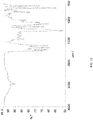
- Form I of compound of formula III wherein HX is hydrochloric acid and R 1 is benzyl, is characterized in that it provides a PXRD pattern substantially in accordance to Figure 4 .
- the polymorph of crystalline compound of formula III wherein HX is hydrochloric acid and R 1 is benzyl, Form I, is characterized in that it provides a powder X-ray diffraction pattern, characterized by the interplanar distance values shown below: Angle 2 ⁇ (°) ( ⁇ 0.2) d value ( ⁇ ) 4.3 20.5 8.6 10.2 10.1 8.8 11.6 7.6 11.9 7.4 14.3 6.2 14.8 5.9 15.3 5.8 17.3 5.1 19.6 4.5 20.0 4.4 20.2 4.3 21.5 4.1 22.9 3.9 23.6 3.8 24.0 3.7 25.2 3.5 25.7 3.4 26.5 3.3
- the polymorph of crystalline compound of formula III wherein HX is hydrochloric acid and R 1 is benzyl, Forml, is characterized in that it provides a powder X-ray diffraction pattern, characterized by the interplanar distance values and relative intensity (in percentage) at approximately the values shown below: Angle 2 ⁇ (°) ( ⁇ 0.2) d value ( ⁇ ) Rel. Int.
- the term approximately means in this context of PXRD intensity measurements that there is an uncertainty in the measurements of the relative intensities. It is known to the person skilled in the art that the uncertainty of the relative intensities depends strongly on the measurement conditions.
- the relative intensity values can e.g. vary by 30%.
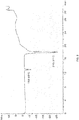
- polymorph of a crystalline compound of formula III , wherein HX is hydrochloric acid and R 1 is benzyl, polymorph I is characterized in that it provides a DSC substantially in accordance to Figure 3 .
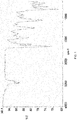
- polymorph I of a crystalline compound of formula III wherein HX is hydrochloric acid and R 1 is benzyl, is characterized in that it provides an IR substantially in accordance to Figure 2 .
- HA solid crystalline form of compound of formula III.HA , in a molar ratio of HA to III of 1:2, wherein HA is L-tartaric acid and R 1 is benzyl, characterized by at least one of the following:
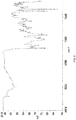
- the solid crystalline form of compound of formula III.HA in a molar ratio of HA to III of 1:2, wherein HA is L-tartaric acid and R 1 is benzyl, is characterized in that it provides an IR analysis substantially in accordance to Figure 8 .
- the solid crystalline form of compound of formula III.HA in a molar ratio of HA to III of 1:2, wherein HA is L-tartaric acid and R 1 is benzyl, is characterized in that it provides a DSC substantially in accordance to Figure 9 .
- HA ditoluyl-L-tartaric acid
- R 1 is benzyl
- the solid crystalline form of compound of formula III.HA wherein HA is ditoluyl-L-tartaric acid and R 1 is benzyl, is characterized in that it provides an IR analysis substantially in accordance to Figure 10 .
- the solid crystalline form of compound of formula III.HA wherein HA is ditoluyl-L-tartaric acid and R 1 is benzyl, is characterized in that it provides a DSC substantially in accordance to Figure 11 .
- HA ditoluyl-D-tartaric acid
- R 1 is benzyl
- the term approximately means in this context of IR measurements that the cm -1 values can vary by 4 cm -1 , preferably by 2 cm -1 .
- the term approximately means in this context of DSC measurements that the °C values can vary by 2 °C, preferably by 1 °C. In the case of a temperature range preceded by the term approximately, it means that each endpoint of the range may vary by 2 °C, preferably by 1 °C.
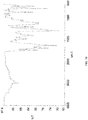
- the solid crystalline form of compound of formula III.HA wherein HA is ditoluyl-D-tartaric acid_and R 1 is benzyl, is characterized in that it provides an IR analysis substantially in accordance to Figure 12 .
- the solid crystalline form of compound of formula III.HA wherein HA is ditoluyl-D-tartaric acid and R 1 is benzyl, is characterized in that it provides a DSC substantially in accordance to Figure 13 .
- the present invention in particular is directed to the following embodiments.
- a process for manufacturing indacaterol or a pharmaceutically acceptable salt or co-crystal thereof which comprises at least the steps of:
- a process for manufacturing indacaterol or a pharmaceutically acceptable salt or co-crystal thereof which comprises at least the steps of:
- a process for manufacturing indacaterol or a pharmaceutically acceptable salt or co-crystal thereof which comprises at least the steps of:
- a process for manufacturing indacaterol or a pharmaceutically acceptable salt or co-crystal thereof which comprises at least the steps of:
- a process for manufacturing indacaterol or a pharmaceutically acceptable salt or co-crystal thereof which comprises at least the steps of:
- indacaterol or a pharmaceutically acceptable salt or co-crystal thereof comprising at least the steps of:
- indacaterol or a pharmaceutically acceptable salt thereof comprising at least the steps of:
- Proton nuclear magnetic resonance analyses were recorded in a deuterated solvent in a Varian Gemini 200 Fourier-Transform (FT) NMR spectrometer and chemical shifts are given in part per million (ppm) downfield from tetramethylsilane as internal standard. The coupling constants are given in Hz. Spectra were acquired dissolving 5-10 mg of sample in 0.7 mL of deuterated solvent.
- FT Fourier-Transform
- Infrared spectrometry analyses were recorded in a Perkin Elmer FT-IR spectrum One appliance using a Perkin Elmer ATR accessory.
Landscapes
- Chemical & Material Sciences (AREA)
- Organic Chemistry (AREA)
- Organic Low-Molecular-Weight Compounds And Preparation Thereof (AREA)
- Pharmaceuticals Containing Other Organic And Inorganic Compounds (AREA)
- Quinoline Compounds (AREA)
Claims (14)
- Un procédé de fabrication de 5-[(R)-2-(5,6-diéthyl-indan-2-ylamino)-1-hydroxy-éthyl]-8-hydroxy-(1H)-quinolin-2-one, indacatérol, de la formule I ou d'un sel ou co-cristal pharmaceutiquement acceptable de celui-ci, qui comprend les étapes suivantes :i) faire réagir le composé de formule II

 où R1 est tel que défini ci-dessus,et où l'acide HX est sélectionné parmi le groupe constitué d'acide chlorhydrique, acide bromhydrique, acide phosphorique, acide sulfurique, acide formique, acide acétique, acide dichloroacétique, acide méthanesulfonique, acide p-toluènesulfonique et acide camphorsulfonique,ii) éventuellement convertir le composé de formule III en un composé de formule III.B par traitement à l'aide d'une base en présence d'un solvant, où le solvant est un mélange d'un solvant organique et d'eau,
 iii) éliminer le groupe protecteur R1 des produits obtenus à l'étape i) ou ii), si présent, par hydrogénation en présence d'un catalyseur et d'un solvant organique afin d'obtenir l'indacatérol de formule I ,
 iv) éventuellement, traiter l'indacatérol de formule I obtenu à l'étape iii) à l'aide d'un acide pharmaceutiquement acceptable afin d'obtenir un sel ou co-cristal pharmaceutiquement acceptable de celui-ci.
 - Le procédé selon la revendication 1, où R1 est un groupe alkyle en C1-C4, substitué par un groupe aryle en C6-C10.
- Le procédé selon la revendication 2, où R1 est un benzyle ou un p-méthoxybenzyle.
- Le procédé selon la revendication 3, où R1 est un benzyle.
- Le procédé selon l'une quelconque des revendications précédentes, où R2 est sélectionné parmi le groupe constitué de triéthylsilyle et tert-butyldiméthylsilyle.
- Le procédé selon l'une quelconque des revendications précédentes, où l'acide HX est de l'acide chlorhydrique.
- Le procédé selon l'une quelconque des revendications précédentes, où le rapport molaire du composé de formule II à l'acide HX est de 1:1 à 1:15.
- Le procédé selon l'une quelconque des revendications précédentes où l'étape ii) comprend en outre un traitement de purification afin d'accroître la pureté énantiomérique du composé III.B comprenant le traitement du composé III.B à l'aide d'un acide organique chiral HA sélectionné parmi le groupe constitué d'acide L-tartrique, acide dibenzoyle-L-tartrique, dibenzoyle-D-tartrique, acide ditoluyl-L tartrique et ditoluyl-D-tartrique en présence d'un solvant organique afin d'obtenir un composé de formule III.HA

- Le procédé selon la revendication 8, ou l'acide organique chiral HA est de l'acide L-tartrique.
- Le procédé selon l'une quelconque des revendications précédentes, où le composé de formule III , le composé de formule III.B et/ou le composé de formule III.HA obtenus dans l'une quelconque des étapes i) ou ii) sont purifiés à l'aide de techniques classiques de purification.
- Le procédé selon l'une quelconque des revendications précédentes, où le solvant organique aux étapes i) et iii) est indépendamment sélectionné parmi le groupe constitué d'alcools, d'éthers et d'esters.
- Le procédé selon la revendication 11, où le solvant organique est un alcool sélectionné parmi le groupe constitué de méthanol, éthanol, isopropanol et de mélanges de ceux-ci.
- Le procédé selon l'une quelconque des revendications précédentes, où l'hydrogénation à l'étape iii) est réalisée en présence d'une base.
- Le procédé selon l'une quelconque des revendications précédentes, où l'acide pharmaceutiquement acceptable de l'étape iv) est de l'acide maléique afin d'obtenir du maléate d'indacatérol.
Priority Applications (2)
| Application Number | Priority Date | Filing Date | Title |
|---|---|---|---|
| EP14712694.0A EP2978745B1 (fr) | 2013-03-27 | 2014-03-27 | Procédé de préparation de (r)-5-[2-(5,6-diéthylindan-2-ylamino)-1-hydroxyéthyl]-8-hydroxy-(1h)-quinolin-2-one |
| EP17160926.6A EP3205646A3 (fr) | 2013-03-27 | 2014-03-27 | Intermédiaires pour la fabrication de (r)-5-[2- (5,6-diéthylindan-2-ylamino)-1-hydroxyéthyl]-8-hydroxy-(1h)-quinolin-2-one (indacatérol) |
Applications Claiming Priority (3)
| Application Number | Priority Date | Filing Date | Title |
|---|---|---|---|
| EP13161410 | 2013-03-27 | ||
| EP14712694.0A EP2978745B1 (fr) | 2013-03-27 | 2014-03-27 | Procédé de préparation de (r)-5-[2-(5,6-diéthylindan-2-ylamino)-1-hydroxyéthyl]-8-hydroxy-(1h)-quinolin-2-one |
| PCT/EP2014/056229 WO2014154841A1 (fr) | 2013-03-27 | 2014-03-27 | Procédé pour la fabrication de (r)-5-[2-(5,6-diéthyl-indan-2-ylamino)-1-hydroxyéthyl]-8-hydroxy-(1h)-quinolin-2-one |
Related Child Applications (1)
| Application Number | Title | Priority Date | Filing Date |
|---|---|---|---|
| EP17160926.6A Division EP3205646A3 (fr) | 2013-03-27 | 2014-03-27 | Intermédiaires pour la fabrication de (r)-5-[2- (5,6-diéthylindan-2-ylamino)-1-hydroxyéthyl]-8-hydroxy-(1h)-quinolin-2-one (indacatérol) |
Publications (2)
| Publication Number | Publication Date |
|---|---|
| EP2978745A1 EP2978745A1 (fr) | 2016-02-03 |
| EP2978745B1 true EP2978745B1 (fr) | 2017-03-15 |
Family
ID=47997194
Family Applications (2)
| Application Number | Title | Priority Date | Filing Date |
|---|---|---|---|
| EP14712694.0A Active EP2978745B1 (fr) | 2013-03-27 | 2014-03-27 | Procédé de préparation de (r)-5-[2-(5,6-diéthylindan-2-ylamino)-1-hydroxyéthyl]-8-hydroxy-(1h)-quinolin-2-one |
| EP17160926.6A Withdrawn EP3205646A3 (fr) | 2013-03-27 | 2014-03-27 | Intermédiaires pour la fabrication de (r)-5-[2- (5,6-diéthylindan-2-ylamino)-1-hydroxyéthyl]-8-hydroxy-(1h)-quinolin-2-one (indacatérol) |
Family Applications After (1)
| Application Number | Title | Priority Date | Filing Date |
|---|---|---|---|
| EP17160926.6A Withdrawn EP3205646A3 (fr) | 2013-03-27 | 2014-03-27 | Intermédiaires pour la fabrication de (r)-5-[2- (5,6-diéthylindan-2-ylamino)-1-hydroxyéthyl]-8-hydroxy-(1h)-quinolin-2-one (indacatérol) |
Country Status (3)
| Country | Link |
|---|---|
| EP (2) | EP2978745B1 (fr) |
| ES (1) | ES2626829T3 (fr) |
| WO (1) | WO2014154841A1 (fr) |
Families Citing this family (3)
| Publication number | Priority date | Publication date | Assignee | Title |
|---|---|---|---|---|
| ES2815123T3 (es) | 2014-01-09 | 2021-03-29 | Davuluri Ramamohan Rao | Proceso novedoso para la preparación de indacaterol o sus sales aceptables farmacéuticamente |
| ES2747905T3 (es) | 2015-09-29 | 2020-03-12 | Inke Sa | Solvato mixto de L-tartrato de (R)-5-[2-(5,6-dietilindan-2-ilamino)-1-hidroxietil]-8-hidroxi-1H-quinolin-2-ona |
| CN110128339B (zh) * | 2019-05-31 | 2022-03-08 | 苏州芝宇生物科技有限公司 | 一种茚达特罗及其盐衍生物的合成方法和合成用中间体 |
Family Cites Families (7)
| Publication number | Priority date | Publication date | Assignee | Title |
|---|---|---|---|---|
| GB9913083D0 (en) * | 1999-06-04 | 1999-08-04 | Novartis Ag | Organic compounds |
| US6653323B2 (en) | 2001-11-13 | 2003-11-25 | Theravance, Inc. | Aryl aniline β2 adrenergic receptor agonists |
| TWI324150B (en) * | 2003-02-28 | 2010-05-01 | Novartis Ag | Process for preparing 5-[(r)-2-(5,6-diethyl-indan-2-ylamino)-1-hydroxy-ethyl]-8-hydroxy-(1h)-quinolin-2-one salt |
| GB0413960D0 (en) | 2004-06-22 | 2004-07-28 | Novartis Ag | Organic compounds |
| EP1914227A1 (fr) | 2006-08-31 | 2008-04-23 | Novartis AG | Forme crystalline polymorphe d'une dérivé de indan-2-ylamino-hydroxyethyl-quinolinone maleate comme agoniste de 2-adrénorécepteur beta |
| WO2013132514A2 (fr) * | 2012-03-09 | 2013-09-12 | Rao Davuluri Ramamohan | Nouveau procédé de préparation de (r)-5-[2-[(5, 6-diéthyl-2, 3-dihydro-1h-indèn-2-yl) amino]-1-hydroxyéthyl]-8-hydroxy quinoléin-2(1h)-one |
| WO2014044288A1 (fr) * | 2012-09-21 | 2014-03-27 | Crystal Pharma Sa | Procédés de préparation d'indacatérol et de ses sels pharmaceutiquement acceptables |
-
2014
- 2014-03-27 EP EP14712694.0A patent/EP2978745B1/fr active Active
- 2014-03-27 EP EP17160926.6A patent/EP3205646A3/fr not_active Withdrawn
- 2014-03-27 WO PCT/EP2014/056229 patent/WO2014154841A1/fr not_active Ceased
- 2014-03-27 ES ES14712694.0T patent/ES2626829T3/es active Active
Non-Patent Citations (1)
| Title |
|---|
| None * |
Also Published As
| Publication number | Publication date |
|---|---|
| EP3205646A3 (fr) | 2017-10-04 |
| EP3205646A2 (fr) | 2017-08-16 |
| EP2978745A1 (fr) | 2016-02-03 |
| ES2626829T3 (es) | 2017-07-26 |
| WO2014154841A1 (fr) | 2014-10-02 |
Similar Documents
| Publication | Publication Date | Title |
|---|---|---|
| EP2545043B1 (fr) | Forme i de lénalidomide anhydre | |
| US8884016B2 (en) | Apixaban preparation process | |
| US10323003B2 (en) | Process for the preparation of a PDE4 inhibitor | |
| US9550735B2 (en) | Process for the preparation of ivacaftor and solvates thereof | |
| JP2006519206A (ja) | アドレノセプターアゴニストとして有用な5−[(r)−2−(5,6−ジエチル−インダン−2−イルアミノ)−1−ヒドロキシ−エチル]−8−ヒドロキシ−(1h)−キノリン−2−オン塩の製造法 | |
| CZ2007455A3 (cs) | Zpusob izolace a cištení montelukastu | |
| EP3558954B1 (fr) | Procédé amélioré pour la fabrication de r-6-hydroxy-8-[1-hydroxy-2-[2- (4-méthoxyphényl)-1,1-diméthyléthylaminoéthyl]-2h-1,4-benzoxazin-3 (4h)-one chlorhydrate | |
| US20200231533A1 (en) | Processes for preparation of 4-aminoindane compounds and related aminoindane amides | |
| EP3205646A2 (fr) | Intermédiaires pour la fabrication de (r)-5-[2- (5,6-diéthylindan-2-ylamino)-1-hydroxyéthyl]-8-hydroxy-(1h)-quinolin-2-one (indacatérol) | |
| EP3166942B1 (fr) | Procédé de préparation d'apixaban | |
| US20050277650A1 (en) | Process for preparing aripirazole hydrate | |
| WO2016027283A2 (fr) | Procédé de préparation de d'indacatérol et de sels de celui-ci | |
| EP3347345B1 (fr) | Solvate mixte de (r)-5-[2-(5,6-diéthylindan-2-ylamino)-1-hydroxyéthyl]-8-hydroxy-1h-quinolin-2-one l-tartrate | |
| WO2020148641A1 (fr) | Procédé de préparation de 2-amino-5-hydroxy propiophénone | |
| US8278484B2 (en) | Process for preparing a benzoylbenzeneacetamide derivative | |
| WO2014096373A1 (fr) | Procédé de préparation de n-(2-(7-méthoxy-1-naphtalényl)éthyl)acétamide et de formes solides de celui-ci | |
| WO2017108972A1 (fr) | Composés de r-(-)-(e)-[4-(2,4-dichlorophényl)-1,3-dithiolan-2-ylidène]-1-imidazolylacétonitrile-ha (luliconazole-ha) à titre d'antifongiques | |
| CA2542796C (fr) | Nouveau procede de preparation de quinoleines 3-fluorees | |
| US20070167477A1 (en) | Processes to prepare finasteride polymorphs | |
| EA040500B1 (ru) | Улучшенный способ получения гидрохлорида r-6-гидрокси-8-[1-гидрокси-2-[2-(4-метоксифенил)-1,1-диметилэтиламиноэтил]-2h-1,4-бензоксазин-3(4h)-она | |
| KR20160092989A (ko) | mGlu5 수용체의 음성 알로스테릭 조절제로서의 6-플루오로-2-[4-(피리딘-2-일)부트-3-인-1-일]이미다조[1,2-a]피리딘의 모노-포스페이트염 및 그의 다형체 |
Legal Events
| Date | Code | Title | Description |
|---|---|---|---|
| PUAI | Public reference made under article 153(3) epc to a published international application that has entered the european phase |
Free format text: ORIGINAL CODE: 0009012 |
|
| 17P | Request for examination filed |
Effective date: 20151021 |
|
| AK | Designated contracting states |
Kind code of ref document: A1 Designated state(s): AL AT BE BG CH CY CZ DE DK EE ES FI FR GB GR HR HU IE IS IT LI LT LU LV MC MK MT NL NO PL PT RO RS SE SI SK SM TR |
|
| AX | Request for extension of the european patent |
Extension state: BA ME |
|
| 17Q | First examination report despatched |
Effective date: 20160304 |
|
| DAX | Request for extension of the european patent (deleted) | ||
| GRAP | Despatch of communication of intention to grant a patent |
Free format text: ORIGINAL CODE: EPIDOSNIGR1 |
|
| INTG | Intention to grant announced |
Effective date: 20161117 |
|
| GRAS | Grant fee paid |
Free format text: ORIGINAL CODE: EPIDOSNIGR3 |
|
| GRAA | (expected) grant |
Free format text: ORIGINAL CODE: 0009210 |
|
| AK | Designated contracting states |
Kind code of ref document: B1 Designated state(s): AL AT BE BG CH CY CZ DE DK EE ES FI FR GB GR HR HU IE IS IT LI LT LU LV MC MK MT NL NO PL PT RO RS SE SI SK SM TR |
|
| REG | Reference to a national code |
Ref country code: CH Ref legal event code: EP Ref country code: GB Ref legal event code: FG4D |
|
| REG | Reference to a national code |
Ref country code: IE Ref legal event code: FG4D |
|
| REG | Reference to a national code |
Ref country code: AT Ref legal event code: REF Ref document number: 875387 Country of ref document: AT Kind code of ref document: T Effective date: 20170415 |
|
| REG | Reference to a national code |
Ref country code: DE Ref legal event code: R096 Ref document number: 602014007612 Country of ref document: DE |
|
| REG | Reference to a national code |
Ref country code: NL Ref legal event code: MP Effective date: 20170315 |
|
| REG | Reference to a national code |
Ref country code: LT Ref legal event code: MG4D |
|
| REG | Reference to a national code |
Ref country code: ES Ref legal event code: FG2A Ref document number: 2626829 Country of ref document: ES Kind code of ref document: T3 Effective date: 20170726 Ref country code: FR Ref legal event code: PLFP Year of fee payment: 4 |
|
| PG25 | Lapsed in a contracting state [announced via postgrant information from national office to epo] |
Ref country code: FI Free format text: LAPSE BECAUSE OF FAILURE TO SUBMIT A TRANSLATION OF THE DESCRIPTION OR TO PAY THE FEE WITHIN THE PRESCRIBED TIME-LIMIT Effective date: 20170315 Ref country code: HR Free format text: LAPSE BECAUSE OF FAILURE TO SUBMIT A TRANSLATION OF THE DESCRIPTION OR TO PAY THE FEE WITHIN THE PRESCRIBED TIME-LIMIT Effective date: 20170315 Ref country code: NO Free format text: LAPSE BECAUSE OF FAILURE TO SUBMIT A TRANSLATION OF THE DESCRIPTION OR TO PAY THE FEE WITHIN THE PRESCRIBED TIME-LIMIT Effective date: 20170615 Ref country code: LT Free format text: LAPSE BECAUSE OF FAILURE TO SUBMIT A TRANSLATION OF THE DESCRIPTION OR TO PAY THE FEE WITHIN THE PRESCRIBED TIME-LIMIT Effective date: 20170315 Ref country code: GR Free format text: LAPSE BECAUSE OF FAILURE TO SUBMIT A TRANSLATION OF THE DESCRIPTION OR TO PAY THE FEE WITHIN THE PRESCRIBED TIME-LIMIT Effective date: 20170616 |
|
| REG | Reference to a national code |
Ref country code: AT Ref legal event code: MK05 Ref document number: 875387 Country of ref document: AT Kind code of ref document: T Effective date: 20170315 |
|
| PG25 | Lapsed in a contracting state [announced via postgrant information from national office to epo] |
Ref country code: BG Free format text: LAPSE BECAUSE OF FAILURE TO SUBMIT A TRANSLATION OF THE DESCRIPTION OR TO PAY THE FEE WITHIN THE PRESCRIBED TIME-LIMIT Effective date: 20170615 Ref country code: SE Free format text: LAPSE BECAUSE OF FAILURE TO SUBMIT A TRANSLATION OF THE DESCRIPTION OR TO PAY THE FEE WITHIN THE PRESCRIBED TIME-LIMIT Effective date: 20170315 Ref country code: RS Free format text: LAPSE BECAUSE OF FAILURE TO SUBMIT A TRANSLATION OF THE DESCRIPTION OR TO PAY THE FEE WITHIN THE PRESCRIBED TIME-LIMIT Effective date: 20170315 Ref country code: LV Free format text: LAPSE BECAUSE OF FAILURE TO SUBMIT A TRANSLATION OF THE DESCRIPTION OR TO PAY THE FEE WITHIN THE PRESCRIBED TIME-LIMIT Effective date: 20170315 |
|
| PG25 | Lapsed in a contracting state [announced via postgrant information from national office to epo] |
Ref country code: NL Free format text: LAPSE BECAUSE OF FAILURE TO SUBMIT A TRANSLATION OF THE DESCRIPTION OR TO PAY THE FEE WITHIN THE PRESCRIBED TIME-LIMIT Effective date: 20170315 |
|
| PG25 | Lapsed in a contracting state [announced via postgrant information from national office to epo] |
Ref country code: SK Free format text: LAPSE BECAUSE OF FAILURE TO SUBMIT A TRANSLATION OF THE DESCRIPTION OR TO PAY THE FEE WITHIN THE PRESCRIBED TIME-LIMIT Effective date: 20170315 Ref country code: RO Free format text: LAPSE BECAUSE OF FAILURE TO SUBMIT A TRANSLATION OF THE DESCRIPTION OR TO PAY THE FEE WITHIN THE PRESCRIBED TIME-LIMIT Effective date: 20170315 Ref country code: CZ Free format text: LAPSE BECAUSE OF FAILURE TO SUBMIT A TRANSLATION OF THE DESCRIPTION OR TO PAY THE FEE WITHIN THE PRESCRIBED TIME-LIMIT Effective date: 20170315 Ref country code: EE Free format text: LAPSE BECAUSE OF FAILURE TO SUBMIT A TRANSLATION OF THE DESCRIPTION OR TO PAY THE FEE WITHIN THE PRESCRIBED TIME-LIMIT Effective date: 20170315 Ref country code: AT Free format text: LAPSE BECAUSE OF FAILURE TO SUBMIT A TRANSLATION OF THE DESCRIPTION OR TO PAY THE FEE WITHIN THE PRESCRIBED TIME-LIMIT Effective date: 20170315 |
|
| REG | Reference to a national code |
Ref country code: CH Ref legal event code: PL |
|
| PG25 | Lapsed in a contracting state [announced via postgrant information from national office to epo] |
Ref country code: PL Free format text: LAPSE BECAUSE OF FAILURE TO SUBMIT A TRANSLATION OF THE DESCRIPTION OR TO PAY THE FEE WITHIN THE PRESCRIBED TIME-LIMIT Effective date: 20170315 Ref country code: PT Free format text: LAPSE BECAUSE OF FAILURE TO SUBMIT A TRANSLATION OF THE DESCRIPTION OR TO PAY THE FEE WITHIN THE PRESCRIBED TIME-LIMIT Effective date: 20170717 Ref country code: IS Free format text: LAPSE BECAUSE OF FAILURE TO SUBMIT A TRANSLATION OF THE DESCRIPTION OR TO PAY THE FEE WITHIN THE PRESCRIBED TIME-LIMIT Effective date: 20170715 Ref country code: SM Free format text: LAPSE BECAUSE OF FAILURE TO SUBMIT A TRANSLATION OF THE DESCRIPTION OR TO PAY THE FEE WITHIN THE PRESCRIBED TIME-LIMIT Effective date: 20170315 |
|
| REG | Reference to a national code |
Ref country code: DE Ref legal event code: R097 Ref document number: 602014007612 Country of ref document: DE |
|
| REG | Reference to a national code |
Ref country code: IE Ref legal event code: MM4A |
|
| PLBE | No opposition filed within time limit |
Free format text: ORIGINAL CODE: 0009261 |
|
| STAA | Information on the status of an ep patent application or granted ep patent |
Free format text: STATUS: NO OPPOSITION FILED WITHIN TIME LIMIT |
|
| PG25 | Lapsed in a contracting state [announced via postgrant information from national office to epo] |
Ref country code: MC Free format text: LAPSE BECAUSE OF FAILURE TO SUBMIT A TRANSLATION OF THE DESCRIPTION OR TO PAY THE FEE WITHIN THE PRESCRIBED TIME-LIMIT Effective date: 20170315 Ref country code: LU Free format text: LAPSE BECAUSE OF NON-PAYMENT OF DUE FEES Effective date: 20170327 Ref country code: DK Free format text: LAPSE BECAUSE OF FAILURE TO SUBMIT A TRANSLATION OF THE DESCRIPTION OR TO PAY THE FEE WITHIN THE PRESCRIBED TIME-LIMIT Effective date: 20170315 |
|
| 26N | No opposition filed |
Effective date: 20171218 |
|
| PG25 | Lapsed in a contracting state [announced via postgrant information from national office to epo] |
Ref country code: LI Free format text: LAPSE BECAUSE OF NON-PAYMENT OF DUE FEES Effective date: 20170331 Ref country code: SI Free format text: LAPSE BECAUSE OF FAILURE TO SUBMIT A TRANSLATION OF THE DESCRIPTION OR TO PAY THE FEE WITHIN THE PRESCRIBED TIME-LIMIT Effective date: 20170315 Ref country code: CH Free format text: LAPSE BECAUSE OF NON-PAYMENT OF DUE FEES Effective date: 20170331 Ref country code: IE Free format text: LAPSE BECAUSE OF NON-PAYMENT OF DUE FEES Effective date: 20170327 |
|
| REG | Reference to a national code |
Ref country code: BE Ref legal event code: MM Effective date: 20170331 |
|
| REG | Reference to a national code |
Ref country code: FR Ref legal event code: PLFP Year of fee payment: 5 |
|
| PG25 | Lapsed in a contracting state [announced via postgrant information from national office to epo] |
Ref country code: BE Free format text: LAPSE BECAUSE OF NON-PAYMENT OF DUE FEES Effective date: 20170331 |
|
| PG25 | Lapsed in a contracting state [announced via postgrant information from national office to epo] |
Ref country code: MT Free format text: LAPSE BECAUSE OF NON-PAYMENT OF DUE FEES Effective date: 20170327 |
|
| REG | Reference to a national code |
Ref country code: ES Ref legal event code: PC2A Owner name: INKE, S.A. Effective date: 20190329 |
|
| REG | Reference to a national code |
Ref country code: DE Ref legal event code: R081 Ref document number: 602014007612 Country of ref document: DE Owner name: INKE, S.A., ES Free format text: FORMER OWNER: LABORATORIOS LESVI, S.L., SANT JOAN DESPI, BARCELONA, ES |
|
| REG | Reference to a national code |
Ref country code: GB Ref legal event code: 732E Free format text: REGISTERED BETWEEN 20190404 AND 20190410 |
|
| PG25 | Lapsed in a contracting state [announced via postgrant information from national office to epo] |
Ref country code: HU Free format text: LAPSE BECAUSE OF FAILURE TO SUBMIT A TRANSLATION OF THE DESCRIPTION OR TO PAY THE FEE WITHIN THE PRESCRIBED TIME-LIMIT; INVALID AB INITIO Effective date: 20140327 |
|
| PG25 | Lapsed in a contracting state [announced via postgrant information from national office to epo] |
Ref country code: CY Free format text: LAPSE BECAUSE OF FAILURE TO SUBMIT A TRANSLATION OF THE DESCRIPTION OR TO PAY THE FEE WITHIN THE PRESCRIBED TIME-LIMIT Effective date: 20170315 |
|
| PG25 | Lapsed in a contracting state [announced via postgrant information from national office to epo] |
Ref country code: MK Free format text: LAPSE BECAUSE OF FAILURE TO SUBMIT A TRANSLATION OF THE DESCRIPTION OR TO PAY THE FEE WITHIN THE PRESCRIBED TIME-LIMIT Effective date: 20170315 |
|
| PG25 | Lapsed in a contracting state [announced via postgrant information from national office to epo] |
Ref country code: TR Free format text: LAPSE BECAUSE OF FAILURE TO SUBMIT A TRANSLATION OF THE DESCRIPTION OR TO PAY THE FEE WITHIN THE PRESCRIBED TIME-LIMIT Effective date: 20170315 |
|
| PG25 | Lapsed in a contracting state [announced via postgrant information from national office to epo] |
Ref country code: AL Free format text: LAPSE BECAUSE OF FAILURE TO SUBMIT A TRANSLATION OF THE DESCRIPTION OR TO PAY THE FEE WITHIN THE PRESCRIBED TIME-LIMIT Effective date: 20170315 |
|
| P01 | Opt-out of the competence of the unified patent court (upc) registered |
Effective date: 20230517 |
|
| PGFP | Annual fee paid to national office [announced via postgrant information from national office to epo] |
Ref country code: ES Payment date: 20250401 Year of fee payment: 12 |
|
| PGFP | Annual fee paid to national office [announced via postgrant information from national office to epo] |
Ref country code: GB Payment date: 20260327 Year of fee payment: 13 |
|
| PGFP | Annual fee paid to national office [announced via postgrant information from national office to epo] |
Ref country code: DE Payment date: 20260327 Year of fee payment: 13 |
|
| PGFP | Annual fee paid to national office [announced via postgrant information from national office to epo] |
Ref country code: IT Payment date: 20260319 Year of fee payment: 13 |
|
| PGFP | Annual fee paid to national office [announced via postgrant information from national office to epo] |
Ref country code: FR Payment date: 20260325 Year of fee payment: 13 |