EP2980101B1 - Impfstoff beinhaltend ein n-terminales, pest sequenz enthaltendes fragment vom listeriolysin (llo) protein welches an ein her-2 antigen fusioniret wurde. - Google Patents
Impfstoff beinhaltend ein n-terminales, pest sequenz enthaltendes fragment vom listeriolysin (llo) protein welches an ein her-2 antigen fusioniret wurde. Download PDFInfo
- Publication number
- EP2980101B1 EP2980101B1 EP15182979.3A EP15182979A EP2980101B1 EP 2980101 B1 EP2980101 B1 EP 2980101B1 EP 15182979 A EP15182979 A EP 15182979A EP 2980101 B1 EP2980101 B1 EP 2980101B1
- Authority
- EP
- European Patent Office
- Prior art keywords
- another embodiment
- fragment
- llo
- antigen
- seq
- Prior art date
- Legal status (The legal status is an assumption and is not a legal conclusion. Google has not performed a legal analysis and makes no representation as to the accuracy of the status listed.)
- Expired - Lifetime
Links
Images





Classifications
-
- A—HUMAN NECESSITIES
- A61—MEDICAL OR VETERINARY SCIENCE; HYGIENE
- A61K—PREPARATIONS FOR MEDICAL, DENTAL OR TOILETRY PURPOSES
- A61K39/00—Medicinal preparations containing antigens or antibodies
- A61K39/0005—Vertebrate antigens
- A61K39/0011—Cancer antigens
- A61K39/001102—Receptors, cell surface antigens or cell surface determinants
- A61K39/001103—Receptors for growth factors
- A61K39/001106—Her-2/neu/ErbB2, Her-3/ErbB3 or Her 4/ErbB4
-
- A—HUMAN NECESSITIES
- A61—MEDICAL OR VETERINARY SCIENCE; HYGIENE
- A61K—PREPARATIONS FOR MEDICAL, DENTAL OR TOILETRY PURPOSES
- A61K39/00—Medicinal preparations containing antigens or antibodies
- A61K2039/51—Medicinal preparations containing antigens or antibodies comprising whole cells, viruses or DNA/RNA
- A61K2039/52—Bacterial cells; Fungal cells; Protozoal cells
- A61K2039/522—Bacterial cells; Fungal cells; Protozoal cells avirulent or attenuated
-
- A—HUMAN NECESSITIES
- A61—MEDICAL OR VETERINARY SCIENCE; HYGIENE
- A61K—PREPARATIONS FOR MEDICAL, DENTAL OR TOILETRY PURPOSES
- A61K39/00—Medicinal preparations containing antigens or antibodies
- A61K2039/51—Medicinal preparations containing antigens or antibodies comprising whole cells, viruses or DNA/RNA
- A61K2039/52—Bacterial cells; Fungal cells; Protozoal cells
- A61K2039/523—Bacterial cells; Fungal cells; Protozoal cells expressing foreign proteins
-
- A—HUMAN NECESSITIES
- A61—MEDICAL OR VETERINARY SCIENCE; HYGIENE
- A61K—PREPARATIONS FOR MEDICAL, DENTAL OR TOILETRY PURPOSES
- A61K39/00—Medicinal preparations containing antigens or antibodies
- A61K2039/60—Medicinal preparations containing antigens or antibodies characteristics by the carrier linked to the antigen
- A61K2039/6031—Proteins
- A61K2039/6068—Other bacterial proteins, e.g. OMP
Definitions
- the present invention provides recombinant peptides comprising a listeriolysin (LLO) protein fragment fused to a Her-2 protein fragment, recombinant Listeria strains comprising same, and their use in treating and vaccinating against a Her-2-expressing tumors.
- LLO listeriolysin
- Her-2/neu (referred to henceforth as "Her-2") is a 185 kDa glycoprotein that is a member of the epidermal growth factor receptor (EGFR) family of tyrosine kinases, and consists of an extracellular domain, a transmembrane domain, and an intracellular domain which is known to be involved in cellular signaling ( Bargmann CI et al, Nature 319: 226, 1986 ; King CR et al, Science 229: 974, 1985 ). It is overexpressed in 25 to 40% of all breast cancers and is also overexpressed in many cancers of the ovaries, lung, pancreas, and gastrointestinal tract.
- EGFR epidermal growth factor receptor
- Her-2 The overexpression of Her-2 is associated with uncontrolled cell growth and signaling, both of which contribute to the development of tumors. Patients with cancers that overexpress Her-2 exhibit tolerance even with detectable humoral, CD8 + T cell, and CD4 + T cell responses directed against Her-2.
- Listeria monocytogenes is an intracellular pathogen that primarily infects antigen presenting cells and has adapted for life in the cytoplasm of these cells.
- Host cells such as macrophages, actively phagocytose L. monocytogenes and the majority of the bacteria are degraded in the phagolysosome. Some of the bacteria escape into the host cytosol by perforating the phagosomal membrane through the action of a hemolysin, listeriolysin O (LLO).
- LLO listeriolysin O
- This invention provides a pharmaceutical composition
- a pharmaceutical composition comprising a recombinant polypeptide comprising an N-terminal fragment of a listeriolysin (LLO) protein fused to a fragment of a Her-2 antigen, wherein the fragment of the Her-2 antigen consists of amino acids 303-501 or 479-655 of SEQ ID NO: 40, or amino acids 303-501 or 479-652 of SEQ ID NO: 43, or an amino acid sequence greater than 97% identical thereto, and wherein said LLO comprises a PEST sequence, for use in halting growth of established Her-2-expressing tumor cells in a subject, or for use in treating a Her-2-expressing tumor or cancer in a subject.
- LLO listeriolysin
- This invention also provides a pharmaceutical composition
- a pharmaceutical composition comprising a recombinant nucleotide encoding a recombinant polypeptide comprising an N-terminal fragment of a listeriolysin (LLO) protein fused to a fragment of a Her-2 antigen, wherein the fragment of the Her-2 antigen consists of amino acids 303-501 or 479-655 of SEQ ID NO: 40, or amino acids 303-501 or 479-652 of SEQ ID NO: 43, or an amino acid sequence greater than 97% identical thereto, and wherein said LLO comprises a PEST sequence, for use in halting growth of established Her-2-expressing tumor cells in a subject, or for use in treating a Her-2-expressing tumor or cancer in a subject.
- LLO listeriolysin
- This invention still further provides a pharmaceutical composition
- a pharmaceutical composition comprising a recombinant Listeria strain comprising a recombinant nucleotide encoding a recombinant polypeptide comprising an N-terminal fragment of a listeriolysin (LLO) protein fused to a fragment of a Her-2 antigen, wherein the fragment of the Her-2 antigen consists of amino acids 303-501 or 479-655 of SEQ ID NO: 40, or amino acids 303-501 or 479-652 of SEQ ID NO: 43, or an amino acid sequence greater than 97% identical thereto, and wherein said LLO comprises a PEST sequence, for use in halting growth of established Her-2-expressing tumor cells in a subject, or for use in treating a Her-2-expressing tumor or cancer in a subject.
- LLO listeriolysin
- the recombinant polypeptide is present in the pharmaceutical composition in a recombinant Listeria strain.
- the recombinant Listeria strain present in the pharmaceutical composition is a Listeria monocytogenes.
- the pharmaceutical composition induces a CD8+ T cell-mediated immune response against Her-2-expressing tumor cells.
- the immune response against Her-2-expressing tumor cells may comprise an immune response to a subdominant epitope of Her-2 protein.
- This invention further provides a recombinant polypeptide comprising an N-terminal fragment of a listeriolysin (LLO) protein fused to a fragment of a Her-2 antigen, wherein the fragment of the Her-2 antigen consists of amino acids 303-501 or 479-655 of SEQ ID NO: 40, or amino acids 303-501 or 479-652 of SEQ ID NO: 43, or an amino acid sequence greater than 97% identical thereto, and wherein said LLO comprises a PEST sequence, for use in halting growth of established Her-2-expressing tumor cells, or for use in treating a Her-2-expressing tumor or cancer in a subject.
- LLO listeriolysin
- This invention also provides a recombinant nucleotide encoding a recombinant polypeptide comprising an N-terminal fragment of a listeriolysin (LLO) protein fused to a fragment of a Her-2 antigen, wherein the fragment of the Her-2 antigen consists of amino acids 303-501 or 479-655 of SEQ ID NO: 40, or amino acids 303-501 or 479-652 of SEQ ID NO: 43, or an amino acid sequence greater than 97% identical thereto, and wherein said LLO comprises a PEST sequence, for use in halting growth of established Her-2-expressing tumor cells, or for use in treating a Her-2-expressing tumor or cancer in a subject.
- LLO listeriolysin
- This invention also provides a recombinant Listeria comprising a nucleotide encoding a recombinant polypeptide comprising an N-terminal fragment of a listeriolysin (LLO) protein fused to a fragment of a Her-2 antigen, wherein the fragment of the Her-2 antigen consists of amino acids 303-501 or 479-655 of SEQ ID NO: 40, or amino acids 303-501 or 479-652 of SEQ ID NO: 43, or an amino acid sequence greater than 97% identical thereto, and wherein said LLO comprises a PEST sequence, for use in halting growth of established Her-2-expressing tumor cells, or for use in treating a Her-2-expressing tumor or cancer in a subject.
- LLO listeriolysin
- the recombinant Listeria is Listeria monocytogenes.
- the recombinant polypeptide, or recombinant nucleotide, or recombinant Listeria induces a CD8+ T cell-mediated immune response against Her-2-expressing tumor cells.
- the recombinant polypeptide, or recombinant nucleotide, or recombinant Listeria induces an immune response to a subdominant epitope of Her-2 protein.
- This invention provides a pharmaceutical composition
- a pharmaceutical composition comprising a recombinant polypeptide comprising an N-terminal fragment of a listeriolysin (LLO) protein fused to a fragment of a Her-2 antigen, wherein the fragment of the Her-2 antigen consists of amino acids 303-501 or 479-655 of SEQ ID NO: 40, or amino acids 303-501 or 479-652 of SEQ ID NO: 43, or an amino acid sequence greater than 97% identical thereto, and wherein said LLO comprises a PEST sequence, for use in halting growth of established Her-2-expressing tumor cells in a subject, or for use in treating a Her-2-expressing tumor or cancer in a subject.
- LLO listeriolysin
- This invention also provides a pharmaceutical composition
- a pharmaceutical composition comprising a recombinant nucleotide encoding a recombinant polypeptide comprising an N-terminal fragment of a listeriolysin (LLO) protein fused to a fragment of a Her-2 antigen, wherein the fragment of the Her-2 antigen consists of amino acids 303-501 or 479-655 of SEQ ID NO: 40, or amino acids 303-501 or 479-652 of SEQ ID NO: 43, or an amino acid sequence greater than 97% identical thereto, and wherein said LLO comprises a PEST sequence, for use in halting growth of established Her-2-expressing tumor cells in a subject, or for use in treating a Her-2-expressing tumor or cancer in a subject.
- LLO listeriolysin
- This invention still further provides a pharmaceutical composition
- a pharmaceutical composition comprising a recombinant Listeria strain comprising a recombinant nucleotide encoding a recombinant polypeptide comprising an N-terminal fragment of a listeriolysin (LLO) protein fused to a fragment of a Her-2 antigen, wherein the fragment of the Her-2 antigen consists of amino acids 303-501 or 479-655 of SEQ ID NO: 40, or amino acids 303-501 or 479-652 of SEQ ID NO: 43, or an amino acid sequence greater than 97% identical thereto, and wherein said LLO comprises a PEST sequence, for use in halting growth of established Her-2-expressing tumor cells in a subject, or for use in treating a Her-2-expressing tumor or cancer in a subject.
- LLO listeriolysin
- This invention further provides a recombinant polypeptide comprising an N-terminal fragment of a listeriolysin (LLO) protein fused to a fragment of a Her-2 antigen, wherein the fragment of the Her-2 antigen consists of amino acids 303-501 or 479-655 of SEQ ID NO: 40, or amino acids 303-501 or 479-652 of SEQ ID NO: 43, or an amino acid sequence greater than 97% identical thereto, and wherein said LLO comprises a PEST sequence, for use in halting growth of established Her-2-expressing tumor cells, or for use in treating a Her-2-expressing tumor or cancer in a subject.
- LLO listeriolysin
- This invention also provides a recombinant nucleotide encoding a recombinant polypeptide comprising an N-terminal fragment of a listeriolysin (LLO) protein fused to a fragment of a Her-2 antigen, wherein the fragment of the Her-2 antigen consists of amino acids 303-501 or 479-655 of SEQ ID NO: 40, or amino acids 303-501 or 479-652 of SEQ ID NO: 43, or an amino acid sequence greater than 97% identical thereto, and wherein said LLO comprises a PEST sequence, for use in halting growth of established Her-2-expressing tumor cells, or for use in treating a Her-2-expressing tumor or cancer in a subject.
- LLO listeriolysin
- This invention also provides a recombinant Listeria comprising a nucleotide encoding a recombinant polypeptide comprising an N-terminal fragment of a listeriolysin (LLO) protein fused to a fragment of a Her-2 antigen, wherein the fragment of the Her-2 antigen consists of amino acids 303-501 or 479-655 of SEQ ID NO: 40, or amino acids 303-501 or 479-652 of SEQ ID NO: 43, or an amino acid sequence greater than 97% identical thereto, and wherein said LLO comprises a PEST sequence, for use in halting growth of established Her-2-expressing tumor cells, or for use in treating a Her-2-expressing tumor or cancer in a subject.
- LLO listeriolysin
- the present invention makes use of a recombinant polypeptide comprising a fragment of a Her-2 protein, which consists of about AA 303-501 thereof, or about AA 479-655 thereof, or an amino acid sequence at least 97% identical thereto.
- the Her-2 protein fragment utilized in the invention is a human Her-2 protein fragment. In another embodiment, the Her-2 protein fragment is a rat Her-2 protein fragment. In another embodiment, the Her-2 protein fragment is a homologue of a Her-2 protein fragment.
- the Her-2 protein is a rat Her-2 protein having the sequence: MIIMELAAWCRWGFLLALLPPGIAGTQVCTGTDMKLRLPASPETHLDMLRHLYQGCQVVQGN LELTYVPANASLSFLQDIQEVQGYMLIAHNQVKRVPLQRLRIVRGTQLFEDKYALAVLDNRDPQ DNVAASTPGRTPEGLRELQLRSLTEILKGGVLIRGNPQLCYQDMVLWKDVFRKNNQLAPVDID TNRSRACPPCAPACKDNHCWGESPEDCQILTGTICTSGCARCKGRLPTDCCHEQCAAGCTGPK HSDCLACLHFNHSGICELHCPALVTYNTDTFESMHNPEGRYTFGASCVTTCPYNYLSTEVGSCT LVCPPNNQEVTAEDGTQRCEKCSKPCARVCYGLGMEHLRGARAITSDNVQEFDGCKKIFGSLA FLPESFDGDPSSGIAPLRPEQLQVFETLEEITGY
- the Her-2 protein is a human Her-2 protein having the sequence: MELAALCRWGLLLALLPPGAASTQVCTGTDMKLRLPASPETHLDMLRHLYQGCQVVQGNLEL TYLPTNASLSFLQDIQEVQGYVLIAHNQVRQVPLQRLRIVRGTQLFEDNYALAVLDNGDPLNNT TPVTGASPGGLRELQLRSLTEILKGGVLIQRNPQLCYQDTILWKDIFHKNNQLALTLIDTNRSRA CHPCSPMCKGSRCWGESSEDCQSLTRTVCAGGCARCKGPLPTDCCHEQCAAGCTGPKHSDCL ACLHFNHSGICELHCPALVTYNTDTFESMPNPEGRYTFGASCVTACPYNYLSTDVGSCTLVCPL HNQEVTAEDGTQRCEKCSKPCARVCYGLGMEHLREVRAVTSANIQEFAGCKKIFGSLAFLPESF DGDPASNTAPLQPEQLQVFETLEEITGYLYISAWPD
- the Her-2 protein has a sequence set forth in GenBank Accession No. NM_004448 or NM_001005862. These Her-2 proteins have transmembrane (TM) regions spanning AA 653-675 and 623-645, respectively.
- the human Her-2 protein set forth in SEQ ID No: 43 has a TM region spanning 653-676.
- the generation of Her-2 fragments corresponding to those of the present invention from variations of SEQ ID No: 40 such as these requires adjustment of the residue numbers defining the fragments, as described below.
- a Her-2 protein is a protein referred to as "HER-2/neu,” “Erbb2,” “v-erb-b2,” “c-erb-b2,” “neu,” or "cNeu.”
- the fragment of a Her-2 protein of the compositions for use in the present invention consists of AA 303-501 (EC2; SEQ ID No: 36) of the Her-2 protein, or a sequence at least 97% identical thereto. In another embodiment, the fragment consists of about AA 479-655 (EC3; SEQ ID No: 37) of the Her-2 protein, or a sequence 97% identical thereto.
- AA numbers and ranges listed above are based on the rat Her-2 sequence, for which the TM domain spans residues 656-689.
- corresponding regions of other Her-2 proteins are determined by aligning the TM domains of the other Her-2 proteins and adjusting the AA ranges.
- the TM region spans AA 623-645.
- the region of this protein corresponding to EC3 is about AA 446-622, determined by subtracting 33 from the AA numbers to account for the 33 AA difference in the extracellular border of the TM domain.
- region of this protein corresponding to IC 1 is 646-1037, determined by subtracting 44 from the numbers to account for the 44 AA difference in the intracellular border of the TM domain.
- regions of other Her-2 proteins may be determined by alignment with the ends of the protein.
- the fragment of a Her-2 protein of the compositions for use in the present invention does not include a TM domain thereof.
- omission of the TM enables the Her-2 fragment to be successfully expressed in Listeria, due the high hydrophobicity of the TM.
- Does not include refers, in one embodiment, to not including more than 1 amino acid (AA) of the signal sequence or TM domain. In another embodiment, the term refers to not including more than 2 AA. In other embodiments, the term refers to not including more than 3, 4, 5, 6, 7, 8, 9, 10, 12, 14, 16, 18, 20, 22, 24, 26, 28, or 30 AA of the sequence. In another embodiment, none of the sequence is included. In another embodiment, most of the sequence is not included. In other embodiments, at least 2, 3, 4, 5, 6, 7, 8, 9, 10, 12, 14, 16, 18, or 20 AA of the sequence is not included.
- the LLO N-terminal fragment utilized in the compositions for use in the present invention is, in one embodiment, from a Listeria LLO.
- the Listeria from which the LLO is derived is Listeria monocytogenes (LM).
- the Listeria is Listeria ivanovii.
- the Listeria is Listeria welshimeri.
- the Listeria is Listeria seeligeri.
- the LLO protein is a non-Listerial LLO protein.
- the LLO protein has the sequence:
- the full length active LLO protein is 504 residues long.
- the LLO protein has a sequence set forth in GenBank Accession No. DQ054588, DQ054589, AY878649, U25452, or U25452
- the LLO protein is a homologue of an LLO protein.
- truncated LLO or “ ⁇ LLO” refers to a fragment of LLO that comprises the PEST-like domain.
- the terms refer to an LLO fragment that does not contain the activation domain at the amino terminus and does not include cystine 484.
- the LLO fragment comprises a PEST sequence.
- the LLO fragment consists of about the first 441 amino acids of the LLO protein.
- the LLO fragment is a non-hemolytic form of the LLO protein.
- the PEST-like domain referred to above has the sequence set forth in SEQ ID NO: 42. In another embodiment, the PEST-like domain is any other PEST-like domain known in the art.
- the LLO fragment consists of about residues 1-25. In another embodiment, the LLO fragment consists of about residues 1-50. In another embodiment, the LLO fragment consists of about residues 1-75. In another embodiment, the LLO fragment consists of about residues 1-100. In another embodiment, the LLO fragment consists of about residues 1-125. In another embodiment, the LLO fragment consists of about residues 1-150. In another embodiment, the LLO fragment consists of about residues 1175. In another embodiment, the LLO fragment consists of about residues 1-200. In another embodiment, the LLO fragment consists of about residues 1-225. In another embodiment, the LLO fragment consists of about residues 1-250. In another embodiment, the LLO fragment consists of about residues 1-275.
- the LLO fragment consists of about residues 1-300. In another embodiment, the LLO fragment consists of about residues 1-325. In another embodiment, the LLO fragment consists of about residues 1-350. In another embodiment, the LLO fragment consists of about residues 1-375. In another embodiment, the LLO fragment consists of about residues 1-400. In another embodiment, the LLO fragment consists of about residues 1-425.
- the present invention provides the use of a vaccine comprising a recombinant polypeptide of the present invention. In another embodiment, the present invention provides the use of a vaccine comprising the nucleotide molecule.
- the present invention provides the use of an immunogenic composition comprising a nucleotide molecule or recombinant polypeptide of the present invention.
- the present invention provides a recombinant form of Listeria comprising a nucleotide molecule for use in the treatments of the present invention.
- the present invention provides a vaccine comprising a recombinant form of Listeria for use in the treatments of the present invention.
- the Listeria for use in the present invention is L. monocytogenes (LM).
- the Listeria is Listeria ivanovii.
- the Listeria is Listeria welshimeri.
- the Listeria is Listeria seeligeri.
- the present invention acts by inducing an anti-Her-2 immune response in a subject.
- the fusion protein for use in the present invention comprises an LLO signal sequence from LLO.
- the two molecules of the protein are joined directly.
- the two molecules are joined by a short spacer peptide, consisting of one or more amino acids.
- the spacer has no specific biological activity other than to join the proteins or to preserve some minimum distance or other spatial relationship between them.
- the constituent amino acids of the spacer are selected to influence some property of the molecule such as the folding, net charge, or hydrophobicity.
- administering to a subject a recombinant nucleotide encoding a recombinant polypeptide comprising an N-terminal fragment of a LLO protein fused to a Her-2 protein fragment, induces an anti-Her-2 immune response in the subject.
- a recombinant polypeptide or recombinant nucleotide may be administered as a recombinant form of Listeria comprising the recombinant nucleotide or expressing the recombinant polypeptide.
- they may be administered with a different bacterial vector, or a viral vector, or with a DNA vaccine (e.g. a naked DNA vaccine).
- the recombinant polypeptide may be produced recombinantly, then administered to a subject.
- the immune response elicited by the compositions for use in the present invention comprises a CD8 + T cell-mediated response.
- the immune response consists primarily of a CD8 + T cell-mediated response.
- the only detectable component of the immune response is a CD8 + T cell-mediated response.
- the immune response elicited by the compositions for use in the present invention comprises a CD4 + T cell-mediated response.
- the immune response consists primarily of a CD4 + T cell-mediated response.
- the only detectable component of the immune response is a CD4 + T cell-mediated response.
- the CD4 + T cell-mediated response is accompanied by a measurable antibody response against the antigen.
- the CD4 + T cell-mediated response is not accompanied by a measurable antibody response against the antigen.
- the immune response elicited by the compositions for use in the present invention comprises an immune response to a subdominant epitope of the antigen.
- the immune response does not comprise an immune response to a subdominant epitope.
- the immune response consists primarily of an immune response to a subdominant epitope.
- the only measurable component of the immune response is an immune response to a subdominant epitope.
- Methods of measuring immune responses include, e.g. measuring suppression of tumor growth (Examples 2, 5, 8, and 9 herein), flow cytometry (FACS; Example 3), target cell lysis assays (e.g. chromium release assay; Examples 4 and 6), the use of tetramers, and others.
- Also disclosed herein is a method of impeding a growth of a Her-2-expressing tumor in a subject, comprising administering to the subject a recombinant polypeptide comprising an N-terminal fragment of a LLO protein fused to the Her-2 protein or a fragment thereof or a recombinant nucleotide encoding the recombinant polypeptide, or a recombinant form of Listeria comprising the recombinant nucleotide, whereby the subject mounts an immune response against the Her-2-expressing tumor, thereby impeding a growth of a Her-2-expressing tumor in a subject.
- the present invention provides a recombinant polypeptide of the present invention comprising the N-terminal fragment of a LLO protein fused to the Her-2 protein fragment, or a recombinant nucleotide encoding the recombinant polypeptide, for use in shrinking a Her-2-expressing tumor in a subject, whereby the subject mounts an immune response against the Her-2-expressing tumor, thereby shrinking the Her-2-expressing tumor in a subject.
- Also disclosed herein is a method of breaking immune tolerance of a subject to a Her-2-expressing tumor, comprising administering to the subject a recombinant polypeptide comprising an N-terminal fragment of a LLO protein fused to the Her-2 protein or a fragment thereof or a recombinant nucleotide encoding the recombinant polypeptide or a recombinant form of Listeria comprising the recombinant nucleotide , whereby the subject mounts an immune response against the Her-2-expressing tumor, thereby breaking immune tolerance of a subject to a Her-2-expressing tumor.
- the present invention provides a recombinant form of Listeria comprising a recombinant nucleotide, the recombinant nucleotide encoding the polypeptide of the present invention, for use in shrinking a Her-2 expressing tumor in a subject, whereby the subject mounts an immune response against the Her-2-expressing tumor, thereby shrinking the Her-2-expressing tumor in a subject.
- the present invention provides a method of improving the antigenicity of a Her-2 protein, by fusing a nucleotide encoding an N-terminal fragment of a LLO protein to a nucleotide encoding the Her-2 protein fragment to create a recombinant nucleotide with improved antigenicity of a Her-2 protein.
- the anti-Her-2 immune response elicited by compositions for use in the present invention comprises a first immune response against an epitope of the Her-2 protein that is present in the fragment and a second immune response to an epitope of the Her-2 protein that is not present in the fragment, as further detailed hereinbelow.
- Disclosed herein is a method of breaking immune tolerance of a subject to an antigen-expressing tumor, comprising administering to the subject a recombinant polypeptide comprising an N-terminal fragment of a LLO protein fused to a fragment of the antigen or a recombinant nucleotide encoding the recombinant polypeptide, wherein the antigen has one or more dominant CD8 + T cell epitopes and wherein the fragment does not contain any of the dominant CD8 + T cell epitopes, whereby the subject mounts an immune response against the antigen-expressing tumor, thereby breaking immune tolerance of a subject to an antigen-expressing tumor.
- Also disclosed herein is a method of breaking immune tolerance of a subject to an antigen-expressing tumor, comprising administering to the subject a recombinant form of Listeria comprising a recombinant nucleotide, the recombinant nucleotide encoding a fragment of the antigen, wherein the antigen has one or more dominant CD8 + T cell epitopes and wherein the fragment does not contain any of the dominant CD8 + T cell epitopes, whereby the subject mounts an immune response against the antigen-expressing tumor, thereby breaking immune tolerance of a subject to an antigen-expressing tumor.
- Also disclosed herein is a method of identifying a CD8 + T cell epitope of an antigen, comprising the steps of (a) fusing a nucleotide molecule encoding the antigen to a nucleotide molecule encoding an N-terminal fragment of a LLO protein, thereby creating a recombinant nucleotide an LLO-antigen fusion protein; (b) administering the LLO-antigen fusion to a subject; (c) isolating a CD8 + T cell from the subject; and (d) determining the epitope recognized by the CD8 + T cell; thereby identifying a CD8 + T cell epitope of an antigen.
- the CD8 + T cell epitope is a subdominant epitope.
- Dominant CD8 + T cell epitope refers to an epitope that is recognized by over 30% of the antigen-specific CD8 + T cells that are elicited by vaccination, infection, or a malignant growth with a protein or a pathogen or cancer cell containing the protein. In another embodiment, the term refers to an epitope recognized by over 35% of the antigen-specific CD8 + T cells that are elicited thereby. In another embodiment, the term refers to an epitope recognized by over 40% of the antigen-specific CD8 + T cells. In another embodiment, the term refers to an epitope recognized by over 45% of the antigen-specific CD8 + T cells.
- the term refers to an epitope recognized by over 50% of the antigen-specific CD8 + T cells. In another embodiment, the term refers to an epitope recognized by over 55% of the antigen-specific CD8 + T cells. In another embodiment, the term refers to an epitope recognized by over 60% of the antigen-specific CD8 + T cells. In another embodiment, the term refers to an epitope recognized by over 65% of the antigen-specific CD8 + T cells. In another embodiment, the term refers to an epitope recognized by over 70% of the antigen-specific CD8 + T cells. In another embodiment, the term refers to an epitope recognized by over 75% of the antigen-specific CD8 + T cells.
- the term refers to an epitope recognized by over 80% of the antigen-specific CD8 + T cells. In another embodiment, the term refers to an epitope recognized by over 85% of the antigen-specific CD8 + T cells. In another embodiment, the term refers to an epitope recognized by over 90% of the antigen-specific CD8 + T cells. In another embodiment, the term refers to an epitope recognized by over 95% of the antigen-specific CD8 + T cells. In another embodiment, the term refers to an epitope recognized by over 96% of the antigen-specific CD8 + T cells. In another embodiment, the term refers to an epitope recognized by over 97% of the antigen-specific CD8 + T cells. In another embodiment, the term refers to an epitope recognized by over 98% of the antigen-specific CD8 + T cells.
- the term refers to an epitope recognized by over 22% of the antigen-specific CD8 + T cells. In another embodiment, the term refers to an epitope recognized by fewer than 20% of the antigen-specific CD8 + T cells. In another embodiment, the term refers to an epitope recognized by over 18% of the antigen-specific CD8 + T cells. In another embodiment, the term refers to an epitope recognized by fewer than 16% of the antigen-specific CD8 + T cells. In another embodiment, the term refers to an epitope recognized by over 14% of the antigen-specific CD8 + T cells. In another embodiment, the term refers to an epitope recognized by over 12% of the antigen-specific CD8 + T cells.
- the term refers to an epitope recognized by fewer than 10% of the antigen-specific CD8 + T cells. In another embodiment, the term refers to an epitope recognized by over 8% of the antigen-specific CD8 + T cells. In another embodiment, the term refers to an epitope recognized by fewer than 6% of the antigen-specific CD8 + T cells. In another embodiment, the term refers to an epitope recognized by fewer than 5% of the antigen-specific CD8 + T cells. In another embodiment, the term refers to an epitope recognized by over 4% of the antigen-specific CD8 + T cells. In another embodiment, the term refers to an epitope recognized by fewer than 3% of the antigen-specific CD8 + T cells.
- the term refers to an epitope recognized by fewer than 2% of the antigen-specific CD8 + T cells. In another embodiment, the term refers to an epitope recognized by fewer than 1% of the antigen-specific CD8 + T cells. In another embodiment, the term refers to an epitope recognized by fewer than 0.5% of the antigen-specific CD8 + T cells.
- the "subdominant epitope” refers to an epitope not revealed by other methods of vaccination.
- Ercolini et al J Immunol 2003, 170: 4273-4280 vaccinated subjects with both neu-expressing tumor cells transfected with GM-CSF and recombinant vaccinia expressing Her-2, yet found a single dominant epitope, AA 420-429.
- use of the ⁇ LLO-Her-2 fusions in the experiments described herein revealed additional epitopes in addition to AA 420-429. Delivering the fusions with recombinant LM reveals yet more epitopes.
- the dominant epitope or subdominant epitope is dominant or subdominant, respectively, in the subject being treated. In another embodiment, the dominant epitope or subdominant epitope is dominant or subdominant in a population being treated.
- Disclosed herein is a method of breaking an immune tolerance of a subject to an antigen-expressing tumor, wherein the antigen is expressed at a detectable level on a non-tumor cell of the subject, comprising administering to the subject a recombinant polypeptide comprising an N-terminal fragment of a LLO protein fused to the antigen or fused to a fragment thereof or a recombinant nucleotide encoding the recombinant polypeptide, or a recombinant form of Listeria comprising the recombinant nucleotide, whereby the subject mounts an immune response against the antigen-expressing tumor, thereby breaking an immune tolerance of a subject to an antigen-expressing tumor.
- Detectable level refers, in one embodiment, to a level detectable by a standard assay.
- the assay is an immunological assay.
- the assay is enzyme-linked immunoassay (ELISA).
- the assay is Western blot (Example 1).
- the assay is FACS (Example 3).
- a detectable level is determined relative to the background level of a particular assay. Methods for performing each of these techniques are well known to those skilled in the art.
- the antigen is, in one embodiment, expressed at a detectable level on a non-tumor cell of the subject. In another embodiment, the antigen is expressed at a detectable level on at least a certain percentage (e.g 0.01%, 0.03%, 0.1%, 0.3%, 1%, 2%, 3%, or 5%) of non-tumor cells of the subject.
- “non-tumor cell” refers to a cell outside the body of the tumor.
- non-tumor cell refers to a non-malignant cell.
- non-tumor cell refers to a non-transformed cell.
- the non-tumor cell is a somatic cell.
- the non-tumor cell is a germ cell.
- Also disclosed herein is a method of inducing an immune response to a first epitope of an antigen, in an animal expressing the antigen on a tumor or an infectious agent, by vaccinating an animal with a vaccine comprising LLO fused to a fragment of the antigen or a recombinant Listeria expressing a fragment of the antigen, wherein the fragment used in vaccination does not include the first epitope. Rather, the fragment contains a second epitope of the same antigen, against which the animal mounts an immune response.
- a continuing immune response against the tumor or infectious agent results in recognition of the first epitope by epitope spreading, as shown herein.
- the immune response to the first epitope may be initiated at least 2 weeks following the step of administering or following conclusion of the step of administering.
- the time frame is 1 week, or 10 days or 17 days or 3 weeks or 4 weeks.
- Also disclosed herein is a method of impeding a growth of an antigen-expressing tumor in a subject, comprising administering to the subject a recombinant polypeptide comprising an N-terminal fragment of a LLO protein fused to a fragment of the antigen or a recombinant nucleotide encoding the recombinant polypeptide or a recombinant form of Listeria comprising the recombinant nucleotide, wherein the antigen has one or more dominant CD8 + T cell epitopes and wherein the fragment does not contain any of the dominant CD8 + T cell epitopes, whereby the subject mounts an immune response against the antigen-expressing tumor, thereby impeding a growth of an antigen-expressing tumor in a subject.
- the antigen is a Her-2 protein.
- the present invention acts by suppressing formation of tumors in a host.
- the present invention acts by inducing formation of tumor-infiltrating CD8 + T cells in a host having cancer.
- the present invention acts by inducing formation of cytotoxic T cells in a host having cancer.
- the composition is for administration to the cells of the subject ex vivo; in another embodiment, the composition is for administration to the cells of a donor ex vivo; in another embodiment, the composition is to be administered to the cells of a donor in vivo, then transferred to the subject.
- the cancer treated by a composition for use in the present invention is breast cancer.
- the cancer is a melanoma.
- the cancer is pancreatic cancer.
- the cancer is ovarian cancer.
- the cancer is gastric cancer.
- the cancer is a carcinomatous lesion of the pancreas.
- the cancer is pulmonary adenocarcinoma.
- the cancer is colorectal adenocarcinoma.
- the cancer is pulmonary squamous adenocarcinoma.
- the cancer is gastric adenocarcinoma.
- the cancer is an ovarian surface epithelial neoplasm (e.g. a benign, proliferative or malignant variety thereof).
- the cancer is an oral squamous cell carcinoma.
- the cancer is non small-cell lung carcinoma.
- the cancer is an endometrial carcinoma.
- the cancer is a bladder cancer.
- the cancer is a head and neck cancer.
- the cancer is a prostate carcinoma.
- the subject mounts an immune response against the antigen-expressing tumor or target antigen, thereby mediating the anti-tumor effects.
- the present invention provides an immunogenic composition for use in treating cancer, the composition comprising a fusion of a truncated LLO to a Her-2 protein.
- the immunogenic composition comprises a Listeria strain expressing the fusion.
- the treatment protocol of the present invention may be therapeutic. It is disclosed that, the protocol may be prophylactic.
- the vaccines of the present invention may be used to protect people at risk for cancer because of familial genetics or other circumstances that predispose them to certain types of cancer, e.g., cervical cancer in women whose husbands have papilloma virus.
- the vaccines are used as a cancer immunotherapy after debulking of tumor growth by surgery, conventional chemotherapy or radiation treatment. Following such treatments, the vaccines of the present invention amay be administered so that the CTL response to the tumor antigen of the vaccine destroys remaining metastases and prolongs remission from the cancer.
- vaccines of the present invention are used to effect the regression of previously established tumors and to kill existing tumor cells.
- the dosage in the range of 0.001 LD 50 /dose. In another embodiment, the dosage is 0.002 LD 50 /dose. In another embodiment the dosage is 0.003 LD 50 /dose. In another embodiment the dosage is 0.004 LD 50 /dose. In another embodiment the dosage is 0.006 LD 50 /dose. In another embodiment the dosage is 0.008 LD 50 /dose. In another embodiment the dosage is 0.01 LD 50 /dose. In another embodiment the dosage is 0.02 LD 50 /dose. In another embodiment the dosage is 0.03 LD 50 /dose. In one embodiment, the dosage is 0.04 LD 50 /dose.
- the dosage is 0.06 LD 50 /dose. In another embodiment, the dosage 0.08 LD 50 /dose. In another embodiment, the dosage is 0.1 LD 50 /dose. In another embodiment, the dosage is 0.15 LD 50 /dose. In another embodiment, the dosage is 0.2 LD 50 /dose. In another embodiment, the dosage is 0.25 LD 50 /dose. In another embodiment, the dosage is 0.3 LD 50 /dose. In another embodiment, the dosage is 0.4 LD 50 /dose. In another embodiment, the dosage is 0.5 LD 50 /dose.
- the dosage is 10 7 bacteria/dose. In another embodiment, the dosage is 1.5 x 10 7 bacteria/dose. In another embodiment, the dosage is 2 x 10 7 bacteria/dose. In another embodiment, the dosage is 3 x 10 7 bacteria/dose. In another embodiment, the dosage is 4 x 10 7 bacteria/dose. In another embodiment, the dosage is 6 x 10 7 bacteria/dose. In another embodiment, the dosage is 8 x 10 7 bacteria/dose. In another embodiment, the dosage is 1 x 10 8 bacteria/dose. In another embodiment, the dosage is 1.5 x 10 8 bacteria/dose. In another embodiment, the dosage is 2 x 10 8 bacteria/dose. In another embodiment, the dosage is 3 x 10 8 bacteria/dose. In another embodiment, the dosage is 4 x 10 8 bacteria/dose.
- the dosage is 6 x 10 8 bacteria/dose. In another embodiment, the dosage is 8 x 10 8 bacteria/dose. In another embodiment, the dosage is 1 x 10 9 bacteria/dose. In another embodiment, the dosage is 1.5 x 10 9 bacteria/dose. In another embodiment, the dosage is 2 x 10 9 bacteria/dose. In another embodiment, the dosage is 3 x 10 9 bacteria/dose. In another embodiment, the dosage is 5 x 10 9 bacteria/dose. In another embodiment, the dosage is 6 x 10 9 bacteria/dose. In another embodiment, the dosage is 8 x 10 9 bacteria/dose. In another embodiment, the dosage is 1 x 10 10 bacteria/dose. In another embodiment, the dosage is 1.5 x 10 10 bacteria/dose. In another embodiment, the dosage is 2 x 10 10 bacteria/dose.
- the dosage is 3 x 10 10 bacteria/dose. In another embodiment, the dosage is 5 x 10 10 bacteria/dose. In another embodiment, the dosage is 6 x 10 10 bacteria/dose. In another embodiment, the dosage is 8 x 10 10 bacteria/dose. In another embodiment, the dosage is 8 x 10 9 bacteria/dose. In another embodiment, the dosage is 1 x 10 11 bacteria/dose. In another embodiment, the dosage is 1.5 x 10 11 bacteria/dose. In another embodiment, the dosage is 2 x 10 11 bacteria/dose. In another embodiment, the dosage is 3 x 10 11 bacteria/dose. In another embodiment, the dosage is 5 x 10 11 bacteria/dose. In another embodiment, the dosage is 6 x 10 11 bacteria/dose. In another embodiment, the dosage is 8 x 10 11 bacteria/dose.
- the dosage in another embodiment, in the case of recombinant polypeptides, is 1 mg/dose. In another embodiment, the dosage is 1.5 mg/dose. In another embodiment, the dosage is 2 mg/dose. In another embodiment, the dosage is 3 mg/dose. In another embodiment, the dosage is 4 mg/dose. In another embodiment, the dosage is 6 mg/dose. In another embodiment, the dosage is 8 mg/dose. In another embodiment, the dosage is 10 mg/dose. In another embodiment, the dosage is 15 mg/dose. In another embodiment, the dosage is 20 mg/dose. In another embodiment, the dosage is 30 mg/dose. In another embodiment, the dosage is 40 mg/dose. In another embodiment, the dosage is 60 mg/dose. In another embodiment, the dosage is 80 mg/dose.
- the dosage is 100 mg/dose. In another embodiment, the dosage is 150 mg/dose. In another embodiment, the dosage is 200 mg/dose. In another embodiment, the dosage is 300 mg/dose. In another embodiment, the dosage is 400 mg/dose. In another embodiment, the dosage is 600 mg/dose. In another embodiment, the dosage is 800 mg/dose. In another embodiment, the dosage is 1000 mg/dose.
- a vaccine or immunogenic composition of the present invention is to be administered alone to a subject. In another embodiment, the vaccine or immunogenic composition is to be administered together with another cancer therapy.
- the recombinant Listeria of compositions of the present invention is, in one embodiment, stably transformed with a construct encoding an LLO-Her2 antigen fusion protein.
- the construct contains a polylinker to facilitate further subcloning.
- the construct or heterologous gene is integrated into the Listeria chromosome using homologous recombination.
- Techniques for homologous recombination are well known in the art, and are described, for example, in Baloglu S, Boyle SM, et al, Immune responses of mice to vaccinia virus recombinants expressing either Listeria monocytogenes partial listeriolysin or Brucella abortus ribosomal L7/L12 protein. Vet Microbiol 2005, 109(1-2): 11-7 ; and Jiang LL, Song HH, et al, Characterization of a mutant Listeria monocytogenes strain expressing green fluorescent protein.
- a recombinant LM strain that expresses E7 was made by chromosomal integration of the E7 gene under the control of the hly promoter and with the inclusion of the hly signal sequence to ensure secretion of the gene product, yielding the recombinant referred to as Lm-AZ/E7.
- a temperature sensitive plasmid is used to select the recombinants.
- the construct or heterologous gene is integrated into the Listeria chromosome using transposon insertion.
- Techniques for transposon insertion are well known in the art, and are described, inter alia , by Sun et al. (Infection and Immunity 1990, 58: 3770-3778 ) in the construction of DP-L967.
- Transposon mutagenesis has the advantage, in another embodiment, that a stable genomic insertion mutant can be formed but the disadvantage that the position in the genome where the foreign gene has been inserted is unknown.
- the construct or heterologous gene is integrated into the Listerial chromosome using phage integration sites ( Lauer P, Chow MY et al, Construction, characterization, and use of two Listeria monocytogenes site-specific phage integration vectors. J Bacteriol 2002;184(15): 4177-86 ).
- an integrase gene and attachment site of a bacteriophage e.g. U153 or PSA listeriophage
- endogenous prophages are cured from the attachment site utilized prior to integration of the construct or heterologous gene.
- this method results in single-copy integrants.
- the construct is carried by the Listeria strain on a plasmid. Cloning of the gene into a prfA-containing vector and using this plasmid to complement a prfA(-) Listeria mutant has been used to construct DP-L2028.
- DP-L2028 is the influenza NP expressing strain used in the tumor protection experiments.
- An LM vector that expresses an E7 fusion protein has also been constructed via this technique.
- Lm-GG/E7 was made by complementing a prfA-deletion mutant with a plasmid containing a copy of the prfA gene and a copy of the E7 gene fused to a form of the LLO (hly) gene truncated to eliminate the hemolytic activity of the enzyme, as described in United States Patent No. 6,565,852 .
- Functional LLO is maintained by the organism via the endogenous chromosomal copy of hly.
- one of several approaches is taken to express the tumor antigen in Listeria.
- a fusion protein of the selected tumor antigen and a Listerial protein, such as PI-PLC, or a construct encoding same is generated.
- a signal sequence, of a secreted Listerial protein such as hemolysin or phospholipases, is fused to the antigen-encoding gene.
- the construct is contained in the Listeria strain in an episomal fashion.
- the foreign antigen is expressed from a vector harbored by the recombinant Listeria strain.
- one of various promoters is used to express the antigen or fusion protein containing same.
- an LM promoter is used, e.g. promoters for the genes hly, acta, pica, plcB and mpl, which encode the Listerial proteins hemolysin, act A, phosphotidylinositol-specific phospholipase, phospholipase C, and metalloprotease, respectively.
- LM promoter e.g. promoters for the genes hly, acta, pica, plcB and mpl, which encode the Listerial proteins hemolysin, act A, phosphotidylinositol-specific phospholipase, phospholipase C, and metalloprotease, respectively.
- Panels of antigens are, in one embodiment, useful in immunotherapy against cancer to compensate for the fact that antigen-loss variants of the tumors can grow out under immune system pressure ( Zhang et al, Clin Cancer Res 1998 4: 2669 ; Kawashima et al, Hum Immunol 1998 59: 1 ).
- compositions for use in the present invention utilize a homologue of a Her-2 or LLO sequence of the present invention (e.g. SEQ ID No: 33, 34, 40, 41, 43, and 44).
- the terms "homology,” “homologous,” etc, when in reference to any protein or peptide, refer in one embodiment, to a percentage of amino acid residues in the candidate sequence that are identical with the residues of a corresponding native polypeptide, after aligning the sequences and introducing gaps, if necessary, to achieve the maximum percent homology, and not considering any conservative substitutions as part of the sequence identity. Methods and computer programs for the alignment are well known in the art.
- identity refers to identity to a sequence selected from SEQ ID No: 33, 34, 40, 41, 43, and 44 of greater than 97%. In another embodiment, the identity is greater than 98% or greater than 99%. In another embodiment, the identity is 100%.
- Protein and/or peptide homology for any amino acid sequence listed herein is determined, in one embodiment, by methods well described in the art, including immunoblot analysis, or via computer algorithm analysis of amino acid sequences, utilizing any of a number of software packages available, via established methods. Some of these packages may include the FASTA, BLAST, MPsrch or Scanps packages, and may employ the use of the Smith and Waterman algorithms, and/or global/local or BLOCKS alignments for analysis, for example.
- Homology may be determined via determination of candidate sequence hybridization, methods of which are well described in the art (See, for example, " Nucleic Acid Hybridization” Hames, B. D., and Higgins S. J., Eds. (1985 ); Sambrook et al., 2001, Molecular Cloning, A Laboratory Manual, Cold Spring Harbor Press, N.Y .; and Ausubel et al., 1989, Current Protocols in Molecular Biology, Green Publishing Associates and Wiley Interscience, N.Y ). For example methods of hybridization may be carried out under moderate to stringent conditions, to the complement of a DNA encoding a native caspase peptide.
- Hybridization conditions being, for example, overnight incubation at 42 °C in a solution comprising: 10-20 % formamide, 5 X SSC (150 mM NaCl, 15 mM trisodium citrate), 50 mM sodium phosphate (pH7. 6), 5 X Denhardt's solution, 10 % dextran sulfate, and 20 ⁇ g/ml denatured, sheared salmon sperm DNA.
- nucleic acids refers to a string of at least two base-sugar-phosphate combinations.
- the term includes, in one embodiment, DNA and RNA.
- Nucleotides refers, in one embodiment, to the monomeric units of nucleic acid polymers.
- RNA may be, in one embodiment, in the form of a tRNA (transfer RNA), snRNA (small nuclear RNA), rRNA (ribosomal RNA), mRNA (messenger RNA), anti-sense RNA, small inhibitory RNA (siRNA), micro RNA (miRNA) and ribozymes.
- DNA may be in form of plasmid DNA, viral DNA, linear DNA, or chromosomal DNA or derivatives of these groups.
- these forms of DNA and RNA may be single, double, triple, or quadruple stranded.
- the term also includes, in another embodiment, artificial nucleic acids that may contain other types of backbones but the same bases.
- the artificial nucleic acid is a PNA (peptide nucleic acid).
- PNA contain peptide backbones and nucleotide bases and are able to bind, in one embodiment, to both DNA and RNA molecules.
- the nucleotide is oxetane modified. In another embodiment, the nucleotide is modified by replacement of one or more phosphodiester bonds with a phosphorothioate bond.
- the artificial nucleic acid contains any other variant of the phosphate backbone of native nucleic acids known in the art. The use of phosphothiorate nucleic acids and PNA are known to those skilled in the art, and are described in, for example, Neilsen PE, Curr Opin Struct Biol 9:353-57 ; and Raz NK et al Biochem Biophys Res Commun. 297:1075-84 .
- nucleic acids The production and use of nucleic acids is known to those skilled in art and is described, for example, in Molecular Cloning, (2001), Sambrook and Russell, eds . and Methods in Enzymology: Methods for molecular cloning in eukaryotic cells (2003) Purchio and G. C. Fareed .
- contacting refers to directly contacting the cancer cell or tumor with a composition of the present invention.
- the terms refer to indirectly contacting the cancer cell or tumor with a composition of the present invention.
- the present invention include treatments in which the subject is contacted with a composition of the present invention after which the composition is brought in contact with the cancer cell or tumor by diffusion or any other active transport or passive transport process known in the art by which compounds circulate within the body.
- compositions containing vaccines and compositions for use in the present invention can be, in another embodiment, formulated to be administered to a subject by any route known to a person skilled in the art, such as parenterally, paracancerally, transmucosally, transdermally, intramuscularly, intravenously, intra-dermally, subcutaneously, intra-peritonealy, intra-ventricularly, intra-cranially, intra-vaginally or intra-tumorally.
- the vaccines or compositions are to be administered orally, and are thus formulated in a form suitable for oral administration, i.e. as a solid or a liquid preparation.
- Suitable solid oral formulations include tablets, capsules, pills, granules, pellets and the like.
- Suitable liquid oral formulations include solutions, suspensions, dispersions, emulsions, oils and the like.
- the active ingredient is formulated in a capsule.
- the compositions of the present invention comprise, in addition to the active compound and the inert carrier or diluent, a hard gelating capsule.
- the vaccines or compositions are to be administered by intravenous, intra-arterial, or intra-muscular injection of a liquid preparation.
- suitable liquid formulations include solutions, suspensions, dispersions, emulsions, oils and the like.
- the pharmaceutical compositions are to be administered intravenously and are thus formulated in a form suitable for intravenous administration.
- the pharmaceutical compositions are to be administered intra-arterially and are thus formulated in a form suitable for intra-arterial administration.
- the pharmaceutical compositions are to be administered intra-muscularly and are thus formulated in a form suitable for intra-muscular administration.
- the term “treating” refers to curing a disease. In another embodiment, “treating” refers to preventing a disease. In another embodiment, “treating” refers to reducing the incidence of a disease. In another embodiment, “treating” refers to ameliorating symptoms of a disease. In another embodiment, “treating” refers to inducing remission. In another embodiment, “treating” refers to slowing the progression of a disease.
- the terms “reducing”, “suppressing” and “inhibiting” refer in another embodiment to lessening or decreasing.
- pGG-55 the backbone of the Listeria Her-2 constructs used in the Examples, was created from pAM401.
- pAM401 a shuttle vector able to replicate in both gram + and gram - bacteria, contains a gram + chloramphenicol resistance gene and a gram - tetracycline resistance gene ( Wirth, R et al, J Bacteriol, 165: 831, 1986 ).
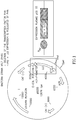
- an hly- HPV 16 E7 fusion gene (including the hly promoter and the portion of hly encoding the first 441 amino acids of LLO; referred to below as "ALLO") and the pluripotent transcription factor, prfA (positive regulatory factor of listeriolysin expression) gene were cloned into pAM401 ( Figure 1 ).
- L. monocytogenes (LM) strains Lm- ⁇ LLO-EC1, Lm- ⁇ LLO-EC2, Lm- ⁇ LLO-EC3, Lm- ⁇ LLO-IC1, and Lm- ⁇ LLO-IC2 each contain a plasmid expressing a fragment of rat Her-2 fused to the Listerial hly gene.
- Each Her-2 fragment was amplified by PCR from the pNINA plasmid, which contains the full-length rat Her-2 gene, using the following primers. Restriction sites (XhoI in the case of EC1, IC1, and IC2 5' primers; SpeI for the 3' primers; and SaII for the EC2 and EC3 5' primers) are underlined, and the FLAG tag sequence in the EC2 and EC3 the 3' primers are indicated by italics:
- Bacteria were grown in brain heart infusion medium (BD, Sparks, MD) with 50 ⁇ g/ml chloramphenicol and were frozen in 1 ml aliquots at -80°C.
- BD brain heart infusion medium
- Champhenicol Chloramphenicol
- ⁇ LLO-Her-2 expressing strains were grown overnight at 37°C in Luria-Bertani (LB) medium with 50 microgram per milliliter ( ⁇ g/ml) chloramphenicol. Supernatants were TCA precipitated and resuspended in 1X LDS sample buffer (Invitrogen, San Diego, CA). 15 microliter ( ⁇ l) of each sample was loaded on a 4-12% Bis-Tris SDS-PAGE gel (Invitrogen, San Diego, CA).
- Lm- ⁇ LLO-EC1 Lm- ⁇ LLO-EC2 Lm- ⁇ LLO-EC3, Lm- ⁇ LLO-IC1, and Lm- ⁇ LLO-IC2 were 83, 70, 68, 92.5, and 74-kDa (kilodalton), respectively.
- the strains were attenuated relative to the wild-type 10403S strain, exhibiting virulences comparable to Lm- ⁇ LLO-E7 namely 1x10 8 , 5x10 8 , 1x10 9 , 1x10 8 , and 1x10 8 colony forming units (CFU), respectively.
- the FVB/N syngeneic NT-2 tumor cell line derived from a spontaneously occurring mammary tumor in an FVB/N Her-2 transgenic mouse ( Reilly RT et al, Canc Res 60: 3569, 2000 ), constitutively expresses low levels of rat Her-2 and is tumorigenic in wild type syngeneic mice.
- NT-2 cells were grown in RPMI 1640 medium with 20% FCS, 10.2 mM HEPES, 2 millimolar (mM) L-glutamine, 100 micromolar ( ⁇ M) nonessential amino acids, 1 mM sodium pyruvate, 50 U (units)/ml penicillin G, 50 ⁇ g/ml streptomycin, 20 ⁇ g/ml insulin, and 2 ⁇ g/ml gentamycin at 37° C with 5% CO 2 .
- LM strains expressing ⁇ LLO-Her-2 fusions were compared to PBS and Lm- ⁇ LLO-E7 (negative controls) for their ability to induce immunity against and reduction of tumors composed of the rat Her-2 expressing tumor line, NT-2.
- FVB/N mice were injected with NT-2 tumors, then, on days 7, 14, and 21 following tumor inoculation, were administered 0.1 LD 50 of recombinant LM or PBS.
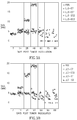
- Injection of LM expressing the ⁇ LLO-Her-2 fusions halted tumor growth after the first injection ( Figures 2A and B ); the cessation in tumor growth continued through the last timepoint, more than nine weeks after the last Her-2 vaccination.
- CD8 + T cells were depleted by injection with 0.5 mg of the anti-CD8 antibody 2.43 ( Sarmiento M et al, J Immunol 125(6): 2665-72, 1980 ) on days 6, 7, 8, 11, 14, 17, 20, and 23 post-tumor injection. CD8 + T cell populations were reduced by greater than 95% as measured by flow cytometric analysis on day 24.
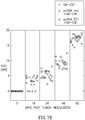
- Splenocytes were stained at room temperature (rt) with the tetramer for one hour (hr) at 1:200 dilution, then at 4° C with anti-CD8 and anti-CD62L antibodies for 30 minutes (min).
- the CD8 + , CD62L low subset was selected ("gated on"), and percentages of tetramer + cells were compared using FlowJo software (Tree Star, Inc, Ashland, OR).
- FVB/N mice with NT-2 tumors were depleted of CD8 + T cells, beginning 1 day prior to vaccination with Lm- ⁇ LLO-Her-2 vaccines, then vaccinated as described in Example 2.
- each of the Lm- ⁇ LLO-Her-2 vaccines lost effectiveness ( Figures 3A and B ); while in the non-depleted mice, tumor growth was controlled, as observed in Example 2.
- NIH 3T3 cells a mouse fibroblast line, were obtained from the American Type Culture Collection (ATCC).
- ATCC American Type Culture Collection
- the NIH 3T3 and all the derived cells were cultured in DMEM supplemented with 10% FCS, 2 mM L-glutamine, 100 ⁇ M nonessential amino acids, 1 mM sodium pyruvate, 50 U/ml penicillin G, and 50 ⁇ g/ml streptomycin.
- Culture media for the 3T3-neu cell lines was supplemented with 1 mg/ml G418. Cells were grown at 37° C with 5% CO 2 .
- wild type 3T3 cells were transduced with overlapping fragments of the rat Her-2 gene, creating nine 3T3 Her-2 fragment lines, and one 3T3 line expressing the full-length rat Her-2.
- Her-2 fragments were created using the following PCR primers:
- FVB/N mice were immunized with 0.1 LD 50 of each of the Lm- ⁇ LLO-Her-2 vaccines.
- Splenocytes were harvested 9 days later and cultured for four days with irradiated (20,000 rads) NT-2 tumor cells at a 100:1 ratio of splenocytes to tumor cells with 20 U/ml IL-2 (Roche, Indianapolis, IN). Splenocytes were then used as effector cells in a standard 51 Cr release assay.
- Target cells were labeled with chromium-51 ( 51 Cr) and cultured for four hours with splenocytes at effector:target ratios of 200:1, 100:1, 50:1, and 25:1 in triplicate.
- Total counts per minute refers to the total number of counts in the target cell population, measured by lysing the cells after labeling and counting the label. In other words, this is the maximum amount of 51 Cr that could be released.
- CTL assays were performed in order to confirm that each of the Lm- ⁇ LLO-Her-2 vaccines elicit anti-Her-2 CD8 + T cell immune responses.
- Mice were vaccinated with each of the ⁇ LLO-Her-2 fusion vaccines, and splenocytes were isolated and tested for ability to induce lysis, as measured by 51 Cr release assay, of 3T3 cells transduced with full length rat Her-2 (B), using wild-type 3T3 cells as a negative control (A).
- Each vaccine induced an anti-Her-2 CTL response, as evidenced by significant levels of lysis at E:T ratios of 200:1 or 100:1.
- Splenocytes from PBS-vaccinated mice, an additional negative control induced only background levels of lysis ( Figure 6 ).
- Regions of Her-2/neu with potential H-2q epitopes based on percent specific lysis in the CTL assay. Percent (specific lysis - background lysis by splenocytes from PBS-vaccinated mice) is depicted for the E:T ratios of 200:1 and 100:1. Assays were performed in triplicate; results of a representative experiment are shown. *Denotes statistically significant lysis above background (p ⁇ 0.05).
- LM strain Neu region spanned Percent Specific Lysis of Target Cells Neu regions containing an epitope 200:1 100:1 Lm- ⁇ LLO-EC1 20-326 3T3-neu-1 14.3* 0.7 20-148 3T3-neu-2 0 0 3T3-neu-3 6.5* 3.5 291-326 Lm- ⁇ LLO-EC2 303-501 3T3-neu-3 10.9* 7.4 303-426 3T3-neu-4 23.8* 8.4* 410-501 Lm- ⁇ LLO-EC3 479-655 3T3-neu-4 1 0 3T3-neu-5 34.4* 25.3* 531-655 Lm- ⁇ LLO-IC1 690-1081 3T3-neu-6 6.9* 9* 690-797 3T3-neu-7 0 2.3 3T3-neu-8 18.2* 6.4 952-1081 Lm- ⁇ LLO-IC2 1020-1255 3T3-neu-8 10.3* 8.2* 1020-1085 3T3-neu-9 16.5
- DNA vaccines were constructed using pcDNA 3.1. Her-2 and the EC1 fragment were amplified by PCR using the following primers:
- Tumor regression experiments were performed as described in Example 2, except that 7 x 10 5 NT-2 cells were utilized, and vaccinations were administered on days 3, 10, and 18.
- DNA vaccines 50 ⁇ g each of the pcDNA plasmid + and the GM-CSF plasmid or GM-CSF alone) were administered intra-muscularly and Lm administered intraperitoneally.
- mice were vaccinated with (a) pcDNA 3.1-full length Her-2 (a DNA vaccine; "pcDNA neu”); (b) pcDNA 3.1 ALLO-full length Her-2 (pcDNA LLO-neu); (c) pcDNA 3.1-EC1 (pcDNA EC1); (d) pcDNA 3.1- ⁇ LLO-EC1 (pcDNA LLO-EC1); or (e) Lm- ⁇ LLO-EC1, and a tumor regression experiment was performed.
- GM-CSF was included with the DNA vaccines because of its ability to enhance the efficacy of DNA vaccines ( McKay PF, Barouch DH et al, Eur J Immunol 2004 Apr;34(4): 1011-20 .).
- pcDNA ALLO-neu ( Figures 6B-C ); vaccines in which the antigen was unfused exhibited tumors that grew at the same rate as mock-vaccinated controls.
- LM strain Neu region spanned Percent Specific Lysis of Target Cells Neu regions containing an epitope 200:1 100:1 pcDNA neu + GM-CSF 1-1255 3T3-neu-1 17.4* 12.4* 20-148 3T3-neu-2 0 0.1 3T3-neu-3 0 1.6 3T3-neu-4 23.4* 19.5* 410-479 3T3-neu-5 0 0.3 3T3-neu-6 2.6 0 3T3-neu-7 0 0.6 3T3-neu-8 0 1.2 3T3-neu-9 0 0.1 pcDNA ⁇ LLO-neu + GM-CSF 1-1255 3T3-neu-1 30.9* 20.5* 20-148 3T3-neu-2 0.4 0 3T3-neu-3 1.9 1.7 3T3-neu-4 31.2* 25.5* 410-501 3T3-neu-5 6.4* 6.4 479-531 3T3-neu-6 0 0 3T3-neu-7 0 2.5 3T
- subdominant CD8 + antigen epitopes can be revealed by either (a) expression by LM; (b) fusion of the antigen to an LLO fragment; or (c) dividing the antigen into smaller fragments.
- FVB/N are injected with NT-2 tumors, then vaccinated with each of the LM- ⁇ LLO-Her-2 fragment strains, as described in Example 2, or with DNA ⁇ LLO-Her-2 fragment vaccines, as described in Example 5.
- Lymphocytes are isolated from the draining lymph nodes of the tumor site at various time points following vaccination. Epitopes recognized by the lymphocytes are determined by a lysis assay, using 3T3 cells expressing each of 9 Her-2 fragments, as described in Example 4.
- mice are injected with NT-2 tumors, then vaccinated with each of the LM- ⁇ LLO-Her-2 fragment strains or DNA ⁇ LLO-Her-2 fragment vaccines.
- Lymphocytes are isolated tumor draining lymph nodes at various time points, and the epitopes recognized by the lymphocytes are determined. Emergence is observed of reactivity to epitopes not present in the vaccine fragment. This broadening of the T cell response approximately correlates with temporally tumor regression.
- Rat Her-2/neu transgenic mice were provided by Dr. William Muller. Young, virgin HER-2/neu transgenic mice that had not spontaneously developed tumors were injected with 5 x 10 4 NT-2 cells. Because the transgenic mouse is profoundly tolerant to HER-2/neu, the minimum dose required for tumor growth in 100% of animals is much lower than wild-type mice ( Reilly RT, Gott Kunststoff MB et al, Cancer Res. 2000 Jul 1;60(13): 3569-76 ). NT-2 cells were injected into the subcutaneous space of the flank. Mice received 0.1 LD 50 of the Listeria vaccine when 4-5 mm palpable tumors were detected (typically on day 7 after tumor implantation) and weekly thereafter, for an additional 4 weeks.
- the rat Her-2/neu gene differs from the rat neu by 5-6% of amino acid residues, and thus is immunogenic in the mouse ( Nagata Y, Furugen R et al, J Immunol. 159: 1336-43 ).
- a transgenic mouse that over expresses rat Her-2/neu under the transcriptional control of the Mouse Mammary Tumor Virus (MMTV) promoter and enhancer is immunologically tolerant to rat Her-2/neu. These mice spontaneously develop breast cancer.
- the MMTV promoter also operates in hematopoietic cells, rendering the mice profoundly tolerant to HER-2/neu.
- this mouse is considered to be stringent model for human breast cancer and in general for tumors expressing antigens, such as Her-2/neu, that are expressed at low levels in normal tissue ( Muller W. J. (1991) Expression of activated oncogenes in the murine mammary gland: transgenic models for human breast cancer. Canc Metastasis Rev 10: 217-27 ).
- antigens such as Her-2/neu
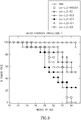
- mice 6-8 week-old HER-2/neu transgenic mice were injected with NT-2 cells, then immunized with each of the LM- ⁇ LLO-Her-2 vaccines, or with PBS or ⁇ LLO-E7 (negative controls). While most control mice had to be sacrificed by day 42 because of their tumor burden, tumor growth was controlled in all of the vaccinated mice ( Figure 8 ).
- the ⁇ LM-LLO-Her-2 and Listeria -based Her-2 vaccines are able to break tolerance to self antigen expressed on a tumor cell, as evidenced by their ability to induce the regression of established NT-2 tumors.
- ⁇ LM-LLO-Her-2 vaccines were administered in the following amounts: Lm-LLO-EC1: 1 x 10 ⁇ 7 cfu; Lm- Lm-LLO-EC2: 5 x 10 ⁇ 7 cfu; LLO-EC3: 1 x 10 ⁇ 8 cfu; Lm-LLO-IC2: 1 x 10 ⁇ 7 cfu; Lm-LLO-IC1: 1 x 10 ⁇ 7.
- the ⁇ LM-LLO-Her-2 vaccines were also evaluated for ability to prevent spontaneous tumor growth in the Her-2/neu transgenic mice.
- Lm-LLO-IC1 92% of the Lm-LLO-IC1 group were tumor free, as were 50% of the mice Lm-LLO-EC2, Lm-LLO-EC1, and Lm-LLO-IC2, and 25% of the mice immunized with Lm-LLO-EC3 ( Figure 9 ).
- HER-2 human Her-2/neu as was used for rat Her-2 (Example 1).
- the full-length HER-2 gene was split into five fragments, constituting overlapping fragments of the extracellular domain, (EC-1, EC-2 and EC-3) and the cytoplasmic domain (IC-1 and IC-2) ( Figure 10 ). Hydrophobic regions were not included in the constructs. These sequences differed from the rat sequences slightly due to the small disimilarities between the two sequences.
- the human fragments corresponding to the rat fragments were 22-326, 303-501, 479-652, 677-1081, and 1020-1255.
- the human HER-2 sequences are isolated from a human breast cell cancer line e.g. SK-BR3 (ATCC) by reverse transcription PCR (RT-PCR) using standard molecular biology methods. For example, total cellular RNA is isolated using the RNeasy Minipreparation® kit (Qiagen) and a cDNA pool is generated (Titan-One-Tube PCR system®, Roche) using an oligo-dT primer.
- RT-PCR reverse transcription PCR
- the HER-2 sequences of interest are specifically amplified by the second step PCR using the following primers: Construct 5' Primer 3' Primer EC1 ctcgaggccgcgagcacccaagtg (SEQ ID No: 45) actagtttaatcctctgctgtcacctc (SEQ ID No: 46) EC2 ctcgagtacctttctacggacgtg (SEQ ID No: 47) actagtttactctggccggttggcag (SEQ ID No: 48) EC3 ctcgagacggtgccctgggaccag (SEQ ID No: 49) actagtttagacgatggacgtcagag (SEQ ID No: 50) IC1 ctcgagctgctgcaggaaacggag (SEQ ID No: 51) actagtttaagc
- telomere sequences located in these fragments of the human HER-2 gene.
- the PCR products are purified (Qiaquick® PCR Purification Kit, Qiagen) and cloned into intermediate E. coli vector pCR2.1TOPO® (Invitrogen). After transformation of TOP10 cells (Invitrogen), plasmid containing colonies are identified by PCR using primers M13forward and M13reverse (Invitrogen). One positive clone for each construct is grown up, plasmid DNA will be prepared (Qiafilter Midipreparation®, Qiagen) and the sequence of the HER-2/neu insert is verified by sequencing.
- pLLO-E7 is digested completely with XhoI and partially with SpeI, thereby removing the E7 gene.
- the HER-2/neu sequences are digested with the same enzymes, all digests are separated by agarose gel electrophoresis, and the pLLO-E7 vector and the HER-2/neu insert sequences are purified (Qiaquick).
- the HER-2/neu antigen sequences are ligated into pLLO-E7, and the ligation mix is transformed into d-alanine racemase-deficient E. coli strain MB2159 by electroporation.
- Colonies are tested by PCR for the presence of the HER-2/neu sequence and expanded in Luria Broth (LB) media, and plasmid DNA is prepared, then the sequence verified by restriction digestion with EcoRI, SmaI, NcoI or with HindIII which yields a specific band pattern for each construct. Plasmids are transformed into Listeria strain Lm(DA-) by electroporation, and individual clones are grown up in LB media containing 50 ⁇ g/ml streptomycin. The presence and sequence of the plasmid is again verified by restriction analysis. Expression and secretion of LLO-HER-2/neu fusion proteins is verified by Western blot of TCA-precipitated culture media, using a polyclonal PEST sequence-specific antibody.
- the LLO-human Her-2 strains are tested for immunogenicity in mice and in human volunteers.
- the vaccine strains are tested for their ability to protect mice against a challenge with tumor cells expressing human Her-2, as described in the above Examples.
- Successful strains are administered to humans having Her-2-expressing tumors, and tested for their ability to induce tumor regression.
- the strains are tested for their ability to protect human subjects at risk for developing Her-2-expressing cancer, due to genetic or environmental factors.
- the vaccine strains are found to be immunogenic and to exhibit substantial anti-tumor activity.
Landscapes
- Health & Medical Sciences (AREA)
- Life Sciences & Earth Sciences (AREA)
- Mycology (AREA)
- Pharmacology & Pharmacy (AREA)
- Chemical & Material Sciences (AREA)
- Immunology (AREA)
- Medicinal Chemistry (AREA)
- Microbiology (AREA)
- Cell Biology (AREA)
- Oncology (AREA)
- Epidemiology (AREA)
- Animal Behavior & Ethology (AREA)
- General Health & Medical Sciences (AREA)
- Public Health (AREA)
- Veterinary Medicine (AREA)
- Peptides Or Proteins (AREA)
- Micro-Organisms Or Cultivation Processes Thereof (AREA)
- Medicines Containing Antibodies Or Antigens For Use As Internal Diagnostic Agents (AREA)
Claims (13)
- Pharmazeutische Zusammensetzung, umfassend
ein rekombinantes Polypeptid, umfassend ein N-Terminus-Fragment eines Listeriolysin-Proteins (LLO), das mit einem Fragment eines Her-2-Antigens fusioniert ist, wobei das Fragment des Her-2-Antigens aus den Aminosäuren 303-501 oder 479-655 von SEQ ID NO: 40 oder den Aminosäuren 303-501 oder 479-652 von SEQ ID NO: 43 oder einer damit zu mehr als 97 % identischen Aminosäuresequenz besteht, und wobei das LLO eine PEST-Sequenz
zur Verwendung beim Stoppen eines Wachstums von etablierten Her-2 exprimierenden Tumorzellen bei einem Subjekt oder zum Behandeln eines Her-2 exprimierenden Tumors oder einer Her-2 exprimierenden Krebserkrankung bei einem Subjekt umfasst. - Pharmazeutische Zusammensetzung, umfassend
ein rekombinantes Nukleotid, das für ein rekombinantes Polypeptid codiert, umfassend ein N-Terminus-Fragment eines Listeriolysin-Proteins (LLO), das mit einem Fragment eines Her-2-Antigens fusioniert ist, wobei das Fragment des Her-2-Antigens aus den Aminosäuren 303-501 oder 479-655 von SEQ ID NO: 40 oder den Aminosäuren 303-501 oder 479-652 von SEQ ID NO: 43 oder einer damit zu mehr als 97 % identischen Aminosäuresequenz besteht, und wobei das LLO eine PEST-Sequenz
zur Verwendung beim Stoppen eines Wachstums von etablierten Her-2 exprimierenden Tumorzellen bei einem Subjekt oder beim Behandeln eines Her-2 exprimierenden Tumors oder einer Her-2 exprimierenden Krebserkrankung bei einem Subjekt umfasst. - Pharmazeutische Zusammensetzung, umfassend
einen rekombinanten Listerien-Stamm, umfassend ein rekombinantes Nukleotid, das für ein rekombinantes Polypeptid codiert, umfassend ein N-Terminus-Fragment eines Listeriolysin-Proteins (LLO), das mit einem Fragment eines Her-2-Antigens fusioniert ist, wobei das Fragment des Her-2-Antigens aus den Aminosäuren 303-501 oder 479-655 von SEQ ID NO: 40 oder den Aminosäuren 303-501 oder 479-652 von SEQ ID NO: 43 oder einer damit zu mehr als 97 % identischen Aminosäuresequenz besteht, und wobei das LLO eine PEST-Sequenz
zur Verwendung beim Stoppen des Wachstums von etablierten Her-2 exprimierenden Tumorzellen bei einem Subjekt oder zur Verwendung beim Behandeln eines Her-2 exprimierenden Tumors oder einer Her-2 exprimierenden Krebserkrankung bei einem Subjekt umfasst. - Pharmazeutische Zusammensetzung zur Verwendung nach Anspruch 1, wobei das rekombinante Polypeptid in der pharmazeutischen Zusammensetzung in einem rekombinanten Listerien-Stamm vorliegt.
- Pharmazeutische Zusammensetzung zur Verwendung nach einem der Ansprüche 3-4, wobei der rekombinante Listerien-Stamm ein Listeria monocytogenes ist.
- Pharmazeutische Zusammensetzung zur Verwendung nach einem der Ansprüche 1-5, wobei die pharmazeutische Zusammensetzung eine durch CD8+ T-Zellen vermittelte Immunantwort gegen Her-2 exprimierende Tumorzellen induziert.
- Pharmazeutische Zusammensetzung zur Verwendung nach Anspruch 6, wobei die Immunantwort auf Her-2 exprimierende Tumorzellen eine Immunantwort auf ein subdominantes Epitop des Her-2-Proteins umfasst.
- Rekombinantes Polypeptid, umfassend ein N-Terminus-Fragment eines Listeriolysin-Proteins (LLO), das mit einem Fragment eines Her-2-Antigens fusioniert ist, wobei das Fragment des Her-2-Antigens aus den Aminosäuren 303-501 oder 479-655 von SEQ ID NO: 40 oder den Aminosäuren 303-501 oder 479-652 von SEQ ID NO: 43 oder einer damit zu mehr als 97 % identischen Aminosäuresequenz besteht, und wobei das LLO eine PEST-Sequenz,
zur Verwendung beim Stoppen des Wachstums von etablierten Her-2 exprimierenden Tumorzellen oder zur Verwendung beim Behandeln eines Her-2 exprimierenden Tumors oder einer Her-2 exprimierenden Krebserkrankung bei einem Subjekt umfasst. - Rekombinantes Nukleotid, das für ein rekombinantes Polypeptid codiert, umfassend ein N-Terminus-Fragment eines Listeriolysin-Proteins (LLO), das mit einem Fragment eines Her-2-Antigens fusioniert ist, wobei das Fragment des Her-2-Antigens aus den Aminosäuren 303-501 oder 479-655 von SEQ ID NO: 40 oder den Aminosäuren 303-501 oder 479-652 von SEQ ID NO: 43 oder einer damit zu mehr als 97 % identischen Aminosäuresequenz besteht, und wobei das LLO eine PEST-Sequenz zur Verwendung beim Stoppen des Wachstums von etablierten Her-2 exprimierenden Tumorzellen oder zur Verwendung beim Behandeln eines Her-2 exprimierenden Tumors oder einer Her-2 exprimierenden Krebserkrankung bei einem Subjekt umfasst.
- Rekombinante Listerien, umfassend ein Nukleotid, das für ein rekombinantes Polypeptid codiert, umfassend ein N-Terminus-Fragment eines Listeriolysin-Proteins (LLO), das mit einem Fragment eines Her-2-Antigens fusioniert ist, wobei das Fragment des Her-2-Antigens aus den Aminosäuren 303-501 oder 479-655 von SEQ ID NO: 40 oder den Aminosäuren 303-501 oder 479-652 von SEQ ID NO: 43 oder einer damit zu mehr als 97 % identischen Aminosäuresequenz besteht, und wobei das LLO eine PEST- Sequenz zur Verwendung beim Stoppen des Wachstums von etablierten Her-2 exprimierenden Tumorzellen oder zur Verwendung beim Behandeln eines Her-2 exprimierenden Tumors oder einer Her-2 exprimierenden Krebserkrankung bei einem Subjekt umfasst.
- Rekombinante Listerien zur Verwendung nach Anspruch 10, wobei die Listerien Listeria monocytogenes sind.
- Rekombinantes Polypeptid zur Verwendung nach Anspruch 8, rekombinantes Nukleotid zur Verwendung nach Anspruch 9 oder rekombinante Listerien zur Verwendung nach Anspruch 10 oder Anspruch 11, wobei das rekombinante Polypeptid oder das rekombinante Nukleotid oder die rekombinanten Listerien eine durch CD8+ T-Zellen vermittelte Immunantwort auf Her-2 exprimierende Tumorzellen induziert.
- Rekombinantes Polypeptid oder rekombinantes Nukleotid oder rekombinante Listerien zur Verwendung nach Anspruch 12, wobei die Immunantwort auf Her-2 exprimierende Tumorzellen eine Immunantwort auf ein subdominantes Epitop des Her-2-Proteins umfasst.
Applications Claiming Priority (4)
| Application Number | Priority Date | Filing Date | Title |
|---|---|---|---|
| US10/949,667 US7794729B2 (en) | 1994-11-08 | 2004-09-24 | Methods and compositions for immunotherapy of cancer |
| US11/223,945 US7820180B2 (en) | 2004-09-24 | 2005-09-13 | Listeria-based and LLO-based vaccines |
| PCT/US2005/032682 WO2006036550A2 (en) | 2004-09-24 | 2005-09-14 | Listeria-based and llo-based vaccines |
| EP05811815.9A EP1804831B1 (de) | 2004-09-24 | 2005-09-14 | Impfstoffe auf listeria- und llo-basis |
Related Parent Applications (2)
| Application Number | Title | Priority Date | Filing Date |
|---|---|---|---|
| EP05811815.9A Division-Into EP1804831B1 (de) | 2004-09-24 | 2005-09-14 | Impfstoffe auf listeria- und llo-basis |
| EP05811815.9A Division EP1804831B1 (de) | 2004-09-24 | 2005-09-14 | Impfstoffe auf listeria- und llo-basis |
Publications (2)
| Publication Number | Publication Date |
|---|---|
| EP2980101A1 EP2980101A1 (de) | 2016-02-03 |
| EP2980101B1 true EP2980101B1 (de) | 2019-06-05 |
Family
ID=36119378
Family Applications (2)
| Application Number | Title | Priority Date | Filing Date |
|---|---|---|---|
| EP05811815.9A Expired - Lifetime EP1804831B1 (de) | 2004-09-24 | 2005-09-14 | Impfstoffe auf listeria- und llo-basis |
| EP15182979.3A Expired - Lifetime EP2980101B1 (de) | 2004-09-24 | 2005-09-14 | Impfstoff beinhaltend ein n-terminales, pest sequenz enthaltendes fragment vom listeriolysin (llo) protein welches an ein her-2 antigen fusioniret wurde. |
Family Applications Before (1)
| Application Number | Title | Priority Date | Filing Date |
|---|---|---|---|
| EP05811815.9A Expired - Lifetime EP1804831B1 (de) | 2004-09-24 | 2005-09-14 | Impfstoffe auf listeria- und llo-basis |
Country Status (8)
| Country | Link |
|---|---|
| US (1) | US7820180B2 (de) |
| EP (2) | EP1804831B1 (de) |
| JP (1) | JP2008514199A (de) |
| AU (1) | AU2005289957A1 (de) |
| CA (1) | CA2581331A1 (de) |
| DK (1) | DK1804831T3 (de) |
| ES (1) | ES2566392T3 (de) |
| WO (1) | WO2006036550A2 (de) |
Families Citing this family (43)
| Publication number | Priority date | Publication date | Assignee | Title |
|---|---|---|---|---|
| US7794729B2 (en) * | 1994-11-08 | 2010-09-14 | The Trustees Of The University Of Pennsylvania | Methods and compositions for immunotherapy of cancer |
| US7662396B2 (en) * | 2001-03-26 | 2010-02-16 | The Trustees Of The University Of Pennsylvania | Compositions and methods for enhancing the immunogenicity of antigens |
| US20070264279A1 (en) * | 1994-11-08 | 2007-11-15 | Claudia Gravekamp | Compositions and methods comprising a MAGE-b antigen |
| US6051237A (en) * | 1994-11-08 | 2000-04-18 | The Trustees Of The University Of Pennsylvania | Specific immunotherapy of cancer using a live recombinant bacterial vaccine vector |
| US7820180B2 (en) | 2004-09-24 | 2010-10-26 | The Trustees Of The University Of Pennsylvania | Listeria-based and LLO-based vaccines |
| US8114414B2 (en) * | 1994-11-08 | 2012-02-14 | The Trustees Of The University Of Pennsylvania | Compositions and methods for treatment of cervical cancer |
| US8791237B2 (en) | 1994-11-08 | 2014-07-29 | The Trustees Of The University Of Pennsylvania | Compositions and methods for treatment of non-hodgkins lymphoma |
| WO2001072329A1 (en) * | 2000-03-29 | 2001-10-04 | The Trustees Of The University Of Pennsylvania | Compositions and methods for enhancing immunogenicity of antigens |
| US8956621B2 (en) | 1994-11-08 | 2015-02-17 | The Trustees Of The University Of Pennsylvania | Compositions and methods for treatment of cervical dysplasia |
| US9012141B2 (en) * | 2000-03-27 | 2015-04-21 | Advaxis, Inc. | Compositions and methods comprising KLK3 of FOLH1 antigen |
| US8771702B2 (en) | 2001-03-26 | 2014-07-08 | The Trustees Of The University Of Pennsylvania | Non-hemolytic LLO fusion proteins and methods of utilizing same |
| US7700344B2 (en) * | 2001-03-26 | 2010-04-20 | The Trustees Of The University Of Pennsylvania | Compositions and methods for enhancing the immunogenicity of antigens |
| WO2003102168A1 (en) * | 2002-05-29 | 2003-12-11 | The Regents Of The University Of California | Attenuated listeria spp. and methods for using the same |
| ITMI20041965A1 (it) * | 2004-10-15 | 2005-01-15 | Augusto Amici | "dna codificante forme tronche e chimeriche della proteina p185neu e suoi usi terapeutici" |
| US8282943B2 (en) | 2005-05-31 | 2012-10-09 | Ralf Jochem | Therapeutic composition for use in the prevention and treatment of bone metastases |
| US20070207171A1 (en) * | 2006-03-01 | 2007-09-06 | Cerus Corporation | Engineered listeria and methods of use thereof |
| US7935804B2 (en) | 2006-03-01 | 2011-05-03 | Aduro Biotech | Engineered Listeria and methods of use thereof |
| EP2056849A4 (de) * | 2006-08-04 | 2010-09-08 | Univ Pennsylvania | Verfahren und zusammensetzungen zur behandlung von ige-vermittelten erkrankungen |
| US8268326B2 (en) * | 2006-08-15 | 2012-09-18 | The Trustees Of The University Of Pennsylvania | Compositions comprising HMW-MAA and fragments thereof, and methods of use thereof |
| DK2977456T3 (en) * | 2006-08-15 | 2018-01-22 | Univ Pennsylvania | Compositions comprising HMW-MAA and fragments thereof for the treatment of cancer |
| US8277797B2 (en) | 2006-11-22 | 2012-10-02 | The Regents Of The University Of California | Interferon-β production modulating Listeria strains and methods for using same |
| CN102149826A (zh) * | 2007-06-29 | 2011-08-10 | 波士顿生物医药公司 | 通过微小rna装置进行细菌介导的基因调节 |
| US9017660B2 (en) | 2009-11-11 | 2015-04-28 | Advaxis, Inc. | Compositions and methods for prevention of escape mutation in the treatment of Her2/neu over-expressing tumors |
| US9650639B2 (en) | 2008-05-19 | 2017-05-16 | Advaxis, Inc. | Dual delivery system for heterologous antigens |
| US20110129499A1 (en) | 2008-05-19 | 2011-06-02 | Paulo Maciag | Dual delivery system for heterologous antigens |
| PT2403935T (pt) | 2009-03-04 | 2017-09-22 | Univ Pennsylvania | Composições compreendendo fatores angiogénicos e metedos para a sua utilização |
| US10016617B2 (en) | 2009-11-11 | 2018-07-10 | The Trustees Of The University Of Pennsylvania | Combination immuno therapy and radiotherapy for the treatment of Her-2-positive cancers |
| EP2498808A4 (de) * | 2009-11-11 | 2014-01-08 | Advaxis | Zusammensetzungen und verfahren zur verhinderung von fluchtmutationen bei der behandlung von tumoren mit her2/neu-überexpression |
| US9226958B2 (en) | 2010-10-01 | 2016-01-05 | University Of Georgia Research Foundation, Inc. | Use of Listeria vaccine vectors to reverse vaccine unresponsiveness in parasitically infected individuals |
| CA2815125C (en) * | 2010-10-19 | 2024-03-05 | Merial Limited | Her2 dna vaccine as adjunct treatment for cancers in companion animals |
| WO2012112317A1 (en) | 2011-02-15 | 2012-08-23 | Albert Einstein College Of Medicine Of Yeshiva University | Radiobacteria for therapy of cancer |
| AU2012229218B2 (en) | 2011-03-11 | 2017-03-02 | Advaxis, Inc. | Listeria-based adjuvants |
| CN104411327A (zh) | 2012-03-12 | 2015-03-11 | 阿德瓦希斯公司 | 李斯特菌疫苗治疗以后的抑制细胞功能抑制 |
| EP2777711A1 (de) * | 2013-03-11 | 2014-09-17 | Icon Genetics GmbH | HER2/neu-Krebsimpfstoff |
| US10143734B2 (en) | 2014-02-18 | 2018-12-04 | Advaxis, Inc. | Biomarker directed multi-target immunotherapy |
| SG11201608820WA (en) | 2014-04-24 | 2016-11-29 | Advaxis Inc | Recombinant listeria vaccine strains and methods of producing the same |
| MA41644A (fr) | 2015-03-03 | 2018-01-09 | Advaxis Inc | Compositions à base de listeria comprenant un système d'expression de minigènes codant pour des peptides, et leurs procédés d'utilisation |
| WO2016176164A1 (en) * | 2015-04-28 | 2016-11-03 | Albert Einstein College Of Medicine, Inc. | Treatment of cancer using recall antigens delivered by attenuated bacteria |
| US20180265879A1 (en) * | 2015-09-15 | 2018-09-20 | Advaxis, Inc. | Manufacturing method of an immunotherapeutic formulation comprising a recombinant listeria strain |
| CA3029235A1 (en) * | 2016-07-05 | 2018-01-11 | Advaxis, Inc. | Listeria-based immunogenic compositions comprising wilms tumor protein antigens and methods of use thereof |
| JP7197481B2 (ja) | 2016-11-30 | 2022-12-27 | アドバクシス, インコーポレイテッド | 反復性がん突然変異を標的とする免疫原性組成物およびその使用の方法 |
| JP7284156B2 (ja) | 2017-09-19 | 2023-05-30 | アドバクシス, インコーポレイテッド | 細菌またはListeria株の凍結乾燥のための組成物および方法 |
| CN111349645B (zh) * | 2018-12-24 | 2022-05-17 | 上海若泰医药科技有限公司 | 一种提高非整合减毒李斯特菌疫苗安全性的方法 |
Family Cites Families (45)
| Publication number | Priority date | Publication date | Assignee | Title |
|---|---|---|---|---|
| US4816253A (en) | 1977-12-08 | 1989-03-28 | Likhite Vilas V | Novel mutant strain of Listeria monocytogenes and its use in production of IgM antibodies and as an immunotherapeutic agent |
| CA1156953A (en) | 1979-06-08 | 1983-11-15 | Research Council Of Alberta | Lime addition to heavy crude oils prior to coking |
| US4458066A (en) | 1980-02-29 | 1984-07-03 | University Patents, Inc. | Process for preparing polynucleotides |
| FR2508455A1 (fr) * | 1981-06-30 | 1982-12-31 | Sanofi Sa | Procede de preparation de derives des (thienyl-2)- et (thienyl-3)-2 ethylamines |
| US5262177A (en) | 1986-02-07 | 1993-11-16 | Oncogen | Recombinant viruses encoding the human melanoma-associated antigen |
| US4777239A (en) | 1986-07-10 | 1988-10-11 | The Board Of Trustees Of The Leland Stanford Junior University | Diagnostic peptides of human papilloma virus |
| US5171665A (en) | 1989-04-17 | 1992-12-15 | Oncogen | Monoclonal antibody to novel antigen associated with human tumors |
| DE69031120T2 (de) * | 1989-05-19 | 1998-01-15 | Genentech, Inc., South San Francisco, Calif. | Her2 extrazellulare domäne |
| US5830702A (en) | 1990-10-31 | 1998-11-03 | The Trustees Of The University Of Pennsylvania | Live, recombinant listeria monocytogenes and production of cytotoxic T-cell response |
| US5342774A (en) | 1991-05-23 | 1994-08-30 | Ludwig Institute For Cancer Research | Nucleotide sequence encoding the tumor rejection antigen precursor, MAGE-1 |
| FR2686896B1 (fr) | 1992-01-31 | 1995-01-06 | Pasteur Institut | Mutant attenue de listeria monocytogenes; souche recombinante de listeria monocytogenes, utilisation comme vecteurs heterologues d'antigenes vaccinal et utilisation comme vaccin ou composition diagnostique. |
| US5633234A (en) | 1993-01-22 | 1997-05-27 | The Johns Hopkins University | Lysosomal targeting of immunogens |
| US7820180B2 (en) | 2004-09-24 | 2010-10-26 | The Trustees Of The University Of Pennsylvania | Listeria-based and LLO-based vaccines |
| US6051237A (en) | 1994-11-08 | 2000-04-18 | The Trustees Of The University Of Pennsylvania | Specific immunotherapy of cancer using a live recombinant bacterial vaccine vector |
| US7662396B2 (en) | 2001-03-26 | 2010-02-16 | The Trustees Of The University Of Pennsylvania | Compositions and methods for enhancing the immunogenicity of antigens |
| US7794729B2 (en) | 1994-11-08 | 2010-09-14 | The Trustees Of The University Of Pennsylvania | Methods and compositions for immunotherapy of cancer |
| WO2001072329A1 (en) | 2000-03-29 | 2001-10-04 | The Trustees Of The University Of Pennsylvania | Compositions and methods for enhancing immunogenicity of antigens |
| US5681570A (en) | 1995-01-12 | 1997-10-28 | Connaught Laboratories Limited | Immunogenic conjugate molecules |
| US6017705A (en) | 1995-03-14 | 2000-01-25 | Ludwig Institute For Cancer Research | Isolated nucleic acid molecules which are members of the MAGE-B family and uses thereof |
| US5877159A (en) | 1995-05-03 | 1999-03-02 | University Of Maryland At Baltimore | Method for introducing and expressing genes in animal cells and live invasive bacterial vectors for use in the same |
| US5824538A (en) | 1995-09-06 | 1998-10-20 | The United States Of America As Represented By The Secretary Of The Army | Shigella vector for delivering DNA to a mammalian cell |
| DE19541450C2 (de) | 1995-11-07 | 1997-10-02 | Gsf Forschungszentrum Umwelt | Genkonstrukt und dessen Verwendung |
| US6479258B1 (en) | 1995-12-07 | 2002-11-12 | Diversa Corporation | Non-stochastic generation of genetic vaccines |
| US5858682A (en) | 1996-08-02 | 1999-01-12 | Pharmingen | E2A/pbx1 fusion protein specific monoclonal antibodies |
| AU5756298A (en) | 1997-04-18 | 1998-11-13 | Gesellschaft Fur Biotechnologische Forschung Mbh | Attenuated salmonella strain used as a vehicle for oral immunization |
| US5891432A (en) | 1997-07-29 | 1999-04-06 | The Immune Response Corporation | Membrane-bound cytokine compositions comprising GM=CSF and methods of modulating an immune response using same |
| AU3710597A (en) | 1997-08-06 | 1999-03-01 | Laboratorio Medinfar-Produtos Farmaceuticos, Lda | Dna integration into "mycobacterium spp." genome by trans-complementation using a site-specific integration system |
| EP0902086A1 (de) | 1997-08-22 | 1999-03-17 | Max-Planck-Gesellschaft zur Förderung der Wissenschaften e.V. | Tuberkolose Impfstoff |
| US6099848A (en) | 1997-11-18 | 2000-08-08 | The Trustees Of The University Of Pennsylvania | Immunogenic compositions comprising DAL/DAT double-mutant, auxotrophic, attenuated strains of Listeria and their methods of use |
| US6306404B1 (en) | 1998-07-14 | 2001-10-23 | American Cyanamid Company | Adjuvant and vaccine compositions containing monophosphoryl lipid A |
| US6818002B2 (en) | 1999-02-02 | 2004-11-16 | Samuel Shiber | Vessel cleaner and barrier |
| WO2000049158A2 (en) | 1999-02-18 | 2000-08-24 | Compugen Ltd. | Psa and klk-2 splicing variants |
| DE19949594A1 (de) | 1999-10-14 | 2001-04-26 | Deutsches Krebsforsch | Rekombinante attenuierte Listerien zur Immuntherapie |
| US6855320B2 (en) | 2000-03-29 | 2005-02-15 | The Trustees Of The University Of Pennsylvania | Fusion of non-hemolytic, truncated form of listeriolysin O to antigens to enhance immunogenicity |
| JP5053499B2 (ja) | 2000-06-30 | 2012-10-17 | 地方独立行政法人東京都健康長寿医療センター | 脱髄疾患の予防及び治療薬 |
| US7700344B2 (en) | 2001-03-26 | 2010-04-20 | The Trustees Of The University Of Pennsylvania | Compositions and methods for enhancing the immunogenicity of antigens |
| WO2003008537A2 (en) | 2001-04-06 | 2003-01-30 | Mannkind Corporation | Epitope sequences |
| CA2474728A1 (en) | 2002-02-06 | 2003-08-14 | Johns Hopkins University School Of Medicine | Methods and compositions for the targeting of a systemic immune response to specific organs or tissues |
| US7425449B2 (en) | 2002-04-30 | 2008-09-16 | The Regents Of The University Of California | Site specific Listeria integration vectors and methods for using the same |
| EP1575500A4 (de) | 2002-07-12 | 2007-01-03 | Univ Johns Hopkins | Mesothelin-vakzine und model systems |
| US8337861B2 (en) | 2003-01-09 | 2012-12-25 | The Trustees Of The University Of Pennsylvania | Compositions, methods and kits for enhancing the immunogenicity of a bacterial vaccine vector |
| KR101192652B1 (ko) | 2003-02-06 | 2012-10-19 | 앤저 테라퓨틱스 인코퍼레이티드 | 비포식 세포로의 침투가 약화된 리스테리아, 리스테리아를 포함하는 백신, 및 그것의 사용방법 |
| US8906664B2 (en) | 2004-08-13 | 2014-12-09 | The Trustees Of The University Of Pennsylvania | Methods for constructing antibiotic resistance free vaccines |
| WO2006045110A2 (en) | 2004-10-18 | 2006-04-27 | Medimmune, Inc. | High cell density process for growth of listeria |
| MX2007006961A (es) * | 2004-12-10 | 2007-10-04 | Univ Emory | Analogos nucleosidos de ciclobutilo 2' y 3'-sustituidos para el tratamiento de infeccciones virales y proliferacion celular anormal. |
-
2005
- 2005-09-13 US US11/223,945 patent/US7820180B2/en not_active Expired - Fee Related
- 2005-09-14 AU AU2005289957A patent/AU2005289957A1/en not_active Abandoned
- 2005-09-14 EP EP05811815.9A patent/EP1804831B1/de not_active Expired - Lifetime
- 2005-09-14 DK DK05811815.9T patent/DK1804831T3/en active
- 2005-09-14 CA CA002581331A patent/CA2581331A1/en not_active Abandoned
- 2005-09-14 ES ES05811815.9T patent/ES2566392T3/es not_active Expired - Lifetime
- 2005-09-14 EP EP15182979.3A patent/EP2980101B1/de not_active Expired - Lifetime
- 2005-09-14 JP JP2007533537A patent/JP2008514199A/ja active Pending
- 2005-09-14 WO PCT/US2005/032682 patent/WO2006036550A2/en not_active Ceased
Non-Patent Citations (1)
| Title |
|---|
| None * |
Also Published As
| Publication number | Publication date |
|---|---|
| JP2008514199A (ja) | 2008-05-08 |
| WO2006036550A2 (en) | 2006-04-06 |
| CA2581331A1 (en) | 2006-04-06 |
| DK1804831T3 (en) | 2016-04-04 |
| EP1804831B1 (de) | 2015-12-30 |
| EP1804831A2 (de) | 2007-07-11 |
| HK1221232A1 (en) | 2017-05-26 |
| US7820180B2 (en) | 2010-10-26 |
| EP1804831A4 (de) | 2009-09-02 |
| WO2006036550A3 (en) | 2006-08-10 |
| ES2566392T3 (es) | 2016-04-12 |
| US20060093582A1 (en) | 2006-05-04 |
| EP2980101A1 (de) | 2016-02-03 |
| AU2005289957A1 (en) | 2006-04-06 |
Similar Documents
| Publication | Publication Date | Title |
|---|---|---|
| EP2980101B1 (de) | Impfstoff beinhaltend ein n-terminales, pest sequenz enthaltendes fragment vom listeriolysin (llo) protein welches an ein her-2 antigen fusioniret wurde. | |
| US9084747B2 (en) | Compositions and methods for prevention of escape mutation in the treatment of HER2/NEU over-expressing tumors | |
| AU2012296474B2 (en) | Compositions and methods for prevention of escape mutation in the treatment of Her2/neu over-expressing tumors | |
| EP2155243B1 (de) | Zusammensetzungen und verfahren mit klk3; psca oder folh1-antigen | |
| US20110223187A1 (en) | Live listeria-based vaccines for central nervous system therapy | |
| US20150297702A1 (en) | Compositions and methods for prevention of escape mutation in the treatment of her2/neu over-expressing tumors | |
| US20150238584A1 (en) | Compositions and methods for prevention of escape mutation in the treatment of her2/neu over-expressing tumors | |
| US20110305724A1 (en) | Immunotherapeutic, anti-tumorigenic compositions and methods of use thereof | |
| KR20160130774A (ko) | 바이오마커 지도된 다중-표적 면역치료 | |
| WO2015130810A2 (en) | Compositions and methods for the treatment of her2/neu over-expressing tumors | |
| HK1221232B (en) | Vaccine comprising an n-terminal, pest sequence comprising fragment of listeriolysin (llo) protein fused to a her-2 antigen | |
| JP6329211B2 (ja) | 脳腫瘍または乳腺腫瘍の発症を遅延させるための医薬の製造における組換えリステリア株の使用 | |
| HK1197584A (en) | Compositions and methods for prevention of escape mutation in the treatment of her2/neu over-expressing tumors |
Legal Events
| Date | Code | Title | Description |
|---|---|---|---|
| PUAI | Public reference made under article 153(3) epc to a published international application that has entered the european phase |
Free format text: ORIGINAL CODE: 0009012 |
|
| AC | Divisional application: reference to earlier application |
Ref document number: 1804831 Country of ref document: EP Kind code of ref document: P |
|
| AK | Designated contracting states |
Kind code of ref document: A1 Designated state(s): AT BE BG CH CY CZ DE DK EE ES FI FR GB GR HU IE IS IT LI LT LU LV MC NL PL PT RO SE SI SK TR |
|
| 17P | Request for examination filed |
Effective date: 20160803 |
|
| RBV | Designated contracting states (corrected) |
Designated state(s): AT BE BG CH CY CZ DE DK EE ES FI FR GB GR HU IE IS IT LI LT LU LV MC NL PL PT RO SE SI SK TR |
|
| REG | Reference to a national code |
Ref country code: HK Ref legal event code: DE Ref document number: 1221232 Country of ref document: HK |
|
| STAA | Information on the status of an ep patent application or granted ep patent |
Free format text: STATUS: EXAMINATION IS IN PROGRESS |
|
| 17Q | First examination report despatched |
Effective date: 20170801 |
|
| GRAP | Despatch of communication of intention to grant a patent |
Free format text: ORIGINAL CODE: EPIDOSNIGR1 |
|
| STAA | Information on the status of an ep patent application or granted ep patent |
Free format text: STATUS: GRANT OF PATENT IS INTENDED |
|
| INTG | Intention to grant announced |
Effective date: 20181212 |
|
| GRAS | Grant fee paid |
Free format text: ORIGINAL CODE: EPIDOSNIGR3 |
|
| GRAA | (expected) grant |
Free format text: ORIGINAL CODE: 0009210 |
|
| STAA | Information on the status of an ep patent application or granted ep patent |
Free format text: STATUS: THE PATENT HAS BEEN GRANTED |
|
| AC | Divisional application: reference to earlier application |
Ref document number: 1804831 Country of ref document: EP Kind code of ref document: P |
|
| AK | Designated contracting states |
Kind code of ref document: B1 Designated state(s): AT BE BG CH CY CZ DE DK EE ES FI FR GB GR HU IE IS IT LI LT LU LV MC NL PL PT RO SE SI SK TR |
|
| REG | Reference to a national code |
Ref country code: GB Ref legal event code: FG4D |
|
| REG | Reference to a national code |
Ref country code: CH Ref legal event code: EP |
|
| REG | Reference to a national code |
Ref country code: AT Ref legal event code: REF Ref document number: 1139882 Country of ref document: AT Kind code of ref document: T Effective date: 20190615 |
|
| REG | Reference to a national code |
Ref country code: DE Ref legal event code: R096 Ref document number: 602005055893 Country of ref document: DE |
|
| REG | Reference to a national code |
Ref country code: IE Ref legal event code: FG4D |
|
| REG | Reference to a national code |
Ref country code: NL Ref legal event code: MP Effective date: 20190605 |
|
| REG | Reference to a national code |
Ref country code: LT Ref legal event code: MG4D |
|
| PG25 | Lapsed in a contracting state [announced via postgrant information from national office to epo] |
Ref country code: LT Free format text: LAPSE BECAUSE OF FAILURE TO SUBMIT A TRANSLATION OF THE DESCRIPTION OR TO PAY THE FEE WITHIN THE PRESCRIBED TIME-LIMIT Effective date: 20190605 Ref country code: FI Free format text: LAPSE BECAUSE OF FAILURE TO SUBMIT A TRANSLATION OF THE DESCRIPTION OR TO PAY THE FEE WITHIN THE PRESCRIBED TIME-LIMIT Effective date: 20190605 Ref country code: SE Free format text: LAPSE BECAUSE OF FAILURE TO SUBMIT A TRANSLATION OF THE DESCRIPTION OR TO PAY THE FEE WITHIN THE PRESCRIBED TIME-LIMIT Effective date: 20190605 Ref country code: ES Free format text: LAPSE BECAUSE OF FAILURE TO SUBMIT A TRANSLATION OF THE DESCRIPTION OR TO PAY THE FEE WITHIN THE PRESCRIBED TIME-LIMIT Effective date: 20190605 |
|
| PG25 | Lapsed in a contracting state [announced via postgrant information from national office to epo] |
Ref country code: GR Free format text: LAPSE BECAUSE OF FAILURE TO SUBMIT A TRANSLATION OF THE DESCRIPTION OR TO PAY THE FEE WITHIN THE PRESCRIBED TIME-LIMIT Effective date: 20190906 Ref country code: BG Free format text: LAPSE BECAUSE OF FAILURE TO SUBMIT A TRANSLATION OF THE DESCRIPTION OR TO PAY THE FEE WITHIN THE PRESCRIBED TIME-LIMIT Effective date: 20190905 Ref country code: LV Free format text: LAPSE BECAUSE OF FAILURE TO SUBMIT A TRANSLATION OF THE DESCRIPTION OR TO PAY THE FEE WITHIN THE PRESCRIBED TIME-LIMIT Effective date: 20190605 |
|
| REG | Reference to a national code |
Ref country code: AT Ref legal event code: MK05 Ref document number: 1139882 Country of ref document: AT Kind code of ref document: T Effective date: 20190605 |
|
| PG25 | Lapsed in a contracting state [announced via postgrant information from national office to epo] |
Ref country code: EE Free format text: LAPSE BECAUSE OF FAILURE TO SUBMIT A TRANSLATION OF THE DESCRIPTION OR TO PAY THE FEE WITHIN THE PRESCRIBED TIME-LIMIT Effective date: 20190605 Ref country code: AT Free format text: LAPSE BECAUSE OF FAILURE TO SUBMIT A TRANSLATION OF THE DESCRIPTION OR TO PAY THE FEE WITHIN THE PRESCRIBED TIME-LIMIT Effective date: 20190605 Ref country code: SK Free format text: LAPSE BECAUSE OF FAILURE TO SUBMIT A TRANSLATION OF THE DESCRIPTION OR TO PAY THE FEE WITHIN THE PRESCRIBED TIME-LIMIT Effective date: 20190605 Ref country code: PT Free format text: LAPSE BECAUSE OF FAILURE TO SUBMIT A TRANSLATION OF THE DESCRIPTION OR TO PAY THE FEE WITHIN THE PRESCRIBED TIME-LIMIT Effective date: 20191007 Ref country code: RO Free format text: LAPSE BECAUSE OF FAILURE TO SUBMIT A TRANSLATION OF THE DESCRIPTION OR TO PAY THE FEE WITHIN THE PRESCRIBED TIME-LIMIT Effective date: 20190605 Ref country code: CZ Free format text: LAPSE BECAUSE OF FAILURE TO SUBMIT A TRANSLATION OF THE DESCRIPTION OR TO PAY THE FEE WITHIN THE PRESCRIBED TIME-LIMIT Effective date: 20190605 Ref country code: NL Free format text: LAPSE BECAUSE OF FAILURE TO SUBMIT A TRANSLATION OF THE DESCRIPTION OR TO PAY THE FEE WITHIN THE PRESCRIBED TIME-LIMIT Effective date: 20190605 |
|
| PG25 | Lapsed in a contracting state [announced via postgrant information from national office to epo] |
Ref country code: IS Free format text: LAPSE BECAUSE OF FAILURE TO SUBMIT A TRANSLATION OF THE DESCRIPTION OR TO PAY THE FEE WITHIN THE PRESCRIBED TIME-LIMIT Effective date: 20191005 Ref country code: IT Free format text: LAPSE BECAUSE OF FAILURE TO SUBMIT A TRANSLATION OF THE DESCRIPTION OR TO PAY THE FEE WITHIN THE PRESCRIBED TIME-LIMIT Effective date: 20190605 |
|
| REG | Reference to a national code |
Ref country code: DE Ref legal event code: R097 Ref document number: 602005055893 Country of ref document: DE |
|
| PG25 | Lapsed in a contracting state [announced via postgrant information from national office to epo] |
Ref country code: TR Free format text: LAPSE BECAUSE OF FAILURE TO SUBMIT A TRANSLATION OF THE DESCRIPTION OR TO PAY THE FEE WITHIN THE PRESCRIBED TIME-LIMIT Effective date: 20190605 |
|
| PLBE | No opposition filed within time limit |
Free format text: ORIGINAL CODE: 0009261 |
|
| STAA | Information on the status of an ep patent application or granted ep patent |
Free format text: STATUS: NO OPPOSITION FILED WITHIN TIME LIMIT |
|
| PG25 | Lapsed in a contracting state [announced via postgrant information from national office to epo] |
Ref country code: DK Free format text: LAPSE BECAUSE OF FAILURE TO SUBMIT A TRANSLATION OF THE DESCRIPTION OR TO PAY THE FEE WITHIN THE PRESCRIBED TIME-LIMIT Effective date: 20190605 Ref country code: PL Free format text: LAPSE BECAUSE OF FAILURE TO SUBMIT A TRANSLATION OF THE DESCRIPTION OR TO PAY THE FEE WITHIN THE PRESCRIBED TIME-LIMIT Effective date: 20190605 |
|
| 26N | No opposition filed |
Effective date: 20200306 |
|
| PG25 | Lapsed in a contracting state [announced via postgrant information from national office to epo] |
Ref country code: SI Free format text: LAPSE BECAUSE OF FAILURE TO SUBMIT A TRANSLATION OF THE DESCRIPTION OR TO PAY THE FEE WITHIN THE PRESCRIBED TIME-LIMIT Effective date: 20190605 |
|
| REG | Reference to a national code |
Ref country code: BE Ref legal event code: MM Effective date: 20190930 |
|
| PG25 | Lapsed in a contracting state [announced via postgrant information from national office to epo] |
Ref country code: BE Free format text: LAPSE BECAUSE OF NON-PAYMENT OF DUE FEES Effective date: 20190930 |
|
| PG25 | Lapsed in a contracting state [announced via postgrant information from national office to epo] |
Ref country code: CY Free format text: LAPSE BECAUSE OF FAILURE TO SUBMIT A TRANSLATION OF THE DESCRIPTION OR TO PAY THE FEE WITHIN THE PRESCRIBED TIME-LIMIT Effective date: 20190605 |
|
| PG25 | Lapsed in a contracting state [announced via postgrant information from national office to epo] |
Ref country code: HU Free format text: LAPSE BECAUSE OF FAILURE TO SUBMIT A TRANSLATION OF THE DESCRIPTION OR TO PAY THE FEE WITHIN THE PRESCRIBED TIME-LIMIT; INVALID AB INITIO Effective date: 20050914 |
|
| P01 | Opt-out of the competence of the unified patent court (upc) registered |
Effective date: 20230526 |
|
| PGFP | Annual fee paid to national office [announced via postgrant information from national office to epo] |
Ref country code: MC Payment date: 20240926 Year of fee payment: 20 |
|
| PGFP | Annual fee paid to national office [announced via postgrant information from national office to epo] |
Ref country code: GB Payment date: 20240923 Year of fee payment: 20 |
|
| PGFP | Annual fee paid to national office [announced via postgrant information from national office to epo] |
Ref country code: LU Payment date: 20240930 Year of fee payment: 20 |
|
| PGFP | Annual fee paid to national office [announced via postgrant information from national office to epo] |
Ref country code: FR Payment date: 20240920 Year of fee payment: 20 |
|
| PGFP | Annual fee paid to national office [announced via postgrant information from national office to epo] |
Ref country code: DE Payment date: 20241010 Year of fee payment: 20 |
|
| PGFP | Annual fee paid to national office [announced via postgrant information from national office to epo] |
Ref country code: IE Payment date: 20241028 Year of fee payment: 20 |
|
| PGFP | Annual fee paid to national office [announced via postgrant information from national office to epo] |
Ref country code: CH Payment date: 20241001 Year of fee payment: 20 |
|
| REG | Reference to a national code |
Ref country code: DE Ref legal event code: R071 Ref document number: 602005055893 Country of ref document: DE |
|
| REG | Reference to a national code |
Ref country code: CH Ref legal event code: PL |
|
| REG | Reference to a national code |
Ref country code: GB Ref legal event code: PE20 Expiry date: 20250913 |
|
| REG | Reference to a national code |
Ref country code: IE Ref legal event code: MK9A |
|
| PG25 | Lapsed in a contracting state [announced via postgrant information from national office to epo] |
Ref country code: IE Free format text: LAPSE BECAUSE OF EXPIRATION OF PROTECTION Effective date: 20250914 |