EP2980329A2 - Wand- und deckenelement sowie aus elementen zusammengesetzter wand- und deckenaufbau - Google Patents
Wand- und deckenelement sowie aus elementen zusammengesetzter wand- und deckenaufbau Download PDFInfo
- Publication number
- EP2980329A2 EP2980329A2 EP15178579.7A EP15178579A EP2980329A2 EP 2980329 A2 EP2980329 A2 EP 2980329A2 EP 15178579 A EP15178579 A EP 15178579A EP 2980329 A2 EP2980329 A2 EP 2980329A2
- Authority
- EP
- European Patent Office
- Prior art keywords
- elements
- wall
- ceiling
- frame profile
- groove
- Prior art date
- Legal status (The legal status is an assumption and is not a legal conclusion. Google has not performed a legal analysis and makes no representation as to the accuracy of the status listed.)
- Granted
Links
Images




Classifications
-
- E—FIXED CONSTRUCTIONS
- E04—BUILDING
- E04B—GENERAL BUILDING CONSTRUCTIONS; WALLS, e.g. PARTITIONS; ROOFS; FLOORS; CEILINGS; INSULATION OR OTHER PROTECTION OF BUILDINGS
- E04B2/00—Walls, e.g. partitions, for buildings; Wall construction with regard to insulation; Connections specially adapted to walls
- E04B2/74—Removable non-load-bearing partitions; Partitions with a free upper edge
- E04B2/7407—Removable non-load-bearing partitions; Partitions with a free upper edge assembled using frames with infill panels or coverings only; made-up of panels and a support structure incorporating posts
- E04B2/7416—Removable non-load-bearing partitions; Partitions with a free upper edge assembled using frames with infill panels or coverings only; made-up of panels and a support structure incorporating posts with free upper edge, e.g. for use as office space dividers
- E04B2/7422—Removable non-load-bearing partitions; Partitions with a free upper edge assembled using frames with infill panels or coverings only; made-up of panels and a support structure incorporating posts with free upper edge, e.g. for use as office space dividers with separate framed panels without intermediary support posts
- E04B2/7425—Details of connection of panels
-
- E—FIXED CONSTRUCTIONS
- E04—BUILDING
- E04B—GENERAL BUILDING CONSTRUCTIONS; WALLS, e.g. PARTITIONS; ROOFS; FLOORS; CEILINGS; INSULATION OR OTHER PROTECTION OF BUILDINGS
- E04B9/00—Ceilings; Construction of ceilings, e.g. false ceilings; Ceiling construction with regard to insulation
- E04B9/04—Ceilings; Construction of ceilings, e.g. false ceilings; Ceiling construction with regard to insulation comprising slabs, panels, sheets or the like
- E04B9/0435—Ceilings; Construction of ceilings, e.g. false ceilings; Ceiling construction with regard to insulation comprising slabs, panels, sheets or the like having connection means at the edges
-
- E—FIXED CONSTRUCTIONS
- E04—BUILDING
- E04B—GENERAL BUILDING CONSTRUCTIONS; WALLS, e.g. PARTITIONS; ROOFS; FLOORS; CEILINGS; INSULATION OR OTHER PROTECTION OF BUILDINGS
- E04B9/00—Ceilings; Construction of ceilings, e.g. false ceilings; Ceiling construction with regard to insulation
- E04B9/04—Ceilings; Construction of ceilings, e.g. false ceilings; Ceiling construction with regard to insulation comprising slabs, panels, sheets or the like
- E04B9/045—Ceilings; Construction of ceilings, e.g. false ceilings; Ceiling construction with regard to insulation comprising slabs, panels, sheets or the like being laminated
-
- E—FIXED CONSTRUCTIONS
- E04—BUILDING
- E04C—STRUCTURAL ELEMENTS; BUILDING MATERIALS
- E04C2/00—Building elements of relatively thin form for the construction of parts of buildings, e.g. sheet materials, slabs, or panels
- E04C2/02—Building elements of relatively thin form for the construction of parts of buildings, e.g. sheet materials, slabs, or panels characterised by specified materials
- E04C2/26—Building elements of relatively thin form for the construction of parts of buildings, e.g. sheet materials, slabs, or panels characterised by specified materials composed of materials covered by two or more of groups E04C2/04, E04C2/08, E04C2/10 or of materials covered by one of these groups with a material not specified in one of the groups
- E04C2/284—Building elements of relatively thin form for the construction of parts of buildings, e.g. sheet materials, slabs, or panels characterised by specified materials composed of materials covered by two or more of groups E04C2/04, E04C2/08, E04C2/10 or of materials covered by one of these groups with a material not specified in one of the groups at least one of the materials being insulating
- E04C2/296—Building elements of relatively thin form for the construction of parts of buildings, e.g. sheet materials, slabs, or panels characterised by specified materials composed of materials covered by two or more of groups E04C2/04, E04C2/08, E04C2/10 or of materials covered by one of these groups with a material not specified in one of the groups at least one of the materials being insulating composed of insulating material and non-metallic or unspecified sheet-material
-
- E—FIXED CONSTRUCTIONS
- E04—BUILDING
- E04C—STRUCTURAL ELEMENTS; BUILDING MATERIALS
- E04C2/00—Building elements of relatively thin form for the construction of parts of buildings, e.g. sheet materials, slabs, or panels
- E04C2/30—Building elements of relatively thin form for the construction of parts of buildings, e.g. sheet materials, slabs, or panels characterised by the shape or structure
- E04C2/38—Building elements of relatively thin form for the construction of parts of buildings, e.g. sheet materials, slabs, or panels characterised by the shape or structure with attached ribs, flanges, or the like, e.g. framed panels
- E04C2/386—Building elements of relatively thin form for the construction of parts of buildings, e.g. sheet materials, slabs, or panels characterised by the shape or structure with attached ribs, flanges, or the like, e.g. framed panels with a frame of unreconstituted or laminated wood
-
- E—FIXED CONSTRUCTIONS
- E04—BUILDING
- E04C—STRUCTURAL ELEMENTS; BUILDING MATERIALS
- E04C2/00—Building elements of relatively thin form for the construction of parts of buildings, e.g. sheet materials, slabs, or panels
- E04C2/30—Building elements of relatively thin form for the construction of parts of buildings, e.g. sheet materials, slabs, or panels characterised by the shape or structure
- E04C2/38—Building elements of relatively thin form for the construction of parts of buildings, e.g. sheet materials, slabs, or panels characterised by the shape or structure with attached ribs, flanges, or the like, e.g. framed panels
- E04C2/388—Building elements of relatively thin form for the construction of parts of buildings, e.g. sheet materials, slabs, or panels characterised by the shape or structure with attached ribs, flanges, or the like, e.g. framed panels with a frame of other materials, e.g. fibres, plastics
-
- E—FIXED CONSTRUCTIONS
- E04—BUILDING
- E04H—BUILDINGS OR LIKE STRUCTURES FOR PARTICULAR PURPOSES; SWIMMING OR SPLASH BATHS OR POOLS; MASTS; FENCING; TENTS OR CANOPIES, IN GENERAL
- E04H1/00—Buildings or groups of buildings for dwelling or office purposes; General layout, e.g. modular co-ordination or staggered storeys
- E04H1/12—Small buildings or other erections for limited occupation, erected in the open air or arranged in buildings, e.g. kiosks, waiting shelters for bus stops or for filling stations, roofs for railway platforms, watchmen's huts or dressing cubicles
- E04H1/125—Small buildings, arranged in other buildings
-
- E—FIXED CONSTRUCTIONS
- E04—BUILDING
- E04B—GENERAL BUILDING CONSTRUCTIONS; WALLS, e.g. PARTITIONS; ROOFS; FLOORS; CEILINGS; INSULATION OR OTHER PROTECTION OF BUILDINGS
- E04B1/00—Constructions in general; Structures which are not restricted either to walls, e.g. partitions, or floors or ceilings or roofs
- E04B1/38—Connections for building structures in general
- E04B1/61—Connections for building structures in general of slab-shaped building elements with each other
- E04B1/6108—Connections for building structures in general of slab-shaped building elements with each other the frontal surfaces of the slabs connected together
- E04B1/612—Connections for building structures in general of slab-shaped building elements with each other the frontal surfaces of the slabs connected together by means between frontal surfaces
- E04B1/6125—Connections for building structures in general of slab-shaped building elements with each other the frontal surfaces of the slabs connected together by means between frontal surfaces with protrusions on the one frontal surface co-operating with recesses in the other frontal surface
- E04B1/6141—Connections for building structures in general of slab-shaped building elements with each other the frontal surfaces of the slabs connected together by means between frontal surfaces with protrusions on the one frontal surface co-operating with recesses in the other frontal surface the connection made by an additional locking key
-
- E—FIXED CONSTRUCTIONS
- E04—BUILDING
- E04B—GENERAL BUILDING CONSTRUCTIONS; WALLS, e.g. PARTITIONS; ROOFS; FLOORS; CEILINGS; INSULATION OR OTHER PROTECTION OF BUILDINGS
- E04B1/00—Constructions in general; Structures which are not restricted either to walls, e.g. partitions, or floors or ceilings or roofs
- E04B1/62—Insulation or other protection; Elements or use of specified material therefor
- E04B1/74—Heat, sound or noise insulation, absorption, or reflection; Other building methods affording favourable thermal or acoustical conditions, e.g. accumulating of heat within walls
- E04B1/82—Heat, sound or noise insulation, absorption, or reflection; Other building methods affording favourable thermal or acoustical conditions, e.g. accumulating of heat within walls specifically with respect to sound only
- E04B1/8218—Heat, sound or noise insulation, absorption, or reflection; Other building methods affording favourable thermal or acoustical conditions, e.g. accumulating of heat within walls specifically with respect to sound only soundproof enclosures
-
- E—FIXED CONSTRUCTIONS
- E04—BUILDING
- E04B—GENERAL BUILDING CONSTRUCTIONS; WALLS, e.g. PARTITIONS; ROOFS; FLOORS; CEILINGS; INSULATION OR OTHER PROTECTION OF BUILDINGS
- E04B2/00—Walls, e.g. partitions, for buildings; Wall construction with regard to insulation; Connections specially adapted to walls
- E04B2/74—Removable non-load-bearing partitions; Partitions with a free upper edge
- E04B2/80—Removable non-load-bearing partitions; Partitions with a free upper edge with framework or posts of wood
-
- E—FIXED CONSTRUCTIONS
- E04—BUILDING
- E04B—GENERAL BUILDING CONSTRUCTIONS; WALLS, e.g. PARTITIONS; ROOFS; FLOORS; CEILINGS; INSULATION OR OTHER PROTECTION OF BUILDINGS
- E04B1/00—Constructions in general; Structures which are not restricted either to walls, e.g. partitions, or floors or ceilings or roofs
- E04B1/38—Connections for building structures in general
- E04B1/61—Connections for building structures in general of slab-shaped building elements with each other
- E04B2001/6195—Connections for building structures in general of slab-shaped building elements with each other the slabs being connected at an angle, e.g. forming a corner
-
- E—FIXED CONSTRUCTIONS
- E04—BUILDING
- E04B—GENERAL BUILDING CONSTRUCTIONS; WALLS, e.g. PARTITIONS; ROOFS; FLOORS; CEILINGS; INSULATION OR OTHER PROTECTION OF BUILDINGS
- E04B2/00—Walls, e.g. partitions, for buildings; Wall construction with regard to insulation; Connections specially adapted to walls
- E04B2/74—Removable non-load-bearing partitions; Partitions with a free upper edge
- E04B2002/7479—Details of connection of flexible sheets to frame or posts
-
- E—FIXED CONSTRUCTIONS
- E04—BUILDING
- E04B—GENERAL BUILDING CONSTRUCTIONS; WALLS, e.g. PARTITIONS; ROOFS; FLOORS; CEILINGS; INSULATION OR OTHER PROTECTION OF BUILDINGS
- E04B2/00—Walls, e.g. partitions, for buildings; Wall construction with regard to insulation; Connections specially adapted to walls
- E04B2/74—Removable non-load-bearing partitions; Partitions with a free upper edge
- E04B2002/7488—Details of wiring
-
- E—FIXED CONSTRUCTIONS
- E04—BUILDING
- E04B—GENERAL BUILDING CONSTRUCTIONS; WALLS, e.g. PARTITIONS; ROOFS; FLOORS; CEILINGS; INSULATION OR OTHER PROTECTION OF BUILDINGS
- E04B2/00—Walls, e.g. partitions, for buildings; Wall construction with regard to insulation; Connections specially adapted to walls
- E04B2/74—Removable non-load-bearing partitions; Partitions with a free upper edge
- E04B2002/749—Partitions with screw-type jacks
-
- E—FIXED CONSTRUCTIONS
- E04—BUILDING
- E04B—GENERAL BUILDING CONSTRUCTIONS; WALLS, e.g. PARTITIONS; ROOFS; FLOORS; CEILINGS; INSULATION OR OTHER PROTECTION OF BUILDINGS
- E04B9/00—Ceilings; Construction of ceilings, e.g. false ceilings; Ceiling construction with regard to insulation
- E04B9/04—Ceilings; Construction of ceilings, e.g. false ceilings; Ceiling construction with regard to insulation comprising slabs, panels, sheets or the like
- E04B2009/0492—Ceilings; Construction of ceilings, e.g. false ceilings; Ceiling construction with regard to insulation comprising slabs, panels, sheets or the like with fabrics tensioned on frames
-
- E—FIXED CONSTRUCTIONS
- E04—BUILDING
- E04B—GENERAL BUILDING CONSTRUCTIONS; WALLS, e.g. PARTITIONS; ROOFS; FLOORS; CEILINGS; INSULATION OR OTHER PROTECTION OF BUILDINGS
- E04B9/00—Ceilings; Construction of ceilings, e.g. false ceilings; Ceiling construction with regard to insulation
- E04B9/001—Ceilings; Construction of ceilings, e.g. false ceilings; Ceiling construction with regard to insulation characterised by provisions for heat or sound insulation
-
- F—MECHANICAL ENGINEERING; LIGHTING; HEATING; WEAPONS; BLASTING
- F21—LIGHTING
- F21S—NON-PORTABLE LIGHTING DEVICES; SYSTEMS THEREOF; VEHICLE LIGHTING DEVICES SPECIALLY ADAPTED FOR VEHICLE EXTERIORS
- F21S8/00—Lighting devices intended for fixed installation
- F21S8/04—Lighting devices intended for fixed installation intended only for mounting on a ceiling or the like overhead structures
Definitions
- the invention relates to a wall or ceiling elements composed of wall or ceiling elements and the design of a wall element, wherein in conjunction with ceiling elements closed spaces can be formed by means of the wall structure.
- the comfort in office space plays an increasingly important role. It has to cooperate with the increased demands on flexibility and communication.
- An important criterion in addition to the thermal is the room acoustic comfort, which makes it possible to work concentrated in open-space offices.
- the object of the invention is in particular to form wall elements sound-absorbing, so that in a large office partitions and delimited work areas can be set up with a high sound-absorbing effect.
- ceiling elements and closed work and meeting rooms are to be formed, which are largely isolated from sound from the outside.
- a wall or ceiling element comprises a rectangular frame composed of frame profile elements, a stiffening plate inserted in a recess of the frame profile elements, a sound-absorbing layer on at least one side of the stiffening plate between the frame profile elements and a fabric or fabric covering which surrounds the entire element.
- an easily manageable unit is formed with good sound-absorbing properties that can be used as a wall and / or ceiling element.
- a groove is formed on the outer periphery of the frame at least on one side of the rectangular frame, in which the edges of the fabric cover are clamped by a bar.
- a wall element can be provided on the opposite sides with different fabric coverings.
- the groove for receiving the edges of the fabric covering on the front side of a wall or ceiling element can be used to receive connecting elements, which serve to connect a wall or ceiling element with an adjacent element.
- wall or ceiling structures can be composed of several wall or ceiling elements.
- the groove provided on the outer circumference can be formed laterally on the frame profile element on at least one side of a wall or ceiling element, wherein the laterally mounted groove opposite a frontally mounted groove on the outer circumference of the adjacent wall element. In this way, a corner joint between wall elements is formed.
- an additional frame profile element is advantageously used between opposing frame profile elements of a wall element, which on both sides of the laterally provided on the frame profile element outer groove has a symmetrical configuration, so that both sides of this additional frame profile element a stiffening plate are inserted into the inner groove on the inner circumference can, while attached to the laterally mounted outer groove via connecting elements a vertically projecting wall element can be hung.
- the frame profile elements are preferably made of wood, but they can also be made of plastic.
- the strips in the groove on the circumference of the wall or ceiling elements are preferably secured by steel brackets to facilitate assembly.
- the stiffening plate is made of plasterboard or gypsum fiber material. This is also for the fire protection of distribution.
- the sound-absorbing layer on at least one side of the stiffening plate is preferably made of a nonwoven material, which may also be equipped with low flammability. It is also possible to provide a preferably open-pored foam or a combination of foam and nonwoven material as a sound-absorbing layer.
- a partition wall can be assembled by connecting elements are arranged in the groove on the outer circumference of the wall elements, by the adjacent wall elements are suspended from each other.
- a ceiling structure can be provided on an example of three wall elements bounded space, which can rest only on opposite sides of the wall structure.
- a rail with projecting legs is preferably provided, which rests on the wall and ceiling elements and can form a shadow gap therebetween.
- connection between a wall and a ceiling element can also be formed in the same manner as a corner joint between adjacent wall elements, wherein the outer grooves on the circumference of the two elements face each other.
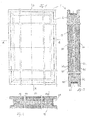
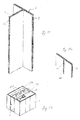
- Fig. 1 shows the view of a rectangular wall element 1, which may have different height and width dimensions and the in the cross-sectional view in FIGS. 2 and 3 has reproduced structure.
- the wall element has a peripheral frame profile 10, which is preferably made of wood, but also of another material, for example. Plastic, can be made.
- the frame profile elements of two adjacent sides are e.g. connected by a 45 ° pitch at an angle of substantially 90 ° with each other, wherein the miter surfaces can be glued or screwed together.
- the frame profiles can also be stumped together and, for example, screwed together, because - as explained below - the entire wall element is covered by a fabric cover 40.
- the frame composed of the frame profile elements 10 has on the inner periphery a cross-sectionally U-shaped inner groove 11 (FIG. 4 and 7 ), in which a stiffening plate 20 is inserted and preferably glued to the frame profile elements 10.
- Fig. 5 shows a toothing 11.2 at the bottom of the groove 11 for receiving excess adhesive.
- the inner groove 11 on the inner circumference of the frame preferably extends over the entire circumference of the frame, but it may be provided only on at least two opposite sides of a rectangular frame for receiving the stiffening plate 20 to form a rigid wall element 1 or ceiling element 2 ,
- the reinforcing plate 20 is preferably made of plasterboard or gypsum fiber material. But it can also be used another rigid material.
- Nonwoven layers denoted on both sides of the stiffening plate 20, which consist of a sound-absorbing nonwoven material and in the thickness are designed so that they are aligned with the outside of the side surfaces of the frame profile 10.
- an acoustic fleece 30 instead of an acoustic fleece 30, another preferably sound-absorbing material can also be used, for example an open-cell foam board.
- the entire wall element 1 is preferably coated on the opposite sides, preferably with fabric or a fabric 40.
- the frame constructed from the frame profile elements 10 has on its outer circumference an approximately U-shaped outer groove 12 (FIG. 4 and 7 ), in which extend the edges of the fabric cover 40 so that the edges can be clamped by a flat strip 41 on the groove bottom.
- the flat strip 41 extends in width substantially over the width of the groove bottom, wherein the two edges of the fabric cover 40 also extend substantially over the width of the groove bottom and are superimposed.
- a thin nonwoven layer 40a (FIG. Fig. 3 ), which covers any height differences between the frame section 10 and sound-absorbing material 30, so that one obtains a smooth surface of the fabric covering 40 on the visible side of the wall element 1.
- edges on the outer groove 12 and on the opposite outer sides of the frame profile 10 are chamfered at 12.1, as Fig. 4 shows, so that damage to the fabric cover 40 is avoided by sharp edges.
- a recess 12a In the middle region of the groove bottom of the groove 12 (FIG. Fig. 4 ) is expediently formed a recess 12a, so that excess material can be added to cloth covering 40 in the clamping region of the groove bottom.
- Such a constructed wall element 1 with layers 30 of sound-absorbing material has a high sound-absorbing effect, so that formed from such wall elements 1 partitions that delimit work areas in a large office, greatly dampen the entire sound level.
- FIG. 1 to 4 described wall elements 1 frontally put together, like this Fig. 17 schematically shows.
- connecting elements 50 and 51 are preferably fastened by means of screws, which are preferably screwed into the frame profile 10 in the area of the central recess or groove 12a.
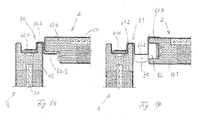
- Fig. 18 shows in a perspective view of a metal strip produced U-shaped bracket 50, the angled legs are provided with a bore 50.1 for receiving a fastening screw.
- a slot 50.2 is formed with at least one extended end, which serves to receive a connecting pin 51, the perspective in Fig. 19 is reproduced.
- the connecting pin 51 protrudes from a plate-shaped foot with holes 51.1 for receiving fastening screws and has at the free end a thickening 51.2, which is inserted through an extended end of the slot 50.2 and held in the narrower region of the slot.
- Fig. 17 shows, in the groove 12 of the frame profile 10 on both sides of the connecting pin 51, a space for receiving cables K available, which can be laid along a side edge of a wall element 1, as the perspective view in Fig. 17a shows.
- the connecting elements 50 and 51 can also be configured in other ways, so that a wall element 1 can be hung on the adjacent wall element in a simple manner.
- a cover strip can be used in the above exposed outer groove 12 whose cross-section substantially fills the cross-section of the groove 12 and its surface substantially closes with the ends of the legs of the groove 12, so that results in a partition at the top of a smooth surface.
- a cover strip can also be provided with a fabric covering and it can serve to stiffen a composite of several wall elements wall structure when the cover strip extends over the connecting region between the wall elements.
- Fig. 6 shows a cross section through a wall element 1 along the line AA in Fig. 1 , wherein on a longitudinal side of the frame, the frame profile in Fig. 6 at 10a reproduced cross-sectional shape, in which the outer groove 12, which serves on the one hand for fastening the fabric cover 40 and on the other hand for receiving the connecting elements 50, 51, is formed on a side surface of the frame profile 10a.
- This embodiment serves for a corner connection with an adjacent wall element, wherein the outer grooves 12 of the wall elements 1 adjacent to a corner are opposite one another, as this Fig. 21 schematically shows.
- fasteners 50, 51 used as in a frontal arrangement of adjacent wall elements 1 in Fig. 17 ,
- Fig. 7 shows the cross section of the provided for a corner joint frame profile 10a, wherein like reference numerals the same design elements in Fig. 4 correspond.
- Fig. 8 shows a view of a ceiling element 2, which can be placed on four at a right angle to each other arranged wall structures, so that there is a closed space with the ground on which the wall elements 1 stand.
- Fig. 9 shows a cross section of the ceiling element 2, which is composed of the same basic elements as a wall element 1.
- Fig. 9 shows a sectional view taken along the line AA in Fig. 8 , wherein provided on opposite broad sides of the ceiling element 2 frame profiles 10b have an approximately L-shaped cross-section, such as Fig. 11 in detail shows.
- Fig. 10 shows the cross section of the ceiling element along the line BB in Fig. 8 , wherein the frame profiles 10 on the opposite longitudinal sides have substantially the same cross section as the frame profiles 10 in Fig. 2 to 4 how a comparison of Fig. 4 and Fig. 12 shows.
- the only difference is that the in Fig. 4 central groove 11 in Fig. 12 is formed at a corner at 11.1, because in the ceiling element 2, the stiffening plate 20 is asymmetrically inserted on the outside of the ceiling element, as the views in FIGS. 9 and 10 demonstrate.
- the reason for this arrangement of the stiffening plate 20 on the outside of the ceiling element 2 is that through the sound-absorbing surface in the form of the double-layered layer 30 low-frequency sound components can be better absorbed, so that the total sound absorption in a closed space by the embodiment of the ceiling elements. 2 in FIGS. 9 and 10 is more effective.
- the recess 11.1 on the frame section 10.1 in Fig. 12 may be provided with a toothing 11.2 one side of the recess, so that on the front side of the stiffening plate 20 excess adhesive can be added.
- the recess 13 corresponds approximately to half of the groove 12 with the groove-shaped recess 12a on the groove bottom.
- FIG. 9 shows the fabric cover 40 is clamped in the region of the frame profiles 10b by strips 41 and 41.1 in the region of the recess 13 by means of steel brackets 42, wherein the bar 41, the groove-shaped recess 12a covered as in the embodiment in FIGS. 2 and 3 or in Fig. 10 ,
- Fig. 13 shows the corner joint between a wall element 1 and a ceiling element 2, the frame profile 10b accordingly FIGS. 9 and 11 is trained.
- a stepped in cross-section metal rail 60 is provided, which rests with a protruding leg 60.1 on the groove bottom or on the strip 41 of the frame profile 10 and with a curved central portion 60.2 engages over the projecting on one side leg portion of the groove 12.
- Right side of the metal rail 60 is a support portion 60.3 from, on which the horizontal surface of the recess 13 and the strip 41.1 rests.
- Fig. 14 shows the corner joint in the direction of the section line BB in Fig. 8 between the wall element 1 and ceiling element 2, wherein a differently shaped in cross-section rail 61 is used as a cover metal.
- a differently shaped in cross-section rail 61 is used as a cover metal.
- an LED illumination 70 mounted on a widened portion 61.3 of the cover 61 is.
- An angled edge portion 61.4 rests on the top of the ceiling element 2.
- the ceiling element 2 on opposite sides by the rail 60 ( Fig. 13 ) is held, can be placed on the other two opposite sides only the cover rail 61, which has no holding function.
- a ceiling element 2 may be provided in the same manner as a wall element 1 with a groove 12 on the entire circumference, so that it is not necessary, the in Fig. 11 and 13 reproduced cross-sectional shape of the frame profile 10b provide.
- Fig. 15 shows an inserted between adjacent ceiling elements 2
- Bandrasterelement 80 preferably made of sheet metal, which has a substantially U-shaped cross-section with at the free edges of the legs outwardly angled edges 80.1, wherein in the middle of the web portion 80.2 in a groove, a lighting strip 70 with LED elements is used.
- a fan is inserted into the band-grid element 80, over which at a distance a cover 91 is arranged, is used in the sound-absorbing material 91.1.
- the band grid 80 rests with the protruding edge portions, 80.1 on the top of the ceiling elements 2, wherein a protruding on the edge of the cover 91 leg rests on the edges 80.1 and is attached thereto.
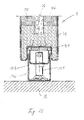
- Fig. 16 shows the support of a wall element 1 on a floor structure B using the groove 12 in the frame section 10th
- a U-shaped rail 100 is fixed in which a Stitzte 101 rests with a threaded portion which engages in a threaded bore in the web portion of a U-shaped bracket 102 which bears with the leg ends of the strip 41.
- the bracket 102 may also be rail-shaped with threaded holes at least on the opposite sides of the rail.
- leg ends of the two U-shaped elements 100 and 102 engage in the groove 12 of the frame profile 10, so that there is a largely closed structure.
- a wall element 1 is suitable for the design of work spaces, for example.
- a door element or a window element can be provided between wall elements 1, between wall elements 1, a door element or a window element.
- a door element this is preferably bordered on the outer circumference by an aluminum rail whose cross-sectional shape on the outer circumference substantially corresponds to that of the frame profile 10, so that the door element can be connected on one side with connecting elements 50, 51 with the adjacent wall element 1.
- a seal can be used on the door element.
- a window element with a circumferential aluminum frame which carries a glass sheet.
- the frame profile of individual wall elements 1, for example. Closed on the top, ie without groove 12, are formed, wherein the fabric cover 40 extends continuously from one to the opposite side of the wall element on the frame profile.
- the end of the groove 12 of an adjacent frame profile element 10 can be covered by the compound in a miter angle of the frame profile element formed closed on the top.
- a composite of wall elements 1 wall structure of a partition wall on one side with a colored fabric cover 40 and on the opposite side with a different color of the fabric cover 40 are provided because the fabrics 40 on the opposite sides in the region of the groove 12 separated from each other are fixed.
- At least one outer wall of a work area can be in Fig. 10 in which, unlike the embodiment in FIG Fig. 3 the stiffening plate 20 is arranged on the outside, in order to achieve a maximum sound-absorbing effect in the interior.
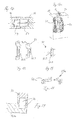
- the Fig. 22 shows in a perspective view, for example, an office landscape with formed from the wall and ceiling elements 1, 2 areas in the manner of a modular system.
- wall or ceiling elements 1, 2 all have the same structure, with only frame profile elements are adapted to a single wall or ceiling element to the intended use. This results in a broad modular design for office landscapes, such as in Fig. 22 shown.
- Fig. 23 shows a perspective view of a composite of wall and ceiling elements closed space with a door T, wherein on the ceiling elements two spaced technical bandraster 100 are provided. These bandrasters 100 may be configured similar to those in FIG Fig. 15 reproduced bandraster 80.
- fan units for supply and exhaust air are indicated and at 102 a control unit is shown schematically, through which the lighting, the supply and exhaust air and the like. Can be controlled.
- Fig. 24 shows a cross section at a junction between the wall element 1 and ceiling element 2, wherein on the wall element a stepped profile 103, for example, is attached by means of screws, which has a projecting over the side surface of the wall element 1 angled edge 103a, on which a cross-sectionally L-shaped Suspension profile 104 rests from metal, which is fastened to the profile element 10b of the ceiling element 2 by means of screws.
- a stepped profile 103 for example, is attached by means of screws, which has a projecting over the side surface of the wall element 1 angled edge 103a, on which a cross-sectionally L-shaped Suspension profile 104 rests from metal, which is fastened to the profile element 10b of the ceiling element 2 by means of screws.
- the frame profile element 10b has a different cross-sectional shape than in Fig. 9 , wherein the recess 13 in Fig. 24 is positioned at the top.
- a metal surface can be provided, wherein between the metal surface and the structure of the ceiling element, a cooling device, not shown, can be provided to cool the underlying space.
- the metal surface of the cooling device can be smooth, perforated or covered with fabric. Furthermore, the metal surface can be pulled laterally upward from the underside of the ceiling element 2, wherein the suspension profiles 104 can be integrated into the metal surface.
- Fig. 25 shows a T-shaped element of the wall structure, wherein in the middle of the preferably large-wall element 1 in Fig. 25a a frame profile element 10a ( Fig. 7 ), which is also on the right in Fig. 7 with the inner groove 11 is provided so that in Fig. 7 reproduced frame profile element 10 a is formed symmetrically to the center line through the outer groove 12 a.
- a stiffening plate 20 are inserted into the inner groove 11 and in the perpendicular thereto positioned outer groove 12, a connecting element 50 (FIG. Fig. 17 ) as in a corner joint in Fig. 21 ,
- the in the frame of the large wall element 1 in Fig. 25 integrated frame profile element 10a extends between the two horizontal frame profile elements of the wall element. 1
Landscapes
- Engineering & Computer Science (AREA)
- Architecture (AREA)
- Civil Engineering (AREA)
- Structural Engineering (AREA)
- Physics & Mathematics (AREA)
- Electromagnetism (AREA)
- Building Environments (AREA)
Abstract
Description
- Die Erfindung betrifft einen aus Wand- oder Deckenelementen zusammengesetzten Wand bzw. Deckenaufbau sowie die Ausgestaltung eines Wandelementes, wobei in Verbindung mit Deckenelementen geschlossene Räume mittels des Wandaufbaus ausgebildet werden können.
- Die Anforderungen an die Gestaltung von Büroräumen und Büroarbeitsplätzen im Sinne der Ergonomie, des Arbeitsschutzes, der Behaglichkeit und der Arbeitseffizienz haben sich im letzten Jahrzehnt auf Grund neuer Profile in den durchzuführenden Arbeiten, Änderungen in der Arbeitsorganisation als auch auf Grund der Flächenverdichtung selbst stark verändert. Wissensarbeit wird durch die Komplexität der Aufgabenstellungen zunehmend in flexiblen Teams ausgeführt. Diese neue Form der Arbeitsorganisation und Arbeitsweise erfordert neuartige Bürokonzepte, die den gestiegenen Anforderungen an Kommunikation und räumlicher Flexibilität gerecht werden müssen. Open-Space-Büros sind auf Grund ihrer räumlichen Strukturierungsmöglichkeiten das Raumkonzept der Wahl. Sie erlauben dem Nutzer eine nahezu flexible Gestaltung der Bürolandschaft. Kommunikationszonen und Arbeitszonen können gemäß den Anforderungen an die Unternehmensstruktur und -organisation geplant und gestaltet werden.
- Neben der Arbeitsorganisation spielt die Behaglichkeit in Büroräumen eine immer bedeutendere Rolle. Sie muss mit den gestiegenen Anforderungen an Flexibilität und Kommunikation kooperieren. Ein wichtiges Kriterium neben der thermischen ist die raumakustische Behaglichkeit, die es ermöglicht, in Open-Space-Büros konzentriert zu arbeiten.
- Aufgabe der Erfindung ist es, insbesondere Wandelemente schallabsorbierend auszubilden, so dass in einem Großraumbüro Stellwände und abgegrenzte Arbeitsbereiche mit hoher schallabsorbierender Wirkung aufgestellt werden können. In Verbindung mit entsprechend gestalteten Deckenelementen sollen auch geschlossene Arbeits- und Besprechungsräume ausgebildet werden, die gegenüber Schalleinwirkung von außen weitgehend isoliert sind.
- Erfindungsgemäß umfasst ein Wand- oder Deckenelement einen aus Rahmenprofilelementen zusammengesetzten rechteckigen Rahmen,
eine in eine Ausnehmung der Rahmenprofilelemente eingesetzte Versteifungsplatte, eine schallabsorbierende Lage auf wenigstens einer Seite der Versteifungsplatte zwischen den Rahmenprofilelementen und eine Bespannung aus Stoff oder einem Gewebe, die das gesamte Element umgibt. - Auf diese Weise wird eine leicht handhabbare Einheit mit guten schallschluckenden Eigenschaften ausgebildet, die als Wand- und/oder Deckenelement eingesetzt werden kann.
- Vorteilhafterweise ist am Außenumfang des Rahmens wenigstens auf einer Seite des rechteckigen Rahmens eine Nut ausgebildet, in der die Ränder der Stoffbespannung durch eine Leiste festgeklemmt sind. Auf diese Weise kann ein Wandelement auf den gegenüberliegenden Seiten mit unterschiedlichen Stoffbespannungen versehen werden.
- Die Nut zur Aufnahme der Ränder der Stoffbespannung auf der Stirnseite eines Wand- oder Deckenelementes kann zur Aufnahme von Verbindungselementen verwendet werden, die zur Verbindung eines Wand- oder Deckenelementes mit einem benachbarten Element dienen. Auf diese Weise können Wand- oder Deckenaufbauten aus mehreren Wand- oder Deckenelementen zusammengesetzt werden.
- Zur Ausbildung einer Verbindung zwischen Wandelementen oder Wand- und Deckenelementen kann auf wenigstens einer Seite eines Wand- oder Deckenelementes die auf dem Außenumfang vorgesehene Nut seitlich am Rahmenprofilelement ausgebildet sein, wobei die seitlich angebrachte Nut einer stirnseitig angebrachten Nut auf dem Außenumfang am benachbarten Wandelement gegenüberliegt. Auf diese Weise wird eine Eckverbindung zwischen Wandelementen ausgebildet.
- Zur Ausbildung eines T-förmigen Wandelementes wird vorteilhafterweise zwischen gegenüberliegenden Rahmenprofilelementen eines Wandelementes ein zusätzliches Rahmenprofilelement eingesetzt, das beiderseits der seitlich am Rahmenprofilelement vorgesehenen äußeren Nut eine symmetrische Ausgestaltung hat, so dass beiderseits dieses zusätzlichen Rahmenprofilelementes eine Versteifungsplatte in die innere Nut auf dem Innenumfang eingesetzt werden kann, während an die seitlich angebrachte äußere Nut über Verbindungselemente ein senkrecht abstehendes Wandelement eingehängt werden kann.
- Die Rahmenprofilelemente werden vorzugsweise aus Holz gefertigt, sie können aber auch aus Kunststoff bestehen.
- Die Leisten in der Nut auf dem Umfang der Wand- oder Deckenelemente werden bevorzugt durch Stahlklammern befestigt, um die Montage zu erleichtern.
- Für die schallabsorbierende Wirkung ist es von Vorteil, wenn die Versteifungsplatte aus Gipskarton oder Gipsfasermaterial gefertigt ist. Dies ist auch für den Brandschutz von Verteil.
- Die schallabsorbierende Lage auf wenigstens einer Seite der Versteifungsplatte besteht vorzugsweise aus einem Vliesmaterial, das auch schwer entflammbar ausgerüstet sein kann. Es kann auch ein vorzugsweise offenporiger Schaumstoff oder eine Kombination aus Schaumstoff und Vliesmaterial als schallabsorbierende Lage vorgesehen werden.
- Aus einzelnen Wandelementen kann eine Stellwand zusammengesetzt werden, indem in der Nut auf dem Außenumfang der Wandelemente Verbindungselemente angeordnet sind, durch die benachbarte Wandelemente aneinander einhängbar sind. Hierbei kann auf einem z.B. aus drei Wandelementen umgrenzten Raum ein Deckenaufbau vorgesehen werden, der nur auf gegenüberliegenden Seiten des Wandaufbaus aufliegen kann.
- An der Verbindung zwischen Deckenelementen und Wandaufbau wird bevorzugt eine Schiene mit abstehenden Schenkeln vorgesehen, die auf den Wand- und Deckenelementen aufliegt und dazwischen eine Schattenfuge bilden kann.
- Es kann auch eine Abdeckschiene zwischen Wandelement und Deckenelemente vorgesehen werden, die z.B. eine Leiste mit LED-Elementen trägt.
- Die Verbindung zwischen einem Wand- und einem Deckenelement kann aber auch in der gleichen Art und Weise ausgebildet werden wie eine Eckverbindung zwischen benachbarten Wandelementen, wobei die äußeren Nuten auf dem Umfang der beiden Elemente einander gegenüberliegen.
- Beispielsweise Ausführungsformen der Erfindung werden nachfolgend anhand der Zeichnung näher erläutert. Es zeigen
- Fig. 1
- eine Ansicht eines Wandelementes,
- Fig. 2
- eine Schnittansicht längs der Linie A-A in
Fig. 1 , - Fig. 3
- eine Schnittansicht längs der Linie B-B in
Fig. 1 , - Fig. 4
- den Querschnitt eines Rahmenprofils,
- Fig. 5
- eine Querschnittsansicht einer Ausführungsform der Verbindung zwischen Rahmenprofil und Versteifungsplatte,
- Fig. 6
- eine Querschnittsansicht entsprechend der Linie A-A in
Fig. 1 mit einem abgewandelten Rahmenprofil, - Fig. 7
- den Querschnitt des abgewandelten Rahmenprofils in
Fig. 6 , - Fig. 8
- eine Ansicht eines Deckenelementes,
- Fig. 9
- eine Querschnittsansicht längs der Linie A-A in
Fig. 8 , - Fig. 10
- eine Querschnittsansicht längs der Linie B-B in
Fig. 8 , - Fig. 11
- den Querschnitt des Rahmenprofils in
Fig. 9 , - Fig. 12
- den Querschnitt des Rahmenprofils in
Fig. 10 , - Fig. 13
- im Querschnitt die Verbindung zwischen einem Deckenelement und einem Wandelement,
- Fig. 14
- eine andere Ausführungsform der Verbindung zwischen Wand- und Deckenelement,
- Fig. 15
- eine Querschnittsansicht eines Deckenaufbaus mit einem Bandraster,
- Fig. 16
- eine Querschnittsansicht der Abstützung eines Wandelementes am Boden,
- Fig. 17
- stirnseitig miteinander verbundene Wandelemente,
- Fig. 18
- eine perspektivische Ansicht eines Verbindungselementes,
- Fig. 19
- eine perspektivische Ansicht eines Verbindungselementes,
- Fig. 20
- eine weitere Ausführungsform von Verbindungselementen,
- Fig. 21
- schematisch im Querschnitt eine Eckverbindung von Wandelementen,
- Fig. 22
- eine perspektivische Ansicht einer Bürolandschaft,
- Fig. 23
- eine Ansicht eines aus Wand- und Deckenelementen ausgebildeten Raumen,
- Fig. 24
- einen Querschnitt durch eine Verbindung zwischen Wand- und Deckenelement mit einer abgewandelten Form der Einhängung des Deckenelementes,
- Fig. 25
- in perspektivischer Ansicht ein T-förmiges Wandelement mit einer Ansicht in Fig. 25a.
-
Fig. 1 zeigt die Ansicht eines rechteckigen Wandelementes 1, das unterschiedliche Höhen- und Breitenabmessungen haben kann und den in der Querschnittsansicht inFig. 2 und 3 wiedergegebenen Aufbau hat. - Das Wandelement weist ein umlaufendes Rahmenprofil 10 auf, das vorzugsweise aus Holz gefertigt ist, aber auch aus einem anderen Material, bspw. Kunststoff, gefertigt sein kann. An den Ecken sind die Rahmenprofilelemente zweier benachbarten Seiten z.B. durch eine 45°-Gehrung in einem Winkel von im Wesentlichen 90° miteinander verbunden, wobei die Gehrungsflächen miteinander verklebt oder verschraubt werden können.
- Nach einer anderen Ausgestaltung können die Rahmenprofile auch stumpf aneinander gesetzt und bspw. miteinander verschraubt werden, weil - wie nachfolgend erläutert - das gesamte Wandelement durch eine Stoffbespannung 40 abgedeckt wird.
- Der aus den Rahmenprofilelementen 10 zusammengesetzter Rahmen weist auf dem Innenumfang eine im Querschnitt U-förmige innere Nut 11 (
Fig. 4 und 7 ) auf, in die eine Versteifungsplatte 20 eingesetzt und vorzugsweise mit den Rahmenprofilelementen 10 verklebt ist. -
Fig. 5 zeigt eine Verzahnung 11.2 am Boden der Nut 11 zur Aufnahme von überschüssigem Kleber. - Die innere Nut 11 auf dem Innenumfang des Rahmens erstreckt sich bevorzugt über den gesamten Umfang des Rahmens, sie kann aber auch nur zumindest auf zwei gegenüberliegenden Seiten eines rechteckigen Rahmens zur Aufnahme der Versteifungsplatte 20 vorgesehen sein, um ein steifes Wandelement 1 oder Deckenelement 2 zu bilden.
- Die Verstärkungsplatte 20 wird vorzugsweise aus Gipskarton oder Gipsfasermaterial gefertigt. Es kann aber auch ein anderes steifes Material verwendet werden.
- Mit 30 sind in
Fig. 2 und 3 Vliesschichten beiderseits der Versteifungsplatte 20 bezeichnet, die aus einem schalldämmenden Vliesmaterial bestehen und in der Dicke so ausgelegt sind, dass sie mit der Außenseite den Seitenflächen des Rahmenprofils 10 fluchten. - Anstelle eines Akustikvlieses 30 kann auch ein anderes vorzugsweise schallabsorbierendes Material verwendet werden, bspw. eine offenzellige Schaumstoffplatte.
- Das gesamt Wandelement 1 ist bevorzugt auf den gegenüberliegenden Seiten vorzugsweise mit Stoff bzw. einem Gewebe 40 beschichtet.
- Der aus den Rahmenprofilelementen 10 aufgebaute Rahmen weist auf dem Außenumfang eine im Querschnitt etwa U-förmige äußere Nut 12 (
Fig. 4 und 7 ) auf, in die hinein sich die Ränder der Stoffbespannung 40 so erstrecken, dass die Ränder durch eine flache Leiste 41 am Nutboden festgeklemmt werden können. - Bei dem dargestellten Ausführungsbeispiel (
Fig. 2 und 3 ) erstreckt sich die flache Leiste 41 in ihrer Breite im Wesentlichen über die Breite des Nutbodens, wobei die beiden Ränder der Stoffbespannung 40 sich ebenfalls im Wesentlichen über die Breite des Nutbodens erstrecken und übereinander liegen. - Mit 42 sind Stahlklammern bezeichnet, mittels denen die aus Holz oder Kunststoff bestehende Leiste 41 am Rahmenprofil 10 unter Zwischenlage der übereinander liegenden Ränder der Stoffbespannung 40 festgeklemmt wird.
- Vorzugsweise wird zwischen Stoffbespannung 40 und schallabsorbierendem Material 30 eine dünne Vlieslage 40a (
Fig. 3 ) vorgesehen, die eventuell vorhandene Höhenunterschiede zwischen Rahmenprofil 10 und schallabsorbierendem Material 30 überdeckt, so dass man auf der Sichtseite des Wandelementes 1 eine glatte Oberfläche der Stoffbespannung 40 erhält. - Die Ränder an der äußeren Nut 12 und an den gegenüberliegenden Außenseiten des Rahmenprofils 10 sind bei 12.1 abgeschrägt, wie
Fig. 4 zeigt, damit eine Beschädigung der Stoffbespannung 40 durch scharfe Kanten vermieden wird. - Im Mittelbereich des Nutbodens der Nut 12 (
Fig. 4 ) ist zweckmäßigerweise eine Vertiefung 12a ausgebildet, so dass überschüssiges Material an Stoffbespannung 40 im Klemmbereich des Nutbodens aufgenommen werden kann. - Ein derart aufgebautes Wandelement 1 mit Lagen 30 aus schallabsorbierendem Material hat eine hohe schallabsorbierende Wirkung, so dass aus solchen Wandelementen 1 ausgebildete Stellwände, die in einem Großraumbüro Arbeitsbereiche abgrenzen, den gesamten Schallpegel stark dämpfen.
- Zur Ausbildung einer aus Wandelementen 1 aufgebauten Stellwand werden in
Fig. 1 bis 4 beschriebene Wandelemente 1 stirnseitig aneinander gesetzt, wie diesFig. 17 schematisch zeigt. In den Nuten 12 der gegenüberliegenden Längsseiten sind Verbindungselemente 50 und 51 vorzugsweise mittels Schrauben befestigt, die bevorzugt im Bereich der mittigen Ausnehmung bzw. Nut 12a in das Rahmenprofil 10 eingeschraubt sind. -
Fig. 18 zeigt in einer perspektivischen Ansicht aus einem Blechstreifen gefertigte U-förmige Bügel 50, deren abgewinkelte Schenkel mit einer Bohrung 50.1 zur Aufnahme einer Befestigungsschraube versehen sind. Im Stegabschnitt des Bügels 50 ist ein Schlitz 50.2 mit wenigstens einem erweiterten Ende ausgebildet, der zur Aufnahme eines Verbindungszapfens 51 dient, der perspektivisch inFig. 19 wiedergegeben ist. Der Verbindungszapfen 51 steht von einem plattenförmigen Fuß mit Bohrungen 51.1 zur Aufnahme von Befestigungsschrauben ab und weist am freien Ende eine Verdickung 51.2 auf, die durch ein erweitertes Ende des Schlitzes 50.2 eingesetzt und im engeren Bereich des Schlitzes gehalten wird. - Wie die Querschnittsansicht in
Fig. 17 zeigt, ist in der Nut 12 des Rahmenprofils 10 beiderseits des Verbindungszapfens 51 ein Freiraum für die Aufnahme von Kabeln K vorhanden, die längs eines Seitenrandes eines Wandelementes 1 verlegt werden können, wie die perspektivische Ansicht inFig. 17a zeigt. - Die Verbindungselemente 50 und 51 können auch in anderer Weise ausgestaltet werden, damit ein Wandelement 1 am benachbarten Wandelement in einfacher Weise eingehängt werden kann.
- Es ist auch eine einseitige Einhängung möglich, wie dies
Fig. 20 schematisch mit einem U-förmigen Eingriffsabschnitt eines Bügels 50a und einem T-förmigen Eingriffselement 51 a zeigt. - Wenn eine Stellwand aus mehreren Wandelementen 1 zusammengesetzt ist, kann in der oben freiliegenden äußeren Nut 12 eine nicht dargestellte Abdeckleiste eingesetzt werden, deren Querschnitt den Querschnitt der Nut 12 im Wesentlichen ausfüllt und deren Oberfläche mit den Enden der Schenkel der Nut 12 im Wesentlichen abschließt, so dass sich bei einer Stellwand an der Oberseite eine glatte Fläche ergibt. Eine solche Abdeckleiste kann ebenfalls mit einer Stoffbespannung versehen sein und sie kann zur Versteifung eines aus mehreren Wandelementen zusammengesetzten Wandaufbau dienen, wenn sich die Abdeckleiste über den Verbindungsbereich zwischen den Wandelementen erstreckt.
-
Fig. 6 zeigt einen Querschnitt durch ein Wandelement 1 längs der Linie A-A inFig. 1 , wobei auf einer Längsseite des Rahmens das Rahmenprofils die inFig. 6 bei 10a wiedergegebene Querschnittsform hat, bei der die äußere Nut 12, die einerseits zur Befestigung der Stoffbespannung 40 und andererseits zur Aufnahme der Verbindungselemente 50, 51 dient, auf einer Seitenfläche des Rahmenprofils 10a ausgebildet ist. Diese Ausgestaltung dient für eine Eckverbindung mit einem benachbarten Wandelement, wobei die äußeren Nuten 12 der an einer Ecke benachbarten Wandelemente 1 einander gegenüberliegen, wie diesFig. 21 schematisch zeigt. In den gegenüberliegenden Nuten 12 der Eckverbindung nachFig. 21 sind Verbindungselemente 50, 51 eingesetzt wie bei einer stirnseitigen Anordnung benachbarter Wandelemente 1 inFig. 17 . - Im Übrigen ist der Aufbau des Wandelementes 1 in
Fig. 6 identisch mit dem anhand derFig. 2 und 3 erläuterten. -
Fig. 7 zeigt den Querschnitt des für eine Eckverbindung vorgesehenen Rahmenprofils 10a, wobei gleiche Bezugszeichen den gleichen Gestaltungselementen inFig. 4 entsprechen. -
Fig. 8 zeigt eine Ansicht eines Deckenelementes 2, das auf vier in einem rechten Winkel zueinander angeordneten Wandaufbauten aufgesetzt werden kann, so dass sich mit dem Boden, auf dem die Wandelemente 1 stehen, ein geschlossener Raum ergibt. -
Fig. 9 zeigt einen Querschnitt des Deckenelementes 2, das aus den gleichen Grundelementen wie ein Wandelement 1 aufgebaut ist. -
Fig. 9 zeigt eine Schnittansicht längs der Linie A-A inFig. 8 , wobei die auf gegenüberliegenden Breitseiten des Deckenelementes 2 vorgesehenen Rahmenprofile 10b einen etwa L-förmigen Querschnitt haben, wieFig. 11 im Einzelnen zeigt. -
Fig. 10 zeigt den Querschnitt des Deckenelementes längs der Linie B-B inFig. 8 , wobei die Rahmenprofile 10 auf den gegenüberliegenden Längsseiten im Wesentlichen den gleichen Querschnitt haben wie die Rahmenprofile 10 inFig. 2 bis 4 , wie ein Vergleich derFig. 4 undFig. 12 zeigt. Der Unterschied besteht lediglich darin, dass die inFig. 4 mittige Nut 11 inFig. 12 an einer Ecke bei 11.1 ausgebildet ist, weil bei dem Deckenelement 2 die Versteifungsplatte 20 asymmetrisch auf der Außenseite des Deckenelementes eingesetzt ist, wie die Ansichten inFig. 9 und 10 zeigen. Der Grund für diese Anordnung der Versteifungsplatte 20 auf der Außenseite des Deckenelementes 2 besteht darin, dass durch die schallabsorbierende Fläche in Form der doppellagigen Schicht 30 tieffrequente Schallanteile besser absorbiert werden können, so dass die Schallabsorption insgesamt bei einem geschlossenen Raum durch die Ausführungsform der Deckenelemente 2 inFig. 9 und 10 wirksamer ist. - Auch bei der Anordnung der Ausnehmung 11.1 am Rahmenprofil 10.1 in
Fig. 12 kann eine Seite der Ausnehmung mit einer Verzahnung 11.2 vorgesehen sein, damit auf der Stirnseite der Versteifungsplatte 20 überschüssiger Kleber aufgenommen werden kann. - Bei dem Rahmenprofil 10b in
Fig. 9 und 11 ist eine an einer Ecke vorgesehene abgestufte Ausnehmung 13 für eine inFig. 13 wiedergegebene Eckverbindung vorgesehen. Im Wesentlichen entspricht die Ausnehmung 13 etwa der Hälfte der Nut 12 mit der nutförmigen Ausnehmung 12a am Nutboden. - Wie
Fig. 9 zeigt, wird die Stoffbespannung 40 im Bereich der Rahmenprofile 10b durch Leisten 41 und 41.1 im Bereich der Ausnehmung 13 mittels Stahlklammern 42 festgeklemmt, wobei die Leiste 41 die nutförmige Ausnehmung 12a überdeckt wie bei der Ausführungsform inFig. 2 und 3 bzw. inFig. 10 . -
Fig. 13 zeigt die Eckverbindung zwischen einem Wandelement 1 und einem Deckenelement 2, dessen Rahmenprofil 10b entsprechendFig. 9 und 11 ausgebildet ist. Bei dieser vorzugsweise in Querrichtung längs der Schnittlinie A-A inFig. 8 vorgesehenen Eckverbindung ist eine im Querschnitt abgestufte Metallschiene 60 vorgesehen, die mit einem abstehenden Schenkel 60.1 am Nutboden bzw. an der Leiste 41 des Rahmenprofils 10 aufliegt und mit einem gebogenem Mittelabschnitt 60.2 den auf einer Seite abstehenden Schenkelbereich der Nut 12 übergreift. Auf der gegenüberliegenden, inFig. 13 rechten Seite der Metallschiene 60 steht ein Auflageabschnitt 60.3 ab, auf dem die horizontal liegende Fläche der Ausnehmung 13 bzw. die Leiste 41.1 aufliegt. - Bei dieser Eckverbindung wird durch die Ausnehmung 13 eine Schattenfuge zwischen Wandelement 1 und Deckenelement 2 ausgebildet.
-
Fig. 14 zeigt die Eckverbindung in Richtung der Schnittlinie B-B inFig. 8 zwischen Wandelement 1 und Deckenelement 2, wobei eine im Querschnitt anders geformte Schiene 61 aus Metall als Abdeckelement verwendet wird. Bei dem dargestellten Ausführungsbeispiel ist im Bereich der Schattenfuge derFig. 13 eine LED-Beleuchtung 70 auf einem verbreiterten Abschnitt 61.3 des Abdeckelementes 61 angebracht ist. Ein abgewinkelter Randabschnitt 61.4 liegt auf der Oberseite des Deckenelementes 2 auf. - Nachdem bei diesem Ausführungsbeispiel der
Fig. 8 bis 14 das Deckenelement 2 auf gegenüberliegenden Seiten durch die Schiene 60 (Fig. 13 ) gehalten wird, kann auf den beiden anderen gegenüberliegenden Seiten lediglich die Abdeckschiene 61 aufgelegt werden, die keine Haltefunktion hat. - Wie
Fig. 14 zeigt, kann ein Deckenelement 2 auch in der gleichen Weise wie ein Wandelement 1 mit einer Nut 12 auf dem gesamten Umfang versehen sein, so dass es nicht erforderlich ist, die inFig. 11 und13 wiedergegebene Querschnittsform des Rahmenprofils 10b vorzusehen. -
Fig. 15 zeigt ein zwischen benachbarten Deckenelementen 2 eingesetztes Bandrasterelement 80, vorzugsweise aus Metallblech, das einen im Wesentlichen U-förmigen Querschnitt mit an den freien Rändern der Schenkel nach außen abgewinkelten Rändern 80.1 aufweist, wobei in der Mitte des Stegabschnitts 80.2 in einer Nut eine Beleuchtungsleiste 70 mit LED-Elementen eingesetzt ist. Bei 90 ist ein Lüfter in das Bandrasterelement 80 eingesetzt, über den in einem Abstand eine Abdeckhaube 91 angeordnet ist, in der schallabsorbierendes Material 91.1 eingesetzt ist. - Der Bandraster 80 liegt mit den abstehenden Randabschnitten, 80.1 auf der Oberseite der Deckenelemente 2 auf, wobei ein am Rand der Abdeckhaube 91 abstehender Schenkel auf den Rändern 80.1 aufliegt und daran befestigt ist.
-
Fig. 16 zeigt die Abstützung eines Wandelements 1 auf einem Bodenaufbau B unter Ausnutzung der Nut 12 im Rahmenprofil 10. - Auf dem Bodenaufbau B ist eine im Querschnitt U-förmige Schiene 100 befestigt, in der eine Stützte 101 mit einem Gewindeabschnitt aufliegt, der in eine Gewindebohrung im Stegabschnitt eines U-förmigen Bügels 102 eingreift, der mit den Schenkelenden an der Leiste 41 anliegt. Der Bügel 102 kann auch schienenförmig ausgebildet sein mit Gewindebohrungen zumindest an den gegenüberliegenden Seiten der Schiene.
- Die Schenkelenden der beiden U-förmigen Elemente 100 und 102 greifen in die Nut 12 des Rahmenprofils 10 ein, so dass sich ein weitgehend geschlossener Aufbau ergibt.
- Der beschriebene Aufbau eines Wandelementes 1 eignet sich für die Gestaltung von Arbeitsräumen bspw. in der Form von unterschiedlich hohen Stellwänden sowie zur Eingrenzung eines etwa rechteckigen Arbeitsbereiches, wobei zwischen Wandelementen 1 ein Türelement oder auch ein Fensterelement vorgesehen werden kann. Im Fall eines Türelementes wird dieses auf dem Außenumfang vorzugsweise durch eine Aluschiene eingefasst, deren Querschnittsform auf dem Außenumfang im Wesentlichen dem des Rahmenprofils 10 entspricht, so dass das Türelement auf einer Seite mit Verbindungselementen 50, 51 mit dem benachbarten Wandelement 1 verbunden werden kann. Im übrigen Bereich der umlaufenden Nut 12 des Profils kann eine Dichtung am Türelement eingesetzt werden.
- In gleicher Weise kann zwischen benachbarten Wandelementen 1 ein Fensterelement mit einem umlaufenden Alu-Rahmen eingesetzt werden, der eine Glasscheibe trägt.
- Durch Aufsetzen einer Decke auf einem rechteckigen Arbeitsbereich aus Wandelementen 1, wobei die Decke aus Deckenelementen 2 zusammengesetzt sein kann, können in einfacher Weise weitgehend schallisolierte Arbeitsräume realisiert werden, die in einem Großraumbüro an beliebiger Stelle positioniert werden können.
- Es sind verschiedene Abwandlungen der beschriebenen Bauformen möglich, so können in einzelnen Wandelementen 1 Verstärkungselemente an der Versteifungsplatte 20 befestigt sein anstelle der schallabsorbierenden Lage 30, damit an dem Wandelement 1 Regale, Monitorhalterungen und dgl. Elemente befestigt werden können.
- Zur Befestigung von Regalen bspw. kann zwischen gegenüberliegenden Rahmenprofilen 10 eine Holzleiste verlaufen, die von der Stoffbespannung 40 überdeckt ist und zur Befestigung eines Regalelementes mittels Schrauben dient.
- Zur Anpassung an bestimmte Wandaufbauten kann das Rahmenprofil einzelner Wandelemente 1 bspw. auf der Oberseite auch geschlossen, also ohne Nut 12, ausgebildet werden, wobei sich die Stoffbespannung 40 durchgehend von der einen zur gegenüberliegend Seite des Wandelementes über das Rahmenprofil erstreckt.
- Bei einer solchen Ausgestaltung kann das Ende der Nut 12 eines angrenzenden Rahmenprofilelementes 10 durch die Verbindung in einem Gehrungswinkel von dem auf der Oberseite geschlossen ausgebildeten Rahmenprofilelement überdeckt werden.
- Es sind verschiedene Gestaltungsmöglichkeiten bei der beschriebenen Bauform möglich. So kann bspw. ein aus Wandelementen 1 zusammengesetzter Wandaufbau einer Stellwand auf einer Seite mit einer farbigen Stoffbespannung 40 und auf der gegenüberliegenden Seite mit einer anderen Farbe der Stoffbespannung 40 versehen werden, weil die Bespannungen 40 auf den gegenüberliegenden Seiten im Bereich der Nut 12 getrennt voneinander fixiert sind.
- Bei vorgegebenen Arbeitsbereichen kann zumindest eine Außenwand eines Arbeitsbereiches den in
Fig. 10 wiedergegebenen Aufbau haben, bei dem im Gegensatz zu der Ausführungsform inFig. 3 die Versteifungsplatte 20 auf der Außenseite angeordnet ist, um im Innenraum eine maximale schallabsorbierende Wirkung zu erzielen. - Die
Fig. 22 zeigt in einer perspektivischen Ansicht bspw. eine Bürolandschaft mit aus den Wand- und Deckenelementen 1, 2 ausgebildeten Bereichen nach Art eines Baukastensystems. Durch die Kombination der verschiedenen Elemente entstehen unterschiedliche Zonen und Bürobereiche als abgeschlossene wie auch offene Einheiten, die verschiedene Nutzungszwecke - von Küchen über Druckerinseln bis hin zu Gruppen- und Einzelbüros - mit im Wesentlichen gleichen Elementen abdecken. - Die für die verschiedenen Gestaltungen vorgesehenen Wand- bzw. Deckenelemente 1, 2 haben alle den gleichen Aufbau, wobei lediglich Rahmenprofilelemente an einem einzelnen Wand- oder Deckenelement an die vorgesehene Verwendung angepasst werden. Hierdurch ergibt sich ein weitgehender modularer Aufbau für Bürolandschaften, wie bspw. in
Fig. 22 dargestellt. - Neben der schallabsorbierenden Ausgestaltung der Modulelemente wird durch deren Stoffbespannung auch ein hohes Maß an Behaglichkeit erreicht.
-
Fig. 23 zeigt eine perspektivische Ansicht eines aus Wand- und Deckenelementen zusammengesetzten geschlossenen Raumes mit einer Tür T, wobei auf den Deckenelementen zwei beabstandete technische Bandraster 100 vorgesehen sind. Diese Bandraster 100 können ähnlich ausgestaltet sein wie der inFig. 15 wiedergegebene Bandraster 80. - Bei 101 sind Lüftereinheiten für Zu- und Abluft angedeutet und bei 102 ist eine Steuereinheit schematisch wiedergegeben, durch die die Beleuchtung, die Zu- und Abluft und dgl. gesteuert werden können.
-
Fig. 24 zeigt einen Querschnitt an einer Verbindungsstelle zwischen Wandelement 1 und Deckenelement 2, wobei auf dem Wandelement ein abgestuftes Profil 103 bspw. mittels Schrauben befestigt ist, das einen über die Seitenfläche des Wandelementes 1 vorstehenden abgewinkelten Rand 103a aufweist, auf dem ein im Querschnitt L-förmiges Einhängeprofil 104 aus Metall aufliegt, das an dem Profilelement 10b des Deckenelementes 2 mittels Schrauben befestigt ist. Durch diese Art der Einhängung können größere Toleranzen zwischen Wand- und Deckenelement aufgenommen werden. Bei dieser Anordnung inFig. 24 hat das Rahmenprofilelement 10b eine andere Querschnittsgestalt als inFig. 9 , wobei die Aussparung 13 inFig. 24 oben positioniert ist. - Auf der Unterseite des Deckenelementes 2 kann eine Metalloberfläche vorgesehen werden, wobei zwischen Metalloberfläche und Aufbau des Deckenelementes eine nicht dargestellte Kühleinrichtung vorgesehen werden kann, um den darunterliegenden Raum zu kühlen. Die Metalloberfläche der Kühleinrichtung kann glatt, gelocht oder auch mit Stoff bespannt sein. Weiterhin kann die Metalloberfläche von der Unterseite des Deckenelementes 2 seitlich nach oben gezogen werden, wobei das Einhängeprofile 104 in die Metallfläche integriert sein kann.
-
Fig. 25 zeigt ein T-förmiges Element des Wandaufbaus, wobei in der Mitte des vorzugsweise großflächigen Wandelementes 1 inFig. 25a ein Rahmenprofilelement 10a (Fig. 7 ) angeordnet ist, das auch auf der rechten Seite inFig. 7 mit der inneren Nut 11 versehen ist, so dass das inFig. 7 wiedergegebene Rahmenprofilelement 10a symmetrisch zur Mittellinie durch die äußere Nut 12a ausgebildet ist. Auf diese Weise kann rechts und links an dem Rahmenprofilelement 10a inFig. 25a eine Versteifungsplatte 20 in die innere Nut 11 eingesetzt werden und in der senkrecht dazu positionierten äußeren Nut 12 ein Verbindungselement 50 (Fig. 17 ) wie bei einer Eckverbindung inFig. 21 . - Das in den Rahmen des großflächigen Wandelementes 1 in
Fig. 25 integrierte Rahmenprofilelement 10a erstreckt sich zwischen den beiden horizontal liegenden Rahmenprofilelementen des Wandelementes 1.
Claims (15)
- Wand- oder Deckenelement, umfassend
einen aus Rahmenprofilelementen (10, 10a, 10b) zusammengesetzten rechteckigen Rahmen,
eine in eine innere Nut oder Ausnehmung (11, 13) der Rahmenprofilelemente eingesetzte Versteifungsplatte (20),
eine schallabsorbierende Lage (30) auf wenigstens einer Seite der Versteifungsplatte (20) zwischen den Rahmenprofilelementen (10, 10a, 10b), und eine Bespannung (40) aus Stoff oder einem Gewebe, die das gesamte Element (1, 2) umgibt. - Element nach Anspruch 1, wobei am Außenumfang oder im Bereich des Außenumfangs des Rahmens wenigstens auf einer Seite des rechteckigen Rahmens eine äußere Nut (12) ausgebildet ist, in der die Ränder der Stoffbespannung (40) durch eine Leiste (41) festgeklemmt sind.
- Element nach Anspruch 2, wobei die äußere Nut (12) auf der Stirnseite eines Wand- bzw. Deckenelementes (1, 2) ausgebildet ist und Verbindungselemente (50, 51) in der äußeren Nut (12) zur Verbindung mit einem benachbarten Element angebracht sind.
- Element nach Anspruch 2 oder 3, wobei auf wenigstens einer Seite eines Wand- oder Deckenelementes (1, 2) die äußere Nut (12) seitlich am Rahmenprofilelement (10a) ausgebildet ist zur Ausbildung einer Eckverbindung zwischen benachbarten Wandelementen, bei der die seitlich angebrachte äußere Nut (12) einer stirnseitig angebrachten äußeren Nut (12) am benachbarten Wandelement (1) gegenüberliegt.
- Element nach Anspruch 4, wobei beiderseits der seitlich am Rahmenprofilelement ausgebildeten äußeren Nut (12) ein symmetrischer Aufbau mit inneren Nuten (11) des Rahmenprofilelements ausgebildet ist zur Ausbildung einer T-Verbindung von Wandelementen.
- Element nach einem der vorhergehenden Ansprüche, wobei die Rahmenprofilelemente (10, 10a, 10b) aus Holz gefertigt sind.
- Element nach einem der vorhergehenden Ansprüche, wobei die Leiste (41) durch Stahlklammern (42) an den Rahmenprofilelementen (10, 10a, 10b) in der Nut (12) befestigt ist.
- Element nach einem der vorhergehenden Ansprüche, wobei die Versteifungsplatte (20) aus Gipskarton oder Gipsfasermaterial gefertigt ist.
- Element nach einem der vorhergehenden Ansprüche, wobei die schallabsorbierende Lage (30) aus Vlies besteht.
- Aus Wandelementen (1) zusammengesetzte Stellwand, wobei in der Nut (12) benachbarter Wandelemente (1) Verbindungselemente (50, 51) angeordnet sind, durch die benachbarte Wandelemente (1) aneinander einhängbar sind.
- Aus Wand- und Deckenelementen (1, 2) zusammengesetzter Aufbau, wobei auf den einen rechteckigen Raum zumindest teilweise umschließenden Wandelementen (1) Deckenelemente (2) auf gegenüberliegenden Seiten aufliegen.
- Aufbau nach Anspruch 11, wobei die Deckenelemente (2) auf gegenüberliegenden Seiten über eine eine Schattenfuge bildende Schiene (60) mit abstehenden Schenkeln (60.1, 60.3) auf den Wandelementen (1) aufliegt.
- Aufbau nach einem der Ansprüche 11 und 12, wobei zwischen Wandelement (1) und Deckenelement (2) auf einer Längsseite eines Deckenelementes eine Abdeckschiene (61) vorgesehen ist.
- Aufbau nach einem der Ansprüche 11 bis 13, wobei zwischen benachbarten Deckenelementen (2) und/oder zwischen einem Wandelement (1) und einem Deckenelement (2) eine Beleuchtungsleiste (70) vorgesehen ist.
- Aufbau nach einem der Ansprüche 10 bis 14, wobei in der Nut (12) benachbarter Wandelemente (1) oder benachbarter Deckenelemente (2) eine Versteifungsleiste eingesetzt ist.
Priority Applications (1)
| Application Number | Priority Date | Filing Date | Title |
|---|---|---|---|
| PL15178579T PL2980329T3 (pl) | 2014-07-30 | 2015-07-28 | Element ścianowy i sufitowy jak i struktura ścianowa i sufitowa wykonana z elementów |
Applications Claiming Priority (1)
| Application Number | Priority Date | Filing Date | Title |
|---|---|---|---|
| DE201420103531 DE202014103531U1 (de) | 2014-07-30 | 2014-07-30 | Wand- und Deckenelement sowie aus Elementen zusammengesetzter Wand- und Deckenaufbau |
Publications (3)
| Publication Number | Publication Date |
|---|---|
| EP2980329A2 true EP2980329A2 (de) | 2016-02-03 |
| EP2980329A3 EP2980329A3 (de) | 2016-04-06 |
| EP2980329B1 EP2980329B1 (de) | 2020-06-24 |
Family
ID=51520248
Family Applications (1)
| Application Number | Title | Priority Date | Filing Date |
|---|---|---|---|
| EP15178579.7A Active EP2980329B1 (de) | 2014-07-30 | 2015-07-28 | Wand- und deckenelement sowie aus elementen zusammengesetzter wand- und deckenaufbau |
Country Status (3)
| Country | Link |
|---|---|
| EP (1) | EP2980329B1 (de) |
| DE (1) | DE202014103531U1 (de) |
| PL (1) | PL2980329T3 (de) |
Cited By (3)
| Publication number | Priority date | Publication date | Assignee | Title |
|---|---|---|---|---|
| WO2020243760A1 (de) * | 2019-06-03 | 2020-12-10 | Auberger Herbert | Schallabsorberelement mit einem einen dämmstoff einfassenden spannrahmen |
| EP4560084A1 (de) * | 2023-11-27 | 2025-05-28 | Lindner Se | Schallabsorber mit mehrteiligem absorberkörper |
| EP4675055A1 (de) * | 2024-07-01 | 2026-01-07 | Ecolution Design LLC | Modularer akustischer behälter |
Families Citing this family (4)
| Publication number | Priority date | Publication date | Assignee | Title |
|---|---|---|---|---|
| DE102014013190A1 (de) | 2014-09-11 | 2016-03-17 | Haworth Gmbh | Sichtschutz sowie Sichtschutzsystem |
| FR3137931A1 (fr) * | 2022-07-12 | 2024-01-19 | Procedes Chenel International | Panneau modulaire à structure légère et cloison réalisée avec de tels panneaux modulaires |
| CN115324390B (zh) * | 2022-09-03 | 2024-01-23 | 上海久山全装环保科技有限公司 | 一种基于煤矸石混合成型的快速装配式景观房 |
| WO2024261411A1 (fr) * | 2023-06-23 | 2024-12-26 | Procedes Chenel International | Panneau modulaire à structure légère et cloison realisée avec de tels panneaux modulaires |
Family Cites Families (8)
| Publication number | Priority date | Publication date | Assignee | Title |
|---|---|---|---|---|
| US4094113A (en) * | 1976-09-30 | 1978-06-13 | Harter Corporation | Modular wall panel structure |
| SE458129B (sv) * | 1985-01-22 | 1989-02-27 | Sune Sigfrid Lennart Rydqvist | Skaermvaeggsystem |
| US6141926A (en) * | 1995-10-26 | 2000-11-07 | Tetrad Marketing/Sales Ltd. | Panel construction and connection system |
| DE19727660A1 (de) * | 1997-06-30 | 1999-01-07 | Teskom Schallschutz Gmbh | Flächige Struktur in Modulbauart insbesondere für Schallschutz- und/oder Sichtschutzwände |
| JP2966399B1 (ja) * | 1998-06-30 | 1999-10-25 | 有限会社アール・エフ・シー | 組立式防音室 |
| AT505807B1 (de) * | 2007-08-07 | 2009-10-15 | Sanika S R L | Rahmenkonstruktion |
| US20130312355A1 (en) * | 2012-05-22 | 2013-11-28 | David PADEH | Quick assembly modular partitions |
| JP5805062B2 (ja) * | 2012-12-27 | 2015-11-04 | トクラス株式会社 | 衛生設備室 |
-
2014
- 2014-07-30 DE DE201420103531 patent/DE202014103531U1/de not_active Expired - Lifetime
-
2015
- 2015-07-28 EP EP15178579.7A patent/EP2980329B1/de active Active
- 2015-07-28 PL PL15178579T patent/PL2980329T3/pl unknown
Non-Patent Citations (1)
| Title |
|---|
| None |
Cited By (3)
| Publication number | Priority date | Publication date | Assignee | Title |
|---|---|---|---|---|
| WO2020243760A1 (de) * | 2019-06-03 | 2020-12-10 | Auberger Herbert | Schallabsorberelement mit einem einen dämmstoff einfassenden spannrahmen |
| EP4560084A1 (de) * | 2023-11-27 | 2025-05-28 | Lindner Se | Schallabsorber mit mehrteiligem absorberkörper |
| EP4675055A1 (de) * | 2024-07-01 | 2026-01-07 | Ecolution Design LLC | Modularer akustischer behälter |
Also Published As
| Publication number | Publication date |
|---|---|
| DE202014103531U1 (de) | 2014-08-21 |
| EP2980329B1 (de) | 2020-06-24 |
| EP2980329A3 (de) | 2016-04-06 |
| PL2980329T3 (pl) | 2020-11-30 |
Similar Documents
| Publication | Publication Date | Title |
|---|---|---|
| EP2980329B1 (de) | Wand- und deckenelement sowie aus elementen zusammengesetzter wand- und deckenaufbau | |
| DE3688977T2 (de) | System von trennwandplatten. | |
| DE102014112556A1 (de) | Akustisch wirksames Raumteilsystem | |
| EP2161386A2 (de) | Rahmen eines Schallabsorbers und Schallabsorber | |
| EP1870529A1 (de) | Wand/Schrankanordnung mit einer Rahmenkonstruktion | |
| DE202017104561U1 (de) | Trennwand für Innenräume | |
| EP1647646B1 (de) | Randprofil eines Wandelements | |
| CH639165A5 (en) | Panel element with a sound-insulating mat, in particular for soundproofing walls, soundproofing floors and soundproofing booths | |
| DE202016008552U1 (de) | Ziegelverkleidungssystem | |
| EP3085846A1 (de) | Überströmelement und wandelement | |
| DE2804866C3 (de) | Bodenanschluß für eine feuerhemmende Raumtrennwand | |
| DE202021103171U1 (de) | Modulare Arbeitsplatzkabine | |
| DE3517976C2 (de) | ||
| EP0942108A1 (de) | Modulares Element und Rahmen hierfür | |
| EP2847394A1 (de) | Raumgliederungselement für ein grossraumbüro | |
| DE202012005495U1 (de) | Stellwandsystem zum Unterdrücken von Schallwellen vorbestimmter Frequenzbänder | |
| DE29901547U1 (de) | Abdeckleiste für plattenförmige Bauelemente | |
| CH694209A5 (de) | Profilkonstruktion, insbesondere fuer den Aufbau von Raumteilern. | |
| DE102014013190A1 (de) | Sichtschutz sowie Sichtschutzsystem | |
| DE2224394A1 (de) | Trennwandkonstruktion | |
| CH587984A5 (en) | Noise and fire insulating partition wall - has edge support profile and cavity filled with incombustible material | |
| DE102012219223A1 (de) | Raumgliederungselement zur Schalldämmung bzw. Schallabsorption | |
| AT242387B (de) | Bauelementensatz für Schallschluckdecken u. dgl. | |
| EP4488465A1 (de) | Platte für den trockenen innenausbau | |
| DE29821741U1 (de) | Bauvorsatzschale mit Feuerschutz-Schallschutz-Eigenschaften |
Legal Events
| Date | Code | Title | Description |
|---|---|---|---|
| PUAI | Public reference made under article 153(3) epc to a published international application that has entered the european phase |
Free format text: ORIGINAL CODE: 0009012 |
|
| AK | Designated contracting states |
Kind code of ref document: A2 Designated state(s): AL AT BE BG CH CY CZ DE DK EE ES FI FR GB GR HR HU IE IS IT LI LT LU LV MC MK MT NL NO PL PT RO RS SE SI SK SM TR |
|
| AX | Request for extension of the european patent |
Extension state: BA ME |
|
| PUAL | Search report despatched |
Free format text: ORIGINAL CODE: 0009013 |
|
| AK | Designated contracting states |
Kind code of ref document: A3 Designated state(s): AL AT BE BG CH CY CZ DE DK EE ES FI FR GB GR HR HU IE IS IT LI LT LU LV MC MK MT NL NO PL PT RO RS SE SI SK SM TR |
|
| AX | Request for extension of the european patent |
Extension state: BA ME |
|
| RIC1 | Information provided on ipc code assigned before grant |
Ipc: E04B 2/80 20060101ALN20160302BHEP Ipc: E04B 9/00 20060101ALI20160302BHEP Ipc: E04B 2/74 20060101AFI20160302BHEP Ipc: E04B 9/04 20060101ALN20160302BHEP Ipc: F21S 8/04 20060101ALN20160302BHEP Ipc: E04B 1/82 20060101ALN20160302BHEP Ipc: E04C 2/38 20060101ALI20160302BHEP Ipc: E04H 1/12 20060101ALI20160302BHEP Ipc: E04B 1/61 20060101ALN20160302BHEP Ipc: E04C 2/296 20060101ALI20160302BHEP |
|
| 17P | Request for examination filed |
Effective date: 20161006 |
|
| RBV | Designated contracting states (corrected) |
Designated state(s): AL AT BE BG CH CY CZ DE DK EE ES FI FR GB GR HR HU IE IS IT LI LT LU LV MC MK MT NL NO PL PT RO RS SE SI SK SM TR |
|
| STAA | Information on the status of an ep patent application or granted ep patent |
Free format text: STATUS: EXAMINATION IS IN PROGRESS |
|
| 17Q | First examination report despatched |
Effective date: 20170714 |
|
| GRAP | Despatch of communication of intention to grant a patent |
Free format text: ORIGINAL CODE: EPIDOSNIGR1 |
|
| STAA | Information on the status of an ep patent application or granted ep patent |
Free format text: STATUS: GRANT OF PATENT IS INTENDED |
|
| INTG | Intention to grant announced |
Effective date: 20200109 |
|
| GRAS | Grant fee paid |
Free format text: ORIGINAL CODE: EPIDOSNIGR3 |
|
| GRAA | (expected) grant |
Free format text: ORIGINAL CODE: 0009210 |
|
| STAA | Information on the status of an ep patent application or granted ep patent |
Free format text: STATUS: THE PATENT HAS BEEN GRANTED |
|
| RIN1 | Information on inventor provided before grant (corrected) |
Inventor name: QUINKERT, MATTHIAS Inventor name: KNOTT, REINHOLD Inventor name: ULMER, MICHAEL Inventor name: SAKOWSKY, MARC-DENIS |
|
| AK | Designated contracting states |
Kind code of ref document: B1 Designated state(s): AL AT BE BG CH CY CZ DE DK EE ES FI FR GB GR HR HU IE IS IT LI LT LU LV MC MK MT NL NO PL PT RO RS SE SI SK SM TR |
|
| REG | Reference to a national code |
Ref country code: GB Ref legal event code: FG4D Free format text: NOT ENGLISH |
|
| REG | Reference to a national code |
Ref country code: CH Ref legal event code: EP |
|
| REG | Reference to a national code |
Ref country code: AT Ref legal event code: REF Ref document number: 1284037 Country of ref document: AT Kind code of ref document: T Effective date: 20200715 |
|
| REG | Reference to a national code |
Ref country code: DE Ref legal event code: R096 Ref document number: 502015012844 Country of ref document: DE |
|
| REG | Reference to a national code |
Ref country code: IE Ref legal event code: FG4D Free format text: LANGUAGE OF EP DOCUMENT: GERMAN |
|
| REG | Reference to a national code |
Ref country code: CH Ref legal event code: NV Representative=s name: SCHMAUDER AND PARTNER AG PATENT- UND MARKENANW, CH |
|
| PG25 | Lapsed in a contracting state [announced via postgrant information from national office to epo] |
Ref country code: GR Free format text: LAPSE BECAUSE OF FAILURE TO SUBMIT A TRANSLATION OF THE DESCRIPTION OR TO PAY THE FEE WITHIN THE PRESCRIBED TIME-LIMIT Effective date: 20200925 Ref country code: NO Free format text: LAPSE BECAUSE OF FAILURE TO SUBMIT A TRANSLATION OF THE DESCRIPTION OR TO PAY THE FEE WITHIN THE PRESCRIBED TIME-LIMIT Effective date: 20200924 Ref country code: FI Free format text: LAPSE BECAUSE OF FAILURE TO SUBMIT A TRANSLATION OF THE DESCRIPTION OR TO PAY THE FEE WITHIN THE PRESCRIBED TIME-LIMIT Effective date: 20200624 Ref country code: LT Free format text: LAPSE BECAUSE OF FAILURE TO SUBMIT A TRANSLATION OF THE DESCRIPTION OR TO PAY THE FEE WITHIN THE PRESCRIBED TIME-LIMIT Effective date: 20200624 Ref country code: SE Free format text: LAPSE BECAUSE OF FAILURE TO SUBMIT A TRANSLATION OF THE DESCRIPTION OR TO PAY THE FEE WITHIN THE PRESCRIBED TIME-LIMIT Effective date: 20200624 |
|
| PGFP | Annual fee paid to national office [announced via postgrant information from national office to epo] |
Ref country code: GB Payment date: 20200803 Year of fee payment: 6 Ref country code: FR Payment date: 20200730 Year of fee payment: 6 |
|
| REG | Reference to a national code |
Ref country code: LT Ref legal event code: MG4D |
|
| PG25 | Lapsed in a contracting state [announced via postgrant information from national office to epo] |
Ref country code: RS Free format text: LAPSE BECAUSE OF FAILURE TO SUBMIT A TRANSLATION OF THE DESCRIPTION OR TO PAY THE FEE WITHIN THE PRESCRIBED TIME-LIMIT Effective date: 20200624 Ref country code: BG Free format text: LAPSE BECAUSE OF FAILURE TO SUBMIT A TRANSLATION OF THE DESCRIPTION OR TO PAY THE FEE WITHIN THE PRESCRIBED TIME-LIMIT Effective date: 20200924 Ref country code: LV Free format text: LAPSE BECAUSE OF FAILURE TO SUBMIT A TRANSLATION OF THE DESCRIPTION OR TO PAY THE FEE WITHIN THE PRESCRIBED TIME-LIMIT Effective date: 20200624 Ref country code: HR Free format text: LAPSE BECAUSE OF FAILURE TO SUBMIT A TRANSLATION OF THE DESCRIPTION OR TO PAY THE FEE WITHIN THE PRESCRIBED TIME-LIMIT Effective date: 20200624 |
|
| PGFP | Annual fee paid to national office [announced via postgrant information from national office to epo] |
Ref country code: CH Payment date: 20200811 Year of fee payment: 6 |
|
| REG | Reference to a national code |
Ref country code: NL Ref legal event code: MP Effective date: 20200624 |
|
| PG25 | Lapsed in a contracting state [announced via postgrant information from national office to epo] |
Ref country code: NL Free format text: LAPSE BECAUSE OF FAILURE TO SUBMIT A TRANSLATION OF THE DESCRIPTION OR TO PAY THE FEE WITHIN THE PRESCRIBED TIME-LIMIT Effective date: 20200624 Ref country code: AL Free format text: LAPSE BECAUSE OF FAILURE TO SUBMIT A TRANSLATION OF THE DESCRIPTION OR TO PAY THE FEE WITHIN THE PRESCRIBED TIME-LIMIT Effective date: 20200624 |
|
| PG25 | Lapsed in a contracting state [announced via postgrant information from national office to epo] |
Ref country code: PT Free format text: LAPSE BECAUSE OF FAILURE TO SUBMIT A TRANSLATION OF THE DESCRIPTION OR TO PAY THE FEE WITHIN THE PRESCRIBED TIME-LIMIT Effective date: 20201026 Ref country code: ES Free format text: LAPSE BECAUSE OF FAILURE TO SUBMIT A TRANSLATION OF THE DESCRIPTION OR TO PAY THE FEE WITHIN THE PRESCRIBED TIME-LIMIT Effective date: 20200624 Ref country code: CZ Free format text: LAPSE BECAUSE OF FAILURE TO SUBMIT A TRANSLATION OF THE DESCRIPTION OR TO PAY THE FEE WITHIN THE PRESCRIBED TIME-LIMIT Effective date: 20200624 Ref country code: IT Free format text: LAPSE BECAUSE OF FAILURE TO SUBMIT A TRANSLATION OF THE DESCRIPTION OR TO PAY THE FEE WITHIN THE PRESCRIBED TIME-LIMIT Effective date: 20200624 Ref country code: RO Free format text: LAPSE BECAUSE OF FAILURE TO SUBMIT A TRANSLATION OF THE DESCRIPTION OR TO PAY THE FEE WITHIN THE PRESCRIBED TIME-LIMIT Effective date: 20200624 Ref country code: EE Free format text: LAPSE BECAUSE OF FAILURE TO SUBMIT A TRANSLATION OF THE DESCRIPTION OR TO PAY THE FEE WITHIN THE PRESCRIBED TIME-LIMIT Effective date: 20200624 Ref country code: SM Free format text: LAPSE BECAUSE OF FAILURE TO SUBMIT A TRANSLATION OF THE DESCRIPTION OR TO PAY THE FEE WITHIN THE PRESCRIBED TIME-LIMIT Effective date: 20200624 |
|
| PG25 | Lapsed in a contracting state [announced via postgrant information from national office to epo] |
Ref country code: SK Free format text: LAPSE BECAUSE OF FAILURE TO SUBMIT A TRANSLATION OF THE DESCRIPTION OR TO PAY THE FEE WITHIN THE PRESCRIBED TIME-LIMIT Effective date: 20200624 Ref country code: IS Free format text: LAPSE BECAUSE OF FAILURE TO SUBMIT A TRANSLATION OF THE DESCRIPTION OR TO PAY THE FEE WITHIN THE PRESCRIBED TIME-LIMIT Effective date: 20201024 |
|
| REG | Reference to a national code |
Ref country code: DE Ref legal event code: R097 Ref document number: 502015012844 Country of ref document: DE |
|
| PG25 | Lapsed in a contracting state [announced via postgrant information from national office to epo] |
Ref country code: MC Free format text: LAPSE BECAUSE OF FAILURE TO SUBMIT A TRANSLATION OF THE DESCRIPTION OR TO PAY THE FEE WITHIN THE PRESCRIBED TIME-LIMIT Effective date: 20200624 |
|
| REG | Reference to a national code |
Ref country code: BE Ref legal event code: MM Effective date: 20200731 |
|
| PG25 | Lapsed in a contracting state [announced via postgrant information from national office to epo] |
Ref country code: LU Free format text: LAPSE BECAUSE OF NON-PAYMENT OF DUE FEES Effective date: 20200728 Ref country code: DK Free format text: LAPSE BECAUSE OF FAILURE TO SUBMIT A TRANSLATION OF THE DESCRIPTION OR TO PAY THE FEE WITHIN THE PRESCRIBED TIME-LIMIT Effective date: 20200624 |
|
| PLBE | No opposition filed within time limit |
Free format text: ORIGINAL CODE: 0009261 |
|
| STAA | Information on the status of an ep patent application or granted ep patent |
Free format text: STATUS: NO OPPOSITION FILED WITHIN TIME LIMIT |
|
| PG25 | Lapsed in a contracting state [announced via postgrant information from national office to epo] |
Ref country code: BE Free format text: LAPSE BECAUSE OF NON-PAYMENT OF DUE FEES Effective date: 20200731 |
|
| 26N | No opposition filed |
Effective date: 20210325 |
|
| PG25 | Lapsed in a contracting state [announced via postgrant information from national office to epo] |
Ref country code: IE Free format text: LAPSE BECAUSE OF NON-PAYMENT OF DUE FEES Effective date: 20200728 Ref country code: SI Free format text: LAPSE BECAUSE OF FAILURE TO SUBMIT A TRANSLATION OF THE DESCRIPTION OR TO PAY THE FEE WITHIN THE PRESCRIBED TIME-LIMIT Effective date: 20200624 |
|
| REG | Reference to a national code |
Ref country code: CH Ref legal event code: PL |
|
| GBPC | Gb: european patent ceased through non-payment of renewal fee |
Effective date: 20210728 |
|
| PG25 | Lapsed in a contracting state [announced via postgrant information from national office to epo] |
Ref country code: LI Free format text: LAPSE BECAUSE OF NON-PAYMENT OF DUE FEES Effective date: 20210731 Ref country code: GB Free format text: LAPSE BECAUSE OF NON-PAYMENT OF DUE FEES Effective date: 20210728 Ref country code: CH Free format text: LAPSE BECAUSE OF NON-PAYMENT OF DUE FEES Effective date: 20210731 |
|
| PG25 | Lapsed in a contracting state [announced via postgrant information from national office to epo] |
Ref country code: TR Free format text: LAPSE BECAUSE OF FAILURE TO SUBMIT A TRANSLATION OF THE DESCRIPTION OR TO PAY THE FEE WITHIN THE PRESCRIBED TIME-LIMIT Effective date: 20200624 Ref country code: MT Free format text: LAPSE BECAUSE OF FAILURE TO SUBMIT A TRANSLATION OF THE DESCRIPTION OR TO PAY THE FEE WITHIN THE PRESCRIBED TIME-LIMIT Effective date: 20200624 Ref country code: FR Free format text: LAPSE BECAUSE OF NON-PAYMENT OF DUE FEES Effective date: 20210731 Ref country code: CY Free format text: LAPSE BECAUSE OF FAILURE TO SUBMIT A TRANSLATION OF THE DESCRIPTION OR TO PAY THE FEE WITHIN THE PRESCRIBED TIME-LIMIT Effective date: 20200624 |
|
| PG25 | Lapsed in a contracting state [announced via postgrant information from national office to epo] |
Ref country code: MK Free format text: LAPSE BECAUSE OF FAILURE TO SUBMIT A TRANSLATION OF THE DESCRIPTION OR TO PAY THE FEE WITHIN THE PRESCRIBED TIME-LIMIT Effective date: 20200624 |
|
| PGFP | Annual fee paid to national office [announced via postgrant information from national office to epo] |
Ref country code: PL Payment date: 20240624 Year of fee payment: 10 |
|
| PGFP | Annual fee paid to national office [announced via postgrant information from national office to epo] |
Ref country code: AT Payment date: 20240723 Year of fee payment: 10 |
|
| PGFP | Annual fee paid to national office [announced via postgrant information from national office to epo] |
Ref country code: DE Payment date: 20250722 Year of fee payment: 11 |
|
| REG | Reference to a national code |
Ref country code: AT Ref legal event code: MM01 Ref document number: 1284037 Country of ref document: AT Kind code of ref document: T Effective date: 20250728 |
|
| PG25 | Lapsed in a contracting state [announced via postgrant information from national office to epo] |
Ref country code: AT Free format text: LAPSE BECAUSE OF NON-PAYMENT OF DUE FEES Effective date: 20250728 |