EP2990801A1 - Kit de diagnostic pour le diagnostic de troubles ou de maladies associés à une agrégation anormale des protéines ou à un mauvais repliement des protéines au moyen de la dissolution d'agrégats de protéines - Google Patents
Kit de diagnostic pour le diagnostic de troubles ou de maladies associés à une agrégation anormale des protéines ou à un mauvais repliement des protéines au moyen de la dissolution d'agrégats de protéines Download PDFInfo
- Publication number
- EP2990801A1 EP2990801A1 EP14788047.0A EP14788047A EP2990801A1 EP 2990801 A1 EP2990801 A1 EP 2990801A1 EP 14788047 A EP14788047 A EP 14788047A EP 2990801 A1 EP2990801 A1 EP 2990801A1
- Authority
- EP
- European Patent Office
- Prior art keywords
- protein
- proteins
- misfolding
- amyloid
- disorders related
- Prior art date
- Legal status (The legal status is an assumption and is not a legal conclusion. Google has not performed a legal analysis and makes no representation as to the accuracy of the status listed.)
- Granted
Links
Images



Classifications
-
- G—PHYSICS
- G01—MEASURING; TESTING
- G01N—INVESTIGATING OR ANALYSING MATERIALS BY DETERMINING THEIR CHEMICAL OR PHYSICAL PROPERTIES
- G01N33/00—Investigating or analysing materials by specific methods not covered by groups G01N1/00 - G01N31/00
- G01N33/48—Biological material, e.g. blood, urine; Haemocytometers
- G01N33/50—Chemical analysis of biological material, e.g. blood, urine; Testing involving biospecific ligand binding methods; Immunological testing
- G01N33/68—Chemical analysis of biological material, e.g. blood, urine; Testing involving biospecific ligand binding methods; Immunological testing involving proteins, peptides or amino acids
- G01N33/6893—Chemical analysis of biological material, e.g. blood, urine; Testing involving biospecific ligand binding methods; Immunological testing involving proteins, peptides or amino acids related to diseases not provided for elsewhere
-
- C—CHEMISTRY; METALLURGY
- C12—BIOCHEMISTRY; BEER; SPIRITS; WINE; VINEGAR; MICROBIOLOGY; ENZYMOLOGY; MUTATION OR GENETIC ENGINEERING
- C12Q—MEASURING OR TESTING PROCESSES INVOLVING ENZYMES, NUCLEIC ACIDS OR MICROORGANISMS; COMPOSITIONS OR TEST PAPERS THEREFOR; PROCESSES OF PREPARING SUCH COMPOSITIONS; CONDITION-RESPONSIVE CONTROL IN MICROBIOLOGICAL OR ENZYMOLOGICAL PROCESSES
- C12Q1/00—Measuring or testing processes involving enzymes, nucleic acids or microorganisms; Compositions therefor; Processes of preparing such compositions
- C12Q1/68—Measuring or testing processes involving enzymes, nucleic acids or microorganisms; Compositions therefor; Processes of preparing such compositions involving nucleic acids
- C12Q1/6876—Nucleic acid products used in the analysis of nucleic acids, e.g. primers or probes
- C12Q1/6883—Nucleic acid products used in the analysis of nucleic acids, e.g. primers or probes for diseases caused by alterations of genetic material
- C12Q1/6886—Nucleic acid products used in the analysis of nucleic acids, e.g. primers or probes for diseases caused by alterations of genetic material for cancer
-
- G—PHYSICS
- G01—MEASURING; TESTING
- G01N—INVESTIGATING OR ANALYSING MATERIALS BY DETERMINING THEIR CHEMICAL OR PHYSICAL PROPERTIES
- G01N1/00—Sampling; Preparing specimens for investigation
- G01N1/28—Preparing specimens for investigation including physical details of (bio-)chemical methods covered elsewhere, e.g. G01N33/50, C12Q
-
- G—PHYSICS
- G01—MEASURING; TESTING
- G01N—INVESTIGATING OR ANALYSING MATERIALS BY DETERMINING THEIR CHEMICAL OR PHYSICAL PROPERTIES
- G01N33/00—Investigating or analysing materials by specific methods not covered by groups G01N1/00 - G01N31/00
- G01N33/48—Biological material, e.g. blood, urine; Haemocytometers
- G01N33/50—Chemical analysis of biological material, e.g. blood, urine; Testing involving biospecific ligand binding methods; Immunological testing
- G01N33/68—Chemical analysis of biological material, e.g. blood, urine; Testing involving biospecific ligand binding methods; Immunological testing involving proteins, peptides or amino acids
- G01N33/6803—General methods of protein analysis not limited to specific proteins or families of proteins
- G01N33/6827—Total protein determination, e.g. albumin in urine
-
- G—PHYSICS
- G01—MEASURING; TESTING
- G01N—INVESTIGATING OR ANALYSING MATERIALS BY DETERMINING THEIR CHEMICAL OR PHYSICAL PROPERTIES
- G01N33/00—Investigating or analysing materials by specific methods not covered by groups G01N1/00 - G01N31/00
- G01N33/48—Biological material, e.g. blood, urine; Haemocytometers
- G01N33/50—Chemical analysis of biological material, e.g. blood, urine; Testing involving biospecific ligand binding methods; Immunological testing
- G01N33/68—Chemical analysis of biological material, e.g. blood, urine; Testing involving biospecific ligand binding methods; Immunological testing involving proteins, peptides or amino acids
- G01N33/6893—Chemical analysis of biological material, e.g. blood, urine; Testing involving biospecific ligand binding methods; Immunological testing involving proteins, peptides or amino acids related to diseases not provided for elsewhere
- G01N33/6896—Neurological disorders, e.g. Alzheimer's disease
-
- A—HUMAN NECESSITIES
- A61—MEDICAL OR VETERINARY SCIENCE; HYGIENE
- A61K—PREPARATIONS FOR MEDICAL, DENTAL OR TOILETRY PURPOSES
- A61K38/00—Medicinal preparations containing peptides
- A61K38/16—Peptides having more than 20 amino acids; Gastrins; Somatostatins; Melanotropins; Derivatives thereof
- A61K38/17—Peptides having more than 20 amino acids; Gastrins; Somatostatins; Melanotropins; Derivatives thereof from animals; from humans
- A61K38/1703—Peptides having more than 20 amino acids; Gastrins; Somatostatins; Melanotropins; Derivatives thereof from animals; from humans from vertebrates
- A61K38/1709—Peptides having more than 20 amino acids; Gastrins; Somatostatins; Melanotropins; Derivatives thereof from animals; from humans from vertebrates from mammals
- A61K38/1716—Amyloid plaque core protein
-
- C—CHEMISTRY; METALLURGY
- C07—ORGANIC CHEMISTRY
- C07K—PEPTIDES
- C07K14/00—Peptides having more than 20 amino acids; Gastrins; Somatostatins; Melanotropins; Derivatives thereof
- C07K14/435—Peptides having more than 20 amino acids; Gastrins; Somatostatins; Melanotropins; Derivatives thereof from animals; from humans
- C07K14/46—Peptides having more than 20 amino acids; Gastrins; Somatostatins; Melanotropins; Derivatives thereof from animals; from humans from vertebrates
- C07K14/47—Peptides having more than 20 amino acids; Gastrins; Somatostatins; Melanotropins; Derivatives thereof from animals; from humans from vertebrates from mammals
- C07K14/4701—Peptides having more than 20 amino acids; Gastrins; Somatostatins; Melanotropins; Derivatives thereof from animals; from humans from vertebrates from mammals not used
- C07K14/4711—Alzheimer's disease; Amyloid plaque core protein
-
- G—PHYSICS
- G01—MEASURING; TESTING
- G01N—INVESTIGATING OR ANALYSING MATERIALS BY DETERMINING THEIR CHEMICAL OR PHYSICAL PROPERTIES
- G01N2333/00—Assays involving biological materials from specific organisms or of a specific nature
- G01N2333/435—Assays involving biological materials from specific organisms or of a specific nature from animals; from humans
- G01N2333/46—Assays involving biological materials from specific organisms or of a specific nature from animals; from humans from vertebrates
- G01N2333/47—Assays involving proteins of known structure or function as defined in the subgroups
- G01N2333/4701—Details
- G01N2333/4709—Amyloid plaque core protein
-
- G—PHYSICS
- G01—MEASURING; TESTING
- G01N—INVESTIGATING OR ANALYSING MATERIALS BY DETERMINING THEIR CHEMICAL OR PHYSICAL PROPERTIES
- G01N2800/00—Detection or diagnosis of diseases
- G01N2800/28—Neurological disorders
- G01N2800/2814—Dementia; Cognitive disorders
- G01N2800/2821—Alzheimer
Definitions
- the present disclosure relates to a blood diagnostic kit capable of accurately diagnosing diseases or disorders related with abnormal aggregation or misfolding of proteins, including disorders or diseases caused by aggregation of ⁇ -amyloid such as Alzheimer's disease as well as disorders or diseases caused by aggregation of other proteins, based on concentration analysis of the aggregated proteins before and after dissociation.
- Neuronal malfunction and damage may be induced by toxic, aggregation-prone proteins and a number of neurological disorders are characterized by such conditions. These include disorders such as amyotrophic lateral sclerosis, Alzheimer's disease, Parkinson's disease, prion disease, polyglutamine expansion disease, spinocerebellar ataxia, spinal and bulbar muscular atrophy, spongiform encephalopathy, tauopathy, Huntington's disease or dystonia.
- disorders such as amyotrophic lateral sclerosis, Alzheimer's disease, Parkinson's disease, prion disease, polyglutamine expansion disease, spinocerebellar ataxia, spinal and bulbar muscular atrophy, spongiform encephalopathy, tauopathy, Huntington's disease or dystonia.
- Toxic, aggregation-prone proteins that cause such diseases and genes encoding the proteins have been identified.
- Normal metabolic enzymes recycle proteins creating a perpetual cycle of synthesis and degradation. Mutation in these genes results in abnormal accumulation and degradation of misfolded proteins.
- These misfolded proteins are known to result in neuronal inclusions and plaques which may be indicative of neuronal damage. Therefore, the understanding of cellular mechanisms and the identification of molecular tools required for the reduction, inhibition and amelioration of such misfolded proteins are critical. Furthermore, an understanding of the effects of protein misfolding and aggregation on neuronal survival will allow the development of rational, effective treatment for these disorders.
- Alzheimer's disease the most common form of dementia, is a neurodegenerative disorder caused by damage of neurons and synapses due to abnormal aggregation of ⁇ -amyloids and tau proteins that have existed normally in the brain, leading to formation of amyloid plaques (A ⁇ plaques) and neurofibrillary tangles, respectively.
- a ⁇ plaques amyloid plaques
- neurofibrillary tangles respectively.
- Alzheimer's disease is the third cause of age-related deaths, followed by cerebrovascular disease and cancer.
- the disease is known for placing a great burden on caregivers including psychological, economic and social aspects because the mean duration of the disease is over 10 years.
- ⁇ -Amyloids specifically found in the brains of Alzheimer patients are peptides generated by metabolism by secretases. They occur as monomers, oligomers, profibrils, fibrils or plaques depending on the progress of the disease. Among them, the oligomers and profibrils exhibiting active dynamic variation are known as the main cause that damages the brain cells.
- Alzheimer's disease can be made only through autopsy after death. Although its progress can be diagnosed by indirect examination of symptoms based on physical, neurological or physiological examination, measurement of ⁇ -amyloid in the cerebrospinal fluid and, most accurately, monitoring of structural and functional change of the brain and identification of ⁇ -amyloid plaques through brain imaging, they are very invasive and cost a lot. Because of these disadvantages, it is difficult to accurately diagnose Alzheimer's disease.
- the present disclosure is directed to providing a blood diagnostic kit capable of accurately diagnosing diseases or disorders related with abnormal aggregation or misfolding of proteins, including disorders or diseases caused by aggregation of ⁇ -amyloid such as Alzheimer's disease as well as disorders or diseases caused by aggregation of other proteins, based on concentration analysis of the aggregated proteins before and after dissociation.
- the present disclosure provides a blood diagnostic kit for diagnosing diseases or disorders related with abnormal aggregation or misfolding of proteins, which measures the concentration of proteins in plasma before and after administering a protein monomerizing composition.
- the diagnostic kit for diagnosing diseases or disorders related with abnormal aggregation or misfolding of proteins may include: (a) a detection unit 1 measuring the concentration of proteins in plasma before administering a composition for monomerizing abnormally aggregated or misfolded proteins in vivo; (b) a detection unit 2 measuring the concentration of proteins in plasma after administering the protein monomerizing composition; and (c) a calculation unit calculating the difference of the concentration measured by the detection unit 1 and the concentration measured by the detection unit 2 using [Equation 1]:
- the detection unit 2 may measure the concentration of proteins in plasma 20-450 hours after the administering of the protein monomerizing composition.
- the protein may be ⁇ -amyloid.
- the proteins in plasma after administering the protein monomerizing composition may be ones that have been formed from dissociation of ⁇ -amyloid oligomers, profibrils, fibrils and plaques in the brain and have transported into blood.
- the diagnostic kit for diagnosing diseases or disorders related with abnormal aggregation or misfolding of proteins may diagnose as diseases or disorders related with abnormal aggregation or misfolding of proteins if the value calculated by the calculation unit is a positive (+) value.
- the protein monomerizing composition may contain EPPS represented by [Chemical Formula 1] as an active ingredient:
- the protein monomerizing composition may dissociate ⁇ -amyloid oligomers, profibrils, fibrils and plaques into monomers.
- the present disclosure provides a diagnostic kit for diagnosing diseases or disorders related with abnormal aggregation or misfolding of proteins based on decrease of protein monomer concentration in whole blood, which measures protein monomer concentration in plasma without treating with a protein monomerizing composition, protein monomer concentration in plasma after treating with the protein monomerizing composition and protein monomer concentration in whole blood after treating with the protein monomerizing composition.
- the diagnostic kit for diagnosing diseases or disorders related with abnormal aggregation or misfolding of proteins may include: (A) a detection unit 1' measuring protein monomer concentration in plasma not treated with a protein monomerizing composition; (B) a detection unit 2' measuring protein monomer concentration in plasma treated with the protein monomerizing composition; (C) a detection unit 3' measuring protein monomer concentration in whole blood treated with the protein monomerizing composition; and (D) a calculation unit calculating the ratio of the concentration measured by the detection unit 2' and the concentration measured by the detection unit 3' using [Equation 2] or calculating the ratio of the concentration measured by the detection unit 1' and the concentration measured by the detection unit 2' using [Equation 3]: Protein monomer concentration in whole blood treated with protein monomerizing composition / Protein monomer concentration in plasma treated with protein monomerizing composition Protein monomer concentration in plasma not treated with protein monomerizing composition / Protein monomer concentration in plasma treated with protein monomerizing composition .
- the detection unit 1' may measure the concentration of proteins in plasma separated from whole blood without treating with a monomerizing composition or 23-25 hours after treating with a vehicle.
- the detection unit 2' and the detection unit 3' may measure the concentration of proteins 23-25 hours after treating with the protein monomerizing composition.
- the protein may be ⁇ -amyloid.
- the monomerized protein may be one that has been formed from dissociation of ⁇ -amyloid dimers, oligomers, profibrils, fibrils and plaques, ⁇ -amyloid 40/42 aggregates, ⁇ -amyloid monomers bound to other proteins, ⁇ -amyloid aggregates bound to other proteins, ⁇ -amyloid bound to fats, ⁇ -amyloid bound to carbohydrates, ⁇ -amyloid bound to nucleic acids and ⁇ -amyloid monomers bound to blood cells.
- the diagnostic kit for diagnosing diseases or disorders related with abnormal aggregation or misfolding of proteins may diagnose as diseases or disorders related with abnormal aggregation or misfolding of proteins if the value calculated by the calculation unit is smaller than 1.0.
- the vehicle may be phosphate-buffered saline (PBS).
- PBS phosphate-buffered saline
- the protein monomerizing composition may contain EPPS represented by [Chemical Formula 1] as an active ingredient.
- a diagnostic kit for diagnosing diseases or disorders related with abnormal aggregation or misfolding of proteins can diagnose and predict diseases or disorders related with abnormal aggregation or misfolding of proteins, including disorders or diseases caused by aggregation of ⁇ -amyloid such as Alzheimer's disease as well as disorders or diseases caused by aggregation of other proteins, by measuring the protein concentration before and after administering a protein monomerizing composition using detection units 1 and 2, particularly by indirectly measuring the concentration of protein aggregates in plasma by dissociating them.
- Another diagnostic kit for diagnosing diseases or disorders related with abnormal aggregation or misfolding of proteins can diagnose and predict diseases or disorders related with abnormal aggregation or misfolding of proteins, including disorders or diseases caused by aggregation of ⁇ -amyloid such as Alzheimer's disease as well as disorders or diseases caused by aggregation of other proteins, by measuring the concentration of proteins in plasma and whole blood using the detection units 1 and 2, based on the fact that the protein concentration decreases in whole blood as monomerized proteins are removed, aggregated proteins are dissociated into monomers or multimers with small molecular weights in whole blood and plasma, leading to increased protein concentration, and the proteins bound to other proteins, fats, carbohydrates, nucleic acids and blood cells are also dissociated in whole blood and plasma.
- the currently available methods for diagnosing diseases or disorders related with abnormal aggregation or misfolding of proteins are invasive and applicable only when the diseases or disorders have proceeded to certain stages. Since the aggregation of proteins occurs long before the symptoms of the diseases or disorders related with abnormal aggregation or misfolding of proteins are observed, it is not easy to achieve the effect of drugs designed to inhibit protein aggregation. Therefore, it is necessary to detect protein aggregation in the brain before the symptoms occur. Accordingly, the diagnostic kit for diagnosing diseases or disorders related with abnormal aggregation or misfolding of proteins according to the present disclosure, which is less invasive and uses common diagnostic samples such as plasma, serum or blood, will be very useful since it allows accurate diagnosis of the diseases or disorders related with abnormal aggregation or misfolding of proteins.
- the present disclosure relates to a diagnostic kit capable of accurately diagnosing diseases or disorders related with abnormal aggregation or misfolding of proteins, including disorders or diseases caused by aggregation of ⁇ -amyloid such as Alzheimer's disease as well as disorders or diseases caused by aggregation of other proteins, based on concentration analysis of the aggregated proteins before and after dissociation.
- the diseases or disorders related with abnormal aggregation or misfolding of proteins may be selected from a group consisting of Parkinson's disease, Huntington's disease, amyotrophic lateral sclerosis, polyglutamine expansion disease, spinocerebellar ataxia, spinal and bulbar muscular atrophy, tauopathy, dystonia, serpin deficiency, cirrhosis, type 2 diabetes, primary systemic amyloidosis, secondary systemic amyloidosis, frontotemporal dementia, senile systemic amyloidosis, familial amyloid polyneuropathy, hereditary cerebral amyloid angiopathy, hemodialysis-associated amyloidosis, age-related macular degeneration, Alzheimer's disease, radiotherapy-induced dementia, axon injury, acute cortical spreading depression, ⁇ -synucleinopathy, brain ischemia, permanent focal cerebral ischemia, peripheral nerve regeneration, post-status epilepticus model, spinal cord injury, sporadic amyotrophic
- protein aggregation includes the phenomenon of at least two polypeptides contacting each other in a manner that causes either one of the polypeptides to be in a state of desolvation. This may also include a loss of the polypeptide's native function or activity.
- the "protein” may be specifically ⁇ -amyloid.
- a diagnostic kit of the present disclosure diagnoses diseases or disorders related with abnormal aggregation or misfolding of proteins by measuring the concentration of proteins in plasma before and after administering a protein monomerizing composition.
- the diagnostic kit includes: (a) a detection unit 1 measuring the concentration of proteins in plasma before administering a composition for monomerizing abnormally aggregated or misfolded proteins in vivo; (b) a detection unit 2 measuring the concentration of proteins in plasma after administering the protein monomerizing composition; and (c) a calculation unit calculating the difference of the concentration measured by the detection unit 1 and the concentration measured by the detection unit 2 using [Equation 1]
- the detection unit 1 measures the concentration of proteins in plasma before administering a protein monomerizing composition (A).
- the detection unit 2 measures the concentration of proteins in plasma after orally or parenterally administering the protein monomerizing composition (B).
- the time at which the measurement is made after administering the protein monomerizing composition is not particularly limited. The measurement may be made specifically 20-450 hours, more specifically 20-300 hours, after the administration.
- the calculation unit calculates the difference of the concentration measured by the detection unit 1 (A) and the concentration measured by the detection unit 2 (B) using [Equation 1]. Concentration of proteins in plasma after administering protein monomerizing composition B ⁇ Concentration of proteins in plasma before administering protein monomerizing composition A
- the value calculated using [Equation 1] may be a positive (+) value or negative (-) value. If the value calculated using [Equation 1] is 0 or a negative (-) value, it may be diagnosed as a normal state wherein diseases or disorders related with abnormal aggregation or misfolding of proteins do not proceed. And, if the value is a positive (+) value, it may be diagnosed as a state wherein the risk of onset of diseases or disorders related with abnormal aggregation or misfolding of proteins is high.
- the value calculated using [Equation 1] is a positive (+) value, it means that the amount of proteins has increased after the administering of the protein monomerizing composition. Since it indicates the progress of protein accumulation in the brain, it may be diagnosed as a state wherein the risk of onset of diseases or disorders related with abnormal aggregation or misfolding of proteins is high.
- the principle by which the risk of onset of diseases or disorders related with abnormal aggregation or misfolding of proteins is diagnosed or predicted based on the concentration of proteins in plasma before and after administering the protein monomerizing composition is as follows.
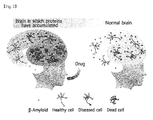
- proteins exist as monomers (Fig. 2 , right side).
- Abnormal aggregation of proteins oligomers, fibrils, plaques, etc.
- the protein monomerizing composition is administered, the protein concentration in plasma does not increase in the normal brain, since there are no protein oligomers that can be dissociated into monomers in the brain.
- the protein concentration in plasma increases as protein oligomers are dissociated in the brain.
- the concentration of proteins in the brain cannot be measured directly, it is indirectly measured in plasma in consideration of the fact that protein monomers or multimers with small molecular weights such as dimers, trimers, etc. present in the brain are transported between the brain, cerebrospinal fluid and blood by RAGEs and LRPs existing in the blood-brain barrier (BBB).
- BBB blood-brain barrier
- the proteins existing in plasma after the administering of the protein monomerizing composition may have been formed from dissociation of ⁇ -amyloid oligomers, profibrils, fibrils and plaques in the brain.
- the proteins existing in plasma after the administering of the protein monomerizing composition may be monomers and/or multimers with small molecular weights such as dimers, trimers, etc. which may have been transported by RAGEs and LRPs existing in the BBB.
- the decrease in protein aggregates in the brain or body may be monitored with the diagnostic kit of the present disclosure.
- the protein monomerizing composition may be a composition containing EPPS represented by [Chemical Formula 1] as an active ingredient.
- the protein monomerizing composition is not particularly limited thereto as long as it can dissociate protein oligomers into monomers. The same result as when EPPS is used can be achieved using other substances that can dissociate protein oligomers into monomers.
- the EPPS represented by [Chemical Formula 1] has the activity of dissociating ⁇ -amyloid oligomers, profibrils, fibrils and plaque aggregates since the bands of the A ⁇ 40 and A ⁇ 42 monomers with sizes of 4.3-4.5 kD appear. Also, electron microscopic observation confirms the activity of dissociating the ⁇ -amyloid oligomers, profibrils, fibrils and plaques since no ⁇ -amyloid aggregates are observed.
- the protein monomerizing composition containing the EPPS represented by [Chemical Formula 1] as an active ingredient may be prepared into various formulations for oral or parenteral administration for clinical purposes, although not being limited to.
- Formulations for oral administration include, for example, tablets, pills, hard/soft capsules, liquids, suspensions, emulsions, syrups, granules, elixirs, etc. These formulations may further contain, in addition to the active ingredient, a diluent (e.g., lactose, dextrose, sucrose, mannitol, sorbitol, cellulose and/or glycine), a lubricant (e.g., silica, talc, stearic acid and magnesium or calcium salts thereof and/or polyethylene glycol).
- a diluent e.g., lactose, dextrose, sucrose, mannitol, sorbitol, cellulose and/or glycine
- a lubricant e.g., silica, talc, stearic acid and magnesium or calcium salts thereof and/or polyethylene glycol.
- a tablet may also contain a binder such as magnesium aluminum silicate, starch paste, gelatin, methyl cellulose, sodium carboxymethyl cellulose and/or polyvinylpyrrolidine and, if necessary, it may further contain a disintegrant such as starch, agar, alginic acid or a sodium salt thereof, an effervescent mixture and/or absorbent, a colorant, a flavoring agent and a sweetener.
- a binder such as magnesium aluminum silicate, starch paste, gelatin, methyl cellulose, sodium carboxymethyl cellulose and/or polyvinylpyrrolidine and, if necessary, it may further contain a disintegrant such as starch, agar, alginic acid or a sodium salt thereof, an effervescent mixture and/or absorbent, a colorant, a flavoring agent and a sweetener.
- the protein monomerizing composition containing the EPPS represented by [Chemical Formula 1] as an active ingredient may be administered parenterally.
- the parenteral administration may be achieved by subcutaneous, intravenous, intramuscular or intrathoracic injection.
- the EPPS represented by [Chemical Formula 1] may be mixed with a stabilizer or a buffer in water to prepare solutions or suspensions, which may be formulated into a unit dosage form in ampoules or vials.
- the composition may be sterilized and/or may contain an adjuvant such as a preservative, a stabilizer, a wetting or emulsifying agent, a salt for regulating osmotic pressure, a buffer, etc. and other therapeutically useful substances.
- an adjuvant such as a preservative, a stabilizer, a wetting or emulsifying agent, a salt for regulating osmotic pressure, a buffer, etc. and other therapeutically useful substances.
- the composition may be prepared according to commonly employed mixing, granulating or coating methods.
- the protein monomerizing composition containing the EPPS represented by [Chemical Formula 1] as an active ingredient may contain specifically about 0.1-1,500 mg/kg of the EPPS represented by [Chemical Formula 1] as an active ingredient.
- the administration dose should follow a doctor's prescription depending on factors such as the body weight and age of a patient and particular characteristics and severity of a disease or a disorder.
- the dose required for treatment of an adult patient is usually in the range of about 0.1-1,000 mg/kg/day, depending on the frequency and intensity of administration.
- a dose of about 0.5-300 mg/kg/day may be sufficient. But, a larger daily dose may be preferred for some patients.
- Proteins in blood are the most likely to enter the brain when they are present as monomers and it is expected that it will be almost impossible for aggregates to enter the blood. However, even when proteins enter the blood in the form of monomers, they may aggregate in the blood. In addition, they may also bind to other proteins in the blood. Therefore, it is impossible to accurately measure the protein monomer concentration in blood simply by measuring the concentration of protein monomers in plasma.
- the other proteins may be at least one selected from a group consisting of lactoferrin, clusterin, ⁇ 1 -antitrypsin, apolipoprotein A-IV, apolipoprotein E and apolipoprotein A-I.
- Fig. 4 shows how to diagnose diseases or disorders related with abnormal aggregation or misfolding of proteins by measuring the protein monomer concentration in plasma and whole blood treated with a protein monomerizing composition using detection units 1', 2' and 3' according to another exemplary embodiment of the present disclosure.
- a diagnostic kit for diagnosing diseases or disorders related with abnormal aggregation or misfolding of proteins includes: : (A) a detection unit 1' measuring protein monomer concentration in plasma not treated with a protein monomerizing composition; (B) a detection unit 2' measuring protein monomer concentration in plasma treated with the protein monomerizing composition; (C) a detection unit 3' measuring protein monomer concentration in whole blood treated with the protein monomerizing composition; and (D) a calculation unit calculating the ratio of the concentration measured by the detection unit 2' and the concentration measured by the detection unit 3' using [Equation 2] or calculating the ratio of the concentration measured by the detection unit 1' and the concentration measured by the detection unit 2' using [Equation 3].
- the detection unit 1 measures the concentration of proteins in plasma separated from whole blood without treating with a monomerizing composition or 23-25 hours after treating with a vehicle.
- the detection unit 2' measures the concentration of proteins in plasma separated from whole blood 23-25 hours after treating with the protein monomerizing composition.
- the detection unit 3' measures the concentration of proteins in whole blood 23-25 hours after treating with the protein monomerizing composition.
- the calculation unit calculates the ratio of the concentration measured by the detection unit 2' and the concentration measured by the detection unit 3' using [Equation 2] or calculating the ratio of the concentration measured by the detection unit 1' and the concentration measured by the detection unit 2' using [Equation 3].
- the value MB / MP calculated using [Equation 2] may satisfy either MB / MP ⁇ 1.0 or MB / MP ⁇ 1.0. If MB / MP ⁇ 1.0, it may be diagnosed as a state wherein the risk of onset of diseases or disorders related with abnormal aggregation or misfolding of proteins is high. And, if MB / MP ⁇ 1.0, it may be diagnosed as a state wherein the risk of onset of diseases or disorders related with abnormal aggregation or misfolding of proteins is low or as a normal state wherein diseases or disorders related with abnormal aggregation or misfolding of proteins do not proceed.
- MB / MP ⁇ 1.0 it means that the difference in the protein monomer concentration in plasma (MP) and the protein monomer concentration in whole blood (MB), i.e., MP - MB, is large. Since it indicates the concentration of protein aggregates is high, it may be diagnosed as a state wherein the risk of onset of diseases or disorders related with abnormal aggregation or misfolding of proteins is high.
- the protein aggregates are dissociated into monomers, resulting in increase of the protein monomer concentration in plasma (MP).
- MP protein monomer concentration in whole blood
- MB protein monomer concentration in whole blood
- the value UP / MP calculated using [Equation 3] may satisfy either UP / MP ⁇ 1.0 or UP / MP ⁇ 1.0. If UP / MP ⁇ 1.0, it may be diagnosed as a state wherein the risk of onset of diseases or disorders related with abnormal aggregation or misfolding of proteins is high. And, if UP / MP ⁇ 1.0, it may be diagnosed as a state wherein the risk of onset of diseases or disorders related with abnormal aggregation or misfolding of proteins is low or as a normal state wherein diseases or disorders related with abnormal aggregation or misfolding of proteins do not proceed.
- UP / MP ⁇ 1.0 it means that the difference in the concentration of proteins in plasma after treating with the monomerizing composition (MP) and the concentration of proteins in plasma not treated with the protein monomerizing composition (UP), i.e., MP - UP, is large. Since it indicates the concentration of protein aggregates is high, it may be diagnosed as a state wherein the risk of onset of diseases or disorders related with abnormal aggregation or misfolding of proteins is high.
- the protein aggregates are dissociated into monomers, resulting in increase of the protein monomer concentration in plasma (MP). Therefore, the difference in MP and UP, i.e., MP - UP, is equal to the concentration of the aggregates. Meanwhile, the amount of proteins in blood and, hence the relative amount of aggregates, are larger as the risk of onset of diseases or disorders related with abnormal aggregation or misfolding of proteins is higher. As a result, since the protein monomer concentration in plasma (MP) increases, MP - UP becomes larger and UP / MP becomes smaller than 1.0.
- the monomerized proteins detected by the detection unit 1', the detection unit 2' and the detection unit 3' are those that have been formed from dissociation of ⁇ -amyloid dimers, oligomers, profibrils, fibrils and plaques, ⁇ -amyloid 40/42 aggregates, ⁇ -amyloid monomers bound to other proteins, ⁇ -amyloid bound to fats, ⁇ -amyloid bound to carbohydrates, ⁇ -amyloid bound to nucleic acids and ⁇ -amyloid monomers bound to blood cells.
- the protein monomerizing composition may be a composition containing EPPS represented by [Chemical Formula 1] as an active ingredient.
- the protein monomerizing composition is not particularly limited thereto as long as it can dissociate protein oligomers into monomers. It is expected that the same result as when EPPS is used can be achieved using other substances that can dissociate protein oligomers into monomers.
- the EPPS represented by [Chemical Formula 1] has the activity of dissociating ⁇ -amyloid dimer, oligomer, profibril, fibril and plaque aggregates, ⁇ -amyloid 40/42 aggregates, ⁇ -amyloid monomers bound to other proteins and ⁇ -amyloid monomers bound to blood cells since the bands of the A ⁇ 40 and A ⁇ 42 monomers with sizes of 4.3-4.5 kD appear.
- mice Female APP/PS1 transgenic mice were used as test animals. A total of 32 mice were used (eleven 5-6 month-olds and twenty-one 7.2-8.6 and 13 month-olds). 5-6-month-old mice were used since ⁇ -amyloid plaque accumulation in the brain begins from 5 months.
- the transgenic APP/PS 1 mouse model was B6C3-Tg(APPswe,PSEN1dE9)85Dbo/Mmjax purchased from the Jackson Laboratory (USA) and maintained and used for experiments under the guideline of the Animal Care and Use Committee.
- EPPS was administered to each of the 32 mice at a dose of 1,000 mg/kg/day.
- Blood was drawn from the of the retro-orbital venous plexus of the mouse using a microtube (Marienfeld, Germany) treated with 80 IU/mL heparin before and after the administration of EPPS.
- the blood drawing after the administration of EPPS was performed 1 day, 5 days, 19 days and 33 days after the administration of EPPS.
- the blood was collected in an Eppendorf tube and centrifuged at 13,500 rpm and 4 °C for 5 minutes. Plasma separated from the cell fraction was collected in an Eppendorf tube for immediate use or for storage at -80 °C for later use.
- ⁇ -amyloid concentration in the plasma collected before and after the administration of EPPS was measured by detection units 1 and 2 of a kit.
- B - A was calculated by a calculation unit from the measured concentrations using [Equation 1]. Average of three measurements is shown in Tables 1-5.
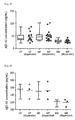
- the B - A value calculated from the ⁇ -amyloid concentration measurement 24 hours (1 day) after the administration of EPPS was positive (+) for all the mice, suggesting that the ⁇ -amyloid concentration in blood was increased after the administration of EPPS. Since the increase in the ⁇ -amyloid concentration in plasma after the administration of EPPS was confirmed in the ⁇ -amyloid aggregate forming mouse model using the kit according to the present disclosure, it can be seen that the diagnostic kit of the present disclosure can be used to diagnose or predict Alzheimer's disease, dementia, etc. more accurately.
- the B - A value began to decrease, although there were differences depending on individuals. It is because, since the protein aggregates are cleared out of the brain by the drug after a predetermined time, the amount of the protein aggregates transported from the brain to the blood also decreases. Accordingly, the amount of the protein aggregates in blood which increases with time after the administration of EPPS decreases after a predetermined time, suggesting that the protein aggregates in the brain are decreased. Accordingly, the decrease in protein aggregates in the brain can be monitored through long-term drug administration and blood test.
- 7.2-month-old (aged) mice showed significant increase in ⁇ -amyloid 42 concentration followed by decrease. That is to say, the dissociation of ⁇ -amyloid aggregates in the brain and the transportation to the blood could be observed with the diagnostic kit. In addition, the decrease in ⁇ -amyloid concentration in blood after a predetermined time was also observed. Accordingly, it can be seen that the blood diagnostic kit allows not only the diagnosis of diseases but also the monitoring of decrease in the protein aggregates in the brain.
- the transgenic APP/PS1/Tau mouse model was B6;129-Psen1tm1MpmTg(APPSwe,tauP301L)1Lfa/Mmjax purchased from the Jackson Laboratory (USA) and maintained and used for experiments under the guideline of the Animal Care and Use Committee.
- Plasma separated from the cell fraction was collected in an Eppendorf tube and prepared into 0.1-mL samples, which were used immediately or stored at -80 °C for later use.
- Whole blood was collected in an Eppendorf tube by treating with EPPS and separating plasma from the cell fraction and prepared into 0.1-mL samples, which were used immediately for ⁇ -amyloid concentration measurement or stored at -80 °C for later use.
- the plasma was treated with water (control group) or EPPS (EPPS group).
- the EPPS group 15 ⁇ L of the plasma was treated with 5 ⁇ L of 400 mM EPPS, so that the final EPPS concentration was 100 mM.
- the control group 15 ⁇ L of plasma was treated with 5 ⁇ L of PBS, so that the concentration was the same as that of the EPPS group.
- Each of the control group and the EPPS group was stirred at 4 °C for 24 hours.
- the whole blood was analyzed after treating with EPPS.
- ⁇ -amyloid concentration in each plasma was measured using detection units 1 and 2 and MB / MP was calculated by a calculation unit using [Equation 2]. Average of three measurements is shown in Table 6.
- Table 6 shows the monomer concentration of the plasma of the control group (UP A ⁇ ), the plasma of the EPPS group (MP A ⁇ ) and the whole blood of the EPPS group (MB A ⁇ ), as well as UP / MP and MB / MP values.
- the UP / MP value calculated from the monomer concentration in the plasma of the control group (UP A ⁇ ) and the EPPS group (MP A ⁇ ) is smaller than 1.0 as 0.92 and the MB / MP value calculated from the monomer concentration in the plasma of the EPPS group (MP A ⁇ ) and the monomer concentration in the whole blood of the EPPS group (MB A ⁇ ) is smaller than 1.0 as 0.61, it may be diagnosed as a state wherein there is a risk of Alzheimer's disease or dementia is in progress.
- the diagnostic kit of the present disclosure can be used to diagnose or predict Alzheimer's disease, dementia, etc. more accurately.
- the transgenic APP/PS1 mouse model was B6C3-Tg(APPswe,PSEN1dE9)85Dbo/Mmjax purchased from the Jackson Laboratory (USA) and bred and used for experiments under the guideline of the Animal Care and Use Committee.
- Table 7 shows the monomer concentration of the plasma of the control group (UP A ⁇ ), the plasma of the EPPS group (MP A ⁇ ) and the whole blood of the EPPS group (MB A ⁇ ), as well as UP / MP and MB / MP values. Average of three measurements is shown in Table 7. [Table 7] UP A ⁇ MP A ⁇ MB A ⁇ UP/MP MB/MP Concentration 151.35 ⁇ 20.35 151.58 ⁇ 24.03 118.92 ⁇ 10.22 0.99 0.79 p value (paired t -test with MP) 0.480 - 0.015 - -
- the monomer concentration in the whole blood of the EPPS group (MB A ⁇ ) was lower than UP A ⁇ ( Fig. 6 ). Since the UP / MP value calculated from the monomer concentration in the plasma of the control group (UP A ⁇ ) and the EPPS group (MP A ⁇ ) is smaller than 1.0 as 0.99 and the MB / MP value calculated from the monomer concentration in the plasma of the EPPS group (MP A ⁇ ) and the monomer concentration in the whole blood of the EPPS group (MB A ⁇ ) is smaller than 1.0 as 0.79, it may be diagnosed as a state wherein there is a risk of Alzheimer's disease or dementia is in progress.
- the diagnostic kit of the present disclosure can be used to diagnose or predict Alzheimer's disease, dementia, etc. more accurately.
- a diagnostic kit of the present disclosure may be used to diagnose diseases or disorders related with abnormal aggregation or misfolding of proteins.
Landscapes
- Life Sciences & Earth Sciences (AREA)
- Health & Medical Sciences (AREA)
- Engineering & Computer Science (AREA)
- Chemical & Material Sciences (AREA)
- Biomedical Technology (AREA)
- Immunology (AREA)
- Molecular Biology (AREA)
- Urology & Nephrology (AREA)
- Hematology (AREA)
- Physics & Mathematics (AREA)
- Pathology (AREA)
- Analytical Chemistry (AREA)
- Proteomics, Peptides & Aminoacids (AREA)
- Biochemistry (AREA)
- General Health & Medical Sciences (AREA)
- General Physics & Mathematics (AREA)
- Biotechnology (AREA)
- Microbiology (AREA)
- Medicinal Chemistry (AREA)
- Food Science & Technology (AREA)
- Cell Biology (AREA)
- Neurology (AREA)
- Neurosurgery (AREA)
- Organic Chemistry (AREA)
- Biophysics (AREA)
- Bioinformatics & Cheminformatics (AREA)
- Genetics & Genomics (AREA)
- Wood Science & Technology (AREA)
- Zoology (AREA)
- Bioinformatics & Computational Biology (AREA)
- Hospice & Palliative Care (AREA)
- Oncology (AREA)
- General Engineering & Computer Science (AREA)
- Investigating Or Analysing Biological Materials (AREA)
- Physiology (AREA)
- Tropical Medicine & Parasitology (AREA)
- Ecology (AREA)
- Dispersion Chemistry (AREA)
- Peptides Or Proteins (AREA)
- Medicines That Contain Protein Lipid Enzymes And Other Medicines (AREA)
Applications Claiming Priority (4)
| Application Number | Priority Date | Filing Date | Title |
|---|---|---|---|
| US201361816343P | 2013-04-26 | 2013-04-26 | |
| KR1020140038988A KR20140128229A (ko) | 2013-04-26 | 2014-04-02 | 체내 단백질 응집체의 용해를 이용한 단백질의 비정상적인 응집 또는 미스폴딩과 관련된 질환 또는 질병을 진단하는 혈액진단키트 |
| KR1020140038989A KR20140128230A (ko) | 2013-04-26 | 2014-04-02 | 혈액 중 단백질 응집체의 용해를 통한 단백질의 비정상적인 응집 또는 미스폴딩과 관련된 질환 또는 질병을 진단하는 진단키트 |
| PCT/KR2014/003643 WO2014175693A1 (fr) | 2013-04-26 | 2014-04-25 | Kit de diagnostic pour le diagnostic de troubles ou de maladies associés à une agrégation anormale des protéines ou à un mauvais repliement des protéines au moyen de la dissolution d'agrégats de protéines |
Publications (3)
| Publication Number | Publication Date |
|---|---|
| EP2990801A1 true EP2990801A1 (fr) | 2016-03-02 |
| EP2990801A4 EP2990801A4 (fr) | 2016-11-30 |
| EP2990801B1 EP2990801B1 (fr) | 2019-01-02 |
Family
ID=52452150
Family Applications (1)
| Application Number | Title | Priority Date | Filing Date |
|---|---|---|---|
| EP14788047.0A Not-in-force EP2990801B1 (fr) | 2013-04-26 | 2014-04-25 | Kit de diagnostic pour le diagnostic de la maladie d'alzheimer associés au moyen de la dissociation d'agrégats de protéines |
Country Status (6)
| Country | Link |
|---|---|
| US (1) | US10006920B2 (fr) |
| EP (1) | EP2990801B1 (fr) |
| JP (1) | JP6189526B2 (fr) |
| KR (9) | KR20140128230A (fr) |
| CN (3) | CN108089012A (fr) |
| WO (1) | WO2014175693A1 (fr) |
Families Citing this family (5)
| Publication number | Priority date | Publication date | Assignee | Title |
|---|---|---|---|---|
| WO2017138696A1 (fr) * | 2016-02-12 | 2017-08-17 | 주식회사 캔티스 | Méthode de détection et kit de détection électrochimique pour une forme agrégée de protéine et méthode de diagnostic et kit de diagnostic électrochimique pour des maladies associées à une agrégation anormale de protéines à l'aide de ceux-ci |
| CN107303299A (zh) * | 2016-04-19 | 2017-10-31 | 南京中硼联康医疗科技有限公司 | 含10B的化合物在制备和β淀粉样蛋白特异性结合药物中的应用 |
| TW201901153A (zh) * | 2017-05-16 | 2019-01-01 | 美商安培恩股份有限公司 | 折疊錯誤之tau蛋白的檢測及檢測折疊錯誤之tau蛋白的套組 |
| KR101934475B1 (ko) | 2017-06-12 | 2019-01-02 | 연세대학교 산학협력단 | 타우린 포함 단백질 단량체화 조성물 |
| CN120441645A (zh) * | 2025-05-19 | 2025-08-08 | 遵义诊益生物科技有限公司 | 一种凝聚液体中蛋白的方法 |
Family Cites Families (14)
| Publication number | Priority date | Publication date | Assignee | Title |
|---|---|---|---|---|
| US7427392B1 (en) * | 1994-11-14 | 2008-09-23 | Elan Pharmaceuticals, Inc. | Methods for aiding in the diagnosis of alzheimer's disease by measuring amyloid-β peptide (x-≧41) and tau |
| WO2000068694A1 (fr) * | 1999-05-07 | 2000-11-16 | Ortho-Mcneil Pharmaceutical, Inc. | Procede de diagnostic de la maladie d'alzheimer |
| KR100595494B1 (ko) * | 2003-02-24 | 2006-07-03 | (주) 디지탈바이오텍 | 혈액 내 베타-아밀로이드 항체 농도를 이용한 알츠하이머병 진단키트 |
| EP1628663B1 (fr) * | 2003-05-15 | 2009-07-29 | Roskamp Research llc | Methode de preparation d'un medicament de reduction d'un depot amyloide, neurotoxicite amyloide et microgliose |
| JP2005104975A (ja) * | 2003-09-09 | 2005-04-21 | Takeda Chem Ind Ltd | 抗体の用途 |
| MX2007000998A (es) | 2004-07-30 | 2007-07-11 | Rinat Neuroscience Corp | Anticuerpos dirigidos peptido beta-amiloide y procedimientos que usan los mismos. |
| US20090123952A1 (en) | 2004-11-12 | 2009-05-14 | Pfizer, Inc. | Method of Measuring Amyloid-Beta Peptides |
| WO2007103683A2 (fr) | 2006-03-01 | 2007-09-13 | Roskamp Research Llc | Composes destines a inhiber la production de beta-amyloide |
| CA2779565A1 (fr) * | 2009-11-24 | 2011-06-03 | Probiodrug Ag | Nouveau procede de diagnostic pour le diagnostic de la maladie d'alzheimer ou d'un trouble cognitif leger |
| CA2781952A1 (fr) * | 2009-11-30 | 2011-06-03 | Novartis Ag | Agregats de beta-amyloides presents dans le liquide cephalorachidien utilises comme biomarqueurs pour la maladie d'alzheimer |
| BR112012014060B8 (pt) * | 2009-12-11 | 2021-07-27 | Araclon Biotech Sl | método para o diagnóstico da doença de alzheimer em um sujeito, para detecção da disfunção cognitiva branda ou para diferenciar a doença de alzheimer da disfunção cognitiva branda |
| KR101173677B1 (ko) * | 2009-12-11 | 2012-08-13 | 한국과학기술연구원 | Epps를 유효성분으로 함유하는 베타아밀로이드 집적 관련 질환의 예방 또는 치료용 약학적 조성물 |
| US20130137120A1 (en) * | 2010-01-28 | 2013-05-30 | Panasonic Corporation | Amyloid b measurement method |
| CN104662423A (zh) * | 2012-03-13 | 2015-05-27 | 杨森阿尔茨海默氏症免疫治疗公司 | 阿兹海默氏病的诊断、预后和监测中的寡聚体Aβ |
-
2014
- 2014-04-02 KR KR1020140038989A patent/KR20140128230A/ko active Pending
- 2014-04-02 KR KR1020140038988A patent/KR20140128229A/ko active Pending
- 2014-04-25 CN CN201810037524.6A patent/CN108089012A/zh active Pending
- 2014-04-25 EP EP14788047.0A patent/EP2990801B1/fr not_active Not-in-force
- 2014-04-25 KR KR1020140050001A patent/KR101619238B1/ko not_active Expired - Fee Related
- 2014-04-25 US US14/787,146 patent/US10006920B2/en active Active
- 2014-04-25 CN CN201480036335.7A patent/CN105339798A/zh active Pending
- 2014-04-25 CN CN201810037521.2A patent/CN108387738B/zh not_active Expired - Fee Related
- 2014-04-25 WO PCT/KR2014/003643 patent/WO2014175693A1/fr not_active Ceased
- 2014-04-25 JP JP2016510622A patent/JP6189526B2/ja not_active Expired - Fee Related
- 2014-04-25 KR KR1020140050002A patent/KR101621935B1/ko not_active Expired - Fee Related
-
2015
- 2015-11-30 KR KR1020150169084A patent/KR20150139487A/ko not_active Ceased
- 2015-12-08 KR KR1020150173690A patent/KR20150141925A/ko not_active Ceased
-
2017
- 2017-02-23 KR KR1020170024146A patent/KR20170023915A/ko not_active Ceased
- 2017-02-23 KR KR1020170024145A patent/KR20170024600A/ko not_active Ceased
-
2019
- 2019-11-05 KR KR1020190140267A patent/KR20190126754A/ko not_active Withdrawn
Also Published As
| Publication number | Publication date |
|---|---|
| KR20170024600A (ko) | 2017-03-07 |
| WO2014175693A1 (fr) | 2014-10-30 |
| KR20140128265A (ko) | 2014-11-05 |
| JP2016537609A (ja) | 2016-12-01 |
| KR20140128229A (ko) | 2014-11-05 |
| KR20140128266A (ko) | 2014-11-05 |
| KR20170023915A (ko) | 2017-03-06 |
| KR101621935B1 (ko) | 2016-05-17 |
| CN105339798A (zh) | 2016-02-17 |
| KR20150141925A (ko) | 2015-12-21 |
| US20160103139A1 (en) | 2016-04-14 |
| EP2990801A4 (fr) | 2016-11-30 |
| KR20150139487A (ko) | 2015-12-11 |
| CN108387738B (zh) | 2020-08-11 |
| JP6189526B2 (ja) | 2017-08-30 |
| EP2990801B1 (fr) | 2019-01-02 |
| CN108089012A (zh) | 2018-05-29 |
| US10006920B2 (en) | 2018-06-26 |
| CN108387738A (zh) | 2018-08-10 |
| KR20140128230A (ko) | 2014-11-05 |
| KR101619238B1 (ko) | 2016-05-10 |
| KR20190126754A (ko) | 2019-11-12 |
Similar Documents
| Publication | Publication Date | Title |
|---|---|---|
| Bouwman et al. | CSF biomarkers and medial temporal lobe atrophy predict dementia in mild cognitive impairment | |
| Ewers et al. | Body mass index is associated with biological CSF markers of core brain pathology of Alzheimer's disease | |
| Sjögren et al. | Low cerebrospinal fluid β-amyloid 42 in patients with acute bacterial meningitis and normalization after treatment | |
| US10006920B2 (en) | Diagnostic kit for diagnosis of abnormal protein aggregation- or misfolding-related diseases using dissociation of protein aggregates | |
| Hatanaka et al. | Differences in peripheral oxidative stress markers in A lzheimer's disease, vascular dementia and mixed dementia patients | |
| Paternicò et al. | Cerebrospinal fluid markers for Alzheimer's disease in a cognitively healthy cohort of young and old adults | |
| US20120009125A1 (en) | Apoe4 and apoj biomarker-based prevention and treatment of dementia | |
| US20150140672A1 (en) | Methods for detecting amyloid beta amyloidosis | |
| Ingelsson et al. | Lack of association of the cholesterol 24-hydroxylase (CYP46) intron 2 polymorphism with Alzheimer’s disease | |
| EP3983563B1 (fr) | Procédés de traitement de troubles neurodégénératifs | |
| Zorkina et al. | Use of Modern Classification Systems for the Complex Diagnostics of Alzheimer’s Disease | |
| Sandhya et al. | Alzheimer’s disease therapeutic approaches | |
| Geda et al. | Clinical characteristics of mild cognitive impairment | |
| KR101934475B1 (ko) | 타우린 포함 단백질 단량체화 조성물 | |
| Green | Biochemical investigations in patients with dementia | |
| Mshimesh et al. | Correlation Between Biochemical and Immunological Alterations with Updated Therapies in Alzheimer’s Disease: A Review Article | |
| Videira | Cerebrospinal Fluid Biomarkers for Neurodegenerative Disorders | |
| Yaneva et al. | Alzheimer's disease: risk factors, ethicology, pathogenesis, diagnosis, clinical manifestation. | |
| Tiryaki et al. | Hülya Akdeniz1, Zeynep Giniş2, Selçuk Çomoğlu3, Bilge Koçer3, Ferda Pınarlı4 | |
| Michaelson | 51 ApoE4 potentiates the amyloid cascade and inhibits neuroprotective mechanisms: prevention of these effects by DHA diet | |
| Van Rensburg et al. | Antemortem Markers | |
| EP1923704A1 (fr) | Procédé de diagnostic de démences vasculaires et d'ischémies cérébrales aiguës | |
| Wei | “Transitional cognitive dysfunction” or “Transitional cognitive decline” for ultra-early screening of Alzheimer’s disease? | |
| Lazaris et al. | Alzheimer risk genes modulate the relationship between plasma apoE and cortical PiB | |
| Gordon et al. | The effects of white matter hyperintensities and amyloid deposition on |
Legal Events
| Date | Code | Title | Description |
|---|---|---|---|
| PUAI | Public reference made under article 153(3) epc to a published international application that has entered the european phase |
Free format text: ORIGINAL CODE: 0009012 |
|
| 17P | Request for examination filed |
Effective date: 20151028 |
|
| AK | Designated contracting states |
Kind code of ref document: A1 Designated state(s): AL AT BE BG CH CY CZ DE DK EE ES FI FR GB GR HR HU IE IS IT LI LT LU LV MC MK MT NL NO PL PT RO RS SE SI SK SM TR |
|
| AX | Request for extension of the european patent |
Extension state: BA ME |
|
| DAX | Request for extension of the european patent (deleted) | ||
| A4 | Supplementary search report drawn up and despatched |
Effective date: 20161027 |
|
| RIC1 | Information provided on ipc code assigned before grant |
Ipc: G01N 33/53 20060101ALI20161021BHEP Ipc: G01N 33/68 20060101AFI20161021BHEP |
|
| STAA | Information on the status of an ep patent application or granted ep patent |
Free format text: STATUS: EXAMINATION IS IN PROGRESS |
|
| 17Q | First examination report despatched |
Effective date: 20170928 |
|
| GRAP | Despatch of communication of intention to grant a patent |
Free format text: ORIGINAL CODE: EPIDOSNIGR1 |
|
| STAA | Information on the status of an ep patent application or granted ep patent |
Free format text: STATUS: GRANT OF PATENT IS INTENDED |
|
| INTG | Intention to grant announced |
Effective date: 20180717 |
|
| RAP1 | Party data changed (applicant data changed or rights of an application transferred) |
Owner name: KOREA INSTITUTE OF SCIENCE AND TECHNOLOGY |
|
| RAP1 | Party data changed (applicant data changed or rights of an application transferred) |
Owner name: KOREA INSTITUTE OF SCIENCE AND TECHNOLOGY |
|
| GRAS | Grant fee paid |
Free format text: ORIGINAL CODE: EPIDOSNIGR3 |
|
| GRAA | (expected) grant |
Free format text: ORIGINAL CODE: 0009210 |
|
| STAA | Information on the status of an ep patent application or granted ep patent |
Free format text: STATUS: THE PATENT HAS BEEN GRANTED |
|
| AK | Designated contracting states |
Kind code of ref document: B1 Designated state(s): AL AT BE BG CH CY CZ DE DK EE ES FI FR GB GR HR HU IE IS IT LI LT LU LV MC MK MT NL NO PL PT RO RS SE SI SK SM TR |
|
| REG | Reference to a national code |
Ref country code: GB Ref legal event code: FG4D |
|
| REG | Reference to a national code |
Ref country code: CH Ref legal event code: EP Ref country code: AT Ref legal event code: REF Ref document number: 1085067 Country of ref document: AT Kind code of ref document: T Effective date: 20190115 |
|
| REG | Reference to a national code |
Ref country code: IE Ref legal event code: FG4D |
|
| REG | Reference to a national code |
Ref country code: DE Ref legal event code: R096 Ref document number: 602014039196 Country of ref document: DE |
|
| REG | Reference to a national code |
Ref country code: NL Ref legal event code: MP Effective date: 20190102 |
|
| REG | Reference to a national code |
Ref country code: LT Ref legal event code: MG4D |
|
| REG | Reference to a national code |
Ref country code: AT Ref legal event code: MK05 Ref document number: 1085067 Country of ref document: AT Kind code of ref document: T Effective date: 20190102 |
|
| PG25 | Lapsed in a contracting state [announced via postgrant information from national office to epo] |
Ref country code: NL Free format text: LAPSE BECAUSE OF FAILURE TO SUBMIT A TRANSLATION OF THE DESCRIPTION OR TO PAY THE FEE WITHIN THE PRESCRIBED TIME-LIMIT Effective date: 20190102 |
|
| PG25 | Lapsed in a contracting state [announced via postgrant information from national office to epo] |
Ref country code: NO Free format text: LAPSE BECAUSE OF FAILURE TO SUBMIT A TRANSLATION OF THE DESCRIPTION OR TO PAY THE FEE WITHIN THE PRESCRIBED TIME-LIMIT Effective date: 20190402 Ref country code: FI Free format text: LAPSE BECAUSE OF FAILURE TO SUBMIT A TRANSLATION OF THE DESCRIPTION OR TO PAY THE FEE WITHIN THE PRESCRIBED TIME-LIMIT Effective date: 20190102 Ref country code: PT Free format text: LAPSE BECAUSE OF FAILURE TO SUBMIT A TRANSLATION OF THE DESCRIPTION OR TO PAY THE FEE WITHIN THE PRESCRIBED TIME-LIMIT Effective date: 20190502 Ref country code: SE Free format text: LAPSE BECAUSE OF FAILURE TO SUBMIT A TRANSLATION OF THE DESCRIPTION OR TO PAY THE FEE WITHIN THE PRESCRIBED TIME-LIMIT Effective date: 20190102 Ref country code: PL Free format text: LAPSE BECAUSE OF FAILURE TO SUBMIT A TRANSLATION OF THE DESCRIPTION OR TO PAY THE FEE WITHIN THE PRESCRIBED TIME-LIMIT Effective date: 20190102 Ref country code: LT Free format text: LAPSE BECAUSE OF FAILURE TO SUBMIT A TRANSLATION OF THE DESCRIPTION OR TO PAY THE FEE WITHIN THE PRESCRIBED TIME-LIMIT Effective date: 20190102 Ref country code: ES Free format text: LAPSE BECAUSE OF FAILURE TO SUBMIT A TRANSLATION OF THE DESCRIPTION OR TO PAY THE FEE WITHIN THE PRESCRIBED TIME-LIMIT Effective date: 20190102 |
|
| PG25 | Lapsed in a contracting state [announced via postgrant information from national office to epo] |
Ref country code: GR Free format text: LAPSE BECAUSE OF FAILURE TO SUBMIT A TRANSLATION OF THE DESCRIPTION OR TO PAY THE FEE WITHIN THE PRESCRIBED TIME-LIMIT Effective date: 20190403 Ref country code: HR Free format text: LAPSE BECAUSE OF FAILURE TO SUBMIT A TRANSLATION OF THE DESCRIPTION OR TO PAY THE FEE WITHIN THE PRESCRIBED TIME-LIMIT Effective date: 20190102 Ref country code: LV Free format text: LAPSE BECAUSE OF FAILURE TO SUBMIT A TRANSLATION OF THE DESCRIPTION OR TO PAY THE FEE WITHIN THE PRESCRIBED TIME-LIMIT Effective date: 20190102 Ref country code: IS Free format text: LAPSE BECAUSE OF FAILURE TO SUBMIT A TRANSLATION OF THE DESCRIPTION OR TO PAY THE FEE WITHIN THE PRESCRIBED TIME-LIMIT Effective date: 20190502 Ref country code: BG Free format text: LAPSE BECAUSE OF FAILURE TO SUBMIT A TRANSLATION OF THE DESCRIPTION OR TO PAY THE FEE WITHIN THE PRESCRIBED TIME-LIMIT Effective date: 20190402 Ref country code: RS Free format text: LAPSE BECAUSE OF FAILURE TO SUBMIT A TRANSLATION OF THE DESCRIPTION OR TO PAY THE FEE WITHIN THE PRESCRIBED TIME-LIMIT Effective date: 20190102 |
|
| REG | Reference to a national code |
Ref country code: DE Ref legal event code: R097 Ref document number: 602014039196 Country of ref document: DE |
|
| PG25 | Lapsed in a contracting state [announced via postgrant information from national office to epo] |
Ref country code: SK Free format text: LAPSE BECAUSE OF FAILURE TO SUBMIT A TRANSLATION OF THE DESCRIPTION OR TO PAY THE FEE WITHIN THE PRESCRIBED TIME-LIMIT Effective date: 20190102 Ref country code: RO Free format text: LAPSE BECAUSE OF FAILURE TO SUBMIT A TRANSLATION OF THE DESCRIPTION OR TO PAY THE FEE WITHIN THE PRESCRIBED TIME-LIMIT Effective date: 20190102 Ref country code: DK Free format text: LAPSE BECAUSE OF FAILURE TO SUBMIT A TRANSLATION OF THE DESCRIPTION OR TO PAY THE FEE WITHIN THE PRESCRIBED TIME-LIMIT Effective date: 20190102 Ref country code: EE Free format text: LAPSE BECAUSE OF FAILURE TO SUBMIT A TRANSLATION OF THE DESCRIPTION OR TO PAY THE FEE WITHIN THE PRESCRIBED TIME-LIMIT Effective date: 20190102 Ref country code: AT Free format text: LAPSE BECAUSE OF FAILURE TO SUBMIT A TRANSLATION OF THE DESCRIPTION OR TO PAY THE FEE WITHIN THE PRESCRIBED TIME-LIMIT Effective date: 20190102 Ref country code: IT Free format text: LAPSE BECAUSE OF FAILURE TO SUBMIT A TRANSLATION OF THE DESCRIPTION OR TO PAY THE FEE WITHIN THE PRESCRIBED TIME-LIMIT Effective date: 20190102 Ref country code: AL Free format text: LAPSE BECAUSE OF FAILURE TO SUBMIT A TRANSLATION OF THE DESCRIPTION OR TO PAY THE FEE WITHIN THE PRESCRIBED TIME-LIMIT Effective date: 20190102 Ref country code: CZ Free format text: LAPSE BECAUSE OF FAILURE TO SUBMIT A TRANSLATION OF THE DESCRIPTION OR TO PAY THE FEE WITHIN THE PRESCRIBED TIME-LIMIT Effective date: 20190102 |
|
| PLBE | No opposition filed within time limit |
Free format text: ORIGINAL CODE: 0009261 |
|
| STAA | Information on the status of an ep patent application or granted ep patent |
Free format text: STATUS: NO OPPOSITION FILED WITHIN TIME LIMIT |
|
| PG25 | Lapsed in a contracting state [announced via postgrant information from national office to epo] |
Ref country code: SM Free format text: LAPSE BECAUSE OF FAILURE TO SUBMIT A TRANSLATION OF THE DESCRIPTION OR TO PAY THE FEE WITHIN THE PRESCRIBED TIME-LIMIT Effective date: 20190102 |
|
| REG | Reference to a national code |
Ref country code: CH Ref legal event code: PL |
|
| 26N | No opposition filed |
Effective date: 20191003 |
|
| REG | Reference to a national code |
Ref country code: BE Ref legal event code: MM Effective date: 20190430 |
|
| PG25 | Lapsed in a contracting state [announced via postgrant information from national office to epo] |
Ref country code: LU Free format text: LAPSE BECAUSE OF NON-PAYMENT OF DUE FEES Effective date: 20190425 Ref country code: MC Free format text: LAPSE BECAUSE OF FAILURE TO SUBMIT A TRANSLATION OF THE DESCRIPTION OR TO PAY THE FEE WITHIN THE PRESCRIBED TIME-LIMIT Effective date: 20190102 |
|
| PG25 | Lapsed in a contracting state [announced via postgrant information from national office to epo] |
Ref country code: LI Free format text: LAPSE BECAUSE OF NON-PAYMENT OF DUE FEES Effective date: 20190430 Ref country code: CH Free format text: LAPSE BECAUSE OF NON-PAYMENT OF DUE FEES Effective date: 20190430 |
|
| PG25 | Lapsed in a contracting state [announced via postgrant information from national office to epo] |
Ref country code: BE Free format text: LAPSE BECAUSE OF NON-PAYMENT OF DUE FEES Effective date: 20190430 Ref country code: SI Free format text: LAPSE BECAUSE OF FAILURE TO SUBMIT A TRANSLATION OF THE DESCRIPTION OR TO PAY THE FEE WITHIN THE PRESCRIBED TIME-LIMIT Effective date: 20190102 |
|
| PG25 | Lapsed in a contracting state [announced via postgrant information from national office to epo] |
Ref country code: TR Free format text: LAPSE BECAUSE OF FAILURE TO SUBMIT A TRANSLATION OF THE DESCRIPTION OR TO PAY THE FEE WITHIN THE PRESCRIBED TIME-LIMIT Effective date: 20190102 |
|
| PG25 | Lapsed in a contracting state [announced via postgrant information from national office to epo] |
Ref country code: IE Free format text: LAPSE BECAUSE OF NON-PAYMENT OF DUE FEES Effective date: 20190425 |
|
| PG25 | Lapsed in a contracting state [announced via postgrant information from national office to epo] |
Ref country code: CY Free format text: LAPSE BECAUSE OF FAILURE TO SUBMIT A TRANSLATION OF THE DESCRIPTION OR TO PAY THE FEE WITHIN THE PRESCRIBED TIME-LIMIT Effective date: 20190102 |
|
| PG25 | Lapsed in a contracting state [announced via postgrant information from national office to epo] |
Ref country code: HU Free format text: LAPSE BECAUSE OF FAILURE TO SUBMIT A TRANSLATION OF THE DESCRIPTION OR TO PAY THE FEE WITHIN THE PRESCRIBED TIME-LIMIT; INVALID AB INITIO Effective date: 20140425 Ref country code: MT Free format text: LAPSE BECAUSE OF FAILURE TO SUBMIT A TRANSLATION OF THE DESCRIPTION OR TO PAY THE FEE WITHIN THE PRESCRIBED TIME-LIMIT Effective date: 20190102 |
|
| PG25 | Lapsed in a contracting state [announced via postgrant information from national office to epo] |
Ref country code: MK Free format text: LAPSE BECAUSE OF FAILURE TO SUBMIT A TRANSLATION OF THE DESCRIPTION OR TO PAY THE FEE WITHIN THE PRESCRIBED TIME-LIMIT Effective date: 20190102 |
|
| PGFP | Annual fee paid to national office [announced via postgrant information from national office to epo] |
Ref country code: FR Payment date: 20230321 Year of fee payment: 10 |
|
| PGFP | Annual fee paid to national office [announced via postgrant information from national office to epo] |
Ref country code: GB Payment date: 20230320 Year of fee payment: 10 |
|
| PGFP | Annual fee paid to national office [announced via postgrant information from national office to epo] |
Ref country code: DE Payment date: 20230320 Year of fee payment: 10 |
|
| REG | Reference to a national code |
Ref country code: DE Ref legal event code: R119 Ref document number: 602014039196 Country of ref document: DE |
|
| GBPC | Gb: european patent ceased through non-payment of renewal fee |
Effective date: 20240425 |
|
| PG25 | Lapsed in a contracting state [announced via postgrant information from national office to epo] |
Ref country code: DE Free format text: LAPSE BECAUSE OF NON-PAYMENT OF DUE FEES Effective date: 20241105 |
|
| PG25 | Lapsed in a contracting state [announced via postgrant information from national office to epo] |
Ref country code: GB Free format text: LAPSE BECAUSE OF NON-PAYMENT OF DUE FEES Effective date: 20240425 |
|
| PG25 | Lapsed in a contracting state [announced via postgrant information from national office to epo] |
Ref country code: FR Free format text: LAPSE BECAUSE OF NON-PAYMENT OF DUE FEES Effective date: 20240430 |
|
| PG25 | Lapsed in a contracting state [announced via postgrant information from national office to epo] |
Ref country code: GB Free format text: LAPSE BECAUSE OF NON-PAYMENT OF DUE FEES Effective date: 20240425 Ref country code: FR Free format text: LAPSE BECAUSE OF NON-PAYMENT OF DUE FEES Effective date: 20240430 Ref country code: DE Free format text: LAPSE BECAUSE OF NON-PAYMENT OF DUE FEES Effective date: 20241105 |