EP2995134B1 - Procédé pour une sélection/resélection de cellules améliorée par un équipement utilisateur essayant de camper sur une cellule radio d'un réseau mobile terrestre public - Google Patents
Procédé pour une sélection/resélection de cellules améliorée par un équipement utilisateur essayant de camper sur une cellule radio d'un réseau mobile terrestre public Download PDFInfo
- Publication number
- EP2995134B1 EP2995134B1 EP14720143.8A EP14720143A EP2995134B1 EP 2995134 B1 EP2995134 B1 EP 2995134B1 EP 14720143 A EP14720143 A EP 14720143A EP 2995134 B1 EP2995134 B1 EP 2995134B1
- Authority
- EP
- European Patent Office
- Prior art keywords
- cell
- user equipment
- base station
- radio
- station entity
- Prior art date
- Legal status (The legal status is an assumption and is not a legal conclusion. Google has not performed a legal analysis and makes no representation as to the accuracy of the status listed.)
- Active
Links
Images
Classifications
-
- H—ELECTRICITY
- H04—ELECTRIC COMMUNICATION TECHNIQUE
- H04W—WIRELESS COMMUNICATION NETWORKS
- H04W48/00—Access restriction; Network selection; Access point selection
- H04W48/20—Selecting an access point
-
- H—ELECTRICITY
- H04—ELECTRIC COMMUNICATION TECHNIQUE
- H04W—WIRELESS COMMUNICATION NETWORKS
- H04W36/00—Hand-off or reselection arrangements
- H04W36/08—Reselecting an access point
-
- H—ELECTRICITY
- H04—ELECTRIC COMMUNICATION TECHNIQUE
- H04W—WIRELESS COMMUNICATION NETWORKS
- H04W74/00—Wireless channel access
- H04W74/08—Non-scheduled access, e.g. ALOHA
- H04W74/0833—Random access procedures, e.g. with 4-step access
-
- H—ELECTRICITY
- H04—ELECTRIC COMMUNICATION TECHNIQUE
- H04W—WIRELESS COMMUNICATION NETWORKS
- H04W74/00—Wireless channel access
- H04W74/08—Non-scheduled access, e.g. ALOHA
Definitions
- the present invention relates inter alia to a method for an improved cell selection and/or cell reselection handling by an user equipment that is trying to camp on a radio cell of a public land mobile network, the improved cell selection and/or cell reselection handling being related to an uplink access procedure in dependency of attempts, by the user equipment, to get connected with the public land mobile network using a random access channel of the first base station entity and/or of the second base station entity.
- the present invention relates to a public land mobile network or telecommunications network for an improved cell selection and/or cell reselection handling by an user equipment that is trying to camp on a radio cell of a public land mobile network, the improved cell selection and/or cell reselection handling being related to an uplink access procedure in dependency of attempts, by the user equipment, to get connected with the public land mobile network using a random access channel of the first base station entity and/or of the second base station entity.
- the present invention relates to an user equipment for an improved cell selection and/or cell reselection handling in case that the user equipment tries to camp on a radio cell of a public land mobile network, the improved cell selection and/or cell reselection handling being related to an uplink access procedure in dependency of attempts, by the user equipment, to get connected with the public land mobile network using a random access channel of the first base station entity and/or of the second base station entity.
- user equipments In public land mobile networks, user equipments get initial access to the telecommunications network by means of monitoring a broadcast channel emitted by the base station entity of the concerned radio cell in the vicinity of the current location of the user equipment.
- Detailed requirements for user equipment procedures are defined in 3GPP documents 3GPP TS 36.304 and 3GPP TS 36.331.
- RACH random access channel
- the user equipment tries - after an initial failure of accessing the random access channel of the selected target radio cell, i.e. the radio cell being top-ranked based on the signal strength and/or signal quality of the radio signals received by the user equipment - to access the selected/target radio cell, i.e. its random access channel, again (with especially a maximum number of attempts as defined via information obtained from the selected/targeted radio cell, especially distributed or broadcast on the broadcast control channel, BCCH).
- Further attempts to register with the selected or targeted radio cell after an initial failure of the uplink access procedure by an user equipment can involve using a higher transmission power by the user equipment (especially a higher RACH-power value), especially in case power ramping is used. However, if this further attempt fails or even if these further attempts fail as well, a new cell search procedure has to be initiated.
- the cell selection and/or cell reselection procedure is likely to again select the targeted radio cell of the previous connection attempt, which further connection attempt might end with the same result as the preceding one.
- the location of the user equipment is not changed (i.e. the user equipment is not moved), e.g.
- An object of the present invention is to provide a method for an improved cell selection and/or cell reselection handling by an user equipment that is trying to camp on a radio cell of a public land mobile network in order to get connected that avoids the drawbacks of the prior art and provides network connectivity and customer service even in situations of problematic radio conditions and/or constellations under which the behaviour of current user equipments can result in not obtaining network connectivity at all.
- the object of the present invention is achieved by a method for an improved cell selection and/or cell reselection handling according to claim 1.
- the method according to the present invention allows the user equipment - by using the modified cell selection and/or cell reselection procedure proposed - to leave (temporarily) the targeted cell (determined by the user equipment as a result of the cell selection and/or cell reselection and/or cell reselection process in idle mode) on which the user equipment is camped, in case that an access attempt (i.e. the uplink access attempt on the random access channel) with respect to this cell has not been successful either once or after a defined number of such attempts.
- the proposed method is applicable to any cellular radio network technology, e.g. GSM, UMTS, but aims to provide improvements especially in E-UTRAN (LTE).
- the modified cell selection and/or cell reselection procedure such that the targeted radio cell, top-ranked based on the unmodified cell selection and/or cell reselection procedure, will be treated by the user equipment - at least temporally - in a manner such that the user equipment reduces the priority (or the ranking) of that initially targeted radio cell, i.e. the user equipment makes the originally (by applying the unmodified cell selection and/or reselection procedure) top-ranked cell "artificially" worse (in the ranking or prioritization, i.e.
- the user equipment de-prioritizes that radio cell) than it is (originally, according to the unmodified cell selection and/or reselection procedure) such that, based on the modified ranking or prioritization of the available radio cells, a cell selection and/or cell reselection to a neighboring cell is triggered where access is (at least potentially) possible.
- mobility i.e. cell selection and/or reselection of the user equipment
- mobility is controlled by the user equipment, especially based on measurements conducted by the user equipments about the signal strength and/or signal quality of radio signals, especially the broadcast control channel, received from different base station entities in the vicinity of the current position of the user equipment.
- the user equipment determines whether the radio signal received from a base station entity fulfills the so-called S-criterion or cell selection criterion.
- the radio signals of a plurality of base station entities in one or a plurality of frequencies and/or frequency bands and/or using one or a plurality of different radio access technologies
- the radio signals of a plurality of base station entities in one or a plurality of frequencies and/or frequency bands and/or using one or a plurality of different radio access technologies
- the user equipment has to decide which one of a plurality of suitable base station entities should be the targeted base station entity.
- the user equipment attempts to connect with the public land mobile network using one specific of the suitable base station entities; the one specific (or targeted) base station entity being determined based on the current radio environment of the user equipment and being top-ranked (of all suitable base station entities).
- the top-ranked base station entity is also called the first base station entity and another suitable (but initially not top-ranked) base station entity is also called the second base station entity.
- the inventive method proposes - i.e. in a situation after initially having performed, in a first step, the cell selection and/or cell reselection procedure in unmodified form (i.e.
- the user equipment which leads to the result that both the first radio cell and the second radio cell fulfill the cell selection criterion but the first radio cell being prioritized (or top-ranked or higher-ranked) with regard to the second radio cell
- unsuccessfully trying, in a second step to get connected with the public land mobile network using the random access channel of the first base station entity - to apply the modified cell selection and/or cell reselection procedure such that (despite unchanged radio conditions regarding the first base station entity, the second base station entity, and the user equipment) the attempt to access the random access channel is directed to the second base station entity instead of the first base station entity.
- the first base station entity is de-prioritized or penalized during the modified cell selection and/or cell reselection procedure according to the present invention.
- the scenario can also be applied to the second base station entity, i.e. in case that an attempt to access the random access channel of the second base station entity is (once or repeatedly) not successful, also the second base station entity might be de-prioritized (to the profit of a further base station entity / third base station entity).
- the first and second cells are typically neighboring cells having an at least partly overlapping radio coverage area or at least a geographical area in common where the broadcast radio signals can be received by user equipments.
- Neighboring cells are cells in close proximity with each other, either on the same frequency or the same frequency band (of the same radio access technology) or on a different frequency.
- the modified cell selection and/or cell reselection procedure is conducted by the user equipment applying a penalty information with respect to the first radio cell, the application of the penalty information with respect to the first radio cell resulting - at least potentially - in a lower priority (or rank) of the first radio cell compared to the priority (or rank) of the second radio cell.
- the penalty information comprises an offset information, wherein at least one of the following values:
- the penalty information can also refer to a relative modification - i.e. for example a multiplication by 90% or by 80% or the like - of the measured value of the signal strength of the first base station entity or the first cell.
- the penalty information can also lead to a complete exclusion of the first radio cell from the cell selection and/or cell reselection procedure.
- the penalty information comprises a penalty related timer information, wherein the offset information of the penalty information is applied, when conducting modified cell selection and/or cell reselection procedure, with respect to the first radio cell during a penalty time interval of the length indicated by the penalty related timer information, the penalty time interval starting after the failure, in the second step, of the user equipment trying to get connected with the public land mobile network using the random access channel of the first base station entity.
- the cell selection and/or cell reselection procedure is conducted by the user equipment without applying the penalty information with respect to the first radio cell.
- the modified cell selection and/or reselection procedure is applied as seldom as possible, and preferably in view to reduce occurrences of user equipments that are unable to be connected to the public land mobile network based on the unmodified cell selection and/or reselection procedure.
- the penalty information is transmitted by the first base station entity to the user equipment, preferably on a broadcast channel.
- the base station entity indicates - by the base station entity to the user equipment - the penalty information such that all user equipments in the respective radio cell can be flexibly informed, i.e. the penalty information can differ from one base station entity (or radio cell) to another.
- the penalty information is stored in the user equipment, preferably in a firmware-associated memory of the user equipment.
- the present invention also relates to a public land mobile network for an improved cell selection and/or cell reselection handling according to claim 6.
- the present invention relates to an user equipment for an improved cell selection and/or cell reselection handling according to claim 7.
- the present invention relates to a program comprising a computer readable program code according to claim 10.
- the present invention also relates to computer program product according to claim 11.
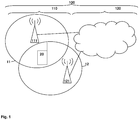
- Figure 1 schematically illustrates an example of a telecommunications network, comprising a core network, a radio access network, an user equipment, and a first and second radio cell.
- a public land mobile network 100 i.e. mobile communication network 100
- the public land mobile network 100 comprises a radio access network 110 and a core network 120.
- the public land mobile network 100 is a cellular telecommunications network comprising a plurality of network cells or radio cells, three of which are represented in Figure 1 by means of a solid line and reference signs 11, 12, respectively.
- each of the radio cells 11, 12 is produced by or corresponds to a base station entity.
- Two base station entities 111, 121 are represented in Figure 1 .
- a plurality of user equipments are camping on the public land mobile network 100 within the network cells 11, 12, i.e.
- the base station entities111, 121 are typically a base station, e.g. BTS (base transceiver station), NodeB or an eNodeB base station.
- BTS base transceiver station
- NodeB base transceiver station
- eNodeB eNodeB base station.
- the radio cells 11, 12 typically overlap. Furthermore, overlap of the radio cells 11, 12 is provided to ensure coverage of a certain geographical area not only with respect of one radio access technology but with respect to a plurality of radio access technologies, hereinafter also called different layers of radio coverage.
- Such a network architecture creates a multi-RAT (or multilayer) and/or multifrequency radio environment in the public land mobile network 100, where an user equipment 20, represented exemplarily in Figure 1 , is located such that it is able to have radio coverage with respect to different radio access technologies and/or with respect to different frequencies or frequency bands of one radio access technology or of different radio access technologies such as GSM (Global System of Mobile communications), GPRS (General Packet Radio System), UMTS (Universal Mobile Telecommunications System), EPS/LTE (Evolved Packet System / Long Term Evolution).
- GSM Global System of Mobile communications
- GPRS General Packet Radio System
- UMTS Universal Mobile Telecommunications System
- EPS/LTE Evolved Packet System / Long Term Evolution
- the user equipment 20 typically has a plurality of possibilities to be connected to the public land mobile network 100 which is represented in Figure 1 by means of the first radio cell 11 and the second radio cell 12, and the respective base station entities 111, 121, i.e. the first base station entity 111 and the second base station entity 121.
- the first base station entity 111 or first radio cell 11 is assumed to provide the strongest/best radio signal for the user equipment 20 (compared with the second base station entity 121 (or second radio cell 12); this can even be realized in case that the first base station entity 111 is farther away from the user equipment 20 than the second base station entity.
- the first base station entity 111 is sufficiently spaced from the user equipment 20, then the user equipment might be unable to transmit a correctly timed random access request to first base station entity 111.
- the first base station entity 111 would still provide the strongest radio signal and the user equipment is incited not to switch to the second base station entity 121, i.e. the user equipment 20 could be trapped in an infinity loop of still further requests but no successful result.
- the present invention to apply a penalty to the ranking of the first radio cell, by an offset value to the failed selected cell (first radio cell) and to store this value for a configurable time period within the memory of the user equipment.
- the penalty value can be a configurable offset in dB (e.g. 5 dB or 10 dB or 15 dB or 20 dB or 25 dB) or-alternatively - a special value representing the complete exclusion of the so marked cell (first radio cell 11) within the following cell selection process or plurality of cell selection processes.
- the penalty information is broadcast to the user equipment via the broadcast control channel (e.g.
- the penalty information can be fixed coded in a memory of the user equipment, especially in a firmware memory of the user equipment.
- the penalty information shall be applicable in both the cell-selection methods or procedures according to the Basic Biasing as well as according to the Absolute Priorities method.
- the penalty information shall be considered as long as the penalty related timer is not expired and shall finally exclude or worsen the marked cell from/within the newly started selection process.
- This penalty-setting procedure is not limited to a single cell, which means that if also the next uplink-access to an other cell (e.g. to the second radio cell 12) fails, this second radio cell 12 and the first radio cell 11 have to be de-prioritized (or even excluded) from the next run of the cell selection and/or cell reselection process as long as their individual timers are not expired.
- a further option according to the present invention includes that as long as the next failed cell is from the same frequency band and radio access technology as the marked cell(s) as before, also their penalty related timer (or penalty time intervals) have to be restarted.
- Still a further option according to the present invention includes that the complete list of cells with penalties shall not be permanently stored. This means that, e.g. after a switch off or reset of the user equipment, the list is emptied.
- the exclusion of the first radio cell 11 shall not be permanent, because it might be that the radio conditions, network parameters etc. are changed within the next cell selection cycle. Therefore it is proposed to solve this exclusion with support of a configurable time interval (indicated by the penalty timer information), e.g. 3 minutes.
- This time interval might be a fixed defined value in the 3GPP specifications or can be a configurable parameter broadcasted to the user equipment using the broadcast control channel of the first and/or second radio cell 11, 12. or can be fixedly coded in the firmware of the user equipment.
- the cell shall not be taken into account within the next cell selection process(es) or an extra offset [in dB] shall be added.
- Excluded cells can be stored together with time stamps and positions of the user equipment (if available) from the failed network access as part of the MDT-process and transmitted to the public land mobile network after a successful access has been performed.
- the offset is be removed.
- the proposed method comprises especially the following steps: In case an user equipment is camped on a suitable cell, the user equipment performs the following steps:
Landscapes
- Engineering & Computer Science (AREA)
- Computer Networks & Wireless Communication (AREA)
- Signal Processing (AREA)
- Computer Security & Cryptography (AREA)
- Mobile Radio Communication Systems (AREA)
Claims (11)
- Procédé pour un traitement amélioré de sélection de cellule et/ou resélection de cellule par un équipement utilisateur (20) qui tente de camper sur une cellule radio d'un réseau mobile terrestre public (100), le réseau mobile terrestre public (100) comprenant au moins une première cellule radio (11) avec une première entité de station de base (111) et une deuxième cellule radio (12) avec une deuxième entité de station de base (121), le traitement amélioré de sélection de cellule et/ou resélection de cellule étant lié à une procédure d'accès en liaison montante en fonction de tentatives, par l'équipement utilisateur (20), de se connecter au réseau mobile terrestre public (100) en utilisant un canal d'accès aléatoire de la première entité de station de base (111) et/ou de la deuxième entité de station de base (121), le procédé comprenant les étapes suivantes :- dans une première étape, la procédure de sélection de cellule et/ou resélection de cellule est effectuée par l'équipement utilisateur (20), conduisant au résultat que la première cellule radio (11) et la deuxième cellule radio (12) satisfont toutes deux un critère de sélection de cellule, la première cellule radio (11) étant prioritaire par rapport à la deuxième cellule radio (12),- dans une deuxième étape, l'équipement utilisateur (20) tente de se connecter au réseau mobile terrestre public (100) en utilisant le canal d'accès aléatoire de la première entité de la station de base (111), conduisant à un échec,- dans une troisième étape, une procédure de sélection de cellule et/ou resélection de cellule modifiée est effectuée par l'équipement utilisateur (20), dans laquelle - malgré des conditions radio inchangées concernant la première entité de station de base (111), la deuxième entité de station de base (121) et l'équipement utilisateur (20) - l'équipement utilisateur (20) tente de se connecter au réseau mobile terrestre public (100) en utilisant un canal d'accès aléatoire de la deuxième entité de station de base (111),caractérisé en ce que la procédure de sélection de cellule et/ou resélection de cellule modifiée est effectuée par l'équipement utilisateur (20) en appliquant une information de pénalité en ce qui concerne la première cellule radio (11), l'information de pénalité en ce qui concerne au moins la première cellule radio (11) étant transmise à l'équipement utilisateur (20), l'application de l'information de pénalité en ce qui concerne la première cellule radio (11) ayant pour résultat - au moins potentiellement - une priorité inférieure de la première cellule radio (11) par rapport à la priorité de la deuxième cellule radio (12), l'information de pénalité comprenant une information de décalage, consistant en ce qu'au moins l'une des valeurs suivantes :- la valeur du niveau RX de sélection de cellule, Srxlev,- la valeur de la qualité de sélection de cellule, Squal,- la valeur du niveau RX de cellule mesuré, RSRP,- la valeur de la qualité de cellule mesurée, RSRQ, est/sont réduite(s), en appliquant l'information de décalage, en ce qui concerne la première cellule radio (11).
- Procédé selon la revendication 1, dans lequel l'information de pénalité comprend une information de temporisateur liée à la pénalité, l'information de décalage de l'information de pénalité étant appliquée, lors de l'exécution d'une procédure de sélection de cellule et/ou resélection de cellule modifiée, en ce qui concerne la première cellule radio (11) pendant un intervalle de temps de pénalité de la longueur indiquée par l'information de temporisateur liée à la pénalité, l'intervalle de temps de pénalité commençant après l'échec, dans la deuxième étape, de la tentative de l'équipement utilisateur (20) de se connecter au réseau mobile terrestre public (100) en utilisant le canal d'accès aléatoire de la première entité de station de base (111).
- Procédé selon l'une des revendications précédentes, dans lequel, après l'expiration de l'intervalle de temps de pénalité, la procédure de sélection de cellule et/ou resélection de cellule est effectuée par l'équipement utilisateur (20) sans appliquer l'information de pénalité en ce qui concerne la première cellule radio (11).
- Procédé selon l'une des revendications précédentes, dans lequel l'information de pénalité est transmise par la première entité de station de base (121) à l'équipement utilisateur (20) de préférence sur un canal de diffusion.
- Procédé selon l'une des revendications précédentes, dans lequel l'information de pénalité est stockée dans l'équipement utilisateur (20), de préférence dans une mémoire associée à un micrologiciel de l'équipement utilisateur (20).
- Réseau mobile terrestre public (100) pour un traitement amélioré de sélection de cellule et/ou resélection de cellule par un équipement utilisateur (20) qui tente de camper sur une cellule radio d'un réseau mobile terrestre public (100), le réseau mobile terrestre public (100) comprenant au moins une première cellule radio (11) avec une première entité de station de base (111) et une deuxième cellule radio (12) avec une deuxième entité de station de base (121), le traitement amélioré de sélection de cellule et/ou resélection de cellule étant lié à une procédure d'accès en liaison montante en fonction de tentatives, par l'équipement utilisateur (20), de se connecter au réseau mobile terrestre public (100) en utilisant un canal d'accès aléatoire de la première entité de station de base (111) et/ou de la deuxième entité de station de base (121), le réseau mobile terrestre public (100) étant configuré de telle sorte qu'une information de pénalité en ce qui concerne au moins la première cellule radio (11) est transmise à l'équipement utilisateur (20), l'information de pénalité amenant l'équipement utilisateur (20) à appliquer une procédure de sélection de cellule et/ou resélection de cellule modifiée dans le cas où :- une procédure précédente de sélection de cellule et/ou resélection de cellule a été effectuée par l'équipement utilisateur (20), conduisant au résultat que la première cellule radio (11) et la deuxième cellule radio (12) satisfont toutes deux un critère de sélection de cellule, la première cellule radio (11) étant prioritaire par rapport à la deuxième cellule radio (12), et- l'équipement utilisateur (20) a tenté sans succès de se connecter au réseau mobile terrestre public (100) en utilisant le canal d'accès aléatoire de la première entité de station de base (111),la procédure de sélection de cellule et/ou resélection de cellule modifiée ayant pour résultat - malgré des conditions radio inchangées concernant la première entité de station de base (111), la deuxième entité de station de base (121) et l'équipement utilisateur (20) - que l'équipement utilisateur (20) tente de se connecter au réseau mobile terrestre public (100) en utilisant un canal d'accès aléatoire de la deuxième entité de station de base (111),
caractérisé en ce que l'équipement utilisateur (20) est configuré pour appliquer une information de pénalité en ce qui concerne la première cellule radio (11) pour effectuer une procédure de sélection de cellule et/ou de resélection de cellule modifiée, l'application de l'information de pénalité en ce qui concerne la première cellule radio (11) ayant pour résultat - au moins potentiellement - une priorité inférieure de la première cellule radio (11) par rapport à la priorité de la deuxième cellule radio (12), l'information de pénalité comprenant une information de décalage, consistant en ce qu'au moins l'une des valeurs suivantes :- la valeur du niveau RX de sélection de cellule, Srxlev,- la valeur de la qualité de sélection de cellule, Squal,- la valeur du niveau RX de cellule mesuré, RSRP,- la valeur de la qualité de cellule mesurée, RSRQ,
est/sont réduite(s), en appliquant l'information de décalage, en ce qui concerne la première cellule radio (11). - Équipement utilisateur (20) pour un traitement amélioré de sélection de cellule et/ou resélection de cellule dans le cas où l'équipement utilisateur (20) tente de camper sur une cellule radio d'un réseau mobile terrestre public (100), le réseau mobile terrestre public (100) comprenant au moins une première cellule radio (11) avec une première entité de station de base (111) et une deuxième cellule radio (12) avec une deuxième entité de station de base (121), le traitement amélioré de sélection de cellule et/ou resélection de cellule étant lié à une procédure d'accès en liaison montante en fonction de tentatives, par l'équipement utilisateur (20), de se connecter au réseau mobile terrestre public (100) en utilisant un canal d'accès aléatoire de la première entité de station de base (111) et/ou de la deuxième entité de station de base (121), l'équipement utilisateur (20) étant configuré de telle sorte qu'une procédure de sélection de cellule et/ou resélection de cellule modifiée est appliquée par l'équipement utilisateur (20) dans le cas où :- une procédure précédente de sélection de cellule et/ou resélection de cellule a été effectuée par l'équipement utilisateur (20), conduisant au résultat que la première cellule radio (11) et la deuxième cellule radio (12) satisfont toutes deux un critère de sélection de cellule, la première cellule radio (11) étant prioritaire par rapport à la deuxième cellule radio (12), et- l'équipement utilisateur (20) a tenté sans succès de se connecter au réseau mobile terrestre public (100) en utilisant le canal d'accès aléatoire de la première entité de station de base (111),la procédure de sélection de cellule et/ou resélection de cellule modifiée ayant pour résultat - malgré des conditions radio inchangées concernant la première entité de station de base (111), la deuxième entité de station de base (121) et l'équipement utilisateur (20) - que l'équipement utilisateur (20) tente de se connecter au réseau mobile terrestre public (100) en utilisant un canal d'accès aléatoire de la deuxième entité de station de base (111),
caractérisé en ce que l'équipement utilisateur (20) est configuré pour appliquer une information de pénalité en ce qui concerne la première cellule radio (11) pour effectuer une procédure de sélection de cellule et/ou de resélection de cellule modifiée, l'équipement utilisateur (20) étant configuré de telle sorte que l'information de pénalité en ce qui concerne la première cellule radio (11) est reçue par l'équipement utilisateur (20), l'application de l'information de pénalité en ce qui concerne la première cellule radio (11) ayant pour résultat - au moins potentiellement - une priorité inférieure de la première cellule radio (11) par rapport à la priorité de la deuxième cellule radio (12), l'information de pénalité comprenant une information de décalage, consistant en ce qu'au moins l'une des valeurs suivantes :- la valeur du niveau RX de sélection de cellule, Srxlev,- la valeur de la qualité de sélection de cellule, Squal,- la valeur du niveau RX de cellule mesuré, RSRP,- la valeur de la qualité de cellule mesurée, RSRQ,
est/sont réduite(s), en appliquant l'information de décalage, en ce qui concerne la première cellule radio (11). - Équipement utilisateur (20) selon la revendication 7, dans lequel l'information de pénalité est transmise par au moins la première entité de station de base (121) à l'équipement utilisateur (20) de préférence sur un canal de diffusion.
- Équipement utilisateur (20) selon la revendication 7 ou 8, dans lequel l'information de pénalité est stockée dans l'équipement utilisateur (20), de préférence dans une mémoire associée à un micrologiciel de l'équipement utilisateur (20).
- Programme comprenant un code de programme lisible par ordinateur qui, lorsqu'il est exécuté sur un équipement utilisateur (20), amène l'équipement utilisateur (20) à mettre en œuvre un procédé selon l'une des revendications 1 à 5.
- Produit programme d'ordinateur pour utiliser un réseau mobile terrestre public (100), le produit programme d'ordinateur comprenant un programme d'ordinateur stocké sur un support de stockage, le programme d'ordinateur comprenant un code de programme qui, lorsqu'il est exécuté sur un équipement utilisateur (20), amène l'équipement utilisateur (20) à mettre en œuvre un procédé selon l'une des revendications 1 à 5.
Priority Applications (6)
| Application Number | Priority Date | Filing Date | Title |
|---|---|---|---|
| SI201431714T SI2995134T1 (sl) | 2013-05-06 | 2014-04-29 | Postopek za izboljšano izbiranje/ponovno izbiranje celice s strani uporabniške opreme, ki se poskuša povezati z radijsko celico javnega kopenskega mobilnega omrežja |
| RS20201377A RS61059B1 (sr) | 2013-05-06 | 2014-04-29 | Postupak za poboljšanu selekciju/reselekciju ćelija pomoću korisničke opreme koja pokušava da se utabori u radio ćeliji javne zemaljske mobilne mreže |
| HRP20201878TT HRP20201878T1 (hr) | 2013-05-06 | 2014-04-29 | Metoda za poboljšani odabir ćelije/ponovni odabir pomoću korisničke opreme koja se pokušava povezati s radijskom ćelijom javne zemaljske mobilne mreže |
| EP14720143.8A EP2995134B1 (fr) | 2013-05-06 | 2014-04-29 | Procédé pour une sélection/resélection de cellules améliorée par un équipement utilisateur essayant de camper sur une cellule radio d'un réseau mobile terrestre public |
| PL14720143T PL2995134T3 (pl) | 2013-05-06 | 2014-04-29 | Sposób usprawnionego wyboru / ponownego wyboru komórki przez wyposażenie użytkownika próbujące przyłączyć się do komórki radiowej publicznej sieci naziemnej łączności ruchomej |
| EP17204315.0A EP3322224B1 (fr) | 2013-05-06 | 2014-04-29 | Procédé pour une sélection améliorée de cellules et/ou manipulation de resélection de cellules par un équipement utilisateur qui essaye de camper sur une cellule radio d'un réseau mobile terrestre public, réseau mobile terrestre public et équipement utilisateur |
Applications Claiming Priority (3)
| Application Number | Priority Date | Filing Date | Title |
|---|---|---|---|
| EP13166650 | 2013-05-06 | ||
| PCT/EP2014/058714 WO2014180714A1 (fr) | 2013-05-06 | 2014-04-29 | Procédé d'amélioration de sélection/resélection de cellule par un équipement utilisateur cherchant à camper sur une cellule radio d'un réseau mobile terrestre public |
| EP14720143.8A EP2995134B1 (fr) | 2013-05-06 | 2014-04-29 | Procédé pour une sélection/resélection de cellules améliorée par un équipement utilisateur essayant de camper sur une cellule radio d'un réseau mobile terrestre public |
Related Child Applications (2)
| Application Number | Title | Priority Date | Filing Date |
|---|---|---|---|
| EP17204315.0A Division EP3322224B1 (fr) | 2013-05-06 | 2014-04-29 | Procédé pour une sélection améliorée de cellules et/ou manipulation de resélection de cellules par un équipement utilisateur qui essaye de camper sur une cellule radio d'un réseau mobile terrestre public, réseau mobile terrestre public et équipement utilisateur |
| EP17204315.0A Division-Into EP3322224B1 (fr) | 2013-05-06 | 2014-04-29 | Procédé pour une sélection améliorée de cellules et/ou manipulation de resélection de cellules par un équipement utilisateur qui essaye de camper sur une cellule radio d'un réseau mobile terrestre public, réseau mobile terrestre public et équipement utilisateur |
Publications (2)
| Publication Number | Publication Date |
|---|---|
| EP2995134A1 EP2995134A1 (fr) | 2016-03-16 |
| EP2995134B1 true EP2995134B1 (fr) | 2020-09-02 |
Family
ID=48366162
Family Applications (2)
| Application Number | Title | Priority Date | Filing Date |
|---|---|---|---|
| EP17204315.0A Active EP3322224B1 (fr) | 2013-05-06 | 2014-04-29 | Procédé pour une sélection améliorée de cellules et/ou manipulation de resélection de cellules par un équipement utilisateur qui essaye de camper sur une cellule radio d'un réseau mobile terrestre public, réseau mobile terrestre public et équipement utilisateur |
| EP14720143.8A Active EP2995134B1 (fr) | 2013-05-06 | 2014-04-29 | Procédé pour une sélection/resélection de cellules améliorée par un équipement utilisateur essayant de camper sur une cellule radio d'un réseau mobile terrestre public |
Family Applications Before (1)
| Application Number | Title | Priority Date | Filing Date |
|---|---|---|---|
| EP17204315.0A Active EP3322224B1 (fr) | 2013-05-06 | 2014-04-29 | Procédé pour une sélection améliorée de cellules et/ou manipulation de resélection de cellules par un équipement utilisateur qui essaye de camper sur une cellule radio d'un réseau mobile terrestre public, réseau mobile terrestre public et équipement utilisateur |
Country Status (17)
| Country | Link |
|---|---|
| US (2) | US11006336B2 (fr) |
| EP (2) | EP3322224B1 (fr) |
| JP (1) | JP6330030B2 (fr) |
| KR (1) | KR101817494B1 (fr) |
| CN (1) | CN105210426B (fr) |
| BR (1) | BR112015027169B1 (fr) |
| DK (1) | DK2995134T3 (fr) |
| ES (2) | ES2818598T3 (fr) |
| HR (1) | HRP20201878T1 (fr) |
| HU (1) | HUE052488T2 (fr) |
| LT (1) | LT2995134T (fr) |
| MX (1) | MX350042B (fr) |
| PL (2) | PL3322224T3 (fr) |
| PT (1) | PT2995134T (fr) |
| RS (1) | RS61059B1 (fr) |
| SI (1) | SI2995134T1 (fr) |
| WO (1) | WO2014180714A1 (fr) |
Families Citing this family (14)
| Publication number | Priority date | Publication date | Assignee | Title |
|---|---|---|---|---|
| WO2015010287A1 (fr) * | 2013-07-24 | 2015-01-29 | 华为技术有限公司 | Procédé, dispositif et système de resélection de cellule |
| CN104918297B (zh) * | 2014-03-13 | 2018-07-27 | 中国移动通信集团公司 | 一种小区接入方法和设备 |
| CN106658613B (zh) * | 2015-11-03 | 2020-04-14 | 中国移动通信集团公司 | 一种小区重选方法及装置 |
| US20170238221A1 (en) * | 2016-02-12 | 2017-08-17 | Qualcomm Incorporated | Cell avoidance associated with lower layer failures |
| EP3399788A1 (fr) | 2017-05-04 | 2018-11-07 | Telefonaktiebolaget LM Ericsson (publ) | Gestion de la dégradation des performances dans un système de communication |
| US11184826B2 (en) * | 2017-06-15 | 2021-11-23 | Lg Electronics Inc. | Method and apparatus for handling failure of system information request |
| EP4319458A3 (fr) * | 2018-04-05 | 2024-05-01 | Nokia Technologies Oy | Amélioration de procédure d'accès à une cellule |
| CN108235397A (zh) * | 2018-04-10 | 2018-06-29 | 奇酷互联网络科技(深圳)有限公司 | 随机接入的控制方法、装置和移动终端 |
| US11653241B2 (en) | 2018-06-01 | 2023-05-16 | Telefonaktiebolaget Lm Ericsson (Publ) | Reporting performance degradation in a communications system |
| US11985565B2 (en) * | 2019-01-16 | 2024-05-14 | Lg Electronics Inc. | Method and apparatus for mobility management in wireless communication system |
| EP3984294A1 (fr) * | 2019-06-11 | 2022-04-20 | Nokia Technologies Oy | Signalement de mesures économe en énergie pour connectivité multiple/double dans les réseaux de communications cellulaires |
| WO2021204212A1 (fr) * | 2020-04-07 | 2021-10-14 | Guangdong Oppo Mobile Telecommunications Corp., Ltd. | Procédé et équipement utilisateur permettant un réglage de mesure cellulaire |
| CN114980239B (zh) * | 2021-02-25 | 2024-05-14 | 荣耀终端有限公司 | 一种小区重选方法及终端设备 |
| US11792712B2 (en) | 2021-12-23 | 2023-10-17 | T-Mobile Usa, Inc. | Cell reselection priority assignment based on performance triggers |
Family Cites Families (17)
| Publication number | Priority date | Publication date | Assignee | Title |
|---|---|---|---|---|
| FI104780B (fi) * | 1997-02-28 | 2000-03-31 | Nokia Mobile Phones Ltd | Solukkoradiojärjestelmän solujen priorisointi |
| US6978138B2 (en) | 2002-10-28 | 2005-12-20 | Qualcomm Incorporated | Inter-RAT cell reselection in a wireless communication network |
| US7127253B2 (en) * | 2003-02-13 | 2006-10-24 | Asustek Computer Inc. | Penalty of cell reselection for a wireless device |
| CA2534277C (fr) * | 2003-08-22 | 2012-10-02 | Samsung Electronics Co., Ltd. | Procede de reselection de cellule permettant la reception de paquets de donnees dans un systeme de communication mobile prenant en charge un service mbms |
| US7483702B2 (en) * | 2004-10-20 | 2009-01-27 | Nokia Corporation | Cell reselection for improving network interconnection |
| EP2135474A1 (fr) * | 2007-03-09 | 2009-12-23 | Interdigital Technology Corporation | Procédé et appareil permettant de régler un temporisateur de resélection et des critères de classement de cellules, et de rapporter une mesure de signal dégradé d'une cellule de desserte |
| BRPI0808232A2 (pt) * | 2007-03-13 | 2014-07-22 | Interdigital Tech Corp | Processo de re-seleção de célula para comunicações sem fio. |
| GB0713391D0 (en) * | 2007-07-11 | 2007-08-22 | Vodafone Plc | Measurement and reselection in idle mode |
| CN101572921B (zh) * | 2008-04-29 | 2013-07-31 | 株式会社Ntt都科摩 | 移动通信系统中的小区重选方法及装置 |
| US8588773B2 (en) * | 2008-08-04 | 2013-11-19 | Qualcomm Incorporated | System and method for cell search and selection in a wireless communication system |
| US20110151867A1 (en) * | 2008-09-19 | 2011-06-23 | Panasonic Corporation | Mobile terminal, macro base station, and cell selection system |
| IN2012DN04906A (fr) * | 2010-01-08 | 2015-09-25 | Interdigital Patent Holdings | |
| MX2013005674A (es) * | 2010-11-30 | 2013-09-26 | Research In Motion Ltd | Re-seleccion de celdas en una red de telecomunicacion celular. |
| WO2012072716A1 (fr) * | 2010-11-30 | 2012-06-07 | Research In Motion Limited | Resélection de cellule à l'aide d'un algorithme de classement |
| US9008659B1 (en) * | 2011-03-10 | 2015-04-14 | Marvell International Ltd. | Cell reselection methods based on tracking area for cellular systems |
| KR101781864B1 (ko) * | 2011-04-13 | 2017-09-26 | 엘지전자 주식회사 | 무선 접속 시스템에서 랜덤 억세스 성공률을 높이기 위한 셀 재선택 방법 |
| GB2506888B (en) * | 2012-10-10 | 2015-03-11 | Broadcom Corp | Reselection |
-
2014
- 2014-04-29 PL PL17204315.0T patent/PL3322224T3/pl unknown
- 2014-04-29 ES ES14720143T patent/ES2818598T3/es active Active
- 2014-04-29 PL PL14720143T patent/PL2995134T3/pl unknown
- 2014-04-29 RS RS20201377A patent/RS61059B1/sr unknown
- 2014-04-29 JP JP2016512290A patent/JP6330030B2/ja active Active
- 2014-04-29 KR KR1020157034636A patent/KR101817494B1/ko active Active
- 2014-04-29 HU HUE14720143A patent/HUE052488T2/hu unknown
- 2014-04-29 MX MX2015014616A patent/MX350042B/es active IP Right Grant
- 2014-04-29 US US14/888,940 patent/US11006336B2/en active Active
- 2014-04-29 EP EP17204315.0A patent/EP3322224B1/fr active Active
- 2014-04-29 LT LTEP14720143.8T patent/LT2995134T/lt unknown
- 2014-04-29 SI SI201431714T patent/SI2995134T1/sl unknown
- 2014-04-29 ES ES17204315T patent/ES2967522T3/es active Active
- 2014-04-29 DK DK14720143.8T patent/DK2995134T3/da active
- 2014-04-29 WO PCT/EP2014/058714 patent/WO2014180714A1/fr not_active Ceased
- 2014-04-29 PT PT147201438T patent/PT2995134T/pt unknown
- 2014-04-29 EP EP14720143.8A patent/EP2995134B1/fr active Active
- 2014-04-29 BR BR112015027169-3A patent/BR112015027169B1/pt active IP Right Grant
- 2014-04-29 HR HRP20201878TT patent/HRP20201878T1/hr unknown
- 2014-04-29 CN CN201480025803.0A patent/CN105210426B/zh active Active
-
2021
- 2021-04-12 US US17/227,444 patent/US11997555B2/en active Active
Non-Patent Citations (1)
| Title |
|---|
| None * |
Also Published As
| Publication number | Publication date |
|---|---|
| MX2015014616A (es) | 2016-03-01 |
| DK2995134T3 (da) | 2020-09-28 |
| EP3322224A1 (fr) | 2018-05-16 |
| HUE052488T2 (hu) | 2021-05-28 |
| US11997555B2 (en) | 2024-05-28 |
| JP2016521513A (ja) | 2016-07-21 |
| WO2014180714A1 (fr) | 2014-11-13 |
| ES2967522T3 (es) | 2024-04-30 |
| SI2995134T1 (sl) | 2021-01-29 |
| EP3322224B1 (fr) | 2023-12-13 |
| US11006336B2 (en) | 2021-05-11 |
| BR112015027169A2 (pt) | 2017-07-25 |
| EP2995134A1 (fr) | 2016-03-16 |
| JP6330030B2 (ja) | 2018-05-23 |
| LT2995134T (lt) | 2020-10-26 |
| CN105210426B (zh) | 2019-06-11 |
| ES2818598T3 (es) | 2021-04-13 |
| KR101817494B1 (ko) | 2018-01-11 |
| MX350042B (es) | 2017-08-24 |
| PT2995134T (pt) | 2020-11-05 |
| BR112015027169B1 (pt) | 2023-03-07 |
| PL3322224T3 (pl) | 2024-04-29 |
| HRP20201878T1 (hr) | 2021-01-22 |
| PL2995134T3 (pl) | 2021-02-08 |
| RS61059B1 (sr) | 2020-12-31 |
| US20160088539A1 (en) | 2016-03-24 |
| US20210235346A1 (en) | 2021-07-29 |
| CN105210426A (zh) | 2015-12-30 |
| KR20160005747A (ko) | 2016-01-15 |
Similar Documents
| Publication | Publication Date | Title |
|---|---|---|
| US11997555B2 (en) | Cell selection/reselection by a user equipment trying to camp on a radio cell of a public land mobile network | |
| CN110859011B (zh) | 一种通信方法及相关设备 | |
| EP2241130B1 (fr) | Procédé et équipement utilisateur dans un réseau de communication | |
| US9826451B2 (en) | Method for communicating in wireless communication system supporting multiple access network and apparatus supporting same | |
| US12549984B2 (en) | Method and apparatus for relaxed radio resource management measurement | |
| US9084162B2 (en) | Forced DRX during automatic neighbor relation (ANR) in LTE | |
| US9713069B2 (en) | Method for steering traffic in wireless communications system and apparatus for supporting same | |
| EP2953397B1 (fr) | Procédé destiné à orienter le trafic dans un système de communications sans fil et appareil de prise en charge associé | |
| US20160119959A1 (en) | Method for processing emergency call in wireless communication system and apparatus for supporting same | |
| WO2014069890A1 (fr) | Procédé de resélection de cellules basée sur une gestion prioritaire dans un système de communication sans fil et appareil prenant en charge ledit procédé | |
| EP2200374A1 (fr) | Procédé de manipulation de la sélection cellulaire pour un système de communication sans fil et dispositif mobile associé | |
| WO2014073940A1 (fr) | Procédé de resélection de cellule dans un système de communication sans fil et appareil le prenant en charge | |
| CN113473440B (zh) | 用于空闲模式移动性管理的方法和无线通信设备 | |
| CN114190114A (zh) | 一种小区重选方法及相关通信设备 | |
| WO2009114988A1 (fr) | Procédé, dispositif et système de notification d'informations de cellule voisine du système hétérogène à un terminal utilisateur | |
| US9913306B2 (en) | Communication terminal and method for establishing a CSFB call | |
| WO2025163296A1 (fr) | Procédé d'un équipement utilisateur gérant une interdiction cellulaire dans un réseau de télécommunications pendant une sélection et/ou une re-sélection de cellule, équipement utilisateur et programme informatique |
Legal Events
| Date | Code | Title | Description |
|---|---|---|---|
| PUAI | Public reference made under article 153(3) epc to a published international application that has entered the european phase |
Free format text: ORIGINAL CODE: 0009012 |
|
| 17P | Request for examination filed |
Effective date: 20151207 |
|
| AK | Designated contracting states |
Kind code of ref document: A1 Designated state(s): AL AT BE BG CH CY CZ DE DK EE ES FI FR GB GR HR HU IE IS IT LI LT LU LV MC MK MT NL NO PL PT RO RS SE SI SK SM TR |
|
| AX | Request for extension of the european patent |
Extension state: BA ME |
|
| DAX | Request for extension of the european patent (deleted) | ||
| STAA | Information on the status of an ep patent application or granted ep patent |
Free format text: STATUS: EXAMINATION IS IN PROGRESS |
|
| 17Q | First examination report despatched |
Effective date: 20170428 |
|
| GRAP | Despatch of communication of intention to grant a patent |
Free format text: ORIGINAL CODE: EPIDOSNIGR1 |
|
| STAA | Information on the status of an ep patent application or granted ep patent |
Free format text: STATUS: GRANT OF PATENT IS INTENDED |
|
| RIC1 | Information provided on ipc code assigned before grant |
Ipc: H04W 48/20 20090101AFI20200309BHEP Ipc: H04W 74/08 20090101ALN20200309BHEP |
|
| INTG | Intention to grant announced |
Effective date: 20200324 |
|
| GRAS | Grant fee paid |
Free format text: ORIGINAL CODE: EPIDOSNIGR3 |
|
| GRAA | (expected) grant |
Free format text: ORIGINAL CODE: 0009210 |
|
| STAA | Information on the status of an ep patent application or granted ep patent |
Free format text: STATUS: THE PATENT HAS BEEN GRANTED |
|
| AK | Designated contracting states |
Kind code of ref document: B1 Designated state(s): AL AT BE BG CH CY CZ DE DK EE ES FI FR GB GR HR HU IE IS IT LI LT LU LV MC MK MT NL NO PL PT RO RS SE SI SK SM TR |
|
| REG | Reference to a national code |
Ref country code: GB Ref legal event code: FG4D |
|
| REG | Reference to a national code |
Ref country code: AT Ref legal event code: REF Ref document number: 1310296 Country of ref document: AT Kind code of ref document: T Effective date: 20200915 Ref country code: CH Ref legal event code: EP |
|
| REG | Reference to a national code |
Ref country code: DE Ref legal event code: R096 Ref document number: 602014069644 Country of ref document: DE |
|
| REG | Reference to a national code |
Ref country code: DK Ref legal event code: T3 Effective date: 20200924 |
|
| REG | Reference to a national code |
Ref country code: IE Ref legal event code: FG4D |
|
| REG | Reference to a national code |
Ref country code: SE Ref legal event code: TRGR |
|
| REG | Reference to a national code |
Ref country code: RO Ref legal event code: EPE |
|
| REG | Reference to a national code |
Ref country code: PT Ref legal event code: SC4A Ref document number: 2995134 Country of ref document: PT Date of ref document: 20201105 Kind code of ref document: T Free format text: AVAILABILITY OF NATIONAL TRANSLATION Effective date: 20201029 |
|
| REG | Reference to a national code |
Ref country code: NO Ref legal event code: T2 Effective date: 20200902 |
|
| REG | Reference to a national code |
Ref country code: FI Ref legal event code: FGE |
|
| REG | Reference to a national code |
Ref country code: HR Ref legal event code: TUEP Ref document number: P20201878T Country of ref document: HR Ref country code: NL Ref legal event code: FP |
|
| REG | Reference to a national code |
Ref country code: SK Ref legal event code: T3 Ref document number: E 35256 Country of ref document: SK |
|
| REG | Reference to a national code |
Ref country code: GR Ref legal event code: EP Ref document number: 20200403083 Country of ref document: GR Effective date: 20201215 |
|
| REG | Reference to a national code |
Ref country code: HR Ref legal event code: T1PR Ref document number: P20201878 Country of ref document: HR |
|
| REG | Reference to a national code |
Ref country code: ES Ref legal event code: FG2A Ref document number: 2818598 Country of ref document: ES Kind code of ref document: T3 Effective date: 20210413 |
|
| PG25 | Lapsed in a contracting state [announced via postgrant information from national office to epo] |
Ref country code: EE Free format text: LAPSE BECAUSE OF FAILURE TO SUBMIT A TRANSLATION OF THE DESCRIPTION OR TO PAY THE FEE WITHIN THE PRESCRIBED TIME-LIMIT Effective date: 20200902 Ref country code: SM Free format text: LAPSE BECAUSE OF FAILURE TO SUBMIT A TRANSLATION OF THE DESCRIPTION OR TO PAY THE FEE WITHIN THE PRESCRIBED TIME-LIMIT Effective date: 20200902 |
|
| REG | Reference to a national code |
Ref country code: HR Ref legal event code: ODRP Ref document number: P20201878 Country of ref document: HR Payment date: 20210426 Year of fee payment: 8 |
|
| REG | Reference to a national code |
Ref country code: HU Ref legal event code: AG4A Ref document number: E052488 Country of ref document: HU |
|
| PG25 | Lapsed in a contracting state [announced via postgrant information from national office to epo] |
Ref country code: IS Free format text: LAPSE BECAUSE OF FAILURE TO SUBMIT A TRANSLATION OF THE DESCRIPTION OR TO PAY THE FEE WITHIN THE PRESCRIBED TIME-LIMIT Effective date: 20210102 Ref country code: AL Free format text: LAPSE BECAUSE OF FAILURE TO SUBMIT A TRANSLATION OF THE DESCRIPTION OR TO PAY THE FEE WITHIN THE PRESCRIBED TIME-LIMIT Effective date: 20200902 |
|
| REG | Reference to a national code |
Ref country code: DE Ref legal event code: R097 Ref document number: 602014069644 Country of ref document: DE |
|
| PLBE | No opposition filed within time limit |
Free format text: ORIGINAL CODE: 0009261 |
|
| STAA | Information on the status of an ep patent application or granted ep patent |
Free format text: STATUS: NO OPPOSITION FILED WITHIN TIME LIMIT |
|
| 26N | No opposition filed |
Effective date: 20210603 |
|
| PG25 | Lapsed in a contracting state [announced via postgrant information from national office to epo] |
Ref country code: MC Free format text: LAPSE BECAUSE OF FAILURE TO SUBMIT A TRANSLATION OF THE DESCRIPTION OR TO PAY THE FEE WITHIN THE PRESCRIBED TIME-LIMIT Effective date: 20200902 |
|
| PG25 | Lapsed in a contracting state [announced via postgrant information from national office to epo] |
Ref country code: LU Free format text: LAPSE BECAUSE OF NON-PAYMENT OF DUE FEES Effective date: 20210429 |
|
| REG | Reference to a national code |
Ref country code: AT Ref legal event code: UEP Ref document number: 1310296 Country of ref document: AT Kind code of ref document: T Effective date: 20200902 |
|
| REG | Reference to a national code |
Ref country code: HR Ref legal event code: ODRP Ref document number: P20201878 Country of ref document: HR Payment date: 20220415 Year of fee payment: 9 |
|
| PG25 | Lapsed in a contracting state [announced via postgrant information from national office to epo] |
Ref country code: IS Free format text: LAPSE BECAUSE OF FAILURE TO SUBMIT A TRANSLATION OF THE DESCRIPTION OR TO PAY THE FEE WITHIN THE PRESCRIBED TIME-LIMIT Effective date: 20210102 |
|
| REG | Reference to a national code |
Ref country code: HR Ref legal event code: ODRP Ref document number: P20201878 Country of ref document: HR Payment date: 20230420 Year of fee payment: 10 |
|
| PG25 | Lapsed in a contracting state [announced via postgrant information from national office to epo] |
Ref country code: CY Free format text: LAPSE BECAUSE OF FAILURE TO SUBMIT A TRANSLATION OF THE DESCRIPTION OR TO PAY THE FEE WITHIN THE PRESCRIBED TIME-LIMIT Effective date: 20200902 |
|
| P01 | Opt-out of the competence of the unified patent court (upc) registered |
Effective date: 20230528 |
|
| PG25 | Lapsed in a contracting state [announced via postgrant information from national office to epo] |
Ref country code: MK Free format text: LAPSE BECAUSE OF FAILURE TO SUBMIT A TRANSLATION OF THE DESCRIPTION OR TO PAY THE FEE WITHIN THE PRESCRIBED TIME-LIMIT Effective date: 20200902 |
|
| REG | Reference to a national code |
Ref country code: HR Ref legal event code: ODRP Ref document number: P20201878 Country of ref document: HR Payment date: 20240424 Year of fee payment: 11 |
|
| PG25 | Lapsed in a contracting state [announced via postgrant information from national office to epo] |
Ref country code: MT Free format text: LAPSE BECAUSE OF FAILURE TO SUBMIT A TRANSLATION OF THE DESCRIPTION OR TO PAY THE FEE WITHIN THE PRESCRIBED TIME-LIMIT Effective date: 20200902 |
|
| PGFP | Annual fee paid to national office [announced via postgrant information from national office to epo] |
Ref country code: NO Payment date: 20241217 Year of fee payment: 12 |
|
| PGFP | Annual fee paid to national office [announced via postgrant information from national office to epo] |
Ref country code: NL Payment date: 20241217 Year of fee payment: 12 Ref country code: PL Payment date: 20241213 Year of fee payment: 12 Ref country code: BE Payment date: 20241218 Year of fee payment: 12 Ref country code: PT Payment date: 20241213 Year of fee payment: 12 Ref country code: GR Payment date: 20241216 Year of fee payment: 12 Ref country code: FI Payment date: 20241212 Year of fee payment: 12 |
|
| PGFP | Annual fee paid to national office [announced via postgrant information from national office to epo] |
Ref country code: FR Payment date: 20241220 Year of fee payment: 12 Ref country code: BG Payment date: 20241213 Year of fee payment: 12 |
|
| PGFP | Annual fee paid to national office [announced via postgrant information from national office to epo] |
Ref country code: LV Payment date: 20241213 Year of fee payment: 12 |
|
| PGFP | Annual fee paid to national office [announced via postgrant information from national office to epo] |
Ref country code: CZ Payment date: 20241213 Year of fee payment: 12 Ref country code: HR Payment date: 20241220 Year of fee payment: 12 |
|
| PGFP | Annual fee paid to national office [announced via postgrant information from national office to epo] |
Ref country code: SK Payment date: 20241217 Year of fee payment: 12 |
|
| PGFP | Annual fee paid to national office [announced via postgrant information from national office to epo] |
Ref country code: SE Payment date: 20241212 Year of fee payment: 12 |
|
| PGFP | Annual fee paid to national office [announced via postgrant information from national office to epo] |
Ref country code: SI Payment date: 20241216 Year of fee payment: 12 |
|
| PGFP | Annual fee paid to national office [announced via postgrant information from national office to epo] |
Ref country code: IT Payment date: 20241216 Year of fee payment: 12 |
|
| PGFP | Annual fee paid to national office [announced via postgrant information from national office to epo] |
Ref country code: RS Payment date: 20250129 Year of fee payment: 12 |
|
| PGFP | Annual fee paid to national office [announced via postgrant information from national office to epo] |
Ref country code: TR Payment date: 20250102 Year of fee payment: 12 |
|
| REG | Reference to a national code |
Ref country code: HR Ref legal event code: ODRP Ref document number: P20201878 Country of ref document: HR Payment date: 20241220 Year of fee payment: 12 |
|
| PGFP | Annual fee paid to national office [announced via postgrant information from national office to epo] |
Ref country code: DE Payment date: 20241212 Year of fee payment: 12 |
|
| PGFP | Annual fee paid to national office [announced via postgrant information from national office to epo] |
Ref country code: ES Payment date: 20250519 Year of fee payment: 12 Ref country code: DK Payment date: 20250423 Year of fee payment: 12 |
|
| PGFP | Annual fee paid to national office [announced via postgrant information from national office to epo] |
Ref country code: LT Payment date: 20250416 Year of fee payment: 12 |
|
| PGFP | Annual fee paid to national office [announced via postgrant information from national office to epo] |
Ref country code: HU Payment date: 20250429 Year of fee payment: 12 |
|
| PGFP | Annual fee paid to national office [announced via postgrant information from national office to epo] |
Ref country code: CH Payment date: 20250501 Year of fee payment: 12 |
|
| PGFP | Annual fee paid to national office [announced via postgrant information from national office to epo] |
Ref country code: RO Payment date: 20250428 Year of fee payment: 12 Ref country code: AT Payment date: 20250416 Year of fee payment: 12 |
|
| PGFP | Annual fee paid to national office [announced via postgrant information from national office to epo] |
Ref country code: IE Payment date: 20250428 Year of fee payment: 12 |
|
| PGFP | Annual fee paid to national office [announced via postgrant information from national office to epo] |
Ref country code: GB Payment date: 20260324 Year of fee payment: 13 |