EP3017802A1 - Procede de fabrication d'un moyen d'inhumation ou au moins une partie de celui-ci - Google Patents
Procede de fabrication d'un moyen d'inhumation ou au moins une partie de celui-ci Download PDFInfo
- Publication number
- EP3017802A1 EP3017802A1 EP15174879.5A EP15174879A EP3017802A1 EP 3017802 A1 EP3017802 A1 EP 3017802A1 EP 15174879 A EP15174879 A EP 15174879A EP 3017802 A1 EP3017802 A1 EP 3017802A1
- Authority
- EP
- European Patent Office
- Prior art keywords
- printing
- burial
- printing material
- layers
- dimensional
- Prior art date
- Legal status (The legal status is an assumption and is not a legal conclusion. Google has not performed a legal analysis and makes no representation as to the accuracy of the status listed.)
- Withdrawn
Links
Images


Classifications
-
- A—HUMAN NECESSITIES
- A61—MEDICAL OR VETERINARY SCIENCE; HYGIENE
- A61G—TRANSPORT, PERSONAL CONVEYANCES, OR ACCOMMODATION SPECIALLY ADAPTED FOR PATIENTS OR DISABLED PERSONS; OPERATING TABLES OR CHAIRS; CHAIRS FOR DENTISTRY; FUNERAL DEVICES
- A61G17/00—Coffins; Funeral wrappings; Funeral urns
- A61G17/08—Urns
-
- A—HUMAN NECESSITIES
- A61—MEDICAL OR VETERINARY SCIENCE; HYGIENE
- A61G—TRANSPORT, PERSONAL CONVEYANCES, OR ACCOMMODATION SPECIALLY ADAPTED FOR PATIENTS OR DISABLED PERSONS; OPERATING TABLES OR CHAIRS; CHAIRS FOR DENTISTRY; FUNERAL DEVICES
- A61G17/00—Coffins; Funeral wrappings; Funeral urns
- A61G17/007—Coffins; Funeral wrappings; Funeral urns characterised by the construction material used, e.g. biodegradable material; Use of several materials
-
- B—PERFORMING OPERATIONS; TRANSPORTING
- B29—WORKING OF PLASTICS; WORKING OF SUBSTANCES IN A PLASTIC STATE IN GENERAL
- B29C—SHAPING OR JOINING OF PLASTICS; SHAPING OF MATERIAL IN A PLASTIC STATE, NOT OTHERWISE PROVIDED FOR; AFTER-TREATMENT OF THE SHAPED PRODUCTS, e.g. REPAIRING
- B29C64/00—Additive manufacturing, i.e. manufacturing of three-dimensional [3D] objects by additive deposition, additive agglomeration or additive layering, e.g. by 3D printing, stereolithography or selective laser sintering
- B29C64/10—Processes of additive manufacturing
- B29C64/106—Processes of additive manufacturing using only liquids or viscous materials, e.g. depositing a continuous bead of viscous material
- B29C64/118—Processes of additive manufacturing using only liquids or viscous materials, e.g. depositing a continuous bead of viscous material using filamentary material being melted, e.g. fused deposition modelling [FDM]
-
- B—PERFORMING OPERATIONS; TRANSPORTING
- B29—WORKING OF PLASTICS; WORKING OF SUBSTANCES IN A PLASTIC STATE IN GENERAL
- B29C—SHAPING OR JOINING OF PLASTICS; SHAPING OF MATERIAL IN A PLASTIC STATE, NOT OTHERWISE PROVIDED FOR; AFTER-TREATMENT OF THE SHAPED PRODUCTS, e.g. REPAIRING
- B29C64/00—Additive manufacturing, i.e. manufacturing of three-dimensional [3D] objects by additive deposition, additive agglomeration or additive layering, e.g. by 3D printing, stereolithography or selective laser sintering
- B29C64/40—Structures for supporting 3D objects during manufacture and intended to be sacrificed after completion thereof
-
- B—PERFORMING OPERATIONS; TRANSPORTING
- B33—ADDITIVE MANUFACTURING TECHNOLOGY
- B33Y—ADDITIVE MANUFACTURING, i.e. MANUFACTURING OF THREE-DIMENSIONAL [3D] OBJECTS BY ADDITIVE DEPOSITION, ADDITIVE AGGLOMERATION OR ADDITIVE LAYERING, e.g. BY 3D PRINTING, STEREOLITHOGRAPHY OR SELECTIVE LASER SINTERING
- B33Y10/00—Processes of additive manufacturing
-
- B—PERFORMING OPERATIONS; TRANSPORTING
- B33—ADDITIVE MANUFACTURING TECHNOLOGY
- B33Y—ADDITIVE MANUFACTURING, i.e. MANUFACTURING OF THREE-DIMENSIONAL [3D] OBJECTS BY ADDITIVE DEPOSITION, ADDITIVE AGGLOMERATION OR ADDITIVE LAYERING, e.g. BY 3D PRINTING, STEREOLITHOGRAPHY OR SELECTIVE LASER SINTERING
- B33Y30/00—Apparatus for additive manufacturing; Details thereof or accessories therefor
-
- B—PERFORMING OPERATIONS; TRANSPORTING
- B33—ADDITIVE MANUFACTURING TECHNOLOGY
- B33Y—ADDITIVE MANUFACTURING, i.e. MANUFACTURING OF THREE-DIMENSIONAL [3D] OBJECTS BY ADDITIVE DEPOSITION, ADDITIVE AGGLOMERATION OR ADDITIVE LAYERING, e.g. BY 3D PRINTING, STEREOLITHOGRAPHY OR SELECTIVE LASER SINTERING
- B33Y80/00—Products made by additive manufacturing
-
- B—PERFORMING OPERATIONS; TRANSPORTING
- B29—WORKING OF PLASTICS; WORKING OF SUBSTANCES IN A PLASTIC STATE IN GENERAL
- B29K—INDEXING SCHEME ASSOCIATED WITH SUBCLASSES B29B, B29C OR B29D, RELATING TO MOULDING MATERIALS OR TO MATERIALS FOR MOULDS, REINFORCEMENTS, FILLERS OR PREFORMED PARTS, e.g. INSERTS
- B29K2067/00—Use of polyesters or derivatives thereof, as moulding material
- B29K2067/04—Polyesters derived from hydroxycarboxylic acids
- B29K2067/046—PLA, i.e. polylactic acid or polylactide
-
- B—PERFORMING OPERATIONS; TRANSPORTING
- B29—WORKING OF PLASTICS; WORKING OF SUBSTANCES IN A PLASTIC STATE IN GENERAL
- B29K—INDEXING SCHEME ASSOCIATED WITH SUBCLASSES B29B, B29C OR B29D, RELATING TO MOULDING MATERIALS OR TO MATERIALS FOR MOULDS, REINFORCEMENTS, FILLERS OR PREFORMED PARTS, e.g. INSERTS
- B29K2995/00—Properties of moulding materials, reinforcements, fillers, preformed parts or moulds
- B29K2995/0037—Other properties
- B29K2995/0059—Degradable
- B29K2995/006—Bio-degradable, e.g. bioabsorbable, bioresorbable or bioerodible
-
- B—PERFORMING OPERATIONS; TRANSPORTING
- B29—WORKING OF PLASTICS; WORKING OF SUBSTANCES IN A PLASTIC STATE IN GENERAL
- B29L—INDEXING SCHEME ASSOCIATED WITH SUBCLASS B29C, RELATING TO PARTICULAR ARTICLES
- B29L2031/00—Other particular articles
- B29L2031/712—Containers; Packaging elements or accessories, Packages
Definitions
- the present invention relates to a method for producing a burying means or at least a part thereof, a corresponding device and a corresponding use according to the respective preambles of claims 1, 7 and 8.
- the present invention relates to such a method in which initially at least one 3D printing device is provided, wherein the 3D printing device is configured and intended to produce at least one three-dimensional structure.
- a printing material is filled into a material storage, wherein then individual, in particular successive and stacked in the printing direction stacked print layers, which are each formed with the printing material, are printed.
- 3D printing processes are to be understood as a collective term which stands for a whole bundle of production techniques that function according to different principles. All processes build three-dimensional objects by applying and solidifying material in thin layers. The technical term for this is additive manufacturing - in contrast to subtractive techniques such as milling, sawing, drilling or water jet cutting.
- FDM Fused Deposition Modeling
- the printhead of FDM machines basically consists of a hot nozzle into which the solid raw material is pressed and thereby liquefied. At the other end of the nozzle it emerges as a thin and soft thread. In this way, the print head draws a layer of the desired object - the outer contour as a bordering line, areas are created as hatchings. Is the layer completed? and the material solidifies in the desired shape, moves the head by a layer thickness of the object and draws the next layer.
- the present invention makes use, inter alia, of the idea that the printing material is an environmentally compatible printing material and the 3D printing device by stacking the individual printing layers, the three-dimensional structure, which in particular in the form of a three-dimensional funeral is formed forms.
- environmental compatible means that the material (including printing material) is free of environmentally harmful substances such as petroleum. It may also be a plastic in the material. In particular, the printed material has complete compatibility with earth soil, organisms and water at the place of burial. In this respect, environmentally compatible materials may also be biocompatible materials.
- the method described here comprises a first step in which at least one 3D printing device is initially provided, wherein the 3D printing device is set up and intended to produce at least one three-dimensional structure.
- a printing material is filled into a material store, wherein subsequently individual, in particular successive and stacked in the printing direction, printing layers, which are each formed with the printing material, are printed.
- the printing material is an environmentally compatible printing material, wherein the 3D printing device by the stacking of the individual printing layers the three-dimensional structure, which is formed in particular in the form of a three-dimensional funeral, forms.
- FFF Fused Filament Fabrication
- FLM Fused Layer Modeling
- the process refers to layer by layer (extrusion) of a material through a hot nozzle.
- the consumable is in the form of a long wire (so-called filament) on a roll and is pushed by the conveyor unit in a print head, melted there and discharged on a printing bed.
- Print head and / or print bed are movable in 3 directions.
- plastic layers can be applied to one another step by step.
- a thin layer of powder is always applied by the coating unit to the printing bed.
- the laser or other energy source
- the laser is now precisely aligned with individual points of the powder layer to form the first layer of the print data.
- the powder is melted or melted and then solidifies again by slight cooling.
- the unmelted powder remains around the sintered areas and serves as a support material.
- the print bed lowers by a fraction of a millimeter.
- the coating unit now moves over the print bed and brings out the next powder layer.
- the second layer of the print data is sintered by the laser (or other energy source). This creates a layered three-dimensional object.
- the 3DP process works very much like selective laser sintering, but instead of a directed energy source, a printhead moves over the powder. This gives off tiny droplets of binder on the underlying powder layers, which are thus interconnected. Otherwise, this procedure is the same as the SLS procedure.
- liquid resins are used in the stereolithography process. They are hardened layer by layer by UV radiation and thus produce three-dimensional objects. For this, the construction platform in the Harz basin is gradually lowered.
- Polyjet method without a whole pool of liquid resin. For this purpose, an epoxy resin is applied dropwise from a nozzle and cured immediately by a UV laser.
- LOM Laminated Object Manufacturing
- a foil or plate e.g., paper
- a separating tool e.g., a knife or carbon dioxide laser
- the printing material is biodegradable.
- biodegradable refers to the ability of organic chemicals to biodegrade, that is, to decompose by living things (especially saprobionts) or their enzymes. Ideally, this chemical metabolism goes all the way to mineralization, breaking down the organic compound down to inorganic matter such as carbon dioxide, oxygen, and ammonia, but it can also stop degradation-stable transformation products.
- the printing material is recyclable.
- recycling is defined as “any process by which waste is converted into products, materials or materials It includes the treatment of organic materials, but not the recovery of energy and the treatment of materials intended for use as fuel or for backfilling "( ⁇ 3 para. 25 German Circular Economy Act).
- the printing material is compostable.
- composting also called “rotting” refers to the biological process of the nutrient cycle, in which easily exploitable organic material is degraded under the influence of atmospheric oxygen (aerobic) by bacteria and fungi (heterotrophic microorganisms). In addition to carbon dioxide and water-soluble minerals are released such as nitrates, ammonium salts, phosphates, potassium and magnesium compounds that act as fertilizer. Some of the intermediates resulting from this degradation are converted to humus.
- the burial means is in the form of a burial urn or at least a part thereof.
- a can lid and / or the urn base body are formed with a biodegradable material.
- the 3D printing device comprises at least one printing element, which is only suitable and / or intended only to produce a burial means in the form of a burial urn or a part thereof.
- "Only suitable for this purpose” can in this context mean that the printing device comprises such a metering element and / or pressure element, by means of which, in particular by means of a sensor, the configuration of a funeral urn, can be set exactly, specifiable.
- a dosing element is not suitable and / or adapted for use in other fields, for example for printing cakes or garden gnomes.
- the dosing element and in particular its sensor can be adapted only to the requirements for the production of the urns. This may include a special adaptation to the amount of material and / or condition for making the funeral urn.
- the device for producing a burying means or at least a part thereof comprises at least one 3D printing device, wherein the 3D printing device is set up and provided with at least one three-dimensional structure, in particular in the form of a three-dimensional burying medium, by stacking printing layers one above the other to manufacture.
- the 3D printing device comprises at least one material storage in which at least one printing material can be filled, wherein the printing layers are formed with the printing material and wherein according to the invention it is the printing material is an environmentally compatible printing material and by means of the 3D printing device by stacking the individual printing layers, the three-dimensional structure, in particular in the form of a three-dimensional funeral, can be formed.
- the device described here has the same advantages and refinements as the method described here and vice versa.
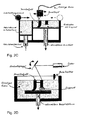
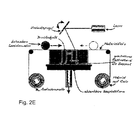
- FIG. 1 is explained in more detail with reference to a schematic plan view of an embodiment of a device described here.
- the method 100 for producing a funeral urn 31 A first comprises a first step, which comprises providing a 3D printing device 2, wherein the 3D printing device 2 is adapted and intended to produce at least one three-dimensional structure 3.
- a printing material 4 is filled into a material storage 21 of the 3D printing device 2, wherein subsequently printing of individual printing layers 41 stacked on one another and stacked in printing direction V, which are each formed with the printing material 4, is carried out.
- the printing material 4 is an environmentally compatible printing material 4 and the 3D printing device 2 the stacking of the individual printing layers 41 the three-dimensional structure 3, which in particular in shape a three-dimensional funeral 31 is formed forms.
- the burying means 31 is formed in the form of a burial urn 31A.
- the 3D printing device 2 comprises at least one printing element 22 by means of which the burial urn 31A, as in FIG. 1 shown is produced.
- the present application offers a possibility to transfer the advantages of a 3D printing process to the production of funeral urns, and this to do so with an environmentally compatible material to meet the individual funeral regulations.
- FFF Fused Filament Fabrication
- FLM Fused Layer Modeling
- the process refers to layer by layer (extrusion) of a material through a hot nozzle.
- the consumable is in the form of a long wire (so-called filament) on a roll and is pushed by the conveyor unit in a print head, melted there and discharged on a printing bed.
- Print head and / or print bed are movable in 3 directions.
- plastic layers can be applied to one another step by step.
- a thin layer of powder is always applied by the coating unit to the printing bed.
- the laser or other energy source
- the laser is now precisely aligned with individual points of the powder layer to form the first layer of the print data.
- the powder is melted or melted and then solidifies again by slight cooling.
- the unmelted powder remains around the sintered areas and serves as a support material.
- the print bed lowers by a fraction of a millimeter.
- the coating unit now moves over the print bed and brings out the next powder layer.
- the second layer of the print data is sintered by the laser (or other energy source). This creates a layered three-dimensional object.
- the 3DP process works very much like selective laser sintering, but instead of a directed energy source, a printhead moves over the powder. This one gives tiny droplets of Binders on the underlying powder layers, which are joined together. Otherwise, this procedure is the same as the SLS procedure.
- liquid resins are used in the stereolithography process. They are hardened layer by layer by UV radiation and thus produce three-dimensional objects. For this, the construction platform in the Harz basin is gradually lowered.
- Polyjet method without a whole pool of liquid resin. For this purpose, an epoxy resin is applied dropwise from a nozzle and cured immediately by a UV laser.
- a foil or plate e.g., paper
- a separating tool e.g., a knife or carbon dioxide laser
Landscapes
- Chemical & Material Sciences (AREA)
- Engineering & Computer Science (AREA)
- Materials Engineering (AREA)
- Manufacturing & Machinery (AREA)
- Optics & Photonics (AREA)
- Mechanical Engineering (AREA)
- Physics & Mathematics (AREA)
- Health & Medical Sciences (AREA)
- Life Sciences & Earth Sciences (AREA)
- Animal Behavior & Ethology (AREA)
- General Health & Medical Sciences (AREA)
- Public Health (AREA)
- Veterinary Medicine (AREA)
Applications Claiming Priority (1)
| Application Number | Priority Date | Filing Date | Title |
|---|---|---|---|
| DE102014016278.8A DE102014016278B4 (de) | 2014-11-05 | 2014-11-05 | Verfahren und Vorrichtungen zur Herstellung eines Bestattungsmittels sowie deren Verwendung |
Publications (1)
| Publication Number | Publication Date |
|---|---|
| EP3017802A1 true EP3017802A1 (fr) | 2016-05-11 |
Family
ID=53776295
Family Applications (1)
| Application Number | Title | Priority Date | Filing Date |
|---|---|---|---|
| EP15174879.5A Withdrawn EP3017802A1 (fr) | 2014-11-05 | 2015-07-01 | Procede de fabrication d'un moyen d'inhumation ou au moins une partie de celui-ci |
Country Status (3)
| Country | Link |
|---|---|
| US (1) | US20160121544A1 (fr) |
| EP (1) | EP3017802A1 (fr) |
| DE (1) | DE102014016278B4 (fr) |
Cited By (2)
| Publication number | Priority date | Publication date | Assignee | Title |
|---|---|---|---|---|
| CN108068310A (zh) * | 2016-11-17 | 2018-05-25 | 三纬国际立体列印科技股份有限公司 | 立体打印方法 |
| WO2018115110A1 (fr) * | 2016-12-23 | 2018-06-28 | Sig Technology Ag | Dispositif, en particulier machine de remplissage, pour mouler un récipient, introduire un produit alimentaire dans le récipient et fermer le récipient |
Families Citing this family (3)
| Publication number | Priority date | Publication date | Assignee | Title |
|---|---|---|---|---|
| WO2015193818A1 (fr) * | 2014-06-16 | 2015-12-23 | Sabic Global Technologies B.V. | Polycarbonates réticulables pour procédés de fabrication par extrusion de matériau |
| US20170157853A1 (en) * | 2015-12-02 | 2017-06-08 | Lauren Gallinaro | Funeral urn and methods of producing funeral urns |
| DE102016012091A1 (de) * | 2016-10-12 | 2018-04-12 | Peter Schwartz | Bestattungsgegenstand sowie Vorrichtung und Verfahren zur Herstellung eines Bestattungsgegenstandes |
Citations (3)
| Publication number | Priority date | Publication date | Assignee | Title |
|---|---|---|---|---|
| JP2001224640A (ja) * | 2000-02-21 | 2001-08-21 | Nakajima Kinzoku Hakufun Kk | 墓碑収納用生分解性骨壺の構造 |
| KR20100110198A (ko) * | 2009-04-02 | 2010-10-12 | (주)서울장사개발 | 생분해성 사람용 또는 애완동물용 분골함 |
| CH706380A1 (de) * | 2012-04-13 | 2013-10-15 | Fluid Solids Ag C O Studio Beat Karrer | Abbaubares Material aus biologischen Komponenten. |
Family Cites Families (10)
| Publication number | Priority date | Publication date | Assignee | Title |
|---|---|---|---|---|
| EP1108115B1 (fr) * | 1998-08-27 | 2003-07-02 | Insond Gesellschaft M.B.H. | Procede d'etancheite de roches ou de materiaux de construction et dispositif correspondant |
| DE19942071A1 (de) * | 1999-09-02 | 2001-03-15 | Fraunhofer Ges Forschung | Verfahren zur Herstellung von Polymerformteilen |
| US20030154581A1 (en) * | 2001-10-25 | 2003-08-21 | Prabhat Jain | Personalized sculpture as a cremation urn |
| US6785938B1 (en) * | 2003-05-07 | 2004-09-07 | C-Cure Corporation | Pet crematory urn |
| DE102005024791A1 (de) * | 2004-11-25 | 2006-06-01 | Frenzel Gmbh | Formkörper, insbesondere Bestattungsurne und/oder Aschekapsel, sowie Halbzeug und Verfahren zur Herstellung eines solchen Formkörpers |
| WO2007147221A1 (fr) * | 2006-06-20 | 2007-12-27 | Katholieke Universiteit Leuven | Procédure et appareil pour la surveillance in situ et la commande par rétroaction d'un traitement sélectif de poudre laser |
| US20080111282A1 (en) * | 2006-11-10 | 2008-05-15 | Baojun Xie | Process for Making Three Dimensional Objects From Dispersions of Polymer Colloidal Particles |
| DE102008024465A1 (de) * | 2008-05-21 | 2009-11-26 | Eos Gmbh Electro Optical Systems | Verfahren und Vorrichtung zum schichtweisen Herstellen eines dreidimensionalen Objekts aus einem pulverförmigen Material |
| EP2130523A1 (fr) * | 2008-06-04 | 2009-12-09 | Werner Müller | Récipient doté d'une couche multidimensionnelle |
| ITAN20120062A1 (it) * | 2012-05-25 | 2013-11-26 | Paolo Recanatini | Costruzione di contenitori di salme e resti mortali (cofani funerari, bare, urne e accessori interni ed esterni tipo maniglie di sollevamento, imbottiture, veli, ecc.) in materiale polimerico d'origine vegetale e animale per l'inumazione, la tumulazi |
-
2014
- 2014-11-05 DE DE102014016278.8A patent/DE102014016278B4/de active Active
-
2015
- 2015-07-01 EP EP15174879.5A patent/EP3017802A1/fr not_active Withdrawn
- 2015-08-20 US US14/831,136 patent/US20160121544A1/en not_active Abandoned
Patent Citations (3)
| Publication number | Priority date | Publication date | Assignee | Title |
|---|---|---|---|---|
| JP2001224640A (ja) * | 2000-02-21 | 2001-08-21 | Nakajima Kinzoku Hakufun Kk | 墓碑収納用生分解性骨壺の構造 |
| KR20100110198A (ko) * | 2009-04-02 | 2010-10-12 | (주)서울장사개발 | 생분해성 사람용 또는 애완동물용 분골함 |
| CH706380A1 (de) * | 2012-04-13 | 2013-10-15 | Fluid Solids Ag C O Studio Beat Karrer | Abbaubares Material aus biologischen Komponenten. |
Non-Patent Citations (2)
| Title |
|---|
| ANONYMOUS: "3D Printed Funeral Urns - 3D Printing Industry", 23 July 2014 (2014-07-23), XP055256405, Retrieved from the Internet <URL:http://3dprintingindustry.com/2014/07/23/3d-printed-funeral-urns-create-one-kind-memorials-loved-ones/> [retrieved on 20160308] * |
| ANONYMOUS: "What This 3D Printed Lip Balm Jar Means for the Future of Cosmetics Packaging", 11 September 2014 (2014-09-11), XP055256446, Retrieved from the Internet <URL:http://www.triplepundit.com/2014/09/3d-printed-lip-balm-jar-means-future-cosmetics-packaging/> [retrieved on 20160308] * |
Cited By (4)
| Publication number | Priority date | Publication date | Assignee | Title |
|---|---|---|---|---|
| CN108068310A (zh) * | 2016-11-17 | 2018-05-25 | 三纬国际立体列印科技股份有限公司 | 立体打印方法 |
| US10525695B2 (en) | 2016-11-17 | 2020-01-07 | Xyzprinting, Inc. | Three-dimensional printing method |
| CN108068310B (zh) * | 2016-11-17 | 2020-02-07 | 三纬国际立体列印科技股份有限公司 | 立体打印方法 |
| WO2018115110A1 (fr) * | 2016-12-23 | 2018-06-28 | Sig Technology Ag | Dispositif, en particulier machine de remplissage, pour mouler un récipient, introduire un produit alimentaire dans le récipient et fermer le récipient |
Also Published As
| Publication number | Publication date |
|---|---|
| DE102014016278A1 (de) | 2016-05-12 |
| DE102014016278B4 (de) | 2016-11-03 |
| US20160121544A1 (en) | 2016-05-05 |
Similar Documents
| Publication | Publication Date | Title |
|---|---|---|
| DE102014016278B4 (de) | Verfahren und Vorrichtungen zur Herstellung eines Bestattungsmittels sowie deren Verwendung | |
| DE102018104723B4 (de) | Eine kraftfahrzeugstrukturkomponente und ein herstellungsverfahren | |
| EP2897781B2 (fr) | Dispositif et procede pour fabriquer par couches un objet tridimensionnel | |
| WO2021073674A2 (fr) | Installation de mise en forme de fibres destinée à la fabrication d'articles moulés en matière fibreuse biodégradable | |
| EP3085519A1 (fr) | Procede et dispositif destines a fabriquer un objet tridimensionnel | |
| EP3259115A1 (fr) | Procédé et dispositif de production d'un objet tridimensionnel | |
| EP3570662B1 (fr) | Procédé de fabrication d'une unité de semence | |
| DE112017005812T5 (de) | Verfahren zur herstellung eines 3d-gedruckten gegenstands | |
| DE102016124401A1 (de) | Verfahren zur additiven Herstellung eines dreidimensionalen Objekts | |
| EP4284952B1 (fr) | Matériau composite comme composition biodégradable, et son utilisation et sa production | |
| EP3632700B1 (fr) | Feuille de protection contre l'usure structurée par impression numérique | |
| EP4215348B1 (fr) | Procédé de lissage d'une surface d'un corps fabriqué selon un procédé de fabrication additive et corps fabriqué selon un procédé de fabrication additive | |
| DE102017004223A1 (de) | Kaminkopf für eine Wasserpfeife | |
| DE102017207184A1 (de) | Bauteil und Verfahren zur Markierung eines Bauteils | |
| DE60217333T2 (de) | Konservierungsgasgenerator | |
| DE7440735U (de) | PreBstoffplatte | |
| DE102020127186A1 (de) | Nasenaufsetzelement zum Anordnen an einer Nase | |
| EP3944949A1 (fr) | Procédé et installation de fabrication de réservoirs de carburant | |
| WO2017194042A2 (fr) | Procédé et installation pour fabriquer un produit multicouches, demi-produit servant à fabriquer un produit multicouches, produit multicouches et réseau résiduel constitué de plusieurs couches de feuilles | |
| DE102018131540A1 (de) | Erstellen von Steuerungsdaten für eine Schichtaufbauvorrichtung | |
| DE4402252A1 (de) | Verfahren zur Herstellung von körnigem Pflanzendünger mit Langzeit-Düngewirkung sowie Pflanzendünger-Granulat | |
| DE102013007059A1 (de) | Verfahren zur Herstellung eines Formkörpers sowie Formkörper | |
| EP3552791A1 (fr) | Matériau composite | |
| AT522332B1 (de) | Kapselplatine | |
| DE102023119954A1 (de) | Additive fertigung mit blechlaminierung für hohle, abgedichtete geometrien ohne innere abstützung |
Legal Events
| Date | Code | Title | Description |
|---|---|---|---|
| PUAI | Public reference made under article 153(3) epc to a published international application that has entered the european phase |
Free format text: ORIGINAL CODE: 0009012 |
|
| AK | Designated contracting states |
Kind code of ref document: A1 Designated state(s): AL AT BE BG CH CY CZ DE DK EE ES FI FR GB GR HR HU IE IS IT LI LT LU LV MC MK MT NL NO PL PT RO RS SE SI SK SM TR |
|
| AX | Request for extension of the european patent |
Extension state: BA ME |
|
| RAP1 | Party data changed (applicant data changed or rights of an application transferred) |
Owner name: EINSIEDEL, ANDREAS Owner name: HOFMANN, PHILIPP |
|
| RIN1 | Information on inventor provided before grant (corrected) |
Inventor name: HOFMANN, PHILIPP Inventor name: EINSIEDEL, ANDREAS |
|
| STAA | Information on the status of an ep patent application or granted ep patent |
Free format text: STATUS: THE APPLICATION IS DEEMED TO BE WITHDRAWN |
|
| 18D | Application deemed to be withdrawn |
Effective date: 20161112 |