EP3020228B1 - Energieeffiziente vorrichtungsentdeckungstechniken - Google Patents
Energieeffiziente vorrichtungsentdeckungstechniken Download PDFInfo
- Publication number
- EP3020228B1 EP3020228B1 EP14823369.5A EP14823369A EP3020228B1 EP 3020228 B1 EP3020228 B1 EP 3020228B1 EP 14823369 A EP14823369 A EP 14823369A EP 3020228 B1 EP3020228 B1 EP 3020228B1
- Authority
- EP
- European Patent Office
- Prior art keywords
- discovery
- synchronous
- asynchronous
- logic
- wireless channel
- Prior art date
- Legal status (The legal status is an assumption and is not a legal conclusion. Google has not performed a legal analysis and makes no representation as to the accuracy of the status listed.)
- Active
Links
Images



Classifications
-
- H—ELECTRICITY
- H04—ELECTRIC COMMUNICATION TECHNIQUE
- H04J—MULTIPLEX COMMUNICATION
- H04J11/00—Orthogonal multiplex systems, e.g. using WALSH codes
- H04J11/0023—Interference mitigation or co-ordination
- H04J11/005—Interference mitigation or co-ordination of intercell interference
-
- H—ELECTRICITY
- H04—ELECTRIC COMMUNICATION TECHNIQUE
- H04W—WIRELESS COMMUNICATION NETWORKS
- H04W8/00—Network data management
- H04W8/005—Discovery of network devices, e.g. terminals
-
- H—ELECTRICITY
- H04—ELECTRIC COMMUNICATION TECHNIQUE
- H04W—WIRELESS COMMUNICATION NETWORKS
- H04W48/00—Access restriction; Network selection; Access point selection
- H04W48/18—Selecting a network or a communication service
-
- H—ELECTRICITY
- H04—ELECTRIC COMMUNICATION TECHNIQUE
- H04W—WIRELESS COMMUNICATION NETWORKS
- H04W56/00—Synchronisation arrangements
- H04W56/001—Synchronization between nodes
-
- H—ELECTRICITY
- H04—ELECTRIC COMMUNICATION TECHNIQUE
- H04L—TRANSMISSION OF DIGITAL INFORMATION, e.g. TELEGRAPHIC COMMUNICATION
- H04L5/00—Arrangements affording multiple use of the transmission path
- H04L5/0001—Arrangements for dividing the transmission path
- H04L5/0003—Two-dimensional division
- H04L5/0005—Time-frequency
- H04L5/0007—Time-frequency the frequencies being orthogonal, e.g. OFDM(A) or DMT
-
- H—ELECTRICITY
- H04—ELECTRIC COMMUNICATION TECHNIQUE
- H04B—TRANSMISSION
- H04B15/00—Suppression or limitation of noise or interference
-
- H—ELECTRICITY
- H04—ELECTRIC COMMUNICATION TECHNIQUE
- H04J—MULTIPLEX COMMUNICATION
- H04J11/00—Orthogonal multiplex systems, e.g. using WALSH codes
-
- H—ELECTRICITY
- H04—ELECTRIC COMMUNICATION TECHNIQUE
- H04J—MULTIPLEX COMMUNICATION
- H04J3/00—Time-division multiplex systems
- H04J3/02—Details
- H04J3/06—Synchronising arrangements
- H04J3/0635—Clock or time synchronisation in a network
- H04J3/0638—Clock or time synchronisation among nodes; Internode synchronisation
-
- H—ELECTRICITY
- H04—ELECTRIC COMMUNICATION TECHNIQUE
- H04L—TRANSMISSION OF DIGITAL INFORMATION, e.g. TELEGRAPHIC COMMUNICATION
- H04L5/00—Arrangements affording multiple use of the transmission path
- H04L5/0001—Arrangements for dividing the transmission path
- H04L5/0003—Two-dimensional division
- H04L5/0005—Time-frequency
-
- H—ELECTRICITY
- H04—ELECTRIC COMMUNICATION TECHNIQUE
- H04L—TRANSMISSION OF DIGITAL INFORMATION, e.g. TELEGRAPHIC COMMUNICATION
- H04L5/00—Arrangements affording multiple use of the transmission path
- H04L5/003—Arrangements for allocating sub-channels of the transmission path
- H04L5/0048—Allocation of pilot signals, i.e. of signals known to the receiver
-
- H—ELECTRICITY
- H04—ELECTRIC COMMUNICATION TECHNIQUE
- H04L—TRANSMISSION OF DIGITAL INFORMATION, e.g. TELEGRAPHIC COMMUNICATION
- H04L5/00—Arrangements affording multiple use of the transmission path
- H04L5/003—Arrangements for allocating sub-channels of the transmission path
- H04L5/0048—Allocation of pilot signals, i.e. of signals known to the receiver
- H04L5/005—Allocation of pilot signals, i.e. of signals known to the receiver of common pilots, i.e. pilots destined for multiple users or terminals
-
- H—ELECTRICITY
- H04—ELECTRIC COMMUNICATION TECHNIQUE
- H04L—TRANSMISSION OF DIGITAL INFORMATION, e.g. TELEGRAPHIC COMMUNICATION
- H04L5/00—Arrangements affording multiple use of the transmission path
- H04L5/003—Arrangements for allocating sub-channels of the transmission path
- H04L5/0058—Allocation criteria
- H04L5/0073—Allocation arrangements that take into account other cell interferences
-
- H—ELECTRICITY
- H04—ELECTRIC COMMUNICATION TECHNIQUE
- H04W—WIRELESS COMMUNICATION NETWORKS
- H04W28/00—Network traffic management; Network resource management
- H04W28/02—Traffic management, e.g. flow control or congestion control
- H04W28/04—Error control
-
- H—ELECTRICITY
- H04—ELECTRIC COMMUNICATION TECHNIQUE
- H04W—WIRELESS COMMUNICATION NETWORKS
- H04W28/00—Network traffic management; Network resource management
- H04W28/02—Traffic management, e.g. flow control or congestion control
- H04W28/08—Load balancing or load distribution
- H04W28/09—Management thereof
-
- H—ELECTRICITY
- H04—ELECTRIC COMMUNICATION TECHNIQUE
- H04W—WIRELESS COMMUNICATION NETWORKS
- H04W4/00—Services specially adapted for wireless communication networks; Facilities therefor
- H04W4/70—Services for machine-to-machine communication [M2M] or machine type communication [MTC]
-
- H—ELECTRICITY
- H04—ELECTRIC COMMUNICATION TECHNIQUE
- H04W—WIRELESS COMMUNICATION NETWORKS
- H04W40/00—Communication routing or communication path finding
- H04W40/24—Connectivity information management, e.g. connectivity discovery or connectivity update
- H04W40/246—Connectivity information discovery
-
- H—ELECTRICITY
- H04—ELECTRIC COMMUNICATION TECHNIQUE
- H04W—WIRELESS COMMUNICATION NETWORKS
- H04W48/00—Access restriction; Network selection; Access point selection
-
- H—ELECTRICITY
- H04—ELECTRIC COMMUNICATION TECHNIQUE
- H04W—WIRELESS COMMUNICATION NETWORKS
- H04W48/00—Access restriction; Network selection; Access point selection
- H04W48/08—Access restriction or access information delivery, e.g. discovery data delivery
-
- H—ELECTRICITY
- H04—ELECTRIC COMMUNICATION TECHNIQUE
- H04W—WIRELESS COMMUNICATION NETWORKS
- H04W48/00—Access restriction; Network selection; Access point selection
- H04W48/16—Discovering, processing access restriction or access information
-
- H—ELECTRICITY
- H04—ELECTRIC COMMUNICATION TECHNIQUE
- H04W—WIRELESS COMMUNICATION NETWORKS
- H04W56/00—Synchronisation arrangements
- H04W56/001—Synchronization between nodes
- H04W56/002—Mutual synchronization
-
- H—ELECTRICITY
- H04—ELECTRIC COMMUNICATION TECHNIQUE
- H04W—WIRELESS COMMUNICATION NETWORKS
- H04W56/00—Synchronisation arrangements
- H04W56/004—Synchronisation arrangements compensating for timing error of reception due to propagation delay
- H04W56/0045—Synchronisation arrangements compensating for timing error of reception due to propagation delay compensating for timing error by altering transmission time
-
- H—ELECTRICITY
- H04—ELECTRIC COMMUNICATION TECHNIQUE
- H04W—WIRELESS COMMUNICATION NETWORKS
- H04W72/00—Local resource management
- H04W72/04—Wireless resource allocation
- H04W72/044—Wireless resource allocation based on the type of the allocated resource
-
- H—ELECTRICITY
- H04—ELECTRIC COMMUNICATION TECHNIQUE
- H04W—WIRELESS COMMUNICATION NETWORKS
- H04W72/00—Local resource management
- H04W72/04—Wireless resource allocation
- H04W72/044—Wireless resource allocation based on the type of the allocated resource
- H04W72/0453—Resources in frequency domain, e.g. a carrier in FDMA
-
- H—ELECTRICITY
- H04—ELECTRIC COMMUNICATION TECHNIQUE
- H04W—WIRELESS COMMUNICATION NETWORKS
- H04W72/00—Local resource management
- H04W72/12—Wireless traffic scheduling
- H04W72/1215—Wireless traffic scheduling for collaboration of different radio technologies
-
- H—ELECTRICITY
- H04—ELECTRIC COMMUNICATION TECHNIQUE
- H04W—WIRELESS COMMUNICATION NETWORKS
- H04W72/00—Local resource management
- H04W72/20—Control channels or signalling for resource management
- H04W72/21—Control channels or signalling for resource management in the uplink direction of a wireless link, i.e. towards the network
-
- H—ELECTRICITY
- H04—ELECTRIC COMMUNICATION TECHNIQUE
- H04W—WIRELESS COMMUNICATION NETWORKS
- H04W72/00—Local resource management
- H04W72/50—Allocation or scheduling criteria for wireless resources
- H04W72/54—Allocation or scheduling criteria for wireless resources based on quality criteria
- H04W72/541—Allocation or scheduling criteria for wireless resources based on quality criteria using the level of interference
-
- H—ELECTRICITY
- H04—ELECTRIC COMMUNICATION TECHNIQUE
- H04W—WIRELESS COMMUNICATION NETWORKS
- H04W80/00—Wireless network protocols or protocol adaptations to wireless operation
- H04W80/04—Network layer protocols, e.g. mobile IP [Internet Protocol]
-
- H—ELECTRICITY
- H04—ELECTRIC COMMUNICATION TECHNIQUE
- H04W—WIRELESS COMMUNICATION NETWORKS
- H04W84/00—Network topologies
- H04W84/18—Self-organising networks, e.g. ad-hoc networks or sensor networks
-
- H—ELECTRICITY
- H04—ELECTRIC COMMUNICATION TECHNIQUE
- H04W—WIRELESS COMMUNICATION NETWORKS
- H04W88/00—Devices specially adapted for wireless communication networks, e.g. terminals, base stations or access point devices
- H04W88/02—Terminal devices
-
- H—ELECTRICITY
- H04—ELECTRIC COMMUNICATION TECHNIQUE
- H04W—WIRELESS COMMUNICATION NETWORKS
- H04W84/00—Network topologies
- H04W84/02—Hierarchically pre-organised networks, e.g. paging networks, cellular networks, WLAN [Wireless Local Area Network] or WLL [Wireless Local Loop]
- H04W84/04—Large scale networks; Deep hierarchical networks
- H04W84/042—Public Land Mobile systems, e.g. cellular systems
-
- Y—GENERAL TAGGING OF NEW TECHNOLOGICAL DEVELOPMENTS; GENERAL TAGGING OF CROSS-SECTIONAL TECHNOLOGIES SPANNING OVER SEVERAL SECTIONS OF THE IPC; TECHNICAL SUBJECTS COVERED BY FORMER USPC CROSS-REFERENCE ART COLLECTIONS [XRACs] AND DIGESTS
- Y02—TECHNOLOGIES OR APPLICATIONS FOR MITIGATION OR ADAPTATION AGAINST CLIMATE CHANGE
- Y02D—CLIMATE CHANGE MITIGATION TECHNOLOGIES IN INFORMATION AND COMMUNICATION TECHNOLOGIES [ICT], I.E. INFORMATION AND COMMUNICATION TECHNOLOGIES AIMING AT THE REDUCTION OF THEIR OWN ENERGY USE
- Y02D30/00—Reducing energy consumption in communication networks
- Y02D30/70—Reducing energy consumption in communication networks in wireless communication networks
Definitions
- Embodiments herein generally relate to communications between devices in broadband wireless communications networks.
- a cellular radio access network such as an evolved universal mobile telecommunications system terrestrial radio access network (E-UTRAN)
- UEs user equipment
- eNBs evolved node Bs
- fixed and/or mobile devices of such networks be configured to support direct communication between mobile devices under various circumstances, such as public emergencies or service outages.
- mobile devices may arranged to exchange discovery signals, and discovery intervals may be defined during which the discovery signals are to be exchanged.
- discovery intervals may be defined according to a common timing reference, some mobile devices may not be able to obtain that common timing reference and may operate in an asynchronous mode.
- asynchronous-mode devices may be forced to transmit discovery signals continually, at significant cost in terms of power consumption.
- the invention provides a user equipment according to claim 1, a method according to claim 9 and a medium with instructions according to claim 10.
- user equipment may comprise logic, at least a portion of which is in hardware, the logic to initiate a synchronous operation mode, determine to announce one or more characteristics of a discovery zone of a wireless channel, and send a discovery announcement signal over the wireless channel, the discovery announcement signal describing the one or more characteristics of the discovery zone.
- logic at least a portion of which is in hardware, the logic to initiate a synchronous operation mode, determine to announce one or more characteristics of a discovery zone of a wireless channel, and send a discovery announcement signal over the wireless channel, the discovery announcement signal describing the one or more characteristics of the discovery zone.
- Various embodiments may comprise one or more elements.
- An element may comprise any structure arranged to perform certain operations.
- Each element may be implemented as hardware, software, or any combination thereof, as desired for a given set of design parameters or performance constraints.
- an embodiment may be described with a limited number of elements in a certain topology by way of example, the embodiment may include more or less elements in alternate topologies as desired for a given implementation.
- any reference to "one embodiment” or “an embodiment” means that a particular feature, structure, or characteristic described in connection with the embodiment is included in at least one embodiment.
- the appearances of the phrases “in one embodiment,” “in some embodiments,” and “in various embodiments” in various places in the specification are not necessarily all referring to the same embodiment.
- the techniques disclosed herein may involve transmission of data over one or more wireless connections using one or more wireless mobile broadband technologies.
- various embodiments may involve transmissions over one or more wireless connections according to one or more 3rd Generation Partnership Project (3GPP), 3GPP Long Term
- LTE Long Term Evolution
- LTE-A 3 GPP LTE-Advanced
- Various embodiments may additionally or alternatively involve transmissions according to one or more Global System for Mobile Communications (GSM)/Enhanced Data Rates for GSM Evolution (EDGE), Universal Mobile Telecommunications System (UMTS)/High Speed Packet Access (HSPA), and/or GSM with General Packet Radio Service (GPRS) system (GSM/GPRS) technologies and/or standards, including their revisions, progeny and variants.
- GSM Global System for Mobile Communications
- EDGE Enhanced Data Rates for GSM Evolution
- UMTS Universal Mobile Telecommunications System
- HSPA High Speed Packet Access
- GSM/GPRS General Packet Radio Service
- wireless mobile broadband technologies and/or standards may also include, without limitation, any of the Institute of Electrical and Electronics Engineers (IEEE) 802.16 wireless broadband standards such as IEEE 802.16m and/or 802.16p, International Mobile Telecommunications Advanced (IMT-ADV), Worldwide Interoperability for Microwave Access (WiMAX) and/or WiMAX II, Code Division Multiple Access (CDMA) 2000 (e.g., CDMA2000 lxRTT, CDMA2000 EV-DO, CDMA EV-DV, and so forth), High Performance Radio Metropolitan Area Network (HIPERMAN), Wireless Broadband (WiBro), High Speed Downlink Packet Access (HSDPA), High Speed Orthogonal Frequency-Division Multiplexing (OFDM) Packet Access (HSOPA), High-Speed Uplink Packet Access (HSUPA) technologies and/or standards, including their revisions, progeny and variants.
- IEEE 802.16 wireless broadband standards such as IEEE 802.16m and/or 802.16p, International Mobile Telecommunications Advanced (
- Some embodiments may additionally or alternatively involve wireless communications according to other wireless communications technologies and/or standards.
- Examples of other wireless communications technologies and/or standards that may be used in various embodiments may include, without limitation, other IEEE wireless communication standards such as the IEEE 802.11, IEEE 802.1 1a, IEEE 802.11b, IEEE 802.11g, IEEE 802.11 ⁇ , IEEE 802.1 lu, IEEE 802.1 lac, IEEE 802.1 lad, IEEE 802.1 laf, and/or IEEE 802.1 lah standards, High-Efficiency Wi-Fi standards developed by the IEEE 802.11 High Efficiency WLAN (HEW) Study Group, Wi-Fi Alliance (WFA) wireless communication standards such as Wi-Fi, Wi-Fi Direct, Wi-Fi Direct Services, Wireless Gigabit (WiGig), WiGig Display Extension (WDE), WiGig Bus Extension (WBE), WiGig Serial Extension (WSE) standards and/or standards developed by the WFA Neighbor Awareness Networking (NAN) Task Group, machine-type communications (MTC) standards such as those embodied in 3 GPP Technical Report (TR) 2
- wired communications media may include a wire, cable, metal leads, printed circuit board (PCB), backplane, switch fabric, semiconductor material, twisted-pair wire, co-axial cable, fiber optics, and so forth.
- PCB printed circuit board
- switch fabric semiconductor material
- twisted-pair wire co-axial cable
- fiber optics and so forth.
- FIG. 1 illustrates an example operating environment 100 such as may be representative of various embodiments.
- a node 102 disseminates synchronization signals 104 within a coverage area 106.
- node 102 may comprise a mobile device, such as a UE, that is operating as a synchronization source or peer radio head (PRH).
- PRH peer radio head
- Node 102 may comprise a fixed device, such as an eNB.
- synchronization signals 104 may comprise information defining a common timing reference.
- one or more UEs located within coverage area 106 may receive synchronization signals 104 from node 102 and use them to enter a synchronous operation mode according to a common timing reference defined by synchronization signals 104.
- Operating environment 100 depicts four synchronous-mode UEs 108 that may be representative of UEs that enter a synchronous mode based on synchronization signals 104 received from node 102.
- UEs located outside of coverage area 106 may be unable to receive synchronization signals 104 from node 102 and may operate in an asynchronous mode.
- Operating environment 100 depicts two asynchronous-mode UEs 1 10 that may be representative of UEs that operate in an asynchronous mode due to an inability to receive synchronization signals 104 from node 102. It is worthy of note that in some embodiments, while operating asynchronously with respect to the common timing reference provided by node 102, one or more of asynchronous-mode UEs 110 may still be synchronized with some other timing reference. For example, in various embodiments, one or more of asynchronous-mode UEs 1 10 may be synchronized with a timing reference provided by a synchronization node of a different network, and may thus have a different notion of time than that defined by synchronization signals 104. The embodiments are not limited in this context.
- synchronous -mode UEs 108 are able to use a synchronous discovery protocol to discover each other.
- synchronous-mode UEs 108 may only need to monitor the air interface and/or transmit discovery signals over the air interface during predetermined periodic time intervals.
- the synchronous discovery protocol may comprise a low duty cycle and may allow synchronous-mode UEs 108 to enter a sleep state in between the periodic time intervals, resulting in energy savings on the part of the synchronous-mode UEs 108.
- asynchronous-mode UEs 110 may be unable to use the synchronous discovery protocol, and may instead need to use an asynchronous discovery protocol.
- the asynchronous discovery protocol may require the asynchronous-mode UEs 110 to continually transmit discovery signals and/or continuously monitor the air interface for discovery signals transmitted by other UEs, resulting in significantly increased levels of power consumption.
- synchronous and asynchronous discovery regions may be defined within a discovery zone of a wireless channel.
- Information regarding the defined timing and/or structure of the discovery zone may be distributed to asynchronous-mode UEs, such as asynchronous-mode UEs 110 of FIG. 1 , by synchronous-mode UEs, such as synchronous-mode UEs 108 of FIG. 1 .
- asynchronous-mode UEs that are aware of the timing and/or structure of the discovery zone may then transmit discovery signals only during the defined asynchronous discovery region. As a result, the power consumption associated with discovery operations on the part of asynchronous-mode devices may be reduced.
- Other advantages may be associated with various embodiments, and the embodiments are not limited in this context.
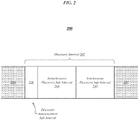
- FIG. 2 illustrates an example of a wireless channel 200 such as may be representative of some embodiments. More particularly, FIG. 2 illustrates an example of a discovery interval 202 for wireless channel 200, according to various techniques for energy-efficient asynchronous device discovery. As shown in FIG. 2 , a portion of the time resources of wireless channel 200 are allocated to implement discovery interval 202, while other time resources of wireless channel 200 are comprised in non-discovery time intervals 204. In some embodiments, in order to conserve power in conjunction with discovery operations, synchronous-mode UEs may only utilize and/or monitor wireless channel 200 during discovery interval 202, and not do so during non-discovery time intervals 204.
- asynchronous-mode UEs may be unaware of the common timing reference according to which discovery interval 202 is demarcated from non-discovery time intervals 204.
- discovery interval 202 is demarcated from non-discovery time intervals 204.
- asynchronous-mode UEs in conventional systems may be forced to transmit such discovery signals continually. This may result in interference with non-discovery communications over wireless channel 200 during non-discovery time intervals 204, as well as increased power consumption on the part of the asynchronous-mode UEs.
- asynchronous discovery sub-interval 208 may comprise a time duration during which asynchronous-mode UEs are to transmit discovery signals over wireless channel 200 and synchronous-mode UEs are to monitor wireless channel 200 for discovery signals of asynchronous-mode UEs.
- synchronous discovery sub-interval 210 may comprise a time duration during which synchronous-mode UEs are to transmit discovery signals over wireless channel 200 and/or monitor wireless channel 200 for discovery signals of other synchronous-mode UEs.
- discovery announcement sub-interval 206 may comprise a time duration during which selected synchronous-mode UEs are to transmit discovery announcement signals to inform asynchronous-mode UEs of the timings and durations of asynchronous discovery sub-interval 208 and/or synchronous discovery sub-interval 210.
- selected synchronous-mode UEs may transmit synchronization signals in order to extend a synchronization area of a wireless network node from which they receive those synchronization signals.
- such synchronous-mode UEs may include information describing the discovery interval in the synchronization signals that they transmit.
- Asynchronous-mode UEs in the extended synchronization area may use synchronization signals received from synchronous-mode UEs to switch to synchronous operation. The embodiments are not limited in this context.
- operating environment 100 may be representative of a variety of different scenarios in which a discovery interval such as discovery interval 202 of FIG. 2 may be implemented for a wireless channel in support of energy-efficient asynchronous device discovery.
- node 102, synchronous-mode UEs 108, and asynchronous-mode UEs 110 may all comprise UEs that are outside of any service provider coverage area, and node 102 may comprise a particular UE that operates as a synchronization source or PRH.
- node 102 may comprise an eNB in a radio access network (RAN), synchronous-mode UEs 108 may comprise UEs within a coverage area of that eNB, and asynchronous-mode UEs 1 10 may comprise UEs that are outside the coverage areas of any eNBs of the RAN.
- node 102, synchronous-mode UEs 108, and asynchronous -mode UEs 1 10 may all be located within a coverage area of a non-synchronized RAN, and node 102 may comprise a particular UE that operates as a synchronization source or PRH. The embodiments are not limited to these examples.
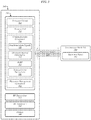
- FIG. 3 illustrates a block diagram of an apparatus 300 such as may be representative of node 102 of FIG. 1 in various embodiments.
- apparatus 300 comprises multiple elements including a processor circuit 302, a memory unit 304, a communications component 306, and a discovery management component 308.
- the embodiments, however, are not limited to the type, number, or arrangement of elements shown in this figure.
- apparatus 300 may comprise processor circuit 302.
- Processor circuit 302 may be implemented using any processor or logic device, such as a complex instruction set computer (CISC) microprocessor, a reduced instruction set computing (RISC) microprocessor, a very long instruction word (VLIW) microprocessor, an x86 instruction set compatible processor, a processor implementing a combination of instruction sets, a multi-core processor such as a dual-core processor or dual-core mobile processor, or any other microprocessor or central processing unit (CPU).
- CISC complex instruction set computer
- RISC reduced instruction set computing
- VLIW very long instruction word
- x86 instruction set compatible processor a processor implementing a combination of instruction sets
- a multi-core processor such as a dual-core processor or dual-core mobile processor, or any other microprocessor or central processing unit (CPU).
- Processor circuit 302 may also be implemented as a dedicated processor, such as a controller, a microcontroller, an embedded processor, a chip multiprocessor (CMP), a co-processor, a digital signal processor (DSP), a network processor, a media processor, an input/output (I/O) processor, a media access control (MAC) processor, a radio baseband processor, an application specific integrated circuit (ASIC), a field programmable gate array (FPGA), a programmable logic device (PLD), and so forth.
- processor circuit 302 may be implemented as a general purpose processor, such as a processor made by Intel® Corporation, Santa Clara, Calif. The embodiments are not limited in this context.
- apparatus 300 may comprise or be arranged to communicatively couple with a memory unit 304.
- Memory unit 304 may be implemented using any machine-readable or computer-readable media capable of storing data, including both volatile and nonvolatile memory.
- memory unit 304 may include read-only memory (ROM), random-access memory (RAM), dynamic RAM (DRAM), Double-Data-Rate DRAM (DDRAM), synchronous DRAM (SDRAM), static RAM (SRAM), programmable ROM (PROM), erasable programmable ROM (EPROM), electrically erasable programmable ROM (EEPROM), flash memory, polymer memory such as ferroelectric polymer memory, ovonic memory, phase change or ferroelectric memory, silicon-oxide-nitride-oxide-silicon (SONOS) memory, magnetic or optical cards, or any other type of media suitable for storing information.
- ROM read-only memory
- RAM random-access memory
- DRAM dynamic RAM
- DDRAM Double-Data-Rate DRAM
- SDRAM
- memory unit 304 may be included on the same integrated circuit as processor circuit 302, or alternatively some portion or all of memory unit 304 may be disposed on an integrated circuit or other medium, for example a hard disk drive, that is external to the integrated circuit of processor circuit 302.
- memory unit 304 is comprised within apparatus 300 in FIG. 3
- memory unit 304 maybe external to apparatus 300 in some embodiments. The embodiments are not limited in this context.
- apparatus 300 may comprise a communications component 306.
- Communications component 306 may comprise logic, circuitry, and/or instructions operative to send messages to one or more remote devices and/or to receive messages from one or more remote devices.
- communications component 306 may be operative to send and/or receive messages over one or more wireless connections, one or more wired connections, or a combination of both.
- communications component 306 may additionally comprise logic, circuitry, and/or instructions operative to perform various operations in support of such communications. Examples of such operations may include selection of transmission and/or reception parameters and/or timing, packet and/or protocol data unit (PDU) construction and/or deconstruction, encoding and/or decoding, error detection, and/or error correction. The embodiments are not limited to these examples.
- PDU protocol data unit
- apparatus 300 may comprise a discovery management component 308.
- Discovery management component 308 may comprise logic, circuitry, and/or instructions operative to manage operations performed by apparatus 300 and/or by one or more other devices in support of direct discovery and/or communication between mobile devices in a wireless network. In various embodiments, may be operative to control the timings of discovery signal transmissions on the part of one or more such mobile devices. The embodiments are not limited in this context.
- FIG. 3 also illustrates a block diagram of a system 340.
- System 340 may comprise any of the aforementioned elements of apparatus 300.
- System 340 may further comprise a radio frequency (RF) transceiver 342.
- RF transceiver 342 may comprise one or more radios capable of transmitting and receiving signals using various suitable wireless communications techniques. Such techniques may involve communications across one or more wireless networks. Exemplary wireless networks include (but are not limited to) cellular radio access networks, wireless local area networks (WLANs), wireless personal area networks (WPANs), wireless metropolitan area network (WMANs), and satellite networks. In communicating across such networks, RF transceiver 342 may operate in accordance with one or more applicable standards in any version. The embodiments are not limited in this context.
- system 340 may comprise one or more RF antennas 344.
- RF antenna 344 may include, without limitation, an internal antenna, an omnidirectional antenna, a monopole antenna, a dipole antenna, an end-fed antenna, a circularly polarized antenna, a micro-strip antenna, a diversity antenna, a dual antenna, a tri-band antenna, a quad-band antenna, and so forth.
- RF transceiver 342 may be operative to send and/or receive messages and/or data using one or more RF antennas 344. The embodiments are not limited in this context.
- system 340 may comprise a display 346.
- Display 346 may comprise any display device capable of displaying information received from processor circuit 302. Examples for display 346 may include a television, a monitor, a projector, and a computer screen. In one embodiment, for example, display 346 may be implemented by a liquid crystal display (LCD), light emitting diode (LED) or other type of suitable visual interface. Display 346 may comprise, for example, a touch-sensitive display screen ("touchscreen"). In various implementations, display 346 may comprise one or more thin-film transistors (TFT) LCD including embedded transistors. The embodiments, however, are not limited to these examples.
- TFT thin-film transistors
- apparatus 300 and/or system 340 may be operative to facilitate synchronization among a plurality of wireless communications devices.
- the plurality of wireless communications devices may comprise a plurality of UEs.
- apparatus 300 and/or system 340 may itself comprise a UE.
- apparatus 300 and/or system 340 may comprise a UE operating as a synchronization source or PRH to enable synchronization among a plurality of out-of coverage UEs.
- apparatus 300 and/or system 340 may comprise a UE operating as a synchronization source or PRH to enable synchronization among a plurality of UEs located within a coverage area of a non-synchronized RAN
- Apparatus 300 and/or system 340 may comprise a fixed device, such as an eNB of a RAN.
- apparatus 300 and/or system 340 may comprise an eNB that provides a synchronization reference to enable synchronization among a plurality of UEs within its coverage area. The embodiments are not limited to these examples.
- communications component 306 may be operative to send synchronization signals 310 to remote devices within range of apparatus 300 and/or system 340.
- Synchronization signals 310 may comprise one or more periodic signals that provide a common timing reference to one or more mobile devices that receive them.
- Apparatus 300 and/or system 340 may comprise an eNB, and synchronization signals 310 may comprise primary synchronization signals (PSSs) and/or secondary synchronization signals (SSSs).
- apparatus 300 and/or system 340 may comprise a UE operating as a synchronization source or PRH, and synchronization signals 310 may be constructed and/or sent according to a defined procedures for the transmission of timing reference signals on the part of synchronization sources and/or PRHs. The embodiments are not limited in this context.
- communications component 306 may be operative to send discovery interval information 312 to remote devices within range of apparatus 300 and/or system 340.
- Discovery interval information 312 may comprise information describing one or more characteristics of a discovery interval of a wireless channel 350, which may be the same as or similar to the discovery interval 202 of wireless channel 200 of FIG. 2 in various embodiments.
- discovery interval information 312 may describe a structure of the discovery interval.
- discovery interval information 312 may indicate a respective duration for each of discovery announcement sub-interval 206, asynchronous discovery sub-interval 208, and synchronous discovery sub-interval 210 in discovery interval 202 of FIG. 2 .
- discovery management component 308 may be operative to dynamically determine the structure of the discovery interval. For example, in various embodiments, discovery management component 308 may be operative to dynamically determine the respective durations for one or more of discovery announcement sub-interval 206, asynchronous discovery sub-interval 208, and synchronous discovery sub-interval 210 in discovery interval 202 of FIG. 2 , based on previously observed device discovery statistics. In some other embodiments, the structure of the discovery interval may be statically defined. In various embodiments, discovery interval information 312 maybe comprised within synchronization signals 310. In some other embodiments, discovery interval information 312 maybe comprised within one or more messages that are separate from synchronization signals 310, and may not necessarily be sent as frequently as synchronization signals 310. In yet other embodiments, the UEs that receive synchronization signals 310 maybe pre-configured with information describing the discovery interval, and communications component 306 may not send discovery interval information 312. The embodiments are not limited in this context.
- communications component 306 may be operative to identify one or more synchronous-mode UEs, such as a synchronous-mode UE 360, that have successfully received synchronization signals 310 and entered a synchronous mode. In some embodiments, communications component 306 may be operative identify the one or more synchronous-mode UEs based on respective reference signals received from the one or more synchronous-mode UEs. For example, communications component 306 may be operative to identify synchronous-mode UE 360 as being a UE operating in the synchronous mode based on a reference signal 362 received from synchronous-mode UE 360. In various embodiments, discovery management component 308 may be operative to select one or more synchronous - mode UEs as announcement UEs. Each announcement UE may comprise a synchronous - mode UE that is to transmit a discovery announcement signal to inform nearby asynchronous -mode UEs of the structure of a discovery interval for wireless channel 350.
- discovery management component 308 may be operative to select a set of one or more announcement UEs according to a preference for synchronous-mode UEs that are closer to a cell edge of a cell served by apparatus 300 and/or system 340. In various embodiments, discovery management component 308 may be operative to select the set of announcement UEs based on reference signal received powers (RSRPs) for the respective reference signals received from the one or more synchronous-mode UEs. In some embodiments, discovery management component 308 may be operative to select synchronous-mode UEs for which the corresponding respective RSRPs are within a range that indicates that those UEs are close to the cell edge.
- RSRPs reference signal received powers
- discovery management component 308 may be operative to determine that synchronous-mode UE 360 is near the cell edge, and may select synchronous -mode UE 360 as an announcement UE based on this determination. In some other embodiments, rather than selecting the set of announcement UEs based on RSRPs, discovery management component 308 may be operative to randomly or pseudo-randomly select the set of announcement UEs. In yet other embodiments, apparatus 300 and/or system 340 may not be involved in determining the set of announcement UEs.
- the UEs that receive synchronization signals 310 may be pre-configured with RSRP thresholds to apply to messages that they receive from apparatus 300 and/or system 340, and may apply those thresholds to determine for themselves whether they are to operate as announcement UEs.
- RSRP thresholds may be pre-configured with RSRP thresholds to apply to messages that they receive from apparatus 300 and/or system 340, and may apply those thresholds to determine for themselves whether they are to operate as announcement UEs.
- the embodiments are not limited in this context.
- communications component 306 may be operative to send announcement instructions 316 to instruct the selected set of announcement UEs to transmit discovery announcement signals.
- communications component 306 may be operative to send announcement instructions 316 as a single message identifying each selected announcement UEs.
- communications component 306 may be operative to send announcement instructions 316 for each selected announcement UE in a separate respective message.
- the UEs that receive synchronization signals 310 may determine for themselves whether they will operate as announcement UEs, and announcement instructions 316 may simply indicate that recipient synchronous-mode UEs should perform that determination of whether to begin sending discovery announcement signals.
- apparatus 300 and/or system 340 may itself transmit discovery announcement signals over wireless channel 350.
- the embodiments are not limited in this context.
- FIG. 4 illustrates a block diagram of an apparatus 400 such as may be representative of a synchronous-mode UE 108 of FIG. 1 and/or synchronous-mode UE 360 of FIG. 3 in some embodiments.
- apparatus 400 comprises multiple elements including a processor circuit 402, a memory unit 404, a communications component 406, and a discovery management component 408.
- the embodiments, however, are not limited to the type, number, or arrangement of elements shown in this figure.
- apparatus 400 may comprise processor circuit 402.
- Processor circuit 402 may be implemented using any processor or logic device. Examples of processor circuit 402 may include, without limitation, any of the examples previously presented with respect to processor circuit 302 of FIG. 3 . The embodiments are not limited in this context.
- apparatus 400 may comprise or be arranged to communicatively couple with a memory unit 404.
- Memory unit 404 may be implemented using any machine-readable or computer-readable media capable of storing data, including both volatile and nonvolatile memory. Examples of memory unit 404 may include, without limitation, any of the examples previously presented with respect to memory unit 304 of FIG. 3 . It is worthy of note that some portion or all of memory unit 404 may be included on the same integrated circuit as processor circuit 402, or alternatively some portion or all of memory unit 404 may be disposed on an integrated circuit or other medium, for example a hard disk drive, that is external to the integrated circuit of processor circuit 402. Although memory unit 404 is comprised within apparatus 400 in FIG. 4 , memory unit 404 may be external to apparatus 400 in various embodiments. The embodiments are not limited in this context.
- apparatus 400 may comprise a communications component 406.
- Communications component 406 may comprise logic, circuitry, and/or instructions operative to send messages to one or more remote devices and/or to receive messages from one or more remote devices.
- communications component 406 may be operative to send and/or receive messages over one or more wireless connections, one or more wired connections, or a combination of both.
- communications component 406 may additionally comprise logic, circuitry, and/or instructions operative to perform various operations in support of such communications. Examples of such operations may include selection of transmission and/or reception parameters and/or timing, packet and/or PDU construction and/or deconstruction, encoding and/or decoding, error detection, and/or error correction. The embodiments are not limited to these examples.
- apparatus 400 may comprise a discovery management component 408.
- Discovery management component 408 may comprise logic, circuitry, and/or instructions operative to manage operations performed by apparatus 400 and/or by one or more other devices in support of direct discovery and/or communication between mobile devices in a wireless network. In some embodiments, may be operative to control the timings of discovery signal transmissions on the part of one or more such mobile devices. The embodiments are not limited in this context.
- FIG. 4 also illustrates a block diagram of a system 440.
- System 440 may comprise any of the aforementioned elements of apparatus 400.
- System 440 may further comprise a radio frequency (RF) transceiver 442.
- RF transceiver 442 may comprise one or more radios capable of transmitting and receiving signals using various suitable wireless communications techniques. Such techniques may involve communications across one or more wireless networks. Examples of such wireless networks may include, without limitation, any of the examples previously presented with respect to RF transceiver 342 of FIG. 3 . In communicating across such networks, RF transceiver 442 may operate in accordance with one or more applicable standards in any version. The embodiments are not limited in this context.
- system 440 may comprise one or more RF antennas 444.
- Examples of any particular RF antenna 444 may include, without limitation, any of the examples previously presented with respect to RF antenna(s) 344 of FIG. 3 .
- RF transceiver 442 may be operative to send and/or receive messages and/or data using one or more RF antennas 444. The embodiments are not limited in this context.
- system 440 may comprise a display 446.
- Display 446 may comprise any display device capable of displaying information received from processor circuit 402. Examples of display 446 may include, without limitation, any of the examples previously presented with respect to display 346 of FIG. 3 . The embodiments are not limited in this context.
- communications component 406 may be operative to receive synchronization signals 410 from a wireless network node 470 and enter a synchronous operation mode.
- Wireless network node 470 may comprise a fixed device such as an eNB, and apparatus 400 and/or system 440 may comprise a UE located within a coverage area of that fixed device.
- wireless network node 470 may comprise a UE that is operative to distribute synchronization signals 410 to other nearby UEs.
- wireless network node 470 may comprise a UE operating as a synchronization source or PRH.
- Synchronization signals 410 may comprise one or more periodic signals that provide a common timing reference to one or more UEs that receive them. Examples of synchronization signals 410 may include, without limitation, any of the examples previously presented with respect to synchronization signals 310 of FIG. 3 . The embodiments are not limited in this context.
- discovery management component 408 may be operative to determine that apparatus 400 and/or system 440 is to operate as an announcement UE.
- communications component 406 may be operative to receive announcement instructions 416 from wireless network node 470, and discovery management component 408 may be operative to determine that apparatus 400 and/or system 440 is to operate as an announcement UE based on the received announcement instructions 416.
- discovery management component 408 may be operative to independently determine that apparatus 400 and/or system 440 is to operate as an announcement UE.
- discovery management component 408 may be operative to reach this conclusion based on a determination that apparatus 400 and/or system 440 is relatively close to a cell edge for a cell served by wireless network node 470.
- communications component 406 may be operative to determine one or more RSRPs for one or more received synchronization signals 410
- discovery management component 408 may be operative to determine that apparatus 400 and/or system 440 is close to the cell edge based on the one or more RSRPs, and thus that apparatus 400 and/or system 440 should operate as an announcement UE.
- the embodiments are not limited to this example.
- discovery management component 408 may be operative to identify discovery interval characteristics 418 of a discovery interval of a wireless channel 450, which may be the same as or similar to the discovery interval 202 of wireless channel 200 of FIG. 2 in various embodiments.
- the wireless channel 450 may comprise a wireless channel over which apparatus 400 and/or system 440 exchanges discovery signals with one or more remote mobile devices.
- discovery interval characteristics 418 may include, for example, a respective duration for one or more of a discovery announcement sub-interval, an asynchronous discovery sub-interval, and a synchronous discovery sub-interval of the discovery interval.
- communications component 406 may be operative to receive discovery interval information 412 from wireless network node 460, and discovery management component 408 may be operative to identify discovery interval characteristics 418 based on the received discovery interval information 412.
- apparatus 400 and/or system 440 may be preconfigured with defined discovery interval characteristics 418.
- defined discovery interval characteristics 418 may be stored in memory unit 404. The embodiments are not limited in this context.
- communications component 406 may be operative to send a discovery announcement signal 420. More particularly, communications component 406 may be operative to send the discovery announcement signal 420 over wireless channel 450 during a discovery announcement sub-interval, such as discovery announcement sub-interval 206 of FIG. 2 .
- discovery announcement signal 420 may comprise information describing the timings and/or durations of one or more discovery intervals and/or sub-intervals, such as discovery interval 202, asynchronous discovery sub-interval 208, and/or synchronous discovery sub-interval 210 of FIG. 2 .
- discovery announcement signal 420 may indicate an amount of time until a start of an asynchronous discovery sub-interval and/or a duration of that asynchronous discovery sub-interval. In some embodiments, discovery announcement signal 420 may indicate an amount of time until a start of a synchronous discovery sub-interval and/or a duration of that synchronous discovery sub-interval. In various embodiments, one or more asynchronous-mode UEs may receive discovery announcement signal 420 over wireless channel 450 and may use the information in discovery announcement signal 420 to determine times at which to transmit asynchronous discovery signals over wireless channel 450. The embodiments are not limited in this context.
- communications component 406 may be operative to monitor wireless channel 450 for asynchronous discovery signals during an asynchronous discovery sub-interval described by discovery announcement signal 420.
- one or more asynchronous-mode UEs that have received discovery announcement signal 420 may transmit asynchronous discovery signals during the asynchronous discovery sub-interval.
- an asynchronous-mode UE 480 may receive discovery announcement signal 420 over wireless channel 450 during a discovery announcement sub-interval, identify an asynchronous discovery sub-interval based on the received discovery announcement signal 420, and transmit an asynchronous discovery signal 422 over wireless channel 450 during the asynchronous discovery sub-interval.
- Communications component 406 may be operative to receive the asynchronous discovery signal 422 over wireless channel 450 during the asynchronous discovery sub-interval and to discover the asynchronous-mode UE 480 based on the received asynchronous discovery signal 422.
- the embodiments are not limited to this example.
- communications component 406 may be operative to monitor wireless channel 450 for synchronous discovery signals during a synchronous discovery sub-interval described by discovery announcement signal 420.
- one or more synchronous-mode UEs may transmit synchronous discovery signals over wireless channel 450 during the synchronous discovery sub-interval.
- communications component 406 may be operative to receive one or more of the synchronous discovery signals over wireless channel 450 during the synchronous discovery sub-interval and to discover one or more respective synchronous-mode UEs based on the one or more received synchronous discovery signals.
- communications component 406 may additionally or alternatively be operative to send a synchronous discovery signal over wireless channel 450 during the synchronous discovery sub-interval, and apparatus 400 and/or system 440 may be discovered by one or more remote UEs based on that synchronous discovery signal.
- the embodiments are not limited in this context.
- asynchronous discovery signals transmitted over wireless channel 450 may differ from that defined for synchronous discovery signals transmitted over wireless channel 450.
- a simplified structure may be defined for asynchronous discovery signals such as asynchronous discovery signal 422, in order to facilitate the detection of asynchronous discovery signals by synchronous-mode UEs.
- the embodiments are not limited in this context.
- apparatus 400 and/or system 440 may be operative to send synchronization signals to asynchronous-mode UEs such as asynchronous-mode UE 480 that are not close enough to wireless network node 470 to receive synchronization signals 410 directly from wireless network node 470.
- Apparatus 400 and/or system 440 may be operative to act as a relay node and to retransmit the actual synchronization signals 410 that it receives from wireless network node 470.
- apparatus 400 and/or system 440 may be operative to transmit like or similar signals at the same or similar times as those at which synchronization signals 410 are transmitted.
- the transmission of synchronization signals may occur more frequently than the transmission of discovery signals, and thus may involve increased levels of power consumption.
- using synchronous-mode UEs to pass to synchronization signals to asynchronous-mode UEs that cannot receive them directly from wireless network node 470 may enable those asynchronous-mode UEs to switch to a more power-efficient synchronous mode. It is to be appreciated that whether it may be desirable, in any particular embodiment, for apparatus 400 and/or system 440 to be configured to transmit synchronization signals may depend on implementation-specific details.
- FIG. 5 illustrates a block diagram of an apparatus 500 such as may be representative of an asynchronous-mode UE 1 10 of FIG. 1 , and/or asynchronous-mode UE 480 of FIG. 4 in various embodiments.
- apparatus 500 comprises multiple elements including a processor circuit 502, a memory unit 504, a communications component 506, and a discovery management component 508.
- the embodiments, however, are not limited to the type, number, or arrangement of elements shown in this figure.
- apparatus 500 may comprise processor circuit 502.
- Processor circuit 502 may be implemented using any processor or logic device. Examples of processor circuit 502 may include, without limitation, any of the examples previously presented with respect to processor circuit 302 of FIG. 3 . The embodiments are not limited in this context.
- apparatus 500 may comprise or be arranged to communicatively couple with a memory unit 504.
- Memory unit 504 may be implemented using any machine-readable or computer-readable media capable of storing data, including both volatile and nonvolatile memory. Examples of memory unit 504 may include, without limitation, any of the examples previously presented with respect to memory unit 304 of FIG. 3 . It is worthy of note that some portion or all of memory unit 504 may be included on the same integrated circuit as processor circuit 502, or alternatively some portion or all of memory unit 504 may be disposed on an integrated circuit or other medium, for example a hard disk drive, that is external to the integrated circuit of processor circuit 502. Although memory unit 504 is comprised within apparatus 500 in FIG. 5 , memory unit 504 may be external to apparatus 500 in some embodiments. The embodiments are not limited in this context.
- apparatus 500 may comprise a communications component 506.
- Communications component 506 may comprise logic, circuitry, and/or instructions operative to send messages to one or more remote devices and/or to receive messages from one or more remote devices.
- communications component 506 may be operative to send and/or receive messages over one or more wireless connections, one or more wired connections, or a combination of both.
- communications component 506 may additionally comprise logic, circuitry, and/or instructions operative to perform various operations in support of such communications. Examples of such operations may include selection of transmission and/or reception parameters and/or timing, packet and/or PDU construction and/or deconstruction, encoding and/or decoding, error detection, and/or error correction. The embodiments are not limited to these examples.
- apparatus 500 may comprise a discovery management component 508.
- Discovery management component 508 may comprise logic, circuitry, and/or instructions operative to manage discovery operations performed by apparatus 500. In various embodiments, may be operative to control the timings of discovery signal transmissions on the part of apparatus 500. The embodiments are not limited in this context.
- FIG. 5 also illustrates a block diagram of a system 540.
- System 540 may comprise any of the aforementioned elements of apparatus 500.
- System 540 may further comprise a radio frequency (RF) transceiver 542.
- RF transceiver 542 may comprise one or more radios capable of transmitting and receiving signals using various suitable wireless communications techniques. Such techniques may involve communications across one or more wireless networks. Examples of such wireless networks may include, without limitation, any of the examples previously presented with respect to RF transceiver 342 of FIG. 3 . In communicating across such networks, RF transceiver 542 may operate in accordance with one or more applicable standards in any version. The embodiments are not limited in this context.
- system 540 may comprise one or more RF antennas 544.
- RF antennas 544 may include, without limitation, any of the examples previously presented with respect to RF antenna(s) 344 of FIG. 3 .
- RF transceiver 542 may be operative to send and/or receive messages and/or data using one or more RF antennas 544. The embodiments are not limited in this context.
- system 540 may comprise a display 546.
- Display 546 may comprise any display device capable of displaying information received from processor circuit 502. Examples of display 546 may include, without limitation, any of the examples previously presented with respect to display 346 of FIG. 3 . The embodiments are not limited in this context.
- a wireless network node 570 may transmit synchronization signals 510 over a wireless channel 550.
- Wireless network node 570 may comprise a fixed device, such as an eNB, that distributes synchronization signals 510 to UEs within its coverage area.
- wireless network node 570 may comprise a UE that is operative to distribute synchronization signals 510 to other nearby UEs.
- wireless network node 570 may comprise a UE operating as a synchronization source or PRH.
- Synchronization signals 510 may comprise one or more periodic signals that provide a common timing reference to one or more UEs that receive them. Examples of synchronization signals 510 may include, without limitation, any of the examples previously presented with respect to synchronization signals 310 of FIG. 3 . The embodiments are not limited in this context.
- apparatus 500 and/or system 540 may not be able to properly receive the synchronization signals 510 transmitted over wireless channel 550.
- wireless network node 570 may comprise an eNB, and apparatus 500 and/or system 540 may comprise a UE that has moved outside of a coverage area of that eNB.
- wireless network node 570 may comprise a UE operating as a synchronization source or PRH, and apparatus 500 and/or system 540 may comprise a UE that is located outside a transmission range of wireless network node 570. The embodiments are not limited to these examples.
- apparatus 500 and/or system 540 may operate in an asynchronous operation mode. Upon entry into the asynchronous operation mode, apparatus 500 and/or system 540 may lack knowledge of appropriate time intervals during which to transmit discovery signals over wireless channel 550 and/or during which to monitor wireless channel 550 for discovery signals transmitted by other UEs. Under such circumstances, it may be necessary for apparatus 500 and/or system 540 to continually transmit discovery signals if it is to be ensured that at least some of those signals are transmitted within time intervals during which synchronous-mode UEs will be monitoring wireless channel 550.
- apparatus 500 and/or system 540 may make use of a received discovery announcement signal 520 in order to determine appropriate time intervals for discovery signal transmissions and avoid the need to continually transmit such signals.
- communications component 506 may be operative to receive a discovery announcement signal 520 over wireless channel 550 from a synchronous-mode UE 560 operating as an announcement UE.
- discovery announcement signal 520 may comprise information describing the timings and/or durations of one or more discovery intervals and/or sub-intervals, such as discovery interval 202, asynchronous discovery sub-interval 208, and/or synchronous discovery sub-interval 210 of FIG. 2 .
- Discovery announcement signal 520 may indicate an amount of time until a start of an upcoming asynchronous discovery sub-interval and/or a duration of that asynchronous discovery sub-interval. In some embodiments, discovery announcement signal 420 may additionally indicate an amount of time until a start of a synchronous discovery sub-interval and/or a duration of that synchronous discovery sub-interval. The embodiments are not limited in this context.
- Discovery management component 508 may be operative to determine, based on discovery announcement signal 520, that a start of an asynchronous discovery sub-interval has been reached. This determination may occur immediately upon receipt of discovery announcement signal 520, or may occur after some amount of time has elapsed following receipt of discovery announcement signal 520.
- communications component 506 maybe operative to send an asynchronous discovery signal 522 over wireless channel 550.
- Synchronous -mode UE 560 may receive the asynchronous discovery signal 522, and may discover apparatus 500 and/or system 540 based on receipt of the asynchronous discovery signal 522.
- Communications component 506 may additionally be operative to monitor wireless channel 550 for asynchronous discovery signals transmitted by other asynchronous-mode UEs during the asynchronous discovery sub-interval, and may discover one or more such asynchronous-mode UEs as a result of that monitoring.
- the embodiments are not limited in this context.
- discovery management component 508 may be operative to determine, based on discovery announcement signal 520, that a start of a synchronous discovery sub-interval has been reached. In some embodiments, this determination may occur immediately upon receipt of discovery announcement signal 520, while in various other embodiments, this determination may occur after some amount of time has elapsed following receipt of discovery announcement signal 520.
- communications component 506 may be operative to monitor wireless channel 550 for synchronous discovery signals transmitted by synchronous-mode UEs during the synchronous discovery sub-interval, and may discover one or more such synchronous-mode UEs as a result of that monitoring.
- communications component 506 may additionally be operative to monitor wireless channel 550 for asynchronous discovery signals during the synchronous discovery sub-interval. Similarly, communications component 506 may be operative to monitor wireless channel 550 for asynchronous discovery signals during time periods outside of the discovery interval. Although it may only send asynchronous discovery signals during asynchronous discovery sub-intervals, communications component 506 may be operative to continuously monitor wireless channel 550 for asynchronous discovery signals transmitted by other asynchronous -mode UEs, in order to maximize the chances of discovery of asynchronous-mode UEs that have not received discovery announcement signal 520.
- the embodiments are not limited in this context.
- FIG. 1 Some of the figures may include a logic flow. Although such figures presented herein may include a particular logic flow, it can be appreciated that the logic flow merely provides an example of how the general functionality as described herein can be implemented. Further, the given logic flow does not necessarily have to be executed in the order presented unless otherwise indicated. In addition, the given logic flow may be implemented by a hardware element, a software element executed by a processor, or any combination thereof. The embodiments are not limited in this context.
- FIG. 6 illustrates one embodiment of a logic flow 600, which may be representative of the operations executed by one or more embodiments described herein, such as operations that may be performed by apparatus 300 and/or system 340 of FIG. 3 in some embodiments.
- synchronization signals maybe sent at 602.
- communications component 306 of FIG. 3 may be operative to send one or more synchronization signals 310 over wireless channel 350.
- one or more synchronous-mode UEs may be identified.
- communications component 306 of FIG. 3 may be operative to identify one or more synchronous-mode UEs, which may include synchronous-mode UE 360.
- one or more announcement UEs may be selected from among the identified synchronous-mode UEs.
- discovery management component 308 of FIG. 3 may be operative to select synchronous-mode UE 360 as an announcement UE based on the RSRP 314 for received reference signal 362.
- announcement instructions may be sent to the selected announcement UEs.
- communications component 306 of FIG. 3 may be operative to send announcement instructions 316 to synchronous -mode UE 360.
- the embodiments are not limited to these examples.
- FIG. 7 illustrates one embodiment of a logic flow 700, which may be representative of the operations executed by one or more embodiments described herein, such as operations that may be performed by apparatus 400 and/or system 440 of FIG. 4 in various embodiments.
- synchronization signals may be received at 702.
- communications component 406 of FIG. 4 may be operative to receive one or more synchronization signals 410 over wireless channel 450 from wireless network node 470.
- a synchronous operation mode may be initiated.
- apparatus 400 and/or system 440 of FIG. 4 may be operative to initiate a synchronous operation mode based on receipt of synchronization signals 410.
- discovery interval characteristics are to be announced. For example, discovery management component 408 of FIG.
- a discovery announcement signal may be sent that describes the discovery interval characteristics.
- communications component 406 of FIG. 4 may be operative to send a discovery announcement signal 420 over wireless channel 450 that describes discovery interval characteristics 418.
- the embodiments are not limited to these examples.
- FIG. 8 illustrates one embodiment of a logic flow 800, which may be representative of operations that may be performed by apparatus 500 and/or system 540 of FIG. 5 .
- an asynchronous operation mode may be entered at 802.
- apparatus 500 and/or system 540 of FIG. 5 maybe operative to enter an asynchronous operation mode.
- an announcement message may be received that identifies a structure of a discovery interval.
- communications component 506 of FIG. 5 may be operative to receive a discovery announcement signal 520 over wireless channel 550 that identifies a structure of a discovery interval for wireless channel 550.
- an asynchronous discovery sub-interval within the discovery interval may be identified.
- discovery management component 508 of FIG. 5 may be operative to identify an asynchronous discovery sub-interval within the discovery interval for wireless channel 550.
- an asynchronous discovery signal may be sent during the asynchronous discovery sub-interval.
- communications component 506 of FIG. 5 may be operative to send an asynchronous discovery signal 522 over wireless channel 550 during an asynchronous discovery sub-interval identified by discovery management component 508.
- the embodiments are not limited to these examples.
- FIG. 9 illustrates an embodiment of a storage medium 900.
- Storage medium 900 may comprise any non-transitory computer-readable storage medium or machine-readable storage medium, such as an optical, magnetic or semiconductor storage medium.
- storage medium 900 may comprise an article of manufacture.
- storage medium 900 may store computer-executable instructions, such as computer-executable instructions to implement one or more of logic flow 600 of FIG. 6 , logic flow 700 of FIG. 7 , and/or logic flow 800 of FIG. 8 .
- Examples of a computer-readable storage medium or machine-readable storage medium may include any tangible media capable of storing electronic data, including volatile memory or non-volatile memory, removable or non-removable memory, erasable or non-erasable memory, writeable or re-writeable memory, and so forth.
- Examples of computer-executable instructions may include any suitable type of code, such as source code, compiled code, interpreted code, executable code, static code, dynamic code, object-oriented code, visual code, and the like. The embodiments are not limited in this context.
- FIG. 10 illustrates an embodiment of a communications device 1000 that may implement one or more of apparatus 300 and/or system 340 of FIG. 3 , apparatus 400 and/or system 440 of FIG. 4 , apparatus 500 and/or system 540 of FIG. 5 , logic flow 600 of FIG. 6 , logic flow 700 of FIG. 7 , logic flow 800 of FIG. 8 , and storage medium 900 of FIG. 9 .
- device 1000 may comprise a logic circuit 1028.
- the logic circuit 1028 may include physical circuits to perform operations described for one or more of apparatus 300 and/or system 340 of FIG. 3 , apparatus 400 and/or system 440 of FIG. 4 , apparatus 500 and/or system 540 of FIG. 5 , logic flow 600 of FIG. 6 , logic flow 700 of FIG.
- device 1000 may include a radio interface 1010, baseband circuitry 1020, and computing platform 1030, although the embodiments are not limited to this configuration.
- the device 1000 may implement some or all of the structure and/or operations for one or more of apparatus 300 and/or system 340 of FIG. 3 , apparatus 400 and/or system 440 of FIG. 4 , apparatus 500 and/or system 540 of FIG. 5 , logic flow 600 of FIG. 6 , logic flow 700 of FIG. 7 , logic flow 800 of FIG. 8 , storage medium 900 of FIG. 9 , and logic circuit 1028 in a single computing entity, such as entirely within a single device.
- the device 1000 may distribute portions of the structure and/or operations for one or more of apparatus 300 and/or system 340 of FIG. 3 , apparatus 400 and/or system 440 of FIG. 4 , apparatus 500 and/or system 540 of FIG. 5 , logic flow 600 of FIG. 6 , logic flow 700 of FIG. 7 , logic flow 800 of FIG. 8 , storage medium 900 of FIG. 9 , and logic circuit 1028 across multiple computing entities using a distributed system architecture, such as a client-server architecture, a 3 -tier architecture, an N-tier architecture, a tightly-coupled or clustered architecture, a peer-to-peer architecture, a master-slave architecture, a shared database architecture, and other types of distributed systems.
- a distributed system architecture such as a client-server architecture, a 3 -tier architecture, an N-tier architecture, a tightly-coupled or clustered architecture, a peer-to-peer architecture, a master-slave architecture, a shared database architecture, and other types of distributed systems.
- radio interface 1010 may include a component or combination of components adapted for transmitting and/or receiving single-carrier or multi-carrier modulated signals (e.g., including complementary code keying (CCK), orthogonal frequency division multiplexing (OFDM), and/or single-carrier frequency division multiple access (SC-FDMA) symbols) although the embodiments are not limited to any specific over-the-air interface or modulation scheme.
- Radio interface 1010 may include, for example, a receiver 1012, a frequency synthesizer 1014, and/or a transmitter 1016.
- Radio interface 1010 may include bias controls, a crystal oscillator and/or one or more antennas 1018-/ In another embodiment, radio interface 1010 may use external voltage-controlled oscillators (VCOs), surface acoustic wave filters, intermediate frequency (IF) filters and/or RF filters, as desired. Due to the variety of potential RF interface designs an expansive description thereof is omitted.
- VCOs voltage-controlled oscillators
- IF intermediate frequency
- Baseband circuitry 1020 may communicate with radio interface 1010 to process receive and/or transmit signals and may include, for example, an analog-to-digital converter 1022 for down converting received signals, a digital-to-analog converter 1024 for up converting signals for transmission. Further, baseband circuitry 1020 may include a baseband or physical layer (PHY) processing circuit 1026 for PHY link layer processing of respective receive/transmit signals. Baseband circuitry 1020 may include, for example, a medium access control (MAC) processing circuit 1027 for MAC/data link layer processing. Baseband circuitry 1020 may include a memory controller 1032 for communicating with MAC processing circuit 1027 and/or a computing platform 1030, for example, via one or more interfaces 1034.
- PHY physical layer
- Baseband circuitry 1020 may include, for example, a medium access control (MAC) processing circuit 1027 for MAC/data link layer processing.
- Baseband circuitry 1020 may include a memory controller 1032 for communicating with MAC processing circuit 1027 and/or a computing
- PHY processing circuit 1026 may include a frame construction and/or detection module, in combination with additional circuitry such as a buffer memory, to construct and/or deconstruct communication frames.
- MAC processing circuit 1027 may share processing for certain of these functions or perform these processes independent of PHY processing circuit 1026.
- MAC and PHY processing may be integrated into a single circuit.
- the computing platform 1030 may provide computing functionality for the device 1000.
- the computing platform 1030 may include a processing component 1040.
- the device 1000 may execute processing operations or logic for one or more of apparatus 300 and/or system 340 of FIG. 3 , apparatus 400 and/or system 440 of FIG. 4 , apparatus 500 and/or system 540 of FIG. 5 , logic flow 600 of FIG. 6 , logic flow 700 of FIG. 7 , logic flow 800 of FIG. 8 , storage medium 900 of FIG. 9 , and logic circuit 1028 using the processing component 1040.
- the processing component 1040 (and/or PHY 1026 and/or MAC 1027) may comprise various hardware elements, software elements, or a combination of both.
- Examples of hardware elements may include devices, logic devices, components, processors, microprocessors, circuits, processor circuits, circuit elements (e.g., transistors, resistors, capacitors, inductors, and so forth), integrated circuits, application specific integrated circuits (ASIC), programmable logic devices (PLD), digital signal processors (DSP), field programmable gate array (FPGA), memory units, logic gates, registers, semiconductor device, chips, microchips, chip sets, and so forth.
- ASIC application specific integrated circuits
- PLD programmable logic devices
- DSP digital signal processors
- FPGA field programmable gate array
- Examples of software elements may include software components, programs, applications, computer programs, application programs, system programs, software development programs, machine programs, operating system software, middleware, firmware, software modules, routines, subroutines, functions, methods, procedures, software interfaces, application program interfaces (API), instruction sets, computing code, computer code, code segments, computer code segments, words, values, symbols, or any combination thereof. Determining whether an embodiment is implemented using hardware elements and/or software elements may vary in accordance with any number of factors, such as desired computational rate, power levels, heat tolerances, processing cycle budget, input data rates, output data rates, memory resources, data bus speeds and other design or performance constraints, as desired for a given implementation.
- the computing platform 1030 may further include other platform components 1050.
- Other platform components 1050 include common computing elements, such as one or more processors, multi-core processors, co-processors, memory units, chipsets, controllers, peripherals, interfaces, oscillators, timing devices, video cards, audio cards, multimedia input/output (I/O) components (e.g., digital displays), power supplies, and so forth.
- Examples of memory units may include without limitation various types of computer readable and machine readable storage media in the form of one or more higher speed memory units, such as read-only memory (ROM), random-access memory (RAM), dynamic RAM (DRAM), Double-Data-Rate DRAM (DDRAM), synchronous DRAM (SDRAM), static RAM (SRAM), programmable ROM (PROM), erasable programmable ROM (EPROM), electrically erasable programmable ROM (EEPROM), flash memory, polymer memory such as ferroelectric polymer memory, ovonic memory, phase change or ferroelectric memory, silicon-oxide-nitride-oxide-silicon (SONOS) memory, magnetic or optical cards, an array of devices such as Redundant Array of Independent Disks (RAID) drives, solid state memory devices (e.g., USB memory, solid state drives (SSD) and any other type of storage media suitable for storing information.
- ROM read-only memory
- RAM random-access memory
- DRAM dynamic RAM
- DDRAM Double
- Device 1000 may be, for example, an ultra-mobile device, a mobile device, a fixed device, a machine-to-machine (M2M) device, a personal digital assistant (PDA), a mobile computing device, a smart phone, a telephone, a digital telephone, a cellular telephone, user equipment, eBook readers, a handset, a one-way pager, a two-way pager, a messaging device, a computer, a personal computer (PC), a desktop computer, a laptop computer, a notebook computer, a netbook computer, a handheld computer, a tablet computer, a server, a server array or server farm, a web server, a network server, an Internet server, a work station, a mini-computer, a main frame computer, a supercomputer, a network appliance, a web appliance, a distributed computing system, multiprocessor systems, processor-based systems, consumer electronics, programmable consumer electronics, game devices, display, television, digital television, set top box, wireless access point, base station, node B
- Embodiments of device 1000 may be implemented using single input single output (SISO) architectures.
- certain implementations may include multiple antennas (e.g., antennas 1018-/) for transmission and/or reception using adaptive antenna techniques for beamforming or spatial division multiple access (SDMA) and/or using MIMO communication techniques.
- multiple antennas e.g., antennas 1018-/
- SDMA spatial division multiple access
- device 1000 may be implemented using any combination of discrete circuitry, application specific integrated circuits (ASICs), logic gates and/or single chip architectures. Further, the features of device 1000 may be implemented using microcontrollers, programmable logic arrays and/or microprocessors or any combination of the foregoing where suitably appropriate. It is noted that hardware, firmware and/or software elements may be collectively or individually referred to herein as “logic” or “circuit.”
- the exemplary device 1000 shown in the block diagram of FIG. 10 may represent one functionally descriptive example of many potential implementations. Accordingly, division, omission or inclusion of block functions depicted in the accompanying figures does not infer that the hardware components, circuits, software and/or elements for implementing these functions would be necessarily be divided, omitted, or included in embodiments.
- FIG. 11 illustrates an embodiment of a broadband wireless access system 1 100.
- broadband wireless access system 1 100 may be an internet protocol (IP) type network comprising an internet 1 110 type network or the like that is capable of supporting mobile wireless access and/or fixed wireless access to internet 1 110.
- IP internet protocol
- broadband wireless access system 1 100 may comprise any type of orthogonal frequency division multiple access (OFDMA)-based or single-carrier frequency division multiple access (SC-FDMA)-based wireless network, such as a system compliant with one or more of the LTE Specifications and/or IEEE 802.16 Standards, and the scope of the claimed subject matter is not limited in these respects.
- OFDMA orthogonal frequency division multiple access
- SC-FDMA single-carrier frequency division multiple access
- radio access networks (RANs) 1 112 and 11 18 are capable of coupling with evolved node Bs (eNBs) 1 114 and 1 120, respectively, to provide wireless communication between one or more fixed devices 11 16 and internet 1 1 10 and/or between or one or more mobile devices 1 122 and Internet 11 10.
- RANs 1 112 and 11 18 may implement profiles that are capable of defining the mapping of network functions to one or more physical entities on broadband wireless access system 1100.
- eNBs 1 1 14 and 1120 may comprise radio equipment to provide RF communication with fixed device 11 16 and/or mobile device 1 122, such as described with reference to device 1000, and may comprise, for example, the PHY and MAC layer equipment in compliance with a LTE Specification or an IEEE 802.16 Standard.
- eNBs 1 114 and 1120 may further comprise an IP backplane to couple to Internet 1 110 via RANs 1 112 and 11 18, respectively, although the scope of the claimed subject matter is not limited in these respects.
- Broadband wireless access system 1 100 may further comprise a visited core network (CN) 1 124 and/or a home CN 1 126, each of which may be capable of providing one or more network functions including but not limited to proxy and/or relay type functions, for example authentication, authorization and accounting (AAA) functions, dynamic host configuration protocol (DHCP) functions, or domain name service controls or the like, domain gateways such as public switched telephone network (PSTN) gateways or voice over internet protocol (VoIP) gateways, and/or internet protocol (IP) type server functions, or the like.
- AAA authentication, authorization and accounting
- DHCP dynamic host configuration protocol
- IP internet protocol
- these are merely example of the types of functions that are capable of being provided by visited CN 1124 and/or home CN 1126, and the scope of the claimed subject matter is not limited in these respects.
- Visited CN 1124 may be referred to as a visited CN in the case where visited CN 1 124 is not part of the regular service provider of fixed device 11 16 or mobile device 1 122, for example where fixed device 1 116 or mobile device 1 122 is roaming away from its respective home CN 1126, or where broadband wireless access system 1 100 is part of the regular service provider of fixed device 1 116 or mobile device 1 122 but where broadband wireless access system 1 100 may be in another location or state that is not the main or home location of fixed device 11 16 or mobile device 1122.
- the embodiments are not limited in this context.
- Fixed device 11 16 may be located anywhere within range of one or both of eNBs 1 114 and 1 120, such as in or near a home or business to provide home or business customer broadband access to Internet 1 110 via eNBs 1 114 and 1120 and RANs 11 12 and 1 118, respectively, and home CN 1126. It is worthy of note that although fixed device 11 16 is generally disposed in a stationary location, it may be moved to different locations as needed. Mobile device 1 122 may be utilized at one or more locations if mobile device 1 122 is within range of one or both of eNBs 1 114 and 1120, for example.
- operation support system (OSS) 1 128 may be part of broadband wireless access system 1 100 to provide management functions for broadband wireless access system 1 100 and to provide interfaces between functional entities of broadband wireless access system 1100.
- Broadband wireless access system 1100 of FIG. 11 is merely one type of wireless network showing a certain number of the components of broadband wireless access system 1 100, and the scope of the claimed subject matter is not limited in these respects.
- Various embodiments may be implemented using hardware elements, software elements, or a combination of both.
- hardware elements may include processors, microprocessors, circuits, circuit elements (e.g., transistors, resistors, capacitors, inductors, and so forth), integrated circuits, application specific integrated circuits (ASIC), programmable logic devices (PLD), digital signal processors (DSP), field programmable gate array (FPGA), logic gates, registers, semiconductor device, chips, microchips, chip sets, and so forth.
- Examples of software may include software components, programs, applications, computer programs, application programs, system programs, machine programs, operating system software, middleware, firmware, software modules, routines, subroutines, functions, methods, procedures, software interfaces, application program interfaces (API), instruction sets, computing code, computer code, code segments, computer code segments, words, values, symbols, or any combination thereof. Determining whether an embodiment is implemented using hardware elements and/or software elements may vary in accordance with any number of factors, such as desired computational rate, power levels, heat tolerances, processing cycle budget, input data rates, output data rates, memory resources, data bus speeds and other design or performance constraints.
- One or more aspects of at least one embodiment may be implemented by representative instructions stored on a machine-readable medium which represents various logic within the processor, which when read by a machine causes the machine to fabricate logic to perform the techniques described herein.
- Such representations known as "IP cores" may be stored on a tangible, machine readable medium and supplied to various customers or manufacturing facilities to load into the fabrication machines that actually make the logic or processor.
- Some embodiments may be implemented, for example, using a machine-readable medium or article which may store an instruction or a set of instructions that, if executed by a machine, may cause the machine to perform a method and/or operations in accordance with the embodiments.
- Such a machine may include, for example, any suitable processing platform, computing platform, computing device, processing device, computing system, processing system, computer, processor, or the like, and may be implemented using any suitable combination of hardware and/or software.
- the machine-readable medium or article may include, for example, any suitable type of memory unit, memory device, memory article, memory medium, storage device, storage article, storage medium and/or storage unit, for example, memory, removable or nonremovable media, erasable or non-erasable media, writeable or re-writeable media, digital or analog media, hard disk, floppy disk, Compact Disk Read Only Memory (CD-ROM), Compact Disk Recordable (CD-R), Compact Disk Rewriteable (CD-RW), optical disk, magnetic media, magneto-optical media, removable memory cards or disks, various types of Digital Versatile Disk (DVD), a tape, a cassette, or the like.
- CD-ROM Compact Disk Read Only Memory
- CD-R Compact Disk Recordable
- CD-RW Compact Disk
- the instructions may include any suitable type of code, such as source code, compiled code, interpreted code, executable code, static code, dynamic code, encrypted code, and the like, implemented using any suitable high-level, low-level, object-oriented, visual, compiled and/or interpreted programming language.
- Coupled and “connected” along with their derivatives. These terms are not intended as synonyms for each other. For example, some embodiments may be described using the terms “connected” and/or “coupled” to indicate that two or more elements are in direct physical or electrical contact with each other. The term “coupled,” however, may also mean that two or more elements are not in direct contact with each other, but yet still co-operate or interact with each other.
- processing refers to the action and/or processes of a computer or computing system, or similar electronic computing device, that manipulates and/or transforms data represented as physical quantities (e.g., electronic) within the computing system's registers and/or memories into other data similarly represented as physical quantities within the computing system's memories, registers or other such information storage, transmission or display devices.
- physical quantities e.g., electronic
Landscapes
- Engineering & Computer Science (AREA)
- Signal Processing (AREA)
- Computer Networks & Wireless Communication (AREA)
- Computer Security & Cryptography (AREA)
- Databases & Information Systems (AREA)
- Quality & Reliability (AREA)
- Mobile Radio Communication Systems (AREA)
Claims (10)
- Benutzergerät, UE (108, 110), das Folgendes umfasst:eine Logik (306), von der sich zumindest ein Teil in Hardware befindet, wobei die Logik eingerichtet ist zum Initiieren eines synchronen Betriebsmodus basierend auf einem Empfang eines Synchronisationssignals, Bestimmen,eine oder mehrere Charakteristiken einer Entdeckungszone (202) über einen Drahtloskanal (200) anzukündigen, wobei die Entdeckungszone (202) eine Entdeckung von Vorrichtungen über den Drahtloskanal vollzieht, und Senden eines Entdeckungsankündigungssignals (420) über den Drahtloskanal (200), wobei das Entdeckungsankündigungssignal (420) die eine oder die mehreren Charakteristiken der Entdeckungszone (202) beschreibt, wobei die Charakteristiken eine Struktur eines Entdeckungsintervalls für den Drahtloskanal beschreiben,wobei das UE zum Verwenden eines Synchronentdeckungsprotokolls ausgelegt ist, um ein anderes UE zu entdecken, wenn sich das UE in dem synchronen Betriebsmodus befindet.
- UE (108, 110) nach Anspruch 1, wobei die Entdeckungszone eine Entdeckungsankündigungsregion, eine Asynchronentdeckungsregion und eine Synchronentdeckungsregion umfasst.
- UE (108, 110) nach Anspruch 2, wobei die Logik (306) ferner eingerichtet ist zum Senden des Entdeckungsankündigungssignals (420) unter Verwendung von Zeitressourcen der Entdeckungsankündigungsregion.
- UE (108, 110) nach Anspruch 1, wobei die Logik (306) ferner eingerichtet ist zum Bestimmen der einen oder der mehreren Charakteristiken der Entdeckungszone (202) basierend auf empfangenen Entdeckungszoneninformationen.
- UE (108, 110) nach Anspruch 1, wobei die Logik (306) ferner eingerichtet ist zum Empfangen eines oder mehrerer Synchronisationssignale von einem Drahtlosnetzwerkknoten (470) und Senden eines oder mehrerer Synchronisationssignale, um einen Synchronisationsbereich des Drahtlosnetzwerkknotens (470) zu erweitern.
- UE (108, 110) nach Anspruch 1, wobei die Logik (306) ferner eingerichtet ist zum Bestimmen, die eine oder die mehreren Charakteristiken der Entdeckungszone basierend auf einer empfangenen Ankündigungsanweisung anzukündigen.
- UE (108, 110) nach Anspruch 1, wobei die Logik (306) ferner eingerichtet ist zum Bestimmen, die eine oder die mehreren Charakteristiken der Entdeckungszone anzukündigen, als Reaktion auf eine Bestimmung, dass sich das UE (108, 110) relativ nahe einem Zellenrand befindet.
- UE (108, 110) nach Anspruch 1, wobei die Logik (306) ferner eingerichtet ist zum Überwachen des Drahtloskanals auf Asynchronentdeckungssignale während einer Zeitdauer, die einer Asynchronentdeckungsregion der Entdeckungszone entspricht.
- Drahtloskommunikationsverfahren, durchgeführt durch ein Benutzergerät, UE (108, 110), wobei das Verfahren Folgendes umfasst:Initiieren, durch eine Logikschaltungsanordnung (306), eines synchronen Betriebsmodus basierend auf einem Empfang eines Synchronisationssignals;Bestimmen, eine oder mehrere Charakteristiken einer Entdeckungszone (202) über einen Drahtloskanal (200) anzukündigen, wobei die Entdeckungszone (202) eine Entdeckung von Vorrichtungen über den Drahtloskanal vollzieht; undSenden eines Entdeckungsankündigungssignals (420) über den Drahtloskanal (200), wobei das Entdeckungsankündigungssignal (420) die eine oder die mehreren Charakteristiken der Entdeckungszone (202) beschreibt, wobei die Charakteristiken eine Struktur eines Entdeckungsintervalls für den Drahtloskanal (200) beschreiben;wobei ein Synchronentdeckungsprotokoll zum Entdecken eines anderen UE verwendet wird, wenn in dem synchronen Betriebsmodus.
- Nichtflüchtiges computerlesbares Speichermedium bzw. nichtflüchtige computerlesbare Speichermedien, umfassend einen Satz von Anweisungen, die als Reaktion auf ihre Ausführung auf einem Benutzergerät, UE (108, 110), bewirken, dass das UE ein Drahtloskommunikationsverfahren nach Anspruch 9 durchführt.
Applications Claiming Priority (3)
| Application Number | Priority Date | Filing Date | Title |
|---|---|---|---|
| US201361843826P | 2013-07-08 | 2013-07-08 | |
| US14/229,858 US10439769B2 (en) | 2013-07-08 | 2014-03-29 | Energy-efficient device discovery techniques |
| PCT/US2014/045642 WO2015006256A1 (en) | 2013-07-08 | 2014-07-08 | Energy-efficient device discovery techniques |
Publications (3)
| Publication Number | Publication Date |
|---|---|
| EP3020228A1 EP3020228A1 (de) | 2016-05-18 |
| EP3020228A4 EP3020228A4 (de) | 2017-01-04 |
| EP3020228B1 true EP3020228B1 (de) | 2021-10-20 |
Family
ID=52132763
Family Applications (8)
| Application Number | Title | Priority Date | Filing Date |
|---|---|---|---|
| EP14822395.1A Active EP3020237B1 (de) | 2013-07-08 | 2014-06-30 | Synchronisation von peer-to-peer-operationen für aussennetzabdeckung und partielle netzabdeckung mit einer lte-luftschnittstelle |
| EP17196767.2A Active EP3301987B1 (de) | 2013-07-08 | 2014-06-30 | Synchronisation von peer-to-peer-operationen für aussennetzabdeckung und partielle netzabdeckung mit einer lte-luftschnittstelle |
| EP14823532.8A Active EP3020170B1 (de) | 2013-07-08 | 2014-07-02 | Internetprotokoll-schnittstellenauswahl zum routing von datenverkehr |
| EP14822483.5A Ceased EP3020150A4 (de) | 2013-07-08 | 2014-07-07 | Koordinierte interferenzabschwächung und -unterdrückung |
| EP14823752.2A Not-in-force EP3020154B1 (de) | 2013-07-08 | 2014-07-07 | Demodulationsreferenzsignale (dmrs) für nebeninformationen zur interferenzunterdrückung |
| EP14823369.5A Active EP3020228B1 (de) | 2013-07-08 | 2014-07-08 | Energieeffiziente vorrichtungsentdeckungstechniken |
| EP14822925.5A Active EP3020149B1 (de) | 2013-07-08 | 2014-07-08 | Verbesserter node-b und verfahren zur netzwerkunterstützten interferenzunterdrückung mit reduzierter signalisierung |
| EP16169847.7A Active EP3094147B1 (de) | 2013-07-08 | 2014-07-08 | Verbesserter node-b und verfahren zur netzwerkunterstützten interferenzunterdrückung mit reduzierter signalisierung |
Family Applications Before (5)
| Application Number | Title | Priority Date | Filing Date |
|---|---|---|---|
| EP14822395.1A Active EP3020237B1 (de) | 2013-07-08 | 2014-06-30 | Synchronisation von peer-to-peer-operationen für aussennetzabdeckung und partielle netzabdeckung mit einer lte-luftschnittstelle |
| EP17196767.2A Active EP3301987B1 (de) | 2013-07-08 | 2014-06-30 | Synchronisation von peer-to-peer-operationen für aussennetzabdeckung und partielle netzabdeckung mit einer lte-luftschnittstelle |
| EP14823532.8A Active EP3020170B1 (de) | 2013-07-08 | 2014-07-02 | Internetprotokoll-schnittstellenauswahl zum routing von datenverkehr |
| EP14822483.5A Ceased EP3020150A4 (de) | 2013-07-08 | 2014-07-07 | Koordinierte interferenzabschwächung und -unterdrückung |
| EP14823752.2A Not-in-force EP3020154B1 (de) | 2013-07-08 | 2014-07-07 | Demodulationsreferenzsignale (dmrs) für nebeninformationen zur interferenzunterdrückung |
Family Applications After (2)
| Application Number | Title | Priority Date | Filing Date |
|---|---|---|---|
| EP14822925.5A Active EP3020149B1 (de) | 2013-07-08 | 2014-07-08 | Verbesserter node-b und verfahren zur netzwerkunterstützten interferenzunterdrückung mit reduzierter signalisierung |
| EP16169847.7A Active EP3094147B1 (de) | 2013-07-08 | 2014-07-08 | Verbesserter node-b und verfahren zur netzwerkunterstützten interferenzunterdrückung mit reduzierter signalisierung |
Country Status (9)
| Country | Link |
|---|---|
| US (13) | US9479298B2 (de) |
| EP (8) | EP3020237B1 (de) |
| JP (2) | JP6144827B2 (de) |
| KR (2) | KR101845053B1 (de) |
| CN (8) | CN107040868B (de) |
| ES (1) | ES2720583T3 (de) |
| HU (1) | HUE043225T2 (de) |
| TW (2) | TWI640185B (de) |
| WO (6) | WO2015006082A1 (de) |
Families Citing this family (188)
| Publication number | Priority date | Publication date | Assignee | Title |
|---|---|---|---|---|
| US10818119B2 (en) | 2009-02-10 | 2020-10-27 | Yikes Llc | Radio frequency antenna and system for presence sensing and monitoring |
| US11175375B2 (en) | 2010-11-12 | 2021-11-16 | Position Imaging, Inc. | Position tracking system and method using radio signals and inertial sensing |
| US10416276B2 (en) | 2010-11-12 | 2019-09-17 | Position Imaging, Inc. | Position tracking system and method using radio signals and inertial sensing |
| US9945940B2 (en) | 2011-11-10 | 2018-04-17 | Position Imaging, Inc. | Systems and methods of wireless position tracking |
| WO2013077684A1 (ko) * | 2011-11-24 | 2013-05-30 | 엘지전자 주식회사 | 무선 접속 시스템에서 단말 간 통신 수행 방법 및 이를 위한 장치 |
| US9019924B2 (en) * | 2012-04-04 | 2015-04-28 | Samsung Electronics Co., Ltd. | High-order multiple-user multiple-input multiple-output operation for wireless communication systems |
| US9723558B2 (en) | 2012-04-27 | 2017-08-01 | Qualcomm Incorporated | Method and apparatus for signaling in dense network operations |
| US10269182B2 (en) | 2012-06-14 | 2019-04-23 | Position Imaging, Inc. | RF tracking with active sensory feedback |
| US9782669B1 (en) | 2012-06-14 | 2017-10-10 | Position Imaging, Inc. | RF tracking with active sensory feedback |
| US9519344B1 (en) | 2012-08-14 | 2016-12-13 | Position Imaging, Inc. | User input system for immersive interaction |
| US10180490B1 (en) | 2012-08-24 | 2019-01-15 | Position Imaging, Inc. | Radio frequency communication system |
| WO2014093961A1 (en) | 2012-12-15 | 2014-06-19 | Position Imaging, Inc | Cycling reference multiplexing receiver system |
| JP6131331B2 (ja) * | 2012-12-21 | 2017-05-17 | エルジー エレクトロニクス インコーポレイティド | 無線通信システムにおいて装置対装置通信方法及び装置 |
| US10856108B2 (en) | 2013-01-18 | 2020-12-01 | Position Imaging, Inc. | System and method of locating a radio frequency (RF) tracking device using a calibration routine |
| US9482741B1 (en) | 2013-01-18 | 2016-11-01 | Position Imaging, Inc. | System and method of locating a radio frequency (RF) tracking device using a calibration routine |
| US9521637B2 (en) | 2013-02-14 | 2016-12-13 | Blackberry Limited | Small cell demodulation reference signal and initial synchronization |
| WO2014157786A1 (ko) | 2013-03-27 | 2014-10-02 | 엘지전자 주식회사 | 무선 통신 시스템에서 간섭 제거를 위한 방법 및 이를 위한 장치 |
| US9654242B2 (en) * | 2013-04-18 | 2017-05-16 | Telefonaktiebolaget Lm Ericsson (Publ) | Node and method for selecting synchronization source |
| CN110248338B (zh) | 2013-05-10 | 2021-12-14 | 华为技术有限公司 | 用于控制网络外设备到设备通信的系统和方法 |
| WO2015002369A1 (ko) * | 2013-07-03 | 2015-01-08 | 엘지전자 주식회사 | 액세스 선택 방법 |
| US9479298B2 (en) | 2013-07-08 | 2016-10-25 | Intel IP Corporation | Demodulation reference signals (DMRS)for side information for interference cancellation |
| KR102151021B1 (ko) * | 2013-08-08 | 2020-09-02 | 삼성전자주식회사 | 장치 대 장치 통신 지원 사용자 장치 간 프레임번호 동기화 방법 및 장치 |
| US9854506B2 (en) * | 2013-08-08 | 2017-12-26 | Qualcomm Incorporated | Timing synchronization for device-to-device discovery for asynchronous LTE deployments |
| KR101769387B1 (ko) | 2013-08-18 | 2017-08-30 | 엘지전자 주식회사 | 무선 통신 시스템에서 중계기 동작 방법 및 장치 |
| US20150063301A1 (en) * | 2013-09-04 | 2015-03-05 | Qualcomm Incorporated | Operator controlled apn routing mapping |
| US9307510B2 (en) * | 2013-09-05 | 2016-04-05 | Qualcomm Incorporated | Resource allocation for distributed device-to-device synchronization |
| WO2015046985A1 (ko) | 2013-09-27 | 2015-04-02 | 엘지전자 주식회사 | 무선 통신 시스템에서 D2D(Device-to-Device) 통신을 위한 동기 참조 신호 전송 방법 및 이를 위한 장치 |
| WO2015050418A1 (ko) * | 2013-10-04 | 2015-04-09 | 엘지전자 주식회사 | 무선 통신 시스템에서 간섭 소거하는 방법 및 이를 위한 장치 |
| US10634761B2 (en) | 2013-12-13 | 2020-04-28 | Position Imaging, Inc. | Tracking system with mobile reader |
| US12000947B2 (en) | 2013-12-13 | 2024-06-04 | Position Imaging, Inc. | Tracking system with mobile reader |
| JP6343672B2 (ja) * | 2013-12-20 | 2018-06-13 | 京セラ株式会社 | 装置間通信リソースの管理 |
| US20150189667A1 (en) * | 2013-12-27 | 2015-07-02 | Lg Electronics Inc. | Method and apparatus for performing interference cancellation |
| US9497728B2 (en) * | 2014-01-17 | 2016-11-15 | Position Imaging, Inc. | Wireless relay station for radio frequency-based tracking system |
| US20170006563A1 (en) * | 2014-01-31 | 2017-01-05 | Telefonaktiebolaget Lm Ericsson (Publ) | Monitoring Synchronization Signals in Device-to-Device Communication |
| US10200819B2 (en) | 2014-02-06 | 2019-02-05 | Position Imaging, Inc. | Virtual reality and augmented reality functionality for mobile devices |
| US9577778B2 (en) * | 2014-02-24 | 2017-02-21 | Intel Corporation | Interference reduction using hybrid signaling |
| US9843998B2 (en) * | 2014-03-14 | 2017-12-12 | Lg Electronics Inc. | Method and user equipment for applying RAN assistance information for evaluating an ANDSF rule |
| JP6791752B2 (ja) * | 2014-03-20 | 2020-11-25 | シャープ株式会社 | 端末装置、基地局装置、および集積回路 |
| EP3780475B1 (de) | 2014-04-14 | 2025-03-05 | Innovative Technology Lab Co., Ltd. | Vorrichtung und system zum senden eines synchronisationssignals für direkte d2d-kommunikation in einem drahtloskommunikationssystem |
| US9596668B2 (en) * | 2014-04-14 | 2017-03-14 | Innovative Technology Lab Co., Ltd. | Method and apparatus for transmitting synchronization signal for device to device communication in wireless communication system |
| WO2015163686A1 (ko) * | 2014-04-22 | 2015-10-29 | 엘지전자 주식회사 | 무선 통신 시스템에서 장치 대 장치 단말의 동기 획득 방법 및 장치 |
| CN105101387B (zh) * | 2014-05-06 | 2019-04-02 | 电信科学技术研究院 | 一种同步处理方法及用户设备 |
| AU2014393235B2 (en) * | 2014-05-09 | 2019-03-14 | Sun Patent Trust | Device to device synchronization source selection |
| US10368261B2 (en) * | 2014-05-09 | 2019-07-30 | Samsung Electronics Co., Ltd. | Synchronization method and apparatus for D2D communication |
| WO2015174801A1 (ko) * | 2014-05-16 | 2015-11-19 | 엘지전자 주식회사 | 무선 통신 시스템에서 간섭을 제거하고 신호를 수신하는 방법 및 장치 |
| KR102318545B1 (ko) * | 2014-05-16 | 2021-10-28 | 엘지전자 주식회사 | 무선 통신 시스템에서 간섭을 제거하고 신호를 수신하는 방법 및 장치 |
| JP6685935B2 (ja) * | 2014-06-17 | 2020-04-22 | エルジー エレクトロニクス インコーポレイティド | 無線通信システムにおいて端末間の直接通信のための同期信号を受信する方法及びそのための装置 |
| US9603080B2 (en) * | 2014-06-25 | 2017-03-21 | Alcatel-Lucent Usa Inc. | Network assisted ANDSF policy updating |
| US9439147B2 (en) * | 2014-06-30 | 2016-09-06 | Intel IP Corporation | Mechanisms of reducing power consumption for NAN devices |
| CN105281885B (zh) * | 2014-07-25 | 2021-04-16 | 中兴通讯股份有限公司 | 用于网络设备的时间同步方法、装置及时间同步服务器 |
| WO2016017672A1 (ja) * | 2014-07-29 | 2016-02-04 | シャープ株式会社 | 端末装置、基地局装置、通信方法、および、集積回路 |
| US10237838B2 (en) * | 2014-08-05 | 2019-03-19 | Nec Corporation | Communication device, communication system, control method, and non-transitory computer readable medium storing communication program |
| CN106664703B (zh) | 2014-08-07 | 2022-07-19 | 英特尔公司 | D2d同步信号传输的资源分配装置和介质 |
| JP6605024B2 (ja) * | 2014-09-24 | 2019-11-13 | エルジー エレクトロニクス インコーポレイティド | D2d信号の送信方法及びそのための端末 |
| US9992657B2 (en) * | 2014-09-24 | 2018-06-05 | Alcatel Lucent | Relay of charging information for proximity services |
| WO2016045739A1 (en) * | 2014-09-25 | 2016-03-31 | Telefonaktiebolaget L M Ericsson (Publ) | Congestion mitigation by offloading to non-3gpp networks |
| EP3198980B1 (de) * | 2014-09-26 | 2018-06-27 | Telefonaktiebolaget LM Ericsson (publ) | Verfahren, kommunikationsvorrichtung und computerprogramm zur ermöglichung von vorrichtung-zu-vorrichtung-kommunikation (d2d) für eine kommunikationsvorrichtung ausserhalb der netzreichweite |
| US9578653B2 (en) | 2014-09-26 | 2017-02-21 | Intel IP Corporation | Network assisted parameter estimation in the presence of inter-cell interference |
| US20160100400A1 (en) * | 2014-10-03 | 2016-04-07 | Qualcomm Incorporated | Beacon based time division multiplexing synchronization for multiple radio access technology coexistence |
| US10555314B2 (en) * | 2014-10-07 | 2020-02-04 | Hfi Innovation Inc. | Signaling of network-assisted intra-cell interference cancellation and suppression |
| US9888463B2 (en) * | 2014-10-31 | 2018-02-06 | Alcatel Lucent | Interference cancellation and suppression for multi-user multiple-in/multiple out (MIMO) communication |
| US9807713B2 (en) * | 2014-11-14 | 2017-10-31 | Telefonaktiebolaget Lm Ericsson (Publ) | Synchronization in communications networks |
| CN106211027B (zh) * | 2014-12-25 | 2021-06-18 | 北京三星通信技术研究有限公司 | 一种实现d2d终端时频同步的方法和设备 |
| CN105846976A (zh) * | 2015-01-15 | 2016-08-10 | 株式会社Ntt都科摩 | 无线通信系统中的多用户多输入多输出传输方法和基站 |
| CN105992257B (zh) * | 2015-01-28 | 2021-01-22 | 中兴通讯股份有限公司 | 一种公共安全通信实现方法和装置 |
| AU2016218390C1 (en) * | 2015-02-11 | 2020-04-16 | Commscope Technologies Llc | Channel identification in a MIMO telecommunication system |
| US10324474B2 (en) | 2015-02-13 | 2019-06-18 | Position Imaging, Inc. | Spatial diversity for relative position tracking |
| US10642560B2 (en) | 2015-02-13 | 2020-05-05 | Position Imaging, Inc. | Accurate geographic tracking of mobile devices |
| US12079006B2 (en) | 2015-02-13 | 2024-09-03 | Position Imaging, Inc. | Spatial diversity for relative position tracking |
| US11132004B2 (en) | 2015-02-13 | 2021-09-28 | Position Imaging, Inc. | Spatial diveristy for relative position tracking |
| US20160262169A1 (en) * | 2015-03-06 | 2016-09-08 | Qualcomm Incorporated | Wlan communication scheduling on a shared wlan transceiver chain |
| US9936508B2 (en) * | 2015-03-13 | 2018-04-03 | Qualcomm Incorporated | Mechanisms for association request signaling between IoE devices |
| US10057352B2 (en) | 2015-03-13 | 2018-08-21 | Qualcomm Incorporated | Internet of everything device relay discovery and selection |
| US11416805B1 (en) | 2015-04-06 | 2022-08-16 | Position Imaging, Inc. | Light-based guidance for package tracking systems |
| US10148918B1 (en) | 2015-04-06 | 2018-12-04 | Position Imaging, Inc. | Modular shelving systems for package tracking |
| US10853757B1 (en) | 2015-04-06 | 2020-12-01 | Position Imaging, Inc. | Video for real-time confirmation in package tracking systems |
| US11501244B1 (en) | 2015-04-06 | 2022-11-15 | Position Imaging, Inc. | Package tracking systems and methods |
| US10440629B2 (en) | 2015-04-08 | 2019-10-08 | Lg Electronics Inc. | Synchronization reference terminal selection method performed by terminal in wireless communication system, and terminal using same method |
| EP3282607B1 (de) * | 2015-04-09 | 2020-04-01 | LG Electronics Inc. | Verfahren zur übertragung von interferenz-downlink-steuerinformationen in einem drahtloskommunikationssystem und vorrichtung dafür |
| US10021695B2 (en) * | 2015-04-14 | 2018-07-10 | Qualcomm Incorporated | Apparatus and method for generating and transmitting data frames |
| US10080184B2 (en) * | 2015-04-20 | 2018-09-18 | Intel IP Corporation | Apparatus, system and method of communicating in a neighbor awareness networking (NAN) cluster |
| US10075930B2 (en) * | 2015-05-04 | 2018-09-11 | Telefonaktiebolaget Lm Ericsson (Publ) | Method and apparatus for transmitting device-to-device (D2D) synchronization signals |
| US10084728B2 (en) * | 2015-05-11 | 2018-09-25 | Futurewei Technologies, Inc. | Localized traffic flow management in a wireless network |
| US10091746B2 (en) | 2015-05-14 | 2018-10-02 | Industrial Technology Research Institute | Synchronization source device for synchronization coverage extension and method and system using the same |
| DE112015006633T5 (de) * | 2015-06-19 | 2018-03-08 | Hytera Communications Corp., Ltd. | Gleichkanal-Netzwerkverfahren und eine Vorrichtung basierend auf einem Trunking-Dienst |
| US9918348B2 (en) | 2015-07-25 | 2018-03-13 | Qualcomm Incorporated | Device-to-device relay selection |
| CN105071876B (zh) * | 2015-08-26 | 2017-11-24 | 华为技术有限公司 | 干扰估计方法及装置 |
| KR102147713B1 (ko) * | 2015-09-24 | 2020-08-25 | 후아웨이 테크놀러지 컴퍼니 리미티드 | 동기화 방법, 사용자 기기 및 기지국 |
| JP2018528704A (ja) | 2015-09-25 | 2018-09-27 | テレフオンアクチーボラゲット エルエム エリクソン(パブル) | 車両用送信のための速度依存の送信フォーマット |
| RU2695794C1 (ru) | 2015-10-05 | 2019-07-30 | Телефонактиеболагет Лм Эрикссон (Пабл) | Устройство связи, сетевой узел, способ и компьютерная программа |
| US20180294859A1 (en) | 2015-10-07 | 2018-10-11 | Intel IP Corporation | Dynamically beamformed control channel for beamformed cells |
| MX2018005719A (es) * | 2015-11-05 | 2018-08-01 | Ericsson Telefon Ab L M | Transmision dependiente de sincronizacion para comunicacion de vehiculo a con cualquier cosa. |
| JP6859590B2 (ja) | 2015-11-06 | 2021-04-14 | ソニー株式会社 | 通信装置および通信方法 |
| EP3373503A4 (de) | 2015-11-06 | 2018-10-17 | Sony Corporation | Kommunikationsvorrichtung und kommunikationsverfahren |
| WO2017086046A1 (ja) * | 2015-11-16 | 2017-05-26 | シャープ株式会社 | 通信端末 |
| WO2017092025A1 (zh) * | 2015-12-04 | 2017-06-08 | 华为技术有限公司 | 传输数据的方法、相关设备及系统 |
| CN106912073B (zh) * | 2015-12-23 | 2020-01-24 | 上海诺基亚贝尔股份有限公司 | 一种无线通信方法和设备 |
| US9900792B2 (en) | 2016-01-05 | 2018-02-20 | The Johns Hopkins University | Aggregate radio interference modeling and simulation platform |
| WO2017131457A1 (en) | 2016-01-27 | 2017-08-03 | Samsung Electronics Co., Ltd. | Method and apparatus for estimating and correcting phase error in wireless communication system |
| KR102529191B1 (ko) * | 2016-01-27 | 2023-05-08 | 삼성전자주식회사 | 무선 통신 시스템에서 위상 에러를 추정 및 보상하는 방법 및 장치 |
| CN107040997B (zh) * | 2016-02-03 | 2023-07-14 | 中兴通讯股份有限公司 | 资源配置的方法及装置 |
| US10444323B2 (en) | 2016-03-08 | 2019-10-15 | Position Imaging, Inc. | Expandable, decentralized position tracking systems and methods |
| EP4221414A1 (de) * | 2016-03-23 | 2023-08-02 | Nokia Technologies Oy | Gemeinsame phasenfehler- und/oder zwischenträgerinterferenz |
| US10057966B2 (en) * | 2016-04-05 | 2018-08-21 | Ilumisys, Inc. | Connected lighting system |
| CN109075924B (zh) * | 2016-04-20 | 2021-06-25 | 瑞典爱立信有限公司 | 无线电接入网络中移动性测量的方法、装置和存储介质 |
| CN107371233B (zh) | 2016-05-12 | 2020-10-09 | 财团法人工业技术研究院 | 同步信号收发方法及无线通信装置 |
| CN107370587B (zh) * | 2016-05-12 | 2021-08-20 | 华为技术有限公司 | 同步信号的发送、接收方法、基站及用户设备 |
| JP6792628B2 (ja) * | 2016-05-12 | 2020-11-25 | パナソニック インテレクチュアル プロパティ コーポレーション オブ アメリカPanasonic Intellectual Property Corporation of America | 基地局、ユーザ機器、およびワイヤレス通信方法 |
| US10382233B2 (en) * | 2016-05-12 | 2019-08-13 | Qualcomm Incorporated | Heterogeneous weighted overlap-add windowing and filtering for orthogonal frequency division multiplexing waveforms |
| US10440092B2 (en) * | 2016-05-18 | 2019-10-08 | The Boeing Company | Alert generation based on proximate events identified by source data analytics |
| US11563505B2 (en) | 2016-06-01 | 2023-01-24 | Qualcomm Incorporated | Time division multiplexing of synchronization channels |
| US10498437B2 (en) * | 2016-06-01 | 2019-12-03 | Qualcomm Incorporated | Conveying hypotheses through resource selection of synchronization and broadcast channels |
| US11218236B2 (en) | 2016-06-01 | 2022-01-04 | Qualcomm Incorporated | Time division multiplexing of synchronization channels |
| US10645631B2 (en) | 2016-06-09 | 2020-05-05 | Qualcomm Incorporated | Device detection in mixed static and mobile device networks |
| GB2551189B (en) * | 2016-06-10 | 2020-04-29 | Bluwireless Tech Ltd | Clock synchronisation in wireless mesh communications networks |
| CN107708208B (zh) * | 2016-08-08 | 2020-04-14 | 中国移动通信有限公司研究院 | 一种信号发送方法、接收方法、基站及终端 |
| CN107733591A (zh) * | 2016-08-10 | 2018-02-23 | 北京信威通信技术股份有限公司 | 传输方法及装置 |
| CN107734684B (zh) | 2016-08-12 | 2023-06-30 | 华为技术有限公司 | 一种系统信息发送方法及装置 |
| US11436553B2 (en) | 2016-09-08 | 2022-09-06 | Position Imaging, Inc. | System and method of object tracking using weight confirmation |
| EP4047996A1 (de) * | 2016-11-01 | 2022-08-24 | LG Electronics Inc. | Verfahren und vorrichtung zur übertragung eines d2d-signals durch anwendung von versatz in einem drahtloskommunikationssystem |
| US10634506B2 (en) | 2016-12-12 | 2020-04-28 | Position Imaging, Inc. | System and method of personalized navigation inside a business enterprise |
| US10455364B2 (en) | 2016-12-12 | 2019-10-22 | Position Imaging, Inc. | System and method of personalized navigation inside a business enterprise |
| US10634503B2 (en) | 2016-12-12 | 2020-04-28 | Position Imaging, Inc. | System and method of personalized navigation inside a business enterprise |
| US10038489B2 (en) | 2017-01-05 | 2018-07-31 | Ceva D.S.P. Ltd. | System and method for adaptive demodulation of cellular device communications |
| US12190542B2 (en) | 2017-01-06 | 2025-01-07 | Position Imaging, Inc. | System and method of calibrating a directional light source relative to a camera's field of view |
| US11120392B2 (en) | 2017-01-06 | 2021-09-14 | Position Imaging, Inc. | System and method of calibrating a directional light source relative to a camera's field of view |
| US10090980B2 (en) * | 2017-01-08 | 2018-10-02 | At&T Intellectual Property I, L.P. | Transmission of demodulation reference signals for a 5G wireless communication network or other next generation network |
| CN110050433B (zh) * | 2017-01-09 | 2022-07-05 | 苹果公司 | 用于无线通信系统的带宽自适应 |
| CN108288986B (zh) * | 2017-01-10 | 2021-01-22 | 电信科学技术研究院 | 一种波束赋形传输方法及网络设备 |
| US10743201B2 (en) * | 2017-01-25 | 2020-08-11 | Ceva D.S.P. Ltd. | System and method for blind detection of transmission parameters of an interfering cell |
| EP3582461B1 (de) * | 2017-02-11 | 2022-09-28 | LG Electronics Inc. | Verfahren zum senden/empfangen von physikalischen uplink-steuerkanälen zwischen endgerät und basisstation in einem drahtloskommunikationssystem sowie vorrichtung zur unterstützung davon |
| US11184098B2 (en) | 2017-03-22 | 2021-11-23 | Lg Electronics Inc. | Method for controlling inter-cell interference in wireless communication system, and device therefor |
| US10327216B2 (en) * | 2017-03-30 | 2019-06-18 | Intel IP Corporation | Methods and devices for page synchronization of a communication signal |
| US10419181B2 (en) | 2017-03-31 | 2019-09-17 | Futurewei Technologies, Inc. | System and method for demodulation reference signal overhead reduction |
| US11223507B2 (en) * | 2017-04-18 | 2022-01-11 | Qualcomm Incorporated | Payload with synchronization information |
| CN108882265B (zh) * | 2017-05-12 | 2021-03-19 | 展讯通信(上海)有限公司 | Naics能力上报及naics参数配置方法、装置、用户设备及基站 |
| US10666406B2 (en) * | 2017-06-16 | 2020-05-26 | Qualcomm Incorporated | Signaling information in physical broadcast channel (PBCH) demodulation reference signals (DMRS) |
| CN109150472B (zh) * | 2017-06-19 | 2021-03-09 | 维沃移动通信有限公司 | 解调参考信号的发送方法、接收方法、终端及网络侧设备 |
| US10880062B2 (en) | 2017-06-29 | 2020-12-29 | Qualcomm Incorporated | Providing protection for information delivered in demodulation reference signals (DMRS) |
| JP7011410B2 (ja) * | 2017-06-30 | 2022-01-26 | キヤノン株式会社 | 通信装置、通信装置の制御方法、およびプログラム |
| CN109392122B (zh) * | 2017-08-10 | 2023-05-12 | 华为技术有限公司 | 数据传输方法、终端和基站 |
| US10657736B2 (en) * | 2017-09-25 | 2020-05-19 | The Boeing Company | System and method for aircraft fault detection |
| US10541769B2 (en) | 2017-10-06 | 2020-01-21 | Cisco Technology, Inc. | Maintaining synchronization in wireless networks |
| KR102445754B1 (ko) * | 2017-10-10 | 2022-09-22 | 텔레호낙티에볼라게트 엘엠 에릭슨(피유비엘) | 물리적 업링크 제어 채널 폴백 모드 |
| CN108337645B (zh) * | 2017-12-26 | 2020-11-20 | 北京大学 | 网格化无线电信号监测系统架构及干扰信号联合检测方法 |
| KR102456934B1 (ko) | 2018-02-28 | 2022-10-21 | 삼성전자주식회사 | 무선 통신 시스템에서의 데이터 송수신 방법 및 장치 |
| JP2021519440A (ja) | 2018-03-19 | 2021-08-10 | シンペロ・エルエルシー | 厳密に画定されたワイヤレスゾーン内の存在を検出するためのシステムおよび方法 |
| WO2019194730A1 (en) * | 2018-04-05 | 2019-10-10 | Telefonaktiebolaget Lm Ericsson (Publ) | Identification of hybrid arq (harq id) and repetition window for autonomous repeated uplink transmissions |
| US11147023B2 (en) * | 2018-04-06 | 2021-10-12 | Ntt Docomo, Inc. | User terminal |
| KR20190127193A (ko) * | 2018-05-03 | 2019-11-13 | 삼성전자주식회사 | 무선통신 시스템에서 그룹캐스트를 위한 동기화 방법 및 장치 |
| US10806764B2 (en) * | 2018-05-25 | 2020-10-20 | Nuliv Science Usa, Inc. | Anti-aging method and composition |
| CN108900291B (zh) * | 2018-06-28 | 2020-10-02 | 电子科技大学 | 用于sim-ofdm系统的数据-导频图案联合索引调制方法 |
| ES3058042T3 (en) * | 2018-08-17 | 2026-03-06 | Nokia Technologies Oy | Performing measurements in telecommunication systems |
| CN110876188B (zh) * | 2018-08-31 | 2020-09-01 | 展讯通信(上海)有限公司 | 用户设备参数的确定方法及装置、存储介质、基站 |
| WO2020061530A1 (en) * | 2018-09-21 | 2020-03-26 | Intel Corporation | Coordination signaling for synchronization signal block (ssb) transmission configurations |
| CN113424197A (zh) | 2018-09-21 | 2021-09-21 | 定位成像有限公司 | 机器学习辅助自改进对象识别系统和方法 |
| JP7189336B2 (ja) * | 2018-09-24 | 2022-12-13 | ソニーグループ株式会社 | 通信装置における干渉低減方法 |
| US11140641B2 (en) * | 2018-10-11 | 2021-10-05 | Qualcomm Incorporated | Cellular vehicle-to-everything out of coverage synchronization |
| EP3864908B1 (de) * | 2018-10-11 | 2025-08-13 | Lenovo (Beijing) Limited | Verfahren und vorrichtung zur auswahl von synchronisierungsreferenzquellen |
| WO2020129228A1 (ja) * | 2018-12-20 | 2020-06-25 | 株式会社Nttドコモ | 無線ノード、及び、無線通信方法 |
| WO2020146861A1 (en) | 2019-01-11 | 2020-07-16 | Position Imaging, Inc. | Computer-vision-based object tracking and guidance module |
| EP3697013A1 (de) * | 2019-02-14 | 2020-08-19 | Panasonic Intellectual Property Corporation of America | Benutzergerät und system zur durchführung von sende- und empfangsoperationen |
| US10897288B2 (en) * | 2019-04-05 | 2021-01-19 | Nokia Technologies Oy | Transmitting method in multiple input and multiple output antenna system |
| CN111867116B (zh) | 2019-04-30 | 2022-07-12 | 华为技术有限公司 | 一种通信方法及装置 |
| US20200351070A1 (en) * | 2019-05-02 | 2020-11-05 | Mediatek Singapore Pte. Ltd. | Low papr computer generated sequence pairing |
| CN110572846B (zh) * | 2019-09-27 | 2022-10-04 | 上海特金信息科技有限公司 | 无人机信号探测中的wifi消除方法、装置与电子设备 |
| EP3813444B1 (de) * | 2019-10-23 | 2025-07-30 | Mitsubishi Electric R&D Centre Europe B.V. | Synchronisierung eines angeschlossenen knotens |
| WO2021093971A1 (en) * | 2019-11-15 | 2021-05-20 | Telefonaktiebolaget Lm Ericsson (Publ) | Priority management for d2d communication devices as synchronization source |
| US12316449B2 (en) * | 2019-12-04 | 2025-05-27 | Lg Electronics Inc. | Method and apparatus for rate-matching control information in NR V2X |
| US11265242B2 (en) * | 2020-01-15 | 2022-03-01 | Cisco Technology, Inc. | Systems and methods for applying SD-WAN policies to router-generated traffic |
| CN111294133B (zh) * | 2020-02-04 | 2021-06-29 | 北京邮电大学 | 授时信令的传输及接收方法、装置及电子设备 |
| CN115152267A (zh) * | 2020-03-04 | 2022-10-04 | 索尼集团公司 | 无线基站和无线终端 |
| US11671929B2 (en) * | 2020-04-10 | 2023-06-06 | Qualcomm Incorporated | Techniques for communication link synchronization using reference signals |
| CN115516776B (zh) * | 2020-05-11 | 2025-02-11 | 谷歌有限责任公司 | 协调用户设备选择 |
| US12425274B2 (en) | 2020-05-15 | 2025-09-23 | Nokia Solutions And Networks Oy | Equalizer coefficients for error vector magnitude measurement in new radio base station conformance testing |
| CN111935831B (zh) * | 2020-07-14 | 2023-04-11 | RealMe重庆移动通信有限公司 | 频段分配方法、装置、存储介质、网络设备以及终端 |
| WO2022020560A1 (en) * | 2020-07-23 | 2022-01-27 | William Benjamin Robertson | Circular polarization antenna for use in detecting presence within a strictly defined wireless zone |
| US12342297B2 (en) * | 2020-08-20 | 2025-06-24 | Qualcomm Incorporated | Timing adjustment in sidelink |
| KR20220023396A (ko) | 2020-08-21 | 2022-03-02 | 삼성전자주식회사 | D2d 통신 환경에서 동기화를 위한 전자 장치 및 그에 관한 방법 |
| JP7358315B2 (ja) * | 2020-09-16 | 2023-10-10 | 株式会社東芝 | 無線通信装置、無線通信システム、無線通信装置の処理方法及びプログラム |
| US20230308193A1 (en) * | 2020-09-25 | 2023-09-28 | Intel Corporation | Distributed radiohead system (drs) and clocking, calibration, and synchronization for drs |
| GB2613393B (en) * | 2021-12-02 | 2024-01-03 | Equinor Energy As | Downhole tool, assembly and associated methods |
| US12213163B2 (en) * | 2022-02-02 | 2025-01-28 | Qualcomm Incorporated | Enhancement to interference cancellation |
| EP4228343A1 (de) * | 2022-02-14 | 2023-08-16 | Nokia Technologies Oy | Zeitunsicherheit bei der sidelink-zeitsynchronisation |
| CN118303007A (zh) * | 2022-11-04 | 2024-07-05 | 北京小米移动软件有限公司 | 同步源选择方法和装置 |
| EP4422097A1 (de) * | 2023-02-27 | 2024-08-28 | Nokia Technologies Oy | Effiziente signalisierung für verbesserte mu-mimo-empfänger |
| CN119815490A (zh) * | 2023-10-09 | 2025-04-11 | 博通集成电路(上海)股份有限公司 | 改善信标接收的方法和设备 |
| US12395211B1 (en) * | 2024-02-16 | 2025-08-19 | Qualcomm Incorporated | RB/PRG-level precoder cycling based on virtual DMRS ports |
Family Cites Families (105)
| Publication number | Priority date | Publication date | Assignee | Title |
|---|---|---|---|---|
| JP3278505B2 (ja) * | 1993-10-06 | 2002-04-30 | 松下電器産業株式会社 | ディジタル無線電話装置 |
| US6275543B1 (en) * | 1996-10-11 | 2001-08-14 | Arraycomm, Inc. | Method for reference signal generation in the presence of frequency offsets in a communications station with spatial processing |
| EP1155589A1 (de) * | 1999-02-26 | 2001-11-21 | QUALCOMM Incorporated | Vorrichtung und verfahren zum weiterreichen zwischen einer asynchronen cdma-basisstation und einer synchronen cdma-basisstation |
| KR100350466B1 (ko) | 1999-05-31 | 2002-08-28 | 삼성전자 주식회사 | 단동기채널을 구비하는 이동통신시스템에서의 핸드오프 수행장치및 방법 |
| US7161923B2 (en) * | 2001-08-31 | 2007-01-09 | Sharp Laboratories Of America, Inc. | System and method for establishing bluetooth communications |
| KR100557509B1 (ko) | 2001-10-27 | 2006-03-03 | 삼성전자주식회사 | 유엠티에스 시스템에서의 셀 탐색 방법 |
| US6822969B2 (en) * | 2003-04-03 | 2004-11-23 | Motorola, Inc. | Method and apparatus for scheduling asynchronous transmissions |
| US8094619B2 (en) * | 2004-03-04 | 2012-01-10 | Sk Telecom Co., Ltd. | Multi-mode multi-band mobile communication terminal and mode switching method thereof |
| CN101194444B (zh) * | 2005-06-09 | 2012-01-11 | 三菱电机株式会社 | 移动无线通信系统、基站装置、无线网络控制装置及移动站装置 |
| EP1764970A1 (de) * | 2005-09-19 | 2007-03-21 | Matsushita Electric Industrial Co., Ltd. | Mobile Mehrfachschnittstellen Knoten mit gleichzeitiger Heim und Fremdnetzwerksverbindung |
| EP1775849A1 (de) * | 2005-10-14 | 2007-04-18 | Telefonaktiebolaget LM Ericsson (publ) | Verfahren und Anordnung zur Störungsmäßigung |
| US7949318B2 (en) | 2007-02-05 | 2011-05-24 | Nec Laboratories America, Inc. | Multi-rank beamforming precoding apparatus and method |
| US7978747B1 (en) * | 2006-02-09 | 2011-07-12 | L-3 Communications Corp. | Waveform design hopping system and method |
| KR101233258B1 (ko) | 2006-06-20 | 2013-02-14 | 에스케이텔레콤 주식회사 | 이기종 시스템간 핸드오버 구현 시스템 및 그 방법 |
| JP2008219526A (ja) * | 2007-03-05 | 2008-09-18 | Univ Of Electro-Communications | 無線端末 |
| US8031105B2 (en) * | 2008-06-10 | 2011-10-04 | Aviation Communication & Surveillance Systems Llc | Systems and methods for enhanced ATC overlay modulation |
| US20080316935A1 (en) | 2007-06-19 | 2008-12-25 | Interdigital Technology Corporation | Generating a node-b codebook |
| US8630281B2 (en) * | 2007-07-10 | 2014-01-14 | Qualcomm Incorporated | Coding methods of communicating identifiers in peer discovery in a peer-to-peer network |
| US8811198B2 (en) * | 2007-10-24 | 2014-08-19 | Qualcomm Incorporated | Pilot report based on interference indications in wireless communication systems |
| CN101933301B (zh) | 2007-12-04 | 2015-04-22 | 蔚蓝公司 | 小区间干扰抑制 |
| ES2373869T3 (es) * | 2007-12-12 | 2012-02-09 | Telefonaktiebolaget L M Ericsson (Publ) | Configuración del acceso aleatorio extendido transmitido por una estación de base de una e-utran para el acceso aleatorio de un equipo de usuario a un canal de radio. |
| US20090207843A1 (en) | 2008-02-15 | 2009-08-20 | Andreasen Flemming S | System and method for providing network address translation control in a network environment |
| US8391797B2 (en) | 2008-04-29 | 2013-03-05 | Apple Inc. | Performance for a multiple antenna beamforming cellular network |
| US8488693B2 (en) | 2008-06-11 | 2013-07-16 | Industrial Technology Research Institute | Wireless communication systems and methods using reference signals |
| US8185152B1 (en) | 2008-07-09 | 2012-05-22 | Marvell International Ltd. | Access network discovery and selection and internet protocol multimedia system service architecture |
| US9112562B2 (en) * | 2008-09-02 | 2015-08-18 | Intel Corporation | Techniques utilizing adaptive codebooks for beamforming in wireless networks |
| JP2010067026A (ja) * | 2008-09-11 | 2010-03-25 | Nec Corp | Icタグの制御方法 |
| US8279813B2 (en) | 2008-09-25 | 2012-10-02 | Intel Corporation | Method and apparatus of subchannelization of wireless communication system |
| US8391796B2 (en) | 2008-09-30 | 2013-03-05 | SpiderCloud Wirless, Inc. | Identifying and controlling interference from wireless terminals |
| KR101435846B1 (ko) * | 2008-10-30 | 2014-08-29 | 엘지전자 주식회사 | 다중안테나를 갖는 무선 통신 시스템에서 간섭 제어 방법 |
| US9084283B2 (en) | 2008-11-19 | 2015-07-14 | Qualcomm Incorporated | Peer-to-peer communication using a wide area network air interface |
| US8867999B2 (en) * | 2009-01-26 | 2014-10-21 | Qualcomm Incorporated | Downlink interference cancellation methods |
| EP2214340A1 (de) * | 2009-01-30 | 2010-08-04 | Panasonic Corporation | HARQ-Betrieb für Makrodiversitätsübertragungen in der Abwärtsverbindung |
| US8625632B2 (en) * | 2009-01-30 | 2014-01-07 | Nokia Corporation | Multiple user MIMO interference suppression communications system and methods |
| US9480092B2 (en) | 2009-04-23 | 2016-10-25 | Qualcomm Incorporated | Establishing packet data network connectivity for local internet protocol access traffic |
| CN101873601A (zh) * | 2009-04-27 | 2010-10-27 | 松下电器产业株式会社 | 在无线通信系统中设置参考信号的方法以及系统 |
| US9119133B2 (en) | 2009-05-08 | 2015-08-25 | Qualcomm Incorporated | Local internet protocol access capability indication |
| US8705474B2 (en) * | 2009-05-21 | 2014-04-22 | Lg Electronics Inc. | Method and apparatus for transmitting reference signal in multi-antenna system |
| US8797950B2 (en) * | 2009-05-27 | 2014-08-05 | Texas Instruments Incorporated | Dual-layer beam forming in cellular networks |
| US8401123B2 (en) * | 2009-07-28 | 2013-03-19 | Broadcom Corporation | Method and system for increasing the accuracy of frequency offset estimation in multiple frequency hypothesis testing in an E-UTRA/LTE UE receiver |
| CA2771293C (en) | 2009-08-14 | 2017-08-29 | Research In Motion Limited | Frame structure and control signaling for downlink coordinated multi-point (comp) transmission |
| US8953642B2 (en) * | 2009-09-15 | 2015-02-10 | Lg Electronics Inc. | Method and apparatus for transmitting a downlink reference signal in a wireless communication system supporting multiple antennas |
| WO2011033430A1 (en) * | 2009-09-21 | 2011-03-24 | Koninklijke Philips Electronics N.V. | Asynchronous transmission with double wake up |
| EP2491750B1 (de) | 2009-10-23 | 2017-12-06 | Telefonaktiebolaget LM Ericsson (publ) | Verfahren und anordnungen in einem kommunikationsnetzsystem |
| FR2952642B1 (fr) | 2009-11-16 | 2012-01-06 | Centre Nat Rech Scient | Polymeres comprenant une majorite de monomeres amphiphiles destines au piegeage et a la manipulation de proteines membranaires |
| KR101657125B1 (ko) | 2009-12-10 | 2016-09-13 | 엘지전자 주식회사 | 무선 통신 시스템에서 셀간 간섭을 저감하는 방법 및 장치 |
| KR101648552B1 (ko) | 2010-01-04 | 2016-08-16 | 삼성전자주식회사 | 코드북을 사용하는 다중 입출력 통신 시스템 및 상기 코드북의 설계 방법 |
| US9319251B2 (en) * | 2010-01-04 | 2016-04-19 | Samsung Electronics Co., Ltd. | Multiple-input multiple-output (MIMO) communication system using a codebook and method of designing the codebook |
| CN102792600B (zh) * | 2010-01-11 | 2015-05-20 | 黑莓有限公司 | 用于控制信道干扰管理和扩展pdcch的系统和方法 |
| US9392522B2 (en) * | 2010-01-17 | 2016-07-12 | Lg Electronics Inc. | Multihomed communication device |
| KR101829921B1 (ko) * | 2010-02-01 | 2018-02-19 | 삼성전자주식회사 | 통신 시스템에서 채널 및 전력 할당 장치 및 방법 |
| JP5376333B2 (ja) * | 2010-02-24 | 2013-12-25 | 株式会社日立国際電気 | 無線通信システム |
| DK2554013T3 (da) | 2010-03-30 | 2019-10-21 | Nokia Technologies Oy | Fremgangsmåde og apparat til opdagelse af anordninger ved beaconing |
| WO2011124028A1 (en) * | 2010-04-07 | 2011-10-13 | Nokia Corporation | Relay control channel search space configuration |
| WO2011140138A1 (en) * | 2010-05-03 | 2011-11-10 | Qualcomm Incorporated | System, apparatus and method for downlink and uplink grant design in wireless communication systems |
| JP4928621B2 (ja) * | 2010-05-27 | 2012-05-09 | シャープ株式会社 | 無線通信システム、基地局装置、移動局装置、無線通信方法および集積回路 |
| US8824383B2 (en) | 2010-06-22 | 2014-09-02 | Telefonaktiebolaget L M Ericsson (Publ) | Downlink scheduling in heterogeneous networks |
| KR20120003781A (ko) * | 2010-07-05 | 2012-01-11 | 주식회사 팬택 | 송신장치 및 그 통신방법, 수신장치, 그 통신방법 |
| EP2617258B1 (de) | 2010-09-14 | 2019-03-27 | Nokia Technologies Oy | D2d-kommunikationsverfahren: beaconing, übertragung, konfliktauflösung |
| US8934596B2 (en) * | 2010-09-28 | 2015-01-13 | Qualcomm Incorporated | Methods and apparatuses for synchronization of wireless devices in wireless networks |
| KR20140068270A (ko) | 2010-10-01 | 2014-06-05 | 인터디지탈 패튼 홀딩스, 인크 | 고속 다운링크 패킷 액세스(hsdpa)을 위한 피드백 업링크를 위한 시스템 및 방법 |
| KR20150038671A (ko) * | 2010-12-02 | 2015-04-08 | 인터디지탈 패튼 홀딩스, 인크 | 간섭 예측을 사용하여 무선 통신에서 채널 품질 표시 피드백 정확도를 향상시키는 시스템 및 방법 |
| JP5265657B2 (ja) * | 2010-12-27 | 2013-08-14 | シャープ株式会社 | 基地局装置、端末装置、通信システムおよび通信方法 |
| WO2012108621A1 (ko) * | 2011-02-11 | 2012-08-16 | 엘지전자 주식회사 | 무선 접속 시스템에서 단말 간 협력적 통신을 수행하기 위한 방법 및 장치 |
| US9426703B2 (en) * | 2011-02-11 | 2016-08-23 | Qualcomm Incorporated | Cooperation and operation of macro node and remote radio head deployments in heterogeneous networks |
| TW201724831A (zh) * | 2011-04-01 | 2017-07-01 | 內數位專利控股公司 | 執行選擇性ip訊務卸載程序方法及裝置 |
| KR101417256B1 (ko) * | 2011-04-05 | 2014-07-08 | 엘지전자 주식회사 | 데이터 전송 방법 및 사용자 장치 |
| WO2012142437A1 (en) | 2011-04-13 | 2012-10-18 | Interdigital Patent Holdings, Inc | Methods, systems and apparatus for managing and/or enforcing policies for managing internet protocol ("ip") traffic among multiple accesses of a network |
| US8705421B2 (en) * | 2011-04-22 | 2014-04-22 | Qualcomm Incorporated | Methods and apparatus for timing synchronization for peer to peer devices operating in WWAN spectrum |
| US8891391B2 (en) | 2011-04-29 | 2014-11-18 | Nec Laboratories America, Inc. | Resource allocation in mimo multi-cellular networks via submodular optimization |
| WO2012149954A1 (en) | 2011-05-03 | 2012-11-08 | Nokia Siemens Networks Oy | Traffic offload in communication networks |
| CN103067966B (zh) * | 2011-10-20 | 2018-01-16 | 上海无线通信研究中心 | 混合网中上行干扰源的识别方法 |
| EP2740284A4 (de) | 2011-08-05 | 2015-04-22 | Lg Electronics Inc | Routingflussverteilung zwischen apn |
| TW201318371A (zh) * | 2011-08-12 | 2013-05-01 | Interdigital Patent Holdings | 遠端無線電前端(rrh)部署及多天線下鏈mimo頻道評估及導頻接收方法 |
| US9497765B2 (en) * | 2011-08-17 | 2016-11-15 | Qualcomm Incorporated | Network coordination for improved interference cancellation |
| US9036550B2 (en) * | 2011-09-14 | 2015-05-19 | Electronics And Telecommunications Research Institute | Method and terminal for direct communication between terminals |
| CN103002581B (zh) | 2011-09-16 | 2018-04-03 | 中兴通讯股份有限公司 | 基于解调参考信号的物理下行控制信道承载方法及系统 |
| US8848700B2 (en) | 2011-09-30 | 2014-09-30 | Electronics And Telecommunications Research Institute | Method for device-to-device communication based on cellular telecommunication system |
| KR101557253B1 (ko) | 2011-10-07 | 2015-10-02 | 블랙베리 리미티드 | 무선 네트워크에서의 간섭 관리 |
| US8520550B2 (en) * | 2011-11-03 | 2013-08-27 | Xw Llc | Intra-cell and inter-cell interference mitigation methods for orthogonal frequency-division multiple access cellular networks |
| US20130114437A1 (en) * | 2011-11-04 | 2013-05-09 | Qualcomm Incorporated | Method and apparatus for interference cancellation by a user equipment using blind detection |
| CN103108389A (zh) * | 2011-11-15 | 2013-05-15 | 中兴通讯股份有限公司 | 设备到设备的通信方法和系统、用户设备 |
| WO2013077684A1 (ko) | 2011-11-24 | 2013-05-30 | 엘지전자 주식회사 | 무선 접속 시스템에서 단말 간 통신 수행 방법 및 이를 위한 장치 |
| CN103188056B (zh) | 2011-12-31 | 2017-05-10 | 中兴通讯股份有限公司 | 确认/非确认信息的发送方法及装置 |
| KR101895108B1 (ko) | 2012-02-03 | 2018-09-04 | 텔레폰악티에볼라겟엘엠에릭슨(펍) | 인핸스드 수신기에 관해 병렬 측정을 조정하기 위한 노드 및 방법 |
| WO2013151392A1 (en) * | 2012-04-06 | 2013-10-10 | Samsung Electronics Co., Ltd. | Method and apparatus for transmitting/receiving channels in mobile communication system supporting massive mimo |
| US10448379B2 (en) * | 2012-05-04 | 2019-10-15 | Texas Instruments Incorporated | Enhanced downlink control channel configuration for LTE |
| US9287953B2 (en) * | 2012-05-21 | 2016-03-15 | Qualcomm Incorporated | Systems, apparatus, and methods for antenna selection |
| US8948107B2 (en) * | 2012-05-31 | 2015-02-03 | Alcatel Lucent | Method and apparatus for resource allocation for device-to-device communication |
| EP2912889A1 (de) * | 2012-10-26 | 2015-09-02 | Nokia Solutions and Networks Oy | Konfiguration von übergaben in kommunikationssystemen |
| US20150289125A1 (en) * | 2012-10-31 | 2015-10-08 | Nokia Solutions And Networks Oy | Discovery of Proximity Services in Cellular System |
| US10044487B2 (en) * | 2012-11-30 | 2018-08-07 | Avago Technologies General Ip (Singapore) Pte. Ltd. | Interference management in wireless multi-access communication networks |
| CN103024911A (zh) * | 2012-11-30 | 2013-04-03 | 北京邮电大学 | 蜂窝与d2d混合网络中终端直通通信的数据传输方法 |
| US9042938B2 (en) * | 2012-12-27 | 2015-05-26 | Google Technology Holdings LLC | Method and apparatus for device-to-device communication |
| US9425946B2 (en) * | 2013-02-21 | 2016-08-23 | Blackberry Limited | Interference measurement methods for advanced receiver in LTE/LTE-A |
| US10103797B2 (en) * | 2013-03-01 | 2018-10-16 | Intel IP Corporation | Quasi co-location and PDSCH resource element mapping signaling for network assisted interference mitigation |
| US9380090B2 (en) | 2013-03-29 | 2016-06-28 | Intel IP Corporation | Network assisted interference cancellation and suppression with respect to interfering control channel transmissions |
| GB2512653B (en) * | 2013-04-05 | 2018-04-11 | Broadcom Corp | Interference mitigation |
| WO2014182541A2 (en) * | 2013-05-08 | 2014-11-13 | Interdigital Patent Holdings, Inc. | Methods, systems and apparatuses for network assisted interference cancellation and/or suppression (naics) in long term evolution (lte) systems |
| US10263741B2 (en) * | 2013-05-10 | 2019-04-16 | Qualcomm Incorporated | Coordinated multipoint (CoMP) and network assisted interference suppression/cancellation |
| US10348432B2 (en) * | 2013-06-11 | 2019-07-09 | Texas Instruments Incorporated | Network signaling for network-assisted interference cancellation and suppression |
| US20150003343A1 (en) | 2013-06-28 | 2015-01-01 | Samsung Electronics Co., Ltd. | Network assisted interference mitigation |
| US9479298B2 (en) | 2013-07-08 | 2016-10-25 | Intel IP Corporation | Demodulation reference signals (DMRS)for side information for interference cancellation |
| US9680591B2 (en) * | 2014-03-07 | 2017-06-13 | Lg Electronics Inc. | Method for reporting channel state information having reflected interference cancellation capability therein, and apparatus therefor |
| US9564955B2 (en) * | 2014-09-03 | 2017-02-07 | Samsung Electronics Co., Ltd | Method and apparatus for canceling interference signal of UE in wireless communication system |
-
2013
- 2013-12-17 US US14/109,112 patent/US9479298B2/en not_active Expired - Fee Related
- 2013-12-19 US US14/134,461 patent/US9264191B2/en active Active
- 2013-12-19 US US14/135,296 patent/US9270425B2/en active Active
-
2014
- 2014-03-26 US US14/226,592 patent/US9379856B2/en active Active
- 2014-03-27 US US14/227,829 patent/US9912449B2/en active Active
- 2014-03-29 US US14/229,858 patent/US10439769B2/en active Active
- 2014-06-30 CN CN201610947281.0A patent/CN107040868B/zh active Active
- 2014-06-30 CN CN201480032779.3A patent/CN105474716B/zh active Active
- 2014-06-30 WO PCT/US2014/044863 patent/WO2015006082A1/en not_active Ceased
- 2014-06-30 EP EP14822395.1A patent/EP3020237B1/de active Active
- 2014-06-30 JP JP2016519728A patent/JP6144827B2/ja active Active
- 2014-06-30 EP EP17196767.2A patent/EP3301987B1/de active Active
- 2014-07-02 WO PCT/US2014/045199 patent/WO2015006119A1/en not_active Ceased
- 2014-07-02 KR KR1020157034815A patent/KR101845053B1/ko active Active
- 2014-07-02 CN CN201480031496.7A patent/CN105264842B/zh active Active
- 2014-07-02 TW TW105135538A patent/TWI640185B/zh active
- 2014-07-02 TW TW103122831A patent/TWI565279B/zh active
- 2014-07-02 KR KR1020187008900A patent/KR101882338B1/ko active Active
- 2014-07-02 EP EP14823532.8A patent/EP3020170B1/de active Active
- 2014-07-07 CN CN201480031534.9A patent/CN105409146B/zh not_active Expired - Fee Related
- 2014-07-07 WO PCT/US2014/045579 patent/WO2015006218A1/en not_active Ceased
- 2014-07-07 WO PCT/US2014/045599 patent/WO2015006229A1/en not_active Ceased
- 2014-07-07 EP EP14822483.5A patent/EP3020150A4/de not_active Ceased
- 2014-07-07 CN CN201480031473.6A patent/CN105359438B/zh not_active Expired - Fee Related
- 2014-07-07 EP EP14823752.2A patent/EP3020154B1/de not_active Not-in-force
- 2014-07-08 WO PCT/US2014/045642 patent/WO2015006256A1/en not_active Ceased
- 2014-07-08 CN CN201610371688.3A patent/CN106059702B/zh active Active
- 2014-07-08 EP EP14823369.5A patent/EP3020228B1/de active Active
- 2014-07-08 CN CN201480031508.6A patent/CN105264797B/zh active Active
- 2014-07-08 ES ES16169847T patent/ES2720583T3/es active Active
- 2014-07-08 EP EP14822925.5A patent/EP3020149B1/de active Active
- 2014-07-08 HU HUE16169847A patent/HUE043225T2/hu unknown
- 2014-07-08 CN CN201480031515.6A patent/CN105284158B/zh active Active
- 2014-07-08 EP EP16169847.7A patent/EP3094147B1/de active Active
- 2014-07-08 WO PCT/US2014/045690 patent/WO2015006289A1/en not_active Ceased
-
2016
- 2016-02-04 US US15/015,348 patent/US9787444B2/en active Active
- 2016-06-08 US US15/176,380 patent/US9686055B2/en active Active
- 2016-10-24 US US15/332,602 patent/US9742531B2/en not_active Expired - Fee Related
-
2017
- 2017-05-11 JP JP2017094400A patent/JP6445081B2/ja active Active
- 2017-05-15 US US15/595,655 patent/US10291369B2/en active Active
- 2017-10-09 US US15/727,920 patent/US10075265B2/en active Active
-
2018
- 2018-01-29 US US15/882,650 patent/US10411845B2/en active Active
-
2019
- 2019-05-10 US US16/409,651 patent/US11411692B2/en active Active
Non-Patent Citations (1)
| Title |
|---|
| None * |
Also Published As
Similar Documents
| Publication | Publication Date | Title |
|---|---|---|
| EP3020228B1 (de) | Energieeffiziente vorrichtungsentdeckungstechniken | |
| EP3078237B1 (de) | Techniken zur koordination der funkressourcenkontrollstatusverwaltung bei architekturen mit dualer konnektivität | |
| US10225880B2 (en) | Discontinuous reception (DRX) alignment techniques for dual-connectivity architectures | |
| US10827301B2 (en) | Techniques for adjacent channel interference mitigation | |
| CN105340203B (zh) | 有效小小区的发现技术 | |
| US9480007B2 (en) | Techniques for efficient small cell discovery | |
| US9686694B2 (en) | Techniques to support directional transmission and reception by wireless network boosters | |
| EP3238469B1 (de) | Energiespartechniken für embms | |
| US20230300795A1 (en) | Apparatuses and methods for downlink notification monitoring | |
| HK1220070B (zh) | 节能设备发现技术 | |
| HK1233427A1 (en) | Discontinuous reception (drx) alignment techniques for dual-connectivity architectures | |
| HK1224488B (zh) | 用於双重连接性架构中的不连续接收(drx)操作的协调技术 |
Legal Events
| Date | Code | Title | Description |
|---|---|---|---|
| PUAI | Public reference made under article 153(3) epc to a published international application that has entered the european phase |
Free format text: ORIGINAL CODE: 0009012 |
|
| 17P | Request for examination filed |
Effective date: 20151210 |
|
| AK | Designated contracting states |
Kind code of ref document: A1 Designated state(s): AL AT BE BG CH CY CZ DE DK EE ES FI FR GB GR HR HU IE IS IT LI LT LU LV MC MK MT NL NO PL PT RO RS SE SI SK SM TR |
|
| AX | Request for extension of the european patent |
Extension state: BA ME |
|
| DAX | Request for extension of the european patent (deleted) | ||
| A4 | Supplementary search report drawn up and despatched |
Effective date: 20161205 |
|
| RIC1 | Information provided on ipc code assigned before grant |
Ipc: H04W 56/00 20090101ALI20161129BHEP Ipc: H04W 48/10 20090101AFI20161129BHEP |
|
| STAA | Information on the status of an ep patent application or granted ep patent |
Free format text: STATUS: EXAMINATION IS IN PROGRESS |
|
| 17Q | First examination report despatched |
Effective date: 20191016 |
|
| RIN1 | Information on inventor provided before grant (corrected) |
Inventor name: PANTELEEV,SERGEY Inventor name: CHATTERJEE, DEBDEEP Inventor name: KHORYAEV, ALEXEY Inventor name: SHILOV, MIKHAIL, A. |
|
| REG | Reference to a national code |
Ref country code: DE Ref legal event code: R079 Ref document number: 602014080801 Country of ref document: DE Free format text: PREVIOUS MAIN CLASS: H04W0048100000 Ipc: H04W0008000000 |
|
| GRAP | Despatch of communication of intention to grant a patent |
Free format text: ORIGINAL CODE: EPIDOSNIGR1 |
|
| STAA | Information on the status of an ep patent application or granted ep patent |
Free format text: STATUS: GRANT OF PATENT IS INTENDED |
|
| RIC1 | Information provided on ipc code assigned before grant |
Ipc: H04W 56/00 20090101ALI20210407BHEP Ipc: H04W 48/10 20090101ALI20210407BHEP Ipc: H04W 40/24 20090101ALI20210407BHEP Ipc: H04W 8/00 20090101AFI20210407BHEP |
|
| INTG | Intention to grant announced |
Effective date: 20210507 |
|
| RAP1 | Party data changed (applicant data changed or rights of an application transferred) |
Owner name: INTEL CORPORATION |
|
| GRAS | Grant fee paid |
Free format text: ORIGINAL CODE: EPIDOSNIGR3 |
|
| GRAA | (expected) grant |
Free format text: ORIGINAL CODE: 0009210 |
|
| STAA | Information on the status of an ep patent application or granted ep patent |
Free format text: STATUS: THE PATENT HAS BEEN GRANTED |
|
| AK | Designated contracting states |
Kind code of ref document: B1 Designated state(s): AL AT BE BG CH CY CZ DE DK EE ES FI FR GB GR HR HU IE IS IT LI LT LU LV MC MK MT NL NO PL PT RO RS SE SI SK SM TR |
|
| REG | Reference to a national code |
Ref country code: GB Ref legal event code: FG4D |
|
| REG | Reference to a national code |
Ref country code: CH Ref legal event code: EP |
|
| REG | Reference to a national code |
Ref country code: IE Ref legal event code: FG4D |
|
| REG | Reference to a national code |
Ref country code: DE Ref legal event code: R096 Ref document number: 602014080801 Country of ref document: DE |
|
| REG | Reference to a national code |
Ref country code: AT Ref legal event code: REF Ref document number: 1440924 Country of ref document: AT Kind code of ref document: T Effective date: 20211115 |
|
| REG | Reference to a national code |
Ref country code: NL Ref legal event code: FP |
|
| REG | Reference to a national code |
Ref country code: LT Ref legal event code: MG9D |
|
| REG | Reference to a national code |
Ref country code: AT Ref legal event code: MK05 Ref document number: 1440924 Country of ref document: AT Kind code of ref document: T Effective date: 20211020 |
|
| PG25 | Lapsed in a contracting state [announced via postgrant information from national office to epo] |
Ref country code: RS Free format text: LAPSE BECAUSE OF FAILURE TO SUBMIT A TRANSLATION OF THE DESCRIPTION OR TO PAY THE FEE WITHIN THE PRESCRIBED TIME-LIMIT Effective date: 20211020 Ref country code: LT Free format text: LAPSE BECAUSE OF FAILURE TO SUBMIT A TRANSLATION OF THE DESCRIPTION OR TO PAY THE FEE WITHIN THE PRESCRIBED TIME-LIMIT Effective date: 20211020 Ref country code: FI Free format text: LAPSE BECAUSE OF FAILURE TO SUBMIT A TRANSLATION OF THE DESCRIPTION OR TO PAY THE FEE WITHIN THE PRESCRIBED TIME-LIMIT Effective date: 20211020 Ref country code: BG Free format text: LAPSE BECAUSE OF FAILURE TO SUBMIT A TRANSLATION OF THE DESCRIPTION OR TO PAY THE FEE WITHIN THE PRESCRIBED TIME-LIMIT Effective date: 20220120 Ref country code: AT Free format text: LAPSE BECAUSE OF FAILURE TO SUBMIT A TRANSLATION OF THE DESCRIPTION OR TO PAY THE FEE WITHIN THE PRESCRIBED TIME-LIMIT Effective date: 20211020 |
|
| PG25 | Lapsed in a contracting state [announced via postgrant information from national office to epo] |
Ref country code: IS Free format text: LAPSE BECAUSE OF FAILURE TO SUBMIT A TRANSLATION OF THE DESCRIPTION OR TO PAY THE FEE WITHIN THE PRESCRIBED TIME-LIMIT Effective date: 20220220 Ref country code: SE Free format text: LAPSE BECAUSE OF FAILURE TO SUBMIT A TRANSLATION OF THE DESCRIPTION OR TO PAY THE FEE WITHIN THE PRESCRIBED TIME-LIMIT Effective date: 20211020 Ref country code: PT Free format text: LAPSE BECAUSE OF FAILURE TO SUBMIT A TRANSLATION OF THE DESCRIPTION OR TO PAY THE FEE WITHIN THE PRESCRIBED TIME-LIMIT Effective date: 20220221 Ref country code: PL Free format text: LAPSE BECAUSE OF FAILURE TO SUBMIT A TRANSLATION OF THE DESCRIPTION OR TO PAY THE FEE WITHIN THE PRESCRIBED TIME-LIMIT Effective date: 20211020 Ref country code: NO Free format text: LAPSE BECAUSE OF FAILURE TO SUBMIT A TRANSLATION OF THE DESCRIPTION OR TO PAY THE FEE WITHIN THE PRESCRIBED TIME-LIMIT Effective date: 20220120 Ref country code: LV Free format text: LAPSE BECAUSE OF FAILURE TO SUBMIT A TRANSLATION OF THE DESCRIPTION OR TO PAY THE FEE WITHIN THE PRESCRIBED TIME-LIMIT Effective date: 20211020 Ref country code: HR Free format text: LAPSE BECAUSE OF FAILURE TO SUBMIT A TRANSLATION OF THE DESCRIPTION OR TO PAY THE FEE WITHIN THE PRESCRIBED TIME-LIMIT Effective date: 20211020 Ref country code: GR Free format text: LAPSE BECAUSE OF FAILURE TO SUBMIT A TRANSLATION OF THE DESCRIPTION OR TO PAY THE FEE WITHIN THE PRESCRIBED TIME-LIMIT Effective date: 20220121 Ref country code: ES Free format text: LAPSE BECAUSE OF FAILURE TO SUBMIT A TRANSLATION OF THE DESCRIPTION OR TO PAY THE FEE WITHIN THE PRESCRIBED TIME-LIMIT Effective date: 20211020 |
|
| REG | Reference to a national code |
Ref country code: DE Ref legal event code: R097 Ref document number: 602014080801 Country of ref document: DE |
|
| PG25 | Lapsed in a contracting state [announced via postgrant information from national office to epo] |
Ref country code: SM Free format text: LAPSE BECAUSE OF FAILURE TO SUBMIT A TRANSLATION OF THE DESCRIPTION OR TO PAY THE FEE WITHIN THE PRESCRIBED TIME-LIMIT Effective date: 20211020 Ref country code: SK Free format text: LAPSE BECAUSE OF FAILURE TO SUBMIT A TRANSLATION OF THE DESCRIPTION OR TO PAY THE FEE WITHIN THE PRESCRIBED TIME-LIMIT Effective date: 20211020 Ref country code: RO Free format text: LAPSE BECAUSE OF FAILURE TO SUBMIT A TRANSLATION OF THE DESCRIPTION OR TO PAY THE FEE WITHIN THE PRESCRIBED TIME-LIMIT Effective date: 20211020 Ref country code: EE Free format text: LAPSE BECAUSE OF FAILURE TO SUBMIT A TRANSLATION OF THE DESCRIPTION OR TO PAY THE FEE WITHIN THE PRESCRIBED TIME-LIMIT Effective date: 20211020 Ref country code: DK Free format text: LAPSE BECAUSE OF FAILURE TO SUBMIT A TRANSLATION OF THE DESCRIPTION OR TO PAY THE FEE WITHIN THE PRESCRIBED TIME-LIMIT Effective date: 20211020 Ref country code: CZ Free format text: LAPSE BECAUSE OF FAILURE TO SUBMIT A TRANSLATION OF THE DESCRIPTION OR TO PAY THE FEE WITHIN THE PRESCRIBED TIME-LIMIT Effective date: 20211020 |
|
| PLBE | No opposition filed within time limit |
Free format text: ORIGINAL CODE: 0009261 |
|
| STAA | Information on the status of an ep patent application or granted ep patent |
Free format text: STATUS: NO OPPOSITION FILED WITHIN TIME LIMIT |
|
| 26N | No opposition filed |
Effective date: 20220721 |
|
| PG25 | Lapsed in a contracting state [announced via postgrant information from national office to epo] |
Ref country code: AL Free format text: LAPSE BECAUSE OF FAILURE TO SUBMIT A TRANSLATION OF THE DESCRIPTION OR TO PAY THE FEE WITHIN THE PRESCRIBED TIME-LIMIT Effective date: 20211020 |
|
| PG25 | Lapsed in a contracting state [announced via postgrant information from national office to epo] |
Ref country code: SI Free format text: LAPSE BECAUSE OF FAILURE TO SUBMIT A TRANSLATION OF THE DESCRIPTION OR TO PAY THE FEE WITHIN THE PRESCRIBED TIME-LIMIT Effective date: 20211020 |
|
| PG25 | Lapsed in a contracting state [announced via postgrant information from national office to epo] |
Ref country code: MC Free format text: LAPSE BECAUSE OF FAILURE TO SUBMIT A TRANSLATION OF THE DESCRIPTION OR TO PAY THE FEE WITHIN THE PRESCRIBED TIME-LIMIT Effective date: 20211020 |
|
| REG | Reference to a national code |
Ref country code: CH Ref legal event code: PL |
|
| REG | Reference to a national code |
Ref country code: BE Ref legal event code: MM Effective date: 20220731 |
|
| PG25 | Lapsed in a contracting state [announced via postgrant information from national office to epo] |
Ref country code: LU Free format text: LAPSE BECAUSE OF NON-PAYMENT OF DUE FEES Effective date: 20220708 Ref country code: LI Free format text: LAPSE BECAUSE OF NON-PAYMENT OF DUE FEES Effective date: 20220731 Ref country code: CH Free format text: LAPSE BECAUSE OF NON-PAYMENT OF DUE FEES Effective date: 20220731 |
|
| PG25 | Lapsed in a contracting state [announced via postgrant information from national office to epo] |
Ref country code: IT Free format text: LAPSE BECAUSE OF FAILURE TO SUBMIT A TRANSLATION OF THE DESCRIPTION OR TO PAY THE FEE WITHIN THE PRESCRIBED TIME-LIMIT Effective date: 20211020 Ref country code: BE Free format text: LAPSE BECAUSE OF NON-PAYMENT OF DUE FEES Effective date: 20220731 |
|
| P01 | Opt-out of the competence of the unified patent court (upc) registered |
Effective date: 20230518 |
|
| PG25 | Lapsed in a contracting state [announced via postgrant information from national office to epo] |
Ref country code: IE Free format text: LAPSE BECAUSE OF NON-PAYMENT OF DUE FEES Effective date: 20220708 |
|
| PG25 | Lapsed in a contracting state [announced via postgrant information from national office to epo] |
Ref country code: HU Free format text: LAPSE BECAUSE OF FAILURE TO SUBMIT A TRANSLATION OF THE DESCRIPTION OR TO PAY THE FEE WITHIN THE PRESCRIBED TIME-LIMIT; INVALID AB INITIO Effective date: 20140708 |
|
| PG25 | Lapsed in a contracting state [announced via postgrant information from national office to epo] |
Ref country code: MK Free format text: LAPSE BECAUSE OF FAILURE TO SUBMIT A TRANSLATION OF THE DESCRIPTION OR TO PAY THE FEE WITHIN THE PRESCRIBED TIME-LIMIT Effective date: 20211020 Ref country code: CY Free format text: LAPSE BECAUSE OF FAILURE TO SUBMIT A TRANSLATION OF THE DESCRIPTION OR TO PAY THE FEE WITHIN THE PRESCRIBED TIME-LIMIT Effective date: 20211020 |
|
| PG25 | Lapsed in a contracting state [announced via postgrant information from national office to epo] |
Ref country code: MT Free format text: LAPSE BECAUSE OF FAILURE TO SUBMIT A TRANSLATION OF THE DESCRIPTION OR TO PAY THE FEE WITHIN THE PRESCRIBED TIME-LIMIT Effective date: 20211020 |
|
| PGFP | Annual fee paid to national office [announced via postgrant information from national office to epo] |
Ref country code: GB Payment date: 20250619 Year of fee payment: 12 |
|
| PGFP | Annual fee paid to national office [announced via postgrant information from national office to epo] |
Ref country code: NL Payment date: 20250627 Year of fee payment: 12 |
|
| PGFP | Annual fee paid to national office [announced via postgrant information from national office to epo] |
Ref country code: FR Payment date: 20250623 Year of fee payment: 12 |
|
| PGFP | Annual fee paid to national office [announced via postgrant information from national office to epo] |
Ref country code: DE Payment date: 20250618 Year of fee payment: 12 |
|
| PG25 | Lapsed in a contracting state [announced via postgrant information from national office to epo] |
Ref country code: TR Free format text: LAPSE BECAUSE OF FAILURE TO SUBMIT A TRANSLATION OF THE DESCRIPTION OR TO PAY THE FEE WITHIN THE PRESCRIBED TIME-LIMIT Effective date: 20211020 |