EP3029652A1 - Évitement de collision dans des croisements de route au moyen de capteurs radar - Google Patents
Évitement de collision dans des croisements de route au moyen de capteurs radar Download PDFInfo
- Publication number
- EP3029652A1 EP3029652A1 EP15193364.5A EP15193364A EP3029652A1 EP 3029652 A1 EP3029652 A1 EP 3029652A1 EP 15193364 A EP15193364 A EP 15193364A EP 3029652 A1 EP3029652 A1 EP 3029652A1
- Authority
- EP
- European Patent Office
- Prior art keywords
- traffic
- intersection
- traffic signal
- red
- green
- Prior art date
- Legal status (The legal status is an assumption and is not a legal conclusion. Google has not performed a legal analysis and makes no representation as to the accuracy of the status listed.)
- Ceased
Links
- 230000007704 transition Effects 0.000 claims abstract description 59
- 238000000034 method Methods 0.000 claims abstract description 27
- 230000007246 mechanism Effects 0.000 claims description 14
- 230000007257 malfunction Effects 0.000 claims description 8
- 230000003111 delayed effect Effects 0.000 abstract description 4
- 230000008569 process Effects 0.000 description 17
- 230000011664 signaling Effects 0.000 description 9
- 238000004891 communication Methods 0.000 description 7
- 230000001133 acceleration Effects 0.000 description 4
- 230000001934 delay Effects 0.000 description 3
- 230000008859 change Effects 0.000 description 2
- 230000006378 damage Effects 0.000 description 2
- 238000005516 engineering process Methods 0.000 description 2
- 230000010354 integration Effects 0.000 description 2
- 208000027418 Wounds and injury Diseases 0.000 description 1
- 230000005540 biological transmission Effects 0.000 description 1
- 238000010276 construction Methods 0.000 description 1
- 238000001514 detection method Methods 0.000 description 1
- 239000000835 fiber Substances 0.000 description 1
- 208000014674 injury Diseases 0.000 description 1
- 230000001902 propagating effect Effects 0.000 description 1
Images



Classifications
-
- G—PHYSICS
- G08—SIGNALLING
- G08G—TRAFFIC CONTROL SYSTEMS
- G08G1/00—Traffic control systems for road vehicles
- G08G1/16—Anti-collision systems
- G08G1/164—Centralised systems, e.g. external to vehicles
-
- G—PHYSICS
- G08—SIGNALLING
- G08G—TRAFFIC CONTROL SYSTEMS
- G08G1/00—Traffic control systems for road vehicles
- G08G1/07—Controlling traffic signals
-
- G—PHYSICS
- G08—SIGNALLING
- G08G—TRAFFIC CONTROL SYSTEMS
- G08G1/00—Traffic control systems for road vehicles
- G08G1/07—Controlling traffic signals
- G08G1/08—Controlling traffic signals according to detected number or speed of vehicles
-
- G—PHYSICS
- G08—SIGNALLING
- G08G—TRAFFIC CONTROL SYSTEMS
- G08G1/00—Traffic control systems for road vehicles
- G08G1/07—Controlling traffic signals
- G08G1/081—Plural intersections under common control
- G08G1/083—Controlling the allocation of time between phases of a cycle
Definitions
- the present invention relates collision avoidance. More particularly, embodiments of the invention relate to radar-based systems designed to predict and avoid collisions at traffic intersections.
- the invention provides a system for avoiding collisions in a multi-sided traffic intersection.
- the system includes one or more radar sensors positioned to detect objects approaching the traffic intersection from all of the sides, a traffic-lights-and-tum-signals controller for controlling the traffic signals at the intersection, and an ambient conditions sensor.
- the ambient conditions sensor is capable of sensing at least an ambient temperature value and a relative humidity value for the air proximate the traffic intersection.
- the system also includes a central controller, which is electrically connected to the radar sensors, the traffic-lights-and-turn-signals controller, and the ambient conditions sensor. The system's central controller receives data from the radar sensors, the ambient conditions sensor, and the traffic-lights-and-turn-signals controller.
- the controller uses that data to predict the likelihood of a collision occurring during a traffic signal transition. If the controller determines that a collision is likely, then it issues a command to the traffic-lights-and-turn-signals controller to cause a delay in the traffic signal transition, while maintaining a predetermined traffic signal timing sequence for the intersection.
- Another embodiment of the invention provides a system for avoiding collisions in a multi-sided traffic intersection that includes pedestrian crosswalks.
- the radar sensors are positioned to detect objects approaching the traffic intersection from all of the sides, and to detect objects in the pedestrian crosswalks.
- This embodiment further includes a pedestrian-signals controller, which also provides data to the system's central controller. The controller uses that data, along with data from the radar sensors, the ambient conditions sensor, and the traffic-lights-and-turn-signals controller, to predict the likelihood of a collision occurring during a traffic signal transition. If the controller determines that a collision is likely, then it issues a command to the traffic-lights-and-turn-signals controller to cause a delay in the traffic signal transition, while maintaining a predetermined traffic signal timing sequence for the intersection.
- a traffic signal transition occurs when the traffic signal for incoming traffic changes from green to amber to red, and the traffic signal for stopped traffic changes from red to green. Delaying this traffic signal transition includes delaying the changing of the traffic signal for stopped traffic from red to green.
- a traffic signal transition occurs when the a turn arrow for incoming traffic changes from green to amber to red, and the traffic signal for stopped traffic changes from red to green. Delaying this traffic signal transition includes delaying the changing of the traffic signal for stopped traffic from red to green.
- delaying the traffic signal transition may also include delaying a crosswalk signal changing from don't walk to walk.
- the central controller can communicate the likelihood of a collision to an intelligent traffic system.
- Some embodiments of the system include a watchdog mechanism, which monitors the operation of the system for the existence and source of a malfunction. These embodiments of the system also include a failsafe mechanism for instructing the central controller to avoid relying on the source of the malfunction. When the watchdog mechanism detects a malfunction, it activates the failsafe mechanism.
- the invention provides a method for operating traffic signals for collision avoidance.
- the method includes detecting at least one object in or approaching a traffic intersection.
- Each object detected is a vehicle or a vulnerable road user.
- a location, a direction of travel, a speed, and a size are received.
- a temperature value and a relative humidity value for the air near the traffic intersection are also received and a coefficient of friction for the intersection is estimated.
- the trajectory of each detected object is determined.
- the remaining time for a traffic signal transition is received.
- the likelihood of a collision is determined using the trajectories for all detected objects, the coefficient of friction of the intersection, and the remaining time for the traffic signal transition.
- the traffic signal transition is delayed. To prevent disruption of traffic flow, a predetermined traffic signal timing sequence is maintained despite the delay.
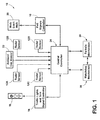
- Fig. 1 illustrates one possible embodiment of a collision avoidance system 10, configured for use with a four-sided traffic intersection that includes pedestrian crosswalks.
- the system has four radar sensors 12A-D, each positioned to detect objects approaching, or present in, a different side of a traffic intersection.
- the radar sensors 12A-D sense and communicate data on the position and velocity of objects in and proximate the traffic intersection in which they are deployed.
- a different number of radar sensors may be used to detect vehicles approaching the intersection.
- Some embodiments may use more or less than one radar sensor per intersection side.
- the system also includes a traffic-lights-and-turn-signals controller 14, which controls the timing of at least one traffic signal 16.
- Traffic signal 16 could be any traffic signaling device, including a red, yellow, and green light signal, a turn lane signal, or other traffic signal.
- the system also includes a pedestrian-signals controller 18, which controls the timing of a crosswalk signal 20. Other embodiments of the system 10 do not include a pedestrian-signals controller when, for example, the system is deployed in intersections lacking pedestrian crosswalks.
- the system 10 may also include an ambient conditions sensor 22, which is located such that it is able to sense conditions of the environment proximate a traffic intersection in which the system is deployed. In this embodiment, the ambient conditions sensor 22 senses and communicates data on the ambient temperature and relative humidity of the air proximate the intersection. In other embodiments, the ambient conditions sensor 22 may sense other ambient conditions that are useful in predicting the likelihood of a collision. For example, light levels might be sensed to account for driver or pedestrian visibility when making stopping distance or other calculations.
- the system 10 also includes a central controller 24, which is electrically connected to the radar sensors 12A-D, the traffic-lights-and-turn-signals controller 14, the pedestrian-signals controller 18, and the ambient conditions sensor 22.
- This electrical connection can be a wired or wireless connection, made in such a fashion as to allow transmission of electrical or data signals between the devices, including fiber optic, radio frequency, and other means.
- the central controller receives data from the radar sensors 12A-D, the traffic-lights-and-turn-signals controller 14, the pedestrian-signals controller 18, and the ambient conditions sensor 22.
- the central controller 24 uses that data to predict the likelihood of collisions between the objects detected by radar sensors 12A-D.
- the collision can be avoided by delaying the transition of traffic signals in the intersection.
- the transition of the traffic signal 16 from red to green could be delayed in an attempt to prevent vehicles from entering the intersection while other vehicles are still clearing the intersection, or approaching the intersection at a moderate-to-high rate of speed.
- the crosswalk signal 20 transition from "Don't Walk” to "Walk” could be delayed to prevent a pedestrian from entering the crosswalk while vehicles are still clearing the intersection, or approaching the intersection at a moderate-to-high rate of speed.
- the central controller 24 predicts that one or more of these avoidable collisions is likely, it issues commands to the traffic-lights-and-turn-signals controller 14 and the pedestrian-signals controller 18 to delay one or more traffic signal transitions in an attempt to avoid the collision.
- traffic signal transitions occur in a predetermined traffic signal timing sequence.
- the North-South signals signal green for 19 seconds, then yellow for 4 seconds, and then red for 23 seconds.
- the East-West signals are signaling red.
- the East-West signals signal green for 19 seconds, then yellow for 4 seconds.
- This timing sequence repeats to allow traffic to flow through the intersection.
- Another timing sequence might include a longer green light, and a correspondingly longer red light, to allow more traffic to flow in one direction than another.
- a traffic signal timing sequence is chosen using factors that affect traffic flow, such as the time of day. Managing traffic flow through an intersection depends on, among other things, maintaining the determined traffic signal timing sequence for the traffic intersection.
- Embodiments of the invention maintain the determined traffic signal timing sequence for the traffic intersection in which the system is deployed.
- the central controller 24 delays a traffic signal transition, it will subtract the delay time from the signal transition, rather than extending it. For example, if the central controller 24 delays the transition of traffic signal 16 from red to green for two seconds to allow vehicles to clear the intersection, traffic signal 16 will be green for two seconds less than it would have been without the delay. The transition of traffic signal 16 from green to amber will begin at the same time that it was scheduled to begin, regardless of the delay, thereby maintaining the determined traffic light timing sequence.
- Intelligent traffic systems improve transportation safety and traffic flow through an interconnected traffic infrastructure, and the integration of communications technologies into the transportation infrastructure and vehicles.
- the integration of communications technologies allows for various V2X communications techniques, including vehicle-to-infrastructure communication (V2I), and vehicle-to-vehicle communication (V2V).
- V2I vehicle-to-infrastructure communication
- V2V vehicle-to-vehicle communication
- the central controller 24 can use V2X or other communication techniques that enable a vehicle to communicate with its surroundings, to signal vehicles proximate the intersection that the central controller 24 has predicted the likelihood of a collision.
- a single traffic intersection is sometimes part of a larger group of traffic intersections, which are controlled as a group to achieve a desired traffic flow, or for other purposes.
- This group control is achieved through an overall traffic signaling pattern for the group.
- the collision avoidance system 10 delays traffic signal transitions at individual intersections.
- the central controller 24 maintains the determined traffic signal timing sequence for the traffic intersection in which the system is deployed, as noted above. In this way, the system avoids propagating a delay in traffic caused by a shift in the traffic signal timing sequence throughout the group of intersections, thereby maintaining the determined traffic signal timing sequence of the larger group of intersections.
- the collision avoidance system 10 includes a watchdog mechanism 26, which can be separate from, or integral to, the central controller 24.
- the watchdog mechanism can be implemented in software, hardware, or a combination of both.
- the watchdog mechanism monitors the components of the system, including the sensors, controllers, and signals, to ensure they are functioning properly. If the watchdog detects a malfunction in a component, it will implement an appropriate failsafe mechanism 28.
- the failsafe mechanism can be implemented in software, hardware, or a combination of both. For example, if one radar sensor detects the presence of a vehicle that the watchdog knows should also be detected by another radar sensor that does not report it, the watchdog might determine that one or both of the sensors is malfunctioning. The watchdog could then implement a failsafe to bypass the system functions that rely on accurate readings from those sensors. In another example, a component could stop communicating with the central controller 24 altogether, triggering a failsafe that avoids any actions relying on the affected component.
- Fig. 2 illustrates the collision avoidance system 10 installed in a traffic intersection 30.
- the traffic intersection 30 has four sides 30N, 30S, 30E, 30W.
- the intersection also has four pedestrian crosswalks, 31N, 31S, 31E, 31W.
- Traffic intersection 30 includes four traffic poles 32A, 32B, 32C, 32D, on which are mounted radar sensors 12A, 12B, 12C, 12D, four traffic signals 16A, 16B, 16C, 16D, and four crosswalk signals 20A, 20B, 20C, 20D.
- the traffic signals are controlled by the traffic-lights-and-turn-signals controller 14, and the crosswalk signal is controlled by the pedestrian-signals controller 18.
- the traffic-lights-and-turn-signals controller 14, the pedestrian-signals controller 18, the ambient conditions sensor 22, and the central controller 24 are located in cabinet 34.
- Figure 2A illustrates cabinet 34 in more detail.
- traffic-lights-and-turn-signals controller 14, the pedestrian-signals controller 18, the ambient conditions sensor 22, and the central controller 24 could be located separate from each other, or in other locations, such as boxes on or in the traffic poles, underground, or using other methods known in the art.
- radar sensors 12A-D detect objects in and proximate traffic intersection in which they are deployed, and communicate data on the position and velocity of the detected objects.
- Objects that can be detected by the radar sensors 12A-D include at least vehicles and vulnerable road users.
- Vehicles include at least automobiles and trucks.
- Vulnerable road users include at least pedestrians, bicyclists, mopeds, or other objects in or near the intersection that are smaller or slower moving than vehicles.
- the radar sensors 12A-D are positioned or otherwise oriented to facilitate detection of the position and speed of incoming vehicles 40 and opposing incoming vehicles 50 approaching the traffic intersection 30 from all four sides 30N, 30S, 30E, and 30W.
- the radar sensors 12A-D collect data on the speed and location of incoming vehicles 40 and opposing incoming vehicles 50.
- the radar sensors 12A-D transmit this data to the central controller 24, which uses the data, along with data collected from the traffic-lights-and-turn-signals controller 14, the pedestrian-signals controller 18, and the ambient conditions sensor 22, to predict the likelihood of a collision, which could be avoided through the delay of a traffic signal transition.
- traffic signal transitions in the embodiment of the invention illustrated in Fig. 2 , which occur when one of traffic signals 16A-D: changes from green to amber to red, to signal incoming vehicles to stop; changes from red to green, to signal stopped vehicles that they may begin moving through the intersection; or changes from green turn arrow to amber turn arrow to red turn arrow, to signal vehicles that they may no longer proceed in a left turn through the intersection.
- Traffic signal transitions also occur when one or more of the crosswalk signals 20A-D: change from "Walk” to "Don't Walk” to signal pedestrians not to enter the crosswalk, or change from "Don't Walk” to "Walk” to signal pedestrians that they may enter the crosswalk to begin crossing the street. Multiple traffic signal transitions may occur simultaneously, or in varied sequence, depending on how traffic is controlled at a given intersection.
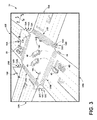
- traffic signals 16A, 16C would transition from green to amber to red, and traffic signals 16B, 16D would transition from red to green, signaling the opposing incoming vehicles 50 to proceed through the intersection-without regard to the location or speed of incoming vehicles 40. If any of the incoming vehicles 40 have not stopped prior to entering the traffic intersection 30, a collision could occur, possibly causing property damage, injury, and loss of life.
- Radar sensors 12A-D sense the speed and locations of incoming vehicles 40 and opposing incoming vehicles 50 as they approach the intersection 30, or wait to enter. Incoming vehicles 40 are signaled by traffic signals 16A and 16C. Opposing incoming vehicles are signaled by traffic signals 16B and 16D. If the central controller 24 determines that a collision is likely, it will delay the traffic signal transitions in an attempt to avoid the collision.
- the central controller 24 may predict that a collision is likely based on the location and speed of the vehicles sensed by radar sensors 12A-D. If the central controller 24 predicts that a collision is likely, it will issue commands to the traffic-lights-and-turn-signals controller 14, which will delay the red to green transition of traffic signals 16B, 16D sufficient to delay entry into the intersection of opposing incoming vehicles 50, and allow time for the incoming vehicles 40 to safely clear the intersection. In an attempt to avoid a collision with pedestrians entering pedestrian crosswalk 31E, the central controller 24 will also issue commands to the pedestrian-signals controller 18, to delay the transition of crosswalk signals 20A, 20B from "Don't Walk" to "Walk.”
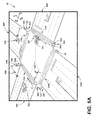
- radar sensors 12A-D can sense the speed and locations of incoming vehicles 40 as they turn left through the intersection, and opposing incoming vehicles 50 as they approach the intersection or are stopped waiting to enter the intersection.
- Incoming vehicles 40 are signaled by traffic signal 16A.
- Opposing incoming vehicles 50 are signaled by traffic signal 16C.
- the central controller 24 can predict that a collision is likely based on the location and speed of the vehicles sensed by radar sensors 12A-D. If the central controller 24 predicts that a collision is likely, it will issue commands to the traffic-lights-and-turn-signals controller 14, which will delay the red to green transition of traffic signal 16C sufficient to delay entry into the intersection of opposing incoming vehicles 50, and allow time for the incoming vehicles 40 to safely clear the intersection. In an attempt to avoid a potential collision with pedestrians entering pedestrian crosswalk 31N, the central controller 24 will also issue commands to the pedestrian-signals controller 18, to delay the transition of crosswalk signals 20B, 20C from "Don't Walk" to "Walk.”
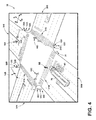
- FIG. 4 illustrates how the system 10 can be used to warn against predicted vehicle-to-pedestrian collisions.
- a pedestrian 60 is crossing the intersection 30 in pedestrian crosswalk 31 W.
- Traffic signal 16A is red
- crosswalk signal 20D displays "Walk.”
- Pedestrian 60 cannot see incoming vehicle 40, which is approaching the intersection to make a right turn, because his vision is blocked by large vehicle 70. If incoming vehicle 40 fails to stop before turning, a collision could occur between pedestrian 60 and incoming vehicle 40. If central controller 24 predicts that such a collision is likely, it may issue a warning using V2X or other communications techniques.
- the central controller issues warnings if the data from radar sensors 12A-D indicates the presence of other vulnerable road users in positions such that a collision is likely. In other embodiments, the presence of vulnerable road users in the traffic lanes could be used to delay signal transitions where doing so could avoid a collision.
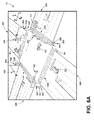
- Figs. 5 , 5A , 6 , and 6A illustrate, according to some embodiments of the system 10, processes that the central controller 24 uses to determine the likelihood of a collision.
- the processes use the data provided by the radar sensors, which are represented by the following variables: X1(t) and X2(t) are the locations of vehicles moving East and West, respectively; Y1(t) and Y2(t) are the locations of vehicles moving North and South, respectively; and Vx1(t),Vx2(t),Vy1(t),Vy2(t) are the velocities of the vehicles in the respective directions.
- the central controller 24 uses data from the radar sensors to determine, ax1(t), ax2(t), ay1(t) and ay2(t), which represent the acceleration of the vehicles in the respective directions. A negative value of acceleration indicates deceleration.
- the ambient conditions sensor 22 provides the central controller 24 with an ambient temperature value (T), which is the air temperature proximate the traffic intersection 30, and a relative humidity value (rH), which is the relative humidity of the air proximate the traffic intersection 30.
- T ambient temperature value
- rH relative humidity value
- the central controller 24 uses T and rH to estimate the coefficient of friction ( ⁇ ) of the road surface.
- Fig. 5 illustrates one possible process 200 used by system 10 for detecting and avoiding a collision involving a left turn situation.
- the process 200 may be implemented in software, hardware, or a combination of the two.
- the process 200 involves two vehicles: Y1, moving North, and Y2, moving South, at traffic intersection 30.
- Traffic signal 16B is signaling a left turn arrow
- Y1 is travelling North to make a left turn to the West.
- Traffic signal 16D is signaling red for stop
- Y2 is travelling Southward on a trajectory straight through the intersection.
- step S1 the central controller 24 receives: the locations, Y1(t) and Y2(t), and the velocities, Vy1(t) and Vy2(t), of the vehicles from the radar sensors 12A-D; the temperature, T, and the moisture content, rH, of the air proximate the intersection from the ambient conditions sensor; and the time remaining, t*, for the turn arrow from the traffic-lights-and-turn-signals controller 14.
- step S2 uses this data to determine the accelerations, ay1(t) and ay2(t), of the vehicles, and the coefficient of friction, ⁇ , of the road surface.
- step S3 the central controller 24 determines the trajectories of the vehicles and estimates the time to cross the intersection for Y1, tn, and Y2, ts.
- step S4 the central controller 24 compares ts, tn, and t* to predict the likelihood of a collision. For example, if Y2 is stopped at the intersection and not moving, and Y1 is proceeding through the intersection making a left turn, but tn is greater than t*, the controller may predict that a collision is likely if the traffic signal 16D transitions from red to green and Y2 enters the intersection while Y1 is still turning.
- step S5 If the central controller 24 determines that a collision is likely, it will, in step S5, send a command to the traffic-lights-and-turn-signals controller 14 to delay the transition of the red signal to green in an attempt to prevent Y2 from entering the intersection, thereby potentially avoiding the collision, and begin the process again at step S1. If the central controller 24 determines that a collision is not likely, then it will begin the process again at step S1.
- Fig. 6 illustrates one possible process 300 used by system 10 for detecting and avoiding a possible collision that does not involve turns.
- the process 300 may be implemented in software, hardware, or a combination of the two.
- this process involves four vehicles: X1, X2, Y1, and Y2, at traffic intersection 30.
- Traffic signals 16B and 16D are transitioning from green to amber to red, and traffic signals 16A and 16C are ready to transition from red to green.
- Vehicles X1 and X2 are stopped for the red traffic signals 16A and 16C.
- Vehicle X1 is facing West
- Vehicle X2 is facing East.
- Vehicle Y1 is entering the intersection travelling North, and vehicle Y2 is in the intersection travelling South, about to clear the intersection.
- step S11 the central controller 24 receives: the locations, Y1(t), Y2(t), X1(t), and X2(t), and the velocities, Vy1(t), Vy2(t), Vx1(t), and Vx2(t)of the vehicles from the radar sensors 12A-D; the temperature, T, and the moisture content, rH, of the air proximate the intersection from the ambient conditions sensor; and the time remaining, t*, until the traffic signal transitions complete from the traffic-lights-and-turn-signals controller 14.
- step S12 the central controller 24 uses this data to determine the accelerations, ay1(t), ay2(t), ax1(t), and ax2(t) of the vehicles, and the coefficient of friction, ⁇ , of the road surface.
- step S13 the central controller 24 determines the trajectories of the vehicles and estimates the time to cross the intersection for Y1, tn; Y2, ts; X1, tw; and X2, te.
- step S14 the central controller 24 compares tn, ts, tw, te, and t* to predict the likelihood of a collision.
- step S15 send a command to the traffic-lights-and-turn-signals controller 14 to delay the transition of the traffic signals 16A and 16D from red to green in an attempt to prevent X1 and X2 from entering the intersection, thereby potentially avoiding the collision, and begin the process again at step S 11. If the central controller 24 determines that a collision is not likely, then it will begin the process again at step S 11.
- the invention provides, among other things, a system and method for collision avoidance in traffic crossings using a controller and radar sensors.
- Various features and advantages of the invention are set forth in the following claims.
Landscapes
- Physics & Mathematics (AREA)
- General Physics & Mathematics (AREA)
- Traffic Control Systems (AREA)
- Radar Systems Or Details Thereof (AREA)
Applications Claiming Priority (1)
| Application Number | Priority Date | Filing Date | Title |
|---|---|---|---|
| US14/558,348 US9558666B2 (en) | 2014-12-02 | 2014-12-02 | Collision avoidance in traffic crossings using radar sensors |
Publications (1)
| Publication Number | Publication Date |
|---|---|
| EP3029652A1 true EP3029652A1 (fr) | 2016-06-08 |
Family
ID=54477896
Family Applications (1)
| Application Number | Title | Priority Date | Filing Date |
|---|---|---|---|
| EP15193364.5A Ceased EP3029652A1 (fr) | 2014-12-02 | 2015-11-06 | Évitement de collision dans des croisements de route au moyen de capteurs radar |
Country Status (3)
| Country | Link |
|---|---|
| US (1) | US9558666B2 (fr) |
| EP (1) | EP3029652A1 (fr) |
| JP (1) | JP2016122439A (fr) |
Cited By (4)
| Publication number | Priority date | Publication date | Assignee | Title |
|---|---|---|---|---|
| CN107545743A (zh) * | 2017-09-14 | 2018-01-05 | 四川闫新江信息科技有限公司 | 远程控制的调整交通绿波带的信号机 |
| CN107545742A (zh) * | 2017-09-14 | 2018-01-05 | 四川闫新江信息科技有限公司 | 监控车流量的自动调整的交通控制器 |
| WO2019161501A1 (fr) | 2018-02-21 | 2019-08-29 | Miovision Technologies Incorporated | Système et procédé de fourniture d'une intersection numérique |
| DE102024104791A1 (de) | 2024-02-21 | 2025-08-21 | Audi Aktiengesellschaft | Verkehrsinfrastruktureinrichtung, Verfahren zum Betrieb einer Verkehrsinfrastruktureinrichtung und Computerprogramm |
Families Citing this family (50)
| Publication number | Priority date | Publication date | Assignee | Title |
|---|---|---|---|---|
| US9349288B2 (en) | 2014-07-28 | 2016-05-24 | Econolite Group, Inc. | Self-configuring traffic signal controller |
| JP6109139B2 (ja) * | 2014-12-26 | 2017-04-05 | 本田技研工業株式会社 | 車両用衝突回避支援装置及び車両の衝突回避支援方法 |
| DE102015202451B4 (de) * | 2015-02-11 | 2024-10-24 | Volkswagen Aktiengesellschaft | Vorrichtung und Verfahren zur Beschleunigung eines Fahrzeugs beim Start an einer Lichtzeichenanlage |
| US20160292996A1 (en) * | 2015-03-30 | 2016-10-06 | Hoseotelnet Co., Ltd. | Pedestrian detection radar using ultra-wide band pulse and traffic light control system including the same |
| US10339807B2 (en) | 2015-08-26 | 2019-07-02 | Ford Global Technologies, Llc | Apparatus using sync and balanced V2V communication |
| US10311725B2 (en) | 2015-10-20 | 2019-06-04 | Stc, Inc. | Systems and methods for detection of travelers at roadway intersections |
| US10679495B2 (en) | 2015-10-20 | 2020-06-09 | Stc, Inc. | Systems and methods for detection of travelers at roadway intersections |
| US11295612B2 (en) | 2015-10-20 | 2022-04-05 | Stc, Inc. | Systems and methods for roadway management including feedback |
| CA3002595C (fr) * | 2015-10-20 | 2024-04-09 | Stc, Inc. | Systemes et procedes de detection de pietons et de petits vehicules aux intersections routieres |
| US12441307B2 (en) * | 2020-01-03 | 2025-10-14 | Xorail, Inc. | Obstruction detection system |
| JP6334604B2 (ja) * | 2016-05-24 | 2018-05-30 | 京セラ株式会社 | 車載装置、車両、報知システム、及び報知方法 |
| JP6293817B2 (ja) * | 2016-05-27 | 2018-03-14 | 京セラ株式会社 | 携帯電子機器、制御システム、携帯電子機器制御方法及び携帯電子機器制御プログラム |
| TWI662519B (zh) * | 2016-09-26 | 2019-06-11 | 財團法人工業技術研究院 | 路側顯示系統、路側裝置及其路側顯示方法 |
| US10152881B2 (en) * | 2016-10-28 | 2018-12-11 | Here Global B.V. | Automated traffic signal outage notification based on congestion without signal timing and phase information |
| CN106780348B (zh) * | 2016-11-14 | 2020-09-04 | 吉林大学 | 信号控制下人行横道宽度确定方法 |
| KR101737803B1 (ko) * | 2016-11-23 | 2017-05-19 | 렉스젠(주) | 객체 정보 수집 장치 및 그 방법 |
| WO2018137031A1 (fr) | 2017-01-26 | 2018-08-02 | Norio Takemura | Panneau de signalisation animé de circulation entrante |
| WO2018198532A1 (fr) | 2017-04-26 | 2018-11-01 | 日本電気株式会社 | Dispositif de détection d'objet, procédé de détection d'objet et support d'enregistrement lisible par ordinateur |
| WO2018215833A1 (fr) | 2017-05-23 | 2018-11-29 | 1.21 Gigawatts Ltd. | Systèmes et procédés de surveillance et de gestion de trafic |
| CN107491830B (zh) * | 2017-07-03 | 2021-03-26 | 北京奇艺世纪科技有限公司 | 一种时间序列曲线的处理方法和装置 |
| SG11202000488YA (en) * | 2017-07-28 | 2020-02-27 | Sumitomo Electric Industries | On-vehicle control device, traveling speed control method, and computer program |
| CN111247784A (zh) | 2017-10-19 | 2020-06-05 | 福特全球技术公司 | 车辆对车辆和车辆对基础设施通信与行人检测系统 |
| WO2019079941A1 (fr) * | 2017-10-23 | 2019-05-02 | Bayerische Motoren Werke Aktiengesellschaft | Procédé et appareil permettant de déterminer une stratégie de conduite d'un véhicule |
| DE102017220269A1 (de) | 2017-11-14 | 2019-05-16 | Continental Automotive Gmbh | Fahrerassistenzsystem, fahrzeug und verfahren zum nachverfolgen von objekten |
| US10803746B2 (en) | 2017-11-28 | 2020-10-13 | Honda Motor Co., Ltd. | System and method for providing an infrastructure based safety alert associated with at least one roadway |
| US10134276B1 (en) | 2017-12-01 | 2018-11-20 | International Business Machines Corporation | Traffic intersection distance anayltics system |
| US10235882B1 (en) * | 2018-03-19 | 2019-03-19 | Derq Inc. | Early warning and collision avoidance |
| US10559197B2 (en) * | 2018-04-13 | 2020-02-11 | Toyota Jidosha Kabushiki Kaisha | Remote vehicle control at intersections |
| DE102018209031A1 (de) * | 2018-06-07 | 2019-12-12 | Robert Bosch Gmbh | Verfahren und Vorrichtung zum Betreiben eines automatisierten Fahrzeugs an einer Kreuzung |
| CR20180354U (es) * | 2018-07-10 | 2018-10-16 | Color Vision Sa | Pantalla inteligente para la comunicación con el cuidadano |
| US11202302B2 (en) | 2018-10-09 | 2021-12-14 | Stc, Inc | Systems and methods for traffic priority systems |
| IL262428A (en) | 2018-10-16 | 2020-04-30 | Elta Systems Ltd | System, method and computer program product for radar based car accident prevention |
| CN109584571A (zh) * | 2019-01-16 | 2019-04-05 | 苏州齐思智行汽车系统有限公司 | 道路交叉口预警控制方法及系统、及所用的感知装置 |
| US11250700B2 (en) | 2019-03-13 | 2022-02-15 | Stc, Inc. | Protected turns |
| TWI704533B (zh) * | 2019-04-12 | 2020-09-11 | 創新交通科技有限公司 | 以起訖旅次樹劃分交通路網的方法 |
| EP4022591A4 (fr) | 2019-08-29 | 2022-10-19 | Derq Inc. | Équipement embarqué amélioré |
| CN110634310A (zh) * | 2019-09-17 | 2019-12-31 | 孟卫平 | 交通信号异相波模式控制方法 |
| CN110634311B (zh) * | 2019-09-17 | 2024-09-13 | 孟卫平 | 交通信号线型混合波模式控制方法 |
| US11203348B2 (en) | 2019-10-28 | 2021-12-21 | Denso International America, Inc. | System and method for predicting and interpreting driving behavior |
| US11334797B2 (en) | 2019-10-28 | 2022-05-17 | Denso International America, Inc. | System and method for predicting and interpreting driving behavior |
| CN111710175B (zh) * | 2020-06-28 | 2021-11-12 | 阿波罗智联(北京)科技有限公司 | 交通信号灯的控制方法及装置 |
| EP4256545A1 (fr) * | 2020-12-04 | 2023-10-11 | Viavi Solutions Inc. | Détection acoustique distribuée du trafic |
| JP2022150903A (ja) | 2021-03-26 | 2022-10-07 | トヨタ自動車株式会社 | 運転支援方法、運転支援装置、運転支援システム及びコンピュータプログラム |
| CN113327422A (zh) * | 2021-06-04 | 2021-08-31 | 上海和数软件有限公司 | 一种基于区块链的智能交通调控方法及系统 |
| US12024162B2 (en) | 2021-08-19 | 2024-07-02 | Aptiv Technologies AG | Automatic emergency braking for a path-crossing target |
| US12361825B2 (en) * | 2021-09-20 | 2025-07-15 | Deere & Company | Traffic signal systems for communicating with vehicle sensors |
| US11741831B2 (en) * | 2021-11-30 | 2023-08-29 | Automotive Research & Testing Center | Intersection warning system based on information fusion and method thereof |
| CN116559879A (zh) * | 2022-01-27 | 2023-08-08 | 罗伯特·博世有限公司 | 雷达传感器系统及其调制装置和方法 |
| KR102795936B1 (ko) | 2022-05-26 | 2025-04-16 | 한국건설기술연구원 | 차량의 급감속 예방을 위한 교통신호 시스템 및 그 제공 방법 |
| KR102867818B1 (ko) | 2023-05-25 | 2025-10-13 | 한국건설기술연구원 | 황색신호 점등시 급정거 차량대수 저감을 위한 교통신호 제어 시스템 및 그 방법 |
Citations (5)
| Publication number | Priority date | Publication date | Assignee | Title |
|---|---|---|---|---|
| CA2232739A1 (fr) * | 1998-05-22 | 1999-11-22 | Anthony Thomas | Systeme de temporisation active par la vitesse |
| US20050110660A1 (en) * | 2003-11-20 | 2005-05-26 | Reno Agriculture And Electronics | Traffic control malfunction management unit with flashing don't walk monitoring |
| US20060181433A1 (en) * | 2005-02-03 | 2006-08-17 | Mike Wolterman | Infrastructure-based collision warning using artificial intelligence |
| WO2009150528A2 (fr) * | 2008-06-13 | 2009-12-17 | Tmt Services And Supplies (Pty) Limited | Système et procédé de régulation trafic |
| US20130194108A1 (en) * | 2012-01-30 | 2013-08-01 | Telcordia Technologies, Inc. | System, Method, Control Device and Program for Vehicle Collision Avoidance Using Cellular Communication |
Family Cites Families (17)
| Publication number | Priority date | Publication date | Assignee | Title |
|---|---|---|---|---|
| JPH11101647A (ja) * | 1997-09-29 | 1999-04-13 | Noda Denshi Kogyo Kk | カ−ナビゲ−ションを用いた交通安全システム |
| AU761072C (en) * | 1998-11-23 | 2003-07-10 | Nestor, Inc. | Traffic light violation prediction and recording system |
| US6317058B1 (en) | 1999-09-15 | 2001-11-13 | Jerome H. Lemelson | Intelligent traffic control and warning system and method |
| JP2003016596A (ja) * | 2001-06-27 | 2003-01-17 | Sumitomo Electric Ind Ltd | 衝突防止システム及び表示情報生成装置 |
| JP2003337991A (ja) * | 2002-05-21 | 2003-11-28 | Mitsubishi Heavy Ind Ltd | 移動体警告システム |
| CN1417755A (zh) * | 2002-11-18 | 2003-05-14 | 冯鲁民 | 功能完善且架构简易的智能交通系统体系 |
| US7821422B2 (en) * | 2003-08-18 | 2010-10-26 | Light Vision Systems, Inc. | Traffic light signal system using radar-based target detection and tracking |
| US7378987B2 (en) * | 2003-11-21 | 2008-05-27 | Reno A & E | Traffic control malfunction management unit with per channel red enable |
| US20110298603A1 (en) | 2006-03-06 | 2011-12-08 | King Timothy I | Intersection Collision Warning System |
| US7864072B2 (en) * | 2007-12-11 | 2011-01-04 | International Business Machines Corporation | System and method for automatically adjusting traffic light |
| US20100100324A1 (en) | 2008-10-22 | 2010-04-22 | Toyota Motor Engineering & Manufacturing North America, Inc. | Communication based vehicle-pedestrian collision warning system |
| KR101231510B1 (ko) | 2010-10-11 | 2013-02-07 | 현대자동차주식회사 | 운전자 주시방향 연동 전방충돌 위험경보 시스템, 그 방법 및 그를 이용한 차량 |
| KR101029096B1 (ko) | 2010-11-18 | 2011-04-13 | 김은숙 | 차량의 측면 충돌 회피 방법 |
| US8618952B2 (en) | 2011-01-21 | 2013-12-31 | Honda Motor Co., Ltd. | Method of intersection identification for collision warning system |
| JP5999617B2 (ja) * | 2011-12-02 | 2016-09-28 | 国立大学法人茨城大学 | 交通信号制御装置 |
| US8633833B2 (en) * | 2012-04-25 | 2014-01-21 | International Business Machines Corporation | Control of traffic signal due to obstructed view |
| US9153128B2 (en) * | 2013-02-20 | 2015-10-06 | Holzmac Llc | Traffic signal device for driver/pedestrian/cyclist advisory message screen at signalized intersections |
-
2014
- 2014-12-02 US US14/558,348 patent/US9558666B2/en active Active
-
2015
- 2015-11-06 EP EP15193364.5A patent/EP3029652A1/fr not_active Ceased
- 2015-12-02 JP JP2015235517A patent/JP2016122439A/ja active Pending
Patent Citations (5)
| Publication number | Priority date | Publication date | Assignee | Title |
|---|---|---|---|---|
| CA2232739A1 (fr) * | 1998-05-22 | 1999-11-22 | Anthony Thomas | Systeme de temporisation active par la vitesse |
| US20050110660A1 (en) * | 2003-11-20 | 2005-05-26 | Reno Agriculture And Electronics | Traffic control malfunction management unit with flashing don't walk monitoring |
| US20060181433A1 (en) * | 2005-02-03 | 2006-08-17 | Mike Wolterman | Infrastructure-based collision warning using artificial intelligence |
| WO2009150528A2 (fr) * | 2008-06-13 | 2009-12-17 | Tmt Services And Supplies (Pty) Limited | Système et procédé de régulation trafic |
| US20130194108A1 (en) * | 2012-01-30 | 2013-08-01 | Telcordia Technologies, Inc. | System, Method, Control Device and Program for Vehicle Collision Avoidance Using Cellular Communication |
Cited By (8)
| Publication number | Priority date | Publication date | Assignee | Title |
|---|---|---|---|---|
| CN107545743A (zh) * | 2017-09-14 | 2018-01-05 | 四川闫新江信息科技有限公司 | 远程控制的调整交通绿波带的信号机 |
| CN107545742A (zh) * | 2017-09-14 | 2018-01-05 | 四川闫新江信息科技有限公司 | 监控车流量的自动调整的交通控制器 |
| WO2019161501A1 (fr) | 2018-02-21 | 2019-08-29 | Miovision Technologies Incorporated | Système et procédé de fourniture d'une intersection numérique |
| CN112074884A (zh) * | 2018-02-21 | 2020-12-11 | 迈威视觉技术股份有限公司 | 提供一种数字式交叉路口的系统和方法 |
| EP3738113A4 (fr) * | 2018-02-21 | 2021-10-13 | Miovision Technologies Incorporated | Système et procédé de fourniture d'une intersection numérique |
| EP4429285A3 (fr) * | 2018-02-21 | 2024-11-20 | Miovision Technologies Incorporated | Système et procédé pour fournir une intersection numérique |
| US12300100B2 (en) | 2018-02-21 | 2025-05-13 | Miovision Technologies Incorporated | System and method for providing a digital intersection |
| DE102024104791A1 (de) | 2024-02-21 | 2025-08-21 | Audi Aktiengesellschaft | Verkehrsinfrastruktureinrichtung, Verfahren zum Betrieb einer Verkehrsinfrastruktureinrichtung und Computerprogramm |
Also Published As
| Publication number | Publication date |
|---|---|
| US9558666B2 (en) | 2017-01-31 |
| JP2016122439A (ja) | 2016-07-07 |
| US20160155334A1 (en) | 2016-06-02 |
Similar Documents
| Publication | Publication Date | Title |
|---|---|---|
| EP3029652A1 (fr) | Évitement de collision dans des croisements de route au moyen de capteurs radar | |
| US8571786B2 (en) | Vehicular peripheral surveillance device | |
| KR20130007754A (ko) | 자율주행 교차로에서 차량 제어 장치 및 그 방법 | |
| US11067987B2 (en) | Driving assistance method and driving assistance device | |
| KR102141445B1 (ko) | 차량의 차선 변경을 위해 2개의 차량 사이의 트래픽 갭을 결정하기 위한 방법 및 제어 시스템 | |
| US10800414B2 (en) | Automatic controller of a vehicle during starting | |
| US9280899B2 (en) | Dynamic safety shields for situation assessment and decision making in collision avoidance tasks | |
| EP2671768B1 (fr) | Appareil de commande véhicule | |
| CN110221595B (zh) | 车辆控制装置 | |
| US9630624B2 (en) | Method to enhance safe acceleration and lead-vehicle distance keeping performance, by measuring forward vehicle gaps | |
| KR101997430B1 (ko) | 차량의 scc 시스템 및 그 제어방법 | |
| WO2019073525A1 (fr) | Procédé de commande de pilotage et appareil de commande de pilotage | |
| CN111448596A (zh) | 驾驶控制方法以及驾驶控制装置 | |
| KR20210151594A (ko) | 차량 제어 장치 및 방법 | |
| WO2007069568A1 (fr) | Dispositif pour prevoir une conduite dangereuse | |
| KR20190057475A (ko) | 자율주행 차량 주행 제어방법 및 장치 | |
| KR101836878B1 (ko) | 차량 제어 장치 및 방법 | |
| JP2017068461A (ja) | 車両の運転支援装置 | |
| KR101005192B1 (ko) | 교통신호 제어 시스템 및 방법 | |
| JP5936258B2 (ja) | 運転支援装置 | |
| WO2021028708A1 (fr) | Procédé de détermination de comportement de véhicule et dispositif de détermination de comportement de véhicule | |
| CN105599767A (zh) | 环形道探测装置 | |
| JP2020027416A (ja) | 交差点通過制御システム | |
| JP2015184790A (ja) | 車両運行管理システム | |
| JP5175634B2 (ja) | 車両の運転支援装置 |
Legal Events
| Date | Code | Title | Description |
|---|---|---|---|
| PUAI | Public reference made under article 153(3) epc to a published international application that has entered the european phase |
Free format text: ORIGINAL CODE: 0009012 |
|
| AK | Designated contracting states |
Kind code of ref document: A1 Designated state(s): AL AT BE BG CH CY CZ DE DK EE ES FI FR GB GR HR HU IE IS IT LI LT LU LV MC MK MT NL NO PL PT RO RS SE SI SK SM TR |
|
| AX | Request for extension of the european patent |
Extension state: BA ME |
|
| STAA | Information on the status of an ep patent application or granted ep patent |
Free format text: STATUS: REQUEST FOR EXAMINATION WAS MADE |
|
| 17P | Request for examination filed |
Effective date: 20161208 |
|
| RBV | Designated contracting states (corrected) |
Designated state(s): AL AT BE BG CH CY CZ DE DK EE ES FI FR GB GR HR HU IE IS IT LI LT LU LV MC MK MT NL NO PL PT RO RS SE SI SK SM TR |
|
| STAA | Information on the status of an ep patent application or granted ep patent |
Free format text: STATUS: EXAMINATION IS IN PROGRESS |
|
| 17Q | First examination report despatched |
Effective date: 20180514 |
|
| RAP1 | Party data changed (applicant data changed or rights of an application transferred) |
Owner name: ROBERT BOSCH GMBH |
|
| STAA | Information on the status of an ep patent application or granted ep patent |
Free format text: STATUS: THE APPLICATION HAS BEEN REFUSED |
|
| 18R | Application refused |
Effective date: 20200406 |