EP3038233A1 - Permanentmagnet-synchronmotor und elektrische servolenkung - Google Patents
Permanentmagnet-synchronmotor und elektrische servolenkung Download PDFInfo
- Publication number
- EP3038233A1 EP3038233A1 EP15198633.8A EP15198633A EP3038233A1 EP 3038233 A1 EP3038233 A1 EP 3038233A1 EP 15198633 A EP15198633 A EP 15198633A EP 3038233 A1 EP3038233 A1 EP 3038233A1
- Authority
- EP
- European Patent Office
- Prior art keywords
- stator
- rotor
- synchronous motor
- permanent magnet
- magnet synchronous
- Prior art date
- Legal status (The legal status is an assumption and is not a legal conclusion. Google has not performed a legal analysis and makes no representation as to the accuracy of the status listed.)
- Granted
Links
- 230000001360 synchronised effect Effects 0.000 title claims abstract description 53
- 238000004804 winding Methods 0.000 claims abstract description 15
- 238000003475 lamination Methods 0.000 claims abstract description 13
- 238000009413 insulation Methods 0.000 claims description 7
- 230000004323 axial length Effects 0.000 claims description 5
- 230000008901 benefit Effects 0.000 description 6
- 230000002093 peripheral effect Effects 0.000 description 4
- 238000013461 design Methods 0.000 description 3
- 238000000034 method Methods 0.000 description 3
- 238000010276 construction Methods 0.000 description 2
- 230000001419 dependent effect Effects 0.000 description 2
- 238000010586 diagram Methods 0.000 description 2
- 241000446313 Lamella Species 0.000 description 1
- 241001028048 Nicola Species 0.000 description 1
- 230000000903 blocking effect Effects 0.000 description 1
- 230000008859 change Effects 0.000 description 1
- 230000008878 coupling Effects 0.000 description 1
- 238000010168 coupling process Methods 0.000 description 1
- 238000005859 coupling reaction Methods 0.000 description 1
- 238000011161 development Methods 0.000 description 1
- 230000018109 developmental process Effects 0.000 description 1
- 230000000694 effects Effects 0.000 description 1
- 230000008030 elimination Effects 0.000 description 1
- 238000003379 elimination reaction Methods 0.000 description 1
- 238000005265 energy consumption Methods 0.000 description 1
- 238000007373 indentation Methods 0.000 description 1
- 238000004519 manufacturing process Methods 0.000 description 1
- 230000007246 mechanism Effects 0.000 description 1
- 238000012986 modification Methods 0.000 description 1
- 230000004048 modification Effects 0.000 description 1
- 239000007858 starting material Substances 0.000 description 1
- 230000003319 supportive effect Effects 0.000 description 1
- 238000012360 testing method Methods 0.000 description 1
Images




Classifications
-
- H—ELECTRICITY
- H02—GENERATION; CONVERSION OR DISTRIBUTION OF ELECTRIC POWER
- H02K—DYNAMO-ELECTRIC MACHINES
- H02K21/00—Synchronous motors having permanent magnets; Synchronous generators having permanent magnets
- H02K21/12—Synchronous motors having permanent magnets; Synchronous generators having permanent magnets with stationary armatures and rotating magnets
- H02K21/14—Synchronous motors having permanent magnets; Synchronous generators having permanent magnets with stationary armatures and rotating magnets with magnets rotating within the armatures
-
- H—ELECTRICITY
- H02—GENERATION; CONVERSION OR DISTRIBUTION OF ELECTRIC POWER
- H02K—DYNAMO-ELECTRIC MACHINES
- H02K21/00—Synchronous motors having permanent magnets; Synchronous generators having permanent magnets
- H02K21/12—Synchronous motors having permanent magnets; Synchronous generators having permanent magnets with stationary armatures and rotating magnets
-
- H—ELECTRICITY
- H02—GENERATION; CONVERSION OR DISTRIBUTION OF ELECTRIC POWER
- H02K—DYNAMO-ELECTRIC MACHINES
- H02K1/00—Details of the magnetic circuit
- H02K1/06—Details of the magnetic circuit characterised by the shape, form or construction
- H02K1/12—Stationary parts of the magnetic circuit
- H02K1/14—Stator cores with salient poles
-
- H—ELECTRICITY
- H02—GENERATION; CONVERSION OR DISTRIBUTION OF ELECTRIC POWER
- H02K—DYNAMO-ELECTRIC MACHINES
- H02K1/00—Details of the magnetic circuit
- H02K1/06—Details of the magnetic circuit characterised by the shape, form or construction
- H02K1/22—Rotating parts of the magnetic circuit
- H02K1/27—Rotor cores with permanent magnets
-
- H—ELECTRICITY
- H02—GENERATION; CONVERSION OR DISTRIBUTION OF ELECTRIC POWER
- H02K—DYNAMO-ELECTRIC MACHINES
- H02K1/00—Details of the magnetic circuit
- H02K1/06—Details of the magnetic circuit characterised by the shape, form or construction
- H02K1/22—Rotating parts of the magnetic circuit
- H02K1/27—Rotor cores with permanent magnets
- H02K1/2706—Inner rotors
- H02K1/272—Inner rotors the magnetisation axis of the magnets being perpendicular to the rotor axis
- H02K1/274—Inner rotors the magnetisation axis of the magnets being perpendicular to the rotor axis the rotor consisting of two or more circumferentially positioned magnets
- H02K1/2753—Inner rotors the magnetisation axis of the magnets being perpendicular to the rotor axis the rotor consisting of two or more circumferentially positioned magnets the rotor consisting of magnets or groups of magnets arranged with alternating polarity
- H02K1/278—Surface mounted magnets; Inset magnets
-
- H—ELECTRICITY
- H02—GENERATION; CONVERSION OR DISTRIBUTION OF ELECTRIC POWER
- H02K—DYNAMO-ELECTRIC MACHINES
- H02K29/00—Motors or generators having non-mechanical commutating devices, e.g. discharge tubes or semiconductor devices
- H02K29/03—Motors or generators having non-mechanical commutating devices, e.g. discharge tubes or semiconductor devices with a magnetic circuit specially adapted for avoiding torque ripples or self-starting problems
-
- H—ELECTRICITY
- H02—GENERATION; CONVERSION OR DISTRIBUTION OF ELECTRIC POWER
- H02K—DYNAMO-ELECTRIC MACHINES
- H02K1/00—Details of the magnetic circuit
- H02K1/06—Details of the magnetic circuit characterised by the shape, form or construction
- H02K1/22—Rotating parts of the magnetic circuit
- H02K1/27—Rotor cores with permanent magnets
- H02K1/2706—Inner rotors
- H02K1/272—Inner rotors the magnetisation axis of the magnets being perpendicular to the rotor axis
- H02K1/274—Inner rotors the magnetisation axis of the magnets being perpendicular to the rotor axis the rotor consisting of two or more circumferentially positioned magnets
- H02K1/2753—Inner rotors the magnetisation axis of the magnets being perpendicular to the rotor axis the rotor consisting of two or more circumferentially positioned magnets the rotor consisting of magnets or groups of magnets arranged with alternating polarity
- H02K1/276—Magnets embedded in the magnetic core, e.g. interior permanent magnets [IPM]
-
- H—ELECTRICITY
- H02—GENERATION; CONVERSION OR DISTRIBUTION OF ELECTRIC POWER
- H02K—DYNAMO-ELECTRIC MACHINES
- H02K2201/00—Specific aspects not provided for in the other groups of this subclass relating to the magnetic circuits
- H02K2201/06—Magnetic cores, or permanent magnets characterised by their skew
-
- H—ELECTRICITY
- H02—GENERATION; CONVERSION OR DISTRIBUTION OF ELECTRIC POWER
- H02K—DYNAMO-ELECTRIC MACHINES
- H02K3/00—Details of windings
- H02K3/32—Windings characterised by the shape, form or construction of the insulation
- H02K3/34—Windings characterised by the shape, form or construction of the insulation between conductors or between conductor and core, e.g. slot insulation
Definitions
- the present invention relates to a permanent magnet synchronous motor, in particular three-phase electric motor.
- the present invention further relates to an electric power steering system of a motor vehicle.
- Such permanent magnet synchronous motors are used for example in drive devices of motor vehicles, in particular in power steering systems and the like.
- Fig. 1a shows a power steering system of a motor vehicle with wheels 106 which are steerably connected via a tie rod 107.
- the tie rod 107 is connected to a steering gear 101 in cooperation, which here has a rack (only symbolically indicated by a double arrow), which is connected to a pinion 105.
- the pinion 105 is rotatably coupled to a steering wheel via a steering shaft 102.
- a steering drive 103 in the form of a three-phase electric motor having a control unit 104 is mounted on the steering gear 101 and serves as a support in steering operations by cooperating with the rack.
- Fig. 1b shows a power steering system similar to Fig.
- Fig. 1a wherein here the steering drive 103 cooperates with the steering shaft 102 supportive.
- the steering drive 103 may be attached to a steering column for this purpose.
- Fig. 1c is also one too Fig. 1a and 1b similar power steering system shown.
- the steering drive 103 is shown in cooperation with the pinion 105, wherein it may also be arranged on the steering gear 101.
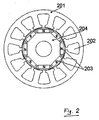
- a currently used as a steering drive 103 permanent magnet synchronous motor is in Fig.
- FIG. 2 illustrated in a schematic plan view and comprises: a stator 201 with grooves 202, in which windings (not shown) are arranged; and a rotor 204 with permanent magnets 203, which are arranged here in the axial direction of the motor within the rotor 204 on its circumference.
- the rotor 204 is located inside the stator 201.
- Performance There are two main issues that such an engine must meet: 1) Performance and 2) Safety.
- Performance parameters such as power density, maximum output torque, torque ripple and cogging torque are important.
- torque ripple the following parameters are of great importance: maximum braking torque, short circuit capability, fault tolerance and simplicity.
- EP 1 770 847 A describes a rotary magnet with permanent magnet.
- the motor has a stator with teeth, which have on their sides facing to a rotor connecting portions with different circumferential lengths.
- through holes are formed with different circumferential lengths, which extend in different axial lengths from the center of the connecting portions to both sides in the axial direction.
- DE 198 42 948 A1 describes a manufacturing method of a laminated core of a stator of an electric motor, with at least one laminations formed by stacked laminations of a stator, consisting of mechanical individual poles and in the circumferential direction of the stator associated Tru laminations, with at least one Polschaft and at least one rotor facing Pole, indentations of the laminations such that the opposite sides of the laminations have projections and thereby form the laminations by intermeshing their impressions and projections as a laminated core of the stator, windings of the mechanical poles of the laminated core, webs between the poles that connect the contiguous mechanical poles in the circumferential direction.
- the axial composition has a predefinable change of poles with connecting web and poles without connecting web. There are five lamellae with poles without connecting bar between one lamella with poles with connecting bar arranged.
- EP 1 542 335 A illustrates a rotor for a rotating electrical machine.
- the rotor has a shaft and a plurality of rotor cores mounted on the shaft and axially split.
- the rotor cores have outer peripheral surfaces with a circular cross-section.
- Permanent magnets extend through the rotor cores and are arranged at equal circumferential intervals. Gaps extend axially through the rotor cores and are formed between the outer peripheral surfaces and the permanent magnets. The gaps of two adjacent rotor cores are arranged circumferentially at different positions.
- JP 2007 151232 A describes a permanent magnet motor and a power steering with such a motor.
- a lamellar stator has stator teeth, some of which are connected and unconnected at their rotor-facing tips.
- the lamellae are mixed layered, with one lamination consisting of a pattern of 2 connected / 10 unconnected / 3 connected / 10 unconnected / 2 connected.
- a rotor is rotated with two to each other about a rotor axis arranged rotor parts, each rotor part is associated with the unconnected fins.
- the present invention therefore has the object of specifying an improved permanent magnet synchronous motor.
- this object is achieved by a permanent magnet synchronous motor with the features of the claim 1 and / or solved by an electric power steering with the features of claim 6.
- a permanent magnet synchronous motor in particular three-phase electric motor having a rotor with permanent magnets, with a stator with stator yoke, in which stator teeth are arranged with Staturnuten therebetween, wherein in each case on a stator tooth at least one winding is provided, wherein the stator teeth as lamellae in Axial direction of the stator are arranged layered and formed at least as two different lamellae, wherein the stator teeth are connected in a first lamination as a stator at their ends facing the rotor with each other circumferentially by means of a connecting bridge and wherein the stator teeth in a second lamination instead of the connecting bridge have an interruption, wherein the rotor has at least two rotor packages, which are arranged in the axial direction of the rotor, wherein the at least two rotor packages are arranged rotated by an offset angle with each other about a rotor axis be Semi asked.
- Such a permanent magnet synchronous motor thus has the advantages of a very low detent torque combined with a high performance and low torque ripple.
- the active axial length Lstk is meant the axial length of the stator with rotor.
- the permanent magnet synchronous motor according to the invention has a lower braking torque compared to conventional permanent magnet synchronous motors, which can be up to 50% lower.
- a starter relay can be omitted because the braking torque is lower.
- the described permanent magnet synchronous motor is preferably suitable for the drive device of a motor vehicle power steering. Conceivable, however, are other applications with other drive devices.
- At least one insulation is provided in each case between the windings in the stator slots. This reduces a probability of insulation errors.
- the windings may be arranged in a three-phase star connection or in a three-phase delta connection.
- a very low braking torque is achieved in the case of faulty insulation compared to conventional motors.
- the delta connection also has the advantage that connection points are reduced compared to the star connection, which are required for conventional permanent magnet synchronous motors with starting relay.
- the rotor can be formed with different permanent magnets in pockets on its circumference, circumferentially on its surface or with ring magnets.
- the permanent magnet synchronous motor has twelve stator slots and eight pole pairs, twelve stator slots and ten pole pairs or twelve stator slots and fourteen pole pairs.
- Fig. 3 shows a schematic plan view of a stator 300 of an embodiment of a permanent magnet synchronous motor according to the invention with a stator yoke 301, in which stator teeth 302 on the inner circumference of the stator yoke 301 are arranged circumferentially.
- stator slots 202 Between the stator teeth 302 are stator slots 202 in which windings 303 are arranged around the stator teeth 302.
- the windings 303 are additionally insulated with an insulation 304 in the stator slots 202.
- the ends of the stator teeth 302 pointing toward the center of the stator yoke 301 are widened so that the stator slots 202 are surrounded radially inward by these widenings and externally by the stator yoke 301 are.
- Fig. 4 is an enlarged schematic plan view of a portion of the stator teeth 302 of the permanent magnet synchronous motor according to the invention Fig. 3 shown.
- the stator teeth 302 are formed as lamellae which are stacked in the axial direction of the stator 300. These fins can have at least two different shapes.
- Fig. 4 shows a first shape in the form of a stator star 305.
- the widened ends of the stator teeth 302 are each connected circumferentially via a connecting bridge 401.
- FIG. 5 A second form of these slats is in Fig. 5 shown, wherein the widened ends of the stator teeth 302 are not connected, but have an interruption 402. They are thus single teeth.
- these fins are arranged alternately stacked, such as Fig. 6 illustrated in an example in perspective.
- connection bridges 401 and interruptions 402 alternate.
- Other arrangements are possible, such as two or three slats with breaks 402 between two connecting bridges 401. Other combinations are of course conceivable.
- FIGS. 7 and 8 show circuit diagrams of windings of the permanent magnet synchronous motor according to the invention, wherein both a conventional star connection after Fig. 7 as well as a delta connection Fig. 8 is possible.
- the delta connection offers the advantage here that only three connections U, V, W are required, which eliminates a star connection or a star connection of the star connection.
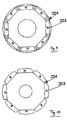
- FIG. 9 to 11 illustrate schematic plan views of three embodiments of a rotor 204 of the invention Permanent magnet synchronous motor after Fig. 3 , Fig. 9 shows on the circumference of the rotor 204 in pockets arranged permanent magnets 203 with different polarity N, S in the axial direction of the rotor 204th Fig. 10 illustrates an arrangement of the permanent magnets 203 on the outer peripheral surface of the rotor 204, and Fig. 11 shows ring magnets on the outer peripheral surface of the rotor 204.
- a fourth embodiment of the rotor of the permanent magnet synchronous motor according to the invention Fig. 3 is in Fig. 12 shown in a schematic perspective view.
- the rotor 204 here consists of two rotor packages 205 which are arranged one behind the other in the axial direction and which are rotated by an offset angle ⁇ , which is preferably half the number of stator slots, about the axial direction relative to one another.
- an offset angle ⁇ is between the first and last rotor package 205th
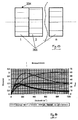
- Fig. 14 is a graphical representation of a braking torque of the permanent magnet synchronous motor according to the invention according to Fig. 3 compared to a conventional permanent magnet synchronous motor over a speed. Torque values are plotted on the left ordinate and I phase on the right phase current values. The upper curve shown with a thick line is the normal braking torque of a conventional permanent magnet synchronous motor which has a maximum at a speed of 220 n -1 , whereas an optimized braking torque of the permanent magnet synchronous motor according to the invention has a maximum at 60 n -1 , which about 50% smaller than that of the conventional permanent magnet synchronous motor.
- the normal phase current I phase is plotted as a thin top line, whereas the optimized phase current I phase of the permanent magnet synchronous motor according to the invention assumes a maximum value which is also about 50% smaller than that of the conventional permanent magnet synchronous motor.
- the permanent magnet synchronous motor according to the invention with a lower braking torque provides greater safety to a conventional motor by blocking the steering in a possible fault, for example in a power steering, not by an excessive braking torque. Due to the lower power consumption of the permanent magnet synchronous motor according to the invention a lower energy consumption is possible.
- the use of the permanent magnet synchronous motor according to the invention in a power steering system of a motor vehicle can be carried out both on the steering gear 101, on the steering shaft 102, on the pinion 105 or elsewhere with corresponding couplings.
- stator teeth 302 it would also be conceivable for the stator teeth 302 to have connecting bridges 401 and interruptions 402 in a same slat plane in a third slat shape.
- the application of the permanent magnet synchronous motor according to the invention for a drive device in a motor vehicle and in particular for a power steering system of a motor vehicle is to be understood merely as an example. Rather, the invention can be advantageously used in any electrical drives.
Landscapes
- Engineering & Computer Science (AREA)
- Power Engineering (AREA)
- Permanent Magnet Type Synchronous Machine (AREA)
- Iron Core Of Rotating Electric Machines (AREA)
- Permanent Field Magnets Of Synchronous Machinery (AREA)
- Power Steering Mechanism (AREA)
Abstract
Description
- Die vorliegende Erfindung betrifft einen Permanentmagnet-Synchronmotor, insbesondere elektrische Dreiphasenmotor. Die vorliegende Erfindung betrifft weiterhin eine elektrische Servolenkung eines Kraftfahrzeugs.
- Derartige Permanentmagnet-Synchronmotoren werden beispielsweise in Antriebseinrichtungen von Kraftfahrzeugen, insbesondere in Servolenkungssystemen und dergleichen, eingesetzt.
- Servolenkungssysteme sind in
Fig. 1a-c beispielhaft dargestellt.Fig. 1a zeigt ein Servolenkungssystem eines Kraftfahrzeugs mit Rädern 106, die über eine Spurstange 107 lenkbar verbunden sind. Die Spurstange 107 steht mit einem Lenkgetriebe 101 in Zusammenwirkung, welches hier eine Zahnstange (nur symbolisch durch einen Doppelpfeil angedeutet) aufweist, die mit einem Ritzel 105 verbunden ist. Das Ritzel 105 ist mit einem Lenkrad über eine Lenkwelle 102 drehbar gekoppelt. Ein Lenkantrieb 103 in Ausführung eines elektrischen Dreiphasenmotors mit einer Steuereinheit 104 ist an dem Lenkgetriebe 101 angebracht und dient als Unterstützung bei Lenkvorgängen, indem er mit der Zahnstange zusammenwirkt.Fig. 1b zeigt ein Servolenkungssystem ähnlich zuFig. 1a , wobei hier der Lenkantrieb 103 mit der Lenkwelle 102 unterstützend zusammenwirkt. Der Lenkantrieb 103 kann hierzu an einer Lenksäule angebracht sein. InFig. 1c ist ebenfalls ein zuFig. 1a und 1b ähnliches Servolenkungssystem gezeigt. In dieser Konfiguration ist der Lenkantrieb 103 in Zusammenwirkung mit dem Ritzel 105 gezeigt, wobei er auch an dem Lenkgetriebe 101 angeordnet sein kann. Ein derzeitig als Lenkantrieb 103 verwendeter Permanentmagnet-Synchronmotor ist inFig. 2 in einer schematischen Draufsicht illustriert und weist Folgendes auf: Einen Stator 201 mit Nuten 202, in denen Wicklungen (nicht gezeigt) angeordnet sind; und einen Rotor 204 mit Permanentmagneten 203, die hier in Axialrichtung des Motors innerhalb des Rotors 204 an dessen Umfang angeordnet sind. Der Rotor 204 befindet sich innerhalb des Stators 201. - Es gibt zwei Hauptgesichtspunkte, die ein solcher Motor erfüllen muss: 1) Leistungsfähigkeit und 2) Sicherheit. In Bezug auf die Leistungsfähigkeit sind Parameter wie zum Beispiel Leistungsdichte, maximales Ausgangsdrehmoment, Drehmomentschwankung bzw. -welligkeit und Rastmoment bzw. pulsierendes Moment von Bedeutung. Für die Sicherheit sind die folgenden Parameter von großer Wichtigkeit: maximales Bremsmoment, Kurzschlussfähigkeit, Fehlertoleranz und Einfachheit.
-
EP 1 770 847 A beschreibt einen Rotationsmotor mit Dauermagnet. Der Motor weist einen Stator mit Zähnen auf, welche an ihren zu einem Rotor weisenden Seiten Verbindungsabschnitte mit unterschiedlichen Umfangslängen aufweisen. In den Verbindungsabschnitten sind Durchgangslöcher mit unterschiedlichen Umfangslängen eingeformt, welche sich in unterschiedlichen axialen Längen von der Mitte der Verbindungsabschnitte nach beiden Seiten in axialer Richtung erstrecken. -
DE 198 42 948 A1 beschreibt ein Herstellverfahren eines Blechpakets eines Stators eines Elektromotors, mit mindestens einem durch aufeinander geschichtete Blechlamellen gebildeten Blechpaket eines Stators, aus mechanischen einzelnen Polen und in Umfangsrichtung des Stators zusammenhängenden Polen bestehenden Blechlamellen, mit mindestens einem Polschaft und wenigstens einem einen Rotor zugewandten Polschuh, Eindrückungen der Blechlamellen derart, dass die entgegengesetzten Seiten der Blechlamellen Vorsprünge aufweisen und dadurch die Blechlamellen durch Ineinandergreifen ihrer Eindrücke und Vorsprünge als Blechpaket des Stators bilden, Wicklungen der mechanischen Pole des Blechpakets, Stege
zwischen den Polen, die die zusammenhängenden mechanischen Pole in Umfangsrichtung verbinden. Die axiale Zusammensetzung weist einen vorgebbaren Wechsel von Polen mit Verbindungssteg und Polen ohne Verbindungssteg auf. Dabei sind fünf Lamellen mit Polen ohne Verbindungssteg zwischen jeweils einer Lamelle mit Polen mit Verbindungssteg angeordnet. -
EP 1 542 335 A illustriert einen Rotor für eine sich drehende elektrische Maschine. Der Rotor weist eine Welle und eine Vielzahl von Rotorkernen auf, die auf der Welle befestigt und axial geteilt sind. Die Rotorkerne haben äußere periphere Flächen mit einem kreisförmigen Querschnitt. Permanentmagneten erstrecken sich durch die Rotorkerne und sind in gleichen Umfangsintervallen angeordnet. Lücken erstrecken sich axial durch die Rotorkerne und sind zwischen den äußeren peripheren Flächen und den Permanentmagneten gebildet. Die Lücken zweier benachbarter Rotorkerne sind umfangsmäßig an unterschiedlichen Positionen angeordnet. -
JP 2007 151232 A - Die Druckschrift NICOLA BIANCHI ET AL: "Design Techniques for Reducing the Cogging Torque in Surface-Mounted PM Motors", IEEE TRANSACTIONS ON INDUSTRY APPLICATIONS, IEEE SERVICE CENTER, PISCATAWAY, NJ, US, Bd. 38, Nr. 5, 1. September 2002 (2002-09-01), XP011073515, ISSN: 0093-9994, beschreibt verschiedene klassische und innovative Techniken zur Konstruktion oberflächenmontierter Permanentmagnet-Motoren zur Reduzierung eines Rastmomentes mit jeweiligem theoretischem Hintergrund sowie Grundlagen zur Drehmomentenwelligkeit bei Permanentmagnet-Rotoren. Dazu werden ein einfaches Originalmodell des Rastmomentmechanismus und eine Fourieranalyse eingeführt. Als Ergebnis wird hervorgehoben, dass einige Techniken nicht immer verwendbar sind, und dass einige von ihnen abzulehnen sind, wenn sie nicht korrekt verwendet werden. Zudem werden Auswirkungen von Rastmomentelimination auf EMK diskutiert. Eine Festlegung eines Versatzwinkels bei mehreren Rotorpaketen zur Verringerung einer Drehmomentenwelligkeit wird angesprochen.
- Die erhöhten Anforderungen an die Einsatzbedingungen in einem Kraftfahrzeug insbesondere in Bezug auf ein möglichst geringes Bauvolumen, niedriges Gewicht, geringe Anzahl der verwendeten Einzelteile und gleichzeitig hohem Wirkungsgrad, und die oben genannten Parameter resultieren in der stets vorhandenen Forderung, einen entsprechend verbesserten Permanentmagnet-Synchronmotor bereitzustellen.
- Vor diesem Hintergrund liegt der vorliegenden Erfindung daher die Aufgabe zugrunde, einen verbesserten Permanentmagnet-Synchronmotor anzugeben.
- Erfindungsgemäß wird diese Aufgabe durch einen Permanentmagnet-Synchronmotor mit den Merkmalen des Patentanspruchs 1 und/oder durch eine elektrische Servolenkung mit den Merkmalen des Patentanspruchs 6 gelöst.
- Demgemäß ist ein Permanentmagnet-Synchronmotor, insbesondere elektrischer Dreiphasenmotor, mit einem Rotor mit Permanentmagneten, mit einem Stator mit Statorjoch, in welchem Statorzähne mit dazwischen liegenden Staturnuten angeordnet sind, wobei jeweils auf einem Statorzahn zumindest eine Wicklung vorgesehen ist, wobei die Statorzähne als Lamellen in Axialrichtung des Stators geschichtet angeordnet sind und zumindest als zwei unterschiedliche Lamellen ausgebildet sind, wobei die Statorzähne in einer ersten Lamelle als ein Statorstern an ihren zum Rotor weisenden Enden untereinander umlaufend mittels jeweils einer Verbindungsbrücke verbunden sind und wobei die Statorzähne in einer zweiten Lamelle anstelle der Verbindungsbrücke eine Unterbrechung aufweisen, wobei der Rotor zumindest zwei Rotorpakete aufweist, die in der Axialrichtung des Rotors angeordnet sind, wobei die zumindest zwei Rotorpakete um einen Versatzwinkel untereinander um eine Rotorachse verdreht angeordnet sind bereitgestellt.
- Der Versatzwinkel ist in Winkelgrad kleiner oder gleich der Hälfte der Anzahl der Statornuten, wobei der Versatzwinkel bei mehr als zwei Rotorpaketen zwischen dem ersten und letzten Rotorpaket liegt, wobei die Statorzähne als Lamellen in Axialrichtung des Stators in der Reihenfolge Statorstern mit Verbindungsbrücken gefolgt von einer, zwei oder drei Lamellen jeweils mit nicht verbundenen Statorzähnen als Einzelzähne angeordnet sind, wobei die Lamellen in diesem geschichteten Aufbau in Axialrichtung abwechselnd angeordnet sind, und wobei eine Anzahl n von Rotorpaketen von einer aktiven axialen Länge (Lstk) des Permanentmagnet-Synchronmotors wie folgt abhängig ist:
- n = 1 oder 2, wenn Lstk ≤ 40mm
- n = 2 oder 3, wenn 40 ≤ Lstk ≤ 60mm
- n = 3 oder 4, wenn 60 ≤ Lstk ≤ 80mm
- n = 4, wenn 80 ≤ Lstk ≤ 130mm.
- Ein solcher Permanentmagnet-Synchronmotors weist damit die Vorteile eines sehr geringen Rastmomentes verbunden mit einer hohen Leistungsfähigkeit und gleichzeitig niedriger Momentwelligkeit auf.
- Unter der aktiven axialen Länge Lstk ist die axiale Länge des Stators mit Rotor zu verstehen.
- Ein weiterer Vorteil besteht darin, dass der erfindungsgemäße Permanentmagnet-Synchronmotor ein im Vergleich zu herkömmlichen Permanentmagnet-Synchronmotoren niedrigeres Bremsmoment aufweist, welches bis zu 50% geringer sein kann.
- Zudem ergibt sich der Vorteil hoher Leistungsfähigkeit bei gleichzeitigem Sicherheitsbereich ermöglicht.
- Gleichzeitig kann damit auch ein Startrelais entfallen, da die Bremsmomente geringer ausfallen.
- Der beschriebene Permanentmagnet-Synchronmotor ist bevorzugt für die Antriebseinrichtung einer Kraftfahrzeug-Servolenkung geeignet. Denkbar sind aber auch andere Anwendungen bei anderen Antriebseinrichtungen.
- Vorteilhafte Ausgestaltungen und Weiterbildungen der Erfindung ergeben sich aus den Unteransprüchen sowie aus der Beschreibung in Zusammenschau mit den Figuren der Zeichnung.
- In weiterer bevorzugter Ausführung ist zwischen den Wicklungen in den Statornuten jeweils zumindest eine Isolierung vorgesehen. Dadurch wird eine Wahrscheinlichkeit von Isolationsfehlern geringer.
- Die Wicklungen können in einer Dreiphasen-Sternschaltung oder in einer Dreiphasen-Dreieckschaltung angeordnet sein. Dadurch wird im Fall fehlerhafter Isolation im Vergleich zu herkömmlichen Motoren ein sehr geringes Bremsmoment erzielt. Die Dreieckschaltung bietet auch den Vorteil, dass Verbindungsstellen im Vergleich zur Sternschaltung, welche für herkömmliche Permanentmagnet-Synchronmotoren mit Startrelais erforderlich sind, verringert sind.
- Der Rotor kann unterschiedliche mit Permanentmagneten in Taschen an seinem Umfang, umfänglich auf seiner Oberfläche oder mit Ringmagneten ausgebildet sein.
- In bevorzugten Ausführungen weist der Permanentmagnet-Synchronmotor zwölf Statornuten und acht Polpaare, zwölf Statornuten und zehn Polpaare oder zwölf Statornuten und vierzehn Polpaare auf.
- Im Vergleich zu einem herkömmlichen Permanentmagnet-Synchronmotor weist der erfindungsgemäße Permanentmagnet-Synchronmotor folgende Vorteile auf:
- Erhöhte Leistungsfähigkeit von ca. 10%
- Um ca. 50% niedrigeres Bremsmoment
- Erhöhte Motorinduktivität für kleine Ströme
- Reduziertes Rastmoment
- Reduzierte Momentenwelligkeit
- Kein Relais erforderlich
- Dreieckschaltung kann verwendet werden
- Ausgezeichnete Wicklungs-/Phasenisolation
- Einfachere Statorkonstruktion
- Einfachere Rotorkonstruktion
- Die obigen Ausgestaltungen und Weiterbildungen der Erfindung lassen sich auf beliebige Art und Weise miteinander kombinieren.
- Die vorliegende Erfindung wird nachfolgend anhand der in den schematischen Figuren der Zeichnung angegebenen Ausführungsbeispiele näher erläutert. Es zeigen dabei:
- Fig. 1a-c
- schematische Darstellungen von Servolenkungssystemen mit Lenkantrieben in unterschiedlichen Einbaupositionen;
- Fig. 2
- eine schematische Draufsicht auf einen Permanentmagnet-Synchronmotor;
- Fig. 3
- eine schematische Draufsicht auf einen Stator eines Ausführungsbeispiels eines erfindungsgemäßen Permanentmagnet-Synchronmotors;
- Fig. 4
- eine vergrößerte schematische Draufsicht auf einen Teilabschnitt von Statorzähnen des erfindungsgemäßen Permanentmagnet-Synchronmotors nach
Fig. 3 ; - Fig. 5
- eine vergrößerte schematische Draufsicht auf einzelne Statorzähne des erfindungsgemäßen Permanentmagnet-Synchronmotors nach
Fig. 3 ; - Fig. 6
- eine vergrößerte, schematische perspektivische Ansicht auf Statorsterne und Statorzähne des erfindungsgemäßen PermanentmagnetSynchronmotors nach
Fig. 3 ; - Fig. 7-8
- Schaltbilder von Wicklungen des erfindungsgemäßen Permanentmagnet-Synchronmotors nach
Fig. 3 ; - Fig. 9-11
- schematische Draufsichten auf drei Ausführungsbeispiele eines Rotors des erfindungsgemäßen Permanentmagnet-Synchronmotors nach
Fig. 3 ; - Fig. 12
- eine schematische perspektivische Ansicht eines vierten Ausführungsbeispiels des Rotors des erfindungsgemäßen Permanentmagnet-Synchronmotors nach
Fig. 3 ; - Fig. 13
- eine schematische Seitenansicht des vierten Ausführungsbeispiels des Rotors nach
Fig. 12 ; und - Fig. 14
- eine grafische Darstellung eines Bremsmomentes über einer Drehzahl des erfindungsgemäßen Permanentmagnet-Synchronmotors nach
Fig. 3 im Vergleich zu einem herkömmlichen Permanentmagnet-Synchronmotor. - In den Figuren der Zeichnung sind gleiche und funktionsgleiche Elemente und Merkmale - sofern nichts Anderes ausgeführt ist - mit denselben Bezugszeichen versehen.
- Servolenksysteme und Grundaufbau eines Permanentmagnet-Synchronmotors sind bereits oben mit Bezugnahme auf
Fig. 1a bis c undFig. 2 erläutert worden. -
Fig. 3 zeigt eine schematische Draufsicht auf einen Stator 300 eines Ausführungsbeispiels eines erfindungsgemäßen Permanentmagnet-Synchronmotors mit einem Statorjoch 301, in welchem Statorzähne 302 am inneren Umfang des Statorjochs 301 umlaufend angeordnet sind. Zwischen den Statorzähnen 302 befinden sich Statornuten 202, in welchen Wicklungen 303 um die Statorzähne 302 angeordnet sind. Die Wicklungen 303 sind in den Statornuten 202 untereinander zusätzlich mit einer Isolierung 304 isoliert. Die zur Mitte des Statorjochs 301 hin weisenden Enden der Statorzähne 302 sind verbreitert, dass die Statornuten 202 radial innen von diesen Verbreiterungen und außen vom Statorjoch 301 umgeben sind. - In
Fig. 4 ist eine vergrößerte schematische Draufsicht auf einen Teilabschnitt der Statorzähne 302 des erfindungsgemäßen Permanentmagnet-Synchronmotors nachFig. 3 dargestellt. In diesem Beispiel sind die Statorzähne 302 als Lamellen ausgebildet, die in Axialrichtung des Stators 300 übereinandergeschichtet sind. Diese Lamellen können zumindest zwei unterschiedliche Formen aufweisen.Fig. 4 zeigt eine erste Form in Gestalt eines Statorsterns 305. Hierbei sind die verbreiterten Enden der Statorzähne 302 jeweils umlaufend über eine Verbindungsbrücke 401 verbunden. - Eine zweite Form dieser Lamellen ist in
Fig. 5 gezeigt, wobei die verbreiterten Enden der Statorzähne 302 nicht verbunden sind, sondern eine Unterbrechung 402 aufweisen. Sie sind somit Einzelzähne. In dem oben erwähnten geschichteten Aufbau in Axialrichtung sind diese Lamellen abwechselnd übereinander geschichtet angeordnet, wieFig. 6 in einem Beispiel in perspektivischer Darstellung illustriert. Hierbei wechseln sich Verbindungsbrücken 401 und Unterbrechungen 402 ab. Auch weitere Anordnungen sind möglich, wie zum Beispiel zwei oder drei Lamellen mit Unterbrechungen 402 zwischen zwei Verbindungsbrücken 401. Weitere Kombinationen sind selbstverständlich denkbar. -
Fig. 7 und 8 zeigen Schaltbilder von Wicklungen des erfindungsgemäßen Permanentmagnet-Synchronmotors, wobei sowohl eine übliche Sternschaltung nachFig. 7 als auch eine Dreieckschaltung nachFig. 8 möglich ist. Die Dreieckschaltung bietet hier den Vorteil, dass nur drei Anschlüsse U, V, W erforderlich sind, den ein Sternanschluss bzw. eine Sternverbindung der Sternschaltung entfällt. -
Fig. 9 bis 11 illustrieren schematische Draufsichten auf drei Ausführungsbeispiele eines Rotors 204 des erfindungsgemäßen Permanentmagnet-Synchronmotors nachFig. 3 .Fig. 9 zeigt am Umfang des Rotors 204 in Taschen angeordnete Permanentmagneten 203 mit unterschiedlicher Polung N, S in Axialrichtung des Rotors 204.Fig. 10 illustriert eine Anordnung der Permanentmagneten 203 auf der äußeren Umfangsfläche des Rotors 204, undFig. 11 zeigt Ringmagneten auf der äußeren Umfangsfläche des Rotors 204. - Ein viertes Ausführungsbeispiels des Rotors des erfindungsgemäßen Permanentmagnet-Synchronmotors nach
Fig. 3 ist inFig. 12 in einer schematische perspektivische Ansicht gezeigt. Der Rotor 204 besteht hier aus zwei in Axialrichtung hintereinander angeordneten Rotorpaketen 205, die um einen Versatzwinkel γ, der vorzugsweise die Hälfte der Statornutenanzahl beträgt, um die Axialrichtung zu einander verdreht sind. Bei einer Anzahl von mehr als zwei Rotorpaketen 205, wieFig. 13 illustriert, liegt der Versatzwinkel γ zwischen dem ersten und letzten Rotorpaket 205. -
Fig. 14 ist eine grafische Darstellung eines Bremsmomentes des erfindungsgemäßen Permanentmagnet-Synchronmotors nachFig. 3 im Vergleich zu einem herkömmlichen Permanentmagnet-Synchronmotor über einer Drehzahl. Auf der linken Ordinate sind Momentenwerte und auf der rechten Phasenstromwerte IPhase aufgetragen. Die obere mit dicker Linie gezeigte Kurve ist das normale Bremsmoment eines herkömmlichen Permanentmagnet-Synchronmotors, welches bei einer Drehzahl von 220 n-1 ein Maximum hat, wohingegen ein optimiertes Bremsmoment des erfindungsgemäßen Permanentmagnet-Synchronmotors bei 60 n-1 ein Maximum aufweist, welches um ca. 50% kleiner ist als das des herkömmlichen Permanentmagnet-Synchronmotors. Der normale Phasenstrom IPhase ist als dünne obere Linie aufgetragen, wohingegen der optimierte Phasenstrom IPhase des erfindungsgemäßen Permanentmagnet-Synchronmotors einen Maximalwert annimmt, der ebenfalls um ca. 50% kleiner ist als das des herkömmlichen Permanentmagnet-Synchronmotors. So ist durch diese Versuchsergebnisse zu erkennen, dass der erfindungsgemäße Permanentmagnet-Synchronmotor mit einem geringeren Bremsmoment eine größere Sicherheit zu einem herkömmlichen Motor bietet, indem in einem möglichen Fehlerfall, zum Beispiel bei einer Servolenkung, die Lenkung nicht durch ein zu hohes Bremsmoment blockiert wird. Durch die geringere Stromaufnahme des erfindungsgemäßen Permanentmagnet-Synchronmotors ist ein geringerer Energieverbrauch ermöglicht. - Der Einsatz des erfindungsgemäßen Permanentmagnet-Synchronmotors in einem Servolenksystem eines Kraftfahrzeugs kann sowohl am Lenkgetriebe 101, an der Lenkwelle 102, an dem Ritzel 105 oder auch an anderer Stelle mit entsprechenden Kopplungen erfolgen.
- Obgleich die vorliegende Erfindung vorstehend anhand eines bevorzugten Ausführungsbeispiels erläutert wurde, sei sie nicht darauf beschränkt, sondern lässt sich auf beliebige Art und Weise modifizieren, ohne vom Gegenstand der vorliegenden Erfindung abzuweichen.
- Insbesondere wäre auch denkbar, dass die Statorzähne 302 in einer dritten Lamellenform Verbindungsbrücken 401 und Unterbrechungen 402 in einer gleichen Lamellenebene aufweisen.
- Auch die Anwendung des erfindungsgemäßen Permanentmagnet-Synchronmotors für eine Antriebsvorrichtung in einem Kraftfahrzeug und hier insbesondere für ein Servolenksystem eines Kraftfahrzeuges sei lediglich beispielhaft zu verstehen. Die Erfindung lässt sich vielmehr bei beliebigen elektrischen Antrieben vorteilhaft einsetzen.
- Die vorstehend genannten Zahlenangaben sind zwar bevorzugt und bisweilen einer konkreten Anwendung entnommen, jedoch können diese, entsprechend dem fachmännischen Handeln und Wissen, auch mehr oder weniger variiert werden.
-
- 101
- Lenkgetriebe
- 102
- Lenkwelle
- 103
- Motor
- 104
- Steuereinheit
- 105
- Ritzel
- 106
- Rad
- 107
- Spurstange
- 201
- Stator
- 202
- Statornut
- 203
- Permanentmagnet
- 204
- Rotor
- 205
- Rotorpaket
- 301
- Statorjoch
- 302
- Statorzahn
- 303
- Wicklung
- 304
- Isolierung
- 305
- Statorstern
- 401
- Verbindungsbrücke
- 402
- Unterbrechung
- N, S
- Magnetpole
- U, V, W
- Anschluss
- γ
- Versatzwinkel
Claims (6)
- Permanentmagnet-Synchronmotor, insbesondere elektrischer Dreiphasenmotor, mit einem Rotor (204) mit Permanentmagneten (203), mit einem Stator (300) mit Statorjoch (301), in welchem Statorzähne (302) mit dazwischen liegenden Staturnuten (202) angeordnet sind,- wobei jeweils auf einem Statorzahn (302) zumindest eine Wicklung (303) vorgesehen ist,- wobei die Statorzähne (302) als Lamellen in Axialrichtung des Stators (300) geschichtet angeordnet sind und zumindest als zwei unterschiedliche Lamellen ausgebildet sind,- wobei die Statorzähne (302) in einer ersten Lamelle als ein Statorstern (305) an ihren zum Rotor (204) weisenden Enden untereinander umlaufend mittels jeweils einer Verbindungsbrücke (401) verbunden sind und- wobei die Statorzähne (302) in einer zweiten Lamelle anstelle der Verbindungsbrücke (401) eine Unterbrechung (402) aufweisen,- wobei der Rotor (204) zumindest zwei Rotorpakete (205) aufweist, die in der Axialrichtung des Rotors (204) angeordnet sind, wobei die zumindest zwei Rotorpakete (205) um einen Versatzwinkel (γ) untereinander um eine Rotorachse verdreht angeordnet sind,
dadurch gekennzeichnet, dass- der Versatzwinkel (γ) in Winkelgrad kleiner oder gleich der Hälfte der Anzahl der Statornuten (202) ist, wobei der Versatzwinkel (γ) bei mehr als zwei Rotorpaketen (205) zwischen dem ersten und letzten Rotorpaket (205) liegt,- wobei die Statorzähne (302) als Lamellen in Axialrichtung des Stators (300) in der Reihenfolge Statorstern (305) mit Verbindungsbrücken (401) gefolgt von einer, zwei oder drei Lamellen jeweils mit nicht verbundenen Statorzähnen (302) als Einzelzähne angeordnet sind,- wobei die Lamellen in diesem geschichteten Aufbau in Axialrichtung abwechselnd angeordnet sind,- und wobei eine Anzahl n von Rotorpaketen (205) von einer aktiven axialen Länge (Lstk) des Permanentmagnet-Synchronmotors wie folgt abhängig ist:n = 1 oder 2, wenn Lstk ≤ 40mmn = 2 oder 3, wenn 40 ≤ Lstk ≤ 60mmn = 3 oder 4, wenn 60 ≤ Lstk ≤ 80mmn = 4, wenn 80 ≤ Lstk ≤ 130mm. - Synchronmotor nach Anspruch 1,
dadurch gekennzeichnet,
dass zwischen den Wicklungen (303) in den Statornuten (202) jeweils zumindest eine Isolierung (304) vorgesehen ist. - Synchronmotor nach einem der vorhergehenden Ansprüche,
dadurch gekennzeichnet,
dass die Wicklungen (303) in einer Dreiphasen-Sternschaltung oder in einer Dreiphasen-Dreieckschaltung angeordnet sind. - Synchronmotor nach einem der vorhergehenden Ansprüche,
dadurch gekennzeichnet,
dass der Rotor (204) Permanentmagnete (203) in Taschen an seinem Umfang, umfänglich auf seiner Oberfläche oder als Ringmagnete aufweist. - Synchronmotor nach einem der vorhergehenden Ansprüche,
dadurch gekennzeichnet,
dass der Permanentmagnet-Synchronmotor zwölf Statornuten (202) und acht Polpaare, zwölf Statornuten (202) und zehn Polpaare oder zwölf Statornuten (202) und vierzehn Polpaare aufweist. - Elektrische Servolenkung eines Kraftfahrzeuges, welche einen Permanentmagnet-Synchronmotor nach einem der vorhergehenden Ansprüche aufweist.
Applications Claiming Priority (2)
| Application Number | Priority Date | Filing Date | Title |
|---|---|---|---|
| DE102008042100A DE102008042100A1 (de) | 2008-09-15 | 2008-09-15 | Permanentmagnet-Synchronmotor und elektrische Servolenkung |
| EP09743837.8A EP2327136B1 (de) | 2008-09-15 | 2009-09-14 | Permanentmagnet-synchronmotor und elektrische servolenkung |
Related Parent Applications (2)
| Application Number | Title | Priority Date | Filing Date |
|---|---|---|---|
| EP09743837.8A Division EP2327136B1 (de) | 2008-09-15 | 2009-09-14 | Permanentmagnet-synchronmotor und elektrische servolenkung |
| EP09743837.8A Division-Into EP2327136B1 (de) | 2008-09-15 | 2009-09-14 | Permanentmagnet-synchronmotor und elektrische servolenkung |
Publications (2)
| Publication Number | Publication Date |
|---|---|
| EP3038233A1 true EP3038233A1 (de) | 2016-06-29 |
| EP3038233B1 EP3038233B1 (de) | 2017-05-03 |
Family
ID=41416029
Family Applications (2)
| Application Number | Title | Priority Date | Filing Date |
|---|---|---|---|
| EP09743837.8A Not-in-force EP2327136B1 (de) | 2008-09-15 | 2009-09-14 | Permanentmagnet-synchronmotor und elektrische servolenkung |
| EP15198633.8A Not-in-force EP3038233B1 (de) | 2008-09-15 | 2009-09-14 | Permanentmagnet-synchronmotor und elektrische servolenkung |
Family Applications Before (1)
| Application Number | Title | Priority Date | Filing Date |
|---|---|---|---|
| EP09743837.8A Not-in-force EP2327136B1 (de) | 2008-09-15 | 2009-09-14 | Permanentmagnet-synchronmotor und elektrische servolenkung |
Country Status (6)
| Country | Link |
|---|---|
| US (1) | US8614532B2 (de) |
| EP (2) | EP2327136B1 (de) |
| KR (1) | KR101485586B1 (de) |
| CN (2) | CN102177638B (de) |
| DE (1) | DE102008042100A1 (de) |
| WO (1) | WO2010028639A1 (de) |
Families Citing this family (15)
| Publication number | Priority date | Publication date | Assignee | Title |
|---|---|---|---|---|
| KR101313447B1 (ko) * | 2011-11-29 | 2013-10-01 | 엘지이노텍 주식회사 | 스테이터 코어 |
| EP2665156A1 (de) * | 2012-05-14 | 2013-11-20 | Grundfos Holding A/S | Rotor für einen Elektromotor |
| DE102012213465A1 (de) * | 2012-07-31 | 2014-02-06 | Brose Fahrzeugteile GmbH & Co. Kommanditgesellschaft, Würzburg | Permanentmagnet-Synchronmotor und Servolenkungsanordnung |
| JP2014064395A (ja) * | 2012-09-21 | 2014-04-10 | Sanyo Denki Co Ltd | 埋め込み永久磁石型モータおよびロータ |
| US9214837B2 (en) | 2013-12-13 | 2015-12-15 | Arm Limited | Electric motor with plural stator components |
| NL2013403B1 (nl) * | 2014-09-02 | 2016-09-26 | Elsio Cicilia Beremundo | Synchrone rotatiemotor of generator voorzien van verscheidene rotors en/of stators. |
| DE102014222245A1 (de) | 2014-10-31 | 2016-05-04 | Brose Fahrzeugteile GmbH & Co. Kommanditgesellschaft, Würzburg | Statoranordnung für einen Elektromotor, Elektromotor sowie Verfahren zur Herstellung einer Statoranordnung |
| DE102016201967A1 (de) * | 2016-02-10 | 2017-08-10 | Robert Bosch Gmbh | Stator für eine elektrische Maschine, insbesondere für einen Innenäulfer-Elektromotor |
| CN106685113B (zh) * | 2017-02-28 | 2019-04-23 | 合肥工业大学 | 一种铸铝转子齿槽结构 |
| CN106602755A (zh) * | 2017-02-28 | 2017-04-26 | 合肥工业大学 | 一种可分离式定子电机 |
| JP6900846B2 (ja) * | 2017-09-05 | 2021-07-07 | 株式会社デンソー | ステータコア |
| CN109120080B (zh) * | 2018-09-19 | 2024-09-20 | 珠海格力电器股份有限公司 | 电机定子、电机和大巴 |
| CN114069912B (zh) * | 2021-12-17 | 2025-08-12 | 威灵(芜湖)电机制造有限公司 | 定子组件、电机和电器设备 |
| DE102022109794A1 (de) * | 2022-04-22 | 2023-10-26 | Dr. Ing. H.C. F. Porsche Aktiengesellschaft | Statoranordnung für eine Elektromaschine |
| WO2025251130A1 (pt) * | 2024-06-06 | 2025-12-11 | Melo Medeiros Antonio Roberto | Hipermotor elástico multiplicador de potência |
Citations (4)
| Publication number | Priority date | Publication date | Assignee | Title |
|---|---|---|---|---|
| DE19842948A1 (de) | 1998-09-18 | 2000-03-30 | Siemens Ag | Elektromotor |
| EP1542335A1 (de) | 2003-12-08 | 2005-06-15 | Nissan Motor Co., Ltd. | Rotor für rotierende elektrische Maschine |
| EP1770847A2 (de) | 2005-09-20 | 2007-04-04 | Sanyo Denki Co., Ltd. | Dauermagnetischer Rotationsmotor |
| JP2007151232A (ja) | 2005-11-24 | 2007-06-14 | Toshiba Corp | 永久磁石型モータ及びそれを使用した電動パワーステアリング装置 |
Family Cites Families (9)
| Publication number | Priority date | Publication date | Assignee | Title |
|---|---|---|---|---|
| ITTO980343A1 (it) * | 1998-04-23 | 1999-10-23 | Bitron Spa | Motore elettrico a commutazione elettronica |
| US6597078B2 (en) * | 2000-12-04 | 2003-07-22 | Emerson Electric Co. | Electric power steering system including a permanent magnet motor |
| JP2003032936A (ja) * | 2001-07-16 | 2003-01-31 | Matsushita Electric Ind Co Ltd | 電動機 |
| DE10147073A1 (de) * | 2001-09-25 | 2003-04-30 | Minebea Co Ltd | Elektromotor, insbesondere elektronisch kommutierter Gleichstrommotor |
| US6822364B2 (en) * | 2002-07-30 | 2004-11-23 | Asmo Co., Ltd. | Brushless motor |
| JP2006187130A (ja) * | 2004-12-28 | 2006-07-13 | Hitachi Ltd | 捲回式鉛電池を電源とする電動パワーステアリングシステム及びそれに用いられるモータとインバータ装置 |
| ITRE20050029A1 (it) * | 2005-03-24 | 2006-09-25 | Motor Power Co Srl | Motore elettrico trifase ad elevata coppia |
| JP4691376B2 (ja) * | 2005-03-25 | 2011-06-01 | 山洋電気株式会社 | 永久磁石型回転モータ |
| JP2008228390A (ja) * | 2007-03-09 | 2008-09-25 | Jtekt Corp | ブラシレスモータおよびそれを備えた電動パワーステアリング装置 |
-
2008
- 2008-09-15 DE DE102008042100A patent/DE102008042100A1/de not_active Withdrawn
-
2009
- 2009-09-14 WO PCT/DE2009/001275 patent/WO2010028639A1/de not_active Ceased
- 2009-09-14 US US13/119,013 patent/US8614532B2/en not_active Expired - Fee Related
- 2009-09-14 KR KR1020117006731A patent/KR101485586B1/ko not_active Expired - Fee Related
- 2009-09-14 CN CN200980140461.6A patent/CN102177638B/zh not_active Expired - Fee Related
- 2009-09-14 EP EP09743837.8A patent/EP2327136B1/de not_active Not-in-force
- 2009-09-14 EP EP15198633.8A patent/EP3038233B1/de not_active Not-in-force
- 2009-09-14 CN CN201510158399.0A patent/CN104868679B/zh not_active Expired - Fee Related
Patent Citations (4)
| Publication number | Priority date | Publication date | Assignee | Title |
|---|---|---|---|---|
| DE19842948A1 (de) | 1998-09-18 | 2000-03-30 | Siemens Ag | Elektromotor |
| EP1542335A1 (de) | 2003-12-08 | 2005-06-15 | Nissan Motor Co., Ltd. | Rotor für rotierende elektrische Maschine |
| EP1770847A2 (de) | 2005-09-20 | 2007-04-04 | Sanyo Denki Co., Ltd. | Dauermagnetischer Rotationsmotor |
| JP2007151232A (ja) | 2005-11-24 | 2007-06-14 | Toshiba Corp | 永久磁石型モータ及びそれを使用した電動パワーステアリング装置 |
Non-Patent Citations (2)
| Title |
|---|
| NICOLA BIANCHI ET AL.: "IEEE TRANSACTIONS ON INDUSTRY APPLICATIONS", vol. 38, 1 September 2002, IEEE SERVICE CENTER, article "Design Techniques for Reducing the Cogging Torque in Surface-Mounted PM Motors" |
| NICOLA BIANCHI ET AL: "Design Techniques for Reducing the Cogging Torque in Surface-Mounted PM Motors", IEEE TRANSACTIONS ON INDUSTRY APPLICATIONS, IEEE SERVICE CENTER, PISCATAWAY, NJ, US, vol. 38, no. 5, 1 September 2002 (2002-09-01), XP011073515, ISSN: 0093-9994 * |
Also Published As
| Publication number | Publication date |
|---|---|
| CN104868679B (zh) | 2018-12-21 |
| DE102008042100A1 (de) | 2010-03-18 |
| EP3038233B1 (de) | 2017-05-03 |
| KR101485586B1 (ko) | 2015-01-23 |
| EP2327136A1 (de) | 2011-06-01 |
| US8614532B2 (en) | 2013-12-24 |
| CN102177638B (zh) | 2015-05-06 |
| CN102177638A (zh) | 2011-09-07 |
| WO2010028639A1 (de) | 2010-03-18 |
| US20120098376A1 (en) | 2012-04-26 |
| CN104868679A (zh) | 2015-08-26 |
| KR20110069022A (ko) | 2011-06-22 |
| EP2327136B1 (de) | 2016-08-17 |
Similar Documents
| Publication | Publication Date | Title |
|---|---|---|
| EP3038233B1 (de) | Permanentmagnet-synchronmotor und elektrische servolenkung | |
| DE102006025396B4 (de) | A-phasiger bürstenloser Motor | |
| EP2115857B1 (de) | 18/8-synchronmotor | |
| EP2427951B1 (de) | Elektrische synchronmaschine | |
| EP2160816A2 (de) | Synchronmotor mit 12 statorzähnen und 10 rotorpolen | |
| EP3479462B1 (de) | Elektrisches maschinensystem | |
| DE102010032764A1 (de) | Elektrische Maschine und Stator für dieselbe | |
| EP3352331A1 (de) | Rotorblech für einen permanenterregten elektromotor und rotor | |
| EP2550721B1 (de) | Elektrische maschine und lenkungsvorrichtung | |
| DE102016212022A1 (de) | Rotor | |
| WO2018002128A1 (de) | Rotor, verfahren zum herstellen eines rotors, reluktanzmaschine und arbeitsmaschine | |
| EP2517334B1 (de) | Rotor für eine elektrische maschine | |
| WO2015007441A2 (de) | Elektrische maschine und anordnung von elektrischen maschinen | |
| EP2880750B1 (de) | Permanentmagnet-synchronmotor und servolenkungsanordnung | |
| EP2532073B1 (de) | Ständer einer permanenterregten rotierenden elektrischen maschine | |
| EP3035495A1 (de) | Rotor für eine permanentmagneterregte elektrische Maschine | |
| EP3900156B1 (de) | Blechpaket für eine elektrische maschine | |
| EP3457533B1 (de) | Rotor einer elektrischen maschine | |
| DE102015105991B4 (de) | Elektroarbeitsmaschine hoher Leistungsdichte | |
| EP2532074B1 (de) | Ständer einer permanenterregten rotierenden elektrischen maschine | |
| DE102010028869A1 (de) | Dynamoelektrische Maschine mit einer Einschichtwicklung für Großantriebe | |
| WO2024067918A1 (de) | Rotor und elektrische maschine | |
| EP3326266B1 (de) | Hochgeschwindigkeitsmotor mit luftspaltwicklung | |
| EP3769406A1 (de) | Verschaltung von "n"-stromschienen in einem elektromotor | |
| DE102013207017A1 (de) | Verbessertes Blechpaket eines Läufers mit großem Durchmesser |
Legal Events
| Date | Code | Title | Description |
|---|---|---|---|
| PUAI | Public reference made under article 153(3) epc to a published international application that has entered the european phase |
Free format text: ORIGINAL CODE: 0009012 |
|
| AC | Divisional application: reference to earlier application |
Ref document number: 2327136 Country of ref document: EP Kind code of ref document: P |
|
| AK | Designated contracting states |
Kind code of ref document: A1 Designated state(s): AT BE BG CH CY CZ DE DK EE ES FI FR GB GR HR HU IE IS IT LI LT LU LV MC MK MT NL NO PL PT RO SE SI SK SM TR |
|
| 17P | Request for examination filed |
Effective date: 20161010 |
|
| RBV | Designated contracting states (corrected) |
Designated state(s): AT BE BG CH CY CZ DE DK EE ES FI FR GB GR HR HU IE IS IT LI LT LU LV MC MK MT NL NO PL PT RO SE SI SK SM TR |
|
| GRAP | Despatch of communication of intention to grant a patent |
Free format text: ORIGINAL CODE: EPIDOSNIGR1 |
|
| STAA | Information on the status of an ep patent application or granted ep patent |
Free format text: STATUS: GRANT OF PATENT IS INTENDED |
|
| INTG | Intention to grant announced |
Effective date: 20161216 |
|
| GRAS | Grant fee paid |
Free format text: ORIGINAL CODE: EPIDOSNIGR3 |
|
| GRAA | (expected) grant |
Free format text: ORIGINAL CODE: 0009210 |
|
| STAA | Information on the status of an ep patent application or granted ep patent |
Free format text: STATUS: THE PATENT HAS BEEN GRANTED |
|
| AC | Divisional application: reference to earlier application |
Ref document number: 2327136 Country of ref document: EP Kind code of ref document: P |
|
| AK | Designated contracting states |
Kind code of ref document: B1 Designated state(s): AT BE BG CH CY CZ DE DK EE ES FI FR GB GR HR HU IE IS IT LI LT LU LV MC MK MT NL NO PL PT RO SE SI SK SM TR |
|
| REG | Reference to a national code |
Ref country code: GB Ref legal event code: FG4D Free format text: NOT ENGLISH |
|
| REG | Reference to a national code |
Ref country code: AT Ref legal event code: REF Ref document number: 890990 Country of ref document: AT Kind code of ref document: T Effective date: 20170515 Ref country code: CH Ref legal event code: EP |
|
| REG | Reference to a national code |
Ref country code: IE Ref legal event code: FG4D Free format text: LANGUAGE OF EP DOCUMENT: GERMAN |
|
| REG | Reference to a national code |
Ref country code: DE Ref legal event code: R096 Ref document number: 502009013943 Country of ref document: DE |
|
| REG | Reference to a national code |
Ref country code: FR Ref legal event code: PLFP Year of fee payment: 9 |
|
| REG | Reference to a national code |
Ref country code: NL Ref legal event code: MP Effective date: 20170503 |
|
| REG | Reference to a national code |
Ref country code: LT Ref legal event code: MG4D |
|
| PG25 | Lapsed in a contracting state [announced via postgrant information from national office to epo] |
Ref country code: GR Free format text: LAPSE BECAUSE OF FAILURE TO SUBMIT A TRANSLATION OF THE DESCRIPTION OR TO PAY THE FEE WITHIN THE PRESCRIBED TIME-LIMIT Effective date: 20170804 Ref country code: HR Free format text: LAPSE BECAUSE OF FAILURE TO SUBMIT A TRANSLATION OF THE DESCRIPTION OR TO PAY THE FEE WITHIN THE PRESCRIBED TIME-LIMIT Effective date: 20170503 Ref country code: NO Free format text: LAPSE BECAUSE OF FAILURE TO SUBMIT A TRANSLATION OF THE DESCRIPTION OR TO PAY THE FEE WITHIN THE PRESCRIBED TIME-LIMIT Effective date: 20170803 Ref country code: ES Free format text: LAPSE BECAUSE OF FAILURE TO SUBMIT A TRANSLATION OF THE DESCRIPTION OR TO PAY THE FEE WITHIN THE PRESCRIBED TIME-LIMIT Effective date: 20170503 Ref country code: FI Free format text: LAPSE BECAUSE OF FAILURE TO SUBMIT A TRANSLATION OF THE DESCRIPTION OR TO PAY THE FEE WITHIN THE PRESCRIBED TIME-LIMIT Effective date: 20170503 Ref country code: LT Free format text: LAPSE BECAUSE OF FAILURE TO SUBMIT A TRANSLATION OF THE DESCRIPTION OR TO PAY THE FEE WITHIN THE PRESCRIBED TIME-LIMIT Effective date: 20170503 |
|
| PG25 | Lapsed in a contracting state [announced via postgrant information from national office to epo] |
Ref country code: LV Free format text: LAPSE BECAUSE OF FAILURE TO SUBMIT A TRANSLATION OF THE DESCRIPTION OR TO PAY THE FEE WITHIN THE PRESCRIBED TIME-LIMIT Effective date: 20170503 Ref country code: PL Free format text: LAPSE BECAUSE OF FAILURE TO SUBMIT A TRANSLATION OF THE DESCRIPTION OR TO PAY THE FEE WITHIN THE PRESCRIBED TIME-LIMIT Effective date: 20170503 Ref country code: SE Free format text: LAPSE BECAUSE OF FAILURE TO SUBMIT A TRANSLATION OF THE DESCRIPTION OR TO PAY THE FEE WITHIN THE PRESCRIBED TIME-LIMIT Effective date: 20170503 Ref country code: IS Free format text: LAPSE BECAUSE OF FAILURE TO SUBMIT A TRANSLATION OF THE DESCRIPTION OR TO PAY THE FEE WITHIN THE PRESCRIBED TIME-LIMIT Effective date: 20170903 Ref country code: NL Free format text: LAPSE BECAUSE OF FAILURE TO SUBMIT A TRANSLATION OF THE DESCRIPTION OR TO PAY THE FEE WITHIN THE PRESCRIBED TIME-LIMIT Effective date: 20170503 Ref country code: BG Free format text: LAPSE BECAUSE OF FAILURE TO SUBMIT A TRANSLATION OF THE DESCRIPTION OR TO PAY THE FEE WITHIN THE PRESCRIBED TIME-LIMIT Effective date: 20170803 |
|
| PG25 | Lapsed in a contracting state [announced via postgrant information from national office to epo] |
Ref country code: RO Free format text: LAPSE BECAUSE OF FAILURE TO SUBMIT A TRANSLATION OF THE DESCRIPTION OR TO PAY THE FEE WITHIN THE PRESCRIBED TIME-LIMIT Effective date: 20170503 Ref country code: EE Free format text: LAPSE BECAUSE OF FAILURE TO SUBMIT A TRANSLATION OF THE DESCRIPTION OR TO PAY THE FEE WITHIN THE PRESCRIBED TIME-LIMIT Effective date: 20170503 Ref country code: SK Free format text: LAPSE BECAUSE OF FAILURE TO SUBMIT A TRANSLATION OF THE DESCRIPTION OR TO PAY THE FEE WITHIN THE PRESCRIBED TIME-LIMIT Effective date: 20170503 Ref country code: DK Free format text: LAPSE BECAUSE OF FAILURE TO SUBMIT A TRANSLATION OF THE DESCRIPTION OR TO PAY THE FEE WITHIN THE PRESCRIBED TIME-LIMIT Effective date: 20170503 Ref country code: CZ Free format text: LAPSE BECAUSE OF FAILURE TO SUBMIT A TRANSLATION OF THE DESCRIPTION OR TO PAY THE FEE WITHIN THE PRESCRIBED TIME-LIMIT Effective date: 20170503 |
|
| REG | Reference to a national code |
Ref country code: DE Ref legal event code: R097 Ref document number: 502009013943 Country of ref document: DE |
|
| PG25 | Lapsed in a contracting state [announced via postgrant information from national office to epo] |
Ref country code: IT Free format text: LAPSE BECAUSE OF FAILURE TO SUBMIT A TRANSLATION OF THE DESCRIPTION OR TO PAY THE FEE WITHIN THE PRESCRIBED TIME-LIMIT Effective date: 20170503 Ref country code: SM Free format text: LAPSE BECAUSE OF FAILURE TO SUBMIT A TRANSLATION OF THE DESCRIPTION OR TO PAY THE FEE WITHIN THE PRESCRIBED TIME-LIMIT Effective date: 20170503 |
|
| PLBE | No opposition filed within time limit |
Free format text: ORIGINAL CODE: 0009261 |
|
| STAA | Information on the status of an ep patent application or granted ep patent |
Free format text: STATUS: NO OPPOSITION FILED WITHIN TIME LIMIT |
|
| 26N | No opposition filed |
Effective date: 20180206 |
|
| REG | Reference to a national code |
Ref country code: CH Ref legal event code: PL |
|
| GBPC | Gb: european patent ceased through non-payment of renewal fee |
Effective date: 20170914 |
|
| PG25 | Lapsed in a contracting state [announced via postgrant information from national office to epo] |
Ref country code: MC Free format text: LAPSE BECAUSE OF FAILURE TO SUBMIT A TRANSLATION OF THE DESCRIPTION OR TO PAY THE FEE WITHIN THE PRESCRIBED TIME-LIMIT Effective date: 20170503 |
|
| REG | Reference to a national code |
Ref country code: IE Ref legal event code: MM4A |
|
| REG | Reference to a national code |
Ref country code: BE Ref legal event code: MM Effective date: 20170930 |
|
| PG25 | Lapsed in a contracting state [announced via postgrant information from national office to epo] |
Ref country code: LU Free format text: LAPSE BECAUSE OF NON-PAYMENT OF DUE FEES Effective date: 20170914 |
|
| PG25 | Lapsed in a contracting state [announced via postgrant information from national office to epo] |
Ref country code: CH Free format text: LAPSE BECAUSE OF NON-PAYMENT OF DUE FEES Effective date: 20170930 Ref country code: IE Free format text: LAPSE BECAUSE OF NON-PAYMENT OF DUE FEES Effective date: 20170914 Ref country code: GB Free format text: LAPSE BECAUSE OF NON-PAYMENT OF DUE FEES Effective date: 20170914 Ref country code: LI Free format text: LAPSE BECAUSE OF NON-PAYMENT OF DUE FEES Effective date: 20170930 |
|
| REG | Reference to a national code |
Ref country code: FR Ref legal event code: PLFP Year of fee payment: 10 |
|
| PG25 | Lapsed in a contracting state [announced via postgrant information from national office to epo] |
Ref country code: BE Free format text: LAPSE BECAUSE OF NON-PAYMENT OF DUE FEES Effective date: 20170930 |
|
| PG25 | Lapsed in a contracting state [announced via postgrant information from national office to epo] |
Ref country code: MT Free format text: LAPSE BECAUSE OF FAILURE TO SUBMIT A TRANSLATION OF THE DESCRIPTION OR TO PAY THE FEE WITHIN THE PRESCRIBED TIME-LIMIT Effective date: 20170503 |
|
| REG | Reference to a national code |
Ref country code: AT Ref legal event code: MM01 Ref document number: 890990 Country of ref document: AT Kind code of ref document: T Effective date: 20170914 |
|
| PG25 | Lapsed in a contracting state [announced via postgrant information from national office to epo] |
Ref country code: AT Free format text: LAPSE BECAUSE OF NON-PAYMENT OF DUE FEES Effective date: 20170914 |
|
| PG25 | Lapsed in a contracting state [announced via postgrant information from national office to epo] |
Ref country code: HU Free format text: LAPSE BECAUSE OF FAILURE TO SUBMIT A TRANSLATION OF THE DESCRIPTION OR TO PAY THE FEE WITHIN THE PRESCRIBED TIME-LIMIT; INVALID AB INITIO Effective date: 20090914 |
|
| PG25 | Lapsed in a contracting state [announced via postgrant information from national office to epo] |
Ref country code: SI Free format text: LAPSE BECAUSE OF FAILURE TO SUBMIT A TRANSLATION OF THE DESCRIPTION OR TO PAY THE FEE WITHIN THE PRESCRIBED TIME-LIMIT Effective date: 20170503 |
|
| PG25 | Lapsed in a contracting state [announced via postgrant information from national office to epo] |
Ref country code: CY Free format text: LAPSE BECAUSE OF FAILURE TO SUBMIT A TRANSLATION OF THE DESCRIPTION OR TO PAY THE FEE WITHIN THE PRESCRIBED TIME-LIMIT Effective date: 20170503 |
|
| PG25 | Lapsed in a contracting state [announced via postgrant information from national office to epo] |
Ref country code: MK Free format text: LAPSE BECAUSE OF FAILURE TO SUBMIT A TRANSLATION OF THE DESCRIPTION OR TO PAY THE FEE WITHIN THE PRESCRIBED TIME-LIMIT Effective date: 20170503 |
|
| REG | Reference to a national code |
Ref country code: DE Ref legal event code: R081 Ref document number: 502009013943 Country of ref document: DE Owner name: BROSE FAHRZEUGTEILE SE & CO. KOMMANDITGESELLSC, DE Free format text: FORMER OWNER: BROSE FAHRZEUGTEILE GMBH & CO. KOMMANDITGESELLSCHAFT, WUERZBURG, 97076 WUERZBURG, DE |
|
| PG25 | Lapsed in a contracting state [announced via postgrant information from national office to epo] |
Ref country code: TR Free format text: LAPSE BECAUSE OF FAILURE TO SUBMIT A TRANSLATION OF THE DESCRIPTION OR TO PAY THE FEE WITHIN THE PRESCRIBED TIME-LIMIT Effective date: 20170503 |
|
| PG25 | Lapsed in a contracting state [announced via postgrant information from national office to epo] |
Ref country code: PT Free format text: LAPSE BECAUSE OF FAILURE TO SUBMIT A TRANSLATION OF THE DESCRIPTION OR TO PAY THE FEE WITHIN THE PRESCRIBED TIME-LIMIT Effective date: 20170503 |
|
| REG | Reference to a national code |
Ref country code: FR Ref legal event code: PLFP Year of fee payment: 13 |
|
| PGFP | Annual fee paid to national office [announced via postgrant information from national office to epo] |
Ref country code: FR Payment date: 20210812 Year of fee payment: 13 |
|
| PGFP | Annual fee paid to national office [announced via postgrant information from national office to epo] |
Ref country code: DE Payment date: 20210930 Year of fee payment: 13 |
|
| REG | Reference to a national code |
Ref country code: DE Ref legal event code: R119 Ref document number: 502009013943 Country of ref document: DE |
|
| PG25 | Lapsed in a contracting state [announced via postgrant information from national office to epo] |
Ref country code: FR Free format text: LAPSE BECAUSE OF NON-PAYMENT OF DUE FEES Effective date: 20220930 Ref country code: DE Free format text: LAPSE BECAUSE OF NON-PAYMENT OF DUE FEES Effective date: 20230401 |