EP3039122B1 - Génération de cellules progénitrices endocrines à partir de cellules souches pluripotentes humaines à l'aide de petites molécules - Google Patents
Génération de cellules progénitrices endocrines à partir de cellules souches pluripotentes humaines à l'aide de petites molécules Download PDFInfo
- Publication number
- EP3039122B1 EP3039122B1 EP14761822.7A EP14761822A EP3039122B1 EP 3039122 B1 EP3039122 B1 EP 3039122B1 EP 14761822 A EP14761822 A EP 14761822A EP 3039122 B1 EP3039122 B1 EP 3039122B1
- Authority
- EP
- European Patent Office
- Prior art keywords
- cells
- ngn3
- inhibitor
- gefitinib
- double positive
- Prior art date
- Legal status (The legal status is an assumption and is not a legal conclusion. Google has not performed a legal analysis and makes no representation as to the accuracy of the status listed.)
- Active
Links
Images


Classifications
-
- C—CHEMISTRY; METALLURGY
- C12—BIOCHEMISTRY; BEER; SPIRITS; WINE; VINEGAR; MICROBIOLOGY; ENZYMOLOGY; MUTATION OR GENETIC ENGINEERING
- C12N—MICROORGANISMS OR ENZYMES; COMPOSITIONS THEREOF; PROPAGATING, PRESERVING, OR MAINTAINING MICROORGANISMS; MUTATION OR GENETIC ENGINEERING; CULTURE MEDIA
- C12N5/00—Undifferentiated human, animal or plant cells, e.g. cell lines; Tissues; Cultivation or maintenance thereof; Culture media therefor
- C12N5/06—Animal cells or tissues; Human cells or tissues
- C12N5/0602—Vertebrate cells
- C12N5/0613—Cells from endocrine organs
-
- C—CHEMISTRY; METALLURGY
- C12—BIOCHEMISTRY; BEER; SPIRITS; WINE; VINEGAR; MICROBIOLOGY; ENZYMOLOGY; MUTATION OR GENETIC ENGINEERING
- C12N—MICROORGANISMS OR ENZYMES; COMPOSITIONS THEREOF; PROPAGATING, PRESERVING, OR MAINTAINING MICROORGANISMS; MUTATION OR GENETIC ENGINEERING; CULTURE MEDIA
- C12N5/00—Undifferentiated human, animal or plant cells, e.g. cell lines; Tissues; Cultivation or maintenance thereof; Culture media therefor
- C12N5/06—Animal cells or tissues; Human cells or tissues
- C12N5/0602—Vertebrate cells
- C12N5/0676—Pancreatic cells
- C12N5/0678—Stem cells; Progenitor cells; Precursor cells
-
- C—CHEMISTRY; METALLURGY
- C12—BIOCHEMISTRY; BEER; SPIRITS; WINE; VINEGAR; MICROBIOLOGY; ENZYMOLOGY; MUTATION OR GENETIC ENGINEERING
- C12N—MICROORGANISMS OR ENZYMES; COMPOSITIONS THEREOF; PROPAGATING, PRESERVING, OR MAINTAINING MICROORGANISMS; MUTATION OR GENETIC ENGINEERING; CULTURE MEDIA
- C12N2500/00—Specific components of cell culture medium
- C12N2500/30—Organic components
- C12N2500/38—Vitamins
-
- C—CHEMISTRY; METALLURGY
- C12—BIOCHEMISTRY; BEER; SPIRITS; WINE; VINEGAR; MICROBIOLOGY; ENZYMOLOGY; MUTATION OR GENETIC ENGINEERING
- C12N—MICROORGANISMS OR ENZYMES; COMPOSITIONS THEREOF; PROPAGATING, PRESERVING, OR MAINTAINING MICROORGANISMS; MUTATION OR GENETIC ENGINEERING; CULTURE MEDIA
- C12N2501/00—Active agents used in cell culture processes, e.g. differentation
- C12N2501/01—Modulators of cAMP or cGMP, e.g. non-hydrolysable analogs, phosphodiesterase inhibitors, cholera toxin
-
- C—CHEMISTRY; METALLURGY
- C12—BIOCHEMISTRY; BEER; SPIRITS; WINE; VINEGAR; MICROBIOLOGY; ENZYMOLOGY; MUTATION OR GENETIC ENGINEERING
- C12N—MICROORGANISMS OR ENZYMES; COMPOSITIONS THEREOF; PROPAGATING, PRESERVING, OR MAINTAINING MICROORGANISMS; MUTATION OR GENETIC ENGINEERING; CULTURE MEDIA
- C12N2501/00—Active agents used in cell culture processes, e.g. differentation
- C12N2501/10—Growth factors
- C12N2501/15—Transforming growth factor beta (TGF-β)
-
- C—CHEMISTRY; METALLURGY
- C12—BIOCHEMISTRY; BEER; SPIRITS; WINE; VINEGAR; MICROBIOLOGY; ENZYMOLOGY; MUTATION OR GENETIC ENGINEERING
- C12N—MICROORGANISMS OR ENZYMES; COMPOSITIONS THEREOF; PROPAGATING, PRESERVING, OR MAINTAINING MICROORGANISMS; MUTATION OR GENETIC ENGINEERING; CULTURE MEDIA
- C12N2501/00—Active agents used in cell culture processes, e.g. differentation
- C12N2501/10—Growth factors
- C12N2501/155—Bone morphogenic proteins [BMP]; Osteogenins; Osteogenic factor; Bone inducing factor
-
- C—CHEMISTRY; METALLURGY
- C12—BIOCHEMISTRY; BEER; SPIRITS; WINE; VINEGAR; MICROBIOLOGY; ENZYMOLOGY; MUTATION OR GENETIC ENGINEERING
- C12N—MICROORGANISMS OR ENZYMES; COMPOSITIONS THEREOF; PROPAGATING, PRESERVING, OR MAINTAINING MICROORGANISMS; MUTATION OR GENETIC ENGINEERING; CULTURE MEDIA
- C12N2501/00—Active agents used in cell culture processes, e.g. differentation
- C12N2501/40—Regulators of development
-
- C—CHEMISTRY; METALLURGY
- C12—BIOCHEMISTRY; BEER; SPIRITS; WINE; VINEGAR; MICROBIOLOGY; ENZYMOLOGY; MUTATION OR GENETIC ENGINEERING
- C12N—MICROORGANISMS OR ENZYMES; COMPOSITIONS THEREOF; PROPAGATING, PRESERVING, OR MAINTAINING MICROORGANISMS; MUTATION OR GENETIC ENGINEERING; CULTURE MEDIA
- C12N2501/00—Active agents used in cell culture processes, e.g. differentation
- C12N2501/70—Enzymes
-
- C—CHEMISTRY; METALLURGY
- C12—BIOCHEMISTRY; BEER; SPIRITS; WINE; VINEGAR; MICROBIOLOGY; ENZYMOLOGY; MUTATION OR GENETIC ENGINEERING
- C12N—MICROORGANISMS OR ENZYMES; COMPOSITIONS THEREOF; PROPAGATING, PRESERVING, OR MAINTAINING MICROORGANISMS; MUTATION OR GENETIC ENGINEERING; CULTURE MEDIA
- C12N2501/00—Active agents used in cell culture processes, e.g. differentation
- C12N2501/70—Enzymes
- C12N2501/72—Transferases [EC 2.]
- C12N2501/727—Kinases (EC 2.7.)
-
- C—CHEMISTRY; METALLURGY
- C12—BIOCHEMISTRY; BEER; SPIRITS; WINE; VINEGAR; MICROBIOLOGY; ENZYMOLOGY; MUTATION OR GENETIC ENGINEERING
- C12N—MICROORGANISMS OR ENZYMES; COMPOSITIONS THEREOF; PROPAGATING, PRESERVING, OR MAINTAINING MICROORGANISMS; MUTATION OR GENETIC ENGINEERING; CULTURE MEDIA
- C12N2501/00—Active agents used in cell culture processes, e.g. differentation
- C12N2501/999—Small molecules not provided for elsewhere
-
- C—CHEMISTRY; METALLURGY
- C12—BIOCHEMISTRY; BEER; SPIRITS; WINE; VINEGAR; MICROBIOLOGY; ENZYMOLOGY; MUTATION OR GENETIC ENGINEERING
- C12N—MICROORGANISMS OR ENZYMES; COMPOSITIONS THEREOF; PROPAGATING, PRESERVING, OR MAINTAINING MICROORGANISMS; MUTATION OR GENETIC ENGINEERING; CULTURE MEDIA
- C12N2506/00—Differentiation of animal cells from one lineage to another; Differentiation of pluripotent cells
- C12N2506/02—Differentiation of animal cells from one lineage to another; Differentiation of pluripotent cells from embryonic cells
-
- C—CHEMISTRY; METALLURGY
- C12—BIOCHEMISTRY; BEER; SPIRITS; WINE; VINEGAR; MICROBIOLOGY; ENZYMOLOGY; MUTATION OR GENETIC ENGINEERING
- C12N—MICROORGANISMS OR ENZYMES; COMPOSITIONS THEREOF; PROPAGATING, PRESERVING, OR MAINTAINING MICROORGANISMS; MUTATION OR GENETIC ENGINEERING; CULTURE MEDIA
- C12N2506/00—Differentiation of animal cells from one lineage to another; Differentiation of pluripotent cells
- C12N2506/22—Differentiation of animal cells from one lineage to another; Differentiation of pluripotent cells from pancreatic cells
-
- C—CHEMISTRY; METALLURGY
- C12—BIOCHEMISTRY; BEER; SPIRITS; WINE; VINEGAR; MICROBIOLOGY; ENZYMOLOGY; MUTATION OR GENETIC ENGINEERING
- C12N—MICROORGANISMS OR ENZYMES; COMPOSITIONS THEREOF; PROPAGATING, PRESERVING, OR MAINTAINING MICROORGANISMS; MUTATION OR GENETIC ENGINEERING; CULTURE MEDIA
- C12N2506/00—Differentiation of animal cells from one lineage to another; Differentiation of pluripotent cells
- C12N2506/45—Differentiation of animal cells from one lineage to another; Differentiation of pluripotent cells from artificially induced pluripotent stem cells
Definitions
- the present invention relates to methods of generating endocrine progenitor cells from human pluripotent stem cells, such as human embryonic stem cells and induced pluripotent stem cells.
- Beta-cell transplantation potentially provides the ultimate cure for type I diabetes.
- the limited availability of donor beta-cells constrains the use of this treatment as a clinical therapy.
- Pluripotent stem (PS) cells can proliferate infinitely and differentiate into many cell types; thus, PS cells are a promising source for beta-cells. However, before PS cells can be used to treat diabetes, they need to be efficiently and reproducibly differentiated to pancreatic beta-cells. During vertebrate embryonic development, a pluripotent cell gives rise to the three germ layers; ectoderm, mesoderm and endoderm.
- Induction of definitive endoderm is the first step towards formation of endoderm derived tissues, such as pancreatic tissue.
- Generation of pancreatic endoderm (PE) from DE cells is necessary for the generation of insulin-producing beta-cells.
- PE cells with the potential to become endocrine progenitors (EP) are characterized by co-expression of two important transcription factors, PDX1 and NKX6.1.
- Stepwise in vitro differentiation protocols have been established for generating pancreatic cells from PS cells.
- pancreatic beta-cells These protocols generally mimic the major events of pancreatic development, which includes several stages such as formation of the DE, primitive gut, posterior foregut, PE, EP and ultimately the fully differentiated pancreatic beta-cells.
- pancreatic(-like) cells from human embryonic stem (hES) cells and induced pluripotent stem (iPS) cells is exemplified by the protocols described in several scientific articles (Aoi et al. 2008; D'Amour et al. 2006; Jiang et al. 2007; Kroon et al. 2008; Takahashi et al. 2007; Takahashi & Yamanaka 2006; and Wernig et al. 2007)).
- DE cells can be further differentiated into PE cells using retinoic acid (RA) (Cai et al. 2010; D'Amour et al. 2006) and BMP inhibition (Kunisada et al . 2012; Schulz et al. 2012; Zhang et al. (2009).
- RA retinoic acid
- pancreatic beta-cells Following the generation of PE cells the next step in the route of generating pancreatic beta-cells is to generate EP cells that express the NGN3 and NKX2.2 markers.
- the present invention provide improved methods for differentiating pancreatic endoderm (PE) into endocrine progenitor (EP) cells by combining features from known protocols thereby increasing the percentage of NGN3/NKX2.2 double positive cells.
- PE pancreatic endoderm
- EP endocrine progenitor
- the present description further relates to EP cells obtainable by the methods of the present invention.
- the present description further relates to medical use of said cells inter alia in the treatment of type I diabetes.
- the present invention takes an alternative approach to improve the efficiency of differentiating human PE cells toward fully differentiated beta-cells, by providing a method to increase the percentage of NGN3/NKX2.2 double positive cells, a hallmark for EP cells committed to an endocrine cell fate.
- the invention provides an improved pancreatic beta-cell precursor population, i.e. EP cells with increased percentage of NGN3/NKX2.2 double positive cells.
- the present invention provides a more homogenous EP cell population, which is important for the further development of these cells towards fully differentiated pancreatic beta-cells.
- the present invention also provides a more synchronised EP population to get to the next stage of differentiation, namely the glucose responsive fully differentiated beta-cells.
- the present invention provides a method for obtaining NGN3/NKX2.2 double positive endocrine progenitor cells wherein a cell population comprising pancreatic endoderm cells are exposed to a TGF- ⁇ type I receptor inhibitor and a BMP antagonist and an adenylate cyclase activator and nicotinamide in basal medium.
- the present invention provides a method for obtaining NGN3/NKX2.2 double positive endocrine progenitor cells wherein a cell population comprising pancreatic endoderm cells are exposed to gefitinib, JNK inhibitor VIII and DAPT.
- the invention may also solve further problems that will be apparent from the disclosure of the exemplary embodiments.
- the present invention related to methods of generating endocrine progenitor (EP) cells from pluripotent stem cells, such as embryonic stem (ES) cells and induced pluripotent stem cells of a human origin.
- EP endocrine progenitor
- Stem cells are undifferentiated cells defined by their ability at the single cell level to both self-renew and differentiate to produce progeny cells, including self-renewing progenitors, non-renewing progenitors, and terminally differentiated cells. Stem cells are also characterized by their ability to differentiate in vitro into functional cells of various cell lineages from multiple germ layers (endoderm, mesoderm and ectoderm), as well as to give rise to tissues of multiple germ layers following transplantation.
- Stem cells are classified by their developmental potential as: (1) totipotent, meaning able to give rise to all embryonic and extraembryonic cell types; (2) pluripotent, meaning able to give rise to all embryonic cell types; (3) multi-potent, meaning able to give rise to a subset of cell lineages, but all within a particular tissue, organ, or physiological system (for example, hematopoietic stem cells (HSC) can produce progeny that include HSC (self-renewal), blood cell restricted oligopotent progenitors and all cell types and elements (e.g., platelets) that are normal components of the blood); (4) oligopotent, meaning able to give rise to a more restricted subset of cell lineages than multi-potent stem cells; and (5) unipotent, meaning able to give rise to a single cell lineage (e.g., spermatogenic stem cells).
- HSC hematopoietic stem cells
- Mature or differentiated pancreatic cells do not proliferate and do secrete high levels of pancreatic endocrine hormones or digestive enzymes.
- E.g., fully differentiated beta-cells secrete insulin at high levels in response to glucose. Changes in cell interaction and maturation occur as cells lose markers of undifferentiated cells or gain markers of differentiated cells. Loss or gain of a single marker can indicate that a cell has "matured or fully differentiated”.
- the present invention takes an alternative approach to improve the efficiency of differentiating human PE cells toward fully differentiated beta-cells, by providing a method to improve the percentage of NGN3/NKX2.2 double positive cells, which are markers for an EP cell population, one of the cell stages necessary to arrive at an insulin producing pancreatic beta-cell.
- the present invention provides a more homogenous and synchronised EP cell population which is important for the further development of these cells towards the insulin producing beta-cell.
- the present invention may also solve further problems that will be apparent from the disclosure of the exemplary embodiments.
- insulin producing cells refers to cells that produce and store or secrete detectable amounts of insulin in response to glucose.
- Insulin producing cells can be individual cells or collections of cells.
- Beta-cells refers to cells that reside within small cell clusters called islets of Langerhans in the pancreas. Beta-cells respond to high blood glucose levels by secreting the peptide hormone insulin, which acts on other tissues to promote glucose uptake from the blood, for example in the liver where it promotes energy storage by glycogen synthesis.
- differentiate refers to a process where cells progress from an undifferentiated state to a differentiated state, from an immature state to a less immature state or from an immature state to a mature state.
- characteristics markers like PDX1, NKX6.1 and PTF1a.
- differentiation factor refers to a compound added to ES- or pancreatic precursor cells to enhance their differentiation to EP cells. Differentiation factors may also drive further differentiation into mature beta-cells.
- Exemplary differentiation factors include hepatocyte growth factor, keratinocyte growth factor, exendin-4, basic fibroblast growth factor, insulin-like growth factor-1, nerve growth factor, epidermal growth factor platelet-derived growth factor, glucagon-like peptide 1, indolactam V, IDE1&2 and retinoic acid.
- differentiation of the cells comprises culturing the cells in a medium comprising one or more differentiation factors.
- the invention relates to a method of providing pancreatic endocrine function to a mammal deficient in its production of at least one pancreatic hormone, the method comprising the steps of implanting cells obtained by any of the methods of the invention in an amount sufficient to produce a measurable amount of said at least one pancreatic hormone in said mammal.
- an EP cell population prepared according to the methods of the present invention may be used in the treatment of diabetes, e.g. by implantation into a patient in need of such treatment.
- human pluripotent stem (hPS) cells refers to cells that may be derived from any source and that are capable, under appropriate conditions, of producing human progeny of different cell types that are derivatives of all of the 3 germinal layers (endoderm, mesoderm, and ectoderm). hPS cells have the ability to form a teratoma in 8-12 week old SCID mice and/or the ability to form identifiable cells of all three germ layers in tissue culture.
- suitable hPS cells may be obtained from established cell lines and/or human induced pluripotent stem (hiPS) cells.
- hiPS cells refers to human induced pluripotent stem cells. It is further envisaged that any human pluripotent stem cell in turn can be used in the present invention, including differentiated adult cells which are reprogrammed to pluripotent cells by e.g. the treating adult cells with certain transcription factors, such as OCT4, SOX2, NANOG, and LIN28.
- certain transcription factors such as OCT4, SOX2, NANOG, and LIN28.
- an "EP cell population” is a population of pancreatic beta-cell precursors in which at least 5% of the cell population are NGN3/NKX2.2 double positives.
- PDX1 refers to a homeodomain transcription factor implicated in pancreas development.
- NNN3 is a member of the neurogenin family of basic loop- helix-loop transcription factors.
- NKX2.2 and “NKX6.1” as used herein are members of the NKX transcription factor family.
- Islet-1 or “Isl-1” as used herein is a member of the LIM/homeodomain family of transcription factors, and is expressed in the developing pancreas.
- McfA as used herein is a transcription factor expressed in the pancreas, and controls the expression of genes involved in insulin biosynthesis and secretion.
- the present invention provides an alternative and more efficient method compared to that known in art for differentiating PE cells to EP cells thereby yielding a more homogenous EP population.
- a homogenous EP population is a desirable starting point for further differentiation into fully differentiated beta-cells.
- PE cells are treated in such a fashion that the percentage of NGN3/NKX2.2 double positives in the resulting population is higher than that achievable using known protocols for differentiating a PE cell population to EP cell population.
- a 600 fold up-regulation of NGN3 mRNA is observed when compared to treatment with basal media.
- known methods for differentiating PE to EP cells are used to improve the percentage of NGN3/NKX2.2 double positives in the resulting EP cell population.
- known methods for differentiating PE to EP cells are used synergistically to improve the percentage of NGN3/NKX2.2 double positives in the resulting EP cell population.
- elements from known methods for differentiating PE to EP cells are used synergistically to improve the percentage of NGN3/NKX2.2 double positives in the resulting EP cell population.
- the method according to reference example 2 produces a population of endocrine progenitor cells that are at least 8% effect NGN3/NKX2.2 double positive.
- the method according to reference example 2 produces a population of endocrine progenitor cells that are at least 9% effect NGN3/NKX2.2 double positive.
- the method according to reference example 2 produces a population of endocrine progenitor cells that are at least10% effect NGN3/NKX2.2 double positive.
- the method according to reference example 2 produces a population of endocrine progenitor cells that are at least15% effect NGN3/NKX2.2 double positive.
- the method according to the present invention produces a population of endocrine progenitor cells that are 15-100% effect NGN3/NKX2.2 double positive.
- small molecules are used to increase the percentage of NGN3/NKX2.2 double positives in a PE to EP differentiation process.
- small molecules are used in combination to increase the percentage of NGN3/NKX2.2 double positives in a PE to EP differentiation process.
- small molecules are used in combination to synergistically increase the percentage of NGN3/NKX2.2 double positives in a PE to EP differentiation process.
- the small molecule found to be useful in promoting PE to EP differentiation is gefitinib.
- gefitinib is used at a concentration of 0.1-100 ⁇ M. In one embodiment gefitinib is used at a concentration of 1-10 ⁇ M. In one embodiment gefitinib is used at a concentration of 5 ⁇ M.
- the small molecule found to be useful in promoting PE to EP differentiation is JNK inhibitor VIII.
- JNK inhibitor VIII is used at a concentration of 0.1-100 ⁇ M. In one embodiment JNK inhibitor VIII is used at a concentration of 1-10 ⁇ M. In one embodiment JNK inhibitor VIII is used at a concentration of 10 ⁇ M.
- DNA-PK inhibitor V is used at a concentration of 0.1-100 ⁇ M. In one embodiment DNA-PK inhibitor V is used at a concentration of 1-10 ⁇ M. In one embodiment DNA-PK inhibitor V is used at a concentration of 5 ⁇ M.
- the small molecule found to be useful in promoting PE to EP differentiation is DAPT.
- DAPT is used at a concentration of 0.1-100 ⁇ M.
- DAPT is used at a concentration of 1-10 ⁇ M. In one embodiment DAPT is used at a concentration of 2.5 ⁇ M.
- the small molecules found to be useful in promoting PE to EP differentiation is a combination of gefitinib and JNK inhibitor VIII.
- JNK inhibitor VIII and gefitinib are used at a concentration of 0.1-100 ⁇ M.
- JNK inhibitor VIII and gefitinib are used at a concentration of 1-10 ⁇ M.
- JNK inhibitor VIII and gefitinib are used at a concentration of 5 and 10 ⁇ M, respectively.
- the concentration of gefitinib is approximately twice that of JNK inhibitor VIII.
- one or more small molecules are added in addition to JNK inhibitor VIII and gefitinib.
- DAPT is used together with gefitinib and JNK inhibitor VIII in any of the above mentioned DAPT concentrations such as 2.5 ⁇ M.
- DNA-PK inhibitor V is used together with gefitinib and JNK inhibitor VIII in any of the above mentioned DNA-PK inhibitor V concentrations such as 5 ⁇ M.
- gefitinib, JNK inhibitor VIII and DNA-PK inhibitor V are used in combination at an individual concentration of 0.1-100 ⁇ M. In one embodiment gefitinib, JNK inhibitor VIII and DNA-PK inhibitor V are used in combination at an individual concentration of 1-10 ⁇ M.
- 1-100 ⁇ M gefitinib, 1-100 ⁇ M JNK inhibitor VIII, 0.5-50 ⁇ M DAPT and 1-100 ⁇ M DNA-PK inhibitor V is used. In one embodiment 1-10 ⁇ M gefitinib, 5-20 ⁇ M JNK inhibitor VIII, 1-10 ⁇ M DAPT and 1-10 ⁇ M DNA-PK inhibitor V is used in combination. In one embodiment 5 ⁇ M gefitinib, 10 ⁇ M JNK inhibitor VIII and 5 ⁇ M DNA-PK inhibitor V are used in combination.
- DAPT DNA-PK inhibitor V, gefitinib and JNK inhibitor VIII are used in combination in any of the above mentioned concentrations for the respective compounds.
- gefitinib, JNK inhibitor VIII, DAPT and DNA-PK inhibitor V are used in combination at an individual concentration of 0.1-100 ⁇ M. In one embodiment gefitinib, JNK inhibitor VIII, DAPT and DNA-PK inhibitor V are used in combination at an individual concentration of 1-10 ⁇ M. In one embodiment 5 ⁇ M gefitinib, 10 ⁇ M JNK inhibitor VIII, 2.5 ⁇ M DAPT and 5 ⁇ M DNA-PK inhibitor V are used in combination.
- one or more of the following compounds is used to differentiate PE to EP; Rockout, BPIQ-I, PD174265, p38 inhibitor III, PD169316, DMBI, Syk inhibitor, PD98059, DNA-PK inhibitor V, TGF- ⁇ RI inhibitor III, L-685,458, Compound E.
- Rockout is used at a concentration of 5-10 ⁇ M.
- p38 inhibitor III is used at a concentration of 5-10 ⁇ M.
- PD169316 is used at a concentration of 1-5 ⁇ M.
- DMBI is used at a concentration of 1-50 ⁇ M. In one embodiment DMBI is used at a concentration of 10 ⁇ M.
- Syk inhibitor is used at a concentration of 1-50 ⁇ M. In one embodiment Syk inhibitor is used at a concentration of 1 ⁇ M.
- BPIQ-I is used at a concentration of 0.1-100 ⁇ M.
- BPIQ-I is used at a concentration of 1-50 ⁇ M. In one embodiment BPIQ-I is used at a concentration of 10 ⁇ M.
- PD174265 is used at a concentration of 0.1-100 ⁇ M. In one embodiment PD174265 is used at a concentration of 1-50 ⁇ M. In one embodiment PD174265 is used at a concentration of 10 ⁇ M. In one embodiment PD174265 is used at a concentration of 1 ⁇ M.
- DNA-PK inhibitor V is used at a concentration of 0.1-100 ⁇ M. In one embodiment DNA-PK inhibitor V is used at a concentration of 1-10 ⁇ M. In one embodiment DNA-PK inhibitor V is used at a concentration of 5 ⁇ M.
- TGF- ⁇ RI inhibitor III is used at a concentration of 0.1-100 ⁇ M.
- TGF- ⁇ RI inhibitor III is used at a concentration of 1-10 ⁇ M. In one embodiment TGF- ⁇ RI inhibitor III is used at a concentration of 5 ⁇ M.
- L6 is used at a concentration of 0.1-100 ⁇ M. In one embodiment L6 is used at a concentration of 1-10 ⁇ M. In one embodiment L6 is used at a concentration of 5 ⁇ M.
- Compound E is used at a concentration of 50 nM - 5 ⁇ M. In one embodiment Compound E is used at a concentration of 100 nM - 1 ⁇ M. In one embodiment Compound E is used at a concentration of 500 nM.
- the EP cells obtainable by the method according to the invention are insulin producing cells, optionally together with cells differentiated towards glucagon, somatostatin, pancreatic polypeptide, and/or ghrelin producing cells.
- the cell population comprising EP cells is obtained from a somatic cell population.
- the somatic cell population has been induced to de-differentiate in to an embryonic-like stem cell (i.e. pluripotent).
- pluripotent embryonic-like stem cell
- Such de-differentiated cells are also termed induced pluripotent stem cells (iPS).
- the cell population comprising EP cells is in turn obtained from embryonic stem cells.
- the cell population comprising EP cells is in turn obtained from hiPS cells.
- differentiation takes place in embryoid bodies and/or in monolayer cell cultures or a combination thereof.
- cells undergoing differentiation into NGN3/NKX2.2 double positive endocrine progenitor cells are treated with said small molecules.
- the method according to reference example 2 with addition of said small molecules, produces a population of endocrine progenitor cells that are 150-400% effect NGN3/NKX2.2 double positive.
- the method according to reference example 2 with addition of said small molecules, produces a population of endocrine progenitor cells that are 150-300% effect NGN3/NKX2.2 double positive.
- the method according to reference example 2 with addition of said small molecules, produces a population of endocrine progenitor cells that are 150-300% effect NGN3/NKX2.2 double positive.
- the method according to reference example 2 with addition of said small molecules, produces a population of endocrine progenitor cells that are at least 150% effect NGN3/NKX2.2 double positive.
- the method according to reference example 2 with addition of said small molecules, produces a population of endocrine progenitor cells that are at least 200% effect NGN3/NKX2.2 double positive.
- the method according to reference example 2 with addition of said small molecules, produces a population of endocrine progenitor cells that are at least 300% effect NGN3/NKX2.2 double positive.
- the method according to reference example 2 with addition of said small molecules, produces a population of endocrine progenitor cells that are up to 400% effect NGN3/NKX2.2 double positive.
- the method according to reference example 2 with addition of said small molecules, the present description produces a population of endocrine progenitor cells that are up to 400% effect NGN3/NKX2.2 double positive.
- cells undergoing differentiation into NGN3/NKX2.2 double positive endocrine progenitor cells are exposed to a TGF- ⁇ type I receptor inhibitor, a BMP antagonist, an adenylate cyclase activator and nicotinamide in basal medium prior to being treated with said small molecules.
- TGF- ⁇ type I receptor inhibitor is SB431542 and the BMP antagonist is noggin.
- the adenylate cyclase activator is forskolin.
- DEF medium or DEF-CS medium/system is a defined balanced culture medium for the establishment and propagation of human pluripotent stem cells, DEF-CS medium/system.
- the hES cells were differentiated into DE in T75 flasks using the following protocol: Confluent cultures were washed once in RPMI1640 (Gibco #61870) and treated with 3 ⁇ M CHIR99021 (Axon#1386) in RPMI1640, 0.1% PEST (Gibco #15140). After 24 hours the cells were washed with RPM11640, 0.1% PEST and treated with 100 ng/ml Activin A (Peprotech #120-14E) in RPM11640, 0.1% PEST. 24 hours later, 2% B27 (Invitrogen #17504-044) was added to the ActivinA media for 2 days with daily media change. Cells were maintained at 37°C and 5% CO 2 in a humidified incubator during the differentiation.
- DE cells were trypsinized using Tryple Select (Invitrogen #12563-029) and reseeded as single cells in RPMI1640 supplemented with 100 ng/ml ActivinA , 2% B27 and 0.1% PEST in optical 96-well multidishes at 200K/cm 2 (Corning#3340).
- DE cells were allowed to attach and differentiated into PE cells using the following protocol: DE cultures were washed once and treated with 50 nM LDN-193189 (Stemgent#04-0074) in RPMI 1640, 0.1% PEST, 12% KOSR (Gibco # 10828) . After four days the cells were washed with RPMI1640 and differentiated for seven days with 1 ⁇ M AM580 (Enzo#BML-GR104), 10 ⁇ M JNK inhibitor II (Calbiochem#420119), 50nM LDN-193189 and 64ng/mL bFGF in RPM11640, 0.1% PEST, 12% KOSR. Cells were maintained at 37°C and 5% CO 2 in a humidified incubator during differentiation with daily media change.
- PE cells obtained according to reference example 1 were differentiated for three days with 6 ⁇ M SB4311542 (Sigma #S4317), 50 ng/ml noggin (Peprotech #120-10c), 10 ⁇ M forskolin (Sigma #F6886) and 10 mM nicotinamide (Calbiochem #481907) in RPMI1640 0.1% PEST and 2% B27. Cells were maintained at 37°C and 5% CO 2 in a humidified incubator during differentiation with daily media change.
- Reference Example 3 Comparison of the method according to reference example 2 with known protocols
- PE cells obtained according to reference example 1 were differentiated for three days with 10 ⁇ M forskolin (Sigma #F6886) and 10 mM nicotinamide (Calbiochem #481907) in RPMI1640, 0.1% PEST and 2% B27. Cells were maintained at 37°C and 5% CO 2 in a humidified incubator during differentiation with daily media change.
- PE cells obtained according to reference example 1 were differentiated for three days with 6 ⁇ M SB4311542 (Sigma #S4317), 50 ng/ml noggin (Peprotech #120-10c) in RPM11640, 0.1% PEST and 2% B27. Cells were maintained at 37°C and 5% CO 2 in a humidified incubator during differentiation with daily media change.
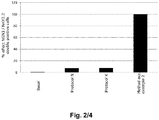
- Results were obtained as follows: Relative gene expression levels for the endocrine progenitor marker NGN3 in response to 3 days of EP differentiation according to protocol K and protocol N and combined protocol K&N (reference example 2). Gene expression is shown as relative to that present in cultures differentiated in basal medium, which was set to 1.
- Quantitative real-time polymerase chain reactions were run in duplicates using 1/100 of the cDNA per reaction, Taqman gene expression assays (inventoried primer sets against NGN3 or the housekeeping gene GAPDH ) and Taqman fast universal PCR master mix in 10 ⁇ l reactions.
- qPCR was performed on an Mx3005P qPCR System (Agilent) using a fast two-step program: 95°C initial denaturation for 3 minutes followed by 40 cycles at 95°C for 15 seconds and 60°C for 20 seconds.
- Raw data was exported from the MxPro software and analysed using Microsoft Excel and GraphPad Prism.
- Relative quantification of gene expression was performed using the comparative cycle threshold (DDCt) method (Schmittgen and Livak, 2008) using GAPDH as internal reference.
- DDCt comparative cycle threshold
- results in the form of relative NGN3 expression are shown in the below table 1 and in fig. 1 .
- the results show that when combining two individual protocols (protocol K & protocol N) for making endocrine progenitor cells, we can synergistically enhance the level of NGN3 mRNA expression in the EP cell population.
- Table 1 Relative NGN3 expression Protocol Relative NGN3 mRNA expression Basal 1 Protocol N 63 Protocol K 338 Method according to reference example 2 634
- DAPI 4,6-diamidino-2-phenylindole, Applichem, A4099.0010
- secondary antibodies Alexa Fluor 488 donkey anti-goat and Alexa Fluor 594 donkey anti-rabbit (both Invitrogen) were diluted 1:1000 in 0.1% Triton X-100 in PBS and added to each well for 45 min. Cells were washed five times and left in 200 ⁇ L PBS for imaging. Imaging was performed using the InCell Analyzer 2000 (GE Healthcare). 4 fields per well with 10x objective were captured.
- the total cell number based in the DAPI counterstaining and the number of NGN3/NKX2.2 double positive cells was determined using InCell Developer Toolbox 1.8 (GE Healthcare).
- S is % NGN3/NKX2.2 double positive cells for a given compound combination
- S neg and S pos are % NGN3/NKX2.2 double positive cells for the negative control and combined protocol K&N, respectively).
- An EP cell population was prepared according to reference examples 1 and 2. However, in addition to the reagents used in reference example 2 the small molecules listed in table 3 were added for three days at concentrations specified in table 3 below in concentrations as shown.
- DAPI 4,6-diamidino-2-phenylindole, Applichem, A4099.0010
- secondary antibodies Alexa Fluor 488 donkey anti-goat and Alexa Fluor 594 donkey anti-rabbit (both Invitrogen) were diluted 1:1000 in 0.1% Triton X-100 in PBS and added to each well for 45 min. Cells were washed five times and left in 200 ⁇ L PBS for imaging.
- S is % NGN3/NKX2.2 double positive cells for a given compound combination
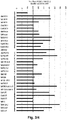
- S neg and S pos are % NGN3/NKX2.2 double positive cells for the negative control and combined protocol K&N, respectively. Values above 150% effect were categorized as hits.
- the efficiency of this combined protocol measured by NGN3/NKX2.2 double positive cells, can be enhanced even further by addition of small inhibitors that target gamma-secretase, JNK, Rho kinase, P38MAPK, SYK, DNA-PK, PI3K, PDGFR, FGFR or EGFR.
- Results are shown in table 4 below and in fig. 3 .
- Table 3 Small molecules promoting differentiation Compound name Target Structure Concentration(s) CAS number JNK inhibitor VIII JNK, JNK2, JNK3 894804-07-0 10 ⁇ M, 5 ⁇ M, 1 ⁇ M, 0.5 ⁇ M, 0.1 ⁇ M Rho Kinase Inhibitor III, Rockout Rho kinase 10 ⁇ M, 5 ⁇ M 7272-84-6 Gefitinib EGFR 184475-35-2 5 ⁇ M, 1 ⁇ M, 0.5 ⁇ M, 0.1 ⁇ M BPIQ-I EGFR 10 ⁇ M 174709-30-9 PD174265 EGFR 216163-53-0 10 ⁇ M, 5 ⁇ M, 1 ⁇ M p38 MAP Kinase Inhibitor III P38MAPK 10 ⁇ M, 5 ⁇ M 581098-48-8 PD169316 P38MAPK 5 ⁇ M, 1 ⁇ M 152121-53-4 DM
- example 2 100 Method of Ref. example 2 + 10 ⁇ M JNK VIII 308 Method of Ref. example 2 + 5 ⁇ M JNK VIII 315 Method of Ref. example -2 + 1 ⁇ M JNK VIII 204 Method of Ref. example 2 + 0.5 ⁇ M JNK VIII 156 Method of Ref. example 2 + 0.1 ⁇ M JNK VIII 160 Method of Ref. example 2 + 10 ⁇ M Rockout 199 Method of Ref. example 2 + 5 ⁇ M Rockout 208 Method of Ref. example 2 + 5 ⁇ M Gefitinib 325 Method of Ref. example 2 + 1 ⁇ M Gefitinib 311 Method of Ref. example 2 + 0.5 ⁇ M Gefitinib 242 Method of Ref.
- Reference Example 5 PE to EP differentiation induced by a combination of small molecules
- An EP cell population was prepared according to reference example 2. However, in addition to the reagents used in reference example 2, certain small molecules listed in table 3 were added either alone or in combination during the three days of EP differentiation.
- DAPI 4,6-diamidino-2-phenylindole, Applichem, A4099.0010
- secondary antibodies Alexa Fluor 488 donkey anti-goat and Alexa Fluor 594 donkey anti-rabbit (both Invitrogen) were diluted 1:1000 in 0.1% Triton X-100 in PBS and added to each well for 45 min. Cells were washed five times and left in 200 ⁇ L PBS for imaging.
- results in the form of % effect NGN3/NKX2.2 double positive cells are shown below in table 5 and in fig. 4 .
- the results show that the differentiation efficiency of protocol in reference example 2 and 4 is increased when DAPT is added together with JNK inhibitor VIII or Gefitinib or JNK inhibitor VIII plus Gefitinib.
- Table 5 % effect NGN3/NKX2.2 double positive cells.
Landscapes
- Health & Medical Sciences (AREA)
- Engineering & Computer Science (AREA)
- Life Sciences & Earth Sciences (AREA)
- Biomedical Technology (AREA)
- Wood Science & Technology (AREA)
- Zoology (AREA)
- Organic Chemistry (AREA)
- Bioinformatics & Cheminformatics (AREA)
- Genetics & Genomics (AREA)
- Biotechnology (AREA)
- Chemical & Material Sciences (AREA)
- Biochemistry (AREA)
- Microbiology (AREA)
- General Engineering & Computer Science (AREA)
- General Health & Medical Sciences (AREA)
- Cell Biology (AREA)
- Developmental Biology & Embryology (AREA)
- Endocrinology (AREA)
- Gastroenterology & Hepatology (AREA)
- Micro-Organisms Or Cultivation Processes Thereof (AREA)
- Medicines Containing Material From Animals Or Micro-Organisms (AREA)
Claims (13)
- Procédé d'obtention de cellules progénitrices endocrines NGN3/NKX2.2 doublement positives, dans lequel une population cellulaire comprenant des cellules endodermiques pancréatiques est simultanément exposée dans un milieu basal, à :a) un inhibiteur du récepteur TGF-β de type I,b) un antagoniste BMP, dans lequel l'antagoniste BMP est noggin,c) un activateur d'adénylate cyclase, etd) de nicotinamide.
- Procédé selon la revendication 1, dans lequel l'inhibiteur du récepteur TGF-β de type I est SB431542.
- Procédé selon l'une quelconque des revendications 1 ou 2, dans lequel l'activateur d'adénylate cyclase est la forskoline.
- Procédé selon l'une quelconque des revendications 1 à 3, dans lequel lesdites cellules progénitrices endocrines ont au moins 8 % d'effet NGN3/NKX2.2 double positif.
- Procédé selon l'une quelconque des revendications 1 à 3, dans lequel lesdites cellules progénitrices endocrines ont au moins 10 % d'effet NGN3/NKX2.2 double positif.
- Procédé selon l'une quelconque des revendications 1 à 3, dans lequel lesdites cellules progénitrices endocrines ont de 10 à 100 % d'effet NGN3/NKX2.2 double positif.
- Procédé selon l'une quelconque des revendications 1 à 6, dans lequel le milieu basal est RPMI1640.
- Procédé selon l'une quelconque des revendications 1 à 7, dans lequel les cellules progénitrices endocrines sont en outre exposées à l'inhibiteur de I'ADN-PK V, au géfitinib, à l'inhibiteur de la JNK VIII ou du DAPT ou à toute combinaison desdites molécules.
- Procédé selon l'une quelconque des revendications 1 à 7, dans lequel le géfitinib, l'inhibiteur de la JNK VIII et l'inhibiteur de I'ADN-PK V sont combinés.
- Procédé selon l'une quelconque des revendications 1 à 7, dans lequel le géfitinib, l'inhibiteur de la JNK VIII et le DAPT sont combinés.
- Procédé selon l'une quelconque des revendications 1 à 7, dans lequel le géfitinib, l'inhibiteur de la JNK VIII, le DAPT et l'inhibiteur de I'ADN-PK V sont combinés.
- Procédé selon l'une quelconque des revendications 1 à 7, dans lequel 1-100 µM de géfitinib, 1-100 µM de l'inhibiteur de la JNK VIII, 0,5-50 µM de DAPT et 1-100 µM de l'inhibiteur de I'ADN-PK V sont utilisé.
- Procédé selon l'une quelconque des revendications 8 à 12, dans lequel 1-10 µM de géfitinib, 5-20 µM de l'inhibiteur de la JNK VIII, 1-10 µM de DAPT et 1-10 µM de l'inhibiteur de I'ADN-PK V sont utilisés.
Priority Applications (1)
| Application Number | Priority Date | Filing Date | Title |
|---|---|---|---|
| EP14761822.7A EP3039122B1 (fr) | 2013-08-30 | 2014-08-29 | Génération de cellules progénitrices endocrines à partir de cellules souches pluripotentes humaines à l'aide de petites molécules |
Applications Claiming Priority (4)
| Application Number | Priority Date | Filing Date | Title |
|---|---|---|---|
| EP13182440 | 2013-08-30 | ||
| US201361875191P | 2013-09-09 | 2013-09-09 | |
| PCT/EP2014/068393 WO2015028614A1 (fr) | 2013-08-30 | 2014-08-29 | Génération de cellules progénitrices endocrines à partir de cellules souches pluripotentes humaines à l'aide de petites molécules |
| EP14761822.7A EP3039122B1 (fr) | 2013-08-30 | 2014-08-29 | Génération de cellules progénitrices endocrines à partir de cellules souches pluripotentes humaines à l'aide de petites molécules |
Publications (2)
| Publication Number | Publication Date |
|---|---|
| EP3039122A1 EP3039122A1 (fr) | 2016-07-06 |
| EP3039122B1 true EP3039122B1 (fr) | 2019-07-17 |
Family
ID=49080758
Family Applications (1)
| Application Number | Title | Priority Date | Filing Date |
|---|---|---|---|
| EP14761822.7A Active EP3039122B1 (fr) | 2013-08-30 | 2014-08-29 | Génération de cellules progénitrices endocrines à partir de cellules souches pluripotentes humaines à l'aide de petites molécules |
Country Status (6)
| Country | Link |
|---|---|
| US (2) | US20160208215A1 (fr) |
| EP (1) | EP3039122B1 (fr) |
| JP (1) | JP6636427B2 (fr) |
| CN (1) | CN105683361B (fr) |
| DK (1) | DK3039122T3 (fr) |
| WO (1) | WO2015028614A1 (fr) |
Families Citing this family (24)
| Publication number | Priority date | Publication date | Assignee | Title |
|---|---|---|---|---|
| SG11201510177WA (en) | 2013-06-11 | 2016-01-28 | Harvard College | SC-β CELLS AND COMPOSITIONS AND METHODS FOR GENERATING THE SAME |
| WO2016100898A1 (fr) | 2014-12-18 | 2016-06-23 | President And Fellows Of Harvard College | Protocole de différentiation dirigée in vitro sans sérum pour générer des cellules b dérivées de cellules souches et leurs utilisations |
| CN107614678B (zh) | 2014-12-18 | 2021-04-30 | 哈佛学院校长同事会 | 干细胞来源的β细胞的产生方法及其使用方法 |
| WO2016100909A1 (fr) | 2014-12-18 | 2016-06-23 | President And Fellows Of Harvard College | Procédés de génération de cellules β dérivées de cellules souches et leurs utilisations |
| WO2017144695A1 (fr) * | 2016-02-24 | 2017-08-31 | Novo Nordisk A/S | Génération de cellules bêta fonctionnelles à partir de progéniteurs endocrines dérivés de cellules souches pluripotentes humaines |
| WO2018183762A1 (fr) * | 2017-03-29 | 2018-10-04 | United States Government As Represented By The Department Of Veterans Affairs | Méthodes et compositions pour le traitement du cancer |
| AU2018330499B2 (en) | 2017-09-11 | 2025-01-30 | Novo Nordisk A/S | Enrichment of NKX6.1 and C-peptide co-expressing cells derived in vitro from stem cells |
| KR20250048146A (ko) | 2017-11-15 | 2025-04-07 | 셈마 테라퓨틱스, 인크. | 섬세포 제조 조성물 및 사용 방법 |
| CN108165531A (zh) * | 2017-12-23 | 2018-06-15 | 淮北智淮科技有限公司 | 一种造血干细胞用的脐带血单核细胞培养方法 |
| US11530211B2 (en) | 2018-01-18 | 2022-12-20 | Daiichi Sankyo Company, Limited | Dihydroindolizinone derivative |
| WO2020033879A1 (fr) | 2018-08-10 | 2020-02-13 | Semma Therapeutics, Inc. | Différenciation d'ilot dérivé de cellules souches |
| AU2018439389A1 (en) | 2018-08-30 | 2021-02-18 | Novo Nordisk A/S | Generation of functional beta cells from human pluripotent stem cell-derived endocrine progenitors |
| CN113728090B (zh) | 2019-04-08 | 2024-04-05 | 诺和诺德股份有限公司 | 从干细胞衍生的定形内胚层生成胰腺内胚层 |
| TW202115245A (zh) | 2019-06-27 | 2021-04-16 | 丹麥商諾佛 儂迪克股份有限公司 | 安全免疫隱形細胞 |
| CN116018150A (zh) | 2020-08-28 | 2023-04-25 | 诺和诺德股份有限公司 | 用于筛选干细胞衍生的β样细胞的体外群体的方法及其新型标志物 |
| WO2022129472A1 (fr) | 2020-12-18 | 2022-06-23 | Novo Nordisk A/S | Cellules immuno-furtives sûres |
| WO2022136215A1 (fr) | 2020-12-21 | 2022-06-30 | Novo Nordisk A/S | Cellules immuno-furtives sûres |
| EP4551687A1 (fr) | 2022-07-06 | 2025-05-14 | Novo Nordisk A/S | Différenciation de cellules souches en cellules endocrines pancréatiques |
| CN117736990B (zh) * | 2022-09-13 | 2025-10-24 | 中国科学院动物研究所 | 一种实现细胞分化的体外培养法以及由此得到的细胞群及其用途 |
| WO2024151541A1 (fr) | 2023-01-09 | 2024-07-18 | Sana Biotechnology, Inc. | Souris auto-immune présentant un diabète de type 1 |
| CN121604968A (zh) | 2023-05-22 | 2026-03-03 | 萨那生物科技公司 | 递送胰岛细胞的方法及相关方法 |
| WO2025093467A1 (fr) | 2023-10-31 | 2025-05-08 | Novo Nordisk A/S | Procédés pour empêcher l'apparition de cellules indésirables pendant la différenciation de cellules souches pluripotentes humaines |
| WO2025117331A1 (fr) | 2023-12-01 | 2025-06-05 | Eli Lilly And Company | Procédés de fabrication de cellules de type îlot dérivées de cellules souches, ainsi que populations et compositions les comprenant |
| EP4491712A1 (fr) | 2024-03-20 | 2025-01-15 | Novo Nordisk A/S | Procédé de détection de cellules contaminantes dans une population de cellules dérivées de cellules souches |
Family Cites Families (8)
| Publication number | Priority date | Publication date | Assignee | Title |
|---|---|---|---|---|
| EP1999253B1 (fr) * | 2006-03-02 | 2019-05-22 | Viacyte, Inc. | Cellules précurseurs endocrines, cellules exprimant des hormones pancréatiques et procédés de productions associés |
| US7695965B2 (en) * | 2006-03-02 | 2010-04-13 | Cythera, Inc. | Methods of producing pancreatic hormones |
| WO2010033906A2 (fr) * | 2008-09-19 | 2010-03-25 | President And Fellows Of Harvard College | Induction efficace de cellules souches pluripotentes au moyen de composés à petite molécule |
| PL2346988T3 (pl) * | 2008-10-31 | 2017-10-31 | Janssen Biotech Inc | Różnicowanie ludzkich zarodkowych komórek macierzystych do linii endokrynnej trzustki |
| US20120207744A1 (en) * | 2009-03-19 | 2012-08-16 | Mendlein John D | Reprogramming compositions and methods of using the same |
| JP2012533560A (ja) * | 2009-07-15 | 2012-12-27 | ザ リージェンツ オブ ザ ユニバーシティ オブ カリフォルニア | 細胞における取り込みが制御可能なペプチド |
| CA2785966C (fr) * | 2009-12-29 | 2020-10-27 | Takeda Pharmaceutical Company Limited | Procede pour la fabrication de cellules de production d'hormones pancreatiques |
| CN102093977A (zh) * | 2010-11-29 | 2011-06-15 | 中国人民解放军军事医学科学院基础医学研究所 | 一种诱导iPS细胞向心肌细胞分化的诱导因子及其应用 |
-
2014
- 2014-08-29 DK DK14761822.7T patent/DK3039122T3/da active
- 2014-08-29 US US14/913,604 patent/US20160208215A1/en not_active Abandoned
- 2014-08-29 JP JP2016537310A patent/JP6636427B2/ja active Active
- 2014-08-29 EP EP14761822.7A patent/EP3039122B1/fr active Active
- 2014-08-29 CN CN201480047988.5A patent/CN105683361B/zh active Active
- 2014-08-29 WO PCT/EP2014/068393 patent/WO2015028614A1/fr not_active Ceased
-
2019
- 2019-08-20 US US16/546,018 patent/US20200002670A1/en not_active Abandoned
Non-Patent Citations (1)
| Title |
|---|
| None * |
Also Published As
| Publication number | Publication date |
|---|---|
| EP3039122A1 (fr) | 2016-07-06 |
| DK3039122T3 (da) | 2019-09-30 |
| US20160208215A1 (en) | 2016-07-21 |
| WO2015028614A1 (fr) | 2015-03-05 |
| CN105683361A (zh) | 2016-06-15 |
| CN105683361B (zh) | 2021-04-02 |
| JP6636427B2 (ja) | 2020-01-29 |
| US20200002670A1 (en) | 2020-01-02 |
| JP2016528908A (ja) | 2016-09-23 |
Similar Documents
| Publication | Publication Date | Title |
|---|---|---|
| EP3039122B1 (fr) | Génération de cellules progénitrices endocrines à partir de cellules souches pluripotentes humaines à l'aide de petites molécules | |
| JP7187647B2 (ja) | 多能性幹細胞の膵臓内胚葉細胞(PEC)および内分泌細胞へのin vitro分化 | |
| JP7535079B2 (ja) | ヒト胚性幹細胞の分化 | |
| CN102159703B (zh) | 多能干细胞的分化 | |
| CN101952415B (zh) | 人胚胎干细胞的分化 | |
| CN104903440B (zh) | 使用小分子从多能干细胞产生胰内胚层 | |
| CN105176919A (zh) | 人胚胎干细胞的分化 | |
| KR20120099241A (ko) | 만능 줄기 세포 | |
| KR20120104386A (ko) | 인간 배아 줄기 세포의 분화 | |
| CN107574142A (zh) | 人胚胎干细胞的分化 | |
| CN113728090B (zh) | 从干细胞衍生的定形内胚层生成胰腺内胚层 | |
| ES2746232T3 (es) | Generación de células progenitoras endocrinas a partir de células madre pluripotentes humanas mediante el uso de moléculas pequeñas | |
| Class et al. | Patent application title: Generation of Endocrine Progenitor Cells from Human Pluripotent Stem Cells Using Small Molecules | |
| HK1156665B (en) | Differentiation of pluripotent stem cells |
Legal Events
| Date | Code | Title | Description |
|---|---|---|---|
| PUAI | Public reference made under article 153(3) epc to a published international application that has entered the european phase |
Free format text: ORIGINAL CODE: 0009012 |
|
| 17P | Request for examination filed |
Effective date: 20160330 |
|
| AK | Designated contracting states |
Kind code of ref document: A1 Designated state(s): AL AT BE BG CH CY CZ DE DK EE ES FI FR GB GR HR HU IE IS IT LI LT LU LV MC MK MT NL NO PL PT RO RS SE SI SK SM TR |
|
| AX | Request for extension of the european patent |
Extension state: BA ME |
|
| DAX | Request for extension of the european patent (deleted) | ||
| STAA | Information on the status of an ep patent application or granted ep patent |
Free format text: STATUS: EXAMINATION IS IN PROGRESS |
|
| 17Q | First examination report despatched |
Effective date: 20161215 |
|
| GRAP | Despatch of communication of intention to grant a patent |
Free format text: ORIGINAL CODE: EPIDOSNIGR1 |
|
| STAA | Information on the status of an ep patent application or granted ep patent |
Free format text: STATUS: GRANT OF PATENT IS INTENDED |
|
| INTG | Intention to grant announced |
Effective date: 20190131 |
|
| GRAS | Grant fee paid |
Free format text: ORIGINAL CODE: EPIDOSNIGR3 |
|
| GRAA | (expected) grant |
Free format text: ORIGINAL CODE: 0009210 |
|
| STAA | Information on the status of an ep patent application or granted ep patent |
Free format text: STATUS: THE PATENT HAS BEEN GRANTED |
|
| AK | Designated contracting states |
Kind code of ref document: B1 Designated state(s): AL AT BE BG CH CY CZ DE DK EE ES FI FR GB GR HR HU IE IS IT LI LT LU LV MC MK MT NL NO PL PT RO RS SE SI SK SM TR |
|
| REG | Reference to a national code |
Ref country code: GB Ref legal event code: FG4D |
|
| REG | Reference to a national code |
Ref country code: CH Ref legal event code: EP |
|
| REG | Reference to a national code |
Ref country code: IE Ref legal event code: FG4D |
|
| REG | Reference to a national code |
Ref country code: DE Ref legal event code: R096 Ref document number: 602014050153 Country of ref document: DE |
|
| REG | Reference to a national code |
Ref country code: AT Ref legal event code: REF Ref document number: 1155858 Country of ref document: AT Kind code of ref document: T Effective date: 20190815 |
|
| REG | Reference to a national code |
Ref country code: DK Ref legal event code: T3 Effective date: 20190927 |
|
| REG | Reference to a national code |
Ref country code: SE Ref legal event code: TRGR |
|
| REG | Reference to a national code |
Ref country code: NL Ref legal event code: MP Effective date: 20190717 |
|
| REG | Reference to a national code |
Ref country code: LT Ref legal event code: MG4D |
|
| REG | Reference to a national code |
Ref country code: AT Ref legal event code: MK05 Ref document number: 1155858 Country of ref document: AT Kind code of ref document: T Effective date: 20190717 |
|
| PG25 | Lapsed in a contracting state [announced via postgrant information from national office to epo] |
Ref country code: HR Free format text: LAPSE BECAUSE OF FAILURE TO SUBMIT A TRANSLATION OF THE DESCRIPTION OR TO PAY THE FEE WITHIN THE PRESCRIBED TIME-LIMIT Effective date: 20190717 Ref country code: PT Free format text: LAPSE BECAUSE OF FAILURE TO SUBMIT A TRANSLATION OF THE DESCRIPTION OR TO PAY THE FEE WITHIN THE PRESCRIBED TIME-LIMIT Effective date: 20191118 Ref country code: LT Free format text: LAPSE BECAUSE OF FAILURE TO SUBMIT A TRANSLATION OF THE DESCRIPTION OR TO PAY THE FEE WITHIN THE PRESCRIBED TIME-LIMIT Effective date: 20190717 Ref country code: AT Free format text: LAPSE BECAUSE OF FAILURE TO SUBMIT A TRANSLATION OF THE DESCRIPTION OR TO PAY THE FEE WITHIN THE PRESCRIBED TIME-LIMIT Effective date: 20190717 Ref country code: NO Free format text: LAPSE BECAUSE OF FAILURE TO SUBMIT A TRANSLATION OF THE DESCRIPTION OR TO PAY THE FEE WITHIN THE PRESCRIBED TIME-LIMIT Effective date: 20191017 Ref country code: BG Free format text: LAPSE BECAUSE OF FAILURE TO SUBMIT A TRANSLATION OF THE DESCRIPTION OR TO PAY THE FEE WITHIN THE PRESCRIBED TIME-LIMIT Effective date: 20191017 Ref country code: NL Free format text: LAPSE BECAUSE OF FAILURE TO SUBMIT A TRANSLATION OF THE DESCRIPTION OR TO PAY THE FEE WITHIN THE PRESCRIBED TIME-LIMIT Effective date: 20190717 Ref country code: FI Free format text: LAPSE BECAUSE OF FAILURE TO SUBMIT A TRANSLATION OF THE DESCRIPTION OR TO PAY THE FEE WITHIN THE PRESCRIBED TIME-LIMIT Effective date: 20190717 |
|
| PG25 | Lapsed in a contracting state [announced via postgrant information from national office to epo] |
Ref country code: RS Free format text: LAPSE BECAUSE OF FAILURE TO SUBMIT A TRANSLATION OF THE DESCRIPTION OR TO PAY THE FEE WITHIN THE PRESCRIBED TIME-LIMIT Effective date: 20190717 Ref country code: IS Free format text: LAPSE BECAUSE OF FAILURE TO SUBMIT A TRANSLATION OF THE DESCRIPTION OR TO PAY THE FEE WITHIN THE PRESCRIBED TIME-LIMIT Effective date: 20191117 Ref country code: LV Free format text: LAPSE BECAUSE OF FAILURE TO SUBMIT A TRANSLATION OF THE DESCRIPTION OR TO PAY THE FEE WITHIN THE PRESCRIBED TIME-LIMIT Effective date: 20190717 Ref country code: GR Free format text: LAPSE BECAUSE OF FAILURE TO SUBMIT A TRANSLATION OF THE DESCRIPTION OR TO PAY THE FEE WITHIN THE PRESCRIBED TIME-LIMIT Effective date: 20191018 Ref country code: AL Free format text: LAPSE BECAUSE OF FAILURE TO SUBMIT A TRANSLATION OF THE DESCRIPTION OR TO PAY THE FEE WITHIN THE PRESCRIBED TIME-LIMIT Effective date: 20190717 |
|
| REG | Reference to a national code |
Ref country code: ES Ref legal event code: FG2A Ref document number: 2746232 Country of ref document: ES Kind code of ref document: T3 Effective date: 20200305 |
|
| PG25 | Lapsed in a contracting state [announced via postgrant information from national office to epo] |
Ref country code: TR Free format text: LAPSE BECAUSE OF FAILURE TO SUBMIT A TRANSLATION OF THE DESCRIPTION OR TO PAY THE FEE WITHIN THE PRESCRIBED TIME-LIMIT Effective date: 20190717 |
|
| PG25 | Lapsed in a contracting state [announced via postgrant information from national office to epo] |
Ref country code: EE Free format text: LAPSE BECAUSE OF FAILURE TO SUBMIT A TRANSLATION OF THE DESCRIPTION OR TO PAY THE FEE WITHIN THE PRESCRIBED TIME-LIMIT Effective date: 20190717 Ref country code: RO Free format text: LAPSE BECAUSE OF FAILURE TO SUBMIT A TRANSLATION OF THE DESCRIPTION OR TO PAY THE FEE WITHIN THE PRESCRIBED TIME-LIMIT Effective date: 20190717 Ref country code: PL Free format text: LAPSE BECAUSE OF FAILURE TO SUBMIT A TRANSLATION OF THE DESCRIPTION OR TO PAY THE FEE WITHIN THE PRESCRIBED TIME-LIMIT Effective date: 20190717 |
|
| PG25 | Lapsed in a contracting state [announced via postgrant information from national office to epo] |
Ref country code: LU Free format text: LAPSE BECAUSE OF NON-PAYMENT OF DUE FEES Effective date: 20190829 Ref country code: MC Free format text: LAPSE BECAUSE OF FAILURE TO SUBMIT A TRANSLATION OF THE DESCRIPTION OR TO PAY THE FEE WITHIN THE PRESCRIBED TIME-LIMIT Effective date: 20190717 Ref country code: SK Free format text: LAPSE BECAUSE OF FAILURE TO SUBMIT A TRANSLATION OF THE DESCRIPTION OR TO PAY THE FEE WITHIN THE PRESCRIBED TIME-LIMIT Effective date: 20190717 Ref country code: CZ Free format text: LAPSE BECAUSE OF FAILURE TO SUBMIT A TRANSLATION OF THE DESCRIPTION OR TO PAY THE FEE WITHIN THE PRESCRIBED TIME-LIMIT Effective date: 20190717 Ref country code: SM Free format text: LAPSE BECAUSE OF FAILURE TO SUBMIT A TRANSLATION OF THE DESCRIPTION OR TO PAY THE FEE WITHIN THE PRESCRIBED TIME-LIMIT Effective date: 20190717 Ref country code: IS Free format text: LAPSE BECAUSE OF FAILURE TO SUBMIT A TRANSLATION OF THE DESCRIPTION OR TO PAY THE FEE WITHIN THE PRESCRIBED TIME-LIMIT Effective date: 20200224 |
|
| REG | Reference to a national code |
Ref country code: DE Ref legal event code: R097 Ref document number: 602014050153 Country of ref document: DE |
|
| PLBE | No opposition filed within time limit |
Free format text: ORIGINAL CODE: 0009261 |
|
| STAA | Information on the status of an ep patent application or granted ep patent |
Free format text: STATUS: NO OPPOSITION FILED WITHIN TIME LIMIT |
|
| PG2D | Information on lapse in contracting state deleted |
Ref country code: IS |
|
| PG25 | Lapsed in a contracting state [announced via postgrant information from national office to epo] |
Ref country code: IE Free format text: LAPSE BECAUSE OF NON-PAYMENT OF DUE FEES Effective date: 20190829 |
|
| 26N | No opposition filed |
Effective date: 20200603 |
|
| PG25 | Lapsed in a contracting state [announced via postgrant information from national office to epo] |
Ref country code: SI Free format text: LAPSE BECAUSE OF FAILURE TO SUBMIT A TRANSLATION OF THE DESCRIPTION OR TO PAY THE FEE WITHIN THE PRESCRIBED TIME-LIMIT Effective date: 20190717 |
|
| PG25 | Lapsed in a contracting state [announced via postgrant information from national office to epo] |
Ref country code: CY Free format text: LAPSE BECAUSE OF FAILURE TO SUBMIT A TRANSLATION OF THE DESCRIPTION OR TO PAY THE FEE WITHIN THE PRESCRIBED TIME-LIMIT Effective date: 20190717 |
|
| PG25 | Lapsed in a contracting state [announced via postgrant information from national office to epo] |
Ref country code: HU Free format text: LAPSE BECAUSE OF FAILURE TO SUBMIT A TRANSLATION OF THE DESCRIPTION OR TO PAY THE FEE WITHIN THE PRESCRIBED TIME-LIMIT; INVALID AB INITIO Effective date: 20140829 Ref country code: MT Free format text: LAPSE BECAUSE OF FAILURE TO SUBMIT A TRANSLATION OF THE DESCRIPTION OR TO PAY THE FEE WITHIN THE PRESCRIBED TIME-LIMIT Effective date: 20190717 |
|
| PG25 | Lapsed in a contracting state [announced via postgrant information from national office to epo] |
Ref country code: MK Free format text: LAPSE BECAUSE OF FAILURE TO SUBMIT A TRANSLATION OF THE DESCRIPTION OR TO PAY THE FEE WITHIN THE PRESCRIBED TIME-LIMIT Effective date: 20190717 |
|
| PGFP | Annual fee paid to national office [announced via postgrant information from national office to epo] |
Ref country code: DE Payment date: 20240723 Year of fee payment: 11 |
|
| PGFP | Annual fee paid to national office [announced via postgrant information from national office to epo] |
Ref country code: DK Payment date: 20240723 Year of fee payment: 11 |
|
| PGFP | Annual fee paid to national office [announced via postgrant information from national office to epo] |
Ref country code: GB Payment date: 20240723 Year of fee payment: 11 |
|
| PGFP | Annual fee paid to national office [announced via postgrant information from national office to epo] |
Ref country code: BE Payment date: 20240723 Year of fee payment: 11 |
|
| PGFP | Annual fee paid to national office [announced via postgrant information from national office to epo] |
Ref country code: FR Payment date: 20240723 Year of fee payment: 11 |
|
| PGFP | Annual fee paid to national office [announced via postgrant information from national office to epo] |
Ref country code: CH Payment date: 20240901 Year of fee payment: 11 Ref country code: ES Payment date: 20240902 Year of fee payment: 11 |
|
| PGFP | Annual fee paid to national office [announced via postgrant information from national office to epo] |
Ref country code: SE Payment date: 20240723 Year of fee payment: 11 Ref country code: IT Payment date: 20240723 Year of fee payment: 11 |
|
| REG | Reference to a national code |
Ref country code: DE Ref legal event code: R119 Ref document number: 602014050153 Country of ref document: DE |
|
| REG | Reference to a national code |
Ref country code: DK Ref legal event code: EBP Effective date: 20250831 |
|
| REG | Reference to a national code |
Ref country code: CH Ref legal event code: H13 Free format text: ST27 STATUS EVENT CODE: U-0-0-H10-H13 (AS PROVIDED BY THE NATIONAL OFFICE) Effective date: 20260324 |