EP3044329B1 - Dispositif de préparation au moyen de particules d'acide nucléique condensé - Google Patents
Dispositif de préparation au moyen de particules d'acide nucléique condensé Download PDFInfo
- Publication number
- EP3044329B1 EP3044329B1 EP14777230.5A EP14777230A EP3044329B1 EP 3044329 B1 EP3044329 B1 EP 3044329B1 EP 14777230 A EP14777230 A EP 14777230A EP 3044329 B1 EP3044329 B1 EP 3044329B1
- Authority
- EP
- European Patent Office
- Prior art keywords
- nucleic acid
- particles
- condensing agent
- concentration
- solution
- Prior art date
- Legal status (The legal status is an assumption and is not a legal conclusion. Google has not performed a legal analysis and makes no representation as to the accuracy of the status listed.)
- Active
Links
- ZVUAMUKZHFTJGR-UHFFFAOYSA-N C=CC(N1CCNCC1)=O Chemical compound C=CC(N1CCNCC1)=O ZVUAMUKZHFTJGR-UHFFFAOYSA-N 0.000 description 1
- SRLVTEWXFBVJDO-UHFFFAOYSA-N C=CC(NCCOCCOCCN)=O Chemical compound C=CC(NCCOCCOCCN)=O SRLVTEWXFBVJDO-UHFFFAOYSA-N 0.000 description 1
Images



Classifications
-
- C—CHEMISTRY; METALLURGY
- C12—BIOCHEMISTRY; BEER; SPIRITS; WINE; VINEGAR; MICROBIOLOGY; ENZYMOLOGY; MUTATION OR GENETIC ENGINEERING
- C12Q—MEASURING OR TESTING PROCESSES INVOLVING ENZYMES, NUCLEIC ACIDS OR MICROORGANISMS; COMPOSITIONS OR TEST PAPERS THEREFOR; PROCESSES OF PREPARING SUCH COMPOSITIONS; CONDITION-RESPONSIVE CONTROL IN MICROBIOLOGICAL OR ENZYMOLOGICAL PROCESSES
- C12Q1/00—Measuring or testing processes involving enzymes, nucleic acids or microorganisms; Compositions therefor; Processes of preparing such compositions
- C12Q1/68—Measuring or testing processes involving enzymes, nucleic acids or microorganisms; Compositions therefor; Processes of preparing such compositions involving nucleic acids
- C12Q1/6869—Methods for sequencing
- C12Q1/6874—Methods for sequencing involving nucleic acid arrays, e.g. sequencing by hybridisation
-
- C—CHEMISTRY; METALLURGY
- C12—BIOCHEMISTRY; BEER; SPIRITS; WINE; VINEGAR; MICROBIOLOGY; ENZYMOLOGY; MUTATION OR GENETIC ENGINEERING
- C12Q—MEASURING OR TESTING PROCESSES INVOLVING ENZYMES, NUCLEIC ACIDS OR MICROORGANISMS; COMPOSITIONS OR TEST PAPERS THEREFOR; PROCESSES OF PREPARING SUCH COMPOSITIONS; CONDITION-RESPONSIVE CONTROL IN MICROBIOLOGICAL OR ENZYMOLOGICAL PROCESSES
- C12Q1/00—Measuring or testing processes involving enzymes, nucleic acids or microorganisms; Compositions therefor; Processes of preparing such compositions
- C12Q1/68—Measuring or testing processes involving enzymes, nucleic acids or microorganisms; Compositions therefor; Processes of preparing such compositions involving nucleic acids
- C12Q1/6806—Preparing nucleic acids for analysis, e.g. for polymerase chain reaction [PCR] assay
Definitions
- This disclosure in general, relates to systems and methods for preparing devices for use in nucleic acid sequencing, particularly such devices that utilize nucleic acid containing particles.
- nucleic acid strands particularly DNA
- sequence of the nucleic acid sample can be determined by measuring ionic responses to nucleic acid addition or by measuring fluorescent emissions resulting from nucleic acid addition.
- nucleic acid samples on a substrate suffer from deficiencies caused by a failure of some nucleic acid strands to bind to the surface of the substrate or caused by strands binding in close proximity to each other. Such deficiencies can lead to underutilization of the substrate, inaccurate data, lost or incomplete samples, or other inaccuracies.
- Condensing the nucleic acid bead or particle can include exposing the nucleic acid bead or particle to a condensing agent.
- the condensing reagent can condense aspects of a nucleic acid bead or particle, for example, condensing the nucleic acid, the polymer matrix of the particle, or a combination thereof.
- the condensing agent includes a metal complex having a 3 + charge.
- the metal complex can be a cobalt complex, such as a cobalt-amine complex.
- the condensing agent includes concentrated alkali or alkali-earth metal salts, such as a magnesium salt.
- the condensing reagent includes a non-ionic polymeric reagent, such as a polyethylene glycol based reagent.
- a system implements a method for preparing a device for sequencing.
- the system can include a solution container, a sample receiving port or sample chamber, and a mixer coupled to the solution container and the sample receiving port or chamber.
- the mixer can be coupled to a substrate preparation unit.
- a solution in the solution container includes a condensing reagent including a condensing agent.
- the methods and processes described herein can be performed manually or with the use of stir plates, vortexers, pipettes, centrifuges, or other bench equipment.
- the sample receiving port or sample chamber is to receive nucleic acid beads or particles, which have a polymeric matrix and a nucleic acid strand coupled to the polymeric matrix.
- the condensing reagent and the nucleic acid particles are mixed, such as in the mixer.
- the nucleic acid strand or the polymer matrix condenses, resulting in a particle with a reduced diameter or a greater density.
- the treated particles are transferred to a substrate preparation unit in which the particles are deposited on the substrate.
- the substrate includes a layer that defines wells, and the particles are deposited within wells.
- the substrate can be used for sequencing the nucleic acid strand of the bead or particle.
- the substrate is transferred to a sequencing device which performs functions resulting in sequencing of the nucleic acid strand.
- the nucleic acid beads can be applied to the sensor substrate and the condensing reagent applied over the sensor substrate after the nucleic acid beads are deposited.
- the nucleic acid beads can be treated with condensing agent prior to deposition, deposited, washed, and treated with condensing agent following deposition and washing.
- a nucleic acid bead or particle 102 includes a polymer matrix 104 and nucleic acid strands 106. While the nucleic acid strands 102 are illustrated as extending from a surface of the polymer matrix 104, the polymer matrix 104 can be porous, for example a hydrogel, and the nucleic acid strands 102 can be coupled to and extend throughout the polymer matrix 104.
- the nucleic acid beads or particles 102 can be treated to form treated nucleic acid beads or particles 108.
- the treated nucleic acid particle 108 can have a smaller diameter than the nucleic acid particle 102.
- a surface component 116 includes a substrate 110, which includes a layer 112 that defines wells 114.
- the treated nucleic acid particle 108 can be deposited in the well 114. Subsequently, the treated nucleic acid particle 108 can be washed while it remains in the well 114. Washing can result in a nucleic acid particle with an increased diameter. Sequencing or other experimentation can be performed using the nucleic acid bead or particle while it remains in the well 114.
- the polymer matrix 104 can include a polymer, such as a polysaccharide such as agarose, hyaluronan, or methylcellulose; a polyoxyolefin such as polyoxybutylene, polyoxyethylene or polyethylene glycol, or polyoxypropylene; an acrylamide such as dimethylacrylamide, polyacrylamide, N,N-polydimethylacrylamide, poly(N-isopropylacrylamide), poly-N-hydroxyacrylamide, poly-N-hydroxyalkylacrylamide, or amine functional variants thereof; polyvinylpyrrolidone; polystyrene; silicone; poly(2-acrylamido-2-methyl-1-propanesulfonic acid); other acrylate polymers; polyvinyl alcohol; copolymers or derivatives thereof; or any combination thereof.
- a polymer such as a polysaccharide such as agarose, hyaluronan, or methylcellulose
- a polyoxyolefin such as polyoxybuty
- the polymer matrix 104 can be formed of polystyrene. In another example, the polymer matrix 104 is formed of polyoxyethylene. In a further example, the polymer matrix 104 is formed of an acrylamide, such as hydroxyalkylacrylamide, amine terminated acrylamide, or a derivative thereof.
- the acrylamide can be a hydroxyalkyl acrylamide, such as hydroxyethyl acrylamide.
- the hydroxyalkyl acrylamide can include N-tris(hydroxymethyl)methyl)acrylamide (A, illustrated below), N-(hydroxymethyl)acrylamide (B, illustrated below), or a combination thereof.
- a mixture of monomers such as a mixture of hydroxyalkyl acrylamide and amine functionalize acrylamide or a mixture of acrylamide and amine functionalized acrylamide, can be used.
- the polymer matrix 104 is a hydrogel bead substrate.
- the coupling oligonucleotide can be conjugated to the polymer matrix 104.
- the polymer of a polymer matrix 104 can be activated to facilitate conjugation with a target analyte, such as an oligonucleotide or polynucleotide.
- a target analyte such as an oligonucleotide or polynucleotide.
- functional groups on the polymer matrix 104 can be enhanced to permit binding with target analytes or analyte receptors.
- functional groups of the hydrophilic polymer can be modified with reagents capable of converting the hydrophilic polymer functional groups to reactive moieties that can undergo nucleophilic or electrophilic substitution.
- hydroxyl groups on the substrate can be activated by replacing at least a portion of the hydroxyl groups with a sulfonate group or chlorine.
- exemplary sulfonate groups can be derived from tresyl, mesyl, tosyl, or fosyl chloride, or any combination thereof. Sulfonate can act to permit nucleophiles to replace the sulfonate. The sulfonate may further react with liberated chlorine to provide chlorinated groups that can be used in a process to conjugate the particles.
- amine groups on a substrate can be activated.
- target analyte or analyte receptors can bind to the hydrophilic polymer through nucleophilic substitution with the sulfonate group.
- target analyte receptors terminated with a nucleophile, such as an amine or a thiol, can undergo nucleophilic substitution to replace the sulfonate groups on the surface of the polymer matrix 104.
- sulfonated polymer matrices can be further reacted with mono- or multi-functional mono- or multi-nucleophilic reagents that can form an attachment to the particle while maintaining nucleophilic activity for oligonucleotides comprising electrophilic groups, such as maleimide.
- the residual nucleophilic activity can be converted to electrophilic activity by attachment to reagents comprising multi-electrophilic groups, which are subsequently to attach to oligonucleotides comprising nucleophilic groups.
- a monomer containing the functional group can be added during the polymerization.
- the monomer can include, for example, an acrylamide containing a carboxylic acid, ester, halogen or other amine reactive group.
- the ester group may be hydrolyzed before the reaction with an amine terminated oligonucleotide.
- conjugation techniques include the use of monomers that comprise amines.
- the amine is a nucleophilic group that can be further modified with amine reactive bifunctional bis-electrophilic reagents that yield a mono-functional electrophilic group subsequent to attachment to the bead or particle.
- Such an electrophilic group can be reacted with oligonucleotides having a nucleophilic group, such as an amine or thiol, causing attachment of the oligonucleotide by reaction with the vacant electrophile.
- the substrate can include a combination of nucleophilic amino groups and neutral hydroxyl groups.
- the amino groups can be modified with di-functional bis-electrophilic moieties, such as a di-isocyanate or bis-NHS ester, resulting in a hydrophilic particle reactive to nucleophiles.
- An exemplary bis-NHS ester includes bis-succinimidyl C2-C12 alkyl esters, such as bis-succinimidyl suberate or bis-succinimidyl glutarate.
- activation chemistries include incorporating multiple steps to convert a specified functional group to accommodate specific desired linkages.
- a sulfonate modified hydroxyl group can be converted into a nucleophilic group through several methods.
- reaction of the sulfonate with azide anion yields an azide substituted hydrophilic polymer.
- the azide can be used directly to conjugate to an acetylene substituted biomolecule via "CLICK" chemistry that can be performed with or without copper catalysis.
- the azide can be converted to amine by, for example, catalytic reduction with hydrogen or reduction with an organic phosphine.
- the resulting amine can then be converted to an electrophilic group with a variety of reagents, such as di-isocyanates, bis-NHS esters, cyanuric chloride, or a combination thereof.
- di-isocyanates yields a urea linkage between the polymer and a linker that results in a residual isocyanate group that is capable of reacting with an amino substituted biomolecule to yield a urea linkage between the linker and the biomolecule.
- using bis-NHS esters yields an amide linkage between the polymer and the linker and a residual NHS ester group that is capable of reacting with an amino substituted biomolecule to yield an amide linkage between the linker and the biomolecule.
- using cyanuric chloride yields an amino-triazine linkage between the polymer and the linker and two residual chloro-triazine groups one of which is capable of reacting with an amino substituted biomolecule to yield an amino-triazine linkage between the linker and the biomolecule.
- Other nucleophilic groups can be incorporated into the particle via sulfonate activation.
- reaction of sulfonated particles with thiobenzoic acid anion and hydrolysis of the consequent thiobenzoate incorporates a thiol into the particle which can be subsequently reacted with a maleimide substituted biomolecule to yield a thio-succinimide linkage to the biomolecule.
- Thiol can also be reacted with a bromo-acetyl group.
- acrydite oligonucleotides can be used during the polymerization to incorporate oligonucleotides.
- An exemplary acrydite oligonucleotide can include an ion-exchanged oligonucleotides.
- the polymer matrix 104 can have a diameter in a range of 0.1 ⁇ m to 15 ⁇ m.
- the polymer matrix 104 can have a diameter in a range of 0.1 ⁇ m to 10 ⁇ m, such as a range of 0.1 ⁇ m to 5.0 ⁇ m, a range of 0.1 ⁇ m to 3.0 ⁇ m, or a range of 0.1 ⁇ m to 1 ⁇ m.
- the core 104 can have a diameter in a range of 0.1 ⁇ m to 0.8 ⁇ m, such as a range of 0.1 ⁇ m to 0.5 ⁇ m.
- the condensing agent includes a metal-complex.
- the metal-complex can have 3 + charge and can be provided to the solution as a salt.
- the metal complex salts can be a halide salts, such as a chloride salt or iodide salt.
- the metal complex includes cobalt, for example, forming a cobalt organic complex, such as a cobalt-amine complex.
- the metal-complex can include hexamine cobalt.
- the metal-complex includes tris(ethylenediamine) cobalt.
- the metal complex includes cobalt sepulchate.
- the solution can include the metal-complex in a concentration, such that when mixed with the sample, the concentration of the metal-complex in the resulting solution is at least 1 ⁇ M, such as at least 10 ⁇ M, at least 20 ⁇ M or at least 50 ⁇ M.
- the concentration can be in a range of 10 ⁇ M to 1 mM, such as a range of 20 ⁇ M to 500 ⁇ M, or even a range of 20 ⁇ M to 350 ⁇ M.
- the concentration is at least 200 ⁇ M, such as at least 500 ⁇ M, or at least 1 mM.
- the solution can include a condensing agent that influences the density of the polymer matrix 104 of the bead or particle 102.
- the solution can include an alcohol, such as methanol, ethanol or isopropyl alcohol (IPA), which can influence the density of the polymer matrix 104 of the particle 102.
- the solution can include an alcohol, such as methanol, in a concentration in a range of 0.1 vol.% to 60 vol.%, such as 0.1 vol.% to 50 vol.%,0.1 vol.% to 30 vol.%, 0.1 vol.% to 20 vol.%, or even 0.1 vol.% to 10 vol.%.
- the concentration of alcohol within the solution can be in a range of 0.1 vol.% to 5 vol.%, such as 1 vol.% to 5 vol.%.
- the solution can include an alcohol, such as ethanol or IPA in a concentration in a range of 0.1 vol.% to 60 vol.%, such as 1.0 vol.% to 60 vol.%, 5.0 vol.% to 60 vol.%, 10 vol.% to 60 vol.%, or even 40 vol.% to 60 vol.%.
- the condensing agent includes concentrated alkali or alkali-earth metal salts, such as halide salts.
- the condensing agent can include magnesium chloride, for example, in a concentration in a range of 1 mM to 1M, such as a range of 30 mM to 1M, a range of 50 mM to 1M, a range of 50 mM to 800 mM, or even a range of 50 mM to 500 mM
- the condensing agent can further be a non-ionic polymer, such as a polyethylene glycol based polymer
- the polyethylene glycol based polymer has a molecular weight in a range between 1000 and 100000, such as a range between 2000 and 20000, between 5000 and 15000, or between 8000 and 12000.
- the non-ionic polymer can be included in a concentration in a range of 0.1 wt% to 20.0 wt%, such as a range of 0.5 wt% to 15.0 wt%, a range of 0.5 wt% to 10 wt%, or a range of 2.5 wt% to 7.5 wt%.
- the remainder of the solution can include a buffered solution, such as buffered saline solution.
- the remainder of the solution can include a phosphate buffered saline solution.
- the solution can include sodium or potassium halide salts, sodium or potassium phosphate salts, and polysorbate.
- Such salts can be included, for example, in amounts in a range of 1 mM to 500 mM, such as 50 mM to 350 mM, or even 150 mM to 250 mM.
- potassium chloride can be included in a concentration in a range of 0.5 M to 2 M, such as a range of 0.8M to 1.5M, or even a range of 0.8M to 1.2M.
- buffering agents can be used, such as an amine based buffering agent, e.g., tris(hydroxymethyl)aminomethane.
- an amine buffering agent can be used in a concentration in a range of 50 mM to 1M, such as a range of 100mM to 1M, a range of 100mM to 800mM, or even a range of 150 mM to 500 mM.
- the solution can include other ionic components, such as calcium or magnesium, derived from salts. Further, the solution can have a pH between 6 and 9, such as between 6.5 and 8.5, or between 7 and 8.5.
- the solution can include a surfactant.
- the surfactant can be a non-ionic polymer surfactant, such as an ether of polyethylene glycol, for example an octylphenyl ether of polyethylene glycol.
- the non-ionic polymer surfactant can be included in a range of 0.01% to 1.0%, such as a range of 0.05% to 0.8%, a range of 0.05% to 0.5%, or even a range of 0.08% to 0.15%.
- An exemplary surfactant is TritonX-100.
- the a condensing solution includes a combination of condensing agents, such as MgCl 2 in a range of 30 mM to 500 mM and polyethylene glycol in a range of 0.5wt% to 10.0 wt%.
- the polyethylene glycol can have a molecular weight in a range of 5000 to 15000.
- the condensing solution can also include a salt, such as KCl in a range of 0.8M to 1M; a buffering agent, such as tris(hydroxymethyl)aminomethane in a range of 150 mM to 500 mM; or a surfactant, such as TritonX-100 in a range of 0.05% to 0.5%.
- the pH is in a range of 7 to 9.
- the nucleic acid beads or particles 102 including the nucleic acid strands 106 can decrease in diameter.
- the bead or particle diameter can decrease by at least 1% in response to exposure to the solution.
- the diameter decreases by at least 5%, such as at least 10%, at least 15%, or even at least 19%.
- the diameter decreases by not greater than 75%.
- the density of the bead or particle can increase in response to exposure to a condensing agent.
- the density can increase by at least 2%, such as at least 8%, at least 14%, at least 21%, or even at least 25%. In particular, the density increases by not greater than 75%.
- the nucleic acid strands after exposure to the solution can exhibit a similar enzyme dissociation constant when compared to such a constant of the nucleic acid strands before exposure.
- the nucleic acid strands after exposure can exhibit a similar dissociation constant when in the presence of a polymerase when compared with the nucleic acid strands before exposure.
- the surface component 116 includes a layer 112 that defines wells 114 into which the treated nucleic acid beads or particles 108 can be deposited.
- the surface component 116 can include discrete sites, such as pits, grooves, channels, dimples, or other well-like sites.
- the surface component 116 can define wells 114 that correspond to active circuits for measuring ionic concentration, such as pH.
- the active circuits can measure, heat, fluorescence, or phosphate concentration.
- the wells 114 can be deposited over transparent layers of the surface component 116 for receiving or transferring electromagnetic radiation or fluorescent emissions.
- the wells 114 can have an effective diameter of not greater than 10 ⁇ m, such as not greater than 7 ⁇ m, not greater than 4 ⁇ m, not greater than 3 ⁇ m, not greater than 2 ⁇ m, not greater than 1.5 ⁇ m, not greater than 1.0 ⁇ m, or even not greater than 0.8 ⁇ m.
- the effective diameter can be not greater than 1.0 ⁇ m or not greater than 0.8 ⁇ m.
- the effective diameter can be at least 0.3 ⁇ m.
- the wells 114 can have a depth of not greater than 10 ⁇ m, such as not greater than 5 ⁇ m, not greater than 3 ⁇ m, not greater than 1.5 ⁇ m, or even not greater than 1 ⁇ m.
- the depth can be not greater than 500 nm, such as not greater than 200 nm, or even not greater than 150 nm.
- the depth can be at least 100 nm.
- the wells 114 can define a volume of not greater than 1 microliter, such as not greater than 100 nanoliters, not greater than 10 nanoliter, or not greater than 1 nanoliter.
- the wells can define a volume of not greater than 100 picoliters, such as not greater than 10 picoliters, or even not greater than 1 picoliter.
- the wells can define a volume of not greater than 100 femtoliters, such as not greater than 50 femtoliters, such as not greater than 20 femtoliters, not greater than 10 femtoliters, not greater than 5 femtoliters, not greater than 1 femtoliter, or even not greater than 0.6 femtoliters, but can be at least 0.01 femto liters.
- the surface component 116 can be placed in a sequencing system.
- the surface component 116 can be washed to remove the condensing agent prior to placing it in the sequencing system or can be washed once placed in the sequencing system.
- the nucleic acid bead or particle can increase in diameter or the nucleic acid strands can expand from a condensed state.
- the beads or particles can be washed with a buffered solution, such as a buffered saline solution.
- the solution can be a solution similar to the condensing agent containing solution, absent the condensing agent.
- sequencing can include measuring fluorescent emissions in response to nucleotide addition.
- Nucleotides can be fed sequentially in separate solutions for each nucleotide or for nucleotides having a different fluorescent species, which fluoresce at different wavelengths, associated with each type of nucleotide, the nucleotides can be fed in a combined solution into the sequencing system.
- the system 200 can include a solution container 202.
- the system 200 includes a sample port or sample receiving chamber 204. Both the solution container 202 and the sample portal or receiving chamber 204 feed into a mixer 206.
- the mixer 206 can be an agitated mixer, an ultrasonic mixer, or an in-line mixer within tubing extending to a surface preparation unit 208.
- the mixing device 206 feeds treated particles received at the sample port or chamber 204 to a surface component to be prepared for use in the sequencing device.
- the solution container 202 and sample port or receiving chamber 204 can feed into the surface preparation unit 208 without entering a mixer or being mixed.
- the surface preparation unit 208 can include a chamber in which the sensor substrate forms a major surface and through which the solution including a condensing agent and the nucleic acid beads or particles including nucleic acid strands flow across the surface to facilitate deposition of the beads or particles on the sensor substrate.
- the sensor substrate can include a flow cell defined over a sensor surface including wells.
- the surface preparation unit can further include agitators, aspirators, centrifuges, pipetters, or vortexers to further enhance deposition of the beads or particles into the wells of the sensor substrate. Alternatively, the process can be performed manually using the above equipment.
- the particles can be deposited on the surface component to a desirable surface density.
- a method can provide a surface component having an occupancy, defined as the percent of wells that include a DNA containing particle, of at least 60%, such as at least 80%, at least 85%, at least 87%, or even at least 89%.
- the occupancy can be at least 90%, such as at least 93%, or even at least 95%.
- the particles can be washed either in the surface preparation device 208 or once placed in the sequencing system.
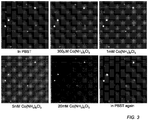
- FIG. 3 illustrates changes in particle diameter in response to changing concentration of hexamine cobalt.
- the particles are in a phosphate buffer saline with Tween-20 (PBST) solution (e.g., 1 liter aqueous solution including 8g NaCl, 0.2g KCl, 1.44 g Na 2 HPO 4 , 0.24g KH 2 PO 4 , and 2 ml of tween-20).
- PBST phosphate buffer saline with Tween-20
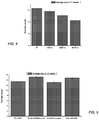
- DNA containing particles are tested as prepared or in contact with polymerase enzyme. As illustrated in FIG. 4 , the diameter of the DNA containing particles decrease with increasing concentration of hexamine cobalt. As illustrated in FIG. 5 , the diameter increases when placed in contact with an enzyme. When the particle in contact with the enzyme is exposed to hexamine cobalt (5 mM Co-complex), the diameter decreases and subsequently increases when washed with a buffered solution (PBST).
- PBST buffered solution
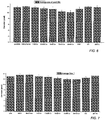
- FIG. 6, FIG. 7 , FIG. 8 illustrates the response of DNA containing particles formed using a nucleic acid library in contact with different enzymes.
- the diameter of the DNA containing particles increase when contacted with the enzyme and subsequently decreases in response to increasing concentrations of hexamine cobalt. Further, the diameter of the particles increases when washed first and second times with a buffered solution and when contacted with nucleic acid phosphates.
- Particles including FAM-labeled hairpins are tested to measure dissociation kinetics with an enzyme, Bst1. As illustrated in FIG. 9 , the dissociation kinetics as a function of ionic strength is similar for samples exposed to hexamine cobalt and samples not exposed to hexamine cobalt.
- DNA containing particles having an average core diameter of 0.7 microns are provided in both a suspension free of metal-complex and a suspension including hexamine cobalt.
- Substrates defining wells having an effective diameter of less than 1 micron are exposed to one of the two suspensions.
- the substrates are washed with a PBST solution and observed to determine how many of the wells are occupied with a DNA containing particle.
- Those substrates exposed to the suspension including DNA containing particles free of metal-complex exhibit an occupancy, defined as the percent of wells that include a DNA containing particle, of less than 60%.
- Those substrates exposed to the suspension including DNA containing particles and hexamine cobalt exhibit an occupancy of greater than 85%, some exhibiting an occupancy of greater than 90%.
- An aqueous condensing reagent can include 1M KCl, 230 mM MgCl 2 , 200mM tris-HCL, and 0.1% Triton X-100.
- the reagent can have a pH of approximately 8.0.
- a polyacrylamide bead available from Ion TorrentTM
- Proton ITM chip available from ION TorrentTM
- magnesium salt enhances loading of beads into wells. While not limiting the solution to a particular theory, it is believed that the solution causes condensation of a hydrogel polymer matrix.
- An aqueous condensing reagent includes condensing agents 100 mM MgCl 2 and 5 wt% polyethylene glycol.
- the polyethylene glycol has an average molecular weight of 10000.
- the condensing solution also includes 0.7 M KCl and 200mM tris(hydroxymethyl)aminomethane.
- the pH is 8.0.
- Hydrogel beads (ION SpheresTM available from ION Torrent) are treated with a coloring agent (SBYR) and are observed using microscopy for response to condensing agents including magnesium and polyethylene glycol (PEG). Bead size is expressed as a ratio relative to the bead size in a low ionic strength saline solution.
- FIG. 10 illustrates the response of bead size to different concentrations of magnesium in the presence of 5% PEG. As illustrated, the relative size initially drops rapidly with increasing concentrations of magnesium. The rate of decrease slows with increasing concentrations of magnesium.
- FIG. 11 illustrates the response of bead size to different concentrations of PEG, either in the presence of 100 mM MgCl 2 or 50 mM MgCl 2 .
- the relative size decreases with increasing concentration of PEG.
- Polyethylene glycol may create a difference in osmotic pressure between the hydrogel bead and the external solution, causing water to exit the bead.
- the PEG may not enter the bead, but may remain external to the bead, leading to the difference in osmotic pressure.
- a method of sequencing a nucleic acid strand includes receiving particles having a polymer matrix conjugated to nucleic acid strands, exposing the particles to a solution including a condensing agent, and applying the particles to a surface, the particles depositing on the surface.
- the condensing agent includes a metal complex having a 3+ charge.
- the metal complex can include cobalt.
- the metal complex is a metal-amine complex.
- the metal complex can include hexamine cobalt.
- the metal complex includes tris(ethylenediamine) cobalt.
- the metal complex includes cobalt sepulchrate.
- the metal complex is derived from a chloride salt.
- the solution includes the metal complex in a concentration of at least 1 ⁇ M.
- the surface includes a layer defining wells and wherein applying the particles to the surface includes applying the particles into the wells.
- the condensing agent includes a non-ionic polymer.
- the non-ionic polymer includes a polyethylene glycol based polymer.
- the polyethylene glycol based polymer can have a molecular weight in a range of 2000 to 20000.
- the non-ionic polymer surfactant is included in a concentration of 0.1% to 10.0% by weight.
- the condensing agent includes an alkali or alkali-earth metal salt and a non-ionic polymer surfactant.
- a diameter of the particle decreases by at least 1% in response to the exposure.
- the diameter can decrease by at least 5%, such as at least 10%, at least 15%, or at least 19%.
- the diameter can decrease by not greater than 75%.
- a density of the particles increases by at least 2% in response to the exposure.
- the density can increase by at least 8%, such as at least 14%, or at least 21%.
- the density can increase by not greater than 75%.
- the polymer matrix includes a polymer including agarose, polyoxybutylene, dimethylacrylamide, polyoxyethylene or polyethylene glycol, polyacrylamide, polyoxypropylene, N,N-polydimethylacrylamide, poly(N-isopropylacrylamide), polyvinylpyrrolidone, poly-N-hydroxyacrylamide, poly-N-hydroxyalkylacrylamide, polystyrene, copolymer or derivatives thereof, or any combination thereof.
- a polymer including agarose, polyoxybutylene, dimethylacrylamide, polyoxyethylene or polyethylene glycol, polyacrylamide, polyoxypropylene, N,N-polydimethylacrylamide, poly(N-isopropylacrylamide), polyvinylpyrrolidone, poly-N-hydroxyacrylamide, poly-N-hydroxyalkylacrylamide, polystyrene, copolymer or derivatives thereof, or any combination thereof.
- the method further includes washing the surface to remove the condensing agent.
- the method further includes sequencing the nucleic acid strand.
- sequencing can include measuring ion concentration in response to nucleotide addition.
- sequencing can include measuring radiation emissions in response to nucleotide addition.
- a method of preparing a surface includes applying a solution to a surface, the solution including particles and a condensing agent, the particles depositing onto the surface. The method also includes washing the surface with a solution free of the metal complex.
- a device in a third aspect, includes a solution container including a solution including a condensing agent, a sample receiving port to receive particles including nucleic acid strands, and a mixer in fluid communication with the solution container and the sample receiving port.
- the device further includes a surface preparation unit to prepare a surface component of a sequencing device and to receive treated particles from the mixer.
- an aqueous reagent solution includes a magnesium salt in a range of 30 mM to 500 mM; a potassium salt in a range of 0.8 M to 1.0 M; a buffering agent in a range of 150 mM to 500 mM; and a surfactant in a range of 0.05% to 0.5%.
- the pH is in a range of 7 to 9.
- the buffering agent includes tris(hydroxymethyl)aminomethane.
- the surfactant includes a polyethylene glycol based surfactant.
- the pH is in a range of 7 to 9.
- the buffering agent includes tris(hydroxymethyl)aminomethane.
- the terms “comprises,” “comprising,” “includes,” “including,” “has,” “having” or any other variation thereof, are intended to cover a non-exclusive inclusion.
- a process, method, article, or apparatus that comprises a list of features is not necessarily limited only to those features but may include other features not expressly listed or inherent to such process, method, article, or apparatus.
- “or” refers to an inclusive-or and not to an exclusive-or. For example, a condition A or B is satisfied by any one of the following: A is true (or present) and B is false (or not present), A is false (or not present) and B is true (or present), and both A and B are true (or present).
Landscapes
- Chemical & Material Sciences (AREA)
- Life Sciences & Earth Sciences (AREA)
- Organic Chemistry (AREA)
- Proteomics, Peptides & Aminoacids (AREA)
- Health & Medical Sciences (AREA)
- Zoology (AREA)
- Wood Science & Technology (AREA)
- Engineering & Computer Science (AREA)
- Analytical Chemistry (AREA)
- Molecular Biology (AREA)
- Immunology (AREA)
- Microbiology (AREA)
- Biotechnology (AREA)
- Biochemistry (AREA)
- Bioinformatics & Cheminformatics (AREA)
- General Engineering & Computer Science (AREA)
- General Health & Medical Sciences (AREA)
- Genetics & Genomics (AREA)
- Biophysics (AREA)
- Physics & Mathematics (AREA)
- Chemical Kinetics & Catalysis (AREA)
- Measuring Or Testing Involving Enzymes Or Micro-Organisms (AREA)
- Apparatus Associated With Microorganisms And Enzymes (AREA)
Claims (14)
- Procédé de séquençage d'un brin d'acide nucléique, le procédé consistant à :recevoir des particules comportant une matrice polymère conjuguée à une pluralité de brins d'acide nucléique identiques ayant une longueur d'au moins 50 bases ;exposer les particules à une solution comprenant un agent de condensation pour former des particules condensées ayant un diamètre réduit ;caractérisé par l'application des particules condensées sur une surface comprenant une couche définissant des puits correspondant à des circuits actifs afin de mesurer la concentration ionique, les particules se déposant dans les puits sur la surface ; etcaractérisé en outre par l'élimination par lavage de l'agent de condensation des particules condensées déposées dans les puits à l'aide d'une solution saline tamponnée afin d'augmenter le diamètre des particules dans le puits, et par le séquençage supplémentaire du brin d'acide nucléique.
- Procédé selon la revendication 1, dans lequel l'agent de condensation comprend un complexe métallique ayant une charge 3+.
- Procédé selon la revendication 2, dans lequel le complexe métallique comprend de l'hexamminecobalt, de la tris(éthylènediamine)cobalt ou du cobalt sepulchrate.
- Procédé selon la revendication 2, dans lequel la solution comprend le complexe métallique à une concentration d'au moins 1 µM, d'au moins 10 µM, d'au moins 1 mM, d'au moins 4,7 mM, ou d'au moins 14,9 mM ; et éventuellement dans lequel la concentration n'est pas supérieure à 100 mM ou n'est pas supérieure à 50 mM.
- Procédé selon l'une quelconque des revendications 1 à 4, dans lequel l'agent de condensation comprend un polymère non ionique.
- Procédé selon la revendication 5, dans lequel le polymère non ionique comprend un polymère à base de polyéthylène glycol ayant un poids moléculaire compris entre 2 000 et 20 000.
- Procédé selon la revendication 5 ou 6, dans lequel le polymère non ionique est présent à une concentration de 0,1 à 10,0 % en poids.
- Procédé selon l'une quelconque des revendications 1 à 7, dans lequel l'agent de condensation comprend un sel alcalin ou alcalino-terreux.
- Procédé selon la revendication 8, dans lequel l'agent de condensation comprend un sel de magnésium à une concentration de 50 mM à 1,0 M.
- Procédé selon l'une quelconque des revendications 1 à 9, dans lequel l'agent de condensation comprend un sel de métal alcalin ou alcalino-terreux et un polymère non ionique.
- Procédé selon l'une quelconque des revendications 1 à 10, dans lequel le diamètre de la particule diminue d'au moins 1 %, d'au moins 5 %, d'au moins 10 %, d'au moins 15 % ou d'au moins 19 % en réaction à l'exposition ; et éventuellement dans lequel le diamètre de la particule diminue d'au plus 75 % en réaction à l'exposition.
- Procédé selon l'une quelconque des revendications 1 à 11, dans lequel une densité des particules augmente d'au moins 2 %, d'au moins 8 %, d'au moins 14 % ou d'au moins 21 %, et éventuellement dans lequel la densité des particules augmente d'au plus 75 % en réaction à l'exposition.
- Procédé selon l'une quelconque des revendications 1 à 12, dans lequel la matrice polymère comprend un polymère comprenant de l'agarose, du polyoxybutylène, du diméthylacrylamide, du polyoxyéthylène ou du polyéthylène glycol, du polyacrylamide, du polyoxypropylène, du N,N-polydiméthylacrylamide, du poly(N-isopropylacrylamide), du polyvinylpyrrolidone, du poly-N-hydroxyacrylamide, du poly-N-hydroxyalkylacrylamide, du polystyrène, un copolymère ou des dérivés de ceux-ci, ou toute combinaison de ceux-ci.
- Procédé selon la revendication 1 à 13, dans lequel le séquençage consiste à mesurer la concentration ionique en réaction à l'ajout de nucléotides.
Applications Claiming Priority (3)
| Application Number | Priority Date | Filing Date | Title |
|---|---|---|---|
| US201361877745P | 2013-09-13 | 2013-09-13 | |
| US201462020292P | 2014-07-02 | 2014-07-02 | |
| PCT/US2014/055485 WO2015038954A1 (fr) | 2013-09-13 | 2014-09-12 | Préparation de dispositif au moyen de particules d'acide nucléique condensé |
Publications (2)
| Publication Number | Publication Date |
|---|---|
| EP3044329A1 EP3044329A1 (fr) | 2016-07-20 |
| EP3044329B1 true EP3044329B1 (fr) | 2020-04-22 |
Family
ID=51627367
Family Applications (1)
| Application Number | Title | Priority Date | Filing Date |
|---|---|---|---|
| EP14777230.5A Active EP3044329B1 (fr) | 2013-09-13 | 2014-09-12 | Dispositif de préparation au moyen de particules d'acide nucléique condensé |
Country Status (4)
| Country | Link |
|---|---|
| US (5) | US9797011B2 (fr) |
| EP (1) | EP3044329B1 (fr) |
| CN (2) | CN105658817B (fr) |
| WO (1) | WO2015038954A1 (fr) |
Families Citing this family (8)
| Publication number | Priority date | Publication date | Assignee | Title |
|---|---|---|---|---|
| EP3044329B1 (fr) | 2013-09-13 | 2020-04-22 | Life Technologies Corporation | Dispositif de préparation au moyen de particules d'acide nucléique condensé |
| US9587268B2 (en) * | 2014-01-29 | 2017-03-07 | Agilent Technologies Inc. | Fast hybridization for next generation sequencing target enrichment |
| WO2017007838A1 (fr) * | 2015-07-07 | 2017-01-12 | Life Technologies Corporation | Procédé de distribution de réseaux polymères discrets |
| CN108350491A (zh) | 2015-11-18 | 2018-07-31 | 加利福尼亚太平洋生物科学股份有限公司 | 将核酸加载到基材上 |
| EP3555314B1 (fr) * | 2016-12-19 | 2023-08-16 | Quantum-Si Incorporated | Chargement de molécules dans des puits d'échantillons pour analyse |
| CA3059211A1 (fr) | 2017-05-05 | 2018-11-08 | Quantum-Si Incorporated | Substrats presentant une reactivite de surface modifiee et des proprietes antisalissure dans des reactions biologiques |
| BR112022006682A2 (pt) | 2019-10-11 | 2022-07-12 | Quantum Si Inc | Modificação de superfície na fase de vapor |
| WO2024243873A1 (fr) * | 2023-05-31 | 2024-12-05 | 深圳华大智造科技股份有限公司 | Procédé de réglage du volume de nanosphères d'acide nucléique et son utilisation |
Family Cites Families (43)
| Publication number | Priority date | Publication date | Assignee | Title |
|---|---|---|---|---|
| US4485224A (en) | 1983-09-02 | 1984-11-27 | The Goodyear Tire & Rubber Company | Acrylamide polymerization |
| US5055390A (en) | 1988-04-22 | 1991-10-08 | Massachusetts Institute Of Technology | Process for chemical manipulation of non-aqueous surrounded microdroplets |
| US5720928A (en) * | 1988-09-15 | 1998-02-24 | New York University | Image processing and analysis of individual nucleic acid molecules |
| US5237016A (en) | 1989-01-05 | 1993-08-17 | Siska Diagnostics, Inc. | End-attachment of oligonucleotides to polyacrylamide solid supports for capture and detection of nucleic acids |
| US6242417B1 (en) | 1994-03-08 | 2001-06-05 | Somatogen, Inc. | Stabilized compositions containing hemoglobin |
| US5830658A (en) | 1995-05-31 | 1998-11-03 | Lynx Therapeutics, Inc. | Convergent synthesis of branched and multiply connected macromolecular structures |
| US5785832A (en) | 1995-07-26 | 1998-07-28 | Chiari; Marcella | Covalently cross-linked, mixed-bed agarose-polyacrylamide matrices for electrophoresis and chromatography |
| US5750330A (en) | 1996-06-19 | 1998-05-12 | Litron Laboratories | Method and composition for lyophilizing red blood cells |
| US5932711A (en) | 1997-03-05 | 1999-08-03 | Mosaic Technologies, Inc. | Nucleic acid-containing polymerizable complex |
| CA2306090A1 (fr) | 1997-10-24 | 1999-05-06 | Christopher W. Mcdaniel | Vehicules de fourniture d'agents bioactifs et leurs utilisations |
| EP1102864B1 (fr) | 1998-08-07 | 2006-05-24 | Cellay LLC | Microgouttelettes de gel utilisees en analyse genetique |
| KR20010101092A (ko) * | 1998-12-10 | 2001-11-14 | 오미야 히사시 | 운반체상에 dna를 고정화시키는 방법 |
| US6372813B1 (en) | 1999-06-25 | 2002-04-16 | Motorola | Methods and compositions for attachment of biomolecules to solid supports, hydrogels, and hydrogel arrays |
| WO2001008710A1 (fr) | 1999-08-02 | 2001-02-08 | Mirus Corporation | Expression de gene au moyen de polynucleotides modifies de maniere covalente |
| US6734401B2 (en) * | 2000-06-28 | 2004-05-11 | 3M Innovative Properties Company | Enhanced sample processing devices, systems and methods |
| US6656725B2 (en) | 2001-08-15 | 2003-12-02 | The University Of Chicago | Method of fabrication of microarray of gel-immobilized compounds on a chip by copolymerization |
| GB0406015D0 (en) | 2004-03-17 | 2004-04-21 | Dynal Biotech Asa | Improvements in magnetic polymer particles |
| US20060045814A1 (en) | 2004-09-01 | 2006-03-02 | Zhang Yu-Zhong | Microplates containing microsphere fluorescence standards, microsphere standards, and methods for their use |
| EP2272983A1 (fr) | 2005-02-01 | 2011-01-12 | AB Advanced Genetic Analysis Corporation | Réactifs, méthodes et bibliothèques pour séquencage fondé sur des billes |
| PL1877415T3 (pl) | 2005-05-02 | 2011-02-28 | Baseclick Gmbh | Nowe strategie znakowania dla czułego wykrywania analitów |
| JP2007114069A (ja) | 2005-10-20 | 2007-05-10 | Pentax Corp | 判定方法および判定キット |
| US20080026373A1 (en) | 2006-07-26 | 2008-01-31 | Rodionova Natalia A | Assays Based On Light Emission From Analyte Complexes Within A Cassette |
| EP2639578B1 (fr) | 2006-12-14 | 2016-09-14 | Life Technologies Corporation | Appareil de mesure d'analytes à l'aide de matrices de FET à grande échelle |
| US7932034B2 (en) * | 2006-12-20 | 2011-04-26 | The Board Of Trustees Of The Leland Stanford Junior University | Heat and pH measurement for sequencing of DNA |
| CN102203282B (zh) | 2008-06-25 | 2014-04-30 | 生命技术公司 | 使用大规模fet阵列测量分析物的方法和装置 |
| EP2362910A4 (fr) * | 2008-11-03 | 2012-05-09 | Alchemy Biosciences Pty Ltd | Procédé de clonage d'adn |
| FR2942807B1 (fr) * | 2009-03-09 | 2013-10-18 | Commissariat Energie Atomique | Procede de detection, d'identification et/ou de quantification de nanotubes de carbone |
| US9309557B2 (en) | 2010-12-17 | 2016-04-12 | Life Technologies Corporation | Nucleic acid amplification |
| EP2957641B1 (fr) | 2009-10-15 | 2017-05-17 | Ibis Biosciences, Inc. | Amplification de déplacement multiple |
| US8652417B2 (en) | 2010-01-21 | 2014-02-18 | Microlytic Aps | Crystallization media |
| US8236574B2 (en) | 2010-03-01 | 2012-08-07 | Quanterix Corporation | Ultra-sensitive detection of molecules or particles using beads or other capture objects |
| US8810236B2 (en) | 2010-03-09 | 2014-08-19 | Nokia Corporation | Apparatus and associated methods |
| EP2606154B1 (fr) * | 2010-08-20 | 2019-09-25 | Integenx Inc. | Système d'analyse intégrée |
| WO2012109460A1 (fr) | 2011-02-09 | 2012-08-16 | Adeptrix Corp. | Dispositifs et procédés d'obtention et d'analyse de microréseaux |
| EP2689028B1 (fr) * | 2011-03-23 | 2017-08-30 | Pacific Biosciences Of California, Inc. | Isolement de complexes polymérase-acide nucléique et charge sur des substrats |
| US10837879B2 (en) * | 2011-11-02 | 2020-11-17 | Complete Genomics, Inc. | Treatment for stabilizing nucleic acid arrays |
| CN103175866A (zh) | 2011-12-26 | 2013-06-26 | 中国第一汽车股份有限公司 | 集成平面式气体传感器衬底 |
| EP2856177B1 (fr) | 2012-05-25 | 2020-11-18 | The University of North Carolina At Chapel Hill | Dispositifs microfluidiques, supports solides pour réactifs et procédés associés |
| GB201212775D0 (en) | 2012-07-18 | 2012-08-29 | Dna Electronics Ltd | Sensing apparatus and method |
| JP6367196B2 (ja) | 2012-08-14 | 2018-08-01 | テンエックス・ジェノミクス・インコーポレイテッド | マイクロカプセル組成物および方法 |
| EP3249057B1 (fr) | 2013-03-14 | 2019-05-01 | Life Technologies Corporation | Réseaux matriciels et leurs procédés de fabrication |
| EP3044329B1 (fr) | 2013-09-13 | 2020-04-22 | Life Technologies Corporation | Dispositif de préparation au moyen de particules d'acide nucléique condensé |
| GB201410022D0 (en) * | 2014-06-05 | 2014-07-16 | Orion Diagnostica Oy | Method |
-
2014
- 2014-09-12 EP EP14777230.5A patent/EP3044329B1/fr active Active
- 2014-09-12 US US14/485,282 patent/US9797011B2/en active Active
- 2014-09-12 WO PCT/US2014/055485 patent/WO2015038954A1/fr not_active Ceased
- 2014-09-12 CN CN201480057632.XA patent/CN105658817B/zh active Active
- 2014-09-12 CN CN202010071135.2A patent/CN111394444A/zh active Pending
-
2017
- 2017-10-17 US US15/785,579 patent/US10533220B2/en active Active
-
2020
- 2020-01-13 US US16/741,704 patent/US20200149105A1/en not_active Abandoned
-
2021
- 2021-03-30 US US17/217,492 patent/US12006543B2/en active Active
-
2024
- 2024-06-04 US US18/733,283 patent/US20240318248A1/en active Pending
Non-Patent Citations (1)
| Title |
|---|
| MAMATA H KOMBRABAIL ET AL: "Fluorescence Dynamics of DNA Condensed by the Molecular Crowding Agent Poly(Ethylene Glycol)", JOURNAL OF FLUORESCENCE, KLUWER ACADEMIC PUBLISHERS-PLENUM PUBLISHERS, NE, vol. 15, no. 5, 1 September 2005 (2005-09-01), pages 741 - 747, XP019281745, ISSN: 1573-4994 * |
Also Published As
| Publication number | Publication date |
|---|---|
| WO2015038954A1 (fr) | 2015-03-19 |
| US10533220B2 (en) | 2020-01-14 |
| US9797011B2 (en) | 2017-10-24 |
| US20240318248A1 (en) | 2024-09-26 |
| CN105658817B (zh) | 2025-01-03 |
| US20200149105A1 (en) | 2020-05-14 |
| US12006543B2 (en) | 2024-06-11 |
| EP3044329A1 (fr) | 2016-07-20 |
| CN105658817A (zh) | 2016-06-08 |
| US20180223357A1 (en) | 2018-08-09 |
| CN111394444A (zh) | 2020-07-10 |
| US20150080228A1 (en) | 2015-03-19 |
| US20210214787A1 (en) | 2021-07-15 |
Similar Documents
| Publication | Publication Date | Title |
|---|---|---|
| US12006543B2 (en) | Device preparation using condensed nucleic acid particles | |
| US20230407391A1 (en) | Conjugated Polymeric Particle and Method of Making Same | |
| US20220056184A1 (en) | Inverse ugelstad particles | |
| EP3320115B1 (fr) | Substrats et procédés utiles en séquençage | |
| WO2015191877A1 (fr) | Systèmes et procédés d'enrichissement d'un substrat | |
| JP6851305B2 (ja) | センサー基質を装填するための方法 | |
| WO2017007838A1 (fr) | Procédé de distribution de réseaux polymères discrets | |
| EP4536858A1 (fr) | Amélioration de l'efficacité et de la cinétique de regroupement | |
| WO2025144712A1 (fr) | Procédé de conjugaison aqueuse de substrats à l'aide d'une chimie de diels-alder |
Legal Events
| Date | Code | Title | Description |
|---|---|---|---|
| PUAI | Public reference made under article 153(3) epc to a published international application that has entered the european phase |
Free format text: ORIGINAL CODE: 0009012 |
|
| 17P | Request for examination filed |
Effective date: 20160407 |
|
| AK | Designated contracting states |
Kind code of ref document: A1 Designated state(s): AL AT BE BG CH CY CZ DE DK EE ES FI FR GB GR HR HU IE IS IT LI LT LU LV MC MK MT NL NO PL PT RO RS SE SI SK SM TR |
|
| AX | Request for extension of the european patent |
Extension state: BA ME |
|
| RAP1 | Party data changed (applicant data changed or rights of an application transferred) |
Owner name: LIFE TECHNOLOGIES CORPORATION |
|
| DAX | Request for extension of the european patent (deleted) | ||
| STAA | Information on the status of an ep patent application or granted ep patent |
Free format text: STATUS: EXAMINATION IS IN PROGRESS |
|
| 17Q | First examination report despatched |
Effective date: 20180312 |
|
| REG | Reference to a national code |
Ref country code: DE Ref legal event code: R079 Ref document number: 602014064170 Country of ref document: DE Free format text: PREVIOUS MAIN CLASS: C12Q0001680000 Ipc: C12Q0001680600 |
|
| GRAP | Despatch of communication of intention to grant a patent |
Free format text: ORIGINAL CODE: EPIDOSNIGR1 |
|
| STAA | Information on the status of an ep patent application or granted ep patent |
Free format text: STATUS: GRANT OF PATENT IS INTENDED |
|
| RIC1 | Information provided on ipc code assigned before grant |
Ipc: C12Q 1/6874 20180101ALI20191029BHEP Ipc: C12Q 1/6806 20180101AFI20191029BHEP |
|
| INTG | Intention to grant announced |
Effective date: 20191122 |
|
| GRAS | Grant fee paid |
Free format text: ORIGINAL CODE: EPIDOSNIGR3 |
|
| GRAA | (expected) grant |
Free format text: ORIGINAL CODE: 0009210 |
|
| STAA | Information on the status of an ep patent application or granted ep patent |
Free format text: STATUS: THE PATENT HAS BEEN GRANTED |
|
| AK | Designated contracting states |
Kind code of ref document: B1 Designated state(s): AL AT BE BG CH CY CZ DE DK EE ES FI FR GB GR HR HU IE IS IT LI LT LU LV MC MK MT NL NO PL PT RO RS SE SI SK SM TR |
|
| REG | Reference to a national code |
Ref country code: CH Ref legal event code: EP |
|
| REG | Reference to a national code |
Ref country code: DE Ref legal event code: R096 Ref document number: 602014064170 Country of ref document: DE |
|
| REG | Reference to a national code |
Ref country code: IE Ref legal event code: FG4D |
|
| REG | Reference to a national code |
Ref country code: AT Ref legal event code: REF Ref document number: 1260120 Country of ref document: AT Kind code of ref document: T Effective date: 20200515 |
|
| REG | Reference to a national code |
Ref country code: LT Ref legal event code: MG4D |
|
| REG | Reference to a national code |
Ref country code: NL Ref legal event code: MP Effective date: 20200422 |
|
| PG25 | Lapsed in a contracting state [announced via postgrant information from national office to epo] |
Ref country code: GR Free format text: LAPSE BECAUSE OF FAILURE TO SUBMIT A TRANSLATION OF THE DESCRIPTION OR TO PAY THE FEE WITHIN THE PRESCRIBED TIME-LIMIT Effective date: 20200723 Ref country code: IS Free format text: LAPSE BECAUSE OF FAILURE TO SUBMIT A TRANSLATION OF THE DESCRIPTION OR TO PAY THE FEE WITHIN THE PRESCRIBED TIME-LIMIT Effective date: 20200822 Ref country code: SE Free format text: LAPSE BECAUSE OF FAILURE TO SUBMIT A TRANSLATION OF THE DESCRIPTION OR TO PAY THE FEE WITHIN THE PRESCRIBED TIME-LIMIT Effective date: 20200422 Ref country code: NO Free format text: LAPSE BECAUSE OF FAILURE TO SUBMIT A TRANSLATION OF THE DESCRIPTION OR TO PAY THE FEE WITHIN THE PRESCRIBED TIME-LIMIT Effective date: 20200722 Ref country code: PT Free format text: LAPSE BECAUSE OF FAILURE TO SUBMIT A TRANSLATION OF THE DESCRIPTION OR TO PAY THE FEE WITHIN THE PRESCRIBED TIME-LIMIT Effective date: 20200824 Ref country code: LT Free format text: LAPSE BECAUSE OF FAILURE TO SUBMIT A TRANSLATION OF THE DESCRIPTION OR TO PAY THE FEE WITHIN THE PRESCRIBED TIME-LIMIT Effective date: 20200422 Ref country code: FI Free format text: LAPSE BECAUSE OF FAILURE TO SUBMIT A TRANSLATION OF THE DESCRIPTION OR TO PAY THE FEE WITHIN THE PRESCRIBED TIME-LIMIT Effective date: 20200422 Ref country code: NL Free format text: LAPSE BECAUSE OF FAILURE TO SUBMIT A TRANSLATION OF THE DESCRIPTION OR TO PAY THE FEE WITHIN THE PRESCRIBED TIME-LIMIT Effective date: 20200422 |
|
| REG | Reference to a national code |
Ref country code: AT Ref legal event code: MK05 Ref document number: 1260120 Country of ref document: AT Kind code of ref document: T Effective date: 20200422 |
|
| PG25 | Lapsed in a contracting state [announced via postgrant information from national office to epo] |
Ref country code: BG Free format text: LAPSE BECAUSE OF FAILURE TO SUBMIT A TRANSLATION OF THE DESCRIPTION OR TO PAY THE FEE WITHIN THE PRESCRIBED TIME-LIMIT Effective date: 20200722 Ref country code: LV Free format text: LAPSE BECAUSE OF FAILURE TO SUBMIT A TRANSLATION OF THE DESCRIPTION OR TO PAY THE FEE WITHIN THE PRESCRIBED TIME-LIMIT Effective date: 20200422 Ref country code: RS Free format text: LAPSE BECAUSE OF FAILURE TO SUBMIT A TRANSLATION OF THE DESCRIPTION OR TO PAY THE FEE WITHIN THE PRESCRIBED TIME-LIMIT Effective date: 20200422 Ref country code: HR Free format text: LAPSE BECAUSE OF FAILURE TO SUBMIT A TRANSLATION OF THE DESCRIPTION OR TO PAY THE FEE WITHIN THE PRESCRIBED TIME-LIMIT Effective date: 20200422 |
|
| PG25 | Lapsed in a contracting state [announced via postgrant information from national office to epo] |
Ref country code: AL Free format text: LAPSE BECAUSE OF FAILURE TO SUBMIT A TRANSLATION OF THE DESCRIPTION OR TO PAY THE FEE WITHIN THE PRESCRIBED TIME-LIMIT Effective date: 20200422 |
|
| REG | Reference to a national code |
Ref country code: DE Ref legal event code: R097 Ref document number: 602014064170 Country of ref document: DE |
|
| PG25 | Lapsed in a contracting state [announced via postgrant information from national office to epo] |
Ref country code: SM Free format text: LAPSE BECAUSE OF FAILURE TO SUBMIT A TRANSLATION OF THE DESCRIPTION OR TO PAY THE FEE WITHIN THE PRESCRIBED TIME-LIMIT Effective date: 20200422 Ref country code: EE Free format text: LAPSE BECAUSE OF FAILURE TO SUBMIT A TRANSLATION OF THE DESCRIPTION OR TO PAY THE FEE WITHIN THE PRESCRIBED TIME-LIMIT Effective date: 20200422 Ref country code: AT Free format text: LAPSE BECAUSE OF FAILURE TO SUBMIT A TRANSLATION OF THE DESCRIPTION OR TO PAY THE FEE WITHIN THE PRESCRIBED TIME-LIMIT Effective date: 20200422 Ref country code: DK Free format text: LAPSE BECAUSE OF FAILURE TO SUBMIT A TRANSLATION OF THE DESCRIPTION OR TO PAY THE FEE WITHIN THE PRESCRIBED TIME-LIMIT Effective date: 20200422 Ref country code: IT Free format text: LAPSE BECAUSE OF FAILURE TO SUBMIT A TRANSLATION OF THE DESCRIPTION OR TO PAY THE FEE WITHIN THE PRESCRIBED TIME-LIMIT Effective date: 20200422 Ref country code: ES Free format text: LAPSE BECAUSE OF FAILURE TO SUBMIT A TRANSLATION OF THE DESCRIPTION OR TO PAY THE FEE WITHIN THE PRESCRIBED TIME-LIMIT Effective date: 20200422 Ref country code: CZ Free format text: LAPSE BECAUSE OF FAILURE TO SUBMIT A TRANSLATION OF THE DESCRIPTION OR TO PAY THE FEE WITHIN THE PRESCRIBED TIME-LIMIT Effective date: 20200422 Ref country code: RO Free format text: LAPSE BECAUSE OF FAILURE TO SUBMIT A TRANSLATION OF THE DESCRIPTION OR TO PAY THE FEE WITHIN THE PRESCRIBED TIME-LIMIT Effective date: 20200422 |
|
| PG25 | Lapsed in a contracting state [announced via postgrant information from national office to epo] |
Ref country code: PL Free format text: LAPSE BECAUSE OF FAILURE TO SUBMIT A TRANSLATION OF THE DESCRIPTION OR TO PAY THE FEE WITHIN THE PRESCRIBED TIME-LIMIT Effective date: 20200422 Ref country code: SK Free format text: LAPSE BECAUSE OF FAILURE TO SUBMIT A TRANSLATION OF THE DESCRIPTION OR TO PAY THE FEE WITHIN THE PRESCRIBED TIME-LIMIT Effective date: 20200422 |
|
| PLBE | No opposition filed within time limit |
Free format text: ORIGINAL CODE: 0009261 |
|
| STAA | Information on the status of an ep patent application or granted ep patent |
Free format text: STATUS: NO OPPOSITION FILED WITHIN TIME LIMIT |
|
| 26N | No opposition filed |
Effective date: 20210125 |
|
| PG25 | Lapsed in a contracting state [announced via postgrant information from national office to epo] |
Ref country code: MC Free format text: LAPSE BECAUSE OF FAILURE TO SUBMIT A TRANSLATION OF THE DESCRIPTION OR TO PAY THE FEE WITHIN THE PRESCRIBED TIME-LIMIT Effective date: 20200422 |
|
| REG | Reference to a national code |
Ref country code: CH Ref legal event code: PL |
|
| PG25 | Lapsed in a contracting state [announced via postgrant information from national office to epo] |
Ref country code: SI Free format text: LAPSE BECAUSE OF FAILURE TO SUBMIT A TRANSLATION OF THE DESCRIPTION OR TO PAY THE FEE WITHIN THE PRESCRIBED TIME-LIMIT Effective date: 20200422 |
|
| REG | Reference to a national code |
Ref country code: BE Ref legal event code: MM Effective date: 20200930 |
|
| PG25 | Lapsed in a contracting state [announced via postgrant information from national office to epo] |
Ref country code: LU Free format text: LAPSE BECAUSE OF NON-PAYMENT OF DUE FEES Effective date: 20200912 |
|
| PG25 | Lapsed in a contracting state [announced via postgrant information from national office to epo] |
Ref country code: LI Free format text: LAPSE BECAUSE OF NON-PAYMENT OF DUE FEES Effective date: 20200930 Ref country code: IE Free format text: LAPSE BECAUSE OF NON-PAYMENT OF DUE FEES Effective date: 20200912 Ref country code: BE Free format text: LAPSE BECAUSE OF NON-PAYMENT OF DUE FEES Effective date: 20200930 Ref country code: CH Free format text: LAPSE BECAUSE OF NON-PAYMENT OF DUE FEES Effective date: 20200930 |
|
| PG25 | Lapsed in a contracting state [announced via postgrant information from national office to epo] |
Ref country code: TR Free format text: LAPSE BECAUSE OF FAILURE TO SUBMIT A TRANSLATION OF THE DESCRIPTION OR TO PAY THE FEE WITHIN THE PRESCRIBED TIME-LIMIT Effective date: 20200422 Ref country code: MT Free format text: LAPSE BECAUSE OF FAILURE TO SUBMIT A TRANSLATION OF THE DESCRIPTION OR TO PAY THE FEE WITHIN THE PRESCRIBED TIME-LIMIT Effective date: 20200422 Ref country code: CY Free format text: LAPSE BECAUSE OF FAILURE TO SUBMIT A TRANSLATION OF THE DESCRIPTION OR TO PAY THE FEE WITHIN THE PRESCRIBED TIME-LIMIT Effective date: 20200422 |
|
| PG25 | Lapsed in a contracting state [announced via postgrant information from national office to epo] |
Ref country code: MK Free format text: LAPSE BECAUSE OF FAILURE TO SUBMIT A TRANSLATION OF THE DESCRIPTION OR TO PAY THE FEE WITHIN THE PRESCRIBED TIME-LIMIT Effective date: 20200422 |
|
| PGFP | Annual fee paid to national office [announced via postgrant information from national office to epo] |
Ref country code: DE Payment date: 20250820 Year of fee payment: 12 |
|
| PGFP | Annual fee paid to national office [announced via postgrant information from national office to epo] |
Ref country code: GB Payment date: 20250909 Year of fee payment: 12 |
|
| PGFP | Annual fee paid to national office [announced via postgrant information from national office to epo] |
Ref country code: FR Payment date: 20250912 Year of fee payment: 12 |