EP3047357B1 - Détermination d'un angle d'affichage d'un dispositif d'affichage - Google Patents
Détermination d'un angle d'affichage d'un dispositif d'affichage Download PDFInfo
- Publication number
- EP3047357B1 EP3047357B1 EP14846378.9A EP14846378A EP3047357B1 EP 3047357 B1 EP3047357 B1 EP 3047357B1 EP 14846378 A EP14846378 A EP 14846378A EP 3047357 B1 EP3047357 B1 EP 3047357B1
- Authority
- EP
- European Patent Office
- Prior art keywords
- display
- information
- user
- angle
- display angle
- Prior art date
- Legal status (The legal status is an assumption and is not a legal conclusion. Google has not performed a legal analysis and makes no representation as to the accuracy of the status listed.)
- Active
Links
Images









Classifications
-
- G—PHYSICS
- G06—COMPUTING OR CALCULATING; COUNTING
- G06T—IMAGE DATA PROCESSING OR GENERATION, IN GENERAL
- G06T3/00—Geometric image transformations in the plane of the image
- G06T3/60—Rotation of whole images or parts thereof
-
- G—PHYSICS
- G06—COMPUTING OR CALCULATING; COUNTING
- G06F—ELECTRIC DIGITAL DATA PROCESSING
- G06F1/00—Details not covered by groups G06F3/00 - G06F13/00 and G06F21/00
- G06F1/16—Constructional details or arrangements
- G06F1/1613—Constructional details or arrangements for portable computers
- G06F1/1626—Constructional details or arrangements for portable computers with a single-body enclosure integrating a flat display, e.g. Personal Digital Assistants [PDAs]
-
- G—PHYSICS
- G06—COMPUTING OR CALCULATING; COUNTING
- G06F—ELECTRIC DIGITAL DATA PROCESSING
- G06F1/00—Details not covered by groups G06F3/00 - G06F13/00 and G06F21/00
- G06F1/16—Constructional details or arrangements
- G06F1/1613—Constructional details or arrangements for portable computers
- G06F1/163—Wearable computers, e.g. on a belt
-
- G—PHYSICS
- G06—COMPUTING OR CALCULATING; COUNTING
- G06F—ELECTRIC DIGITAL DATA PROCESSING
- G06F1/00—Details not covered by groups G06F3/00 - G06F13/00 and G06F21/00
- G06F1/16—Constructional details or arrangements
- G06F1/1613—Constructional details or arrangements for portable computers
- G06F1/1633—Constructional details or arrangements of portable computers not specific to the type of enclosures covered by groups G06F1/1615 - G06F1/1626
- G06F1/1637—Details related to the display arrangement, including those related to the mounting of the display in the housing
-
- G—PHYSICS
- G06—COMPUTING OR CALCULATING; COUNTING
- G06F—ELECTRIC DIGITAL DATA PROCESSING
- G06F1/00—Details not covered by groups G06F3/00 - G06F13/00 and G06F21/00
- G06F1/16—Constructional details or arrangements
- G06F1/1613—Constructional details or arrangements for portable computers
- G06F1/1633—Constructional details or arrangements of portable computers not specific to the type of enclosures covered by groups G06F1/1615 - G06F1/1626
- G06F1/1684—Constructional details or arrangements related to integrated I/O peripherals not covered by groups G06F1/1635 - G06F1/1675
-
- G—PHYSICS
- G06—COMPUTING OR CALCULATING; COUNTING
- G06F—ELECTRIC DIGITAL DATA PROCESSING
- G06F1/00—Details not covered by groups G06F3/00 - G06F13/00 and G06F21/00
- G06F1/16—Constructional details or arrangements
- G06F1/1613—Constructional details or arrangements for portable computers
- G06F1/1633—Constructional details or arrangements of portable computers not specific to the type of enclosures covered by groups G06F1/1615 - G06F1/1626
- G06F1/1684—Constructional details or arrangements related to integrated I/O peripherals not covered by groups G06F1/1635 - G06F1/1675
- G06F1/1694—Constructional details or arrangements related to integrated I/O peripherals not covered by groups G06F1/1635 - G06F1/1675 the I/O peripheral being a single or a set of motion sensors for pointer control or gesture input obtained by sensing movements of the portable computer
-
- G—PHYSICS
- G06—COMPUTING OR CALCULATING; COUNTING
- G06F—ELECTRIC DIGITAL DATA PROCESSING
- G06F3/00—Input arrangements for transferring data to be processed into a form capable of being handled by the computer; Output arrangements for transferring data from processing unit to output unit, e.g. interface arrangements
- G06F3/01—Input arrangements or combined input and output arrangements for interaction between user and computer
- G06F3/011—Arrangements for interaction with the human body, e.g. for user immersion in virtual reality
- G06F3/013—Eye tracking input arrangements
-
- G—PHYSICS
- G06—COMPUTING OR CALCULATING; COUNTING
- G06F—ELECTRIC DIGITAL DATA PROCESSING
- G06F3/00—Input arrangements for transferring data to be processed into a form capable of being handled by the computer; Output arrangements for transferring data from processing unit to output unit, e.g. interface arrangements
- G06F3/01—Input arrangements or combined input and output arrangements for interaction between user and computer
- G06F3/017—Gesture based interaction, e.g. based on a set of recognized hand gestures
-
- G—PHYSICS
- G06—COMPUTING OR CALCULATING; COUNTING
- G06F—ELECTRIC DIGITAL DATA PROCESSING
- G06F3/00—Input arrangements for transferring data to be processed into a form capable of being handled by the computer; Output arrangements for transferring data from processing unit to output unit, e.g. interface arrangements
- G06F3/01—Input arrangements or combined input and output arrangements for interaction between user and computer
- G06F3/03—Arrangements for converting the position or the displacement of a member into a coded form
- G06F3/033—Pointing devices displaced or positioned by the user, e.g. mice, trackballs, pens or joysticks; Accessories therefor
- G06F3/0346—Pointing devices displaced or positioned by the user, e.g. mice, trackballs, pens or joysticks; Accessories therefor with detection of the device orientation or free movement in a three-dimensional [3D] space, e.g. 3D mice, 6-DOF [six degrees of freedom] pointers using gyroscopes, accelerometers or tilt-sensors
-
- G—PHYSICS
- G06—COMPUTING OR CALCULATING; COUNTING
- G06F—ELECTRIC DIGITAL DATA PROCESSING
- G06F3/00—Input arrangements for transferring data to be processed into a form capable of being handled by the computer; Output arrangements for transferring data from processing unit to output unit, e.g. interface arrangements
- G06F3/01—Input arrangements or combined input and output arrangements for interaction between user and computer
- G06F3/03—Arrangements for converting the position or the displacement of a member into a coded form
- G06F3/041—Digitisers, e.g. for touch screens or touch pads, characterised by the transducing means
-
- G—PHYSICS
- G06—COMPUTING OR CALCULATING; COUNTING
- G06F—ELECTRIC DIGITAL DATA PROCESSING
- G06F3/00—Input arrangements for transferring data to be processed into a form capable of being handled by the computer; Output arrangements for transferring data from processing unit to output unit, e.g. interface arrangements
- G06F3/01—Input arrangements or combined input and output arrangements for interaction between user and computer
- G06F3/048—Interaction techniques based on graphical user interfaces [GUI]
- G06F3/0481—Interaction techniques based on graphical user interfaces [GUI] based on specific properties of the displayed interaction object or a metaphor-based environment, e.g. interaction with desktop elements like windows or icons, or assisted by a cursor's changing behaviour or appearance
-
- G—PHYSICS
- G06—COMPUTING OR CALCULATING; COUNTING
- G06F—ELECTRIC DIGITAL DATA PROCESSING
- G06F3/00—Input arrangements for transferring data to be processed into a form capable of being handled by the computer; Output arrangements for transferring data from processing unit to output unit, e.g. interface arrangements
- G06F3/01—Input arrangements or combined input and output arrangements for interaction between user and computer
- G06F3/048—Interaction techniques based on graphical user interfaces [GUI]
- G06F3/0481—Interaction techniques based on graphical user interfaces [GUI] based on specific properties of the displayed interaction object or a metaphor-based environment, e.g. interaction with desktop elements like windows or icons, or assisted by a cursor's changing behaviour or appearance
- G06F3/0482—Interaction with lists of selectable items, e.g. menus
-
- G—PHYSICS
- G06—COMPUTING OR CALCULATING; COUNTING
- G06F—ELECTRIC DIGITAL DATA PROCESSING
- G06F3/00—Input arrangements for transferring data to be processed into a form capable of being handled by the computer; Output arrangements for transferring data from processing unit to output unit, e.g. interface arrangements
- G06F3/01—Input arrangements or combined input and output arrangements for interaction between user and computer
- G06F3/048—Interaction techniques based on graphical user interfaces [GUI]
- G06F3/0484—Interaction techniques based on graphical user interfaces [GUI] for the control of specific functions or operations, e.g. selecting or manipulating an object, an image or a displayed text element, setting a parameter value or selecting a range
- G06F3/04845—Interaction techniques based on graphical user interfaces [GUI] for the control of specific functions or operations, e.g. selecting or manipulating an object, an image or a displayed text element, setting a parameter value or selecting a range for image manipulation, e.g. dragging, rotation, expansion or change of colour
-
- G—PHYSICS
- G06—COMPUTING OR CALCULATING; COUNTING
- G06F—ELECTRIC DIGITAL DATA PROCESSING
- G06F3/00—Input arrangements for transferring data to be processed into a form capable of being handled by the computer; Output arrangements for transferring data from processing unit to output unit, e.g. interface arrangements
- G06F3/01—Input arrangements or combined input and output arrangements for interaction between user and computer
- G06F3/048—Interaction techniques based on graphical user interfaces [GUI]
- G06F3/0487—Interaction techniques based on graphical user interfaces [GUI] using specific features provided by the input device, e.g. functions controlled by the rotation of a mouse with dual sensing arrangements, or of the nature of the input device, e.g. tap gestures based on pressure sensed by a digitiser
-
- G—PHYSICS
- G06—COMPUTING OR CALCULATING; COUNTING
- G06F—ELECTRIC DIGITAL DATA PROCESSING
- G06F3/00—Input arrangements for transferring data to be processed into a form capable of being handled by the computer; Output arrangements for transferring data from processing unit to output unit, e.g. interface arrangements
- G06F3/14—Digital output to display device ; Cooperation and interconnection of the display device with other functional units
-
- G—PHYSICS
- G09—EDUCATION; CRYPTOGRAPHY; DISPLAY; ADVERTISING; SEALS
- G09G—ARRANGEMENTS OR CIRCUITS FOR CONTROL OF INDICATING DEVICES USING STATIC MEANS TO PRESENT VARIABLE INFORMATION
- G09G5/00—Control arrangements or circuits for visual indicators common to cathode-ray tube indicators and other visual indicators
- G09G5/22—Control arrangements or circuits for visual indicators common to cathode-ray tube indicators and other visual indicators characterised by the display of characters or indicia using display control signals derived from coded signals representing the characters or indicia, e.g. with a character-code memory
- G09G5/30—Control of display attribute
-
- G—PHYSICS
- G09—EDUCATION; CRYPTOGRAPHY; DISPLAY; ADVERTISING; SEALS
- G09G—ARRANGEMENTS OR CIRCUITS FOR CONTROL OF INDICATING DEVICES USING STATIC MEANS TO PRESENT VARIABLE INFORMATION
- G09G5/00—Control arrangements or circuits for visual indicators common to cathode-ray tube indicators and other visual indicators
- G09G5/36—Control arrangements or circuits for visual indicators common to cathode-ray tube indicators and other visual indicators characterised by the display of a graphic pattern, e.g. using an all-points-addressable [APA] memory
- G09G5/39—Control of the bit-mapped memory
- G09G5/391—Resolution modifying circuits, e.g. variable screen formats
-
- G—PHYSICS
- G06—COMPUTING OR CALCULATING; COUNTING
- G06F—ELECTRIC DIGITAL DATA PROCESSING
- G06F2200/00—Indexing scheme relating to G06F1/04 - G06F1/32
- G06F2200/16—Indexing scheme relating to G06F1/16 - G06F1/18
- G06F2200/163—Indexing scheme relating to constructional details of the computer
- G06F2200/1637—Sensing arrangement for detection of housing movement or orientation, e.g. for controlling scrolling or cursor movement on the display of an handheld computer
-
- G—PHYSICS
- G09—EDUCATION; CRYPTOGRAPHY; DISPLAY; ADVERTISING; SEALS
- G09G—ARRANGEMENTS OR CIRCUITS FOR CONTROL OF INDICATING DEVICES USING STATIC MEANS TO PRESENT VARIABLE INFORMATION
- G09G2320/00—Control of display operating conditions
- G09G2320/02—Improving the quality of display appearance
-
- G—PHYSICS
- G09—EDUCATION; CRYPTOGRAPHY; DISPLAY; ADVERTISING; SEALS
- G09G—ARRANGEMENTS OR CIRCUITS FOR CONTROL OF INDICATING DEVICES USING STATIC MEANS TO PRESENT VARIABLE INFORMATION
- G09G2320/00—Control of display operating conditions
- G09G2320/06—Adjustment of display parameters
-
- G—PHYSICS
- G09—EDUCATION; CRYPTOGRAPHY; DISPLAY; ADVERTISING; SEALS
- G09G—ARRANGEMENTS OR CIRCUITS FOR CONTROL OF INDICATING DEVICES USING STATIC MEANS TO PRESENT VARIABLE INFORMATION
- G09G2320/00—Control of display operating conditions
- G09G2320/06—Adjustment of display parameters
- G09G2320/0626—Adjustment of display parameters for control of overall brightness
-
- G—PHYSICS
- G09—EDUCATION; CRYPTOGRAPHY; DISPLAY; ADVERTISING; SEALS
- G09G—ARRANGEMENTS OR CIRCUITS FOR CONTROL OF INDICATING DEVICES USING STATIC MEANS TO PRESENT VARIABLE INFORMATION
- G09G2340/00—Aspects of display data processing
- G09G2340/14—Solving problems related to the presentation of information to be displayed
-
- G—PHYSICS
- G09—EDUCATION; CRYPTOGRAPHY; DISPLAY; ADVERTISING; SEALS
- G09G—ARRANGEMENTS OR CIRCUITS FOR CONTROL OF INDICATING DEVICES USING STATIC MEANS TO PRESENT VARIABLE INFORMATION
- G09G2354/00—Aspects of interface with display user
Definitions
- the present application relates generally to determination of a display angle of a display.
- WO 01/43473 A1 discloses a data processor unit to be held in one hand and to be oriented in different positions in space , includes a display screen viewable by the user and a microcontroller having two orthogonally-mounted, solid-state, micromachined tilt meters for measuring the tilts of X and Y axes of the screen with respect to gravity for controlling the display on the screen in accordance with the measure tilt.
- a data processor unit to be held in one hand and to be oriented in different positions in space , includes a display screen viewable by the user and a microcontroller having two orthogonally-mounted, solid-state, micromachined tilt meters for measuring the tilts of X and Y axes of the screen with respect to gravity for controlling the display on the screen in accordance with the measure tilt.
- a number of applications of such a data processor unit are described, including a mobile telephone, a personal digital assistant, a computer game, a body-position sensor particularly useful for detecting drowsiness of a vehicle driver, and
- One or more examples of the disclosure may provide an apparatus, a computer readable medium, a non-transitory computer readable medium, a computer program product, and a method for determining a first display angle of a display comprised by an apparatus with respect to gravity, determining a first contiguous subset of a sequential arrangement of infomation based, at least in part, on the first display angle, performing a first operation based, at least in part, on the first contiguous subset, determining a second display angle of the display with respect to gravity, the second display angle being different from the first display angle, determining a second contiguous subset of the sequential arrangement based, at least in part, on the second display angle, and performing a second operation based, at least in part, on the second contiguous subset.
- One or more examples may provide an apparatus, a computer readable medium, a computer program product, and a non-transitory computer readable medium having means for determining a first display angle of a display comprised by an apparatus with respect to gravity, means for determining a first contiguous subset of a sequential arrangement of information based, at least in part, on the first display angle, means for performing a first operation based, at least in part, on the first contiguous subset, means for determining a second display angle of the display with respect to gravity, the second display angle being different from the first display angle, means for determining a second contiguous subset of the sequential arrangement based, at least in part, on the second display angle, and means for performing a second operation based, at least in part, on the second contiguous subset.
- the first operation is different from the second operation.
- the first contiguous subset is different from the second contiguous subset.
- the first contiguous subset comprises a portion of the second contiguous subset, the portion being less than an entirety of the second contiguous subset.
- the determination of the first display angle with respect to gravity comprises receipt of sensor information that indicates a direction of gravity, and determination of the first display angle based, at least in part, on the direction of gravity in relation to the display.
- the determination of the first display angle based, at least in part, on the direction of gravity in relation to the display comprises determination that the direction of gravity differs from a predetermined reference angle by the first display angle.
- the predetermined reference angle corresponds with an angle that is perpendicular to a bottom of the display.
- the determination of the second contiguous subset comprises determination of an angular change between the first display angle and the second display angle, and determination of the second contiguous subset based, at least in part, on the angular change and the first contiguous subset.
- the first contiguous subset corresponds with a first position within the sequential arrangement of information
- the determination of the second contiguous subset based, at least in part, on the angular change and the first contiguous subset comprises determination of a magnitude of the angular change, determination of a second position within the sequential arrangement of information based, at least in part, on the first position and the magnitude of the angular change, and determination of the second contiguous subset such that the second contiguous subset corresponds with the second position within the sequential arrangement of information.
- a difference between the first position and the second position is proportional to the magnitude of the angular change.
- the determination of the second position within the sequential arrangement of information based, at least in part, on the first position and the magnitude of the angular change comprises determination of a direction of the angular change, and determination of the second position within the sequential arrangement of information based, at least in part, on the first position, the magnitude of the angular change, and the direction of the angular change.
- a positional direction from the first position to the second position corresponds with the direction of the angular change.
- an incremental positional direction corresponds with a clockwise direction of the angular change and a decremental positional direction corresponds with a counter-clockwise direction of the angular change.
- an incremental positional direction corresponds with a counter-clockwise direction of the angular change and a decremental positional direction corresponds with a clockwise direction of the angular change.
- the sequential arrangement of information is a virtual screen of information
- the first contiguous subset is a first region of the virtual screen
- the second contiguous subset is a second region of the virtual screen
- the first operation comprises display of the first region of the virtual screen on the display
- the second operation comprises display of the second region of the virtual screen on the display.
- the second operation further comprises termination of display of the first region of the virtual screen prior to the display of the second region of the virtual screen.
- the display of the first region of the virtual screen is performed such that the orientation of the first region of the virtual screen on the display corresponds with the first display angle
- the display of the second region of the virtual screen is performed such that the orientation of the second region of the virtual screen on the display corresponds with the second display angle
- the sequential arrangement of information is an array of array elements
- the first contiguous subset is a first array element of the array
- the second contiguous subset is a second array element of the array
- the first operation comprises selection of the first array element
- the second operation comprises selection of the second array element
- the first operation comprises display of an indication of the selection of the first array element such that the orientation of the indication of the selection of the first array element on the display corresponds with the first display angle
- the second operation comprises display of an indication of the selection of the second array element such that the orientation of the indication of the selection of the second array element on the display corresponds with the second display angle
- One or more example embodiments further perform display of a plurality of representations of array elements of the array of array elements.
- the plurality of representations of array elements of the array of array elements comprises a representation of the first array element.
- the plurality of representations of array elements of the array of array elements comprises a representation of the second array element.
- an indication of a selection is an indication that indicates selection of a particular array element of the array of array elements.
- an indication of a selection of an array element is at least one of highlighting of a representation of the array element, outlining of a representation of the array element, enlarging of a representation of the array element, or moving of a representation of the array element.
- the array is an array of menu items
- the first array element is a first menu item
- the second array element is a second menu item.
- One or more example embodiments further perform display of a plurality of representations of array elements such that a representation of the first array element is displayed at a position that corresponds with the first display angle and a representation of the second array element is displayed at a position that corresponds with the second display angle.
- the position that corresponds with the first display angle is a position along an axis that extends from a center of the display along the first display angle.
- the position that corresponds with the first display angle is proximate to an outer edge of the display.
- the first operation comprises modification of orientation of the plurality of representations of array elements such that an orientation of each representation of the plurality of representations on the display corresponds with the first display angle
- the second operation comprises modification of the orientation of the plurality of representations of array elements such that the orientation of each representation of the plurality of representations on the display corresponds with the second display angle
- the first operation comprises display, in a center portion of the display, of a representation of additional information such that the orientation of the representation of the additional information corresponds with the first display angle.
- the second operation comprises display, in a center portion of the display, of a representation of additional information such that the orientation of the representation of the additional information corresponds with the second display angle.
- the array is an array of program identifiers
- the first array element is a first program identifier
- the second array element is a second program identifier
- the first operation comprises invocation of a first program identified by the first program identifier
- the second operation comprises invocation of a second program identified by the second program identifier
- the first operation comprises display, in a center portion of the display, of visual information that is caused to be displayed by the first program such that the orientation of the representation of the visual information that is caused to be displayed by the first program corresponds with the first display angle.
- the second operation comprises display, in a center portion of the display, of visual information that is caused to be displayed by the second program such that the orientation of the representation of the visual information that is caused to be displayed by the second program corresponds with the second display angle.
- the second operation comprises preclusion of display of visual information by the first program.
- One or more example embodiments further perform receipt of environmental sensor information, and determination that the environmental sensor information indicates that the apparatus is actively viewed by a user, wherein the determination of the first display angle is predicated by the determination that the environmental sensor information indicates that the apparatus is actively viewed by the user.
- the determination that the environmental sensor information indicates that the apparatus is actively viewed by a user comprises at least one of determination that an orientation of the apparatus indicates that the apparatus is actively viewed by the user, determination that an eye of the user is proximate to the display, or determination that the user is holding the apparatus.
- the environmental sensor information comprises information indicative of a direction of gravity in relation to the apparatus
- the determination that the environmental sensor information indicates that the apparatus is actively viewed by the user comprises determination that an orientation of the apparatus indicates that the apparatus is actively viewed by the user based, at least in part, on the information indicative of the direction of gravity.
- a direction of gravity that is substantially parallel to a surface of the display indicates that the apparatus is actively viewed by the user.
- the direction of gravity is substantially parallel to the surface of the display in circumstances where the direction of gravity deviates from being exactly parallel to the surface of the display within a predetermined threshold angle.
- the environmental sensor information comprises proximity sensor information that indicates proximity of the user in relation to the display
- the determination that the environmental sensor information indicates that the apparatus is actively viewed by a user comprises determination that an eye of the user is proximate to the display based, at least in part, on the proximity sensor information.
- the proximity sensor information indicates an object being within a threshold distance from the display indicates proximity of the user.
- the environmental sensor information comprises touch sensor information indicative of a user holding the apparatus
- the determination that the environmental sensor information indicates that the apparatus is actively viewed by a user comprises determination that the user is holding the apparatus based, at least in part, on the touch sensor information.
- One or more example embodiments further perform receipt of different environmental sensor information, determination that the different environmental sensor information indicates that the apparatus is not actively viewed by the user, and preclusion of determination of a third display angle based, at least in part, on the determination that the different environmental sensor information indicates that the apparatus is not actively viewed by the user.
- the determination that the different environmental sensor information indicates that the apparatus is not actively viewed by a user comprises at least one of determination that an orientation of the apparatus indicates that the apparatus is not actively viewed by the user, determination that an eye of the user is distant to the display, or determination that the user is not holding the apparatus.
- the different environmental sensor information comprises information indicative of a direction of gravity in relation to the apparatus
- the determination that the different environmental sensor information indicates that the apparatus is not actively viewed by the user comprises determination that an orientation of the apparatus indicates that the apparatus is not actively viewed by the user based, at least in part, on the information indicative of the direction of gravity.
- a direction of gravity substantially perpendicular to a surface of the display indicates that the apparatus is not actively viewed by the user.
- the direction of gravity is substantially perpendicular to the surface of the display in circumstances where the direction of gravity deviates from being exactly perpendicular to the surface of the display within a predetermined threshold angle.
- the different environmental sensor information comprises proximity sensor information that indicates absence of the user proximate to the display, and the determination that the different environmental sensor information indicates that the apparatus is not actively viewed by a user comprises determination that an eye of the user is not proximate to the display based, at least in part, on the proximity sensor information.
- the proximity sensor information indicating an object being beyond a threshold distance from the display indicates absence of the user.
- the different environmental sensor information comprises touch sensor information indicative of a user not holding the apparatus
- the determination that the different environmental sensor information indicates that the apparatus is not actively viewed by a user comprises determination that the user is not holding the apparatus based, at least in part, on the touch sensor information.
- FIGURES 1 through 13 of the drawings An embodiment of the invention and its potential advantages are understood by referring to FIGURES 1 through 13 of the drawings.
- circuitry refers to (a) hardware-only circuit implementations (e.g., implementations in analog circuitry and/or digital circuitry); (b) combinations of circuits and computer program product(s) comprising software and/or firmware instructions stored on one or more computer readable memories that work together to cause an apparatus to perform one or more functions described herein; and (c) circuits, such as, for example, a microprocessor(s) or a portion of a microprocessor(s), that require software or firmware for operation even if the software or firmware is not physically present.
- This definition of 'circuitry' applies to all uses of this term herein, including in any claims.
- the term 'circuitry' also includes an implementation comprising one or more processors and/or portion(s) thereof and accompanying software and/or firmware.
- the term 'circuitry' as used herein also includes, for example, a baseband integrated circuit or applications processor integrated circuit for a mobile phone or a similar integrated circuit in a server, a cellular network apparatus, other network apparatus, and/or other computing apparatus.
- non-transitory computer-readable medium which refers to a physical medium (e.g., volatile or non-volatile memory device), can be differentiated from a “transitory computer-readable medium,” which refers to an electromagnetic signal.
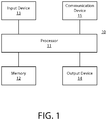
- FIGURE 1 is a block diagram showing an apparatus, such as an electronic apparatus 10, according to at least one example embodiment. It should be understood, however, that an electronic apparatus as illustrated and hereinafter described is merely illustrative of an electronic apparatus that could benefit from embodiments of the invention and, therefore, should not be taken to limit the scope of the invention. While electronic apparatus 10 is illustrated and will be hereinafter described for purposes of example, other types of electronic apparatuses may readily employ embodiments of the invention.
- Electronic apparatus 10 may be a personal digital assistant (PDAs), a pager, a mobile computer, a desktop computer, a television, a gaming apparatus, a laptop computer, a tablet computer, a media player, a camera, a video recorder, a mobile phone, a pendant apparatus, a monocular apparatus, a peripheral apparatus, a near eye display apparatus, a wearable apparatus, a viewfinder apparatus, a telescope apparatus, a monoscopic image apparatus, a binocular apparatus, a stereoscopic apparatus, a virtual reality apparatus, an augmented reality apparatus, a kaleidoscope apparatus, a global positioning system (GPS) apparatus, an automobile, a kiosk, an electronic table, and/or any other types of electronic systems.
- PDAs personal digital assistant
- a pager a mobile computer
- desktop computer a television
- a gaming apparatus a laptop computer
- a tablet computer a media player
- a camera a video recorder
- a mobile phone a pendant apparatus
- the apparatus of at least one example embodiment need not be the entire electronic apparatus, but may be a component or group of components of the electronic apparatus in other example embodiments.
- the apparatus may be an integrated circuit, a set of integrated circuits, and/or the like.
- apparatuses may readily employ embodiments of the invention regardless of their intent to provide mobility.
- embodiments of the invention may be described in conjunction with mobile applications, it should be understood that embodiments of the invention may be utilized in conjunction with a variety of other applications, both in the mobile communications industries and outside of the mobile communications industries.
- electronic apparatus 10 comprises processor 11 and memory 12.
- Processor 11 may be any type of processor, controller, embedded controller, processor core, and/or the like.
- processor 11 utilizes computer program code to cause an apparatus to perform one or more actions.
- Memory 12 may comprise volatile memory, such as volatile Random Access Memory (RAM) including a cache area for the temporary storage of data and/or other memory, for example, non-volatile memory, which may be embedded and/or may be removable.
- the non-volatile memory may comprise an EEPROM, flash memory and/or the like.
- Memory 12 may store any of a number of pieces of information, and data. The information and data may be used by the electronic apparatus 10 to implement one or more functions of the electronic apparatus 10, such as the functions described herein.
- memory 12 includes computer program code such that the memory and the computer program code are configured to, working with the processor, cause the apparatus to perform one or more actions described herein.
- the electronic apparatus 10 may further comprise a communication device 15.
- communication device 15 comprises an antenna, (or multiple antennae), a wired connector, and/or the like in operable communication with a transmitter and/or a receiver.
- processor 11 provides signals to a transmitter and/or receives signals from a receiver.
- the signals may comprise signaling information in accordance with a communications interface standard, user speech, received data, user generated data, and/or the like.
- Communication device 15 may operate with one or more air interface standards, communication protocols, modulation types, and access types.
- the electronic communication device 15 may operate in accordance with second-generation (2G) wireless communication protocols IS-136 (time division multiple access (TDMA)), Global System for Mobile communications (GSM), and IS-95 (code division multiple access (CDMA)), with third-generation (3G) wireless communication protocols, such as Universal Mobile Telecommunications System (UMTS), CDMA2000, wideband CDMA (WCDMA) and time division-synchronous CDMA (TD-SCDMA), and/or with fourth-generation (4G) wireless communication protocols, wireless networking protocols, such as 802.11, short-range wireless protocols, such as Bluetooth, and/or the like.
- Communication device 15 may operate in accordance with wireline protocols, such as Ethernet, digital subscriber line (DSL), asynchronous transfer mode (ATM), and/or the like.
- Processor 11 may comprise means, such as circuitry, for implementing audio, video, communication, navigation, logic functions, and/or the like, as well as for implementing embodiments of the invention including, for example, one or more of the functions described herein.
- processor 11 may comprise means, such as a digital signal processor device, a microprocessor device, various analog to digital converters, digital to analog converters, processing circuitry and other support circuits, for performing various functions including, for example, one or more of the functions described herein.
- the apparatus may perform control and signal processing functions of the electronic apparatus 10 among these devices according to their respective capabilities.
- the processor 11 thus may comprise the functionality to encode and interleave message and data prior to modulation and transmission.
- the processor 1 may additionally comprise an internal voice coder, and may comprise an internal data modem. Further, the processor 11 may comprise functionality to operate one or more software programs, which may be stored in memory and which may, among other things, cause the processor 11 to implement at least one embodiment including, for example, one or more of the functions described herein. For example, the processor 11 may operate a connectivity program, such as a conventional internet browser.
- the connectivity program may allow the electronic apparatus 10 to transmit and receive internet content, such as location-based content and/or other web page content, according to a Transmission Control Protocol (TCP), Internet Protocol (IP), User Datagram Protocol (UDP), Internet Message Access Protocol (IMAP), Post Office Protocol (POP), Simple Mail Transfer Protocol (SMTP), Wireless Application Protocol (WAP), Hypertext Transfer Protocol (HTTP), and/or the like, for example.
- TCP Transmission Control Protocol
- IP Internet Protocol
- UDP User Datagram Protocol
- IMAP Internet Message Access Protocol
- POP Post Office Protocol
- Simple Mail Transfer Protocol SMTP
- WAP Wireless Application Protocol
- HTTP Hypertext Transfer Protocol
- the electronic apparatus 10 may comprise a user interface for providing output and/or receiving input.
- the electronic apparatus 10 may comprise an output device 14.
- Output device 14 may comprise an audio output device, such as a ringer, an earphone, a speaker, and/or the like.
- Output device 14 may comprise a tactile output device, such as a vibration transducer, an electronically deformable surface, an electronically deformable structure, and/or the like.
- Output device 14 may comprise a visual output device, such as a display, a light, and/or the like.
- the apparatus causes display of information, the causation of display may comprise displaying the information on a display comprised by the apparatus, sending the information to a separate apparatus that comprises a display, and/or the like.
- the electronic apparatus may comprise an input device 13.
- Input device 13 may comprise a light sensor, a proximity sensor, a microphone, a touch sensor, a force sensor, a button, a keypad, a motion sensor, a magnetic field sensor, a camera, and/or the like.
- a touch sensor and a display may be characterized as a touch display.
- the touch display may be configured to receive input from a single point of contact, multiple points of contact, and/or the like.
- the touch display and/or the processor may determine input based, at least in part, on position, motion, speed, contact area, and/or the like.
- the apparatus receives an indication of an input.
- the apparatus may receive the indication from a sensor, a driver, a separate apparatus, and/or the like.
- the information indicative of the input may comprise information that conveys information indicative of the input, indicative of an aspect of the input indicative of occurrence of the input, and/or the like.
- the electronic apparatus 10 may include any of a variety of touch displays including those that are configured to enable touch recognition by any of resistive, capacitive, infrared, strain gauge, surface wave, optical imaging, dispersive signal technology, acoustic pulse recognition or other techniques, and to then provide signals indicative of the location and other parameters associated with the touch. Additionally, the touch display may be configured to receive an indication of an input in the form of a touch event which may be defined as an actual physical contact between a selection object (e.g., a finger, stylus, pen, pencil, or other pointing device) and the touch display.
- a selection object e.g., a finger, stylus, pen, pencil, or other pointing device
- a touch event may be defined as bringing the selection object in proximity to the touch display, hovering over a displayed object or approaching an object within a predefined distance, even though physical contact is not made with the touch display.
- a touch input may comprise any input that is detected by a touch display including touch events that involve actual physical contact and touch events that do not involve physical contact but that are otherwise detected by the touch display, such as a result of the proximity of the selection object to the touch display.
- a touch display may be capable of receiving information associated with force applied to the touch screen in relation to the touch input.
- the touch screen may differentiate between a heavy press touch input and a light press touch input.
- a display may display two-dimensional information, three-dimensional information and/or the like.
- the keypad may comprise numeric (for example, 0-9) keys, symbol keys (for example, #, *), alphabetic keys, and/or the like for operating the electronic apparatus 10.
- the keypad may comprise a conventional QWERTY keypad arrangement.
- the keypad may also comprise various soft keys with associated functions.
- the electronic apparatus 10 may comprise an interface device such as a joystick or other user input interface.
- the media capturing element may be any means for capturing an image, video, and/or audio for storage, display or transmission.
- the camera module may comprise a digital camera which may form a digital image file from a captured image.
- the camera module may comprise hardware, such as a lens or other optical component(s), and/or software necessary for creating a digital image file from a captured image.
- the camera module may comprise only the hardware for viewing an image, while a memory device of the electronic apparatus 10 stores instructions for execution by the processor 11 in the form of software for creating a digital image file from a captured image.
- the camera module may further comprise a processing element such as a co-processor that assists the processor 11 in processing image data and an encoder and/or decoder for compressing and/or decompressing image data.
- the encoder and/or decoder may encode and/or decode according to a standard format, for example, a Joint Photographic Experts Group (JPEG) standard format.
- JPEG Joint Photographic Experts Group
- FIGURES 2A-2F are diagrams illustrating an apparatus according to at least one example embodiment.
- the examples of FIGURES 2A-2F are merely examples and do not limit the scope of the claims.
- size of the apparatus may vary
- shape of the apparatus may vary
- configuration of the apparatus may vary, and/or the like.
- an electronic apparatus may be desirable to configure an electronic apparatus as a pendant apparatus.
- configuration of an electronic apparatus as a pendant apparatus may permit a user of the electronic apparatus to easily transport the apparatus, wear the apparatus, interact with the apparatus, and/or the like.
- a pendant apparatus may refer to an electronic apparatus, such as an electronic apparatus similar as described regarding FIGURE 1 , comprising a pendant form factor.
- an apparatus comprising a pendant form factor may comprise provisions for attaching the pendant apparatus to a necklace, easily handling the apparatus in the hand of a user, standing the apparatus upright on a table, and/or the like.
- a pendant apparatus comprises a necklace.
- a pendant apparatus may comprise a display.
- a display comprised by a pendant apparatus may be a near eye display.
- a near eye display may allow for the size of the apparatus to remain compact, allow for a user to view the display at a near distance with clarity, and/or the like.
- a pendant apparatus comprises a near eye display.
- the pendant apparatus may be configured such that the near eye display is best viewed by a single eye of the user. In circumstances such as these, the pendant apparatus may be referred to as a monocular apparatus.
- a pendant apparatus may be configured as a binocular apparatus.
- a binocular apparatus may refer to an electronic apparatus in which a first display is configured for viewing by a left eye of a user and a second display is configured for viewing by a right eye of a user, such that the displays may be viewed simultaneously by the user.
- a pendant apparatus may determine an apparatus orientation, a user input, an apparatus mode, and/or the like by receiving environmental sensor information from at least one environmental sensor.
- An environmental sensor may refer to an input device similar as described regarding FIGURE 1 .
- an environmental sensor may be a touch sensor, an orientation sensor, an accelerometer, an infrared sensor, an optical sensor, a proximity sensor, a gyro, a magnetometer, an inertial sensor, and/or the like.
- FIGURE 2A-2C are diagrams illustrating apparatus 200 according to at least one example embodiment.
- FIGURE 2A is a perspective view
- FIGURE 2B is a front view
- FIGURE 2C is a cutaway view of the same example.
- apparatus 200 comprises enclosure 202, display 204, environmental sensors 206, 208, 210, 212, 214, 216, 218, 220, 222, 224, 226, and 228, and processor 230.
- the example of FIGURES 2A-2C depict apparatus 200 as a pendant apparatus, but it should be understood that apparatus 200 may be any type of electronic apparatus.
- a user may have an electronic apparatus similar as described regarding FIGURES 2A-2C under his control.
- the apparatus may receive a notification of a message, a calendar alert, and/or the like. It may be desirable in circumstances such as these for the viewer to actively view the apparatus to perceive the notification, dismiss the alert, and/or the like.
- the user may place the apparatus near his eyes, face the apparatus in his direction, and/or the like to actively view the apparatus.
- a user may be focusing his attention on the apparatus, interacting with the apparatus, and/or the like.
- a user may be actively reading information displayed on a display comprised by the apparatus.
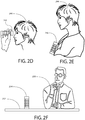
- FIGURE 2D is a diagram illustrating user 240 actively viewing a display comprised by apparatus 242. Even though the example of FIGURE 2D depicts apparatus 242 as a pendant apparatus, apparatus 242 may be any type of electronic apparatus.
- a user may have an electronic apparatus similar as described regarding FIGURES 2A-2C under his control.
- an apparatus may be positioned such that the apparatus may not be actively viewed by the user.
- the apparatus may be placed on a desk, placed in the user's pocket, worn on the user's body, and/or the like.
- a display comprised by an apparatus may be passively viewed by a user of the apparatus.
- a user may be focusing his attention on something other than the apparatus, ignoring the apparatus, viewing the apparatus with his peripheral vision, viewing the apparatus from a distance, and/or the like.
- a user may be reading information displayed on a display comprised by a different apparatus, performing a task independent of the apparatus, and/or the like. In this manner, an apparatus that is being passively viewed is not being actively viewed.
- FIGURE 2E is a diagram illustrating user 244 passively viewing a display comprised by apparatus 246.
- apparatus 244 may be any type of electronic apparatus. It can be seen that apparatus 246 is attached to a necklace worn by user 244. Even though the example of FIGURE 2E depicts apparatus 246 as being worn by user 244, apparatus 246 may be attached to user 244's clothing, carried in a pocket, carried in user 244's hand, and/or the like, such that apparatus 246 may be passively viewed by user 244.
- FIGURE 2F is a diagram illustrating user 250 sitting at desk 252 passively viewing a display comprised by apparatus 254.
- apparatus 254 may be any type of electronic apparatus. It can be seen that apparatus 254 is positioned upright on the top surface of desk 252.
- apparatus 254 may be positioned in other positions such that apparatus 254 may be passively viewed by user 250. For example, apparatus 254 may be placed upright on a floor surface, laying on a side of apparatus 254 on top of a surface of desk 252, and/or the like.
- a user may be actively viewing an apparatus.
- the user may be interacting with the apparatus in a manner similar to user 240 of FIGURE 2D interacting with apparatus 242.
- an apparatus may determine that the apparatus is being actively viewed by a user based, at least in part, on the active viewing state of the apparatus.
- An active viewing state may be characterized by a state in which the apparatus is configured in a manner that avoids visual impairment compensation.
- Visual impairment compensation may refer to the rendering of visual information in a manner that it is easier to perceive and/or comprehend when viewing conditions are less than ideal.
- visual information rendered with visual impairment compensation may be rendered with a lower pixel resolution, with a higher brightness level, without textual information, and/or the like.
- visual information rendered without visual impairment compensation may be rendered with an increased pixel resolution, with a lower brightness level, with textual information, and/or the like.
- a user may be passively viewing an apparatus, not viewing an apparatus, and/or the like.
- the apparatus may be passively viewed similar as described regarding FIGURES 2E-2F .
- the user may transition from passive to active viewing.
- a user may move the apparatus from a position similar as depicted in FIGURES 2E or 2F to a position similar as depicted in FIGURE 2D .
- it may be desirable for an apparatus to enter an active viewing state of the apparatus, based, at least in part, on environmental sensor information.
- environmental sensor information may indicate that the apparatus is actively viewed by a user.
- environmental sensor information may indicate that the apparatus has an apparatus orientation with respect to a user.
- the apparatus orientation may be similar to the orientation of apparatus 242 of FIGURE 2D with respect to user 240.
- the apparatus enters an active viewing state of the apparatus based, at least in part, on the determination that the environmental sensor information indicates that the apparatus is actively viewed by the user.
- an orientation of the apparatus may indicate that the apparatus is actively viewed by the user.
- the apparatus may be oriented such that a display comprised by the apparatus is in a position in which the view is unobscured.
- the orientation of the apparatus when being actively viewed may be similar to the orientation of apparatus 242 of FIGURE 2D .
- determination that the environmental sensor information indicates that the apparatus is actively viewed by a user comprises determination that an orientation of the apparatus indicates that the apparatus is actively viewed by the user.
- the direction of gravity in relation to an apparatus may indicate may indicate that apparatus is actively viewed by a user.
- the apparatus may be actively viewed if the direction of gravity substantially parallel to a surface of a display comprised by the apparatus.
- environmental sensor information comprises information indicative of a direction of gravity in relation to the apparatus.
- the direction of gravity is substantially parallel to the surface of the display in circumstances where the direction of gravity deviates from being exactly parallel to the surface of the display within a predetermined threshold angle.
- the threshold angle is a predetermined angle, such as 15 degrees, 28 degrees, 45 degrees, and/or the like. In at least one example embodiment, the threshold angle varies based, at least in part, on one or more physical characteristics of the apparatus, such as the size of the apparatus, resolution of the display, obscurance of the display by a housing of the apparatus, and/or the like. In at least one example embodiment, the threshold angle may be based, at least in part, on other environmental circumstances, such as the distance between the apparatus and the user, contact between the user and the apparatus, and/or the like. For example, the threshold angle may be larger when the user is further from the apparatus, when the apparatus is larger in size, and/or the like. In another example, the threshold angle may be smaller when the user is closer to the apparatus, when the apparatus is smaller in size, and/or the like.
- an eye of a user proximate to a display comprised by an apparatus may indicate that the apparatus is actively viewed by the user.
- the display may be a near eye display.
- a user actively viewing a near eye display may have their eye proximate to the display in a similar manner to user 240's eye being proximate to apparatus 242 of FIGURE 2D .
- the environmental sensor may be a proximity sensor, an infrared sensor, a sonar, a radar, a capacitive sensor, a light sensor, and/or the like, comprised by the apparatus.
- determination that the environmental sensor information indicates that the apparatus is actively viewed by a user comprises determination that an eye of the user is proximate to the display.
- the environmental sensor information comprises proximity sensor information that indicates proximity of the user in relation to the display.
- the proximity sensor information indicates proximity of the user in circumstances where the proximity sensor information indicates an object being within a threshold distance from the display.
- the threshold distance is a predetermined distance, such as 2 centimeters, 4 centimeters, 8 centimeters, and/or the like. In at least one example embodiment, the threshold distance varies based, at least in part, on one or more physical characteristics of the apparatus, such as the size of the apparatus, resolution of the display, obscurance of the display by a housing of the apparatus, and/or the like. In at least one example embodiment, the threshold distance may be based, at least in part, on other environmental circumstances, such as the distance between the apparatus and the user, contact between the user and the apparatus, and/or the like. For example, the threshold distance may be larger when the user is further from the apparatus, when the apparatus is larger in size, and/or the like. In another example, the threshold distance may be smaller when the user is closer to the apparatus, when the apparatus is smaller in size, and/or the like.
- a user holding an apparatus may indicate that the apparatus is actively viewed by the user.
- a user may necessarily hold an apparatus while interacting with software associated with the apparatus.
- the apparatus may comprise touch sensors as an input for software control.
- a user actively viewing an apparatus may hold the apparatus in a similar manner to user 240 holding apparatus 242 of FIGURE 2D .
- determination that the environmental sensor information indicates that the apparatus is actively viewed by a user comprises determination that the user is holding the apparatus.
- the environmental sensor information comprises touch sensor information indicative of a user holding the apparatus.
- an apparatus may be actively viewed by a user based, at least in part, on a combination of environmental sensor information received from different environmental sensors.
- environmental sensor information may indicate that the apparatus is being actively viewed when no active viewing is occurring.
- a user may briefly hold an apparatus to move it out of his way, or the apparatus may have an orientation consistent with viewing of the apparatus even though the apparatus is not being actively viewed.
- the apparatus may determine that an apparatus is actively viewed by a user if a combination of environmental sensor information received from different environmental sensors is consistent with being actively viewed by a user.
- the apparatus may determine that it is being actively viewed if it has a particular orientation and is simultaneously being held, if the apparatus is being held and the apparatus is proximate to the eye of the user, and/or the like.
- a user may be passively viewing an apparatus, not viewing an apparatus, and/or the like.
- the apparatus may be passively viewed similar as described regarding FIGURES 2E-2F .
- an apparatus may determine that the apparatus is not being actively viewed by a user based, at least in part, on the passive viewing state of the apparatus.
- a passive viewing state may be an operational state in which information is caused to be displayed in conformance with an impaired-viewing display mode absent display of information in an unimpaired-viewing display mode.
- a passive viewing state may be characterized by a state in which the apparatus is configured in a manner that provides visual impairment compensation.
- a user may be actively viewing an apparatus.
- the user may be interacting with the apparatus in a manner similar to user 240 of FIGURE 2D interacting with apparatus 242.
- the user may transition from active to passive viewing.
- a user may move the apparatus from a position similar as depicted in FIGURE 2D to a position similar as depicted in FIGURES 2E and/or FIGURE 2F .
- it may be desirable for an apparatus to enter a passive viewing state of the apparatus, based, at least in part, on environmental sensor information.
- environmental sensor information may indicate that the apparatus is not actively viewed by a user.
- environmental sensor information may indicate that the apparatus has an apparatus orientation with respect to a user similar to the orientation of apparatus 246 of FIGURE 2E with respect to user 244, similar to the orientation of apparatus 254 of FIGURE 2F with respect to user 250, and/or the like.
- the apparatus enters a passive viewing state of the apparatus based, at least in part, on the determination that the environmental sensor information indicates that the apparatus is not actively viewed by the user.
- an orientation of the apparatus may indicate that the apparatus is not actively viewed by the user.
- the apparatus may be oriented such that a display comprised by the apparatus is in a position in which the view is obscured.
- the orientation of the apparatus when being actively viewed may be similar to the orientation of apparatus 246 of FIGURE 2E .
- determination that the environmental sensor information indicates that the apparatus is not actively viewed by a user comprises determination that an orientation of the apparatus indicates that the apparatus is not actively viewed by the user.
- the environmental sensor is a magnetometer
- environmental sensor information is indicative of an orientation of the apparatus relative to the magnetic north pole of the Earth.
- the direction of gravity in relation to an apparatus may indicate may indicate that apparatus is not actively viewed by a user.
- the apparatus may not be actively viewed if the direction of gravity substantially perpendicular to a surface of a display comprised by the apparatus.
- the direction of gravity in FIGURE 2E is substantially perpendicular to the display of apparatus 246, and that the direction of gravity in FIGURE 2F is substantially perpendicular to the display of apparatus 254.
- the direction of gravity is substantially perpendicular to the surface of the display in circumstances where the direction of gravity deviates from being exactly perpendicular to the surface of the display within a predetermined threshold angle.
- the threshold angle may be a predetermined angle, such as 15 degrees, 20 degrees, 45 degrees, and/or the like.
- the threshold angle varies based, at least in part, on one or more physical characteristics of the apparatus, such as the size of the apparatus, resolution of the display, obscurance of the display by a housing of the apparatus, and/or the like.
- the threshold angle may be based, at least in part, on other environmental circumstances, such as the distance between the apparatus and the user, contact between the user and the apparatus, and/or the like.
- the threshold angle may be larger when the user is further from the apparatus, when the apparatus is larger in size, and/or the like.
- the threshold angle may be smaller when the user is closer to the apparatus, when the apparatus is smaller in size, and/or the like.
- absences of an eye of a user proximate to a display comprised by an apparatus may indicate that the apparatus is not actively viewed by the user.
- the display may be a near eye display.
- a user not actively viewing a near eye display may have their eye distant to the display in a similar manner to user 244's eye being distant to apparatus 246 of FIGURE 2E , user 250's eye being distant to apparatus 254 of FIGURE 2F , and/or the like.
- the environmental sensor may be a proximity sensor, an infrared sensor, a sonar, a radar, a capacitive sensor, a light sensor, and/or the like comprised by the apparatus.
- determination that the environmental sensor information indicates that the apparatus is not actively viewed by a user comprises determination that an eye of the user is distant to the display.
- the proximity sensor information indicates distance from the user in circumstances where the proximity sensor information indicates an object being beyond a threshold distance from the display.
- the threshold distance is a predetermined distance, such as 20 centimeters, 30 centimeters, 50 centimeters, and/or the like.
- the threshold distance varies based, at least in part, on one or more physical characteristics of the apparatus, such as the size of the apparatus, resolution of the display, obscurance of the display by a housing of the apparatus, and/or the like. In at least one example embodiment, the threshold distance may be based, at least in part, on other environmental circumstances, such as the distance between the apparatus and the user, contact between the user and the apparatus, and/or the like. For example, the threshold distance may be larger when the user is further from the apparatus, when the apparatus is larger in size, and/or the like. In another example, the threshold distance may be smaller when the user is closer to the apparatus, when the apparatus is smaller in size, and/or the like.
- absence of a user holding an apparatus may indicate that the apparatus is not actively viewed by the user.
- the apparatus may comprise touch sensors as an input for software control.
- a user that is not actively viewing an apparatus may not be holding the apparatus in a similar manner to user 244 not holding apparatus 246 of FIGURE 2E , user 250 not holding apparatus 254 of FIGURE 2F , and/or the like.
- determination that the environmental sensor information indicates that the apparatus is not actively viewed by a user comprises determination that the user is not holding the apparatus.
- the environmental sensor information comprises touch sensor information indicative of a user not holding the apparatus.
- an apparatus may be desirable to determine that an apparatus is not actively viewed by a user based, at least in part, on a combination of environmental sensor information received from different environmental sensors.
- environmental sensor information may indicate that the apparatus is not being actively viewed when active viewing is occurring.
- a user may briefly pull the apparatus away from his eye, the apparatus may have an orientation inconsistent with viewing of the apparatus even though the apparatus is being actively viewed, and/or the like.
- the apparatus may determine that an apparatus is not actively viewed by a user if a combination of environmental sensor information received from different environmental sensors is consistent with not being actively viewed by a user.
- the apparatus may determine that it is not being actively viewed if it has a particular orientation and is simultaneously not being held, if the apparatus is not being held and the apparatus is distant from the eye of the user, and/or the like.
- FIGURES 3A-3C are diagrams illustrating a display in relation to display angles according to at least one example embodiment.
- the examples of FIGURES 3A-3C are merely examples and do not limit the scope of the claims.
- display design and/or shape may vary, display configuration may vary, display angle may vary, and/or the like.
- a user may desire to utilize an apparatus, such as the apparatus described in the examples of FIGURES 2A-2F , to perceive and/or interact with information, such as content, software, textual information, graphical information, and/or the like.
- information such as content, software, textual information, graphical information, and/or the like.
- the apparatus may view textual content, browse with graphical content, interact with software, and/or the like.
- FIGURES 2A-2F depict an apparatus that is characterized by a tubular form factor, similar to a monocular apparatus, a kaleidoscope, and/or the like.
- a user may be familiar with one or more manners in which to scroll, pan, browse, navigate, and/or the like, within such information.
- the user may be familiar with a rotational input, a turning input, and/or the like.
- it may be desirable to configure the apparatus such that the user of the apparatus may interact with information displayed on the display by way of a rotational input, a turning input, and/or the like.
- the user may tumble the apparatus about its axis while peering at the display comprised by the apparatus.
- the apparatus itself may be utilized as an input device for purposes associated with viewing textual content, browsing graphical content, interacting with software, and/or the like.
- an apparatus determines an orientation of the apparatus.
- a user may be interacting with information while the user is peering at a display of the apparatus.
- it may be desirable to determine an orientation of the apparatus based upon the rotation of the display of the apparatus with respect to a gravitational force.
- an apparatus determines a display angle of a display comprised by the apparatus.
- the display angle may be an angle of the display with respect to gravity.
- determination of the display angle with respect to gravity may comprise receipt of sensor information that indicates a direction of gravity, and determination of the display angle may be based, at least in part, on the direction of gravity in relation to the display.
- the determination of the display angle may comprise determination that the direction of gravity differs from a predetermined reference angle by the display angle.
- the predetermined reference angle may, for example, correspond with a predetermined edge of the display, a predetermined position on the display, a predetermined orientation of the display, and/or the like.
- the predetermined reference angle corresponds with an angle that is perpendicular to a bottom of the display.
- the bottom of the display may be a lower edge of the display, a position at the intended bottom of the display, a bottom of the display such that the display is in an upright orientation while the apparatus is in an upright position, and/or the like.
- the sensor information may be received from an accelerometer sensor, a gyroscopic sensor, an orientation sensor, a gravitational force sensor, and/or the like.
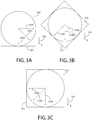
- FIGURES 3A-3C are diagrams illustrating a display in relation to display angles according to at least one example embodiment.
- the example of FIGURE 3A depicts display 300, having bottom edge 301, in relation to gravity 302 and display angles 304A, 304B, and 304C.
- the example of FIGURE 3B depicts display 310, having bottom edge 311, in relation to gravity 312 and display angles 314A, 314B, and 314C.
- the example of FIGURE 3C depicts display 320, having bottom edge 321, in relation to gravity 322 and display angles 324A, 324B, and 324C.
- display 300 of FIGURE 3A may correspond with display 310 of FIGURE 3B and/or display 320 of FIGURE 3C .
- each of display angles 304A-304C of FIGURE 3A may correspond with each of display angles 314A-314C of FIGURE 3B and/or each of display angles 324A-324C of FIGURE 3C , respectively.
- the progression of the example of FIGURES 3A-3C may depict a display that is being reoriented from the display angle of display 300 in the example of FIGURE 3A , to the display angle of display 310 in the example of FIGURE 3B , and to the display angle of display 320 in the example of FIGURE 3C .
- display angle 304A is approximately parallel to gravity 302.
- display 300 is oriented such that bottom edge 301 is positioned at the bottom of display 300, and gravity 302 is perpendicular to bottom edge 301 of display 300.
- display 300 may be oriented in an upright orientation, a predetermined default orientation, and/or the like.
- display angle 304A is directed towards and is perpendicular to bottom edge 301.
- display angle 304A may indicate that the display is in an upright orientation, a predetermined default orientation, and/or the like.
- display angle 304A may indicate that the display is rotated 0-degrees from the upright orientation of the display, from the predetermined default orientation of the display, and/or the like. In this manner, the display angle of display 300 may be 0-degrees.
- display angle 314B is approximately parallel to gravity 312.
- display 310 is oriented such that bottom edge 311 has rotated in relation to bottom edge 301 of FIGURE 3A , and gravity 312 fails to be perpendicular to bottom edge 311 of display 310. In this manner, display 310 may fail to be oriented in an upright orientation, a predetermined default orientation, and/or the like.
- display angle 314A is directed towards and is perpendicular to bottom edge 301, and display angle 314B is approximately parallel to gravity 312.
- display angle 314B may indicate an angle of rotation away from display angle 314A.
- display angle 314B may indicate that the display is rotated 45-degrees from the upright orientation of the display, from the predetermined default orientation of the display, and/or the like. In this manner, the display angle of display 310 may be 45-degrees.
- display angle 324C is approximately parallel to gravity 322.
- display 320 is oriented such that bottom edge 321 has rotated in relation to bottom edge 301 of FIGURE 3A and bottom edge 311 of FIGURE 3B , and gravity 322 fails to be perpendicular to bottom edge 321 of display 320.
- display 320 may fail to be oriented in an upright orientation, a predetermined default orientation, and/or the like.
- display angle 324A is directed towards and is perpendicular to bottom edge 321, and display angle 324C is approximately parallel to gravity 322.
- display angle 324C may indicate an angle of rotation away from display angle 324A.
- display angle 324C may indicate that the display is rotated 90-degrees from the upright orientation of the display, from the predetermined default orientation of the display, and/or the like. In this manner, the display angle of display 320 may be 90-degrees.
- a user may desire to interact with information displayed on a display of an apparatus by way of reorienting the apparatus from a first orientation to a second orientation, from a first orientation to a third orientation, and/or the like.
- it may be desirable to configure an apparatus such that the apparatus may enable such interaction by way of reorientation of the apparatus, reorientation of the display, and/or the like.
- it may be desirable to configure the apparatus such that the apparatus may determine a display angle of the first orientation, a display angle of the second orientation, and/or a display angle of the third orientation, such that the apparatus may facilitate interaction with information by way of reorienting the apparatus from a display angle to a different display angle.
- an apparatus determines a contiguous subset of a sequential arrangement of information based, at least in part, on a display angle.
- the sequential arrangement of information may be any information that is arranged in a sequential or ordered manner.
- the sequential arrangement of information may be a list of information, an array of information, a matrix of information, a group of textual messages, a textual document, a gallery of graphical content, a collection of still frames of a video, and/or the like.
- the contiguous subset of the sequential arrangement of information may be, respectively, one or more items on the list of information, one or more array elements of the array of information, one or more matrix elements of the matrix of information, one or more textual messages of the group of textual messages, one or more words of the textual document, one or more pictures of the gallery of pictures, one or more still frames of the video, and/or the like.
- the user of the apparatus may reorient the apparatus and/or the display such that the display angle of the display changes from a display angle to a different display angle.
- an apparatus determines a display angle of the display with respect to gravity, and determines a contiguous subset of a sequential arrangement of information based, at least in part, on the display angle.
- the user may subsequent reorient the apparatus and/or the display such that the display is at a different display angle.
- an apparatus determines another display angle of the display with respect to gravity. In such an example embodiment, the other display angle may be different from the display angle.
- the apparatus may determine another contiguous subset of the sequential arrangement based, at least in part, on the other display angle.
- the contiguous subset may be different from the other contiguous subset, the contiguous subset may comprise a portion of the other contiguous subset that is less than an entirety of the other contiguous subset, and/or the like.
- an apparatus may determine a first display angle of the display with respect to gravity, determine a first contiguous subset of a sequential arrangement of information, and, subsequently, determine a second display angle of the display with respect to gravity.
- determination of a second contiguous subset comprises determination of an angular change between a first display angle and a second display angle, and determination of the second contiguous subset based, at least in part, on the angular change and the first contiguous subset.
- the angular change may be such that the second contiguous subset comprises at least a portion of the first contiguous subset, such that the second contiguous subset fails to comprise any portion of the first contiguous subset, and/or the like.
- the second contiguous subset may be desirable to determine the second contiguous subset based, at least in part, on a relative position of the first contiguous subset and/or the second contiguous subset within the sequential arrangement of information.
- the first contiguous subset may correspond with a first position within the sequential arrangement of information.
- the determination of a second contiguous subset based, at least in part, on the angular change and the first contiguous subset may comprise determination of a magnitude of the angular change, and determination of a second position within the sequential arrangement of information based, at least in part, on the first position and the magnitude of the angular change.
- the apparatus may determine the second contiguous subset such that the second contiguous subset corresponds with the second position within the sequential arrangement of information.
- the difference between the first position and the second position may be proportional to the magnitude of the angular change, scaled based, at least in part, on the magnitude of the angular change, dependent upon the magnitude of the angular change, and/or the like.
- an angular change between the display angle of display 300 of FIGURE 3A and the display angle of display 310 of FIGURE 3B may be 45-degrees.
- the display angle of display 300 of FIGURE 3A may be 0-degrees and the display angle of display 310 of FIGURE 3B may be 45-degrees.
- the difference between the two display angles, and thus the angular change may be 45-degrees.
- an angular change between the display angle of display 310 of FIGURE 3B and the display angle of display 320 of FIGURE 3C may be 45-degrees.
- the display angle of display 310 of FIGURE 3B may be 45-degrees and the display angle of display 320 of FIGURE 3C may be 90-degrees.
- the difference between the two display angles, and thus the angular change may be 45-degrees.
- an angular change between the display angle of display 300 of FIGURE 3A and the display angle of display 320 of FIGURE 3C may be 90-degrees.
- the display angle of display 300 of FIGURE 3A may be 0-degrees and the display angle of display 320 of FIGURE 3C may be 90-degrees.
- the difference between the two display angles, and thus the angular change may be 90-degrees.
- a user may desire to interact with information displayed on a display of an apparatus in different manners. For example, the user may desire to scroll forward through information, browse backwards through content, navigate leftward through a menu, increment a value, decrease a size of an image, and/or the like. As such, it may be desirable to determine a direction in which a display has been reoriented. For example, the apparatus and/or the display may be rolled in one direction, the apparatus and/or the display may be rotated in a different direction, and/or the like. As such, it may be desirable to configure an apparatus such that the apparatus may determine a direction associated with an angular change of a display.
- an apparatus determines a direction of an angular change, and determines a second position within a sequential arrangement of information based, at least in part, on a first position, a magnitude of an angular change, and a direction of the angular change.
- a positional direction from the first position to the second position may correspond with the direction of the angular change.
- an incremental positional direction may correspond with a clockwise direction of the angular change and a decremental positional direction may correspond with a counter-clockwise direction of the angular change.
- an incremental positional direction may correspond with a counter-clockwise direction of the angular change and a decremental positional direction may correspond with a clockwise direction of the angular change.
- an angular change between the display angle of display 300 of FIGURE 3A and the display angle of display 310 of FIGURE 3B may be positive 45-degrees.
- the display angle of display 300 of FIGURE 3A may be 0-degrees and the display angle of display 310 of FIGURE 3B may be 45-degrees.
- a rotation in a clockwise direction may be indicative of an incremental rotation, a positive direction, and/or the like.
- the difference between the two display angles, and thus magnitude and/or the direction of the angular change may be positive 45-degrees, clockwise 45-degrees, and/or the like.
- an angular change between the display angle of display 320 of FIGURE 3C and the display angle of display 300 of FIGURE 3A may be negative 90-degrees.
- the display angle of display 320 of FIGURE 3C may be 90-degrees and the display angle of display 300 of FIGURE 3A may be 0-degrees.
- a rotation in a counter-clockwise direction may be indicative of a decremental rotation, a negative direction, and/or the like.
- the difference between the two display angles, and thus magnitude and/or the direction of the angular change may be negative 90-degrees, counter-clockwise 90-degrees, and/or the like.
- FIGURES 4A-4C are diagrams illustrating an array of array elements according to at least one example embodiment.
- the examples of FIGURES 4A-4C are merely examples and do not limit the scope of the claims.
- display configuration may vary
- display angle may vary
- array of array elements configuration and/or arrangement may vary
- array element configuration may vary
- representations of array elements may vary
- representation of an array of array elements may vary
- representation of selection of an array element may vary, and/or the like.
- a user may desire to utilize an apparatus to perceive and/or interact with information, such as content, software, textual information, graphical information, and/or the like.
- the apparatus may determine a display angle of a display of the apparatus, and determine a contiguous subset of a sequential arrangement of information based, at least in part, on the display angle.
- the apparatus may determine a display angle of a display of the apparatus, and determine a contiguous subset of a sequential arrangement of information based, at least in part, on the display angle.
- it may be desirable to perform one or more operations based, at least in part, on the contiguous subset.
- the apparatus may determine a first display angle of a display comprised by the apparatus and a first contiguous subset of a sequential arrangement of information, and, subsequently, perform a first operation based, at least in part, on the first contiguous subset.
- the apparatus may be reoriented by a user such that the apparatus determines a second display angle of the display, and determines a second contiguous subset of the sequential arrangement of information.
- the apparatus may perform a second operation based, at least in part, on the second contiguous subset.
- the first operation may be different from the second operation, the first operation may be similar to the second operation, the first operation may be identical the second operation, and/or the like.
- a user may desire to interact with information in various ways depending on what type of information the user is interacting with. For example, the user may desire to pan across an image such that various portions of the image are displayed, browse through an image gallery such that images are successively displayed, select a menu item, launch an application, display a textual document such that the user may read through the entirety of the textual document a portion at a time, and/or the like. As such, it may be desirable to configure an apparatus such that the apparatus performs various operations based, at least in part, on a type or classification of a sequential arrangement of information being interacted with.
- the sequential arrangement of information is an array of array elements.
- an array element may be an image, an icon, a value, a word, and/or the like.
- the array of array elements may be an image gallery comprising the image, a menu comprising the icon, a list of numbers comprising the value, a sentence comprising the word, and/or the like.
- a contiguous subsection of the sequential arrangement of information may be an array element.
- a first contiguous subset may be a first array element of the array
- a second contiguous subset may be a second array element of the array. In this manner, a contiguous subset may comprise a single array element, a plurality of array elements, and/or the like.
- a user may desire to indicate selection of a particular array element of the array of array elements.
- a first operation may comprise selection of the first array element
- a second operation may comprise selection of the second array element.
- an operation comprises display of an indication of the selection of the first array element.
- it may be desirable to orient display of the indication of the selection of the first array element such that the indication is perceived as upright when viewed by a user of the apparatus. For example, a user may roll the apparatus and/or the display such that the display is at a first display angle.
- an operation comprises display of an indication of the selection of an array element on a display such that the orientation of the indication of the selection of the array element on the display corresponds with a display angle of the display.
- a first operation may comprise display of an indication of a selection of a first array element on a display such that the orientation of the indication of the selection of the first array element on the display corresponds with a first display angle.
- a second operation may comprise display of an indication of a selection of the second array element on the display such that the orientation of the indication of the selection of the second array element on the display corresponds with the second display angle.
- the apparatus may display a plurality of representations of array elements of an array of array elements.
- the plurality of representations of array elements of the array of array elements may comprise a representation of the first array element, a representation of the second array element, and/or the like.
- a representation of an array element is a representation that allows for user perception of the array element on a display, user comprehension of information comprised by the array element, and/or the like.
- the user may desire to interact with a particular array element and may select the particular array element by way of reorienting the device such that the array element is selected, such that the array element is displayed at a certain position on the display, and/or the like.
- an indication of the selection may be readily perceivable by the user.
- an indication of a selection may be an indication that indicates selection of a particular array element of an array of array elements.
- An indication of a selection of an array element may indicate selection of an array element by way of highlighting of a representation of the array element, outlining of a representation of the array element, enlarging of a representation of the array element, or moving of a representation of the array element, and/or the like.
- FIGURE 4A is a diagram illustrating an array of array elements according to at least one example embodiment.
- the example of FIGURE 4A depicts array 400 comprising array elements 402A-402G.
- Each of array elements 402A-402G may correspond with a particular display angle such that a user may indicate a desire to select any of array elements 402A-402G by way of orienting a display at a display angle that corresponds with a particular array element.
- indications 404A and 404B indicate selection of array elements 402E and 402B, respectively.
- a display of an apparatus may have been oriented at a first display angle that corresponds with array element 402E and, subsequently, reoriented to a display angle that corresponds with array element 402B.
- the display may have been rotated in a counter-clockwise direction such that the selected array element of array 400 decremented by three array elements.
- a user may have rotated the apparatus such that the display was reoriented from the first display angle to the second display angle, causing termination of selection of array element 402E and causing selection of array element 402B.
- FIGURE 4B is a diagram illustrating an array of array elements according to at least one example embodiment.
- the example of FIGURE 4B depicts display 410, which is displaying representations 412A-412D.
- representations 412A-412D represent at least one array element of an array of array elements.
- indication 414 indicates selection of the array element represented by representation 412A.
- the user may desire to select at least one array element represented by representations 412B-412D such that the array element is more visible on display 410, is displayed larger on display 410, and/or the like.
- FIGURE 4C is a diagram illustrating an array of array elements according to at least one example embodiment.
- the example of FIGURE 4C depicts display 420, which is displaying representations 422A-422D.
- Each of representations 422A-422D represent at least one array element of an array of array elements.
- display 420 corresponds with display 410 of FIGURE 4B .
- each of array elements 422A-422D may correspond with each of array elements 412A-412D of FIGURE 4B , respectively.
- array element 422C has been selected, as indicated by indication 424.
- representation 422C is more visible than the corresponding representation, representation 412C, in FIGURE 4B .
- FIGURES 4B-4C may depict a sequence of orientations of the same display.
- display 410 of FIGURE 4B may be at a 0-degree display angle
- display 420 of FIGURE 4C may be at a 90-degree display angle.
- the display may have been rotated in a clockwise direction such that the selected array element incremented by two array elements, from the representation depicting a "1" to the representation depicting a "3".
- a user may have rotated the apparatus such that the display was reoriented from the first display angle to the second display angle, causing termination of selection of array element 412A of FIGURE 4B and causing selection of array element 422A of FIGURE 4C .
- FIGURES 5A-5E are diagrams illustrating an array of menu items and/or an array of program identifiers according to at least one example embodiment.
- the examples of FIGURES 5A-5E are merely examples and do not limit the scope of the claims.
- display configuration may vary, display angle may vary, array of menu items configuration and/or arrangement may vary, menu item configuration may vary, representations of menu items may vary, representation of an array of menu items may vary, array of program identifiers configuration and/or arrangement may vary, program identifier configuration may vary, representations of program identifiers may vary, representation of an array of program identifiers may vary, representation of additional information may vary, content of additional information may vary, and/or the like.
- an array is an array of menu items.
- an array element of the array of menu items may be a menu item.
- a first array element may be a first menu item
- a second array element may be a second menu item, and/or the like.
- a user may desire to indicate selection of the first menu item, of the second menu item, and/or the like.
- the user may desire to indicate selection of a particular menu item based, at least in part, on a position of the menu item and a display angle of the display of the apparatus. For example, a user may indicate selection of a particular menu item of the array of menu items by way of orienting the display such that the display angle of the display corresponds with a position of a representation of the menu item on the display.
- an apparatus causes display of a plurality of representations of array elements such that a representation of a first array element is displayed at a position that corresponds with a first display angle and a representation of a second array element is displayed at a position that corresponds with a second display angle.
- a user may indicate selection of a particular menu item of the array of menu items by way of orienting the display such that the display angle of the display corresponds with a position of a representation of the menu item on the display.
- an apparatus causes display of a plurality of representations of menu items such that a representation of a first menu item is displayed at a position that corresponds with a first display angle and a representation of a second menu item is displayed at a position that corresponds with a second display angle.
- a user may indicate a desire to select the first menu item by way of orienting the display at the first display angle, a desire to select the second program identifier by way of orienting the display at the second display angle, and/or the like.
- a position that corresponds with a display angle is a position along an axis that extends from a center of the display along the display angle.
- the position that corresponds with the display angle may be any position along such an axis, a position along such an axis that is proximate to an outer edge of the display, and/or the like.
- FIGURE 5A is a diagram illustrating an array of menu items according to at least one example embodiment.
- the example of FIGURE 5A depicts display 500, having bottom 501, displaying representations 502A-502H.
- each of representations 502A-502H represent a menu item of an array of menu items.
- display 500 is displaying a plurality of representations of menu items of an array of menu items.
- display 500 is oriented such that bottom 501 is at the bottom of display 500. As such, display 500 may be oriented in an upright orientation, in a predetermined default orientation, and/or the like.
- each of representations 502A-502H is displayed such that the orientation of each of representations 502A-502H is based, at least in part, on the display angle of display 500. In this manner, each of representations 502A-502H is perceived by a viewer of display 500 to be upright, to be easily comprehendible, and/or the like.
- a user may be interacting with information while the user is peering at a display of the apparatus.
- the user may be interacting with an array of menu items by way of reorienting the display of the apparatus to a display angle, from a different display angle, and/or the like.
- user interface elements such as a plurality of representations of menu items is displayed such that each representation is displayed in an upright orientation regardless of an orientation of the apparatus, of the display, and/or the like.
- an apparatus may display a plurality of representations of menu items of an array of menu items, determine a first display angle of a display comprised by the apparatus, and determine a first menu item of the array of menu items based, at least in part, on the first display angle.
- a first operation may comprise modification of orientation of the plurality of representations of array elements such that an orientation of each representation of the plurality of representations on the display corresponds with the first display angle.
- each representation of the plurality of representations is displayed in an upright orientation such that the representations are easily comprehendible by the user.
- the user may subsequently reorient the apparatus.
- the apparatus may determine a second display angle of a display, and determine a second menu item of the array of menu items based, at least in part, on the second display angle.
- a second operation may comprise modification of the orientation of the plurality of representations of array elements such that the orientation of each representation of the plurality of representations on the display corresponds with the second display angle.
- FIGURE 5B is a diagram illustrating an array of menu items according to at least one example embodiment.
- the example of FIGURE 5B depicts display 510, having bottom 511, displaying representations 512A-512H.
- each of representations 512A-512H represent a menu item of an array of menu items.
- display 510 is displaying a plurality of representations of menu items of an array of menu items.
- display 510 is oriented such that bottom 501 fails to be at the bottom of display 510. As such, display 510 may fail to be oriented in an upright orientation, in a predetermined default orientation, and/or the like.
- the display angle of display 510 may be 90-degrees.
- the angular change between the display angle of display 500 in FIGURE 5A and display 510 may be clockwise 90-degrees, positive 90-degrees, and/or the like.
- each of representations 512A-512H is displayed such that the orientation of each of representations 512A-512H is based, at least in part, on the display angle of display 510. In this manner, each of representations 512A-512H is perceived by a viewer of display 510 to be upright, to be easily comprehendible, and/or the like, regardless of the fact that display 510 is rotated 90-degrees from its upright orientation, predetermined default orientation, and/or the like.
- a user may desire to interact with information by way of one or more menu items.
- the user may desire to perceive information associated with selection of a menu item.
- the user may desire to indicate selection of a menu item by way of orienting a display at a particular display angle that corresponds with a position of a representation of the menu item, and desire to perceive information associated with selection of the menu item to be displayed on the display, to cause modification to information that was displayed on the display prior to such a selection, and/or the like.
- it may be desirable to configure an apparatus such that the apparatus displays additional information associated with a particular menu item, is caused to display additional information based, at least in part, on selection of a particular menu item, and/or the like.
- an operation comprises display of a representation of additional information on the display.
- the representation of the additional information may be displayed on a portion of the display, on the entirety of the display, in a center portion of the display, and/or the like.
- the representation of the additional information in order to provide a user with an upright user interface, may be displayed such that the orientation of the representation of the additional information corresponds with a display angle of the display. For example, a user may indicate selection of a first menu item by way of orienting an apparatus at a first display angle that corresponds with the first menu item.
- the apparatus may perform a first operation that comprises display, in a center portion of the display, of a representation of additional information that is associated with the first menu item such that the orientation of the representation of the additional information corresponds with the first display angle.
- the user may subsequently reorient the apparatus to indicate selection of a second menu item by way of orienting the display at a second display angle that corresponds with the second menu item.
- the apparatus may perform a second operation that comprises display, in a center portion of the display, of a representation of additional information that is associated with the second menu item such that the orientation of the representation of additional information corresponds with the second display angle.
- an array is an array of program identifiers.
- an array element of the array of program identifiers may be a program identifier.
- a first array element may be a first program identifier
- a second array element may be a second program identifier, and/or the like.
- a user may desire to indicate selection of the first program identifier, of the second program identifier, and/or the like.
- the user may desire to indicate selection of a particular program identifier based, at least in part, on a position of the program identifier and a display angle of the display of the apparatus. For example, a user may indicate selection of a particular program identifier of the array of program identifiers by way of orienting the display such that the display angle of the display corresponds with a position of a representation of the program identifier on the display.
- an apparatus causes display of a plurality of representations of program identifier such that a representation of a first program identifier is displayed at a position that corresponds with a first display angle and a representation of a second program identifier is displayed at a position that corresponds with a second display angle.
- a user may indicate a desire to invoke a program associated with the first program identifier by way of orienting the display at the first display angle, a desire to invoke a program associated with the second program identifier by way of orienting the display at the second display angle, and/or the like.
- FIGURE 5C is a diagram illustrating an array of program identifiers according to at least one example embodiment.
- the example of FIGURE 5C depicts display 520, having bottom 521, displaying representations 522A-522L.
- each of representations 522A-522L represent a program identifier of an array of program identifiers.
- display 520 is displaying a plurality of representations of program identifier of an array of program identifiers.
- display 520 is oriented such that bottom 521 is at the bottom of display 520.
- display 520 may be oriented in an upright orientation, in a predetermined default orientation, and/or the like, such that a display angle of display 520 is 0-degrees.
- each of representations 522A-522L is displayed such that the orientation of each of representations 522A-522L is based, at least in part, on the display angle of display 520. In this manner, each of representations 522A-522L is perceived by a viewer of display 520 to be upright, to be easily comprehendible, and/or the like.
- a user may desire to interact with information associated with a particular program, by way of specific software, and/or the like.
- the user may desire to perceive information associated with a particular program that is identified by a program identifier.
- the user may desire to invoke a particular program by way of orienting a display at a particular display angle that corresponds with a position of a representation of a program identifier that identifies the particular program, and desire to perceive information associated with the particular program to be displayed on the display, to cause modification to information that was displayed on the display prior to such a selection, and/or the like.
- an operation comprises display of visual information on the display.
- the visual information may be displayed on a portion of the display, on the entirety of the display, in a center portion of the display, and/or the like.
- the visual information may be caused to be display by a program that has been invoked by way of selection of the program identifier that identifies the program.
- the visual information in order to provide a user with an upright user interface, may be displayed such that the orientation of the visual information corresponds with a display angle of the display.
- a user may indicate a desire to cause invocation of a first program by way of orienting an apparatus at a first display angle that corresponds with a first program identifier that identifies the first program.
- the apparatus may perform a first operation that comprises display, in a center portion of the display, of visual information that is caused to be displayed by the first program such that the orientation of the visual information corresponds with the first display angle.
- the user may subsequently reorient the apparatus to indicate a desire to cause invocation of a second program by way of orienting the display at a second display angle that corresponds with a second program identifier that identifies the second program.
- the apparatus may perform a second operation that comprises display, in a center portion of the display, of visual information that is caused to be displayed by the second program such that the orientation of the visual information corresponds with the second display angle.
- the second operation may comprise preclusion of display of visual information by the first program, termination of display of the visual information caused to be displayed by the first program, modification of display of the visual information caused to be displayed by the first program and/or the like.
- invocation of a particular program may provide the particular program with control over display of visual information in a portion of the display, such as a center portion of the display, a top portion of the display, a side portion of the display, and/or the like.
- FIGURE 5D is a diagram illustrating an array of program identifiers according to at least one example embodiment.
- the example of FIGURE 5D depicts display 530, having bottom 531, displaying representations 532A-532L.
- each of representations 532A-532L represent a program identifier of an array of program identifiers.
- display 530 is displaying a plurality of representations of program identifier of an array of program identifiers.
- display 530 is oriented such that bottom 531 is at the bottom of display 530.
- display 530 may be oriented in an upright orientation, in a predetermined default orientation, and/or the like, such that a display angle of display 530 is 0-degrees.
- each of representations 532A-532L is displayed such that the orientation of each of representations 532A-532L is based, at least in part, on the display angle of display 530. In this manner, each of representations 532A-532L is perceived by a viewer of display 530 to be upright, to be easily comprehendible, and/or the like.
- representation 532A is outlined in a bold dashed line. Such an indication may indicate that a program associated with the program identifier represented by representation 532A has been invoked.
- display 530 is displaying visual information in a center portion of display 530.
- the visual information is visual information associated with the program associated with the program identifier represented by representation 532A, is visual information caused to be displayed by the program associated with the program identifier represented by representation 532A, and/or the like.
- the visual information is displayed such that the orientation of the visual information is based, at least in part, on the display angle of display 530. In this manner, the visual information is perceived by a view of display 530 to be upright, to be easily comprehendible, and/or the like.
- a user may be interacting with information while the user is peering at a display of the apparatus.
- the user may be interacting with an array of program identifiers by way of reorienting the display of the apparatus to a display angle, from a different display angle, and/or the like.
- user interface elements such as a plurality of representations of program identifier are displayed such that each representation is displayed in an upright orientation regardless of an orientation of the apparatus, of the display, and/or the like.
- an apparatus may display a plurality of representations of program identifier of an array of program identifiers, determine a first display angle of a display comprised by the apparatus, and determine a first program identifier of the array of menu items based, at least in part, on the first display angle.
- a first operation may comprise modification of orientation of the plurality of representations of program identifiers such that an orientation of each representation of the plurality of representations of program identifiers on the display corresponds with the first display angle.
- each representation of the plurality of representations of program identifiers may be displayed in an upright orientation such that the representations are easily comprehendible by the user.
- the user may subsequently reorient the apparatus.
- the apparatus may determine a second display angle of a display, and determine a second program identifier of the array of program identifiers based, at least in part, on the second display angle.
- a second operation may comprise modification of the orientation of the plurality of representations of program identifiers such that the orientation of each representation of the plurality of representations of program identifiers on the display corresponds with the second display angle.
- FIGURE 5E is a diagram illustrating an array of program identifiers according to at least one example embodiment.
- the example of FIGURE 5E depicts display 540, having bottom 541, displaying representations 542A-542L.
- each of representations 542A-542L represent a program identifier of an array of program identifiers.
- display 540 is displaying a plurality of representations of program identifier of an array of program identifiers.
- display 540 is oriented such that bottom 541 fails to be at the bottom of display 540.
- display 540 may fail to be oriented in an upright orientation, in a predetermined default orientation, and/or the like.
- display 540 has a display angle of 60-degrees, as the display is oriented 60-degrees from an upright orientation of the display, a predetermined default orientation of the display, and/or the like.
- display 540 may correspond with display 530 of FIGURE 5D .
- display 540 may have been reoriented such that display 540 is oriented at an orientation that is 60-degrees rotated from the orientation of display 530.
- an angular change between the display angle of display 530 of FIGURE 5D and the display angle of display 540 may be positive 60-degrees, clockwise 60-degrees, decrementing 60-degrees, and/or the like.
- each of representations 542A-542L is displayed such that the orientation of each of representations 542A-542L is based, at least in part, on the display angle of display 540. In this manner, each of representations 542A-542L may be perceived by a viewer of display 540 to be upright, to be easily comprehendible, and/or the like.
- representation 542K is outlined in a bold dashed line. Such an indication may indicate that a program associated with the program identifier represented by representation 542K has been invoked.
- display 540 is displaying visual information in a center portion of display 540.
- the visual information is visual information associated with the program associated with the program identifier represented by representation 542K, is visual information caused to be displayed by the program associated with the program identifier represented by representation 542K, and/or the like.
- the visual information is displayed such that the orientation of the visual information is based, at least in part, on the display angle of display 540. In this manner, the visual information is perceived by a view of display 540 to be upright, to be easily comprehendible, and/or the like.
- FIGURES 6A-6C are diagrams illustrating a virtual screen of information according to at least one example embodiment.
- the examples of FIGURES 6A-6C are merely examples and do not limit the scope of the claims.
- virtual screen of information configuration and/or orientation may vary
- virtual screen of information size and/or count may vary
- region configuration and/or orientation may vary
- region size and/or count may vary, and/or the like.
- a user may desire to view information that is displayed on a display of an apparatus.
- a display of an apparatus may have different dimensions than the information to be displayed on the display.
- the display may be dimensioned such that the display may be unable to display the entirety of the information that the user desires to view, interact with, and/or the like.
- the content may be too large, too long, and/or the like.
- it may be desirable to configure an apparatus such that a user of the apparatus may view and/or interact with the entirety of the content by way of panning, scrolling, moving, and/or the like, within a virtual screen.
- a virtual screen is a screen that is characterized by an area that is larger than an area of a display on which the virtual screen is displayed.
- a portion of the virtual screen may be displayed at a given time on the display. Panning, scrolling, moving, and/or the like, within the virtual screen may cause displaying of a different portion of the virtual screen on the display.
- the virtual screen may comprise visual information indicative of a map.
- a user may desire to pan horizontally, vertically, diagonally, and/or the like, within the virtual screen such that the user may perceive various portions of the map that may be displayed on a display.
- the virtual screen may comprise a document of two pages.
- the display may be dimensioned such that only one half of one page may be displayed.
- the user may pan horizontally, vertically, diagonally, and/or the like, within the virtual screen such that the user may perceive the entirety of the document by way of at viewing at least four half-page regions of the document comprised by the virtual screen.
- FIGURE 6A is a diagram illustrating a virtual screen of information according to at least one example embodiment.
- the example of FIGURE 6A depicts virtual screen 600 comprising region 602.
- region 602 comprises a portion of the information comprised by virtual screen 600.
- virtual screen 600 may comprise any type of information, such as graphical information, video information, textual information, and/or the like.
- virtual screen 600 may be configured in any shape, such as abstract, circular, and/or the like, and in any orientation, such as a horizontal orientation, a diagonal orientation, and/or the like.
- region 602 depicts region 602 as a square region spanning the entirety of the width of virtual screen 600, the size of region 602 may vary, the shape of region 602 may vary, and/or the like.
- FIGURE 6B is a diagram illustrating a virtual screen of information according to at least one example embodiment.
- the example of FIGURE 6B depicts virtual screen 610 comprising regions 612 and 614.
- region 612 comprises a portion of the information comprised by virtual screen 610
- region 614 comprises a different portion of the information comprised by virtual screen 610.
- region 612 fails to comprise any information comprised by region 614.
- a user may have oriented a display of an apparatus such that the display was at a first display angle that indicated selection of the region 612 of virtual screen 610 and, subsequently, oriented the display of the apparatus such that the display was at a second display angle that indicated selection of the region 614 of virtual screen 610.
- the user may have rotated the display 30-degrees clockwise, 25-degrees counter-clockwise, and/or the like.
- the difference between the position of region 612 within virtual screen 610 and the position of region 614 within virtual screen 610 may be proportional to the magnitude of the angular change between the first display angle and the second display angle.
- FIGURE 6C is a diagram illustrating a virtual screen of information according to at least one example embodiment.
- FIGURE 6C is a diagram illustrating a virtual screen of information according to at least one example embodiment.
- the example of FIGURE 6C depicts virtual screen 620 comprising regions 622 and 624.
- region 622 comprises a portion of the information comprised by virtual screen 620
- region 624 comprises a portion of the information comprised by virtual screen 620.
- region 622 comprises a portion of the information comprised by region 624.
- a user may have oriented a display of an apparatus such that the display was at a first display angle that indicated selection of the region 622 of virtual screen 620 and, subsequently, oriented the display of the apparatus such that the display was at a second display angle that indicated selection of the region 624 of virtual screen 620.
- the user may have rotated the display 15-degrees clockwise, 17-degrees counter-clockwise, and/or the like.
- the difference between the position of region 622 within virtual screen 620 and the position of region 624 within virtual screen 620 may be proportional to the magnitude of the angular change between the first display angle and the second display angle.
- the difference in the positions of regions 622 and 624 is less than the different in the positions of regions 612 and 614 of FIGURE 6B .
- the magnitude of the angular change represented in FIGURE 6C may be less than the magnitude of the angular change represented in FIGURE 6B .
- a sequential arrangement of information is a virtual screen of information.
- a contiguous subset of the virtual screen may be a region of the virtual screen.
- a user may indicate a desire to perceive a first region of a virtual screen by way of orienting the display at a first display angle, may indicate a desire to perceive a second region of the virtual screen by way of orienting the display at a second display angle, and/or the like.
- the virtual screen may be panned across, scrolled, moved within, and/or the like, based, at least in part, on the first display angle, the second display angle, the angular change between the first display angle and the second display angle, the magnitude of the angular change, the direction of the angular change, and/or the like.
- an apparatus performs an operation that comprises display of a region of a virtual screen on a display. For example, a user may orient the display at a first display angle, the apparatus may determine a first region of the virtual screen based, at least in part, on the first display angle, and the apparatus may display the first region of the virtual screen on the display.
- the apparatus may determine a second region of the virtual screen based, at least in part, on the second display angle, and the apparatus may display the second region of the virtual screen on the display.
- the second operation may comprise termination of display of the first region of the virtual screen prior to the display of the second region of the virtual screen, modification of the display of the first region of the virtual screen prior to the display of the second region of the virtual screen, and/or the like.
- the display of a region of a virtual screen is performed such that the orientation of the region of the virtual screen on the display corresponds with a display angle of a display.
- a user may orient the display at a first display angle
- the apparatus may determine a first region of the virtual screen based, at least in part, on the first display angle
- the apparatus may display the first region of the virtual screen on the display such that the orientation of the first region of the virtual screen on the display corresponds with the first display angle.
- the user may desire to perceive a different region of the virtual screen, and may orient the display at a second display angle, the apparatus may determine a second region of the virtual screen based, at least in part, on the second display angle, and the apparatus may display the second region of the virtual screen on the display such that the orientation of the second region of the virtual screen on the display corresponds with the second display angle.
- FIGURE 7 is a flow diagram illustrating activities associated with determination of a contiguous subset of a sequential arrangement of information based, at least in part, on a display angle of a display according to at least one example embodiment.
- An apparatus for example electronic apparatus 10 of FIGURE 1 , or a portion thereof, may utilize the set of operations.
- the apparatus may comprise means, including, for example processor 11 of FIGURE 1 , for performance of such operations.
- an apparatus for example electronic apparatus 10 of FIGURE 1
- memory for example memory 12 of FIGURE 1
- computer code configured to, working with a processor, for example processor 11 of FIGURE 1 , cause the apparatus to perform set of operations of FIGURE 7 .
- the apparatus determines a first display angle of a display comprised by an apparatus with respect to gravity.
- the determination, the first display angle, the display, and the apparatus may be similar as described regarding FIGURES 2A-2F and FIGURES 3A-3C .
- the apparatus determines a first contiguous subset of a sequential arrangement of information based, at least in part, on the first display angle.
- the determination, the first contiguous subset, and the sequential arrangement of information may be similar as described regarding FIGURES 3A-3C , FIGURES 4A-4C , FIGURES 5A-5E , and FIGURES 6A-6C .
- the apparatus performs a first operation based, at least in part, on the first contiguous subset.
- the performance and the first operation may be similar as described regarding FIGURES 4A-4C , FIGURES 5A-5E , and FIGURES 6A-6C .
- the apparatus determines a second display angle of the display with respect to gravity, the second display angle being different from the first display angle.
- the determination and the second display angle may be similar as described regarding FIGURES 2A-2F and FIGURES 3A-3C .
- the apparatus determines a second contiguous subset of the sequential arrangement based, at least in part, on the second display angle.
- the determination and the second contiguous subset may be similar as described regarding FIGURES 3A-3C , FIGURES 4A-4C , FIGURES 5A-5E , and FIGURES 6A-6C .
- the apparatus performs a second operation based, at least in part, on the second contiguous subset.
- the performance and the second operation may be similar as described regarding FIGURES 4A-4C , FIGURES 5A-5E , and FIGURES 6A-6C .
- FIGURE 8 is a flow diagram illustrating activities associated with determination of a contiguous subset of a sequential arrangement of information based, at least in part, on a display angle of a display according to at least one example embodiment.
- An apparatus for example electronic apparatus 10 of FIGURE 1 , or a portion thereof, may utilize the set of operations.
- the apparatus may comprise means, including, for example processor 11 of FIGURE 1 , for performance of such operations.
- an apparatus for example electronic apparatus 10 of FIGURE 1
- memory for example memory 12 of FIGURE 1
- computer code configured to, working with a processor, for example processor 11 of FIGURE 1 , cause the apparatus to perform set of operations of FIGURE 8 .
- the apparatus receives environmental sensor information.
- the receipt and the environmental sensor information may be similar as described regarding FIGURES 2A-2F .
- the apparatus determines that the environmental sensor information indicates that the apparatus is actively viewed by a user.
- the determination and the apparatus being actively viewed by the user may be similar as described regarding FIGURES 2A-2F .
- the apparatus determines a first display angle of a display comprised by the apparatus with respect to gravity.
- the determination of the first display angle is predicated by the determination that the environmental sensor information indicates that the apparatus is actively viewed by the user.
- the determination, the first display angle, and the display may be similar as described regarding FIGURES 2A-2F and FIGURES 3A-3C .
- the apparatus determines a first contiguous subset of a sequential arrangement of information based, at least in part, on the first display angle.
- the determination, the first contiguous subset, and the sequential arrangement of information may be similar as described regarding FIGURES 3A-3C , FIGURES 4A-4C , FIGURES 5A-5E , and FIGURES 6A-6C .
- the apparatus performs a first operation based, at least in part, on the first contiguous subset.
- the performance and the first operation may be similar as described regarding FIGURES 4A-4C , FIGURES 5A-5E , and FIGURES 6A-6C .
- the apparatus determines a second display angle of the display with respect to gravity, the second display angle being different from the first display angle.
- the determination and the second display angle may be similar as described regarding FIGURES 2A-2F and FIGURES 3A-3C .
- the apparatus determines a second contiguous subset of the sequential arrangement based, at least in part, on the second display angle.
- the determination and the second contiguous subset may be similar as described regarding FIGURES 3A-3C , FIGURES 4A-4C , FIGURES 5A-5E , and FIGURES 6A-6C .
- the apparatus performs a second operation based, at least in part, on the second contiguous subset.
- the performance and the second operation may be similar as described regarding FIGURES 4A-4C , FIGURES 5A-5E , and FIGURES 6A-6C .
- the apparatus receives different environmental sensor information.
- the receipt and the different environmental sensor information may be similar as described regarding FIGURES 2A-2F .
- the apparatus determines that the different environmental sensor information indicates that the apparatus is not actively viewed by the user.
- the determination and the apparatus being not actively viewed by the user may be similar as described regarding FIGURES 2A-2F .
- the apparatus precludes determination of a third display angle based, at least in part, on the determination that the different environmental sensor information indicates that the apparatus is not actively viewed by the user.
- the preclusion of determination and the third display angle may be similar as described regarding FIGURES 2A-2F and FIGURES 3A-3C .
- FIGURE 9 is a flow diagram illustrating activities associated with determination of a contiguous subset of a sequential arrangement of information based, at least in part, on a display angle of a display according to at least one example embodiment.
- An apparatus for example electronic apparatus 10 of FIGURE 1 , or a portion thereof, may utilize the set of operations.
- the apparatus may comprise means, including, for example processor 11 of FIGURE 1 , for performance of such operations.
- an apparatus for example electronic apparatus 10 of FIGURE 1
- memory for example memory 12 of FIGURE 1
- computer code configured to, working with a processor, for example processor 11 of FIGURE 1 , cause the apparatus to perform set of operations of FIGURE 9 .
- the apparatus determines a first display angle of a display comprised by an apparatus with respect to gravity.
- the determination, the first display angle, the display, and the apparatus may be similar as described regarding FIGURES 2A-2F and FIGURES 3A-3C .
- the apparatus determines a first contiguous subset of a sequential arrangement of information based, at least in part, on the first display angle.
- the first contiguous subset corresponds with a first position within the sequential arrangement of information.
- the determination, the first contiguous subset, the sequential arrangement of information, and the first position within the sequential arrangement of information may be similar as described regarding FIGURES 3A-3C , FIGURES 4A-4C , FIGURES 5A-5E , and FIGURES 6A-6C .
- the apparatus performs a first operation based, at least in part, on the first contiguous subset.
- the performance and the first operation may be similar as described regarding FIGURES 4A-4C , FIGURES 5A-5E , and FIGURES 6A-6C .
- the apparatus determines a second display angle of the display with respect to gravity, the second display angle being different from the first display angle.
- the determination and the second display angle may be similar as described regarding FIGURES 2A-2F and FIGURES 3A-3C .
- the apparatus determines an angular change between the first display angle and the second display angle.
- the determination and the angular change may be similar as described regarding FIGURES 3A-3C .
- the apparatus determines a magnitude of the angular change.
- the determination and the magnitude of the angular change may be similar as described regarding FIGURES 3A-3C .
- the apparatus determines a direction of the angular change.
- the determination and the direction of the angular change may be similar as described regarding FIGURES 3A-3C .
- the apparatus determines a second position within the sequential arrangement of information based, at least in part, on the first position, the magnitude of the angular change, and the direction of the angular change.
- the determination and the second position within the sequential arrangement of information may be similar as described regarding FIGURES 3A-3C , FIGURES 4A-4C , FIGURES 5A-5E , and FIGURES 6A-6C .
- the apparatus determines a second contiguous subset of the sequential arrangement such that the second contiguous subset corresponds with the second position within the sequential arrangement of information.
- the determination and the second contiguous subset may be similar as described regarding FIGURES 3A-3C , FIGURES 4A-4C , FIGURES 5A-5E , and FIGURES 6A-6C .
- the apparatus performs a second operation based, at least in part, on the second contiguous subset.
- the performance and the second operation may be similar as described regarding FIGURES 4A-4C , FIGURES 5A-5E , and FIGURES 6A-6C .
- FIGURE 10 is a flow diagram illustrating activities associated with determination of a region of a virtual screen of information based, at least in part, on a display angle of a display according to at least one example embodiment.
- An apparatus for example electronic apparatus 10 of FIGURE 1 , or a portion thereof, may utilize the set of operations.
- the apparatus may comprise means, including, for example processor 11 of FIGURE 1 , for performance of such operations.
- an apparatus for example electronic apparatus 10 of FIGURE 1
- memory for example memory 12 of FIGURE 1
- computer code configured to, working with a processor, for example processor 11 of FIGURE 1 , cause the apparatus to perform set of operations of FIGURE 10 .
- the apparatus determines a first display angle of a display comprised by an apparatus with respect to gravity.
- the determination, the first display angle, the display, and the apparatus may be similar as described regarding FIGURES 2A-2F and FIGURES 3A-3C .
- the apparatus determines a first region of a virtual screen of information based, at least in part, on the first display angle.
- the determination, the first region, and the virtual screen of information may be similar as described regarding FIGURES 3A-3C , FIGURES 4A-4C , FIGURES 5A-5E , and FIGURES 6A-6C .
- the apparatus displays the first region of the virtual screen of information on the display.
- the display of the first region of the virtual screen of information on the display may be similar as described regarding FIGURES 2A-2F and FIGURES 6A-6C .
- the apparatus determines a second display angle of the display with respect to gravity, the second display angle being different from the first display angle.
- the determination and the second display angle may be similar as described regarding FIGURES 2A-2F and FIGURES 3A-3C .
- the apparatus determines a second region of the virtual screen of information based, at least in part, on the second display angle.
- the determination and the second region may be similar as described regarding FIGURES 3A-3C , FIGURES 4A-4C , FIGURES 5A-5E , and FIGURES 6A-6C .
- the apparatus displays the second region of the virtual screen of information on the display.
- the display of the second region of the virtual screen of information on the display may be similar as described regarding FIGURES 2A-2F and FIGURES 6A-6C .
- FIGURE 11 is a flow diagram illustrating activities associated with determination of an array element of an array of array elements based, at least in part, on a display angle of a display according to at least one example embodiment.
- An apparatus for example electronic apparatus 10 of FIGURE 1 , or a portion thereof, may utilize the set of operations.
- the apparatus may comprise means, including, for example processor 11 of FIGURE 1 , for performance of such operations.
- an apparatus for example electronic apparatus 10 of FIGURE 1
- memory for example memory 12 of FIGURE 1
- computer code configured to, working with a processor, for example processor 11 of FIGURE 1 , cause the apparatus to perform set of operations of FIGURE 11 .
- an array element of an array of array elements may be desirable to select an array element of an array of array elements based, at least in part, on a display angle of a display.
- the apparatus determines a first display angle of a display comprised by an apparatus with respect to gravity.
- the determination, the first display angle, the display, and the apparatus may be similar as described regarding FIGURES 2A-2F and FIGURES 3A-3C .
- the apparatus determines a first array element of an array of array elements based, at least in part, on the first display angle.
- the determination, the first array element, and the array of array elements may be similar as described regarding FIGURES 3A-3C , FIGURES 4A-4C , and FIGURES 5A-5E .
- the apparatus selects the first array element.
- the selection of the first array element may be similar as described regarding FIGURES 3A-3C , FIGURES 4A-4C , and FIGURES 5A-5E .
- the apparatus determines a second display angle of the display with respect to gravity, the second display angle being different from the first display angle.
- the determination and the second display angle may be similar as described regarding FIGURES 2A-2F and FIGURES 3A-3C .
- the apparatus determines a second array element of the array of array elements based, at least in part, on the second display angle.
- the determination and the second array element may be similar as described regarding FIGURES 3A-3C , FIGURES 4A-4C , and FIGURES 5A-5E .
- the apparatus selects the second array element.
- the selection of the second array element may be similar as described regarding FIGURES 3A-3C , FIGURES 4A-4C , and FIGURES 5A-5E .
- FIGURE 12 is a flow diagram illustrating activities associated with determination of a menu item of an array of menu items based, at least in part, on a display angle of a display according to at least one example embodiment.
- An apparatus for example electronic apparatus 10 of FIGURE 1 , or a portion thereof, may utilize the set of operations.
- the apparatus may comprise means, including, for example processor 11 of FIGURE 1 , for performance of such operations.
- an apparatus for example electronic apparatus 10 of FIGURE 1
- memory for example memory 12 of FIGURE 1
- computer code configured to, working with a processor, for example processor 11 of FIGURE 1 , cause the apparatus to perform set of operations of FIGURE 12 .
- a menu item of an array of menu items may be desirable to select a menu item of an array of menu items based, at least in part, on a display angle of a display.
- the apparatus determines a first display angle of a display comprised by an apparatus with respect to gravity.
- the determination, the first display angle, the display, and the apparatus may be similar as described regarding FIGURES 2A-2F and FIGURES 3A-3C .
- the apparatus determines a first menu item of an array of menu items based, at least in part, on the first display angle.
- the determination, the first menu item, and the array of menu items may be similar as described regarding FIGURES 3A-3C and FIGURES 5A-5E .
- the apparatus selects the first menu item.
- the selection of the first menu item may be similar as described regarding FIGURES 3A-3C and FIGURES 5A-5E .
- the apparatus determines a second display angle of the display with respect to gravity, the second display angle being different from the first display angle.
- the determination and the second display angle may be similar as described regarding FIGURES 2A-2F and FIGURES 3A-3C .
- the apparatus determines a second menu item of the array of menu items based, at least in part, on the second display angle.
- the determination and the second menu item may be similar as described regarding FIGURES 3A-3C and FIGURES 5A-5E .
- the apparatus selects the second menu item.
- the selection of the second menu item may be similar as described regarding FIGURES 3A-3C and FIGURES 5A-5E .
- FIGURE 13 is a flow diagram illustrating activities associated with determination of a program identifier of an array of program identifiers based, at least in part, on a display angle of a display according to at least one example embodiment.
- An apparatus for example electronic apparatus 10 of FIGURE 1 , or a portion thereof, may utilize the set of operations.
- the apparatus may comprise means, including, for example processor 11 of FIGURE 1 , for performance of such operations.
- an apparatus for example electronic apparatus 10 of FIGURE 1
- memory for example memory 12 of FIGURE 1
- computer code configured to, working with a processor, for example processor 11 of FIGURE 1 , cause the apparatus to perform set of operations of FIGURE 13 .
- a program identifier of an array of program identifiers may be desirable to select a program identifier of an array of program identifiers based, at least in part, on a display angle of a display.
- the apparatus determines a first display angle of a display comprised by an apparatus with respect to gravity.
- the determination, the first display angle, the display, and the apparatus may be similar as described regarding FIGURES 2A-2F and FIGURES 3A-3C .
- the apparatus determines a first program identifier of an array of program identifiers based, at least in part, on the first display angle.
- the determination, the first program identifier, and the array of program identifiers may be similar as described regarding FIGURES 3A-3C and FIGURES 5A-5E .
- the apparatus invokes a first program identified by the first program identifier.
- the invocation and the first program may be similar as described regarding FIGURES 3A-3C and FIGURES 5A-5E .
- the apparatus determines a second display angle of the display with respect to gravity, the second display angle being different from the first display angle.
- the determination and the second display angle may be similar as described regarding FIGURES 2A-2F and FIGURES 3A-3C .
- the apparatus determines a second program identifier of an array of program identifiers based, at least in part, on the second display angle.
- the determination and the second program identifier may be similar as described regarding FIGURES 3A-3C and FIGURES 5A-5E .
- the apparatus invokes a second program identified by the second program identifier.
- the invocation and the second program may be similar as described regarding FIGURES 3A-3C and FIGURES 5A-5E .
- Embodiments of the invention may be implemented in software, hardware, application logic or a combination of software, hardware, and application logic.
- the software, application logic and/or hardware may reside on the apparatus, a separate device, or a plurality of separate devices. If desired, part of the software, application logic and/or hardware may reside on the apparatus, part of the software, application logic and/or hardware may reside on a separate device, and part of the software, application logic and/or hardware may reside on a plurality of separate devices.
- the application logic, software or an instruction set is maintained on any one of various conventional computer-readable media.
- block 702, block 704, and block 706 of FIGURE 7 may be performed after block 712 of FIGURE 7 .
- one or more of the above-described functions may be optional or may be combined.
- block 912 and block 914 of FIGURE 9 may be optional and/or combined with block 910 of FIGURE 7 .
Landscapes
- Engineering & Computer Science (AREA)
- Theoretical Computer Science (AREA)
- General Engineering & Computer Science (AREA)
- Physics & Mathematics (AREA)
- General Physics & Mathematics (AREA)
- Human Computer Interaction (AREA)
- Computer Hardware Design (AREA)
- User Interface Of Digital Computer (AREA)
- Control Of Indicators Other Than Cathode Ray Tubes (AREA)
- Controls And Circuits For Display Device (AREA)
- Input From Keyboards Or The Like (AREA)
Claims (13)
- Procédé comprenant :la détermination d'un premier angle d'affichage (304A) d'un bord inférieur d'un afficheur (300) compris par un appareil (200) relativement à la gravité ;la détermination d'un premier sous-ensemble contigu (412A) d'un agencement séquentiel d'informations (412A - 412D) sur la base, au moins en partie, du premier angle d'affichage ;la réalisation d'une première opération (414) modifiant des informations affichées sur la base, au moins en partie, du premier sous-ensemble contigu ;la détermination d'un second angle d'affichage (304C) du bord inférieur de l'afficheur relativement à la gravité, le second angle d'affichage étant différent du premier angle d'affichage ;la détermination d'un second sous-ensemble contigu (422C) de l'agencement séquentiel sur la base, au moins en partie, du second angle d'affichage ; etla réalisation d'une seconde opération (424) modifiant des informations affichées sur la base, au moins en partie, du second sous-ensemble contigu ;la modification d'une orientation d'au moins une partie de l'agencement séquentiel d'informations affiché sur l'afficheur afin que l'au moins une partie de l'agencement séquentiel d'informations reste affichée dans une orientation verticale relativement à la gravité que l'afficheur soit positionné dans le premier angle d'affichage ou le second angle d'affichage.
- Procédé selon la revendication 1, dans lequel la détermination du second sous-ensemble contigu comprend la détermination d'un changement angulaire entre le premier angle d'affichage et le second angle d'affichage, et la détermination du second sous-ensemble contigu sur la base, au moins en partie, du changement angulaire et du premier sous-ensemble contigu.
- Procédé selon la revendication 2, dans lequel le premier sous-ensemble contigu correspond à une première position dans l'agencement séquentiel d'informations, et la détermination du second sous-ensemble contigu sur la base, au moins en partie, du changement angulaire et du premier sous-ensemble contigu comprend la détermination d'une grandeur du changement angulaire, la détermination d'une seconde position dans l'agencement séquentiel d'informations sur la base, au moins en partie, de la première position et de la grandeur du changement angulaire, et la détermination du second sous-ensemble contigu de telle sorte que le second sous-ensemble contigu corresponde à la seconde position dans l'agencement séquentiel d'informations.
- Procédé selon la revendication 3, dans lequel la détermination de la seconde position dans l'agencement séquentiel d'informations sur la base, au moins en partie, de la première position et de la grandeur du changement angulaire comprend la détermination d'un sens du changement angulaire et la détermination de la seconde position dans l'agencement séquentiel d'informations sur la base, au moins en partie, de la première position, de la grandeur du changement angulaire, et du sens du changement angulaire.
- Procédé selon l'une quelconque des revendications 1 à 4, dans lequel l'agencement séquentiel d'informations est un écran virtuel (600) d'informations, le premier sous-ensemble contigu est une première région (612) de l'écran virtuel, le second sous-ensemble contigu est une seconde région (614) de l'écran virtuel, la première opération comprend l'affichage de la première région de l'écran virtuel sur l'afficheur, et la seconde opération comprend l'affichage de la seconde région de l'écran virtuel sur l'afficheur.
- Procédé selon l'une quelconque des revendications 1 à 4, dans lequel l'agencement séquentiel d'informations est une matrice d'éléments matriciels (532A - 532L), le premier sous-ensemble contigu est un premier élément matriciel (532A) de la matrice, le second sous-ensemble contigu est un second élément matriciel (542K) de la matrice, la première opération comprend la sélection du premier élément matriciel, et la seconde opération comprend la sélection du second élément matriciel.
- Procédé selon la revendication 6, dans lequel la matrice est une matrice d'options de menu, le premier élément matriciel est une première option de menu, le second élément matriciel est une seconde option de menu, la première opération comprend la sélection de la première option de menu, et la seconde opération comprend la sélection de la seconde option de menu.
- Procédé selon la revendication 6, dans lequel la matrice est une matrice d'identifiants de programme, le premier élément matriciel est un premier identifiant de programme, le second élément matriciel est un second identifiant de programme, la première opération comprend l'appel d'un premier programme identifié par le premier identifiant de programme, et la seconde opération comprend l'appel d'un second programme identifié par le second identifiant de programme.
- Programme informatique qui, à son exécution par un processeur (11), réalise :la détermination d'un premier angle d'affichage (304A) d'un bord inférieur d'un afficheur (300) compris par un appareil (200) relativement à la gravité ;la détermination d'un premier sous-ensemble contigu (412A) d'un agencement séquentiel d'informations (412A - 412D) sur la base, au moins en partie, du premier angle d'affichage ;la réalisation d'une première opération (414) modifiant des informations affichées sur la base, au moins en partie, du premier sous-ensemble contigu ;la détermination d'un second angle d'affichage (304C) du bord inférieur de l'afficheur relativement à la gravité, le second angle d'affichage étant différent du premier angle d'affichage ;la détermination d'un second sous-ensemble contigu (422C) de l'agencement séquentiel sur la base, au moins en partie, du second angle d'affichage ; etla réalisation d'une seconde opération (424) modifiant des informations affichées sur la base, au moins en partie, du second sous-ensemble contigu ;la modification d'une orientation d'au moins une partie de l'agencement séquentiel d'informations affiché sur l'afficheur afin que l'au moins une partie de l'agencement séquentiel d'informations reste affichée dans une orientation verticale relativement à la gravité que l'afficheur soit positionné dans le premier angle d'affichage ou le second angle d'affichage.
- Programme informatique selon la revendication 9, qui, à son exécution par le processeur, réalise le procédé selon les revendications 2 à 8.
- Appareil (200), comprenant des moyens configurés pour amener l'appareil à réaliser au moins les opérations suivantes:la détermination d'un premier angle d'affichage (304A) d'un bord inférieur d'un afficheur (300) compris par un appareil (200) relativement à la gravité ;la détermination d'un premier sous-ensemble contigu (412A) d'un agencement séquentiel d'informations (412A - 412D) sur la base, au moins en partie, du premier angle d'affichage ;la réalisation d'une première opération (414) modifiant des informations affichées sur la base, au moins en partie, du premier sous-ensemble contigu ;la détermination d'un second angle d'affichage (304C) du bord inférieur de l'afficheur relativement à la gravité, le second angle d'affichage étant différent du premier angle d'affichage ;la détermination d'un second sous-ensemble contigu (422C) de l'agencement séquentiel sur la base, au moins en partie, du second angle d'affichage ; etla réalisation d'une seconde opération (424) modifiant des informations affichées sur la base, au moins en partie, du second sous-ensemble contigu ;la modification d'une orientation d'au moins une partie de l'agencement séquentiel d'informations affiché sur l'afficheur afin que l'au moins une partie de l'agencement séquentiel d'informations reste affichée dans une orientation verticale relativement à la gravité que l'afficheur soit positionné dans le premier angle d'affichage ou le second angle d'affichage.
- Appareil selon la revendication 11 comprenant un moyen configuré pour mettre en œuvre le procédé selon l'une quelconque des revendications 2 à 8.
- Dispositif mobile portable (200) comprenant l'appareil selon l'une quelconque des revendications 11 et 12.
Applications Claiming Priority (2)
| Application Number | Priority Date | Filing Date | Title |
|---|---|---|---|
| US201361879063P | 2013-09-17 | 2013-09-17 | |
| PCT/US2014/055962 WO2015042075A1 (fr) | 2013-09-17 | 2014-09-16 | Détermination d'un angle d'affichage d'un dispositif d'affichage |
Publications (3)
| Publication Number | Publication Date |
|---|---|
| EP3047357A1 EP3047357A1 (fr) | 2016-07-27 |
| EP3047357A4 EP3047357A4 (fr) | 2017-05-10 |
| EP3047357B1 true EP3047357B1 (fr) | 2019-12-11 |
Family
ID=52689324
Family Applications (4)
| Application Number | Title | Priority Date | Filing Date |
|---|---|---|---|
| EP14845472.1A Active EP3047358B1 (fr) | 2013-09-17 | 2014-09-16 | Détermination d'une opération |
| EP14846378.9A Active EP3047357B1 (fr) | 2013-09-17 | 2014-09-16 | Détermination d'un angle d'affichage d'un dispositif d'affichage |
| EP14846714.5A Active EP3047364B1 (fr) | 2013-09-17 | 2014-09-16 | Affichage de notification visuelle d'événement |
| EP19179804.0A Pending EP3575936A1 (fr) | 2013-09-17 | 2014-09-16 | Détermination d'une opération |
Family Applications Before (1)
| Application Number | Title | Priority Date | Filing Date |
|---|---|---|---|
| EP14845472.1A Active EP3047358B1 (fr) | 2013-09-17 | 2014-09-16 | Détermination d'une opération |
Family Applications After (2)
| Application Number | Title | Priority Date | Filing Date |
|---|---|---|---|
| EP14846714.5A Active EP3047364B1 (fr) | 2013-09-17 | 2014-09-16 | Affichage de notification visuelle d'événement |
| EP19179804.0A Pending EP3575936A1 (fr) | 2013-09-17 | 2014-09-16 | Détermination d'une opération |
Country Status (8)
| Country | Link |
|---|---|
| US (4) | US9947080B2 (fr) |
| EP (4) | EP3047358B1 (fr) |
| JP (1) | JP2016539434A (fr) |
| CN (3) | CN105556457B (fr) |
| AU (1) | AU2014321416B2 (fr) |
| PH (2) | PH12016500510A1 (fr) |
| SA (1) | SA516370712B1 (fr) |
| WO (3) | WO2015042075A1 (fr) |
Families Citing this family (32)
| Publication number | Priority date | Publication date | Assignee | Title |
|---|---|---|---|---|
| CN105556457B (zh) | 2013-09-17 | 2020-03-06 | 诺基亚技术有限公司 | 可穿戴电子装置、用于处理信息的方法和计算机可读介质 |
| US10866714B2 (en) * | 2014-02-13 | 2020-12-15 | Samsung Electronics Co., Ltd. | User terminal device and method for displaying thereof |
| US10747416B2 (en) | 2014-02-13 | 2020-08-18 | Samsung Electronics Co., Ltd. | User terminal device and method for displaying thereof |
| US10712918B2 (en) | 2014-02-13 | 2020-07-14 | Samsung Electronics Co., Ltd. | User terminal device and displaying method thereof |
| CN103809862B (zh) * | 2014-02-21 | 2017-01-18 | 联想(北京)有限公司 | 一种信息处理方法及电子设备 |
| US9575560B2 (en) | 2014-06-03 | 2017-02-21 | Google Inc. | Radar-based gesture-recognition through a wearable device |
| US9811164B2 (en) | 2014-08-07 | 2017-11-07 | Google Inc. | Radar-based gesture sensing and data transmission |
| US9778749B2 (en) | 2014-08-22 | 2017-10-03 | Google Inc. | Occluded gesture recognition |
| US11169988B2 (en) | 2014-08-22 | 2021-11-09 | Google Llc | Radar recognition-aided search |
| US9600080B2 (en) | 2014-10-02 | 2017-03-21 | Google Inc. | Non-line-of-sight radar-based gesture recognition |
| EP3289434A1 (fr) | 2015-04-30 | 2018-03-07 | Google LLC | Reconnaissance de gestes fondée sur un radar à champ large |
| CN111522434B (zh) | 2015-04-30 | 2024-12-10 | 谷歌有限责任公司 | 用于手势跟踪和识别的基于rf的微运动跟踪 |
| KR102011992B1 (ko) | 2015-04-30 | 2019-08-19 | 구글 엘엘씨 | 타입-애그노스틱 rf 신호 표현들 |
| US10088908B1 (en) | 2015-05-27 | 2018-10-02 | Google Llc | Gesture detection and interactions |
| USD786914S1 (en) * | 2015-09-07 | 2017-05-16 | Samsung Electronics Co., Ltd. | Display screen or portion thereof with graphical user interface |
| US10817065B1 (en) | 2015-10-06 | 2020-10-27 | Google Llc | Gesture recognition using multiple antenna |
| USD828379S1 (en) * | 2016-01-05 | 2018-09-11 | Lg Electronics Inc. | Display screen with graphical user interface |
| WO2017192167A1 (fr) | 2016-05-03 | 2017-11-09 | Google Llc | Connexion d'un composant électronique à un textile interactif |
| US10285456B2 (en) | 2016-05-16 | 2019-05-14 | Google Llc | Interactive fabric |
| USD826961S1 (en) | 2016-05-17 | 2018-08-28 | Google Llc | Display screen with an animated radial menu in a graphical user interface |
| CN106550135B (zh) * | 2016-11-02 | 2020-04-07 | 惠州Tcl移动通信有限公司 | 一种基于移动终端的显示屏背光亮度控制方法及系统 |
| US10579150B2 (en) | 2016-12-05 | 2020-03-03 | Google Llc | Concurrent detection of absolute distance and relative movement for sensing action gestures |
| USD841662S1 (en) * | 2016-12-16 | 2019-02-26 | Asustek Computer Inc. | Display screen with graphical user interface |
| USD847148S1 (en) * | 2016-12-16 | 2019-04-30 | Asustek Computer Inc. | Display screen with graphical user interface |
| FR3073622B1 (fr) * | 2017-11-13 | 2021-06-25 | Sas Joyeuse | Procede de commande d'un objet portable et objet portable controle par un tel procede |
| US11089446B2 (en) * | 2018-01-11 | 2021-08-10 | Htc Corporation | Portable electronic device, operating method for the same, and non-transitory computer readable recording medium |
| USD914042S1 (en) * | 2018-10-15 | 2021-03-23 | Koninklijke Philips N.V. | Display screen with graphical user interface |
| US11681415B2 (en) * | 2018-10-31 | 2023-06-20 | Apple Inc. | Near-viewing notification techniques |
| CN110425490B (zh) * | 2019-08-19 | 2024-01-23 | 华东师范大学 | 一种重力控制型球状电子万花筒灯 |
| EP3859573A1 (fr) * | 2020-01-30 | 2021-08-04 | Siemens Healthcare Diagnostics Products GmbH | Procédé de déverrouillage ou de verrouillage automatique d'un produit médical assisté par ordinateur |
| US12547359B2 (en) * | 2023-11-27 | 2026-02-10 | Toyota Motor Engineering & Manufacturing North America, Inc. | Audio and visual environment for a pedestrian |
| USD1122271S1 (en) * | 2024-08-29 | 2026-04-14 | Lavva Inc. | Display screen or portion thereof with a graphical user interface for searching digital content |
Family Cites Families (59)
| Publication number | Priority date | Publication date | Assignee | Title |
|---|---|---|---|---|
| US6115025A (en) | 1997-09-30 | 2000-09-05 | Silicon Graphics, Inc. | System for maintaining orientation of a user interface as a display changes orientation |
| IL133382A0 (en) | 1999-12-08 | 2001-04-30 | Lass Yoram | A mobile telephone tilt mouse |
| US6690351B1 (en) | 2000-04-06 | 2004-02-10 | Xybernaut Corporation | Computer display optimizer |
| US6650322B2 (en) * | 2000-12-27 | 2003-11-18 | Intel Corporation | Computer screen power management through detection of user presence |
| US20020158812A1 (en) | 2001-04-02 | 2002-10-31 | Pallakoff Matthew G. | Phone handset with a near-to-eye microdisplay and a direct-view display |
| US20040201595A1 (en) | 2003-04-11 | 2004-10-14 | Microsoft Corporation | Self-orienting display |
| US20070136064A1 (en) * | 2003-04-16 | 2007-06-14 | Carroll David W | Mobile personal computer with movement sensor |
| JP2005348000A (ja) | 2004-06-02 | 2005-12-15 | Funai Electric Co Ltd | テレビジョン装置 |
| US8232962B2 (en) * | 2004-06-21 | 2012-07-31 | Trading Technologies International, Inc. | System and method for display management based on user attention inputs |
| JP2006155268A (ja) | 2004-11-30 | 2006-06-15 | Fuji Xerox Co Ltd | 情報処理装置および情報処理システム |
| JP4686708B2 (ja) | 2005-02-28 | 2011-05-25 | 国立大学法人神戸大学 | ポインティングシステム及びポインティング方法 |
| US20070004451A1 (en) | 2005-06-30 | 2007-01-04 | C Anderson Eric | Controlling functions of a handheld multifunction device |
| JP4265623B2 (ja) | 2006-06-28 | 2009-05-20 | 船井電機株式会社 | 動画再生装置 |
| JP4025802B2 (ja) | 2006-07-18 | 2007-12-26 | 株式会社バンダイナムコゲームス | プログラム、情報記憶媒体及びゲーム装置 |
| KR100879517B1 (ko) | 2006-08-16 | 2009-01-22 | 삼성전자주식회사 | 휴대 단말기 및 그의 모드 전환 방법 |
| US8462109B2 (en) | 2007-01-05 | 2013-06-11 | Invensense, Inc. | Controlling and accessing content using motion processing on mobile devices |
| JP4728982B2 (ja) * | 2007-03-05 | 2011-07-20 | 株式会社東芝 | 利用者と対話する装置、方法およびプログラム |
| KR100876754B1 (ko) | 2007-04-18 | 2009-01-09 | 삼성전자주식회사 | 작동모드를 전환하기 위한 휴대용 전자기기 |
| US20090007006A1 (en) | 2007-06-29 | 2009-01-01 | Palm, Inc. | Automatic scrolling |
| US20090066637A1 (en) * | 2007-09-11 | 2009-03-12 | Gm Global Technology Operations, Inc. | Handheld electronic device with motion-controlled display |
| US8942764B2 (en) | 2007-10-01 | 2015-01-27 | Apple Inc. | Personal media device controlled via user initiated movements utilizing movement based interfaces |
| US8209635B2 (en) * | 2007-12-20 | 2012-06-26 | Sony Mobile Communications Ab | System and method for dynamically changing a display |
| JP5537044B2 (ja) | 2008-05-30 | 2014-07-02 | キヤノン株式会社 | 画像表示装置及びその制御方法、コンピュータプログラム |
| KR101602363B1 (ko) | 2008-09-11 | 2016-03-10 | 엘지전자 주식회사 | 3차원 사용자 인터페이스의 제어방법과 이를 이용한 이동 단말기 |
| US20100079508A1 (en) * | 2008-09-30 | 2010-04-01 | Andrew Hodge | Electronic devices with gaze detection capabilities |
| US8682606B2 (en) * | 2008-10-07 | 2014-03-25 | Qualcomm Incorporated | Generating virtual buttons using motion sensors |
| US8788977B2 (en) * | 2008-11-20 | 2014-07-22 | Amazon Technologies, Inc. | Movement recognition as input mechanism |
| US8289162B2 (en) | 2008-12-22 | 2012-10-16 | Wimm Labs, Inc. | Gesture-based user interface for a wearable portable device |
| US20100216518A1 (en) | 2009-02-24 | 2010-08-26 | Nokia Corporation | Foldable mobile communication device |
| US8994513B2 (en) | 2009-12-30 | 2015-03-31 | Psion Inc. | Adaptive multi-sensor handheld computing device |
| JP5754074B2 (ja) * | 2010-03-19 | 2015-07-22 | ソニー株式会社 | 画像処理装置、画像処理方法およびプログラム |
| US20110316888A1 (en) | 2010-06-28 | 2011-12-29 | Invensense, Inc. | Mobile device user interface combining input from motion sensors and other controls |
| US20120038675A1 (en) | 2010-08-10 | 2012-02-16 | Jay Wesley Johnson | Assisted zoom |
| US8994499B2 (en) * | 2011-03-16 | 2015-03-31 | Apple Inc. | Locking and unlocking a mobile device using facial recognition |
| CN103477297B (zh) | 2011-03-16 | 2017-07-25 | 索尼移动通信公司 | 用于在解锁消费电子设备时直接访问应用的系统和方法 |
| TW201239644A (en) | 2011-03-24 | 2012-10-01 | Hon Hai Prec Ind Co Ltd | System and method for dynamically adjusting font size on screen |
| US8754831B2 (en) | 2011-08-02 | 2014-06-17 | Microsoft Corporation | Changing between display device viewing modes |
| US9658687B2 (en) * | 2011-09-30 | 2017-05-23 | Microsoft Technology Licensing, Llc | Visual focus-based control of coupled displays |
| KR101891786B1 (ko) | 2011-11-29 | 2018-08-27 | 삼성전자주식회사 | 아이 트래킹 기반의 사용자 기능 운용 방법 및 이를 지원하는 단말기 |
| US9318143B2 (en) | 2011-11-30 | 2016-04-19 | Intel Corporation | Motion detection enabled power optimized display |
| WO2013099128A1 (fr) * | 2011-12-27 | 2013-07-04 | パナソニック株式会社 | Dispositif de mesure d'un échantillon biologique |
| EP2631743B1 (fr) * | 2012-02-24 | 2018-05-02 | BlackBerry Limited | Dispositif portatif avec visualisation de messages de notification |
| US8988349B2 (en) | 2012-02-28 | 2015-03-24 | Google Technology Holdings LLC | Methods and apparatuses for operating a display in an electronic device |
| US20150145883A1 (en) | 2012-04-26 | 2015-05-28 | Qualcomm Incorporated | Altering attributes of content that is provided in a portion of a display area based on detected inputs |
| US9201625B2 (en) | 2012-06-22 | 2015-12-01 | Nokia Technologies Oy | Method and apparatus for augmenting an index generated by a near eye display |
| US10410605B2 (en) | 2012-07-09 | 2019-09-10 | Blackberry Limited | System and method for determining a display orientation of a mobile device |
| CN102821199B (zh) | 2012-07-30 | 2014-05-07 | 广东欧珀移动通信有限公司 | 一种手持设备备忘录的提醒方法 |
| US9417666B2 (en) * | 2012-10-19 | 2016-08-16 | Microsoft Technology Licesning, LLC | User and device movement based display compensation |
| TWI502471B (zh) * | 2012-12-04 | 2015-10-01 | Wistron Corp | 游標控制方法與電腦程式產品 |
| KR102070773B1 (ko) | 2013-03-14 | 2020-01-29 | 엘지전자 주식회사 | 디스플레이 장치 및 그 제어 방법 |
| KR20140126492A (ko) | 2013-04-23 | 2014-10-31 | 엘지전자 주식회사 | 인덱스 디스플레이 영역을 포함하는 포터블 디바이스 및 그 제어 방법 |
| US9965062B2 (en) | 2013-06-06 | 2018-05-08 | Microsoft Technology Licensing, Llc | Visual enhancements based on eye tracking |
| US9431983B2 (en) | 2013-06-17 | 2016-08-30 | Tencent Technology (Shenzhen) Company Limited | Volume adjusting method, volume adjusting apparatus and electronic device using the same |
| US9374841B2 (en) * | 2013-07-22 | 2016-06-21 | Htc Corporation | Communicative connection method among multiple devices |
| TWI557637B (zh) * | 2013-08-06 | 2016-11-11 | 緯創資通股份有限公司 | 螢幕顯示模式的調整方法與電子裝置 |
| CN105556457B (zh) | 2013-09-17 | 2020-03-06 | 诺基亚技术有限公司 | 可穿戴电子装置、用于处理信息的方法和计算机可读介质 |
| US20150097773A1 (en) * | 2013-10-08 | 2015-04-09 | Cho Yi Lin | Method for activating an application and system thereof |
| US9143720B2 (en) * | 2013-10-31 | 2015-09-22 | Htc Corporation | Handheld electronic device and image projection method of the same |
| US9582851B2 (en) | 2014-02-21 | 2017-02-28 | Microsoft Technology Licensing, Llc | Using proximity sensing to adjust information provided on a mobile device |
-
2014
- 2014-09-16 CN CN201480051152.2A patent/CN105556457B/zh active Active
- 2014-09-16 CN CN201480059542.4A patent/CN105683875B/zh active Active
- 2014-09-16 WO PCT/US2014/055962 patent/WO2015042075A1/fr not_active Ceased
- 2014-09-16 EP EP14845472.1A patent/EP3047358B1/fr active Active
- 2014-09-16 WO PCT/US2014/055959 patent/WO2015042074A1/fr not_active Ceased
- 2014-09-16 EP EP14846378.9A patent/EP3047357B1/fr active Active
- 2014-09-16 US US14/914,800 patent/US9947080B2/en active Active
- 2014-09-16 US US14/915,733 patent/US10013737B2/en active Active
- 2014-09-16 WO PCT/US2014/055829 patent/WO2015042034A1/fr not_active Ceased
- 2014-09-16 EP EP14846714.5A patent/EP3047364B1/fr active Active
- 2014-09-16 AU AU2014321416A patent/AU2014321416B2/en active Active
- 2014-09-16 CN CN201480051004.0A patent/CN105556431B/zh active Active
- 2014-09-16 EP EP19179804.0A patent/EP3575936A1/fr active Pending
- 2014-09-16 US US14/914,165 patent/US10497096B2/en active Active
- 2014-09-16 JP JP2016543957A patent/JP2016539434A/ja active Pending
-
2016
- 2016-03-10 SA SA516370712A patent/SA516370712B1/ar unknown
- 2016-03-15 PH PH12016500510A patent/PH12016500510A1/en unknown
- 2016-03-17 PH PH12016500524A patent/PH12016500524A1/en unknown
-
2018
- 2018-05-15 US US15/980,338 patent/US11410276B2/en active Active
Non-Patent Citations (1)
| Title |
|---|
| None * |
Also Published As
Similar Documents
| Publication | Publication Date | Title |
|---|---|---|
| EP3047357B1 (fr) | Détermination d'un angle d'affichage d'un dispositif d'affichage | |
| US8605006B2 (en) | Method and apparatus for determining information for display | |
| CN105229720B (zh) | 显示控制装置、显示控制方法以及记录介质 | |
| JP4977995B2 (ja) | 携帯表示装置 | |
| EP1255186A2 (fr) | Interface utilisateur pour navigateur web adapté à un dispositif d'affichage à faible résolution | |
| US20150242083A1 (en) | Circumferential span region of a virtual screen | |
| US10321124B2 (en) | Display of a visual representation of a view | |
| KR102278229B1 (ko) | 전자기기 및 그 제어 방법 | |
| US20110154267A1 (en) | Method and Apparatus for Determining an Operation Associsated with a Continuous Stroke Input | |
| JP7005160B2 (ja) | 電子機器及びその制御方法 | |
| US8970483B2 (en) | Method and apparatus for determining input | |
| US20150268825A1 (en) | Rendering of a media item | |
| US9240158B2 (en) | Method and apparatus for program utilization of display area |
Legal Events
| Date | Code | Title | Description |
|---|---|---|---|
| PUAI | Public reference made under article 153(3) epc to a published international application that has entered the european phase |
Free format text: ORIGINAL CODE: 0009012 |
|
| 17P | Request for examination filed |
Effective date: 20160314 |
|
| AK | Designated contracting states |
Kind code of ref document: A1 Designated state(s): AL AT BE BG CH CY CZ DE DK EE ES FI FR GB GR HR HU IE IS IT LI LT LU LV MC MK MT NL NO PL PT RO RS SE SI SK SM TR |
|
| AX | Request for extension of the european patent |
Extension state: BA ME |
|
| DAX | Request for extension of the european patent (deleted) | ||
| A4 | Supplementary search report drawn up and despatched |
Effective date: 20170412 |
|
| RIC1 | Information provided on ipc code assigned before grant |
Ipc: G06F 3/0487 20130101ALI20170406BHEP Ipc: G06F 3/0346 20130101AFI20170406BHEP |
|
| REG | Reference to a national code |
Ref country code: DE Ref legal event code: R079 Ref document number: 602014058372 Country of ref document: DE Free format text: PREVIOUS MAIN CLASS: G06F0003030000 Ipc: G06F0001160000 |
|
| GRAP | Despatch of communication of intention to grant a patent |
Free format text: ORIGINAL CODE: EPIDOSNIGR1 |
|
| STAA | Information on the status of an ep patent application or granted ep patent |
Free format text: STATUS: GRANT OF PATENT IS INTENDED |
|
| RIC1 | Information provided on ipc code assigned before grant |
Ipc: G06F 1/16 20060101AFI20190514BHEP Ipc: G06F 3/0487 20130101ALI20190514BHEP Ipc: G06F 3/0346 20130101ALI20190514BHEP |
|
| INTG | Intention to grant announced |
Effective date: 20190529 |
|
| RAP1 | Party data changed (applicant data changed or rights of an application transferred) |
Owner name: NOKIA TECHNOLOGIES OY |
|
| GRAS | Grant fee paid |
Free format text: ORIGINAL CODE: EPIDOSNIGR3 |
|
| GRAJ | Information related to disapproval of communication of intention to grant by the applicant or resumption of examination proceedings by the epo deleted |
Free format text: ORIGINAL CODE: EPIDOSDIGR1 |
|
| GRAL | Information related to payment of fee for publishing/printing deleted |
Free format text: ORIGINAL CODE: EPIDOSDIGR3 |
|
| STAA | Information on the status of an ep patent application or granted ep patent |
Free format text: STATUS: REQUEST FOR EXAMINATION WAS MADE |
|
| INTC | Intention to grant announced (deleted) | ||
| GRAR | Information related to intention to grant a patent recorded |
Free format text: ORIGINAL CODE: EPIDOSNIGR71 |
|
| STAA | Information on the status of an ep patent application or granted ep patent |
Free format text: STATUS: GRANT OF PATENT IS INTENDED |
|
| GRAA | (expected) grant |
Free format text: ORIGINAL CODE: 0009210 |
|
| STAA | Information on the status of an ep patent application or granted ep patent |
Free format text: STATUS: THE PATENT HAS BEEN GRANTED |
|
| INTG | Intention to grant announced |
Effective date: 20191031 |
|
| AK | Designated contracting states |
Kind code of ref document: B1 Designated state(s): AL AT BE BG CH CY CZ DE DK EE ES FI FR GB GR HR HU IE IS IT LI LT LU LV MC MK MT NL NO PL PT RO RS SE SI SK SM TR |
|
| REG | Reference to a national code |
Ref country code: GB Ref legal event code: FG4D |
|
| REG | Reference to a national code |
Ref country code: CH Ref legal event code: EP |
|
| REG | Reference to a national code |
Ref country code: AT Ref legal event code: REF Ref document number: 1212839 Country of ref document: AT Kind code of ref document: T Effective date: 20191215 |
|
| REG | Reference to a national code |
Ref country code: DE Ref legal event code: R096 Ref document number: 602014058372 Country of ref document: DE |
|
| REG | Reference to a national code |
Ref country code: IE Ref legal event code: FG4D |
|
| REG | Reference to a national code |
Ref country code: NL Ref legal event code: MP Effective date: 20191211 |
|
| REG | Reference to a national code |
Ref country code: LT Ref legal event code: MG4D |
|
| PG25 | Lapsed in a contracting state [announced via postgrant information from national office to epo] |
Ref country code: LV Free format text: LAPSE BECAUSE OF FAILURE TO SUBMIT A TRANSLATION OF THE DESCRIPTION OR TO PAY THE FEE WITHIN THE PRESCRIBED TIME-LIMIT Effective date: 20191211 Ref country code: SE Free format text: LAPSE BECAUSE OF FAILURE TO SUBMIT A TRANSLATION OF THE DESCRIPTION OR TO PAY THE FEE WITHIN THE PRESCRIBED TIME-LIMIT Effective date: 20191211 Ref country code: LT Free format text: LAPSE BECAUSE OF FAILURE TO SUBMIT A TRANSLATION OF THE DESCRIPTION OR TO PAY THE FEE WITHIN THE PRESCRIBED TIME-LIMIT Effective date: 20191211 Ref country code: GR Free format text: LAPSE BECAUSE OF FAILURE TO SUBMIT A TRANSLATION OF THE DESCRIPTION OR TO PAY THE FEE WITHIN THE PRESCRIBED TIME-LIMIT Effective date: 20200312 Ref country code: NO Free format text: LAPSE BECAUSE OF FAILURE TO SUBMIT A TRANSLATION OF THE DESCRIPTION OR TO PAY THE FEE WITHIN THE PRESCRIBED TIME-LIMIT Effective date: 20200311 Ref country code: BG Free format text: LAPSE BECAUSE OF FAILURE TO SUBMIT A TRANSLATION OF THE DESCRIPTION OR TO PAY THE FEE WITHIN THE PRESCRIBED TIME-LIMIT Effective date: 20200311 Ref country code: FI Free format text: LAPSE BECAUSE OF FAILURE TO SUBMIT A TRANSLATION OF THE DESCRIPTION OR TO PAY THE FEE WITHIN THE PRESCRIBED TIME-LIMIT Effective date: 20191211 |
|
| PG25 | Lapsed in a contracting state [announced via postgrant information from national office to epo] |
Ref country code: HR Free format text: LAPSE BECAUSE OF FAILURE TO SUBMIT A TRANSLATION OF THE DESCRIPTION OR TO PAY THE FEE WITHIN THE PRESCRIBED TIME-LIMIT Effective date: 20191211 Ref country code: RS Free format text: LAPSE BECAUSE OF FAILURE TO SUBMIT A TRANSLATION OF THE DESCRIPTION OR TO PAY THE FEE WITHIN THE PRESCRIBED TIME-LIMIT Effective date: 20191211 |
|
| PG25 | Lapsed in a contracting state [announced via postgrant information from national office to epo] |
Ref country code: AL Free format text: LAPSE BECAUSE OF FAILURE TO SUBMIT A TRANSLATION OF THE DESCRIPTION OR TO PAY THE FEE WITHIN THE PRESCRIBED TIME-LIMIT Effective date: 20191211 |
|
| PG25 | Lapsed in a contracting state [announced via postgrant information from national office to epo] |
Ref country code: RO Free format text: LAPSE BECAUSE OF FAILURE TO SUBMIT A TRANSLATION OF THE DESCRIPTION OR TO PAY THE FEE WITHIN THE PRESCRIBED TIME-LIMIT Effective date: 20191211 Ref country code: CZ Free format text: LAPSE BECAUSE OF FAILURE TO SUBMIT A TRANSLATION OF THE DESCRIPTION OR TO PAY THE FEE WITHIN THE PRESCRIBED TIME-LIMIT Effective date: 20191211 Ref country code: PT Free format text: LAPSE BECAUSE OF FAILURE TO SUBMIT A TRANSLATION OF THE DESCRIPTION OR TO PAY THE FEE WITHIN THE PRESCRIBED TIME-LIMIT Effective date: 20200506 Ref country code: EE Free format text: LAPSE BECAUSE OF FAILURE TO SUBMIT A TRANSLATION OF THE DESCRIPTION OR TO PAY THE FEE WITHIN THE PRESCRIBED TIME-LIMIT Effective date: 20191211 Ref country code: NL Free format text: LAPSE BECAUSE OF FAILURE TO SUBMIT A TRANSLATION OF THE DESCRIPTION OR TO PAY THE FEE WITHIN THE PRESCRIBED TIME-LIMIT Effective date: 20191211 Ref country code: ES Free format text: LAPSE BECAUSE OF FAILURE TO SUBMIT A TRANSLATION OF THE DESCRIPTION OR TO PAY THE FEE WITHIN THE PRESCRIBED TIME-LIMIT Effective date: 20191211 |
|
| PG25 | Lapsed in a contracting state [announced via postgrant information from national office to epo] |
Ref country code: IS Free format text: LAPSE BECAUSE OF FAILURE TO SUBMIT A TRANSLATION OF THE DESCRIPTION OR TO PAY THE FEE WITHIN THE PRESCRIBED TIME-LIMIT Effective date: 20200411 Ref country code: SK Free format text: LAPSE BECAUSE OF FAILURE TO SUBMIT A TRANSLATION OF THE DESCRIPTION OR TO PAY THE FEE WITHIN THE PRESCRIBED TIME-LIMIT Effective date: 20191211 Ref country code: SM Free format text: LAPSE BECAUSE OF FAILURE TO SUBMIT A TRANSLATION OF THE DESCRIPTION OR TO PAY THE FEE WITHIN THE PRESCRIBED TIME-LIMIT Effective date: 20191211 |
|
| REG | Reference to a national code |
Ref country code: DE Ref legal event code: R097 Ref document number: 602014058372 Country of ref document: DE |
|
| REG | Reference to a national code |
Ref country code: AT Ref legal event code: MK05 Ref document number: 1212839 Country of ref document: AT Kind code of ref document: T Effective date: 20191211 |
|
| PLBE | No opposition filed within time limit |
Free format text: ORIGINAL CODE: 0009261 |
|
| STAA | Information on the status of an ep patent application or granted ep patent |
Free format text: STATUS: NO OPPOSITION FILED WITHIN TIME LIMIT |
|
| PG25 | Lapsed in a contracting state [announced via postgrant information from national office to epo] |
Ref country code: DK Free format text: LAPSE BECAUSE OF FAILURE TO SUBMIT A TRANSLATION OF THE DESCRIPTION OR TO PAY THE FEE WITHIN THE PRESCRIBED TIME-LIMIT Effective date: 20191211 |
|
| 26N | No opposition filed |
Effective date: 20200914 |
|
| PG25 | Lapsed in a contracting state [announced via postgrant information from national office to epo] |
Ref country code: SI Free format text: LAPSE BECAUSE OF FAILURE TO SUBMIT A TRANSLATION OF THE DESCRIPTION OR TO PAY THE FEE WITHIN THE PRESCRIBED TIME-LIMIT Effective date: 20191211 Ref country code: AT Free format text: LAPSE BECAUSE OF FAILURE TO SUBMIT A TRANSLATION OF THE DESCRIPTION OR TO PAY THE FEE WITHIN THE PRESCRIBED TIME-LIMIT Effective date: 20191211 |
|
| PG25 | Lapsed in a contracting state [announced via postgrant information from national office to epo] |
Ref country code: IT Free format text: LAPSE BECAUSE OF FAILURE TO SUBMIT A TRANSLATION OF THE DESCRIPTION OR TO PAY THE FEE WITHIN THE PRESCRIBED TIME-LIMIT Effective date: 20191211 |
|
| PG25 | Lapsed in a contracting state [announced via postgrant information from national office to epo] |
Ref country code: PL Free format text: LAPSE BECAUSE OF FAILURE TO SUBMIT A TRANSLATION OF THE DESCRIPTION OR TO PAY THE FEE WITHIN THE PRESCRIBED TIME-LIMIT Effective date: 20191211 |
|
| PG25 | Lapsed in a contracting state [announced via postgrant information from national office to epo] |
Ref country code: MC Free format text: LAPSE BECAUSE OF FAILURE TO SUBMIT A TRANSLATION OF THE DESCRIPTION OR TO PAY THE FEE WITHIN THE PRESCRIBED TIME-LIMIT Effective date: 20191211 |
|
| REG | Reference to a national code |
Ref country code: CH Ref legal event code: PL |
|
| GBPC | Gb: european patent ceased through non-payment of renewal fee |
Effective date: 20200916 |
|
| REG | Reference to a national code |
Ref country code: BE Ref legal event code: MM Effective date: 20200930 |
|
| PG25 | Lapsed in a contracting state [announced via postgrant information from national office to epo] |
Ref country code: LU Free format text: LAPSE BECAUSE OF NON-PAYMENT OF DUE FEES Effective date: 20200916 |
|
| PG25 | Lapsed in a contracting state [announced via postgrant information from national office to epo] |
Ref country code: FR Free format text: LAPSE BECAUSE OF NON-PAYMENT OF DUE FEES Effective date: 20200930 |
|
| PG25 | Lapsed in a contracting state [announced via postgrant information from national office to epo] |
Ref country code: LI Free format text: LAPSE BECAUSE OF NON-PAYMENT OF DUE FEES Effective date: 20200930 Ref country code: IE Free format text: LAPSE BECAUSE OF NON-PAYMENT OF DUE FEES Effective date: 20200916 Ref country code: GB Free format text: LAPSE BECAUSE OF NON-PAYMENT OF DUE FEES Effective date: 20200916 Ref country code: CH Free format text: LAPSE BECAUSE OF NON-PAYMENT OF DUE FEES Effective date: 20200930 Ref country code: BE Free format text: LAPSE BECAUSE OF NON-PAYMENT OF DUE FEES Effective date: 20200930 |
|
| PG25 | Lapsed in a contracting state [announced via postgrant information from national office to epo] |
Ref country code: TR Free format text: LAPSE BECAUSE OF FAILURE TO SUBMIT A TRANSLATION OF THE DESCRIPTION OR TO PAY THE FEE WITHIN THE PRESCRIBED TIME-LIMIT Effective date: 20191211 Ref country code: MT Free format text: LAPSE BECAUSE OF FAILURE TO SUBMIT A TRANSLATION OF THE DESCRIPTION OR TO PAY THE FEE WITHIN THE PRESCRIBED TIME-LIMIT Effective date: 20191211 Ref country code: CY Free format text: LAPSE BECAUSE OF FAILURE TO SUBMIT A TRANSLATION OF THE DESCRIPTION OR TO PAY THE FEE WITHIN THE PRESCRIBED TIME-LIMIT Effective date: 20191211 |
|
| PG25 | Lapsed in a contracting state [announced via postgrant information from national office to epo] |
Ref country code: MK Free format text: LAPSE BECAUSE OF FAILURE TO SUBMIT A TRANSLATION OF THE DESCRIPTION OR TO PAY THE FEE WITHIN THE PRESCRIBED TIME-LIMIT Effective date: 20191211 |
|
| P01 | Opt-out of the competence of the unified patent court (upc) registered |
Effective date: 20230527 |
|
| PGFP | Annual fee paid to national office [announced via postgrant information from national office to epo] |
Ref country code: DE Payment date: 20250730 Year of fee payment: 12 |