EP3056210B1 - Médicament pour la prévention ou le traitement de la dégénérescence spinocérébelleuse - Google Patents
Médicament pour la prévention ou le traitement de la dégénérescence spinocérébelleuse Download PDFInfo
- Publication number
- EP3056210B1 EP3056210B1 EP14852695.7A EP14852695A EP3056210B1 EP 3056210 B1 EP3056210 B1 EP 3056210B1 EP 14852695 A EP14852695 A EP 14852695A EP 3056210 B1 EP3056210 B1 EP 3056210B1
- Authority
- EP
- European Patent Office
- Prior art keywords
- protein
- atxn1
- rpa1
- dna
- sca1
- Prior art date
- Legal status (The legal status is an assumption and is not a legal conclusion. Google has not performed a legal analysis and makes no representation as to the accuracy of the status listed.)
- Active
Links
Images










Classifications
-
- G—PHYSICS
- G01—MEASURING; TESTING
- G01N—INVESTIGATING OR ANALYSING MATERIALS BY DETERMINING THEIR CHEMICAL OR PHYSICAL PROPERTIES
- G01N33/00—Investigating or analysing materials by specific methods not covered by groups G01N1/00 - G01N31/00
- G01N33/48—Biological material, e.g. blood, urine; Haemocytometers
- G01N33/50—Chemical analysis of biological material, e.g. blood, urine; Testing involving biospecific ligand binding methods; Immunological testing
- G01N33/68—Chemical analysis of biological material, e.g. blood, urine; Testing involving biospecific ligand binding methods; Immunological testing involving proteins, peptides or amino acids
- G01N33/6893—Chemical analysis of biological material, e.g. blood, urine; Testing involving biospecific ligand binding methods; Immunological testing involving proteins, peptides or amino acids related to diseases not provided for elsewhere
- G01N33/6896—Neurological disorders, e.g. Alzheimer's disease
-
- A—HUMAN NECESSITIES
- A61—MEDICAL OR VETERINARY SCIENCE; HYGIENE
- A61K—PREPARATIONS FOR MEDICAL, DENTAL OR TOILETRY PURPOSES
- A61K31/00—Medicinal preparations containing organic active ingredients
- A61K31/33—Heterocyclic compounds
- A61K31/395—Heterocyclic compounds having nitrogen as a ring hetero atom, e.g. guanethidine or rifamycins
- A61K31/435—Heterocyclic compounds having nitrogen as a ring hetero atom, e.g. guanethidine or rifamycins having six-membered rings with one nitrogen as the only ring hetero atom
- A61K31/465—Nicotine; Derivatives thereof
-
- A—HUMAN NECESSITIES
- A61—MEDICAL OR VETERINARY SCIENCE; HYGIENE
- A61K—PREPARATIONS FOR MEDICAL, DENTAL OR TOILETRY PURPOSES
- A61K31/00—Medicinal preparations containing organic active ingredients
- A61K31/33—Heterocyclic compounds
- A61K31/395—Heterocyclic compounds having nitrogen as a ring hetero atom, e.g. guanethidine or rifamycins
- A61K31/435—Heterocyclic compounds having nitrogen as a ring hetero atom, e.g. guanethidine or rifamycins having six-membered rings with one nitrogen as the only ring hetero atom
- A61K31/47—Quinolines; Isoquinolines
- A61K31/4704—2-Quinolinones, e.g. carbostyril
-
- A—HUMAN NECESSITIES
- A61—MEDICAL OR VETERINARY SCIENCE; HYGIENE
- A61K—PREPARATIONS FOR MEDICAL, DENTAL OR TOILETRY PURPOSES
- A61K31/00—Medicinal preparations containing organic active ingredients
- A61K31/33—Heterocyclic compounds
- A61K31/395—Heterocyclic compounds having nitrogen as a ring hetero atom, e.g. guanethidine or rifamycins
- A61K31/435—Heterocyclic compounds having nitrogen as a ring hetero atom, e.g. guanethidine or rifamycins having six-membered rings with one nitrogen as the only ring hetero atom
- A61K31/47—Quinolines; Isoquinolines
- A61K31/4748—Quinolines; Isoquinolines forming part of bridged ring systems
-
- A—HUMAN NECESSITIES
- A61—MEDICAL OR VETERINARY SCIENCE; HYGIENE
- A61K—PREPARATIONS FOR MEDICAL, DENTAL OR TOILETRY PURPOSES
- A61K31/00—Medicinal preparations containing organic active ingredients
- A61K31/33—Heterocyclic compounds
- A61K31/395—Heterocyclic compounds having nitrogen as a ring hetero atom, e.g. guanethidine or rifamycins
- A61K31/495—Heterocyclic compounds having nitrogen as a ring hetero atom, e.g. guanethidine or rifamycins having six-membered rings with two or more nitrogen atoms as the only ring heteroatoms, e.g. piperazine or tetrazines
- A61K31/4965—Non-condensed pyrazines
- A61K31/497—Non-condensed pyrazines containing further heterocyclic rings
-
- A—HUMAN NECESSITIES
- A61—MEDICAL OR VETERINARY SCIENCE; HYGIENE
- A61K—PREPARATIONS FOR MEDICAL, DENTAL OR TOILETRY PURPOSES
- A61K31/00—Medicinal preparations containing organic active ingredients
- A61K31/33—Heterocyclic compounds
- A61K31/395—Heterocyclic compounds having nitrogen as a ring hetero atom, e.g. guanethidine or rifamycins
- A61K31/495—Heterocyclic compounds having nitrogen as a ring hetero atom, e.g. guanethidine or rifamycins having six-membered rings with two or more nitrogen atoms as the only ring heteroatoms, e.g. piperazine or tetrazines
- A61K31/505—Pyrimidines; Hydrogenated pyrimidines, e.g. trimethoprim
- A61K31/519—Pyrimidines; Hydrogenated pyrimidines, e.g. trimethoprim ortho- or peri-condensed with heterocyclic rings
-
- A—HUMAN NECESSITIES
- A61—MEDICAL OR VETERINARY SCIENCE; HYGIENE
- A61K—PREPARATIONS FOR MEDICAL, DENTAL OR TOILETRY PURPOSES
- A61K31/00—Medicinal preparations containing organic active ingredients
- A61K31/33—Heterocyclic compounds
- A61K31/395—Heterocyclic compounds having nitrogen as a ring hetero atom, e.g. guanethidine or rifamycins
- A61K31/535—Heterocyclic compounds having nitrogen as a ring hetero atom, e.g. guanethidine or rifamycins having six-membered rings with at least one nitrogen and one oxygen as the ring hetero atoms, e.g. 1,2-oxazines
- A61K31/5375—1,4-Oxazines, e.g. morpholine
- A61K31/5377—1,4-Oxazines, e.g. morpholine not condensed and containing further heterocyclic rings, e.g. timolol
-
- A—HUMAN NECESSITIES
- A61—MEDICAL OR VETERINARY SCIENCE; HYGIENE
- A61K—PREPARATIONS FOR MEDICAL, DENTAL OR TOILETRY PURPOSES
- A61K31/00—Medicinal preparations containing organic active ingredients
- A61K31/33—Heterocyclic compounds
- A61K31/395—Heterocyclic compounds having nitrogen as a ring hetero atom, e.g. guanethidine or rifamycins
- A61K31/55—Heterocyclic compounds having nitrogen as a ring hetero atom, e.g. guanethidine or rifamycins having seven-membered rings, e.g. azelastine, pentylenetetrazole
- A61K31/553—Heterocyclic compounds having nitrogen as a ring hetero atom, e.g. guanethidine or rifamycins having seven-membered rings, e.g. azelastine, pentylenetetrazole having at least one nitrogen and one oxygen as ring hetero atoms, e.g. loxapine, staurosporine
-
- A—HUMAN NECESSITIES
- A61—MEDICAL OR VETERINARY SCIENCE; HYGIENE
- A61K—PREPARATIONS FOR MEDICAL, DENTAL OR TOILETRY PURPOSES
- A61K38/00—Medicinal preparations containing peptides
-
- A—HUMAN NECESSITIES
- A61—MEDICAL OR VETERINARY SCIENCE; HYGIENE
- A61K—PREPARATIONS FOR MEDICAL, DENTAL OR TOILETRY PURPOSES
- A61K38/00—Medicinal preparations containing peptides
- A61K38/04—Peptides having up to 20 amino acids in a fully defined sequence; Derivatives thereof
-
- A—HUMAN NECESSITIES
- A61—MEDICAL OR VETERINARY SCIENCE; HYGIENE
- A61K—PREPARATIONS FOR MEDICAL, DENTAL OR TOILETRY PURPOSES
- A61K38/00—Medicinal preparations containing peptides
- A61K38/16—Peptides having more than 20 amino acids; Gastrins; Somatostatins; Melanotropins; Derivatives thereof
-
- A—HUMAN NECESSITIES
- A61—MEDICAL OR VETERINARY SCIENCE; HYGIENE
- A61K—PREPARATIONS FOR MEDICAL, DENTAL OR TOILETRY PURPOSES
- A61K38/00—Medicinal preparations containing peptides
- A61K38/16—Peptides having more than 20 amino acids; Gastrins; Somatostatins; Melanotropins; Derivatives thereof
- A61K38/17—Peptides having more than 20 amino acids; Gastrins; Somatostatins; Melanotropins; Derivatives thereof from animals; from humans
- A61K38/1703—Peptides having more than 20 amino acids; Gastrins; Somatostatins; Melanotropins; Derivatives thereof from animals; from humans from vertebrates
- A61K38/1709—Peptides having more than 20 amino acids; Gastrins; Somatostatins; Melanotropins; Derivatives thereof from animals; from humans from vertebrates from mammals
-
- A—HUMAN NECESSITIES
- A61—MEDICAL OR VETERINARY SCIENCE; HYGIENE
- A61K—PREPARATIONS FOR MEDICAL, DENTAL OR TOILETRY PURPOSES
- A61K45/00—Medicinal preparations containing active ingredients not provided for in groups A61K31/00 - A61K41/00
- A61K45/06—Mixtures of active ingredients without chemical characterisation, e.g. antiphlogistics and cardiaca
-
- A—HUMAN NECESSITIES
- A61—MEDICAL OR VETERINARY SCIENCE; HYGIENE
- A61K—PREPARATIONS FOR MEDICAL, DENTAL OR TOILETRY PURPOSES
- A61K49/00—Preparations for testing in vivo
- A61K49/001—Preparation for luminescence or biological staining
- A61K49/0013—Luminescence
- A61K49/0017—Fluorescence in vivo
- A61K49/005—Fluorescence in vivo characterised by the carrier molecule carrying the fluorescent agent
- A61K49/0058—Antibodies
-
- A—HUMAN NECESSITIES
- A61—MEDICAL OR VETERINARY SCIENCE; HYGIENE
- A61P—SPECIFIC THERAPEUTIC ACTIVITY OF CHEMICAL COMPOUNDS OR MEDICINAL PREPARATIONS
- A61P25/00—Drugs for disorders of the nervous system
-
- A—HUMAN NECESSITIES
- A61—MEDICAL OR VETERINARY SCIENCE; HYGIENE
- A61P—SPECIFIC THERAPEUTIC ACTIVITY OF CHEMICAL COMPOUNDS OR MEDICINAL PREPARATIONS
- A61P25/00—Drugs for disorders of the nervous system
- A61P25/14—Drugs for disorders of the nervous system for treating abnormal movements, e.g. chorea, dyskinesia
-
- A—HUMAN NECESSITIES
- A61—MEDICAL OR VETERINARY SCIENCE; HYGIENE
- A61P—SPECIFIC THERAPEUTIC ACTIVITY OF CHEMICAL COMPOUNDS OR MEDICINAL PREPARATIONS
- A61P25/00—Drugs for disorders of the nervous system
- A61P25/28—Drugs for disorders of the nervous system for treating neurodegenerative disorders of the central nervous system, e.g. nootropic agents, cognition enhancers, drugs for treating Alzheimer's disease or other forms of dementia
-
- C—CHEMISTRY; METALLURGY
- C12—BIOCHEMISTRY; BEER; SPIRITS; WINE; VINEGAR; MICROBIOLOGY; ENZYMOLOGY; MUTATION OR GENETIC ENGINEERING
- C12N—MICROORGANISMS OR ENZYMES; COMPOSITIONS THEREOF; PROPAGATING, PRESERVING, OR MAINTAINING MICROORGANISMS; MUTATION OR GENETIC ENGINEERING; CULTURE MEDIA
- C12N7/00—Viruses; Bacteriophages; Compositions thereof; Preparation or purification thereof
-
- C—CHEMISTRY; METALLURGY
- C12—BIOCHEMISTRY; BEER; SPIRITS; WINE; VINEGAR; MICROBIOLOGY; ENZYMOLOGY; MUTATION OR GENETIC ENGINEERING
- C12Q—MEASURING OR TESTING PROCESSES INVOLVING ENZYMES, NUCLEIC ACIDS OR MICROORGANISMS; COMPOSITIONS OR TEST PAPERS THEREFOR; PROCESSES OF PREPARING SUCH COMPOSITIONS; CONDITION-RESPONSIVE CONTROL IN MICROBIOLOGICAL OR ENZYMOLOGICAL PROCESSES
- C12Q1/00—Measuring or testing processes involving enzymes, nucleic acids or microorganisms; Compositions therefor; Processes of preparing such compositions
- C12Q1/48—Measuring or testing processes involving enzymes, nucleic acids or microorganisms; Compositions therefor; Processes of preparing such compositions involving transferase
- C12Q1/485—Measuring or testing processes involving enzymes, nucleic acids or microorganisms; Compositions therefor; Processes of preparing such compositions involving transferase involving kinase
-
- C—CHEMISTRY; METALLURGY
- C12—BIOCHEMISTRY; BEER; SPIRITS; WINE; VINEGAR; MICROBIOLOGY; ENZYMOLOGY; MUTATION OR GENETIC ENGINEERING
- C12Q—MEASURING OR TESTING PROCESSES INVOLVING ENZYMES, NUCLEIC ACIDS OR MICROORGANISMS; COMPOSITIONS OR TEST PAPERS THEREFOR; PROCESSES OF PREPARING SUCH COMPOSITIONS; CONDITION-RESPONSIVE CONTROL IN MICROBIOLOGICAL OR ENZYMOLOGICAL PROCESSES
- C12Q1/00—Measuring or testing processes involving enzymes, nucleic acids or microorganisms; Compositions therefor; Processes of preparing such compositions
- C12Q1/68—Measuring or testing processes involving enzymes, nucleic acids or microorganisms; Compositions therefor; Processes of preparing such compositions involving nucleic acids
- C12Q1/6897—Measuring or testing processes involving enzymes, nucleic acids or microorganisms; Compositions therefor; Processes of preparing such compositions involving nucleic acids involving reporter genes operably linked to promoters
-
- G—PHYSICS
- G01—MEASURING; TESTING
- G01N—INVESTIGATING OR ANALYSING MATERIALS BY DETERMINING THEIR CHEMICAL OR PHYSICAL PROPERTIES
- G01N33/00—Investigating or analysing materials by specific methods not covered by groups G01N1/00 - G01N31/00
- G01N33/48—Biological material, e.g. blood, urine; Haemocytometers
- G01N33/50—Chemical analysis of biological material, e.g. blood, urine; Testing involving biospecific ligand binding methods; Immunological testing
- G01N33/5005—Chemical analysis of biological material, e.g. blood, urine; Testing involving biospecific ligand binding methods; Immunological testing involving human or animal cells
- G01N33/5008—Chemical analysis of biological material, e.g. blood, urine; Testing involving biospecific ligand binding methods; Immunological testing involving human or animal cells for testing or evaluating the effect of chemical or biological compounds, e.g. drugs, cosmetics
- G01N33/5044—Chemical analysis of biological material, e.g. blood, urine; Testing involving biospecific ligand binding methods; Immunological testing involving human or animal cells for testing or evaluating the effect of chemical or biological compounds, e.g. drugs, cosmetics involving specific cell types
- G01N33/5058—Neurological cells
-
- A—HUMAN NECESSITIES
- A61—MEDICAL OR VETERINARY SCIENCE; HYGIENE
- A61K—PREPARATIONS FOR MEDICAL, DENTAL OR TOILETRY PURPOSES
- A61K48/00—Medicinal preparations containing genetic material which is inserted into cells of the living body to treat genetic diseases; Gene therapy
-
- C—CHEMISTRY; METALLURGY
- C12—BIOCHEMISTRY; BEER; SPIRITS; WINE; VINEGAR; MICROBIOLOGY; ENZYMOLOGY; MUTATION OR GENETIC ENGINEERING
- C12N—MICROORGANISMS OR ENZYMES; COMPOSITIONS THEREOF; PROPAGATING, PRESERVING, OR MAINTAINING MICROORGANISMS; MUTATION OR GENETIC ENGINEERING; CULTURE MEDIA
- C12N2750/00—MICROORGANISMS OR ENZYMES; COMPOSITIONS THEREOF; PROPAGATING, PRESERVING, OR MAINTAINING MICROORGANISMS; MUTATION OR GENETIC ENGINEERING; CULTURE MEDIA ssDNA viruses
- C12N2750/00011—Details
- C12N2750/14011—Parvoviridae
- C12N2750/14111—Dependovirus, e.g. adenoassociated viruses
- C12N2750/14141—Use of virus, viral particle or viral elements as a vector
- C12N2750/14143—Use of virus, viral particle or viral elements as a vector viral genome or elements thereof as genetic vector
-
- C—CHEMISTRY; METALLURGY
- C12—BIOCHEMISTRY; BEER; SPIRITS; WINE; VINEGAR; MICROBIOLOGY; ENZYMOLOGY; MUTATION OR GENETIC ENGINEERING
- C12N—MICROORGANISMS OR ENZYMES; COMPOSITIONS THEREOF; PROPAGATING, PRESERVING, OR MAINTAINING MICROORGANISMS; MUTATION OR GENETIC ENGINEERING; CULTURE MEDIA
- C12N2750/00—MICROORGANISMS OR ENZYMES; COMPOSITIONS THEREOF; PROPAGATING, PRESERVING, OR MAINTAINING MICROORGANISMS; MUTATION OR GENETIC ENGINEERING; CULTURE MEDIA ssDNA viruses
- C12N2750/00011—Details
- C12N2750/14011—Parvoviridae
- C12N2750/14111—Dependovirus, e.g. adenoassociated viruses
- C12N2750/14171—Demonstrated in vivo effect
-
- G—PHYSICS
- G01—MEASURING; TESTING
- G01N—INVESTIGATING OR ANALYSING MATERIALS BY DETERMINING THEIR CHEMICAL OR PHYSICAL PROPERTIES
- G01N2800/00—Detection or diagnosis of diseases
- G01N2800/28—Neurological disorders
-
- G—PHYSICS
- G01—MEASURING; TESTING
- G01N—INVESTIGATING OR ANALYSING MATERIALS BY DETERMINING THEIR CHEMICAL OR PHYSICAL PROPERTIES
- G01N2800/00—Detection or diagnosis of diseases
- G01N2800/28—Neurological disorders
- G01N2800/2814—Dementia; Cognitive disorders
- G01N2800/2821—Alzheimer
-
- G—PHYSICS
- G01—MEASURING; TESTING
- G01N—INVESTIGATING OR ANALYSING MATERIALS BY DETERMINING THEIR CHEMICAL OR PHYSICAL PROPERTIES
- G01N2800/00—Detection or diagnosis of diseases
- G01N2800/28—Neurological disorders
- G01N2800/2835—Movement disorders, e.g. Parkinson, Huntington, Tourette
Definitions
- the present invention relates to an agent for use in preventing or treating spinocerebellar ataxia. Also described herein is a screening method for a candidate compound for preventing or treating spinocerebellar ataxia.
- SCA Spinocerebellar ataxia
- SCA1 spinocerebellar ataxia type 1
- RBM17 which has an RNA recognition motif and is also called splicing factor 45 (SPF45)
- SPF45 splicing factor 45
- ATXN1 ataxin 1
- polyQ polyglutamine chain
- NPL 2 polyglutamine chain
- polyglutamine-binding protein-1 is a constituent of the spliceosome (NPLs 6 and 7), and that polyglutamine-binding protein-1 binds to the polyglutamine chain of ATXN1, and is co-localized with ATXN1 in specific nucleoli (NPL 8).
- transcription and splicing are closely related to DNA damage repair. For example, when DNA damage occurs, the transcription is paused until the damaged genomic DNA is repaired, and an influence is exerted also on the alternative splicing.
- DNA double-strand breaks are created during the transcription to relax the coiled double-stranded DNA and allow the transcription mechanism to access the coiled double-stranded DNA.
- DNA damage repair is suggested to be involved also in the SCA1 pathology.
- mutant ATXN1 which is a cause of SCA1
- HMGB1 and HMGB2 which are known to play important roles in various DNA damage repair mechanisms (NPL 10).
- NPL 11 a Drosophila homologous protein of RBM17 mentioned above also binds to ATXN1, and is involved in DNA damage repair (NPL 11).
- DNA damage repair is involved also in the onset of other types of SCA than SCA1 (NPLs 12 and 13).
- ataxia telangiectasia is shown to be caused by dysfunctions of the ATM gene, which is involved in the control of the DNA double-strand break repair (DSBR) (NPL 14).
- DSBR DNA double-strand break repair
- ataxia with o culomotor apraxia type 1 AOA1
- SSBR single-strand DNA break repair
- NPL 18 the pathology of AOA2 is shown to be associated with mutations in senataxin
- Senataxin is thought to resolve DNA-RNA hybrids formed at sites where transcription is paused (NPL 19).
- senataxin is an ortholog of yeast RNA helicase, which may be involved in various types of DNA repair, such as transcription coupled repair (NPL 20).
- the DNA damage repair is achieved through complex steps, and includes various types such as DSBR, SSBR, base-excision repair (BER), and nucleotide-excision repair (NER).
- various types such as DSBR, SSBR, base-excision repair (BER), and nucleotide-excision repair (NER).
- NPL 21 relates a functional deficiency of TERA/VCP/p97, which contributes to impaired DNA damage repair in multiple polyglutamine diseases.
- the present invention has been made in view of the above-described problems of the conventional technologies, and an object of the present invention is to provide a compound which makes it possible to treat or prevent spinocerebellar ataxia.
- a screening method for a candidate compound for preventing or treating spinocerebellar ataxia is also described herein.
- the present inventors prepared an SCA1 fly model by expressing mutant human ataxin 1 (mutant ATXN1), which is a cause of spinocerebellar ataxia type 1 (SCA1), in Drosophila. Moreover, Drosophila homologous genes related to DNA repair were overexpressed in this fly model. Then, an in-vivo screening for DNA repair genes involved in an SCA pathology was conducted by using whether the shortened lifespan, which is one of the symptoms in the SCA1 fly model, was recovered as an index.
- mutant ATXN1 mutant human ataxin 1
- SCA1 spinocerebellar ataxia type 1
- RPA1, PNKP, XRCC3, XRCC4, CCNH, POLE, POLH, and PER1 were identified as genes which relieved the SCA pathology.
- CHK1, LIG3, FEN1, LIG1, ERCC5, XAB2, ERCC2, DMC1, RECQL5, MUS81, EME1, SPO11, and BLM were identified as genes which further shortened the lifespan of the SCA1 fly model, i.e., as genes which aggravated the SCA pathology.
- These identified genes were genes whose involvement in the pathology of a polyglutamine disease such as SCA had not been known previously.
- RPA1 which exerted the largest influence on the relief of the SCA pathology
- BRCA1 and BRCA2 which are important partners of RPA1 in a DNA repair system based on homologous recombination
- ATXN1 which is a cause of SCA1.
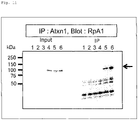
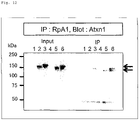
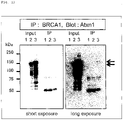
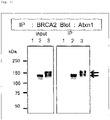
- the results have revealed that each of the proteins, RPA1, BRCA1, and BRCA2, can bind to ATXN1 and a mutant thereof.
- the aberrant ATXN1 mutant ATXN1
- ATXN1 wild-type ATXN1
- the present invention provides an agent for use in preventing or treating spinocerebellar ataxia, comprising RPA1 as an active ingredient.
- spikenocerebellar ataxia which is also referred to as SCD (spinocerebellar degeneration) or SCA (spinocerebellar atrophy), means a neurodegenerative disease in which neurons ranging from the cerebellum and brainstem to the spinal cord are gradually disrupted and lost.
- SCD spikenocerebellar degeneration
- SCA spikenocerebellar atrophy
- Types of spinocerebellar ataxia can be generally classified into two groups, namely, a hereditary group and a nonhereditary group.
- hereditary types include hereditary olivopontocerebellar atrophy, hereditary cortical cerebellar atrophy, Machado-Joseph disease, Friedreich's ataxia, ataxia with oculomotor apraxia type 1 (AOA1) , AOA2, hereditary dentatorubral-pallidoluysian atrophy, ataxia telangiectasia, and the like.
- nonhereditary types include olivopontocerebellar atrophy, Shy-Drager syndrome, striatonigral degeneration, and cortical cerebellar atrophy.
- the hereditary types are classified into 31 types (SCA1 to SCA31) according to their causative genes.
- types of spinocerebellar ataxias can be classified into many diseases according to the symptoms, the causative genes, and the like.
- the major symptom of the SCAs in both the hereditary types of spinocerebellar ataxias and the nonhereditary types of spinocerebellar ataxias is cerebellar or posterior column ataxia, and the types of SCA have common pathological characteristics.
- RPA1 is a protein which is also referred to as RPA70, HSSB, MST075, REPA1, RF-A, or RP-A, and a representative human-derived example thereof is the protein identified by RefSeq ID: NP_002936. Meanwhile, a representative human-derived example of a nucleic acid encoding RPA1 is a nucleic acid comprising the coding region (CDS) shown in RefSeq ID: NM_002945.
- CDS coding region
- BRCA1 is a protein which is also referred to as IRIS, PSCP, BRCC1, PNCA4, RNF53, BROVCA1, or PPP1R53.
- a representative human-derived example thereof is the protein identified by RefSeq ID: NP_009225.
- a representative human-derived example of a nucleic acid encoding BRCA1 is a nucleic acid comprising the CDS shown in RefSeq ID: NM_007294.
- BRCA2 is a protein which is also referred to as BRCC2, BROVCA2, FACD, FAD, FAD1, FANCB, FANCD, FANCD1, GLM3, or PNCA2.
- a representative human-derived example thereof is the protein identified by RefSeq ID: NP_000050.
- a representative human-derived example of a nucleic acid encoding BRCA2 is a nucleic acid comprising the CDS shown in RefSeq ID: NM_000059.
- PNKP is a protein which is also referred to as EIEE10, MCSZ, or PNK.
- a representative human-derived example thereof is the protein identified by RefSeq ID: NP_009185.
- a representative human-derived example of a nucleic acid encoding PNKP is a nucleic acid comprising the CDS shown in RefSeq ID: NM_007254.
- XRCC3 is a protein which is also referred to as CMM6.
- a representative human-derived example thereof is the protein identified by RefSeq ID: NP_001093588.
- a representative human-derived example of a nucleic acid encoding XRCC3 is a nucleic acid comprising the CDS shown in RefSeq ID: NM_001100118.
- a representative human-derived example of "XRCC4" is the protein identified by RefSeq ID: NP_003392. Meanwhile, a representative human-derived example of a nucleic acid encoding XRCC4 is a nucleic acid comprising the CDS shown in RefSeq ID: NM_003401.
- CCNH is a protein which is also referred to as cyclin H, CAK, p34, or p37, and a representative human-derived example thereof is the protein identified by RefSeq ID: NP_001230. Meanwhile, a representative human-derived example of a nucleic acid encoding CCNH is a nucleic acid comprising the CDS shown in RefSeq ID: NM_001239.
- POLE is a protein which is also referred to as DNA polymerase epsilon, CRCS12, FILS, or POLE1.
- a representative human-derived example thereof is the protein identified by RefSeq ID: NP_006222.
- a representative human-derived example of a nucleic acid encoding POLE is a nucleic acid comprising the CDS shown in RefSeq ID: NM_006231.
- POLH is a protein which is also referred to as DNA polymerase eta, RAD30, RAD30A, XP-V, or XPV.
- a representative human-derived example thereof is the protein identified by RefSeq ID: NP_006493.
- a representative human-derived example of a nucleic acid encoding POLH is a nucleic acid comprising the CDS shown in RefSeq ID: NM_006502.
- PER1 is a protein which is also referred to as hPER, PER, or RIGUI.
- a representative human-derived example thereof is the protein identified by RefSeq ID: NP_002607.
- a representative human-derived example of a nucleic acid encoding PER1 is a nucleic acid comprising the CDS shown in RefSeq ID: NM_002616.
- CHK1 is a protein which is also referred to as CHEK1.
- a representative human-derived example thereof is the protein identified by RefSeq ID: NP_001107593 (the protein encoded by the base sequence shown in RefSeq ID: NM_001114121).
- LIG3 is a protein which is also referred to as DNA ligase 3 or LIG2.
- a representative human-derived example thereof is the protein identified by RefSeq ID: NP_039269 (the protein encoded by the base sequence shown in RefSeq ID: NM_013975).
- FEN1 is a protein which is also referred to as FEN-1, MF1, or RAD2.
- a representative human-derived example thereof is the protein identified by RefSeq ID: NP_004102 (the protein encoded by the base sequence shown in RefSeq ID: NM_004111).
- LIG1 is a protein which is also referred to as DNA ligase 1.
- a representative human-derived example thereof is the protein identified by RefSeq ID: NP_000225 (the protein encoded by the base sequence shown in RefSeq ID: NM_000234).
- ERCC5 is a protein which is also referred to as COFS3, ERCM2, UVDR, XPG, or XPGC.
- a representative human-derived example thereof is the protein identified by RefSeq ID: NP_000114 (the protein encoded by the base sequence shown in RefSeq ID: NM_000123).
- XAB2 is a protein which is also referred to as HCNP, HCRN, NTC90, or SYF1.
- a representative human-derived example thereof is the protein identified by RefSeq ID: NP_064581 (the protein encoded by the base sequence shown in RefSeq ID: NM_020196).
- ERP2 is a protein which is also referred to as COFS2, EM9, TTD, or XPD.
- a representative human-derived example thereof is the protein identified by RefSeq ID: NP_000391 (the protein encoded by the base sequence shown in RefSeq ID: NM_000400).
- DMC1 is a protein which is also referred to as LIM15, dJ199H16.1, DMC1H, or HsLim15.
- a representative human-derived example thereof is the protein identified by RefSeq ID: NP_008999 (the protein encoded by the base sequence shown in RefSeq ID: NM_007068).
- RECQL5 is a protein which is also referred to as RECQ5.
- a representative human-derived example thereof is the protein identified by RefSeq ID: NP_001003715 (the protein encoded by the base sequence shown in RefSeq ID: NM_001003715).
- MUS81 is a protein which is also referred to as SLX3.
- a representative human-derived example thereof is the protein identified by RefSeq ID: NP_079404 (the protein encoded by the base sequence shown in RefSeq ID: NM_025128).
- EME1 is a protein which is also referred to as FLJ31364 or MMS4 L.
- a representative human-derived example thereof is the protein identified by RefSeq ID: NP_689676 (the protein encoded by the base sequence shown in RefSeq ID: NM_152463).
- SPO11 is a protein which is also referred to as CT35, SPATA43, or TOPVIA.
- a representative human-derived example thereof is the protein identified by RefSeq ID: NP_036576 (the protein encoded by the base sequence shown in RefSeq ID: NM_012444).
- BLM is a protein which is also referred to as BS, RECQ2, RECQL2, or RECQL3.
- a representative human-derived example thereof is the protein identified by RefSeq ID: NP_000048 (the protein encoded by the base sequence shown in RefSeq ID: NM_000057).
- ATXN1 is a protein which is also referred to as ataxin 1, ATX1, D6S504E, or SCA1.
- a representative human-derived example thereof is the protein identified by RefSeq ID: NP_000323 (the protein encoded by the base sequence shown in RefSeq ID: NM_000332).
- the present invention makes it possible to treat or prevent spinocerebellar ataxia, or to provide a candidate compound for treating or preventing spinocerebellar ataxia.
- an agent for preventing ortreating spinocerebellar ataxia comprising the following (a) as at least one active ingredient:
- each of the proteins such as RPA1 does not necessarily have to be the protein (wild-type protein) identified by the above-described RefSeq ID shown as its representative example.
- the protein may be a mutant protein in which an amino acid is substituted, deleted, or inserted artificially or non-artificially, or may be a modified protein, which undergoes modification, as long as the activity of the protein is retained. Whether or not the mutant or modified protein retains its activity can be determined by a screening method described later.
- the mutant protein may be a protein having an amino acid sequence which is the same as that of the above-described wild-type protein, except that one or multiple amino acids are substituted, deleted, added, and/or inserted.
- the term “multiple” means generally 50 amino acids or less, preferably 40 amino acids or less, more preferably 30 amino acids or less, further preferably 20 amino acids or less, and particularly preferably 10 amino acids or less (for example, 5 amino acids or less, 3 amino acids or less, 2 amino acids or less, and 1 amino acid).
- the substitution of the amino acids is preferably conservative substitution.
- the term “conservative substitution” means substitution with another amino acid residue having a chemically similar side chain. Groups of amino acid residues having chemically similar amino acid side chains are well known in the technical field to which the present invention pertains.
- the mutant protein may be a polypeptide encoded by a nucleic acid which hybridizes with the nucleic acid encoding the above-described wild-type protein under highly stringent conditions.
- the highly stringent hybridization conditions are, for example, 0.2 ⁇ SSC and 65°C.
- mutant protein may also be a polypeptide having an amino acid sequence with a homology not lower than 80% (for example, not lower than 85%, 90%, 95%, 97%, or 99%) to the amino acid sequence of the above-described wild-type protein.
- a protein added to RPA1 or the like may be an IgG portion of an antibody, a serum albumin portion, or the like.
- the protein can be added directly or indirectly to one or each of the N- and C-termini of RPA1 or the like.
- a linker having any amino acid sequence can be used.
- modification examples include phosphorylation, acetylation, methylation, ADP-ribosylation, ubiquitin bonding, glycosylation, carbonylation, and SUMOylation, as well as covalent bonding with at least one polymer selected from polyethylene glycol, polypropylene glycol, and polyoxyalkylenes.
- the form of the nucleic acid may be any, as long as the protein such as RPA1 can be encoded.
- the nucleic acid may be cDNA synthesized from mRNA, genomic DNA, chemically synthesized DNA, or the like .
- nucleic acids having any base sequences based on the codon degeneracy are included, as long as the protein such as RPA1 can be encoded.
- the nucleic acid may be in a vector-inserted form.
- the vector may be any, as long as the vector is capable of expressing the protein encoded by the nucleic acid in a subject to which the agent described herein is administered.
- the vector include virus vectors such as lentivirus, retrovirus, adenovirus, adeno-associated (AAV) virus, herpes virus, and Sendai virus vectors; episomal vectors; PiggyBac transposon vectors; and plasmid vectors.
- promoters used for these vectors include CAG promoter, SR ⁇ promoter, SV40 promoter, LTR promoter, CMV promoter, RSV promoter, and HSV-TK promoter.
- the vectors may further contain an enhancer, a poly-A addition signal, and the like, in addition to the promoter.
- nucleic acid by using a gene amplification or genetic recombination technique such as polymerase chain reaction (PCR), restriction enzyme treatment, or site-directed mutagenesis.
- PCR polymerase chain reaction
- restriction enzyme treatment or site-directed mutagenesis.
- the nucleic acid thus prepared is inserted into a suitable vector, and the vector is introduced into a cell-free protein synthesis system (for example, reticulocyte extract or wheat germ extract), followed by incubation.
- a cell-free protein synthesis system for example, reticulocyte extract or wheat germ extract
- the vector is introduced into suitable cells (for example, Escherichia coli, yeast, insect cells, or animal cells), and the obtained transformant is cultured.
- suitable cells for example, Escherichia coli, yeast, insect cells, or animal cells
- the obtained transformant is cultured.
- the above-described protein can be prepared.
- the protein can be purified by a known method.
- Examples of the method include a solvent extraction method, a salting-out and desalination method using ammonium sulfate or the like, a precipitation method using an organic solvent, DEAE-Sepharose, ion-exchange chromatography, hydrophobic chromatography, a gel filtration method, and affinity chromatography.
- the above-described protein and nucleic acid can also be prepared by chemical synthesis using a commercially available synthesizer.
- an agent for preventing or treating spinocerebellar ataxia comprising the following (b) as at least one active ingredient: (b) a compound which enhances expression or activity of at least one protein selected from the group consisting of RPA1, BRCA1, BRCA2, PNKP, XRCC4, XRCC4, CCNH, POLE, POLH, and PER1.
- the proteins such as RPA1 are involved in the SCA pathology via DNA repair .
- the "activity" to be suppressed by a compound described later means an activity related to DNA repair.
- the activity includes not only functions exerted in a DNA repair mechanism in which RPA1 or the like is involved (DNA synthetic activity, DNA ligaseactivity, nuclease activity, topoisomerase activity, polynucleotide kinase activity, and the like), but also activities necessary for exhibition of the above-described functions, such as binding capacities to other proteins, modification activities of other proteins (ubiquitin ligase activity, protein kinase activity, and the like), and binding capacities to DNA to be repaired.
- the "compound which enhances expression or activity of RPA1 or the like” may be a known compound, or a compound identified by a screening described later.
- each of the proteins is not limited to the protein having the amino acid sequence shown as its representative example above, but a mutant protein which may occur in the natural world may be enhanced by the compound.
- RPA1, BRCA1, or BRCA2 can bind to ATXN1 or a mutant thereof.
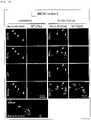
- mutant ATXN1 contributes to the onset of SCA1 and the progression of symptoms of SCA1 by impairing the intranuclear dynamics of RPA1, which is necessary for DNA repair after DNA is damaged.
- an agent for preventing or treating spinocerebellar ataxia is described herein, the agent comprising the following (c) as at least one active ingredient: (c) a compound which inhibits binding between ATXN1 and at least one protein selected from the group consisting of RPA1, BRCA1, and BRCA2.
- each of RPA1, BRCA1, BRCA2, and ATXN1 may not be limited to the protein having the amino acid sequence shown as its representative example above, but may be a mutant protein which may occur in the natural world.
- ATXN1 is preferably ATXN1 having an abnormally expanded polyglutamine chain, from the viewpoint that it binds more strongly to RPA and BRCA1, and exerts influences on the intracellular dynamics of these proteins, as shown in Examples described later and the like.
- the "ATXN1 having an abnormally expanded polyglutamine chain” is not particularly limited, as long as the ATXN1 causes SCA1.
- the ATXN1 is ATXN1 having a polyglutamine chain consisting of 39 or more glutamine residues (preferably, ATXN1 (ATXN1-82Q) having a polyglutamine chain consisting of 82 glutamine residues, ATXN1 (ATXN1-86Q) having a polyglutamine chain consisting of 86 glutamine residues, or ATXN1 (ATXN1-154Q) having a polyglutamine chain consisting of 154 glutamine residues).
- ATXN1 ATXN1-82Q
- ATXN1-86Q ATXN1 (ATXN1-86Q) having a polyglutamine chain consisting of 86 glutamine residues
- ATXN1 (ATXN1-154Q) having a polyglutamine chain consisting of 154 glutamine residues).
- the "compound which inhibits binding between ATXN1 and RPA1 or the like” is not particularly limited, and may be a known compound, or a compound identified by a screening described later . Note that the meaning of the "inhibition" of the binding between ATXN1 and RPA1 or the like may include not only complete inhibition (prohibition) of the binding, but also partial inhibition of the binding.
- an agent for preventing or treating spinocerebellar ataxia comprising the following (d) as at least one active ingredient: (d) a compound which suppresses expression or activity of at least one protein selected from the group consisting of CHK1, LIG3, FEN1, LIG1, ERCC5, XAB2, ERCC2, DMC1, RECQL5, MUS81, EME1, SPO11, and BLM.
- the proteins such as CHK1 are also involved in the SCA pathology via DNA repair, as in the case of RPA1 described above. Accordingly, the "activity" to be suppressed by a compound described later means an activity related to DNA repair, as in the case of the above-described active ingredient (b) .
- the meaning of the "suppression" of the expression of a protein may include not only complete suppression (blocking) of the expression, but also partial suppression of the expression.
- each of CHK1 and the like is not limited to the protein having the amino acid sequence shown as its representative example above, but may be a mutant protein, which may occur in the natural world.
- the " compound which suppresses expression or activity of CHK1 or the like” is not particularly limited, and may be a known compound, or a compound identified by a screening described later.
- Examples of the compound include low-molecular weight compounds capable of binding to CHK1 or the like, RNAs capable of binding to transcription products of genes encoding CHK1 and the like, antibodies to CHK1 and the like, peptides having dominant negative phenotypes to CHK1 and the like.
- Examples of the low molecular weight compounds capable of binding to CHK1 include 4-[((3S)-1-azabicyclo[2.2.2]oct-3-yl)amino]-3-(1H-benz imidazol-2-yl)-6-chloroquinolin-2(1H)-one ( CAS Registry Number: 405168-58-3 , CHIR-124) and (S)-1-(5-bromo-4-methyl-2-(morpholin-2-ylmethoxy)pheny 1)-3-(5-methylpyrazin-2-yl)urea ( CAS Registry Number: 911222-45-2 , IC-83, LY2603618) (see Clin.CancerRes., 2007, Vol. 13, No. 2, pp.
- RNA capable of binding to a transcription product of a gene encoding CHK1 or the like may be dsRNA (double-stranded RNA), such as siRNA or shRNA (short hairpin RNA), complementary to the transcription product of the gene encoding the protein such as CHK1.
- dsRNA double-stranded RNA
- siRNA or shRNA short hairpin RNA
- shRNA short hairpin RNA
- the length of the dsRNA is not particularly limited, as long as the dsRNA can suppress the expression of the target gene, and the dsRNA does not have toxicity.
- the length is, for example, 15 to 49 base pairs, preferably 15 to 35 base pairs, and further preferably 21 to 30 base pairs .
- the dsRNA does not necessarily have to be completely the same as the base sequence of the target gene, but has a sequence identity of at least 70% or higher, preferably 80% or higher, and further preferably 90% or higher (for example, 95%, 96%, 97%, 98%, and 99% or higher) .
- sequence identity can be determined using BLAST program.
- RNA capable of binding to a transcription product of a gene encoding CHK1 or the like may be antisense RNA complementary to the transcription product of the gene encoding CHK1 or the like, or RNA (ribozyme) having a ribozyme activity to specifically cleave the transcription product.
- RNAs may be partially or entirely substituted with an artificial nucleic acid such as PNA, LNA, or ENA.
- each of these RNAs may be in a form of an expression vector carrying DNA encoding the RNA for the expression of the RNA in a subject to which the agent described herein is administered.
- those skilled in the art can prepare these RNAs by chemical synthesis using a commercially available synthesizer or the like.
- the "antibody to CHK1 or the like” may be a polyclonal antibody or a monoclonal antibody. Moreover, the antibody may be a functional fragment of an antibody. The antibody includes all the classes and subclasses of immunoglobulin.
- the "functional fragment” of an antibody means a part (partial fragment) of an antibody, which specifically recognizes the protein such as CHK1. Specifically, the "functional fragment” includes Fab, Fab', F(ab')2, variable region fragment (Fv), disulfide-stabilized Fv, single-chain Fv (scFv), sc(Fv)2, diabody, polyspecific antibody, polymers thereof, and the like.
- the antibody includes chimeric antibodies, humanized antibodies, human antibodies, and functional fragments of these antibodies. Moreover, if necessary, these antibodies may be subjected to alteration of the amino acid sequence, modification, or the like. In addition, those skilled in the art can prepare such an antibody, as appropriate, by a known antibody preparation method.
- the "peptide having a dominant negative phenotype to CHK1 or the like” may be a polypeptide which competes with a binding site of the protein such as CHK1 in binding to DNA serving as a substrate or the like in DNA repair, another protein constituting a DNA repair mechanism, or the like (for example, a partial peptide of the protein such as CHK1), or the like.
- the agent described herein may comprise a pharmacologically acceptable carrier or medium, in addition to the above-described compounds (a) to (d).
- the carrier or medium include surfactants, vehicles, coloring agents, flavors, preservatives, stabilizers, buffering agents, suspending agents, tonicity-adjusting agents, binders, disintegrators, lubricants, fluidity-improving agents, corrigents, and the like.
- the carrier or medium is not limited to these examples, but other commonly used carriers or mediums can be used, as appropriate.
- examples of the other commonly used carriers or mediums include light anhydrous silicic acid, lactose, crystalline cellulose, mannitol, starch, carmellose calcium, carmellosesodium, hydroxypropylcellulose, hydroxypropyl methyl cellulose, polyvinylacetal diethylaminoacetate, polyvinylpyrrolidone, gelatin, medium-chain fatty acid triglyceride, polyoxyethylene hardened castor oil 60, white soft sugar, carboxymethyl cellulose, corn starch, inorganic salts, and the like.
- the agent described herein may comprise a carrier for introducing the nucleic acid, the protein, or the like into cells.
- the carrier examples include positively charged substances such as cationic liposomes, and lipophilic substances (cholesterol, derivatives thereof, lipids (for example, glycolipids, phospholipids, sphingolipids, and the like), and vitamins such as vitamin E (tocopherols)).
- the agent described herein may be used in combination with a known pharmaceutical used for treating or preventing SCA.
- Targets for which the agent described herein can be used include animals including humans.
- the animals other than humans are not particularly limited, and the non-human targets include domestic animals, poultry, pet animals, experimental animals, and the like.
- a preferred target disease of the agent described herein is spinocerebellar ataxia type 1 (SCA1).
- SCA1 means a disease caused by the repetition and expansion of the CAG trinucleotide, which codes glutamine, present in the ataxin 1 (ATXN1) gene.
- the number of the CAG trinucleotide repeats is not particularly limited, and is 39 or more, in general.
- An administration route of the agent described herein is not particularly limited, and examples thereof include intravenous administration, intraarterial administration, intraperitoneal administration, subcutaneous administration, intradermal administration, intratracheal administration, rectal administration, intramuscular administration, administration by infusion, and direct administration to a target site (the cerebellum, brainstem, spinal cord, or the like).
- the direct administration to a target site is preferable, from the viewpoints of a high therapeutic effect and reduction in amount of the agent administered.
- the administration to the target site can be carried out with or by, for example, a cannula (a catheter), incision, a drug delivery system, injection, or the like.
- a sustained-release drug delivery system for example, an osmotic pump manufactured by ALZET
- ALZET osmotic pump manufactured by ALZET
- the agent described herein is introduced into cells in the brain by an electroporation method.
- the agent described herein is in a form of a virus vector, it is also possible to directly inject the agent to a target site, as shown in Examples described later.
- the agent described herein when the agent described herein is not directly administered into the brain, a method may be employed in which any of the above-described compounds (a) to (d) to which a blood-brain barrier-permeable substance is bound is administered.
- the blood-brain barrier-permeable substance is, for example, the glycoprotein derived from the rabies virus and consisting of 29 amino acids (see Nature, July 5, 2007, Vol. 448, pp. 39 to 43 ), but is not limited thereto.
- the amount of the agent described herein administered and the number of times of the administration can be adjusted, as appropriate, according to the type of the compound serving as the active ingredient, the intended effect, the age and body weight of the patient, and the like .
- the number of times of the administration can be adjusted, as appropriate, according to the administration amount, the administration route, and the like.
- a method for treating or preventing spinocerebellar ataxia (SCA) in a subject comprising administering the agent described herein to the subject.
- SCA spinocerebellar ataxia
- a product of the agent described herein or a description of the product may be provided with an indication stating that the agent is used for treating or preventing SCA.
- the "product or description provided with an indication” means that the indication is attached to the main body, container, package, or the like of the product, or the indication is provided in a description, package insert, advertisement, other printed matters, or the like disclosing information of the product.
- ATXN1 which is a cause of SCA1
- RPA1 binds to RPA1, BRCA1, and BRCA2 to adversely affect the functions or intracellular dynamics of RPA1 and the like during DNA repair, and, in turn, contributes to the onset and progression of SCA. Accordingly, based on this finding, the following screening method is described.
- a screening method for a candidate compound for preventing or treating spinocerebellar ataxia comprising the following steps (a) to (c):
- the analyte compound used in the screening method described herein is not particularly limited, and examples thereof include expression products of a gene library, a synthetic low-molecular weight compound library, a peptide library, antibodies, substances released from bacteria, extraction liquids and culture supernatants of cells (microorganisms, plant cells, or animal cells), purified or partially purified polypeptides, marine organisms, plant or animal extracts, soil, and a random phage peptide display library.
- RPA1, BRCA1, BRCA2, and ATXN1 used in this screening method are the same as those described for the active ingredient (c) of the agent described above.
- a reporter protein for example, GFP or luciferase
- a protein tag for purification for example, histidine tag, FLAG tag, or GST tag
- these proteins may be partial peptides, unless the binding between ATXN1 and RPA1 or the like is impaired.
- step (a) ATXN1 and RPA1 or the like, which bind to each other, are brought into contact with each other in the presence of the analyte compound. It is only necessary that the contact be performed under a condition where the binding between ATXN1 and RPA1 or the like is not inhibited, if the analyte compound is absent.
- the binding between ATXN1 and RPA1 or the like is detected.
- a known approach can be employed, as appropriate, for the detection of the binding, without any particular limitation.
- the compound is selected, if the compound inhibits the binding.
- evaluation can be made by comparing the amount of RPA1 or the like coprecipitated with ATXN1 precipitated using an antibody specific to ATXN1 in the presence of the analyte compound with the amount (control value) of RPA1 or and the like in the absence of the analyte compound.
- the analyte compound when the amount of RPA1 or the like achieved in the presence of the analyte compound is smaller than that achieved in the absence of the analyte compound (for example, when the amount is 80% or less, 50% or less, or 30% or less of the control value), the analyte compound can be evaluated as a candidate compound for preventing or treating spinocerebellar ataxia. Also when a method other than the immunoprecipitation method is employed for detecting the binding, the evaluation can be made similarly by using the degree of the binding in the absence of the analyte compound as a control value.
- a screening method for a candidate compound for preventing or treating spinocerebellar ataxia comprising the following steps (a) and (b):
- a screening method for a candidate compound for preventing or treating spinocerebellar ataxia comprising the following steps (a) and (b):
- the analyte compound used is not particularly limited, and examples thereof are as described above .
- RPA1 and the like and CHK1 and the like used in these screening methods are each the same as that described for the active ingredients (b) and (d) of the agent described above.
- Examples of the "system in which expression of a protein is detectable" used in the step (a) of these screening methods include cells having DNA to which a reporter gene (luciferase gene, CAT gene, GFP gene, or the like) is functionally bound at a downstream of a promoter region of a gene encoding the protein, or an extraction liquid of the cells.
- a reporter gene luciferase gene, CAT gene, GFP gene, or the like
- functionally bound means that the promoter region of the gene and the reporter gene are bound in such a manner that the expression of the reporter gene can be induced, when a transcription factor binds to the promoter region of the gene.
- the analyte compound is applied to the system, and the activity (light emission by luciferase, acetylation by chloramphenicol, fluorescence of GFP protein, or the like) of the protein encoded by the reporter gene is measured. If the detected activity is higher than that detected in the absence of the analyte compound, the analyte compound is evaluated to have an activity to enhance the expression of the protein. On the other hand, if the detected activity is lower, the analyte compound is evaluated to have an activity to suppress the expression of the protein.
- a form of the "system in which the expression of a protein is detectable" other than the above-described reporter system may be a system in which the expression of the protein is directly detected.
- an analyte compound is applied to cells expressing the protein, and the expression of the protein in the cells is detected. Then, if the detected expression of the protein is higher than that detected in the absence of the analyte compound, the analyte compound is evaluated to have an activity to enhance the expression of the protein. On the other hand, if the expression is lower, the analyte compound is evaluated to have an activity to suppress the expression of the protein.
- an ELISA method radioimmunoassay, a Western blotting method, an immunoprecipitationmethod, or the like can be employed.
- a northern blotting method a RT-PCR method, a dot blotting method, or the like can be employed.
- those skilled in the art can construct the "system in which activity of the protein is detectable" used in the step (a) of these screening methods by obtaining and referring to, as appropriate, information on the activity of the protein used as an index in DNA repair, and on methods for evaluating and measuring the activity from a literature database or the like (for example, PubMed [http://www.ncbi.nlm.nih.gov/pubmed]). Examples of such evaluation (measurement) are as follows.
- the activity of the protein can be evaluated (determined) by, for example, detecting the binding of the protein to single-stranded DNA (see Nature, January 9, 1997, Vol. 385, No. 6612, pp. 176 to 181 ).
- the activity of the protein can be evaluated (determined) by detecting, for example, the E3 ubiquitin ligase activity of the protein (see EMBO J., December 16, 2002, Vol. 21, No. 24, pp. 6755 to 6762 ).
- the activity of the protein can be evaluated (determined) by detecting, for example, the binding of the protein to RAD51 or PALB2 (see Nature, March 31, 2005, Vol. 434, No. 7033, pp. 598 to 604 , and Mol Cell, June 23, 2006, Vol. 22, No. 6, pp. 719 to 729 ).
- the activity of the protein can be evaluated (determined) by detecting, for example, the polynucleotide kinase activity by using oligo (dT) as a substrate (see J Biol Chem., August 20, 1999, Vol. 274, No. 34, pp. 24176 to 24186 ).
- the activity of the protein can be evaluated (determined) by detecting, for example, the binding of the protein to RAD51 (see Mol Cell, May, 1998, Vol. 1, No. 6, pp. 783 to 793 ).
- the activity of the protein can be evaluated (determined) by detecting, for example, the binding of the protein to ligase 4 and the binding of the protein to DNA (see Cell, December 29, 1995, Vol. 83, No. 7, pp. 1079 to 1089 ).
- the activity of the protein can be evaluated (determined) by detecting, for example, the binding of the protein to CDK7 (see Nature, March 16, 1995, Vol. 374, No. 6519, pp. 283 to 287 ).
- the activity of the protein can be evaluated (determined) by detecting, for example, the DNA synthetic activity of the protein (see Proc Natl Acad Sci USA, September, 1990, Vol. 87, No. 17, pp. 6664 to 6668 ).
- the activity of the protein can be evaluated (determined) by detecting, for example, the DNA synthetic activity of the protein or the binding of the protein to RAD51 (see Mol Cell, December 9, 2005, Vol. 20, No. 5, pp. 783 to 792 ).
- the activity of the protein can be evaluated (determined) by detecting, for example, the binding of the protein to ATM or CHK2 (see Mol Cell, May 5, 2006, Vol. 22, No. 3, pp. 375 to 382 ).
- the activity of the protein can be evaluated (determined) by detecting, for example, phosphorylation of CDC25A achieved by the protein or decomposition of CDC25A induced by the phosphorylation (see Science, May 26, 2000, Vol. 288, No. 5470, pp. 1425 to 1429 , and Proc Natl Acad Sci USA, November 12, 2002, Vol. 99, No. 23, pp. 14795 to 14800 ).
- the activity of the protein can be evaluated (determined) by detecting, for example, the ligation activity of the protein (see Mol Cell Biol., June, 1995, Vol. 15, No. 6, pp. 3206 to 3216 ).
- the activity of the protein can be evaluated (determined) by detecting, for example, the flap structure-removing activity of the protein by using double-stranded DNA having 5'-end overhanging structure as a substrate (see Genomics, January 1, 1995, Vol. 25, No. 1, pp. 220 to 225 ).
- the activity of the protein can be evaluated (determined) by detecting, for example, the ligation activity of the protein (see Proc Natl Acad Sci USA, September, 1990, Vol. 87, No. 17, pp. 6679 to 83 ).
- the activity of the protein can be evaluated (determined) by detecting, for example, the endonuclease activity of the protein by using partially double-stranded DNA having a bubble structure as a substrate (see Nature, September 29, 1994, Vol. 371, No. 6496, pp. 432 to 435 ).
- the activity of the protein can be evaluated (determined) by detecting for example, the interaction between the protein and XPA, CSA, CSB, or RNA polymerase II (see J Biol Chem. , November 10, 2000, Vol. 275, No. 45, pp. 34931 to 34937 ).
- the activity of the protein can be evaluated (determined) by detecting, for example, the binding of the protein to p44 or the 5' ⁇ 3'helicase activity induced by the binding (see Nat Genet., October, 1998, Vol. 20, No. 2, pp. 184 to 188 ).
- the activity of the protein can be evaluated (determined) by detecting, for example, the binding of the protein to single-stranded DNA or a gap structure of double-stranded DNA or the binding of the protein to RAD51 (see EMBO J., November 15, 1999, Vol. 18, No. 22, pp. 6552 to 6560 ).
- the activity of the protein can be evaluated (determined) by detecting, for example, the binding of the protein to RAD51 (see Genes Dev., December 1, 2007, Vol. 21, No. 23, pp. 3073 to 3084 ).
- the activity of the protein can be evaluated (determined) by detecting, for example, the endonuclease activity of a complex comprising MUS81 and EME1 (see J Biol Chem. , June 13, 2003, Vol. 278, No. 24, pp. 21715 to 21720 ).
- the activity of the protein can be evaluated (determined) by detecting, for example, the type 2 topoisomerase activity of the protein (see Nature, August 18, 2005, Vol. 436, No. 7053, pp. 1053 to 1057 ).
- the activity of the protein can be evaluated (determined) by detecting, for example, the binding of the protein to topoisomerase III ⁇ (see J Biol Chem., March 31, 2000, Vol. 275, No. 13, pp. 9636 to 9644 , and Hum Mol Genet., June 1, 2001, Vol. 10, No. 12, pp. 1287 to 1298 ).
- the thus obtained evaluation (measurement) results are compared between the case of detection with the analyte compound applied and the case of detection in the absence of the analyte compound. Based on this comparison, those skilled in the art can determine that the analyte compound is a compound which enhances the activity of the protein or a compound which suppresses the activity of the protein according to the type of the activity of the protein employed as the index.
- the "application" of the analyte compound to the system can be achieved by contact of the analyte compound with the cells, introduction of the analyte compound into the cells, or the like.
- the "application” of the analyte compound to the system can be achieved by adding the analyte compound to the extraction liquid.
- candidate compounds for preventing or treating spinocerebellar ataxia selected by any of the above-described screening methods 1, 2, and 3 can be further narrowed down by administering the compounds to SCA model animals and using the relief of the symptoms of the model animals as an index.
- SCA model animals include animals (Drosophila, nematode, mouse, marmoset, and the like) into which an SCA causative gene (ATXN1-82Q, ATXN1-86Q, ATXN1-154Q, or the like) is introduced, as shown in Examples described later.
- the proboscis, wings, legs, and abdomen were removed from adult female Drosophila, and the residual head and thorax were fixed by immersion in 4% paraformaldehyde-containing phosphate buffered saline (PBS) for 30 minutes on ice.
- PBS paraformaldehyde-containing phosphate buffered saline
- the fixed flies were stored in 30% sucrose-containing PBS at 4°C overnight or longer.
- the sections were incubated in PBS containing 1% bovine serum albumin and 0.01% (V/V) Triton X-100 for 30 minutes.
- the samples thus prepared were incubated overnight at 4°C with a primary antibody, and then incubated for 1 hour at room temperature with a secondary antibody.
- Fluoromount was placed on the brain samples, which were further covered with coverslips. Then, cells in the samples thus prepared werevisualized with a confocal microscope (LSM510 manufactured by Carl Zeiss).
- Alexa Fluor 488-labeled anti-mouse antibody manufactured by Molecular Probes, diluted 1:1000 before use
- Cy3-labeled anti-rabbit antibody manufactured by Jackson Laboratory, diluted 1:1000 before use.
- Samples for Western blotting were prepared as follows. Specifically, 25 female flies were dissolved in 50 ⁇ L of lysis buffer containing 62.5 mM Tris/HCl (pH 6.8), 2% (w/v) SDS, 2.5% (v/v) 2-mercaptoethanol, 5% (v/v) glycerin, and 0.0025% (w/v) bromophenol blue. Then, the obtained samples were each fractionated by SDS-PAGE, and then transferred onto Immobilon-P Transfer Membrane (manufactured by Millipore) by a semi-dry method.
- Immobilon-P Transfer Membrane manufactured by Millipore
- the membranes were subjected to a blocking treatment with 5% milk-containing Tween 20 (TBST) (10 mM Tris/Cl, pH 8.0, 150 mM NaCl and 0.05% Tween 20), and incubated with a primary antibody overnight at 4°C.
- Tween 20 10 mM Tris/Cl, pH 8.0, 150 mM NaCl and 0.05% Tween 20
- HRP horseradish peroxidase
- Samples for Western blotting were prepared as follows. Specifically, cerebellar granule neurons cultured for 4 days after introduction of a plasmid DNA described later were collected. The collected neuron samples were washed three times with ice-cold PBS, and dissolved in a lysis buffer containing 62.5 mM Tris/HCl (pH 6.8), 2% (w/v) SDS, 2.5% (v/v) 2-mercaptoethanol, and 5% (v/v) glycerin. The protein concentrations in the thus prepared solutions were quantified by the BCA method using Micro BCA Protein Assay Reagent Kit (manufactured by Pierce Chemical).
- All flies were raised on corn-meal medium (9.2% corn-meal, 3.85% yeast, 3.8% sucrose, 1.05% potassium tartrate, 0.09% calcium chloride, 7.6% glucose, 2.416% nipagin, and 1% agar). In addition, all the flies were maintained at 25°C and humidity of 60% ⁇ 10% under a 12:12-hour light-dark cycle, unless otherwise noted.
- the GS line flies described later were obtained from Drosophila Genetic Resource Center in Kyoto, Japan. Note that, for the transgenic flies hAtxn1-82Q (y1w1118UAS: Atxn1-82Q), UAS-mKu70, and OK6-Gal4, and their genetic control strain, Cantonised w1118 strain w (CS10), see NPLs 19 and 44. In addition, the Cantonised w1118 strain w (CS10) was the parental strain of all the transgenic flies. In addition, RNAi lines RpA70 (9633R-3) and grp (17161R-2) were obtained from National Institute of Genetics in Mishima, Japan.
- Virgin females for each crossing were collected within 8 hours after eclosion, and maintained in maximum numbers of 20 per vial for 3 to 4 days before being used in the crossing.
- flies of the genotype y 1 w 1118 UAS-Atxn1-82Q/+;+/OK6-GAL4;+/+ were used as positive controls, while flies of the genotypes y 1 w 1118 UAS-Atxn1-82Q/+;+/+;+/+ and +/+;+/OK6-GAL4;+/+ were used as negative controls .
- all the flies used were virgin females.
- Drosophila genes which were homologous to human DNA damage repair genes and which were to be subjected to a screening described later were extracted.
- the latest comprehensive list of human DNA repair genes human DNA repair genes available in the list of human DNA repair genes disclosed by Wood RD of the University of Texas MD Anderson Cancer Center (http://sciencepark.mdanderson.org/labs/wood/dna_repai r_genes.html) were compared with NCBI HomoloGene.
- the GS system is a method for the efficient detection and rapid molecular identification of genes in Drosophila.
- a GS vector which is based on the P element, has UAS, a core promoter, and a marker gene "mini-white, " and is to be inserted into the Drosophila genome at random.
- the P element is inserted near a target gene (a DNA repair gene in this screening) .
- flies in which the gene is overexpressed can be obtained (see Toba, G. et al., Genetics, 1999, Vol. 151, pp. 725 to 737 ) .
- the SCA1 fly model crossed with the GS line was prepared by introducing not only the human Atxn182Q (hAtxn182Q) gene, which is a cause of SCA1, but also an OK6-GAL4 driver.
- genes found in the in-vivo screening and the path-explorer analysis were subjected to core analysis to deduce the signal transduction pathways containing the genes found in the in-vivo screening at a high frequency.
- an enrichment analysis was performed by Fisher's exact test with the B-H multiple test correction to calculate q values.
- cDNA fragments encoding the full-length of RpA1 were amplified by PCR using B6 wild-type mouse embryonic brain RNA, and subcloned by insertion between the EcoRI and XhoI recognition sites of pLVSIN-CMV-pur (manufacturedbyTakara) .
- the cDNA fragments were subcloned by insertion between the EcoRI and BamHI recognition sites of pEGFP-C1 (manufactured by Takara) in the same manner as described above.
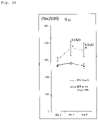
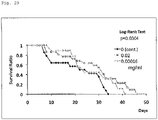
- a CHK1-specific inhibitor, CHIR-124 (manufactured by AXON MEDCHEM), was dissolved at 5 mg/mL in 1 N hydrogen chloride and diluted to multiple concentrations with 0.05 N solution. Three milliliters of each solution was added to 1 g of Drosophila medium to achieve the final concentration shown in Fig. 29 . Note that the medium used here was a 1:1 mixture of Instant Drosophila medium D7670 (manufactured by Sigma Aldrich) and Formula 4-24 Instant Drosophila medium (manufactured by Calolina). As a control, a medium to which an equal amount of 0.05 N hydrogen chloride solution was added was also prepared.
- IP Immunoprecipitation
- Hela cells (2 ⁇ 10 6 ) were plated on 10-cm dishes, and transfected with a plasmid for expressing a protein described later by using Lipofectamine 2000 (manufactured by Invitrogen) according to the manual. Then, the cells were incubated for 36 hours . After washing with PBS twice, cells were collected from each dish, and were homogenized in 2 mL TNE buffer (10 mM Tris-HCl, pH 7.5, 150 mM NaCl, 1 mM ethylenediaminetetraacetic acid (EDTA), 1% Nonidet P-40). Then, the homogenate was incubated at 4°C with rotation.
- TNE buffer 10 mM Tris-HCl, pH 7.5, 150 mM NaCl, 1 mM ethylenediaminetetraacetic acid (EDTA), 1% Nonidet P-40.
- the homogenate was centrifuged at 1 ⁇ 10 4 g for 20 minutes, and the supernatant was collected.
- the collected supernatant was incubated with protein G agarose beads (manufactured by GE Healthcare) for 2 hours at 4°C with rotation. After the beads were removed, the lysate was incubated with 2 to 10 ⁇ g of anti-Myc antibody, anti-RPAl antibody, anti-BRCAl antibody, or anti-BRCA2 antibody at 4°C overnight with rotation. After that, the lysate was incubated with protein G agarose beads for further 2 hours . The beads were washed three times with 500 ⁇ L of TNE buffer, followed by dissolution into SDS-polyacrylamide gel electrophoresis sample buffer. The solution was fractionated by SDS-PAGE, and then subjected to Western blotting.
- mice (20-week old) were homogenized in TNE buffer, and centrifuged at 2,000 ⁇ g for 1 minute at 4°C. Then, the obtained supernatants were immunoprecipitated by the same method as that for the Hela cells.
- Atxn1-154Q-KI mice were used as an SCA1 mouse model.
- RPA was overexpressed in the cerebellum of the mice to evaluate the therapeutic effect of RPA.
- an adeno-associated virus (AAV) vector (hereinafter, also referred to as RPA1-AAV) in which an expression cassette containing a human immediate-early promoter (CMV promoter) , human growth hormone first intron, cDNA encoding RPA, woodchuck hepatitis virus posttranscriptional regulatory element (WPRE) , and an SV40 polyA signal sequence in this order was inserted between the inverted terminal repeats of the AAV3 genome was prepared in a usual manner. Note that transfection and purification of this vector were performed according to the methods described in Li XG. et al., Mol. Ther., 2006, Vol. 1, pp. 160 to 166 .
- the obtained virus vector thus prepared was injected into the cerebellar surface of the Atxn1-154Q-KI mice by the method described below.
- Each of the mice at 5 weeks of age was anesthetized by intraperitoneal administration of Nembutal, and fixed onto stereotaxic instruments (manufactured by Narishige).
- the forehead of the mouse was tilted at 20°, and a hole with a diameter of 1 mm was made using an ELA steel bar (manufactured by Shofu) at -9.2 mm from the bregma, ⁇ 0 mm lateral to the midline.
- a glass syringe was inserted by 3.5 mm from the outer surface of the bone hole along the internal surface of the occipital bone.
- 8 ⁇ L of an RPA1-AAV virus solution ( ⁇ 1 ⁇ 10 12 particles) was injected four different positions in total (positions at 60°, 90°, 270°, and 330°, clockwise from the anterior to posterior) .
- 2 ⁇ L of the RPA1-AAV virus solution was injected by using a micropump (manufactured by Narishige) at 0.5 ⁇ L/min. This method enables an efficient supply of a virus vector to the cerebellar surface with good reproducibility.
- Atxn1-154Q-KI mice in which an AAV vector (hereinafter, also referred to as GFP-AAV) having cDNA encoding GFP inserted therein instead of RPA was injected into the cerebellar surface were prepared as a negative control group in the same manner as described above.
- mice were segregated by sex, housed at 2 to 5 per cage, provided with water and rodent feed, and maintained in a 12:12-hour light/dark cycle. All the tests were performed during the light period (10:00 to 19:00) using male mice between 5 to 40 weeks of age.
- each mouse was placed on a rotarod (rotation speed: 3.5 rpm), and the rotation speed was lineally increased to 35 rpm in 300 seconds, and then kept at a constant speed (35 rpm) up to 600 seconds.
- This test was performed four times a day for three consecutive days. The average time before the mouse fell off from the rotarod was calculated for every testing day.
- the present inventors have revealed that Ku70, which is an important molecule for the DNA double-strand break (DSB) -type DNA repair, restores the shortened lifespan and further improves motor performance of a human Huntington's disease (HD) Drosophila model (UAS-Htt103Q/+:OK6-GAL4/+ Drosophila) (see Tamura, T. et al., PLoS One, 2011, 6, e27408 ).
- the present inventors have also revealed that the function of TERA/VCP/p97, which is another molecule involved in the DSB-type DNA repair, is inhibited in various polyglutamine diseases, and the supplementation of this protein relieves the symptoms of the Drosophila model.
- DSBs are increased in cerebellar neurons of a spinocerebellar ataxia type 1 (SCA1) mouse model (see Fujita, K. et al., Nat Commun, 2013, 4, 1816 ).
- DSB is known to be DNA damage generally occurring at the final stage in various DNA damage cascades (see Bohgaki, T. et al., Genome Integr, 2010, 1, 15 , Mladenov, E. et al., Mutat Res, 2011, Vol. 711, pp. 61 to 72 , and Nowosielska, A. et al., DNA Repair (Amst), 2008, Vol. 7, pp. 48 to 56 ).
- the present inventors To obtain a base for search for molecules effective in treating or preventing SCA in view of such knowledge, the present inventors first expressed mutant ATXN1 in cerebellar neurons of a mammal, and tested whether DSB-type DNA damage occurred.
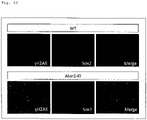
- H2AX histone 2A
- a screening system was constructed to identify what type of the DNA repair cascades were involved in the onset of SCA.
- the present inventors focused on Drosophila, which has a short generation time and whose phenotypes can be evaluated quantitatively, to appropriately narrow down candidates among various factors and networks in which these factors are involved. Note that the present inventors have revealed the similarity between pathologies of the Drosophila SCA1 model and those of a mammalian SCA1 model on the basis of prior research results.
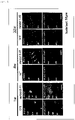
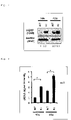
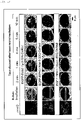
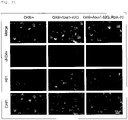
- the present inventors first checked that DSB-type DNA damage was also increased in a Drosophila SCA1 model, as in the case of the mice. Specifically, analysis results of transgenic flies expressing human Atxn1-82Q in motor neurons by using an OK6-Gal4/UAS system showed increased phosphorylation of H2Av, which is a Drosophila H2AX homolog (see Figs. 4 and 5 ). Note that strong signals of ⁇ H2Av were observed in cells induced by OK6 to express DsRed in the ventral nerve cord (VNC), and it was revealed that DsRed and ⁇ H2Av were localized at the same positions (see Fig. 4 ). In addition, it was also found that cells induced by OK6 to express DsRed actually expressed mutant Atxn1 (see Fig. 5 ).
- the DSB-type DNA damage is the final stage of other types of DNA damage such as single-stranded DNA break (SSB) and oxidative base damage. Accordingly, in view of this point in combination with the above-described results, the Drosophila SCA1 model was considered to be an effective tool for search for DNA damage repair cascades which contributed to the SCA pathology. Thus, an in-vivo screening was performed by using the Drosophila model.
- SSB single-stranded DNA break
- a screening enabling a short-time and quantitative analysis was performed by overexpressing each of all the available Drosophila homologous genes related to DNA repair in the Drosophila SCA1 model, and using the influence on the lifespan shortening, which is one of the symptoms of the Drosophila model, as an index.
- Table 1 shows the relationships between human DNA repair genes subjected to the screening and their Drosophila homologous genes.
- Table 2 shows the lifespan average values of flies (OK6>Atxn1-82Q;GS) co-expressing human Atxn1-82Q and DNA damage repair genes whose expression was induced by a GS line cassette.
- Table 2 also shows P values calculated by using the Wilcoxon rank sum test to determine the differences from UAS-Atxn1-82Q/+:OK6-GAL4/+(OK6>Atxn1-82Q), which was a positive control.
- BER indicates genes related to base-excision repair
- NER indicates genes related to nucleotide-excision repair
- DSBR indicates genes related to DNA double-strand break repair
- DSBR+CLR indicates genes related to DNA double-strand break repair and DNA cross-link repair
- MMR indicates genes related to mismatch repair. Note that RPA1, which has multiple functions, is tentatively classified into NER.
- the survival rate of the positive control flies was 75%, whereas the Spn-B overexpression line, the XRCC4/CG12728 overexpression line, the DNA polymerase eta overexpression line, and the CycH overexpression line showed high survival rates of 85%, 92%, 86%, and 83%, respectively. Moreover, their survival rates remained higher than that of the SCA1 fly model on Day 30 and later. In addition, although not shown in the drawings, it was also revealed that the maximum lifespan value was remarkably elongated by RpA1, Per, Spn-B or XRCC4/CG12728.
- the genes were Lig1, Lig3, Fen1, chrac-14, XAB2, Xpd, CG8841, RecQ5, mus81, EME1, meiW68, mus309/BLM/RecQ2, and grp. Note that, in the example of the CG8841(DMC1) overexpression, the toxicity was so high that no adult flies were obtained, and the lifespan was extremely short.
- RecQ family proteins are known to be highly conserved from bacteria to human and to have 3' -5' DNA helicase activity.
- fivemembers mus309/BLM/RecQ2, WRN/RecQ3, RecQ4, and RecQ5
- RecQ5 showed DNA-strand annealing activity.
- this activity is shown to be inhibited by RpA1 (see Garcia, P. L., EMBO J, 2004, Vol. 23, pp. 2882 to 2891 ), which is consistent with the reverse actions of RecQ5 and the above-described RPA1.
- the present inventors have revealed that Ku70 ameliorates the lifespan shortening of mutant Huntingtin transgenic flies.
- the Irbp GS line expressing a gene homologous to Ku70 did not significantly ameliorate the lifespan shortening of the UAS-Atxn1-82Q/+:OK6-GAL4/+ Drosophila model.
- a favorable influence on the survival time is exerted slightly but definitely in transgenic flies co-expressing human Ku70.
- the discrepant effects of Ku70 on Huntington's disease and SCA suggest that molecules used for DNA damage repair in the two polyglutamine diseases are different from each other in terms of quantity and quality.
- protein pathways were selected from the protein-protein interactome (PPI) database, when two gene products exerted any influence on the lifespan directly (Segment 1) or via another protein (Segment 2).
- PPI protein-protein interactome
- closed triangle pathways were selected from the PPI database, when 1 to 3 proteins having influences on the lifespan were components of the triangle protein pathways . If possible, the rest of the proteins having influences on the lifespan were linked to the deduced network.
- a first group is linked to XRCC4, and related to nonhomologous end joining (NHEJ) -type DNA repair.
- a second group is linked to bifunctional polynucleotide phosphatase/kinases (PNKPs) suchasXRCC1, ligase 3 (LIG3), and PolyADP ribose polymerase (PARP), and is involved in NHEJ (B-NHEJ) and further in the backup pathway of SSBR, BER, or NER.
- PNKPs polynucleotide phosphatase/kinases
- LIG3 ligase 3
- PARP PolyADP ribose polymerase
- a third group which is linked to XRCC3, is related to homologous recombination (HR) -type DNA repair, and involved in repair of DSBs in genome replication.
- a fourth group is linked to cyclin H (CCNH), and involved mainly in transcription.
- RPA1 acts on only ATR. This suggests that a functional target of these gene groups is RPA1, and that RPA1 is extremely important as a hub molecule for various systems of DSB and transcription.
- HNF4A hepatocyte nuclear factor 4 ⁇
- HNF4A is a transcription factor which binds to CREB-binding protein (CBP), and regulates the expression of genes such as cytochrome P450 3A4(CYP3A4), which is important for the metabolism of xenobiotics (see Tirona, R. G. et al., Nat Med, 2003, Vol. 9, pp. 220 to 224 ).
- CBP CREB-binding protein
- HNF4A might regulate multiple systems which elongate the lifespan of the SCA1 fly model (see Fig. 7 ) .
- HNF4A itself, was not positive in the above-described screening.
- HNF4A was not positive in the above-described screening.
- a gene has to be involved in multiple paths (see Fig. 7 ).
- HNF4A can be considered to function as an indirect modulator.
- FEN1, LIG1, CHK1, and BLM are located at the center of the network, and are linked to many proteins (see Fig. 8 ).
- RPA1 is also located at the center, and has relationships with BLM and FEN1. Accordingly, RPA1 might be influenced by these proteins (see Fig. 8 ).
- similar genes are selected as main players (see Fig. 9 ).
- network 2 revealed that RPA (a complex including RPA1 and RPA2) sends suppressive signals to FEN1 and LIG1 directly or indirectly, while RPA1 receives feedback from FEN1.
- this network analysis has showed that ATM, ATR, and RNA polymerase II are involved in DSB repair, and are linked to one or multiple proteins of FEN1, LIG1, CHK1, and BLM.
- RPA1 plays an important role in the protection of naked single-stranded DNA produced after various types of DNA damage.
- DNA protected with RPA1 is repaired by homologous recombination with BRCA2 and RAD51.
- mutant ATXN1 inhibits the dynamics of RPA1 and its partners, BRCA1 and BRCA2, and thus impairs their DNA damage repair functions.
- RPA1 mitigated DSBs caused by mutant ATXN1 in Drosophila motor neurons, without affecting the aggregation of mutant ATXN1 (see Figs . 21 and 22 ).
- mutant ATXN1 is involved in the onset and progression of SCA by impairing the dynamics of RPA1, which is a hub molecule, and exerting influences on many groups of DNA damage repair molecules.
- RPA1 recovered the shortened lifespan, which was one of the symptoms of the SCA1 fly model.
- a therapeutic effect of RPA1/RpA70 was tested by using eye degeneration, which was another symptom of the SCA1 fly model, as an index.
- RpA70 or siRNA against RpA70 was co-expressed with Atxn1-82Q in photoreceptor cells by using the GMR-Gal4 driver.
- GS line was used as an example of overexpression.
- UAS-RpA70-RNAi transgenic flies were used as an example of knockdown. The results showed that the co-expression of RpA70 achieved clear amelioration of the rough eye phenotype.
- the knockdown of RpA70 aggravated the SCA1 symptom (see Figs. 23 and 24 ) .
- Figs. 26 , 27 , and 28 show the obtained results. Note that the deterioration in motor activity of the SCA1 mouse model at 5 weeks of age was confirmed in advance by the rotarod test.
- the relief of the symptom (motor disorder) by the RPA1 overexpression i.e., a therapeutic effect of the RPA1 overexpression was observed also in the SCA1 mouse model.
- CHK1 received various signals from BLM, FEN1, and LIG1 either directly or indirectly, and prompted the lifespan shortening in the SCA1 fly model (see Figs. 8 and 9 ). Moreover, the above-described results of the screening and informatics analysis suggest that CHK1, which is one of the most important transducers of DNA damage signaling, plays an important role in SCA pathology.
- CHK1-specific inhibitor (CHIR-124) was used. This inhibitor was added to feed (corn-meal medium) at multiple concentrations, and adult flies were fed on the feed. As a result, the lifespan of OK6>SCA1 was improved at 0.00016 mg/mL and 0.02 mg/mL (see Fig. 29 ). In addition, the improvement effect was more remarkable in an example where the inhibitor was given at a higher concentration. The lifespan of the flies treated with CHIR-124 at 0.02 mg/mL was elongated by 35% (see Fig. 29 ).
- Atxn1-82Q was co-expressed with grp or grp-RNAi in photoreceptor cells by using the GMR-Gal4 driver.
- GMR-Gal4 driver was used as an example of overexpression.
- UAS-grp-RNAi transgenic flies were used as an example of knockdown.
- the expression of siRNA against grp slightly relieved the symptom (eye degeneration state) in SCA1.
- the overexpression of grp remarkably accelerated the eye degeneration (see Fig. 23 ) .
- RPA1 was involved in the SCA pathology.
- RPA1 is linked to various DNA damage repair paths such as those of nonhomologous end joining (NHEJ)-type DSBR, HR-type DSBR, nucleotide-excision repair (NER), and base-excision repair (BER).
- NHEJ nonhomologous end joining
- HR-type DSBR HR-type DSBR
- NER nucleotide-excision repair
- BER base-excision repair
- RPA1 is known to basically protect naked single-stranded DNA and be involved in HR, NER, and BER, which occurs mainly in proliferating cells. For this reason, the following mechanisms are conceivable through which the above-described therapeutic effect of the RPA1 may be achieved.
- the first possibility is based on the analogy to the non-cell-autonomous pathology of amyotrophic lateral sclerosis (see Yamanaka, K. et al., Nat Neurosci, 2008, Vol. 11, pp. 251 to 253 , Yamanaka, K. et al., Proc Natl Acad Sci USA, 2008, 105, pp. 7594 to 7599 , Nagai, M. et al., Nat Neurosci, 2007, Vol. 10, pp. 615 to 622 , and Di Giorgio et al., Nat Neurosci, 2007, Vol. 10, pp.
- the second possibility is based on the previous observation result that ROR ⁇ exerts an influence on Purkinje cells during progression of SCA pathology (see Serra, H. G. et al., Cell, 2006, Vol. 127, pp. 697 to 708 ).
- the third possibility is based on an abnormal cell cycle in neurodegenerative diseases, i.e., the fact that the entry of neurons into the S phase is impaired in neurodegenerative diseases (see Herrup, K. et al., Nat Rev Neurosci, 2007, Vol. 8, pp. 368 to 378 ).
- the disclosure makes it possible to relieve the SCA pathology by enhancement of the expression of RPA1, BRCA1, BRCA2, PNKP, XRCC3, XRCC4, CCNH, POLE, POLH, or PER1, or the like.
- the agent and the screening method for a candidate compound for such an agent described herein are useful for treating and preventing SCA, and for developing a method for treating and preventing SCA.
Landscapes
- Health & Medical Sciences (AREA)
- Life Sciences & Earth Sciences (AREA)
- Chemical & Material Sciences (AREA)
- Engineering & Computer Science (AREA)
- General Health & Medical Sciences (AREA)
- Medicinal Chemistry (AREA)
- Animal Behavior & Ethology (AREA)
- Public Health (AREA)
- Veterinary Medicine (AREA)
- Pharmacology & Pharmacy (AREA)
- Biomedical Technology (AREA)
- Epidemiology (AREA)
- Immunology (AREA)
- Bioinformatics & Cheminformatics (AREA)
- Organic Chemistry (AREA)
- Proteomics, Peptides & Aminoacids (AREA)
- Molecular Biology (AREA)
- Neurosurgery (AREA)
- Neurology (AREA)
- Zoology (AREA)
- Wood Science & Technology (AREA)
- Biochemistry (AREA)
- Microbiology (AREA)
- Biotechnology (AREA)
- Hematology (AREA)
- Urology & Nephrology (AREA)
- Physics & Mathematics (AREA)
- Analytical Chemistry (AREA)
- Genetics & Genomics (AREA)
- Cell Biology (AREA)
- Nuclear Medicine, Radiotherapy & Molecular Imaging (AREA)
- Chemical Kinetics & Catalysis (AREA)
- General Chemical & Material Sciences (AREA)
- General Engineering & Computer Science (AREA)
- Gastroenterology & Hepatology (AREA)
- Pathology (AREA)
- General Physics & Mathematics (AREA)
- Food Science & Technology (AREA)
- Biophysics (AREA)
- Tropical Medicine & Parasitology (AREA)
Claims (1)
- Agent pour une utilisation dans la prévention ou le traitement de l'ataxie spinocérébelleuse, comprenant RPA1 en tant qu'ingrédient actif.
Applications Claiming Priority (2)
| Application Number | Priority Date | Filing Date | Title |
|---|---|---|---|
| JP2013214155 | 2013-10-11 | ||
| PCT/JP2014/077258 WO2015053402A1 (fr) | 2013-10-11 | 2014-10-10 | Médicament pour la prévention ou le traitement de la dégénérescence spinocérébelleuse |
Publications (3)
| Publication Number | Publication Date |
|---|---|
| EP3056210A1 EP3056210A1 (fr) | 2016-08-17 |
| EP3056210A4 EP3056210A4 (fr) | 2017-07-26 |
| EP3056210B1 true EP3056210B1 (fr) | 2022-05-11 |
Family
ID=52813215
Family Applications (1)
| Application Number | Title | Priority Date | Filing Date |
|---|---|---|---|
| EP14852695.7A Active EP3056210B1 (fr) | 2013-10-11 | 2014-10-10 | Médicament pour la prévention ou le traitement de la dégénérescence spinocérébelleuse |
Country Status (4)
| Country | Link |
|---|---|
| US (1) | US10989719B2 (fr) |
| EP (1) | EP3056210B1 (fr) |
| JP (1) | JP6606428B2 (fr) |
| WO (1) | WO2015053402A1 (fr) |
Cited By (1)
| Publication number | Priority date | Publication date | Assignee | Title |
|---|---|---|---|---|
| US12503436B2 (en) | 2021-08-10 | 2025-12-23 | Novartis Pharma Ag | Compounds and compositions for treating conditions associated with STING activity |
Families Citing this family (3)
| Publication number | Priority date | Publication date | Assignee | Title |
|---|---|---|---|---|
| WO2019163166A1 (fr) * | 2018-02-26 | 2019-08-29 | 国立大学法人広島大学 | Animal non humain génétiquement modifié, et procédé de criblage d'agent thérapeutique ou d'agent prophylactique pour la dégénérescence spinocérébelleuse |
| TW202043198A (zh) * | 2019-01-17 | 2020-12-01 | 美商Ifm Due有限公司 | 用於治療與sting活性相關之病況的化合物及組合物 |
| CN114225036B (zh) * | 2021-12-08 | 2023-04-07 | 中国人民解放军陆军军医大学第一附属医院 | Atxn1蛋白作为靶点在制备治疗、预防或诊断髓母细胞瘤的药物或试剂盒中的应用 |
Family Cites Families (15)
| Publication number | Priority date | Publication date | Assignee | Title |
|---|---|---|---|---|
| US20040121407A1 (en) * | 2002-09-06 | 2004-06-24 | Elixir Pharmaceuticals, Inc. | Regulation of the growth hormone/IGF-1 axis |
| US20070185031A1 (en) * | 2003-07-14 | 2007-08-09 | Northwestern University | Reducing polyglutamine-based aggregation |
| JP5196641B2 (ja) * | 2004-09-09 | 2013-05-15 | 塩野義製薬株式会社 | 脊髄小脳変性症治療剤 |
| TWI350754B (en) | 2004-09-09 | 2011-10-21 | Shionogi & Co | A pharmaceutical composition for treating spinocerebellar ataxia |
| US20070196850A1 (en) * | 2006-01-27 | 2007-08-23 | University Of Washington | Identification of aging genes through large-scale analysis |
| CA2647545C (fr) * | 2006-04-03 | 2016-02-23 | Istituto Di Ricerche Di Biologia Molecolare P. Angeletti S.P.A. | Utilisation de derives de benzotriazole et d'indazole amide substitue comme inhibiteurs de la poly(adp-ribose)polymerase (parp) |
| JP4982739B2 (ja) * | 2006-06-01 | 2012-07-25 | 国立大学法人 東京医科歯科大学 | ポリグルタミン病の予防・治療剤 |
| MA32934B1 (fr) * | 2008-11-28 | 2012-01-02 | Novartis Ag | Combinaisons inhibitrices hsp90 |
| JP5805071B2 (ja) | 2009-04-11 | 2015-11-04 | アレイ バイオファーマ、インコーポレイテッド | Dna損傷因子増強のためのチェックポイントキナーゼ1阻害剤 |
| JP2012528829A (ja) * | 2009-06-04 | 2012-11-15 | ノバルティス アーゲー | 1H−イミダゾ[4,5−c]キノリノン化合物 |
| AU2010255727B2 (en) * | 2009-06-04 | 2013-02-28 | Novartis Ag | 1H-imidazo[4,5-c]quinolinone derivatives |
| JP2011254701A (ja) * | 2010-06-04 | 2011-12-22 | Gunma Univ | 目的遺伝子を脳で小脳プルキンエ細胞、脳幹および嗅球特異的に過剰発現するトランスジェニック非ヒト哺乳動物 |
| MX343706B (es) * | 2011-01-31 | 2016-11-18 | Novartis Ag | Derivados heterocíclicos novedosos. |
| AU2014244083B2 (en) * | 2013-03-13 | 2018-09-27 | The United States Of America, As Represented By The Secretary, Department Of Health And Human Services | Methods for modulating chemotherapeutic cytotoxicity |
| EP2983665A1 (fr) * | 2013-03-15 | 2016-02-17 | The Regents of The University of California | Agents et procédés thérapeutiques pour le traitement de troubles dus à un défaut de réparation de l'adn |
-
2014
- 2014-10-10 US US15/028,571 patent/US10989719B2/en active Active
- 2014-10-10 JP JP2015541657A patent/JP6606428B2/ja active Active
- 2014-10-10 EP EP14852695.7A patent/EP3056210B1/fr active Active
- 2014-10-10 WO PCT/JP2014/077258 patent/WO2015053402A1/fr not_active Ceased
Cited By (1)
| Publication number | Priority date | Publication date | Assignee | Title |
|---|---|---|---|---|
| US12503436B2 (en) | 2021-08-10 | 2025-12-23 | Novartis Pharma Ag | Compounds and compositions for treating conditions associated with STING activity |
Also Published As
| Publication number | Publication date |
|---|---|
| US20160252530A1 (en) | 2016-09-01 |
| JPWO2015053402A1 (ja) | 2017-03-09 |
| EP3056210A4 (fr) | 2017-07-26 |
| US10989719B2 (en) | 2021-04-27 |
| WO2015053402A1 (fr) | 2015-04-16 |
| JP6606428B2 (ja) | 2019-11-13 |
| EP3056210A1 (fr) | 2016-08-17 |
Similar Documents
| Publication | Publication Date | Title |
|---|---|---|
| Fang et al. | Knockout or inhibition of USP30 protects dopaminergic neurons in a Parkinson’s disease mouse model | |
| Subramanian et al. | UBE4B, a microRNA-9 target gene, promotes autophagy-mediated Tau degradation | |
| Zhu et al. | Pharmacological inhibition of O-GlcNAcase enhances autophagy in brain through an mTOR-independent pathway | |
| US20230192787A1 (en) | Diagnosis methods, diagnostic agents, and therapeutic agents against alzheimer's disease and frontotemporal lobar degeneration, and screening methods for these agents | |
| Rha et al. | The RNA-binding protein, ZC3H14, is required for proper poly (A) tail length control, expression of synaptic proteins, and brain function in mice | |
| ES2923015T3 (es) | Fijación como objetivo de sinaptogirina-3 en el tratamiento de tauopatías | |
| Luo et al. | Compromised glycolysis contributes to foot process fusion of podocytes in diabetic kidney disease: Role of ornithine catabolism | |
| Lu et al. | Regulation of TREM2 expression by transcription factor YY1 and its protective effect against Alzheimer’s disease | |
| Son et al. | Protection against RAGE-mediated neuronal cell death by sRAGE-secreting human mesenchymal stem cells in 5xFAD transgenic mouse model | |
| EP3056210B1 (fr) | Médicament pour la prévention ou le traitement de la dégénérescence spinocérébelleuse | |
| Dinh et al. | TP53INP1 exerts neuroprotection under ageing and Parkinson’s disease-related stress condition | |
| Han et al. | Maf1 loss regulates spinogenesis and attenuates cognitive impairment in Alzheimer’s disease | |
| Yan et al. | RPS23RG1 reduces Aβ oligomer-induced synaptic and cognitive deficits | |
| Ceyzériat et al. | TSPO contributes to neuropathology and cognitive deficits in Alzheimer’s disease | |
| Muñiz et al. | SMaRT modulation of tau isoforms rescues cognitive and motor impairments in a preclinical model of tauopathy | |
| Zare et al. | Axonal tau reduction ameliorates tau and amyloid pathology in a mouse model of Alzheimer’s disease | |
| Tao et al. | miR-101a-3p/ROCK2 axis regulates neuronal injury in Parkinson’s disease models | |
| Zhang et al. | PLK2 disrupts autophagic flux to promote SNCA/α-synuclein pathology | |
| Balta et al. | Recombinant cathepsins B and L promote α-synuclein clearance and restore lysosomal function in human and murine models with α-synuclein pathology | |
| US11582957B2 (en) | TDP-43 knock-in mouse model of amyotrophic lateral sclerosis | |
| El Waly et al. | Nhej1 deficiency causes abnormal development of the cerebral cortex | |
| WO2022072793A1 (fr) | Modulateurs de marf/mfn et leurs utilisations | |
| Zhu et al. | Postsynaptic lncRNA Sera/Pkm2 pathway orchestrates the transition from social competition to rank by remodeling the neural ensemble in mPFC | |
| Cui et al. | Upregulated GBP2 exacerbates Parkinson’s disease pathogenesis by impairing NIX-dependent mitophagy | |
| US20240350581A1 (en) | Methods for treatment of neuron degeneration |
Legal Events
| Date | Code | Title | Description |
|---|---|---|---|
| PUAI | Public reference made under article 153(3) epc to a published international application that has entered the european phase |
Free format text: ORIGINAL CODE: 0009012 |
|
| 17P | Request for examination filed |
Effective date: 20160426 |
|
| AK | Designated contracting states |
Kind code of ref document: A1 Designated state(s): AL AT BE BG CH CY CZ DE DK EE ES FI FR GB GR HR HU IE IS IT LI LT LU LV MC MK MT NL NO PL PT RO RS SE SI SK SM TR |
|
| AX | Request for extension of the european patent |
Extension state: BA ME |
|
| A4 | Supplementary search report drawn up and despatched |
Effective date: 20170622 |
|
| STAA | Information on the status of an ep patent application or granted ep patent |
Free format text: STATUS: EXAMINATION IS IN PROGRESS |
|
| 17Q | First examination report despatched |
Effective date: 20180828 |
|
| GRAP | Despatch of communication of intention to grant a patent |
Free format text: ORIGINAL CODE: EPIDOSNIGR1 |
|
| STAA | Information on the status of an ep patent application or granted ep patent |
Free format text: STATUS: GRANT OF PATENT IS INTENDED |
|
| RIC1 | Information provided on ipc code assigned before grant |
Ipc: C12Q 1/48 20060101ALI20200528BHEP Ipc: C12Q 1/25 20060101ALI20200528BHEP Ipc: C12N 15/09 20060101ALI20200528BHEP Ipc: G01N 33/15 20060101ALI20200528BHEP Ipc: A61K 38/17 20060101ALI20200528BHEP Ipc: A61P 25/00 20060101ALI20200528BHEP Ipc: A61P 25/28 20060101ALI20200528BHEP Ipc: G01N 33/50 20060101ALI20200528BHEP Ipc: A61K 38/00 20060101AFI20200528BHEP Ipc: C12Q 1/68 20180101ALI20200528BHEP Ipc: C12N 7/00 20060101ALI20200528BHEP |
|
| INTG | Intention to grant announced |
Effective date: 20200619 |
|
| GRAJ | Information related to disapproval of communication of intention to grant by the applicant or resumption of examination proceedings by the epo deleted |
Free format text: ORIGINAL CODE: EPIDOSDIGR1 |
|
| STAA | Information on the status of an ep patent application or granted ep patent |
Free format text: STATUS: EXAMINATION IS IN PROGRESS |
|
| INTC | Intention to grant announced (deleted) | ||
| GRAP | Despatch of communication of intention to grant a patent |
Free format text: ORIGINAL CODE: EPIDOSNIGR1 |
|
| STAA | Information on the status of an ep patent application or granted ep patent |
Free format text: STATUS: GRANT OF PATENT IS INTENDED |
|
| INTG | Intention to grant announced |
Effective date: 20211214 |
|
| RIN1 | Information on inventor provided before grant (corrected) |
Inventor name: OKAZAWA, HITOSHI |
|
| GRAS | Grant fee paid |
Free format text: ORIGINAL CODE: EPIDOSNIGR3 |
|
| GRAA | (expected) grant |
Free format text: ORIGINAL CODE: 0009210 |
|
| STAA | Information on the status of an ep patent application or granted ep patent |
Free format text: STATUS: THE PATENT HAS BEEN GRANTED |
|
| AK | Designated contracting states |
Kind code of ref document: B1 Designated state(s): AL AT BE BG CH CY CZ DE DK EE ES FI FR GB GR HR HU IE IS IT LI LT LU LV MC MK MT NL NO PL PT RO RS SE SI SK SM TR |
|
| REG | Reference to a national code |
Ref country code: GB Ref legal event code: FG4D |
|
| REG | Reference to a national code |
Ref country code: CH Ref legal event code: EP |
|
| REG | Reference to a national code |
Ref country code: AT Ref legal event code: REF Ref document number: 1490826 Country of ref document: AT Kind code of ref document: T Effective date: 20220515 |
|
| REG | Reference to a national code |
Ref country code: DE Ref legal event code: R096 Ref document number: 602014083734 Country of ref document: DE |
|
| REG | Reference to a national code |
Ref country code: IE Ref legal event code: FG4D |
|
| REG | Reference to a national code |
Ref country code: LT Ref legal event code: MG9D |
|
| REG | Reference to a national code |
Ref country code: NL Ref legal event code: MP Effective date: 20220511 |
|
| REG | Reference to a national code |
Ref country code: AT Ref legal event code: MK05 Ref document number: 1490826 Country of ref document: AT Kind code of ref document: T Effective date: 20220511 |
|
| PG25 | Lapsed in a contracting state [announced via postgrant information from national office to epo] |
Ref country code: SE Free format text: LAPSE BECAUSE OF FAILURE TO SUBMIT A TRANSLATION OF THE DESCRIPTION OR TO PAY THE FEE WITHIN THE PRESCRIBED TIME-LIMIT Effective date: 20220511 Ref country code: PT Free format text: LAPSE BECAUSE OF FAILURE TO SUBMIT A TRANSLATION OF THE DESCRIPTION OR TO PAY THE FEE WITHIN THE PRESCRIBED TIME-LIMIT Effective date: 20220912 Ref country code: NO Free format text: LAPSE BECAUSE OF FAILURE TO SUBMIT A TRANSLATION OF THE DESCRIPTION OR TO PAY THE FEE WITHIN THE PRESCRIBED TIME-LIMIT Effective date: 20220811 Ref country code: NL Free format text: LAPSE BECAUSE OF FAILURE TO SUBMIT A TRANSLATION OF THE DESCRIPTION OR TO PAY THE FEE WITHIN THE PRESCRIBED TIME-LIMIT Effective date: 20220511 Ref country code: LT Free format text: LAPSE BECAUSE OF FAILURE TO SUBMIT A TRANSLATION OF THE DESCRIPTION OR TO PAY THE FEE WITHIN THE PRESCRIBED TIME-LIMIT Effective date: 20220511 Ref country code: HR Free format text: LAPSE BECAUSE OF FAILURE TO SUBMIT A TRANSLATION OF THE DESCRIPTION OR TO PAY THE FEE WITHIN THE PRESCRIBED TIME-LIMIT Effective date: 20220511 Ref country code: GR Free format text: LAPSE BECAUSE OF FAILURE TO SUBMIT A TRANSLATION OF THE DESCRIPTION OR TO PAY THE FEE WITHIN THE PRESCRIBED TIME-LIMIT Effective date: 20220812 Ref country code: FI Free format text: LAPSE BECAUSE OF FAILURE TO SUBMIT A TRANSLATION OF THE DESCRIPTION OR TO PAY THE FEE WITHIN THE PRESCRIBED TIME-LIMIT Effective date: 20220511 Ref country code: ES Free format text: LAPSE BECAUSE OF FAILURE TO SUBMIT A TRANSLATION OF THE DESCRIPTION OR TO PAY THE FEE WITHIN THE PRESCRIBED TIME-LIMIT Effective date: 20220511 Ref country code: BG Free format text: LAPSE BECAUSE OF FAILURE TO SUBMIT A TRANSLATION OF THE DESCRIPTION OR TO PAY THE FEE WITHIN THE PRESCRIBED TIME-LIMIT Effective date: 20220811 Ref country code: AT Free format text: LAPSE BECAUSE OF FAILURE TO SUBMIT A TRANSLATION OF THE DESCRIPTION OR TO PAY THE FEE WITHIN THE PRESCRIBED TIME-LIMIT Effective date: 20220511 |
|
| PG25 | Lapsed in a contracting state [announced via postgrant information from national office to epo] |
Ref country code: RS Free format text: LAPSE BECAUSE OF FAILURE TO SUBMIT A TRANSLATION OF THE DESCRIPTION OR TO PAY THE FEE WITHIN THE PRESCRIBED TIME-LIMIT Effective date: 20220511 Ref country code: PL Free format text: LAPSE BECAUSE OF FAILURE TO SUBMIT A TRANSLATION OF THE DESCRIPTION OR TO PAY THE FEE WITHIN THE PRESCRIBED TIME-LIMIT Effective date: 20220511 Ref country code: LV Free format text: LAPSE BECAUSE OF FAILURE TO SUBMIT A TRANSLATION OF THE DESCRIPTION OR TO PAY THE FEE WITHIN THE PRESCRIBED TIME-LIMIT Effective date: 20220511 Ref country code: IS Free format text: LAPSE BECAUSE OF FAILURE TO SUBMIT A TRANSLATION OF THE DESCRIPTION OR TO PAY THE FEE WITHIN THE PRESCRIBED TIME-LIMIT Effective date: 20220911 |
|
| PG25 | Lapsed in a contracting state [announced via postgrant information from national office to epo] |
Ref country code: SM Free format text: LAPSE BECAUSE OF FAILURE TO SUBMIT A TRANSLATION OF THE DESCRIPTION OR TO PAY THE FEE WITHIN THE PRESCRIBED TIME-LIMIT Effective date: 20220511 Ref country code: SK Free format text: LAPSE BECAUSE OF FAILURE TO SUBMIT A TRANSLATION OF THE DESCRIPTION OR TO PAY THE FEE WITHIN THE PRESCRIBED TIME-LIMIT Effective date: 20220511 Ref country code: RO Free format text: LAPSE BECAUSE OF FAILURE TO SUBMIT A TRANSLATION OF THE DESCRIPTION OR TO PAY THE FEE WITHIN THE PRESCRIBED TIME-LIMIT Effective date: 20220511 Ref country code: EE Free format text: LAPSE BECAUSE OF FAILURE TO SUBMIT A TRANSLATION OF THE DESCRIPTION OR TO PAY THE FEE WITHIN THE PRESCRIBED TIME-LIMIT Effective date: 20220511 Ref country code: DK Free format text: LAPSE BECAUSE OF FAILURE TO SUBMIT A TRANSLATION OF THE DESCRIPTION OR TO PAY THE FEE WITHIN THE PRESCRIBED TIME-LIMIT Effective date: 20220511 Ref country code: CZ Free format text: LAPSE BECAUSE OF FAILURE TO SUBMIT A TRANSLATION OF THE DESCRIPTION OR TO PAY THE FEE WITHIN THE PRESCRIBED TIME-LIMIT Effective date: 20220511 |
|
| REG | Reference to a national code |
Ref country code: DE Ref legal event code: R097 Ref document number: 602014083734 Country of ref document: DE |
|
| PLBE | No opposition filed within time limit |
Free format text: ORIGINAL CODE: 0009261 |
|
| STAA | Information on the status of an ep patent application or granted ep patent |
Free format text: STATUS: NO OPPOSITION FILED WITHIN TIME LIMIT |
|
| PG25 | Lapsed in a contracting state [announced via postgrant information from national office to epo] |
Ref country code: AL Free format text: LAPSE BECAUSE OF FAILURE TO SUBMIT A TRANSLATION OF THE DESCRIPTION OR TO PAY THE FEE WITHIN THE PRESCRIBED TIME-LIMIT Effective date: 20220511 |
|
| 26N | No opposition filed |
Effective date: 20230214 |
|
| PG25 | Lapsed in a contracting state [announced via postgrant information from national office to epo] |
Ref country code: SI Free format text: LAPSE BECAUSE OF FAILURE TO SUBMIT A TRANSLATION OF THE DESCRIPTION OR TO PAY THE FEE WITHIN THE PRESCRIBED TIME-LIMIT Effective date: 20220511 Ref country code: MC Free format text: LAPSE BECAUSE OF FAILURE TO SUBMIT A TRANSLATION OF THE DESCRIPTION OR TO PAY THE FEE WITHIN THE PRESCRIBED TIME-LIMIT Effective date: 20220511 |
|
| REG | Reference to a national code |
Ref country code: CH Ref legal event code: PL |
|
| REG | Reference to a national code |
Ref country code: BE Ref legal event code: MM Effective date: 20221031 |
|
| PG25 | Lapsed in a contracting state [announced via postgrant information from national office to epo] |
Ref country code: LU Free format text: LAPSE BECAUSE OF NON-PAYMENT OF DUE FEES Effective date: 20221010 |
|
| PG25 | Lapsed in a contracting state [announced via postgrant information from national office to epo] |
Ref country code: LI Free format text: LAPSE BECAUSE OF NON-PAYMENT OF DUE FEES Effective date: 20221031 Ref country code: CH Free format text: LAPSE BECAUSE OF NON-PAYMENT OF DUE FEES Effective date: 20221031 |
|
| PG25 | Lapsed in a contracting state [announced via postgrant information from national office to epo] |
Ref country code: BE Free format text: LAPSE BECAUSE OF NON-PAYMENT OF DUE FEES Effective date: 20221031 |
|
| PG25 | Lapsed in a contracting state [announced via postgrant information from national office to epo] |
Ref country code: IE Free format text: LAPSE BECAUSE OF NON-PAYMENT OF DUE FEES Effective date: 20221010 |
|
| PG25 | Lapsed in a contracting state [announced via postgrant information from national office to epo] |
Ref country code: IT Free format text: LAPSE BECAUSE OF FAILURE TO SUBMIT A TRANSLATION OF THE DESCRIPTION OR TO PAY THE FEE WITHIN THE PRESCRIBED TIME-LIMIT Effective date: 20220511 |
|
| PG25 | Lapsed in a contracting state [announced via postgrant information from national office to epo] |
Ref country code: HU Free format text: LAPSE BECAUSE OF FAILURE TO SUBMIT A TRANSLATION OF THE DESCRIPTION OR TO PAY THE FEE WITHIN THE PRESCRIBED TIME-LIMIT; INVALID AB INITIO Effective date: 20141010 |
|
| PG25 | Lapsed in a contracting state [announced via postgrant information from national office to epo] |
Ref country code: CY Free format text: LAPSE BECAUSE OF FAILURE TO SUBMIT A TRANSLATION OF THE DESCRIPTION OR TO PAY THE FEE WITHIN THE PRESCRIBED TIME-LIMIT Effective date: 20220511 |
|
| PG25 | Lapsed in a contracting state [announced via postgrant information from national office to epo] |
Ref country code: MK Free format text: LAPSE BECAUSE OF FAILURE TO SUBMIT A TRANSLATION OF THE DESCRIPTION OR TO PAY THE FEE WITHIN THE PRESCRIBED TIME-LIMIT Effective date: 20220511 |
|
| PG25 | Lapsed in a contracting state [announced via postgrant information from national office to epo] |
Ref country code: MT Free format text: LAPSE BECAUSE OF FAILURE TO SUBMIT A TRANSLATION OF THE DESCRIPTION OR TO PAY THE FEE WITHIN THE PRESCRIBED TIME-LIMIT Effective date: 20220511 |
|
| PG25 | Lapsed in a contracting state [announced via postgrant information from national office to epo] |
Ref country code: BG Free format text: LAPSE BECAUSE OF FAILURE TO SUBMIT A TRANSLATION OF THE DESCRIPTION OR TO PAY THE FEE WITHIN THE PRESCRIBED TIME-LIMIT Effective date: 20220511 |
|
| PG25 | Lapsed in a contracting state [announced via postgrant information from national office to epo] |
Ref country code: BG Free format text: LAPSE BECAUSE OF FAILURE TO SUBMIT A TRANSLATION OF THE DESCRIPTION OR TO PAY THE FEE WITHIN THE PRESCRIBED TIME-LIMIT Effective date: 20220511 |
|
| PGFP | Annual fee paid to national office [announced via postgrant information from national office to epo] |
Ref country code: DE Payment date: 20241021 Year of fee payment: 11 |
|
| PGFP | Annual fee paid to national office [announced via postgrant information from national office to epo] |
Ref country code: GB Payment date: 20241025 Year of fee payment: 11 |
|
| PGFP | Annual fee paid to national office [announced via postgrant information from national office to epo] |
Ref country code: FR Payment date: 20241021 Year of fee payment: 11 |
|
| PG25 | Lapsed in a contracting state [announced via postgrant information from national office to epo] |
Ref country code: TR Free format text: LAPSE BECAUSE OF FAILURE TO SUBMIT A TRANSLATION OF THE DESCRIPTION OR TO PAY THE FEE WITHIN THE PRESCRIBED TIME-LIMIT Effective date: 20220511 |