EP3057962B1 - Hydrochloride salt form for ezh2 inhibition - Google Patents
Hydrochloride salt form for ezh2 inhibition Download PDFInfo
- Publication number
- EP3057962B1 EP3057962B1 EP14854272.3A EP14854272A EP3057962B1 EP 3057962 B1 EP3057962 B1 EP 3057962B1 EP 14854272 A EP14854272 A EP 14854272A EP 3057962 B1 EP3057962 B1 EP 3057962B1
- Authority
- EP
- European Patent Office
- Prior art keywords
- polymorph
- methyl
- ethyl
- amino
- pyran
- Prior art date
- Legal status (The legal status is an assumption and is not a legal conclusion. Google has not performed a legal analysis and makes no representation as to the accuracy of the status listed.)
- Active
Links
Images


Classifications
-
- C—CHEMISTRY; METALLURGY
- C07—ORGANIC CHEMISTRY
- C07D—HETEROCYCLIC COMPOUNDS
- C07D413/00—Heterocyclic compounds containing two or more hetero rings, at least one ring having nitrogen and oxygen atoms as the only ring hetero atoms
- C07D413/14—Heterocyclic compounds containing two or more hetero rings, at least one ring having nitrogen and oxygen atoms as the only ring hetero atoms containing three or more hetero rings
-
- A—HUMAN NECESSITIES
- A61—MEDICAL OR VETERINARY SCIENCE; HYGIENE
- A61K—PREPARATIONS FOR MEDICAL, DENTAL OR TOILETRY PURPOSES
- A61K31/00—Medicinal preparations containing organic active ingredients
- A61K31/33—Heterocyclic compounds
- A61K31/395—Heterocyclic compounds having nitrogen as a ring hetero atom, e.g. guanethidine or rifamycins
- A61K31/535—Heterocyclic compounds having nitrogen as a ring hetero atom, e.g. guanethidine or rifamycins having six-membered rings with at least one nitrogen and one oxygen as the ring hetero atoms, e.g. 1,2-oxazines
- A61K31/5375—1,4-Oxazines, e.g. morpholine
- A61K31/5377—1,4-Oxazines, e.g. morpholine not condensed and containing further heterocyclic rings, e.g. timolol
-
- C—CHEMISTRY; METALLURGY
- C07—ORGANIC CHEMISTRY
- C07D—HETEROCYCLIC COMPOUNDS
- C07D405/00—Heterocyclic compounds containing both one or more hetero rings having oxygen atoms as the only ring hetero atoms, and one or more rings having nitrogen as the only ring hetero atom
- C07D405/02—Heterocyclic compounds containing both one or more hetero rings having oxygen atoms as the only ring hetero atoms, and one or more rings having nitrogen as the only ring hetero atom containing two hetero rings
- C07D405/12—Heterocyclic compounds containing both one or more hetero rings having oxygen atoms as the only ring hetero atoms, and one or more rings having nitrogen as the only ring hetero atom containing two hetero rings linked by a chain containing hetero atoms as chain links
-
- A—HUMAN NECESSITIES
- A61—MEDICAL OR VETERINARY SCIENCE; HYGIENE
- A61P—SPECIFIC THERAPEUTIC ACTIVITY OF CHEMICAL COMPOUNDS OR MEDICINAL PREPARATIONS
- A61P35/00—Antineoplastic agents
-
- A—HUMAN NECESSITIES
- A61—MEDICAL OR VETERINARY SCIENCE; HYGIENE
- A61P—SPECIFIC THERAPEUTIC ACTIVITY OF CHEMICAL COMPOUNDS OR MEDICINAL PREPARATIONS
- A61P35/00—Antineoplastic agents
- A61P35/02—Antineoplastic agents specific for leukemia
-
- A—HUMAN NECESSITIES
- A61—MEDICAL OR VETERINARY SCIENCE; HYGIENE
- A61P—SPECIFIC THERAPEUTIC ACTIVITY OF CHEMICAL COMPOUNDS OR MEDICINAL PREPARATIONS
- A61P43/00—Drugs for specific purposes, not provided for in groups A61P1/00-A61P41/00
-
- C—CHEMISTRY; METALLURGY
- C07—ORGANIC CHEMISTRY
- C07D—HETEROCYCLIC COMPOUNDS
- C07D413/00—Heterocyclic compounds containing two or more hetero rings, at least one ring having nitrogen and oxygen atoms as the only ring hetero atoms
- C07D413/02—Heterocyclic compounds containing two or more hetero rings, at least one ring having nitrogen and oxygen atoms as the only ring hetero atoms containing two hetero rings
- C07D413/12—Heterocyclic compounds containing two or more hetero rings, at least one ring having nitrogen and oxygen atoms as the only ring hetero atoms containing two hetero rings linked by a chain containing hetero atoms as chain links
-
- C—CHEMISTRY; METALLURGY
- C07—ORGANIC CHEMISTRY
- C07B—GENERAL METHODS OF ORGANIC CHEMISTRY; APPARATUS THEREFOR
- C07B2200/00—Indexing scheme relating to specific properties of organic compounds
- C07B2200/13—Crystalline forms, e.g. polymorphs
Definitions
- This disclosure relates to solid crystalline forms of N-((4,6-dimethyl-2-oxo-1,2-dihydropyridin-3-yl)methyl)-5-(ethyl (tetrahydro-2H-pyran-4-yl)amino)-4-methyl-4'-(morpholinomethyl)-[1,1'-biphenyl]-3-carboxamide hydrochloride, and related compositions and methods.
- breast cancer More than 1.6 million people are estimated to be diagnosed with cancer in 2013. For example, one of the most common types of cancer in women is breast cancer, and this disease is responsible for one of the highest fatality rates of all cancers affecting females.
- the current treatment of breast cancer is limited to total, or partial, mastectomy, radiation therapy, or chemotherapy. More than 232,340 cancer cases in 2013 will be breast cancer, which will result in an estimated 40,030 deaths. See, Siegel et al., CA: Cancer J. Clin. 2013; 63:11-30 .
- a number of cancer deaths are caused by blood cancers including leukemias, myelomas, and lymphomas. In 2013, almost 80,000 cancer cases will be lymphomas, estimated to result in over 20,000 deaths.
- solid forms e.g. , crystalline forms of N-((4,6-dimethyl-2-oxo-1,2-dihydropyridin-3-yl)methyl)-5-(ethyl (tetrahydro-2H-pyran-4-yl)amino)-4-methyl-4'-(morpholinomethyl)-[1,1'-biphenyl]-3-carboxamide hydrochloride:
- One aspect of the invention is directed to Polymorph C of N-((4,6-dimethyl-2-oxo-1,2-dihydropyridin-3-yl)methyl)-5-(ethyl (tetrahydro-2H-pyran-4-yl)amino)-4-methyl-4'-(morpholinomethyl)-[1,1'-biphenyl]-3-carboxamide hydrochloride, wherein Polymorph C exhibits an X-ray powder diffraction pattern having two or more characteristic peaks expressed in degrees 2-theta (+/- 0.2) at 17.53, 18.66, 21.14, 22.22, 23.46, 27.72 and 30.30; and wherein the X-ray powder diffraction pattern is obtained using the following methodology: Target: Cu; Tube voltage: 40 kV; Tube current: 30 mA, at room temperature, and at 30% relative humidity.
- Polymorph C is substantially free of impurities, meaning there is not a significant amount of impurities present in the sample of Polymorph C.
- Polymorph C is a crystalline solid substantially free of amorphous N-((4,6-dimethyl-2-oxo-1,2-dihydropyridin-3-yl)methyl)-5-(ethyl (tetrahydro-2H-pyran-4-yl)amino)-4-methyl-4'-(morpholinomethyl)-[1,1'-biphenyl]-3-carboxamide (or any of its amorphous mono- or multi-HCl forms).
- Polymorph C may also include Polymorph A, Polymorph B, and/or amorphous N-((4,6-dimethyl-2-oxo-1,2-dihydropyridin-3-yl)methyl)-5-(ethyl (tetrahydro-2H-pyran-4-yl)amino)-4-methyl-4'-(morpholinomethyl)-[1,1'-biphenyl]-3-carboxamide (or any of its amorphous mono- or multi-HCl forms).
- Polymorph C of N-((4,6-dimethyl-2-oxo-1,2-dihydropyridin-3-yl)methyl)-5-(ethyl (tetrahydro-2H-pyran-4-yl)amino)-4-methyl-4'-(morpholinomethyl)-[1,1'-biphenyl]-3-carboxamide hydrochloride can be defined according to its X-ray powder diffraction pattern. Accordingly, in one embodiment, Polymorph C exhibits an X-ray powder diffraction pattern having characteristic peaks expressed in degrees 2-theta (+/- 0.2) at 17.53, 18.66, 21.14, 22.22, 23.46, 27.72 and 30.30.
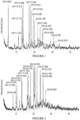
- Polymorph C exhibits an X-ray powder diffraction pattern having peaks with 2-theta values in accordance with Figure 3 . In another embodiment, Polymorph C exhibits an X-ray powder diffraction pattern having peaks with 2-theta values substantially in accordance with Table 3.
- Polymorph C can also be defined according to its differential scanning calorimetry thermogram.
- the polymorph exhibits a differential scanning calorimetry thermogram showing a primary endotherm expressed in units of °C at a temperature of 228 +/-5 °C.
- Polymorph C exhibits a differential scanning calorimetry thermogram substantially in accordance with the lowermost plot shown in Figure 4 (i.e., "Polymorph C" plot). The differential scanning calorimetry thermogram is obtained using the following methodology: Initial temperature 35 °C, Final temp 325-350 °C, Heating rate 10-30 °C/min.
- Another aspect of the invention relates to the preparation of Polymorph C using a method comprising combining N-((4,6-dimethyl-2-oxo-1,2-dihydropyridin-3-yl)methyl)-5-(ethyl (tetrahydro-2H-pyran-4-yl)amino)-4-methyl-4'-(morpholinomethyl)-[1,1'-biphenyl]-3-carboxamide with hydrochloric acid.
- a method of recrystallizing Polymorph C which comprises the following steps: (a) dissolving Polymorph C in a first solvent to obtain a first solution, and (b) adding a second solvent to the first solution, such that said polymorph is recrystallized.
- a pharmaceutical composition comprising Polymorph C, and optionally a pharmaceutically acceptable carrier or diluent.
- the pharmaceutical composition comprises Polymorph C and a pharmaceutically acceptable carrier or diluent.
- references in the description to methods of treatment refer to the compounds, pharmaceutical compositions and medicaments of the present invention for use in a method of treatment of the human (or animal) body by therapy (or for diagnosis).
- Also provided herein is a method of treating an EZH2-mediated cancer comprising administering to a subject in need thereof a therapeutically effective amount of Polymorph C, or a pharmaceutical composition thereof.
- a variety of EZH2-mediated cancers may be treated with Polymorph C, including non-Hodgkin's lymphoma, B cell lymphoma including diffuse large B cell lymphoma (DLBCL), follicular lymphoma, or solid tumors including breast cancer.
- Polymorph C including non-Hodgkin's lymphoma, B cell lymphoma including diffuse large B cell lymphoma (DLBCL), follicular lymphoma, or solid tumors including breast cancer.
- a method of inhibiting the histone methyltransferase activity of EZH2 in a subject in need thereof comprising administering to the subject an effective amount of Polymorph C, or a pharmaceutical composition thereof.
- a method of inhibiting the histone methyltransferase activity of EZH2 in vitro comprising administering Polymorph C or a pharmaceutical composition thereof.
- Polymorph C or a pharmaceutical composition thereof, for the preparation of a medicament for the treatment of an EZH2-mediated cancer in a subject in need thereof.
- the method includes administering to a subject in need thereof a therapeutically effective amount of one or more polymorphs disclosed herein.
- the EZH2-mediated disorder is a disease, disorder, or condition that is mediated at least in part by the activity of EZH2.
- the EZH2-mediated disorder is related to an increased EZH2 activity.
- the increased EZH2 activity is due to a mutation in the SET domain of EZH2.
- the mutation is at Y641, A677, or A687, or a combination thereof.
- the EZH2 mutation increases trimethylation of Lys27 of histone H3 (H3-K27).
- the EZH2-mediated disorder is a cancer.
- the EZH2-mediated cancer may be lymphoma, leukemia or melanoma, for example, diffuse large B-cell lymphoma (DLBCL), non-Hodgkin's lymphoma (NHL), follicular lymphoma, chronic myelogenous leukemia (CML), acute myeloid leukemia, acute lymphocytic leukemia, mixed lineage leukemia, or myelodysplastic syndromes (MDS).
- the EZH2-mediated cancer may be a malignant rhabdoid tumor or INI1-defecient tumor.
- malignant rhabdoid tumor The histologic diagnosis of malignant rhabdoid tumor depends on identification of characteristic rhabdoid cells (large cells with eccentrically located nuclei and abundant, eosinophilic cytoplasm) and immunohistochemistry with antibodies to vimentin, keratin and epithelial membrane antigen.
- the SMARCB1/INI1 gene located in chromosome band 22q11.2, is inactivated by deletions and/or mutations.
- the malignant rhabdoid tumors may be INI1-defecient tumor.
- any description of a method of treatment includes uses of the polymorphs to provide such treatment or prophylaxis as is described in the specification, as well as uses of the polymorphs to prepare a medicament to treat or prevent such condition.
- the treatment includes treatment of human or non-human animals including rodents and other disease models.
- polymorphs or methods described herein may be used for research (e.g., studying epigenetic enzymes) and other non-therapeutic purposes.
- the solid form (e.g., crystal state) of a compound may be important when the compound is used for pharmaceutical purposes. Compared with an amorphous solid, the solid physical properties of a crystalline compound may change from one solid form to another, which may impact its suitability for pharmaceutical use. In addition, different solid forms of a crystalline compound may incorporate different types and/or different amounts of impurities. Different solid forms of a compound may also have different chemical stability upon exposure to heat, light and/or moisture (e.g., atmospheric moisture) over a period of time, or different rates of dissolution.
- heat, light and/or moisture e.g., atmospheric moisture
- polymorphic forms A, B and C of N-((4,6-dimethyl-2-oxo-1,2-dihydropyridin-3 -yl)methyl)-5 -(ethyl (tetrahydro-2H-pyran-4-yl)amino)-4-methyl-4 ' - (morpholinomethyl)-[1,1'-biphenyl]-3-carboxamide hydrochloride (also referred to herein respectively as "Polymorph A”, “Polymorph B” and "Polymorph C”).
- Compound I refers to N-((4,6-dimethyl-2-oxo-1,2-dihydropyridin-3-yl)methyl)-5-(ethyl (tetrahydro-2H-pyran-4-yl)amino)-4-methyl-4'-(morpholinomethyl)-[1,1'-biphenyl]-3-carboxamide.
- the hydrochloride (i.e., hydrochloride salt) of Compound I may be used to inhibit the histone methyltransferase activity of EZH2, either in a subject or in vitro.
- the hydrochloride of Compound I may also be used to treat EZH2-mediated cancer in a subject in need thereof.
- Compound I can be protonated at one or more of its basic sites, such as the morpholine, disubstituted aniline, and/or pyridone moieties.
- the compound may be protonated at any basic site.
- Compound I is protonated at the nitrogen of the morpholino substituent, providing a hydrochloride of Compound I having the following structure: If there is any discrepancy as to the identity of Polymorph C as between (i) the above structure and (ii) the compound identified by the data of Figures 3 , 5 and the lowest plot depicted in Figure 4 , the latter (i.e., Figures of (ii)) shall control.
- the monohydrochloride drawn in the preceding paragraph can be referred to as "4-((3'-(((4,6-dimethyl-2-oxo-1,2-dihydropyridin-3-yl)methyl)carbamoyl)-5'-(ethyl(tetrahydro-2H-pyran-4-yl)amino)-4'-methyl-[1,1'-biphenyl]-4-yl)methyl)morpholin-4-ium chloride.”
- the monohydrochloride salt of N-((4,6-dimethyl-2-oxo-1,2-dihydropyridin-3-yl)methyl)-5-(ethyl (tetrahydro-2H-pyran-4-yl)amino)-4-methyl-4'-(morpholinomethyl)-[1,1'-biphenyl]-3-carboxamide can be produced in a highly crystalline form, which is useful in the preparation of pharmaceutical formulations, and will improve general handling, manipulation, and storage of
- the crystalline form of the hydrochloride salt of Compound I is in a form referred to as "Polymorph C.”
- Polymorph C exhibits physical properties that can be exploited in order to obtain new pharmacological properties, and that may be utilized in drug substance and drug product development.
- polymorphism The ability of a substance to exist in more than one crystal form is defined as polymorphism; the different crystal forms of a particular substance are referred to as "polymorphs" of one another.
- polymorphism is affected by the ability of a molecule of a substance (or its salt or hydrate) to change its conformation or to form different intermolecular or intra-molecular interactions, (e.g., different hydrogen bond configurations), which is reflected in different atomic arrangements in the crystal lattices of different polymorphs.
- morphology the overall external form of a substance is known as "morphology,” which refers to the external shape of the crystal and the planes present, without reference to the internal structure.
- a particular crystalline polymorph can display different morphology based on different conditions, such as, for example, growth rate, stirring, and the presence of impurities.
- the different polymorphs of a substance may possess different energies of the crystal lattice and, thus, in solid state they can show different physical properties such as form, density, melting point, color, stability, solubility, dissolution rate, etc., which can, in turn, effect the stability, dissolution rate and/or bioavailability of a given polymorph and its suitability for use as a pharmaceutical and in pharmaceutical compositions.
- Polymorph C has a number of advantageous physical properties over its free base form, as well as other salts of the free base.
- Polymorph C has low hygroscopicity compared to other salt forms of Compound I.
- Polymorph C has low hygroscopicity compared to Polymorph A (i.e., another polymorph form of N-((4,6-dimethyl-2-oxo-1 ,2-dihydropyridin-3 -yl)methyl)-5 -(ethyl (tetrahydro-2H-pyran-4-yl)amino)-4-methyl-4'-(morpholinomethyl)-[1,1'-biphenyl]-3-carboxamide hydrochloride) (see, e.g., Figures 5 and 6 ).
- the polymorphic form of the active pharmaceutical ingredient (API) compound be minimally hygroscopic.
- Drug forms that are highly hygroscopic may also be unstable, as the drug form's dissolution rate (and other physico-chemical properties) may change as it is stored in settings with varying humidity.
- hygroscopicity can impact large-scale handling and manufacturing of a compound, as it can be difficult to determine the true weight of a hygroscopic active agent when preparing a pharmaceutical composition comprising that agent.
- highly hygroscopic compounds can result in batch manufacturing inconsistency creating clinical and/or prescribing difficulties.
- Polymorph C has a low hygoscopicity compared to other salt forms of Compound I. As such, it may be stored over appreciable periods or conditions (e.g., relative humidity conditions), and not suffer from detrimental formulating changes.
- Polymorph C is identifiable on the basis of characteristic peaks in an X-ray powder diffraction analysis.
- X-ray powder diffraction pattern also referred to as XRPD pattern, is a scientific technique involving the scattering of x-rays by crystal atoms, producing a diffraction pattern that yields information about the structure of the crystal.
- Polymorph C exhibits an X-ray powder diffraction pattern having from two (2) to seven (7) characteristic peaks expressed in degrees 2-theta at 17.53, 18.66, 21.14, 22.22, 23.46, 27.72 and 30.30.
- 2-theta values may vary from ⁇ 0.1 to ⁇ 0.2. Such slight variation can be caused, for example, by sample preparation and other experimental factors. The skilled artisan appreciates that such variation in values are greatest with low 2-theta values, and least with high 2-theta values.
- different instruments may provide substantially the same XRPD pattern, even though the 2-theta values vary somewhat.
- the same instrument may provide substantially the same XRPD pattern for the same or different samples even though the XRPD of the respectively collected XRPD patterns vary slightly in the 2-theta values.
- XRPD patterns of the same sample may exhibit variations in peak intensity at the different 2-theta values.
- XRPD patterns of different samples of the same polymorph may also exhibit variations in peak intensity at the different 2-theta values.
- XRPD patterns can be substantially the same pattern even though they have corresponding 2-theta signals that vary in their peak intensities.
- Polymorph C exhibits an X-ray powder diffraction pattern having two or more characteristic peaks expressed in degrees 2-theta (+/- 0.2) at 17.53, 18.66, 21.14, 22.22, 23.46, 27.72 and 30.30. In another embodiment, Polymorph C exhibits an X-ray powder diffraction pattern having three or more characteristic peaks expressed in degrees 2-theta (+/-0.2) at 17.53, 18.66, 21.14, 22.22, 23.46, 27.72 and 30.30.
- Polymorph C exhibits an X-ray powder diffraction pattern having four or more characteristic peaks expressed in degrees 2-theta (+/- 0.2) at 17.53, 18.66, 21.14, 22.22, 23.46, 27.72 and 30.30. In another embodiment, Polymorph C exhibits an X-ray powder diffraction pattern having characteristic peaks expressed in degrees 2-theta (+/- 0.2) at 17.53, 21.14, 23.46 and 27.72.
- Polymorph C exhibits an X-ray powder diffraction pattern having at least eight characteristic peaks expressed in degrees 2-theta (+/- 0.2), selected from the group consisting of 10.08, 10.94, 16.58, 17.12, 17.53, 18.34, 18.66, 20.50, 21.14, 21.92, 22.22, 23.46, 26.22, 26.60, 27.72, and 30.30.
- Polymorph C exhibits an X-ray powder diffraction pattern having at least nine characteristic peaks expressed in degrees 2-theta (+/- 0.2), selected from the group consisting of 10.08, 10.94, 16.58, 17.12, 17.53, 18.34, 18.66, 20.50, 21.14, 21.92, 22.22, 23.46, 26.22, 26.60, 27.72, and 30.30.
- Polymorph C exhibits an X-ray powder diffraction pattern having a characteristic peaks expressed in degrees 2-theta (+/- 0.2) at 27.72.
- compositions comprising Polymorph C can be identified by comparison of the compositions' X-ray powder diffraction patterns to an X-ray powder diffraction pattern of Polymorph C. It will be appreciated that pharmaceutical compositions comprising Polymorph C may exhibit non-identical X-ray powder diffraction patterns that are substantially the same pattern as compared to Fig. 3 . Observed slight differences in XRPD patterns may be attributed to the aforementioned factors, including the presence of other impurities in the sample.
- Polymorph C is identifiable on the basis of a characteristic peak observed in a differential scanning calorimetry thermogram.
- Differential scanning calorimetry, or DSC is a thermoanalytical technique in which the difference in the amount of heat required to increase the temperature of a sample and reference is measured as a function of temperature.
- Polymorph C exhibits a differential scanning calorimetry thermogram showing a characteristic peak expressed in units of °C with an onset temperature of about 230 +/- 5 °C.
- Polymorph C exhibits a differential scanning calorimetry thermogram showing a characteristic primary endotherm expressed in units of °C at a temperature of about 228 +/- 5 °C.
- Polymorph C exhibits a differential scanning calorimetry thermogram substantially in accordance with Figure 4 .
- Polymorph C characterized as a solid form of N-((4,6-dimethyl-2-oxo-1,2-dihydropyridin-3-yl)methyl)-5-(ethyl (tetrahydro-2H-pyran-4-yl)amino)-4-methyl-4'-(morpholinomethyl)-[1,1'-biphenyl]-3-carboxamide hydrochloride, wherein the solid form undergoes a weight increase of less than 1.5% upon increasing relative humidity from 5.0% to 95.0%.
- Polymorph C is characterized as having a dynamic vapor sorption profile that is substantially in accordance with Figure 5 .
- a sample of Polymorph C may contain impurities.
- impurities include other polymorph forms, or residual organic and inorganic molecules such as related impurities (e.g., intermediates used to make Polymorph C or fragments thereof), solvents, water or salts.
- a sample of Polymorph C is substantially free from impurities, meaning that no significant amount of impurities are present.
- a sample of Polymorph C contains less than 10% weight by weight (wt/wt) total impurities.
- a sample of Polymorph C contains less than 5% wt/wt total impurities.
- a sample of Polymorph C contains less than 2% wt/wt total impurities.
- a sample of Polymorph C contains less than 1% wt/wt total impurities.
- a sample of Polymorph C contains less than 0.1% wt/wt total impurities.
- a sample of Polymorph C is a crystalline solid substantially free of amorphous Compound I (or any of its amorphous mono- or multi-HCl forms).
- the term “substantially free of amorphous Compound I” means that the compound contains no significant amount of amorphous Compound I (or any of its amorphous mono- or multi-HCl forms).
- a sample of crystalline Compound I comprises Polymorph C substantially free of Polymorph A and/or B.
- the term “substantially free of Polymorph A and/or B” means that a sample of crystalline Compound I hydrochloride contains no significant amount of Polymorph A and/or B.
- At least about 90% by weight of a sample is Polymorph C, with only 10% being Polymorph A and/or B and/or amorphous Compound I (or any of its amorphous mono- or multi-HCl forms).
- at least about 95% by weight of a sample is Polymorph C, with only 5% being Polymorph A and/or B and/or amorphous Compound I (or any of its amorphous mono- or multi-HCl forms).
- at least about 98% by weight of a sample is Polymorph C, with only 2% by weight being Polymorph A and/or B and/or amorphous Compound I (or any of its amorphous mono- or multi-HCl forms).
- At least about 99% by weight of a sample is Polymorph C, with only 1% by weight being Polymorph A and/or B and/or amorphous Compound I (or any of its amorphous mono- or multi-HCl forms). In still other embodiments of the invention, at least about 99.5% by weight of a sample is Polymorph C, with only 0.5% by weight being Polymorph A and/or B and/or amorphous Compound I (or any of its amorphous mono- or multi-HCl forms).
- At least about 99.9% by weight of a sample is Polymorph C, with only 0.1% by weight being Polymorph A and/or B and/or amorphous Compound I (or any of its amorphous mono- or multi-HCl forms).
- Polymorph C may occur as any reasonable tautomer, or a mixture of reasonable tautomers.
- tautomer refers to one of two or more structural isomers that exist in equilibrium and are readily converted from one isomeric form to another. Examples include keto-enol tautomers, such as acetone/propen-2-ol, and the like.
- Polymorph C may have one or more tautomers and therefore include various isomers, i.e ., pyridin-2(1H)-one and the corresponding pyridin-2-ol. All such isomeric forms of these compounds are expressly included in the present invention.
- a salt form is prepared by combining in solution the free base compound and an acid containing the anion of the salt form desired, and then isolating the solid salt product from the reaction solution (e.g., by crystallization, precipitation, evaporation, etc.).
- Other salt-forming techniques may be employed.
- polymorphs may be recrystallized, using the same solvent (or solvents) that were used to prepare the polymorph, or a different solvent (or solvents), to produce a composition that has increased crystallinity.
- polymorphs may be recrystallized by dissolving the polymorph in one or more solvents, optionally heating, followed by an optional cooling step, and then isolating the crystal structure, through, e.g., a filtering step.
- an additional, different solvent may be added at any point in the process (before or after heating, before or after cooling, etc .) to produce the desired crystal structure.
- a first solvent may be used to dissolve the polymorph compound, and then a second solvent (e.g ., an anti-solvent) may be added to cause the polymorph to precipitate from solution.
- Non-limiting examples of solvents that may be used for the recrystallization of polymorphs are as follows: methanol, ethanol, ethyl acetate, methyl tert-butyl ether, water, isopropyl alcohol, tetrahydrofuran, acetone, acetonitrile, and 2-methyltetrahydrofuran, as well as combinations thereof.
- Non-limiting examples of solvent combinations that are useful for the recrystallization of polymorphs are (solvent and anti-solvent, wherein water can be added to the first solvent to aid in dissolving the polymorph): methanol/water and ethyl acetate, isopropyl alcohol/water and ethyl acetate, tetrahydrofuran/water and ethyl acetate, acetone and ethyl acetate, acetonitrile/water and ethyl acetate, ethanol/water and methyl tert-butyl ether, isopropyl alcohol/water and methyl tert-butyl ether, ethanol/water and tetrahydrofuran, isopropyl alcohol/water and acetone, and ethanol/water and ethyl acetate.
- the solvent combinations may be ethanol/water and ethyl acetate, methanol and ethyl acetate, and ethanol
- provided herein is a method of preparing Polymorph C of N-((4,6-dimethyl-2-oxo-1 ,2-dihydropyridin-3 -yl)methyl)-5 -(ethyl (tetrahydro-2H-pyran-4-yl)amino)-4-methyl-4'-(morpholinomethyl)-[1,1'-biphenyl]-3-carboxamide hydrochloride comprising combining N-((4,6-dimethyl-2-oxo-1,2-dihydropyridin-3-yl)methyl)-5-(ethyl (tetrahydro-2H-pyran-4-yl)amino)-4-methyl-4' -(morpholinomethyl)-[1,1' -biphenyl] -3 -carboxamide with hydrochloric acid.
- the method of making Polymorph C comprises the steps:
- the first solvent comprises ethanol.
- the hydrochloric acid is in a concentrated aqueous solution.
- the second solvent comprises ethyl acetate.
- one or more of the solutions of steps a), b) or c) is heated.
- water is added to the first solvent to aid in dissolving the polymorph.
- a method of recrystallizing Polymorph C which comprises the following steps: (a) dissolving Polymorph C in a first solvent to obtain a first solution, and (b) adding a second solvent, such that said polymorph is recrystallized.
- the method comprises (a) dissolving Polymorph C in ethanol, (b) heating the mixture, (c) adding ethyl acetate to the mixture, forming a precipitate comprising said polymorph, and filtering the precipitate such that said polymorph is recrystallized.
- the first solvent is ethanol
- the second solvent is ethyl acetate.
- the first solvent is ethanol and water
- the second solvent is ethyl acetate.
- the first solvent is methanol
- the second solvent is ethyl acetate.
- the method further comprises heating the first solution prior to adding the second solvent.
- Polymorph B of N-((4,6-dimethyl-2-oxo-1,2-dihydropyridin-3-yl)methyl)-5-(ethyl (tetrahydro-2H-pyran-4-yl)amino)-4-methyl-4'-(morpholinomethyl)-[1,1'-biphenyl]-3-carboxamide hydrochloride.
- Polymorph B may exhibit an X-ray powder diffraction pattern substantially in accordance with Figure 2 .
- Polymorph B may exhibit an X-ray powder diffraction pattern substantially in accordance with Table 2.
- Polymorph B may exhibit a differential scanning calorimetry thermogram having an onset temperature expressed in units of °C at a temperature of 105 +/- 5 °C. Polymorph B may exhibits a DSC thermogram substantially in accordance with Figure 4 . Polymorph B may exhibit a DSC thermogram substantially in accordance with Table 4.
- a pharmaceutical composition comprising the polymorph of the present invention (Polymorph C) and a pharmaceutically acceptable carrier or diluent.
- composition includes preparations suitable for administration to mammals, e.g., humans.
- the compounds of the present invention are administered as pharmaceuticals to mammals, e.g., humans, they can be given per se or as a pharmaceutical composition containing, for example, 0.1% to 99.9% (more preferably, 0.5 to 90%) of active ingredient in combination with a pharmaceutically acceptable carrier.
- polymorphs described herein may be combined with a pharmaceutically acceptable carrier according to conventional pharmaceutical compounding techniques.
- pharmaceutically acceptable carrier may include any and all solvents, diluents, or other liquid vehicle, dispersion or suspension aids, surface active agents, isotonic agents, thickening or emulsifying agents, preservatives, solid binders, lubricants and the like, as suited to the particular dosage form desired.
- Remington's Pharmaceutical Sciences, Sixteenth Edition, E. W. Martin (Mack Publishing Co., Easton, Pa., 1980 ) discloses various carriers used in formulating pharmaceutical compositions and known techniques for the preparation thereof.
- any conventional carrier medium is incompatible with the compounds such as by producing any undesirable biological effect or otherwise interacting in a deleterious manner with any other component(s) of the pharmaceutical composition
- materials which can serve as pharmaceutically acceptable carriers include, but are not limited to, sugars such as lactose, glucose and sucrose; starches such as corn starch and potato starch; cellulose and its derivatives such as sodium carboxymethyl cellulose, ethyl cellulose and cellulose acetate; powdered tragacanth; malt; gelatine; talc; excipients such as cocoa butter and suppository waxes; oils such as peanut oil, cottonseed oil; safflower oil, sesame oil; olive oil; corn oil and soybean oil; glycols; such as propylene glycol; esters such as ethyl oleate and ethyl laurate; agar; buffering agents such as magnesium hydroxide and aluminum hydro
- the carrier may take a wide variety of forms depending on the form of the preparation desired for administration, e.g. oral, nasal, rectal, vaginal, parenteral (including intravenous injections or infusions).
- oral, nasal, rectal, vaginal, parenteral including intravenous injections or infusions.
- parenteral including intravenous injections or infusions.
- any of the usual pharmaceutical media may be employed.
- Usual pharmaceutical media include, for example, water, glycols, oils, alcohols, flavoring agents, preservatives, coloring agents, and the like in the case of oral liquid preparations (such as for example, suspensions, solutions, emulsions and elixirs); aerosols; or carriers such as starches, sugars, microcrystalline cellulose, diluents, granulating agents, lubricants, binders, disintegrating agents and the like, in the case of oral solid preparations (such as for example, powders, capsules, and tablets).
- oral liquid preparations such as for example, suspensions, solutions, emulsions and elixirs
- aerosols or carriers such as starches, sugars, microcrystalline cellulose, diluents, granulating agents, lubricants, binders, disintegrating agents and the like
- oral solid preparations such as for example, powders, capsules, and tablets.
- compositions comprising the polymorphs of the present invention (Polymorph C) may be formulated to have any concentration desired.
- the composition is formulated such that it comprises at least a therapeutically effective amount.
- therapeutically effective amount means that amount necessary to make a clinically observed improvement in the patient.
- the composition is formulated such that it comprises an amount that would not cause one or more unwanted side effects.
- compositions include those suitable for oral, sublingual, nasal rectal, vaginal, topical, buccal and parenteral (including subcutaneous, intramuscular, and intravenous) administration, although the most suitable route will depend on the nature and severity of the condition being treated.
- the compositions may be conveniently presented in unit dosage form, and prepared by any of the methods well known in the art of pharmacy.
- the pharmaceutical composition is formulated for oral administration in the form of a pill, capsule, lozenge or tablet.
- the pharmaceutical composition is in the form of a suspension.
- the compounds provided herein are suitable as an active agent in pharmaceutical compositions that are efficacious particularly for treating EZH2-associated disorders, especially cancer.
- the pharmaceutical composition in various embodiments has a pharmaceutically effective amount of a polymorph of the present invention (Polymorph C), along with other pharmaceutically acceptable excipients, carriers, fillers, diluents and the like.
- a therapeutically or pharmaceutically "effective amount” is an amount of a polymorph of the present invention (Polymorph C), that when administered to a patient, ameliorates a symptom of an EZH2-mediated disease or condition, e.g., prevent the various morphological and somatic symptoms of an EZH2-mediated cancer.
- the amount can vary depending on such factors as the size and weight of the subject, the type of illness, or the particular compound of the invention.
- the amount of a polymorph of the present invention (Polymorph C) that constitutes an "effective amount” will vary depending on the compound, the disease state and its severity, the age of the patient to be treated, and the like. The effective amount can be determined routinely by one of ordinary skill in the art having regard to their knowledge and to this disclosure.
- the regimen of administration can affect what constitutes a pharmaceutically effective amount.
- a polymorph of the present invention (Polymorph C), and compositions thereof, can be administered to the subject either prior to or after the onset of a disease. Further, several divided dosages, as well as staggered dosages can be administered daily or sequentially, or the dose can be continuously infused, or can be a bolus injection. Further, the dosages can be proportionally increased or decreased as indicated by the exigencies of the therapeutic or prophylactic situation. Further, the dosages may be co-administered in combination with other chemotherapeutic agents known by the skilled artisan.
- Polymorphs of the present invention inhibit the histone methyltransferase activity of EZH2 or a mutant thereof and, accordingly, in one aspect of the invention, certain polymorphs disclosed herein are candidates for treating, or preventing certain conditions and diseases in which EZH2 plays a role. Described herein are methods for treating conditions and diseases the course of which can be influenced by modulating the methylation status of histones or other proteins, wherein said methylation status is mediated at least in part by the activity of EZH2. Modulation of the methylation status of histones can in turn influence the level of expression of target genes activated by methylation, and/or target genes suppressed by methylation.
- the method includes administering to a subject in need of such treatment, a therapeutically effective amount of a polymorph of the present invention (Polymorph C).
- any description of a method of treatment includes uses of the polymorphs to provide such treatment or prophylaxis as is described in the specification, as well as uses of the polymorphs to prepare a medicament to treat or prevent such condition.
- the treatment includes treatment of human or non-human animals including rodents and other disease models.
- the method comprises the step of administering to a subject having a cancer expressing a mutant EZH2 (e.g., a Y641 mutant of EZH2) a therapeutically effective amount of a polymorph described herein, wherein the polymorph inhibits histone methyltransferase activity of EZH2, thereby treating the cancer.
- a mutant EZH2 e.g., a Y641 mutant of EZH2
- a polymorph described herein wherein the polymorph inhibits histone methyltransferase activity of EZH2, thereby treating the cancer.
- the EZH2-mediated cancer is selected from the group consisting of follicular lymphoma and diffuse large B-cell lymphoma (DLBCL) of germinal center B cell-like (GCB) subtype.
- the cancer is lymphoma, leukemia or melanoma.
- the lymphoma is non-Hodgkin's lymphoma (NHL), follicular lymphoma or diffuse large B-cell lymphoma.
- the leukemia is chronic myelogenous leukemia (CML), acute myeloid leukemia, acute lymphocytic leukemia or mixed lineage leukemia.
- the EZH2-mediated precancerous condition is myelodysplastic syndromes (MDS, formerly known as preleukemia).
- the EZH2-mediated cancer is a hematological cancer.
- the polymorph of the present invention inhibits the histone methyltransferase activity of EZH2 or a mutant thereof and, accordingly, provided herein are methods for treating conditions and diseases the course of which can be influenced by modulating the methylation status of histones or other proteins, wherein said methylation status is mediated at least in part by the activity of EZH2.
- Certain polymorphs disclosed herein are candidates for treating, or preventing certain conditions and diseases. Modulation of the methylation status of histones can in turn influence the level of expression of target genes activated by methylation, and/or target genes suppressed by methylation.
- the method includes administering to a subject in need of such treatment, a therapeutically effective amount of a polymorph of the present invention.
- a "subject” is interchangeable with a "subject in need thereof, both of which refer to a subject having a disorder in which EZH2-mediated protein methylation plays a part, or a subject having an increased risk of developing such disorder relative to the population at large.
- a "subject” includes a mammal.
- the mammal can be e.g., a human or appropriate non-human mammal, such as primate, mouse, rat, dog, cat, cow, horse, goat, camel, sheep or a pig.
- the subject can also be a bird or fowl.
- the mammal is a human.
- a subject in need thereof can be one who has been previously diagnosed or identified as having cancer or a precancerous condition.
- a subject in need thereof can also be one who has (e.g., is suffering from) an EZH2-mediated cancer or an EZH2-mediated precancerous condition.
- a subject in need thereof can be one who has an increased risk of developing such disorder relative to the population at large (i.e., a subject who is predisposed to developing such disorder relative to the population at large).
- a subject in need thereof can have an EZH2-mediated precancerous condition.
- a subject in need thereof can have refractory or resistant EZH2-mediated cancer (i.e., cancer that doesn't respond or hasn't yet responded to treatment). The subject may be resistant at start of treatment or may become resistant during treatment.
- the subject in need thereof has cancer recurrence following remission on most recent therapy.
- the subject in need thereof received and failed all known effective therapies for cancer treatment.
- the subject in need thereof received at least one prior therapy.
- the subject has an EZH2-mediated cancer or an EZH2-mediated cancerous condition.
- the EZH2-mediated cancer is lymphoma, leukemia, melanoma, or rhabdomyosarcoma.
- the lymphoma is non-Hodgkin's lymphoma, follicular lymphoma or diffuse large B-cell lymphoma.
- the leukemia is chronic myelogenous leukemia (CML).
- CML chronic myelogenous leukemia
- the precancerous condition is myelodysplastic syndromes (MDS, formerly known as preleukemia).
- treating describes the management and care of a patient for the purpose of combating a disease, condition, or disorder and includes the administration of a polymorph of the present invention (Polymorph C), to alleviate the symptoms or complications of a disease, condition or disorder, or to eliminate the disease, condition or disorder.
- Polymorph C polymorph of the present invention
- the term “treat” can also include treatment of a cell in vitro or an animal model.
- a polymorph of the present invention may also be used to prevent a relevant disease, condition or disorder, or used to identify suitable candidates for such purposes.
- preventing describes reducing, ameliorating or eliminating the onset of the symptoms or complications of such disease, condition or disorder.
- Point mutations of the EZH2 gene at a single amino acid residue (e.g., Y641, A677, and A687) of EZH2 have been reported to be linked to lymphoma. More examples of EZH2 mutants and methods of detection of mutation and methods treatment of mutation-associated disorders are described in, e.g., U.S. Patent Application Publication No. US 20130040906 .
- XRPD for all samples was taken on a Rigaku MultiFlex (Target: Cu; Tube voltage: 40 kV; Tube current: 30 mA, at room temperature (about 25 °C), and at 30% relative humidity (RH)).
- DVS was measured on a VTI Model SGA-100 system. Measurement method: The relative humidity (RH) was changed in a controlled fashion, in 5% steps from 5.0% to 95.0% then back to 5.0% using the gravimetric vapor sorption system, and the weight percentage change (wt%) of the sample at each stage was measured.
- RH relative humidity
- wt% weight percentage change
- Methyl 3-amino-5-bromo-2-methylbenzoate To a stirred solution of methyl 5-bromo-2-methyl-3-nitrobenzoate (290 g, 1058 mmol) in ethanol (1.5L) was added aqueous ammonium chloride (283 g, 5290 mmol dissolved in 1.5L water). The resulting mixture was stirred at 80°C to which iron powder (472 g, 8451 mmol) was added in a portion wise manner. The resulting reaction mixture was heated at 80 °C for 12 h. Upon completion as determined by TLC, the reaction mixture was hot filtered over celite ® and the celite bed was washed with methanol (5L) followed by washing with 30% MeOH in DCM (5L).
- Methyl 5-bromo-2-methyl-3-((tetrahydro-2H-pyran-4-yl) amino) benzoate A reactor was charged with methyl 3-amino-5-bromo-2-methylbenzoate (455.8 g, 1.87 mol), 1,2-Dichloroethane (4.56 L), and acetic acid (535 ml, 9.34 mol). To the mixture were added dihydro-2H-pyran-4(3H)-one (280 g, 2.80 mol) and sodium triacetoxyborohydride (594 g, 2.80 mol) maintaining the internal temperature below 40 °C.
- reaction mixture was stirred at room temperature for 3 hours. Upon completion of the reaction as determined by TLC, aqueous sodium bicarbonate solution was added to the reaction mixture until a pH 7-8 was obtained, the organic phase was separated and the aqueous phase was extracted with ethyl acetate. The combined organic layers were dried over anhydrous sodium sulfate, filtered and concentrated under reduced pressure. The crude compound was purified by column chromatography (100-200 mesh silica gel) eluting with ethyl acetate: hexane to afford the desired compound as a viscous liquid (14 g, 93%).
- the mixture was stirred at 40°C for 18 h. After cooling to 0-5 °C, the mixture was neutralized to pH 6.5 with 1 N hydrochloric acid (580 mL) maintaining the temperature below 25 °C. Then, the mixture was extracted twice with a mixture of dichloromethane (690 mL) and methanol (69.0 mL). The organic layers were combined and concentrated under vacuum to give a crude product as a yellow solid (127g).
- Polymorph B was prepared by two methods:
- Polymorph A Three solid crystalline forms of Compound I hydrochloride were prepared and characterized. These forms are identified herein as Polymorph A, Polymorph B and Polymorph C. Among them, Polymorph C had the most advantageous physicochemical properties in terms of stability (cf. Fig. 4 ) and hygroscopicity (cf. Figs. 5 and 6 ). The formation of Polymorph C as described herein is also advantageous in that it results in a form of Compound I HCl that is substantially free of amorphous Compound I (or its amorphous mono- or multi-HCl forms).
- DSC data of Polymorph A indicates some degree of non-crystallinity with an endotherm at 190.5°C.
- dynamic vapor sorption (DVS) data for Polymorph A was obtained and found to show some hygroscopicity: between 4 - 6 % weight gain was observed at 75% relative humidity (RH) at 25°C ( Figure 6 ).
- Polymorph C was found to be highly crystalline and stable (with the highest endotherm of the three polymorphic forms discussed herein; see Figure 4 ) and non-hygroscopic ( Figure 5 ).
Landscapes
- Chemical & Material Sciences (AREA)
- Organic Chemistry (AREA)
- Health & Medical Sciences (AREA)
- Public Health (AREA)
- Veterinary Medicine (AREA)
- Medicinal Chemistry (AREA)
- Pharmacology & Pharmacy (AREA)
- Life Sciences & Earth Sciences (AREA)
- Animal Behavior & Ethology (AREA)
- General Health & Medical Sciences (AREA)
- Epidemiology (AREA)
- Nuclear Medicine, Radiotherapy & Molecular Imaging (AREA)
- General Chemical & Material Sciences (AREA)
- Chemical Kinetics & Catalysis (AREA)
- Engineering & Computer Science (AREA)
- Bioinformatics & Cheminformatics (AREA)
- Hematology (AREA)
- Oncology (AREA)
- Pharmaceuticals Containing Other Organic And Inorganic Compounds (AREA)
- Plural Heterocyclic Compounds (AREA)
Priority Applications (2)
| Application Number | Priority Date | Filing Date | Title |
|---|---|---|---|
| SI201432051T SI3057962T1 (sl) | 2013-10-16 | 2014-10-15 | Oblika hidrokloridne soli za ezh2 inhibicijo |
| EP23203529.5A EP4324525A3 (en) | 2013-10-16 | 2014-10-15 | Hydrochloride salt form for ezh2 inhibition |
Applications Claiming Priority (2)
| Application Number | Priority Date | Filing Date | Title |
|---|---|---|---|
| US201361891786P | 2013-10-16 | 2013-10-16 | |
| PCT/US2014/060724 WO2015057859A1 (en) | 2013-10-16 | 2014-10-15 | Hydrochloride salt form for ezh2 inhibition |
Related Child Applications (1)
| Application Number | Title | Priority Date | Filing Date |
|---|---|---|---|
| EP23203529.5A Division EP4324525A3 (en) | 2013-10-16 | 2014-10-15 | Hydrochloride salt form for ezh2 inhibition |
Publications (3)
| Publication Number | Publication Date |
|---|---|
| EP3057962A1 EP3057962A1 (en) | 2016-08-24 |
| EP3057962A4 EP3057962A4 (en) | 2017-05-24 |
| EP3057962B1 true EP3057962B1 (en) | 2023-10-18 |
Family
ID=52828660
Family Applications (2)
| Application Number | Title | Priority Date | Filing Date |
|---|---|---|---|
| EP14854272.3A Active EP3057962B1 (en) | 2013-10-16 | 2014-10-15 | Hydrochloride salt form for ezh2 inhibition |
| EP23203529.5A Withdrawn EP4324525A3 (en) | 2013-10-16 | 2014-10-15 | Hydrochloride salt form for ezh2 inhibition |
Family Applications After (1)
| Application Number | Title | Priority Date | Filing Date |
|---|---|---|---|
| EP23203529.5A Withdrawn EP4324525A3 (en) | 2013-10-16 | 2014-10-15 | Hydrochloride salt form for ezh2 inhibition |
Country Status (24)
| Country | Link |
|---|---|
| US (3) | US10040782B2 (pl) |
| EP (2) | EP3057962B1 (pl) |
| JP (2) | JP6608812B2 (pl) |
| KR (1) | KR102142177B1 (pl) |
| CN (1) | CN105829302B (pl) |
| AU (2) | AU2014337300B2 (pl) |
| CA (1) | CA2925889C (pl) |
| CL (1) | CL2016000866A1 (pl) |
| DK (1) | DK3057962T3 (pl) |
| EA (1) | EA038869B1 (pl) |
| ES (1) | ES2960953T3 (pl) |
| FI (1) | FI3057962T3 (pl) |
| HU (1) | HUE063984T2 (pl) |
| IL (1) | IL244787B (pl) |
| LT (1) | LT3057962T (pl) |
| MA (1) | MA38949A1 (pl) |
| MX (1) | MX2016004703A (pl) |
| MY (1) | MY179802A (pl) |
| PE (1) | PE20161273A1 (pl) |
| PL (1) | PL3057962T3 (pl) |
| PT (1) | PT3057962T (pl) |
| SG (2) | SG11201602269QA (pl) |
| SI (1) | SI3057962T1 (pl) |
| WO (1) | WO2015057859A1 (pl) |
Families Citing this family (22)
| Publication number | Priority date | Publication date | Assignee | Title |
|---|---|---|---|---|
| JO3363B1 (ar) | 2011-04-13 | 2019-03-13 | Epizyme Inc | مركبات بنزين مستبدلة بأريل أو أريل غير متجانس |
| US9394283B2 (en) | 2012-04-13 | 2016-07-19 | Epizyme, Inc. | Salt form of a human histone methyltransferase EZH2 inhibitor |
| CA2887243C (en) | 2012-10-15 | 2024-04-09 | Epizyme, Inc. | Methods of treating cancer |
| KR102142177B1 (ko) | 2013-10-16 | 2020-08-07 | 에피자임, 인코포레이티드 | Ezh2 억제용 하이드로클로라이드 염 형태 |
| CA2931263A1 (en) | 2013-12-06 | 2015-06-11 | Epizyme, Inc. | Combination therapy for treating cancer |
| IL285201B2 (en) | 2014-06-17 | 2024-05-01 | Epizyme Inc | EZH2 inhibitors for the treatment of lymphoma |
| IL310279A (en) | 2014-10-16 | 2024-03-01 | Epizyme Inc | Method for treating cancer |
| HUE062159T2 (hu) * | 2014-11-17 | 2023-10-28 | Epizyme Inc | Módszer a rák kezelésére N-((4,6-dimetil-2-oxo-l,2-dihidropiridin-3-il)metil)-5-(etil(tetrahidro-2H -pirán-4-il)amino)-4-metil-4'-(morfolinmetil)-[1,1'-bifenil]-3-karboxamiddal |
| CN108135908A (zh) | 2015-04-20 | 2018-06-08 | Epizyme股份有限公司 | 用于治疗癌症的组合疗法 |
| EP3307713A4 (en) | 2015-06-10 | 2019-01-23 | Epizyme, Inc. | EZH2 INHIBITOR FOR THE TREATMENT OF LYMPHOMA |
| KR20180042356A (ko) | 2015-08-24 | 2018-04-25 | 에피자임, 인코포레이티드 | 암 치료 방법 |
| WO2017132518A1 (en) | 2016-01-29 | 2017-08-03 | Epizyme, Inc. | Combination therapy for treating cancer |
| WO2017210395A1 (en) | 2016-06-01 | 2017-12-07 | Epizyme, Inc. | Use of ezh2 inhibitors for treating cancer |
| EP3471830A4 (en) | 2016-06-17 | 2020-02-26 | Epizyme Inc | EZH2 INHIBITORS TO TREAT CANCER |
| TW201831181A (zh) | 2017-01-19 | 2018-09-01 | 日商第一三共股份有限公司 | 用以用於治療htlv-1相關脊髓病之醫藥組成物 |
| US11642346B2 (en) | 2017-03-31 | 2023-05-09 | Epizyme, Inc. | Combination therapy for treating cancer |
| EP3630080A4 (en) | 2017-06-02 | 2021-03-10 | Epizyme, Inc. | USE OF EZH2 INHIBITORS TO TREAT CANCER |
| WO2019050924A1 (en) | 2017-09-05 | 2019-03-14 | Epizyme, Inc. | POLY THERAPY FOR THE TREATMENT OF CANCER |
| EP3823671B1 (en) | 2018-07-09 | 2024-02-07 | Fondation Asile Des Aveugles | Inhibition of prc2 subunits to treat eye disorders |
| CN114555112A (zh) | 2019-08-22 | 2022-05-27 | 朱诺治疗学股份有限公司 | T细胞疗法和zeste增强子同源物2(ezh2)抑制剂的组合疗法及相关方法 |
| KR20220130698A (ko) * | 2019-12-20 | 2022-09-27 | 에피자임, 인코포레이티드 | Ezh2 억제제의 결정질 하이드로브로마이드 염, 이의 제조 및 암의 치료에 유용한 약학적 조성물 |
| EP4514391A1 (en) | 2022-04-27 | 2025-03-05 | Daiichi Sankyo Company, Limited | Combination of antibody-drug conjugate with ezh1 and/or ezh2 inhibitor |
Family Cites Families (63)
| Publication number | Priority date | Publication date | Assignee | Title |
|---|---|---|---|---|
| JPH0733729A (ja) | 1993-07-26 | 1995-02-03 | Kirin Brewery Co Ltd | N−シアノ−n′−置換−アリールカルボキシイミダミド化合物の製造法 |
| US5716993A (en) | 1993-12-27 | 1998-02-10 | Eisai Co., Ltd. | Anthranilic acid derivatives |
| DE19516776A1 (de) | 1995-05-10 | 1996-11-14 | Boehringer Ingelheim Int | Chromatin-Regulatorgene |
| US5741819A (en) | 1995-06-07 | 1998-04-21 | 3-Dimensional Pharmaceuticals, Inc. | Arylsulfonylaminobenzene derivatives and the use thereof as factor Xa inhibitors |
| JP3906935B2 (ja) | 1995-12-18 | 2007-04-18 | 杏林製薬株式会社 | N−置換ジオキソチアゾリジルベンズアミド誘導体及びその製造法 |
| EP1117635A1 (en) | 1998-09-30 | 2001-07-25 | The Procter & Gamble Company | 2-substituted ketoamides |
| UA71587C2 (uk) | 1998-11-10 | 2004-12-15 | Шерінг Акцієнгезелльшафт | Аміди антранілової кислоти та їхнє застосування як лікарських засобів |
| US6710058B2 (en) | 2000-11-06 | 2004-03-23 | Bristol-Myers Squibb Pharma Company | Monocyclic or bicyclic carbocycles and heterocycles as factor Xa inhibitors |
| KR100828982B1 (ko) | 2000-12-28 | 2008-05-14 | 시오노기세이야쿠가부시키가이샤 | 칸나비노이드 2형 수용체 친화 작용을 갖는 피리돈 유도체 |
| US7700293B2 (en) | 2001-08-02 | 2010-04-20 | The Regents Of The University Of Michigan | Expression profile of prostate cancer |
| ATE447971T1 (de) | 2002-02-19 | 2009-11-15 | Shionogi & Co | Antipruriginosa |
| TW200306155A (en) | 2002-03-19 | 2003-11-16 | Du Pont | Benzamides and advantageous compositions thereof for use as fungicides |
| US7442685B2 (en) | 2003-06-13 | 2008-10-28 | The University Of North Carolina At Chapel Hill | DOT1 histone methyltransferases as a target for identifying therapeutic agents for leukemia |
| EP1765994B1 (en) | 2004-06-01 | 2009-11-18 | The University of North Carolina at Chapel Hill | Reconstituted histone methyltransferase complex and methods of identifying modulators thereof |
| JO2787B1 (en) | 2005-04-27 | 2014-03-15 | امجين إنك, | Alternative amide derivatives and methods of use |
| US7923219B2 (en) | 2005-06-02 | 2011-04-12 | The University Of North Carolina At Chapel Hill | Ubiquitin E3 ligase |
| FR2889526B1 (fr) | 2005-08-04 | 2012-02-17 | Aventis Pharma Sa | 7-aza-indazoles substitues, compositions les contenant, procede de fabrication et utilisation |
| DK1940821T3 (da) | 2005-10-19 | 2013-06-10 | Gruenenthal Gmbh | Nye vanilloid-receptorligander og deres anvendelse til fremstilling af lægemidler. |
| KR20080057296A (ko) | 2005-10-21 | 2008-06-24 | 머크 앤드 캄파니 인코포레이티드 | 칼륨 채널 억제제 |
| WO2007053480A2 (en) | 2005-10-28 | 2007-05-10 | The University Of North Carolina At Chapel Hill | Protein demethylases comprising a jmjc domain |
| EP1966141A1 (en) | 2005-12-14 | 2008-09-10 | Brystol-Myers Squibb Company | Six-membered heterocycles useful as serine protease inhibitors |
| EP2730661A1 (en) | 2006-01-20 | 2014-05-14 | The University of North Carolina at Chapel Hill | Diagnostic and therapeutic targets for leukemia |
| KR20080110905A (ko) | 2006-05-15 | 2008-12-19 | 아이알엠 엘엘씨 | 테레프탈라메이트 화합물 및 조성물, 및 hiv 인테그라제억제제로서의 그들의 용도 |
| US20070287706A1 (en) | 2006-05-18 | 2007-12-13 | Dickson John K Jr | Certain substituted quinolones, compositions, and uses thereof |
| US8022246B2 (en) | 2006-10-10 | 2011-09-20 | The Burnham Institute For Medical Research | Neuroprotective compositions and methods |
| MX2009008531A (es) | 2007-02-16 | 2009-08-26 | Amgen Inc | Cetonas de heterociclilo que contienen nitrogeno y su uso como inhibidores de c-met. |
| EP2137158A4 (en) | 2007-02-28 | 2012-04-18 | Methylgene Inc | LOW-MOLECULAR INHIBITORS OF PROTEINARGININE METHYLTRANSFERASES (PRMTS) |
| WO2008113006A1 (en) | 2007-03-14 | 2008-09-18 | Xenon Pharmaceuticals Inc. | Methods of using quinolinone compounds in treating sodium channel-mediated diseases or conditions |
| DE102007017884A1 (de) | 2007-04-13 | 2008-10-16 | Grünethal GmbH | Neue Vanilloid-Rezeptor Liganden und ihre Verwendung zur Herstellung von Arzneimitteln |
| WO2009006577A2 (en) | 2007-07-03 | 2009-01-08 | The Regents Of The University Of Michigan | Compositions and methods for inhibiting ezh2 |
| JP2011502148A (ja) | 2007-10-31 | 2011-01-20 | メルク・シャープ・エンド・ドーム・コーポレイション | 疼痛の治療用としてのp2x3受容体アンタゴニスト |
| NZ586418A (en) | 2007-12-19 | 2012-09-28 | Cancer Rec Tech Ltd | Pyrido[2,3-b]pyrazine-8-substituted compounds and their use |
| WO2009124137A2 (en) | 2008-04-01 | 2009-10-08 | Mount Sinai School Of Medicine Of New York University | Method of suppressing gene transcription through histone lysine methylation |
| US20100113415A1 (en) | 2008-05-29 | 2010-05-06 | Rajapakse Hemaka A | Epha4 rtk inhibitors for treatment of neurological and neurodegenerative disorders and cancer |
| US8299093B2 (en) | 2008-08-08 | 2012-10-30 | New York Blood Center, Inc. | Small molecule inhibitors of retroviral assembly and maturation |
| FR2934995B1 (fr) | 2008-08-14 | 2010-08-27 | Sanofi Aventis | Composes d'azetidines polysubstitues, leur preparation et leur application en therapeutique |
| JP2012522013A (ja) | 2009-03-27 | 2012-09-20 | ザ ユーエービー リサーチ ファウンデーション | 調節ires媒介翻訳 |
| WO2011011366A2 (en) | 2009-07-20 | 2011-01-27 | Constellation Pharmaceuticals | Agents for stimulating activity of methyl modifying enzymes and methods of use thereof |
| CA2784899A1 (en) | 2009-12-30 | 2011-07-07 | Avon Products, Inc. | Topical lightening composition and uses thereof |
| EA023788B1 (ru) | 2010-05-07 | 2016-07-29 | ГЛЭКСОСМИТКЛАЙН ЭлЭлСи | Производные индола и фармацевтические композиции на их основе |
| WO2012005805A1 (en) | 2010-05-07 | 2012-01-12 | Glaxosmithkline Llc | Azaindazoles |
| JP5864546B2 (ja) | 2010-05-07 | 2016-02-17 | グラクソスミスクライン・リミテッド・ライアビリティ・カンパニーGlaxoSmithKline LLC | インダゾール |
| BR112013005806B1 (pt) | 2010-09-10 | 2022-05-10 | Epizyme, Inc | Métodos para detectar se um indivíduo é um candidato para o tratamento com ou responsivo a um inibidor de ezh2 e usos terapêuticos do dito inibidor de ezh2 |
| US9175331B2 (en) | 2010-09-10 | 2015-11-03 | Epizyme, Inc. | Inhibitors of human EZH2, and methods of use thereof |
| US20130310379A1 (en) | 2010-11-19 | 2013-11-21 | Constellation Pharmaceuticals | Modulators of methyl modifying enzymes, compositions and uses thereof |
| EP2646020B1 (en) | 2010-12-01 | 2016-09-21 | Glaxosmithkline LLC | Indoles |
| US9145438B2 (en) | 2010-12-03 | 2015-09-29 | Epizyme, Inc. | 7-deazapurine modulators of histone methyltransferase, and methods of use thereof |
| WO2012118812A2 (en) | 2011-02-28 | 2012-09-07 | Epizyme, Inc. | Substituted 6,5-fused bicyclic heteroaryl compounds |
| JO3363B1 (ar) | 2011-04-13 | 2019-03-13 | Epizyme Inc | مركبات بنزين مستبدلة بأريل أو أريل غير متجانس |
| TW201733984A (zh) | 2011-04-13 | 2017-10-01 | 雅酶股份有限公司 | 經取代之苯化合物 |
| RU2704445C2 (ru) | 2012-03-12 | 2019-10-28 | Эпизайм, Инк. | Ингибиторы ezh2 человека и способы их применения |
| US9394283B2 (en) | 2012-04-13 | 2016-07-19 | Epizyme, Inc. | Salt form of a human histone methyltransferase EZH2 inhibitor |
| SG10201608579UA (en) | 2012-04-13 | 2016-12-29 | Epizyme Inc | Combination therapy for treating cancer |
| US9562041B2 (en) | 2012-05-16 | 2017-02-07 | Glaxosmithkline Llc | Enhancer of zeste homolog 2 inhibitors |
| CA2887243C (en) | 2012-10-15 | 2024-04-09 | Epizyme, Inc. | Methods of treating cancer |
| PE20150887A1 (es) | 2012-10-15 | 2015-06-04 | Epizyme Inc | Compuestos de benceno sustituidos |
| WO2014100646A1 (en) | 2012-12-21 | 2014-06-26 | Epizyme, Inc. | 1,4-pyridone compounds |
| CA2894222A1 (en) | 2012-12-21 | 2014-06-26 | Epizyme, Inc. | 1,4-pyridone bicyclic heteroaryl compounds |
| US9776996B2 (en) | 2013-03-15 | 2017-10-03 | Epizyme, Inc. | Substituted 6,5-fused bicyclic heteroaryl compounds |
| CA2903572A1 (en) | 2013-03-15 | 2014-10-23 | Epizyme, Inc. | Substituted benzene compounds |
| WO2015010049A1 (en) | 2013-07-19 | 2015-01-22 | Epizyme, Inc. | Substituted benzene compounds |
| EP3022195A2 (en) | 2013-07-19 | 2016-05-25 | Epizyme, Inc. | Substituted 6,5-fused bicyclic heteroaryl compounds |
| KR102142177B1 (ko) | 2013-10-16 | 2020-08-07 | 에피자임, 인코포레이티드 | Ezh2 억제용 하이드로클로라이드 염 형태 |
-
2014
- 2014-10-15 KR KR1020167011534A patent/KR102142177B1/ko active Active
- 2014-10-15 LT LTEPPCT/US2014/060724T patent/LT3057962T/lt unknown
- 2014-10-15 EP EP14854272.3A patent/EP3057962B1/en active Active
- 2014-10-15 EP EP23203529.5A patent/EP4324525A3/en not_active Withdrawn
- 2014-10-15 PE PE2016000506A patent/PE20161273A1/es unknown
- 2014-10-15 MY MYPI2016000542A patent/MY179802A/en unknown
- 2014-10-15 SI SI201432051T patent/SI3057962T1/sl unknown
- 2014-10-15 CN CN201480056428.6A patent/CN105829302B/zh active Active
- 2014-10-15 SG SG11201602269QA patent/SG11201602269QA/en unknown
- 2014-10-15 CA CA2925889A patent/CA2925889C/en active Active
- 2014-10-15 MX MX2016004703A patent/MX2016004703A/es active IP Right Grant
- 2014-10-15 EA EA201690650A patent/EA038869B1/ru unknown
- 2014-10-15 JP JP2016519378A patent/JP6608812B2/ja not_active Expired - Fee Related
- 2014-10-15 AU AU2014337300A patent/AU2014337300B2/en not_active Ceased
- 2014-10-15 US US15/029,848 patent/US10040782B2/en active Active
- 2014-10-15 PT PT148542723T patent/PT3057962T/pt unknown
- 2014-10-15 WO PCT/US2014/060724 patent/WO2015057859A1/en not_active Ceased
- 2014-10-15 ES ES14854272T patent/ES2960953T3/es active Active
- 2014-10-15 FI FIEP14854272.3T patent/FI3057962T3/fi active
- 2014-10-15 PL PL14854272.3T patent/PL3057962T3/pl unknown
- 2014-10-15 DK DK14854272.3T patent/DK3057962T3/da active
- 2014-10-15 HU HUE14854272A patent/HUE063984T2/hu unknown
- 2014-10-15 SG SG10201901977XA patent/SG10201901977XA/en unknown
- 2014-10-15 MA MA38949A patent/MA38949A1/fr unknown
-
2016
- 2016-03-28 IL IL244787A patent/IL244787B/en unknown
- 2016-04-13 CL CL2016000866A patent/CL2016000866A1/es unknown
-
2018
- 2018-06-05 US US16/000,539 patent/US10710987B2/en active Active
- 2018-12-11 JP JP2018231817A patent/JP2019052181A/ja active Pending
-
2019
- 2019-04-02 AU AU2019202246A patent/AU2019202246A1/en not_active Abandoned
-
2020
- 2020-06-03 US US16/891,427 patent/US20210017163A1/en not_active Abandoned
Also Published As
Similar Documents
| Publication | Publication Date | Title |
|---|---|---|
| US10710987B2 (en) | Hydrochloride salt form for EZH2 inhibition | |
| WO2021213317A1 (zh) | Hpk1抑制剂及其制备方法和用途 | |
| KR20150036767A (ko) | A2a 효능제로서의 n-알킬 2-(이치환된)알키닐아데노신-5-유론아미드 | |
| JP2024051160A (ja) | ピリミジン誘導体の医薬塩及び障害の処置方法 | |
| WO2018157842A1 (zh) | 2-(取代苯氨基)苯甲酸类fto抑制剂治疗白血病的用途 | |
| WO2017016513A1 (zh) | 1,3,5-三嗪衍生物及其使用方法 | |
| US12428375B2 (en) | Compounds and compositions for treating conditions associated with LPA receptor activity | |
| KR20180085814A (ko) | 치환된 5,6-디히드로-6-페닐벤조[f]이소퀴놀린-2-아민의 제조 방법 | |
| CN102653522A (zh) | ω-羧基取代的二苯基硫脲类化合物及其制备方法和用途 | |
| HK40109783A (en) | Hydrochloride salt form for ezh2 inhibition | |
| JP2018536692A (ja) | 新規なジヒドロピラノピリミジノン誘導体およびその用途{Novel dihydropyranopyrimidinone derivatives、and use thereof} | |
| WO2019001307A1 (zh) | 一种酰胺类化合物及包含该化合物的组合物及其用途 | |
| HK1227873A1 (en) | Hydrochloride salt form for ezh2 inhibition | |
| HK1227873B (en) | Hydrochloride salt form for ezh2 inhibition | |
| NZ718201B2 (en) | Hydrochloride salt form for ezh2 inhibition | |
| TW202442228A (zh) | 作為tyk2抑制劑的雜環化合物及合成與應用 | |
| JP2011016754A (ja) | 置換フェナントレン化合物を有効成分とするがんを予防および/または治療するための医薬組成物 |
Legal Events
| Date | Code | Title | Description |
|---|---|---|---|
| PUAI | Public reference made under article 153(3) epc to a published international application that has entered the european phase |
Free format text: ORIGINAL CODE: 0009012 |
|
| 17P | Request for examination filed |
Effective date: 20160429 |
|
| AK | Designated contracting states |
Kind code of ref document: A1 Designated state(s): AL AT BE BG CH CY CZ DE DK EE ES FI FR GB GR HR HU IE IS IT LI LT LU LV MC MK MT NL NO PL PT RO RS SE SI SK SM TR |
|
| AX | Request for extension of the european patent |
Extension state: BA ME |
|
| A4 | Supplementary search report drawn up and despatched |
Effective date: 20170425 |
|
| RIC1 | Information provided on ipc code assigned before grant |
Ipc: C07D 405/12 20060101AFI20170419BHEP Ipc: A61K 31/5377 20060101ALI20170419BHEP Ipc: A61P 35/00 20060101ALI20170419BHEP Ipc: C07D 413/12 20060101ALI20170419BHEP Ipc: C07D 413/10 20060101ALI20170419BHEP |
|
| REG | Reference to a national code |
Ref country code: HK Ref legal event code: DE Ref document number: 1227873 Country of ref document: HK |
|
| STAA | Information on the status of an ep patent application or granted ep patent |
Free format text: STATUS: REQUEST FOR EXAMINATION WAS MADE |
|
| STAA | Information on the status of an ep patent application or granted ep patent |
Free format text: STATUS: EXAMINATION IS IN PROGRESS |
|
| 17Q | First examination report despatched |
Effective date: 20190204 |
|
| GRAP | Despatch of communication of intention to grant a patent |
Free format text: ORIGINAL CODE: EPIDOSNIGR1 |
|
| STAA | Information on the status of an ep patent application or granted ep patent |
Free format text: STATUS: GRANT OF PATENT IS INTENDED |
|
| INTG | Intention to grant announced |
Effective date: 20230426 |
|
| GRAS | Grant fee paid |
Free format text: ORIGINAL CODE: EPIDOSNIGR3 |
|
| GRAA | (expected) grant |
Free format text: ORIGINAL CODE: 0009210 |
|
| STAA | Information on the status of an ep patent application or granted ep patent |
Free format text: STATUS: THE PATENT HAS BEEN GRANTED |
|
| AK | Designated contracting states |
Kind code of ref document: B1 Designated state(s): AL AT BE BG CH CY CZ DE DK EE ES FI FR GB GR HR HU IE IS IT LI LT LU LV MC MK MT NL NO PL PT RO RS SE SI SK SM TR |
|
| REG | Reference to a national code |
Ref country code: GB Ref legal event code: FG4D |
|
| REG | Reference to a national code |
Ref country code: CH Ref legal event code: EP |
|
| REG | Reference to a national code |
Ref country code: FI Ref legal event code: FGE |
|
| REG | Reference to a national code |
Ref country code: DK Ref legal event code: T3 Effective date: 20231103 |
|
| REG | Reference to a national code |
Ref country code: PT Ref legal event code: SC4A Ref document number: 3057962 Country of ref document: PT Date of ref document: 20231107 Kind code of ref document: T Free format text: AVAILABILITY OF NATIONAL TRANSLATION Effective date: 20231031 |
|
| REG | Reference to a national code |
Ref country code: IE Ref legal event code: FG4D |
|
| REG | Reference to a national code |
Ref country code: DE Ref legal event code: R096 Ref document number: 602014088632 Country of ref document: DE |
|
| REG | Reference to a national code |
Ref country code: SE Ref legal event code: TRGR |
|
| P01 | Opt-out of the competence of the unified patent court (upc) registered |
Effective date: 20231017 |
|
| REG | Reference to a national code |
Ref country code: NL Ref legal event code: FP |
|
| REG | Reference to a national code |
Ref country code: NO Ref legal event code: T2 Effective date: 20231018 |
|
| REG | Reference to a national code |
Ref country code: GR Ref legal event code: EP Ref document number: 20230402199 Country of ref document: GR Effective date: 20231211 |
|
| REG | Reference to a national code |
Ref country code: SK Ref legal event code: T3 Ref document number: E 42753 Country of ref document: SK |
|
| REG | Reference to a national code |
Ref country code: HU Ref legal event code: AG4A Ref document number: E063984 Country of ref document: HU |
|
| REG | Reference to a national code |
Ref country code: ES Ref legal event code: FG2A Ref document number: 2960953 Country of ref document: ES Kind code of ref document: T3 Effective date: 20240307 |
|
| PG25 | Lapsed in a contracting state [announced via postgrant information from national office to epo] |
Ref country code: BG Free format text: LAPSE BECAUSE OF FAILURE TO SUBMIT A TRANSLATION OF THE DESCRIPTION OR TO PAY THE FEE WITHIN THE PRESCRIBED TIME-LIMIT Effective date: 20240118 |
|
| PG25 | Lapsed in a contracting state [announced via postgrant information from national office to epo] |
Ref country code: RS Free format text: LAPSE BECAUSE OF FAILURE TO SUBMIT A TRANSLATION OF THE DESCRIPTION OR TO PAY THE FEE WITHIN THE PRESCRIBED TIME-LIMIT Effective date: 20231018 Ref country code: LV Free format text: LAPSE BECAUSE OF FAILURE TO SUBMIT A TRANSLATION OF THE DESCRIPTION OR TO PAY THE FEE WITHIN THE PRESCRIBED TIME-LIMIT Effective date: 20231018 Ref country code: HR Free format text: LAPSE BECAUSE OF FAILURE TO SUBMIT A TRANSLATION OF THE DESCRIPTION OR TO PAY THE FEE WITHIN THE PRESCRIBED TIME-LIMIT Effective date: 20231018 |
|
| REG | Reference to a national code |
Ref country code: DE Ref legal event code: R097 Ref document number: 602014088632 Country of ref document: DE |
|
| PG25 | Lapsed in a contracting state [announced via postgrant information from national office to epo] |
Ref country code: SM Free format text: LAPSE BECAUSE OF FAILURE TO SUBMIT A TRANSLATION OF THE DESCRIPTION OR TO PAY THE FEE WITHIN THE PRESCRIBED TIME-LIMIT Effective date: 20231018 Ref country code: EE Free format text: LAPSE BECAUSE OF FAILURE TO SUBMIT A TRANSLATION OF THE DESCRIPTION OR TO PAY THE FEE WITHIN THE PRESCRIBED TIME-LIMIT Effective date: 20231018 |
|
| PLBE | No opposition filed within time limit |
Free format text: ORIGINAL CODE: 0009261 |
|
| STAA | Information on the status of an ep patent application or granted ep patent |
Free format text: STATUS: NO OPPOSITION FILED WITHIN TIME LIMIT |
|
| 26N | No opposition filed |
Effective date: 20240719 |
|
| PGFP | Annual fee paid to national office [announced via postgrant information from national office to epo] |
Ref country code: LT Payment date: 20240905 Year of fee payment: 11 |
|
| PGFP | Annual fee paid to national office [announced via postgrant information from national office to epo] |
Ref country code: GB Payment date: 20240829 Year of fee payment: 11 |
|
| PGFP | Annual fee paid to national office [announced via postgrant information from national office to epo] |
Ref country code: DE Payment date: 20240904 Year of fee payment: 11 |
|
| REG | Reference to a national code |
Ref country code: DK Ref legal event code: EBP Effective date: 20241031 |
|
| REG | Reference to a national code |
Ref country code: CH Ref legal event code: PL |
|
| REG | Reference to a national code |
Ref country code: SE Ref legal event code: EUG |
|
| REG | Reference to a national code |
Ref country code: NL Ref legal event code: MM Effective date: 20241101 |
|
| REG | Reference to a national code |
Ref country code: SK Ref legal event code: MM4A Ref document number: E 42753 Country of ref document: SK Effective date: 20241015 |
|
| PG25 | Lapsed in a contracting state [announced via postgrant information from national office to epo] |
Ref country code: MC Free format text: LAPSE BECAUSE OF FAILURE TO SUBMIT A TRANSLATION OF THE DESCRIPTION OR TO PAY THE FEE WITHIN THE PRESCRIBED TIME-LIMIT Effective date: 20231018 |
|
| PG25 | Lapsed in a contracting state [announced via postgrant information from national office to epo] |
Ref country code: FI Free format text: LAPSE BECAUSE OF NON-PAYMENT OF DUE FEES Effective date: 20241015 |
|
| PG25 | Lapsed in a contracting state [announced via postgrant information from national office to epo] |
Ref country code: NO Free format text: LAPSE BECAUSE OF NON-PAYMENT OF DUE FEES Effective date: 20241031 Ref country code: HU Free format text: LAPSE BECAUSE OF NON-PAYMENT OF DUE FEES Effective date: 20241016 |
|
| PG25 | Lapsed in a contracting state [announced via postgrant information from national office to epo] |
Ref country code: NL Free format text: LAPSE BECAUSE OF NON-PAYMENT OF DUE FEES Effective date: 20241101 Ref country code: BE Free format text: LAPSE BECAUSE OF NON-PAYMENT OF DUE FEES Effective date: 20241031 Ref country code: LU Free format text: LAPSE BECAUSE OF NON-PAYMENT OF DUE FEES Effective date: 20241015 |
|
| PG25 | Lapsed in a contracting state [announced via postgrant information from national office to epo] |
Ref country code: FR Free format text: LAPSE BECAUSE OF NON-PAYMENT OF DUE FEES Effective date: 20241031 |
|
| PG25 | Lapsed in a contracting state [announced via postgrant information from national office to epo] |
Ref country code: GR Free format text: LAPSE BECAUSE OF NON-PAYMENT OF DUE FEES Effective date: 20250512 |
|
| PG25 | Lapsed in a contracting state [announced via postgrant information from national office to epo] |
Ref country code: CH Free format text: LAPSE BECAUSE OF NON-PAYMENT OF DUE FEES Effective date: 20241031 |
|
| PG25 | Lapsed in a contracting state [announced via postgrant information from national office to epo] |
Ref country code: RO Free format text: LAPSE BECAUSE OF NON-PAYMENT OF DUE FEES Effective date: 20231018 |
|
| PG25 | Lapsed in a contracting state [announced via postgrant information from national office to epo] |
Ref country code: SK Free format text: LAPSE BECAUSE OF NON-PAYMENT OF DUE FEES Effective date: 20241015 |
|
| PG25 | Lapsed in a contracting state [announced via postgrant information from national office to epo] |
Ref country code: CZ Free format text: LAPSE BECAUSE OF NON-PAYMENT OF DUE FEES Effective date: 20241015 |
|
| REG | Reference to a national code |
Ref country code: BE Ref legal event code: MM Effective date: 20241031 |
|
| PG25 | Lapsed in a contracting state [announced via postgrant information from national office to epo] |
Ref country code: PT Free format text: LAPSE BECAUSE OF NON-PAYMENT OF DUE FEES Effective date: 20250715 |
|
| PG25 | Lapsed in a contracting state [announced via postgrant information from national office to epo] |
Ref country code: DK Free format text: LAPSE BECAUSE OF NON-PAYMENT OF DUE FEES Effective date: 20241031 |
|
| PG25 | Lapsed in a contracting state [announced via postgrant information from national office to epo] |
Ref country code: IT Free format text: LAPSE BECAUSE OF NON-PAYMENT OF DUE FEES Effective date: 20241015 Ref country code: SE Free format text: LAPSE BECAUSE OF NON-PAYMENT OF DUE FEES Effective date: 20241016 |
|
| PG25 | Lapsed in a contracting state [announced via postgrant information from national office to epo] |
Ref country code: IE Free format text: LAPSE BECAUSE OF NON-PAYMENT OF DUE FEES Effective date: 20241015 |
|
| REG | Reference to a national code |
Ref country code: ES Ref legal event code: FD2A Effective date: 20251201 |
|
| REG | Reference to a national code |
Ref country code: AT Ref legal event code: MM01 Ref document number: 1622357 Country of ref document: AT Kind code of ref document: T Effective date: 20241015 |
|
| PG25 | Lapsed in a contracting state [announced via postgrant information from national office to epo] |
Ref country code: AT Free format text: LAPSE BECAUSE OF NON-PAYMENT OF DUE FEES Effective date: 20241015 |
|
| PG25 | Lapsed in a contracting state [announced via postgrant information from national office to epo] |
Ref country code: PL Free format text: LAPSE BECAUSE OF NON-PAYMENT OF DUE FEES Effective date: 20241015 |
|
| PG25 | Lapsed in a contracting state [announced via postgrant information from national office to epo] |
Ref country code: CY Free format text: LAPSE BECAUSE OF FAILURE TO SUBMIT A TRANSLATION OF THE DESCRIPTION OR TO PAY THE FEE WITHIN THE PRESCRIBED TIME-LIMIT; INVALID AB INITIO Effective date: 20141015 |
|
| PG25 | Lapsed in a contracting state [announced via postgrant information from national office to epo] |
Ref country code: ES Free format text: LAPSE BECAUSE OF NON-PAYMENT OF DUE FEES Effective date: 20241016 |
|
| REG | Reference to a national code |
Ref country code: AT Ref legal event code: UEP Ref document number: 1622357 Country of ref document: AT Kind code of ref document: T Effective date: 20231018 |