EP3059252B1 - Procédé de production de billes de cellulose poreuses et agent absorbant en decoulant - Google Patents
Procédé de production de billes de cellulose poreuses et agent absorbant en decoulant Download PDFInfo
- Publication number
- EP3059252B1 EP3059252B1 EP14853802.8A EP14853802A EP3059252B1 EP 3059252 B1 EP3059252 B1 EP 3059252B1 EP 14853802 A EP14853802 A EP 14853802A EP 3059252 B1 EP3059252 B1 EP 3059252B1
- Authority
- EP
- European Patent Office
- Prior art keywords
- adsorbent
- beads
- crosslinking agent
- porous cellulose
- cellulose
- Prior art date
- Legal status (The legal status is an assumption and is not a legal conclusion. Google has not performed a legal analysis and makes no representation as to the accuracy of the status listed.)
- Not-in-force
Links
- 239000001913 cellulose Substances 0.000 title claims description 221
- 229920002678 cellulose Polymers 0.000 title claims description 221
- 239000011324 bead Substances 0.000 title claims description 189
- 238000004519 manufacturing process Methods 0.000 title claims description 26
- 239000002250 absorbent Substances 0.000 title description 3
- 230000002745 absorbent Effects 0.000 title description 3
- 239000003431 cross linking reagent Substances 0.000 claims description 115
- 239000003463 adsorbent Substances 0.000 claims description 110
- XLYOFNOQVPJJNP-UHFFFAOYSA-N water Substances O XLYOFNOQVPJJNP-UHFFFAOYSA-N 0.000 claims description 98
- 239000007788 liquid Substances 0.000 claims description 65
- 238000000034 method Methods 0.000 claims description 65
- 239000006185 dispersion Substances 0.000 claims description 64
- 239000007864 aqueous solution Substances 0.000 claims description 56
- 108090000623 proteins and genes Proteins 0.000 claims description 44
- 102000004169 proteins and genes Human genes 0.000 claims description 44
- 239000013076 target substance Substances 0.000 claims description 40
- 239000003446 ligand Substances 0.000 claims description 35
- 239000002904 solvent Substances 0.000 claims description 34
- 239000000243 solution Substances 0.000 claims description 33
- 239000000839 emulsion Substances 0.000 claims description 15
- 230000003100 immobilizing effect Effects 0.000 claims description 13
- 230000001112 coagulating effect Effects 0.000 claims description 12
- 239000002612 dispersion medium Substances 0.000 claims description 10
- 238000002156 mixing Methods 0.000 claims description 10
- 238000000746 purification Methods 0.000 claims description 9
- 150000001875 compounds Chemical class 0.000 claims description 8
- 238000011049 filling Methods 0.000 claims description 8
- -1 glycidyl ether compound Chemical class 0.000 claims description 8
- 125000003700 epoxy group Chemical group 0.000 claims description 7
- 239000000427 antigen Substances 0.000 claims description 6
- 102000036639 antigens Human genes 0.000 claims description 6
- 108091007433 antigens Proteins 0.000 claims description 6
- 238000001914 filtration Methods 0.000 claims description 6
- 108010033276 Peptide Fragments Proteins 0.000 claims description 5
- 102000007079 Peptide Fragments Human genes 0.000 claims description 5
- 238000005119 centrifugation Methods 0.000 claims description 3
- 239000011148 porous material Substances 0.000 description 77
- HEMHJVSKTPXQMS-UHFFFAOYSA-M Sodium hydroxide Chemical compound [OH-].[Na+] HEMHJVSKTPXQMS-UHFFFAOYSA-M 0.000 description 72
- RTZKZFJDLAIYFH-UHFFFAOYSA-N Diethyl ether Chemical compound CCOCC RTZKZFJDLAIYFH-UHFFFAOYSA-N 0.000 description 64
- LFQSCWFLJHTTHZ-UHFFFAOYSA-N Ethanol Chemical compound CCO LFQSCWFLJHTTHZ-UHFFFAOYSA-N 0.000 description 60
- 239000000203 mixture Substances 0.000 description 47
- PEDCQBHIVMGVHV-UHFFFAOYSA-N Glycerine Chemical compound OCC(O)CO PEDCQBHIVMGVHV-UHFFFAOYSA-N 0.000 description 45
- 238000006243 chemical reaction Methods 0.000 description 44
- 238000001179 sorption measurement Methods 0.000 description 39
- 238000009826 distribution Methods 0.000 description 32
- 238000004132 cross linking Methods 0.000 description 25
- 238000002360 preparation method Methods 0.000 description 22
- 238000012360 testing method Methods 0.000 description 21
- QTBSBXVTEAMEQO-UHFFFAOYSA-N Acetic acid Chemical compound CC(O)=O QTBSBXVTEAMEQO-UHFFFAOYSA-N 0.000 description 18
- KRKNYBCHXYNGOX-UHFFFAOYSA-N citric acid Chemical compound OC(=O)CC(O)(C(O)=O)CC(O)=O KRKNYBCHXYNGOX-UHFFFAOYSA-N 0.000 description 18
- 239000002245 particle Substances 0.000 description 17
- 239000003921 oil Substances 0.000 description 16
- 235000019198 oils Nutrition 0.000 description 16
- 238000005406 washing Methods 0.000 description 16
- 230000006835 compression Effects 0.000 description 15
- 238000007906 compression Methods 0.000 description 15
- 239000003550 marker Substances 0.000 description 15
- 239000012153 distilled water Substances 0.000 description 14
- OKKJLVBELUTLKV-UHFFFAOYSA-N Methanol Chemical compound OC OKKJLVBELUTLKV-UHFFFAOYSA-N 0.000 description 12
- 239000003513 alkali Substances 0.000 description 12
- 239000000706 filtrate Substances 0.000 description 12
- 230000027455 binding Effects 0.000 description 11
- 230000000052 comparative effect Effects 0.000 description 11
- 239000011521 glass Substances 0.000 description 11
- 238000003756 stirring Methods 0.000 description 11
- 230000001186 cumulative effect Effects 0.000 description 10
- 238000005516 engineering process Methods 0.000 description 9
- 239000011541 reaction mixture Substances 0.000 description 9
- FAPWRFPIFSIZLT-UHFFFAOYSA-M Sodium chloride Chemical compound [Na+].[Cl-] FAPWRFPIFSIZLT-UHFFFAOYSA-M 0.000 description 8
- DKGAVHZHDRPRBM-UHFFFAOYSA-N Tert-Butanol Chemical compound CC(C)(C)O DKGAVHZHDRPRBM-UHFFFAOYSA-N 0.000 description 8
- XSQUKJJJFZCRTK-UHFFFAOYSA-N Urea Chemical compound NC(N)=O XSQUKJJJFZCRTK-UHFFFAOYSA-N 0.000 description 8
- 125000002485 formyl group Chemical group [H]C(*)=O 0.000 description 8
- 239000002002 slurry Substances 0.000 description 8
- JQWHASGSAFIOCM-UHFFFAOYSA-M sodium periodate Chemical compound [Na+].[O-]I(=O)(=O)=O JQWHASGSAFIOCM-UHFFFAOYSA-M 0.000 description 8
- 238000005054 agglomeration Methods 0.000 description 7
- 230000002776 aggregation Effects 0.000 description 7
- 238000005259 measurement Methods 0.000 description 7
- AOBIOSPNXBMOAT-UHFFFAOYSA-N 2-[2-(oxiran-2-ylmethoxy)ethoxymethyl]oxirane Chemical compound C1OC1COCCOCC1CO1 AOBIOSPNXBMOAT-UHFFFAOYSA-N 0.000 description 6
- KWYUFKZDYYNOTN-UHFFFAOYSA-M Potassium hydroxide Chemical compound [OH-].[K+] KWYUFKZDYYNOTN-UHFFFAOYSA-M 0.000 description 6
- PMZURENOXWZQFD-UHFFFAOYSA-L Sodium Sulfate Chemical compound [Na+].[Na+].[O-]S([O-])(=O)=O PMZURENOXWZQFD-UHFFFAOYSA-L 0.000 description 6
- 229960004106 citric acid Drugs 0.000 description 6
- 235000019197 fats Nutrition 0.000 description 6
- 229910052938 sodium sulfate Inorganic materials 0.000 description 6
- 235000011152 sodium sulphate Nutrition 0.000 description 6
- 239000000126 substance Substances 0.000 description 6
- 125000001424 substituent group Chemical group 0.000 description 6
- FBPFZTCFMRRESA-FSIIMWSLSA-N D-Glucitol Natural products OC[C@H](O)[C@H](O)[C@@H](O)[C@H](O)CO FBPFZTCFMRRESA-FSIIMWSLSA-N 0.000 description 5
- 241000196324 Embryophyta Species 0.000 description 5
- 239000002253 acid Substances 0.000 description 5
- 239000000872 buffer Substances 0.000 description 5
- 230000003247 decreasing effect Effects 0.000 description 5
- 125000002887 hydroxy group Chemical group [H]O* 0.000 description 5
- 229920000223 polyglycerol Polymers 0.000 description 5
- 238000006116 polymerization reaction Methods 0.000 description 5
- 239000001509 sodium citrate Substances 0.000 description 5
- 239000000600 sorbitol Substances 0.000 description 5
- HRXKRNGNAMMEHJ-UHFFFAOYSA-K trisodium citrate Chemical compound [Na+].[Na+].[Na+].[O-]C(=O)CC(O)(CC([O-])=O)C([O-])=O HRXKRNGNAMMEHJ-UHFFFAOYSA-K 0.000 description 5
- 229940038773 trisodium citrate Drugs 0.000 description 5
- 229920002307 Dextran Polymers 0.000 description 4
- BRLQWZUYTZBJKN-UHFFFAOYSA-N Epichlorohydrin Chemical compound ClCC1CO1 BRLQWZUYTZBJKN-UHFFFAOYSA-N 0.000 description 4
- KFZMGEQAYNKOFK-UHFFFAOYSA-N Isopropanol Chemical compound CC(C)O KFZMGEQAYNKOFK-UHFFFAOYSA-N 0.000 description 4
- 241001465754 Metazoa Species 0.000 description 4
- VMHLLURERBWHNL-UHFFFAOYSA-M Sodium acetate Chemical compound [Na+].CC([O-])=O VMHLLURERBWHNL-UHFFFAOYSA-M 0.000 description 4
- 239000002585 base Substances 0.000 description 4
- RJTANRZEWTUVMA-UHFFFAOYSA-N boron;n-methylmethanamine Chemical compound [B].CNC RJTANRZEWTUVMA-UHFFFAOYSA-N 0.000 description 4
- 239000004202 carbamide Substances 0.000 description 4
- 238000004587 chromatography analysis Methods 0.000 description 4
- 229960002086 dextran Drugs 0.000 description 4
- GPLRAVKSCUXZTP-UHFFFAOYSA-N diglycerol Chemical compound OCC(O)COCC(O)CO GPLRAVKSCUXZTP-UHFFFAOYSA-N 0.000 description 4
- 125000000524 functional group Chemical group 0.000 description 4
- 238000002347 injection Methods 0.000 description 4
- 239000007924 injection Substances 0.000 description 4
- 230000003472 neutralizing effect Effects 0.000 description 4
- 239000003960 organic solvent Substances 0.000 description 4
- 239000002994 raw material Substances 0.000 description 4
- 239000001632 sodium acetate Substances 0.000 description 4
- 235000017281 sodium acetate Nutrition 0.000 description 4
- 239000011780 sodium chloride Substances 0.000 description 4
- 239000004094 surface-active agent Substances 0.000 description 4
- 231100000331 toxic Toxicity 0.000 description 4
- 230000002588 toxic effect Effects 0.000 description 4
- 238000010333 wet classification Methods 0.000 description 4
- KATAXDCYPGGJNJ-UHFFFAOYSA-N 1,3-bis(oxiran-2-ylmethoxy)propan-2-ol Chemical compound C1OC1COCC(O)COCC1CO1 KATAXDCYPGGJNJ-UHFFFAOYSA-N 0.000 description 3
- SEFYJVFBMNOLBK-UHFFFAOYSA-N 2-[2-[2-(oxiran-2-ylmethoxy)ethoxy]ethoxymethyl]oxirane Chemical compound C1OC1COCCOCCOCC1CO1 SEFYJVFBMNOLBK-UHFFFAOYSA-N 0.000 description 3
- WEVYAHXRMPXWCK-UHFFFAOYSA-N Acetonitrile Chemical compound CC#N WEVYAHXRMPXWCK-UHFFFAOYSA-N 0.000 description 3
- UHOVQNZJYSORNB-UHFFFAOYSA-N Benzene Chemical compound C1=CC=CC=C1 UHOVQNZJYSORNB-UHFFFAOYSA-N 0.000 description 3
- 239000004593 Epoxy Substances 0.000 description 3
- WMFOQBRAJBCJND-UHFFFAOYSA-M Lithium hydroxide Chemical compound [Li+].[OH-] WMFOQBRAJBCJND-UHFFFAOYSA-M 0.000 description 3
- YXFVVABEGXRONW-UHFFFAOYSA-N Toluene Chemical compound CC1=CC=CC=C1 YXFVVABEGXRONW-UHFFFAOYSA-N 0.000 description 3
- 101710120037 Toxin CcdB Proteins 0.000 description 3
- ZMANZCXQSJIPKH-UHFFFAOYSA-N Triethylamine Chemical compound CCN(CC)CC ZMANZCXQSJIPKH-UHFFFAOYSA-N 0.000 description 3
- 125000003277 amino group Chemical group 0.000 description 3
- 235000014113 dietary fatty acids Nutrition 0.000 description 3
- 238000006073 displacement reaction Methods 0.000 description 3
- 230000000694 effects Effects 0.000 description 3
- 239000000194 fatty acid Substances 0.000 description 3
- 229930195729 fatty acid Natural products 0.000 description 3
- 239000012046 mixed solvent Substances 0.000 description 3
- 239000008363 phosphate buffer Substances 0.000 description 3
- 230000000704 physical effect Effects 0.000 description 3
- 239000000047 product Substances 0.000 description 3
- RFFLAFLAYFXFSW-UHFFFAOYSA-N 1,2-dichlorobenzene Chemical compound ClC1=CC=CC=C1Cl RFFLAFLAYFXFSW-UHFFFAOYSA-N 0.000 description 2
- DEWLEGDTCGBNGU-UHFFFAOYSA-N 1,3-dichloropropan-2-ol Chemical compound ClCC(O)CCl DEWLEGDTCGBNGU-UHFFFAOYSA-N 0.000 description 2
- UWFRVQVNYNPBEF-UHFFFAOYSA-N 1-(2,4-dimethylphenyl)propan-1-one Chemical compound CCC(=O)C1=CC=C(C)C=C1C UWFRVQVNYNPBEF-UHFFFAOYSA-N 0.000 description 2
- CXCHEKCRJQRVNG-UHFFFAOYSA-N 2,2,2-trifluoroethanesulfonyl chloride Chemical compound FC(F)(F)CS(Cl)(=O)=O CXCHEKCRJQRVNG-UHFFFAOYSA-N 0.000 description 2
- VSRMIIBCXRHPCC-UHFFFAOYSA-N 2-[2-[2-[2-[2-(oxiran-2-ylmethoxy)ethoxy]ethoxy]ethoxy]ethoxymethyl]oxirane Chemical compound C1OC1COCCOCCOCCOCCOCC1CO1 VSRMIIBCXRHPCC-UHFFFAOYSA-N 0.000 description 2
- WTYYGFLRBWMFRY-UHFFFAOYSA-N 2-[6-(oxiran-2-ylmethoxy)hexoxymethyl]oxirane Chemical compound C1OC1COCCCCCCOCC1CO1 WTYYGFLRBWMFRY-UHFFFAOYSA-N 0.000 description 2
- KUAUJXBLDYVELT-UHFFFAOYSA-N 2-[[2,2-dimethyl-3-(oxiran-2-ylmethoxy)propoxy]methyl]oxirane Chemical compound C1OC1COCC(C)(C)COCC1CO1 KUAUJXBLDYVELT-UHFFFAOYSA-N 0.000 description 2
- UUODQIKUTGWMPT-UHFFFAOYSA-N 2-fluoro-5-(trifluoromethyl)pyridine Chemical compound FC1=CC=C(C(F)(F)F)C=N1 UUODQIKUTGWMPT-UHFFFAOYSA-N 0.000 description 2
- LCFVJGUPQDGYKZ-UHFFFAOYSA-N Bisphenol A diglycidyl ether Chemical class C=1C=C(OCC2OC2)C=CC=1C(C)(C)C(C=C1)=CC=C1OCC1CO1 LCFVJGUPQDGYKZ-UHFFFAOYSA-N 0.000 description 2
- 235000014698 Brassica juncea var multisecta Nutrition 0.000 description 2
- 235000006008 Brassica napus var napus Nutrition 0.000 description 2
- 240000000385 Brassica napus var. napus Species 0.000 description 2
- 235000006618 Brassica rapa subsp oleifera Nutrition 0.000 description 2
- 235000004977 Brassica sinapistrum Nutrition 0.000 description 2
- YASYEJJMZJALEJ-UHFFFAOYSA-N Citric acid monohydrate Chemical compound O.OC(=O)CC(O)(C(O)=O)CC(O)=O YASYEJJMZJALEJ-UHFFFAOYSA-N 0.000 description 2
- 206010056370 Congestive cardiomyopathy Diseases 0.000 description 2
- 201000010046 Dilated cardiomyopathy Diseases 0.000 description 2
- UFHFLCQGNIYNRP-UHFFFAOYSA-N Hydrogen Chemical compound [H][H] UFHFLCQGNIYNRP-UHFFFAOYSA-N 0.000 description 2
- 108060003951 Immunoglobulin Proteins 0.000 description 2
- 229920001340 Microbial cellulose Polymers 0.000 description 2
- LRHPLDYGYMQRHN-UHFFFAOYSA-N N-Butanol Chemical compound CCCCO LRHPLDYGYMQRHN-UHFFFAOYSA-N 0.000 description 2
- KDLHZDBZIXYQEI-UHFFFAOYSA-N Palladium Chemical compound [Pd] KDLHZDBZIXYQEI-UHFFFAOYSA-N 0.000 description 2
- 239000002202 Polyethylene glycol Substances 0.000 description 2
- JUJWROOIHBZHMG-UHFFFAOYSA-N Pyridine Chemical compound C1=CC=NC=C1 JUJWROOIHBZHMG-UHFFFAOYSA-N 0.000 description 2
- CDBYLPFSWZWCQE-UHFFFAOYSA-L Sodium Carbonate Chemical compound [Na+].[Na+].[O-]C([O-])=O CDBYLPFSWZWCQE-UHFFFAOYSA-L 0.000 description 2
- UIIMBOGNXHQVGW-UHFFFAOYSA-M Sodium bicarbonate Chemical compound [Na+].OC([O-])=O UIIMBOGNXHQVGW-UHFFFAOYSA-M 0.000 description 2
- 241000191967 Staphylococcus aureus Species 0.000 description 2
- 238000002835 absorbance Methods 0.000 description 2
- 238000010521 absorption reaction Methods 0.000 description 2
- 150000001338 aliphatic hydrocarbons Chemical class 0.000 description 2
- 239000012670 alkaline solution Substances 0.000 description 2
- 125000003275 alpha amino acid group Chemical group 0.000 description 2
- 150000004945 aromatic hydrocarbons Chemical class 0.000 description 2
- JRPRCOLKIYRSNH-UHFFFAOYSA-N bis(oxiran-2-ylmethyl) benzene-1,2-dicarboxylate Chemical compound C=1C=CC=C(C(=O)OCC2OC2)C=1C(=O)OCC1CO1 JRPRCOLKIYRSNH-UHFFFAOYSA-N 0.000 description 2
- NEPKLUNSRVEBIX-UHFFFAOYSA-N bis(oxiran-2-ylmethyl) benzene-1,4-dicarboxylate Chemical compound C=1C=C(C(=O)OCC2OC2)C=CC=1C(=O)OCC1CO1 NEPKLUNSRVEBIX-UHFFFAOYSA-N 0.000 description 2
- 238000004364 calculation method Methods 0.000 description 2
- MVPPADPHJFYWMZ-UHFFFAOYSA-N chlorobenzene Chemical compound ClC1=CC=CC=C1 MVPPADPHJFYWMZ-UHFFFAOYSA-N 0.000 description 2
- 229960002303 citric acid monohydrate Drugs 0.000 description 2
- 238000005345 coagulation Methods 0.000 description 2
- 230000015271 coagulation Effects 0.000 description 2
- 238000004440 column chromatography Methods 0.000 description 2
- 230000008021 deposition Effects 0.000 description 2
- 239000003480 eluent Substances 0.000 description 2
- GKIPXFAANLTWBM-UHFFFAOYSA-N epibromohydrin Chemical compound BrCC1CO1 GKIPXFAANLTWBM-UHFFFAOYSA-N 0.000 description 2
- AEOQMMHATQYSLZ-UHFFFAOYSA-N ethenyl ethenesulfonate Chemical compound C=COS(=O)(=O)C=C AEOQMMHATQYSLZ-UHFFFAOYSA-N 0.000 description 2
- 235000021323 fish oil Nutrition 0.000 description 2
- 150000003944 halohydrins Chemical class 0.000 description 2
- 238000000265 homogenisation Methods 0.000 description 2
- 102000018358 immunoglobulin Human genes 0.000 description 2
- 238000009776 industrial production Methods 0.000 description 2
- ZXEKIIBDNHEJCQ-UHFFFAOYSA-N isobutanol Chemical compound CC(C)CO ZXEKIIBDNHEJCQ-UHFFFAOYSA-N 0.000 description 2
- 108010026228 mRNA guanylyltransferase Proteins 0.000 description 2
- 239000012528 membrane Substances 0.000 description 2
- 230000007935 neutral effect Effects 0.000 description 2
- WXZMFSXDPGVJKK-UHFFFAOYSA-N pentaerythritol Chemical compound OCC(CO)(CO)CO WXZMFSXDPGVJKK-UHFFFAOYSA-N 0.000 description 2
- 239000002953 phosphate buffered saline Substances 0.000 description 2
- 229920000647 polyepoxide Polymers 0.000 description 2
- 229920001223 polyethylene glycol Polymers 0.000 description 2
- 229920001451 polypropylene glycol Polymers 0.000 description 2
- BWHMMNNQKKPAPP-UHFFFAOYSA-L potassium carbonate Chemical compound [K+].[K+].[O-]C([O-])=O BWHMMNNQKKPAPP-UHFFFAOYSA-L 0.000 description 2
- BDERNNFJNOPAEC-UHFFFAOYSA-N propan-1-ol Chemical compound CCCO BDERNNFJNOPAEC-UHFFFAOYSA-N 0.000 description 2
- NLJMYIDDQXHKNR-UHFFFAOYSA-K sodium citrate Chemical compound O.O.[Na+].[Na+].[Na+].[O-]C(=O)CC(O)(CC([O-])=O)C([O-])=O NLJMYIDDQXHKNR-UHFFFAOYSA-K 0.000 description 2
- 239000006228 supernatant Substances 0.000 description 2
- 229920001059 synthetic polymer Polymers 0.000 description 2
- LENZDBCJOHFCAS-UHFFFAOYSA-N tris Chemical compound OCC(N)(CO)CO LENZDBCJOHFCAS-UHFFFAOYSA-N 0.000 description 2
- ZORQXIQZAOLNGE-UHFFFAOYSA-N 1,1-difluorocyclohexane Chemical compound FC1(F)CCCCC1 ZORQXIQZAOLNGE-UHFFFAOYSA-N 0.000 description 1
- LDVVTQMJQSCDMK-UHFFFAOYSA-N 1,3-dihydroxypropan-2-yl formate Chemical compound OCC(CO)OC=O LDVVTQMJQSCDMK-UHFFFAOYSA-N 0.000 description 1
- AZQWKYJCGOJGHM-UHFFFAOYSA-N 1,4-benzoquinone Chemical compound O=C1C=CC(=O)C=C1 AZQWKYJCGOJGHM-UHFFFAOYSA-N 0.000 description 1
- OCJBOOLMMGQPQU-UHFFFAOYSA-N 1,4-dichlorobenzene Chemical compound ClC1=CC=C(Cl)C=C1 OCJBOOLMMGQPQU-UHFFFAOYSA-N 0.000 description 1
- ALWXETURCOIGIZ-UHFFFAOYSA-N 1-nitropropylbenzene Chemical compound CCC([N+]([O-])=O)C1=CC=CC=C1 ALWXETURCOIGIZ-UHFFFAOYSA-N 0.000 description 1
- JTINZFQXZLCHNS-UHFFFAOYSA-N 2,2-bis(oxiran-2-ylmethoxymethyl)butan-1-ol Chemical compound C1OC1COCC(CO)(CC)COCC1CO1 JTINZFQXZLCHNS-UHFFFAOYSA-N 0.000 description 1
- IVIDDMGBRCPGLJ-UHFFFAOYSA-N 2,3-bis(oxiran-2-ylmethoxy)propan-1-ol Chemical compound C1OC1COC(CO)COCC1CO1 IVIDDMGBRCPGLJ-UHFFFAOYSA-N 0.000 description 1
- HDPLHDGYGLENEI-UHFFFAOYSA-N 2-[1-(oxiran-2-ylmethoxy)propan-2-yloxymethyl]oxirane Chemical compound C1OC1COC(C)COCC1CO1 HDPLHDGYGLENEI-UHFFFAOYSA-N 0.000 description 1
- SHKUUQIDMUMQQK-UHFFFAOYSA-N 2-[4-(oxiran-2-ylmethoxy)butoxymethyl]oxirane Chemical compound C1OC1COCCCCOCC1CO1 SHKUUQIDMUMQQK-UHFFFAOYSA-N 0.000 description 1
- HIGURUTWFKYJCH-UHFFFAOYSA-N 2-[[1-(oxiran-2-ylmethoxymethyl)cyclohexyl]methoxymethyl]oxirane Chemical compound C1OC1COCC1(COCC2OC2)CCCCC1 HIGURUTWFKYJCH-UHFFFAOYSA-N 0.000 description 1
- LZKGFGLOQNSMBS-UHFFFAOYSA-N 4,5,6-trichlorotriazine Chemical compound ClC1=NN=NC(Cl)=C1Cl LZKGFGLOQNSMBS-UHFFFAOYSA-N 0.000 description 1
- 241000512259 Ascophyllum nodosum Species 0.000 description 1
- 241001474374 Blennius Species 0.000 description 1
- 241000282461 Canis lupus Species 0.000 description 1
- 229920000742 Cotton Polymers 0.000 description 1
- FBPFZTCFMRRESA-JGWLITMVSA-N D-glucitol Chemical compound OC[C@H](O)[C@@H](O)[C@H](O)[C@H](O)CO FBPFZTCFMRRESA-JGWLITMVSA-N 0.000 description 1
- 241000233866 Fungi Species 0.000 description 1
- WQZGKKKJIJFFOK-GASJEMHNSA-N Glucose Natural products OC[C@H]1OC(O)[C@H](O)[C@@H](O)[C@@H]1O WQZGKKKJIJFFOK-GASJEMHNSA-N 0.000 description 1
- PVNIQBQSYATKKL-UHFFFAOYSA-N Glycerol trihexadecanoate Natural products CCCCCCCCCCCCCCCC(=O)OCC(OC(=O)CCCCCCCCCCCCCCC)COC(=O)CCCCCCCCCCCCCCC PVNIQBQSYATKKL-UHFFFAOYSA-N 0.000 description 1
- 244000068988 Glycine max Species 0.000 description 1
- 235000010469 Glycine max Nutrition 0.000 description 1
- 208000031220 Hemophilia Diseases 0.000 description 1
- 208000009292 Hemophilia A Diseases 0.000 description 1
- 208000035150 Hypercholesterolemia Diseases 0.000 description 1
- 238000008214 LDL Cholesterol Methods 0.000 description 1
- 239000012515 MabSelect SuRe Substances 0.000 description 1
- 229920001410 Microfiber Polymers 0.000 description 1
- 240000007594 Oryza sativa Species 0.000 description 1
- 235000007164 Oryza sativa Nutrition 0.000 description 1
- 235000019482 Palm oil Nutrition 0.000 description 1
- 235000019483 Peanut oil Nutrition 0.000 description 1
- 235000004347 Perilla Nutrition 0.000 description 1
- 244000124853 Perilla frutescens Species 0.000 description 1
- 108010076504 Protein Sorting Signals Proteins 0.000 description 1
- 235000019485 Safflower oil Nutrition 0.000 description 1
- 235000015076 Shorea robusta Nutrition 0.000 description 1
- NWGKJDSIEKMTRX-AAZCQSIUSA-N Sorbitan monooleate Chemical compound CCCCCCCC\C=C/CCCCCCCC(=O)OC[C@@H](O)[C@H]1OC[C@H](O)[C@H]1O NWGKJDSIEKMTRX-AAZCQSIUSA-N 0.000 description 1
- HVUMOYIDDBPOLL-XWVZOOPGSA-N Sorbitan monostearate Chemical compound CCCCCCCCCCCCCCCCCC(=O)OC[C@@H](O)[C@H]1OC[C@H](O)[C@H]1O HVUMOYIDDBPOLL-XWVZOOPGSA-N 0.000 description 1
- 239000004147 Sorbitan trioleate Substances 0.000 description 1
- PRXRUNOAOLTIEF-ADSICKODSA-N Sorbitan trioleate Chemical compound CCCCCCCC\C=C/CCCCCCCC(=O)OC[C@@H](OC(=O)CCCCCCC\C=C/CCCCCCCC)[C@H]1OC[C@H](O)[C@H]1OC(=O)CCCCCCC\C=C/CCCCCCCC PRXRUNOAOLTIEF-ADSICKODSA-N 0.000 description 1
- 235000019486 Sunflower oil Nutrition 0.000 description 1
- 244000299461 Theobroma cacao Species 0.000 description 1
- 235000005764 Theobroma cacao ssp. cacao Nutrition 0.000 description 1
- 235000005767 Theobroma cacao ssp. sphaerocarpum Nutrition 0.000 description 1
- ZJCCRDAZUWHFQH-UHFFFAOYSA-N Trimethylolpropane Chemical compound CCC(CO)(CO)CO ZJCCRDAZUWHFQH-UHFFFAOYSA-N 0.000 description 1
- 241001261506 Undaria pinnatifida Species 0.000 description 1
- 235000018936 Vitellaria paradoxa Nutrition 0.000 description 1
- 241001135917 Vitellaria paradoxa Species 0.000 description 1
- LWZFANDGMFTDAV-BURFUSLBSA-N [(2r)-2-[(2r,3r,4s)-3,4-dihydroxyoxolan-2-yl]-2-hydroxyethyl] dodecanoate Chemical compound CCCCCCCCCCCC(=O)OC[C@@H](O)[C@H]1OC[C@H](O)[C@H]1O LWZFANDGMFTDAV-BURFUSLBSA-N 0.000 description 1
- 230000002378 acidificating effect Effects 0.000 description 1
- 238000001042 affinity chromatography Methods 0.000 description 1
- 229910052783 alkali metal Inorganic materials 0.000 description 1
- 229910000288 alkali metal carbonate Inorganic materials 0.000 description 1
- 150000008041 alkali metal carbonates Chemical class 0.000 description 1
- 150000008044 alkali metal hydroxides Chemical class 0.000 description 1
- 238000006149 azo coupling reaction Methods 0.000 description 1
- 235000013871 bee wax Nutrition 0.000 description 1
- 235000015278 beef Nutrition 0.000 description 1
- 239000012166 beeswax Substances 0.000 description 1
- 230000006399 behavior Effects 0.000 description 1
- 230000015572 biosynthetic process Effects 0.000 description 1
- 239000007853 buffer solution Substances 0.000 description 1
- BTANRVKWQNVYAZ-UHFFFAOYSA-N butan-2-ol Chemical compound CCC(C)O BTANRVKWQNVYAZ-UHFFFAOYSA-N 0.000 description 1
- 235000014121 butter Nutrition 0.000 description 1
- 235000001046 cacaotero Nutrition 0.000 description 1
- 239000004204 candelilla wax Substances 0.000 description 1
- 235000013868 candelilla wax Nutrition 0.000 description 1
- 229940073532 candelilla wax Drugs 0.000 description 1
- 239000000828 canola oil Substances 0.000 description 1
- 235000019519 canola oil Nutrition 0.000 description 1
- PFKFTWBEEFSNDU-UHFFFAOYSA-N carbonyldiimidazole Chemical compound C1=CN=CN1C(=O)N1C=CN=C1 PFKFTWBEEFSNDU-UHFFFAOYSA-N 0.000 description 1
- 125000003178 carboxy group Chemical group [H]OC(*)=O 0.000 description 1
- 239000000969 carrier Substances 0.000 description 1
- 210000004027 cell Anatomy 0.000 description 1
- 210000002421 cell wall Anatomy 0.000 description 1
- 239000007810 chemical reaction solvent Substances 0.000 description 1
- 239000003240 coconut oil Substances 0.000 description 1
- 235000019864 coconut oil Nutrition 0.000 description 1
- 235000005687 corn oil Nutrition 0.000 description 1
- 239000002285 corn oil Substances 0.000 description 1
- 238000012258 culturing Methods 0.000 description 1
- ATDGTVJJHBUTRL-UHFFFAOYSA-N cyanogen bromide Chemical compound BrC#N ATDGTVJJHBUTRL-UHFFFAOYSA-N 0.000 description 1
- 238000013461 design Methods 0.000 description 1
- 229960000633 dextran sulfate Drugs 0.000 description 1
- 229940117389 dichlorobenzene Drugs 0.000 description 1
- 238000009792 diffusion process Methods 0.000 description 1
- GYZLOYUZLJXAJU-UHFFFAOYSA-N diglycidyl ether Chemical class C1OC1COCC1CO1 GYZLOYUZLJXAJU-UHFFFAOYSA-N 0.000 description 1
- LOKCTEFSRHRXRJ-UHFFFAOYSA-I dipotassium trisodium dihydrogen phosphate hydrogen phosphate dichloride Chemical compound P(=O)(O)(O)[O-].[K+].P(=O)(O)([O-])[O-].[Na+].[Na+].[Cl-].[K+].[Cl-].[Na+] LOKCTEFSRHRXRJ-UHFFFAOYSA-I 0.000 description 1
- 201000010099 disease Diseases 0.000 description 1
- 208000037265 diseases, disorders, signs and symptoms Diseases 0.000 description 1
- 235000008524 evening primrose extract Nutrition 0.000 description 1
- 239000010475 evening primrose oil Substances 0.000 description 1
- 229940089020 evening primrose oil Drugs 0.000 description 1
- 238000002474 experimental method Methods 0.000 description 1
- 150000004665 fatty acids Chemical class 0.000 description 1
- 238000005194 fractionation Methods 0.000 description 1
- 108010074605 gamma-Globulins Proteins 0.000 description 1
- 229940009600 gammagard Drugs 0.000 description 1
- 238000001641 gel filtration chromatography Methods 0.000 description 1
- 239000008103 glucose Substances 0.000 description 1
- 125000005456 glyceride group Chemical group 0.000 description 1
- PCHJSUWPFVWCPO-UHFFFAOYSA-N gold Chemical compound [Au] PCHJSUWPFVWCPO-UHFFFAOYSA-N 0.000 description 1
- 239000010931 gold Substances 0.000 description 1
- 229910052737 gold Inorganic materials 0.000 description 1
- 238000010438 heat treatment Methods 0.000 description 1
- IUJAMGNYPWYUPM-UHFFFAOYSA-N hentriacontane Chemical compound CCCCCCCCCCCCCCCCCCCCCCCCCCCCCCC IUJAMGNYPWYUPM-UHFFFAOYSA-N 0.000 description 1
- 239000001257 hydrogen Substances 0.000 description 1
- 229910052739 hydrogen Inorganic materials 0.000 description 1
- 238000004191 hydrophobic interaction chromatography Methods 0.000 description 1
- 229910052588 hydroxylapatite Inorganic materials 0.000 description 1
- 230000002779 inactivation Effects 0.000 description 1
- 238000004255 ion exchange chromatography Methods 0.000 description 1
- 238000011068 loading method Methods 0.000 description 1
- 239000000463 material Substances 0.000 description 1
- 239000003658 microfiber Substances 0.000 description 1
- 238000012544 monitoring process Methods 0.000 description 1
- 150000002825 nitriles Chemical class 0.000 description 1
- 239000002736 nonionic surfactant Substances 0.000 description 1
- 239000004006 olive oil Substances 0.000 description 1
- 235000008390 olive oil Nutrition 0.000 description 1
- 150000007530 organic bases Chemical class 0.000 description 1
- 230000003647 oxidation Effects 0.000 description 1
- 238000007254 oxidation reaction Methods 0.000 description 1
- 229910052763 palladium Inorganic materials 0.000 description 1
- 239000003346 palm kernel oil Substances 0.000 description 1
- 235000019865 palm kernel oil Nutrition 0.000 description 1
- 239000002540 palm oil Substances 0.000 description 1
- 239000000312 peanut oil Substances 0.000 description 1
- XYJRXVWERLGGKC-UHFFFAOYSA-D pentacalcium;hydroxide;triphosphate Chemical compound [OH-].[Ca+2].[Ca+2].[Ca+2].[Ca+2].[Ca+2].[O-]P([O-])([O-])=O.[O-]P([O-])([O-])=O.[O-]P([O-])([O-])=O XYJRXVWERLGGKC-UHFFFAOYSA-D 0.000 description 1
- KHIWWQKSHDUIBK-UHFFFAOYSA-N periodic acid Chemical compound OI(=O)(=O)=O KHIWWQKSHDUIBK-UHFFFAOYSA-N 0.000 description 1
- 229910000028 potassium bicarbonate Inorganic materials 0.000 description 1
- 235000015497 potassium bicarbonate Nutrition 0.000 description 1
- 239000011736 potassium bicarbonate Substances 0.000 description 1
- 229910000027 potassium carbonate Inorganic materials 0.000 description 1
- 235000011181 potassium carbonates Nutrition 0.000 description 1
- TYJJADVDDVDEDZ-UHFFFAOYSA-M potassium hydrogencarbonate Chemical compound [K+].OC([O-])=O TYJJADVDDVDEDZ-UHFFFAOYSA-M 0.000 description 1
- 229940086066 potassium hydrogencarbonate Drugs 0.000 description 1
- 238000001556 precipitation Methods 0.000 description 1
- 108090000765 processed proteins & peptides Proteins 0.000 description 1
- 238000012545 processing Methods 0.000 description 1
- UMJSCPRVCHMLSP-UHFFFAOYSA-N pyridine Natural products COC1=CC=CN=C1 UMJSCPRVCHMLSP-UHFFFAOYSA-N 0.000 description 1
- 238000004064 recycling Methods 0.000 description 1
- 230000001105 regulatory effect Effects 0.000 description 1
- 235000009566 rice Nutrition 0.000 description 1
- 239000004170 rice bran wax Substances 0.000 description 1
- 235000019384 rice bran wax Nutrition 0.000 description 1
- 235000005713 safflower oil Nutrition 0.000 description 1
- 239000003813 safflower oil Substances 0.000 description 1
- 238000001878 scanning electron micrograph Methods 0.000 description 1
- 238000000926 separation method Methods 0.000 description 1
- 239000008159 sesame oil Substances 0.000 description 1
- 235000011803 sesame oil Nutrition 0.000 description 1
- 229940057910 shea butter Drugs 0.000 description 1
- 238000001542 size-exclusion chromatography Methods 0.000 description 1
- 229910000030 sodium bicarbonate Inorganic materials 0.000 description 1
- 235000017557 sodium bicarbonate Nutrition 0.000 description 1
- 229910000029 sodium carbonate Inorganic materials 0.000 description 1
- 239000007787 solid Substances 0.000 description 1
- 229950006451 sorbitan laurate Drugs 0.000 description 1
- 235000011067 sorbitan monolaureate Nutrition 0.000 description 1
- 239000001593 sorbitan monooleate Substances 0.000 description 1
- 235000011069 sorbitan monooleate Nutrition 0.000 description 1
- 229940035049 sorbitan monooleate Drugs 0.000 description 1
- 229950004959 sorbitan oleate Drugs 0.000 description 1
- 229950011392 sorbitan stearate Drugs 0.000 description 1
- 235000019337 sorbitan trioleate Nutrition 0.000 description 1
- 229960000391 sorbitan trioleate Drugs 0.000 description 1
- 239000003549 soybean oil Substances 0.000 description 1
- 235000012424 soybean oil Nutrition 0.000 description 1
- 238000000967 suction filtration Methods 0.000 description 1
- 239000002600 sunflower oil Substances 0.000 description 1
- 230000001225 therapeutic effect Effects 0.000 description 1
- 125000003396 thiol group Chemical group [H]S* 0.000 description 1
- 238000012546 transfer Methods 0.000 description 1
- 230000009261 transgenic effect Effects 0.000 description 1
- UFTFJSFQGQCHQW-UHFFFAOYSA-N triformin Chemical compound O=COCC(OC=O)COC=O UFTFJSFQGQCHQW-UHFFFAOYSA-N 0.000 description 1
- 239000002699 waste material Substances 0.000 description 1
Images





Classifications
-
- B—PERFORMING OPERATIONS; TRANSPORTING
- B01—PHYSICAL OR CHEMICAL PROCESSES OR APPARATUS IN GENERAL
- B01J—CHEMICAL OR PHYSICAL PROCESSES, e.g. CATALYSIS OR COLLOID CHEMISTRY; THEIR RELEVANT APPARATUS
- B01J20/00—Solid sorbent compositions or filter aid compositions; Sorbents for chromatography; Processes for preparing, regenerating or reactivating thereof
- B01J20/22—Solid sorbent compositions or filter aid compositions; Sorbents for chromatography; Processes for preparing, regenerating or reactivating thereof comprising organic material
- B01J20/24—Naturally occurring macromolecular compounds, e.g. humic acids or their derivatives
-
- B—PERFORMING OPERATIONS; TRANSPORTING
- B01—PHYSICAL OR CHEMICAL PROCESSES OR APPARATUS IN GENERAL
- B01J—CHEMICAL OR PHYSICAL PROCESSES, e.g. CATALYSIS OR COLLOID CHEMISTRY; THEIR RELEVANT APPARATUS
- B01J20/00—Solid sorbent compositions or filter aid compositions; Sorbents for chromatography; Processes for preparing, regenerating or reactivating thereof
- B01J20/281—Sorbents specially adapted for preparative, analytical or investigative chromatography
- B01J20/282—Porous sorbents
- B01J20/285—Porous sorbents based on polymers
-
- B—PERFORMING OPERATIONS; TRANSPORTING
- B01—PHYSICAL OR CHEMICAL PROCESSES OR APPARATUS IN GENERAL
- B01J—CHEMICAL OR PHYSICAL PROCESSES, e.g. CATALYSIS OR COLLOID CHEMISTRY; THEIR RELEVANT APPARATUS
- B01J20/00—Solid sorbent compositions or filter aid compositions; Sorbents for chromatography; Processes for preparing, regenerating or reactivating thereof
- B01J20/281—Sorbents specially adapted for preparative, analytical or investigative chromatography
- B01J20/286—Phases chemically bonded to a substrate, e.g. to silica or to polymers
-
- B—PERFORMING OPERATIONS; TRANSPORTING
- B01—PHYSICAL OR CHEMICAL PROCESSES OR APPARATUS IN GENERAL
- B01J—CHEMICAL OR PHYSICAL PROCESSES, e.g. CATALYSIS OR COLLOID CHEMISTRY; THEIR RELEVANT APPARATUS
- B01J20/00—Solid sorbent compositions or filter aid compositions; Sorbents for chromatography; Processes for preparing, regenerating or reactivating thereof
- B01J20/30—Processes for preparing, regenerating, or reactivating
- B01J20/305—Addition of material, later completely removed, e.g. as result of heat treatment, leaching or washing, e.g. for forming pores
-
- B—PERFORMING OPERATIONS; TRANSPORTING
- B01—PHYSICAL OR CHEMICAL PROCESSES OR APPARATUS IN GENERAL
- B01J—CHEMICAL OR PHYSICAL PROCESSES, e.g. CATALYSIS OR COLLOID CHEMISTRY; THEIR RELEVANT APPARATUS
- B01J20/00—Solid sorbent compositions or filter aid compositions; Sorbents for chromatography; Processes for preparing, regenerating or reactivating thereof
- B01J20/30—Processes for preparing, regenerating, or reactivating
- B01J20/3085—Chemical treatments not covered by groups B01J20/3007 - B01J20/3078
-
- B—PERFORMING OPERATIONS; TRANSPORTING
- B01—PHYSICAL OR CHEMICAL PROCESSES OR APPARATUS IN GENERAL
- B01J—CHEMICAL OR PHYSICAL PROCESSES, e.g. CATALYSIS OR COLLOID CHEMISTRY; THEIR RELEVANT APPARATUS
- B01J20/00—Solid sorbent compositions or filter aid compositions; Sorbents for chromatography; Processes for preparing, regenerating or reactivating thereof
- B01J20/30—Processes for preparing, regenerating, or reactivating
- B01J20/32—Impregnating or coating ; Solid sorbent compositions obtained from processes involving impregnating or coating
- B01J20/3202—Impregnating or coating ; Solid sorbent compositions obtained from processes involving impregnating or coating characterised by the carrier, support or substrate used for impregnation or coating
- B01J20/3206—Organic carriers, supports or substrates
- B01J20/3208—Polymeric carriers, supports or substrates
- B01J20/3212—Polymeric carriers, supports or substrates consisting of a polymer obtained by reactions otherwise than involving only carbon to carbon unsaturated bonds
-
- B—PERFORMING OPERATIONS; TRANSPORTING
- B01—PHYSICAL OR CHEMICAL PROCESSES OR APPARATUS IN GENERAL
- B01J—CHEMICAL OR PHYSICAL PROCESSES, e.g. CATALYSIS OR COLLOID CHEMISTRY; THEIR RELEVANT APPARATUS
- B01J20/00—Solid sorbent compositions or filter aid compositions; Sorbents for chromatography; Processes for preparing, regenerating or reactivating thereof
- B01J20/30—Processes for preparing, regenerating, or reactivating
- B01J20/32—Impregnating or coating ; Solid sorbent compositions obtained from processes involving impregnating or coating
- B01J20/3214—Impregnating or coating ; Solid sorbent compositions obtained from processes involving impregnating or coating characterised by the method for obtaining this coating or impregnating
- B01J20/3217—Resulting in a chemical bond between the coating or impregnating layer and the carrier, support or substrate, e.g. a covalent bond
-
- B—PERFORMING OPERATIONS; TRANSPORTING
- B01—PHYSICAL OR CHEMICAL PROCESSES OR APPARATUS IN GENERAL
- B01J—CHEMICAL OR PHYSICAL PROCESSES, e.g. CATALYSIS OR COLLOID CHEMISTRY; THEIR RELEVANT APPARATUS
- B01J20/00—Solid sorbent compositions or filter aid compositions; Sorbents for chromatography; Processes for preparing, regenerating or reactivating thereof
- B01J20/30—Processes for preparing, regenerating, or reactivating
- B01J20/32—Impregnating or coating ; Solid sorbent compositions obtained from processes involving impregnating or coating
- B01J20/3231—Impregnating or coating ; Solid sorbent compositions obtained from processes involving impregnating or coating characterised by the coating or impregnating layer
- B01J20/3242—Layers with a functional group, e.g. an affinity material, a ligand, a reactant or a complexing group
- B01J20/3268—Macromolecular compounds
- B01J20/3272—Polymers obtained by reactions otherwise than involving only carbon to carbon unsaturated bonds
- B01J20/3274—Proteins, nucleic acids, polysaccharides, antibodies or antigens
-
- C—CHEMISTRY; METALLURGY
- C07—ORGANIC CHEMISTRY
- C07K—PEPTIDES
- C07K17/00—Carrier-bound or immobilised peptides; Preparation thereof
- C07K17/02—Peptides being immobilised on, or in, an organic carrier
- C07K17/10—Peptides being immobilised on, or in, an organic carrier the carrier being a carbohydrate
- C07K17/12—Cellulose or derivatives thereof
-
- C—CHEMISTRY; METALLURGY
- C08—ORGANIC MACROMOLECULAR COMPOUNDS; THEIR PREPARATION OR CHEMICAL WORKING-UP; COMPOSITIONS BASED THEREON
- C08B—POLYSACCHARIDES; DERIVATIVES THEREOF
- C08B15/00—Preparation of other cellulose derivatives or modified cellulose, e.g. complexes
- C08B15/10—Crosslinking of cellulose
-
- C—CHEMISTRY; METALLURGY
- C08—ORGANIC MACROMOLECULAR COMPOUNDS; THEIR PREPARATION OR CHEMICAL WORKING-UP; COMPOSITIONS BASED THEREON
- C08J—WORKING-UP; GENERAL PROCESSES OF COMPOUNDING; AFTER-TREATMENT NOT COVERED BY SUBCLASSES C08B, C08C, C08F, C08G or C08H
- C08J9/00—Working-up of macromolecular substances to porous or cellular articles or materials; After-treatment thereof
- C08J9/16—Making expandable particles
-
- C—CHEMISTRY; METALLURGY
- C08—ORGANIC MACROMOLECULAR COMPOUNDS; THEIR PREPARATION OR CHEMICAL WORKING-UP; COMPOSITIONS BASED THEREON
- C08J—WORKING-UP; GENERAL PROCESSES OF COMPOUNDING; AFTER-TREATMENT NOT COVERED BY SUBCLASSES C08B, C08C, C08F, C08G or C08H
- C08J9/00—Working-up of macromolecular substances to porous or cellular articles or materials; After-treatment thereof
- C08J9/28—Working-up of macromolecular substances to porous or cellular articles or materials; After-treatment thereof by elimination of a liquid phase from a macromolecular composition or article, e.g. drying of coagulum
-
- B—PERFORMING OPERATIONS; TRANSPORTING
- B01—PHYSICAL OR CHEMICAL PROCESSES OR APPARATUS IN GENERAL
- B01J—CHEMICAL OR PHYSICAL PROCESSES, e.g. CATALYSIS OR COLLOID CHEMISTRY; THEIR RELEVANT APPARATUS
- B01J20/00—Solid sorbent compositions or filter aid compositions; Sorbents for chromatography; Processes for preparing, regenerating or reactivating thereof
- B01J20/30—Processes for preparing, regenerating, or reactivating
- B01J20/32—Impregnating or coating ; Solid sorbent compositions obtained from processes involving impregnating or coating
- B01J20/3291—Characterised by the shape of the carrier, the coating or the obtained coated product
- B01J20/3293—Coatings on a core, the core being particle or fiber shaped, e.g. encapsulated particles, coated fibers
-
- C—CHEMISTRY; METALLURGY
- C07—ORGANIC CHEMISTRY
- C07K—PEPTIDES
- C07K1/00—General methods for the preparation of peptides, i.e. processes for the organic chemical preparation of peptides or proteins of any length
- C07K1/14—Extraction; Separation; Purification
- C07K1/145—Extraction; Separation; Purification by extraction or solubilisation
-
- C—CHEMISTRY; METALLURGY
- C07—ORGANIC CHEMISTRY
- C07K—PEPTIDES
- C07K1/00—General methods for the preparation of peptides, i.e. processes for the organic chemical preparation of peptides or proteins of any length
- C07K1/14—Extraction; Separation; Purification
- C07K1/16—Extraction; Separation; Purification by chromatography
- C07K1/22—Affinity chromatography or related techniques based upon selective absorption processes
-
- C—CHEMISTRY; METALLURGY
- C08—ORGANIC MACROMOLECULAR COMPOUNDS; THEIR PREPARATION OR CHEMICAL WORKING-UP; COMPOSITIONS BASED THEREON
- C08J—WORKING-UP; GENERAL PROCESSES OF COMPOUNDING; AFTER-TREATMENT NOT COVERED BY SUBCLASSES C08B, C08C, C08F, C08G or C08H
- C08J2201/00—Foams characterised by the foaming process
- C08J2201/02—Foams characterised by the foaming process characterised by mechanical pre- or post-treatments
- C08J2201/026—Crosslinking before of after foaming
-
- C—CHEMISTRY; METALLURGY
- C08—ORGANIC MACROMOLECULAR COMPOUNDS; THEIR PREPARATION OR CHEMICAL WORKING-UP; COMPOSITIONS BASED THEREON
- C08J—WORKING-UP; GENERAL PROCESSES OF COMPOUNDING; AFTER-TREATMENT NOT COVERED BY SUBCLASSES C08B, C08C, C08F, C08G or C08H
- C08J2201/00—Foams characterised by the foaming process
- C08J2201/04—Foams characterised by the foaming process characterised by the elimination of a liquid or solid component, e.g. precipitation, leaching out, evaporation
- C08J2201/054—Precipitating the polymer by adding a non-solvent or a different solvent
- C08J2201/0545—Precipitating the polymer by adding a non-solvent or a different solvent from an aqueous solvent-based polymer composition
- C08J2201/0547—Precipitating the polymer by adding a non-solvent or a different solvent from an aqueous solvent-based polymer composition the non-solvent being aqueous
-
- C—CHEMISTRY; METALLURGY
- C08—ORGANIC MACROMOLECULAR COMPOUNDS; THEIR PREPARATION OR CHEMICAL WORKING-UP; COMPOSITIONS BASED THEREON
- C08J—WORKING-UP; GENERAL PROCESSES OF COMPOUNDING; AFTER-TREATMENT NOT COVERED BY SUBCLASSES C08B, C08C, C08F, C08G or C08H
- C08J2301/00—Characterised by the use of cellulose, modified cellulose or cellulose derivatives
Definitions
- the present invention relates to a method for producing porous cellulose beads.
- Porous cellulose beads are safer than beads composed of a synthetic polymer, and the non-specific adsorption thereon is small.
- the mechanical strength of porous cellulose beads is high, and the beads have many hydroxy groups, which can be used for introducing a ligand capable of interacting with a target substance to be adsorbed.
- porous cellulose beads are used as a base material for various adsorbents such as an adsorbent for chromatography and an affinity adsorbent.
- an affinity adsorbent is used as a medical adsorbent and an adsorbent for purifying a medical antibody, since a target substance can be purified and an undesired substance amount can be reduced efficiently by using an affinity adsorbent.
- an adsorbent produced by immobilizing Protein A as an affinity ligand on a porous carrier has attracted attention (for example, Non-patent document 1 and Non-patent document 2).
- an adsorbent produced by immobilizing Protein A as an affinity ligand on a porous carrier is used as an adsorbent for purifying an antibody pharmaceutical by specifically adsorbing an immune globulin, i.e. IgG.
- Patent document 1 discloses a method in which cellulose is dissolved in a solvent such as calcium thiocyanate aqueous solution and coagulated.
- a solvent such as calcium thiocyanate aqueous solution and coagulated.
- Such a solvent is highly corrosive and toxic, and it is difficult due to the solvent to design a plant.
- the cellulose solution used in the method exhibits peculiar behaviors, and the porous cellulose beads obtained by the method have considerably large pores and broad pore size distribution (for example, Non-patent document 3).
- Patent Document 2 discloses a method for producing a porous cellulose carrier by binding a substituent group to the hydroxy group of cellulose in order to improve the solubility of the cellulose, dissolving the cellulose in a general solvent to carry out agglomeration, and then removing the substituent group.
- the steps of the method are cumbersome and molecular weight may be decreased during the steps of reacting and removing the substituent group.
- the strength of the carrier tends to be not enough to be used in high-speed processing and large scale which have been recently required.
- Patent documents 3 and 4 disclose a method in which cellulose is dissolved in sodium hydroxide aqueous solution having low temperature.
- the method described in Patent document 3 after the step of heating a mixture of cellulose and a hydrogen bond-cleaving solution at 100 to 350°C under pressure, the mixture is dissolved in an alkaline aqueous solution.
- Such a step is industrially disadvantageous.
- the method described in Patent document 4 requires the steps in which cellulose is dispersed in a strong base solution, and the dispersion is once freezed and then melted.
- Patent document 5 discloses the cellulose which can be dissolved in an alkaline solution.
- the cellulose is a micro fiber having a diameter of 1 ⁇ m or less, and further micronized to 500 nm or smaller. Such a micronizing procedure is not suitable for industrial production.
- Patent document 6 discloses a method in which microbial cellulose is dissolved in an alkaline solution to prepare a cellulose solution, the cellulose solution is particulated by adding a dispersion medium, and the microbial cellulose particle is freezed and then washed to obtain cellulose beads.
- the method is not suitable for an industrial production due to the cumbersome steps.
- CA 2 828 369 A1 discloses a method for producing porous cellulose beads having high mechanical strength without using a toxic.
- the objective of the present invention is to provide a method for easily and efficiently producing cellulose beads which have pore shape and narrow pore size distribution suitable for an adsorbent and of which adsorption performance is excellent without using highly toxic and highly corrosive auxiliary raw material and without industrially disadvantageous cumbersome step.
- the inventors of the present invention made extensive studies to solve the above problems. As a result, the inventors completed the present invention by finding that porous cellulose beads of which adsorption performance is more excellent when a ligand is immobilized on the beads can be efficiently produced by mixing an alkaline aqueous solution having low temperature and a cellulose powder to prepare a fine cellulose dispersion and adding a crosslinking agent to the fine cellulose dispersion.
- cellulose beads which have pore shape and narrow pore size distribution suitable for an adsorbent and of which adsorption performance is excellent can be easily and efficiently produced without using highly toxic and highly corrosive auxiliary raw material and without industrially disadvantageous cumbersome step.
- the method for producing porous cellulose beads according to the present invention is characterized in comprising (a) the step of preparing a fine cellulose dispersion by mixing an alkaline aqueous solution having a temperature of not less than -20°C and not more than 25°C and cellulose, (b) the step of preparing a mixed liquid by adding a crosslinking agent to the fine cellulose dispersion, (c) the step of preparing an emulsion by dispersing the mixed liquid in a dispersion medium, and (d) the step of contacting the emulsion with a coagulating solvent to obtain the porous cellulose beads.
- the applicant of the present application has developed the invention to obtain porous cellulose by dispersing cellulose in sodium hydroxide aqueous solution having low temperature and contacting the dispersion with a coagulating solvent as WO 2012/121258 and others.
- the present inventors conducted an experiment to improve the mechanical strength of porous cellulose beads by adding a crosslinking agent to a cellulose dispersion during the process for producing porous cellulose carrier using a low temperature alkaline aqueous solution.
- a crosslinking agent is added to a cellulose dispersion, an adsorbent having not only high mechanical strength but also larger adsorption amount can be surprisingly obtained, though the reason is not known.
- the present inventors did not expect such a phenomenon at first.
- the present invention method is described step by step.
- a low temperature alkaline aqueous solution and cellulose are mixed to prepare a fine cellulose dispersion.
- the term "low temperature” means a temperature of not less than -20°C and not more than 25°C.
- the low temperature may be lower than an ordinary temperature, and is not less than -20°C since a temperature regulation equipment can be simple and a cost for regulating temperature can be low.
- the low temperature is preferably 10°C or lower, a cellulose dispersion is hardly colored, and the dispersibility and swellability of cellulose are improved.
- the low temperature is preferably not less than -10°C and not more than 20°C. When the temperature is -10°C or higher, an alkaline aqueous solution can be prevented from being freezed.
- the temperature when the temperature is 20°C or lower, a cellulose dispersion can be efficiently prepared and can be prevented from being colored.
- the temperature is more preferably not less than -5°C, even more preferably not less than -2°C, and particularly preferably not less than - 1°C.
- the temperature is most preferably not less than 0°C in terms of the handling performance of water used for a cellulose dispersion and the easiness of temperature regulation.
- the temperature is more preferably not more than 15°C, even more preferably not more than 9°C, not more than 5°C, not more than 4°C or not more than 1°C.
- the temperature of not more than 9°C is preferred, since the sphericity of the obtained porous cellulose beads becomes higher.
- An alkali to be used is not particularly restricted as long as an aqueous solution thereof exhibits alkalinity.
- lithium hydroxide, sodium hydroxide and potassium hydroxide are preferred; and in terms of safety and price of a product, sodium hydroxide is most preferred.
- the concentration of the alkali in the above-described alkaline aqueous solution is not particularly restricted, and is preferably not less than 3 wt% and not more than 20 wt%. When the concentration of the alkali is included in the range, the dispersibility and swellability of cellulose to the alkaline aqueous solution is preferably improved.
- the concentration of alkali is more preferably not less than 5 wt% and not more than 15 wt%, even more preferably not less than 7 wt% and not more than 10 wt%, and most preferably not less than 8 wt% and not more than 10 wt%.
- the kind of the above-described cellulose is not particularly restricted.
- substituted cellulose such as a cellulose into which a substituent is introduced to improve solubility
- general unsubstituted cellulose can be used as a raw material, since cellulose may not be dissolved in the present invention method.
- a cellulose powder is preferably used as the cellulose in order to efficiently disperse the cellulose in the alkaline aqueous solution.
- the molecular weight of a raw material cellulose to be used is not particularly restricted, and the polymerization degree is preferably not more than 1000.
- the polymerization degree is 1000 or less, the dispersibility and swellability of cellulose to the alkaline aqueous solution is preferably improved.
- the polymerization degree is 10 or more, the mechanical strength of the obtained porous cellulose beads preferably becomes high.
- the polymerization degree is more preferably not less than 50 and not more than 500, even more preferably not less than 100 and not more than 400, particularly preferably not less than 200 and not more than 350, and most preferably not less than 250 and not more than 350.
- the concentration of cellulose in the fine cellulose dispersion is not particularly restricted and appropriately adjusted, and for example, may be adjusted to not less than about 1 wt% and not more than about 20 wt%.
- the concentration is more preferably not less than 2 wt%, even more preferably not less than 4 wt%, and more preferably not more than 15 wt%, even more preferably not more than 10 wt%.
- an ordinary method can be employed. For example, a mixture of the alkaline aqueous solution and cellulose may be vigorously stirred with maintaining the temperature to be lowered.
- a crosslinking agent is added to the above-described fine cellulose dispersion to prepare a mixed liquid.
- crosslinking agent means a compound which has two or more reactive groups capable of covalently binding to the hydroxy group on cellulose so as to crosslink cellulose molecules.
- the crosslinking agent used in the present invention is not particularly restricted, and conventionally-known crosslinking agent can be preferably used.
- the crosslinking agent which has a functional group capable of binding to the substituent group of cellulose is preferably used.
- the substituent group of unsubstituted cellulose is a hydroxy group.
- the crosslinking agent used at the time may be preferably also used.
- the crosslinking agent is an epoxy group-containing compound, since the functional group can be readily inactivated and non-specific adsorption after the inactivation is small when the used crosslinking agent remains.
- the epoxy group-containing compound used in the present invention is not particularly restricted, and is exemplified by a halohydrin such as epichlorohydrin, epibromohydrin and dichlorohydrin; bisepoxide, i.e. bisoxirane, which has two functional groups; and polyepoxide, i.e. polyoxirane, which is multifunctional.
- a halohydrin such as epichlorohydrin, epibromohydrin and dichlorohydrin
- bisepoxide i.e. bisoxirane, which has two functional groups
- polyepoxide i.e. polyoxirane, which is multifunctional.
- one or more the above-described epoxy group-containing compounds are glycidyl ether compounds, since the adsorption amount becomes larger though the reason is not known.
- the above-described glycidyl ether compound is not particularly restricted, and is exemplified by 1,4-butanediol diglycidyl ether, cyclohexanedimethanol diglycidyl ether, resorcinol diglycidyl ether, neopentyl glycol diglycidyl ether, 1,6-hexanediol diglycidyl ether, hydrogenated bisphenol A diglycidyl ether, glycerol diglycidyl ether, trimethylolpropane diglycidyl ether, diglycidyl terephthalate, diglycidyl ortho-phthalate, ethylene glycol diglycidyl ether, diethylene glycol diglycidyl ether, propylene glycol diglycidyl ether, glycerol polyglycidyl ether, pentaerythritol polyglycidyl ether, diglycerol polyglycidyl
- sorbitol polyglycidyl ether such as Denacol EX-611, EX-612, EX-614, EX-614B and EX-622 manufactured by Nagase ChemteX Corporation; polyglycerol polyglycidyl ether such as Denacol EX-512 and EX-521 manufactured by Nagase ChemteX Corporation; diglycerol polyglycidyl ether such as Denacol EX-421 manufactured by Nagase ChemteX Corporation; glycerol polyglycidyl ether such as Denacol EX-313 and EX-314 manufactured by Nagase ChemteX Corporation; polypropylene glycol diglycidyl ether such as Denacol EX-920 manufactured by Nagase ChemteX Corporation are preferably used.
- the solubility of the crosslinking agent used in the present invention in water is preferably not less than 50%.
- the terms "solubility in water” means the rate of the crosslinking agent which is actually dissolved in water when 10 parts of the crosslinking agent is tried to be dissolved in 90 parts of water at room temperature.
- the solubility of the crosslinking agent in water is 50% or more, the compatibility between the crosslinking agent and the cellulose dispersion of the present invention is improved and the sphericity of the beads may be readily maintained.
- the crosslinking agent having a solubility in water of not less than 50% is used, the pore volume and pore size of the obtained beads can be preferably large.
- the solubility of the crosslinking agent in water is preferably not less than 60% and not more than 100%.
- the crosslinking agent having a solubility in water of not less than 50% is not particularly restricted, and is exemplified by glycerol polyglycidyl ether Denacol such as EX-313 and EX-314 manufactured by Nagase ChemteX Corporation; diglycerol polyglycidyl ether such as Denacol EX-421 manufactured by Nagase ChemteX Corporation; polyglycerol polyglycidyl ether such as Denacol EX-512 and EX-521 manufactured by Nagase ChemteX Corporation; sorbitol polyglycidyl ether such as Denacol EX-614 and EX-614B manufactured by Nagase ChemteX Corporation; ethylene glycol diglycidyl ether such as Denacol EX-810 and EX-811 manufactured by Nagase ChemteX Corporation; diethylene glyco
- the viscosity of the crosslinking agent used in the present invention is preferably not less than 100 mPa ⁇ s and not more than 50000 mPa ⁇ s.
- the adsorption amount may become larger though the reason is not known.
- the present inventor consider the reason is that the pore which is advantageous to adsorption may be readily formed in the beads, though the details are unclear.
- particle diameter of the obtained beads may not be excessively large, though the reason is unknown.
- the viscosity is more preferably not less than 100 mPa ⁇ s and not more than 30000 mPa ⁇ s, even more preferably not less than 150 mPa ⁇ s and not more than 25000 mPa ⁇ s, and particularly preferably not less than 150 mPa ⁇ s and not more than 5500 mPa ⁇ s.
- the viscosity is measured by using a Hoeppler viscometer.
- the crosslinking agent having a viscosity of not less than 100 mPa ⁇ s and not more than 50000 mPa ⁇ s is not particularly restricted, and is exemplified by resorcinol diglycidyl ether such as Denacol EX-201 manufactured by Nagase ChemteX Corporation; neopentyl glycol diglycidyl ether such as Denacol EX-211 manufactured by Nagase ChemteX Corporation; 1,6-hexanediol diglycidyl ether such as Denacol EX-212 manufactured by Nagase ChemteX Corporation; hydrogenated bisphenol A diglycidyl ether such as Denacol EX-252 manufactured by Nagase ChemteX Corporation; glycerol polyglycidyl ether such as Denacol EX-313 and EX-314 manufactured by Nagase ChemteX Corporation; trimethylolpropane polyglycidyl ether such as Dena
- An amount of the crosslinking agent to be used in the present step may be appropriately adjusted and is not particularly restricted, and for example, may be adjusted to not less than 0.5 times by mass and not more than 10 times by mass to the cellulose which is contained in the above-described cellulose dispersion.
- the amount of the crosslinking agent in the mixed liquid of the fine cellulose dispersion and the crosslinking agent is preferably not less than 1 mass% and not more than 20 mass%.
- the ratio is more preferably not less than 2 mass% and more preferably not more than 15 mass%.
- a method for adding the above-described crosslinking agent to the cellulose dispersion is not particularly restricted.
- the crosslinking agent may be added to the prepared cellulose dispersion, or the crosslinking agent may be added during the preparation of the cellulose dispersion.
- the crosslinking agent may be added as it is, a solution in which the crosslinking agent is dissolved in a solvent may be added, or a dispersion or slurry of the crosslinking agent may be added.
- the solvent and dispersion medium in such cases are not particularly restricted, and an organic solvent or water may be used.
- the temperature when the crosslinking agent is added is not particularly restricted, and is preferably not more than 25°C in order to prevent the beads from being colored. In addition, when the temperature is not less than 0°C, the crosslinking agent may sufficiently exhibit the effect.
- the crosslinking agent is homogeneously dispersed or dissolved in the cellulose dispersion.
- a procedure such as natural diffusion, stirring and shaking may be carried out.
- a method for preparing porous beads from the above-described mixed liquid a publically-known agglomeration method described in WO 2012/121258 and others may be employed.
- a publically-known crosslinking method may be further applied to the porous beads of the present invention.
- an emulsion is prepared by dispersing the above-described mixed liquid in a dispersion medium.
- an animal and plant fat and oil As the dispersion medium which constitutes of the emulsion, an animal and plant fat and oil, a hydrogenated animal and plant fat and oil, a fatty acid glyceride, an aliphatic hydrocarbon solvent and an aromatic hydrocarbon solvent are exemplified.
- a surfactant such as a non-ionic surfactant may be used.
- An animal and plant fat and oil is exemplified by palm oil, shea butter, sal fat, illipe butter, lard, beef fat, canola oil, rice oil, peanut oil, olive oil, corn oil, soybean oil, perilla oil, cotton oil, sunflower oil, evening primrose oil, sesame oil, safflower oil, coconut oil, cacao oil, palm kernel oil, fish oil, wakame seaweed oil, kelp oil and the like.
- a hydrogenated animal and plant fat and oil is exemplified by palm hardened oil, palm extremely hardened oil, canola hardened oil, canola extremely hardened oil, soybean hardened oil, hardened oil of lard, hardened fish oil and the like.
- a fatty acid triglyceride may be any one of tri-, di- and mono-glyceride, and is exemplified by stearyl glyceride, palmitin glyceride, lauryl glyceride and the like.
- An aliphatic hydrocarbon solvent is exemplified by beeswax, candelilla wax, rice bran wax and the like.
- An aromatic hydrocarbon solvent is exemplified by benzene, toluene, chlorobenzene, dichlorobenzene and the like.
- a surfactant may be added.
- a surfactant is exemplified by a sorbitan fatty acid ester such as sorbitan laurate, sorbitan stearate, sorbitan oleate, sorbitan trioleate and the like.
- An amount of the dispersion medium to be used may be adjusted so that droplets of the above-described mixed liquid can be sufficiently dispersed.
- the amount may be adjusted to one or more times by mass to the above-described mixed liquid.
- the ratio is preferably not more than 10 times by mass. The ratio is more preferably not less than 2 times by mass, even more preferably not less than 4 times by mass, and not more than 8 times by mass, even more preferably not more than 7 times by mass.
- the emulsion may be prepared by an ordinary method.
- the emulsion can be prepared by vigorously stirring a mixture of the above-described mixed liquid, the dispersion medium and the surfactant.
- porous cellulose beads are obtained by bringing the above-described emulsion into contact with a coagulating solvent in order to extract the solvent from droplets of the fine cellulose dispersion.
- the coagulating solvent is not particularly restricted as long as the coagulating solvent has an affinity for the solvent of the fine cellulose dispersion, and is exemplified by an alcohol solvent and a mixed solvent of water and an alcohol solvent.
- an alcohol solvent is exemplified by C 1-4 alcohol such as methanol, ethanol, n-propanol, isopropanol, n-butanol, isobutanol, s-butanol and t-butanol.
- An amount of the coagulating solvent to be used is not particularly restricted and appropriately adjusted, and for example, may be adjusted to not less than about 20 v/w% and not more than about 150 v/w% to the above-described mixed liquid to be used.
- a method for coagulation is not particularly restricted, and it is preferred that the coagulating solvent is added to the vigorously stirred emulsion so that droplets are not bound each other, since the emulsion is sometimes unstable.
- the coagulated porous cellulose beads are isolated by filtration, centrifuge or the like, and may be washed with water, an alcohol or the like.
- the obtained porous cellulose beads may be classified using a sieve or the like in order to control the particle size to be uniform.
- porous cellulose beads are crosslinked to obtain crosslinked porous cellulose beads using a crosslinking agent in order to improve the strength in addition to that the crosslinking agent is added in the above-described Step (b) of preparing mixed liquid containing cellulose and a crosslinking agent.
- the crosslinking condition and crosslinking agent are also not particularly restricted.
- the method described in WO 2008/146906 can be employed.
- the additional crosslinking agent is exemplified by a halohydrin such as epichlorohydrin, epibromohydrin and dichlorohydrin; bisepoxide, i.e. bisoxirane, which has two functional groups; and polyepoxide, i.e. polyoxirane, which is multifunctional. Only one crosslinking agent may be used alone, or two or more crosslinking agents may be used in combination.
- a solvent used in the reaction for crosslinking porous cellulose beads by the additional crosslinking agent may be appropriately selected, and is exemplified by a water-miscible organic solvent in addition to water.
- a water-miscible organic solvent includes an alcohol solvent such as methanol, ethanol and isopropanol, and a nitrile solvent such as acetonitrile. Two or more solvents may be mixed to be used for the crosslinking reaction.
- the crosslinking reaction may be carried out multiple times, and the reaction solvent and the additional crosslinking agent may be changed in each time.
- a first crosslinking reaction may be carried out in a water-miscible organic solvent
- a final crosslinking reaction may be carried out in water.
- the solvent compositions from second to second last reactions may be the same as or different from that of a first reaction or a last reaction, or an intermediate composition between those of a first reaction and a last reaction.
- all of the reactions may be carried out in water.
- the conditions are also applied to the additional crosslinking agent.
- the crosslinking reaction is carried out multiple times, it is preferred that the crosslinked porous cellulose is washed with water or the like to remove the additional crosslinking agent between the crosslinking reactions.
- a base may be added to the reaction mixture in order to accelerate the crosslinking reaction.
- a base is exemplified by an alkali metal hydroxide such as sodium hydroxide and potassium hydroxide; an alkali metal hydrogencarbonate salt such as sodium hydrogencarbonate and potassium hydrogencarbonate; an alkali metal carbonate salt such as sodium carbonate and potassium carbonate; an organic base such as triethylamine and pyridine.
- the crosslinked porous cellulose beads may be washed with water or the like, since the beads is insoluble.
- An adsorbent can be obtained by immobilizing a ligand which interacts with a target substance on the porous cellulose beads according to the present invention.
- the adsorbent obtained by the present invention is less likely to exhibit non-specifical adsorption; therefore, a pharmaceutical and a treatment with high safety can be provided and further, labor for an intermediate washing step can be saved as much as possible during purification and treatment by using the adsorbent.
- the term "ligand” means an affinity ligand which has a specific affinity for a target substance to be purified by being adsorbed on the adsorbent and which interacts with the target substance.
- the target substance is an antibody
- the ligand is an antigen, a protein, or a peptide fragment which specifically interact with the antibody.
- the ligand used for the adsorbent according to the present invention has a specific affinity for a target substance which should be purified using the adsorbent according to the present invention.
- a method for immobilizing a ligand on the porous cellulose beads according to the present invention is not particularly restricted, and an ordinary method may be employed.
- various immobilization methods are exemplified, such as a method for immobilizing an amino group-containing ligand using a cyanogen bromide method, a trichlorotriazine method, an epoxy method, a tresyl chloride method, a periodic acid oxidation method, a divinylsulfonic acid method, a benzoquinone method, a carbonyldiimidazole method, an acyl azide method or the like; a method for immobilizing a hydroxy group-containing ligand using an epoxy method, a diazo coupling method or the like; a method for immobilizing a thiol group-containing ligand using an epoxy method, a tresyl chloride method, a divinylsulfonic acid method or the like; a method for immobilizing a carboxy
- the adsorbent according to the present invention can be used as an adsorbent for purification, particularly as an adsorbent for purifying an antibody pharmaceutical and medical adsorbent, which have attracted attention in recent years.
- An ligand used for an adsorbent for purifying an antibody pharmaceutical is not particularly restricted, and is exemplified by an amino group-containing ligand such as an antigen and a protein which have highly specific affinity for an antibody; Protein A, Protein G, Protein L, and variants thereof; and a peptide having an antibody binding activity.
- an adsorbent which is prepared by immobilizing Protein A, Protein G or a variant thereof as a ligand on a porous carrier has attracted attention as an adsorbent capable specifically adsorbing an immunoglobulin, i.e. IgG.
- the above-described Protein A used in the present invention is not particularly restricted, and natural Protein A, transgenic Protein A and the like may be used without restriction.
- a substance containing an antibody-binding domain, a variant thereof or an oligomer thereof, a fused protein and the like may be used.
- the polymerization number of such an oligomer may be not less than 2 and not more than 10.
- Protein A and the like to be used can be produced from an extract obtained from fungus body or a culturing supernatant by combining and/or repeating a purification method selected from a molecular weight fractionation, a fractional precipitation and the like in which various chromatography and membrane separation technique are utilized.
- a chromatography is exemplified by ionexchange chromatography, hydrophobic interaction chromatography, gel filtration chromatography and hydroxyapatite chromatography.
- Protein A is obtained by the method described in WO 2006/004067 , US 5151350 , WO 2003/080655 , JP 2006-304633 A , WO 2010/110288 or WO 2012/133349 .
- the absorbent according to the present invention on which Protein A is immobilized can be also utilized as an adsorbent used for treating dilated cardiomyopathy and the like.
- the absorbent according to the present invention on which dextran sulfate or the like is immobilized can be utilized as an adsorbent used for treating hypercholesterolemia.
- a method for introducing a ligand on the porous cellulose beads may be selected from the above-described various immobilization methods, and it is more preferred that a reaction between a formyl group that a porous particle has and an amino group of a ligand is utilized to carry out immobilization.
- a reaction between a formyl group that a porous particle has and an amino group of a ligand is utilized to carry out immobilization.
- the method described in WO 2010/064437 is used.
- An amount of the ligand to be immobilized on the adsorbent according to the present invention is not particularly restricted, and for example, may be adjusted to not less than 1 mg and not more than 1000 mg per 1 mL of the porous cellulose beads.
- the ratio is 1 mg or more, an adsorption amount of a target substance preferably becomes large.
- the ratio is 1000 mg or less, the production cost may be preferably reduced.
- An amount of the ligand to be immobilized per 1 mL of the porous cellulose beads is more preferably not less than 2 mg, even more preferably not less than 4 mg, particularly preferably not less than 5 mg, and more preferably not more than 500 mg, even more preferably not more than 250 mg, particularly preferably not more than 200 mg, most preferably not more than 100 mg.
- the adsorbent is preferably used as a medical adsorbent.
- the adsorbent is preferably used as a therapeutic adsorbent for adsorbing a large-sized disease substance such as LDL cholesterol to be removed, since the surface porosity of the adsorbent is improved.
- the adsorbent can be used as various chromatographic carriers, particularly as an industrial chromatographic carrier which is used for filling a large-diameter column.
- the porous cellulose beads according to the present invention are preferably used for producing an adsorbent on which Protein A, Protein G or Protein L is immobilized.
- a target substance can be purified by using the adsorbent according to the present invention. Specifically, the adsorbent of the present invention is contacted with a solution of a target substance.
- a contacting method is not restricted, and the adsorbent according to the present invention may be added to a solution which contains a target substance, or a target substance may be selectively adsorbed on the adsorbent according to the present invention by filling a column with the present invention adsorbent as described above and flowing a solution containing the target substance through the column.
- a solution can be flowed at high speed so that a target substance can be efficiently purified, since the strength of the present invention adsorbent is high.
- the present invention adsorbent on which a target substance is selectively adsorbed is separated from a solution by filtration or centrifugation.
- a target substance can be separated from other substances.
- a target substance is separated from the present invention adsorbent by using an eluate.
- an eluate for example, an acidic buffer solution of which pH value is not less than about 2.5 and not more than about 4.5 may be used.
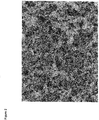
- Test example 1 SEM observation of beads surface
- Test example 2 Measurement of dynamic binding capacity at RT (Residence time) of 3 minutes
- AKTAexplorer 100 manufactured by GE Healthcare Corporation
- a 22 ⁇ m mesh was attached to a column having a diameter of 0.5 cm and height of 15 cm, and 3 mL of the adsorbent according to the present invention was added into the column.
- the column was filled with the adsorbent by flowing 20% ethanol aqueous solution prepared from ethanol (manufactured by Wako Pure Chemical Industries, Ltd.) and RO water at a linear speed of 450 cm/h for 1 hour.
- 15 mL correcting tubes were set. Into the correcting tubes for an eluent, a neutralizing liquid was preliminarily added.
- Neutralizing liquid 2 M tris(hydroxymethyl)aminomethane prepared from tris(hydroxymethyl)aminomethane and RO water
- AKTAexplorer100 manufactured by GE Healthcare Corporation
- a column chromatography apparatus As a column chromatography apparatus, AKTAexplorer100 (manufactured by GE Healthcare Corporation) was used. Into a column having a diameter of 0.5 cm and height of 15 cm, 3 mL of the adsorbent sample was added. The column was filled with the adsorbent sample by flowing 0.2 M NaCl aqueous solution prepared from RO water at a linear speed of 230 cm/h for 15 minutes. On a fraction collector, 15 mL correcting tubes were set. Into the correcting tubes for an eluent, Neutralizing liquid was preliminarily added.
- a dynamic binding capacity of IgG was calculated from the volume of the adsorbent and the amount of IgG which was adsorbed on the adsorbent by 5% of IgG passed through.
- the dynamic binding capacity is referred to as "5% DBC”.
- Test example 4 20% Compression stress
- Pure water was added to the sample beads to prepare a slurry of which concentration was about 50 vol%.
- the slurry was homogenized by stirring and then deaerated under reduced pressure for 30 minutes or more.
- the homogenization and deaeration procedure was repeated 3 times to obtain a deaerated slurry.
- the processed object was changed to pure water and the above homogenization and deaeration procedure was carried out for 90 minutes or more to obtain deaerated water.
- a disposable filter (pore diameter: 5.00 ⁇ m, hydrophilic) was attached to the tip of 2.5 mL disposable syringe with a lure lock (Product name: NORM-JECT, manufactured by HANKE SASS WOLF).
- the piston was removed from the syringe, about 2 mL of deaerated water was added from the rear end side of the syringe, and the deaerated slurry was added before the added deaerated water fell below the gauge line of 0 mL.
- An aspirator was connected to the secondary side of the disposable filter to carefully aspirate the above-described deaerated slurry while the liquid surface did not fall below the top surface of the beads.
- the suction was stopped when the liquid level was decreased to about 0.5 mL in addition to the volume of the precipitated beads.
- the subsequent procedures were carried out with adding the above-described deaerated water so that the liquid level did not fall below the top surface of the beads.
- the height of the beads was adjusted to the gauge line of 1.5 mL by adding the above-described deaerated slurry or removing the beads with giving vibration until it was confirmed that the top surface of the beads was not dropped any more even when vibration was given.
- Deaerated water was added slowly so that the beads were not flied up until deaerated water overflowed, and then the piston was inserted carefully so as not to mix air bubbles.
- the obtained syringe is referred to as "beads-filled syringe".
- Test example 5 Measurement of K av : gel distribution coefficient
- dextran or glucose to be used as a marker was dissolved in 50 mM phosphate buffer (pH 7.5) containing 1M NaCl.
- Table 1 Molecular weight Viscosity radius [nm] Concentration [mg/mL] Amount of injected marker [ ⁇ L] 1185000 27.0 3 40 667800 16.7 3 40 80900 6.8 1 80 48600 5.5 1 80 23800 3.9 1 80 11600 2.6 1 80 5220 1.8 1 80 180 0.4 10 40
- K av V R ⁇ V 0 / V t ⁇ V 0
- V R is the amount (mL) of a liquid to be flowed through the column from the injection of each marker solution to the observation of the peak
- V 0 is the amount (mL) of a liquid to be flowed through the column from the injection of the solution of dextran having a molecular weight of 4 ⁇ 10 7 to the observation of the peak
- V t is the volume (mL) of the beads in the column.
- Test example 6 Calculation of pore size distribution
- the calculated pore radius of porous cellulose beads was plotted on an abscissa axis, and the pore size distribution when the volume (V R - V 0 ) of the pore into which the marker having a molecular weight of 180 was incorporated was assumed to be 100% was plotted on a longitudinal axis.
- Test example 7 Calculation of pore size distribution
- the pore diameter when the cumulative pore volume was 50% was determined on the basis of the graph prepared in Test example 6.
- Production example 1 Preparation of non-orientation-controlled Protein A
- the non-orientation-controlled Protein A used in the present invention had an amino acid sequence of SEQ ID NO. 1.
- the Protein A corresponds to a part of the Protein A derived from Staphylococcus aureus other than S domain, i.e. signal sequence, and X domain, i.e. cell wall binding domain, and is described as SPA' in WO 2006/004067 .
- the Protein A was prepared in accordance with Examples described in WO 2006/004067 . The contents of WO 2006/004067 are incorporated by reference herein.
- Production example 2 Preparation of orientation-controlled alkali-resistant Protein A
- the pentamer of modified C domain described in WO 2012/133349 was prepared as orientation-controlled alkali-resistant Protein A with reference to WO 2012/133349 .
- the orientation-controlled alkali-resistant Protein A had an amino acid sequence of SEQ ID NO. 2.
- the contents of WO 2012/133349 are incorporated by reference herein.
- sodium hydroxide manufactured by Wako Pure Chemical Industries, Ltd.
- distilled water 28.4 wt% sodium hydroxide aqueous solution was prepared. The temperature thereof was adjusted to 4°C.
- the obtained porous cellulose beads were subjected to wet classification using sieves of 38 ⁇ m and 90 ⁇ m.
- the temperature was maintained at 40°C with stirring. After the last 1/4 amount of the solution was added, the mixture was stirred at the same temperature for 1 hour. After the reaction, the beads were washed with 20 times or more volume of distilled water with suction-filtration to obtain first crosslinked beads. The obtained first crosslinked beads were subjected to the same crosslinking reaction once more to obtain second crosslinked beads.
- the obtained second crosslinked beads were transferred into a vessel, and distilled water was added thereto so that the total amount was adjusted to 10 times volume of the crosslinked porous cellulose beads.
- the mixture was heated using an autoclave at 120°C for 60 minutes. After the mixture was cooled to room temperature, the beads were washed with 5 times or more volume of distilled water as much as the beads to obtain the autoclaved second crosslinked beads.
- the SEM observation image of the beads surface is shown as Figure 1 .
- An adsorbent on which Protein A was immobilized was prepared in accordance with the following procedures.
- RO water was added to adjust the total amount to 17.0 mL.
- the mixture was added into 50 mL centrifuge tube.
- the centrifuge tube was set on a mix rotor ("MIX ROTOR MR-3" manufactured by AS ONE Corporation) to stir the mixture.
- MIX ROTOR MR-3 a mix rotor
- the mixture was stirred at 25°C for 1 hour.
- the beads were washed with RO water on a glass filter ("11GP100" manufactured by SIBATA SCIENTIFIC TECHNOLOGY LTD.) till the electrical conductivity of the filtrate became 1 ⁇ S/cm or lower to obtain formyl group-containing crosslinked porous cellulose beads.
- the electrical conductivity of the filtrate obtained by washing was measured using a conductivity meter ("ECTester10 Pure+” manufactured by EUTECH INSTRUMENTS).
- the mixture was stirred at 6°C for 4 hours using a mixing rotor ("MIX ROTOR MR-3" manufactured by AS ONE Corporation).
- MIX ROTOR MR-3 a mixing rotor
- 0.39 mL of 5.5% dimethylamine borane (DMAB) aqueous solution prepared from dimethylamine borane (manufactured by KISHIDA CHEMICAL Co., Ltd.) and RO water was added thereto, and the mixture was stirred at 6°C for 1 hour.
- the reaction temperature was increased to 25°C, and the reaction was carried out at 25°C for 18 hours with stirring by a mixing rotor ("MIX ROTOR MR-3" manufactured by AS ONE Corporation).
- the amount of the unreacted Protein A was determined by measuring UV absorbance of absorption maximum at about 278 nm of the reaction mixture, and the amount of the immobilized Protein A was calculated by subtracting the determined amount value from the used ligand amount.
- the beads after the reaction was washed with RO water of which volume was threefold of the volume of the beads on a glass filter ("11GP100" manufactured by SIBATA SCIENTIFIC TECHNOLOGY LTD.).
- citric acid aqueous solution prepared from citric acid monohydrate manufactured by KANTO CHEMICAL CO., INC.
- RO water was added and further 0.1 M citric acid monohydrate was added to the beads so that the total volume was adjusted to 30 mL or more.
- the mixture was added into a centrifuge tube and stirred at 25°C for 30 minutes to carry out acid washing.
- the beads were washed with RO water of which volume was threefold of the volume of the beads on a glass filter ("11GP100" manufactured by SIBATA SCIENTIFIC TECHNOLOGY LTD.).
- a glass filter 11GP100 manufactured by SIBATA SCIENTIFIC TECHNOLOGY LTD.
- threefold volume of an aqueous solution of 0.05 M sodium hydroxide and 1 M sodium sulfate prepared from sodium hydroxide (manufactured by NACALAI TESQUE, INC.), sodium sulfate (manufactured by KANTO CHEMICAL CO.,INC.) and RO water was added thereto.
- an aqueous solution of 0.05 M sodium hydroxide and 1 M sodium sulfate was added so that the total volume was adjusted to 30 mL or more.
- the mixture was added into a centrifuge tube and stirred at room temperature for 30 minutes to carry out alkaline washing.
- the physical properties of the obtained adsorbent were evaluated in accordance with Test example 2. As a result, the amount of the immobilized Protein A was 35 g per 1 L of the adsorbent, and the 5% DBC of the adsorbent at RT of 3 min was 65 g per 1 L of the filling adsorbent.
- An adsorbent was prepared similarly to Example 1 except that glycerol polyglycidyl ether ("Denacol EX-314" manufactured by Nagase ChemteX Corporation) as a crosslinking agent was not added during the preparation of a cellulose dispersion.
- the physical properties of the obtained adsorbent were evaluated. As a result, the amount of the immobilized Protein A was 35 g per 1 L of the adsorbent, and the 5% DBC of the adsorbent at RT of 3 min was 49 g per 1 L of the filling adsorbent.
- Porous cellulose beads were prepared similarly to Example 1.
- the median diameter of the obtained porous cellulose beads was 64 ⁇ m.
- Example 2 Classification was carried out similarly to Example 1. After the liquid part of 100 mL of the classified porous cellulose beads was replaced by ethanol, the beads were added into a reaction vessel and the total amount of the cellulose beads and ethanol was adjusted to 97 g. To the mixture, 28 g of distilled water and 80 mL of epichlorohydrin were added. The temperature of the solution was adjusted to 40°C, and 96 mL of 1.8 N NaOH aqueous solution prepared from sodium hydroxide (manufactured by NACALAI TESQUE, INC.) and distilled water was added thereto to start a crosslinking reaction. After 1.5 hours from the start of the reaction, 9.6 mL of 17.0 N NaOH aqueous solution was added.
- the crosslinked cellulose beads obtained by the above-described crosslinking reaction were added into a reaction vessel, and the total amount of the cellulose beads and distilled water was adjusted to 116.7 g. After 37.8 g of sodium sulfate was added thereto and dissolved, 33 mL of epichlorohydrin was added and the mixture was maintained at 40°C. To the mixture, 21 mL of 17.0 N NaOH aqueous solution was added to start a crosslinking reaction. After 2.5 hours from the start of the reaction, 5 mL of 17.0 N NaOH aqueous solution was added. After 5 hours from the start of the reaction, the gel was separated and washed with distilled water of which volume was 20-fold of the volume of the beads.
- K av of the crosslinked porous cellulose beads are shown in Table 3, the relation between the viscosity radius of the used markers and the values of K av is shown in Figure 4 and Figure 8 , the relation between the solubilities of the crosslinking agents in water and the values of K av is shown in Figure 5 , the pore size distribution and the average diameter are shown in Table 4, the pore size distribution is shown in Figure 6 and Figure 10 , the relation between the solubilities of the crosslinking agents in water and the average pore diameter is shown in Figure 7 , the amounts of the crosslinking agents added to the fine cellulose dispersions and the values of K av are shown in Table 5 and Figure 9 , and the amounts of the crosslinking agents added to the fine cellulose dispersions and the average pore diameter are shown in Table 6 and Figure 11 .
- Porous cellulose beads were prepared similarly to Example 2 except that glycerol polyglycidyl ether ("Denacol EX-313" manufactured by Nagase ChemteX Corporation) was added as a crosslinking agent during the preparation of a cellulose dispersion in place of glycerol polyglycidyl ether ("EX-314" manufactured by Nagase ChemteX Corporation). The median particle diameter of the obtained porous cellulose beads was 98 ⁇ m. Then, crosslinked porous cellulose beads were prepared by carrying out classification and crosslinking similarly to Example 2 except that sieves of 38 ⁇ m and 150 ⁇ m were used.
- glycerol polyglycidyl ether (“Denacol EX-313" manufactured by Nagase ChemteX Corporation) was added as a crosslinking agent during the preparation of a cellulose dispersion in place of glycerol polyglycidyl ether ("EX-314" manufactured by Nagase Chemt
- K av of the crosslinked porous cellulose beads are shown in Table 3, the relation between the viscosity radius of the used markers and the values of K av is shown in Figure 4 , the relation between the solubilities of the crosslinking agents in water and the values of K av is shown in Figure 5 , the pore size distribution and the average pore diameter are shown in Table 4, the pore size distribution is shown in Figure 6 , and the relation between the solubilities of the crosslinking agents in water and the average pore diameter is shown in Figure 7 .
- Porous cellulose beads were prepared similarly to Example 2 except that polyglycerol polyglycidyl ether ("Denacol EX-521" manufactured by Nagase ChemteX Corporation) was added as a crosslinking agent during the preparation of a cellulose dispersion in place of glycerol polyglycidyl ether ("EX-314" manufactured by Nagase ChemteX Corporation). The median particle diameter of the obtained porous cellulose beads was 65 ⁇ m. Then, crosslinked porous cellulose beads were prepared by carrying out classification and crosslinking similarly to Example 3.
- polyglycerol polyglycidyl ether (“Denacol EX-521" manufactured by Nagase ChemteX Corporation) was added as a crosslinking agent during the preparation of a cellulose dispersion in place of glycerol polyglycidyl ether ("EX-314" manufactured by Nagase ChemteX Corporation).
- the median particle diameter of the obtained porous cellulose beads was
- K av of the crosslinked porous cellulose beads are shown in Table 3, the relation between the viscosity radius of the used markers and the values of K av is shown in Figure 4 , the relation between the solubilities of the crosslinking agents in water and the values of K av is shown in Figure 5 , the pore size distribution and the average pore diameter are shown in Table 4, the pore size distribution is shown in Figure 6 , and the relation between the solubilities of the crosslinking agents in water and the average pore diameter is shown in Figure 7 .
- Porous cellulose beads were prepared similarly to Example 2 except that sorbitol polyglycidyl ether ("Denacol EX-614" manufactured by Nagase ChemteX Corporation) was added as a crosslinking agent during the preparation of a cellulose dispersion in place of glycerol polyglycidyl ether ("EX-314" manufactured by Nagase ChemteX Corporation). The median particle diameter of the obtained porous cellulose beads was 63 ⁇ m. Then, crosslinked porous cellulose beads were prepared by carrying out classification and crosslinking similarly to Example 3.
- sorbitol polyglycidyl ether (“Denacol EX-614" manufactured by Nagase ChemteX Corporation) was added as a crosslinking agent during the preparation of a cellulose dispersion in place of glycerol polyglycidyl ether ("EX-314" manufactured by Nagase ChemteX Corporation).
- the median particle diameter of the obtained porous cellulose beads
- K av of the crosslinked porous cellulose beads are shown in Table 3, the relation between the viscosity radius of the used markers and the values of K av is shown in Figure 4 , the relation between the solubilities of the crosslinking agents in water and the values of K av is shown in Figure 5 , the pore size distribution and the average pore diameter are shown in Table 4, the pore size distribution is shown in Figure 6 , and the relation between the solubilities of the crosslinking agents in water and the average pore diameter is shown in Figure 7 .
- Porous cellulose beads were prepared similarly to Example 2 except that polypropylene glycol diglycidyl ether ("Denacol EX-920" manufactured by Nagase ChemteX Corporation) was added as a crosslinking agent during the preparation of a cellulose dispersion in place of glycerol polyglycidyl ether ("EX-314" manufactured by Nagase ChemteX Corporation).
- the median particle diameter of the obtained porous cellulose beads was 244 ⁇ m.
- Porous cellulose beads were prepared similarly to Example 2 except that an amount of glycerol polyglycidyl ether ("EX-314" manufactured by Nagase ChemteX Corporation) added as a crosslinking agent during the preparation of a cellulose dispersion was adjusted to 6 g and the amount of water was increased by 6 g. Then, crosslinked porous cellulose beads were prepared by carrying out classification and crosslinking similarly to Example 3.
- the amounts of the crosslinking agents added to the fine cellulose dispersions and the values of K av are shown in Table 5 and Figure 9
- the pore size distribution is shown in Figure 10
- the amounts of the crosslinking agents added to the fine cellulose dispersions and the average pore diameter are shown in Table 6 and Figure 11 .
- Porous cellulose beads were prepared similarly to Example 2 except that an amount of glycerol polyglycidyl ether ("EX-314" manufactured by Nagase ChemteX Corporation) added as a crosslinking agent during the preparation of a cellulose dispersion was adjusted to 18 g and the amount of water was decreased by 6 g. Then, crosslinked porous cellulose beads were prepared by carrying out classification and crosslinking similarly to Example 3.
- the amounts of the crosslinking agents added to the fine cellulose dispersions and the values of K av are shown in Table 5 and Figure 9
- the pore size distribution is shown in Figure 10
- the amounts of the crosslinking agents added to the fine cellulose dispersions and the average pore diameter are shown in Table 6 and Figure 11 .
- Porous cellulose beads were prepared similarly to Example 2 except that glycerol polyglycidyl ether ("EX-314" manufactured by Nagase ChemteX Corporation) was not added as a crosslinking agent during the preparation of a cellulose dispersion and the amount of water was increased by 12 g. Then, crosslinked porous cellulose beads were prepared by carrying out classification and crosslinking similarly to Example 3.
- EX-314" manufactured by Nagase ChemteX Corporation
- K av of the crosslinked porous cellulose beads are shown in Table 3, the relation between the viscosity radius of the used markers and the values of K av is shown in Figure 4 and Figure 8 , the relation between the solubilities of the crosslinking agents in water and the values of K av is shown in Figure 5 , the pore size distribution and the average pore diameter are shown in Table 4, the pore size distribution is shown in Figure 6 and Figure 10 , the relation between the solubilities of the crosslinking agents in water and the average pore diameter is shown in Figure 7 , the amounts of the crosslinking agents added to the fine cellulose dispersions and the values of K av are shown in Table 5 and Figure 9 , and the amounts of the crosslinking agents added to the fine cellulose dispersions and the average pore diameter are shown in Table 6 and Figure 11 .
- Crosslinked porous beads were prepared similarly to Example 2 and subjected to wet classification using sieves of 38 ⁇ m and 90 ⁇ m to adjust the median particle diameter to 65 ⁇ m.
- the beads were washed with RO water on a glass filter ("11GP100" manufactured by SIBATA SCIENTIFIC TECHNOLOGY LTD.) till the electrical conductivity of the filtrate became 1 ⁇ S/cm or lower to obtain formyl group-containing crosslinked porous cellulose beads.
- the electrical conductivity of the filtrate obtained by washing was measured using a conductivity meter ("ECTester10 Pure+” manufactured by EUTECH INSTRUMENTS).
- reaction mixture 1 The liquid part contained in the beads was replaced by a buffer of which pH was adjusted to 5 using 0.1 M trisodium citrate aqueous solution in RO water and 0.1 M citric acid aqueous solution. Then, the beads were added into a centrifuge tube again with adjusting the total volume to 7 mL with the same buffer. The mixture was stirred at 6°C for 4 hours using a mixing rotor ("MIX ROTOR MR-3" manufactured by AS ONE Corporation).
- MIX ROTOR MR-3 manufactured by AS ONE Corporation
- reaction mixture 2 The amount of the immobilized Protein A was determined by measuring UV absorbance of absorption maximum at about 278 nm of Reaction mixture 1 and Reaction mixture 2, and subtracting the measured amount value from the used ligand amount.
- the beads after the reaction was washed with RO water of which volume was threefold of the volume of the beads on a glass filter ("11GP100" manufactured by SIBATA SCIENTIFIC TECHNOLOGY LTD.). Then, threefold volume amount of 0.1 N citric acid aqueous solution in RO water was added to the beads, and 0.1 N citric acid aqueous solution in RO water was further added thereto so that the total volume was adjusted to 30 mL or more. The mixture was added into a centrifuge tube and stirred at 25°C for 30 minutes to carry out acid washing.
- the beads were washed with RO water of which volume was threefold of the volume of the beads on a glass filter ("11GP100" manufactured by SIBATA SCIENTIFIC TECHNOLOGY LTD.).
- a glass filter 11GP100 manufactured by SIBATA SCIENTIFIC TECHNOLOGY LTD.
- threefold volume of an aqueous solution of 0.05 M sodium hydroxide and 1 M sodium sulfate in RO water was added thereto.
- an aqueous solution of 0.05 M sodium hydroxide and 1 M sodium sulfate was added so that the total volume was adjusted to 30 mL or more.
- the mixture was added into a centrifuge tube and stirred at room temperature for 30 minutes to carry out alkaline washing.
- the beads were washed with RO water of which volume was 20-fold of the volume of the beads on a glass filter ("11GP100" manufactured by SIBATA SCIENTIFIC TECHNOLOGY LTD.).
- 0.1 N trisodium citrate aqueous solution in RO water of which volume was threefold of the volume of the beads was added.
- washing was carried out with RO water till the electrical conductivity of the filtrate became 1 ⁇ S/cm or lower to obtain the target adsorbent on which orientation-controlled alkali-resistant Protein A was immobilized.
- the electrical conductivity of the filtrate obtained by washing was measured using a conductivity meter ("ECTester10 Pure+" manufactured by EUTECH INSTRUMENTS).
- adsorption performance for IgG was measured in accordance with Test example 3 and 20% compression stress was measured in accordance with Test example 4.
- the adsorption performance and 20% compression stress are shown in Table 7, the relation between the amounts of the immobilized Protein A and IgG adsorption amounts is shown in Figure 13 , and the relation between the median particle diameters and IgG adsorption amounts is shown in Figure 14 .
- An adsorbent was prepared similarly to the Example 9 except that the amount of the orientation-controlled alkali-resistant Protein A aqueous solution was changed to 1.10 g.
- adsorption performance for IgG was measured in accordance with Test example 3 and 20% compression stress was measured in accordance with Test example 4.
- the adsorption performance and 20% compression stress are shown in Table 7, the relation between the amounts of the immobilized Protein A and IgG adsorption amounts is shown in Figure 13 , and the relation between the median particle diameters and IgG adsorption amounts is shown in Figure 14 .
- An adsorbent was prepared similarly to Example 9 except that the amount of the orientation-controlled alkali-resistant Protein A aqueous solution was changed to 0.82 g.
- adsorption performance for IgG was measured in accordance with Test example 3 and 20% compression stress was measured in accordance with Test example 4.
- the adsorption performance and 20% compression stress are shown in Table 7, the relation between the amounts of the immobilized Protein A and IgG adsorption amounts is shown in Figure 13 , and the relation between the median particle diameters and IgG adsorption amounts is shown in Figure 14 .
- An adsorbent was prepared similarly to Example 10 except that the crosslinked porous cellulose beads were subjected to wet classification using sieves of 38 ⁇ m and 63 pm, and the obtained crosslinked porous cellulose beads having a median particle diameter of 52 ⁇ m were used.
- adsorption performance for IgG was measured in accordance with Test example 3 and 20% compression stress was measured in accordance with Test example 4.
- the adsorption performance and 20% compression stress are shown in Table 7, and the result to compare the adsorption performance with Reference example 1 is shown in Figure 12 .
- An adsorbent was prepared similarly to Example 10 except that the crosslinked porous cellulose beads were subjected to wet classification using sieves of 63 ⁇ m and 75 pm, and the obtained crosslinked porous cellulose beads having a median particle diameter of 71 ⁇ m were used.
- adsorption performance for IgG was measured in accordance with Test example 3 and 20% compression stress was measured in accordance with Test example 4.
- the adsorption performance and 20% compression stress are shown in Table 7.
- the adsorbent according to the present invention exhibits very excellent adsorption performance in comparison with the conventionally-known adsorbent product.
- the result shown in Figure 13 with respect to the adsorbent according to the present invention, it was demonstrated that even when the amount of immobilized ligand is small, the adsorption performance is less likely to be decreased.
- the result shown in Figure 14 with respect to the adsorbent according to the present invention, it was found that even when the median particle diameter is large, the adsorption performance is less likely to be decreased.
- porous cellulose beads according to the present invention are good at mass transfer, and a very high performance adsorbent on which a target substance can be adsorbed with high efficiency can be obtained by immobilizing a ligand on the porous cellulose beads.
Landscapes
- Chemical & Material Sciences (AREA)
- Organic Chemistry (AREA)
- Chemical Kinetics & Catalysis (AREA)
- Analytical Chemistry (AREA)
- Health & Medical Sciences (AREA)
- Medicinal Chemistry (AREA)
- Life Sciences & Earth Sciences (AREA)
- Biochemistry (AREA)
- Materials Engineering (AREA)
- Engineering & Computer Science (AREA)
- Polymers & Plastics (AREA)
- Molecular Biology (AREA)
- General Health & Medical Sciences (AREA)
- Thermal Sciences (AREA)
- Physics & Mathematics (AREA)
- Proteomics, Peptides & Aminoacids (AREA)
- Genetics & Genomics (AREA)
- Biophysics (AREA)
- Solid-Sorbent Or Filter-Aiding Compositions (AREA)
- Polysaccharides And Polysaccharide Derivatives (AREA)
- Manufacture Of Porous Articles, And Recovery And Treatment Of Waste Products (AREA)
- Peptides Or Proteins (AREA)
Claims (10)
- Méthode de production de billes de cellulose poreuses, comprenant(a) l'étape de préparation d'une fine dispersion de cellulose par mélange d'une solution aqueuse alcaline ayant une température qui n'est pas inférieure à -20 °C et pas supérieure à 25 °C et de cellulose,(b) l'étape de préparation d'un liquide mélangé par ajout d'un agent de réticulation à la fine dispersion de cellulose,(c) l'étape de préparation d'une émulsion par dispersion du liquide mélangé dans un milieu de dispersion,(d) l'étape de mise en contact de l'émulsion avec un solvant de coagulation.
- Méthode de production selon la revendication 1, dans laquelle une température de la solution aqueuse alcaline dans l'étape (a) n'est pas inférieure à 0 °C et pas supérieure à 25 °C.
- Méthode de production de billes de cellulose poreuses selon la revendication 1 ou 2, dans laquelle l'agent de réticulation est un composé contenant un groupe époxy.
- Méthode de production de billes de cellulose poreuses selon la revendication 3, dans laquelle le composé contenant un groupe époxy est un composé d'éther de glycidyle.
- Méthode de production de billes de cellulose poreuses selon l'une quelconque des revendications 1 à 4, dans laquelle une solubilité de l'agent de réticulation dans l'eau n'est pas inférieure à 50 %.
- Méthode de production de billes de cellulose poreuses selon l'une quelconque des revendications 1 à 5, dans laquelle une viscosité de l'agent de réticulation à 25 °C n'est pas inférieure à 100 mPa.s et pas supérieure à 50 000 mPa.s, où la viscosité est mesurée à l'aide d'un viscosimètre Hoeppler.
- Adsorbant, comprenant les billes de cellulose poreuses produites par la méthode selon l'une quelconque des revendications 1 à 6 et un ligand capable d'interagir avec une substance cible, dans lequel le ligand est choisi parmi un antigène, une protéine et un fragment peptidique et la substance cible est un anticorps.
- Méthode de production d'un adsorbant, comprenant l'étape d'immobilisation d'un ligand capable d'interagir avec une substance cible sur les billes de cellulose poreuses produites par la méthode selon l'une quelconque des revendications 1 à 6 afin d'obtenir l'adsorbant, dans lequel le ligand est choisi parmi un antigène, une protéine et un fragment peptidique et la substance cible est un anticorps.
- Méthode de purification, comprenant les étapes suivantes :la mise en contact d'un adsorbant tel que décrit dans la revendication 7 avec une solution contenant une substance cible,la séparation de l'adsorbant sur lequel la substance cible est sélectivement adsorbée, de la solution par filtration ou centrifugation, etla séparation de la substance cible de l'adsorbant à l'aide d'un éluat ; oule remplissage d'une colonne avec un adsorbant tel que décrit dans la revendication 7,l'injection d'une solution contenant une substance cible dans la colonne pour que la substance cible soit sélectivement adsorbée sur l'adsorbant, etla séparation de la substance cible de l'adsorbant à l'aide d'un éluat.
- Utilisation d'un adsorbant tel que décrit dans la revendication 7 pour la purification d'une substance cible.
Applications Claiming Priority (2)
| Application Number | Priority Date | Filing Date | Title |
|---|---|---|---|
| JP2013215121 | 2013-10-15 | ||
| PCT/JP2014/077362 WO2015056681A1 (fr) | 2013-10-15 | 2014-10-14 | Procédé de production de billes de cellulose poreuses et agent absorbant les utilisant |
Publications (3)
| Publication Number | Publication Date |
|---|---|
| EP3059252A1 EP3059252A1 (fr) | 2016-08-24 |
| EP3059252A4 EP3059252A4 (fr) | 2017-08-09 |
| EP3059252B1 true EP3059252B1 (fr) | 2018-12-05 |
Family
ID=52828124
Family Applications (1)
| Application Number | Title | Priority Date | Filing Date |
|---|---|---|---|
| EP14853802.8A Not-in-force EP3059252B1 (fr) | 2013-10-15 | 2014-10-14 | Procédé de production de billes de cellulose poreuses et agent absorbant en decoulant |
Country Status (4)
| Country | Link |
|---|---|
| US (1) | US10189007B2 (fr) |
| EP (1) | EP3059252B1 (fr) |
| JP (1) | JP6440320B2 (fr) |
| WO (1) | WO2015056681A1 (fr) |
Families Citing this family (6)
| Publication number | Priority date | Publication date | Assignee | Title |
|---|---|---|---|---|
| EP3284778A4 (fr) * | 2015-04-15 | 2018-11-21 | Kaneka Corporation | Procédé de production de billes poreuses en cellulose, et adsorbant contenant ces billes |
| WO2018135139A1 (fr) * | 2017-01-23 | 2018-07-26 | パナソニックIpマネジメント株式会社 | Polymère et procédé de production de film polymère |
| JP6847749B2 (ja) * | 2017-04-19 | 2021-03-24 | 株式会社東芝 | コイル |
| JP7637622B2 (ja) * | 2019-08-01 | 2025-02-28 | 株式会社ダイセル | 多孔質セルロース及びその製造方法 |
| JP7583407B2 (ja) * | 2020-12-23 | 2024-11-14 | 国立大学法人信州大学 | 繊維材料、硬化性樹脂組成物、ドライフィルム、および硬化物 |
| CN114672064B (zh) * | 2022-04-18 | 2023-06-23 | 浙江理工大学 | 一种MIL-100(Fe)/纤维素多孔复合小球的制备方法与应用 |
Family Cites Families (25)
| Publication number | Priority date | Publication date | Assignee | Title |
|---|---|---|---|---|
| US5151350A (en) | 1982-10-27 | 1992-09-29 | Repligen Corporation | Cloned genes encoding recombinant protein a |
| JPS60139873A (ja) | 1983-12-26 | 1985-07-24 | 旭化成株式会社 | 繊維材料の改質方法 |
| JPH03252430A (ja) | 1990-03-01 | 1991-11-11 | Kanebo Ltd | 鋭利な粒径分布を有するセルロース粒子集合体の製造法 |
| US5328603A (en) * | 1990-03-20 | 1994-07-12 | The Center For Innovative Technology | Lignocellulosic and cellulosic beads for use in affinity and immunoaffinity chromatography of high molecular weight proteins |
| JPH0682435A (ja) | 1992-09-04 | 1994-03-22 | Kanebo Ltd | セルロース系ゲル濾過充填剤及びその製造方法 |
| US5410034A (en) | 1994-02-24 | 1995-04-25 | The United States Of America As Represented By The Secretary Of Agriculture | Alkaline method for dissolving cellulose |
| JPH09132601A (ja) * | 1995-09-06 | 1997-05-20 | Bio Polymer Res:Kk | 多孔性セルロース粒子の製造方法 |
| JPH09124702A (ja) | 1995-11-02 | 1997-05-13 | Nisshinbo Ind Inc | アルカリに溶解するセルロースの製造法 |
| EP0955332B1 (fr) | 1997-01-07 | 2006-07-19 | Kaneka Corporation | Agent adsorbant de purification de fluides corporels |
| JP4021980B2 (ja) | 1997-11-25 | 2007-12-12 | 株式会社カネカ | セルロース系粒子体及びその製造方法 |
| JP3601229B2 (ja) * | 1997-01-14 | 2004-12-15 | チッソ株式会社 | 多孔性球状セルロース粒子 |
| SE0200943D0 (sv) | 2002-03-25 | 2002-03-25 | Amersham Biosciences Ab | Mutant protein |
| EP1767640A4 (fr) | 2004-07-06 | 2008-03-26 | Kaneka Corp | Procédé de production d"un assimilé de la protéine à l'aide de bactérie brevibacillus |
| US7850858B2 (en) | 2004-08-30 | 2010-12-14 | Kaneka Corporation | Granulocyte adsorbent |
| JP2006304633A (ja) | 2005-04-26 | 2006-11-09 | Apro Life Science Institute Inc | イムノグロブリン結合タンパク質 |
| US8828905B2 (en) | 2007-05-30 | 2014-09-09 | Kaneka Corporation | Porous base matrix having formyl group, adsorbent using the porous base matrix, method for production of the porous base matrix, and method for production of the adsorbent |
| US8664152B2 (en) | 2007-08-31 | 2014-03-04 | Jnc Corporation | Porous cellulose gel, method for producing the same and use thereof |
| CN103816870B (zh) | 2008-12-03 | 2016-11-23 | 株式会社钟化 | 含有甲酰基的多孔性载体、使用该多孔性载体的吸附体以及它们的制造方法 |
| JPWO2010110288A1 (ja) | 2009-03-24 | 2012-09-27 | 株式会社カネカ | 免疫グロブリンに親和性を有するタンパク質および免疫グロブリン結合性アフィニティーリガンド |
| JP5261262B2 (ja) | 2009-03-31 | 2013-08-14 | 東ソー株式会社 | 細孔を有する微生物セルロース粒子の製造方法 |
| US20130172538A1 (en) | 2010-09-10 | 2013-07-04 | Kaneka Corporation | Method for producing porous particles, porous particles, adsorbent body, and method for purifying protein |
| WO2012121258A1 (fr) | 2011-03-08 | 2012-09-13 | 株式会社カネカ | Procédé de production de billes poreuses en cellulose |
| EP2690173B1 (fr) | 2011-03-25 | 2019-07-03 | Kaneka Corporation | Protéine pour matrice de séparation par chromatographie d'affinité |
| WO2014038686A1 (fr) | 2012-09-10 | 2014-03-13 | 株式会社カネカ | Absorbant |
| WO2015137170A1 (fr) | 2014-03-12 | 2015-09-17 | 富士フイルム株式会社 | Procédé de production de particules cellulosiques poreuses, et particules ainsi obtenues |
-
2014
- 2014-10-14 US US15/029,551 patent/US10189007B2/en active Active
- 2014-10-14 WO PCT/JP2014/077362 patent/WO2015056681A1/fr not_active Ceased
- 2014-10-14 EP EP14853802.8A patent/EP3059252B1/fr not_active Not-in-force
- 2014-10-14 JP JP2015542620A patent/JP6440320B2/ja active Active
Non-Patent Citations (1)
| Title |
|---|
| None * |
Also Published As
| Publication number | Publication date |
|---|---|
| US10189007B2 (en) | 2019-01-29 |
| JP6440320B2 (ja) | 2018-12-19 |
| EP3059252A1 (fr) | 2016-08-24 |
| US20160243521A1 (en) | 2016-08-25 |
| WO2015056681A1 (fr) | 2015-04-23 |
| JPWO2015056681A1 (ja) | 2017-03-09 |
| EP3059252A4 (fr) | 2017-08-09 |
Similar Documents
| Publication | Publication Date | Title |
|---|---|---|
| EP3050902B1 (fr) | Procédé de production de perles de cellulose poreuses par utilisation d'une solution aqueuse alcaline, et perles de cellulose poreuses produites par ce procédé | |
| EP3284778A1 (fr) | Procédé de production de billes poreuses en cellulose, et adsorbant contenant ces billes | |
| EP3059252A1 (fr) | Procédé de production de billes de cellulose poreuses et agent absorbant les utilisant | |
| EP2894171A1 (fr) | Absorbant | |
| CN106794389A (zh) | 具有纳米原纤化表面特征的高表面积纤维介质 | |
| Li et al. | Biosorption of chitin and chitosan | |
| CN102239001A (zh) | 含有甲酰基的多孔性载体、使用该多孔性载体的吸附体以及它们的制造方法 | |
| CN105658313B (zh) | 硫酸化纤维素水合物膜、其制备方法和该膜作为病毒纯化用吸附膜的用途 | |
| CN1922319A (zh) | 质粒纯化 | |
| EP3059251B1 (fr) | Procédé de fabrication de billes poreuses en cellulose | |
| JP6253059B2 (ja) | エンドトキシン吸着材 | |
| US10040053B2 (en) | Production method for porous cellulose beads, and adsorbent employing same | |
| CN106140110B (zh) | 一种低密度脂蛋白吸附剂的制备方法 | |
| WO2019220866A1 (fr) | Perles poreuses de cellulose et procédé de production d'adsorbant | |
| JP7629692B2 (ja) | 多孔質セルロースビーズの製造方法 | |
| WO2018186222A1 (fr) | Billes de cellulose poreuses et adsorbant |
Legal Events
| Date | Code | Title | Description |
|---|---|---|---|
| PUAI | Public reference made under article 153(3) epc to a published international application that has entered the european phase |
Free format text: ORIGINAL CODE: 0009012 |
|
| 17P | Request for examination filed |
Effective date: 20160513 |
|
| AK | Designated contracting states |
Kind code of ref document: A1 Designated state(s): AL AT BE BG CH CY CZ DE DK EE ES FI FR GB GR HR HU IE IS IT LI LT LU LV MC MK MT NL NO PL PT RO RS SE SI SK SM TR |
|
| AX | Request for extension of the european patent |
Extension state: BA ME |
|
| DAX | Request for extension of the european patent (deleted) | ||
| A4 | Supplementary search report drawn up and despatched |
Effective date: 20170707 |
|
| RIC1 | Information provided on ipc code assigned before grant |
Ipc: B01J 20/30 20060101ALI20170704BHEP Ipc: C08J 9/28 20060101ALI20170704BHEP Ipc: B01J 2/06 20060101ALI20170704BHEP Ipc: G01N 30/88 20060101ALI20170704BHEP Ipc: C08B 15/10 20060101ALI20170704BHEP Ipc: B01J 20/24 20060101ALI20170704BHEP Ipc: C07K 1/22 20060101ALI20170704BHEP Ipc: C08B 1/10 20060101AFI20170704BHEP |
|
| STAA | Information on the status of an ep patent application or granted ep patent |
Free format text: STATUS: EXAMINATION IS IN PROGRESS |
|
| 17Q | First examination report despatched |
Effective date: 20180227 |
|
| REG | Reference to a national code |
Ref country code: DE Ref legal event code: R079 Ref document number: 602014037604 Country of ref document: DE Free format text: PREVIOUS MAIN CLASS: C08B0001100000 Ipc: B01J0020240000 |
|
| GRAP | Despatch of communication of intention to grant a patent |
Free format text: ORIGINAL CODE: EPIDOSNIGR1 |
|
| STAA | Information on the status of an ep patent application or granted ep patent |
Free format text: STATUS: GRANT OF PATENT IS INTENDED |
|
| RIC1 | Information provided on ipc code assigned before grant |
Ipc: C07K 17/12 20060101ALI20180523BHEP Ipc: C07K 1/14 20060101ALI20180523BHEP Ipc: C08J 9/28 20060101ALI20180523BHEP Ipc: C08B 15/10 20060101ALI20180523BHEP Ipc: B01J 2/06 20060101ALI20180523BHEP Ipc: B01J 20/30 20060101ALI20180523BHEP Ipc: C07K 1/22 20060101ALI20180523BHEP Ipc: C08B 1/10 20060101ALI20180523BHEP Ipc: B01J 20/32 20060101ALI20180523BHEP Ipc: B01J 20/24 20060101AFI20180523BHEP Ipc: B01J 20/286 20060101ALI20180523BHEP Ipc: G01N 30/88 20060101ALI20180523BHEP Ipc: B01J 20/285 20060101ALI20180523BHEP Ipc: C08J 9/16 20060101ALI20180523BHEP |
|
| INTG | Intention to grant announced |
Effective date: 20180613 |
|
| GRAS | Grant fee paid |
Free format text: ORIGINAL CODE: EPIDOSNIGR3 |
|
| GRAA | (expected) grant |
Free format text: ORIGINAL CODE: 0009210 |
|
| STAA | Information on the status of an ep patent application or granted ep patent |
Free format text: STATUS: THE PATENT HAS BEEN GRANTED |
|
| AK | Designated contracting states |
Kind code of ref document: B1 Designated state(s): AL AT BE BG CH CY CZ DE DK EE ES FI FR GB GR HR HU IE IS IT LI LT LU LV MC MK MT NL NO PL PT RO RS SE SI SK SM TR |
|
| REG | Reference to a national code |
Ref country code: GB Ref legal event code: FG4D |
|
| REG | Reference to a national code |
Ref country code: CH Ref legal event code: EP |
|
| REG | Reference to a national code |
Ref country code: AT Ref legal event code: REF Ref document number: 1072374 Country of ref document: AT Kind code of ref document: T Effective date: 20181215 |
|
| REG | Reference to a national code |
Ref country code: IE Ref legal event code: FG4D |
|
| REG | Reference to a national code |
Ref country code: DE Ref legal event code: R096 Ref document number: 602014037604 Country of ref document: DE |
|
| REG | Reference to a national code |
Ref country code: NL Ref legal event code: MP Effective date: 20181205 |
|
| REG | Reference to a national code |
Ref country code: AT Ref legal event code: MK05 Ref document number: 1072374 Country of ref document: AT Kind code of ref document: T Effective date: 20181205 |
|
| REG | Reference to a national code |
Ref country code: LT Ref legal event code: MG4D |
|
| PG25 | Lapsed in a contracting state [announced via postgrant information from national office to epo] |
Ref country code: ES Free format text: LAPSE BECAUSE OF FAILURE TO SUBMIT A TRANSLATION OF THE DESCRIPTION OR TO PAY THE FEE WITHIN THE PRESCRIBED TIME-LIMIT Effective date: 20181205 Ref country code: BG Free format text: LAPSE BECAUSE OF FAILURE TO SUBMIT A TRANSLATION OF THE DESCRIPTION OR TO PAY THE FEE WITHIN THE PRESCRIBED TIME-LIMIT Effective date: 20190305 Ref country code: AT Free format text: LAPSE BECAUSE OF FAILURE TO SUBMIT A TRANSLATION OF THE DESCRIPTION OR TO PAY THE FEE WITHIN THE PRESCRIBED TIME-LIMIT Effective date: 20181205 Ref country code: LT Free format text: LAPSE BECAUSE OF FAILURE TO SUBMIT A TRANSLATION OF THE DESCRIPTION OR TO PAY THE FEE WITHIN THE PRESCRIBED TIME-LIMIT Effective date: 20181205 Ref country code: HR Free format text: LAPSE BECAUSE OF FAILURE TO SUBMIT A TRANSLATION OF THE DESCRIPTION OR TO PAY THE FEE WITHIN THE PRESCRIBED TIME-LIMIT Effective date: 20181205 Ref country code: LV Free format text: LAPSE BECAUSE OF FAILURE TO SUBMIT A TRANSLATION OF THE DESCRIPTION OR TO PAY THE FEE WITHIN THE PRESCRIBED TIME-LIMIT Effective date: 20181205 Ref country code: NO Free format text: LAPSE BECAUSE OF FAILURE TO SUBMIT A TRANSLATION OF THE DESCRIPTION OR TO PAY THE FEE WITHIN THE PRESCRIBED TIME-LIMIT Effective date: 20190305 Ref country code: FI Free format text: LAPSE BECAUSE OF FAILURE TO SUBMIT A TRANSLATION OF THE DESCRIPTION OR TO PAY THE FEE WITHIN THE PRESCRIBED TIME-LIMIT Effective date: 20181205 |
|
| PG25 | Lapsed in a contracting state [announced via postgrant information from national office to epo] |
Ref country code: AL Free format text: LAPSE BECAUSE OF FAILURE TO SUBMIT A TRANSLATION OF THE DESCRIPTION OR TO PAY THE FEE WITHIN THE PRESCRIBED TIME-LIMIT Effective date: 20181205 Ref country code: SE Free format text: LAPSE BECAUSE OF FAILURE TO SUBMIT A TRANSLATION OF THE DESCRIPTION OR TO PAY THE FEE WITHIN THE PRESCRIBED TIME-LIMIT Effective date: 20181205 Ref country code: RS Free format text: LAPSE BECAUSE OF FAILURE TO SUBMIT A TRANSLATION OF THE DESCRIPTION OR TO PAY THE FEE WITHIN THE PRESCRIBED TIME-LIMIT Effective date: 20181205 Ref country code: GR Free format text: LAPSE BECAUSE OF FAILURE TO SUBMIT A TRANSLATION OF THE DESCRIPTION OR TO PAY THE FEE WITHIN THE PRESCRIBED TIME-LIMIT Effective date: 20190306 |
|
| PG25 | Lapsed in a contracting state [announced via postgrant information from national office to epo] |
Ref country code: NL Free format text: LAPSE BECAUSE OF FAILURE TO SUBMIT A TRANSLATION OF THE DESCRIPTION OR TO PAY THE FEE WITHIN THE PRESCRIBED TIME-LIMIT Effective date: 20181205 |
|
| PG25 | Lapsed in a contracting state [announced via postgrant information from national office to epo] |
Ref country code: CZ Free format text: LAPSE BECAUSE OF FAILURE TO SUBMIT A TRANSLATION OF THE DESCRIPTION OR TO PAY THE FEE WITHIN THE PRESCRIBED TIME-LIMIT Effective date: 20181205 Ref country code: PT Free format text: LAPSE BECAUSE OF FAILURE TO SUBMIT A TRANSLATION OF THE DESCRIPTION OR TO PAY THE FEE WITHIN THE PRESCRIBED TIME-LIMIT Effective date: 20190405 Ref country code: IT Free format text: LAPSE BECAUSE OF FAILURE TO SUBMIT A TRANSLATION OF THE DESCRIPTION OR TO PAY THE FEE WITHIN THE PRESCRIBED TIME-LIMIT Effective date: 20181205 Ref country code: PL Free format text: LAPSE BECAUSE OF FAILURE TO SUBMIT A TRANSLATION OF THE DESCRIPTION OR TO PAY THE FEE WITHIN THE PRESCRIBED TIME-LIMIT Effective date: 20181205 |
|
| PG25 | Lapsed in a contracting state [announced via postgrant information from national office to epo] |
Ref country code: SM Free format text: LAPSE BECAUSE OF FAILURE TO SUBMIT A TRANSLATION OF THE DESCRIPTION OR TO PAY THE FEE WITHIN THE PRESCRIBED TIME-LIMIT Effective date: 20181205 Ref country code: EE Free format text: LAPSE BECAUSE OF FAILURE TO SUBMIT A TRANSLATION OF THE DESCRIPTION OR TO PAY THE FEE WITHIN THE PRESCRIBED TIME-LIMIT Effective date: 20181205 Ref country code: IS Free format text: LAPSE BECAUSE OF FAILURE TO SUBMIT A TRANSLATION OF THE DESCRIPTION OR TO PAY THE FEE WITHIN THE PRESCRIBED TIME-LIMIT Effective date: 20190405 Ref country code: SK Free format text: LAPSE BECAUSE OF FAILURE TO SUBMIT A TRANSLATION OF THE DESCRIPTION OR TO PAY THE FEE WITHIN THE PRESCRIBED TIME-LIMIT Effective date: 20181205 Ref country code: RO Free format text: LAPSE BECAUSE OF FAILURE TO SUBMIT A TRANSLATION OF THE DESCRIPTION OR TO PAY THE FEE WITHIN THE PRESCRIBED TIME-LIMIT Effective date: 20181205 |
|
| REG | Reference to a national code |
Ref country code: DE Ref legal event code: R097 Ref document number: 602014037604 Country of ref document: DE |
|
| PLBE | No opposition filed within time limit |
Free format text: ORIGINAL CODE: 0009261 |
|
| STAA | Information on the status of an ep patent application or granted ep patent |
Free format text: STATUS: NO OPPOSITION FILED WITHIN TIME LIMIT |
|
| PG25 | Lapsed in a contracting state [announced via postgrant information from national office to epo] |
Ref country code: SI Free format text: LAPSE BECAUSE OF FAILURE TO SUBMIT A TRANSLATION OF THE DESCRIPTION OR TO PAY THE FEE WITHIN THE PRESCRIBED TIME-LIMIT Effective date: 20181205 Ref country code: DK Free format text: LAPSE BECAUSE OF FAILURE TO SUBMIT A TRANSLATION OF THE DESCRIPTION OR TO PAY THE FEE WITHIN THE PRESCRIBED TIME-LIMIT Effective date: 20181205 |
|
| 26N | No opposition filed |
Effective date: 20190906 |
|
| PGFP | Annual fee paid to national office [announced via postgrant information from national office to epo] |
Ref country code: DE Payment date: 20191025 Year of fee payment: 6 |
|
| PGFP | Annual fee paid to national office [announced via postgrant information from national office to epo] |
Ref country code: FR Payment date: 20191016 Year of fee payment: 6 |
|
| PG25 | Lapsed in a contracting state [announced via postgrant information from national office to epo] |
Ref country code: TR Free format text: LAPSE BECAUSE OF FAILURE TO SUBMIT A TRANSLATION OF THE DESCRIPTION OR TO PAY THE FEE WITHIN THE PRESCRIBED TIME-LIMIT Effective date: 20181205 |
|
| PGFP | Annual fee paid to national office [announced via postgrant information from national office to epo] |
Ref country code: GB Payment date: 20191029 Year of fee payment: 6 |
|
| PG25 | Lapsed in a contracting state [announced via postgrant information from national office to epo] |
Ref country code: MC Free format text: LAPSE BECAUSE OF FAILURE TO SUBMIT A TRANSLATION OF THE DESCRIPTION OR TO PAY THE FEE WITHIN THE PRESCRIBED TIME-LIMIT Effective date: 20181205 |
|
| REG | Reference to a national code |
Ref country code: CH Ref legal event code: PL |
|
| PG25 | Lapsed in a contracting state [announced via postgrant information from national office to epo] |
Ref country code: CH Free format text: LAPSE BECAUSE OF NON-PAYMENT OF DUE FEES Effective date: 20191031 Ref country code: LU Free format text: LAPSE BECAUSE OF NON-PAYMENT OF DUE FEES Effective date: 20191014 Ref country code: LI Free format text: LAPSE BECAUSE OF NON-PAYMENT OF DUE FEES Effective date: 20191031 |
|
| REG | Reference to a national code |
Ref country code: BE Ref legal event code: MM Effective date: 20191031 |
|
| PG25 | Lapsed in a contracting state [announced via postgrant information from national office to epo] |
Ref country code: BE Free format text: LAPSE BECAUSE OF NON-PAYMENT OF DUE FEES Effective date: 20191031 |
|
| PG25 | Lapsed in a contracting state [announced via postgrant information from national office to epo] |
Ref country code: IE Free format text: LAPSE BECAUSE OF NON-PAYMENT OF DUE FEES Effective date: 20191014 |
|
| REG | Reference to a national code |
Ref country code: DE Ref legal event code: R119 Ref document number: 602014037604 Country of ref document: DE |
|
| PG25 | Lapsed in a contracting state [announced via postgrant information from national office to epo] |
Ref country code: CY Free format text: LAPSE BECAUSE OF FAILURE TO SUBMIT A TRANSLATION OF THE DESCRIPTION OR TO PAY THE FEE WITHIN THE PRESCRIBED TIME-LIMIT Effective date: 20181205 |
|
| GBPC | Gb: european patent ceased through non-payment of renewal fee |
Effective date: 20201014 |
|
| PG25 | Lapsed in a contracting state [announced via postgrant information from national office to epo] |
Ref country code: HU Free format text: LAPSE BECAUSE OF FAILURE TO SUBMIT A TRANSLATION OF THE DESCRIPTION OR TO PAY THE FEE WITHIN THE PRESCRIBED TIME-LIMIT; INVALID AB INITIO Effective date: 20141014 Ref country code: MT Free format text: LAPSE BECAUSE OF FAILURE TO SUBMIT A TRANSLATION OF THE DESCRIPTION OR TO PAY THE FEE WITHIN THE PRESCRIBED TIME-LIMIT Effective date: 20181205 Ref country code: DE Free format text: LAPSE BECAUSE OF NON-PAYMENT OF DUE FEES Effective date: 20210501 Ref country code: FR Free format text: LAPSE BECAUSE OF NON-PAYMENT OF DUE FEES Effective date: 20201031 |
|
| PG25 | Lapsed in a contracting state [announced via postgrant information from national office to epo] |
Ref country code: GB Free format text: LAPSE BECAUSE OF NON-PAYMENT OF DUE FEES Effective date: 20201014 |
|
| PG25 | Lapsed in a contracting state [announced via postgrant information from national office to epo] |
Ref country code: MK Free format text: LAPSE BECAUSE OF FAILURE TO SUBMIT A TRANSLATION OF THE DESCRIPTION OR TO PAY THE FEE WITHIN THE PRESCRIBED TIME-LIMIT Effective date: 20181205 |