EP3062784B1 - Composés antimicrobiens - Google Patents
Composés antimicrobiens Download PDFInfo
- Publication number
- EP3062784B1 EP3062784B1 EP14809706.6A EP14809706A EP3062784B1 EP 3062784 B1 EP3062784 B1 EP 3062784B1 EP 14809706 A EP14809706 A EP 14809706A EP 3062784 B1 EP3062784 B1 EP 3062784B1
- Authority
- EP
- European Patent Office
- Prior art keywords
- compound
- aminophenyl
- use according
- optionally
- heteroaryl
- Prior art date
- Legal status (The legal status is an assumption and is not a legal conclusion. Google has not performed a legal analysis and makes no representation as to the accuracy of the status listed.)
- Active
Links
- 0 Bc1c(*C)c(B)c(B)nc1B Chemical compound Bc1c(*C)c(B)c(B)nc1B 0.000 description 7
- WKLUVLRLQBDRGQ-UHFFFAOYSA-N Bc1c(B)c(B)c(C(C)C)c(B)c1B Chemical compound Bc1c(B)c(B)c(C(C)C)c(B)c1B WKLUVLRLQBDRGQ-UHFFFAOYSA-N 0.000 description 1
- AMKHTGOSKKTRDD-UHFFFAOYSA-N Bc1c(B)nc(B)c(C(C)C)c1B Chemical compound Bc1c(B)nc(B)c(C(C)C)c1B AMKHTGOSKKTRDD-UHFFFAOYSA-N 0.000 description 1
- BDYVCYUXCNZYRW-UHFFFAOYSA-N COc(cc1)ccc1C(Nc(cccc1)c1N)=O Chemical compound COc(cc1)ccc1C(Nc(cccc1)c1N)=O BDYVCYUXCNZYRW-UHFFFAOYSA-N 0.000 description 1
Images


Classifications
-
- C—CHEMISTRY; METALLURGY
- C07—ORGANIC CHEMISTRY
- C07C—ACYCLIC OR CARBOCYCLIC COMPOUNDS
- C07C233/00—Carboxylic acid amides
- C07C233/64—Carboxylic acid amides having carbon atoms of carboxamide groups bound to carbon atoms of six-membered aromatic rings
- C07C233/77—Carboxylic acid amides having carbon atoms of carboxamide groups bound to carbon atoms of six-membered aromatic rings having the nitrogen atom of at least one of the carboxamide groups bound to a carbon atom of a hydrocarbon radical substituted by amino groups
- C07C233/80—Carboxylic acid amides having carbon atoms of carboxamide groups bound to carbon atoms of six-membered aromatic rings having the nitrogen atom of at least one of the carboxamide groups bound to a carbon atom of a hydrocarbon radical substituted by amino groups with the substituted hydrocarbon radical bound to the nitrogen atom of the carboxamide group by a carbon atom of a six-membered aromatic ring
-
- A—HUMAN NECESSITIES
- A61—MEDICAL OR VETERINARY SCIENCE; HYGIENE
- A61K—PREPARATIONS FOR MEDICAL, DENTAL OR TOILETRY PURPOSES
- A61K31/00—Medicinal preparations containing organic active ingredients
- A61K31/16—Amides, e.g. hydroxamic acids
- A61K31/165—Amides, e.g. hydroxamic acids having aromatic rings, e.g. colchicine, atenolol, progabide
- A61K31/166—Amides, e.g. hydroxamic acids having aromatic rings, e.g. colchicine, atenolol, progabide having the carbon of a carboxamide group directly attached to the aromatic ring, e.g. procainamide, procarbazine, metoclopramide, labetalol
-
- A—HUMAN NECESSITIES
- A61—MEDICAL OR VETERINARY SCIENCE; HYGIENE
- A61K—PREPARATIONS FOR MEDICAL, DENTAL OR TOILETRY PURPOSES
- A61K31/00—Medicinal preparations containing organic active ingredients
- A61K31/16—Amides, e.g. hydroxamic acids
- A61K31/165—Amides, e.g. hydroxamic acids having aromatic rings, e.g. colchicine, atenolol, progabide
- A61K31/167—Amides, e.g. hydroxamic acids having aromatic rings, e.g. colchicine, atenolol, progabide having the nitrogen of a carboxamide group directly attached to the aromatic ring, e.g. lidocaine, paracetamol
-
- A—HUMAN NECESSITIES
- A61—MEDICAL OR VETERINARY SCIENCE; HYGIENE
- A61P—SPECIFIC THERAPEUTIC ACTIVITY OF CHEMICAL COMPOUNDS OR MEDICINAL PREPARATIONS
- A61P31/00—Antiinfectives, i.e. antibiotics, antiseptics, chemotherapeutics
-
- C—CHEMISTRY; METALLURGY
- C07—ORGANIC CHEMISTRY
- C07C—ACYCLIC OR CARBOCYCLIC COMPOUNDS
- C07C235/00—Carboxylic acid amides, the carbon skeleton of the acid part being further substituted by oxygen atoms
- C07C235/42—Carboxylic acid amides, the carbon skeleton of the acid part being further substituted by oxygen atoms having carbon atoms of carboxamide groups bound to carbon atoms of six-membered aromatic rings and singly-bound oxygen atoms bound to the same carbon skeleton
- C07C235/44—Carboxylic acid amides, the carbon skeleton of the acid part being further substituted by oxygen atoms having carbon atoms of carboxamide groups bound to carbon atoms of six-membered aromatic rings and singly-bound oxygen atoms bound to the same carbon skeleton with carbon atoms of carboxamide groups and singly-bound oxygen atoms bound to carbon atoms of the same non-condensed six-membered aromatic ring
- C07C235/56—Carboxylic acid amides, the carbon skeleton of the acid part being further substituted by oxygen atoms having carbon atoms of carboxamide groups bound to carbon atoms of six-membered aromatic rings and singly-bound oxygen atoms bound to the same carbon skeleton with carbon atoms of carboxamide groups and singly-bound oxygen atoms bound to carbon atoms of the same non-condensed six-membered aromatic ring having the nitrogen atom of at least one of the carboxamide groups bound to a carbon atom of a six-membered aromatic ring
-
- C—CHEMISTRY; METALLURGY
- C07—ORGANIC CHEMISTRY
- C07C—ACYCLIC OR CARBOCYCLIC COMPOUNDS
- C07C271/00—Derivatives of carbamic acids, i.e. compounds containing any of the groups, the nitrogen atom not being part of nitro or nitroso groups
- C07C271/06—Esters of carbamic acids
- C07C271/08—Esters of carbamic acids having oxygen atoms of carbamate groups bound to acyclic carbon atoms
- C07C271/10—Esters of carbamic acids having oxygen atoms of carbamate groups bound to acyclic carbon atoms with the nitrogen atoms of the carbamate groups bound to hydrogen atoms or to acyclic carbon atoms
- C07C271/18—Esters of carbamic acids having oxygen atoms of carbamate groups bound to acyclic carbon atoms with the nitrogen atoms of the carbamate groups bound to hydrogen atoms or to acyclic carbon atoms to carbon atoms of hydrocarbon radicals substituted by doubly-bound oxygen atoms
-
- C—CHEMISTRY; METALLURGY
- C07—ORGANIC CHEMISTRY
- C07C—ACYCLIC OR CARBOCYCLIC COMPOUNDS
- C07C271/00—Derivatives of carbamic acids, i.e. compounds containing any of the groups, the nitrogen atom not being part of nitro or nitroso groups
- C07C271/06—Esters of carbamic acids
- C07C271/08—Esters of carbamic acids having oxygen atoms of carbamate groups bound to acyclic carbon atoms
- C07C271/10—Esters of carbamic acids having oxygen atoms of carbamate groups bound to acyclic carbon atoms with the nitrogen atoms of the carbamate groups bound to hydrogen atoms or to acyclic carbon atoms
- C07C271/22—Esters of carbamic acids having oxygen atoms of carbamate groups bound to acyclic carbon atoms with the nitrogen atoms of the carbamate groups bound to hydrogen atoms or to acyclic carbon atoms to carbon atoms of hydrocarbon radicals substituted by carboxyl groups
-
- C—CHEMISTRY; METALLURGY
- C07—ORGANIC CHEMISTRY
- C07D—HETEROCYCLIC COMPOUNDS
- C07D213/00—Heterocyclic compounds containing six-membered rings, not condensed with other rings, with one nitrogen atom as the only ring hetero atom and three or more double bonds between ring members or between ring members and non-ring members
- C07D213/02—Heterocyclic compounds containing six-membered rings, not condensed with other rings, with one nitrogen atom as the only ring hetero atom and three or more double bonds between ring members or between ring members and non-ring members having three double bonds between ring members or between ring members and non-ring members
- C07D213/04—Heterocyclic compounds containing six-membered rings, not condensed with other rings, with one nitrogen atom as the only ring hetero atom and three or more double bonds between ring members or between ring members and non-ring members having three double bonds between ring members or between ring members and non-ring members having no bond between the ring nitrogen atom and a non-ring member or having only hydrogen or carbon atoms directly attached to the ring nitrogen atom
- C07D213/24—Heterocyclic compounds containing six-membered rings, not condensed with other rings, with one nitrogen atom as the only ring hetero atom and three or more double bonds between ring members or between ring members and non-ring members having three double bonds between ring members or between ring members and non-ring members having no bond between the ring nitrogen atom and a non-ring member or having only hydrogen or carbon atoms directly attached to the ring nitrogen atom with substituted hydrocarbon radicals attached to ring carbon atoms
- C07D213/28—Radicals substituted by singly-bound oxygen or sulphur atoms
- C07D213/30—Oxygen atoms
-
- C—CHEMISTRY; METALLURGY
- C07—ORGANIC CHEMISTRY
- C07D—HETEROCYCLIC COMPOUNDS
- C07D249/00—Heterocyclic compounds containing five-membered rings having three nitrogen atoms as the only ring hetero atoms
- C07D249/02—Heterocyclic compounds containing five-membered rings having three nitrogen atoms as the only ring hetero atoms not condensed with other rings
- C07D249/04—1,2,3-Triazoles; Hydrogenated 1,2,3-triazoles
-
- Y—GENERAL TAGGING OF NEW TECHNOLOGICAL DEVELOPMENTS; GENERAL TAGGING OF CROSS-SECTIONAL TECHNOLOGIES SPANNING OVER SEVERAL SECTIONS OF THE IPC; TECHNICAL SUBJECTS COVERED BY FORMER USPC CROSS-REFERENCE ART COLLECTIONS [XRACs] AND DIGESTS
- Y02—TECHNOLOGIES OR APPLICATIONS FOR MITIGATION OR ADAPTATION AGAINST CLIMATE CHANGE
- Y02A—TECHNOLOGIES FOR ADAPTATION TO CLIMATE CHANGE
- Y02A50/00—TECHNOLOGIES FOR ADAPTATION TO CLIMATE CHANGE in human health protection, e.g. against extreme weather
- Y02A50/30—Against vector-borne diseases, e.g. mosquito-borne, fly-borne, tick-borne or waterborne diseases whose impact is exacerbated by climate change
Definitions
- the invention relates to compounds which are useful for treatment of microbial infection, by stimulating the innate antimicrobial peptide system.
- AMPs Antimicrobial peptides
- AMPs are crucial components of innate defences that are synthesized constitutively and/or induced at epithelial surfaces, where the initial contact with microbes takes place (1).
- AMPs are widespread in nature, from fungi, plants and invertebrates to vertebrates, which establishes these defences are evolutionary conserved.
- AMPs possess broad activity against various pathogens, i.e. viruses, bacteria, fungi, and parasites (2).
- pathogens i.e. viruses, bacteria, fungi, and parasites
- AMPs constitute a link between the innate and adaptive immunity.
- AMPs can be induced by certain compounds.
- Butyrate (BA) was found to induce cathelicidin expression in epithelial cells (9).
- sodium butyrate counteracted pathogen down-regulation of AMPs expression, resulting in pathogen elimination from epithelial surfaces in vivo in a rabbit model of Shigellosis (10).
- Phenylbutyrate (PBA) an analogue of butyrate, was shown to upregulate the expression of LL-37, the sole cathelicidin in humans, in epithelial cell lines and in monocytes (11).
- Vitamin D3, 1,25-dihydroxyvitamin D3 was also reported to enhance the expression of LL-37 in keratinocytes, immune cells, and in epithelial cells (12-14).
- PBA and 1,25-dihydroxyvitamin D3 were found to up-regulate LL-37 in a synergistic manner (11).
- WO2009/087474 (Akthelia Pharmaceuticals) concerns generally the use of phenylbutyrate and similar compounds and their glycerol esters, and other compounds including vitamin D, for treating, preventing or counteracting microbial infections in animals by stimulating the innate antimicrobial peptide defence system, such as LL-37 in humans.
- Preferred compounds include phenyl substituted butyrate derivatives.
- This publication describes, inter alia, how CAP-18 (the rabbit homologue to LL-37) is induced in the rabbit colonic epithelium following oral administration.
- the publication further describes the expression of LL-37 in a bronchial epithelial cell line VA10.
- the publication further describes the cure of rabbits from shigellosis.
- WO2012/0140504 also relates to the use of compounds for stimulating the innate antimicrobial peptide defence system, such as LL-37 in humans, in particular novel targets, organs, cells or tissues.
- WO2008/073174 describes methods and compositions for modulating gene expression and the innate immune response by use of 1,25(OH) 2 vitamin D3 (1,25D3). That compound is tested alongside non-specific histone deacetylase inhibitors (HDACi) including butyrate or trichostatin A.
- HDACi histone deacetylase inhibitors
- US20080038374 (Stahle) describes use of a vitamin D compound, which is able to specifically and directly up-regulate hCAP18, for the manufacturing of a medicament with antimicrobial effect for treatment of conditions deficient in LL-37, such as chronical ulcers, and atopic dermatitis.
- Martineau et al (Lancet 2011; 377: 242-50 ) describes a Phase II study of TB patients treated with high dose vitamin D.
- US 200210076393 A1 relates to a method for the stimulation of defensin production in eukaryotic cells such as, for example, mammalian cells and various organs, using isoleucine or active isomers or analogs thereof. It further relates to methods for the prevention and treatment of infections and other various disease states and in the stimulation of the immune system in various tissues in which defensins are found.
- the disclosure provides a new class of compounds which are powerful inducers of LL-37. This has been demonstrated both in a recombinant cell-line screening containing a construct with luciferase coupled to the human cathelicidin gene CAMP (Nylén et. al., 2013) and confirmed in normal colonic epithelial cell culture (HT-29 cells).
- the compounds for use in the present invention are benzoylated phenylenediamines or derivatives or analogs thereof, as described in more detail hereinafter.
- Preferred compounds are N-(2aminophenyl)benzamide, N-(2aminophenyl)-4-methoxybenzamide, N-(2aminophenyl)-4-nitrobenzamide, benzyl (4-((2-aminophenyl)carbamoyl)benzyl)carbamate, pyridin-3-ylmethyl (4-((2-aminophenyl)carbamoyl)benzyl)carbamate, methyl 2-(4-((4-((2-aminophenyl)carbamoyl)benzyl)carbamoyl)-1H-1,2,3-triazol-1-yl)acetate, and N-(2-aminophenyl)-4-((4-(dimethyl- ⁇ 4-azanyl)phenyl)amino)benzamide.
- the present invention provides for the use of the compounds described herein for the treatment of infectious disease.
- Preferred microbial targets and diseases targeted by the present invention are described hereinafter.
- HDAC histone deacetylase
- the present invention further provides a compound as defined herein for use as a medicament for treating (e.g. counteracting down-regulation caused by several pathogens) microbial infections in humans and other animals by stimulating the innate antimicrobial peptide defense system.
- the compounds used in the present invention exhibit an antimicrobial effect by stimulating the innate antimicrobial peptide defense system.
- the use of the present invention will be such as to lead to secretion of the relevant peptide same onto an epithelial surface (e.g. in the gastrointestinal tract or in the lung). This in turn will lead to increased antimicrobial activity at the surface (and hence improvement of its barrier function) and treatment of the microbial infection and disease caused by it.
- an epithelial surface e.g. in the gastrointestinal tract or in the lung.
- the compounds defined herein also stimulate autophagy, which is believed to be via induction of LL-37 or independently of that, thereby additionally contributing to the removal of microbial infection.
- the microbial targets and diseases targeted by the present invention may be any believed to benefit therefrom.
- Preferred targets are described herein but include diseases such as pneumonia, tuberculosis, shigellosis and additional enteric infections (30, 31).
- aspects of the disclosure include a method for treating, preventing or counteracting microbial infections, including bacterial, viral, fungal and parasitic infections (also including infections by bacterial strains resistant to currently used antibiotics), by administering a medicament comprising a secretagogue-effective amount of at least one compound as defined herein.
- compositions for use in the methods described herein e.g. for treating, preventing or counteracting a microbial infection, including the above mentioned types, comprising an active ingredient being at least one compound of the invention, and typically at least one pharmaceutically acceptable excipient.
- the invention provides compounds for use in a method of treatment of a microbial infection in an animal as defined in the claims.
- the group Q is selected from Q1, Q2, Q3, Q4, Q5 and Q6: wherein one of B 1 and B 2 (and B 3 , B 4 and B 5 where present) is a group of formula -X-R x and the others are independently selected from H and R B .
- each possible Q group includes one -X-R x substituent in an available position, the other available positions being either unsubstituted (-H) or substituted with a group -R B .
- Q is a phenyl group, Q1: wherein one of B 1 , B 2 , B 3 , B 4 and B 5 is a group of formula -X-R x and the others are independently selected from H and R B .
- B 3 is a group of formula -X-R x and B 1 , B 2 , B 4 and B 5 are independently selected from H and R B . Accordingly, in these embodiments, Q is a group of formula:
- B 2 is a group of formula -X-R x and B 1 , B 3 , B 4 and B 5 are independently selected from H and R B .
- B 1 is a group of formula -X-R x and B 2 , B 3 , B 4 and B 5 are independently selected from H and R B .
- one of B 1 , B 2 , B 3 , B 4 and B 5 is a group of formula -X-R x and the others are independently H.
- B 2 or B 3 is a group of formula -X-R x and the others are independently H.
- B 3 is a group of formula -X-R x and the others are independently H.
- Q is a pyridyl group Q2, Q3 or Q4: wherein one of B 1 , B 2 , B 3 and B 4 is a group of formula -X-R x and the others are independently selected from H and R B .
- one of B 1 , B 2 , B 3 and B 4 is a group of formula -X-R x and the others are independently H.
- X is a covalent bond and R X is -H.
- Q is Q2.
- Q is Q3.
- Q is Q4.
- Q is an imidazolyl group Q5: wherein one of B 1 and B 2 is a group of formula -X-R x and the other is selected from H and R B .
- one of B 1 and B 2 is a group of formula -X-R x and the other is -H.
- X is a covalent bond and R X is -H.
- Q is an indolyl group Q6: wherein one of B 1 , B 2 , B 3 , B 4 and B 5 is a group of formula -X-R x and the others are independently selected from H and R B .
- one of B 1 , B 2 , B 3 , B 4 and B 4 is a group of formula -X-R x and the others are independently H.
- X is a covalent bond and R X is -H.
- -R B is selected from halogen (i.e. -F, -CI, -Br, -I), -CF 3 , -R, -OH,-OR, -NH 2 , -NHR, -NR 2 , -NO 2 , and -CN.
- -R B is selected from -OH, -OR, -NH 2 , -NHR, and -NR 2 .
- -R B is selected from -OH or -OR.
- -R B is -OR.
- -R B is -OMe
- -R B is -R.
- -R B is -Me.
- X is selected from a covalent bond or C 1-3 alkylene and R X is selected from H, R XX or R XY .
- X is a covalent bond (i.e. the group -X-R x is a group of formula-R X ).
- X is selected from C 1-3 alkylene.
- X is selected from -CH 2 -, -CH 2 CH 2 -, -CH 2 CH 2 CH 2 -, -CH(CH 3 )-, -CH(CH 3 )CH 2 -, -CH 2 CH(CH 3 )-, or -CH(CH 2 CH 3 )-.
- X is -CH 2 -.
- R X is H.
- R X is R XX .
- R XX is selected from -OH, -OR, -NO 2 , -NH 2 , NHR, and NR 2 .
- R XX is selected from -OR, -NO 2 and -NR 2 .
- R XX is -OMe, -NO 2 , or -NMe 2 .
- R X is R XY wherein R XY is a group of formula -L X -R YY .
- R YY is selected from C 1-4 alkyl, C 3-6 cycloalkyl, -C 6-14 aryl, -L Y -C 6-14 aryl, -L Y -O-C 6-14 aryl -C 5-6 heteroaryl, -L Y -C 5-6 heteroaryl, and -L Y -O-C 5-6 heteroaryl, wherein -L Y - is C 1-3 alkylene and wherein each of said R YY groups is optionally substituted.
- R YY is independently: -C 6-14 aryl, -L Y -C 6-14 aryl, -C 5-6 heteroaryl, or -L Y -C 5-6 heteroaryl, wherein said C 6-14 aryl and C 5-6 heteroaryl groups are optionally substituted.
- R YY is independently: -Ph, -L Y -Ph, C 5-6 heteroaryl, or -L Y -C 5-6 heteroaryl, wherein said Ph and C 5-6 heteroaryl groups are optionally substituted.
- R YY is independently: -L Y -Ph or -L Y -C 5-6 heteroaryl, wherein said Ph and C 5-6 heteroaryl groups are optionally substituted.
- R YY is independently-L Y -C 6-14 aryl, wherein said C 6-14 aryl is optionally substituted.
- R YY is independently: -L Y -Ph, wherein said Ph is optionally substituted.
- R YY is independently:
- -L Y - is independently selected from -CH 2 -, -CH 2 CH 2 -, -CH 2 CH 2 CH 2 -, -CH(CH 3 )-, -CH(CH 3 )CH 2 -, -CH 2 CH(CH 3 )-, and -CH(CH 2 CH 3 )-.
- -L Y - is independently -CH 2 -.
- each of said R YY groups is optionally substituted with one or more substituents selected from: -F, -CI, -Br, -I, -R, -CF 3 , -OH, -OR, -OCF 3 , -NO 2 , -L YY -OH,-L YY -OR, -NH 2 , -NHR, -NR 2 , -L YY -NH 2 , -L YY -NHR, -L YY -NR 2 , -CO 2 H, -CO 2 R, -L YY -CO 2 H, -L YY -CO 2 R, -Ph, and -L YY -Ph-, wherein L YY is C 1-3 alkylene.
- each of said R YY groups is optionally substituted with one or more substituents selected from: -OH, -OR, -L YY -OH, -L YY -OR, -NH 2 , -NHR, -NR 2 , -L YY -NH 2 , -L YY -NHR, -L YY -NR 2 , -L YY -CO 2 H, -L YY -CO 2 R, -Ph, and -L YY -Ph-, wherein L YY is C 1-3 alkylene.
- each of said R YY groups is optionally substituted with one or more substituents selected from -NH 2 , -NHR, -NR 2 , -L YY -CO 2 H, and -L YY -CO 2 R, wherein L YY is C 1-3 alkylene.
- R YY is independently: -L Y -Ph, wherein said Ph is substituted with one or more substituents selected from: -OH, -OR, -L YY -OH, -L YY -OR, -NH 2 , -NHR, -NR 2 , -L YY -NH 2 , -L YY -NHR, -L YY -NR 2 , -L YY -CO 2 H, -L YY -CO 2 R, -Ph, and -L YY -Ph-, wherein L YY is C 1-3 alkylene.
- R YY is independently: -L Y -Ph, wherein said Ph is substituted with one or more substituents selected from: -NH 2 , -NHR, and -NR 2 .
- R YY is independently: -C 5-6 heteroaryl, wherein said C 5-6 heteroaryl is substituted with one or more substituents selected from: -OH, -OR, -L YY -OH, -L YY -OR, -NH 2 , -NHR, -NR 2 , -L YY -NH 2 , -L YY -NHR, -L YY -NR 2 , -L YY -CO 2 H, -L YY -CO 2 R, -Ph, and -L YY -Ph-, wherein L YY is C 1-3 alkylene.
- R YY is independently: -C 5-6 heteroaryl, wherein said C 5-6 heteroaryl is substituted with -L YY -CO 2 R.
- -L YY - is independently selected from -CH 2 -, -CH 2 CH 2 -, -CH 2 CH 2 CH 2 -, -CH(CH 3 )-, -CH(CH 3 )CH 2 -, -CH 2 CH(CH 3 )-, and -CH(CH 2 CH 3 )-.
- -L YY - is independently -CH 2 -.
- R L is NH 2 .
- R L is -NHR LL .
- R LL is selected from -C 1-4 alkyl, -C 3-6 cycloalkyl, -Ph, -L L -Ph, -C 5-6 heteroaryl, and -L L -C 5-6 heteroaryl wherein -L L - is C 1-3 alkylene, wherein said -Ph and -C 5-6 heteroaryl are optionally substituted.
- said -Ph and -C 5-6 heteroaryl are optionally substituted with one or more groups selected from: -F, -Cl, -Br, -I, -R, -CF 3 , -OH, -OR, -OCF 3 , -NO 2 , -NH 2 , -NHR, -NR 2 , -CO 2 H, -CO 2 R.
- R LL is selected from -Ph, -L L -Ph, -C 5-6 heteroaryl, and -L L -C 5-6 heteroaryl.
- R LL is selected from -L L -Ph and -L L -C 5-6 heteroaryl.
- R LL is -L L -Ph.
- R LL is -CH 2 -Ph (-Bn).
- L L is selected from C 1-3 alkylene.
- L L is selected from:
- L L is -CH 2 - or -CH 2 CH 2 -.
- L L is -CH 2 -.
- R N is H.
- a 1 and A 2 together with the atoms to which they are bound, form an optionally substituted phenyl, naphthalene or heteroaryl group.
- R A2 is independently selected from -R, -OH, -OR, -OCF 3 , -NO 2 ,-NH 2 , -NHR, -NR 2 , and -CN.
- R A2 is independently -R.
- R A2 is independently methyl.
- the compound may be a compound of formula (V):
- a 1 and A 2 together with the atoms to which they are bound, form an optionally substituted naphthalene group. Accordingly, the compound may be a compound of formula (VI):
- the phenyl and naphthalene rings may optionally be substituted with one or more substituents R A2 as defined above.
- a 1 and A 2 together with the atoms to which they are bound, form an unsubstituted phenyl or naphthalene group.
- a 1 and A 2 together with the atoms to which they are bound, form an unsubstituted phenyl group.
- a 1 and A 2 together with the atoms to which they are bound, form a phenyl substituted with one or more substituents R A2 .
- a 1 and A 2 together with the atoms to which they are bound, form a phenyl substituted with two substituents R A2 .
- Each 'R' is independently a C 1-4 alkyl group.
- R is selected from methyl, ethyl, n-propyl, iso-propyl, n-butyl, iso-butyl, sec-butyl, and tert-butyl.
- R is methyl or ethyl.
- R is methyl
- a 1 and A 2 together with the atoms to which they are bound, form a phenyl ring, optionally substituted with one or more substituents R A2 .
- the compound is a compound of formula (VIII): wherein Q, L and R A2 are as previously defined.
- the compound is a compound of formula (IX): wherein Q and R A2 are as previously defined.
- the compound is a compound of formula (X): wherein X, R X , B 1 , B 2 , B 4 , B 5 and R A2 are as previously defined.
- the compound is a compound of formula (XI): wherein X and R X are as previously defined.
- the compound is a compound of formula (XII): wherein B 1 , B 2 , B 3 , B 4 , B 5 and L are as previously defined.
- the compound is a compound of formula (XIII): wherein X, R X , and L are as previously defined.
- the compounds described herein may thus be used in the treatment and or prevention of infections, alone or as adjunctive therapy.
- treatment pertains generally to treatment and therapy, whether of a human or another animal (e.g. mammal), in which some desired therapeutic effect is achieved, for example, the inhibition of the progress of the disorder, and includes a reduction in the rate of progress, a halt in the rate of progress, alleviation of symptoms of the disorder, amelioration of the disorder, and cure of the disorder.
- a human or another animal e.g. mammal
- some desired therapeutic effect is achieved, for example, the inhibition of the progress of the disorder, and includes a reduction in the rate of progress, a halt in the rate of progress, alleviation of symptoms of the disorder, amelioration of the disorder, and cure of the disorder.
- the methods and compositions described herein will be understood to have utility in aquaculture, veterinary and animal husbandry applications for companion animals, farm animals, and ranch animals.
- These applications include but are not limited to treating, preventing or counteracting microbial diseases and conditions in fish, dogs, cats, cows, horses, deer and poultry including hen, turkey ducks, geese; as well as in household pets such as birds and rodents.
- a suitable dose can be larger than the above mentioned amounts.
- prophylaxis Treatment as a prophylactic measure (i.e., prophylaxis) is also included.
- treatment i.e., prophylaxis
- prophylaxis use with patients who have not yet developed the disorder, but who are at risk of developing the disorder, is encompassed by the term "treatment.”
- prophylaxis in the context of the present specification should not be understood to circumscribe complete success i.e. complete protection or complete prevention. Rather prophylaxis in the present context refers to a measure which is administered in advance of detection of a symptomatic condition with the aim of preserving health by helping to delay, mitigate or avoid that particular condition.
- the gastrointestinal tract (GI tract) of mammals is covered by a continuous sheet of epithelial cells that is folded into villus projections and crypts.
- GI tract gastrointestinal tract
- enterocytes and Paneth cells produce antimicrobial peptides.
- the enterocytes synthesize and secrete antimicrobial peptides into the gut lumen both constitutively and upon induction.
- the Paneth cells at the base of the intestinal crypts secrete alpha-defensins into the cryptal well, resulting in concentrations estimated at mg/mL levels, which eventually flush into the gut lumen.
- stationary macrophages are also known to secrete antimicrobial peptides into the gut lumen and additional tissue sites when activated.
- mice which lack the proteolytic enzyme required for processing cryptdins (the murine Paneth cell alpha-defensins) lack functional cryptdins and exhibit increased susceptibility to orally administered Salmonella.
- epithelial surfaces of the mammalian body also have such host defense secretion systems, including but not limited to the cornea, the lung, the kidney and the skin (see also WO2012/140504 ).
- compositions and methods described herein will result in the stimulation of macrophages and epithelial cells and Paneth cells of the gastrointestinal tract and other epithelial surfaces of man and in other animals to secrete large quantities of naturally occurring broad-spectrum antimicrobial agents, including antimicrobial peptides such as defensins, HMP 1-4, LL-37, HBD1-4, and antimicrobial proteins such as lysozyme, transferrin, lactoferrin, phospholipases, and SLPI (secretory leukocyte protease inhibitor).
- antimicrobial peptides such as defensins, HMP 1-4, LL-37, HBD1-4
- antimicrobial proteins such as lysozyme, transferrin, lactoferrin, phospholipases, and SLPI (secretory leukocyte protease inhibitor).
- the substances stored by the Paneth cells exhibit activity against a wide range of infectious agents including bacteria, protozoa, viruses, and fung
- the epithelial cells targeted by the present invention may be any of these e.g. in the lung, trachea, urinary tract or kidney, upper GI tract (e.g. ileum) and lower GI tract (e.g. jejunum) and ⁇ or blood.
- the invention is utilised for the treatment of microbial infections of the GI tract.
- an important aspect of the disclosure provides methods for treating, preventing or counteracting microbial infections e.g. by administering a medicament comprising a secretagogue-effective amount of at least one compound described herein.
- infections and other conditions that benefit from treatment according to the invention are in particular those relating to organs having epithelial surfaces with host defense peptide secretion systems such as the above mentioned.
- the compounds used in the invention are particularly useful against infections of bacterial strains that are tolerant against conventional antibiotics.
- Bacterial species include, but are not limited to, Yersenia, Salmonella, Shigella, Campylobacter, Clostridium, Heliobacter, Mycobacterium, Pseudomonas, Haemophilus, Moraxella, Escherichia, Neisseria and Staphyllococcus strains.
- viruses including HIV, RSV, herpes, hepatitis and influenza viruses, which are also believed to be a target for the antimicrobial peptides stimulated by the present invention.
- Infections, conditions and diseases treatable according to the present invention include, but are not limited to:
- the agents may be administered simultaneously or sequentially, and may be administered in individually varying dose schedules and via different routes.
- the agents can be administered at closely spaced intervals (e.g., over a period of 5-10 minutes) or at longer intervals (e.g. 1, 2, 3, 4 or more hours apart, or even longer periods apart where required), the precise dosage regimen being commensurate with the properties of the therapeutic agent(s) as described herein, including their synergistic effect.
- agents i.e. the compound described here, plus one or more other agents
- the agents may be formulated together in a single dosage form, or alternatively, the individual agents may be formulated separately and presented together in the form of a kit, optionally with instructions for their use.
- the compounds described herein may in any aspect and embodiment also be used in combination therapies, e.g. in conjunction with other agents.
- Such agents may be as follows:
- Sodium phenylbutyrate is a known medicament.
- Ucyclyd Pharma Hunt Valley, USA
- Buphenyl and by Swedish Orphan Biovitrum AB (Sweden) as Ammonaps. It has been used to treat urea cycle disorders ( Batshaw et al. (2001) J. Pediatr. 138 (1 Suppl): S46-54 ; discussion S54-5).
- phenylbutyrate is also under investigation for the treatment of some sickle-cell disorders (Blood Products Plasma Expanders and Haemostatics) and for use as a potential differentiation-inducing agent in malignant glioma and acute myeloid leukaemia. It has also been investigated in respect of cystic fibrosis pathology due to its capacity to traffic DeltaF508-cystic fibrosis transmembrane conductance regulator (CFTR) to the cell membrane and restore CFTR chloride function at the plasma membrane of CF lung cells in vitro and in vivo ( Roque et al. J Pharmacol Exp Ther. 2008 Sep;326(3):949-56 . Epub 2008 Jun 23). It is believed in the literature that phenylbutyrate is a prodrug which is metabolized in the body by beta-oxidation to phenylacetate.
- CFTR traffic DeltaF508-cystic fibrosis transmembrane conductance regulator
- Vitamin D type compounds are discussed in US20080038374 or WO/2008/073174 .
- Vitamin D type compounds are discussed in US20080038374 or WO/2008/073174 .
- Vitamin D is used herein, it is used in a broad sense to encompass Vitamin D3 (or "1,25 D3") and its hormonally active forms, to include compounds which are structurally similar to vitamin D3.
- Vitamin D3 or "1,25 D3”
- Vitamin D3 or "1,25 D3”
- hormonally active forms to include compounds which are structurally similar to vitamin D3.
- Many of these compounds are recognized and comprise a large number of natural precursors, metabolites, as well as synthetic analogs of the hormonally active 1, 25-dihydroxyvitamin D3 (1 ⁇ 25 (OH) 2 D3).
- This language is intended to include vitamin D3 , or an analog thereof, at any stage of its metabolism, as well as mixtures of different metabolic forms of vitamin D3 or analogs thereof.
- the compounds for use in the invention are particularly useful against infections of bacterial strains that are tolerant against conventional antibiotics. Nevertheless use of the compounds described herein in conjunction with conventional antibiotics may be preferred and forms one part of the present invention.
- Example antibiotics include Penicillins, Penicillin G, Phenoxymethyl- penicillin, Flucloxacillin, Amoxycillin, Metronidazole, Cefuroxime, Augmentin, Pivmecillinam, Acetomycin, Ciprofloxacin and Erythromycin. Where these specific antibiotics are named, it will be appreciated that commonly available analogs may be used.
- Such a regime may have benefits in minimising the development of antibiotic resistance in the pathogen to be targeted.
- the amino acid L-isoleucine upregulates ⁇ -defensins expression in epithelial cells of cows (18).
- US2002-0076393 Ferhlbaum et al .
- US2003-0109582 Zasloff
- US7311925 Zasloff
- isoleucine, an active isomer thereof, and an active analog thereof in each case for stimulation of the innate antimicrobial defence system.
- compositions comprising, in addition to one or more of the compounds used in the invention, vitamin D or one of the other aforementioned compounds as a further ingredient.
- Such compositions can be formulated in any of the above mentioned formulations and dosage forms.
- Oral or inhalation dosage forms are preferred, as described below.
- terapéuticaally-effective amount refers to that amount of a compound, or a material, composition or dosage form comprising a compound, which is effective for producing some desired therapeutic effect, commensurate with a reasonable benefit/risk ratio, when administered in accordance with a desired treatment regimen.
- the compounds used in the present invention exhibit an antimicrobial effect by stimulating the innate antimicrobial peptide defense system and ⁇ or stimulating autophagy.
- an effective amount in the present context would be one which is sufficient to demonstrate antimicrobial activity in vivo e.g. by stimulating (e.g. supressing or counteracting down-regulation caused by several pathogens) synthesis of the cathelicidin LL-37 or other naturally occurring antibiotic peptide or protein e.g. a defensin. Stimulation may be towards, equal to, or above basal levels (i.e. normal levels in the absence of the infection).
- Preferred compounds used in the present invention are believed to be more stable, and have a longer half-life, than stimulatory compounds used in the prior art, such as PBA.
- antimicrobial activity is meant the ability to inhibit the growth of or actually kill a population of microbes which can be bacteria, viruses, protozoa or fungal microbes.
- antimicrobial activity should be construed to mean both microbistatic as well as microbicidal activities.
- Antimicrobial activity should also be construed to include a compound which is capable of inhibiting infections, i.e. disease-causing capacity of microbes.
- the use of the present invention will be such as to lead to secretion of the relevant peptide onto an epithelial surface.
- a preferred dosage of a compound of type I may be: between 25 ⁇ g and 2000 mg; more preferably 0.05 mg to 500 mg; more preferably 0.1 to 250 mg; more preferably about 0.2 to 100mg; more preferably less than or equal to about 50 mg/day
- dosages can be split into 1, 2, 3, 4, 5, 6 or 7 doses per week or 1,2 or 3 doses per day.
- a preferred regime is less than 3 x per day e.g. 1 or 3x3 mg/week, 2x1mg/day or 2x5mg/ week.
- a preferred dosage may be between 0.1 mg and 100 mg; between 0.2 mg and 50 mg; between 0.2 mg and 20 mg; optionally with vitamin D3.
- preferred dosages can be split into 1, 2, 3, or 4 doses per week or 1,2 doses per day.
- Dosages for Vitamin D may be of the order of 1000-10 000 IU daily.
- a compound used in the invention is preferably administered in an oral dosage form such as, but not limited to, a tablet, a capsule, a solution, a suspension, a powder, a paste, an elixir, and a syrup.
- Compositions for oral use may be in the form of hard gelatin capsules in which the active ingredient is mixed with an inert solid diluent, for example, calcium carbonate, calcium phosphate or kaolin, or as soft gelatin capsules in which the active ingredient is mixed with water or an oil such as peanut oil, liquid paraffin, or olive oil.
- an inert solid diluent for example, calcium carbonate, calcium phosphate or kaolin
- water or an oil such as peanut oil, liquid paraffin, or olive oil.
- Suitable pharmaceutically acceptable excipients for a tablet formulation include, for example, inert diluents such as lactose, sodium carbonate, calcium phosphate or calcium carbonate, granulating and disintegrating agents such as corn starch or algenic acid; binding agents such as starch; lubricating agents such as magnesium stearate, stearic acid or talc; preservative agents such as ethyl or propyl p-hydroxybenzoate, and antioxidants, such as ascorbic acid. Tablet formulations may be uncoated or coated either to modify their disintegration and the subsequent absorption of the active ingredient within the gastrointestinal tract, or to improve their stability and/or appearance, in either case, using conventional coating agents and procedures well known in the art.
- inert diluents such as lactose, sodium carbonate, calcium phosphate or calcium carbonate
- granulating and disintegrating agents such as corn starch or algenic acid
- binding agents such as starch
- lubricating agents such as
- dosage forms include but not are limited to topical administration forms, which are in particular useful against infections of the skin, these include for example creams, oils, lotions, and ointments.
- dosage forms for delivery to the respiratory system including the lungs such as aerosols and nasal spray devices or by rectal enema.
- 'alkyl' refers to a monovalent moiety obtained by removing a hydrogen atom from a saturated aliphatic hydrocarbon compound, preferably having from 1 to 4 carbon atoms ('C 1-4 alkyl'), which may be linear or branched.
- C 1-4 alkyl groups include, but are not limited to, methyl, ethyl, n-propyl, iso-propyl, n-butyl, iso-butyl, sec-butyl, tert-butyl. In certain instances, methyl or ethyl groups may be preferred.
- 'alkylene' refers to a divalent moiety obtained by removing two hydrogen atoms from a saturated aliphatic hydrocarbon compound, preferably having from 1 to 3 carbon atoms ('C 1-3 alkylene'), which may be linear or branched.
- C 1-3 alkylene groups include, but are not limited to, -CH 2 -, -CH 2 CH 2 -, -CH 2 CH 2 CH 2 -, -CH(CH 3 )-, -CH(CH 3 )CH 2 -, -CH 2 CH(CH 3 )-, or -CH(CH 2 CH 3 )-.
- 'cycloalkyl' refers to a monovalent moiety obtained by removing a hydrogen atom from a saturated alicyclic hydrocarbon compound, preferably having from 3 to 6 ring atoms ('C 3-6 cycloalkyl').
- C 3-6 cycloalkyl groups include, but are not limited to, cyclopropyl, cyclobutyl, cyclopentyl, and cyclohexyl, as well as substituted groups (e.g., groups which comprise such groups), such as methylcyclopropyl, dimethylcyclopropyl, methylcyclobutyl, dimethylcyclobutyl, methylcyclopentyl, dimethylcyclopentyl, methylcyclohexyl, dimethylcyclohexyl, cyclopropylmethyl and cyclohexylmethyl.
- substituted groups e.g., groups which comprise such groups
- C 6-14 aryl refers to a monovalent moiety obtained by removing a hydrogen atom from an aromatic ring atom of a C 6-14 aromatic compound, said compound having one ring, or two or more rings (e.g., fused), and having from 6 to 14 ring atoms, and wherein at least one of said ring(s) is an aromatic ring.
- each ring has from 6 to 10 ring atoms.
- C 6-14 aromatic ring may also be used and should be construed accordingly; this may refer to a multivalent moiety.
- the ring atoms may be all carbon atoms, as in "carboaryl groups", in which case the group may conveniently be referred to as a "C 6-14 carboaryl” group.
- C 6-14 carboaryl groups include, but are not limited to, those derived from benzene (i.e. phenyl) (C 6 ), naphthalene (C 10 ), anthracene (C 14 ), and phenanthrene (C 14 ).
- aryl groups which comprise fused rings include, but are not limited to, groups derived from indene and fluorene, e.g.:
- 'heteroaryl' refers to a monovalent moiety obtained by removing a hydrogen atom from an aromatic ring atom of a heteroaromatic compound, i.e. a compound containing at least one aromatic ring, wherein the ring atoms include at least one heteroatom.
- Possible heteroatoms include but are not limited to oxygen, nitrogen, and sulphur.
- the aromatic ring has from 5 to 6 ring atoms, of which from 0 to 4 are ring heteroatoms.
- the group is referred to as a 'C 5-6 heteroaryl' group, wherein 'C 5-6 ' denotes ring atoms whether carbon atoms or heteroatoms.
- C 5-6 heteroaryl group examples include, but are not limited to, C 5 heteroaryl groups derived from furan (oxole), thiophene (thiole), pyrrole (azole), imidazole (1,3-diazole), pyrazole (1,2-diazole), triazole (1,2,3-triazole, 1,2,4-triazole), oxazole, isoxazole, thiazole, isothiazole, oxadiazole, and oxatriazole; and C 6 heteroaryl groups derived from isoxazine, pyridine (azine), pyridazine (1,2-diazine), pyrimidine (1,3-diazine; e.g., cytosine, thymine, uracil), pyrazine (1,4-diazine), triazine, tetrazole, and oxadiazole (furazan).
- 'halo' or 'halogen' refers to -F, -CI, -Br, and -I substituents. Fluoro (-F) and chloro (-CI) substituents are usually preferred.
- Certain compounds may exist in one or more particular geometric, optical, enantiomeric, diasteriomeric, epimeric, stereoisomeric, tautomeric, conformational, or anomeric forms, including but not limited to, cis- and trans-forms; E- and Z-forms; c-, t-, and r- forms; endo- and exo-forms; R-, S-, and meso-forms; D- and L-forms; d- and I-forms; (+) and (-) forms; keto-, enol-, and enolate-forms; syn- and anti-forms; synclinal- and anticlinal-forms; ⁇ - and ⁇ -forms; axial and equatorial forms; boat-, chair-, twist-, envelope-, and halfchair-forms; and combinations thereof, hereinafter collectively referred to as "isomers” (or "isomeric forms").
- isomers are structural (or constitutional) isomers (i.e. isomers which differ in the connections between atoms rather than merely by the position of atoms in space).
- a reference to a methoxy group, -OCH 3 is not to be construed as a reference to its structural isomer, a hydroxymethyl group, -CH 2 OH.
- a reference to ortho-chlorophenyl is not to be construed as a reference to its structural isomer, meta-chlorophenyl.
- a reference to a class of structures may well include structurally isomeric forms falling within that class (e.g., C 1-7 alkyl includes n-propyl and iso-propyl; butyl includes n-, iso-, sec-, and tert-butyl; methoxyphenyl includes ortho-, meta-, and para-methoxyphenyl).
- C 1-7 alkyl includes n-propyl and iso-propyl
- butyl includes n-, iso-, sec-, and tert-butyl
- methoxyphenyl includes ortho-, meta-, and para-methoxyphenyl
- keto/enol (illustrated below), imine/enamine, amide/imino alcohol, amidine/amidine, nitroso/oxime, thioketone/enethiol, N-nitroso/hyroxyazo, and nitro/aci-nitro.
- H may be in any isotopic form, including 1 H, 2 H (D), and 3 H (T); C may be in any isotopic form, including 12 C, 13 C, and 14 C; O may be in any isotopic form, including 16 O and 18 O; and the like.
- a reference to a particular compound includes all such isomeric forms, including (wholly or partially) racemic and other mixtures thereof.
- Methods for the preparation (e.g. asymmetric synthesis) and separation (e.g., fractional crystallisation and chromatographic means) of such isomeric forms are either known in the art or are readily obtained by adapting the methods taught herein, or known methods, in a known manner.
- a reference to a particular compound also includes ionic, salt, solvate, and protected forms of thereof, for example, as discussed below.
- a corresponding salt of the active compound for example, a pharmaceutically-acceptable salt.
- a pharmaceutically-acceptable salt examples are discussed in Berge, et al., J. Pharm. Sci., 66, 1-19 (1977 ).
- a salt may be formed with a suitable cation.
- suitable inorganic cations include, but are not limited to, alkali metal ions such as Na + and K + , alkaline earth cations such as Ca 2+ and Mg 2+ , and other cations such as Al 3+ .
- suitable organic cations include, but are not limited to, ammonium ion (i.e., NH 4 + ) and substituted ammonium ions (e.g., NH 3 R + , NH 2 R 2 + , NHR 3 + , NR 4 + ).
- Examples of some suitable substituted ammonium ions are those derived from: ethylamine, diethylamine, dicyclohexylamine, triethylamine, butylamine, ethylenediamine, ethanolamine, diethanolamine, piperazine, benzylamine, phenylbenzylamine, choline, meglumine, and tromethamine, as well as amino acids, such as lysine and arginine.
- An example of a common quaternary ammonium ion is N(CH 3 ) 4 + .
- a salt may be formed with a suitable anion.
- suitable inorganic anions include, but are not limited to, those derived from the following inorganic acids: hydrochloric, hydrobromic, hydroiodic, sulphuric, sulphurous, nitric, nitrous, phosphoric, and phosphorous.
- Suitable organic anions include, but are not limited to, those derived from the following organic acids: acetic, propionic, succinic, glycolic, stearic, palmitic, lactic, malic, pamoic, tartaric, citric, gluconic, ascorbic, maleic, hydroxymaleic, phenylacetic, glutamic, aspartic, benzoic, cinnamic, pyruvic, salicyclic, sulfanilic, 2-acetyoxybenzoic, fumaric, phenylsulfonic, toluenesulfonic, methanesulfonic, ethanesulfonic, ethane disulfonic, oxalic, pantothenic, isethionic, valeric, lactobionic, and gluconic.
- suitable polymeric anions include, but are not limited to, those derived from the following polymeric acids: tannic acid, carboxymethyl cellulose.
- solvate is used herein in the conventional sense to refer to a complex of solute (e.g. active compound, salt of active compound) and solvent. If the solvent is water, the solvate may be conveniently referred to as a hydrate, for example, a mono-hydrate, a di-hydrate, a tri-hydrate, etc.
- chemically protected form pertains to a compound in which one or more reactive functional groups are protected from undesirable chemical reactions, that is, are in the form of a protected or protecting group (also known as a masked or masking group or a blocked or blocking group).
- a protected or protecting group also known as a masked or masking group or a blocked or blocking group.
- the aldehyde or ketone group is readily regenerated by hydrolysis using a large excess of water in the presence of acid.
- an amine group may be protected, for example, as an amide or a urethane, for example, as: a methyl amide (-NHCO-CH 3 ); a benzyloxy amide (-NHCO-OCH 2 C 6 H 5 , -NH-Cbz); as a t-butoxy amide (-NHCO-OC(CH 3 ) 3 , -NH-Boc); a 2-biphenyl-2-propoxy amide (-NHCO-OC(CH 3 ) 2 C 6 H 4 C 6 H 5 , -NH-Bpoc), as a 9-fluorenylmethoxy amide (-NH-Fmoc), as a 6-nitroveratryloxy amide (-NH-Nvoc), as a 2-trimethylsilylethyloxy amide (-NH-Teoc), as a 2,2,2-trichloroethyloxy amide (-NH-Troc), as an allyloxy amide (-NH-All
- a carboxylic acid group may be protected as an ester for example, as: an C 1-7 alkyl ester (e.g. a methyl ester; a t-butyl ester); a C 1-7 haloalkyl ester (e.g., a C 1-7 trihaloalkyl ester); a triC 1-7 alkylsilyl-C 1-7 alkyl ester; or a C 5-20 aryl-C 1-7 alkyl ester (e.g. a benzyl ester; a nitrobenzyl ester); or as an amide, for example, as a methyl amide.
- an C 1-7 alkyl ester e.g. a methyl ester; a t-butyl ester
- a C 1-7 haloalkyl ester e.g., a C 1-7 trihaloalkyl ester
- MN8CampLuc cells were handled according to Nylén et. al. with the following exception when predifferention of cells were performed before induction: Cell seeding was performed in medium where glucose was exchanged for galactose (5 mg/ml), which is known to promote differentiation in colon epithelial cells ( Pinto, M., M.D. Appay, P. Simon-Assman, G. Chevalier, N. Dracopoli, J. Fogh, and A. Zweibaum, 1982, Biol. Cell., 44:193-196 ) Cells were then allowed to grow for 72 hours before stimulation with test compounds.
- RT-PCR experiments were performed according to Nylen et. al. ( Nylén F, Miraglia E, Cederlund A, Ottosson H, Stromberg R, Gudmundsson GH, Agerberth B. 2013. Boosting innate immunity: Development and validation of a cell-based screening assay to identify LL-37 inducers. Innate Immun. ).
- RT-PCR experiments for expression of marker genes for autophagy in HEK-293 cells were measured by real-time PCR. Data were normalized by the expression of the 18s rRNA housekeeping gene.
- the precipitate was recrystallized from ethanol to yield the product as the hydrochloride (310 mg, 1.11 mmol, 12%).
- the filtrate was washed with water, and then it was extracted with HCI (1 M). This latter water layer was basified with NaOH and extracted with dichloromethane.
- the dichloromethane layer was dried with sodium sulfate and evaporated to yield crude N-(2-Aminophenyl) 4-methoxybenzamide as the free amine.
- the resulting solid was recrystallized from ethanol yielded pure product (230 mg, 0.949 mmol, 10%).
- N-Methylmorpholine (138 ⁇ L, 1.25 mmol) was added to a stirred solution of 5- ⁇ [4-(dimethylamino)phenyl]amino ⁇ -5-oxopentanoic acid (313 mg, 1.25 mmol) in dichloromethane (20 mL) at room temperature. After 30 min, isobutyl chloroformate (0.2 mL, 1.5 mmol) was added and after 10 min followed by 1,2-phenylenediamine (143 mg, 1.32 mmol) in dichloromethane (5 ml). The reaction was left at room temperature overnight, diluted with dichloromethane and water. The mixture was extracted with HCI (1 M).
- PBA and pyridin-3-ylmethyl (4-((2-aminophenyl)carbamoyl)benzyl)carbamate (5) increase the CAMP gene expression with different time course as monitored via mRNA in HT-29 cells ( Figure 8 ).
- RT-PCR on the parental HT-29 cell line shows a different time course for the induction elicited by PBA (13) and 5.
- PBA induced a gradual increase of the CAMP gene expression.
- Pyridin-3-ylmethyl (4-((2-aminophenyl)carbamoyl)benzyl)carbamate (5) did not induce at 4 and 8 h, but induction was prominent at 24 and 48 h.
- Example 22 Experiments showing that compound 5 also can induce autophagy in HEK-293 cells. Treatment with 10 ⁇ M Entinostat can upregulate the expression of autophagy related gene Beclin-1 and Atg5 ( Figure 9 , upper panel) together with LC3 expression in its membrane form (LC3-II, Figure 9 , lower panel). Rapamycin was used as a positive control.
- the known CAMP inducers PBA and BA are inhibitors of class I HDAC and hence they promote histone acetylation ( 9 , 11 ).
- Histone acetylation is known to play a critical role in gene transcriptional regulation by causing chromatin relaxation and allowing the binding of transcription factors to DNA regulatory elements ( 25 ).
- the molecular mechanism for BA- and PBA-elicited induction of the CAMP gene is not clear, since it has been shown to be secondary and to depend on the de novo synthesis of unknown specific factor(s) ( 11 ) as opposed to simply facilitating binding of pre-existing factors.
- HDAC inhibitors are also known to be HDAC inhibitors.
- compounds such as the known non-selective HDAC inhibitor Vorinostat (12) was a poor inducer although it is a more potent HDAC inhibitor ( 26 ) ( 27 ) and did not elicit the same effect on LL-37 expression compared to compounds of the new class that are less active HDAC inhibitors but much more active as inducers ( Figure 3 ). This suggests that the main mechanism for induction is not gene activation through HDAC inhibition.
- HDAC inhibitors Vorinostat (12) and Trichostatin A (19) give much less fold induction than compound 5 (Entinostat, pyridin-3-ylmethyl (4-((2-aminophenyl)carbamoyl)benzyl)carbamate ( Figure 4 , left panel) although all known IC 50 values for HDAC inhibition shows that 12 and 19 are considerably more powerful HDAC inhibitors ( Figure 4 , right panel).
- HDAC inhibitors can give some limited induction of antimicrobial peptides, it seems clear that the main inducing ability of the new class of inducers represented by compounds 1-10 and 16 is not via a mechanism involving HDAC inhibition.
- pyridin-3-ylmethyl (4-((2- aminophenyl)carbamoyl)benzyl)carbamate ( 5 , Entinostat) also stimulates autophagy, via induction of LL-37 or via another pathway, thereby additionally contributing to the removal of microbial infection.
Landscapes
- Chemical & Material Sciences (AREA)
- Organic Chemistry (AREA)
- Health & Medical Sciences (AREA)
- General Health & Medical Sciences (AREA)
- Veterinary Medicine (AREA)
- Pharmacology & Pharmacy (AREA)
- Life Sciences & Earth Sciences (AREA)
- Animal Behavior & Ethology (AREA)
- Medicinal Chemistry (AREA)
- Public Health (AREA)
- Epidemiology (AREA)
- Pain & Pain Management (AREA)
- Communicable Diseases (AREA)
- Oncology (AREA)
- Chemical Kinetics & Catalysis (AREA)
- General Chemical & Material Sciences (AREA)
- Nuclear Medicine, Radiotherapy & Molecular Imaging (AREA)
- Pharmaceuticals Containing Other Organic And Inorganic Compounds (AREA)
- Acyclic And Carbocyclic Compounds In Medicinal Compositions (AREA)
Claims (15)
- Composé de formule (VII) pour une utilisation dans une méthode de traitement d'une infection microbienne chez un animal qui est éventuellement un humain :
 Q est choisi parmi Q1, Q2, Q3, Q4, Q5 et Q6 :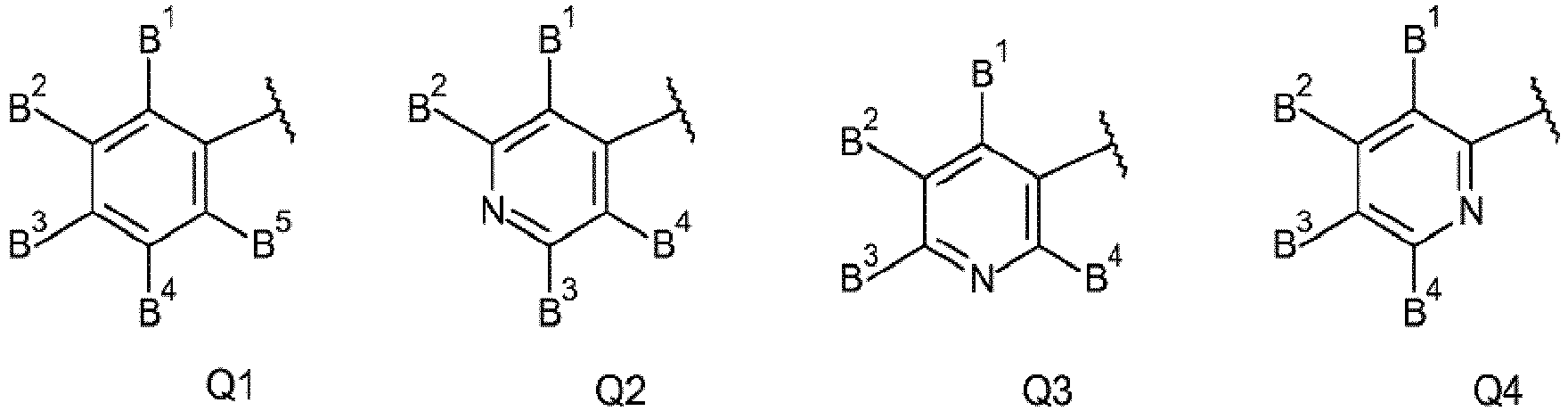
 L est choisi parmi -(CH2)m-, -C(=O)-, -(CH2)m-C(=O)-,-O-(CH2)m-C(=O)-, -O-C(=O)-(CH2)m-(C=O)-, -NH-C(=O)-, -NR-C(=O)-, -NH-(CH2)m-C(=O)-, -NR-(CH2)m-C(=O)-, -NH-C(=O)-(CH2)m-C(=O)-, -NR-C(=O)-(CH2)m-C(=O)-, -C(=O)-NH-(CH2)m-C(=O)- et -(CH2)m-(CHRL)-C(=O)-, où m est un entier de 1 à 4 ;A1 et A2, conjointement avec les atomes auxquels ils sont liés, forment un groupe éventuellement substitué phényle, naphtalène ou hétéroaryle ;RN est H ;l'un de B1, B2, B3, B4 et B5 est un groupe de formule-X-RX et les autres sont indépendamment choisis parmi H et RB ;où chaque -RB est indépendamment choisi parmi un halogène, -CF3, -R, -OH, -OR, -OCF3, -C(=O)OH, -C(=O)OR, -C(=O)R, -OC(=O)R, -NH2, -NHR, -NR2, -NO2, -C(=O)NH2, -C(=O)NHR, C(=O)NR2, -S(=O)R, -S(=O)2R, -S(=O)2NR2 et -CN ;X est choisi parmi une liaison covalente et un alkylène en C1 à C3 ;RX est choisi parmi -H, RXX et RXY ; où :RXX est un halogène, -CF3, -OH, -OR, -OCF3, -C(=O)OH,-NO2, -NH2, -NHR, -NR2, -C(=O)NH2, -C(=O)NR2, -S(=O)R, -S(=O)2R, -S(=O)2NR2 ou -CN ; etRXY est un groupe de formule -LX-RYY ;où LX est choisi parmi :-NH-C(=O)-O-, -NH-C(=O)-NH-, -NH-C(=O)--O-C(=O)-NH-, -O-C(=O)-O-, -O-(C=O)--C(=O)-NH-, -C(=O)-O-, -C(=O)- ;et RYY est choisi parmi alkyle en C1 à C4, cycloalkyle en C3 à C6, aryle en C6 à C14, -LY-aryle en C6 à C14, -LY-O-(aryle en C6 à C14)-hétéroaryle en C5 à C6, -LY-hétéroaryle en C5 à C6, et -LY-O-hétéroaryle en C5 à C6,où -LY- est un alkylène en C1 à C3 et chacun desdits groupes est éventuellement substitué ;RL est choisi parmi un halogène, -RLL, -CF3, -OH, -ORLL, -NO2, -NH2, -NHRLL, -NR2, -NH-C(=O)-RLL, -NH-C(=O)-O-RLL où RLL est choisi parmi alkyle en C1 à C4, cycloalkyle en C3 à C6, -Ph, -LL-Ph, hétéroaryle en C5 à C6, -LL-hétéroaryle où -LL- est un alkylène en C1 à C3 ;et où chaque R est indépendamment un alkyle en C1 à C4.
 - Composé pour une utilisation selon la revendication 1, dans lequel Q est Q1.
- Composé pour une utilisation selon la revendication 1 ou la revendication 2, dans lequel B3 est - X-RX et/ou B1, B2, B4 et B5 sont tous H.
- Composé pour une utilisation selon l'une quelconque des revendications 1 à 3, dans lequel L est choisi parmi -(CH2)m-, -C(=O)-, -NH-C(=O)-, -NR-C(=O)- et-NH-C(=O)-(CH2)m-C(=O)-.
- Composé pour une utilisation selon l'une quelconque des revendications 1 à 4, dans lequel X est un alkylène en C1 à C3 choisi parmi : -CH2-, -CH2CH2-, -CH2CH2CH2-, -CH(CH3)-, -CH(CH3)CH2-, -CH2CH(CH3)-, et -CH(CH2)CH3)-.
- Composé pour une utilisation selon l'une quelconque des revendications 1 à 5, dans lequel RX est -RXX, où RXX est indépendamment : un halogène (F, Cl, Br, I), -CF3, -OH, -OR-, -NO2, ou -OCF3.
- Composé pour une utilisation selon l'une quelconque des revendications 1 à 6, dans lequel RX est -RXY et éventuellement dans lequel LX est indépendamment :-NH-C(=O)-O-, -NH-C(=O)-NH-, -NH-C(=O)-, -O-C(=O)-NH-, ou-C(=O)-NH-.
- Composé pour une utilisation selon l'une quelconque des revendications 1 à 7, dans lequel RYY est indépendamment : -Ph, -LY-Ph, hétéroaryle en C5 à C6, ou -LY-hétéroaryle en C5 à C6, et éventuellement dans lequel -LY- est indépendamment : -CH2-, -CH2CH2-, -CH2CH2CH2-, -CH(CH3)-, -CH(CH3)CH2-, -CH2CH (CH3)-, ou -CH(CH2CH3)-.
- Composé pour une utilisation selon l'une quelconque des revendications 1 à 8, dans lequel -LY- est indépendamment -CH2- et : RYY est indépendamment : -CH2-Ph, triazolyle, ou -CH2-pyridyle, éventuellement -CH2-(3-pyridyle) ou 1,2,3-triazol-1-yle.
- Composé pour une utilisation selon l'une quelconque des revendications 1 à 9, dans lequel RYY est substitué par un ou plusieurs substituants choisis parmi :-F, -Cl, -Br, -I, -R, -CF3, -OH, -OR, -OCF3, -NO2, -LYY-OH,-LYY-OR, -NH2, -NHR, -NR2, -LYY-NH2, -LYY-NHR, -LYY-NR2, -CO2H, -CO2R, -LYY-CO2H, -LYY-CO2R, -Ph, et -LYY-Ph-, où LYY est un alkylène en C1 à C3,éventuellement dans lequel LYY est choisi parmi -CH2-, -CH2CH2-, -CH2CH2CH2-, -CH (CH3)-, -CH (CH3)CH2-, -CH2CH(CH3)-, et -CH(CH2CH3)-.
- Composé pour une utilisation selon l'une quelconque des revendications 1 à 10, qui est choisi parmi les suivants :N-(2-aminophényl)benzamideN-(2-aminophényl)-4-méthoxybenzamideN-(2-aminophényl)-4-nitrobenzamide(4-((2-aminophényl)carbamoyl)-benzyl)carbamate de benzyle(4-((2-aminophényl)-carbamoyl)benzyl)carbamate de pyridin-3-ylméthyle2-(4-((4-((2-aminophényl)carbamoyl)benzyl)carbamoyl)-1H-1,2,3-triazol-1-yl)acétate de méthyleN 1-(2-aminophényl)-N 4-(4-(diméthylamino)phényl)téréphtalamideN 1,N-4-bis(2-aminophényl)téréphtalamideN-1-(2-aminophényl)-N 5-(4-(diméthylamino)-phényl)glutaramide(4-((2-aminophényl)carbamoyl)benzyl)carbamate de (9H-fluorén-9-yl)méthyle.
- Composé pour une utilisation selon l'une quelconque des revendications 1 à 11, dans lequel ladite infection microbienne est causée par une espèce microbienne d'un genre choisi dans la liste constituée par : Yersenia, Salmonella, Shigella, Campylobacter, Clostridium; Heliobacter; Mycobacterium, Pseudomonas, Haemophilus, Moraxella, Escherichia, Neisseria, Streptococcus et Staphylococcus, et dans lequel ladite espèce microbienne est éventuellement choisie dans la liste constituée par : Yersenia enterocolitica, E. coli, Clostridium difficile, Helicobacter pylori, Mycobacterium tuberculosis, Haemophilus influenza, Moraxella catarrhalis, Pseudomonas aeruginosa, Staphylococcus aureus, Streptococcus groupes A et B, et les virus VIH, VRS, de la grippe , de l'herpès et de l'hépatite.
- Composé pour une utilisation selon l'une quelconque des revendications 1 à 12, dans lequel ladite infection microbienne a pour résultat un trouble choisi dans la liste constituée par : un trouble gastro-intestinal ; une infection oculaire ; une infection des voies urinaires ; une infection génitale ; une infection des voies respiratoires ; une infection de la peau ; une infection du sang ; dans lequel :(i) le trouble gastro-intestinal est éventuellement choisi dans la liste constituée par : une shigellose ; une diarrhée du voyageur, une diarrhée endémique, une dysenterie, une gastro-entérite virale, une entérite parasitaire, une maladie de Crohn, une recto-colite hémorragique, un syndrome du côlon irritable, un état précancéreux des voies gastro-intestinales, un cancer des voies gastro-intestinales, une diverticulite, une diarrhée post-antibiotique, une colite à Clostridium difficile, une intolérance au lactose, des flatulences, une gastrite, une œsophagite, des brûlures d'estomac, un ulcère gastrique, un ulcère associé à Helicobacter pylori, un ulcère duodénal, un syndrome du côlon court, un syndrome de chasse, une entéropathie au gluten ;
l'infection oculaire est éventuellement choisie parmi une conjonctivite, un orgelet, une blépharite, une cellulite oculaire, une kératite, un ulcère cornéen, un trachome, une uvéite, une canaliculite et une dacryocystite ;
l'infection des voies urinaires et génitales est éventuellement choisie parmi une pyélonéphrite, une cystite, une gonorrhée et une urétrite ;(ii) l'infection du système respiratoire est éventuellement choisie parmi une bronchite, une pneumonie, une rhinosinusite, une sinusite, une pharyngite/tonsillite, une laryngite et une grippe ; une tuberculose ;(ii) l'infection cutanée est éventuellement choisie parmi un furoncle, un anthrax, un clou, une cellulite, un abcès, un impétigo, et un érysipèle. - Composé pour une utilisation selon l'une quelconque des revendications 1 à 13, dans lequel le traitement est un traitement combiné, dans lequel le composé est utilisé en combinaison avec l'un quelconque ou plusieurs parmi : un antibiotique ; l'isoleucine ou ses isomères ou analogues actifs ; un composé de type vitamine D.
- Composé pour une utilisation selon l'une quelconque des revendications 1 à 14, dans lequel la méthode comprend l'administration du composé à l'animal en une quantité efficace du composé, dans lequel la dose hebdomadaire ou journalière est comprise entre 10 µg et environ 1 g et est éventuellement divisée en doses administrées 1, 2 ou 3 fois, mieux encore dans lequel la dose est comprise entre 25 µg et 500 mg, mieux encore la dose est comprise entre 0,1 mg et 250 mg.
Applications Claiming Priority (2)
| Application Number | Priority Date | Filing Date | Title |
|---|---|---|---|
| GBGB1319277.8A GB201319277D0 (en) | 2013-10-31 | 2013-10-31 | A new class of inducers of antimicrobial compounds |
| PCT/IB2014/065678 WO2015063694A1 (fr) | 2013-10-31 | 2014-10-29 | Composés antimicrobiens |
Publications (2)
| Publication Number | Publication Date |
|---|---|
| EP3062784A1 EP3062784A1 (fr) | 2016-09-07 |
| EP3062784B1 true EP3062784B1 (fr) | 2020-12-23 |
Family
ID=49767491
Family Applications (1)
| Application Number | Title | Priority Date | Filing Date |
|---|---|---|---|
| EP14809706.6A Active EP3062784B1 (fr) | 2013-10-31 | 2014-10-29 | Composés antimicrobiens |
Country Status (5)
| Country | Link |
|---|---|
| US (1) | US9957226B2 (fr) |
| EP (1) | EP3062784B1 (fr) |
| CN (1) | CN105682655B (fr) |
| GB (1) | GB201319277D0 (fr) |
| WO (1) | WO2015063694A1 (fr) |
Families Citing this family (13)
| Publication number | Priority date | Publication date | Assignee | Title |
|---|---|---|---|---|
| CN108929281B (zh) * | 2017-05-27 | 2021-12-24 | 华东师范大学 | 三氮唑类化合物及其合成方法和应用 |
| GB201721960D0 (en) | 2017-12-27 | 2018-02-07 | Bp Oil Int | Methods for preparing fuel additives |
| GB201721964D0 (en) | 2017-12-27 | 2018-02-07 | Bp Oil Int | Methods for preparing fuel additives |
| GB201721957D0 (en) | 2017-12-27 | 2018-02-07 | Bp Oil Int | Methods for preparing fuel additives |
| GB201721961D0 (en) | 2017-12-27 | 2018-02-07 | Bp Oil Int | Methods for preparing fuel additives |
| GB201721967D0 (en) | 2017-12-27 | 2018-02-07 | Bp Oil Int | Methods for preparing fuel additives |
| CN109758442B (zh) * | 2019-03-20 | 2021-08-17 | 武汉大学 | 二芳基酰肼类化合物在制备抗流感病毒药物中的应用 |
| GB201905721D0 (en) | 2019-04-24 | 2019-06-05 | Univ Dundee | Compounds |
| EP4017464A1 (fr) * | 2019-11-15 | 2022-06-29 | Colgate-Palmolive Company | Compositions de soins buccodentaires |
| KR20230045671A (ko) * | 2021-09-27 | 2023-04-05 | 서울대학교산학협력단 | 항균용 조성물 |
| US20250195508A1 (en) * | 2022-03-04 | 2025-06-19 | University Of Central Florida Research Foundation, Inc. | Compounds and compositions for anitmalarial therapeutic and prophylactic use |
| GB202208649D0 (en) | 2022-06-13 | 2022-07-27 | Akthelia Pharmaceuticals | Antimirobial compounds |
| CN116178201A (zh) * | 2022-12-01 | 2023-05-30 | 广州大学 | N,n’-二芳基丙烷二酰胺化合物、制备方法及应用 |
Family Cites Families (10)
| Publication number | Priority date | Publication date | Assignee | Title |
|---|---|---|---|---|
| CN1240447A (zh) * | 1996-12-20 | 2000-01-05 | 先灵公司 | 用作神经激肽拮抗剂的螺取代的氮杂环取代的哌嗪子基衍生物 |
| CA2332961A1 (fr) | 1998-05-21 | 1999-11-25 | Michael Zasloff | Procede de stimulation de la production de defensine par exposition a de l'isoleucine |
| US7311925B2 (en) | 2001-01-22 | 2007-12-25 | Michael A Zasloff | Methods and compositions for blocking microbial adherence to eukaryotic cells |
| US20030109582A1 (en) | 2001-12-10 | 2003-06-12 | Zasloff Michael A. | Methods and compositions for stimulating secretions from paneth cells |
| SE0401943D0 (sv) | 2004-07-28 | 2004-07-28 | Lipopeptide Ab | New use |
| WO2008073174A2 (fr) | 2006-09-08 | 2008-06-19 | The Regents Of The University Of California | Thérapie antimicrobienne |
| WO2009087474A2 (fr) | 2008-01-08 | 2009-07-16 | Akthelia Pharmaceuticals | Agonistes pour des systèmes peptidiques antimicrobiens |
| WO2010043953A2 (fr) | 2008-10-15 | 2010-04-22 | Orchid Research Laboratories Ltd. | Nouveaux composés cycliques pontés en tant qu'inhibiteurs de l'histone désacétylase |
| EP2440204B1 (fr) * | 2009-06-12 | 2013-12-18 | Bristol-Myers Squibb Company | Composés de nicotinamide utiles en tant que modulateurs de kinases |
| EP2696864A1 (fr) | 2011-04-11 | 2014-02-19 | Akthelia Pharmaceuticals | Composés thérapeutiques |
-
2013
- 2013-10-31 GB GBGB1319277.8A patent/GB201319277D0/en not_active Ceased
-
2014
- 2014-10-29 US US15/033,686 patent/US9957226B2/en active Active
- 2014-10-29 WO PCT/IB2014/065678 patent/WO2015063694A1/fr not_active Ceased
- 2014-10-29 CN CN201480059310.9A patent/CN105682655B/zh active Active
- 2014-10-29 EP EP14809706.6A patent/EP3062784B1/fr active Active
Non-Patent Citations (1)
| Title |
|---|
| None * |
Also Published As
| Publication number | Publication date |
|---|---|
| US9957226B2 (en) | 2018-05-01 |
| US20160257642A1 (en) | 2016-09-08 |
| WO2015063694A1 (fr) | 2015-05-07 |
| EP3062784A1 (fr) | 2016-09-07 |
| GB201319277D0 (en) | 2013-12-18 |
| CN105682655B (zh) | 2020-03-27 |
| CN105682655A (zh) | 2016-06-15 |
Similar Documents
| Publication | Publication Date | Title |
|---|---|---|
| EP3062784B1 (fr) | Composés antimicrobiens | |
| US9078864B2 (en) | Agonists for antimicrobial peptide systems | |
| CN102471248B (zh) | 用于递送1,3-丙二磺酸的方法、化合物和组合物 | |
| EP3707126B1 (fr) | Inhibiteurs à petites molécules ire1 | |
| US11365177B2 (en) | Chemical uncouplers of respiration and methods of use thereof | |
| JP6821701B2 (ja) | N−[2−(3−ヒドロキシ−3−メチルブチル)−6−(2−ヒドロキシプロパン−2−イル)−2h−インダゾール−5−イル]−6−(トリフルオロメチル)ピリジン−2−カルボキサミドの結晶形態 | |
| CN104010501B (zh) | 含src同源区2蛋白酪胺酸磷酸酶-1增效剂及其治疗方法 | |
| US20140155358A1 (en) | Therapeutic Compounds | |
| AU2018361589A1 (en) | Double-headed protease inhibitor | |
| CN110035745B (zh) | 小分子ampk活化剂 | |
| CA2842524C (fr) | Activateur de deacetylases histones de classe i (hdacs) et utilisations associees | |
| US20240158386A1 (en) | Benzoxazolone inhibitors of inflammasomes | |
| CN103113274B (zh) | Ras和HDAC双重抑制剂及其制备方法和用途 | |
| CN121889397A (zh) | 化合物或其盐及其制造方法、包含化合物或其盐的药物组合物及其制造方法 | |
| JP2010520236A (ja) | リソフィリンアナログとその使用法 | |
| EP4017844B1 (fr) | Compositions et leur utilisation pour le traitement de maladies infectieuses et du cancer | |
| US20250381157A1 (en) | Antimicrobial compounds | |
| EP4426276A1 (fr) | Utilisations de rhodoquinone pour le traitement d'une maladie | |
| US9108943B2 (en) | Photoreactive benzamide probes for histone deacetylase 2 | |
| CN114671900B (zh) | 硼酸类化合物及其应用 | |
| CN103450062B (zh) | 一种治疗肿瘤的双靶点药物化合物及其制备方法和用途 | |
| WO2010099573A1 (fr) | Composés de dioxolane-norbornane/norbornène appropriés en tant qu'agents antimicrobiens pour le traitement d'infections bactériennes | |
| JP7140325B2 (ja) | 化合物、抗アレルギー剤およびメディエーター遊離阻害剤 | |
| EP4268811A1 (fr) | Nouveau composé dérivé ayant un groupe biphényle introduit dans de l'acide amino-alcanoïque et composition anti-inflammatoire le comprenant | |
| TW201443016A (zh) | 具有醯胺-內醯胺之異羥肟酸衍生物作爲有效的組蛋白脫乙醯基酶抑制劑及其醫藥用途 |
Legal Events
| Date | Code | Title | Description |
|---|---|---|---|
| PUAI | Public reference made under article 153(3) epc to a published international application that has entered the european phase |
Free format text: ORIGINAL CODE: 0009012 |
|
| 17P | Request for examination filed |
Effective date: 20160519 |
|
| AK | Designated contracting states |
Kind code of ref document: A1 Designated state(s): AL AT BE BG CH CY CZ DE DK EE ES FI FR GB GR HR HU IE IS IT LI LT LU LV MC MK MT NL NO PL PT RO RS SE SI SK SM TR |
|
| AX | Request for extension of the european patent |
Extension state: BA ME |
|
| DAX | Request for extension of the european patent (deleted) | ||
| STAA | Information on the status of an ep patent application or granted ep patent |
Free format text: STATUS: EXAMINATION IS IN PROGRESS |
|
| 17Q | First examination report despatched |
Effective date: 20180122 |
|
| GRAP | Despatch of communication of intention to grant a patent |
Free format text: ORIGINAL CODE: EPIDOSNIGR1 |
|
| STAA | Information on the status of an ep patent application or granted ep patent |
Free format text: STATUS: GRANT OF PATENT IS INTENDED |
|
| INTG | Intention to grant announced |
Effective date: 20200723 |
|
| GRAS | Grant fee paid |
Free format text: ORIGINAL CODE: EPIDOSNIGR3 |
|
| GRAA | (expected) grant |
Free format text: ORIGINAL CODE: 0009210 |
|
| STAA | Information on the status of an ep patent application or granted ep patent |
Free format text: STATUS: THE PATENT HAS BEEN GRANTED |
|
| AK | Designated contracting states |
Kind code of ref document: B1 Designated state(s): AL AT BE BG CH CY CZ DE DK EE ES FI FR GB GR HR HU IE IS IT LI LT LU LV MC MK MT NL NO PL PT RO RS SE SI SK SM TR |
|
| REG | Reference to a national code |
Ref country code: GB Ref legal event code: FG4D |
|
| REG | Reference to a national code |
Ref country code: DE Ref legal event code: R096 Ref document number: 602014073631 Country of ref document: DE |
|
| REG | Reference to a national code |
Ref country code: AT Ref legal event code: REF Ref document number: 1347037 Country of ref document: AT Kind code of ref document: T Effective date: 20210115 |
|
| REG | Reference to a national code |
Ref country code: IE Ref legal event code: FG4D |
|
| REG | Reference to a national code |
Ref country code: CH Ref legal event code: PCOW Free format text: NEW ADDRESS: GRANDAGARDI 16, 101 REYKJAVIK (IS) |
|
| RAP4 | Party data changed (patent owner data changed or rights of a patent transferred) |
Owner name: AKTHELIA PHARMACEUTICALS |
|
| PG25 | Lapsed in a contracting state [announced via postgrant information from national office to epo] |
Ref country code: RS Free format text: LAPSE BECAUSE OF FAILURE TO SUBMIT A TRANSLATION OF THE DESCRIPTION OR TO PAY THE FEE WITHIN THE PRESCRIBED TIME-LIMIT Effective date: 20201223 Ref country code: FI Free format text: LAPSE BECAUSE OF FAILURE TO SUBMIT A TRANSLATION OF THE DESCRIPTION OR TO PAY THE FEE WITHIN THE PRESCRIBED TIME-LIMIT Effective date: 20201223 Ref country code: NO Free format text: LAPSE BECAUSE OF FAILURE TO SUBMIT A TRANSLATION OF THE DESCRIPTION OR TO PAY THE FEE WITHIN THE PRESCRIBED TIME-LIMIT Effective date: 20210323 Ref country code: GR Free format text: LAPSE BECAUSE OF FAILURE TO SUBMIT A TRANSLATION OF THE DESCRIPTION OR TO PAY THE FEE WITHIN THE PRESCRIBED TIME-LIMIT Effective date: 20210324 |
|
| REG | Reference to a national code |
Ref country code: AT Ref legal event code: MK05 Ref document number: 1347037 Country of ref document: AT Kind code of ref document: T Effective date: 20201223 |
|
| REG | Reference to a national code |
Ref country code: NL Ref legal event code: MP Effective date: 20201223 |
|
| PG25 | Lapsed in a contracting state [announced via postgrant information from national office to epo] |
Ref country code: LV Free format text: LAPSE BECAUSE OF FAILURE TO SUBMIT A TRANSLATION OF THE DESCRIPTION OR TO PAY THE FEE WITHIN THE PRESCRIBED TIME-LIMIT Effective date: 20201223 Ref country code: SE Free format text: LAPSE BECAUSE OF FAILURE TO SUBMIT A TRANSLATION OF THE DESCRIPTION OR TO PAY THE FEE WITHIN THE PRESCRIBED TIME-LIMIT Effective date: 20201223 Ref country code: BG Free format text: LAPSE BECAUSE OF FAILURE TO SUBMIT A TRANSLATION OF THE DESCRIPTION OR TO PAY THE FEE WITHIN THE PRESCRIBED TIME-LIMIT Effective date: 20210323 |
|
| PG25 | Lapsed in a contracting state [announced via postgrant information from national office to epo] |
Ref country code: HR Free format text: LAPSE BECAUSE OF FAILURE TO SUBMIT A TRANSLATION OF THE DESCRIPTION OR TO PAY THE FEE WITHIN THE PRESCRIBED TIME-LIMIT Effective date: 20201223 Ref country code: NL Free format text: LAPSE BECAUSE OF FAILURE TO SUBMIT A TRANSLATION OF THE DESCRIPTION OR TO PAY THE FEE WITHIN THE PRESCRIBED TIME-LIMIT Effective date: 20201223 |
|
| REG | Reference to a national code |
Ref country code: LT Ref legal event code: MG9D |
|
| PG25 | Lapsed in a contracting state [announced via postgrant information from national office to epo] |
Ref country code: PT Free format text: LAPSE BECAUSE OF FAILURE TO SUBMIT A TRANSLATION OF THE DESCRIPTION OR TO PAY THE FEE WITHIN THE PRESCRIBED TIME-LIMIT Effective date: 20210423 Ref country code: SK Free format text: LAPSE BECAUSE OF FAILURE TO SUBMIT A TRANSLATION OF THE DESCRIPTION OR TO PAY THE FEE WITHIN THE PRESCRIBED TIME-LIMIT Effective date: 20201223 Ref country code: RO Free format text: LAPSE BECAUSE OF FAILURE TO SUBMIT A TRANSLATION OF THE DESCRIPTION OR TO PAY THE FEE WITHIN THE PRESCRIBED TIME-LIMIT Effective date: 20201223 Ref country code: LT Free format text: LAPSE BECAUSE OF FAILURE TO SUBMIT A TRANSLATION OF THE DESCRIPTION OR TO PAY THE FEE WITHIN THE PRESCRIBED TIME-LIMIT Effective date: 20201223 Ref country code: SM Free format text: LAPSE BECAUSE OF FAILURE TO SUBMIT A TRANSLATION OF THE DESCRIPTION OR TO PAY THE FEE WITHIN THE PRESCRIBED TIME-LIMIT Effective date: 20201223 Ref country code: EE Free format text: LAPSE BECAUSE OF FAILURE TO SUBMIT A TRANSLATION OF THE DESCRIPTION OR TO PAY THE FEE WITHIN THE PRESCRIBED TIME-LIMIT Effective date: 20201223 Ref country code: CZ Free format text: LAPSE BECAUSE OF FAILURE TO SUBMIT A TRANSLATION OF THE DESCRIPTION OR TO PAY THE FEE WITHIN THE PRESCRIBED TIME-LIMIT Effective date: 20201223 |
|
| PG25 | Lapsed in a contracting state [announced via postgrant information from national office to epo] |
Ref country code: AT Free format text: LAPSE BECAUSE OF FAILURE TO SUBMIT A TRANSLATION OF THE DESCRIPTION OR TO PAY THE FEE WITHIN THE PRESCRIBED TIME-LIMIT Effective date: 20201223 Ref country code: PL Free format text: LAPSE BECAUSE OF FAILURE TO SUBMIT A TRANSLATION OF THE DESCRIPTION OR TO PAY THE FEE WITHIN THE PRESCRIBED TIME-LIMIT Effective date: 20201223 |
|
| REG | Reference to a national code |
Ref country code: DE Ref legal event code: R097 Ref document number: 602014073631 Country of ref document: DE |
|
| PG25 | Lapsed in a contracting state [announced via postgrant information from national office to epo] |
Ref country code: IS Free format text: LAPSE BECAUSE OF FAILURE TO SUBMIT A TRANSLATION OF THE DESCRIPTION OR TO PAY THE FEE WITHIN THE PRESCRIBED TIME-LIMIT Effective date: 20210423 |
|
| PG25 | Lapsed in a contracting state [announced via postgrant information from national office to epo] |
Ref country code: AL Free format text: LAPSE BECAUSE OF FAILURE TO SUBMIT A TRANSLATION OF THE DESCRIPTION OR TO PAY THE FEE WITHIN THE PRESCRIBED TIME-LIMIT Effective date: 20201223 Ref country code: IT Free format text: LAPSE BECAUSE OF FAILURE TO SUBMIT A TRANSLATION OF THE DESCRIPTION OR TO PAY THE FEE WITHIN THE PRESCRIBED TIME-LIMIT Effective date: 20201223 |
|
| PLBE | No opposition filed within time limit |
Free format text: ORIGINAL CODE: 0009261 |
|
| STAA | Information on the status of an ep patent application or granted ep patent |
Free format text: STATUS: NO OPPOSITION FILED WITHIN TIME LIMIT |
|
| PG25 | Lapsed in a contracting state [announced via postgrant information from national office to epo] |
Ref country code: ES Free format text: LAPSE BECAUSE OF FAILURE TO SUBMIT A TRANSLATION OF THE DESCRIPTION OR TO PAY THE FEE WITHIN THE PRESCRIBED TIME-LIMIT Effective date: 20201223 Ref country code: DK Free format text: LAPSE BECAUSE OF FAILURE TO SUBMIT A TRANSLATION OF THE DESCRIPTION OR TO PAY THE FEE WITHIN THE PRESCRIBED TIME-LIMIT Effective date: 20201223 |
|
| 26N | No opposition filed |
Effective date: 20210924 |
|
| PG25 | Lapsed in a contracting state [announced via postgrant information from national office to epo] |
Ref country code: SI Free format text: LAPSE BECAUSE OF FAILURE TO SUBMIT A TRANSLATION OF THE DESCRIPTION OR TO PAY THE FEE WITHIN THE PRESCRIBED TIME-LIMIT Effective date: 20201223 |
|
| PG25 | Lapsed in a contracting state [announced via postgrant information from national office to epo] |
Ref country code: IS Free format text: LAPSE BECAUSE OF FAILURE TO SUBMIT A TRANSLATION OF THE DESCRIPTION OR TO PAY THE FEE WITHIN THE PRESCRIBED TIME-LIMIT Effective date: 20210423 |
|
| PG25 | Lapsed in a contracting state [announced via postgrant information from national office to epo] |
Ref country code: MC Free format text: LAPSE BECAUSE OF FAILURE TO SUBMIT A TRANSLATION OF THE DESCRIPTION OR TO PAY THE FEE WITHIN THE PRESCRIBED TIME-LIMIT Effective date: 20201223 |
|
| PG25 | Lapsed in a contracting state [announced via postgrant information from national office to epo] |
Ref country code: HU Free format text: LAPSE BECAUSE OF FAILURE TO SUBMIT A TRANSLATION OF THE DESCRIPTION OR TO PAY THE FEE WITHIN THE PRESCRIBED TIME-LIMIT; INVALID AB INITIO Effective date: 20141029 |
|
| PG25 | Lapsed in a contracting state [announced via postgrant information from national office to epo] |
Ref country code: CY Free format text: LAPSE BECAUSE OF FAILURE TO SUBMIT A TRANSLATION OF THE DESCRIPTION OR TO PAY THE FEE WITHIN THE PRESCRIBED TIME-LIMIT Effective date: 20201223 |
|
| PG25 | Lapsed in a contracting state [announced via postgrant information from national office to epo] |
Ref country code: MK Free format text: LAPSE BECAUSE OF FAILURE TO SUBMIT A TRANSLATION OF THE DESCRIPTION OR TO PAY THE FEE WITHIN THE PRESCRIBED TIME-LIMIT Effective date: 20201223 |
|
| REG | Reference to a national code |
Ref country code: CH Ref legal event code: U11 Free format text: ST27 STATUS EVENT CODE: U-0-0-U10-U11 (AS PROVIDED BY THE NATIONAL OFFICE) Effective date: 20251203 |
|
| PG25 | Lapsed in a contracting state [announced via postgrant information from national office to epo] |
Ref country code: TR Free format text: LAPSE BECAUSE OF FAILURE TO SUBMIT A TRANSLATION OF THE DESCRIPTION OR TO PAY THE FEE WITHIN THE PRESCRIBED TIME-LIMIT Effective date: 20201223 |
|
| PGFP | Annual fee paid to national office [announced via postgrant information from national office to epo] |
Ref country code: DE Payment date: 20251128 Year of fee payment: 12 |
|
| PGFP | Annual fee paid to national office [announced via postgrant information from national office to epo] |
Ref country code: GB Payment date: 20251128 Year of fee payment: 12 |
|
| PGFP | Annual fee paid to national office [announced via postgrant information from national office to epo] |
Ref country code: LU Payment date: 20251203 Year of fee payment: 12 Ref country code: FR Payment date: 20251128 Year of fee payment: 12 |
|
| PGFP | Annual fee paid to national office [announced via postgrant information from national office to epo] |
Ref country code: BE Payment date: 20251223 Year of fee payment: 12 |
|
| PGFP | Annual fee paid to national office [announced via postgrant information from national office to epo] |
Ref country code: CH Payment date: 20251203 Year of fee payment: 12 |
|
| PGFP | Annual fee paid to national office [announced via postgrant information from national office to epo] |
Ref country code: IE Payment date: 20251128 Year of fee payment: 12 |
|
| PGFP | Annual fee paid to national office [announced via postgrant information from national office to epo] |
Ref country code: MT Payment date: 20251128 Year of fee payment: 12 |