EP3067342A1 - Matériau superélastique et matériau de stockage d'énergie, matériau à absorption d'énergie, matériau élastique, actionneur, et matériau à mémoire de forme utilisant ledit matériau superélastique - Google Patents
Matériau superélastique et matériau de stockage d'énergie, matériau à absorption d'énergie, matériau élastique, actionneur, et matériau à mémoire de forme utilisant ledit matériau superélastique Download PDFInfo
- Publication number
- EP3067342A1 EP3067342A1 EP14860086.9A EP14860086A EP3067342A1 EP 3067342 A1 EP3067342 A1 EP 3067342A1 EP 14860086 A EP14860086 A EP 14860086A EP 3067342 A1 EP3067342 A1 EP 3067342A1
- Authority
- EP
- European Patent Office
- Prior art keywords
- phase
- crystal body
- crystal
- superelastic
- superelastic material
- Prior art date
- Legal status (The legal status is an assumption and is not a legal conclusion. Google has not performed a legal analysis and makes no representation as to the accuracy of the status listed.)
- Pending
Links
Images







Classifications
-
- C—CHEMISTRY; METALLURGY
- C07—ORGANIC CHEMISTRY
- C07C—ACYCLIC OR CARBOCYCLIC COMPOUNDS
- C07C235/00—Carboxylic acid amides, the carbon skeleton of the acid part being further substituted by oxygen atoms
- C07C235/70—Carboxylic acid amides, the carbon skeleton of the acid part being further substituted by oxygen atoms having carbon atoms of carboxamide groups and doubly-bound oxygen atoms bound to the same carbon skeleton
- C07C235/84—Carboxylic acid amides, the carbon skeleton of the acid part being further substituted by oxygen atoms having carbon atoms of carboxamide groups and doubly-bound oxygen atoms bound to the same carbon skeleton with the carbon atom of at least one of the carboxamide groups bound to a carbon atom of a six-membered aromatic ring
-
- C—CHEMISTRY; METALLURGY
- C07—ORGANIC CHEMISTRY
- C07F—ACYCLIC, CARBOCYCLIC OR HETEROCYCLIC COMPOUNDS CONTAINING ELEMENTS OTHER THAN CARBON, HYDROGEN, HALOGEN, OXYGEN, NITROGEN, SULFUR, SELENIUM OR TELLURIUM
- C07F1/00—Compounds containing elements of Groups 1 or 11 of the Periodic Table
- C07F1/08—Copper compounds
-
- C—CHEMISTRY; METALLURGY
- C07—ORGANIC CHEMISTRY
- C07F—ACYCLIC, CARBOCYCLIC OR HETEROCYCLIC COMPOUNDS CONTAINING ELEMENTS OTHER THAN CARBON, HYDROGEN, HALOGEN, OXYGEN, NITROGEN, SULFUR, SELENIUM OR TELLURIUM
- C07F5/00—Compounds containing elements of Groups 3 or 13 of the Periodic Table
- C07F5/02—Boron compounds
-
- C—CHEMISTRY; METALLURGY
- C07—ORGANIC CHEMISTRY
- C07F—ACYCLIC, CARBOCYCLIC OR HETEROCYCLIC COMPOUNDS CONTAINING ELEMENTS OTHER THAN CARBON, HYDROGEN, HALOGEN, OXYGEN, NITROGEN, SULFUR, SELENIUM OR TELLURIUM
- C07F9/00—Compounds containing elements of Groups 5 or 15 of the Periodic Table
- C07F9/02—Phosphorus compounds
- C07F9/28—Phosphorus compounds with one or more P—C bonds
- C07F9/54—Quaternary phosphonium compounds
- C07F9/5407—Acyclic saturated phosphonium compounds
-
- C—CHEMISTRY; METALLURGY
- C30—CRYSTAL GROWTH
- C30B—SINGLE-CRYSTAL GROWTH; UNIDIRECTIONAL SOLIDIFICATION OF EUTECTIC MATERIAL OR UNIDIRECTIONAL DEMIXING OF EUTECTOID MATERIAL; REFINING BY ZONE-MELTING OF MATERIAL; PRODUCTION OF A HOMOGENEOUS POLYCRYSTALLINE MATERIAL WITH DEFINED STRUCTURE; SINGLE CRYSTALS OR HOMOGENEOUS POLYCRYSTALLINE MATERIAL WITH DEFINED STRUCTURE; AFTER-TREATMENT OF SINGLE CRYSTALS OR A HOMOGENEOUS POLYCRYSTALLINE MATERIAL WITH DEFINED STRUCTURE; APPARATUS THEREFOR
- C30B29/00—Single crystals or homogeneous polycrystalline material with defined structure characterised by the material or by their shape
- C30B29/54—Organic compounds
-
- C—CHEMISTRY; METALLURGY
- C30—CRYSTAL GROWTH
- C30B—SINGLE-CRYSTAL GROWTH; UNIDIRECTIONAL SOLIDIFICATION OF EUTECTIC MATERIAL OR UNIDIRECTIONAL DEMIXING OF EUTECTOID MATERIAL; REFINING BY ZONE-MELTING OF MATERIAL; PRODUCTION OF A HOMOGENEOUS POLYCRYSTALLINE MATERIAL WITH DEFINED STRUCTURE; SINGLE CRYSTALS OR HOMOGENEOUS POLYCRYSTALLINE MATERIAL WITH DEFINED STRUCTURE; AFTER-TREATMENT OF SINGLE CRYSTALS OR A HOMOGENEOUS POLYCRYSTALLINE MATERIAL WITH DEFINED STRUCTURE; APPARATUS THEREFOR
- C30B7/00—Single-crystal growth from solutions using solvents which are liquid at normal temperature, e.g. aqueous solutions
- C30B7/02—Single-crystal growth from solutions using solvents which are liquid at normal temperature, e.g. aqueous solutions by evaporation of the solvent
- C30B7/04—Single-crystal growth from solutions using solvents which are liquid at normal temperature, e.g. aqueous solutions by evaporation of the solvent using aqueous solvents
Definitions
- the present invention relates to a superelastic material and also to an energy storage material, an energy absorption material, an elastic material, an actuator, and a shape memory material that use the superelastic material.
- the "superelasticity” refers to a phenomenon that, when the applied external force is reduced, reverse transformation spontaneously occurs and this reverse transformation releases the energy stored during transformation thereby to finally recover a state that is substantially the same as the state before occurrence of the transformation.
- the "superelastic material” means a material that can exhibit superelasticity within a given temperature region.
- Non-Patent Literature 1 Olander, A. An electrochemical investigation of solid cadmium-gold alloys. J. Am. Chem. Soc. 54, 3891-3833 (1932 )
- An aspect of the present invention which is provided to achieve the above objects, is a superelastic material characterized by having a molecular crystal.
- the molecular crystal of the above superelastic material may have an organic skeleton.
- the above superelastic material may be formed of a molecular crystal body or may also be formed of a mixture that includes a molecular crystal body.
- the above molecular crystal body may be a single-crystal body or may also be a polycrystal body.
- the mixture which includes the above molecular crystal body may include the molecular crystal body and a matrix material.
- the superelastic material may preferably have an energy storage density of 1 MJm -3 or less.
- an energy storage material an energy absorption material, an elastic material, an actuator, and a shape memory material that each comprise the above superelastic material.
- a superelastic material that can exhibit superelasticity even with a reduced amount of energy compared with the conventional superelastic materials.
- an energy storage material an energy absorption material, an elastic material, an actuator, and a shape memory material that use the above superelastic material.
- the superelastic material according to an embodiment of the present invention has a molecular crystal.
- the "molecular crystal” means a crystal in which repetitive elements (unit cells) that constitute the crystal are composed of molecules, and bonds that connect the unit cells comprise bonds (e.g. Van der Waals interaction, hydrogen bond) other than covalent bond-like bonds (including metallic bonds).
- the above molecular crystal may preferably have an organic skeleton.
- an example of the molecular crystal of the superelastic material according to an embodiment of the present invention may have an organic skeleton.
- molecules having an organic skeleton include organic molecules, organic metal molecules (metal complexes may be exemplified as specific examples) and organic-inorganic molecules, and combination thereof, which may include carbon-carbon bonds.
- the superelastic material according to an embodiment of the present invention may comprise a molecular crystal body.
- the "molecular crystal body” means a body that is formed of a molecular crystal. According to the feature that at least a part of the molecular crystal or crystals included in the molecular crystal body of the superelastic material of an embodiment of the present invention can exhibit superelasticity, the superelastic material of an embodiment of the present invention can exhibit superelasticity as the whole material.
- the molecular crystal body of the superelastic material according to an embodiment of the present invention may be a single-crystal body or may also be a polycrystal body.
- single-crystal body encompasses a mosaic crystal and a crystal that includes lattice defects as well as a crystal of which the degree of crystallization is low and a crystal of which the degree of purity is low.
- polycrystal body means an aggregate of crystals in contrast to a single crystal.
- a specific example of the superelastic material according to an embodiment of the present invention may be formed of a molecular crystal body.
- Another specific example of the superelastic material according to an embodiment of the present invention may be formed of a mixture that includes a molecular crystal body.
- the content ratio of the molecular crystal body in the above mixture is not particularly limited, provided that the mixture as a whole can exhibit superelasticity.
- Specific example of the mixture may be a case in which the mixture includes a molecular crystal body and a matrix material.
- the mixture may have a structure in which the molecular crystal body is dispersed in the matrix material, for example, so that the mechanical characteristics of the molecular crystal body dominate the mechanical characteristics of the mixture as a whole, and the mixture as a whole appears to be able to exhibit superelasticity.
- the relation between the matrix material and molecular crystal body of the mixture is not limited.
- the matrix material may have a larger volume than that of the molecular crystal body, a comparable volume to that of the molecular crystal body, or a smaller volume than that of the molecular crystal body.
- the degree of interaction between the matrix material and molecular crystal body of the mixture is also not limited.
- the matrix material and the molecular crystal body may be unified, such as that the substance which constitutes the matrix material is associated with or chemically bound to the substance which constitutes the molecular crystal body.
- the mixture comprises a crosslinked structure of the matrix material and molecular crystal body.
- the mixture comprises a high-molecular substance, and partial structures (e.g. side chains) of the high-molecular substance are spatially arranged in a regular manner, such as due to aggregation.
- the partial structures arranged in a regular manner belong to the molecular crystal body, and portions that are not arranged in a regular manner in the high-molecular substance belong to the matrix material.
- the superelastic material according to an embodiment of the present invention may involve a loading transformation process and an unloading reverse transformation process.
- the "loading transformation process” means a process in which, when an external force is applied to the superelastic material according to an embodiment of the present invention, the applied external force triggers transformation and progresses the transformation.
- the "unloading reverse transformation process” means a process in which reducing the external force applied to the superelastic material in the state where the loading transformation process progresses triggers reverse transformation, and the reduced external force progresses the reverse transformation.
- Temperature range within which the reverse transformation readily occurs in the superelastic material according to the present embodiment is not particularly limited.
- the stress-induced phase may be destabilized within a temperature region of which the lower limit value is equal to the reverse transformation finishing temperature, so that the reverse transformation is likely to occur.
- the stress-induced phase can stably exist within a temperature region of the reverse transformation starting temperature or lower, so that the reverse transformation is less likely to occur. Therefore, when the thermoelastic martensitic transformation occurs in the superelastic material and an external force is applied thereto within a temperature region of the reverse transformation starting temperature or lower, the strain caused by the external force may remain in the superelastic material.
- the reverse transformation may recover the strain.
- the thermoelastic martensitic transformation occurs in the superelastic material according to the present embodiment, the shape-memory effect of the superelastic material can be observed.
- the molecules that constitute the unit cells may be appropriately selected such that the reverse transformation can readily occur at the room temperature (23°C) or otherwise cannot readily occur at the room temperature.
- the degree of superelasticity possessed by the superelastic material can be evaluated in accordance with some parameters.
- the energy storage density refers to a value (unit: Jm -3 ) obtained by dividing work, which is done by the superelastic material when the amount of displacement is reduced and which can be obtained from a force-displacement curve, by a volume before transformation of a transformed portion of the superelastic material in a state in which the amount of displacement is maximum.
- the energy storage density in a Ti-Ni alloy which is a typical example of the conventional metal-based superelastic material, may be 14 MJm -3 , i. e. 10 MJm -3 order.
- the energy storage density of the superelastic material according to an embodiment of the present invention may be 1 MJm -3 or less
- the energy storage density of a preferred example of the superelastic material according to an embodiment of the present invention may be 0.2 MJm -3 or less
- the energy storage density of another preferred example of the superelastic material according to an embodiment of the present invention may be 0.1 MJm -3 or less
- the energy storage density of still another preferred example of the superelastic material according to an embodiment of the present invention may be 50 kJm -3 or less.
- the chemical stress refers to an average value (unit: Pa) of a stress calculated from an external force, which is applied in a state where the variation in numerical value of the external force apparently becomes small as the transformation progresses and which can be obtained from a force-displacement curve in the loading transformation process, and a recovery force which is generated in a state where the variation in numerical value of the recovery force apparently becomes small as the reverse transformation progresses and which can be obtained from a force-displacement curve in the unloading reverse transformation process.
- the chemical stress in a Ti-Ni alloy which is a typical example of the conventional metal-based superelastic material, may be 558 MPa, i.e. the order of 100 MPa to 1 GPa.
- the chemical stress of the superelastic material according to an embodiment of the present invention may be 10 MPa or less, and the chemical stress of a preferred example of the superelastic material according to an embodiment of the present invention may be 1 MPa or less.
- the chemical stress decreases, the external force required for exhibiting the superelasticity tends to become low, and the superelastic material can readily be applied to microstructures.
- the superelastic index refers to a value (unit: dimensionless) obtained by dividing the energy storage density by the chemical stress.
- the superelastic index of a Ti-Ni alloy which is a typical example of the conventional metal-based superelastic material, may be about 0.025, i.e. less than 0.05.
- the superelastic index of the superelastic material according to an embodiment of the present invention may be 0.05 or more, and the superelastic index of a preferred example of the superelastic material according to an embodiment of the present invention may be 0.1 or more.
- the transformation can occur to have a large displacement with a small input of energy.
- a small output can be uniformly achieved with large reverse transformation. Therefore, the following uses are expected:
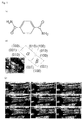
- a well-formed single crystal of terephthalamide was obtained by recrystallization of reagent-grade terephthalamide from warm water.
- a crystal body obtained by drying the single crystal in a vacuum was used in the test.
- shear force 1 a shear force
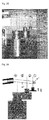
- the crystal body was bent and another crystal phase was generated therein.
- the boundary between the original crystal phase and the generated other crystal phase was sharp.
- the crystal body was continued to be pushed, i.e., when the shear force 1 was continued to be applied, the bending position at the phase boundary in the crystal body transferred as shown in FIG. 1 .
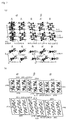
- the terephthalamide molecules In the ⁇ -phase, a plurality of terephthalamide molecules gathered to form polymeric sheets.
- the distance between N and O of the hydrogen bond formed of NH and O C of ad j a cent terephthalamide molecules, i.e. molecules located at positions in the direction perpendicular to the longitudinal axis in the sheets, was 2.912(3) ⁇ .
- the sheets formed of a uniform -A-A-A- arrangement transformed into sheets formed of an alternative -A'-B-A'-B- arrangement.
- the ⁇ -phase had a structure in which columns A' substantially maintaining the structure of A were sandwiched by the deformed columns B.
- the change in the molecular arrangement from the ⁇ -phase into the ⁇ -phase achieved a relatively denser packing state.
- the density of the ⁇ -phase was 1.470 Mg/m -3
- the density of the ⁇ -phase was 1.484 Mg/m -3 .
- the change in the hydrogen bond distance was slightly observed.
- the heterophase boundary (martensite habit plane) parallel with the (100) plane of the ⁇ -phase was almost perpendicular to the (011) plane as the cleavage plane of the ⁇ -phase.
- the (011) plane of the ⁇ -phase was a plane that lay in the sheets constituted of hydrogen bonds.
- the disparity between the habit plane and the cleavage plane allowed the transformation stable against the distortion around the heterophase interface.
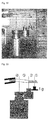
- the bending angle of the crystal body observed using a microscope was within a range of 5° to 8° judged from the projection direction of [001] and within a range of 3° to 5° judged from the projection direction of [010]. These angles agree approximately with the angles expected from the X-ray diffraction data (6.55° and 5.35°) ( FIG. 2 ).
- the relationship between the shear force and the deformation was investigated by applying a load to a part of the ⁇ 010 ⁇ crystal surface.
- the load in this direction appears to be nearly parallel to the shear-transition easy axis (see FIG. 2 ).
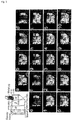
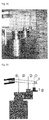
- One end portion of a crystal body (thickness of 149.52 ⁇ m and width of 58.84 ⁇ m) formed of the above single crystal of terephthalamide was fixed, and a metallic blade of a width of 25 ⁇ m was made to come into contact with the (010) surface of the crystal body and pushed across the surface at a constant speed of 500 ⁇ m/min at 294K. This resulted in the twinning transformation of the crystal body as shown in FIG. 3 .
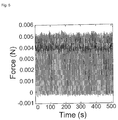
- the above superelastic transformation in the crystal body according to the present example was reproduced in 100 cycles of measurement without any elastic reduction or material deterioration.
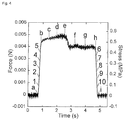
- the strength of stress generated under the bending state of the crystal bodies was linear with the surface area of the phase boundary, and was not correlated with the contact surface area with the blade.
- This result means that the elastic index as for shear should be normalized by a parameter that is obtained by dividing the absolute force by the surface area of the ⁇ -phase/ ⁇ -phase boundary.
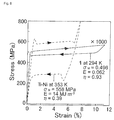
- the above parameter corresponds to a shear stress that is obtained by dividing the external force by the cross-sectional area of the crystal body. From FIG.
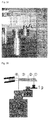
- the shear stress in the transformation (from the ⁇ -phase to the ⁇ -phase) of the superelastic material formed of the crystal body according to the present example was 0.496 MPa
- the shear stress in the reverse transformation (from the ⁇ -phase to the ⁇ -phase) was 0.459 MPa.
- This shear stress was about one thousand times smaller than 558 MPa, which is known as the shear stress of a typical Ti-Ni alloy.
- the chemical stress which is the average value of the shear stress at the position of (b) and the shear stress at the position of (h) in FIG. 6 , was 0.477 MPa.
- the energy storage density and energy storage efficiency ( ⁇ ) of the superelastic material formed of the crystal body according to the present example were estimated to be 0.062 MJm -3 and 0.925, respectively.
- the superelastic index of the superelastic material formed of the crystal body according to the present example was estimated to be about 0.13.
- the movable range of superelastic shear strain was wide, and the ratio of the displacement amount to the crystal size was up to 11.34%. This numerical value can be predicted by the geometric arrangement of the junction of adjacent crystal lattices with the X-ray diffraction data.
- the superelastic material formed of a single crystal body of terephthalamide according to the present example is a pure organic crystal body, i.e. an organic crystal body that does not have an inorganic component such as metal elements.
- its energy storage density is 0.062 MJm -3 , which is 226 times less than the energy storage density of a typical Ti-Ni alloy (14 MJm -3 ).
- the energy storage density of the superelastic material formed of a single crystal body of terephthalamide is 6.96 Jmol -1 while the energy storage density of a typical Ti-Ni alloy is 114.76 Jmol -1 , and the ratio thereof is 1:16.5.
- Table 1 shows the measurement results of X-ray diffraction for the ⁇ -phase of the superelastic material formed of a crystal body of terephthalamide according to the present example. The measurement was performed using an X-ray diffractometer, Smart APEX CCD, available from Bruker Corporation.
- X-ray diffractometer Smart APEX CCD
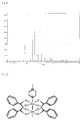
- FIG. 9 shows the simulation result of powder patterns performed on the basis of the above data.
- a single crystal of pyrazine-added copper(II) benzoate having a chemical structure shown in FIG. 10 was produced using the method as described in Patent No. 4951728 .
- a crystal body obtained by drying the single crystal in a vacuum was used in the test.
- shear force 2 referred to as "shear force 2,” hereinafter
- the crystal body was bent and another crystal phase was generated therein.
- the boundary between the original crystal phase and the generated other crystal phase was sharp.
- the shear force 2 was continued to be pushed, i.e., when the shear force 2 was continued to be applied, the bending position at the phase boundary in the crystal body transferred as shown in FIG. 11 .
- the shear force 2 was removed, the bent crystal body spontaneously restored, and the phase boundary, which moved due to applying the shear force 2, proceeded in the opposite direction.
- the relationship between the shear force and the deformation was investigated by applying a load to a part of the ⁇ 00-1 ⁇ crystal surface.
- One end portion of a crystal body formed of the above single crystal of pyrazine-added copper (II) benzoate was fixed, and a metallic blade of a width of 25 ⁇ m was made to come into contact with the (00-1) surface of the crystal body and pushed across the surface at a constant speed of 500 ⁇ m/min at 294K.
- the stress was detected at the position of (a) as shown in FIG. 13 after the blade reached the crystal body. Thereafter, the stress increased substantially in proportion to the displacement amount of the blade. Phase transition did not occur in this process, but the daughter phase was generated due to phase transition at the position of (b), and decrease in the stress was measured until the position (c) where the displacement amount of the blade slightly increased.
- the plane of the daughter phase interposed between the (00-1) planes of the two mother phases was (100) plane.
- the energy storage density and energy storage efficiency ( ⁇ ) of the superelastic material formed of the crystal body according to the present example were estimated to be 0.0404 MJm -3 and 0.0539, respectively.
- the chemical stress which is the average value of the shear stress at the position of (c) and the shear stress at the position of (e) in FIG. 13 , was 0.146 MPa.
- the superelastic index of the superelastic material formed of the crystal body according to the present example was estimated to be about 0.277.
- the 3,5-difluorobenzoic acid ( FIG. 16 ) was recrystallized from warm water, and a well-formed single crystal of 3,5-difluorobenzoic acid was thereby obtained.
- a crystal body obtained by drying the single crystal in a vacuum was used in the test.
- shear force 3 referred to as "shear force 3," hereinafter
- the crystal body was bent and another crystal phase was generated therein.
- the boundary between the original crystal phase and the generated other crystal phase was sharp.
- the shear force 3 was continued to be pushed, i.e., when the shear force 3 was continued to be applied, the bending position at the phase boundary in the crystal body transferred as shown in FIG. 17(b) .
- the shear force 3 was removed, the bent crystal body spontaneously restored, and the phase boundary, which moved due to applying the shear force 3, proceeded in the opposite direction.
- X-ray diffraction measurement was performed for the crystal body in a state of being applied with the shear force 3. The results are listed in Table 2. The measurement was performed using an X-ray diffractometer, Smart APEX CCD, available from Bruker Corporation.
- the relationship between the shear force and the deformation was investigated by applying a load to a part of the ⁇ 011 ⁇ crystal surface.
- One end portion of a crystal body formed of the above single crystal of 3,5-difluorobenzoic acid was fixed, and a metallic blade of a width of 25 ⁇ m was made to come into contact with the (011) surface of the crystal body and pushed across the surface at a constant speed of 500 ⁇ m/min at 294K.
- the energy storage density and energy storage efficiency ( ⁇ ) of the superelastic material formed of the crystal body according to the present example were estimated to be 0.0119 MJm -3 and 0.178, respectively.
- the chemical stress which is the average value of the shear stress at the position of (c) and the shear stress at the position of (g) in FIG. 19 , was 0.0453 MPa.
- the superelastic index of the superelastic material formed of the crystal body according to the present example was estimated to be about 0.263.
- the tetrabutylphosphonium tetraphenylborate ( FIG. 20 , denoted as "(P n Bu 4 ) (BPh 4 ),” hereinafter) was recrystallized from warm water, and a good single crystal of (P n Bu 4 ) (BPh 4 ) was thereby obtained.
- a crystal body obtained by drying the single crystal in a vacuum was used in the test.
- shear force 4 referred to as “shear force 4,” hereinafter
- shear force 4 was applied on the ⁇ 0-10 ⁇ crystal surface of the crystal body in an environment of 400K, the crystal body was bent and another crystal phase was generated therein. The boundary between the original crystal phase and the generated other crystal phase was sharp.
- X-ray diffraction measurement was performed for the crystal body in a state of being applied with the shear force 4. The results are listed in Table 3. The measurement was performed using an X-ray diffractometer, Smart APEX CCD, available from Bruker Corporation.
- the relationship between the shear force and the deformation was investigated by applying a load to a part of the ⁇ 0-10 ⁇ crystal surface.
- One end portion of a crystal body formed of the above single crystal of (P n Bu 4 ) (BPh 4 ) was fixed, and a metallic blade of a width of 25 ⁇ m was made to come into contact with the (0-10) surface of the crystal body and pushed across the surface at a constant speed of 500 ⁇ m/min at 400K.
- the stress was detected at the position of (a) as shown in FIG. 21 after the blade reached the crystal body. Thereafter, the stress increased substantially in proportion to the displacement amount of the blade. Phase transition did not occur in this process, but the daughter phase was generated in the mother phase due to phase transition at the position of (b). As the displacement amount of the blade increased, the phase boundaries grew in the direction of applying the shear force 4. This resulted in a structure, at the position (d), in which a mother phase, daughter phase and mother phase were arranged in this order in the direction perpendicular to the direction of applying the shear force 4. When the displacement amount of the blade was further increased from the position of (d), the daughter phase grew in that structure. That is, in this process, the transition from the mother phase to the daughter phase progressed in the direction perpendicular to the direction of applying the shear force 4.
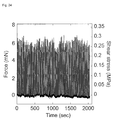
- the shear stress curve shown in FIG. 22 was dominantly affected by the effects, such as due to deformation of a holding member for fixing and supporting the crystal body, within a range from the position of (a) at which the blade came into contact with the crystal body to the position of (b) and within a range from the position of (g) to the position of (h) at which the blade was pulled away from the crystal body. Therefore, after obtaining a state of eliminating the effects, such as due to deformation of the holding member, the shear stress curve of the crystal body according to the present example was measured under an environment of 399.7K ( FIG. 23 ). In addition, as shown in FIG. 24 , the above superelastic transformation in the crystal body according to the present example was reproduced in 50 cycles without elastic reduction or material deterioration.
- the energy storage density of the superelastic material formed of the crystal body according to the present example was estimated to be 26.5 kJm -3 , and the energy storage efficiency ( ⁇ ) was estimated to be 0.766.
- the chemical stress was estimated to be 0.472 MPa, and the superelastic index of the superelastic material was estimated to be about 0.0561.
- the ambient temperature was set to 397K (123.8°C) so that the crystal body would consist of the ⁇ -phase as a whole ("0 s" in FIG. 25 ). This state will be referred to as an "initial state.”
- the shear force 4 was then applied to generate the ⁇ -phase to obtain a ⁇ / ⁇ two-phase coexisting state ("9 s" in FIG. 25 ).
- unloading was performed and it was confirmed that, even after 100 seconds passed from the initial state (i.e. even after 90 seconds or more passed from the unloading), the deformation strain due to applying the shear force 4 was maintained ("100 s" in FIG. 25 ).
- the ambient temperature was raised from 397K (123.8°C) to 398K (124.8°C).
- the crystal body when the ambient temperature was 397.5K (124.3°C) had a reduced volume of the ⁇ -phase compared with that of the crystal body when the ambient temperature was 397K (123.8°C).
- the ⁇ -phase completely vanished and only the ⁇ -phase existed ("150 s" in FIG. 25 ).
- the ambient temperature was set to 298K (25°C) so that the crystal body would consist of the ⁇ -phase as a whole ( FIG. 27(a) ).
- the shear force 4 was then applied, the deformation strain of the ⁇ -phase due to applying the shear force 4 was maintained ( FIG. 27(b) ).
- the crystal body as a whole was heated by raising the ambient temperature.
- the ⁇ -phase was maintained with the deformation strain until the temperature reached 397.5K (124.5°C) ( FIG. 27(c) ) as in FIG. 27(b) .
- the ambient temperature exceeded 398K (125°C)
- the ⁇ -phase was generated in the crystal body as shown in FIG. 27(d)
- the phage change of the ⁇ -phase into the ⁇ -phase rapidly progressed.
- the deformation strain maintained in the crystal body decreased ( FIG. 27(e) ).
- the ambient temperature was then reduced to cool the crystal body of the ⁇ -phase. This resulted in the phase change of the ⁇ -phase into the ⁇ -phase when the ambient temperature was about 397K (124 °C), and this phase change rapidly progressed ( FIG. 27 (g) ).
- the crystal body was caused to consist only of the ⁇ -phase as a low-temperature phase without deformation strain, and when the ambient temperature was room temperature (25°C), the crystal body was restored to have the same phase state and shape as those in FIG. 27(a) .
- a single crystal of (P n Bu 4 ) (BPh 4 ) was obtained in the same manner as in Example 4.
- the dimension was 3 mm ⁇ 6 mm ⁇ 34 mm, and the mass was 0. 61 g.
- the single crystal of (P n Bu 4 ) (BPh 4 ) was supported so that the center of the single crystal was projected with a distance of 30 mm.
- a weight of 100g was hung from a position of 5 mm as the distance from the supporting point using a string, a weight of 10g was hung from a position of 20 mm using a string, and a weight of 1g was hung from a position of 25mm using a string.
- the portion from the supporting point to the hanging position of the 1-g weight was an ⁇ - -phase (daughter phase), and the other portion was an a + -phase (mother phase) ( FIGS. 29 and 29 ).
- the ambient was maintained at 404.2K (131°C).
- the region of the single crystal from the end to the hanging position of the 1-g weight was transformed to the ⁇ -phase ( FIGS. 30 and 31 ).
- the ambient temperature was raised at a rate of 7 ⁇ 10 -3 Ks -1
- the ⁇ -phase of the single crystal grew toward the supporting point, and the 1-g weight continued to be raised.
- the ambient was 405K (131.8°C)
- the ⁇ -phase further grew from the end to the hanging position of the 10-g weight in the single crystal, and the 10-g weight started to be raised ( FIGS. 32 and 33 ).
- the temperature was further raised at a rate of 7 ⁇ 10 -3 Ks -1 to grow the ⁇ -phase.
- the ambient temperature was 406.6K (133.4°C)
- the 100-g weight started to be raised ( FIGS. 34 and 35 ).
- the single crystal became the ⁇ -phase up to the supporting point ( FIGS. 36 and 37 ).
Landscapes
- Chemical & Material Sciences (AREA)
- Organic Chemistry (AREA)
- Engineering & Computer Science (AREA)
- Metallurgy (AREA)
- Materials Engineering (AREA)
- Crystallography & Structural Chemistry (AREA)
- Life Sciences & Earth Sciences (AREA)
- Molecular Biology (AREA)
- General Health & Medical Sciences (AREA)
- Biochemistry (AREA)
- Health & Medical Sciences (AREA)
- Analysing Materials By The Use Of Radiation (AREA)
- Organic Low-Molecular-Weight Compounds And Preparation Thereof (AREA)
Applications Claiming Priority (2)
| Application Number | Priority Date | Filing Date | Title |
|---|---|---|---|
| JP2013229341 | 2013-11-05 | ||
| PCT/JP2014/079296 WO2015068712A1 (fr) | 2013-11-05 | 2014-11-05 | Matériau superélastique et matériau de stockage d'énergie, matériau à absorption d'énergie, matériau élastique, actionneur, et matériau à mémoire de forme utilisant ledit matériau superélastique |
Publications (2)
| Publication Number | Publication Date |
|---|---|
| EP3067342A1 true EP3067342A1 (fr) | 2016-09-14 |
| EP3067342A4 EP3067342A4 (fr) | 2017-07-12 |
Family
ID=53041489
Family Applications (1)
| Application Number | Title | Priority Date | Filing Date |
|---|---|---|---|
| EP14860086.9A Pending EP3067342A4 (fr) | 2013-11-05 | 2014-11-05 | Matériau superélastique et matériau de stockage d'énergie, matériau à absorption d'énergie, matériau élastique, actionneur, et matériau à mémoire de forme utilisant ledit matériau superélastique |
Country Status (4)
| Country | Link |
|---|---|
| US (1) | US20160280637A1 (fr) |
| EP (1) | EP3067342A4 (fr) |
| JP (1) | JP6083659B2 (fr) |
| WO (1) | WO2015068712A1 (fr) |
Families Citing this family (1)
| Publication number | Priority date | Publication date | Assignee | Title |
|---|---|---|---|---|
| WO2020071085A1 (fr) * | 2018-10-04 | 2020-04-09 | 公立大学法人横浜市立大学 | Matériau superélastique et son utilisation |
Family Cites Families (11)
| Publication number | Priority date | Publication date | Assignee | Title |
|---|---|---|---|---|
| IL137878A0 (en) * | 1998-02-23 | 2001-10-31 | Mnemoscience Gmbh | Shape memory polymers |
| JP2001261301A (ja) * | 2000-03-16 | 2001-09-26 | Toyota Central Res & Dev Lab Inc | 有機物系水素貯蔵材料および水素貯蔵方法 |
| JP2004107494A (ja) * | 2002-09-18 | 2004-04-08 | National Institute For Materials Science | 熱可塑性層状アルキルシロキサンとその製造方法 |
| JP2004149381A (ja) | 2002-10-31 | 2004-05-27 | Katsuhiro Nishiyama | 超弾性・形状記憶・高減衰能セラミックス材料およびその製造方法 |
| EP1688424B1 (fr) * | 2003-11-28 | 2016-01-13 | Hokko Chemical Industry Co., Ltd. | Compose de borate de phosphonium et procede d'utilisation |
| JP2006265680A (ja) | 2005-03-25 | 2006-10-05 | Toyohashi Univ Of Technology | 超弾性材料とその製造方法 |
| WO2006132049A1 (fr) * | 2005-06-09 | 2006-12-14 | Yokohama City University | Complexe monocristallin d’un métal et d’un acide carboxylique organique, son procédé de production et son utilisation |
| JP4951728B2 (ja) | 2005-06-09 | 2012-06-13 | 公立大学法人横浜市立大学 | 有機カルボン酸金属錯体の単結晶及びその製造方法 |
| AR070301A1 (es) * | 2007-05-08 | 2010-03-31 | Otsuka Pharma Co Ltd | Compuesto epoxi y metodo para producir el mismo |
| US20090092914A1 (en) * | 2007-10-09 | 2009-04-09 | Xerox Corporation | Phosphonium containing photogenerating layer photoconductors |
| EP2838729A4 (fr) * | 2012-04-20 | 2015-12-30 | Univ Case Western Reserve | Matériaux composites à mémoire de forme |
-
2014
- 2014-11-05 EP EP14860086.9A patent/EP3067342A4/fr active Pending
- 2014-11-05 US US15/033,938 patent/US20160280637A1/en not_active Abandoned
- 2014-11-05 WO PCT/JP2014/079296 patent/WO2015068712A1/fr not_active Ceased
- 2014-11-05 JP JP2015546652A patent/JP6083659B2/ja active Active
Also Published As
| Publication number | Publication date |
|---|---|
| US20160280637A1 (en) | 2016-09-29 |
| JPWO2015068712A1 (ja) | 2017-03-09 |
| EP3067342A4 (fr) | 2017-07-12 |
| JP6083659B2 (ja) | 2017-02-22 |
| WO2015068712A1 (fr) | 2015-05-14 |
Similar Documents
| Publication | Publication Date | Title |
|---|---|---|
| Wang et al. | Microstructure evolution and superelasticity of layer-like NiTiNb porous metal prepared by eutectic reaction | |
| Xia et al. | Visualizing the electrochemical lithiation/delithiation behaviors of black phosphorus by in situ transmission electron microscopy | |
| Bansiddhi et al. | Shape-memory NiTi foams produced by solid-state replication with NaF | |
| He et al. | The effects of compressive pre-deformation on yield asymmetry in hot-extruded Mg–3Al–1Zn alloy | |
| JP5311689B2 (ja) | チタン焼結多孔体およびその製造方法 | |
| US20240359232A1 (en) | Method of Making Copper-Nickel Alloy Foams | |
| JPWO2014027470A1 (ja) | 六方晶ダイヤモンド単相バルク焼結体およびその製造方法 | |
| Gubicza et al. | Compressive behavior of Cu-Ni alloy foams: Effects of grain size, porosity, pore directionality, and chemical composition | |
| Zu et al. | Surface and orientation effects on stress-induced hcp-fcc phase transformation in Ti nanopillars | |
| CN104528833A (zh) | 一种金属氧化物/氮掺杂石墨烯复合材料的制备方法 | |
| CN110431246A (zh) | Ti-Ni系合金、使用了该Ti-Ni系合金的线材、电动执行器和温度传感器以及Ti-Ni系合金材料的制造方法 | |
| Wang et al. | Ab initio study of the effect of Zr content on elastic and electronic properties of L12–Al3 (Sc1− xZrx) alloys | |
| Guzik et al. | Hydrogen atom distribution and hydrogen induced site depopulation for the La2− xMgxNi7–H system | |
| Gao et al. | Zr50Cu25Ni7. 5Co17. 5 high-temperature shape memory alloy with excellent thermal stability and large recovery strain, and the associated microstructural deformation mechanism | |
| EP3067342A1 (fr) | Matériau superélastique et matériau de stockage d'énergie, matériau à absorption d'énergie, matériau élastique, actionneur, et matériau à mémoire de forme utilisant ledit matériau superélastique | |
| Xing et al. | Structure Evolution of Nanoporous Copper by dealloying of Al 17-33 at% Cu alloy | |
| Wang et al. | Moderate temperature compression incorporating plastic deformation and rearrangement in Al2O3–ZrO2 ceramics | |
| JP5500184B2 (ja) | 磁性合金粉末の製造方法 | |
| Yamabe-Mitarai et al. | Solid solution hardening effect of Ir | |
| Liang et al. | Structural stability, mechanical property and phase transition of the Ti–H system | |
| WO2024179296A1 (fr) | Alliage de nickel-titane, son procédé de préparation et son utilisation | |
| CN103331517A (zh) | 一种钨基重合金热等静压扩散连接焊的方法 | |
| CN104741615A (zh) | 一种超细晶双峰铜的制备方法 | |
| Liu et al. | Deformation-induced solid-state amorphization in a nanostructured Al-Mg alloy processed by high pressure torsion | |
| Shanti | Microstructurally tailored ceramics for advanced energy applications by thermoreversible gelcasting |
Legal Events
| Date | Code | Title | Description |
|---|---|---|---|
| PUAI | Public reference made under article 153(3) epc to a published international application that has entered the european phase |
Free format text: ORIGINAL CODE: 0009012 |
|
| 17P | Request for examination filed |
Effective date: 20160524 |
|
| AK | Designated contracting states |
Kind code of ref document: A1 Designated state(s): AL AT BE BG CH CY CZ DE DK EE ES FI FR GB GR HR HU IE IS IT LI LT LU LV MC MK MT NL NO PL PT RO RS SE SI SK SM TR |
|
| AX | Request for extension of the european patent |
Extension state: BA ME |
|
| DAX | Request for extension of the european patent (deleted) | ||
| A4 | Supplementary search report drawn up and despatched |
Effective date: 20170613 |
|
| RIC1 | Information provided on ipc code assigned before grant |
Ipc: C07F 5/02 20060101ALI20170606BHEP Ipc: C07F 9/54 20060101ALI20170606BHEP Ipc: C07C 63/70 20060101AFI20170606BHEP Ipc: C07C 235/84 20060101ALI20170606BHEP Ipc: C07F 1/08 20060101ALI20170606BHEP Ipc: C07C 63/06 20060101ALI20170606BHEP |
|
| STAA | Information on the status of an ep patent application or granted ep patent |
Free format text: STATUS: EXAMINATION IS IN PROGRESS |
|
| 17Q | First examination report despatched |
Effective date: 20180530 |
|
| GRAP | Despatch of communication of intention to grant a patent |
Free format text: ORIGINAL CODE: EPIDOSNIGR1 |
|
| STAA | Information on the status of an ep patent application or granted ep patent |
Free format text: STATUS: GRANT OF PATENT IS INTENDED |
|
| INTG | Intention to grant announced |
Effective date: 20240103 |