EP3073661B1 - Mehrwege-übertragungsverfahren und -system, datenübertragungsvorrichtung und datenempfangsvorrichtung - Google Patents
Mehrwege-übertragungsverfahren und -system, datenübertragungsvorrichtung und datenempfangsvorrichtung Download PDFInfo
- Publication number
- EP3073661B1 EP3073661B1 EP14873834.7A EP14873834A EP3073661B1 EP 3073661 B1 EP3073661 B1 EP 3073661B1 EP 14873834 A EP14873834 A EP 14873834A EP 3073661 B1 EP3073661 B1 EP 3073661B1
- Authority
- EP
- European Patent Office
- Prior art keywords
- data packets
- data
- links
- transmission
- original
- Prior art date
- Legal status (The legal status is an assumption and is not a legal conclusion. Google has not performed a legal analysis and makes no representation as to the accuracy of the status listed.)
- Active
Links
Images




Classifications
-
- H—ELECTRICITY
- H04—ELECTRIC COMMUNICATION TECHNIQUE
- H04L—TRANSMISSION OF DIGITAL INFORMATION, e.g. TELEGRAPHIC COMMUNICATION
- H04L1/00—Arrangements for detecting or preventing errors in the information received
- H04L1/004—Arrangements for detecting or preventing errors in the information received by using forward error control
- H04L1/0076—Distributed coding, e.g. network coding, involving channel coding
-
- H—ELECTRICITY
- H04—ELECTRIC COMMUNICATION TECHNIQUE
- H04L—TRANSMISSION OF DIGITAL INFORMATION, e.g. TELEGRAPHIC COMMUNICATION
- H04L1/00—Arrangements for detecting or preventing errors in the information received
- H04L1/004—Arrangements for detecting or preventing errors in the information received by using forward error control
- H04L1/0056—Systems characterized by the type of code used
- H04L1/0059—Convolutional codes
-
- H—ELECTRICITY
- H04—ELECTRIC COMMUNICATION TECHNIQUE
- H04L—TRANSMISSION OF DIGITAL INFORMATION, e.g. TELEGRAPHIC COMMUNICATION
- H04L1/00—Arrangements for detecting or preventing errors in the information received
-
- H—ELECTRICITY
- H04—ELECTRIC COMMUNICATION TECHNIQUE
- H04L—TRANSMISSION OF DIGITAL INFORMATION, e.g. TELEGRAPHIC COMMUNICATION
- H04L1/00—Arrangements for detecting or preventing errors in the information received
- H04L1/004—Arrangements for detecting or preventing errors in the information received by using forward error control
- H04L1/0041—Arrangements at the transmitter end
-
- H—ELECTRICITY
- H04—ELECTRIC COMMUNICATION TECHNIQUE
- H04L—TRANSMISSION OF DIGITAL INFORMATION, e.g. TELEGRAPHIC COMMUNICATION
- H04L1/00—Arrangements for detecting or preventing errors in the information received
- H04L1/004—Arrangements for detecting or preventing errors in the information received by using forward error control
- H04L1/0056—Systems characterized by the type of code used
- H04L1/0067—Rate matching
- H04L1/0068—Rate matching by puncturing
-
- H—ELECTRICITY
- H04—ELECTRIC COMMUNICATION TECHNIQUE
- H04L—TRANSMISSION OF DIGITAL INFORMATION, e.g. TELEGRAPHIC COMMUNICATION
- H04L5/00—Arrangements affording multiple use of the transmission path
- H04L5/0001—Arrangements for dividing the transmission path
-
- H—ELECTRICITY
- H04—ELECTRIC COMMUNICATION TECHNIQUE
- H04L—TRANSMISSION OF DIGITAL INFORMATION, e.g. TELEGRAPHIC COMMUNICATION
- H04L1/00—Arrangements for detecting or preventing errors in the information received
- H04L2001/0092—Error control systems characterised by the topology of the transmission link
- H04L2001/0096—Channel splitting in point-to-point links
-
- H—ELECTRICITY
- H04—ELECTRIC COMMUNICATION TECHNIQUE
- H04L—TRANSMISSION OF DIGITAL INFORMATION, e.g. TELEGRAPHIC COMMUNICATION
- H04L1/00—Arrangements for detecting or preventing errors in the information received
- H04L2001/0092—Error control systems characterised by the topology of the transmission link
- H04L2001/0097—Relays
-
- H—ELECTRICITY
- H04—ELECTRIC COMMUNICATION TECHNIQUE
- H04W—WIRELESS COMMUNICATION NETWORKS
- H04W88/00—Devices specially adapted for wireless communication networks, e.g. terminals, base stations or access point devices
- H04W88/02—Terminal devices
- H04W88/06—Terminal devices adapted for operation in multiple networks or having at least two operational modes, e.g. multi-mode terminals
Definitions
- the present invention relates to the field of wireless communication technologies, and more particularly, to a wireless multipath transmission method and system, a wireless data transmitting device and a wireless data receiving device.
- an evolved node B (eNB, or Base Station) is a device providing a wireless access to a user equipment (UE) which may also be referred to as a terminal, the eNB and the UE communicate wirelessly through electromagnetic waves.
- UE user equipment
- One eNB may provide one or more serving cells, and the wireless communication system may provide wireless coverage for terminals within a certain geographical area via the serving cells.
- the wireless communication system needs to deploy eNBs in a large coverage to provide users with the wireless communication in a wide range, this eNB is generally referred to as a macro evolved node B (Macro eNB/Macro BS, Macro Base Station), and its serving cell is usually referred to as a macro cell.
- a macro evolved node B Mocro eNB/Macro BS, Macro Base Station
- its serving cell is usually referred to as a macro cell.
- TPs transmission Points
- small eNBs include Pico eNBa or Pico BSs and Femto eNBs or Femto BSs, herein the Femto BS may also be referred to as home evolved nodeBs (HNBs or HeNBs) or femto eNBs, and cells provided by the Pico eNBs and the HeNBs are called pico cells and femto cells.
- a node corresponding to the small eNB is also known as a low power node (LPN), and a cell corresponding to these nodes is also known as a small cell.
- LPN low power node
- the wireless cellular communication system gradually developed a variety of modes in the evolution process, such as the second generation mobile communication technologies such as Global System for Mobile Communications (GSM), Code Division Multiple Access (CDMA), the third generation mobile communication technologies such as Wideband Code Division Multiple Access (WCDMA), Time Division-Synchronous Code Division Multiple Access (TD-SCDMA), CDMA-2000, and Worldwide Interoperability for Microwave Access (Wimax), the evolved third or fourth generation mobile communication technologies such as Long Term Evolution (LTE), LTE-advanced, and Wimax2.0.
- GSM Global System for Mobile Communications
- CDMA Code Division Multiple Access
- WCDMA Wideband Code Division Multiple Access
- TD-SCDMA Time Division-Synchronous Code Division Multiple Access
- Wimax Worldwide Interoperability for Microwave Access
- LTE Long Term Evolution
- LTE-advanced Long Term Evolution-advanced
- Wimax2.0 Worldwide Interoperability for Microwave Access
- the GSM corresponds to GSM EDGE Radio Access Network (GERAN)
- the WCDMA and the TD-SCDMA correspond to UMTS Terrestrial Radio Access Network (UTRAN)
- the LTE/LTE-A corresponds to the Evolved UTRAN (E-UTRAN).
- the wireless communication system further includes Wireless Local Access Network (WLAN, or known as wireless fidelity (WIFI)), whose air intcrfacc standards arc IEEE802.11 series standards, including 802.11a, 802.1 In, 802.11ac, etc., and the maximum transmission rates supported by them are different.
- WIFI Wireless Local Access Network
- the WIFI AP can also be seen as a low-power node.
- 5G fifth-generation
- a variety of wireless communication technologies might coexist for a long term.
- FIG. 1 is a schematic diagram of the heterogeneous network of a multimode evolved node B in the related art, as shown in FIG. 1 , in a multilayer heterogeneous network, various types and modes of eNBs/cells coexist, for example, macro eNBs, micro eNBs, macro cells, small cells, LTE, and WIFI/WLAN coexist.
- the multimode small eNBs deployed in the industry generally support three or more modes, such as UMTS, LTE (including FDD-LTE and/or TDD-LTE) and WLAN, and may also support modes of the second, third and/or fifth-generation wireless communication technologies.
- the data of one user are transmitted via a plurality of, that is, two or more, paths, at this time, there will be an anchor, and FIG. 2 takes the MeNB (Macro eNB) as an anchor for example, and the MeNB as the anchor will distribute the user data, part of the data, such as packet 1, packet 3 and packet 5 in FIG. 2 are distributed to the UE by the MeNB itself, the other part of the data, such as packet 2 and packet 4 in FIG. 2 , are forwarded to the small eNB (SeNB) and then forwarded by the SeNB to the UE.
- the UE will receive data from the two links from the MeNB and the SeNB.
- the UE receives the packet 1, the packet 3 and the packet 5 from the MeNB, and receives the packet 2 and the packet 4 from the SeNB, so that the UE receives the complete data.
- the packet 2 and the packet 4 cannot be transmitted to the UE through this link, which will cause the entire data transmission fails.
- the TCP transmission may be interrupted or suffer significant throughput decrease.
- the link from the MeNB fails, the packet 1, the packet 3 and the packet 5 cannot be transmitted to the UE via the MeNB, resulting in that the entire data transmission fails.
- the reason of the failure of the entire data packet transmission lies in that the data packet distribution at the anchor point is simply distributing the data packets to different links to transmit, while the statuses of the wireless links are difficult to predict, this simple distribution mechanism is difficult to match the actual situation of the changing wireless links.
- a desired distribution should be a distribution based on the proportion of the bandwidth allocated by each link to the user, but in fact the bandwidth of each link in the wireless links allocated to the user is dynamic and unpredictable, therefore, because the multipath distribution strategy is difficult to match the actual situation of each link, there is a situation that too many data packets are distributed to poor links, while too few data packets are distributed to good links, resulting in that the data transmission efficiency is significantly limited, the throughput is decreased and the delay is increased.
- the worst case is that, when a link congests or a link fails, the entire data transmission will be interrupted.
- the document US2013/064198A1 discloses a method and apparatus for wireless communication between stations addressable via an Internet Protocol network that includes a first station wirelessly communicating with a second station via a multi-path transport protocol (MTP) tunnel.
- MTP multi-path transport protocol
- the MTP tunnel manages at least a first IP data sub-flow over a first air interface and at least a second IP data sub-flow over a second air interface and allocates a first IP data flow to the at least two distinct IP data sub-flows over the at least two distinct air interfaces.
- network coding may be used to improve data flow and reliability in a multiple path scenario.
- TCP may also be used within different paths to further enhance data transfer reliability.
- multiple levels of network coding may be provided within a transmitter in a multiple path scenario, with one level being applied across ail paths and another being applied within individual paths.
- WO2005/0228812A1 discloses transmission techniques, which improve service continuity and reduce interruptions in delivery of content that can be caused by transitions that occur when the UE moves from one cell to the other, or when the delivery of content changes from a PTP connection to a PMT connection in the same serving cell, and vice-versa.
- ERICSSON L2 transport of SRBs and relation to RLF handling; 3GPP DRAFT; R2-134221
- ERICSSON L2 transport of SRBs and relation to RLF handling; 3GPP DRAFT; R2-134221
- SRB is split over the MeNB and the SeNB link, and the PDCP PDU corresponding to the RRC message is duplicated, so that a copy is sent on both MeNB and SeNB link.
- the embodiment of the present invention is to provide a wireless multipath transmission method according to claim 1, a data transmitting device according to claim 12 and a data receiving device according to claim 15 to flexibly realize the multipath data transmission and efficiently use resources provided by each link to serve the user with data transmission. Further improvements and embodiments are provided in the dependent claims.
- a wireless multipath transmission method which includes:
- the method further includes: the data transmitting end performing PDCP header compression on the original data packets.
- the method further includes: the data transmitting end performing PDCP layer encryption on the original data packets.
- the original data packets are packet data convergence protocol (PDCP) service data units (SDUs) or protocol data units (PDUs).
- PDCP packet data convergence protocol
- SDUs service data units
- PDUs protocol data units
- the step of a data transmitting end encoding original data packets includes:
- the encoding is forward error correction (FEC) encoding.
- FEC forward error correction
- the encoded data packet further carries a process identifier representing an encoding transmission process; the step of decoding the received data packets to obtain the original data packets includes: the data receiving end placing data packets with a same process identifier into a same buffer to decode.
- the method further includes:
- the step of the data transmitting end transmitting the encoded data packets to a data receiving end via different transmission links includes: the data transmitting end determining transmission links used to transmit the encoded data packets as well as a number of data packets transmitted in each transmission link according to a bit rate of the encoding, a link status, and/or a link bandwidth.
- the different transmission links include: macro cell links and small cell links;
- the transmission links are: downlink transmission links, uplink transmission links, relay transmission links, or device to device (D2D) communication links.
- D2D device to device
- the transmission links are downlink transmission links; the method further includes:
- the transmission link is an uplink transmission link; the method further includes:
- the method further includes: the network side where the data transmitting end is located notifying the data receiving end to start and exit an encoded data transmission mode.
- a wireless multipath transmission system which includes one or more data transmitting devices and a data receiving device; herein, any one of the data transmitting devices is configured to: encode original data packets, transmit the encoded data packets to the data receiving end device via different transmission links; herein a number of the encoded data packets is greater than a number of original data packets; the data receiving device is configured to: receive data packets from different transmission paths and decode the received data packets to obtain the original data packets.
- the data transmitting device includes:
- the data transmitting device includes a preprocessing module and a distributing module; herein, the preprocessing module is configured to: encode the original data packets and transmit the encoded data packets to the distributing module; the distributing module is configured to: determine transmission links for transmitting the encoded data packets, and transmit the encoded data packets to the data receiving end device through the determined transmission links.
- the preprocessing module is configured to: encode the original data packets and transmit the encoded data packets to the distributing module
- the distributing module is configured to: determine transmission links for transmitting the encoded data packets, and transmit the encoded data packets to the data receiving end device through the determined transmission links.
- the preprocessing module is further configured to: perform a PDCP header compression on the original data packets.
- the preprocessing module is further configured to: perform PDCP layer encryption on the original data packets.
- the distributing module is configured to determine transmission links for transmitting the encoded data packets and transmit the encoded data packets to the data receiving end device through the determined transmission links in the following manner: according to a bit rate of the encoding, and/or a link status, and/or a link bandwidth and other factors, determining the transmission links for transmitting the encoded data packets, and a number of data packets transmitted in each transmission link.
- the data receiving device includes a merging module, herein the merging module is configured to: receive data packets from different transmission paths, and decode the received data packets to obtain the original data packets.
- the merging module is configured to: receive data packets from different transmission paths, and decode the received data packets to obtain the original data packets.
- the merging module in the data receiving device is further configured to: transmit and feed back a reception success message to the distributing module in the data transmitting device; accordingly, the distributing module in the data transmitting device is further configured to: terminate the transmission of remaining data in the encoded data packets and related to the original data packets obtained through the decoding.
- the merging module in the data receiving device is further configured to: after receiving the data packets, feed back serial numbers of successfully received as well as not successfully received or not received data packets to the distributing module in the data transmitting device; accordingly, the distributing module in the data transmitting device is further configured to: determine whether the data receiving end has successfully obtained the original data packets based on information fed back by the merging module in the data receiving device, and if yes, terminate the transmission of the remaining data in the encoded data packets and related to the original data packets obtained through the decoding.
- a wireless data transmitting device which includes a preprocessing module and a distributing module; herein, the preprocessing module is configured to: encode original data packets and output the encoded data packets to the distributing module; the distributing module is configured to: determine transmission links used for transmitting the encoded data packets, and transmit the encoded data packets to the data receiving end device through the determined transmission links.
- the preprocessing module is further configured to: perform PDCP header compression on the original data packets.
- the preprocessing module is further configured to: perform PDCP layer encryption on the original data packets.
- the distributing module is further configured to: after receiving a feedback of reception success from the data receiving device, terminate the transmission of remaining data in the encoded data packets and related to the original data packets obtained through the decoding.
- the distributing module is further configured to: based on the reception success fed back by the data receiving device as well as serial numbers of successfully received as well as not successfully received or not received data packets, determine whether the data receiving end has successfully obtained the original data packets, and if yes, terminate the transmission of the remaining data in the encoded data packets and related to the original data packets obtained through the decoding.
- a wireless data receiving device which includes a merging module, herein the merging module is configured to: receive data packets from different transmission links, and decode the received data packets to obtain original data packets.
- the merging module is further configured to: feed back a reception success message to the data transmitting device.
- the merging module in the data receiving device is further configured to: after decoding to obtain the original data packets, feed back serial numbers of successfully received, as well as not successfully received or not received data packets to the data transmitting device.
- a base station which is provided with any one of the abovementioned data transmitting devices, and/or any one of the abovementioned data receiving devices.
- the base station is further configured to: notify configuration information of encoding.
- a terminal which is provided with any one of the abovementioned data transmitting devices, and/or any one of the abovementioned data receiving devices.
- the terminal is further configured to: receive configuration information of encoding.
- the technical solution of the present application includes: the data transmitting end encoding a plurality of original data packets, herein the number of encoded data packets is greater than the number of original data packets; the data transmitting end transmitting the encoded data packets through different transmission links to the data receiving end; the data receiving end receiving data packets from different transmission links and decoding them to obtain the original data packets.
- the embodiment of the present invention flexibly achieves the multipath data transmission by encoding and then distributing the original data packets (the number of encoded data packets is greater than the number of the original data packets), and, when distributing the encoded data packets, the configuration information of the encoding is further taken into account, thus efficiently using the resources provided by each link to serve the user with data transmission and reducing the transmission delay.
- FIG. 3 is a flow chart of the wireless multipath transmission method in accordance with the embodiment of the present invention, as shown in FIG. 3 , it includes the following steps: in step 300, the data transmitting end encodes a plurality of original data packets, herein the number of encoded data packets is greater than the number of the original data packets.
- the original data packets may be Packet Data Convergence Protocol (PDCP) service data units (SDUs) or Protocol Data Units (PDUs).
- PDCP Packet Data Convergence Protocol
- SDUs Service Data units
- PDUs Protocol Data Units
- the data transmitting end encodes K PDCP data packets, and generates N air interface data packets; herein in the N encoded data packets, the first K data packets still are the K original PDCP data packets before the encoding, the next (N-K) data packets are redundant data packets.
- K and N are positive integers greater than 1, and N>K.
- the ratio of the number of the original data packets to the number of the encoded data packets i.e., K/N
- the bit rate of the encoding can be determined or adjusted according to the condition of links involved in the transmission and/or the link bandwidths.
- the bit rate of the encoding can be reduced, and the data of redundant data packets can be reduced, so as to reduce the encoding complexity and the transmission overhead; for another example, if the data transmitting end considers that a transmission link is relatively volatile, and there may even be the possibility that the transmission link is disconnected (for example, in the scenario of handover), then it may appropriately increase the bit rate and the number of redundant data packets to be more effectively against unpredictable factors in the transmission, thus ensuring that the data receiving end receives enough data packets to restore the original data packets in the shortest time; for still another example, the link A is relatively stable but can only provide limited bandwidth (such as the LTE macro eNB link), while the link B is less stable, but can provides a large maximum bandwidth (such as WLAN link, or LTE unlicensed band link, or relay link), a relatively large bit rate and a relatively large number
- the data transmitting end may encode the original data packets in the PDCP layer; or, encode the original data packets in the radio link control (RLC) layer.
- RLC radio link control
- this step further includes: the data transmitting end performing PDCP header compression on the original data packets; or, the data transmitting end performing PDCP layer encryption on the original data packets.
- the encoding in this step may be forward error correction (FEC) encoding.
- FEC forward error correction
- the encoded data header carries a serial number; or carries indication information indicating whether to encode and the serial number; alternatively, the encoded data packet header further carries a process identifier representing the encoding transmission process so as to support the independent encoding and decoding operations of data packets in different process, thus supporting that the transmission of the next process already starts when the previous process has not yet ended, that is, supporting simultaneous parallel transmission in multiple processes.
- step 301 the data transmitting end transmits the encoded data packets to the data receiving end through different transmission links.
- the data transmitting end can determine the encoded data packets transmitted through different transmission links based on the bit rate of the encoding, and/or the link status, and/or the link bandwidth and other factors, that is, determine using which transmission links to transmit the data packets, and the number of data packets transmitted in each transmission link (or the proportion of data packets transmitted in each link). For example, based on the statuses of different links, it is to determine the links actually participating in the data packet transmission (for example, it is only to choose 2 or 3 links whose link channel quality is good and/or load is low to participate in the data packet transmission), and determine to transmit how many data packets in which transmission links, and transmit which data packets.
- the distribution strategy may be that, at each time of distributing two data packets to the link A, it is to distribute one data packet to the link B, and so on; when the bandwidth provided by the link B increases, for example, because the channel of the link B continues to become better, the distribution strategy can be adjusted and more data packets are distributed to the link B.
- the distribution strategy can be that each link is assigned with some original data packets and some redundant data packets.
- different transmission links may include: macro cell links and small cell links; or, source cell links and target cell links; or, LTE links and non-LTE links, herein, the non-LTE links includes wireless local area network (WLAN) links and/or third-generation cellular communication (3G) links; or, LTE licensed band links and LTE unlicensed band links; or, LTE licensed band links and LTE shared spectrum links; or, frequency division duplex (FDD) links and time division duplex (TDD) links; or, LTE low frequency links and LTE high frequency links; or, fourth generation cellular communication (4G) links and fifth generation cellular communication (5G) links; and the method in the embodiment of the present invention can be used even in the scenario of the 3G and WLAN combined transmission.
- WLAN wireless local area network
- 3G third-generation cellular communication
- LTE licensed band links and LTE unlicensed band links or, LTE licensed band links and LTE shared spectrum links
- FDD frequency division duplex
- TDD time division duplex
- 4G fourth generation cellular communication
- the transmission link can be a downlink transmission link; at this time, the data transmitting end is the network side, and the data receiving end is the UE; or, the transmission link may be an uplink transmission link, at this time, the data transmitting end is the UE, and the data receiving end is the network side; or, the transmission link may be a relay transmission link, at this time, the data transmitting end and the data receiving end are an evolved node B and a relay node, or a relay node and a relay node; or, the transmission link may be a device-to-device (D2D) communications link, at this time, both the data transmitting end and the data receiving end are UEs.
- D2D device-to-device
- the transmission link when the transmission link is a downlink transmission link, it further includes: the eNB located at the network side notifying the UE of the configuration information of the encoding, the UE decoding the data based on the configuration information of the encoding; herein the configuration information of the encoding may include but is not limited to: the number of data packets used for the encoding, the bit rate of the encoding, etc.
- the transmission link is an uplink transmission link, it further includes: the eNB of the network side where the data receiving end is located notifying the UE of the configuration information of the encoding, and the UE of the data transmitting end encoding the data based on the configuration information of the encoding;
- the embodiment of the present invention further includes: the network side notifying the UE to start or exit the encoded data transmission mode.
- step 302 the data receiving end receives data packets from different transmission links, and decodes them to obtain the original data packets.
- the data receiving end decodes the data based on the serial numbers carried in the data packet headers and contents of the data packets, and restores them into the original data packets; alternatively, the receiving end decodes based on the process identifier, specifically, the receiving end places data packets with the same process identifier into the same buffer and decodes them.
- the method in accordance with the embodiment of the present invention further includes: the data receiving end feeding back a reception success message to the data transmitting end, and the data transmitting end terminating the transmission of remaining data in the encoded data packets and related to the original data packets obtained through the decoding, starting a new round of original data transmission, and indicating the receiving end that what are transmitted are new data.
- the data transmitting end transmits data packets whose number is less than N, if M encoded data packets are transmitted (K ⁇ M ⁇ N), the data receiving end successfully decodes and obtains the K original data packets through the M data packets, in this case, the data transmitting end terminates the transmission of the remaining (N-M) encoded data packets.
- the new data indication can be implemented or indicated through the process identifier, taking a 3-bit process identifier for example, if currently there are two process identifiers of transmission, saying including 010 and 011, when the data receiving end feeds back that the decoding of the data whose process identifier is 010 has been successful completed, the data transmitting end starts a new round of data transmission and sets the process identifier to be 100; or it can be represented by a field other than the process ID, for example, it can be represented with 1 to 2 bits, when transmitting a new round of data, this field is incremented, taking 1 bit for example, when transmitting a new round of data, the field increment is equivalent to the field flip, if the field is 0 in the last round, then this field is 1 in the new round of transmission, and if the field is 1 in the last round, this field is 0 in the new round of transmission, taking two bits for example, if the field is 00 in the last round, the field is set to 01 in the new round of transmission,
- the method according to the embodiment of the present invention further includes: the data receiving end feeds back serial numbers of the successfully received as well as not successfully received or not received data packets to the data transmitting end; the data transmitting end determines whether the data receiving side has successfully obtained the original data packets based on the fed back information, if it is determined that the data receiving side has successfully obtained the original data packets, it terminates the transmission of remaining data in the encoded data packets and related to the original data packets obtained through the decoding, and starts a new round of original data transmission, and indicates
- the data transmitting end when the data transmitting end transmits the data of the process 01, it first transmits enough encoded data packets for the receiving end to decode and restore the original data packets (such as PDCP or RLC PDU), and because the transmission in the bottom layer takes some time, the feedback of the data receiving end takes some time too, in this case, if the data transmitting end continues to transmit the encoded data packets of the process 01, the data that continue to be transmitted may be redundant or unnecessary to be transmitted, if nothing is transmitted while just waiting for the transmission of the bottom layer and the feedback of the data receiving end, the transmission opportunity in this time period may be wasted, thus reducing the link utilization and the throughput, thus, a better approach is to transmit data of a new process (process 10) in this time period, and till the feedback of the data receiving end is received or a transmission report of the bottom layer link is received or the link state is found abnormal, the process 01 will be processed
- the multipath data transmission is flexibly achieved by encoding and then distributing the original data packets (the number of encoded data packets is greater than the number of original data packets), and, when distributing the encoded data packets, the configuration information of the encoding is further considered, which efficiently uses the resources provided by each link to serve the user with data transmission and reduces the transmission delay.
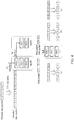
- FIG. 4 is a schematic diagram of the wireless multipath transmission method in accordance with the first embodiment of the present invention, as shown in FIG. 4 , the first embodiment takes the downlink data transmission in a dual connectivity architecture as an example, in FIG. 4 , the original data packets are distinguished with different serial numbers such as 1, 2, 3, 4 and 5, and the redundant data packets are represented with small shaded squares.
- the MeNB receives user data through the S1-U interface and performs the FEC encoding before the distribution in the Layer 2, in the first embodiment, assuming that the 1/2 bit rate is used to input 5 non-encoded data packets and output 10 data packets.
- the encoded data packet carries a packet header, and the packet header carries the serial number of the data packet, which is used to decode to restore the data packet in order; or, the header carries indication information indicating whether to encode the data packet and the serial number of the data packet.
- some data packets can be forwarded to the SeNB, thus, the UE can receive the data packets via two paths, namely the MeNB link and the SeNB link. Because the channel conditions of the two links are different and the scheduling strategies of the MeNB/SeNB are different, the orders by which the data packets of the two links arrive at the UE as well as the number of data packets that arrive at each link may be different, however, as long as not all links are disconnected, the UE can always receive enough data packets (the number of which may be the same number of the original data packets, or greater than the number of the original data packets), then, the UE decodes the received data packets and restores them back into the original data packets in accordance with the serial numbers.
- the UE decodes these data packets to restore five original data packets; or, assuming that the transmission of the SeNB link fails, for example, the link is broken, the five data packets received by the UE are all from the MeNB, as shown in FIG. 4(b) , and the five data packets can be used to restore the five original data packets; or, assuming that the transmission of the MeNB link fails, five redundant packets received by the UE are all from the SeNB, as shown in FIG. 4(c) , the UE decodes the redundant data packets to restore the five original data packets.
- the UE feeds back to the data transmitting end (MeNB and/or SeNB) to notify the data transmitting end to terminate the transmission of remaining data in the encoded data packets and related to the original data packets obtained through the decoding. Therefore, the data transmitting end can continue the subsequent transmission.
- the data transmitting end MeNB and/or SeNB
- the embodiment of the present invention further includes: carrying process identifier information (process ID) representing the data transmission process in the header of the encoded data packet.
- process ID process identifier information
- the encoding/decoding can be performed in the PDCP layer, specifically including:
- the data transmitting end uses a new field to indicate the serial number of the encoded data packet
- the data receiving end can feed back a newly-defined status report including the serial number and the process ID of the encoded data packet, so as to achieve the feedback function similar to the abovementioned PDCP status report.
- an explicit method can also be used, for example, one bit+ process ID is used to feed back to the data transmitting end that the decoding is successful (or a new round of data packet transmission of the process can be started), therefore, the data transmitting end can stop the transmission of data packets related to the original data packets of the process.
- the data distribution may be in the RLC layer or in the PDCP layer.
- the encoding/decoding can be performed in the RLC layer, preferably, the data packets are RLC SDUs (i.e., PDCP PDUs), therefore the efficiency is high, and the data are distributed in the RLC layer.
- the status reporting mechanism of the RLC layer can be used to achieve a function similar to the PDCP layer status reporting mechanism. In this way, it also needs to add a new field or a sub-header (say, 4 ⁇ 6 bits) to indicate the serial number of the encoded data packet, 1 bit indicates the indication indicating whether to encode (or whether it is an original/redundant data packet), and 2 ⁇ 3 bits indicates the process ID.
- the data receiving end decodes the PDCP header, it can perform the FEC decoding based on the information.
- the first embodiment takes the downlink transmission as an example, and in specific implementations, it can also be used in a variety of transmissions, including downlink transmission, uplink transmission, relay transmission, and D2D transmission.
- the configuration of the encoding and decoding can be performed by the network side.
- the network side notifies the UE of the configuration information of the encoding, and the UE decodes the data based on the configuration information of the encoding; in the uplink transmission, the network side notifies the UE of the configuration information of the encoding, and the UE encodes the data based on the configuration information of the encoding; in the D2D transmission, the network side notifies the UE peer in the communication of the configuration information of the encoding/decoding (which can also be configured by the UE itself, for example, in the case of the absence of the network coverage).
- the network side may also adjust the configuration of the encoding based on the statuses of different transmission links, for example, in the case that the transmission conditions of two transmission links are relatively stable, the network side reduces the bit rate, or in the case that the transmission conditions are unstable, the network side increases the bit rate.
- the related signaling can be transmitted via the RRC message or the L2 Control element.
- the data transmitting end can also adjust the data distribution strategies of different transmission links based on the statuses of the different transmission links: for example, when the MeNB link is relatively better, more data packets are transmitted through the MeNB; or when the SeNB link is relatively better, more data packets are transmitted through the SeNB.
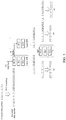
- FIG. 5 is a schematic diagram of the wireless multipath transmission method in accordance with the second embodiment of the present invention, as shown in FIG. 5 , the second embodiment takes the downlink data transmission in a handover process as an example, in FIG. 5 , the original data packets are distinguished with different serial numbers such as 1,2, 3, 4 and 5, and the redundant data packets are represented with small shaded squares.
- each encoded data packet carries a packet header, and the packet header carries a serial number of the data packet that is used to decode to restore the data packet in order; or, the header carries indication information indicating whether to encode the data packet and the serial number of the data packet.
- some data packets can be forwarded to the target eNB, thus the UE can receive data packets via two paths, namely the source eNB link and the target eNB link. Because the backhaul delays and the channel conditions of the two links are different and the scheduling strategies of the source/target eNB are different, the orders by which the data packets of the two links arrive at the UE as well as the number of data packets that arrive at each link may be different, however, as long as not all links are disconnected, the UE can always receive enough data packets (the number of which may be the same number of the original data packets, or greater than the number of the original data packets), then, the UE decodes the received data packets and restores them back into the original data packets based on the serial numbers.
- the UE decodes these data packets to restore five original data packets; or, assuming that the target link fails, for example, the link is broken, as shown in FIG. 5(b) , the six data packets which are received by the UE and can be used to restore the five original data packets are all from the source eNB; or, assuming that the source link fails and the six (encoded) data packets received by the UE are all from the target link, as shown in FIG. 5(c) , the UE decodes the data packets to restore the five original data packets.
- the UE feeds back to the data transmitting end (source eNB and/or target eNB) to notify the data transmitting end to terminate the transmission of remaining data in the encoded data packets and related to the original data packets obtained through the decoding.
- the data transmitting end source eNB and/or target eNB
- the header of the encoded data packet carries a process ID used to represent the data transmission process, and the specific implementation is omitted here.
- the encoding/decoding can be performed in the PDCP layer, and the encoding/decoding may also be performed in the RLC layer, and the specific implementation is omitted here.
- the network side can also adjust the configuration of the encoding based on the statuses of different transmission links, and the specific implementation is omitted here.
- the data transmitting end may also adjust the data distribution strategies of different transmission links based on the statuses of different transmission links, and the specific implementation is omitted here.
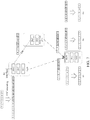
- FIG. 6 is a schematic diagram of the wireless multipath transmission method in accordance with the third embodiment of the present invention, as shown in FIG. 6 , the third embodiment takes the downlink data transmission in a LTE and WLAN combined transmission architecture as an example, in FIG. 6 , the original data packets are distinguished with different serial numbers such as 1, 2, 3, 4 and 5, and the redundant data packets are represented with small shaded squares.
- the encoding/decoding is performed in the RLC layer, assuming that the LTE eNB receives user data through the S1-U interface and performs the FEC encoding before the distribution in the Layer 2, and in the third embodiment, assuming that the 5/11 bit rate is used to input 5 non-encoded data packets and output 11 data packets.
- Each encoded data packet carries a packet header, and the packet header carries a serial number of the data packet, which is used to decode to restore the data packet in order; or, the header carries indication information indicating whether to encode the data packet and the serial number of the data packet.
- some data packets can be forwarded to the WLAN AP, thus the UE can receive data packets via two paths, namely the LTE link and the WLAN link. Because the backhaul delays and the channel conditions of the two links are different and the scheduling/resource competition strategies are different, the orders by which the data packets of the two links arrive at the UE as well as the number of data packets that arrive at each link may be different, however, as long as not all links are disconnected, the UE can always receive enough data packets (the number of which may be the same number of the original data packets, or greater than the number of the original data packets), then, the UE decodes the received data packets and restores them back into the original data packets based on the serial numbers.
- the UE may have one data packet from the LTE eNB and 5 data packets from the WLAN (if the WLAN link is relatively better), or as shown in FIG. 6(b) , the UE may have 3 data packets from the LTE and 2 data packets from the WLAN (if the LTE link is relatively better); the UE decodes these data packets to restore the five original data packets; or, assuming that the LTE link fails, for example, the link is broken, as shown in FIG.
- the UE feeds back to the data transmitting end (LTE eNB and/or WLAN AP) to notify the data transmitting end to terminate the transmission of remaining data in the encoded data packets and related to the original data packets obtained through the decoding.
- the data transmitting end LTE eNB and/or WLAN AP
- the header of the encoded data packet carries a process ID representing the data transmission process, and the specific implementation is omitted here.
- the encoding/decoding may be performed in the RLC layer or the PDCP layer, and the specific implementation is omitted here.
- the network side may also adjust the configuration of the encoding based on the statuses of different transmission links.
- the specific implementation is omitted here.
- the data transmitting end may also adjust the data distribution strategies of different transmission links according to the statuses of the different transmission links.
- the specific implementation is omitted here.
- FIG. 7 is a schematic diagram of the wireless multipath transmission method in accordance with the fourth embodiment of the present invention, as shown in FIG. 7 , the fourth embodiment takes the downlink data transmission in the macro eNB and the relay dual connectivity architecture as an example, in FIG. 7 , the original data packets are distinguished with different serial numbers such as 1, 2, 3, 4 and 5, and the redundant data packets are represented with small shaded squares.
- the donor eNB (DeNB) receives user data through the S1-U interface and performs the FEC encoding before the distribution in the Layer 2, assume that the 5/11 bit rate is used to input 5 non-encoded data packets and output 12 data packets.
- the encoded data packet carries a packet header, and the packet header carries a serial number of the data packet that is used to decode to restore the data packet in order; or, the header carries indication information indicating whether to encode the data packet and the serial number of the data packet.
- some data packets can be forwarded to the relay node (RN), thus the UE can receive data packets via two paths, namely the DeNB link and the relay node link.
- the UE can always receive enough data packets (the number of which may be the same number of the original data packets, or greater than the number of the original data packets), then, the UE decodes the received data packets and restores them back into the original data packets based on the serial numbers.
- the UE decodes these data packets to restore the five original data packets; or, assuming that the link through the relay node fails, for example, the link is broken, as shown in FIG. 7(b) , assuming that the six data packets received by the UE are all from the DeNB and the six data packets can be used to restore the five original data packets; or, assuming that the DeNB link fails, and the 6 data packets received by the UE are all from the relay node, the UE decodes the data packets to restore the five original data packets.
- the UE feeds back to the data transmitting end (DeNB and/or RN) to notify the data transmitting end to terminate the transmission of remaining data in the encoded data packets and related to the original data packets obtained through the decoding.
- the data transmitting end (DeNB and/or RN) to notify the data transmitting end to terminate the transmission of remaining data in the encoded data packets and related to the original data packets obtained through the decoding.
- the header of the encoded data packet carries a process ID representing the data transmission process, and the specific implementation is omitted here.
- the encoding/decoding can be performed in the RLC layer or the PDCP layer, and the specific implementation is omitted here.
- the network side can also adjust the configuration of the encoding based on the statuses of different transmission links.
- the specific implementation is omitted here.
- the data transmitting end may also adjust the data distribution strategies of the different transmission links based on the statuses of the different transmission links.
- the specific implementation is omitted here.
- FIG. 8 is a schematic diagram of the component framework of a wireless multipath transmission system in accordance with an embodiment of the present invention, as shown in FIG. 8 , it includes one or more data transmitting devices 81 and a data receiving device 82; herein, one of the data transmitting devices 81 is configured to: encode a plurality of original data packets, transmit the encoded data packets to the data receiving end device via different transmission links of itself as well as other one or more data transmitting devices; herein the number of encoded data packets is greater than the number of original data packets; the data receiving device 82 is configured to: receive data packets from different transmission paths, and decode them to obtain the original data packets.
- the data transmitting device 81 includes a macro eNB and a small eNB; or, a source eNB and a target eNB; or, an LTE eNB and a non-LTE eNB, herein the non-LTE eNB may be a WLAN access point or a 3G eNB; or, a donor eNB and a relay node; or, a D2D communication device.
- the data receiving device that encodes a plurality of original data packets can be any one of the abovementioned devices, and the eNB of other transmission links can be one or more of the abovementioned devices, or one or more of the other corresponding types.
- the data transmitting device 81 includes a preprocessing module 811 and a distributing module 812; herein, the preprocessing module 811 is configured to: encode a plurality of original data packets and output the encoded data packets to the distributing module; the distributing module 812 is configured to: determine transmission links for transmitting the encoded data packets, and transmitting the encoded data packets to the data receiving end device through the determined transmission links.
- the preprocessing module 811 is further configured to perform PDCP header compression on the original data packets; and further used to perform PDCP layer encryption on the original data packets.
- the distributing module 812 is configured to determine the transmission links for transmitting the encoded data packets in the following manner: determining the transmission links for transmitting the encoded data packets and the number of data packets transmitted in each transmission link based on the bit rate of the encoding, and/or the link status, and/or the link bandwidth and other factors, or determining the transmission links of itself and other one or more data transmitting devices, and transmitting the encoded data packets to the data receiving end device through the determined transmission links.
- the data receiving device 82 includes at least a merging module 821, which is configured to: receive data packets from different transmission paths, and decode the received data packets to obtain the original data packets.
- the merging module 821 in the data receiving device 82 is further configured to: transmit and feed back a reception success message to the distributing module 812 in the data transmitting device; accordingly, the distributing module 812 in the data transmitting device 81 is further configured to: terminate the transmission of remaining data in the encoded data packets and related to the original data packets obtained through the decoding.
- the merging module 821 in the data receiving device is further configured to: after receiving the data packets, feed back the serial numbers of the successfully received as well as not successfully received or not received data packets to the distributing module 812 in the data transmitting device 81; accordingly, the distributing module 812 in the data transmitting device 81 is further configured to: determine whether the data receiving end has successfully obtained the original data packets based on the fed back information, and if yes, terminate the transmission of the remaining data in the encoded data packets and related to the original data packets obtained through the decoding.
- the embodiment of the present further provides an evolved node B, which is provided with the data transmitting device 81 and/or the data receiving device 82 provided in the embodiment of the present invention.
- the eNB in the embodiment of the present invention is further used to notify the configuration information of the encoding.
- the embodiment of the present further provides a terminal, which is provided with the data transmitting device 81 and/or the data receiving device 82 in the embodiment of the present invention.
- the terminal in the embodiment of the present invention is further used to receive the configuration information of the encoding.
- the technical solution of the present application includes: the data transmitting end encoding a number of original data packets, herein the number of encoded data packets is greater than the number of original data packets; the data transmitting end transmitting the encoded data packets through different transmission links to the data receiving end; the data receiving end receiving data packets from different transmission links and decoding them to obtain the original data packets.
- the embodiment of the present invention flexibly achieves the multipath data transmission by encoding and then distributing the original data packets (the number of encoded data packets is larger than the number of the original data packets), and, when distributing the encoded data packets, the configuration information of the encoding is further taken into account, thus efficiently using the resources provided by each link to serve the user with data transmission and reducing the transmission delay. Therefore, the present invention has very strong industrial applicability.
Landscapes
- Engineering & Computer Science (AREA)
- Signal Processing (AREA)
- Computer Networks & Wireless Communication (AREA)
- Mobile Radio Communication Systems (AREA)
- Detection And Prevention Of Errors In Transmission (AREA)
Claims (20)
- Drahtloses Mehrwege-Übertragungsverfahren, umfassend:ein Datenübertragungsende, das ursprüngliche Datenpakete in N Datenpakete codiert, wobei K Datenpakete ursprüngliche Datenpakete sind und (N-K) Datenpakete redundante Datenpakete sind, K und N positive ganze Zahlen größer als 1 sind, und N>K (300);das Datenübertragungsende überträgt die codierten Datenpakete über verschiedene Übertragungsverbindungen (301) an ein Datenempfangsendgerät, wobei den Verbindungen, deren Verbindungsstatus besser oder stabiler ist, mehrere ursprüngliche Datenpakete zugewiesen werden, während den Verbindungen, deren Verbindungsstatus schlecht oder instabil ist, mehrere redundante Datenpakete zugewiesen werden;das Datenempfangsende empfängt Datenpakete von verschiedenen Übertragungsverbindungen und decodiert die empfangenen Datenpakete, um die ursprünglichen Datenpakete (302) zu erhalten;und wobei die ursprünglichen Datenpakete Paketdatenkonvergenzprotokoll, PDCP, Servicedateneinheiten, SDU, oder Protokolldateneinheiten, PDU, sind;der Schritt eines Datenübertragungsendes, das ursprüngliche Datenpakete codiert, umfasst:das Datenübertragungsende, das die ursprünglichen Datenpakete in einer PDCP-Schicht codiert; oder,das Datenübertragungsende, das die ursprünglichen Datenpakete in einer Funkverbindungssteuerungs-, RLC-Schicht codiert.
- Drahtloses Mehrwege-Übertragungsverfahren nach Anspruch 1, wobei das Verfahren vor einem Schritt des Datenübertragungsendes, das mehrere ursprüngliche Datenpakete codiert, ferner umfasst: das Datenübertragungsende, das eine Paketdatenkonvergenzprotokoll-, PDCP-Headerkomprimierung auf die ursprünglichen Datenpakete durchführt,
oder
wobei vor einem Schritt des Datenübertragungsendes, das mehrere ursprüngliche Datenpakete codiert, das Verfahren ferner umfasst: das Datenübertragungsende, das eine PDCP-Schichtverschlüsselung auf die ursprünglichen Datenpakete durchführt. - Drahtloses Mehrwege-Übertragungsverfahren nach Anspruch 1, wobei die Codierung eine Vorwärtsfehlerkorrektur-, FEC-Codierung ist.
- Drahtloses Mehrwege-Übertragungsverfahren nach Anspruch 1, wobei die codierten Datenpakete Seriennummern tragen; oder die codierten Datenpakete tragen Seriennummern und Anzeigeinformationen, die angeben, ob codiert werden soll;
der Schritt des Decodierens der empfangenen Datenpakete zum Erhalten der ursprünglichen Datenpakete umfasst: das Decodieren des Datenempfangsendes gemäß den in empfangenen Datenpaket-Headern und Inhalte der Datenpakete getragenen Seriennummern, um die ursprünglichen Datenpakete wiederherzustellen. - Drahtloses Mehrwege-Übertragungsverfahren nach Anspruch 4, wobei das codierte Datenpaket ferner eine Prozesskennung trägt, die einen Codierungsübertragungsprozess darstellt;
der Schritt des Decodierens der empfangenen Datenpakete zum Erhalten der ursprünglichen Datenpakete umfasst: das Datenempfangsende, das Datenpakete mit derselben Prozesskennung in denselben Puffer zum Decodieren stellt. - Drahtloses Mehrwege-Übertragungsverfahren nach Anspruch 1, 4 oder 5, wobei nach dem Schritt des Datenempfangsendes, der die empfangenen Datenpakete decodiert, um die ursprünglichen Datenpakete zu erhalten, das Verfahren ferner umfasst:das Datenempfangsende überträgt und führt Empfangserfolgsinformationen an das Datenübertragungsende zurück; das Datenübertragungsende beendet die Übertragung der verbleibenden Daten in den codierten Datenpaketen und in Bezug auf die ursprünglichen Datenpakete, die durch die Decodierung erhalten wurden, startet eine neue Runde der ursprünglichen Datenübertragung und benachrichtigt an das Datenempfangsende, dass was das Datenübertragungsende überträgt, neue Daten sind; oderdas Datenempfangsende führt Seriennummern von erfolgreich empfangenen, nicht erfolgreich empfangenen und nicht empfangenen Datenpaketen an das Datenübertragungsende zurück; das Datenübertragungsende bestimmt, ob das Datenempfangsende die ursprünglichen Datenpakete erfolgreich erhalten hat, basierend auf den Informationen, die vom Datenempfangsende zurückgeführt werden, und wenn ja, beendet es die Übertragung der verbleibenden Daten in den codierten Datenpaketen und in Bezug auf die ursprünglichen Datenpakete, die durch die Decodierung erhalten werden, und startet eine neue Runde der ursprünglichen Datenübertragung und benachrichtigt an das Datenempfangsende, dass was das Datenübertragungsende überträgt, neue Daten sind.
- Drahtloses Mehrwege-Übertragungsverfahren nach Anspruch 1, wobei der Schritt des Datenübertragungsendes, der die codierten Datenpakete über verschiedene Übertragungsverbindungen an ein Datenempfangsende überträgt, umfasst:
das Datenübertragungsende bestimmt Übertragungsverbindungen, die zum Übertragen der codierten Datenpakete verwendet werden, sowie eine Anzahl von Datenpaketen, die in jeder Übertragungsverbindung gemäß einer Bitrate der Codierung, einem Verbindungsstatus und/oder einer Verbindungsbandbreite übertragen werden. - Drahtloses Mehrwege-Übertragungsverfahren nach Anspruch 7, wobei die verschiedenen Übertragungsverbindungen umfassen:Makrozellenverbindungen und Kleinzellenverbindungen;oder Quellzellenverbindungen und Zielzellenverbindungen;oder Langzeitentwicklung-, LTE-Verbindungen und nicht-LTE-Verbindungen, wobei die nicht-LTE-Verbindungen drahtlose lokale Netzwerk, WLAN-Verbindungen und/oder zellulare Kommunikation der dritten Generation, 3G-Verbindungen umfassen;oder LTE-lizenzierte Bandverbindungen und LTEnicht lizenzierte Bandverbindungen;oder LTE-lizenzierte Bandverbindungen und gemeinsam genutzte LTE-Bandverbindungen;oder Frequenzduplex, FDD-Verbindungen und Zeitduplex, TDD-Verbindungen;oder LTE-Niederfrequenzverbindungen und LTE-Hochfrequenzverbindungen;oder zellulare Kommunikation der vierten Generation, 4G-Verbindungen und zellulare Kommunikation der fünften Generation, 5G-Verbindungen;oder 3G-Verbindungen und drahtloses lokales Netzwerk, WLAN-Verbindungen,und wobei die Übertragungsverbindungen sind: Abwärtsübertragungsverbindungen, Aufwärtsübertragungsverbindungen, Relaisübertragungsverbindungen oder Gerät zu Gerät-, D2D-Kommunikationsverbindungen.
- Drahtloses Mehrwege-Übertragungsverfahren nach Anspruch 7 oder 8, wobei
die Übertragungsverbindungen Abwärtsübertragungsverbindungen sind;
wobei das Verfahren ferner umfasst:eine Netzwerkseite, auf der sich das Datenübertragungsende befindet, die das Datenempfangsende der Konfigurationsinformationen über die Codierung informiert;das Datenempfangsende decodiert die Daten gemäß den Konfigurationsinformationen der Codierung; wobei die Konfigurationsinformationen der Codierung umfassen: die Anzahl der ursprünglichen Datenpakete und die Bitrate der Codierung. - Drahtloses Mehrwege-Übertragungsverfahren nach Anspruch 7 oder 8, wobei
die Übertragungsverbindungen Aufwärtsübertragungsverbindungen sind;
wobei das Verfahren ferner umfasst:eine Netzwerkseite, auf der sich das Datenempfangsende befindet, die das Datenübertragungsende der Konfigurationsinformationen der Codierung benachrichtigt;das Datenübertragungsende codiert die Daten basierend auf den Konfigurationsinformationen der Codierung; wobei die Konfigurationsinformationen der Codierung umfasst: die Anzahl der ursprünglichen Datenpakete und die Bitrate der Codierung. - Drahtloses Mehrwege-Übertragungsverfahren nach Anspruch 1, wobei das Verfahren ferner umfasst: die Netzwerkseite, auf der sich das Datenübertragungsende befindet, benachrichtigt das Datenempfangsende, um einen codierten Datenübertragungsmodus zu starten und zu verlassen.
- Drahtlose Datenübertragungsvorrichtung, umfassend ein Vorverarbeitungsmodul (811) und ein Verteilungsmodul (812); wobei,
das Vorverarbeitungsmodul (811) konfiguriert ist zum: Codieren von ursprünglichen Datenpaketen in N Datenpakete, wobei K Datenpakete ursprüngliche Datenpakete sind, und (N-K) Datenpakete redundante Datenpakete sind, K und N positive ganze Zahlen größer als 1 sind, und N>K, und Ausgaben der codierten Datenpakete an das Verteilungsmodul;
das Verteilungsmodul (812) konfiguriert ist, um:Bestimmen der Übertragungsverbindungen, die zum Senden der codierten Datenpakete verwendet werden, und Übertragen der codierten Datenpakete über die bestimmten Übertragungsverbindungen an eine Datenempfangsvorrichtung; wobei den Verbindungen, deren Verbindungsstatus besser oder stabiler ist, mehrere ursprüngliche Datenpakete zugewiesen werden, während den Verbindungen, deren Verbindungsstatus schlecht oder instabil ist, mehrere redundante Datenpakete zugewiesen werden;wobei die ursprünglichen Datenpakete Paketdatenkonvergenzprotokoll, PDCP, Servicedateneinheiten, SDU, oder Protokolldateneinheiten, PDU, sind;wobei das Vorverarbeitungsmodul (811) ferner konfiguriert ist, zum: Codieren der ursprünglichen Datenpakete in einer PDCP-Schicht; oder,Codieren der ursprünglichen Datenpakete in einer Funkverbindungssteuerungs-, RLC-Schicht. - Drahtlose Datenübertragungsvorrichtung nach Anspruch 12, wobei das Vorverarbeitungsmodul (811) ferner konfiguriert ist, um: eine PDCP-Headerkomprimierung für die ursprünglichen Datenpakete durchzuführen,
oder
wobei das Vorverarbeitungsmodul (811) ferner konfiguriert ist, um: eine PDCP-Schichtverschlüsselung für die ursprünglichen Datenpakete durchzuführen. - Drahtlose Datenübertragungsvorrichtung nach einem der Ansprüche 12 bis 13, wobei das Verteilungsmodul (812) ferner konfiguriert ist, zum: nach dem Empfangen einer Rückmeldung des Empfangserfolgs von der Datenempfangsvorrichtung, Beenden der Übertragung verbleibender Daten in den codierten Datenpaketen und in Bezug auf die ursprünglichen Datenpakete, die durch die Decodierung erhalten wurden,
oder,
wobei das Verteilungsmodul (812) ferner konfiguriert ist, zum: anhand des von der Datenempfangsvorrichtung zurückgeführt Empfangserfolgs sowie der Seriennummern der erfolgreich empfangenen sowie nicht erfolgreich empfangenen oder nicht empfangenen Datenpakete, Bestimmen, ob die Datenempfangsvorrichtung die ursprünglichen Datenpakete erfolgreich erhalten hat, und wenn ja, Beenden der Übertragung der verbleibenden Daten in den codierten Datenpaketen und in Bezug auf die ursprünglichen Datenpakete, die durch die Decodierung erhalten wurden. - Drahtlose Datenempfangsvorrichtung, umfassend ein Zusammenführungsmodul (821), wobei das Zusammenführungsmodul (821) konfiguriert ist, zum:Empfangen von Datenpaketen von verschiedenen Übertragungsverbindungen, und Decodieren der empfangenen Datenpakete, um ursprüngliche Datenpakete zu erhalten; wobei die empfangenen Datenpakete mindestens eines von N codierten Datenpaketen vom Datenübertragungsende sind, wobei die N codierten Datenpakete K ursprüngliche Datenpakete und (N-K) redundante Datenpakete umfassen, K und N positive ganze Zahlen größer als 1 sind, und N>K; und den Verbindungen, deren Verbindungsstatus für die drahtlose Datenempfangsvorrichtung besser oder stabiler ist, mehrere ursprüngliche Datenpakete zugewiesen werden, während den Verbindungen, deren Verbindungsstatus für die drahtlose Datenempfangsvorrichtung schlecht oder instabil ist, mehrere redundante Datenpakete zugewiesen werden;wobei die ursprünglichen Datenpakete Paketdatenkonvergenzprotokoll, PDCP, Servicedateneinheiten, SDU, oder Protokolldateneinheiten, PDU, sind;die empfangenen Datenpakete in einer PDCP-Schicht basierend auf den ursprünglichen Datenpaketen an einem drahtlosen Datenübertragungsende codiert werden; oder,die empfangenen Datenpakete in einer Funkverbindungssteuerungs-, RLC-Schicht basierend auf den ursprünglichen Datenpaketen an dem drahtlosen Datenübertragungsende codiert werden.
- Drahtlose Datenempfangsvorrichtung nach Anspruch 15, wobei das Zusammenführungsmodul (821) ferner konfiguriert ist, um: eine Empfangserfolgsnachricht an eine Datenübertragungsvorrichtung zurückzuführen,
oder,
wobei das Zusammenführungsmodul (821) in der Datenempfangsvorrichtung ferner konfiguriert ist, um: nach dem Decodieren zum Erhalten der ursprünglichen Datenpakete, Seriennummern von erfolgreich empfangenen sowie nicht erfolgreich empfangenen oder nicht empfangenen Datenpaketen an die Datenübertragungsvorrichtung zurückzuführen. - Basisstation, dadurch gekennzeichnet, dass die Basisstation mit der Datenübertragungsvorrichtung nach einem der Ansprüche 12 bis 14 und/oder der Datenempfangsvorrichtung nach einem der Ansprüche 15 bis 16 versehen ist.
- Basisstation nach Anspruch 17, wobei die Basisstation ferner konfiguriert ist, um: Konfigurationsinformationen der Codierung zu benachrichtigen.
- Endgerät, dadurch gekennzeichnet, dass das Endgerät mit der Datenübertragungsvorrichtung nach einem der Ansprüche 12 bis 14 und/oder der Datenempfangsvorrichtung nach einem der Ansprüche 15 bis 16 versehen ist.
- Endgerät nach Anspruch 19, wobei das Endgerät ferner konfiguriert ist, um: Konfigurationsinformationen der Codierung zu empfangen.
Applications Claiming Priority (2)
| Application Number | Priority Date | Filing Date | Title |
|---|---|---|---|
| CN201310729106.0A CN104753627A (zh) | 2013-12-26 | 2013-12-26 | 多路径传输方法、系统及数据发送装置和数据接收装置 |
| PCT/CN2014/080272 WO2015096419A1 (zh) | 2013-12-26 | 2014-06-19 | 多路径传输方法、系统及数据发送装置和数据接收装置 |
Publications (3)
| Publication Number | Publication Date |
|---|---|
| EP3073661A1 EP3073661A1 (de) | 2016-09-28 |
| EP3073661A4 EP3073661A4 (de) | 2016-11-30 |
| EP3073661B1 true EP3073661B1 (de) | 2021-02-17 |
Family
ID=53477460
Family Applications (1)
| Application Number | Title | Priority Date | Filing Date |
|---|---|---|---|
| EP14873834.7A Active EP3073661B1 (de) | 2013-12-26 | 2014-06-19 | Mehrwege-übertragungsverfahren und -system, datenübertragungsvorrichtung und datenempfangsvorrichtung |
Country Status (5)
| Country | Link |
|---|---|
| US (1) | US20170041100A1 (de) |
| EP (1) | EP3073661B1 (de) |
| JP (1) | JP2017502595A (de) |
| CN (1) | CN104753627A (de) |
| WO (1) | WO2015096419A1 (de) |
Cited By (1)
| Publication number | Priority date | Publication date | Assignee | Title |
|---|---|---|---|---|
| US20240048496A1 (en) * | 2021-04-23 | 2024-02-08 | Fraunhofer-Gesellschaft zur Förderung der angewandten Forschung e.V. | Apparatus and method for the intrinsic analysis of the connection quality in radio networks having network-coded cooperation |
Families Citing this family (63)
| Publication number | Priority date | Publication date | Assignee | Title |
|---|---|---|---|---|
| EP3277021A4 (de) * | 2015-03-25 | 2018-11-21 | Nec Corporation | Kommunikationsvorrichtung, kommunikationssystem und steuerungsverfahren |
| CN111741494B (zh) | 2015-07-14 | 2023-01-10 | Oppo广东移动通信有限公司 | 数据传输的方法、发送设备及接收设备 |
| WO2017008266A1 (zh) * | 2015-07-15 | 2017-01-19 | 富士通株式会社 | Lte和wlan聚合的数据处理方法、装置以及通信系统 |
| EP3349486B1 (de) * | 2015-09-11 | 2021-03-24 | Nec Corporation | Vorrichtung und verfahren im zusammenhang mit drahtloser kommunikation |
| GB2542614A (en) * | 2015-09-25 | 2017-03-29 | Tcl Communication Ltd | Systems and methods for reporting data reception status |
| CN105897579A (zh) * | 2015-10-21 | 2016-08-24 | 乐卡汽车智能科技(北京)有限公司 | 一种数据传输方法及装置 |
| CN106658721B (zh) * | 2015-10-30 | 2020-05-19 | 中兴通讯股份有限公司 | 非授权载波资源处理方法及装置 |
| CN105898799B (zh) * | 2015-10-30 | 2019-04-30 | 法法汽车(中国)有限公司 | 基于信号强度的移动网络的多链路带宽分配方法及装置 |
| CN105898471A (zh) * | 2015-11-11 | 2016-08-24 | 乐卡汽车智能科技(北京)有限公司 | 一种车载音视频传输方法及系统、车载终端、服务器 |
| US10484129B2 (en) | 2016-01-21 | 2019-11-19 | Qualcomm Incorporated | Protocol layer packet coding for transmitter/receiver buffer optimization |
| CN107294569B (zh) * | 2016-03-30 | 2022-03-15 | 景略半导体(上海)有限公司 | 多天线传输、单天线发射、及全方位无线接收系统和方法 |
| US10021596B2 (en) | 2016-03-30 | 2018-07-10 | Industrial Technology Research Institute | Communication system, communication device, base station and method thereof for D2D communications |
| CN107733577B (zh) * | 2016-08-11 | 2020-06-02 | 华为技术有限公司 | 进行重传处理的方法和装置 |
| WO2018058444A1 (zh) * | 2016-09-29 | 2018-04-05 | 华为技术有限公司 | 一种数据加密的方法及装置 |
| CN106559840A (zh) * | 2016-11-16 | 2017-04-05 | 北京邮电大学 | 一种多协议混合通信方法及系统 |
| CN108174422B (zh) * | 2016-12-07 | 2021-07-20 | 华为技术有限公司 | 高低频切换方法、配置终端的方法及装置 |
| WO2018152846A1 (zh) | 2017-02-27 | 2018-08-30 | 华为技术有限公司 | 通信方法和装置 |
| PL3596958T3 (pl) | 2017-03-13 | 2024-02-19 | Nokia Technologies Oy | Duplikacja i obsługa rlc w technologii dostępu new radio |
| CN110313164B (zh) * | 2017-03-19 | 2022-07-26 | 上海朗帛通信技术有限公司 | 一种用于上行传输的方法和装置 |
| CN108667559B (zh) * | 2017-03-31 | 2020-12-15 | 华为技术有限公司 | 一种通信方法及设备 |
| KR102318021B1 (ko) * | 2017-04-21 | 2021-10-27 | 삼성전자 주식회사 | 이동 통신 네트워크 내 다중 링크 상에서의 패킷 분배 방법 및 장치 |
| EP3634083B1 (de) * | 2017-05-27 | 2025-08-06 | Beijing Xiaomi Mobile Software Co., Ltd. | Kommunikationsnetzwerkarchitektur sowie signalisierungstransportverfahren und -vorrichtung |
| US10382517B2 (en) * | 2017-06-09 | 2019-08-13 | At&T Intellectual Property I, L.P. | Estimating network data encoding rate |
| CN109150425B (zh) * | 2017-06-15 | 2020-04-24 | 维沃移动通信有限公司 | 一种数据处理方法、移动终端及计算机可读存储介质 |
| ES2928188T3 (es) | 2017-07-25 | 2022-11-16 | Huawei Tech Co Ltd | Dispositivo y método de asignación de recursos del canal |
| CN110999396B (zh) * | 2017-08-10 | 2025-10-31 | Oppo广东移动通信有限公司 | 确定业务路径的方法和设备 |
| CN107835138B (zh) * | 2017-09-15 | 2022-01-04 | 南京安讯科技有限责任公司 | 一种tcp通讯连接中报文排序方法 |
| CN111386723B (zh) * | 2017-12-05 | 2023-12-12 | Oppo广东移动通信有限公司 | 接入无线接入网的方法、设备和非授权接入点 |
| CN110166978B (zh) * | 2018-02-13 | 2020-12-22 | 华为技术有限公司 | 通信方法、第一终端设备和第二终端设备 |
| ES2950133T3 (es) * | 2018-05-16 | 2023-10-05 | Code On Tech Inc | Aparato de codificación multitrayecto y técnicas relacionadas |
| CN110167084B (zh) * | 2018-08-15 | 2021-07-27 | 腾讯科技(深圳)有限公司 | 多通道数据传输方法及装置 |
| CN108986829B (zh) * | 2018-09-04 | 2020-12-15 | 北京猿力未来科技有限公司 | 数据发送方法、装置、设备及存储介质 |
| TWI775013B (zh) * | 2018-11-25 | 2022-08-21 | 財團法人資訊工業策進會 | 基地台及主通訊裝置 |
| WO2020210682A1 (en) * | 2019-04-12 | 2020-10-15 | Apple Inc. | Network coding at the packet data convergence protocol (pdcp) layer to increase communication reliability |
| KR20220005466A (ko) | 2019-04-19 | 2022-01-13 | 신에츠 폴리머 가부시키가이샤 | 수지 필름, 고주파 회로 기판 및 그 제조 방법 |
| JP7194647B2 (ja) * | 2019-06-05 | 2022-12-22 | 本田技研工業株式会社 | 制御装置、プログラム、及び制御方法 |
| CN110535743B (zh) * | 2019-08-19 | 2022-04-26 | 厦门亿联网络技术股份有限公司 | 一种数据包的处理方法、装置、存储介质及电子装置 |
| US11909524B2 (en) * | 2019-10-22 | 2024-02-20 | Qualcomm Incorporated | Coded radio link control retransmission |
| US12341606B2 (en) | 2020-03-20 | 2025-06-24 | Huawei Technologies Co., Ltd. | Methods and systems for network coding using cross-packet check blocks |
| JP2021150919A (ja) * | 2020-03-23 | 2021-09-27 | ソニーグループ株式会社 | 通信装置及び通信方法 |
| CN111385062B (zh) * | 2020-03-25 | 2022-05-20 | 京信网络系统股份有限公司 | 基于wdm的数据传输方法、装置、系统及存储介质 |
| WO2021241302A1 (ja) * | 2020-05-25 | 2021-12-02 | ソニーグループ株式会社 | 情報処理装置、情報処理システム及び通信方法 |
| WO2021241345A1 (ja) * | 2020-05-27 | 2021-12-02 | ソニーグループ株式会社 | 情報処理装置、通信システム及び情報処理方法 |
| WO2022016501A1 (en) * | 2020-07-24 | 2022-01-27 | Qualcomm Incorporated | Outer coding at a packet data convergence protocol layer |
| EP4186191A4 (de) | 2020-07-24 | 2024-10-09 | Qualcomm Incorporated | Ratenlose codierung auf schicht 2 protokollschicht |
| CN112004144B (zh) * | 2020-08-14 | 2022-09-02 | 西安微嗨互动信息科技有限公司 | 一种基于多链路聚合技术的视频采集、编码及分发加速的方法 |
| CN112153693B (zh) * | 2020-09-23 | 2024-05-10 | 南京邮电大学 | 一种基于随机线性网络编码的双路径传输方法 |
| EP4260652B1 (de) * | 2020-12-10 | 2025-01-15 | Nokia Technologies Oy | Netzwerkcodierung mit einheit des paketdatenkonvergenzprotokolls (pdcp) |
| CN112954701B (zh) * | 2021-01-28 | 2023-06-02 | 沈阳工程学院 | 基于矩阵计算的异构工业无线网络共存方法 |
| US12355564B2 (en) | 2021-03-31 | 2025-07-08 | Sony Group Corporation | Communication device, communication method, and communication system |
| CN115278769A (zh) * | 2021-04-30 | 2022-11-01 | 华为技术有限公司 | 数据传输方法、装置、系统及可读存储介质 |
| CN115604760A (zh) * | 2021-06-28 | 2023-01-13 | 华为技术有限公司(Cn) | 一种通信方法及通信装置 |
| CN113364559B (zh) * | 2021-06-30 | 2022-08-12 | 清华大学 | 一种面向多路径的数据安全传输方法、设备和系统 |
| CN115694719A (zh) * | 2021-07-28 | 2023-02-03 | 华为技术有限公司 | 一种切换场景的数据转发方法及装置 |
| CN113573341B (zh) * | 2021-09-23 | 2021-12-14 | 成都极米科技股份有限公司 | 协商业务与链路映射配置的方法、装置、设备及存储介质 |
| CN114142971B (zh) * | 2021-11-29 | 2024-08-16 | 山东恒创智控科技有限公司 | 一种基于5g的机器人通信系统、方法及计算机 |
| TWI808562B (zh) * | 2021-12-10 | 2023-07-11 | 富達通科技股份有限公司 | 用於感應式電源供應器之解碼方法及其供電模組 |
| CN114745751B (zh) * | 2022-04-15 | 2023-11-21 | 中国电信股份有限公司 | 数据传输方法及装置、电子设备和存储介质 |
| CN115580379B (zh) * | 2022-10-24 | 2023-05-16 | 北京东方正龙数字技术有限公司 | 一种多链路网络传输方法及系统 |
| CN116633871A (zh) * | 2023-05-10 | 2023-08-22 | 北京国际云转播科技有限公司 | 多链路数据流实时传输方法、传输装置、存储介质及系统 |
| US20250096926A1 (en) * | 2023-09-15 | 2025-03-20 | Qualcomm Incorporated | Outer coding header for ran-based network coding |
| CN120034526A (zh) * | 2023-11-22 | 2025-05-23 | 中国联合网络通信集团有限公司 | 数据传输方法、装置及系统 |
| CN119277555A (zh) * | 2024-12-09 | 2025-01-07 | 江苏满旺半导体科技股份有限公司 | 一种基于人工智能的芯片数据传输系统及方法 |
Family Cites Families (25)
| Publication number | Priority date | Publication date | Assignee | Title |
|---|---|---|---|---|
| CA2208660C (en) * | 1996-07-19 | 2002-09-17 | Takashi Suzuki | Data transmission device |
| US8254935B2 (en) * | 2002-09-24 | 2012-08-28 | Fujitsu Limited | Packet transferring/transmitting method and mobile communication system |
| US7318187B2 (en) * | 2003-08-21 | 2008-01-08 | Qualcomm Incorporated | Outer coding methods for broadcast/multicast content and related apparatus |
| US8694869B2 (en) * | 2003-08-21 | 2014-04-08 | QUALCIMM Incorporated | Methods for forward error correction coding above a radio link control layer and related apparatus |
| US20050059396A1 (en) * | 2003-09-09 | 2005-03-17 | Chuah Mooi Choo | Communications protocol between a gateway and an access point |
| KR101223950B1 (ko) * | 2006-09-26 | 2013-01-18 | 리베우 리미티드 | 원격 송신 시스템 |
| CN101009663A (zh) * | 2007-01-19 | 2007-08-01 | 深圳市深信服电子科技有限公司 | 通过冗余提高数据传输速度的方法 |
| WO2009020363A1 (en) * | 2007-08-07 | 2009-02-12 | Samsung Electronics Co., Ltd. | Apparatus and method for transmitting and receiving packets in a mobile communication system supporting hybrid automatic repeat request |
| JP2009152864A (ja) * | 2007-12-20 | 2009-07-09 | Nippon Telegr & Teleph Corp <Ntt> | 送信装置および受信装置およびデータ伝送方法 |
| US20100195564A1 (en) * | 2008-11-26 | 2010-08-05 | Je-Hong Jong | Method and system for providing timing and frequency synchronization for satellite diversity |
| CN101867937B (zh) * | 2009-04-14 | 2014-08-13 | 中兴通讯股份有限公司 | 基于恒定调度的混合自动重传实现方法 |
| CN102055572B (zh) * | 2009-11-06 | 2015-06-03 | 中兴通讯股份有限公司 | 数据重传方法及装置 |
| JP5922647B2 (ja) * | 2010-04-29 | 2016-05-24 | オン−ランプ ワイアレス インコーポレイテッド | 前方誤り訂正媒体アクセス制御システム |
| US20130088996A1 (en) * | 2010-06-08 | 2013-04-11 | Mitsubishi Electric Corporation | Radio communication system and terminal apparatus |
| CN101938334B (zh) * | 2010-09-21 | 2012-11-07 | 上海大学 | 随机网络编码和自动重传请求联合的自适应差错控制方法 |
| CN102325009A (zh) * | 2011-09-13 | 2012-01-18 | 北京邮电大学 | 一种基于前向纠错的网络编码组播数据流可靠传输方法 |
| US20130064198A1 (en) * | 2011-09-14 | 2013-03-14 | Qualcomm Incorporated | Multipath transport tunnel over multiple air interfaces connecting wireless stations |
| US9537759B2 (en) * | 2012-01-31 | 2017-01-03 | Massachusetts Institute Of Technology | Multi-path data transfer using network coding |
| JP2013197944A (ja) * | 2012-03-21 | 2013-09-30 | Ntt Docomo Inc | 無線基地局及び移動局 |
| KR102057868B1 (ko) * | 2012-08-01 | 2019-12-20 | 엘지전자 주식회사 | 제어 정보를 시그널링 하는 방법 및 이를 위한 장치 |
| US9071393B2 (en) * | 2013-01-03 | 2015-06-30 | Broadcom Corporation | Hitless modulation changes in double capacity links using adaptive coding modulation (ACM) |
| EP3975617B1 (de) * | 2013-01-18 | 2025-04-30 | Telefonaktiebolaget LM Ericsson (publ) | Anpassung eines mobilfunknetzes |
| EP2782409A1 (de) * | 2013-03-20 | 2014-09-24 | Panasonic Intellectual Property Corporation of America | Deterministisches UE-Verhalten für die CSI/SRS-Berichterstattung während DRX |
| TW201501496A (zh) * | 2013-06-17 | 2015-01-01 | Quanta Comp Inc | 視訊編解碼系統及視訊流傳輸方法 |
| WO2015056392A1 (ja) * | 2013-10-18 | 2015-04-23 | 日本電気株式会社 | ネットワーク制御のためのシステム及び方法 |
-
2013
- 2013-12-26 CN CN201310729106.0A patent/CN104753627A/zh active Pending
-
2014
- 2014-06-19 JP JP2016542936A patent/JP2017502595A/ja active Pending
- 2014-06-19 US US15/107,107 patent/US20170041100A1/en not_active Abandoned
- 2014-06-19 EP EP14873834.7A patent/EP3073661B1/de active Active
- 2014-06-19 WO PCT/CN2014/080272 patent/WO2015096419A1/zh not_active Ceased
Non-Patent Citations (1)
| Title |
|---|
| ERICSSON: "L2 transport of SRBs and relation to RLF handling", vol. RAN WG2, no. San Francisco, USA; 20131111 - 20131115, 13 November 2013 (2013-11-13), XP050736968, Retrieved from the Internet <URL:http://www.3gpp.org/ftp/Meetings_3GPP_SYNC/RAN/RAN2/Docs/> [retrieved on 20131113] * |
Cited By (1)
| Publication number | Priority date | Publication date | Assignee | Title |
|---|---|---|---|---|
| US20240048496A1 (en) * | 2021-04-23 | 2024-02-08 | Fraunhofer-Gesellschaft zur Förderung der angewandten Forschung e.V. | Apparatus and method for the intrinsic analysis of the connection quality in radio networks having network-coded cooperation |
Also Published As
| Publication number | Publication date |
|---|---|
| CN104753627A (zh) | 2015-07-01 |
| US20170041100A1 (en) | 2017-02-09 |
| EP3073661A4 (de) | 2016-11-30 |
| JP2017502595A (ja) | 2017-01-19 |
| EP3073661A1 (de) | 2016-09-28 |
| WO2015096419A1 (zh) | 2015-07-02 |
Similar Documents
| Publication | Publication Date | Title |
|---|---|---|
| EP3073661B1 (de) | Mehrwege-übertragungsverfahren und -system, datenübertragungsvorrichtung und datenempfangsvorrichtung | |
| US10194352B2 (en) | Wireless broadband communication method, device, and system, for establishing a user plane connection between a small cell and a user equipment | |
| US10057810B2 (en) | Communication system, cellular base station, and WLAN access point | |
| CN111263433B (zh) | 用于在设备到设备通信中的时间同步的方法及装置 | |
| US10462841B2 (en) | Efficient secondary cell group change procedure for dual connectivity | |
| US10784994B2 (en) | Method for transmitting information for LTE-WLAN aggregation system and a device therefor | |
| EP3589065B1 (de) | Schaltverfahren und vorrichtung | |
| CN115699878A (zh) | 层2中继用户设备移动性 | |
| JP6687452B2 (ja) | 移動通信システム、ユーザ端末、プロセッサ、記憶媒体及びプログラム | |
| JP6062088B2 (ja) | ユーザ端末、及びプロセッサ | |
| JP6132840B2 (ja) | 通信制御方法、ユーザ端末、プロセッサ、及び記憶媒体 | |
| JP6645963B2 (ja) | ユーザ端末及び移動通信システム | |
| JP7235935B2 (ja) | 通信制御方法、ユーザ装置、プロセッサ及び基地局 | |
| US20240236792A9 (en) | Communication system and communication terminal | |
| WO2013183732A1 (ja) | 通信制御方法及び基地局 | |
| RU2733275C1 (ru) | Способ и устройства для двойной соединяемости между оборудованием пользователя с двойным стеком протоколов и двумя блоками основной полосы частот телекоммуникационной сети радиодоступа | |
| KR20230070483A (ko) | Iab-노드 마이그레이션 방법 및 장치 | |
| CN115701173A (zh) | 数据重传方法、设备、装置及存储介质 | |
| JP6538026B2 (ja) | ネットワーク選択制御方法、基地局、及びユーザ端末 | |
| US20250374161A1 (en) | Multi-path processing method and apparatus | |
| WO2022154728A1 (en) | Methods and network nodes for handling communication | |
| US20180255601A1 (en) | Base station, wlan terminal node, and radio terminal |
Legal Events
| Date | Code | Title | Description |
|---|---|---|---|
| PUAI | Public reference made under article 153(3) epc to a published international application that has entered the european phase |
Free format text: ORIGINAL CODE: 0009012 |
|
| 17P | Request for examination filed |
Effective date: 20160623 |
|
| AK | Designated contracting states |
Kind code of ref document: A1 Designated state(s): AL AT BE BG CH CY CZ DE DK EE ES FI FR GB GR HR HU IE IS IT LI LT LU LV MC MK MT NL NO PL PT RO RS SE SI SK SM TR |
|
| AX | Request for extension of the european patent |
Extension state: BA ME |
|
| A4 | Supplementary search report drawn up and despatched |
Effective date: 20161028 |
|
| RIC1 | Information provided on ipc code assigned before grant |
Ipc: H04L 1/00 20060101AFI20161024BHEP |
|
| DAX | Request for extension of the european patent (deleted) | ||
| STAA | Information on the status of an ep patent application or granted ep patent |
Free format text: STATUS: EXAMINATION IS IN PROGRESS |
|
| 17Q | First examination report despatched |
Effective date: 20180215 |
|
| GRAP | Despatch of communication of intention to grant a patent |
Free format text: ORIGINAL CODE: EPIDOSNIGR1 |
|
| STAA | Information on the status of an ep patent application or granted ep patent |
Free format text: STATUS: GRANT OF PATENT IS INTENDED |
|
| INTG | Intention to grant announced |
Effective date: 20201002 |
|
| GRAS | Grant fee paid |
Free format text: ORIGINAL CODE: EPIDOSNIGR3 |
|
| GRAA | (expected) grant |
Free format text: ORIGINAL CODE: 0009210 |
|
| STAA | Information on the status of an ep patent application or granted ep patent |
Free format text: STATUS: THE PATENT HAS BEEN GRANTED |
|
| AK | Designated contracting states |
Kind code of ref document: B1 Designated state(s): AL AT BE BG CH CY CZ DE DK EE ES FI FR GB GR HR HU IE IS IT LI LT LU LV MC MK MT NL NO PL PT RO RS SE SI SK SM TR |
|
| REG | Reference to a national code |
Ref country code: GB Ref legal event code: FG4D |
|
| REG | Reference to a national code |
Ref country code: CH Ref legal event code: EP |
|
| REG | Reference to a national code |
Ref country code: DE Ref legal event code: R096 Ref document number: 602014074989 Country of ref document: DE |
|
| REG | Reference to a national code |
Ref country code: AT Ref legal event code: REF Ref document number: 1362878 Country of ref document: AT Kind code of ref document: T Effective date: 20210315 |
|
| REG | Reference to a national code |
Ref country code: IE Ref legal event code: FG4D |
|
| REG | Reference to a national code |
Ref country code: LT Ref legal event code: MG9D |
|
| REG | Reference to a national code |
Ref country code: NL Ref legal event code: MP Effective date: 20210217 |
|
| PG25 | Lapsed in a contracting state [announced via postgrant information from national office to epo] |
Ref country code: LT Free format text: LAPSE BECAUSE OF FAILURE TO SUBMIT A TRANSLATION OF THE DESCRIPTION OR TO PAY THE FEE WITHIN THE PRESCRIBED TIME-LIMIT Effective date: 20210217 Ref country code: PT Free format text: LAPSE BECAUSE OF FAILURE TO SUBMIT A TRANSLATION OF THE DESCRIPTION OR TO PAY THE FEE WITHIN THE PRESCRIBED TIME-LIMIT Effective date: 20210617 Ref country code: GR Free format text: LAPSE BECAUSE OF FAILURE TO SUBMIT A TRANSLATION OF THE DESCRIPTION OR TO PAY THE FEE WITHIN THE PRESCRIBED TIME-LIMIT Effective date: 20210518 Ref country code: FI Free format text: LAPSE BECAUSE OF FAILURE TO SUBMIT A TRANSLATION OF THE DESCRIPTION OR TO PAY THE FEE WITHIN THE PRESCRIBED TIME-LIMIT Effective date: 20210217 Ref country code: HR Free format text: LAPSE BECAUSE OF FAILURE TO SUBMIT A TRANSLATION OF THE DESCRIPTION OR TO PAY THE FEE WITHIN THE PRESCRIBED TIME-LIMIT Effective date: 20210217 Ref country code: BG Free format text: LAPSE BECAUSE OF FAILURE TO SUBMIT A TRANSLATION OF THE DESCRIPTION OR TO PAY THE FEE WITHIN THE PRESCRIBED TIME-LIMIT Effective date: 20210517 Ref country code: NO Free format text: LAPSE BECAUSE OF FAILURE TO SUBMIT A TRANSLATION OF THE DESCRIPTION OR TO PAY THE FEE WITHIN THE PRESCRIBED TIME-LIMIT Effective date: 20210517 |
|
| REG | Reference to a national code |
Ref country code: AT Ref legal event code: MK05 Ref document number: 1362878 Country of ref document: AT Kind code of ref document: T Effective date: 20210217 |
|
| PG25 | Lapsed in a contracting state [announced via postgrant information from national office to epo] |
Ref country code: PL Free format text: LAPSE BECAUSE OF FAILURE TO SUBMIT A TRANSLATION OF THE DESCRIPTION OR TO PAY THE FEE WITHIN THE PRESCRIBED TIME-LIMIT Effective date: 20210217 Ref country code: NL Free format text: LAPSE BECAUSE OF FAILURE TO SUBMIT A TRANSLATION OF THE DESCRIPTION OR TO PAY THE FEE WITHIN THE PRESCRIBED TIME-LIMIT Effective date: 20210217 Ref country code: LV Free format text: LAPSE BECAUSE OF FAILURE TO SUBMIT A TRANSLATION OF THE DESCRIPTION OR TO PAY THE FEE WITHIN THE PRESCRIBED TIME-LIMIT Effective date: 20210217 Ref country code: RS Free format text: LAPSE BECAUSE OF FAILURE TO SUBMIT A TRANSLATION OF THE DESCRIPTION OR TO PAY THE FEE WITHIN THE PRESCRIBED TIME-LIMIT Effective date: 20210217 Ref country code: SE Free format text: LAPSE BECAUSE OF FAILURE TO SUBMIT A TRANSLATION OF THE DESCRIPTION OR TO PAY THE FEE WITHIN THE PRESCRIBED TIME-LIMIT Effective date: 20210217 |
|
| PG25 | Lapsed in a contracting state [announced via postgrant information from national office to epo] |
Ref country code: IS Free format text: LAPSE BECAUSE OF FAILURE TO SUBMIT A TRANSLATION OF THE DESCRIPTION OR TO PAY THE FEE WITHIN THE PRESCRIBED TIME-LIMIT Effective date: 20210617 |
|
| PG25 | Lapsed in a contracting state [announced via postgrant information from national office to epo] |
Ref country code: CZ Free format text: LAPSE BECAUSE OF FAILURE TO SUBMIT A TRANSLATION OF THE DESCRIPTION OR TO PAY THE FEE WITHIN THE PRESCRIBED TIME-LIMIT Effective date: 20210217 Ref country code: EE Free format text: LAPSE BECAUSE OF FAILURE TO SUBMIT A TRANSLATION OF THE DESCRIPTION OR TO PAY THE FEE WITHIN THE PRESCRIBED TIME-LIMIT Effective date: 20210217 Ref country code: AT Free format text: LAPSE BECAUSE OF FAILURE TO SUBMIT A TRANSLATION OF THE DESCRIPTION OR TO PAY THE FEE WITHIN THE PRESCRIBED TIME-LIMIT Effective date: 20210217 Ref country code: SM Free format text: LAPSE BECAUSE OF FAILURE TO SUBMIT A TRANSLATION OF THE DESCRIPTION OR TO PAY THE FEE WITHIN THE PRESCRIBED TIME-LIMIT Effective date: 20210217 |
|
| REG | Reference to a national code |
Ref country code: DE Ref legal event code: R097 Ref document number: 602014074989 Country of ref document: DE |
|
| PG25 | Lapsed in a contracting state [announced via postgrant information from national office to epo] |
Ref country code: ES Free format text: LAPSE BECAUSE OF FAILURE TO SUBMIT A TRANSLATION OF THE DESCRIPTION OR TO PAY THE FEE WITHIN THE PRESCRIBED TIME-LIMIT Effective date: 20210217 Ref country code: DK Free format text: LAPSE BECAUSE OF FAILURE TO SUBMIT A TRANSLATION OF THE DESCRIPTION OR TO PAY THE FEE WITHIN THE PRESCRIBED TIME-LIMIT Effective date: 20210217 Ref country code: SK Free format text: LAPSE BECAUSE OF FAILURE TO SUBMIT A TRANSLATION OF THE DESCRIPTION OR TO PAY THE FEE WITHIN THE PRESCRIBED TIME-LIMIT Effective date: 20210217 Ref country code: RO Free format text: LAPSE BECAUSE OF FAILURE TO SUBMIT A TRANSLATION OF THE DESCRIPTION OR TO PAY THE FEE WITHIN THE PRESCRIBED TIME-LIMIT Effective date: 20210217 |
|
| PLBE | No opposition filed within time limit |
Free format text: ORIGINAL CODE: 0009261 |
|
| STAA | Information on the status of an ep patent application or granted ep patent |
Free format text: STATUS: NO OPPOSITION FILED WITHIN TIME LIMIT |
|
| REG | Reference to a national code |
Ref country code: DE Ref legal event code: R119 Ref document number: 602014074989 Country of ref document: DE |
|
| 26N | No opposition filed |
Effective date: 20211118 |
|
| PG25 | Lapsed in a contracting state [announced via postgrant information from national office to epo] |
Ref country code: MC Free format text: LAPSE BECAUSE OF FAILURE TO SUBMIT A TRANSLATION OF THE DESCRIPTION OR TO PAY THE FEE WITHIN THE PRESCRIBED TIME-LIMIT Effective date: 20210217 Ref country code: AL Free format text: LAPSE BECAUSE OF FAILURE TO SUBMIT A TRANSLATION OF THE DESCRIPTION OR TO PAY THE FEE WITHIN THE PRESCRIBED TIME-LIMIT Effective date: 20210217 |
|
| REG | Reference to a national code |
Ref country code: CH Ref legal event code: PL |
|
| PG25 | Lapsed in a contracting state [announced via postgrant information from national office to epo] |
Ref country code: SI Free format text: LAPSE BECAUSE OF FAILURE TO SUBMIT A TRANSLATION OF THE DESCRIPTION OR TO PAY THE FEE WITHIN THE PRESCRIBED TIME-LIMIT Effective date: 20210217 |
|
| REG | Reference to a national code |
Ref country code: BE Ref legal event code: MM Effective date: 20210630 |
|
| PG25 | Lapsed in a contracting state [announced via postgrant information from national office to epo] |
Ref country code: LU Free format text: LAPSE BECAUSE OF NON-PAYMENT OF DUE FEES Effective date: 20210619 |
|
| PG25 | Lapsed in a contracting state [announced via postgrant information from national office to epo] |
Ref country code: LI Free format text: LAPSE BECAUSE OF NON-PAYMENT OF DUE FEES Effective date: 20210630 Ref country code: IT Free format text: LAPSE BECAUSE OF FAILURE TO SUBMIT A TRANSLATION OF THE DESCRIPTION OR TO PAY THE FEE WITHIN THE PRESCRIBED TIME-LIMIT Effective date: 20210217 Ref country code: IE Free format text: LAPSE BECAUSE OF NON-PAYMENT OF DUE FEES Effective date: 20210619 Ref country code: DE Free format text: LAPSE BECAUSE OF NON-PAYMENT OF DUE FEES Effective date: 20220101 Ref country code: CH Free format text: LAPSE BECAUSE OF NON-PAYMENT OF DUE FEES Effective date: 20210630 |
|
| PG25 | Lapsed in a contracting state [announced via postgrant information from national office to epo] |
Ref country code: IS Free format text: LAPSE BECAUSE OF FAILURE TO SUBMIT A TRANSLATION OF THE DESCRIPTION OR TO PAY THE FEE WITHIN THE PRESCRIBED TIME-LIMIT Effective date: 20210617 |
|
| PG25 | Lapsed in a contracting state [announced via postgrant information from national office to epo] |
Ref country code: BE Free format text: LAPSE BECAUSE OF NON-PAYMENT OF DUE FEES Effective date: 20210630 |
|
| REG | Reference to a national code |
Ref country code: FR Ref legal event code: PLFP Year of fee payment: 10 |
|
| PG25 | Lapsed in a contracting state [announced via postgrant information from national office to epo] |
Ref country code: HU Free format text: LAPSE BECAUSE OF FAILURE TO SUBMIT A TRANSLATION OF THE DESCRIPTION OR TO PAY THE FEE WITHIN THE PRESCRIBED TIME-LIMIT; INVALID AB INITIO Effective date: 20140619 |
|
| PG25 | Lapsed in a contracting state [announced via postgrant information from national office to epo] |
Ref country code: CY Free format text: LAPSE BECAUSE OF FAILURE TO SUBMIT A TRANSLATION OF THE DESCRIPTION OR TO PAY THE FEE WITHIN THE PRESCRIBED TIME-LIMIT Effective date: 20210217 |
|
| PG25 | Lapsed in a contracting state [announced via postgrant information from national office to epo] |
Ref country code: MK Free format text: LAPSE BECAUSE OF FAILURE TO SUBMIT A TRANSLATION OF THE DESCRIPTION OR TO PAY THE FEE WITHIN THE PRESCRIBED TIME-LIMIT Effective date: 20210217 |
|
| PG25 | Lapsed in a contracting state [announced via postgrant information from national office to epo] |
Ref country code: TR Free format text: LAPSE BECAUSE OF FAILURE TO SUBMIT A TRANSLATION OF THE DESCRIPTION OR TO PAY THE FEE WITHIN THE PRESCRIBED TIME-LIMIT Effective date: 20210217 |
|
| PG25 | Lapsed in a contracting state [announced via postgrant information from national office to epo] |
Ref country code: MT Free format text: LAPSE BECAUSE OF FAILURE TO SUBMIT A TRANSLATION OF THE DESCRIPTION OR TO PAY THE FEE WITHIN THE PRESCRIBED TIME-LIMIT Effective date: 20210217 |
|
| PGFP | Annual fee paid to national office [announced via postgrant information from national office to epo] |
Ref country code: GB Payment date: 20250401 Year of fee payment: 12 |
|
| PGFP | Annual fee paid to national office [announced via postgrant information from national office to epo] |
Ref country code: FR Payment date: 20250409 Year of fee payment: 12 |