EP3078759A1 - Tôle en acier plaquée par alliage de zn par immersion à chaud - Google Patents
Tôle en acier plaquée par alliage de zn par immersion à chaud Download PDFInfo
- Publication number
- EP3078759A1 EP3078759A1 EP14868634.8A EP14868634A EP3078759A1 EP 3078759 A1 EP3078759 A1 EP 3078759A1 EP 14868634 A EP14868634 A EP 14868634A EP 3078759 A1 EP3078759 A1 EP 3078759A1
- Authority
- EP
- European Patent Office
- Prior art keywords
- dip
- hot
- alloy
- steel sheet
- plating layer
- Prior art date
- Legal status (The legal status is an assumption and is not a legal conclusion. Google has not performed a legal analysis and makes no representation as to the accuracy of the status listed.)
- Withdrawn
Links
- 229910000831 Steel Inorganic materials 0.000 title claims abstract description 177
- 239000010959 steel Substances 0.000 title claims abstract description 177
- 238000004519 manufacturing process Methods 0.000 title description 26
- 229910021511 zinc hydroxide Inorganic materials 0.000 claims abstract description 70
- 238000004458 analytical method Methods 0.000 claims abstract description 24
- 238000007747 plating Methods 0.000 claims description 178
- 239000007864 aqueous solution Substances 0.000 claims description 77
- 229910001297 Zn alloy Inorganic materials 0.000 claims description 68
- 238000005260 corrosion Methods 0.000 claims description 64
- 230000007797 corrosion Effects 0.000 claims description 64
- 238000000034 method Methods 0.000 claims description 36
- 229910052751 metal Inorganic materials 0.000 claims description 35
- 239000002184 metal Substances 0.000 claims description 35
- FAPWRFPIFSIZLT-UHFFFAOYSA-M Sodium chloride Chemical compound [Na+].[Cl-] FAPWRFPIFSIZLT-UHFFFAOYSA-M 0.000 claims description 32
- 239000003112 inhibitor Substances 0.000 claims description 31
- 230000015572 biosynthetic process Effects 0.000 claims description 25
- 239000011780 sodium chloride Substances 0.000 claims description 16
- 229910007542 Zn OH Inorganic materials 0.000 claims description 6
- 238000007598 dipping method Methods 0.000 claims description 6
- 239000012535 impurity Substances 0.000 claims description 4
- 238000001816 cooling Methods 0.000 description 81
- XLYOFNOQVPJJNP-UHFFFAOYSA-N water Substances O XLYOFNOQVPJJNP-UHFFFAOYSA-N 0.000 description 73
- 239000000126 substance Substances 0.000 description 41
- 239000000498 cooling water Substances 0.000 description 29
- GNTDGMZSJNCJKK-UHFFFAOYSA-N divanadium pentaoxide Chemical compound O=[V](=O)O[V](=O)=O GNTDGMZSJNCJKK-UHFFFAOYSA-N 0.000 description 28
- 238000006243 chemical reaction Methods 0.000 description 24
- 238000010791 quenching Methods 0.000 description 21
- 230000000171 quenching effect Effects 0.000 description 20
- 238000012360 testing method Methods 0.000 description 20
- 239000011777 magnesium Substances 0.000 description 18
- 238000005259 measurement Methods 0.000 description 13
- 239000000203 mixture Substances 0.000 description 13
- 238000004090 dissolution Methods 0.000 description 11
- HZAXFHJVJLSVMW-UHFFFAOYSA-N 2-Aminoethan-1-ol Chemical compound NCCO HZAXFHJVJLSVMW-UHFFFAOYSA-N 0.000 description 10
- PIICEJLVQHRZGT-UHFFFAOYSA-N Ethylenediamine Chemical compound NCCN PIICEJLVQHRZGT-UHFFFAOYSA-N 0.000 description 9
- 239000007921 spray Substances 0.000 description 9
- 150000001875 compounds Chemical class 0.000 description 8
- 229910052749 magnesium Inorganic materials 0.000 description 8
- 239000003595 mist Substances 0.000 description 8
- 238000005507 spraying Methods 0.000 description 8
- 229910052782 aluminium Inorganic materials 0.000 description 7
- 239000007788 liquid Substances 0.000 description 7
- 230000007246 mechanism Effects 0.000 description 7
- 230000010287 polarization Effects 0.000 description 7
- 229910000861 Mg alloy Inorganic materials 0.000 description 6
- UUUGYDOQQLOJQA-UHFFFAOYSA-L vanadyl sulfate Chemical compound [V+2]=O.[O-]S([O-])(=O)=O UUUGYDOQQLOJQA-UHFFFAOYSA-L 0.000 description 6
- MFWFDRBPQDXFRC-LNTINUHCSA-N (z)-4-hydroxypent-3-en-2-one;vanadium Chemical compound [V].C\C(O)=C\C(C)=O.C\C(O)=C\C(C)=O.C\C(O)=C\C(C)=O MFWFDRBPQDXFRC-LNTINUHCSA-N 0.000 description 5
- QLOKJRIVRGCVIM-UHFFFAOYSA-N 1-[(4-methylsulfanylphenyl)methyl]piperazine Chemical compound C1=CC(SC)=CC=C1CN1CCNCC1 QLOKJRIVRGCVIM-UHFFFAOYSA-N 0.000 description 5
- HXKKHQJGJAFBHI-UHFFFAOYSA-N 1-aminopropan-2-ol Chemical compound CC(O)CN HXKKHQJGJAFBHI-UHFFFAOYSA-N 0.000 description 5
- PMJNEQWWZRSFCE-UHFFFAOYSA-N 3-ethoxy-3-oxo-2-(thiophen-2-ylmethyl)propanoic acid Chemical compound CCOC(=O)C(C(O)=O)CC1=CC=CS1 PMJNEQWWZRSFCE-UHFFFAOYSA-N 0.000 description 5
- 239000004115 Sodium Silicate Substances 0.000 description 5
- YRKCREAYFQTBPV-UHFFFAOYSA-N acetylacetone Natural products CC(=O)CC(C)=O YRKCREAYFQTBPV-UHFFFAOYSA-N 0.000 description 5
- 230000006866 deterioration Effects 0.000 description 5
- ZBCBWPMODOFKDW-UHFFFAOYSA-N diethanolamine Chemical compound OCCNCCO ZBCBWPMODOFKDW-UHFFFAOYSA-N 0.000 description 5
- 238000011156 evaluation Methods 0.000 description 5
- 238000002474 experimental method Methods 0.000 description 5
- NTHWMYGWWRZVTN-UHFFFAOYSA-N sodium silicate Chemical compound [Na+].[Na+].[O-][Si]([O-])=O NTHWMYGWWRZVTN-UHFFFAOYSA-N 0.000 description 5
- 229910052911 sodium silicate Inorganic materials 0.000 description 5
- 230000001629 suppression Effects 0.000 description 5
- 229940073455 tetraethylammonium hydroxide Drugs 0.000 description 5
- LRGJRHZIDJQFCL-UHFFFAOYSA-M tetraethylazanium;hydroxide Chemical compound [OH-].CC[N+](CC)(CC)CC LRGJRHZIDJQFCL-UHFFFAOYSA-M 0.000 description 5
- 229910052725 zinc Inorganic materials 0.000 description 5
- 230000000694 effects Effects 0.000 description 4
- 239000007789 gas Substances 0.000 description 4
- 238000003860 storage Methods 0.000 description 4
- 229910000676 Si alloy Inorganic materials 0.000 description 3
- 239000011651 chromium Substances 0.000 description 3
- XLYOFNOQVPJJNP-UHFFFAOYSA-M hydroxide Chemical compound [OH-] XLYOFNOQVPJJNP-UHFFFAOYSA-M 0.000 description 3
- VTHJTEIRLNZDEV-UHFFFAOYSA-L magnesium dihydroxide Chemical compound [OH-].[OH-].[Mg+2] VTHJTEIRLNZDEV-UHFFFAOYSA-L 0.000 description 3
- 239000000347 magnesium hydroxide Substances 0.000 description 3
- 229910001862 magnesium hydroxide Inorganic materials 0.000 description 3
- VYZAMTAEIAYCRO-UHFFFAOYSA-N Chromium Chemical compound [Cr] VYZAMTAEIAYCRO-UHFFFAOYSA-N 0.000 description 2
- 229910001245 Sb alloy Inorganic materials 0.000 description 2
- 229910045601 alloy Inorganic materials 0.000 description 2
- 239000000956 alloy Substances 0.000 description 2
- QVGXLLKOCUKJST-UHFFFAOYSA-N atomic oxygen Chemical compound [O] QVGXLLKOCUKJST-UHFFFAOYSA-N 0.000 description 2
- 229910052799 carbon Inorganic materials 0.000 description 2
- PHFQLYPOURZARY-UHFFFAOYSA-N chromium trinitrate Chemical compound [Cr+3].[O-][N+]([O-])=O.[O-][N+]([O-])=O.[O-][N+]([O-])=O PHFQLYPOURZARY-UHFFFAOYSA-N 0.000 description 2
- 230000000052 comparative effect Effects 0.000 description 2
- 238000007739 conversion coating Methods 0.000 description 2
- 238000010586 diagram Methods 0.000 description 2
- 238000001035 drying Methods 0.000 description 2
- 238000002848 electrochemical method Methods 0.000 description 2
- 238000013213 extrapolation Methods 0.000 description 2
- 239000000463 material Substances 0.000 description 2
- 230000003287 optical effect Effects 0.000 description 2
- 229910052760 oxygen Inorganic materials 0.000 description 2
- 239000001301 oxygen Substances 0.000 description 2
- 229910052710 silicon Inorganic materials 0.000 description 2
- 229910000838 Al alloy Inorganic materials 0.000 description 1
- 229910000851 Alloy steel Inorganic materials 0.000 description 1
- 229910000521 B alloy Inorganic materials 0.000 description 1
- 229910000677 High-carbon steel Inorganic materials 0.000 description 1
- 229910001209 Low-carbon steel Inorganic materials 0.000 description 1
- 229910000954 Medium-carbon steel Inorganic materials 0.000 description 1
- LFVGISIMTYGQHF-UHFFFAOYSA-N ammonium dihydrogen phosphate Chemical compound [NH4+].OP(O)([O-])=O LFVGISIMTYGQHF-UHFFFAOYSA-N 0.000 description 1
- 229910000387 ammonium dihydrogen phosphate Inorganic materials 0.000 description 1
- UNTBPXHCXVWYOI-UHFFFAOYSA-O azanium;oxido(dioxo)vanadium Chemical compound [NH4+].[O-][V](=O)=O UNTBPXHCXVWYOI-UHFFFAOYSA-O 0.000 description 1
- 229910052804 chromium Inorganic materials 0.000 description 1
- GRWVQDDAKZFPFI-UHFFFAOYSA-H chromium(III) sulfate Chemical compound [Cr+3].[Cr+3].[O-]S([O-])(=O)=O.[O-]S([O-])(=O)=O.[O-]S([O-])(=O)=O GRWVQDDAKZFPFI-UHFFFAOYSA-H 0.000 description 1
- 229940044175 cobalt sulfate Drugs 0.000 description 1
- 229910000361 cobalt sulfate Inorganic materials 0.000 description 1
- KTVIXTQDYHMGHF-UHFFFAOYSA-L cobalt(2+) sulfate Chemical compound [Co+2].[O-]S([O-])(=O)=O KTVIXTQDYHMGHF-UHFFFAOYSA-L 0.000 description 1
- 238000011109 contamination Methods 0.000 description 1
- ORTQZVOHEJQUHG-UHFFFAOYSA-L copper(II) chloride Chemical compound Cl[Cu]Cl ORTQZVOHEJQUHG-UHFFFAOYSA-L 0.000 description 1
- 239000013078 crystal Substances 0.000 description 1
- 238000006297 dehydration reaction Methods 0.000 description 1
- 238000001514 detection method Methods 0.000 description 1
- RXCBCUJUGULOGC-UHFFFAOYSA-H dipotassium;tetrafluorotitanium;difluoride Chemical compound [F-].[F-].[F-].[F-].[F-].[F-].[K+].[K+].[Ti+4] RXCBCUJUGULOGC-UHFFFAOYSA-H 0.000 description 1
- 238000010828 elution Methods 0.000 description 1
- 230000005496 eutectics Effects 0.000 description 1
- 230000001747 exhibiting effect Effects 0.000 description 1
- 239000012530 fluid Substances 0.000 description 1
- 229910052736 halogen Inorganic materials 0.000 description 1
- 150000002367 halogens Chemical class 0.000 description 1
- 239000002932 luster Substances 0.000 description 1
- GVALZJMUIHGIMD-UHFFFAOYSA-H magnesium phosphate Chemical compound [Mg+2].[Mg+2].[Mg+2].[O-]P([O-])([O-])=O.[O-]P([O-])([O-])=O GVALZJMUIHGIMD-UHFFFAOYSA-H 0.000 description 1
- 239000004137 magnesium phosphate Substances 0.000 description 1
- 229960002261 magnesium phosphate Drugs 0.000 description 1
- 229910000157 magnesium phosphate Inorganic materials 0.000 description 1
- 235000010994 magnesium phosphates Nutrition 0.000 description 1
- 229910052748 manganese Inorganic materials 0.000 description 1
- 239000011159 matrix material Substances 0.000 description 1
- 238000000691 measurement method Methods 0.000 description 1
- 235000019837 monoammonium phosphate Nutrition 0.000 description 1
- 150000007524 organic acids Chemical class 0.000 description 1
- 229910052761 rare earth metal Inorganic materials 0.000 description 1
- 238000007670 refining Methods 0.000 description 1
- 238000002310 reflectometry Methods 0.000 description 1
- 238000005096 rolling process Methods 0.000 description 1
- 229920006395 saturated elastomer Polymers 0.000 description 1
- 239000000243 solution Substances 0.000 description 1
- 239000002904 solvent Substances 0.000 description 1
- 230000003595 spectral effect Effects 0.000 description 1
- 238000004611 spectroscopical analysis Methods 0.000 description 1
- 230000002123 temporal effect Effects 0.000 description 1
- 229920002803 thermoplastic polyurethane Polymers 0.000 description 1
- 229910052727 yttrium Inorganic materials 0.000 description 1
- 229910052726 zirconium Inorganic materials 0.000 description 1
Images



Classifications
-
- C—CHEMISTRY; METALLURGY
- C23—COATING METALLIC MATERIAL; COATING MATERIAL WITH METALLIC MATERIAL; CHEMICAL SURFACE TREATMENT; DIFFUSION TREATMENT OF METALLIC MATERIAL; COATING BY VACUUM EVAPORATION, BY SPUTTERING, BY ION IMPLANTATION OR BY CHEMICAL VAPOUR DEPOSITION, IN GENERAL; INHIBITING CORROSION OF METALLIC MATERIAL OR INCRUSTATION IN GENERAL
- C23C—COATING METALLIC MATERIAL; COATING MATERIAL WITH METALLIC MATERIAL; SURFACE TREATMENT OF METALLIC MATERIAL BY DIFFUSION INTO THE SURFACE, BY CHEMICAL CONVERSION OR SUBSTITUTION; COATING BY VACUUM EVAPORATION, BY SPUTTERING, BY ION IMPLANTATION OR BY CHEMICAL VAPOUR DEPOSITION, IN GENERAL
- C23C2/00—Hot-dipping or immersion processes for applying the coating material in the molten state without affecting the shape; Apparatus therefor
- C23C2/04—Hot-dipping or immersion processes for applying the coating material in the molten state without affecting the shape; Apparatus therefor characterised by the coating material
- C23C2/06—Zinc or cadmium or alloys based thereon
-
- B—PERFORMING OPERATIONS; TRANSPORTING
- B32—LAYERED PRODUCTS
- B32B—LAYERED PRODUCTS, i.e. PRODUCTS BUILT-UP OF STRATA OF FLAT OR NON-FLAT, e.g. CELLULAR OR HONEYCOMB, FORM
- B32B15/00—Layered products comprising a layer of metal
- B32B15/01—Layered products comprising a layer of metal all layers being exclusively metallic
- B32B15/013—Layered products comprising a layer of metal all layers being exclusively metallic one layer being formed of an iron alloy or steel, another layer being formed of a metal other than iron or aluminium
-
- C—CHEMISTRY; METALLURGY
- C22—METALLURGY; FERROUS OR NON-FERROUS ALLOYS; TREATMENT OF ALLOYS OR NON-FERROUS METALS
- C22C—ALLOYS
- C22C18/00—Alloys based on zinc
-
- C—CHEMISTRY; METALLURGY
- C22—METALLURGY; FERROUS OR NON-FERROUS ALLOYS; TREATMENT OF ALLOYS OR NON-FERROUS METALS
- C22C—ALLOYS
- C22C18/00—Alloys based on zinc
- C22C18/04—Alloys based on zinc with aluminium as the next major constituent
-
- C—CHEMISTRY; METALLURGY
- C22—METALLURGY; FERROUS OR NON-FERROUS ALLOYS; TREATMENT OF ALLOYS OR NON-FERROUS METALS
- C22C—ALLOYS
- C22C21/00—Alloys based on aluminium
- C22C21/10—Alloys based on aluminium with zinc as the next major constituent
-
- C—CHEMISTRY; METALLURGY
- C23—COATING METALLIC MATERIAL; COATING MATERIAL WITH METALLIC MATERIAL; CHEMICAL SURFACE TREATMENT; DIFFUSION TREATMENT OF METALLIC MATERIAL; COATING BY VACUUM EVAPORATION, BY SPUTTERING, BY ION IMPLANTATION OR BY CHEMICAL VAPOUR DEPOSITION, IN GENERAL; INHIBITING CORROSION OF METALLIC MATERIAL OR INCRUSTATION IN GENERAL
- C23C—COATING METALLIC MATERIAL; COATING MATERIAL WITH METALLIC MATERIAL; SURFACE TREATMENT OF METALLIC MATERIAL BY DIFFUSION INTO THE SURFACE, BY CHEMICAL CONVERSION OR SUBSTITUTION; COATING BY VACUUM EVAPORATION, BY SPUTTERING, BY ION IMPLANTATION OR BY CHEMICAL VAPOUR DEPOSITION, IN GENERAL
- C23C18/00—Chemical coating by decomposition of either liquid compounds or solutions of the coating forming compounds, without leaving reaction products of surface material in the coating; Contact plating
- C23C18/16—Chemical coating by decomposition of either liquid compounds or solutions of the coating forming compounds, without leaving reaction products of surface material in the coating; Contact plating by reduction or substitution, e.g. electroless plating
- C23C18/48—Coating with alloys
-
- C—CHEMISTRY; METALLURGY
- C23—COATING METALLIC MATERIAL; COATING MATERIAL WITH METALLIC MATERIAL; CHEMICAL SURFACE TREATMENT; DIFFUSION TREATMENT OF METALLIC MATERIAL; COATING BY VACUUM EVAPORATION, BY SPUTTERING, BY ION IMPLANTATION OR BY CHEMICAL VAPOUR DEPOSITION, IN GENERAL; INHIBITING CORROSION OF METALLIC MATERIAL OR INCRUSTATION IN GENERAL
- C23C—COATING METALLIC MATERIAL; COATING MATERIAL WITH METALLIC MATERIAL; SURFACE TREATMENT OF METALLIC MATERIAL BY DIFFUSION INTO THE SURFACE, BY CHEMICAL CONVERSION OR SUBSTITUTION; COATING BY VACUUM EVAPORATION, BY SPUTTERING, BY ION IMPLANTATION OR BY CHEMICAL VAPOUR DEPOSITION, IN GENERAL
- C23C2/00—Hot-dipping or immersion processes for applying the coating material in the molten state without affecting the shape; Apparatus therefor
- C23C2/04—Hot-dipping or immersion processes for applying the coating material in the molten state without affecting the shape; Apparatus therefor characterised by the coating material
- C23C2/12—Aluminium or alloys based thereon
-
- C—CHEMISTRY; METALLURGY
- C23—COATING METALLIC MATERIAL; COATING MATERIAL WITH METALLIC MATERIAL; CHEMICAL SURFACE TREATMENT; DIFFUSION TREATMENT OF METALLIC MATERIAL; COATING BY VACUUM EVAPORATION, BY SPUTTERING, BY ION IMPLANTATION OR BY CHEMICAL VAPOUR DEPOSITION, IN GENERAL; INHIBITING CORROSION OF METALLIC MATERIAL OR INCRUSTATION IN GENERAL
- C23C—COATING METALLIC MATERIAL; COATING MATERIAL WITH METALLIC MATERIAL; SURFACE TREATMENT OF METALLIC MATERIAL BY DIFFUSION INTO THE SURFACE, BY CHEMICAL CONVERSION OR SUBSTITUTION; COATING BY VACUUM EVAPORATION, BY SPUTTERING, BY ION IMPLANTATION OR BY CHEMICAL VAPOUR DEPOSITION, IN GENERAL
- C23C2/00—Hot-dipping or immersion processes for applying the coating material in the molten state without affecting the shape; Apparatus therefor
- C23C2/26—After-treatment
-
- C—CHEMISTRY; METALLURGY
- C23—COATING METALLIC MATERIAL; COATING MATERIAL WITH METALLIC MATERIAL; CHEMICAL SURFACE TREATMENT; DIFFUSION TREATMENT OF METALLIC MATERIAL; COATING BY VACUUM EVAPORATION, BY SPUTTERING, BY ION IMPLANTATION OR BY CHEMICAL VAPOUR DEPOSITION, IN GENERAL; INHIBITING CORROSION OF METALLIC MATERIAL OR INCRUSTATION IN GENERAL
- C23C—COATING METALLIC MATERIAL; COATING MATERIAL WITH METALLIC MATERIAL; SURFACE TREATMENT OF METALLIC MATERIAL BY DIFFUSION INTO THE SURFACE, BY CHEMICAL CONVERSION OR SUBSTITUTION; COATING BY VACUUM EVAPORATION, BY SPUTTERING, BY ION IMPLANTATION OR BY CHEMICAL VAPOUR DEPOSITION, IN GENERAL
- C23C2/00—Hot-dipping or immersion processes for applying the coating material in the molten state without affecting the shape; Apparatus therefor
- C23C2/26—After-treatment
- C23C2/28—Thermal after-treatment, e.g. treatment in oil bath
- C23C2/29—Cooling or quenching
-
- C—CHEMISTRY; METALLURGY
- C23—COATING METALLIC MATERIAL; COATING MATERIAL WITH METALLIC MATERIAL; CHEMICAL SURFACE TREATMENT; DIFFUSION TREATMENT OF METALLIC MATERIAL; COATING BY VACUUM EVAPORATION, BY SPUTTERING, BY ION IMPLANTATION OR BY CHEMICAL VAPOUR DEPOSITION, IN GENERAL; INHIBITING CORROSION OF METALLIC MATERIAL OR INCRUSTATION IN GENERAL
- C23C—COATING METALLIC MATERIAL; COATING MATERIAL WITH METALLIC MATERIAL; SURFACE TREATMENT OF METALLIC MATERIAL BY DIFFUSION INTO THE SURFACE, BY CHEMICAL CONVERSION OR SUBSTITUTION; COATING BY VACUUM EVAPORATION, BY SPUTTERING, BY ION IMPLANTATION OR BY CHEMICAL VAPOUR DEPOSITION, IN GENERAL
- C23C2/00—Hot-dipping or immersion processes for applying the coating material in the molten state without affecting the shape; Apparatus therefor
- C23C2/34—Hot-dipping or immersion processes for applying the coating material in the molten state without affecting the shape; Apparatus therefor characterised by the shape of the material to be treated
- C23C2/36—Elongated material
- C23C2/40—Plates; Strips
-
- C—CHEMISTRY; METALLURGY
- C23—COATING METALLIC MATERIAL; COATING MATERIAL WITH METALLIC MATERIAL; CHEMICAL SURFACE TREATMENT; DIFFUSION TREATMENT OF METALLIC MATERIAL; COATING BY VACUUM EVAPORATION, BY SPUTTERING, BY ION IMPLANTATION OR BY CHEMICAL VAPOUR DEPOSITION, IN GENERAL; INHIBITING CORROSION OF METALLIC MATERIAL OR INCRUSTATION IN GENERAL
- C23C—COATING METALLIC MATERIAL; COATING MATERIAL WITH METALLIC MATERIAL; SURFACE TREATMENT OF METALLIC MATERIAL BY DIFFUSION INTO THE SURFACE, BY CHEMICAL CONVERSION OR SUBSTITUTION; COATING BY VACUUM EVAPORATION, BY SPUTTERING, BY ION IMPLANTATION OR BY CHEMICAL VAPOUR DEPOSITION, IN GENERAL
- C23C22/00—Chemical surface treatment of metallic material by reaction of the surface with a reactive liquid, leaving reaction products of surface material in the coating, e.g. conversion coatings, passivation of metals
- C23C22/05—Chemical surface treatment of metallic material by reaction of the surface with a reactive liquid, leaving reaction products of surface material in the coating, e.g. conversion coatings, passivation of metals using aqueous solutions
- C23C22/06—Chemical surface treatment of metallic material by reaction of the surface with a reactive liquid, leaving reaction products of surface material in the coating, e.g. conversion coatings, passivation of metals using aqueous solutions using aqueous acidic solutions with pH less than 6
- C23C22/34—Chemical surface treatment of metallic material by reaction of the surface with a reactive liquid, leaving reaction products of surface material in the coating, e.g. conversion coatings, passivation of metals using aqueous solutions using aqueous acidic solutions with pH less than 6 containing fluorides or complex fluorides
- C23C22/36—Chemical surface treatment of metallic material by reaction of the surface with a reactive liquid, leaving reaction products of surface material in the coating, e.g. conversion coatings, passivation of metals using aqueous solutions using aqueous acidic solutions with pH less than 6 containing fluorides or complex fluorides containing also phosphates
- C23C22/361—Chemical surface treatment of metallic material by reaction of the surface with a reactive liquid, leaving reaction products of surface material in the coating, e.g. conversion coatings, passivation of metals using aqueous solutions using aqueous acidic solutions with pH less than 6 containing fluorides or complex fluorides containing also phosphates containing titanium, zirconium or hafnium compounds
-
- C—CHEMISTRY; METALLURGY
- C23—COATING METALLIC MATERIAL; COATING MATERIAL WITH METALLIC MATERIAL; CHEMICAL SURFACE TREATMENT; DIFFUSION TREATMENT OF METALLIC MATERIAL; COATING BY VACUUM EVAPORATION, BY SPUTTERING, BY ION IMPLANTATION OR BY CHEMICAL VAPOUR DEPOSITION, IN GENERAL; INHIBITING CORROSION OF METALLIC MATERIAL OR INCRUSTATION IN GENERAL
- C23C—COATING METALLIC MATERIAL; COATING MATERIAL WITH METALLIC MATERIAL; SURFACE TREATMENT OF METALLIC MATERIAL BY DIFFUSION INTO THE SURFACE, BY CHEMICAL CONVERSION OR SUBSTITUTION; COATING BY VACUUM EVAPORATION, BY SPUTTERING, BY ION IMPLANTATION OR BY CHEMICAL VAPOUR DEPOSITION, IN GENERAL
- C23C22/00—Chemical surface treatment of metallic material by reaction of the surface with a reactive liquid, leaving reaction products of surface material in the coating, e.g. conversion coatings, passivation of metals
- C23C22/05—Chemical surface treatment of metallic material by reaction of the surface with a reactive liquid, leaving reaction products of surface material in the coating, e.g. conversion coatings, passivation of metals using aqueous solutions
- C23C22/60—Chemical surface treatment of metallic material by reaction of the surface with a reactive liquid, leaving reaction products of surface material in the coating, e.g. conversion coatings, passivation of metals using aqueous solutions using alkaline aqueous solutions with pH greater than 8
- C23C22/62—Treatment of iron or alloys based thereon
-
- C—CHEMISTRY; METALLURGY
- C23—COATING METALLIC MATERIAL; COATING MATERIAL WITH METALLIC MATERIAL; CHEMICAL SURFACE TREATMENT; DIFFUSION TREATMENT OF METALLIC MATERIAL; COATING BY VACUUM EVAPORATION, BY SPUTTERING, BY ION IMPLANTATION OR BY CHEMICAL VAPOUR DEPOSITION, IN GENERAL; INHIBITING CORROSION OF METALLIC MATERIAL OR INCRUSTATION IN GENERAL
- C23C—COATING METALLIC MATERIAL; COATING MATERIAL WITH METALLIC MATERIAL; SURFACE TREATMENT OF METALLIC MATERIAL BY DIFFUSION INTO THE SURFACE, BY CHEMICAL CONVERSION OR SUBSTITUTION; COATING BY VACUUM EVAPORATION, BY SPUTTERING, BY ION IMPLANTATION OR BY CHEMICAL VAPOUR DEPOSITION, IN GENERAL
- C23C22/00—Chemical surface treatment of metallic material by reaction of the surface with a reactive liquid, leaving reaction products of surface material in the coating, e.g. conversion coatings, passivation of metals
- C23C22/78—Pretreatment of the material to be coated
-
- C—CHEMISTRY; METALLURGY
- C23—COATING METALLIC MATERIAL; COATING MATERIAL WITH METALLIC MATERIAL; CHEMICAL SURFACE TREATMENT; DIFFUSION TREATMENT OF METALLIC MATERIAL; COATING BY VACUUM EVAPORATION, BY SPUTTERING, BY ION IMPLANTATION OR BY CHEMICAL VAPOUR DEPOSITION, IN GENERAL; INHIBITING CORROSION OF METALLIC MATERIAL OR INCRUSTATION IN GENERAL
- C23F—NON-MECHANICAL REMOVAL OF METALLIC MATERIAL FROM SURFACE; INHIBITING CORROSION OF METALLIC MATERIAL OR INCRUSTATION IN GENERAL; MULTI-STEP PROCESSES FOR SURFACE TREATMENT OF METALLIC MATERIAL INVOLVING AT LEAST ONE PROCESS PROVIDED FOR IN CLASS C23 AND AT LEAST ONE PROCESS COVERED BY SUBCLASS C21D OR C22F OR CLASS C25
- C23F11/00—Inhibiting corrosion of metallic material by applying inhibitors to the surface in danger of corrosion or adding them to the corrosive agent
- C23F11/06—Inhibiting corrosion of metallic material by applying inhibitors to the surface in danger of corrosion or adding them to the corrosive agent in markedly alkaline liquids
Definitions
- the present invention relates to a hot-dip Zn alloy-plated steel sheet excellent in blackening resistance and a method of producing the same.
- a hot-dip Zn alloy-plated steel sheet having a base steel sheet with a surface coated with a hot-dip Zn alloy plating layer including Al and Mg is known.
- the composition of the plating layer of a hot-dip Zn alloy-plated steel sheet includes, for example, 4.0 to 15.0% by mass of Al, 1.0 to 4.0% by mass of Mg, 0.002 to 0.1% by mass of Ti, 0.001 to 0.045% by mass of B, and the balance of Zn and unavoidable impurities.
- the hot-dip Zn alloy-plated steel sheet includes a plating layer of mixed metal structure of [primary crystal Al] and [single phase Zn] in a matrix of [Al/Zn/Zn 2 Mg ternary eutectic structure], having sufficient corrosion resistance and surface appearance as an industrial product.
- the hot-dip Zn alloy-plated steel sheet described above can be continuously produced by the following steps. First, a base steel sheet (steel strip) is passed through a furnace, dipped in a hot-dip Zn alloy plating bath, and then passed through, for example, a gas wiping apparatus, such that the amount of the molten metal adhered to the surface of the base steel sheet is adjusted to a specified amount. Subsequently, the steel strip with the specified amount of molten metal adhered thereto is passed through an air jet cooler and a mist cooling zone, so that the molten metal is cooled to form a hot-dip Zn alloy plating layer. Further, the steel strip with the hot-dip Zn alloy plating layer is passed through a water quenching zone, so as to come in contact with cooling water. A hot-dip Zn alloy-plated steel sheet is thus obtained.
- a base steel sheet (steel strip) is passed through a furnace, dipped in a hot-dip Zn alloy plating bath, and then passed through
- the hot-dip Zn alloy-plated steel sheet thus produced allows the surface of the plating layer to be blackened over time in some cases. Since the progress of blackening of a hot-dip Zn alloy-plated steel sheet spoils the appearance with a dark gray color without metallic luster, a method for suppressing the blackening has been needed.
- the temperature of the surface of a plating layer in the water quenching zone is adjusted at lower than 105°C when to be contacted with cooling water in the water quenching zone so that blackening of the surface of a plating layer is prevented.
- readily oxidizable elements (rare earth elements, Y, Zr or Si) are added into a plating bath and the temperature of the surface of a plating layer is adjusted at 105 to 300°C so that blackening of the surface of the plating layer is prevented.
- An object of the present invention is to provide a hot-dip Zn alloy-plated steel sheet excellent in blackening resistance which can be produced without reduction in productivity and without complicated control of the components of a plating bath, and a method of producing the same.
- the present inventors have found that the problem can be solved by reducing the ratio of Zn(OH) 2 at the surface of a plating layer, and accomplished the present invention through further study.
- the present invention relates to the following hot-dip Zn alloy-plated steel sheet.
- a hot-dip Zn alloy-plated steel sheet excellent in blackening resistance can be easily produced at high productivity.
- the method of producing a hot-dip Zn alloy-plated steel sheet of the present invention includes: (1) a first step of forming a hot-dip Zn alloy plating layer (hereinafter, also referred to as "plating layer”) on the surface of a base steel sheet; and (2) a second step of contacting a specified aqueous solution with the surface of the plating layer to cool the base steel sheet and the plating layer at a raised temperature through formation of the plating layer.
- One of the features of the production method of the present invention is that after formation of a hot-dip Zn alloy plating layer, a specified cooling aqueous solution is contacted with the surface of the plating layer so as to suppress blackening of the plating layer.
- a base steel sheet is dipped in a hot-dip Zn alloy plating bath, so that a hot-dip Zn alloy plating layer is formed on the surface of the base steel sheet.
- a base steel sheet is dipped in a hot-dip Zn alloy plating bath, and a specified amount of molten metal is allowed to adhere on the surface of the base steel sheet by gas wiping or the like.
- the type of the base steel sheet is not particularly limited.
- a steel sheet made of low-carbon steel, medium-carbon steel, high-carbon steel, alloy steel or the like may be used as the base steel sheet.
- a steel sheet for deep drawing made of low-carbon Ti-alloyed steel, low-carbon Nb-alloyed steel or the like is preferably used as the base steel sheet.
- a high-strength steel sheet containing P, Si, Mn and the like may be used.
- the composition of a plating bath may be appropriately selected corresponding to the composition of a hot-dip Zn alloy plating layer to be formed.
- the plating bath includes 1.0 to 22.0% by mass of Al, 0.1 to 10.0% by mass of Mg, and the balance of Zn and unavoidable impurities.
- the plating bath may further include at least one selected from the group consisting of 0.001 to 2.0% by mass of Si, 0.001 to 0.1% by mass of Ti, and 0.001 to 0.045% by mass of B.
- hot-dip Zn alloy plating examples include a molten Zn-0.18% by mass of Al-0.09% by mass of Sb alloy plating, a molten Zn-0.18% by mass of Al-0.06% by mass of Sb alloy plating, a molten Zn-0.18% by mass Al alloy plating, a molten Zn-1% by mass of Al-1% by mass of Mg alloy plating, a molten Zn-1.5% by mass of Al-1.5% by mass of Mg alloy plating, a molten Zn-2.5% by mass of Al-3% by mass of Mg alloy plating, a molten Zn-2.5% by mass of Al-3% by mass of Mg-0.4% by mass of Si alloy plating, a molten Zn-3.5% by mass of Al-3% by mass of Mg alloy plating, a molten Zn-4% by mass of Al-0.75% by mass of Mg alloy plating, a molten Zn-6% by mass of Al-3% by mass
- the adhering amount of the hot-dip Zn alloy plating layer is not specifically limited.
- the adhering amount of the plating layer may be, for example, approximately 60 to 500 g/m 2 .
- the molten metal adhered to the surface of a base steel sheet is cooled to a temperature equal to or more than 100°C and equal to or less than the solidifying point of the plating layer so as to be solidified.
- a plated steel sheet is thus formed, having a plating layer with a composition approximately the same as the composition of the plating bath, on the surface of the base steel sheet.
- the second step a specified cooling aqueous solution is contacted with the surface of the hot-dip Zn alloy plating layer, so that the base steel sheet and the plating layer at a raised temperature through formation of the hot-dip Zn alloy plating layer are cooled.
- the second step is performed preferably by water quenching (water cooling).
- the temperature of the surface of the hot-dip Zn alloy plating layer when the cooling aqueous solution is to be contacted with the surface of the hot-dip Zn alloy plating layer is equal to or more than 100°C and approximately equal to or less than the solidifying point of the plating layer.
- the cooling aqueous solution is formed of an aqueous solution containing a water-soluble corrosion inhibitor, satisfying the following equation 3.
- the following equation 3 indicates that the cooling aqueous solution has a reduction ratio of the corrosion current density of 20% or more.
- Z 0 ⁇ Z 1 Z 0 ⁇ 100 ⁇ 20 wherein Zo is the corrosion current density of a hot-dip Zn alloy-plated steel sheet, measured in a 0.5 M NaCl aqueous solution containing no water-soluble corrosion inhibitor; and Z 1 is the corrosion current density of a hot-dip Zn alloy-plated steel sheet, measured in the aqueous solution (cooling aqueous solution) containing the water-soluble corrosion inhibitor, with further dissolved NaCl at a final concentration of 0.5 M.
- the hot-dip Zn alloy-plated steel sheet is cooled with the cooling aqueous solution as it is, without addition of NaCl to the cooling aqueous solution.
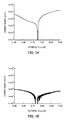
- FIG. 1A is a graph illustrating an exemplary polarization curve of a hot-dip Zn alloy-plated steel sheet in 0.5 M NaCl aqueous solution including no water-soluble corrosion inhibitor.
- FIG. 1B is a graph illustrating an exemplary polarization curve of a hot-dip Zn alloy-plated steel sheet in 0.5 M NaCl aqueous solution containing a water-soluble corrosion inhibitor.
- the corrosion current density in the 0.5 M NaCl aqueous solution containing a water-soluble corrosion inhibitor is at least 20% smaller than the corrosion current density measured in the 0.5 M NaCl aqueous solution containing no water-soluble corrosion inhibitor.
- the method for preparing the aqueous solution (cooling aqueous solution) containing a water-soluble corrosion inhibitor is not specifically limited.
- a water-soluble corrosion inhibitor capable of reducing the corrosion current density, and a dissolution promoter on an as needed basis may be dissolved in water (solvent).
- the type of the water-soluble corrosion inhibitor is not specifically limited as long as capable of reducing the corrosion current density.
- the water-soluble corrosion inhibitor include a V compound, a Si compound, and a Cr compound.
- Preferable examples of the V compound include acetylacetone vanadyl, vanadium acetylacetonate, vanadium oxysulfate, vanadium pentoxide, and ammonium vanadate.
- preferable examples of the Si compound include sodium silicate.
- preferable examples of the Cr compound include ammonium chromate and potassium chromate. These water-soluble corrosion inhibitors may be used singly or in combination. The amount of the water-soluble corrosion inhibitor added is selected to satisfy the equation 3.
- the amount of the dissolution promoter added is not specifically limited. For example, 90 to 130 parts by mass of the dissolution promoter may be added to 100 parts by mass of the water-soluble corrosion inhibitor. With an excessively small amount of the dissolution promoter added, the water-soluble corrosion inhibitor cannot be sufficiently dissolved in some cases. On the other hand, with an excessively large amount of the dissolution promoter added, the effect is saturated, resulting in a cost disadvantage.
- dissolution promoter examples include 2-aminoethanol, tetraethylammonium hydroxide, ethylene diamine, 2,2'-iminodiethanol, and 1-amino-2-propanol.
- the method for contacting the cooling aqueous solution with the surface of a hot-dip Zn alloy plating layer is not specifically limited.
- Examples of the method for contacting the cooling aqueous solution with the surface of a hot-dip Zn alloy plating layer include a spraying process and a dipping process.
- FIGS. 2A and 2B illustrate exemplary methods for contacting a cooling aqueous solution with the surface of a hot-dip Zn alloy plating layer.
- FIG. 2A illustrates an exemplary method for contacting a cooling aqueous solution with the surface of a hot-dip Zn alloy plating layer by a spraying process.
- FIG. 2B illustrates an exemplary method for contacting a cooling aqueous solution with the surface of a hot-dip Zn alloy plating layer by a dipping process.
- cooling apparatus 100 for spraying process includes a plurality of spray nozzles 110, squeeze rollers 120 disposed downstream of spray nozzles 110 in the feed direction of a steel strip S, and housing 130 which covers the nozzles and the rollers.
- Spray nozzles 110 are disposed on both sides of the steel strip S.
- the steel strip S is cooled by a cooling aqueous solution supplied from spray nozzles 110 such that a water film is temporarily formed on the surface of the plating layer, inside housing 130.
- the cooling aqueous solution is then removed with squeeze roller 120.
- cooling apparatus 200 for dipping process includes dip tank 210 in which a cooling aqueous solution is stored, dip roller 220 disposed inside dip tank 210, and squeeze rollers 230 disposed downstream of dip roller 220 in the feed direction of the steel strip S so as to remove the extra cooling aqueous solution adhered to the steel strip S.
- the steel strip S fed into dip tank 210 is then contacted with the cooling aqueous solution so as to be cooled.
- the steel strip S is then subjected to a turn of direction by the rotating dip roller 220, and pulled upward.
- the cooling aqueous solution is removed with squeeze rollers 230.
- the production method of the present invention can suppress the temporal blackening at the surface of a plating layer of a hot-dip Zn alloy-plated steel sheet.
- a presumed mechanism of the occurrence of blackening of a hot-dip Zn alloy plating layer is described, and then a presumed mechanism of the suppression of blackening is described when a hot-dip Zn alloy-plated steel sheet is produced according to the production method of the present invention.
- the mechanism of the suppression of blackening is not limited to the hypotheses.
- the present inventors produced a hot-dip Zn alloy-plated steel sheet by forming a hot-dip Zn alloy plating layer having a plating composition including 6% by mass of Al, 3% by mass of Mg, 0.024% by mass of Si, 0.05% by mass of Ti, 0.003% by mass of B, and the balance of Zn on the surface of a base steel sheet, and then temporarily forming a water film from cooling water (in-factory water having a pH of 7.6, at 20°C) in a water quenching zone for a spraying process.
- cooling water in-factory water having a pH of 7.6, at 20°C
- temporary forming a water film means a state allowing a water film in contact with the surface of a hot-dip Zn alloy-plated steel sheet to be visually observed for one second or more.
- the surface temperature of the hot-dip Zn alloy-plated steel sheet was estimated to be approximately 160°C immediately before formation of the water film from the cooling water.
- the produced hot-dip Zn alloy-plated steel sheet was stored in a room (at a room temperature of 20°C, with a relative humidity of 60%) for one week. After storage for one week, the surface of the hot-dip Zn alloy-plated steel sheet was visually observed. The blackening developed on the whole surface of the hot-dip Zn alloy-plated steel sheet and a dark part where blackening particularly proceeded compared with the periphery was observed.
- the chemical binding states of Zn, Al and Mg were analyzed by XPS analysis (X-ray Photoelectoron Spectroscopy). Then, the analyzed hot-dip Zn alloy-plated steel sheet was stored in a room (at a room temperature of 20°C, with a relative humidity of 60%) for one week. After storage for one week, the surface of the hot-dip Zn alloy-plated steel sheet was visually observed. As a result, a dark part was observed in a part of the hot-dip Zn alloy-plated steel sheet. For the region where the dark part was formed and the region where no dark part was observed (normal part), the XPS analysis results of the hot-dip Zn alloy-plated steel sheet obtained immediately after production were compared.
- FIGS. 3A and 3B to FIGS. 5A and 5B are charts illustrating the XPS analysis results of the hot-dip Zn alloy-plated steel sheet obtained immediately after production for the normal part and the dark part.
- FIG. 3A illustrates the intensity profile of the chemical binding energy corresponding to the 2p orbitals of Zn in a normal part.
- FIG. 3B illustrates the intensity profile of the chemical binding energy corresponding to the 2p orbitals of Zn in a dark part.
- FIG. 4A illustrates the intensity profile of the chemical binding energy corresponding to the 2p orbitals of Al in a normal part.
- FIG. 4B illustrates the intensity profile of the chemical binding energy corresponding to the 2p orbitals of Al in a dark part.
- FIG. 5A illustrates the intensity profile of the chemical binding energy corresponding to the 2p orbitals of Mg in a normal part.
- FIG. 5B illustrates the intensity profile of the chemical binding energy corresponding to the 2p orbitals of Mg in a dark part.
- a peak derived from metal Zn at approximately 1022 eV and a peak derived from Zn(OH) 2 at approximately 1023 eV having a strength weaker than that of the peak derived from metal Zn were observed. From the analysis results, it is found that Zn is present not only as metal Zn, but also present as hydroxide (Zn(OH) 2 ) in the normal part. From the strength ratio between Zn and Zn(OH) 2 , it is found that the Zn is present in larger amount than Zn(OH) 2 in the normal part.
- Mg is present as metal Mg, as oxide (MgO), and as hydroxide (Mg(OH) 2 ) in the normal part and the dark part. No major change in the ratio of presence of metal Mg, Mg(OH) 2 , and MgO was observed between the normal part and the dark part.
- the present inventors produced a hot-dip Zn alloy-plated steel sheet by contacting in-factory water (cooling water) with the surface of the hot-dip Zn alloy plating layer by a mist cooling apparatus, without formation of a water film.
- the produced hot-dip Zn alloy-plated steel sheet was stored in a room (at a room temperature of 20°C, with a relative humidity of 60%) for one week. After storage for one week, the surface of the hot-dip Zn alloy-plated steel sheet was visually observed.
- the hot-dip Zn alloy-plated steel sheet had a uniform surface gloss, and no formation of a dark part was observed. The degree of gloss at the surface of the plating layer is approximately the same as in the normal part in the hot-dip Zn alloy-plated steel sheet produced through temporary formation of a water film.
- FIG. 6 illustrates the intensity profile of the chemical binding energy corresponding to the 2p orbitals of Zn.
- the intensity profiles of Al and Mg are omitted.
- a peak derived from metal Zn at approximately 1022 eV and a peak derived from Zn(OH) 2 at approximately 1023 eV were observed, even in the case of contact with cooling water without formation of a water film. From the strength ratio between Zn and Zn(OH) 2 , it is found that the Zn is present in larger amount than Zn(OH) 2 in the normal part. Accordingly, it is presumed that the formation of Zn(OH) 2 is not accelerated even in the case of contact with cooling water when a water film is not formed.
- the present inventors found that: 1) Zn(OH) 2 is formed on the surface of the plating layer through formation of a water film in the cooling step; and 2) blackening tends to occur in a region where Zn(OH) 2 is formed in the surface of the plating layer. Accordingly, the present inventors presume that the mechanism of blackening of the plating layer to be as follows.
- Zn 2+ eluted into cooling water bonds with OH - in the cooling water to form Zn(OH) 2 on the surface of the plating layer.
- Zn(OH) 2 As time passes, a part of Zn(OH) 2 on the surface of the plating layer forms ZnO through a dehydration reaction.
- ZnO 1-x forms a color center, visually exhibiting a black color.
- the present inventors produced a hot-dip Zn alloy-plated steel sheet by using an aqueous solution of a V compound (reduction ratio of the corrosion current density: 20% or more) instead of in-factory water so as to temporarily form a water film on the surface of the plating layer in the water quenching zone for a spraying process.
- aqueous solution of a V compound reduction ratio of the corrosion current density: 20% or more
- the surface temperature of the hot-dip Zn alloy-plated steel sheet immediately before contact with the cooling aqueous solution was estimated to be approximately 160°C.
- the produced hot-dip Zn alloy-plated steel sheet was stored in a room (at a room temperature of 20°C, with a relative humidity of 60%) for one week. After storage for one week, the surface of the hot-dip Zn alloy-plated steel sheet was visually observed. The hot-dip Zn alloy-plated steel sheet had a practically uniform surface gloss, and no formation of a dark part was observed. The hot-dip Zn alloy-plated steel sheet had higher surface gloss in comparison with the normal part in the hot-dip Zn alloy-plated steel sheet produced through temporary formation of a water film using in-factory water.
- FIG. 7 illustrates the intensity profile of the chemical binding energy corresponding to the 2p orbitals of Zn in the normal part in the case of using the cooling aqueous solution.
- the intensity profiles of Al and Mg are omitted.
- a peak derived from metal Zn at approximately 1022 eV and a peak derived from Zn(OH) 2 at approximately 1023 eV were observed, even in the case of using the cooling aqueous solution.
- the amount of Zn(OH) 2 at the surface of the hot-dip Zn alloy plating layer is small. Accordingly, the hot-dip Zn alloy plating layer satisfies, at the entire surface, the following equation 4.
- S[Zn] is a peak area derived from metal Zn and centered at approximately 1022 eV in an intensity profile of XPS analysis of the surface of the hot-dip Zn alloy plating layer
- S[Zn(OH) 2 ] is a peak area derived from Zn(OH) 2 and centered at approximately 1023 eV in the intensity profile of XPS analysis of the surface of the hot-dip Zn alloy plating layer.
- Zn(OH) 2 ratio the ratio of the peak area derived from Zn(OH) 2 and centered at approximately 1023 eV (hereinafter referred to as "Zn(OH) 2 ratio") is 40% or less relative to the total of the peak area derived from metal Zn and centered at approximately 1022 eV, and peak area derived from Zn(OH) 2 and centered at approximately 1023 eV in the intensity profile measured in the XPS analysis.
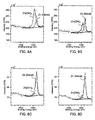
- FIGS. 8A to 8D illustrate the intensity profile of the chemical binding energy corresponding to the 2p orbitals of Zn at the surface of a plating layer of the hot-dip Zn alloy-plated steel sheet.
- FIG. 8A illustrates the intensity profile with a Zn(OH) 2 ratio of approximately 80%
- FIG. 8B illustrates the intensity profile with a Zn(OH) 2 ratio of approximately 45%
- FIG. 8C illustrates the intensity profile with a Zn(OH) 2 ratio of approximately 15%
- FIG. 8D illustrates the intensity profile with a Zn(OH) 2 ratio of approximately 10%.
- a dotted line is the base line, a broken line is the intensity profile derived from metal Zn (a peak centered at approximately 1022 eV), and a solid line is the intensity profile derived from Zn(OH) 2 (a peak centered at approximately 1023 eV).
- the Zn(OH) 2 ratio is 40% or less over the whole surface of the plating layer as shown in FIGS. 8C and 8D .
- the XPS analysis of the surface of the plating layer of a hot-dip Zn alloy-plated steel sheet is performed using an XPS analyzer (AXIS Nova, produced by Kratos Group PLC.).
- the peak area derived from metal Zn and centered at approximately 1022 eV, and the peak area derived from Zn(OH) 2 and centered at approximately 1023 eV are calculated using software (Vision 2) attached to the XPS analyzer.
- the position of the peak derived from metal Zn is precisely at 1021.6 eV, and the position of the peak derived from Zn(OH) 2 is precisely at 1023.3 eV. These values may change in some cases due to characteristics of XPS analysis, contamination of a sample, and charging of a sample. Those skilled in the art, however, are capable of distinguishing the peak derived from metal Zn from the peak derived from Zn(OH) 2 .
- the method of producing the hot-dip Zn alloy-plated steel sheet of the present invention described above may be performed, for example, in the following production line.
- FIG. 9 is a schematic diagram illustrating a part of production line 300 of a hot-dip Zn alloy-plated steel sheet.
- Production line 300 forms a plating layer on the surface of a base steel sheet (steel strip), and can continuously produce hot-dip Zn alloy-plated steel sheets.
- Production line 300 may further form a chemical conversion coating on the surface of the plating layer on an as needed basis, and can continuously produce plated steel sheets with chemical conversion treatment.
- production line 300 includes furnace 310, plating bath 320, air jet cooler 340, mist cooling zone 350, water quenching zone 360, skin pass mill 370, and tension leveler 380.
- the steel strip S fed from a feeding reel not shown in drawing through a predetermined step is heated in furnace 310.
- the heated steel strip S is dipped in plating bath 320, so that molten metal adheres to both sides of the steel strip S.
- An excess amount of molten metal is then removed with a wiping apparatus having wiping nozzle 330, allowing a specified amount of molten metal to adhere to the surface of the steel strip S.
- the steel strip S with a specified amount of molten metal adhered thereto is cooled to the solidifying point of the molten metal or lower by air jet cooler 340 or in mist cooling zone 350.
- Air jet cooler 340 is a facility for cooling the steel strip S by spraying a gas.
- Mist cooling zone 350 is a facility for cooling the steel strip S by spraying atomized fluid (e.g. cooling water) and a gas.
- the molten metal is thereby solidified, so that a hot-dip Zn alloy plating layer is formed on the surface of the steel strip S.
- mist cooling zone 350 no water film is formed on the surface of the plating layer.
- the temperature after cooling is not specifically limited, and may be, for example, 100 to 250°C.
- Water quench zone 360 is a facility for cooling the steel strip S through contact with a large amount of cooling water in comparison with mist cooling zone 350, supplying an amount of water to form a temporary water film on the surface of the plating layer.
- water quenching zone 360 includes headers having 10 flat spray nozzles disposed at intervals of 150 mm in the width direction of the steel strip S, which are disposed in 7 rows in the feeding direction of the base steel sheet S.
- an aqueous solution containing a water-soluble corrosion inhibitor (a reduction ratio of the corrosion current density of 20% or more) is used as cooling aqueous solution.
- the steel strip S is cooled in water quenching zone 360, with the cooling aqueous solution in an amount to temporarily form a water film on the surface of the plating layer being supplied.
- the cooling aqueous solution has a water temperature of approximately 20°C, a water pressure of approximately 2.5 kgf/cm 2 , and a water quantity of approximately 150 m 3 /h.
- the phrase "a water film is temporarily formed” means a state allowing a water film in contact with a hot-dip Zn alloy-plated steel sheet to be visually observed for approximately one seconds or more.
- the water-cooled hot-dip Zn alloy-plated steel sheet is rolled for thermal refining by skin pass mill 370, corrected to flat by tension leveler 380, and then wound onto tension reel 390.
- a specified chemical conversion treatment liquid is applied to the surface of the hot-dip Zn alloy-plated steel sheet corrected by tension leveler 380, with roll coater 400.
- the hot-dip Zn alloy-plated steel sheet through the chemical conversion treatment is dried and cooled in drying zone 410 and air cooling zone 420, and then wound onto tension reel 390.
- the hot-dip Zn alloy-plated steel sheet of the present invention has excellent blackening resistance and can be easily produced at high productivity.
- the method of producing a hot-dip Zn alloy-plated steel sheet of the present invention allows a hot-dip Zn alloy-plated steel sheet having excellent blackening resistance to be easily produced at high productivity, only by contacting a specified cooling aqueous solution with the surface of a hot-dip Zn alloy plating layer.
- hot-dip Zn alloy-plated steel sheets were produced.
- a hot-rolled steel strip with a sheet thickness of 2.3 mm was prepared as base steel sheet (steel strip) S.
- Plating was applied to the base steel sheet using the plating bath compositions and conditions described in Table 1, so that 14 types of hot-dip Zn alloy-plated steel sheets having different plating layer compositions from each other were produced.
- the composition of the plating bath and the composition of the plating layer are approximately the same. [Table 1] Plating No.
- Plating bath composition (balance: Zn) (% by mass) Plating conditions Al Mg Si Ti B Sb Bath temperature (°C) Adhering amount (g/m 2 ) Sheet passing speed (m/min) 1 0.18 - - - - 0.09 430 90 80 2 0.18 - - - - 0.06 430 90 80 3 0.18 - - - - 430 90 80 4 1 1 - - - - 430 90 80 5 1.5 1.5 - - - - 430 90 80 6 2.5 3 - - - - 430 90 80 7 2.5 3 0.4 - - - 430 90 80 8 3.5 3 - - - - 430 90 80 9 4 0.75 - - - - 430 90 80 10 6 3 - 0.05 0.003 - 430 90 80 11 6 3 0.02 0.05 0.003 - 430 90 80 12 11 3 - - - - 450 90 80 13 11 3 0.2 - - -
- the spray apparatus in water quenching zone 360 for use includes headers having 10 flat spray nozzles disposed at intervals of 150 mm in the width direction, which are disposed in 7 rows in the feeding direction of the base steel sheet S.
- Each of the cooling aqueous solutions supplied from water quenching zone 360 was under conditions with a water pressure of 2.5 kgf/cm 2 and a water quantity of 150 m 3 /h.
- the reduction ratio of corrosion current density of each of the cooling aqueous solutions is also described in Table 2 and Table 3.
- the reduction ratio of corrosion current density is the value calculated from the equation 3 (refer to FIGS. 1A and 1B ).
- the corrosion current density is a value obtained from a polarization curve by Tafel extrapolation method.
- the reduction ratio of corrosion current density of each of cooling aqueous solutions Nos. 10 to 36 is 20% or more, and the reduction ratio of corrosion current density of each of cooling aqueous solutions Nos. 1 to 9 and Nos. 37 to 42 is less than 20%.
- the ratio of Zn(OH) 2 on the surface of plating layer was measured for each of the hot-dip Zn alloy-plated steel sheets, using an XPS analyzer (AXIS Nova, produced by Kratos Group PLC.). The ratio of Zn(OH) 2 was calculated using software (Vision 2) attached to the XPS analyzer.
- test piece was cut out from each of the produced hot-dip Zn alloy-plated steel sheets.
- Each of the test pieces was placed in a thermo-hygrostat (LHU-113, produced by Espec Corp.), and subjected to a treatment for accelerating deterioration of the gloss at a temperature 60°C, with a relative humidity of 90%, for 40 hours.
- the brightness (L* value) at the surface of the plating layer for each of the hot-dip Zn alloy-plated steel sheets was measured before and after the treatment for accelerating deterioration of the gloss.
- the brightness (L* value) at the surface of the plating layer was measured using a spectroscopic color difference meter (TC-1800, produced by Tokyo Denshoku Co., Ltd), by spectral reflectance measurement in accordance with JIS K 5600.
- the measurement conditions are as follows:
- the evaluation was ranked as "A” for a difference in L* values ( ⁇ L*) between before and after the treatment for accelerating deterioration of the gloss of less than 0.5, "B” for a difference of 0.5 or more and less than 3, and "C” for a difference of 3 or more. It can be determined that a plated steel sheet evaluated as "A” has blackening resistance.
- a plating layer was formed on a base steel sheet using each of the plating bath compositions (Nos. 1 to 14) and conditions described in Table 1, so that 14 types of hot-dip Zn alloy-plated steel sheets having different plating layer compositions were produced.
- each of 42 types of cooling aqueous solutions described in Table 2 and Table 3 was used for cooling in water quenching zone 360.
- each of the test pieces was subjected to a chemical conversion treatment under the following chemical conversion treatment conditions A to C. Subsequently, the test piece was subjected to the treatment for accelerating deterioration of the gloss in the same manner as in Experiment 1, for the measurement of blackening resistance.
- ZINCHROME 3387N (chrome concentration: 10 g/L, produced by Nihon Parkerizing Co., Ltd.) was used as chemical conversion treatment liquid.
- the chemical conversion treatment liquid was applied to have an amount of chromium adhering of 10 mg/m 2 by a spray ringer roll method.
- chemical conversion treatment conditions B an aqueous solution containing 50 g/L of magnesium phosphate, 10 g/L of potassium fluorotitanate, and 3 g/L of an organic acid was used as chemical conversion treatment liquid.
- the chemical conversion treatment liquid was applied to have an amount of metal components adhering of 50 mg/m 2 by a roll coat method.
- chemical conversion treatment conditions C an aqueous solution containing 20 g/L of a urethane resin, 3 g/L of ammonium dihydrogen phosphate, and 1 g/L of vanadium pentoxide was used as chemical conversion treatment liquid.
- the chemical conversion treatment liquid was applied to have a dried film thickness of 2 ⁇ m by a roll coat method.
- the hot-dip Zn alloy-plated steel sheet obtained by the production method of the present invention is excellent in blackening resistance, and useful as plated steel sheet for use in, for example, roof materials and exterior materials for buildings, home appliances, and automobiles.
Landscapes
- Chemical & Material Sciences (AREA)
- Organic Chemistry (AREA)
- Engineering & Computer Science (AREA)
- Materials Engineering (AREA)
- Mechanical Engineering (AREA)
- Metallurgy (AREA)
- Chemical Kinetics & Catalysis (AREA)
- General Chemical & Material Sciences (AREA)
- Physics & Mathematics (AREA)
- Oil, Petroleum & Natural Gas (AREA)
- Thermal Sciences (AREA)
- Coating With Molten Metal (AREA)
- Preventing Corrosion Or Incrustation Of Metals (AREA)
- Solid-Phase Diffusion Into Metallic Material Surfaces (AREA)
Applications Claiming Priority (2)
| Application Number | Priority Date | Filing Date | Title |
|---|---|---|---|
| JP2013250143A JP5748829B2 (ja) | 2013-12-03 | 2013-12-03 | 溶融Zn合金めっき鋼板およびその製造方法 |
| PCT/JP2014/005717 WO2015083326A1 (fr) | 2013-12-03 | 2014-11-13 | Tôle en acier plaquée par alliage de zn par immersion à chaud |
Publications (2)
| Publication Number | Publication Date |
|---|---|
| EP3078759A1 true EP3078759A1 (fr) | 2016-10-12 |
| EP3078759A4 EP3078759A4 (fr) | 2017-08-30 |
Family
ID=53273113
Family Applications (1)
| Application Number | Title | Priority Date | Filing Date |
|---|---|---|---|
| EP14868634.8A Withdrawn EP3078759A4 (fr) | 2013-12-03 | 2014-11-13 | Tôle en acier plaquée par alliage de zn par immersion à chaud |
Country Status (13)
| Country | Link |
|---|---|
| US (2) | US20160281201A1 (fr) |
| EP (1) | EP3078759A4 (fr) |
| JP (1) | JP5748829B2 (fr) |
| KR (1) | KR101666123B1 (fr) |
| CN (1) | CN105992834B (fr) |
| AU (1) | AU2014358647A1 (fr) |
| BR (1) | BR112016011651A2 (fr) |
| CA (1) | CA2932525C (fr) |
| MX (1) | MX2016006898A (fr) |
| MY (1) | MY165137A (fr) |
| RU (1) | RU2615750C1 (fr) |
| TW (1) | TWI613323B (fr) |
| WO (1) | WO2015083326A1 (fr) |
Cited By (1)
| Publication number | Priority date | Publication date | Assignee | Title |
|---|---|---|---|---|
| KR20230095102A (ko) * | 2021-01-14 | 2023-06-28 | 닛폰세이테츠 가부시키가이샤 | 자동차 구조 부재용 도금 강판 |
Families Citing this family (4)
| Publication number | Priority date | Publication date | Assignee | Title |
|---|---|---|---|---|
| KR102031465B1 (ko) | 2017-12-26 | 2019-10-11 | 주식회사 포스코 | 가공 후 내식성 우수한 아연합금도금강재 및 그 제조방법 |
| KR102031466B1 (ko) | 2017-12-26 | 2019-10-11 | 주식회사 포스코 | 표면품질 및 내식성이 우수한 아연합금도금강재 및 그 제조방법 |
| US11384419B2 (en) * | 2019-08-30 | 2022-07-12 | Micromaierials Llc | Apparatus and methods for depositing molten metal onto a foil substrate |
| CN113025939B (zh) * | 2021-02-25 | 2021-12-21 | 首钢集团有限公司 | 一种锌铝镁镀层钢及其制备方法 |
Family Cites Families (12)
| Publication number | Priority date | Publication date | Assignee | Title |
|---|---|---|---|---|
| JPS61238952A (ja) * | 1985-04-13 | 1986-10-24 | Nippon Steel Corp | 溶融メツキ鋼板のスパングルレス化方法 |
| JPS63297576A (ja) * | 1987-05-29 | 1988-12-05 | Nisshin Steel Co Ltd | 耐黒変性に優れた溶融めっき鋼板の製造方法 |
| JPH06336664A (ja) * | 1993-05-27 | 1994-12-06 | Kobe Steel Ltd | スポット溶接性に優れた亜鉛−アルミニウム系めっき 鋼板の製造方法 |
| JP3307312B2 (ja) * | 1998-01-06 | 2002-07-24 | 住友金属工業株式会社 | 耐低温チッピング性、加工性に優れた合金化溶融亜鉛めっき鋼板の製造方法 |
| KR20020041029A (ko) * | 2000-11-25 | 2002-06-01 | 이구택 | 내식성이 우수한 용융아연합금계 도금강판 |
| JP4064634B2 (ja) | 2001-02-02 | 2008-03-19 | 日新製鋼株式会社 | 光沢保持性の良好な溶融Zn基めっき鋼板およびその製造法 |
| US6677058B1 (en) * | 2002-07-31 | 2004-01-13 | Nisshin Steel Co., Ltd. | Hot-dip Zn plated steel sheet excellent in luster-retaining property and method of producing the same |
| JP4546848B2 (ja) * | 2004-09-28 | 2010-09-22 | 新日本製鐵株式会社 | ヘアライン外観を有する高耐食性Zn系合金めっき鋼材 |
| RU2379374C2 (ru) * | 2005-09-01 | 2010-01-20 | Ниппон Стил Корпорейшн | СТАЛЬНОЙ МАТЕРИАЛ, ПОКРЫТЫЙ Zn-Al-СПЛАВОМ СПОСОБОМ ГОРЯЧЕГО ОКУНАНИЯ, С ОТЛИЧНОЙ ОБРАБАТЫВАЕМОСТЬЮ СГИБАНИЕМ, И СПОСОБ ЕГО ПОЛУЧЕНИЯ |
| JP5088095B2 (ja) | 2006-12-13 | 2012-12-05 | Jfeスチール株式会社 | 平板部耐食性、耐黒変性およびプレス成形後の外観と耐食性に優れた表面処理亜鉛系めっき鋼板、並びに亜鉛系めっき鋼板用水系表面処理液 |
| JP5356616B1 (ja) * | 2012-11-27 | 2013-12-04 | 日新製鋼株式会社 | 溶融Zn合金めっき鋼板の製造方法 |
| JP6022433B2 (ja) * | 2013-12-03 | 2016-11-09 | 日新製鋼株式会社 | 溶融Zn合金めっき鋼板の製造方法 |
-
2013
- 2013-12-03 JP JP2013250143A patent/JP5748829B2/ja active Active
-
2014
- 2014-11-13 AU AU2014358647A patent/AU2014358647A1/en not_active Abandoned
- 2014-11-13 MY MYPI2016701901A patent/MY165137A/en unknown
- 2014-11-13 EP EP14868634.8A patent/EP3078759A4/fr not_active Withdrawn
- 2014-11-13 RU RU2016121851A patent/RU2615750C1/ru active
- 2014-11-13 WO PCT/JP2014/005717 patent/WO2015083326A1/fr not_active Ceased
- 2014-11-13 US US15/037,489 patent/US20160281201A1/en not_active Abandoned
- 2014-11-13 KR KR1020167013545A patent/KR101666123B1/ko active Active
- 2014-11-13 BR BR112016011651A patent/BR112016011651A2/pt not_active Application Discontinuation
- 2014-11-13 MX MX2016006898A patent/MX2016006898A/es unknown
- 2014-11-13 CA CA2932525A patent/CA2932525C/fr active Active
- 2014-11-13 CN CN201480065801.4A patent/CN105992834B/zh active Active
- 2014-12-02 TW TW103141697A patent/TWI613323B/zh active
-
2017
- 2017-05-26 US US15/606,254 patent/US10125414B2/en active Active
Cited By (3)
| Publication number | Priority date | Publication date | Assignee | Title |
|---|---|---|---|---|
| KR20230095102A (ko) * | 2021-01-14 | 2023-06-28 | 닛폰세이테츠 가부시키가이샤 | 자동차 구조 부재용 도금 강판 |
| EP4230756A4 (fr) * | 2021-01-14 | 2024-04-24 | Nippon Steel Corporation | Tôle d'acier plaquée pour éléments structuraux d'automobile |
| US12071691B2 (en) | 2021-01-14 | 2024-08-27 | Nippon Steel Corporation | Plated steel sheet for automobile structural members |
Also Published As
| Publication number | Publication date |
|---|---|
| CA2932525A1 (fr) | 2015-06-11 |
| MX2016006898A (es) | 2016-08-17 |
| JP2015108167A (ja) | 2015-06-11 |
| BR112016011651A2 (pt) | 2017-08-08 |
| KR101666123B1 (ko) | 2016-10-13 |
| KR20160064239A (ko) | 2016-06-07 |
| CA2932525C (fr) | 2016-10-11 |
| AU2014358647A1 (en) | 2016-06-16 |
| US20170260614A1 (en) | 2017-09-14 |
| CN105992834A (zh) | 2016-10-05 |
| CN105992834B (zh) | 2018-06-19 |
| US20160281201A1 (en) | 2016-09-29 |
| MY165137A (en) | 2018-02-28 |
| TWI613323B (zh) | 2018-02-01 |
| RU2615750C1 (ru) | 2017-04-11 |
| WO2015083326A1 (fr) | 2015-06-11 |
| TW201522709A (zh) | 2015-06-16 |
| EP3078759A4 (fr) | 2017-08-30 |
| JP5748829B2 (ja) | 2015-07-15 |
| US10125414B2 (en) | 2018-11-13 |
Similar Documents
| Publication | Publication Date | Title |
|---|---|---|
| EP2927344B1 (fr) | Procédé permettant de fabriquer une tôle d'acier plaquée d'alliage de zinc par immersion à chaud | |
| US10125414B2 (en) | Method of producing hot-dip Zn alloy-plated steel sheet | |
| US20190040512A1 (en) | Method of producing hot-dip zn-alloy-plated steel sheet | |
| US11987887B2 (en) | Method for passivating metallic substances |
Legal Events
| Date | Code | Title | Description |
|---|---|---|---|
| PUAI | Public reference made under article 153(3) epc to a published international application that has entered the european phase |
Free format text: ORIGINAL CODE: 0009012 |
|
| 17P | Request for examination filed |
Effective date: 20160603 |
|
| AK | Designated contracting states |
Kind code of ref document: A1 Designated state(s): AL AT BE BG CH CY CZ DE DK EE ES FI FR GB GR HR HU IE IS IT LI LT LU LV MC MK MT NL NO PL PT RO RS SE SI SK SM TR |
|
| AX | Request for extension of the european patent |
Extension state: BA ME |
|
| DAX | Request for extension of the european patent (deleted) | ||
| A4 | Supplementary search report drawn up and despatched |
Effective date: 20170727 |
|
| RIC1 | Information provided on ipc code assigned before grant |
Ipc: C23C 2/06 20060101AFI20170721BHEP Ipc: C23C 2/28 20060101ALI20170721BHEP |
|
| STAA | Information on the status of an ep patent application or granted ep patent |
Free format text: STATUS: THE APPLICATION IS DEEMED TO BE WITHDRAWN |
|
| 18D | Application deemed to be withdrawn |
Effective date: 20180227 |