EP3080247B1 - Kapseln mit zellen mit blutbildungspotenzial - Google Patents
Kapseln mit zellen mit blutbildungspotenzial Download PDFInfo
- Publication number
- EP3080247B1 EP3080247B1 EP14815303.4A EP14815303A EP3080247B1 EP 3080247 B1 EP3080247 B1 EP 3080247B1 EP 14815303 A EP14815303 A EP 14815303A EP 3080247 B1 EP3080247 B1 EP 3080247B1
- Authority
- EP
- European Patent Office
- Prior art keywords
- cells
- solution
- concentration
- liquid
- capsule
- Prior art date
- Legal status (The legal status is an assumption and is not a legal conclusion. Google has not performed a legal analysis and makes no representation as to the accuracy of the status listed.)
- Not-in-force
Links
Images

Classifications
-
- C—CHEMISTRY; METALLURGY
- C12—BIOCHEMISTRY; BEER; SPIRITS; WINE; VINEGAR; MICROBIOLOGY; ENZYMOLOGY; MUTATION OR GENETIC ENGINEERING
- C12N—MICROORGANISMS OR ENZYMES; COMPOSITIONS THEREOF; PROPAGATING, PRESERVING, OR MAINTAINING MICROORGANISMS; MUTATION OR GENETIC ENGINEERING; CULTURE MEDIA
- C12N5/00—Undifferentiated human, animal or plant cells, e.g. cell lines; Tissues; Cultivation or maintenance thereof; Culture media therefor
- C12N5/0012—Cell encapsulation
-
- C—CHEMISTRY; METALLURGY
- C12—BIOCHEMISTRY; BEER; SPIRITS; WINE; VINEGAR; MICROBIOLOGY; ENZYMOLOGY; MUTATION OR GENETIC ENGINEERING
- C12M—APPARATUS FOR ENZYMOLOGY OR MICROBIOLOGY; APPARATUS FOR CULTURING MICROORGANISMS FOR PRODUCING BIOMASS, FOR GROWING CELLS OR FOR OBTAINING FERMENTATION OR METABOLIC PRODUCTS, i.e. BIOREACTORS OR FERMENTERS
- C12M25/00—Means for supporting, enclosing or fixing the microorganisms, e.g. immunocoatings
- C12M25/01—Drops
-
- C—CHEMISTRY; METALLURGY
- C12—BIOCHEMISTRY; BEER; SPIRITS; WINE; VINEGAR; MICROBIOLOGY; ENZYMOLOGY; MUTATION OR GENETIC ENGINEERING
- C12N—MICROORGANISMS OR ENZYMES; COMPOSITIONS THEREOF; PROPAGATING, PRESERVING, OR MAINTAINING MICROORGANISMS; MUTATION OR GENETIC ENGINEERING; CULTURE MEDIA
- C12N5/00—Undifferentiated human, animal or plant cells, e.g. cell lines; Tissues; Cultivation or maintenance thereof; Culture media therefor
- C12N5/06—Animal cells or tissues; Human cells or tissues
- C12N5/0602—Vertebrate cells
- C12N5/0634—Cells from the blood or the immune system
- C12N5/0641—Erythrocytes
-
- C—CHEMISTRY; METALLURGY
- C12—BIOCHEMISTRY; BEER; SPIRITS; WINE; VINEGAR; MICROBIOLOGY; ENZYMOLOGY; MUTATION OR GENETIC ENGINEERING
- C12N—MICROORGANISMS OR ENZYMES; COMPOSITIONS THEREOF; PROPAGATING, PRESERVING, OR MAINTAINING MICROORGANISMS; MUTATION OR GENETIC ENGINEERING; CULTURE MEDIA
- C12N2500/00—Specific components of cell culture medium
- C12N2500/05—Inorganic components
- C12N2500/10—Metals; Metal chelators
- C12N2500/20—Transition metals
- C12N2500/24—Iron; Fe chelators; Transferrin
- C12N2500/25—Insulin-transferrin; Insulin-transferrin-selenium
-
- C—CHEMISTRY; METALLURGY
- C12—BIOCHEMISTRY; BEER; SPIRITS; WINE; VINEGAR; MICROBIOLOGY; ENZYMOLOGY; MUTATION OR GENETIC ENGINEERING
- C12N—MICROORGANISMS OR ENZYMES; COMPOSITIONS THEREOF; PROPAGATING, PRESERVING, OR MAINTAINING MICROORGANISMS; MUTATION OR GENETIC ENGINEERING; CULTURE MEDIA
- C12N2501/00—Active agents used in cell culture processes, e.g. differentation
- C12N2501/10—Growth factors
- C12N2501/125—Stem cell factor [SCF], c-kit ligand [KL]
-
- C—CHEMISTRY; METALLURGY
- C12—BIOCHEMISTRY; BEER; SPIRITS; WINE; VINEGAR; MICROBIOLOGY; ENZYMOLOGY; MUTATION OR GENETIC ENGINEERING
- C12N—MICROORGANISMS OR ENZYMES; COMPOSITIONS THEREOF; PROPAGATING, PRESERVING, OR MAINTAINING MICROORGANISMS; MUTATION OR GENETIC ENGINEERING; CULTURE MEDIA
- C12N2501/00—Active agents used in cell culture processes, e.g. differentation
- C12N2501/10—Growth factors
- C12N2501/14—Erythropoietin [EPO]
-
- C—CHEMISTRY; METALLURGY
- C12—BIOCHEMISTRY; BEER; SPIRITS; WINE; VINEGAR; MICROBIOLOGY; ENZYMOLOGY; MUTATION OR GENETIC ENGINEERING
- C12N—MICROORGANISMS OR ENZYMES; COMPOSITIONS THEREOF; PROPAGATING, PRESERVING, OR MAINTAINING MICROORGANISMS; MUTATION OR GENETIC ENGINEERING; CULTURE MEDIA
- C12N2501/00—Active agents used in cell culture processes, e.g. differentation
- C12N2501/10—Growth factors
- C12N2501/145—Thrombopoietin [TPO]
-
- C—CHEMISTRY; METALLURGY
- C12—BIOCHEMISTRY; BEER; SPIRITS; WINE; VINEGAR; MICROBIOLOGY; ENZYMOLOGY; MUTATION OR GENETIC ENGINEERING
- C12N—MICROORGANISMS OR ENZYMES; COMPOSITIONS THEREOF; PROPAGATING, PRESERVING, OR MAINTAINING MICROORGANISMS; MUTATION OR GENETIC ENGINEERING; CULTURE MEDIA
- C12N2501/00—Active agents used in cell culture processes, e.g. differentation
- C12N2501/10—Growth factors
- C12N2501/155—Bone morphogenic proteins [BMP]; Osteogenins; Osteogenic factor; Bone inducing factor
-
- C—CHEMISTRY; METALLURGY
- C12—BIOCHEMISTRY; BEER; SPIRITS; WINE; VINEGAR; MICROBIOLOGY; ENZYMOLOGY; MUTATION OR GENETIC ENGINEERING
- C12N—MICROORGANISMS OR ENZYMES; COMPOSITIONS THEREOF; PROPAGATING, PRESERVING, OR MAINTAINING MICROORGANISMS; MUTATION OR GENETIC ENGINEERING; CULTURE MEDIA
- C12N2501/00—Active agents used in cell culture processes, e.g. differentation
- C12N2501/10—Growth factors
- C12N2501/165—Vascular endothelial growth factor [VEGF]
-
- C—CHEMISTRY; METALLURGY
- C12—BIOCHEMISTRY; BEER; SPIRITS; WINE; VINEGAR; MICROBIOLOGY; ENZYMOLOGY; MUTATION OR GENETIC ENGINEERING
- C12N—MICROORGANISMS OR ENZYMES; COMPOSITIONS THEREOF; PROPAGATING, PRESERVING, OR MAINTAINING MICROORGANISMS; MUTATION OR GENETIC ENGINEERING; CULTURE MEDIA
- C12N2501/00—Active agents used in cell culture processes, e.g. differentation
- C12N2501/20—Cytokines; Chemokines
- C12N2501/23—Interleukins [IL]
- C12N2501/2303—Interleukin-3 (IL-3)
-
- C—CHEMISTRY; METALLURGY
- C12—BIOCHEMISTRY; BEER; SPIRITS; WINE; VINEGAR; MICROBIOLOGY; ENZYMOLOGY; MUTATION OR GENETIC ENGINEERING
- C12N—MICROORGANISMS OR ENZYMES; COMPOSITIONS THEREOF; PROPAGATING, PRESERVING, OR MAINTAINING MICROORGANISMS; MUTATION OR GENETIC ENGINEERING; CULTURE MEDIA
- C12N2501/00—Active agents used in cell culture processes, e.g. differentation
- C12N2501/20—Cytokines; Chemokines
- C12N2501/23—Interleukins [IL]
- C12N2501/2306—Interleukin-6 (IL-6)
-
- C—CHEMISTRY; METALLURGY
- C12—BIOCHEMISTRY; BEER; SPIRITS; WINE; VINEGAR; MICROBIOLOGY; ENZYMOLOGY; MUTATION OR GENETIC ENGINEERING
- C12N—MICROORGANISMS OR ENZYMES; COMPOSITIONS THEREOF; PROPAGATING, PRESERVING, OR MAINTAINING MICROORGANISMS; MUTATION OR GENETIC ENGINEERING; CULTURE MEDIA
- C12N2501/00—Active agents used in cell culture processes, e.g. differentation
- C12N2501/20—Cytokines; Chemokines
- C12N2501/26—Flt-3 ligand (CD135L, flk-2 ligand)
-
- C—CHEMISTRY; METALLURGY
- C12—BIOCHEMISTRY; BEER; SPIRITS; WINE; VINEGAR; MICROBIOLOGY; ENZYMOLOGY; MUTATION OR GENETIC ENGINEERING
- C12N—MICROORGANISMS OR ENZYMES; COMPOSITIONS THEREOF; PROPAGATING, PRESERVING, OR MAINTAINING MICROORGANISMS; MUTATION OR GENETIC ENGINEERING; CULTURE MEDIA
- C12N2501/00—Active agents used in cell culture processes, e.g. differentation
- C12N2501/90—Polysaccharides
- C12N2501/91—Heparin
-
- C—CHEMISTRY; METALLURGY
- C12—BIOCHEMISTRY; BEER; SPIRITS; WINE; VINEGAR; MICROBIOLOGY; ENZYMOLOGY; MUTATION OR GENETIC ENGINEERING
- C12N—MICROORGANISMS OR ENZYMES; COMPOSITIONS THEREOF; PROPAGATING, PRESERVING, OR MAINTAINING MICROORGANISMS; MUTATION OR GENETIC ENGINEERING; CULTURE MEDIA
- C12N2533/00—Supports or coatings for cell culture, characterised by material
- C12N2533/70—Polysaccharides
- C12N2533/74—Alginate
Definitions
- the present invention relates to a capsule comprising at least one cell with hematopoietic potential, said capsule being formed of a liquid core and at least one gelled envelope completely encapsulating the liquid core at its periphery, the use of such a capsule for the ex vivo production of enucleated erythroid cells as well as an ex vivo method of producing enucleated erythroid cells using said capsule.
- erythropoiesis evolves from the mesoderm into two waves.
- Primary erythropoiesis begins in the yolk sac (extra-embryonic tissue) in the third week of pregnancy and gives rise to megaloblastic nucleated primitive erythrocytes, which synthesize embryonic hemoglobin of the type Gower I ( ⁇ 2 ⁇ 2) and Gower II ( ⁇ 2 ⁇ 2). ).
- Final erythropoiesis begins during the fifth week of gestation in the mesonephric aorta gonad (AGA) region, before migrating to the fetal liver and bone marrow.
- the mature erythroid cells produce little by little, leading to the production of enucleated red blood cells (RBC), normocytic and containing fetal hemoglobin ( ⁇ 2 ⁇ 2) then adult ( ⁇ 2 ⁇ 2).
- the patent application WO2005118780 which describes an in vitro method for mass and selective production of enucleated erythrocytes.
- the hematopoietic stem cells are cultured in a culture medium which comprises at least one hematopoietic growth factor and then the cell culture thus obtained is brought into contact with the support cells.
- the patent application WO2011101468 describes a cell culture medium, without the requirement of co-culture on a cell stroma, for the growth and / or differentiation of cells of the hematopoietic line which comprises insulin, transferrin and plasma or serum.
- the method for industrial scale production of choice is today the stirred reactor used for example for the production of vaccines or monoclonal antibodies, with growth of cells in solution or microparticles for adherent cells.
- Beads filled with alginate are used in cell culture, as a support for adherent cells where the cells are located outside the beads.
- a second problem is the lack of space inside the gel for cell growth.
- Different strategies have therefore been tested for capsule formation ( Encapsulation of biological material, Franklin Lim, US 4352883, 1982 , Tissue culture and production in permeable gels. Elizabeth Maureen Frye, Maurice Lynch Mark, John Paul Vasington. EP0185701., 1984 ).
- the patent application WO 2010/063937 describes a process for the preparation of capsules having a liquid core and a thin gelled envelope completely encapsulating the core. These capsules are formed by coextrusion of drops at the exit of a double envelope. Said capsules are described as likely to contain cells. Nevertheless, even if the process seems suitable for cell encapsulation, there is no indication that the capsules make it possible to support cell growth when the encapsulated cells are cultured, and especially the amplification and differentiation of hematopoietic potential cells, in particular hematopoietic stem cells or erythroid progenitor cells.
- the inventors have demonstrated that the capsules containing cells with hematopoietic potentiality according to the invention make it possible to solve all these problems and thus make it possible to envisage for the first time an application to the cell culture of cells with hematopoietic potentiality on a large scale.
- the object of the invention is thus to improve the yield of cell cultures of hematopoietic potential cells, to produce enucleated erythroid cells, in a bioreactor.
- the challenge is to bring nutrients and eliminate the catabolites necessary for the good growth of cells with hematopoietic potentiality.
- the capsule according to the invention makes it possible to protect said cells from shearing or oxygen bubbles in solution, while guaranteeing homogeneous conditions of growth.
- the diffusion is indeed sufficient to guarantee homogeneity in concentration inside the capsules.
- the cell-protecting wall it will be possible to agitate a large concentration of capsules effectively and extensively in the bioreactor.
- Encapsulation has other advantages for the culture of cells with hematopoietic potentiality on a large scale: the capsules are simple to handle (by sedimentation, capture through a filter) and will allow for example to easily change the culture medium without applying stress on the cells, unlike a conventional reactor.
- the present invention relates to a capsule comprising a liquid core, a gelled envelope completely encapsulating the liquid core at its periphery, the gelled envelope being adapted to retain the liquid core when the capsule is immersed in a gas, the gelled envelope comprising at least one gelled polyelectrolyte and at least one surfactant, the liquid core of which comprises at least one cell with hematopoietic potential.
- cells with hematopoietic potential are meant cells capable of differentiating to one or more of the lines that cause blood cells.
- the "hematopoietic potential cells” according to the invention are cells of the erythroid line, capable of producing red blood cells during their differentiation.
- the cells with hematopoietic potentiality according to the invention may especially come from stem cells, in particular embryonic stem cells (ESC), adult stem cells, such as hematopoietic stem cells (HSCs), pluripotent induced stem cells (iPS), immortalized cells, erythroid progenitor cells or erythroid precursors.
- stem cells in particular embryonic stem cells (ESC), adult stem cells, such as hematopoietic stem cells (HSCs), pluripotent induced stem cells (iPS), immortalized cells, erythroid progenitor cells or erythroid precursors.
- HSCs embryonic stem cells
- iPS pluripotent induced stem cells
- immortalized cells erythroid progenitor cells or erythroid precursors.
- the "hematopoietic potential cells” of the invention are human cells.
- the cells with hematopoietic potential are hematopoietic stem cells and / or erythroid progenitor cells and / or erythroid precursors.
- hematopoietic potential cells are hematopoietic stem cells
- these are preferably human hematopoietic stem cells, particularly CD34 + cells that can be obtained from umbilical cord blood or by leukopheresis from peripheral blood. They will differentiate preferentially into reticulocytes and / or erythrocytes.
- Erythrocytes or red blood cells, are more commonly known as red blood cells.
- Reticulocytes are the cells preceding the erythrocyte stage in erythropoiesis. They are almost similar to them. Reticulocytes are young red blood cells that still have ribosomes and mitochondria, but lack a peroxisome.
- erythroid progenitor cell is meant a cell derived from the differentiation of a hematopoietic stem cell, capable of proliferating and differentiating into a cell of the erythroid line, in particular into reticulocytes and / or erythrocytes. They are preferably human erythroid progenitor cells.
- erythroid precursor any cell of the erythroid line, cytologically identifiable, that is to say meeting the conventional criteria for identifying cell types ranging from proerythroblast to acidophilic erythroblast. They are preferably human erythroid precursors.
- the liquid heart of the capsule may comprise at the time of encapsulation a quantity of cells with potentiality hematopoietic range between 1 and 10,000, preferably between 10 and 1000 cells / capsule.
- the liquid heart of the capsule according to the invention consists of a liquid which is preferably physiologically acceptable, such as a saline solution, a buffer solution, a physiologically acceptable viscosifier and / or a culture medium intended for the growth and differentiation of cells with hematopoietic potential, the composition of which will be detailed in the following description.
- physiologically acceptable such as a saline solution, a buffer solution, a physiologically acceptable viscosifier and / or a culture medium intended for the growth and differentiation of cells with hematopoietic potential
- the liquid heart may also include physiologically acceptable excipients, such as thickeners, or rheology modifiers.
- physiologically acceptable excipients such as thickeners, or rheology modifiers.
- thickeners are, for example, polymers, cross-polymers, microgels, gums or proteins, including polysaccharides, celluloses, polysaccharides, silicone polymers and co-polymers, colloidal particles (silica, clays). , latex ).
- the gelled envelope of the capsules according to the invention comprises a gel containing water and at least one polyelectrolyte reactive with multivalent ions.
- the envelope further contains a surfactant resulting from its manufacturing process, as described below.
- the ratio of the flow rate of the first solution to the flow rate of the second solution at the outlet of the double envelope is between 1 and 200, advantageously between 10 and 200, the gelled envelope having a thickness of between 0.1% and 10%, advantageously between 0.1% and 2% of the diameter of the capsule, after recovery of the capsules formed.
- the first physiologically acceptable liquid solution comprises a saline solution, a buffer solution, a physiologically acceptable viscosifier, a physiologically acceptable excipient, advantageously a thickener or a rheology modifier, and / or culture medium.
- the drops formed by coextrusion in the jacket fall by gravity through a volume of air into the gelling solution.
- surfactant means an amphiphilic molecule having two parts of different polarity, one lipophilic and apolar, the other hydrophilic and polar.
- a surfactant may be of ionic type (cationic or anionic), zwitterionic or nonionic.
- the surfactant is preferably an anionic surfactant, a nonionic surfactant, a cationic surfactant, or a mixture thereof.
- the molecular weight of the surfactant is between 150 g / mol and 10,000 g / mol, advantageously between 250 g / mol and 1500 g / mol.
- the surfactant is an anionic surfactant
- it is for example chosen from an alkyl sulphate, an alkyl sulphonate, an alkyl aryl sulphonate, an alkaline alkyl phosphate, a dialkyl sulphosuccinate, an alkaline earth salt of saturated or unsaturated fatty acids.
- These surfactants advantageously have at least one hydrophobic hydrocarbon chain having a number of carbons greater than 5 or even 10 and at least one hydrophilic anionic group, such as a sulphate, a sulphonate or a carboxylate linked to one end of the hydrophobic chain.
- the surfactant is a cationic surfactant
- it is for example chosen from an alkylpyridium or alkylammonium halide salt such as n-ethyldodecylammonium chloride or bromide, cetylammonium chloride or bromide (CTAB) .
- CTLAB cetylammonium chloride or bromide
- These surfactants advantageously have at least one hydrophobic hydrocarbon chain having a number of carbons greater than 5 or even 10 and at least one hydrophilic cationic group, such as a quaternary ammonium cation.
- the surfactant is a nonionic surfactant
- it is for example chosen from polyoxyethylenated and / or polyoxypropylenated derivatives of fatty alcohols, fatty acids, or alkylphenols, arylphenols, or from alkyl glucosides, polysorbates, cocamides.
- the surfactant will be chosen from the following list: an alkyl sulphate, an alkyl sulphonate, an alkyl aryl sulphonate, an alkaline alkyl phosphate, a dialkyl sulphosuccinate, an alkaline earth salt of saturated or unsaturated fatty acids, a salt of alkylpyridium or alkylammonium halide such as n-ethyldodecylammonium chloride or bromide, cetylammonium chloride or bromide, polyoxyethylenated and / or polyoxypropylenated derivatives of fatty alcohols, fatty acids or alkylphenols, or from arylphenols, alkyl glucosides, polysorbates, cocamides or mixtures thereof.
- the total weight percent of surfactant in the second solution will be greater than 0.01% and is advantageously between 0.01% and 0.5% by weight.
- polyelectrolyte reactive with polyvalent ions means a polyelectrolyte capable of passing from a liquid state in an aqueous solution to a gelled state under the effect of contact with a gelling solution containing multivalent ions such as ions of an alkaline earth metal chosen for example from calcium ions, barium ions, magnesium ions.
- the individual polyelectrolyte chains are substantially free to flow relative to one another.
- An aqueous solution of 2% by weight of polyelectrolyte then exhibits a purely viscous behavior at the shear gradients characteristic of the forming process.
- the viscosity of this zero shear solution is between 50 mPa.s and 10,000 mPa.s, advantageously between 3000 mPa.s and 7000 mPa.s.
- the individual polyelectrolyte chains in the liquid state advantageously have a molar mass greater than 65000 g / mol.
- the individual polyelectrolyte chains form, with the multivalent ions, a coherent three-dimensional network that retains the liquid core and prevents its flow.
- the individual chains are held together and can not flow freely relative to each other.
- the viscosity of the formed gel is infinite.
- the gel has a threshold of stress to the flow. This stress threshold is greater than 0.05 Pa.
- the gel also has a modulus of elasticity that is non-zero and greater than 35 kPa.
- the three-dimensional gel of polyelectrolyte contained in the envelope traps water and the surfactant.
- the polyelectrolyte is preferably a biocompatible polymer that is harmless to the human body. It is for example produced biologically.
- polysaccharides synthetic polyelectrolytes based on acrylates (sodium, lithium, potassium or ammonium polyacrylate, or polyacrylamide), synthetic polyelectrolytes based on sulfonates (poly (styrene sulfonate)). sodium, for example). More particularly, the polyelectrolyte is selected from an alkaline earth alginate, such as sodium alginate or potassium alginate, gellan or pectin.
- Alginates are produced from brown algae called “laminar”, referred to as “sea weed”.
- Such alginates advantageously have an ⁇ -L-guluronate content of greater than about 50%, preferably greater than 55%, or even greater than 60%.
- the or each polyelectrolyte will be a polyelectrolyte reactive with multivalent ions, in particular a polysaccharide reactive with multivalent ions such as an alkali alginate, a gelane or a pectin, preferably an alkali metal alginate advantageously having a bulk content ⁇ -L-guluronate greater than 50%, especially greater than 55%.
- a polysaccharide reactive with multivalent ions such as an alkali alginate, a gelane or a pectin, preferably an alkali metal alginate advantageously having a bulk content ⁇ -L-guluronate greater than 50%, especially greater than 55%.
- the mass content of polyelectrolyte in the second solution may be less than 5% by weight and is advantageously between 0.5 and 3% by weight.
- the capsule may further comprise an intermediate envelope completely encapsulating at its periphery the liquid core, said intermediate envelope itself being encapsulated completely at its periphery by the gelled envelope.
- This liquid intermediate envelope will be formed of an intermediate composition comprising a buffer or a cell culture medium, and / or a viscosifier.
- the viscosifier will be a water-soluble polymer, such as PEG, dextran or alginate in solution more diluted than in the outer shell.
- the intermediate envelope is in contact with the core and the outer envelope and keeps the core out of contact with the outer envelope.
- the intermediate phase is useful for stabilizing the capsule during its formation, for example in the case where the liquid core contains calcium capable of inducing gelation of the external phase too early. Indeed, depending on their composition, the cell culture media can interfere with the polymerization. It thus makes it possible to separate the liquid core from the external phase to be gelated. It also protects the liquid heart containing the cells during the formation of drops, alginate of the outer layer which has not yet polymerized.
- liquid core and the intermediate phase being both liquid, they are eventually mixed to form the liquid core of the capsule.
- the production of the drops according to the process according to the invention mentioned above is carried out by separate conveying in a double jacket of a first liquid solution containing the cell or cells with hematopoietic potentiality and of a second liquid solution containing a liquid polyelectrolyte suitable for gelling and at least one surfactant, as described in WO2010 / 063937 .
- the separated conveying takes place in a triple envelope, with a third solution comprising the intermediate solution.
- the different streams come into contact and then form a multi-component drop, according to a hydrodynamic mode called “dripping” (drip, described in particular in WO 2010/063937 ) or a so-called “jetting” mode (with jet instability, described in particular in FR 2012/2964017 ), depending on the size of the capsules desired.
- the first flow constitutes the liquid core and the second flow constitutes the liquid outer envelope.
- the second flux constitutes the liquid intermediate envelope and the third flux the external liquid envelope.
- each multi-component drop is detached from the double (or triple) envelope and falls into a volume of air, before being immersed in a gelling solution containing a reagent capable of gelling the polyelectrolyte of the outer liquid envelope, to form the outer gelled envelope of the capsules according to the invention.
- the multi-component drops may comprise additional layers between the outer envelope and the liquid core, other than the intermediate envelope.
- This type of drop may be prepared by separate conveying of multiple compositions into multi-envelope devices.
- the reagent capable of gelling the polyelectrolyte present in the gelling solution then forms bonds between the different polyelectrolyte chains present in the liquid outer envelope, then passing to the gelled state, thus causing the gelification of the liquid outer shell.
- the individual polyelectrolyte chains present in the liquid outer envelope are connected to each other to form a crosslinked network, also called hydrogel.
- the polyelectrolyte present in the gelled outer shell is in the gelled state and is also called gelled polyelectrolyte or gelled polyelectrolyte.
- a gelled outer envelope adapted to retain the assembly constituted by the heart or the core and the intermediate envelope, is thus formed.
- This outer gelled envelope has a clean mechanical strength, that is to say that it is able to retain the liquid core and, in case of presence of an intermediate envelope, to completely surround the intermediate envelope. This has the effect of maintaining the internal structure of the liquid core and, where appropriate, the intermediate envelope.
- the capsules according to the invention remain in the gelling solution until the outer shell is completely gelled, preferably without exceeding 30 minutes, even more preferably without exceeding 5 minutes.
- the gelling solution can then optionally be removed and the gelled capsules can then optionally be collected and immersed in an aqueous rinsing solution, generally consisting essentially of water, in particular of physiological saline, in order to rinse off the gelled capsules formed.
- an aqueous rinsing solution generally consisting essentially of water, in particular of physiological saline, in order to rinse off the gelled capsules formed.
- This rinsing step makes it possible to extract from the gelled external envelope any excess of the reagent suitable for gelling the gelling solution, and all or part of the surfactant (or other species) initially contained in the second liquid solution.
- the capsule is spherical in shape and has an outside diameter of less than 5 mm and in particular between 0.3 mm and 3 mm.
- the gelled outer shell of the capsules according to the invention has a thickness of from 10 .mu.m to 500 .mu.m, preferably from 20 .mu.m to 200 .mu.m, and advantageously from 50 .mu.m to 100 .mu.m.
- the fineness of the thickness of the outer gelled envelope generally makes this outer envelope transparent.
- the capsules according to the invention generally have a volume ratio between the core and all the intermediate and outer shells greater than 2, and preferably less than 50.
- the capsules according to the invention generally have a volume ratio between the core and all of the intermediate and outer shells of between 5 and 10.
- the invention also relates to the use of at least one capsule as described in the context of the present invention, for the ex vivo production of enucleated erythroid cells, in particular reticulocytes and / or erythrocytes.
- It also relates to an ex vivo method for producing enucleated erythroid cells comprising culturing hematopoietic potential cells contained in at least one capsule as defined in the context of the present invention, under conditions allowing the production of enucleated erythroid cells.
- the enucleated erythroid cells produced according to the method of the present invention are reticulocytes and / or erythrocytes.
- the cells with hematopoietic potentiality used in the context of the method according to the invention are hematopoietic stem cells and / or erythroid progenitor cells and / or erythroid precursors, more particularly human.
- Culture medium means any medium, in particular any liquid medium, capable of supporting the growth of cells with hematopoietic potential, in particular hematopoietic stem cells, erythroid progenitor cells and erythroid precursors, more particularly human, and to allow the production of enucleated erythroid cells, particularly reticulocytes and / or erythrocytes.
- the insulin of the culture medium according to the present invention is, in particular, recombinant human insulin. Its concentration is preferably between 5 and 20 ⁇ g / ml, more preferably between 8 and 12 ⁇ g / ml, and still more preferably 10 ⁇ g / ml.
- the transferrin of the culture medium according to the invention is, in particular, human transferrin. More particularly, transferrin is saturated with iron. Its concentration is preferably between 200 and 1000 ⁇ g / ml, more preferably between 300 and 500 ⁇ g / ml, and even more preferably 330 or 450 ⁇ g / ml. Transferrin may also be in recombinant form.
- the plasma or the serum of the culture medium according to the invention are, in particular, human. Their concentration is preferably between 1 and 20%, more preferably between 4 and 12%, and even more preferably 5 or 10%.
- the culture medium also comprises heparin, in particular at a concentration of between 0.5 and 5 IU / ml, preferably between 1.5 and 3.5 IU / ml, and even more more preferably 2 IU / ml.
- the culture medium according to the present invention comprises heparin when the culture medium also comprises plasma.
- the culture medium may also comprise EPO and / or SCF and / or IL-3 and / or hydrocortisone.
- the EPO (erythropoietin) of the culture medium according to the invention is, in particular, recombinant human EPO. Its concentration is preferably between 0.5 and 20 IU / ml, more preferably between 2.5 and 3.5 IU / ml, and still more preferably with 3 IU / ml.
- the SCF (Stem Cell Factor) of the culture medium according to the invention is, in particular, recombinant human SCF. Its concentration is preferably between 50 and 200 ng / ml, more preferably between 80 and 120 ng / ml, and even more preferably 100 ng / ml.
- IL-3 (interleukin 3) of the culture medium according to the invention is, in particular, recombinant human IL-3. Its concentration is preferably between 1 and 30 ng / ml, more preferably between 4 and 6 ng / ml, and still more preferably 5 ng / ml.
- Hydrocortisone which is optionally added to the culture medium, according to the invention preferably has a concentration of between 5 ⁇ 10 -7 and 5 ⁇ 10 -6 M, and more preferentially of 5 ⁇ 10 -6 M.
- the culture medium may also comprise at least one of the following compounds: TPO, FLT3, BMP4, VEGF-A165 and IL-6.
- the TPO (thrombopoietin) of the culture medium according to the invention is, in particular, recombinant human TPO. Its concentration is preferably between 20 and 200 ng / ml, more preferably between 80 and 120 ng / ml, and even more preferably 100 ng / ml.
- the FLT3 (FMS-like tyrosine kinase 3 ligand) of the culture medium according to the invention is, in particular, recombinant human FLT3. Its concentration is preferably between 20 and 200 ng / ml, more preferably between 80 and 120 ng / ml, and even more preferably 100 ng / ml.
- the BMP4 (Bone Morphogenic Protein 4) of the culture medium according to the invention is, in particular, recombinant human BMP4. Its concentration is preferably between 1 and 20 ng / ml, more preferably between 8 and 12 ng / ml, and still more preferably with 10 ng / ml.
- VEGF-A165 Vascular Endothelial Growth Factor A165 of the culture medium according to the invention is, in particular, recombinant human VEGF-A165. Its concentration is preferably between 1 and 20 ng / ml, more preferably between 4 and 6 ng / ml, and still more preferably with 5 ng / ml.
- IL-6 interleukin 6 of the culture medium according to the invention is, in particular, recombinant human IL-6. Its concentration is preferably between 1 and 20 ng / ml, more preferably between 4 and 6 ng / ml, and still more preferably with 5 ng / ml.
- the culture medium comprises a base culture medium, the latter having the characteristic of being able to support the growth of cells with hematopoietic potential, in particular hematopoietic stem cells, progenitor cells erythroid and / or erythroid precursors, more particularly human, and to allow the production of enucleated erythroid cells, particularly reticulocytes and / or erythrocytes.
- a base culture medium the latter having the characteristic of being able to support the growth of cells with hematopoietic potential, in particular hematopoietic stem cells, progenitor cells erythroid and / or erythroid precursors, more particularly human, and to allow the production of enucleated erythroid cells, particularly reticulocytes and / or erythrocytes.
- This type of basic culture medium is well known to those skilled in the art.
- Iscove Dulbecco modified medium IMDM
- the culture medium according to the present invention also preferably comprises modified Iscove Dulbecco medium supplemented with glutamine or a peptide containing glutamine.
- cells with hematopoietic potentiality are cultured in a medium comprising:
- the cells with hematopoietic potentiality are cultured in a medium comprising:
- the cells with hematopoietic potentiality are cultured in a medium comprising:
- the cells are preferably encapsulated at 0, i.e. at a very early stage of differentiation, for example that of hematopoietic stem cells, but may also be encapsulated at a later stage. that is, at the stage of progenitor or erythroid precursor.
- the capsules according to the invention comprising at least one cell with hematopoietic potential, may therefore comprise only poorly differentiated cells such as hematopoietic stem cells, only cells with a more advanced differentiation stage such as erythroid progenitor cells, erythroid precursors or a mixture of hematopoietic potential cells at different stages of differentiation.
- the CD34 + cells are isolated from placental blood by selection using supermagnetic microbeads using Mini-MACS columns (Miltenyi Biotech, Bergisch Glodbach, Germany) (purity greater than 94 ⁇ 3%).
- the cells are cultured in IMDM medium (Iscove modified Dulbecco's, Biochrom, Germany) supplemented with 2 mM of L-glutamine (Invitrogen, Cergy-Pontoise, France), 330 ⁇ g / ml of human iron-saturated transferrin, 10 ⁇ g / ml insulin (Sigma, Saint-Quentin Fallavier, France), 2 IU / ml of Choay heparin (Sanofi, France) and 5% of plasma (solvent / detergent inactivated plasma virus (S / D)).
- IMDM medium Iscove modified Dulbecco's, Biochrom, Germany
- L-glutamine Invitrogen, Cergy-Pontoise, France
- 330 ⁇ g / ml of human iron-saturated transferrin 10 ⁇ g / ml insulin (Sigma, Saint-Quentin Fallavier, France)
- CD34 + / ml cells are cultured in the presence of 100 ng / ml SCF (supplied by Amgen, Thousand Oaks, CA), 5 ng / ml IL-3 (R & D Systems, Abingdon, UK) and 3 IU / ml of EPO (Eprex, supplied by Janssen Cilag, Issy-les-Moulineaux, France).
- SCF serum-free cell
- IL-3 R & D Systems, Abingdon, UK
- EPO Eprex, supplied by Janssen Cilag, Issy-les-Moulineaux, France
- a cell culture volume is diluted in four volumes of fresh medium containing SCF, IL-3 and EPO.
- the cultures are maintained at 37 ° C with 5% CO 2 in the air.
- the cells are counted and their concentration is adjusted in the encapsulation medium (IMDM, heparin, plasma, insulin, transferrin, EPO, SCF and IL-3) in order to reach the desired
- the cells are encapsulated on D8.
- One liter of 1% CaCl 2 was filtered through a 0.2 ⁇ m filter to serve as a gelling bath.
- Two liters of physiological saline (0.9% NaCl) are prepared which will be used to rinse the set up, ie the injector, the tubes, the syringes and the connectors forming the encapsulation device, as well as than the capsules.
- a liter of milliQ water is also prepared for setting up the set up under water.
- a solution of 30 ml of 2% alginate with 0.5 mM SDS is prepared.
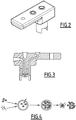
- the encapsulation device is mounted according to the following procedure: the set up is washed with 70% EtOH and then with filtered milliQ water (injector XII see Figures 2 and 3 ). It comprises capillaries with an internal diameter of 0.78 mm and an outer diameter of 1 mm, as well as 3 SGE syringes (VWR), and an inner phase of 5 ml with agitation, and those for the other two 10 ml phases. .
- the set up is mounted under water to avoid the presence of bubbles and then filled with PBS / SVF (fetal calf serum) 10% and left for one hour to prevent the cells from sticking to the walls of the tubes or the injector thereafter. It is then rinsed with physiological water.
- PBS / SVF fetal calf serum
- the intermediate phase circuit is washed with IMDM (Iscove's Modified Dulbecco's Medium) while the internal phase circuit is washed with culture medium containing IMDM, heparin and plasma.
- IMDM Iscove's Modified Dulbecco's Medium
- the final set up is put in place with a 2% alginate solution for the shell, IMDM for the intermediate phase and with a cell suspension comprising between 1.25 ⁇ 10 5 cells / ml and 2.5 ⁇ 10 5 cells / ml in a complete culture medium containing IMDM, heparin, plasma, insulin, transferrin, EPO, SCF and IL-3 for the inner phase.
- Encapsulation is carried out as indicated in Figure 4 by a method of drip encapsulation (dripping).
- the flow rates used for the different inner-intermediate-shell phases are respectively 5, 1 and 3 ml / h.
- the formation time of the capsule is 4.9 seconds.
- the resulting capsules are 1.6 mm in diameter. They consist of an external phase which will be gelled in the presence of calcium, an intermediate phase intended to stabilize the capsule during its formation, and an internal phase containing the cells.
- the gelation step is then carried out with a gelling bath containing a solution of calcium chloride and a drop of Tween 20 ® at 10%.
- the calcium solution is then removed without dropping the capsules and they are rinsed with 3x30 ml of physiological saline.
- the physiological water is then removed while the capsules are resuspended in 10 ml of culture medium.
- the whole is then transferred into a culture flask of 25 cm 2 .
- the bottles are placed vertically.
- the cells are then cultured in fresh medium in the presence of EPO until J19.
- the cultures are maintained at 37 ° C with 5% CO 2 in the air.
- the encapsulated cells show a red color, thus testifying to the presence of hemoglobin.
- the encapsulated cells are observed after dissolution of the capsule and May-Grünwald Giemsa staining.
- a volume fraction of 2% cells in the capsules is obtained after three weeks of culture, and a viability equivalent to that measured in static culture.
- the capsules containing cells with hematopoietic potentiality according to the invention make it possible to envisage for the first time an application to cell culture of cells with hematopoietic potentiality on a large scale.
Landscapes
- Health & Medical Sciences (AREA)
- Engineering & Computer Science (AREA)
- Life Sciences & Earth Sciences (AREA)
- Biomedical Technology (AREA)
- Wood Science & Technology (AREA)
- Organic Chemistry (AREA)
- Chemical & Material Sciences (AREA)
- Zoology (AREA)
- Bioinformatics & Cheminformatics (AREA)
- Biotechnology (AREA)
- Genetics & Genomics (AREA)
- Microbiology (AREA)
- Biochemistry (AREA)
- General Engineering & Computer Science (AREA)
- General Health & Medical Sciences (AREA)
- Cell Biology (AREA)
- Immunology (AREA)
- Hematology (AREA)
- Sustainable Development (AREA)
- Micro-Organisms Or Cultivation Processes Thereof (AREA)
Claims (17)
- Kapsel, umfassend einen flüssigen Kern, eine gelierte Umhüllung, die vollständig den flüssigen Kern an seinem Umfang einkapselt, wobei die gelierte Umhüllung geeignet ist, den flüssigen Kern festzuhalten, wenn die Kapsel in ein Gas getaucht wird, und die gelierte Umhüllung mindestens ein geliertes Polyelektrolyt und mindestens ein Tensid umfasst, wobei der flüssige Kern mindestens eine Zelle mit hematopoetischem Potential aufweist.
- Kapsel nach Anspruch 1, dadurch gekennzeichnet, dass sie durch Umsetzung eines Verfahrens erhalten wird, das die folgenden Schritte umfasst:a) getrenntes Transportieren in einer doppelten Hülle einer ersten physiologisch verträglichen flüssigen Lösung, die mindestens eine Zelle mit hematopoetischem Potential enthält, und einer zweiten flüssigen Lösung, die ein flüssiges Polyelektrolyt enthält, das zum Gelieren geeignet ist;b) Bilden einer Reihe von Tropfen am Ausgang der doppelten Hülle, wobei jeder Tropfen einen Mittelkern, der von der ersten Lösung gebildet wird, und einen umfänglichen Überzug, der von der zweiten Lösung gebildet wird und vollständig den Mittelkern bedeckt, umfasst;c) Tauchen jedes Tropfens in eine Gelierlösung, die ein Reagenz enthält, das geeignet ist, mit dem Polyelektrolyt des Überzugs zu reagieren, um diesen von einem flüssigen Zustand in einen Gelierzustand zu bringen und die gelierte Umhüllung zu bilden, wobei der Mittelkern den flüssigen Kern bildet;d) Rückgewinnen der gebildeten Kapseln;wobei die zweite Lösung mindestens ein Tensid vor ihrem Kontakt mit der ersten Lösung enthält.
- Kapsel nach Anspruch 2, dadurch gekennzeichnet, dass das Verhältnis der Durchflussmenge der ersten Lösung zur Durchflussmenge der zweiten Lösung am Ausgang der doppelten Hülle zwischen 1 und 200 liegt, vorzugsweise zwischen 10 und 200, wobei die gelierte Umhüllung eine Dicke zwischen 0,1% und 10%, vorzugsweise zwischen 0,1% und 2% des Durchmessers der Kapsel nach der Rückgewinnung der gebildeten Kapseln aufweist.
- Kapsel nach einem beliebigen der Ansprüche 2 oder 3, dadurch gekennzeichnet, dass die durch Koextrusion in der doppelten Hülle gebildeten Tropfen mittels Schwerkraft durch ein Luftvolumen hindurch in die Gelierlösung fallen.
- Kapsel nach einem beliebigen der Ansprüche 2 bis 4, dadurch gekennzeichnet, dass die erste physiologisch verträgliche flüssige Lösung eine Salzlösung, eine Pufferlösung, ein physiologisch verträgliches Andickungsmittel, einen physiologisch verträglicher Hilfsstoff, vorteilhafter Weise ein Verdickungsmittel oder einen rheologischen Modifikator und/oder ein Nährmedium umfasst.
- Kapsel nach einem beliebigen der Ansprüche 1 bis 5, dadurch gekennzeichnet, dass sie außerdem eine Zwischenhülle umfasst, die vollständig den flüssigen Kern an seinem Umfang einkapselt, wobei die Zwischenhülle selbst vollständig von der gelierten Umhüllung umfänglich eingekapselt ist.
- Kapsel nach einem beliebigen der Ansprüche 1 bis 6, dadurch gekennzeichnet, dass die mindestens eine Zelle mit hematopoetischem Potential eine hematopoetische Stammzelle und/oder eine erythroide Vorläuferzelle und/oder ein erythroider Präkursor ist.
- Kapsel nach einem beliebigen der Ansprüche 1 bis 7, dadurch gekennzeichnet, dass die mindestens eine Zelle mit hematopoetischem Potential oder hematopoetische Stammzelle oder erythroide Vorläuferzelle oder erythroider Vorläufer eine Zelle oder ein humaner Präkursor ist.
- Verwendung mindestens einer Kapsel nach einem beliebigen der Ansprüche 1 bis 8 für die ex vivo Herstellung von entkernten Erythroidzellen.
- Verwendung nach Anspruch 9, dadurch gekennzeichnet, dass die entkernten Erythroidzellen Retikulozythen und/oder Erythrozyten sind.
- Herstellungsverfahren ex vivo von entkernten Erythroidzellen, umfassend die Kultur von Zellen mit hematopoetischem Potential, die in mindestens einer Kapsel enthalten sind, wie sie in einem beliebigen der Ansprüche 1 bis 8 definiert ist, bei Bedingungen, die die Herstellung von entkernten Erythroidzellen gestatten.
- Verfahren nach Anspruch 11, dadurch gekennzeichnet, dass die Zellen mit hematopoetischem Potential in einem Kulturmedium kultiviert werden, das umfasst:e) Insulin mit einer Konzentration zwischen 1 und 50 µg/ml ;f) Transferrin mit einer Konzentration zwischen 100 und 2000 µg/ml ; undg) Plasma oder Serum bei einer Konzentration zwischen 1 und 30%.
- Verfahren nach Anspruch 12, dadurch gekennzeichnet, dass das Kulturmedium ebenfalls EPO und/oder SCF und/oder IL-3 und/oder Hydrocortison umfasst.
- Verfahren nach einem beliebigen der Ansprüche 12 oder 13, dadurch gekennzeichnet, dass das Kulturmedium ebenfalls mindestens eine der folgenden Verbindungen umfasst: TPO, FLT3, BMP4, VEGF-A165 und IL-6.
- Verfahren nach einem beliebigen der Ansprüche 12 bis 14, dadurch gekennzeichnet, dass das Kulturmedium ebenfalls ein modifiziertes Iscove Dulbecco Medium umfasst, das durch Glutamin oder ein Glutamin enthaltendes Peptid ergänzt ist.
- Verfahren nach einem beliebigen der Ansprüche 11 bis 15, dadurch gekennzeichnet, dass die entkernten Erythroidzellen Retikulozyten und/oder Erythrozyten sind.
- Verfahren nach einem beliebigen der Ansprüche 11 bis 16, dadurch gekennzeichnet, dass die Zellen mit hematopoetischem Potential hematopoitische Stammzellen und/oder erythroide Vorläuferzellen und/oder erythroide Präkursoren sind.
Applications Claiming Priority (2)
| Application Number | Priority Date | Filing Date | Title |
|---|---|---|---|
| FR1362595A FR3014691B1 (fr) | 2013-12-13 | 2013-12-13 | Capsules contenant des cellules a potentialite hematopoietique |
| PCT/EP2014/077607 WO2015086832A1 (fr) | 2013-12-13 | 2014-12-12 | Capsules contenant des cellules à potentialité hématopoïétique |
Publications (2)
| Publication Number | Publication Date |
|---|---|
| EP3080247A1 EP3080247A1 (de) | 2016-10-19 |
| EP3080247B1 true EP3080247B1 (de) | 2018-02-28 |
Family
ID=50137870
Family Applications (1)
| Application Number | Title | Priority Date | Filing Date |
|---|---|---|---|
| EP14815303.4A Not-in-force EP3080247B1 (de) | 2013-12-13 | 2014-12-12 | Kapseln mit zellen mit blutbildungspotenzial |
Country Status (6)
| Country | Link |
|---|---|
| US (1) | US20160333310A1 (de) |
| EP (1) | EP3080247B1 (de) |
| JP (1) | JP2016539652A (de) |
| CN (1) | CN105980549A (de) |
| FR (1) | FR3014691B1 (de) |
| WO (1) | WO2015086832A1 (de) |
Families Citing this family (3)
| Publication number | Priority date | Publication date | Assignee | Title |
|---|---|---|---|---|
| FR3047012B1 (fr) * | 2016-01-26 | 2020-07-31 | Ecole Superieure Physique & Chimie Ind Ville De Paris | Microcapsule de cellules primaires |
| WO2018158450A1 (en) * | 2017-03-03 | 2018-09-07 | Biomillenia Sas | Microparticle for cultivating and testing cells |
| GB201707143D0 (en) * | 2017-05-04 | 2017-06-21 | Plasticell Ltd | Method for producing cells |
Family Cites Families (6)
| Publication number | Priority date | Publication date | Assignee | Title |
|---|---|---|---|---|
| DE68913890T2 (de) * | 1988-04-18 | 1994-08-04 | Nitta Gelatin Kk | Verfahren zur züchtung tierischer zellen in grossem massstab und verfahren zur herstellung von trägermaterial dafür. |
| TW200916583A (en) * | 2007-06-08 | 2009-04-16 | Novathera Ltd | Cell expansion |
| FR2939012B1 (fr) * | 2008-12-01 | 2015-03-27 | Capsum | Procede de fabrication d'une serie de capsules, et serie de capsules associee |
| EP2489779B1 (de) * | 2009-10-14 | 2019-01-09 | The University of Tokyo | Beschichtete mikrogelfasern |
| PL2539441T3 (pl) * | 2010-02-22 | 2017-06-30 | Université Pierre Et Marie Curie (Paris 6) | Podłoże do hodowli komórkowej do wzrostu i różnicowania komórek linii hematopoetycznych |
| US9725684B2 (en) * | 2011-02-25 | 2017-08-08 | Milliken & Company | Capsules and compositions comprising the same |
-
2013
- 2013-12-13 FR FR1362595A patent/FR3014691B1/fr not_active Expired - Fee Related
-
2014
- 2014-12-12 CN CN201480072825.2A patent/CN105980549A/zh active Pending
- 2014-12-12 US US15/103,655 patent/US20160333310A1/en not_active Abandoned
- 2014-12-12 JP JP2016538722A patent/JP2016539652A/ja active Pending
- 2014-12-12 EP EP14815303.4A patent/EP3080247B1/de not_active Not-in-force
- 2014-12-12 WO PCT/EP2014/077607 patent/WO2015086832A1/fr not_active Ceased
Also Published As
| Publication number | Publication date |
|---|---|
| FR3014691A1 (fr) | 2015-06-19 |
| CN105980549A (zh) | 2016-09-28 |
| WO2015086832A1 (fr) | 2015-06-18 |
| FR3014691B1 (fr) | 2016-02-05 |
| JP2016539652A (ja) | 2016-12-22 |
| EP3080247A1 (de) | 2016-10-19 |
| US20160333310A1 (en) | 2016-11-17 |
Similar Documents
| Publication | Publication Date | Title |
|---|---|---|
| US9206393B2 (en) | Isolated adult pluripotent stem cells and methods for isolating and cultivating thereof | |
| TWI675101B (zh) | 培養基組成物 | |
| RU2580246C2 (ru) | Мультипотентные стволовые клетки внепеченочных желчных путей и способы их выделения | |
| FR2503183A1 (fr) | Procede et ensemble de production de substances formees par des cellules vivantes | |
| CN107267442A (zh) | 微载体上的多能干细胞培养 | |
| CN113151149B (zh) | 一种诱导肺类器官的方法及实验模型的建立 | |
| EP3080247B1 (de) | Kapseln mit zellen mit blutbildungspotenzial | |
| JP7282232B2 (ja) | 接着状態の細胞培養物の改変方法 | |
| US20110027880A1 (en) | Cell culture system for pancreatic islands | |
| Duin et al. | Viability and functionality of neonatal porcine islet-like cell clusters bioprinted in alginate-based bioinks | |
| CN114410582B (zh) | 一种胶质细胞和神经元共培养方法 | |
| ES2825723T3 (es) | Método para utilizar células directoras para la activación y diferenciación de células madre/progenitoras específicas | |
| FR3141945A1 (fr) | Substitut de matrice extracellulaire dans un microcompartiment cellulaire | |
| CN111394297A (zh) | 内胚层干细胞规模化制备功能性肝母细胞与肝实质细胞的方法及其应用 | |
| US20070037281A1 (en) | Method for differentiating stem cells in cells that produce a pancreatic hormone | |
| Sakai et al. | MIN6 cells-enclosing aminopropyl-silicate membrane templated by alginate gels differences in guluronic acid content | |
| JP2022174745A (ja) | マイクロキャリア | |
| CA3192855A1 (fr) | Tissu cardiaque particulier et utilisation dans le traitement de pathologies cardiaque | |
| CN115747154A (zh) | 一种用于长期培养鱼类肌肉干细胞的培养基 | |
| CA3193385A1 (fr) | Microcompartiments cellulaires comprenant des cellules humaines en cours de differenciation cardiaque, tissus obtenus a partir de ces microcompartiments et utilisations | |
| EP3966317A1 (de) | Verfahren zur in-vitro- oder ex-vivo-amplifikation von humanen fettgewebestammzellen | |
| CN121427804A (zh) | 一种动脉血管类器官模块化装配及其构建组织微循环的方法 | |
| EP1280888A1 (de) | Zellkukturverfahren, zellmassen so hergestellt und ihre verwendung | |
| EP0278817A1 (de) | Verfahren zur Wiederherstellung in Vitro von Geweben | |
| CN115505560A (zh) | 一种体外培养鸡小黄卵泡的方法 |
Legal Events
| Date | Code | Title | Description |
|---|---|---|---|
| PUAI | Public reference made under article 153(3) epc to a published international application that has entered the european phase |
Free format text: ORIGINAL CODE: 0009012 |
|
| 17P | Request for examination filed |
Effective date: 20160613 |
|
| AK | Designated contracting states |
Kind code of ref document: A1 Designated state(s): AL AT BE BG CH CY CZ DE DK EE ES FI FR GB GR HR HU IE IS IT LI LT LU LV MC MK MT NL NO PL PT RO RS SE SI SK SM TR |
|
| AX | Request for extension of the european patent |
Extension state: BA ME |
|
| RIN1 | Information on inventor provided before grant (corrected) |
Inventor name: BAUDRY, JEAN Inventor name: BREMOND, NICOLAS Inventor name: DOUAY, LUC Inventor name: DOMEJEAN, HUGO Inventor name: BIBETTE, JEROME Inventor name: BROUCHON, JULIE VICTOIRE Inventor name: GIARRATANA, MARIA CATALINA |
|
| DAX | Request for extension of the european patent (deleted) | ||
| GRAP | Despatch of communication of intention to grant a patent |
Free format text: ORIGINAL CODE: EPIDOSNIGR1 |
|
| STAA | Information on the status of an ep patent application or granted ep patent |
Free format text: STATUS: GRANT OF PATENT IS INTENDED |
|
| INTG | Intention to grant announced |
Effective date: 20171006 |
|
| GRAS | Grant fee paid |
Free format text: ORIGINAL CODE: EPIDOSNIGR3 |
|
| GRAA | (expected) grant |
Free format text: ORIGINAL CODE: 0009210 |
|
| STAA | Information on the status of an ep patent application or granted ep patent |
Free format text: STATUS: THE PATENT HAS BEEN GRANTED |
|
| AK | Designated contracting states |
Kind code of ref document: B1 Designated state(s): AL AT BE BG CH CY CZ DE DK EE ES FI FR GB GR HR HU IE IS IT LI LT LU LV MC MK MT NL NO PL PT RO RS SE SI SK SM TR |
|
| REG | Reference to a national code |
Ref country code: GB Ref legal event code: FG4D Free format text: NOT ENGLISH Ref country code: CH Ref legal event code: EP |
|
| REG | Reference to a national code |
Ref country code: AT Ref legal event code: REF Ref document number: 974156 Country of ref document: AT Kind code of ref document: T Effective date: 20180315 |
|
| REG | Reference to a national code |
Ref country code: IE Ref legal event code: FG4D Free format text: LANGUAGE OF EP DOCUMENT: FRENCH |
|
| REG | Reference to a national code |
Ref country code: DE Ref legal event code: R096 Ref document number: 602014021760 Country of ref document: DE |
|
| REG | Reference to a national code |
Ref country code: NL Ref legal event code: MP Effective date: 20180228 |
|
| REG | Reference to a national code |
Ref country code: LT Ref legal event code: MG4D |
|
| REG | Reference to a national code |
Ref country code: AT Ref legal event code: MK05 Ref document number: 974156 Country of ref document: AT Kind code of ref document: T Effective date: 20180228 |
|
| PG25 | Lapsed in a contracting state [announced via postgrant information from national office to epo] |
Ref country code: FI Free format text: LAPSE BECAUSE OF FAILURE TO SUBMIT A TRANSLATION OF THE DESCRIPTION OR TO PAY THE FEE WITHIN THE PRESCRIBED TIME-LIMIT Effective date: 20180228 Ref country code: NO Free format text: LAPSE BECAUSE OF FAILURE TO SUBMIT A TRANSLATION OF THE DESCRIPTION OR TO PAY THE FEE WITHIN THE PRESCRIBED TIME-LIMIT Effective date: 20180528 Ref country code: CY Free format text: LAPSE BECAUSE OF FAILURE TO SUBMIT A TRANSLATION OF THE DESCRIPTION OR TO PAY THE FEE WITHIN THE PRESCRIBED TIME-LIMIT Effective date: 20180228 Ref country code: LT Free format text: LAPSE BECAUSE OF FAILURE TO SUBMIT A TRANSLATION OF THE DESCRIPTION OR TO PAY THE FEE WITHIN THE PRESCRIBED TIME-LIMIT Effective date: 20180228 Ref country code: HR Free format text: LAPSE BECAUSE OF FAILURE TO SUBMIT A TRANSLATION OF THE DESCRIPTION OR TO PAY THE FEE WITHIN THE PRESCRIBED TIME-LIMIT Effective date: 20180228 Ref country code: NL Free format text: LAPSE BECAUSE OF FAILURE TO SUBMIT A TRANSLATION OF THE DESCRIPTION OR TO PAY THE FEE WITHIN THE PRESCRIBED TIME-LIMIT Effective date: 20180228 Ref country code: ES Free format text: LAPSE BECAUSE OF FAILURE TO SUBMIT A TRANSLATION OF THE DESCRIPTION OR TO PAY THE FEE WITHIN THE PRESCRIBED TIME-LIMIT Effective date: 20180228 |
|
| PG25 | Lapsed in a contracting state [announced via postgrant information from national office to epo] |
Ref country code: GR Free format text: LAPSE BECAUSE OF FAILURE TO SUBMIT A TRANSLATION OF THE DESCRIPTION OR TO PAY THE FEE WITHIN THE PRESCRIBED TIME-LIMIT Effective date: 20180529 Ref country code: LV Free format text: LAPSE BECAUSE OF FAILURE TO SUBMIT A TRANSLATION OF THE DESCRIPTION OR TO PAY THE FEE WITHIN THE PRESCRIBED TIME-LIMIT Effective date: 20180228 Ref country code: SE Free format text: LAPSE BECAUSE OF FAILURE TO SUBMIT A TRANSLATION OF THE DESCRIPTION OR TO PAY THE FEE WITHIN THE PRESCRIBED TIME-LIMIT Effective date: 20180228 Ref country code: AT Free format text: LAPSE BECAUSE OF FAILURE TO SUBMIT A TRANSLATION OF THE DESCRIPTION OR TO PAY THE FEE WITHIN THE PRESCRIBED TIME-LIMIT Effective date: 20180228 Ref country code: BG Free format text: LAPSE BECAUSE OF FAILURE TO SUBMIT A TRANSLATION OF THE DESCRIPTION OR TO PAY THE FEE WITHIN THE PRESCRIBED TIME-LIMIT Effective date: 20180528 Ref country code: RS Free format text: LAPSE BECAUSE OF FAILURE TO SUBMIT A TRANSLATION OF THE DESCRIPTION OR TO PAY THE FEE WITHIN THE PRESCRIBED TIME-LIMIT Effective date: 20180228 |
|
| PG25 | Lapsed in a contracting state [announced via postgrant information from national office to epo] |
Ref country code: MT Free format text: LAPSE BECAUSE OF FAILURE TO SUBMIT A TRANSLATION OF THE DESCRIPTION OR TO PAY THE FEE WITHIN THE PRESCRIBED TIME-LIMIT Effective date: 20180228 |
|
| PG25 | Lapsed in a contracting state [announced via postgrant information from national office to epo] |
Ref country code: PL Free format text: LAPSE BECAUSE OF FAILURE TO SUBMIT A TRANSLATION OF THE DESCRIPTION OR TO PAY THE FEE WITHIN THE PRESCRIBED TIME-LIMIT Effective date: 20180228 Ref country code: AL Free format text: LAPSE BECAUSE OF FAILURE TO SUBMIT A TRANSLATION OF THE DESCRIPTION OR TO PAY THE FEE WITHIN THE PRESCRIBED TIME-LIMIT Effective date: 20180228 Ref country code: IT Free format text: LAPSE BECAUSE OF FAILURE TO SUBMIT A TRANSLATION OF THE DESCRIPTION OR TO PAY THE FEE WITHIN THE PRESCRIBED TIME-LIMIT Effective date: 20180228 Ref country code: EE Free format text: LAPSE BECAUSE OF FAILURE TO SUBMIT A TRANSLATION OF THE DESCRIPTION OR TO PAY THE FEE WITHIN THE PRESCRIBED TIME-LIMIT Effective date: 20180228 Ref country code: RO Free format text: LAPSE BECAUSE OF FAILURE TO SUBMIT A TRANSLATION OF THE DESCRIPTION OR TO PAY THE FEE WITHIN THE PRESCRIBED TIME-LIMIT Effective date: 20180228 |
|
| REG | Reference to a national code |
Ref country code: DE Ref legal event code: R097 Ref document number: 602014021760 Country of ref document: DE |
|
| PG25 | Lapsed in a contracting state [announced via postgrant information from national office to epo] |
Ref country code: CZ Free format text: LAPSE BECAUSE OF FAILURE TO SUBMIT A TRANSLATION OF THE DESCRIPTION OR TO PAY THE FEE WITHIN THE PRESCRIBED TIME-LIMIT Effective date: 20180228 Ref country code: SM Free format text: LAPSE BECAUSE OF FAILURE TO SUBMIT A TRANSLATION OF THE DESCRIPTION OR TO PAY THE FEE WITHIN THE PRESCRIBED TIME-LIMIT Effective date: 20180228 Ref country code: DK Free format text: LAPSE BECAUSE OF FAILURE TO SUBMIT A TRANSLATION OF THE DESCRIPTION OR TO PAY THE FEE WITHIN THE PRESCRIBED TIME-LIMIT Effective date: 20180228 Ref country code: SK Free format text: LAPSE BECAUSE OF FAILURE TO SUBMIT A TRANSLATION OF THE DESCRIPTION OR TO PAY THE FEE WITHIN THE PRESCRIBED TIME-LIMIT Effective date: 20180228 |
|
| PLBE | No opposition filed within time limit |
Free format text: ORIGINAL CODE: 0009261 |
|
| STAA | Information on the status of an ep patent application or granted ep patent |
Free format text: STATUS: NO OPPOSITION FILED WITHIN TIME LIMIT |
|
| RAP2 | Party data changed (patent owner data changed or rights of a patent transferred) |
Owner name: ASSISTANCE PUBLIQUE HOPITAUX DE PARIS Owner name: SORBONNE UNIVERSITE Owner name: ETABLISSEMENT FRANCAIS DU SANG Owner name: CENTRE NATIONAL DE LA RECHERCHE SCIENTIFIQUE (C.N. Owner name: ECOLE SUPERIEURE DE PHYSIQUE ET DE CHIMIE INDUSTRI |
|
| 26N | No opposition filed |
Effective date: 20181129 |
|
| PG25 | Lapsed in a contracting state [announced via postgrant information from national office to epo] |
Ref country code: SI Free format text: LAPSE BECAUSE OF FAILURE TO SUBMIT A TRANSLATION OF THE DESCRIPTION OR TO PAY THE FEE WITHIN THE PRESCRIBED TIME-LIMIT Effective date: 20180228 |
|
| REG | Reference to a national code |
Ref country code: CH Ref legal event code: PL |
|
| PG25 | Lapsed in a contracting state [announced via postgrant information from national office to epo] |
Ref country code: MC Free format text: LAPSE BECAUSE OF FAILURE TO SUBMIT A TRANSLATION OF THE DESCRIPTION OR TO PAY THE FEE WITHIN THE PRESCRIBED TIME-LIMIT Effective date: 20180228 Ref country code: LU Free format text: LAPSE BECAUSE OF NON-PAYMENT OF DUE FEES Effective date: 20181212 |
|
| REG | Reference to a national code |
Ref country code: DE Ref legal event code: R082 Ref document number: 602014021760 Country of ref document: DE Representative=s name: LAVOIX MUNICH, DE Ref country code: IE Ref legal event code: MM4A Ref country code: DE Ref legal event code: R081 Ref document number: 602014021760 Country of ref document: DE Owner name: CENTRE NATIONAL DE LA RECHERCHE SCIENTIFIQUE (, FR Free format text: FORMER OWNERS: ASSISTANCE PUBLIQUE HOPITAUX DE PARIS, PARIS, FR; CENTRE NATIONAL DE LA RECHERCHE SCIENTIFIQUE (C.N.R.S.), PARIS, FR; ECOLE SUPERIEURE DE PHYSIQUE ET DE CHIMIE INDUSTRIELLES DE LA VILLE DE PARIS, PARIS, FR; ETABLISSEMENT FRANCAIS DU SANG, LA PLAINE SAINT DENIS, FR; UNIVERSITE PIERRE ET MARIE CURIE (PARIS 6), PARIS, FR Ref country code: DE Ref legal event code: R081 Ref document number: 602014021760 Country of ref document: DE Owner name: ETABLISSEMENT FRANCAIS DU SANG, FR Free format text: FORMER OWNERS: ASSISTANCE PUBLIQUE HOPITAUX DE PARIS, PARIS, FR; CENTRE NATIONAL DE LA RECHERCHE SCIENTIFIQUE (C.N.R.S.), PARIS, FR; ECOLE SUPERIEURE DE PHYSIQUE ET DE CHIMIE INDUSTRIELLES DE LA VILLE DE PARIS, PARIS, FR; ETABLISSEMENT FRANCAIS DU SANG, LA PLAINE SAINT DENIS, FR; UNIVERSITE PIERRE ET MARIE CURIE (PARIS 6), PARIS, FR Ref country code: DE Ref legal event code: R081 Ref document number: 602014021760 Country of ref document: DE Owner name: ECOLE SUPERIEURE DE PHYSIQUE ET DE CHIMIE INDU, FR Free format text: FORMER OWNERS: ASSISTANCE PUBLIQUE HOPITAUX DE PARIS, PARIS, FR; CENTRE NATIONAL DE LA RECHERCHE SCIENTIFIQUE (C.N.R.S.), PARIS, FR; ECOLE SUPERIEURE DE PHYSIQUE ET DE CHIMIE INDUSTRIELLES DE LA VILLE DE PARIS, PARIS, FR; ETABLISSEMENT FRANCAIS DU SANG, LA PLAINE SAINT DENIS, FR; UNIVERSITE PIERRE ET MARIE CURIE (PARIS 6), PARIS, FR Ref country code: DE Ref legal event code: R081 Ref document number: 602014021760 Country of ref document: DE Owner name: ASSISTANCE PUBLIQUE HOPITAUX DE PARIS, FR Free format text: FORMER OWNERS: ASSISTANCE PUBLIQUE HOPITAUX DE PARIS, PARIS, FR; CENTRE NATIONAL DE LA RECHERCHE SCIENTIFIQUE (C.N.R.S.), PARIS, FR; ECOLE SUPERIEURE DE PHYSIQUE ET DE CHIMIE INDUSTRIELLES DE LA VILLE DE PARIS, PARIS, FR; ETABLISSEMENT FRANCAIS DU SANG, LA PLAINE SAINT DENIS, FR; UNIVERSITE PIERRE ET MARIE CURIE (PARIS 6), PARIS, FR Ref country code: DE Ref legal event code: R081 Ref document number: 602014021760 Country of ref document: DE Owner name: SORBONNE UNIVERSITE, FR Free format text: FORMER OWNERS: ASSISTANCE PUBLIQUE HOPITAUX DE PARIS, PARIS, FR; CENTRE NATIONAL DE LA RECHERCHE SCIENTIFIQUE (C.N.R.S.), PARIS, FR; ECOLE SUPERIEURE DE PHYSIQUE ET DE CHIMIE INDUSTRIELLES DE LA VILLE DE PARIS, PARIS, FR; ETABLISSEMENT FRANCAIS DU SANG, LA PLAINE SAINT DENIS, FR; UNIVERSITE PIERRE ET MARIE CURIE (PARIS 6), PARIS, FR |
|
| REG | Reference to a national code |
Ref country code: BE Ref legal event code: PD Owner name: SORBONNE UNIVERSITE; FR Free format text: DETAILS ASSIGNMENT: CHANGE OF OWNER(S), FUSION; FORMER OWNER NAME: CENTRE NATIONAL DE LA RECHERCHE SCIENTIFIQUE (C.N.R.S.) Effective date: 20190805 |
|
| PG25 | Lapsed in a contracting state [announced via postgrant information from national office to epo] |
Ref country code: IE Free format text: LAPSE BECAUSE OF NON-PAYMENT OF DUE FEES Effective date: 20181212 |
|
| PG25 | Lapsed in a contracting state [announced via postgrant information from national office to epo] |
Ref country code: LI Free format text: LAPSE BECAUSE OF NON-PAYMENT OF DUE FEES Effective date: 20181231 Ref country code: CH Free format text: LAPSE BECAUSE OF NON-PAYMENT OF DUE FEES Effective date: 20181231 |
|
| REG | Reference to a national code |
Ref country code: GB Ref legal event code: 732E Free format text: REGISTERED BETWEEN 20191205 AND 20191211 |
|
| PG25 | Lapsed in a contracting state [announced via postgrant information from national office to epo] |
Ref country code: TR Free format text: LAPSE BECAUSE OF FAILURE TO SUBMIT A TRANSLATION OF THE DESCRIPTION OR TO PAY THE FEE WITHIN THE PRESCRIBED TIME-LIMIT Effective date: 20180228 |
|
| PG25 | Lapsed in a contracting state [announced via postgrant information from national office to epo] |
Ref country code: PT Free format text: LAPSE BECAUSE OF FAILURE TO SUBMIT A TRANSLATION OF THE DESCRIPTION OR TO PAY THE FEE WITHIN THE PRESCRIBED TIME-LIMIT Effective date: 20180228 |
|
| PG25 | Lapsed in a contracting state [announced via postgrant information from national office to epo] |
Ref country code: MK Free format text: LAPSE BECAUSE OF NON-PAYMENT OF DUE FEES Effective date: 20180228 Ref country code: HU Free format text: LAPSE BECAUSE OF FAILURE TO SUBMIT A TRANSLATION OF THE DESCRIPTION OR TO PAY THE FEE WITHIN THE PRESCRIBED TIME-LIMIT; INVALID AB INITIO Effective date: 20141212 |
|
| PG25 | Lapsed in a contracting state [announced via postgrant information from national office to epo] |
Ref country code: IS Free format text: LAPSE BECAUSE OF FAILURE TO SUBMIT A TRANSLATION OF THE DESCRIPTION OR TO PAY THE FEE WITHIN THE PRESCRIBED TIME-LIMIT Effective date: 20180628 |
|
| PGFP | Annual fee paid to national office [announced via postgrant information from national office to epo] |
Ref country code: GB Payment date: 20231220 Year of fee payment: 10 |
|
| PGFP | Annual fee paid to national office [announced via postgrant information from national office to epo] |
Ref country code: FR Payment date: 20231221 Year of fee payment: 10 Ref country code: DE Payment date: 20231214 Year of fee payment: 10 |
|
| PGFP | Annual fee paid to national office [announced via postgrant information from national office to epo] |
Ref country code: BE Payment date: 20231220 Year of fee payment: 10 |
|
| REG | Reference to a national code |
Ref country code: DE Ref legal event code: R119 Ref document number: 602014021760 Country of ref document: DE |
|
| GBPC | Gb: european patent ceased through non-payment of renewal fee |
Effective date: 20241212 |
|
| REG | Reference to a national code |
Ref country code: BE Ref legal event code: MM Effective date: 20241231 |
|
| PG25 | Lapsed in a contracting state [announced via postgrant information from national office to epo] |
Ref country code: DE Free format text: LAPSE BECAUSE OF NON-PAYMENT OF DUE FEES Effective date: 20250701 |
|
| PG25 | Lapsed in a contracting state [announced via postgrant information from national office to epo] |
Ref country code: GB Free format text: LAPSE BECAUSE OF NON-PAYMENT OF DUE FEES Effective date: 20241212 Ref country code: BE Free format text: LAPSE BECAUSE OF NON-PAYMENT OF DUE FEES Effective date: 20241231 |
|
| PG25 | Lapsed in a contracting state [announced via postgrant information from national office to epo] |
Ref country code: FR Free format text: LAPSE BECAUSE OF NON-PAYMENT OF DUE FEES Effective date: 20241231 |