EP3080299B1 - Biomarker für schnelles fortschreiten von erweitertem nicht-kleinzelligem lungenkrebs - Google Patents
Biomarker für schnelles fortschreiten von erweitertem nicht-kleinzelligem lungenkrebs Download PDFInfo
- Publication number
- EP3080299B1 EP3080299B1 EP14869355.9A EP14869355A EP3080299B1 EP 3080299 B1 EP3080299 B1 EP 3080299B1 EP 14869355 A EP14869355 A EP 14869355A EP 3080299 B1 EP3080299 B1 EP 3080299B1
- Authority
- EP
- European Patent Office
- Prior art keywords
- biomarkers
- biomarker
- igfbp
- subject
- treatment
- Prior art date
- Legal status (The legal status is an assumption and is not a legal conclusion. Google has not performed a legal analysis and makes no representation as to the accuracy of the status listed.)
- Active
Links
Images




Classifications
-
- G—PHYSICS
- G01—MEASURING; TESTING
- G01N—INVESTIGATING OR ANALYSING MATERIALS BY DETERMINING THEIR CHEMICAL OR PHYSICAL PROPERTIES
- G01N33/00—Investigating or analysing materials by specific methods not covered by groups G01N1/00 - G01N31/00
- G01N33/48—Biological material, e.g. blood, urine; Haemocytometers
- G01N33/50—Chemical analysis of biological material, e.g. blood, urine; Testing involving biospecific ligand binding methods; Immunological testing
- G01N33/53—Immunoassay; Biospecific binding assay; Materials therefor
- G01N33/575—Immunoassay; Biospecific binding assay; Materials therefor for cancer
- G01N33/5752—Immunoassay; Biospecific binding assay; Materials therefor for cancer of the lungs
Definitions
- the present invention relates to methods and kits for identifying patients with rapidly progressing disease, and in particular to methods and kits for identifying patients with rapidly progressing non-small cell lung cancer and for determining optimal treatment plans for patients with rapidly progressing disease and for monitoring treatments.
- Lung cancer is leading cause of cancer-related mortality worldwide, with a projected 159,480 patients succumbing to the disease in the US in 2014.
- Lung cancer is typically characterized as being quite aggressive with poor clinical outcomes that stem from the very rapid proliferation rates, high metastatic potential, and general insensitivity to available treatment strategies.
- NSCLC Non-small cell lung cancer
- NSCLC presents unique challenges to health care providers because of its common late stage of presentation and the poor median overall survival of advanced disease.(2, 3) Patients often become too ill to receive second line treatment as noted by a recent phase III clinical trial where only 37% of the patients randomized to docetaxel at disease progression received treatment.(4)
- the method includes assaying a level of a biomarker in a biomarker panel in a biological sample obtained from a subject where the panel includes at least one biomarker selected from Table I or Table II.
- the method is dependent on whether the subject is treatment na ⁇ ve or has received at least one treatment; and comparing the level of the biomarker in the subject's sample to a cutoff value listed in Table I for treatment na ⁇ ve subjects or Table II for previously treated subjects.
- the method further includes determining whether the subject's level is above or below the cutoff value to determine whether the subject has rapidly progressing lung cancer.
- the present invention will utilize at least one biomarker measured in a biological sample obtained from a subject to identify rapidly progressing lung cancer, and in some embodiments in subjects having rapidly progressing NSCLC.
- the at least one biomarker may be selected from a panel of biomarkers.
- one or more biomarkers from a panel of biomarkers are used to identify subjects having rapidly progressing NSCLC in subjects that are treatment na ⁇ ve or that have been previously treated.
- biomarker refers to any biological compound that can be measured as an indicator of the physiological status of a biological system.
- a biomarker may comprise an amino acid sequence, a nucleic acid sequence and fragments thereof.
- Exemplary biomarkers include, but are not limited to cytokines, chemokines, growth and angiogenic factors, metastasis related molecules, cancer antigens, apoptosis related proteins, proteases, adhesion molecules, cell signaling molecules and hormones.
- Measurement means assessing the presence, absence, quantity or amount (which can be an effective amount) of a given substance within a sample, including the derivation of qualitative or quantitative concentration levels of such substances, or otherwise evaluating the values or categorization of a subject's clinical parameters.
- detecting or “detection” may be used and is understood to cover all measuring or measurement as described herein.
- sample refers to a sample of biological fluid in a healthy and/or pathological state obtained from a subject.
- samples include, but are not limited to, blood, bronchial lavage fluid, sputum, saliva, urine, amniotic fluid, lymph fluid, peritoneal fluid, and cerebrospinal fluid.
- the whole blood sample is further processed into serum or plasma samples.
- the sample includes blood spotting tests.
- subject refers to a mammal, preferably a human.
- rapidly progressing refers to cases of disease that were observed to not respond to chemotherapy or targeted agents and advance (evidence of nascent metastases, increasing tumor volume, etc.) within a defined time interval. Thresholds for rapid progression were set to 90 days after the first treatment for the treatment na ⁇ ve patients and 45 days after the second or subsequent treatment for the previously treated patients. Circulating levels of 27 biomarkers were found to be significantly associated (p ⁇ 0.05) with progression within 90 days of treatment initiation in treatment naive patients. Circulating levels of 34 biomarkers were found to be significantly associated (p ⁇ 0.05) with progression within 45 days of treatment initiation in previously treated patients.
- Biomarkers that may be used include but are not limited to cytokines, chemokines, growth and angiogenic factors, metastasis related molecules, cancer antigens, apoptosis related proteins, proteases, adhesion molecules, cell signaling molecules and hormones.
- the biomarkers are proteins that are circulating in the subject that may be detected from a fluid sample obtained from the subject.
- the fluid sample may be serum or plasma.
- one or more biomarkers from a panel of biomarkers may be used.
- one or more biomarkers may be measured in a biomarker panel.
- the biomarker panel may include a plurality of biomarkers.
- the biomarker panel may include ten or fewer biomarkers.
- the biomarker panel may include 1, 2, 3, 4, 5, 6 or 7 biomarkers.
- the biomarker panel may be optimized from a candidate pool of biomarkers.
- the biomarker or biomarker panel may be configured for determining whether a treatment na ⁇ ve subject is likely to have rapidly progressing disease.
- the biomarker or biomarker panel may be configured for determining whether a previously treated subject is likely to have rapidly progressing disease.
- the biomarker panel may include biomarkers from several biological pathways.
- the biomarkers may be associated the tumor necrosis factor (TNF) family, the epidermal growth factor (EGF) family, the vascular endothelial growth factor (VEGF) family, the Insulin-like growth factor (IGF) family and/or associated with angiogenesis.
- TNF tumor necrosis factor
- EGF epidermal growth factor
- VEGF vascular endothelial growth factor
- IGF Insulin-like growth factor
- the TNF family may include, but is not limited to TNF-RI, TNF-RII, TNF- ⁇ and TRAIL.
- the EGF family may include but is not limited to betacellulin, amphiregulin, and soluble-EGFR.
- the VEGF family may include but is not limited to VEGF-A, VEGF-C, and soluble-VEGFR3.
- the IGF family may include but is not limited to IGF-I, IGF-II, IGFBPs-2,-3, and -7.
- the biomarkers associated with angiogenesis may include follistatin, IL-6, endoglin, PDGF-BB, IGF-1, and endothelin-1, PLGF, IL-8, MMP-2, HGF, sVEGFR2, VEGF-A, leptin, PDGF-AA, and others.
- the biomarker panel may include one or more biomarkers from a panel of biomarkers.
- the one or more biomarkers may be selected from the list of biomarkers in Table I.
- the one or more biomarkers may be selected from the list of biomarkers in Table II.
- other biomarkers may be used and may be combined with the biomarkers listed in Tables I and II.
- patients with rapid disease progression in a treatment na ⁇ ve group may be identified using one or more biomarkers selected from a panel of biomarkers listed Table I.
- the one or more biomarkers may be selected from the group of biomarkers identified in Table I as having a p-value of 0.01 or less.
- the one or more biomarkers may include at least one biomarker from Table I having a p-value of 0.01 or less and at least one biomarker from Table I having a p-value of 0.05 or less.
- the one or more biomarkers may include biomarkers selected from the group consisting of sTNFRI, sTNFRII, CA 19-9, Follistatin, Total PSA, TNF- ⁇ and IL-6.
- the biomarkers may include 3, 4, 5, 6 or 7 biomarkers selected from the group consisting of sTNFRI, sTNFRII, CA 19-9, Follistatin, Total PSA, TNF-a and IL-6 and may also include additional biomarkers.
- patients with rapid disease progression in a treatment na ⁇ ve group may be identified using a panel of one or more biomarkers selected from Table I where the panel may include 1, 2, 3, 4, 5, 6, 7, 8, 9, 10, 11, 12, 13, 14, 15, 16, 17, 18, 19, 20, 21, 22, 23, 24, 25, 26 or 27 biomarkers.
- patients with rapid disease progression in a previously treated group may be identified using one or more biomarkers selected from a panel of biomarkers selected from Table II.
- the one or more biomarkers may be selected from the group of biomarkers identified in Table II as having a p-value of 0.01 or less.
- the one or more biomarkers may include at least one biomarker from Table II having a p-value of 0.01 or less and at least one biomarker form Table II having a p-value of 0.05 or less.
- the one or more biomarkers may be selected from the group consisting of TRAIL, sTNFRI, IGFBP-1, sEGFR, IGF-1, TGF- ⁇ , HGF, MMP-7, MMP-2, ⁇ -fetoprotein, Osteopontin, sVEGFR2 and IL-6.
- the one or more biomarkers may include 1, 2, 3, 4, 5, 6, 7, 8, 9, 10, 11, 12 or 13 biomarkers selected from the group consisting of TRAIL, sTNFRI, IGFBP-1, sEGFR, IGF-1, TGF- ⁇ , HGF, MMP-7, MMP-2, ⁇ -fetoprotein, Osteopontin, sVEGFR2 and IL-6 and may also include additional biomarkers.
- patients with rapid disease progression in a previously treated group may be identified using one or more biomarkers selected from Table II where the panel may include 1, 2, 3, 4, 5, 6, 7, 8, 9, 10, 11, 12, 13, 14, 15, 16, 17, 18, 19, 20, 21, 22, 23, 24, 25, 26, 27, 28, 29, 30, 31, 32, 33 or 34 biomarkers.
- the biomarker panel may be selected using a reference profile that can be made in conjunction with a statistical algorithm used with a computer to implement the statistical algorithm to sort the subject into a group.
- the statistical algorithm is a learning statistical classifier system.
- the learning statistical classifier system can be selected from the following list of non-limiting examples, including Random Forest (RF), Classification and Regression Tree (CART), boosted tree, neural network (NN), support vector machine (SVM), general chi-squared automatic interaction detector model, interactive tree, multiadaptive regression spline, machine learning classifier, and combinations thereof.
- exemplary tools for selecting a biomarker panel may be found in WO 2012/054732 and US Provisional Application No. 61/792, 710 .
- Measurement of a biomarker generally relates to a quantitative measurement of an expression product, which is typically a protein or polypeptide.
- the measurement of a biomarker may relate to a quantitative or qualitative measurement of nucleic acids, such as DNA or RNA.
- the measurement of the biomarker of the subject detects expression levels of one or more biomarkers in subjects having lung cancer and in some embodiments, compares the expression level of each biomarker measured to a cutoff value listed in Table I or in Table II.
- Expression of the biomarkers may be measured using any method known to one skilled in the art.
- Methods for measuring protein expression include, but are not limited to Western blot, immunoprecipitation, immunohistochemistry, Enzyme-linked immunosorbent assay (ELISA), Radio Immuno Assay (RIA), radioreceptor assay, proteomics methods, mass-spectrometry based detection (SRM or MRM) or quantitative immunostaining methods.
- Methods for measuring nucleic acid expression or levels may be any techniques known to one skilled in the art. Expression levels from the one or more biomarkers are measured in the subject and compared to the levels of the one or more biomarkers obtained from a cohort of subjects described below.
- MILLIPLEX® MAP multiplex assays may be used to determine the expression levels of the one or more biomarkers in a panel of biomarkers.
- EMD Millipore, Billlerica, MA. EMD Millipore, Billlerica, MA.
- Luminex-based xMAP® multiplexed immunoassays may be used to determine the expression levels of the panel of biomarkers.
- biomarker concentrations may be calculated based on 7-point standard curves using a five-parametric fit algorithm in xPONENT v4.0.3 (Luminex Corp.) Other measurement systems and techniques may also be used.
- a kit is provided with reagents to measure a plurality of biomarkers.
- the kit includes reagents to measure a panel of biomarkers for subjects that are treatment na ⁇ ve.
- the kit includes reagents to measure a panel of biomarkers for subjects that have been previously treated.
- methods for determining whether a subject has rapidly progressing lung cancer may be based upon the biomarker measurements from the subject compared to a reference cutoff level for each biomarker measured.
- the reference cutoff level for a plurality of biomarkers is listed in Tables I-IV.
- the analysis of the biomarker panel may be used to determine a treatment regime for the subject.
- the measurement of one or more biomarkers in the panel may be used to determine whether to begin a treatment, to continue the same treatment or to modify the treatment regime for a subject.
- the treatment may be modified by changing the drug administered to the subject or to add an additional drug to the existing drug treatment regime, to change the dosage or other changes.
- other types of treatment regimes may be used such as radiation.
- the identification of patients with rapidly progressing disease who are insensitive to standard platinum doublet-based chemotherapy may have multiple clinical implications.
- the identification of patients with rapidly progressing disease using the biomarker level may place the patient in a specific treatment, a different treatment or an earlier treatment in the overall treatment strategy.
- a specific targeted chemotherapeutic agent may be selected based on the identification of rapidly progressing disease.
- the specific chemotherapeutic agent may be changed based in the biomarker level measured relative to the cutoff value.
- VEGF-A levels in patients taking bevacizumab may be monitored and the treatment regime may be changed or not changed based on the level of VEGF-A measured and compared to the cutoff level in either Table I for treatment na ⁇ ve patients or Table II for previously treated patients.
- Serum was evaluated using the following biomarker panels: the MILLIPLEX® MAP Human Angiogenesis/ Growth Factor Panel (EMD Millipore, Billerica, MA) and included the following assays: epidermal growth factor (EGF), angiopoietin-2, granulocyte colony-stimulating factor (G-CSF), bone morphogenic protein 9 (BMP-9), endoglin, endothelin-1, leptin, fibroblast growth factor-1 (FGF-1), FGF-2, follistatin, interleukin-8 (IL-8), hepatocyte growth factor (HGF), heparin-binding epidermal growth factor (HB-EGF), placental growth factor (PLGF), vascular endothelial growth factor-A (VEGF-A), VEGF-C and VEGF-D; the MILLIPLEX® MAP Human Soluble Cytokine Receptor Panel which includes sVEGFR1, sVEGFR2, sVEGFR3, s
- biomarkers were identified for identifying advanced stage NSCLC patients that were chemotherapy na ⁇ ve with rapidly progressing disease.
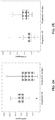
- the specific cutoff values, number of patients in each arm, and optimal p-values are all provided in Table I, with the distribution of these classifications for select representative biomarkers provided in Figure 1 .
- a complete account for all 76 biomarkers is provided in Table III.
- biomarkers with optimal p-value ⁇ 0.05 representing the following processes: angiogenesis (sTNFRI, sTNFRII, Follistatin, TNF- ⁇ , Betacellulin, sVEGFR3, VEGF-A, Endoglin, MMP-10, PDGF-BB, VEGF-C, IGF-I, IGFBP-3, IGFBP-5, Endothelin-1, and Amphiregulin), cancer cachexia (TNF-a, sTNFRI, sTNFRII, IGF-I, IGFBP-3, IGFBP-5, IL-6, IL-6R), and phenotypic transdifferentiation (betacellulin, IGF-I, IGFBP-3, IGFBP-5, sEGFR, and prolactin).
- angiogenesis sTNFRI, sTNFRII, Follistatin, TNF- ⁇ , Betacellulin, sVEGFR3, VEGF-A, Endoglin, MMP-10,
- a total of 34 biomarkers were identified for identifying advanced stage NSCLC patients that failed frontline chemotherapy with rapidly progressing disease.
- the specific cutoff values, number of patients in each arm, and optimal p-values are all provided in Table II, with the distribution of these classifications for select representative biomarkers provided in Figure 2 .
- a complete account for all 76 biomarkers are provided in Table IV.
- biomarkers with optimal p-value ⁇ 0.05 representing the following processes: angiogenesis (sVEGFR2, follistatin, IGF-I, IGF-II, IGFBPs -1,-2,-3,-5,-7, IL-8, MMP-2, MMP-7, PLGF, Leptin, PDGF-AA, TNF- ⁇ , sTNFRI, sTNFRII, and VEGF-A), cancer cachexia (HGF, IGF-I, IGF-II, IGFBPs -1,-2,-3,-5,-7, IL-6, Leptin, TRAIL, sCD30, TNF- ⁇ , sTNFRI, and sTNFRII), phenotypic transdifferentiation (beta-HCG, ⁇ -fetoprotein, HE4, HGF, IGF-I, IGF-II, IGFBPs -1,-2,-3,-5,-7, osteopontin, PLGF, TGF- ⁇ ,
- the practice of the present invention will employ, unless otherwise indicated, conventional methods for measuring the level of the biomarker within the skill of the art.
- the techniques may include, but are not limited to, molecular biology and immunology. Such techniques are explained fully in the literature. See, e.g., Sambrook, et al. Molecular Cloning: A Laboratory Manual (Current Edition, Cold Spring Harbor Laboratory Press, Cold Spring Harbor, N.Y .); Current Protocols in Molecular Biology (Eds. A Ausubel et al., NY: John Wiley & Sons, Current Editi on); DNA Cloning: A Practical Approach, vol. I & II (D. Glover, ed .); Oligonucleotide Synthesis (N.
Landscapes
- Health & Medical Sciences (AREA)
- Life Sciences & Earth Sciences (AREA)
- Immunology (AREA)
- Engineering & Computer Science (AREA)
- Molecular Biology (AREA)
- Biomedical Technology (AREA)
- Chemical & Material Sciences (AREA)
- Hematology (AREA)
- Urology & Nephrology (AREA)
- Biotechnology (AREA)
- Biochemistry (AREA)
- Cell Biology (AREA)
- Food Science & Technology (AREA)
- Medicinal Chemistry (AREA)
- Physics & Mathematics (AREA)
- Analytical Chemistry (AREA)
- Microbiology (AREA)
- General Health & Medical Sciences (AREA)
- General Physics & Mathematics (AREA)
- Pathology (AREA)
- Investigating Or Analysing Biological Materials (AREA)
- Measuring Or Testing Involving Enzymes Or Micro-Organisms (AREA)
- Peptides Or Proteins (AREA)
Claims (13)
- Verfahren zum Identifizieren des raschen Fortschreitens von Lungenkrebs in einem Individuum, wobei das Verfahren umfasst:Messen eines Spiegels für mindestens einen zirkulierenden Biomarker in einer aus einem Individuum erhaltenen biologischen Probe, wobei der mindestens eine Biomarker aus Tabelle I oder Tabelle II ausgewählt ist;
Tabelle I: Biomarker Ausschl.-Wert (pg/ml) Fälle ≤ Ausschl. Fälle > Ausschl p-Wert Eingestellter p-Wert sTNFRI 1879.8 48 12 0.0003 0.001 sTNFRII 8493.9 49 11 0.0011 0.006 CA 19-9 20.9 62 13 0.0029 0.018 Follistatin 990.0 48 15 0.0033 0.007 Total PSA 67.1 47 28 0.0042 0.027 TNF-α 0.61 12 45 0.0050 0.029 IL-6 13.1 48 10 0.0100 0.021 TGF β1 30665.9 64 11 0.0132 0.083 Betacellulin 14.9 25 28 0.0162 0.058 CA 15.3 55.0 62 13 0.0203 0.077 sCD30 101.5 40 20 0.0219 0.111 sVEGFR3 2930.8 48 12 0.0221 0.094 VEGF-A 727.1 49 27 0.0222 0.092 Endoglin 993.8 48 15 0.0228 0.084 MMP-10 272.6 43 32 0.0244 0.122 sRAGE 84.2 39 21 0.0244 0.121 PDGF-BB 13336.6 12 40 0.0248 0.075 VEGF-C 32.9 10 53 0.0255 0.105 IGF-I 31266.8 46 30 0.0264 0.133 IGFBP-3 1452.8 53 23 0.0308 0.168 sEGFR 25073.2 29 43 0.0392 0.177 IGFBP-5 151.1 48 28 0.0428 0.192 Endothelin-1 8.0 39 24 0.0430 0.124 Amphiregulin 38.7 16 36 0.0445 0.222 GRO 3960.3 47 28 0.0453 0.181 sIL-6R 10666.7 20 40 0.0493 0.203 Prolactin 5353.7 30 28 0.0497 0.152 Tabelle II Biomarker Ausschl.-Wert (pg/ml) Fälle ≤ Ausschl. Fälle > Ausschl. p-Wert Eingestellter p-Wert TRAIL 60.3 35 76 0.0005 0.003 sTNFRI 1506.6 62 34 0.0007 0.005 IGFBP-1 9.2 88 22 0.0009 0.005 sEGFR 50565.2 36 68 0.0012 0.007 IGF-I 7807.7 32 78 0.0021 0.008 TGF-β1 9073.7 10 77 0.0028 0.016 HGF 239.7 81 30 0.0035 0.034 MMP-7 8326.9 68 43 0.0043 0.024 MMP-2 33782.5 31 80 0.0044 0.027 α-Fetoprotein 964.1 63 40 0.0050 0.031 Osteopontin 34067.2 49 54 0.0058 0.034 sVEGFR2 10846.5 13 83 0.0073 0.049 IL-6 8.0 66 37 0.0098 0.035 CYFRA 21.1 768.7 51 52 0.0119 0.03 IGF-II 507.7 37 68 0.0129 0.083 sTNFRII 7588.9 65 31 0.0151 0.093 CA 15.3 34.5 83 28 0.0156 0.056 sCD30 129.7 73 23 0.0177 0.081 sIL-4R 2096.7 14 82 0.0201 0.103 sIL-2Ralpha 836.6 55 41 0.0208 0.118 IGFBP-7 53.7 18 92 0.0211 0.137 TNF-α 91.1 93 17 0.0213 0.114 VEGF-A 1297.7 98 14 0.0227 0.05 Follistatin 968.9 11 10 0.0237 0.013 Leptin-1 11840.0 55 48 0.0239 0.154 IGFBP-3 1486.8 90 20 0.0263 0.161 PLGF 86.8 69 10 0.0268 0.127 IGFBP-5 193.5 44 66 0.0296 0.166 GRO 4254.6 80 30 0.0333 0.162 IL-8 63.9 96 15 0.0334 0.178 HE4 2993.4 88 23 0.0343 0.201 IGFBP-2 22.9 64 46 0.0344 0.169 PDGF-AA 10851.4 12 98 0.0375 0.218 B-HCG 0.16 26 85 0.0446 1 0.239 Bestimmen, ob das Individuum behandlungsnaiv ist oder mindestens eine Behandlung erhalten hat;Vergleichen des Spiegels des mindestens einen Biomarkers in der Probe des Individuums mit einem in Tabelle I aufgeführten Ausschlusswert zur Behandlung naiver Individuen oder einem in Tabelle II aufgeführten Ausschlusswert für zuvor behandelte Individuen;Bestimmen, ob der Spiegel des Individuums über oder unter dem Ausschlusswert liegt, um zu bestimmen, ob das Individuum rasch fortschreitenden Lungenkrebs hat, wobei die Schwelle für rasches Fortschreiten 90 Tage nach der ersten Behandlung zur Behandlung naiver Individuen und 45 Tage nach der zweiten oder nachfolgenden Behandlung für die zuvor behandelten Individuen liegt. - Verfahren nach Anspruch 1, wobei der mindestens eine gemessene Biomarker einen p-Wert aufweist, bei dem p ≤ 0,05 gilt.
- Verfahren nach Anspruch 1, wobei der mindestens eine gemessene Biomarker einen p-Wert aufweist, bei dem p ≤ 0,01 gilt.
- Verfahren nach einem der Ansprüche 1 bis 3, umfassend das Bestimmen des Spiegels von mindestens zwei Biomarkern, ausgewählt aus Tabelle I zur Behandlung naiver Individuen oder aus Tabelle II für zuvor behandelte Individuen.
- Verfahren nach einem der Ansprüche 1 bis 4, umfassend das Bestimmen des Spiegels des mindestens einen Biomarkers, wobei der mindestens eine Biomarker aus sTNFRI, sTNFRII, CA 19-9, Follistatin, Gesamt-PSA, TNF-α und IL-6 zur Behandlung naiver Individuen ausgewählt ist.
- Verfahren nach einem der Ansprüche 1 bis 4, umfassend das Bestimmen des Spiegels von mindestens einem Biomarker, wobei der mindestens eine Biomarker TRAIL, sTNFRI, IGFBP-1, sEGFR, IGF-1, TGF-β, HGF, MMP-7, MMP-2, α-Fetoprotein, Osteopontin, sVEGFR2 und IL-6 für die vorbehandelten Individuen umfasst.
- Verfahren nach einem der Ansprüche 1 bis 6, wobei es sich bei dem Lungenkrebs um nicht-kleinzelligen Lungenkrebs handelt.
- Verfahren nach einem der Ansprüche 1 bis 7, wobei die biologische Probe Plasmaprobe oder Serumprobe umfasst.
- Verfahren nach einem der Ansprüche 1 bis 8, zudem umfassend das Modifizieren eines Behandlungsschemas für das Individuum, wenn der Vergleich anzeigt, dass das Individuum rasch fortlaufenden Lungenkrebs hat.
- Verfahren nach einem der Ansprüche 1 bis 9, wobei eine Vielzahl von Biomarkern gemessen wird, wobei die Vielzahl von Biomarkern sTNFRI, sTNFRII, CA 19-9, Follistatin, Gesamt-PSA, TNF-α und IL-6 zur Behandlung naiver Individuen umfasst.
- Verfahren nach einem der Ansprüche 1 bis 9, wobei eine Vielzahl von Biomarkern gemessen wird, wobei die Vielzahl von Biomarkern TRAIL, sTNFRI, IGFBP-1, sEGFR, IGF-1, TGF-β, HGF, MMP-7, MMP-2, α-Fetoprotein, Osteopontin, sVEGFR2 und IL-6 für die vorbehandelten Individuen umfasst.
- Kit zur Durchführung der Messung des Spiegels einer Vielzahl von Biomarkern des Individuums in Anspruch 1, wobei der Kit Reagenzien zur Messung der Vielzahl von Biomarkern umfasst, wobei die Vielzahl von Biomarkern sTNFRI, sTNFRII, CA 19-9, Follistatin, Gesamt-PSA, TNF-α und IL-6 zur Behandlung naiver Individuen umfasst oder wobei die Vielzahl von Biomarkern TRAIL, sTNFRI, IGFBP-1, sEGFR, IGF-1, TGF-β, HGF, MMP-7, MMP-2, α-Fetoprotein, Osteopontin, sVEGFR2 und IL-6 für die vorbehandelten Individuen umfasst.
- Kit nach Anspruch 12, wobei der Kit Reagenzien zur Messung des zirkulierenden Biomarkers im Serum oder Plasma umfasst.
Applications Claiming Priority (2)
| Application Number | Priority Date | Filing Date | Title |
|---|---|---|---|
| US201361913740P | 2013-12-09 | 2013-12-09 | |
| PCT/US2014/069009 WO2015088947A1 (en) | 2013-12-09 | 2014-12-08 | Biomarkers of rapid progression in advanced non-small cell lung cancer |
Publications (3)
| Publication Number | Publication Date |
|---|---|
| EP3080299A1 EP3080299A1 (de) | 2016-10-19 |
| EP3080299A4 EP3080299A4 (de) | 2017-06-21 |
| EP3080299B1 true EP3080299B1 (de) | 2020-09-30 |
Family
ID=53371729
Family Applications (1)
| Application Number | Title | Priority Date | Filing Date |
|---|---|---|---|
| EP14869355.9A Active EP3080299B1 (de) | 2013-12-09 | 2014-12-08 | Biomarker für schnelles fortschreiten von erweitertem nicht-kleinzelligem lungenkrebs |
Country Status (3)
| Country | Link |
|---|---|
| US (2) | US10365281B2 (de) |
| EP (1) | EP3080299B1 (de) |
| WO (1) | WO2015088947A1 (de) |
Families Citing this family (6)
| Publication number | Priority date | Publication date | Assignee | Title |
|---|---|---|---|---|
| US11656229B2 (en) * | 2015-06-26 | 2023-05-23 | Biomark Cancer Systems Inc. | Method of detecting lung cancer |
| CN110709936A (zh) * | 2017-04-04 | 2020-01-17 | 肺癌蛋白质组学有限责任公司 | 用于早期肺癌预后的基于血浆的蛋白质概况分析 |
| CN108680745B (zh) * | 2018-01-03 | 2021-06-15 | 湖州市中心医院 | 血清脂质生物标志物在nsclc早期诊断中的应用方法 |
| WO2022152732A1 (en) * | 2021-01-14 | 2022-07-21 | F. Hoffmann-La Roche Ag | Prognostic value of biomarkers in patients with non-small cell lung cancer having stable disease |
| US11940450B2 (en) | 2021-03-16 | 2024-03-26 | University Of Connecticut | Biomarker panel for non-invasive diagnosis of congenital renal dysfunction |
| AU2022341177A1 (en) * | 2021-09-10 | 2024-02-29 | Grail, Inc. | Methods for analysis of target molecules in biological fluids |
Family Cites Families (19)
| Publication number | Priority date | Publication date | Assignee | Title |
|---|---|---|---|---|
| WO2002044331A2 (en) | 2000-11-29 | 2002-06-06 | Cangen International | Dap-kinase and hoxa9, two human genes associated with genesis, progression, and aggressiveness of non-small cell lung cancer |
| US20050037445A1 (en) | 2001-06-25 | 2005-02-17 | Poulsen Hans Skovgaard | Oncology drug innovation |
| US20040091857A1 (en) | 2001-07-20 | 2004-05-13 | Nallur Girish N. | Gene expression profiling |
| AU2002353972A1 (en) | 2001-11-02 | 2003-05-19 | Pfizer Products Inc. | Lung cancer therapeutics and diagnostics |
| US20130052215A9 (en) | 2003-09-26 | 2013-02-28 | Eckhard Podack | Tumor vaccine |
| US8747867B2 (en) | 2004-09-30 | 2014-06-10 | Ifom Fondazione Instituto Firc Di Oncologia Molecolare | Cancer markers |
| US9347945B2 (en) | 2005-12-22 | 2016-05-24 | Abbott Molecular Inc. | Methods and marker combinations for screening for predisposition to lung cancer |
| US20090047689A1 (en) | 2007-06-20 | 2009-02-19 | John Kolman | Autoantigen biomarkers for early diagnosis of lung adenocarcinoma |
| TW200920406A (en) | 2007-08-24 | 2009-05-16 | Oncotherapy Science Inc | EBI3, DLX5, NPTX1 and CDKN3 for target genes of lung cancer therapy and diagnosis |
| US8541183B2 (en) | 2007-09-11 | 2013-09-24 | Cancer Prevention And Cure, Ltd. | Methods of identification, assessment, prevention and therapy of lung diseases and kits thereof |
| EP3115469B1 (de) | 2007-11-19 | 2020-04-29 | Celera Corporation | Lungenkrebsmarker und verwendungen davon |
| CN101896818B (zh) | 2007-12-10 | 2016-01-20 | 霍夫曼-拉罗奇有限公司 | 作为癌症的标记物的Seprase |
| WO2009111033A2 (en) | 2008-03-05 | 2009-09-11 | Axela Inc. | Detection of biomarkers and biomarker complexes |
| US20100176228A1 (en) | 2009-01-14 | 2010-07-15 | Michilin Prosperity Co., Ltd. | Safety switch of a shredder |
| MX2011013578A (es) | 2009-06-19 | 2012-01-20 | Merck Patent Gmbh | Biomarcadores y metodos para determinar la eficacia de anticuerpos anti-receptor del factor de crecimiento epidermal (anti-egfr) en terapia de cancer. |
| US20120178111A1 (en) * | 2009-09-23 | 2012-07-12 | Diamandis Eleftherios P | Methods and compositions for the detection of lung cancers |
| US20110318336A1 (en) * | 2010-03-29 | 2011-12-29 | George Mason Intellectual Properties, Inc. | Identification and Treatment of Aggressive Lung Cancer Tumors |
| US20120115745A1 (en) * | 2010-05-07 | 2012-05-10 | Mckeegan Evelyn M | Methods for predicting sensitivity to treatment with a targeted tyrosine kinase inhibitor |
| AU2011316986A1 (en) * | 2010-10-20 | 2013-06-06 | Rush University Medical Center | Lung cancer tests |
-
2014
- 2014-12-08 EP EP14869355.9A patent/EP3080299B1/de active Active
- 2014-12-08 US US15/102,647 patent/US10365281B2/en active Active
- 2014-12-08 WO PCT/US2014/069009 patent/WO2015088947A1/en not_active Ceased
-
2019
- 2019-06-20 US US16/447,634 patent/US20190331683A1/en not_active Abandoned
Non-Patent Citations (1)
| Title |
|---|
| None * |
Also Published As
| Publication number | Publication date |
|---|---|
| US20190331683A1 (en) | 2019-10-31 |
| US10365281B2 (en) | 2019-07-30 |
| EP3080299A1 (de) | 2016-10-19 |
| US20160313336A1 (en) | 2016-10-27 |
| WO2015088947A1 (en) | 2015-06-18 |
| EP3080299A4 (de) | 2017-06-21 |
Similar Documents
| Publication | Publication Date | Title |
|---|---|---|
| US20190331683A1 (en) | Biomarkers of Rapid Progression in Advanced Non-Small Cell Lung Cancer | |
| Staff et al. | Growth differentiation factor-15 as a prognostic biomarker in ovarian cancer | |
| US10613091B2 (en) | Methods of developing a prognosis for pancreatic cancer and predicting responsiveness to cancer therapeutics | |
| JP5750152B2 (ja) | 肝細胞癌と関連するシグネチャ遺伝子を利用する検査方法、及び該方法に用いられるアレイ又はキット | |
| EP4045912A1 (de) | Vorrichtungen und verfahren zum nachweis von bauchspeicheldrüsenkrebs | |
| Xu et al. | Identification of blood protein biomarkers that aid in the clinical assessment of patients with malignant glioma | |
| US20150198601A1 (en) | Methods of diagnosing and prognosing colonic polyps | |
| JP2015505370A (ja) | 胃癌のバイオマーカー及びその使用 | |
| AU2016214140A1 (en) | Biomarkers for pancreatic cancer | |
| JP2021144052A (ja) | マーカー、ヒト精巣上体タンパク質4(he4)に基づく肺腺癌の再発を検出する方法および関連する使用 | |
| EP3835789A1 (de) | Biomarker zur diagnose von darmkrebs | |
| Fidler et al. | Differential expression of circulating biomarkers of tumor phenotype and outcomes in previously treated non-small cell lung cancer patients receiving erlotinib vs. cytotoxic chemotherapy | |
| US20190101540A1 (en) | Angiogenesis Biomarkers Associated With Disease Progression in Lung Cancer | |
| JP2012526543A5 (de) | ||
| EP2895863B1 (de) | Neue biomarker zur diagnose/prognose eines klarzelligen nierenkarzinoms | |
| JP2021170021A (ja) | 糖尿病性腎症の早期病態の特異的な診断を可能とする検査方法 | |
| KR102737876B1 (ko) | 유방암 환자의 선행 항암화학요법 후 예후 예측을 위한 바이오마커 및 이의 용도 | |
| JP7660077B2 (ja) | 診断方法 | |
| KR20200045131A (ko) | 장형 위암의 예후 진단 마커 | |
| US20150276747A1 (en) | Biomarkers for ovarian cancer | |
| WO2026068798A1 (en) | Sox9 for assessing colorectal cancer (crc) or a precancerous condition thereof | |
| US20210231664A1 (en) | Eosinophil Cationic Protein (ECP) as a Tumor Marker for Malignant Tumors | |
| WO2026068795A2 (en) | Clec3b for assessing colorectal cancer (crc) or a precancerous condition thereof | |
| Charrier et al. | Tu1495 Connective Tissue Growth Factor Production by Pancreatic Acinar Cells is Associated With Regulation of Immune Function in a Mouse Model of Alcoholic Chronic Pancreatitis | |
| Khan | Circulating Tumour Cells and Biomarkers in Neuroendocrine Tumours |
Legal Events
| Date | Code | Title | Description |
|---|---|---|---|
| PUAI | Public reference made under article 153(3) epc to a published international application that has entered the european phase |
Free format text: ORIGINAL CODE: 0009012 |
|
| 17P | Request for examination filed |
Effective date: 20160709 |
|
| AK | Designated contracting states |
Kind code of ref document: A1 Designated state(s): AL AT BE BG CH CY CZ DE DK EE ES FI FR GB GR HR HU IE IS IT LI LT LU LV MC MK MT NL NO PL PT RO RS SE SI SK SM TR |
|
| AX | Request for extension of the european patent |
Extension state: BA ME |
|
| RIN1 | Information on inventor provided before grant (corrected) |
Inventor name: BASU, SANJIB Inventor name: BORGIA, JEFFREY, A. |
|
| DAX | Request for extension of the european patent (deleted) | ||
| REG | Reference to a national code |
Ref country code: DE Ref legal event code: R079 Ref document number: 602014070863 Country of ref document: DE Free format text: PREVIOUS MAIN CLASS: C12Q0001680000 Ipc: G01N0033574000 |
|
| RIC1 | Information provided on ipc code assigned before grant |
Ipc: G01N 33/574 20060101AFI20170509BHEP |
|
| A4 | Supplementary search report drawn up and despatched |
Effective date: 20170519 |
|
| STAA | Information on the status of an ep patent application or granted ep patent |
Free format text: STATUS: EXAMINATION IS IN PROGRESS |
|
| 17Q | First examination report despatched |
Effective date: 20180424 |
|
| GRAP | Despatch of communication of intention to grant a patent |
Free format text: ORIGINAL CODE: EPIDOSNIGR1 |
|
| STAA | Information on the status of an ep patent application or granted ep patent |
Free format text: STATUS: GRANT OF PATENT IS INTENDED |
|
| INTG | Intention to grant announced |
Effective date: 20200507 |
|
| GRAS | Grant fee paid |
Free format text: ORIGINAL CODE: EPIDOSNIGR3 |
|
| GRAA | (expected) grant |
Free format text: ORIGINAL CODE: 0009210 |
|
| STAA | Information on the status of an ep patent application or granted ep patent |
Free format text: STATUS: THE PATENT HAS BEEN GRANTED |
|
| AK | Designated contracting states |
Kind code of ref document: B1 Designated state(s): AL AT BE BG CH CY CZ DE DK EE ES FI FR GB GR HR HU IE IS IT LI LT LU LV MC MK MT NL NO PL PT RO RS SE SI SK SM TR |
|
| REG | Reference to a national code |
Ref country code: GB Ref legal event code: FG4D Ref country code: CH Ref legal event code: EP |
|
| REG | Reference to a national code |
Ref country code: AT Ref legal event code: REF Ref document number: 1319333 Country of ref document: AT Kind code of ref document: T Effective date: 20201015 |
|
| REG | Reference to a national code |
Ref country code: DE Ref legal event code: R096 Ref document number: 602014070863 Country of ref document: DE |
|
| REG | Reference to a national code |
Ref country code: IE Ref legal event code: FG4D |
|
| PG25 | Lapsed in a contracting state [announced via postgrant information from national office to epo] |
Ref country code: NO Free format text: LAPSE BECAUSE OF FAILURE TO SUBMIT A TRANSLATION OF THE DESCRIPTION OR TO PAY THE FEE WITHIN THE PRESCRIBED TIME-LIMIT Effective date: 20201230 Ref country code: FI Free format text: LAPSE BECAUSE OF FAILURE TO SUBMIT A TRANSLATION OF THE DESCRIPTION OR TO PAY THE FEE WITHIN THE PRESCRIBED TIME-LIMIT Effective date: 20200930 Ref country code: HR Free format text: LAPSE BECAUSE OF FAILURE TO SUBMIT A TRANSLATION OF THE DESCRIPTION OR TO PAY THE FEE WITHIN THE PRESCRIBED TIME-LIMIT Effective date: 20200930 Ref country code: SE Free format text: LAPSE BECAUSE OF FAILURE TO SUBMIT A TRANSLATION OF THE DESCRIPTION OR TO PAY THE FEE WITHIN THE PRESCRIBED TIME-LIMIT Effective date: 20200930 Ref country code: BG Free format text: LAPSE BECAUSE OF FAILURE TO SUBMIT A TRANSLATION OF THE DESCRIPTION OR TO PAY THE FEE WITHIN THE PRESCRIBED TIME-LIMIT Effective date: 20201230 Ref country code: GR Free format text: LAPSE BECAUSE OF FAILURE TO SUBMIT A TRANSLATION OF THE DESCRIPTION OR TO PAY THE FEE WITHIN THE PRESCRIBED TIME-LIMIT Effective date: 20201231 |
|
| REG | Reference to a national code |
Ref country code: AT Ref legal event code: MK05 Ref document number: 1319333 Country of ref document: AT Kind code of ref document: T Effective date: 20200930 |
|
| PG25 | Lapsed in a contracting state [announced via postgrant information from national office to epo] |
Ref country code: LV Free format text: LAPSE BECAUSE OF FAILURE TO SUBMIT A TRANSLATION OF THE DESCRIPTION OR TO PAY THE FEE WITHIN THE PRESCRIBED TIME-LIMIT Effective date: 20200930 Ref country code: RS Free format text: LAPSE BECAUSE OF FAILURE TO SUBMIT A TRANSLATION OF THE DESCRIPTION OR TO PAY THE FEE WITHIN THE PRESCRIBED TIME-LIMIT Effective date: 20200930 |
|
| REG | Reference to a national code |
Ref country code: NL Ref legal event code: MP Effective date: 20200930 |
|
| REG | Reference to a national code |
Ref country code: LT Ref legal event code: MG4D |
|
| PG25 | Lapsed in a contracting state [announced via postgrant information from national office to epo] |
Ref country code: CZ Free format text: LAPSE BECAUSE OF FAILURE TO SUBMIT A TRANSLATION OF THE DESCRIPTION OR TO PAY THE FEE WITHIN THE PRESCRIBED TIME-LIMIT Effective date: 20200930 Ref country code: RO Free format text: LAPSE BECAUSE OF FAILURE TO SUBMIT A TRANSLATION OF THE DESCRIPTION OR TO PAY THE FEE WITHIN THE PRESCRIBED TIME-LIMIT Effective date: 20200930 Ref country code: SM Free format text: LAPSE BECAUSE OF FAILURE TO SUBMIT A TRANSLATION OF THE DESCRIPTION OR TO PAY THE FEE WITHIN THE PRESCRIBED TIME-LIMIT Effective date: 20200930 Ref country code: EE Free format text: LAPSE BECAUSE OF FAILURE TO SUBMIT A TRANSLATION OF THE DESCRIPTION OR TO PAY THE FEE WITHIN THE PRESCRIBED TIME-LIMIT Effective date: 20200930 Ref country code: NL Free format text: LAPSE BECAUSE OF FAILURE TO SUBMIT A TRANSLATION OF THE DESCRIPTION OR TO PAY THE FEE WITHIN THE PRESCRIBED TIME-LIMIT Effective date: 20200930 Ref country code: LT Free format text: LAPSE BECAUSE OF FAILURE TO SUBMIT A TRANSLATION OF THE DESCRIPTION OR TO PAY THE FEE WITHIN THE PRESCRIBED TIME-LIMIT Effective date: 20200930 Ref country code: PT Free format text: LAPSE BECAUSE OF FAILURE TO SUBMIT A TRANSLATION OF THE DESCRIPTION OR TO PAY THE FEE WITHIN THE PRESCRIBED TIME-LIMIT Effective date: 20210201 |
|
| PG25 | Lapsed in a contracting state [announced via postgrant information from national office to epo] |
Ref country code: AL Free format text: LAPSE BECAUSE OF FAILURE TO SUBMIT A TRANSLATION OF THE DESCRIPTION OR TO PAY THE FEE WITHIN THE PRESCRIBED TIME-LIMIT Effective date: 20200930 Ref country code: AT Free format text: LAPSE BECAUSE OF FAILURE TO SUBMIT A TRANSLATION OF THE DESCRIPTION OR TO PAY THE FEE WITHIN THE PRESCRIBED TIME-LIMIT Effective date: 20200930 Ref country code: ES Free format text: LAPSE BECAUSE OF FAILURE TO SUBMIT A TRANSLATION OF THE DESCRIPTION OR TO PAY THE FEE WITHIN THE PRESCRIBED TIME-LIMIT Effective date: 20200930 Ref country code: IS Free format text: LAPSE BECAUSE OF FAILURE TO SUBMIT A TRANSLATION OF THE DESCRIPTION OR TO PAY THE FEE WITHIN THE PRESCRIBED TIME-LIMIT Effective date: 20210130 Ref country code: PL Free format text: LAPSE BECAUSE OF FAILURE TO SUBMIT A TRANSLATION OF THE DESCRIPTION OR TO PAY THE FEE WITHIN THE PRESCRIBED TIME-LIMIT Effective date: 20200930 |
|
| PG25 | Lapsed in a contracting state [announced via postgrant information from national office to epo] |
Ref country code: SK Free format text: LAPSE BECAUSE OF FAILURE TO SUBMIT A TRANSLATION OF THE DESCRIPTION OR TO PAY THE FEE WITHIN THE PRESCRIBED TIME-LIMIT Effective date: 20200930 |
|
| REG | Reference to a national code |
Ref country code: DE Ref legal event code: R097 Ref document number: 602014070863 Country of ref document: DE |
|
| REG | Reference to a national code |
Ref country code: CH Ref legal event code: PL |
|
| PLBE | No opposition filed within time limit |
Free format text: ORIGINAL CODE: 0009261 |
|
| STAA | Information on the status of an ep patent application or granted ep patent |
Free format text: STATUS: NO OPPOSITION FILED WITHIN TIME LIMIT |
|
| PG25 | Lapsed in a contracting state [announced via postgrant information from national office to epo] |
Ref country code: MC Free format text: LAPSE BECAUSE OF FAILURE TO SUBMIT A TRANSLATION OF THE DESCRIPTION OR TO PAY THE FEE WITHIN THE PRESCRIBED TIME-LIMIT Effective date: 20200930 Ref country code: DK Free format text: LAPSE BECAUSE OF FAILURE TO SUBMIT A TRANSLATION OF THE DESCRIPTION OR TO PAY THE FEE WITHIN THE PRESCRIBED TIME-LIMIT Effective date: 20200930 |
|
| REG | Reference to a national code |
Ref country code: BE Ref legal event code: MM Effective date: 20201231 |
|
| 26N | No opposition filed |
Effective date: 20210701 |
|
| PG25 | Lapsed in a contracting state [announced via postgrant information from national office to epo] |
Ref country code: LU Free format text: LAPSE BECAUSE OF NON-PAYMENT OF DUE FEES Effective date: 20201208 Ref country code: IT Free format text: LAPSE BECAUSE OF FAILURE TO SUBMIT A TRANSLATION OF THE DESCRIPTION OR TO PAY THE FEE WITHIN THE PRESCRIBED TIME-LIMIT Effective date: 20200930 Ref country code: IE Free format text: LAPSE BECAUSE OF NON-PAYMENT OF DUE FEES Effective date: 20201208 |
|
| PG25 | Lapsed in a contracting state [announced via postgrant information from national office to epo] |
Ref country code: LI Free format text: LAPSE BECAUSE OF NON-PAYMENT OF DUE FEES Effective date: 20201231 Ref country code: SI Free format text: LAPSE BECAUSE OF FAILURE TO SUBMIT A TRANSLATION OF THE DESCRIPTION OR TO PAY THE FEE WITHIN THE PRESCRIBED TIME-LIMIT Effective date: 20200930 Ref country code: CH Free format text: LAPSE BECAUSE OF NON-PAYMENT OF DUE FEES Effective date: 20201231 |
|
| PG25 | Lapsed in a contracting state [announced via postgrant information from national office to epo] |
Ref country code: IS Free format text: LAPSE BECAUSE OF FAILURE TO SUBMIT A TRANSLATION OF THE DESCRIPTION OR TO PAY THE FEE WITHIN THE PRESCRIBED TIME-LIMIT Effective date: 20210130 Ref country code: TR Free format text: LAPSE BECAUSE OF FAILURE TO SUBMIT A TRANSLATION OF THE DESCRIPTION OR TO PAY THE FEE WITHIN THE PRESCRIBED TIME-LIMIT Effective date: 20200930 Ref country code: MT Free format text: LAPSE BECAUSE OF FAILURE TO SUBMIT A TRANSLATION OF THE DESCRIPTION OR TO PAY THE FEE WITHIN THE PRESCRIBED TIME-LIMIT Effective date: 20200930 Ref country code: CY Free format text: LAPSE BECAUSE OF FAILURE TO SUBMIT A TRANSLATION OF THE DESCRIPTION OR TO PAY THE FEE WITHIN THE PRESCRIBED TIME-LIMIT Effective date: 20200930 |
|
| PG25 | Lapsed in a contracting state [announced via postgrant information from national office to epo] |
Ref country code: MK Free format text: LAPSE BECAUSE OF FAILURE TO SUBMIT A TRANSLATION OF THE DESCRIPTION OR TO PAY THE FEE WITHIN THE PRESCRIBED TIME-LIMIT Effective date: 20200930 |
|
| PG25 | Lapsed in a contracting state [announced via postgrant information from national office to epo] |
Ref country code: BE Free format text: LAPSE BECAUSE OF NON-PAYMENT OF DUE FEES Effective date: 20201231 |
|
| P01 | Opt-out of the competence of the unified patent court (upc) registered |
Effective date: 20230526 |
|
| REG | Reference to a national code |
Ref country code: DE Ref legal event code: R079 Ref document number: 602014070863 Country of ref document: DE Free format text: PREVIOUS MAIN CLASS: G01N0033574000 Ipc: G01N0033575000 |
|
| PGFP | Annual fee paid to national office [announced via postgrant information from national office to epo] |
Ref country code: GB Payment date: 20251229 Year of fee payment: 12 |
|
| PGFP | Annual fee paid to national office [announced via postgrant information from national office to epo] |
Ref country code: FR Payment date: 20251226 Year of fee payment: 12 |
|
| PGFP | Annual fee paid to national office [announced via postgrant information from national office to epo] |
Ref country code: DE Payment date: 20251229 Year of fee payment: 12 |