EP3080593B1 - Verfahren zur defektmeldungsdetektion - Google Patents
Verfahren zur defektmeldungsdetektion Download PDFInfo
- Publication number
- EP3080593B1 EP3080593B1 EP14816524.4A EP14816524A EP3080593B1 EP 3080593 B1 EP3080593 B1 EP 3080593B1 EP 14816524 A EP14816524 A EP 14816524A EP 3080593 B1 EP3080593 B1 EP 3080593B1
- Authority
- EP
- European Patent Office
- Prior art keywords
- indication
- vct
- volume
- based method
- composite part
- Prior art date
- Legal status (The legal status is an assumption and is not a legal conclusion. Google has not performed a legal analysis and makes no representation as to the accuracy of the status listed.)
- Active
Links
Images



Classifications
-
- G—PHYSICS
- G01—MEASURING; TESTING
- G01N—INVESTIGATING OR ANALYSING MATERIALS BY DETERMINING THEIR CHEMICAL OR PHYSICAL PROPERTIES
- G01N23/00—Investigating or analysing materials by the use of wave or particle radiation, e.g. X-rays or neutrons, not covered by groups G01N3/00 – G01N17/00, G01N21/00 or G01N22/00
- G01N23/02—Investigating or analysing materials by the use of wave or particle radiation, e.g. X-rays or neutrons, not covered by groups G01N3/00 – G01N17/00, G01N21/00 or G01N22/00 by transmitting the radiation through the material
- G01N23/06—Investigating or analysing materials by the use of wave or particle radiation, e.g. X-rays or neutrons, not covered by groups G01N3/00 – G01N17/00, G01N21/00 or G01N22/00 by transmitting the radiation through the material and measuring the absorption
- G01N23/18—Investigating the presence of flaws defects or foreign matter
-
- A—HUMAN NECESSITIES
- A61—MEDICAL OR VETERINARY SCIENCE; HYGIENE
- A61B—DIAGNOSIS; SURGERY; IDENTIFICATION
- A61B6/00—Apparatus or devices for radiation diagnosis; Apparatus or devices for radiation diagnosis combined with radiation therapy equipment
- A61B6/52—Devices using data or image processing specially adapted for radiation diagnosis
- A61B6/5258—Devices using data or image processing specially adapted for radiation diagnosis involving detection or reduction of artifacts or noise
- A61B6/5282—Devices using data or image processing specially adapted for radiation diagnosis involving detection or reduction of artifacts or noise due to scatter
-
- A—HUMAN NECESSITIES
- A61—MEDICAL OR VETERINARY SCIENCE; HYGIENE
- A61B—DIAGNOSIS; SURGERY; IDENTIFICATION
- A61B6/00—Apparatus or devices for radiation diagnosis; Apparatus or devices for radiation diagnosis combined with radiation therapy equipment
- A61B6/58—Testing, adjusting or calibrating thereof
- A61B6/586—Detection of faults or malfunction of the device
-
- G—PHYSICS
- G01—MEASURING; TESTING
- G01N—INVESTIGATING OR ANALYSING MATERIALS BY DETERMINING THEIR CHEMICAL OR PHYSICAL PROPERTIES
- G01N21/00—Investigating or analysing materials by the use of optical means, i.e. using sub-millimetre waves, infrared, visible or ultraviolet light
-
- G—PHYSICS
- G01—MEASURING; TESTING
- G01N—INVESTIGATING OR ANALYSING MATERIALS BY DETERMINING THEIR CHEMICAL OR PHYSICAL PROPERTIES
- G01N23/00—Investigating or analysing materials by the use of wave or particle radiation, e.g. X-rays or neutrons, not covered by groups G01N3/00 – G01N17/00, G01N21/00 or G01N22/00
- G01N23/02—Investigating or analysing materials by the use of wave or particle radiation, e.g. X-rays or neutrons, not covered by groups G01N3/00 – G01N17/00, G01N21/00 or G01N22/00 by transmitting the radiation through the material
- G01N23/04—Investigating or analysing materials by the use of wave or particle radiation, e.g. X-rays or neutrons, not covered by groups G01N3/00 – G01N17/00, G01N21/00 or G01N22/00 by transmitting the radiation through the material and forming images of the material
- G01N23/046—Investigating or analysing materials by the use of wave or particle radiation, e.g. X-rays or neutrons, not covered by groups G01N3/00 – G01N17/00, G01N21/00 or G01N22/00 by transmitting the radiation through the material and forming images of the material using tomography, e.g. computed tomography [CT]
-
- G—PHYSICS
- G06—COMPUTING OR CALCULATING; COUNTING
- G06T—IMAGE DATA PROCESSING OR GENERATION, IN GENERAL
- G06T7/00—Image analysis
-
- G—PHYSICS
- G06—COMPUTING OR CALCULATING; COUNTING
- G06T—IMAGE DATA PROCESSING OR GENERATION, IN GENERAL
- G06T7/00—Image analysis
- G06T7/0002—Inspection of images, e.g. flaw detection
- G06T7/0004—Industrial image inspection
- G06T7/001—Industrial image inspection using an image reference approach
-
- G—PHYSICS
- G06—COMPUTING OR CALCULATING; COUNTING
- G06T—IMAGE DATA PROCESSING OR GENERATION, IN GENERAL
- G06T2207/00—Indexing scheme for image analysis or image enhancement
- G06T2207/30—Subject of image; Context of image processing
- G06T2207/30108—Industrial image inspection
Definitions
- the disclosed embodiments generally pertain to one or more methods of detecting defect indications in parts, as well as to apparatus configured to implement selected aspects of the disclosed methods, and computer-readable media (transitory and non-transitory) configured to cause a computing system to perform selected aspects of the disclosed methods. More particularly, but not by way of limitation, present embodiments relate to automatic detection of defect indications in a part using volumetric computed tomography (VCT)-based data.
- VCT volumetric computed tomography
- a "defect indication” or “indication” may refer to a portion or area of a volume that potentially may have a defect. The term “indication” will be primarily used herein.
- a VCT scan may be performed, e.g., on a composite aircraft part under inspection, to generate a 3D stack, or "volume,” of 2D images, or “slices,” of the part.
- a human operator then may individually review each 2D slide to identify indication of defects typically found in composite parts, such as porosity issues and delamination.
- Slice-by-slice 2D inspection of a 3D model can be time consuming, laborious and/or error prone.
- the operator may be required to review a large number of 2D slices of the 3D volume, alone and in relation to each other, in order to determine whether there are defects in the entire volume. For example, the operator may be required to observe subtle changes in grayscale occurring over multiple 2D images. This process is time consuming, tedious and error prone. It is also likely that the analysis will vary greatly across operators, as well as between stages of an operator's shift, e.g., due to operator fatigue.
- the present invention relates to a VCT-based method according to claim 1 for notifying a user of a potential defect in a composite part.
- a VCT-based method for notifying a user of a potential defect in a composite part may include: importing data from a VCT acquisition apparatus over one or more computer networks, the data representing a plurality of associated parts; segmenting a subset of data from the imported data, the subset representing an individual part of the plurality of associated parts; performing assisted defect recognition to identify and classify indications of potential defects in the subset; and reporting the indications of identified and classified potential defects to an operator.
- apparatus may be configured to perform selected aspects of the above-described methods.
- computer-readable media may include instructions configured to cause one or more computing devices to perform selected aspects of the above-described methods.
- FIG. 1 schematically depicts, at a relatively high level, an example VCT-based method 100 for notifying a user of an indication of a potential defect in a part.
- VCT data may be obtained, e.g., by feeding one or more parts through a VCT scanning system.
- the VCT data may be imported into a database or other memory accessible by a computing system (e.g., 800 of FIG. 8 ) configured with selected aspects of the present disclosure.
- the imported data may be segmented, e.g., by part. For example, data associated with a 3D volume may be segregated or otherwise distinguished from data representing volumes of other parts.
- a connected volume may be selected, extracted, and autocropped.
- assisted defect recognition may be performed.
- ADR may include normalizing voxels of a 3D volume to itself, denoising the volume using various techniques, and using techniques such as region growing to detect and/or classify indications of potential defects.
- it may be determined based on the analysis performed at block 108 whether the part under examination satisfies a predetermined criterion. If the answer is yes (e.g., the part shows no indications of potential defects), then an indication that the part passed may be stored, e.g., in a "pass" database.
- the computing system may render, e.g., on a display, a 3D representation of the part with the detected indication superimposed over it or otherwise rendered on the representation.
- the operator may be provided with data related to the indication, such as a signal strength associated with the indication.
- signal strength may refer to any measurement of how probable the indication is to being rejectable.
- Various measurements may be used, such as a percentage drop (e.g., from neighboring voxels), a signal to noise ratio, a contrast to noise ratio, amplitude, and so forth.
- the operator may determine whether the part should pass (e.g., the indication is not of a critical nature) or if it should fail.
- the operator may provide his or her input to the computing system, which may then store an indication of whether the part passed or failed.
- the operator may be spared from having to review every 2D slice of the 3D volume, alone and in relation to neighboring slices, to determine whether there are indications of potential defects in the part.
- FIG. 2 is a lower level schematic depiction of a method 200 that may be implemented as part of method 100 of FIG. 1 .
- Block 106 segmentation is depicted again to demonstrate where in method 100 the operations of FIG. 2 may (but are not required to) occur.
- the segmentation may include choosing a connected volume (e.g., from a plurality of connected volumes), extracting that volume, and autocropping that volume so that portions of other connected volumes are eliminated.
- output of operations associated with block 106 may include a 3D volume of a single part for inspection.
- the autocropped volume may be normalized to reduce and/or eliminate artifacts introduced by phenomenon like beam hardening and scattering.
- the volume may be normalized to itself.
- a 3D "background" volume of the part may be generated.
- the background model may be smoothed, e.g., using a non-local means filter, so that beam hardening and/or scattering artifacts, as well as edges, are preserved.
- Voxels of a 3D volume of the part may then be normalized, voxel by voxel, against the background volume.
- the background volume may be subtracted from the 3D volume of the part, effectively removing beam hardening and scattering artifacts.
- the operations performed in association with block 220 may also be referred to as "artifact removal.”
- output of the various operations associated with block 220 may be a preprocessed part.
- FIG. 3 depicts example results 300 from normalizing VCT scans of a part with a hanger cutout that was fixtured in the VCT scanner.
- the fixture and the cutout may adversely affect normalization - it is expected that a slice should be constant through the part because the part is of uniform density.
- the VCT scans were normalized against a standard aluminum rod.
- the VCT scans were normalized by subtracting a background volume, as described in association with FIG. 2 . It can be seen that sigma times two (2 ⁇ ) is far greater on the left than it is on the right.
- the normalized volume may first be "de-noised.”
- VCT numbers e.g., CT scan numbers
- the 3D volume of the part may be de-noised, slice by slice, based on a priori knowledge of variance versus CT path length.
- a bilateral filter which may or may not be adaptive, may be employed, e.g., to preserve edges.
- a distance map may be calculated to approximate maximum path length in a given slice of the 3D VCT volume.
- Smoothing power may be determined by a similarity value, a range value (e.g., minimum edge strength), ⁇ r , and a spatial extent, ⁇ s .
- n and b are regression parameters for a linear model
- d max is the maximum path length in a slice.
- Operations associated with the detect block 222 may also include construction of masks used to identify an exterior (e.g., an edge) of the part.
- a porosity of the part may be determined, e.g., globally in the part and in local neighborhoods.
- operations associated with block 222 are used to identify "seeds," or seed voxels, which indicate where in the 3D volume indications of potential defects may exist.
- indications may be shaded in various hues, colors, brightness levels, etc., to distinguish them from adjacent areas.
- Regions of the 3D volume where indications of potential defects are detected are "grown," e.g., to encompass the entirety of an indication of a potential defect.
- a region growing algorithm is executed to "grow" a region around the seed by sequentially evaluating neighboring voxels based on various criteria. If neighboring voxels satisfy the criteria, they may be added, thereby growing the region of the indication of the potential defect.
- Region growing operations associated with the detect block 222 may be "best effort" operations.
- indications may be classified.
- classification may include classifying a potential defect indication as significant enough to be presented to the operator.
- classification may include analyzing pixels/voxels that were shaded during operations associated with block 222. Various classification decisions may be made about those shaded pixels/voxels. In some embodiments, it may be determined whether a group of shaded pixels/voxels actually indicates multiple separate defects. In some embodiments, it may be determined whether two separate groups of shaded pixels/voxels are actually indicative of a single large defect.
- potential defect indications may be grown in a direction normal to a plane defined by a slice of the 3D volume. These techniques may reduce or eliminate false positives. In some embodiments, a signal area for each indication of a potential defect may be identified. A background area for each indication of a potential defect may also be identified.
- indications of potential defects may be grown once again using region grown algorithms. This time, however, the indications may be grown along boundaries defined in a computer-aided design (CAD) model of the part.
- CAD computer-aided design
- Composite parts such as ceramic matrix composites may be built in layers. In many instances, indications of potential defects in such parts do not extend across layers. This characteristic of composite parts may be leveraged to guide and/or assist in growing regions. Voxels on the same ply as a seed voxel may be much more likely to satisfy the region growing criterion than voxels on a neighboring ply.
- FIG. 4 depicts an example of a ply model image 400 of a part 402.
- FIG. 5 depicts a vector field 500 that may be generated from the stacked ply model of FIG. 4 .
- each voxel v i to be evaluated may be associated with a vector F, in the vector field that demonstrates a direction in which indications of potential defects are less likely to grow into (e.g., towards an adjacent layer).
- a user may provide two pairs of thresholds for evaluating whether a given voxel v i should be added to a growing region.
- One pair may be a coarse criterion (e.g., coarse min and coarse max ) that is orthogonal to the growing direction G i .
- the other pair may be a stricter, fine criterion (e.g., fine min and fine max ) that is parallel to the growing direction G i .
- the minimum may be selected to be less than a current pixel/voxel and the maximum may be selected to be greater than the current pixel/voxel.
- C may be the dynamically generated thresholds for the voxel under evaluation.
- one region growing process that begins at one seed voxel associated with one indication of a potential defect may not interact or interfere with another region growing process that starts with another seed voxel associated with another indication. Accordingly, in various embodiments, region growing processes for each seed voxel may each be executed in its own thread of a multi-threaded environment. In some embodiments, the output of operations associated with block 224 may include indication boundaries.
- the indications of potential defects within the indication boundaries output by the operations associated with block 224 may be measured, e.g., to provide the operator with sufficient data to determine how to address an indication of a potential defect.
- Feret diameters may be determined for each indication.
- a signal strength may be calculated as well, e.g., based on the background of each indication identified in the operations associated with block 224.
- a percentage drop (or another signal strength measurement) from neighboring CT pixel/voxel values may be determined.
- Zoning rules may also be applied to determine whether indications are worthy of being flagged for operator review. Zoning rules may include different rejection criteria for different regions (i.e. "zones") of the part. For example, an indication detected in a first region of the part may not be likely to cause trouble downstream, e.g., because defects in that region may not be likely to impact downstream performance. However, an indication detected in a second region (e.g., a very thin or fragile portion of the part, or a zone of high internal residual stress) may be more likely to cause downstream performance issues, such as failure of the part. Thus, different criteria may be used for the first and second regions, respectively, to determine whether to notify the operator of those indications.
- the output of operations associated with block 226 may be one or more reports to the operator in various forms.
- the 3D volume of the part may be rendered on a display device. Any indications that satisfied the zoning rules described above may be superimposed or otherwise rendered on the 3D volume.
- raw data about each indication - e.g., its signal strength, percent drop off from neighboring voxels, etc. - may be reported to the operator, e.g., in a spread sheet. The operator may then use this output data to make a determination about each indication (e.g., is it significant enough to reject the part?).
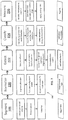
- FIG. 6 depicts, in more detail than FIGs. 1 or 2 , an example process 600 for detecting indications and flagging them for an operator.
- a part mask may be generated, and hole fill and erode image processing operations may be performed.
- a Z domain transform may be performed, e.g., to transform the 3D model and the generated background to the Z-domain (e.g., by mean and standard deviation) so that they can be combined accurately.
- the 3D volume of the part may be self-normalized as described above with relation to the operations associated with block 220 of FIG. 2 , e.g., using a non-local means ("NLM" in FIG. 6 ) filter.
- NLM non-local means
- a Z-combine operation may also be performed using the 3D volume and a calculated background volume. For example, both the 3D volume of the part and the generated background may be subtracted in the Z-domain.
- an inverse Z transformation ( Z -1 )may be performed on the 3D volume.
- the denoising described above in association with block 222 of Fig. 2 may be performed, e.g., using the aforementioned adaptive bilateral filter.
- Z statistics such as mean and standard deviation may be calculated per slice.
- a global porosity may be calculated. For instance, in some embodiments, a global threshold calculation may be performed on the preprocessed volumes.
- a local porosity may be calculated, e.g., by calculating a top hat transform and then comparing the result to a threshold.
- a material area - i.e. an area of an image in which it is likely that few or no defects will be found - may be defined.
- seed regions may be grown as described above. In some embodiments, gradient and/or watershed image processing techniques may be employed to grow regions.
- indications of potential defects that do not satisfy various criteria may be filtered out.
- backgrounds for the remaining indications of potential defects may be calculated.
- a percentage drop in signal strength may be reported, e.g., to the operator, so that the operator can decide what further action should be taken.
- FIG. 7 depicts a method 700 that is very similar to method 600 of FIG. 6 , and thus most blocks are labeled identically.
- block 620 of method 600 is replaced with block 720, in which directional vectors are used in conjunction with a ply composite model as described above in order to grow regions.
- block 622 is replaced with block 722, in which non-applicable indications are filtered in accordance with various zones of the part, as well as with zoning criteria associated with each zone, as described above.
- new operation 727 is added in which various measurements (e.g., Feret diameter, curved width) of each indication may be calculated.
- Fig. 8 depicts an example computing system 800 that may be configured to implement various aspects of the selected disclosure, including but not limited to selected aspects of methods 100, 200, 600 and 700.
- Computing system 800 may include one or more buses 801 that may be used to operably couple various computing components.
- the various computing components may include, but are not limited to, one or more processors 802, memory 804 (RAM, ROM, HD, etc.), one or more input/output devices 806 (e.g., keyboard, mouse, display, printer, etc.), one or more communication interfaces 808 (e.g., wired or wireless), and so forth.
- computing system 800 may receive VCT scanned data from a VCT scanning system (not shown), e.g., via communication interface 808, and may perform selected aspects of the present disclosure to flag indications in a part for operator review.
- inventive embodiments are presented by way of example only and that, within the scope of the appended claims and equivalents thereto, inventive embodiments may be practiced otherwise than as specifically described and claimed.
- inventive embodiments of the present disclosure are directed to each individual feature, system, article, material, kit, and/or method described herein.
Landscapes
- Engineering & Computer Science (AREA)
- Health & Medical Sciences (AREA)
- Life Sciences & Earth Sciences (AREA)
- Physics & Mathematics (AREA)
- General Health & Medical Sciences (AREA)
- Pathology (AREA)
- General Physics & Mathematics (AREA)
- Medical Informatics (AREA)
- Radiology & Medical Imaging (AREA)
- Nuclear Medicine, Radiotherapy & Molecular Imaging (AREA)
- Chemical & Material Sciences (AREA)
- Biochemistry (AREA)
- Immunology (AREA)
- Analytical Chemistry (AREA)
- Theoretical Computer Science (AREA)
- Computer Vision & Pattern Recognition (AREA)
- Biophysics (AREA)
- Surgery (AREA)
- Optics & Photonics (AREA)
- Veterinary Medicine (AREA)
- Biomedical Technology (AREA)
- Heart & Thoracic Surgery (AREA)
- Molecular Biology (AREA)
- High Energy & Nuclear Physics (AREA)
- Animal Behavior & Ethology (AREA)
- Public Health (AREA)
- Pulmonology (AREA)
- Quality & Reliability (AREA)
- Analysing Materials By The Use Of Radiation (AREA)
- Investigating Materials By The Use Of Optical Means Adapted For Particular Applications (AREA)
Claims (9)
- Volumetrische Computertomographie (volumetric computed tomography - VCT)-basiertes Verfahren zum Bereitstellen einer Benachrichtigung eines potenziellen Fehlers in einem Verbundteil, das Folgendes umfasst:Erhalten (102) von VCT-Scandaten, die ein dreidimensionales (3D) Volumen des Verbundteils darstellen;Normalisieren (220) des 3D-Volumens vor einem erzeugten Hintergrund des Verbundteils, der Strahlaufhärtungs- und/oder Streuartefakte beinhaltet;Erfassen (222) einer Anzeige des potenziellen Fehlers in dem normalisierten 3D-Volumen; undAusgeben (112) von Informationen über die Anzeige,wobei das Verfahren ferner Folgendes umfasst:Bestimmen (224) einer Grenze der erfassten Anzeige basierend wenigstens teilweise auf einem computerunterstützten Konstruktions(computer-aided design - CAD)-Modell, wobei die Informationen über die Anzeige Informationen über die Grenze beinhalten, wobei das Bestimmen der Grenze Folgendes umfasstIdentifizieren (222) eines Startvoxels der Anzeige; und Durchführen (620, 720) eines Flächenwachstums um das Startvoxel herum; undwobei das CAD-Modell ein Lagenmodell (400) des Verbundteils ist und ein Wachstum der Fläche um das Startvoxel herum durch das Lagenmodell eingeschränkt ist.
- VCT-basiertes Verfahren nach Anspruch 1, wobei das Ausgeben ein Rendern, auf einem Display (806), eines 3D-Bilds des Verbundteils, das die Anzeige beinhaltet, umfasst.
- VCT-basiertes Verfahren nach Anspruch 1, das ferner ein Entrauschen (610) des normalisierten 3D-Volumens unter Verwendung eines adaptiven bilateralen Filters umfasst.
- VCT-basiertes Verfahren nach Anspruch 1, das ferner das Entrauschen (606) des normalisierten 3D-Volumens unter Verwendung eines nichtlokalen Mittelfilters umfasst.
- VCT-basiertes Verfahren nach Anspruch 1, das ferner Folgendes umfasst:Identifizieren (224) eines Signalbereichs der Anzeige; undIdentifizieren (220) eines Hintergrunds der Anzeige basierend auf einem computerunterstützten Konstruktions(CAD)-Modell.
- VCT-basiertes Verfahren nach Anspruch 5, das ferner ein Berechnen (226) einer Signalstärke der Anzeige basierend auf dem Signalbereich und dem Hintergrund der Anzeige umfasst.
- VCT-basiertes Verfahren nach Anspruch 6, wobei das Normalisieren das Erzeugen (602) einer Teilmaske des Verbundteils beinhaltet.
- VCT-basiertes Verfahren nach Anspruch 7, das ferner ein Subtrahieren (220) des erzeugten Hintergrunds des Verbundteils von dem 3D-Volumen des Verbundteils umfasst.
- VCT-basiertes Verfahren nach Anspruch 1, wobei das Erfassen das Berechnen (222) von globalen und lokalen Porositäten des 3D-Volumens umfasst.
Priority Applications (1)
| Application Number | Priority Date | Filing Date | Title |
|---|---|---|---|
| EP21201240.5A EP3957984B1 (de) | 2013-12-12 | 2014-12-01 | Verfahren zur defektmeldungsdetektion |
Applications Claiming Priority (2)
| Application Number | Priority Date | Filing Date | Title |
|---|---|---|---|
| US201361915239P | 2013-12-12 | 2013-12-12 | |
| PCT/US2014/067895 WO2015088803A1 (en) | 2013-12-12 | 2014-12-01 | Method for defect indication detection |
Related Child Applications (2)
| Application Number | Title | Priority Date | Filing Date |
|---|---|---|---|
| EP21201240.5A Division EP3957984B1 (de) | 2013-12-12 | 2014-12-01 | Verfahren zur defektmeldungsdetektion |
| EP21201240.5A Division-Into EP3957984B1 (de) | 2013-12-12 | 2014-12-01 | Verfahren zur defektmeldungsdetektion |
Publications (2)
| Publication Number | Publication Date |
|---|---|
| EP3080593A1 EP3080593A1 (de) | 2016-10-19 |
| EP3080593B1 true EP3080593B1 (de) | 2021-11-24 |
Family
ID=52144894
Family Applications (2)
| Application Number | Title | Priority Date | Filing Date |
|---|---|---|---|
| EP14816524.4A Active EP3080593B1 (de) | 2013-12-12 | 2014-12-01 | Verfahren zur defektmeldungsdetektion |
| EP21201240.5A Active EP3957984B1 (de) | 2013-12-12 | 2014-12-01 | Verfahren zur defektmeldungsdetektion |
Family Applications After (1)
| Application Number | Title | Priority Date | Filing Date |
|---|---|---|---|
| EP21201240.5A Active EP3957984B1 (de) | 2013-12-12 | 2014-12-01 | Verfahren zur defektmeldungsdetektion |
Country Status (6)
| Country | Link |
|---|---|
| US (2) | US10203290B2 (de) |
| EP (2) | EP3080593B1 (de) |
| JP (1) | JP6283419B2 (de) |
| CN (1) | CN105980838B (de) |
| CA (1) | CA2933334C (de) |
| WO (1) | WO2015088803A1 (de) |
Families Citing this family (11)
| Publication number | Priority date | Publication date | Assignee | Title |
|---|---|---|---|---|
| US10677943B2 (en) * | 2016-12-16 | 2020-06-09 | Smiths Detection, Llc | System and method for monitoring a computed tomography imaging system |
| US10929971B2 (en) * | 2017-12-21 | 2021-02-23 | Rolls-Royce Corporation | Representation-based hybrid model |
| CN108830873B (zh) * | 2018-06-29 | 2022-02-01 | 京东方科技集团股份有限公司 | 深度图像物体边缘提取方法、装置、介质及计算机设备 |
| US11809789B2 (en) * | 2019-11-06 | 2023-11-07 | Rtx Corporation | Parametric component design process |
| DE102020112650A1 (de) | 2020-05-11 | 2021-11-11 | Volume Graphics Gmbh | Computerimplementiertes Verfahren zur Messung eines Objekts |
| EP3954985A1 (de) | 2020-08-04 | 2022-02-16 | Biometic S.r.l. | Industrielle tomografievorrichtung und verfahren zur überprüfung der zusammensetzung industrieller produkte, die eine vielzahl von primärteilen enthalten |
| IT202000019819A1 (it) | 2020-08-07 | 2022-02-07 | Biometic S R L | Apparecchiatura tomografica industriale e metodo per controllare l’integrità di prodotti industriali |
| CN111968095B (zh) * | 2020-08-19 | 2022-08-02 | 成都数之联科技股份有限公司 | 一种产品表面缺陷检测方法及系统及装置及介质 |
| US11703440B2 (en) * | 2021-09-24 | 2023-07-18 | General Electric Company | Porosity of a part |
| US12198257B2 (en) | 2022-08-26 | 2025-01-14 | General Electric Company | System and method of producing a computer-generated image of a component part using computed tomography |
| CN117037128B (zh) * | 2023-10-08 | 2024-01-30 | 广东省农业科学院蔬菜研究所 | 一种蔬菜种子智能识别方法及系统 |
Family Cites Families (31)
| Publication number | Priority date | Publication date | Assignee | Title |
|---|---|---|---|---|
| JPS6367551A (ja) | 1986-09-10 | 1988-03-26 | Nippon Steel Corp | 繊維補強複合材料中の繊維分散性評価法 |
| US4891829A (en) | 1986-11-19 | 1990-01-02 | Exxon Research And Engineering Company | Method and apparatus for utilizing an electro-optic detector in a microtomography system |
| JPS63243852A (ja) | 1987-03-31 | 1988-10-11 | Toshiba Corp | Ctスキヤナの画像再構成方式 |
| JPH08140964A (ja) | 1994-11-22 | 1996-06-04 | Hitachi Medical Corp | X線ct装置 |
| US6163589A (en) * | 1998-06-13 | 2000-12-19 | General Electric Company | Monte Carlo scatter correction method for computed tomography of general object geometries |
| US6041132A (en) * | 1997-07-29 | 2000-03-21 | General Electric Company | Computed tomography inspection of composite ply structure |
| JPH11296700A (ja) | 1998-04-07 | 1999-10-29 | Toshiba Fa Syst Eng Corp | 3次元画像表示装置 |
| US6922457B2 (en) | 2001-11-29 | 2005-07-26 | Kabushiki Kaisha Toshiba | Computer tomography apparatus |
| US6879656B2 (en) | 2002-07-23 | 2005-04-12 | General Electric Company | Method and apparatus for deriving motion information from projection data |
| JP2004062777A (ja) | 2002-07-31 | 2004-02-26 | Hitachi Ltd | 物品の解析サービス提供方、解析処理方法および解析用プログラム |
| JP4131400B2 (ja) | 2003-08-01 | 2008-08-13 | トヨタ自動車株式会社 | 鋳造内部欠陥検査支援装置及び方法 |
| CN100495002C (zh) | 2004-05-28 | 2009-06-03 | 哈尔滨工业大学 | 基于射线实时成像的缺陷深度检测方法 |
| US7254211B2 (en) * | 2004-09-14 | 2007-08-07 | Hitachi, Ltd. | Method and apparatus for performing computed tomography |
| JP4588414B2 (ja) | 2004-10-28 | 2010-12-01 | 株式会社日立製作所 | 内部欠陥検査方法および装置 |
| WO2006070316A1 (en) | 2004-12-29 | 2006-07-06 | Philips Intellectual Property & Standards Gmbh | Apparatus and method for artifact correction of x-ray projections |
| JP2006266754A (ja) * | 2005-03-22 | 2006-10-05 | Sony Corp | X線断層撮像方法及びx線断層撮像装置 |
| US7227923B2 (en) | 2005-04-18 | 2007-06-05 | General Electric Company | Method and system for CT imaging using a distributed X-ray source and interpolation based reconstruction |
| JP4523489B2 (ja) | 2005-05-30 | 2010-08-11 | 株式会社日立製作所 | 内部欠陥検査方法および内部欠陥検査装置 |
| JP4414420B2 (ja) * | 2006-10-27 | 2010-02-10 | ジーイー・メディカル・システムズ・グローバル・テクノロジー・カンパニー・エルエルシー | X線断層撮影装置およびアーチファクトの低減方法 |
| JP4350738B2 (ja) | 2006-10-27 | 2009-10-21 | ジーイー・メディカル・システムズ・グローバル・テクノロジー・カンパニー・エルエルシー | X線断層撮影装置およびアーチファクトの低減方法 |
| EP2174162A2 (de) | 2007-06-29 | 2010-04-14 | Philips Intellectual Property & Standards GmbH | Verfahren zur eliminierung von streuungsartefakten in der computertomographie |
| JP5405048B2 (ja) * | 2007-07-10 | 2014-02-05 | 株式会社東芝 | X線コンピュータ断層撮影装置、再構成処理装置及び画像処理装置 |
| US8131107B2 (en) | 2008-05-12 | 2012-03-06 | General Electric Company | Method and system for identifying defects in NDT image data |
| JP2010038878A (ja) | 2008-08-08 | 2010-02-18 | Toshiba It & Control Systems Corp | 断層撮影装置 |
| JP5125902B2 (ja) * | 2008-09-02 | 2013-01-23 | 株式会社島津製作所 | X線ct装置 |
| US8184767B2 (en) * | 2008-12-10 | 2012-05-22 | General Electric Company | Imaging system and method with scatter correction |
| JP2010201089A (ja) * | 2009-03-05 | 2010-09-16 | Kgt Inc | 医療用三次元画像におけるアーティファクトの自動削除処理方法、自動削除処理装置及び自動削除処理プログラム |
| US8442301B2 (en) * | 2009-04-30 | 2013-05-14 | General Electric Company | Nondestructive inspection method and system |
| JP6081139B2 (ja) * | 2011-12-26 | 2017-02-15 | 東芝メディカルシステムズ株式会社 | 超音波診断装置、医用画像処理装置、及び医用画像処理方法 |
| DE102013104720A1 (de) | 2012-05-07 | 2013-11-07 | Werth Messtechnik Gmbh | Computertomografie-Verfahren und Anordnung zur Bestimmung von Merkmalen an einem Messobjekt |
| US10746671B2 (en) * | 2015-03-06 | 2020-08-18 | Ge Sensing & Inspection Technologies Gmbh | Imaging system and method with scatter correction |
-
2014
- 2014-12-01 EP EP14816524.4A patent/EP3080593B1/de active Active
- 2014-12-01 EP EP21201240.5A patent/EP3957984B1/de active Active
- 2014-12-01 WO PCT/US2014/067895 patent/WO2015088803A1/en not_active Ceased
- 2014-12-01 CA CA2933334A patent/CA2933334C/en active Active
- 2014-12-01 US US15/100,567 patent/US10203290B2/en active Active
- 2014-12-01 CN CN201480067761.7A patent/CN105980838B/zh active Active
- 2014-12-01 JP JP2016538055A patent/JP6283419B2/ja active Active
-
2018
- 2018-12-27 US US16/233,161 patent/US10481108B2/en active Active
Non-Patent Citations (1)
| Title |
|---|
| None * |
Also Published As
| Publication number | Publication date |
|---|---|
| EP3957984A1 (de) | 2022-02-23 |
| CA2933334C (en) | 2020-09-22 |
| US10203290B2 (en) | 2019-02-12 |
| CA2933334A1 (en) | 2015-06-18 |
| US20160305895A1 (en) | 2016-10-20 |
| JP2017500560A (ja) | 2017-01-05 |
| US20190137421A1 (en) | 2019-05-09 |
| EP3080593A1 (de) | 2016-10-19 |
| JP6283419B2 (ja) | 2018-02-21 |
| WO2015088803A1 (en) | 2015-06-18 |
| CN105980838A (zh) | 2016-09-28 |
| US10481108B2 (en) | 2019-11-19 |
| CN105980838B (zh) | 2019-04-16 |
| EP3957984B1 (de) | 2026-03-11 |
Similar Documents
| Publication | Publication Date | Title |
|---|---|---|
| US10481108B2 (en) | System for defect indication detection | |
| US20200051229A1 (en) | Method for the non-destructive testing of the volume of a test object and testing device configured for carrying out such a method | |
| CN103955940B (zh) | 一种基于x射线背散射图像的人体隐藏物的检测方法 | |
| US8090169B2 (en) | System and method for detecting items of interest through mass estimation | |
| CN109870730B (zh) | 一种用于x光机图像解析度测试体定检的方法及系统 | |
| Sheba et al. | Objective quality assessment of image enhancement methods in digital mammography–a comparative study | |
| JP2016156647A (ja) | 電磁波を使用した検査装置 | |
| CN110326026B (zh) | 用于多边缘检测的方法和装置 | |
| US8774496B2 (en) | Compound object separation | |
| Fleßner et al. | Automated detection of artefacts for computed tomography in dimensional metrology | |
| Murali et al. | A Comparative Analysis of Various Segmentation Techniques in Brain Tumor Image | |
| Osman et al. | An automated data processing method dedicated to 3D ultrasonic non destructive testing of composite pieces | |
| Picard et al. | Automated crack detection method applied to CT images of baked carbon anode | |
| Yu et al. | Applying multifractal spectrum combined with fractal discrete Brownian motion model to wood defects recognition | |
| Nguyen et al. | DFS-based fast crack detection | |
| US11703440B2 (en) | Porosity of a part | |
| Steinlechner et al. | A Novel Approach for Immediate, Interactive CT Data Visualization and Evaluation using GPU-based Segmentation and Visual Analysis | |
| Nguyen et al. | DFS-based fast crack pre-detection | |
| Yu et al. | Applying multifractal spectrum combined with fractal discrete brownian motion model to wood defects recognition for sawing | |
| Nagaraj et al. | Early breast cancer detection using statistical parameters | |
| Johnstone | Comparison of Porosity Detection Methods in Infrared Imaging for Electron Beam Powder Bed Fusion | |
| CN121937702A (zh) | 一种基于缺陷几何特征的增材制造金属零部件关键缺陷识别方法 | |
| Odry et al. | Solid component evaluation in mixed ground glass nodules | |
| Wang et al. | X-ray image segmentation using wavelet method | |
| Maisl et al. | Computed laminography using a priori information |
Legal Events
| Date | Code | Title | Description |
|---|---|---|---|
| PUAI | Public reference made under article 153(3) epc to a published international application that has entered the european phase |
Free format text: ORIGINAL CODE: 0009012 |
|
| 17P | Request for examination filed |
Effective date: 20160712 |
|
| AK | Designated contracting states |
Kind code of ref document: A1 Designated state(s): AL AT BE BG CH CY CZ DE DK EE ES FI FR GB GR HR HU IE IS IT LI LT LU LV MC MK MT NL NO PL PT RO RS SE SI SK SM TR |
|
| AX | Request for extension of the european patent |
Extension state: BA ME |
|
| DAX | Request for extension of the european patent (deleted) | ||
| STAA | Information on the status of an ep patent application or granted ep patent |
Free format text: STATUS: EXAMINATION IS IN PROGRESS |
|
| 17Q | First examination report despatched |
Effective date: 20200417 |
|
| GRAP | Despatch of communication of intention to grant a patent |
Free format text: ORIGINAL CODE: EPIDOSNIGR1 |
|
| STAA | Information on the status of an ep patent application or granted ep patent |
Free format text: STATUS: GRANT OF PATENT IS INTENDED |
|
| INTG | Intention to grant announced |
Effective date: 20210609 |
|
| GRAS | Grant fee paid |
Free format text: ORIGINAL CODE: EPIDOSNIGR3 |
|
| GRAA | (expected) grant |
Free format text: ORIGINAL CODE: 0009210 |
|
| STAA | Information on the status of an ep patent application or granted ep patent |
Free format text: STATUS: THE PATENT HAS BEEN GRANTED |
|
| AK | Designated contracting states |
Kind code of ref document: B1 Designated state(s): AL AT BE BG CH CY CZ DE DK EE ES FI FR GB GR HR HU IE IS IT LI LT LU LV MC MK MT NL NO PL PT RO RS SE SI SK SM TR |
|
| REG | Reference to a national code |
Ref country code: GB Ref legal event code: FG4D |
|
| REG | Reference to a national code |
Ref country code: AT Ref legal event code: REF Ref document number: 1450226 Country of ref document: AT Kind code of ref document: T Effective date: 20211215 |
|
| REG | Reference to a national code |
Ref country code: DE Ref legal event code: R096 Ref document number: 602014081425 Country of ref document: DE |
|
| REG | Reference to a national code |
Ref country code: IE Ref legal event code: FG4D |
|
| REG | Reference to a national code |
Ref country code: LT Ref legal event code: MG9D |
|
| REG | Reference to a national code |
Ref country code: NL Ref legal event code: MP Effective date: 20211124 |
|
| REG | Reference to a national code |
Ref country code: AT Ref legal event code: MK05 Ref document number: 1450226 Country of ref document: AT Kind code of ref document: T Effective date: 20211124 |
|
| PG25 | Lapsed in a contracting state [announced via postgrant information from national office to epo] |
Ref country code: RS Free format text: LAPSE BECAUSE OF FAILURE TO SUBMIT A TRANSLATION OF THE DESCRIPTION OR TO PAY THE FEE WITHIN THE PRESCRIBED TIME-LIMIT Effective date: 20211124 Ref country code: LT Free format text: LAPSE BECAUSE OF FAILURE TO SUBMIT A TRANSLATION OF THE DESCRIPTION OR TO PAY THE FEE WITHIN THE PRESCRIBED TIME-LIMIT Effective date: 20211124 Ref country code: FI Free format text: LAPSE BECAUSE OF FAILURE TO SUBMIT A TRANSLATION OF THE DESCRIPTION OR TO PAY THE FEE WITHIN THE PRESCRIBED TIME-LIMIT Effective date: 20211124 Ref country code: BG Free format text: LAPSE BECAUSE OF FAILURE TO SUBMIT A TRANSLATION OF THE DESCRIPTION OR TO PAY THE FEE WITHIN THE PRESCRIBED TIME-LIMIT Effective date: 20220224 Ref country code: AT Free format text: LAPSE BECAUSE OF FAILURE TO SUBMIT A TRANSLATION OF THE DESCRIPTION OR TO PAY THE FEE WITHIN THE PRESCRIBED TIME-LIMIT Effective date: 20211124 |
|
| PG25 | Lapsed in a contracting state [announced via postgrant information from national office to epo] |
Ref country code: IS Free format text: LAPSE BECAUSE OF FAILURE TO SUBMIT A TRANSLATION OF THE DESCRIPTION OR TO PAY THE FEE WITHIN THE PRESCRIBED TIME-LIMIT Effective date: 20220324 Ref country code: SE Free format text: LAPSE BECAUSE OF FAILURE TO SUBMIT A TRANSLATION OF THE DESCRIPTION OR TO PAY THE FEE WITHIN THE PRESCRIBED TIME-LIMIT Effective date: 20211124 Ref country code: PT Free format text: LAPSE BECAUSE OF FAILURE TO SUBMIT A TRANSLATION OF THE DESCRIPTION OR TO PAY THE FEE WITHIN THE PRESCRIBED TIME-LIMIT Effective date: 20220324 Ref country code: PL Free format text: LAPSE BECAUSE OF FAILURE TO SUBMIT A TRANSLATION OF THE DESCRIPTION OR TO PAY THE FEE WITHIN THE PRESCRIBED TIME-LIMIT Effective date: 20211124 Ref country code: NO Free format text: LAPSE BECAUSE OF FAILURE TO SUBMIT A TRANSLATION OF THE DESCRIPTION OR TO PAY THE FEE WITHIN THE PRESCRIBED TIME-LIMIT Effective date: 20220224 Ref country code: NL Free format text: LAPSE BECAUSE OF FAILURE TO SUBMIT A TRANSLATION OF THE DESCRIPTION OR TO PAY THE FEE WITHIN THE PRESCRIBED TIME-LIMIT Effective date: 20211124 Ref country code: LV Free format text: LAPSE BECAUSE OF FAILURE TO SUBMIT A TRANSLATION OF THE DESCRIPTION OR TO PAY THE FEE WITHIN THE PRESCRIBED TIME-LIMIT Effective date: 20211124 Ref country code: HR Free format text: LAPSE BECAUSE OF FAILURE TO SUBMIT A TRANSLATION OF THE DESCRIPTION OR TO PAY THE FEE WITHIN THE PRESCRIBED TIME-LIMIT Effective date: 20211124 Ref country code: GR Free format text: LAPSE BECAUSE OF FAILURE TO SUBMIT A TRANSLATION OF THE DESCRIPTION OR TO PAY THE FEE WITHIN THE PRESCRIBED TIME-LIMIT Effective date: 20220225 Ref country code: ES Free format text: LAPSE BECAUSE OF FAILURE TO SUBMIT A TRANSLATION OF THE DESCRIPTION OR TO PAY THE FEE WITHIN THE PRESCRIBED TIME-LIMIT Effective date: 20211124 |
|
| PG25 | Lapsed in a contracting state [announced via postgrant information from national office to epo] |
Ref country code: SM Free format text: LAPSE BECAUSE OF FAILURE TO SUBMIT A TRANSLATION OF THE DESCRIPTION OR TO PAY THE FEE WITHIN THE PRESCRIBED TIME-LIMIT Effective date: 20211124 Ref country code: SK Free format text: LAPSE BECAUSE OF FAILURE TO SUBMIT A TRANSLATION OF THE DESCRIPTION OR TO PAY THE FEE WITHIN THE PRESCRIBED TIME-LIMIT Effective date: 20211124 Ref country code: RO Free format text: LAPSE BECAUSE OF FAILURE TO SUBMIT A TRANSLATION OF THE DESCRIPTION OR TO PAY THE FEE WITHIN THE PRESCRIBED TIME-LIMIT Effective date: 20211124 Ref country code: EE Free format text: LAPSE BECAUSE OF FAILURE TO SUBMIT A TRANSLATION OF THE DESCRIPTION OR TO PAY THE FEE WITHIN THE PRESCRIBED TIME-LIMIT Effective date: 20211124 Ref country code: DK Free format text: LAPSE BECAUSE OF FAILURE TO SUBMIT A TRANSLATION OF THE DESCRIPTION OR TO PAY THE FEE WITHIN THE PRESCRIBED TIME-LIMIT Effective date: 20211124 Ref country code: CZ Free format text: LAPSE BECAUSE OF FAILURE TO SUBMIT A TRANSLATION OF THE DESCRIPTION OR TO PAY THE FEE WITHIN THE PRESCRIBED TIME-LIMIT Effective date: 20211124 |
|
| REG | Reference to a national code |
Ref country code: CH Ref legal event code: PL |
|
| REG | Reference to a national code |
Ref country code: DE Ref legal event code: R097 Ref document number: 602014081425 Country of ref document: DE |
|
| PG25 | Lapsed in a contracting state [announced via postgrant information from national office to epo] |
Ref country code: MC Free format text: LAPSE BECAUSE OF FAILURE TO SUBMIT A TRANSLATION OF THE DESCRIPTION OR TO PAY THE FEE WITHIN THE PRESCRIBED TIME-LIMIT Effective date: 20211124 |
|
| REG | Reference to a national code |
Ref country code: BE Ref legal event code: MM Effective date: 20211231 |
|
| PLBE | No opposition filed within time limit |
Free format text: ORIGINAL CODE: 0009261 |
|
| STAA | Information on the status of an ep patent application or granted ep patent |
Free format text: STATUS: NO OPPOSITION FILED WITHIN TIME LIMIT |
|
| PG25 | Lapsed in a contracting state [announced via postgrant information from national office to epo] |
Ref country code: LU Free format text: LAPSE BECAUSE OF NON-PAYMENT OF DUE FEES Effective date: 20211201 Ref country code: IE Free format text: LAPSE BECAUSE OF NON-PAYMENT OF DUE FEES Effective date: 20211201 Ref country code: AL Free format text: LAPSE BECAUSE OF FAILURE TO SUBMIT A TRANSLATION OF THE DESCRIPTION OR TO PAY THE FEE WITHIN THE PRESCRIBED TIME-LIMIT Effective date: 20211124 |
|
| 26N | No opposition filed |
Effective date: 20220825 |
|
| PG25 | Lapsed in a contracting state [announced via postgrant information from national office to epo] |
Ref country code: SI Free format text: LAPSE BECAUSE OF FAILURE TO SUBMIT A TRANSLATION OF THE DESCRIPTION OR TO PAY THE FEE WITHIN THE PRESCRIBED TIME-LIMIT Effective date: 20211124 Ref country code: BE Free format text: LAPSE BECAUSE OF NON-PAYMENT OF DUE FEES Effective date: 20211231 |
|
| PG25 | Lapsed in a contracting state [announced via postgrant information from national office to epo] |
Ref country code: LI Free format text: LAPSE BECAUSE OF NON-PAYMENT OF DUE FEES Effective date: 20211231 Ref country code: CH Free format text: LAPSE BECAUSE OF NON-PAYMENT OF DUE FEES Effective date: 20211231 |
|
| PG25 | Lapsed in a contracting state [announced via postgrant information from national office to epo] |
Ref country code: IT Free format text: LAPSE BECAUSE OF FAILURE TO SUBMIT A TRANSLATION OF THE DESCRIPTION OR TO PAY THE FEE WITHIN THE PRESCRIBED TIME-LIMIT Effective date: 20211124 Ref country code: HU Free format text: LAPSE BECAUSE OF FAILURE TO SUBMIT A TRANSLATION OF THE DESCRIPTION OR TO PAY THE FEE WITHIN THE PRESCRIBED TIME-LIMIT; INVALID AB INITIO Effective date: 20141201 |
|
| P01 | Opt-out of the competence of the unified patent court (upc) registered |
Effective date: 20230414 |
|
| PG25 | Lapsed in a contracting state [announced via postgrant information from national office to epo] |
Ref country code: CY Free format text: LAPSE BECAUSE OF FAILURE TO SUBMIT A TRANSLATION OF THE DESCRIPTION OR TO PAY THE FEE WITHIN THE PRESCRIBED TIME-LIMIT Effective date: 20211124 |
|
| PG25 | Lapsed in a contracting state [announced via postgrant information from national office to epo] |
Ref country code: MK Free format text: LAPSE BECAUSE OF FAILURE TO SUBMIT A TRANSLATION OF THE DESCRIPTION OR TO PAY THE FEE WITHIN THE PRESCRIBED TIME-LIMIT Effective date: 20211124 |
|
| PG25 | Lapsed in a contracting state [announced via postgrant information from national office to epo] |
Ref country code: MT Free format text: LAPSE BECAUSE OF FAILURE TO SUBMIT A TRANSLATION OF THE DESCRIPTION OR TO PAY THE FEE WITHIN THE PRESCRIBED TIME-LIMIT Effective date: 20211124 |
|
| PG25 | Lapsed in a contracting state [announced via postgrant information from national office to epo] |
Ref country code: TR Free format text: LAPSE BECAUSE OF FAILURE TO SUBMIT A TRANSLATION OF THE DESCRIPTION OR TO PAY THE FEE WITHIN THE PRESCRIBED TIME-LIMIT Effective date: 20211124 |
|
| PGFP | Annual fee paid to national office [announced via postgrant information from national office to epo] |
Ref country code: DE Payment date: 20251126 Year of fee payment: 12 |
|
| PGFP | Annual fee paid to national office [announced via postgrant information from national office to epo] |
Ref country code: GB Payment date: 20251120 Year of fee payment: 12 |
|
| PGFP | Annual fee paid to national office [announced via postgrant information from national office to epo] |
Ref country code: FR Payment date: 20251120 Year of fee payment: 12 |