EP3090979A1 - Dispositif de commande et procédé de commande pour chariot-élévateur à fourche - Google Patents
Dispositif de commande et procédé de commande pour chariot-élévateur à fourche Download PDFInfo
- Publication number
- EP3090979A1 EP3090979A1 EP14876660.3A EP14876660A EP3090979A1 EP 3090979 A1 EP3090979 A1 EP 3090979A1 EP 14876660 A EP14876660 A EP 14876660A EP 3090979 A1 EP3090979 A1 EP 3090979A1
- Authority
- EP
- European Patent Office
- Prior art keywords
- forklift
- cargo
- travelling speed
- mast
- fork
- Prior art date
- Legal status (The legal status is an assumption and is not a legal conclusion. Google has not performed a legal analysis and makes no representation as to the accuracy of the status listed.)
- Granted
Links
Images


Classifications
-
- B—PERFORMING OPERATIONS; TRANSPORTING
- B66—HOISTING; LIFTING; HAULING
- B66F—HOISTING, LIFTING, HAULING OR PUSHING, NOT OTHERWISE PROVIDED FOR, e.g. DEVICES WHICH APPLY A LIFTING OR PUSHING FORCE DIRECTLY TO THE SURFACE OF A LOAD
- B66F17/00—Safety devices, e.g. for limiting or indicating lifting force
- B66F17/003—Safety devices, e.g. for limiting or indicating lifting force for fork-lift trucks
-
- B—PERFORMING OPERATIONS; TRANSPORTING
- B66—HOISTING; LIFTING; HAULING
- B66F—HOISTING, LIFTING, HAULING OR PUSHING, NOT OTHERWISE PROVIDED FOR, e.g. DEVICES WHICH APPLY A LIFTING OR PUSHING FORCE DIRECTLY TO THE SURFACE OF A LOAD
- B66F9/00—Devices for lifting or lowering bulky or heavy goods for loading or unloading purposes
- B66F9/06—Devices for lifting or lowering bulky or heavy goods for loading or unloading purposes movable, with their loads, on wheels or the like, e.g. fork-lift trucks
- B66F9/075—Constructional features or details
- B66F9/12—Platforms; Forks; Other load supporting or gripping members
-
- B—PERFORMING OPERATIONS; TRANSPORTING
- B66—HOISTING; LIFTING; HAULING
- B66F—HOISTING, LIFTING, HAULING OR PUSHING, NOT OTHERWISE PROVIDED FOR, e.g. DEVICES WHICH APPLY A LIFTING OR PUSHING FORCE DIRECTLY TO THE SURFACE OF A LOAD
- B66F9/00—Devices for lifting or lowering bulky or heavy goods for loading or unloading purposes
- B66F9/06—Devices for lifting or lowering bulky or heavy goods for loading or unloading purposes movable, with their loads, on wheels or the like, e.g. fork-lift trucks
- B66F9/075—Constructional features or details
- B66F9/20—Means for actuating or controlling masts, platforms, or forks
-
- B—PERFORMING OPERATIONS; TRANSPORTING
- B66—HOISTING; LIFTING; HAULING
- B66F—HOISTING, LIFTING, HAULING OR PUSHING, NOT OTHERWISE PROVIDED FOR, e.g. DEVICES WHICH APPLY A LIFTING OR PUSHING FORCE DIRECTLY TO THE SURFACE OF A LOAD
- B66F9/00—Devices for lifting or lowering bulky or heavy goods for loading or unloading purposes
- B66F9/06—Devices for lifting or lowering bulky or heavy goods for loading or unloading purposes movable, with their loads, on wheels or the like, e.g. fork-lift trucks
- B66F9/075—Constructional features or details
- B66F9/20—Means for actuating or controlling masts, platforms, or forks
- B66F9/22—Hydraulic devices or systems
-
- B—PERFORMING OPERATIONS; TRANSPORTING
- B66—HOISTING; LIFTING; HAULING
- B66F—HOISTING, LIFTING, HAULING OR PUSHING, NOT OTHERWISE PROVIDED FOR, e.g. DEVICES WHICH APPLY A LIFTING OR PUSHING FORCE DIRECTLY TO THE SURFACE OF A LOAD
- B66F9/00—Devices for lifting or lowering bulky or heavy goods for loading or unloading purposes
- B66F9/06—Devices for lifting or lowering bulky or heavy goods for loading or unloading purposes movable, with their loads, on wheels or the like, e.g. fork-lift trucks
- B66F9/075—Constructional features or details
- B66F9/20—Means for actuating or controlling masts, platforms, or forks
- B66F9/24—Electrical devices or systems
Definitions
- the present disclosure relates to an apparatus and a method for controlling a forklift, and more particularly, to an apparatus and a method for controlling a forklift, which adjust an inclination angle of a mast according to weight of a cargo and a travelling speed, thereby preventing the cargo from falling.
- a forklift is used for transporting a cargo. More particularly, the forklift is loaded with a cargo on a fork, moves, and unloads the cargo to transport the cargo.
- the forklift receives power from a power source and operates a hydraulic system, and the hydraulic system generates hydraulic pressure.
- the forklift is operated by hydraulic pressure or an engine and a motor, or raises up a fork by hydraulic pressure.
- the fork may be provided in a mast, and the mast may be inclined forward and backward in the forklift.
- the aforementioned power source may be an internal combustion engine or an electric motor.
- a cargo is mounted on a palette, and the fork of the forklift is fitted into the palette.
- the fork is raised by an operation of the forklift, the cargo is raised, and when the forklift travels, the cargo is transported.
- a travelling path, along which the forklift is to travel, may be a flat road or a slope.
- the slope road may be understood as an uphill road or a downhill road according to a travelling direction of the forklift.
- the forklift travels in a state where the mast is tilted backward so as to prevent the cargo from falling.
- the meaning of the tilted backward is that the mast is tilted toward a main body of the forklift.
- the meaning of the forward tilt is that the mast is tilted in a front direction.
- an operator controls a degree of forward tilt or a degree of backward tilt of the mast by recognizing a travelling path. Accordingly, the operator needs to appropriately control an inclination angle of the mast at an appropriate time at which the forklift enters or exits from a slope.
- a cargo is disposed at a front side of the forklift, so that when the forklift travels in the front direction, the travelling path may be invisible by the cargo. Accordingly, there is a problem in that it is difficult to obtain information on the travelling path, that is, it is difficult to secure a view.
- the appropriate adjustment of the inclination angle of the mast is considerably varied according to a skill level of an operator, and there may be a case where an unskillful operator incorrectly sets an inclination angle of the mast. Further, there may be a case where an operator completely irrelevantly controls an inclination of the mast in an incorrect direction due to an incorrect determination, and in this case, there is a concern in that the cargo may fall.
- the cargo may move in the inward direction or the outward direction by inertia when a travelling speed of the forklift is decreased or increased.
- the movement of the cargo is in an unstable state, thereby being dangerous.
- the outward direction means a direction far from a main body of the forklift.
- the cargo may move according to a change in a speed of the forklift, such that it is required that the inclination of the mast is appropriately maintained.
- the technical object to be achieved in the present disclosure is to provide an apparatus and a method for controlling a forklift, which adjust an inclination angle of a mast in real time, or decrease a travelling speed of the forklift or stop the forklift in order to prevent a cargo from falling by overloading or speeding during the travelling in a state where the cargo is loaded.
- an apparatus for controlling a forklift includes: a setting unit 100 which sets reference weight of a cargo; an input unit 200 into which weight of an actual cargo is detected and input, and a cargo movement direction, in which the actual cargo slides and moves on a fork 30, is input; a determining unit 300 which determines whether the cargo is overloaded by comparing the weight of the actual cargo with the reference weight of the cargo, and determines an inward/outward cargo movement direction; and a processing unit 400 which gives a control command to a vehicle control unit (VCU) or a hydraulic system so that an inclination of a mast is adjusted when the determining unit 300 determines that the cargo is overloaded and determines that the movement direction of the cargo is a direction far from a main body of the forklift.
- VCU vehicle control unit
- the apparatus may further include a brake or a brake control unit which is installed in a travelling system of the forklift 10 and brakes the forklift 10, in which the setting unit 100 may further set a reference travelling speed, a current travelling speed of the forklift may be further input into the input unit 200, the determining unit 300 may further determine whether the forklift speeds by comparing the current travelling speed with the reference travelling speed, and when the determining unit 300 may determine that the forklift speeds and the movement direction of the cargo is determined as the direction far from the main body of the forklift, the processing unit 400 may give a control command so that the brake or the brake control unit is controlled to decrease the travelling speed of the forklift or stop the forklift.
- a brake or a brake control unit which is installed in a travelling system of the forklift 10 and brakes the forklift 10
- the setting unit 100 may further set a reference travelling speed
- a current travelling speed of the forklift may be further input into the input unit 200
- the determining unit 300 may further determine whether the
- the apparatus may further include a power train or a power train control unit which is installed in a power train system of the forklift 10 to transmit power to the traveling system, in which the setting unit 100 may further set a reference travelling speed, a current travelling speed of the forklift may be further input into the input unit 200, the determining unit 300 may further determine whether the forklift speeds by comparing the current travelling speed with the reference travelling speed, and when the determining unit 300 determines that the forklift speeds and the movement direction of the cargo is determined as the direction far from the main body of the forklift, the processing unit 400 may give a control command so that the power train or the power train control unit is operated to control an output size of the power.
- the setting unit 100 may further set a reference travelling speed
- a current travelling speed of the forklift may be further input into the input unit 200
- the determining unit 300 may further determine whether the forklift speeds by comparing the current travelling speed with the reference travelling speed, and when the determining unit 300 determines that the forklift speeds and the movement direction
- the apparatus may further include a brake or a brake control unit which is installed in a travelling system of the forklift 10 and brakes the forklift 10; and a power train or a power train control unit which is installed in a power train system of the forklift 10 to transmit power to the traveling system, in which the setting unit 100 may further set a reference travelling speed, a current travelling speed of the forklift may be further input into the input unit 200, the determining unit 300 may further determine whether the forklift speeds by comparing the current travelling speed with the reference travelling speed, and when the determining unit 300 determines that the forklift speeds and the movement direction of the cargo is determined as the direction far from the main body of the forklift, the processing unit 400 may give a control command so that the brake or the brake control unit is controlled to decrease the travelling speed of the forklift or stop the forklift, or give a control command so that the power train or the power train control unit is controlled to control an output size of the power.
- the setting unit 100 may further set a reference travelling speed
- the setting unit 100 may further set an allowable angle of a reference inclination of the mast, a current inclination of the mast with respect to a horizontal line may be further input into the input unit 200, and the processing unit 400 may give a control command to the VCU or the hydraulic system so that the current inclination of the mast is maintained within the allowable angle of the reference inclination angle of the mast.
- a sensor 40 may be provided to a fork vertical part 32 of the fork 30, the sensor 40 may measure a distance value to the actual cargo loaded on the fork 30, and when the distance value is increased, it may be determined that the movement direction of the cargo is a direction far from a main body of the forklift.
- a pair of forks 30 may be disposed side by side, a bracket 34 may be further formed at the fork vertical part 32 of any one fork 30 between the pair of forks 30, and the sensor 40 may be provided at the bracket 34.
- a method of controlling a forklift includes: a first step s10, in which reference weight of a cargo is set; a second step s20, in which weight of an actual cargo is input, and a direction, in which the actual cargo slides on a fork 30, is input; a third step s30, in which it is determined whether the cargo is overloaded according to whether the weight of the actual cargo exceeds the reference weight of the cargo; a fourth step s40, in which it is determined whether the direction, in which the actual cargo slides on the fork 30, is an outward direction; and a sixth step s60, in which when the cargo is overloaded, and the direction, in which the actual cargo slides on the fork 30, is the outward direction, a control command is given to a vehicle control unit (VCU) or a hydraulic system so that an inclination of a mast is adjusted.
- VCU vehicle control unit
- a reference travelling speed may be further set
- a current travelling speed of the forklift may be further input
- the method may further include a fifth step s50, in which the current travelling speed is compared with the reference travelling speed, and it is further determined whether the forklift speeds, and when the cargo is overloaded, the forklift speeds, and the direction, in which the actual cargo slides on the fork 30, is the outward direction, a control command may be given to a VCU or a hydraulic system so that an inclination of a mast is adjusted, and a control command may be given so that a travelling speed of the forklift is decreased or the forklift is stopped.
- a reference travelling speed may be further set
- a current travelling speed of the forklift may be further input
- the method may further include a fifth step s50, in which the current travelling speed is compared with the reference travelling speed, and it is further determined whether the forklift speeds, and when the cargo is overloaded, the forklift speeds, and the direction, in which the actual cargo slides on the fork 30, is the outward direction, a control command may be given to a VCU or a hydraulic system so that an inclination of a mast is adjusted, and a control command may be given so that a power train or a power train control unit is operated, and thus an output size of the power may be controlled.
- the apparatus and the method for controlling the forklift may adjust an inclination of a mast or decrease a travelling speed of the forklift so as to prevent a cargo from falling when the cargo is overloaded or the forklift speeds in a state where the cargo is loaded on the fork, and may decelerate the forklift or stop the forklift when falling danger of the cargo is not decreased, thereby preventing the cargo from falling.
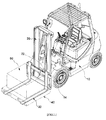
- FIGS. 1 and 2 are diagrams for describing a configuration of a forklift according to an exemplary embodiment of the present disclosure.
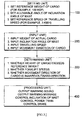
- FIG. 3 is a diagram for describing an apparatus and a method for controlling a forklift according to an exemplary embodiment of the present disclosure.
- a forklift 10 is mounted with a hydraulic system.
- the hydraulic system receives power from a power source.
- the power source may be an engine or an electric motor.
- a mast 20 is installed at a front side of the forklift 10, and a fork 30 is provided in the mast 20.
- a cargo 60 or a palette 50 may be mounted to the fork 30. Universally, the fork 30 enters and exits from the palette 50. That is, when the cargo 60 is mounted on the palette 50, weight of the cargo 60 is applied to the fork 30.
- the mast 20 may be provided with a step according to a specification of the forklift 10, and when a height of the step is high, the mast 20 may raise up the cargo 60 to a higher position.
- a tilting actuator 22 is disposed between the forklift 10 and the mast 20.
- the tilting actuator 22 may be operated by hydraulic pressure, and the hydraulic pressure is provided from the hydraulic system. That is, the tilting actuator 22 adjusts an inclination of the mast 20 by tilting forward or backward the mast 20 according to the control of a mast solenoid valve provided in the hydraulic system.
- the mast solenoid valve controls a flow rate and a flow direction, and the mast 20 may accurately control a speed, at which the mast 20 is tilted, and a degree of inclination angle by controlling the mast solenoid valve.
- a power train or a power train control unit is provided in the forklift 10 according to the exemplary embodiment of the present disclosure.
- the power train or the power train control unit transfers power output from the engine or a driving motor to a travelling system or the hydraulic system.
- a size of power may be controlled, and for example, when a size of power is controlled to be decreased, the size of power is decreased, so that a travelling speed may be decreased.
- a brake or a brake control unit 14 is provided in a travelling system of the forklift 10 according to the exemplary embodiment of the present disclosure.
- the brake or the brake control unit 14 applies braking to the travelling of the forklift 10.
- the electronic brake or the brake control unit may be applied, so that it is possible to more precisely control desired braking force. That is, when the brake or the brake control unit is operated by a control command output from the processing unit 400, a travelling speed of the forklift 10 may be decreased regardless of an intention of a driver.
- the forklift 10 may sequentially control or simultaneously control the power train or the power train control unit and the brake or the brake control unit. Accordingly, it is possible to more stably and smoothly decrease a travelling speed of the forklift 10.
- the apparatus for controlling the forklift includes a setting unit 100, an input unit 200, a determining unit 300, and a processing unit 400.
- the setting unit 100 sets reference weight of a cargo.
- the reference weight of the cargo may be set to, for example, 100 kgf.
- the reference weight of the cargo may be pre-set by a manufacturing company according to performance of a forklift, and may be set again according to an intention of an operator.
- the setting unit 100 may further set a reference travelling speed.
- the reference travelling speed may be set to, for example, 3 km/h.
- the reference travelling speed may be pre-set by a manufacturing company according to performance of a forklift, and may be set again according to an intention of an operator.
- the setting unit 100 may further set an allowable angle of a reference inclination angle of the mast.
- the allowable angle may be set to, for example, 2°.
- the reference mast inclination angle may be pre-set by a manufacturing company according to performance of a forklift, and may be set again according to an intention of an operator. In the meantime, an inclination of the mast and an inclination of the fork may be treated as the same data. The reason is that when the mast 20 is tilted, the fork 30 is tilted together. Further, an angle of the fork 30 with respect to the mast 20 is uniform. Accordingly, when an operator knows an inclination of the mask, the operator may naturally easily know an inclination of the fork.
- an inclination of the mast and an inclination of the fork are expressed as a mast inclination.
- Weight of an actual cargo is detected and input into the input unit 200. Further, a cargo movement direction, in which the cargo actually slides and moves in the fork 30, is input into the input unit 200. Further, a current traveling speed of the forklift 10 may be input into the input unit 200.
- Weight of the actual cargo may be obtained by mounting a weight sensor to the fork 30, or may also be estimated by pressure applied to a lift cylinder of the mast 20. That is, information on weight of a cargo is obtained by using a well-known technology, and a more detailed description thereof will be omitted.
- the cargo movement direction may be recognized by a sensor 40 provided in a fork vertical part 32 of the fork 30 as illustrated in FIGS. 1 and 2 . This will be additionally described below.
- the sensor 40 measures a distance to the cargo 60, and the measured initial distance value is input into the input unit 200.
- the sensor 40 continuously measures a distance value to the actual cargo loaded on the fork 30 in real time. That is, when the distance value is increased, it may be determined that the cargo movement direction is a direction far from a main body of the forklift.
- the cargo movement direction will be described in more detail below.
- the cargo 60 may slide and move on the fork 30.
- a case where the cargo 60 slides includes a case where the cargo 60 slides because the fork 30 is not horizontal or because of inertia.
- a direction, in which the cargo slides, is any one of an outward direction or an inward direction.
- the outward direction is a direction, in which the cargo 60 becomes far from the main body of the forklift 10
- the inward direction is a direction, in which the cargo 60 becomes close to the main body of the forklift 10.
- the forklift may be more dangerous.
- a pair of forks 30 is disposed side by side, and as illustrated in FIG. 2 , a bracket 34 may be further formed on the fork vertical part 32 of any one fork 30 between the pair of forks 30.
- the sensor 40 may be provided at the bracket 34. Accordingly, the sensor 40 may more accurately measure a distance to the cargo 60. The reason is that the cargo may not always exist at a predetermined position, but there are more cases in which the cargo is located at around a center point of both forks.
- the sensor 40 is disposed between the fork and the fork, that is, at an inner side, so that the sensor 40 may be more safely protected from external impact.
- the determining unit 300 determines whether the cargo is overloaded by comparing a value input into the input unit 200, that is, weight of the actual cargo, with the reference weight of the cargo. For example, the reference weight of the cargo is set to 100 kgf, but when the weight of the actual cargo exceeds 100 kgf, the determining unit 300 determines that the cargo is overloaded.
- the determining unit 300 determines an inward/outward movement direction of the cargo. Further, the determining unit 300 may determine whether the forklift speeds by comparing a current travelling speed with the reference travelling speed. For example, the reference travelling speed is set to 3 km/h, but when the actual travelling speed is higher than 3 km/h, the determining unit 300 may determine that the forklift speeds.
- the processing unit 400 gives a control command so that an inclination of the mast is adjusted. More particularly, the processing unit 400 gives a control command so as to control a vehicle control unit (VCU) or the hydraulic system. Accordingly, the mast 20 is adjusted to be tilted backward, thereby preventing the cargo 60 from falling.
- VCU vehicle control unit
- the mast 20 may also be adjusted to be tilted forward.
- the processing unit 400 may give a control command so that the brake or the brake control unit is controlled to decrease the travelling speed of the forklift or stop the forklift. Accordingly, the travelling speed of the forklift 10 is decreased or the forklift 10 is stopped, thereby preventing the cargo 60 from falling.
- the processing unit 400 may give a control command so that the power train or the power train control unit is operated to control an output size of the power. Accordingly, the travelling speed of the forklift 10 is decreased or the forklift 10 is stopped, thereby preventing the cargo 60 from falling.
- the processing unit 400 may give a control command so that the brake or the brake control unit is controlled to decrease the travelling speed of the forklift or stop the forklift, and may give a control command so that the power train or the power train control unit is operated to control an output size of the power. Accordingly, the travelling speed of the forklift 10 is decreased or the forklift 10 is stopped, thereby more effectively preventing the cargo 60 from falling.
- the processing unit 400 may give a control command to the VCU or the hydraulic system so that the current inclination of the mast is maintained within an allowable angle of the reference inclination angle of the mast.
- the inclination of the mast may be obtained by adding and subtracting an inclination of the mast with respect to the vehicle to and from an inclination of the vehicle with respect to the horizontal line.
- the inclination of the mast with respect to the vehicle may be obtained by an angle detecting sensor.
- the inclination of the vehicle may be obtained by using a gyro sensor, an acceleration sensor, and the like. Accordingly, it is possible to prevent the cargo 60 from falling by maintaining the mast within the allowable angle by tilting the mast forward or backward when the forklift is located on a slope.
- the processing unit 400 may output a warning according to a degree of falling danger of the cargo 60.
- the warning may output a warning sound so that an operator may audibly recognize the warning or may output a warning message on a dashboard so that an operator may visually recognize the warning.
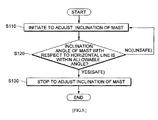
- FIG. 4 is a flowchart for describing the method for controlling the forklift according to the exemplary embodiment of the present disclosure.
- FIG. 5 is a diagram for describing an example of controlling an inclination of a mast in the method for controlling the forklift according to the exemplary embodiment of the present disclosure.
- the first step is a step, in which a reference value for each data is set.
- the first step is a step, in which reference weight of a cargo is set.
- an allowable angle of a reference inclination angle of the mast may be set.
- a reference travelling speed of a travelling speed of the forklift may be set.
- the first step s10 may be preset by a manufacturing company of a corresponding forklift, and may also be updated by an intention of a user.
- the second step is a step, in which weight of an actual cargo is input, and a direction, in which the actual cargo slides on the fork 30, is input. Further, in the second step s20, a current inclination angle of the mast may be input, and a current travelling speed may be input.
- the third step is a step, in which whether the cargo is overloaded is determined according to whether the weight of the actual cargo exceeds the reference weight of the cargo.
- the fourth step is a step, in which it is determined whether a direction, in which the actual cargo slides on the fork 30, is an outward direction.
- the fifth step is a step, in which when it is determined that the cargo is overloaded, and it is determined that the direction, in which the actual cargo slides on the fork 30, is the outward direction, it is determined whether the forklift speeds.
- a control command may be given to the VCU or the hydraulic system so that the inclination of the mast is adjusted (s60), and a control command may be given so that the travelling speed of the forklift is decreased or the forklift is stopped (s70). Then, the method returns to the second step s20.
- the sixth step is a step, in which when it is determined that the cargo is overloaded, and it is determined that the direction, in which the actual cargo slides on the fork 30, is the outward direction, a control command is given to the VCU or the hydraulic system so that the inclination of the mast is adjusted (s60). Further, the sixth step may be performed after the fifth step. Then, the method returns to the second step s20.
- a control command is given to the VCU or the hydraulic system so that the inclination of the mast is adjusted (s60), and a control command may be given so that the power train or the power train control unit is operated, and thus an output size of the power is controlled.
- the method may proceed to the fourth-1 step s41.
- the fourth-1 step s41 is a step, in which it is determined whether a direction, in which the actual cargo slides on the fork 30, is the outward direction.
- a movement direction of the cargo is an inward direction in the fourth-1 step
- the method returns to the second step s20.
- the method proceeds to the seventh step s70 to decrease the travelling speed of the forklift or stop the travelling of the forklift. Then, the method returns to the second step s20.
- the method directly proceeds to the seventh step s70 without passing through the process of adjusting the inclination of the mast to decrease the travelling speed of the forklift or stop the travelling of the forklift. Then, the method returns to the second step s20. That is, the proceeding to the fifth step s50 means that the cargo 60 moves in the outward direction, so that in order to decrease falling danger of the cargo 60, the travelling speed of the forklift is decreased.
- the method may proceed to the fifth-1 step s50.
- the fifth-1 step s50 is a step of determining whether the forklift speeds. When the forklift does not speed, falling danger of the cargo 60 is low, so that the method returns to the fourth step s40.
- the method may proceed to the sixth-1 step.
- the sixth-1 s61 step is a step of adjusting an inclination of the mast. That is, falling danger of the cargo 60 due to speeding exists, so that the falling danger of the cargo 60 is further decreased by adjusting the inclination of the mast.
- the method may proceed to the seventh-1 step s71.
- the forklift continuously travels at a current speed, and the falling danger of the cargo 60 is low, so that the method returns to the fourth step s40.
- the tilt actuator 22 is operated by the VCU or the hydraulic system mounted in the forklift.
- the tilt actuator 22 When the tilt actuator 22 is operated, the inclination of the mast 20 is adjusted, and it is determined whether the inclination angle of the mast is within an allowable angle (s120).
- the tilt actuator 22 When the inclination angle of the mast is not included within the allowable angle, the tilt actuator 22 is continuously operated. Whether the tilt actuator 22 is extended or contracted may be determined based on the current inclination angle of the mast 20 and the inclined direction of the mast 20. For example, when the mast 20 is tilted forward, the mast 20 is adjusted to be tilted backward as a matter of course.
- the apparatus and the method for controlling the forklift 10 may automatically control a fork/mast inclination and decrease a travelling speed of the forklift 10 even though an operator is unskilled in controlling the forklift, thereby decreasing falling danger of the cargo 60.
- the apparatus and the method for controlling the forklift 10 enable an operator to set reference weight of a cargo, a reference travelling speed, and an allowable angle of a reference inclination of the mast, so that it is possible to differently set a case where danger of damaging the cargo 60 of the operation target is low and a case where danger of damaging the cargo 60 of the operation target is high. Accordingly, it is possible to improve an operation speed by setting a setting value with a margin or improve operation stability by sensitively setting the setting value.
- the apparatus and the method for controlling the forklift according to the present disclosure may be used for preventing a cargo from falling by controlling an inclination angle of the mast to be adjusted or controlling a travelling speed to be decreased or the forklift to be stopped when the cargo is overloaded over the set weight or the forklift speeds over a set speed.
Landscapes
- Engineering & Computer Science (AREA)
- Structural Engineering (AREA)
- Transportation (AREA)
- Life Sciences & Earth Sciences (AREA)
- Geology (AREA)
- Mechanical Engineering (AREA)
- Civil Engineering (AREA)
- Chemical & Material Sciences (AREA)
- Combustion & Propulsion (AREA)
- Forklifts And Lifting Vehicles (AREA)
Applications Claiming Priority (2)
| Application Number | Priority Date | Filing Date | Title |
|---|---|---|---|
| KR1020130166860A KR102075808B1 (ko) | 2013-12-30 | 2013-12-30 | 지게차의 제어장치 및 제어방법 |
| PCT/KR2014/009368 WO2015102209A1 (fr) | 2013-12-30 | 2014-10-06 | Dispositif de commande et procédé de commande pour chariot-élévateur à fourche |
Publications (3)
| Publication Number | Publication Date |
|---|---|
| EP3090979A1 true EP3090979A1 (fr) | 2016-11-09 |
| EP3090979A4 EP3090979A4 (fr) | 2017-08-30 |
| EP3090979B1 EP3090979B1 (fr) | 2019-05-22 |
Family
ID=53493531
Family Applications (1)
| Application Number | Title | Priority Date | Filing Date |
|---|---|---|---|
| EP14876660.3A Active EP3090979B1 (fr) | 2013-12-30 | 2014-10-06 | Chariot-élévateur à fourche |
Country Status (5)
| Country | Link |
|---|---|
| US (1) | US10155646B2 (fr) |
| EP (1) | EP3090979B1 (fr) |
| KR (1) | KR102075808B1 (fr) |
| CN (1) | CN105873849B (fr) |
| WO (1) | WO2015102209A1 (fr) |
Cited By (4)
| Publication number | Priority date | Publication date | Assignee | Title |
|---|---|---|---|---|
| CN107161916A (zh) * | 2017-02-13 | 2017-09-15 | 林德(中国)叉车有限公司 | 一种前移式叉车的自动调平装置和方法 |
| IT202000016045A1 (it) * | 2020-07-02 | 2022-01-02 | Toyota Mat Handling Manufacturing Italy S P A | Carrello industriale con controllo di stabilità migliorato |
| EP3984857A1 (fr) * | 2020-10-16 | 2022-04-20 | OKO Co.,Ltd. | Chariot mobile de type à réglage de charge multi-étages |
| US11945705B2 (en) | 2018-09-13 | 2024-04-02 | Crown Equipment Corporation | System and method for controlling a maximum vehicle speed for an industrial vehicle based on a calculated load |
Families Citing this family (25)
| Publication number | Priority date | Publication date | Assignee | Title |
|---|---|---|---|---|
| KR20150064453A (ko) * | 2013-12-03 | 2015-06-11 | 주식회사 두산 | 지게차 및 지게차의 제어방법 |
| KR102075808B1 (ko) * | 2013-12-30 | 2020-03-02 | 주식회사 두산 | 지게차의 제어장치 및 제어방법 |
| US9459349B2 (en) * | 2014-10-27 | 2016-10-04 | Hyster-Yale Group, Inc. | Vehicle and environmental detection system |
| EP3504084B1 (fr) * | 2016-08-24 | 2021-12-01 | Volvo Construction Equipment AB | Système d'avertissement pour une machine de travail |
| US10585440B1 (en) * | 2017-01-23 | 2020-03-10 | Clearpath Robotics Inc. | Systems and methods for using human-operated material-transport vehicles with fleet-management systems |
| CN106970575A (zh) * | 2017-05-23 | 2017-07-21 | 安徽宇锋仓储设备有限公司 | 叉车安全限位控制系统 |
| AU2018307660B2 (en) * | 2017-07-28 | 2022-07-14 | Crown Equipment Corporation | Traffic management for materials handling vehicles in a warehouse environment |
| CN107857212B (zh) * | 2017-09-26 | 2019-06-25 | 林德(中国)叉车有限公司 | 一种叉车最大举升高度限制方法及系统 |
| CN107804808A (zh) * | 2017-11-17 | 2018-03-16 | 芜湖金智王机械设备有限公司 | 叉车门架倾斜自动控制系统 |
| WO2019144222A1 (fr) | 2018-01-24 | 2019-08-01 | Clearpath Robotics Inc. | Systèmes et procédés pour conserver des informations d'état de véhicule |
| WO2019153082A1 (fr) | 2018-02-07 | 2019-08-15 | Clearpath Robotics Inc. | Systèmes de communication pour véhicules autonomes, et procédés de fourniture correspondants |
| CN108483353A (zh) * | 2018-06-08 | 2018-09-04 | 佛山市光华智能设备有限公司 | 具有防障碍物功能的堆垛车 |
| CN109094540B (zh) * | 2018-10-08 | 2021-09-17 | 中车株洲电力机车有限公司 | 一种列车的超速保护方法、系统、设备及存储介质 |
| JP7229128B2 (ja) * | 2019-09-02 | 2023-02-27 | 本田技研工業株式会社 | 車両制御装置 |
| CN110658824A (zh) * | 2019-10-15 | 2020-01-07 | 北京旷视机器人技术有限公司 | 运输车的运动控制方法、装置、控制器和运输车 |
| CN110775048B (zh) * | 2019-11-07 | 2020-11-24 | 杭叉集团股份有限公司 | 平衡重式叉车速度控制方法及控制系统、平衡重式叉车 |
| CN113734973A (zh) * | 2020-05-28 | 2021-12-03 | 中强光电股份有限公司 | 用于堆高机的控制系统以及控制方法 |
| CN111977565B (zh) * | 2020-06-29 | 2021-12-07 | 浙江大学 | 一种关于Forklift AGV急停抱死时防止货物倾倒货架的控制方法 |
| CN112249984A (zh) * | 2020-10-13 | 2021-01-22 | 安徽合力股份有限公司 | 一种基于角度补偿的叉车倾斜油缸运动缓冲控制系统及方法 |
| CN112965410A (zh) * | 2021-02-02 | 2021-06-15 | 江苏航运职业技术学院 | 一种基于状态观测器的电动叉车多功能控制系统 |
| JPWO2022168377A1 (fr) * | 2021-02-05 | 2022-08-11 | ||
| CN114291766B (zh) * | 2021-12-20 | 2024-04-12 | 河南嘉晨智能控制股份有限公司 | 一种工业车辆微动驾驶感改善方法 |
| CN114524391A (zh) * | 2022-02-28 | 2022-05-24 | 河南嘉晨智能控制股份有限公司 | 基于倾斜角度和载重负荷的车辆安全控制方法及系统 |
| KR102896486B1 (ko) * | 2022-12-02 | 2025-12-05 | 현대무벡스 주식회사 | 승강 판 수평 보정 방법 |
| CN116177453A (zh) * | 2023-03-13 | 2023-05-30 | 河南科技大学 | 一种纯电动叉车整车控制系统及控制方法 |
Family Cites Families (50)
| Publication number | Priority date | Publication date | Assignee | Title |
|---|---|---|---|---|
| US4331417A (en) * | 1980-03-07 | 1982-05-25 | Rapitsan Division, Lear Siegler, Inc. | Vehicle alignment and method |
| GB2097959B (en) * | 1981-03-31 | 1984-09-12 | Toyoda Automatic Loom Works | Fork lift control system |
| US4869635A (en) * | 1988-03-31 | 1989-09-26 | Caterpillar Industrial Inc. | Apparatus for controllably positioning a lift mast assembly of a work vehicle |
| JPH0761792A (ja) | 1993-08-27 | 1995-03-07 | Mitsubishi Heavy Ind Ltd | フォークリフトのチルト制御装置 |
| KR970006523B1 (ko) | 1994-12-30 | 1997-04-29 | 대우중공업 주식회사 | 지게차의 자동 틸팅장치 |
| EP0866027B1 (fr) * | 1997-03-21 | 2004-05-26 | Kabushiki Kaisha Toyota Jidoshokki | Appareil de contrôle hydraulique de véhicules industriels |
| TW482129U (en) * | 1997-04-23 | 2002-04-01 | Toyoda Automatic Loom Works | A rock controller for industrial vehicle body |
| JPH10316391A (ja) | 1997-05-20 | 1998-12-02 | Toyota Autom Loom Works Ltd | 産業車両のティルトシリンダ制御装置 |
| US6050770A (en) * | 1997-05-30 | 2000-04-18 | Schaeff Incorporated | Stabilization system for load handling equipment |
| EP0993416B1 (fr) * | 1997-07-09 | 2003-03-05 | Crown Equipment Corporation | Moniteur pour donnees de capacite |
| TW522103B (en) * | 1997-11-14 | 2003-03-01 | Toyoda Automatic Loom Works | Axle tilt control apparatus for industrial vehicles |
| KR100236442B1 (ko) | 1997-12-10 | 1999-12-15 | 이해규 | 지게차마스트수평정지제어장치 |
| JPH11171494A (ja) * | 1997-12-11 | 1999-06-29 | Toyota Autom Loom Works Ltd | 産業車両のシリンダ制御装置 |
| JPH11171492A (ja) * | 1997-12-15 | 1999-06-29 | Toyota Autom Loom Works Ltd | 産業車両におけるデータ設定装置及び産業車両 |
| TW445235B (en) * | 1998-08-07 | 2001-07-11 | Toyoda Automatic Loom Works | Position detector for fluid cylinder |
| US5986560A (en) * | 1998-11-02 | 1999-11-16 | Rayburn; Brutus | Forklift weight sensing device |
| JP3799903B2 (ja) * | 1999-02-24 | 2006-07-19 | 株式会社豊田自動織機 | 産業車両の駐車ブレーキ装置 |
| JP2001261297A (ja) * | 2000-03-22 | 2001-09-26 | Toyota Autom Loom Works Ltd | 産業車両の前後方向の荷重モーメント測定装置 |
| DE60235963D1 (de) * | 2001-02-16 | 2010-05-27 | Toyoda Automatic Loom Works | Kamerahebevorrichtung und lasthandhabungstragvorrichtung eines hubwagens und hubwagen |
| US6600111B2 (en) * | 2001-07-13 | 2003-07-29 | Gerald S. Simons | Portable weigh scale system for use with vehicles having lift truck forks or the like |
| US6785597B1 (en) * | 2003-02-07 | 2004-08-31 | Wiggins Lift Co., Inc. | Hydraulic stabilizer system and process for monitoring load conditions |
| DE10305901B4 (de) * | 2003-02-13 | 2006-11-30 | Jungheinrich Aktiengesellschaft | Schubmaststapler |
| US20050102081A1 (en) * | 2003-09-23 | 2005-05-12 | Patterson Mark A. | Lift truck active load stabilizer |
| GB2412902B (en) * | 2004-04-07 | 2008-04-09 | Linde Ag | Industrial truck having increased static or quasi-static tipping stability |
| EP1813569A1 (fr) * | 2004-11-19 | 2007-08-01 | Mitsubishi Heavy Industries, Ltd. | Dispositif anti-basculement pour chariot elevateur |
| JP4609390B2 (ja) * | 2005-09-30 | 2011-01-12 | 株式会社豊田自動織機 | フォークリフトの走行制御装置 |
| JP4793134B2 (ja) * | 2005-09-30 | 2011-10-12 | 株式会社豊田自動織機 | フォークリフトの走行制御装置 |
| JP4807028B2 (ja) * | 2005-09-30 | 2011-11-02 | 株式会社豊田自動織機 | フォークリフトの走行制御装置 |
| FR2901548B1 (fr) * | 2006-05-24 | 2008-07-25 | Lemantec Internat Sarl | Organe de levage a moyens de mesure de charge et /ou de contraintes |
| JP2008056058A (ja) * | 2006-08-30 | 2008-03-13 | Mitsubishi Heavy Ind Ltd | 荷役車両の表示装置及びこの表示装置を備えたハイブリッド式荷役車両 |
| US9207673B2 (en) * | 2008-12-04 | 2015-12-08 | Crown Equipment Corporation | Finger-mounted apparatus for remotely controlling a materials handling vehicle |
| US20090101447A1 (en) * | 2007-10-23 | 2009-04-23 | Terry Durham | Forklift Height Indicator |
| KR101358597B1 (ko) | 2007-12-26 | 2014-02-04 | 주식회사 두산 | 마스트의 틸팅 각도 조절구조를 갖는 지게차 장치 |
| JP5442959B2 (ja) * | 2008-04-25 | 2014-03-19 | ニチユ三菱フォークリフト株式会社 | 荷役作業用車輌における表示装置 |
| US8731777B2 (en) * | 2009-08-18 | 2014-05-20 | Crown Equipment Corporation | Object tracking and steer maneuvers for materials handling vehicles |
| CN102259809A (zh) * | 2010-05-31 | 2011-11-30 | 比亚迪股份有限公司 | 一种叉车门架的控制系统及控制方法 |
| JP5645069B2 (ja) * | 2010-10-21 | 2014-12-24 | 株式会社ジェイテクト | 車両用操舵装置 |
| KR101711215B1 (ko) | 2010-12-21 | 2017-02-28 | 주식회사 두산 | 부하 충격 방지 기능을 구비한 지게차 |
| KR20120096816A (ko) | 2011-02-23 | 2012-08-31 | 정성혜 | 친환경 온열장판 |
| PL2697149T3 (pl) * | 2011-04-15 | 2019-12-31 | Tamtron Oy | Sposób szacowania objętości |
| DE102012103364A1 (de) * | 2011-08-23 | 2013-02-28 | Still Gmbh | Flurförderzeug mit Hubhöhenmessung |
| CN102491239A (zh) * | 2011-12-08 | 2012-06-13 | 三一集团有限公司 | 一种叉车及其防倾翻控制方法、防倾翻控制系统 |
| KR101821419B1 (ko) * | 2012-01-26 | 2018-01-23 | 주식회사 두산 | 지게차의 화물 낙하 방지 장치 및 방법 |
| CN102730607A (zh) * | 2012-06-19 | 2012-10-17 | 三一集团有限公司 | 防止叉车货物跌落的方法、系统及具有该系统的叉车 |
| US8965561B2 (en) * | 2013-03-15 | 2015-02-24 | Cybernet Systems Corporation | Automated warehousing using robotic forklifts |
| KR20150064453A (ko) * | 2013-12-03 | 2015-06-11 | 주식회사 두산 | 지게차 및 지게차의 제어방법 |
| KR102075808B1 (ko) * | 2013-12-30 | 2020-03-02 | 주식회사 두산 | 지게차의 제어장치 및 제어방법 |
| DE102014215509A1 (de) * | 2014-08-06 | 2016-02-11 | Jungheinrich Aktiengesellschaft | Fahrzeugraddrehzahlbasierte Ermittlung oder Abschätzung eines Lastgewichts einer durch ein gewerbliches Fahrzeug aufgenommenen Last |
| EP3208228B1 (fr) * | 2016-02-19 | 2018-12-05 | Toyota Material Handling Manufacturing Sweden AB | Chariot élévateur à réglage en hauteur automatisé de moyens d'engagement de charge |
| US9715232B1 (en) * | 2016-09-19 | 2017-07-25 | X Development Llc | Using planar sensors for pallet detection |
-
2013
- 2013-12-30 KR KR1020130166860A patent/KR102075808B1/ko active Active
-
2014
- 2014-10-06 CN CN201480071646.7A patent/CN105873849B/zh active Active
- 2014-10-06 US US15/104,576 patent/US10155646B2/en active Active
- 2014-10-06 EP EP14876660.3A patent/EP3090979B1/fr active Active
- 2014-10-06 WO PCT/KR2014/009368 patent/WO2015102209A1/fr not_active Ceased
Cited By (5)
| Publication number | Priority date | Publication date | Assignee | Title |
|---|---|---|---|---|
| CN107161916A (zh) * | 2017-02-13 | 2017-09-15 | 林德(中国)叉车有限公司 | 一种前移式叉车的自动调平装置和方法 |
| CN107161916B (zh) * | 2017-02-13 | 2022-12-06 | 林德(中国)叉车有限公司 | 一种前移式叉车的自动调平装置和方法 |
| US11945705B2 (en) | 2018-09-13 | 2024-04-02 | Crown Equipment Corporation | System and method for controlling a maximum vehicle speed for an industrial vehicle based on a calculated load |
| IT202000016045A1 (it) * | 2020-07-02 | 2022-01-02 | Toyota Mat Handling Manufacturing Italy S P A | Carrello industriale con controllo di stabilità migliorato |
| EP3984857A1 (fr) * | 2020-10-16 | 2022-04-20 | OKO Co.,Ltd. | Chariot mobile de type à réglage de charge multi-étages |
Also Published As
| Publication number | Publication date |
|---|---|
| WO2015102209A1 (fr) | 2015-07-09 |
| KR20150077910A (ko) | 2015-07-08 |
| CN105873849B (zh) | 2019-08-23 |
| EP3090979B1 (fr) | 2019-05-22 |
| CN105873849A (zh) | 2016-08-17 |
| EP3090979A4 (fr) | 2017-08-30 |
| US10155646B2 (en) | 2018-12-18 |
| US20170043988A1 (en) | 2017-02-16 |
| KR102075808B1 (ko) | 2020-03-02 |
Similar Documents
| Publication | Publication Date | Title |
|---|---|---|
| EP3090979B1 (fr) | Chariot-élévateur à fourche | |
| US9981835B2 (en) | Forklift and forklift control method | |
| EP1950171B1 (fr) | Appareil de contrôle du déplacement pour un véhicule industriel | |
| KR102610742B1 (ko) | 차량의 안전 전략 제공 장치 및 방법 | |
| KR102016186B1 (ko) | 드라이빙 안정성을 향상시키는 방법 | |
| JP4693356B2 (ja) | 自動車の水平位置調整装置の運転方法 | |
| US11472476B2 (en) | Steering control device, steering control method, and recording medium | |
| KR20190057475A (ko) | 자율주행 차량 주행 제어방법 및 장치 | |
| KR20210037767A (ko) | 샤시 통합 제어 시스템 | |
| JP2022514557A (ja) | 単軌道動力車両の自動車間距離制御のために目標対象物を選定する方法および装置 | |
| EP3600999A1 (fr) | Commande de distance pour un véhicule avec remorque | |
| KR20150101621A (ko) | 적응 순항 제어 시스템 및 그의 제어 방법 | |
| JP2016011060A (ja) | 車線維持支援システム | |
| JP4973086B2 (ja) | 車両用運転支援装置および方法 | |
| KR20140121056A (ko) | 조향 제어 장치 및 조향 특성 제어 방법 | |
| KR20150114842A (ko) | 지게차의 포크 수평유지시스템 및 그 제어방법 | |
| KR20200077633A (ko) | 지게차의 전복 방지 시스템 및 전복 방지 방법 | |
| JP2014121905A (ja) | 車両のサスペンション制御装置 | |
| KR102367107B1 (ko) | 지게차의 제어 방법 | |
| JP6471642B2 (ja) | 産業車両 | |
| KR101464622B1 (ko) | 차량의 자세 제어 장치 및 방법 | |
| JP2015211526A (ja) | 産業車両 | |
| KR101512762B1 (ko) | 엔진 rpm 제어를 통한 지게차의 주행속도 제어 구조 | |
| JP2007126129A (ja) | 走行制御装置 | |
| KR102217595B1 (ko) | 차량용 헤드램프의 다이나믹 오토레벨링 장치 |
Legal Events
| Date | Code | Title | Description |
|---|---|---|---|
| PUAI | Public reference made under article 153(3) epc to a published international application that has entered the european phase |
Free format text: ORIGINAL CODE: 0009012 |
|
| 17P | Request for examination filed |
Effective date: 20160608 |
|
| AK | Designated contracting states |
Kind code of ref document: A1 Designated state(s): AL AT BE BG CH CY CZ DE DK EE ES FI FR GB GR HR HU IE IS IT LI LT LU LV MC MK MT NL NO PL PT RO RS SE SI SK SM TR |
|
| AX | Request for extension of the european patent |
Extension state: BA ME |
|
| DAX | Request for extension of the european patent (deleted) | ||
| A4 | Supplementary search report drawn up and despatched |
Effective date: 20170731 |
|
| RIC1 | Information provided on ipc code assigned before grant |
Ipc: B66F 9/22 20060101ALI20170725BHEP Ipc: B66F 9/20 20060101AFI20170725BHEP Ipc: B66F 17/00 20060101ALI20170725BHEP Ipc: B66F 9/24 20060101ALI20170725BHEP Ipc: B66F 9/12 20060101ALI20170725BHEP |
|
| GRAP | Despatch of communication of intention to grant a patent |
Free format text: ORIGINAL CODE: EPIDOSNIGR1 |
|
| STAA | Information on the status of an ep patent application or granted ep patent |
Free format text: STATUS: GRANT OF PATENT IS INTENDED |
|
| RIC1 | Information provided on ipc code assigned before grant |
Ipc: B66F 9/20 20060101AFI20181030BHEP Ipc: B66F 9/24 20060101ALI20181030BHEP Ipc: B66F 9/22 20060101ALI20181030BHEP Ipc: B66F 9/12 20060101ALI20181030BHEP Ipc: B66F 17/00 20060101ALI20181030BHEP |
|
| INTG | Intention to grant announced |
Effective date: 20181205 |
|
| GRAS | Grant fee paid |
Free format text: ORIGINAL CODE: EPIDOSNIGR3 |
|
| GRAA | (expected) grant |
Free format text: ORIGINAL CODE: 0009210 |
|
| STAA | Information on the status of an ep patent application or granted ep patent |
Free format text: STATUS: THE PATENT HAS BEEN GRANTED |
|
| AK | Designated contracting states |
Kind code of ref document: B1 Designated state(s): AL AT BE BG CH CY CZ DE DK EE ES FI FR GB GR HR HU IE IS IT LI LT LU LV MC MK MT NL NO PL PT RO RS SE SI SK SM TR |
|
| REG | Reference to a national code |
Ref country code: GB Ref legal event code: FG4D |
|
| REG | Reference to a national code |
Ref country code: CH Ref legal event code: EP |
|
| REG | Reference to a national code |
Ref country code: IE Ref legal event code: FG4D |
|
| REG | Reference to a national code |
Ref country code: DE Ref legal event code: R096 Ref document number: 602014047432 Country of ref document: DE |
|
| REG | Reference to a national code |
Ref country code: AT Ref legal event code: REF Ref document number: 1135856 Country of ref document: AT Kind code of ref document: T Effective date: 20190615 |
|
| REG | Reference to a national code |
Ref country code: SE Ref legal event code: TRGR |
|
| REG | Reference to a national code |
Ref country code: NL Ref legal event code: MP Effective date: 20190522 |
|
| REG | Reference to a national code |
Ref country code: LT Ref legal event code: MG4D |
|
| PG25 | Lapsed in a contracting state [announced via postgrant information from national office to epo] |
Ref country code: HR Free format text: LAPSE BECAUSE OF FAILURE TO SUBMIT A TRANSLATION OF THE DESCRIPTION OR TO PAY THE FEE WITHIN THE PRESCRIBED TIME-LIMIT Effective date: 20190522 Ref country code: ES Free format text: LAPSE BECAUSE OF FAILURE TO SUBMIT A TRANSLATION OF THE DESCRIPTION OR TO PAY THE FEE WITHIN THE PRESCRIBED TIME-LIMIT Effective date: 20190522 Ref country code: LT Free format text: LAPSE BECAUSE OF FAILURE TO SUBMIT A TRANSLATION OF THE DESCRIPTION OR TO PAY THE FEE WITHIN THE PRESCRIBED TIME-LIMIT Effective date: 20190522 Ref country code: NL Free format text: LAPSE BECAUSE OF FAILURE TO SUBMIT A TRANSLATION OF THE DESCRIPTION OR TO PAY THE FEE WITHIN THE PRESCRIBED TIME-LIMIT Effective date: 20190522 Ref country code: AL Free format text: LAPSE BECAUSE OF FAILURE TO SUBMIT A TRANSLATION OF THE DESCRIPTION OR TO PAY THE FEE WITHIN THE PRESCRIBED TIME-LIMIT Effective date: 20190522 Ref country code: NO Free format text: LAPSE BECAUSE OF FAILURE TO SUBMIT A TRANSLATION OF THE DESCRIPTION OR TO PAY THE FEE WITHIN THE PRESCRIBED TIME-LIMIT Effective date: 20190822 Ref country code: FI Free format text: LAPSE BECAUSE OF FAILURE TO SUBMIT A TRANSLATION OF THE DESCRIPTION OR TO PAY THE FEE WITHIN THE PRESCRIBED TIME-LIMIT Effective date: 20190522 Ref country code: PT Free format text: LAPSE BECAUSE OF FAILURE TO SUBMIT A TRANSLATION OF THE DESCRIPTION OR TO PAY THE FEE WITHIN THE PRESCRIBED TIME-LIMIT Effective date: 20190922 |
|
| PG25 | Lapsed in a contracting state [announced via postgrant information from national office to epo] |
Ref country code: GR Free format text: LAPSE BECAUSE OF FAILURE TO SUBMIT A TRANSLATION OF THE DESCRIPTION OR TO PAY THE FEE WITHIN THE PRESCRIBED TIME-LIMIT Effective date: 20190823 Ref country code: BG Free format text: LAPSE BECAUSE OF FAILURE TO SUBMIT A TRANSLATION OF THE DESCRIPTION OR TO PAY THE FEE WITHIN THE PRESCRIBED TIME-LIMIT Effective date: 20190822 Ref country code: LV Free format text: LAPSE BECAUSE OF FAILURE TO SUBMIT A TRANSLATION OF THE DESCRIPTION OR TO PAY THE FEE WITHIN THE PRESCRIBED TIME-LIMIT Effective date: 20190522 Ref country code: RS Free format text: LAPSE BECAUSE OF FAILURE TO SUBMIT A TRANSLATION OF THE DESCRIPTION OR TO PAY THE FEE WITHIN THE PRESCRIBED TIME-LIMIT Effective date: 20190522 |
|
| REG | Reference to a national code |
Ref country code: AT Ref legal event code: MK05 Ref document number: 1135856 Country of ref document: AT Kind code of ref document: T Effective date: 20190522 |
|
| PG25 | Lapsed in a contracting state [announced via postgrant information from national office to epo] |
Ref country code: AT Free format text: LAPSE BECAUSE OF FAILURE TO SUBMIT A TRANSLATION OF THE DESCRIPTION OR TO PAY THE FEE WITHIN THE PRESCRIBED TIME-LIMIT Effective date: 20190522 Ref country code: EE Free format text: LAPSE BECAUSE OF FAILURE TO SUBMIT A TRANSLATION OF THE DESCRIPTION OR TO PAY THE FEE WITHIN THE PRESCRIBED TIME-LIMIT Effective date: 20190522 Ref country code: CZ Free format text: LAPSE BECAUSE OF FAILURE TO SUBMIT A TRANSLATION OF THE DESCRIPTION OR TO PAY THE FEE WITHIN THE PRESCRIBED TIME-LIMIT Effective date: 20190522 Ref country code: RO Free format text: LAPSE BECAUSE OF FAILURE TO SUBMIT A TRANSLATION OF THE DESCRIPTION OR TO PAY THE FEE WITHIN THE PRESCRIBED TIME-LIMIT Effective date: 20190522 Ref country code: SK Free format text: LAPSE BECAUSE OF FAILURE TO SUBMIT A TRANSLATION OF THE DESCRIPTION OR TO PAY THE FEE WITHIN THE PRESCRIBED TIME-LIMIT Effective date: 20190522 Ref country code: DK Free format text: LAPSE BECAUSE OF FAILURE TO SUBMIT A TRANSLATION OF THE DESCRIPTION OR TO PAY THE FEE WITHIN THE PRESCRIBED TIME-LIMIT Effective date: 20190522 |
|
| REG | Reference to a national code |
Ref country code: DE Ref legal event code: R097 Ref document number: 602014047432 Country of ref document: DE |
|
| PG25 | Lapsed in a contracting state [announced via postgrant information from national office to epo] |
Ref country code: SM Free format text: LAPSE BECAUSE OF FAILURE TO SUBMIT A TRANSLATION OF THE DESCRIPTION OR TO PAY THE FEE WITHIN THE PRESCRIBED TIME-LIMIT Effective date: 20190522 |
|
| PLBE | No opposition filed within time limit |
Free format text: ORIGINAL CODE: 0009261 |
|
| STAA | Information on the status of an ep patent application or granted ep patent |
Free format text: STATUS: NO OPPOSITION FILED WITHIN TIME LIMIT |
|
| PG25 | Lapsed in a contracting state [announced via postgrant information from national office to epo] |
Ref country code: TR Free format text: LAPSE BECAUSE OF FAILURE TO SUBMIT A TRANSLATION OF THE DESCRIPTION OR TO PAY THE FEE WITHIN THE PRESCRIBED TIME-LIMIT Effective date: 20190522 |
|
| 26N | No opposition filed |
Effective date: 20200225 |
|
| PG25 | Lapsed in a contracting state [announced via postgrant information from national office to epo] |
Ref country code: PL Free format text: LAPSE BECAUSE OF FAILURE TO SUBMIT A TRANSLATION OF THE DESCRIPTION OR TO PAY THE FEE WITHIN THE PRESCRIBED TIME-LIMIT Effective date: 20190522 |
|
| PG25 | Lapsed in a contracting state [announced via postgrant information from national office to epo] |
Ref country code: MC Free format text: LAPSE BECAUSE OF FAILURE TO SUBMIT A TRANSLATION OF THE DESCRIPTION OR TO PAY THE FEE WITHIN THE PRESCRIBED TIME-LIMIT Effective date: 20190522 Ref country code: SI Free format text: LAPSE BECAUSE OF FAILURE TO SUBMIT A TRANSLATION OF THE DESCRIPTION OR TO PAY THE FEE WITHIN THE PRESCRIBED TIME-LIMIT Effective date: 20190522 |
|
| REG | Reference to a national code |
Ref country code: CH Ref legal event code: PL |
|
| PG25 | Lapsed in a contracting state [announced via postgrant information from national office to epo] |
Ref country code: LU Free format text: LAPSE BECAUSE OF NON-PAYMENT OF DUE FEES Effective date: 20191006 Ref country code: CH Free format text: LAPSE BECAUSE OF NON-PAYMENT OF DUE FEES Effective date: 20191031 Ref country code: LI Free format text: LAPSE BECAUSE OF NON-PAYMENT OF DUE FEES Effective date: 20191031 |
|
| REG | Reference to a national code |
Ref country code: BE Ref legal event code: MM Effective date: 20191031 |
|
| PG25 | Lapsed in a contracting state [announced via postgrant information from national office to epo] |
Ref country code: BE Free format text: LAPSE BECAUSE OF NON-PAYMENT OF DUE FEES Effective date: 20191031 |
|
| PG25 | Lapsed in a contracting state [announced via postgrant information from national office to epo] |
Ref country code: IE Free format text: LAPSE BECAUSE OF NON-PAYMENT OF DUE FEES Effective date: 20191006 |
|
| PG25 | Lapsed in a contracting state [announced via postgrant information from national office to epo] |
Ref country code: CY Free format text: LAPSE BECAUSE OF FAILURE TO SUBMIT A TRANSLATION OF THE DESCRIPTION OR TO PAY THE FEE WITHIN THE PRESCRIBED TIME-LIMIT Effective date: 20190522 |
|
| PG25 | Lapsed in a contracting state [announced via postgrant information from national office to epo] |
Ref country code: IS Free format text: LAPSE BECAUSE OF FAILURE TO SUBMIT A TRANSLATION OF THE DESCRIPTION OR TO PAY THE FEE WITHIN THE PRESCRIBED TIME-LIMIT Effective date: 20190922 |
|
| PG25 | Lapsed in a contracting state [announced via postgrant information from national office to epo] |
Ref country code: HU Free format text: LAPSE BECAUSE OF FAILURE TO SUBMIT A TRANSLATION OF THE DESCRIPTION OR TO PAY THE FEE WITHIN THE PRESCRIBED TIME-LIMIT; INVALID AB INITIO Effective date: 20141006 Ref country code: MT Free format text: LAPSE BECAUSE OF FAILURE TO SUBMIT A TRANSLATION OF THE DESCRIPTION OR TO PAY THE FEE WITHIN THE PRESCRIBED TIME-LIMIT Effective date: 20190522 |
|
| REG | Reference to a national code |
Ref country code: DE Ref legal event code: R081 Ref document number: 602014047432 Country of ref document: DE Owner name: DOOSAN INDUSTRIAL VEHICLE CO., LTD., KR Free format text: FORMER OWNER: DOOSAN CORPORATION, SEOUL, KR Ref country code: DE Ref legal event code: R081 Ref document number: 602014047432 Country of ref document: DE Owner name: DOOSAN BOBCAT KOREA CO., LTD., KR Free format text: FORMER OWNER: DOOSAN CORPORATION, SEOUL, KR |
|
| PG25 | Lapsed in a contracting state [announced via postgrant information from national office to epo] |
Ref country code: MK Free format text: LAPSE BECAUSE OF FAILURE TO SUBMIT A TRANSLATION OF THE DESCRIPTION OR TO PAY THE FEE WITHIN THE PRESCRIBED TIME-LIMIT Effective date: 20190522 |
|
| REG | Reference to a national code |
Ref country code: DE Ref legal event code: R081 Ref document number: 602014047432 Country of ref document: DE Owner name: DOOSAN BOBCAT KOREA CO., LTD., KR Free format text: FORMER OWNER: DOOSAN INDUSTRIAL VEHICLE CO., LTD., INCHEON, KR |
|
| PGFP | Annual fee paid to national office [announced via postgrant information from national office to epo] |
Ref country code: IT Payment date: 20250922 Year of fee payment: 12 |
|
| PGFP | Annual fee paid to national office [announced via postgrant information from national office to epo] |
Ref country code: GB Payment date: 20250904 Year of fee payment: 12 |
|
| PGFP | Annual fee paid to national office [announced via postgrant information from national office to epo] |
Ref country code: FR Payment date: 20250908 Year of fee payment: 12 |
|
| PGFP | Annual fee paid to national office [announced via postgrant information from national office to epo] |
Ref country code: SE Payment date: 20250910 Year of fee payment: 12 |
|
| PGFP | Annual fee paid to national office [announced via postgrant information from national office to epo] |
Ref country code: DE Payment date: 20250902 Year of fee payment: 12 |