EP3093082B1 - Procede de traitement et de recyclage de sables de decochage - Google Patents
Procede de traitement et de recyclage de sables de decochage Download PDFInfo
- Publication number
- EP3093082B1 EP3093082B1 EP16001032.8A EP16001032A EP3093082B1 EP 3093082 B1 EP3093082 B1 EP 3093082B1 EP 16001032 A EP16001032 A EP 16001032A EP 3093082 B1 EP3093082 B1 EP 3093082B1
- Authority
- EP
- European Patent Office
- Prior art keywords
- sand
- classification
- carried out
- fragmentation
- stage
- Prior art date
- Legal status (The legal status is an assumption and is not a legal conclusion. Google has not performed a legal analysis and makes no representation as to the accuracy of the status listed.)
- Active
Links
Images
Classifications
-
- B—PERFORMING OPERATIONS; TRANSPORTING
- B22—CASTING; POWDER METALLURGY
- B22C—FOUNDRY MOULDING
- B22C5/00—Machines or devices specially designed for dressing or handling the mould material so far as specially adapted for that purpose
- B22C5/18—Plants for preparing mould materials
Definitions
- the invention relates to a process for the preparation and reuse of foundry sands, wherein the used sands are subjected to mechanical pulping by comminution and subsequently to a classification.
- the foundry industry is one of the most important sub-sectors of the metal industry in Germany. Their economic importance stems mainly from the fact that the products of the industry are important supplies for other industries. Also in Saxony and Saxony-Anhalt, the foundry industry is of great importance for the local business location. In 2013, around 4000 employees generated a total turnover of 2.5 billion euros in 40 foundry companies. (Source: Stat Vietnameses Austinamt So). In foundries, the local production process generates considerable amounts of contaminated sand. The reason for this is the process of the "lost form". In this process, the G stealformen- and cores are formed from sand, which are stabilized by means of binders for the duration of the casting process and then destroyed again.
- a process is known for the recycling of mineral wastes of various compositions which, after comminution to a particle size of ⁇ 3 mm, are delivered as bulk material to cement plants ( DE 198 15 205 A1 ).
- DE 31 03 030 C2 describes a method for recovering foundry sand from used used sand, wherein the used foundry sand successively passes through a magnetic separation zone, a thermal treatment zone and a final purification zone and the cleaning by countercurrent impact at air velocities of 30 to 50 m / s.
- the DE 43 21 296 A1 describes a method and a plant for the wet regeneration of contaminated with impurities and pollutants granular bulk materials, especially clay bonded foundry sands, the bulk materials are subjected to mechanical pretreatment of at least one stage combination of Attritionspanel with the addition of water and a subsequent classification and the fines of the Suspension are subjected to a cross-flow filtration.
- the DE 42 37 838 A1 again describes a method and an apparatus for regenerating foundry sand, wherein in a sub-step of the overall process, a method is described, with which the binder coats are to be removed from the sand particles by friction.
- the material is presumably forcibly guided through the process space via a plug screw (not described in more detail in the patent) and thus, given a given geometry, predetermines the residence time of the pretreated used sand in the process space.
- the material passes through a friction gap between the stationary container of the process chamber and above the bottom "Reibarmen" which rotate centrally in the container and reach up to the inner wall of the container (no precise definition and / or description of the friction and the Mahlspalt).
- the material is sucked in negative pressure on the transport medium air through the crushing unit disc mill and passes through the grinding path from the inside out and is guided by fluted crushing discs (rotor-stator principle), which for further influencing the stress intensity over a distance to each other (Mahlspalt ) can be adjusted.
- the US 2012/0000997 A1 describes an apparatus for separating binders from foundry sand by means of ultrasonic waves, wherein the surface is broken up by cracking, the sand is then comminuted, washed, dried and sieved.
- the basic technology corresponds to a conventional refining process. No information is given on the concentration of solids or other process parameters.
- the sand is first placed in some form of dosing unit and wet pre-crushed in a crusher (not described in detail) and then introduced with a vacuum pump via a sieve unit in an ultrasonic apparatus. Subsequently, the sand treated therein is dehumidified and separated into coarse and fine components in a filter. Thereafter, the transport takes place in a designated as crushing unit and not described in more detail process space, where the binder should be crushed again. Following this mixture is again passed through a sieve.
- foundry sand foundry sand or core sand, mixture thereof or special sand
- the invention has for its object to perform a determination of the optimum operating point of the regeneration plant, taking into account maximum Regenerat quality of various Trustande while reducing the amounts of waste and waste. It is intended to achieve a deagglomeration of the binder shells from the sand particles for complete digestion of the abandoned used sand fraction with a commercial comminution method by varying the possible process parameters.
- the foundry sand can be fed to a preclassification before the multi-stage pulping grinding.
- the screen overflow is fed as coarse material to a color sorting system, wherein a separation into dark sand and tubers is performed.
- the dark tubers are fed to the multi-stage pulping process, while the bright core sand tubers are fed to a landfill.
- a hammer mill In the first crushing stage, a hammer mill is used, followed by a disc mill in the second crushing stage, followed by a pin mill in the third crushing stage.
- the classification is performed by a stream classifying method using air as a medium. It is based on the principle of cross flow classification with superimposed countercurrent classification.
- a zig-zag sifter with cascading in several classifier stages is preferably used, wherein the screening process is performed by means of gravity or centrifugal force direction.
- the coarse material is transported as recyclate via a trigger member in a storage unit or further processed directly.
- the fine material is fed in this case to a solids separator, preferably a cyclone separator.
- the separated fines are fed via a discharge organ of an encapsulated container loading. It is preferably the task of the goods to be sighted in the upper or lower third of the safety cascade.
- the coarse material is examined for loss on ignition, with a loss on ignition of 0.2 to 0.7%, preferably 0.5% of the starting material, a thermal aftertreatment is performed.
- the thermal aftertreatment is carried out in a fluidized bed furnace or a rotary kiln.
- a dedusting of the sand fraction is carried out after the thermal aftertreatment, wherein the coarse fraction (> 70 to 150 microns) used as a recyclate and the fines ( ⁇ 70 microns to 150 microns) a disposal and / or landfill, preferably as a higher loaded mono section is supplied.
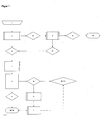
- the used sand in seizure condition (1) is pre-classified in a first optional process stage (2).
- the material flow through a bulk material receiving station and an intermediate storage, as a buffer, passed to a vibrating screen (2) and classified at a mesh size of 800 microns.
- a protective deck is provided with a mesh size of 5 mm above it.
- the so-called sieve overflow (2a) is fed to a further optional process stage for sorting the used sand tubers.
- Color Sorting (3) in bright (3a) and dark (3c) tubers are separated.
- the interfering component, preferably the core sand (3a) is thereby levered out of the flow of material, for example via compressed air nozzles, and sent for disposal on a landfill (5).
- the dark nodular tubers (3c) are fed back to the material flow of the lower filter undercurrent (2b) and move together into the next process stage.
- the formaldehyde is once deagglomerated in a multi-stage pulping grinding (4) and then gradually freed from the enclosing the quartz sand grains envelopes of binder.
- the casings are chamotte casings around the quartz grains of a bentonite bonded foundry sand due to high thermal load during casting. This degree of influence on the binding behavior of the molding sand is referred to as oolitization.
- a first crushing stage for example a hammer mill
- the used sand to be processed predominantly foundry sand
- the crushing hammers which straighten up as a result of the rotating shaft and coarsely crush the used sand particles and agglomerates by impact and impact.
- the residence time is specified during this process by a sieve in the grinding path of the mill.
- the digested used sand is separated from the mechanically separated contaminations in a classification plant (5).
- the separating cut should be selected so that the usable sand fraction is separated as completely as possible from the interfering components in the fine fraction. Due to the properties of the interfering components after the digestion, the logical choice of the separation process results in a stream classifying process in the transport medium air, since the physical properties of the components that intervene for such a process.
- the quartz sand as a component to be recovered has a true density of 2.6 t / m 3 and, with the reusable particle sizes, lies in the range between about 100 and about 500 ⁇ m.
- the lustrous carbon still contained in the molding sand can also be deposited very well in the fine fraction with a true density of 1.35 t / m 3 and its primary particle size present.
- the abandoned bulk material is separated according to the separation property particle size. The separation is effected by the forces acting on the individual particles in the process space (field force versus the flow force) according to the principle of cross flow classification with superimposed countercurrent classification.
- This can be embodied, for example, as a so-called zig-zag sifter, which represents a cascading of several sifter stages. Background of the cascading is a maximization of the selectivity depending on the abandoned bulk material.
- a classifier can be designed as a so-called gravitational classifier or centrifugal classifier. With regard to the separation follows, depending on the design, the so-called Sinkgut or coarse material of the field force and the so-called climbing material or fines of the transport fluid flow. This resistance of the flow is in direct Correlation with the flow velocity and particle shape (inflow surface) as variable parameters.
- a gravity separator In the case of a gravity separator, this would mean that the coarse fraction with particle sizes greater than the resulting separating cut is discharged downwards as sinking material and the fine material upwards as rising material.
- the debris is then transported to a storage unit or further processed directly via a suitable extraction device (eg belt conveyor) for further processing.
- the climbing material follows the flow upwards and is fed via the subsequent pipeline system a Feststoffabscheideech.
- a separator may be, for example, a cyclone separator.
- the solid contained in the flow is discharged as a result of the acting downward potential vortex flow down and fed, for example via a discharge organ of an encapsulated container loading.
- the cleaned air stream is deflected by the constriction in the lower part of the cyclone and leaves the process space in an upward eddy flow upwards.
- the air is basically generated by a corresponding fan (eg centrifugal fan) which operates in suction or pressure mode.
- a corresponding fan eg centrifugal fan
- it is possible to drive the classifying system as a whole in a closed circuit or in an open system.
- the advantage of a closed mode of operation is that one obtains a more even flow in the sifting chamber of the sifter, which in turn has a positive effect on the selectivity.
- the open system implies the acceptance of false air at the non-encapsulated sites, such as B. Sinkgutauslass and material task classifier.
- particle density the influence is to be understood in terms of so-called simultaneity classes.
- two different materials to be separated with spherical or spherical-like particle shape and different particle sizes (light matter: larger particles and heavy particles: smaller particles) at different particle densities have the same mass and are each highly likely to be discharged in the unintended direction.
- the particle shape is influenced by the drag force of the flow as a function of the flow area of the process fluid. For an ideal separation according to the particle size would have to be ideal spherical particles, the smallest particles of the sinking material must be specifically heavier than the largest particles of the climbing material.
- the coarse material fraction (5a) between about 100 ⁇ m and about 500 ⁇ m resulting from the separation process of the classifier represents the recyclate, which can be used wholly or in portions as standard fraction (5b) in the foundry process.
- the material state of the coarse material fraction (5a) may be insufficient as a recyclate with respect to its loss on ignition, the material may be given an optional thermal residual treatment (6) in order to finally convert the product sand fraction into a fully usable state. After dedusting (7) the thermally treated sand fraction under the same process conditions as in step (5a), the produced coarse fraction can be used as the recyclate (7a).
- the separated fines (5c) and thus primarily the interfering contamination is disposed of (5d), e.g. as a higher loaded mono section fed.
- the separated after the thermal treatment fine dust (7b) is in this respect also supplied to a corresponding disposal.
Landscapes
- Engineering & Computer Science (AREA)
- Mechanical Engineering (AREA)
- Processing Of Solid Wastes (AREA)
Claims (18)
- Procédé, destiné à préparer et à réutiliser des sables de décochage de fonderie, les sables de décochage étant amenés vers une dissociation mécanique par broyage et ensuite à une classification,
caractérisé en ce
qu'on soumet le sable de décochage de fonderie à un broyage de dissociation (4) en plusieurs étapes,• dans une première étape de broyage, le sable de décochage de fonderie étant désaggloméré au moyen d'un broyeur à marteau et étant séparé partiellement, en marge, de manière mécanique du liant,• dans une deuxième étape de broyage, les particules de sable de moulage présentes sous forme désolidarisée étant amplement libérées de leur enveloppe de liant au moyen d'un broyeur à disques et• dans une troisième étape de broyage, les enveloppes de liant restantes étant éliminées au moyen d'un broyeur à broches,le sable de décochage de fonderie étant soumis ensuite à une classification (5), le produit grossier (5a) étant transporté dans une unité de stockage, sous la forme de matière régénérée ou de recyclat (7a) et le produit fin (5c) étant amené vers une évacuation et/ou une décharge (5d). - Procédé selon la revendication 1, caractérisé en ce qu'avant le broyage de dissociation (4) en plusieurs étapes, on amène le sable de décochage de fonderie (4) à une classification préalable (2).
- Procédé selon la revendication 2, caractérisé en ce qu' avant la classification préalable, on dirige le flux de matière via un poste de réception de produits en vrac et un stockage intermédiaire.
- Procédé selon la revendication 2, caractérisé en ce que pour la classification préalable (2), on utilise une machine à tamis vibrant.
- Procédé selon la revendication 2 à 4, caractérisé en ce qu' on amène un trop-plein de tamisage (2a) sous la forme de produit grossier à un système de tri par couleurs (3) dans lequel est réalisée une séparation en amalgames sombres de sable de moulage (3c) et en amalgames clairs de sable de noyautage (3a).
- Procédé selon la revendication 5, caractérisé en ce qu' on amène les amalgames sombres de sable de moulage (3c) au broyage de dissociation (4) en plusieurs étapes.
- Procédé selon la revendication 5, caractérisé en ce qu' on amène les amalgames clairs de sable de noyautage (3a) dans une décharge (3b).
- Procédé selon la revendication 1, caractérisé en ce que la classification est réalisée au moyen d'un procédé de classification en flux, en utilisant de l'air en tant que milieu.
- Procédé selon la revendication 8, caractérisé en ce que la classification est réalisée selon le principe de classification en flux transversal avec classification en flux opposé superposée.
- Procédé selon la revendication 9, caractérisé en ce que pour la classification, on utilise un crible en zigzag avec mise en cascade en plusieurs étapes de criblage.
- Procédé selon la revendication 10, caractérisé en ce que le processus de séparation est réalisé par séparation par gravité ou par force centrifuge.
- Procédé selon la revendication 11, caractérisé en ce que dans le cas d'une séparation par gravité, on transporte le produit grossier sous la forme de recyclat, via un organe de dissociation dans une unité de stockage ou on le remet en oeuvre directement.
- Procédé selon la revendication 11, caractérisé en ce que dans le cas d'une séparation par gravité, on amène le produit fin dans un séparateur de solides, de préférence dans un séparateur cyclonique.
- Procédé selon la revendication 13, caractérisé en ce que par l'intermédiaire d'un organe de dissociation, on amène le produit fin vers un chargement dans conteneur blindé.
- Procédé selon la revendication 10, caractérisé en ce que la distribution du produit qui doit être criblé s'effectue dans le tiers supérieur ou dans le tiers inférieur de la cascade de criblage.
- Procédé selon la revendication 12, caractérisé en ce qu' on analyse le produit grossier au niveau de la perte au feu et dans le cas d'une perte au feu de 0,2 à 0,7% de la matière initiale, on procède à un post-traitement thermique.
- Procédé selon la revendication 16, caractérisé en ce que le post-traitement thermique (6) est réalisé dans un foyer à lit fluidisé ou dans un four tubulaire rotatif.
- Procédé selon la revendication 17, caractérisé en ce qu' on procède à un dépoussiérage de la fraction de sable du post-traitement thermique (6), la fraction grossière > 70 à 150 µm étant utilisée comme recyclat (7a) et la fraction fine < 70 µm à 150 µm étant amenée vers une évacuation et/ou une décharge (5d), de préférence comme mono-fraction fortement polluée.
Applications Claiming Priority (1)
| Application Number | Priority Date | Filing Date | Title |
|---|---|---|---|
| DE102015006152.6A DE102015006152B4 (de) | 2015-05-12 | 2015-05-12 | Verfahren zur Aufbereitung und Wiederverwendung von Gießereialtsanden |
Publications (2)
| Publication Number | Publication Date |
|---|---|
| EP3093082A1 EP3093082A1 (fr) | 2016-11-16 |
| EP3093082B1 true EP3093082B1 (fr) | 2018-10-03 |
Family
ID=56087049
Family Applications (1)
| Application Number | Title | Priority Date | Filing Date |
|---|---|---|---|
| EP16001032.8A Active EP3093082B1 (fr) | 2015-05-12 | 2016-05-06 | Procede de traitement et de recyclage de sables de decochage |
Country Status (2)
| Country | Link |
|---|---|
| EP (1) | EP3093082B1 (fr) |
| DE (1) | DE102015006152B4 (fr) |
Cited By (2)
| Publication number | Priority date | Publication date | Assignee | Title |
|---|---|---|---|---|
| US11326042B1 (en) * | 2020-11-09 | 2022-05-10 | Jiangsu University of Technology | Foundry dust compound reinforcing filler for natural rubber and method for making same |
| EP4169689A1 (fr) | 2021-10-22 | 2023-04-26 | Schock GmbH | Procédé de préparation d'un recyclage particulaire en composite de quartz |
Families Citing this family (6)
| Publication number | Priority date | Publication date | Assignee | Title |
|---|---|---|---|---|
| CN108097428B (zh) * | 2017-12-07 | 2020-10-30 | 河钢股份有限公司承德分公司 | 一种用于回收金属铁的精细钒渣的制备方法 |
| CN108816807A (zh) * | 2018-06-11 | 2018-11-16 | 合肥泰禾光电科技股份有限公司 | 用于色选机分选箱的清灰装置 |
| CN109290028A (zh) * | 2018-09-03 | 2019-02-01 | 中国瑞林工程技术股份有限公司 | 一种低铝硅比铝土矿干筛预选抛废选矿工艺 |
| EP3643689B1 (fr) | 2018-10-22 | 2025-10-01 | BDG - Bundesverband der Deutschen Giesserei-Industrie e.V. | Procédé de fabrication de verre coloré ainsi que verre coloré |
| CN109879249B (zh) * | 2019-04-10 | 2020-01-17 | 广东广牧动物保健品有限公司 | 纳米材料制备系统及其制备方法 |
| CN110215998B (zh) * | 2019-06-18 | 2021-02-26 | 日昌升集团有限公司 | 一种简化机制砂石生产工艺 |
Family Cites Families (9)
| Publication number | Priority date | Publication date | Assignee | Title |
|---|---|---|---|---|
| FR2115097B1 (fr) * | 1970-11-30 | 1975-04-18 | Sigma Applic Produits | |
| US4050635A (en) * | 1976-08-19 | 1977-09-27 | Whirl-Air-Flow Corporation | Method and apparatus for reclaiming sand |
| DE3103030C2 (de) | 1981-01-30 | 1984-05-03 | Klöckner-Humboldt-Deutz AG, 5000 Köln | Verfahren zur Gewinnung von Gießereisand aus gebrauchtem Gießereisand |
| DE3825361A1 (de) | 1988-07-26 | 1990-02-08 | Hermann Jacob | Verfahren und anlage zur regenerierung von giessereialtsandgemischen |
| DE4237838A1 (de) | 1992-11-10 | 1994-05-11 | Badische Maschf Gmbh | Verfahren und Vorrichtung zum Regenerieren von Gießereialtsand |
| DE4321296A1 (de) | 1993-06-26 | 1995-01-05 | Noell Abfall & Energietech | Verfahren und Anlage zur nassen Regenerierung von mit Verunreinigungen und Schadstoffen belasteten körnigen Schüttgütern |
| DE19815205C2 (de) | 1997-04-05 | 2000-04-20 | Rgg Rohstoff Gewinnungs Ges Mb | Verfahren zur Herstellung eines Sekundärrohstoffes zur Belieferung von Zementwerken |
| DE102007008104A1 (de) | 2007-02-19 | 2008-08-21 | Daimler Ag | Verfahren zur Regeneration von Gießereisanden |
| KR101173053B1 (ko) * | 2010-06-30 | 2012-08-13 | 현대자동차주식회사 | 초음파를 이용한 폐주물사 점결제 박리장치 |
-
2015
- 2015-05-12 DE DE102015006152.6A patent/DE102015006152B4/de active Active
-
2016
- 2016-05-06 EP EP16001032.8A patent/EP3093082B1/fr active Active
Non-Patent Citations (1)
| Title |
|---|
| None * |
Cited By (5)
| Publication number | Priority date | Publication date | Assignee | Title |
|---|---|---|---|---|
| US11326042B1 (en) * | 2020-11-09 | 2022-05-10 | Jiangsu University of Technology | Foundry dust compound reinforcing filler for natural rubber and method for making same |
| EP4169689A1 (fr) | 2021-10-22 | 2023-04-26 | Schock GmbH | Procédé de préparation d'un recyclage particulaire en composite de quartz |
| IL297439B1 (en) * | 2021-10-22 | 2026-02-01 | Schock Gmbh | Process for producing recycled particles from composite quartz |
| IL297439B2 (en) * | 2021-10-22 | 2026-06-01 | Schock Gmbh | Process for producing recycled particles from composite quartz |
| US12679946B2 (en) | 2021-10-22 | 2026-07-14 | Schock Gmbh | Process for producing a particulate recyclate from quartz composite |
Also Published As
| Publication number | Publication date |
|---|---|
| DE102015006152B4 (de) | 2018-06-07 |
| EP3093082A1 (fr) | 2016-11-16 |
| DE102015006152A1 (de) | 2016-11-17 |
Similar Documents
| Publication | Publication Date | Title |
|---|---|---|
| DE102015006152B4 (de) | Verfahren zur Aufbereitung und Wiederverwendung von Gießereialtsanden | |
| EP2542704B1 (fr) | Procédé de traitement de scories d'acier allié et de scories métallurgiques en vue de la récupération des métaux | |
| EP2268406B1 (fr) | Procédé et installation pour le traitement de déchets à teneur élevée en matières plastiques | |
| EP0650763A1 (fr) | Installation de broyage en circuit | |
| DE2159092A1 (de) | Verfahren und Vorrichtung zum Re generieren von Formsand | |
| EP1372860A1 (fr) | Installation et procede de traitement de minerais metalliferes | |
| DE3103030A1 (de) | Verfahren und vorrichtung zur regenerierung von gebrauchtem giessereisand | |
| EP1332001A1 (fr) | Installation et procede pour traiter des residus de dechiquetage et utilisation d'une fraction de granulat ainsi produite | |
| DE10319786A1 (de) | Verfahren und Vorrichtung zum Behandeln von Stoffen oder Verbundstoffen bzw. Gemischen | |
| WO2018037053A1 (fr) | Réacteur à impacts | |
| DE19755629A1 (de) | Verfahren zur Aufbereitung der Shredderleichtfraktion aus Shredderanlagen | |
| DE4213274A1 (de) | Verfahren und Vorrichtung zur Materialseparation metallhaltiger Verbundmaterialien, insbesondere bestückter Leiterplatten | |
| DE19519516C2 (de) | Verfahren und Vorrichtung zur Aufbereitung von Faserbestandteile und Fremdbestandteile enthaltenden Faserstoffen, insbesondere von Alt-Mineralwolle | |
| DE4442631A1 (de) | Verfahren und Anlage zur Aufbereitung der in Shredderanlagen anfallenden Leichtfraktion | |
| EP3610958B1 (fr) | Procédé de séparation des matériaux composites et des mélanges, en particulier des mélanges de solides et des scories | |
| EP3895806A1 (fr) | Dispositif et procédé de broyage de matières solides | |
| DE102013019840A1 (de) | Verfahren zur Herstellung von Zement | |
| DE102004045821B4 (de) | Verfahren und Anlage zur Aufbereitung der Schredderleichtfraktion aus der Zerkleinerung von Schrotten und metallischen Abfällen | |
| DE10334646B4 (de) | Verfahren und Anlage zur Aufbereitung der Shredderleichtfraktion aus der Zerkleinerung von Schrotten und metallhaltigen Abfällen | |
| US12311382B2 (en) | Method and system for separating dust-containing material mixtures from the process of recycling electric or electronic devices | |
| DE102013017125A1 (de) | Vorrichtung und Verfahren zur thermischen Behandlung von Stäuben in geschlossenen Behältern | |
| EP4175754A1 (fr) | Procédé de récupération de métaux non ferreux à partir des cendres des installations d'incinération de déchets ménagers et des résidus de processus thermiques | |
| DE19703577A1 (de) | Verfahren und Anlage zum Behandeln einer Shredder-Leichtfraktion aus LKW- und PKW-Schrott | |
| DE202009017908U1 (de) | Vorrichtung zum Abtrennen von Feststoffpartikeln | |
| DE69212589T2 (de) | Vertikale prallmühle mit gutnebenaufgabe |
Legal Events
| Date | Code | Title | Description |
|---|---|---|---|
| PUAI | Public reference made under article 153(3) epc to a published international application that has entered the european phase |
Free format text: ORIGINAL CODE: 0009012 |
|
| AK | Designated contracting states |
Kind code of ref document: A1 Designated state(s): AL AT BE BG CH CY CZ DE DK EE ES FI FR GB GR HR HU IE IS IT LI LT LU LV MC MK MT NL NO PL PT RO RS SE SI SK SM TR |
|
| AX | Request for extension of the european patent |
Extension state: BA ME |
|
| STAA | Information on the status of an ep patent application or granted ep patent |
Free format text: STATUS: REQUEST FOR EXAMINATION WAS MADE |
|
| 17P | Request for examination filed |
Effective date: 20170327 |
|
| RBV | Designated contracting states (corrected) |
Designated state(s): AL AT BE BG CH CY CZ DE DK EE ES FI FR GB GR HR HU IE IS IT LI LT LU LV MC MK MT NL NO PL PT RO RS SE SI SK SM TR |
|
| GRAP | Despatch of communication of intention to grant a patent |
Free format text: ORIGINAL CODE: EPIDOSNIGR1 |
|
| STAA | Information on the status of an ep patent application or granted ep patent |
Free format text: STATUS: GRANT OF PATENT IS INTENDED |
|
| INTG | Intention to grant announced |
Effective date: 20180426 |
|
| GRAS | Grant fee paid |
Free format text: ORIGINAL CODE: EPIDOSNIGR3 |
|
| GRAA | (expected) grant |
Free format text: ORIGINAL CODE: 0009210 |
|
| STAA | Information on the status of an ep patent application or granted ep patent |
Free format text: STATUS: THE PATENT HAS BEEN GRANTED |
|
| AK | Designated contracting states |
Kind code of ref document: B1 Designated state(s): AL AT BE BG CH CY CZ DE DK EE ES FI FR GB GR HR HU IE IS IT LI LT LU LV MC MK MT NL NO PL PT RO RS SE SI SK SM TR |
|
| REG | Reference to a national code |
Ref country code: GB Ref legal event code: FG4D Free format text: NOT ENGLISH |
|
| REG | Reference to a national code |
Ref country code: CH Ref legal event code: EP Ref country code: AT Ref legal event code: REF Ref document number: 1048062 Country of ref document: AT Kind code of ref document: T Effective date: 20181015 |
|
| REG | Reference to a national code |
Ref country code: IE Ref legal event code: FG4D Free format text: LANGUAGE OF EP DOCUMENT: GERMAN Ref country code: DE Ref legal event code: R096 Ref document number: 502016002125 Country of ref document: DE |
|
| REG | Reference to a national code |
Ref country code: NL Ref legal event code: MP Effective date: 20181003 |
|
| REG | Reference to a national code |
Ref country code: SE Ref legal event code: TRGR |
|
| REG | Reference to a national code |
Ref country code: LT Ref legal event code: MG4D |
|
| PG25 | Lapsed in a contracting state [announced via postgrant information from national office to epo] |
Ref country code: NL Free format text: LAPSE BECAUSE OF FAILURE TO SUBMIT A TRANSLATION OF THE DESCRIPTION OR TO PAY THE FEE WITHIN THE PRESCRIBED TIME-LIMIT Effective date: 20181003 |
|
| PG25 | Lapsed in a contracting state [announced via postgrant information from national office to epo] |
Ref country code: CZ Free format text: LAPSE BECAUSE OF FAILURE TO SUBMIT A TRANSLATION OF THE DESCRIPTION OR TO PAY THE FEE WITHIN THE PRESCRIBED TIME-LIMIT Effective date: 20181003 Ref country code: ES Free format text: LAPSE BECAUSE OF FAILURE TO SUBMIT A TRANSLATION OF THE DESCRIPTION OR TO PAY THE FEE WITHIN THE PRESCRIBED TIME-LIMIT Effective date: 20181003 Ref country code: IS Free format text: LAPSE BECAUSE OF FAILURE TO SUBMIT A TRANSLATION OF THE DESCRIPTION OR TO PAY THE FEE WITHIN THE PRESCRIBED TIME-LIMIT Effective date: 20190203 Ref country code: LT Free format text: LAPSE BECAUSE OF FAILURE TO SUBMIT A TRANSLATION OF THE DESCRIPTION OR TO PAY THE FEE WITHIN THE PRESCRIBED TIME-LIMIT Effective date: 20181003 Ref country code: PL Free format text: LAPSE BECAUSE OF FAILURE TO SUBMIT A TRANSLATION OF THE DESCRIPTION OR TO PAY THE FEE WITHIN THE PRESCRIBED TIME-LIMIT Effective date: 20181003 Ref country code: NO Free format text: LAPSE BECAUSE OF FAILURE TO SUBMIT A TRANSLATION OF THE DESCRIPTION OR TO PAY THE FEE WITHIN THE PRESCRIBED TIME-LIMIT Effective date: 20190103 Ref country code: HR Free format text: LAPSE BECAUSE OF FAILURE TO SUBMIT A TRANSLATION OF THE DESCRIPTION OR TO PAY THE FEE WITHIN THE PRESCRIBED TIME-LIMIT Effective date: 20181003 Ref country code: BG Free format text: LAPSE BECAUSE OF FAILURE TO SUBMIT A TRANSLATION OF THE DESCRIPTION OR TO PAY THE FEE WITHIN THE PRESCRIBED TIME-LIMIT Effective date: 20190103 Ref country code: FI Free format text: LAPSE BECAUSE OF FAILURE TO SUBMIT A TRANSLATION OF THE DESCRIPTION OR TO PAY THE FEE WITHIN THE PRESCRIBED TIME-LIMIT Effective date: 20181003 Ref country code: LV Free format text: LAPSE BECAUSE OF FAILURE TO SUBMIT A TRANSLATION OF THE DESCRIPTION OR TO PAY THE FEE WITHIN THE PRESCRIBED TIME-LIMIT Effective date: 20181003 |
|
| PG25 | Lapsed in a contracting state [announced via postgrant information from national office to epo] |
Ref country code: AL Free format text: LAPSE BECAUSE OF FAILURE TO SUBMIT A TRANSLATION OF THE DESCRIPTION OR TO PAY THE FEE WITHIN THE PRESCRIBED TIME-LIMIT Effective date: 20181003 Ref country code: RS Free format text: LAPSE BECAUSE OF FAILURE TO SUBMIT A TRANSLATION OF THE DESCRIPTION OR TO PAY THE FEE WITHIN THE PRESCRIBED TIME-LIMIT Effective date: 20181003 Ref country code: PT Free format text: LAPSE BECAUSE OF FAILURE TO SUBMIT A TRANSLATION OF THE DESCRIPTION OR TO PAY THE FEE WITHIN THE PRESCRIBED TIME-LIMIT Effective date: 20190203 Ref country code: GR Free format text: LAPSE BECAUSE OF FAILURE TO SUBMIT A TRANSLATION OF THE DESCRIPTION OR TO PAY THE FEE WITHIN THE PRESCRIBED TIME-LIMIT Effective date: 20190104 |
|
| REG | Reference to a national code |
Ref country code: DE Ref legal event code: R097 Ref document number: 502016002125 Country of ref document: DE |
|
| PG25 | Lapsed in a contracting state [announced via postgrant information from national office to epo] |
Ref country code: DK Free format text: LAPSE BECAUSE OF FAILURE TO SUBMIT A TRANSLATION OF THE DESCRIPTION OR TO PAY THE FEE WITHIN THE PRESCRIBED TIME-LIMIT Effective date: 20181003 Ref country code: IT Free format text: LAPSE BECAUSE OF FAILURE TO SUBMIT A TRANSLATION OF THE DESCRIPTION OR TO PAY THE FEE WITHIN THE PRESCRIBED TIME-LIMIT Effective date: 20181003 |
|
| PLBE | No opposition filed within time limit |
Free format text: ORIGINAL CODE: 0009261 |
|
| STAA | Information on the status of an ep patent application or granted ep patent |
Free format text: STATUS: NO OPPOSITION FILED WITHIN TIME LIMIT |
|
| PG25 | Lapsed in a contracting state [announced via postgrant information from national office to epo] |
Ref country code: EE Free format text: LAPSE BECAUSE OF FAILURE TO SUBMIT A TRANSLATION OF THE DESCRIPTION OR TO PAY THE FEE WITHIN THE PRESCRIBED TIME-LIMIT Effective date: 20181003 Ref country code: SM Free format text: LAPSE BECAUSE OF FAILURE TO SUBMIT A TRANSLATION OF THE DESCRIPTION OR TO PAY THE FEE WITHIN THE PRESCRIBED TIME-LIMIT Effective date: 20181003 Ref country code: RO Free format text: LAPSE BECAUSE OF FAILURE TO SUBMIT A TRANSLATION OF THE DESCRIPTION OR TO PAY THE FEE WITHIN THE PRESCRIBED TIME-LIMIT Effective date: 20181003 Ref country code: SK Free format text: LAPSE BECAUSE OF FAILURE TO SUBMIT A TRANSLATION OF THE DESCRIPTION OR TO PAY THE FEE WITHIN THE PRESCRIBED TIME-LIMIT Effective date: 20181003 |
|
| 26N | No opposition filed |
Effective date: 20190704 |
|
| PG25 | Lapsed in a contracting state [announced via postgrant information from national office to epo] |
Ref country code: SI Free format text: LAPSE BECAUSE OF FAILURE TO SUBMIT A TRANSLATION OF THE DESCRIPTION OR TO PAY THE FEE WITHIN THE PRESCRIBED TIME-LIMIT Effective date: 20181003 |
|
| REG | Reference to a national code |
Ref country code: DE Ref legal event code: R119 Ref document number: 502016002125 Country of ref document: DE |
|
| PG25 | Lapsed in a contracting state [announced via postgrant information from national office to epo] |
Ref country code: MC Free format text: LAPSE BECAUSE OF FAILURE TO SUBMIT A TRANSLATION OF THE DESCRIPTION OR TO PAY THE FEE WITHIN THE PRESCRIBED TIME-LIMIT Effective date: 20181003 |
|
| REG | Reference to a national code |
Ref country code: BE Ref legal event code: MM Effective date: 20190531 |
|
| PG25 | Lapsed in a contracting state [announced via postgrant information from national office to epo] |
Ref country code: LU Free format text: LAPSE BECAUSE OF NON-PAYMENT OF DUE FEES Effective date: 20190506 |
|
| PG25 | Lapsed in a contracting state [announced via postgrant information from national office to epo] |
Ref country code: TR Free format text: LAPSE BECAUSE OF FAILURE TO SUBMIT A TRANSLATION OF THE DESCRIPTION OR TO PAY THE FEE WITHIN THE PRESCRIBED TIME-LIMIT Effective date: 20181003 |
|
| PG25 | Lapsed in a contracting state [announced via postgrant information from national office to epo] |
Ref country code: DE Free format text: LAPSE BECAUSE OF NON-PAYMENT OF DUE FEES Effective date: 20191203 Ref country code: IE Free format text: LAPSE BECAUSE OF NON-PAYMENT OF DUE FEES Effective date: 20190506 |
|
| PG25 | Lapsed in a contracting state [announced via postgrant information from national office to epo] |
Ref country code: BE Free format text: LAPSE BECAUSE OF NON-PAYMENT OF DUE FEES Effective date: 20190531 |
|
| GBPC | Gb: european patent ceased through non-payment of renewal fee |
Effective date: 20200506 |
|
| PG25 | Lapsed in a contracting state [announced via postgrant information from national office to epo] |
Ref country code: GB Free format text: LAPSE BECAUSE OF NON-PAYMENT OF DUE FEES Effective date: 20200506 |
|
| PG25 | Lapsed in a contracting state [announced via postgrant information from national office to epo] |
Ref country code: CY Free format text: LAPSE BECAUSE OF FAILURE TO SUBMIT A TRANSLATION OF THE DESCRIPTION OR TO PAY THE FEE WITHIN THE PRESCRIBED TIME-LIMIT Effective date: 20181003 |
|
| PG25 | Lapsed in a contracting state [announced via postgrant information from national office to epo] |
Ref country code: HU Free format text: LAPSE BECAUSE OF FAILURE TO SUBMIT A TRANSLATION OF THE DESCRIPTION OR TO PAY THE FEE WITHIN THE PRESCRIBED TIME-LIMIT; INVALID AB INITIO Effective date: 20160506 Ref country code: MT Free format text: LAPSE BECAUSE OF FAILURE TO SUBMIT A TRANSLATION OF THE DESCRIPTION OR TO PAY THE FEE WITHIN THE PRESCRIBED TIME-LIMIT Effective date: 20181003 |
|
| PG25 | Lapsed in a contracting state [announced via postgrant information from national office to epo] |
Ref country code: MK Free format text: LAPSE BECAUSE OF FAILURE TO SUBMIT A TRANSLATION OF THE DESCRIPTION OR TO PAY THE FEE WITHIN THE PRESCRIBED TIME-LIMIT Effective date: 20181003 |
|
| REG | Reference to a national code |
Ref country code: CH Ref legal event code: U11 Free format text: ST27 STATUS EVENT CODE: U-0-0-U10-U11 (AS PROVIDED BY THE NATIONAL OFFICE) Effective date: 20260601 |
|
| PGFP | Annual fee paid to national office [announced via postgrant information from national office to epo] |
Ref country code: AT Payment date: 20260518 Year of fee payment: 11 Ref country code: SE Payment date: 20260520 Year of fee payment: 11 |
|
| PGFP | Annual fee paid to national office [announced via postgrant information from national office to epo] |
Ref country code: CH Payment date: 20260601 Year of fee payment: 11 |
|
| PGFP | Annual fee paid to national office [announced via postgrant information from national office to epo] |
Ref country code: FR Payment date: 20260522 Year of fee payment: 11 |