EP3093792B1 - Lesegerät für informationen, die auf einem datenträger in form von magnetischen zeichen gespeichert sind - Google Patents
Lesegerät für informationen, die auf einem datenträger in form von magnetischen zeichen gespeichert sind Download PDFInfo
- Publication number
- EP3093792B1 EP3093792B1 EP16169031.8A EP16169031A EP3093792B1 EP 3093792 B1 EP3093792 B1 EP 3093792B1 EP 16169031 A EP16169031 A EP 16169031A EP 3093792 B1 EP3093792 B1 EP 3093792B1
- Authority
- EP
- European Patent Office
- Prior art keywords
- symbols
- signal
- electrical signal
- magnetic
- characters
- Prior art date
- Legal status (The legal status is an assumption and is not a legal conclusion. Google has not performed a legal analysis and makes no representation as to the accuracy of the status listed.)
- Active
Links
Images




Classifications
-
- G—PHYSICS
- G06—COMPUTING OR CALCULATING; COUNTING
- G06K—GRAPHICAL DATA READING; PRESENTATION OF DATA; RECORD CARRIERS; HANDLING RECORD CARRIERS
- G06K7/00—Methods or arrangements for sensing record carriers, e.g. for reading patterns
- G06K7/08—Methods or arrangements for sensing record carriers, e.g. for reading patterns by means detecting the change of an electrostatic or magnetic field, e.g. by detecting change of capacitance between electrodes
- G06K7/082—Methods or arrangements for sensing record carriers, e.g. for reading patterns by means detecting the change of an electrostatic or magnetic field, e.g. by detecting change of capacitance between electrodes using inductive or magnetic sensors
- G06K7/083—Methods or arrangements for sensing record carriers, e.g. for reading patterns by means detecting the change of an electrostatic or magnetic field, e.g. by detecting change of capacitance between electrodes using inductive or magnetic sensors inductive
- G06K7/084—Methods or arrangements for sensing record carriers, e.g. for reading patterns by means detecting the change of an electrostatic or magnetic field, e.g. by detecting change of capacitance between electrodes using inductive or magnetic sensors inductive sensing magnetic material by relative movement detecting flux changes without altering its magnetised state
-
- G—PHYSICS
- G06—COMPUTING OR CALCULATING; COUNTING
- G06K—GRAPHICAL DATA READING; PRESENTATION OF DATA; RECORD CARRIERS; HANDLING RECORD CARRIERS
- G06K7/00—Methods or arrangements for sensing record carriers, e.g. for reading patterns
- G06K7/08—Methods or arrangements for sensing record carriers, e.g. for reading patterns by means detecting the change of an electrostatic or magnetic field, e.g. by detecting change of capacitance between electrodes
- G06K7/089—Methods or arrangements for sensing record carriers, e.g. for reading patterns by means detecting the change of an electrostatic or magnetic field, e.g. by detecting change of capacitance between electrodes hand-held scanners
Definitions
- the present invention relates to the field of readers of one or more information recorded on a physical medium in the form of characters and / or symbols made using a magnetic ink.
- Media including magnetic characters or symbols are known. This may be, for example in the field of banking, bank notes, payment securities, type checks or transfer orders, letters checks, but it can also be any other document, such as securities of transportation, concert tickets, holiday vouchers, restaurant vouchers or tickets.
- the reader comprises means of processing the information.
- Such readers have many disadvantages. First, they are usually willing to stay where the reading of the media is needed, then they are bulky and heavy, complex and require constant maintenance. Indeed, in order to perform a reading of magnetic characters or symbols with a high reliability rate, the reading devices are motorized, which makes it possible to control and optimize the speed of passage of the medium to obtain an acquisition signal constant, regular, so easy to read and possibly easy to decode, if the information on the medium is encoded.
- the document EP 1 993 077 discloses a method and a magnetic character recognition reader, which is motorized.
- the method of decoding magnetic characters comprises generating a waveform, which is segmented by wave portions corresponding to a magnetic character, signal peak counting, to count the number of peaks as a function of a prescribed threshold, then determining intervals between each peak wave to identify the character by comparison with an array of standard intervals corresponding to a particular character.
- the document US 5,054,092 discloses a manual document reader comprising characters printed with a magnetic ink, the documents being transported manually in front of a magnetic reading head, the actual speed of the passage of the document in the reader being measured during the reading operation by the use of a wheel set in motion by friction with the transported document.
- a nomad solution has been proposed by the document US2012 / 0008851 .
- the latter describes the use of a magnetic character reading device comprising an audio jack adapted to be connected to the audio port of a mobile phone, or smartphone, which implements an application to communicate with a banking institution.
- this device is not reliable in terms of the return of the information read because the manual passage of a document in such a device causes an inconstancy of the direction and speed of passage of the document, especially if last clings to the reader.
- the coding of the information being spatial, speed variations induce temporal variations on the signal which disturb the restitution of the information contained in the document.
- the plating of the document at the bottom of the reader is not guaranteed. In particular, this means that the part of the document comprising magnetic characters or symbols can move away from the reading head and pass through, which produces a disturbance of the signal, which is greatly degraded, which makes the process of rendering information less reliable.
- the present invention aims at providing a device for reading one or more information recorded on a physical medium in the form of characters and / or magnetic symbols, a mobile communication terminal connected to or comprising such a device, and a method of restitution. one or more information recorded in the form of a string of characters and / or magnetic symbols, implementing such a device and a mobile communication terminal, which do not have the drawbacks of the state of the art.
- the present invention aims to provide an alternative to the existing solutions of the state of the art.
- the present invention also aims to provide a reading device that is nomadic, lightweight, reliable and easy to use.
- the present invention also aims at providing a reading device and a method for restoring the one or more information recorded in the form of a string of characters and / or magnetic symbols, implementing such a device and a mobile communication terminal. , a device and a method in which the passage of the document to be read is done manually, therefore non-motorized, but which reliably and improved rendering the information read.
- the present invention relates to a device for reading one or more information printed on a physical medium in the form of a string of characters and / or magnetic symbols
- the device comprising a housing provided with a slot adapted to receive the support, a magnetic reading head, adapted to read the string of characters and / or magnetic symbols during the manual passage of the support in the slot, the reading head generating an electrical signal, comprising peaks of intensity, image of the characters and / or magnetic symbols, connection means to a mobile communication terminal, and the reading device comprising means for restoring the information or information, from the electrical signal, the reproduction means comprising means for estimation of the speed of passage of the characters and / or magnetic symbols in front of the reading head from the electrical signal.
- the present invention also relates to a mobile communication terminal connected to or comprising a device for reading one or more information printed on a physical medium in the form of a string of characters and / or magnetic symbols, said device comprising a housing provided with a slot adapted to receive the support, a magnetic reading head, able to read the string of characters and / or magnetic symbols during the manual passage of the support in the slot, the reading head generating an electrical signal, comprising peaks of intensity, image of the characters and / or magnetic symbols, means of connection to the mobile terminal, the mobile terminal and / or the reading device comprising means for restoring the information or information printed on the medium physical, the restitution means comprising means for estimating the speed of the passage of said characters and / or magnetic symbols in front of said t readout from the electrical signal.
- the present invention also relates to a method of rendering one or more information printed on a physical medium in the form of a string of characters and / or magnetic symbols, comprising the steps of taking a reading device of one or more more information printed on a physical medium in the form of a string of characters and / or symbols magnetic devices, said device comprising a housing provided with a slot adapted to receive the support, a magnetic reading head, able to read said string of characters and / or magnetic symbols during the manual passage of the support in the slot, the head of reading being able to generate an electrical signal, comprising peaks of intensity, image of the characters and / or magnetic symbols, and means of connection to a mobile terminal, to take a mobile communication terminal, able to communicate with one or more networks computer and / or telephone, connect the device with the mobile communication terminal, take a physical medium comprising one or more information recorded in the form of a string of characters and / or magnetic symbols, pass it manually in the slot and in front of the reading head of the reading device, for generating an electrical signal,
- the reading device 1 is able to read one or more information recorded on a physical medium in the form of characters or symbols called "magnetic" because made using a magnetic ink.
- the physical medium is any suitable support, preferably it is a paper medium, shape, thickness, and adequate dimensions.
- the physical medium is a bank document, for example a payment document, such as check, check letter or transfer order; it can also be a holiday check, a restaurant ticket, a ticket, a ticket, a bus or metro ticket, train or plane ticket, a concert ticket.
- the physical medium comprises one or a plurality of information recorded in the form of print characters and / or symbols and / or signs, Figures or drawings, such as for example simple barcodes or 2D barcodes, made using a magnetic ink.
- the information or information included on the physical medium is coded.
- the physical medium comprises one or a plurality of information printed in the form of printed characters, or symbols, encoded according to the CMC7 standard (Magnetic Characters Encoded with Seven Sticks) ( ISO1004-2: 2013) in which the seven sticks constituting a character or a symbol are of variable length so that all seven rods have the overall shape of the sign considered.
- CMC7 standard Magnetic Characters Encoded with Seven Sticks
- the reading device 1 comprises a housing 2 ( Figures 1 to 4 ), of any suitable size and of adequate shape, made of any suitable material, preferably made of a plastic material.
- the housing 2 is composed of two separate parts 21 and 22, joined to each other by any suitable means.
- the housing 2 comprising a slot 3 adapted to receive the physical support and allows the information recorded in magnetic form to be read by reading means flush with a wall of the slot 3 or projecting into the slot 3.
- the slot 3 is made in the housing 2 by any suitable means.
- the housing 2 comprises visual means 6 making it possible to ensure that the device 1 is active.
- it is a light indicator.
- the reading device 1 further comprises means 5 of connection to one or more mobile communication terminals, able to communicate with one or more computer networks and / or telephone.
- these means comprise means of wireless communication with the mobile communication terminal or terminals, for example means of the Bluetooth® (registered trademark) or Wifi type. It may also be wired means, for example of the USB type (Universal Serial Bus).
- it is a Jack-type connection, preferably a TRRS audio connector, 3.5 mm, which has the advantage of allowing the transfer of information from the device 1 to the mobile communication terminal in the form of one or more analog signals that are easy to process by the mobile communication terminal.
- the device 1 comprises a magnet 10 for pre-magnetizing, before reading, the characters or symbols made using magnetic ink and present on the support.
- the device 1 also comprises means for guiding the physical medium, in particular information recorded in magnetic form to the magnetic reading head 4. These means have the advantage of improving the quality of reading of the information carried by the document to be read.
- these guide means comprise an element 7 acting as a spring, forcing the physical medium to press against the read head 4.
- This element has the advantage of minimizing electromagnetic interference. It has a shape and dimensions adapted to the shape and dimensions of the box 2 and the slot 3 and it is made of any material or assembly of appropriate materials.
- it is a lamella, preferably curved, advantageously flexible, extending in the slot 3 of the housing 2, preferably made of a non-magnetic material, for example brass or copper-beryllium.
- Such a blade has the advantage of being easy to implement, to allow a plating of a large part of the physical medium against the read head 4 and to minimize electromagnetic interference.
- these guiding means involve an electronic circuit 8 of the device 1, which is movably mounted in the housing 2 and coupled to a flat spring on the back, for example of the blade type. spring or cage type spring.
- the read head 4 preferably secured to the circuit, is movable and prints a slight translational movement which, coupled to the preloaded spring, makes it possible to generate a support force of the support on the read head 4. If, in this embodiment, the means 5 of connection to one or more mobile communication terminals are of the jack type, the jack connector is disconnected from the electronic circuit 8 and the connection can be made by a web.
- only the reading head 4 is movable, for example on a spring cage and connected by a web to the circuit 8.
- the electronic circuit 8 comprises a connection socket 11 making it possible to parameterize one or a plurality of components, one or more microcontrollers, of the electronic circuit 8.
- the components, or microcontrollers, of the electronic circuit 8 are parameterized before their installation on the electronic circuit 8.
- the device 1 preferably also comprises means 9 for supplying electricity to the reading means and advantageously also components of the electronic circuit 8.
- the power supply Electrical system necessary for the operation of the device 1 according to the invention comes from the mobile communication terminal to which the device 1 can connect.
- the power supply means 9 can supplement the power supply from the mobile communication terminal if the power of the latter is not sufficient.
- the reading means, the device 1 according to the present invention comprise a read head 4, flush with one of the walls of the slot 3 or projecting towards the slot 3, able to read characters or symbols made using a magnetic ink, advantageously characters or symbols coded according to the CMC7 or E13B standard.
- the read head 4 allows the acquisition of the information present on the support by capturing the remanent magnetic field of the charged particles contained in the ink. The information is then transformed into an electrical signal 27, which is the image of the measured magnetic field, and which will be appropriately processed to allow the decoding of the information.
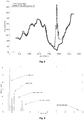
- the electrical signal 27 comprises a series of alternately positive 28 and negative 29 peaks ( figure 6 ) and correspond to rising and falling fronts generated by the alternation of abrupt changes of the magnetic and non-magnetic zones forming a character or symbol made using magnetic ink.
- the spacing of these peaks provides information on the spacing of the segments making up the character or the symbol, and thus makes it possible to identify the character or symbol read by the reading head 4.
- the electrical signal 27 generated by reading the character comprises seven segments 24 ( figure 6 ) which can be spaced according to two distinct normalized values, either a long interval 25 or a short interval 26.
- each character is composed of two long and four short intervals, each character being separated from another by a higher interval. at the long interval.
- the device 1 may furthermore comprise means for amplifying the electrical signal 27 generated by the reading head 4.
- these means comprise a circuit, or part of an electronic circuit dedicated to this function, and comprising as components for example, operational amplifiers and instrumentation amplifiers.
- the device 1 may further comprise analog-digital conversion means of the amplified electric signal 27, in a digital signal.
- these conversion means comprise or implement electronic components, or microcontrollers or microprocessors or programmable logic circuits.
- these means comprise a sample-and-hold device and an analog-to-digital converter itself.
- the sample-and-hold device may be preceded by an anti-aliasing or anti-aliasing filter, making it possible to suppress the portions of the signal that do not contain any relevant information.
- these analog-to-digital conversion means are included in the connection means of the mobile communication terminal or are included in the mobile communication terminal.
- the device 1 further comprises, or implements, means for restoring said information or said information included on the physical medium, from said electric signal 27.
- These means comprise means for estimating the speed of passage of the physical medium to be read in the slot 3 of the box 2 or for estimating the reading speed of the characters and / or magnetic symbols in front of the read head. 4, signal processing means 27 and signal interpretation means.
- the means for estimating the speed have the advantage of making it possible to improve the quality of reproduction of the information to be read, a reproduction being able to be realized whatever the speed, or the variations of speed of reading of the characters and or magnetic symbols by said read head 4.
- these means have the advantage of allowing better filtering of the signal from the read head 4 and a better segmentation of said signal for a better identification of the character or symbol read.
- the device 1 according to the invention and / or a communication terminal adapted to be connected with said device 1, may comprise all or part of said means.
- the means for estimating the reading speed of the medium apply to the positive part 28 and / or the negative part. 29 of the signal 27.
- These means comprise means for detecting peaks in the signal 27, possibly amplified, and converted into a digital signal, and means for determining the local speed at one or more peaks of the signal 27.
- These means for determining the local speed make it possible to transform times into distances, and allow the signal 27 to be cleaned by applying a threshold of distances between two peaks, which makes it possible to eliminate the defects of the signal 27, such as, for example, double peaks, caused by a cross passage of the support in the device 1 according to the invention or by a strip of characters and / or symbols printed crosswise and false peaks caused by an ink stain, an electromagnetic parasite, a defect electronic or shock on the player.
- a cleaned signal 27 allows a new measurement of speeds in order to refine the determination of the speed of the passage of the support in the device 1.
- These means for determining the local speed are preferably implemented several times in a repetitive or iterative manner.
- the means for restoring the information or the information of the support comprise segmentation means of the signal 27, possibly amplified, and converted into a digital signal, in order to determine each zone of the signal 27 comprising a character and / or symbol.
- the segmentation means allow, thanks to determining the local velocity made by the velocity estimation means, calculating distances corresponding to the long, short, and inter-character intervals. These distances are collected and classified in order to obtain a distribution of the three types of intervals, which will thus make it possible to determine the distance of the longest intervals corresponding to the inter-character intervals, a distance which will be used as a threshold from which one can consider that we move from one character or symbol to another. This allows the signal 27 to be segmented more precisely into a plurality of segments corresponding to a character or symbol.
- the segmentation means introduce into the signal 27 a start and an end separation in order to isolate the first and the last character.
- the segmentation means are implemented on the positive peaks 28 of the signal 27; however, they can also be on the negative peaks 29. Their implementation both on the positive peaks 28 and negative 29 has the advantage of obtaining a segmentation of the signal 27 of better quality.
- the means for interpreting the signal 27 make it possible to assign to each segment of the signal 27 a character or symbol that corresponds to it effectively. These means also make it possible to group the information corresponding to each interpreted character and / or symbol to form a string of characters and / or symbols which can be transmitted to a device distinct from the reading device 1, for example a device, apparatus or remote system for proper post-processing.
- the means for interpreting the signal 27 comprise means for taking a "print" of each segment ( figure 12 ), i.e., a set of N characteristic points of the intensity peaks of each segment of the signal 27, and preferably provide, for each segment, a plurality of indentations. They also include means for assigning each imprint a character or symbol, preferably by comparing the fingerprint of each segment of the signal 27 to reference fingerprints.
- the information retrieval means may furthermore comprise filtering means, decimation means and / or means for detecting the useful signal.
- the filtering means make it possible to clean the signal 27 of the noise that can potentially pollute it, and in particular the noise of the power supply of the device 1.
- it is a low pass digital filtering, for example of the type Butterworth of order 4 with a cutoff frequency of 2000Hz.
- the decimation means are capable of reducing the sampling frequency, which is fixed for example at 44100 Hz, which makes it possible to reduce the memory occupancy of the signal 27, to reduce its processing time and to increase the reliability of the detection. some pics.
- the means allow the selection of a sample on N of the acquired signal 27, N being a positive integer, in order to be able to divide by N the memory occupancy and the processing time.
- a sampling frequency of 1 / N of the initial sampling frequency is obtained.
- N is equal to 4, which makes it possible to divide by four the memory occupancy and the processing time.
- a sampling frequency of 11 025 Hz is obtained for an initial sampling frequency of 44100 Hz.
- the means for detecting the useful signal make it possible to detect and cut the useful signal, that is to say the section of the signal 27 which corresponds to the passage of the characters or symbols in front of the reading head 4. In particular, these means make it possible to ignore the peaks resulting from noise that could be due to mechanical shocks during the passage of the information carrier for example.
- the division of the useful part of the signal 27 can be achieved by detection of passage beyond a predefined threshold, in order to distinguish the surrounding noise.
- Another method may consist in manually triggering the start and the end of the acquisition of the signal 27 by the user, before and after passing the information medium.
- the duration of windows is fixed.
- the comparison threshold which is a function of the average noise level, is estimated from a short signal recording, from the start of the device 1 and the mobile application, before the passage of the information medium. For example, a duration of 0.2 seconds is chosen because it is greater than the duration of passage of an inter-character space; Too high a value would produce a bad cut keeping the defects mentioned above.
- Each acquisition window associates the maximum absolute value of the detected signal. These values are compared to a predetermined threshold.
- Table 1 Window number Maximum absolute value of the signal Threshold comparison 0 1015.9 - 1 765.0 - 2 834.9 - 3 868.4 - 4 11595.6 + 5 16455.6 + 6 21648.6 + 7 22039.5 + 8 27423.8 + 9 29185.5 + 10 829.0 - 11 836.9 - 12 17532.7 + 13 781.0 - 14 820.7 -
- the means for interpreting the signal 27 comprise decoding contextualization means by using the knowledge of the location of the character and / or the symbol in the string of characters and / or symbols.
- decoding contextualization means by using the knowledge of the location of the character and / or the symbol in the string of characters and / or symbols.
- the first character read is necessarily a control character to which will be associated only a control character to the fingerprint.
- the information reproduction means comprise means for controlling the interpretation of the signal 27.
- a bank document for example a check
- these means are able to calculate, a two-digit number, a checksum, called “checksum”, based on a calculation modulo 97 of the entire string and to compare this calculated sum to the number affixed to the banking document between the symbols " ⁇ >" or "()", and communicated to these means by the user of the device 1, which will have manually entered said figure.
- a bank document such as a check
- the analog-to-digital conversion means of the amplified electrical signal, the means for estimating the speed of passage of the medium in the device 1, the signal processing means 27, including the segmentation means, the means for filtration, decimation, detection of the useful signal, and the signal interpretation means 27 comprise and / or are implemented using and / or use one or more microprocessors or microcontrollers or programmable logic circuits, for example of the FPGA, PLD, EPLD, CPLD, PAL, PLA type, advantageously in cooperation with a memory of the ROM or RAM type.
- these means are implemented within an electronic circuit 8, advantageously housed in the housing 2; Nevertheless, in another preferred embodiment, these means are implemented by the mobile communication terminal to which the reading device 1 is associated.
- the information read by the read head 4 is preferably amplified and transmitted to the mobile communication terminal for the implementation of the other signal processing means.
- the mobile communication terminal or terminals comprise means for receiving the information read by the read head 4 of the device 1 according to the invention and communication means via one or more communication networks, preferably of computer communication and / or or telephone. If said information has not yet been amplified, converted into a digital signal, neither processed nor interpreted, the mobile communication terminal or terminals may comprise adequate means for doing so, in particular means for amplifying the electrical signal 27 from of the read head, means for analog-to-digital conversion of the amplified electric signal 27, means for estimating the speed of passage of the medium in the device 1 according to the invention, means for processing the digital signal 27 and means for interpreting the signal 27. All or part of these means may be or comprise hardware resources as described above and / or be or comprise software means.
- the mobile communication terminal or terminals may be a mobile phone, a smartphone, a digital tablet, a phablette, or a laptop.
- the device 1 according to the invention has the advantage of being easy to use. It is nomadic and allows a manual, fast and reliable reading of the information recorded in magnetic form. It also has the advantage of allowing a reliable reading irrespective of the speed, or the variations of speed, of the physical medium.
- the use of the device 1 according to the invention is simple.
- the user connects the device 1 to his mobile communication terminal and optionally loads the software or the application on said mobile terminal. It introduces and manually slides the physical medium or the document, a check for example, into the slot 3 of the device 1, ensuring that the information contained in magnetic form is positioned in front of the read head 4 disposed in the slot 3 of the device.
- the user manually passes the physical support from one side to the other of the device 2, through the slot 3.
- the device 1 generates a signal following the reading of the magnetic characters or symbols present on the support a signal 27, possibly amplified, digitized, transmitted to the mobile communication terminal which is responsible for processing it, preferably to the software means, and communicating it to a remote system via a computer and / or telephone communication network, or the device 1 processes said signal 27 before a transmission to the mobile communication terminal which then takes care of the transmission to the remote system.
- the method of reading one or more information printed on a medium, in the form of a string of characters and / or symbols printed with a magnetic ink, preferably coded according to the CMC7 standard implements the device 1 such described above and comprises the steps of taking the device 1 according to the invention, connecting it, by the wired or wireless communication means, to one or more mobile communication terminals, able to communicate with one or more computer networks and / or telephone, take a support comprising a string of characters and / or symbols printed with a magnetic ink, preferably coded according to the CMC7 standard, manually pass the support through the slot 3 of the housing 2.
- the method comprises a step of pre-magnetizing the characters or symbols before reading them by the read head and or a step of guiding the support to press it against the read head.
- the method comprises reading, by the read head 4, magnetic characters and / or symbols to generate an electric signal 27 comprising peaks of intensity, which is the image of the measured magnetic field, a signal 27 which is interpreted by means for restoring the information or information included in the string of characters and / or symbols.
- the method further comprises a step of amplifying the electrical signal 27, which, when amplified, undergoes an analog-digital conversion to obtain a sampled and quantized signal.
- the step of restoring the information contained in the signal 27 comprises a step of estimating the speed of passage of the physical medium to be read in the slot 3 of the case 2 or of estimating the speed of reading the characters and / or magnetic symbols in front of the read head 4, a processing step and a signal interpretation step 27.
- the step of estimating the speed is performed by the means of the device 1 according to the invention, described above. It preferably comprises one or more cycles of detecting positive and / or negative peaks on the entire signal 27, a determination of the local speed at one or more peaks of the signal 27 and a cleaning of said signal 27 .
- the threshold S is set at 0.3 x min (signal), with min (signal) being the minimum value of the signal, making it possible to place said threshold S between the value 0 and the value of the peaks.
- the threshold S is reduced by 20% at each iteration.
- a window is selected ranging from 0 to N-1 indices.
- a window is selected from indices (X- (N-1) / 2) to (X + (N-1) / 2).
- a window is selected ranging from indices N max - N + 1 to N max .
- the N-1 M ⁇ 7 time intervals between the peaks are calculated and sorted in ascending order, the time intervals corresponding to the difference in the indices of the detected peaks divided by the sampling frequency.
- N 15 peaks.
- peaks 0 to 14 are selected.
- peaks N-14 to N From this collection of 15 peaks, we deduce a collection of 14 intervals (in number of samples) between these peaks and we calculate the time interval corresponding, with a sampling frequency of 11025 Hz. In this collection of 14 intervals, it is theoretically 8 short intervals, 4 long intervals and 2 inter-character intervals.
- the Y 4 samples centered on the range 0 to 7, i.e. samples 2 to 5, are sorted and selected (Table 2).
- Table 2 Index Interval (in number of samples between each peak) Interval (in milliseconds) 0 43 3,900 1 44 3,991 2 47 4,263 3 48 4,354 4 49 4,444 5 50 4,535 6 51 4,626 7 53 4,807 8 75 6.803 9 77 6,984 10 78 7,075 11 86 7,800 12 148 13.424 13 166 15.057
- V Y ⁇ distance _ interval _ short / ⁇ intervals _ short _ selected , is 0.068 m / s for the values in Table 2.
- Determining the local speed of the preceding step makes it possible to determine distances between peaks of the signal 27 and thus makes it possible to clean the latter, by traversing the peaks in a chronological manner and, when a pair of peaks located at a peak are detected. distance less than a melting threshold, between 0 and the distance of a short interval for a character CMC7, this pair of peaks is replaced by a single peak at the average position and with a speed which is the average of the speed of the two peaks.
- the threshold used is between "0.5 x distance_intervalle_court " and "0.66 x distance_intervalle_court ".
- a threshold is determined in order to distinguish the inter-character intervals of the other intervals.
- the threshold is determined by taking the mean (denoted by IntervalleLongSeparation ) between a value estimated to be a long interval, for example determined by the formula NB Short + (1-X) ⁇ NB Long , and a value estimated to be an inter-character interval, for example by the formula NB Court + NB Long + X x NB InterCar , X being between 0 and 1.
- a threshold (called SeparationCharacter ) is determined, beyond which the distance is considered large enough to correspond to a character, a segmentation of the signal 27 is performed by browsing the list of peaks of the signal 27. The list of distances between the peaks is traversed and a separation is placed in the center of the interval when the latter is greater than the threshold called IntervalleLongSeparation and the distance since the last separation placed is higher threshold denominated CharacterSeparation.
- Start and end separations of the signal 27 are added in order to segment the first and last characters.
- the first separation is added to the position: Peak 1 - TimeLengthSeparation x speed 1 and the last separation is added to the position Peak max + TimeLengthSeparation x max .
- the list of s points of separation in the signal 27 is then converted into a list of segments defined by a start position and an end position.
- a correction run is then performed to delete segments in which less than three peaks were found during the speed determination step.
- the segmentation is preferably performed on the positive peaks 28 and the negative peaks 29 of the signal 27, and leads to two lists of segments called "bots" and "tops", respectively. Then these two resulting segments are merged into a single segmentation, valid for both sides of the signal 27, and corresponding to all the characters or symbols.
- This step has the advantage of eliminating the shifts in this association of the two parts of the same portion of the signal, thus limiting the false interpretations.
- the list of merged segments is cleaned by performing a correction pass to delete segments in which less than three peaks were found during the speed determination step.
- the step of interpreting the signal 27 after segmentation is performed by taking, for each segment of the signal 27, a "print" which is a set of N characteristic points.
- the character CMC7 "zero" is composed of the following intervals: [short, short, long, long, short, short], and thus by the following physical distances in mm: [0.3, 0.3, 0.5, 0.5, 0.3, 0.3].
- the expected positions of the peaks are therefore, from the first peak, at distances of [0.3, 0.6, 1.1, 1.6, 1.9] in mm, which corresponds to the points noted [3, 6, 11, 16, 19].
- points of interest for a fingerprint are, for example, positions 3, 5, 6, 8, 9, 10, 11, 12, 13, 14, 16, 17, and 19.
- the first and last peak included in the segment of the signal 27 to be interpreted is selected.
- each footprint is classified. Preferably, this classification is carried out according to the closest centroid method or "Nearest Centroid Classifier".
- a reference fingerprint is defined. This footprint is determined by practicing statistics on a large set of signals recorded and processed to take the prints of the characters. For example, the standard print of the zero character T0 is given in Table 3.
- the Euclidean distance between this fingerprint and the set of standard fingerprints is calculated.
- An example of an impression taken for a "zero" character is given in Table 4. In this example, the score is equal to 0.16880805.
- the method according to the invention may further comprise a filtering step, a decimation step and / or a useful signal detection step.
- the useful signal detection step comprises detecting and cutting the signal 27 to the section comprising the characters or symbols that have been read.
- the cutting is preferably performed by detecting the passage beyond a predefined threshold, in order to distinguish the surrounding noise.
- the signal 27 is cut into windows of a duration greater than the interval separating the different groups of characters or symbols. Each acquisition window associates the maximum absolute value of the detected signal. These values are compared to a predetermined threshold. When a series of sufficiently long valid windows is found (Table 1), the corresponding section of the signal 27 is then interpreted to restore the information contained in the signal 27.
- the signal obtained at the end of the detection of the peaks is then subjected to an interpretation phase in which the information, on the form of the characters and / or magnetic symbols read, is associated with one or more characters or symbols.
- the method according to the invention comprises a step of controlling the decoding.
- this step comprises the calculation of a two-digit checksum, called a "checksum", based on a modulo 97 calculation of the whole string of characters and / or symbols and comprises a step of comparing this sum calculated with the number affixed to the bank document, previously communicated by the user of this method.
- a checksum a two-digit checksum
- the steps of amplification of the electrical signal from the read head 4 and of analog-to-digital conversion are carried out within the reading device 1, whereas the steps of filtering, decimating and detecting the useful signal, of estimating the speed of passage of the support in the device according to the invention, signal processing 27, interpretation, control of the decoding of the transmission to a device, device or remote system, are performed within the mobile communication terminal.
- the steps of filtering, decimating and detecting the useful signal, of estimating the speed of passage of the support in the device according to the invention, signal processing 27, interpretation, control of the decoding of the transmission to a device, device or remote system are performed within the mobile communication terminal.
- the method according to the invention is implemented in the banking field for reading checks.
Landscapes
- Engineering & Computer Science (AREA)
- Artificial Intelligence (AREA)
- Computer Vision & Pattern Recognition (AREA)
- Physics & Mathematics (AREA)
- General Physics & Mathematics (AREA)
- Theoretical Computer Science (AREA)
- Character Input (AREA)
Claims (15)
- Vorrichtung (1) zum Ablesen einer oder mehrerer Informationen, die auf einem physischen Träger in Form einer magnetischen Zeichen- und/oder Symbolabfolge gedruckt sind, wobei die Vorrichtung (1) umfasst:ein Gehäuse (2) mit einem Schlitz (3), der zur Aufnahme des Trägers geeignet ist,einen magnetischen Lesekopf (4), der zum Ablesen der magnetischen Zeichen- und/oder Symbolabfolge geeignet ist, wenn der Träger händisch in den Schlitz (3) eingeführt wird, wobei der Lesekopf (4) ein elektrisches Signal (27) erzeugt, das Intensitätspeaks enthält, in denen die magnetischen Zeichen und/oder Symbole abgebildet sind, Mittel (5) zum Anschluss an ein mobiles Datenübertragungsendgerät, dadurch gekennzeichnet, dassdie Vorrichtung (1) Mittel zur Wiederherstellung der Information(en) anhand des elektrischen Signals (27) umfasst, wobei die Wiederherstellungsmittel Mittel zur Abschätzung der Durchlaufgeschwindigkeit der magnetischen Zeichen und/oder Symbole vor dem Lesekopf (4) auf der Grundlage des elektrischen Signals (27) umfassen.
- Vorrichtung (1) nach Anspruch 1, wobei die Mittel zur Wiederherstellung der auf dem Träger gedruckten Information(en) ferner umfassen: Verarbeitungsmittel, umfassend Mittel zur Aufteilung des elektrischen Signals (27) in eine Mehrzahl Segmente, die einem abgelesenen Zeichen bzw. Symbol entsprechen, und Mittel zur Interpretation des elektrischen Signals (27), die den Segmenten das ihm tatsächlich entsprechende Zeichen bzw. Symbol zuordnen.
- Vorrichtung (1) nach Anspruch 2, wobei die Mittel zur Interpretation des Signals (27) statistisch die zuverlässigste Übereinstimmung mit Referenzaufnahmen des mindestens einen Zeichens und/oder Symbols bewerten.
- Vorrichtung (1) nach Anspruch 3, wobei die Aufnahme eine Reihe von Punkten umfasst, die für die Intensitätspeaks, die das Segment des elektrischen Signals (27) bilden, insgesamt charakteristisch sind.
- Vorrichtung (1) nach einem der vorstehenden Ansprüche, wobei der Träger eine magnetische Zeichen- und/oder Symbolabfolge vom Typ CMC7 umfasst.
- Vorrichtung (1) nach einem der vorstehenden Ansprüche, umfassend ein Element (7), das im Schlitz (3) des Gehäuses (2) hervorsteht und als Feder zur Herstellung eines Kontakts zwischen dem Teil des physischen Trägers, der die magnetische Zeichen- und/oder Symbolabfolge umfasst, und dem Lesekopf (4) fungiert.
- Mobiles Datenübertragungsendgerät, das eine Vorrichtung (1) zum Ablesen einer oder mehrerer Informationen, die auf einem physischen Träger in Form einer magnetischen Zeichen- und/oder Symbolabfolge gedruckt sind, umfasst oder dieser angeschlossen ist, wobei die Vorrichtung umfasst: ein Gehäuse (2) mit einem Schlitz (3), der zur Aufnahme des Trägers geeignet ist, einen magnetischen Lesekopf (4), der zum Ablesen der magnetischen Zeichen- und/oder Symbolabfolge geeignet ist, wenn der Träger händisch in den Schlitz (3) eingeführt wird, wobei der Lesekopf (4) ein elektrisches Signal (27) erzeugt, das Intensitätspeaks enthält, in denen die magnetischen Zeichen und/oder Symbole abgebildet sind, Mittel (5) zum Anschluss an das mobile Datenübertragungsendgerät, wobei das mobile Endgerät und/oder die Vorrichtung (1) Mittel zur Wiederherstellung der auf dem physischen Träger gedruckten Information(en) umfasst/umfassen, wobei die Wiederherstellungsmittel Mittel zur Abschätzung der Durchlaufgeschwindigkeit der magnetischen Zeichen und/oder Symbole vor dem Lesekopf (4) auf der Grundlage des elektrischen Signals (27) umfassen.
- Verfahren zum Wiederherstellen einer oder mehrerer Informationen, die auf einem physischen Träger in Form einer magnetischen Zeichen- und/oder Symbolabfolge gedruckt sind, umfassend die Schritte:- Vorsehen einer Vorrichtung (1) zum Ablesen einer oder mehrerer Informationen, die auf einem physischen Träger in Form einer magnetischen Zeichen- und/oder Symbolabfolge gedruckt sind, wobei die Vorrichtung umfasst: ein Gehäuse (2) mit einem Schlitz (3), der zur Aufnahme des Trägers geeignet ist, einen magnetischen Lesekopf (4), der zum Ablesen der magnetischen Zeichen- und/oder Symbolabfolge geeignet ist, wenn der Träger händisch in den Schlitz (3) eingeführt wird, wobei der Lesekopf (4) geeignet ist, ein elektrisches Signal (27) zu erzeugen, das Intensitätspeaks enthält, in denen die magnetischen Zeichen und/oder Symbole abgebildet sind, und Mittel (5) zum Anschluss an das mobile Datenübertragungsendgerät,- Vorsehen eines mobilen Datenübertragungsendgeräts, das zum Kommunizieren mit mindestens einem Daten- und/oder Telefonnetz geeignet ist,- Anschließen der Vorrichtung (1) an das mobile Datenübertragungsendgerät,- Vorsehen eines physischen Trägers, der mindestens eine aufgezeichnete Information in Form einer magnetischen Zeichen- und/oder Symbolabfolge umfasst,- händisches Einführen des Trägers in den Schlitz (3) und vor den Lesekopf (4) der Vorrichtung (1), um ein elektrisches Signal (27) zu erzeugen, das Intensitätspeaks umfasst, in denen die magnetischen Zeichen und/oder Symbole abgebildet sind,- Wiederherstellen der im Signal (27) enthaltenen Information(en) durch Abschätzen der Durchlaufgeschwindigkeit der magnetischen Zeichen und/oder Symbole vor dem Lesekopf (4) anhand des elektrischen Signals (27).
- Verfahren nach Anspruch 8, wobei der Schritt des Wiederherstellens der im elektrischen Signal (27) enthaltenen Information(en) einen Schritt des Verarbeitens des elektrischen Signals (27) umfasst, das dessen Aufteilung in eine Mehrzahl Segmente, die einem abgelesenen Zeichen bzw. Symbol entsprechen, sowie die Interpretation des elektrischen Signals (27) durch Zuordnen der Segmente zum Zeichen bzw. Symbol, das ihnen jeweils tatsächlich entspricht, umfasst.
- Verfahren nach Anspruch 8 oder 9, wobei das Abschätzen der Durchlaufgeschwindigkeit der magnetischen Zeichen und/oder Symbole vor dem Lesekopf (4) durch Ermitteln der lokalen Geschwindigkeit auf Höhe eines oder mehrerer Peaks des elektrischen Signals (27), Filtern der Peaks des elektrischen Signals (27), um ein gefiltertes Signal zu erhalten, und anschließend durch Ermitteln einer neuen lokalen Geschwindigkeit auf Höhe eines oder mehrere Peaks des gefilterten Signals, um ein neues gefiltertes Signal zu erhalten, erfolgt, wobei die Schritte des Ermittelns der lokalen Geschwindigkeit und des Filterns des elektrischen Signals (27) mehrfach ausgeführt werden.
- Verfahren nach Anspruch 9, wobei der Schritt des Interpretierens des elektrischen Signals (27) umfasst: Aufteilen des elektrischen Signals (27) in eine Mehrzahl Segmente, die einem abgelesenen Zeichen bzw. Symbol entsprechen, Vorsehen einer Aufnahme jedes Segments und Vergleichen der Aufnahme mit Referenzaufnahmen der Zeichen und/oder Symbole.
- Verfahren nach Anspruch 11, wobei die Aufnahme eine Reihe von Punkten umfasst, die für die Intensitätspeaks, die das Segment des elektrischen Signals (27) bilden, insgesamt charakteristisch sind.
- Verfahren nach einem der Ansprüche 8 bis 12, wobei die magnetischen Zeichen und/oder Symbole vom Typ CMC7 sind.
- Verfahren nach einem der Ansprüche 8 bis 13, ferner umfassend Führen des abzulesenden Trägers hin zum Lesekopf (4) der Vorrichtung (1).
- Verfahren nach einem der Ansprüche 8 bis 14, wobei der Schritt des Wiederherstellens der Information(en) durch die Vorrichtung (1) und/oder das mobile Datenübertragunsendgerät ausgeführt wird.
Priority Applications (1)
| Application Number | Priority Date | Filing Date | Title |
|---|---|---|---|
| EP16169031.8A EP3093792B1 (de) | 2015-05-11 | 2016-05-10 | Lesegerät für informationen, die auf einem datenträger in form von magnetischen zeichen gespeichert sind |
Applications Claiming Priority (2)
| Application Number | Priority Date | Filing Date | Title |
|---|---|---|---|
| EP15290127 | 2015-05-11 | ||
| EP16169031.8A EP3093792B1 (de) | 2015-05-11 | 2016-05-10 | Lesegerät für informationen, die auf einem datenträger in form von magnetischen zeichen gespeichert sind |
Publications (2)
| Publication Number | Publication Date |
|---|---|
| EP3093792A1 EP3093792A1 (de) | 2016-11-16 |
| EP3093792B1 true EP3093792B1 (de) | 2019-05-15 |
Family
ID=53373371
Family Applications (1)
| Application Number | Title | Priority Date | Filing Date |
|---|---|---|---|
| EP16169031.8A Active EP3093792B1 (de) | 2015-05-11 | 2016-05-10 | Lesegerät für informationen, die auf einem datenträger in form von magnetischen zeichen gespeichert sind |
Country Status (1)
| Country | Link |
|---|---|
| EP (1) | EP3093792B1 (de) |
Family Cites Families (3)
| Publication number | Priority date | Publication date | Assignee | Title |
|---|---|---|---|---|
| US5054092A (en) * | 1988-03-31 | 1991-10-01 | Checkmate Electronics, Inc. | Hand-operated low cost magnetic character recognition system |
| ATE537524T1 (de) | 2007-05-17 | 2011-12-15 | Nidec Sankyo Corp | Verfahren und vorrichtung zur magnetischen zeichenerkennung |
| US20120008851A1 (en) | 2010-07-12 | 2012-01-12 | Sean Pennock | Remote negotiable instrument processor |
-
2016
- 2016-05-10 EP EP16169031.8A patent/EP3093792B1/de active Active
Non-Patent Citations (1)
| Title |
|---|
| None * |
Also Published As
| Publication number | Publication date |
|---|---|
| EP3093792A1 (de) | 2016-11-16 |
Similar Documents
| Publication | Publication Date | Title |
|---|---|---|
| CN106651774B (zh) | 一种车牌超分辨率模型重建方法及装置 | |
| EP3272119B1 (de) | Verfahren und anordnung zur 3d rekonstruktion einer szene | |
| FR2908203A1 (fr) | Procedes et dispositifs d'authentification d'un produit et d'un code bidimensionnel et application nouvelle d'un code bidimensionnel. | |
| EP0115462A2 (de) | Verfahren zum automatischen Erkennen eines Bildes auf der Basis eines korrespondierenden Referenzbildes | |
| EP2904425B1 (de) | Verfahren und vorrichtung für den nachweis von ionisierender strahlung unter verwendung eines pixelierten fotodetektors | |
| WO2016146937A1 (fr) | Procédé de traitement d'un signal asynchrone | |
| EP3572976A1 (de) | Verarbeitungsverfahren eines videobilddatenflusses | |
| CN108108731A (zh) | 基于合成数据的文本检测方法及装置 | |
| EP3601009B1 (de) | Vorrichtung zur detektion von schienendefekten und zugehöriges detektionsverfahren | |
| CN114781548B (zh) | 图像场景分类方法、装置、设备及存储介质 | |
| BE1026095B1 (fr) | Dispositif de traitement d’images | |
| CN115294035A (zh) | 亮点定位方法、亮点定位装置、电子设备及存储介质 | |
| FR2958062A1 (fr) | Procede pour une categorisation et une separation de documents en une etape | |
| CN116994000B (zh) | 零件边缘特征提取方法和装置、电子设备及存储介质 | |
| EP1747481A1 (de) | Messung und behandlung eines signals mit elementarimpulsbündeln | |
| WO2011029894A1 (fr) | Procede de detection de pages blanches et machine multifonction correspondante | |
| CN113379858B (zh) | 一种基于深度学习的图像压缩方法及装置 | |
| EP3093792A1 (de) | Lesegerät für informationen, die auf einem datenträger in form von magnetischen zeichen gespeichert sind | |
| FR2692931A1 (fr) | Procédé pour l'étude morphologique de formations géologiques traversées par un forage. | |
| EP1995693A1 (de) | Verfahren zur Erfassung eines Gegenstands in Bewegung in einem Bildstrom | |
| EP1770037A1 (de) | Verfahren zum Erkennen von Doppelabzügen von Postsendungen durch Bildanalyse der aufrechten Sendungen | |
| US9544461B2 (en) | Device for acquiring image of slice medium | |
| WO2020094441A1 (fr) | Capteur d'image pour la reconnaissance optique de code(s) | |
| FR2676295A1 (fr) | Procede de codage d'un fil de securite, notamment pour papier fiduciaire.. | |
| FR2980292A1 (fr) | Procede et systeme d'acquisition et de traitement d'images pour la detection du mouvement |
Legal Events
| Date | Code | Title | Description |
|---|---|---|---|
| PUAI | Public reference made under article 153(3) epc to a published international application that has entered the european phase |
Free format text: ORIGINAL CODE: 0009012 |
|
| AK | Designated contracting states |
Kind code of ref document: A1 Designated state(s): AL AT BE BG CH CY CZ DE DK EE ES FI FR GB GR HR HU IE IS IT LI LT LU LV MC MK MT NL NO PL PT RO RS SE SI SK SM TR |
|
| AX | Request for extension of the european patent |
Extension state: BA ME |
|
| 17P | Request for examination filed |
Effective date: 20170427 |
|
| STAA | Information on the status of an ep patent application or granted ep patent |
Free format text: STATUS: REQUEST FOR EXAMINATION WAS MADE |
|
| STAA | Information on the status of an ep patent application or granted ep patent |
Free format text: STATUS: EXAMINATION IS IN PROGRESS |
|
| 17Q | First examination report despatched |
Effective date: 20180206 |
|
| GRAP | Despatch of communication of intention to grant a patent |
Free format text: ORIGINAL CODE: EPIDOSNIGR1 |
|
| STAA | Information on the status of an ep patent application or granted ep patent |
Free format text: STATUS: GRANT OF PATENT IS INTENDED |
|
| INTG | Intention to grant announced |
Effective date: 20190128 |
|
| GRAS | Grant fee paid |
Free format text: ORIGINAL CODE: EPIDOSNIGR3 |
|
| GRAA | (expected) grant |
Free format text: ORIGINAL CODE: 0009210 |
|
| STAA | Information on the status of an ep patent application or granted ep patent |
Free format text: STATUS: THE PATENT HAS BEEN GRANTED |
|
| AK | Designated contracting states |
Kind code of ref document: B1 Designated state(s): AL AT BE BG CH CY CZ DE DK EE ES FI FR GB GR HR HU IE IS IT LI LT LU LV MC MK MT NL NO PL PT RO RS SE SI SK SM TR |
|
| REG | Reference to a national code |
Ref country code: CH Ref legal event code: EP |
|
| REG | Reference to a national code |
Ref country code: DE Ref legal event code: R096 Ref document number: 602016013866 Country of ref document: DE |
|
| REG | Reference to a national code |
Ref country code: IE Ref legal event code: FG4D Free format text: LANGUAGE OF EP DOCUMENT: FRENCH |
|
| REG | Reference to a national code |
Ref country code: NL Ref legal event code: MP Effective date: 20190515 |
|
| REG | Reference to a national code |
Ref country code: LT Ref legal event code: MG4D |
|
| PG25 | Lapsed in a contracting state [announced via postgrant information from national office to epo] |
Ref country code: PT Free format text: LAPSE BECAUSE OF FAILURE TO SUBMIT A TRANSLATION OF THE DESCRIPTION OR TO PAY THE FEE WITHIN THE PRESCRIBED TIME-LIMIT Effective date: 20190915 Ref country code: AL Free format text: LAPSE BECAUSE OF FAILURE TO SUBMIT A TRANSLATION OF THE DESCRIPTION OR TO PAY THE FEE WITHIN THE PRESCRIBED TIME-LIMIT Effective date: 20190515 Ref country code: ES Free format text: LAPSE BECAUSE OF FAILURE TO SUBMIT A TRANSLATION OF THE DESCRIPTION OR TO PAY THE FEE WITHIN THE PRESCRIBED TIME-LIMIT Effective date: 20190515 Ref country code: LT Free format text: LAPSE BECAUSE OF FAILURE TO SUBMIT A TRANSLATION OF THE DESCRIPTION OR TO PAY THE FEE WITHIN THE PRESCRIBED TIME-LIMIT Effective date: 20190515 Ref country code: HR Free format text: LAPSE BECAUSE OF FAILURE TO SUBMIT A TRANSLATION OF THE DESCRIPTION OR TO PAY THE FEE WITHIN THE PRESCRIBED TIME-LIMIT Effective date: 20190515 Ref country code: NL Free format text: LAPSE BECAUSE OF FAILURE TO SUBMIT A TRANSLATION OF THE DESCRIPTION OR TO PAY THE FEE WITHIN THE PRESCRIBED TIME-LIMIT Effective date: 20190515 Ref country code: NO Free format text: LAPSE BECAUSE OF FAILURE TO SUBMIT A TRANSLATION OF THE DESCRIPTION OR TO PAY THE FEE WITHIN THE PRESCRIBED TIME-LIMIT Effective date: 20190815 Ref country code: SE Free format text: LAPSE BECAUSE OF FAILURE TO SUBMIT A TRANSLATION OF THE DESCRIPTION OR TO PAY THE FEE WITHIN THE PRESCRIBED TIME-LIMIT Effective date: 20190515 Ref country code: FI Free format text: LAPSE BECAUSE OF FAILURE TO SUBMIT A TRANSLATION OF THE DESCRIPTION OR TO PAY THE FEE WITHIN THE PRESCRIBED TIME-LIMIT Effective date: 20190515 |
|
| PG25 | Lapsed in a contracting state [announced via postgrant information from national office to epo] |
Ref country code: LV Free format text: LAPSE BECAUSE OF FAILURE TO SUBMIT A TRANSLATION OF THE DESCRIPTION OR TO PAY THE FEE WITHIN THE PRESCRIBED TIME-LIMIT Effective date: 20190515 Ref country code: RS Free format text: LAPSE BECAUSE OF FAILURE TO SUBMIT A TRANSLATION OF THE DESCRIPTION OR TO PAY THE FEE WITHIN THE PRESCRIBED TIME-LIMIT Effective date: 20190515 Ref country code: BG Free format text: LAPSE BECAUSE OF FAILURE TO SUBMIT A TRANSLATION OF THE DESCRIPTION OR TO PAY THE FEE WITHIN THE PRESCRIBED TIME-LIMIT Effective date: 20190815 Ref country code: GR Free format text: LAPSE BECAUSE OF FAILURE TO SUBMIT A TRANSLATION OF THE DESCRIPTION OR TO PAY THE FEE WITHIN THE PRESCRIBED TIME-LIMIT Effective date: 20190816 |
|
| REG | Reference to a national code |
Ref country code: AT Ref legal event code: MK05 Ref document number: 1134295 Country of ref document: AT Kind code of ref document: T Effective date: 20190515 |
|
| PG25 | Lapsed in a contracting state [announced via postgrant information from national office to epo] |
Ref country code: SK Free format text: LAPSE BECAUSE OF FAILURE TO SUBMIT A TRANSLATION OF THE DESCRIPTION OR TO PAY THE FEE WITHIN THE PRESCRIBED TIME-LIMIT Effective date: 20190515 Ref country code: EE Free format text: LAPSE BECAUSE OF FAILURE TO SUBMIT A TRANSLATION OF THE DESCRIPTION OR TO PAY THE FEE WITHIN THE PRESCRIBED TIME-LIMIT Effective date: 20190515 Ref country code: DK Free format text: LAPSE BECAUSE OF FAILURE TO SUBMIT A TRANSLATION OF THE DESCRIPTION OR TO PAY THE FEE WITHIN THE PRESCRIBED TIME-LIMIT Effective date: 20190515 Ref country code: AT Free format text: LAPSE BECAUSE OF FAILURE TO SUBMIT A TRANSLATION OF THE DESCRIPTION OR TO PAY THE FEE WITHIN THE PRESCRIBED TIME-LIMIT Effective date: 20190515 Ref country code: CZ Free format text: LAPSE BECAUSE OF FAILURE TO SUBMIT A TRANSLATION OF THE DESCRIPTION OR TO PAY THE FEE WITHIN THE PRESCRIBED TIME-LIMIT Effective date: 20190515 |
|
| REG | Reference to a national code |
Ref country code: DE Ref legal event code: R097 Ref document number: 602016013866 Country of ref document: DE |
|
| PG25 | Lapsed in a contracting state [announced via postgrant information from national office to epo] |
Ref country code: SM Free format text: LAPSE BECAUSE OF FAILURE TO SUBMIT A TRANSLATION OF THE DESCRIPTION OR TO PAY THE FEE WITHIN THE PRESCRIBED TIME-LIMIT Effective date: 20190515 Ref country code: IT Free format text: LAPSE BECAUSE OF FAILURE TO SUBMIT A TRANSLATION OF THE DESCRIPTION OR TO PAY THE FEE WITHIN THE PRESCRIBED TIME-LIMIT Effective date: 20190515 |
|
| PLBE | No opposition filed within time limit |
Free format text: ORIGINAL CODE: 0009261 |
|
| STAA | Information on the status of an ep patent application or granted ep patent |
Free format text: STATUS: NO OPPOSITION FILED WITHIN TIME LIMIT |
|
| PG25 | Lapsed in a contracting state [announced via postgrant information from national office to epo] |
Ref country code: TR Free format text: LAPSE BECAUSE OF FAILURE TO SUBMIT A TRANSLATION OF THE DESCRIPTION OR TO PAY THE FEE WITHIN THE PRESCRIBED TIME-LIMIT Effective date: 20190515 |
|
| 26N | No opposition filed |
Effective date: 20200218 |
|
| PG25 | Lapsed in a contracting state [announced via postgrant information from national office to epo] |
Ref country code: PL Free format text: LAPSE BECAUSE OF FAILURE TO SUBMIT A TRANSLATION OF THE DESCRIPTION OR TO PAY THE FEE WITHIN THE PRESCRIBED TIME-LIMIT Effective date: 20190515 |
|
| PG25 | Lapsed in a contracting state [announced via postgrant information from national office to epo] |
Ref country code: SI Free format text: LAPSE BECAUSE OF FAILURE TO SUBMIT A TRANSLATION OF THE DESCRIPTION OR TO PAY THE FEE WITHIN THE PRESCRIBED TIME-LIMIT Effective date: 20190515 |
|
| REG | Reference to a national code |
Ref country code: DE Ref legal event code: R119 Ref document number: 602016013866 Country of ref document: DE |
|
| PG25 | Lapsed in a contracting state [announced via postgrant information from national office to epo] |
Ref country code: LI Free format text: LAPSE BECAUSE OF NON-PAYMENT OF DUE FEES Effective date: 20200531 Ref country code: MC Free format text: LAPSE BECAUSE OF FAILURE TO SUBMIT A TRANSLATION OF THE DESCRIPTION OR TO PAY THE FEE WITHIN THE PRESCRIBED TIME-LIMIT Effective date: 20190515 Ref country code: CH Free format text: LAPSE BECAUSE OF NON-PAYMENT OF DUE FEES Effective date: 20200531 |
|
| REG | Reference to a national code |
Ref country code: BE Ref legal event code: MM Effective date: 20200531 |
|
| GBPC | Gb: european patent ceased through non-payment of renewal fee |
Effective date: 20200510 |
|
| PG25 | Lapsed in a contracting state [announced via postgrant information from national office to epo] |
Ref country code: LU Free format text: LAPSE BECAUSE OF NON-PAYMENT OF DUE FEES Effective date: 20200510 |
|
| PG25 | Lapsed in a contracting state [announced via postgrant information from national office to epo] |
Ref country code: FR Free format text: LAPSE BECAUSE OF NON-PAYMENT OF DUE FEES Effective date: 20200531 Ref country code: IE Free format text: LAPSE BECAUSE OF NON-PAYMENT OF DUE FEES Effective date: 20200510 Ref country code: GB Free format text: LAPSE BECAUSE OF NON-PAYMENT OF DUE FEES Effective date: 20200510 |
|
| PG25 | Lapsed in a contracting state [announced via postgrant information from national office to epo] |
Ref country code: DE Free format text: LAPSE BECAUSE OF NON-PAYMENT OF DUE FEES Effective date: 20201201 Ref country code: BE Free format text: LAPSE BECAUSE OF NON-PAYMENT OF DUE FEES Effective date: 20200531 |
|
| PG25 | Lapsed in a contracting state [announced via postgrant information from national office to epo] |
Ref country code: MT Free format text: LAPSE BECAUSE OF FAILURE TO SUBMIT A TRANSLATION OF THE DESCRIPTION OR TO PAY THE FEE WITHIN THE PRESCRIBED TIME-LIMIT Effective date: 20190515 Ref country code: CY Free format text: LAPSE BECAUSE OF FAILURE TO SUBMIT A TRANSLATION OF THE DESCRIPTION OR TO PAY THE FEE WITHIN THE PRESCRIBED TIME-LIMIT Effective date: 20190515 |
|
| PG25 | Lapsed in a contracting state [announced via postgrant information from national office to epo] |
Ref country code: RO Free format text: LAPSE BECAUSE OF FAILURE TO SUBMIT A TRANSLATION OF THE DESCRIPTION OR TO PAY THE FEE WITHIN THE PRESCRIBED TIME-LIMIT Effective date: 20190515 Ref country code: MK Free format text: LAPSE BECAUSE OF FAILURE TO SUBMIT A TRANSLATION OF THE DESCRIPTION OR TO PAY THE FEE WITHIN THE PRESCRIBED TIME-LIMIT Effective date: 20190515 Ref country code: IS Free format text: LAPSE BECAUSE OF FAILURE TO SUBMIT A TRANSLATION OF THE DESCRIPTION OR TO PAY THE FEE WITHIN THE PRESCRIBED TIME-LIMIT Effective date: 20190915 |