EP3100559B1 - Noeud de réseau, dispositif sans fil, procédés dans ceux-ci, programmes d'ordinateur et supports lisibles par ordinateur comportant les programmes d'ordinateur pour adapter et adopter, respectivement, une attribution de ressources radio - Google Patents
Noeud de réseau, dispositif sans fil, procédés dans ceux-ci, programmes d'ordinateur et supports lisibles par ordinateur comportant les programmes d'ordinateur pour adapter et adopter, respectivement, une attribution de ressources radio Download PDFInfo
- Publication number
- EP3100559B1 EP3100559B1 EP14879784.8A EP14879784A EP3100559B1 EP 3100559 B1 EP3100559 B1 EP 3100559B1 EP 14879784 A EP14879784 A EP 14879784A EP 3100559 B1 EP3100559 B1 EP 3100559B1
- Authority
- EP
- European Patent Office
- Prior art keywords
- wireless device
- radio resources
- network node
- radio
- allocated
- Prior art date
- Legal status (The legal status is an assumption and is not a legal conclusion. Google has not performed a legal analysis and makes no representation as to the accuracy of the status listed.)
- Active
Links
Images


Classifications
-
- H—ELECTRICITY
- H04—ELECTRIC COMMUNICATION TECHNIQUE
- H04W—WIRELESS COMMUNICATION NETWORKS
- H04W72/00—Local resource management
- H04W72/50—Allocation or scheduling criteria for wireless resources
- H04W72/54—Allocation or scheduling criteria for wireless resources based on quality criteria
- H04W72/541—Allocation or scheduling criteria for wireless resources based on quality criteria using the level of interference
-
- H—ELECTRICITY
- H04—ELECTRIC COMMUNICATION TECHNIQUE
- H04W—WIRELESS COMMUNICATION NETWORKS
- H04W76/00—Connection management
- H04W76/10—Connection setup
- H04W76/14—Direct-mode setup
-
- H—ELECTRICITY
- H04—ELECTRIC COMMUNICATION TECHNIQUE
- H04W—WIRELESS COMMUNICATION NETWORKS
- H04W8/00—Network data management
- H04W8/005—Discovery of network devices, e.g. terminals
-
- H—ELECTRICITY
- H04—ELECTRIC COMMUNICATION TECHNIQUE
- H04W—WIRELESS COMMUNICATION NETWORKS
- H04W76/00—Connection management
- H04W76/20—Manipulation of established connections
- H04W76/23—Manipulation of direct-mode connections
Definitions
- the present disclosure relates generally to a network node and methods therein for adapting an allocation of radio resources to at least one wireless device for Device-to-Device (D2D) communications.
- the present disclosure also relates generally to the wireless device and methods therein for adopting a reconfiguration of the allocation of radio resources to the at least one wireless device for D2D communications.
- the present disclosure relates as well to computer programs and computer-readable storage mediums, having stored thereon the computer programs to carry out the aforementioned methods.
- Communication devices such as wireless device are also known as e.g. User Equipments (UE), mobile terminals, wireless terminals and/or mobile stations. Terminals are enabled to communicate wirelessly in a cellular communications network or wireless communication system, sometimes also referred to as a cellular radio system or cellular networks.
- the communication may be performed e.g. between two wireless devices, between a wireless device and a regular telephone and/or between a wireless device and a server via a Radio Access Network (RAN) and possibly one or more core networks, comprised within the cellular communications network.
- RAN Radio Access Network
- Wireless devices may further be referred to as mobile telephones, cellular telephones, laptops, or surf plates with wireless capability, just to mention some further examples.
- the terminals in the present context may be, for example, portable, pocket-storable, hand-held, computer-comprised, or vehicle-mounted mobile devices, enabled to communicate voice and/or data, via the RAN, with another entity, such as another terminal or a server.
- the cellular communications network covers a geographical area which is divided into cell areas, wherein each cell area being served by an access node such as a base station, e.g. a Radio Base Station (RBS), which sometimes may be referred to as e.g. "eNB”, “eNodeB”, “NodeB”, “B node”, or BTS (Base Transceiver Station), depending on the technology and terminology used.
- a base station e.g. a Radio Base Station (RBS)
- eNB Radio Base Station
- eNodeB eNodeB
- NodeB Node
- B node BTS (Base Transceiver Station)
- the base stations may be of different classes such as e.g. macro eNodeB, home eNodeB or pico base station, based on transmission power and thereby also cell size.
- a cell is the geographical area where radio coverage is provided by the base station at a base station site.
- One base station, situated on the base station site may serve one or
- each base station may support one or several communication technologies.
- the base stations communicate over the air interface operating on radio frequencies with the terminals within range of the base stations.
- the expression Downlink (DL) is used for the transmission path from the base station to the mobile station.
- the expression Uplink (UL) is used for the transmission path in the opposite direction i.e. from the mobile station to the base station.
- base stations which may be referred to as eNodeBs or even eNBs, may be directly connected to one or more core networks.
- 3GPP 3 rd Generation Partnership Project
- eNodeBs Long Term Evolution
- eNBs may be directly connected to one or more core networks.
- 3GPP LTE radio access standard has been written in order to support high bitrates and low latency both for uplink and downlink traffic. All data transmission is in LTE controlled by the radio base station.
- D2D communication is a well-known and widely used component of many existing wireless technologies, including ad hoc and cellular networks.
- wireless devices such as user equipments, that are in the proximity of each other discover one another, in a process referred to as device discovery. They establish a direct link referred to as D2D bearer establishment, rather than a link via a base station. The initiation of the establishment of the D2D link may be made by the radio access network or by any of the wireless devices of the D2D pair.
- Examples of D2D communications include Bluetooth and several variants of the IEEE 802.11 standards suite such as WiFi Direct. These systems operate in unlicensed spectrum.
- One example of such control signaling is the so-called signal or discovery signal, which may possibly include a full message.
- the signal carries at least carries some form of device identity and is transmitted by a wireless device that wants to be discoverable by other wireless devices.
- Other wireless devices may scan for the discovery signals. Once they have detected the discovery signal, they may take the appropriate action, for example to try to initiate a connection setup with the device transmitting the discovery message.
- TDM Time Division Multiplexing
- FDM Frequency-Division Multiplexing
- CDM Code Division Multiplexing
- 3GPP RAN1#73 R1-132861 has agreed to study further the following options for scheduling discovery signals:
- D2D communications as an underlay to cellular networks have been proposed as a means to take advantage of the proximity of communicating wireless devices and, at the same time, to allow wireless devices to operate in a controlled interference environment.
- D2D communication shares the same spectrum as the cellular system, for example by reserving some of the cellular uplink resources for D2D purposes.
- Allocating dedicated spectrum for D2D purposes is a less likely alternative, as spectrum is a scarce resource and, dynamic, sharing between the D2D services and cellular services is more flexible and provides higher spectrum efficiency.
- US 2010/093364 discloses an approach for providing interference measurements for D2D communication.
- a logic generates a control signal to instruct a plurality of stations to perform measurement relating to interference or path loss by the stations.
- the logic receives measurement information from the stations and determines, based on the measurement information, whether resources are to be scheduled to provide direct communication between two of the stations.
- the object is achieved by a method performed by a network node.
- the method is for adapting an allocation of radio resources to at least one wireless device for D2D communications.
- the at least one wireless device is located in a cell served by the network node.
- the network node obtains a measurement of interference level on allocated D2D radio resources to the at least one wireless device.
- the network node adapts the allocation of radio resources for D2D communications, based on the obtained measurement.
- the object is achieved by a method performed by the wireless device.
- the method is for adopting a reconfiguration of the allocation of radio resources to the at least one wireless device for D2D communications.
- the wireless device is located in the cell served by the network node.
- the wireless device receives from the network node the reconfiguration of the allocation of radio resources for D2D communications.
- the reconfiguration is based on the measurement of interference level on allocated D2D radio resources to the at least one wireless device obtained by the network node.
- the wireless device adopts the received reconfiguration of the allocation of radio resources for D2D communications.
- the object is achieved by the network node for adapting the allocation of radio resources to the at least one wireless device for D2D communications.
- the at least one wireless device is configured to be located in the cell configured to be served by the network node.
- the network node is configured to obtain the measurement of interference level on the allocated D2D radio resources to the at least one wireless device.
- the network node is further configured to adapt the allocation of the radio resources for D2D communications, based on the obtained measurement.
- the object is achieved by the wireless device for adopting the reconfiguration of the allocation of radio resources to the at least one wireless device for D2D communications.
- the wireless device is configured to be located in the cell configured to be served by the network node.
- the wireless device is configured to receive from the network node the reconfiguration of the allocation of radio resources for D2D communications.
- the reconfiguration is based on the measurement of interference level on allocated D2D radio resources to the at least one wireless device configured to be obtained by the network node.
- the wireless device is also configured to adopt the received reconfiguration of the allocation of radio resources for D2D communications.
- the object is achieved by a computer program, comprising instructions which, when executed on at least one processor, cause the at least one processor to carry out the method performed by the network node.
- the object is achieved by a computer-readable storage medium, having stored thereon the computer program, comprising instructions which, when executed on at least one processor, cause the at least one processor to carry out the method performed by the network node.
- the object is achieved by a computer program, comprising instructions which, when executed on at least one processor, cause the at least one processor to carry out the method performed by the wireless device.
- the object is achieved by a computer-readable storage medium, having stored thereon the computer program, comprising instructions which, when executed on at least one processor, cause the at least one processor to carry out the method performed by the wireless device.
- the network node By the network node obtaining the measurement of interference level on the allocated D2D radio resources to the at least one wireless device, it may be able to adapt the radio resources allocated for D2D communications to the detected load on D2D resources. This provides for a low complexity and low overhead method to optimize spectrum efficiency. For example, if the usage of D2D communications is low, not as many radio resources may be allocated to D2D communications, and they may instead be used for cellular communications, and vice versa.
- the Evolved Universal Terrestrial Radio Access Network tracks the position of the wireless device at a cell level, i.e. the E-UTRAN knows in which cell the wireless device is located and thus which network node, e.g., eNB, the wireless device is connected to. This means that the network node may determine the amount of resources needed for various services and how to prioritize among these.
- RRC Radio Resource Control
- eNB network node
- TA Tracking Area
- a TA is made up of several cells. Each cell broadcasts which TA it is part of and when a wireless device changes TA, i.e., when it moves into a cell in a new TA, the wireless device performs a Tracking Area Update (TAU). If a wireless device moves between cells of the same TA, no TAU is performed.
- TAU Tracking Area Update
- the TAU is a procedure performed between a wireless device and a Core Network (CN), such as a Mobility Management Entity (MME) in the CN.
- CN Core Network
- MME Mobility Management Entity
- the network node has no knowledge of the number of RRC_IDLE wireless devices in its cell. This means that the network node cannot determine the amount of resources needed for the RRC_IDLE wireless devices.
- the design in LTE is for wireless devices in RRC_IDLE to consume as little resources as possible, this is typically not a problem.
- wireless devices in RRC_IDLE may perform D2D Discovery or D2D Communication, which consumes resources for the network node.
- RRC_idle wireless devices may participate in D2D communication, including transmission of direct signals/channels.
- the network node is unaware of the number of camping RRC_idle wireless devices and it is not even aware of how many of such wireless devices participate to D2D.
- the network node is unable to optimize D2D resource allocation without such load information.
- the network node is not able establish to sufficiently well how many wireless devices are using resources reserved for D2D in a cell.
- Embodiments described herein have the advantage that the network node may convey information about the load of the D2D resources in a low complexity and low overhead method.
- the network node may measure the received, i.e., detected, energy on the resources associated with D2D transmission and may adapt the amount of resources allocated for D2D also based on such measurement.
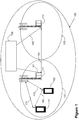
- FIG. 1 depicts a radio communications network 100, sometimes also referred to as a cellular radio system, cellular network or wireless communications system, in which embodiments herein may be implemented.
- the radio communications network 100 may for example be a network such as a Long-Term Evolution (LTE), e.g.
- LTE Long-Term Evolution
- LTE Frequency Division Duplex (FDD), LTE Time Division Duplex (TDD), LTE Half-Duplex Frequency Division Duplex (HD-FDD), LTE operating in an unlicensed band, Wideband Code Division Multiple Access (WCDMA), Universal Terrestrial Radio Access (UTRA) TDD, Global System for Mobile communications (GSM) network, GSM/Enhanced Data Rate for GSM Evolution (EDGE) Radio Access Network (GERAN) network, Ultra-Mobile Broadband (UMB), EDGE network, network comprising of any combination of Radio Access Technologies (RATs) such as e.g.
- RATs Radio Access Technologies
- Multi-Standard Radio (MSR) base stations multi-RAT base stations etc., any 3rd Generation Partnership Project (3GPP) cellular network, WiFi networks, Worldwide Interoperability for Microwave Access (WiMax), 5G system or any cellular network or system.
- 3GPP LTE 3rd Generation Partnership Project LTE
- WiFi Wireless Fidelity
- WiMax Worldwide Interoperability for Microwave Access
- the radio communications network 100 comprises a network node 111, and neighbor network node 112, which is another network node that is neighbor to network node 111.
- Each of the network node 111 and the neighbor network node 112 may be, for example, base stations such as e.g., an eNB, eNodeB, or a Home Node B, a Home eNode B, femto Base Station, BS, pico BS or any other network unit capable to serve a wireless device or a machine type communication device in a radio communications network 100.
- the network node 111 and the neighbor network node 112 may be a stationary relay node or a mobile relay node.
- the radio communications network 100 covers a geographical area which is divided into cell areas, wherein each cell area is served by a network node, although, one network node may serve one or several cells.
- the network node 111 serves a first cell 121, also referred to herein as the cell 121
- the neighbor network node 112 serves a second cell 122.
- Each of the network node 111 and the neighbor network node 112 may be of different classes, such as, e.g., macro eNodeB, home eNodeB or pico base station, based on transmission power and thereby also cell size.
- radio communications network 100 may comprise more cells similar to the first cell 121 and the second cell 122, served by their respective network node. This is not depicted in Figure 1 for the sake of simplicity.
- Each of the network node 111 and the neighbor network node 112 may support one or several communication technologies, and its name may depend on the technology and terminology used.
- the network node 111 and the neighbor network node 112 which may be referred to as eNodeBs or even eNBs, may be directly connected to one or more core networks 130.
- the network node 111 and the neighbor network node 112 may communicate with the one or more core networks 130 over a first link 141 and over a second link 142, respectively.
- the network node 111 may communicate with the neighbor network node 112 over a first link 150.
- a number of wireless devices are located in the radio communications network 100.
- a first wireless device 161 also referred to herein as "the wireless device 161" or “one wireless device 161”
- the wireless device 161 also referred to herein as “the wireless device 161" or “one wireless device 161”
- a second wireless device 162 Each of the first wireless device 161 and the second wireless device 162 is a wireless communication device such as a UE, which is also known as e.g., mobile terminal, wireless terminal, mobile station, mobile telephone, and/or cellular telephone.
- wireless devices include laptops with wireless capability, modems, Personal Digital Assistants (PDA), or tablet computers, sometimes referred to as a surf plates with wireless capability, Machine-to-Machine (M2M) devices, devices equipped with a wireless interface, such as a printer or a file storage device, Machine Type Communication (MTC) devices such as sensors, just to mention some examples.
- M2M Machine-to-Machine
- MTC Machine Type Communication
- Each of the devices is wireless, i.e., it is enabled to communicate, e.g., voice and/or data, wirelessly in the radio communications network 100.
- the communication may be performed e.g., between two devices, such as between the first wireless device 161 and the second wireless device 162, as described above, between a device and a regular telephone and/or between a device and another entity, such as a server or any other radio network unit capable of communicating over a radio link in the radio communications network 100.
- the communication may be performed e.g., via a RAN and possibly the one or more core networks 130 comprised within the radio communications network 100.
- the first wireless device 161 is located within the cell 121.
- the first wireless device 161 is configured to communicate within the wireless communications system 100 via the network node 111 over a first radio link 171 when the first wireless device 161 is present in the cell 121 served by the network node 111.
- the second wireless device 162 is also located within the cell 121.
- the second wireless device 162 may be located within the radio coverage of the first wireless device 161, in another cell which is adjacent to the cell 121.
- the second wireless device 162 is configured to communicate within the radio communications network 100 via the network node 111 over a radio link such as e.g. a second radio link 172.
- the second wireless device 162 is present in another cell, e.g., cell 122, it is configured to communicate within the radio communications network 100 via another network node serving the another cell, such as the neighbor node 112 over another radio link similar the second radio link 172.
- the first wireless device 161 is capable of communicating with other wireless devices using wireless D2D communication, such as the second wireless device 162, over a D2D link 180.
- the second wireless device 162 is capable of communicating with other wireless devices using wireless D2D communication, such as the first wireless device 161, over a D2D link such as the D2D link 180, in the case of the second wireless device 162, or a similar D2D link.
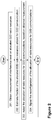
- Embodiments of a method performed by the network node 111 for adapting an allocation of radio resources to at least one wireless device 161 for D2D communications will now be described with reference to the flowchart depicted in Figure 2 .
- the at least one wireless device 161 is located in the cell 121 served by the network node 111.
- the first wireless device 161 and the network node 111 operate in the radio communications network 100.
- resource is intended to be interpreted in a general way. It may indicate an arbitrary combination of subcarriers, time slots, codes and spatial dimensions.
- the allocation of radio resources to the at least one wireless device 161 for D2D communications may be interpreted as the set of resources for certain D2D operations by the at least one wireless device 161, that have been configured, e.g., preconfigured, by the network node 111.
- the radio resources comprised in the allocation may be referred to herein as the allocated D2D radio resources to the at least one wireless device 161.
- this means that the allocation of radio resources to at least one wireless device 161 for D2D communications may encompass different resources sets, such as A+B+C+D, wherein, e.g. radio resource set A may be used by the wireless device 161, and, e.g., radio resource set B may be empty.
- the network node 111 may configure these resources for D2D operations in a wireless device -specific or non-wireless device -specific fashion, e.g., in a wireless device 161-specific or non-wireless device 161-specific fashion.
- the wireless device 161 may use non-wireless device 161-specific resources in a contention-based fashion, possibly based on distributed resource allocation algorithms.
- the wireless device 161 may be in idle mode, such as in RRC_idle mode. It may be assumed that the wireless device 161, even when it is RRC_idle, may be able to transmit D2D signals in the pre-configured resources, where the pre-configuration may be managed by the network node 111. The same may apply, in general, to wireless devices such as wireless device 161, without an active network node connection. Such wireless devices may be unable to communicate with the network node 111.
- the resources may also be configured in a semi-static fashion using System Information that the wireless devices in RRC_IDLE, such as the wireless device 161 when in RRC_idle mode, may be obliged to track.
- RRC_connected wireless devices such as wireless device 161 when in RRC_connected mode, may, however, be assigned resources for transmission directly by the network node 111.
- Figure 2 depicts a flowchart of the actions that are or may be performed by the network node 111 in embodiments herein.
- a box with dashed lines indicates that the action is optional.
- the method may comprise the following actions, which actions may as well be carried out in another suitable order than that described below. In some embodiments, all the actions may be carried out, whereas in other embodiments only some action/s may be carried out.
- the network node 111 obtains a measurement of interference level on allocated D2D radio resources to the at least one wireless device 161.
- a measurement on allocated D2D radio resources to the at least one wireless device 161 is understood herein as any one measurement of the radio resources in the allocation of radio resources to at least one wireless device 161 for D2D communications.
- These resources may encompass different resources sets, such as A+B+C+D, wherein, e.g. radio resource set A may be used by the wireless device 161, and, e.g., radio resource set B may be empty.
- the measurement as understood herein, may encompass any measurement of A+B+C+D, such as a measurement of A, or a measurement of B. That is, for example, if the wireless device 161 uses resource set A, the network node 111 may obtain the measurement on resource set B.
- the measurement may comprise at least one energy measurement or at least one signal detection on individual resources in order to estimate a fraction of resources that is utilized for D2D in the radio communications network 100.
- obtaining the energy measurement may comprise measuring an energy level received on the considered resources.
- the measurement may comprise an energy level received by the network node 111 or the wireless device 161 on the allocated D2D radio resources.
- the energy level may be a Reference Signal Received Power (RSRP).
- RSRP Reference Signal Received Power
- the measurement may comprise a signal detected by the network node 111 or by the wireless device 161 in the allocated D2D radio resources.
- the signal detected may comprise the energy or intensity level associated to a certain specific signal, e.g., a reference signal, is measured on the considered resources. Additional or alternative measurements may be performed at higher layers, including detection of Cyclic Redundancy Check (CRC) when decoding the D2D messages.
- CRC Cyclic Redundancy Check
- the obtaining the measurement may comprise receiving a report from the wireless device 161 which report indicates the energy level received by the wireless device 161 on the allocated D2D radio resources, or the signal detected by the wireless device 161 in the allocated D2D radio resources. This may be implemented by, for example, receiving the report in a control message from the wireless device 161.
- the network node 111 may first configure the wireless device 161 to send to the network node 111 the report comprising the energy level received by the wireless device 161 on the allocated D2D radio resources, or the signal detected by the wireless device 161 in the allocated D2D radio resources. This may be implemented by, for example, sending an RRC message to the wireless device 161.
- the measurement of interference may result, in some embodiments, in a value or a range of values corresponding to no interference, or negligible interference, according to one or more determined thresholds. While other values or range of values resulting from the measurement of interference, may be considered to correspond to problematic interference or different degrees of problematic interference.
- interference sensing at the transmitter may not provide an accurate indication of which resources are free from interference at the receiver/s.
- interference sensing for traffic load measurement may not necessarily need to be performed at the transmitter, but it may be performed at any node, including the network node 111.
- the obtaining the measurement may comprise the network node 111 measuring the energy level received on a number of allocated D2D radio resources, or detecting the signal in the allocated D2D radio resources.
- the network node 111 may estimate a fraction of the allocated D2D radio resources that is utilized for D2D communication in the radio communications network 100, wherein the network node 111 and the wireless device 161 operate. This action may allow the network node 111 to assess if and how much the allocation of radio resources to the at least one wireless device 161 for D2D communications may be changed, based on interference.
- the network node 111 adapts the allocation of radio resources for D2D communications, based on the obtained measurement.
- the adapting may comprise one of: increasing a number of radio resources available for D2D traffic, and reducing the number of radio resources available for D2D traffic.
- the network node 111 may allocate to A+B to the wireless device 161.
- the network node 111 may need to perform a number of Radio Resource Management (RRM) operations in order to perform efficient resource allocation.
- RRM Radio Resource Management
- the balance between allocated D2D resources and cellular resources may be a function of the traffic load and interference scenarios for respectively D2D and cellular traffic, since D2D and cellular may share resources from the same radio carrier.
- the adapting may also further comprise one of: increasing a number of radio resources available for legacy cellular traffic, and reducing the number of radio resources available for legacy cellular traffic.
- a use case for D2D may be for Public Safety users.
- a typical scenario may be to respond to a fire or a traffic incident. Due to the very nature of these scenarios, they may not be known in advance. Therefore, it may be of importance that the RRM operations mentioned earlier, i.e. that the balancing of resources between D2D and legacy cellular traffic, are performed swiftly.
- the network node 111 may take any of the following actions as a way to increase the resources for legacy cellular traffic, although the list is non-exhaustive:
- the network node 111 may take any of the following actions as a way to decrease the resources for legacy cellular traffic, although the list is non-exhaustive:
- the network node 111 may detect the fraction of resources that are occupied, according to energy and/or signal detection criteria, and adjust resource allocation accordingly.
- the adapting may be further based on the estimated fraction, as described in action 202. That is, if the fraction of resources used for D2D transmission over the total amount of resources assigned for D2D transmission is below or above certain thresholds, the network node 111 may reconfigure the D2D resources in order to respectively reduce and increase the amount of resources available for D2D transmission.
- the allocation of radio resources to the at least one wireless device 161 may be for scheduling discovery signals with at least one of the following types: a) Type 1, wherein radio resources for discovery signal transmission are allocated on a non-wireless device specific basis, b) Type 2, wherein radio resources for discovery signal transmission are allocated on a wireless device specific basis, c) Type 2A, wherein radio resources for discovery signal transmission are allocated for each specific transmission instance of discovery signals, and d) Type 2B, wherein radio resources for discovery signal transmission are semi-persistently allocated for discovery signal transmission.
- the network node 111 may signal to the wireless device 161 or the neighbor network node 112 a reconfiguration of the allocation of radio resources for D2D communications.
- the reconfiguration may be based on the adapted allocation of radio resources for D2D communications.
- the reconfiguration of D2D and cellular resources may be signalled to the wireless device 161, as well as to other wireless devices, by, e.g., using system information, e.g., when the wireless device 161 is in idle mode, or dedicated RRC communication, e.g., when the wireless device 161 is in RRC_connected mode, PDCCH, ePDCCH, etc...
- a reconfiguration of the allocation of radio resources for D2D communications is understood herein as any one reconfiguration of the allocation of radio resources to at least one wireless device 161 for D2D communications.
- These resources may encompass different resources sets, such as A+B+C+D, wherein, e.g. radio resource set A may be used by the wireless device 161, and, e.g., radio resource set B may be empty.
- the reconfiguration as understood herein, may encompass any reconfiguration of any of the group A+B+C+D, such as a reconfiguration of A, or a reconfiguration of A+B+C+D. That is, for example, if the wireless device 161 uses resource set A, the network node 111 may signal a reconfiguration of A or a reconfiguration of A+B+C+D.
- the network node 111 may communicate the resources reconfiguration or information about D2D load measurements to neighbour network nodes, such as the network node 112 e.g., by X2 or OAM. As stated earlier, the neighbor network node 112 operates in the radio communications network 100.
- FIG. 3 illustrates FDM mapping of D2D transmissions, where multiple discovery messages, i.e., beacons, are mapped on different resources in the frequency domain, within the same radio subframe.
- the vertical lines in the Figure mark the different subframes.
- the horizontal axis indicates time and the vertical axis represents the frequency domain.
- some cellular transmissions are shown and occur in other subframes, e.g., TDM between D2D and cellular.
- a fraction of the D2D subframes can potentially be allocated to cellular transmission, such that the resources assigned to D2D consist of a fraction of a subframe. It is in general preferable to avoid sharing the same resource between cellular and D2D in order to avoid uncontrollable interference.
- most of the principles and techniques described herein may be applied to different resources multiplexing techniques, such as CDM and TDM.
- certain D2D signals/channels may have a broadcast nature and the position and number of potential receivers may not be known or controlled by any node prior to the actual transmission.
- the transmitter wireless device such as the wireless device 161 should ideally choose resources that are not interfered at its potential, i.e., unknown, receivers.
- Other signals or messages may be unicast or groupcast, i.e., they may target a limited number of receivers.
- the interference scenario at the selected receivers may be possibly conveyed to the transmitter wireless device, such as the wireless device 161, in order to optimize resource allocation.
- Embodiments of a method performed by the wireless device 161 for adopting the reconfiguration of the allocation of radio resources to the at least one wireless device 161 for D2D communications will now be described with reference to the flowchart depicted depicted in Figure 4 .
- the wireless device 161 is located in the cell 121 served by the network node 111.
- the first wireless device 161 and the network node 111 operate in the radio communications network 100, as also stated earlier.
- the wireless device 161 may be in idle mode.
- Figure 4 depicts a flowchart of the actions that are or may be performed by the first wireless device 161 in embodiments herein.
- a box with dashed lines indicates that the action is optional.
- the method may comprise the following actions, which actions may as well be carried out in another suitable order than that described below. In some embodiments, all the actions may be carried out, whereas in other embodiments only some action/s may be carried out.
- the term "resource”, as used herein, may indicate an arbitrary combination of subcarriers, time slots, codes and spatial dimensions.
- the reconfiguration is defined as described in action 204.
- one or more D2D enabled wireless devices 161 may measure the load experienced on D2D resources and then report it to the network node 111, as will be described in Action 402.
- the wireless device 161 may receive the configuration from the network node 111 to send to the network node 111 the report comprising the measurement of interference level on allocated D2D radio resources to the at least one wireless device 161. This may be implemented by, for example, by receiving the RRC message from the network node 111, described in Action 201.
- Such reporting may be triggered or configured by the network node 111 in different ways.
- the network node 111 may configure the wireless devices 161 when it is far away from the network node 111, or close to the edge of cell 221 to feedback information regarding D2D load. This may be, e.g., because the network node 111 may not be able to measure the D2D load experienced by the wireless device 111 at the edge of cell 221.
- the measurement performed by the wireless device 161 may take similar forms as the measurement described for the network node 111 in action 201. That is, the measurement may comprise the measured energy level received by the wireless device 161 on the allocated D2D radio resources, or the signal detected by the wireless device 161 in the allocated D2D radio resources.
- the wireless device 131 may determine the measurement of interference level by one of: measuring the energy level received on the number of allocated D2D radio resources, or detecting the signal described in action 201, e.g., a reference signal, in the allocated D2D radio resources.
- the wireless device 161 may measure the energy level received on the number of allocated D2D radio resources, for example, by estimating a signal power level associated to the number of allocated D2D radio resources.
- the wireless device 161 may detect the signal in the allocated D2D radio resources, for example, by detecting an energy associated to reference signals potentially transmitted by wireless devices on those resources or by attempting detection of the transmissions occurring over those resources.
- the wireless device 161 may send the report comprising the measurement, as described in Action 201, to the network node 111. This may be implemented by, for example, sending the report in the control message to the network node 111, as also described in action 201.
- the wireless device 161 receives the reconfiguration of the allocation of radio resources for D2D communications from the network node 111, as described in action 204.
- the reconfiguration is based on the measurement of interference level on allocated D2D radio resources to the at least one wireless device 161 obtained by the network node 111.
- the measurement may comprise the energy level received by the network node 111 or by the wireless device 161 on the allocated D2D radio resources, or the signal detected by the network node 111 or by the wireless device 161 in the allocated D2D radio resources.
- the reconfiguration is further based on the fraction of the allocated D2D radio resources that is utilized for D2D communication in the radio communications network 100 wherein the network node 111 and the wireless device 161 operate.
- the fraction may have been estimated by the network node 111, as described in action 202.
- the wireless device 161 adopts the received reconfiguration of the allocation of radio resources for D2D communications. This may be implemented, for example, by restricting the resources used for D2D communication to those configured by the network node 111.
- the adopting the received reconfiguration comprises one of: increasing the number of radio resources available for D2D traffic, and reducing the number of radio resources available for D2D traffic.
- the adopting may also further comprise one of: increasing the number of radio resources available for legacy cellular traffic, and reducing the number of radio resources available for legacy cellular traffic.
- the allocation of radio resources to the at least one wireless device 161 may be for scheduling discovery signals with at least one of the following types: a) Type 1, wherein radio resources for discovery signal transmission are allocated on a non-wireless device specific basis, b) Type 2, wherein radio resources for discovery signal transmission are allocated on a wireless device specific basis, c) Type 2A, wherein radio resources for discovery signal transmission are allocated for each specific transmission instance of discovery signals, and d) Type 2B, wherein radio resources for discovery signal transmission are semi-persistently allocated for discovery signal transmission.
- Embodiments described herein may have the advantage of providing different approaches for detection of the load on D2D resources by the network node 111, including the case where the at least one D2D wireless device 161 may not be connected to the network node 111.
- the network node 111 is configured for adapting the allocation of radio resources to the at least one wireless device 161 for D2D communications.
- the network node 111 comprises the following arrangement depicted in Figure 5 .
- the at least one wireless device 161 is configured to be located in the cell 121 configured to be served by the network node 111.
- the wireless device 161 and the network node 111 are configured to operate in the radio communications network 100.
- the detailed description of some of the following corresponds to the same references provided above, in relation to the actions described for the network node 111, and will thus not be repeated here.
- the wireless device 161 is configured to be in idle mode.
- the network node 111 is configured to obtain the measurement of interference level on the allocated D2D radio resources to the at least one wireless device 161.
- this may be implemented by an obtaining module 501 comprised in the network node 111.
- the measurement comprises the energy level configured to be received by the network node 111 or the wireless device 161 on the allocated D2D radio resources, or the signal configured to be detected by the network node 111 or by the wireless device 161 in the allocated D2D radio resources.
- to obtain the measurement comprises: to measure the energy level received on the number of allocated D2D radio resources, or to detect the signal in the allocated D2D radio resources. This may also be implemented by the obtaining module 501.
- to obtain the measurement comprises to receive the report from the wireless device 161 which report indicates the energy level received by the wireless device 161 on the allocated D2D radio resources, or the signal detected by the wireless device 161 in the allocated D2D radio resources. This may also be implemented by the obtaining module 501.
- the allocation of radio resources to the at least one wireless device 161 is for scheduling discovery signals with at least one of the following types: a) Type 1, wherein radio resources for discovery signal transmission are allocated on a non-wireless device specific basis, b) Type 2, wherein radio resources for discovery signal transmission are allocated on a wireless device specific basis, c) Type 2A, wherein radio resources for discovery signal transmission are allocated for each specific transmission instance of discovery signals, and d) Type 2B, wherein radio resources for discovery signal transmission are semi-persistently allocated for discovery signal transmission.
- the network node 111 is configured to adapt the allocation of radio resources for D2D communications, based on the obtained measurement.
- This may be implemented by an adapting module 502 comprised in the network node 111.
- to adapt comprises one of: to increase the number of radio resources available for D2D traffic, and to reduce the number of radio resources available for D2D traffic.
- to adapt comprises one of: to increase the number of radio resources available for legacy cellular traffic, and to reduce the number of radio resources available for legacy cellular traffic.
- the network node 111 may be further configured to estimate the fraction of the allocated D2D radio resources that is utilized for D2D communication in the radio communications network 100 wherein the network node 111 and the wireless device 161 are configured to operate.
- the network node 111 may be further configured to adapt based on the estimated fraction.
- the network node 111 may be further configured to signal to the wireless device 161 or the neighbor network node 112 the reconfiguration of the allocation of radio resources for D2D communications, which reconfiguration is based on the adapted allocation of radio resources for D2D communications.
- the neighbor network node 112 is configured to operate in the wireless communications network 1.
- the network node 111 may be further configured to configure the wireless device 161 to send to the network node 111 the report comprising the energy level received by the wireless device 161 on the allocated D2D radio resources, or the signal detected by the wireless device 161 in the allocated D2D radio resources
- This may be implemented by a configuring module 505 comprised in the network node 111.
- the embodiments herein for adapting the allocation of radio resources to the at least one wireless device 161 for D2D communications may be implemented through one or more processors, such as the processing module 506 in the network node 111 depicted in Figure 5 , together with computer program code for performing the functions and actions of the embodiments herein.
- the program code mentioned above may also be provided as a computer program product, for instance in the form of a data carrier carrying computer program code for performing the embodiments herein when being loaded into the in the network node 111.
- One such carrier may be in the form of a CD ROM disc. It may be however feasible with other data carriers such as a memory stick.
- the computer program code may furthermore be provided as pure program code on a server and downloaded to the network node 111.
- the network node 111 may further comprise a memory module 507 comprising one or more memory units.
- the memory module 507 may be arranged to be used to store data in relation to applications to perform the methods herein when being executed in the network node 111.
- Memory module 507 may be in communication with the processing module 506. Any of the other information processed by the processing module 506 may also be stored in the memory module 507.
- information may be received from, e.g., the wireless device 161, through a receiving port 508.
- the receiving port 508 may be, for example, connected to one or more antennas in the network node 111.
- the network node 111 may receive information from another structure in the radio communications network 100 through the receiving port 508. Since the receiving port 508 may be in communication with the processing module 506, the receiving port 508 may then send the received information to the processing module 506.
- the receiving port 508 may also be configured to receive other information.
- the information processed by the processing module 506 in relation to the embodiments of the method herein may be stored in the memory module 507 which, may be in communication with the processing module 506, as stated earlier, and with the receiving port 508.
- the processing module 506 may be further configured to transmit or send information to e.g., the wireless device 161, through a sending port 509, which may be in communication with the processing module 506, and the memory module 507.
- modules 501-505 described above may refer to a combination of analog and digital modules, and/or one or more processors configured with software and/or firmware, e.g., stored in memory, that, when executed by the one or more processors such as the processing module 506, perform as described above.
- processors as well as the other digital hardware, may be included in a single Application-Specific Integrated Circuit (ASIC), or several processors and various digital hardware may be distributed among several separate components, whether individually packaged or assembled into a System-on-a-Chip (SoC).
- ASIC Application-Specific Integrated Circuit
- SoC System-on-a-Chip
- the different modules 501-505 described above may be implemented as one or more applications running on one or more processors such as the processing module 506.
- the methods according to the embodiments described herein for the network node 111 are respectively implemented by means of a computer program product, comprising instructions, i.e., software code portions, which, when executed on at least one processor, cause the at least one processor to carry out the actions described herein, as performed by the network node 111.
- the computer program product may be stored on a computer-readable storage medium.
- the computer-readable storage medium, having stored thereon the computer program may comprise instructions which, when executed on at least one processor, cause the at least one processor to carry out the actions described herein, as performed by the network node 111.
- the computer-readable storage medium may be a non-transitory computer-readable storage medium, such as a CD ROM disc, or a memory stick.
- the wireless device 161 is configured for adopting the reconfiguration of the allocation of radio resources to the at least one wireless device 161 for D2D communications.
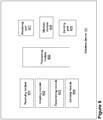
- the wireless device 161 comprises the following arrangement depicted in Figure 6 .
- the wireless device 161 is configured to be located in the cell 121, which is configured to be served by the network node 111.
- the wireless device 161 and the network node 111 are configured to operate in the radio communications network 100.
- the detailed description of some of the following corresponds to the same references provided above, in relation to the actions described for the wireless device 161, and will thus not be repeated here.
- the wireless device 161 is configured to be in idle mode.
- the wireless device 161 is configured to receive from the network node 111 the reconfiguration of the allocation of radio resources for D2D communications, the reconfiguration being based on the measurement of interference level on allocated D2D radio resources to the at least one wireless device 161 configured to be obtained by the network node 111.
- this may be implemented by a receiving module 601 comprised in the wireless device 161.
- the measurement comprises the energy level configured to be received by the network node 111 or by the wireless device 161 on the allocated D2D radio resources, or the signal configured to be detected by the network node 111 or by the wireless device 161 in the allocated D2D radio resources.
- the reconfiguration is further based on the fraction of the allocated D2D radio resources that is utilized for D2D communication in the radio communications network 100 wherein the network node 111 and the wireless device 161 are configured to operate, the fraction being configured to be estimated by the network node 111.
- the allocation of radio resources to the at least one wireless device 161 is for scheduling discovery signals with at least one of the following types: a) Type 1, wherein radio resources for discovery signal transmission are allocated on a non-wireless device specific basis, b) Type 2, wherein radio resources for discovery signal transmission are allocated on a wireless device specific basis, c) Type 2A, wherein radio resources for discovery signal transmission are allocated for each specific transmission instance of discovery signals, and d) Type 2B, wherein radio resources for discovery signal transmission are semi-persistently allocated for discovery signal transmission.
- the wireless device 161 may be further configured to receive the configuration from the network node 111 to send to the network node 111 the report comprising the measurement of interference level on allocated D2D radio resources to the at least one wireless device 161, the measurement comprising the measured energy level received by the wireless device 161 on the allocated D2D radio resources, or the signal detected by the wireless device 161 in the allocated D2D radio resources
- the wireless device 161 is also configured to adopt the received reconfiguration of the allocation of radio resources for D2D communications.
- This may be implemented by an adopting module 602 comprised in the wireless device 161.
- to adopt the received reconfiguration comprises one of: to increase the number of radio resources available for D2D traffic, and to reduce the number of radio resources available for D2D traffic.
- to adopt the received reconfiguration comprises one of: to increase the number of radio resources available for legacy cellular traffic, and to reduce the number of radio resources available for legacy cellular traffic.
- the wireless device 161 may be further configured to determine the measurement of interference level by being configured to one of: to measure the energy level configured to be received by the wireless device 161 on the number of allocated D2D radio resources, or to detect the signal in the allocated D2D radio resources.
- This may be implemented by a determining module 603 comprised in the wireless device 161.
- the wireless device 161 may be further configured to send the report comprising the measurement of interference level on allocated D2D radio resources to the at least one wireless device 161 to the network node 111, the measurement comprising the measured energy level received by the wireless device 161 on the allocated D2D radio resources, or the signal detected by the wireless device 161 in the allocated D2D radio resources.
- This may be implemented by a sending module 604 comprised in the wireless device 161.
- the embodiments herein for adopting the reconfiguration of the allocation of radio resources to the at least one wireless device 161 for D2D communications may be implemented through one or more processors, such as the processing module 605 in the wireless device 161 depicted in Figure 6 , together with computer program code for performing the functions and actions of the embodiments herein.
- the program code mentioned above may also be provided as a computer program product, for instance in the form of a data carrier carrying computer program code for performing the embodiments herein when being loaded into the in the wireless device 161.
- One such carrier may be in the form of a CD ROM disc. It may be however feasible with other data carriers such as a memory stick.
- the computer program code may furthermore be provided as pure program code on a server and downloaded to the wireless device 161.
- the wireless device 161 may further comprise a memory module 606 comprising one or more memory units.
- the memory module 606 may be arranged to be used to store data in relation to applications to perform the methods herein when being executed in the wireless device 161.
- Memory module 606 may be in communication with the processing module 605. Any of the other information processed by the processing module 605 may also be stored in the memory module 606.
- information may be received from, e.g., the network node 111, through a receiving port 607.
- the receiving port 607 may be, for example, connected to the one or more antennas in the wireless device 161.
- the wireless device 161 may receive information from another structure in the radio communications network 100 through the receiving port 607. Since the receiving port 607 may be in communication with the processing module 605, the receiving port 607 may then send the received information to the processing module 605.
- the receiving port 607 may also be configured to receive other information.
- the information processed by the processing module 605 in relation to the embodiments of method herein may be stored in the memory module 606 which, as stated earlier, may be in communication with the processing module 605 and the receiving port 607.
- the processing module 605 may be further configured to transmit or send information to e.g., the network node 111, through a sending port 608, which may be in communication with the processing module 605, and the memory module 606.
- modules 601-604 described above may refer to a combination of analog and digital modules, and/or one or more processors configured with software and/or firmware, e.g., stored in memory, that, when executed by the one or more processors such as the processing module 605, perform as described above.
- processors as well as the other digital hardware, may be included in a single Application-Specific Integrated Circuit (ASIC), or several processors and various digital hardware may be distributed among several separate components, whether individually packaged or assembled into a System-on-a-Chip (SoC).
- ASIC Application-Specific Integrated Circuit
- SoC System-on-a-Chip
- the different modules 601-604 described above may be implemented as one or more applications running on one or more processors such as the processing module 605.
- the methods according to the embodiments described herein for the wireless device 161 are respectively implemented by means of a computer program product, comprising instructions, i.e., software code portions, which, when executed on at least one processor, cause the at least one processor to carry out the actions described herein, as performed by the wireless device 161.
- the computer program product may be stored on a computer-readable storage medium.
- the computer-readable storage medium, having stored thereon the computer program may comprise instructions which, when executed on at least one processor, cause the at least one processor to carry out the actions described herein, as performed by the wireless device 161.
- the computer-readable storage medium may be a non-transitory computer-readable storage medium, such as a CD ROM disc, or a memory stick.
- the modules described may be for performing any of the pertinent embodiments described.
Landscapes
- Engineering & Computer Science (AREA)
- Computer Networks & Wireless Communication (AREA)
- Signal Processing (AREA)
- Quality & Reliability (AREA)
- Databases & Information Systems (AREA)
- Mobile Radio Communication Systems (AREA)
Claims (14)
- Procédé réalisé par un nœud de réseau (111) commandant un trafic cellulaire et un trafic de dispositif à dispositif, D2D, qui est multiplexé sur une même porteuse radio dans une même fenêtre de temps, le procédé étant destiné à adapter l'allocation de ressources radio sur la porteuse radio dans la fenêtre de temps à au moins un dispositif sans fil (161) pour des communications D2D, dans lequel l'allocation de ressources radio pour des communications D2D à l'au moins un dispositif sans fil (161) est un ensemble de ressources pour des opérations D2D par l'au moins un dispositif sans fil (161), qui ont été configurées par le nœud de réseau (111) d'une manière spécifique au dispositif sans fil ou d'une manière non spécifique au dispositif sans fil, l'au moins un dispositif sans fil (161) étant situé dans une cellule (121) desservie par le nœud de réseau (111), mais dans lequel le nœud de réseau (111) n'a pas une connexion active avec le dispositif sans fil (161) et est incapable de recevoir une communication en provenance du dispositif sans fil (161), dans lequel le dispositif sans fil (161) est en mode de veille avec le nœud de réseau (111) mais consomme des ressources radio D2D allouées sur la porteuse radio dans la fenêtre de temps, le procédé comprenant :l'obtention (201) d'une mesure de niveau d'interférence sur des ressources radio D2D allouées à l'au moins un dispositif sans fil (161),l'adaptation (203) de l'allocation de ressources radio pour des communications D2D, sur la base de la mesure obtenue, dans lequel l'adaptation (203) comprend en outre l'une de : l'augmentation, sur la porteuse radio dans la fenêtre de temps, d'un nombre de ressources radio disponibles pour un trafic cellulaire et la réduction du nombre de ressources radio disponibles pour un trafic D2D, ou la réduction, sur la porteuse radio dans la fenêtre de temps, du nombre de ressources radio disponibles pour un trafic cellulaire et l'augmentation du nombre de ressources radio disponibles pour un trafic D2D, etla signalisation (204), au dispositif sans fil (161) en mode de veille, d'une reconfiguration de l'allocation de ressources radio sur la porteuse radio dans la fenêtre de temps pour des communications D2D, la reconfiguration étant basée sur l'allocation adaptée de ressources radio pour des communications D2D.
- Procédé selon la revendication 1, dans lequel la mesure comprend un niveau d'énergie reçu par le nœud de réseau (111) ou le dispositif sans fil (161) sur les ressources radio D2D allouées, ou un signal détecté par le nœud de réseau (111) ou par le dispositif sans fil (161) dans les ressources radio D2D allouées.
- Procédé selon la revendication 1 ou 2, comprenant en outre l'estimation (202) d'une fraction des ressources radio D2D allouées qui est utilisée pour une communication D2D dans un réseau de communication radio (100) dans lequel le nœud de réseau (111) et le dispositif sans fil (161) fonctionnent, et dans lequel l'adaptation (203) est en outre basée sur la fraction estimée.
- Procédé selon l'une quelconque des revendications 1 à 3, comprenant en outre la signalisation (204), à un nœud de réseau voisin (112), de la reconfiguration de l'allocation de ressources radio pour des communications D2D, la reconfiguration étant basée sur l'allocation adaptée de ressources radio pour des communications D2D.
- Procédé selon l'une quelconque des revendications 1 à 4, dans lequel l'obtention (201) de la mesure comprend la réception d'un rapport en provenance du dispositif sans fil (161), le rapport indiquant un niveau d'énergie reçu par le dispositif sans fil (161) sur les ressources radio D2D allouées, ou un signal détecté par le dispositif sans fil (161) dans les ressources radio D2D allouées.
- Procédé selon l'une quelconque des revendications 1 à 5, dans lequel l'allocation de ressources radio à l'au moins un dispositif sans fil (161) est destinée à la programmation de signaux de découverte avec au moins l'un des types suivants : a) Type 1, dans lequel des ressources radio pour une transmission de signal de découverte sont allouées sur une base non spécifique au dispositif sans fil, b) Type 2, dans lequel des ressources radio pour une transmission de signal de découverte sont allouées sur une base spécifique au dispositif sans fil, c) Type 2A, dans lequel des ressources radio pour une transmission de signal de découverte sont allouées pour chaque instance de transmission spécifique de signaux de découverte, et d) Type 2B, dans lequel des ressources radio pour une transmission de signal de découverte sont allouées de manière semi-persistante pour une transmission de signal de découverte.
- Procédé réalisé par un dispositif sans fil (161), le dispositif sans fil (161) étant situé dans une cellule (121) dans laquelle un trafic de dispositif à dispositif, D2D, est multiplexé sur une même porteuse radio dans une même fenêtre de temps qu'un trafic cellulaire, dans lequel une allocation de ressources radio pour des communications D2D à l'au moins un dispositif sans fil (161) est un ensemble de ressources pour des opérations D2D par l'au moins un dispositif sans fil (161), qui ont été configurées par un nœud de réseau (111) d'une manière spécifique au dispositif sans fil ou d'une manière non spécifique au dispositif sans fil, dans lequel la cellule (121) est desservie par le nœud de réseau (111), mais dans lequel le nœud de réseau (111) n'a pas une connexion active avec le dispositif sans fil (161) et est incapable de recevoir une communication en provenance du dispositif sans fil (161), dans lequel le dispositif sans fil (161) est en mode de veille avec le nœud de réseau (111) mais consomme des ressources radio D2D allouées sur la porteuse radio dans la fenêtre de temps, le procédé comprenant :la réception (403), en provenance du nœud de réseau (111), au dispositif sans fil (161) en mode de veille, d'une allocation adaptée de ressources radio pour des communications D2D, sur la porteuse radio dans la fenêtre de temps, la réception (403) de l'allocation adaptée étant basée sur une mesure de niveau d'interférence sur les ressources radio D2D allouées à l'au moins un dispositif sans fil (161), et dans lequel la réception (403) de l'allocation adaptée comprend la réception, au dispositif sans fil (161) en mode de veille, d'une reconfiguration de l'allocation de ressources radio pour des communications D2D sur la porteuse radio dans la fenêtre de temps, la reconfiguration étant basée sur l'allocation adaptée de ressources radio pour des communications D2D, et dans lequel la reconfiguration reçue comprend l'une de : l'augmentation, sur la porteuse radio dans la fenêtre de temps, d'un nombre de ressources radio disponibles pour un trafic cellulaire et la réduction du nombre de ressources radio disponibles pour un trafic D2D, ou la réduction, sur la porteuse radio dans la fenêtre de temps, du nombre de ressources radio disponibles pour un trafic cellulaire et l'augmentation du nombre de ressources radio disponibles pour un trafic D2D, etl'adoption (404) de la reconfiguration reçue de l'allocation de ressources radio pour des communications D2D.
- Procédé selon la revendication 7, dans lequel la mesure comprend un niveau d'énergie reçu par le nœud de réseau (111) ou le dispositif sans fil (161) sur les ressources radio D2D allouées, ou un signal détecté par le nœud de réseau (111) ou par le dispositif sans fil (161) dans les ressources radio D2D allouées.
- Procédé selon la revendication 7 ou 8, dans lequel la reconfiguration est en outre basée sur une fraction des ressources radio D2D allouées qui est utilisée pour une communication D2D dans un réseau de communication radio (100) dans lequel le nœud de réseau (111) et le dispositif sans fil (161) fonctionnent, la fraction ayant été estimée par le nœud de réseau (111).
- Procédé selon l'une quelconque des revendications 7 à 9, dans lequel l'allocation de ressources radio à l'au moins un dispositif sans fil (161) est destinée à la programmation de signaux de découverte avec au moins l'un des types suivants : a) Type 1, dans lequel des ressources radio pour une transmission de signal de découverte sont allouées sur une base non spécifique au dispositif sans fil, b) Type 2, dans lequel des ressources radio pour une transmission de signal de découverte sont allouées sur une base spécifique au dispositif sans fil, c) Type 2A, dans lequel des ressources radio pour une transmission de signal de découverte sont allouées pour chaque instance de transmission spécifique de signaux de découverte, et d) Type 2B, dans lequel des ressources radio pour une transmission de signal de découverte sont allouées de manière semi-persistante pour une transmission de signal de découverte.
- Nœud de réseau (111) configuré pour commander un trafic cellulaire et un trafic de dispositif à dispositif, D2D, qui est configuré pour être multiplexé sur une même porteuse radio dans une même fenêtre de temps, le nœud de réseau (111) étant destiné à adapter l'allocation de ressources radio sur la porteuse radio dans la fenêtre de temps à au moins un dispositif sans fil (161) pour des communications D2D, dans lequel l'allocation de ressources radio pour des communications D2D à l'au moins un dispositif sans fil (161) est configurée pour être un ensemble de ressources pour des opérations D2D par l'au moins un dispositif sans fil (161), qui ont été configurées par le nœud de réseau (111) d'une manière spécifique au dispositif sans fil ou d'une manière non spécifique au dispositif sans fil, l'au moins un dispositif sans fil (161) étant configuré pour être situé dans une cellule (121) configurée pour être desservie par le nœud de réseau (111), mais dans lequel le nœud de réseau (111) est configuré pour ne pas avoir une connexion active avec le dispositif sans fil (161) et est configuré pour être incapable de recevoir une communication en provenance du dispositif sans fil (161), dans lequel le dispositif sans fil (161) est configuré pour être en mode de veille avec le nœud de réseau (111) mais est configuré pour consommer des ressources radio D2D allouées sur la porteuse radio dans la fenêtre de temps, le nœud de réseau (111) étant configuré pour :l'obtention d'une mesure de niveau d'interférence sur des ressources radio D2D allouées à l'au moins un dispositif sans fil (161),l'adaptation de l'allocation de ressources radio pour des communications D2D, sur la base de la mesure obtenue, dans lequel l'adaptation comprend en outre l'une de : l'augmentation, sur la porteuse radio dans la fenêtre de temps, du nombre de ressources radio disponibles pour un trafic cellulaire et la réduction du nombre de ressources radio disponibles pour un trafic D2D, ou la réduction, sur la porteuse radio dans la fenêtre de temps, du nombre de ressources radio disponibles pour un trafic cellulaire et l'augmentation du nombre de ressources radio disponibles pour un trafic D2D, etla signalisation, au dispositif sans fil (161) en mode de veille, d'une reconfiguration de l'allocation de ressources radio sur la porteuse radio dans la fenêtre de temps pour des communications D2D, la reconfiguration étant basée sur l'allocation adaptée de ressources radio pour des communications D2D.
- Nœud de réseau (111) selon la revendication 11, dans lequel la mesure comprend un niveau d'énergie configuré pour être reçu par le nœud de réseau (111) ou le dispositif sans fil (161) sur les ressources radio D2D allouées, ou un signal configuré pour être détecté par le nœud de réseau (111) ou par le dispositif sans fil (161) dans les ressources radio D2D allouées.
- Nœud de réseau (111) selon la revendication 11 ou 12, configuré en outre pour l'estimation d'une fraction des ressources radio D2D allouées qui est utilisée pour une communication D2D dans un réseau de communication radio (100) dans lequel le nœud de réseau (111) et le dispositif sans fil (161) sont configurés pour fonctionner, et dans lequel le nœud de réseau (111) est en outre configuré pour l'adaptation sur la base de la fraction estimée.
- Dispositif sans fil (161) configuré pour être situé dans une cellule (121) dans laquelle un trafic de dispositif à dispositif, D2D, est configuré pour être multiplexé sur une même porteuse radio dans une même fenêtre de temps qu'un trafic cellulaire, dans lequel une allocation de ressources radio pour des communications D2D à l'au moins un dispositif sans fil (161) est configuré pour être un ensemble de ressources pour des opérations D2D par l'au moins un dispositif sans fil (161), qui ont été configurées par un nœud de réseau (111) d'une manière spécifique au dispositif sans fil ou d'une manière non spécifique au dispositif sans fil, dans lequel le dispositif sans fil (161) est destiné à adopter une reconfiguration d'une allocation de ressources radio à l'au moins un dispositif sans fil (161) pour des communications D2D, dans lequel la cellule (121) est configurée pour être desservie par le nœud de réseau (111), mais dans lequel le nœud de réseau (111) est configuré pour ne pas avoir une connexion active avec le dispositif sans fil (161) et est configuré pour être incapable de recevoir une communication en provenance du dispositif sans fil (161), dans lequel le dispositif sans fil (161) est configuré pour être en mode de veille avec le nœud de réseau (111) mais est configuré pour consommer des ressources radio D2D allouées sur la porteuse radio dans la fenêtre de temps, le dispositif sans fil (161) étant configuré pour :la réception, en provenance du nœud de réseau (111), au dispositif sans fil (161) en mode de veille, d'une allocation adaptée de ressources radio pour des communications D2D, sur la porteuse radio dans la fenêtre de temps, la réception de l'allocation adaptée étant configurée pour être basée sur une mesure de niveau d'interférence sur les ressources radio D2D allouées à l'au moins un dispositif sans fil (161), et dans lequel la réception de l'allocation adaptée comprend la réception, au dispositif sans fil (161) en mode de veille, d'une reconfiguration de l'allocation de ressources radio pour des communications D2D sur la porteuse radio dans la fenêtre de temps, la reconfiguration étant configurée pour être basée sur l'allocation adaptée de ressources radio pour des communications D2D, et dans lequel la reconfiguration reçue est configurée pour comprendre l'une de : l'augmentation, sur la porteuse radio dans la fenêtre de temps, d'un nombre de ressources radio disponibles pour un trafic cellulaire et la réduction du nombre de ressources radio disponibles pour un trafic D2D, ou la réduction, sur la porteuse radio dans la fenêtre de temps, du nombre de ressources radio disponibles pour un trafic cellulaire et l'augmentation du nombre de ressources radio disponibles pour un trafic D2D, etl'adoption de la reconfiguration reçue de l'allocation de ressources radio pour des communications D2D.
Applications Claiming Priority (1)
| Application Number | Priority Date | Filing Date | Title |
|---|---|---|---|
| PCT/SE2014/050100 WO2015112068A1 (fr) | 2014-01-27 | 2014-01-27 | Nœud de réseau, dispositif sans fil, procédés dans ceux-ci, programmes d'ordinateur et supports lisibles par ordinateur comportant les programmes d'ordinateur pour adapter et adopter, respectivement, une attribution de ressources radio |
Publications (3)
| Publication Number | Publication Date |
|---|---|
| EP3100559A1 EP3100559A1 (fr) | 2016-12-07 |
| EP3100559A4 EP3100559A4 (fr) | 2017-10-11 |
| EP3100559B1 true EP3100559B1 (fr) | 2020-09-16 |
Family
ID=53681741
Family Applications (1)
| Application Number | Title | Priority Date | Filing Date |
|---|---|---|---|
| EP14879784.8A Active EP3100559B1 (fr) | 2014-01-27 | 2014-01-27 | Noeud de réseau, dispositif sans fil, procédés dans ceux-ci, programmes d'ordinateur et supports lisibles par ordinateur comportant les programmes d'ordinateur pour adapter et adopter, respectivement, une attribution de ressources radio |
Country Status (4)
| Country | Link |
|---|---|
| US (1) | US10154503B2 (fr) |
| EP (1) | EP3100559B1 (fr) |
| CN (1) | CN105934995B (fr) |
| WO (1) | WO2015112068A1 (fr) |
Families Citing this family (15)
| Publication number | Priority date | Publication date | Assignee | Title |
|---|---|---|---|---|
| US10575291B2 (en) | 2014-03-21 | 2020-02-25 | Sony Corporation | Telecommunications apparatus and methods |
| EP3130162B1 (fr) * | 2014-04-11 | 2019-12-04 | Nokia Technologies Oy | Opérations de recherche d2d adaptative |
| WO2015159756A1 (fr) * | 2014-04-16 | 2015-10-22 | 京セラ株式会社 | Procédé de commande de communication, dispositif de communication radio et dispositif de gestion de ressources |
| US10459709B1 (en) | 2014-11-10 | 2019-10-29 | Amazon Technologies, Inc. | Automated deployment of applications |
| US11119745B2 (en) | 2014-11-10 | 2021-09-14 | Amazon Technologies, Inc. | Automated deployment of applications |
| US20180227971A1 (en) * | 2015-08-13 | 2018-08-09 | Ntt Docomo, Inc. | User equipment and d2d signal transmission method |
| US11665669B2 (en) * | 2016-11-16 | 2023-05-30 | Sony Group Corporation | Conditional resource utilization for device-to-device communication |
| IT201700035262A1 (it) * | 2017-03-30 | 2018-09-30 | Telecom Italia Spa | Rete di dispositivi senza fili configurabile |
| CN111480381B (zh) * | 2018-03-01 | 2022-03-22 | Oppo广东移动通信有限公司 | 终端设备的扩展使用方法、终端设备及网络设备 |
| US10841772B2 (en) * | 2018-12-28 | 2020-11-17 | Wipro Limited | Method and system for controlling communication between internet-of-things (IOT) devices |
| US11758595B2 (en) * | 2019-12-23 | 2023-09-12 | Qualcomm Incorporated | Wireless in-vehicle networking architecture |
| WO2022084206A1 (fr) * | 2020-10-22 | 2022-04-28 | Sony Group Corporation | Réduction de consommation d'énergie pour communication de dispositif à dispositif |
| US11589364B2 (en) * | 2021-01-27 | 2023-02-21 | Charter Communications Operating, Llc | Communication system management and performance reporting |
| CN112969164B (zh) * | 2021-02-24 | 2022-03-22 | 合肥工业大学 | 基于5g网络中d2d辅助的智能变电站通信无线资源分配方法 |
| US20250119449A1 (en) * | 2023-10-06 | 2025-04-10 | Phosphorus Cybersecurity Inc. | HYBRID TECHNIQUES OF DYNAMIC DISCOVERY, THREAT DETECTION, ASSESSMENT, RESPONSE, AND MONITORING OF xIoT DEVICES ON A NETWORK |
Family Cites Families (12)
| Publication number | Priority date | Publication date | Assignee | Title |
|---|---|---|---|---|
| US7962139B2 (en) * | 2006-06-20 | 2011-06-14 | Texas Instruments Incorporated | Reduction of handover latencies in a wireless communication system |
| CN101409921B (zh) * | 2007-10-10 | 2011-08-10 | 北京信威通信技术股份有限公司 | 一种无线通信系统中信道和信号发送参数联合分配的方法 |
| US8554200B2 (en) | 2008-09-12 | 2013-10-08 | Nokia Corporation | Method and apparatus for providing interference measurements for device to-device communication |
| US9319931B2 (en) * | 2011-08-25 | 2016-04-19 | Lg Electronics Inc. | Method of performing direct communication between terminals, method of supporting same, and apparatus for same |
| WO2013139041A1 (fr) * | 2012-03-23 | 2013-09-26 | Renesas Mobile Corporation | Procédé et appareil d'attribution de ressources dispositif-à-dispositif |
| EP2665321B1 (fr) | 2012-05-15 | 2017-03-22 | Telefonaktiebolaget LM Ericsson (publ) | Appareil et procédé permettant d'établir une communication de dispositif à dispositif |
| US20130322277A1 (en) | 2012-05-31 | 2013-12-05 | Interdigital Patent Holdings, Inc | Measurements and interference avoidance for device-to-device links |
| US9398560B2 (en) * | 2012-06-10 | 2016-07-19 | Lg Electronics Inc. | Method for performing paging in wireless communication system supporting direct communication between terminals, and D2D terminal for the method |
| KR20150035590A (ko) * | 2012-06-28 | 2015-04-06 | 엘지전자 주식회사 | 무선 통신 시스템에서 장치 대 장치 통신 방법 및 장치 |
| ES2885127T3 (es) | 2012-12-13 | 2021-12-13 | Ericsson Telefon Ab L M | Diseño de canal físico para D2D asistido por red |
| WO2014115961A1 (fr) | 2013-01-23 | 2014-07-31 | Lg Electronics Inc. | Procédé, station de base et équipement d'utilisateur permettant d'assurer un service d2d dans un système de communication sans fil |
| WO2015062671A1 (fr) * | 2013-11-01 | 2015-05-07 | Nokia Solutions And Networks Oy | Allocation de ressources de découverte dispositif-dispositif dans des communications |
-
2014
- 2014-01-27 EP EP14879784.8A patent/EP3100559B1/fr active Active
- 2014-01-27 WO PCT/SE2014/050100 patent/WO2015112068A1/fr not_active Ceased
- 2014-01-27 CN CN201480074019.9A patent/CN105934995B/zh active Active
- 2014-01-27 US US15/113,337 patent/US10154503B2/en active Active
Non-Patent Citations (1)
| Title |
|---|
| None * |
Also Published As
| Publication number | Publication date |
|---|---|
| CN105934995A (zh) | 2016-09-07 |
| EP3100559A1 (fr) | 2016-12-07 |
| WO2015112068A1 (fr) | 2015-07-30 |
| US10154503B2 (en) | 2018-12-11 |
| EP3100559A4 (fr) | 2017-10-11 |
| US20170034834A1 (en) | 2017-02-02 |
| CN105934995B (zh) | 2020-02-07 |
Similar Documents
| Publication | Publication Date | Title |
|---|---|---|
| EP3100559B1 (fr) | Noeud de réseau, dispositif sans fil, procédés dans ceux-ci, programmes d'ordinateur et supports lisibles par ordinateur comportant les programmes d'ordinateur pour adapter et adopter, respectivement, une attribution de ressources radio | |
| US20230397011A1 (en) | Methods for Determining Reporting Configuration based on UE Power Class | |
| US11219061B2 (en) | Listen-before-talk (LBT) modes for random access procedures | |
| US11736330B2 (en) | Indication of subcarrier spacing numerology | |
| KR20210146380A (ko) | 물리적인 다운링크 제어 채널(pdcch) 기반 웨이크업 신호(wus) 구성을 위한 방법 | |
| JP2020508596A (ja) | 無線通信ネットワークにおいて搬送波を関連付けるための方法および装置 | |
| CN112887003A (zh) | 移动通信系统、通信终端和方法 | |
| US20190140806A1 (en) | Radio Network Node, a Wireless Device and Methods therein for Reference Signal Configuration | |
| US11576136B2 (en) | Enabling interference mitigation for over-the-air synchronization | |
| EP3175571B1 (fr) | Procédés pour adapter la synchronisation par voie hertzienne aux conditions radio | |
| WO2016148629A1 (fr) | Dispositif de transmission, dispositif de réception, et leurs procédés, permettant de sélectionner un canal pour une transmission | |
| CN110832891B (zh) | 用于通信中继发现的技术和装置 | |
| WO2015166792A1 (fr) | Dispositif de station de base, dispositif de terminal et procédé de communication | |
| WO2012077939A1 (fr) | Procédé d'émission-réception de signal dans un système à noeuds multiples, et dispositif associé | |
| EP3857931A1 (fr) | Noeud de réseau radiophonique, équipement utilisateur (ue) et procédés exécutés dans un réseau de communications sans fil | |
| US12369198B2 (en) | Method and apparatus for random access procedure | |
| WO2015119554A1 (fr) | Nœuds radio et procédés correspondants, pour sélectionner un procédé de mise à l'échelle d'une puissance d'émission et d'adaptation d'une configuration de récepteur | |
| WO2022211688A1 (fr) | Nœud de réseau radio et procédé mis en œuvre dans un réseau de communication | |
| HK1233389A1 (en) | Lte-u communication devices and methods for aperiodic beacon and reference signal transmission |
Legal Events
| Date | Code | Title | Description |
|---|---|---|---|
| PUAI | Public reference made under article 153(3) epc to a published international application that has entered the european phase |
Free format text: ORIGINAL CODE: 0009012 |
|
| STAA | Information on the status of an ep patent application or granted ep patent |
Free format text: STATUS: REQUEST FOR EXAMINATION WAS MADE |
|
| 17P | Request for examination filed |
Effective date: 20160825 |
|
| AK | Designated contracting states |
Kind code of ref document: A1 Designated state(s): AL AT BE BG CH CY CZ DE DK EE ES FI FR GB GR HR HU IE IS IT LI LT LU LV MC MK MT NL NO PL PT RO RS SE SI SK SM TR |
|
| AX | Request for extension of the european patent |
Extension state: BA ME |
|
| DAX | Request for extension of the european patent (deleted) | ||
| A4 | Supplementary search report drawn up and despatched |
Effective date: 20170913 |
|
| RIC1 | Information provided on ipc code assigned before grant |
Ipc: H04W 76/02 20090101ALI20170907BHEP Ipc: H04W 28/02 20090101ALI20170907BHEP Ipc: H04W 28/08 20090101ALI20170907BHEP Ipc: H04W 72/08 20090101AFI20170907BHEP |
|
| STAA | Information on the status of an ep patent application or granted ep patent |
Free format text: STATUS: EXAMINATION IS IN PROGRESS |
|
| 17Q | First examination report despatched |
Effective date: 20181206 |
|
| GRAP | Despatch of communication of intention to grant a patent |
Free format text: ORIGINAL CODE: EPIDOSNIGR1 |
|
| STAA | Information on the status of an ep patent application or granted ep patent |
Free format text: STATUS: GRANT OF PATENT IS INTENDED |
|
| RIC1 | Information provided on ipc code assigned before grant |
Ipc: H04W 72/08 20090101AFI20200214BHEP Ipc: H04W 76/23 20180101ALN20200214BHEP |
|
| INTG | Intention to grant announced |
Effective date: 20200317 |
|
| GRAS | Grant fee paid |
Free format text: ORIGINAL CODE: EPIDOSNIGR3 |
|
| RIN1 | Information on inventor provided before grant (corrected) |
Inventor name: FOLKE, MATS Inventor name: SORRENTINO, STEFANO |
|
| GRAA | (expected) grant |
Free format text: ORIGINAL CODE: 0009210 |
|
| STAA | Information on the status of an ep patent application or granted ep patent |
Free format text: STATUS: THE PATENT HAS BEEN GRANTED |
|
| AK | Designated contracting states |
Kind code of ref document: B1 Designated state(s): AL AT BE BG CH CY CZ DE DK EE ES FI FR GB GR HR HU IE IS IT LI LT LU LV MC MK MT NL NO PL PT RO RS SE SI SK SM TR |
|
| REG | Reference to a national code |
Ref country code: GB Ref legal event code: FG4D |
|
| REG | Reference to a national code |
Ref country code: CH Ref legal event code: EP |
|
| REG | Reference to a national code |
Ref country code: DE Ref legal event code: R096 Ref document number: 602014070345 Country of ref document: DE |
|
| REG | Reference to a national code |
Ref country code: IE Ref legal event code: FG4D |
|
| REG | Reference to a national code |
Ref country code: AT Ref legal event code: REF Ref document number: 1315354 Country of ref document: AT Kind code of ref document: T Effective date: 20201015 |
|
| PG25 | Lapsed in a contracting state [announced via postgrant information from national office to epo] |
Ref country code: HR Free format text: LAPSE BECAUSE OF FAILURE TO SUBMIT A TRANSLATION OF THE DESCRIPTION OR TO PAY THE FEE WITHIN THE PRESCRIBED TIME-LIMIT Effective date: 20200916 Ref country code: NO Free format text: LAPSE BECAUSE OF FAILURE TO SUBMIT A TRANSLATION OF THE DESCRIPTION OR TO PAY THE FEE WITHIN THE PRESCRIBED TIME-LIMIT Effective date: 20201216 Ref country code: SE Free format text: LAPSE BECAUSE OF FAILURE TO SUBMIT A TRANSLATION OF THE DESCRIPTION OR TO PAY THE FEE WITHIN THE PRESCRIBED TIME-LIMIT Effective date: 20200916 Ref country code: BG Free format text: LAPSE BECAUSE OF FAILURE TO SUBMIT A TRANSLATION OF THE DESCRIPTION OR TO PAY THE FEE WITHIN THE PRESCRIBED TIME-LIMIT Effective date: 20201216 Ref country code: FI Free format text: LAPSE BECAUSE OF FAILURE TO SUBMIT A TRANSLATION OF THE DESCRIPTION OR TO PAY THE FEE WITHIN THE PRESCRIBED TIME-LIMIT Effective date: 20200916 Ref country code: GR Free format text: LAPSE BECAUSE OF FAILURE TO SUBMIT A TRANSLATION OF THE DESCRIPTION OR TO PAY THE FEE WITHIN THE PRESCRIBED TIME-LIMIT Effective date: 20201217 |
|
| REG | Reference to a national code |
Ref country code: AT Ref legal event code: MK05 Ref document number: 1315354 Country of ref document: AT Kind code of ref document: T Effective date: 20200916 |
|
| REG | Reference to a national code |
Ref country code: NL Ref legal event code: MP Effective date: 20200916 |
|
| PG25 | Lapsed in a contracting state [announced via postgrant information from national office to epo] |
Ref country code: RS Free format text: LAPSE BECAUSE OF FAILURE TO SUBMIT A TRANSLATION OF THE DESCRIPTION OR TO PAY THE FEE WITHIN THE PRESCRIBED TIME-LIMIT Effective date: 20200916 Ref country code: LV Free format text: LAPSE BECAUSE OF FAILURE TO SUBMIT A TRANSLATION OF THE DESCRIPTION OR TO PAY THE FEE WITHIN THE PRESCRIBED TIME-LIMIT Effective date: 20200916 |
|
| REG | Reference to a national code |
Ref country code: LT Ref legal event code: MG4D |
|
| PG25 | Lapsed in a contracting state [announced via postgrant information from national office to epo] |
Ref country code: CZ Free format text: LAPSE BECAUSE OF FAILURE TO SUBMIT A TRANSLATION OF THE DESCRIPTION OR TO PAY THE FEE WITHIN THE PRESCRIBED TIME-LIMIT Effective date: 20200916 Ref country code: EE Free format text: LAPSE BECAUSE OF FAILURE TO SUBMIT A TRANSLATION OF THE DESCRIPTION OR TO PAY THE FEE WITHIN THE PRESCRIBED TIME-LIMIT Effective date: 20200916 Ref country code: SM Free format text: LAPSE BECAUSE OF FAILURE TO SUBMIT A TRANSLATION OF THE DESCRIPTION OR TO PAY THE FEE WITHIN THE PRESCRIBED TIME-LIMIT Effective date: 20200916 Ref country code: RO Free format text: LAPSE BECAUSE OF FAILURE TO SUBMIT A TRANSLATION OF THE DESCRIPTION OR TO PAY THE FEE WITHIN THE PRESCRIBED TIME-LIMIT Effective date: 20200916 Ref country code: LT Free format text: LAPSE BECAUSE OF FAILURE TO SUBMIT A TRANSLATION OF THE DESCRIPTION OR TO PAY THE FEE WITHIN THE PRESCRIBED TIME-LIMIT Effective date: 20200916 Ref country code: NL Free format text: LAPSE BECAUSE OF FAILURE TO SUBMIT A TRANSLATION OF THE DESCRIPTION OR TO PAY THE FEE WITHIN THE PRESCRIBED TIME-LIMIT Effective date: 20200916 Ref country code: PT Free format text: LAPSE BECAUSE OF FAILURE TO SUBMIT A TRANSLATION OF THE DESCRIPTION OR TO PAY THE FEE WITHIN THE PRESCRIBED TIME-LIMIT Effective date: 20210118 |
|
| PG25 | Lapsed in a contracting state [announced via postgrant information from national office to epo] |
Ref country code: IS Free format text: LAPSE BECAUSE OF FAILURE TO SUBMIT A TRANSLATION OF THE DESCRIPTION OR TO PAY THE FEE WITHIN THE PRESCRIBED TIME-LIMIT Effective date: 20210116 Ref country code: PL Free format text: LAPSE BECAUSE OF FAILURE TO SUBMIT A TRANSLATION OF THE DESCRIPTION OR TO PAY THE FEE WITHIN THE PRESCRIBED TIME-LIMIT Effective date: 20200916 Ref country code: AT Free format text: LAPSE BECAUSE OF FAILURE TO SUBMIT A TRANSLATION OF THE DESCRIPTION OR TO PAY THE FEE WITHIN THE PRESCRIBED TIME-LIMIT Effective date: 20200916 Ref country code: AL Free format text: LAPSE BECAUSE OF FAILURE TO SUBMIT A TRANSLATION OF THE DESCRIPTION OR TO PAY THE FEE WITHIN THE PRESCRIBED TIME-LIMIT Effective date: 20200916 Ref country code: ES Free format text: LAPSE BECAUSE OF FAILURE TO SUBMIT A TRANSLATION OF THE DESCRIPTION OR TO PAY THE FEE WITHIN THE PRESCRIBED TIME-LIMIT Effective date: 20200916 |
|
| REG | Reference to a national code |
Ref country code: DE Ref legal event code: R097 Ref document number: 602014070345 Country of ref document: DE |
|
| PG25 | Lapsed in a contracting state [announced via postgrant information from national office to epo] |
Ref country code: SK Free format text: LAPSE BECAUSE OF FAILURE TO SUBMIT A TRANSLATION OF THE DESCRIPTION OR TO PAY THE FEE WITHIN THE PRESCRIBED TIME-LIMIT Effective date: 20200916 |
|
| PLBE | No opposition filed within time limit |
Free format text: ORIGINAL CODE: 0009261 |
|
| STAA | Information on the status of an ep patent application or granted ep patent |
Free format text: STATUS: NO OPPOSITION FILED WITHIN TIME LIMIT |
|
| 26N | No opposition filed |
Effective date: 20210617 |
|
| PG25 | Lapsed in a contracting state [announced via postgrant information from national office to epo] |
Ref country code: SI Free format text: LAPSE BECAUSE OF FAILURE TO SUBMIT A TRANSLATION OF THE DESCRIPTION OR TO PAY THE FEE WITHIN THE PRESCRIBED TIME-LIMIT Effective date: 20200916 Ref country code: MC Free format text: LAPSE BECAUSE OF FAILURE TO SUBMIT A TRANSLATION OF THE DESCRIPTION OR TO PAY THE FEE WITHIN THE PRESCRIBED TIME-LIMIT Effective date: 20200916 Ref country code: DK Free format text: LAPSE BECAUSE OF FAILURE TO SUBMIT A TRANSLATION OF THE DESCRIPTION OR TO PAY THE FEE WITHIN THE PRESCRIBED TIME-LIMIT Effective date: 20200916 |
|
| REG | Reference to a national code |
Ref country code: CH Ref legal event code: PL |
|
| PG25 | Lapsed in a contracting state [announced via postgrant information from national office to epo] |
Ref country code: LU Free format text: LAPSE BECAUSE OF NON-PAYMENT OF DUE FEES Effective date: 20210127 |
|
| REG | Reference to a national code |
Ref country code: BE Ref legal event code: MM Effective date: 20210131 |
|
| PG25 | Lapsed in a contracting state [announced via postgrant information from national office to epo] |
Ref country code: IT Free format text: LAPSE BECAUSE OF FAILURE TO SUBMIT A TRANSLATION OF THE DESCRIPTION OR TO PAY THE FEE WITHIN THE PRESCRIBED TIME-LIMIT Effective date: 20200916 Ref country code: FR Free format text: LAPSE BECAUSE OF NON-PAYMENT OF DUE FEES Effective date: 20210131 |
|
| PG25 | Lapsed in a contracting state [announced via postgrant information from national office to epo] |
Ref country code: LI Free format text: LAPSE BECAUSE OF NON-PAYMENT OF DUE FEES Effective date: 20210131 Ref country code: CH Free format text: LAPSE BECAUSE OF NON-PAYMENT OF DUE FEES Effective date: 20210131 |
|
| PG25 | Lapsed in a contracting state [announced via postgrant information from national office to epo] |
Ref country code: IE Free format text: LAPSE BECAUSE OF NON-PAYMENT OF DUE FEES Effective date: 20210127 |
|
| PG25 | Lapsed in a contracting state [announced via postgrant information from national office to epo] |
Ref country code: BE Free format text: LAPSE BECAUSE OF NON-PAYMENT OF DUE FEES Effective date: 20210131 |
|
| REG | Reference to a national code |
Ref country code: DE Ref legal event code: R079 Ref document number: 602014070345 Country of ref document: DE Free format text: PREVIOUS MAIN CLASS: H04W0072080000 Ipc: H04W0072540000 |
|
| PG25 | Lapsed in a contracting state [announced via postgrant information from national office to epo] |
Ref country code: HU Free format text: LAPSE BECAUSE OF FAILURE TO SUBMIT A TRANSLATION OF THE DESCRIPTION OR TO PAY THE FEE WITHIN THE PRESCRIBED TIME-LIMIT; INVALID AB INITIO Effective date: 20140127 |
|
| PG25 | Lapsed in a contracting state [announced via postgrant information from national office to epo] |
Ref country code: CY Free format text: LAPSE BECAUSE OF FAILURE TO SUBMIT A TRANSLATION OF THE DESCRIPTION OR TO PAY THE FEE WITHIN THE PRESCRIBED TIME-LIMIT Effective date: 20200916 |
|
| PG25 | Lapsed in a contracting state [announced via postgrant information from national office to epo] |
Ref country code: MK Free format text: LAPSE BECAUSE OF FAILURE TO SUBMIT A TRANSLATION OF THE DESCRIPTION OR TO PAY THE FEE WITHIN THE PRESCRIBED TIME-LIMIT Effective date: 20200916 |
|
| PG25 | Lapsed in a contracting state [announced via postgrant information from national office to epo] |
Ref country code: MT Free format text: LAPSE BECAUSE OF FAILURE TO SUBMIT A TRANSLATION OF THE DESCRIPTION OR TO PAY THE FEE WITHIN THE PRESCRIBED TIME-LIMIT Effective date: 20200916 |
|
| PG25 | Lapsed in a contracting state [announced via postgrant information from national office to epo] |
Ref country code: TR Free format text: LAPSE BECAUSE OF FAILURE TO SUBMIT A TRANSLATION OF THE DESCRIPTION OR TO PAY THE FEE WITHIN THE PRESCRIBED TIME-LIMIT Effective date: 20200916 |
|
| PGFP | Annual fee paid to national office [announced via postgrant information from national office to epo] |
Ref country code: GB Payment date: 20260127 Year of fee payment: 13 |
|
| PGFP | Annual fee paid to national office [announced via postgrant information from national office to epo] |
Ref country code: DE Payment date: 20260128 Year of fee payment: 13 |