EP3100733A1 - Ruban adhésif contenant de l'emédastine - Google Patents
Ruban adhésif contenant de l'emédastine Download PDFInfo
- Publication number
- EP3100733A1 EP3100733A1 EP15743600.7A EP15743600A EP3100733A1 EP 3100733 A1 EP3100733 A1 EP 3100733A1 EP 15743600 A EP15743600 A EP 15743600A EP 3100733 A1 EP3100733 A1 EP 3100733A1
- Authority
- EP
- European Patent Office
- Prior art keywords
- sensitive adhesive
- pressure
- emedastine
- adhesive layer
- tape preparation
- Prior art date
- Legal status (The legal status is an assumption and is not a legal conclusion. Google has not performed a legal analysis and makes no representation as to the accuracy of the status listed.)
- Granted
Links
Images


Classifications
-
- A—HUMAN NECESSITIES
- A61—MEDICAL OR VETERINARY SCIENCE; HYGIENE
- A61K—PREPARATIONS FOR MEDICAL, DENTAL OR TOILETRY PURPOSES
- A61K9/00—Medicinal preparations characterised by special physical form
- A61K9/70—Web, sheet or filament bases ; Films; Fibres of the matrix type containing drug
-
- A—HUMAN NECESSITIES
- A61—MEDICAL OR VETERINARY SCIENCE; HYGIENE
- A61K—PREPARATIONS FOR MEDICAL, DENTAL OR TOILETRY PURPOSES
- A61K31/00—Medicinal preparations containing organic active ingredients
- A61K31/33—Heterocyclic compounds
- A61K31/395—Heterocyclic compounds having nitrogen as a ring hetero atom, e.g. guanethidine or rifamycins
- A61K31/55—Heterocyclic compounds having nitrogen as a ring hetero atom, e.g. guanethidine or rifamycins having seven-membered rings, e.g. azelastine, pentylenetetrazole
- A61K31/551—Heterocyclic compounds having nitrogen as a ring hetero atom, e.g. guanethidine or rifamycins having seven-membered rings, e.g. azelastine, pentylenetetrazole having two nitrogen atoms, e.g. dilazep
-
- A—HUMAN NECESSITIES
- A61—MEDICAL OR VETERINARY SCIENCE; HYGIENE
- A61K—PREPARATIONS FOR MEDICAL, DENTAL OR TOILETRY PURPOSES
- A61K47/00—Medicinal preparations characterised by the non-active ingredients used, e.g. carriers or inert additives; Targeting or modifying agents chemically bound to the active ingredient
- A61K47/06—Organic compounds, e.g. natural or synthetic hydrocarbons, polyolefins, mineral oil, petrolatum or ozokerite
- A61K47/16—Organic compounds, e.g. natural or synthetic hydrocarbons, polyolefins, mineral oil, petrolatum or ozokerite containing nitrogen, e.g. nitro-, nitroso-, azo-compounds, nitriles, cyanates
- A61K47/18—Amines; Amides; Ureas; Quaternary ammonium compounds; Amino acids; Oligopeptides having up to five amino acids
-
- A—HUMAN NECESSITIES
- A61—MEDICAL OR VETERINARY SCIENCE; HYGIENE
- A61K—PREPARATIONS FOR MEDICAL, DENTAL OR TOILETRY PURPOSES
- A61K47/00—Medicinal preparations characterised by the non-active ingredients used, e.g. carriers or inert additives; Targeting or modifying agents chemically bound to the active ingredient
- A61K47/30—Macromolecular organic or inorganic compounds, e.g. inorganic polyphosphates
- A61K47/32—Macromolecular compounds obtained by reactions only involving carbon-to-carbon unsaturated bonds, e.g. carbomers, poly(meth)acrylates, or polyvinyl pyrrolidone
-
- A—HUMAN NECESSITIES
- A61—MEDICAL OR VETERINARY SCIENCE; HYGIENE
- A61K—PREPARATIONS FOR MEDICAL, DENTAL OR TOILETRY PURPOSES
- A61K47/00—Medicinal preparations characterised by the non-active ingredients used, e.g. carriers or inert additives; Targeting or modifying agents chemically bound to the active ingredient
- A61K47/30—Macromolecular organic or inorganic compounds, e.g. inorganic polyphosphates
- A61K47/34—Macromolecular compounds obtained otherwise than by reactions only involving carbon-to-carbon unsaturated bonds, e.g. polyesters, polyamino acids, polysiloxanes, polyphosphazines, copolymers of polyalkylene glycol or poloxamers
-
- A—HUMAN NECESSITIES
- A61—MEDICAL OR VETERINARY SCIENCE; HYGIENE
- A61K—PREPARATIONS FOR MEDICAL, DENTAL OR TOILETRY PURPOSES
- A61K9/00—Medicinal preparations characterised by special physical form
- A61K9/70—Web, sheet or filament bases ; Films; Fibres of the matrix type containing drug
- A61K9/7023—Transdermal patches and similar drug-containing composite devices, e.g. cataplasms
- A61K9/703—Transdermal patches and similar drug-containing composite devices, e.g. cataplasms characterised by shape or structure; Details concerning release liner or backing; Refillable patches; User-activated patches
- A61K9/7038—Transdermal patches of the drug-in-adhesive type, i.e. comprising drug in the skin-adhesive layer
- A61K9/7046—Transdermal patches of the drug-in-adhesive type, i.e. comprising drug in the skin-adhesive layer the adhesive comprising macromolecular compounds
- A61K9/7053—Transdermal patches of the drug-in-adhesive type, i.e. comprising drug in the skin-adhesive layer the adhesive comprising macromolecular compounds obtained by reactions only involving carbon to carbon unsaturated bonds, e.g. polyvinyl, polyisobutylene, polystyrene
-
- A—HUMAN NECESSITIES
- A61—MEDICAL OR VETERINARY SCIENCE; HYGIENE
- A61P—SPECIFIC THERAPEUTIC ACTIVITY OF CHEMICAL COMPOUNDS OR MEDICINAL PREPARATIONS
- A61P11/00—Drugs for disorders of the respiratory system
- A61P11/02—Nasal agents, e.g. decongestants
-
- A—HUMAN NECESSITIES
- A61—MEDICAL OR VETERINARY SCIENCE; HYGIENE
- A61P—SPECIFIC THERAPEUTIC ACTIVITY OF CHEMICAL COMPOUNDS OR MEDICINAL PREPARATIONS
- A61P37/00—Drugs for immunological or allergic disorders
- A61P37/08—Antiallergic agents
-
- A—HUMAN NECESSITIES
- A61—MEDICAL OR VETERINARY SCIENCE; HYGIENE
- A61P—SPECIFIC THERAPEUTIC ACTIVITY OF CHEMICAL COMPOUNDS OR MEDICINAL PREPARATIONS
- A61P43/00—Drugs for specific purposes, not provided for in groups A61P1/00-A61P41/00
-
- A—HUMAN NECESSITIES
- A61—MEDICAL OR VETERINARY SCIENCE; HYGIENE
- A61K—PREPARATIONS FOR MEDICAL, DENTAL OR TOILETRY PURPOSES
- A61K9/00—Medicinal preparations characterised by special physical form
- A61K9/70—Web, sheet or filament bases ; Films; Fibres of the matrix type containing drug
- A61K9/7023—Transdermal patches and similar drug-containing composite devices, e.g. cataplasms
- A61K9/703—Transdermal patches and similar drug-containing composite devices, e.g. cataplasms characterised by shape or structure; Details concerning release liner or backing; Refillable patches; User-activated patches
Definitions
- the present invention relates to an emedastine-containing tape preparation.
- Emedastine fumarate has potent and selective antihistamine action, and is also recognized to have evident antiallergic action, action of suppressing increase in nasal respiratory resistance, and action of suppressing eosinophilic infiltration into the nasal mucosa in experimental allergic models. Emedastine fumarate also has in vitro action of suppressing substance P-stimulated release of histamine from mast cells, and in vitro action of inhibiting migration of eosinophils due to platelet-activating factor and leukotriene B 4 .
- DAREN registered trademark, Merck Sharp & Dohme Besloten Vennootschap
- REMICUT registered trademark, Merck Sharp & Dohme Besloten Vennootschap
- Patent Literature 2 discloses a composition for percutaneous administration comprising emedastine and an lower alkyl aliphatic monocarboxylate or an di-lower alkyl aliphatic dicarboxylate, and specifically describes oily ointments, gels, creams, lotions, and sprays as examples thereof.
- Patent Literature 3 discloses an adhesive patch wherein an adhesive layer made of an acrylic-based adhesive base, a silicone-based adhesive base, or a rubber-based adhesive base and emedastine is laminated on one surface of a support layer.
- Patent Literature 4 discloses an emedastine patch preparation having a pressure-sensitive adhesive layer containing emedastine and an acrylic polymer substantially free of acidic functional groups.
- Non Patent Literature 1 DAREN Capsule Pharmaceutical Interview Form
- a patch that uses a pressure-sensitive adhesive layer comprising an acrylate pressure-sensitive adhesive exhibits excellent skin penetrability of emedastine, but strong adhesion of the pressure-sensitive adhesive layer may cause a problem at the time of adhesion or peeling; on the other hand, a patch that uses a pressure-sensitive adhesive layer comprising a rubber-based pressure-sensitive adhesive is inferior in the skin penetrability of emedastine, and may not have sufficient anchoring properties on the support film of the pressure-sensitive adhesive layer.
- Patent Literature 5 discloses a patch preparation wherein a pressure-sensitive adhesive layer comprising a branched monoalcohol with 12 to 28 carbon atoms, a drug that is liquid at or around room temperature (excluding, however, the free base of bisoprolol), and a polyisobutylene-based pressure sensitive adhesive is laminated on one surface of a support.
- a pressure-sensitive adhesive layer comprising a branched monoalcohol with 12 to 28 carbon atoms, a drug that is liquid at or around room temperature (excluding, however, the free base of bisoprolol), and a polyisobutylene-based pressure sensitive adhesive is laminated on one surface of a support.
- Patent Literature 5 discloses that the anchoring properties are improved through the use of a laminated film of a non-porous plastic film and a porous film as the support.
- Patent Literature 6 discloses a patch preparation comprising a support, and a pressure-sensitive adhesive layer comprising a drug and laminated on at least one surface of the support, wherein the support includes a polyester film with a thickness of 0.5 to 6.0 ⁇ m and a polyester nonwoven fabric directly bound to the film and also discloses that the patch preparation is improved in the anchoring properties.
- the present invention aims to provide an emedastine-containing tape preparation excellent in the skin penetrability of the drug and anchoring properties.
- a pressure-sensitive adhesive layer comprises emedastine, a fumarate salt of an organic amine, and a pressure-sensitive adhesive
- excellent skin penetrability of emedastine and anchoring properties are provided, and thus have completed the present invention.
- the present invention therefore provides an emedastine-containing tape preparation comprising a support film, and a pressure-sensitive adhesive layer laminated on the support film, the pressure-sensitive adhesive layer comprising emedastine, a fumarate salt of an organic amine, and a pressure-sensitive adhesive.
- the above-described organic amine comprise an organic amine selected from the group consisting of monoethanolamine, diethanolamine, triethanolamine, monoisopropanolamine, diisopropanolamine, and polyethyleneimine, and it is more preferable that the organic amine comprises monoethanolamine or diethanolamine.
- the material of the above-described support film comprise polyethylene terephthalate (PET) or polyethylene (PE).
- PET polyethylene terephthalate
- PE polyethylene
- the above-described pressure-sensitive adhesive comprises a rubber-based pressure-sensitive adhesive, and particularly a styrene-isoprene-styrene block copolymer (SIS).
- SIS styrene-isoprene-styrene block copolymer
- the emedastine-containing tape preparation according to the present invention is excellent not only in the skin penetrability of emedastine and anchoring properties, but also in the dissolution properties of emedastine and peel strength. Furthermore, in the emedastine-containing tape preparation according to the present invention, the anchoring properties can be easily improved without an additional layer for improving the anchoring properties in the support film or pressure-sensitive adhesive layer.
- An emedastine-containing tape preparation comprises a support film, and a pressure-sensitive adhesive layer laminated on the support film, the pressure-sensitive adhesive layer comprising emedastine, a fumarate salt of an organic amine, and a pressure-sensitive adhesive.
- the material of the above-described support film is not particularly limited so long as it is suitable for supporting the pressure-sensitive adhesive layer, and an elastic or non-elastic material can be used.
- Polyethylene (PE), polypropylene, polybutadiene, ethylene vinyl acetate copolymer, polyvinyl chloride, polyester, nylon, polyurethane, polyacrylonitrile (PAN), or the like can be used in the form of a film, a sheet, a laminate thereof, a porous material, foams, a fabric and a nonwoven fabric, as well as a laminated product thereof.
- the material of the above-described support film comprise polyethylene terephthalate (PET) or polyethylene.
- Specific examples of preferable support films include the Scotchpak (registered trademark, 3M Company) series such as Scotchpak 9723 and 9732.
- the above-described support film may be subjected to a sand matting treatment on its surface that is to be contacted with the pressure-sensitive adhesive layer.
- the anchoring properties are further enhanced by subjecting the support film to a sand matting treatment
- the sand matting treatment can be performed using a method well known to those skilled in the art.
- Emedastine is also referred to as 1-(2-ethoxyethyl)-2-(4-methyl-1,4-diazepan-1-yl)-1H-benzimidazole, and has a molecular weight of 302.41.
- the emedastine used in this embodiment may be emedastine in free form or a pharmaceutically acceptable salt thereof.
- Examples of pharmaceutically acceptable salts of emedastine include inorganic acid salts such as hydrochloride, hydrobromide, and phosphate; carboxylates such as acetate, propionate, fumarate, maleate, citrate, and glutamate; sulfonates such as methanesulfonate, benzenesulfonate, and toluenesulfonate; and carbonate.
- the acid dissociation constants (pKa) of emedastine are 4.51 and 8.48, and emedastine can be in a salt form in which one or two molecules of an acid per molecule of emedastine have been added.
- Emedastine may be in the form of an acid addition salt of one molecule or an acid addition salt of two molecules.
- the pharmaceutically acceptable salt of emedastine is, for example, a difumarate salt represented by the following chemical formula (1):
- the content of emedastine is preferably 0.1 to 40 mass%, more preferably 0.1 to 20 mass%, and particularly preferably 1 to 10 mass%, based on the total mass of the pressure-sensitive adhesive layer.
- the fumarate salt of an organic amine is not particularly limited so long as it is a fumarate salt of an organic amine.
- examples of preferable organic amines include alkanolamines such as monoethanolamine (pKa: 9.5), diethanolamine (pKa: 8.9), triethanolamine (pKa: 7.5), monoisopropanolamine (pKa: 11.3), and diisopropanolamine (pKa: 11.4); polyethyleneimine (pKa: approximately 8.7); and aminoalkyl methacrylate copolymer E.
- the pressure-sensitive adhesive layer comprise a fumarate salt of monoethanolamine or a fumarate salt of diethanolamine, because the preparation is unlikely to be colored, and the skin penetrability of emedastine is further enhanced.
- polyethyleneimine include EPOMIN SP-003, SP-006, SP-012, SP-018, SP-200, and P-1000 (registered trademark, Nippon Shokubai Co., Ltd.).
- aminoalkyl methacrylate copolymer E include Eudragit E (registered trademark, Evonik Roehm GmbH). These organic amines may be used singly or in combinations of two or more thereof.
- the fumarate salt of an organic amine be formed by mixing emedastine fumarate and the organic amine. That is, an organic amine can be used which causes salt exchange when the basicity of the organic amine is compared with that of emedastine.
- the content of the organic amine is preferably a weight corresponding to 2 to 6 molar equivalents, and more preferably a weight corresponding to 3 to 5 molar equivalents, relative to the number of moles of emedastine.
- the preferable content of the organic amine described above may be set within a range that can be calculated based on the molecular weight.
- a rubber-based pressure-sensitive adhesive As the pressure-sensitive adhesive, a rubber-based pressure-sensitive adhesive, an acrylate-based pressure-sensitive adhesive, or a silicone-based pressure-sensitive adhesive can be used.
- rubber-based pressure-sensitive adhesives examples include styrene-isoprene-styrene block copolymer (SIS), isoprene rubber, polyisobutylene (PIB), styrene-butadiene-styrene block copolymer (SBS), styrene-butadiene rubber (SBR), and polysiloxane. These rubber-based pressure-sensitive adhesives may be used singly or in combinations of two or more thereof. Examples of preferable rubber-based pressure-sensitive adhesives include SIS and PIB.
- rubber-based pressure-sensitive adhesives include Oppanol B12, B15, B50, B80, B100, B120, B150, and B220 (trade names, manufactured by BASF SE), JSR BUTYL 065, 268, and 365 (trade names, manufactured by JSR Corporation), Vistanex LM-MS, MH, H, MML-80, 100, 120, and 140 (trade names, manufactured by Exxon Chemical Corporation), HYCAR (trade name, manufactured by Goodrich Corporation), and SIBSTAR T102 (trade name, manufactured by Kaneka Corporation).
- the content of the rubber-based pressure-sensitive adhesive is preferably 5 to 99.9%, and more preferably 10 to 97%, based on the mass of the entire pressure-sensitive adhesive layer.
- the content of the rubber-based pressure-sensitive adhesive is preferably 5 to 50%, and more preferably 10 to 40%, based on the mass of the entire pressure-sensitive adhesive layer.
- the content of the rubber-based pressure-sensitive adhesive is preferably 50 to 99.9%, and more preferably 70 to 97%, based on the mass of the entire pressure-sensitive adhesive layer.
- the acrylate-based pressure-sensitive adhesive may be a polymer containing an acrylic ester as a monomer unit.
- the acrylate-based pressure-sensitive adhesive may be a homopolymer, or a copolymer obtained by copolymerization of two or more acrylic esters.
- the acrylate-based pressure-sensitive adhesive may also contain, in addition to the acrylic ester, monomer units such as acrylic acid, acrylamide, vinyl acetate, vinyl alcohol, and styrene.
- acrylic esters include methyl acrylate and 2-ethylhexyl acrylate
- acrylic amides include N,N-dimethyl acrylamide and N-acryloyl morpholine.
- the acrylate-based pressure-sensitive adhesive is preferably an acrylate pressure-sensitive adhesive having hydroxy groups or an acrylate pressure-sensitive adhesive not having a polar functional group, and more preferably an acrylate pressure-sensitive adhesive having hydroxy groups.
- the anchoring properties of the pressure-sensitive adhesive layer can be further improved in the cases where the material of the support film is any of polyethylene terephthalate (PET), polyethylene (PE), and ethylene vinyl acetate (EVA).
- PET polyethylene terephthalate
- PE polyethylene
- EVA ethylene vinyl acetate
- the acrylate pressure-sensitive adhesive having hydroxy groups means a polymer containing, as a monomer unit, an alkyl acrylate ester in which a carbon atom on the alkyl group thereof has hydroxy groups, and specific examples thereof include DURO-TAK (registered trademark) 387-2510, DURO-TAK (registered trademark) 87-2510, DURO-TAK (registered trademark) 387-2287, DURO-TAK (registered trademark) 87-2287, DURO-TAK (registered trademark) 87-4287, GELVA (registered trademark) GMS 788, DURO-TAK (registered trademark) 387-2516, DURO-TAK (registered trademark) 87-2516, and DURO-TAK (registered trademark) 87-2074.
- the acrylate pressure-sensitive adhesive not having a polar functional group means a polymer containing, as a monomer unit, an acrylate ester in which a carbon atom on the alkyl group of thereof do not have a polar functional group.
- the polar functional group is a group that acts as a hydrogen donor or hydrogen acceptor, such as hydroxy, carboxy, amino, and carbamoyl groups.
- acrylate pressure-sensitive adhesives not having a polar functional group include DURO-TAK (registered trademark) 87-900A, DURO-TAK (registered trademark) 87-901A, DURO-TAK (registered trademark) 87-9301, DURO-TAK (registered trademark) 87-4098, GELVA (registered trademark) GMS 3083, and GELVA (registered trademark) GMS 3253 (all manufactured by Henkel Corporation), MAS811 (CosMED Pharmaceutical Co., Ltd.), and MAS683 (CosMED Pharmaceutical Co., Ltd.).
- the content of the acrylate-based pressure-sensitive adhesive is preferably 50 to 99.9%, and more preferably 70 to 97%, based on the mass of the entire pressure-sensitive adhesive layer.
- the silicone-based pressure-sensitive adhesive may be a silicone-based pressure-sensitive adhesive that is cured by irradiation with light or the like, or cured by moisture.
- silicone-based pressure-sensitive adhesives include MD7-4502 Silicone Adhesive, MD7-4602 Silicone Adhesive, BIO-PSA 7-4301 Silicone Adhesive, BIO-PSA 7-4302 Silicone Adhesive, BIO-PSA 7-4201 Silicone Adhesive, BIO-PSA 7-4202 Silicone Adhesive, BIO-PSA 7-4101 Silicone Adhesive, BIO-PSA 7-4102 Silicone Adhesive, BIO-PSA 7-4601 Silicone Adhesive, BIO-PSA 7-4602 Silicone Adhesive, BIO-PSA 7-4501 Silicone Adhesive, BIO-PSA 7-4502 Silicone Adhesive, BIO-PSA 7-4401 Silicone Adhesive, BIO-PSA 7-4402 Silicone Adhesive, 7-9800A,
- a tape preparation comprising a silicone-based pressure-sensitive adhesive as the pressure-sensitive adhesive may experience anchoring failure particularly when the material of the support film is ethylene vinyl acetate (EVA), the remarkable effect of improving the anchoring properties is exhibited if the pressure-sensitive adhesive layer comprises the fumarate salt of an organic amine.
- EVA ethylene vinyl acetate
- the content of the silicone-based pressure-sensitive adhesive is preferably 50 to 99.9%, and more preferably 70 to 97%, based on the mass of the entire pressure-sensitive adhesive layer.
- the pressure-sensitive adhesive layer may also contain additives such as a tackifier resin, a plasticizer, a percutaneous absorption-promoting agent, a stabilizer, a filler, and a perfume.
- additives such as a tackifier resin, a plasticizer, a percutaneous absorption-promoting agent, a stabilizer, a filler, and a perfume.
- tackifier resin examples include rosin, rosin derivatives such as glycerol ester of rosin, hydrogenated rosin, glycerol ester of hydrogenated rosin, and pentaerythritol ester of rosin; an alicyclic saturated hydrocarbon resin such as Arkon P100 (trade name, Arakawa Chemical Industries, Ltd.); an aliphatic hydrocarbon resin such as Quintone B170 (trade name, Zeon Corporation); a terpene resin such as Clearon P-125 (trade name, Yasuhara Chemical Co., Ltd.); and a maleic acid resin.
- rosin rosin derivatives such as glycerol ester of rosin, hydrogenated rosin, glycerol ester of hydrogenated rosin, and pentaerythritol ester of rosin
- an alicyclic saturated hydrocarbon resin such as Arkon P100 (trade name, Arakawa Chemical Industries, Ltd.)
- glycerol ester of hydrogenated rosin an alicyclic saturated hydrocarbon resin, an aliphatic hydrocarbon resin, and a terpene resin are preferable.
- These tackifier resins may be used singly or in combinations of two or more thereof.
- the inclusion of a tackifier resin enhances the adhesiveness of the pressure-sensitive adhesive layer, which allows various other physical properties to be stably maintained.
- the content of the above-described tackifier resin is preferably 20 to 70 mass%, and more preferably 30 to 60 mass%, based on the total mass of the pressure-sensitive adhesive layer.
- plasticizer examples include petroleum-based oils such as paraffinic process oils, naphthenic process oils, and aromatic process oils; squalane; squalene; plant-based oils such as olive oil, camellia oil, castor oil, tall oil, and peanut oil; silicone oils; dibasic acid esters such as dibutyl phthalate and dioctyl phthalate; liquid rubbers such as polybutene and liquid isoprene rubber; liquid fatty acid esters such as isopropyl myristate, hexyl laurate, diethyl sebacate, and diisopropyl sebacate; diethylene glycol; polyethylene glycol; glycol salicylate; propylene glycol; dipropylene glycol; triacetin; triethyl citrate; and crotamiton.
- petroleum-based oils such as paraffinic process oils, naphthenic process oils, and aromatic process oils
- squalane such as olive oil, camellia oil, castor oil, tall oil
- liquid paraffins liquid polybutene, isopropyl myristate, diethyl sebacate, and hexyl laurate are preferable as the plasticizer, and particularly, liquid polybutene, isopropyl myristate, and liquid paraffins are preferable.
- a mixture of two or more of these plasticizers may be used.
- the content of the above-described plasticizer is preferably 5 to 40 mass%, and more preferably 10 to 30 mass%, based on the total mass of the pressure-sensitive adhesive layer.
- percutaneous absorption-promoting agent any compound that is conventionally known to have percutaneous absorption-promoting action on the skin may be used.
- percutaneous absorption-promoting agents include organic acids, fatty acids having 6 to 20 carbon atoms, fatty alcohols, fatty acid esters, fatty acid amides and ethers, aromatic organic acids, aromatic alcohols, aromatic organic acid esters and ethers (these may be a saturated or unsaturated compound, and may be any of cyclic, linear, and branched compounds), lactic acid esters, acetic acid esters, monoterpene-based compounds, sesquiterpene-based compounds, Azone, Azone derivatives, pirotiodecane, glycerol fatty acid esters, propylene glycol fatty acid esters, sorbitan fatty acid esters (Span), polysorbates (Tween), polyethylene glycol fatty acid esters, polyoxyethylene hydrogenated castor oils (HCO), polyoxyethylene alkyl ethers, sucrose fatty acids, fatty acids having
- percutaneous absorption-promoting agents include lauric acid, myristic acid, palmitic acid, stearic acid, isostearic acid, oleic acid, linolic acid, linolenic acid, lauryl alcohol, myristyl alcohol, oleyl alcohol, isostearyl alcohol, cetyl alcohol, methyl laurate, hexyl laurate, lauric acid diethanolamide, isopropyl myristate, myristyl myristate, octyldodecyl myristate, cetyl palmitate, methyl salicylate, ethylene glycol salicylate, cinnamic acid, methyl cinnamate, cresol, cetyl lactate, lauryl lactate, ethyl acetate, propyl acetate, geraniol, thymol, eugenol, terpineol, 1-menthol, borneol, d-lim
- the content of the above-described percutaneous absorption-promoting agent is preferably 0 to 30 mass%, and more preferably 0 to 15 mass%, based on the total mass of the pressure-sensitive adhesive layer.
- antioxidants tocopherol derivatives, ascorbic acid derivatives, erythorbic acid derivatives, nordihydroguaiaretic acid, gallic acid derivatives, dibutylhydroxytoluene (BHT), butylated hydroxyanisole, sodium pyrosulfite, sodium sulfite, and the like
- ultraviolet absorbents tocopherol derivatives, ascorbic acid derivatives, erythorbic acid derivatives, nordihydroguaiaretic acid, gallic acid derivatives, dibutylhydroxytoluene (BHT), butylated hydroxyanisole, sodium pyrosulfite, sodium sulfite, and the like
- ultraviolet absorbents tocopherol derivatives, ascorbic acid derivatives, erythorbic acid derivatives, nordihydroguaiaretic acid, gallic acid derivatives, dibutylhydroxytoluene (BHT), butylated hydroxyanisole, sodium pyrosulfite, sodium sul
- the content of the above-described stabilizer is preferably 0 to 20 mass%, and more preferably 0 to 10 mass%, based on the total mass of the pressure-sensitive adhesive layer.
- filler examples include metal oxides (zinc oxide, titanium oxide, and the like), metal salts (calcium carbonate, magnesium carbonate, zinc stearate, and the like), silicate compounds (kaolin, talc, bentonite, Aerosil, hydrous silica, aluminum silicate, magnesium silicate, magnesium aluminometasilicate, and the like), and metal hydroxides (aluminum hydroxide and the like).
- the content of the above-described filler is preferably 0 to 20 mass%, and more preferably 0 to 10 mass%, based on the total mass of the pressure-sensitive adhesive layer.
- the pressure-sensitive adhesive layer may include a solvent.
- solvent examples include methanol, ethanol, acetone, ethyl acetate, toluene, tetrahydrofuran, and acetonitrile.
- the tape preparation according to this embodiment may also comprise a releasing film for covering and protecting the pressure-sensitive adhesive layer.
- a film of a polyester (polyethylene terephthalate, polyethylene naphthalate, polybutylene terephthalate, or the like), a polyolefin (polyethylene, polypropylene, or the like), or paper or the like can be used, and a material that has been subjected to a mold release treatment by coating its surface that is abut on the pressure-sensitive adhesive layer with a silicone, Teflon (registered trademark), or the like is preferable, and particularly, a silicone-treated polyethylene terephthalate film is suitably used.
- the thickness of the pressure-sensitive adhesive layer is preferably 30 to 300 ⁇ m, and more preferably 50 to 200 ⁇ m.
- the area of the adhesive surface of the pressure-sensitive adhesive layer is preferably 1 to 100 cm 2 , and more preferably 3 to 40 cm 2 .
- the tape preparation according to this embodiment can be produced using a method known to those skilled in the art.
- a pressure-sensitive adhesive, emedastine, a fumarate salt of an organic amine, and a solvent are mixed, and optionally, additives such as a tackifier resin, a plasticizer, a percutaneous absorption-promoting agent, a stabilizer, a filler, and a perfume are further added thereto and mixed using a mixer to prepare a homogeneous coating solution.
- the obtained coating solution is spread onto a film (releasing film) that has been subjected to the mold release treatment; the solvent is removed by drying to form a pressure-sensitive adhesive layer; a support film is then laminated thereon, and the support film and the pressure-sensitive adhesive layer are pressed and bonded each other, to thereby obtain a tape preparation.
- the releasing film, the pressure-sensitive adhesive layer, and the support are laminated in order.
- a styrene-isoprene-styrene block copolymer (SIS), an alicyclic saturated hydrocarbon resin, a liquid paraffin, emedastine fumarate or emedastine, and a fumarate salt of an organic amine or sodium hydroxide were added to toluene, and then the resultant was mixed using a mixer to prepare a homogeneous coating solution.
- SIS styrene-isoprene-styrene block copolymer
- an alicyclic saturated hydrocarbon resin a liquid paraffin
- emedastine fumarate or emedastine emedastine
- a fumarate salt of an organic amine or sodium hydroxide emedarate salt of an organic amine or sodium hydroxide
- the obtained coating solution was spread onto a film (releasing film) that had been subjected to the mold release treatment, the solvent was removed by drying to form a pressure-sensitive adhesive layer, a support film was then laminated thereon, and the support film and the pressure-sensitive adhesive layer were pressed and bonded to each other, to thereby obtain a tape preparation.
- the releasing film, the pressure-sensitive adhesive layer, and the support were laminated in order.
- Example 1 Example 2
- Example 3 Emedastine fumarate 5.0 5.0 5.0 5.0 Monoethanolamine 2.3 - - - Diethanolamine - 3.9 - - Triethanolamine - - 5.6 - Polyethyleneimine - - - 1.6 -1 Isopropanolamine - - - - Diisopropanolamine - - - - BHT 0.5 0.5 0.5 0.5 0.5 SIS 23.1 22.7 22.2 23.2 Alicyclic saturated hydrocarbon resin 46.0 45.2 44.5 46.5 Liquid paraffin 23.1 22.7 22.2 23.2 Total 100 100 100 100 100 100 100
- Example 5 Example 6
- Example 7 Example 8 Emedastine fumarate 5.0 5.0 5.0 5.0 5.0 Monoethanolamine - - - - Diethanolamine - - - - Triethanolamine - - - - - Polyethyleneimine 1.6 *2 1.6 *3 - - Isopropanolamine - -
- a fumarate salt of diethanolamine was produced as follows.
- Fumaric acid (0.22 g) and diethanolamine (0.39 g) were added to toluene (0.50 g), and distilled water (0.15 g) was added thereto. The resultant mixture was reacted with stirring overnight. The aqueous phase was collected from the obtained two-phase solution, and the toluene was removed therefrom by drying in a thermostat at 50°C to obtain a fumarate salt of diethanolamine. The obtained fumarate salt of diethanolamine was subjected to measurement of nuclear magnetic resonance spectra ( 1 H-NMR) to identify the chemical structure. Chemical shifts of the fumarate salt of diethanolamine are shown below.
- Fumaric acid (0.109 g), diethanolamine (0.197 g), and distilled water (0.075 g) were added to toluene and reacted with stirring overnight.
- Emedastine (0.141 g) and BHT (0.025 g) were then added thereto, and an SIS-PIB base (6.810 g) was added thereto and mixed using a mixer to prepare a homogeneous coating solution.
- the SIS-PIB base was prepared by mixing the components set forth in Table 4. The values shown in Table 3 denote the masses (unit: g).
- the obtained coating solution was spread onto a film (releasing film) that had been subjected to the mold release treatment, the solvent was removed by drying to form a pressure-sensitive adhesive layer, a support film was then laminated thereon, and the support film and the pressure-sensitive adhesive layer were pressed and bonded to each other, to thereby obtain a tape preparation.
- the releasing film, the pressure-sensitive adhesive layer, and the support were laminated in order.
- Emedastine (0.141 g), BHT (0.025 g), distilled water (0.075 g), and the SIS-PIB base (7.270 g) were added to toluene and mixed using a mixer to prepare a homogeneous coating solution.
- the obtained coating solution was spread onto a film (releasing film) subjected to the mold release treatment, the solvent was removed by drying to form a pressure-sensitive adhesive layer, a support film was then laminated thereon, and the support film and the pressure-sensitive adhesive layer were compression bonded, thus obtaining a tape preparation.
- the releasing film, the pressure-sensitive adhesive layer, and the support were laminated in order.
- Example 9 Comparative Example 4 Emedastine 0.141 0.141 Fumaric acid 0.109 - Diethanolamine 0.197 - BHT 0.025 0.025 Distilled Water 0.075 0.075 Toluene 0.050 0.050 SIS-PIB Base 6.810 7.270 [Table 4] Content (mass%) SIS 15 PIB 15 Liquid paraffin 30 Alicyclic saturated hydrocarbon resin 40
- a patch from which a protection film was peeled was placed in the rotary cylinder of a rotary cylinder-type apparatus for dissolution test, so that the pressure-sensitive adhesive layer faced outside.
- a round bottom flask containing purified water (900 mL) was then placed in the apparatus for dissolution test, and the water temperature was set to 32°C.
- the rotary cylinder was immersed in the purified water of the round bottom flask, and rotated at a speed of 50 rpm to dissolve emedastine.
- the dorsal skin of a hairless mouse was removed, and placed in a flow-through cell in which warm water at 32°C was circulated through its outer peripheral portion, so that the dermis side of the removed skin faced the receptor layer side.
- a patch (adhesion area: 3.0 cm 2 ) was affixed to the stratum corneum-side of the skin, and using, as the receptor layer, physiological saline to which phosphate buffer (pH: 7.4) had been added, the receptor solution was sampled at 1.25 mL/hr every 4 hours until after 24 hours.
- the flow rate was measured, and simultaneously, the emedastine concentration in the receptor solution was measured using high performance liquid chromatography.
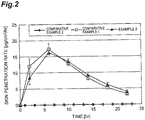
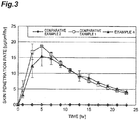
- the skin penetration rate of the drug (emedastine) per hour was calculated from the measured values, and recorded as the skin penetration rate ( ⁇ g/cm 2 /hr) of the drug (emedastine) per unit area in a steady state.
- J max means the maximum value of the skin penetration rate of the drug (emedastine), within the time during which the measurement was conducted.
- the tape preparation according to Comparative Example 2 which did not contain a fumarate salt of an organic amine, did not exhibit excellent skin penetrability, and the precipitation of salt was observed in the pressure-sensitive adhesive layer of the tape preparation.
- the tape preparation according to Example 2 which contained the fumarate salt of diethanolamine, and the tape preparation according to Comparative Example 1, which contained sodium fumarate, both exhibited excellent skin penetrability.
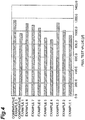
- a 1 cm x 5 cm rectangle sample was cut from each of the tape preparations according to Examples 1 to 8 and Comparative Examples 1 and 3, the releasing film was removed therefrom, and the tape preparation was affixed to a stainless steel plate and allowed to stand for 30 minutes at room temperature. The tape preparation was then peeled at a rate of 300 cm/min, and a five-point average load (unit: gf) was measured.
- the five-point average load is a value obtained by averaging load values measured in a section from the beginning to the end of peeling, from 15 to 85% thereof, at every 17.5% interval. This measurement was repeated three times, and an average value of the obtained five-point average loads was calculated and defined as the peel test value.
- the results are shown in Table 6 and Figure 4 .
- the tape preparations according to Examples 1 to 8 had peel strengths equivalent to those of the tape preparations according to Comparative Examples 1 and 3, and thus had practical peel strengths.
- the tape preparations according to Examples 1 to 3 and 6 to 8 had peel strengths superior to that of the tape preparation according to Comparative Example 1, which contained sodium fumarate.
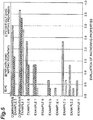
- the ratio of the area of the pressure-sensitive adhesive remaining on a stainless steel plate due to anchoring failure (anchoring failure area) when the tape preparation was peeled at 300 cm/min 30 minutes after the adhesion to the stainless steel plate was evaluated by visual observation, and evaluated based on the following evaluation criteria.
- the anchoring property test was also performed in the similar manner for those in which the material of the support film was polyethylene (PE), polyethylene terephthalate (PET) that had been subjected to a sand matting treatment, or PET that had not been subjected to a sand matting treatment. Note that the anchoring property test was repeated three times, and an average value of the scores was recorded.
- the results are shown in Table 6 and Figure 5 .
- the tape preparations according to Examples 1 to 8 were superior in anchoring properties to the tape preparations according to Comparative Examples 1 and 3.
- the material of the support film was PE or PET, a significant effect of improving the anchoring properties was obtained.
- the tape preparations according to Examples 1 to 8 had dissolution ratios and skin penetrability of emedastine, and peel strengths equivalent to those of the tape preparation according to Comparative Example 1, and were superior in anchoring properties to the tape preparation according to Comparative Example 1.
- the anchoring failure area of the pressure-sensitive adhesive layer with respect to the support film when the tape preparation was peeled at 300 cm/min 30 minutes after the adhesion to the stainless steel plate was measured and evaluated.
- the anchoring property test was also performed in the similar manner for those in which the material of the support film was polyethylene (PE), polyethylene terephthalate (PET) that had been subjected to a sand matting treatment, or PET that had not been subjected to a sand matting treatment. Note that the anchoring property test was repeated three times, and an average value of the proportions (unit: %) of the anchoring failure area to the adhesion area was recorded.
- emedastine fumarate, diethanolamine, sodium hydroxide, BHT, an acrylate pressure-sensitive adhesive having hydroxy groups (DURO-TAK (registered trademark) 87-4287), an acrylate pressure-sensitive adhesive not having a polar functional group (DURO-TAK (registered trademark) 87-901A), and a silicone pressure-sensitive adhesive (PSA7-4302) were mixed using a mixer to prepare a homogeneous coating solution.
- the values shown in Table 8 each correspond to the percentage by mass (unit: w/w%) of each of the components in the pressure-sensitive adhesive layer.
- the obtained coating solution was spread onto a film (releasing film) that had been subjected to the mold release treatment, the solvent was removed by drying to form a pressure-sensitive adhesive layer, a support film was then laminated thereon, and the support film and the pressure-sensitive adhesive layer were pressed and bonded to each other, to thereby obtain a tape preparation.
- the releasing film, the pressure-sensitive adhesive layer, and the support were laminated in order.
- Example 10 Comparative Example 5
- Example 11 Emedastine fumarate 10.0 10.0 10.0 Diethanolamine 7.9 - 7.9 Sodium hydroxide - 3.0 - BHT 0.5 0.5 0.5 Acrylate pressure-sensitive adhesive having hydroxy groups 81.6 86.5 - Acrylate pressure-sensitive adhesive not having a polar functional group - - 81.6 Silicone pressure-sensitive adhesive - - - Total 100 100
- Comparative Example 6 Example 12 Comparative Example 7 Emedastine fumarate 10.0 5.0 5.0 Diethanolamine - 3.9 - Sodium hydroxide 3.0 - 1.5 BHT 0.5 0.5 0.5 Acrylate pressure-sensitive adhesive having hydroxy groups - - - Acrylate pressure-sensitive adhesive not having a polar functional group 86.5 - - Silicone pressure-sensitive adhesive - 90.6 93.0 Total 100 100 100 100
Landscapes
- Health & Medical Sciences (AREA)
- Chemical & Material Sciences (AREA)
- Life Sciences & Earth Sciences (AREA)
- Pharmacology & Pharmacy (AREA)
- General Health & Medical Sciences (AREA)
- Public Health (AREA)
- Animal Behavior & Ethology (AREA)
- Medicinal Chemistry (AREA)
- Veterinary Medicine (AREA)
- Engineering & Computer Science (AREA)
- Epidemiology (AREA)
- Bioinformatics & Cheminformatics (AREA)
- Dermatology (AREA)
- Proteomics, Peptides & Aminoacids (AREA)
- Inorganic Chemistry (AREA)
- General Chemical & Material Sciences (AREA)
- Chemical Kinetics & Catalysis (AREA)
- Oil, Petroleum & Natural Gas (AREA)
- Organic Chemistry (AREA)
- Nuclear Medicine, Radiotherapy & Molecular Imaging (AREA)
- Pulmonology (AREA)
- Otolaryngology (AREA)
- Immunology (AREA)
- Medicinal Preparation (AREA)
- Pharmaceuticals Containing Other Organic And Inorganic Compounds (AREA)
- Adhesive Tapes (AREA)
- Adhesives Or Adhesive Processes (AREA)
- Acyclic And Carbocyclic Compounds In Medicinal Compositions (AREA)
Applications Claiming Priority (2)
| Application Number | Priority Date | Filing Date | Title |
|---|---|---|---|
| JP2014016983 | 2014-01-31 | ||
| PCT/JP2015/052393 WO2015115497A1 (fr) | 2014-01-31 | 2015-01-28 | Ruban adhésif contenant de l'emédastine |
Publications (3)
| Publication Number | Publication Date |
|---|---|
| EP3100733A1 true EP3100733A1 (fr) | 2016-12-07 |
| EP3100733A4 EP3100733A4 (fr) | 2017-08-30 |
| EP3100733B1 EP3100733B1 (fr) | 2018-12-12 |
Family
ID=53757070
Family Applications (1)
| Application Number | Title | Priority Date | Filing Date |
|---|---|---|---|
| EP15743600.7A Active EP3100733B1 (fr) | 2014-01-31 | 2015-01-28 | Ruban adhésif contenant de l'emédastine |
Country Status (7)
| Country | Link |
|---|---|
| US (1) | US20160354322A1 (fr) |
| EP (1) | EP3100733B1 (fr) |
| JP (1) | JP6173491B2 (fr) |
| KR (1) | KR101976248B1 (fr) |
| CN (1) | CN105939718B (fr) |
| TW (1) | TWI675672B (fr) |
| WO (1) | WO2015115497A1 (fr) |
Families Citing this family (2)
| Publication number | Priority date | Publication date | Assignee | Title |
|---|---|---|---|---|
| WO2017061393A1 (fr) * | 2015-10-06 | 2017-04-13 | 久光製薬株式会社 | Patch adhésif |
| JP6827403B2 (ja) * | 2017-11-24 | 2021-02-10 | 久光製薬株式会社 | 貼付剤 |
Family Cites Families (15)
| Publication number | Priority date | Publication date | Assignee | Title |
|---|---|---|---|---|
| JPS5879983A (ja) | 1981-11-06 | 1983-05-13 | Kanebo Ltd | 新規なベンズイミダゾ−ル誘導体、その製造法およびその医薬組成物 |
| JPH0383924A (ja) | 1989-08-28 | 1991-04-09 | Kanebo Ltd | 経皮投与用組成物 |
| JPH0733665A (ja) | 1993-05-18 | 1995-02-03 | Kanebo Ltd | エメダスチンを含有する粘着性貼付剤 |
| JP3622775B2 (ja) * | 1994-09-28 | 2005-02-23 | 日東電工株式会社 | 貼付剤 |
| JPH08193030A (ja) | 1995-01-12 | 1996-07-30 | Nitto Denko Corp | エメダスチン貼付製剤 |
| JP4777542B2 (ja) * | 2001-06-19 | 2011-09-21 | 日東電工株式会社 | 貼付剤および貼付製剤、ならびにそれらの製造方法 |
| JP4377115B2 (ja) * | 2002-07-05 | 2009-12-02 | コスメディ製薬株式会社 | 医用粘着剤組成物 |
| US20080138390A1 (en) * | 2004-04-07 | 2008-06-12 | Tsung-Min Hsu | Transdermal Delivery System For Use With Basic Permeation Enhancers |
| US20080038328A1 (en) * | 2004-05-28 | 2008-02-14 | Naruhito Higo | Pasting Preparation |
| WO2006114868A1 (fr) * | 2005-04-20 | 2006-11-02 | Nichiban Co., Ltd. | Preparation medicinale pour une absorption percutanee |
| JP5015562B2 (ja) | 2005-12-13 | 2012-08-29 | 日東電工株式会社 | 貼付製剤 |
| JP5043396B2 (ja) * | 2006-10-13 | 2012-10-10 | 日本電子精機株式会社 | 貼付剤 |
| JP4392016B2 (ja) | 2006-11-22 | 2009-12-24 | 日東電工株式会社 | 貼付製剤 |
| JP5872131B2 (ja) * | 2006-11-29 | 2016-03-01 | ロート製薬株式会社 | 抗真菌医薬組成物 |
| CA2833474C (fr) * | 2011-04-18 | 2017-09-19 | Hisamitsu Pharmaceutical Co., Inc. | Procede de fabrication d'une piece adhesive et piece adhesive |
-
2015
- 2015-01-28 JP JP2015559986A patent/JP6173491B2/ja active Active
- 2015-01-28 US US15/114,979 patent/US20160354322A1/en not_active Abandoned
- 2015-01-28 KR KR1020167019456A patent/KR101976248B1/ko active Active
- 2015-01-28 CN CN201580006143.6A patent/CN105939718B/zh active Active
- 2015-01-28 WO PCT/JP2015/052393 patent/WO2015115497A1/fr not_active Ceased
- 2015-01-28 EP EP15743600.7A patent/EP3100733B1/fr active Active
- 2015-01-30 TW TW104103216A patent/TWI675672B/zh active
Also Published As
| Publication number | Publication date |
|---|---|
| TWI675672B (zh) | 2019-11-01 |
| US20160354322A1 (en) | 2016-12-08 |
| JPWO2015115497A1 (ja) | 2017-03-23 |
| JP6173491B2 (ja) | 2017-08-02 |
| KR20160113120A (ko) | 2016-09-28 |
| TW201615181A (zh) | 2016-05-01 |
| WO2015115497A1 (fr) | 2015-08-06 |
| CN105939718A (zh) | 2016-09-14 |
| EP3100733B1 (fr) | 2018-12-12 |
| EP3100733A4 (fr) | 2017-08-30 |
| CN105939718B (zh) | 2020-07-17 |
| KR101976248B1 (ko) | 2019-05-07 |
Similar Documents
| Publication | Publication Date | Title |
|---|---|---|
| EP2425827B1 (fr) | Préparation transdermique | |
| KR100846642B1 (ko) | 첩부제 | |
| US10806705B2 (en) | Asenapine-containing patch | |
| JP5243254B2 (ja) | 結晶含有貼付剤 | |
| KR101848961B1 (ko) | 로피니롤 함유 첩부제 및 그 포장체 | |
| KR102090411B1 (ko) | 첩부제 | |
| KR101844625B1 (ko) | 로피니롤 함유 첩부제 및 그 포장체 | |
| JP5404048B2 (ja) | 貼付剤 | |
| US20130253449A1 (en) | Noradrenergic and specific serotonergic antidepressant-containing transdermal patch | |
| WO2014051128A1 (fr) | Timbre transdermique | |
| EP3266451B1 (fr) | Pansement adhésif | |
| KR102302582B1 (ko) | 첩부제 | |
| EP3100733B1 (fr) | Ruban adhésif contenant de l'emédastine | |
| KR20190112810A (ko) | 첩부제 및 그 포장체 | |
| EP3284465B1 (fr) | Timbre transdermique contenant du ropinirole | |
| JP6695571B2 (ja) | 経皮吸収型製剤 | |
| TWI636800B (zh) | 含有可樂寧之貼劑 | |
| WO2023022097A1 (fr) | Timbre et son procédé de fabrication |
Legal Events
| Date | Code | Title | Description |
|---|---|---|---|
| PUAI | Public reference made under article 153(3) epc to a published international application that has entered the european phase |
Free format text: ORIGINAL CODE: 0009012 |
|
| STAA | Information on the status of an ep patent application or granted ep patent |
Free format text: STATUS: REQUEST FOR EXAMINATION WAS MADE |
|
| 17P | Request for examination filed |
Effective date: 20160831 |
|
| AK | Designated contracting states |
Kind code of ref document: A1 Designated state(s): AL AT BE BG CH CY CZ DE DK EE ES FI FR GB GR HR HU IE IS IT LI LT LU LV MC MK MT NL NO PL PT RO RS SE SI SK SM TR |
|
| AX | Request for extension of the european patent |
Extension state: BA ME |
|
| A4 | Supplementary search report drawn up and despatched |
Effective date: 20170728 |
|
| RIC1 | Information provided on ipc code assigned before grant |
Ipc: A61K 47/18 20170101ALI20170724BHEP Ipc: A61K 9/70 20060101ALI20170724BHEP Ipc: A61K 47/34 20170101ALI20170724BHEP Ipc: A61P 37/08 20060101ALI20170724BHEP Ipc: A61K 31/551 20060101AFI20170724BHEP Ipc: A61K 47/32 20060101ALI20170724BHEP |
|
| GRAP | Despatch of communication of intention to grant a patent |
Free format text: ORIGINAL CODE: EPIDOSNIGR1 |
|
| STAA | Information on the status of an ep patent application or granted ep patent |
Free format text: STATUS: GRANT OF PATENT IS INTENDED |
|
| INTG | Intention to grant announced |
Effective date: 20180629 |
|
| GRAS | Grant fee paid |
Free format text: ORIGINAL CODE: EPIDOSNIGR3 |
|
| GRAA | (expected) grant |
Free format text: ORIGINAL CODE: 0009210 |
|
| STAA | Information on the status of an ep patent application or granted ep patent |
Free format text: STATUS: THE PATENT HAS BEEN GRANTED |
|
| AK | Designated contracting states |
Kind code of ref document: B1 Designated state(s): AL AT BE BG CH CY CZ DE DK EE ES FI FR GB GR HR HU IE IS IT LI LT LU LV MC MK MT NL NO PL PT RO RS SE SI SK SM TR |
|
| AX | Request for extension of the european patent |
Extension state: BA ME |
|
| REG | Reference to a national code |
Ref country code: GB Ref legal event code: FG4D |
|
| REG | Reference to a national code |
Ref country code: CH Ref legal event code: EP |
|
| REG | Reference to a national code |
Ref country code: AT Ref legal event code: REF Ref document number: 1075085 Country of ref document: AT Kind code of ref document: T Effective date: 20181215 |
|
| REG | Reference to a national code |
Ref country code: DE Ref legal event code: R096 Ref document number: 602015021346 Country of ref document: DE |
|
| REG | Reference to a national code |
Ref country code: IE Ref legal event code: FG4D |
|
| REG | Reference to a national code |
Ref country code: NL Ref legal event code: MP Effective date: 20181212 |
|
| REG | Reference to a national code |
Ref country code: LT Ref legal event code: MG4D |
|
| PG25 | Lapsed in a contracting state [announced via postgrant information from national office to epo] |
Ref country code: ES Free format text: LAPSE BECAUSE OF FAILURE TO SUBMIT A TRANSLATION OF THE DESCRIPTION OR TO PAY THE FEE WITHIN THE PRESCRIBED TIME-LIMIT Effective date: 20181212 Ref country code: LT Free format text: LAPSE BECAUSE OF FAILURE TO SUBMIT A TRANSLATION OF THE DESCRIPTION OR TO PAY THE FEE WITHIN THE PRESCRIBED TIME-LIMIT Effective date: 20181212 Ref country code: NO Free format text: LAPSE BECAUSE OF FAILURE TO SUBMIT A TRANSLATION OF THE DESCRIPTION OR TO PAY THE FEE WITHIN THE PRESCRIBED TIME-LIMIT Effective date: 20190312 Ref country code: FI Free format text: LAPSE BECAUSE OF FAILURE TO SUBMIT A TRANSLATION OF THE DESCRIPTION OR TO PAY THE FEE WITHIN THE PRESCRIBED TIME-LIMIT Effective date: 20181212 Ref country code: BG Free format text: LAPSE BECAUSE OF FAILURE TO SUBMIT A TRANSLATION OF THE DESCRIPTION OR TO PAY THE FEE WITHIN THE PRESCRIBED TIME-LIMIT Effective date: 20190312 Ref country code: HR Free format text: LAPSE BECAUSE OF FAILURE TO SUBMIT A TRANSLATION OF THE DESCRIPTION OR TO PAY THE FEE WITHIN THE PRESCRIBED TIME-LIMIT Effective date: 20181212 Ref country code: LV Free format text: LAPSE BECAUSE OF FAILURE TO SUBMIT A TRANSLATION OF THE DESCRIPTION OR TO PAY THE FEE WITHIN THE PRESCRIBED TIME-LIMIT Effective date: 20181212 |
|
| REG | Reference to a national code |
Ref country code: AT Ref legal event code: MK05 Ref document number: 1075085 Country of ref document: AT Kind code of ref document: T Effective date: 20181212 |
|
| PG25 | Lapsed in a contracting state [announced via postgrant information from national office to epo] |
Ref country code: RS Free format text: LAPSE BECAUSE OF FAILURE TO SUBMIT A TRANSLATION OF THE DESCRIPTION OR TO PAY THE FEE WITHIN THE PRESCRIBED TIME-LIMIT Effective date: 20181212 Ref country code: SE Free format text: LAPSE BECAUSE OF FAILURE TO SUBMIT A TRANSLATION OF THE DESCRIPTION OR TO PAY THE FEE WITHIN THE PRESCRIBED TIME-LIMIT Effective date: 20181212 Ref country code: AL Free format text: LAPSE BECAUSE OF FAILURE TO SUBMIT A TRANSLATION OF THE DESCRIPTION OR TO PAY THE FEE WITHIN THE PRESCRIBED TIME-LIMIT Effective date: 20181212 Ref country code: GR Free format text: LAPSE BECAUSE OF FAILURE TO SUBMIT A TRANSLATION OF THE DESCRIPTION OR TO PAY THE FEE WITHIN THE PRESCRIBED TIME-LIMIT Effective date: 20190313 |
|
| PG25 | Lapsed in a contracting state [announced via postgrant information from national office to epo] |
Ref country code: NL Free format text: LAPSE BECAUSE OF FAILURE TO SUBMIT A TRANSLATION OF THE DESCRIPTION OR TO PAY THE FEE WITHIN THE PRESCRIBED TIME-LIMIT Effective date: 20181212 |
|
| PG25 | Lapsed in a contracting state [announced via postgrant information from national office to epo] |
Ref country code: PL Free format text: LAPSE BECAUSE OF FAILURE TO SUBMIT A TRANSLATION OF THE DESCRIPTION OR TO PAY THE FEE WITHIN THE PRESCRIBED TIME-LIMIT Effective date: 20181212 Ref country code: IT Free format text: LAPSE BECAUSE OF FAILURE TO SUBMIT A TRANSLATION OF THE DESCRIPTION OR TO PAY THE FEE WITHIN THE PRESCRIBED TIME-LIMIT Effective date: 20181212 Ref country code: PT Free format text: LAPSE BECAUSE OF FAILURE TO SUBMIT A TRANSLATION OF THE DESCRIPTION OR TO PAY THE FEE WITHIN THE PRESCRIBED TIME-LIMIT Effective date: 20190412 Ref country code: CZ Free format text: LAPSE BECAUSE OF FAILURE TO SUBMIT A TRANSLATION OF THE DESCRIPTION OR TO PAY THE FEE WITHIN THE PRESCRIBED TIME-LIMIT Effective date: 20181212 |
|
| PG25 | Lapsed in a contracting state [announced via postgrant information from national office to epo] |
Ref country code: SM Free format text: LAPSE BECAUSE OF FAILURE TO SUBMIT A TRANSLATION OF THE DESCRIPTION OR TO PAY THE FEE WITHIN THE PRESCRIBED TIME-LIMIT Effective date: 20181212 Ref country code: EE Free format text: LAPSE BECAUSE OF FAILURE TO SUBMIT A TRANSLATION OF THE DESCRIPTION OR TO PAY THE FEE WITHIN THE PRESCRIBED TIME-LIMIT Effective date: 20181212 Ref country code: RO Free format text: LAPSE BECAUSE OF FAILURE TO SUBMIT A TRANSLATION OF THE DESCRIPTION OR TO PAY THE FEE WITHIN THE PRESCRIBED TIME-LIMIT Effective date: 20181212 Ref country code: IS Free format text: LAPSE BECAUSE OF FAILURE TO SUBMIT A TRANSLATION OF THE DESCRIPTION OR TO PAY THE FEE WITHIN THE PRESCRIBED TIME-LIMIT Effective date: 20190412 Ref country code: SK Free format text: LAPSE BECAUSE OF FAILURE TO SUBMIT A TRANSLATION OF THE DESCRIPTION OR TO PAY THE FEE WITHIN THE PRESCRIBED TIME-LIMIT Effective date: 20181212 |
|
| REG | Reference to a national code |
Ref country code: CH Ref legal event code: PL |
|
| REG | Reference to a national code |
Ref country code: DE Ref legal event code: R097 Ref document number: 602015021346 Country of ref document: DE |
|
| PG25 | Lapsed in a contracting state [announced via postgrant information from national office to epo] |
Ref country code: LU Free format text: LAPSE BECAUSE OF NON-PAYMENT OF DUE FEES Effective date: 20190128 |
|
| REG | Reference to a national code |
Ref country code: BE Ref legal event code: MM Effective date: 20190131 |
|
| PLBE | No opposition filed within time limit |
Free format text: ORIGINAL CODE: 0009261 |
|
| STAA | Information on the status of an ep patent application or granted ep patent |
Free format text: STATUS: NO OPPOSITION FILED WITHIN TIME LIMIT |
|
| REG | Reference to a national code |
Ref country code: IE Ref legal event code: MM4A |
|
| PG25 | Lapsed in a contracting state [announced via postgrant information from national office to epo] |
Ref country code: SI Free format text: LAPSE BECAUSE OF FAILURE TO SUBMIT A TRANSLATION OF THE DESCRIPTION OR TO PAY THE FEE WITHIN THE PRESCRIBED TIME-LIMIT Effective date: 20181212 Ref country code: DK Free format text: LAPSE BECAUSE OF FAILURE TO SUBMIT A TRANSLATION OF THE DESCRIPTION OR TO PAY THE FEE WITHIN THE PRESCRIBED TIME-LIMIT Effective date: 20181212 Ref country code: AT Free format text: LAPSE BECAUSE OF FAILURE TO SUBMIT A TRANSLATION OF THE DESCRIPTION OR TO PAY THE FEE WITHIN THE PRESCRIBED TIME-LIMIT Effective date: 20181212 Ref country code: MC Free format text: LAPSE BECAUSE OF FAILURE TO SUBMIT A TRANSLATION OF THE DESCRIPTION OR TO PAY THE FEE WITHIN THE PRESCRIBED TIME-LIMIT Effective date: 20181212 |
|
| 26N | No opposition filed |
Effective date: 20190913 |
|
| GBPC | Gb: european patent ceased through non-payment of renewal fee |
Effective date: 20190312 |
|
| PG25 | Lapsed in a contracting state [announced via postgrant information from national office to epo] |
Ref country code: BE Free format text: LAPSE BECAUSE OF NON-PAYMENT OF DUE FEES Effective date: 20190131 |
|
| PG25 | Lapsed in a contracting state [announced via postgrant information from national office to epo] |
Ref country code: CH Free format text: LAPSE BECAUSE OF NON-PAYMENT OF DUE FEES Effective date: 20190131 Ref country code: LI Free format text: LAPSE BECAUSE OF NON-PAYMENT OF DUE FEES Effective date: 20190131 |
|
| PG25 | Lapsed in a contracting state [announced via postgrant information from national office to epo] |
Ref country code: IE Free format text: LAPSE BECAUSE OF NON-PAYMENT OF DUE FEES Effective date: 20190128 Ref country code: GB Free format text: LAPSE BECAUSE OF NON-PAYMENT OF DUE FEES Effective date: 20190312 |
|
| PG25 | Lapsed in a contracting state [announced via postgrant information from national office to epo] |
Ref country code: FR Free format text: LAPSE BECAUSE OF NON-PAYMENT OF DUE FEES Effective date: 20190212 |
|
| PG25 | Lapsed in a contracting state [announced via postgrant information from national office to epo] |
Ref country code: TR Free format text: LAPSE BECAUSE OF FAILURE TO SUBMIT A TRANSLATION OF THE DESCRIPTION OR TO PAY THE FEE WITHIN THE PRESCRIBED TIME-LIMIT Effective date: 20181212 |
|
| PG25 | Lapsed in a contracting state [announced via postgrant information from national office to epo] |
Ref country code: MT Free format text: LAPSE BECAUSE OF NON-PAYMENT OF DUE FEES Effective date: 20190128 |
|
| PG25 | Lapsed in a contracting state [announced via postgrant information from national office to epo] |
Ref country code: CY Free format text: LAPSE BECAUSE OF FAILURE TO SUBMIT A TRANSLATION OF THE DESCRIPTION OR TO PAY THE FEE WITHIN THE PRESCRIBED TIME-LIMIT Effective date: 20181212 |
|
| PG25 | Lapsed in a contracting state [announced via postgrant information from national office to epo] |
Ref country code: HU Free format text: LAPSE BECAUSE OF FAILURE TO SUBMIT A TRANSLATION OF THE DESCRIPTION OR TO PAY THE FEE WITHIN THE PRESCRIBED TIME-LIMIT; INVALID AB INITIO Effective date: 20150128 |
|
| PG25 | Lapsed in a contracting state [announced via postgrant information from national office to epo] |
Ref country code: MK Free format text: LAPSE BECAUSE OF FAILURE TO SUBMIT A TRANSLATION OF THE DESCRIPTION OR TO PAY THE FEE WITHIN THE PRESCRIBED TIME-LIMIT Effective date: 20181212 |
|
| P01 | Opt-out of the competence of the unified patent court (upc) registered |
Effective date: 20230522 |
|
| PGFP | Annual fee paid to national office [announced via postgrant information from national office to epo] |
Ref country code: DE Payment date: 20251203 Year of fee payment: 12 |