EP3119637B1 - Verbindungseinheit und verfahren zur herstellung einer assoziationsverbindung zwischen elektrofahrzeug und ladestation - Google Patents
Verbindungseinheit und verfahren zur herstellung einer assoziationsverbindung zwischen elektrofahrzeug und ladestation Download PDFInfo
- Publication number
- EP3119637B1 EP3119637B1 EP15713506.2A EP15713506A EP3119637B1 EP 3119637 B1 EP3119637 B1 EP 3119637B1 EP 15713506 A EP15713506 A EP 15713506A EP 3119637 B1 EP3119637 B1 EP 3119637B1
- Authority
- EP
- European Patent Office
- Prior art keywords
- transmitter
- electric vehicle
- charging station
- connection
- directional
- Prior art date
- Legal status (The legal status is an assumption and is not a legal conclusion. Google has not performed a legal analysis and makes no representation as to the accuracy of the status listed.)
- Active
Links
Images
Classifications
-
- B—PERFORMING OPERATIONS; TRANSPORTING
- B60—VEHICLES IN GENERAL
- B60L—PROPULSION OF ELECTRICALLY-PROPELLED VEHICLES; SUPPLYING ELECTRIC POWER FOR AUXILIARY EQUIPMENT OF ELECTRICALLY-PROPELLED VEHICLES; ELECTRODYNAMIC BRAKE SYSTEMS FOR VEHICLES IN GENERAL; MAGNETIC SUSPENSION OR LEVITATION FOR VEHICLES; MONITORING OPERATING VARIABLES OF ELECTRICALLY-PROPELLED VEHICLES; ELECTRIC SAFETY DEVICES FOR ELECTRICALLY-PROPELLED VEHICLES
- B60L53/00—Methods of charging batteries, specially adapted for electric vehicles; Charging stations or on-board charging equipment therefor; Exchange of energy storage elements in electric vehicles
- B60L53/30—Constructional details of charging stations
- B60L53/35—Means for automatic or assisted adjustment of the relative position of charging devices and vehicles
- B60L53/38—Means for automatic or assisted adjustment of the relative position of charging devices and vehicles specially adapted for charging by inductive energy transfer
-
- B—PERFORMING OPERATIONS; TRANSPORTING
- B60—VEHICLES IN GENERAL
- B60L—PROPULSION OF ELECTRICALLY-PROPELLED VEHICLES; SUPPLYING ELECTRIC POWER FOR AUXILIARY EQUIPMENT OF ELECTRICALLY-PROPELLED VEHICLES; ELECTRODYNAMIC BRAKE SYSTEMS FOR VEHICLES IN GENERAL; MAGNETIC SUSPENSION OR LEVITATION FOR VEHICLES; MONITORING OPERATING VARIABLES OF ELECTRICALLY-PROPELLED VEHICLES; ELECTRIC SAFETY DEVICES FOR ELECTRICALLY-PROPELLED VEHICLES
- B60L53/00—Methods of charging batteries, specially adapted for electric vehicles; Charging stations or on-board charging equipment therefor; Exchange of energy storage elements in electric vehicles
- B60L53/10—Methods of charging batteries, specially adapted for electric vehicles; Charging stations or on-board charging equipment therefor; Exchange of energy storage elements in electric vehicles characterised by the energy transfer between the charging station and the vehicle
- B60L53/12—Inductive energy transfer
-
- B—PERFORMING OPERATIONS; TRANSPORTING
- B60—VEHICLES IN GENERAL
- B60L—PROPULSION OF ELECTRICALLY-PROPELLED VEHICLES; SUPPLYING ELECTRIC POWER FOR AUXILIARY EQUIPMENT OF ELECTRICALLY-PROPELLED VEHICLES; ELECTRODYNAMIC BRAKE SYSTEMS FOR VEHICLES IN GENERAL; MAGNETIC SUSPENSION OR LEVITATION FOR VEHICLES; MONITORING OPERATING VARIABLES OF ELECTRICALLY-PROPELLED VEHICLES; ELECTRIC SAFETY DEVICES FOR ELECTRICALLY-PROPELLED VEHICLES
- B60L53/00—Methods of charging batteries, specially adapted for electric vehicles; Charging stations or on-board charging equipment therefor; Exchange of energy storage elements in electric vehicles
- B60L53/10—Methods of charging batteries, specially adapted for electric vehicles; Charging stations or on-board charging equipment therefor; Exchange of energy storage elements in electric vehicles characterised by the energy transfer between the charging station and the vehicle
- B60L53/12—Inductive energy transfer
- B60L53/126—Methods for pairing a vehicle and a charging station, e.g. establishing a one-to-one relation between a wireless power transmitter and a wireless power receiver
-
- B—PERFORMING OPERATIONS; TRANSPORTING
- B60—VEHICLES IN GENERAL
- B60L—PROPULSION OF ELECTRICALLY-PROPELLED VEHICLES; SUPPLYING ELECTRIC POWER FOR AUXILIARY EQUIPMENT OF ELECTRICALLY-PROPELLED VEHICLES; ELECTRODYNAMIC BRAKE SYSTEMS FOR VEHICLES IN GENERAL; MAGNETIC SUSPENSION OR LEVITATION FOR VEHICLES; MONITORING OPERATING VARIABLES OF ELECTRICALLY-PROPELLED VEHICLES; ELECTRIC SAFETY DEVICES FOR ELECTRICALLY-PROPELLED VEHICLES
- B60L53/00—Methods of charging batteries, specially adapted for electric vehicles; Charging stations or on-board charging equipment therefor; Exchange of energy storage elements in electric vehicles
- B60L53/30—Constructional details of charging stations
-
- B—PERFORMING OPERATIONS; TRANSPORTING
- B60—VEHICLES IN GENERAL
- B60L—PROPULSION OF ELECTRICALLY-PROPELLED VEHICLES; SUPPLYING ELECTRIC POWER FOR AUXILIARY EQUIPMENT OF ELECTRICALLY-PROPELLED VEHICLES; ELECTRODYNAMIC BRAKE SYSTEMS FOR VEHICLES IN GENERAL; MAGNETIC SUSPENSION OR LEVITATION FOR VEHICLES; MONITORING OPERATING VARIABLES OF ELECTRICALLY-PROPELLED VEHICLES; ELECTRIC SAFETY DEVICES FOR ELECTRICALLY-PROPELLED VEHICLES
- B60L53/00—Methods of charging batteries, specially adapted for electric vehicles; Charging stations or on-board charging equipment therefor; Exchange of energy storage elements in electric vehicles
- B60L53/30—Constructional details of charging stations
- B60L53/35—Means for automatic or assisted adjustment of the relative position of charging devices and vehicles
- B60L53/36—Means for automatic or assisted adjustment of the relative position of charging devices and vehicles by positioning the vehicle
-
- B—PERFORMING OPERATIONS; TRANSPORTING
- B60—VEHICLES IN GENERAL
- B60L—PROPULSION OF ELECTRICALLY-PROPELLED VEHICLES; SUPPLYING ELECTRIC POWER FOR AUXILIARY EQUIPMENT OF ELECTRICALLY-PROPELLED VEHICLES; ELECTRODYNAMIC BRAKE SYSTEMS FOR VEHICLES IN GENERAL; MAGNETIC SUSPENSION OR LEVITATION FOR VEHICLES; MONITORING OPERATING VARIABLES OF ELECTRICALLY-PROPELLED VEHICLES; ELECTRIC SAFETY DEVICES FOR ELECTRICALLY-PROPELLED VEHICLES
- B60L53/00—Methods of charging batteries, specially adapted for electric vehicles; Charging stations or on-board charging equipment therefor; Exchange of energy storage elements in electric vehicles
- B60L53/60—Monitoring or controlling charging stations
-
- B—PERFORMING OPERATIONS; TRANSPORTING
- B60—VEHICLES IN GENERAL
- B60L—PROPULSION OF ELECTRICALLY-PROPELLED VEHICLES; SUPPLYING ELECTRIC POWER FOR AUXILIARY EQUIPMENT OF ELECTRICALLY-PROPELLED VEHICLES; ELECTRODYNAMIC BRAKE SYSTEMS FOR VEHICLES IN GENERAL; MAGNETIC SUSPENSION OR LEVITATION FOR VEHICLES; MONITORING OPERATING VARIABLES OF ELECTRICALLY-PROPELLED VEHICLES; ELECTRIC SAFETY DEVICES FOR ELECTRICALLY-PROPELLED VEHICLES
- B60L53/00—Methods of charging batteries, specially adapted for electric vehicles; Charging stations or on-board charging equipment therefor; Exchange of energy storage elements in electric vehicles
- B60L53/60—Monitoring or controlling charging stations
- B60L53/65—Monitoring or controlling charging stations involving identification of vehicles or their battery types
-
- H—ELECTRICITY
- H02—GENERATION; CONVERSION OR DISTRIBUTION OF ELECTRIC POWER
- H02J—ELECTRIC POWER NETWORKS; CIRCUIT ARRANGEMENTS OR SYSTEMS FOR SUPPLYING OR DISTRIBUTING ELECTRIC POWER; SYSTEMS FOR STORING ELECTRIC ENERGY
- H02J50/00—Circuit arrangements or systems for wireless supply or distribution of electric power
- H02J50/90—Circuit arrangements or systems for wireless supply or distribution of electric power involving detection or optimisation of position, e.g. alignment
-
- H—ELECTRICITY
- H04—ELECTRIC COMMUNICATION TECHNIQUE
- H04B—TRANSMISSION
- H04B7/00—Radio transmission systems, i.e. using radiation field
- H04B7/24—Radio transmission systems, i.e. using radiation field for communication between two or more posts
-
- H—ELECTRICITY
- H02—GENERATION; CONVERSION OR DISTRIBUTION OF ELECTRIC POWER
- H02J—ELECTRIC POWER NETWORKS; CIRCUIT ARRANGEMENTS OR SYSTEMS FOR SUPPLYING OR DISTRIBUTING ELECTRIC POWER; SYSTEMS FOR STORING ELECTRIC ENERGY
- H02J2105/00—Networks for supplying or distributing electric power characterised by their spatial reach or by the load
- H02J2105/30—Networks for supplying or distributing electric power characterised by their spatial reach or by the load the load networks being external to vehicles, i.e. exchanging power with vehicles
- H02J2105/33—Networks for supplying or distributing electric power characterised by their spatial reach or by the load the load networks being external to vehicles, i.e. exchanging power with vehicles exchanging power with road vehicles
- H02J2105/37—Networks for supplying or distributing electric power characterised by their spatial reach or by the load the load networks being external to vehicles, i.e. exchanging power with vehicles exchanging power with road vehicles exchanging power with electric vehicles [EV] or with hybrid electric vehicles [HEV]
-
- H—ELECTRICITY
- H04—ELECTRIC COMMUNICATION TECHNIQUE
- H04B—TRANSMISSION
- H04B5/00—Near-field transmission systems, e.g. inductive or capacitive transmission systems
- H04B5/70—Near-field transmission systems, e.g. inductive or capacitive transmission systems specially adapted for specific purposes
- H04B5/79—Near-field transmission systems, e.g. inductive or capacitive transmission systems specially adapted for specific purposes for data transfer in combination with power transfer
-
- Y—GENERAL TAGGING OF NEW TECHNOLOGICAL DEVELOPMENTS; GENERAL TAGGING OF CROSS-SECTIONAL TECHNOLOGIES SPANNING OVER SEVERAL SECTIONS OF THE IPC; TECHNICAL SUBJECTS COVERED BY FORMER USPC CROSS-REFERENCE ART COLLECTIONS [XRACs] AND DIGESTS
- Y02—TECHNOLOGIES OR APPLICATIONS FOR MITIGATION OR ADAPTATION AGAINST CLIMATE CHANGE
- Y02T—CLIMATE CHANGE MITIGATION TECHNOLOGIES RELATED TO TRANSPORTATION
- Y02T10/00—Road transport of goods or passengers
- Y02T10/60—Other road transportation technologies with climate change mitigation effect
- Y02T10/70—Energy storage systems for electromobility, e.g. batteries
-
- Y—GENERAL TAGGING OF NEW TECHNOLOGICAL DEVELOPMENTS; GENERAL TAGGING OF CROSS-SECTIONAL TECHNOLOGIES SPANNING OVER SEVERAL SECTIONS OF THE IPC; TECHNICAL SUBJECTS COVERED BY FORMER USPC CROSS-REFERENCE ART COLLECTIONS [XRACs] AND DIGESTS
- Y02—TECHNOLOGIES OR APPLICATIONS FOR MITIGATION OR ADAPTATION AGAINST CLIMATE CHANGE
- Y02T—CLIMATE CHANGE MITIGATION TECHNOLOGIES RELATED TO TRANSPORTATION
- Y02T10/00—Road transport of goods or passengers
- Y02T10/60—Other road transportation technologies with climate change mitigation effect
- Y02T10/7072—Electromobility specific charging systems or methods for batteries, ultracapacitors, supercapacitors or double-layer capacitors
-
- Y—GENERAL TAGGING OF NEW TECHNOLOGICAL DEVELOPMENTS; GENERAL TAGGING OF CROSS-SECTIONAL TECHNOLOGIES SPANNING OVER SEVERAL SECTIONS OF THE IPC; TECHNICAL SUBJECTS COVERED BY FORMER USPC CROSS-REFERENCE ART COLLECTIONS [XRACs] AND DIGESTS
- Y02—TECHNOLOGIES OR APPLICATIONS FOR MITIGATION OR ADAPTATION AGAINST CLIMATE CHANGE
- Y02T—CLIMATE CHANGE MITIGATION TECHNOLOGIES RELATED TO TRANSPORTATION
- Y02T90/00—Enabling technologies or technologies with a potential or indirect contribution to GHG emissions mitigation
- Y02T90/10—Technologies relating to charging of electric vehicles
- Y02T90/12—Electric charging stations
-
- Y—GENERAL TAGGING OF NEW TECHNOLOGICAL DEVELOPMENTS; GENERAL TAGGING OF CROSS-SECTIONAL TECHNOLOGIES SPANNING OVER SEVERAL SECTIONS OF THE IPC; TECHNICAL SUBJECTS COVERED BY FORMER USPC CROSS-REFERENCE ART COLLECTIONS [XRACs] AND DIGESTS
- Y02—TECHNOLOGIES OR APPLICATIONS FOR MITIGATION OR ADAPTATION AGAINST CLIMATE CHANGE
- Y02T—CLIMATE CHANGE MITIGATION TECHNOLOGIES RELATED TO TRANSPORTATION
- Y02T90/00—Enabling technologies or technologies with a potential or indirect contribution to GHG emissions mitigation
- Y02T90/10—Technologies relating to charging of electric vehicles
- Y02T90/14—Plug-in electric vehicles
-
- Y—GENERAL TAGGING OF NEW TECHNOLOGICAL DEVELOPMENTS; GENERAL TAGGING OF CROSS-SECTIONAL TECHNOLOGIES SPANNING OVER SEVERAL SECTIONS OF THE IPC; TECHNICAL SUBJECTS COVERED BY FORMER USPC CROSS-REFERENCE ART COLLECTIONS [XRACs] AND DIGESTS
- Y02—TECHNOLOGIES OR APPLICATIONS FOR MITIGATION OR ADAPTATION AGAINST CLIMATE CHANGE
- Y02T—CLIMATE CHANGE MITIGATION TECHNOLOGIES RELATED TO TRANSPORTATION
- Y02T90/00—Enabling technologies or technologies with a potential or indirect contribution to GHG emissions mitigation
- Y02T90/10—Technologies relating to charging of electric vehicles
- Y02T90/16—Information or communication technologies improving the operation of electric vehicles
-
- Y—GENERAL TAGGING OF NEW TECHNOLOGICAL DEVELOPMENTS; GENERAL TAGGING OF CROSS-SECTIONAL TECHNOLOGIES SPANNING OVER SEVERAL SECTIONS OF THE IPC; TECHNICAL SUBJECTS COVERED BY FORMER USPC CROSS-REFERENCE ART COLLECTIONS [XRACs] AND DIGESTS
- Y02—TECHNOLOGIES OR APPLICATIONS FOR MITIGATION OR ADAPTATION AGAINST CLIMATE CHANGE
- Y02T—CLIMATE CHANGE MITIGATION TECHNOLOGIES RELATED TO TRANSPORTATION
- Y02T90/00—Enabling technologies or technologies with a potential or indirect contribution to GHG emissions mitigation
- Y02T90/10—Technologies relating to charging of electric vehicles
- Y02T90/16—Information or communication technologies improving the operation of electric vehicles
- Y02T90/167—Systems integrating technologies related to power network operation and communication or information technologies for supporting the interoperability of electric or hybrid vehicles, i.e. smartgrids as interface for battery charging of electric vehicles [EV] or hybrid vehicles [HEV]
-
- Y—GENERAL TAGGING OF NEW TECHNOLOGICAL DEVELOPMENTS; GENERAL TAGGING OF CROSS-SECTIONAL TECHNOLOGIES SPANNING OVER SEVERAL SECTIONS OF THE IPC; TECHNICAL SUBJECTS COVERED BY FORMER USPC CROSS-REFERENCE ART COLLECTIONS [XRACs] AND DIGESTS
- Y04—INFORMATION OR COMMUNICATION TECHNOLOGIES HAVING AN IMPACT ON OTHER TECHNOLOGY AREAS
- Y04S—SYSTEMS INTEGRATING TECHNOLOGIES RELATED TO POWER NETWORK OPERATION, COMMUNICATION OR INFORMATION TECHNOLOGIES FOR IMPROVING THE ELECTRICAL POWER GENERATION, TRANSMISSION, DISTRIBUTION, MANAGEMENT OR USAGE, i.e. SMART GRIDS
- Y04S30/00—Systems supporting specific end-user applications in the sector of transportation
- Y04S30/10—Systems supporting the interoperability of electric or hybrid vehicles
- Y04S30/14—Details associated with the interoperability, e.g. vehicle recognition, authentication, identification or billing
Definitions
- the invention relates to means and methods for establishing an association connection between an electric vehicle and an inductive charging station.
- Inductive charging systems are known for charging an electric vehicle at a charging station. There are coil systems both on the underside of the electric vehicle and in the charging station on the floor. Energy is inductively transferred from the charging station to the electric vehicle via an alternating magnetic field that penetrates this coil system.
- An inductive charging process can be carried out after the electric vehicle has been positioned on the charging station without the driver having to get out of the vehicle or a connection with a charging cable.
- a communication link between the charging station and the electric vehicle has proven successful, which is maintained during the start-up process and during the charging process when the electric vehicle is at a standstill.
- the applicant's disclosed proposal is intended to create an association connection between an electric vehicle and a charging station by coupling a vehicle-side antenna to a charging-station-side antenna, whereby the arrangement of the vehicle-side antenna to the charging-station-side antenna is intended to ensure that only these two antennas have a common connection can build up.
- a directional characteristic of the antenna on the charging station side is designed in such a way that a signal emitted by the antenna on the charging station side can only be received in a predeterminable area around a direct line of sight between the two antennas.
- operation of the antenna on the charging station side is only activated when a predeterminable area is reached, in particular a charging position, in order to make it more difficult to compromise the association connection.
- WO 2014/010447 A1 describes a vehicle-mounted communication device that transmits a request signal while reducing the transmission power in stages. If a response signal from a single power supply device is received, a coupling is automatically carried out with a communication device on the side of the power supply device.
- US 2013/0049456 A1 describes an apparatus and method for controlling a magnetic field using two resonators in a wireless power transmission system.
- DE 10 2012 204 021 A1 describes a method for charging an energy store of an electric motor vehicle, in which energy is transferred from a charging device external to the vehicle to the energy store of the motor vehicle.
- US 2012/0095830 A1 describes an apparatus and method for collecting information about an electric vehicle in real time for auctioning ancillary services.
- the object of the invention is to create measures which ensure a compromise-proof association connection between an electric vehicle and a charging station provided for charging the electric vehicle.
- a method for establishing an association connection between an electric vehicle and a charging station comprises the steps explained below.
- the association connection is established between the electric vehicle and the charging station with the formation of a directional radio link.
- a directional radio link is to be understood as a radio link in which a directional characteristic is provided in a predefined direction on both the transmitter side and the receiver side.
- a directional radio link extends, for example, in a club-like manner from a transmitter placed near the floor of the charging station in the direction of an underside of the electric vehicle.
- the association connection between the electric vehicle and the charging station is checked in cooperation with at least one first transmitter, which effects the directional radio connection, with an omnidirectional transmitter; wherein, in order to check the association connection, a transmission strength of the directional radio link is compared with a transmission strength transmitted via the omnidirectional transmitter; and wherein a negative result of the check is output if the transmission strength transmitted via the omnidirectional transmitter exceeds the transmission strength of the directional radio link.
- Said omnidirectional transmitter is to be understood as a transmitter, that is to say for example an antenna, with an undirected, that is to say for example spherical directional characteristic.
- the previously known directional radio link supports the positioning of the electric vehicle in such a way that a transmission strength measured on the vehicle side, for example, increases progressively with a progressive approach to an intended charging position due to the directional characteristic and finally assumes a maximum value when the intended charging position is reached, the measured on the vehicle side can be used Transmission strength cannot be distinguished solely on the basis of the directional radio connection, whether the radio connection originates from the charging station provided for this purpose or from another compromising transmitter.
- the inventive step of checking the association connection eliminates this deficiency between the electric vehicle and the charging station in cooperation with an omnidirectional transmitter. With a transmission strength preferably measured on the electric vehicle side using the omnidirectional transmitter, a comparison between the transmission strength of the Omnidirectional radio link and the transmission strength of the directional radio link allows.
- connection unit according to the invention having the features of claim 8.
- connection unit for establishing an association connection between an electric vehicle and a charging station, which comprises the functional groups explained below.
- the connection unit has a first interface to at least one first transmitter, which has an essentially directional transmission characteristic.
- the connection unit also has a second interface to at least one second transmitter, which has an essentially omnidirectional, that is to say non-directional transmission characteristic.
- connection unit is set up in cooperation with the first transmitter to set up an association connection between the electric vehicle and the charging station and also set up to check the association connection in cooperation with the second transmitter, the connection unit being set up to check the association connection, a transmission strength of the directional radio connection with to compare a transmission strength transmitted via the omnidirectional transmitter and wherein the connection unit is set up to output a negative result of the check if the transmission strength transmitted via the second transmitter exceeds the transmission strength of the directional radio link.
- the invention further comprises an electric vehicle with a connection unit according to the invention and a charging station with a connection unit according to the invention.
- the directional radio connection takes place between a directional transmitter arranged on the charging station side and a directional transmitter arranged on the electric vehicle side.
- the omnidirectional transmitter is arranged on the electric vehicle side.
- an embodiment is advantageous in which omnidirectional transmitters are arranged both on the electric vehicle side and on the charging station side.
- the mentioned embodiment ensures that transmission, that is to say an opposing transmit and receive operation on both sides, that is to say on the charging station side and on the electric vehicle side, takes place symmetrically.
- This advantageous measure enables identical connection units to be provided both on the part of the electric vehicle and on the part of the charging station.
- the directional transmitter is arranged at a short distance from the omnidirectional transmitter.
- This configuration preferably relates to the electric vehicle, alternatively also to the charging station. Due to the short distance according to this embodiment, a check of the association connection is simplified to the effect that essentially similar operating conditions prevail for both the directional radio connection and for the omnidirectional radio connection, which make it easier to check the association connection.
- the method provides that, in order to check the association connection, a transmission strength of the directional radio connection is compared with a transmission strength transmitted or determined via the omnidirectional transmitter.
- the transmission strength that is to say the signal strength or field strength of the omnidirectional radio link is compared with that of the directional radio link.
- the verification of the transmission strength is the most advantageous verification of the association connection.
- the method provides that a negative result is output to check the association connection if the transmission strength of the transmission strength transmitted or determined with the omnidirectional transmitter exceeds the transmission strength of the directional radio link. It can be assumed that another compromising transmitter is attempting maliciously to override the radio signal sent by the charging station.
- association connection is released as a result of this negative result explained above and / or an error message is output.
- an association connection that has already been started between the electric vehicle and the charging station provided for this purpose is released in order to avoid an incorrect assignment due to a compromising transmitter.
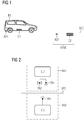
- Fig. 1 shows an electric vehicle EV which, in addition to other - not shown - functional components, has a vehicle-side induction coil C1 and a vehicle-side connection module AU1, which are each arranged, for example, on the underside of the electric vehicle EV.
- the electric vehicle EV approaches an inductive charging station EVSE in order to carry out inductive charging of batteries (not shown) of the electric vehicle EV after the electric vehicle EV has come to a standstill or while driving slowly.
- the inductive charging station EVSE has, in addition to other functional components (not shown), a connection module AU2 on the charging station side and an induction coil C2 on the charging station side.
- the two last-mentioned functional components AU2, C2 are located at the same level as, just above or below a roadway level SFC.
- the electric vehicle EV and the charging station EVSE are associated via an association connection in order to prevent an unauthorized vehicle from being charged.
- Fig. 2 shows a detailed representation of a vehicle-side connection module AU1 and a charging station-side connection module AU2, which is arranged according to the drawing below the road level SFC.
- the illustrated arrangement of both connection modules AU1, AU2 corresponds to an intended parking position in which both connection modules are aligned along their main axis. In such a parking position, the induction coil C1 on the vehicle side is also arranged directly above and essentially congruent with the induction coil C2 on the charging station side.
- connection module AU1 on the electric vehicle side comprises a connection unit CU, a first transmitter TR1 or antenna TR1 and a second transmitter TR2 or antenna TR2.
- the connection module AU2 on the charging station side comprises a connection unit CU and a first transmitter TR1 or antenna TR1.
- the respective first transmitter TR1 has an essentially directional transmission characteristic
- the second transmitter TR2 an essentially omnidirectional transmission characteristic.
- connection module AU2 on the charging station side only has a first directional transmitter TR1.
- a configuration of the charging station-side connection module AU2 that is essentially identical to the electric vehicle-side connection module AU1 is also possible, in which the charging-station-side connection module AU2 also includes a second transmitter TR2 with an essentially omnidirectional transmission characteristic.
- Omnidirectional transmitters send or receive non-directionally, i.e. essentially spherical in the direction of their main axis and are preferably designed as rod antennas.
- Directional or directional transmitters enable the transmission to be aligned in a predeterminable direction. These are preferably designed as antennas with a corresponding geometry. These usually have a lobe-shaped directional characteristic in the direction of their main axis.
- the compromising transmitter could increase its own transmission strength so that it exceeds the transmission strength of the charging station-side connection module AU2.
- a first transmitter TR1 with a directional transmission characteristic would be contained in the connection module AU1 on the electric vehicle side. With such a directional transmitter TR1 alone, however, no assessment can be made as to whether the charging station EVSE or the compromising transmitter is the correct connection partner of the association connection.
- the association connection between the electric vehicle EV and the charging station EVSE is checked by the connection module in the electric vehicle AU1 provided omnidirectional transmitter TR2 provided.
- the transmission strength received by the second transmitter TR2 on the electric vehicle side has a higher or a significantly higher value than the transmission strength received by the first transmitter TR1 on the electric vehicle side, a compromising transmitter is to be assumed.
- the radio connection to be set up for the exchange of positioning, identification and billing information between the charging station EVSE and the electric vehicle EV is preferably maintained via the respective directional first transmitter TR1.
- the approach according to the invention provides for a pair of transmitters TR1, TR2 with an omnidirectional and with a directional transmission characteristic to be provided when an association connection is set up between an electric vehicle EV and a charging station EVSE. After the association connection has been established with the formation of a directional radio connection, this is checked with the participation of an omnidirectional transmitter TR2. This measure enables an undesired association connection with a compromising transmitter to be prevented.
Landscapes
- Engineering & Computer Science (AREA)
- Power Engineering (AREA)
- Transportation (AREA)
- Mechanical Engineering (AREA)
- Computer Networks & Wireless Communication (AREA)
- Signal Processing (AREA)
- Electric Propulsion And Braking For Vehicles (AREA)
- Charge And Discharge Circuits For Batteries Or The Like (AREA)
- Physics & Mathematics (AREA)
- General Physics & Mathematics (AREA)
- Radar, Positioning & Navigation (AREA)
- Remote Sensing (AREA)
- Mobile Radio Communication Systems (AREA)
Description
- Die Erfindung betrifft Mittel und Verfahren zur Herstellung einer Assoziationsverbindung zwischen einem Elektrofahrzeugs und einer induktiven Ladestation.
- Zur Aufladung eines Elektrofahrzeugs an einer Ladestation sind induktive Ladesysteme bekannt. Hierbei befinden sich sowohl an der Unterseite des Elektrofahrzeugs als auch in der bodenseitigen Ladestation Spulensysteme. Über ein magnetisches Wechselfeld, das dieses Spulensystem durchdringt, wird Energie von der Ladestation zum Elektrofahrzeug induktiv übertragen.
- Ein induktiver Ladevorgang kann nach einer Positionierung des Elektrofahrzeugs auf der Ladestation durchgeführt werden, ohne dass hierzu ein Aussteigen des Fahrzeugführers oder eine Verbindung mit einem Ladekabel erforderlich ist. Zum Austausch von Positionierungs-, Identifizierungs- und Abrechnungsinformationen hat sich eine Kommunikationsverbindung zwischen der Ladestation und dem Elektrofahrzeug bewährt, welche während des Anfahrvorgangs und während des Aufladungsvorgangs bei einem Stillstand des Elektrofahrzeugs aufrechterhalten bleibt.
- Um ein Elektrofahrzeug mit geringen Verlusten und geringer Streustrahlung induktiv zu laden, ist es notwendig, das Spulensystem der Ladestation und das Spulensystem des Elektrofahrzeugs möglichst exakt überlappend zu positionieren. Weiterhin muss eine eindeutige Zuordnung zwischen dem Elektrofahrzeug und der Ladestation erfolgen. Diese eindeutige Zuordnung bzw. »Assoziationsverbindung« ist erforderlich, um sicherzustellen, dass die Kommunikationsverbindung nur mit demjenigen Elektrofahrzeug unterhalten wird, welches auf einer vorbestimmten Ladestation induktiv geladen werden soll.
- Zur Gewährleistung einer eindeutigen Zuordnung zwischen einem Elektrofahrzeug und einer vorgesehenen Ladestation sind bereits Verfahren bekannt. Gemäß einem in der Druckschrift
DE 102012012860 A1 offengelegten Vorschlag der Anmelderin ist vorgesehen, eine Assoziationsverbindung zwischen einem Elektrofahrzeug und einer Ladestation über eine Kopplung einer fahrzeugseitigen Antenne mit einer ladestationsseitigen Antenne zu schaffen, wobei durch die Anordnung der fahrzeugseitigen Antenne zur ladestationsseitigen Antenne gewährleistet sein soll, dass nur diese beiden Antennen eine gemeinsame Verbindung aufbauen können. Hierzu ist eine Richtcharakteristik der ladestationsseitigen Antenne derart gestaltet, dass ein von der ladestationsseitigen Antenne abgestrahltes Signal lediglich in einem vorgebbaren Bereich um eine direkte Sichtlinie zwischen beiden Antennen empfangbar ist. Weiterhin ist vorgesehen, einen Betrieb der ladestationsseitigen Antenne erst bei Erreichen eines vorgebbaren Bereichs, insbesondere einer Ladeposition zu aktivieren, um ein Kompromittieren der Assoziationsverbindung zu erschweren. -
WO 2014/010447 A1 beschreibt eine fahrzeuggetragene Kommunikationsvorrichtung, die ein Anfragesignal sendet, während die Sendeleistung in Stufen reduziert wird. Wenn ein Antwortsignal einer einzigen Stromspeiseeinrichtung empfangen wird, wird automatisch eine Kopplung mit einer Kommunikationseinrichtung auf der Seite der Stromspeiseeinrichtung durchgeführt. -
US 2013/0049456 A1 beschreibt eine Vorrichtung und ein Verfahren zum Steuern eines magnetischen Feldes unter Verwendung von zwei Resonatoren in einem drahtlosen Energieübertragungssystem. -
DE 10 2012 204 021 A1 beschreibt ein Verfahren zum Laden eines Energiespeichers eines elektrischen Kraftwagens, bei welchem Energie von einer fahrzeugexternen Ladeeinrichtung zu dem Energiespeicher des Kraftwagens übertragen wird. -
US 2012/0095830 A1 beschreibt eine Vorrichtung und ein Verfahr zum Sammeln von Informationen über ein elektrisches Fahrzeug in Echtzeit zum Versteigern von Nebendiensten. - Das in der genannten Druckschrift angesprochene Problemfeld eines Kompromittierens der Assoziationsverbindung hat sich in weiteren Feldversuchen als Problem erwiesen. So besteht die Gefahr, dass ein Sender in einem Funkbereich der Ladestation in maliziöser Weise vorgibt, als Gegenstelle einer aufzubauenden Assoziationsverbindung ausgibt und hierzu mit seiner eigenen Sendeleistung die der an sich vorgesehenen Antenne der Ladestation übertrifft.
- Aufgabe der Erfindung ist es, Maßnahmen zu schaffen, welche eine kompromittierungssichere Assoziationsverbindung eines Elektrofahrzeugs mit einer zur Ladung des Elektrofahrzeugs vorgesehenen Ladestation gewährleisten.
- Die Aufgabe wird erfindungsgemäß durch ein Verfahren mit den Merkmalen des Patentanspruchs 1 gelöst.
- Erfindungsgemäß ist ein Verfahren zur Herstellung einer Assoziationsverbindung zwischen einem Elektrofahrzeug und einer Ladestation vorgesehen, welches die nachfolgend erläuterten Schritte umfasst. In einem ersten Schritt erfolgt ein Aufbau der Assoziationsverbindung zwischen dem Elektrofahrzeug und der Ladestation unter Ausbildung einer gerichteten Funkverbindung. Unter einer gerichteten Funkverbindung ist eine Funkverbindung zu verstehen, bei welcher sowohl Sender- als auch Empfängerseitig eine Richtcharakteristik in einer vordefinierten Richtung vorgesehen ist. Eine gerichtete Funkverbindung erstreckt sich beispielsweise keulenförmig von einer Bodennähe der Ladestation platzierten Sender in Richtung einer Unterseite des Elektrofahrzeugs. In einem zweiten Schritt erfolgt eine Überprüfung der Assoziationsverbindung zwischen dem Elektrofahrzeug und der Ladestation in Zusammenwirkung mindestens eines die gerichtete Funkverbindung bewirkenden ersten Transmitters mit einem omnidirektionalen Transmitter; wobei zur Überprüfung der Assoziationsverbindung eine Transmissionsstärke der gerichteten Funkverbindung mit einer über den omnidirektionalen Transmitter übertragenen Transmissionsstärke verglichen wird ; und wobei ein negatives Ergebnis der Überprüfung ausgegeben wird, wenn die über den omnidirektionalen Transmitter übertragene Transmissionsstärke die Transmissionsstärke der gerichteten Funkverbindung übersteigt. Unter besagtem omnidirektionalen Transmitter ist ein Transmitter, also beispielsweise eine Antenne, mit ungerichteter, also beispielsweise kugelförmiger Richtcharakteristik zu verstehen.
- Während die bereits vorbekannte gerichtete Funkverbindung eine Positionierung des Elektrofahrzeugs dahingehend unterstützt, dass eine beispielsweise auf Fahrzeugseite gemessene Transmissionsstärke mit einer fortschreitenden Annäherung an eine vorgesehenen Ladeposition aufgrund der Richtcharakteristik fortschreitend zunimmt und schließlich einen Maximalwert bei Erreichen der vorgesehenen Ladeposition einnimmt, kann mit der auf Fahrzeugseite gemessenen Transmissionsstärke alleine aufgrund der gerichteten Funkverbindung nicht unterschieden werden, ob die Funkverbindung von der hierfür vorgesehenen Ladestation oder von einem weiteren kompromittierenden Sender herrührt. Diesen Mangel beseitigt der erfindungsgemäße Schritt einer Überprüfung der Assoziationsverbindung zwischen dem Elektrofahrzeug und der Ladestation in Zusammenwirkung mit einem omnidirektionalen Transmitter. Mit einer vorzugsweise auf Elektrofahrzeugseite gemessenen Transmissionsstärke unter Einsatz des omnidirektionalen Transmitters wird ein Vergleich zwischen der Transmissionsstärke der omnidirektionalen Funkverbindung und der Transmissionsstärke der gerichteten Funkverbindung ermöglicht.
- Die Aufgabe wird des Weiteren durch eine erfindungsgemäße Verbindungseinheit mit den Merkmalen des Patentanspruchs 8 gelöst.
- Erfindungsgemäß ist eine Verbindungseinheit zur Herstellung einer Assoziationsverbindung zwischen einem Elektrofahrzeug und einer Ladestation vorgesehen, welches die nachfolgend erläuterten Funktionsgruppen umfasst. Die Verbindungseinheit verfügt über eine erste Schnittstelle zu mindestens einen ersten Transmitter, welcher eine im Wesentlichen gerichtete Transmissionscharakteristik aufweist. Die Verbindungseinheit verfügt des Weiteren über eine zweite Schnittstelle zu mindestens einem zweiten Transmitter, welcher eine im Wesentlichen omnidirektionale, das heißt ungerichtete Transmissionscharakteristik aufweist. Die Verbindungseinheit ist in Zusammenwirkung mit dem ersten Transmitter eingerichtet zum Aufbau einer Assoziationsverbindung zwischen dem Elektrofahrzeug und der Ladestation und ferner eingerichtet zur Überprüfung der Assoziationsverbindung in Zusammenwirkung mit dem zweiten Transmitter, wobei die Verbindungseinheit zur Überprüfung der Assoziationsverbindung eingerichtet ist, eine Transmissionsstärke der gerichteten Funkverbindung mit einer über den omnidirektionalen Transmitter übertragenen Transmissionsstärke zu vergleichen und wobei die Verbindungseinheit zur Ausgabe eines negativen Ergebnisses der Überprüfung eingerichtet ist, wenn die über den zweiten Transmitter übertragene Transmissionsstärke die Transmissionsstärke der gerichteten Funkverbindung übersteigt.
- Die Erfindung umfasst ferner ein Elektrofahrzeug mit einer erfindungsgemäßen Verbindungseinheit sowie eine Ladestation mit einer erfindungsgemäßen Verbindungseinheit.
- Weitere Ausgestaltungen der Erfindung sind Gegenstand der abhängigen Ansprüche.
- Gemäß einer bevorzugten Ausgestaltung der Erfindung ist vorgesehen, dass die gerichtete Funkverbindung zwischen einem ladestationsseitig angeordneten, gerichteten Transmitter und einem elektrofahrzeugseitig angeordneten gerichteten Transmitter erfolgt.
- Gemäß einer weiteren Ausgestaltung der Erfindung ist vorgesehen, dass der omnidirektionale Transmitter elektrofahrzeugseitig angeordnet ist.
- Alternativ ist eine Ausgestaltung vorteilhaft, bei der omnidirektionale Transmitter sowohl elektrofahrzeugseitig als auch ladestationsseitig angeordnet sind. Die genannte Ausgestaltung gewährleistet, dass eine Transmission, also ein jeweils gegenüberliegender Sende- und Empfangsbetrieb auf beiden Seiten, das heißt ladestationsseitig und elektrofahrzeugseitig, symmetrisch erfolgt. Diese vorteilhafte Maßnahme ermöglicht eine Vorsehung identischer Verbindungseinheiten sowohl auf Seiten des Elektrofahrzeugs als auch auf Seiten der Ladestation.
- Gemäß einer weiteren Ausgestaltung der Erfindung ist vorgesehen, dass der gerichtete Transmitter in geringer Entfernung zum omnidirektionalen Transmitter angeordnet ist. Diese Ausgestaltung betrifft vorzugsweise das Elektrofahrzeug, alternativ auch die Ladestation. Aufgrund der geringen Entfernung gemäß dieser Ausgestaltung wird eine Überprüfung der Assoziationsverbindung dahingehend vereinfacht, dass sowohl für die gerichtete Funkverbindung als auch für die omnidirektionale Funkverbindung im Wesentlichen ähnliche Betriebsbedingungen vorherrschen, welche die Überprüfung der Assoziationsverbindung erleichtern.
- Bei dem Verfahren ist vorgesehen, dass zur Überprüfung der Assoziationsverbindung eine Transmissionsstärke der gerichteten Funkverbindung mit einer über den omnidirektionalen Transmitter übertragenen bzw. ermittelten Transmissionsstärke verglichen wird. Gemäß der Erfindung wird also die Transmissionsstärke, also Signalstärke beziehungsweise Feldstärke der omnidirektionalen mit der der gerichteten Funkverbindung verglichen. Die Überprüfung der Transmissionsstärke stellt dabei die vorteilhafteste Überprüfung der Assoziationsverbindung dar.
- Bei dem Verfahren ist vorgesehen, dass zur Überprüfung der Assoziationsverbindung ein negatives Ergebnis ausgegeben wird, wenn die Transmissionsstärke der mit dem omnidirektionalen Transmitter übertragenen bzw. ermittelten Transmissionsstärke die Transmissionsstärke der gerichteten Funkverbindung übersteigt. Es ist nämlich davon auszugehen, dass ein kompromittierender weiterer Sender in maliziöser Absicht das von der Ladestation gesendete Funksignal zu überstimmen versucht.
- Gemäß einer weiteren Ausgestaltung der Erfindung ist vorgesehen, dass die Assoziationsverbindung infolge dieses oben erläuterten negativen Ergebnisses gelöst wird und/oder eine Fehlermeldung ausgegeben wird. Bei einem negativen Ergebnis der Überprüfung der Assoziationsverbindung wird also eine bereits begonnene Assoziationsverbindung des Elektrofahrzeugs mit der hierfür vorgesehenen Ladestation gelöst, um eine fehlerhafte Zuordnung aufgrund eines kompromittierenden Senders zu vermeiden.
- Im Folgenden werden weitere Ausführungsbeispiele und Vorteile der Erfindung anhand der Zeichnung näher erläutert. Dabei zeigen:
- Fig. 1
- eine schematische Darstellung eines an eine Ladestation anfahrenden Elektrofahrzeugs; und
- Fig. 2
- eine schematische Darstellung einer erfindungsgemäßen elektrofahrzeugseitigen Verbindungseinheit in Zusammenwirkung mit einer ladestationsseitigen Verbindungseinheit.
-
Fig. 1 zeigt ein Elektrofahrzeug EV, welches neben anderen - nicht dargestellten - Funktionskomponenten eine fahrzeugseitige Induktionsspule C1 sowie ein fahrzeugseitiges Verbindungsmodul AU1 aufweist, welche beispielsweise jeweils an der Unterseite des Elektrofahrzeugs EV angeordnet sind. In den folgenden Ausführungen wird angenommen, dass sich das Elektrofahrzeug EV einer induktiven Ladestation EVSE nähert, um nach einem Stillstand des Elektrofahrzeugs EV oder im Zuge einer langsamen Fahrt eine induktive Ladung von - nicht dargestellten - Akkumulatoren des Elektrofahrzeugs EV durchzuführen. - Die induktive Ladestation EVSE weist neben anderen - nicht dargestellten - Funktionskomponenten ein ladestationsseitiges Verbindungsmodul AU2 sowie eine ladestationsseitige Induktionsspule C2 auf. Die beiden letztgenannten Funktionskomponenten AU2, C2 befinden sich in Höhe, knapp oberhalb oder unterhalb eines Fahrbahnniveaus SFC.
- Nach Erreichen einer Ladeposition wird eine Assoziierung des Elektrofahrzeugs EV und der Ladestation EVSE über eine Assoziationsverbindung durchgeführt, um zu verhindern, dass ein nicht berechtigtes Fahrzeug aufgeladen wird.
-
Fig. 2 zeigt eine Detaildarstellung eines fahrzeugseitigen Verbindungsmoduls AU1 und eines ladestationsseitigen Verbindungsmodul AU2, welches gemäß Zeichnung unterhalb des Fahrbahnniveaus SFC angeordnet ist. Die inFig. 2 dargestellte Anordnung beider Verbindungsmodule AU1, AU2 entspricht einer vorgesehenen Parkposition, bei welcher beide Verbindungsmodule entlang ihrer Hauptachse fluchten. In einer solchen Parkposition ist auch die fahrzeugseitige Induktionsspule C1 direkt oberhalb und im Wesentlichen deckungsgleich zur ladestationsseitigen Induktionsspule C2 angeordnet. - Das elektrofahrzeugseitige Verbindungsmodul AU1 umfasst eine Verbindungseinheit CU, einen ersten Transmitter TR1 bzw. Antenne TR1 und einen zweiten Transmitter TR2 bzw. Antenne TR2. Das ladestationsseitige Verbindungsmodul AU2 umfasst eine Verbindungseinheit CU sowie einen ersten Transmitter TR1 bzw. Antenne TR1. Der jeweilige erste Transmitter TR1 weist eine im Wesentlichen gerichtete Transmissionscharakteristik auf, der zweite Transmitter TR2 eine im Wesentlichen omnidirektionale Transmissionscharakteristik.
- In dem gemäß
Fig. 2 erläuterten Ausführungsbeispiel weist das ladestationsseitige Verbindungsmodul AU2 lediglich einen ersten gerichteten Transmitter TR1 auf. In einer alternativen - nicht dargestellten - Ausführungsform ist jedoch auch eine mit dem elektrofahrzeugseitigen Verbindungsmodul AU1 im Wesentlichen identische Ausgestaltung des ladestationsseitigen Verbindungsmoduls AU2 möglich, bei der also auch das ladestationsseitige Verbindungsmodul AU2 einen zweiten Transmitter TR2 mit einer im Wesentlichen omnidirektionalen Transmissionscharakteristik umfasst. - Omnidirektionale Transmitter senden oder empfangen ungerichtet, d.h. im Wesentlichen kugelförmig in Richtung ihrer Hauptachse und sind bevorzugt als Stabantenne ausgeführt. Direktionale oder gerichtete Transmitter ermöglichen eine Ausrichtung der Transmission in einer vorgebbaren Richtung. Diese sind bevorzugt als Antenne mit einer entsprechenden Geometrie ausgeführt Üblicherweise weisen diese eine keulenförmige Richtcharakteristik in Richtung ihrer Hauptachse auf.
- Wird nun mittels eines - nicht dargestellten - kompromittierenden Senders versucht, eine Funkverbindung zum fahrzeugseitigen Verbindungsmodul AU1 aufzubauen, könnte der kompromittierende Sender seine eigene Transmissionsstärke so erhöhen, dass diese die Transmissionsstärke des ladestationsseitigen Verbindungsmoduls AU2 übertrifft. Im Stand der Technik wäre lediglich ein erster Transmitter TR1 mit einer gerichteten Transmissionscharakteristik im elektrofahrzeugseitigen Verbindungsmodul AU1 enthalten. Mit einem solchen gerichteten Transmitter TR1 alleine kann jedoch keine Beurteilung erfolgen, ob die Ladestation EVSE oder der kompromittierende Sender der richtige Verbindungspartner der Assoziationsverbindung ist.
- Erfindungsgemäß ist daher eine Überprüfung der Assoziationsverbindung zwischen dem Elektrofahrzeug EV und der Ladestation EVSE durch den im elektrofahrzeugseitigen Verbindungsmodul AU1 vorgesehenen omnidirektionalen Transmitter TR2 vorgesehen.
- Weist die vom zweiten elektrofahrzeugseitigen Transmitter TR2 empfangene Transmissionsstärke einen höheren oder eine wesentlich höheren Wert auf als die die vom ersten elektrofahrzeugseitigen Transmitter TR1 empfangene Transmissionsstärke, ist von einem kompromittierenden Sender auszugehen.
- Nachdem das Elektrofahrzeug EV eine Parkposition im Bereich seiner zugeordneten Ladestation EVSE eingenommen hat, wird die zum Austausch von Positionierungs-, Identifizierungs- und Abrechnungsinformationen einzurichtende Funkverbindung zwischen der Ladestation EVSE und dem Elektrofahrzeug EV vorzugsweise über die jeweiligen gerichteten ersten Transmitter TR1 unterhalten.
- Es erweist sich als vorteilig zur Ausführung der Erfindung, dass gängige Steuereinheiten zur Unterhaltung von Funkverbindungen mit sogenannten »Wireless Interfache Chips« eine Mehrzahl von Transmitter bzw. Antennen unterstützen und eine dynamische Umschaltung zwischen den Antennen unterstützen. Auf diese Weise sind die erfindungsgemäßen Mittel mit marktgängigen Komponenten zu verwirklichen.
- Der erfindungsgemäße Ansatz sieht zusammenfassend vor, bei einem Aufbau einer Assoziationsverbindung zwischen einem Elektrofahrzeug EV und einer Ladestation EVSE ein Transmitterpaar TR1, TR2 mit einer omnidirektionalen und mit einer gerichteten Transmissionscharakteristik vorzusehen. Nachdem ein Aufbau der Assoziationsverbindung unter Ausbildung einer gerichteten Funkverbindung erfolgt, wird diese mit Beteiligung eines omnidirektionalen Transmitters TR2 überprüft. Diese Maßnahme ermöglicht ein Unterbinden einer unerwünschten Assoziationsverbindung mit einem kompromittierenden Sender.
Claims (8)
- Verfahren zur Herstellung einer Assoziationsverbindung zwischen einem Elektrofahrzeug (EV) und einer Ladestation (EVSE), umfassend folgende Schritte:- Aufbau der Assoziationsverbindung zwischen dem Elektrofahrzeug (EV) und der Ladestation (EVSE) unter Ausbildung einer gerichteten Funkverbindung;- Überprüfung der Assoziationsverbindung zwischen dem Elektrofahrzeug (EV) und der Ladestation (EVSE) in Zusammenwirkung mindestens eines die gerichtete Funkverbindung bewirkenden ersten Transmitters (TR1) mit einem omnidirektionalen Transmitter (TR2),wobei zur Überprüfung der Assoziationsverbindung eine Transmissionsstärke der gerichteten Funkverbindung mit einer über den omnidirektionalen Transmitter (TR2) übertragenen Transmissionsstärke verglichen wird und wobei ein negatives Ergebnis der Überprüfung ausgegeben wird, wenn die über den omnidirektionalen Transmitter (TR2) übertragene Transmissionsstärke die Transmissionsstärke der gerichteten Funkverbindung übersteigt.
- Verfahren nach Patentanspruch 1, dadurch gekennzeichnet, dass die gerichtete Funkverbindung zwischen einem ladestationsseitig angeordneten gerichteten Transmitter (TR1) und einem elektrofahrzeugseitig angeordneten gerichteten Transmitter (TR1) erfolgt.
- Verfahren nach einem der vorgenannten Ansprüche, dadurch gekennzeichnet, dass der omnidirektionale Transmitter (TR2) elektrofahrzeugseitig angeordnet ist.
- Verfahren nach einem der vorgenannten Ansprüche 2 und 3, dadurch gekennzeichnet, dass der gerichteten Transmitter (TR1) in geringer Entfernung zum omnidirektionalen Transmitter (TR2) angeordnet ist.
- Verfahren nach einem der vorgenannten Ansprüche, dass die Assoziationsverbindung in Folge eines negativen Ergebnisses gelöst wird und/oder eine Fehlermeldung ausgegeben wird.
- Verbindungseinheit zur Herstellung einer Assoziationsverbindung zwischen einem Elektrofahrzeug (EV) und einer Ladestation (EVSE), umfassend:- eine Schnittstelle zu mindestens einem ersten Transmitter (TR1), der erste Transmitter (TR1) aufweisend eine im Wesentlichen gerichtete Transmissionscharakteristik; und- eine Schnittstelle zu mindestens einem zweiten Transmitter (TR2), der zweite Transmitter (TR2) aufweisend eine im Wesentlichen omnidirektionale Transmissionscharakteristik;wobei die Verbindungseinheit (CU) in Zusammenwirkung mit dem ersten Transmitter (TR1) eingerichtet ist zum Aufbau einer Assoziationsverbindung zwischen dem Elektrofahrzeug (EV) und der Ladestation (EVSE); undwobei die Verbindungseinheit (CU) in Zusammenwirkung mit dem zweiten Transmitter (TR2) eingerichtet ist zur Überprüfung der Assoziationsverbindung,wobei die Verbindungseinheit (CU) zur Überprüfung der Assoziationsverbindung eingerichtet ist, eine Transmissionsstärke der gerichteten Funkverbindung mit einer über den omnidirektionalen Transmitter (TR2) übertragenen Transmissionsstärke zu vergleichen und wobei die Verbindungseinheit (CU) zur Ausgabe eines negativen Ergebnisses der Überprüfung eingerichtet ist, wenn die über den zweiten Transmitter (TR2) übertragene Transmissionsstärke die Transmissionsstärke der gerichteten Funkverbindung übersteigt.
- Elektrofahrzeug, umfassend eine Verbindungseinheit gemäß Patentanspruch 6.
- Ladestation, umfassend eine Verbindungseinheit gemäß Patentanspruch 6.
Applications Claiming Priority (2)
| Application Number | Priority Date | Filing Date | Title |
|---|---|---|---|
| DE102014210813.6A DE102014210813B3 (de) | 2014-06-05 | 2014-06-05 | Mittel und Verfahren zur Herstellung einer Assoziationsverbindung |
| PCT/EP2015/057293 WO2015185244A2 (de) | 2014-06-05 | 2015-04-02 | Mittel und verfahren zur herstellung einer assoziationsverbindung |
Publications (2)
| Publication Number | Publication Date |
|---|---|
| EP3119637A2 EP3119637A2 (de) | 2017-01-25 |
| EP3119637B1 true EP3119637B1 (de) | 2021-11-17 |
Family
ID=52781107
Family Applications (1)
| Application Number | Title | Priority Date | Filing Date |
|---|---|---|---|
| EP15713506.2A Active EP3119637B1 (de) | 2014-06-05 | 2015-04-02 | Verbindungseinheit und verfahren zur herstellung einer assoziationsverbindung zwischen elektrofahrzeug und ladestation |
Country Status (5)
| Country | Link |
|---|---|
| US (1) | US10207593B2 (de) |
| EP (1) | EP3119637B1 (de) |
| CN (1) | CN106458052B (de) |
| DE (1) | DE102014210813B3 (de) |
| WO (1) | WO2015185244A2 (de) |
Cited By (2)
| Publication number | Priority date | Publication date | Assignee | Title |
|---|---|---|---|---|
| LU500992B1 (de) | 2021-12-12 | 2023-06-12 | Eclever Entw Ohg | Verfahren zur prüfung von ladesäulen und deren funktionsumfang |
| DE102021214171A1 (de) | 2021-12-12 | 2023-06-15 | eClever Entwicklungs OHG | Verfahren zur prüfung von ladesäulen und deren funktionsumfang |
Families Citing this family (6)
| Publication number | Priority date | Publication date | Assignee | Title |
|---|---|---|---|---|
| DE102014210813B3 (de) | 2014-06-05 | 2015-10-01 | Siemens Aktiengesellschaft | Mittel und Verfahren zur Herstellung einer Assoziationsverbindung |
| DE102015218410B4 (de) * | 2015-09-24 | 2025-11-06 | Schaeffler Technologies AG & Co. KG | Verfahren und Einrichtung zum Bestimmen der Absolutposition eines Fahrzeuges |
| CN108248436A (zh) * | 2018-02-02 | 2018-07-06 | 上海易沐科技有限公司 | 充电桩端控制设备、充电控制系统及车辆充电控制方法 |
| US11177702B2 (en) * | 2018-10-31 | 2021-11-16 | Hyundai Motor Company | Position alignment apparatus and method for wireless power transfer |
| US11577619B2 (en) * | 2020-12-01 | 2023-02-14 | Rivian Ip Holdings, Llc | Charging station with climate control |
| DE102021211584A1 (de) | 2021-10-14 | 2023-04-20 | Robert Bosch Gesellschaft mit beschränkter Haftung | Verfahren und Vorrichtung zum Authentifizieren eines Kraftfahrzeuges an einer Wasserstofftanksäule |
Family Cites Families (11)
| Publication number | Priority date | Publication date | Assignee | Title |
|---|---|---|---|---|
| DE69736278T2 (de) * | 1996-02-22 | 2007-06-06 | Kvaser Consultant Ab | Vorrichtung zur Beeinflussung von Nachrichten in einem CAN-System |
| CN101652942A (zh) * | 2007-03-15 | 2010-02-17 | 罗盘自动跟踪器有限责任公司 | 用于测向仪的设备和方法 |
| US10343535B2 (en) | 2010-04-08 | 2019-07-09 | Witricity Corporation | Wireless power antenna alignment adjustment system for vehicles |
| US8594859B2 (en) * | 2010-10-18 | 2013-11-26 | Qualcomm Incorporated | Method and system for real-time aggregation of electric vehicle information for real-time auctioning of ancillary services, and real-time lowest cost matching electric vehicle energy demand to charging services |
| US8513915B2 (en) * | 2010-10-21 | 2013-08-20 | GM Global Technology Operations LLC | Vehicle alignment for inductive charging |
| DK3301781T3 (da) * | 2010-10-27 | 2020-12-07 | The Aes Corp | Fremgangsmåder til anvendelse med elektriske indretninger til at administrere energiservices |
| KR101880030B1 (ko) * | 2011-08-25 | 2018-07-23 | 삼성전자주식회사 | 무선 전력 전송 시스템에서 2개의 소스 공진기를 이용해서 자기장을 제어하는 소스 장치 및 방법 |
| DE102012204021A1 (de) * | 2012-03-14 | 2013-09-19 | Siemens Aktiengesellschaft | Verfahren und System zum Laden eines Energiespeichers eines elektrischen Kraftwagens |
| DE102012012860B4 (de) | 2012-06-28 | 2025-08-07 | Siemens Aktiengesellschaft | Bereitstellen einer Assoziationsverbindung |
| JP5849876B2 (ja) | 2012-07-11 | 2016-02-03 | 株式会社豊田自動織機 | 車載通信装置、および通信方法 |
| DE102014210813B3 (de) | 2014-06-05 | 2015-10-01 | Siemens Aktiengesellschaft | Mittel und Verfahren zur Herstellung einer Assoziationsverbindung |
-
2014
- 2014-06-05 DE DE102014210813.6A patent/DE102014210813B3/de not_active Expired - Fee Related
-
2015
- 2015-04-02 CN CN201580029799.XA patent/CN106458052B/zh not_active Expired - Fee Related
- 2015-04-02 WO PCT/EP2015/057293 patent/WO2015185244A2/de not_active Ceased
- 2015-04-02 US US15/316,363 patent/US10207593B2/en active Active
- 2015-04-02 EP EP15713506.2A patent/EP3119637B1/de active Active
Non-Patent Citations (1)
| Title |
|---|
| None * |
Cited By (3)
| Publication number | Priority date | Publication date | Assignee | Title |
|---|---|---|---|---|
| LU500992B1 (de) | 2021-12-12 | 2023-06-12 | Eclever Entw Ohg | Verfahren zur prüfung von ladesäulen und deren funktionsumfang |
| DE102021214171A1 (de) | 2021-12-12 | 2023-06-15 | eClever Entwicklungs OHG | Verfahren zur prüfung von ladesäulen und deren funktionsumfang |
| WO2023105093A1 (de) | 2021-12-12 | 2023-06-15 | eClever Entwicklungs OHG | Verfahren zur prüfung von ladesäulen und deren funktionsumfang |
Also Published As
| Publication number | Publication date |
|---|---|
| CN106458052A (zh) | 2017-02-22 |
| US10207593B2 (en) | 2019-02-19 |
| US20180147949A1 (en) | 2018-05-31 |
| WO2015185244A3 (de) | 2016-08-25 |
| EP3119637A2 (de) | 2017-01-25 |
| CN106458052B (zh) | 2020-07-21 |
| DE102014210813B3 (de) | 2015-10-01 |
| WO2015185244A2 (de) | 2015-12-10 |
Similar Documents
| Publication | Publication Date | Title |
|---|---|---|
| DE102014210813B3 (de) | Mittel und Verfahren zur Herstellung einer Assoziationsverbindung | |
| EP3507966B1 (de) | Verfahren zum aufbau eines drahtlosen fahrzeug-netzwerks | |
| DE102013016880A1 (de) | Verfahren zur Positionierung eines Fahrzeugs an einer induktiven Ladestation | |
| EP3207537B1 (de) | Verfahren zum aufbau und betrieb eines drahtlosen fahrzeug-netzwerks | |
| DE102012214199A1 (de) | Vorrichtung und Verfahren zur Positionierung durch Triangulation | |
| DE102016121883B4 (de) | Verfahren und System zum Laden eines Elektrofahrzeugs | |
| EP3551496B1 (de) | Fahrzeugladesystem und fahrzeugladeverfahren | |
| EP3864427B1 (de) | Vorrichtung zur positionsbestimmung eines relativ zu einem fahrzeug bewegbaren gegenstandes und ein damit ausgestattetes fahrzeug | |
| WO2019052800A1 (de) | Verfahren zum bereitstellen einer kommunikationsverbindung zwischen einer stationären elektrischen ladestation und einem kraftfahrzeug sowie steuervorrichtung und ladesystem | |
| WO2019192995A1 (de) | Vorrichtung zur positionierung eines kraftfahrzeugs auf einem stellplatz für induktives laden | |
| DE102012221128A1 (de) | Verfahren und Vorrichtung zum Aufladen eines Elektrofahrzeugs, entsprechende Ladesäulenvorrichtung und entsprechendes Elektrofahrzeug | |
| DE102015217275A1 (de) | Verfahren und Vorrichtung zum Bestimmen, ob ein Kraftfahrzeug momentan manuell oder automatisch geführt wird | |
| EP3079944B1 (de) | Herstellen einer lade- und einer zugeordneten kommunikationsverbindung | |
| DE102014003098A1 (de) | Anordnung und Verfahren zur Versorgung mobiler elektrischer Verbraucher | |
| DE102014221884A1 (de) | Sensoranordnung zur Bereitstellung von Zusatzinformationen in einem induktiven Ladesystem | |
| DE102014208084A1 (de) | Schätzen einer Empfangswahrscheinlichkeit eines Datenpakets und einer Übertragungsrate für Datenpakete | |
| DE102016015458A1 (de) | Vorrichtung und Verfahren zum induktiven Laden eines elektrischen Energiespeichers eines Fahrzeugs | |
| WO2019086689A1 (de) | Verfahren und system zum veranlassen eines ausweichmanövers von autonomen oder teilautonomen fahrzeugen | |
| DE102013219537A1 (de) | Fahrzeugpositionierung beim Laden eines elektrisch antreibbaren Fahrzeugs | |
| EP4058887B1 (de) | Verfahren zur übertragung von daten | |
| DE102011079321A1 (de) | Überwachung von elektrischen Komponenten eines elektrisch betriebenen Kraftfahrzeugs auf Zerstörung | |
| DE102014225906A1 (de) | Bestimmen einer Ladeposition einer Ladeeinrichtung einer Ladestation | |
| WO2017016563A1 (de) | System und verfahren zur energieversorgung eines elektrischen verbrauchers sowie eine energiestation | |
| DE102017011490A1 (de) | Induktive Ladevorrichtung und Fahrzeug | |
| WO2020002237A1 (de) | Fahrzeugladesystem zum laden eines in einem fahrzeug angeordneten energiespeichers |
Legal Events
| Date | Code | Title | Description |
|---|---|---|---|
| STAA | Information on the status of an ep patent application or granted ep patent |
Free format text: STATUS: THE INTERNATIONAL PUBLICATION HAS BEEN MADE |
|
| PUAI | Public reference made under article 153(3) epc to a published international application that has entered the european phase |
Free format text: ORIGINAL CODE: 0009012 |
|
| STAA | Information on the status of an ep patent application or granted ep patent |
Free format text: STATUS: REQUEST FOR EXAMINATION WAS MADE |
|
| 17P | Request for examination filed |
Effective date: 20161018 |
|
| AK | Designated contracting states |
Kind code of ref document: A2 Designated state(s): AL AT BE BG CH CY CZ DE DK EE ES FI FR GB GR HR HU IE IS IT LI LT LU LV MC MK MT NL NO PL PT RO RS SE SI SK SM TR |
|
| AX | Request for extension of the european patent |
Extension state: BA ME |
|
| RAP1 | Party data changed (applicant data changed or rights of an application transferred) |
Owner name: SIEMENS AKTIENGESELLSCHAFT |
|
| DAV | Request for validation of the european patent (deleted) | ||
| DAX | Request for extension of the european patent (deleted) | ||
| REG | Reference to a national code |
Ref country code: DE Ref legal event code: R079 Ref document number: 502015015406 Country of ref document: DE Free format text: PREVIOUS MAIN CLASS: B60L0011180000 Ipc: H02J0007020000 |
|
| STAA | Information on the status of an ep patent application or granted ep patent |
Free format text: STATUS: EXAMINATION IS IN PROGRESS |
|
| RIC1 | Information provided on ipc code assigned before grant |
Ipc: G01S 5/00 20060101ALI20200811BHEP Ipc: H02J 13/00 20060101ALI20200811BHEP Ipc: B60L 53/126 20190101ALI20200811BHEP Ipc: H04L 12/24 20060101ALI20200811BHEP Ipc: B60L 53/36 20190101ALI20200811BHEP Ipc: B60L 53/38 20190101ALI20200811BHEP Ipc: H02J 7/02 20160101AFI20200811BHEP Ipc: G01S 5/02 20100101ALI20200811BHEP Ipc: H04B 7/24 20060101ALI20200811BHEP Ipc: H02J 50/90 20160101ALI20200811BHEP Ipc: H04B 5/00 20060101ALI20200811BHEP Ipc: B60L 53/65 20190101ALI20200811BHEP |
|
| 17Q | First examination report despatched |
Effective date: 20200911 |
|
| GRAP | Despatch of communication of intention to grant a patent |
Free format text: ORIGINAL CODE: EPIDOSNIGR1 |
|
| STAA | Information on the status of an ep patent application or granted ep patent |
Free format text: STATUS: GRANT OF PATENT IS INTENDED |
|
| INTG | Intention to grant announced |
Effective date: 20210708 |
|
| GRAS | Grant fee paid |
Free format text: ORIGINAL CODE: EPIDOSNIGR3 |
|
| GRAA | (expected) grant |
Free format text: ORIGINAL CODE: 0009210 |
|
| STAA | Information on the status of an ep patent application or granted ep patent |
Free format text: STATUS: THE PATENT HAS BEEN GRANTED |
|
| AK | Designated contracting states |
Kind code of ref document: B1 Designated state(s): AL AT BE BG CH CY CZ DE DK EE ES FI FR GB GR HR HU IE IS IT LI LT LU LV MC MK MT NL NO PL PT RO RS SE SI SK SM TR |
|
| REG | Reference to a national code |
Ref country code: GB Ref legal event code: FG4D Free format text: NOT ENGLISH |
|
| REG | Reference to a national code |
Ref country code: DE Ref legal event code: R096 Ref document number: 502015015406 Country of ref document: DE |
|
| REG | Reference to a national code |
Ref country code: IE Ref legal event code: FG4D Free format text: LANGUAGE OF EP DOCUMENT: GERMAN |
|
| REG | Reference to a national code |
Ref country code: AT Ref legal event code: REF Ref document number: 1448844 Country of ref document: AT Kind code of ref document: T Effective date: 20211215 |
|
| REG | Reference to a national code |
Ref country code: LT Ref legal event code: MG9D |
|
| REG | Reference to a national code |
Ref country code: NL Ref legal event code: MP Effective date: 20211117 |
|
| PG25 | Lapsed in a contracting state [announced via postgrant information from national office to epo] |
Ref country code: RS Free format text: LAPSE BECAUSE OF FAILURE TO SUBMIT A TRANSLATION OF THE DESCRIPTION OR TO PAY THE FEE WITHIN THE PRESCRIBED TIME-LIMIT Effective date: 20211117 Ref country code: LT Free format text: LAPSE BECAUSE OF FAILURE TO SUBMIT A TRANSLATION OF THE DESCRIPTION OR TO PAY THE FEE WITHIN THE PRESCRIBED TIME-LIMIT Effective date: 20211117 Ref country code: FI Free format text: LAPSE BECAUSE OF FAILURE TO SUBMIT A TRANSLATION OF THE DESCRIPTION OR TO PAY THE FEE WITHIN THE PRESCRIBED TIME-LIMIT Effective date: 20211117 Ref country code: BG Free format text: LAPSE BECAUSE OF FAILURE TO SUBMIT A TRANSLATION OF THE DESCRIPTION OR TO PAY THE FEE WITHIN THE PRESCRIBED TIME-LIMIT Effective date: 20220217 |
|
| PG25 | Lapsed in a contracting state [announced via postgrant information from national office to epo] |
Ref country code: IS Free format text: LAPSE BECAUSE OF FAILURE TO SUBMIT A TRANSLATION OF THE DESCRIPTION OR TO PAY THE FEE WITHIN THE PRESCRIBED TIME-LIMIT Effective date: 20220317 Ref country code: SE Free format text: LAPSE BECAUSE OF FAILURE TO SUBMIT A TRANSLATION OF THE DESCRIPTION OR TO PAY THE FEE WITHIN THE PRESCRIBED TIME-LIMIT Effective date: 20211117 Ref country code: PT Free format text: LAPSE BECAUSE OF FAILURE TO SUBMIT A TRANSLATION OF THE DESCRIPTION OR TO PAY THE FEE WITHIN THE PRESCRIBED TIME-LIMIT Effective date: 20220317 Ref country code: PL Free format text: LAPSE BECAUSE OF FAILURE TO SUBMIT A TRANSLATION OF THE DESCRIPTION OR TO PAY THE FEE WITHIN THE PRESCRIBED TIME-LIMIT Effective date: 20211117 Ref country code: NO Free format text: LAPSE BECAUSE OF FAILURE TO SUBMIT A TRANSLATION OF THE DESCRIPTION OR TO PAY THE FEE WITHIN THE PRESCRIBED TIME-LIMIT Effective date: 20220217 Ref country code: NL Free format text: LAPSE BECAUSE OF FAILURE TO SUBMIT A TRANSLATION OF THE DESCRIPTION OR TO PAY THE FEE WITHIN THE PRESCRIBED TIME-LIMIT Effective date: 20211117 Ref country code: LV Free format text: LAPSE BECAUSE OF FAILURE TO SUBMIT A TRANSLATION OF THE DESCRIPTION OR TO PAY THE FEE WITHIN THE PRESCRIBED TIME-LIMIT Effective date: 20211117 Ref country code: HR Free format text: LAPSE BECAUSE OF FAILURE TO SUBMIT A TRANSLATION OF THE DESCRIPTION OR TO PAY THE FEE WITHIN THE PRESCRIBED TIME-LIMIT Effective date: 20211117 Ref country code: GR Free format text: LAPSE BECAUSE OF FAILURE TO SUBMIT A TRANSLATION OF THE DESCRIPTION OR TO PAY THE FEE WITHIN THE PRESCRIBED TIME-LIMIT Effective date: 20220218 Ref country code: ES Free format text: LAPSE BECAUSE OF FAILURE TO SUBMIT A TRANSLATION OF THE DESCRIPTION OR TO PAY THE FEE WITHIN THE PRESCRIBED TIME-LIMIT Effective date: 20211117 |
|
| PG25 | Lapsed in a contracting state [announced via postgrant information from national office to epo] |
Ref country code: SM Free format text: LAPSE BECAUSE OF FAILURE TO SUBMIT A TRANSLATION OF THE DESCRIPTION OR TO PAY THE FEE WITHIN THE PRESCRIBED TIME-LIMIT Effective date: 20211117 Ref country code: SK Free format text: LAPSE BECAUSE OF FAILURE TO SUBMIT A TRANSLATION OF THE DESCRIPTION OR TO PAY THE FEE WITHIN THE PRESCRIBED TIME-LIMIT Effective date: 20211117 Ref country code: RO Free format text: LAPSE BECAUSE OF FAILURE TO SUBMIT A TRANSLATION OF THE DESCRIPTION OR TO PAY THE FEE WITHIN THE PRESCRIBED TIME-LIMIT Effective date: 20211117 Ref country code: EE Free format text: LAPSE BECAUSE OF FAILURE TO SUBMIT A TRANSLATION OF THE DESCRIPTION OR TO PAY THE FEE WITHIN THE PRESCRIBED TIME-LIMIT Effective date: 20211117 Ref country code: DK Free format text: LAPSE BECAUSE OF FAILURE TO SUBMIT A TRANSLATION OF THE DESCRIPTION OR TO PAY THE FEE WITHIN THE PRESCRIBED TIME-LIMIT Effective date: 20211117 Ref country code: CZ Free format text: LAPSE BECAUSE OF FAILURE TO SUBMIT A TRANSLATION OF THE DESCRIPTION OR TO PAY THE FEE WITHIN THE PRESCRIBED TIME-LIMIT Effective date: 20211117 |
|
| REG | Reference to a national code |
Ref country code: DE Ref legal event code: R097 Ref document number: 502015015406 Country of ref document: DE |
|
| PLBE | No opposition filed within time limit |
Free format text: ORIGINAL CODE: 0009261 |
|
| STAA | Information on the status of an ep patent application or granted ep patent |
Free format text: STATUS: NO OPPOSITION FILED WITHIN TIME LIMIT |
|
| 26N | No opposition filed |
Effective date: 20220818 |
|
| PG25 | Lapsed in a contracting state [announced via postgrant information from national office to epo] |
Ref country code: AL Free format text: LAPSE BECAUSE OF FAILURE TO SUBMIT A TRANSLATION OF THE DESCRIPTION OR TO PAY THE FEE WITHIN THE PRESCRIBED TIME-LIMIT Effective date: 20211117 |
|
| PG25 | Lapsed in a contracting state [announced via postgrant information from national office to epo] |
Ref country code: SI Free format text: LAPSE BECAUSE OF FAILURE TO SUBMIT A TRANSLATION OF THE DESCRIPTION OR TO PAY THE FEE WITHIN THE PRESCRIBED TIME-LIMIT Effective date: 20211117 |
|
| REG | Reference to a national code |
Ref country code: CH Ref legal event code: PL |
|
| REG | Reference to a national code |
Ref country code: BE Ref legal event code: MM Effective date: 20220430 |
|
| PG25 | Lapsed in a contracting state [announced via postgrant information from national office to epo] |
Ref country code: MC Free format text: LAPSE BECAUSE OF FAILURE TO SUBMIT A TRANSLATION OF THE DESCRIPTION OR TO PAY THE FEE WITHIN THE PRESCRIBED TIME-LIMIT Effective date: 20211117 Ref country code: LU Free format text: LAPSE BECAUSE OF NON-PAYMENT OF DUE FEES Effective date: 20220402 Ref country code: LI Free format text: LAPSE BECAUSE OF NON-PAYMENT OF DUE FEES Effective date: 20220430 Ref country code: CH Free format text: LAPSE BECAUSE OF NON-PAYMENT OF DUE FEES Effective date: 20220430 |
|
| PG25 | Lapsed in a contracting state [announced via postgrant information from national office to epo] |
Ref country code: BE Free format text: LAPSE BECAUSE OF NON-PAYMENT OF DUE FEES Effective date: 20220430 |
|
| PG25 | Lapsed in a contracting state [announced via postgrant information from national office to epo] |
Ref country code: IE Free format text: LAPSE BECAUSE OF NON-PAYMENT OF DUE FEES Effective date: 20220402 |
|
| PG25 | Lapsed in a contracting state [announced via postgrant information from national office to epo] |
Ref country code: IT Free format text: LAPSE BECAUSE OF FAILURE TO SUBMIT A TRANSLATION OF THE DESCRIPTION OR TO PAY THE FEE WITHIN THE PRESCRIBED TIME-LIMIT Effective date: 20211117 |
|
| REG | Reference to a national code |
Ref country code: AT Ref legal event code: MM01 Ref document number: 1448844 Country of ref document: AT Kind code of ref document: T Effective date: 20220402 |
|
| PG25 | Lapsed in a contracting state [announced via postgrant information from national office to epo] |
Ref country code: AT Free format text: LAPSE BECAUSE OF NON-PAYMENT OF DUE FEES Effective date: 20220402 |
|
| PG25 | Lapsed in a contracting state [announced via postgrant information from national office to epo] |
Ref country code: HU Free format text: LAPSE BECAUSE OF FAILURE TO SUBMIT A TRANSLATION OF THE DESCRIPTION OR TO PAY THE FEE WITHIN THE PRESCRIBED TIME-LIMIT; INVALID AB INITIO Effective date: 20150402 |
|
| PG25 | Lapsed in a contracting state [announced via postgrant information from national office to epo] |
Ref country code: MK Free format text: LAPSE BECAUSE OF FAILURE TO SUBMIT A TRANSLATION OF THE DESCRIPTION OR TO PAY THE FEE WITHIN THE PRESCRIBED TIME-LIMIT Effective date: 20211117 Ref country code: CY Free format text: LAPSE BECAUSE OF FAILURE TO SUBMIT A TRANSLATION OF THE DESCRIPTION OR TO PAY THE FEE WITHIN THE PRESCRIBED TIME-LIMIT Effective date: 20211117 |
|
| PG25 | Lapsed in a contracting state [announced via postgrant information from national office to epo] |
Ref country code: TR Free format text: LAPSE BECAUSE OF FAILURE TO SUBMIT A TRANSLATION OF THE DESCRIPTION OR TO PAY THE FEE WITHIN THE PRESCRIBED TIME-LIMIT Effective date: 20211117 |
|
| PG25 | Lapsed in a contracting state [announced via postgrant information from national office to epo] |
Ref country code: MT Free format text: LAPSE BECAUSE OF FAILURE TO SUBMIT A TRANSLATION OF THE DESCRIPTION OR TO PAY THE FEE WITHIN THE PRESCRIBED TIME-LIMIT Effective date: 20211117 |
|
| PGFP | Annual fee paid to national office [announced via postgrant information from national office to epo] |
Ref country code: DE Payment date: 20250620 Year of fee payment: 11 |
|
| PGFP | Annual fee paid to national office [announced via postgrant information from national office to epo] |
Ref country code: GB Payment date: 20250507 Year of fee payment: 11 |
|
| PGFP | Annual fee paid to national office [announced via postgrant information from national office to epo] |
Ref country code: FR Payment date: 20250411 Year of fee payment: 11 |