EP3128049A1 - Fibre lyocell - Google Patents
Fibre lyocell Download PDFInfo
- Publication number
- EP3128049A1 EP3128049A1 EP15772209.1A EP15772209A EP3128049A1 EP 3128049 A1 EP3128049 A1 EP 3128049A1 EP 15772209 A EP15772209 A EP 15772209A EP 3128049 A1 EP3128049 A1 EP 3128049A1
- Authority
- EP
- European Patent Office
- Prior art keywords
- lyocell
- virtual circle
- lyocell fiber
- fiber
- section
- Prior art date
- Legal status (The legal status is an assumption and is not a legal conclusion. Google has not performed a legal analysis and makes no representation as to the accuracy of the status listed.)
- Pending
Links
Images

Classifications
-
- D—TEXTILES; PAPER
- D01—NATURAL OR MAN-MADE THREADS OR FIBRES; SPINNING
- D01F—CHEMICAL FEATURES IN THE MANUFACTURE OF ARTIFICIAL FILAMENTS, THREADS, FIBRES, BRISTLES OR RIBBONS; APPARATUS SPECIALLY ADAPTED FOR THE MANUFACTURE OF CARBON FILAMENTS
- D01F2/00—Monocomponent artificial filaments or the like of cellulose or cellulose derivatives; Manufacture thereof
-
- D—TEXTILES; PAPER
- D01—NATURAL OR MAN-MADE THREADS OR FIBRES; SPINNING
- D01D—MECHANICAL METHODS OR APPARATUS IN THE MANUFACTURE OF ARTIFICIAL FILAMENTS, THREADS, FIBRES, BRISTLES OR RIBBONS
- D01D10/00—Physical treatment of artificial filaments or the like during manufacture, i.e. during a continuous production process before the filaments have been collected
- D01D10/06—Washing or drying
-
- D—TEXTILES; PAPER
- D01—NATURAL OR MAN-MADE THREADS OR FIBRES; SPINNING
- D01D—MECHANICAL METHODS OR APPARATUS IN THE MANUFACTURE OF ARTIFICIAL FILAMENTS, THREADS, FIBRES, BRISTLES OR RIBBONS
- D01D5/00—Formation of filaments, threads, or the like
- D01D5/06—Wet spinning methods
-
- D—TEXTILES; PAPER
- D01—NATURAL OR MAN-MADE THREADS OR FIBRES; SPINNING
- D01D—MECHANICAL METHODS OR APPARATUS IN THE MANUFACTURE OF ARTIFICIAL FILAMENTS, THREADS, FIBRES, BRISTLES OR RIBBONS
- D01D5/00—Formation of filaments, threads, or the like
- D01D5/12—Stretch-spinning methods
- D01D5/16—Stretch-spinning methods using rollers, or like mechanical devices, e.g. snubbing pins
-
- D—TEXTILES; PAPER
- D01—NATURAL OR MAN-MADE THREADS OR FIBRES; SPINNING
- D01D—MECHANICAL METHODS OR APPARATUS IN THE MANUFACTURE OF ARTIFICIAL FILAMENTS, THREADS, FIBRES, BRISTLES OR RIBBONS
- D01D5/00—Formation of filaments, threads, or the like
- D01D5/253—Formation of filaments, threads, or the like with a non-circular cross section; Spinnerette packs therefor
Definitions
- the present invention relates to a lyocell fiber.
- a fiber is a piece of natural or synthetic linear material that is flexible and thin and has a high ratio of length to thickness. Fibers are classified into long fibers, semi-long fibers, and staple fibers according to the type thereof, and into natural fibers and synthetic fibers according to the raw material thereof.
- Fibers have had a close relationship with human life since old times, and natural fibers such as cotton, linen, wool, and silk have long been used as the main raw material for clothes.
- the use of fibers has extended beyond a material for clothes to industrial materials in accordance with the advancement of science and technology since the industrial revolution.
- synthetic fibers have been developed as novel fiber materials.
- regenerated fibers have an excellent tactile and wearing sensation and a very fast water-absorbing and discharging ability, compared to cotton, thus being frequently used as the raw material of clothes.
- rayon fibers among regenerated fibers, have excellent gloss and color development and realize the same tactile sensation as natural fibers.
- Rayon fibers are considered to be a material that is harmless to the human body, and accordingly, have been used extensively in the past.
- rayon fibers easily shrink and wrinkle, the manufacturing process thereof is complicated, and a lot of chemicals are used during a process for melting wood pulp, which causes environmental pollution in work and during wastewater treatment.
- lyocell fibers manufactured using natural pulp and amine oxide hydrate have been proposed. Lyocell fibers have excellent physical fiber properties such as tensile strength and tactile sensation, compared to conventional regenerated fibers, and do not cause any contamination during the production process thereof, an amine oxide-based solvent used to form the lyocell fibers may be recycled, and the lyocell fibers are biodegradable when use thereof has been completed. Accordingly, lyocell fibers have been used as environment-friendly fibers in various fields.
- lyocell fibers can be produced only in the form of products having a circular section. Since it is expected that lyocell fibers may be imparted with various physical properties depending on the sectional shape thereof, there is a demand for a technology for manufacturing lyocell fibers having various types of sections.
- an object of the present invention is to provide a lyocell fiber having a large specific surface area.
- the present invention provides a lyocell fiber including a lyocell multifilament manufactured by spinning a lyocell spinning dope including a cellulose pulp and an N-methylmorpholine-N-oxide (NMMO) aqueous solution.
- the multifilament includes a monofilament having a multi-lobal section, the multi-lobal section includes a plurality of projections, and the plurality of projections comes into contact with a first virtual circle and a second virtual circle, included in the first virtual circle, is integrally formed with the second virtual circle serving as a core, and comes into contact with the first virtual circle at ends thereof.
- the lyocell spinning dope may include 6 to 16 wt% of the cellulose pulp and 84 to 94 wt% of the N-methylmorpholine-N-oxide aqueous solution.
- the cellulose pulp may have an alpha-cellulose content of 85 to 97 wt% and a degree of polymerization (DPw) of 600 to 1700.
- a space occupancy ratio defined in the following Equation 1 may be 150 to 400%.
- Space occupancy ratio % Area of first virtual circle / sectional area of monofilament included in lyocell fiber ⁇ 100
- the first virtual circle may have a radius of 8 to 30 ⁇ m.
- the second virtual circle may have a radius of 3 to 12 ⁇ m.
- a lyocell fiber having a large specific surface area is provided in a manner capable of exhibiting the same or improved physical properties even if used in a lesser amount, compared to a conventional lyocell fiber, when the lyocell fiber is applied to reinforcing materials in the clothing, construction, and vehicle fields.
- the present invention relates to a lyocell fiber including a lyocell multifilament manufactured by spinning a lyocell spinning dope including a cellulose pulp and an N-methylmorpholine-N-oxide (NMMO) aqueous solution.
- the multifilament includes a monofilament having a multi-lobal section, and the multi-lobal section includes a plurality of projections. The plurality of projections comes into contact with a first virtual circle and a second virtual circle, included in the first virtual circle, is integrally formed with the second virtual circle, which serves as a core, and comes into contact with the first virtual circle at ends thereof.
- a multi-lobal section is a section including a plurality of projections.
- the multi-lobal section is a section including one core 1 and a plurality of projections formed around the core so as to be integrated with the core.
- the size and the shape of the multi-lobal section may be defined within the boundary of a first virtual circle 11 connecting the ends of the plurality of projections, and the boundary of a second virtual circle 12 included in the first virtual circle 11.
- the radius of the first virtual circle 11 is larger than that of the second virtual circle 12, and the first virtual circle 11 and the second virtual circle 12 may be preferably concentric.
- the first virtual circle 11 and the second virtual circle 12 may not be concentric.
- the multi-lobal section includes the plurality of projections.
- the plurality of projections is integrally formed with the core 1 overlapping the second virtual circle 12, ends 5 of the projections come into contact with the first virtual circle 11, and a recess 4 formed between the projections comes into contact with the second virtual circle 12.
- the multi-lobal section may include three projections in order to maximize the specific surface area of the lyocell fiber.
- the first virtual circle and the second virtual circle may have radii of 8 to 30 ⁇ m and 3 to 12 ⁇ m, respectively.
- the multi-lobal section When the radius of the first virtual circle is 8 ⁇ m or more, the multi-lobal section may be embodied, and when the radius is 30 ⁇ m or less, a monofilament having a denier suitable as that of fiber products may be formed. Further, when the radius of the second virtual circle is 3 ⁇ m or more, the multi-lobal section may be embodied, and when the radius is 12 ⁇ m or less, a monofilament having a denier suitable as that of fiber products may be formed.
- the monofilament included in the lyocell fiber according to the present invention may have the aforementioned multi-lobal section, and in the lyocell fiber, a space occupancy ratio, defined in the following Equation 1, may be 150 to 400%.
- Space occupancy ratio % Area of first virtual circle / sectional area of monofilament included in lyocell fiber ⁇ 100
- the space occupancy ratio means the ratio of the substantial occupancy space of the monofilament in the fiber, depending on the projections of the multi-lobal section. That is, when the monofilament included in the lyocell fiber has a circular section, since the sectional area of the monofilament is the same as the area of the first virtual circle, the space occupancy ratio, defined above, becomes 100%. However, in the case of the fiber having the multi-lobal section including the projections, the actual occupancy area of the fiber is increased due to the projections. Therefore, it can be seen that the specific surface area of the fiber is increased as the space occupancy ratio is increased.
- the lyocell fiber of the present invention has excellent properties such as swelling, interface adhesion, and quick drying due to an increase in specific surface area, and has a space occupancy ratio, defined in Equation 1, of 150 to 400%, and preferably 300 to 400%.
- the present invention relates to a method of manufacturing a lyocell fiber.
- the method includes (S1) spinning a lyocell spinning dope including a cellulose pulp and an N-methylmorpholine-N-oxide (NMMO) aqueous solution, (S2) solidifying the lyocell spinning dope, spun during the step (S1), to obtain a lyocell multifilament, (S3) washing the lyocell multifilament obtained during the step (S2), and (S4) treating the lyocell multifilament, washed during the step (S3), using an emulsion.
- NMMO N-methylmorpholine-N-oxide
- the multifilament includes a monofilament having a multi-lobal section, the multi-lobal section includes a plurality of projections, and the plurality of projections comes into contact with both a first virtual circle and a second virtual circle included in the first virtual circle, is integrally formed with the second virtual circle, which serves as a core, and comes into contact with the first virtual circle at ends thereof.
- the lyocell spinning dope including the cellulose pulp and the N-methylmorpholine-N-oxide (NMMO) aqueous solution is spun.
- the lyocell spinning dope may include 6 to 16 wt% of the cellulose pulp and 84 to 94 wt% of the N-methylmorpholine-N-oxide aqueous solution.
- the cellulose pulp may have an alpha-cellulose content of 85 to 97 wt% and a degree of polymerization (DPw) of 600 to 1700.
- the content of the cellulose pulp in the lyocell spinning dope is less than 6 wt%, it may be difficult to ensure fibrous characteristics, and when the content is more than 16 wt%, it may be difficult to dissolve the pulp in the aqueous solution.
- the content of the N-methylmorpholine-N-oxide aqueous solution in the lyocell spinning dope is less than 84 wt%, the dissolution viscosity may be significantly increased, which is undesirable.
- the content is more than 94 wt%, the spinning viscosity may be significantly reduced, making it difficult to ensure uniform fibers during the spinning step.
- the weight ratio of N-methylmorpholine-N-oxide and water may be 93 : 7 to 85 : 15 in the N-methylmorpholine-N-oxide aqueous solution.
- the weight ratio of N-methylmorpholine-N-oxide is more than 93(%), the dissolution temperature may be increased, thus decomposing cellulose during the dissolution of the cellulose.
- weight ratio of N-methylmorpholine-N-oxide is less than 85(%), the dissolution capability of the solvent may be reduced, making it difficult to dissolve cellulose.
- the spinning dope is discharged through the spinning nozzle of a spinneret.
- the spinning dope on the filament is discharged through the air gap section of the spinneret into a solidifying solution in a solidifying bath.
- the spinning dope may be discharged from the spinneret at a spinning temperature of 80 to 130°C.
- the spinneret may have a plurality of unit holes when one unit hole is set to include a plurality of holes.
- the number of holes included in the unit hole may be the same as the number of projections of the multi-lobal section.
- the number of holes included in the unit hole may be three in order to manufacture a lyocell fiber that includes a monofilament having a multi-lobal section including three projections.
- the lyocell spinning dope, spun during the step (S1) is solidified to obtain the lyocell multifilament.
- the solidification of the step (S2) may include a primary solidifying step of supplying cooled air to the spinning dope to solidify the spinning dope using air quenching (Q/A) and a secondary solidifying step of adding the primarily solidified spinning dope to the solidifying solution to solidify the spinning dope.
- the spinning dope may be discharged through the spinneret and then pass through the air gap section between the spinneret and the solidifying bath. Cooled air is supplied from a donut-shaped air cooler, positioned in the spinneret, to the air gap section in the outward direction from the inside of the spinneret. Cooled air may be supplied to the spinning dope to primarily solidify the spinning dope using air quenching.
- Cooled air may be supplied to the spinning dope at a temperature of 4 to 15°C and a wind speed of 5 to 50 m/s to thus solidify the spinning dope during the step (S2).
- the spinning dope may be supplied to the solidifying bath containing the solidifying solution to thus perform secondary solidification.
- the temperature of the solidifying solution may be 30°C or less in order to perform appropriate secondary solidification. With regard to this, since the secondary solidification temperature is not unnecessarily high, an appropriate solidifying speed is maintained.
- the solidifying solution may be manufactured so as to have a typical composition in the art to which the present invention belongs, and accordingly, the solidifying solution is not particularly limited.
- step (S3) the lyocell multifilament obtained during the step (S2) is washed.
- the lyocell multifilament obtained during the step (S2) may be transported to a pulling roller and then to a washing bath to thus be washed.
- a washing solution having a temperature of 0 to 100°C may be used, and water may be used as the washing solution, and other additive components may be further included if necessary.
- the lyocell multifilament washed during the step (S3) may be treated using an emulsion and then dried.
- the multifilament is completely immersed in the emulsion to be coated, and the amount of the emulsion applied on the filament is maintained using squeezing rollers attached to a feeding roll and a discharging roll of an emulsion-treatment apparatus.
- the emulsion serves to reduce friction caused when the filament comes into contact with a drying roller and a guide during a crimping step.
- the lyocell fiber is biodegradable and thus environmentally friendly.
- the lyocell fiber since the monofilament has a multi-lobal section including a plurality of projections, the specific surface area thereof is increased. Accordingly, the manufactured lyocell fiber may exhibit the same or improved physical properties even if used in a lesser amount, compared to a conventional lyocell fiber having a circular section.
- the lyocell fiber according to the present invention has a large specific surface area, which exhibits the same or improved physical properties, compared to a conventional lyocell fiber, even if used in a lesser amount when the lyocell fiber is applied as a reinforcing material in the clothing, construction, and vehicle fields.
- the lyocell fiber according to the present invention When the lyocell fiber according to the present invention is used for clothes, the lyocell fiber exhibits excellent properties such as hygroscopicity and quick drying due to the large specific surface area thereof. Accordingly, the lyocell fiber does not cling to the body, even a sweaty body, thereby always providing a pleasant state to the skin to thus reduce discomfort. Further, the lyocell fiber helps to quickly and continuously dry sweat.
- Specific examples of application of the lyocell fiber for use in clothes may include outdoor wear, sportswear, t-shirts, golf wear, men's and women's clothing, functional underwear, hats, sports socks, and underwear.
- lyocell fiber according to the present invention When the lyocell fiber according to the present invention is used as a reinforcing material, a reinforcing ability is increased as a contact area between the lyocell fiber and materials to be reinforced is increased.
- the lyocell fiber may be applied to MRG (mechanical rubber goods), such as tire cords and hose reinforcing materials, cement reinforcing materials, and interior materials of vehicles.
- Cellulose pulp having a degree of polymerization (DPw) of 820 and an alpha-cellulose content of 93.9% was mixed with an NMMO/H 2 O mixture solvent (a weight ratio 90/10) having a propyl gallate content of 0.01 wt% to manufacture 12 wt% of a spinning dope for use in a lyocell fiber.
- DPw degree of polymerization
- NMMO/H 2 O mixture solvent a weight ratio 90/10
- the spinning dope was maintained at a spinning temperature of 110°C in a spinning nozzle of a spinneret having a plurality of unit holes each including three holes.
- the spinning dope was spun while the discharge amount and the spinning speed of the spinning dope were controlled so that the monodenier of the filament was 3.37 denier.
- the spinning dope, discharged from the spinning nozzle, on the filament was supplied through an air gap section to a solidifying solution in a solidifying bath.
- the spinning dope was primarily solidified in the air gap section using cooled air at a temperature of 8°C and a wind speed of 10 m/s.
- the solidifying solution included 85 wt% of water and 15 wt% of NMMO at 25°C.
- the concentration of the solidifying solution was continuously monitored using a sensor and a refractometer.
- the filament elongated in an air layer using a pulling roller was washed using a sprayed washing solution in a washing apparatus to remove remaining NMMO. After an emulsion was uniformly applied on the filament, the resultant filament was squeezed so that the content of the emulsion in the filament was maintained at 0.2%, and dried using a drying roller at 150°C to manufacture a lyocell fiber including a multifilament.
- the multifilament included a monofilament having a multi-lobal section including three projections.
- Example 2 The same procedure as Example 1 was repeated to manufacture a lyocell fiber, which included a multifilament including a monofilament having a multi-lobal section including three projections, except that the monodenier of the filament was 3.58 denier.
- Example 2 The same procedure as Example 1 was repeated to manufacture a lyocell fiber, which included a multifilament including a monofilament having a multi-lobal section including three projections, except that the monodenier of the filament was 14.82 denier.
- Example 2 The same procedure as Example 1 was repeated to manufacture a lyocell fiber, which included a multifilament including a monofilament having a circular section, except that the spinneret that was used had a plurality of unit holes each including one hole having a circular section, and that the monodenier of the filament was 1.73 denier.
- a few bundles of fibers were sampled and then rolled together with black cotton.
- the resultant fiber was processed to be thin and then inserted into a hole in a plate that was used to transversely cut the fiber. Subsequently, the fiber was cut using a razor blade in a way such that the shape of the section thereof was not changed.
- the cut section of the fiber was magnified ( ⁇ 200) and observed using an optical microscope (BX51, products manufactured by Olympus Corporation), and the image of the section was stored using a digital camera.
- the desired section was selected and the radius and the area of the section were analyzed using an image of the section of the fiber according to the Olympus soft imaging solution program.
- the denier of the lyocell fiber was calculated from the sectional area of the monofilament of the real lyocell fiber, which was obtained from the section analysis, and the density of the lyocell fiber using the following Equation 2.
- Density of lyocell fiber 1.49 g / cm 3
- Denier De Sectional area of monofilament of lyocell fiber ⁇ m 2 ⁇ Density of lyocell fiber g / cm 3 ⁇ 9000 m / 1000000
- the space occupancy ratio of the lyocell fiber was calculated using the following Equation 1.
- Space occupancy ratio % Area of first virtual circle / sectional area of monofilament included in lyocell fiber ⁇ 100 [Table 1] Shape of section of monofilament included in lyocell fiber Denier (De) L1/L 2 Space occupancy ratio (%) Radius of first virtual circle (L1, ⁇ m) Radius of second virtual circle (L2, ⁇ m) Area of first virtual circle ( ⁇ m 2 ) Sectional area of monofilament of actual lyocell fiber ( ⁇ m 2 ) Example 1 16.75 3.87 881 251.6 3.37 4.33 350 Example 2 11.44 6.16 411 266.6 3.58 1.86 154 Example 3 27.78 11.61 2423 1105 14.82 2.40 219 Comparative Example 1 6.4 6.4 129 129 1.73 1 100 Comparative Example 2 8.4 8.4 222 222 2.97 1 100
- the lyocell fiber including the monofilament having the multi-lobal section of Examples 1 to 3 exhibited a space occupancy ratio larger than that of the lyocell fiber including the monofilament having the circular section of Comparative Examples 1 and 2.
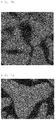
- the section of the lyocell fiber of Examples 1 to 3 is shown in FIGS. 2a to 2c .
- the lyocell fiber of Examples 1 to 3 has a large specific surface area and may be extensively applied in fields requiring a fiber having a large specific surface area.
Landscapes
- Engineering & Computer Science (AREA)
- Textile Engineering (AREA)
- Mechanical Engineering (AREA)
- Chemical & Material Sciences (AREA)
- Chemical Kinetics & Catalysis (AREA)
- General Chemical & Material Sciences (AREA)
- Artificial Filaments (AREA)
- Spinning Methods And Devices For Manufacturing Artificial Fibers (AREA)
- Yarns And Mechanical Finishing Of Yarns Or Ropes (AREA)
Applications Claiming Priority (3)
| Application Number | Priority Date | Filing Date | Title |
|---|---|---|---|
| KR20140038046 | 2014-03-31 | ||
| KR1020150044318A KR102205529B1 (ko) | 2014-03-31 | 2015-03-30 | 라이오셀 섬유 |
| PCT/KR2015/003140 WO2015152594A1 (fr) | 2014-03-31 | 2015-03-31 | Fibre lyocell |
Publications (2)
| Publication Number | Publication Date |
|---|---|
| EP3128049A1 true EP3128049A1 (fr) | 2017-02-08 |
| EP3128049A4 EP3128049A4 (fr) | 2017-11-22 |
Family
ID=54346678
Family Applications (1)
| Application Number | Title | Priority Date | Filing Date |
|---|---|---|---|
| EP15772209.1A Pending EP3128049A4 (fr) | 2014-03-31 | 2015-03-31 | Fibre lyocell |
Country Status (5)
| Country | Link |
|---|---|
| US (1) | US20170121857A1 (fr) |
| EP (1) | EP3128049A4 (fr) |
| JP (1) | JP6403794B2 (fr) |
| KR (1) | KR102205529B1 (fr) |
| CN (1) | CN106164346B (fr) |
Cited By (1)
| Publication number | Priority date | Publication date | Assignee | Title |
|---|---|---|---|---|
| EP3779011A4 (fr) * | 2018-06-29 | 2022-01-12 | Kolon Industries, Inc. | Ensemble de tissu non-tissé et masque de type feuille utilisant celui-ci |
Families Citing this family (6)
| Publication number | Priority date | Publication date | Assignee | Title |
|---|---|---|---|---|
| KR20170079531A (ko) * | 2015-12-30 | 2017-07-10 | 코오롱인더스트리 주식회사 | 라이오셀 섬유 및 이의 제조방법 |
| KR20180077801A (ko) * | 2016-12-29 | 2018-07-09 | 코오롱인더스트리 주식회사 | 라이오셀 섬유 |
| EP3385433A1 (fr) * | 2017-04-03 | 2018-10-10 | Lenzing Aktiengesellschaft | Tissu de fibres de cellulose non tissé avec capacité de drainage de liquide sur mesure |
| EP3674455A1 (fr) | 2018-12-28 | 2020-07-01 | Lenzing Aktiengesellschaft | Procédé d'élimination de liquide dans des fils ou des fibres de filaments de cellulose |
| US20250380735A1 (en) * | 2021-12-28 | 2025-12-18 | Kolon Industries, Inc. | Lyocell material with modified cross section, cigarette filter, and manufacturing method therefor |
| DE102023129562A1 (de) * | 2023-10-26 | 2025-04-30 | Kelheim Fibres Gmbh | Profilierte Zellulosefaser mit verbesserter Zugkraft und Verfahren zu ihrer Herstellung |
Citations (1)
| Publication number | Priority date | Publication date | Assignee | Title |
|---|---|---|---|---|
| US5417909A (en) | 1992-06-16 | 1995-05-23 | Thuringisches Institut Fur Textil- Und Kunststoff-Forschung E.V. | Process for manufacturing molded articles of cellulose |
Family Cites Families (21)
| Publication number | Priority date | Publication date | Assignee | Title |
|---|---|---|---|---|
| GB2208277B (en) * | 1987-07-30 | 1991-11-13 | Courtaulds Plc | Cellulosic fibre |
| US5108838A (en) * | 1991-08-27 | 1992-04-28 | E. I. Du Pont De Nemours And Company | Trilobal and tetralobal filaments exhibiting low glitter and high bulk |
| ATA53792A (de) * | 1992-03-17 | 1995-02-15 | Chemiefaser Lenzing Ag | Verfahren zur herstellung cellulosischer formkörper, vorrichtung zur durchführung des verfahrens sowie verwendung einer spinnvorrichtung |
| KR960010748B1 (ko) * | 1993-09-10 | 1996-08-08 | 주식회사 엘지화학 | 제 2 배리어 커프를 갖는 일회용 기저귀 |
| GB9500387D0 (en) * | 1995-01-10 | 1995-03-01 | Courtaulds Fibres Ltd | Manufacture of extruded articles |
| US5707737A (en) * | 1995-05-01 | 1998-01-13 | Teijin Limited | Cellulose acetate fiber having non-circular cross section, multi-filaments thereof, and process for the production thereof |
| CA2641972C (fr) * | 1996-08-23 | 2012-11-13 | Weyerhaeuser Company | Fibres lyocellulaires et procede de preparation |
| JP3844089B2 (ja) * | 1996-11-07 | 2006-11-08 | 東洋紡績株式会社 | 混紡糸 |
| JP3832000B2 (ja) * | 1996-11-21 | 2006-10-11 | 東洋紡績株式会社 | 異形断面再生セルロース繊維およびその製法 |
| JP2001316936A (ja) * | 2000-05-10 | 2001-11-16 | Toyobo Co Ltd | 溶剤紡糸セルロース繊維の製造方法 |
| US6673442B2 (en) * | 2000-05-25 | 2004-01-06 | E.I. Du Pont De Nemours And Company | Multilobal polymer filaments and articles produced therefrom |
| KR100488604B1 (ko) * | 2003-07-25 | 2005-05-11 | 주식회사 효성 | 라이오셀 멀티 필라멘트 |
| KR100687597B1 (ko) * | 2006-05-25 | 2007-02-27 | 주식회사 코오롱 | 라이오셀 섬유용 방사 냉각 장치, 및 이를 이용한 라이오셀섬유의 제조 방법 |
| AT504704B1 (de) * | 2006-06-14 | 2008-12-15 | Chemiefaser Lenzing Ag | Fasern enthaltender gegenstand |
| AT503803B1 (de) * | 2006-06-14 | 2008-01-15 | Chemiefaser Lenzing Ag | Lyocell-stapelfaser |
| KR100989148B1 (ko) * | 2007-05-23 | 2010-10-20 | 코오롱인더스트리 주식회사 | 타이어 코오드용 셀룰로오스계 필라멘트, 이를 포함하는필라멘트 번들, 이를 포함하는 연사물, 및 이를 포함하는타이어 코오드 |
| AT507757B1 (de) * | 2008-12-23 | 2015-06-15 | Chemiefaser Lenzing Ag | Cellulosische formkörper mit nichtrundem querschnitt und deren verwendung in verbundwerkstoffen |
| KR20110078122A (ko) * | 2009-12-30 | 2011-07-07 | 주식회사 효성 | 펄프 용해공정을 개선한 셀룰로오스 용액의 제조방법 |
| KR101324826B1 (ko) * | 2012-01-16 | 2013-11-01 | 도레이첨단소재 주식회사 | 극세 이형 단면사 및 그 제조방법 |
| JP6091168B2 (ja) * | 2012-11-09 | 2017-03-08 | ユニ・チャーム株式会社 | ウェットワイプス、及びウェットワイプスの包装体 |
| KR102211219B1 (ko) * | 2014-06-30 | 2021-02-03 | 코오롱인더스트리 주식회사 | 담배필터용 이형단면 라이오셀 소재 및 그 제조방법 |
-
2015
- 2015-03-30 KR KR1020150044318A patent/KR102205529B1/ko active Active
- 2015-03-31 US US15/300,420 patent/US20170121857A1/en not_active Abandoned
- 2015-03-31 JP JP2016558697A patent/JP6403794B2/ja active Active
- 2015-03-31 EP EP15772209.1A patent/EP3128049A4/fr active Pending
- 2015-03-31 CN CN201580018160.1A patent/CN106164346B/zh active Active
Patent Citations (1)
| Publication number | Priority date | Publication date | Assignee | Title |
|---|---|---|---|---|
| US5417909A (en) | 1992-06-16 | 1995-05-23 | Thuringisches Institut Fur Textil- Und Kunststoff-Forschung E.V. | Process for manufacturing molded articles of cellulose |
Cited By (1)
| Publication number | Priority date | Publication date | Assignee | Title |
|---|---|---|---|---|
| EP3779011A4 (fr) * | 2018-06-29 | 2022-01-12 | Kolon Industries, Inc. | Ensemble de tissu non-tissé et masque de type feuille utilisant celui-ci |
Also Published As
| Publication number | Publication date |
|---|---|
| CN106164346A (zh) | 2016-11-23 |
| JP6403794B2 (ja) | 2018-10-10 |
| CN106164346B (zh) | 2019-04-12 |
| KR102205529B1 (ko) | 2021-01-20 |
| JP2017508899A (ja) | 2017-03-30 |
| EP3128049A4 (fr) | 2017-11-22 |
| KR20150113902A (ko) | 2015-10-08 |
| US20170121857A1 (en) | 2017-05-04 |
Similar Documents
| Publication | Publication Date | Title |
|---|---|---|
| EP3128049A1 (fr) | Fibre lyocell | |
| US20190024263A1 (en) | Lyocell fiber and manufacturing method therefor | |
| CN107075739B (zh) | 莱赛尔卷曲纤维 | |
| EP3564417A1 (fr) | Fibre lyocell, agrégat de non-tissé comprenant celle-ci, et feuille de masque de soin comprenant celui-ci | |
| KR20130005907A (ko) | 인조속눈썹의 제조방법 | |
| ITRM20000660A1 (it) | Metodo per la fabbricazione di fibra di cellulosa rigenerata migliorata. | |
| EP3779011A1 (fr) | Ensemble de tissu non-tissé et masque de type feuille utilisant celui-ci | |
| KR102356631B1 (ko) | 마스크팩 시트 | |
| KR20130035738A (ko) | 라이오셀 방사용 도프, 이를 이용한 라이오셀 필라멘트 섬유의 제조 방법 및 이로부터 제조되는 라이오셀 필라멘트 섬유 | |
| WO2015152594A1 (fr) | Fibre lyocell | |
| JP4485824B2 (ja) | 分割型複合繊維及び繊維構造物 | |
| JP2004091988A (ja) | ポリアミド繊維およびその製造方法 | |
| JP4468025B2 (ja) | 分割型複合繊維及びポリアミド繊維構造物 | |
| JP7752163B2 (ja) | 再生セルロース繊維、その繊維集合体、及びビスコースレーヨン繊維束の製造方法、並びに人工毛髪用繊維束、人工毛髪、及び頭髪装飾品 | |
| KR101569549B1 (ko) | 아라미드 단섬유 및 이를 이용한 방적사의 제조방법 | |
| KR20190081702A (ko) | 라이오셀 섬유를 포함하는 부직 섬유 집합체 | |
| JP3257276B2 (ja) | 電気植毛用ナイロン6トウ及びその製造方法 | |
| JPH06240016A (ja) | 四フッ化エチレン系フィルム状物およびその製造方法 | |
| WO2005087990A1 (fr) | Fibre polyester fibrillaire et methode de fabrication de semblable | |
| JPH083816A (ja) | ポリエーテルエステル系弾性糸の製造法 | |
| JP2007031873A (ja) | 分割型複合繊維及び繊維構造物 |
Legal Events
| Date | Code | Title | Description |
|---|---|---|---|
| STAA | Information on the status of an ep patent application or granted ep patent |
Free format text: STATUS: THE INTERNATIONAL PUBLICATION HAS BEEN MADE |
|
| PUAI | Public reference made under article 153(3) epc to a published international application that has entered the european phase |
Free format text: ORIGINAL CODE: 0009012 |
|
| STAA | Information on the status of an ep patent application or granted ep patent |
Free format text: STATUS: REQUEST FOR EXAMINATION WAS MADE |
|
| 17P | Request for examination filed |
Effective date: 20160926 |
|
| AK | Designated contracting states |
Kind code of ref document: A1 Designated state(s): AL AT BE BG CH CY CZ DE DK EE ES FI FR GB GR HR HU IE IS IT LI LT LU LV MC MK MT NL NO PL PT RO RS SE SI SK SM TR |
|
| AX | Request for extension of the european patent |
Extension state: BA ME |
|
| RIN1 | Information on inventor provided before grant (corrected) |
Inventor name: LEE, SANG YOEL Inventor name: LEE, SANG MOK Inventor name: JIN, SANG WOO Inventor name: JEONG, JONG CHEOL Inventor name: KIM, WOO CHUL |
|
| DAV | Request for validation of the european patent (deleted) | ||
| DAX | Request for extension of the european patent (deleted) | ||
| A4 | Supplementary search report drawn up and despatched |
Effective date: 20171025 |
|
| RIC1 | Information provided on ipc code assigned before grant |
Ipc: D01D 10/06 20060101ALN20171019BHEP Ipc: D01D 5/253 20060101ALI20171019BHEP Ipc: D01F 2/00 20060101AFI20171019BHEP Ipc: D01D 5/06 20060101ALN20171019BHEP Ipc: D01D 5/16 20060101ALN20171019BHEP |
|
| RAP1 | Party data changed (applicant data changed or rights of an application transferred) |
Owner name: KOLON INDUSTRIES, INC. |
|
| STAA | Information on the status of an ep patent application or granted ep patent |
Free format text: STATUS: EXAMINATION IS IN PROGRESS |
|
| 17Q | First examination report despatched |
Effective date: 20210421 |
|
| TPAC | Observations filed by third parties |
Free format text: ORIGINAL CODE: EPIDOSNTIPA |