EP3138840B1 - Thiadiazolidinderivat als anti-enterovirus 71 - Google Patents
Thiadiazolidinderivat als anti-enterovirus 71 Download PDFInfo
- Publication number
- EP3138840B1 EP3138840B1 EP15786304.4A EP15786304A EP3138840B1 EP 3138840 B1 EP3138840 B1 EP 3138840B1 EP 15786304 A EP15786304 A EP 15786304A EP 3138840 B1 EP3138840 B1 EP 3138840B1
- Authority
- EP
- European Patent Office
- Prior art keywords
- group
- groups
- solution
- add
- 400mhz
- Prior art date
- Legal status (The legal status is an assumption and is not a legal conclusion. Google has not performed a legal analysis and makes no representation as to the accuracy of the status listed.)
- Active
Links
- 0 CC1C*=*CC1 Chemical compound CC1C*=*CC1 0.000 description 47
- PGVXGOOYONWZKN-HTEYAMCKSA-N C1C2C(CC3)=CC3(C3)[C@@H]3C12 Chemical compound C1C2C(CC3)=CC3(C3)[C@@H]3C12 PGVXGOOYONWZKN-HTEYAMCKSA-N 0.000 description 1
- VVYUNUPPUNHLSJ-UHFFFAOYSA-N C1NC=CC2=CC12 Chemical compound C1NC=CC2=CC12 VVYUNUPPUNHLSJ-UHFFFAOYSA-N 0.000 description 1
- XYXAXPFBDGYAMF-UHFFFAOYSA-N CC(C)CCN(CCN1c2ccnc(N)c2)S1(=N)=O Chemical compound CC(C)CCN(CCN1c2ccnc(N)c2)S1(=N)=O XYXAXPFBDGYAMF-UHFFFAOYSA-N 0.000 description 1
- IHYFGSKZZOPXPN-UHFFFAOYSA-N CC(CCCCN(CCN1c2ccncc2)S1(=C)=O)CCC(C(C)=CC1)=CC1Br Chemical compound CC(CCCCN(CCN1c2ccncc2)S1(=C)=O)CCC(C(C)=CC1)=CC1Br IHYFGSKZZOPXPN-UHFFFAOYSA-N 0.000 description 1
- HLWQTFWGTFVPML-HJWRWDBZSA-N CC/C(/OCN=C(C)C)=N/C Chemical compound CC/C(/OCN=C(C)C)=N/C HLWQTFWGTFVPML-HJWRWDBZSA-N 0.000 description 1
- CGDKNSXUFSIZMS-UHFFFAOYSA-N CC/[O]=C(\CCc1c2)/c1ccc2OCCCCCNCCNc1ccnc(N)c1F Chemical compound CC/[O]=C(\CCc1c2)/c1ccc2OCCCCCNCCNc1ccnc(N)c1F CGDKNSXUFSIZMS-UHFFFAOYSA-N 0.000 description 1
- BNXUQSOHXUBMIM-UHFFFAOYSA-P CCC(CC(c(cc1)ccc1OCCCCCC[NH2+]S(N(CC)C(C=C)=CC=N)(=O)=O)=[NH2+])O Chemical compound CCC(CC(c(cc1)ccc1OCCCCCC[NH2+]S(N(CC)C(C=C)=CC=N)(=O)=O)=[NH2+])O BNXUQSOHXUBMIM-UHFFFAOYSA-P 0.000 description 1
- SWQWBGJGAVJTFC-UHFFFAOYSA-O CCC(CC=N)[NH3+] Chemical compound CCC(CC=N)[NH3+] SWQWBGJGAVJTFC-UHFFFAOYSA-O 0.000 description 1
- HUOUIFQCZWVLFW-CHWSQXEVSA-N CCCCCO[C@H]1C[C@@H](C)C(C)(C)CC1 Chemical compound CCCCCO[C@H]1C[C@@H](C)C(C)(C)CC1 HUOUIFQCZWVLFW-CHWSQXEVSA-N 0.000 description 1
- RGYOFLGVQKGJFG-UHFFFAOYSA-N CCN(CCN1C2=CC(C)NC=C2)S1(=O)=O Chemical compound CCN(CCN1C2=CC(C)NC=C2)S1(=O)=O RGYOFLGVQKGJFG-UHFFFAOYSA-N 0.000 description 1
- HGSGFXTWUQYHOC-VAWYXSNFSA-N CCO/N=C(\CCc1c2)/c1ccc2O Chemical compound CCO/N=C(\CCc1c2)/c1ccc2O HGSGFXTWUQYHOC-VAWYXSNFSA-N 0.000 description 1
- RZIHAZVTFCUQCP-WNAAXNPUSA-N CCO/N=C(\CCc1c2)/c1ccc2OCCCCCN(CCN1C2=C=C=NN=CC2)S1(=O)=O Chemical compound CCO/N=C(\CCc1c2)/c1ccc2OCCCCCN(CCN1C2=C=C=NN=CC2)S1(=O)=O RZIHAZVTFCUQCP-WNAAXNPUSA-N 0.000 description 1
- JQSCELYWGIXFGM-PTGBLXJZSA-N CCO/N=C/C(CC1)=CC=C1OCCCCCN(CCN1c2ccncc2)S1(O)=O Chemical compound CCO/N=C/C(CC1)=CC=C1OCCCCCN(CCN1c2ccncc2)S1(O)=O JQSCELYWGIXFGM-PTGBLXJZSA-N 0.000 description 1
- QTFIXKQEVSFDJQ-UODVOAOQSA-N CCO/N=C/C=C/C=C(\C=C)/OCCC(C)CCN(CCN1c2cc(N)ncc2)S1(=O)=O Chemical compound CCO/N=C/C=C/C=C(\C=C)/OCCC(C)CCN(CCN1c2cc(N)ncc2)S1(=O)=O QTFIXKQEVSFDJQ-UODVOAOQSA-N 0.000 description 1
- CLFGQFIVRLZJEA-BJMVGYQFSA-N CCO/N=C/c(cc1)ncc1O Chemical compound CCO/N=C/c(cc1)ncc1O CLFGQFIVRLZJEA-BJMVGYQFSA-N 0.000 description 1
- VPQODHUPKSDRCL-HTAVTVPLSA-N CCOC1=NOCC2[C@H]3C(ON(C)CC4)=C4C=C1C23 Chemical compound CCOC1=NOCC2[C@H]3C(ON(C)CC4)=C4C=C1C23 VPQODHUPKSDRCL-HTAVTVPLSA-N 0.000 description 1
- USXUKWRQERNCCE-QKYZJCKASA-N CCON/C=C(/CCc1c2)\c1ccc2OCCC(C)CCCCC[C@@H](C)[IH]CN(/C(/CC(C)C)=C/C=N)S=O Chemical compound CCON/C=C(/CCc1c2)\c1ccc2OCCC(C)CCCCC[C@@H](C)[IH]CN(/C(/CC(C)C)=C/C=N)S=O USXUKWRQERNCCE-QKYZJCKASA-N 0.000 description 1
- IIVHMIISTYWNCI-UHFFFAOYSA-N CCON=C(CCc1c2)c1ccc2OCCCCCN(CCNc1c[s]cc1)S(=C)=C Chemical compound CCON=C(CCc1c2)c1ccc2OCCCCCN(CCNc1c[s]cc1)S(=C)=C IIVHMIISTYWNCI-UHFFFAOYSA-N 0.000 description 1
- HDUFITMONHCADE-OKZRHMCRSA-N CC[C@@H](C)NCCN(C1[C@H](C)C(C=N)N=CC1)S=O Chemical compound CC[C@@H](C)NCCN(C1[C@H](C)C(C=N)N=CC1)S=O HDUFITMONHCADE-OKZRHMCRSA-N 0.000 description 1
- ZTZPAVFAOIUUTB-UHFFFAOYSA-N CCc1n[o]c2cc(C)ccc12 Chemical compound CCc1n[o]c2cc(C)ccc12 ZTZPAVFAOIUUTB-UHFFFAOYSA-N 0.000 description 1
- IUDIISGSQUWFAJ-UHFFFAOYSA-N CNCCCCCCc1ccc(C=C=C)cc1 Chemical compound CNCCCCCCc1ccc(C=C=C)cc1 IUDIISGSQUWFAJ-UHFFFAOYSA-N 0.000 description 1
- BVOUHVXBQBUHJU-RXFWQSSRSA-N C[C@@H](CCCN(CCN1c2ccncc2)C1=O)[C@@H](CC1)Oc(cc2)c1cc2-c(cc1)ccc1Cl Chemical compound C[C@@H](CCCN(CCN1c2ccncc2)C1=O)[C@@H](CC1)Oc(cc2)c1cc2-c(cc1)ccc1Cl BVOUHVXBQBUHJU-RXFWQSSRSA-N 0.000 description 1
- KULZJAIKQGOXON-OUKQBFOZSA-N Cc(cc1)cc(CCC2)c1/C2=N/C Chemical compound Cc(cc1)cc(CCC2)c1/C2=N/C KULZJAIKQGOXON-OUKQBFOZSA-N 0.000 description 1
- LTPBWYARFMKXEY-UHFFFAOYSA-N Cc(nn1)c(C2CCC2)cc1Cl Chemical compound Cc(nn1)c(C2CCC2)cc1Cl LTPBWYARFMKXEY-UHFFFAOYSA-N 0.000 description 1
- YHNRUSMOYCDMJS-UHFFFAOYSA-N NOCC1CC1 Chemical compound NOCC1CC1 YHNRUSMOYCDMJS-UHFFFAOYSA-N 0.000 description 1
Classifications
-
- C—CHEMISTRY; METALLURGY
- C07—ORGANIC CHEMISTRY
- C07D—HETEROCYCLIC COMPOUNDS
- C07D417/00—Heterocyclic compounds containing two or more hetero rings, at least one ring having nitrogen and sulfur atoms as the only ring hetero atoms, not provided for by group C07D415/00
- C07D417/14—Heterocyclic compounds containing two or more hetero rings, at least one ring having nitrogen and sulfur atoms as the only ring hetero atoms, not provided for by group C07D415/00 containing three or more hetero rings
-
- C—CHEMISTRY; METALLURGY
- C07—ORGANIC CHEMISTRY
- C07D—HETEROCYCLIC COMPOUNDS
- C07D417/00—Heterocyclic compounds containing two or more hetero rings, at least one ring having nitrogen and sulfur atoms as the only ring hetero atoms, not provided for by group C07D415/00
- C07D417/02—Heterocyclic compounds containing two or more hetero rings, at least one ring having nitrogen and sulfur atoms as the only ring hetero atoms, not provided for by group C07D415/00 containing two hetero rings
- C07D417/04—Heterocyclic compounds containing two or more hetero rings, at least one ring having nitrogen and sulfur atoms as the only ring hetero atoms, not provided for by group C07D415/00 containing two hetero rings directly linked by a ring-member-to-ring-member bond
-
- A—HUMAN NECESSITIES
- A61—MEDICAL OR VETERINARY SCIENCE; HYGIENE
- A61K—PREPARATIONS FOR MEDICAL, DENTAL OR TOILETRY PURPOSES
- A61K31/00—Medicinal preparations containing organic active ingredients
- A61K31/33—Heterocyclic compounds
- A61K31/395—Heterocyclic compounds having nitrogen as a ring hetero atom, e.g. guanethidine or rifamycins
- A61K31/41—Heterocyclic compounds having nitrogen as a ring hetero atom, e.g. guanethidine or rifamycins having five-membered rings with two or more ring hetero atoms, at least one of which being nitrogen, e.g. tetrazole
- A61K31/433—Thidiazoles
-
- A—HUMAN NECESSITIES
- A61—MEDICAL OR VETERINARY SCIENCE; HYGIENE
- A61K—PREPARATIONS FOR MEDICAL, DENTAL OR TOILETRY PURPOSES
- A61K31/00—Medicinal preparations containing organic active ingredients
- A61K31/33—Heterocyclic compounds
- A61K31/395—Heterocyclic compounds having nitrogen as a ring hetero atom, e.g. guanethidine or rifamycins
- A61K31/435—Heterocyclic compounds having nitrogen as a ring hetero atom, e.g. guanethidine or rifamycins having six-membered rings with one nitrogen as the only ring hetero atom
- A61K31/44—Non condensed pyridines; Hydrogenated derivatives thereof
- A61K31/4427—Non condensed pyridines; Hydrogenated derivatives thereof containing further heterocyclic ring systems
- A61K31/4439—Non condensed pyridines; Hydrogenated derivatives thereof containing further heterocyclic ring systems containing a five-membered ring with nitrogen as a ring hetero atom, e.g. omeprazole
-
- A—HUMAN NECESSITIES
- A61—MEDICAL OR VETERINARY SCIENCE; HYGIENE
- A61P—SPECIFIC THERAPEUTIC ACTIVITY OF CHEMICAL COMPOUNDS OR MEDICINAL PREPARATIONS
- A61P31/00—Antiinfectives, i.e. antibiotics, antiseptics, chemotherapeutics
- A61P31/12—Antivirals
- A61P31/14—Antivirals for RNA viruses
-
- C—CHEMISTRY; METALLURGY
- C07—ORGANIC CHEMISTRY
- C07D—HETEROCYCLIC COMPOUNDS
- C07D285/00—Heterocyclic compounds containing rings having nitrogen and sulfur atoms as the only ring hetero atoms, not provided for by groups C07D275/00 - C07D283/00
- C07D285/01—Five-membered rings
- C07D285/02—Thiadiazoles; Hydrogenated thiadiazoles
- C07D285/04—Thiadiazoles; Hydrogenated thiadiazoles not condensed with other rings
- C07D285/10—1,2,5-Thiadiazoles; Hydrogenated 1,2,5-thiadiazoles
-
- C—CHEMISTRY; METALLURGY
- C07—ORGANIC CHEMISTRY
- C07D—HETEROCYCLIC COMPOUNDS
- C07D405/00—Heterocyclic compounds containing both one or more hetero rings having oxygen atoms as the only ring hetero atoms, and one or more rings having nitrogen as the only ring hetero atom
- C07D405/14—Heterocyclic compounds containing both one or more hetero rings having oxygen atoms as the only ring hetero atoms, and one or more rings having nitrogen as the only ring hetero atom containing three or more hetero rings
-
- C—CHEMISTRY; METALLURGY
- C07—ORGANIC CHEMISTRY
- C07D—HETEROCYCLIC COMPOUNDS
- C07D498/00—Heterocyclic compounds containing in the condensed system at least one hetero ring having nitrogen and oxygen atoms as the only ring hetero atoms
- C07D498/02—Heterocyclic compounds containing in the condensed system at least one hetero ring having nitrogen and oxygen atoms as the only ring hetero atoms in which the condensed system contains two hetero rings
- C07D498/04—Ortho-condensed systems
Definitions
- the present invention relates to a novel anti-enterovirus 71 (EV71) 1,2,5-thiadiazolidine-1,1-dioxide derivative or a pharmaceutically-acceptable salt(s) thereof, specifically a compound(s) represented by Formula (II) or a pharmaceutically-acceptable salt(s) thereof.
- EV71 novel anti-enterovirus 71
- EV71 1,2,5-thiadiazolidine-1,1-dioxide derivative or a pharmaceutically-acceptable salt(s) thereof, specifically a compound(s) represented by Formula (II) or a pharmaceutically-acceptable salt(s) thereof.
- the enterovirus 71 is a member of small RNA virus family and one of the most common etiologies of hand-foot-mouth disease. It can also cause various diseases related to nervous system such as herpes pharyngitis, aseptic meningitis, encephalitis, and poliomyelitis-like paralysis and is possibly accompanied with severe central nervous system complications or neuritic pulmonary edema.
- the hand-foot-mouth disease features are strong epidemic intensity, strong infectivity, and complex transmission route. There is no specific anti-enterovirus 71 medicine yet.
- the present invention provides a compound represented by Formula (II) or a pharmaceutically-acceptable salt(s) thereof; Wherein:
- R 3 is any selected from substituted 5 ⁇ 6 membered aryl and substituted heteroaryl group.
- R 3 is any selected from pyridyl group, phenyl group, furanyl group, pyrazolyl group, pyrrolyl group, thiazolyl group, pyridazinyl group, pyrimidinyl group, and thienyl group substituted with R 01 and the definition of R 01 is as above and the number of R 01 is selected from 0, 1, 2 or 3.
- R 01 is selected from F, Cl, Br, I, CN, OH, SH, NH 2 , CHO, COOH, Me,
- R 3 is selected from the following:
- L 2 is selected from the following:
- R 4 is selected from the following:
- R 4 is selected from the following: X 3 is selected from F, Cl, Br, I, CN, OH, SH, NH 2 , CHO, COOH or any selected from C 1-10 alkyl or heteroalkyl groups and C 3-10 cyclic hydrocarbyl or heterocycloalkyl groups substituted with R 01 , C 1-10 alkyl or heteroalkyl groups substituted with C 3-10 hydrocarbyl or heterocycloalkyl groups.
- R 5-7 are independently selected respectively from the following: wherein:
- R 5-9 , R 01 and R t are independently selected respectively from the following: F, Cl, Br, CF 3 , -C(C 2 H 5 )-, -C(OC 2 H 5 )-, methyl, ethyl, propyl, methoxy, ethoxy, propoxy and
- R 4 is selected from the following:
- the present invention selects it from the following:
- C 1-12 are selected from C 1 , C 2 , C 3 , C 4 , C 5 , C 6 , C 7 , C 8 , C 9 , C 10 , C 11 and C 12 ;
- C 3-12 are selected from C 3 , C 4 , C 5 , C 6 , C 7 , C 8 , C 9 , C 10 , C 11 and C 12 .
- C 1-12 alkyl or heteroalkyl group, C 3-12 cyclic or heterocycloalkyl group and C 1-12 alkyl or heteroalkyl group substituted with C 3-12 cycloalkyl or heterocycloalkyl group include but not limited to:
- methyl group, ethyl group, n-propyl group, isopropyl group, -CH 2 C(CH 3 )(CH 3 )(OH), cyclopropyl group, cyclobutyl group, propyl methylene, cyclopropylmethyl group, benzyl group, trifluoromethyl group, aminomethyl group, hydroxymethyl group, methoxy group, formyl group, methoxycarbonyl group, methylsulfonyl group, methylsulfinyl group, ethoxy group, acetyl group, ethanesulfonyl group, ethoxycarbonyl group, dimethyl amino group, diethylamino group, dimethylamino-carbonyl group and diethyl-aminocarbonyl group; N(CH 3 ) 2 ,NH(CH 3 ),-CH 2 CF 3 ,-CH2CH 2 CF 3 ,-CH 2 CH 2 F,-CH 2 CH 2 S(
- pharmaceutically-acceptable refers to the compound(s), material(s), composition(s) and/or dosage form(s) that is suitable within the scope of reliable medical judgments to be used in contact with the human and animal tissues, without posing excessive toxicity, irritation, allergic reactions or other issues or complications and with reasonable benefit / risk ratio.
- pharmaceutically-acceptable salt(s) refers to the salt(s) of the compound(s) according to the present invention that is prepared from the compound(s) with specific substituting group developed according to the present invention and relatively-nontoxic acid or base. If any compound according to the present invention contains a relatively-acidic functional group, an adequate amount of base can be added in its pure solution or appropriate inert solvent to contact with such compound in neutral form to yield a salt of base addition.
- the pharmaceutically-acceptable base(s) includes the salts of sodium, potassium, calcium, ammonia, organic ammonium or magnesium or similar salts.
- any compound according to the present invention contains a relatively-basic functional group, an adequate amount of acid can be added in its pure solution or appropriate inert solvent to contact with such compound in neutral form to yield a salt of acid addition.
- the examples of the pharmaceutically-acceptable salt(s) include the inorganic acid salt(s) that includes hydrochloric acid, hydrobromic acid, nitric acid, carbonate, bicarbonate, phosphate, hydrogen phosphate, phosphate, dihydrogen phosphate, sulfate, bisulfate, hydroiodic, phosphorous, etc, and the organic acid salt(s) that includes acetic acid, propionic acid, isobutyric acid, maleic acid, propionic acid, benzoic acid, succinic acid, suberic acid, fumaric acid, lactic acid, mandelic acid, phthalic acid, benzenesulfonic acid, p-toluene sulfonic acid, citric acid, tartaric acid, methanesul
- the salt contacts with base or acid in a conventional way before the parent compounds are separated to regenerate the neutral form of compounds.
- the differences between the compounds in parent form and in the form of various salts lie in some physical properties, e.g. the different solubility in polar solvent.
- the "pharmaceutically-acceptable salt(s)" used here is (are) the derivative(s) of the compound according to the present invention, wherein said parent compound(s) is (are) modified by the means of salification with acid or salification with base.
- the examples of pharmaceutically-acceptable salt(s) include but are not limited to inorganic acid salt(s) or organic acid salt of basic group such as amine and the alkali metal or organic salt(s) of acid group such as carboxylic acid, etc.
- the pharmaceutically-acceptable salt(s) includes the conventional non-toxic salt(s) or the quaternary ammonium salts of parent compound, e.g. the salt(s) produced from non-toxic inorganic acid or organic acid.
- the conventional non-toxic salt(s) includes but is not limited to those salts derived from inorganic acid and organic acid that is selected from 2-acetoxybenzoic acid, 2-hydroxyethane sulfonic, acetic, ascorbic, benzenesulfonic, benzoic, bicarbonate radical, carbonate, citric acid, edetic acid, ethane disulfonic acid, ethanesulfonic acid, fumaric acid, glucoheptonic acid, gluconic acid, glutamic acid, glycolic acid, hydrobromic acid, hydrochloric acid, hydroiodide acid, hydroxyl, hydroxynaphthoic acid, isethionic acid, lactic acid, lactobionic acid, dodecyl sulfonic acid, maleic acid, malic acid, mandelic acid, methane sulfonic acid, nitric acid, oxalic acid, pamoic acid, pantothenic acid, phenylacetic acid,
- the pharmaceutically-acceptable salt according to the present invention can be synthesized with the conventional chemical method(s) from the parent compounds containing acidic or basic group(s).
- the methods of preparing such salt are as follows: in water or organic solvent or in a mixture of them, these compounds in the form of free acid or base react with appropriate base or acid in stoichiometry.
- a non-aqueous media such as ether, ethyl acetate, ethanol, isopropanol, or acetonitrile.
- the compound(s) provided according to the present invention also include the form of prodrug.
- the prodrug of a compound(s) described here can easily undergo chemical change under physiological conditions so as to transform to the compound(s) according to the present invention.
- the prodrug can be transformed into the compound(s) according to the present invention via a chemical or biochemical method in an in-vivo environment.
- Some compounds according to the present invention can exist in the form of non-solvation or solvation, including the form of hydrate. In general, the form of solvation and the form of non-solvation are equivalent to each other and both covered within the scope of the present invention. Some compounds according to the present invention can exist in the form of polycrystal or amorphism.
- Some compounds according to the present invention can contain asymmetric carbon atoms (optical center) or double bond.
- the raceme, diastereoisomer, geometric isomer and single isomer are all covered within the scope of the present invention.
- the compound(s) according to the present invention can present in the form of specific geometric isomer or stereoisomer. All these compounds proposed by the present invention, including the cis- and trans- isomers, (-)- and (+) - enantiomers, ( R )- and ( S )- enantiomers, diastereoisomer, ( D )-isomer, ( L )- isomer and their racemic mixtures and other mixtures, e.g. the mixture enriched in enantiomer or non-enantiomer, are all covered within the scope of the present invention.
- the substituting group such as alkyl may contain other asymmetric atoms. All these isomers and their mixtures are covered within the scope of the present invention.
- the chiral synthesis or chiral reagent or other routine techniques can be used to prepare the ( R )- and ( S )-isomers as well as D and L isomers with optical activity. If an enantiomer of some compound according to the present invention is desired, it can be prepared through asymmetric synthesis or the derivatization effect of chiral auxiliary reagent, where the prepared non-enantiomer mixture is separated and the auxiliary group is split to provide the necessary enantiomer. Or, if a molecule contains basic function group (e.g. amino) or acid functional group (e.g.
- the compound(s) according to the present invention may contain a non-natural ratio of isotope of one or more atoms constituting the compound.
- the radioactive isotope labeled compound such as tritium ( 3 H), I-125 ( 125 I) or C-14( 14 C) can be used. All the transformations of the isotope composition of a compound according to the present invention shall, regardless of being radioactive or not, be covered within the scope of the present invention.
- pharmaceutically-acceptable carrier refers to any preparation or carrier medium that can deliver an effective dose of active substance according to the present invention, not interfere with the biological activity of the active substance and pose no toxic and side effect to host or patient.
- the representative carriers include water, oil, vegetable and mineral, paste, lotion base and ointment base, etc. These bases include suspending agent, tackifier and transdermal enhancer, etc. Their preparations are known by the technicians in cosmetics and toiletries or in the partial pharmaceutical field. As for other information of the carriers, the following reference is available " Remington: The Science and Practice of Pharmacy, 21st Ed., Lippincott, Williams & Wilkins (2005 )", whose content are incorporated into this patent by means of referring.
- excipient usually refers to the carriers, diluents, and/or medium necessary to prepare effective pharmaceutical composition.
- the term "effective dose” or “therapeutically effective dose” refers to the level of a drug or agent that is non-toxic but adequate to achieve expected effect.
- the "effective dose” of an active substance in the composition refers to the level necessary to achieve the expected effect in the case of combination with other active substance. The determination of such effective dose varies from person to person, depending on the age of receptor and the general conditions as well as the specific active substance. The individual appropriate effective dose can be determined according to the routine experiments by those skilled in the art.
- active ingredient refers to a chemical entity that can effectively cure a targeted disorder, disease or symptom.
- optionally substituted refers to that it can optionally be substituted or not substituted. Unless specified otherwise, the type and number of the substituting group are random on a chemically-achievable basis.
- any variable e.g. R
- its definition is independent on a case by case basis.
- said group can be optionally substituted by up to two R and each of them can be selected independently in each case.
- any combination of substituting groups and/or their variants can only be acceptable if such combination can give a stable compound.
- substituting group can be cross-linked to two atoms of one ring, such substituting group can bond with any atom on the ring. If the enumerated substituting group is not specified as for the atom to bond a compound covered by the general formula of a chemical structure but not mentioned specifically, such substituting group can bond with any atom of it. Any combination of the substituting groups and/or their variants can only be acceptable if such combination can give a stable compound. e.g., the structural unit indicates that it can substitute any position of the cyclohexyl group or cyclo-diene.
- the number of substituting groups is 0 ⁇ (2m'+1), where m' is the total number of carbon atoms in these atom radicals.
- the R', R", R''', R''' and P'''' are independently selected preferentially from hydrogen, the substituted or unsubstituted heteroalkyl groups, substituted or unsubstituted aryl groups (e.g., those substituted by 1 ⁇ 3 halogen atoms), the substituted or unsubstituted alkyl groups, alkoxy groups, thioalkoxy radicals or aralkyl groups.
- each R group is independently selected as if it is any from more than one R', R", R''', R''' and R''''. If R' and R" bond with the same N atom, they can from a 5-, 6- or 7-membered ring with this N atom, e.g., -NR'R" refers to include but not limited to 1-pyrrolidinyl and 4-morpholinyl.
- alkyl group refers to include the groups formed by the carbon atoms bonding with non-hydrogen groups, for example halogenated alkyls (e.g. -CF 3 , -CH 2 CF 3 ) and acyl groups (e.g. -C(O)CH 3 , -C(O)CF 3 , -C(O)CH 2 OCH 3 , etc).
- halogenated alkyls e.g. -CF 3 , -CH 2 CF 3
- acyl groups e.g. -C(O)CH 3 , -C(O)CF 3 , -C(O)CH 2 OCH 3 , etc.
- the two substituting groups on two adjacent atoms of aryl group or hetero aryl group can be substituted by a group with the general formula as -T-C(O)-(CRR')q-U-, where T and U are independently selected respectively from -NR-, -O-, CRR'- or single bond and q is an integer of 0 and 3.
- the two substituting groups on two adjacent atoms of aryl group or hetero aryl group can be replaced by a substituting group with a general formula of -A(CH2)r B-, where A and B are independently selected respectively from -CRR'-, -O-, -NR-, -S-, -S(O)-, S(O) 2 -, -S(O) 2 NR'- or single bond and r is an integer of 1 ⁇ 4.
- one single bond on the new ring formed thereby can be replaced by double bond.
- the two substituting groups on two adjacent atoms of aryl group or hetero aryl group can be replaced by a substituting group with a general formula of -A(CH2)r B-, where s and d are integers of 0 ⁇ 3 respectively selected independently, X is -O-, -NR', -S-, -S(O)-, -S(O) 2 - or -S(O) 2 NR'-.
- the substituting group R, R', R" and R"' are respectively selected independently from the preferential hydrogen and the substituted or unsubstituted (C 1 -C 6 ) alkyl groups.
- halogenating element or halogen denotes fluorine, chlorine, bromine or iodine atom by itself or as a part of other substituting group.
- halogenated alkyl group refers to the monohalogenated and polyhalogenated alkyl groups.
- halo(C 1 -C 4 )alkyl group means to include but be not limited to trifluoromethyl, 2,2,2-trifluoroethyl, 4-chlorobutyl and 3-bromopropyl, etc.
- halogenated alkyl groups include but are not limited to trifluoromethyl group, trichloromethyl group, pentafluoroethyl group and pentachlorophenol ethyl group.
- the "alkoxy group” denotes the aforementioned alkyl groups with specific number of carbon atoms linked by oxygen bridge.
- the C 1-6 alkoxy groups include those of C 1 , C 2 , C 3 , C 4 , C 5 and C 6 .
- the examples of alkoxy groups include but are not limited to methoxy, ethoxy, n-butoxy, isobutoxy, n-butoxy, sec-butoxy, tert-butoxy, n-pentyloxy and S-pentyloxy group.
- the "cycloalkyl group” includes saturated ring group, e.g., cyclopropyl, cyclobutyl or cyclopentyl group.
- the 3-7 cycloalkyl group includes those of C 3 , C 4 , C 5 , C 6 and C 7 .
- the "alkenyl group” includes the linear or branched hydrocarbon chains, where any stable point on the chain has one or more carbon-carbon double bond, e.g. vinyl and allyl groups.
- halogen or halogen element refers to fluorine, chlorine, bromine, and iodine.
- hetero refers to a hetero atom or hetero atom radical (i.e., atom radical containing hetero atom), including the atoms except carbon (C) and hydrogen (H) and their atom radicals, e.g.
- the "ring” denotes a substituted or unsubstituted cycloalkyl group, heterocycloalkyl group, cycloalkenyl group, heterocycloalkenyl group, cycloalkynyl group, heterocyclyl alkynyl group, aryl, or heteroaryl group.
- the so-called ring includes monocycle, linked ring, spiro ring, bi-ring or bridged ring.
- the number of atoms in the ring is generally defined as the member number of ring, e.g., the "5 ⁇ 7 membered ring" means that 5 ⁇ 7 atoms are contained to form a ring.
- this ring optionally contains 1 ⁇ 3 hetero atoms.
- the "5 ⁇ 7 membered ring” includes, e.g. phenyl pyridine and piperidinyl group
- the term “5 ⁇ 7 membered heterocycloalkyl ring” includes pyridyl group and piperidinyl group rather than phenyl group.
- the term “ring” includes the ring system containing at least one ring, where each "ring” independently conforms to the aforementioned definition.
- heterocycle refers to a monocycle, bi-cycle and tricycle containing hetero atoms or hetero atom radical. They can be saturated, partially saturated or unsaturated (aromatic) and consist of carbon atoms and 1, 2, 3 or 4 hetero atoms independently selected from N, O, and S, where any of the aforementioned heterocycles can be condensed together with benzene ring to form a bi-cycle.
- the N and S hetero atoms can be optionally oxidized (i.e., NO and S(O)p).
- the N atom can be substituted or unsubstituted (i.e., N or NR where R is H or other substituting group already defined in the patent).
- the hetero ring can bond to the side group of any hetero atom or carbon atom to form stable structure. If the generated compound is stable, said heterocycle according to the present invention can undergo substitution on C atom or N atom and N atom in the heterocycle can be optionally quaternized.
- One preferential scheme is that the atoms will not be adjacent if the total number of S and O atoms in the heterocycle is over 1.
- Another preferential scheme is that the total number of S and O in the heterocycle will not exceed 1.
- aromatic heterocyclic group or “heteroaryl group” refers to the aromatic rings with stable 5,6 or 7-membered monocycles or bi-cycles or 7, 8, 9 or 10-membered bicyclic heterocyclic group.
- N atom can be substituted or unsubstituted (i.e., N or NR, where R is H or other substituting group already defined in the patent).
- N and S hetero atoms can be optionally oxidized (i.e., NO and S(O)p). It is noteworthy that the total number of S and O atoms in the aromatic heterocycle will not exceed 1.
- the bridged rings are also covered by the definition of heterocycle. One or more atoms (i.e., C, O, N or S) will form a bridged ring when two non-adjacent C atoms or N atoms are linked.
- the preferential bridged rings include but are not limited to: one C atom, two C atoms, one N atom, two N atoms and one C-N group. It is noteworthy that one bridge always converts a monocycle ring into a tricycle. The substituting group in the ring can also be located on the bridge.
- heterocyclic compounds include but are not limited to acridinyl group, azocine group, benzimidazolyl group, benzofuranyl group, mercaptobenzofuranyl group, mercaptobenzophenyl group, benzoxazolyl group, benzoxazolyl group, benzothiazolyl group, benzotriazolyl group, benzotetrazolyl group, benzoisoxazolyl group, benzisothiazol group, benzimidazolyl group, carbazolyl group, 4a H- carbazolyl group, carboline group, chromanyl group, chromene, cinnolinyl decahydroquinolyl group, 2 H ,6 H -1,5,2-dithiazine group, dihydro-furo [2,3-b] tetrahydrofuran, furyl group, furazanyl group, imidazolidinyl group, imidazolinyl group, imidazoly
- hydrocarbyl group or its inferior concept (e.g., alkyl, alkenyl, alkynyl and phenyl, etc) denotes a linear, branched, or cyclic hydrocarbon radical or its combination by itself or as part of other substituting group. It can be fully saturated, mono-unsaturated or poly-unsaturated, can be mono-substituted, di-substituted or poly-substituted, can be univalent (e.g. methyl group), divalent (e.g. methylene group) or multivalent (e.g.
- the "hydrocarbyl group” includes but is not limited to aliphatic group and aromatic group.
- Said aliphatic group includes chains and rings, specifically including but not limited to alkyl group, alkenyl group and alkynyl group.
- Said aromatic group includes but is not limited to 6-12 membered aromatic group, e.g. benzene and naphthalene, etc.
- alkyl group denotes a linear or branched atom radical or their combination. It can be fully saturated, mono-unsaturated or poly-unsaturated and can be divalent and multivalent atom radical.
- saturated atom radical include but are not limited to the homologs or isomers of radicals such as methyl group, ethyl group, n-propyl group, isopropyl group, n-butyl group, tert-butyl group, isobutyl group, sec-butyl group, isobutyl group, cyclohexyl group, (cyclohexyl) methyl group, cyclopropylmethyl group and n-pentyl group, n-hexyl group, n-heptyl group and n-octyl, etc.
- the unsaturated alkyl group comprises one or more double bonds or triple bonds and its examples include but are not limited to ethenyl group, 2-propenyl group, butenyl group, crotyl group, 2-isopentenyl group, 2- (butadienyl) group, 2,4-pentadienyl group, 3- (1,4-pentadienyl) group, ethynyl group, 1- and 3-propynyl group, 3-butyny group and their higher homologs and isomers.
- heterohydrocarbyl group or its inferior concept (e.g.heteroalkyl group, heteroalkenyl group, heteroalkynyl group and heteroaryl group, etc.) denotes a stable linear, branched or cyclic hydrocarbon radical or its combination by itself or in combination with other term and it consists of a number of carbon atoms and at least one hetero atom.
- heteroalkyl group denotes a stable linear, branched hydrocarbon radical or its combination by itself or in combination with other term and it consists of a number of carbon atoms and at least one hetero atom.
- the hetero atom is selected from B, O, N and S, where the N and S atoms are optionally oxidized and the N hetero atom is optionally quaternized.
- the hetero atoms B, O, N and S can be located at any internal position of heterohydrocarbyl group (including the positions except that where the hydrocarbon group is bonded).
- No more than two hetero atoms are consecutive, e.g. CH 2 -NH-OCH 3 .
- alkoxy group is idiomatic expression and refers to those alkyl groups bonded to other parts of the molecule via O atom, amino group or S atom.
- cyclic hydrocarbon group e.g. aryl group, heteroaryl group, cycloalkyl group, heterocycloalkyl group, cycloalkenyl group, heterocycloalkenyl group, cycloalkynyl group and heterocyclyl alkynyl group, etc
- hetero hydrocarbon groups or heterocyclic hydrocarbon groups e.g. hetero alkyl group and heterocyclic alkyl group
- the hetero atom can occupy other positions except that the hetero ring bonds to the molecule.
- cycloalkyl group examples include but are not limited to cyclopentyl group, cyclohexyl group, 1-cyclohexenyl group, 3-cyclohexenyl group and cycloheptyl group, etc.
- heterocyclic group examples include 1- (1,2,5,6-tetrahydropyridyl) group, 1-piperidinyl group, 2-piperidinyl group, 3-piperidinyl group, 4-morpholinyl group, 3-morpholinyl group, tetrahydrofuran-2-yl group, tetrahydrofuran-3-yl group, tetrahydro-thiophen-2-yl group, tetrahydro-thiophen-3-yl group, 1-piperazinyl group and 2-piperazinyl group.
- aryl group denotes poly-unsaturated aromatic substituent and can be monosubstituted, disubstituted or polysubstituted. It can be monocyclic or polycyclic (preferably 1 to 3 rings) and can be condensed together or linked covalently.
- heteroaryl group refers to aryl group (or ring) containing one to four hetero atoms.
- the hetero atom is selected from B, O, N and S, where the N and S atoms are optionally oxidized and the N hetero atom is optionally quaternized.
- the heteroaryl group can bond to other part of the molecule via hetero atom.
- aryl group or heteroaryl group include phenyl group, 1-naphthyl group, 2-naphthyl group, 4-biphenyl group, 1-pyrrolyl group, 2-pyrrolyl group, 3-pyrrolyl group, 3-pyrazolyl group, 2-imidazolyl group, 4-imidazolyl group, pyrazinyl group, 2-oxazolyl group, 4-oxazolyl group, 2-phenyl-4-oxazolyl group, 5-oxazolyl group, 3-isoxazolyl group, 4-isoxazolyl group, 5-isobutyl oxazolyl group, 2-thiazolyl group, 4-thiazolyl group, 5-thiazolyl group, 2-furyl group, 3-furyl group, 2-thienyl group, 3-thienyl group, 2-pyridyl group, 3-pyridyl group, 4-pyridyl group, 2-pyrimidinyl group, 4-pyr
- the aryl group to be used in combination with other term includes the aryl group and heteroaryl ring as defined above.
- aralkyl group means to include those radicals via which the aryl group bonds to the alkyl group (e.g. benzyl, phenethyl, pyridylmethyl etc), including those alkyl groups that any C atom (e.g. methylene) is replaced by O atom, e.g., phenoxymethyl group, 2- pyridyloxy methyl-3-(1-naphthyloxy) propyl group, etc.
- leaving group refers to a functional group or atom that can be replaced by another functional group or atom via substitution reaction (e.g., nucleophilic substitution reaction).
- the representative leaving groups include triflate;chloro, bromo, iodo; sulfonate group such as mesylate, tosylate, brosylate, p-toluenesulfonate, etc; acyloxy group such as acetoxy group and trifluoroacetyl group, etc.
- protecting group includes but is not limited to "amino protecting group", “hydroxy protecting group” or “mercapto-protecting group”.
- amino protecting group refers to the protecting groups suitable to prevent secondary reaction on the position of amino nitrogen.
- the representative amino protecting groups include but are not limited to: formyl group; acyl groups such as alkanoyl group (e.g.
- alkoxycarbonyl group such as tert-butoxycarbonyl (Boc); arylmethoxycarbonyl groups such as benzyloxycarbonyl (Cbz) and 9-fluorenyl methoxycarbonyl (Fmoc); arylmethyl group such as
- hydroxy protecting group refers to the protecting groups suitable to prevent secondary reaction of hydroxy group.
- the representative hydroxy groups includes but are not limited to: alkyl groups such as methyl group, ethyl group and t-butyl group; acyl groups such as alkanoyl groups (e.g. acetyl group); arylmethyl groups such as benzyl (Bn), p-methoxybenzyl group (PMB), 9- fluorenyl methyl (Fm) and diphenylmethyl group (benzhydryl, DPM); silyl groups such as trimethylsilyl group (TMS) and tert-butyldimethylsilyl (TBS), etc.
- alkyl groups such as methyl group, ethyl group and t-butyl group
- acyl groups such as alkanoyl groups (e.g. acetyl group)
- arylmethyl groups such as benzyl (Bn), p-methoxybenzy
- the compound(s) according to the present invention can be prepared via many synthesis methods known by those skilled in the art, which include the following embodiments, the implementation ways formed by them with other chemical synthesis methods and the equivalent replacements known by those skilled in the art.
- the preferred embodiments include but are not limited to the examples according to the present invention.
- the present invention employs the following abbreviations: aq denoting water; HATU denoting O-(7-aza-benzotriazol-1-yl)-N,N,N',N'-tetramethyluronium hexafluorophosphate; EDC denoting N-(3-dimethylaminopropyl) -N'-ethylcarbodiimide hydrochloride; m-CPBA denoting 3-chloroperoxybenzoic acid; eq denoting equivalent and equal amount; CDI denoting carbonyl diimidazole; DCM denoting dichloromethane; PE denoting petroleum ether; DIAD denoting diisopropyl azodicarboxylate; DMF denoting N, N- dimethylformamide; DMSO denoting dimethylsulfoxide; EtOAc denoting ethyl a
- the compound(s) are named manually or via ChemDraw® software.
- the commercially-available compounds are used with the names from supplier directory.
- the compound(s) according to the present invention is efficient with low toxicity and realizes obvious or even unexpected progress in the factors such as activity, half time, solubility and pharmacokinetics and hence more suitable to prepare pharmaceuticals.
- Embodiment 4A Dissolve Embodiment 4A (5g, 28.9mmol) in the mixture solvent of dichloromethane and N, N-dimethylformamide (50ml/5ml) and then drop the thionyl chloride (60ml) into this mixture solution at 15°C before heat to 40°C to react for 16 hours. Then cool the system to room temperature and pour ice water (200ml) into it. Then add 1 mol/L aqueous NaOH solution to adjust pH value to 10. Extract the aqueous layer with ethyl acetate (100ml x 6) and wash the combined organic layers with saline (50ml) before dry with Na 2 SO 4 . Then filter and evaporate to get the crude product.
- Embodiment 4E (1.3g, 5.5mmol), Pd/C (100mg) and triethylamine (2ml) into methanol (30ml). Agitate this mixture 12 hours at 25°C before filter. Then remove the solvent at vacuum to obtain the title compound (3.8g, yield of 100%) that can be directly used without necessity to purify any more.
- Embodiment 4F (30mg, 0.15mmol) in N, N-dimethylformamide (2ml). Keep it still 30 minutes at 0°C. Then add the solution of Embodiment 4G (39.3mg, 0.15mmol) in N, N- dimethylformamide (1ml) into the aforementioned mixture solution. Agitate it 6 hours at 15°C. Then add water to quench the reaction and extract the aqueous phase with ethyl acetate. Dry the combined organic phases with anhydrous Na 2 SO 4 before filter and evaporate. Then separate it with HPLC to obtain the title compound (white solid, 28mg, yield of 49%).
- Embodiment 7A (1.0g, 6.05mmol), 1,5-dibromopentane (1.39g, 6.05mmol), K 2 CO 3 (1.67g, 12.11mmol) and KI (0.1g, 0.605mmol) into acetone (100ml). Then heat to reflux 10 hours. Filter and then dry the filtrate through rotation before purify with chromatography column to obtain the title compound (white crystal, 1.2g, 63%).
- Embodiment 7A (4.98g, 30.17mmol), Embodiment 14A(11.7g, 27.43mmol), K 2 CO 3 (7.58g, 54.86mmol) and acetonitrile (110ml) to react 16 hours at 80°C.
- Embodiment 4E Under the protection of N 2 gas at 0°C, add sodium hydride (93mg, 2.32mmol) into the solution of Embodiment 4E (271 mg, 1.16mmol) in N, N- dimethylformamide. Agitate it 0.5 hour at 0°C. Then add the solution of Embodiment 12E (400mg, 1.22mmol) in N, N- dimethylformamide (5ml). Agitate the reaction mixture 1 hour at 0°C and then agitate 12 hours at room temperature. Quench the reaction mixture with the saturated NH 4 Cl aqueous solution (5ml). Then dilute it with a large amount of water (120ml) before extract with ethyl acetate (30ml x 3).
- Embodiment 19B 7.5g, 40.27mmol
- Embodiment 1F 9.93g, 40.27mmol
- piperidine 3.43g, 40.27mmol
- ethanol 100ml
- ethyl acetate 50ml
- water 50ml
- Extract the aqueous layer with dichloromethane (100ml x 3) and then dry the combined organic layers with Na 2 SO 4 before filter and evaporate. Then purify the residue with column chromatography to obtain the title compound (yellow liquid, 7g, yield of 42%).
- Embodiment 19B (5.0g, 29mmol), 5'-bromo-2'-hydroxyacetophenone (6.37g, 29mmol) and piperidine (2.0ml) into ethanol (150ml) and reflux 4 hours. Then dry it under reduced pressure and purify the yielded residue with column chromatography to obtain the title compound (yellow solid, 6.5g, yield of 57%).
- Embodiment 20A (1.0g, 2.57mmol) and triethylsilane hydrogen (7.3g, 62.8mmol) into trifluoroacetate (20ml). Then heat it 5 hours at 60°C. After concentrate it under reduced pressure, use directly the crude product (5.8g, yield of crude product is 97%).
- Embodiment 22a as the first isomer has a retention time of 2.80 minutes; Embodiment 22b as the second isomer has a retention time of 4.04 minutes.
- Embodiment 23A Heat and reflux the solution of Embodiment 23A (1.0g, 6.1mmol), 1,5-dibromopentane (1.4g, 6.1mmol), K 2 CO 3 (1.67g, 12.1mmol) and KI (0.1g, 0.61mmol) in acetone (100ml) for 10 hours. After the reaction solution cools to room temperature, filter and then dry the filtrate through rotation. Then purify it with column chromatography to obtain the title compound (white crystal, 1.2g, 63%).
- Embodiment 8B Allow the mixture solution of Embodiment 8B (2.5g, 13.1mmol), 14A (6.1g, 14.4mmol) and K 2 CO 3 (3.6g, 26.1 mmol) in acetonitrile (50ml) to react 16 hours at 80°C.
- Extract the aqueous layer with ethyl acetate (50ml x 3) and then dry the combined organic layers with Na 2 SO 4 before filter and evaporate. Then purify the residue with column chromatography (petroleum ether: ethyl acetate 20:1 ⁇ 5:1) to obtain the title compound (colorless solid, 2.5g, yield of 39%).
- Embodiment 29C undergoes chiral separation (AD-H_3UM_3_60_3ml_5MIN, Column: Chiralpak AD-350 ⁇ 4.6mm I.D., 3um mobile phase: 60% methanol (0.05%DEA)-CO 2 flow rate: 3ml/M; wavelength: 220nm; peak appearance time: 1.334min, 1.823min) to obtain the title compound.
- Embodiment 30A 10g, 75.6mmol
- dichloromethane 200ml
- p-toluensulfonyl chloride 43g, 227mmol
- triethylamine 23g, 227mmol
- Embodiment 30A 10g, 75.6mmol
- Embodiment 4E Under the protection of N 2 gas at 0°C, add sodium hydride (52mg, 1.3mmol) into the solution of Embodiment 4E (153mg, 653 ⁇ mol) in N,N-dimethylformamide (5ml). After the substances are added, agitate the solution at room temperature to react 30 minutes. Add Embodiment 30C (300mg, 653 ⁇ mol) into the solution above. Then continue to agitate 11 hours at room temperature. Pour the reaction solution into ice water (30ml) and extract the aqueous phase with ethyl acetate (20ml x 3). Dry the combined organic phases with anhydrous Na 2 SO 4 .
- Embodiment 31A 300mg, 1.34mmol
- LiAlH 4 102mg, 2.68mmol
- THF 3ml
- 1 H NMR(CDCl 3 ,400MHz):3.77-3.90(m,4H),2.21(tt, J 16.8,5.8Hz,4H).
- Embodiment 32F Under the protection of N 2 gas, heat the solution of Embodiment 32F (130mg, 366 ⁇ mol), 4-bromo-2-methylpyridine (189mg, 1.1 mmol), Cs 2 CO 3 (179mg, 549 ⁇ mol), Pd 2 (dba) 3 (34mg, 37 ⁇ mol) and Xant-phos (21mg, 37 ⁇ mol) in dioxane (2ml) to 100°C for 6 hours. TLC indicates that the raw materials are consumed completely. Cool the reaction solution to room temperature. Then add ethyl acetate (20ml). Then wash the organic phase with saturated salt water (30ml) and dry the organic phase with Na 2 SO 4 .
- Embodiment 45C Under the protection of N 2 gas, heat the solution of Embodiment 45C (550mg, 1.4mmol), 4-bromo-2-aminopyridine (499mg, 2.9mmol), K 2 CO 3 (498mg, 3.6mmol), 8-hydroxyquinoline (209mg, 1.4mmol), (1R, 2R) - cyclohexanediamine (165mg, 1.4mmol) and Cul (275mg, 1.4mmol) in DMF (10ml) to 120°C to react for 10 hours. After the reaction ends, add water to quench and extract the aqueous phase with ethyl acetate (10ml x 3). Wash the organic phase with saturated salt water (5ml).
- Embodiment 52A (346mg, 998 ⁇ mol), Embodiment 56A (163mg, 978 ⁇ mol) and K 2 CO 3 (276mg, 2.0mmol) and KI (17mg, 100 ⁇ mol) in acetone solution (5ml) to 70°C to react for 3 hours.
- Embodiment 59A Under the protection of N 2 gas, heat the solution of Embodiment 59A (2.00g, 7.35mmol), bis(pinacolato)diboron (2.24g, 8.82mmol), potassium acetate (2.16g, 22.05mmol) and Pd(dppf)Cl 2 (537.80mg, 735.00 ⁇ mol) in dioxane (5ml) to 50°C to react for 10 hours. Cool the reaction solution to room temperature before filter out the crude product that can be directly used further.
- Embodiment 64A (1g, 5.71 mmol), ethyl iodide (2.67g, 17.13mmol) and K 2 CO 3 (1.58g, 11.42mmol) in acetonitrile (10ml) to react 16 hours at 70°C.
- Extract the aqueous layer with ethyl acetate (10ml x 3) and then dry the combined organic layers with Na 2 SO 4 before filter and evaporate. Then purify the residue with column chromatography (petroleum ether: ethyl acetate 5:1) to obtain the title compound (yellow liquid, 1g, yield of 86%).
- Embodiment 71C(329mg, 1.34mmol), Embodiment 12D(150mg, 837 ⁇ mol) and KI (14mg, 84 ⁇ mol) in acetone (5ml) to react 16 hours at 60°C.
- Extract the aqueous layer with dichloromethane (10ml x 3) and then dry the combined organic layers with Na 2 SO 4 before filter and evaporate. Then purify the residue with column chromatography (petroleum ether: ethyl acetate 2:1) to obtain the title compound (colorless solid, 190mg, yield of 66%).
- Embodiment 71 D (20mg, 58 ⁇ mol), Embodiment 4F (12mg, 58 ⁇ mol) and KI (1mg, 5.8 ⁇ mol) in N,N-dimethylformamide (3ml) to react for 3 hours at 60°C.
- Embodiment 72A (249mg, 1.34mmol) into the solution of LiAlH 4 (102mg, 2.68mmol) in THF (3ml). After it is added, agitate the mixture solution 3 hours at 25°C. Add water (0.5ml) and 10% NaOH solution (0.5ml) into the reaction system. Dry the system with Na 2 SO 4 before filter and evaporate to obtain the title compound (122mg, yield of 72%).
- Embodiment 73B Agitate the mixture solution of Embodiment 73B (1g, 7.9mmol), p-toluensulfonyl chloride (5.9g, 30.7mmol), triethylamine (3.1g, 30.7mmol) in dichloromethane (80ml) for 16 hours at 25°C. Then agitate it 12 hours at room temperature. Add water (40ml) into the reaction system. Extract the aqueous layer with dichloromethane (40ml x 3) and then dry the combined organic layers with Na 2 SO 4 before filter and evaporate.
- Embodiment 73E Agitate the solution of Embodiment 73E (60mg, 0.18mmol), K 2 CO 3 (82mg, 0.6mmol) in methanol (2ml) to react for 4 hours at 60°C. Dry it through rotation. Then add water (5ml) and dichloromethane (10ml) into the reaction system. Extract the aqueous layer with dichloromethane (10ml x 3) and then dry the combined organic layers with Na 2 SO 4 before filter and evaporate to obtain the title compound (colorless solid, 40mg, yield of 75%).
- Embodiment 73F (422mg, 1.97mmol) into the solution of Embodiment 74B (0.7g, 1.97mmol) and K 2 CO 3 (0.54g, 3.94mmol) in N,N-dimethylformamide (12ml). Agitate for 12 hours at 60°C. Quench the reaction mixture with water (50ml). Then extract with ethyl acetate (30ml x 3). Then wash the combined organic phases with saturated salt water. Then dry with anhydrous Na 2 SO 4 before filter and dry through rotation.
- CPE cytopathic effect
- Table 1 Result of EC 50 by EC71 CPE test Test sample (Title compound) EV71 Embodiment 1 D Embodiment 2 A Embodiment 6 B Embodiment 7 A Embodiment 8 B Embodiment 10 B Embodiment 11 B Embodiment 12 A Embodiment 13 C Embodiment 14 A Embodiment 15 A Embodiment 16 A Embodiment 17 A Embodiment 18 A Embodiment 19 C Embodiment 21 A Embodiment 22a A Embodiment 22b D Embodiment 23 A Embodiment 24 D Embodiment 25 A Embodiment 26 C Embodiment 27 A Embodiment 28 A Embodiment 29 A Embodiment 30 A Embodiment 31 C Embodiment 32 A Embodiment 33 C Embodiment 34 D Embodiment 35 C Embodiment 36 A Embodiment 37 D Embodiment 38 A Embodiment 39 B Embodiment 40 A Embodiment 31 C Embodiment
Landscapes
- Chemical & Material Sciences (AREA)
- Organic Chemistry (AREA)
- Health & Medical Sciences (AREA)
- Life Sciences & Earth Sciences (AREA)
- Veterinary Medicine (AREA)
- Medicinal Chemistry (AREA)
- Pharmacology & Pharmacy (AREA)
- Animal Behavior & Ethology (AREA)
- General Health & Medical Sciences (AREA)
- Public Health (AREA)
- Epidemiology (AREA)
- Virology (AREA)
- Molecular Biology (AREA)
- Communicable Diseases (AREA)
- Oncology (AREA)
- Chemical Kinetics & Catalysis (AREA)
- General Chemical & Material Sciences (AREA)
- Nuclear Medicine, Radiotherapy & Molecular Imaging (AREA)
- Pharmaceuticals Containing Other Organic And Inorganic Compounds (AREA)
- Plural Heterocyclic Compounds (AREA)
- Nitrogen- Or Sulfur-Containing Heterocyclic Ring Compounds With Rings Of Six Or More Members (AREA)
Claims (10)
- Verbindung(en) oder ihr pharmazeutisch akzeptables Salz/ihre pharmazeutisch akzeptablen Salze, wie in Formel (II) gezeigt,
 wobei R3 ausgewählt ist aus 5-gliedrigen Heterocyclen , C6-12-Arylgruppen, C6-12-Aralkylgruppen, heteroaromatischen C5-12-Ringen und C5-12-Heteroarylgruppen substituiert mit R01;L2 jeweils unabhängig ausgewählt ist aus
 m1 und m2 jeweils unabhängig ausgewählt sind aus 1, 2 oder 3;X1 und X2 jeweils unabhängig ausgewählt sind aus -C(Rd1)(Rd2)-, -C(=O)N(Rd3)-, -N(Rd4)-, -C(=NRd5)-, -S(=O)2N(Rd6)-, -S(=O)N(Rd7)-, -O-, -S-, -C(=O)O-, -C(=O)-, -C(=S)-, -S(=O)- oder -S(=O)2-,R4 ausgewählt ist aus 5-14-gliedrigen cyclischen Hydrocarbyl- oder Heterocycloalkylgruppen,Rd1 und Rd2 jeweils unabhängig ausgewählt sind aus H, F, Cl, Br, I, CN, OH, SH, NH2, CHO, COOH oder beliebigen ausgewählt aus C1-10-Alkyl- oder Heteroalkylgruppen und cyclischen C3-10-Hydrocarbyl- oder Heterocycloalkylgruppen substituiert mit R01, C1-10-Alkyl- oder Heteroalkylgruppen substituiert mit C3-10-Hydrocarbyl- oder Heterocycloalkylgruppen sind;R01 ausgewählt ist aus F, Cl, Br, I, CN, OH, SH, NH2, CHO, COOH, R02;R02 ausgewählt ist aus C1-10-Alkylgruppen, C1-10-Alkylaminogruppen, N,N-(C1-10-Alkyl)aminogruppen, C1-10-Alkoxygruppen, C1-10-Alkanoylgruppen, C1-10-Alkoxycarbonylgruppen, C1-10-Alkylsulfonylgruppen, C1-10-Alkylsulfinylgruppen, C3-10-Cycloalkylgruppen, C3-10-Cycloalkylaminogruppen, heterocyclischen C3-10-Alkylaminogruppen, C3-10-Cycloalkoxygruppen, C3-10-Cycloalkylacylgruppen, C3-10-Cycloalkoxy-carbonylgruppen, C3-10-Cycloalkylsulfonylgruppen und C3-10-Cycloalkylsulfinylgruppen,das "Hetero" für ein Heteroatom oder ein Heteroatomradikal steht, das ausgewählt ist aus -C(=O)N(Rd3)-, -N(Rd4)-, -C(=NRd5)-, -S(=O)2N(Rd6)-, -S(=O)N(Rd7)-, -O-, -S-, =O, =S, -C(=O)O-, -C(=O)-, -C(=S)-, -S(=O)- und/oder -S(=O)2;Rd3-d7 unabhängig ausgewählt ist aus H, R03;R03 ausgewählt ist aus C1-10-Alkylgmppen, C1-10-Alkanoylgruppen, C1-10-Alkoxycarbonylgruppen, C1-10-Alkylsulfonylgmppen, C1-10-Alkylsulfinylgruppen, C3-10-Cycloalkylgruppen, C3-10-Cycloalkylacylgruppen, C3-10-Cycloalkoxy-carbonylgruppen, C3-10-Cycloalkylsulfonylgruppen und C3-10-Cycloalkylsulfinylgruppen,R02 und R03 beliebige zwingend mit R001 substituierte sind;R001 ausgewählt ist aus F, Cl, Br, I, CN, OH, N(CH3)2, NH(CH3), NH2, CHO, COOH, einer Trifluormethylgruppe, Aminomethylgruppe, Hydroxymethylgruppe, Methylgruppe, Methoxygruppe, Formylgruppe, Methoxycarbonylgruppe, Methylsulfonylgruppe und Methylsulfinylgruppe;die Anzahl von R01, R001 und Heteroatomen oder Heteroatomradikalen jeweils unabhängig ausgewählt ist aus 0, 1, 2 oder 3;wobei wahlweise Rd1 und Rd2 zu einem 3- oder 4-gliedrigen carbocyclischen oder heterocyclischen Ring verbunden sind.
 - Verbindung(en) oder ihr pharmazeutisch akzeptables Salz/ihre pharmazeutisch akzeptablen Salze nach Anspruch 1, wobei: R3 ein beliebiges ausgewählt aus substituierter 5-6-gliedriger Aryl- und substituierter Heteroarylgruppe ist;
R3 vorzugsweise ein beliebiges wahlweise ausgewählt aus einer Pyridylgruppe, Phenylgruppe, Furanylgruppe, Pyrazolylgruppe, Pyrrolylgruppe, Thiazolylgruppe, Pyridazinylgruppe, Pyrimidinylgruppe und Thienylgruppe substituiert durch R01 ist und die Definition von R01 wie in Anspruch 1 ist und die Anzahl von R01 ausgewählt ist aus 0, 1 2 oder 3;
wobei vorzugsweise R01 ausgewählt ist aus F, Cl, Br, I, CN, OH, SH, NH2, CHO, COOH, Me,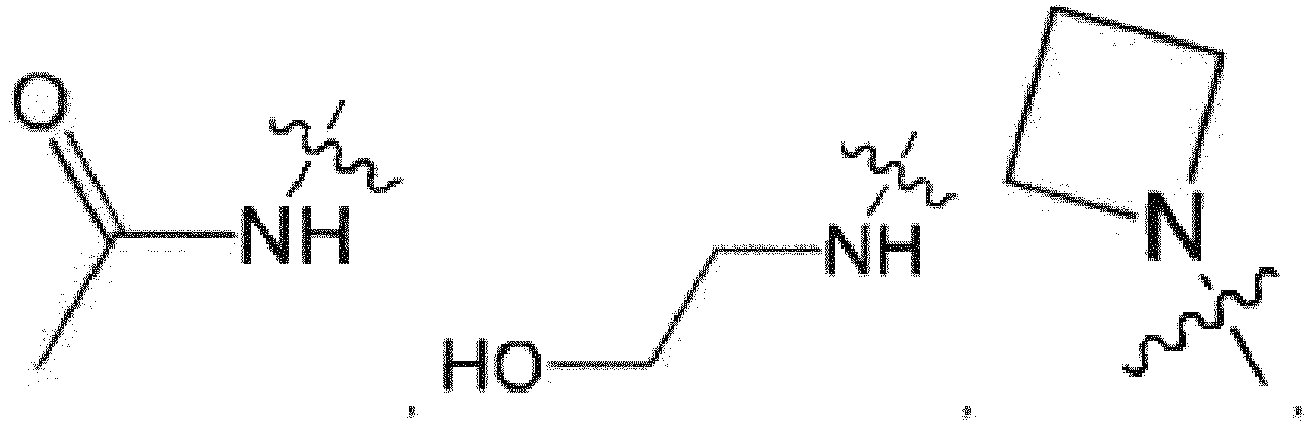

- Verbindung(en) oder ihr pharmazeutisch akzeptables Salz/ihre pharmazeutisch akzeptablen Salze nach Anspruch 2, wobei: R3 ausgewählt ist aus:


- Verbindung(en) oder ihr pharmazeutisch akzeptables Salz/ihre pharmazeutisch akzeptablen Salze nach Anspruch 1, wobei:
X1, X2 jeweils unabhängig ausgewählt sind aus - O -, -C(=O)-, -CH(CH3)-, -C(CH3)2-, -CF2-, -CH(F)
wobei vorzugsweise L2 ausgewählt ist aus:


- Verbindung(en) oder ihr pharmazeutisch akzeptables Salz/ihre pharmazeutisch akzeptablen Salze nach Anspruch 1, wobei: R4 ausgewählt ist aus den Folgenden:


 T4-7 jeweils unabhängig ausgewählt ist aus N oder C(Rt);D1-3, D5 und D6 jeweils unabhängig ausgewählt sind aus einer Einzelbindung, -C(Rd1)(Rd2)-, -C(=O)N(Rd3)-, -N(Rd4)-, -C(=NRd5)-, -S(= O)2N(Rd6)-, -S(=O)N(Rd7)-, -O-, -S-, -C(=O)O-, -C(= O)-, -C(=S)-, -S(=O)- oder -S(=O)2;n2 ausgewählt ist aus 0, 1, 2 oder 3;n3 ausgewählt ist aus 0, 1 oder 2;R5, R6, R7, Rt, Rd1 und Rd2 jeweils unabhängig ausgewählt sind aus H, F, Cl, Br, I, CN, OH, SH, NH2, CHO und COOH oder beliebige ausgewählt aus C1-10-Alkyl- oder Heteroalkylgruppen und cyclischen C3-10-Hydrocarbyl- oder Heterocycloalkylgruppen substituiert mit R01, C1-10-Alkyl- oder Heteroalkylgruppen substituiert mit C3-10-Hydrocarbyl- oder Heterocycloalkylgruppen, während andere Variablen wie in Anspruch 1 definiert sind.
 - Verbindung(en) oder ihr pharmazeutisch akzeptables Salz/ihre pharmazeutisch akzeptablen Salze
nach Anspruch 5, wobei: R4 ausgewählt ist aus den Folgenden:


- Verbindung(en) oder ihr pharmazeutisch akzeptables Salz/ihre pharmazeutisch akzeptablen Salze nach Anspruch 5 oder Anspruch 6, wobei: R5-7 jeweils unabhängig ausgewählt ist aus:


 T1-3 jeweils unabhängig ausgewählt ist aus N oder C(Rt);D4 ausgewählt ist aus -C(Rd1)(Rd2)-, -C(=O)N(Rd3)-, -N(Rd4)-, -C(=NRd5)-, -S(=O)2N(Rd6)-, -S(=O)N(Rd7)-, -O-, -S-, -C(=O)O-, -C(= O)-, -C(=S)-, -S(=O)- oder -S(=O)2-;R8, R9 und Rt jeweils unabhängig ausgewählt sind aus H, F, Cl, Br, I, CN, OH, SH, NH2, CHO, COOH oder beliebige ausgewählt aus C1-10-Alkyl- oder Heteroalkylgruppen und cyclischen C3-10-Hydrocarbyl- oder Heterocycloalkylgruppen substituiert mit R01, C1-10-Alkyl- oder Heteroalkylgruppen substituiert mit C3-10-Hydrocarbyl- oder Heterocycloalkylgruppen sind;R10 ausgewählt ist aus F, Cl, Br, I, CN, OH, SH, NH2, CHO, COOH oder beliebigen ausgewählt aus C1-10-Alkyl- oder Heteroalkylgruppen und cyclischen C3-10-Hydrocarbyl- oder Heterocycloalkylgruppen substituiert mit R01, C1-10-Alkyl- oder Heteroalkylgruppen substituiert mit C3-10-Hydrocarbyl- oder Heterocycloalkylgruppen sind;
 - Verbindung(en) oder ihr pharmazeutisch akzeptables Salz/ihre pharmazeutisch akzeptablen Salze nach Anspruch 7, wobei: R5-9, R01 und Rt jeweils unabhängig ausgewählt sind aus den Folgenden:


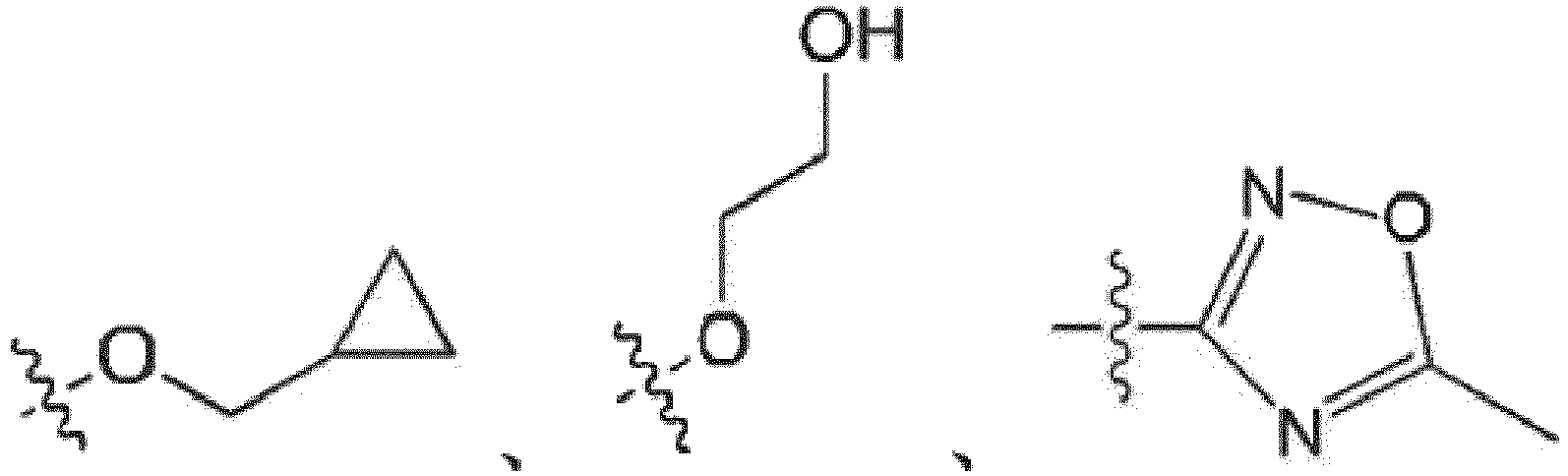


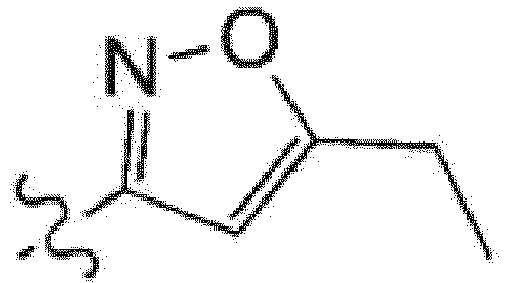
- Verbindung(en) oder ihr pharmazeutisch akzeptables Salz/ihre pharmazeutisch akzeptablen Salze
nach Anspruch 8, wobei: R4 ausgewählt ist aus den Folgenden:


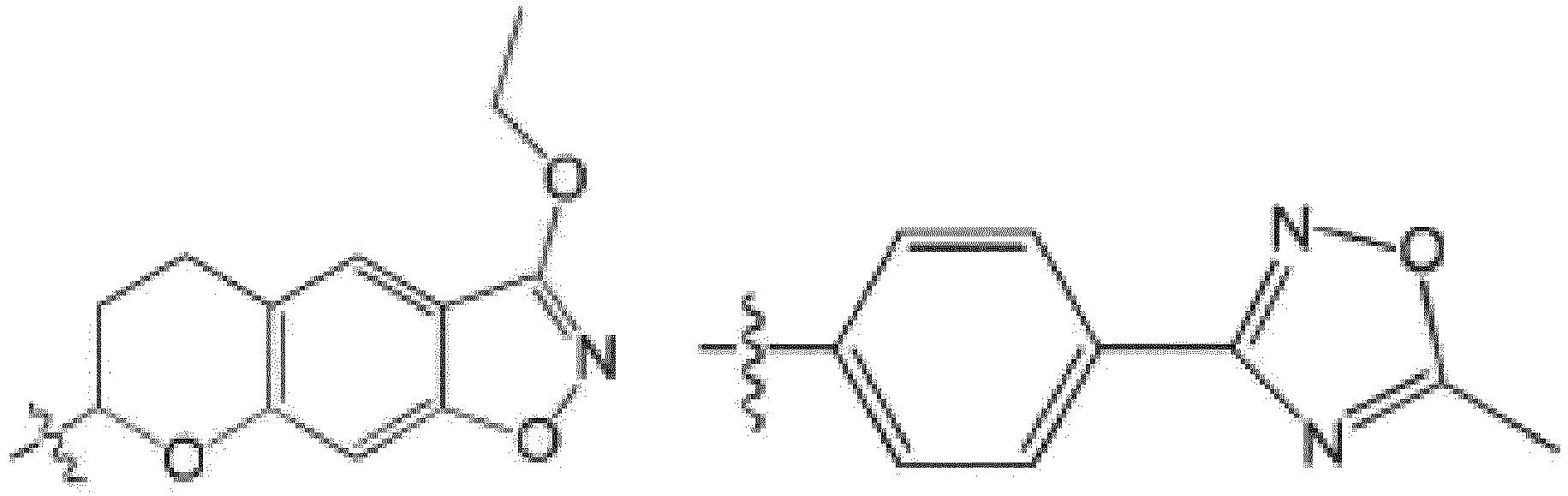


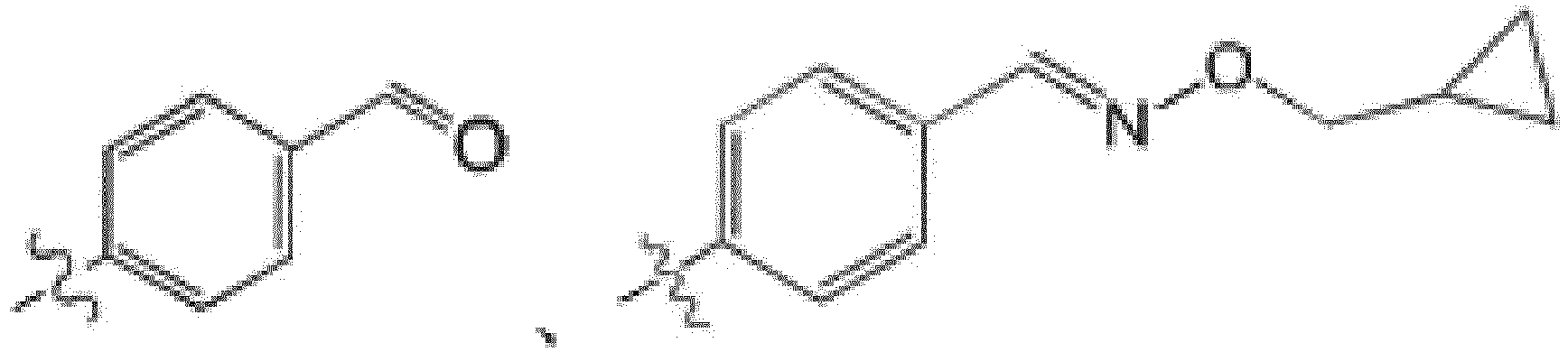
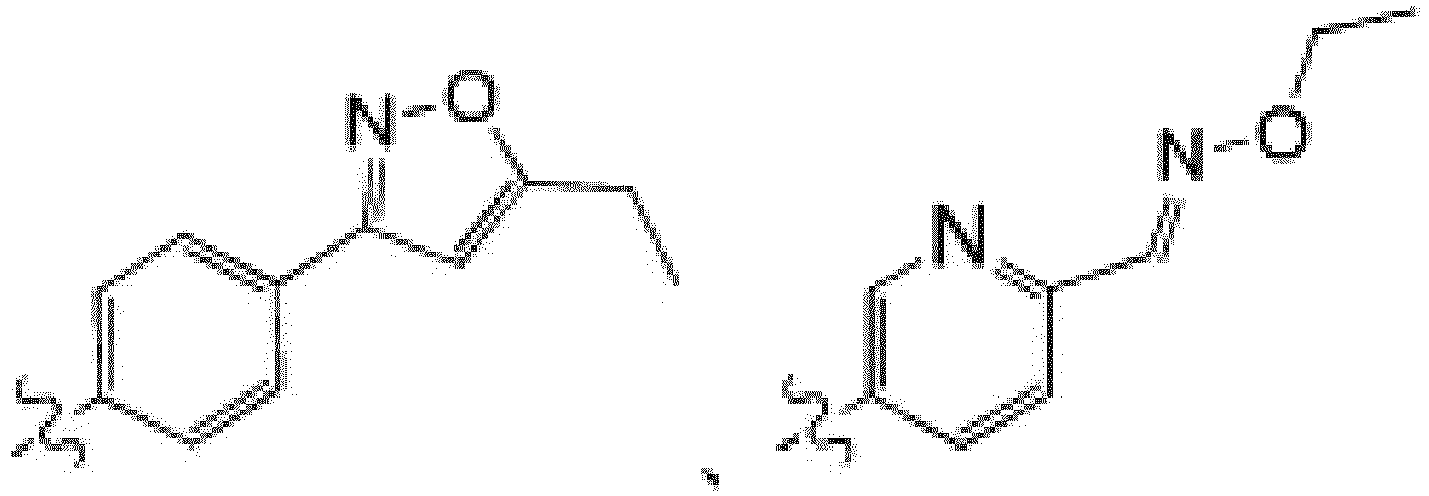


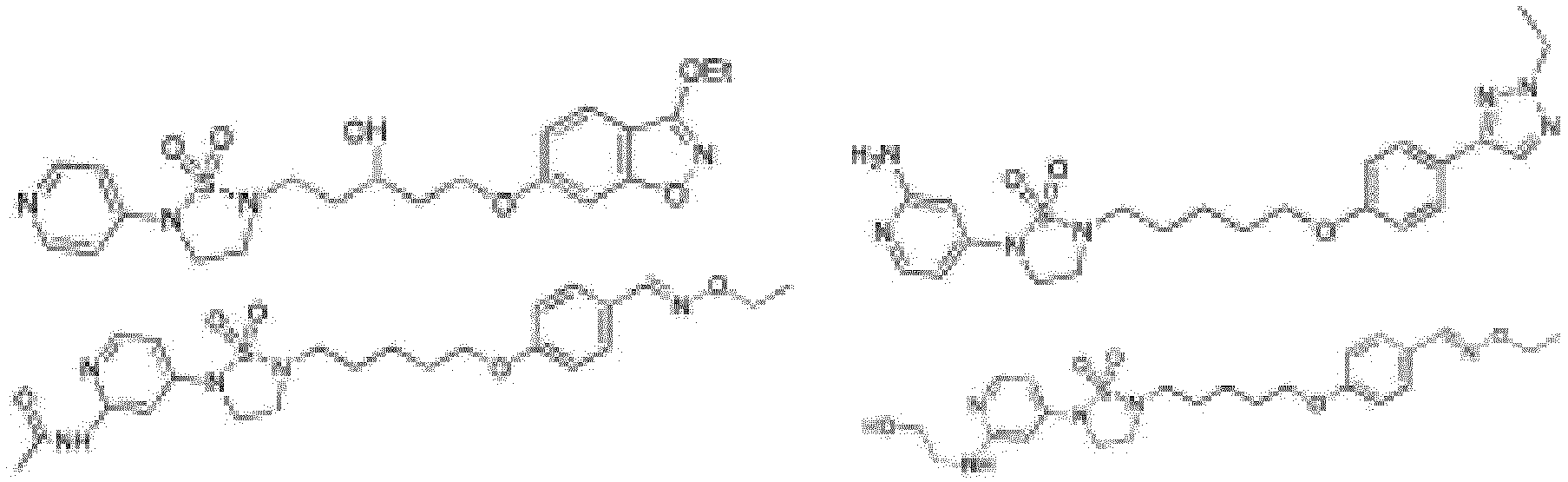
- Verbindung(en) oder ihr pharmazeutisch akzeptables Salz/ihre pharmazeutisch akzeptablen Salze
nach Anspruch 1, ausgewählt aus den Folgenden













Applications Claiming Priority (4)
| Application Number | Priority Date | Filing Date | Title |
|---|---|---|---|
| CN201410176161 | 2014-04-28 | ||
| CN201410543064.6A CN105085512A (zh) | 2014-04-28 | 2014-10-14 | 抗肠病毒71噻二唑烷衍生物 |
| CN201510182757 | 2015-04-16 | ||
| PCT/CN2015/077043 WO2015165340A1 (zh) | 2014-04-28 | 2015-04-21 | 抗肠病毒71噻二唑烷衍生物 |
Publications (3)
| Publication Number | Publication Date |
|---|---|
| EP3138840A1 EP3138840A1 (de) | 2017-03-08 |
| EP3138840A4 EP3138840A4 (de) | 2017-12-20 |
| EP3138840B1 true EP3138840B1 (de) | 2020-09-23 |
Family
ID=56755307
Family Applications (1)
| Application Number | Title | Priority Date | Filing Date |
|---|---|---|---|
| EP15786304.4A Active EP3138840B1 (de) | 2014-04-28 | 2015-04-21 | Thiadiazolidinderivat als anti-enterovirus 71 |
Country Status (10)
| Country | Link |
|---|---|
| US (1) | US9988361B2 (de) |
| EP (1) | EP3138840B1 (de) |
| JP (1) | JP6389531B2 (de) |
| KR (2) | KR101957178B1 (de) |
| CN (1) | CN106661009B (de) |
| DK (1) | DK3138840T3 (de) |
| ES (1) | ES2841418T3 (de) |
| MY (1) | MY176508A (de) |
| SG (1) | SG11201608710TA (de) |
| TW (1) | TWI658037B (de) |
Families Citing this family (3)
| Publication number | Priority date | Publication date | Assignee | Title |
|---|---|---|---|---|
| ES2835061T3 (es) * | 2015-10-26 | 2021-06-21 | Jiangsu Kanion Pharmaceutical Co Ltd | Forma de sal y forma cristalina de 1,2,5-tiadiazolidina 1,1-dióxido, método de preparación de las mismas e intermedios |
| CN113940918B (zh) * | 2020-07-17 | 2023-06-02 | 江苏康缘药业股份有限公司 | 一种药物组合物及制备方法 |
| CN114539020B (zh) * | 2022-01-17 | 2023-12-08 | 南京迈诺威医药科技有限公司 | 一种1,5-二溴-3,3-二氟戊烷的制备方法 |
Family Cites Families (21)
| Publication number | Priority date | Publication date | Assignee | Title |
|---|---|---|---|---|
| GB9104136D0 (en) * | 1991-02-27 | 1991-04-17 | Merck Sharp & Dohme | Therapeutic agents |
| DE4107857A1 (de) * | 1991-03-12 | 1992-09-17 | Thomae Gmbh Dr K | Cyclische harnstoffderivate, diese verbindungen enthaltende arzneimittel und verfahren zu ihrer herstellung |
| US5852192A (en) * | 1992-03-11 | 1998-12-22 | Dr. Karl Thomae Gmbh | Cyclic urea derivatives, pharmaceutical compositions containing these compounds and processes for preparing them |
| SK94393A3 (en) * | 1992-09-11 | 1994-08-10 | Thomae Gmbh Dr K | Cyclic derivatives of urea, process for their production and their pharmaceutical agents with the content of those |
| GB9715816D0 (en) * | 1997-07-25 | 1997-10-01 | Black James Foundation | Histamine H receptor ligands |
| AU6985300A (en) * | 1999-09-10 | 2001-04-17 | Novo Nordisk A/S | Modulators of protein tyrosine phosphatases (ptpases) |
| FR2803298A1 (fr) * | 1999-12-30 | 2001-07-06 | Adir | Nouvelles urees lineaires ou cycliques, leur procede de preparation et les compositions pharmaceutiques qui les contiennent |
| US6706739B2 (en) * | 2001-08-21 | 2004-03-16 | National Health Research Institute | Imidazolidinone compounds |
| US7129359B2 (en) * | 2002-07-09 | 2006-10-31 | National Health Research Institutes | Imidazolidinone compounds |
| AU2003256755A1 (en) * | 2002-07-24 | 2004-02-09 | Ptc Therapeutics, Inc. | Ureido substituted benzoic acid compounds, their use for nonsense suppression and the treatment of diseases caused by such mutations |
| US7259174B2 (en) * | 2004-05-25 | 2007-08-21 | National Health Research Institutes | Imidazolidinone compounds |
| EP1771169A1 (de) * | 2004-07-14 | 2007-04-11 | PTC Therapeutics, Inc. | Verfahren zur behandlung von hepatitis c |
| WO2007053436A1 (en) * | 2005-10-31 | 2007-05-10 | Janssen Pharmaceutica N.V. | Substituted piperazines and piperidines as modulators of the neuropeptide y2 receptor |
| KR20080076916A (ko) * | 2005-11-01 | 2008-08-20 | 트랜스테크 파르마, 인크. | 치환된 아미드의 약학적 사용 |
| CN101535303B (zh) * | 2006-08-15 | 2012-07-18 | 诺瓦提斯公司 | 适合用于治疗与升高的脂质水平有关的疾病的杂环化合物 |
| CN102143962B (zh) * | 2008-07-02 | 2015-03-11 | 爱维艾珂瑟有限公司 | 具有抗病毒特性的化合物 |
| WO2010029048A1 (en) * | 2008-09-09 | 2010-03-18 | Sekmed Srl | 1, 2, 5-thiadiazole derivatives useful as immune potentiators |
| CN102344416B (zh) * | 2010-08-02 | 2015-09-16 | 中国人民解放军军事医学科学院毒物药物研究所 | 哒嗪衍生物及其作为抗小rna病毒感染药物的用途 |
| CN102485717B (zh) * | 2010-12-06 | 2015-12-02 | 中国人民解放军军事医学科学院毒物药物研究所 | 噻唑胺衍生物及其作为抗小rna病毒感染药物的用途 |
| KR101332805B1 (ko) * | 2011-03-31 | 2013-11-27 | 한국화학연구원 | 아다만틸기를 갖는 설파마이드 유도체 및 이의 약제학적으로 허용 가능한 염 |
| GB201402169D0 (en) * | 2014-02-07 | 2014-03-26 | Isis Innovation | Viral inhibitors |
-
2015
- 2015-04-21 ES ES15786304T patent/ES2841418T3/es active Active
- 2015-04-21 MY MYPI2016703942A patent/MY176508A/en unknown
- 2015-04-21 JP JP2016565011A patent/JP6389531B2/ja active Active
- 2015-04-21 SG SG11201608710TA patent/SG11201608710TA/en unknown
- 2015-04-21 KR KR1020187016595A patent/KR101957178B1/ko active Active
- 2015-04-21 US US15/307,710 patent/US9988361B2/en active Active
- 2015-04-21 DK DK15786304.4T patent/DK3138840T3/da active
- 2015-04-21 KR KR1020167033211A patent/KR20160147010A/ko not_active Ceased
- 2015-04-21 CN CN201580011272.4A patent/CN106661009B/zh active Active
- 2015-04-21 EP EP15786304.4A patent/EP3138840B1/de active Active
- 2015-04-27 TW TW104113441A patent/TWI658037B/zh active
Non-Patent Citations (1)
| Title |
|---|
| None * |
Also Published As
| Publication number | Publication date |
|---|---|
| KR20180069103A (ko) | 2018-06-22 |
| TW201620885A (zh) | 2016-06-16 |
| CN106661009A (zh) | 2017-05-10 |
| KR20160147010A (ko) | 2016-12-21 |
| ES2841418T3 (es) | 2021-07-08 |
| JP6389531B2 (ja) | 2018-09-12 |
| EP3138840A1 (de) | 2017-03-08 |
| US20170066732A1 (en) | 2017-03-09 |
| DK3138840T3 (da) | 2020-12-21 |
| JP2017513914A (ja) | 2017-06-01 |
| MY176508A (en) | 2020-08-12 |
| US9988361B2 (en) | 2018-06-05 |
| KR101957178B1 (ko) | 2019-03-12 |
| SG11201608710TA (en) | 2016-11-29 |
| CN106661009B (zh) | 2019-11-26 |
| EP3138840A4 (de) | 2017-12-20 |
| TWI658037B (zh) | 2019-05-01 |
Similar Documents
| Publication | Publication Date | Title |
|---|---|---|
| CN105814019B (zh) | 脲衍生物、或其药理学上所容许的盐 | |
| TWI296625B (en) | Novel cyclic amide derivatives | |
| WO2024032747A1 (zh) | 三环类化合物及其医药用途 | |
| WO2022237875A1 (zh) | 含有亚磺酰亚胺基的atr抑制剂化合物 | |
| EP3333157B1 (de) | Vinylverbindungen als fgfr-und vegf-hemmer | |
| EP4389738A1 (de) | Sos1-inhibitor und verwendung davon | |
| JP5218737B2 (ja) | スフィンゴシン−1−リン酸結合阻害物質 | |
| EP4289843A1 (de) | Pyridopyrimidinonderivat, herstellungsverfahren dafür und verwendung davon | |
| CN112020496A (zh) | 作为rho激酶抑制剂的苯并吡唑类化合物 | |
| EP3170810B1 (de) | Pyridinderivate und antimykobakterielle verwendung davon | |
| EP3712144A1 (de) | P2x3- und/oder p2x2/3-rezeptor-antagonist, pharmazeutische zusammensetzung damit und verwendung davon | |
| KR20160143668A (ko) | 오렉신 수용체 길항제로서의 피페리딘 유도체 | |
| EP3138840B1 (de) | Thiadiazolidinderivat als anti-enterovirus 71 | |
| EP3719010B1 (de) | Aromatische verbindung, pharmazeutische zusammensetzung und ihre verwendung | |
| WO2020224396A1 (zh) | 抑制tdg活性的化合物 | |
| TW201625614A (zh) | 新穎雜環衍生物 | |
| CN105085512A (zh) | 抗肠病毒71噻二唑烷衍生物 | |
| CN121712776A (zh) | 驱动蛋白kif18a抑制剂及其应用 | |
| WO2025031360A1 (zh) | 磺酰胺类化合物及其用途 | |
| WO2015165340A1 (zh) | 抗肠病毒71噻二唑烷衍生物 | |
| CN117209501A (zh) | 磺酰胺衍生物及其用途 | |
| JP7843780B2 (ja) | 癌の処置に使用するための2,8-ジヒドロピラゾロ[3,4-b]インドール誘導体 | |
| HK40060964A (en) | Cd73 inhibitor and application thereof in medicine | |
| HK1230582A1 (zh) | 抗肠病毒71噻二唑烷衍生物 | |
| HK1230582B (zh) | 抗肠病毒71噻二唑烷衍生物 |
Legal Events
| Date | Code | Title | Description |
|---|---|---|---|
| STAA | Information on the status of an ep patent application or granted ep patent |
Free format text: STATUS: THE INTERNATIONAL PUBLICATION HAS BEEN MADE |
|
| PUAI | Public reference made under article 153(3) epc to a published international application that has entered the european phase |
Free format text: ORIGINAL CODE: 0009012 |
|
| STAA | Information on the status of an ep patent application or granted ep patent |
Free format text: STATUS: REQUEST FOR EXAMINATION WAS MADE |
|
| 17P | Request for examination filed |
Effective date: 20161123 |
|
| AK | Designated contracting states |
Kind code of ref document: A1 Designated state(s): AL AT BE BG CH CY CZ DE DK EE ES FI FR GB GR HR HU IE IS IT LI LT LU LV MC MK MT NL NO PL PT RO RS SE SI SK SM TR |
|
| AX | Request for extension of the european patent |
Extension state: BA ME |
|
| DAV | Request for validation of the european patent (deleted) | ||
| DAX | Request for extension of the european patent (deleted) | ||
| REG | Reference to a national code |
Ref country code: DE Ref legal event code: R079 Ref document number: 602015059561 Country of ref document: DE Free format text: PREVIOUS MAIN CLASS: C07D0405140000 Ipc: C07D0417140000 |
|
| A4 | Supplementary search report drawn up and despatched |
Effective date: 20171117 |
|
| RIC1 | Information provided on ipc code assigned before grant |
Ipc: A61K 31/4439 20060101ALI20171113BHEP Ipc: C07D 417/14 20060101AFI20171113BHEP Ipc: C07D 417/04 20060101ALI20171113BHEP Ipc: A61P 31/14 20060101ALI20171113BHEP |
|
| R17P | Request for examination filed (corrected) |
Effective date: 20161123 |
|
| GRAP | Despatch of communication of intention to grant a patent |
Free format text: ORIGINAL CODE: EPIDOSNIGR1 |
|
| STAA | Information on the status of an ep patent application or granted ep patent |
Free format text: STATUS: GRANT OF PATENT IS INTENDED |
|
| INTG | Intention to grant announced |
Effective date: 20200422 |
|
| GRAS | Grant fee paid |
Free format text: ORIGINAL CODE: EPIDOSNIGR3 |
|
| GRAA | (expected) grant |
Free format text: ORIGINAL CODE: 0009210 |
|
| STAA | Information on the status of an ep patent application or granted ep patent |
Free format text: STATUS: THE PATENT HAS BEEN GRANTED |
|
| AK | Designated contracting states |
Kind code of ref document: B1 Designated state(s): AL AT BE BG CH CY CZ DE DK EE ES FI FR GB GR HR HU IE IS IT LI LT LU LV MC MK MT NL NO PL PT RO RS SE SI SK SM TR |
|
| REG | Reference to a national code |
Ref country code: GB Ref legal event code: FG4D |
|
| REG | Reference to a national code |
Ref country code: CH Ref legal event code: EP |
|
| REG | Reference to a national code |
Ref country code: IE Ref legal event code: FG4D |
|
| REG | Reference to a national code |
Ref country code: DE Ref legal event code: R096 Ref document number: 602015059561 Country of ref document: DE Ref country code: AT Ref legal event code: REF Ref document number: 1316276 Country of ref document: AT Kind code of ref document: T Effective date: 20201015 |
|
| REG | Reference to a national code |
Ref country code: DK Ref legal event code: T3 Effective date: 20201217 |
|
| REG | Reference to a national code |
Ref country code: NL Ref legal event code: FP |
|
| PG25 | Lapsed in a contracting state [announced via postgrant information from national office to epo] |
Ref country code: SE Free format text: LAPSE BECAUSE OF FAILURE TO SUBMIT A TRANSLATION OF THE DESCRIPTION OR TO PAY THE FEE WITHIN THE PRESCRIBED TIME-LIMIT Effective date: 20200923 Ref country code: GR Free format text: LAPSE BECAUSE OF FAILURE TO SUBMIT A TRANSLATION OF THE DESCRIPTION OR TO PAY THE FEE WITHIN THE PRESCRIBED TIME-LIMIT Effective date: 20201224 Ref country code: BG Free format text: LAPSE BECAUSE OF FAILURE TO SUBMIT A TRANSLATION OF THE DESCRIPTION OR TO PAY THE FEE WITHIN THE PRESCRIBED TIME-LIMIT Effective date: 20201223 Ref country code: NO Free format text: LAPSE BECAUSE OF FAILURE TO SUBMIT A TRANSLATION OF THE DESCRIPTION OR TO PAY THE FEE WITHIN THE PRESCRIBED TIME-LIMIT Effective date: 20201223 Ref country code: FI Free format text: LAPSE BECAUSE OF FAILURE TO SUBMIT A TRANSLATION OF THE DESCRIPTION OR TO PAY THE FEE WITHIN THE PRESCRIBED TIME-LIMIT Effective date: 20200923 Ref country code: HR Free format text: LAPSE BECAUSE OF FAILURE TO SUBMIT A TRANSLATION OF THE DESCRIPTION OR TO PAY THE FEE WITHIN THE PRESCRIBED TIME-LIMIT Effective date: 20200923 |
|
| REG | Reference to a national code |
Ref country code: AT Ref legal event code: MK05 Ref document number: 1316276 Country of ref document: AT Kind code of ref document: T Effective date: 20200923 |
|
| PG25 | Lapsed in a contracting state [announced via postgrant information from national office to epo] |
Ref country code: RS Free format text: LAPSE BECAUSE OF FAILURE TO SUBMIT A TRANSLATION OF THE DESCRIPTION OR TO PAY THE FEE WITHIN THE PRESCRIBED TIME-LIMIT Effective date: 20200923 Ref country code: LV Free format text: LAPSE BECAUSE OF FAILURE TO SUBMIT A TRANSLATION OF THE DESCRIPTION OR TO PAY THE FEE WITHIN THE PRESCRIBED TIME-LIMIT Effective date: 20200923 |
|
| REG | Reference to a national code |
Ref country code: LT Ref legal event code: MG4D |
|
| PG25 | Lapsed in a contracting state [announced via postgrant information from national office to epo] |
Ref country code: CZ Free format text: LAPSE BECAUSE OF FAILURE TO SUBMIT A TRANSLATION OF THE DESCRIPTION OR TO PAY THE FEE WITHIN THE PRESCRIBED TIME-LIMIT Effective date: 20200923 Ref country code: EE Free format text: LAPSE BECAUSE OF FAILURE TO SUBMIT A TRANSLATION OF THE DESCRIPTION OR TO PAY THE FEE WITHIN THE PRESCRIBED TIME-LIMIT Effective date: 20200923 Ref country code: SM Free format text: LAPSE BECAUSE OF FAILURE TO SUBMIT A TRANSLATION OF THE DESCRIPTION OR TO PAY THE FEE WITHIN THE PRESCRIBED TIME-LIMIT Effective date: 20200923 Ref country code: PT Free format text: LAPSE BECAUSE OF FAILURE TO SUBMIT A TRANSLATION OF THE DESCRIPTION OR TO PAY THE FEE WITHIN THE PRESCRIBED TIME-LIMIT Effective date: 20210125 Ref country code: RO Free format text: LAPSE BECAUSE OF FAILURE TO SUBMIT A TRANSLATION OF THE DESCRIPTION OR TO PAY THE FEE WITHIN THE PRESCRIBED TIME-LIMIT Effective date: 20200923 Ref country code: LT Free format text: LAPSE BECAUSE OF FAILURE TO SUBMIT A TRANSLATION OF THE DESCRIPTION OR TO PAY THE FEE WITHIN THE PRESCRIBED TIME-LIMIT Effective date: 20200923 |
|
| PG25 | Lapsed in a contracting state [announced via postgrant information from national office to epo] |
Ref country code: PL Free format text: LAPSE BECAUSE OF FAILURE TO SUBMIT A TRANSLATION OF THE DESCRIPTION OR TO PAY THE FEE WITHIN THE PRESCRIBED TIME-LIMIT Effective date: 20200923 Ref country code: IS Free format text: LAPSE BECAUSE OF FAILURE TO SUBMIT A TRANSLATION OF THE DESCRIPTION OR TO PAY THE FEE WITHIN THE PRESCRIBED TIME-LIMIT Effective date: 20210123 Ref country code: AL Free format text: LAPSE BECAUSE OF FAILURE TO SUBMIT A TRANSLATION OF THE DESCRIPTION OR TO PAY THE FEE WITHIN THE PRESCRIBED TIME-LIMIT Effective date: 20200923 Ref country code: AT Free format text: LAPSE BECAUSE OF FAILURE TO SUBMIT A TRANSLATION OF THE DESCRIPTION OR TO PAY THE FEE WITHIN THE PRESCRIBED TIME-LIMIT Effective date: 20200923 |
|
| REG | Reference to a national code |
Ref country code: DE Ref legal event code: R097 Ref document number: 602015059561 Country of ref document: DE |
|
| PG25 | Lapsed in a contracting state [announced via postgrant information from national office to epo] |
Ref country code: SK Free format text: LAPSE BECAUSE OF FAILURE TO SUBMIT A TRANSLATION OF THE DESCRIPTION OR TO PAY THE FEE WITHIN THE PRESCRIBED TIME-LIMIT Effective date: 20200923 |
|
| REG | Reference to a national code |
Ref country code: ES Ref legal event code: FG2A Ref document number: 2841418 Country of ref document: ES Kind code of ref document: T3 Effective date: 20210708 |
|
| PLBE | No opposition filed within time limit |
Free format text: ORIGINAL CODE: 0009261 |
|
| STAA | Information on the status of an ep patent application or granted ep patent |
Free format text: STATUS: NO OPPOSITION FILED WITHIN TIME LIMIT |
|
| PG25 | Lapsed in a contracting state [announced via postgrant information from national office to epo] |
Ref country code: SI Free format text: LAPSE BECAUSE OF FAILURE TO SUBMIT A TRANSLATION OF THE DESCRIPTION OR TO PAY THE FEE WITHIN THE PRESCRIBED TIME-LIMIT Effective date: 20200923 |
|
| 26N | No opposition filed |
Effective date: 20210624 |
|
| PG25 | Lapsed in a contracting state [announced via postgrant information from national office to epo] |
Ref country code: MC Free format text: LAPSE BECAUSE OF FAILURE TO SUBMIT A TRANSLATION OF THE DESCRIPTION OR TO PAY THE FEE WITHIN THE PRESCRIBED TIME-LIMIT Effective date: 20200923 |
|
| PG25 | Lapsed in a contracting state [announced via postgrant information from national office to epo] |
Ref country code: LU Free format text: LAPSE BECAUSE OF NON-PAYMENT OF DUE FEES Effective date: 20210421 |
|
| REG | Reference to a national code |
Ref country code: BE Ref legal event code: MM Effective date: 20210430 |
|
| PG25 | Lapsed in a contracting state [announced via postgrant information from national office to epo] |
Ref country code: IE Free format text: LAPSE BECAUSE OF NON-PAYMENT OF DUE FEES Effective date: 20210421 |
|
| PG25 | Lapsed in a contracting state [announced via postgrant information from national office to epo] |
Ref country code: IS Free format text: LAPSE BECAUSE OF FAILURE TO SUBMIT A TRANSLATION OF THE DESCRIPTION OR TO PAY THE FEE WITHIN THE PRESCRIBED TIME-LIMIT Effective date: 20210123 |
|
| PG25 | Lapsed in a contracting state [announced via postgrant information from national office to epo] |
Ref country code: BE Free format text: LAPSE BECAUSE OF NON-PAYMENT OF DUE FEES Effective date: 20210430 |
|
| PG25 | Lapsed in a contracting state [announced via postgrant information from national office to epo] |
Ref country code: HU Free format text: LAPSE BECAUSE OF FAILURE TO SUBMIT A TRANSLATION OF THE DESCRIPTION OR TO PAY THE FEE WITHIN THE PRESCRIBED TIME-LIMIT; INVALID AB INITIO Effective date: 20150421 |
|
| PG25 | Lapsed in a contracting state [announced via postgrant information from national office to epo] |
Ref country code: CY Free format text: LAPSE BECAUSE OF FAILURE TO SUBMIT A TRANSLATION OF THE DESCRIPTION OR TO PAY THE FEE WITHIN THE PRESCRIBED TIME-LIMIT Effective date: 20200923 |
|
| P01 | Opt-out of the competence of the unified patent court (upc) registered |
Effective date: 20230527 |
|
| PG25 | Lapsed in a contracting state [announced via postgrant information from national office to epo] |
Ref country code: MK Free format text: LAPSE BECAUSE OF FAILURE TO SUBMIT A TRANSLATION OF THE DESCRIPTION OR TO PAY THE FEE WITHIN THE PRESCRIBED TIME-LIMIT Effective date: 20200923 |
|
| PG25 | Lapsed in a contracting state [announced via postgrant information from national office to epo] |
Ref country code: TR Free format text: LAPSE BECAUSE OF FAILURE TO SUBMIT A TRANSLATION OF THE DESCRIPTION OR TO PAY THE FEE WITHIN THE PRESCRIBED TIME-LIMIT Effective date: 20200923 |
|
| PG25 | Lapsed in a contracting state [announced via postgrant information from national office to epo] |
Ref country code: MT Free format text: LAPSE BECAUSE OF FAILURE TO SUBMIT A TRANSLATION OF THE DESCRIPTION OR TO PAY THE FEE WITHIN THE PRESCRIBED TIME-LIMIT Effective date: 20200923 |
|
| PGFP | Annual fee paid to national office [announced via postgrant information from national office to epo] |
Ref country code: NL Payment date: 20250426 Year of fee payment: 11 |
|
| PGFP | Annual fee paid to national office [announced via postgrant information from national office to epo] |
Ref country code: DE Payment date: 20250430 Year of fee payment: 11 |
|
| PGFP | Annual fee paid to national office [announced via postgrant information from national office to epo] |
Ref country code: GB Payment date: 20250426 Year of fee payment: 11 Ref country code: ES Payment date: 20250505 Year of fee payment: 11 Ref country code: DK Payment date: 20250429 Year of fee payment: 11 |
|
| PGFP | Annual fee paid to national office [announced via postgrant information from national office to epo] |
Ref country code: IT Payment date: 20250428 Year of fee payment: 11 |
|
| PGFP | Annual fee paid to national office [announced via postgrant information from national office to epo] |
Ref country code: FR Payment date: 20250426 Year of fee payment: 11 |
|
| PGFP | Annual fee paid to national office [announced via postgrant information from national office to epo] |
Ref country code: CH Payment date: 20250501 Year of fee payment: 11 |