EP3139918B1 - Acides bêta-tétrazolyle-propioniques utiles en tant qu'inhibiteurs des métallo-bêta-lactamases - Google Patents
Acides bêta-tétrazolyle-propioniques utiles en tant qu'inhibiteurs des métallo-bêta-lactamases Download PDFInfo
- Publication number
- EP3139918B1 EP3139918B1 EP15789928.7A EP15789928A EP3139918B1 EP 3139918 B1 EP3139918 B1 EP 3139918B1 EP 15789928 A EP15789928 A EP 15789928A EP 3139918 B1 EP3139918 B1 EP 3139918B1
- Authority
- EP
- European Patent Office
- Prior art keywords
- tetrazol
- mmol
- ethyl
- phenyl
- substituted
- Prior art date
- Legal status (The legal status is an assumption and is not a legal conclusion. Google has not performed a legal analysis and makes no representation as to the accuracy of the status listed.)
- Active
Links
- 0 Cc1cc(*)nc(*)c1 Chemical compound Cc1cc(*)nc(*)c1 0.000 description 40
- JZOQNUXWTHZAIR-IUCAKERBSA-N CC(C)C[C@@H]([C@H](Cc1cnc(N)[s]1)c1nnn[nH]1)C(O)=O Chemical compound CC(C)C[C@@H]([C@H](Cc1cnc(N)[s]1)c1nnn[nH]1)C(O)=O JZOQNUXWTHZAIR-IUCAKERBSA-N 0.000 description 3
- SBUZCCQLBXEJST-VUDQBZPASA-N CC(C)C[C@@H]([C@H](Cc(cc1)cnc1N1CC(CCOCC(C)C[C@@H]([C@H](Cc(cc2)cnc2N(C2)CC2N2CCN(C)CC2)c2nnn[nH]2)C(O)=O)C1)c1nnn[nH]1)C(O)=O Chemical compound CC(C)C[C@@H]([C@H](Cc(cc1)cnc1N1CC(CCOCC(C)C[C@@H]([C@H](Cc(cc2)cnc2N(C2)CC2N2CCN(C)CC2)c2nnn[nH]2)C(O)=O)C1)c1nnn[nH]1)C(O)=O SBUZCCQLBXEJST-VUDQBZPASA-N 0.000 description 2
- MPVLLORUBCTHRG-BLIYAOACSA-N CC(C)C[C@@H]([C@H](Cc(cc1)cnc1Oc1cc(CC(C)C[C@@H]([C@H](Cc(cc2)cnc2Oc2cccc3c2CCCN3)c2n[nH]nn2)C(O)=O)c(CN)cc1)c1n[nH]nn1)C(O)=O Chemical compound CC(C)C[C@@H]([C@H](Cc(cc1)cnc1Oc1cc(CC(C)C[C@@H]([C@H](Cc(cc2)cnc2Oc2cccc3c2CCCN3)c2n[nH]nn2)C(O)=O)c(CN)cc1)c1n[nH]nn1)C(O)=O MPVLLORUBCTHRG-BLIYAOACSA-N 0.000 description 2
- PJNREHCTHBGFIL-ROUUACIJSA-N CCC[C@@H]([C@H](Cc1cc(-c2cc(C(N)=O)ccc2)ccc1)c1n[nH]nn1)C(O)=O Chemical compound CCC[C@@H]([C@H](Cc1cc(-c2cc(C(N)=O)ccc2)ccc1)c1n[nH]nn1)C(O)=O PJNREHCTHBGFIL-ROUUACIJSA-N 0.000 description 2
- AFVWIBUYPIWDKA-UWVGGRQHSA-N CCC[C@@H]([C@H](Cc1cc(N)ncc1)c1nnn[nH]1)C(O)=O Chemical compound CCC[C@@H]([C@H](Cc1cc(N)ncc1)c1nnn[nH]1)C(O)=O AFVWIBUYPIWDKA-UWVGGRQHSA-N 0.000 description 2
- KAHVVHGDTHYYIY-UWVGGRQHSA-N CCC[C@@H]([C@H](Cc1nc(N)ccc1)c1nnn[nH]1)C(O)=O Chemical compound CCC[C@@H]([C@H](Cc1nc(N)ccc1)c1nnn[nH]1)C(O)=O KAHVVHGDTHYYIY-UWVGGRQHSA-N 0.000 description 2
- XFSLHCPHPYQITA-OALUTQOASA-N OC([C@H]([C@H](Cc1ccc(C2CCNCC2)cc1)c1nnn[nH]1)C1CCCC1)=O Chemical compound OC([C@H]([C@H](Cc1ccc(C2CCNCC2)cc1)c1nnn[nH]1)C1CCCC1)=O XFSLHCPHPYQITA-OALUTQOASA-N 0.000 description 2
- DTQVDTLACAAQTR-UHFFFAOYSA-M [O-]C(C(F)(F)F)=O Chemical compound [O-]C(C(F)(F)F)=O DTQVDTLACAAQTR-UHFFFAOYSA-M 0.000 description 2
- CRRMIKBAPPOPNW-UHFFFAOYSA-N BrCc(cc1)cnc1Br Chemical compound BrCc(cc1)cnc1Br CRRMIKBAPPOPNW-UHFFFAOYSA-N 0.000 description 1
- GIPHHIBTKVDCFQ-OWYJLGKBSA-N CC(C)(C)C([C@H](Cc1ccc(C2CNCC2)nc1)c1nnn[nH]1)C(O)=O Chemical compound CC(C)(C)C([C@H](Cc1ccc(C2CNCC2)nc1)c1nnn[nH]1)C(O)=O GIPHHIBTKVDCFQ-OWYJLGKBSA-N 0.000 description 1
- NTIOPBCSSAPDHZ-LLVKDONJSA-N CC(C)(C)OC(C[C@@H](Cc(cc1)ccc1Br)c1nnn[nH]1)=O Chemical compound CC(C)(C)OC(C[C@@H](Cc(cc1)ccc1Br)c1nnn[nH]1)=O NTIOPBCSSAPDHZ-LLVKDONJSA-N 0.000 description 1
- TWMRLCPQQCHIBH-GFCCVEGCSA-N CC(C)(C)OC(C[C@@H](Cc1ccccc1)C(O)=O)=O Chemical compound CC(C)(C)OC(C[C@@H](Cc1ccccc1)C(O)=O)=O TWMRLCPQQCHIBH-GFCCVEGCSA-N 0.000 description 1
- PRMJMHVESVHMGG-GFCCVEGCSA-N CC(C)(C)OC(C[C@@H](Cc1ccccc1)c1nnn[nH]1)=O Chemical compound CC(C)(C)OC(C[C@@H](Cc1ccccc1)c1nnn[nH]1)=O PRMJMHVESVHMGG-GFCCVEGCSA-N 0.000 description 1
- NTIOPBCSSAPDHZ-NSHDSACASA-N CC(C)(C)OC(C[C@H](Cc(cc1)ccc1Br)c1nnn[nH]1)=O Chemical compound CC(C)(C)OC(C[C@H](Cc(cc1)ccc1Br)c1nnn[nH]1)=O NTIOPBCSSAPDHZ-NSHDSACASA-N 0.000 description 1
- ZHKRUAUFUIUXGA-ZDUSSCGKSA-N CC(C)(C)OC(C[C@H](Cc1ccccc1)C#N)=O Chemical compound CC(C)(C)OC(C[C@H](Cc1ccccc1)C#N)=O ZHKRUAUFUIUXGA-ZDUSSCGKSA-N 0.000 description 1
- YQCKHIJFOSMIRF-LBPRGKRZSA-N CC(C)(C)OC(C[C@H](Cc1ccccc1)C(N)=O)=O Chemical compound CC(C)(C)OC(C[C@H](Cc1ccccc1)C(N)=O)=O YQCKHIJFOSMIRF-LBPRGKRZSA-N 0.000 description 1
- TWMRLCPQQCHIBH-LBPRGKRZSA-N CC(C)(C)OC(C[C@H](Cc1ccccc1)C(O)=O)=O Chemical compound CC(C)(C)OC(C[C@H](Cc1ccccc1)C(O)=O)=O TWMRLCPQQCHIBH-LBPRGKRZSA-N 0.000 description 1
- PRMJMHVESVHMGG-LBPRGKRZSA-N CC(C)(C)OC(C[C@H](Cc1ccccc1)c1nnn[nH]1)=O Chemical compound CC(C)(C)OC(C[C@H](Cc1ccccc1)c1nnn[nH]1)=O PRMJMHVESVHMGG-LBPRGKRZSA-N 0.000 description 1
- BQGNWLCMOOLQBQ-UHFFFAOYSA-N CC(C)(C)P([C+](CCC1)C1=[Fe+]=C1CCCC1)C(C)(C)C Chemical compound CC(C)(C)P([C+](CCC1)C1=[Fe+]=C1CCCC1)C(C)(C)C BQGNWLCMOOLQBQ-UHFFFAOYSA-N 0.000 description 1
- IFOCVQYUXSFTKL-AAEUAGOBSA-N CC(C)(C)[C@@H]([C@H](Cc(cc1)cnc1NCCN)c1nnn[nH]1)C(O)=O Chemical compound CC(C)(C)[C@@H]([C@H](Cc(cc1)cnc1NCCN)c1nnn[nH]1)C(O)=O IFOCVQYUXSFTKL-AAEUAGOBSA-N 0.000 description 1
- ZZQMTJVPMRFKDT-AAEUAGOBSA-N CC(C)(C)[C@@H]([C@H](Cc(cc1)cnc1NCCO)c1nnn[nH]1)C(O)=O Chemical compound CC(C)(C)[C@@H]([C@H](Cc(cc1)cnc1NCCO)c1nnn[nH]1)C(O)=O ZZQMTJVPMRFKDT-AAEUAGOBSA-N 0.000 description 1
- IRJLQSGUAJCJJL-ZFWWWQNUSA-N CC(C)(C)[C@@H]([C@H](Cc1ccc(C2=CCNC2)nc1)c1nnn[nH]1)C(O)=O Chemical compound CC(C)(C)[C@@H]([C@H](Cc1ccc(C2=CCNC2)nc1)c1nnn[nH]1)C(O)=O IRJLQSGUAJCJJL-ZFWWWQNUSA-N 0.000 description 1
- HSBWHFONBNNWBU-UHFFFAOYSA-O CC(C)C(C(Cc1ccc(C2CNCC2)cn1)C1=NN[NH2+]N1)C(O)=O Chemical compound CC(C)C(C(Cc1ccc(C2CNCC2)cn1)C1=NN[NH2+]N1)C(O)=O HSBWHFONBNNWBU-UHFFFAOYSA-O 0.000 description 1
- FSXHAKOGIGWVJK-CFMCSPIPSA-N CC(C)C[C@@H](C(c1nnn[nH]1)[F]c1ccc(N2CC(CO)(CO)C2)nc1)C(O)=O Chemical compound CC(C)C[C@@H](C(c1nnn[nH]1)[F]c1ccc(N2CC(CO)(CO)C2)nc1)C(O)=O FSXHAKOGIGWVJK-CFMCSPIPSA-N 0.000 description 1
- WULANCGOHGFYQD-HWKDEXGKSA-N CC(C)C[C@@H](C/C(/N=N\C)=N/C)C(O)=O Chemical compound CC(C)C[C@@H](C/C(/N=N\C)=N/C)C(O)=O WULANCGOHGFYQD-HWKDEXGKSA-N 0.000 description 1
- FJTPRUPXDQDMMZ-STQMWFEESA-N CC(C)C[C@@H]([C@H](Cc(cc1)ccc1C(N)=O)c1nnn[nH]1)C(O)=O Chemical compound CC(C)C[C@@H]([C@H](Cc(cc1)ccc1C(N)=O)c1nnn[nH]1)C(O)=O FJTPRUPXDQDMMZ-STQMWFEESA-N 0.000 description 1
- SDBMPEPFPVDNSG-KBPBESRZSA-N CC(C)C[C@@H]([C@H](Cc(cc1)ccc1S(C)(=O)=O)c1n[nH]nn1)C(O)=O Chemical compound CC(C)C[C@@H]([C@H](Cc(cc1)ccc1S(C)(=O)=O)c1n[nH]nn1)C(O)=O SDBMPEPFPVDNSG-KBPBESRZSA-N 0.000 description 1
- ZIYJVOXTRYUURU-GJZGRUSLSA-N CC(C)C[C@@H]([C@H](Cc(cc1)cnc1N(C1)CC1(C1)CNC1=O)c1nnn[nH]1)C(O)=O Chemical compound CC(C)C[C@@H]([C@H](Cc(cc1)cnc1N(C1)CC1(C1)CNC1=O)c1nnn[nH]1)C(O)=O ZIYJVOXTRYUURU-GJZGRUSLSA-N 0.000 description 1
- AOQRHWBPLIIJEV-WPNOBGBWSA-N CC(C)C[C@@H]([C@H](Cc(cc1)cnc1N1CC(C)(CNCC(C)C[C@@H]([C@H](Cc(cc2)cnc2N(C2)CC2N2CCNCC2)c2nnn[nH]2)C(O)=O)C1)c1nnn[nH]1)C(O)=O Chemical compound CC(C)C[C@@H]([C@H](Cc(cc1)cnc1N1CC(C)(CNCC(C)C[C@@H]([C@H](Cc(cc2)cnc2N(C2)CC2N2CCNCC2)c2nnn[nH]2)C(O)=O)C1)c1nnn[nH]1)C(O)=O AOQRHWBPLIIJEV-WPNOBGBWSA-N 0.000 description 1
- MDRKKVOMQJKDIZ-ROUUACIJSA-N CC(C)C[C@@H]([C@H](Cc(cc1)cnc1N1CCC(CNS(C)(=O)=O)CC1)c1nnn[nH]1)C(O)=O Chemical compound CC(C)C[C@@H]([C@H](Cc(cc1)cnc1N1CCC(CNS(C)(=O)=O)CC1)c1nnn[nH]1)C(O)=O MDRKKVOMQJKDIZ-ROUUACIJSA-N 0.000 description 1
- VBINHTJGTAZEBH-RFHHWMCGSA-N CC(C)C[C@@H]([C@H](Cc(cc1)cnc1NCCC(C(F)(F)F)N)c1nnn[nH]1)C(O)=O Chemical compound CC(C)C[C@@H]([C@H](Cc(cc1)cnc1NCCC(C(F)(F)F)N)c1nnn[nH]1)C(O)=O VBINHTJGTAZEBH-RFHHWMCGSA-N 0.000 description 1
- AMNUKVUFEULDIK-IRXDYDNUSA-N CC(C)C[C@@H]([C@H](Cc(cc1)cnc1Oc1cccc(C(N)=O)c1)c1n[nH]nn1)C(O)=O Chemical compound CC(C)C[C@@H]([C@H](Cc(cc1)cnc1Oc1cccc(C(N)=O)c1)c1n[nH]nn1)C(O)=O AMNUKVUFEULDIK-IRXDYDNUSA-N 0.000 description 1
- NCBNIDATKMLDJQ-OALUTQOASA-N CC(C)C[C@@H]([C@H](Cc(cc1)cnc1Oc1ccccc1N1CCNCC1)c1n[nH]nn1)C(O)=O Chemical compound CC(C)C[C@@H]([C@H](Cc(cc1)cnc1Oc1ccccc1N1CCNCC1)c1n[nH]nn1)C(O)=O NCBNIDATKMLDJQ-OALUTQOASA-N 0.000 description 1
- IHWXVCSHERVJIQ-IRXDYDNUSA-N CC(C)C[C@@H]([C@H](Cc(cn1)ccc1Oc(cc1)ccc1C(N)=O)c1n[nH]nn1)C(O)=O Chemical compound CC(C)C[C@@H]([C@H](Cc(cn1)ccc1Oc(cc1)ccc1C(N)=O)c1n[nH]nn1)C(O)=O IHWXVCSHERVJIQ-IRXDYDNUSA-N 0.000 description 1
- ZTPZWVNFJVZZDN-OALUTQOASA-N CC(C)C[C@@H]([C@H](Cc(cn1)ccc1Oc1cc(N2CCNCC2)ncc1)c1n[nH]nn1)C(O)=O Chemical compound CC(C)C[C@@H]([C@H](Cc(cn1)ccc1Oc1cc(N2CCNCC2)ncc1)c1n[nH]nn1)C(O)=O ZTPZWVNFJVZZDN-OALUTQOASA-N 0.000 description 1
- PXNUGUVYIUNEOS-OALUTQOASA-N CC(C)C[C@@H]([C@H](Cc(cn1)ccc1Oc1ccc(CCN)cc1)c1n[nH]nn1)C(O)=O Chemical compound CC(C)C[C@@H]([C@H](Cc(cn1)ccc1Oc1ccc(CCN)cc1)c1n[nH]nn1)C(O)=O PXNUGUVYIUNEOS-OALUTQOASA-N 0.000 description 1
- IMZDZMFFIWBVLW-GJZGRUSLSA-N CC(C)C[C@@H]([C@H](Cc1cc2cc(N)cnc2cc1)c1nnn[nH]1)C(O)=O Chemical compound CC(C)C[C@@H]([C@H](Cc1cc2cc(N)cnc2cc1)c1nnn[nH]1)C(O)=O IMZDZMFFIWBVLW-GJZGRUSLSA-N 0.000 description 1
- KOPDDCVGTJNMQT-GJZGRUSLSA-N CC(C)C[C@@H]([C@H](Cc1ccc(-c(cc2)cnc2N)nc1)c1n[nH]nn1)C(O)=O Chemical compound CC(C)C[C@@H]([C@H](Cc1ccc(-c(cc2)cnc2N)nc1)c1n[nH]nn1)C(O)=O KOPDDCVGTJNMQT-GJZGRUSLSA-N 0.000 description 1
- SWZARJMSMZTJGV-ROUUACIJSA-N CC(C)C[C@@H]([C@H](Cc1ccc(N(C2)CC2N2CCOCC2)nc1)c1nnn[nH]1)C(O)=O Chemical compound CC(C)C[C@@H]([C@H](Cc1ccc(N(C2)CC2N2CCOCC2)nc1)c1nnn[nH]1)C(O)=O SWZARJMSMZTJGV-ROUUACIJSA-N 0.000 description 1
- ZNSYECQGOPFTTG-IUOKQZNTSA-N CC(C)C[C@@H]([C@H](Cc1ccc(N(CC2)CC2/C(/NC)=[O]/CC(C)C[C@@H]([C@H](Cc(cc2)cnc2N2CCCC2)c2nnn[nH]2)C(O)=O)nc1)c1nnn[nH]1)C(O)=O Chemical compound CC(C)C[C@@H]([C@H](Cc1ccc(N(CC2)CC2/C(/NC)=[O]/CC(C)C[C@@H]([C@H](Cc(cc2)cnc2N2CCCC2)c2nnn[nH]2)C(O)=O)nc1)c1nnn[nH]1)C(O)=O ZNSYECQGOPFTTG-IUOKQZNTSA-N 0.000 description 1
- JUPJZESWVNNMSO-DTIOYNMSSA-N CC(C)[C@@H](C(/C(/NN)=N/N=C)C#Cc1cnc(N)nc1)C(O)=O Chemical compound CC(C)[C@@H](C(/C(/NN)=N/N=C)C#Cc1cnc(N)nc1)C(O)=O JUPJZESWVNNMSO-DTIOYNMSSA-N 0.000 description 1
- AWLXNUZAEDAVQO-ONGXEEELSA-N CC(C)[C@@H]([C@H](Cc(cc1)cnc1N)c1nnn[nH]1)C(O)=O Chemical compound CC(C)[C@@H]([C@H](Cc(cc1)cnc1N)c1nnn[nH]1)C(O)=O AWLXNUZAEDAVQO-ONGXEEELSA-N 0.000 description 1
- IVWINIRHGUFXDW-GSJBWLMQSA-N CC(C)[C@@H]([C@H](Cc(cc1)cnc1N1C(CO)C(CC(C)[C@@H]([C@H](Cc2ccc(N3[C@H](CO)CCC3)nc2)C2=NN(C)NN2)C(O)=O)CC1)C1=NN(C)NN1)C(O)=O Chemical compound CC(C)[C@@H]([C@H](Cc(cc1)cnc1N1C(CO)C(CC(C)[C@@H]([C@H](Cc2ccc(N3[C@H](CO)CCC3)nc2)C2=NN(C)NN2)C(O)=O)CC1)C1=NN(C)NN1)C(O)=O IVWINIRHGUFXDW-GSJBWLMQSA-N 0.000 description 1
- BLSHBTJBSBCFGM-JQWIXIFHSA-N CC(C)[C@@H]([C@H](Cc1ccc(N)nc1)C1=NNN(C)N1)C(O)=O Chemical compound CC(C)[C@@H]([C@H](Cc1ccc(N)nc1)C1=NNN(C)N1)C(O)=O BLSHBTJBSBCFGM-JQWIXIFHSA-N 0.000 description 1
- XKTUOZJFAPFMPJ-ONGXEEELSA-N CC(C)[C@@H]([C@H](Cc1nc(Br)ccc1)c1nnn[nH]1)C(O)=O Chemical compound CC(C)[C@@H]([C@H](Cc1nc(Br)ccc1)c1nnn[nH]1)C(O)=O XKTUOZJFAPFMPJ-ONGXEEELSA-N 0.000 description 1
- HLDFZTZDFXLULL-CPINONMASA-N CC(COCC(CC1)CCN1c1ncc(C[C@@H]([C@H](CC(C)I)C(O)=O)c2nnn[nH]2)cc1)[C@@H](C1)C1([C@H](Cc(cc1)cnc1N(CC1)CC1O)c1nnn[nH]1)C(O)=O Chemical compound CC(COCC(CC1)CCN1c1ncc(C[C@@H]([C@H](CC(C)I)C(O)=O)c2nnn[nH]2)cc1)[C@@H](C1)C1([C@H](Cc(cc1)cnc1N(CC1)CC1O)c1nnn[nH]1)C(O)=O HLDFZTZDFXLULL-CPINONMASA-N 0.000 description 1
- RCSSHZGQHHEHPZ-UHFFFAOYSA-N CC(c1ccccc1)NC Chemical compound CC(c1ccccc1)NC RCSSHZGQHHEHPZ-UHFFFAOYSA-N 0.000 description 1
- YFEXIVCQPCMNGA-OSASKYKTSA-M CC/C=C(/[C@H](CC1=CC(C)N(C)C=C1)c1nnn[nH]1)\C([O-])=O Chemical compound CC/C=C(/[C@H](CC1=CC(C)N(C)C=C1)c1nnn[nH]1)\C([O-])=O YFEXIVCQPCMNGA-OSASKYKTSA-M 0.000 description 1
- MWWKPBJJXOZZEG-QNCMIEPLSA-O CC/C=C(\[C@H](Cc1cc(N)ccc1)C(N)=[NH2+])/C(O)=O Chemical compound CC/C=C(\[C@H](Cc1cc(N)ccc1)C(N)=[NH2+])/C(O)=O MWWKPBJJXOZZEG-QNCMIEPLSA-O 0.000 description 1
- DBGFVMSDDLEIJC-LVSJCFTFSA-N CC/C=C\C(\C[C@@H]([C@H](CCC1CCCC1)C(O)=O)c1nnn[nH]1)=C/C Chemical compound CC/C=C\C(\C[C@@H]([C@H](CCC1CCCC1)C(O)=O)c1nnn[nH]1)=C/C DBGFVMSDDLEIJC-LVSJCFTFSA-N 0.000 description 1
- JWEWIFFLEJLHMW-PFWSDMIYSA-N CCC(C)[C@@H]([C@H](Cc1ccc(C2CNCC2)cc1)c1nnn[nH]1)C(O)=O Chemical compound CCC(C)[C@@H]([C@H](Cc1ccc(C2CNCC2)cc1)c1nnn[nH]1)C(O)=O JWEWIFFLEJLHMW-PFWSDMIYSA-N 0.000 description 1
- XLJXBRUSKMABAN-UHFFFAOYSA-O CCCC(C(Cc(cc1)cnc1Oc1ccc(C[NH3+])cc1)c1nnn[nH]1)C(O)=O Chemical compound CCCC(C(Cc(cc1)cnc1Oc1ccc(C[NH3+])cc1)c1nnn[nH]1)C(O)=O XLJXBRUSKMABAN-UHFFFAOYSA-O 0.000 description 1
- CPPAKQCNAFNRJM-UHFFFAOYSA-O CCCC(C(Cc(cccc1)c1C(CC1)=CCC1[NH2+]C)c1n[nH]nn1)C(O)O Chemical compound CCCC(C(Cc(cccc1)c1C(CC1)=CCC1[NH2+]C)c1n[nH]nn1)C(O)O CPPAKQCNAFNRJM-UHFFFAOYSA-O 0.000 description 1
- ZHPGZYXUYPMOAW-UHFFFAOYSA-O CCCC(C(Cc1ccc(C2(C[NH2+]CC2)O)cc1)c1nnn[nH]1)C(O)=O Chemical compound CCCC(C(Cc1ccc(C2(C[NH2+]CC2)O)cc1)c1nnn[nH]1)C(O)=O ZHPGZYXUYPMOAW-UHFFFAOYSA-O 0.000 description 1
- IPBAQTTVQUPWBY-UHFFFAOYSA-O CCCC(C(Cc1ccc(NCc(cc2)ccc2O)nc1)C1=NN[NH2+]N1)C(O)=O Chemical compound CCCC(C(Cc1ccc(NCc(cc2)ccc2O)nc1)C1=NN[NH2+]N1)C(O)=O IPBAQTTVQUPWBY-UHFFFAOYSA-O 0.000 description 1
- NLECDIIQCDELQB-UHFFFAOYSA-O CCCC(C(Cc1cnc(N2CCNCC2)[s]1)C1=NN[NH2+]N1)C(O)=O Chemical compound CCCC(C(Cc1cnc(N2CCNCC2)[s]1)C1=NN[NH2+]N1)C(O)=O NLECDIIQCDELQB-UHFFFAOYSA-O 0.000 description 1
- UAZUZKTYVZRYMU-UHFFFAOYSA-O CCCC(C(Cc1nc(N)ccc1)C1=NN[NH2+]N1)C(O)=O Chemical compound CCCC(C(Cc1nc(N)ccc1)C1=NN[NH2+]N1)C(O)=O UAZUZKTYVZRYMU-UHFFFAOYSA-O 0.000 description 1
- CAFPPYBYLCQWSO-UHFFFAOYSA-N CCCC(CN1)=CC=C1OC1C=C(CO)C=CC1 Chemical compound CCCC(CN1)=CC=C1OC1C=C(CO)C=CC1 CAFPPYBYLCQWSO-UHFFFAOYSA-N 0.000 description 1
- DPHHHVXKWOYBDZ-KIYNQFGBSA-N CCCC([C@H](Cc(cc1)cnc1OCCN)c1nnn[nH]1)C(O)=O Chemical compound CCCC([C@H](Cc(cc1)cnc1OCCN)c1nnn[nH]1)C(O)=O DPHHHVXKWOYBDZ-KIYNQFGBSA-N 0.000 description 1
- SAABTWMPIGYNPA-KIYNQFGBSA-N CCCC([C@H](Cc1ccc(NCCO)nc1)c1nnn[nH]1)C(O)=O Chemical compound CCCC([C@H](Cc1ccc(NCCO)nc1)c1nnn[nH]1)C(O)=O SAABTWMPIGYNPA-KIYNQFGBSA-N 0.000 description 1
- QNTWVHFMPRDPER-KIYNQFGBSA-N CCCC([C@H](Cc1cnc(N2CCNCC2)[s]1)c1nnn[nH]1)C(O)=O Chemical compound CCCC([C@H](Cc1cnc(N2CCNCC2)[s]1)c1nnn[nH]1)C(O)=O QNTWVHFMPRDPER-KIYNQFGBSA-N 0.000 description 1
- HLPBARLULJLTFO-SIMZDOAPSA-N CCCC[C@H]([C@@H](Cc(cc1)ccc1-c1c[n](-c2ccc(CCCC[C@H]([C@@H](Cc(cc3)ccc3-c3c[nH]nc3)c3n[nH]nn3)C(O)=O)cc2)nc1)c1n[nH]nn1)C(O)=O Chemical compound CCCC[C@H]([C@@H](Cc(cc1)ccc1-c1c[n](-c2ccc(CCCC[C@H]([C@@H](Cc(cc3)ccc3-c3c[nH]nc3)c3n[nH]nn3)C(O)=O)cc2)nc1)c1n[nH]nn1)C(O)=O HLPBARLULJLTFO-SIMZDOAPSA-N 0.000 description 1
- ZUVHOWFTNZSOJG-RTBURBONSA-N CCCC[C@H]([C@@H](Cc(cc1)ccc1-c1ccccc1)c1n[nH]nn1)C(O)=O Chemical compound CCCC[C@H]([C@@H](Cc(cc1)ccc1-c1ccccc1)c1n[nH]nn1)C(O)=O ZUVHOWFTNZSOJG-RTBURBONSA-N 0.000 description 1
- XLJXBRUSKMABAN-BHWOMJMDSA-N CCC[C@@H](C(Cc(cc1)cnc1Oc1ccc(CN)cc1)c1nnn[nH]1)C(O)=O Chemical compound CCC[C@@H](C(Cc(cc1)cnc1Oc1ccc(CN)cc1)c1nnn[nH]1)C(O)=O XLJXBRUSKMABAN-BHWOMJMDSA-N 0.000 description 1
- BVUDGWHTPBIMJH-BHWOMJMDSA-N CCC[C@@H](C(Cc1ccc(NCc(cc2)ccc2O)nc1)c1nnn[nH]1)C(O)=O Chemical compound CCC[C@@H](C(Cc1ccc(NCc(cc2)ccc2O)nc1)c1nnn[nH]1)C(O)=O BVUDGWHTPBIMJH-BHWOMJMDSA-N 0.000 description 1
- IWIOBBJUHJMKLA-YFKPBYRVSA-N CCC[C@@H](Cc1n[nH]nn1)C(O)=O Chemical compound CCC[C@@H](Cc1n[nH]nn1)C(O)=O IWIOBBJUHJMKLA-YFKPBYRVSA-N 0.000 description 1
- PMZGQRAIRCLIRP-STQMWFEESA-N CCC[C@@H]([C@H](CCC1=CCCC=C1)/C(/N)=N/N)C(O)=O Chemical compound CCC[C@@H]([C@H](CCC1=CCCC=C1)/C(/N)=N/N)C(O)=O PMZGQRAIRCLIRP-STQMWFEESA-N 0.000 description 1
- LRDXOPYSEFFNPO-GJZGRUSLSA-N CCC[C@@H]([C@H](C[B-](F)(F)F)c1nnn[n]1COCC[Si](C)(C)C)C(OC(C)(C)C)=O Chemical compound CCC[C@@H]([C@H](C[B-](F)(F)F)c1nnn[n]1COCC[Si](C)(C)C)C(OC(C)(C)C)=O LRDXOPYSEFFNPO-GJZGRUSLSA-N 0.000 description 1
- JFVOPPQSNHRADR-HOTGVXAUSA-N CCC[C@@H]([C@H](Cc(cc1)ccc1-c(cc1)cnc1N)c1n[nH]nn1)C(O)=O Chemical compound CCC[C@@H]([C@H](Cc(cc1)ccc1-c(cc1)cnc1N)c1n[nH]nn1)C(O)=O JFVOPPQSNHRADR-HOTGVXAUSA-N 0.000 description 1
- BQQNZFWXZZWTHQ-GJZGRUSLSA-N CCC[C@@H]([C@H](Cc(cc1)ccc1-c(cc1N2)cnc1NC2=O)c1nnn[nH]1)C(O)=O Chemical compound CCC[C@@H]([C@H](Cc(cc1)ccc1-c(cc1N2)cnc1NC2=O)c1nnn[nH]1)C(O)=O BQQNZFWXZZWTHQ-GJZGRUSLSA-N 0.000 description 1
- WTAQJRBCFPNGMM-IRXDYDNUSA-N CCC[C@@H]([C@H](Cc(cc1)ccc1-c1c[n]2ncnc2cc1)c1nnn[nH]1)C(O)=O Chemical compound CCC[C@@H]([C@H](Cc(cc1)ccc1-c1c[n]2ncnc2cc1)c1nnn[nH]1)C(O)=O WTAQJRBCFPNGMM-IRXDYDNUSA-N 0.000 description 1
- IPMNRTWKIQYFEV-ROUUACIJSA-N CCC[C@@H]([C@H](Cc(cc1)ccc1-c1cc(C(N)=O)ccc1)c1n[nH]nn1)C(O)=O Chemical compound CCC[C@@H]([C@H](Cc(cc1)ccc1-c1cc(C(N)=O)ccc1)c1n[nH]nn1)C(O)=O IPMNRTWKIQYFEV-ROUUACIJSA-N 0.000 description 1
- IHVTWQKMGAVCIW-VXKWHMMOSA-N CCC[C@@H]([C@H](Cc(cc1)ccc1-c1cc(N2CCN(C)CC2)cnc1)c1n[nH]nn1)C(O)=O Chemical compound CCC[C@@H]([C@H](Cc(cc1)ccc1-c1cc(N2CCN(C)CC2)cnc1)c1n[nH]nn1)C(O)=O IHVTWQKMGAVCIW-VXKWHMMOSA-N 0.000 description 1
- GYSYRPDKRBIGBT-QIFDKBNDSA-N CCC[C@@H]([C@H](Cc(cc1)ccc1-c1ccc(CC(CC2)N)c2c1)c1n[nH]nn1)C(O)=O Chemical compound CCC[C@@H]([C@H](Cc(cc1)ccc1-c1ccc(CC(CC2)N)c2c1)c1n[nH]nn1)C(O)=O GYSYRPDKRBIGBT-QIFDKBNDSA-N 0.000 description 1
- CMLCILFXGXAVOP-SFTDATJTSA-N CCC[C@@H]([C@H](Cc(cc1)ccc1-c1ccc(CN(C)C)cc1)c1nnn[nH]1)C(O)=O Chemical compound CCC[C@@H]([C@H](Cc(cc1)ccc1-c1ccc(CN(C)C)cc1)c1nnn[nH]1)C(O)=O CMLCILFXGXAVOP-SFTDATJTSA-N 0.000 description 1
- SWMUYPGXUDIKPW-NMQIZQJJSA-N CCC[C@@H]([C@H](Cc(cc1)ccc1-c1ccccc1CN(CCC1)CC1OC([C@@H](CCC)[C@H](Cc(cc1)ccc1-c1cnc(N2CCCCC2)[s]1)c1n[nH]nn1)=O)c1n[nH]nn1)C(O)=O Chemical compound CCC[C@@H]([C@H](Cc(cc1)ccc1-c1ccccc1CN(CCC1)CC1OC([C@@H](CCC)[C@H](Cc(cc1)ccc1-c1cnc(N2CCCCC2)[s]1)c1n[nH]nn1)=O)c1n[nH]nn1)C(O)=O SWMUYPGXUDIKPW-NMQIZQJJSA-N 0.000 description 1
- SPCRBTTXANRLPM-RYUDHWBXSA-N CCC[C@@H]([C@H](Cc(cc1)ccc1-c1nnn[nH]1)c1n[nH]nn1)C(O)=O Chemical compound CCC[C@@H]([C@H](Cc(cc1)ccc1-c1nnn[nH]1)c1n[nH]nn1)C(O)=O SPCRBTTXANRLPM-RYUDHWBXSA-N 0.000 description 1
- LKZPSVGSHTWZTG-RYUDHWBXSA-N CCC[C@@H]([C@H](Cc(cc1)ccc1C(N)=O)c1n[nH]nn1)C(O)=O Chemical compound CCC[C@@H]([C@H](Cc(cc1)ccc1C(N)=O)c1n[nH]nn1)C(O)=O LKZPSVGSHTWZTG-RYUDHWBXSA-N 0.000 description 1
- VSOASEMKHMNJIE-ROUUACIJSA-N CCC[C@@H]([C@H](Cc(cc1)ccc1C1=CCCNC1)c1n[n](C)nn1)C(O)=O Chemical compound CCC[C@@H]([C@H](Cc(cc1)ccc1C1=CCCNC1)c1n[n](C)nn1)C(O)=O VSOASEMKHMNJIE-ROUUACIJSA-N 0.000 description 1
- IWPJOSWFSVWDGU-SFTDATJTSA-N CCC[C@@H]([C@H](Cc(cc1)ccc1N(CC1)CCN1c1ccncc1)c1n[nH]nn1)C(O)=O Chemical compound CCC[C@@H]([C@H](Cc(cc1)ccc1N(CC1)CCN1c1ccncc1)c1n[nH]nn1)C(O)=O IWPJOSWFSVWDGU-SFTDATJTSA-N 0.000 description 1
- QCSLENSLQHXIAQ-KMACTHOASA-N CCC[C@@H]([C@H](Cc(cc1)ccc1N1CCN(CCCC[C@@H]([C@H](Cc(cc2)ccc2N(CCC2)C[C@H]2N)c2n[nH]nn2)C(O)=O)CC1)c1n[nH]nn1)C(O)=O Chemical compound CCC[C@@H]([C@H](Cc(cc1)ccc1N1CCN(CCCC[C@@H]([C@H](Cc(cc2)ccc2N(CCC2)C[C@H]2N)c2n[nH]nn2)C(O)=O)CC1)c1n[nH]nn1)C(O)=O QCSLENSLQHXIAQ-KMACTHOASA-N 0.000 description 1
- MRJJMUZDQQICNA-STQMWFEESA-N CCC[C@@H]([C@H](Cc(cc1)ccc1S(C)(=O)=O)c1n[nH]nn1)C(O)=O Chemical compound CCC[C@@H]([C@H](Cc(cc1)ccc1S(C)(=O)=O)c1n[nH]nn1)C(O)=O MRJJMUZDQQICNA-STQMWFEESA-N 0.000 description 1
- RMQGKCQMORSSLM-STQMWFEESA-N CCC[C@@H]([C@H](Cc(cn1)ccc1S(C1CC1)(=O)=O)c1nnn[nH]1)C(O)=O Chemical compound CCC[C@@H]([C@H](Cc(cn1)ccc1S(C1CC1)(=O)=O)c1nnn[nH]1)C(O)=O RMQGKCQMORSSLM-STQMWFEESA-N 0.000 description 1
- GWPCLPZSYBMLQC-RYUDHWBXSA-N CCC[C@@H]([C@H](Cc(nc1)ccc1NC)c1nnn[nH]1)C(O)=O Chemical compound CCC[C@@H]([C@H](Cc(nc1)ccc1NC)c1nnn[nH]1)C(O)=O GWPCLPZSYBMLQC-RYUDHWBXSA-N 0.000 description 1
- DUQBSCRJEGMUKP-STQMWFEESA-N CCC[C@@H]([C@H](Cc(nc1)ccc1NCCS(N)(=O)=O)c1nnn[nH]1)C(O)=O Chemical compound CCC[C@@H]([C@H](Cc(nc1)ccc1NCCS(N)(=O)=O)c1nnn[nH]1)C(O)=O DUQBSCRJEGMUKP-STQMWFEESA-N 0.000 description 1
- CMRVEFMNKCYSFH-HOTGVXAUSA-N CCC[C@@H]([C@H](Cc1cc(-c(cc2)cnc2N)ccc1)c1n[nH]nn1)C(O)=O Chemical compound CCC[C@@H]([C@H](Cc1cc(-c(cc2)cnc2N)ccc1)c1n[nH]nn1)C(O)=O CMRVEFMNKCYSFH-HOTGVXAUSA-N 0.000 description 1
- JLRGOTNSIBXYOF-PMACEKPBSA-N CCC[C@@H]([C@H](Cc1cc(-c(cc2)cnc2N2CCNCC2)ccc1)c1n[nH]nn1)C(O)=O Chemical compound CCC[C@@H]([C@H](Cc1cc(-c(cc2)cnc2N2CCNCC2)ccc1)c1n[nH]nn1)C(O)=O JLRGOTNSIBXYOF-PMACEKPBSA-N 0.000 description 1
- NWVGNYOCQFVRDA-QIFDKBNDSA-N CCC[C@@H]([C@H](Cc1cc(-c2cc(CCC(C3)N)c3cc2)ccc1)c1n[nH]nn1)C(O)=O Chemical compound CCC[C@@H]([C@H](Cc1cc(-c2cc(CCC(C3)N)c3cc2)ccc1)c1n[nH]nn1)C(O)=O NWVGNYOCQFVRDA-QIFDKBNDSA-N 0.000 description 1
- MEBDLTKHYZGSEQ-PMACEKPBSA-N CCC[C@@H]([C@H](Cc1cc(-c2nc(OC3CCNCC3)ccc2)ccc1)c1n[nH]nn1)C(O)=O Chemical compound CCC[C@@H]([C@H](Cc1cc(-c2nc(OC3CCNCC3)ccc2)ccc1)c1n[nH]nn1)C(O)=O MEBDLTKHYZGSEQ-PMACEKPBSA-N 0.000 description 1
- RSBPWKGGAVWBNL-STQMWFEESA-N CCC[C@@H]([C@H](Cc1cc(C(F)(F)F)cc(C(F)(F)F)c1)/C(/NN)=N/[N-]C)C(O)=O Chemical compound CCC[C@@H]([C@H](Cc1cc(C(F)(F)F)cc(C(F)(F)F)c1)/C(/NN)=N/[N-]C)C(O)=O RSBPWKGGAVWBNL-STQMWFEESA-N 0.000 description 1
- XQXRQKUFRNGMEV-KBPBESRZSA-N CCC[C@@H]([C@H](Cc1cc(CNC2)c2cc1)c1nnn[nH]1)C(O)=O Chemical compound CCC[C@@H]([C@H](Cc1cc(CNC2)c2cc1)c1nnn[nH]1)C(O)=O XQXRQKUFRNGMEV-KBPBESRZSA-N 0.000 description 1
- FLQCNBRCBUEQFM-ROUUACIJSA-N CCC[C@@H]([C@H](Cc1cc(N(CC2)CCN2C(C)=O)ccc1)c1n[nH]nn1)C(O)=O Chemical compound CCC[C@@H]([C@H](Cc1cc(N(CC2)CCN2C(C)=O)ccc1)c1n[nH]nn1)C(O)=O FLQCNBRCBUEQFM-ROUUACIJSA-N 0.000 description 1
- XCWOMXLHJPEDBY-KBPBESRZSA-N CCC[C@@H]([C@H](Cc1cc2cc(N)cnc2cc1)c1nnn[nH]1)C(O)=O Chemical compound CCC[C@@H]([C@H](Cc1cc2cc(N)cnc2cc1)c1nnn[nH]1)C(O)=O XCWOMXLHJPEDBY-KBPBESRZSA-N 0.000 description 1
- SOHVQROEWZYHBV-STQMWFEESA-N CCC[C@@H]([C@H](Cc1cc2nc(N)ccc2cc1)c1nnn[nH]1)C(O)=O Chemical compound CCC[C@@H]([C@H](Cc1cc2nc(N)ccc2cc1)c1nnn[nH]1)C(O)=O SOHVQROEWZYHBV-STQMWFEESA-N 0.000 description 1
- JUXIMMGAZPIPDL-ROUUACIJSA-N CCC[C@@H]([C@H](Cc1ccc(C(CC2)CCN2C=N)cc1)c1nnn[nH]1)C(O)=O Chemical compound CCC[C@@H]([C@H](Cc1ccc(C(CC2)CCN2C=N)cc1)c1nnn[nH]1)C(O)=O JUXIMMGAZPIPDL-ROUUACIJSA-N 0.000 description 1
- FYUWZTHAFNJCHT-YVZMLIKISA-N CCC[C@@H]([C@H](Cc1ccc(C(CC2)CN2C(N)=N)cc1)c1nnn[nH]1)C(O)=O Chemical compound CCC[C@@H]([C@H](Cc1ccc(C(CC2)CN2C(N)=N)cc1)c1nnn[nH]1)C(O)=O FYUWZTHAFNJCHT-YVZMLIKISA-N 0.000 description 1
- OANMSXKRRDFFFX-YZUHTNEWSA-N CCC[C@@H]([C@H](Cc1ccc(C(CCNC2)C2O)cc1)c1nnn[nH]1)C(O)=O Chemical compound CCC[C@@H]([C@H](Cc1ccc(C(CCNC2)C2O)cc1)c1nnn[nH]1)C(O)=O OANMSXKRRDFFFX-YZUHTNEWSA-N 0.000 description 1
- PDNHXUQJQSRYEN-STQMWFEESA-N CCC[C@@H]([C@H](Cc1ccc(C)cc1)c1n[nH]nn1)C(O)=O Chemical compound CCC[C@@H]([C@H](Cc1ccc(C)cc1)c1n[nH]nn1)C(O)=O PDNHXUQJQSRYEN-STQMWFEESA-N 0.000 description 1
- SIZQSOYBYKWHRH-TTZKSVMKSA-N CCC[C@@H]([C@H](Cc1ccc(C2CNCC2)nc1)c1nnn[nH]1)C(O)=O Chemical compound CCC[C@@H]([C@H](Cc1ccc(C2CNCC2)nc1)c1nnn[nH]1)C(O)=O SIZQSOYBYKWHRH-TTZKSVMKSA-N 0.000 description 1
- YPCRZNAGOUDVAP-BSOSBYQFSA-M CCC[C@@H]([C@H](Cc1ccc(C2C[N](C)(C)CCC2)nc1)c1nnn[nH]1)C([O-])=O Chemical compound CCC[C@@H]([C@H](Cc1ccc(C2C[N](C)(C)CCC2)nc1)c1nnn[nH]1)C([O-])=O YPCRZNAGOUDVAP-BSOSBYQFSA-M 0.000 description 1
- VDZLIMBGOMVURL-FPOVZHCZSA-N CCC[C@@H]([C@H](Cc1ccc(CCC)cc1-c(cc1)ccc1S(N)(=O)=O)c1n[nH]nn1)C(O)=O Chemical compound CCC[C@@H]([C@H](Cc1ccc(CCC)cc1-c(cc1)ccc1S(N)(=O)=O)c1n[nH]nn1)C(O)=O VDZLIMBGOMVURL-FPOVZHCZSA-N 0.000 description 1
- OVLCWFCAMOLPSP-IRXDYDNUSA-N CCC[C@@H]([C@H](Cc1ccc(CN2CCNCC2)cc1)c1nnn[nH]1)C(O)=O Chemical compound CCC[C@@H]([C@H](Cc1ccc(CN2CCNCC2)cc1)c1nnn[nH]1)C(O)=O OVLCWFCAMOLPSP-IRXDYDNUSA-N 0.000 description 1
- COKURWSRDANPHI-HOTGVXAUSA-N CCC[C@@H]([C@H](Cc1cccc(-c2ccnc(N)c2)c1)c1n[nH]nn1)C(O)=O Chemical compound CCC[C@@H]([C@H](Cc1cccc(-c2ccnc(N)c2)c1)c1n[nH]nn1)C(O)=O COKURWSRDANPHI-HOTGVXAUSA-N 0.000 description 1
- NKVJESYCOGTBDJ-QWRGUYRKSA-N CCC[C@@H]([C@H](Cc1ccccn1)c1n[nH]nn1)C(O)=O Chemical compound CCC[C@@H]([C@H](Cc1ccccn1)c1n[nH]nn1)C(O)=O NKVJESYCOGTBDJ-QWRGUYRKSA-N 0.000 description 1
- UEUJUZNSSFZRHT-GJZGRUSLSA-N CCC[C@@H]([C@H](Cc1cnc(C2CCNCC2)cc1)c1nnn[nH]1)C(O)=O Chemical compound CCC[C@@H]([C@H](Cc1cnc(C2CCNCC2)cc1)c1nnn[nH]1)C(O)=O UEUJUZNSSFZRHT-GJZGRUSLSA-N 0.000 description 1
- QQEMOALBKNCCNZ-FGZHOGPDSA-N CCC[C@H]([C@@H](Cc1ccccc1Br)c1n[n](Cc(cc2)ccc2OC)nn1)C(OC(C)(C)C)=O Chemical compound CCC[C@H]([C@@H](Cc1ccccc1Br)c1n[n](Cc(cc2)ccc2OC)nn1)C(OC(C)(C)C)=O QQEMOALBKNCCNZ-FGZHOGPDSA-N 0.000 description 1
- ZCUQNQGBKSYULY-SJORKVTESA-N CCC[C@H]([C@H](Cc(cc1)ccc1-c(cc1)cc2c1nn[n]2C)c1nnn[nH]1)C(O)=O Chemical compound CCC[C@H]([C@H](Cc(cc1)ccc1-c(cc1)cc2c1nn[n]2C)c1nnn[nH]1)C(O)=O ZCUQNQGBKSYULY-SJORKVTESA-N 0.000 description 1
- VUYVRRQTLOSRIY-VKWYCSODSA-N CC[C@@H](C1)C1([C@H](Cc1ccc(-c2cnc(N(C)C)nc2)nc1)c1nnn[nH]1)C(O)=O Chemical compound CC[C@@H](C1)C1([C@H](Cc1ccc(-c2cnc(N(C)C)nc2)nc1)c1nnn[nH]1)C(O)=O VUYVRRQTLOSRIY-VKWYCSODSA-N 0.000 description 1
- WRMGSROTENQLFI-BWLUYJDISA-N CC[C@@H](C1)C1([C@H](Cc1ccc(C2=CCNC2)nc1)c1nnn[nH]1)C(O)=O Chemical compound CC[C@@H](C1)C1([C@H](Cc1ccc(C2=CCNC2)nc1)c1nnn[nH]1)C(O)=O WRMGSROTENQLFI-BWLUYJDISA-N 0.000 description 1
- HYYYSBNOQJWVJP-XYYPCALBSA-N CC[C@@H](C1)C1([C@H](Cc1ccccc1-c(cc1)ccc1NS(C)(=O)=O)c1n[nH]nn1)C(O)=O Chemical compound CC[C@@H](C1)C1([C@H](Cc1ccccc1-c(cc1)ccc1NS(C)(=O)=O)c1n[nH]nn1)C(O)=O HYYYSBNOQJWVJP-XYYPCALBSA-N 0.000 description 1
- YVYCAYZICYALOU-YNCRUDOASA-N CC[C@H](C1)C1([C@H](Cc(cc1)ccc1-c1cnc(CO)[s]1)c1nnn[nH]1)C(OC)=O Chemical compound CC[C@H](C1)C1([C@H](Cc(cc1)ccc1-c1cnc(CO)[s]1)c1nnn[nH]1)C(OC)=O YVYCAYZICYALOU-YNCRUDOASA-N 0.000 description 1
- OLOFMRVVRVATGX-DKYYBJCZSA-N CC[C@H](C1)[C@@]1([C@H](Cc1ccc(CCC(CO)O)cc1)C1=CNNN=N1)C(O)=O Chemical compound CC[C@H](C1)[C@@]1([C@H](Cc1ccc(CCC(CO)O)cc1)C1=CNNN=N1)C(O)=O OLOFMRVVRVATGX-DKYYBJCZSA-N 0.000 description 1
- SXFFMFAQNAFSLF-UHFFFAOYSA-N CCc(cc1)ccc1C#N Chemical compound CCc(cc1)ccc1C#N SXFFMFAQNAFSLF-UHFFFAOYSA-N 0.000 description 1
- KYRMPMCAOPMOIR-UHFFFAOYSA-N CCc1n[nH]nn1 Chemical compound CCc1n[nH]nn1 KYRMPMCAOPMOIR-UHFFFAOYSA-N 0.000 description 1
- QNNAZXJIIOMGGB-MNNMKWMVSA-N CN1NN=C([C@@H](Cc2ccc(C3CNCC3)cc2)[C@H](C2CCCC2)C(O)=O)N1 Chemical compound CN1NN=C([C@@H](Cc2ccc(C3CNCC3)cc2)[C@H](C2CCCC2)C(O)=O)N1 QNNAZXJIIOMGGB-MNNMKWMVSA-N 0.000 description 1
- RIWRFSMVIUAEBX-UHFFFAOYSA-N CNCc1ccccc1 Chemical compound CNCc1ccccc1 RIWRFSMVIUAEBX-UHFFFAOYSA-N 0.000 description 1
- AFBPFSWMIHJQDM-UHFFFAOYSA-N CNc1ccccc1 Chemical compound CNc1ccccc1 AFBPFSWMIHJQDM-UHFFFAOYSA-N 0.000 description 1
- SPQJPVLVSORRNY-STQMWFEESA-N COCCC[C@@H]([C@H](Cc1ccccc1)c1nnn[nH]1)C(O)=O Chemical compound COCCC[C@@H]([C@H](Cc1ccccc1)c1nnn[nH]1)C(O)=O SPQJPVLVSORRNY-STQMWFEESA-N 0.000 description 1
- PVBQCJLMBIYJFL-YZLXSCATSA-N C[C@@H](C/C(/N=N)=N/NC)C(O)=O Chemical compound C[C@@H](C/C(/N=N)=N/NC)C(O)=O PVBQCJLMBIYJFL-YZLXSCATSA-N 0.000 description 1
- CNRGPVGAMUVYJG-UHFFFAOYSA-N Cc(cc1)ccc1-c1ccc(CN)cc1 Chemical compound Cc(cc1)ccc1-c1ccc(CN)cc1 CNRGPVGAMUVYJG-UHFFFAOYSA-N 0.000 description 1
- CTQNGGLPUBDAKN-UHFFFAOYSA-N Cc1ccccc1C Chemical compound Cc1ccccc1C CTQNGGLPUBDAKN-UHFFFAOYSA-N 0.000 description 1
- MGNCLNQXLYJVJD-UHFFFAOYSA-N Clc1nc(Cl)nc(Cl)n1 Chemical compound Clc1nc(Cl)nc(Cl)n1 MGNCLNQXLYJVJD-UHFFFAOYSA-N 0.000 description 1
- JRIQJQLVJMPTHE-KBPBESRZSA-N N#CCCCC[C@@H]([C@H](Cc1ccccc1)c1nnn[nH]1)C(O)=O Chemical compound N#CCCCC[C@@H]([C@H](Cc1ccccc1)c1nnn[nH]1)C(O)=O JRIQJQLVJMPTHE-KBPBESRZSA-N 0.000 description 1
- WVVCGSADQWZABG-STQMWFEESA-N NC(CCCC[C@@H]([C@H](Cc1ccccc1)c1nnn[nH]1)C(O)=O)=O Chemical compound NC(CCCC[C@@H]([C@H](Cc1ccccc1)c1nnn[nH]1)C(O)=O)=O WVVCGSADQWZABG-STQMWFEESA-N 0.000 description 1
- LLVBYBGZPYLCDE-AAEUAGOBSA-N Nc1ccc(C[C@@H]([C@H](C2CCCC2)C(O)=O)c2nnn[nH]2)cn1 Chemical compound Nc1ccc(C[C@@H]([C@H](C2CCCC2)C(O)=O)c2nnn[nH]2)cn1 LLVBYBGZPYLCDE-AAEUAGOBSA-N 0.000 description 1
- XJLCCVBKKIRGMI-STQMWFEESA-N OC(CCCC[C@@H]([C@H](Cc1ccccc1)c1nnn[nH]1)C(O)=O)=O Chemical compound OC(CCCC[C@@H]([C@H](Cc1ccccc1)c1nnn[nH]1)C(O)=O)=O XJLCCVBKKIRGMI-STQMWFEESA-N 0.000 description 1
- PLBPCLQGLYHENQ-KBPBESRZSA-N OC([C@H]([C@H](Cc1ccccc1)c1nnn[nH]1)C1CCOCC1)=O Chemical compound OC([C@H]([C@H](Cc1ccccc1)c1nnn[nH]1)C1CCOCC1)=O PLBPCLQGLYHENQ-KBPBESRZSA-N 0.000 description 1
- KOSUZEMBUYKQBU-STQMWFEESA-N OCCCC[C@@H]([C@H](Cc1ccccc1)c1nnn[nH]1)C(O)=O Chemical compound OCCCC[C@@H]([C@H](Cc1ccccc1)c1nnn[nH]1)C(O)=O KOSUZEMBUYKQBU-STQMWFEESA-N 0.000 description 1
- QPPDKOIDAYZUHN-UHFFFAOYSA-N OCc(cc1)cnc1Br Chemical compound OCc(cc1)cnc1Br QPPDKOIDAYZUHN-UHFFFAOYSA-N 0.000 description 1
- JNCWLQGWWTUGMA-UHFFFAOYSA-N Oc1c(C2NC=CC2)cccc1 Chemical compound Oc1c(C2NC=CC2)cccc1 JNCWLQGWWTUGMA-UHFFFAOYSA-N 0.000 description 1
- ODGUXKPZXUHYGZ-BQJQTIKASA-N [NH-]C/C=C/C=C/Cc1ccccc1 Chemical compound [NH-]C/C=C/C=C/Cc1ccccc1 ODGUXKPZXUHYGZ-BQJQTIKASA-N 0.000 description 1
- JUJWROOIHBZHMG-UHFFFAOYSA-N c1ccncc1 Chemical compound c1ccncc1 JUJWROOIHBZHMG-UHFFFAOYSA-N 0.000 description 1
Classifications
-
- A—HUMAN NECESSITIES
- A61—MEDICAL OR VETERINARY SCIENCE; HYGIENE
- A61K—PREPARATIONS FOR MEDICAL, DENTAL OR TOILETRY PURPOSES
- A61K31/00—Medicinal preparations containing organic active ingredients
- A61K31/33—Heterocyclic compounds
- A61K31/395—Heterocyclic compounds having nitrogen as a ring hetero atom, e.g. guanethidine or rifamycins
- A61K31/54—Heterocyclic compounds having nitrogen as a ring hetero atom, e.g. guanethidine or rifamycins having six-membered rings with at least one nitrogen and one sulfur as the ring hetero atoms, e.g. sulthiame
- A61K31/542—Heterocyclic compounds having nitrogen as a ring hetero atom, e.g. guanethidine or rifamycins having six-membered rings with at least one nitrogen and one sulfur as the ring hetero atoms, e.g. sulthiame ortho- or peri-condensed with heterocyclic ring systems
- A61K31/545—Compounds containing 5-thia-1-azabicyclo [4.2.0] octane ring systems, i.e. compounds containing a ring system of the formula:, e.g. cephalosporins, cefaclor, or cephalexine
- A61K31/546—Compounds containing 5-thia-1-azabicyclo [4.2.0] octane ring systems, i.e. compounds containing a ring system of the formula:, e.g. cephalosporins, cefaclor, or cephalexine containing further heterocyclic rings, e.g. cephalothin
-
- A—HUMAN NECESSITIES
- A61—MEDICAL OR VETERINARY SCIENCE; HYGIENE
- A61K—PREPARATIONS FOR MEDICAL, DENTAL OR TOILETRY PURPOSES
- A61K31/00—Medicinal preparations containing organic active ingredients
- A61K31/33—Heterocyclic compounds
- A61K31/395—Heterocyclic compounds having nitrogen as a ring hetero atom, e.g. guanethidine or rifamycins
- A61K31/40—Heterocyclic compounds having nitrogen as a ring hetero atom, e.g. guanethidine or rifamycins having five-membered rings with one nitrogen as the only ring hetero atom, e.g. sulpiride, succinimide, tolmetin, buflomedil
- A61K31/407—Heterocyclic compounds having nitrogen as a ring hetero atom, e.g. guanethidine or rifamycins having five-membered rings with one nitrogen as the only ring hetero atom, e.g. sulpiride, succinimide, tolmetin, buflomedil condensed with other heterocyclic ring systems, e.g. ketorolac, physostigmine
-
- A—HUMAN NECESSITIES
- A61—MEDICAL OR VETERINARY SCIENCE; HYGIENE
- A61K—PREPARATIONS FOR MEDICAL, DENTAL OR TOILETRY PURPOSES
- A61K31/00—Medicinal preparations containing organic active ingredients
- A61K31/33—Heterocyclic compounds
- A61K31/395—Heterocyclic compounds having nitrogen as a ring hetero atom, e.g. guanethidine or rifamycins
- A61K31/41—Heterocyclic compounds having nitrogen as a ring hetero atom, e.g. guanethidine or rifamycins having five-membered rings with two or more ring hetero atoms, at least one of which being nitrogen, e.g. tetrazole
-
- A—HUMAN NECESSITIES
- A61—MEDICAL OR VETERINARY SCIENCE; HYGIENE
- A61K—PREPARATIONS FOR MEDICAL, DENTAL OR TOILETRY PURPOSES
- A61K31/00—Medicinal preparations containing organic active ingredients
- A61K31/33—Heterocyclic compounds
- A61K31/395—Heterocyclic compounds having nitrogen as a ring hetero atom, e.g. guanethidine or rifamycins
- A61K31/41—Heterocyclic compounds having nitrogen as a ring hetero atom, e.g. guanethidine or rifamycins having five-membered rings with two or more ring hetero atoms, at least one of which being nitrogen, e.g. tetrazole
- A61K31/425—Thiazoles
- A61K31/427—Thiazoles not condensed and containing further heterocyclic rings
-
- A—HUMAN NECESSITIES
- A61—MEDICAL OR VETERINARY SCIENCE; HYGIENE
- A61K—PREPARATIONS FOR MEDICAL, DENTAL OR TOILETRY PURPOSES
- A61K31/00—Medicinal preparations containing organic active ingredients
- A61K31/33—Heterocyclic compounds
- A61K31/395—Heterocyclic compounds having nitrogen as a ring hetero atom, e.g. guanethidine or rifamycins
- A61K31/41—Heterocyclic compounds having nitrogen as a ring hetero atom, e.g. guanethidine or rifamycins having five-membered rings with two or more ring hetero atoms, at least one of which being nitrogen, e.g. tetrazole
- A61K31/425—Thiazoles
- A61K31/429—Thiazoles condensed with heterocyclic ring systems
- A61K31/43—Compounds containing 4-thia-1-azabicyclo [3.2.0] heptane ring systems, i.e. compounds containing a ring system of the formula, e.g. penicillins, penems
-
- A—HUMAN NECESSITIES
- A61—MEDICAL OR VETERINARY SCIENCE; HYGIENE
- A61K—PREPARATIONS FOR MEDICAL, DENTAL OR TOILETRY PURPOSES
- A61K31/00—Medicinal preparations containing organic active ingredients
- A61K31/33—Heterocyclic compounds
- A61K31/395—Heterocyclic compounds having nitrogen as a ring hetero atom, e.g. guanethidine or rifamycins
- A61K31/435—Heterocyclic compounds having nitrogen as a ring hetero atom, e.g. guanethidine or rifamycins having six-membered rings with one nitrogen as the only ring hetero atom
- A61K31/44—Non condensed pyridines; Hydrogenated derivatives thereof
-
- A—HUMAN NECESSITIES
- A61—MEDICAL OR VETERINARY SCIENCE; HYGIENE
- A61K—PREPARATIONS FOR MEDICAL, DENTAL OR TOILETRY PURPOSES
- A61K31/00—Medicinal preparations containing organic active ingredients
- A61K31/33—Heterocyclic compounds
- A61K31/395—Heterocyclic compounds having nitrogen as a ring hetero atom, e.g. guanethidine or rifamycins
- A61K31/495—Heterocyclic compounds having nitrogen as a ring hetero atom, e.g. guanethidine or rifamycins having six-membered rings with two or more nitrogen atoms as the only ring heteroatoms, e.g. piperazine or tetrazines
- A61K31/496—Non-condensed piperazines containing further heterocyclic rings, e.g. rifampin, thiothixene or sparfloxacin
-
- A—HUMAN NECESSITIES
- A61—MEDICAL OR VETERINARY SCIENCE; HYGIENE
- A61K—PREPARATIONS FOR MEDICAL, DENTAL OR TOILETRY PURPOSES
- A61K45/00—Medicinal preparations containing active ingredients not provided for in groups A61K31/00 - A61K41/00
- A61K45/06—Mixtures of active ingredients without chemical characterisation, e.g. antiphlogistics and cardiaca
-
- C—CHEMISTRY; METALLURGY
- C07—ORGANIC CHEMISTRY
- C07D—HETEROCYCLIC COMPOUNDS
- C07D257/00—Heterocyclic compounds containing rings having four nitrogen atoms as the only ring hetero atoms
- C07D257/02—Heterocyclic compounds containing rings having four nitrogen atoms as the only ring hetero atoms not condensed with other rings
- C07D257/04—Five-membered rings
-
- C—CHEMISTRY; METALLURGY
- C07—ORGANIC CHEMISTRY
- C07D—HETEROCYCLIC COMPOUNDS
- C07D401/00—Heterocyclic compounds containing two or more hetero rings, having nitrogen atoms as the only ring hetero atoms, at least one ring being a six-membered ring with only one nitrogen atom
- C07D401/02—Heterocyclic compounds containing two or more hetero rings, having nitrogen atoms as the only ring hetero atoms, at least one ring being a six-membered ring with only one nitrogen atom containing two hetero rings
- C07D401/06—Heterocyclic compounds containing two or more hetero rings, having nitrogen atoms as the only ring hetero atoms, at least one ring being a six-membered ring with only one nitrogen atom containing two hetero rings linked by a carbon chain containing only aliphatic carbon atoms
-
- C—CHEMISTRY; METALLURGY
- C07—ORGANIC CHEMISTRY
- C07D—HETEROCYCLIC COMPOUNDS
- C07D401/00—Heterocyclic compounds containing two or more hetero rings, having nitrogen atoms as the only ring hetero atoms, at least one ring being a six-membered ring with only one nitrogen atom
- C07D401/02—Heterocyclic compounds containing two or more hetero rings, having nitrogen atoms as the only ring hetero atoms, at least one ring being a six-membered ring with only one nitrogen atom containing two hetero rings
- C07D401/10—Heterocyclic compounds containing two or more hetero rings, having nitrogen atoms as the only ring hetero atoms, at least one ring being a six-membered ring with only one nitrogen atom containing two hetero rings linked by a carbon chain containing aromatic rings
-
- C—CHEMISTRY; METALLURGY
- C07—ORGANIC CHEMISTRY
- C07D—HETEROCYCLIC COMPOUNDS
- C07D401/00—Heterocyclic compounds containing two or more hetero rings, having nitrogen atoms as the only ring hetero atoms, at least one ring being a six-membered ring with only one nitrogen atom
- C07D401/02—Heterocyclic compounds containing two or more hetero rings, having nitrogen atoms as the only ring hetero atoms, at least one ring being a six-membered ring with only one nitrogen atom containing two hetero rings
- C07D401/12—Heterocyclic compounds containing two or more hetero rings, having nitrogen atoms as the only ring hetero atoms, at least one ring being a six-membered ring with only one nitrogen atom containing two hetero rings linked by a chain containing hetero atoms as chain links
-
- C—CHEMISTRY; METALLURGY
- C07—ORGANIC CHEMISTRY
- C07D—HETEROCYCLIC COMPOUNDS
- C07D401/00—Heterocyclic compounds containing two or more hetero rings, having nitrogen atoms as the only ring hetero atoms, at least one ring being a six-membered ring with only one nitrogen atom
- C07D401/14—Heterocyclic compounds containing two or more hetero rings, having nitrogen atoms as the only ring hetero atoms, at least one ring being a six-membered ring with only one nitrogen atom containing three or more hetero rings
-
- C—CHEMISTRY; METALLURGY
- C07—ORGANIC CHEMISTRY
- C07D—HETEROCYCLIC COMPOUNDS
- C07D403/00—Heterocyclic compounds containing two or more hetero rings, having nitrogen atoms as the only ring hetero atoms, not provided for by group C07D401/00
- C07D403/02—Heterocyclic compounds containing two or more hetero rings, having nitrogen atoms as the only ring hetero atoms, not provided for by group C07D401/00 containing two hetero rings
- C07D403/10—Heterocyclic compounds containing two or more hetero rings, having nitrogen atoms as the only ring hetero atoms, not provided for by group C07D401/00 containing two hetero rings linked by a carbon chain containing aromatic rings
-
- C—CHEMISTRY; METALLURGY
- C07—ORGANIC CHEMISTRY
- C07D—HETEROCYCLIC COMPOUNDS
- C07D403/00—Heterocyclic compounds containing two or more hetero rings, having nitrogen atoms as the only ring hetero atoms, not provided for by group C07D401/00
- C07D403/02—Heterocyclic compounds containing two or more hetero rings, having nitrogen atoms as the only ring hetero atoms, not provided for by group C07D401/00 containing two hetero rings
- C07D403/12—Heterocyclic compounds containing two or more hetero rings, having nitrogen atoms as the only ring hetero atoms, not provided for by group C07D401/00 containing two hetero rings linked by a chain containing hetero atoms as chain links
-
- C—CHEMISTRY; METALLURGY
- C07—ORGANIC CHEMISTRY
- C07D—HETEROCYCLIC COMPOUNDS
- C07D405/00—Heterocyclic compounds containing both one or more hetero rings having oxygen atoms as the only ring hetero atoms, and one or more rings having nitrogen as the only ring hetero atom
- C07D405/02—Heterocyclic compounds containing both one or more hetero rings having oxygen atoms as the only ring hetero atoms, and one or more rings having nitrogen as the only ring hetero atom containing two hetero rings
- C07D405/10—Heterocyclic compounds containing both one or more hetero rings having oxygen atoms as the only ring hetero atoms, and one or more rings having nitrogen as the only ring hetero atom containing two hetero rings linked by a carbon chain containing aromatic rings
-
- C—CHEMISTRY; METALLURGY
- C07—ORGANIC CHEMISTRY
- C07D—HETEROCYCLIC COMPOUNDS
- C07D409/00—Heterocyclic compounds containing two or more hetero rings, at least one ring having sulfur atoms as the only ring hetero atoms
- C07D409/02—Heterocyclic compounds containing two or more hetero rings, at least one ring having sulfur atoms as the only ring hetero atoms containing two hetero rings
- C07D409/06—Heterocyclic compounds containing two or more hetero rings, at least one ring having sulfur atoms as the only ring hetero atoms containing two hetero rings linked by a carbon chain containing only aliphatic carbon atoms
-
- C—CHEMISTRY; METALLURGY
- C07—ORGANIC CHEMISTRY
- C07D—HETEROCYCLIC COMPOUNDS
- C07D413/00—Heterocyclic compounds containing two or more hetero rings, at least one ring having nitrogen and oxygen atoms as the only ring hetero atoms
- C07D413/02—Heterocyclic compounds containing two or more hetero rings, at least one ring having nitrogen and oxygen atoms as the only ring hetero atoms containing two hetero rings
- C07D413/06—Heterocyclic compounds containing two or more hetero rings, at least one ring having nitrogen and oxygen atoms as the only ring hetero atoms containing two hetero rings linked by a carbon chain containing only aliphatic carbon atoms
-
- C—CHEMISTRY; METALLURGY
- C07—ORGANIC CHEMISTRY
- C07D—HETEROCYCLIC COMPOUNDS
- C07D413/00—Heterocyclic compounds containing two or more hetero rings, at least one ring having nitrogen and oxygen atoms as the only ring hetero atoms
- C07D413/14—Heterocyclic compounds containing two or more hetero rings, at least one ring having nitrogen and oxygen atoms as the only ring hetero atoms containing three or more hetero rings
-
- C—CHEMISTRY; METALLURGY
- C07—ORGANIC CHEMISTRY
- C07D—HETEROCYCLIC COMPOUNDS
- C07D417/00—Heterocyclic compounds containing two or more hetero rings, at least one ring having nitrogen and sulfur atoms as the only ring hetero atoms, not provided for by group C07D415/00
- C07D417/02—Heterocyclic compounds containing two or more hetero rings, at least one ring having nitrogen and sulfur atoms as the only ring hetero atoms, not provided for by group C07D415/00 containing two hetero rings
- C07D417/06—Heterocyclic compounds containing two or more hetero rings, at least one ring having nitrogen and sulfur atoms as the only ring hetero atoms, not provided for by group C07D415/00 containing two hetero rings linked by a carbon chain containing only aliphatic carbon atoms
-
- C—CHEMISTRY; METALLURGY
- C07—ORGANIC CHEMISTRY
- C07D—HETEROCYCLIC COMPOUNDS
- C07D471/00—Heterocyclic compounds containing nitrogen atoms as the only ring hetero atoms in the condensed system, at least one ring being a six-membered ring with one nitrogen atom, not provided for by groups C07D451/00 - C07D463/00
- C07D471/02—Heterocyclic compounds containing nitrogen atoms as the only ring hetero atoms in the condensed system, at least one ring being a six-membered ring with one nitrogen atom, not provided for by groups C07D451/00 - C07D463/00 in which the condensed system contains two hetero rings
- C07D471/04—Ortho-condensed systems
-
- C—CHEMISTRY; METALLURGY
- C07—ORGANIC CHEMISTRY
- C07D—HETEROCYCLIC COMPOUNDS
- C07D471/00—Heterocyclic compounds containing nitrogen atoms as the only ring hetero atoms in the condensed system, at least one ring being a six-membered ring with one nitrogen atom, not provided for by groups C07D451/00 - C07D463/00
- C07D471/02—Heterocyclic compounds containing nitrogen atoms as the only ring hetero atoms in the condensed system, at least one ring being a six-membered ring with one nitrogen atom, not provided for by groups C07D451/00 - C07D463/00 in which the condensed system contains two hetero rings
- C07D471/10—Spiro-condensed systems
-
- C—CHEMISTRY; METALLURGY
- C07—ORGANIC CHEMISTRY
- C07D—HETEROCYCLIC COMPOUNDS
- C07D487/00—Heterocyclic compounds containing nitrogen atoms as the only ring hetero atoms in the condensed system, not provided for by groups C07D451/00 - C07D477/00
- C07D487/02—Heterocyclic compounds containing nitrogen atoms as the only ring hetero atoms in the condensed system, not provided for by groups C07D451/00 - C07D477/00 in which the condensed system contains two hetero rings
- C07D487/04—Ortho-condensed systems
-
- A—HUMAN NECESSITIES
- A61—MEDICAL OR VETERINARY SCIENCE; HYGIENE
- A61K—PREPARATIONS FOR MEDICAL, DENTAL OR TOILETRY PURPOSES
- A61K2121/00—Preparations for use in therapy
Definitions
- This invention relates to novel metallo- ⁇ -lactamase inhibitors and their use for reducing bacterial antibiotic resistance. More particularly, the invention relates to ⁇ -tetrazolyl-propionic acids as metallo- ⁇ -lactamase inhibitors and methods of use thereof for overcoming beta-lactam antibiotic resistance.
- ⁇ -lactamases a family of bacterial enzymes that catalyze the hydrolysis of the ⁇ -lactam ring common to numerous presently used antibiotics. See, Coulton et al., Prog. Med. Chem. 1994, 31: 297-349 .
- This family of bacterial ⁇ -lactamases is further divided into four sub-families: A, C, and D which have a serine at the active site that catalyzes the hydrolysis of ⁇ -lactam antibiotics and a B family ⁇ -lactamases which are zinc metalloenzymes.
- ⁇ -lactamases Resistance mediated by ⁇ -lactamases is a critical aspect at the core of the development of bacterial antibiotic resistance. See, Dudley, Pharmacotherapy 1995, 15: 9S-14S . Clavulanic acid, which is a metabolite of Streptomyces clavuligerus, and two semi-synthetic inhibitors, sulbactam and tazobactam, are currently available semi-synthetic or natural product ⁇ -lactamase inhibitors. Synthetic ⁇ -lactamase inhibitors have also been described. See, U.S. Patent Nos. 5,698,577 ; 5,510,343 ; 6,472,406 ; Hubhelen et al., J. Med. Chem.
- U.S. Patent Application Publication No. US 2003/0199541 A1 discloses certain azabicyclic compounds including certain 7-oxo-6-diazabicyclic[3.2.1]octane-2-carboxamides and their use as anti-bacterial agents.
- U.S. Patent Application Publication No. US 2004/0157826 A1 discloses heterobicyclic compounds including certain diazepine carboxamide and diazepine carboxylate derivatives and their use as anti-bacterials and ⁇ -lactamase inhibitors.
- International Patent Application Publication No. WO 2008/039420 A2 discloses 7-oxo-2,6-diazabicyclo[3.2.0]heptane-6-sulfooxy-2-carboxamides and their use as ⁇ -lactamase inhibitors.
- U.S. Patent Nos. 4,786,311 ; 4,746,353 ; 4,838,925 ; European Patent Application Publication Nos. EP204513A2 , EP244166A2 , and Chinese Patent Application Publication No. CN1095549A disclose substituted 2-(1 H- tetrazol-5-yl)benzenesulfonamides and their use as herbicides.
- WO 2011/082245 A2 discloses metalloenzyme inhibitor compounds comprising a substituted tetrazole.
- the present invention is directed to certain substituted 1H-tetrazol-5-yl carboxylic acid compounds which are metallo- ⁇ -lactamase inhibitors.
- the compounds and their pharmaceutically acceptable salts are useful, for example, in combination with ⁇ -lactam antibiotics for the treatment of bacterial infections, particularly antibiotic-resistant bacterial infections where the bacterial resistence is due to metallo- ⁇ -lactamase.
- the present invention includes compounds of formula (Ia) or (Ib) as defined in the appended claims.
- compounds of formula (Ia) or (Ib) inhibit one or more metallo-p-lactamases.
- compounds of Formula I can synergize the antibacterial effects of ⁇ -lactam antibiotics (e.g., imipenem, ceftazidime and piperacillin) against microorganisms normally resistant to ⁇ -lactam antibiotics as a result of the presence of the metallo-p-lactamases.
- the present invention includes combinations of a compound of formula (Ia) or (Ib) with a ⁇ -lactam antibiotic suitable for use against metallo- ⁇ -lactamase producing bacteria such as Pseudomonas spp.
- the invention also includes compositions comprising a compound of formula (Ia) or (Ib) or its pharmaceutically acceptable salt, and a pharmaceutically acceptable carrier.
- the invention further includes a compound of formula (Ia) or (Ib), or a pharmaceutically acceptable salt thereof, for use in treating a bacterial infection.
- the present invention includes compounds of formula (Ia) or (Ib), wherein the compounds are metallo- ⁇ -lactamase inhibitors suitable for use in combination with ⁇ -lactam antibiotics, optionally with class A, C, and D ⁇ -lactamase inhibitors for the treatment of bacterial infections.
- the compound is a compound of formula Ia or Ib, or a pharmaceutically acceptable salt thereof, wherein:
- the compound has the formula or a pharmaceutically acceptable salt thereof, and the groups are as provided in the general formula I above or as in the first embodiment.
- the compounds is a compound of formula Ia, Ib, Ic or Id, or a pharmaceutically acceptable salt thereof, wherein W is and the other groups are as provided in the first or second embodiment.
- the compound is a compound of formula I, or a pharmaceutically acceptable salt thereof, wherein W is wherein
- R A is Br; F; Cl; -CF 3 ; -CH 3 ; -CH 2 NH 2 ; -CH 2 CH 2 NH 2 ; -CN; -CH 2 OH; -CONH 2 ; -CONCH 3 ; -CON(CH 3 ) 2 ; -CONH-cyclopropyl; -CONHCH 2 -cyclopropyl; -CONHCH 2 CH 2 NH 2 ; -CONHCH 2 CH 2 OH; -COOH; -NH 2 ; -SO 2 CH 3 ; AryB; HetB; -CO-piperazinyl; -CH 2 -tetrahydropyranyl; or -CH 2 -piperidinyl optionally substituted with -NH 2 ; AryB is
- R B is Br; Cl; -CH 3 ; -CN; -CONH 2 ; -COOH; -NH 2 ; -NHCH 3 ; -NHCH 2 CH 2 OH; -OH; -NH-cyclopentyl-NH 2 ; -SO 2 -cyclopropyl; AryB; HetB; -NH-tetrahydroisoquinolinyl; -O-phenyl substituted with -CH 2 NH 2 ; -NH-pyrrolidinyl; -NHCH 2 -piperidinyl substituted with -OH; -O-phenyl substituted with -CONH 2 , -CH 2 OH, -CH 2 NH 2 , -CH 2 C(CH 3 ) 2 NH 2 , -CH(CH 3 )NH 2 , -CH 2 CH 2 NH 2 , piperidinyl, pyrrolidinyl, or piperazinyl
- the compound is a compound of formula Ia, Ib, Ic, or Id, or a pharmaceutically acceptable salt thereof, wherein R 1 is selected from the group consisting of:
- the compound is a compound of formula I, Ia, Ib, Ic, or Id, or a pharmaceutically acceptable salt thereof, wherein W is
- the compound of the invention is selected from the exemplary species depicted in EXAMPLES 1-456 shown below, and pharmaceutically acceptable salts thereof.
- Compounds which are not embraced by formula (Ia) or (Ib) of claim 1 are reference compounds.
- the compound of the invention is selected from the exemplary species depicted in EXAMPLES 4, 8, 55, 60, 61, 62, 63, 72, 78, 79, 80, 88, 96, 100, 101, 109, 111, 112, 113, 114, 115, 116, 121, 122, 123, 129, 130, 131, 134, 146, 148, 152, 155, 176, 177, 265, 266, 274, 296, 297, 308, 313, 314, 341, 349, 351, 395, 402, 420, 422, 427, 428, 431, shown below, and pharmaceutically acceptable salts thereof.
- the present invention also includes a compound of formula (Ia) or (Ib), or a pharmaceutically acceptable salt thereof, (i) for use in, (ii) for use as a medicament for, or (iii) for use in the preparation (or manufacture) of a medicament for, medicine or inhibiting beta-lactamase activity or treating bacterial infection.
- the compounds of the present invention can optionally be employed in combination with one or more ⁇ -lactam antibiotics and/or one or more DHP inhibitors.
- Additional embodiments of the invention include the pharmaceutical compositions, combinations and methods set forth in (a)-(t) above and the uses set forth in the preceding paragraph, wherein the compound of the present invention employed therein is a compound of one of the embodiments, sub-embodiments, classes or sub-classes described above.
- the compound may optionally be used in the form of a pharmaceutically acceptable salt in these embodiments.
- each embodiment may be combined with one or more other embodiments, to the extent that such a combination provides a stable compound or salt and is consistent with the description of the embodiments. It is further to be understood that the embodiments of compositions and methods provided as (a) through (t) above are understood to include all embodiments of the compounds and/or salts, including such embodiments as result from combinations of embodiments.
- Additional embodiments of the present invention include each of the pharmaceutical compositions, combinations, methods and uses set forth in the preceding paragraphs, wherein the compound of the present invention or its salt employed therein is substantially pure.
- a pharmaceutical composition comprising a compound of formula (Ia) or (Ib) or its salt and a pharmaceutically acceptable carrier and optionally one or more excipients
- substantially pure is in reference to a compound of formula (Ia) or (Ib) or its salt per se; i.e., the purity of the active ingredient in the composition.
- metallo-p-lactamase inhibitor refers to a compound which is capable of inhibiting metallo- ⁇ -lactamase activity.
- inhibiting metallo- ⁇ -lactamase activity means inhibiting the activity of a class B metallo- ⁇ -lactamase.
- inhibition at a 50% inhibitory concentration is preferably achieved at or below about 100 micrograms/mL, or at or below about 50 micrograms/mL, or at or below about 25 micrograms/mL.
- class A”, “class B”, “class C”, and “class D” ⁇ -lactamases are understood by those skilled in the art and are described in S. G. Waley, ⁇ -lactamase: mechanisms of action, in The Chemistry of ⁇ -Lactams, M. I. Page, Ed.; Chapman and Hall, London, (1992) 198-228 .
- metallo-p-lactamase denotes a metalloprotein capable of inactivating a ⁇ -lactam antibiotic.
- the ⁇ -lactamase can be an enzyme which catalyzes the hydrolysis of the ⁇ -lactam ring of a ⁇ -lactam antibiotic.
- the metallo- ⁇ -lactamase can be, for example, a zinc metallo- ⁇ -lactamase.
- ⁇ -Lactamases of interest include those disclosed in, e.g., S. G. Waley, ⁇ -lactamase: mechanisms of action, in The Chemistry of ⁇ -Lactams, M. I. Page, Ed.; Chapman and Hall, London, (1992) 198-228 .
- ⁇ -Lactamases of particular interest herein include a metallo- ⁇ -lactamases of Escherichia coli (such as New Delhi Metallo-b-lactamase, NDM), Serratia marcescens (such as IMP), and Klebsiella spp. (such as Verona integron-encoded metallo- ⁇ -lactamase, VIM) .). Additional metallo-p-lactamases of interest herein include SPM-, GIM-, SIM-, KHM-, AIM-, DIM-, SMB-, TMB-, and FIM-type enzymes.
- antibiotic refers to a compound or composition which decreases the viability of a microorganism, or which inhibits the growth or proliferation of a microorganism.
- the phrase "inhibits the growth or proliferation” means increasing the generation time (i.e., the time required for the bacterial cell to divide or for the population to double) by at least about 2-fold.
- Preferred antibiotics are those which can increase the generation time by at least about 10-fold or more (e.g., at least about 100-fold or even indefinitely, as in total cell death).
- an antibiotic is further intended to include an antimicrobial, bacteriostatic, or bactericidal agent. Examples of antibiotics suitable for use with respect to the present invention include penicillins, cephalosporins and carbapenems.
- ⁇ -lactam antibiotic refers to a compound with antibiotic properties that contains a ⁇ -lactam functionality.
- Non-limiting examples of ⁇ -lactam antibiotics useful with respect to the invention include penicillins, cephalosporins, penems, carbapenems, and monobactams.
- the term "about”, when modifying the quantity (e.g., kg, L, or equivalents) of a substance or composition, or the value of a physical property, or the value of a parameter characterizing a process step (e.g., the temperature at which a process step is conducted), or the like refers to variation in the numerical quantity that can occur, for example, through typical measuring, handling and sampling procedures involved in the preparation, characterization and/or use of the substance or composition; through inadvertent error in these procedures; through differences in the manufacture, source, or purity of the ingredients employed to make or use the compositions or carry out the procedures; and the like.
- "about” can mean a variation of ⁇ 0.1, 0.2, 0.3, 0.4, 0.5, 1.0, 2.0, 3.0, 4.0, or 5.0 of the appropriate unit. In certain embodiments, "about” can mean a variation of ⁇ 1%, 2%, 3%, 4%, 5%, 10%, or 20%.
- Another embodiment of the present invention is a compound of formula (Ia) or (Ib), or a pharmaceutically acceptable salt thereof, as originally defined or as defined in any of the foregoing embodiments, sub-embodiments, aspects, classes or sub-classes, wherein the compound or its salt is in a substantially pure form.
- substantially pure means suitably at least about 60 wt.%, typically at least about 70 wt.%, preferably at least about 80 wt.%, more preferably at least about 90 wt.% (e.g., from about 90 wt.% to about 99 wt.%), even more preferably at least about 95 wt.% (e.g., from about 95 wt.% to about 99 wt.%, or from about 98 wt.% to 100 wt.%), and most preferably at least about 99 wt.% (e.g., 100 wt.%) of a product containing a compound formula (Ia) or (Ib) or its salt (e.g., the product isolated from a reaction mixture affording the compound or salt) consists of the compound or salt.
- a product containing a compound formula (Ia) or (Ib) or its salt e.g., the product isolated from a reaction mixture affording the compound or salt
- the level of purity of the compounds and salts can be determined using a standard method of analysis such as thin layer chromatography, gel electrophoresis, high performance liquid chromatography, and/or mass spectrometry. If more than one method of analysis is employed and the methods provide experimentally significant differences in the level of purity determined, then the method providing the highest level of purity governs.
- a compound or salt of 100% purity is one which is free of detectable impurities as determined by a standard method of analysis.
- a substantially pure compound can be either a substantially pure mixture of the stereoisomers or a substantially pure individual diastereomer or enantiomer. All isomeric forms of these compounds, whether individually or in mixtures, are within the scope of the present invention.
- Alkyl means saturated carbon chains which may be linear or branched or combinations thereof, unless the carbon chain is defined otherwise.
- alkyl groups include methyl, ethyl, propyl, isopropyl, butyl, sec- and tert-butyl, pentyl, hexyl, heptyl, octyl, nonyl, and the like.
- alkenyl means carbon chains which contain at least one carbon-carbon double bond, and which may be linear or branched, or combinations thereof, unless otherwise defined. Examples of alkenyl include vinyl, allyl, isopropenyl, pentenyl, hexenyl, heptenyl, 1-propenyl, 2-butenyl, 2-methyl-2-butenyl, and the like.
- Alkynyl means carbon chains which contain at least one carbon-carbon triple bond, and which may be linear or branched, or combinations thereof, unless otherwise defined. Examples of alkynyl include ethynyl, propargyl, 3-methyl-1-pentynyl, 2-heptynyl and the like.
- Aromatic ring system means monocyclic, bicyclic or tricyclic aromatic ring or ring system containing 5-14 ring atoms, wherein at least one of the rings is aromatic.
- the term may be used to describe a carbocyclic ring fused to an aryl group.
- a 5-7-membered cycloalkyl can be fused through two adjacent ring atoms to a 5-6-membered heteroaryl containing 1, 2, or 3 heteroatom ring atoms selected from N, O, and S.
- a heteromonocyclic ring is fused through two ring atoms to a phenyl or 5-6-membered heteroaryl containing 1, 2, or 3 heteroatoms selected from N, O, and S.
- Aryl means a monocyclic, bicyclic or tricyclic carbocyclic aromatic ring or ring system containing 6-14 carbon atoms, wherein at least one of the rings is aromatic.
- aryl include phenyl and naphthyl. In one embodiment of the present invention, aryl is phenyl.
- Cycloalkyl means a saturated monocyclic, bicyclic or bridged carbocyclic ring, having a specified number of carbon atoms.
- Examples of cycloalkyl include cyclopropyl, cyclobutyl, cyclopentyl, cyclohexyl, cycloheptyl, indanyl, and the like.
- cycloalkyl is selected from: cyclopropane, cyclobutane, cyclopentane, and cyclohexane.
- Cycloalkenyl means a nonaromatic monocyclic or bicyclic carbocylic ring containing at least one double bond.
- Examples of cycloalkenyl include cyclopropenyl, cyclobutenyl, cyclopentenyl, cyclohexenyl, cycloheptenyl, cyclooxtenyl and the like.
- Cycloheteroalkyl means a saturated or partly unsaturated non-aromatic monocyclic, bicyclic or bridged carbocyclic ring or ring system containing at least one ring heteroatom selected from N, NH, S (including SO and SO 2 ) and O. When a cycloheteroalkyl contains two rings, the rings may be fused or spirocyclic. The cycloheteroalkyl ring may be substituted on the ring carbons and/or the ring nitrogen(s).
- cycloheteroalkyl examples include tetrahydrofuran, piperazine, piperidine, morpholine, oxetane, tetrahydropyran, indolinyl, isoindolinyl, azabicyclooctane, hexose, pentose, isosorbide and isomannide, dianhydromannitol, 1, 4:3, 6-dianhydromannitol, 1, 4:3, 6-dianhydro[D]mannitol, hexahydrofuro[3,2-b]furan, and 2,3,3a,5,6,6a-hexahydrofuro[3,2-b]furan.
- cycloheteroalkyl is selected from: oxetane, tetrahydropyran, azetidine, tetrahydrothiopyran and pyrrolidine.
- cycloheteroalkyl is selected from: piperidine, piperazine, azetidine, pyrrolidine, morpholine and spiro(indene-1,4-piperidine).
- Cycloheteroalkenyl means a nonaromatic monocyclic, bicyclic or bridged carbocyclic ring or ring system containing at least one double bond and contaiing at least one heteroatom selected from N, NH, S and O.
- Heteroaryl means monocyclic, bicyclic or tricyclic ring or ring system containing 5-14 carbon atoms and containing at least one ring heteroatom selected from N, NH, S (including SO and SO 2 ) and O, wherein at least one of the heteroatom containing rings is aromatic.
- heteroaryl examples include pyrrolyl, isoxazolyl, isothiazolyl, pyrazolyl, pyridyl, oxazolyl, oxadiazolyl, thiadiazolyl, thiazolyl, imidazolyl, triazolyl, tetrazolyl, furanyl, triazinyl, thienyl, pyrimidyl, pyridazinyl, pyrazinyl, benzisoxazolyl, benzoxazolyl, benzothiazolyl, benzimidazolyl, benzopyrazolyl, benzofuranyl, benzothiophenyl (including S-oxide and dioxide), benzotriazolyl, furo(2,3-b)pyridyl, quinolyl, indolyl, isoquinolyl, quinazolinyl, dibenzofuranyl, and the like.
- heteroaryl is selected from: pyridine, pyrimidine, thiazole, benzimidazole, benzthiazole, benzoxazole, and benzisoxazole.
- heteroaryl is pyridine.
- Halogen includes fluorine, chlorine, bromine and iodine.
- any variable e.g., R 1 , R a , etc.
- its definition on each occurrence is independent of its definition at every other occurrence.
- combinations of substituents and/or variables are permissible only if such combinations result in stable compounds.
- a squiggly line across a bond in a substituent variable represents the point of attachment.
- substituted shall be deemed to include multiple degrees of substitution by a named substitutent. Where multiple substituent moieties are disclosed or claimed, the substituted compound can be independently substituted by one or more of the disclosed or claimed substituent moieties, singly or plurally. By independently substituted, it is meant that the (two or more) substituents can be the same or different.
- substitutions can also be occur where such group is part of a larger substituent, e.g., -C 1 - 8 alkyl-C 3 - 7 cycloalkyl and -C 1 - 8 alkyl-aryl.
- the atoms may exhibit their natural isotopic abundances, or one or more of the atoms may be artificially enriched in a particular isotope having the same atomic number, but an atomic mass or mass number different from the atomic mass or mass number predominantly found in nature.
- the present invention is meant to include all suitable isotopic variations of the compounds of formula (Ia) or (Ib).
- different isotopic forms of hydrogen (H) include protium ( 1 H) and deuterium ( 2 H or D). Protium is the predominant hydrogen isotope found in nature.
- Enriching for deuterium may afford certain therapeutic advantages, such as increasing in vivo half-life or reducing dosage requirements, or may provide a compound useful as a standard for characterization of biological samples.
- Isotopically-enriched compounds within formula (Ia) or (Ib) can be prepared without undue experimentation by conventional techniques well known to those skilled in the art or by processes analogous to those described in the EXAMPLES herein using appropriate isotopically-enriched reagents and/or intermediates.
- any of the various cyclic rings and ring systems described herein may be attached to the rest of the compound at any ring atom (i.e., any carbon atom or any heteroatom) provided that a stable compound results.
- a heteroaromatic ring described as containing from “1 to 4 heteroatoms” means the ring can contain 1, 2, 3 or 4 heteroatoms. It is also to be understood that any range cited herein includes within its scope all of the sub-ranges within that range.
- a heterocyclic ring described as containing from “1 to 4 heteroatoms” is intended to include as aspects thereof, heterocyclic rings containing 2 to 4 heteroatoms, 3 or 4 heteroatoms, 1 to 3 heteroatoms, 2 or 3 heteroatoms, 1 or 2 heteroatoms, 1 heteroatom, 2 heteroatoms, 3 heteroatoms, and 4 heteroatoms.
- C 1 - 6 when used with a chain means that the chain can contain 1, 2, 3, 4, 5 or 6 carbon atoms. It also includes all ranges contained therein including C 1 - 5 , C 1 - 4 , C 1 - 3 , C 1 - 2 , C 2 - 6 , C 3 - 6 , C 4 - 6 , C 5 - 6 , and all other possible combinations.
- a “stable” compound is a compound which can be prepared and isolated and whose structure and properties remain or can be caused to remain essentially unchanged for a period of time sufficient to allow use of the compound for the purposes described herein (e.g., therapeutic administration to a subject).
- the compounds of the present invention are limited to stable compounds embraced by formula (Ia) or (Ib).
- compound refers to the free compound and, to the extent they are stable, any hydrate or solvate thereof.
- a hydrate is the compound complexed with water
- a solvate is the compound complexed with an organic solvent.
- the compounds of the present invention can be employed in the form of pharmaceutically acceptable salts.
- pharmaceutically acceptable salt refers to a salt which possesses the effectiveness of the parent compound and which is not biologically or otherwise undesirable (e.g., is neither toxic nor otherwise deleterious to the recipient thereof).
- a suitable pharmaceutically acceptable salt is a salt formed by treating the compound of the invention (e.g., a compound of formula (Ia) or (Ib)) with one molar equivalent of a mild base (e.g., sodium carbonate, sodium bicarbonate, potassium bicarbonate, or sodium acetate).
- M is a cation, such as Na + in the event of treatment with a sodium base.
- the compound of the invention can also be employed in the form of a prodrug.
- the hydrogen in -COOH in formula (Ia) or (Ib) can be replaced with any the following groups: C 1-6 alkyl, C 3-6 cycloalkyl, -C 1-6 alkyl-C 3-6 cycloalkyl, C 3-7 cycloheteroalkyl,-C 1-6 alkyl-C 3-7 cycloheteroalkyl, aryl, -C 1-10 alkyl-aryl, heteroaryl, and -C 1-10 alkyl-heteroaryl.
- the C 1-6 alkyl, C 3-6 cycloalkyl, or C 3-7 cycloheteroalkyl can be substituted.
- each aryl and heteroaryl can be substituted.
- the present invention includes pharmaceutical compositions comprising a compound of Formula I of the present invention, optionally one or more other active components (e.g., a ⁇ -lactam antibiotic), and a pharmaceutically acceptable carrier.
- active components e.g., a ⁇ -lactam antibiotic
- pharmaceutically acceptable carrier is meant that the ingredients of the pharmaceutical composition must be compatible with each other, do not interfere with the effectiveness of the active ingredient(s), and are not deleterious (e.g., toxic) to the recipient thereof.
- compositions according to the invention may, in addition to the inhibitor, contain diluents, fillers, salts, buffers, stabilizers, solubilizers, and other materials well known in the art.
- the present invention includes a method for treating a bacterial infection which comprises administering to a subject in need of such treatment a therapeutically effective amount of a compound of formula (Ia) or (Ib), or a pharmaceutically acceptable salt thereof, optionally in combination with a ⁇ -lactam antibiotic and/or a DHP inhibitor.
- a subject or, alternatively, “patient” as used herein refers to an animal, preferably a mammal, most preferably a human, who has been the object of treatment, observation or experiment.
- administration and variants thereof (e.g., “administering” a compound) in reference to a compound of Formula I mean providing the compound, or a pharmaceutically acceptable salt thereof, to the individual in need of treatment.
- a compound or a salt thereof is provided in combination with one or more other active agents (e.g., a carbapenem antibiotic or a DHP inhibitor or both)
- “administration” and its variants are each understood to include provision of the compound or its salt and the other agents at the same time or at different times.
- the agents of a combination are administered at the same time, they can be administered together in a single composition or they can be administered separately.
- a "combination" of active agents can be a single composition containing all of the active agents or multiple compositions each containing one or more of the active agents.
- a combination can be either a single composition comprising both agents or two separate compositions each comprising one of the agents; in the case of three active agents a combination can be either a single composition comprising all three agents, three separate compositions each comprising one of the agents, or two compositions one of which comprises two of the agents and the other comprises the third agent; and so forth.
- compositions and combinations of the present invention are suitably administered in effective amounts.
- effective amount as used herein with respect to ⁇ -lactamase means the amount of active compound sufficient to inhibit ⁇ -lactamase activity.
- the effective amount is a "therapeutically effective amount” meaning the amount of active compound that can overcome bacterial drug resistance and which, when used in combination with a ⁇ -lactam antibiotic, is sufficient to inhibit bacterial replication and/or result in bacterial killing.
- references to the amount of active ingredient are to the free acid or free base form of the compound.
- compositions of the present invention are suitably parenteral, oral, sublingual, transdermal, topical, intranasal, intratracheal, intraocular, or intrarectal, wherein the composition is suitably formulated for administration by the selected route using formulation methods well known in the art, including, for example, the methods for preparing and administering formulations described in chapters 39, 41, 42, 44 and 45 in Remington - The Science and Practice of Pharmacy, 21 st edition, 2006.
- compounds of the invention are administered intravenously in a hospital setting.
- administration is oral in the form of a tablet or capsule or the like.
- the dosage of the ⁇ -lactamase inhibitors and of their pharmaceutically acceptable salts may vary within wide limits and should naturally be adjusted, in each particular case, to the individual conditions and to the pathogenic agent to be controlled.
- the daily dose may be between 0.005 mg/kg to 100 mg/kg, 0.01 mg/kg to 10 mg/kg, 0.05 mg/kg to 5 mg/kg, 0.05 mg/kg to 1 mg/kg.
- the ratio of the ⁇ -lactamase inhibitor or of the pharmaceutically acceptable salt thereof to the ⁇ -lactam antibiotic may also vary within wide limits and should be adjusted, in each particular case, to the individual conditions, in general, a ratio ranging from about 1:1000 to about 100:1 is recommended. In one embodiment, the ratio is 1:1000, 1:500, 1:250, 1:100, 1:50, 1:25, 1:10, 1:5, 1:1, 5:1, 10:1, 25:1, 50:1 or 100:1.
- Intravenous administration of a compound of the invention can be conducted by reconstituting a powdered form of the compound with an acceptable solvent.
- suitable solvents include, for example, saline solutions (e.g., 0.9% Sodium Chloride Injection) and sterile water (e.g., Sterile Water for Injection, Bacteriostatic Water for Injection with methylparaben and propylparaben, or Bacteriostatic Water for Injection with 0.9% benzyl alcohol).
- the powdered form of the compound can be obtained by gamma-irradiation of the compound or by lyophilization of a solution of the compound, after which the powder can be stored (e.g., in a sealed vial) at or below room temperature until it is reconstituted.
- the concentration of the compound in the reconstituted IV solution can be, for example, in a range of from about 0.1 mg/mL to about 20 mg/mL.
- the present disclosure also includes a method for inhibiting ⁇ -lactamase activity which comprises administering to a bacterial cell culture, or to a bacterially infected cell culture, tissue, or organism, an inhibition effective amount of a compound of formula (Ia) or (Ib).
- Additional embodiments of the disclosure include the inhibiting method just described, wherein the compound of the present invention employed therein is a compound of one of the embodiments, sub-embodiments or classes described above.
- the compound may optionally be used in the form of a pharmaceutically acceptable salt in these embodiments.
- the method can involve administration of a compound of formula (Ia) or (Ib), in combination with a ⁇ -lactam antibiotic to an experimental cell culture in vitro to prevent the growth of ⁇ -lactam resistant bacteria.
- the method can alternatively involve administration of a compound of Formula I, in combination with a ⁇ -lactam antibiotic, to an animal, including a human, to prevent the growth of ⁇ -lactam resistant bacteria in vivo
- Compounds of the invention can be employed for the treatment, prophylaxis or inhibition of bacterial growth or infections due to bacteria that are resistant to ⁇ -lactam antibiotics.
- the bacteria can be metallo- ⁇ -lactamase positive strains that are highly resistant to ⁇ -lactam antibiotics.
- the terms "slightly resistant” and “highly resistant” are well-understood by those of ordinary skill in the art (see, e.g., Payne et al., Antimicrobial Agents and Chemotherapy 38:767-772 (1994 ); Hanaki et al., Antimicrobial Agents and Chemotherapy 30:11.20-11.26 (1995 )).
- bacterial strains which are highly resistant to imipenem are those against which the MIC of imipenem is > 16 ⁇ g/mL, and bacterial strains which are slightly resistant to imipenem are those against which the MIC of imipenem is >4 ⁇ g/mL.
- Compounds of the invention can be used in combination with antibiotic agents for the treatment of infections caused by Class B- ⁇ -lactamase producing strains, in addition to those infections which are subsumed within the antibacterial spectrum of the antibiotic agent.
- class B-metallo- ⁇ -lactamase producing bacteria are Pseudomonas aeruginosa, Pseudomonas putida, Enterobacter cloacae, Klebsiella pneumoniae, Klebsiella oxytoca, Escherichia coli, Serratia marcescens, Enterobacter aerogenes, Enterobacter asburiae, Citrobacter freundii, Proteus mirabilis, Morganella morganii, Providencia rettgeri, and Acinetobacter baumannii.
- a compound of formula (Ia) or (Ib) in admixture or conjunction with a carbapenem, penicillin, cephalosporin, or other ⁇ -lactam antibiotic, or a prodrug thereof. It is advantageous to use a compound of formula (Ia) or (Ib) in combination with one or more ⁇ -lactam antibiotics because of the class B ⁇ -lactamase inhibitory properties of the compounds. It is also advantageous to use a compound of formula (Ia) or (Ib) in combination with one or more Class A, C, and D ⁇ -lactamase inhibitors to further limit ⁇ -lactam susceptability. As already noted, the compound of formula (Ia) or (Ib) and the ⁇ -lactam antibiotic can be administered separately (at the same time or as different times) or in the form of a single composition containing both active ingredients.
- Carbapenems, penicillins, cephalosporins and other ⁇ -lactam antibiotics suitable for use in the present invention include both those known to show instability to or to be otherwise susceptible to class B- ⁇ -lactamases.
- a dehydropeptidase (DHP) inhibitor can also be combined.
- Many carbapenems are susceptible to attack by a renal enzyme known as DHP. This attack or degradation may reduce the efficacy of the carbapenem antibacterial agent.
- Inhibitors of DHP and their use with carbapenems are disclosed in, e.g., U.S. Pat. Nos. 4,539,208 ; 4,616,038 ; 4,880,793 ; and 5,071,843 .
- a preferred DHP inhibitor is 7-(L-2-amino-2-carboxyethylthio)-2-(2,2-dimethylcyclopropanecarboxamide)-2-heptenoic acid or a pharmaceutically acceptable salt thereof.
- Carbapenems suitable for co-administration with compounds of the present invention include imipenem, meropenem, biapenem, (4R, 5S, 6S)-3-[3S, 5S)-5-(3-carboxyphenyl-carbamoyl)pyrrolidin-3-ylthio]-6-(1R)-1-hydroxyethyl]-4-methyl-7-oxo-1-azabicyclo[3.2.0]hept-2-ene-2-carboxylic acid, (1S, 5R, 6S)-2-(4-(2-(((carbamoylmethyl)-1,4-diazoniabicyclo[2.2.2]oct-1-yl)-ethyl(1,8-naphthosultam)methyl)-6-[1(R)-hydroxyethyl]-1-methylcarbapen-2-em-3-carboxylate chloride, BMS181139 ([4R-[4 ⁇ ,5 ⁇ ,6 ⁇ (R*)
- Penicillins suitable for co-administration with compounds of the present invention include benzylpenicillin, phenoxymethylpenicillin, carbenicillin, azidocillin, propicillin, ampicillin, amoxicillin, epicillin, ticarcillin, cyclacillin, pirbenicillin, azlocillin, mezlocillin, sulbenicillin, piperacillin, and other known penicillins.
- the penicillins may be used in the form of pro-drugs thereof; for example as in vivo hydrolysable esters, for example the acetoxymethyl, pivaloyloxymethyl, ⁇ -ethoxycarbonyloxy-ethyl and phthalidyl esters of ampicillin, benzylpenicillin and amoxicillin; as aldehyde or ketone adducts of penicillins containing a 6- ⁇ -aminoacetamido side chain (for example hetacillin, metampicillin and analogous derivatives of amoxicillin); and as esters of carbenicillin and ticarcillin, for example the phenyl and indanyl ⁇ -esters.
- esters for example the phenyl and indanyl ⁇ -esters.
- Cephalosporins suitable for co-administration with compound of the present invention include cefatrizine, cephaloridine, cephalothin, cefazolin, cephalexin, cephacetrile, cephapirin, cephamandole nafate, cephradine, 4-hydroxycephalexin, cephaloglycin, cefoperazone, cefsulodin, ceftazidime, cefuroxime, cefmetazole, cefotaxime, ceftriaxone, and other known cephalosporins, all of which may be used in the form of pro-drugs thereof.
- ⁇ -Lactam antibiotics other than penicillins and cephalosporins that may be co-administered with compounds of the present invention include aztreonam, latamoxef (Moxalactam-trade mark), and other known ⁇ -lactam antibiotics such as carbapenems like imipenem, meropenem or (4R, 5S, 6S)-3-[(3S,5S)-5-(3-carboxyphenylcarbamoyl)pyrrolidin-3-ylthio]-6-(1R)-1-hydroxyethyl]-4-methyl-7-oxo-1-azabicyclo[3.2.0]hept-2-ene-2-carboxylic acid, all of which may be used in the form of pro-drugs thereof.
- aztreonam latamoxef (Moxalactam-trade mark)
- other known ⁇ -lactam antibiotics such as carbapenems like imipenem, meropen
- the antibiotic co-administered with a compound of the present invention is selected from the group consisting of imipenem, ertapenem, meropenem and (4R, 5S, 6S)-3-[(3S,5S)-5-(3-carboxyphenylcarbamoyl)pyrrolidin-3-ylthio]-6-(1R)-1-hydroxyethyl]-4-methyl-7-oxo-1-azabicyclo[3.2.0]hept-2-ene-2-carboxylic acid.
- the antibiotic co-administered with a compound of the present invention is selected from the group of penicillins consisting of ampicillin, amoxicillin, carbenicillin, piperacillin, azlocillin, mezlocillin, and ticarcillin.
- penicillins can optionally be used in the form of their pharmaceutically acceptable salts, for example their sodium salts.
- Ampicillin or amoxicillin can alternatively be employed in the form of fine particles of the zwitterionic form (generally as ampicillin trihydrate or amoxicillin trihydrate) for use in an injectable or infusable suspension.
- the penicillin co-administered with a compound of the present invention is amoxicillin, optionally in the form of its sodium salt or the trihydrate.
- the antibiotic co-administered with a compound of the present invention is selected from the group of cephalosporins consisting of cefotaxime, ceftriaxone and ceftazidime, which are optionally used in the form of their pharmaceutically acceptable salts, for example their sodium salts.
- the combination of the compound of the invention and the antibiotic can provide a synergistic effect.
- the terms "synergistic effect” and “synergy” indicate that the effect produced when two or more drugs are co-administered is greater than would be predicted based on the effect produced when the compounds are administered individually. While not wishing to be bound by theory, it is believed that the compounds of the present invention are ⁇ -lactamase inhibitors that act to prevent degradation of ⁇ -lactam antibiotics, thereby enhancing their efficacy and producing a synergistic effect.
- acac acetylacetonate
- AcOH acetic acid
- Ad2nBuP n-butyldiadamantylphosphine
- ACN acetonitrile
- AIBN 2,2-azobisisobutyronitrile
- BLI ⁇ -lactamase inhibitor
- Bn benzyl
- BOC (or Boc) t-butyloxycarbonyl
- BOC-ON 2-(tert-butoxycarbonyloxyamino)-2-phenyl acetonitrile
- BOC-OSN N-tert-butoxycarbonyloxy)succinimide
- BOP benzotriazol-1-yloxy)tris(dimethylamino)phosphonium hexafluorophosphate
- BSA bovine serum albumin
- CBZ (or Cbz) carbobenzoxy (alternatively, benzyloxycarbonyl); CH 3 CN
- the Class B enzyme activities were measured in the presence of a compound of the EXAMPLES as a test inhibitor in a fluorescence assay against a commercially available substrate consisting of a cephalosporin core linking 7-hydroxycoumarin to fluorescein (CCF2-FA; Life Technologies, Grand Island, NY).
- the enzyme (NDM-1, IMP-1 or VIM-1) and the substrate were diluted in 100 mM KH 2 PO 4 buffer (pH 7) containing 0.005% Tween-20 and 10 ⁇ M ZnSO 4 .
- the final concentration of enzyme was 1 pM, 2 pM and 30 pM for NDM-1, IMP-1 and VIM-1, respectively, and the final concentration of CCF2-FA was 1.25 ⁇ M.
- test inhibitor was dissolved in DMSO and diluted 1:50 in the assay, resulting in a final concentration range of 20 ⁇ M to 0.00063 ⁇ M.
- test inhibitor was incubated with the metallo-p-lactamase enzyme and the substrate for 2 hours at 25°C. Fluorescence at 460 nm following excitation at 405 nm was measured.
- IC 50 value was determined from semi-logarithmic plots of enzyme inhibition versus inhibitor concentration, with a curve generated using a 4-parameter fit.
- Representative compounds of the present invention exhibit inhibition of Class B ⁇ -lactamases in this assay.
- the compounds of EXAMPLES 1-456 were tested in this assay and were found to have the IC 50 values shown in Table 1.
- the concentrations of metallo- ⁇ -lactamase inhibitors required to restore the susceptibility of various strains of bacteria to inactive concentrations of antibiotics were determined in an assay that assessed bacterial growth by measuring the optical density at 600 nm (OD 600 ).
- the bacterial strains tested included the clinical strains Escherichia coli expressing NDM-1 (CLB30005, CLB30016), Serratia marcescens expressing IMP-1 (CL5741), and Klebsiella pneumoniae expressing VIM-1 (IHMA599644). Inhibitor activity was measured in the presence and absence of imipenem or ceftazidime in a 384-well microplate.
- the clinical strains CLB30016, CL5741, and IHMA599644 were grown on trypticase soy agar containing 5% sheep's blood.
- the clinical strain CLB30005 was grown on Mueller Hinton broth agar containing 8 ⁇ g/ml imipenem.
- the bacteria on agar plates were incubated overnight at 35°C with ambient humidity (achieved from an open pan of water inside the incubator).
- individual colonies from each clinical strain were picked and resuspended in 5 ml saline to attain an OD 600 of 0.14, 0.11, 0.15 and 0.13, for CLB30005, CLB30016, CL5741 and IHMA599644, respectively. These were further diluted 1:100 into 1.1X CAMHB and used to inoculate the test wells as described below.
- Imipenem in 10 mM 3-(N-morpholino)propanesulfonic acid (MOPS, pH 7) was stored in single use aliquots at -80°C.
- Test inhibitors were dissolved in DMSO and diluted 1:50 in the assay, resulting in a final concentration range of 200 ⁇ M to 0.195 ⁇ M.
- 4 ⁇ l of antibiotic was added to 45 ⁇ l of bacteria followed by 1 ⁇ l of test compound and mixed by pipetting and with an orbital shaker.
- the concentration of antibiotic used in the assay was 1 ⁇ g/ml or 4 ⁇ g/ml.
- Microplates were covered and incubated at 35°C for 22 hours to 24 hours.
- Representative compounds of the present invention display a synergistic effect.
- representative compounds of EXAMPLES 1-456 were determined to restore susceptibility to imipenem at concentrations of 200 ⁇ M or less.
- Table 1 Inhibition of metallo- ⁇ -lactamases (IMP-1, NDM-1, VIM-1) and antibiotic potentiation vs. MBL-expressing bacteria by EXAMPLES 1-456.
- IMP-1, NDM-1, VIM-1 metallo- ⁇ -lactamases
- VIM-1 antibiotic potentiation vs. MBL-expressing bacteria
- Step B (S)-tert-butyl 3-cyano-4-phenylbutanoate
- Step A (E)-4-(benzo[d][1,3]dioxol-5-yl)-3-(methoxycarbonyl)but-3-enoic acid
- Step B (E)-4-tert-butyl 1-methyl 2-(benzo[d][1,3]dioxol-5-ylmethylene)succinate
- Step C 4-tert-butyl 1-methyl 2-(benzo[d][1,3]dioxol-5-ylmethyl)succinate
- Step D 2-(benzo[d][1,3]dioxol-5-ylmethyl)-4-(tert-butoxy)-4-oxobutanoic acid
- Step A (S)-triethyl 2-phenylpropane-1,1,1-tricarboxylate
- Step C (R)-4-benzyl-3-((R)-3-phenylbutanoyl)oxazolidin-2-one
- Step D (3R,4R)-tert-butyl 3-((R)-4-benzyl-2-oxooxazolidine-3-carbonyl)-4-phenylpentanoate
- Step E (R)-4-(tert-butoxy)-4-oxo-2-((R)-1-phenylethyl)butanoic acid
- the crude product was purified by SFC to give the acid as a white solid.
- Step F (3R,4R)-tert-butyl 4-pheal-3-(1H-tetrazol-5-yl)pentanoate
- reaction mixture was evaporated to dryness and purified using 0 to 100% ethyl acetate in hexanes to provide (3R,4R)-tert-butyl 3-carbamoyl-4-phenylpentanoate.
- Step A (R)-4-benzyl-3-(2-cyclopeniylaceiyl)oxazolidin-2-one
- Step B (R)-4-((R)-4-benzyl-2-oxooxazolidin-3-yl)-3-cyclopenlyl-4-oxobutanenitrile
- reaction mixture was partially evaporated, then extracted with ethyl acetate.
- organic layer was dried, concentarted and purified using 0 to 100% ethyl acetate in hexanes to provide (R)-4-((R)-4-benzyl-2-oxooxazolidin-3-yl)-3-cyclopentyl-4-oxobutanenitrile.
- Step C (R)-4-benzyl-3-((R)-2-cyclopeplyl-3-(1H-tetrazol-5-yl)propanoyl)oxazolidin-2-one
- reaction mixture was evaporated to dryness and purified using 0 to 100% ethyl acetate in hexanes to provide (R)-4-benzyl-3-((R)-2-cyclopentyl-3-(1H-tetrazol-5-yl)propanoyl)oxazolidin-2-one.
- Step D (R)-4-benzyl-3-((R)-2-cyclopenlyl-3-(1-((2-(trimethylsilyl)ethoxy)methyl)-1H-tetrazol-5-yl)propanoyl)oxazolidin-2-one
- reaction mixture was diluted with ethyl acetate, transferred to a separatory funnel, washed with saturated NaHCO 3 , then with brine.
- the organic layer was dried with MgSO 4 , evaporated and purified using 0 to 100% ethyl acetate in hexanes to separate (R)-4-benzyl-3-((R)-2-cyclopentyl-3-(1-((2-(trimethylsilyl)ethoxy)methyl)-1H-tetrazol-5-yl)propanoyl)oxazolidin-2-one from its regio-isomer.
- Step E (R)-2-cyclopenlyl-3-(1-((2-(trimethylsilyl)ethoxy)methyl)-1H-tetrazol-5-yl)propanoic acid
- Step B (S)-3-((4R,5S)-4-methyl-2-oxo-5-phenyloxazolidine-3-carbonyl)hexanenitrile
- Step C (4R,5S)-3-((S)-2-((1H-tetrazol-5-yl)methyl)pentanoyl)-4-methyl-5-phenyloxazolidin-2-one
- Step D (4R,5S)-4-methyl-5-phenyl-3-((S)-2-((1-((2-(trimethylsilyl)ethoxy)methyl)-1H-tetrazol-5-yl)methyl)pentanoyl)oxazolidin-2-one
- Step E (S)-2-((1-((2-(trimethylsilyl)ethoxy)methyl)-1H-tetrazol-5-yl)methyl)pentanoic acid
- Step B (S)-5-methyl-3-((4R,5S)-4-methyl-2-oxo-5-phenyloxazolidine-3-carbonyl)hexanenitrile
- Step C (4R,5S)-3-((S)-2-((1H-tetrazol-5-yl)methyl)-4-methyl)pentanoyl)-4-methyl-5-phenyloxazolidin-2-one
- Step D (4R,5S)-4-methyl-3-((S)-4-methyl-2-((1-((2-(trimethylsilyl)ethoxy)methyl)-1H-tetrazol-5-yl)methyl)pentanoyl)-5-phenyloxazolidin-2-one
- Step E (S)-4-methyl-2-((1-((2-(trimethylsilyl)ethoxy)methyl)-1H-tetrazol-5-yl)methyl)pentanoic acid
- Step A (R)-4-benzyl-3-(3,3-dimethylbutanoyl)oxazolidin-2-one
- Step B (R)-3-((R)-4-benzyl-2-oxooxazolidine-3-carbonyl)-4,4-dimethylpentanenitrile
- Step C (R)-3-((R)-2-((1H-tetrazol-5-yl)methyl)-3,3-dimethylbutanoyl)-4-benzyloxazolidin-2-one
- Azidotrimethylsilane (11 ml, 85 mmol) was added to a stirred, room temperature mixture of (R)-3-((R)-4-benzyl-2-oxooxazolidine-3-carbonyl)-4,4-dimethylpentanenitrile (8.9 g, 28 mmol) and dibutylstannanone (2.1 g, 8.5 mmol) in toluene and the mixture was stirred at 110°C overnight. After cooling, the mixture was concentrated down.
- Step D (R)-4-benzyl-3-((R)-3,3-dimethyl-2-((1-((2-(trimethylsilyl)ethoxy)methyl)-1H-tetrazol-5-yl)methyl)butanoyl)oxazolidin-2-one
- Step E (R)-S-ethyl 3,3-dimethyl-2-((1-((2-(trimethylsilyl)ethoxy)methyl)-1H-tetrazol-5-yl)methyl)butanethioate
- Step F (R)-3,3-dimethyl-2-((1-((2-(trimethylsilyl)ethoxy)methyl)-1H-tetrazol-5-yl)methyl)butanoic acid
- Step A (4R, 5 S)-3-(3-(6-bromopyridin-3-yl)propanoyl)-4-methyl-5-phenyloxazolidin-2-one
- Step B (S)-tert-butyl 3-((6-bromopyridin-3-yl)methyl)-4-((4R,5S)-4-methyl-2-oxo-5-phenyloxazolidin-3-yl)-4-oxobutanoate
- Step C (S)-tert-butyl 4-amino-3-((6-bromopyridin-3-yl)methyl)-4-oxobutanoate
- Step D (S)-tert-butyl 4-(6-bromopyridin-3-yl)-3-cyanobutanoate
- Step E (S)-tert-butyl 4-(6-bromopyridin-3-yl)-3-(1H-tetrazol-5-yl)butanoate
- Step F (S)-tert-butyl 2-((S)-2-(6-bromopyridin-3-yl)-1-(1H-tetrazol-5-yl)ethyl)pentanoate
- the LDA solution was freshly prepared from DIPA and 2.5 M n-BuLi in THF.
- LDA 4.1 ml, 4.1 mmol
- the solution turned yellow and then brown at the end of the addition.
- the solution then turned orange in a few minutes.
- the mixture was kept at -78°C for 30 minutes before allyl bromide (490 mg, 0.41 mmol) was added into the reaction.
- the mixture was kept at -78°C for 4 hours.
- Step A (S)-2-((S)-2-(4,4,5,5-tetramethyl-1,3,2-dioxaborolan-2-yl)-1-(((2(trimethylsilyl)ethoxy) methyl)-1H-tetrazol-5-yl)ethyl)pentanoic acid.
- Step B (S)-tert-butyl 2-((S)-2-(4,4,5,5-tetramethyl-1,3,2-dioxaborolan-2-yl)-1-(1-((2(trimethylsilyl)ethoxy)methyl)-1H-tetrazol-5-yl)ethyl)pentanoate
- Step C Potassium ((2S,3S)-3-(tert-butoxycarbonyl)-2-(1-((2-(trimethylsilyl)ethoxy)methyl)-1H-tetrazol-5-yl)hexyl)trifluoroborate
- Step B tert -butyl 2-((S)-1-amino-1-oxo-3-phenylpropan-2-yl)-6-methylheptanoate
- Step C tert -butyl 2-((S)-1-cyano-2-phenylethyl)-6-methylheptanoate
- Step D tert -butyl 6-methyl-2-((S)-2-phenyl-1-(1H-tetrazol-5-yl)ethyl)heptanoate
- Step E (S)-6-methyl-2-((S)-2-phenyl-1-(1H-tetrazol-5-yl)ethyl)heptanoic acid & (R)-6-methyl-2-((S)-2-phenyl-1-(1H-tetrazol-5-yl)ethyl)heptanoic acid
- Step B (2S,3S)-2-benzyl-4-phenyl-3-(1H-tetrazol-5-yl)butanoic acid
- Step A (S)- tert -butyl 2-((S)-2-phenyl-1-(1H-tetrazol-5-yl)ethyl)pentanoate
- Step B (R)-2-((S)-2-phenyl-1-(1H-tetrazol-5-yl)ethyl)pentanoic acid and (S)-2-((S)-2-phenyl-1-(1H-tetrazol-5-yl)ethyl)pentanoic acid
- Step A (2S,3S,4S)-tert-butyl 2-isobutyl-4-phenyl-3-(1H-tetrazol-5-yl)pentanoate
- Step B (2S,3S,4S)-2-isobutyl-4-phenyl-3-(1H-tetrazol-5-yl)pentanoic acid
- Step A tert-butyl 2-((R)-2-(4-bromophenyl)-1-(1H-tetrazol-5-yl)ethyl)hexanoate
- Step B (R)-2-((R)-2-(4-bromophenyl)-1-(1H-tetrazol-5-yl)ethyl)hexanoic acid
- Step A (S)- tert -butyl 6-((tert-butyldimethylsilyl)oxy)-2-((S)-2-phenyl-1-(1H-tetrazol-S-yl)ethyl)hexanoate
- Step B (S)-6-hydroxy-2-((S)-2-phenyl-1-(1H-tetrazol-5-yl)ethyl)hexanoic acid
- Step B (S)- tert -butyl 6-cyano-2-((S)-2-phenyl-1-(1H-tetrazol-5-yl)ethyl)hexanoate
- Step C (S)-6-cyano-2-((S)-2-phenyl-1-(1H-tetrazol-5-yl)ethyl)hexanoic acid
- Step A tert-butyl 4-(3-iodopropyl)piperidine-1-carboxylate
- Step B tert-butyl 4-((4S,5S)-4-(tert-butoxycarbonyl)-6-phenyl-5-(1H-tetrazol-5-yl)hexyl)piperidine-1-carboxylate
- Step C (S)-2-((S)-2-phenyl-1-(1H-tetrazol-5-yl)ethyl)-5-(piperidin-4-yl)pentanoic acid
- Step A (2S,3S)-2-(benzo[d][1,3]dioxol-5-ylmethyl)-3-(tert-butoxycarbonyl)-7-phenylheptanoic acid
- Step B (S)- tert -butyl 2-((S)-1-amino-3-(benzo[d][1,3]dioxol-5-yl)-1-oxopropan-2-yl)-6-phenylhexanoate
- Step C (S)- tert -butyl 2-((S)-2-(benzo[d][1,3]dioxol-5-yl)-1-cyanoethyl)-6-phenylhexanoate
- Step D (S)- tert -buty 2-((S)-2-(benzo[d][1,3]dioxol-5-yl)-1(2H-tetrazol-5-yl)ethyl)-6-phenylhexanoate
- Step E (S)-2-((S)-2-(benzo[d][1,3]dioxol-5-yl)-1-(1H-tetrazol-5-yl)ethyl)-6--phenylhexanoic acid
- Step A (S)-tert-butyl 2-((S)-2-( 4-cyanophenyl)-1-(2-(4-methoxybenzyl)-2H-tetrazol-5-yl)ethyl)pentanoate
- Catalyst Prep X-PHOS (18 mg, 0.038 mmol) and Palladium acetate (4.2 mg, 0.019 mmol) were added to a septum-topped vial, followed by DMA (2.0 ml) and then Sulfuric acid, 98% (1.0 ⁇ l, 0.019 mmol). This was then sealed and sparged with N 2 for 5 minutes, then heated at 80°C for 30 minutes to give a homogeneous brown solution.
- Step B (S)-2-((S)-2-(4-cyanophenyl)-1-(2H-tetrazol-5-yl)ethyl)pentanoic acid
- Step A (S)-tert-butyl 2-((S)-2-(4-cyanophenyl)-1-(2-(4-methoxybenzyl)-2H-tetrazol-5-yl)ethyl)pentanoate
- Step B (S)-tert-butyl 2-((S)-2-(4-(1H-tetrazol-5-yl)phenyl)-1-(2-(4-methoxybenzyl)-2H-tetrazol-5-yl)ethyl)pentanoate
- Step C (S)-2-((S)-2-(4-(1H-tetrazol-5-yl)phenyl)-1-(2H-tetrazol-5-yl)ethyl)pentanoic acid
- Step A (S)-tert-butyl 2-((S)-2-(4-(((tert-butoxycarbonyl)amino)methyl)phenyl)-1-(1-(4-methoxybenzyl)-1H-tetrazol-5-yl)ethyl)pentanoate
- Step B (S)-2-((S)-2-(4-(aminomethyl)phenyl)-1-(1H-tetrazol-5-yl)ethyl)pentanoic acid
- Step A (2S,3S)-tert-bulyl 2-((S)-2-(4'-(1H-tetrazol-5-yl)-[1,1'-biphenyl]-4-yl)-1-(2H-tetrazol-5-yl)ethyl)-3-methylpentanoate
- Step B (2S,3S)-2-((S)-2-(4'-(1H-tetrazol-5-yl)-[1,1'-biphenyl]-4-yl)-1-(2H-tetrazol-5-yl)ethyl)-3-methylpentanoic acid
- Step A tert -butyl 3-(4-((2S,3S)-3-(tert-butoxycarbonyl)-4-methyl-2-(1H-tetrazol-5-yl)pentyl)phenyl)-2,5-dihydro-1H-pyrrole-1-carboxylate
- Step B tert -butyl 3-(4-((2S,3S)-3-(tert-butoxycarbonyl)-4-methyl-2-(1H-tetrazol-5-yl)pentyl)phenyl)pyrrolidine-1-carboxylate
- Step C (2S,3S)-2-isopropyl-4-(4-(pyrrolidin-3-yl)phenyl)-3-(1H-tetrazol-5-yl)butanoic acid
- Step A (S)-2-((S)-2-(6-chloropyridin-3-yl)-1-(1-((2-(trimethylsilyl)ethoxy)methyl)-1H-tetrazol-5-yl)ethyl)pentanoicacid
- Step B (S)-2-((S)-2-(6-chloropyridin-3-yl)-1-(1H-tetrazol-5-yl)ethyl)pentanoic acid
- Step A (S)-2-((S)-2-(6-(methoxycarbonl)pyridin-2-yl)-1-(1-((2-(trimethylsilyl)ethoxy)methyl)-1H-tetrazol-5-yl)ethyl)pentanoic acid
- Step B (S)-2-((S)-2-(6-(methoxycarbonyl)pyridin-2-yl)-1-(1-((2-(trimethylsilyl)ethoxy)methyl)-1H-tetrazol-5-yl)ethyl)pentanoic acid
- Step A tert-butyl 5-(5-((2S,3S)-3-(tert-butoxycarbonyl)-2-(1H-tetrazol-5-yl)hex-5-en-1-yl)pyridin-2-yl)isoindoline-2-carboxylate
- the tube was uncapped and 1,1'-bis(di-tert-butylphosphino)ferrocene palladium dichloride (14 mg, 0.022 mmol) was added then the tube was recapped and degassed again. The tube was microwaved at 100°C for 1/2 hr. The reaction was filtered and concentrated. The residue was purified by reverse phase HPLC with ACN and water buffered with 0.05% TFA. LC-MS [M+1]: 547.39.
- Step B tert-butyl 5-(5-((2S,3S)-3-(tert-butoxycarboal)-2-(1H-tetrazol-5-yl)hexyl)pyridin-2-yl)isoindoline-2-carboxylate
- Step C 5-(5-((2S,3S)-3-carboxy-2-(1H-tetrazol-5-yl)hexyl)pyridin-2-yl)isoindolin-2-ium 2,2,2-trifluoroacetate
- Step A (S)-2-((S)-2-(6-(4-(((tert-butoxycarbonyl)amino)methyl)phenyl)pyridin-3-yl)-1-(1-((2-(trimethylsilyl)ethoxy)methyl)-1H-tetrazol-5-yl)ethyl)pentanoic acid
- the tube was uncapped and 1,1'-bis(di-tert-butylphosphino)ferrocene palladium dichloride (14.8 mg, 0.023 mmol) was added then the tube was capped and degassed again. The reaction was microwaved at 100°C for 1.5 hr. The reaction was filtered and concentrated.
- Step B (S)-2-((S)-2-(6-(4-(aminomethyl)phenyl)pyridin-3-yl)-1-(1H-tetrazol-5-yl)ethyl)pentanoic acid
- Step A tert-butyl 5-(6-(hydroxymethyl)pyridin-3-yl)isoindoline-2-carboxylate
- Step B tert- butyl 5-(6-(((methylsulfonyl)oxy)methyl)pyridin-3-yl)isoindoline-2-carboxylate
- Step C tert-butyl 5-(6-(chloromethyl)pyridin-3-yl)isoindoline-2-carboxylate
- Step D (S)-2-((S)-2-(5-(2-(tert-butoxycarbonl)isoindolin-5-yl)pyridin-2-yl)-1-(1-((2-(trimethylsilyl)ethoxy)methyl)-1H-tetrazol-5-yl)ethyl)-4-methylpentanoic acid
- Step E (S)-2-((S)-2-(5-(isoindolin-5-yl)pyridin-2-yl)-1-(1H-tetrazol-5-yl)ethyl)-4-methylpentanoic acid
- Step A (S)-2-((S)-2-(6-(1-(tert-butoxycarbonyl)-2,5-dihydro-1H-pyrrol-3-yl)pyridin-3-yl)-1-(2-((2-(trimethylsilyl)ethoxy)methyl)-2H-tetrazol-5-yl)ethyl)-4-methylpentanoic acid
- Step B (2S)-2-((1S)-2-(6-(1-(tert-butoxycarbonyl)pyrrolidin-3-yl)pyridin-3-yl)-1-(1-((2-(trimethylsilyl)ethoxy)methyl)-1H-tetrazol-5-yl)ethyl)-4-methyloentanoic acid
- Step C (2S)-4-methyl-2-((1S)-2-(6-(pyrrolidin-3-yl)pyridin-3-yl)-1-(1H-tetrazol-5-yl)ethyl)pentanoic acid
- Step A (S)-2-((S)-2-(5-aminopyridin-2-yl)-1-(1-((2-(trimethylsilyl)ethoxy)methyl)-1H-tetrazol-5-yl)ethyl)pentanoic acid
- Step B (S)-2-((S)-2-(5-aminopyridin-2-yl)1-(1H-tetrazol-5-yl)ethyl)pentanoic acid
- Step A (2S,3S)-4-(2-aminopyrimidin-5-yl)-2-isopropyl-3 -( 1-((2-(trimethylsilyl)ethoxy)methyl)-1H-tetrazol-5-yl)butanoic acid
- Step B (2S,3S)-4-(2-aminopyrimidin-5-yl)-2-isopropyl-3-(1H-tetrazol-5-yl)butanoic acid
- Step A (S)-2-((S)-2-(6-((2-hydromethyl)amino)pyridin-3-yl)-1-(1-((2-(trimethylsilyl)ethoxyl)methyl)-1H-tetrazol-5-yl)ethyl)pentanoic acid & (S)-2-((S)-2-(6-(2-aminoethoxy)pyridin-3-yl)-1-(1-((2-(trimethylsilyl)ethoxy)methyl)-1H-tetrazol-5-yl)ethyl)pentanoic acid
- Step B (S)-2-((S)-2-(6-((2-hydroxyethyl)amino)pyridin-3-yl)-1-(1H-tetrazol-5-yl)ethyl)pentanoic acid & (S)-2-((S)-2-(6-(2-aminoethoxy)pyridin-3-yl)-1-(1H-tetrazol-5-yl)ethyl)pentanoic acid
- Step A (S)-tert-butyl 2-((S)-2-(6-((3,5-dimethoxybenzyl)amino)pyridin-3-yl)-1-(1H-tetrazol-5-yl)ethyl)pent-4-enoate
- Step B (S)-2-((S)-2-(6-((3,5-dimethoxybenzyl)amino)pyridin-3-yl)-1-(1H-tetrazol-5-yl)ethyl)pentanoic acid
- Step A tert -butyl 4-(5-((2S,3S)-3-(tert-butoxycarbonyl)-2-(1H-tetrazol-5-yl)hex-5-en-1-yl)pyrid in-2-yl)piperazine-1-carboxylate
- Step B (S)-2-((S)-2-(6-(piperazin-1-yl)pyridin-3-yl)-1-(1H-tetrazol-5-yl)ethyl)pentanoic acid
- tert -butyl 4-(5-((2S,3S)-3-(tert-butoxycarbonyl)-2-(1H-tetrazol-5-yl)hex-5-en-1-yl)pyridin-2-yl)piperazine-1-carboxylate (30 mg, 0.058 mmol) was dissolved in MeOH (5 ml) and Pd/C (12 mg, 0.11 mmol) was added. The reaction was vacuumed and flushed with H 2 (3x) from a balloon then stirred under H 2 at RT for 1.5 hrs. LC-MS showed hydrogenated product.
- Step A (2-chloroquinolin-7-yl)methanol.
- Step C (S)-2-((S)-2-(2-chloroquinolin-7-yl)-1-(1-((2-(trimethylsilyl)ethoxy)methyl)-1H-tetrazol-5-yl)ethyl)pentanoic acid
- Step D (S)-2-((S)-2-(2-aminoquinolin-7-yl)-1-(1-((2-(trimethylsilyl)ethoxy)methyl)-1H-tetrazol-5-yl)ethyl)pentanoic acid
- Step E (S)-2-((S)-2-(2-aminoquinolin-7-yl)-1-(1H-tetrazol-5-yl)ethyl)pentanoic acid
- Step A S)-2-((S)-2-(5-((2-sulfamoylethyl)amino)pyridin-2-yl)-1-(1-((2-(trimethylsilyl)ethoxy)methyl)-1H-tetrazol-5-yl)ethyl)pentanoic acid
- Step B 2-((2S,3S)-3-carboxy-2-(1H-tetrazol-5-yl)hexyl)-5-((2-sulfamoylethyl)amino)pyridin-1-ium
- Step B (S)-2-((S)-2-(2-bromothiazol-4-yl)-1-(1-((2-(trimethylsilyl)ethoxy)methyl)-1H-tetrazol-5-yl)ethyl)pentanoic acid
- Step C (S)-2-((S)-2-(2-aminothiazol-5-yl)-1-(1-((2-(trimethylsilyl)ethoxy)methyl)-1H-tetrazol-5-yl)ethyl)pentanoic acid
- Step D 4-((2S,3S)-3-carboxy-2-(1H-tetrazol-5-yl)hexyl)thiazol-2-aminium
- Step A (S)-2-((S)-2-(5-(methylamino)pyridin-2-yl)-1-(1-((2-(trimethylsilyl)ethoxy)methyl)-1H-tetrazol-5-yl)ethyl)pentanoic acid
- Step B S)-2-((S)-2-(5-(methylamino)pyridin-2-yl)-1-(1H-tetrazol-5-yl)ethyl)pentanoic acid
- Step A (S)-2-((S)-2-(4,4,5,5-tetramethyl-1,3,2-dioxaborolan-2-yl)-1-(1-((2-(trimethylsilyl)ethoxy)methyl)-1H-tetrazol-5-yl)ethyl)pentanoic acid
- Step B (S)-methyl 2-((S)-2-(4,4,5,5-tetramethyl-1,3,2-dioxaborolan-2-yl)-1-(1-((2-(trimethylsilyl)ethoxy)methyl)-1H-tetrazol-5-yl)ethyl)pentanoate
- Step C potassium trifluoro((2S,3S)-3-(methoxycarbonyl)-2-(1-((2-(trimethylsilyl)ethoxy)methyl)-1H-tetrazol-5-yl)hexyl)borate
- Step D (S)-methyl 2-((S)-2-(4-(trifluoromethyl)phenyl)-1-(1-((2-(trimethylsilyl)ethoxy)methyl)-1H-tetrazol-5-yl)ethyl)pentanoate
- Step E (S)-2-((S)-1-(1H-tetrazol-5-yl)-2-(4-(trifluoromethyl)phenyl)ethyl)pentanoic acid
- Step A (S)-tert-butyl 2-((S)-2-(2-aminobenzo[d]thiazol-4-yl)-1-(1-((2-(trimethylsilyl)ethoxy)methyl)-1H-tetrazol-5-yl)ethyl)pentanoate
- potassium ((2S,3S)-3-(tert-butoxycarbonyl)-2-(1-((2-(trimethylsilyl)ethoxy)methyl)-1H-tetrazol-5-yl)hexyl)trifluoroborate 200 mg, 0.40 mmol was dissolved in toluene (1.8 mL)/water (175 ⁇ l). Then 4-bromobenzo[d]thiazol-2-amine (70 mg, 0.31 mmol), cesium carbonate (300 mg, 0.92 mmol), and Ad2nBuP biphenyl Precatalyst (29 mg, 0.043 mmol) were added.
- Step B (S)-2-((S)-2-(2-aminobenzo[d]thiazol-4-yl)-1-(2H-tetrazol-5-yl)ethyl)pentanoic acid
- Step A (S)-2-((S)-2-(6-hydroxypyridin-3-yl)-1-(1-((2-(trimethylsilyl)ethoxy)methyl)-1H-tetrazol-5-yl)ethyl)pentanoic acid
- Step B (S)-2-((S)-2-(6-hydroxypyridin-3-yl)-1-(1H-tetrazol-5-yl)ethyl)pentanoic acid
- Step A (S)- tert -butyl 2-((S)-1-(1H-tetrazol-5-yl)-2-(6-(1,3,5-trimethyl-1H-pyrazol-4-yl)pyridin-3-yl)ethyl)pentanoate
- Step B (S)-2-((S)-1-(1H-tetrazol-5-yl)-2-(6-(1,3,5-trimethyl-1H-pyrazol-4-yl)pyridin-3-yl)ethyl)pentanoic acid
- Step A Palladium catalyzed C-C coupling of arylbromide and boronic acids.
- Step B Removal of the tert-butyl protecting group under acidic conditions
- Step A Palladium catalyzed C-C coupling of arylbromide and boronic acids.
- Step B Removal of the tert-butyl protecting group under acidic conditions
- Step A Palladium catalyzed C-N coupling of arylbromide and primary amines.
- Step B Removal of the tert-butyl and p-methoxybenzyl (PMB) protecting group under acidic conditions.
- Step A Palladium catalyzed C-N coupling of arylbromide and secondary amines
- Step B Removal of the tert-butyl and p-methoxybenzyl (PMB) protecting group under acidic conditions
- Step A (R)-4-benzyl-3-(3,3-dimethylbutanoyl)oxazolidin-2-one
- Step B (R)-tert-butyl 3-((R)-4-benzyl-2-oxooxazolidine-3-carbonyl)-4,4-dimethylpentanoate
- reaction mixture was dilulted with NH 4 Cl/water, transferred to a separatory funnel, and extracted with ethyl acetate.
- the organic layer was dried with MgSO 4 , evaporated and purified using 0 to 100% ethyl acetate in hexanes (120 gm redisep column was used) to provide the product.
- Step C (R)-3-((R)-4-benzyl-2-oxooxazolidine-3-carbonyl)-4,4-dimethylpentanoic acid
- Step D (R)-3-((R)-4-benzyl-2-oxooxazolidine-3-carbonyl)-4,4-dimethylpentanamide
- Step E (R)-3-((R)-4-benzyl-2-oxooxazolidine-3-carbonyl)-4,4-dimethylpentanenitrile
- Step F (R)-3-((R)-2-((1H-tetrazol-5-yl)methyl)-3,3-dimethylbutanoyl)-4-benzyloxazolidin-2-one
- Step G (R)-4-benzyl-3-((R)-3,3-dimethyl-2-((1-((2-(trimethylsilyl)ethoxy)methyl)-1H-tetrazol-5-yl)methyl)butanoyl)oxazolidin-2-one
- reaction mixture was diluted with ethyl acetate, transferred to a separatory funnel, washed with saturated NaHCO 3 , then with brine.
- the organic layer was dried with MgSO 4 , evaporated and two regioisomers were separated using 0 to 100% ethyl acetate in hexanes (40 gm redisep column was used) to give the product.
- Step H (R)-S-ethyl 3,3-dimethyl-2-((2-((2-(trimethylsilyl)ethoxy)methyl)-2H-tetrazol-5-yl)methyl)butanethioate
- Step I (R)-3,3-dimethyl-2-((1-((2-(trimethylsilyl)ethoxy)methyl)-1H-tetrazol-5-yl)methyl)butanoic acid
- Step J (2R,3R)-2-(tert-butyl)-4-phenyl-3-(1-((2-(trimethylsilyl)ethoxy)methyl)-1H-tetrazol-5-yl)butanoic acid and (2R,3S)-2-(tert-butyl)-4-phenyl-3-(1-((2-(trimethylsilyl)ethoxy)methyl)-1H-tetrazol-5-yl)butanoic acid
- Step K (2R,3S)-2-( tert -butyl)-4-phenyl-3-(1H-tetrazol-5-yl)butanoic acid
- Step A (S)-2-((S)-2-(2-fluorophenyl)-1-(1-((2-(trimethylsilyl)ethoxy)methyl)-1H-tetrazol-5-yl)ethyl)pentanoic acid
- reaction mixture was quenched with 3 ml of saturated NH 4 Cl, extracted with EtOAc (10 ml x 3), and then the combined organic layers were dried over MgSO 4 , filtered and evaprated to dryness to give the crude oil which was used directly in the next step.
- Step B (S)-2-((S)-2-(2-fluorophenyl)-1-(1H-tetrazol-5-yl)ethyl)pentanoic acid
- Step A tert-butyl 4-(4-((2S,3S)-3-(tert-butoxycarbonyl)-2-(1-(4-methoxybenzyl)-1H-tetrazol-5-yl)hexyl)benzoyl)piperazine-1-carboxylate
- Step B (2S)-2-[(1S)-2-[4-(piperazin-1-ylcarbonyl)phenyl]-1-(1H-tetrazol-5-yl)ethyl]pentanoic acid
- Step B (S)-2-((S)-2-(5-bromo-1,3,4-thiadiazol-2-yl)-1-(1-((2-(trimethylsilyl)ethoxy)methyl)-1H-tetrazol-5-yl)ethyl)pentanoic acid
- Step C (S)-2-((S)-2-(5-amino-1,3,4-thiadiazol-2-yl)-1-(1-((2-(trimethylsilyl)ethoxy)methyl)-1H-tetrazol-5-yl)ethyl)pentanoic acid
- Step D (S)-2-((S)-2-(5-amino-1,3,4-thiadiazol-2-yl)-1-(1H-tetrazol-5-yl)ethyl)pentanoic acid
- Step C (S)-2-((S)-2-(2-(methylthio)pyrimidin-5-yl)-1-(1-((2-(trimethylsilyl)ethoxy)methyl)-1H-tetrazol-5-yl)ethyl)pentanoic acid
- Step D (S)-2-((S)-2-(2-(methylthio)pyrimidin-5-yl)-1-(1H-tetrazol-5-yl)ethyl)pentanoic acid
- Step A (S)-2-((S)-2-(2-(methylsulfonyl)pyrimidin-5-yl)-1-(1-((2-(trimethylsilyl)ethoxy)methyl)-1H-tetrazol-5-yl)ethyl)pentanoic acid
- Step B (S)-2-((S)-2-(2-(methylsulfonyl)pyrimidin-5-yl)-1-(1H-tetrazol-5-yl)ethyl)pentanoic acid
- Step A (S)-2-((S)-2-(2-morpholinopyrimidin-5-yl)-1-(1-((2-(trimethylsilyl)ethoxy)methyl)-1H-tetrazol-5-yl)ethyl)pentanoic acid
- Step B (S)-2-((S)-2-(2-morpholinopyrimidin-5-yl)-1-(1H-tetrazol-5-yl)ethyl)pentanoic acid
- Step A (S)-2-((S)-2-(2-(4-((benzyloxy)carbonyl)piperazin-1-yl)pyrimidin-5-yl)-1-(1-((2-(trimethylsilyl)ethoxy)methyl)-1H-tetrazol-5-yl)ethyl)pentanoic acid
- Step B (S)-2-((S)-2-(2-(piperazin-1-yl)pyrimidin-5-yl)-1 -(1 -((2-(trimethylsilyl)ethoxy)methyl)-1H-tetrazol-5-yl)ethyl)pentanoic acid
- Step C (S)-2-((S)-2-(2-(piperazin-1-yl)pyrimidin-5-yl)-1-(1H-tetrazol-5-yl)ethyl)pentanoic acid
- Step A (S)-2-((S)-2-(2-((1-((benzyloxy)carbonyl)piperidin-4-yl)oxy)pyrimidin-5-yl)-1-(1-((2-(trimethylsilyl)ethoxy)methyl)-1H-tetrazol-5-yl)ethyl)pentanoic acid
- Step B (S)-2-((S)-2-(2-(piperidin-4-yloxy)pyrimidin-5-yl)-1-(1-((2-(trimethylsilyl)ethoxy)methyl)-1H-tetrazol-5-yl)ethyl)pentanoic acid
- Step C (S)-2-((S)-2-(2-(piperidin-4-yloxy)pyrimidin-5-yl)-1-(1H-tetrazol-5-yl)ethyl)pentanoic acid
- Step A (S)-2-((S)-2-(2-(dimethylamino)pyrimidin-5-yl)-1-(1-((2-(trimethylsilyl)ethoxy)methyl)-1H-tetrazol-5-yl)ethyl)pentanoic acid
- Step B (S)-2-((S)-2-(2-(dimethylamino)pyrimidin-5-yl)-1-(1H-tetrazol-5-yl)ethyl)pentanoic acid
- Step A 1,1-dimethyl-4-(4,4,5,5-tetramethyl-1,3,2-dioxaborolan-2-yl)-1,2,3,6-tetrahvdropyridin-1-ium
- Step B 5-((2S,3S)-3-carboxy-2-(1-((2-(trimethylsilyl)ethoxy)methyl)-1H-tetrazol-5-yl)hexyl)-1',1'-dimethyl-1',2',3',6'-tetrahydro-[2,4'-bipyridin]-1'-ium
- Step C 5-((2S,3S)-3-carboxy-2-(1H-tetrazol-5-yl)hexyl)-1',1'-dimethyl-1',2',3',6'-tetrahydro-[2,4'-bipyridin]-1'-ium
- Step D (S)-2-((S)-2-(6-(1,1-dimethylpiperidin-1-ium-4-yl)pyridin-3-yl)-1-(1H-tetrazol-5-yl)ethyl)pentanoate
- Step A 5-(4,4,5,5-tetramethyl-1,3,2-dioxaborolan-2-yl)-1,2,3,6-tetrahydropyridine
- Step B 1,1-dimethyl-5-(4,4,5,5-tetramethyl-1,3,2-dioxaborolan-2-yl)-1,2,3,6-tetrathydropyridin-1-ium
- Step C 5-((2S,3S)-3-carboxy-2-(1-((2-(trimethylsilyl)ethoxy)methyl)-1H-tetrazol-5-yl)hexyl)-1',1'-dimethyl-1',2',5',6'-tetrahydro-[2,3'-bipyridin]-1'-ium
- Step D 3-(5-((2S,3S)-3-carboxy-2-(1-((2-(trimethylsilyl)ethoxy)methyl)-1H-tetrazol-5-yl)hexyl)pyridin-2-yl)-1,1-dimethylpiperidin-1-ium
- Step E (2S)-2-((1S)-2-(6-(1,1-dimethylpiperidin-1-ium-3-yl)pyridin-3-yl)-1-(1H-tetrazol-5-yl)ethyl)pentanoate
- Step A (S)-2-((S)-2-(4-bromophenyl)-1-(1-((2-(trimethylsilyl)ethoxy)methyl)-1H-tetrazol-5-yl)ethyl)pentanoic acid
- Step B 4-(4-((2S.3S)-3-carboxy-2-(1-((2-(trimethylsilyl)ethoxy)methyl)-1H-tetrazol-5-yl)hexyl)phenyl)-1,1-dimethyl-1,2,3,6-tetrahydropyridin-1-ium
- Step C 4-(4-((2S,3S)-3-carboxy-2-(1-((2-(trimethylsilyl)ethoxy)methyl)-1H-tetrazol-5-yl)hexyl)phenyl)-1,1-dimethylpiperidin-1-ium
- Step D (S)-2-((S)-2-(4-(1,1-dimethylpiperidin-1-ium-4-yl)phenyl)-1-(1H-tetrazol-5-yl)ethyl)pentanoate
- Step A (S)-2-((S)-2-(4-(1-(tert-butoxycarbonyl)-1,2,3,6-tetrahydropyridin-4-yl)phenyl)-1-(1-((2-(trimethylsilyl)ethoxy)methyl)-1H-tetrazol-5-yl)ethyl)pentanoic acid
- Step B (S)-2-((S)-2-(4-(1-(tert-butoxycarbonyl)piperidin-4-yl)phenyl)-1-(1-((2-(trimethylsilyl)ethoxy)methyl)-1H-tetrazol-5-yl)ethyl)pentanoic acid
- Step C (S)-2-((S)-2-(4-(piperidin-4-yl)phenyl)-1-(1H-tetrazol-5-yl)ethyl)pentanoic acid
Landscapes
- Chemical & Material Sciences (AREA)
- Organic Chemistry (AREA)
- Health & Medical Sciences (AREA)
- Medicinal Chemistry (AREA)
- Pharmacology & Pharmacy (AREA)
- Epidemiology (AREA)
- Life Sciences & Earth Sciences (AREA)
- Animal Behavior & Ethology (AREA)
- General Health & Medical Sciences (AREA)
- Public Health (AREA)
- Veterinary Medicine (AREA)
- Pharmaceuticals Containing Other Organic And Inorganic Compounds (AREA)
Claims (15)
- Composé selon la revendication 1, qui présente la formule la ou Ib:

dans lequel:R1 est: -CH2CH3, -CH2CH2CH3, -CH(CH3)2, -CH2CH2CH2CH3, -CH2CH(CH3)2,-CH(CH3)CH2CH3, -C(CH3)3, -CH2CH2CH2CH2CH3, -CH(CH3)CH2CH2CH3,-CH2CH2CH2CH(CH3)2, -CH2CH2CH2CH2CH2CH(CH3)2, -CH2CH2F, -CH2CHF2,-CH2CF3, -CH2CH2CH2CF3, -CH2-cyclopropyle, -CH2-cyclopentyle, -CH2CH2-cyclohexyle, -CH2CH2CH2CH2CN, -CH2CH2CH2CH2C(=O)NH2, -CH2CH2CH2CH2OH,-CH2CH2CH2OCH3, -CH2-phényle, -CH2CH2CH2CH2-phényle, -CH2CH(CH3)-phényle,-CH2CH2CH2-pipéridinyle, -CH2-oxétanyle, -CH2CH=CH2, -CH2CH2CH=C(CH3)2, cyclopentyle, tétrahydrofuranyle ou tétrahydropyranyle;R2 est: hydrogène, C1-4 alkyle ou C1-4 alcoxy;W est: AryA; HetA; -(CH2)1-2-AryA; -CH(CH3)-phényle; ou cyclohexyle substitué avec -COOH ou -NH2;AryA est un système cyclique aromatique choisi parmi:a) un cycle aromatique monocyclique de 5 à 6 membres avec 0, 1, 2 ou 3 atomes de cycle hétéroatomes indépendamment choisis parmi N et S, optionnellement substitué avec 1 ou 2 substituants R; oub) un cycle aromatique bicyclique de 9 à 11 membres avec 1, 2 ou 3 atomes de cycle hétéroatomes choisis parmi N, O et S, optionnellement substitué avec 1 substituant R' choisi parmi: Br, C1-6 alkyle, -NH2 et -NHCH2CH2OH;HetA est un cycle de pipéridinyle optionnellement substitué avec 1 substituant choisi parmi: -C(=O)CH3;chaque R est indépendamment:halo;-CF3;C1-6 alkyle optionnellement substitué avec -NRxRy ou 1 ou 2 -OH;C3-6 cycloalcényle optionnellement substitué avec -NRxRy;-(CH2)0-1NHRz;-CN;-C(NH2)=NOH;-C(=O)NRxRy;-C(=O)NHRz;-C(=O)OH;-NRxRy;-N+(CH3)3;-NHCH2CH2CH(CF3)NH2;-NHCH2C(=O)N(CH3)2;- NHCH2CH2SO2NH2;-NHC(=NH)NH2;-OH;-ORz;-OCH2CH(NH2)CH2OH;-SCH3;-SO2Rw;AryB;-NH(CH2)0-2-AryB;-O-AryB;-(CH2)0-2-HetB;-CH2O(CH2)0-2-HetB;-C(=O)-HetB;-NH(CH2)0-2-HetB; ou-O-HetB;AryB est:a) un cycle aromatique monocyclique de 5 à 6 membres avec 0, 1 ou 2 atomes de cycle hétéroatomes indépendamment choisis parmi N et S, optionnellement substitué avec 1, 2 ou 3 substituants indépendamment choisis parmi:F;-CH3;-CH2NH2;-CH2N(CH3)2;-CH2CH2NH2;-CH2C(CH3)2NH2;-CH2OH;-C(CH3)2OH;-C(=O)NRxRy;-NRxRy;- NHC(=O)CH3;-NHSO2CH3;-N(CH3)SO2CH3;-OH;-OCH3;-SO2CH3;-SO2NH2;-(CH2)0-1-AryC;-C0-C2 alkyl-HetC; et-O-HetC;b) triazolyle;c) tétrazolyle;d) 1,3-diméthylpyrimidine-2,4(1H,3H)-dione; oue) un cycle aromatique bicyclique de 9 à 10 membres avec 0, 1, 2 ou 3 atomes de cycle hétéroatomes indépendamment choisis parmi N ou O, optionnellement substitué avec Br, -CH3, -CN, -NH2 ou oxo;HetB est:a) un cycle monocyclique de 4 à 6 membres saturé ou mono-saturé avec 1 ou 2 atomes de cycle hétéroatomes indépendamment choisis parmi N et O, optionnellement substitué avec 1, 2, 3 ou 4 substituants indépendamment choisis parmi: halo; -CF3; C1-6 alkyle; C1-6 aminoalkyle; C1-6 hydroxyalkyle; -CH(=NH); -C(=NH)NH2; -C(=O)CH3;-C(=O)NHCH3; -C(=O)NHSO2CH3; -NH2; -NHSO2CH3; -OH; oxo; -SO2CH3; AryC; ou HetC; oub) un système cyclique bicyclique de 8 à 10 membres saturé avec 1, 2 ou 3 atomes de cycle indépendamment choisis parmi N ou O, optionnellement substitué avec 1 ou 2 substituants indépendamment choisis parmi -CH3 et oxo; où les cycles dans le système cyclique bicyclique sont condensés ou spirocycliques;AryC est: phényle, pyridinyle ou tétrazolyle;HetC est un cycle monocyclique de 4 à 6 membres saturé avec 1 ou 2 atomes de cycle hétéroatomes indépendamment choisis parmi N et O, optionnellement substitué avec 1 ou 2 substituants choisis parmi -CH3, -OH et oxo;Rx et Ry sont chacun indépendamment: hydrogène ou C1-6 alkyle;chaque Rz est indépendamment un -(CH2)0-1-C3-6 cycloalkyle optionnellement substitué avec -NH2; C1-6 aminoalkyle; ou C1-6 hydroxyalkyle; etRw est choisi parmi: C1-8 alkyle et C3-6 cycloalkyle. - Composé selon la revendication 1, qui présente la formule Ic ou Id:

- Composé selon l'une quelconque de la revendication 1 ou la revendication 2, ou un sel pharmaceutiquement acceptable de celui-ci, dans lequel W est:


- Composé selon l'une quelconque de la revendication 1 ou la revendication 2, ou un sel pharmaceutiquement acceptable de celui-ci, dans lequel W est:


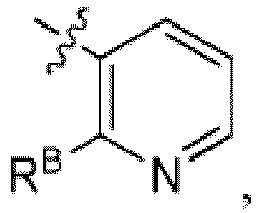 RA et RB sont indépendamment: Br; F; Cl; -CF3; -CH3; -CH2NH2; -CH2CH2NH2;-CN; -CH2OH; -CONH2; -CONCH3; -CON(CH3)2; -CONH-cyclopropyle; -CONHCH2-cyclopropyle; -CONHCH2CH2NH2; -CONHCH2CH2OH; -COOH; -NH2; -NHCH3;-NHCH2CH2OH; -NHC(=NH)NH2; -OH; -OCH2CH2NH2; -NH-cyclopentyl-NH2;-SO2CH3; -SO2-cyclopropyle; AryB; HetB; -CO-pipérazinyle; -CH2-tétrahydropyranyle;-CH2-pipéridinyle optionnellement substitué avec -NH2; -NH-pyrrolidinyle; -NHCH2-pipéridinyle substitué avec -OH; -NH-tétrahydroisoquinoléinyle; -O-phényle substitué avec -CONH2, -CH2OH, -CH2NH2, -CH2C(CH3)2NH2, -CH(CH3)NH2, -CH2CH2NH2, pipéridinyle, pyrrolidinyle ou pipérazinyle; -O-tétrahydroisoquinoléinyle; -O-tétrahydroquinoléinyle; ou -O-pyridinyle optionnellement substitué avec un pipérazinyle;AryB est:1) phényle substitué avec -CH2NH2, -CH2N(CH3)2, -CH2OH, -CONH2,-CONHCH3, -NHSO2CH3, -SO2CH3, -SO2NH2, AryC, HetC, -CH2-HetC ou tétrazolyle;2) pyridinyle optionnellement substitué avec -C(CH3)2OH, -NH2, -N(CH3)2,-NH2 ou F;3) pipérazinyle optionnellement substitué avec -CH3, -CH2-pipéridinyle, -O-pipéridinyle ou morpholinyle;4) pyrimidinyle substitué avec -NH2, -N(CH3)2, -NHCH2CH2OH, - NHCOCH3, -NCH3SO2CH3 ou HetC;5) pyrazinyle substitué avec deux -CH3;6) pyrazolyle optionnellement substitué avec 1 à 3 substituants choisis parmi: -CH3, phényle et -CH2-pyridinyle;7) diméthylpyrimidinedione;8) tétrazolyle;9) thiazolyle substitué avec -CH2OH;10) 1,2,3,4-tétrahydroquinoléine;11) imidazopyridinone;12) indazolyle;13) isoindolinone;14) isoindolinyle;15) isoquinoléinyle optionnellement substitué avec -CN;16) méthylbenzotriazolyle;17) benzooxazinone;18) triazolopyridinyle; ou19) 1,2,3,4-tétrahydronaphtalén-2-amine;HetB est:1) azétidinyle substitué avec -NH2; -CH2NH2; -CH2CH2NH2; -C(CH3)2NH2;-CH2CH2OH; -SO2CH3; morpholinyle; pipérazinyle; (CH2OH)2; -CH2NH2 et -CH3; ou-OH et -CF3;2) pyrrolidinyle optionnellement substitué avec -CH2NH2, -CH2OH,-CONHCH3, -NH2, -OH ou AryC;3) pipéridinyle optionnellement substitué avec -CH3, -CH2NH2,-C(CH3)2NH2, -CH2OH, -CONHCH3, -CH2NHSO2CH3, -NH2, -OH, -C(=NH)NH,-C(=NH2)NH2 ou -CH=NH;4) pipérazinyle substitué avec -CH3, -CH2OH, -CH2CH2OH, -COCH3, =O ou AryC;5) morpholinyle;6) dihydropyrrolyle;7) tétrahydropyridinyle optionnellement substitué avec -CH3;8) octohydropyrrolo[1,2-a]pyrazine;9) diazaspirononanyle;10) diazaspirooctanyle;11) 2,6-diazaspiro[3.4]octan-7-one; ou12) 7-méthyl-5-oxa-2,7-diazaspiro[3.4]octan-6-one;
 RC est: F; Br; -CF3; -CH2NH2; pyrrolidinyle; 2,5-dihydro-1H-pyrrole; pyridinyle substitué avec -NH2; ou pipérazinyle;RD est: F, Br, -CH3, ou -CF3;
 RE est: Cl, -NH2 ou -NHCH2CH2OH;RF est Cl;
 dans lequel RG est: -NH2, -N(CH3)2, -NHCH2CH2OH, -SCH3, -SO2CH3, morpholinyle, pyrrolidinyle, pipéridinyle, pipérazinyle, 2,5-dihydro-1H-pyrrole ou -O-pipéridinyle; ou


- Composé selon l'une quelconque des revendications 1 à 4, ou un sel pharmaceutiquement acceptable de celui-ci, dans lequel:R1 est choisi dans le groupe constitué de:a) -C2-4 alkyle,b) éthyle substitué avec trois substituants halo, ouc) -C3-6 cycloalkyle,R2 est un hydrogène;W est: AryA; -CH2-phényle; ou -CH(CH3)phényle;AryA est un système cyclique aromatique choisi parmi:a) un cycle aromatique monocyclique de 5 à 6 membres avec 0, 1 ou 2 atomes de cycle hétéroatomes indépendamment choisis parmi N et S, optionnellement substitué avec 1 ou 2 substituants R; oub) un système cyclique aromatique bicyclique de 9 à 10 membres avec 1, 2 ou 3 atomes de cycle hétéroatomes choisis parmi N et S, substitué avec 1 substituant choisi parmi: C1-6 alkyle et -NH2;chaque R est indépendamment: fluoro, NHRz, -NRxRy, -NHC(=NH)NH2, -ORz, AryB, -O-AryB ou -(CH2)0-1-HetB;AryB est un cycle aromatique monocyclique de 5 à 6 membres avec 0, 1 ou 2 atomes de cycle N, optionnellement substitué avec 1 substituant choisi parmi: -CH2NH2,-CH2OH, -C(=O)NRxRy, -NRxRy, -NHSO2CH3 et HetC;HetB est:a) un cycle monocyclique de 5 à 6 membres saturé ou mono-saturé avec 1 ou 2 atomes de cycle N, optionnellement substitué avec 1 substituant choisi parmi: C1-6 hydroxyalkyle, -CH(=NH), -C(=NH)NH2 et -OH; oub) un système cyclique spirocyclique de 9 membres saturé avec 2 atomes de cycle N;HetC est un cycle monocyclique de 6 membres saturé avec 1 atome de cycle N;Rx et Ry sont chacun indépendamment: hydrogène ou méthyle; etchaque Rz est indépendamment: C1-6 aminoalkyle ou C1-6 hydroxyalkyle.
- Composé selon la revendication 5, ou un sel pharmaceutiquement acceptable de celui-ci, dans lequel:AryA est:un cycle monocyclique choisi parmi: thiazolyle, phényle et pyridinyle, où le cycle monocyclique est optionnellement substitué avec 1 ou 2 substituants R; ouun cycle bicyclique choisi parmi: quinoléinyle, benzo[d]thiazolyle et 1H-benzo[d][1,2,3]triazole, où le cycle bicyclique est optionnellement substitué avec 1 substituant choisi parmi: C1-6 alkyle et -NH2;AryB est un cycle monocyclique choisi parmi: pyrazolyle, phényle ou pyridyle, où le cycle monocyclique est optionnellement substitué avec 1 substituant choisi parmi:-CH2NH2, -CH2OH, -C(=O)NRxRy, -NRxRy, -NHSO2CH3 et HetC; etHetB est un cycle monocyclique choisi parmi: pyrrolidinyle, dihydropyrrolyle, pipéridinyle ou pipérazinyle, où le cycle monocyclique est optionnellement substitué avec 1 substituant choisi parmi: C1-6 hydroxyalkyle, -CH(=NH), -C(=NH)NH2 et -OH; ou diazaspironanyle.
- Composé selon la revendication 5 ou 6, ou un sel pharmaceutiquement acceptable de celui-ci, dans lequel W est:1) phényle optionnellement substitué avec:a) phényle substitué avec -CONH2, -NHSO2CH3 ou pipéridinyle,b) pyridinyle substitué avec -NH2,c) pyrrolidinyle,d) pyrrolidinyle et fluoro,e) pipéridinyle substitué avec -CH=NH,f) pipéridinyle substitué avec -CH(=NH)NH2,g) pipérizinyle et fluoro,h) dihydropyrrolyle,i) pyrazolyle, ouj) -CH2-pipérazinyle;2) -CH2-phényle;3) -CH(CH3)-phényle;4) pyridinyle optionnellement substitué avec:a) -NH2,b) -NHCH3,c) -NHCH2CH2NH2,d) -NHCH2CH2OH,e) -NHC(=NH)NH2,f) pyrrolidinyle optionnellement substitué avec -OH,g) pipéridinyle optionnellement substitué avec -CH2OH,h) phényle substitué avec -CH2NH2 ou -CH2OH,i) -O-phényle substitué avec -CH2NH2,j) pyridinyle substitué avec -NH2, ouk) diazaspirononanyle,5) thiazolyle substitué avec -NH2,6) quinoléinyle substitué avec -NH2,7) benzo[d]thiazolyle substitué avec -NH2, ou8) 1H-benzo[d][1,2,3]triazole substitué avec -CH3.
- Composé selon la revendication 1 qui est:


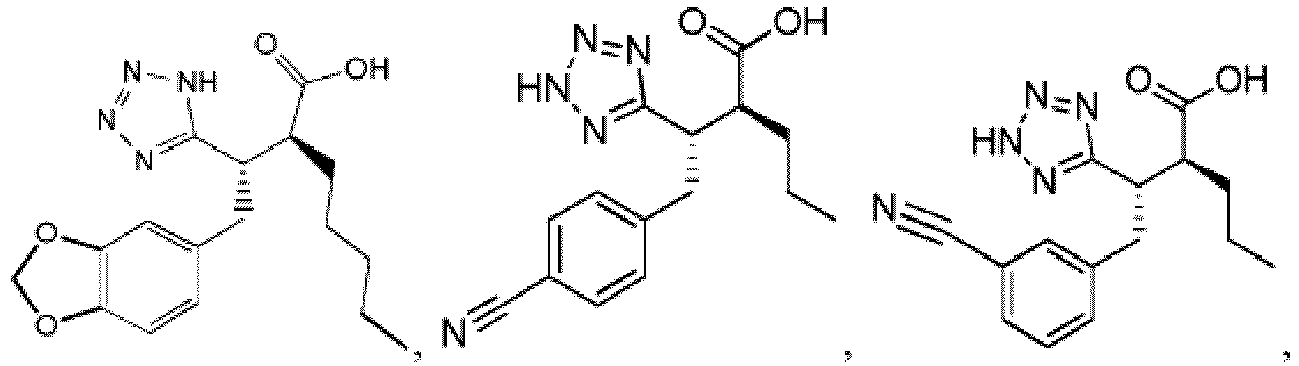


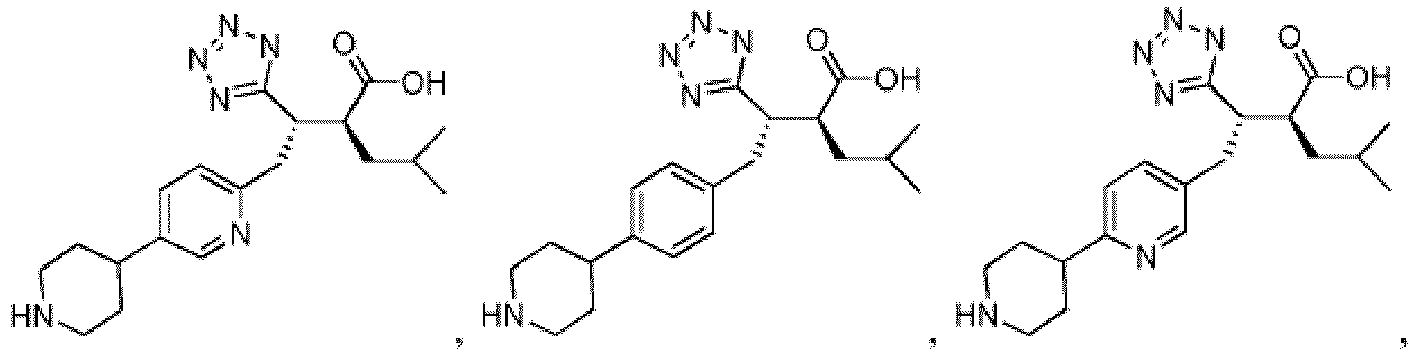

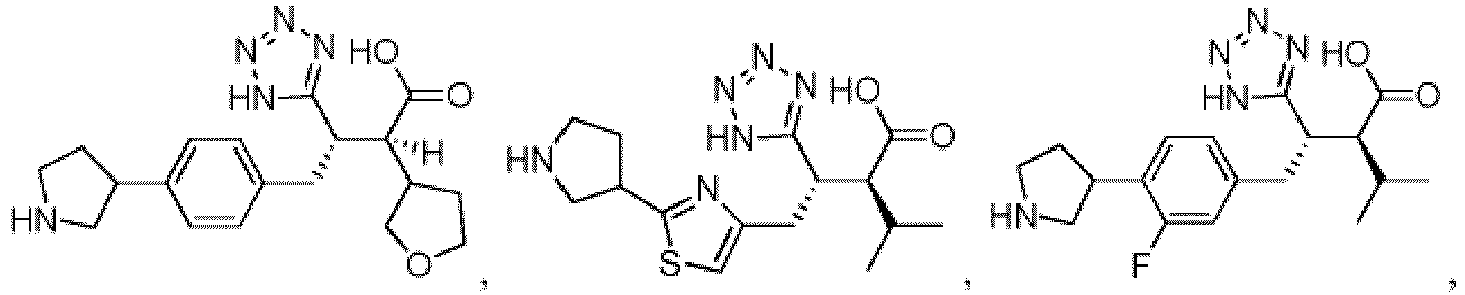


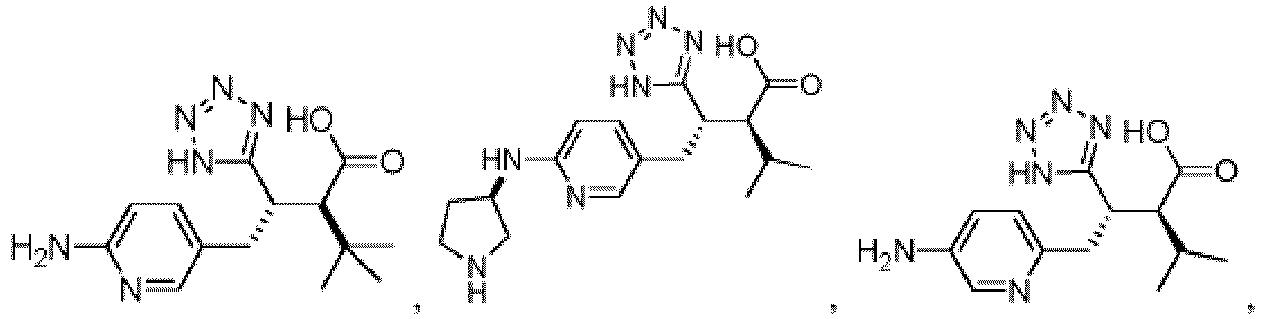


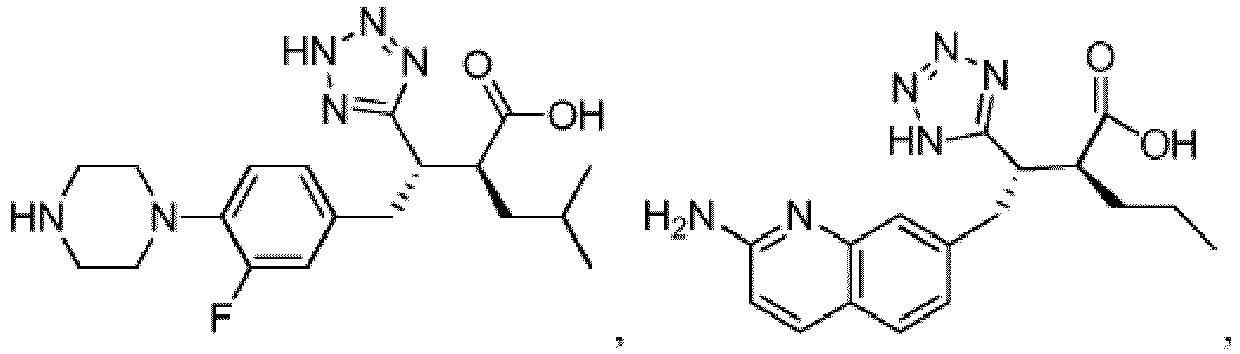


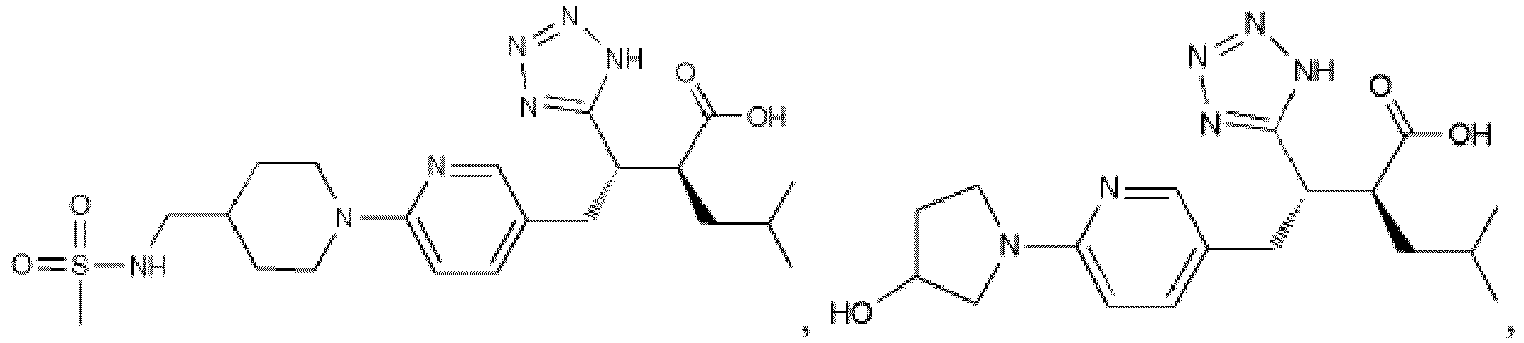


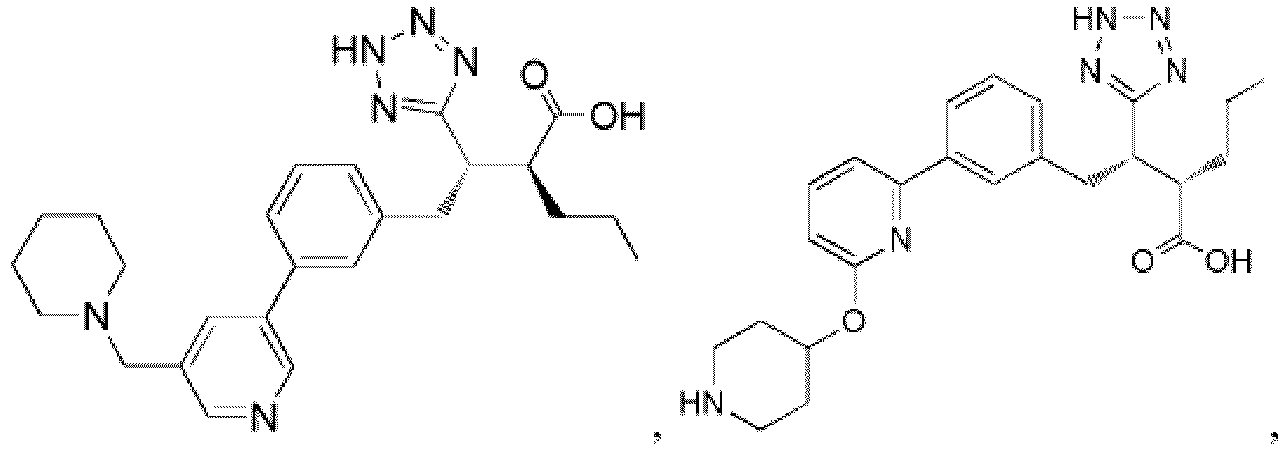


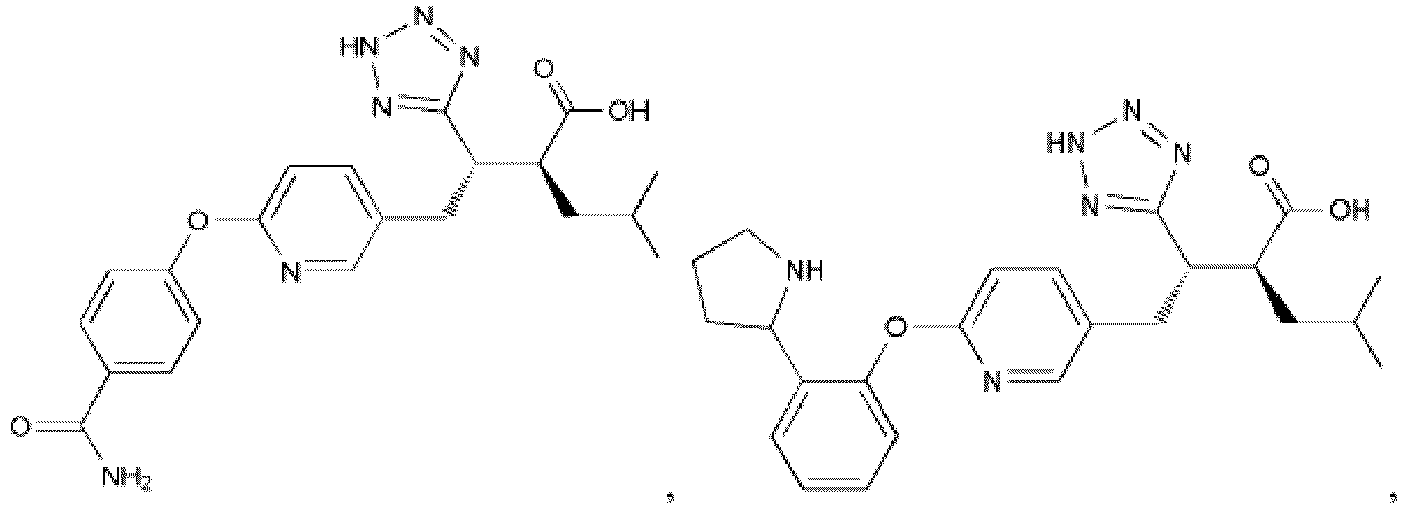


- Composé selon la revendication 5 qui est:


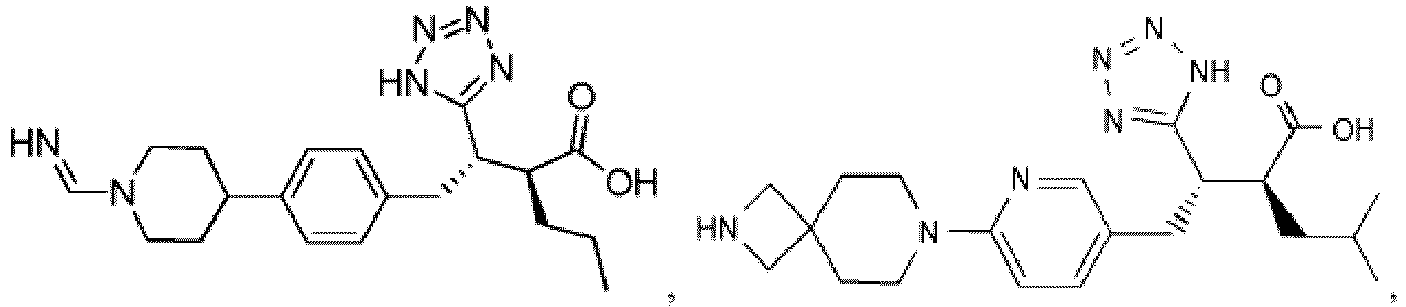


- Composition pharmaceutique qui comprend un composé selon l'une quelconque des revendications 1 à 9, ou un sel pharmaceutiquement acceptable de celui-ci, et un véhicule pharmaceutiquement acceptable, et optionnellement comprend en outre une quantité efficace d'un antibiotique de bêta-lactame.
- Composition pharmaceutique selon la revendication 10, dans laquelle l'antibiotique de bêta-lactame est choisi dans le groupe constitué de: imipénème, ertapénème, méropénème, doripénème, biapénème, panipénème, ticarcilline, ampicilline, amoxicilline, carbénicilline, pipéracilline, azlocilline, mezlocilline, ticarcilline, céfopérazone, céfotaxime, ceftriaxone et ceftazidime.
- Composition pharmaceutique selon la revendication 11, dans laquelle l'antibiotique de bêta-lactame est imipénème.
- Composition pharmaceutique selon la revendication 10, qui comprend un antibiotique de bêta-lactame comprenant en outre la cilastatine ou un sel pharmaceutiquement acceptable de celle-ci.
- Composé selon l'une quelconque des revendications 1 à 9, ou un sel pharmaceutiquement acceptable de celui-ci, optionnellement en combinaison avec un antibiotique de bêta-lactame, ou composition pharmaceutique selon l'une quelconque des revendications 12 à 15, pour une utilisation dans le traitement d'une infection bactérienne.
- Composé ou composition pour une utilisation selon la revendication 14, où l'infection bactérienne est due à Pseudomonas spp., Klebsiella spp., Enterobacter spp., Escherichia spp., Morganella spp., Citrobacter spp., Serratia spp. ou Acintetobacter spp.
Applications Claiming Priority (2)
| Application Number | Priority Date | Filing Date | Title |
|---|---|---|---|
| US201461991167P | 2014-05-09 | 2014-05-09 | |
| PCT/US2015/028989 WO2015171474A1 (fr) | 2014-05-09 | 2015-05-04 | Acides bêta-tétrazolyle-propioniques utiles en tant qu'inhibiteurs des métallo-bêta-lactamases |
Publications (3)
| Publication Number | Publication Date |
|---|---|
| EP3139918A1 EP3139918A1 (fr) | 2017-03-15 |
| EP3139918A4 EP3139918A4 (fr) | 2018-05-09 |
| EP3139918B1 true EP3139918B1 (fr) | 2019-12-25 |
Family
ID=54392874
Family Applications (1)
| Application Number | Title | Priority Date | Filing Date |
|---|---|---|---|
| EP15789928.7A Active EP3139918B1 (fr) | 2014-05-09 | 2015-05-04 | Acides bêta-tétrazolyle-propioniques utiles en tant qu'inhibiteurs des métallo-bêta-lactamases |
Country Status (3)
| Country | Link |
|---|---|
| US (1) | US9839642B2 (fr) |
| EP (1) | EP3139918B1 (fr) |
| WO (1) | WO2015171474A1 (fr) |
Families Citing this family (8)
| Publication number | Priority date | Publication date | Assignee | Title |
|---|---|---|---|---|
| WO2016206101A1 (fr) | 2015-06-26 | 2016-12-29 | Merck Sharp & Dohme Corp. | Inhibiteurs de métallo-bêta-lactamases |
| EP3654968B1 (fr) | 2017-07-17 | 2023-08-16 | Merck Sharp & Dohme LLC | Inhibiteurs de métallo-bêta-lactamase et leurs méthodes d'utilisation |
| CN113735701B (zh) * | 2020-05-27 | 2023-09-08 | 新发药业有限公司 | 一种8-羟基-2,2,14,14-四甲基十五烷二酸的制备方法 |
| CN112047901B (zh) * | 2020-09-21 | 2023-01-24 | 自然资源部第三海洋研究所 | 苯并噻唑杂萜类化合物及其衍生物以及制备方法与应用 |
| BR112023020274A2 (pt) * | 2021-03-30 | 2023-11-14 | Jiangxi Jemincare Group Co Ltd | Método de preparo de composto bicíclico e aplicação como agente antifúngico |
| CN113527081B (zh) * | 2021-08-30 | 2022-11-08 | 上海日异生物科技有限公司 | 一种3-氧代环丁烷基羧酸的制备方法 |
| CN114436991A (zh) * | 2021-12-25 | 2022-05-06 | 上海泰坦科技股份有限公司 | 一种2-氨基噻唑类化合物的合成方法 |
| CN116396191A (zh) * | 2023-04-07 | 2023-07-07 | 阜阳欣奕华制药科技有限公司 | 一种n-叔丁氧羰基-l-谷氨酸二甲酯衍生物的制备方法 |
Family Cites Families (15)
| Publication number | Priority date | Publication date | Assignee | Title |
|---|---|---|---|---|
| CA1231336A (fr) | 1985-05-30 | 1988-01-12 | George Levitt | Sulfonamides herbicides |
| US4786311A (en) | 1985-05-30 | 1988-11-22 | E. I. Du Pont De Nemours And Company | Herbicidal sulfonamides |
| JPS62242679A (ja) | 1986-04-11 | 1987-10-23 | イ−・アイ・デユポン・デ・ニモアス・アンド・カンパニ− | スルホニル尿素化合物 |
| US4838925A (en) | 1986-04-25 | 1989-06-13 | E. I. Du Pont De Nemours And Company | Heterocyclic acyl sulfonamides |
| CA1273336A (fr) | 1986-04-25 | 1990-08-28 | Chi-Ping Tseng | Herbicides a base de derives sulfonamides de composes heterocycliques carbonyles |
| CN1095549A (zh) | 1986-11-24 | 1994-11-30 | 纳幕尔杜邦公司 | 除草磺酰胺组合物及其制法和应用 |
| DK0508234T3 (da) | 1991-04-11 | 1996-10-28 | Hoffmann La Roche | Beta-lactamer |
| AU770599B2 (en) | 1999-07-06 | 2004-02-26 | Methylgene Inc. | Sulfonamidomethyl phosphonate inhibitors of beta-lactamase |
| FR2812635B1 (fr) | 2000-08-01 | 2002-10-11 | Aventis Pharma Sa | Nouveaux composes heterocycliques, preparation et utilisation comme medicaments notamment comme anti- bacteriens |
| US7001901B2 (en) * | 2002-08-27 | 2006-02-21 | Bristol-Myers Squibb Company | Tetrazolylpropionamides as inhibitors of Aβ protein production |
| US7439253B2 (en) | 2002-12-06 | 2008-10-21 | Novexel | Heterocyclic compounds, their preparation and their use as medicaments, in particular as antibacterials and beta-lactamase inhibitors |
| WO2008039420A2 (fr) | 2006-09-27 | 2008-04-03 | Merck & Co., Inc. | Nouveaux inhibiteurs de bêta-lactamase |
| CA2785898C (fr) * | 2009-12-31 | 2018-07-03 | Viamet Pharmaceuticals, Inc. | Composes inhibiteurs de metallo-enzyme |
| CN103130686B (zh) | 2011-12-02 | 2016-09-14 | 天津市国际生物医药联合研究院 | N,n′-不对称二芳基取代脲类化合物及其制备方法和用途 |
| CN103191091B (zh) | 2012-01-04 | 2016-12-14 | 天津市国际生物医药联合研究院 | 磺酰胺类化合物在抑制ndm-1活性中的应用 |
-
2015
- 2015-05-04 US US15/309,533 patent/US9839642B2/en active Active
- 2015-05-04 EP EP15789928.7A patent/EP3139918B1/fr active Active
- 2015-05-04 WO PCT/US2015/028989 patent/WO2015171474A1/fr not_active Ceased
Non-Patent Citations (1)
| Title |
|---|
| None * |
Also Published As
| Publication number | Publication date |
|---|---|
| EP3139918A4 (fr) | 2018-05-09 |
| EP3139918A1 (fr) | 2017-03-15 |
| WO2015171474A1 (fr) | 2015-11-12 |
| US20170173035A1 (en) | 2017-06-22 |
| US9839642B2 (en) | 2017-12-12 |
Similar Documents
| Publication | Publication Date | Title |
|---|---|---|
| US11529356B2 (en) | 2-(morpholin-4-yl)-1,7-naphthyridines | |
| US9839642B2 (en) | Beta-tetrazolyl-propionic acids as metallo-beta-lactamase inhibitors | |
| EP3096754B1 (fr) | Inhibiteurs de métallo-bêta-lactamases | |
| US10428044B2 (en) | 3-amino-1,5,6,7-tetrahydro-4H-indol-4-ones | |
| EP3426248B1 (fr) | Composés d'arylmonobactame bicycliques et leurs méthodes d'utilisation pour le traitement des infections bactériennes | |
| EP3978472B1 (fr) | Composés monabactam biaryle et leurs procédés d'utilisation pour le traitement d'infections bactériennes | |
| EP3313832B1 (fr) | Dérivés de 3-tétrazolyl-benzène-1,2-disulfonamide en tant qu'inhibiteurs de métallo-bêta-lactamase | |
| US11433055B2 (en) | Chromane monobactam compounds for the treatment of bacterial infections | |
| KR20180063138A (ko) | 아시네토박터 바우만니이에 대항하는 펩티드 거대고리 | |
| US20230002396A1 (en) | Therapeutic compounds | |
| WO2019151274A1 (fr) | Composé amide hétérocyclique azoté et son utilisation à des fins médicales | |
| EP0671401A1 (fr) | Bêta-lactames | |
| US20230064983A1 (en) | 3-(anilino)-2-[3-(3-alkoxy-pyridin-4-yl]-1,5,6,7-tetrahydro-4h-pyrrolo[3,2-c]pyridin-4-one derivatives as egfr inhibitors for the treatment of cancer | |
| US20240158370A1 (en) | CK1 alpha AND DUAL CK1 alpha / GSPT1 DEGRADING COMPOUNDS | |
| EP4169575B1 (fr) | Composés cycliques condensés qui inhibent la h-pgds | |
| US12565494B2 (en) | Inhibitors of human respiratory syncytial virus and metapneumovirus | |
| EP3654968B1 (fr) | Inhibiteurs de métallo-bêta-lactamase et leurs méthodes d'utilisation | |
| US20230365531A1 (en) | Inhibitors of human respiratory syncytial virus and metapneumo virus | |
| US20260035365A1 (en) | 1h-pyrrolo[3,2-b]pyridine derivatives as irreversible inhibitors of mutant egfr for the treatment of cancer | |
| HK40087512B (en) | Condensed ring compounds that inhibit h-pgds | |
| HK40087512A (en) | Condensed ring compounds that inhibit h-pgds | |
| HK40041663A (en) | Nitrogenated heterocyclic amide compound, and use thereof for medical purposes | |
| HK1029590A1 (en) | New carbapenem derivatives | |
| HK1246289B (en) | 3-tetrazolyl-benzene-1,2-disulfonamide derivatives as metallo-beta-lactamase inhibitors | |
| HK1029590B (en) | New carbapenem derivatives |
Legal Events
| Date | Code | Title | Description |
|---|---|---|---|
| STAA | Information on the status of an ep patent application or granted ep patent |
Free format text: STATUS: THE INTERNATIONAL PUBLICATION HAS BEEN MADE |
|
| PUAI | Public reference made under article 153(3) epc to a published international application that has entered the european phase |
Free format text: ORIGINAL CODE: 0009012 |
|
| STAA | Information on the status of an ep patent application or granted ep patent |
Free format text: STATUS: REQUEST FOR EXAMINATION WAS MADE |
|
| 17P | Request for examination filed |
Effective date: 20161209 |
|
| AK | Designated contracting states |
Kind code of ref document: A1 Designated state(s): AL AT BE BG CH CY CZ DE DK EE ES FI FR GB GR HR HU IE IS IT LI LT LU LV MC MK MT NL NO PL PT RO RS SE SI SK SM TR |
|
| AX | Request for extension of the european patent |
Extension state: BA ME |
|
| DAV | Request for validation of the european patent (deleted) | ||
| DAX | Request for extension of the european patent (deleted) | ||
| A4 | Supplementary search report drawn up and despatched |
Effective date: 20180411 |
|
| RIC1 | Information provided on ipc code assigned before grant |
Ipc: C07D 405/10 20060101ALI20180405BHEP Ipc: C07D 401/12 20060101ALI20180405BHEP Ipc: C07D 413/06 20060101ALI20180405BHEP Ipc: C07D 471/04 20060101ALI20180405BHEP Ipc: C07D 409/06 20060101ALI20180405BHEP Ipc: A61K 31/192 20060101ALI20180405BHEP Ipc: C07D 471/10 20060101ALI20180405BHEP Ipc: C07D 401/06 20060101ALI20180405BHEP Ipc: C07D 401/14 20060101ALI20180405BHEP Ipc: C07D 413/14 20060101ALI20180405BHEP Ipc: C07D 401/10 20060101ALI20180405BHEP Ipc: C07D 417/06 20060101ALI20180405BHEP Ipc: C07D 487/04 20060101ALI20180405BHEP Ipc: C07D 403/10 20060101ALI20180405BHEP Ipc: C07D 257/04 20060101ALI20180405BHEP Ipc: C07D 403/12 20060101ALI20180405BHEP Ipc: A61K 31/41 20060101AFI20180405BHEP |
|
| RIC1 | Information provided on ipc code assigned before grant |
Ipc: A61K 31/41 20060101AFI20190415BHEP Ipc: C07D 487/04 20060101ALI20190415BHEP Ipc: C07D 403/12 20060101ALI20190415BHEP Ipc: C07D 471/10 20060101ALI20190415BHEP Ipc: C07D 413/06 20060101ALI20190415BHEP Ipc: C07D 405/10 20060101ALI20190415BHEP Ipc: C07D 471/04 20060101ALI20190415BHEP Ipc: C07D 413/14 20060101ALI20190415BHEP Ipc: C07D 401/12 20060101ALI20190415BHEP Ipc: C07D 257/04 20060101ALI20190415BHEP Ipc: C07D 401/10 20060101ALI20190415BHEP Ipc: C07D 401/14 20060101ALI20190415BHEP Ipc: A61K 31/192 20060101ALI20190415BHEP Ipc: C07D 417/06 20060101ALI20190415BHEP Ipc: C07D 403/10 20060101ALI20190415BHEP Ipc: C07D 409/06 20060101ALI20190415BHEP Ipc: C07D 401/06 20060101ALI20190415BHEP |
|
| GRAJ | Information related to disapproval of communication of intention to grant by the applicant or resumption of examination proceedings by the epo deleted |
Free format text: ORIGINAL CODE: EPIDOSDIGR1 |
|
| GRAP | Despatch of communication of intention to grant a patent |
Free format text: ORIGINAL CODE: EPIDOSNIGR1 |
|
| GRAP | Despatch of communication of intention to grant a patent |
Free format text: ORIGINAL CODE: EPIDOSNIGR1 |
|
| STAA | Information on the status of an ep patent application or granted ep patent |
Free format text: STATUS: GRANT OF PATENT IS INTENDED |
|
| GRAJ | Information related to disapproval of communication of intention to grant by the applicant or resumption of examination proceedings by the epo deleted |
Free format text: ORIGINAL CODE: EPIDOSDIGR1 |
|
| INTG | Intention to grant announced |
Effective date: 20190603 |
|
| GRAP | Despatch of communication of intention to grant a patent |
Free format text: ORIGINAL CODE: EPIDOSNIGR1 |
|
| INTC | Intention to grant announced (deleted) | ||
| GRAJ | Information related to disapproval of communication of intention to grant by the applicant or resumption of examination proceedings by the epo deleted |
Free format text: ORIGINAL CODE: EPIDOSDIGR1 |
|
| INTG | Intention to grant announced |
Effective date: 20190611 |
|
| GRAP | Despatch of communication of intention to grant a patent |
Free format text: ORIGINAL CODE: EPIDOSNIGR1 |
|
| INTG | Intention to grant announced |
Effective date: 20190702 |
|
| INTG | Intention to grant announced |
Effective date: 20190712 |
|
| GRAS | Grant fee paid |
Free format text: ORIGINAL CODE: EPIDOSNIGR3 |
|
| GRAA | (expected) grant |
Free format text: ORIGINAL CODE: 0009210 |
|
| STAA | Information on the status of an ep patent application or granted ep patent |
Free format text: STATUS: THE PATENT HAS BEEN GRANTED |
|
| AK | Designated contracting states |
Kind code of ref document: B1 Designated state(s): AL AT BE BG CH CY CZ DE DK EE ES FI FR GB GR HR HU IE IS IT LI LT LU LV MC MK MT NL NO PL PT RO RS SE SI SK SM TR |
|
| REG | Reference to a national code |
Ref country code: GB Ref legal event code: FG4D |
|
| REG | Reference to a national code |
Ref country code: CH Ref legal event code: EP |
|
| REG | Reference to a national code |
Ref country code: DE Ref legal event code: R096 Ref document number: 602015044352 Country of ref document: DE |
|
| REG | Reference to a national code |
Ref country code: AT Ref legal event code: REF Ref document number: 1216382 Country of ref document: AT Kind code of ref document: T Effective date: 20200115 |
|
| REG | Reference to a national code |
Ref country code: IE Ref legal event code: FG4D |
|
| REG | Reference to a national code |
Ref country code: NL Ref legal event code: MP Effective date: 20191225 |
|
| PG25 | Lapsed in a contracting state [announced via postgrant information from national office to epo] |
Ref country code: NO Free format text: LAPSE BECAUSE OF FAILURE TO SUBMIT A TRANSLATION OF THE DESCRIPTION OR TO PAY THE FEE WITHIN THE PRESCRIBED TIME-LIMIT Effective date: 20200325 Ref country code: BG Free format text: LAPSE BECAUSE OF FAILURE TO SUBMIT A TRANSLATION OF THE DESCRIPTION OR TO PAY THE FEE WITHIN THE PRESCRIBED TIME-LIMIT Effective date: 20200325 Ref country code: FI Free format text: LAPSE BECAUSE OF FAILURE TO SUBMIT A TRANSLATION OF THE DESCRIPTION OR TO PAY THE FEE WITHIN THE PRESCRIBED TIME-LIMIT Effective date: 20191225 Ref country code: LV Free format text: LAPSE BECAUSE OF FAILURE TO SUBMIT A TRANSLATION OF THE DESCRIPTION OR TO PAY THE FEE WITHIN THE PRESCRIBED TIME-LIMIT Effective date: 20191225 Ref country code: SE Free format text: LAPSE BECAUSE OF FAILURE TO SUBMIT A TRANSLATION OF THE DESCRIPTION OR TO PAY THE FEE WITHIN THE PRESCRIBED TIME-LIMIT Effective date: 20191225 Ref country code: LT Free format text: LAPSE BECAUSE OF FAILURE TO SUBMIT A TRANSLATION OF THE DESCRIPTION OR TO PAY THE FEE WITHIN THE PRESCRIBED TIME-LIMIT Effective date: 20191225 Ref country code: GR Free format text: LAPSE BECAUSE OF FAILURE TO SUBMIT A TRANSLATION OF THE DESCRIPTION OR TO PAY THE FEE WITHIN THE PRESCRIBED TIME-LIMIT Effective date: 20200326 |
|
| REG | Reference to a national code |
Ref country code: LT Ref legal event code: MG4D |
|
| PG25 | Lapsed in a contracting state [announced via postgrant information from national office to epo] |
Ref country code: RS Free format text: LAPSE BECAUSE OF FAILURE TO SUBMIT A TRANSLATION OF THE DESCRIPTION OR TO PAY THE FEE WITHIN THE PRESCRIBED TIME-LIMIT Effective date: 20191225 Ref country code: HR Free format text: LAPSE BECAUSE OF FAILURE TO SUBMIT A TRANSLATION OF THE DESCRIPTION OR TO PAY THE FEE WITHIN THE PRESCRIBED TIME-LIMIT Effective date: 20191225 |
|
| PG25 | Lapsed in a contracting state [announced via postgrant information from national office to epo] |
Ref country code: AL Free format text: LAPSE BECAUSE OF FAILURE TO SUBMIT A TRANSLATION OF THE DESCRIPTION OR TO PAY THE FEE WITHIN THE PRESCRIBED TIME-LIMIT Effective date: 20191225 |
|
| PG25 | Lapsed in a contracting state [announced via postgrant information from national office to epo] |
Ref country code: RO Free format text: LAPSE BECAUSE OF FAILURE TO SUBMIT A TRANSLATION OF THE DESCRIPTION OR TO PAY THE FEE WITHIN THE PRESCRIBED TIME-LIMIT Effective date: 20191225 Ref country code: NL Free format text: LAPSE BECAUSE OF FAILURE TO SUBMIT A TRANSLATION OF THE DESCRIPTION OR TO PAY THE FEE WITHIN THE PRESCRIBED TIME-LIMIT Effective date: 20191225 Ref country code: PT Free format text: LAPSE BECAUSE OF FAILURE TO SUBMIT A TRANSLATION OF THE DESCRIPTION OR TO PAY THE FEE WITHIN THE PRESCRIBED TIME-LIMIT Effective date: 20200520 Ref country code: EE Free format text: LAPSE BECAUSE OF FAILURE TO SUBMIT A TRANSLATION OF THE DESCRIPTION OR TO PAY THE FEE WITHIN THE PRESCRIBED TIME-LIMIT Effective date: 20191225 Ref country code: CZ Free format text: LAPSE BECAUSE OF FAILURE TO SUBMIT A TRANSLATION OF THE DESCRIPTION OR TO PAY THE FEE WITHIN THE PRESCRIBED TIME-LIMIT Effective date: 20191225 |
|
| PG25 | Lapsed in a contracting state [announced via postgrant information from national office to epo] |
Ref country code: IS Free format text: LAPSE BECAUSE OF FAILURE TO SUBMIT A TRANSLATION OF THE DESCRIPTION OR TO PAY THE FEE WITHIN THE PRESCRIBED TIME-LIMIT Effective date: 20200425 Ref country code: SM Free format text: LAPSE BECAUSE OF FAILURE TO SUBMIT A TRANSLATION OF THE DESCRIPTION OR TO PAY THE FEE WITHIN THE PRESCRIBED TIME-LIMIT Effective date: 20191225 Ref country code: SK Free format text: LAPSE BECAUSE OF FAILURE TO SUBMIT A TRANSLATION OF THE DESCRIPTION OR TO PAY THE FEE WITHIN THE PRESCRIBED TIME-LIMIT Effective date: 20191225 |
|
| REG | Reference to a national code |
Ref country code: DE Ref legal event code: R097 Ref document number: 602015044352 Country of ref document: DE |
|
| PG25 | Lapsed in a contracting state [announced via postgrant information from national office to epo] |
Ref country code: ES Free format text: LAPSE BECAUSE OF FAILURE TO SUBMIT A TRANSLATION OF THE DESCRIPTION OR TO PAY THE FEE WITHIN THE PRESCRIBED TIME-LIMIT Effective date: 20191225 Ref country code: DK Free format text: LAPSE BECAUSE OF FAILURE TO SUBMIT A TRANSLATION OF THE DESCRIPTION OR TO PAY THE FEE WITHIN THE PRESCRIBED TIME-LIMIT Effective date: 20191225 |
|
| PLBE | No opposition filed within time limit |
Free format text: ORIGINAL CODE: 0009261 |
|
| STAA | Information on the status of an ep patent application or granted ep patent |
Free format text: STATUS: NO OPPOSITION FILED WITHIN TIME LIMIT |
|
| REG | Reference to a national code |
Ref country code: AT Ref legal event code: MK05 Ref document number: 1216382 Country of ref document: AT Kind code of ref document: T Effective date: 20191225 |
|
| PG25 | Lapsed in a contracting state [announced via postgrant information from national office to epo] |
Ref country code: SI Free format text: LAPSE BECAUSE OF FAILURE TO SUBMIT A TRANSLATION OF THE DESCRIPTION OR TO PAY THE FEE WITHIN THE PRESCRIBED TIME-LIMIT Effective date: 20191225 |
|
| 26N | No opposition filed |
Effective date: 20200928 |
|
| PG25 | Lapsed in a contracting state [announced via postgrant information from national office to epo] |
Ref country code: LI Free format text: LAPSE BECAUSE OF NON-PAYMENT OF DUE FEES Effective date: 20200531 Ref country code: CH Free format text: LAPSE BECAUSE OF NON-PAYMENT OF DUE FEES Effective date: 20200531 Ref country code: MC Free format text: LAPSE BECAUSE OF FAILURE TO SUBMIT A TRANSLATION OF THE DESCRIPTION OR TO PAY THE FEE WITHIN THE PRESCRIBED TIME-LIMIT Effective date: 20191225 Ref country code: IT Free format text: LAPSE BECAUSE OF FAILURE TO SUBMIT A TRANSLATION OF THE DESCRIPTION OR TO PAY THE FEE WITHIN THE PRESCRIBED TIME-LIMIT Effective date: 20191225 Ref country code: AT Free format text: LAPSE BECAUSE OF FAILURE TO SUBMIT A TRANSLATION OF THE DESCRIPTION OR TO PAY THE FEE WITHIN THE PRESCRIBED TIME-LIMIT Effective date: 20191225 |
|
| PG25 | Lapsed in a contracting state [announced via postgrant information from national office to epo] |
Ref country code: PL Free format text: LAPSE BECAUSE OF FAILURE TO SUBMIT A TRANSLATION OF THE DESCRIPTION OR TO PAY THE FEE WITHIN THE PRESCRIBED TIME-LIMIT Effective date: 20191225 |
|
| REG | Reference to a national code |
Ref country code: BE Ref legal event code: MM Effective date: 20200531 |
|
| PG25 | Lapsed in a contracting state [announced via postgrant information from national office to epo] |
Ref country code: LU Free format text: LAPSE BECAUSE OF NON-PAYMENT OF DUE FEES Effective date: 20200504 |
|
| PG25 | Lapsed in a contracting state [announced via postgrant information from national office to epo] |
Ref country code: IE Free format text: LAPSE BECAUSE OF NON-PAYMENT OF DUE FEES Effective date: 20200504 |
|
| PG25 | Lapsed in a contracting state [announced via postgrant information from national office to epo] |
Ref country code: BE Free format text: LAPSE BECAUSE OF NON-PAYMENT OF DUE FEES Effective date: 20200531 |
|
| PG25 | Lapsed in a contracting state [announced via postgrant information from national office to epo] |
Ref country code: TR Free format text: LAPSE BECAUSE OF FAILURE TO SUBMIT A TRANSLATION OF THE DESCRIPTION OR TO PAY THE FEE WITHIN THE PRESCRIBED TIME-LIMIT Effective date: 20191225 Ref country code: MT Free format text: LAPSE BECAUSE OF FAILURE TO SUBMIT A TRANSLATION OF THE DESCRIPTION OR TO PAY THE FEE WITHIN THE PRESCRIBED TIME-LIMIT Effective date: 20191225 Ref country code: CY Free format text: LAPSE BECAUSE OF FAILURE TO SUBMIT A TRANSLATION OF THE DESCRIPTION OR TO PAY THE FEE WITHIN THE PRESCRIBED TIME-LIMIT Effective date: 20191225 |
|
| PG25 | Lapsed in a contracting state [announced via postgrant information from national office to epo] |
Ref country code: MK Free format text: LAPSE BECAUSE OF FAILURE TO SUBMIT A TRANSLATION OF THE DESCRIPTION OR TO PAY THE FEE WITHIN THE PRESCRIBED TIME-LIMIT Effective date: 20191225 |
|
| REG | Reference to a national code |
Ref country code: DE Ref legal event code: R081 Ref document number: 602015044352 Country of ref document: DE Owner name: MERCK SHARP & DOHME LLC, RAHWAY, US Free format text: FORMER OWNER: MERCK SHARP & DOHME CORP., RAHWAY, N.J., US |
|
| REG | Reference to a national code |
Ref country code: GB Ref legal event code: 732E Free format text: REGISTERED BETWEEN 20221013 AND 20221019 |
|
| REG | Reference to a national code |
Ref country code: FR Ref legal event code: PLFP Year of fee payment: 9 |
|
| PGFP | Annual fee paid to national office [announced via postgrant information from national office to epo] |
Ref country code: DE Payment date: 20250409 Year of fee payment: 11 |
|
| PGFP | Annual fee paid to national office [announced via postgrant information from national office to epo] |
Ref country code: FR Payment date: 20250409 Year of fee payment: 11 |
|
| PGFP | Annual fee paid to national office [announced via postgrant information from national office to epo] |
Ref country code: GB Payment date: 20260320 Year of fee payment: 12 |