EP3096754B1 - Inhibiteurs de métallo-bêta-lactamases - Google Patents
Inhibiteurs de métallo-bêta-lactamases Download PDFInfo
- Publication number
- EP3096754B1 EP3096754B1 EP15740828.7A EP15740828A EP3096754B1 EP 3096754 B1 EP3096754 B1 EP 3096754B1 EP 15740828 A EP15740828 A EP 15740828A EP 3096754 B1 EP3096754 B1 EP 3096754B1
- Authority
- EP
- European Patent Office
- Prior art keywords
- alkyl
- methoxybenzyl
- optionally substituted
- cycloalkyl
- ring
- Prior art date
- Legal status (The legal status is an assumption and is not a legal conclusion. Google has not performed a legal analysis and makes no representation as to the accuracy of the status listed.)
- Active
Links
- 0 *[n]1nnc(-c(c(Br)ccn2)c2S(N)(=O)=O)n1 Chemical compound *[n]1nnc(-c(c(Br)ccn2)c2S(N)(=O)=O)n1 0.000 description 132
- UQOAFOBKMJGHDU-UHFFFAOYSA-N CC(C)(C(CC1)CN1c(cc1)ncc1-c1cccc(S(N)(=O)=O)c1-c1nnn[nH]1)O Chemical compound CC(C)(C(CC1)CN1c(cc1)ncc1-c1cccc(S(N)(=O)=O)c1-c1nnn[nH]1)O UQOAFOBKMJGHDU-UHFFFAOYSA-N 0.000 description 2
- XRBIKZQZSSDDSN-UHFFFAOYSA-N CN(C)CCCOc(cc1)ncc1-c1cccc(S(N)(=O)=O)c1-c1n[nH]nn1 Chemical compound CN(C)CCCOc(cc1)ncc1-c1cccc(S(N)(=O)=O)c1-c1n[nH]nn1 XRBIKZQZSSDDSN-UHFFFAOYSA-N 0.000 description 2
- MAYGQBCAQXBEGH-UHFFFAOYSA-N CN1CCN(Cc(cc2)ccc2-c2cccc(S(N)(=O)=O)c2-c2nnn[nH]2)CC1 Chemical compound CN1CCN(Cc(cc2)ccc2-c2cccc(S(N)(=O)=O)c2-c2nnn[nH]2)CC1 MAYGQBCAQXBEGH-UHFFFAOYSA-N 0.000 description 2
- MPBYUCBNSPDXCT-UHFFFAOYSA-N CNCc(cc1)ccc1-c1cccc(S(N)(=O)=O)c1-c1nnn[nH]1 Chemical compound CNCc(cc1)ccc1-c1cccc(S(N)(=O)=O)c1-c1nnn[nH]1 MPBYUCBNSPDXCT-UHFFFAOYSA-N 0.000 description 2
- VDVJPSIELWMKLI-UHFFFAOYSA-N COc(cc1)ccc1-c1c(-c2n[nH]nn2)c(S(N)(=O)=O)ccc1 Chemical compound COc(cc1)ccc1-c1c(-c2n[nH]nn2)c(S(N)(=O)=O)ccc1 VDVJPSIELWMKLI-UHFFFAOYSA-N 0.000 description 2
- PJVYAGSGHYELEE-UHFFFAOYSA-N CS(Nc(cc1)ccc1-c(cc1)c(-c2n[nH]nn2)c(S(N)(=O)=O)c1Br)(=O)=O Chemical compound CS(Nc(cc1)ccc1-c(cc1)c(-c2n[nH]nn2)c(S(N)(=O)=O)c1Br)(=O)=O PJVYAGSGHYELEE-UHFFFAOYSA-N 0.000 description 2
- QFMZANLICXRGCX-BJOHPYRUSA-N C[C@@H]([C@H](c(cc1)ccc1-c1c(-c2nnn[nH]2)c(S(N)(=O)=O)ccc1)O1)NC1=O Chemical compound C[C@@H]([C@H](c(cc1)ccc1-c1c(-c2nnn[nH]2)c(S(N)(=O)=O)ccc1)O1)NC1=O QFMZANLICXRGCX-BJOHPYRUSA-N 0.000 description 2
- QJYZXCLZGZROIV-UHFFFAOYSA-N Cc(cc1)c2nc(N)[nH]c2c1-c1ccc(C(F)(F)F)c(S(N)(=O)=O)c1-c1nnn[nH]1 Chemical compound Cc(cc1)c2nc(N)[nH]c2c1-c1ccc(C(F)(F)F)c(S(N)(=O)=O)c1-c1nnn[nH]1 QJYZXCLZGZROIV-UHFFFAOYSA-N 0.000 description 2
- VIWDEKVIIKABHL-UHFFFAOYSA-N NC1(CN(CC2)CCC2c(cc2)ccc2-c2ccc(C(F)(F)F)c(S(N)(=O)=O)c2-c2nnn[nH]2)CC1 Chemical compound NC1(CN(CC2)CCC2c(cc2)ccc2-c2ccc(C(F)(F)F)c(S(N)(=O)=O)c2-c2nnn[nH]2)CC1 VIWDEKVIIKABHL-UHFFFAOYSA-N 0.000 description 2
- AIHGSZBFTGQLQJ-UHFFFAOYSA-N NCC(CC1)CCC1N(CC1)CCC1c(cc1)ccc1-c1ccc(C(F)(F)F)c(S(N)(=O)=O)c1-c1nnn[nH]1 Chemical compound NCC(CC1)CCC1N(CC1)CCC1c(cc1)ccc1-c1ccc(C(F)(F)F)c(S(N)(=O)=O)c1-c1nnn[nH]1 AIHGSZBFTGQLQJ-UHFFFAOYSA-N 0.000 description 2
- NTZLBSSCNMRWJN-UHFFFAOYSA-N NCC(CC1)CCC1c1ccc(CC2CCNCC2)c(S(N)(=O)=O)c1-c1n[nH]nn1 Chemical compound NCC(CC1)CCC1c1ccc(CC2CCNCC2)c(S(N)(=O)=O)c1-c1n[nH]nn1 NTZLBSSCNMRWJN-UHFFFAOYSA-N 0.000 description 2
- ISSJBDDNKNJGHE-UHFFFAOYSA-N NCc(cc1)ccc1-c(cc1)c(-c2n[nH]nn2)c(S(N)(=O)=O)c1Br Chemical compound NCc(cc1)ccc1-c(cc1)c(-c2n[nH]nn2)c(S(N)(=O)=O)c1Br ISSJBDDNKNJGHE-UHFFFAOYSA-N 0.000 description 2
- SUVLIORBKJRBES-UHFFFAOYSA-N NS(c(c(-c1n[nH]nn1)c(cc1)-c2ccc(C3CCNCC3)cc2)c1Cl)(=O)=O Chemical compound NS(c(c(-c1n[nH]nn1)c(cc1)-c2ccc(C3CCNCC3)cc2)c1Cl)(=O)=O SUVLIORBKJRBES-UHFFFAOYSA-N 0.000 description 2
- GRGWHWUIYWRYID-UHFFFAOYSA-N NS(c1c(-c2n[nH]nn2)c(-c2ccc(C3CCNCC3)cc2)ccc1CC1(CCNCC1)F)(=O)=O Chemical compound NS(c1c(-c2n[nH]nn2)c(-c2ccc(C3CCNCC3)cc2)ccc1CC1(CCNCC1)F)(=O)=O GRGWHWUIYWRYID-UHFFFAOYSA-N 0.000 description 2
- VWLQDRCRGPTNGD-UHFFFAOYSA-N NS(c1c(-c2nnn[nH]2)c(-c2cc(C3CNCC3)ccc2)ccc1C(F)(F)F)(=O)=O Chemical compound NS(c1c(-c2nnn[nH]2)c(-c2cc(C3CNCC3)ccc2)ccc1C(F)(F)F)(=O)=O VWLQDRCRGPTNGD-UHFFFAOYSA-N 0.000 description 2
- DYMCEOFWTCRYIR-HDJSIYSDSA-N NS(c1c(-c2nnn[nH]2)c([C@H](CC2)CC[C@@H]2NCC2CCNCC2)ccc1C(F)(F)F)(=O)=O Chemical compound NS(c1c(-c2nnn[nH]2)c([C@H](CC2)CC[C@@H]2NCC2CCNCC2)ccc1C(F)(F)F)(=O)=O DYMCEOFWTCRYIR-HDJSIYSDSA-N 0.000 description 2
- XVYDFDFRXDWKLC-UHFFFAOYSA-N NS(c1c(C(F)(F)F)ccc(N2CCN(CCCO)CC2)c1-c1nnn[nH]1)(=O)=O Chemical compound NS(c1c(C(F)(F)F)ccc(N2CCN(CCCO)CC2)c1-c1nnn[nH]1)(=O)=O XVYDFDFRXDWKLC-UHFFFAOYSA-N 0.000 description 2
- XASQRLKCCBCBBA-UHFFFAOYSA-N NS(c1cccc(C(CCC2)c3c2nccc3)c1-c1n[nH]nn1)(=O)=O Chemical compound NS(c1cccc(C(CCC2)c3c2nccc3)c1-c1n[nH]nn1)(=O)=O XASQRLKCCBCBBA-UHFFFAOYSA-N 0.000 description 2
- IUHZNBIUIYIBGV-UHFFFAOYSA-N NS(c1cccc(C2CCCC2)c1-c1nnn[nH]1)(=O)=O Chemical compound NS(c1cccc(C2CCCC2)c1-c1nnn[nH]1)(=O)=O IUHZNBIUIYIBGV-UHFFFAOYSA-N 0.000 description 2
- ZCEKZDKAGHJNRD-UHFFFAOYSA-N C(C1)CNCC1c1ccccn1 Chemical compound C(C1)CNCC1c1ccccn1 ZCEKZDKAGHJNRD-UHFFFAOYSA-N 0.000 description 1
- OFVSQHPTOWQCSX-RMKNXTFCSA-N C/C=C/C(C(C(C1C2=NN=NC2)C(C(CC=C)F)=CC=C1N(C)CCN(C)CCCO)C=O)=O Chemical compound C/C=C/C(C(C(C1C2=NN=NC2)C(C(CC=C)F)=CC=C1N(C)CCN(C)CCCO)C=O)=O OFVSQHPTOWQCSX-RMKNXTFCSA-N 0.000 description 1
- MGNZXYYWBUKAII-UHFFFAOYSA-N C1C=CC=CC1 Chemical compound C1C=CC=CC1 MGNZXYYWBUKAII-UHFFFAOYSA-N 0.000 description 1
- LOPHERFVHWWVBD-UHFFFAOYSA-N C1NCC1C1=CC=CCC1 Chemical compound C1NCC1C1=CC=CCC1 LOPHERFVHWWVBD-UHFFFAOYSA-N 0.000 description 1
- ZIQOZFRBVCHQQN-FPCXXKTISA-N C=C/C=C(\C(\C1=NNN1)=C\S=O)/c(cc1)ccc1C1=CNCC1 Chemical compound C=C/C=C(\C(\C1=NNN1)=C\S=O)/c(cc1)ccc1C1=CNCC1 ZIQOZFRBVCHQQN-FPCXXKTISA-N 0.000 description 1
- OLSSWJPUTMXSBS-UHFFFAOYSA-N C=Sc1cc(-c2cc3cnccc3[s]2)ccc1 Chemical compound C=Sc1cc(-c2cc3cnccc3[s]2)ccc1 OLSSWJPUTMXSBS-UHFFFAOYSA-N 0.000 description 1
- PMKZFYZKJSMGQS-UHFFFAOYSA-O CC(C(C(O)=O)NCc(cc1)ccc1-c1c(C2=N[NH2+]NN2)c(S(N)(=O)=O)ccc1)O Chemical compound CC(C(C(O)=O)NCc(cc1)ccc1-c1c(C2=N[NH2+]NN2)c(S(N)(=O)=O)ccc1)O PMKZFYZKJSMGQS-UHFFFAOYSA-O 0.000 description 1
- HEQTZQZEFBNXSF-UHFFFAOYSA-N CC(C(O)=O)N(C)Cc1c(C)cc(C(C2C3(C)NN=NN3)C=CC=C2S(N)(=O)=O)cc1 Chemical compound CC(C(O)=O)N(C)Cc1c(C)cc(C(C2C3(C)NN=NN3)C=CC=C2S(N)(=O)=O)cc1 HEQTZQZEFBNXSF-UHFFFAOYSA-N 0.000 description 1
- NAGYPAJDXABGHT-UHFFFAOYSA-O CC(C(O)=O)NCc(cc1)ccc1-c1cccc(S(=O)=O)c1C1=N[NH2+]NN1 Chemical compound CC(C(O)=O)NCc(cc1)ccc1-c1cccc(S(=O)=O)c1C1=N[NH2+]NN1 NAGYPAJDXABGHT-UHFFFAOYSA-O 0.000 description 1
- VCIRBBATBVDUKE-UHFFFAOYSA-N CC(C(O)=O)NCc(cc1)ccc1-c1cccc(S(N)(=O)=O)c1-c1nnn[nH]1 Chemical compound CC(C(O)=O)NCc(cc1)ccc1-c1cccc(S(N)(=O)=O)c1-c1nnn[nH]1 VCIRBBATBVDUKE-UHFFFAOYSA-N 0.000 description 1
- MWIUUVQQBKOPOE-UHFFFAOYSA-N CC(C)(C)Cc1cccc(S(N)(=O)=O)c1-c1nnn[nH]1 Chemical compound CC(C)(C)Cc1cccc(S(N)(=O)=O)c1-c1nnn[nH]1 MWIUUVQQBKOPOE-UHFFFAOYSA-N 0.000 description 1
- YIMTXIDHCPBLAL-UHFFFAOYSA-N CC(C)(C)OC(N(CC1)CCN1c(cc1)ccc1-c1c(-c2n[nH]nn2)c(S(N)(=O)=O)ccc1)=O Chemical compound CC(C)(C)OC(N(CC1)CCN1c(cc1)ccc1-c1c(-c2n[nH]nn2)c(S(N)(=O)=O)ccc1)=O YIMTXIDHCPBLAL-UHFFFAOYSA-N 0.000 description 1
- GVNKCVZBPCUBLS-UHFFFAOYSA-N CC(C)(C)OC(N1Cc2cc(B3OC(C)(C)C(C)(C)O3)ccc2C1)=O Chemical compound CC(C)(C)OC(N1Cc2cc(B3OC(C)(C)C(C)(C)O3)ccc2C1)=O GVNKCVZBPCUBLS-UHFFFAOYSA-N 0.000 description 1
- BQISTLDDDOESCM-UHFFFAOYSA-N CC(C)c1ccc(C(F)(F)F)c(S(N)(=O)=O)c1-c1nnn[nH]1 Chemical compound CC(C)c1ccc(C(F)(F)F)c(S(N)(=O)=O)c1-c1nnn[nH]1 BQISTLDDDOESCM-UHFFFAOYSA-N 0.000 description 1
- WHVTVBJOYOWPEK-UHFFFAOYSA-N CC(C1)(CN1c(cc1)ncc1-c1c(-c2nnn[nH]2)c(S(N)(=O)=O)ccc1)N(C)C Chemical compound CC(C1)(CN1c(cc1)ncc1-c1c(-c2nnn[nH]2)c(S(N)(=O)=O)ccc1)N(C)C WHVTVBJOYOWPEK-UHFFFAOYSA-N 0.000 description 1
- GOCRFXJBBPCMHR-UHFFFAOYSA-N CC(C1)(CN1c(cc1)ncc1-c1cccc(S(NI)(=C)=O)c1C1=NNNN1)N(C)C Chemical compound CC(C1)(CN1c(cc1)ncc1-c1cccc(S(NI)(=C)=O)c1C1=NNNN1)N(C)C GOCRFXJBBPCMHR-UHFFFAOYSA-N 0.000 description 1
- KZSPMXJNYHWUAQ-UHFFFAOYSA-O CC(C1C(S(N)(O)=O)=NC=CC1NC1CCCCC1)NN[NH2+]N Chemical compound CC(C1C(S(N)(O)=O)=NC=CC1NC1CCCCC1)NN[NH2+]N KZSPMXJNYHWUAQ-UHFFFAOYSA-O 0.000 description 1
- CAUIFKQMXDHADD-MVTUOISNSA-N CC/C(/c1cccc(S(N)(O)=O)c1C(N)=N)=C\C=C/N Chemical compound CC/C(/c1cccc(S(N)(O)=O)c1C(N)=N)=C\C=C/N CAUIFKQMXDHADD-MVTUOISNSA-N 0.000 description 1
- YCOAHMSKCPWJMD-UHFFFAOYSA-N CC1(C)COB(c2cccc(S(N(Cc(cc3)ccc3OC)Cc(cc3)ccc3OC)(=O)=O)c2-c2n[n](Cc(cc3)ccc3OC)nn2)OC1 Chemical compound CC1(C)COB(c2cccc(S(N(Cc(cc3)ccc3OC)Cc(cc3)ccc3OC)(=O)=O)c2-c2n[n](Cc(cc3)ccc3OC)nn2)OC1 YCOAHMSKCPWJMD-UHFFFAOYSA-N 0.000 description 1
- DTNAKXMHEVDLGU-UHFFFAOYSA-N CC1(C)COB(c2cccc(SN(Cc(cc3)ccc3OC)c(cc3)ccc3OC)c2-c2nnn[n]2Cc(cc2)ccc2OC)OC1 Chemical compound CC1(C)COB(c2cccc(SN(Cc(cc3)ccc3OC)c(cc3)ccc3OC)c2-c2nnn[n]2Cc(cc2)ccc2OC)OC1 DTNAKXMHEVDLGU-UHFFFAOYSA-N 0.000 description 1
- RKCAPGGUACWVJY-UHFFFAOYSA-P CC1C(N(C)C2CCCCC2)=C(C([NH3+])=N[NH2+]N)C(S(N)(O)=O)=NC1 Chemical compound CC1C(N(C)C2CCCCC2)=C(C([NH3+])=N[NH2+]N)C(S(N)(O)=O)=NC1 RKCAPGGUACWVJY-UHFFFAOYSA-P 0.000 description 1
- XREJJMHMXNULDL-RAXLEYEMSA-N CCCCC(CC)C(CCCCl)/C(/c1n[nH]nn1)=C/S Chemical compound CCCCC(CC)C(CCCCl)/C(/c1n[nH]nn1)=C/S XREJJMHMXNULDL-RAXLEYEMSA-N 0.000 description 1
- YGNVMHXXKSWULW-UHFFFAOYSA-N CCCc(cc1)ncc1-c1cccc(S(N)(=O)=O)c1C1N(C)N=NN1 Chemical compound CCCc(cc1)ncc1-c1cccc(S(N)(=O)=O)c1C1N(C)N=NN1 YGNVMHXXKSWULW-UHFFFAOYSA-N 0.000 description 1
- HRXUVVVAUSLRGJ-UHFFFAOYSA-N CCN(CC)C(c(cc1)ccc1-c1c(-c2n[nH]nn2)c(S(N)(=O)=O)ccc1)=O Chemical compound CCN(CC)C(c(cc1)ccc1-c1c(-c2n[nH]nn2)c(S(N)(=O)=O)ccc1)=O HRXUVVVAUSLRGJ-UHFFFAOYSA-N 0.000 description 1
- IIDLZXQAAZFNFI-UHFFFAOYSA-N CCNC(N(CC1)CCC1c1c(-c2n[nH]nn2)c(S(N)(=O)=O)ccc1)=O Chemical compound CCNC(N(CC1)CCC1c1c(-c2n[nH]nn2)c(S(N)(=O)=O)ccc1)=O IIDLZXQAAZFNFI-UHFFFAOYSA-N 0.000 description 1
- UCDZWNIUBLQJCS-UHFFFAOYSA-N CCOCc(cc1)ccc1-c1cccc(S(N)(=O)=O)c1-c1nnn[nH]1 Chemical compound CCOCc(cc1)ccc1-c1cccc(S(N)(=O)=O)c1-c1nnn[nH]1 UCDZWNIUBLQJCS-UHFFFAOYSA-N 0.000 description 1
- JBANWFMNGTWIBB-XBXARRHUSA-N CN(C)/C=C/C(CC1)CCN1c1ccnc(S(N)(=O)=O)c1C(N)=N Chemical compound CN(C)/C=C/C(CC1)CCN1c1ccnc(S(N)(=O)=O)c1C(N)=N JBANWFMNGTWIBB-XBXARRHUSA-N 0.000 description 1
- HHJOCJGKGYXYSW-UHFFFAOYSA-N CN(C)CCCCNCc(cc1)ccc1-c1cccc(S(N)(=O)=O)c1-c1nnn[nH]1 Chemical compound CN(C)CCCCNCc(cc1)ccc1-c1cccc(S(N)(=O)=O)c1-c1nnn[nH]1 HHJOCJGKGYXYSW-UHFFFAOYSA-N 0.000 description 1
- UFIOPDRLGHTZCP-UHFFFAOYSA-O CN(C)CCCN(C)CC(CC1)=CCC1c1cccc(S(N)(=O)=O)c1C(NN=N)=[NH2+] Chemical compound CN(C)CCCN(C)CC(CC1)=CCC1c1cccc(S(N)(=O)=O)c1C(NN=N)=[NH2+] UFIOPDRLGHTZCP-UHFFFAOYSA-O 0.000 description 1
- NTAYTXHOPMMQHW-UHFFFAOYSA-N CN(C)CCNC(c(cc1)ccc1-c1c(-c2n[nH]nn2)c(S(N)(=O)=O)ccc1)=O Chemical compound CN(C)CCNC(c(cc1)ccc1-c1c(-c2n[nH]nn2)c(S(N)(=O)=O)ccc1)=O NTAYTXHOPMMQHW-UHFFFAOYSA-N 0.000 description 1
- WPDHJFFFKZQDKO-UHFFFAOYSA-N CN(C)Cc(cc1)ccc1-c1cccc(S(N)(=O)=O)c1-c1nnn[nH]1 Chemical compound CN(C)Cc(cc1)ccc1-c1cccc(S(N)(=O)=O)c1-c1nnn[nH]1 WPDHJFFFKZQDKO-UHFFFAOYSA-N 0.000 description 1
- VGEOOPSTEUQVJA-UHFFFAOYSA-N CN(C)S(c(cc1)ccc1-c1c(-c2n[nH]nn2)c(S(N)(=O)=O)ccc1)(=O)=O Chemical compound CN(C)S(c(cc1)ccc1-c1c(-c2n[nH]nn2)c(S(N)(=O)=O)ccc1)(=O)=O VGEOOPSTEUQVJA-UHFFFAOYSA-N 0.000 description 1
- OTEQWHGCHGLCJW-UHFFFAOYSA-N CN(CC1)CCN1c(nc1)ncc1-c1c(-c2nnn[nH]2)c(S(N)(=O)=O)ccc1 Chemical compound CN(CC1)CCN1c(nc1)ncc1-c1c(-c2nnn[nH]2)c(S(N)(=O)=O)ccc1 OTEQWHGCHGLCJW-UHFFFAOYSA-N 0.000 description 1
- QNGGZZXLXLDATM-UHFFFAOYSA-N CN(CCC(O)=O)Cc(cc1)ccc1-c1cccc(S(N)(=O)=O)c1-c1nnn[nH]1 Chemical compound CN(CCC(O)=O)Cc(cc1)ccc1-c1cccc(S(N)(=O)=O)c1-c1nnn[nH]1 QNGGZZXLXLDATM-UHFFFAOYSA-N 0.000 description 1
- RATMVGAQTJUQLA-UHFFFAOYSA-N CN(CCCCN)c1nc(c(-c2cccc(S(N)(=O)=O)c2-c2nnn[nH]2)ccc2)c2[s]1 Chemical compound CN(CCCCN)c1nc(c(-c2cccc(S(N)(=O)=O)c2-c2nnn[nH]2)ccc2)c2[s]1 RATMVGAQTJUQLA-UHFFFAOYSA-N 0.000 description 1
- XPXZZVHBLREXBV-UHFFFAOYSA-N CN(CCN1CCCC1)c(cc1)ncc1-c1cccc(S(N)(=O)=O)c1-c1nnn[nH]1 Chemical compound CN(CCN1CCCC1)c(cc1)ncc1-c1cccc(S(N)(=O)=O)c1-c1nnn[nH]1 XPXZZVHBLREXBV-UHFFFAOYSA-N 0.000 description 1
- ZNNCOOBRZCUJKO-UHFFFAOYSA-N CN(CCO)Cc(cc1)ccc1-c1cccc(S(N)(=O)=O)c1-c1nnn[nH]1 Chemical compound CN(CCO)Cc(cc1)ccc1-c1cccc(S(N)(=O)=O)c1-c1nnn[nH]1 ZNNCOOBRZCUJKO-UHFFFAOYSA-N 0.000 description 1
- TUQRKJYEOQHBGZ-UHFFFAOYSA-N CN1CC(c2cccc(S(N)(=O)=O)c2-c2n[nH]nn2)=CCC1 Chemical compound CN1CC(c2cccc(S(N)(=O)=O)c2-c2n[nH]nn2)=CCC1 TUQRKJYEOQHBGZ-UHFFFAOYSA-N 0.000 description 1
- KTVGSOVNUGSRIM-UHFFFAOYSA-N CNC(C1)CC1N(CC1)CCC1c(cc1)ccc1-c1ccc(C(F)(F)F)c(S(N)(=O)=O)c1-c1nnn[nH]1 Chemical compound CNC(C1)CC1N(CC1)CCC1c(cc1)ccc1-c1ccc(C(F)(F)F)c(S(N)(=O)=O)c1-c1nnn[nH]1 KTVGSOVNUGSRIM-UHFFFAOYSA-N 0.000 description 1
- KMXWCOSNZCJOQS-UHFFFAOYSA-N CNC(CC1)=C(C=N)C=C1c1cccc(S(N)(=O)=O)c1-c1n[nH]nn1 Chemical compound CNC(CC1)=C(C=N)C=C1c1cccc(S(N)(=O)=O)c1-c1n[nH]nn1 KMXWCOSNZCJOQS-UHFFFAOYSA-N 0.000 description 1
- DQMFEWYAMSOZDH-UHFFFAOYSA-N CNCCN(CC1)CCC1c(cc1)ccc1-c1ccc(C(F)(F)F)c(S(N)(=O)=O)c1-c1nnn[nH]1 Chemical compound CNCCN(CC1)CCC1c(cc1)ccc1-c1ccc(C(F)(F)F)c(S(N)(=O)=O)c1-c1nnn[nH]1 DQMFEWYAMSOZDH-UHFFFAOYSA-N 0.000 description 1
- UQXBWWCZEWONBP-UHFFFAOYSA-N COC(CC1)CCN1C(c(cc1)ccc1-c1c(-c2n[nH]nn2)c(S(N)(=O)=O)ccc1)O Chemical compound COC(CC1)CCN1C(c(cc1)ccc1-c1c(-c2n[nH]nn2)c(S(N)(=O)=O)ccc1)O UQXBWWCZEWONBP-UHFFFAOYSA-N 0.000 description 1
- BNCLHYQXSLWKHR-UHFFFAOYSA-N COC(N(CC1)CCC1c(cc1)ccc1-c1c(-c2nnn[nH]2)c(S(N)(=O)=O)ccc1)=O Chemical compound COC(N(CC1)CCC1c(cc1)ccc1-c1c(-c2nnn[nH]2)c(S(N)(=O)=O)ccc1)=O BNCLHYQXSLWKHR-UHFFFAOYSA-N 0.000 description 1
- PCIOSAWKWZOSOA-UHFFFAOYSA-N COC(c(cc1)ccc1-c1c(-c2nnn[nH]2)c(S(N)(OC)=O)ncc1)O Chemical compound COC(c(cc1)ccc1-c1c(-c2nnn[nH]2)c(S(N)(OC)=O)ncc1)O PCIOSAWKWZOSOA-UHFFFAOYSA-N 0.000 description 1
- FRNONMTVNXSAGF-UHFFFAOYSA-N CONC(c(cc1)ccc1-c1c(-c2n[nH]nn2)c(S(N)(=O)=O)ccc1)=O Chemical compound CONC(c(cc1)ccc1-c1c(-c2n[nH]nn2)c(S(N)(=O)=O)ccc1)=O FRNONMTVNXSAGF-UHFFFAOYSA-N 0.000 description 1
- JYHOSLUUWMCFIC-UHFFFAOYSA-N COc1ccc(C[n]2nnc(-c(c(Br)ccn3)c3S(N)(=O)=O)n2)cc1 Chemical compound COc1ccc(C[n]2nnc(-c(c(Br)ccn3)c3S(N)(=O)=O)n2)cc1 JYHOSLUUWMCFIC-UHFFFAOYSA-N 0.000 description 1
- NGSZAMDGYWVIID-UHFFFAOYSA-N COc1ccc(C[n]2nnnc2-c(c(Br)ccn2)c2S(N)(=O)=O)cc1 Chemical compound COc1ccc(C[n]2nnnc2-c(c(Br)ccn2)c2S(N)(=O)=O)cc1 NGSZAMDGYWVIID-UHFFFAOYSA-N 0.000 description 1
- XGKPXKILABJNSS-UHFFFAOYSA-N CS(Nc1cc(-c2c(-c3n[nH]nn3)c(S(N)(=O)=O)ccc2)ccc1)(=O)=O Chemical compound CS(Nc1cc(-c2c(-c3n[nH]nn3)c(S(N)(=O)=O)ccc2)ccc1)(=O)=O XGKPXKILABJNSS-UHFFFAOYSA-N 0.000 description 1
- JAKXBXAXDXTTLP-UHFFFAOYSA-N CS(c(cc1)ccc1-c1c(-c2n[nH]nn2)c(S(N)(=O)=O)ccc1)(=O)=O Chemical compound CS(c(cc1)ccc1-c1c(-c2n[nH]nn2)c(S(N)(=O)=O)ccc1)(=O)=O JAKXBXAXDXTTLP-UHFFFAOYSA-N 0.000 description 1
- QIUJWHVNERTENE-UHFFFAOYSA-N C[S](C(CCC1)C(c2n[nH]nn2)=C1C1C=CC(N2CCCCC2)=CC1)(N)(=O)=O Chemical compound C[S](C(CCC1)C(c2n[nH]nn2)=C1C1C=CC(N2CCCCC2)=CC1)(N)(=O)=O QIUJWHVNERTENE-UHFFFAOYSA-N 0.000 description 1
- FXYFWQNTXHFPJD-UHFFFAOYSA-N C[n](c1c2)nnc1ccc2-c1cccc(S(N)(=O)=O)c1-c1n[nH]nn1 Chemical compound C[n](c1c2)nnc1ccc2-c1cccc(S(N)(=O)=O)c1-c1n[nH]nn1 FXYFWQNTXHFPJD-UHFFFAOYSA-N 0.000 description 1
- CBUKEEQWWCFSNN-UHFFFAOYSA-N C[n]1cnc(CNCc(cc2)ccc2-c2c(-c3nnn[nH]3)c(S(N)(=O)=O)ccc2)c1 Chemical compound C[n]1cnc(CNCc(cc2)ccc2-c2c(-c3nnn[nH]3)c(S(N)(=O)=O)ccc2)c1 CBUKEEQWWCFSNN-UHFFFAOYSA-N 0.000 description 1
- FXMGXKLSCOYXLL-UHFFFAOYSA-N Cc(cc1)ccc1-c(cc1)c(-c2n[nH]nn2)c(S(N)(=O)=O)c1Br Chemical compound Cc(cc1)ccc1-c(cc1)c(-c2n[nH]nn2)c(S(N)(=O)=O)c1Br FXMGXKLSCOYXLL-UHFFFAOYSA-N 0.000 description 1
- HBKLITOBRWBYOR-UHFFFAOYSA-N Cc(cc1)ccc1-c(cc1)c(-c2n[nH]nn2)c(S(N)(=O)=O)c1Cl Chemical compound Cc(cc1)ccc1-c(cc1)c(-c2n[nH]nn2)c(S(N)(=O)=O)c1Cl HBKLITOBRWBYOR-UHFFFAOYSA-N 0.000 description 1
- IWDIIOPGNBFHOA-UHFFFAOYSA-N Cc(cc1)ccc1-c1c(-c2n[nH]nn2)c(S(N)(=O)=O)cc(-c(cc2CN3)ccc2C3=O)c1 Chemical compound Cc(cc1)ccc1-c1c(-c2n[nH]nn2)c(S(N)(=O)=O)cc(-c(cc2CN3)ccc2C3=O)c1 IWDIIOPGNBFHOA-UHFFFAOYSA-N 0.000 description 1
- JNVRWMYBFOXGPS-UHFFFAOYSA-N Cc(cc1)ccc1-c1c(-c2nnn[nH]2)c(S(N)(=O)=O)ccc1 Chemical compound Cc(cc1)ccc1-c1c(-c2nnn[nH]2)c(S(N)(=O)=O)ccc1 JNVRWMYBFOXGPS-UHFFFAOYSA-N 0.000 description 1
- ZCMCGXBQFPDRRS-UHFFFAOYSA-N Cc(cc1)cnc1-c1cccc(S(N)(=O)=O)c1-c1nnn[nH]1 Chemical compound Cc(cc1)cnc1-c1cccc(S(N)(=O)=O)c1-c1nnn[nH]1 ZCMCGXBQFPDRRS-UHFFFAOYSA-N 0.000 description 1
- TYPPDRKNERPHMN-UHFFFAOYSA-N Cc(ccnc1)c1-c1c(-c2n[nH]nn2)c(S(N)(=O)=O)ccc1 Chemical compound Cc(ccnc1)c1-c1c(-c2n[nH]nn2)c(S(N)(=O)=O)ccc1 TYPPDRKNERPHMN-UHFFFAOYSA-N 0.000 description 1
- JLHAYJDOMYULFR-UHFFFAOYSA-N Cc1cc(-c2ccc(CNC3=O)c3c2)c(-c2n[nH]nn2)c(S(N)(=O)=O)c1 Chemical compound Cc1cc(-c2ccc(CNC3=O)c3c2)c(-c2n[nH]nn2)c(S(N)(=O)=O)c1 JLHAYJDOMYULFR-UHFFFAOYSA-N 0.000 description 1
- NDBSRCOVEAKOPX-UHFFFAOYSA-N Cc1cc(Cc2cccc(S(N)(=O)=O)c2-c2nnn[nH]2)ccc1 Chemical compound Cc1cc(Cc2cccc(S(N)(=O)=O)c2-c2nnn[nH]2)ccc1 NDBSRCOVEAKOPX-UHFFFAOYSA-N 0.000 description 1
- FLVXOJJEZOFFAW-UHFFFAOYSA-N Cc1ccc(Cc2c(-c3nnn[nH]3)c(S(N)(=O)=O)ccc2)cc1 Chemical compound Cc1ccc(Cc2c(-c3nnn[nH]3)c(S(N)(=O)=O)ccc2)cc1 FLVXOJJEZOFFAW-UHFFFAOYSA-N 0.000 description 1
- XISNNCDIIBGKAV-UHFFFAOYSA-N N/C(/c(c(-c(cc1)ccc1OC1CCNCC1)ccc1)c1S(N)(=O)=O)=N\N=N Chemical compound N/C(/c(c(-c(cc1)ccc1OC1CCNCC1)ccc1)c1S(N)(=O)=O)=N\N=N XISNNCDIIBGKAV-UHFFFAOYSA-N 0.000 description 1
- WXAJCUKNKJSATI-UHFFFAOYSA-N N/C(/c(c(-c1ccc(C2CN(CC3CNC3)C2)cc1)ccc1C(F)(F)F)c1S(N)(=O)=O)=N\N=N Chemical compound N/C(/c(c(-c1ccc(C2CN(CC3CNC3)C2)cc1)ccc1C(F)(F)F)c1S(N)(=O)=O)=N\N=N WXAJCUKNKJSATI-UHFFFAOYSA-N 0.000 description 1
- ASRMDEHGTXGONM-UHFFFAOYSA-N N/C(/c(c(N(CC1)CCC1c1cnccc1)ccn1)c1S(N)(=O)=O)=N\N Chemical compound N/C(/c(c(N(CC1)CCC1c1cnccc1)ccn1)c1S(N)(=O)=O)=N\N ASRMDEHGTXGONM-UHFFFAOYSA-N 0.000 description 1
- QBTZYWHQFHUCKD-UHFFFAOYSA-N N/C(/c(c(S(N)(=O)=O)ccc1)c1-c1c2ncccc2n[s]1)=N\N=N Chemical compound N/C(/c(c(S(N)(=O)=O)ccc1)c1-c1c2ncccc2n[s]1)=N\N=N QBTZYWHQFHUCKD-UHFFFAOYSA-N 0.000 description 1
- FSJGEYSGSIWRMB-UHFFFAOYSA-N NC(C(CC1)CCN1c1c(-c2nnn[nH]2)c(S(N)(=O)=O)c(C(F)(F)F)cc1)=O Chemical compound NC(C(CC1)CCN1c1c(-c2nnn[nH]2)c(S(N)(=O)=O)c(C(F)(F)F)cc1)=O FSJGEYSGSIWRMB-UHFFFAOYSA-N 0.000 description 1
- CMHVYVOUOWSFCX-UHFFFAOYSA-N NC(C(CCC1)CN1c1c(-c2nnn[nH]2)c(S(N)(=O)=O)c(C(F)(F)F)cc1)=O Chemical compound NC(C(CCC1)CN1c1c(-c2nnn[nH]2)c(S(N)(=O)=O)c(C(F)(F)F)cc1)=O CMHVYVOUOWSFCX-UHFFFAOYSA-N 0.000 description 1
- ODBZZPJGRNDCOT-UHFFFAOYSA-N NC(CC1)CCC1N(CC1)CCC1c(cc1)ccc1-c1ccc(C(F)(F)F)c(S(N)(=O)=O)c1-c1nnn[nH]1 Chemical compound NC(CC1)CCC1N(CC1)CCC1c(cc1)ccc1-c1ccc(C(F)(F)F)c(S(N)(=O)=O)c1-c1nnn[nH]1 ODBZZPJGRNDCOT-UHFFFAOYSA-N 0.000 description 1
- NSSSLGXXJKAXLI-UHFFFAOYSA-N NC(CC1)CCN1c1c(-c2nnn[nH]2)c(S(N)(=O)=O)c(C(F)(F)F)cc1 Chemical compound NC(CC1)CCN1c1c(-c2nnn[nH]2)c(S(N)(=O)=O)c(C(F)(F)F)cc1 NSSSLGXXJKAXLI-UHFFFAOYSA-N 0.000 description 1
- BGGUXFAXWAHDHI-UHFFFAOYSA-N NC(CC1)CN1C(CC1)CCN1c1ccc(C(F)(F)F)c(S(N)(=O)=O)c1-c1nnn[nH]1 Chemical compound NC(CC1)CN1C(CC1)CCN1c1ccc(C(F)(F)F)c(S(N)(=O)=O)c1-c1nnn[nH]1 BGGUXFAXWAHDHI-UHFFFAOYSA-N 0.000 description 1
- CJMQZRFMURQOHR-UHFFFAOYSA-N NC(CCC1)CC1N(C1)CC1c(cc1)ccc1-c1ccc(C(F)(F)F)c(S(N)(=O)=O)c1-c1nnn[nH]1 Chemical compound NC(CCC1)CC1N(C1)CC1c(cc1)ccc1-c1ccc(C(F)(F)F)c(S(N)(=O)=O)c1-c1nnn[nH]1 CJMQZRFMURQOHR-UHFFFAOYSA-N 0.000 description 1
- SUIOQUFSMDNHMM-UHFFFAOYSA-N NC(CCC1)c2c1ccc(-c1ccc(C(F)(F)F)c(S(N)(=O)=O)c1-c1nnn[nH]1)c2 Chemical compound NC(CCC1)c2c1ccc(-c1ccc(C(F)(F)F)c(S(N)(=O)=O)c1-c1nnn[nH]1)c2 SUIOQUFSMDNHMM-UHFFFAOYSA-N 0.000 description 1
- PXDDOUJDBIIJAJ-UHFFFAOYSA-N NC(CN1CCC(Cc2ccc(-c3ccc(C4CNC4)cc3)c(-c3n[nH]nn3)c2SN)CC1)=O Chemical compound NC(CN1CCC(Cc2ccc(-c3ccc(C4CNC4)cc3)c(-c3n[nH]nn3)c2SN)CC1)=O PXDDOUJDBIIJAJ-UHFFFAOYSA-N 0.000 description 1
- UKLUFXMSJVYJOB-UHFFFAOYSA-N NC(Cc1ccc2)Cc1c2-c1c(-c2nnn[nH]2)c(S(N)(=O)=O)c(C(F)(F)F)cc1 Chemical compound NC(Cc1ccc2)Cc1c2-c1c(-c2nnn[nH]2)c(S(N)(=O)=O)c(C(F)(F)F)cc1 UKLUFXMSJVYJOB-UHFFFAOYSA-N 0.000 description 1
- QNNBOLUFWOSFEP-UHFFFAOYSA-N NC(N(C1)Cc2c1ccc(-c1c(-c3n[nH]nn3)c(S(N)(=O)=O)c(C(F)(F)F)cc1)c2)=N Chemical compound NC(N(C1)Cc2c1ccc(-c1c(-c3n[nH]nn3)c(S(N)(=O)=O)c(C(F)(F)F)cc1)c2)=N QNNBOLUFWOSFEP-UHFFFAOYSA-N 0.000 description 1
- BVCCFXMQOJLKNW-UHFFFAOYSA-N NC(NC1)=CC=C1c1c(-c2n[nH]nn2)c(S(N)(=O)=O)c(C(F)(F)F)cc1 Chemical compound NC(NC1)=CC=C1c1c(-c2n[nH]nn2)c(S(N)(=O)=O)c(C(F)(F)F)cc1 BVCCFXMQOJLKNW-UHFFFAOYSA-N 0.000 description 1
- CEVNTCRDWVUNQT-UHFFFAOYSA-N NC(NCC(CC1)CCC1c1c(-c2nnn[nH]2)c(S(N)(=O)=O)c(C(F)(F)F)cc1)=N Chemical compound NC(NCC(CC1)CCC1c1c(-c2nnn[nH]2)c(S(N)(=O)=O)c(C(F)(F)F)cc1)=N CEVNTCRDWVUNQT-UHFFFAOYSA-N 0.000 description 1
- CEVNTCRDWVUNQT-DTORHVGOSA-N NC(NC[C@H](CC1)CC[C@H]1c1c(-c2nnn[nH]2)c(S(N)(=O)=O)c(C(F)(F)F)cc1)=N Chemical compound NC(NC[C@H](CC1)CC[C@H]1c1c(-c2nnn[nH]2)c(S(N)(=O)=O)c(C(F)(F)F)cc1)=N CEVNTCRDWVUNQT-DTORHVGOSA-N 0.000 description 1
- YIGOMDCKBYYHQQ-UHFFFAOYSA-N NC(S(c1c(-c2nnn[nH]2)c(C2=CCC(C(CC3)CCN3C3CNC3)C=C2)ccc1C(F)(F)F)=O)=O Chemical compound NC(S(c1c(-c2nnn[nH]2)c(C2=CCC(C(CC3)CCN3C3CNC3)C=C2)ccc1C(F)(F)F)=O)=O YIGOMDCKBYYHQQ-UHFFFAOYSA-N 0.000 description 1
- VOBRJGGDUHZMSV-UHFFFAOYSA-N NC(c(c(-c1ccc(C2(CNC2)O)cc1)ccc1)c1S(N)(=O)=O)=N Chemical compound NC(c(c(-c1ccc(C2(CNC2)O)cc1)ccc1)c1S(N)(=O)=O)=N VOBRJGGDUHZMSV-UHFFFAOYSA-N 0.000 description 1
- OQTRZTZPHHDCOA-UHFFFAOYSA-N NC(c(cc1)nc(cc2)c1cc2-c1cccc(S(N)(=O)=O)c1C(/N=N\N)=N)=O Chemical compound NC(c(cc1)nc(cc2)c1cc2-c1cccc(S(N)(=O)=O)c1C(/N=N\N)=N)=O OQTRZTZPHHDCOA-UHFFFAOYSA-N 0.000 description 1
- VRUGUXXYPXVSJC-UHFFFAOYSA-N NC1(COCC1)c(cc1)ccc1-c1ccc(C(F)(F)F)c(S(N)(=O)=O)c1-c1nnn[nH]1 Chemical compound NC1(COCC1)c(cc1)ccc1-c1ccc(C(F)(F)F)c(S(N)(=O)=O)c1-c1nnn[nH]1 VRUGUXXYPXVSJC-UHFFFAOYSA-N 0.000 description 1
- VDXGCQUYXYEABT-UHFFFAOYSA-N NC1CCC(Cc2ccc(-c3ccc(C4CCNCC4)cc3)c(-c3n[nH]nn3)c2S(N)(=O)=O)CC1 Chemical compound NC1CCC(Cc2ccc(-c3ccc(C4CCNCC4)cc3)c(-c3n[nH]nn3)c2S(N)(=O)=O)CC1 VDXGCQUYXYEABT-UHFFFAOYSA-N 0.000 description 1
- YHIUWRWIXJRMRE-UHFFFAOYSA-N NCCc(cc1)ccc1-c1ccc(C(F)(F)F)c(S(N)(=O)=O)c1-c1nnn[nH]1 Chemical compound NCCc(cc1)ccc1-c1ccc(C(F)(F)F)c(S(N)(=O)=O)c1-c1nnn[nH]1 YHIUWRWIXJRMRE-UHFFFAOYSA-N 0.000 description 1
- ZBLRHZURYSERRZ-UHFFFAOYSA-N NCCc(cc1)ccc1-c1cccc(S(N)(=O)=O)c1-c1nnn[nH]1 Chemical compound NCCc(cc1)ccc1-c1cccc(S(N)(=O)=O)c1-c1nnn[nH]1 ZBLRHZURYSERRZ-UHFFFAOYSA-N 0.000 description 1
- PGGRHFVPSHITAX-BETUJISGSA-N NC[C@H]1CC[C@@H](Cc2ccc(-c3ccc(N)nc3)c(-c3nnn[nH]3)c2S(N)(=O)=O)CC1 Chemical compound NC[C@H]1CC[C@@H](Cc2ccc(-c3ccc(N)nc3)c(-c3nnn[nH]3)c2S(N)(=O)=O)CC1 PGGRHFVPSHITAX-BETUJISGSA-N 0.000 description 1
- DNWKHTRBECRTGB-UHFFFAOYSA-N NCc(cc1)nc(cc2)c1cc2-c1cccc(S(N)(=O)=O)c1-c1n[nH]nn1 Chemical compound NCc(cc1)nc(cc2)c1cc2-c1cccc(S(N)(=O)=O)c1-c1n[nH]nn1 DNWKHTRBECRTGB-UHFFFAOYSA-N 0.000 description 1
- NQPPQVZNAJFPCA-UHFFFAOYSA-N NCc(cc1)ncc1-c1cccc(S(N)(=O)=O)c1-c1nnn[nH]1 Chemical compound NCc(cc1)ncc1-c1cccc(S(N)(=O)=O)c1-c1nnn[nH]1 NQPPQVZNAJFPCA-UHFFFAOYSA-N 0.000 description 1
- BZQCFNMPKHBAEE-UHFFFAOYSA-N NN/C(/c(c(-c1ccc(CN2CC(CCO)CC2)cc1)ccc1)c1S(N)(=O)=O)=N\N Chemical compound NN/C(/c(c(-c1ccc(CN2CC(CCO)CC2)cc1)ccc1)c1S(N)(=O)=O)=N\N BZQCFNMPKHBAEE-UHFFFAOYSA-N 0.000 description 1
- GHXQJVVZWBPURM-UHFFFAOYSA-O NNC(c(c(-c1ccc(CN2C(CO)CCC2)cc1)ccc1)c1S(N)(=O)=O)=N[NH3+] Chemical compound NNC(c(c(-c1ccc(CN2C(CO)CCC2)cc1)ccc1)c1S(N)(=O)=O)=N[NH3+] GHXQJVVZWBPURM-UHFFFAOYSA-O 0.000 description 1
- KKMGYNVEBPWCGW-CFKXXBIPSA-N NS(C1C(C(F)(F)F)=CC=C([C@H](CC2)CC[C@@H]2NC2CCNCC2)C1C1NN=NN1)(=O)=O Chemical compound NS(C1C(C(F)(F)F)=CC=C([C@H](CC2)CC[C@@H]2NC2CCNCC2)C1C1NN=NN1)(=O)=O KKMGYNVEBPWCGW-CFKXXBIPSA-N 0.000 description 1
- BTXPAPFWNZJFSN-UHFFFAOYSA-N NS(c(c(-c1n[nH]nn1)c(cc1)-c2cc(CNC3)c3cc2)c1Br)(=O)=O Chemical compound NS(c(c(-c1n[nH]nn1)c(cc1)-c2cc(CNC3)c3cc2)c1Br)(=O)=O BTXPAPFWNZJFSN-UHFFFAOYSA-N 0.000 description 1
- QQDKPMAJBIQNTJ-UHFFFAOYSA-N NS(c(c(-c1n[nH]nn1)c(cc1)-c2ccnc3ccccc23)c1Br)(=O)=O Chemical compound NS(c(c(-c1n[nH]nn1)c(cc1)-c2ccnc3ccccc23)c1Br)(=O)=O QQDKPMAJBIQNTJ-UHFFFAOYSA-N 0.000 description 1
- VNGIYBDBGMQECO-UHFFFAOYSA-N NS(c1c(-c2n[nH]nn2)c(-c(cc2)cc(cc3)c2nc3C(O)=O)ccc1)(=O)=O Chemical compound NS(c1c(-c2n[nH]nn2)c(-c(cc2)cc(cc3)c2nc3C(O)=O)ccc1)(=O)=O VNGIYBDBGMQECO-UHFFFAOYSA-N 0.000 description 1
- OBHBXKKZLFJBDL-UHFFFAOYSA-N NS(c1c(-c2n[nH]nn2)c(-c(cc2)cc3c2nccc3)ccc1)(=O)=O Chemical compound NS(c1c(-c2n[nH]nn2)c(-c(cc2)cc3c2nccc3)ccc1)(=O)=O OBHBXKKZLFJBDL-UHFFFAOYSA-N 0.000 description 1
- SAMTUYSPYANYGH-UHFFFAOYSA-N NS(c1c(-c2n[nH]nn2)c(-c2ccc(C3(CNC3)O)cc2)ccc1)(=O)=O Chemical compound NS(c1c(-c2n[nH]nn2)c(-c2ccc(C3(CNC3)O)cc2)ccc1)(=O)=O SAMTUYSPYANYGH-UHFFFAOYSA-N 0.000 description 1
- NCABSMXIAOPVCM-UHFFFAOYSA-N NS(c1c(-c2n[nH]nn2)c(-c2ccc(C3CCNCC3)cc2)ccc1CC(CCNC1)C1(F)F)(=O)=O Chemical compound NS(c1c(-c2n[nH]nn2)c(-c2ccc(C3CCNCC3)cc2)ccc1CC(CCNC1)C1(F)F)(=O)=O NCABSMXIAOPVCM-UHFFFAOYSA-N 0.000 description 1
- QQZGABVSMLPCRJ-UHFFFAOYSA-N NS(c1c(-c2n[nH]nn2)c(-c2ccc(cn[nH]3)c3c2)ccn1)(=O)=O Chemical compound NS(c1c(-c2n[nH]nn2)c(-c2ccc(cn[nH]3)c3c2)ccn1)(=O)=O QQZGABVSMLPCRJ-UHFFFAOYSA-N 0.000 description 1
- LVLWZCLMPUYAEY-UHFFFAOYSA-N NS(c1c(-c2nnn[nH]2)c(-c2c(cccn3)c3n[s]2)ccc1)(=O)=O Chemical compound NS(c1c(-c2nnn[nH]2)c(-c2c(cccn3)c3n[s]2)ccc1)(=O)=O LVLWZCLMPUYAEY-UHFFFAOYSA-N 0.000 description 1
- DXRUADFAYNPEKY-UHFFFAOYSA-N NS(c1c(-c2nnn[nH]2)c(-c2c(cccn3)c3n[s]2)ccc1C(F)(F)F)(=O)=O Chemical compound NS(c1c(-c2nnn[nH]2)c(-c2c(cccn3)c3n[s]2)ccc1C(F)(F)F)(=O)=O DXRUADFAYNPEKY-UHFFFAOYSA-N 0.000 description 1
- PDPVVYHBAAEUMO-UHFFFAOYSA-N NS(c1c(-c2nnn[nH]2)c(-c2c[s]c(-c3ccncc3)n2)ccc1)(=O)=O Chemical compound NS(c1c(-c2nnn[nH]2)c(-c2c[s]c(-c3ccncc3)n2)ccc1)(=O)=O PDPVVYHBAAEUMO-UHFFFAOYSA-N 0.000 description 1
- XPUCZRMEXQMJCD-UHFFFAOYSA-N NS(c1c(-c2nnn[nH]2)c(-c2ccc(C(C3)CN3C(C3)CC33CCNCC3)cc2)ccc1C(F)(F)F)(=O)=O Chemical compound NS(c1c(-c2nnn[nH]2)c(-c2ccc(C(C3)CN3C(C3)CC33CCNCC3)cc2)ccc1C(F)(F)F)(=O)=O XPUCZRMEXQMJCD-UHFFFAOYSA-N 0.000 description 1
- JQRXBAOFLCESDL-UHFFFAOYSA-N NS(c1c(-c2nnn[nH]2)c(-c2ccc(C(CC3)CCN3C3C(CC4C5)N4C5C3)cc2)ccc1C(F)(F)F)(=O)=O Chemical compound NS(c1c(-c2nnn[nH]2)c(-c2ccc(C(CC3)CCN3C3C(CC4C5)N4C5C3)cc2)ccc1C(F)(F)F)(=O)=O JQRXBAOFLCESDL-UHFFFAOYSA-N 0.000 description 1
- SWNFLOUOCBKJKZ-UHFFFAOYSA-N NS(c1c(-c2nnn[nH]2)c(-c2ccc(C3CCN(CC4CCNCC4)CC3)cc2)ccc1C(F)(F)F)(=O)=O Chemical compound NS(c1c(-c2nnn[nH]2)c(-c2ccc(C3CCN(CC4CCNCC4)CC3)cc2)ccc1C(F)(F)F)(=O)=O SWNFLOUOCBKJKZ-UHFFFAOYSA-N 0.000 description 1
- AAKIPIWTHVPQDP-UHFFFAOYSA-N NS(c1c(-c2nnn[nH]2)c(-c2ccc(C3CCN(CC4CNCC4)CC3)cc2)ccc1C(F)(F)F)(=O)=O Chemical compound NS(c1c(-c2nnn[nH]2)c(-c2ccc(C3CCN(CC4CNCC4)CC3)cc2)ccc1C(F)(F)F)(=O)=O AAKIPIWTHVPQDP-UHFFFAOYSA-N 0.000 description 1
- WYLBWIZCNKSPCW-SFHVURJKSA-N NS(c1c(-c2nnn[nH]2)c(-c2ccc(C3CCN(C[C@H]4NCCC4)CC3)cc2)ccc1C(F)(F)F)(=O)=O Chemical compound NS(c1c(-c2nnn[nH]2)c(-c2ccc(C3CCN(C[C@H]4NCCC4)CC3)cc2)ccc1C(F)(F)F)(=O)=O WYLBWIZCNKSPCW-SFHVURJKSA-N 0.000 description 1
- FHVKFIUVSHYZHZ-UHFFFAOYSA-N NS(c1c(-c2nnn[nH]2)c(-c2ccc(CN(C3)CNC3=O)cc2)ccc1)(=O)=O Chemical compound NS(c1c(-c2nnn[nH]2)c(-c2ccc(CN(C3)CNC3=O)cc2)ccc1)(=O)=O FHVKFIUVSHYZHZ-UHFFFAOYSA-N 0.000 description 1
- GAAXXDXRNMHCEG-UHFFFAOYSA-N NS(c1c(-c2nnn[nH]2)c(-c2ccc(CN(CC3)C3C(O)=O)cc2)ccc1)(=O)=O Chemical compound NS(c1c(-c2nnn[nH]2)c(-c2ccc(CN(CC3)C3C(O)=O)cc2)ccc1)(=O)=O GAAXXDXRNMHCEG-UHFFFAOYSA-N 0.000 description 1
- LXDNTVPVISUUQN-UHFFFAOYSA-N NS(c1c(-c2nnn[nH]2)c(-c2ccc(CN(CC3)CCC3O)cc2)ccc1)(=O)=O Chemical compound NS(c1c(-c2nnn[nH]2)c(-c2ccc(CN(CC3)CCC3O)cc2)ccc1)(=O)=O LXDNTVPVISUUQN-UHFFFAOYSA-N 0.000 description 1
- RWNPFIACOKSIHZ-CQSZACIVSA-N NS(c1c(-c2nnn[nH]2)c(-c2ccc(CN3C[C@H](CO)CC3)cc2)ccc1)(=O)=O Chemical compound NS(c1c(-c2nnn[nH]2)c(-c2ccc(CN3C[C@H](CO)CC3)cc2)ccc1)(=O)=O RWNPFIACOKSIHZ-CQSZACIVSA-N 0.000 description 1
- QYHRIKJPEWGJSY-UHFFFAOYSA-N NS(c1c(-c2nnn[nH]2)c(-c2ccc(CNCC3)c3c2)ccc1C(F)(F)F)(=O)=O Chemical compound NS(c1c(-c2nnn[nH]2)c(-c2ccc(CNCC3)c3c2)ccc1C(F)(F)F)(=O)=O QYHRIKJPEWGJSY-UHFFFAOYSA-N 0.000 description 1
- VOCCOJZAZRHCPQ-UHFFFAOYSA-N NS(c1c(-c2nnn[nH]2)c(-c2cccc(N3CCNCC3)c2)ccc1C(F)(F)F)(=O)=O Chemical compound NS(c1c(-c2nnn[nH]2)c(-c2cccc(N3CCNCC3)c2)ccc1C(F)(F)F)(=O)=O VOCCOJZAZRHCPQ-UHFFFAOYSA-N 0.000 description 1
- UHQZXDPGZMYCBL-UHFFFAOYSA-N NS(c1c(-c2nnn[nH]2)c(-c2cccc3c2nc(NC2CCCCC2)[s]3)ccc1)(=O)=O Chemical compound NS(c1c(-c2nnn[nH]2)c(-c2cccc3c2nc(NC2CCCCC2)[s]3)ccc1)(=O)=O UHQZXDPGZMYCBL-UHFFFAOYSA-N 0.000 description 1
- AMTFOWMPAAPIMU-UHFFFAOYSA-N NS(c1c(-c2nnn[nH]2)c(-c2cnc3[nH]ccc3c2)ccc1C(F)(F)F)(=O)=O Chemical compound NS(c1c(-c2nnn[nH]2)c(-c2cnc3[nH]ccc3c2)ccc1C(F)(F)F)(=O)=O AMTFOWMPAAPIMU-UHFFFAOYSA-N 0.000 description 1
- NTFRRECSQCOMTQ-UHFFFAOYSA-N NS(c1c(-c2nnn[nH]2)c(-c2cnc3[n]2ccnc3)ccc1)(=O)=O Chemical compound NS(c1c(-c2nnn[nH]2)c(-c2cnc3[n]2ccnc3)ccc1)(=O)=O NTFRRECSQCOMTQ-UHFFFAOYSA-N 0.000 description 1
- PERRXDFSGLUAEO-UHFFFAOYSA-N NS(c1c(-c2nnn[nH]2)c(C(CC2)CCC2NC(CC2)CCC22CCNCC2)ccc1C(F)(F)F)(=O)=O Chemical compound NS(c1c(-c2nnn[nH]2)c(C(CC2)CCC2NC(CC2)CCC22CCNCC2)ccc1C(F)(F)F)(=O)=O PERRXDFSGLUAEO-UHFFFAOYSA-N 0.000 description 1
- CHTFTYWJKSKNNK-UHFFFAOYSA-N NS(c1c(-c2nnn[nH]2)c(C2CC2)ccc1)(=O)=O Chemical compound NS(c1c(-c2nnn[nH]2)c(C2CC2)ccc1)(=O)=O CHTFTYWJKSKNNK-UHFFFAOYSA-N 0.000 description 1
- NGVLNGZGXDYUFF-UHFFFAOYSA-N NS(c1c(-c2nnn[nH]2)c(CCc2cccnc2)ccc1)(=O)=O Chemical compound NS(c1c(-c2nnn[nH]2)c(CCc2cccnc2)ccc1)(=O)=O NGVLNGZGXDYUFF-UHFFFAOYSA-N 0.000 description 1
- GSMNQMODTQHDRU-QINSGFPZSA-N NS(c1c(-c2nnn[nH]2)c(N(CC2)CCC2/C(/N2CCCCC2)=C/O)ccn1)(=O)=O Chemical compound NS(c1c(-c2nnn[nH]2)c(N(CC2)CCC2/C(/N2CCCCC2)=C/O)ccn1)(=O)=O GSMNQMODTQHDRU-QINSGFPZSA-N 0.000 description 1
- VUWXNKSMEUHYPF-UHFFFAOYSA-N NS(c1c(-c2nnn[nH]2)c(N(CC2)CCC2N2CCCC2)ccn1)(=O)=O Chemical compound NS(c1c(-c2nnn[nH]2)c(N(CC2)CCC2N2CCCC2)ccn1)(=O)=O VUWXNKSMEUHYPF-UHFFFAOYSA-N 0.000 description 1
- GKVQOPJLDZRECI-UHFFFAOYSA-N NS(c1c(-c2nnn[nH]2)c(N(CCC2)CC2c2ncccc2)ccn1)(=O)=O Chemical compound NS(c1c(-c2nnn[nH]2)c(N(CCC2)CC2c2ncccc2)ccn1)(=O)=O GKVQOPJLDZRECI-UHFFFAOYSA-N 0.000 description 1
- KZJPZFRWEHPFBW-OCAPTIKFSA-N NS(c1c(-c2nnn[nH]2)c(N(C[C@H]2O)C[C@@H]2O)ccc1C(F)(F)F)(=O)=O Chemical compound NS(c1c(-c2nnn[nH]2)c(N(C[C@H]2O)C[C@@H]2O)ccc1C(F)(F)F)(=O)=O KZJPZFRWEHPFBW-OCAPTIKFSA-N 0.000 description 1
- CMBMMSKWLMGRJY-TWEVBFGDSA-N NS(c1c(-c2nnn[nH]2)c([C@H](CC2)CC[C@@H]2NCC2NCCC2)ccc1C(F)(F)F)(=O)=O Chemical compound NS(c1c(-c2nnn[nH]2)c([C@H](CC2)CC[C@@H]2NCC2NCCC2)ccc1C(F)(F)F)(=O)=O CMBMMSKWLMGRJY-TWEVBFGDSA-N 0.000 description 1
- FZFFPPHUPXODLR-UHFFFAOYSA-N NS(c1c(C(F)(F)F)ccc(-c(cc2)ccc2-c2c[nH]c(O)n2)c1-c1nnn[nH]1)(=O)=O Chemical compound NS(c1c(C(F)(F)F)ccc(-c(cc2)ccc2-c2c[nH]c(O)n2)c1-c1nnn[nH]1)(=O)=O FZFFPPHUPXODLR-UHFFFAOYSA-N 0.000 description 1
- HQGZFUVMNYOUKB-UHFFFAOYSA-N NS(c1c(C(F)(F)F)ccc(-c2ccc(C3NCCC3)cc2)c1-c1nnn[nH]1)(=O)=O Chemical compound NS(c1c(C(F)(F)F)ccc(-c2ccc(C3NCCC3)cc2)c1-c1nnn[nH]1)(=O)=O HQGZFUVMNYOUKB-UHFFFAOYSA-N 0.000 description 1
- BMMOTEHACAQVCM-UHFFFAOYSA-N NS(c1c(C(F)(F)F)ccc(-c2cccc3c2CCCN3)c1-c1nnn[nH]1)(=O)=O Chemical compound NS(c1c(C(F)(F)F)ccc(-c2cccc3c2CCCN3)c1-c1nnn[nH]1)(=O)=O BMMOTEHACAQVCM-UHFFFAOYSA-N 0.000 description 1
- HUJHSXQBDBAYCG-UHFFFAOYSA-N NS(c1c(C(F)(F)F)ccc(-c2cccc3c2CCNC3)c1-c1n[nH]nn1)(=O)=O Chemical compound NS(c1c(C(F)(F)F)ccc(-c2cccc3c2CCNC3)c1-c1n[nH]nn1)(=O)=O HUJHSXQBDBAYCG-UHFFFAOYSA-N 0.000 description 1
- LLEYWBOYDDTTIZ-UHFFFAOYSA-N NS(c1c(C(F)(F)F)ccc(C(CC2)CCN2C2CCNCC2)c1-c1nnn[nH]1)(=O)=O Chemical compound NS(c1c(C(F)(F)F)ccc(C(CC2)CCN2C2CCNCC2)c1-c1nnn[nH]1)(=O)=O LLEYWBOYDDTTIZ-UHFFFAOYSA-N 0.000 description 1
- QOKKNEVHYAEQIP-UHFFFAOYSA-N NS(c1c(C(F)(F)F)ccc(C(CCC2)c3c2[s]c(C(O)=O)n3)c1-c1nnn[nH]1)(=O)=O Chemical compound NS(c1c(C(F)(F)F)ccc(C(CCC2)c3c2[s]c(C(O)=O)n3)c1-c1nnn[nH]1)(=O)=O QOKKNEVHYAEQIP-UHFFFAOYSA-N 0.000 description 1
- YVRSZFOQVIIUMP-UHFFFAOYSA-N NS(c1c(C(F)(F)F)ccc(N(C2)CC3C2C3CO)c1-c1nnn[nH]1)(=O)=O Chemical compound NS(c1c(C(F)(F)F)ccc(N(C2)CC3C2C3CO)c1-c1nnn[nH]1)(=O)=O YVRSZFOQVIIUMP-UHFFFAOYSA-N 0.000 description 1
- QOHWEZYJPGNDRK-UHFFFAOYSA-N NS(c1c(C(F)(F)F)ccc(N2CCC(CO)CC2)c1-c1nnn[nH]1)(=O)=O Chemical compound NS(c1c(C(F)(F)F)ccc(N2CCC(CO)CC2)c1-c1nnn[nH]1)(=O)=O QOHWEZYJPGNDRK-UHFFFAOYSA-N 0.000 description 1
- QPGRLUXNLHUXDQ-UHFFFAOYSA-N NS(c1c(C(F)(F)F)ccc(N2CCCCC2)c1-c1nnn[nH]1)(=O)=O Chemical compound NS(c1c(C(F)(F)F)ccc(N2CCCCC2)c1-c1nnn[nH]1)(=O)=O QPGRLUXNLHUXDQ-UHFFFAOYSA-N 0.000 description 1
- IWBPRBSFUBKVFN-STTSTUBFSA-O NS(c1c(C(NN=N)=[NH2+])c(C2=CC=C(CNC([C@@H]3C4)[C@H]5CCCCC34NC5)CC2)ccc1)(=O)=O Chemical compound NS(c1c(C(NN=N)=[NH2+])c(C2=CC=C(CNC([C@@H]3C4)[C@H]5CCCCC34NC5)CC2)ccc1)(=O)=O IWBPRBSFUBKVFN-STTSTUBFSA-O 0.000 description 1
- PNGNEFFQZVTWFG-UHFFFAOYSA-N NS(c1c(C2=NNNN2)c(-c2ccc(CNCCc3n[nH]cc3)cc2)ccc1)(=O)=O Chemical compound NS(c1c(C2=NNNN2)c(-c2ccc(CNCCc3n[nH]cc3)cc2)ccc1)(=O)=O PNGNEFFQZVTWFG-UHFFFAOYSA-N 0.000 description 1
- JVMXDPKWZBSIRB-UHFFFAOYSA-O NS(c1c(C2=N[NH2+]NN2)c(-c2ccc(CN(CC3O)CC3F)cc2)ccc1)(=O)=O Chemical compound NS(c1c(C2=N[NH2+]NN2)c(-c2ccc(CN(CC3O)CC3F)cc2)ccc1)(=O)=O JVMXDPKWZBSIRB-UHFFFAOYSA-O 0.000 description 1
- IRVYFDMFPUWLGE-UHFFFAOYSA-N NS(c1c(C2CC2)ccc(-c2c(cccc3)c3ncc2)c1-c1n[nH]nn1)(=O)=O Chemical compound NS(c1c(C2CC2)ccc(-c2c(cccc3)c3ncc2)c1-c1n[nH]nn1)(=O)=O IRVYFDMFPUWLGE-UHFFFAOYSA-N 0.000 description 1
- JZTYDZONNZUKRT-UHFFFAOYSA-N NS(c1c(CC(F)(F)F)ccc(-c2ccc(C3CCNCC3)cc2)c1-c1n[nH]nn1)(=O)=O Chemical compound NS(c1c(CC(F)(F)F)ccc(-c2ccc(C3CCNCC3)cc2)c1-c1n[nH]nn1)(=O)=O JZTYDZONNZUKRT-UHFFFAOYSA-N 0.000 description 1
- CAMQVPMNHLXARF-UHFFFAOYSA-N NS(c1c(CC2CNCC2)ccc(-c2ccc(C3CCNCC3)cc2)c1-c1n[nH]nn1)(=O)=O Chemical compound NS(c1c(CC2CNCC2)ccc(-c2ccc(C3CCNCC3)cc2)c1-c1n[nH]nn1)(=O)=O CAMQVPMNHLXARF-UHFFFAOYSA-N 0.000 description 1
- CZPLSTYONNFOOT-UHFFFAOYSA-N NS(c1c(CCC2CNC2)ccc(-c2ccc(C3CCNCC3)cc2)c1-c1n[nH]nn1)(=O)=O Chemical compound NS(c1c(CCC2CNC2)ccc(-c2ccc(C3CCNCC3)cc2)c1-c1n[nH]nn1)(=O)=O CZPLSTYONNFOOT-UHFFFAOYSA-N 0.000 description 1
- JAWBDLBNOJPCOY-UHFFFAOYSA-N NS(c1cccc(-c(cc2)ccc2C(NC2COCC2)=O)c1-c1n[nH]nn1)(=O)=O Chemical compound NS(c1cccc(-c(cc2)ccc2C(NC2COCC2)=O)c1-c1n[nH]nn1)(=O)=O JAWBDLBNOJPCOY-UHFFFAOYSA-N 0.000 description 1
- SIMNESNGQIGHKU-UHFFFAOYSA-N NS(c1cccc(-c(cc2)ccc2C2=CCNC2)c1-c1n[nH]nn1)(=O)=O Chemical compound NS(c1cccc(-c(cc2)ccc2C2=CCNC2)c1-c1n[nH]nn1)(=O)=O SIMNESNGQIGHKU-UHFFFAOYSA-N 0.000 description 1
- ORVKUUGWFXEFIW-PCTDPZEMSA-O NS(c1cccc(-c(cc2)ccc2N/N=C\C=[NH2+])c1-c1n[nH]nn1)(=O)=O Chemical compound NS(c1cccc(-c(cc2)ccc2N/N=C\C=[NH2+])c1-c1n[nH]nn1)(=O)=O ORVKUUGWFXEFIW-PCTDPZEMSA-O 0.000 description 1
- JPAKOGOEEMVVEC-UHFFFAOYSA-N NS(c1cccc(-c(cc2)ccc2N2CCOCC2)c1-c1n[nH]nn1)(=O)=O Chemical compound NS(c1cccc(-c(cc2)ccc2N2CCOCC2)c1-c1n[nH]nn1)(=O)=O JPAKOGOEEMVVEC-UHFFFAOYSA-N 0.000 description 1
- SSSXBZAMLWXRPM-UHFFFAOYSA-N NS(c1cccc(-c2c(-c3nnn[nH]3)c(S(N)(=O)=O)ccc2)c1)(=O)=O Chemical compound NS(c1cccc(-c2c(-c3nnn[nH]3)c(S(N)(=O)=O)ccc2)c1)(=O)=O SSSXBZAMLWXRPM-UHFFFAOYSA-N 0.000 description 1
- KRSDUQKXFTVULU-UHFFFAOYSA-N NS(c1cccc(-c2c(CCCC3)[n]3nc2)c1-c1n[nH]nn1)(=O)=O Chemical compound NS(c1cccc(-c2c(CCCC3)[n]3nc2)c1-c1n[nH]nn1)(=O)=O KRSDUQKXFTVULU-UHFFFAOYSA-N 0.000 description 1
- AQULCWZUJMLCAL-UHFFFAOYSA-N NS(c1cccc(-c2c3NCCCc3ccc2)c1-c1nnn[nH]1)(=O)=O Chemical compound NS(c1cccc(-c2c3NCCCc3ccc2)c1-c1nnn[nH]1)(=O)=O AQULCWZUJMLCAL-UHFFFAOYSA-N 0.000 description 1
- OLERAXZHFXWTJS-UHFFFAOYSA-N NS(c1cccc(-c2cc(CNC=C3)c3[s]2)c1-c1nnn[nH]1)(=O)=O Chemical compound NS(c1cccc(-c2cc(CNC=C3)c3[s]2)c1-c1nnn[nH]1)(=O)=O OLERAXZHFXWTJS-UHFFFAOYSA-N 0.000 description 1
- SITFMMVYUQHJIT-UHFFFAOYSA-N NS(c1cccc(-c2cc(CO)ccc2)c1-c1nnn[nH]1)(=O)=O Chemical compound NS(c1cccc(-c2cc(CO)ccc2)c1-c1nnn[nH]1)(=O)=O SITFMMVYUQHJIT-UHFFFAOYSA-N 0.000 description 1
- NZHIKAGVHUAMTQ-UHFFFAOYSA-N NS(c1cccc(-c2ccc(C(C(F)(F)F)O)cc2)c1-c1n[nH]nn1)(=O)=O Chemical compound NS(c1cccc(-c2ccc(C(C(F)(F)F)O)cc2)c1-c1n[nH]nn1)(=O)=O NZHIKAGVHUAMTQ-UHFFFAOYSA-N 0.000 description 1
- OMZJIOPEOXCAPL-UHFFFAOYSA-N NS(c1cccc(-c2ccc(C3(CNCC3)O)cc2)c1-c1n[nH]nn1)(=O)=O Chemical compound NS(c1cccc(-c2ccc(C3(CNCC3)O)cc2)c1-c1n[nH]nn1)(=O)=O OMZJIOPEOXCAPL-UHFFFAOYSA-N 0.000 description 1
- WDGZRACAUULVIO-UHFFFAOYSA-N NS(c1cccc(-c2ccc(C3CNCC3)cc2)c1-c1nnn[nH]1)(=O)=O Chemical compound NS(c1cccc(-c2ccc(C3CNCC3)cc2)c1-c1nnn[nH]1)(=O)=O WDGZRACAUULVIO-UHFFFAOYSA-N 0.000 description 1
- PANXSMZJLSPQLT-UHFFFAOYSA-N NS(c1cccc(-c2ccc(CNCCN3CCCC3)cc2)c1-c1n[nH]nn1)(=O)=O Chemical compound NS(c1cccc(-c2ccc(CNCCN3CCCC3)cc2)c1-c1n[nH]nn1)(=O)=O PANXSMZJLSPQLT-UHFFFAOYSA-N 0.000 description 1
- NVAPOOJIRBPVGS-UHFFFAOYSA-N NS(c1cccc(-c2ccc(CO)cc2)c1-c1nnn[nH]1)(=O)=O Chemical compound NS(c1cccc(-c2ccc(CO)cc2)c1-c1nnn[nH]1)(=O)=O NVAPOOJIRBPVGS-UHFFFAOYSA-N 0.000 description 1
- UWOZDNNJTRQYCG-UHFFFAOYSA-N NS(c1cccc(-c2ncc[s]2)c1-c1n[nH]nn1)(=O)=O Chemical compound NS(c1cccc(-c2ncc[s]2)c1-c1n[nH]nn1)(=O)=O UWOZDNNJTRQYCG-UHFFFAOYSA-N 0.000 description 1
- KIFHIBJIWUDZCO-UHFFFAOYSA-N NS(c1nccc(-c(cc2)ccc2C(NC2CCOCC2)=O)c1-c1nnn[nH]1)(=O)=O Chemical compound NS(c1nccc(-c(cc2)ccc2C(NC2CCOCC2)=O)c1-c1nnn[nH]1)(=O)=O KIFHIBJIWUDZCO-UHFFFAOYSA-N 0.000 description 1
- SBYZKUCRWICYFE-UHFFFAOYSA-N NS(c1nccc(-c2ccc(C3CCOCC3)cc2)c1-c1nnn[nH]1)(=O)=O Chemical compound NS(c1nccc(-c2ccc(C3CCOCC3)cc2)c1-c1nnn[nH]1)(=O)=O SBYZKUCRWICYFE-UHFFFAOYSA-N 0.000 description 1
- XUCNGCHWHUZOIZ-UHFFFAOYSA-N NS(c1nccc(-c2cnc(CO)cc2)c1-c1nnn[nH]1)(=O)=O Chemical compound NS(c1nccc(-c2cnc(CO)cc2)c1-c1nnn[nH]1)(=O)=O XUCNGCHWHUZOIZ-UHFFFAOYSA-N 0.000 description 1
- XENGLQCBMATLBZ-UHFFFAOYSA-N N[S-]1([NH+]2N=NN=C2c2c1cncc2-c1ccc(CO)cc1)=O Chemical compound N[S-]1([NH+]2N=NN=C2c2c1cncc2-c1ccc(CO)cc1)=O XENGLQCBMATLBZ-UHFFFAOYSA-N 0.000 description 1
- HUXHHCLIJZRUQT-UHFFFAOYSA-N Nc([s]c1ccc2)nc1c2-c1cccc(S(N)(=O)=O)c1-c1nnn[nH]1 Chemical compound Nc([s]c1ccc2)nc1c2-c1cccc(S(N)(=O)=O)c1-c1nnn[nH]1 HUXHHCLIJZRUQT-UHFFFAOYSA-N 0.000 description 1
- UOHDSLMFNYEDNF-UHFFFAOYSA-N Nc(nc1)ccc1-c(cc1)c(-c2n[nH]nn2)c(S(N)(=O)=O)c1Br Chemical compound Nc(nc1)ccc1-c(cc1)c(-c2n[nH]nn2)c(S(N)(=O)=O)c1Br UOHDSLMFNYEDNF-UHFFFAOYSA-N 0.000 description 1
- YEGRJYIRBIJGGL-UHFFFAOYSA-N Nc(nc1)ncc1-c1ccc(C(F)(F)F)c(S(N)(=O)=O)c1-c1nnn[nH]1 Chemical compound Nc(nc1)ncc1-c1ccc(C(F)(F)F)c(S(N)(=O)=O)c1-c1nnn[nH]1 YEGRJYIRBIJGGL-UHFFFAOYSA-N 0.000 description 1
- IXCXYKDJFXFOFS-UHFFFAOYSA-N Nc(nc1)ncc1-c1cccc(S(N)(=O)=O)c1-c1nnn[nH]1 Chemical compound Nc(nc1)ncc1-c1cccc(S(N)(=O)=O)c1-c1nnn[nH]1 IXCXYKDJFXFOFS-UHFFFAOYSA-N 0.000 description 1
- IVPCYUCDFAYFDI-UHFFFAOYSA-N Nc(ncc(-c1c(-c2nnn[nH]2)c(S(N)(=O)=O)c(C(F)(F)F)cc1)c1)c1F Chemical compound Nc(ncc(-c1c(-c2nnn[nH]2)c(S(N)(=O)=O)c(C(F)(F)F)cc1)c1)c1F IVPCYUCDFAYFDI-UHFFFAOYSA-N 0.000 description 1
- IGEVYQVTYGXBSQ-UHFFFAOYSA-O Nc1c(ccc(-c(cc2)c(C3=NNNN3)c(S([NH3+])(=O)=O)c2C(F)=[F])c2)c2ccn1 Chemical compound Nc1c(ccc(-c(cc2)c(C3=NNNN3)c(S([NH3+])(=O)=O)c2C(F)=[F])c2)c2ccn1 IGEVYQVTYGXBSQ-UHFFFAOYSA-O 0.000 description 1
- BWHGDTOENFYXHZ-UHFFFAOYSA-N Nc1c(ccc(-c2ccc(C(F)(F)F)c(S(N)(=O)=O)c2-c2nnn[nH]2)c2)c2ccn1 Chemical compound Nc1c(ccc(-c2ccc(C(F)(F)F)c(S(N)(=O)=O)c2-c2nnn[nH]2)c2)c2ccn1 BWHGDTOENFYXHZ-UHFFFAOYSA-N 0.000 description 1
- OUEYWHFUSNVTBY-UHFFFAOYSA-N Nc1c(ccc(-c2ccc(C(F)(F)F)c(S(N)(=O)=O)c2-c2nnn[nH]2)c2)c2ncc1 Chemical compound Nc1c(ccc(-c2ccc(C(F)(F)F)c(S(N)(=O)=O)c2-c2nnn[nH]2)c2)c2ncc1 OUEYWHFUSNVTBY-UHFFFAOYSA-N 0.000 description 1
- MCUXJGHZGUFPIZ-UHFFFAOYSA-N Nc1cccc(c(-c2c(-c3n[nH]nn3)c(S(N)(=O)=O)c(C(F)(F)F)cc2)c2)c1nc2C(O)=O Chemical compound Nc1cccc(c(-c2c(-c3n[nH]nn3)c(S(N)(=O)=O)c(C(F)(F)F)cc2)c2)c1nc2C(O)=O MCUXJGHZGUFPIZ-UHFFFAOYSA-N 0.000 description 1
- DILTUSQMKOCARW-UHFFFAOYSA-N Nc1nc(-c(cc2)ccc2-c2ccc(C(F)(F)F)c(S(N)(=O)=O)c2-c2nnn[nH]2)c[s]1 Chemical compound Nc1nc(-c(cc2)ccc2-c2ccc(C(F)(F)F)c(S(N)(=O)=O)c2-c2nnn[nH]2)c[s]1 DILTUSQMKOCARW-UHFFFAOYSA-N 0.000 description 1
- RYLLNGKOZJKDRT-UHFFFAOYSA-N Nc1nc(c(-c2ccc(CC(CCN3)CC3S(c3ccc4)C(N)=Nc3c4-c3ccc(CC4CNC4)c(S(N)(=O)=O)c3-c3n[nH]nn3)c(S(N)(=O)=O)c2-c2n[nH]nn2)ccc2)c2[s]1 Chemical compound Nc1nc(c(-c2ccc(CC(CCN3)CC3S(c3ccc4)C(N)=Nc3c4-c3ccc(CC4CNC4)c(S(N)(=O)=O)c3-c3n[nH]nn3)c(S(N)(=O)=O)c2-c2n[nH]nn2)ccc2)c2[s]1 RYLLNGKOZJKDRT-UHFFFAOYSA-N 0.000 description 1
- SECAMMOGAWOMEA-UHFFFAOYSA-N Nc1nc2cc(C#N)cc(-c3ccc(C(F)(F)F)c(S(N)(=O)=O)c3-c3nnn[nH]3)c2[nH]1 Chemical compound Nc1nc2cc(C#N)cc(-c3ccc(C(F)(F)F)c(S(N)(=O)=O)c3-c3nnn[nH]3)c2[nH]1 SECAMMOGAWOMEA-UHFFFAOYSA-N 0.000 description 1
- PLWBOUDBBLRWPF-UHFFFAOYSA-N Nc1nc2cc(C(F)(F)F)cc(-c3c(-c4nnn[nH]4)c(S(N)(=O)=O)c(C(F)(F)F)cc3)c2[nH]1 Chemical compound Nc1nc2cc(C(F)(F)F)cc(-c3c(-c4nnn[nH]4)c(S(N)(=O)=O)c(C(F)(F)F)cc3)c2[nH]1 PLWBOUDBBLRWPF-UHFFFAOYSA-N 0.000 description 1
- KFPSHECGQIXYEL-UHFFFAOYSA-N Nc1nc2cccc(-c3c(-c4nnn[nH]4)c(S(N)(=O)=O)c(C(F)(F)F)cc3)c2[nH]1 Chemical compound Nc1nc2cccc(-c3c(-c4nnn[nH]4)c(S(N)(=O)=O)c(C(F)(F)F)cc3)c2[nH]1 KFPSHECGQIXYEL-UHFFFAOYSA-N 0.000 description 1
- MUVOMQQQMNGNCZ-UHFFFAOYSA-N Nc1nc2nccc(-c3ccc(C(F)(F)F)c(S(N)(=O)=O)c3-c3nnn[nH]3)c2[nH]1 Chemical compound Nc1nc2nccc(-c3ccc(C(F)(F)F)c(S(N)(=O)=O)c3-c3nnn[nH]3)c2[nH]1 MUVOMQQQMNGNCZ-UHFFFAOYSA-N 0.000 description 1
- LADMFKHYTMMWKU-UHFFFAOYSA-N Nc1nnc(C(CC2)CCN2c2ccc(C(F)(F)F)c(S(N)(=O)=O)c2-c2nnn[nH]2)[s]1 Chemical compound Nc1nnc(C(CC2)CCN2c2ccc(C(F)(F)F)c(S(N)(=O)=O)c2-c2nnn[nH]2)[s]1 LADMFKHYTMMWKU-UHFFFAOYSA-N 0.000 description 1
- KESVFQUWHKHBOI-UHFFFAOYSA-N Nc1nnc(C2CCNCC2)[s]1 Chemical compound Nc1nnc(C2CCNCC2)[s]1 KESVFQUWHKHBOI-UHFFFAOYSA-N 0.000 description 1
- UHOVQNZJYSORNB-UHFFFAOYSA-N c1ccccc1 Chemical compound c1ccccc1 UHOVQNZJYSORNB-UHFFFAOYSA-N 0.000 description 1
Classifications
-
- C—CHEMISTRY; METALLURGY
- C07—ORGANIC CHEMISTRY
- C07D—HETEROCYCLIC COMPOUNDS
- C07D491/00—Heterocyclic compounds containing in the condensed ring system both one or more rings having oxygen atoms as the only ring hetero atoms and one or more rings having nitrogen atoms as the only ring hetero atoms, not provided for by groups C07D451/00 - C07D459/00, C07D463/00, C07D477/00 or C07D489/00
- C07D491/02—Heterocyclic compounds containing in the condensed ring system both one or more rings having oxygen atoms as the only ring hetero atoms and one or more rings having nitrogen atoms as the only ring hetero atoms, not provided for by groups C07D451/00 - C07D459/00, C07D463/00, C07D477/00 or C07D489/00 in which the condensed system contains two hetero rings
- C07D491/04—Ortho-condensed systems
- C07D491/044—Ortho-condensed systems with only one oxygen atom as ring hetero atom in the oxygen-containing ring
- C07D491/048—Ortho-condensed systems with only one oxygen atom as ring hetero atom in the oxygen-containing ring the oxygen-containing ring being five-membered
-
- A—HUMAN NECESSITIES
- A61—MEDICAL OR VETERINARY SCIENCE; HYGIENE
- A61K—PREPARATIONS FOR MEDICAL, DENTAL OR TOILETRY PURPOSES
- A61K31/00—Medicinal preparations containing organic active ingredients
- A61K31/185—Acids; Anhydrides, halides or salts thereof, e.g. sulfur acids, imidic, hydrazonic or hydroximic acids
- A61K31/19—Carboxylic acids, e.g. valproic acid
- A61K31/195—Carboxylic acids, e.g. valproic acid having an amino group
- A61K31/197—Carboxylic acids, e.g. valproic acid having an amino group the amino and the carboxyl groups being attached to the same acyclic carbon chain, e.g. gamma-aminobutyric acid [GABA], beta-alanine, epsilon-aminocaproic acid or pantothenic acid
-
- A—HUMAN NECESSITIES
- A61—MEDICAL OR VETERINARY SCIENCE; HYGIENE
- A61K—PREPARATIONS FOR MEDICAL, DENTAL OR TOILETRY PURPOSES
- A61K31/00—Medicinal preparations containing organic active ingredients
- A61K31/33—Heterocyclic compounds
- A61K31/395—Heterocyclic compounds having nitrogen as a ring hetero atom, e.g. guanethidine or rifamycins
- A61K31/40—Heterocyclic compounds having nitrogen as a ring hetero atom, e.g. guanethidine or rifamycins having five-membered rings with one nitrogen as the only ring hetero atom, e.g. sulpiride, succinimide, tolmetin, buflomedil
- A61K31/407—Heterocyclic compounds having nitrogen as a ring hetero atom, e.g. guanethidine or rifamycins having five-membered rings with one nitrogen as the only ring hetero atom, e.g. sulpiride, succinimide, tolmetin, buflomedil condensed with other heterocyclic ring systems, e.g. ketorolac, physostigmine
-
- A—HUMAN NECESSITIES
- A61—MEDICAL OR VETERINARY SCIENCE; HYGIENE
- A61K—PREPARATIONS FOR MEDICAL, DENTAL OR TOILETRY PURPOSES
- A61K31/00—Medicinal preparations containing organic active ingredients
- A61K31/33—Heterocyclic compounds
- A61K31/395—Heterocyclic compounds having nitrogen as a ring hetero atom, e.g. guanethidine or rifamycins
- A61K31/41—Heterocyclic compounds having nitrogen as a ring hetero atom, e.g. guanethidine or rifamycins having five-membered rings with two or more ring hetero atoms, at least one of which being nitrogen, e.g. tetrazole
-
- A—HUMAN NECESSITIES
- A61—MEDICAL OR VETERINARY SCIENCE; HYGIENE
- A61K—PREPARATIONS FOR MEDICAL, DENTAL OR TOILETRY PURPOSES
- A61K31/00—Medicinal preparations containing organic active ingredients
- A61K31/33—Heterocyclic compounds
- A61K31/395—Heterocyclic compounds having nitrogen as a ring hetero atom, e.g. guanethidine or rifamycins
- A61K31/41—Heterocyclic compounds having nitrogen as a ring hetero atom, e.g. guanethidine or rifamycins having five-membered rings with two or more ring hetero atoms, at least one of which being nitrogen, e.g. tetrazole
- A61K31/415—1,2-Diazoles
- A61K31/4155—1,2-Diazoles non condensed and containing further heterocyclic rings
-
- A—HUMAN NECESSITIES
- A61—MEDICAL OR VETERINARY SCIENCE; HYGIENE
- A61K—PREPARATIONS FOR MEDICAL, DENTAL OR TOILETRY PURPOSES
- A61K31/00—Medicinal preparations containing organic active ingredients
- A61K31/33—Heterocyclic compounds
- A61K31/395—Heterocyclic compounds having nitrogen as a ring hetero atom, e.g. guanethidine or rifamycins
- A61K31/41—Heterocyclic compounds having nitrogen as a ring hetero atom, e.g. guanethidine or rifamycins having five-membered rings with two or more ring hetero atoms, at least one of which being nitrogen, e.g. tetrazole
- A61K31/4164—1,3-Diazoles
- A61K31/4178—1,3-Diazoles not condensed 1,3-diazoles and containing further heterocyclic rings, e.g. pilocarpine, nitrofurantoin
-
- A—HUMAN NECESSITIES
- A61—MEDICAL OR VETERINARY SCIENCE; HYGIENE
- A61K—PREPARATIONS FOR MEDICAL, DENTAL OR TOILETRY PURPOSES
- A61K31/00—Medicinal preparations containing organic active ingredients
- A61K31/33—Heterocyclic compounds
- A61K31/395—Heterocyclic compounds having nitrogen as a ring hetero atom, e.g. guanethidine or rifamycins
- A61K31/41—Heterocyclic compounds having nitrogen as a ring hetero atom, e.g. guanethidine or rifamycins having five-membered rings with two or more ring hetero atoms, at least one of which being nitrogen, e.g. tetrazole
- A61K31/4192—1,2,3-Triazoles
-
- A—HUMAN NECESSITIES
- A61—MEDICAL OR VETERINARY SCIENCE; HYGIENE
- A61K—PREPARATIONS FOR MEDICAL, DENTAL OR TOILETRY PURPOSES
- A61K31/00—Medicinal preparations containing organic active ingredients
- A61K31/33—Heterocyclic compounds
- A61K31/395—Heterocyclic compounds having nitrogen as a ring hetero atom, e.g. guanethidine or rifamycins
- A61K31/41—Heterocyclic compounds having nitrogen as a ring hetero atom, e.g. guanethidine or rifamycins having five-membered rings with two or more ring hetero atoms, at least one of which being nitrogen, e.g. tetrazole
- A61K31/42—Oxazoles
- A61K31/422—Oxazoles not condensed and containing further heterocyclic rings
-
- A—HUMAN NECESSITIES
- A61—MEDICAL OR VETERINARY SCIENCE; HYGIENE
- A61K—PREPARATIONS FOR MEDICAL, DENTAL OR TOILETRY PURPOSES
- A61K31/00—Medicinal preparations containing organic active ingredients
- A61K31/33—Heterocyclic compounds
- A61K31/395—Heterocyclic compounds having nitrogen as a ring hetero atom, e.g. guanethidine or rifamycins
- A61K31/41—Heterocyclic compounds having nitrogen as a ring hetero atom, e.g. guanethidine or rifamycins having five-membered rings with two or more ring hetero atoms, at least one of which being nitrogen, e.g. tetrazole
- A61K31/4245—Oxadiazoles
-
- A—HUMAN NECESSITIES
- A61—MEDICAL OR VETERINARY SCIENCE; HYGIENE
- A61K—PREPARATIONS FOR MEDICAL, DENTAL OR TOILETRY PURPOSES
- A61K31/00—Medicinal preparations containing organic active ingredients
- A61K31/33—Heterocyclic compounds
- A61K31/395—Heterocyclic compounds having nitrogen as a ring hetero atom, e.g. guanethidine or rifamycins
- A61K31/41—Heterocyclic compounds having nitrogen as a ring hetero atom, e.g. guanethidine or rifamycins having five-membered rings with two or more ring hetero atoms, at least one of which being nitrogen, e.g. tetrazole
- A61K31/425—Thiazoles
- A61K31/427—Thiazoles not condensed and containing further heterocyclic rings
-
- A—HUMAN NECESSITIES
- A61—MEDICAL OR VETERINARY SCIENCE; HYGIENE
- A61K—PREPARATIONS FOR MEDICAL, DENTAL OR TOILETRY PURPOSES
- A61K31/00—Medicinal preparations containing organic active ingredients
- A61K31/33—Heterocyclic compounds
- A61K31/395—Heterocyclic compounds having nitrogen as a ring hetero atom, e.g. guanethidine or rifamycins
- A61K31/435—Heterocyclic compounds having nitrogen as a ring hetero atom, e.g. guanethidine or rifamycins having six-membered rings with one nitrogen as the only ring hetero atom
- A61K31/4353—Heterocyclic compounds having nitrogen as a ring hetero atom, e.g. guanethidine or rifamycins having six-membered rings with one nitrogen as the only ring hetero atom ortho- or peri-condensed with heterocyclic ring systems
- A61K31/437—Heterocyclic compounds having nitrogen as a ring hetero atom, e.g. guanethidine or rifamycins having six-membered rings with one nitrogen as the only ring hetero atom ortho- or peri-condensed with heterocyclic ring systems the heterocyclic ring system containing a five-membered ring having nitrogen as a ring hetero atom, e.g. indolizine, beta-carboline
-
- A—HUMAN NECESSITIES
- A61—MEDICAL OR VETERINARY SCIENCE; HYGIENE
- A61K—PREPARATIONS FOR MEDICAL, DENTAL OR TOILETRY PURPOSES
- A61K31/00—Medicinal preparations containing organic active ingredients
- A61K31/33—Heterocyclic compounds
- A61K31/395—Heterocyclic compounds having nitrogen as a ring hetero atom, e.g. guanethidine or rifamycins
- A61K31/435—Heterocyclic compounds having nitrogen as a ring hetero atom, e.g. guanethidine or rifamycins having six-membered rings with one nitrogen as the only ring hetero atom
- A61K31/44—Non condensed pyridines; Hydrogenated derivatives thereof
- A61K31/4427—Non condensed pyridines; Hydrogenated derivatives thereof containing further heterocyclic ring systems
- A61K31/4439—Non condensed pyridines; Hydrogenated derivatives thereof containing further heterocyclic ring systems containing a five-membered ring with nitrogen as a ring hetero atom, e.g. omeprazole
-
- A—HUMAN NECESSITIES
- A61—MEDICAL OR VETERINARY SCIENCE; HYGIENE
- A61K—PREPARATIONS FOR MEDICAL, DENTAL OR TOILETRY PURPOSES
- A61K31/00—Medicinal preparations containing organic active ingredients
- A61K31/33—Heterocyclic compounds
- A61K31/395—Heterocyclic compounds having nitrogen as a ring hetero atom, e.g. guanethidine or rifamycins
- A61K31/435—Heterocyclic compounds having nitrogen as a ring hetero atom, e.g. guanethidine or rifamycins having six-membered rings with one nitrogen as the only ring hetero atom
- A61K31/44—Non condensed pyridines; Hydrogenated derivatives thereof
- A61K31/445—Non condensed piperidines, e.g. piperocaine
- A61K31/4523—Non condensed piperidines, e.g. piperocaine containing further heterocyclic ring systems
- A61K31/454—Non condensed piperidines, e.g. piperocaine containing further heterocyclic ring systems containing a five-membered ring with nitrogen as a ring hetero atom, e.g. pimozide, domperidone
-
- A—HUMAN NECESSITIES
- A61—MEDICAL OR VETERINARY SCIENCE; HYGIENE
- A61K—PREPARATIONS FOR MEDICAL, DENTAL OR TOILETRY PURPOSES
- A61K31/00—Medicinal preparations containing organic active ingredients
- A61K31/33—Heterocyclic compounds
- A61K31/395—Heterocyclic compounds having nitrogen as a ring hetero atom, e.g. guanethidine or rifamycins
- A61K31/495—Heterocyclic compounds having nitrogen as a ring hetero atom, e.g. guanethidine or rifamycins having six-membered rings with two or more nitrogen atoms as the only ring heteroatoms, e.g. piperazine or tetrazines
- A61K31/496—Non-condensed piperazines containing further heterocyclic rings, e.g. rifampin, thiothixene or sparfloxacin
-
- A—HUMAN NECESSITIES
- A61—MEDICAL OR VETERINARY SCIENCE; HYGIENE
- A61K—PREPARATIONS FOR MEDICAL, DENTAL OR TOILETRY PURPOSES
- A61K31/00—Medicinal preparations containing organic active ingredients
- A61K31/33—Heterocyclic compounds
- A61K31/395—Heterocyclic compounds having nitrogen as a ring hetero atom, e.g. guanethidine or rifamycins
- A61K31/495—Heterocyclic compounds having nitrogen as a ring hetero atom, e.g. guanethidine or rifamycins having six-membered rings with two or more nitrogen atoms as the only ring heteroatoms, e.g. piperazine or tetrazines
- A61K31/4965—Non-condensed pyrazines
- A61K31/497—Non-condensed pyrazines containing further heterocyclic rings
-
- A—HUMAN NECESSITIES
- A61—MEDICAL OR VETERINARY SCIENCE; HYGIENE
- A61K—PREPARATIONS FOR MEDICAL, DENTAL OR TOILETRY PURPOSES
- A61K31/00—Medicinal preparations containing organic active ingredients
- A61K31/33—Heterocyclic compounds
- A61K31/395—Heterocyclic compounds having nitrogen as a ring hetero atom, e.g. guanethidine or rifamycins
- A61K31/495—Heterocyclic compounds having nitrogen as a ring hetero atom, e.g. guanethidine or rifamycins having six-membered rings with two or more nitrogen atoms as the only ring heteroatoms, e.g. piperazine or tetrazines
- A61K31/50—Pyridazines; Hydrogenated pyridazines
- A61K31/501—Pyridazines; Hydrogenated pyridazines not condensed and containing further heterocyclic rings
-
- A—HUMAN NECESSITIES
- A61—MEDICAL OR VETERINARY SCIENCE; HYGIENE
- A61K—PREPARATIONS FOR MEDICAL, DENTAL OR TOILETRY PURPOSES
- A61K31/00—Medicinal preparations containing organic active ingredients
- A61K31/33—Heterocyclic compounds
- A61K31/395—Heterocyclic compounds having nitrogen as a ring hetero atom, e.g. guanethidine or rifamycins
- A61K31/495—Heterocyclic compounds having nitrogen as a ring hetero atom, e.g. guanethidine or rifamycins having six-membered rings with two or more nitrogen atoms as the only ring heteroatoms, e.g. piperazine or tetrazines
- A61K31/50—Pyridazines; Hydrogenated pyridazines
- A61K31/5025—Pyridazines; Hydrogenated pyridazines ortho- or peri-condensed with heterocyclic ring systems
-
- A—HUMAN NECESSITIES
- A61—MEDICAL OR VETERINARY SCIENCE; HYGIENE
- A61K—PREPARATIONS FOR MEDICAL, DENTAL OR TOILETRY PURPOSES
- A61K31/00—Medicinal preparations containing organic active ingredients
- A61K31/33—Heterocyclic compounds
- A61K31/395—Heterocyclic compounds having nitrogen as a ring hetero atom, e.g. guanethidine or rifamycins
- A61K31/495—Heterocyclic compounds having nitrogen as a ring hetero atom, e.g. guanethidine or rifamycins having six-membered rings with two or more nitrogen atoms as the only ring heteroatoms, e.g. piperazine or tetrazines
- A61K31/505—Pyrimidines; Hydrogenated pyrimidines, e.g. trimethoprim
- A61K31/506—Pyrimidines; Hydrogenated pyrimidines, e.g. trimethoprim not condensed and containing further heterocyclic rings
-
- A—HUMAN NECESSITIES
- A61—MEDICAL OR VETERINARY SCIENCE; HYGIENE
- A61K—PREPARATIONS FOR MEDICAL, DENTAL OR TOILETRY PURPOSES
- A61K31/00—Medicinal preparations containing organic active ingredients
- A61K31/33—Heterocyclic compounds
- A61K31/395—Heterocyclic compounds having nitrogen as a ring hetero atom, e.g. guanethidine or rifamycins
- A61K31/535—Heterocyclic compounds having nitrogen as a ring hetero atom, e.g. guanethidine or rifamycins having six-membered rings with at least one nitrogen and one oxygen as the ring hetero atoms, e.g. 1,2-oxazines
- A61K31/5375—1,4-Oxazines, e.g. morpholine
- A61K31/5377—1,4-Oxazines, e.g. morpholine not condensed and containing further heterocyclic rings, e.g. timolol
-
- A—HUMAN NECESSITIES
- A61—MEDICAL OR VETERINARY SCIENCE; HYGIENE
- A61K—PREPARATIONS FOR MEDICAL, DENTAL OR TOILETRY PURPOSES
- A61K31/00—Medicinal preparations containing organic active ingredients
- A61K31/33—Heterocyclic compounds
- A61K31/395—Heterocyclic compounds having nitrogen as a ring hetero atom, e.g. guanethidine or rifamycins
- A61K31/54—Heterocyclic compounds having nitrogen as a ring hetero atom, e.g. guanethidine or rifamycins having six-membered rings with at least one nitrogen and one sulfur as the ring hetero atoms, e.g. sulthiame
- A61K31/541—Non-condensed thiazines containing further heterocyclic rings
-
- A—HUMAN NECESSITIES
- A61—MEDICAL OR VETERINARY SCIENCE; HYGIENE
- A61K—PREPARATIONS FOR MEDICAL, DENTAL OR TOILETRY PURPOSES
- A61K31/00—Medicinal preparations containing organic active ingredients
- A61K31/33—Heterocyclic compounds
- A61K31/395—Heterocyclic compounds having nitrogen as a ring hetero atom, e.g. guanethidine or rifamycins
- A61K31/55—Heterocyclic compounds having nitrogen as a ring hetero atom, e.g. guanethidine or rifamycins having seven-membered rings, e.g. azelastine, pentylenetetrazole
-
- A—HUMAN NECESSITIES
- A61—MEDICAL OR VETERINARY SCIENCE; HYGIENE
- A61K—PREPARATIONS FOR MEDICAL, DENTAL OR TOILETRY PURPOSES
- A61K45/00—Medicinal preparations containing active ingredients not provided for in groups A61K31/00 - A61K41/00
- A61K45/06—Mixtures of active ingredients without chemical characterisation, e.g. antiphlogistics and cardiaca
-
- A—HUMAN NECESSITIES
- A61—MEDICAL OR VETERINARY SCIENCE; HYGIENE
- A61P—SPECIFIC THERAPEUTIC ACTIVITY OF CHEMICAL COMPOUNDS OR MEDICINAL PREPARATIONS
- A61P31/00—Antiinfectives, i.e. antibiotics, antiseptics, chemotherapeutics
- A61P31/04—Antibacterial agents
-
- C—CHEMISTRY; METALLURGY
- C07—ORGANIC CHEMISTRY
- C07D—HETEROCYCLIC COMPOUNDS
- C07D257/00—Heterocyclic compounds containing rings having four nitrogen atoms as the only ring hetero atoms
- C07D257/02—Heterocyclic compounds containing rings having four nitrogen atoms as the only ring hetero atoms not condensed with other rings
- C07D257/04—Five-membered rings
-
- C—CHEMISTRY; METALLURGY
- C07—ORGANIC CHEMISTRY
- C07D—HETEROCYCLIC COMPOUNDS
- C07D401/00—Heterocyclic compounds containing two or more hetero rings, having nitrogen atoms as the only ring hetero atoms, at least one ring being a six-membered ring with only one nitrogen atom
- C07D401/02—Heterocyclic compounds containing two or more hetero rings, having nitrogen atoms as the only ring hetero atoms, at least one ring being a six-membered ring with only one nitrogen atom containing two hetero rings
- C07D401/04—Heterocyclic compounds containing two or more hetero rings, having nitrogen atoms as the only ring hetero atoms, at least one ring being a six-membered ring with only one nitrogen atom containing two hetero rings directly linked by a ring-member-to-ring-member bond
-
- C—CHEMISTRY; METALLURGY
- C07—ORGANIC CHEMISTRY
- C07D—HETEROCYCLIC COMPOUNDS
- C07D401/00—Heterocyclic compounds containing two or more hetero rings, having nitrogen atoms as the only ring hetero atoms, at least one ring being a six-membered ring with only one nitrogen atom
- C07D401/02—Heterocyclic compounds containing two or more hetero rings, having nitrogen atoms as the only ring hetero atoms, at least one ring being a six-membered ring with only one nitrogen atom containing two hetero rings
- C07D401/10—Heterocyclic compounds containing two or more hetero rings, having nitrogen atoms as the only ring hetero atoms, at least one ring being a six-membered ring with only one nitrogen atom containing two hetero rings linked by a carbon chain containing aromatic rings
-
- C—CHEMISTRY; METALLURGY
- C07—ORGANIC CHEMISTRY
- C07D—HETEROCYCLIC COMPOUNDS
- C07D401/00—Heterocyclic compounds containing two or more hetero rings, having nitrogen atoms as the only ring hetero atoms, at least one ring being a six-membered ring with only one nitrogen atom
- C07D401/14—Heterocyclic compounds containing two or more hetero rings, having nitrogen atoms as the only ring hetero atoms, at least one ring being a six-membered ring with only one nitrogen atom containing three or more hetero rings
-
- C—CHEMISTRY; METALLURGY
- C07—ORGANIC CHEMISTRY
- C07D—HETEROCYCLIC COMPOUNDS
- C07D403/00—Heterocyclic compounds containing two or more hetero rings, having nitrogen atoms as the only ring hetero atoms, not provided for by group C07D401/00
- C07D403/02—Heterocyclic compounds containing two or more hetero rings, having nitrogen atoms as the only ring hetero atoms, not provided for by group C07D401/00 containing two hetero rings
- C07D403/10—Heterocyclic compounds containing two or more hetero rings, having nitrogen atoms as the only ring hetero atoms, not provided for by group C07D401/00 containing two hetero rings linked by a carbon chain containing aromatic rings
-
- C—CHEMISTRY; METALLURGY
- C07—ORGANIC CHEMISTRY
- C07D—HETEROCYCLIC COMPOUNDS
- C07D405/00—Heterocyclic compounds containing both one or more hetero rings having oxygen atoms as the only ring hetero atoms, and one or more rings having nitrogen as the only ring hetero atom
- C07D405/02—Heterocyclic compounds containing both one or more hetero rings having oxygen atoms as the only ring hetero atoms, and one or more rings having nitrogen as the only ring hetero atom containing two hetero rings
- C07D405/10—Heterocyclic compounds containing both one or more hetero rings having oxygen atoms as the only ring hetero atoms, and one or more rings having nitrogen as the only ring hetero atom containing two hetero rings linked by a carbon chain containing aromatic rings
-
- C—CHEMISTRY; METALLURGY
- C07—ORGANIC CHEMISTRY
- C07D—HETEROCYCLIC COMPOUNDS
- C07D405/00—Heterocyclic compounds containing both one or more hetero rings having oxygen atoms as the only ring hetero atoms, and one or more rings having nitrogen as the only ring hetero atom
- C07D405/02—Heterocyclic compounds containing both one or more hetero rings having oxygen atoms as the only ring hetero atoms, and one or more rings having nitrogen as the only ring hetero atom containing two hetero rings
- C07D405/12—Heterocyclic compounds containing both one or more hetero rings having oxygen atoms as the only ring hetero atoms, and one or more rings having nitrogen as the only ring hetero atom containing two hetero rings linked by a chain containing hetero atoms as chain links
-
- C—CHEMISTRY; METALLURGY
- C07—ORGANIC CHEMISTRY
- C07D—HETEROCYCLIC COMPOUNDS
- C07D405/00—Heterocyclic compounds containing both one or more hetero rings having oxygen atoms as the only ring hetero atoms, and one or more rings having nitrogen as the only ring hetero atom
- C07D405/14—Heterocyclic compounds containing both one or more hetero rings having oxygen atoms as the only ring hetero atoms, and one or more rings having nitrogen as the only ring hetero atom containing three or more hetero rings
-
- C—CHEMISTRY; METALLURGY
- C07—ORGANIC CHEMISTRY
- C07D—HETEROCYCLIC COMPOUNDS
- C07D409/00—Heterocyclic compounds containing two or more hetero rings, at least one ring having sulfur atoms as the only ring hetero atoms
- C07D409/02—Heterocyclic compounds containing two or more hetero rings, at least one ring having sulfur atoms as the only ring hetero atoms containing two hetero rings
- C07D409/10—Heterocyclic compounds containing two or more hetero rings, at least one ring having sulfur atoms as the only ring hetero atoms containing two hetero rings linked by a carbon chain containing aromatic rings
-
- C—CHEMISTRY; METALLURGY
- C07—ORGANIC CHEMISTRY
- C07D—HETEROCYCLIC COMPOUNDS
- C07D413/00—Heterocyclic compounds containing two or more hetero rings, at least one ring having nitrogen and oxygen atoms as the only ring hetero atoms
- C07D413/02—Heterocyclic compounds containing two or more hetero rings, at least one ring having nitrogen and oxygen atoms as the only ring hetero atoms containing two hetero rings
- C07D413/10—Heterocyclic compounds containing two or more hetero rings, at least one ring having nitrogen and oxygen atoms as the only ring hetero atoms containing two hetero rings linked by a carbon chain containing aromatic rings
-
- C—CHEMISTRY; METALLURGY
- C07—ORGANIC CHEMISTRY
- C07D—HETEROCYCLIC COMPOUNDS
- C07D413/00—Heterocyclic compounds containing two or more hetero rings, at least one ring having nitrogen and oxygen atoms as the only ring hetero atoms
- C07D413/14—Heterocyclic compounds containing two or more hetero rings, at least one ring having nitrogen and oxygen atoms as the only ring hetero atoms containing three or more hetero rings
-
- C—CHEMISTRY; METALLURGY
- C07—ORGANIC CHEMISTRY
- C07D—HETEROCYCLIC COMPOUNDS
- C07D417/00—Heterocyclic compounds containing two or more hetero rings, at least one ring having nitrogen and sulfur atoms as the only ring hetero atoms, not provided for by group C07D415/00
- C07D417/02—Heterocyclic compounds containing two or more hetero rings, at least one ring having nitrogen and sulfur atoms as the only ring hetero atoms, not provided for by group C07D415/00 containing two hetero rings
- C07D417/10—Heterocyclic compounds containing two or more hetero rings, at least one ring having nitrogen and sulfur atoms as the only ring hetero atoms, not provided for by group C07D415/00 containing two hetero rings linked by a carbon chain containing aromatic rings
-
- C—CHEMISTRY; METALLURGY
- C07—ORGANIC CHEMISTRY
- C07D—HETEROCYCLIC COMPOUNDS
- C07D417/00—Heterocyclic compounds containing two or more hetero rings, at least one ring having nitrogen and sulfur atoms as the only ring hetero atoms, not provided for by group C07D415/00
- C07D417/14—Heterocyclic compounds containing two or more hetero rings, at least one ring having nitrogen and sulfur atoms as the only ring hetero atoms, not provided for by group C07D415/00 containing three or more hetero rings
-
- C—CHEMISTRY; METALLURGY
- C07—ORGANIC CHEMISTRY
- C07D—HETEROCYCLIC COMPOUNDS
- C07D451/00—Heterocyclic compounds containing 8-azabicyclo [3.2.1] octane, 9-azabicyclo [3.3.1] nonane, or 3-oxa-9-azatricyclo [3.3.1.0<2,4>] nonane ring systems, e.g. tropane or granatane alkaloids, scopolamine; Cyclic acetals thereof
- C07D451/02—Heterocyclic compounds containing 8-azabicyclo [3.2.1] octane, 9-azabicyclo [3.3.1] nonane, or 3-oxa-9-azatricyclo [3.3.1.0<2,4>] nonane ring systems, e.g. tropane or granatane alkaloids, scopolamine; Cyclic acetals thereof containing not further condensed 8-azabicyclo [3.2.1] octane or 3-oxa-9-azatricyclo [3.3.1.0<2,4>] nonane ring systems, e.g. tropane; Cyclic acetals thereof
- C07D451/04—Heterocyclic compounds containing 8-azabicyclo [3.2.1] octane, 9-azabicyclo [3.3.1] nonane, or 3-oxa-9-azatricyclo [3.3.1.0<2,4>] nonane ring systems, e.g. tropane or granatane alkaloids, scopolamine; Cyclic acetals thereof containing not further condensed 8-azabicyclo [3.2.1] octane or 3-oxa-9-azatricyclo [3.3.1.0<2,4>] nonane ring systems, e.g. tropane; Cyclic acetals thereof with hetero atoms directly attached in position 3 of the 8-azabicyclo [3.2.1] octane or in position 7 of the 3-oxa-9-azatricyclo [3.3.1.0<2,4>] nonane ring system
-
- C—CHEMISTRY; METALLURGY
- C07—ORGANIC CHEMISTRY
- C07D—HETEROCYCLIC COMPOUNDS
- C07D471/00—Heterocyclic compounds containing nitrogen atoms as the only ring hetero atoms in the condensed system, at least one ring being a six-membered ring with one nitrogen atom, not provided for by groups C07D451/00 - C07D463/00
- C07D471/02—Heterocyclic compounds containing nitrogen atoms as the only ring hetero atoms in the condensed system, at least one ring being a six-membered ring with one nitrogen atom, not provided for by groups C07D451/00 - C07D463/00 in which the condensed system contains two hetero rings
- C07D471/04—Ortho-condensed systems
-
- C—CHEMISTRY; METALLURGY
- C07—ORGANIC CHEMISTRY
- C07D—HETEROCYCLIC COMPOUNDS
- C07D471/00—Heterocyclic compounds containing nitrogen atoms as the only ring hetero atoms in the condensed system, at least one ring being a six-membered ring with one nitrogen atom, not provided for by groups C07D451/00 - C07D463/00
- C07D471/02—Heterocyclic compounds containing nitrogen atoms as the only ring hetero atoms in the condensed system, at least one ring being a six-membered ring with one nitrogen atom, not provided for by groups C07D451/00 - C07D463/00 in which the condensed system contains two hetero rings
- C07D471/10—Spiro-condensed systems
-
- C—CHEMISTRY; METALLURGY
- C07—ORGANIC CHEMISTRY
- C07D—HETEROCYCLIC COMPOUNDS
- C07D487/00—Heterocyclic compounds containing nitrogen atoms as the only ring hetero atoms in the condensed system, not provided for by groups C07D451/00 - C07D477/00
- C07D487/02—Heterocyclic compounds containing nitrogen atoms as the only ring hetero atoms in the condensed system, not provided for by groups C07D451/00 - C07D477/00 in which the condensed system contains two hetero rings
- C07D487/04—Ortho-condensed systems
-
- Y—GENERAL TAGGING OF NEW TECHNOLOGICAL DEVELOPMENTS; GENERAL TAGGING OF CROSS-SECTIONAL TECHNOLOGIES SPANNING OVER SEVERAL SECTIONS OF THE IPC; TECHNICAL SUBJECTS COVERED BY FORMER USPC CROSS-REFERENCE ART COLLECTIONS [XRACs] AND DIGESTS
- Y02—TECHNOLOGIES OR APPLICATIONS FOR MITIGATION OR ADAPTATION AGAINST CLIMATE CHANGE
- Y02A—TECHNOLOGIES FOR ADAPTATION TO CLIMATE CHANGE
- Y02A50/00—TECHNOLOGIES FOR ADAPTATION TO CLIMATE CHANGE in human health protection, e.g. against extreme weather
- Y02A50/30—Against vector-borne diseases, e.g. mosquito-borne, fly-borne, tick-borne or waterborne diseases whose impact is exacerbated by climate change
Definitions
- This invention relates to novel metallo- ⁇ -lactamase inhibitors and their uses.
- a preferred use of the metallo- ⁇ -lactamase inhibitors is for reducing bacterial beta-lactam antibiotic resistance.
- Bacterial antibiotic resistance has become one of the most serious threats to modern health care. Infections caused by resistant bacteria frequently result in longer hospital stays, higher mortality and increased cost of treatment. See, e.g., Cohen, Science 1992, 257:1051-1055 . The need for new antibiotics will continue to escalate because bacteria have a remarkable ability to develop resistance to new agents rendering them quickly ineffective. See, e.g., Neu, Science 1992, 257: 1064-1073 . The spread of antibiotic resistance has been referred to as a pandemic and that a solution to the growing public health threat will require an interdisciplinary approach. See, e.g., Anderson, Nature America 1999, 5: 147-149 .
- ⁇ -lactamases a family of bacterial enzymes that catalyze the hydrolysis of the ⁇ -lactam ring common to numerous presently used antibiotics. See, Coulton et al., Progress in Medicinal Chemistry 1994, 31: 297-349 .
- This family of bacterial ⁇ -lactamases is further divided into four sub-families: A, C, and D which have a serine at the active site that catalyzes the hydrolysis of ⁇ -lactam antibiotics and a B family ⁇ -lactamases which are zinc metalloenzymes.
- ⁇ -lactamases Resistance mediated by ⁇ -lactamases is a critical aspect at the core of the development of bacterial antibiotic resistance. See, Dudley, Pharmacotherapy 1995, 15: 9S-14S . Clavulanic acid, which is a metabolite of Streptomyces clavuligerus, and two semi-synthetic inhibitors, sulbactam and tazobactam, are currently available semi-synthetic or natural product ⁇ -lactamase inhibitors. Synthetic ⁇ -lactamase inhibitors have also been described. See, U.S. Patent Nos. 5,698,577 ; 5,510,343 ; 6,472,406 ; Hubhelen et al., J. Med. Chem.
- U.S. Patent Application Publication No. US 2003/0199541 A1 discloses certain azabicyclic compounds including certain 7-oxo-6-diazabicyclic[3.2.1]octane-2-carboxamides and their use as anti-bacterial agents.
- U.S. Patent Application Publication No. US 2004/0157826 A1 discloses heterobicyclic compounds including certain diazepine carboxamide and diazepine carboxylate derivatives and their use as anti-bacterials and ⁇ -lactamase inhibitors.
- International Patent Application Publication No. WO 2008/039420 A2 discloses 7-oxo-2,6-diazabicyclo[3.2.0]heptane-6-sulfooxy-2-carboxamides and their use as ⁇ -lactamase inhibitors.
- the present invention is directed to certain substituted 1 H - and 2 H -tetrazol-5-yl sulfonamide compounds which are metallo- ⁇ -lactamase inhibitors.
- the compounds, and their pharmaceutically acceptable salts are useful, for example, in combination with ⁇ -lactam antibiotics for the treatment of bacterial infections, particularly antibiotic-resistant bacterial infections.
- the present invention includes compounds of Formula I: or a pharmaceutically acceptable salt thereof, wherein:
- Compounds of Formula I inhibit metallo-p-lactamases and can synergize the antibacterial effects of ⁇ -lactam antibiotics (e.g., imipenem, ceftazidime and piperacillin) against microorganisms normally resistant to ⁇ -lactam antibiotics as a result of the presence of the metallo-p-lactamases.
- ⁇ -lactam antibiotics e.g., imipenem, ceftazidime and piperacillin
- the compounds of the present invention are effective against metallo- ⁇ -lactamases and their combination with a ⁇ -lactam antibiotic, such as imipenem, ceftazidine or piperacillin, can provide for effective treatment of bacterial infections caused by metallo- ⁇ -lactamase producing microorganisms.
- the present invention includes combinations of a compound of Formula I with a ⁇ -lactam antibiotic suitable for use against metallo- ⁇ -lactamase producing bacteria such as Pseudomonas spp. and Klebsiella spp.
- the invention also includes compositions comprising a compound of Formula I or its pharmaceutically acceptable salt, and a pharmaceutically acceptable carrier.
- the invention further includes the use of a compound of Formula I or its salt or a combination or composition containing the compound or its salt for treating bacterial infections and inhibiting bacterial growth.
- the present invention includes compounds of Formula I, wherein the compounds are metallo- ⁇ -lactamase inhibitors suitable for use in combination with ⁇ -lactam antibiotics and class A, C, and D ⁇ -lactamase inhibitors for the treatment of bacterial infections.
- the compound is a compound of formula (I), or a pharmaceutically acceptable salt thereof, wherein:
- the compound is a compound of formula I, or a pharmaceutically acceptable salt thereof, wherein R A is C 1 -C 6 alkyl, -(CH 2 ) 0-2 -C 3 -C 8 cycloalkyl, -CF 3 , C 1 -C 6 alkoxy, -COOR a , -CN, -NR a R b , HetA, -(CH 2 ) 0-2 -AryA, -CH 2 -O-AryA, -NR a (CH 2 ) 1-2 -C 3 -C 8 cycloalkyl, -NR a (CH 2 ) 1-2 -phenyl, -C ⁇ C-pyridinyl, or -C ⁇ C-CH 2 -HetC; wherein the R A cycloalkyl is optionally substituted with -OH, -(CH 2 ) 0-2 NH 2 , -NHSO 2 -C 1
- the compound is a compound of Formula I, or a pharmaceutically acceptable salt thereof, wherein Formula I is or wherein
- the compound is a compound of formula I, or a pharmaceutically acceptable salt thereof, wherein AryA is
- the compound is a compound of formula I, or a pharmaceutically acceptable salt thereof, wherein AryA is an aromatic ring system selected from:
- the compound is a compound of formula I, or a pharmaceutically acceptable salt thereof, wherein AryA is an aromatic ring system selected from:
- HetB is azabicyclo[3.2.1]octyl, azetidinyl, 1,1-dimethylazetidin-1-ium, 1,1-dimethylpiperidin-1-ium, dioxolanyl, morpholinyl, oxoimidazolidinyl, oxazolidinyl, oxopiperazinyl, oxopiperidinyl, oxopyrrolidinyl, oxazolidinyl, piperidinyl, piperazinyl, pyrazolyl, pyrrolidinyl, tetrahydrofuranyl, tetrahydropyranyl, or thiazolidinyl; wherein HetB is optionally substituted with 1, 2 or 3 substituents independently selected from -CF 3 , F, C 1 -C 6 alkyl, -C 1 -C 6 hydroxyalkyl, C 3 -C 6 cycl
- the compound is a compound of a formula below, or a pharmaceutically acceptable salt thereof, wherein
- the compound is a compound of a formula in the eighth embodiment, or a pharmaceutical salt thereof, wherein AryA is pyridinyl substituted with -NH 2 ; and the other groups are as provided in the eighth embodiment.
- the compound of the invention is selected from the exemplary species depicted in Examples 1-840 shown below, and pharmaceutically acceptable salts thereof.
- the compound of the invention is selected from the exemplary species depicted in Examples 131, 132, 134, 168, 178, 180, 181, 198, 259, 260, 264, 265, 267, 268, 269, 270, 271, 272, 273, 274, 275, 276, 284, 285, 286, 298, 312, 315, 423, 425, 433, 434, 435, 436, 437, 438, 439, 440, 441, 442, 443, 446, 447, 455, 456, 457, 460, 463, 464, 468, 469, 474, 481, 482, 494, 499, 544, 545, 551, 574, 590, 596, 597, 610, 612, 671, 783, and 820 shown below, and pharmaceutically acceptable salts thereof.
- the present invention also includes a compound of Formula I, or a pharmaceutically acceptable salt thereof, (i) for use in, (ii) for use as a medicament for, or (iii) for use in the preparation (or manufacture) of a medicament for, inhibiting beta-lactamase activity or treating bacterial infection.
- the compounds of the present invention can optionally be employed in combination with one or more ⁇ -lactam antibiotics and/or one or more DHP inhibitors.
- Additional embodiments of the invention include the pharmaceutical compositions, combinations and methods set forth in (a)-(t) above and the uses set forth in the preceding paragraph, wherein the compound of the present invention employed therein is a compound of one of the embodiments, sub-embodiments, classes or sub-classes described above.
- the compound may optionally be used in the form of a pharmaceutically acceptable salt in these embodiments.
- each embodiment may be combined with one or more other embodiments, to the extent that such a combination provides a stable compound or salt and is consistent with the description of the embodiments. It is further to be understood that the embodiments of compositions and methods provided as (a) through (t) above are understood to include all embodiments of the compounds and/or salts, including such embodiments as result from combinations of embodiments.
- Additional embodiments of the present invention include each of the pharmaceutical compositions, combinations, methods and uses set forth in the preceding paragraphs, wherein the compound of the present invention or its salt employed therein is substantially pure.
- metallo- ⁇ -lactamase inhibitor refers to a compound which is capable of inhibiting metallo- ⁇ -lactamase activity.
- inhibiting metallo- ⁇ -lactamase activity means inhibiting the activity of a class B metallo- ⁇ -lactamase.
- inhibition at a 50% inhibitory concentration is preferably achieved at or below about 100 micrograms/mL, or at or below about 50 micrograms/mL, or at or below about 25 micrograms/mL.
- class A”, “class B”, “class C”, and “class D” ⁇ -lactamases are understood by those skilled in the art and are described in S. G. Waley, ⁇ -lactamase: mechanisms of action, in The Chemistry of ⁇ -Lactams, M. I. Page, Ed.; Chapman and Hall, London, (1992) 198-228 .
- metallo-p-lactamase denotes a metalloprotein capable of inactivating a ⁇ -lactam antibiotic.
- the ⁇ -lactamase can be an enzyme which catalyzes the hydrolysis of the ⁇ -lactam ring of a ⁇ -lactam antibiotic.
- microbial metallo- ⁇ -lactamases can be, for example, a zinc metallo- ⁇ -lactamase.
- ⁇ -Lactamases of interest include those disclosed in, e.g., S. G. Waley, ⁇ -lactamase: mechanisms of action, in The Chemistry of ⁇ -Lactams, M. I.
- ⁇ -Lactamases of particular interest herein include a metallo- ⁇ -lactamases of Escherichia coli (such as New Delhi Metallo-b-lactamase, NDM), Serratia marcescens(such as IMP), and Klebsiella spp. (such as Verona integron-encoded metallo- ⁇ -lactamase, VIM) ). Additional metallo- ⁇ -lactamases of interest herein include SPM-, GIM-, SIM-, KHM-, AIM-, DIM-, SMB-, TMB-, and FIM-type enzymes.
- antibiotic refers to a compound or composition which decreases the viability of a microorganism, or which inhibits the growth or proliferation of a microorganism.
- the phrase "inhibits the growth or proliferation” means increasing the generation time (i.e., the time required for the bacterial cell to divide or for the population to double) by at least about 2-fold.
- Preferred antibiotics are those which can increase the generation time by at least about 10-fold or more (e.g., at least about 100-fold or even indefinitely, as in total cell death).
- an antibiotic is further intended to include an antimicrobial, bacteriostatic, or bactericidal agent. Examples of antibiotics suitable for use with respect to the present invention include penicillins, cephalosporins and carbapenems.
- ⁇ -lactam antibiotic refers to a compound with antibiotic properties that contains a ⁇ -lactam functionality.
- Non-limiting examples of ⁇ -lactam antibiotics useful with respect to the invention include penicillins, cephalosporins, penems, carbapenems, and monobactams.
- the term "about”, when modifying the quantity (e.g., kg, L, or equivalents) of a substance or composition, or the value of a physical property, or the value of a parameter characterizing a process step (e.g., the temperature at which a process step is conducted), or the like refers to variation in the numerical quantity that can occur, for example, through typical measuring, handling and sampling procedures involved in the preparation, characterization and/or use of the substance or composition; through inadvertent error in these procedures; through differences in the manufacture, source, or purity of the ingredients employed to make or use the compositions or carry out the procedures; and the like.
- "about” can mean a variation of ⁇ 0.1, 0.2, 0.3, 0.4, 0.5, 1.0, 2.0, 3.0, 4.0, or 5.0 of the appropriate unit. In certain embodiments, "about” can mean a variation of ⁇ 1%, 2%, 3%, 4%, 5%, 10%, or 20%.
- Another embodiment of the present invention is a compound of Formula I, or a pharmaceutically acceptable salt thereof, as originally defined or as defined in any of the foregoing embodiments, sub-embodiments, aspects, classes or sub-classes, wherein the compound or its salt is in a substantially pure form.
- substantially pure means suitably at least about 60 wt.%, typically at least about 70 wt.%, preferably at least about 80 wt.%, more preferably at least about 90 wt.% (e.g., from about 90 wt.% to about 99 wt.%), even more preferably at least about 95 wt.% (e.g., from about 95 wt.% to about 99 wt.%, or from about 98 wt.% to 100 wt.%), and most preferably at least about 99 wt.% (e.g., 100 wt.%) of a product containing a compound of Formula I or its salt (e.g., the product isolated from a reaction mixture affording the compound or salt) consists of the compound or salt.
- a product containing a compound of Formula I or its salt e.g., the product isolated from a reaction mixture affording the compound or salt
- the level of purity of the compounds and salts can be determined using a standard method of analysis such as thin layer chromatography, gel electrophoresis, high performance liquid chromatography, and/or mass spectrometry. If more than one method of analysis is employed and the methods provide experimentally significant differences in the level of purity determined, then the method providing the highest level of purity governs.
- a compound or salt of 100% purity is one which is free of detectable impurities as determined by a standard method of analysis.
- a substantially pure compound can be either a substantially pure mixture of the stereoisomers or a substantially pure individual diastereomer or enantiomer.
- Alkyl means saturated carbon chains which may be linear or branched or combinations thereof, unless the carbon chain is defined otherwise.
- alkyl groups include methyl, ethyl, propyl, isopropyl, butyl, sec- and tert-butyl, pentyl, hexyl, heptyl, octyl, nonyl, and the like.
- Aminoalkyl means saturated carbon chains which may be linear or branched or combinations thereof which are substituted with one amino group which may be terminal (-NH 2 ) or internal (-NH-).
- Hydroalkyl means saturated carbon chains which may be linear or branched or combinations thereof which are substituted with one hydroxyl (-OH) group.
- Diaminoalkyl means saturated carbon chains which may be linear or branched or combinations thereof which are substituted with two amino (-NH 2 ) groups.
- Dihydroxyalkyl means saturated carbon chains which may be linear or branched or combinations thereof which are substituted with two hydroxyl (-OH) groups.
- Hydroaminoalkyl means saturated carbon chains which may be linear or branched or combinations thereof which are substituted with one hydroxyl (-OH) group and one amino (-NH 2 ) group .
- alkenyl means carbon chains which contain at least one carbon-carbon double bond, and which may be linear or branched, or combinations thereof, unless otherwise defined. Examples of alkenyl include vinyl, allyl, isopropenyl, pentenyl, hexenyl, heptenyl, 1-propenyl, 2-butenyl, 2-methyl-2-butenyl, and the like.
- Aromatic ring system means monocyclic, bicyclic or tricyclic aromatic ring or ring system containing 5-14 ring atoms, wherein at least one of the rings is aromatic.
- the term may be used to describe a carbocyclic ring fused to an aryl group.
- a 5-7-membered cycloalkyl can be fused through two adjacent ring atoms to a 5-6-membered heteroaryl containing 1, 2, or 3 heteroatom ring atoms selected from N, O, and S.
- a heteromonocyclic ring is fused through two ring atoms to a phenyl or 5-6-membered heteroaryl containing 1, 2, or 3 heteroatoms selected from N, O, and S.
- the N can be in the form of quarternary amine.
- Aryl means a monocyclic, bicyclic or tricyclic carbocyclic aromatic ring or ring system containing 5-14 carbon atoms, wherein at least one of the rings is aromatic.
- aryl include phenyl and naphthyl. In one embodiment of the present invention, aryl is phenyl.
- Cycloalkyl means a saturated monocyclic, bicyclic or bridged carbocyclic ring, having a specified number of carbon atoms.
- Examples of cycloalkyl include cyclopropyl, cyclobutyl, cyclopentyl, cyclohexyl, cycloheptyl, indanyl, 1,2,3,4-tetrahydronaphthyl and the like.
- cycloalkyl is selected from: cyclopropane, cyclobutane, cyclopentane and cyclohexane.
- Cycloalkenyl means a nonaromatic monocyclic or bicyclic carbocylic ring containing at least one double bond.
- Examples of cycloalkenyl include cyclopropenyl, cyclobutenyl, cyclopentenyl, cyclohexenyl, cycloheptenyl, cyclooxtenyl and the like.
- Cycloheteroalkyl or “heterocycloalkyl” means a saturated or partly unsaturated non-aromatic monocyclic, bicyclic or bridged carbocyclic ring or ring system containing at least one ring heteroatom selected from N, S (including SO and SO 2 ) and O.
- the cycloheteroalkyl ring may be substituted on the ring carbons and/or the ring nitrogen(s).
- cycloheteroalkyl examples include tetrahydrofuran, piperazine, piperidine, morpholine, oxetane, tetrahydropyran, indolinyl, isoindolinyl, azabicyclooctane, hexahydrofuro[3,2-b]furan, and 2,3,3a,5,6,6a-hexahydrofuro[3,2-b]furan.
- the ring or ring system contains one or more N atoms, the N can be in the form of quarternary amine.
- Heteroaryl means monocyclic, bicyclic or tricyclic ring or ring system containing 3-14 carbon atoms and containing at least one ring heteroatom selected from N, S (including SO and SO 2 ) and O, wherein at least one of the heteroatom containing rings is aromatic.
- N can be in the form of quarternary amine.
- heteroaryl examples include pyrrolyl, isoxazolyl, isothiazolyl, pyrazolyl, pyridyl, oxazolyl, oxadiazolyl, thiadiazolyl, thiazolyl, imidazolyl, triazolyl, tetrazolyl, furanyl, triazinyl, thienyl, pyrimidyl, pyridazinyl, pyrazinyl, benzisoxazolyl, benzoxazolyl, benzothiazolyl, benzimidazolyl, benzopyrazolyl, benzofuranyl, benzothiophenyl (including S-oxide and dioxide), benzotriazolyl, furo(2,3-b)pyridyl, quinolyl, indolyl, isoquinolyl, quinazolinyl, dibenzofuranyl, and the like.
- Halogen includes fluorine, chlorine, bromine and iodine.
- the N atom may be optionally in the form of a quaternary amine having an appropriate additional substitution.
- any variable e.g., R 1 , R a , etc.
- its definition on each occurrence is independent of its definition at every other occurrence.
- combinations of substituents and/or variables are permissible only if such combinations result in stable compounds.
- a squiggly line across a bond in a substituent variable represents the point of attachment.
- substituted shall be deemed to include multiple degrees of substitution by a named substitutent. Where multiple substituent moieties are disclosed or claimed, the substituted compound can be independently substituted by one or more of the disclosed or claimed substituent moieties, singly or plurally. By independently substituted, it is meant that the (two or more) substituents can be the same or different.
- the atoms may exhibit their natural isotopic abundances, or one or more of the atoms may be artificially enriched in a particular isotope having the same atomic number, but an atomic mass or mass number different from the atomic mass or mass number predominantly found in nature.
- the present invention is meant to include all suitable isotopic variations of the compounds of formula I.
- different isotopic forms of hydrogen (H) include protium ( 1 H) and deuterium ( 2 H or D).
- Protium is the predominant hydrogen isotope found in nature. Enriching for deuterium may afford certain therapeutic advantages, such as increasing in vivo half-life or reducing dosage requirements, or may provide a compound useful as a standard for characterization of biological samples.
- Isotopically-enriched compounds within formula I can be prepared without undue experimentation by conventional techniques well known to those skilled in the art or by processes analogous to those described in the Schemes and Examples herein using appropriate isotopically-enriched reagents and/or intermediates.
- any of the various cyclic rings and ring systems described herein may be attached to the rest of the compound at any ring atom (i.e., any carbon atom or any heteroatom) provided that a stable compound results.
- a heteroaromatic ring described as containing from “1 to 4 heteroatoms” means the ring can contain 1, 2, 3 or 4 heteroatoms. It is also to be understood that any range cited herein includes within its scope all of the sub-ranges within that range.
- a heterocyclic ring described as containing from “ 1 to 4 heteroatoms” is intended to include as aspects thereof, heterocyclic rings containing 2 to 4 heteroatoms, 3 or 4 heteroatoms, 1 to 3 heteroatoms, 2 or 3 heteroatoms, 1 or 2 heteroatoms, 1 heteroatom, 2 heteroatoms, 3 heteroatoms, and 4 heteroatoms.
- C 1 -C 6 when used with a chain means that the chain can contain 1, 2, 3, 4, 5 or 6 carbon atoms. It also includes all ranges contained therein including C 1 -C 5 , C 1 -C 4 , C 1 -C 3 , C 1 -C 2 , C 2 -C 6 , C 3 -C 6 , C 4 -C 6 , C 5 -C 6 , and all other possible combinations.
- any variable e.g., R A or R B
- its definition on each occurrence is independent of its definition at every other occurrence. Also, combinations of substituents and/or variables are permissible only if such combinations result in stable compounds.
- a “stable” compound is a compound which can be prepared and isolated and whose structure and properties remain or can be caused to remain essentially unchanged for a period of time sufficient to allow use of the compound for the purposes described herein (e.g., therapeutic administration to a subject).
- the compounds of the present invention are limited to stable compounds embraced by Formula I.
- the compounds of the present invention may have one or more asymmetric centers. Accordingly, compounds of the invention can occur as mixtures of stereoisomers, or as individual diastereomers, or enantiomers. All isomeric forms of these compounds, whether individually or in mixtures, are within the scope of the present invention.
- compound refers to the compound and, in certain embodiments, to the extent they are stable, any hydrate or solvate thereof.
- a hydrate is the compound complexed with water
- a solvate is the compound complexed with an organic solvent.
- the compounds of the present invention can be employed in the form of pharmaceutically acceptable salts.
- pharmaceutically acceptable salt refers to a salt which possesses the effectiveness of the parent compound and which is not biologically or otherwise undesirable (e.g., is neither toxic nor otherwise deleterious to the recipient thereof).
- the present invention includes pharmaceutical compositions comprising a compound of Formula I of the present invention, optionally one or more other active components (e.g., a ⁇ -lactam antibiotic), and a pharmaceutically acceptable carrier.
- active components e.g., a ⁇ -lactam antibiotic
- pharmaceutically acceptable carrier is meant that the ingredients of the pharmaceutical composition must be compatible with each other, do not interfere with the effectiveness of the active ingredient(s), and are not deleterious (e.g., toxic) to the recipient thereof.
- compositions according to the invention may, in addition to the inhibitor, contain diluents, fillers, salts, buffers, stabilizers, solubilizers, and other materials well known in the art.
- the present invention includes a compound for use in a method for treating a bacterial infection which comprises administering to a subject in need of such treatment a therapeutically effective amount of a compound of Formula I, or a pharmaceutically acceptable salt thereof, optionally in combination with a ⁇ -lactam antibiotic and/or a DHP inhibitor.
- subject or, alternatively, “patient” as used herein refers to an animal, preferably a mammal, most preferably a human, who has been the object of treatment, observation or experiment.
- administration and variants thereof (e.g., “administering” a compound) in reference to a compound of Formula I mean providing the compound, or a pharmaceutically acceptable salt thereof, to the individual in need of treatment.
- a compound or a salt thereof is provided in combination with one or more other active agents (e.g., a carbapenem antibiotic or a DHP inhibitor or both)
- “administration” and its variants are each understood to include provision of the compound or its salt and the other agents at the same time or at different times.
- the agents of a combination are administered at the same time, they can be administered together in a single composition or they can be administered separately.
- a "combination" of active agents can be a single composition containing all of the active agents or multiple compositions each containing one or more of the active agents.
- a combination can be either a single composition comprising both agents or two separate compositions each comprising one of the agents; in the case of three active agents a combination can be either a single composition comprising all three agents, three separate compositions each comprising one of the agents, or two compositions one of which comprises two of the agents and the other comprises the third agent; and so forth.
- compositions and combinations of the present invention are suitably administered in effective amounts.
- effective amount means the amount of active compound sufficient to inhibit ⁇ -lactamase and thereby elicit the response being sought (i.e., an "inhibition effective amount" in a cell, tissue, system, animal or human.
- the effective amount is a "therapeutically effective amount” for the alleviation of the symptoms of the disease or condition being treated (e.g., the healing of conditions associated with bacterial infection, and/or bacterial drug resistance).
- the effective amount is a "prophylactically effective amount” for prophylaxis of the symptoms of the disease or condition being prevented.
- compositions of the present invention are suitably parenteral, oral, sublingual, transdermal, topical, intranasal, intratracheal, intraocular, or intrarectal, wherein the composition is suitably formulated for administration by the selected route using formulation methods well known in the art, including, for example, the methods for preparing and administering formulations described in chapters 39, 41, 42, 44 and 45 in Remington - The Science and Practice of Pharmacy, 21st edition, 2006 .
- compounds of the invention are administered intravenously in a hospital setting.
- administration is oral in the form of a tablet or capsule or the like.
- a therapeutic composition When administered systemically, a therapeutic composition is for example, suitably administered at a sufficient dosage to attain a blood level of inhibitor of at least about 1 microgram/mL, and in additional embodiment at least about 10 micrograms/mL, and at least about 25 micrograms/mL. For localized administration, much lower concentrations than this may be effective, and much higher concentrations may be tolerated.
- Intravenous administration of a compound of the invention can be conducted by reconstituting a powdered form of the compound with an acceptable solvent.
- suitable solvents include, for example, saline solutions (e.g., 0.9% Sodium Chloride Injection) and sterile water (e.g., Sterile Water for Injection, Bacteriostatic Water for Injection with methylparaben and propylparaben, or Bacteriostatic Water for Injection with 0.9% benzyl alcohol).
- the powdered form of the compound can be obtained by gamma-irradiation of the compound or by lyophilization of a solution of the compound, after which the powder can be stored (e.g., in a sealed vial) at or below room temperature until it is reconstituted.
- the concentration of the compound in the reconstituted IV solution can be, for example, in a range of from about 0.1 mg/mL to about 20 mg/mL.
- the present invention also includes a compound for use in a method for inhibiting bacterial growth which comprises administering to a bacterial cell culture, or to a bacterially infected cell culture, tissue, or organism, an inhibition effective amount of a compound of Formula I.
- Additional embodiments of the invention include the bacterial growth inhibiting method just described, wherein the compound of the present invention employed therein is a compound of one of the embodiments, sub-embodiments or classes described above.
- the compound may optionally be used in the form of a pharmaceutically acceptable salt in these embodiments.
- the method can involve administration of a compound of Formula I to an experimental cell culture in vitro to prevent the growth of ⁇ -lactam resistant bacteria.
- the method can alternatively involve administration of a compound of Formula I to an animal, including a human, to prevent the growth of ⁇ -lactam resistant bacteria in vivo.
- the compound of Formula I is typically co-administered with a ⁇ -lactam antibiotic.
- Compounds of the invention can be employed for the treatment, prophylaxis or inhibition of bacterial growth or infections due to bacteria that are resistant to ⁇ -lactam antibiotics. More particularly, the bacteria can be metallo- ⁇ -lactamase positive strains that are highly resistant to ⁇ -lactam antibiotics.
- the terms "slightly resistant” and “highly resistant” are well-understood by those of ordinary skill in the art (see, e.g., Payne et al., Antimicrobial Agents and Chemotherapy 38:767-772 (1994 ); Hanaki et al., Antimicrobial Agents and Chemotherapy 30:11.20-11.26 (1995 )).
- bacterial strains which are highly resistant to imipenem are those against which the MIC of imipenem is >16 ⁇ g/mL, and bacterial strains which are slightly resistant to imipenem are those against which the MIC of imipenem is >4 ⁇ g/mL.
- Compounds of the invention can be used in combination with antibiotic agents for the treatment of infections caused by Class B- ⁇ -lactamase producing strains, in addition to those infections which are subsumed within the antibacterial spectrum of the antibiotic agent.
- class B-metallo- ⁇ -lactamase producing bacteria are Pseudomonas aeruginosa, Pseudomonas putida, Enterobacter cloacae, Klebsiella pneumoniae, Klebsiella oxytoca, Escherichia coli, Serratia marcescens, Enterobacter aerogenes, Enterobacter asburiae, Citrobacter freundii, Proteus mirabilis, Morganella morganii, Providencia rettgeri, and Acinetobacter baumannii.
- a compound of Formula I in admixture or conjunction with a carbapenem, penicillin, cephalosporin, or other ⁇ -lactam antibiotic, or a prodrug thereof. It is advantageous to use a compound of Formula I in combination with one or more ⁇ -lactam antibiotics because of the class B ⁇ -lactamase inhibitory properties of the compounds. It is also advantageous to use a compound of Formula I in combination with one or more Class A, C, and D ⁇ -lactamase inhibitors to further limit ⁇ -lactam susceptability. As already noted, the compound of Formula I and the ⁇ -lactam antibiotic can be administered separately (at the same time or as different times) or in the form of a single composition containing both active ingredients.
- Carbapenems, penicillins, cephalosporins and other ⁇ -lactam antibiotics suitable for use in the present invention include both those known to show instability to or to be otherwise susceptible to class B- ⁇ -lactamases.
- a dehydropeptidase (DHP) inhibitor can also be combined.
- DHP dehydropeptidase
- Many carbapenems are susceptible to attack by a renal enzyme known as DHP. This attack or degradation may reduce the efficacy of the carbapenem antibacterial agent.
- Inhibitors of DHP and their use with carbapenems are disclosed in, e.g., U.S. Patent Nos. 4,539,208 ; 4,616,038 ; 4,880,793 ; and 5,071,843 .
- a preferred DHP inhibitor is 7-(L-2-amino-2-carboxyethylthio)-2-(2,2-dimethylcyclopropanecarboxamide)-2-heptenoic acid or a pharmaceutically acceptable salt thereof.
- Carbapenems suitable for co-administration with compounds of the present invention include imipenem, ertapenem, meropenem, biapenem, (4R, 5S, 6S)-3-[3S, 5S)-5-(3-carboxyphenyl-carbamoyl)pyrrolidin-3-ylthio]-6-(1R)-1-hydroxyethyl]-4-methyl-7-oxo-1-azabicyclo[3.2.0]hept-2-ene-2-carboxylic acid, (1S, 5R, 6S)-2-(4-(2-(((carbamoylmethyl)-1,4-diazoniabicyclo[2.2.2]oct-1-yl)-ethyl(1,8-naphthosultam)methyl)-6-[1(R)-hydroxyethyl]-1-methylcarbapen-2-em-3-carboxylate chloride, BMS181139 ([4R-[4 ⁇ ,5 ⁇ ,
- Penicillins suitable for co-administration with compounds of the present invention include benzylpenicillin, phenoxymethylpenicillin, carbenicillin, azidocillin, propicillin, ampicillin, amoxicillin, epicillin, ticarcillin, cyclacillin, pirbenicillin, azlocillin, mezlocillin, sulbenicillin, piperacillin, and other known penicillins.
- the penicillins may be used in the form of pro-drugs thereof; for example as in vivo hydrolysable esters, for example the acetoxymethyl, pivaloyloxymethyl, ⁇ -ethoxycarbonyloxy-ethyl and phthalidyl esters of ampicillin, benzylpenicillin and amoxicillin; as aldehyde or ketone adducts of penicillins containing a 6- ⁇ -aminoacetamido side chain (for example hetacillin, metampicillin and analogous derivatives of amoxicillin); and as esters of carbenicillin and ticarcillin, for example the phenyl and indanyl ⁇ -esters.
- esters for example the phenyl and indanyl ⁇ -esters.
- Cephalosporins suitable for co-administration with compound of the present invention include cefatrizine, cephaloridine, cephalothin, cefazolin, cephalexin, cephacetrile, cephapirin, cephamandole nafate, cephradine, 4-hydroxycephalexin, cephaloglycin, cefoperazone, cefsulodin, ceftazidime, cefuroxime, cefmetazole, cefotaxime, ceftriaxone, and other known cephalosporins, all of which may be used in the form of pro-drugs thereof.
- ⁇ -Lactam antibiotics other than penicillins and cephalosporins that may be co-administered with compounds of the present invention include aztreonam, latamoxef (MOXALACTAM), and other known ⁇ -lactam antibiotics such as carbapenems like imipenem, ertapenem, meropenem or (4R, 5S, 6S)-3-[(3S,5S)-5-(3-carboxyphenylcarbamoyl)pyrrolidin-3-ylthio]-6-(1R)-1-hydroxyethyl]-4-methyl-7-oxo-1-azabicyclo[3.2.0]hept-2-ene-2-carboxylic acid, all of which may be used in the form of pro-drugs thereof.
- aztreonam latamoxef
- MOXALACTAM latamoxef
- other known ⁇ -lactam antibiotics such as carbapenems like imipe
- the antibiotic co-administered with a compound of the present invention is selected from the group consisting of imipenem, ertapenem, meropenem and (4R, 5S, 6S)-3-[(3S,5S)-5-(3-carboxyphenylcarbamoyl)pyrrolidin-3-ylthio]-6-(1R)-1-hydroxyethyl]-4-methyl-7-oxo-1-azabicyclo[3.2.0]hept-2-ene-2-carboxylic acid.
- the antibiotic co-administered with a compound of the present invention is selected from the group of penicillins consisting of ampicillin, amoxicillin, carbenicillin, piperacillin, azlocillin, mezlocillin, and ticarcillin.
- penicillins can optionally be used in the form of their pharmaceutically acceptable salts, for example their sodium salts.
- Ampicillin or amoxicillin can alternatively be employed in the form of fine particles of the zwitterionic form (generally as ampicillin trihydrate or amoxicillin trihydrate) for use in an injectable or infusable suspension.
- the penicillin co-administered with a compound of the present invention is amoxicillin, optionally in the form of its sodium salt or the trihydrate.
- the antibiotic co-administered with a compound of the present invention is selected from the group of cephalosporins consisting of cefotaxime, ceftriaxone and ceftazidime, which are optionally used in the form of their pharmaceutically acceptable salts, for example their sodium salts.
- the combination of the compound of the invention and the antibiotic can provide a synergistic effect.
- the terms "synergistic effect” and “synergy” indicate that the effect produced when two or more drugs are co-administered is greater than would be predicted based on the effect produced when the compounds are administered individually. While not wishing to be bound by theory, it is believed that the compounds of the present invention are ⁇ -lactamase inhibitors that act to prevent degradation of ⁇ -lactam antibiotics, thereby enhancing their efficacy and producing a synergistic effect.
- acac acetylacetonate
- ACN acetonitrile
- AIBN 2,2-azobisisobutyronitrile
- BISPIN 4,4,4',4',5,5,5',5'-octamethyl-2,2'-bi(1,3,2-dioxaborolane)
- BLI ⁇ -lactamase inhibitor
- Bn benzyl
- BOC (or Boc) tert- butyloxycarbonyl
- BOC-ON 2-( tert- butoxycarbonyloxyamino)-2-phenyl acetonitrile
- BOC-OSN N -tert- butoxycarbonyloxy)succinimide
- BOP benzotriazol-1-yloxy)tris(dimethylamino)phosphonium hexafluorophosphate
- BSA benzotriazol-1-yloxy
- SPhos-Pd-G2 2nd Generation SPhos Precatalyst, Chloro(2-dicyclohexylphosphino-2',6'-dimethoxy-1,1'-biphenyl)[2-(2'-amino-1,1'-biphenyl)]palladium(II);
- SM starting material;
- TBAF tetrabutylammonium fluoride;
- TEA triethylamine;
- TFA trifluoroacetic acid;
- TFE 2,2,2-trifluoroethaonol;
- THF tetrahydrofuran;
- TLC thin layer chromatography;
- TNS-N 3 azidotrimethylsilane;
- TPAP Tetrapropylam
- the compounds of the present invention can be readily prepared according to the following reaction schemes and examples, or modifications thereof, using readily available starting materials, reagents and conventional synthesis procedures. In these reactions, it is also possible to make use of variants which are themselves known to those of ordinary skill in this art, but are not mentioned in greater detail. Furthermore, other methods for preparing compounds of the invention will be readily apparent to the person of ordinary skill in the art in light of the following reaction schemes and examples. Unless otherwise indicated, all variables are as defined above.
- 2-bromo-6-fluoro-benzonitrile A1 is reacted with benzylmercaptan in the presence of strong base, such as sodium hydride, to form sulfide A2.
- the nitrile in A2 is reacted with trimethylsilylazide in the presence of dibutyltin oxide to afford the tetrazole A3.
- Paramethoxy-benzylchloride (PMBCl) is reacted with A3 under phase transfer conditions (base: potassium carbonate and phase transfer agent: tetrabutylammonium chloride in chloroform/water) to yield a positional mixture of N-protected tetrazoles A4 and A5.
- This mixture of N-substituted tetrazoles can be reacted with sulfuryl chloride or N-chlorosuccinimide in aqueous acetic acid followed by treatment with ammonium hydroxide solution to afford a mixture of sulfonamides A6 and A7.
- the sulfonamide can optionally be protected as the corresponding Bis- para -methoxybenzyl sulfonamides A6a and A7a.
- the PMB protecting group is removed with strong acid (TFA or HCl) to yield 3-bromo-2-(tetrazol-5-yl)benzenesulfonamide A8.
- the bromo group is A8 is replaced under C-C, C-N, or C-O coupling conditions by reacting with an organoboronate, organotin, organozinc, or organocopper reagent in the presence of a catalyst, usually a palladium catalyst, to afford the 3-substituted 2-(tetrazol-5-yl)benzenesulfonamide A9.
- a catalyst usually a palladium catalyst
- the order of the last two steps may be switched; the mixture of bromo sulfonamides A6 and A7 is subjected to C-C, C-N, or C-O coupling conditions by reacting with an organoboronate, organotin, organozinc, or organocopper reagent in the presence of a catalyst, usually a palladium catalyst, to afford the coupled PMB protected tetrazole isomers A10 and A11.
- a catalyst usually a palladium catalyst
- Final PMB protective group removal under acidic conditions such as by using TFA in the presence of a carbocation scavenger, such as anisole or triethylsilane, provides target compounds A9.
- organoboronate, organotin, organozinc, or organocopper reagent contains an acid labile protecting group (like tert- butoxycarbonyl) concurrent removal of this protecting group occurs in the final acidic removal of the PMB groups.
- an acid labile protecting group like tert- butoxycarbonyl
- This can be done in one step, or in stepwise fashion by treatment with TFA at room temperature to remove a group such as tert -butoxycarbonyl, then heating with TFA and anisole or thioanisole to remove the PMB group.
- the Bis- para- methoxybenzyl sulfonamides A6a and A7a may be employed as in Route 2, sometimes providing improved coupling yields compared to A6 and A7.
- R group in A10 , A11 , A10a , A11a or A9 may be further modified. For example, when the R group contains an amine functional group, reductive alkylation reactions with aldehydes or ketones will provide amine containing examples.
- R group when the R group contains an amine functional group it may be converted to amide, sulfonamide, or urea containing analogs by, for example, coupling with acids, sulfonyl chlorides, or isocyanates, respectively. Or when the R group contains an aldehyde or ketone group, reductive amination with amines will also provide substituted amine containing examples.
- analogs A9 may also be prepared from boronic acid or boronic ester precursors.
- Intermediates A6a and A7a may be converted to the corresponding boronic acids and boronic esters in a number of ways, for example, by coupling with 5,5,5',5'-tetramethyl-2,2'-bi(1,3,2-dioxaborinane) or other similar reagents using palladium catalysis. This affords the boronic esters A12 and A13 or their corresponding boronic acids.
- the boronic esters or boronic acids may be coupled with halide or triflate reagents according to Route 4 to provide A10a and A11a, which can be deprotected as previously described in Scheme 1.
- aryl fluoride A14 can be converted to the carboxylic acid A15 by treatment with LDA, followed by dry ice.
- the carboxylic acid functionality can be transformed to the corresponding nitrile A16 in numerous ways known to the chemist.
- One approach involves conversion to the acid chloride, for example using oxalyl chloride, followed by treatment with ammonium hydroxide to afford the carboxamide, and finally, dehydration, for example using trichloro-1,3,5-triazine, to give the nitrile A16.
- Nucleophilic aromatic substitution of the fluoride using benzyl mercaptan and a base such as sodium hydride provides the sulfide A17.
- the nitrile present in A17 can be converted to the tetrazole A18 using one of several methods, for example by treatment with trimethylsilyl azide and dibutyltin oxide.
- Conversion of the benzyl sulfide to the sulfonyl chloride can be accomplished in several ways, for example, by treatment with NCS in acetic acid. Treatment with ammonium hydroxide then affords the sulfonamide A19.
- Concommittant protection of the tetrazole and sulfonamide to afford positional isomer mixture A20 and A21 can be achieved by treatment with excess of para- methoxybenzyl chloride in the presence of a base, such as potassium carbonate, and NaI and tetrabutyl ammonium chloride as catalysts.
- a base such as potassium carbonate
- NaI and tetrabutyl ammonium chloride as catalysts.
- Selective coupling at the iodo substituted position of A20 and A21 can be achieved with one equivalent of boronic acid or boronic ester reagents in the presence of palladium catalysts, affording bromides A22 and A23.
- Step B 5-(2-(Benzylthio)-6-bromophenyl)-1 H -tetrazole
- the aqueous layer was acidified by 6N HCl to pH ⁇ 1, and the white precipitate was collected by filtration.
- the combined solids were dried under vacuum to afford 5-(2-(benzylthio)-6-bromophenyl)-1 H -tetrazole, which was used in the next step without further purification.
- Step C 5-(2-(Benzylthio)-6-bromophenyl)-1-(4-methoxybenzyl)-1 H -tetrazole and 5-(2-(benzylthio)-6-bromophenyl)-2-(4-methoxybenzyl)-1 H -tetrazole
- the organic layer was separated, dried over MgSO 4 , filtered and purified using 5 to 80% ethyl acetate in hexanes to provide a mixture of 5-(2-(benzylthio)-6-bromophenyl)-1-(4-methoxybenzyl)-1 H -tetrazole and 5-(2-(benzylthio)-6-bromophenyl)-2-4-methoxybenzyl)-1 H -tetrazole.
- Step D 3-Bromo-2-(1-(4-methoxybenzyl)-1 H -tetrazol-5-yl)benzenesulfonamide and 3-bromo-2-(2-(4-methoxybenzyl)-1 H -tetrazol-5-yl)benzenesulfonamide
- reaction mixture was slowly warmed to rt, and stirred for 4 hr, and then evaporated to dryness.
- THF 5 mL
- a mixture of aqueous ammonium hydroxide and THF 20 mL each
- the reaction mixture was slowly warmed to rt and stirred for 1.5 hr.
- the resulting solution was diluted with ethyl acetate (100 mL), washed with water (50 mL) and brine (50 mL).
- the isomer mixture 3-bromo-2-(1-(4-methoxybenzyl)-1 H -tetrazol-5-yl)benzenesulfonamide and 3-bromo-2-(2-(4-methoxybenzyl)-1 H -tetrazol-5-yl)benzenesulfonamide may be separated to single isomers employing SFC (35% MeOH/CO 2 on DEAP column, flow rate 70 mL/min).
- SFC MeOH/CO 2 on DEAP column, flow rate 70 mL/min.
- Step A 4-Amino-2-((2-(trimethylsilyl)ethyl)thio)nicotinonitrile
- Step B 4-Bromo-2-((2-(trimethylsilyl)ethyl)thio)nicotinonitrile
- Step C 4-Bromo-2-((2-(trimethylsilyl)ethyl)sulfonyl)nicotinonitrile
- Step D 4-Bromo-3-(2-(4-methoxybenzyl)-2 H -tetrazol-5-yl)-2-((2-(trimethylsilyl)ethyl)sulfonyl)pyridine and 4-bromo-3-(1-(4-methoxybenzyl)-1H-tetrazol-5-yl)-2-((2-(trimethylsilyl)ethyl)sulfonyl)pyridine
- Step E 4-Bromo-3-(2-(4-methoxybenzyl)-2 H -tetrazol-5-yl)pyridine-2-sulfonamide and 4-bromo-3-(1-(4-methoxybenzyl)-1 H -tetrazol-5-yl)pyridine-2-sulfonamide
- Step B 2-((Benzyloxy)methyl)-5-(tributylstannyl)-2 H -tetrazole
- Step A tert -Butyl (3-(4-chlorophenyl)propyl)carbamate
- Step B tert -Butyl (3-(4-(4,4,5,5-tetramethyl-1,3,2-dioxaborolan-2-yl)phenyl)propyl)carbamate
- a 40 mL reaction vial was charged with tert -butyl (3-(4-chlorophenyl)propyl)carbamate (182 mg, 0.675 mmol)), potassium acetate (199 mg, 2.024 mmol) and 4,4,4',4',5,5,5',5'-octamethyl-2,2'-bi(1,3,2-dioxaborolane) (343 mg, 1.349 mmol)) and 2nd generation x-phos precatalyst (53.1 mg, 0.067 mmol).
- the vial was capped via a red sure seal, and the vial was degassed via vacuum/nitrogen flushes three times (line with needle from manifold).
- Step A (3-bromo-4-(1-(4-methoxybenzyl)-1 H -tetrazol-5-yl)-5-sulfamoylphenyl)boronic acid and (3-bromo-4-(2-(4-methoxybenzyl)-2 H -tetrazol-5-yl)-5-sulfamoylphenyl)boronic acid
- Step B 3-bromo-5-chloro-2-(1-(4-methoxybenzyl)-1 H -tetrazol-5-yl)benzenesulfonamide and 3-bromo-5-chloro-2-(2-(4-methoxybenzyl)-2 H -tetrazol-5-yl)benzenesulfonamide
- the reaction mixture was diluted with water and extracted twice with ethyl acetate. The combined organic layers were washed with brine, dried over anhydrous Na 2 SO 4 , filtered, and concentrated.
- the crude product was purified by MPLC (ISCO 120g column, eluting with 0% to 100% EtOAc in hexane gradient.
- Step C 5-chloro-2-(1-(4-methoxybenzyl)-1 H -tetrazol-5-yl)-4'-methyl-[1,1'-biphenyl]-3-sulfonamide and 5-chloro-2-(2-(4-methoxybenzyl)-2 H -tetrazol-5-yl)-4'-methyl-[1,1'-biphenyl]-3-sulfonamide
- Step A tert-butyl 3-(4-bromophenyl)-3-hydroxyazetidine-1-carboxylate To a solution of 1,4-dibromobenzene (5.37 g, 22.8 mmol) in THF (15 mL) at -
- Step B tert-butyl 3-hydroxy-3-(4-(4,4,5,5-tetramethyl-1,3,2-dioxaborolan-2-yl)phenyl)azetidine-1-carboxylate
- the resulting solution was stirred for 90 min at -78°C.
- the reaction mixture was then poured into 1.5 L of dry ice.
- the resulting mixture was concentrated under vacuum.
- the residue was diluted with 2000 mL of aq. sodium hydroxide (4 M), then washed with 2x800 mL of ether.
- the aq. solution was adjusted to pH 2 with HCl (2 M), then extracted with 3x800 mL of ethyl acetate.
- the organic layers were combined, washed with 3x500 mL of water, dried and concentrated under vacuum to afford the title compound.
- Step F 5-[2-(benzylsulfanyl)-3-bromo-6-iodophenyl]-1 H -1,2,3,4-tetrazole
- the aqueous layer was adjusted to pH 3 with HCl (2 M), then extracted with 2x1 L of ethyl acetate. The organic layers were combined, washed with 2x1 L of water, dried over anhydrous sodium sulfate and concentrated under vacuum to provide the title compound.
- Step G 5-[2-(benzylsulfanyl)-3-bromo-6-iodophenyl]-1-[(4-methoxyphenyl)methyl]-1 H 1,2,3,4-tetrazole and 5-[2-(benzylsulfanyl)-3-bromo-6-iodophenyl]-2-[(4-methoxyphenyl)methyl]-2 H -1,2,3,4-tetrazole
- Step H 6-bromo-3-iodo-2-(1-(4-methoxybenzyl)-1 H -tetrazol-5-yl)benzene-1-sulfonyl chloride and 6-bromo-3-iodo-2-(2-(4-methoxybenzyl)-2 H -tetrazol-5-yl)benzene-1-sulfonyl chloride
- Step I 6-bromo-3-iodo-2-(1-(4-methoxybenzyl)-1 H -tetrazol-5-yl)benzenesulfonamide and 6-bromo-3-iodo-2-(2-(4-methoxybenzyl)-2 H -tetrazol-5-yl)benzenesulfonamide
- Step A tert-butyl 3-(4-chlorophenyl)pyrrolidine-1-carboxylate
- Boc-Anhydride (0.792 mL, 3.41 mmol) was added to 3-(4-chlorophenyl)pyrrolidine, HCl (500 mg, 2.27 mmol) and TEA (0.48 ml, 3.4 mmol) in DCM (20 mL) then stirred at RT overnight.
- the reaction was poured into IN HCl and extracted with more DCM (20 ml).
- the DCM was dried over Na 2 SO 4 , filtered and concentrated.
- the residue was purified by MPLC ISCO Combi-flash on ISCO Redi-Sep 40g column, eluting with 0-50% EtOAc/hexane to give the title compound.
- Step B tert -butyl 3-(4-(4,4,5,5-tetramethyl-1,3,2-dioxaborolan-2-yl)phenyl)pyrrolidine-1-carboxylate
- Step A tert-butyl 4-(4-bromophenyl)-4-hydroxypiperidine-1-carboxylate
- Step B 4-(4-bromophenyl)-1,2,3,6-tetrahydropyridine
- Step C tert -butyl 4-(4-bromophenyl)-5,6-dihydropyridine-1(2 H )-carboxylate
- Step D tert-butyl 4-(4-(4,4,5,5-tetramethyl-1,3,2-dioxaborolan-2-yl)phenyl)-5,6-dihydropyridine-1(2 H )-carboxylate
- Step E tert -butyl 4-(4-(4,4,5,5-tetramethyl-1,3,2-dioxaborolan-2-yl)phenyl)piperidine-1-carboxylate
- Step A tert -butyl 4-(2-(2-(4-methoxybenzyl)-2 H -tetrazol-5-yl)-3-sulfamoylphenyl)piperidine-1-carboxylate and tert -butyl 4-(2-(1-(4-methoxybenzyl)-1 H -tetrazol-5-yl)-3-sulfamoylphenyl)piperidine-1-carboxylate
- Step B 2-(2-(4-methoxybenzyl)-2 H -tetrazol-5-yl)-3-(piperidin-4-yl)benzenesulfonamide and 2-(1-(4-methoxybenzyl)-1 H -tetrazol-5-yl)-3-(piperidin-4-yl)benzenesulfonamide
- tert -butyl 5-bromoisoindoline-2-carboxylate i.e., Matric Scientific, catalog #74109
- tert -butyl 5-bromoisoindoline-2-carboxylate 20 g, 0.0671 mol
- 4,4,4',4',5,5,5',5'-octamethyl-2,2'-bi(1,3,2-dioxaborolane) (17 g, 0.0671 mol
- KAc 8.5 g, 0.087 mol
- PdCl 2 dppf 1.8 g, 0.00221 mol
- Step A 2-(2-(4-Methoxybenzyl)-2 H -tetrazol-5-yl)-3-(1,4-dioxaspiro[4.5]dec-7-en-8-yl)benzenesulfonamide
- Step B 2-(2-(4-Methoxybenzyl)-2 H -tetrazol-5-yl)-3-(1,4-dioxaspiro[4.5]decan-8-yl)benzenesulfonamide
- Step C 2-(2-(4-Methoxybenzyl)-2 H -tetrazol-5-yl)-3-(4-oxocyclohexyl)benzenesulfonamide
- Step B (4-iodopiperidin-1-yl)(1-phenylcyclopropyl)methanone
- Step A trifluoro- N -phenyl- N -(trifluoromethylsulfonyl)methanesulfonamide
- Step B 1-( tert -butoxycarbonyl)-1,2,3,6-tetrahydropyridin-4-yltrifluoromethanesulfonate
- Step C tert -butyl 5,6-dihydro-4-(pyridin-3-yl)pyridine-1(2 H )-carboxylate
- 3-pyridylboronic acid (8.9 g, 0.072 mol), 1-( tert- butoxycarbonyl)-1,2,3,6-tetrahydropyridin-4-yltrifluoromethanesulfonate (20 g, 0.06 mol) and K 2 CO 3 (24.8 g, 0.18) was dissolved in toluene (500 mL) and water (80 mL). The mixture was degassed and Pd (PPh 3 ) 4 (3.5 g, 3 mmol) was added in. The mixture was then heated to reflux for 2 hr with vigorous stirring. The reaction was cooled to room temperature and concentrated under reduced pressure.
- Step D tert -butyl 4-(pyridin-3-yl)piperidine-1-carboxylate
- tert- butyl 4-(pyridin-3-yl)piperidine-1-carboxylate (12 g, 45.8 mmol) was dissolved in the dioxane (100 mL) then HCl gas was introduced. White precipitates was collected and recrystallized to afford the product.
- LC-MS: m/e 163 (M+H) + ; 1HNMR (DMSO, 300 MHz): ⁇ 9.5 (s, 2H), 8.84 (s, 2H), 8.5 (m, 1H), 8.1 (m, 1H), 3.37 (m, 2H), 3.33 (m, 1H), 3.19 (s, 1H), 2.5 (m, 4H).
- Step A methyl 2-(pyridin-2-yl)acetate
- Step B methyl 4-cyano-2-(pyridin-2-yl)butanoate
- Step D tert -butyl 3-(pyridin-2-yl)piperidine-1-carboxylate
- reaction mixture was basified with 10 N NaOH solution (200 mL) and BOC anhydride (93.34 mL, 0.406 mol) was added and the reaction stirred for 1 hr. After completion of reaction (TLC), the reaction mixture was diluted with water (1 L) and extracted into ethyl acetate (2 X 1 L). The organic layer was dried over sodium sulphate and concentrated under reduced pressure to obtain the crude compound (80 g). Purification: Crude was obtained which was purified by column chromatography by using (100-200 silica gels) using 10 % ethyl acetate and pet ether as the eluent to afford pure compound.
- Step A tert -butyl 4-(2-ethoxy-2-oxoethylidene)piperidine-1-carboxylate
- Step B tert -butyl 4-(2-ethoxy-2-oxoethyl)piperidine-1-carboxylate
- Step C tert-butyl 4-(1-bromo-2-ethoxy-2-oxoethyl)piperidine-1-carboxylate
- reaction mixture was quenched in saturated sodium bicarbonate solution (1.0 L) and extracted with ethyl acetate (2 x 1.5 L). The combined organic layer was washed with brine (500 mL) and dried over sodium sulfate. The solvent was evaporated under reduced pressure to afford title compound.
- Step D tert -butyl 4-(1-bromo-2-hydroxyethyl)piperidine-1-carboxylate
- the combined organic layer was washed with brine (500 mL) and dried over sodium sulfate.
- the solvent was evaporated under reduced pressure to afford the crude compound.
- the crude compound was adsorbed on 500 g of 100-200 silica gel, which was loaded over a pre-packed column with silica gel [200 mm x 120 cm width and height of column, loaded with 3.0 kg of 100-200 silica gel]. Elution started with 20% ethyl acetate/pet. ether and finished with 30 % ethyl acetate/pet. ether to afford the title compound.
- Step E tert -butyl 4-(1-bromo-2-oxoethyl)piperidine-1-carboxylate
- Step F tert -butyl 4-(imidazo[1,2-a]pyridin-3-yl)piperidine-1-carboxylate
- Step G tert-butyl 4-(5,6,7,8-tetrahydroimidazo[1,2-a]pyridin-3-yl)piperidine-1-carboxylate
- Step H 3-(piperidin-4-yl)-5,6,7,8-tetrahydroimidazo[1,2-a]pyridine hydrochloride
- Step B 6-bromo-2-fluoro-3-(trifluoromethyl)benzoyl chloride
- 6-bromo-2-fluoro-3-(trifluoromethyl)benzoic acid 560 g, 1.95 mol, 1.00 equiv
- tetrahydrofuran 5600 mL
- COCl 2 374 g
- N N , N -dimethylformamide (2 g)
- the resulting solution was stirred for 12 hr at 25°C.
- the resulting mixture was concentrated under vacuum to afford crude 6-bromo-2-fluoro-3-(trifluoromethyl)benzoyl chloride.
- 6-bromo-2-fluoro-3-(trifluoromethyl)benzamide 400 g, 1.40 mol, 1.00 equiv
- trichloro-1,3,5-triazine 1807 g, 9.80 mol, 7.00 equiv
- N,N-dimethylformamide 4000 mL
- the resulting solution was stirred for 12 hr at 25°C.
- the reaction was then quenched by pouring into 10000 mL of water/ice.
- the solids were collected by filtration and dried in an oven under reduced pressure to afford the title compound.
- 6-bromo-2-fluoro-3-(trifluoromethyl)benzonitrile 300 g, 1.12 mol, 1.00 equiv
- 1,4-dioxane 3000 mL
- sodium hydride 138 g, 5.75 mol, 1.20 equiv
- BnSH 138 g
- the resulting solution was stirred for 2 hr at 25°C.
- the reaction was then quenched by pouring into 1000 mL of water/ice.
- the resulting solution was extracted with 3x1000 mL of ethyl acetate and the organic layers combined and concentrated under vacuum to afford the title compound.
- Step F 5-[2-(benzylsulfanyl)-6-bromo-3-(trifluoromethyl)phenyl]-1 H -1,2,3,4-tetrazole
- Step G 3-bromo-2-(1 H -1,2,3,4-tetrazol-5-yl)-6-(trifluoromethyl)benzene-1-sulfonyl chloride
- Step H 3-bromo-2-(1 H -1,2,3,4-tetrazol-5-yl)-6-(trifluoromethyl)benzene-1-sulfonamide
- Step I 3-bromo- N , N -bis[(4-methoxyphenyl)methyl]-2-[1-[(4-methoxyphenyl)methyl]-1 H- 1,2,3,4-tetrazol-5-yl]-6-(trifluoromethyl)benzene-1-sulfonamide, and 3-bromo- N , N -bis[(4-methoxyphenyl)methyl]-2-[2-[(4-methoxyphenyl)methyl]-2 H -1,2,3,4-tetrazol-5-yl]-6-(trifluoromethyl)benzene-1-sulfonamide
- the resulting solution was stirred for 12 hr at 55°C.
- the aqueous phase was extracted with 2x1000 mL of DCM.
- the mixture was dried over anhydrous sodium sulfate and concentrated under vacuum.
- the residue was applied onto a silica gel column with ethyl acetate/hexane (1:10).
- the resulting solution was stirred for 6 hr at 60°C.
- the resulting solution was diluted with 500 mL of CH 3 CN.
- the solids were filtered out.
- the filtrate was concentrated under vacuum.
- Step A tert -butyl 4-(2'-(1-(4-methoxybenzyl)-1 H -tetrazol-5-yl)-3'-sulfamoyl-[1,1'-biphenyl]-4-yl)piperidine-1-carboxylate and tert-butyl 4-(2'-(2-(4-methoxybenzyl)-2 H -tetrazol-5-yl)-3'-sulfamoyl-[1,1'-biphenyl]-4-yl)piperidine-1-carboxylate: tert -Butyl 4-(4-(4,4,5,5-tetramethyl-1,3,2-dioxaborolan-2-yl)phenyl)piperidine-1-carboxylate (3.29 g, 8.49 mmol), 3-bromo-2-(1-(4-methoxybenzyl)-1 H -tetrazol-5-yl)benzenesulfon
- Step B 2-(1-(4-methoxybenzyl)-1 H -tetrazol-5-yl)-4'-(piperidin-4-yl)-[1,1'-biphenyl]-3-sulfonamide and 2-(2-(4-methoxybenzyl)-2 H -tetrazol-5-yl)-4'-(piperidin-4-yl)-[1,1'-biphenyl]-3-sulfonamide: tert-Butyl 4-(2'-(1-(4-methoxybenzyl)-1 H -tetrazol-5-yl)-3'-sulfamoyl-[1,1'-biphenyl]-4-yl)piperidine-1-carboxylate and tert -butyl 4-(2'-(2-(4-methoxybenzyl)-2 H -tetrazol-5-yl)-3'-sulfamoyl-[1,1'-biphenyl]
- Step A 3-(2-aminobenzo[ d ]thiazol-4-yl)- N , N -bis(4-methoxybenzyl)-2-(1-(4-methoxybenzyl)-1 H -tetrazol-5-yl)benzenesulfonamide and 3-(2-aminobenzo[ d ]thiazol-4-yl)- N , N- bis(4-methoxybenzyl)-2-(2-(4-methoxybenzyl)-2 H -tetrazol-5-yl)benzenesulfonamide: 4-Bromobenzo[d]thiazol-2-amine (600 mg, 2.62 mmol), a mixture of (3-( N , N -bis(4-methoxybenzyl)sulfamoyl)-2-(1-(4-methoxybenzyl)-1 H -tetrazol-5-yl)phenyl)boronic acid and (3-( N , N -
- Step B 3 -(2-bromobenzo [d]thiazol-4-yl)-N,N-bis(4-methoxybenzyl)-2-(1-(4-methoxybenzyl)-1 H -tetrazol-5-yl)benzenesulfonamide and 3-(2-bromobenzo[d]thiazol-4-yl)-N,N-bis(4-methoxybenzyl)-2-(2-(4-methoxybenzyl)-2 H -tetrazol-5-yl)benzenesulfonamide: The isomer mixture from Step A (1.56 g, 2.126 mmol) was added portionwise to a solution of Copper(II) Bromide (0.570 g, 2.55 mmol) and Tert -Butyl Nitrite (0.351 g, 3.40 mmol) in Acetonitrile (7.87 mL) at rt under N 2 .
- Step A 3-(6-aminopyridin-3-yl)- N , N -bis(4-methoxybenzyl)-2-(2-(4-methoxybenzyl)-2 H- tetrazol-5-yl)benzenesulfonamide and 3-(6-aminopyridin-3-yl)- N , N -bis(4-methoxybenzyl)-2-(1-(4-methoxybenzyl)-1 H -tetrazol-5-yl)benzenesulfonamide:
- Step B 3-(6-bromopyridin-3-yl)- N , N -bis(4-methoxybenzyl)-2-(2-(4-methoxybenzyl)-2 H- tetrazol-5-yl)benzenesulfonamide and 3-(6-bromopyridin-3-yl)- N , N -bis(4-methoxybenzyl)-2-(1-(4-methoxybenzyl)-1 H -tetrazol-5-yl)benzenesulfonamide:
- 6-bromo-3-iodo- N N -bis(4-methoxybenzyl)-2-(1-(4-methoxybenzyl)-1 H -tetrazol-5-yl)benzenesulfonamide and 6-bromo-3-iodo- N , N -bis(4-methoxybenzyl)-2-(2-(4-methoxybenzyl)-2 H -tetrazol-5-yl)benzenesulfonamide
- the pH value of the solution was adjusted to 2-3 with hydrogen chloride (1 mmol/L).
- the resulting solution was extracted with 4x1000 mL of ethyl acetate and the organic layers combined and dried over anhydrous sodium sulfate and concentrated under vacuum.
- the crude product was purified by re-crystallization from Hexane.
- Step F 5-[2-(benzylsulfanyl)-3-bromo-6-iodophenyl]-1 H 1,2,3,4-tetrazole
- Step G 6-bromo-3-iodo-2-(1 H 1,2,3,4-tetrazol-5-yl)benzene-1-sulfonyl chloride
- Step H 6-bromo-3-iodo-2-(1 H 1,2,3,4-tetrazol-5-yl)benzene-1-sulfonamide
- Step I 6-bromo-3-iodo-N,N-bis[(4-methoxyphenyl)methyl]-2-[1-[(4-methoxyphenyl)methyl]-1H-1,2,3,4-tetrazol-5-yl]benzene-1-sulfonamide and 6-bromo-3 -iodo-N,N-bis[(4-methoxyphenyl)methyl]-2-[2-[(4-methoxyphenyl)methyl]-2H-1,2,3,4-tetrazol-5-yl]benzene-1-sulfonamide
- 6-bromo-3-iodo-2-(1H-1,2,3,4-tetrazol-5-yl)benzene-1-sulfonamide 105 g, 244.17 mmol, 1.00 equiv
- chloroform 1050 mL
- potassium carbonate 168.9 g, 1.22 mol, 5.00 equiv
- water 525 mL
- NaI 11 g, 0.30 equiv
- tetrabutyl(chloro)amine (20.4 g, 73.40 mmol, 0.30 equiv)
- 1-(chloromethyl)-4-methoxybenzene 230 g, 1.47 mol, 6.00 equiv).
- the resulting solution was stirred overnight at 50°C in an oil bath. The reaction progress was monitored by LCMS. The reaction mixture was cooled to room temperature. The resulting solution was extracted with 2x1000 mL of dichloromethane and the organic layers combined and dried over anhydrous sodium sulfate and concentrated under vacuum to afford the title compounds.
- Step A tert -butyl 4-(2-hydroxyethyl)piperidine-1-carboxylate
- Step B tert -butyl 4-(2-iodoethyl)piperidine-1-carboxylate
- Step A Synthesis of tert -butyl 3-(4-bromophenyl)-3-hydroxypyrrolidine-1-carboxylate
- Step B Synthesis of tert -butyl 3-(4-bromophenyl)-3-(2-chloroacetamido)pyrrolidine-1-carboxylate
- Step C Synthesis of (R)- tert -butyl 3-amino-3-(4-bromophenyl)pyrrolidine-1-carboxylate and ( S )- tert -butyl 3-amino-3-(4-bromophenyl)pyrrolidine-1-carboxylate
- Step A Synthesis of tert- butyl 3-(4-bromophenyl)azetidine-1-carboxylate
- Step B Synthesis of tert-butyl 3-(4-(4,4,5,5-tetramethyl-1,3,2-dioxaborolan-2-yl)phenyl)azetidine-1-carboxylate
- Step C Synthesis of tert -butyl 3-(3'-( N , N -bis(4-methoxybenzyl)sulfamoyl)-4'-bromo-2'-(2-(4-methoxybenzyl)-2 H -tetrazol-5-yl)biphenyl-4-yl)azetidine-1-carboxylate
- Step A Synthesis of tert -butyl ((1 r ,4 r )-4-(hydroxymethyl)cyclohexyl)methylcarbamate
- Step B Synthesis of tert -butyl ((1 r ,4 r )-4-(iodomethyl)cyclohexyl)methylcarbamate
- Step A Synthesis of tert- butyl (4-(iodomethyl)cyclohexyl)methylcarbamate
- Step B Synthesis of tert- butyl (4-(iodomethyl)cyclohexyl)methylcarbamate
- Step A Synthesis of tert -butyl (1 s ,4 s )-4-(hydroxymethyl)cyclohexylcarbamate
- Step B Synthesis of tert -butyl (1 s ,4 s )-4-(iodomethyl)cyclohexylcarbamate
- Step A Synthesis of tert -butyl 4-(2-hydroxyethyl)cyclohexylcarbamate
- Step B Synthesis of tert -butyl (4-(2-iodoethyl)cyclohexyl)carbamate
- Step A 4'-hydroxy- N , N -bis(4-methoxybenzyl)-2-(1-(4-methoxybenzyl)-1 H -tetrazol-5-yl)-4-(trifluoromethyl)-2',3',4',5'-tetrahydro-[1,1'-biphenyl]-3-sulfonamide
- Step B 3-(4-hydroxycyclohexyl)- N,N -bis(4-methoxybenzyl)-2-(1-(4-methoxybenzyl)-1 H -tetrazol-5-yl)-6-(trifluoromethyl)benzenesulfonamide
- Step C N , N -bis(4-methoxybenzyl)-2-(1-(4-methoxybenzyl)-1 H -tetrazol-5-yl)-3-(4-oxocyclohexyl)-6-(trifluoromethyl)benzenesulfonamide
- Step A 3-((6-Cyano-5-nitropyridin-3-yl)ethynyl)-N,N-bis(4-methoxybenzyl)-2-(2-(4-methoxybenzyl)-2H-tetrazol-5-yl)-6-(trifluoromethyl)benzenesulfonamide and 3-((6-cyano-5-nitropyridin-3-yl)ethynyl)-N,N-bis(4-methoxybenzyl)-2-(1-(4-methoxybenzyl)-1H-tetrazol-5 - yl)-6-(trifluoromethyl)benzenesulfonamide
- Step B 3-(2-(5-Amino-6-(aminomethyl)pyridin-3-yl)ethyl)-N,N-bis(4-methoxybenzyl)-2-(1-(4-methoxybenzyl)-1H-tetrazol-5-yl)-6-(trifluoromethyl)benzenesulfonamide and 3-(2-(5-amino-6-(aminomethyl)pyridin-3-yl)ethyl)-N,N-bis(4-methoxybenzyl)-2-(2-(4-methoxybenzyl)-2H-tetrazol-5-yl)-6-(trifluoromethyl)benzenesulfonamide
- N N -Bis(4-methoxybenzyl)-2-(2-(4-methoxybenzyl)-2 H -tetrazol-5-yl)-3-(1,2,3,4-tetrahydroisoquinolin-5-yl)-6-(trifluoromethyl)benzenesulfonamide and N , N -bis(4-methoxybenzyl)-2-(1-(4-methoxybenzyl)-1 H -tetrazol-5-yl)-3-(1,2,3,4-tetrahydroisoquinolin-5-yl)-6-(trifluoromethyl)benzenesulfonamide
- N N -Bis(4-methoxybenzyl)-2-(1-(4-methoxybenzyl)-1 H -tetrazol-5-yl)-3-(1,2,3,4-tetrahydroquinolin-5-yl)-6-(trifluoromethyl)benzenesulfonamide and N , N -bis(4-methoxybenzyl)-2-(2-(4-methoxybenzyl)-2 H -tetrazol-5-yl)-3-(1,2,3,4-tetrahydroquinolin-5-yl)-6-(trifluoromethyl)benzenesulfonamide
- N N -Bis(4-methoxybenzyl)-2-(1-(4-methoxybenzyl)-1 H -tetrazol-5-yl)-3-(5,6,7,8-tetrahydroquinolin-5-yl)benzenesulfonamide and N , N -bis(4-methoxybenzyl)-2-(2-(4-methoxybenzyl)-2 H -tetrazol-5-yl)-3-(5,6,7,8-tetrahydroquinolin-5-yl)benzenesulfonamide
- Step A 3-(7,8-Dihydroquinolin-5-yl)- N , N -bis(4-methoxybenzyl)-2-(1-(4-methoxybenzyl)-1 H -tetrazol-5-yl)benzenesulfonamide and 3-(7,8-dihydroquinolin-5-yl)- N , N- bis(4-methoxybenzyl)-2-(2-(4-methoxybenzyl)-2 H -tetrazol-5-yl)benzenesulfonamide
- Step B N , N -Bis(4-methoxybenzyl)-2-(1-(4-methoxybenzyl)-1 H -tetrazol-5-yl)-3-(5,6,7,8-tetrahydroquinolin-5-yl)benzenesulfonamide and N , N -bis(4-methoxybenzyl)-2-(2-(4-methoxybenzyl)-2 H -tetrazol-5-yl)-3-(5,6,7,8-tetrahydroquinolin-5-yl)benzenesulfonamide
- N N -bis(4-methoxybenzyl)-2-(2-(4-methoxybenzyl)-2 H -tetrazol-5-yl)-3-(1,2,3,4-tetrahydroisoquinolin-5-yl)-6-(trifluoromethyl)benzenesulfonamide
- N N -bis(4-methoxybenzyl)-2-(1-(4-methoxybenzyl)-1 H -tetrazol-5-yl)-3-(1,2,3,4-tetrahydroisoquinolin-5-yl)-6-(trifluoromethyl)benzenesulfonamide (100 mg, 0.127 mmol) in Ethanol (1274 ⁇ L) was treated with Iodomethane (7.17 ⁇ l, 0.115 mmol) and K 2 CO 3 (38.7 mg, 0.280 mmol) and stirred overnight at room temperature. The reaction mixture was filtered and concentrated under reduced pressure. LC/MS [
- N , N -bis(4-methoxybenzyl)-2-(1-(4-methoxybenzyl)-1 H -tetrazol-5-yl)-3-(4,4,5,5-tetramethyl-1,3,2-dioxaborolan-2-yl)benzenesulfonamide and N , N -bis(4-methoxybenzyl)-2-(2-(4-methoxybenzyl)-2 H -tetrazol-5-yl)-3-(4,4,5,5-tetramethyl-1,3,2-dioxaborolan-2-yl)benzenesulfonamide (1200 mg, 1.686 mmol) with 7-bromobenzofuran-3(2 H )-one (395 mg, 1.855 mmol), Na 2 CO 3 (894 mg, 8.43 mmol) and Pd dppf 2 CH 2 Cl 2 adduct (catalytic) was sealed in a microwave vial, degassed, and filled
- Step A 3-(6-Amino-5-nitropyridin-3-yl)- N , N -bis(4-methoxybenzyl)-2-(1-(4-methoxybenzyl)-1 H -tetrazol-5-yl)benzenesulfonamide and 3-(6-amino-5-nitropyridin-3 -yl)- N , N- bis(4-methoxybenzyl)-2-(2-(4-methoxybenzyl)-2 H -tetrazol-5-yl)benzenesulfonamide
- N -bis(4-methoxybenzyl)-2-(1-(4-methoxybenzyl)-1 H -tetrazol-5-yl)-3-(4,4,5,5-tetramethyl-1,3,2-dioxaborolan-2-yl)benzenesulfonamide 300 mg, 0.422 mmol
- 5-iodo-3-nitro-pyridin-2-amine 134 mg, 0.506 mmol
- Step B 3 -(5,6-Diaminopyridin-3 -yl)- N , N -bis(4-methoxybenzyl)-2-(1-(4-methoxybenzyl)-1 H -tetrazol-5-yl)benzenesulfonamide and 3-(5,6-diaminopyridin-3-yl)- N , N -bis(4-methoxybenzyl)-2-(2-(4-methoxybenzyl)-2 H -tetrazol-5-yl)benzenesulfonamide
- Step A 4-(( tert -Butoxycarbonyl)amino)cyclohexy-1-en-1-yl trifluoromethanesulfonate
- tert-Butyl (4-oxocyclohexyl)carbamate (5.00 g, 23.4 mmol) was dissolved in tetrahydrofuran (234 ml) at -78°C.
- Lithium bis(trimethylsilyl)amide (58.6 mL, 58.6 mmol) was added and stirred for 15 min before the addition of 2-[ N , N -bis(trifluoromethanesulfonyl)amino]-5-chloropyridine (11.1 g, 28.1 mmol) suspended in 30 mL THF in a dry ice/acetone bath. Upon addition of the material, the solution went from an opaque suspension to a clear yellow solution. The solution was stirred for 30 min.
- Step B tert -Butyl (4-((3-( N , N -bis(4-methoxybenzyl)sulfamoyl)-2-(1-(4-methoxybenzyl)-1 H -tetrazol-5-yl)-4-(trifluoromethyl)phenyl)ethynyl)cyclohex-3-en-1-yl)carbamate and tert-butyl (4-((3 -( N ,N-bis(4-methoxybenzyl)sulfamoyl)-2-(2-(4-methoxybenzyl)-2H-tetrazol-5-yl)-4-(trifluoromethyl)phenyl)ethynyl)cyclohex-3 -en-1-yl)carbamate
- Step C tert- Butyl (4-(3-( N , N -bis(4-methoxybenzyl)sulfamoyl)-2-(1-(4-methoxybenzyl)-1 H -tetrazol-5-yl)-4-(trifluoromethyl)phenethyl)cyclohexyl)carbamate and tert -butyl (4-(3-( N , N- bis(4-methoxybenzyl)sulfamoyl)-2-(2-(4-methoxybenzyl)-2 H -tetrazol-5-yl)-4-(trifluoromethyl)phenethyl)cyclohexyl)carbamate
- Step D 3-(2-(4-Aminocyclohexyl)ethyl)- N , N -bis(4-methoxybenzyl)-2-(1-(4-methoxybenzyl)-1 H -tetrazol-5-yl)-6-(trifluoromethyl)benzenesulfonamide and 3-(2-(4-aminocyclohexyl)ethyl)- N , N -bis(4-methoxybenzyl)-2-(2-(4-methoxybenzyl)-2 H -tetrazol-5-yl)-6-(trifluoromethyl)benzenesulfonamide
- Step E 3-(2-(4-Guanidinocyclohexyl)ethyl)- N , N -bis(1-(4-methoxybenzyl)-1 H -tetrazol-5-yl)-6-(trifluoromethyl)benzenesulfonamide and 3-(2-(4-guanidinocyclohexyl)ethyl)- N , N -bis(4-methoxybenzyl)-2-(2-(4-methoxybenzyl)-2 H -tetrazol-5-yl)-6-(trifluoromethyl)benzenesulfonamide
- N N -Bis(4-methoxybenzyl)-2-(1-(4-methoxybenzyl)-1 H -tetrazol-5-yl)-3-(1-oxoisoindolin-4-yl)-6-(trifluoromethyl)benzenesulfonamide and N , N -bis(4-methoxybenzyl)-2-(2-(4-methoxybenzyl)-2 H -tetrazol-5-yl)-3-(1-oxoisoindolin-4-yl)-6-(trifluoromethyl)benzenesulfonamide
- the vial was sealed, degassed, and filled with Dioxane (7678 ⁇ L) and Water (2559 ⁇ L). The resulting mixture was heated overnight at 90°C. To the reaction was added more Na 2 CO 3 (543 mg, 5.12 mmol), PdCl 2 (dppf)-CH 2 Cl 2 Adduct (84 mg, 0.102 mmol), and methyl 8-amino-4-(4,4,5,5-tetramethyl-1,3,2-dioxaborolan-2-yl)quinoline-2-carboxylate (403 mg, 1.229 mmol). The reaction mixture was degassed and heated to 90°C overnight. The reaction mixture was filtered over celite to removed palladium.
- Step A 5-(3-( N,N -Bis(4-methoxybenzyl)sulfamoyl)-2-(1-(4-methoxybenzyl)-1 H -tetrazol-5-yl)-4-(trifluoromethyl)phenyl)picolinic acid and 5-(3-( N , N -bis(4-methoxybenzyl)sulfamoyl)-2-(2-(4-methoxybenzyl)-2 H -tetrazol-5-yl)-4-(trifluoromethyl)phenyl)picolinic acid
- a microwave vial was charged with 3-bromo- N , N -bis(4-methoxybenzyl)-2-(2-(4-methoxybenzyl)-2 H -tetrazol-5-yl)-6-(trifluoromethyl)benzenesulfonamide and 3-bromo- N , N- bis(4-methoxybenzyl)-2-(1-(4-methoxybenzyl)-1 H -tetrazol-5-yl)-6-(trifluoromethyl) benzenesulfonamide (500 mg, 0.683 mmol) and ethyl 5-(4,4,5,5-tetramethyl-1,3,2-dioxaborolan-2-yl)picolinate (300 mg, 1.083 mmol), Na 2 CO 3 (362 mg, 3.41 mmol) and PdCl2(dppf)-CH2C12Adduct (55.7 mg, 0.068 mmol).
- Step B 5-(3-( N,N- Bis(4-methoxybenzyl)sulfamoyl)-2-(1-(4-methoxybenzyl)-1 H- tetrazol-5-yl)-4-(trifluoromethyl)phenyl)- N,N -bis(4-methoxybenzyl)picolinamide and 5-(3-( N,N -bis(4-methoxybenzyl)sulfamoyl)-2-(2-(4-methoxybenzyl)-2 H -tetrazol-5-yl)-4-(trifluoromethyl)phenyl)-N,N-bis(4-methoxybenzyl)picolinamide
- Step A Ethyl 7-(3-( N,N -bis(4-methoxybenzyl)sulfamoyl)-2-(1-(4-methoxybenzyl)-1 H- tetrazol-5-yl)-4-(trifluoromethyl)phenyl)-1 H -indole-2-carboxylate and ethyl 7-(3-( N,N -bis(4-methoxybenzyl)sulfamoyl)-2-(2-(4-methoxybenzyl)-2 H -tetrazol-5-yl)-4-(trifluoromethyl)phenyl)-1 H -indole-2-carboxylate
- Step B 7-(3-( N,N -Bis(4-methoxybenzyl)sulfamoyl)-2-(1-(4-methoxybenzyl)-1 H- tetrazol-5-yl)-4-(trifluoromethyl)phenyl)-1 H- indole-2-carboxylic acid and 7-(3-( N,N -bis(4-methoxybenzyl)sulfamoyl)-2-(2-(4-methoxybenzyl)-2 H -tetrazol-5-yl)-4-(trifluoromethyl)phenyl)-1 H -indole-2-carboxylic acid
- Step C 7-(3-( N,N -Bis(4-methoxybenzyl)sulfamoyl)-2-(1-(4-methoxybenzyl)-1 H -tetrazol-5-yl)-4-(trifluoromethyl)phenyl)- N,N -bis(4-methoxybenzyl)-1 H -indole-2-carboxamide and 7-(3-( N,N -bis(4-methoxybenzyl)sulfamoyl)-2-(2-(4-methoxybenzyl)-2 H -tetrazol-5-yl)-4-(trifluoromethyl)phenyl)- N,N -bis(4-methoxybenzyl)-1 H -indole-2-carboxamide
- Step A tert-Butyl 2-(2-( N,N- bis(4-methoxybenzyl)sulfamoyl)-3-(1-(4-methoxybenzyl)tetrazolidin-5-yl)-4-(quinolin-5-yl)phenyl)acetate and tert -butyl 2-(2-( N,N -bis(4-methoxybenzyl)sulfamoyl)-3-(2-(4-methoxybenzyl)-2 H -tetrazol-5-yl)-4-(quinolin-5-yl)phenyl)acetate
- Step B 6-(2-Hydroxyethyl)- N,N -bis(4-methoxybenzyl)-2-(1-(4-methoxybenzyl)-1 H- tetrazol-5-yl)-3-(quinolin-5-yl)benzenesulfonamide and 6-(2-hydroxyethyl)- N,N -bis(4-methoxybenzyl)-2-(2-(4-methoxybenzyl)-2 H -tetrazol-5-yl)-3-(quinolin-5-yl)benzenesulfonamide
- Step A (2-Aminobenzo[ d ]thiazol-4-yl)boronic acid
- Step B 3-(2-Aminobenzo[ d ]thiazol-4-yl)-6-bromo- N,N -bis(4-methoxybenzyl)-2-(1-(4-methoxybenzyl)-1 H tetrazol-5-yl)benzenesulfonamide and 3-(2-aminobenzo[d]thiazol-4-yl)-6-bromo- N,N -bis(4-methoxybenzyl)-2-(2-(4-methoxybenzyl)-2 H -tetrazol-5-yl)benzenesulfonamide
- Step A tert -Butyl N -[4-[3-[bis[(4-methoxyphenyl)methyl]sulfamoyl]-4-bromo-2-[2-[(4-methoxyphenyl)methyl]tetrazol-5-yl]phenyl]-1,3-benzothiazol-2-yl]- N - tert -butoxycarbonyl-carbamate and tert -butyl N -[4-[3-[bis[(4-methoxyphenyl)methyl]sulfamoyl]-4-bromo-2-[1-[(4-methoxyphenyl)methyl]tetrazol-5-yl]phenyl]-1,3-benzothiazol-2-yl]- N - tert -butoxycarbonyl-carbamate
- Step B tert -Butyl 2-(2-( N,N -bis(4-methoxybenzyl)sulfamoyl)-4-(2-(( tert- butoxycarbonyl)amino)benzo[ d ]thiazol-4-yl)-3-(1-(4-methoxybenzyl)-1 H -tetrazol-5-yl)phenyl)acetate and tert -butyl 2-(2-( N,N -bis(4-methoxybenzyl)sulfamoyl)-4-(2-(( tert- butoxycarbonyl)amino)benzo[ d ]thiazol-4-yl)-3-(2-(4-methoxybenzyl)-2 H -tetrazol-5-yl)phenyl)acetate
- Step C tert -Butyl 2-(4-(2-aminobenzo[ d ]thiazol-4-yl)-2-( N,N- bis(4-methoxybenzyl)sulfamoyl)-3-(1-(4-methoxybenzyl)-1 H -tetrazol-5-yl)phenyl)acetate and tert- butyl 2-(4-(2-aminobenzo[ d ]thiazol-4-yl)-2-( N,N -bis(4-methoxybenzyl)sulfamoyl)-3-(2-(4-methoxybenzyl)-2 H -tetrazol-5-yl)phenyl)acetate
- Step D 3-(2-Aminobenzo[ d ]thiazol-4-yl)-6-(2-hydroxyethyl)- N,N- bis(4-methoxybenzyl)-2-(1-(4-methoxybenzyl)-1 H- tetrazol-5-yl)benzenesulfonamide and 3-(2-aminobenzo[ d ]thiazol-4-yl)-6-(2-hydroxyethyl)- N,N -bis(4-methoxybenzyl)-2-(2-(4-methoxybenzyl)-2 H -tetrazol-5-yl)benzenesulfonamide
- Step A 3-(2-(Bis(4-methoxybenzyl)amino)benzo[ d ]thiazol-4-yl)-6-bromo- N,N -bis(4-methoxybenzyl)-2-(1-(4-methoxybenzyl)-1 H -tetrazol-5-yl)benzenesulfonamide and 3-(2-(bis(4-methoxybenzyl)amino)benzo[ d ]thiazol-4-yl)-6-bromo- N,N -bis(4-methoxybenzyl)-2-(2-(4-methoxybenzyl)-2 H -tetrazol-5-yl)benzenesulfonamide
- Step B tert -Butyl 2-(4-(2-(bis(4-methoxybenzyl)amino)benzo[ d ]thiazol-4-yl)-2-( N,N- bis(4-methoxybenzyl)sulfamoyl)-3-(1-(4-methoxybenzyl)-1 H- tetrazol-5-yl)phenyl)acetate and tert -butyl 2-(4-(2-(bis(4-methoxybenzyl)amino)benzo[ d ]thiazol-4-yl)-2-( N,N -bis(4-methoxybenzyl)sulfamoyl)-3-(2-(4-methoxybenzyl)-2 H- tetrazol-5-yl)phenyl)acetate
- Step C tert -Butyl 2-(2-( N,N- bis(4-methoxybenzyl)sulfamoyl)-3-(1-(4-methoxybenzyl)-1 H- tetrazol-5-yl)-4-(2-((4-methoxybenzyl)amino)benzo[ d ]thiazol-4-yl)phenyl)-2-fluoroacetate and tert -butyl 2-(2-( N,N -bis(4-methoxybenzyl)sulfamoyl)-3-(2-(4-methoxybenzyl)-2 H -tetrazol-5-yl)-4-(2-((4-methoxybenzyl)amino)benzo[ d ]thiazol-4-yl)phenyl)-2-fluoroacetate
- N-fluorobenzenesulfonimide (569 mg, 1.806 mmol) was added and the mixture was stirred under a nitrogen atmosphere for 16 hr. Upon completion, the solution was poured into brine (20 mL) and EtOAc (3 x 30 mL) was used to extract the aqueous. The organic was dried and purified on silica to isolate the title compounds. LC/MS [M+H] + : 986.88.
- Step D 6-(1-Fluoro-2-hydroxyethyl)- N,N -bis(4-methoxybenzyl)-2-(1-(4-methoxybenzyl)-1 H -tetrazol-5-yl)-3-(2-((4-methoxybenzyl)amino)benzo[ d ]thiazol-4-yl)benzenesulfonamide and 6-(1-fluoro-2-hydroxyethyl)- N,N -bis(4-methoxybenzyl)-2-(2-(4-methoxybenzyl)-2 H -tetrazol-5-yl)-3-(2-((4-methoxybenzyl)amino)benzo[ d ]thiazol-4-yl)benzenesulfonamide
- Step A Ethyl 3-(2-(N,N-bis(4-methoxybenzyl)sulfamoyl)-4-(2-((tert-butoxycarbonyl)amino)benzo[d]thiazol-4-yl)-3-(1-(4-methoxybenzyl)-1H-tetrazol-5-yl)phenyl)propanoate and ethyl 3-(2-(N,N-bis(4-methoxybenzyl)sulfamoyl)-4-(2-((tert-butoxycarbonyl)amino)benzo[d]thiazol-4-yl)-3-(2-(4-methoxybenzyl)-2H-tetrazol-5-yl)phenyl)propanoate
- Step B Ethyl 3-(4-(2-aminobenzo[d]thiazol-4-yl)-3-(1-(4-methoxybenzyl)-1H-tetrazol-5-yl)-2-sulfamoylphenyl)propanoate and ethyl 3-(4-(2-aminobenzo[d]thiazol-4-yl)-3-(2-(4-methoxybenzyl)-2H-tetrazol-5-yl)-2-sulfamoylphenyl)propanoate
- Step C 3-(2-Aminobenzo[d]thiazol-4-yl)-6-(3-hydroxypropyl)-2-(1-(4-methoxybenzyl)-1H-tetrazol-5-yl)benzenesulfonamide and 3-(2-aminobenzo[d]thiazol-4-yl)-6-(3-hydroxypropyl)-2-(2-(4-methoxybenzyl)-2H-tetrazol-5-yl)benzenesulfonamide
- Step A Ethyl 5-(2-(N,N-bis(4-methoxybenzyl)sulfamoyl)-4-(2-((tert-butoxycarbonyl)amino)benzo[d]thiazol-4-yl)-3-(1-(4-methoxybenzyl)-1H-tetrazol-5-yl)phenyl)pentanoate and ethyl 5-(2-(N,N-bis(4-methoxybenzyl)sulfamoyl)-4-(2-((tert-butoxycarbonyl)amino)benzo[d]thiazol-4-yl)-3-(2-(4-methoxybenzyl)-2H-tetrazol-5-yl)phenyl)pentanoate
- Step B Ethyl 5-(4-(2-aminobenzo[d]thiazol-4-yl)-3-(1-(4-methoxybenzyl)-1H-tetrazol-5-yl)-2-sulfamoylphenyl)pentanoate and ethyl 5-(4-(2-aminobenzo[d]thiazol-4-yl)-3-(2-(4-methoxybenzyl)-2H-tetrazol-5-yl)-2-sulfamoylphenyl)pentanoate
- Step C 3-(2-Aminobenzo[d]thiazol-4-yl)-6-(5-hydroxypentyl)-2-(1-(4-methoxybenzyl)-1H-tetrazol-5-yl)benzenesulfonamide and 3-(2-aminobenzo[d]thiazol-4-yl)-6-(5-hydroxypentyl)-2-(2-(4-methoxybenzyl)-2H-tetrazol-5-yl)benzenesulfonamide
- Step A tert-Butyl (4-(3-(N,N-bis(4-methoxybenzyl)sulfamoyl)-4-(cyclobutylmethyl)-2-(1-(4-methoxybenzyl)-1H-tetrazol-5-yl)phenyl)benzo[d]thiazol-2-yl)carbamate and tert-butyl (4-(3-(N,N-bis(4-methoxybenzyl)sulfamoyl)-4-(cyclobutylmethyl)-2-(2-(4-methoxybenzyl)-2H-tetrazol-5-yl)phenyl)benzo[d]thiazol-2-yl)carbamate
- Step B 3-(2-Aminobenzo[d]thiazol-4-yl)-6-(cyclobutylmethyl)-N-(4-methoxybenzyl)-2-(1-(4-methoxybenzyl)-1H-tetrazol-5-yl)benzenesulfonamide and 3-(2-aminobenzo[d]thiazol-4-yl)-6-(cyclobutylmethyl)-N-(4-methoxybenzyl)-2-(2-(4-methoxybenzyl)-2H-tetrazol-5-yl)benzenesulfonamide
- Step A tert-Butyl (4-(3-(N,N-bis(4-methoxybenzyl)sulfamoyl)-4-(2-((tert-butoxycarbonyl)amino)thiazol-5-yl)-2-(1-(4-methoxybenzyl)-1H-tetrazol-5-yl)phenyl)benzo[d]thiazol-2-yl)carbamate and tert-butyl (4-(3-(N,N-bis(4-methoxybenzyl)sulfamoyl)-4-(2-((tert-butoxycarbonyl)amino)thiazol-5-yl)-2-(2-(4-methoxybenzyl)-2H-tetrazol-5-yl)phenyl)benzo[d]thiazol-2-yl)carbamate and tert-butyl (4-(3-(N,N-bis(4-methoxybenzyl)sulf
- Step B 3-(2-Aminobenzo[d]thiazol-4-yl)-6-(2-aminothiazol-5-yl)-2-(1-(4-methoxybenzyl)-1H-tetrazol-5-yl)benzenesulfonamide and 3-(2-aminobenzo[d]thiazol-4-yl)-6-(2-aminothiazol-5-yl)-2-(2-(4-methoxybenzyl)-2H-tetrazol-5-yl)benzenesulfonamide
- Step A 3-(2-(N,N-Bis(4-methoxybenzyl)sulfamoyl)-4-(2-((tert-butoxycarbonyl)amino)benzo[d]thiazol-4-yl)-3-(1-(4-methoxybenzyl)-1H-tetrazol-5-yl)phenyl)propanoic acid and 3-(2-(N,N-bis(4-methoxybenzyl)sulfamoyl)-4-(2-((tert-butoxycarbonyl)amino)benzo[d]thiazol-4-yl)-3-(2-(4-methoxybenzyl)-2H-tetrazol-5-yl)phenyl)propanoic acid
- Step B 3-(4-(2-Aminobenzo[d]thiazol-4-yl)-3-(1-(4-methoxybenzyl)-1H-tetrazol-5-yl)-2-sulfamoylphenyl)propanoic acid and 3-(4-(2-aminobenzo[d]thiazol-4-yl)-3-(2-(4-methoxybenzyl)-2H-tetrazol-5-yl)-2-sulfamoylphenyl)propanoic acid
- Step A tert-Butyl (4-(4-(3-(bis(4-methoxybenzyl)amino)-3-oxopropyl)-3-(N,N-bis(4-methoxybenzyl)sulfamoyl)-2-(1-(4-methoxybenzyl)-1H-tetrazol-5-yl)phenyl)benzo[d]thiazol-2-yl)carbamate and with tert-butyl (4-(4-(3-(bis(4-methoxybenzyl)amino)-3-oxopropyl)-3-(N,N-bis(4-methoxybenzyl)sulfamoyl)-2-(2-(4-methoxybenzyl)-2H-tetrazol-5-yl)phenyl)benzo[d]thiazol-2-yl)carbamate
- Step B 3-(4-(2-Aminobenzo[d]thiazol-4-yl)-3-(1-(4-methoxybenzyl)-1H-tetrazol-5-yl)-2-sulfamoylphenyl)-N-(4-methoxybenzyl)propanamide and 3-(4-(2-aminobenzo[d]thiazol-4-yl)-3-(2-(4-methoxybenzyl)-2H-tetrazol-5-yl)-2-sulfamoylphenyl)-N-(4-methoxybenzyl)propanamide
- tert-Butyl (4-(3-(N,N-bis(4-methoxybenzyl)sulfamoyl)-4-ethynyl-2-(1-(4-methoxybenzyl)-1H-tetrazol-5-yl)phenyl)benzo[d]thiazol-2-yl)carbamate and tert-butyl (4-(3-(N,N-bis(4-methoxybenzyl)sulfamoyl)-4-ethynyl-2-(2-(4-methoxybenzyl)-2H-tetrazol-5-yl)phenyl)benzo[d]thiazol-2-yl)carbamate
- Step A 3-(2-Aminobenzo[d]thiazol-4-yl)-N,N-bis(4-methoxybenzyl)-2-(1-(4-methoxybenzyl)-1H-tetrazol-5-yl)-6-((trimethylsilyl)ethynyl)benzenesulfonamide and 3-(2-aminobenzo[d]thiazol-4-yl)-N,N-bis(4-methoxybenzyl)-2-(2-(4-methoxybenzyl)-2H-tetrazol-5-yl)-6-((trimethylsilyl)ethynyl)benzenesulfonamide
- Step B 3-(2-Aminobenzo[d]thiazol-4-yl)-6-ethynyl-N,N-bis(4-methoxybenzyl)-2-(1-(4-methoxybenzyl)-1H-tetrazol-5-yl)benzenesulfonamide and 3-(2-aminobenzo[d]thiazol-4-yl)-6-ethynyl-N,N-bis(4-methoxybenzyl)-2-(2-(4-methoxybenzyl)-2H-tetrazol-5-yl)benzenesulfonamide
- Step C tert-Butyl (4-(3-(N,N-bis(4-methoxybenzyl)sulfamoyl)-4-ethynyl-2-(1-(4-methoxybenzyl)-1H-tetrazol-5-yl)phenyl)benzo[d]thiazol-2-yl)carbamate and tert-butyl (4-(3-(N,N-bis(4-methoxybenzyl)sulfamoyl)-4-ethynyl-2-(2-(4-methoxybenzyl)-2H-tetrazol-5-yl)phenyl)benzo[d]thiazol-2-yl)carbamate
- Step A tert-Butyl 4-((2-(N,N-bis(4-methoxybenzyl)sulfamoyl)-4-(2-((tert-butoxycarbonyl)amino)benzo[d]thiazol-4-yl)-3-(1-(4-methoxybenzyl)-1H-tetrazol-5-yl)phenyl)ethynyl)-3,6-dihydropyridine-1(2H)-carboxylate and tert-butyl 4-((2-(N,N-bis(4-methoxybenzyl)sulfamoyl)-4-(2-((tert-butoxycarbonyl)amino)benzo[d]thiazol-4-yl)-3-(2-(4-methoxybenzyl)-2H-tetrazol-5-yl)phenyl)ethynyl)-3,6-dihydropyridine-1(2H)-carboxylate
- Step B tert-Butyl 4-(2-(N,N-bis(4-methoxybenzyl)sulfamoyl)-4-(2-((tert-butoxycarbonyl)amino)benzo[d]thiazol-4-yl)-3-(1-(4-methoxybenzyl)-1H-tetrazol-5-yl)phenethyl)piperidine-1-carboxylate and tert-butyl 4-(2-(N,N-bis(4-methoxybenzyl)sulfamoyl)-4-(2-((tert-butoxycarbonyl)amino)benzo[d]thiazol-4-yl)-3-(2-(4-methoxybenzyl)-2H-tetrazol-5-yl)phenethyl)piperidine-1-carboxylate
- tert-Butyl (4-(3-(N,N-bis(4-methoxybenzyl)sulfamoyl)-4-(2-(4-((tert-butoxycarbonyl)amino)cyclohexyl)ethyl)-2-(1-(4-methoxybenzyl)-1H-tetrazol-5-yl)phenyl)benzo[d]thiazol-2-yl)carbamate and tert-butyl (4-(3-(N,N-bis(4-methoxybenzyl)sulfamoyl)-4-(2-(4-((tert-butoxycarbonyl)amino)cyclohexyl)ethyl)-2-(2-(4-methoxybenzyl)-2H-tetrazol-5-yl)phenyl)benzo[d]thiazol-2-yl)carbamate
- Step B tert-Butyl (4-(3-(N,N-bis(4-methoxybenzyl)sulfamoyl)-4-(2-(4-((tert-butoxycarbonyl)amino)cyclohexyl)ethyl)-2-(1-(4-methoxybenzyl)-1H-tetrazol-5-yl)phenyl)benzo[d]thiazol-2-yl)carbamate and tert-butyl (4-(3-(N,N-bis(4-methoxybenzyl)sulfamoyl)-4-(2-(4-((tert-butoxycarbonyl)amino)cyclohexyl)ethyl)-2-(2-(4-methoxybenzyl)-2H-tetrazol-5-yl)phenyl)benzo[d]thiazol-2-yl)carbamate
- Step A Diethyl 5,5'-(2-(N,N-bis(4-methoxybenzyl)sulfamoyl)-3-(1-(4-methoxybenzyl)-1H-tetrazol-5-yl)-1,4-phenylene)dipentanoate and diethyl 5,5'-(2-(N,N-bis(4-methoxybenzyl)sulfamoyl)-3-(2-(4-methoxybenzyl)-2H-tetrazol-5-yl)-1,4-phenylene)dipentanoate
- Step B 3,6-Bis(5-hydroxypentyl)-N,N-bis(4-methoxybenzyl)-2-(1-(4-methoxybenzyl)-1H-tetrazol-5-yl)benzenesulfonamide and 3,6-bis(5-hydroxypentyl)-N,N-bis(4-methoxybenzyl)-2-(2-(4-methoxybenzyl)-2H-tetrazol-5-yl)benzenesulfonamide
- Step A Di-tert-butyl 6,6'-(2-(N,N-bis(4-methoxybenzyl)sulfamoyl)-3-(1-(4-methoxybenzyl)-1H-tetrazol-5-yl)-1,4-phenylene)dihexanoate and di-tert-butyl 6,6'-(2-(N,N-bis(4-methoxybenzyl)sulfamoyl)-3-(2-(4-methoxybenzyl)-2H-tetrazol-5-yl)-1,4-phenylene)dihexanoate
- Step B 3,6-Bis(6-hydroxyhexyl)-N,N-bis(4-methoxybenzyl)-2-(1-(4-methoxybenzyl)-1H-tetrazol-5-yl)benzenesulfonamide and 3,6-bis(6-hydroxyhexyl)-N,N-bis(4-methoxybenzyl)-2-(2-(4-methoxybenzyl)-2H-tetrazol-5-yl)benzenesulfonamide
- Step A Palladium catalyzed C-C coupling of arylbromide and boronic acids or boronic esters (such as pinacol esters).
- substituted boronic acid or esters commercially available, known from the literature, or prepared as described herein
- 1,1'-bis(di- tert- butylphosphino) ferrocene palladium chloride 2.480 mg, 3.80 ⁇ mol
- 254 ⁇ L of 1 N degassed aq. K 3 PO 4 solution 254 ⁇ L of 1 N degassed aq. K 3 PO 4 solution.
- Step B Removal of the p-methoxybenzyl (PMB) protecting group by hydrogenation
- Step A The residues from Step A were dissolved in 1.5 mL of EtOH. Into each vial was added 20 mg of 10% Pd/C and 250 mg of ammonium formate (250.0 mg, 3.96 mmol). The vials were sealed and heated at 55°C under stirring. The pressure was released periodically by unscrewing the cap. After 5 hr, the reactions were monitored by UPLC. The reaction only partially proceeded. Another aliquot of ammonium formate (250.0 mg, 3.96 mmol) was added and the vial heated at 55°C for another 5 hrs. The mixtures were cooled to room temperature and filtered through filters. The filtrates were concentrated in a GeneVac. The residues were dissolved in DMSO.
- Step A Palladium catalyzed C-C coupling of arylbromide and boronic acids or boronic esters (such as pinacol esters).
- substituted boronic acids or esters commercially available, or prepared as described herein, 0.071 mmol
- 1,1'-bis(di- tert -butylphosphino) ferrocene palladium chloride 3.07 mg, 4.7 ⁇ mol
- 189 ⁇ L of 1 N degassed aq. K 3 PO 4 solution 189 ⁇ L of 1 N degassed aq. K 3 PO 4 solution.
- Step B Removal of the p-methoxybenzyl (PMB) protecting group under acidic conditions.
- the reagent is typically obtained with a tert -butoxycarbonyl protective group on the amine moiety, which is concurrently removed under the final PMB deprotection step (Step B) with TFA and anisole.
- Step A tert -butyl 4-(2'-(2-(4-methoxybenzyl)-2 H- tetrazol-5-yl)-3'-sulfamoyl-[1,1'-biphenyl]-4-yl)piperidine-1-carboxylate and tert -butyl 4-(2'-(1-(4-methoxybenzyl)-1 H- tetrazol-5-yl)-3'-sulfamoyl-[1,1'-biphenyl]-4-yl)piperidine-1-carboxylate
- Step B 4'-piperidin-4-yl-2-(1 H -tetrazol-5-yl)biphenyl-3-sulfonamide, hydrochloride salt
- Step A 4-(2'-(2-(4-Methoxybenzyl)-2 H -tetrazol-5-yl)-3'-sulfamoyl-[1,1'-biphenyl]-4-yl)piperidine-1-carboximidamide
- Step B 4-(3'-Sulfamoyl-2'-(2 H -tetrazol-5-yl)-[1,1'-biphenyl]-4-yl)piperidine-1-carboximidamide
- Step A 4-(4-Bromophenyl)-1,1-dimethylpiperidin-1-ium
- Step B 4-(3'-( N,N -bis(4-methoxybenzyl)sulfamoyl)-2'-(2-(4-methoxybenzyl)-2 H -tetrazol-5-yl)-[1,1'-biphenyl]-4-yl)-1,1-dimethylpiperidin-1-ium
- Step C 1,1-dimethyl-4-(3'-sulfamoyl-2'-(1 H- tetrazol-5-yl)-[1,1'-biphenyl]-4-yl)piperidin-1-ium
- Step A Palladium catalyzed C-C coupling of arylbromides and substituted tin reagents.
- Step B Removal of the p-methoxybenzyl (PMB) protecting group under acidic conditions
- Step A Palladium catalyzed C-C coupling of arylbromide and boronic acids or boronic esters (such as pinacol esters).
- Step B Removal of the p-methoxybenzyl (PMB) protecting group under acidic conditions.
- Step A Palladium catalyzed C-C coupling of arylbromide and boronic acids or boronic esters (such as pinacol esters).
- Step B Removal of the p-methoxybenzyl (PMB) protecting group under acidic conditions.
- Step A Palladium catalyzed C-C coupling of arylboronic ester with bromides.
- Acetonitrile (1 mL) and water (0.1 mL) were added and the mixture stirred at 95°C for 18 hours. The mixtures were allowed to cool and the solvent was removed under reduced pressure. 1 mL DCM and 1 mL saturated ammoinium chloride were added and the mixtures stirred for 5 minutes. The aqeuous layer was removed by pipette and the remaning organic phases were concentrated under reduced pressure.
- Step B Removal of the p-methoxybenzyl (PMB) protecting group under acidic conditions.
- Step A Palladium catalyzed C-C coupling of alkyl, vinyl and aryl-BF 3 - salts with 3-bromo- N,N -bis(4-methoxybenzyl)-2-(1-(4-methoxybenzyl)-1 H -tetrazol-5-yl)benzenesulfonamide and 3-bromo- N,N -bis(4-methoxybenzyl)-2-(2-(4-methoxybenzyl)-2 H- tetrazol-5-yl)benzenesulfonamide.
- Step B Removal of the p -methoxybenzyl (PMB) protecting group under acidic conditions.
- Step A Palladium catalyzed C-C coupling of arylbromide with substituted acetylenes.
- Step B Removal of the p-methoxybenzyl (PMB) protecting group under acidic conditions
- Step A Palladium catalyzed C-C coupling of alkyl, aryl or heteroaryl zinc bromides.
- Step B Removal of the p-methoxybenzyl (PMB) protecting group under acidic conditions.
- Step A 3-Isobutyl-2-(2-(4-methoxybenzyl)-2 H -tetrazol-5-yl)benzenesulfonamide
- Step B 3-Isobutyl-2-(2 H -tetrazol-5-yl)benzenesulfonamide
- Step A 3-(4-Aminocyclohexyl)-2-(2-(4-methoxybenzyl)-2 H -tetrazol-5-yl)benzenesulfonamide
- Step B 3-(4-Aminocyclohexyl)-2-(2 H -tetrazol-5-yl)benzenesulfonamide
- Step A 2-(2-(4-Methoxybenzyl)-2 H -tetrazol-5-yl)-3-(4-(methylsulfonamido)cyclohexyl)benzenesulfonamide
- Step B 3-(4-(Methylsulfonamido)cyclohexyl)-2-(2 H -tetrazol-5-yl)benzenesulfonamide 2-(2-(4-Methoxybenzyl)-2 H -tetrazol-5-yl)-3-(4-(methylsulfonamido)cyclohexyl)benzenesulfonamide (81 mg, 0.16 mmol) was heated in TFA (2 mL) in the presence of anisole (85 ⁇ l, 0.778 mmol) at 60°C overnight. The reaction mixture was concentrated and purified with Gilson (2-40% CH 3 CN/water with 0.1% TFA) to give the title compound.
- Gilson 2-40% CH 3 CN/water with 0.1% TFA
- Step A 2-(2-(4-Methoxybenzyl)-2 H -tetrazol-5-yl)-3-(4-(piperazin-1-yl)cyclohexyl)benzenesulfonamide
- Step B 3-(4-(Piperazin-1-yl)cyclohexyl)-2-(2 H- tetrazol-5-yl)benzenesulfonamide
- Step A 3-(4-Hydroxycyclohexyl)-2-(2-(4-methoxybenzyl)-2 H -tetrazol-5-yl)benzenesulfonamide
- Step B 3-(4-Hydroxycyclohexyl)-2-(2 H -tetrazol-5-yl)benzenesulfonamide
- the crude intermediate material was purified by reverse phase HPLC.
- the solvent was removed and residue was dissolved in 1 mL TFA and agitated at 65°C for 12 hours.
- the solvent was removed and 1.5 mL DMSO was added.
- the mixture was filtered and purified by reverse phase HPLC. LC/MS [M+H] + 380.
- Step A To a mixture of 3-bromo-2-(2-(4-methoxybenzyl)-2 H -tetrazol-5-yl)benzenesulfonamide (1.00 g, 2.36 mmol), tert -butyl 3-iodopiperidine-1-carboxylate (1.47 g, 4.71 mmol), pyridine (0.953 mL, 11.8 mmol), nickel chloride dimethoxyethane adduct (0.104 g, 0.471 mmol), zinc (0.925 g, 14.1 mmol), and ligand A 2,2':6',2"-terpyridine (0.330 g, 1.414 mmol) (or ligand B 4,4',4"-tri-tert-butyl-2,2':6',2"-terpyridine) in an N 2 filled microwave reaction vial was added DMA (8 mL). The vial was capped, and the reaction was heated to 100°C for 2 hr in a
- Step B The crude from Step A was dissolved in CH 2 Cl 2 (4 mL) and TFA (2 mL). The reaction was stirred at room temperature for 20 min; the resulting suspension was filtered, washed with small ammount of MeOH. Then the solution was passed through Varian Bond Elut SCX ion exchange cartridge, washed with MeOH to get rid of most of the impurities from the previous step, and the desired product was eluted from the cartridge with 2 M NH 4 OH/MeOH, and concentrated to get 2-(2-(4-methoxybenzyl)-2 H -tetrazol-5-yl)-3-(piperidin-3-yl)benzenesulfonamide.
- LC-MS calculated for C 20 H 24 N 6 O 3 S 428.51 observed m/e: 429.41 (M+H) + .
- Step C 10 mg of the product from Step B was dissolved in 1 mL of TFA, and was heated to 65°C for 16 hr. The reaction was concentrated and purified by reverse phase HPLC column (acetonitrile/water/0.05% TFA system) eluted with 2% to 30% MeCN in water. The pure fractions were concentrated to afford product.
- Step A To a solution of 2-(2-(4-methoxybenzyl)-2 H- tetrazol-5-yl)-3-(piperidin-3-yl)benzenesulfonamide (20 mg, 0.047 mmol) in 1 mL of CH 2 Cl 2 was added cyclopropanecarbonyl chloride (7.32 mg, 0.070 mmol) and TEA (0.065 mL, 0.467 mmol), stirred at rt for 1 hr. The reaction solution was concentrated and purified by reverse phase HPLC column (acetonitrile/water/0.05% TFA system) and eluted with 10% to 60% MeCN in water. The pure fractions were concentrated to afford the desired product.
- LC-MS calculated for C 24 H 28 N 6 O 4 S 496.58 observed m/e: 497.47 (M+H) + ;
- Step B The resulting product from Step A was dissolved in 1 mL of TFA, and was heated to 65°C for 16 hr. The reaction was concentrated and purified by reverse phase HPLC column (acetonitrile/water/0.05% TFA system) and eluted with 2% to 30% MeCN in water. The pure fractions were concentrated to afford product.
- Step A 2-(2-(4-Methoxybenzyl)-2 H -tetrazol-5-yl)-3-(5,6,7,8-tetrahydroimidazo[1,5-a]pyridin-7-yl)benzenesulfonamide
- Step B 3-(5,6,7,8-Tetrahydroimidazo[1,5-a]pyridin-7-yl)-2-(2 H- tetrazol-5-yl)benzenesulfonamide
- Step A 2-( p -tolyloxy)-6-((2-(trimethylsilyl)ethyl)thio)benzonitrile
- Step B 2-(p-tolyloxy)-6-((2-(trimethylsilyl)ethyl)sulfonyl)benzonitrile
- Step C 5-(2-( p -tolyloxy)-6-((2-(trimethylsilyl)ethyl)sulfonyl)phenyl)-2 H -tetrazole
- Step D 2-(2 H -tetrazol-5-yl)-3-( p -tolyloxy)benzenesulfonamide
- Step A tert-butyl 3-(2'-(1-(4-methoxybenzyl)-1 H -tetrazol-5-yl)-3'-sulfamoyl-[1,1 biphenyl]-4-yl)pyrrolidine-1-carboxylate
- Step B 4'-(pyrrolidin-3-yl)-2-(1 H -tetrazol-5-yl)-[1,1'-biphenyl]-3-sulfonamide
- Step C 4'-(pyrrolidin-3-yl)-2-(1 H- tetrazol-5-yl)-[1,1'-biphenyl]-3-sulfonamide
- Step B 4-(4-(Hydroxymethyl)phenyl)-2-((2-(trimethylsilyl)ethyl)thio)nicotinonitrile
- Step C 4-(4-(Hydroxymethyl)phenyl)-2-((2-(trimethylsilyl)ethyl)sulfonyl)nicotinonitrile
- Step D (4-(3-(1 H -Tetrazol-5-yl)-2-((2-(trimethylsilyl)ethyl)sulfonyl)pyridin-4-yl)phenyl)methanol
- Step E 4-(4-(Hydroxymethyl)phenyl)-3-(1 H -tetrazol-5-yl)pyridine-2-sulfonamide
- Step B Methyl 4-(3-cyano-2-((2-(trimethylsilyl)ethyl)thio)pyridin-4-yl)benzoate
- Step C Methyl 4-(3-cyano-2-((2-(trimethylsilyl)ethyl)sulfonyl)pyridin-4-yl)benzoate
- Step D methyl 4-(3-(1H-tetrazol-5-yl)-2-((2-(trimethylsilyl)ethyl)sulfonyl)pyridin-4-yl)benzoate
- a solution of methyl 4-(3-cyano-2-((2-(trimethylsilyl)ethyl)sulfonyl)pyridin-4-yl)benzoate (800 mg, 2.0 mmol) in toluene (10 mL) was added dibutyltin oxide (99 mg, 0.40 mmol) and azidotrimethylsilane (460 mg, 4.0 mmol). The mixture was allowed to reflux for 16 hours. LC showed complete and clean reaction.
- Step E Methyl 4-(2-sulfamoyl-3-(1 H -tetrazol-5-yl)pyridin-4-yl)benzoate
- Step A 4-(3-(1 H- Tetrazol-5-yl)-2-((2-(trimethylsilyl)ethyl)sulfonyl)pyridin-4-yl)benzoic acid
- Step B 4-(2-Sulfamoyl-3-(1 H -tetrazol-5-yl)pyridin-4-yl)benzoic acid
- N-cyclopropyl-4-(2-sulfamoyl-3-(1 H -tetrazol-5-yl)pyridin-4-yl)benzamide was prepared by the method described in Example 184 substituting cyclopropylamine HCl for ammonium chloride. LC/MS [M+H] + : 386.1.
- Step A 4-(4-(Tetrahydro-2 H -pyran-4-yl)phenyl)-2-((2-(trimethylsilyl)ethyl)sulfonyl)nicotinonitrile
- Step B 4-(4-(Tetrahydro-2 H -pyran-4-yl)phenyl)-3-(1 H -tetrazol-5-yl)-2-((2-(trimethylsilyl)ethyl)sulfonyl)pyridine
- Step C 4-(4-(Tetrahydro-2 H -pyran-4-yl)phenyl)-3-(1 H -tetrazol-5-yl)pyridine-2-sulfonamide
- Step A 2-Chloro-4-((2-(trimethylsilyl)ethyl)thio)nicotinonitrile
Landscapes
- Chemical & Material Sciences (AREA)
- Health & Medical Sciences (AREA)
- Organic Chemistry (AREA)
- General Health & Medical Sciences (AREA)
- Public Health (AREA)
- Veterinary Medicine (AREA)
- Medicinal Chemistry (AREA)
- Animal Behavior & Ethology (AREA)
- Life Sciences & Earth Sciences (AREA)
- Pharmacology & Pharmacy (AREA)
- Epidemiology (AREA)
- Oncology (AREA)
- Nuclear Medicine, Radiotherapy & Molecular Imaging (AREA)
- Communicable Diseases (AREA)
- Chemical Kinetics & Catalysis (AREA)
- General Chemical & Material Sciences (AREA)
- Pharmaceuticals Containing Other Organic And Inorganic Compounds (AREA)
Claims (23)
- Composé de la formule I:

dans lequel:X2 est N ou CRB;X3 est N ou CRC;X4 est N ou CRD;dans lequel pas plus de 2 de X2, X3 et X4 sont N;Z est un tétrazolyle, dans lequel Z est lié au cycle de six membres par une liaison de carbone à carbone;RA est H, un C1-C6 alkyle, un -(CH2)0-3-C3-C8 cycloalkyle, un -C3-C6 cycloalcényle, -CF3, un C1-C6 alcoxy, -COORa, -CN, -NRaRb, -(CH2)0-3HetA, -(CH2)0-3-AryA, -(CH2)0-1-O-AryA, un -NRa(CH2)0-2-C3-C8 cycloalkyle, un -NRa(CH2)1-2-phényle, un -C=C-pyridinyle, -C≡C-CH2-HetC ou -C≡C-CH2-O-HetC; dans lequel le C1-C6 alkyle de RA ou n'importe quel C3-C8 cycloalkyle de RA est optionnellement substitué avec 1, 2 ou 3 substituants indépendamment choisis parmi un C1-C6 alcoxy, un C3-C7 cycloalkyle,-OH, F, -CF3, -CN, -(CH2)0-3NRaRb, -C(=NH)NH2, -CONRaRb, -(CH2)0-1NHC(=NH)H2, -NHCONRaRb, un -NHCO-diaminoC2 alkyle, un -NH(CH2)0-1-C3-C6 cycloalkyle, un-NHSO2-C1-C6 alkyle, un -SO2-C1-C6 alkyle, un -SO2-C3-C6 cycloalkyle, -SO2NRaRb, AryB, -NH(CH2)0-1-AryB, HetB et -NH(CHRa)0-1-HetB et dans lequel n'importe quel C3-C6 cycloalkyle est optionnellement substitué avec -(CH2)0-2NH2, dans lequel le -C3-C6 cycloalcényle est optionnellement substitué avec un cyano; et le pyridinyle est optionnellement substitué avec 1 ou 2 substituants indépendamment choisis parmi-CH2OH et -NH2;RB est H, un C1-C6 alkyle, -OH, un C1-C6 alcoxy, -CN, F, Cl, Br ou -NRaRb, dans lequel le C1-C6 alkyle de RB est optionnellement substitué avec 1, 2 ou 3 substituants choisis parmi -OH, -F, -NRaRb, -CF3, un C1-C6 alcoxy et -CONRaRb;ou RA et RB accompagnés du ou des atomes auxquels ils sont attachés forment un cycle condensé de 5-7 membres contenant 0, 1 ou 2 hétéroatomes indépendamment choisis parmi N, O et S, dans lequel N est optionnellement substitué avec Rd;RC est H, un C1-C6 alkyle, F, Cl, -CF3, -COOCH3, -C(O)NH2 ou AryC;RD est H, un C1-C6 alkyle, un C1-C6 hydroxyalkyle, un -(CH2)0-2C3-C6 cycloalkyle, un -C3-C6 cycloalcényle, -(CH2)2C(O)OH, -CF3, F, Cl, Br, -(CH2)0-1AryA ou -(CH2)0-2HetA, dans lequel le C1-C6 alkyle de RD ou le C3-C6 cycloalkyle de RD est optionnellement substitué avec 1, 2 ou 3 substituants indépendamment choisis parmi un C3-C6 cycloalkyle, -OH, F, -CN, -(CH2)0-3NRaRb, -CF3, -(CH2)0-2HetB, -(CH2)0-2AryB,-(CH2)0-1NHC(=NH)NH2, un -SO2-C1-C6 alkyle, un -SO2-C3-C6 cycloalkyle, -SO2NRaRb, un C1-C6 alcoxy et -(CH2)0-4CONRaRb et dans lequel le -C3-C6 cycloalcényle est optionnellement substitué avec un cyano;dans lequel lorsque RA, RB, RC et RD sont tous présents, alors 1, 2 ou 3 de RA, RB, RC et RD sont H;dans lequel lorsque 1 ou 2 de X2, X3, X4 sont N, alors au moins un de RA, RB, RC et RD, s'il est présent, n'est pas H;AryA est un système cyclique aromatique choisi parmi:1) un cycle monocyclique de 5-6 membres avec 0, 1, 2 ou 3 atomes de cycle hétéroatomes indépendamment choisis parmi N, O et S, optionnellement substitué avec 1, 2 ou 3 substituants indépendamment choisis parmi:a) un -C1-C6 alkyle,b) un -C2-C6 diaminoalkyle,c) un -C1-C6 hydroxyalkyle,d) un -C1-C6 dihydroxyalkyle,e) un -C3-C6 cycloalkyle optionnellement substitué avec 1 ou 2 substituants choisis parmi -OH et -NRaRb,f) un -C3-C6 cycloalcényle optionnellement substitué avec -CN,g) -(CH2)0-6NRaRb,h) -CH(OH)Re,i) -CH2ORa,j) -(CH2)0-2C(O)NRaRb,k) un -CH2NRa-C2-C4 alkyl-NRaRb,l) -C(=NH)NHRb,m) -CH2NHCH(=NH),n) -CH2NHCH2C(O)NRaRb,o) -(CH2)0-2C(O)ORa,p) un -CH2NRa-C1-C3 alkyl-C(O)ORa,q) -CH2NH-CH[C(OH)CH3][C(O)ORa],r) un -CH2NRa-C1-C6 hydroxyalkyle,s) un -(CH2)0-2SO2-C1-C6 alkyle,t) un -NRaSO2-C3-C6 cycloalkyle,u) un -NRaSO2-C1-C6 alkyle,v) -NRaSO2-NRaRb,w) -CH2NHC(=NH)NHRb,x) -NHC(=NH)NH2,y) -ORa,z) -O(CH2)0-6NRaRb,aa) un -O-C1-C6 hydroxyalkyle,bb) -(CH2)0-1SO2(CH2)0-2NRaRb,cc) -SO2(CH2)0-2OH,dd) -CN,ee) un halogène,ff) -CF3,gg) un -CH2NRa(CH2)0-1-C3-C6 cycloalkyle optionnellement substitué avec - OH, NRaRb ou 2 F,hh) -(CH2)0-1-AryB,ii) un -CH2NRa-C1-C3 alkyl-AryB,jj) -CH2NRa-CH(COOH)CH2-AryB,kk) un -C0-C2 alkyl-HetB,ll) -CH(OH)-HetB,mm) -(CH2)0-1NRa(CH2)0-2-HetB,nn) -C(=NH)NH-HetB,oo) -O(CH2)0-2-HetB,pp) -C(O)-HetB, etqq) -C(O)NRa(CH2)0-2-HetB; ou2) un cycle bicyclique de 9 ou 10 membres avec 0, 1, 2, 3 ou 4 atomes de cycle hétéroatomes choisis parmi N, O et S, dans lequel un atome N est optionnellement sous la forme d'une amine quaternaire et dans lequel le cycle est optionnellement substitué avec 1, 2 ou 3 substituants indépendamment choisis parmi un C1-C6 alkyle, un C3-C6 cycloalkyle, un C1-C6 alcoxy, un C1-C6 hydroxyalkyle, un C1-C6 aminoalkyle,-CF3, -C(=NH)NH2, -COORa, -(CH2)0-1C(O)NRaRb, -CN, -(CH2)0-3NRaRb,-NHCH2CH2N(CH3)2, un -NHC3-C6 cycloalkyle, -NHC(=NH)NH2, -NH-HetB, -ORa, un-SO2-C1-C6 alkyle, un -SO2-phényle, un halogène et un oxo, dans lequel le C3-C6 cycloalkyle est optionnellement substitué avec -NH2;AryB est:1) un cycle aromatique monocyclique de 5-6 membres avec 0, 1, 2, 3 ou 4 atomes de cycle choisis parmi N, O et S, optionnellement substitué avec 1 ou 2 substituants choisis parmi un C1-C6 alkyle, -CH2NH2, -CH2OH, -CONH3, -NH2, -OH,-CH(OH)Re, un halogène, -CF3 et un pyrrolidinyle; ou2) un cycle bicyclique de 9 ou 10 membres avec 1, 2 ou 3 atomes de cycle N optionnellement substitué avec 1 ou 2 substituants choisis parmi un C1-C6 alkyle, un C1-C6 hydroxyalkyle, un C1-C6 aminoalkyle, -CONH3, -NH2, -OH, -CH(OH)Re, un halogène, -CF3, un pipéridinyle, un pyrrolidinyle et un oxo;AryC est:1) un phényle optionnellement substitué avec -CONH2;2) un cycle aromatique monocyclique de 5-6 membres avec 1 ou 2 atomes de cycle N, optionnellement substitué avec -CH3 ou -OH; ou3) un cycle bicyclique de 9 membres avec 1 atome de cycle N optionnellement substitué avec un oxo;AryD est un cycle aromatique monocyclique de 5 membres avec 2 atomes de cycle N, optionnellement substitué avec -CH3;HetA est:1) un cycle monocyclique saturé ou mono-insaturé de 4-6 membres avec 1 ou 2 atomes de cycle hétéroatomes indépendamment choisis parmi N, O et S, dans lequel un atome N est optionnellement sous la forme d'une amine quaternaire et dans lequel le cycle est optionnellement substitué avec 1 ou 2 substituants indépendamment choisis parmi:a) un C1-C6 alkyle,b) un -C1-C6 hydroxyalkyle,c) un C3-C6 cycloalkyle optionnellement substitué avec -NH2,d) un -C(O)-C3-C6 cycloalkyle optionnellement substitué avec un phényle,e) -(CH2)0-4NRaRb,f) -C(=NH)NH2,g) -(CH2)0-1C(O)NRaRb,h) -(CH2)0-2C(O)ORa,i) un -(CH2)0-2SO2-C1-C6 alkyle,j) -CN,k) -NHC(=NH)NH2,l) -ORa,m) F,n) -CF3,o) -(CH2)0-1-AryB,p) -O-AryB,q) un C0-C2 alkyl-HetB, etr) un oxo; ou2) un cycle bicyclique de 6-11 membres avec 1 à 3 atomes de cycle hétéroatomes choisis parmi N et O, optionnellement substitué avec -CH2OH,-C(=NH)NH2, un -CH2C3-C6 cycloalkyle, -C(=O), -NH2 ou un oxo, dans lequel les cycles dans le cycle bicyclique sont pontés, condensés ou spirocycliques et dans lequel le C3-C6 cycloalkyle est optionnellement substitué avec -NH2;HetB est:1) un cycle monocyclique saturé ou mono-insaturé de 4-7 membres avec 1 ou 2 atomes de cycle hétéroatomes indépendamment choisis parmi N, O et S, dans lequel un atome N est optionnellement sous la forme d'une amine quaternaire et dans lequel le cycle est optionnellement substitué avec 1, 2 ou 3 substituants indépendamment choisis parmi -CF3, F, un C1-C6 alkyle, un C1-C6 hydroxyalkyle, un C1-C6 aminoalkyle, un C1-C6 haloalkyle, -CH2CH2N+(CH3)3, un -(CH2)0-1C3-C6 cycloalkyle, -OH, un C1-C6 alcoxy,-C(O)ORa, -C(O)NH2, -CH(=NH), -C(=NH)NH2, -CN, -C(OH)(CH3)2, -CH(OH)(CH3),-(CH2)0-2NRaRb, -CH2CHRf-(CH2)0-2-NHRg, -CH2-AryD, -(CH2)0-2-HetD, un oxo, un-SO2-C1-C6 alkyle, dans lequel le cycloalkyle est optionnellement substitué avec -(CH2)0-2NHRa; ou2) un cycle bicyclique de 7-11 membres avec 1 ou 2 atomes de cycle N optionnellement substitué avec un méthyle, dans lequel le cycle bicyclique est ponté, condensé ou spirocyclique;HetC est un cycle monocyclique saturé de 5-6 membres avec 1 ou 2 atomes de cycle hétéroatomes indépendamment choisis parmi N, O et S, optionnellement substitué avec 1 ou 2 substituants oxo;HetD est:1) un cycle monocyclique saturé de 4-6 membres avec 1 ou 2 atomes de cycle hétéroatomes indépendamment choisis parmi N et O;2) un cycle bicyclique de 7-9 membres avec 1 atome de cycle hétéroatome N, dans lequel le cycle bicyclique est ponté ou spirocyclique;Ra est H ou un C1-C6 alkyle;Rb est H, -OH, un C1-C6 alkyle, un C1-C6 alcoxy, un C2-C6 hydroxyalkyle, un C2-C6 aminoalkyle, un C2-C6 dihydroxyalkyle, un C2-C6 diaminoalkyle, un diméthylaminoC2-C6 alkyle, un C2-C6 hydroxyaminoalkyle, un -(CH2)0-1C3-C6 cycloalkyle, un -C(O)C1-C6 alkyle ou -CH2C(O)NHOH;
ouRa et Rb accompagnés du ou des atomes auxquels ils sont attachés forment un cycle cyclohétéroalkyle de 3-7 membres avec 0, 1 ou 2 atomes de cycle hétéroatomes supplémentaires indépendamment choisis parmi N, O et S, dans lequel N est optionnellement substitué avec Rd;Rd est H, un C1-C6 alkyle, un C3-C6 cycloalkyle, un -C(O)-C1-C6 alkyle, -C(O)-AryC, un -SO2-C1-C6 alkyle et -SO2-AryC; etRe est un C1-C6 alkyle, -CF3 ou -CHF2;Rf est un C1-C6 alkyle, -CH2OH, -(CH2)1-4NH2, -(CH2)1-3CONH2, un -CH2-imidazole, un benzyle; etRg est H ou un C1-C6 alkyle; ouRf et Rg accompagnés du ou des atomes auxquels ils sont attachés forment un cycle cyclohétéroalkyle de 4-6 membres avec 0, 1 ou 2 atomes de cycle hétéroatomes supplémentaires indépendamment choisis parmi N, O et S. - Composé selon la revendication 1, ou un sel pharmaceutiquement acceptable de celui-ci, dans lequel:X2 est N ou CRB;X3 est N ou CRC;X4 est N ou CRD;dans lequel pas plus de 2 de X2, X3 et X4 sont N;Z est un tétrazolyle, dans lequel Z est lié au cycle de six membres par une liaison de carbone à carbone;RA est H, un C1-C6 alkyle, un -(CH2)0-3-C3-C8 cycloalkyle, -CF3, un C1-C6 alcoxy, -COORa, -CN, -NRaRb, -(CH2)0-3HetA, -(CH2)0-3-AryA, -(CH2)0-1-O-AryA, un-NRa(CH2)1-2-C3-C8 cycloalkyle, un -NRa(CH2)1-2-phényle, un -C≡C-pyridinyle, -C≡C-CH2-HetC ou -C≡C-CH2-O-HetC; dans lequel le C1-C6 alkyle de RA ou n'importe quel C3-C8 cycloalkyle de RA est optionnellement substitué avec 1, 2 ou 3 substituants indépendamment choisis parmi un C1-C6 alcoxy, un C3-C7 cycloalkyle, -OH, F, -CF3,-CN, -(CH2)0-3NRaRb, -CONRaRb, -NHCONRaRb, un -NHSO2-C1-C6 alkyle, un -SO2-C1-C6 alkyle, un -SO2-C3-C6 cycloalkyle, -SO2NRaRb, AryB et HetB;RB est H, un C1-C6 alkyle, -OH, un C1-C6 alcoxy, -CN, F, Cl, Br ou -NRaRb, dans lequel le C1-C6 alkyle de RB est optionnellement substitué avec 1, 2 ou 3 substituants choisis parmi -OH, -F, -NRaRb, -CF3, un C1-C6 alcoxy et -CONRaRb;ou RA et RB accompagnés du ou des atomes auxquels ils sont attachés forment un cycle condensé de 5-7 membres contenant 0, 1 ou 2 hétéroatomes indépendamment choisis parmi N, O et S, dans lequel N est optionnellement substitué avec Rd;RC est H, un C1-C6 alkyle, F, Cl, -CF3, -COOCH3, -C(O)NH2 ou AryC;RD est H, un C1-C6 alkyle, un C3-C6 cycloalkyle, -CF3, F, Cl ou Br, dans lequel le C1-C6 alkyle de RD ou le C3-C6 cycloalkyle de RD est optionnellement substitué avec 1, 2 ou 3 substituants indépendamment choisis parmi un C3-C6 cycloalkyle, -OH, F, -CN,-(CH2)0-3NRaRb, -CF3, -(CH2)0-2HetB, -(CH2)0-2AryB, un -SO2-C1-C6 alkyle, un -SO2-C3-C6 cycloalkyle, -SO2NRaRb, un C1-C6 alcoxy et -(CH2)0-4CONRaRb;dans lequel lorsque RA, RB, RC et RD sont tous présents, alors 1, 2 ou 3 de RA, RB, RC et RD sont H;dans lequel lorsque 1 ou 2 de X2, X3, X4 sont N, alors au moins un de RA, RB, RC et RD, s'il est présent, n'est pas H;AryA est un système cyclique aromatique choisi parmi:1) un cycle monocyclique de 5-6 membres avec 0, 1, 2 ou 3 atomes de cycle hétéroatomes indépendamment choisis parmi N, O et S, optionnellement substitué avec 1, 2 ou 3 substituants indépendamment choisis parmi:a) un -C1-C6 alkyle,b) un -C1-C6 hydroxyalkyle,c) un -C3-C6 cycloalkyle optionnellement substitué avec -OH ou -NRaRb,d) un -C3-C6 cycloalcényle optionnellement substitué avec -CN,e) -(CH2)0-6NRaRb,f) -CH(OH)Re,g) -CH2ORa,h) -(CH2)0-1C(O)NRaRb,i) un -CH2NRa-C2-C4 alkyl-NRaRb,j) -CH2NHCH2C(O)NRaRb,k) -(CH2)0-2C(O)ORa,l) un -CH2NRa-C1-C3 alkyl-C(O)ORa,m) -CH2NH-CH[C(OH)CH3][C(O)ORa],n) un -CH2NRa-C1-C6 hydroxyalkyle,o) un -(CH2)0-2SO2-C1-C6 alkyle,p) un -NRaSO2-C1-C6 alkyle,q) -ORa,r) -O(CH2)0-6NRaRb,s) un -O-C1-C6 hydroxyalkyle,t) -SO2NRaRb,u) -CN,v) un halogène,w) -CF3,x) un -CH2NRa(CH2)0-1-C3-C6 cycloalkyle optionnellement substitué avec - OH, NRaRb ou 2 F,y) -(CH2)0-1-AryB,z) un -CH2NRa-C1-C3 alkyl-AryB,aa) -CH2NRa-CH(COOH)CH2-AryB,bb) un -C0-C2 alkyl-HetB,cc) -(CH2)0-1NRa(CH2)0-2-HetB,dd) -O(CH2)0-2-HetB,ee) -C(O)-HetB, etff) -C(O)NRa(CH2)0-2-HetB; ou2) un cycle bicyclique de 9 ou 10 membres avec 1, 2, 3 ou 4 atomes de cycle hétéroatomes choisis parmi N, O et S, optionnellement substitué avec 1, 2 ou 3 substituants indépendamment choisis parmi un C1-C6 alkyle, un C3-C6 cycloalkyle, un C1-C6 alcoxy, un C1-C6 hydroxyalkyle, un C1-C6 aminoalkyle, -CF3, -COORa, -(CH2)0-1C(O)NRaRb, -CN, -(CH2)0-3NRaRb, -ORa, un -SO2-C1-C6 alkyle, un -SO2-phényle, un halogène et un oxo;AryB est:1) un cycle aromatique monocyclique de 5-6 membres avec 0, 1, 2, 3 ou 4 atomes de cycle choisis parmi N, O et S, optionnellement substitué avec 1 ou 2 substituants choisis parmi un C1-C6 alkyle, -CH2NH2, -CONH3, -NH2, -OH, -CH(OH)Re, un halogène, -CF3 et un pyrrolidinyle; ou2) un cycle bicyclique de 9 ou 10 membres avec 1, 2 ou 3 atomes de cycle N optionnellement substitué avec 1 ou 2 substituants choisis parmi un C1-C6 alkyle, un C1-C6 hydroxyalkyle, un C1-C6 aminoalkyle, -CONH3, -NH2, -OH, -CH(OH)Re, un halogène, -CF3, un pipéridinyle, un pyrrolidinyle et un oxo;AryC est:1) un phényle optionnellement substitué avec -CONH2;2) un cycle aromatique monocyclique de 5-6 membres avec 1 ou 2 atomes de cycle N, optionnellement substitué avec -CH3 ou -OH; ou3) un cycle bicyclique de 9 membres avec 1 atome de cycle N optionnellement substitué avec un oxo;HetA est:1) un cycle monocyclique saturé ou mono-insaturé de 5-6 membres avec 1 ou 2 atomes de cycle hétéroatomes indépendamment choisis parmi N, O et S, optionnellement substitué avec 1 ou 2 substituants indépendamment choisis parmi:a) un C1-C6 alkyle,b) un -C1-C6 hydroxyalkyle,c) un -C(O)-C3-C6 cycloalkyle optionnellement substitué avec un phényle,d) -(CH2)0-3NRaRb,e) -(CH2)0-1C(O)NRaRb,f) -(CH2)0-2C(O)ORa,g) un -(CH2)0-2SO2-C1-C6 alkyle,h) -CN,i) -ORa,j) F,k) -CF3,l) -(CH2)0-1-AryB,m) -O-AryB,n) un C0-C2 alkyl-HetB, eto) un oxo; ou2) un cycle spirocyclique de 10-11 membres avec 2 ou 3 atomes de cycle N optionnellement substitué avec un oxo;HetB est:1) un cycle monocyclique saturé ou mono-insaturé de 4-6 membres avec 1 ou 2 atomes de cycle hétéroatomes indépendamment choisis parmi N, O et S, optionnellement substitué avec 1, 2 ou 3 substituants indépendamment choisis parmi-CF3, F, un C1-C6 alkyle, un C1-C6 hydroxyalkyle, un C3-C6 cycloalkyle, -OH, un C1-C6 alcoxy, -C(O)ORa, -C(O)NH2, -C(=NH2)NH2, -CN, -C(OH)(CH3)2, -CH(OH)(CH3),-(CH2)0-2NRaRb, -CH2CHRf-(CH2)0-2-NHRg et un oxo; ou2) un 8-méthyl-8-azabicyclo[3.2.1]octane avec le point d'attache qui est la position 3 du cycle bicyclique ponté;HetC est un cycle monocyclique saturé de 5-6 membres avec 1 ou 2 atomes de cycle hétéroatomes indépendamment choisis parmi N, O et S, optionnellement substitué avec 1 ou 2 substituants oxo;Ra est H ou un C1-C6 alkyle;Rb est H, -OH, un C1-C6 alkyle, un C1-C6 alcoxy, un C2-C6 hydroxyalkyle, un C2-C6 aminoalkyle, un C2-C6 dihydroxyalkyle, un C2-C6 diaminoalkyle, un C2-C6 hydroxyaminoalkyle, un -(CH2)0-1C3-C6 cycloalkyle, un -C(O)C1-C6 alkyle ou-CH2C(O)NHOH; ouRa et Rb accompagnés du ou des atomes auxquels ils sont attachés forment un cycle cyclohétéroalkyle de 3-7 membres avec 0, 1 ou 2 atomes de cycle hétéroatomes supplémentaires indépendamment choisis parmi N, O et S, dans lequel N est optionnellement substitué avec Rd;Rd est H, un C1-C6 alkyle, un C3-C6 cycloalkyle, un -C(O)-C1-C6 alkyle, -C(O)-AryC, un -SO2-C1-C6 alkyle et -SO2-AryC; etRe est un C1-C6 alkyle, -CF3 ou -CHF2;Rf est un C1-C6 alkyle, -CH2OH, -(CH2)1-4NH2, -(CH2)1-3CONH2, un -CH2-imidazole, un benzyle; etRg est H ou un C1-C6 alkyle; ouRf et Rg accompagnés du ou des atomes auxquels ils sont attachés forment un cycle cyclohétéroalkyle de 4-6 membres avec 0, 1 ou 2 atomes de cycle hétéroatomes supplémentaires indépendamment choisis parmi N, O et S.
- Composé selon la revendication 1, ou un sel pharmaceutiquement acceptable de celui-ci, dans lequel:RA est H, un C1-C6 alkyle, un -(CH2)0-2-C3-C8 cycloalkyle, -CF3, un C1-C6 alcoxy, -COORa, -CN, -NRaRb, HetA, -(CH2)0-2-AryA, -(CH2)0-1-O-AryA, un -NRa(CH2)1-2-C3-C8 cycloalkyle, un -NRa(CH2)1-2-phényle, un -C=C-pyridinyle ou -C≡C-CH2-HetC; dans lequel le C1-C6 alkyle de RA ou n'importe quel C3-C8 cycloalkyle de RA est optionnellement substitué avec -OH, -(CH2)0-2NRaRb, un -NHSO2-C1-C6 alkyle, AryB et HetB;RB est H, un C1-C6 alkyle, -OH, un C1-C6 alcoxy, -CN, F ou -NRaRb;ou RA et RB accompagnés du ou des atomes auxquels ils sont attachés forment un cycle aromatique condensé de 5-6 membres contenant 0, 1 ou 2 hétéroatomes indépendamment choisis parmi N, O et S, dans lequel N est optionnellement substitué avec Rd;RC est H, un C1-C6 alkyle, F, Cl, -COOCH3, -C(O)NH2 ou AryC;RD est H, un C1-C6 alkyle, un-(CH2)0-1C3-C6 cycloalkyle, un -CH2-phényle, un-CH2-azétidinyle, un -(CH2)1-2pipéridinyle ou un -CH2-pyrrolidinyle, -CF3, -CN, Cl ou Br, dans lequel le cycloalkyle est optionnellement substitué avec -(CH2)0-1NH2 et le pipéridinyle est optionnellement substitué avec un fluoro;AryA est un système cyclique aromatique choisi parmi:1) un cycle monocyclique de 5-6 membres avec 0, 1, 2 ou 3 atomes de cycle hétéroatomes indépendamment choisis parmi N, O et S, optionnellement substitué avec 1 ou 2 substituants indépendamment choisis parmi:a) un -C1-C6 alkyle,b) un -C1-C6 hydroxyalkyle,c) un -C3-C6 cycloalkyle optionnellement substitué avec -OH,d) un -C3-C6 cycloalcényle optionnellement substitué avec -CN,e) -(CH2)0-6NRaRb,f) -CH2NHCH=NH,g) -CH(OH)Re,h) -CH2ORa,i) -(CH2)0-1C(O)NRaRb,j) un -CH2NRa-C3-C4 alkyl-NRaRb,k) -CH2NHCH2C(O)NRaRb,l) -(CH2)0-2C(O)ORa,m) un -CH2NRa-C1-C3 alkyl-C(O)ORa,n) -CH2NH-CH[C(OH)CH3][C(O)ORa],o) un -CH2NRa-C1-C6 hydroxyalkyle,p) un -(CH2)0-2SO2-C1-C6 alkyle,q) un -NRaSO2-C1-C6 alkyle,r) -ORa,s) -O(CH2)0-6NRaRb,t) un -O-C1-C6 hydroxyalkyle,u) -SO2NRaRb,v) -CN,w) un halogène,x) un -CH2NRa(CH2)0-1-C3-C6 cycloalkyle optionnellement substitué avec-OH, NRaRb ou 2 F,y) -(CH2)0-1-AryB,z) un -CH2NRa-C1-C3 alkyl-AryB,aa) -CH2NRa-CH(COOH)CH2-AryB,bb) un -C0-C2 alkyl-HetB,cc) -(CH2)0-1NRa(CH2)0-2-HetB,dd) -O(CH2)0-2-HetB,ee) -C(O)-HetB, etff) -C(O)NRa(CH2)0-2-HetB; ou2) un cycle bicyclique de 9 ou 10 membres avec 1, 2 ou 3 atomes de cycle hétéroatomes choisis parmi N, O et S, optionnellement substitué avec 1 ou 2 substituants indépendamment choisis parmi un C1-C6 alkyle, un C1-C6 alcoxy, -NH2, un C1-C6 aminoalkyle, -CF3, -COORa, -CONH3, un -SO2-C1-C6 alkyle, un -SO2-phényle, -CN, Cl et un oxo;AryB est:1) un cycle aromatique monocyclique de 5-6 membres avec 0, 1, 2, 3 ou 4 atomes de cycle choisis parmi N, O et S, optionnellement substitué avec un C1-C6 alkyle, -CH2NH2, -NH2, -CH(OH)Re ou un pyrrolidinyle; ou2) un cycle bicyclique de 9 membres avec 2 ou 3 atomes de cycle N optionnellement substitué avec -CH3;AryC est:1) un phényle optionnellement substitué avec -CONH2;2) un cycle aromatique monocyclique de 5-6 membres avec 1 ou 2 atomes de cycle N, optionnellement substitué avec -CH3 ou -OH; ou3) un cycle bicyclique de 9 membres avec 1 atome de cycle N optionnellement substitué avec un oxo;HetA est:1) un cycle monocyclique mono-insaturé de 6 membres avec 1 atome de cycle hétéroatome indépendamment choisi parmi N, O et S, optionnellement substitué avec 1 ou 2 substituants indépendamment choisis parmi un C1-C6 alkyle, -CN et un oxo;2) un cycle monocyclique saturé de 6 membres avec 1 atome de cycle N, optionnellement substitué avec 1 substituant choisi parmi:a) un -C1-C6 hydroxyalkyle,b) un -C(O)-C3-C6 cycloalkyle,c) -(CH2)1-2NRaRa,d) -(CH2)0-1C(O)NRaRa,e) -(CH2)0-2C(O)ORa,f) un -(CH2)0-2SO2-C1-C6 alkyle,g) -OH,h) -(CH2)0-1-AryB,i) -O-AryB, etj) un C0-C2 alkyl-HetB; ou3) un cycle spirocyclique de 10-11 membres avec 2 ou 3 atomes de cycle N optionnellement substitué avec un oxo;HetB est:1) un cycle monocyclique saturé ou mono-insaturé de 4-6 membres avec 1 ou 2 atomes de cycle hétéroatomes indépendamment choisis parmi N, O et S, optionnellement substitué avec 1, 2 ou 3 substituants indépendamment choisis parmi-Cf3, F, un C1-C6 alkyle, un C1-C6 hydroxyalkyle, un C3-C6 cycloalkyle, -OH, un C1-C6 alcoxy, -C(O)ORa, -C(O)NH2, -C(=NH2)NH2, -CN, -C(OH)(CH3)2, -CH(OH)(CH3),-NH2, -N(CH3)2 et un oxo; ou2) un 8-méthyl-8-azabicyclo[3.2.1]octane avec le point d'attache qui est la position 3 du bicycle ponté;HetC est un cycle monocyclique saturé de 5-6 membres avec 1 ou 2 atomes de cycle hétéroatomes indépendamment choisis parmi N, O et S, optionnellement substitué avec 1 ou 2 substituants oxo;Ra est H ou un C1-C6 alkyle;Rb est H, -OH, un C1-C6 alkyle, un C1-C6 alcoxy, un C1-C6 hydroxyalkyle, un C1-C6 dihydroxyalkyle, un C3-C6 cycloalkyle, un -C(O)C1-C6 alkyle, -CH2C(O)NHOH ou un C1-C6 aminoalkyle; ouRa et Rb accompagnés du ou des atomes auxquels ils sont attachés forment un cycle cyclohétéroalkyle de 3-7 membres avec 0, 1 ou 2 atomes de cycle hétéroatomes supplémentaires indépendamment choisis parmi N, O et S, dans lequel N est optionnellement substitué avec Rd;Re est un C1-C6 alkyle, -CF3 ou -CHF2.
- Composé selon la revendication 1, ou un sel pharmaceutiquement acceptable de celui-ci, dans lequel RA est un C1-C6 alkyle, un -(CH2)0-2-C3-C8 cycloalkyle, -CF3, un C1-C6 alcoxy, -COORa, -CN, -NRaRb, HetA, -(CH2)0-2-AryA, -CH2-O-AryA, un -NRa(CH2)1-2-C3-C8 cycloalkyle, un -NRa(CH2)1-2-phényle, un -C≡C-pyridinyle ou -C≡C-CH2-HetC; dans lequel le cycloalkyle de RA est optionnellement substitué avec -OH, -(CH2)0-2NH2, un -NHSO2-C1-C6 alkyle ou HetB.
- Composé selon l'une quelconque des revendications 1 à 4, ou un sel pharmaceutiquement acceptable de celui-ci, dans lequel la Formule I est:


 RA est un C1-C6 alkyle, un -(CH2)0-2-C3-C8 cycloalkyle, -CF3, un C1-C6 alcoxy,-COORa, -CN, -NRaRb, HetA, -(CH2)0-2-AryA, -CH2-O-AryA, un -NRa(CH2)1-2-C3-C8 cycloalkyle, un -NRa(CH2)1-2-phényle, un -C≡C-pyridinyle ou -C≡C-CH2-HetC; dans lequel le cycloalkyle de RA est optionnellement substitué avec -(CH2)0-1NRaRb, AryB ou-OH;RB est un C1-C6 alkyle, -OH, un C1-C6 alcoxy, -CN, F ou -NRaRb;RC est un C1-C6 alkyle, Cl, -COOCH3, -C(O)NH2 ou AryC; etRD est un C1-C6 alkyle, un -(CH2)0-1C3-C8 cycloalkyle, un CH2-phényle, un -CH2-azétidinyle, un -(CH2)1-2-pipéridinyle ou un -CH2-pyrrolidinyle, -CF3, Cl ou Br, dans lequel le cycloalkyle est optionnellement substitué avec -(CH2)0-1NH2 et le pipéridinyle est optionnellement substitué avec un fluoro.
 - Composé selon l'une quelconque des revendications 1 à 5, ou un sel pharmaceutiquement acceptable de celui-ci, dans lequel AryA est:1) un phényle optionnellement substitué avec:a) un -C1-C6 alkyle,b) un -C1-C2 hydroxyalkyle,c) -(CH2)1-3NRaRb,d) -CH2NHCH=NH,e) -CH2NHC(=NH)NH2,f) -CH(OH)Re,g) -CH2ORa,h) un -CH2NRa-C1-C6 hydroxyalkyle,i) -(CH2)0-1C(O)NRaRb,j) -C(O)ORa,k) un -NHSO2-C1-C6 alkyle,l) -ORa,m) -OCH(CH3)CH2OH,n) un -SO2-C1-C6 alkyle,o) -SO2NRaRb,p) un halogène,q) -CN,r) un -CH2NRa(CH2)0-1-C3-C6 cycloalkyle optionnellement substitué avec - OH, NRaRb ou 2 F,s) AryB,t) un -CH2NRa-C3-C4 alkyl-NRaRb,u) -CH2NHCH2C(O)NRaRb,v) un -CH2NRa-C1-C3 alkyl-C(O)ORa,w) -CH2NH-CH[C(OH)CH3][C(O)ORa],x) un -CH2NRa-C1-C3 alkyl-AryB,y) -CH2NRa-CH(COOH)CH2-AryB,z) un -C0-C2 alkyl-HetB,aa) -C(O)-HetB,bb) -(CH2)0-1NRa(CH2)0-2-HetB,cc) -C(O)NRa(CH2)0-2-HetB; oudd) -O(CH2)0-2-HetB; ou2) un dihydroindényle substitué avec -NH2 ou -NHC(=NH)NH2.
- Composé selon l'une quelconque des revendications 1 à 5, ou un sel pharmaceutiquement acceptable de celui-ci, dans lequel AryA est un système cyclique aromatique choisi parmi:a) un cycle monocyclique de 5-6 membres avec 1 ou 2 atomes de cycle hétéroatomes indépendamment choisis parmi N, O et S, optionnellement substitué avec 1 ou 2 substituants choisis parmi un C1-C6 alkyle; un C1-C6 hydroxyalkyle; un C1-C6 alcoxy; un C1-C6 aminoalkyle; un C3-C6 hydroxycycloalkyle; -CH2CH2C(O)OCH2CH3;-CN, -(CH2)0-2SO2CH3; -NRaRb, -N(Ra)SO2CH3; -OH; -O(CH2)0-6NRaRb; un dioxolanyle substitué avec -CF3; un halogène; -(CH2)0-1-AryB; un -C0-C2 alkyl-HetB; et -(CH2)0-1NRa(CH2)0-2-HetB, oub) un cycle bicyclique de 9 ou 10 membres avec 1, 2 ou 3 atomes de cycle hétéroatomes choisis parmi N, O et S, optionnellement substitué avec 1 ou 2 substituants indépendamment choisis parmi un C1-C6 alkyle, un C1-C6 alcoxy, -NRaRb, un C1-C6 aminoalkyle, -CF3, -C(=NH)NH2, -COORa, -CONH2, un -SO2-C1-C6 alkyle, un -SO2-phényle, -CN, Cl et un oxo.
- Composé selon la revendication 7, ou un sel pharmaceutiquement acceptable de celui-ci, dans lequel AryA est un système cyclique aromatique choisi parmi:a) un cycle monocyclique choisi parmi un furanyle, un imidazolyle, un morpholinyle, un pyrazinyle, un pyrazolyle, un pyridazinyle, un pyridinyle, un pyrimidinyle, un thiazolyle et un thiophényle, dans lequel le cycle monocyclique est optionnellement substitué avec 1 ou 2 substituants choisis parmi un -C1-C6 alkyle; un -C1-C6 hydroxyalkyle; un -C1-C6, alcoxy; un -C1-C6, aminoalkyle; un C3-C6 hydroxycycloalkyle; -CH2CH2C(O)OCH2CH3; -CN; -(CH2)0-2SO2CH3; -NRaRb;-N(Ra)SO2CH3; -OH; -O(CH2)0-6NRaRb; un dioxolanyle substitué avec -CF3; un halogène; -(CH2)0-1-AryB; un -C0-C2 alkyl-HetB; et -(CH2)0-1NR(CH2)0-2-HetB, oub) un cycle bicyclique choisi parmi un 1H-benzo[d]imidazolyle, un benzodiimidazolyle, un benzooxadiazolyle, un benzo[d]thiazolyle, un benzothiophényle, un benzotriazolyle, un dihydrobenzimidazole, un dihydrobenzodioxinyle, un dihydrobenzooxazinyle, un dihydrochroményle, un dihydroisoindolyle, un dihydroindolyle, un dihydroquinazolinyle, un furopyridinyle, un imidazopyridinyle, un indazolyle, un indolinyle, un indolyle, un isoindolinyle, un isoquinoléinyle, un naphtyridinyle, un pyrazolopyrazinyle, un pyrazolopyridinyle, un pyrrolopyrazinyle, un pyrrolopyridinyle, un quinoléinyle, un tétrahydroimidazolpyridinyle, un tétrahydropyrazolopyridinyle, un tétrahydroquinoléinyle et un triazolopyridinyle; dans lequel le cycle bicyclique est optionnellement substitué avec 1 ou 2 substituants indépendamment choisis parmi un C1-C6 alkyle, un C1-C6 alcoxy, -NRaRb, un C1-C6 aminoalkyle, -CF3, -COORa, -CONH2, un -SO2-C1-C6 alkyle, un -SO2-phényle, -CN, Cl et un oxo.
- Composé selon l'une quelconque des revendications 1 à 8, ou un sel pharmaceutiquement acceptable de celui-ci, dans lequel:HetB est un azabicyclo[3.2.1]octyle, un azétidinyle, un 1,1-diméthylazétidin-1-ium, un 1,1-diméthylpipéridin-1-ium, un dioxolanyle, un morpholinyle, un oxoimidazolidinyle, un oxazolidinyle, un oxopipérazinyle, un oxopipéridinyle, un oxopyrrolidinyle, un oxazolidinyle, un pipéridinyle, un pipérazinyle, un pyrazolyle, un pyrrolidinyle, un tétrahydrofuranyle, un tétrahydropyranyle ou un thiazolidinyle; dans lequel HetB est optionnellement substitué avec 1, 2 ou 3 substituants indépendamment choisis parmi -CF3, F, un C1-C6 alkyle, un -C1-C6, hydroxyalkyle, un C3-C6 cycloalkyle,-OH, un C1-C6 alcoxy, -C(O)ORa, -C(O)NH2, -CH(=NH), -C(=NH2)NH2, -CN,-C(OH)(CH3)2, -CH(OH)(CH3), -NH2, -N(CH3)2, un -(CH2)-azétidinyle et un oxo; ouHetC est un dioxydothiomorpholinyle, un morpholinyle, un pipéridinyle ou un pyrrolidin-1-yle.
- Composé selon la revendication 1, ou un sel pharmaceutiquement acceptable de celui-ci, dans lequel la Formule I est:
 RA est:1) -(CH2)0-2AryA optionnellement substitué avec:a) un -C1-C6 alkyle,b) un -C1-C2 hydroxyalkyle,c) -(CH2)0-3NRaRb,d) -C(=NH)NH2,e) -CH2NHCH=NH,f) -CH2NHC(=NH)NH2,g) -(CH2)0-1C(O)NRaRb,h) -NHC(=NH)NH2,i) un -NHSO2-C1-C6 alkyle,j) -OH,k) -SO2NRaRb, oul) HetB, ou2) un -(CH2)0-2-C3-C6 cycloalkyle dans lequel le C3-C6 cycloalkyle est optionnellement substitué avec -OH ou -(CH2)0-2NRaRb;HetB est:1) un cycle monocyclique saturé ou mono-insaturé de 4-6 membres avec 1 atome de cycle N, optionnellement substitué avec 1 ou 2 substituants choisis parmi - CH(=NH), -C(=NH)NH2, -NH2 et -OH; ou2) un cycle monocyclique saturé de 4-6 membres avec 1 atome de cycle N, sous la forme d'une amine quaternaire, dans lequel l'atome de cycle N est substitué avec 2 méthyles;RC est Cl;RD est un C1-C6 alkyle, un C3-C6 cycloalkyle, -CF3, Cl; Br, un -CH2-cyclohexyl-(CH2)0-1NH2, un -CH2-azétidinyle, un -(CH2)1-2-pipéridinyle ou un -CH2-pyrrolidinyle, dans lequel le pipéridinyle est optionnellement substitué avec un fluoro;Ra est H ou CH3; etRb est H ou CH3.
 - Composé selon la revendication 10, ou un sel pharmaceutiquement acceptable de celui-ci, dans lequel AryA est un phényle substitué avec 1) -CH3, 2) -CH2CH2CH3, 3)-CH2OH, 4) -CH2NH2, 5) -CH2NHCH=NH, 6) -CH2NHC(=NH)NH2, 7) -CH2CH2NH2, 8) -CH2CH2CH2NH2, 9) -C(O)NH2, 10) -(CH2)C(O)NH2, 11) -NHSO2CH3, 12) -SO2NH2, 13) -SO2NHCH3, 14) un diméthylazétidinium, 15) un azétidinyle optionnellement substitué avec -C(=NH)NH2 ou -OH, 16) un pipéridinyle optionnellement substitué avec 1 ou 2 substituants choisis parmi -NH2, 17) -C(=NH)NH2, 18) -CH(=NH), 19) un -CH-azétidinyle ou 20) un pyrrolidinyle optionnellement substitué avec -OH ou un 2,5-dihydro-1H-pyrrolyle.
- Composé selon la revendication 10, ou un sel pharmaceutiquement acceptable de celui-ci, dans lequel AryA est un pyridinyle substitué avec -NH2.
- Composé selon la revendication 10, ou un sel pharmaceutiquement acceptable de celui-ci, dans lequel AryA est un benzodiimidazolyle substitué avec -NH2; un benzothiophényle; un benzothiazolyle substitué avec -NH2 ou -C(=NH)NH2; un dihydrobenzimidazole; un dihydroindényle substitué avec -NH2 ou -NHC(=NH)NH2; un dihydroisoindolyle substitué avec un oxo; un imidazopyridinyle; un indazolyle optionnellement substitué avec -NH2; un isoindolinyle optionnellement substitué avec-CH(=NH)NH2; un pyrazolopyridinyle; un pyrrolopyrazinyle; un pyrrolopyridinyle; un quinoléinyle optionnellement substitué avec -CH2NH2; ou un tétrahydroimidazopyridinyle.
- Composé selon la revendication 1 qui est:


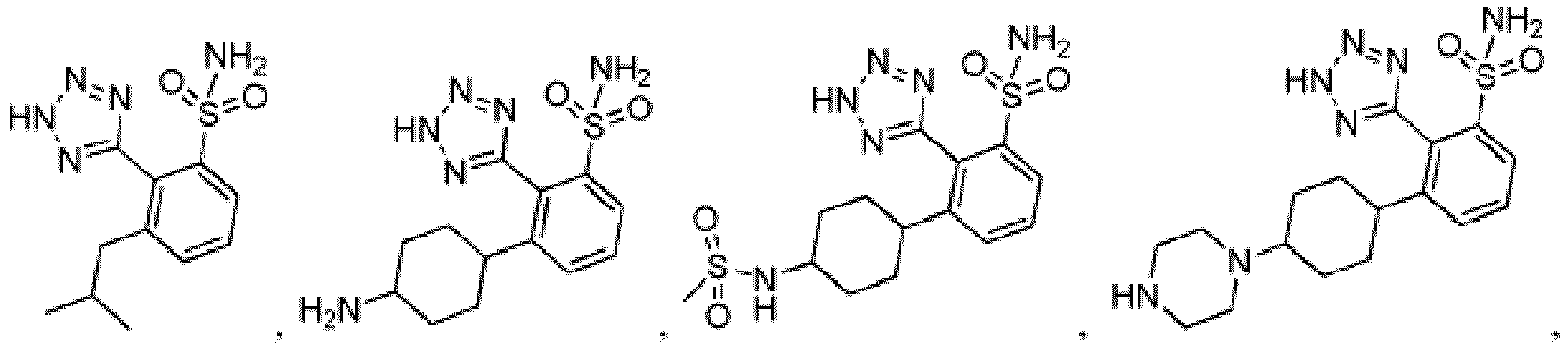


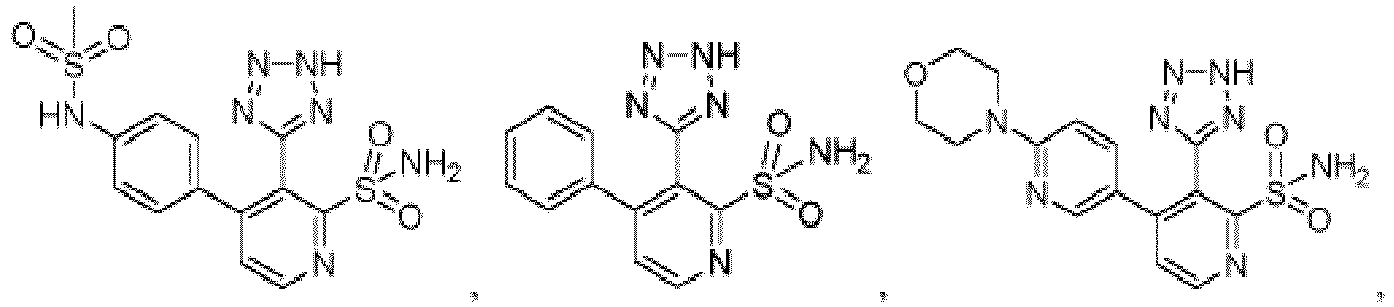





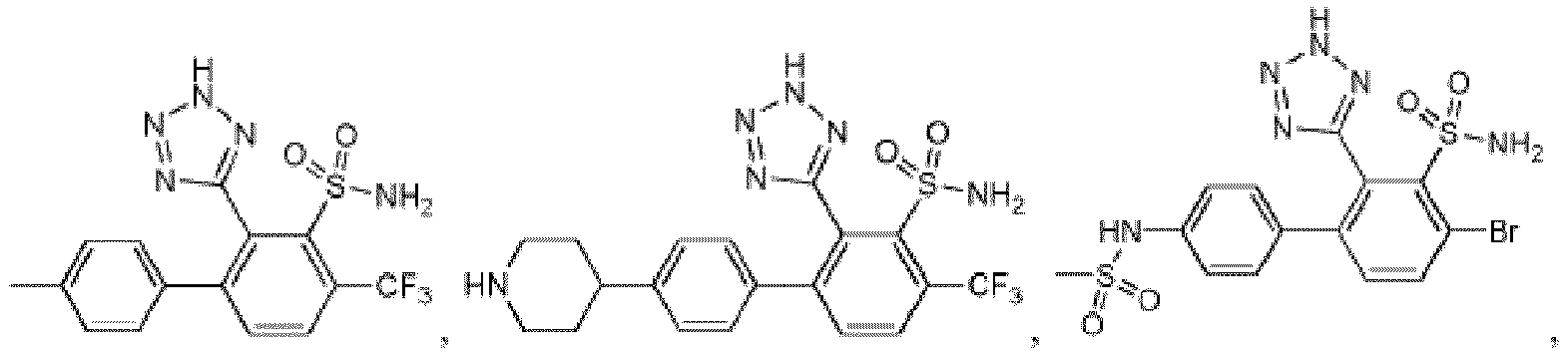


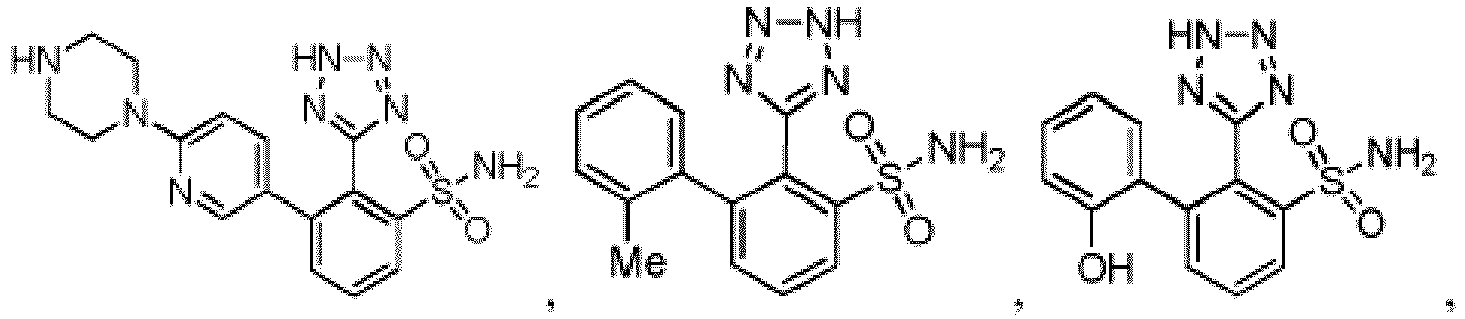


- Composé selon la revendication 1 qui est:


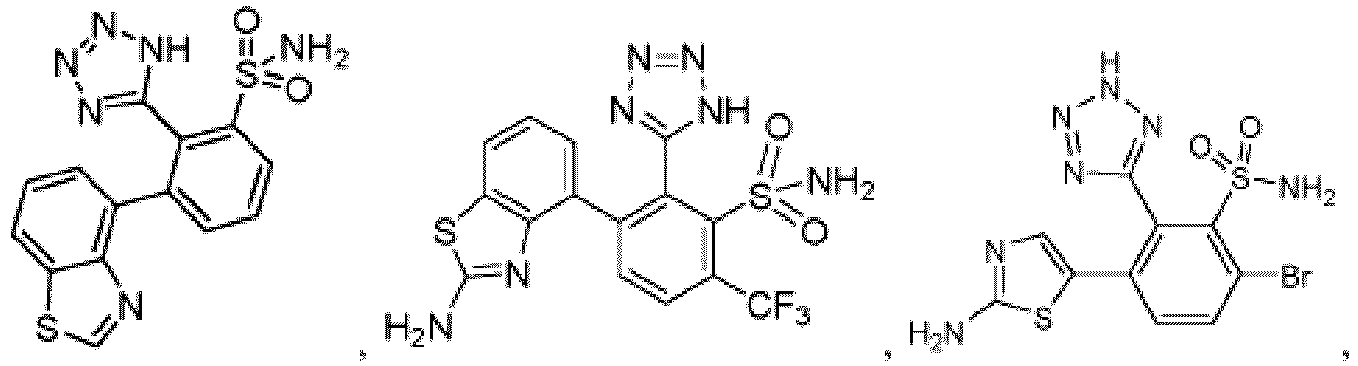


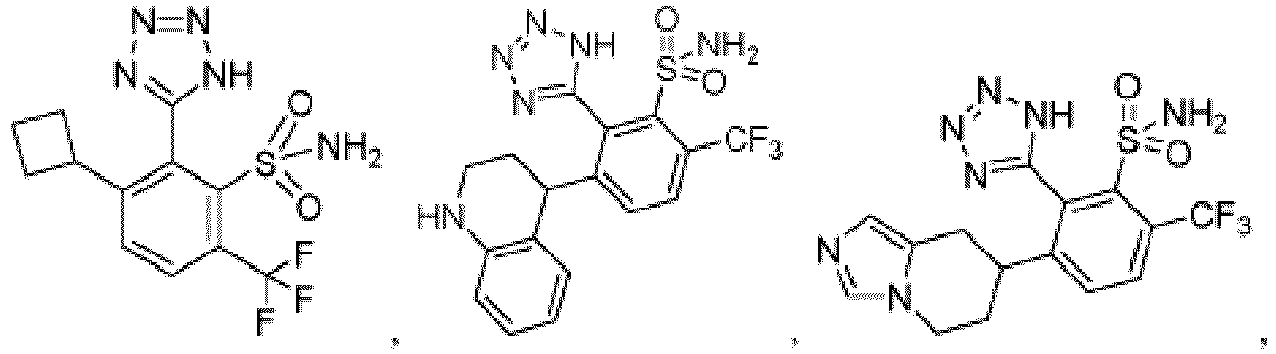


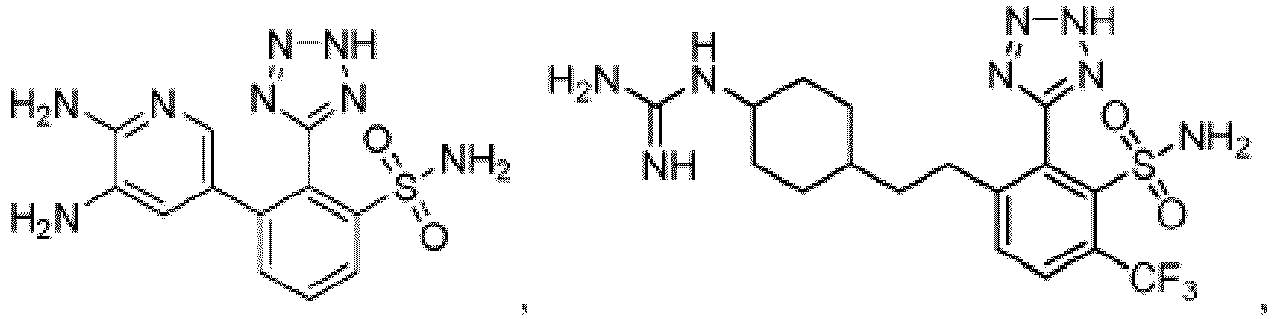


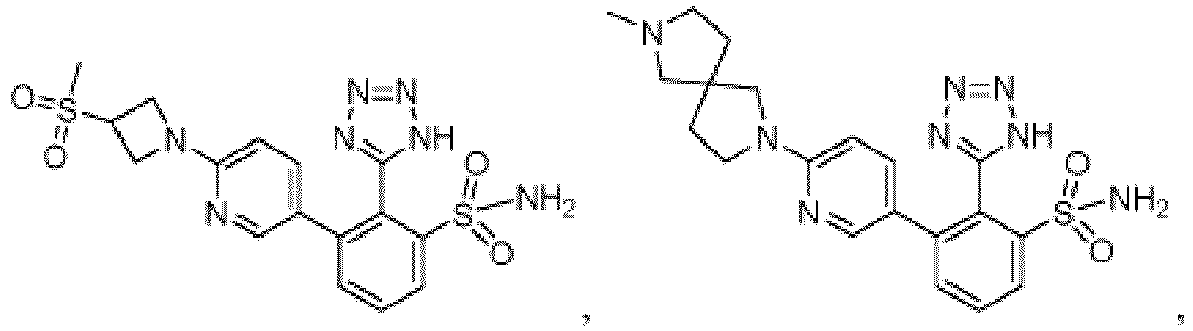


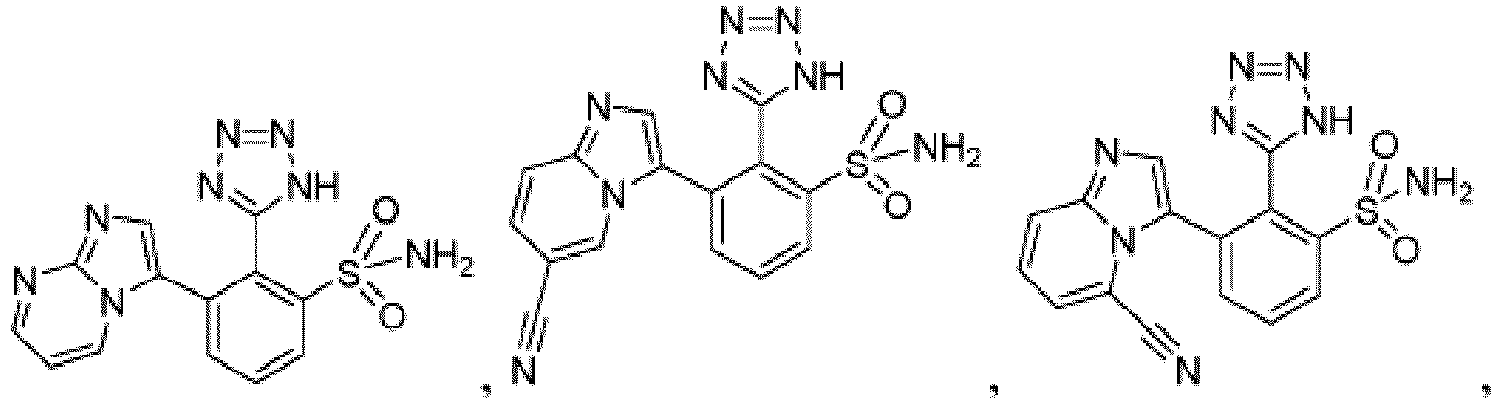


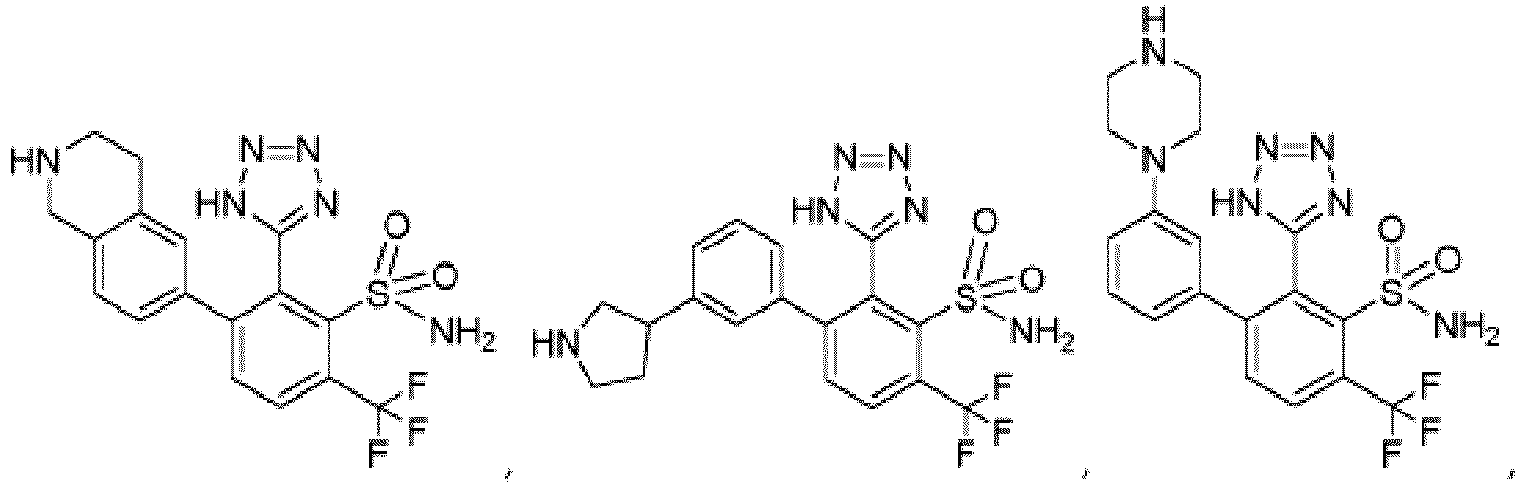


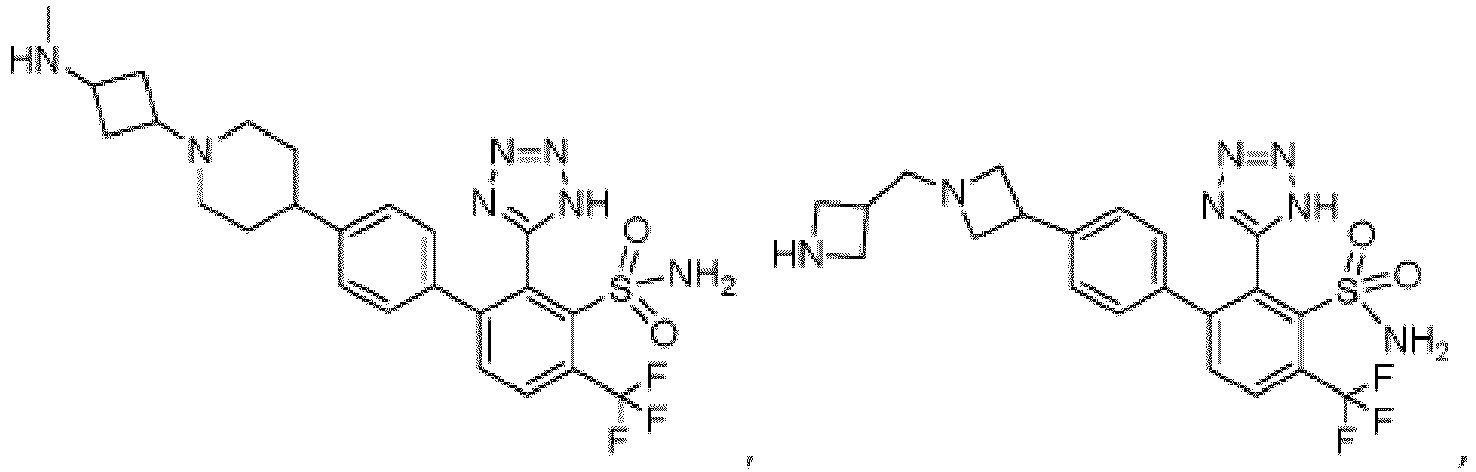
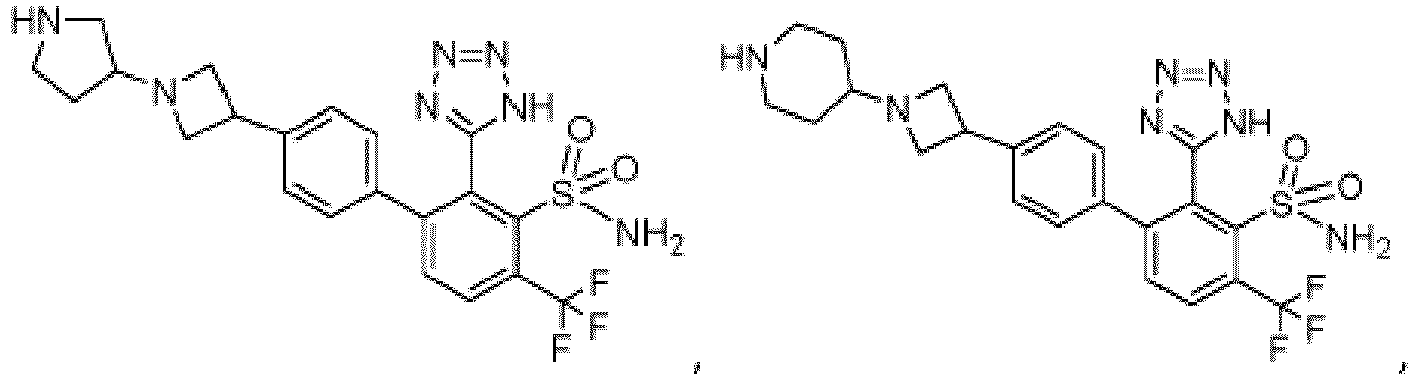


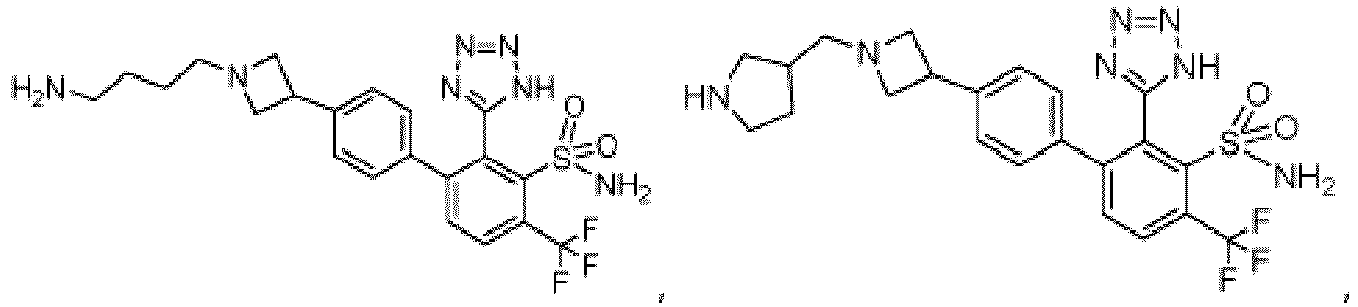


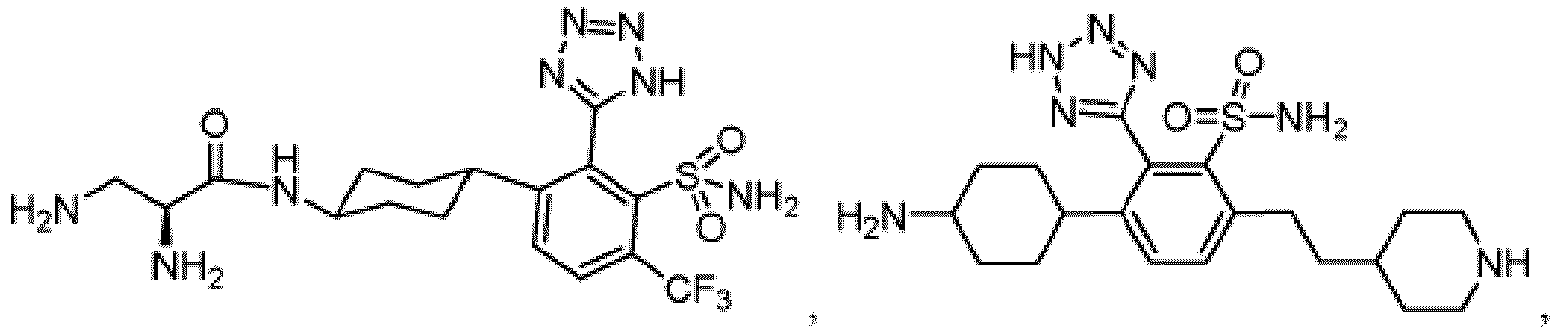

- Composé selon la revendication 1 qui est:


- Composé selon la revendication 1 qui est:
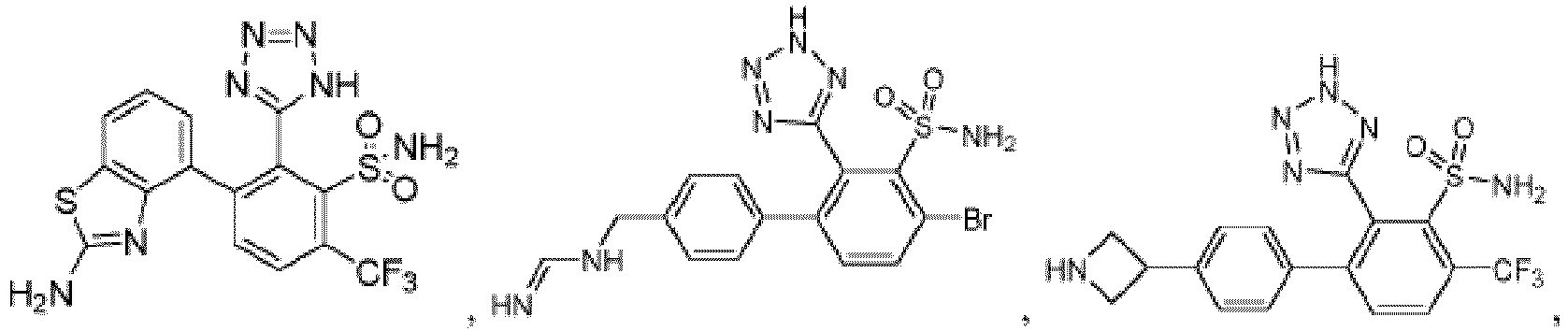


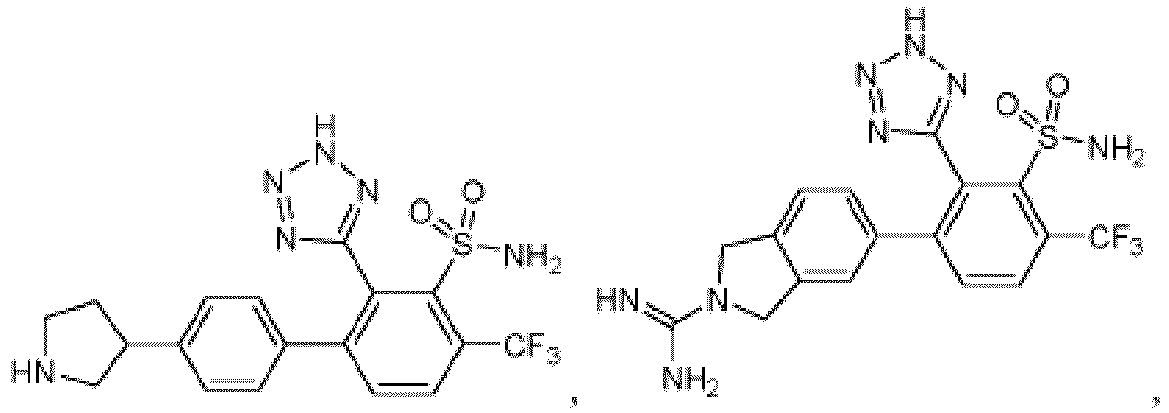
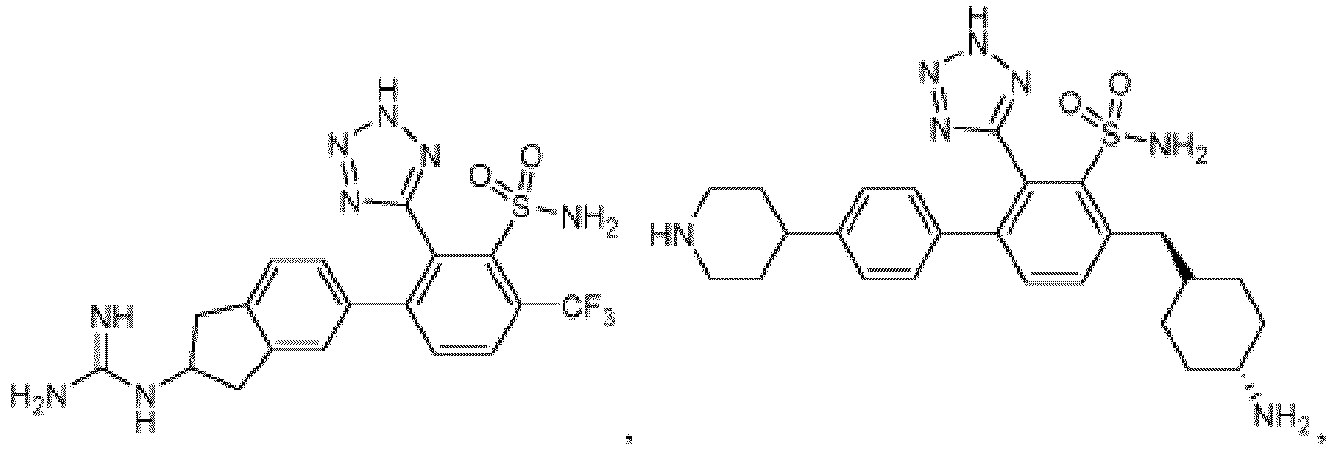


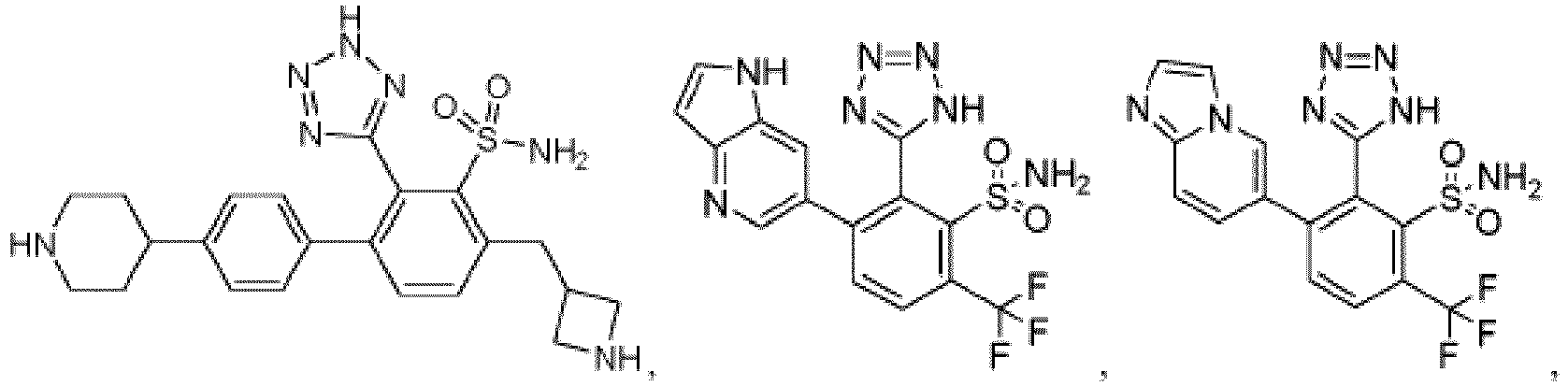


- Composition pharmaceutique qui comprend un composé selon l'une quelconque des revendications 1 à 17, ou un sel pharmaceutiquement acceptable de celui-ci, et un véhicule pharmaceutiquement acceptable.
- Composition pharmaceutique selon la revendication 18, qui comprend en outre une quantité efficace d'un antibiotique de bêta-lactame, optionnellement choisi dans le groupe constitué de imipénem, ertapénem, méropénem, doripénem, biapénem, panipénem, ticarcilline, ampicilline, amoxicilline, carbénicilline, pipéracilline, azlocilline, mezlocilline, ticarcilline, céfopérazone, céfotaxime, ceftriaxone et ceftazidime.
- Composition pharmaceutique selon la revendication 19, dans lequel l'antibiotique de bêta-lactame est imipénem.
- Composition pharmaceutique selon la revendication 20, comprenant en outre de la cilastatine ou un sel pharmaceutiquement acceptable de celle-ci.
- Composé selon l'une quelconque des revendications 1 à 17, ou un sel pharmaceutiquement acceptable de celui-ci, optionnellement en combinaison avec un antibiotique de bêta-lactame pour une utilisation dans le traitement d'une infection bactérienne.
- Composé pour une utilisation selon la revendication 22, où l'infection bactérienne est due à Pseudomonas spp., Kleebsiella spp., Enterobacter spp., Escherichi spp.a, Morganella spp., Citrobacter spp., Serratia spp. ou Acintetobacter spp.
Applications Claiming Priority (2)
| Application Number | Priority Date | Filing Date | Title |
|---|---|---|---|
| US201461930310P | 2014-01-22 | 2014-01-22 | |
| PCT/US2015/011735 WO2015112441A1 (fr) | 2014-01-22 | 2015-01-16 | Inhibiteurs de métallo-bêta-lactamases |
Publications (3)
| Publication Number | Publication Date |
|---|---|
| EP3096754A1 EP3096754A1 (fr) | 2016-11-30 |
| EP3096754A4 EP3096754A4 (fr) | 2017-06-07 |
| EP3096754B1 true EP3096754B1 (fr) | 2018-08-29 |
Family
ID=53681855
Family Applications (1)
| Application Number | Title | Priority Date | Filing Date |
|---|---|---|---|
| EP15740828.7A Active EP3096754B1 (fr) | 2014-01-22 | 2015-01-16 | Inhibiteurs de métallo-bêta-lactamases |
Country Status (3)
| Country | Link |
|---|---|
| US (1) | US9708336B2 (fr) |
| EP (1) | EP3096754B1 (fr) |
| WO (1) | WO2015112441A1 (fr) |
Families Citing this family (18)
| Publication number | Priority date | Publication date | Assignee | Title |
|---|---|---|---|---|
| TW201706265A (zh) | 2015-03-09 | 2017-02-16 | 必治妥美雅史谷比公司 | 做為Rho激酶(ROCK)抑制劑之內醯胺 |
| WO2016206101A1 (fr) | 2015-06-26 | 2016-12-29 | Merck Sharp & Dohme Corp. | Inhibiteurs de métallo-bêta-lactamases |
| GB201521059D0 (en) | 2015-11-30 | 2016-01-13 | Isis Innovation | Inhibitors of metallo-beta-lactamases |
| PL3445744T3 (pl) * | 2016-04-18 | 2022-02-07 | Vivoryon Therapeutics Ag | Nowe inhibitory mepryny alfa i beta |
| CN107011216A (zh) * | 2017-03-31 | 2017-08-04 | 泰州新威生物科技有限公司 | 一种反式‑4‑Boc‑氨基环己烷乙酸的制备方法 |
| US11207312B2 (en) | 2017-07-17 | 2021-12-28 | Merck Sharp & Dohme Corp. | Metallo-beta-lactamase inhibitors and methods of use thereof |
| WO2019126731A1 (fr) | 2017-12-22 | 2019-06-27 | Petra Pharma Corporation | Dérivés d'aminopyridine utilisés en tant qu'inhibiteurs de la phosphatidylinositol phosphate kinase |
| EP3735242A4 (fr) * | 2018-01-03 | 2021-09-01 | Merck Sharp & Dohme Corp. | Inhibiteurs de la métallo-bêta-lactamase et leurs méthodes d'utilisation |
| KR102807772B1 (ko) * | 2018-05-16 | 2025-05-14 | 인펙스 테라퓨틱스 리미티드 | 항균 화합물 |
| CN109232292A (zh) * | 2018-09-11 | 2019-01-18 | 浙江中山化工集团股份有限公司 | 一种2,6-二乙基-4-甲基苯基丙二酰胺的制备方法 |
| WO2020087202A1 (fr) | 2018-10-29 | 2020-05-07 | Merck Sharp & Dohme Corp. | Modulateurs allostériques de 3-(1h-pyrazol-4-yl)pyridine du récepteur muscarinique m4 de l'acétylcholine |
| TW202112767A (zh) | 2019-06-17 | 2021-04-01 | 美商佩特拉製藥公司 | 作為磷脂酸肌醇磷酸激酶抑制劑之胺基吡啶衍生物 |
| MA56462A (fr) | 2019-07-04 | 2022-05-11 | Qilu Regor Therapeutics Inc | Inhibiteurs de hpk1 et leurs utilisations |
| CN110437157B (zh) * | 2019-07-05 | 2022-05-17 | 西华大学 | 一种芳基嘧啶类截短侧耳素衍生物及其制备方法和用途 |
| KR20220044721A (ko) * | 2019-08-06 | 2022-04-11 | 도메인 테라퓨틱스 | 신경펩타이드 ff 수용체 길항제로서의 5-헤테로아릴-피리딘-2-아민 화합물 |
| CN110862395B (zh) * | 2019-11-13 | 2020-09-29 | 株洲千金药业股份有限公司 | 一种制备他达拉非重要杂质的原料化合物的制备方法 |
| GB201916915D0 (en) * | 2019-11-20 | 2020-01-01 | Amr Centre Ltd | Compounds |
| CN115894363B (zh) * | 2022-11-04 | 2025-02-11 | 苏州艾缇克药物化学有限公司 | 一种6-溴-1,2,3,4-四氢异喹啉的合成工艺 |
Family Cites Families (13)
| Publication number | Priority date | Publication date | Assignee | Title |
|---|---|---|---|---|
| CA1231336A (fr) | 1985-05-30 | 1988-01-12 | George Levitt | Sulfonamides herbicides |
| US4786311A (en) | 1985-05-30 | 1988-11-22 | E. I. Du Pont De Nemours And Company | Herbicidal sulfonamides |
| JPS62242679A (ja) | 1986-04-11 | 1987-10-23 | イ−・アイ・デユポン・デ・ニモアス・アンド・カンパニ− | スルホニル尿素化合物 |
| US4838925A (en) | 1986-04-25 | 1989-06-13 | E. I. Du Pont De Nemours And Company | Heterocyclic acyl sulfonamides |
| CA1273336A (fr) | 1986-04-25 | 1990-08-28 | Chi-Ping Tseng | Herbicides a base de derives sulfonamides de composes heterocycliques carbonyles |
| CN1095549A (zh) | 1986-11-24 | 1994-11-30 | 纳幕尔杜邦公司 | 除草磺酰胺组合物及其制法和应用 |
| DK0508234T3 (da) | 1991-04-11 | 1996-10-28 | Hoffmann La Roche | Beta-lactamer |
| MXPA02000246A (es) | 1999-07-06 | 2003-08-20 | Methylgene Inc | Inhibidores de °-lactamasa de sulfonamidometil fosfonato. |
| FR2812635B1 (fr) | 2000-08-01 | 2002-10-11 | Aventis Pharma Sa | Nouveaux composes heterocycliques, preparation et utilisation comme medicaments notamment comme anti- bacteriens |
| US7439253B2 (en) | 2002-12-06 | 2008-10-21 | Novexel | Heterocyclic compounds, their preparation and their use as medicaments, in particular as antibacterials and beta-lactamase inhibitors |
| AU2007300531A1 (en) | 2006-09-27 | 2008-04-03 | Merck Sharp & Dohme Corp. | Novel inhibitors of beta-lactamase |
| WO2013056163A1 (fr) * | 2011-10-14 | 2013-04-18 | The Regents Of The University Of California | Inhibiteurs de bêta-lactamase |
| CN104159587A (zh) | 2012-01-06 | 2014-11-19 | 南佛罗里达大学 | 组合物、使用方法、以及治疗方法 |
-
2015
- 2015-01-16 EP EP15740828.7A patent/EP3096754B1/fr active Active
- 2015-01-16 US US15/110,431 patent/US9708336B2/en active Active
- 2015-01-16 WO PCT/US2015/011735 patent/WO2015112441A1/fr not_active Ceased
Non-Patent Citations (1)
| Title |
|---|
| None * |
Also Published As
| Publication number | Publication date |
|---|---|
| EP3096754A4 (fr) | 2017-06-07 |
| US20160333021A1 (en) | 2016-11-17 |
| US9708336B2 (en) | 2017-07-18 |
| EP3096754A1 (fr) | 2016-11-30 |
| WO2015112441A1 (fr) | 2015-07-30 |
Similar Documents
| Publication | Publication Date | Title |
|---|---|---|
| EP3096754B1 (fr) | Inhibiteurs de métallo-bêta-lactamases | |
| EP3313828B1 (fr) | Inhibiteurs de métallo-bêta-lactamases | |
| EP2872508B1 (fr) | Dérivés d'imidazopyridine en tant que modulateurs de l'activite du tnf | |
| EP3080113B1 (fr) | Dérivés d'imidazole fusionnes tricycliques utilisables en tant que modulateurs de l'activité tnf | |
| EP3157914B1 (fr) | 3-amino-1,5,6,7-tétrahydro-4h-indol-4-ones | |
| EP2691399B1 (fr) | Composés thiazolopyrimidines | |
| EP3426248B1 (fr) | Composés d'arylmonobactame bicycliques et leurs méthodes d'utilisation pour le traitement des infections bactériennes | |
| JP5829644B2 (ja) | Syk阻害剤としてのアミノピリミジン類 | |
| EP2097419B1 (fr) | Benzofuropyrimidinones en tant qu'inhibiteurs de protéine kinase | |
| EP3080125B1 (fr) | Nouveaux dérivés azaindole comme inhibiteurs sélectifs de l'histone désacétylase (hdac) et compositions pharmaceutiques les comprenant | |
| TWI671301B (zh) | 作為PARP抑制劑的4H-吡唑並[1,5-α]苯並咪唑化合物的類似物 | |
| TW202142542A (zh) | 藉由軛合btk抑制劑與e3連接酶配位基降解布魯頓氏酪胺酸激酶(btk)及其使用方法 | |
| TW202128653A (zh) | 作為parp7抑制劑的嗒酮 | |
| CA2940918C (fr) | Derives 4,5,6,7-tetrahydro-pyrazolo[1,5-.alpha.]pyrazine substitues et derives 5,6,7,8-tetrahydro-4h-pyrazolo[1,5-.alpha.][1,4]diazepine utilises comme inhibiteurs de ros1 | |
| TW201900640A (zh) | 作為irak4抑制劑之噻吩并吡啶及苯并噻吩 | |
| EA026201B1 (ru) | Циклобутилзамещенные производные пирролопиридина и пирролопиримидина как ингибиторы jak | |
| EP3139918B1 (fr) | Acides bêta-tétrazolyle-propioniques utiles en tant qu'inhibiteurs des métallo-bêta-lactamases | |
| KR20140140625A (ko) | 베타-락타마제 억제제로서의 헤테로비시클릭 화합물 | |
| TW200936581A (en) | Fused aminodihydrothiazine derivatives | |
| KR20170044144A (ko) | 암 치료를 위한 인돌아민-2,3-디옥시게나제(ido) 길항제로서 시클로헥실-에틸 치환된 디아자- 및 트리아자-트리시클릭 화합물 | |
| CA3189908A1 (fr) | Agonistes du recepteur de l'orexine de type bicycloheptane pyrrolidine | |
| KR20190026731A (ko) | 베타-3 아드레날린성 수용체와 관련된 장애의 치료 또는 예방에 유용한 베타-3 아드레날린성 수용체의 조정제 | |
| MX2014013734A (es) | Inhibidores de nampt. | |
| CN111925367A (zh) | 稠环类衍生物抑制剂、其制备方法和应用 | |
| WO2014139328A1 (fr) | Inhibiteurs de pyrrolo[2,3-b]pyridine cdk9 kinase |
Legal Events
| Date | Code | Title | Description |
|---|---|---|---|
| PUAI | Public reference made under article 153(3) epc to a published international application that has entered the european phase |
Free format text: ORIGINAL CODE: 0009012 |
|
| 17P | Request for examination filed |
Effective date: 20160822 |
|
| AK | Designated contracting states |
Kind code of ref document: A1 Designated state(s): AL AT BE BG CH CY CZ DE DK EE ES FI FR GB GR HR HU IE IS IT LI LT LU LV MC MK MT NL NO PL PT RO RS SE SI SK SM TR |
|
| AX | Request for extension of the european patent |
Extension state: BA ME |
|
| DAX | Request for extension of the european patent (deleted) | ||
| A4 | Supplementary search report drawn up and despatched |
Effective date: 20170508 |
|
| RIC1 | Information provided on ipc code assigned before grant |
Ipc: A61K 31/41 20060101ALI20170428BHEP Ipc: C07D 401/10 20060101ALI20170428BHEP Ipc: C07D 405/12 20060101ALI20170428BHEP Ipc: C07D 403/10 20060101ALI20170428BHEP Ipc: A61K 31/4184 20060101ALI20170428BHEP Ipc: C07D 401/04 20060101ALI20170428BHEP Ipc: C07D 405/10 20060101ALI20170428BHEP Ipc: A61P 31/04 20060101ALI20170428BHEP Ipc: C07D 257/04 20060101AFI20170428BHEP |
|
| REG | Reference to a national code |
Ref country code: DE Ref legal event code: R079 Ref document number: 602015015650 Country of ref document: DE Free format text: PREVIOUS MAIN CLASS: A61K0031410000 Ipc: C07D0257040000 |
|
| GRAP | Despatch of communication of intention to grant a patent |
Free format text: ORIGINAL CODE: EPIDOSNIGR1 |
|
| STAA | Information on the status of an ep patent application or granted ep patent |
Free format text: STATUS: GRANT OF PATENT IS INTENDED |
|
| RIC1 | Information provided on ipc code assigned before grant |
Ipc: A61P 31/04 20060101ALI20180223BHEP Ipc: C07D 405/10 20060101ALI20180223BHEP Ipc: C07D 403/10 20060101ALI20180223BHEP Ipc: C07D 405/12 20060101ALI20180223BHEP Ipc: C07D 401/10 20060101ALI20180223BHEP Ipc: C07D 401/04 20060101ALI20180223BHEP Ipc: A61K 31/4184 20060101ALI20180223BHEP Ipc: C07D 257/04 20060101AFI20180223BHEP Ipc: A61K 31/41 20060101ALI20180223BHEP |
|
| INTG | Intention to grant announced |
Effective date: 20180314 |
|
| GRAS | Grant fee paid |
Free format text: ORIGINAL CODE: EPIDOSNIGR3 |
|
| GRAA | (expected) grant |
Free format text: ORIGINAL CODE: 0009210 |
|
| STAA | Information on the status of an ep patent application or granted ep patent |
Free format text: STATUS: THE PATENT HAS BEEN GRANTED |
|
| AK | Designated contracting states |
Kind code of ref document: B1 Designated state(s): AL AT BE BG CH CY CZ DE DK EE ES FI FR GB GR HR HU IE IS IT LI LT LU LV MC MK MT NL NO PL PT RO RS SE SI SK SM TR |
|
| REG | Reference to a national code |
Ref country code: GB Ref legal event code: FG4D |
|
| REG | Reference to a national code |
Ref country code: CH Ref legal event code: EP |
|
| REG | Reference to a national code |
Ref country code: AT Ref legal event code: REF Ref document number: 1034964 Country of ref document: AT Kind code of ref document: T Effective date: 20180915 |
|
| REG | Reference to a national code |
Ref country code: IE Ref legal event code: FG4D |
|
| REG | Reference to a national code |
Ref country code: DE Ref legal event code: R096 Ref document number: 602015015650 Country of ref document: DE |
|
| REG | Reference to a national code |
Ref country code: NL Ref legal event code: MP Effective date: 20180829 |
|
| REG | Reference to a national code |
Ref country code: LT Ref legal event code: MG4D |
|
| PG25 | Lapsed in a contracting state [announced via postgrant information from national office to epo] |
Ref country code: NL Free format text: LAPSE BECAUSE OF FAILURE TO SUBMIT A TRANSLATION OF THE DESCRIPTION OR TO PAY THE FEE WITHIN THE PRESCRIBED TIME-LIMIT Effective date: 20180829 Ref country code: BG Free format text: LAPSE BECAUSE OF FAILURE TO SUBMIT A TRANSLATION OF THE DESCRIPTION OR TO PAY THE FEE WITHIN THE PRESCRIBED TIME-LIMIT Effective date: 20181129 Ref country code: SE Free format text: LAPSE BECAUSE OF FAILURE TO SUBMIT A TRANSLATION OF THE DESCRIPTION OR TO PAY THE FEE WITHIN THE PRESCRIBED TIME-LIMIT Effective date: 20180829 Ref country code: LT Free format text: LAPSE BECAUSE OF FAILURE TO SUBMIT A TRANSLATION OF THE DESCRIPTION OR TO PAY THE FEE WITHIN THE PRESCRIBED TIME-LIMIT Effective date: 20180829 Ref country code: FI Free format text: LAPSE BECAUSE OF FAILURE TO SUBMIT A TRANSLATION OF THE DESCRIPTION OR TO PAY THE FEE WITHIN THE PRESCRIBED TIME-LIMIT Effective date: 20180829 Ref country code: GR Free format text: LAPSE BECAUSE OF FAILURE TO SUBMIT A TRANSLATION OF THE DESCRIPTION OR TO PAY THE FEE WITHIN THE PRESCRIBED TIME-LIMIT Effective date: 20181130 Ref country code: IS Free format text: LAPSE BECAUSE OF FAILURE TO SUBMIT A TRANSLATION OF THE DESCRIPTION OR TO PAY THE FEE WITHIN THE PRESCRIBED TIME-LIMIT Effective date: 20181229 Ref country code: RS Free format text: LAPSE BECAUSE OF FAILURE TO SUBMIT A TRANSLATION OF THE DESCRIPTION OR TO PAY THE FEE WITHIN THE PRESCRIBED TIME-LIMIT Effective date: 20180829 Ref country code: NO Free format text: LAPSE BECAUSE OF FAILURE TO SUBMIT A TRANSLATION OF THE DESCRIPTION OR TO PAY THE FEE WITHIN THE PRESCRIBED TIME-LIMIT Effective date: 20181129 |
|
| REG | Reference to a national code |
Ref country code: AT Ref legal event code: MK05 Ref document number: 1034964 Country of ref document: AT Kind code of ref document: T Effective date: 20180829 |
|
| PG25 | Lapsed in a contracting state [announced via postgrant information from national office to epo] |
Ref country code: HR Free format text: LAPSE BECAUSE OF FAILURE TO SUBMIT A TRANSLATION OF THE DESCRIPTION OR TO PAY THE FEE WITHIN THE PRESCRIBED TIME-LIMIT Effective date: 20180829 Ref country code: LV Free format text: LAPSE BECAUSE OF FAILURE TO SUBMIT A TRANSLATION OF THE DESCRIPTION OR TO PAY THE FEE WITHIN THE PRESCRIBED TIME-LIMIT Effective date: 20180829 Ref country code: AL Free format text: LAPSE BECAUSE OF FAILURE TO SUBMIT A TRANSLATION OF THE DESCRIPTION OR TO PAY THE FEE WITHIN THE PRESCRIBED TIME-LIMIT Effective date: 20180829 |
|
| PG25 | Lapsed in a contracting state [announced via postgrant information from national office to epo] |
Ref country code: AT Free format text: LAPSE BECAUSE OF FAILURE TO SUBMIT A TRANSLATION OF THE DESCRIPTION OR TO PAY THE FEE WITHIN THE PRESCRIBED TIME-LIMIT Effective date: 20180829 Ref country code: IT Free format text: LAPSE BECAUSE OF FAILURE TO SUBMIT A TRANSLATION OF THE DESCRIPTION OR TO PAY THE FEE WITHIN THE PRESCRIBED TIME-LIMIT Effective date: 20180829 Ref country code: RO Free format text: LAPSE BECAUSE OF FAILURE TO SUBMIT A TRANSLATION OF THE DESCRIPTION OR TO PAY THE FEE WITHIN THE PRESCRIBED TIME-LIMIT Effective date: 20180829 Ref country code: EE Free format text: LAPSE BECAUSE OF FAILURE TO SUBMIT A TRANSLATION OF THE DESCRIPTION OR TO PAY THE FEE WITHIN THE PRESCRIBED TIME-LIMIT Effective date: 20180829 Ref country code: ES Free format text: LAPSE BECAUSE OF FAILURE TO SUBMIT A TRANSLATION OF THE DESCRIPTION OR TO PAY THE FEE WITHIN THE PRESCRIBED TIME-LIMIT Effective date: 20180829 Ref country code: CZ Free format text: LAPSE BECAUSE OF FAILURE TO SUBMIT A TRANSLATION OF THE DESCRIPTION OR TO PAY THE FEE WITHIN THE PRESCRIBED TIME-LIMIT Effective date: 20180829 Ref country code: PL Free format text: LAPSE BECAUSE OF FAILURE TO SUBMIT A TRANSLATION OF THE DESCRIPTION OR TO PAY THE FEE WITHIN THE PRESCRIBED TIME-LIMIT Effective date: 20180829 |
|
| PG25 | Lapsed in a contracting state [announced via postgrant information from national office to epo] |
Ref country code: SK Free format text: LAPSE BECAUSE OF FAILURE TO SUBMIT A TRANSLATION OF THE DESCRIPTION OR TO PAY THE FEE WITHIN THE PRESCRIBED TIME-LIMIT Effective date: 20180829 Ref country code: DK Free format text: LAPSE BECAUSE OF FAILURE TO SUBMIT A TRANSLATION OF THE DESCRIPTION OR TO PAY THE FEE WITHIN THE PRESCRIBED TIME-LIMIT Effective date: 20180829 Ref country code: SM Free format text: LAPSE BECAUSE OF FAILURE TO SUBMIT A TRANSLATION OF THE DESCRIPTION OR TO PAY THE FEE WITHIN THE PRESCRIBED TIME-LIMIT Effective date: 20180829 |
|
| REG | Reference to a national code |
Ref country code: DE Ref legal event code: R097 Ref document number: 602015015650 Country of ref document: DE |
|
| PLBE | No opposition filed within time limit |
Free format text: ORIGINAL CODE: 0009261 |
|
| STAA | Information on the status of an ep patent application or granted ep patent |
Free format text: STATUS: NO OPPOSITION FILED WITHIN TIME LIMIT |
|
| 26N | No opposition filed |
Effective date: 20190531 |
|
| PG25 | Lapsed in a contracting state [announced via postgrant information from national office to epo] |
Ref country code: MC Free format text: LAPSE BECAUSE OF FAILURE TO SUBMIT A TRANSLATION OF THE DESCRIPTION OR TO PAY THE FEE WITHIN THE PRESCRIBED TIME-LIMIT Effective date: 20180829 Ref country code: SI Free format text: LAPSE BECAUSE OF FAILURE TO SUBMIT A TRANSLATION OF THE DESCRIPTION OR TO PAY THE FEE WITHIN THE PRESCRIBED TIME-LIMIT Effective date: 20180829 |
|
| REG | Reference to a national code |
Ref country code: CH Ref legal event code: PL |
|
| PG25 | Lapsed in a contracting state [announced via postgrant information from national office to epo] |
Ref country code: LU Free format text: LAPSE BECAUSE OF NON-PAYMENT OF DUE FEES Effective date: 20190116 |
|
| REG | Reference to a national code |
Ref country code: BE Ref legal event code: MM Effective date: 20190131 |
|
| REG | Reference to a national code |
Ref country code: IE Ref legal event code: MM4A |
|
| PG25 | Lapsed in a contracting state [announced via postgrant information from national office to epo] |
Ref country code: BE Free format text: LAPSE BECAUSE OF NON-PAYMENT OF DUE FEES Effective date: 20190131 |
|
| PG25 | Lapsed in a contracting state [announced via postgrant information from national office to epo] |
Ref country code: CH Free format text: LAPSE BECAUSE OF NON-PAYMENT OF DUE FEES Effective date: 20190131 Ref country code: LI Free format text: LAPSE BECAUSE OF NON-PAYMENT OF DUE FEES Effective date: 20190131 |
|
| PG25 | Lapsed in a contracting state [announced via postgrant information from national office to epo] |
Ref country code: IE Free format text: LAPSE BECAUSE OF NON-PAYMENT OF DUE FEES Effective date: 20190116 |
|
| PG25 | Lapsed in a contracting state [announced via postgrant information from national office to epo] |
Ref country code: TR Free format text: LAPSE BECAUSE OF FAILURE TO SUBMIT A TRANSLATION OF THE DESCRIPTION OR TO PAY THE FEE WITHIN THE PRESCRIBED TIME-LIMIT Effective date: 20180829 |
|
| PG25 | Lapsed in a contracting state [announced via postgrant information from national office to epo] |
Ref country code: MT Free format text: LAPSE BECAUSE OF NON-PAYMENT OF DUE FEES Effective date: 20190116 Ref country code: PT Free format text: LAPSE BECAUSE OF FAILURE TO SUBMIT A TRANSLATION OF THE DESCRIPTION OR TO PAY THE FEE WITHIN THE PRESCRIBED TIME-LIMIT Effective date: 20181229 |
|
| PG25 | Lapsed in a contracting state [announced via postgrant information from national office to epo] |
Ref country code: CY Free format text: LAPSE BECAUSE OF FAILURE TO SUBMIT A TRANSLATION OF THE DESCRIPTION OR TO PAY THE FEE WITHIN THE PRESCRIBED TIME-LIMIT Effective date: 20180829 |
|
| PG25 | Lapsed in a contracting state [announced via postgrant information from national office to epo] |
Ref country code: HU Free format text: LAPSE BECAUSE OF FAILURE TO SUBMIT A TRANSLATION OF THE DESCRIPTION OR TO PAY THE FEE WITHIN THE PRESCRIBED TIME-LIMIT; INVALID AB INITIO Effective date: 20150116 |
|
| PG25 | Lapsed in a contracting state [announced via postgrant information from national office to epo] |
Ref country code: MK Free format text: LAPSE BECAUSE OF FAILURE TO SUBMIT A TRANSLATION OF THE DESCRIPTION OR TO PAY THE FEE WITHIN THE PRESCRIBED TIME-LIMIT Effective date: 20180829 |
|
| REG | Reference to a national code |
Ref country code: DE Ref legal event code: R081 Ref document number: 602015015650 Country of ref document: DE Owner name: MERCK SHARP & DOHME LLC, RAHWAY, US Free format text: FORMER OWNER: MERCK SHARP & DOHME CORP., RAHWAY, N.J., US |
|
| REG | Reference to a national code |
Ref country code: GB Ref legal event code: 732E Free format text: REGISTERED BETWEEN 20221013 AND 20221019 |
|
| PGFP | Annual fee paid to national office [announced via postgrant information from national office to epo] |
Ref country code: GB Payment date: 20251211 Year of fee payment: 12 |
|
| PGFP | Annual fee paid to national office [announced via postgrant information from national office to epo] |
Ref country code: FR Payment date: 20251216 Year of fee payment: 12 |
|
| PGFP | Annual fee paid to national office [announced via postgrant information from national office to epo] |
Ref country code: DE Payment date: 20251222 Year of fee payment: 12 |