EP3139930B1 - Salze und polymorphe von cyclischen borsäureesterderivaten und therapeutische verwendungen davon - Google Patents
Salze und polymorphe von cyclischen borsäureesterderivaten und therapeutische verwendungen davon Download PDFInfo
- Publication number
- EP3139930B1 EP3139930B1 EP15788658.1A EP15788658A EP3139930B1 EP 3139930 B1 EP3139930 B1 EP 3139930B1 EP 15788658 A EP15788658 A EP 15788658A EP 3139930 B1 EP3139930 B1 EP 3139930B1
- Authority
- EP
- European Patent Office
- Prior art keywords
- compound
- potassium salt
- potassium
- stage
- crystalline form
- Prior art date
- Legal status (The legal status is an assumption and is not a legal conclusion. Google has not performed a legal analysis and makes no representation as to the accuracy of the status listed.)
- Active
Links
Images




Classifications
-
- A—HUMAN NECESSITIES
- A61—MEDICAL OR VETERINARY SCIENCE; HYGIENE
- A61K—PREPARATIONS FOR MEDICAL, DENTAL OR TOILETRY PURPOSES
- A61K31/00—Medicinal preparations containing organic active ingredients
- A61K31/69—Boron compounds
-
- A—HUMAN NECESSITIES
- A61—MEDICAL OR VETERINARY SCIENCE; HYGIENE
- A61K—PREPARATIONS FOR MEDICAL, DENTAL OR TOILETRY PURPOSES
- A61K31/00—Medicinal preparations containing organic active ingredients
- A61K31/33—Heterocyclic compounds
- A61K31/395—Heterocyclic compounds having nitrogen as a ring hetero atom, e.g. guanethidine or rifamycins
- A61K31/397—Heterocyclic compounds having nitrogen as a ring hetero atom, e.g. guanethidine or rifamycins having four-membered rings, e.g. azetidine
-
- A—HUMAN NECESSITIES
- A61—MEDICAL OR VETERINARY SCIENCE; HYGIENE
- A61K—PREPARATIONS FOR MEDICAL, DENTAL OR TOILETRY PURPOSES
- A61K31/00—Medicinal preparations containing organic active ingredients
- A61K31/33—Heterocyclic compounds
- A61K31/395—Heterocyclic compounds having nitrogen as a ring hetero atom, e.g. guanethidine or rifamycins
- A61K31/54—Heterocyclic compounds having nitrogen as a ring hetero atom, e.g. guanethidine or rifamycins having six-membered rings with at least one nitrogen and one sulfur as the ring hetero atoms, e.g. sulthiame
- A61K31/542—Heterocyclic compounds having nitrogen as a ring hetero atom, e.g. guanethidine or rifamycins having six-membered rings with at least one nitrogen and one sulfur as the ring hetero atoms, e.g. sulthiame ortho- or peri-condensed with heterocyclic ring systems
- A61K31/545—Compounds containing 5-thia-1-azabicyclo [4.2.0] octane ring systems, i.e. compounds containing a ring system of the formula:, e.g. cephalosporins, cefaclor, or cephalexine
-
- A—HUMAN NECESSITIES
- A61—MEDICAL OR VETERINARY SCIENCE; HYGIENE
- A61P—SPECIFIC THERAPEUTIC ACTIVITY OF CHEMICAL COMPOUNDS OR MEDICINAL PREPARATIONS
- A61P31/00—Antiinfectives, i.e. antibiotics, antiseptics, chemotherapeutics
- A61P31/04—Antibacterial agents
-
- A—HUMAN NECESSITIES
- A61—MEDICAL OR VETERINARY SCIENCE; HYGIENE
- A61P—SPECIFIC THERAPEUTIC ACTIVITY OF CHEMICAL COMPOUNDS OR MEDICINAL PREPARATIONS
- A61P31/00—Antiinfectives, i.e. antibiotics, antiseptics, chemotherapeutics
- A61P31/10—Antimycotics
-
- C—CHEMISTRY; METALLURGY
- C07—ORGANIC CHEMISTRY
- C07F—ACYCLIC, CARBOCYCLIC OR HETEROCYCLIC COMPOUNDS CONTAINING ELEMENTS OTHER THAN CARBON, HYDROGEN, HALOGEN, OXYGEN, NITROGEN, SULFUR, SELENIUM OR TELLURIUM
- C07F5/00—Compounds containing elements of Groups 3 or 13 of the Periodic Table
- C07F5/02—Boron compounds
- C07F5/025—Boronic and borinic acid compounds
-
- A—HUMAN NECESSITIES
- A61—MEDICAL OR VETERINARY SCIENCE; HYGIENE
- A61K—PREPARATIONS FOR MEDICAL, DENTAL OR TOILETRY PURPOSES
- A61K2121/00—Preparations for use in therapy
-
- A—HUMAN NECESSITIES
- A61—MEDICAL OR VETERINARY SCIENCE; HYGIENE
- A61K—PREPARATIONS FOR MEDICAL, DENTAL OR TOILETRY PURPOSES
- A61K2300/00—Mixtures or combinations of active ingredients, wherein at least one active ingredient is fully defined in groups A61K31/00 - A61K41/00
-
- Y—GENERAL TAGGING OF NEW TECHNOLOGICAL DEVELOPMENTS; GENERAL TAGGING OF CROSS-SECTIONAL TECHNOLOGIES SPANNING OVER SEVERAL SECTIONS OF THE IPC; TECHNICAL SUBJECTS COVERED BY FORMER USPC CROSS-REFERENCE ART COLLECTIONS [XRACs] AND DIGESTS
- Y02—TECHNOLOGIES OR APPLICATIONS FOR MITIGATION OR ADAPTATION AGAINST CLIMATE CHANGE
- Y02A—TECHNOLOGIES FOR ADAPTATION TO CLIMATE CHANGE
- Y02A50/00—TECHNOLOGIES FOR ADAPTATION TO CLIMATE CHANGE in human health protection, e.g. against extreme weather
- Y02A50/30—Against vector-borne diseases, e.g. mosquito-borne, fly-borne, tick-borne or waterborne diseases whose impact is exacerbated by climate change
Definitions
- the present invention relates to salts and polymorphs of cyclic boronic acid ester derivatives, compositions, their use and preparation as therapeutic agents for treating bacterial infection.
- the present invention relates to a potassium salt of 2-((3R,6S)-2-hydroxy-3-(2-(thiophen-2-yl)acetamido)-1,2-oxaborinan-6-yl)acetic acid.
- Antibiotics have been effective tools in the treatment of infectious diseases during the last half-century. From the development of antibiotic therapy to the late 1980s there was almost complete control over bacterial infections in developed countries. However, in response to the pressure of antibiotic usage, multiple resistance mechanisms have become widespread and are threatening the clinical utility of anti-bacterial therapy.
- the increase in antibiotic resistant strains has been particularly common in major hospitals and care centers. The consequences of the increase in resistant strains include higher morbidity and mortality, longer patient hospitalization, and an increase in treatment costs.
- ⁇ -lactamases Various bacteria have evolved ⁇ -lactam deactivating enzymes, namely, ⁇ -lactamases, that counter the efficacy of the various ⁇ -lactams.
- ⁇ -lactamases can be grouped into 4 classes based on their amino acid sequences, namely, Ambler classes A, B, C, and D.
- Enzymes in classes A, C, and D include active-site serine ⁇ -lactamases, and class B enzymes, which are encountered less frequently, are Zn-dependent. These enzymes catalyze the chemical degradation of ⁇ -lactam antibiotics, rendering them inactive.
- Some ⁇ -lactamases can be transferred within and between various bacterial strains and species. The rapid spread of bacterial resistance and the evolution of multi-resistant strains severely limits ⁇ -lactam treatment options available.
- class D ⁇ -lactamase-expressing bacterium strains such as Acinetobacter baumannii has become an emerging multidrug-resistant threat.
- A. baumannii strains express A, C, and D class ⁇ -lactamases.
- the class D ⁇ -lactamases such as the OXA families are particularly effective at destroying carbapenem type ⁇ -lactam antibiotics, e.g., imipenem, the active carbapenems component of Merck's Primaxin ® ( Montefour, K.; et al. Crit. Care Nurse 2008, 28, 15 ; Perez, F. et al. Expert Rev. Anti Infect. Ther. 2008, 6, 269 ; Bou, G.; Martinez-Beltran, J.
- New ⁇ -lactamases have recently evolved that hydrolyze the carbapenem class of antimicrobials, including imipenem, biapenem, doripenem, meropenem, and ertapenem, as well as other ⁇ -lactam antibiotics.
- carbapenemases belong to molecular classes A, B, and D.
- Class A carbapenemases of the KPC-type predominantly in Klebsiella pneumoniae but now also reported in other Enterobacteriaceae, Pseudomonas aeruginosa and Acinetobacter baumannii.
- the KPC carbapenemase was first described in 1996 in North Carolina, but since then has disseminated widely in the US.
- Another mechanism of ⁇ -lactamase mediated resistance to carbapenems involves combination of permeability or efflux mechanisms combined with hyper production of beta-lactamases.
- One example is the loss of a porin combined in hyperproduction of ampC beta-lactamase results in resistance to imipenem in Pseudomonas aeruginosa.
- Efflux pump over expression combined with hyperproduction of the ampC ⁇ -lactamase can also result in resistance to a carbapenem such as meropenem.
- WO 2013/122888 cited under Article 54(2) EPC, in its title describes "methods of treating bacterial infections”.
- WO 2012/021455 cited under Article 54(2) EPC, in its title describes "cyclic boronic acid ester derivatives and therapeutic uses thereof.
- the present invention relates to antimicrobial agents and potentiators thereof.
- Some embodiments include salts, polymorphs, compounds, compositions, pharmaceutical compositions, use and preparation thereof.
- some embodiments relate to salts and polymorphs of cyclic boronic acid ester derivatives.
- the present invention provides a potassium salt of 2-((3R,6S)-2-hydroxy-3-(2-(thiophen-2-yl)acetamido)-1,2-oxaborinan-6-yl)acetic acid, wherein the potassium salt is in a crystalline form exhibiting an X-ray powder diffraction pattern comprising at least three characteristic peaks selected from the group consisting of peaks at approximately 7.3°, 13.9°, 16.9°, 19.1°, 20.8°, and 25.2 °2 ⁇ .
- Some embodiments include a pharmaceutical composition comprising the potassium salt described herein.
- Some embodiments include a pharmaceutical composition prepared by dissolving the potassium salt described herein.
- Some embodiments include a compound or composition described herein for use in a method of preventing a bacterial infection.
- Some embodiments include a sterile container, comprising any one of the foregoing composition or any one of the foregoing potassium salt.
- Some embodiments include a method of preparing a pharmaceutical composition for administration, comprising reconstituting the contents of any one of the foregoing the sterile container using a pharmaceutically acceptable liquid carrier.
- Some embodiments relate to a process of making a crystalline form of a potassium salt of 2-((3R,6S)-2-hydroxy-3-(2-(thiophen-2-yl)acetamido)-1,2-oxaborinan-6-yl)acetic acid described herein, comprising combining a purified 2-((3R,6S)-2-hydroxy-3-(2-(thiophen-2-yl)acetamido)-1,2-oxaborinan-6-yl)acetic acid with a solvent to form an intermediate solution; intermixing a potassium counterion with the intermediate solution; and isolating the crystalline form of the potassium salt of 2-((3R,6S)-2-hydroxy-3-(2-(thiophen-2-yl)acetamido)-1,2-oxaborinan-6-yl)acetic acid.
- the present invention relates to salts and polymorphs of cyclic boronic acid ester derivatives and pharmaceutical compositions comprising the same. Some embodiments include uses thereof, including methods of preparation, and methods of treatment.
- the present invention relates to polymorphs of a salt of 2-((3R,6S)-2-hydroxy-3-(2-(thiophen-2-yl)acetamido)-1,2-oxaborinan-6-yl)acetic acid. More specifically, the present invention relates to polymorphs of a potassium salt of 2-((3R,6S)-2-hydroxy-3-(2-(thiophen-2-yl)acetamido)-1,2-oxaborinan-6-yl)acetic acid.
- Compound 1 as used herein refers to 2-((3R,6S)-2-hydroxy-3-(2-(thiophen-2-yl)acetamido)-1,2 oxaborinan-6-yl)acetic acid as shown in the structure below.
- Compound 1 can be made by known methods such as the procedures described in US 2012/0040932 . More specifically, the skilled artisan given the disclosure in Example 1 of US 2012/0040932 is well equipped to prepare Compound 1.
- Compound 1 contains a boronic acid moiety that is chemically stable in solutions having pH values between 2 and 8.
- the pKa of Compound 1 is measured to be 3.92.
- Compound 1 can be converted into a salt.
- Some embodiments relate to a pharmaceutically acceptable salt of 2-((3R,6S)-2-hydroxy-3-(2-(thiophen-2-yl)acetamido)-1,2-oxaborinan-6-yl)acetic acid.
- the pharmaceutically acceptable salt is a potassium salt.
- Compound 1A as used herein refers to the potassium salt of 2-((3R,6S)-2-hydroxy-3-(2-(thiophen-2-yl)acetamido)-1,2-oxaborinan-6-yl)acetic acid.
- Compound 1A can be made into a pure and stable crystalline form under controlled conditions.
- the X-ray powder diffraction (PXRD) pattern of Compound 1A is substantially the same as shown in FIG. 1 , with corresponding tabulated peak data shown in Table 1. Table 1. Peak Data of X-ray powder diffraction (PXRD) pattern of Compound 1A No. Pos.
- Compound 1A is in a crystalline form exhibiting an X-ray powder diffraction pattern that includes at least three characteristic peaks selected from the group consisting of peaks at approximately 7.3°, 13.9°, 16.9°, 19.1°, 20.8°, and 25.2 °2 ⁇ .
- the crystalline form of Compound 1A exhibits an X-ray powder diffraction pattern comprising at least peaks at 7.3°, 13.9°, 16.9°, 19.1°,20.8°, and 25.2 °2 ⁇ .
- the crystalline form of Compound 1A exhibits an X-ray powder diffraction pattern comprising at least peaks at approximately 7.3°, 13.9°, 14.6°, 16.9°, 17.9°, 19.1°, 20.8°, 21.2°, 25.2°, and 25.6 °2 ⁇ .
- the peak positions are assumed to be equal if the two theta (20) values agree to within 0.2° (i.e., ⁇ 0.2°).
- ⁇ 0.2° the United States Pharmacopeia states that if the angular setting of the 10 strongest diffraction peaks agree to within ⁇ 0.2° with that of a reference material, and the relative intensities of the peaks do not vary by more than 20%, the identity is confirmed. Accordingly, peak positions within 0.2° of the positions recited herein are assumed to be identical.
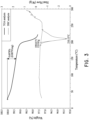
- FIG. 3 shows digital scanning calorimetry (DSC) analysis results of the crystalline form of Compound 1A.
- DSC digital scanning calorimetry
- One process for making a crystalline form of Compound 1A can include combining a purified Compound 1 with a solvent to form an intermediate solution; intermixing a potassium ion with the intermediate solution; and isolating the crystalline form of Compound 1A.
- the source of potassium ion can vary.
- the potassium ion is from potassium hydroxide.
- the potassium ion is from potassium t-butoxide.
- the solvent used for salt formation can vary depending on the source of the potassium ion and reaction conditions.
- the solvent is selected from the group consisting of tetrahydrofuran, 1,4-dioxane, acetonitrile, acetone, ethyl acetate, methyl tert-butyl ether, water, and any combinations thereof.
- the solvent is acetone or acetonitrile.
- the solvent is acetone.
- the solvent is acetonitrile.
- compositions comprising the potassium salt described herein and a pharmaceutically acceptable carrier. Such a composition can be administered to a subject as part of a therapeutic treatment.
- Compound 1A described herein can be administered at a therapeutically effective dosage, e.g., a dosage sufficient to provide treatment for disease states described herein.
- a therapeutically effective dosage e.g., a dosage sufficient to provide treatment for disease states described herein.
- Suitable dosage levels may be from about 0.1 mg/kg to about 200 mg/kg or more of body weight, from about 0.25 mg/kg to about 120 mg/kg or more of body weight, from about 0.5 mg/kg or less to about 70 mg/kg, from about 1.0 mg/kg to about 50 mg/kg of body weight, or from about 1.5 mg/kg to about 10 mg/kg of body weight.
- the dosage range would be from about 17 mg per day to about 8000 mg per day, from about 35 mg per day or less to about 7000 mg per day or more, from about 70 mg per day to about 6000 mg per day, from about 100 mg per day to about 5000 mg per day, or from about 200 mg to about 3000 mg per day.
- the amount of active compound administered will, of course, be dependent on the subject and disease state being treated, the severity of the affliction, the manner and schedule of administration and the judgment of the prescribing physician.
- the pharmaceutical composition described herein includes a unit dose from 0.01 mg to 10 g of the crystalline form of the potassium salt of 2-((3R,6S)-2-hydroxy-3-(2-(thiophen-2-yl)acetamido)-1,2-oxaborinan-6-yl)acetic acid. In some embodiments, the pharmaceutical composition described herein includes a unit dose from 0.1 mg to 5 g of the crystalline form of the potassium salt of 2-((3R,6S)-2-hydroxy-3-(2-(thiophen-2-yl)acetamido)-1,2-oxaborinan-6-yl)acetic acid.
- the pharmaceutical composition described herein includes a unit dose from 0.1 mg to 2.5 g of the crystalline form of the potassium salt of 2-((3R,6S)-2-hydroxy-3-(2-(thiophen-2-yl)acetamido)-1,2-oxaborinan-6-yl)acetic acid. In some embodiments, the pharmaceutical composition described herein includes a unit dose from 1.5 g to 2.5 g of the crystalline form of the potassium salt of 2-((3R,6S)-2-hydroxy-3-(2-(thiophen-2-yl)acetamido)-1,2-oxaborinan-6-yl)acetic acid.
- the pharmaceutical composition described herein includes a unit dose of less than 5 g, less than 4.5 g, less than 4g, less than 3.5 g, less than 3 g, less than 2.5 g of the crystalline form of the potassium salt of 2-((3R,6S)-2-hydroxy-3-(2-(thiophen-2-yl)acetamido)-1,2-oxaborinan-6-yl)acetic acid.
- the pharmaceutical composition described herein includes a unit dose more than 0.1 mg, more than 0.5 mg, more than 10 mg, more than 50 mg, more than 100 mg, more than 150 mg, more than 200 mg, more than 500 mg, more than 1 g, more than 2 g of the crystalline form of the potassium salt of 2-((3R,6S)-2-hydroxy-3-(2-(thiophen-2-yl)acetamido)-1,2-oxaborinan-6-yl)acetic acid.
- Administration of the compounds disclosed herein or the pharmaceutically acceptable salts thereof can be via any of the accepted modes of administration for agents that serve similar utilities including, but not limited to, orally, subcutaneously, intravenously, intranasally, topically, transdermally, intraperitoneally, intramuscularly, intrapulmonarilly, vaginally, rectally, or intraocularly.
- Oral and parenteral administrations are customary in treating the indications that are the subject of the preferred embodiments.
- the compounds useful as described above can be formulated into pharmaceutical compositions for use in treatment of these conditions.
- Standard pharmaceutical formulation techniques are used, such as those disclosed in Remington's The Science and Practice of Pharmacy, 21st Ed., Lippincott Williams & Wilkins (2005 ), incorporated by reference in its entirety.
- compositions containing a pharmaceutically-acceptable carrier include compositions containing a pharmaceutically-acceptable carrier.
- pharmaceutically-acceptable carrier means one or more compatible solid or liquid filler diluents or encapsulating substances, which are suitable for administration to a mammal.
- compatible means that the components of the composition are capable of being commingled with the subject compound, and with each other, in a manner such that there is no interaction, which would substantially reduce the pharmaceutical efficacy of the composition under ordinary use situations.
- Pharmaceutically-acceptable carriers must, of course, be of sufficiently high purity and sufficiently low toxicity to render them suitable for administration preferably to an animal, preferably mammal being treated.
- substances which can serve as pharmaceutically-acceptable carriers or components thereof, are sugars, such as lactose, glucose and sucrose; starches, such as corn starch and potato starch; cellulose and its derivatives, such as sodium carboxymethyl cellulose, ethyl cellulose, and methyl cellulose; powdered tragacanth; malt; gelatin; talc; solid lubricants, such as stearic acid and magnesium stearate; calcium sulfate; vegetable oils, such as peanut oil, cottonseed oil, sesame oil, olive oil, corn oil and oil of theobroma; polyols such as propylene glycol, glycerine, sorbitol, mannitol, and polyethylene glycol; alginic acid; emulsifiers, such as the TWEENS; wetting agents, such sodium lauryl sulfate; coloring agents; flavoring agents; tableting agents, stabilizers; antioxidants; preservatives; pyrogen-free sugars,
- a pharmaceutically-acceptable carrier to be used in conjunction with the subject compound is basically determined by the way the compound is to be administered.
- compositions described herein are preferably provided in unit dosage form.
- a "unit dosage form" is a composition containing an amount of a compound that is suitable for administration to an animal, preferably mammal subject, in a single dose, according to good medical practice.
- the preparation of a single or unit dosage form does not imply that the dosage form is administered once per day or once per course of therapy.
- Such dosage forms are contemplated to be administered once, twice, thrice or more per day and may be administered as infusion over a period of time (e.g., from about 30 minutes to about 2-6 hours), or administered as a continuous infusion, and may be given more than once during a course of therapy, though a single administration is not specifically excluded.
- the skilled artisan will recognize that the formulation does not specifically contemplate the entire course of therapy and such decisions are left for those skilled in the art of treatment rather than formulation.
- compositions useful as described above may be in any of a variety of suitable forms for a variety of routes for administration, for example, for oral, nasal, rectal, topical (including transdermal), ocular, intracerebral, intracranial, intrathecal, intra-arterial, intravenous, intramuscular, or other parental routes of administration.
- oral and nasal compositions comprise compositions that are administered by inhalation, and made using available methodologies.
- pharmaceutically-acceptable carriers include, for example, solid or liquid fillers, diluents, hydrotropes, surface-active agents, and encapsulating substances.
- Optional pharmaceutically-active materials may be included, which do not substantially interfere with the inhibitory activity of the compound.
- the amount of carrier employed in conjunction with the compound is sufficient to provide a practical quantity of material for administration per unit dose of the compound.
- oral dosage forms can be used, including such solid forms as tablets, capsules, granules and bulk powders. These oral forms comprise a safe and effective amount, usually at least about 5%, with a maximum of about 90%, of the compound. Tablets can be compressed, tablet triturates, enteric-coated, sugar-coated, film-coated, or multiple-compressed, containing suitable binders, lubricants, diluents, disintegrating agents, coloring agents, flavoring agents, flow-inducing agents, and melting agents.
- Liquid oral dosage forms include aqueous solutions, emulsions, suspensions, solutions and/or suspensions reconstituted from non-effervescent granules, and effervescent preparations reconstituted from effervescent granules, containing suitable solvents, preservatives, emulsifying agents, suspending agents, diluents, sweeteners, melting agents, coloring agents and flavoring agents.
- the pharmaceutically-acceptable carrier suitable for the preparation of unit dosage forms for peroral administration is well-known in the art.
- Tablets typically comprise conventional pharmaceutically-compatible adjuvants as inert diluents, such as calcium carbonate, sodium carbonate, mannitol, lactose and cellulose; binders such as starch, gelatin and sucrose; disintegrants such as starch, alginic acid and croscarmelose; lubricants such as magnesium stearate, stearic acid and talc.
- Glidants such as silicon dioxide can be used to improve flow characteristics of the powder mixture.
- Coloring agents such as the FD&C dyes, can be added for appearance.
- Sweeteners and flavoring agents such as aspartame, saccharin, menthol, peppermint, and fruit flavors, are useful adjuvants for chewable tablets.
- Capsules typically comprise one or more solid diluents disclosed above. The selection of carrier components depends on secondary considerations like taste, cost, and shelf stability, which are not critical, and can be readily made by a person skilled in the art.
- Peroral compositions also include liquid solutions, emulsions, suspensions, and the like.
- the pharmaceutically-acceptable carriers suitable for preparation of such compositions are well known in the art.
- Typical components of carriers for syrups, elixirs, emulsions and suspensions include ethanol, glycerol, propylene glycol, polyethylene glycol, liquid sucrose, sorbitol and water.
- typical suspending agents include methyl cellulose, sodium carboxymethyl cellulose, AVICEL RC-591, tragacanth and sodium alginate;
- typical wetting agents include lecithin and polysorbate 80; and typical preservatives include methyl paraben and sodium benzoate.
- Peroral liquid compositions may also contain one or more components such as sweeteners, flavoring agents and colorants disclosed above.
- compositions may also be coated by conventional methods, typically with pH or time-dependent coatings, such that the subject compound is released in the gastrointestinal tract in the vicinity of the desired topical application, or at various times to extend the desired action.
- dosage forms typically include, but are not limited to, one or more of cellulose acetate phthalate, polyvinylacetate phthalate, hydroxypropyl methyl cellulose phthalate, ethyl cellulose, Eudragit coatings, waxes and shellac.
- compositions described herein may optionally include other drug actives.
- compositions useful for attaining systemic delivery of the subject compounds include sublingual, buccal and nasal dosage forms.
- Such compositions typically comprise one or more of soluble filler substances such as sucrose, sorbitol and mannitol; and binders such as acacia, microcrystalline cellulose, carboxymethyl cellulose and hydroxypropyl methyl cellulose. Glidants, lubricants, sweeteners, colorants, antioxidants and flavoring agents disclosed above may also be included.
- a liquid composition which is formulated for topical ophthalmic use, is formulated such that it can be administered topically to the eye.
- the comfort should be maximized as much as possible, although sometimes formulation considerations (e.g. drug stability) may necessitate less than optimal comfort.
- the liquid should be formulated such that the liquid is tolerable to the patient for topical ophthalmic use.
- an ophthalmically acceptable liquid should either be packaged for single use, or contain a preservative to prevent contamination over multiple uses.
- solutions or medicaments are often prepared using a physiological saline solution as a major vehicle.
- Ophthalmic solutions should preferably be maintained at a comfortable pH with an appropriate buffer system.
- the formulations may also contain conventional, pharmaceutically acceptable preservatives, stabilizers and surfactants.
- Preservatives that may be used in the pharmaceutical compositions disclosed herein include, but are not limited to, benzalkonium chloride, PHMB, chlorobutanol, thimerosal, phenylmercuric acetate and phenylmercuric nitrate.
- a useful surfactant is, for example, Tween 80.
- various useful vehicles may be used in the ophthalmic preparations disclosed herein. These vehicles include, but are not limited to, polyvinyl alcohol, povidone, hydroxypropyl methyl cellulose, poloxamers, carboxymethyl cellulose, hydroxyethyl cellulose and purified water.
- Tonicity adjustors may be added as needed or convenient. They include, but are not limited to, salts, particularly sodium chloride, potassium chloride, mannitol and glycerin, or any other suitable ophthalmically acceptable tonicity adjustor.
- buffers include acetate buffers, citrate buffers, phosphate buffers and borate buffers. Acids or bases may be used to adjust the pH of these formulations as needed.
- an ophthalmically acceptable antioxidant includes, but is not limited to, sodium metabisulfite, sodium thiosulfate, acetylcysteine, butylated hydroxyanisole and butylated hydroxytoluene.
- excipient components which may be included in the ophthalmic preparations, are chelating agents.
- a useful chelating agent is edetate disodium, although other chelating agents may also be used in place or in conjunction with it.
- Topical formulations may generally be comprised of a pharmaceutical carrier, co-solvent, emulsifier, penetration enhancer, preservative system, and emollient.
- the compounds and compositions described herein may be dissolved or dispersed in a pharmaceutically acceptable diluent, such as a saline or dextrose solution.
- a pharmaceutically acceptable diluent such as a saline or dextrose solution.
- Suitable excipients may be included to achieve the desired pH, including but not limited to NaOH, sodium carbonate, sodium acetate, HCl, and citric acid.
- the pH of the final composition ranges from 2 to 8, or preferably from 4 to 7.
- Antioxidant excipients may include sodium bisulfite, acetone sodium bisulfite, sodium formaldehyde, sulfoxylate, thiourea, and EDTA.
- excipients found in the final intravenous composition may include sodium or potassium phosphates, citric acid, tartaric acid, gelatin, and carbohydrates such as dextrose, mannitol, and dextran. Further acceptable excipients are described in Powell, et al., Compendium of Excipients for Parenteral Formulations, PDA J Pharm Sci and Tech 1998, 52 238-311 and Nema et al., Excipients and Their Role in Approved Injectable Products: Current Usage and Future Directions, PDA J Pharm Sci and Tech 2011, 65 287-332 , both of which are incorporated herein by reference in their entirety.
- Antimicrobial agents may also be included to achieve a bacteriostatic or fungistatic solution, including but not limited to phenylmercuric nitrate, thimerosal, benzethonium chloride, benzalkonium chloride, phenol, cresol, and chlorobutanol.
- the resulting composition may be infused into the patient over a period of time.
- the infusion time ranges from 5 minutes to continuous infusion, from 10 minutes to 8 hours, from 30 minutes to 4 hours, and from 1 hour to 3 hours.
- the drug is infused over a 3 hour period.
- the infusion may be repeated at the desired dose interval, which may include, for example, 6 hours, 8 hours, 12 hours, or 24 hours.
- compositions for intravenous administration may be provided to caregivers in the form of one more solids that are reconstituted with a suitable diluent such as sterile water, saline or dextrose in water shortly prior to administration.
- Reconstituted concentrated solutions may be further diluted into parenteral solutions having a volume of from about 25 to about 1000 ml, from about 30 ml to about 500 ml, or from about 50 ml to about 100 ml.
- the compositions are provided in solution ready to administer parenterally.
- the compositions are provided in a solution that is further diluted prior to administration.
- the combination may be provided to caregivers as a mixture, or the caregivers may mix the two agents prior to administration, or the two agents may be administered separately.
- Some embodiments include a sterile container having the composition described herein. Some embodiments include a sterile container having Compound 1A described herein. Some embodiments include a kit comprising a potassium salt described herein and an additional agent, such as an antimicrobial agent. In one embodiment, both components are provided in a single sterile container. In the case of solids for reconstitution, the agents may be pre-blended and added to the container simultaneously or may be dry-powder filled into the container in two separate steps. In some embodiments, an additional agent is a sterile crystalline product. In other embodiments, the additional agent is a lyophile.
- agents to aid in lyophilization include sodium or potassium phosphates, citric acid, tartaric acid, gelatin, and carbohydrates such as dextrose, mannitol, and dextran.
- agents to aid in lyophilization include sodium or potassium phosphates, citric acid, tartaric acid, gelatin, and carbohydrates such as dextrose, mannitol, and dextran.
- One embodiment includes non-sterile solids that are irradiated either before or after introduction into the container.
- the agents may be dissolved or dispersed in a diluent ready for administration.
- the solution or dispersion may be further diluted prior to administration.
- Some embodiments include providing the liquid in an IV bag. The liquid may be frozen to improve stability.
- the container includes other ingredients such as a pH adjuster, a solubilizing agent, or a dispersing agent.
- pH adjusters include NaOH, sodium carbonate, sodium acetate, HCl, and citric acid.
- the liquid carrier is a saline solution.
- the molar ratio of Compound 1A described herein to additional agent may be from about 10:1 to 1:10, 8:1 to 1:8, 5:1 to 1:5, 3:1 to 1:3, 2:1 to 1:2, or about 1:1.
- the amount of compound described herein may be from 100 mg to 5 g, 500 mg to 2 g, or about 1 g.
- the amount of additional agent may be from 100 mg to 5 g, 500 mg to 2 g, or about 1 g.
- the two components may be provided in separate containers.
- Each container may include a solid, solution, or dispersion.
- the two containers may be provided in a single package or may be provided separately.
- the compound or composition described herein is provided as a solution while the additional agent (e.g., antibacterial agent) is provided as a solid ready for reconstitution.
- the solution of the compound or composition described herein is used as the diluent to reconstitute the other agent.
- the contents of the sterile container can be reconstituted using a pharmaceutically acceptable liquid carrier.
- the liquid carrier is a saline solution.
- the liquid carrier is a dextrose solution.
- the method of administration comprising administering the reconstituted solution described herein intravenously to a subject.
- Some embodiments of the present invention include compounds and compositions described herein for use in methods of treating bacterial infections. Some methods include administering a compound, composition, pharmaceutical composition described herein to a subject in need thereof.
- a subject can be an animal, e.g., a mammal, a human.
- the bacterial infection comprises a bacteria described herein.
- methods of treating a bacterial infection include methods for preventing bacterial infection in a subject at risk thereof.
- a combination can include a compound, composition, pharmaceutical composition described herein with an additional medicament.
- Some embodiments include co-administering a compound, composition, and/or pharmaceutical composition described herein, with an additional medicament.
- co-administration it is meant that the two or more agents may be found in the patient's bloodstream at the same time, regardless of when or how they are actually administered.
- the agents are administered simultaneously.
- administration in combination is accomplished by combining the agents in a single dosage form.
- they may be physically mixed (e.g., by co-dissolution or dry mixing) or may form an adduct or be covalently linked such that they split into the two or more active ingredients upon administration to the patient.
- the agents are administered sequentially.
- the agents are administered through the same route, such as orally.
- the agents are administered through different routes, such as one being administered orally and another being administered i.v.
- additional medicaments include an antibacterial agent, an antifungal agent, an antiviral agent, an anti-inflammatory agent and an anti-allergic agent.
- Some embodiments include co-administration of a compound, composition or pharmaceutical composition described herein with an antibacterial agent such as a ⁇ -lactam.
- ⁇ -lactams include Amoxicillin, Ampicillin (e.g., Pivampicillin, Hetacillin, Bacampicillin, Metampicillin, Talampicillin), Epicillin, Carbenicillin (Carindacillin), Ticarcillin, Temocillin, Azlocillin, Piperacillin, Mezlocillin, Mecillinam (Pivmecillinam), Sulbenicillin, Benzylpenicillin (G), Clometocillin, Benzathine benzylpenicillin, Procaine benzylpenicillin, Azidocillin, Penamecillin, Phenoxymethylpenicillin (V), Propicillin, Benzathine phenoxymethylpenicillin, Pheneticillin, Cloxacillin (e.g., Dicloxacillin, Flucloxacillin), Oxacillin
- Preferred embodiments include ⁇ -lactams such as Ceftazidime, Biapenem, Doripenem, Ertapenem, Imipenem, Meropenem, ME1036, Tomopenem, Razupenem, and Panipenem.
- ⁇ -lactams such as Ceftazidime, Biapenem, Doripenem, Ertapenem, Imipenem, Meropenem, ME1036, Tomopenem, Razupenem, and Panipenem.
- Some embodiments include co-administration of the compounds, compositions and/or pharmaceutical compositions described herein with an additional agent, wherein the additional agent comprises a monobactam.
- additional agent comprises a monobactam.
- monobactams include aztreonam, tigemonam, BAL 30072, SYN 2416 (BAL19764), and carumonam.
- Some embodiments include co-administration of the compounds, compositions and/or pharmaceutical compositions described herein with an additional agent, wherein the additional agent comprises a Class A, B, C, or D beta-lactamase inhibitor.
- an additional agent comprises a Class A, B, C, or D beta-lactamase inhibitor.
- An example of a class B beta-lactamase inhibitor includes ME1071 ( Yoshikazu Ishii et al, "In Vitro Potentiation of Carbapenems with ME1071, a Novel Metallo- ⁇ -Lactamase Inhibitor, against Metallo- ⁇ -lactamase Producing Pseudomonas aeruginosa Clinical Isolates.” Antimicrob. Agents Chemother. doi:10.1128/AAC.01397-09 (July 2010 )).
- beta-lactamase inhibitors administered as an additional agent include clavulanic acid, tazobactam, sulbactam, avibactam (NXL-104), MK-7655, and BAL29880.
- MK-7655 has the following structure:
- Bacterial infections that can be treated with the compounds, compositions and methods described herein can comprise a wide spectrum of bacteria.
- Example organisms include gram-positive bacteria, gram-negative bacteria, aerobic and anaerobic bacteria, such as Staphylococcus, Lactobacillus, Streptococcus, Sarcina, Escherichia, Enterobacter, Klebsiella, Pseudomonas, Acinetobacter, Mycobacterium, Proteus, Campylobacter, Citrobacter, Nisseria, Baccillus, Bacteroides, Peptococcus, Clostridium, Salmonella, Shigella, Serratia, Haemophilus, Brucella and other organisms.
- More examples of bacterial infections include Pseudomonas aeruginosa, Pseudomonas fluorescens, Pseudomonas acidovorans, Pseudomonas alcaligenes, Pseudomonas putida, Stenotrophomonas maltophilia, Burkholderia cepacia, Aeromonas hydrophilia, Escherichia coli, Citrobacter freundii, Salmonella typhimurium, Salmonella typhi, Salmonella paratyphi, Salmonella enteritidis, Shigella dysenteriae, Shigella flexneri, Shigella sonnei, Enterobacter cloacae, Enterobacter aerogenes, Klebsiella pneumoniae, Klebsiella oxytoca, Serratia marcescens, Francisella tularensis, Morganella morganii, Proteus mirabilis, Proteus vulgaris
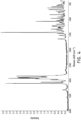
- FIG. 6 shows the PXRD pattern of the NaCl, Compound 1 before purification and after purification. As shown in FIG. 6 , the peak at 31.6 ° 2 ⁇ in the PXRD pattern is characteristic for the NaCl salt. The PXRD pattern for Compound 1 after purification shows significantly reduced or no presence of the NaCl salt.
- FIG. 6 shows the characteristic peaks of the NaCl salt in the purified compound disappeared as compared with the compound before purification.
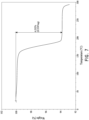
- FIG. 7 shows the TGA trace of the purified Compound 1.
- Compound 1 underwent about 6.25% weight loss which was attributed to the loss of water due to a reversible reaction involving the boronic acid moiety.
- FIG. 8 is the HPLC analysis of the purified Compound 1. The HPLC chromatogram in FIG. 8 shows a retention peak of 2.52 min for Compound 1 and no other peaks for NaCl or water.
- Compound 1 has a pKa of 3.92 and was expected to form salts with strong bases. Because of a possible high projected dose (3g/day) of Compound 1, the counterion selection was limited to Class 1 molecules having low toxicity. ( Handbook of Pharmaceutical Salts Properties, Selection, and Use P. H. Stahl, C.G. Wermuth, (2002) Wiley-VCH, Weinheim ). Table 1 lists seven basic counterions selected for the salt screen study, their pKa values, and the corresponding stoichiometry and dosing strategies. Table 1. Counterions used in the salt-screening study No.
- the salt-screening experiments were set up by combining 20.0 ⁇ 0.5mg of Compound 1 with 300-500 ⁇ L of the solvent and the counterion in a stoichiometric amount.
- the screening studies were conducted in two stages.
- Stage 2 a few samples that remained undissolved and amorphous in the first stage were 1) subjected to rapid solvent evaporation under vacuum; 2) dissolved in solvent Nos. 7-9 listed in Table 2; 3) cooled to 5 °C and held at 5 °C for 72 hrs; and 4) allowed to evaporate at ambient conditions over 3-7 days.
- Table 3 only listed 83 examples of the approximately 360 screening experiments performed using various combinations of counterions, solvent systems, and crystallization mode. Most of the screening experiments produced amorphous powders, oils, gums. For example, those experiments that involved calcium and magnesium counterions yielded products that were mixtures of the unreacted substrates. The FT-Raman and PXRD analysis of the products showed that no pure and stable crystalline salt was formed in the experiments involving calcium or magnesium counterions. For another example, when the screening experiments involved the solvent system of THF and Water (95:5 vol%) and a range of counterions (potassium, choline, calcium, and magnesium), the HPLC analysis confirmed significant decomposition present in those products.
- the potassium salt Compound 1A in four experiments yielded a pure and stable crystalline form after long-term (> 4 days) stirring of the initially amorphous products (gums and oils).
- the potassium salt was subsequently reproduced at 50mg and 300mg scales using seeding, which facilitated crystallization of the several hours of amorphous intermediate phase.
- the potassium salt may undergo deliquescence when isolated in open air; however, the deliquescence may be significantly reduced and/or eliminated by using a nitrogen blanket. Once a free-flowing powder was isolated, the powder was stable in open-air for at least 7 days.
- the suspension was stirred at 50 °C for 60min, cooled to 5 °C at 0.1 °C /min rate (7.5 hrs), and subjected to stirring while the cycling temperature was maintained between 40 ° C - 45 °C for 10 hrs.
- the temperature cycle involved holding at 40 °C for 1 hr followed by cooling at 0.5 °C/min, and then holding at 5 °C for 2 hrs followed by heating to 40 °C at a maximum rate.
- the suspension was equilibrated at 5 °C for 2 hrs.
- the solids were isolated on a Büchner funnel under nitrogen blanket, allowed to dry for 60min at room temperature and then at 40°C under vacuum for 3hrs. The yield of this procedure was 65%wt.
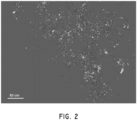
- the potassium salt is a crystalline powder, as indicated by PXRD data in FIG. 1 and PLM image in FIG. 2 .
- FIG. 3 is the TGA and DSC analysis and FIG. 4 shows the FT-Raman spectrum of the crystalline form of Compound 1A.
- the DSC trace in FIG. 3 shows a melting endotherm at 199.0 °C.
- the TGA analysis of Compound 1A in FIG. 3 also indicates a gradual weight loss of -0.7% wt. over the temperature range 25-150 °C, which can be contributed to a loss of residual or surface solvent, and a major weight loss at temperatures above 160 °C that was attributed to decomposition.
- the HPLC analysis of the potassium salt as shown in FIG. 5 confirmed the absence of decomposition of Compound 1.
- ICP-AES inductively coupled plasma atomic emission spectroscopy
- Groups A -E The studies discovered five crystalline forms of the sodium salt (Groups A -E). Groups A and B were obtained from the screening experiments using compound 1 as the starting material. The PXRD pattern of Group A showed broad peaks indicative of poor crystallinity. The isolated material was found to be sticky and deliquesced readily ( ⁇ 5 minutes) when exposed to ambient conditions. PXRD pattern of Group B showed sharper peaks compared to Group A. The isolated Group B material was free flowing and easy to handle. Thermal analyses of Group B of sodium salt showed this form is a methanol/water solvate which converted to a hydrate on drying at 60 °C.
- Group C was isolated from a single crystallization experiment using amorphous sodium salt as the input.
- Group C of sodium salt showed physical properties similar to Group B and was found to be an acetone/water solvate which desolvated on drying at 60 °C.
Landscapes
- Health & Medical Sciences (AREA)
- Chemical & Material Sciences (AREA)
- Veterinary Medicine (AREA)
- Medicinal Chemistry (AREA)
- Pharmacology & Pharmacy (AREA)
- Life Sciences & Earth Sciences (AREA)
- Animal Behavior & Ethology (AREA)
- General Health & Medical Sciences (AREA)
- Public Health (AREA)
- Epidemiology (AREA)
- Organic Chemistry (AREA)
- Communicable Diseases (AREA)
- Oncology (AREA)
- Chemical Kinetics & Catalysis (AREA)
- General Chemical & Material Sciences (AREA)
- Nuclear Medicine, Radiotherapy & Molecular Imaging (AREA)
- Pharmaceuticals Containing Other Organic And Inorganic Compounds (AREA)
Claims (15)
- Kaliumsalz von 2-((3R,6S)-2-Hydroxy-3-(2-(thiophen-2-yl)acetamido)-1,2-oxaborinan-6-yl)essigsäure, wobei das Kaliumsalz in einer kristallinen Form vorliegt, die ein Röntgenpulverbeugungsmuster mit mindestens drei charakteristischen Peaks, die aus der Gruppe bestehend aus Peaks bei ungefähr 7,3°, 13,9°, 16,9°, 19,1°, 20,8° und 25,2° 2θ ausgewählt sind, zeigt.
- Kaliumsalz nach Anspruch 1, wobei das Kaliumsalz in einer kristallinen Form vorliegt, die ein Röntgenpulverbeugungsmuster mit mindestens Peaks bei ungefähr 7,3°, 13,9°, 16,9°, 19,1°, 20,8° und 25,2° 2θ zeigt und gegebenenfalls
ein Röntgenpulverbeugungsmuster mit mindestens Peaks bei ungefähr 7,3°, 13,9°, 14,6°, 16,9°, 17,9°, 19,1°, 20,8°, 21,3°, 25,2° und 25,6° 2θ zeigt. - Kaliumsalz nach Anspruch 2, wobei die kristalline Form einen Schmelzpunkt von 199,0 °C aufweist.
- Kaliumsalz nach einem der Ansprüche 2-3 mit einem Röntgenpulverbeugungsmuster, das Peaks bei ungefähr 7,25°, 9,23°, 13,87°, 14,61°, 16,94°, 17,07°, 17,45°, 17,94°, 19,05°, 20,75°, 21,26°, 23,34°, 23,66°, 25,15°, 25,58°, 28,33°, 31,05°, 31,38°, 32,10°, 33,65° und 34,12° 2θ umfasst.
- Pharmazeutische Zusammensetzung, umfassend das Kaliumsalz nach einem der Ansprüche 1-4 und einen pharmazeutisch unbedenklichen Hilfsstoff; gegebenenfalls wobei die pharmazeutische Zusammensetzung durch Lösen des Kaliumsalzes nach einem der Ansprüche 1-4 in einem pharmazeutisch unbedenklichen flüssigen Träger hergestellt wird.
- Pharmazeutische Zusammensetzung nach Anspruch 5, ferner umfassend ein zusätzliches Medikament; gegebenenfalls
wobei das zusätzliche Medikament aus einem antibakteriellen Mittel, einem Antimykotikum, einem antiviralen Mittel, einem entzündungshemmenden Mittel oder einem Antiallergikum ausgewählt ist. - Pharmazeutische Zusammensetzung nach Anspruch 6, wobei es sich bei dem zusätzlichen Medikament um ein antibakterielles β-Lactam handelt; gegebenenfalls wobei das β-Lactam aus Amoxicillin, Ampicillin (Pivampicillin, Hetacillin, Bacampicillin, Metampicillin, Talampicillin), Epicillin, Carbenicillin (Carindacillin), Ticarcillin, Temocillin, Azlocillin, Piperacillin, Mezlocillin, Mecillinam (Pivmecillinam), Sulbenicillin, Benzylpenicillin (G), Clometocillin, Benzathin-Benzylpenicillin, Procain-Benzylpenicillin, Azidocillin, Penamecillin, Phenoxymethylpenicillin (V), Propicillin, Benzathin-Phenoxymethylpenicillin, Pheneticillin, Cloxacillin (Dicloxacillin, Flucloxacillin), Oxacillin, Meticillin, Nafcillin, Faropenem, Biapenem, Doripenem, Ertapenem, Imipenem, Meropenem, Panipenem, Tomopenem, Razupenem, Cefazolin, Cefacetril, Cefadroxil, Cefalexin, Cefaloglycin, Cefalonium, Cefaloridin, Cefalotin, Cefapirin, Cefatrizin, Cefazedon, Cefazaflur, Cefradin, Cefroxadin, Ceftezol, Cefaclor, Cefamandol, Cefminox, Cefonicid, Ceforanid, Cefotiam, Cefprozil, Cefbuperazon, Cefuroxim, Cefuzonam, Cefoxitin, Cefotetan, Cefmetazol, Loracarbef, Cefixim, Ceftazidim, Ceftriaxon, Cefcapen, Cefdaloxim,
Cefdinir, Cefditoren, Cefetamet, Cefmenoxim, Cefodizim, Cefoperazon, Cefotaxim, Cefpimizol, Cefpiramid, Cefpodoxim, Cefsulodin, Cefteram, Ceftibuten, Ceftiolen, Ceftizoxim, Flomoxef, Latamoxef, Cefepim, Cefozopran, Cefpirom, Cefquinom, Ceftobiprol, Ceftarolin, CXA-101, RWJ-54428, MC-04,546, ME1036, BAL30072, SYN 2416, Ceftiofur, Cefquinom, Cefovecin, Aztreonam, Tigemonam, Carumonam, RWJ-442831, RWJ-333441 oder RWJ-333442 ausgewählt ist. - Pharmazeutische Zusammensetzung nach einem der Ansprüche 5-7, umfassend eine Einzeldosis von 0,1 mg bis 5 g der kristallinen Formen des Kaliumsalzes von 2-((3R,6S)-2-Hydroxy-3-(2-(thiophen-2-yl)acetamido)-1,2-oxaborinan-6-yl) essigsäure.
- Verbindung nach einem der Ansprüche 1-4 oder Zusammensetzung nach einem der Ansprüche 5-8 zur Verwendung bei einem Verfahren zur Behandlung einer bakteriellen Infektion.
- Verbindung oder Zusammensetzung zur Verwendung nach Anspruch 9, ferner umfassend die Verabreichung eines zusätzlichen Medikaments; gegebenenfalls wobei das zusätzliche Medikament aus einem antibakteriellen Mittel, einem Antimykotikum, einem antiviralen Mittel, einem entzündungshemmenden Mittel oder einem Antiallergikum ausgewählt ist.
- Verbindung oder Zusammensetzung zur Verwendung nach Anspruch 10, wobei es sich bei dem zusätzlichen Medikament um ein antibakterielles β-Lactam handelt; gegebenenfalls
wobei das β-Lactam aus Amoxicillin, Ampicillin (Pivampicillin, Hetacillin, Bacampicillin, Metampicillin, Talampicillin), Epicillin, Carbenicillin (Carindacillin), Ticarcillin, Temocillin, Azlocillin, Piperacillin, Mezlocillin, Mecillinam (Pivmecillinam), Sulbenicillin, Benzylpenicillin (G), Clometocillin,
Benzathin-Benzylpenicillin, Procain-Benzylpenicillin, Azidocillin, Penamecillin, Phenoxymethylpenicillin (V), Propicillin, Benzathin-Phenoxymethylpenicillin, Pheneticillin, Cloxacillin (Dicloxacillin, Flucloxacillin), Oxacillin, Meticillin, Nafcillin, Faropenem, Biapenem, Doripenem, Ertapenem, Imipenem, Meropenem, Panipenem, Tomopenem, Razupenem, Cefazolin, Cefacetril, Cefadroxil, Cefalexin, Cefaloglycin, Cefalonium, Cefaloridin, Cefalotin, Cefapirin, Cefatrizin, Cefazedon, Cefazaflur, Cefradin, Cefroxadin, Ceftezol, Cefaclor, Cefamandol, Cefminox, Cefonicid, Ceforanid, Cefotiam, Cefprozil, Cefbuperazon, Cefuroxim, Cefuzonam, Cefoxitin, Cefotetan, Cefmetazol, Loracarbef, Cefixim, Ceftazidim, Ceftriaxon, Cefcapen, Cefdaloxim, Cefdinir, Cefditoren, Cefetamet, Cefmenoxim, Cefodizim, Cefoperazon, Cefotaxim, Cefpimizol, Cefpiramid, Cefpodoxim, Cefsulodin, Cefteram, Ceftibuten, Ceftiolen, Ceftizoxim, Flomoxef, Latamoxef, Cefepim, Cefozopran, Cefpirom, Cefquinom, Ceftobiprol, Ceftarolin, CXA-101, RWJ-54428, MC-04,546, ME1036, BAL30072, SYN 2416, Ceftiofur, Cefquinom, Cefovecin, Aztreonam, Tigemonam, Carumonam, RWJ-442831, RWJ-333441 oder RWJ-333442 ausgewählt ist. - Verbindung oder Zusammensetzung zur Verwendung nach einem der Ansprüche 9-11, umfassend die intravenöse Verabreichung der Zusammensetzung an das Individuum; oder gegebenenfalls
umfassend die orale Verabreichung der Zusammensetzung an das Individuum. - Steriler Behälter, umfassend:die Zusammensetzung nach einem der Ansprüche 5-8 oderdas Kaliumsalz nach einem der Ansprüche 1 bis 4.
- Verfahren zur Herstellung einer kristallinen Form eines Kaliumsalzes von 2-((3R,6S)-2-Hydroxy-3-(2-(thiophen-2-yl)acetamido)-1,2-oxaborinan-6-yl)essigsäure nach Anspruch 1, umfassend:Vereinigen einer gereinigten 2-((3R,6S)-2-Hydroxy-3-(2-(thiophen-2-yl)acetamido)-1,2-oxaborinan-6-yl)essigsäure mit einem Lösungsmittel zur Bildung einer intermediären Lösung;Mischen eines Kaliumions mit der intermediären Lösung; undIsolieren der kristallinen Form des Kaliumsalzes von 2-((3R,6S)-2-Hydroxy-3-(2-(thiophen-2-yl)acetamido)-1,2-oxaborinan-6-yl) essigsäure.
- Verfahren nach Anspruch 14, wobei das Lösungsmittel aus der Gruppe bestehend aus Tetrahydrofuran, 1,4-Dioxan, Acetonitril, Aceton, Essigsäureethylester, Methyl-tert-butylether, Wasser und beliebigen Kombinationen davon ausgewählt wird; gegebenenfalls
wobei es sich bei dem Lösungsmittel um Aceton oder Acetonitril handelt; und/oder gegebenenfalls wobei das Kaliumion aus Kaliumhydroxid stammt; oder wobei das Kaliumion aus Kalium-t-butoxid stammt.
Applications Claiming Priority (2)
| Application Number | Priority Date | Filing Date | Title |
|---|---|---|---|
| US201461988524P | 2014-05-05 | 2014-05-05 | |
| PCT/US2015/028265 WO2015171398A1 (en) | 2014-05-05 | 2015-04-29 | Salts and polymorphs of cyclic boronic acid ester derivatives and therapeutic uses thereof |
Publications (4)
| Publication Number | Publication Date |
|---|---|
| EP3139930A1 EP3139930A1 (de) | 2017-03-15 |
| EP3139930A4 EP3139930A4 (de) | 2018-01-17 |
| EP3139930B1 true EP3139930B1 (de) | 2024-08-14 |
| EP3139930C0 EP3139930C0 (de) | 2024-08-14 |
Family
ID=54392859
Family Applications (1)
| Application Number | Title | Priority Date | Filing Date |
|---|---|---|---|
| EP15788658.1A Active EP3139930B1 (de) | 2014-05-05 | 2015-04-29 | Salze und polymorphe von cyclischen borsäureesterderivaten und therapeutische verwendungen davon |
Country Status (4)
| Country | Link |
|---|---|
| US (1) | US9687497B1 (de) |
| EP (1) | EP3139930B1 (de) |
| ES (1) | ES2985626T3 (de) |
| WO (1) | WO2015171398A1 (de) |
Families Citing this family (22)
| Publication number | Priority date | Publication date | Assignee | Title |
|---|---|---|---|---|
| CA2807546C (en) | 2010-08-10 | 2022-08-23 | Rempex Pharmaceuticals, Inc. | Cyclic boronic acid ester derivatives and therapeutic uses thereof |
| KR20150103269A (ko) | 2013-01-04 | 2015-09-09 | 렘펙스 파머수티클스 인코퍼레이티드 | 보론산 유도체 및 그의 치료적 용도 |
| EP3139930B1 (de) | 2014-05-05 | 2024-08-14 | Melinta Therapeutics, Inc. | Salze und polymorphe von cyclischen borsäureesterderivaten und therapeutische verwendungen davon |
| ES2750805T3 (es) | 2014-05-05 | 2020-03-27 | Rempex Pharmaceuticals Inc | Síntesis de sales de boronato y usos de las mismas |
| AU2015264418A1 (en) | 2014-05-19 | 2016-11-10 | Rempex Pharmaceuticals, Inc. | Boronic acid derivatives and therapeutic uses thereof |
| WO2015191907A1 (en) | 2014-06-11 | 2015-12-17 | VenatoRx Pharmaceuticals, Inc. | Beta-lactamase inhibitors |
| US9511142B2 (en) | 2014-06-11 | 2016-12-06 | VenatoRx Pharmaceuticals, Inc. | Beta-lactamase inhibitors |
| WO2016003929A1 (en) | 2014-07-01 | 2016-01-07 | Rempex Pharmaceuticals, Inc. | Boronic acid derivatives and therapeutic uses thereof |
| US10662205B2 (en) | 2014-11-18 | 2020-05-26 | Qpex Biopharma, Inc. | Cyclic boronic acid ester derivatives and therapeutic uses thereof |
| US20180051041A1 (en) | 2015-03-17 | 2018-02-22 | Rempex Pharmaceuticals, Inc. | Boronic acid derivatives and therapeutic uses thereof |
| WO2017044828A1 (en) | 2015-09-11 | 2017-03-16 | VenatoRx Pharmaceuticals, Inc. | Beta-lactamase inhibitors |
| WO2017100537A1 (en) | 2015-12-10 | 2017-06-15 | VenatoRx Pharmaceuticals, Inc. | Beta-lactamase inhibitors |
| MX389349B (es) | 2016-06-30 | 2025-03-20 | Qpex Biopharma Inc | Derivados de ácido borónico y usos terapéuticos de los mismos. |
| WO2018027062A1 (en) | 2016-08-04 | 2018-02-08 | VenatoRx Pharmaceuticals, Inc. | Boron-containing compounds |
| US11267826B2 (en) | 2017-05-26 | 2022-03-08 | VenatoRx Pharmaceuticals, Inc. | Penicillin-binding protein inhibitors |
| US11332485B2 (en) | 2017-05-26 | 2022-05-17 | VenatoRx Pharmaceuticals, Inc. | Penicillin-binding protein inhibitors |
| US11286270B2 (en) | 2017-10-11 | 2022-03-29 | Qpex Biopharma, Inc. | Boronic acid derivatives and synthesis thereof |
| EP3781576B1 (de) | 2018-04-20 | 2024-06-12 | Qpex Biopharma, Inc. | Borsäurederivate und therapeutische verwendungen davon |
| WO2019226931A1 (en) | 2018-05-25 | 2019-11-28 | VenatoRx Pharmaceuticals, Inc. | Penicillin-binding protein inhibitors |
| BR112021010095A2 (pt) | 2018-11-29 | 2021-09-28 | VenatoRx Pharmaceuticals, Inc. | Composições de combinação que compreendem um inibidor de beta-lactamase e usos das mesmas |
| EP3986419B1 (de) * | 2019-06-19 | 2025-05-14 | Qpex Biopharma, Inc. | Borsäurederivate und therapeutische verwendungen davon |
| AU2021266715A1 (en) | 2020-05-05 | 2022-11-17 | Qpex Biopharma, Inc. | Boronic acid derivatives and synthesis, polymorphic forms, and therapeutic uses thereof |
Family Cites Families (85)
| Publication number | Priority date | Publication date | Assignee | Title |
|---|---|---|---|---|
| US4194047A (en) | 1975-11-21 | 1980-03-18 | Merck & Co., Inc. | Substituted N-methylene derivatives of thienamycin |
| US4260543A (en) | 1978-07-03 | 1981-04-07 | Merck & Co., Inc. | Crystalline N-formimidoyl thienamycin |
| US4409214A (en) | 1979-11-19 | 1983-10-11 | Fujisawa Pharmaceutical, Co., Ltd. | 7-Acylamino-3-vinylcephalosporanic acid derivatives and processes for the preparation thereof |
| FR2573070B1 (fr) | 1984-11-13 | 1987-01-30 | Rhone Poulenc Sante | Procede de preparation de composes carbonyles |
| US4783443A (en) | 1986-03-03 | 1988-11-08 | The University Of Chicago | Amino acyl cephalosporin derivatives |
| CA1283404C (en) | 1986-07-01 | 1991-04-23 | Shigeru Sanai | Cephalosporin compounds, processes for their preparation and antibacterial agents |
| ZA893284B (en) | 1988-05-04 | 1990-03-28 | Igen Inc | Peptide analogs and their use as haptens to elicit catalytic antibodies |
| US5442100A (en) | 1992-08-14 | 1995-08-15 | The Procter & Gamble Company | β-aminoalkyl and β-N-peptidylaminoalkyl boronic acids |
| US5888998A (en) | 1997-04-24 | 1999-03-30 | Synphar Laboratories, Inc. | 2-oxo-1-azetidine sulfonic acid derivatives as potent β-lactamase inhibitors |
| WO1998056392A1 (en) | 1997-06-13 | 1998-12-17 | Northwestern University | INHIBITORS OF β-LACTAMASES AND USES THEREFOR |
| US6184363B1 (en) | 1997-06-13 | 2001-02-06 | Northwestern University | Inhibitors of β-lactamases and uses therefor |
| AU3124300A (en) | 1998-12-16 | 2000-07-03 | Northwestern University | Inhibitors of beta-lactamases and uses therefor |
| AU2190400A (en) | 1998-12-16 | 2000-07-03 | Northwestern University | Inhibitors of beta-lactamases and uses therefor |
| MXPA02003175A (es) | 1999-09-25 | 2002-09-30 | Smithkline Beecham Plc | Derivados de piperazina como antagonsitas de 5-ht1b. |
| WO2001030149A1 (en) | 1999-10-28 | 2001-05-03 | Merck & Co., Inc. | Novel succinic acid metallo-beta-lactamase inhibitors and their use in treating bacterial infections |
| AU2001292732A1 (en) | 2000-09-12 | 2002-03-26 | Larry C. Blasczcak | Beta-lactam analogs and uses therefor |
| US6916803B2 (en) | 2000-09-14 | 2005-07-12 | Pantherix, Ltd. | 3-(Heteroaryl acetamido)-2-oxo-azetidine-1-sulfonic acids derivatives as antibacterial agents |
| AU2002243508A1 (en) | 2001-01-10 | 2002-07-24 | Bristol-Myers Squibb Company Patent Department | Alpha-aminoboronic acids prepared by novel synthetic methods |
| DE10118698A1 (de) | 2001-04-17 | 2002-11-07 | Jerini Ag | Verfahren zur Immobilisierung und damit hergestellte Anordnungen von Verbindungen auf einer planaren Oberfläche |
| FR2835186B1 (fr) | 2002-01-28 | 2006-10-20 | Aventis Pharma Sa | Nouveaux composes heterocycliques, actifs comme inhibiteurs de beta-lactamases |
| JP2003229277A (ja) | 2002-02-04 | 2003-08-15 | Matsushita Electric Ind Co Ltd | 発光素子材料およびそれを用いた発光素子並びに装置 |
| AUPS065102A0 (en) | 2002-02-20 | 2002-03-14 | Unisearch Limited | Fluorous acetalation |
| CN100528846C (zh) | 2002-09-11 | 2009-08-19 | 株式会社吴羽 | 胺化合物及其用途 |
| EP2325223B1 (de) | 2002-10-30 | 2014-05-14 | Sumitomo Chemical Company, Limited | Aryl-Copolymerverbindungen und damit hergestellte lichtemittierende Vorrichtungen aus Polymer |
| US7439253B2 (en) | 2002-12-06 | 2008-10-21 | Novexel | Heterocyclic compounds, their preparation and their use as medicaments, in particular as antibacterials and beta-lactamase inhibitors |
| US7271186B1 (en) | 2002-12-09 | 2007-09-18 | Northwestern University | Nanomolar β-lactamase inhibitors |
| JP2006511587A (ja) | 2002-12-20 | 2006-04-06 | ミジェニックス コーポレイション | アデニンヌクレオチドトランスロカーゼ(ant)リガンドならびにそれに関連する組成物および方法 |
| TW200418791A (en) | 2003-01-23 | 2004-10-01 | Bristol Myers Squibb Co | Pharmaceutical compositions for inhibiting proteasome |
| JP4233365B2 (ja) | 2003-03-25 | 2009-03-04 | 三井化学株式会社 | アザジオール錯体化合物、及び該化合物を用いる光記録媒体 |
| US7842941B2 (en) | 2003-10-06 | 2010-11-30 | Sumitomo Chemical Company, Limited | Aromatic compound |
| CA2541832C (en) | 2003-10-10 | 2009-11-24 | Pfizer Products Inc. | Substituted 2h-[1,2,4]triazolo[4,3-a]pyrazines as gsk-3 inhibitors |
| TW200600494A (en) | 2004-03-08 | 2006-01-01 | Chugai Pharmaceutical Co Ltd | Bisphenyl compounds useful as vitamin d3 receptor agonists |
| US20060019116A1 (en) | 2004-07-22 | 2006-01-26 | Eastman Kodak Company | White electroluminescent device with anthracene derivative host |
| TW200618820A (en) | 2004-11-05 | 2006-06-16 | Alza Corp | Liposome formulations of boronic acid compounds |
| US20060178357A1 (en) | 2005-02-10 | 2006-08-10 | Buynak John D | Chphalosporin-derived mercaptans as inhibitors of serine and metallo-beta-lactamases |
| NZ578297A (en) | 2005-02-16 | 2010-11-26 | Anacor Pharmaceuticals Inc | Boron-containing small molecules |
| KR101020024B1 (ko) | 2005-02-22 | 2011-03-09 | 테바 파마슈티컬 인더스트리즈 리미티드 | 로수바스타틴 알킬에테르를 함유하지 않는 로수바스타틴 및이의 염 및 이의 제조 방법 |
| US9184428B2 (en) | 2005-03-15 | 2015-11-10 | Uchicago Argonne Llc | Non-aqueous electrolytes for lithium ion batteries |
| TW200734311A (en) | 2005-11-21 | 2007-09-16 | Astrazeneca Ab | New compounds |
| WO2007065288A2 (en) | 2005-12-07 | 2007-06-14 | Basilea Pharmaceutica Ag | Useful combinations of monobactam antibiotics with beta-lactamase inhibitors |
| ME02188B (me) | 2006-02-16 | 2016-02-20 | Anacor Pharmaceuticals Inc | Mali molekuli koji sadrže boron kao antiinflamatorni agensi |
| EP2069347A2 (de) | 2006-09-27 | 2009-06-17 | Merck & Co., Inc. | Neuartige beta-lactamase-hemmer |
| EP2124942B1 (de) | 2007-03-23 | 2016-04-27 | Basilea Pharmaceutica AG | Kombinationsmedikamente zur Behandlung von Bakterieninfektionen |
| GB0719366D0 (en) | 2007-10-03 | 2007-11-14 | Smithkline Beecham Corp | Compounds |
| US20100120715A1 (en) | 2007-11-13 | 2010-05-13 | Burns Christopher J | Beta-lactamase inhibitors |
| CA2705393A1 (en) | 2007-11-13 | 2009-05-22 | Protez Pharmaceuticals, Inc. | Beta-lactamase inhibitors |
| WO2009091856A2 (en) | 2008-01-18 | 2009-07-23 | Merck & Co., Inc. | Beta-lactamase inhibitors |
| US8129398B2 (en) | 2008-03-19 | 2012-03-06 | Bristol-Myers Squibb Company | HIV integrase inhibitors |
| WO2009140309A2 (en) | 2008-05-12 | 2009-11-19 | Anacor Pharmaceuticals, Inc. | Boron-containing small molecules |
| US20110124634A1 (en) | 2008-05-13 | 2011-05-26 | Poniard Pharmaceuticals, Inc. | Bioactive compounds for treatment of cancer and neurodegenerative diseases |
| US20120046242A1 (en) | 2008-12-24 | 2012-02-23 | Massachusetts Institute Of Technology | Molecular activators of the wnt/beta-catenin pathway |
| WO2010097675A1 (en) | 2009-02-27 | 2010-09-02 | Dhanuka Laboratories Ltd. | An improved preparation process for cefpodoxime proxetil |
| US20100292185A1 (en) | 2009-05-12 | 2010-11-18 | Burns Christopher J | Beta-lactamase inhibitors |
| KR101460095B1 (ko) | 2009-06-08 | 2014-11-10 | 캘리포니아 캐피탈 에쿼티, 엘엘씨 | 트리아진 유도체와 이들의 치료적 용도 |
| WO2011017125A1 (en) | 2009-07-28 | 2011-02-10 | Anacor Pharmaceuticals, Inc. | Trisubstituted boron-containing molecules |
| US20120329770A1 (en) | 2010-02-26 | 2012-12-27 | Gary Igor Dmitrienko | Cephalosporin derivatives useful as beta-lactamase inhibitors and compositions and methods of use thereof |
| US8513218B2 (en) | 2010-03-31 | 2013-08-20 | Millennium Pharmaceuticals, Inc. | Derivatives of 1-amino-2-cyclopropylethylboronic acid |
| US20110288063A1 (en) | 2010-05-19 | 2011-11-24 | Naeja Pharmaceutical Inc. | Novel fused bridged bicyclic heteroaryl substituted 6-alkylidene penems as potent beta-lactamase inhibitors |
| CA2807546C (en) | 2010-08-10 | 2022-08-23 | Rempex Pharmaceuticals, Inc. | Cyclic boronic acid ester derivatives and therapeutic uses thereof |
| DK2632927T3 (en) | 2010-10-26 | 2016-04-11 | Mars Inc | Boronates AS ARGINSASEINHIBITORER |
| WO2012067664A1 (en) | 2010-11-18 | 2012-05-24 | Glaxo Group Limited | Compounds |
| EP2487159A1 (de) | 2011-02-11 | 2012-08-15 | MSD Oss B.V. | RORgammaT-Hemmer |
| EP2508506A1 (de) | 2011-04-08 | 2012-10-10 | LEK Pharmaceuticals d.d. | Herstellung von Sitagliptin-Zwischenprodukten |
| WO2013033461A1 (en) | 2011-08-31 | 2013-03-07 | Rempex Pharmaceuticals, Inc. | Heterocyclic boronic acid ester derivatives and therapeutic uses thereof |
| WO2013053372A1 (en) | 2011-10-13 | 2013-04-18 | Therabor Pharmaceuticals | Boronic acid inhibitors of beta-lactamases |
| WO2013056163A1 (en) | 2011-10-14 | 2013-04-18 | The Regents Of The University Of California | Beta-lactamase inhibitors |
| SG11201403254QA (en) | 2011-12-22 | 2014-07-30 | Ares Trading Sa | Alpha-amino boronic acid derivatives, selective immunoproteasome inhibitors |
| EP2615080A1 (de) | 2012-01-12 | 2013-07-17 | LEK Pharmaceuticals d.d. | Herstellung von optisch reinen aktiven pharmazeutischen Bestandteilen des ß-Aminosäuretyps und Zwischenverbindungen davon |
| WO2013107897A1 (de) | 2012-01-20 | 2013-07-25 | Ardagh Mp Group Netherlands B.V. | Behaelter mit kunststoffdeckelring |
| EP2814483A2 (de) | 2012-02-15 | 2014-12-24 | Rempex Pharmaceuticals, Inc. | Verfahren zur behandlung von bakterieninfektionen |
| US9156858B2 (en) | 2012-05-23 | 2015-10-13 | Rempex Pharmaceuticals, Inc. | Boronic acid derivatives and therapeutic uses thereof |
| US10561675B2 (en) | 2012-06-06 | 2020-02-18 | Rempex Pharmaceuticals, Inc. | Cyclic boronic acid ester derivatives and therapeutic uses thereof |
| AU2013355110B2 (en) | 2012-12-07 | 2017-11-09 | VenatoRx Pharmaceuticals, Inc. | Beta-lactamase inhibitors |
| MX2015008627A (es) | 2013-01-04 | 2015-09-23 | Rempex Pharmaceuticals Inc | Derivados de acido boronico y usos terapeuticos de los mismos. |
| KR20150103269A (ko) | 2013-01-04 | 2015-09-09 | 렘펙스 파머수티클스 인코퍼레이티드 | 보론산 유도체 및 그의 치료적 용도 |
| US9101638B2 (en) | 2013-01-04 | 2015-08-11 | Rempex Pharmaceuticals, Inc. | Boronic acid derivatives and therapeutic uses thereof |
| US9241947B2 (en) | 2013-01-04 | 2016-01-26 | Rempex Pharmaceuticals, Inc. | Boronic acid derivatives and therapeutic uses thereof |
| EP2943204B1 (de) | 2013-01-10 | 2019-03-13 | Venatorx Pharmaceuticals Inc | Beta-lactamase-hemmer |
| EP2970340B1 (de) | 2013-03-14 | 2020-02-12 | Venatorx Pharmaceuticals, Inc. | Beta-lactamase-hemmer |
| EP3139930B1 (de) | 2014-05-05 | 2024-08-14 | Melinta Therapeutics, Inc. | Salze und polymorphe von cyclischen borsäureesterderivaten und therapeutische verwendungen davon |
| AU2015264418A1 (en) | 2014-05-19 | 2016-11-10 | Rempex Pharmaceuticals, Inc. | Boronic acid derivatives and therapeutic uses thereof |
| US9511142B2 (en) | 2014-06-11 | 2016-12-06 | VenatoRx Pharmaceuticals, Inc. | Beta-lactamase inhibitors |
| WO2016003929A1 (en) | 2014-07-01 | 2016-01-07 | Rempex Pharmaceuticals, Inc. | Boronic acid derivatives and therapeutic uses thereof |
| WO2016065282A1 (en) | 2014-10-24 | 2016-04-28 | The Regents Of The University Of Michigan | Nasal formulation, nasal kit, and method for enhancing nasal nitric oxide (no) levels |
| WO2016172208A1 (en) | 2015-04-24 | 2016-10-27 | Rempex Pharmaceuticals, Inc. | Methods of treating bacterial infections |
-
2015
- 2015-04-29 EP EP15788658.1A patent/EP3139930B1/de active Active
- 2015-04-29 ES ES15788658T patent/ES2985626T3/es active Active
- 2015-04-29 WO PCT/US2015/028265 patent/WO2015171398A1/en not_active Ceased
- 2015-04-29 US US15/309,425 patent/US9687497B1/en active Active
Also Published As
| Publication number | Publication date |
|---|---|
| US9687497B1 (en) | 2017-06-27 |
| EP3139930A1 (de) | 2017-03-15 |
| US20170173055A1 (en) | 2017-06-22 |
| EP3139930C0 (de) | 2024-08-14 |
| WO2015171398A1 (en) | 2015-11-12 |
| ES2985626T3 (es) | 2024-11-06 |
| EP3139930A4 (de) | 2018-01-17 |
Similar Documents
| Publication | Publication Date | Title |
|---|---|---|
| EP3139930B1 (de) | Salze und polymorphe von cyclischen borsäureesterderivaten und therapeutische verwendungen davon | |
| US11007206B2 (en) | Cyclic boronic acid ester derivatives and therapeutic uses thereof | |
| CA2982911C (en) | Methods of treating bacterial infections | |
| KR101987091B1 (ko) | 고리형 보론산 에스터 유도체 및 이의 치료상 용도 | |
| US9241947B2 (en) | Boronic acid derivatives and therapeutic uses thereof | |
| JP7819925B2 (ja) | ボロン酸誘導体およびその治療的使用 | |
| EP3986419B1 (de) | Borsäurederivate und therapeutische verwendungen davon | |
| EP3565551B1 (de) | Verfahren zur behandlung von bakterieninfektionen mit einer kombination aus vaborbactam und meropenem | |
| HK40097685A (en) | Methods of treating bacterial infections with vaborbactam and meropenem | |
| HK40072316A (en) | Boronic acid derivatives and therapeutic uses thereof | |
| HK40018408B (en) | Methods of treating bacterial infections with a combination of vaborbactam and meropenem | |
| HK40018408A (en) | Methods of treating bacterial infections with a combination of vaborbactam and meropenem | |
| HK1249432B (en) | Dosage regimen of vaborbactam and meropenem for treating bacterial infections in subjects with reduced renal function |
Legal Events
| Date | Code | Title | Description |
|---|---|---|---|
| STAA | Information on the status of an ep patent application or granted ep patent |
Free format text: STATUS: THE INTERNATIONAL PUBLICATION HAS BEEN MADE |
|
| PUAI | Public reference made under article 153(3) epc to a published international application that has entered the european phase |
Free format text: ORIGINAL CODE: 0009012 |
|
| STAA | Information on the status of an ep patent application or granted ep patent |
Free format text: STATUS: REQUEST FOR EXAMINATION WAS MADE |
|
| 17P | Request for examination filed |
Effective date: 20161205 |
|
| AK | Designated contracting states |
Kind code of ref document: A1 Designated state(s): AL AT BE BG CH CY CZ DE DK EE ES FI FR GB GR HR HU IE IS IT LI LT LU LV MC MK MT NL NO PL PT RO RS SE SI SK SM TR |
|
| AX | Request for extension of the european patent |
Extension state: BA ME |
|
| RIN1 | Information on inventor provided before grant (corrected) |
Inventor name: CHEN, PINGYUN Inventor name: KUSALAKUMARI SUKUMAR, SENTHIL KUMAR Inventor name: BIS, JOANNA A. |
|
| DAV | Request for validation of the european patent (deleted) | ||
| DAX | Request for extension of the european patent (deleted) | ||
| A4 | Supplementary search report drawn up and despatched |
Effective date: 20171220 |
|
| RIC1 | Information provided on ipc code assigned before grant |
Ipc: A61K 31/69 20060101AFI20171214BHEP Ipc: C07F 5/02 20060101ALI20171214BHEP Ipc: A61P 31/10 20060101ALI20171214BHEP Ipc: A61P 31/04 20060101ALI20171214BHEP |
|
| RAP1 | Party data changed (applicant data changed or rights of an application transferred) |
Owner name: REMPEX PHARMACEUTICALS, INC. |
|
| STAA | Information on the status of an ep patent application or granted ep patent |
Free format text: STATUS: EXAMINATION IS IN PROGRESS |
|
| 17Q | First examination report despatched |
Effective date: 20190916 |
|
| RAP1 | Party data changed (applicant data changed or rights of an application transferred) |
Owner name: MELINTA THERAPEUTICS, INC. |
|
| GRAP | Despatch of communication of intention to grant a patent |
Free format text: ORIGINAL CODE: EPIDOSNIGR1 |
|
| STAA | Information on the status of an ep patent application or granted ep patent |
Free format text: STATUS: GRANT OF PATENT IS INTENDED |
|
| INTG | Intention to grant announced |
Effective date: 20230417 |
|
| P01 | Opt-out of the competence of the unified patent court (upc) registered |
Effective date: 20230528 |
|
| GRAJ | Information related to disapproval of communication of intention to grant by the applicant or resumption of examination proceedings by the epo deleted |
Free format text: ORIGINAL CODE: EPIDOSDIGR1 |
|
| STAA | Information on the status of an ep patent application or granted ep patent |
Free format text: STATUS: EXAMINATION IS IN PROGRESS |
|
| RAP3 | Party data changed (applicant data changed or rights of an application transferred) |
Owner name: MELINTA THERAPEUTICS, INC. |
|
| RIN1 | Information on inventor provided before grant (corrected) |
Inventor name: KUSALAKUMARI SUKUMAR, SENTHIL KUMAR Inventor name: CHEN, PINGYUN Inventor name: BIS, JOANNA A. |
|
| INTC | Intention to grant announced (deleted) | ||
| GRAP | Despatch of communication of intention to grant a patent |
Free format text: ORIGINAL CODE: EPIDOSNIGR1 |
|
| STAA | Information on the status of an ep patent application or granted ep patent |
Free format text: STATUS: GRANT OF PATENT IS INTENDED |
|
| INTG | Intention to grant announced |
Effective date: 20231031 |
|
| GRAJ | Information related to disapproval of communication of intention to grant by the applicant or resumption of examination proceedings by the epo deleted |
Free format text: ORIGINAL CODE: EPIDOSDIGR1 |
|
| STAA | Information on the status of an ep patent application or granted ep patent |
Free format text: STATUS: EXAMINATION IS IN PROGRESS |
|
| REG | Reference to a national code |
Ref country code: DE Ref legal event code: R079 Free format text: PREVIOUS MAIN CLASS: A61K0031690000 Ipc: A61K0031397000 Ref country code: DE Ref legal event code: R079 Ref document number: 602015089544 Country of ref document: DE Free format text: PREVIOUS MAIN CLASS: A61K0031690000 Ipc: A61K0031397000 |
|
| GRAP | Despatch of communication of intention to grant a patent |
Free format text: ORIGINAL CODE: EPIDOSNIGR1 |
|
| STAA | Information on the status of an ep patent application or granted ep patent |
Free format text: STATUS: GRANT OF PATENT IS INTENDED |
|
| INTC | Intention to grant announced (deleted) | ||
| RIC1 | Information provided on ipc code assigned before grant |
Ipc: C07F 5/02 20060101ALI20240229BHEP Ipc: A61P 31/10 20060101ALI20240229BHEP Ipc: A61P 31/04 20060101ALI20240229BHEP Ipc: A61K 31/69 20060101ALI20240229BHEP Ipc: A61K 31/545 20060101ALI20240229BHEP Ipc: A61K 31/397 20060101AFI20240229BHEP |
|
| INTG | Intention to grant announced |
Effective date: 20240318 |
|
| GRAS | Grant fee paid |
Free format text: ORIGINAL CODE: EPIDOSNIGR3 |
|
| GRAA | (expected) grant |
Free format text: ORIGINAL CODE: 0009210 |
|
| STAA | Information on the status of an ep patent application or granted ep patent |
Free format text: STATUS: THE PATENT HAS BEEN GRANTED |
|
| AK | Designated contracting states |
Kind code of ref document: B1 Designated state(s): AL AT BE BG CH CY CZ DE DK EE ES FI FR GB GR HR HU IE IS IT LI LT LU LV MC MK MT NL NO PL PT RO RS SE SI SK SM TR |
|
| REG | Reference to a national code |
Ref country code: GB Ref legal event code: FG4D |
|
| REG | Reference to a national code |
Ref country code: CH Ref legal event code: EP |
|
| REG | Reference to a national code |
Ref country code: DE Ref legal event code: R096 Ref document number: 602015089544 Country of ref document: DE |
|
| REG | Reference to a national code |
Ref country code: IE Ref legal event code: FG4D |
|
| U01 | Request for unitary effect filed |
Effective date: 20240913 |
|
| U07 | Unitary effect registered |
Designated state(s): AT BE BG DE DK EE FI FR IT LT LU LV MT NL PT RO SE SI Effective date: 20241001 |
|
| REG | Reference to a national code |
Ref country code: ES Ref legal event code: FG2A Ref document number: 2985626 Country of ref document: ES Kind code of ref document: T3 Effective date: 20241106 |
|
| PG25 | Lapsed in a contracting state [announced via postgrant information from national office to epo] |
Ref country code: NO Free format text: LAPSE BECAUSE OF FAILURE TO SUBMIT A TRANSLATION OF THE DESCRIPTION OR TO PAY THE FEE WITHIN THE PRESCRIBED TIME-LIMIT Effective date: 20241114 |
|
| PG25 | Lapsed in a contracting state [announced via postgrant information from national office to epo] |
Ref country code: PL Free format text: LAPSE BECAUSE OF FAILURE TO SUBMIT A TRANSLATION OF THE DESCRIPTION OR TO PAY THE FEE WITHIN THE PRESCRIBED TIME-LIMIT Effective date: 20240814 Ref country code: GR Free format text: LAPSE BECAUSE OF FAILURE TO SUBMIT A TRANSLATION OF THE DESCRIPTION OR TO PAY THE FEE WITHIN THE PRESCRIBED TIME-LIMIT Effective date: 20241115 |
|
| PG25 | Lapsed in a contracting state [announced via postgrant information from national office to epo] |
Ref country code: IS Free format text: LAPSE BECAUSE OF FAILURE TO SUBMIT A TRANSLATION OF THE DESCRIPTION OR TO PAY THE FEE WITHIN THE PRESCRIBED TIME-LIMIT Effective date: 20241214 |
|
| PG25 | Lapsed in a contracting state [announced via postgrant information from national office to epo] |
Ref country code: HR Free format text: LAPSE BECAUSE OF FAILURE TO SUBMIT A TRANSLATION OF THE DESCRIPTION OR TO PAY THE FEE WITHIN THE PRESCRIBED TIME-LIMIT Effective date: 20240814 |
|
| PG25 | Lapsed in a contracting state [announced via postgrant information from national office to epo] |
Ref country code: RS Free format text: LAPSE BECAUSE OF FAILURE TO SUBMIT A TRANSLATION OF THE DESCRIPTION OR TO PAY THE FEE WITHIN THE PRESCRIBED TIME-LIMIT Effective date: 20241114 |
|
| PG25 | Lapsed in a contracting state [announced via postgrant information from national office to epo] |
Ref country code: RS Free format text: LAPSE BECAUSE OF FAILURE TO SUBMIT A TRANSLATION OF THE DESCRIPTION OR TO PAY THE FEE WITHIN THE PRESCRIBED TIME-LIMIT Effective date: 20241114 Ref country code: PL Free format text: LAPSE BECAUSE OF FAILURE TO SUBMIT A TRANSLATION OF THE DESCRIPTION OR TO PAY THE FEE WITHIN THE PRESCRIBED TIME-LIMIT Effective date: 20240814 Ref country code: NO Free format text: LAPSE BECAUSE OF FAILURE TO SUBMIT A TRANSLATION OF THE DESCRIPTION OR TO PAY THE FEE WITHIN THE PRESCRIBED TIME-LIMIT Effective date: 20241114 Ref country code: IS Free format text: LAPSE BECAUSE OF FAILURE TO SUBMIT A TRANSLATION OF THE DESCRIPTION OR TO PAY THE FEE WITHIN THE PRESCRIBED TIME-LIMIT Effective date: 20241214 Ref country code: HR Free format text: LAPSE BECAUSE OF FAILURE TO SUBMIT A TRANSLATION OF THE DESCRIPTION OR TO PAY THE FEE WITHIN THE PRESCRIBED TIME-LIMIT Effective date: 20240814 Ref country code: GR Free format text: LAPSE BECAUSE OF FAILURE TO SUBMIT A TRANSLATION OF THE DESCRIPTION OR TO PAY THE FEE WITHIN THE PRESCRIBED TIME-LIMIT Effective date: 20241115 |
|
| PG25 | Lapsed in a contracting state [announced via postgrant information from national office to epo] |
Ref country code: SM Free format text: LAPSE BECAUSE OF FAILURE TO SUBMIT A TRANSLATION OF THE DESCRIPTION OR TO PAY THE FEE WITHIN THE PRESCRIBED TIME-LIMIT Effective date: 20240814 |
|
| PG25 | Lapsed in a contracting state [announced via postgrant information from national office to epo] |
Ref country code: CZ Free format text: LAPSE BECAUSE OF FAILURE TO SUBMIT A TRANSLATION OF THE DESCRIPTION OR TO PAY THE FEE WITHIN THE PRESCRIBED TIME-LIMIT Effective date: 20240814 |
|
| PG25 | Lapsed in a contracting state [announced via postgrant information from national office to epo] |
Ref country code: SK Free format text: LAPSE BECAUSE OF FAILURE TO SUBMIT A TRANSLATION OF THE DESCRIPTION OR TO PAY THE FEE WITHIN THE PRESCRIBED TIME-LIMIT Effective date: 20240814 |
|
| U20 | Renewal fee for the european patent with unitary effect paid |
Year of fee payment: 11 Effective date: 20250428 |
|
| PLBE | No opposition filed within time limit |
Free format text: ORIGINAL CODE: 0009261 |
|
| STAA | Information on the status of an ep patent application or granted ep patent |
Free format text: STATUS: NO OPPOSITION FILED WITHIN TIME LIMIT |
|
| PGFP | Annual fee paid to national office [announced via postgrant information from national office to epo] |
Ref country code: ES Payment date: 20250505 Year of fee payment: 11 Ref country code: GB Payment date: 20250428 Year of fee payment: 11 |
|
| 26N | No opposition filed |
Effective date: 20250515 |
|
| REG | Reference to a national code |
Ref country code: CH Ref legal event code: H13 Free format text: ST27 STATUS EVENT CODE: U-0-0-H10-H13 (AS PROVIDED BY THE NATIONAL OFFICE) Effective date: 20251125 |
|
| PG25 | Lapsed in a contracting state [announced via postgrant information from national office to epo] |
Ref country code: MC Free format text: LAPSE BECAUSE OF FAILURE TO SUBMIT A TRANSLATION OF THE DESCRIPTION OR TO PAY THE FEE WITHIN THE PRESCRIBED TIME-LIMIT Effective date: 20240814 |
|
| PG25 | Lapsed in a contracting state [announced via postgrant information from national office to epo] |
Ref country code: CH Free format text: LAPSE BECAUSE OF NON-PAYMENT OF DUE FEES Effective date: 20250430 |
|
| PG25 | Lapsed in a contracting state [announced via postgrant information from national office to epo] |
Ref country code: IE Free format text: LAPSE BECAUSE OF NON-PAYMENT OF DUE FEES Effective date: 20250429 |