EP3140347B1 - Utilisation d'une composition polyanionique - Google Patents
Utilisation d'une composition polyanionique Download PDFInfo
- Publication number
- EP3140347B1 EP3140347B1 EP15789170.6A EP15789170A EP3140347B1 EP 3140347 B1 EP3140347 B1 EP 3140347B1 EP 15789170 A EP15789170 A EP 15789170A EP 3140347 B1 EP3140347 B1 EP 3140347B1
- Authority
- EP
- European Patent Office
- Prior art keywords
- sulfate
- polymeric membrane
- salt
- cells
- polysaccharide
- Prior art date
- Legal status (The legal status is an assumption and is not a legal conclusion. Google has not performed a legal analysis and makes no representation as to the accuracy of the status listed.)
- Active
Links
Images


Classifications
-
- A—HUMAN NECESSITIES
- A61—MEDICAL OR VETERINARY SCIENCE; HYGIENE
- A61K—PREPARATIONS FOR MEDICAL, DENTAL OR TOILETRY PURPOSES
- A61K47/00—Medicinal preparations characterised by the non-active ingredients used, e.g. carriers or inert additives; Targeting or modifying agents chemically bound to the active ingredient
- A61K47/30—Macromolecular organic or inorganic compounds, e.g. inorganic polyphosphates
- A61K47/36—Polysaccharides; Derivatives thereof, e.g. gums, starch, alginate, dextrin, hyaluronic acid, chitosan, inulin, agar or pectin
-
- A—HUMAN NECESSITIES
- A61—MEDICAL OR VETERINARY SCIENCE; HYGIENE
- A61K—PREPARATIONS FOR MEDICAL, DENTAL OR TOILETRY PURPOSES
- A61K35/00—Medicinal preparations containing materials or reaction products thereof with undetermined constitution
- A61K35/12—Materials from mammals; Compositions comprising non-specified tissues or cells; Compositions comprising non-embryonic stem cells; Genetically modified cells
- A61K35/22—Urine; Urinary tract, e.g. kidney or bladder; Intraglomerular mesangial cells; Renal mesenchymal cells; Adrenal gland
-
- A—HUMAN NECESSITIES
- A61—MEDICAL OR VETERINARY SCIENCE; HYGIENE
- A61K—PREPARATIONS FOR MEDICAL, DENTAL OR TOILETRY PURPOSES
- A61K9/00—Medicinal preparations characterised by special physical form
- A61K9/48—Preparations in capsules, e.g. of gelatin, of chocolate
- A61K9/4816—Wall or shell material
-
- A—HUMAN NECESSITIES
- A61—MEDICAL OR VETERINARY SCIENCE; HYGIENE
- A61K—PREPARATIONS FOR MEDICAL, DENTAL OR TOILETRY PURPOSES
- A61K9/00—Medicinal preparations characterised by special physical form
- A61K9/48—Preparations in capsules, e.g. of gelatin, of chocolate
- A61K9/4841—Filling excipients; Inactive ingredients
- A61K9/4866—Organic macromolecular compounds
-
- C—CHEMISTRY; METALLURGY
- C08—ORGANIC MACROMOLECULAR COMPOUNDS; THEIR PREPARATION OR CHEMICAL WORKING-UP; COMPOSITIONS BASED THEREON
- C08L—COMPOSITIONS OF MACROMOLECULAR COMPOUNDS
- C08L1/00—Compositions of cellulose, modified cellulose or cellulose derivatives
- C08L1/08—Cellulose derivatives
- C08L1/16—Esters of inorganic acids
-
- C—CHEMISTRY; METALLURGY
- C08—ORGANIC MACROMOLECULAR COMPOUNDS; THEIR PREPARATION OR CHEMICAL WORKING-UP; COMPOSITIONS BASED THEREON
- C08L—COMPOSITIONS OF MACROMOLECULAR COMPOUNDS
- C08L39/00—Compositions of homopolymers or copolymers of compounds having one or more unsaturated aliphatic radicals, each having only one carbon-to-carbon double bond, and at least one being terminated by a single or double bond to nitrogen or by a heterocyclic ring containing nitrogen; Compositions of derivatives of such polymers
-
- C—CHEMISTRY; METALLURGY
- C08—ORGANIC MACROMOLECULAR COMPOUNDS; THEIR PREPARATION OR CHEMICAL WORKING-UP; COMPOSITIONS BASED THEREON
- C08L—COMPOSITIONS OF MACROMOLECULAR COMPOUNDS
- C08L5/00—Compositions of polysaccharides or of their derivatives not provided for in groups C08L1/00 or C08L3/00
-
- C—CHEMISTRY; METALLURGY
- C08—ORGANIC MACROMOLECULAR COMPOUNDS; THEIR PREPARATION OR CHEMICAL WORKING-UP; COMPOSITIONS BASED THEREON
- C08L—COMPOSITIONS OF MACROMOLECULAR COMPOUNDS
- C08L5/00—Compositions of polysaccharides or of their derivatives not provided for in groups C08L1/00 or C08L3/00
- C08L5/02—Dextran; Derivatives thereof
-
- C—CHEMISTRY; METALLURGY
- C12—BIOCHEMISTRY; BEER; SPIRITS; WINE; VINEGAR; MICROBIOLOGY; ENZYMOLOGY; MUTATION OR GENETIC ENGINEERING
- C12N—MICROORGANISMS OR ENZYMES; COMPOSITIONS THEREOF; PROPAGATING, PRESERVING, OR MAINTAINING MICROORGANISMS; MUTATION OR GENETIC ENGINEERING; CULTURE MEDIA
- C12N5/00—Undifferentiated human, animal or plant cells, e.g. cell lines; Tissues; Cultivation or maintenance thereof; Culture media therefor
- C12N5/0012—Cell encapsulation
-
- C—CHEMISTRY; METALLURGY
- C08—ORGANIC MACROMOLECULAR COMPOUNDS; THEIR PREPARATION OR CHEMICAL WORKING-UP; COMPOSITIONS BASED THEREON
- C08L—COMPOSITIONS OF MACROMOLECULAR COMPOUNDS
- C08L2203/00—Applications
- C08L2203/02—Applications for biomedical use
-
- C—CHEMISTRY; METALLURGY
- C08—ORGANIC MACROMOLECULAR COMPOUNDS; THEIR PREPARATION OR CHEMICAL WORKING-UP; COMPOSITIONS BASED THEREON
- C08L—COMPOSITIONS OF MACROMOLECULAR COMPOUNDS
- C08L2205/00—Polymer mixtures characterised by other features
- C08L2205/03—Polymer mixtures characterised by other features containing three or more polymers in a blend
-
- C—CHEMISTRY; METALLURGY
- C12—BIOCHEMISTRY; BEER; SPIRITS; WINE; VINEGAR; MICROBIOLOGY; ENZYMOLOGY; MUTATION OR GENETIC ENGINEERING
- C12N—MICROORGANISMS OR ENZYMES; COMPOSITIONS THEREOF; PROPAGATING, PRESERVING, OR MAINTAINING MICROORGANISMS; MUTATION OR GENETIC ENGINEERING; CULTURE MEDIA
- C12N2533/00—Supports or coatings for cell culture, characterised by material
- C12N2533/30—Synthetic polymers
-
- C—CHEMISTRY; METALLURGY
- C12—BIOCHEMISTRY; BEER; SPIRITS; WINE; VINEGAR; MICROBIOLOGY; ENZYMOLOGY; MUTATION OR GENETIC ENGINEERING
- C12N—MICROORGANISMS OR ENZYMES; COMPOSITIONS THEREOF; PROPAGATING, PRESERVING, OR MAINTAINING MICROORGANISMS; MUTATION OR GENETIC ENGINEERING; CULTURE MEDIA
- C12N2533/00—Supports or coatings for cell culture, characterised by material
- C12N2533/70—Polysaccharides
-
- C—CHEMISTRY; METALLURGY
- C12—BIOCHEMISTRY; BEER; SPIRITS; WINE; VINEGAR; MICROBIOLOGY; ENZYMOLOGY; MUTATION OR GENETIC ENGINEERING
- C12N—MICROORGANISMS OR ENZYMES; COMPOSITIONS THEREOF; PROPAGATING, PRESERVING, OR MAINTAINING MICROORGANISMS; MUTATION OR GENETIC ENGINEERING; CULTURE MEDIA
- C12N2533/00—Supports or coatings for cell culture, characterised by material
- C12N2533/70—Polysaccharides
- C12N2533/78—Cellulose
Definitions
- the present invention relates to the use of a polyanionic composition to dissociate a polymeric membrane and a method of doing the same.
- Encapsulation is the process of forming a continuous coating around an inner matrix.
- the inner matrix is wholly contained within a capsule wall as a core of encapsulated material.
- Encapsulation must be distinguished from "immobilisation” which refers to the trapping of material within or throughout a matrix. In contrast to encapsulation, this is a random process resulting in an undefined particle size where a percentage of immobilised elements are exposed at the surface. In certain cases this may cause immunogenicity if implanted into the body. Encapsulation helps to separate a core material from its environment, thereby improving its stability, extending the core's shelf life and, in the case of implantation for medical uses, prevents capsules from being immunogenic.
- the structure formed by the encapsulation agent around the core substance is known as a "wall” or a “wall system”.
- Properties of the "wall system” are designed to protect the core and, potentially, to release it under specific conditions while allowing small molecules to pass through the "wall” or “wall system”.
- the "wall” or “wall system” may also be used in forms other than capsules.
- the wall may act as a barrier confining the movement of one or more substances while allowing small molecules to pass through the "wall” or “wall system”.
- the wall may be removed under specific conditions, allowing the one or more substances to move freely.
- Various polymers can be used to generate capsules for the encapsulation of living cells.
- Some examples are alginate, collagen, gelatin, agarose, chitosan and cellulose sulfate (1).
- the most commonly used materials are alginates, which are natural anionic polysaccharides made up by D-mannuronic and L-guluronic acid residues joined linearly by 1-4 glycosidic linkages.
- a particularly effective polyelectrolyte complex capsule is a capsule formed from sodium cellulose sulfate (NaCS or SCS) and poly[diallyl(dimethyl)-ammoniumchloride] (pDADMAC).
- the SCS/pDADMAC capsule is formed by dropping a solution of polyanionic SCS into a solution of polycationic pDADMAC.
- small substances such as nutrients and waste products can easily pass through the SCS/pDADMAC capsule pores while the pores block the exit/entrance of larger substances such as cells.
- the SCS/pDADMAC capsule is also biocompatible with cells and is non-immunogenic when implanted into the body.
- the long term survival (i.e. viability) of cells has been documented for many cell types which were encapsulated using the SCS/pDADMAC capsule system.
- these capsules together with a cryopreservative agent can be frozen at minus 20°C, minus 80°C or even in the vapour phase of liquid nitrogen without any damage at all to the SCS/pDADMAC capsule structure or its integrity.
- cells that have been encapsulated using the SCS/pDADMAC capsules show excellent cell viability over long periods of time (up to at least 5 years). Accordingly, the SCS/pDADMAC capsules provide a useful technology for the easy storage and transport of encapsulated cells.
- the SCS/pDADMAC capsules have been optimised for, and successfully used, in the clinic.
- the SCS/pDADMAC capsules have been used in the field of tumour therapy where the encapsulated living cells produce a therapeutic enzyme to convey a chemotherapeutic agent to a tumour.
- Patients with non-resectable pancreatic cancer have been treated in such as way in clinical trials and the treatment was shown to be safe and efficacious (2-4).
- the SCS/pDADMAC capsules can release many different kinds of biomolecules inside the body at physiologically effective doses (5-8).
- the biomolecules can pass through the capsule pores and include therapeutic antibodies, cytokines and insulin.
- GMP Large scale pharmaceutical grade
- SCS/pDADMAC capsule technology 9
- the technology has been shown to be useful for encapsulating sensitive types of cells (e.g. stem cells) and for the manufacturing of stem cells for therapeutic applications (10, 11).
- the SCS/pDADMAC capsule technology has also been shown to be useful for food, animal feed and neutraceutical applications.
- the SCS/pDADMAC capsule technology can be used to encapsulate probiotic bacteria and protect the bacteria from stomach acid.
- SCS/pDADMAC capsules can be described as a means to protect, isolate, store and transport a range of substances including any kind of living cell.
- eukaryotic cells the uses are primarily in healthcare, biotechnology, veterinary and research (10).
- prokaryotic cells the uses are primarily in probiotics, cosmetics, farming, agriculture and in environmental applications.
- a composition comprising a non-toxic polyanionic material or a salt thereof to dissociate a polymeric membrane wherein: the polymeric membrane comprises sodium cellulose sulfate and polydiallyldimethylammonium chloride (pDADMAC); and the non-toxic polyanionic material is a polysaccharide sulfate or a salt thereof, provided that the polysaccharide sulfate is not a glycosoaminoglycan.
- pDADMAC polydiallyldimethylammonium chloride
- the polymeric membrane is in the form of a capsule that encapsulates a substance or in the form of a barrier that blocks free movement of a substance.
- the non-toxic polyanionic material or a salt thereof may have a number average molecular weight of from 4,000 to 20,000 Daltons (e.g. a number average molecular weight of from 4,500 to 15,000, such as from 5,000 to 10,000, e.g. 5,000).
- the substance may be selected from one or more of the group consisting of cells, proteins, biocompatible particles, and chemical compounds.
- the substance is a plurality of cells.
- the polyanionic material or salt thereof is a polysaccharide sulfate, optionally wherein each saccharide unit of the polysaccharide sulfate contains from 1 to 3 sulfate groups.
- the polysaccharide sulfate or salt thereof is a carbohydrate sulfate or salt thereof.
- the polysaccharide sulfate or salt thereof is a carbohydrate sulfate or salt thereof, provided that the carbohydrate sulfate is not a glucosoaminoglycan sulfate.
- the carbohydrate sulfate is one or more of the group consisting of dextran sulfate and cellulose sulfate with a number average molecular weight of from 4,000 to 20,000 Daltons and salts thereof (e.g. the carbohydrate sulfate is dextran sulfate or a salt thereof, such as dextran sulfate sodium salt).
- the composition is an anti-clumping agent comprising dextran sulfate.
- the composition may contain the polysaccharide sulfate in a concentration of from 0.1 mg/mL to 100 mg/mL (e.g. a concentration of from 1 mg/mL to 20 mg/mL).
- the polymeric membrane may be in the form of a capsule that encapsulates a substance or in the form of a barrier that blocks free movement of a substance.
- the substance may be released from the capsule or barrier when the polymeric membrane is dissociated.
- the substance may comprise one or more of the group consisting of cells, proteins, biocompatible particles, and chemical compounds.
- the polymeric membrane is placed in a liquid medium in step (a).
- the composition comprising the non-toxic polyanionic material is added to the liquid medium to provide a concentration of non-toxic polyanionic material of from 0.01 to 30 mg/mL (e.g. the concentration of the non-toxic polyanionic material is from 0.1 to 25 mg/mL, such as from 1 to 20 mg/mL).
- the cells may be kept in a cell releasing medium for from 1 minute to 16 hours (e.g. from 10 minutes to 1.5 hours, such as from 15 minutes to 75 minutes).
- the non-toxic polyanionic material of the second aspect of the invention is as described in the first aspect of the invention.
- composition comprising a non-toxic polyanionic material or salt thereof can be used to dissociate a polymeric membrane wherein:the polymeric membrane comprises sodium cellulose sulfate and polydiallyldimethylammonium chloride (pDADMAC); and the non-toxic polyanionic material is a polysaccharide sulfate or a salt thereof, provided that the polysaccharide sulfate is not a glycosoaminoglycan.
- the polymeric membrane comprises sodium cellulose sulfate and polydiallyldimethylammonium chloride (pDADMAC)
- pDADMAC polydiallyldimethylammonium chloride
- the dissociating of the polymeric membrane may be performed using a method comprising the steps of:
- polymeric membrane refers to a material comprising two or more polymers in the form of a complex.
- the polymeric membrane herein comprises sodium cellulose sulfate and polydiallyldimethylammonium chloride (pDADMAC).
- pDADMAC polydiallyldimethylammonium chloride
- Suitable polymers to form such a complex may include one or more polysaccharides containing sulfate groups or polysaccharide derivatives containing sulfate groups in combination with one or more polymers containing quaternary ammonium groups.
- polysaccharides containing sulfate groups or polysaccharide derivatives containing sulfate groups include, but are not limited to, cellulose sulfate, cellulose acetate sulfate, carboxymethylcellulose sulfate, dextran sulfate, starch sulfate or any combination thereof.
- the sulfate groups may be in the form of a salt.
- the sulfate groups may be in the form of a sodium salt.
- polymers containing quaternary ammonium groups may include, but are not limited to, polydimethyldiallylammonium or polyvinylbenzyl-trimethylammonium.
- the quaternary ammonium groups may be in the form of a salt.
- the quaternary ammonium groups may be in the form of a chloride salt.
- the polymeric membrane herein comprises a sodium cellulose sulfate (SCS) and polydiallydimethylammonium chloride (pDADMAC), wherein the sodium cellulose sulfate and polydiallydimethylammonium chloride form a polymer complex.
- SCS sodium cellulose sulfate
- pDADMAC polydiallydimethylammonium chloride
- such polymer complexes may be formed via the electrostatic interactions between the polysaccharide containing sulfate groups and the polymers containing quaternary ammonium groups.
- the electrostatic interactions may occur between the negatively charged anionic sulfate group of sodium cellulose sulfate and the positively charged cationic group of the polydiallydimethylammonium chloride.
- the polymeric membrane may be used to encapsulate one or more substances, or form a barrier to restrict the movement of one or more substances.
- the terms "encapsulate”, “encapsulated” and “encapsulating” refer to the enclosing of a substance by a polymeric membrane. This may be done by forming a capsule (made from the polymeric membrane) around the substance.
- a polymeric membrane comprising a sodium cellulose sulfate (SCS) and polydiallydimethylammonium chloride (pDADMAC) polymer complex may form a capsule around cells thus encapsulating the cells, within a SCS/pDADMAC capsule.
- SCS sodium cellulose sulfate
- pDADMAC polydiallydimethylammonium chloride
- the term “substance” refers to any material or matter capable of being encapsulated by the polymeric membrane. Moreover, where the polymeric membrane forms a barrier when in the form of a capsule, the term “substance” refers to any material or matter capable of being separated from another substance without passing through the barrier.
- Typical examples of a “substance” as used herein may be selected from one or more of the group consisting of cells, proteins, biocompatible particles chemical compound or any combination thereof.
- the substance may be cells. Examples of cells may include, but are not limited to, mammalian cells, insect cells, plant cells, bacterial cells, fungal cells, protozoan cells or any combination thereof.
- the cells may be living cells or dead cells.
- the polymeric membrane When the polymeric membrane is used to encapsulate a substance (i.e. forming a capsule around the substance), the polymeric membrane is capable of blocking the encapsulated substance from passing through the membrane wall and into the non-encapsulated external enviroment. Moreover, when the polymeric membrane is used to form a barrier to block the movement of one or more substances, the polymeric membrane is capable of blocking the one or more substances from passing through the barrier.
- the polymeric membrane forms a capsule or a barrier, which is capable of blocking substances from passing through the capsule wall or barrier, it may also be capable of allowing the selective passage of water and other solvents, small chemical compounds and biomolecules such as cytokines, antibodies and insulin across the capsule wall or the barrier, due to the polymeric membrane comprising pores.
- Pore size of the polymeric membrane may be from 20 to 300 nm (e.g. 20 to 250 nm, from 80 to 225 nm, from 100 to 200 nm, from 150 to 175 nm, from 80 to 100 nm or from 200 to 300 nm).
- constituents which may pass through these pores include but are not limited to, drugs, delivery vectors and therapuetic biomolecules. More particularly, therapeutic biomolecules include, but are not limited to, antibodies, cytokines and insulin.
- polyanionic material is a polymer whose repeating unit includes at least one anionic group.
- the polyanionic material is a polysaccharide sulfate or a salt thereof, provided that the polysaccharide sulfate is not a glycosoaminoglycan.
- An anionic group is a chemically functional group that can dissociate at physiological pH and which renders the polymers negatively charged.
- the polyanionic material must be different in some way to SCS as used in the SCS/pDADMAC system.
- the molecular weight of the polyanionic material may be significantly less than the SCS as used in the SCS/pDADMAC system.
- the molecular weight of SCS (or similar materials used in the polymeric membrane) may be at least 2x (e.g. at least 3x, 4x, 5x, 10x, 20x) greater than the molecular weight of the polyanionic material used disrupt said membrane.
- the polyanionic material is a polysaccharide sulfate or a salt thereof, provided that the polysaccharide sulfate is not a glycosoaminoglycan.
- the polysaccharide sulfate may be dextran sulfate or a salt thereof or, more particularly, sodium dextran sulfate.
- the average molecular weight of the polyanionic material or a salt thereof may be from 4,000 to 20,000.
- the average molecular weight of the polyanionic material (e.g. polysaccharide sulfate) or salt thereof may be from 4,500 to 15,000, 5,000 to 10,000, 6,000 to 9,000 or 5,000.
- the polysaccharides containing sulfate groups used to form the polymer membrane have a molecular weight that is at least 2x (e.g. at least 3x, 4x, 5x, 10x, 20x) greater than the molecular weight of the polyanionic material used disrupt said membrane.
- each saccharide unit (i.e. repeating unit) of the polysaccharide sulfate may include 1 to 3 anionic groups.
- the polysaccharide sulfate is dextran sulfate
- the dextran sulfate may contain 3 sulfate groups.
- the polyanionic material may be a non-toxic material. That is, the material does not cause cells exposed to the polyanionic material to die upon prolonged exposure (e.g. 10 minutes to 24 hours) to a concentration of the polyanionic material capable of dissociating the polymeric membrane.
- a composition comprising a polyanionic material may be used to dissociate a polymeric membrane.
- the terms “dissociate”, “dissociating”, “dissociation” and “dissociated” may be used to describe the process of dissociating or breaking a polymeric membrane into smaller pieces (i.e. dissociates).
- the terms “dissociate”, “dissociating”, “dissociation” and “dissociated” may be used interchangerbly with other terms, such as “fragment”, “fragmentation”, “dissolve”, “dissolution”, “disrupt” or “disruption” which should also be understood to describe the process of dissociating or breaking a polymeric membrane into smaller pieces.
- the dissociation of of the polymer membrane may be due to the disruption of the electrostatic interactions in the polymer complex by the polyanionic material.
- the polymeric membrane comprises a sodium cellulose sulfate and polydiallydimethylammonium chloride polymer complex
- the electrostatic interactions between the negatively charged anionic sulfate group of the sodium cellulose sulfate and the positively charged cationic group of the polydiallydimethylammonium chloride may be disrupted by the competing polyanionic material.
- the polymeric membrane When the polymeric membrane encapsulates one or more substances, dissociation of the polymeric membrane will lead to the release of the encapsulated substance into a medium surrounding the former capsule (i.e. the capsule's external environment).
- a medium surrounding the former capsule i.e. the capsule's external environment.
- the cells are released into the cell culture medium upon dissociation of the polymeric membrane.
- the dissociation of the polymeric membrane will remove the barrier and allow the one or more substances to move freely without restriction.
- the composition comprising the polyanionic material or salt thereof may be a solution.
- the composition may be an organic solution or, more particularly, an aqeuous solution.
- said composition may further comprise a solvent, a physiological buffer solution, a cell culture medium or any combination thereof.
- suitable solvents include, but are not limited to water, dimethylsulfoxide, glycerol, skimmed milk, salt solutions, sucrose solutions and trehalose solutions.
- physiological buffer solutions include, but are not limited to, phosphate buffer saline (PBS), A Good's buffer, 2-amino-2-hydroxymethyl-propane-1,3-diol (TRIS) buffer, phosphate buffers, 1,4-piperazinediethanesulfonic acid (PIPES) buffer, 2-( N- morpholino)ethanesulfonic acid (MES) buffer, 2-[(2-amino-2-oxoethyl)-(carboxymethyl)amino]acetic acid (ADA) buffer, 2-(carbamoylmethylamino)ethanesulfonic acid (ACES) buffer, 3-morpholino-2-hydroxypropanesulfonic acid (MOPSO) buffer, 3-morpholinopropane-1-sulfonic acid (MOPS) buffer,
- cell culture medium examples include, but are not limited to, Luria-Bertani (LB) broth medium, Dulbecco's modified Eagle's medium (DMEM), Roswell Park Memorial Institute medium (RPMI), MRS medium, fetal bovine serum (FBS), M199 medium, Ham's medium, F12 medium and Williams medium.
- the composition may be a solution which contains the polysaccharide sulfate in a concentration of from 0.1 mg/mL to 100 mg/mL, more preferably, from 1 mg/mL to 20 mg/mL.
- the composition may be an aqueous sodium dextran sulfate solution wherein the concentration of the sodium dextran sulfate is 10 mg/mL.
- composition comprising a polyanionic material or salt thereof may be an anti-clumping agent comprising one or more polysaccharide sulfates.
- the anti-clumping agent may comprise dextran sulfate.
- anti-clumping agent refers to a reagent that reduces cell clumping/aggregation.
- the dissociation of the polymeric membrane may include any suitable method that includes:
- the polymeric membrane may be placed in a "medium".
- a "medium” refers to any suitable liquid, gel or gas capable of storing the polymeric membrane without compromising the integrity or chemical structure of the polymeric membrane.
- the polymeric membrane may be stored in the medium before it is dissociated.
- media include, but are not limited to, cell culture media, physiological buffer solutions, solvents or any combination thereof.
- Typical cell culture media may include, but are not limited to, Luria-Bertani (LB) broth medium, Dulbecco's modified Eagle's medium (DMEM), Roswell Park Memorial Institute medium (RPMI), MRS medium, fetal bovine serum (FBS), M199 medium, Ham's medium, F12 medium and Williams medium.
- the cell culture medium is standard Dulbecco's modified Eagle's medium (DMEM) supplemented with 10% fetal bovine serum (FBS).
- the non-toxic polyanionic material may be added to the liquid medium to provide a concentration of the non-toxic polyanionic material in the liquid medium of from 0.01 to 30 mg/mL.
- the concentration of the non-toxic polyanionic material in the liquid medium may be from 0.1 to 25 mg/mL, 1 to 20 mg/mL or 5 to 10 mg/mL.
- the concentration of the sodium dextran sulfate in the standard Dulbecco's modified Eagle's medium (DMEM) supplemented with 10% fetal bovine serum (FBS) may be 20 mg/mL.
- the polymeric membrane When the polymeric membrane is used to encapsulate cells, the polymeric membrane may be dissociated to release the cells into a medium by adding a composition comprising non-toxic polyanionic material.
- the releasing of the cells in to the medium provides a "cell releasing medium".
- “cell releasing medium” refers to any medium comprising the polymeric membrane (dissociated or non-dissociated) and the non-toxic polyanionic material.
- the cells may be kept in the cell releasing medium for from 1 minute to 24 hours (e.g. 16 hours), 10 minutes to 1.5 hours or from 15 minutes to 75 minutes.
- the composition comprising the non-toxic polyanionic material may be capable of releasing encapsulated cells without causing any significant damage to the released cells. This is illustrated by the cell viability studies below.
- the released cells i.e. non-encapsulated cells
- the current method of dissociating of the polymeric membrane may be used in, but not limited to, large scale pharmaceutical grade manufacturing, biomedical applications, neutraceutical applications, probiotics, cosmetic applications, agriculture and environmetal applications.
- Gibco Anti-clumping Agent ACA, Cat. No. #0010057AE
- ACA Gibco Anti-clumping Agent
- DMEM Dulbecco's modified Eagle's medium
- FBS fetal bovine serum
- Cells released from 100 dissolved capsules were pelleted and resuspended in cell culture media.
- One tenth of the suspension equivalent to 10 capsules-worth of cells (approximately 1 x 10 5 HEK293 cells), were then used for the PrestoblueTM cell viability assay.
- the suspended cells obtained using the method as described above were placed in a 96-well microplate in cell culture media and supplemented with dextran sulfate stock solution or ACA to a working concentration between 1 and 20 mg/mL.
- the cells were incubated for 1 and 2 hours at 37°C in a CO 2 incubator and then subsequently assayed for cell viability using Prestoblue®.
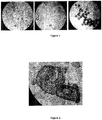
- the microscopic image (40X magnification) of Figure 1 illustrates the effect of the dextran sulfate stock solution (10X dilution, 10 mg/mL) on the integrity of the capsules over time.
- the left panel shows the capsules before the addition of dextran sulfate.
- the middle panel shows the capsules starting to crumple and the capsule membrane beginning to lose integrity immediately after the addition of the dextran sulfate stock solution.
- the right panel illustrates that 30 minutes after the addition of dextran sulfate stock solution the capsule has completely dissociated and clumps of cells remain. Over time the capsules were observed to dissociate into progressively smaller pieces.
- Figure 2 is a microscopic image (150X magnification) illustrating a capsule dissociating.
- the capsule was dissociated using a dextran sulfate stock solution at 4 mg/mL and is shown to crumple and lose its membrane integrity within 15 minutes of adding the dextran sulfate stock solution.
- Clusters of HEK293 cells can be seen released from the capsule into the external environment (upper-right corner of the image).
- Table 1 illustrates the time taken for capsules to completely dissociate at different concentrations of dextran sulfate or ACA.
- Capsules were incubated with a dextran sulfate stock solution with varying concentrations (10, 5 and 1 mg/mL) and ACA solutions with varying dilutions (20X, 40X and 80X dilution, having dextran sulfate concentrations of 5, 2.5, 1.25 mg/mL respectively).
- the capsules were then observed by microscopy (40X magnification) every 15 minutes and complete dissociation of the capsules was judged to have occurred at the time when no capsule material could be visualised under microscopy (e.g. as shown in Figure 1, right panel). Referring to Table 1, a tick is given for the complete dissociation of the capsules and a cross is given for anything less than complete dissociation of the capsules.
- the extent of dissociation of the capsules is dependent on the quantity of dextran sulfate added to the capsules, whilst the rate of dissociation is influenced by the concentration of the dextran sulfate solution, temperature and agitation.
- the cells released from the capsule during the time-dependent studies were recovered and can be used for further processing.
- Cell viability assays were performed to investigate the effect of the dextran sulfate on the viability of the cells.
- the cell viability assay was performed using methods as described for the cell viability experiments above and the results can be seen illustrated in Figure 3 .
- Figure 3 illustrates the HEK 293 cell viability observed (using PrestoblueTM) over time whilst incubating the cells with dextran sulfate solutions with varying concentrations (i.e. 0-20 mg/mL).
- Figures 4 and 5 illustrates the HEK 293 cell viability observed (using PrestoblueTM) at 15 minutes whilst incubating the cells with dextran sulfate solutions with varying concentrations (i.e. 0-50 mg/mL). As shown by Figures 4 and 5 , even at higher dextran sulfate concentrations (50 mg/mL) the cell viability is not significantly reduced.
Landscapes
- Health & Medical Sciences (AREA)
- Chemical & Material Sciences (AREA)
- Life Sciences & Earth Sciences (AREA)
- Medicinal Chemistry (AREA)
- Organic Chemistry (AREA)
- Chemical Kinetics & Catalysis (AREA)
- Polymers & Plastics (AREA)
- Engineering & Computer Science (AREA)
- General Health & Medical Sciences (AREA)
- Zoology (AREA)
- Biomedical Technology (AREA)
- Biotechnology (AREA)
- Epidemiology (AREA)
- Veterinary Medicine (AREA)
- Public Health (AREA)
- Animal Behavior & Ethology (AREA)
- Pharmacology & Pharmacy (AREA)
- Cell Biology (AREA)
- Wood Science & Technology (AREA)
- Genetics & Genomics (AREA)
- Bioinformatics & Cheminformatics (AREA)
- Inorganic Chemistry (AREA)
- Biochemistry (AREA)
- Microbiology (AREA)
- General Engineering & Computer Science (AREA)
- Virology (AREA)
- Immunology (AREA)
- Developmental Biology & Embryology (AREA)
- Urology & Nephrology (AREA)
- Medicinal Preparation (AREA)
- Micro-Organisms Or Cultivation Processes Thereof (AREA)
Claims (13)
- Utilisation d'une composition qui comprend un matériau polyanionique non toxique ou son sel de manière à dissocier une membrane polymérique, dans laquelle :la membrane polymérique comprend du sulfate de cellulose sodique et du chlorure de polydiallyldiméthylammonium (pDADMAC) ; etle matériau polyanionique non toxique est un sulfate de polysaccharide ou un de ses sels, étant entendu que le sulfate de polysaccharide n'est pas un glycosoaminoglycane.
- Utilisation selon la revendication 1, dans laquelle la membrane polymérique se présente sous la forme d'une capsule qui encapsule une substance ou sous la forme d'une barrière qui bloque un mouvement libre d'une substance.
- Utilisation selon la revendication 2, dans laquelle la substance est sélectionnée parmi une ou plusieurs substance(s) du groupe qui est constitué par des cellules, des protéines, des particules biocompatibles et des composés chimiques, en option dans laquelle la substance est une pluralité de cellules.
- Utilisation selon l'une quelconque des revendications qui précèdent, dans laquelle le matériau polyanionique ou un de ses sels présente une masse moléculaire moyenne en nombre de 4 000 à 20 000 Daltons, en option de 4 500 à 15 000 Daltons (par exemple de 5 000 à 10 000 Daltons, tel que 5 000 Daltons).
- Utilisation selon l'une quelconque des revendications qui précèdent, dans laquelle chaque unité de saccharide du sulfate de polysaccharide comprend de 1 à 3 groupe(s) sulfate.
- Utilisation selon la revendication 5, dans laquelle le sulfate de polysaccharide est un ou plusieurs sulfate(s) du groupe qui est constitué par le sulfate de dextrane et le sulfate de cellulose présentant un poids moléculaire moyen en nombre de 4 000 à 20 000 Daltons et leurs sels, en option dans laquelle le sulfate de polysaccharide est le sulfate de dextrane ou un de ses sels (par exemple le sulfate de dextrane est le sel sodique de sulfate de dextrane).
- Utilisation selon la revendication 1, dans laquelle la composition est un agent anti-mottant qui comprend du sulfate de dextrane.
- Utilisation selon l'une quelconque des revendications 1 à 7, dans laquelle la composition contient le sulfate de polysaccharide à une concentration de 0,1 mg/mL à 100 mg/mL (par exemple de 1 mg/mL à 20 mg/mL).
- Procédé de dissociation d'une membrane polymérique, le procédé comprenant les étapes constituées par :(a) la fourniture d'une membrane polymérique ; et(b) la dissociation de la membrane polymérique par ajout, à la membrane polymérique, d'une composition qui comprend un matériau polyanionique non toxique ;dans lequel :la membrane polymérique comprend du sulfate de cellulose sodique et du chlorure de polydiallyldiméthylammonium (pDADMAC) ; etle matériau polyanionique non toxique est un sulfate de polysaccharide ou un de ses sels, étant entendu que le sulfate de polysaccharide n'est pas un glycosoaminoglycane.
- Procédé selon la revendication 9, dans lequel la membrane polymérique est placée dans un milieu liquide au niveau de l'étape (a), en option dans lequel la composition qui comprend le matériau polyanionique non toxique est ajoutée au milieu liquide de manière à obtenir une concentration du matériau polyanionique non toxique de 0,01 à 30 mg/mL (par exemple de 0,1 à 25 mg/mL, tel que de 1 à 20 mg/mL).
- Procédé selon les revendications 9 et 10, dans lequel les cellules sont maintenues dans un milieu de libération de cellules pendant 1 minute à 16 heures (par exemple de 10 minutes à 1,5 heures, tel que de 15 minutes à 75 minutes).
- Procédé selon l'une quelconque des revendications 9 à 11, dans lequel le matériau polyanionique ou un de ses sels présente une masse moléculaire moyenne en nombre de 4 000 à 20 000 Daltons, en option de 4 500 à 15 000 Daltons (par exemple de 5 000 à 10 000 Daltons, tel que 5 000 Daltons).
- Procédé selon l'une quelconque des revendications 9 à 12, dans lequel :(a) chaque unité de saccharide du sulfate de polysaccharide contient de 1 à 3 groupe(s) sulfate ; et/ou(b) le sulfate de polysaccharide est un ou plusieurs sulfate(s) du groupe qui est constitué par le sulfate de cellulose, de façon davantage préférable le sulfate de dextrane présentant une masse moléculaire moyenne en nombre de 4 000 à 20 000 Daltons et leurs sels (par exemple le sulfate de polysaccharide est le sulfate de dextrane ou un de ses sels, en option dans lequel le sulfate de dextrane est le sel sodique de sulfate de dextrane).
Applications Claiming Priority (2)
| Application Number | Priority Date | Filing Date | Title |
|---|---|---|---|
| GBGB1408233.3A GB201408233D0 (en) | 2014-05-09 | 2014-05-09 | Use of polyanionic composition |
| PCT/SG2015/050102 WO2015171077A1 (fr) | 2014-05-09 | 2015-05-08 | Utilisation d'une composition polyanionique |
Publications (3)
| Publication Number | Publication Date |
|---|---|
| EP3140347A1 EP3140347A1 (fr) | 2017-03-15 |
| EP3140347A4 EP3140347A4 (fr) | 2018-03-14 |
| EP3140347B1 true EP3140347B1 (fr) | 2020-02-12 |
Family
ID=51032498
Family Applications (1)
| Application Number | Title | Priority Date | Filing Date |
|---|---|---|---|
| EP15789170.6A Active EP3140347B1 (fr) | 2014-05-09 | 2015-05-08 | Utilisation d'une composition polyanionique |
Country Status (5)
| Country | Link |
|---|---|
| US (2) | US20170173158A1 (fr) |
| EP (1) | EP3140347B1 (fr) |
| GB (1) | GB201408233D0 (fr) |
| TW (1) | TWI686206B (fr) |
| WO (1) | WO2015171077A1 (fr) |
Families Citing this family (1)
| Publication number | Priority date | Publication date | Assignee | Title |
|---|---|---|---|---|
| IL295217A (en) * | 2020-01-31 | 2022-10-01 | ProAgni Pty Ltd | Probiotic formulation and delivery |
Family Cites Families (14)
| Publication number | Priority date | Publication date | Assignee | Title |
|---|---|---|---|---|
| NO158284C (no) | 1981-03-13 | 1988-08-17 | Damon Biotech Inc | Fremgangsmaate for selektiv oppbrytning av en permeabel membran. |
| US4407957A (en) * | 1981-03-13 | 1983-10-04 | Damon Corporation | Reversible microencapsulation of a core material |
| US5531735A (en) * | 1994-09-27 | 1996-07-02 | Hercules Incorporated | Medical devices containing triggerable disintegration agents |
| ATE309000T1 (de) | 1995-06-27 | 2005-11-15 | Bavarian Nordic As | Verkapselte zellen die virenpartikeln produzieren |
| SI0892852T1 (sl) | 1996-03-27 | 2006-04-30 | Bavarian Nordic As | Inkapsulirane celice, ki eksprimirajo citokrom P450 za aktiviranje predzdravila |
| AU4330597A (en) | 1996-08-30 | 1998-03-19 | Life Technologies, Inc. | Serum-free mammalian cell culture medium, and uses thereof |
| EP0948319B1 (fr) | 1996-12-23 | 2003-10-22 | Bavarian Nordic A/S | Cellules encapsulees productrices d'anticorps |
| US5929050A (en) | 1998-02-27 | 1999-07-27 | Petito; George D. | Chondroitin sulfate composition and method for wound treatment |
| SE525461C3 (sv) | 2002-11-28 | 2005-03-23 | Prophymed Ab | Ny användning av dextransulfat |
| DE102005011367B4 (de) | 2005-03-11 | 2010-12-09 | Fraunhofer-Gesellschaft zur Förderung der angewandten Forschung e.V. | Verfahren zur Herstellung von Cellulosesulfat mit verbesserten Eigenschaften |
| EP2172264A1 (fr) | 2008-01-02 | 2010-04-07 | Ziel Biopharma Ltd | Procédé et appareil pour la production de microcapsules |
| KR101902035B1 (ko) | 2011-01-25 | 2018-09-27 | 오스트리아노바 싱가포르 피티이 리미티드 | 산성 분해로부터 미생물 세포의 보호 |
| SE537742C2 (sv) | 2013-05-13 | 2015-10-13 | Tx Medic Ab | Dextransulfat för cellmobilisering |
| EP3016511B1 (fr) | 2013-07-02 | 2019-10-09 | Austrianova Singapore Pte Ltd. | Procédé de lyophilisation de cellules encapsulées, compositions convenant à la congélation de cellules encapsulées, et utilisation de telles compositions |
-
2014
- 2014-05-09 GB GBGB1408233.3A patent/GB201408233D0/en not_active Ceased
-
2015
- 2015-05-08 EP EP15789170.6A patent/EP3140347B1/fr active Active
- 2015-05-08 WO PCT/SG2015/050102 patent/WO2015171077A1/fr not_active Ceased
- 2015-05-08 US US15/309,839 patent/US20170173158A1/en not_active Abandoned
- 2015-05-11 TW TW104114899A patent/TWI686206B/zh active
-
2018
- 2018-09-14 US US16/131,639 patent/US11103585B2/en active Active
Non-Patent Citations (1)
| Title |
|---|
| None * |
Also Published As
| Publication number | Publication date |
|---|---|
| US20170173158A1 (en) | 2017-06-22 |
| TWI686206B (zh) | 2020-03-01 |
| US11103585B2 (en) | 2021-08-31 |
| GB201408233D0 (en) | 2014-06-25 |
| TW201545764A (zh) | 2015-12-16 |
| EP3140347A1 (fr) | 2017-03-15 |
| WO2015171077A1 (fr) | 2015-11-12 |
| EP3140347A4 (fr) | 2018-03-14 |
| US20190015514A1 (en) | 2019-01-17 |
Similar Documents
| Publication | Publication Date | Title |
|---|---|---|
| Łętocha et al. | Preparation and characteristics of alginate microparticles for food, pharmaceutical and cosmetic applications | |
| Hurtado et al. | Alginate: Enhancement strategies for advanced applications | |
| Ji et al. | Extending viability of Bifidobacterium longum in chitosan-coated alginate microcapsules using emulsification and internal gelation encapsulation technology | |
| Jamroży et al. | Advanced drug carriers: a review of selected protein, polysaccharide, and lipid drug delivery platforms | |
| Lee et al. | Microencapsulation of probiotic Lactobacillus acidophilus KBL409 by extrusion technology to enhance survival under simulated intestinal and freeze-drying conditions | |
| Li et al. | Recent progress in preparation and agricultural application of microcapsules | |
| Kim et al. | Chitosan–lignosulfonates sono-chemically prepared nanoparticles: characterisation and potential applications | |
| Hamidi et al. | Carrier erythrocytes: an overview | |
| Sharma et al. | Designing natural polymer-based capsules and spheres for biomedical applications—a review | |
| Vilos et al. | Ceftiofur-loaded PHBV microparticles: A potential formulation for a long-acting antibiotic to treat animal infections | |
| Borgogna et al. | Marine polysaccharides in microencapsulation and application to aquaculture:“from sea to sea” | |
| Abdelmalek et al. | Formulation, evaluation and microbiological activity of ampicillin and amoxicillin microspheres | |
| Manuja et al. | Chitosan quinapyramine sulfate nanoparticles exhibit increased trypanocidal activity in mice | |
| Banik et al. | Carboxymethyl chitosan‐montmorillonite nanoparticles for controlled delivery of isoniazid: evaluation of the effect of the glutaraldehyde and montmorillonite | |
| Parihar et al. | Novel catalase loaded nanocores for the treatment of inflammatory bowel diseases | |
| US11103585B2 (en) | Use of a polyanionic composition | |
| Zhang et al. | Bioinspired and biomimetic strategies for inflammatory bowel disease therapy | |
| Shah | Novel drug delivery carrier: Resealed erythrocytes | |
| Elhassan et al. | Development and in vitro evaluation of valsartan-loaded resealed erythrocytes | |
| Kumar et al. | Conclusion and future prospects of chitosan-based nanocomposites | |
| Drvenica et al. | ERYTHROCYTE MEMBRANES: UNIQUE CONSTITUENT OF BIOLOGICAL/HYBRID DRUG DELIVERY SYSTEMS. | |
| Morán et al. | Sustainable antibiofilm self-assembled colloidal systems | |
| Ramadevi et al. | An epitome on encapsulation of probiotics | |
| Jia et al. | Facile Preparation of Anticancer Drug Encapsulated Chitosan Nanospheres and Their pH Stimulus Responsive Release Property | |
| Thorat et al. | Bioinspired materials-based encapsulation of functional biomolecules for improved biomimetic attributes: a review |
Legal Events
| Date | Code | Title | Description |
|---|---|---|---|
| STAA | Information on the status of an ep patent application or granted ep patent |
Free format text: STATUS: THE INTERNATIONAL PUBLICATION HAS BEEN MADE |
|
| PUAI | Public reference made under article 153(3) epc to a published international application that has entered the european phase |
Free format text: ORIGINAL CODE: 0009012 |
|
| STAA | Information on the status of an ep patent application or granted ep patent |
Free format text: STATUS: REQUEST FOR EXAMINATION WAS MADE |
|
| 17P | Request for examination filed |
Effective date: 20161116 |
|
| AK | Designated contracting states |
Kind code of ref document: A1 Designated state(s): AL AT BE BG CH CY CZ DE DK EE ES FI FR GB GR HR HU IE IS IT LI LT LU LV MC MK MT NL NO PL PT RO RS SE SI SK SM TR |
|
| AX | Request for extension of the european patent |
Extension state: BA ME |
|
| DAV | Request for validation of the european patent (deleted) | ||
| DAX | Request for extension of the european patent (deleted) | ||
| RIC1 | Information provided on ipc code assigned before grant |
Ipc: C08L 5/02 20060101ALI20171023BHEP Ipc: C12N 11/10 20060101ALI20171023BHEP Ipc: C08L 5/10 20060101ALI20171023BHEP Ipc: B01J 13/20 20060101ALI20171023BHEP Ipc: B01J 13/02 20060101ALI20171023BHEP Ipc: C12N 11/08 20060101ALI20171023BHEP Ipc: C08L 5/00 20060101AFI20171023BHEP |
|
| A4 | Supplementary search report drawn up and despatched |
Effective date: 20180209 |
|
| RIC1 | Information provided on ipc code assigned before grant |
Ipc: B01J 13/02 20060101ALI20180205BHEP Ipc: C12N 11/10 20060101ALI20180205BHEP Ipc: C08L 5/10 20060101ALI20180205BHEP Ipc: B01J 13/20 20060101ALI20180205BHEP Ipc: C08L 5/02 20060101ALI20180205BHEP Ipc: C08L 5/00 20060101AFI20180205BHEP Ipc: C12N 11/08 20060101ALI20180205BHEP |
|
| STAA | Information on the status of an ep patent application or granted ep patent |
Free format text: STATUS: EXAMINATION IS IN PROGRESS |
|
| 17Q | First examination report despatched |
Effective date: 20180919 |
|
| GRAP | Despatch of communication of intention to grant a patent |
Free format text: ORIGINAL CODE: EPIDOSNIGR1 |
|
| STAA | Information on the status of an ep patent application or granted ep patent |
Free format text: STATUS: GRANT OF PATENT IS INTENDED |
|
| INTG | Intention to grant announced |
Effective date: 20190828 |
|
| GRAS | Grant fee paid |
Free format text: ORIGINAL CODE: EPIDOSNIGR3 |
|
| GRAA | (expected) grant |
Free format text: ORIGINAL CODE: 0009210 |
|
| STAA | Information on the status of an ep patent application or granted ep patent |
Free format text: STATUS: THE PATENT HAS BEEN GRANTED |
|
| AK | Designated contracting states |
Kind code of ref document: B1 Designated state(s): AL AT BE BG CH CY CZ DE DK EE ES FI FR GB GR HR HU IE IS IT LI LT LU LV MC MK MT NL NO PL PT RO RS SE SI SK SM TR |
|
| REG | Reference to a national code |
Ref country code: GB Ref legal event code: FG4D |
|
| REG | Reference to a national code |
Ref country code: CH Ref legal event code: EP |
|
| REG | Reference to a national code |
Ref country code: AT Ref legal event code: REF Ref document number: 1232068 Country of ref document: AT Kind code of ref document: T Effective date: 20200215 |
|
| REG | Reference to a national code |
Ref country code: IE Ref legal event code: FG4D |
|
| REG | Reference to a national code |
Ref country code: DE Ref legal event code: R096 Ref document number: 602015046887 Country of ref document: DE |
|
| REG | Reference to a national code |
Ref country code: CH Ref legal event code: NV Representative=s name: SERVOPATENT GMBH, CH |
|
| REG | Reference to a national code |
Ref country code: CH Ref legal event code: PCAR Free format text: NEW ADDRESS: WANNERSTRASSE 9/1, 8045 ZUERICH (CH) |
|
| PG25 | Lapsed in a contracting state [announced via postgrant information from national office to epo] |
Ref country code: FI Free format text: LAPSE BECAUSE OF FAILURE TO SUBMIT A TRANSLATION OF THE DESCRIPTION OR TO PAY THE FEE WITHIN THE PRESCRIBED TIME-LIMIT Effective date: 20200212 Ref country code: RS Free format text: LAPSE BECAUSE OF FAILURE TO SUBMIT A TRANSLATION OF THE DESCRIPTION OR TO PAY THE FEE WITHIN THE PRESCRIBED TIME-LIMIT Effective date: 20200212 Ref country code: NO Free format text: LAPSE BECAUSE OF FAILURE TO SUBMIT A TRANSLATION OF THE DESCRIPTION OR TO PAY THE FEE WITHIN THE PRESCRIBED TIME-LIMIT Effective date: 20200512 |
|
| REG | Reference to a national code |
Ref country code: LT Ref legal event code: MG4D |
|
| REG | Reference to a national code |
Ref country code: NL Ref legal event code: MP Effective date: 20200212 |
|
| PG25 | Lapsed in a contracting state [announced via postgrant information from national office to epo] |
Ref country code: BG Free format text: LAPSE BECAUSE OF FAILURE TO SUBMIT A TRANSLATION OF THE DESCRIPTION OR TO PAY THE FEE WITHIN THE PRESCRIBED TIME-LIMIT Effective date: 20200512 Ref country code: IS Free format text: LAPSE BECAUSE OF FAILURE TO SUBMIT A TRANSLATION OF THE DESCRIPTION OR TO PAY THE FEE WITHIN THE PRESCRIBED TIME-LIMIT Effective date: 20200612 Ref country code: LV Free format text: LAPSE BECAUSE OF FAILURE TO SUBMIT A TRANSLATION OF THE DESCRIPTION OR TO PAY THE FEE WITHIN THE PRESCRIBED TIME-LIMIT Effective date: 20200212 Ref country code: SE Free format text: LAPSE BECAUSE OF FAILURE TO SUBMIT A TRANSLATION OF THE DESCRIPTION OR TO PAY THE FEE WITHIN THE PRESCRIBED TIME-LIMIT Effective date: 20200212 Ref country code: GR Free format text: LAPSE BECAUSE OF FAILURE TO SUBMIT A TRANSLATION OF THE DESCRIPTION OR TO PAY THE FEE WITHIN THE PRESCRIBED TIME-LIMIT Effective date: 20200513 Ref country code: HR Free format text: LAPSE BECAUSE OF FAILURE TO SUBMIT A TRANSLATION OF THE DESCRIPTION OR TO PAY THE FEE WITHIN THE PRESCRIBED TIME-LIMIT Effective date: 20200212 |
|
| PG25 | Lapsed in a contracting state [announced via postgrant information from national office to epo] |
Ref country code: NL Free format text: LAPSE BECAUSE OF FAILURE TO SUBMIT A TRANSLATION OF THE DESCRIPTION OR TO PAY THE FEE WITHIN THE PRESCRIBED TIME-LIMIT Effective date: 20200212 |
|
| PG25 | Lapsed in a contracting state [announced via postgrant information from national office to epo] |
Ref country code: ES Free format text: LAPSE BECAUSE OF FAILURE TO SUBMIT A TRANSLATION OF THE DESCRIPTION OR TO PAY THE FEE WITHIN THE PRESCRIBED TIME-LIMIT Effective date: 20200212 Ref country code: PT Free format text: LAPSE BECAUSE OF FAILURE TO SUBMIT A TRANSLATION OF THE DESCRIPTION OR TO PAY THE FEE WITHIN THE PRESCRIBED TIME-LIMIT Effective date: 20200705 Ref country code: DK Free format text: LAPSE BECAUSE OF FAILURE TO SUBMIT A TRANSLATION OF THE DESCRIPTION OR TO PAY THE FEE WITHIN THE PRESCRIBED TIME-LIMIT Effective date: 20200212 Ref country code: SK Free format text: LAPSE BECAUSE OF FAILURE TO SUBMIT A TRANSLATION OF THE DESCRIPTION OR TO PAY THE FEE WITHIN THE PRESCRIBED TIME-LIMIT Effective date: 20200212 Ref country code: SM Free format text: LAPSE BECAUSE OF FAILURE TO SUBMIT A TRANSLATION OF THE DESCRIPTION OR TO PAY THE FEE WITHIN THE PRESCRIBED TIME-LIMIT Effective date: 20200212 Ref country code: EE Free format text: LAPSE BECAUSE OF FAILURE TO SUBMIT A TRANSLATION OF THE DESCRIPTION OR TO PAY THE FEE WITHIN THE PRESCRIBED TIME-LIMIT Effective date: 20200212 Ref country code: LT Free format text: LAPSE BECAUSE OF FAILURE TO SUBMIT A TRANSLATION OF THE DESCRIPTION OR TO PAY THE FEE WITHIN THE PRESCRIBED TIME-LIMIT Effective date: 20200212 Ref country code: RO Free format text: LAPSE BECAUSE OF FAILURE TO SUBMIT A TRANSLATION OF THE DESCRIPTION OR TO PAY THE FEE WITHIN THE PRESCRIBED TIME-LIMIT Effective date: 20200212 Ref country code: CZ Free format text: LAPSE BECAUSE OF FAILURE TO SUBMIT A TRANSLATION OF THE DESCRIPTION OR TO PAY THE FEE WITHIN THE PRESCRIBED TIME-LIMIT Effective date: 20200212 |
|
| REG | Reference to a national code |
Ref country code: DE Ref legal event code: R097 Ref document number: 602015046887 Country of ref document: DE |
|
| REG | Reference to a national code |
Ref country code: AT Ref legal event code: MK05 Ref document number: 1232068 Country of ref document: AT Kind code of ref document: T Effective date: 20200212 |
|
| PLBE | No opposition filed within time limit |
Free format text: ORIGINAL CODE: 0009261 |
|
| STAA | Information on the status of an ep patent application or granted ep patent |
Free format text: STATUS: NO OPPOSITION FILED WITHIN TIME LIMIT |
|
| 26N | No opposition filed |
Effective date: 20201113 |
|
| PG25 | Lapsed in a contracting state [announced via postgrant information from national office to epo] |
Ref country code: IT Free format text: LAPSE BECAUSE OF FAILURE TO SUBMIT A TRANSLATION OF THE DESCRIPTION OR TO PAY THE FEE WITHIN THE PRESCRIBED TIME-LIMIT Effective date: 20200212 Ref country code: AT Free format text: LAPSE BECAUSE OF FAILURE TO SUBMIT A TRANSLATION OF THE DESCRIPTION OR TO PAY THE FEE WITHIN THE PRESCRIBED TIME-LIMIT Effective date: 20200212 Ref country code: MC Free format text: LAPSE BECAUSE OF FAILURE TO SUBMIT A TRANSLATION OF THE DESCRIPTION OR TO PAY THE FEE WITHIN THE PRESCRIBED TIME-LIMIT Effective date: 20200212 |
|
| PG25 | Lapsed in a contracting state [announced via postgrant information from national office to epo] |
Ref country code: SI Free format text: LAPSE BECAUSE OF FAILURE TO SUBMIT A TRANSLATION OF THE DESCRIPTION OR TO PAY THE FEE WITHIN THE PRESCRIBED TIME-LIMIT Effective date: 20200212 Ref country code: PL Free format text: LAPSE BECAUSE OF FAILURE TO SUBMIT A TRANSLATION OF THE DESCRIPTION OR TO PAY THE FEE WITHIN THE PRESCRIBED TIME-LIMIT Effective date: 20200212 |
|
| PG25 | Lapsed in a contracting state [announced via postgrant information from national office to epo] |
Ref country code: LU Free format text: LAPSE BECAUSE OF NON-PAYMENT OF DUE FEES Effective date: 20200508 |
|
| PG25 | Lapsed in a contracting state [announced via postgrant information from national office to epo] |
Ref country code: IE Free format text: LAPSE BECAUSE OF NON-PAYMENT OF DUE FEES Effective date: 20200508 |
|
| PG25 | Lapsed in a contracting state [announced via postgrant information from national office to epo] |
Ref country code: TR Free format text: LAPSE BECAUSE OF FAILURE TO SUBMIT A TRANSLATION OF THE DESCRIPTION OR TO PAY THE FEE WITHIN THE PRESCRIBED TIME-LIMIT Effective date: 20200212 Ref country code: MT Free format text: LAPSE BECAUSE OF FAILURE TO SUBMIT A TRANSLATION OF THE DESCRIPTION OR TO PAY THE FEE WITHIN THE PRESCRIBED TIME-LIMIT Effective date: 20200212 Ref country code: CY Free format text: LAPSE BECAUSE OF FAILURE TO SUBMIT A TRANSLATION OF THE DESCRIPTION OR TO PAY THE FEE WITHIN THE PRESCRIBED TIME-LIMIT Effective date: 20200212 |
|
| PG25 | Lapsed in a contracting state [announced via postgrant information from national office to epo] |
Ref country code: MK Free format text: LAPSE BECAUSE OF FAILURE TO SUBMIT A TRANSLATION OF THE DESCRIPTION OR TO PAY THE FEE WITHIN THE PRESCRIBED TIME-LIMIT Effective date: 20200212 Ref country code: AL Free format text: LAPSE BECAUSE OF FAILURE TO SUBMIT A TRANSLATION OF THE DESCRIPTION OR TO PAY THE FEE WITHIN THE PRESCRIBED TIME-LIMIT Effective date: 20200212 |
|
| PGFP | Annual fee paid to national office [announced via postgrant information from national office to epo] |
Ref country code: DE Payment date: 20250520 Year of fee payment: 11 |
|
| PGFP | Annual fee paid to national office [announced via postgrant information from national office to epo] |
Ref country code: CH Payment date: 20250601 Year of fee payment: 11 |
|
| PGFP | Annual fee paid to national office [announced via postgrant information from national office to epo] |
Ref country code: GB Payment date: 20260319 Year of fee payment: 12 |
|
| PGFP | Annual fee paid to national office [announced via postgrant information from national office to epo] |
Ref country code: BE Payment date: 20260324 Year of fee payment: 12 |
|
| PGFP | Annual fee paid to national office [announced via postgrant information from national office to epo] |
Ref country code: FR Payment date: 20260324 Year of fee payment: 12 |