EP3140421B1 - Nachweis von aus einem spezifischen zelltyp stammender dna - Google Patents
Nachweis von aus einem spezifischen zelltyp stammender dna Download PDFInfo
- Publication number
- EP3140421B1 EP3140421B1 EP15723189.5A EP15723189A EP3140421B1 EP 3140421 B1 EP3140421 B1 EP 3140421B1 EP 15723189 A EP15723189 A EP 15723189A EP 3140421 B1 EP3140421 B1 EP 3140421B1
- Authority
- EP
- European Patent Office
- Prior art keywords
- dna
- region
- dmr
- seq
- sample
- Prior art date
- Legal status (The legal status is an assumption and is not a legal conclusion. Google has not performed a legal analysis and makes no representation as to the accuracy of the status listed.)
- Active
Links
Images


Classifications
-
- C—CHEMISTRY; METALLURGY
- C12—BIOCHEMISTRY; BEER; SPIRITS; WINE; VINEGAR; MICROBIOLOGY; ENZYMOLOGY; MUTATION OR GENETIC ENGINEERING
- C12Q—MEASURING OR TESTING PROCESSES INVOLVING ENZYMES, NUCLEIC ACIDS OR MICROORGANISMS; COMPOSITIONS OR TEST PAPERS THEREFOR; PROCESSES OF PREPARING SUCH COMPOSITIONS; CONDITION-RESPONSIVE CONTROL IN MICROBIOLOGICAL OR ENZYMOLOGICAL PROCESSES
- C12Q1/00—Measuring or testing processes involving enzymes, nucleic acids or microorganisms; Compositions therefor; Processes of preparing such compositions
- C12Q1/68—Measuring or testing processes involving enzymes, nucleic acids or microorganisms; Compositions therefor; Processes of preparing such compositions involving nucleic acids
- C12Q1/6876—Nucleic acid products used in the analysis of nucleic acids, e.g. primers or probes
- C12Q1/6883—Nucleic acid products used in the analysis of nucleic acids, e.g. primers or probes for diseases caused by alterations of genetic material
-
- C—CHEMISTRY; METALLURGY
- C12—BIOCHEMISTRY; BEER; SPIRITS; WINE; VINEGAR; MICROBIOLOGY; ENZYMOLOGY; MUTATION OR GENETIC ENGINEERING
- C12Q—MEASURING OR TESTING PROCESSES INVOLVING ENZYMES, NUCLEIC ACIDS OR MICROORGANISMS; COMPOSITIONS OR TEST PAPERS THEREFOR; PROCESSES OF PREPARING SUCH COMPOSITIONS; CONDITION-RESPONSIVE CONTROL IN MICROBIOLOGICAL OR ENZYMOLOGICAL PROCESSES
- C12Q1/00—Measuring or testing processes involving enzymes, nucleic acids or microorganisms; Compositions therefor; Processes of preparing such compositions
- C12Q1/68—Measuring or testing processes involving enzymes, nucleic acids or microorganisms; Compositions therefor; Processes of preparing such compositions involving nucleic acids
- C12Q1/6813—Hybridisation assays
- C12Q1/6827—Hybridisation assays for detection of mutation or polymorphism
-
- C—CHEMISTRY; METALLURGY
- C12—BIOCHEMISTRY; BEER; SPIRITS; WINE; VINEGAR; MICROBIOLOGY; ENZYMOLOGY; MUTATION OR GENETIC ENGINEERING
- C12Q—MEASURING OR TESTING PROCESSES INVOLVING ENZYMES, NUCLEIC ACIDS OR MICROORGANISMS; COMPOSITIONS OR TEST PAPERS THEREFOR; PROCESSES OF PREPARING SUCH COMPOSITIONS; CONDITION-RESPONSIVE CONTROL IN MICROBIOLOGICAL OR ENZYMOLOGICAL PROCESSES
- C12Q1/00—Measuring or testing processes involving enzymes, nucleic acids or microorganisms; Compositions therefor; Processes of preparing such compositions
- C12Q1/68—Measuring or testing processes involving enzymes, nucleic acids or microorganisms; Compositions therefor; Processes of preparing such compositions involving nucleic acids
- C12Q1/6876—Nucleic acid products used in the analysis of nucleic acids, e.g. primers or probes
- C12Q1/6883—Nucleic acid products used in the analysis of nucleic acids, e.g. primers or probes for diseases caused by alterations of genetic material
- C12Q1/6886—Nucleic acid products used in the analysis of nucleic acids, e.g. primers or probes for diseases caused by alterations of genetic material for cancer
-
- G—PHYSICS
- G16—INFORMATION AND COMMUNICATION TECHNOLOGY [ICT] SPECIALLY ADAPTED FOR SPECIFIC APPLICATION FIELDS
- G16B—BIOINFORMATICS, i.e. INFORMATION AND COMMUNICATION TECHNOLOGY [ICT] SPECIALLY ADAPTED FOR GENETIC OR PROTEIN-RELATED DATA PROCESSING IN COMPUTATIONAL MOLECULAR BIOLOGY
- G16B30/00—ICT specially adapted for sequence analysis involving nucleotides or amino acids
-
- C—CHEMISTRY; METALLURGY
- C12—BIOCHEMISTRY; BEER; SPIRITS; WINE; VINEGAR; MICROBIOLOGY; ENZYMOLOGY; MUTATION OR GENETIC ENGINEERING
- C12Q—MEASURING OR TESTING PROCESSES INVOLVING ENZYMES, NUCLEIC ACIDS OR MICROORGANISMS; COMPOSITIONS OR TEST PAPERS THEREFOR; PROCESSES OF PREPARING SUCH COMPOSITIONS; CONDITION-RESPONSIVE CONTROL IN MICROBIOLOGICAL OR ENZYMOLOGICAL PROCESSES
- C12Q2600/00—Oligonucleotides characterized by their use
- C12Q2600/154—Methylation markers
Definitions
- the present invention relates to methods to detect an amount of DNA that originates from cells of a given type, where the sample comprising such DNA in admixture with DNA that does not originate from such cells. Such methods are based on differential methylation, at certain regions, of the DNA that originates from the given type of cells compared to the admixed DNA. Such methods have particular application in the detection, from a biological fluid from a pregnant female, of cell free DNA that originates from a foetus or the placenta of a foetus, or the detection, from a biological fluid from an individual, of cell free DNA that originates from cells of a tumour.
- Such methods have diagnostic, prognostic and/or predictive utility for detecting an increased risk of an individual suffering from or developing a medical condition such as preeclampsia or cancer, and/or to aid (subsequent) diagnostic, prognostic and/or predictive methods such as the detection of chromosomal trisomy in a foetus, including for twin-pregnancies.
- the present invention also relates to compositions, kits, computer program products and other aspects that are used in, useful for or related to the practice of such methods.
- Foetal cfDNA is derived from embryonic cell degradation in maternal peripheral blood ( Lo et al 2000, Clin Chem 46:1301 ) or from apoptotic placental cells ( Smid et al 2006, Prenat Diagn 26:785 ). It has been demonstrated that foetal cfDNA from maternal plasma is cleared immediately (within a few hours) after pregnancy ( Lo et al 1999, Am J Hum Genet 64:218 ). This finding is of great importance, since the presence of foetal cfDNA from previous pregnancies would otherwise interfere with the correct interpretation of subsequent pregnancies.
- NIPT NIPT based on the analysis of foetal cfDNA.
- next generation sequencing technologies on cfDNA isolated from maternal plasma with the primary aim of detecting the most common chromosomal aneuploidies as commercially available tests (for example, those using random massively parallel sequencing: www.sequenom.com; www.lifecodexx.com; www.verinata.com).
- tumour derived cfDNA from the circulatory system: the quality of the test result often is dependent on the presence of sufficient, or sufficiently pure, tumour-derived cfDNA in the total DNA from the sample.
- the quantitative determination of an amount of DNA originating from such a cell type may, in itself, form a critical part of a diagnostic, prognostic or predicative test. For example, even though studies have demonstrated that the amount of foetal DNA released in maternal circulation increases with pregnancy progression ( Lo et al 1998, Am J Hum Genet 62:768 ), preeclampsia, which results from abnormal trophoblast invasion, is also associated with further elevated foetal cfDNA levels in the maternal circulation.
- hypermethylation of serum cfDNA was found to be common in patients suffering from oesophageal squamous cell carcinoma, and diagnostic accuracy was increased when methylation of multiple genes (RAR-beta, DAPK, CDH1, p16 and RASSF1A) were analysed in combination ( Li et al 2011, Epigenetics 3:17 ).
- Elevated levels of circulating cfDNA have been reported in patients with acute dengue virus infection ( Ha et al 2011, PLoS One 6(10):e25969 ), in acute Puumala hantavirus infection Outinen et al 2012, PLoS One 7(2):e31455 ) and high cfDNA has been reported to predict fatal outcome among Staphylococcus aureus bacteraemia patients with intensive care unit treatment ( Forsblom et al 2014, PLoS One 10;9(2):e87741 ).
- foetal cfDNA present in the maternal circulatory system and tumour derived circulating cfDNA is degraded.
- studies characterising cfDNA in maternal plasma have found that the size of foetal DNA fragments were estimated to be ⁇ 0.3kb, whereas that of maternal DNA was > 1kb ( Chan et al 2004, Clin Chem 50:88 ).
- circulating cfDNA in plasma is protein-bound (nucleosomal) DNA and has a short half-life (10 to 15 min) which is removed mainly by the liver ( Elshimali et al 2013, Int J Mol Sci 14:18925 ). Accumulation of cfDNA in the circulation of cancer patients can result from an excessive release of DNA caused by massive cell death, inefficient removal of the dead cells, or a combination of both ( Zeerleder 2006, Crit Care 10:142 ). It should be noted that although cancer patients requiring renal support have higher values of circulating cfDNA, the renal elimination is not the main mechanism of its clearance. The plasma levels of circulating cfDNA do not seem to be dramatically altered in chronic kidney disease, peritoneal dialysis or hemodialysis ( Kirsch et al 2008, Ann NY Acad Sci 1137:135 ).
- nucleosome Although the nucleosome is a very stable protein-DNA complex, it is not static and has been shown to undergo a number of different structural re-arrangements including nucleosome sliding and DNA site exposure. Depending on the context, nucleosomes can inhibit or facilitate transcription factor binding. Also, packaging of DNA into nucleosomes varies depending on the cell cycle stage and by local DNA region ( Russell 2010, 'iGenetics". 3rd ed. San Francisco: Pearson Benjamin Cummings, pp 24-27 ). The degree to which chromatin is condensed is associated with a certain transcriptional state. Unpackaged or loose chromatin is more transcriptionally active than tightly packaged chromatin because it is more accessible to transcriptional machinery.
- the qualitative and/or quantitative level of chromatin packing of a given region of cfDNA may affect its stability, and hence the amount detected in the circulatory system at any given time.
- differences between the level of chromatin packing between different DNA regions may influence the relative quantities of DNA from each of these regions when detected as cfDNA, particularly as two studies have investigated in more detail the kinetics of, and reported the rapid, clearance of cfDNA from the circulatory system ( Gauthier et al 1996, J Immunol 156:1151 ; Lo et al 1999, Am J Hum Genet 64:218 ).
- ddPCR High-throughput droplet digital PCR
- epigenetic biomarkers can be exploited for NIPT of trisomy 21, such as by quantifying a chromosome 21-derived sequence in epigenetically identified foetal cfDNA, relative to a reference sequence derived from another autosome or sex chromosome ( Old et al 2007; RBMOnline 15:227 ); where the comparative reference sequence may be either a SNP allele-specific region or by direct comparison with a foetal- or placental- specific methylation marker on the reference chromosome ( Tong et al 2006; ClinChem 52:2194 ; WO2007/132166 ; WO2007/132167 ; Chim et al 2008; ClinChem 54:500 ; Papageorgio et al 2009; AmJPath 174:1609 ).
- the invention relates to a method for quantitatively detecting in a sample from an individual an amount of a species of DNA originating from cells of a given type, which sample comprises said species of DNA in admixture with differently methylated DNA not originating from cells of said type wherein said species of DNA originates from cells of a foetus and/or the placenta of a foetus and said sample is from a pregnant female; said method comprising the steps:
- the invention also relates to a composition, a kit , to use thereof and to the use of a computer program product , in each case as claimed herein, for use within or in connection with a method of the invention.
- the invention relates to a method for quantitatively detecting in a sample from an individual an amount of a species of DNA originating from cells of a given type, which sample comprises said species of DNA in admixture with differently methylated DNA not originating from cells of said type wherein said species of DNA originates from cells of a foetus and/or the placenta of a foetus and said sample is from a pregnant female; said method comprising the steps:
- a and/or B is to be taken as specific disclosure of each of (i) A, (ii) B and (iii) A and B, just as if each is set out individually herein.
- the terms “about” and “approximately” denote an interval of accuracy that the person skilled in the art will understand to still ensure the technical effect of the feature in question.
- the term typically indicates deviation from the indicated numerical value by ⁇ 20%, ⁇ 15%, ⁇ 10%, and for example ⁇ 5%.
- the specific such deviation for a numerical value for a given technical effect will depend on the nature of the technical effect.
- a natural or biological technical effect may generally have a larger such deviation than one for a man-made or engineering technical effect.
- an indefinite or definite article is used when referring to a singular noun, e.g. "a”, “an” or “the”, this includes a plural of that noun unless something else is specifically stated.
- the individual is a human or a non-human animal, where such non-human animal may, in particular embodiments, be selected from the group consisting of: horse, sheep, cow, pig, chicken, mouse and rat.
- the individual is a pregnant female human suspected of being at increased risk of developing or suffering (or suffering from) a pregancy-associated medical condition, such as one or more of the medical conditions disclosed herein.
- a method of the present invention is not intended to be practiced on the human or animal body; for example it is intended to be practiced in an in-vitro manner.
- the cell(s) of a given type originate from a different individual or organism.
- the cell of a given type is a cell of the foetus. including of the placenta of such foetus.
- said species of DNA and/or said differently methylated DNA is cell-free DNA, and in particular of such embodiments is circulating cell-free DNA.
- said species of DNA and the differently methylated DNA that is admixed therewith are both circulating cell-free DNA.
- cell-free DNA (or "cfDNA”) is art recognised, and includes the meaning of DNA that is found outside of a cell, such as in a biological fluid (eg blood, or a blood fraction) of an individual.
- cfDNA entity or substance
- a circulatory system of the individual such as the blood system or the lymphatic system.
- cfDNA circulating an entity or substance
- cfDNA circulating it is not located in a cell, and hence may be present in the plasma or serum of blood, or it may be present in the lymph of lymphatic fluid.
- DMR differentiated region
- the DMRs used in the present invention are differentially methylated between foetal and maternal DNA, or are differentially methylated between tumour-derived and non-tumour-derived DNA from the same individual.
- the DMRs are hypermethlyated in foetal DNA and hypo methylated in maternal DNA.
- Such regions exhibit a greater degree (ie more) methylation in said species of DNA (eg the foetal or tumour cfDNA) as compared to the other DNA (eg maternal DNA), such as about 10%, 20%, 30%, 40%, 50%, 60%, 70%, 80%, 90% or 100% of, or more of, the sites available for methylation at a given DMR are methylated in said species of DNA as compared to the same sites in the other DNA.
- a greater degree ie more) methylation in said species of DNA (eg the foetal or tumour cfDNA) as compared to the other DNA (eg maternal DNA)
- the other DNA eg maternal DNA
- a reagent is used in the present invention that differentially (eg selectively) modifies methylated as compared to non-methylated DNA.
- Treatment of DNA with bisulphite (bisulfite) converts cytosine residues to uracil, but leaves 5-methylcytosine residues unaffected.
- bisulphite treatment introduces specific changes in the DNA sequence that depend on the methylation status of individual cytosine residues, yielding single- nucleotide resolution information about the methylation status of a segment of DNA.
- Various analyses can be performed on the altered sequence to retrieve this information, including the use of PCR primers and/or probes that can distinguish between such singe-nucleotide changes.
- Such a reagent comprises a restriction enzyme that is sensitive to the DNA methylation states. Cleavage of such a restriction enzyme's recognition sequence may be blocked, or impaired, when a particular base in the enzyme's recognition site is modified, eg methylated.
- the reagent comprises a methylation-sensitive restriction enzyme, such as a methylation-sensitive restriction enzyme disclosed herein; including such embodiments that comprise two, three, four, five or more of such methylation-sensitive restriction enzymes.
- the sample Prior to step (a), the sample may be processed to isolate, enrich and/or purify, the DNA present therein.
- a plasma sample may be processed using a cfDNA isolation process or kit to provide a (non-natural) subsequent solution that comprises an admixture of said species of DNA together with the differentially methylated DNA that does not originate from the cell-type.
- the step of treating in (a) may comprise the step of adding a separate solution that comprises said reagent (a methylation sensitive restriction enzyme) to the admixed DNA of the sample (eg, to a non-natural solution comprising such admixed DNA); and/or may comprise maintaining (or changing to) certain conditions.
- the step of treating in (a) may comprise incubating the DNA and the enzyme(s) together at about 37°C for between about 5min and 300min, such as between about 30min and 90min or about 60min, and optionally may comprise a step of incubating such mixture at a higher temperature (for example, between about 50°C and 90°C, such as about 80°C) so as to deactivate the enzyme(s).
- the composition formed for a treating step of (a) may be non-naturally occurring.
- any of the methods of the present invention may produce (and hence a composition of the present invention may comprise) an in-vitro-produced nucleic acid molecule, such as a DNA product of a PCR reaction (eg a "PCR product").
- nucleic acid molecules may be non-natural because they comprise a nucleotide primer and/or probe that includes at least one detectable label, such a nucleic acid molecule having been generated by polymerase extension (or partial nuclease digestion) of such a labelled primer and/or probe, and hence providing at least a fraction of such nucleic acid molecules that include a detectable label, such that even though the nucleic acid sequence of the nucleic acid molecules may comprise a naturally occurring sequence (or fragment thereof), such an in-vitro-produced nucleic acid molecule is non-natural by virtue of (at least) the non-natural detectable label that it includes.
- an "other region" used in the present invention is not (significantly) differentially methylated between said species of DNA and other DNA with which it is admixed in the sample.
- an "other region" used in the present invention is not (significantly) differentially methylated between said species of DNA and other DNA with which it is admixed in the sample.
- Such a non-difference may be achieved if the other region comprises no sites for methylation, if there is no difference in the degree of methylation if such sites are present, or by the use of a reagent that does not recognise any sites of methylation present in the other region.
- the at least one other region used in step (c) is one for which no (significant) difference in methylation between said species of DNA and the other DNA is (or can be) recognised or detected (or recognisable or detectable) with said reagent.
- the other region, used in the present invention is non-overlapping with the DMR used in the present invention.
- the other region is located further than about 20bp, 50bp, or more than 100bp, 500bp, 1kb or 10kb, away from the DMR, in particular located between about 20bp and about 20kb upstream or downstream of (including embodiments being located within the same gene as) said DMR.
- the genomic location of the other region used in the first aspect of the present invention is generally located in the same portion of the genome, that is between about 20bp and about 20kb upstream or downstream of (including embodiments being located within the same gene as) the genomic location of at least one of the DMRs used herein.
- the inventors find that, particularly in the context of the first aspect of the present invention, detection (and particularly quantification) of the species of DNA is enhanced (eg, in terms of sensitivity, accuracy and/or precision) if the other region is so located in the same portion of the genome as one of the DMRs.
- the detection of the various DNA regions, ie the DMR(s) and the other region(s), may occur in a simplified process.
- one feature of the present invention is that the detection of the various DNA regions, ie the DMRs and the other region(s), occurs in a simplified process. For example, using a single aliquot of DNA from the sample, such DNA regions may be detected in a single vessel. This feature may simplify the method(s), and can provide for more efficient and accurate detection (especially in those embodiments when detection is quantitative).
- vessel will be art recognised, and includes embodiments of a vessel (such as a tube, well of a microtitre plate, nano-well, capillary reaction vessel etc) in which a process or procedure comprised in the method occurs, such as a reaction and/or detection process or a step of a method of the present invention.
- a vessel such as a tube, well of a microtitre plate, nano-well, capillary reaction vessel etc
- Other such vessels may include droplets in oil/water emulsions, nanoparticles or a hybridisation chamber; as appropriate to the detection technology used.
- the detectable labels used, in certain embodiments of the first aspect of the present invention may be the same for each DMR and/or may be the same for each other region, provided that, when detected essentially simultaneously, the label(s) used for the other region(s) is different (ie, can be separately detected) to the label(s) used for the DMR(s).
- the detectable labels used, in certain embodiments of the first aspect of the present invention may be different (eg, not the same) for each DMR (or may be the same for each set of two or more DMRs) and are different (eg, not the same) for each other region.
- Detectable labels that are "the same”, can also include labels while structurally different, are functionally (essentially) similar as they cannot be significantly differentiated by the detection technology employed.
- structurally different fluorescent dyes may be considered “the same” if their excitation and emission spectra are (substantially or essentially) similar, or overlap to such a degree that they are able to be excited and detected simultaneously with the same wavelength(s).
- Suitable labels (and detection modalities) are further described elsewhere herein. The detection of the DMR(s) and other region(s) is made effectively simultaneously within the same (reaction/detection) vessel.
- All such regions can be detected within less than about 5s, 1s, 0.5s, 100ms, 10ms, 1ms, 100us, 10us or 1us of each other, and for example without transferring the vessel, or the reaction/mixture, to any subsequent vessel, assay or equipment, or for example, without adapting or recalibrating the detection process for (any/either of) the DMR(s) or the other region(s) separately.
- the use of (at least) two different detectable label(s) - one for said DMR(s) and one for the other region(s) - utilises components, process and/or steps that are non-natural.
- compositions of two specific labels together with the specific DNA regions would (generally) not be found in nature.
- short probes used in quantitative probe-based PCR while may comprise a DNA sequence that is a fragment of that found in a natural genome, when linked to a one or more labels (such as a fluorescent dye) form a specific labelled fragment that is non-natural.
- the features of the present invention provide for certain advantages over prior art methods. These can include sensitive detection of methylation (and hence the species of DNA to be detected) and/or accurate and/or improved precision quantification of the amount of said species of DNA by reference to the amount of total DNA detected: in the first aspect of the present invention, using a co-located other region, and within the same assay, from the same aliquot of admixed DNA and effectively simultaneously with the detection of the two or more DMRs.
- FIGURE 1 a schematic representation of the general arrangement of the DMR(s), the other region(s) and the detectable label(s), as used for the first aspect of the present invention, is presented in FIGURE 1 .
- the presence of methylation in DNA at DMR1 is detected in the context of an other region ("OR1") is located within the same portion of the genome (eg, between about 20bp and about 20kb upstream or downstream of) DMR1.
- additional DMRs and/or ORs may be detected, and pairs of such additional DMRs and ORs may each be co-located in the same portion of the genome (eg, between about 20bp and about 20kb upstream or downstream of) as each other.
- the presence of methylation in DNA is detected at multiple DMRs, using the same detectable label(s) and/or (4) the amount of total DNA detected using at least one OR (OR1, and optionally, OR2 or up to ORn) is detected using different detectable label(s) to those used to detect methylation at the DMR(s) (optionally, the detectable label(s) used is the same for all the ORs).
- said detection in step (b) comprises the use of two or more of said DMRs, and such two or more DMRs may be detected in such step using the same detectable label(s) for each of said DMRs, or using detectable labels that are not the same for each of said DMRs.
- a feature of the first aspect of the present invention (similarly-located DMR(s) and other region(s)) with one or more other feature of the present invention: eg the use of at least two DMRs, and/or the detection in step (b) and the detection in step (c) are made using the same aliquot of DNA of the sample, and in the same reaction/detection vessel, and effectively simultaneously for such DMRs and other region, and/or using: (x) the same detectable labels(s) for each of said DMRs; and (y) a different detectable label for said other region(s); is each a preferred embodiment of the present invention.
- an improved sensitivity and/or accuracy and/or precision of detection eg, detection of a quantitative amount
- said species of DNA can be obtained by the use of such a combination; the degree of improvement of which can be synergistic, as compared to the use of each feature alone; eg the enhancement obtained by use of the combined features being greater than the sum of each enhancement obtained by the use of each feature individually.
- each DNA region comprising said DMR(s) and said other region(s), respectively is(are) amplified.
- Amplification of DNA may be conducted using any suitable replication process, and in particular of such embodiments, each of the DMR(s) and/or other region(s), is amplified by a polymerase chain reaction (PCR) using primers suitably designed for each DMR and/or other region.
- PCR polymerase chain reaction
- PCR primers for use in the method of the invention, for example by use of primer design algorithms and programs such as Clone Manager Professional 9 (Sci-Ed Software), Vector NTI (Life Technologies), or web-based tools such as those found from www.ncbi.nlm.nih.gov/tools/primer-blast/ or molbiol-tools.ca/PCR.htm.
- Those embodiments of the present invention that comprise PCR amplification can further comprises specific steps that are related to the practice of PCR, such as any of those described herein, or in particular the steps of: (A) providing a reaction mixture comprising a double-stranded target DNA, a pair of primers (for example, a pair of primers disclosed herein) designed to amplify a region of such DNA (such as a DMR or an other region as described herein) wherein the first primer is complementary to a sequence on the first strand of the target DNA and the second primer is complementary to a sequence on the second strand of the target DNA, Taq polymerase, and a plurality of free nucleotides comprising adenine, thymine, cytosine and guanine; (B) heating the reaction mixture to a first predetermined temperature for a first predetermined time to separate the strands of the target DNA from each other; (C) cooling the reaction mixture to a second predetermined temperature for a second predetermined time under conditions to allow
- a detectable label used in step (b) and step (c) of a method of the invention is a fluorescent label.
- fluorescent labels that are the same may be used for the DMR(s), and a fluorescent label that has an excitation and/or emission spectra (in particular, a different emission spectrum) may be used for detection of the other region(s).
- the person of ordinary skill will be able to select appropriate such fluorescent label(s) for use in the present invention from, for example, the group consisting of: FAM, TET, JOE, VIC, HEX, NED, PET, ROX, TAMRA, Quasar and Texas Red.
- a detectable label may be a protein or small molecule tag that, for example, can be detected using a specific antibody and ELISA-type detection approaches.
- the use of the same protein or small molecule for each of a the DMR(s), and a detectably different protein or small molecule for the other region(s), may also be utilised for a detectable label(s).
- Different radioactive labels may be distinguished by their emission energy, penetration/excitation characteristics and particle-type (for example, by distinguishing between alpha and beta particles).
- Other detectable labels (such as nucleic-acid coded tag) may also be employed.
- the detection in step (b) of a method of the invention comprises real-time quantitative probe-based PCR, by using at least one labelled probe which is specific for one of the DMR(s).
- the detection in step (c) in the methods of the invention comprises real-time quantitative probe-based PCR, by using at least one labelled probe specific for one of said other region(s).
- probe-based quantitative PCR is art recognised, and encompasses various embodiments described and marketed under different brand names (such as "TaqMan” PCR of Roche), and uses a (eg fluorescent) reporter probe that is specific for the detection of a given amplicon (eg a DMR or an other region).
- Probe-based quantitative PCR is distinct from quantitative PCR using double-stranded DNA-binding dyes (eg SYBR Green) as reporters, as such double-stranded DNA-binding dyes bind non-specially to any double-stranded amplicon and eg cannot be used to distinguish between detection of the DMR(s) (ie said species of DNA) from detection of the other region(s) (ie detection of total DNA).
- probe-based quantitative PCR can include amplification reactions into which have been incorporated processes of detecting a target nucleic acid using labelled oligonucleotides that use the 5' to 3' nuclease activity of a nucleic acid polymerase to cleave annealed labelled oligonucleotide (eg the probe) from hybridised duplexes and release labelled oligonucleotide fragments for detection.
- Such approaches and processes are known in the art and are described in more general terms by Gelfand et al (US5804375 , EP0543942 and related family members) and/or Livak et al (US6258569 , EP0792374 and related family members), and include where the probe comprises a detectable label in combination with a quencher molecule that quenches the detectability of the label when bound, such that 5' to 3' nuclease (and hence amplification) is required to occur before the detectable label is released into the reaction mixture (way from the quencher) and hence may be detected.
- probe-based quantitative PCR approaches may by alternatively or additionally enhanced by the use of probes that comprise an oligonucleotide-fluorophore-quencher-minor groove binder conjugates, such as described by Reed et al (US6727356 , EP1235938 and related family members).
- Such probe-based quantitative PCR may be conducted in an analogue-approach, using a machine such as a LightCycler in which the intensity of signal (eg over time) is measured and used to quantitatively determine detection.
- a machine such as a LightCycler in which the intensity of signal (eg over time) is measured and used to quantitatively determine detection.
- Systems and approaches for such detection are described by Woudenberg et al (US6929907 , EP0706649 and related family members) and/or Higuchi (US5994056 , EP0512334 and related family members).
- digital PCR ie, PCR conducted in multiple events so as to determine the number of amplification events as method to quantitate an amount of detected DNA.
- dPCR digital PCR
- the person of ordinary skill will be able to design suitable primers and probes (and with suitable labels, eg dyes) for probe-based quantitative PCR detection of the DMRs and/or other regions(s); for example by using primer/probe design software as described elsewhere herein.
- the PCR primers may overlap methylation site(s) specific for the methylation-specific modifying reagent used in the methods, in particular when the reagent comprises one or more methylation sensitive restriction enzyme, such as one (or a combination thereof) as disclosed herein.
- one or other (or when considered together, both) of the PCR primers for a given DMR may overlap two or three such methylation sites (such as two or three restriction sites for methylation-sensitive restriction enzymes, each of which may comprise, or comprises, a methylation site).
- the primers for a DMR may be designed to flank one, two, three or more such methylation sites, such as up to 10, 15, 20, 25 or 50 such methylation sites, in particular flanking restriction sites for one, two, three or more such methylation sites, such as up to 10, 15, 20, 25 or 50 methylation-sensitive restriction enzymes, each of which may comprise, or comprises, a methylation site.
- the present invention includes the use of one other region to provide for the detection of an amount of total DNA in the admixture.
- the present invention also encompasses embodiments that use more than one other region.
- the invention includes such embodiments wherein said detection in step (c) comprises using at least two of said other regions, such as two, three or four of said other regions.
- the number of said other regions is the same as the number of DMRs used in step (b). For example, if two DMRs are used then two other regions are used in such an embodiment, and if three DMRs are used then three other regions are used (such as depicted in FIGURE 1 ).
- the first aspect of present invention includes where the other region is generally located in the same portion of the genome, that is between about 20bp and about 20kb upstream or downstream of (including embodiments within the same gene as) at least one of the DMRs used herein. Accordingly, if multiple other regions are used in the present invention, then embodiments are included where two or more of such other regions are similarly located in the genome to the two or more DMRs.
- one of said other regions may be located between about 20bp and about 20kb upstream or downstream of (including embodiments within the same gene as) a DMR used in step (b) and each other of the said other regions (eg, a second other region) is located between about 20bp and about 20kb upstream or downstream of (including embodiments within the same gene as) another of said (eg, non-overlapping) DMRs (eg, the second DMR).
- an additional other region may overlap with a DMR.
- An other region used in the present invention when generally located in the same portion of the genome as a DMR, may be located upstream or downstream of one of said DMRs within a distance selected from the group consisting of: between about 16kb to 20bp, 14kb to 20bp, 12kb to 20bp, 10kb to 20bp, 8kb to 20bp, 6kb to 20bp, 5kb to 20bp, 4kb to 20bp, 3kb to 2bp, 16kb to 20bp, 1kb to 20bp, 500bp to 20bp, 200bp to 20bp, 20kb to 15kb, 15kb to 10kb, 12kb to 8kb, 10kb to 8kb, 11kb to 7kb, 11kb to 10kb, 9kb to 8kb, 8kb to 6kb, 6kb to 4kb, 4kb to 2kb, 2kb to 500bp, 1kb to 100bp, 500b
- the present invention includes embodiments where the detection in step (c) is made using the same detectable label for each of said other regions and/or comprises multiplex real-time quantitative PCR using at least two labelled probes each of which is specific for one of said other regions.
- all detection steps are conducted in an efficient and effective manner using multiplex quantitative probe-based (eg TaqMan) PCR, in one process step or reaction.
- multiplex quantitative probe-based eg TaqMan
- the detection in step (c) and said detection in step (b) are made using the same aliquot of DNA of said sample, and in the same reaction/detection vessel, and effectively simultaneously with each other, and by multiplex real-time quantitative PCR using at least one labelled probe specific for each of the said DMRs and other region(s).
- the reagent comprises one or more methylation sensitive restriction enzyme, such as one (or a combination thereof) as disclosed herein.
- the present invention may also include further procedures, such as one or more control procedures.
- the present invention can include one or more steps directed to the detection of a third class of DNA region that acts as a control for the modification step (eg, as a control for restriction enzyme digestion).
- Such embodiments may, for example, also be conducted using multiplex real-time quantitative probe-based PCR wherein such control region is amplified and detected by a third set of primer/probe(s) with a third detectable label used for such class of region.
- said species of DNA originates from cells of a foetus and/or the placenta of a foetus and said sample is from a pregnant female.
- the sample may be obtained in a non-invasive manner.
- said species of DNA is circulating cell-free DNA that has been detected from the sample being blood or a blood fraction (such as plasma or serum) that has been obtained from the pregnant female by conventional means such as a blood collection tube.
- the sample will comprise DNA (such as said other DNA) that has a maternal origin; that is it originates from cells (and hence the genome of) the pregnant female.
- the DMR(s) is(are) hypermethlyated in foetal DNA and hypo methylated in maternal DNA.
- a DMR may be located in a promoter, enhancer region or an exon of a gene, such as a gene disclosed herein.
- a DMR may be located in an intron of such a gene, or in a non-coding region of the genome.
- such genome and/or gene is a human genome or gene.
- said DMR(s) comprises at least one, preferably at least two, methylation site(s) specific for said reagent, and at least one of said DMR(s) is located in a portion of the genome and/or gene (eg a human genome or gene) that is RASSF1A and/or TBX3, or selected from the group consisting of: RASSF1A, TBX3, HLCS, ZFY, CDC42EP1, MGC15523, SOX14 and SPN and DSCAM.
- a portion of the genome and/or gene eg a human genome or gene
- said DMR(s) comprises at least one, preferably at least two, methylation site(s) specific for said reagent, and at least one of said DMR(s) is located in a region and/or gene selected from the group consisting of: AIRE, SIM2, ERG, VAPA-APCDDI, one disclosed in WO 2011/034631 as being hypermethylated in foetal DNA relative to maternal DNA (eg, SEQ ID NOs: 1-59, 90-163, 176, 179, 180, 184, 188, 189, 190, 191, 193, 195, 198, 199, 200, 201, 202, 203, 205, 206, 207, 208, 209, 210, 211, 212, 213, 214, 221, 223, 225, 226, 231, 232, 233, 235, 239, 241, 257, 258, 259, and/or 261 of WO 2011/034631 ) and one disclosed in WO 2011/0925
- TABLE A shows the conversion of the sequence identifiers used in the WO 2011/034631 and WO 2011/092592 to the sequence identifiers used in the present invention.
- Conversion table for sequence identifiers SEQ ID NO.: Present invention
- SEQ ID NO.: WO 2011/034631 SEQ ID NO.: WO 2011/092592
- At least one of said DMR(s) is located on a human chromosome selected from the list consisting of: chromosome 21, chromosome 18, chromosome 13, X-chromosome and Y-chromosome, preferably at least one of said DMR(s) is located on chromosome 21, chromosome 18 or chromosome 13, more preferably at least one of said DMR(s) is located on chromosome 21.
- At least one of said DMR(s) comprises at least one, preferably at least two, methylation site(s) specific for said reagent, and said DMR is located in a region and/or gene selected from the list consisting of: maspin (and preferably a portion of the maspin (aka "SERPINB5") gene that is described in EP1751307 as being differentially methylated between a foetus and its mother), CGI137, PDE9A, PPP1R2P2, Similarity to Fem1A (C.elegans), CGI009, CBR1, DSCAM, C21orf29 and CGI13 (or such as a gene and/or region disclosed in Table 1 of WO 2007/132167 or in Chim et al 2008 that are unmethylated in maternal blood cells and methylated in placenta).
- maspin and preferably a portion of the maspin (aka "SERPINB5") gene that is described in EP1751307 as being differentially methylated between a fo
- Human chromosome 21, chromosome 18, chromosome 13 and X-chromosome are those that are generally considered to be associated with chromosomal aneuploidy (particularly of a foetus), and using at least one DMR that is located in genes or regions of such chromosomes are particularly preferred for those methods of the present invention for the detection, identification or quantification of a species of DNA that is associated with a chromosomal aneuploidy and/or for the diagnosis of chromosomal aneuploidy (particularly of a foetus) such as a chromosomal trisomy including trisomy of chromosome 21 (also known as Down's Syndrome).
- At least one of said DMR(s) is located in a region and/or gene selected from the list consisting of: SEQ ID NOs 1-39, 176, 179, 180, 184, 188, 189, 190, 191, 193, 195, 198, 199, 200, 201, 202, 203, 205, 206, 207, 208, 209, 210, 211, 212, 213, 214, 221, 223, 225, 226, 231, 232, 233, 235, 239, 241, 257, 258, 259, and/or 261 of WO 2011/034631 , preferably selected from the list consisting of: SEQ ID No NOs 33-39, 176, 179, 180, 184, 188, 189, 190, 191, 193, 195, 198, 199, 200, 201, 202, 203, 205, 206, 207, 208, 209, 210, 211,
- At least one of said DMR(s) comprises at least one, preferably at least two, methylation site(s) specific for said reagent, and at least one one of said DMR(s) is located in a region and/or gene disclosed in WO 2011/092592 , including one selected from the list(s) consisting of: EP1, EP2, EP3, EP4, EP5, EP6, EP7, EP8, EP9, EP10, EP11 and EP12 of WO 2011/092592 (SEQ ID NOs: 33-44 of WO 2011/092592 ).
- At least one of said DMR(s) comprises at least one, preferably at least two, methylation site(s) specific for said reagent, and at least one of said DMR(s) is located in a region and/or gene selected from the list consisting of: AIRE, SIM2, ERG and VAPA-APCDDI, or is HLCS.
- At least one of the said DMRs is located on a human chromosome that is not (or rarely) associated with a chromosomal aneuploidy.
- such chromosome can be considered as a (diploid) "reference chromosome", from which a species of DNA may be detected, identified or quantified that reflects an estimate of total diploid DNA of eg the foetus relative to maternal DNA.
- a parameter (such as a relative or absolute amount) in respect of such detected, identified or quantified species of DNA can then be compared to a corresponding parameter in respect of a detected, identified or quantified species of DNA from a chromosome, or part thereof, associated with a chromosomal aneuploidy (such as trisomy); where any significant difference in such compared parameters (such as an excess of one chromosomal amount over another chromosomal amount) being indicative that a chromosomal aneuploidy may exist.
- At least one of the said DMRs is located on a human chromosome selected from the list consisting of: chromosome 1 to 12, chromosome 14 to 17, chromosome 19, chromosome 20 chromosome 22 and chromosome 23, preferably said DMRs is located on a human chromosome 2, chromosome 3 or chromosome 12;
- at least one of said DMR(s) comprises at least one, preferably at least two, methylation site(s) specific for said reagent, and said DMR is located in a regions and/or gene selected from the list consisting of: CD48, FAIM3, ARHGAP25, SELPLG, APC, CASP8, RARB, SCGB3A1, DAB2IP, PTPN6, THY1, TMEFF2 and PYCARD.
- At least one of said DMR(s) is located in a region and/or gene selected from the list consisting of: RASSF1A, TBX3, ZFY, CDC42EP1, MGC15523, SOX14 and SPN; and /or said DMR(s) is located in a region and/or gene selected from the list consisting of: SEQ ID NOs: 40-59 and 90-163 of WO 2011/034631 .
- DMRs are not located in the same portion of the genomic and/or gene.
- such DMRs may be located on separate chromosomes, or separated by more than about 20kb, or more than about 15kb, 10kb, 8kb, 6kb, 4kb, 2kb, 1kb, 500bp or 200bp.
- they may, in certain embodiments, be located in the same region or gene (such as one described herein) and, further, may overlap with each other.
- a plurality of species of DNA are detected in said sample.
- two (or more) species of DNA can be detected (identified or quantified) in said sample using a method of the invention.
- Each species of DNA may be on (or originate from) separate chromosomes; including a first species of DNA on (or originating from) a chromosome relevant to a chromosomal aneuploidy (for example, human chromosome 21, 18, 13 or X), and a second species of DNA on (or originating from) a reference chromosome (for example, human chromosome 1 to 12, 14 to 17, 19, 20, 22 or 23.
- the detection, identification or quantification of a first species of DNA on (or originating from) a chromosome relevant to a chromosomal aneuploidy, and of a second species of on (or originating from) a reference chromosome can enable respective parameters (such as a relative or absolute amount) from each such detection, identification or quantification to be compared (for example, via relative amount or ratio) and hence useful for the detection, identification or diagnosis of a chromosomal aneuploidy, particularly in a foetus.
- each is located in a portion of the genome and/or gene (preferably that is human) that is RASSF1A and/or TBX3, or is selected from the group consisting of: RASSF1A, TBX3, HLCS, ZFY, CDC42EP1, MGC15523, SOX14 and SPN and DSCAM; and/or at least one of said DMRs is located between about positions 4,700bp and 5,600bp of RASSF1A (NCBI Reference Sequence: NG_023270.1: Homo sapiens Ras association (RalGDS/AF-6) domain family member 1 (RASSF1), RefSeqGene on chromosome 3; SEQ ID NO.: 13) or about positions 1,660bp and 2,400bp of TBX3 (NCBI Reference Sequence: NG_008315.1: Homo sapiens T-box 3 (TBX3), Ref
- two (or more) DMRs are used, and a first DMR comprises one located between about positions 4,700bp and 5,600bp of RASSF1A and a second DMR comprises one located between about positions 1,660bp and 2,400bp of TBX3.
- a DMR is located in RASSF1A between about positions 4,900bp and 5,500bp, 5,000bp and 5,400bp, or 5,100bp and 5,300bp of RASSF1A; and/or is located in TBX3 between about positions 1,800bp and 2,260bp, 1,920bp and 2,160bp or 1,920bp and 2,080bp of TBX3 (such as SEQ ID No.: 203); and/or is located in DSCAM between about positions 40,841,600bp and 40,841,900bp, 40,841,625bp and 40,841,840bp or 40,841,650bp and 40,841,790bp of DSCAM (with reference to Homo sapiens chromosome 21, GRCh38.p2 Primary Assembly: NC_000021.9 GI:568815577, region), such as SEQ ID No.: 201.
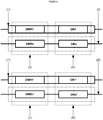
- FIGURE 2 The general arrangement of the DMRs and other regions ("OR") used in one embodiment of the present invention, is graphically represented by FIGURE 2 : (1a) DMR1 is found in exon 2 of RASSF1A and OR1 is located within exon 4 of RASSF1A, with DMR1 located between positions 50,340,672bp and 50,340,784bp and OR1 located between positions 50,331,604bp and 50,331,702bp of the RASS1A genomic sequence (NCBI Reference Sequence: NC_000003.12 Homo sapiens chromosome 3, GRCh38 Primary Assembly), separating DMR1 and OR1 by a distance of 8,969bp.
- NCBI Reference Sequence NC_000003.12 Homo sapiens chromosome 3, GRCh38 Primary Assembly
- DMR2 is found in the promoter region of TBX3, with DMR2 located between positions 114,687,095bp and 114,687,189bp and OR2 is located between positions 114,676,384bp and 114,676,454bp of the TBX3 genomic sequence (NCBI Reference Sequence: NC_000012.12 Homo sapiens chromosome 12, GRCh38 Primary Assembly), separating DMR2 and OR2 by a distance of 10,640bp.
- Methylation in DNA at the two DMRs is detected using probe-based quantitative PCR using the respective forward (F) and reverse (R) PCR primers and region-specific probes, each probe labelled with the same labels (P*).
- FIGURE 6 The general arrangement of the DMRs and other regions ("OR") used in another embodiment of the present invention, is graphically represented by FIGURE 6 : (1) DMR1 is found in eg DSCAM and OR1 is located in eg DSCAM, with DMR1 located between positions 40,841,691bp and 40,841,781bp and OR1 located between positions 40,841,286bp and 40,841,772bp of the DSCAM genomic sequence (Down Syndrome Cell Adhesion Molecule; NCBI Reference Sequence Homo sapiens chromosome 21, GRCh38.p2 Primary Assembly: NC_000021.9 GI:568815577, region 40010999 to 40847113; SEQ ID No.: 200), separating DMR1 and OR1 by a distance between about 300bp and 500 bp.
- DMR1 is found in eg DSCAM
- OR1 is located in eg DSCAM, with DMR1 located between positions 40,841,691bp and 40,
- DMR1' is found in TBX3 and OR1' is located in TBX3 , with DMR1' located between positions 114,687,093bp and 114,687,191bp and OR1' located between positions 114,676,384bp and 114,676,454 of the TBX3 genomic sequence (NCBI Reference Sequence: NC_000012.12 Homo sapiens chromosome 12, GRCh38 Primary Assembly), separating DMR1' and OR1' by a distance between about 10,600bp and 10,810bp.
- a given probe comprises a sequence set forth in TABLE 1 or TABLE 8 and any one of the label and quencher pairs (optionally, with a minor binding groove moiety) as set forth in TABLE 1 or TABLE 8.
- the probe may comprise the combination of the sequence with the label and quencher pair (optionally, with the minor binding groove moiety) as set forth in TABLE 1 or TABLE 8 for such probe.
- inventions of the present invention comprise or comprise the use of the specific combination of two or more (for example, of all) the foregoing DMRs, ORs, sequences of the primers and/or probes, in particular the combination of the primers/probes as set forth in TABLE 1 or the combination of the primers/probes as set forth in TABLE 8.
- methylation site(s) will be art-recognised, and has a meaning that encompasses, for example, a CpG motif within a short nucleotide sequence (eg one that is 4, 6, 8, 10 or 12 bp in length) that is, preferably, recognised by a methylation-sensitive restriction enzyme, such as one disclosed elsewhere herein.
- a CpG motif within a short nucleotide sequence (eg one that is 4, 6, 8, 10 or 12 bp in length) that is, preferably, recognised by a methylation-sensitive restriction enzyme, such as one disclosed elsewhere herein.
- the other region when located in particular portions and/or genes of the genome, may be located in a promoter, enhancer region or an exon of a gene, or alternatively, located in an intron of such a gene, or in a non-coding region of the genome.
- such genome and/or gene is a human genome or gene.
- an other region used in the present invention when located in the same portion of the genome and/or gene that features one or more DMRs (preferably, non-overlapping with a DMR used in the invention), then it is located in a portion of the genome and/or gene such as a gene (eg human, and/or in particular when said species of DNA is foetal cfDNA) that is RASSF1A and/or TBX3, or is selected from the group consisting of: RASSF1A, TBX3, HLCS, ZFY, CDC42EP1, MGC15523, SOX14 and SPN and DSCAM.
- a gene eg human, and/or in particular when said species of DNA is foetal cfDNA
- such other region may, in certain embodiments, be located in a (eg human) housekeeping gene (such as GAPDH, beta-actin, ALB, APOE or RNASEP).
- the other region may be located in particular portions and/or genes of the genome, and may be located in a promoter, enhancer region or an exon of a gene, or alternatively, located in an intron of such a gene, or in a non-coding region of the genome.
- a human housekeeping gene such as GAPDH, beta-actin, ALB, APOE or RNASEP.
- the other region may be located in particular portions and/or genes of the genome, and may be located in a promoter, enhancer region or an exon of a gene, or alternatively, located in an intron of such a gene, or in a non-coding region of the genome.
- such genome and/or gene is a human genome or gene.
- an other region used in the present invention is located in a (eg human) housekeeping gene (such as GAPDH, beta-actin, ALB, APOE or RNASEP).
- a housekeeping gene such as GAPDH, beta-actin, ALB, APOE or RNASEP.
- said other region may be located in the same portion of the genome and/or gene that feature one or more DMRs (such as those RASSF1A, TBX3, HLCS, ZFY, CDC42EP1, MGC15523, SOX14 or SPN or DSCAM), and preferably does not overlap with a DMR used in the invention.
- said other region comprises a portion of the genome without a methylation site specific for said reagent, and said other region is located in the (eg human) genes RASSF1A or TBX3 (eg SEQ ID NOs,: 13 and 14 respectively) or DSCAM (SEQ ID No.: 200), and includes more particular embodiments wherein two or more of said other regions are used in detection step (c) and the first other region is located between about positions 14,220bp and 13,350bp of such RASSF1A and the second other region is located between about positions 12,400bp and 13,000bp of such TBX3.
- RASSF1A or TBX3 eg SEQ ID NOs,: 13 and 14 respectively
- DSCAM SEQ ID No.: 200
- an other region is located in RASSF1A between about positions 14,230bp and 14,340bp, 14,230bp and 14,330bp, 14,230bp and 14,320bp, or 14,230bp and 14,310bp of such RASSF1A; and/or is located in TBX3 between about positions 12,400bp and 12,940bp, 12,700bp and 12,850bp or 12,710bp and 12,790bp of such TBX3 (such as SEQ ID No.: 204); and/or is located in DSCAM between about positions 40,841,150bp and 40,841,525bp, 40,841,200bp and 40,841,475bp or 40,841,250bp and 40,841,425bp of DSCAM (with reference to Homo sapiens chromosome 21, GRCh38.p2 Primary Assembly: NC_000021.9 GI:568815577, region), such as SEQ ID No.: 202.
- an other region may be located in an exon such as between about positions 13,790bp and 13,880bp, or 14,490bp and 14,600bp of such RASSF1A, or between about positions 8,040bp and 8,180bp or 6,230bp and 6,350bpof such TBX3; or an other region may be located in an intron such as between about positions 10,500bp and 11,90bp of such RASSF1A, or between about positions 10,000bp and 11,000bp of such TBX3
- the level of foetal cfDNA (and/or total cfDNA) present in the circulatory system (eg in plasma) of a pregnant female is a marker of one or more forms of preeclampsia, such as early-onset preeclampsia, mild and/or severe preeclampsia (see Hahn et al 2011, Placenta 32(Supl):S17 ).
- the present invention shows particular utility in the efficient, effective, sensitive and/or low-variability detection/quantification of foetal cfDNA present in plasma of pregnant females, and the present invention has particular utility therein.
- the individual is a pregnant female and is susceptible to suffering or developing a pregnancy-associated medical condition; particularly where said pregnancy-associated medical condition is preeclampsia.
- a pregnancy-associated medical condition is preeclampsia.
- an individual "susceptible to" a medical condition may alternatively be described as “is suspected to” or to "be considered at risk of being susceptible to” suffering or developing a medical condition; and in certain embodiments, the present invention is used to screen and/or diagnose the individual for susceptibility to, risk of suffering or developing, or suffering from or developing, a medical condition.
- the individual is a pregnant female and is susceptible to (or considered at risk of being susceptible to) suffering or developing a pregnancy-associated medical condition selected from the group consisting of: preterm labour, intrauterine growth retardation and vanishing twin.
- a pregnancy-associated medical condition selected from the group consisting of: preterm labour, intrauterine growth retardation and vanishing twin.
- the inventors were surprised that the sensitivity of the present invention was such that discrepancies between cfDNA levels determined by the method of the invention and that determined by counts of Y-chromosome sequences as determined by massively parallel sequencing approaches, was useful in identifying one or more cases of a vanishing twin in (mixed-sex) twin pregnancies that previously were believed to be singleton pregnancies, and/or to follow the relative development and health of one or other of such (mixed-sex) twin pregnancies.
- the present invention may also be utilised in gender determination of twin pregnancies, by consideration of the relative values for foetal cfDNA compared to counts of Y-chromosome sequences determined from cfDNA (eg by using parallel sequencing approaches).
- approaches that use massively-parallel sequencing of random cfDNA in maternal blood typically always count a very low frequency of "Y-chromosome” sequences (such as between about 0.003% and 0.004% of all sequences, or between about 0.0015% and 0.01% or 0.002% and 0.005% of all sequences) in all female pregnancies due to homology of certain Y-chromosome short sequences to other chromosomes.
- a cut off of "Y-chromosome" sequence counts of about 0.005%, or between about 0.003%, 0.004%, 0.006% or 0.007%, may therefore be employed for female samples.
- the sample is a tissue sample or a sample of biological fluid.
- the sample is whole blood or a blood fraction (eg, such as plasma or serum).
- the sample is biological fluid selected from the group consisting of: urine, saliva, sweat, tears, phlegm, vaginal secretion, vaginal wash and colonic wash.
- the sample is a plasma or serum sample from the individual, or is urine from the individual.
- the sample is largely (or essentially) free from cells, and/or is not a whole blood sample.
- the reagent that differentially modifies methylated and non-methylated DNA comprises an agent that selectively digests unmethylated over methylated DNA (for example, such agent may digest unmethylated DNA but not methylated DNA).
- the reagent/agent comprises: at least one methylation sensitive restriction enzyme; and/or an agent selected from the group consisting of: AatII, AciI, AclI, AfeI, AgeI, AgeI-HF, AscI, AsiSI, AvaI, BceAI, BmgBI, BsaAI, BsaHI, BsiEI.
- said reagent is one selected from the group consisting of: BstUI, HhaI and HpaII.
- the reagent may comprise two or more of any of the reagents disclosed herein.
- it may comprise two, three, four, five or more (eg up to seven, eight or ten) methylation sensitive restriction enzymes, including a reagent comprising or essentially consisting of two or three of the methylation sensitive restriction enzymes selected from the group consisting of: BstUI, HhaI and HpaII
- bisulphite-modified DNA methylation sites may be detected using eg methylation-specific PCR (such as using primers and/or probes that selectively bind to the bisulphite-modified sequences) and/or by the subsequent use of restriction enzymes the recognition site of which is created upon such bisulphite-modification.
- Methylation-specific PCR (“MSP") is described by Herman et al (US6200756 , EP0954608 and related family members); and a further development of MSP using probe-based PCR (known as "MethylLight") is described by Laird et al (US6331393 , EP1185695 and related family members).
- a quantitative amount of said species of DNA is to be detected and/or determined.
- one or more (eg each) of said detection steps comprises quantitative detection and said detected amount of said species of DNA is expressed as a relative concentration of said species of DNA to the total DNA present in said sample.
- an absolute amount of total DNA is known, then correspondingly an absolute amount (for example, as represented by a concentration such as ⁇ g/mL or genome-equivalents such as Eg/mL) of the species of DNA can be determined from such relative concentration.
- An absolute amount of total DNA for a sample may be determined, for certain embodiments, by including the further steps of: detecting an amount of total DNA in a standard sample of DNA of known amount using the same other regions(s) as used in step (c); and comparing the signal detected from said standard sample of DNA to the signal detected in step (c).
- Such a standard sample of DNA (of known amount/concentration) is readily available from commercial sources, and especially if prepared and analysed using a dilution series, can readily and efficiently be used to determine (by interpolation/estimation from the standard curve) an absolute amount of total DNA present in the sample.
- such standard curve may be prepared and analysed essentially as described for the other regions (but in a separate set of standard vessels/reactions), preferably in the same run as the detection of the DMRs/other region(s); and may even use the same reaction master-mix. Accordingly, while the "DMR(s)" of the DNA control may be detected for such standard DNA, such a signal is not required to generate a standard curve. Accordingly, if the signal from a such a standard DNA sample is used to compare, the in certain embodiments where each of said detection steps comprises quantitative detection, said detected amount of said species of DNA can be expressed as an absolute amount of said species of DNA in said sample.
- a determined quantitative amount of said species of DNA has utility in assessing the risk of the individual to certain medical conditions and/or if there is sufficient of such species of DNA in the sample to enable further analysis of such species of DNA to be conducted efficiently, accurately and/or in a cost effective manner.
- certain embodiments of the present invention further include the step of: comparing the amount of said species of DNA detected with a threshold amount and/or reference distribution of amounts, wherein an increase in the (or outlying) amount of said species of DNA indicates an increased risk of the individual suffering from or developing a medical condition.
- Threshold amounts and/or a set of amounts to form a reference distribution may be obtained from published literature and/or empirical studies.
- Such a risk may instead or additional be assessed by considering: (i) the fold-increase (eg 1.5, 3, 3.5 or 4-fold increase) of foetal cfDNA (determined for such woman compared to a threshold amount), factoring into the determination that for later-term pregnancies a higher fold-increase in foetal cfDNA may be utilised ( Zeybek et al 2013, J Obstet Gynaecol Res 39:632 ); and/or (ii) into which percentile the amount of cfDNA determined from the woman falls, from consideration of a reference distribution of amounts such as those determined from low-risk women or those which did not suffer from or develop preeclampsia, for example if the foetal cfDNA fraction falls within the 90 th percentile of such a distribution, then the woman may be considered to have an increased risk of suffering mild or severe preeclampsia ( Jakobsen et al 2013, Transfusion 53:1956 ). Other relevant factors may be considered in determining
- certain embodiments of the present invention further include the step of: comparing the amount of said species of DNA detected with a threshold amount and/or reference distribution of amounts, wherein an amount of said species of DNA in excess to said threshold (or is not an outlier compared to said population) indicates that a diagnosis for an abnormality in the said species of DNA present in said sample may be performed on, preferably a separate aliquot of DNA of, said sample.
- foetal cfDNA fraction is greater than about 10%, 9%, 8%, 7%, 6%, 5%, 4%, 3%, 2%, 1% or 0.5% of total cfDNA present in maternal plasma, then there would be sufficient fraction of foetal cfDNA to effectively conduct a subsequent test to investigate one or more characteristics of the foetal cfDNA, for example to investigate the chance or existence of a chromosomal anomaly of mutation comprised within such foetal cfDNA (such as using NIPT based on massively parallel sequencing).
- a minimum foetal fraction of cfDNA for NIPT of a twin pregnancy could be considered to be 8%, or about 5%, 6%, 7%, 9% or 10%, and for monochorionic twin pregnancies with concordant genotypes (apart from rare exceptions, Chen et al, 2013, Am J Med Genet A, 161A:1817 ), a foetal cfDNA fraction of 4%, or about 2%, 3% or 5%, would be sufficient.
- the threshold amount(s) may be established by a standard control; for example, established experimentally from a known sample (or a plurality of known samples) once or separately, and/or a threshold amount(s) that is established (eg a from a sample or plurality of known samples) at about the same time as the test sample (or test samples), such as in the same run, in particularly by establishing the threshold amount(s) by practicing a method of the present invention on samples contained in wells of a microtitre plates where one or more known samples placed in one or more (separate) wells and one or more test samples placed in other wells.
- a comparison with a threshold amount and/or reference distribution of amounts is made from the relative amount (such as the ratio of) the amount of a first species of DNA to the amount of second species of DNA.
- a first species of DNA originating from a normal diploid set of human chromosomes 21 would be expect to show about a 2:2 (ie 1:1) ratio to the amount of a second species of DNA originating from a reference (diploid) set of eg chromosome 2.
- a ratio would be expected to be about 3:2.
- chromosomal (or partial chromosomal) aneuploidies would be expect to show other ratios, for example 1:2 in the case of a loss of a complete chromosome, or a partial loss such as a partial deletion of the location of the first species of DNA, compared to the reference chromosome comprising the location of the second species of DNA.
- the presence of other DNA such as euploid maternal cfDNA in admixture with aneuploid foetal cfDNA could result in modified such ratios depending on the relative amounts of (euploid) maternal and (aneuploid) foetal cfDNAs.
- modified such ratios may result from other factors such as the relative reaction (eg PCR reaction) efficiency of each amplicon.
- the threshold amount is a ratio that is (detectably and/or significantly) greater or smaller than 2:2 (100%) such as about 3:2 (150%), about 2:3 (66%), about 1:2 (50%) or about 2:1 (200%); including threshold amounts and/or ratios that are greater than about 200%, less than about 50%, or is one selected from the list consisting of about: 190%, 180%, 170%, 160%, 150%, 140%, 130%, 120%, 110%, 105%, 95%, 90%, 85%, 80%, 75%, 70%, 65%, 60%, and 55%.
- the threshold amount may be determined merely by there being no detectable amount of the first (or second) species of DNA, such as in Turners syndrome (a human female with a "45, X” karyotype rather than the fully euploid "46,XX” karyotype).
- Comparing and detecting differences between sample distributions and reference distributions, or sample outliers from reference distributions will be known to the person of ordinary skill, and include the use of parametric and non-parametric statistical testing such as the use of (one- or two-tailed) t-tests, Mann-Whitney Rank Sum test and others, including the use of a z-score, such as a Median Absolute Deviation based z-score (eg, such as used by Stumm et al 2014, Prenat Diagn 34:185 ).
- a z-score such as a Median Absolute Deviation based z-score (eg, such as used by Stumm et al 2014, Prenat Diagn 34:185 ).
- the comparison is distinguished (and/or identified as being significantly different) if the separation of the means, medians or individual samples are greater than about 1.5, 1.6, 1.7, 1.8, 1.9, 1.95, 1.97, 2.0, or greater than about 2.0 standard distributions ("SD") of the reference distribution; and/or if an individual sample separates from the reference distribution with a z-score of greater than about 1.5, 1.6, 1.7, 1.8, 1.9, 2.0, 2.5, 2.7, 2.8, 2.9, 3.0, 3.1, 3.2, 3.3, 3.4, 3.5, 3.75, 4.0, 4.5, 5.0 or greater than about 5.0.
- SD standard distributions
- a parameter (such as a mean, median, standard deviation, median absolute deviation or z-score) is calculated in respect of a set of samples within each run, plate or detection/analysis data-set.
- a calculated parameter is used to identify outliers (such as trisomy samples) from those test samples detected/analysed in such run, plate or data-set (eg, a "run-specific” analysis).
- outliers such as trisomy samples
- such a parameter is calculated from all test samples without knowledge of the identity of any outliers (eg a "masked” analysis).
- such a parameter is calculated from a set of reference samples know to be (non-outlying) standards (such as samples known to contain cfDNA from euploid foetuses) or test samples that are presumed to be (or are unlikely to be) such standards.
- a z-score (or an equivalent statistic based on the distribution pattern of replicates of a parameter) may be calculated to identify an outlying data point(s) (for example, representing an excessive amount of the species of DNA such as in the context of a test seeking to identify a pregnant female predicted to have or having an increased risk of suffering or developing preeclampsia, or representing an excessive amount of one chromosome over a reference chromosome such as in the context of a test seeking to identify a foetus suffering from a chromosomal aneuploidy), the data representing such data point removed from the data set and a subsequent z-score analysis be conducted on the data set to seek to identify further outliers.
- an outlying data point(s) for example, representing an excessive amount of the species of DNA such as in the context of a test seeking to identify a pregnant female predicted to have or having an increased risk of suffering or developing preeclampsia, or representing an excessive amount of one chromosome over a reference chromos
- Such an iterative z-score analysis may be particular helpful in detection of foetal chromosomal aneuploidies using a method of the present invention, where sometimes two or more aneuploidy samples in one run may skew a single z-score analysis, and/or where follow-up tests are available to confirm false positives and hence avoiding false negatives is potentially more important that the (initial) identification of false positives.
- the present invention also includes embodiments where comprising a further step of: performing on, preferably with a separate aliquot of DNA of, said sample an in-vitro diagnosis for an abnormality in said species of DNA present in said sample; preferably wherein, said species of DNA originates from cells of a foetus and/or the placenta of a foetus, said sample is from a pregnant female and said diagnosis is a prenatal diagnosis.
- diagnosis directed at said species of DNA present may comprise a step that uses a detection technology selected from the group consisting of: DNA sequencing, SNP analysis, digital PCR and hybridization, and in particular embodiments said detection technology is massively parallel sequencing of DNA, such as massively parallel sequencing of random and/or (exon) enriched DNA.
- such an in-vitro diagnosis is conducted on the same aliquot of DNA.
- a method of the present invention may be conducted (or modified to so conduct) so as to enable such a diagnosis from the practice of such a method without the need for a further detection technology.
- Such methods provide particularly advantageous solutions to solve the need for more rapid, simpler and less expensive approaches to provide such diagnostic tests. Particular aspects and/or embodiments of the present invention that provide for such advantageous solutions are described herein.
- Such a diagnosis or test may be directed at the foetal DNA to identify a genetic mutation or chromosomal abnormality of the foetal DNA.
- said species of DNA originates from cells of a foetus and/or the placenta of a foetus
- said sample is from a pregnant female and said abnormality is a genetic mutation or a chromosomal abnormality, such as a chromosomal trisomy, associated with a foetal abnormality and/or a congenital disorder
- the genetic mutation is selected from the group consisting of: colour blindness, cystic fibrosis, hemochromatosis, haemophilia, phenylketonuria, polycystic kidney disease, sickle-cell and disease, Tay-Sachs disease; and/or the chromosomal abnormality is selected from the group consisting of: a trisomy (such as trisomy 21, trisomy 18, or trisomy 13), a sex
- the genetic mutation or chromosomal abnormality may be one or more selected from those having a clinical utility gene cards (CUGCs) of the EuroGentest2 initiative (www.eurogentest.org).
- the chromosomal abnormality is a trisomy (such as trisomy 21, trisomy 18, or trisomy 13), a sex-chromosome abnormality or a chromosomal deletion.
- FIGURE 6 a schematic representation of the general arrangement of the DMR(s), the other region(s) and the detectable label(s), as used for such an embodiment of the first aspect of the present invention, is presented in FIGURE 6 .
- a first species of DNA such as a particular chromosome for example human chromosome 21
- OR1 an other region which is located within the same portion of the genome (eg, between about 20bp and about 20kb upstream or downstream of) DMR1.
- additional DMRs and/or ORs may be detected, and pairs of such additional DMRs and ORs may each be co-located in a same portion of the genome (eg, between about 20bp and about 20kb upstream or downstream of) as each other, and in each case all detecting the same first species of DNA (such as the same chromosome for example human chromosome 21).
- the presence of methylation in such first species of DNA is detected at multiple DMRs, using the same detectable label(s) and/or (4) the first amount of total DNA detected using at least one OR (OR1, and optionally, OR2 or up to ORn) is detected using different detectable label(s) to those used to detect methylation at the DMR(s) representing the first species of DNA (optionally, the detectable label(s) used is the same for all the ORs).
- the first species of DNA is detected, identified and/or quantified in comparison to that of a second species of DNA (such as a reference chromosome for example human chromosome 2).
- Such second species of DNA is detected as described for first species of DNA, but using different DMR(s) and OR(s) - represented by the "prime” after each on the figure, and with reference to the explanatory labels.
- DMR(s), OR(s), DMR(s)' and OR(s)' are made using the same aliquot of DNA of said sample, in the same reaction/detection vessel, and/or effectively simultaneously with each other (for example by multiplex real-time quantitative probe-based PCR as described herein, such as by using at least one labelled probe specific for each of said DMR(s) and other regions(s))
- such embodiments include those where the detectable label(s) (3), (4), (3)' and (4)' are different, and/or can be separately detected and/or quantified.
- the practice of such a method as described in the previous paragraphs can enable the relative detection (or amount) of the first species of DNA (for example, from a chromosome, or part thereof, related to a chromosomal aneuploidy such as human chromosome 21) and the second species of DNA (for example, from a reference chromosome, or part thereof, such as chromosome 2), and hence aid the rapid, simple and cost-effective detection, identification or diagnosis of chromosomal abnormalities, such as a chromosomal aneuploidy in a foetus.
- the first species of DNA for example, from a chromosome, or part thereof, related to a chromosomal aneuploidy such as human chromosome 21
- the second species of DNA for example, from a reference chromosome, or part thereof, such as chromosome 2
- detection in step (b) of said first and second DMR (or set of DMRs) and said detection in step (c) of said first and second other regions are made using the same aliquot of DNA of said sample, and in the same reaction/detection vessel, and effectively simultaneously for such DMRs and other regions, and using: (x) a different detectable label(s) for each of said first and second DMR (or set of DMRs); and (y) further different detectable label(s) for each of said first and second other regions.
- the relative detection, identification or quantification of the first and the second species of DNA is, in those embodiments conducted in the same reaction/detection vessel and effectively simultaneously, advantageously made by the use of detectable labels that can distinguish the first from the second (set of) DMRs and their corresponding first and second other regions.
- detection (b) and (c) is conducted in the same reaction/detection vessel and effectively simultaneously includes where said detection in step (b) and said detection in step (c) are made by multiplex real-time quantitative probe-based PCR using at least one labelled probe specific for each of said DMRs and other regions.
- the agent comprises at least one methylation sensitive restriction enzyme, such as one or more of those described elsewhere herein.
- the agent may additionally comprise bisulphite, particular for those methods that utilise MSP or MethylLight detection approaches as described herein.
- each of said detection steps comprises quantitative detection.
- said detected amount of each of said species of DNA is expressed as a relative concentration of said species of DNA to the respective amount of total DNA detected in said sample from the respective other region.
- the methods of the present invention can further comprise the steps of detecting an amount of total DNA in a standard sample of DNA of known amount using the same other regions as used in step (c); and comparing the signal detected from said standard sample of DNA to the respective signal detected in step (c) for each of the other regions.
- each of said detection steps comprises quantitative detection and said detected amount of said species of DNA is expressed as an absolute amount of each or said species of DNA in said sample.
- such methods can further comprise the steps of:
- a chromosomal abnormality such as a chromosomal abnormality is associated with a foetal abnormality and/or congenital disorder.
- a chromosomal abnormality may be selected from the group consisting of: a trisomy (such as trisomy 21, trisomy 18, or trisomy 13), a sex-chromosome abnormality (such as Turners syndrome, Klinefelter syndrome, [Noonan syndrome,] Triple X syndrome, XXY syndrome, or Fragile X syndrome or XYY syndrome or XXYY syndrome), a chromosomal deletion (such as Prader-Willi syndrome, Cris-du-chat syndrome, Wolf-Hirschhorn syndrome, or 22q11 deletion syndrome, Duchene muscular dystrophy), Beckwith-Wiedemann syndrome, Canvan syndrome, and neurofibromatosis.
- a trisomy such as trisomy 21, trisomy 18, or trisomy 13
- a sex-chromosome abnormality such as Turners
- a further additional aspect of the invention relates to a composition (eg, one that is useful for, or used in, a method of the present invention), said inventive composition comprising:
- PCR primers for amplifying said first region of (i) overlap two or three recognition sequences for a methylation sensitive restriction enzyme, and/or said PCR primers flank one, two, three or more recognition sequences for a methylation sensitive restriction enzyme.
- kits for example a kit of separate components; such as a kit of holders or vessels, each holding a different component of the kit), such kit comprising a set of primers and probes as comprised in a composition of the present invention.
- kit of the present invention may comprise additional components.
- the kit may additionally comprise: (i) a printed manual or computer readable memory comprising instructions to use said primers and probes, including to use them to practice a method of the present invention and/or to produce or use a composition of the present invention; and/or (ii) one or more other item, component or reagent useful for the practice of a method of the present invention; and/or the production or use of the composition of the present invention, including any such item, component or reagent disclosed herein, such as a reagent that differently modifies methylated and non-methylated DNA as set forth anywhere herein.
- one or more of the primers or probes comprised therein comprises (or consists of) a primer or probe sequence selected from one set forth in TABLE 1 and/or TABLE 8.
- the composition or the kit comprises the pair or primers and a probe as set forth in TABLE 1 for each of (x) one of the DMRs; and (y) one of the ORs; and in further such embodiments, the pair or primers and a probe as set forth in TABLE 1 for all of (x) the two the DMR; and (y) the two ORs set forth therein.
- composition or the kit comprises the pair or primers and a probe as set forth in TABLE 8 for all of (x) the two the DMR; and (y) the two ORs set forth therein.
- the probes may be labelled with the label/quencher (and optionally a minor grove binding moiety) as set forth in the respective table for such probe.
- Another further aspect of the invention relates to a use of a computer program product for performing a method for determining if a diagnosis for an anomaly in a species of DNA originating from cells of a given type may be performed, from a sample from an individual comprising a species of DNA originating from cells of a given type in admixture with differently methylated DNA not originating from cells of said type wherein said species of DNA originates from cells of a foetus and/or the placenta of a foetus and said sample is from a pregnant female and the anomaly is a chromosomal abnormality associated with a foetal abnormality and/or congenital disorder, the DNA present in said sample being treated with a reagent that differentially modifies methylated and non-methylated DNA, wherein said reagent comprises at least one methylation sensitive restriction enzyme;
- the computer program product comprises a plurality of instructions for controlling a computing system which are encoded on a computer readable medium; said method comprising the steps of:
- the operation of the computer program product further comprises steps of: receiving a further signal representing the quantitative detection of total DNA in a standard sample of DNA as set forth anywhere else herein; and comparing said signal with the signal representing the essentially simultaneous quantitative detection of total DNA using at least one other region, so as to determine said parameter that represents an absolute quantitative amount of said species of DNA.
- the computer program product of the present invention is for an operation for determining if a diagnosis for an anomaly in said species of DNA may be performed, and said operation further comprises the step of determining from said parameter a number of random and/or enriched DNA molecules to be sequenced from, preferably from a separate aliquot of DNA of, said sample as part of said diagnosis.
- a chromosomal abnormality associated with a foetal abnormality and/or congenital disorder.
- a chromosomal abnormality may be selected from the group consisting of: a trisomy (such as trisomy 21, trisomy 18, or trisomy 13), a sex-chromosome abnormality (such as Turners syndrome, Klinefelter syndrome, [Noonan syndrome,] Triple X syndrome, XXY syndrome, or Fragile X syndrome or XYY syndrome or XXYY syndrome), a chromosomal deletion (such as Prader-Willi syndrome, Cris-du-chat syndrome, Wolf-Hirschhorn syndrome, or 22q11 deletion syndrome, Duchene muscular dystrophy), Beckwith-Wiedemann syndrome, Canvan syndrome, and neurofibromatosis.
- a trisomy such as trisomy 21, trisomy 18, or trisomy 13
- a sex-chromosome abnormality such as Turners syndrome, Klinefelter syndrome, [Noonan
- Operation (A) receives signals (1) and (2) that represent, respectively, the methylation at the DMR(s) and the total DNA, and optionally signal (3) then represents an amount of total DNA from a standard sample.
- Operation (A) determines a parameter (4) from signals (1), (2) and optional (3) that represents a relative or absolute amount of DNA (eg from foetal vs total DNA).
- This parameter (4) is compared by operation (B) against a threshold amount (5) and/or a reference population of amounts (6) so as to classify (7) the risk of an individual suffering from a medial condition and/or if a diagnosis for an anomaly in either of the DNA in the sample may be performed.
- EXAMPLE 1 Use of the method of the invention in NIPT in multiple pregnancies, including in cases of vanishing twins
- Plasma preparation was performed by centrifugation (1600g for 10min at 4°C) and plasma separation followed by a second centrifugation step (16000g for 10min at 4°C). Extraction of total cell-free DNA (cfDNA) was performed with QIAamp Circulating Nucleic Acid Kit (Qiagen) according to the manufacturer protocol using 3.0-4.0ml plasma with a final elution volume of 60ul AVE-buffer (Qiagen).
- Foetal cell-free DNA was detected and quantified in relation to total cell-free DNA (total cfDNA) in order to determine the foetal cfDNA fraction as both a relative concentration and absolute amount using a method of the present invention.
- 11ul were digested with the CpG-methylation sensitive enzymes Hha I (0.4U/ul), Hpa II (0.3U/ul) and Bsf UI (0.3 U/ul) in a 22ul reaction using CutSmartTM Buffer (New England Biolabs). The reaction was incubated for 60min at 37°C and 60min at 60°C. 10ul from the digestion reaction was used as template DNA for quantitative probe-based PCR (reactions were conducted in duplicate), described briefly as follows.
- a 25ul PCR reaction using a 2-fold concentrated PCR master mix (QuantiFast Multiplex PCR Kit, Qiagen) was conducted.
- Primers that span CpG methylation sensitive restriction enzyme sites of the respective region that is differentially methylated between foetal and maternal DNA (as a DMR) were used in combination with FAM-labelled probes for such DMRs, and primers that do not span any restriction enzyme sites, an other region that is not differentially methylated between foetal and maternal DNA (as an OR) are used in combination with VIC-labelled probes for such ORs.
- thermocycler profiles used for the quantitative probe-based (TaqMan) PCR (LightCycler 480 II Instrument; Roche) are described in TABLE 2.
- the probes used to detect the presence of the two DMRs are each labelled with the same detectable fluorescein amidite (FAM) fluorescent moiety, and each with the same minor binding grove (MGB) non-fluorescent quencher (NFQ) moiety, and the probes used to detect the presence of the two ORs, are each labelled with the same detectable VIC (life Technologies) fluorescent moiety, and each with the same MGBNFQ moiety.
- FAM detectable fluorescein amidite
- MGB minor binding grove
- NFQ non-fluorescent quencher
- the assay design used in this example is based on two marker DMRs which are described to be hypomethylated in maternal DNA and hypermethylated in foetal DNA ( Nygren, et al, 2010: Clin Chem 56, 1627 ; Chan et al, 2006: Clin Chem 42, 2211 ; Chiu et al, 2007: Am J Pathol 170, 941 ), and two other regions (ORs) not differentially methylated between maternal and foetal DNA which are each located between about 20bp and 20kb of their DMR.
- the methylation insensitive locus located in RASSF1A is located between 8kb and 9kb (8.97kb) downstream of the methylation sensitive locus located in RASSF1A
- the methylation insensitive locus located in TBX3 is located between 10kb and 11kp (10.64kb) downstream of the methylation sensitive locus located in TBX3.
- FIGURE 2 depicts the respective arrangements and detection modalities of the two DMRs and the two other regions used in this example.
- DNA sequencing libraries were prepared using NEBNext UltraTM DNA Library Prep Kit from Illumina. Libraries were prepared according to the manufacturer protocol automated on a Hamilton STARplus robot. Library quality and quantity was measured using a Bioanalyzer instrument (Agilent) and a Qbit Fluorometer (Invitrogen). Based on the library quantification dilutions and equimolar pools of 12 samples per pool were prepared. The pooled samples were sequenced on one lane of an Illumina v3 flow cell on an Illumina HiSeq2000 sequencer. Clonal clusters were generated using TruSeq SR Cluster Kit v3-cBot-HS on a cBot Cluster generation System according to the manufacturer protocol.
- chorinicity amnionicity NIPT result LCMPC05 1.3 -1.0 -0.8 16.7 11+5 3, trichorionic, triamniotic negative LCMPC06 -0.4 1.1 8.5 18.0 13+2 2, monochorionic, n.a.
- negative LCMPC15 2.2 0.1 14.7 24.8 16+0 2, dichorionic, diamniotic T21 positive LCMPC16 1.1 1.7 0.5 5.4 12+5 2, n.a., n.a. negative LCMPC17 0.7 1.4 0.5 16.5 14+2 2, n.a., n.a. negative LCMPC18 0.3 2.6 0.0 18.5 18+3 2, n.a., n.a.
- negative LCMPC24 -1.6 -0.4 -0.5 14.7 22+2 2, monochorionic, diamniotic negative LCMPC25 -0.8 -0.2 -1.5 12.1 11+5 2, n.a., n.a. negative LCMPC26 -0.4 -0.6 -1.3 7.5 13+0 2, dichorionic, diamniotic negative LCMPC27 0.5 -0.8 -0.4 16.3 12+6 2, n.a., n.a. negative LCMPC28 -1.2 -0.3 -0.7 19.4 10+1 2, dichorionic, diamniotic negative LCMPC29 -0.8 0.7 -0.4 14.2 13+2 2, monochorionic, n.a.
- the reliable detection of foetal aneuploidy in twin pregnancies by NIPT is dependent on a sufficiently high amount of foetal cfDNA from each foetus in the maternal blood.
- Different data and considerations have been published on how the lower limit of foetal cfDNA fraction should be defined to ensure that each twin's contribution is above the detection threshold ( Leung et al 2013, Prenat Diag 33:675 ; Qu et al 2007, Am J Pathol 170:941 ; Struble et al 2013, Fetal Diagn Ther Dec 7 Epub ahead of print). This is especially important for dichorionic twin pregnancies with discordant karyotypes.
- the minimum foetal cfDNA fraction for twin pregnancies derived from the Y-chromosomal representation, if only one of the two foetuses is male.
- the total foetal cfDNA fraction can be determined, which reflects the summary of foetal cfDNA derived from both foetuses.
- the foetal cfDNA amount can be determined for male foetuses (as described in Stumm et al 2014).
- the contributing amount of each foetus can be determined by subtraction of the amount of foetal cfDNA determined by the Y-chromosomal representation from the foetal cfDNA fraction measured by method of the present invention.
- the foetal cfDNA fractions determined by the method of the present invention were compared with the values obtained from Y-chromosomal reads from next generation sequencing for cases with known gender (see FIGURE 3 ).
- FIGURE 3 show that it is not only possible to determine the foetal genders using NIPT results for twin pregnancies, but also that the measurement of the amount of foetal fraction of cfDNA determined by the method of the present invention is surprisingly accurate as compared to frequency counting of Y chromosome sequences.
- these data support the hypothesis that each foetus of a twin pregnancy contributes roughly about half of the total foetal cfDNA fraction. This leads to the conclusion that for twin pregnancies, twice the amount of foetal cfDNA would be required, and thus a recommended minimum foetal fraction of cfDNA for NIPT of a twin pregnancy could be considered to be 8%.
- the chorionicity is clearly detectable in the first trimester of a multiple pregnancy, but in later stages detection becomes more difficult ( Sperling et al 2001, Acta Obstet Gynecol Scand 80:287 ). Therefore, it is a safer strategy to generally define a minimum foetal cfDNA fraction for twin pregnancies, which is applicable for monochorionic as well as for dichorionic multiple pregnancies.
- a further blood sample taken in the third trimester of the pregnancy (38+2) turned out to be negative for trisomy 21 and the foetal cfDNA amount measured by Y-chromosomal representation correlated with the foetal amount measured by QuantYfeX (21.7 % and 21.4), which matched the male gender determined by karyotyping of the living foetus.
- a foetus papyraceus was found in the placental tissue from which a sufficient amount of cells could be isolated for cell culture and following GTG banding, a trisomy 21 positive, female karyotype was confirmed (47,XX,+21).
- the male specific foetal cfDNA was suspected to stem from a vanishing twin - maybe the carrier of a trisomy 21 - that was either not recognized or not indicated on the consent form for NIPT.
- the result was reported to be indecisive for chromosome 21 and the conflicting data was reported to the responsible physician, including a notice regarding the potential vanishing twin, for further clarification via ultrasound.
- the responsible physician subsequently confirmed that the pregnancy had started as twin and later continued as a singleton pregnancy.
- the gender of the living and apparently healthy foetus was confirmed to be female and thus, the foetal cfDNA that caused the increased z-score for trisomy 21 can clearly be assigned to a deceased male foetus.
- the pregnancy is still on-going and further analysis of placental tissue and blood of the living foetus is not yet possible.
- EXAMPLE 2 Improved detection sensitivity using two differentially methylated regions using the same detectable moiety/moieties for each differentially methylated region.
- the inventors were surprised to observe that a complex and multiplex reaction detecting two DMRs using the same detectable moiety/moieties for each of said DMR (as well as two other regions (OR) not differentially methylated) was more sensitive to detect foetal cfDNA fraction than previous detection reactions that each detected - in separate PCR reactions - a single DMR (as well as a single OR) ( FIGURE 4 ).
- two DMRs (those found in RASSF1A and TBX3, as described in Example 1) were detected (over 4 dilutions) with the same aliquot of DNA and reaction - effectively simultaneously (using quantitative probe-based (TaqMan) PCR) with two ORs (those found in RASSF1A and TBX3, as described in Example 1), using: (x) the same detectable moiety/moieties for each of said DMR; and (y) a detectable moiety/moieties for said at least one OR that is/are different to the detectable moiety/moieties used for said DMRs.
- detection of foetal cf DNA fraction using a multiplex reaction of the two DMRs using different detectable moieties eg FAM for the RASSF1A locus and VIC for the TBX3 locus
- detectable moieties eg FAM for the RASSF1A locus and VIC for the TBX3 locus
- EXAMPLE 3 Detection of an increased risk of a pregnant woman suffering from or developing preeclampsia (prophetic example).
- pregnant women are assessed for their risk of suffering from or developing preeclampsia as follows. Firstly, a blood sample is collected from the woman for whom such risk to be assessed and total cfDNA extracted from the plasma of such sample substantially in accordance with the procedures described in Example 1. Secondly, using a method substantially as described in Example 1, a relative and/or absolute amount of foetal cfDNA and total cfDNA present in the plasma is determined, where the absolute amount of foetal and/or total cfDNA can be expressed as the amount of genome equivalents ("Eq").
- such determined amount of cfDNA and/or total cfDNA is compared to a threshold amount or a reference distribution of amounts, and the women is determined to be at increased risk of suffering from or developing preeclampsia if the amount of foetal cfDNA or total cfDNA exceeds such threshold value and/or is an outlier in such distribution.
- Such a risk may instead or additional be assessed by considering: (i) the fold-increase (eg 1.5, 3, 3.5 or 4-fold increase) of foetal cfDNA (determined for such woman compared to a threshold amount), factoring into the determination that for later-term pregnancies a higher fold-increase in foetal cfDNA may be utilised ( Zeybek et al 2013, J Obstet Gynaecol Res 39:632 ); and/or (ii) into which percentile the amount of cfDNA determined from the woman falls, from consideration of a reference distribution of amounts determined from low-risk women or women who did not suffer from or develop preeclampsia, for example if the foetal cfDNA fraction falls within the 90 th percentile of such a distribution, then the woman is considered to have an increased risk of suffering mild or severe preeclampsia ( Jakobsen et al 2013, Transfusion 53:1956 ).
- the fold-increase eg 1.5, 3,
- Operation (A) receives signals (1) and (2) representing, respectively, foetal and total cfDNA are used by the computer program product to determine a parameter (4) that represents the relative and/or absolute amount of foetal (or total) cfDNA present in the plasma of the woman. This operation may optionally receive a signal (3) representing an absolute amount of standard DNA.
- a second operation (B) compares such determined parameter (4) against a threshold amount (5) and/or a reference population of amounts (6) so as to determine and report (7) whether or not - and based on such comparison - the woman is determined to be at increased risk of suffering or developing preeclampsia.
- EXAMPLE 4 Detection of tumour-associated DNA in samples from cancer patients (prophetic example).
- Methylation of RASSF1A and at least one other DMR such as ER-beta (oestrogen receptor beta), RAR-beta2 (retinoic acid receptor beta 2) and/or Cyclin D2 is used to detect cfDNA derived from a tumour and to assess the risk of women suffering from breast cancer.
- Specific methylation at such DMRs is a characteristic of tumour-derived cfDNA, and a method of the present disclosure is used to detect and to quantify the amount tumour derived cfDNA in the plasma of women, and those determined to have elevated (or outlying) amounts of tumour-derived cfDNA are determined to be at increased risk from suffering from or developing breast cancer.
- DMR2 and OR2 are located in one of ER-beta, RAR-beta2 or Cyclin D2, rather than TBX3. Primers and probes to detect such DMR2 and OR2 are designable by the person of ordinary skill.
- a similar computer program product as described in Example 3 can be used to assess the risk for a given woman is based on the amount of tumour-derived cfDNA present in her blood, but in this example this parameter is compared against a threshold amount or distribution of amounts that is derived from a study of the amount of tumour-derived cfDNA present in control and breast-cancer patients; and those women having an elevated (or outlying) amount of tumour-derived cfDNA are considered to have an increased risk of suffering from or developing breast cancer.
- EXAMPLE 5 Use of a method of the invention in NIPT to detect trisomy 21
- the inventors were surprised to observe that a further adaptation of a method of the present invention could be used to identify cfDNA samples obtained from pregnant females that were carrying a trisomy 21 foetus.
- the amount of a foetal chromosomal 21 DNA species present in cfDNA samples obtained from 138 pregnant human females was determined using a method of the invention, and the amount of a foetal chromosomal 12 (as a reference chromosome) DNA species present in the cfDNA sample was also determined using a method of the invention, and in respect of each pregnant female.
- the relative amounts of such foetal chromosomal 21 species and such foetal chromosomal 12 species was calculated as a ratio, and run-specific z-score analyses using an internal reference set of euploid samples was conducted. Those samples showing a z-score greater than about 3 were determined as "positives".
- the second scatter plot of FIGURE 7 shows that the outlying positive samples are those obtained from the 8 pregnant females of the set of 138 known to carry a foetus with trisomy 21 ("T21"). All eight samples were successfully classified with no false negative or false positive result.
- the amount of a foetal chromosomal 21 DNA species was determined by using, in a method of the present example, a DMR present in the DSCAM gene (Down Syndrome Cell Adhesion Molecule; NCBI Reference Sequence Homo sapiens chromosome 21, GRCh38.p2 Primary Assembly: NC_000021.9 GI:568815577, region 40010999 to 40847113; SEQ ID No.: 200) located on human chromosome 21 and an other region also located between about 300bp and 500bp of the DMR.
- a DMR present in the DSCAM gene Down Syndrome Cell Adhesion Molecule; NCBI Reference Sequence Homo sapiens chromosome 21, GRCh38.p2 Primary Assembly: NC_000021.9 GI:568815577, region 40010999 to 40847113; SEQ ID No.: 200
- the amount of a foetal chromosomal 12 DNA species was determined by using, in a method of the present example, a DMR present in the TBX3 gene (as described above) located on human chromosome 12 and an other region also located between about 10Kb of the DMR.
- the sequences of the respective DMRs and ORs used are described in TABLE 7.
- TABLE 7 Chromosome 21 and chromosome 12 DMRs and ORs Chr. Chr. location Gene Type Sequence (5'-3') SEQ ID No.
- cfDNA samples from 138 pregnant human females including 8 of which were known to carry a foetus with T21 were collected, prepared and digested with the CpG-methylation sensitive enzymes Hha I , Hpa I and BstU I as described in EXAMPLE 1.
- TABLE 8 Primer and probes Chr.
- Region Component Sequence ('-3')** SEQ ID No.* 21 DSCAM DMR Chr21DMR-For ATTGGAAGGTCAGCCAATCAGG 205 Chr21DMR-Rev TCCAAAGCCGCGAGGGAAC 206 Chr21DMR-Probe 207 21 DSCAM Other region Chr21OR-For TCCGTGTGCTCCACCCTTTG 208 Chr21OR-Rev AAGATAAGGCAGTGGGAATGGAAG 209 Chr21OR-Probe 210 12 TBX3 DMR Chr12DMR-For AAGGTGCGAACTCCTCTTTGTC 211 Chr12DMR-Rev AATTAATCACCCAGCGCATGGC 212 Chr12DMR-Probe 213 12 TBX3 Other region Chr12OR-For TGTTCACTGGAGGACTCATC 214 Chr12OR-Rev CAGTCCATGAGGGTGTTTG 215 Chr12OR-Probe 216 *Only nucleotide sequence listed, without dyes/quenchers **The dyes/quenchers
- the format of such assay is generally as depicted in FIGURE 6 , where the DMR1 and OR1 of such figure are located in the DSCAM gene of human chromosome 21, and the DMR1' and OR1' of such figure are located in the TBX3 gene of human chromosome 12 (in this example, each chromosome was detected with only one DMR/OR pair, and hence the optional second pairs represented by (2) and (2') in such figure are not included in the present example).
- the probe for the chromosome 21 DMR is labelled differently from the probe for the chromosome 12 DMR (and each of the ORs are differently labelled).
- the mean [n 6 replicates] sample-specific ratio of the %foetal cfDNA chromosome 21 DNA species and the %foetal cfDNA chromosome 12 DNA species was calculated for each sample, and for each plate the overall mean and standard deviation of such ratios for the known euploid samples were calculated; from which parameters all test samples on such qPCR plate (run) were individually analysed to give a Z-score (on such on a plate-by-plate basis) for each test sample (including those test samples known to be trisomy 21).
- the second scatter plot in FIGURE 7 displays the z-score (calculated on a plate-by-plate basis) for each test sample showing separation of all trisomy samples from the euploid samples.
- EXAMPLE 6 Iterative z-score analysis to detect trisomy 21 in NIPT without reference to known internal euploid standards
- the third scatter plot of FIGURE 7 shows such masked z-scores for all samples across all runs. Thirdly, those samples showing a z-score of greater than about 1.9 were removed from the data set, a second mean and standard deviation was calculated on the data in respect of the remaining samples in the data set and used to conduct a second z-score analysis of all samples in the set.
- the fourth scatter plot of FIGURE 8 shows the z-scores for all samples across all runs following such first iterative elimination.
Landscapes
- Chemical & Material Sciences (AREA)
- Life Sciences & Earth Sciences (AREA)
- Health & Medical Sciences (AREA)
- Organic Chemistry (AREA)
- Proteomics, Peptides & Aminoacids (AREA)
- Engineering & Computer Science (AREA)
- Zoology (AREA)
- Wood Science & Technology (AREA)
- Analytical Chemistry (AREA)
- Genetics & Genomics (AREA)
- Immunology (AREA)
- Physics & Mathematics (AREA)
- Bioinformatics & Cheminformatics (AREA)
- General Health & Medical Sciences (AREA)
- Biotechnology (AREA)
- Biophysics (AREA)
- Pathology (AREA)
- Biochemistry (AREA)
- Microbiology (AREA)
- General Engineering & Computer Science (AREA)
- Molecular Biology (AREA)
- Hospice & Palliative Care (AREA)
- Oncology (AREA)
- Bioinformatics & Computational Biology (AREA)
- Evolutionary Biology (AREA)
- Medical Informatics (AREA)
- Spectroscopy & Molecular Physics (AREA)
- Theoretical Computer Science (AREA)
- Measuring Or Testing Involving Enzymes Or Micro-Organisms (AREA)
- General Chemical & Material Sciences (AREA)
- Chemical Kinetics & Catalysis (AREA)
Claims (26)
- Verfahren für die quantitative Detektion, in einer Probe von einem Individuum, einer Menge einer DNA-Spezies, die aus Zellen eines vorgegebenen Typs stammt, wobei die Probe die DNA-Spezies im Gemisch mit differentiell methylierter DNA, die nicht aus Zellen besagten Typs stammt, umfasst, wobei die DNA-Spezies aus Zellen eines Fötus und/oder der Plazenta eines Fötus stammt und die Probe von einer schwangeren Frau stammt; wobei das Verfahren die Schritte umfasst:(a) Behandeln der in der Probe vorliegenden DNA mit einem Reagens, das methylierte und nichtmethylierte DNA differentiell modifiziert, wobei das Reagens mindestens ein methylierungsempfindliches Restriktionsenzym umfasst;(b) quantitatives Detektieren, in besagter Probe, des Vorliegens von Methylierung in der DNA-Spezies in einer oder mehreren differentiell methylierten Region(en) (DMR(s)), die unterschiedlich zwischen besagter DNA-Spezies und der DNA, die nicht aus Zellen des Typs stammt, methyliert ist(sind), wobei die Modifikation von DNA an einer solchen DMR durch das Reagens für die Methylierung von DNA empfindlich ist, wobei das Vorliegen von methylierter DNA in der DMR auf das Vorliegen der Menge an DNA-Spezies in der Probe hinweist und die Abwesenheit von methylierter DNA in der DMR auf die Abwesenheit der DNA-Spezies in der Probe hinweist, wobei die DMR(s) in fötaler DNA hypermethyliert und in mütterlicher DNA hypomethyliert ist (sind) und wobei die DMR eine, zwei, drei oder mehre Methylierungsstelle(n) umfasst(umfassen), die von dem methylierungsempfindlichen Restriktionsenzym erkannt wird/werden; und(c) quantitatives Detektieren einer Menge an gesamter DNA, die in der Probe vorliegt, unter Anwendung von mindestens einer anderen Region, die keine Methylierungsstelle umfasst, die von dem methylierungsempfindlichen Restriktionsenzym erkannt wird,wobei die andere Region sich zwischen etwa 20 bp und etwa 20 kb stromaufwärts oder stromabwärts von der/den DMR(s) befindet; und
wobei die Detektion in Schritt (b) und die Detektion in Schritt (c) unter Anwendung desselben DNA-Aliquots der Probe und in demselben Reaktions-/Detektionsgefäß und effektiv gleichzeitig für derartige DMR(s) und andere Region(en) ausgeführt werden, und unter Anwendung von: (x) einer detektierbaren Markierung(en) für die DMR(s); und (y) einer anderen detektierbaren Markierung(en) für die andere(n) Region(en); und wobei:(A) als Teil der Detektion in Schritt (b) und Schritt (c) jede DNA-Region, die die DMR und die andere(n) Region(en) umfassen, amplifiziert werden; und(B) jede detektierbare Markierung, die in Schritt (b) und Schritt (c) verwendet wird, eine fluoreszierende Markierung ist; und(C) die Detektion in Schritt (b) quantitative Echtzeit-PCR auf Sondenbasis unter Anwendung mindestens einer markierten Sonde, die für die(eine der) DMR(s) spezifisch ist, umfasst; und(D) die Detektion in Schritt (c) quantitative Echtzeit-PCR auf Sondenbasis unter Anwendung mindestens einer markierten Sonde, die für die(eine der) andere(n) Region(en) spezifisch ist, umfasst. - Verfahren nach Anspruch 1, wobei die Detektion in Schritt (b) das Verwenden von zwei oder mehr der DMRs umfasst.
- Verfahren nach Anspruch 2, wobei dieselbe(n) detektierbare(n) Markierung(en) für jede der DMR verwendet wird/werden.
- Verfahren nach Anspruch 2 oder 3, wobei zwei der DMRs sich an separaten Chromosomen befinden.
- Verfahren nach irgendeinem der Ansprüche 1 bis 4, wobei die Detektion in Schritt (c) das Verwenden von mindestens zwei der anderen Regionen umfasst; wobei bevorzugt: die Anzahl der anderen Regionen dieselbe ist wie die Anzahl von DMR(s), die in Schritt (b) verwendet werden; wobei noch bevorzugter eine der anderen Regionen sich zwischen etwa 20 bp und etwa 20 kb stromaufwärts oder stromabwärts von einer in Schritt (b) verwendeten DMR befindet und jede andere der besagten anderen Regionen sich zwischen etwa 20 bp und etwa 20 kb stromaufwärts oder stromabwärts von einer anderen der besagten DMRs befindet.
- Verfahren nach Anspruch 5, wobei die Detektion in Schritt (c) unter Anwendung derselben detektierbaren Markierung(en) für jede der anderen Regionen ausgeführt wird.
- Verfahren nach irgendeinem der Ansprüche 1 bis 6, wobei die Detektion in Schritt (c) und die Detektion in Schritt (b) unter Anwendung desselben DNA-Aliquots der Probe und in demselben Reaktions-/Detektionsgefäß und effektiv gleichzeitig miteinander und durch quantitative Multiplex-Echtzeit-PCR auf Sondenbasis unter Anwendung mindestens einer markierten Sonde, die für jeden der DMR(s) und andere(n) Region(en) spezifisch ist, ausgeführt wird.
- Verfahren nach irgendeinem der Ansprüche 1 bis 7, wobei die DNA-Spezies zirkulierende, zellfreie DNA ist und die Probe eine Blutfraktion ist.
- Verfahren nach irgendeinem der Ansprüche 1 bis 8, wobei die DNA-Spezies zirkulierende, zellfreie DNA ist und die Probe eine Plasma- oder Serumprobe ist.
- Verfahren nach irgendeinem der Ansprüche 1 bis 9, wobei:(A) mindestens eine der DMR(s) sich in einem Teil des Genoms und/oder Gens befindet ausgewählt aus der Gruppe bestehend aus: RASSF1A, TBX3, HLCS, ZFY, CDC42EP1, MGC15523, SOX14 und SPN; wobei bevorzugt• zwei oder mehr der DMRs im Detektionsschritt (b) verwendet werden und jede der DMRs sich in einem Teil des Genoms und/oder Gens befindet ausgewählt aus der Gruppe bestehend aus: RASSF1A, TBX3, HLCS, ZFY, CDC42EP1, MGC15523, SOX14 und SPN; und/oder• die DMR sich zwischen etwa den Positionen 4.700 bp und 5.600 bp von RASSF1A oder etwa den Positionen 1.660 bp und 2.400 bp von TBX3 befindet; wobei noch bevorzugter• zwei oder mehr der DMRs im Detektionsschritt (b) verwendet werden und diejenigen umfassen, die sich zwischen etwa den Positionen 4.700 bp und 5.600 bp von RASSF1A und etwa den Positionen 1.660 bp und 2.440 bp von TBX3 befinden; und/oder(B) die andere Region sich in einem Teil des Genoms und/oder Gens befindet ausgewählt aus der Gruppe bestehend aus: RASSF1A, TBX3, HLCS, ZFY, CDC42EP1, MGC15523, SOX14 und SPN; wobei bevorzugt• die andere Region sich in den Genen RASSF1A oder TBX3 befindet, wobei noch bevorzugter• zwei oder mehr der anderen Regionen im Detektionsschritt (c) verwendet werden und diejenigen umfassen, die sich zwischen den Positionen 14.220 bp und 13.350 bp von RASSF1A und etwa den Positionen 12.400 bp und 13.000 bp von TBX3 befinden.
- Verfahren nach irgendeinem der Ansprüche 1 bis 10, wobei:(A) mindestens eine der DMR(s) sich zwischen etwa den Positionen 1.660 bp und 2.440 bp von TBX3 befindet; und/oder(B) die andere Region sich zwischen etwa den Positionen 12.400 bp und 12.940 bp von TBX3 befindet.
- Verfahren nach irgendeinem der Ansprüche 1 bis 10, wobei mindestens eine der DMR(s) eine Sequenz von SEQ ID NO: 201 oder 203 umfasst.
- Verfahren nach einem der Ansprüche 1 bis 12, wobei die schwangere Frau für einen schwangerschaftsassoziierten medizinischen Krankheitszustand anfällig ist; wobei bevorzugt der schwangerschaftsassoziierte medizinische Krankheitszustand aus der Gruppe ausgewählt ist bestehend aus: Präeklampsie, Frühwehen, intrauteriner Wachstumsretardierung und verlorenem Zwilling.
- Verfahren nach irgendeinem der Ansprüche 1 bis 13, wobei die schwangere Frau für Präeklampsie anfällig ist.
- Verfahren nach irgendeinem der Ansprüche 1 bis 14, wobei:(A) mindestens eine der DMR(s) sich in einer Region und/oder einem Gen befindet ausgewählt aus der Liste/den Listen bestehend aus: SEQ ID NO: 15-73, 74-147, 148, 149, 150, 151, 152, 153, 154, 155, 156, 157, 158, 159, 160, 161, 162, 163, 164, 165, 166, 167, 168, 169, 170, 171, 172, 173, 174, 175, 176, 177, 178, 179, 180, 181, 182, 183, 184, 185, 186 und/oder 187; oder(B) mindestens eine der DMR(s9 sich in einer Region und/oder einem Gen befindet ausgewählt aus der/den Liste(n) bestehend aus: SEQ ID NO: 188, 189, 190, 191, 192, 193, 194, 195, 196, 197, 198 und 199.
- Verfahren nach Anspruch 10 oder 15, wobei die DMR(s) mindestens zwei Methylierungsstellen umfasst/umfassen, die für das methylierungsempfindliche Restriktionsenzym spezifisch sind.
- Verfahren nach irgendeinem der Ansprüche 1 bis 16, wobei mindestens eine der DMR(s) sich am menschlichen Chromosom 12 befindet.
- Zusammensetzung umfassend:(i) ein Paar PCR-Primer zum Amplifizieren mindestens einer ersten Region, die sich in SEQ ID NO: 15-73, 74-147, 148, 149, 150, 151, 152, 153, 154, 155, 156, 157, 158, 159, 160, 161, 162, 163, 164, 165, 166, 167, 168, 169, 170, 171, 172, 173, 174, 175, 176, 177, 178, 179, 180, 181, 182, 183, 184, 185, 186, und/oder 187 befindet, wobei die erste Region mindestens eine Erkennungssequenz für ein methylierungsempfindliches Restriktionsenzym umfasst;(ii) ein Paar PCR-Primer zum Amplifizieren mindestens einer anderen Region, wobei die andere Region sich zwischen etwa 20 bp und etwa 20 kb stromaufwärts oder stromabwärts von der ersten Region befindet, wobei die andere Region keine Erkennungssequenz für das methylierungsempfindliche Restriktionsenzym umfasst;(iii) eine fluoreszierend markierte quantitative Echtzeit-PCR-Sonde, die für eine der ersten Region(en) von (i) spezifisch ist; und(iv) eine fluoreszierend markierte quantitative Echtzeit-PCR-Sonde, die für eine der anderen Region(en) von (ii) spezifisch ist, die eine andere fluoreszierende Markierung aufweist als diejenige der fluoreszierend markierten Sonde, die für eine der ersten Region(en) von (i) spezifisch ist.
- Zusammensetzung nach Anspruch 18, wobei einer oder der andere, oder wenn sie zusammen in Betracht gezogen werden, beide, PCR-Primer zum Amplifizieren der ersten Region von (i) zwei oder drei Erkennungssequenzen für ein methylierungsempfindliches Restriktionsenzym überlappen und/oder die PCR-Primer eine, zwei, drei oder mehr Erkennungssequenzen für ein methylierungsempfindliches Restriktionsenzym flankieren.
- Kit umfassend:• die Primer und Sonden wie in Anspruch 18 aufgeführt; und• wahlweise ferner ein Reagens umfassend, welches methylierte und nichtmethylierte DNA unterschiedlich modifiziert, wobei das Reagens mindestens ein mMethylierungsempfindliches Restriktionsenzym umfasst.
- Verfahren nach irgendeinem der Ansprüche 1 bis 17, Zusammensetzung nach Anspruch 18 oder 19 oder Kit nach Anspruch 20, wobei das/die methylierungsempfindliche(n) Restriktionsenzym(e): (A) eines ist ausgewählt aus der Gruppe bestehend aus BstUI, Hhal und Hpall; oder (B) zwei oder drei der methylierungsempfindlichen Restriktionsenzyme ausgewählt aus der Gruppe bestehend aus BstUI, Hhal und Hpall umfasst oder im Wesentlichen daraus besteht.
- Verfahren nach irgendeinem der Ansprüche 1 bis 17 oder 21, Zusammensetzung nach irgendeinem der Ansprüche 18, 19 oder 21 oder Kit nach Anspruch 20 oder 21, wobei mindestens eine der DMR(s) oder der ersten Region(en) sich in einer Region und/oder einem Gen befindet/befinden ausgewählt aus der Liste bestehend aus: SEQ ID NO: 15 bis 53 und 148 bis 187.
- Verfahren nach irgendeinem der Ansprüche 1 bis 17 oder 21, Zusammensetzung nach irgendeinem der Ansprüche 18, 19 oder 21 oder Kit nach Anspruch 20 oder 21, wobei mindestens eine der DMR(s) oder der erste(n) Region(en) sich in einer Region und/oder einem Gen befindet/befinden ausgewählt aus der Liste bestehend aus: SEQ ID NO 54 bis 147.
- Verwendung der Zusammensetzung nach irgendeinem der Ansprüche 18, 19 oder 21 bis 23, oder Kit nach irgendeinem der Ansprüche 20 oder 21 bis 23, bei einem Verfahren für die quantitative Detektion, in einer Probe von einem Individuum, einer Menge einer DNA-Spezies, die aus Zellen eines vorgegebenen Typs stammt, wobei die Probe die DNA-Spezies im Gemisch mit differentiell methylierter DNA, die nicht aus Zellen besagten Typs stammt, umfasst, wobei die DNA-Spezies aus Zellen eines Fötus und/oder der Plazenta eines Fötus stammt und die Probe von einer schwangeren Frau stammt;
wobei das Verfahren auf einer differentiellen Methylierung, in gewissen Regionen, der DNA, die von den vorgegebenen Zellen stammt, im Vergleich mit der beigemischten DNA basiert. - Verwendung eines Computerprogrammprodukts zum Ausführen eines Verfahrens zur Bestimmung, ob eine Diagnose für eine Anomalie in einer DNA-Spezies, die aus Zellen eines vorgegebenen Typs stammt, aus einer Probe von einem Individuum, die eine DNA-Spezies umfasst, die aus Zellen eines vorgegebenen Typs stammt, im Gemisch mit unterschiedlich methylierter DNA, die nicht aus Zellen besagten Typs stammt, durchgeführt werden kann, wobei die DNA-Spezies aus Zellen eines Fötus und/oder der Plazenta eines Fötus stammt und die Probe von einer schwangeren Frau stammt und die Anomalie eine chromosomale Anomalie ist, die mit Fötusabnormalität und/oder einer angeborenen Störung verbunden ist, wobei die in der Probe vorliegende DNA mit einem Reagens behandelt wird, das methylierte und nichtmethylierte DNA differentiell modifiziert, wobei das Reagens mindestens ein methylierungsempfindliches Restriktionsenzym umfasst; wobei das Computerprogrammprodukt mehrere Anweisungen zum Regulieren eines Computersystems umfasst, die auf einem computerlesbaren Medium kodiert sind; und wobei das Verfahren die Schritte umfasst des:• Aufnehmens (i) eines Signals aus quantitativer Echtzeit-PCR auf Sondenbasis, das die quantitative Detektion von Methylierung in einer oder mehreren DMR(s), wie in Schritt (b) irgendeines der Ansprüche 1 bis 17 oder 21 bis 23 aufgeführt, darstellt; und (ii) eines Signals aus quantitativer Echtzeit-PCR auf Sondenbasis, das die quantitative Detektion der gesamten DNA unter Verwendung mindestens einer anderen Region, wie in Schritt (c) irgend eines der Ansprüche 1 bis 17 oder 21 bis 23 aufgeführt, darstellt;• Bestimmens eines Parameters aus den Signalen (i) und (ii), wobei der Parameter eine quantitative Menge der DNA-Spezies darstellt;• Vergleichens des Parameters mit einer Schwellenwertmenge und/oder Referenzverteilung von Mengen; und• auf der Basis eines derartigen Vergleichs, Bestimmens einer Klassifikation, ob eine Diagnose bezüglich einer chromosomalen Anormalie, die mit einer Fötusanormalie assoziiert ist und/oder angeborenen Störung in der DNA-Spezies, die aus den Zellen eines Fötus und/oder der Plazenta des Fötus stammt, ausgeführt werden kann.
- Verwendung eines Computerprogrammprodukts nach Anspruch 25, wobei: das Verfahren ferner den Schritt des Bestimmens, aus dem Parameter, einer Anzahl von willkürlichen und/oder angereicherten DNA-Molekülen umfasst, die, bevorzugt aus einem separaten Aliquot von DNA der Probe, als Teil der Diagnose sequenziert werden sollen.
Priority Applications (1)
| Application Number | Priority Date | Filing Date | Title |
|---|---|---|---|
| EP18214042.6A EP3521454A1 (de) | 2014-05-09 | 2015-05-08 | Nachweis von aus einem spezifischen zelltyp stammender dna und zugehörige verfahren |
Applications Claiming Priority (3)
| Application Number | Priority Date | Filing Date | Title |
|---|---|---|---|
| EP14167775.7A EP2942401A1 (de) | 2014-05-09 | 2014-05-09 | Nachweis von aus einem spezifischen Zelltyp stammender DNA |
| EP14167769.0A EP2942400A1 (de) | 2014-05-09 | 2014-05-09 | Multiplex-Nachweis von DNA, die aus einem spezifischen Zelltyp herrührt |
| PCT/EP2015/060188 WO2015169947A1 (en) | 2014-05-09 | 2015-05-08 | Detection of dna that originates from a specific cell-type and related methods |
Related Child Applications (2)
| Application Number | Title | Priority Date | Filing Date |
|---|---|---|---|
| EP18214042.6A Division-Into EP3521454A1 (de) | 2014-05-09 | 2015-05-08 | Nachweis von aus einem spezifischen zelltyp stammender dna und zugehörige verfahren |
| EP18214042.6A Division EP3521454A1 (de) | 2014-05-09 | 2015-05-08 | Nachweis von aus einem spezifischen zelltyp stammender dna und zugehörige verfahren |
Publications (3)
| Publication Number | Publication Date |
|---|---|
| EP3140421A1 EP3140421A1 (de) | 2017-03-15 |
| EP3140421B1 true EP3140421B1 (de) | 2020-03-25 |
| EP3140421B8 EP3140421B8 (de) | 2020-05-06 |
Family
ID=53189029
Family Applications (2)
| Application Number | Title | Priority Date | Filing Date |
|---|---|---|---|
| EP18214042.6A Withdrawn EP3521454A1 (de) | 2014-05-09 | 2015-05-08 | Nachweis von aus einem spezifischen zelltyp stammender dna und zugehörige verfahren |
| EP15723189.5A Active EP3140421B8 (de) | 2014-05-09 | 2015-05-08 | Nachweis von aus einem spezifischen zelltyp stammender dna |
Family Applications Before (1)
| Application Number | Title | Priority Date | Filing Date |
|---|---|---|---|
| EP18214042.6A Withdrawn EP3521454A1 (de) | 2014-05-09 | 2015-05-08 | Nachweis von aus einem spezifischen zelltyp stammender dna und zugehörige verfahren |
Country Status (11)
| Country | Link |
|---|---|
| US (2) | US10801067B2 (de) |
| EP (2) | EP3521454A1 (de) |
| JP (1) | JP6681841B2 (de) |
| CN (1) | CN107223159A (de) |
| AU (1) | AU2015257654A1 (de) |
| CA (1) | CA2985134A1 (de) |
| IL (1) | IL248637A0 (de) |
| MA (1) | MA39951A (de) |
| RU (1) | RU2016147914A (de) |
| SG (1) | SG11201608993RA (de) |
| WO (1) | WO2015169947A1 (de) |
Families Citing this family (71)
| Publication number | Priority date | Publication date | Assignee | Title |
|---|---|---|---|---|
| US11111543B2 (en) | 2005-07-29 | 2021-09-07 | Natera, Inc. | System and method for cleaning noisy genetic data and determining chromosome copy number |
| US9424392B2 (en) | 2005-11-26 | 2016-08-23 | Natera, Inc. | System and method for cleaning noisy genetic data from target individuals using genetic data from genetically related individuals |
| US11322224B2 (en) | 2010-05-18 | 2022-05-03 | Natera, Inc. | Methods for non-invasive prenatal ploidy calling |
| US11939634B2 (en) | 2010-05-18 | 2024-03-26 | Natera, Inc. | Methods for simultaneous amplification of target loci |
| US20190010543A1 (en) | 2010-05-18 | 2019-01-10 | Natera, Inc. | Methods for simultaneous amplification of target loci |
| US9677118B2 (en) | 2014-04-21 | 2017-06-13 | Natera, Inc. | Methods for simultaneous amplification of target loci |
| US10316362B2 (en) | 2010-05-18 | 2019-06-11 | Natera, Inc. | Methods for simultaneous amplification of target loci |
| US12221653B2 (en) | 2010-05-18 | 2025-02-11 | Natera, Inc. | Methods for simultaneous amplification of target loci |
| US12152275B2 (en) | 2010-05-18 | 2024-11-26 | Natera, Inc. | Methods for non-invasive prenatal ploidy calling |
| RU2671980C2 (ru) | 2011-02-09 | 2018-11-08 | Натера, Инк. | Способы неинвазивного пренатального установления плоидности |
| CN114717296B (zh) | 2012-02-03 | 2025-04-04 | 加州理工学院 | 多路生化测定中信号的编码和解码 |
| EP3901243A1 (de) | 2012-08-03 | 2021-10-27 | California Institute of Technology | Multiplexing und quantifizierung in pcr mit reduzierter hardware und reduzierten anforderungen |
| US20140100126A1 (en) | 2012-08-17 | 2014-04-10 | Natera, Inc. | Method for Non-Invasive Prenatal Testing Using Parental Mosaicism Data |
| WO2015159292A2 (en) | 2014-04-14 | 2015-10-22 | Yissum Research Development Company Of The Hebrew University Of Jerusalem Ltd. | A method and kit for determining the tissue or cell origin of dna |
| US12492429B2 (en) | 2014-04-21 | 2025-12-09 | Natera, Inc. | Detecting mutations and ploidy in chromosomal segments |
| CA2945962C (en) | 2014-04-21 | 2023-08-29 | Natera, Inc. | Detecting mutations and ploidy in chromosomal segments |
| EP2942400A1 (de) * | 2014-05-09 | 2015-11-11 | Lifecodexx AG | Multiplex-Nachweis von DNA, die aus einem spezifischen Zelltyp herrührt |
| US20180173846A1 (en) | 2014-06-05 | 2018-06-21 | Natera, Inc. | Systems and Methods for Detection of Aneuploidy |
| TWI813141B (zh) | 2014-07-18 | 2023-08-21 | 香港中文大學 | Dna混合物中之組織甲基化模式分析 |
| EP3640341B1 (de) | 2015-02-24 | 2022-07-27 | Zymo Research Corporation | Tests zur bestimmung von dna-methylierung und dna-methylierungsmarkern von krebs |
| US11479812B2 (en) | 2015-05-11 | 2022-10-25 | Natera, Inc. | Methods and compositions for determining ploidy |
| CN115035949A (zh) | 2015-09-22 | 2022-09-09 | 香港中文大学 | 通过母亲血浆dna的浅深度测序准确定量胎儿dna分数 |
| RU2760913C2 (ru) | 2016-04-15 | 2021-12-01 | Натера, Инк. | Способы выявления рака легкого |
| KR102522067B1 (ko) * | 2016-05-03 | 2023-04-13 | 유니버시티 헬스 네트워크 | 무-세포 메틸화된 dna의 포획 방법 및 이의 이용 |
| EP3885447B1 (de) | 2016-05-30 | 2024-01-10 | The Chinese University Of Hong Kong | Erkennung von hämatologischen erkrankungen unter verwendung von zellfreier dna im blut |
| WO2018081130A1 (en) | 2016-10-24 | 2018-05-03 | The Chinese University Of Hong Kong | Methods and systems for tumor detection |
| JP2019534016A (ja) * | 2016-11-02 | 2019-11-28 | ザ メディカル カレッジ オブ ウィスコンシン,インコーポレイテッドThe Medical College of Wisconsin, Inc. | 全および特異的な無細胞dnaを使用しリスクを評価するための方法 |
| GB201618485D0 (en) | 2016-11-02 | 2016-12-14 | Ucl Business Plc | Method of detecting tumour recurrence |
| KR20260032575A (ko) | 2016-11-30 | 2026-03-09 | 더 차이니즈 유니버시티 오브 홍콩 | 소변 및 기타 샘플에서의 무세포 dna의 분석 |
| SG11201906397UA (en) | 2017-01-25 | 2019-08-27 | Univ Hong Kong Chinese | Diagnostic applications using nucleic acid fragments |
| US11773434B2 (en) | 2017-06-20 | 2023-10-03 | The Medical College Of Wisconsin, Inc. | Assessing transplant complication risk with total cell-free DNA |
| US12227737B2 (en) | 2017-07-12 | 2025-02-18 | University Health Network | Cancer detection and classification using methylome analysis |
| BR112020000681A2 (pt) | 2017-07-12 | 2020-07-14 | University Health Network | detecção e classificação de cancro utilizando análise de metilome |
| WO2019012544A1 (en) | 2017-07-13 | 2019-01-17 | Yissum Research Development Company Of The Hebrew University Of Jerusalem Ltd. | STRATEGY FOR DOUBLE PROBE DROPLETS FOR SPECIFIC DETECTION OF CIRCULATING DNA MOLECULES SPECIFIC TO A TISSUE |
| EP3652344A1 (de) | 2017-07-13 | 2020-05-20 | Yissum Research and Development Company of the Hebrew University of Jerusalem Ltd. | Dna-targets als gewebespezifische methylierungsmarker |
| WO2019012542A1 (en) | 2017-07-13 | 2019-01-17 | Yissum Research Development Company Of The Hebrew University Of Jerusalem Ltd. | DETECTION OF SPECIFIC DNA FROM A FABRIC |
| CN111051536A (zh) | 2017-07-26 | 2020-04-21 | 香港中文大学 | 利用不含细胞的病毒核酸改善癌症筛选 |
| US12084720B2 (en) | 2017-12-14 | 2024-09-10 | Natera, Inc. | Assessing graft suitability for transplantation |
| AU2019233897B2 (en) * | 2018-03-15 | 2024-10-24 | Grail, Inc. | Tissue-specific methylation marker |
| US12024738B2 (en) | 2018-04-14 | 2024-07-02 | Natera, Inc. | Methods for cancer detection and monitoring |
| US12454720B2 (en) | 2018-04-17 | 2025-10-28 | ChromaCode, Inc. | Methods and systems for multiplex analysis |
| WO2019236478A1 (en) * | 2018-06-04 | 2019-12-12 | Guardant Health, Inc. | Methods and systems for determining the cellular origin of cell-free nucleic acids |
| US12234509B2 (en) | 2018-07-03 | 2025-02-25 | Natera, Inc. | Methods for detection of donor-derived cell-free DNA |
| US12203129B2 (en) | 2018-07-03 | 2025-01-21 | ChromaCode, Inc. | Formulations and signal encoding and decoding methods for massively multiplexed biochemical assays |
| CN109385464A (zh) * | 2018-07-27 | 2019-02-26 | 中山大学附属第六医院 | 一种dna甲基化检测试剂盒及方法 |
| CA3127329A1 (en) | 2019-01-24 | 2020-07-30 | Mayo Foundation For Medical Education And Research | Detecting endometrial cancer |
| CN109706242A (zh) * | 2019-01-31 | 2019-05-03 | 佛山市顺德区辉锦创兴生物医学科技有限公司 | 心肌细胞受损检测试剂盒及其应用 |
| US11931674B2 (en) | 2019-04-04 | 2024-03-19 | Natera, Inc. | Materials and methods for processing blood samples |
| CA3136228A1 (en) * | 2019-04-09 | 2020-10-15 | Arc Bio, Llc | Compositions and methods for nucleotide modification-based depletion |
| EP3987056A4 (de) * | 2019-06-24 | 2023-07-26 | Chromacode, Inc. | Verfahren zur differenziellen quantifizierung von nukleinsäuren |
| CN112176419B (zh) * | 2019-10-16 | 2022-03-22 | 中国医学科学院肿瘤医院 | 一种检测ctDNA中肿瘤特异基因的变异和甲基化的方法 |
| CA3155035C (en) | 2019-10-29 | 2024-06-04 | William Alan BLAIR | Apparatus to facilitate transfer of biological specimens stored at cryogenic conditions |
| US11702704B2 (en) | 2019-10-31 | 2023-07-18 | Mayo Foundation For Medical Education And Research | Detecting ovarian cancer |
| GB2627085B (en) | 2019-11-06 | 2024-11-13 | Univ Leland Stanford Junior | Methods and systems for analysing nucleic acid molecules |
| CN113249458B (zh) * | 2020-02-10 | 2023-07-07 | 北京优乐复生科技有限责任公司 | 一种预测胎盘源性疾病的评估和预测的方法和试剂盒 |
| CN112662761A (zh) * | 2020-03-05 | 2021-04-16 | 博尔诚(北京)科技有限公司 | 一种检测3种实质性器官肿瘤的探针组合物 |
| US11817187B2 (en) * | 2020-05-18 | 2023-11-14 | TMRW Life Sciences, Inc. | Handling and tracking of biological specimens for cryogenic storage |
| US12592321B2 (en) | 2020-06-19 | 2026-03-31 | University Health Network | Cancer detection and classification using methylome analysis |
| CN111763725A (zh) * | 2020-07-02 | 2020-10-13 | 济南国科医工科技发展有限公司 | 用于21-三体风险检测的试剂盒 |
| RU2738680C1 (ru) * | 2020-08-07 | 2020-12-15 | Федеральное государственное автономное образовательное учреждение высшего образования "Белгородский государственный национальный исследовательский университет" (НИУ "БелГУ") | Способ прогнозирования риска развития синдрома задержки роста плода у женщин без отягощенного семейного анамнеза с использованием молекулярно-генетических данных |
| JP7610303B2 (ja) | 2020-09-24 | 2025-01-08 | ティーエムアールダブリュ ライフサイエンシーズ,インコーポレイテツド | 極低温条件で保管された生物学的試料の移送を容易にするためのワークステーション及び装置 |
| US12099890B2 (en) | 2020-10-02 | 2024-09-24 | TMRW Life Sciences, Inc. | Interrogation device and/or system having alignment feature(s) for wireless transponder tagged specimen containers and/or carriers |
| WO2022082436A1 (zh) * | 2020-10-20 | 2022-04-28 | 深圳华大基因股份有限公司 | 确定孕妇的孕期状态的方法 |
| CA3200508A1 (en) | 2020-12-10 | 2022-06-16 | TMRW Life Sciences, Inc. | Specimen holder with wireless transponder for attachment to specimen collection body |
| EP4252009B1 (de) | 2021-01-13 | 2025-03-05 | TMRW Life Sciences, Inc. | System zur entnahme und/oder platzierung von probenbehältern |
| EP4412453A4 (de) | 2021-10-08 | 2025-01-22 | TMRW Life Sciences, Inc. | Systeme, vorrichtung und verfahren zur entnahme und/oder platzierung von probenbehältern |
| US20250079015A1 (en) * | 2022-01-10 | 2025-03-06 | Washington State University | Dna methylation biomarkers for preterm birth |
| US20250320563A1 (en) * | 2022-05-22 | 2025-10-16 | Nucleix Ltd. | Sample preparation for cell-free dna analysis |
| WO2024059528A2 (en) * | 2022-09-13 | 2024-03-21 | Bio-Rad Laboratories, Inc. | Method for estimation of fetal fraction in cell-free dna from maternal sample |
| WO2025193907A2 (en) * | 2024-03-13 | 2025-09-18 | Bio-Rad Laboratories, Inc. | Methods for measuring foetal fraction or maternal contamination and/or determining foetal genotype or foetal abnormalities |
| CN118621020B (zh) * | 2024-08-15 | 2024-11-01 | 广东辉锦创兴生物医学科技有限公司 | 鼻咽癌诊断或鉴别的甲基化分子标志物、试剂盒及其应用 |
Family Cites Families (49)
| Publication number | Priority date | Publication date | Assignee | Title |
|---|---|---|---|---|
| US5210015A (en) | 1990-08-06 | 1993-05-11 | Hoffman-La Roche Inc. | Homogeneous assay system using the nuclease activity of a nucleic acid polymerase |
| US5994056A (en) | 1991-05-02 | 1999-11-30 | Roche Molecular Systems, Inc. | Homogeneous methods for nucleic acid amplification and detection |
| US5538848A (en) | 1994-11-16 | 1996-07-23 | Applied Biosystems Division, Perkin-Elmer Corp. | Method for detecting nucleic acid amplification using self-quenching fluorescence probe |
| DE69519783T2 (de) | 1994-04-29 | 2001-06-07 | Perkin-Elmer Corp., Foster City | Verfahren und vorrichtung zur echtzeiterfassung der produkte von nukleinsäureamplifikation |
| US6017704A (en) | 1996-06-03 | 2000-01-25 | The Johns Hopkins University School Of Medicine | Method of detection of methylated nucleic acid using agents which modify unmethylated cytosine and distinguishing modified methylated and non-methylated nucleic acids |
| US5786146A (en) | 1996-06-03 | 1998-07-28 | The Johns Hopkins University School Of Medicine | Method of detection of methylated nucleic acid using agents which modify unmethylated cytosine and distinguishing modified methylated and non-methylated nucleic acids |
| DE19906169A1 (de) | 1999-02-08 | 2000-08-10 | Bioinside Ges Fuer Biodiagnost | Testkit und Verfahren zum quantitativen Nachweis von gentechnisch veränderter DNS in Lebensmitteln mittels fluoreszenzgekoppelter PCR |
| US6331393B1 (en) | 1999-05-14 | 2001-12-18 | University Of Southern California | Process for high-throughput DNA methylation analysis |
| US6727356B1 (en) | 1999-12-08 | 2004-04-27 | Epoch Pharmaceuticals, Inc. | Fluorescent quenching detection reagents and methods |
| US6929907B2 (en) | 1999-12-31 | 2005-08-16 | North Carolina State University | Methods and compositions for determining the purity of chemically synthesized nucleic acids |
| US6927028B2 (en) | 2001-08-31 | 2005-08-09 | Chinese University Of Hong Kong | Non-invasive methods for detecting non-host DNA in a host using epigenetic differences between the host and non-host DNA |
| US20030165859A1 (en) | 2001-10-23 | 2003-09-04 | Invitrogen Corporation | Primers and methods for the detection and discrimination of nucleic acids |
| US20030211522A1 (en) | 2002-01-18 | 2003-11-13 | Landes Gregory M. | Methods for fetal DNA detection and allele quantitation |
| US20040229211A1 (en) | 2003-05-13 | 2004-11-18 | Yeung Wah Hin Alex | Sensitive diagnostic testing methodology using multiplex real time PCR with one dye (MOD) and its use as in severe acute respiratory syndrome (SARS) |
| EP1689884A4 (de) | 2003-10-08 | 2007-04-04 | Univ Boston | Verfahren zur pränatalen diagnose chromosomaler abnormalitäten |
| ATE435301T1 (de) | 2003-10-16 | 2009-07-15 | Sequenom Inc | Nicht invasiver nachweis fötaler genetischer merkmale |
| US8062849B2 (en) | 2003-10-28 | 2011-11-22 | The Johns Hopkins University | Quantitative multiplex methylation-specific PCR |
| JP2005261354A (ja) * | 2004-03-19 | 2005-09-29 | Arkray Inc | 核酸の蛍光検出法 |
| CA2562390C (en) * | 2004-04-07 | 2014-12-02 | Exiqon A/S | Novel methods for quantification of micrornas and small interfering rnas |
| US7709194B2 (en) | 2004-06-04 | 2010-05-04 | The Chinese University Of Hong Kong | Marker for prenatal diagnosis and monitoring |
| US20070059753A1 (en) | 2005-09-15 | 2007-03-15 | Tatiana Vener | Detecting gene methylation |
| US7754428B2 (en) | 2006-05-03 | 2010-07-13 | The Chinese University Of Hong Kong | Fetal methylation markers |
| US7901884B2 (en) | 2006-05-03 | 2011-03-08 | The Chinese University Of Hong Kong | Markers for prenatal diagnosis and monitoring |
| EP3617321B1 (de) | 2006-05-31 | 2024-10-23 | Sequenom, Inc. | Kit zur nukleinsäureextraktion und -verstärkung aus einer probe |
| US9290803B2 (en) * | 2007-04-12 | 2016-03-22 | University Of Southern California | DNA methylation analysis by digital bisulfite genomic sequencing and digital methylight |
| EP3103871B1 (de) * | 2008-09-16 | 2020-07-29 | Sequenom, Inc. | Verfahren zur methylierungsbasierten anreicherung fetaler nukleinsäure aus einer mütterlichen probe für fetale nukleinsäure quantifizierung |
| US8476013B2 (en) * | 2008-09-16 | 2013-07-02 | Sequenom, Inc. | Processes and compositions for methylation-based acid enrichment of fetal nucleic acid from a maternal sample useful for non-invasive prenatal diagnoses |
| US20120252015A1 (en) | 2011-02-18 | 2012-10-04 | Bio-Rad Laboratories | Methods and compositions for detecting genetic material |
| US8563242B2 (en) | 2009-08-11 | 2013-10-22 | The Chinese University Of Hong Kong | Method for detecting chromosomal aneuploidy |
| WO2011092592A2 (en) | 2010-01-26 | 2011-08-04 | Nipd Genetics Ltd | Methods and compositions for noninvasive prenatal diagnosis of fetal aneuploidies |
| WO2012007783A1 (en) | 2010-07-13 | 2012-01-19 | Institut Gustave Roussy | Kits and methods for detecting the ability to induce an immunogenic cancer cell death in a subject |
| US8603742B2 (en) | 2010-07-06 | 2013-12-10 | University of Pittsburgh—of the Commonwealth System of Higher Education | Methods for the diagnosis of fetal disease |
| EP2596132A4 (de) * | 2010-07-23 | 2013-12-18 | Harvard College | Verfahren zur erkennung von anzeichen für krankheiten oder leiden in körperflüssigkeiten |
| WO2012012703A2 (en) * | 2010-07-23 | 2012-01-26 | Esoterix Genetic Laboratories, Llc | Identification of differentially represented fetal or maternal genomic regions and uses thereof |
| US20120034603A1 (en) | 2010-08-06 | 2012-02-09 | Tandem Diagnostics, Inc. | Ligation-based detection of genetic variants |
| WO2012092588A1 (en) | 2010-12-30 | 2012-07-05 | Agco Corporation | Real-time determination of machine performance for fleet management |
| AU2012249531B2 (en) | 2011-04-29 | 2017-06-29 | Sequenom, Inc. | Quantification of a minority nucleic acid species |
| US10196681B2 (en) | 2011-10-06 | 2019-02-05 | Sequenom, Inc. | Methods and processes for non-invasive assessment of genetic variations |
| EP2768978B1 (de) * | 2011-10-18 | 2017-11-22 | Multiplicom NV | Diagnose chromosomaler aneuploidie bei föten |
| US9892230B2 (en) | 2012-03-08 | 2018-02-13 | The Chinese University Of Hong Kong | Size-based analysis of fetal or tumor DNA fraction in plasma |
| US20140093873A1 (en) | 2012-07-13 | 2014-04-03 | Sequenom, Inc. | Processes and compositions for methylation-based enrichment of fetal nucleic acid from a maternal sample useful for non-invasive prenatal diagnoses |
| SI4056712T1 (sl) | 2012-09-20 | 2024-10-30 | The Chinese University Of Hong Kong | Neinvazivno določanje metiloma tumorja iz plazme |
| CA3120521A1 (en) | 2012-10-04 | 2014-04-10 | Sequenom, Inc. | Methods and processes for non-invasive assessment of genetic variations |
| US11060145B2 (en) | 2013-03-13 | 2021-07-13 | Sequenom, Inc. | Methods and compositions for identifying presence or absence of hypermethylation or hypomethylation locus |
| CN105555965B (zh) | 2013-07-30 | 2020-06-05 | 深圳华大基因股份有限公司 | 确定核酸混合物中核酸组成的方法 |
| EP3736344A1 (de) | 2014-03-13 | 2020-11-11 | Sequenom, Inc. | Verfahren und prozesse zur nichtinvasiven beurteilung genetischer variationen |
| EP2942400A1 (de) * | 2014-05-09 | 2015-11-11 | Lifecodexx AG | Multiplex-Nachweis von DNA, die aus einem spezifischen Zelltyp herrührt |
| EP2942401A1 (de) * | 2014-05-09 | 2015-11-11 | Lifecodexx AG | Nachweis von aus einem spezifischen Zelltyp stammender DNA |
| WO2017220156A1 (en) | 2016-06-23 | 2017-12-28 | Trisomytest, S.R.O. | A method for non-invasive prenatal detection of fetal chromosome aneuploidy from maternal blood |
-
2015
- 2015-05-08 JP JP2016566621A patent/JP6681841B2/ja not_active Expired - Fee Related
- 2015-05-08 CA CA2985134A patent/CA2985134A1/en not_active Abandoned
- 2015-05-08 WO PCT/EP2015/060188 patent/WO2015169947A1/en not_active Ceased
- 2015-05-08 RU RU2016147914A patent/RU2016147914A/ru not_active Application Discontinuation
- 2015-05-08 MA MA039951A patent/MA39951A/fr unknown
- 2015-05-08 CN CN201580037537.8A patent/CN107223159A/zh active Pending
- 2015-05-08 EP EP18214042.6A patent/EP3521454A1/de not_active Withdrawn
- 2015-05-08 AU AU2015257654A patent/AU2015257654A1/en not_active Abandoned
- 2015-05-08 US US15/309,604 patent/US10801067B2/en active Active
- 2015-05-08 EP EP15723189.5A patent/EP3140421B8/de active Active
- 2015-05-08 SG SG11201608993RA patent/SG11201608993RA/en unknown
-
2016
- 2016-10-31 IL IL248637A patent/IL248637A0/en unknown
-
2020
- 2020-07-28 US US16/940,922 patent/US11965207B2/en active Active
Non-Patent Citations (1)
| Title |
|---|
| None * |
Also Published As
| Publication number | Publication date |
|---|---|
| US10801067B2 (en) | 2020-10-13 |
| WO2015169947A9 (en) | 2015-12-30 |
| WO2015169947A1 (en) | 2015-11-12 |
| US20200407793A1 (en) | 2020-12-31 |
| EP3140421A1 (de) | 2017-03-15 |
| CN107223159A (zh) | 2017-09-29 |
| US20170314073A1 (en) | 2017-11-02 |
| MA39951A (fr) | 2017-03-15 |
| AU2015257654A1 (en) | 2016-11-10 |
| JP6681841B2 (ja) | 2020-04-15 |
| RU2016147914A3 (de) | 2018-12-27 |
| CA2985134A1 (en) | 2015-11-12 |
| US11965207B2 (en) | 2024-04-23 |
| RU2016147914A (ru) | 2018-06-18 |
| IL248637A0 (en) | 2017-01-31 |
| EP3140421B8 (de) | 2020-05-06 |
| JP2017514499A (ja) | 2017-06-08 |
| EP3521454A1 (de) | 2019-08-07 |
| SG11201608993RA (en) | 2016-11-29 |
Similar Documents
| Publication | Publication Date | Title |
|---|---|---|
| US11965207B2 (en) | Detection of DNA that originates from a specific cell-type and related methods | |
| US11773443B2 (en) | Multiplex detection of DNA that originates from a specific cell-type | |
| EP3374519B1 (de) | Nachweis von fötalen chromosomalen aneuploidien mittels dna-regionen mit unterschiedlicher methylierung zwischen dem fötus und der schwangeren frauen | |
| US8603742B2 (en) | Methods for the diagnosis of fetal disease | |
| HUE028727T2 (en) | Method for methylation analysis | |
| US9822412B2 (en) | Detection of DNA that originates from a specific cell-type | |
| Tong et al. | Detection of Restriction Enzyme–Digested Target DNA by PCR Amplification Using a Stem-Loop Primer: Application to the Detection of Hypomethylated Fetal DNA in Maternal Plasma | |
| US20150218643A1 (en) | Differential methylation level of cpg loci that are determinative of kidney cancer | |
| HK40012652A (en) | Detection of dna that originates from a specific cell-type and related methods | |
| Puszyk | Epigenetics of cell-free plasma DNA for non-invasive prenatal diagnosis of fetal aneuploidies | |
| HK1234785A1 (en) | Detection of dna that originates from a specific cell-type and related methods | |
| HK1234785B (en) | Detection of dna that originates from a specific cell-type and related methods | |
| HK1237377B (en) | Detection of foetal chromosomal aneuploidies using dna regions that are differentially methylated between the foetus and the pregnant female | |
| HK1237377A1 (en) | Detection of foetal chromosomal aneuploidies using dna regions that are differentially methylated between the foetus and the pregnant female | |
| HK1237377A (en) | Detection of foetal chromosomal aneuploidies using dna regions that are differentially methylated between the foetus and the pregnant female | |
| HK1261208B (en) | Detection of foetal chromosomal aneuploidies using dna regions that are differentially methylated between the foetus and the pregnant female | |
| HK1261208A1 (en) | Detection of foetal chromosomal aneuploidies using dna regions that are differentially methylated between the foetus and the pregnant female |
Legal Events
| Date | Code | Title | Description |
|---|---|---|---|
| STAA | Information on the status of an ep patent application or granted ep patent |
Free format text: STATUS: THE INTERNATIONAL PUBLICATION HAS BEEN MADE |
|
| PUAI | Public reference made under article 153(3) epc to a published international application that has entered the european phase |
Free format text: ORIGINAL CODE: 0009012 |
|
| STAA | Information on the status of an ep patent application or granted ep patent |
Free format text: STATUS: REQUEST FOR EXAMINATION WAS MADE |
|
| 17P | Request for examination filed |
Effective date: 20161206 |
|
| AK | Designated contracting states |
Kind code of ref document: A1 Designated state(s): AL AT BE BG CH CY CZ DE DK EE ES FI FR GB GR HR HU IE IS IT LI LT LU LV MC MK MT NL NO PL PT RO RS SE SI SK SM TR |
|
| AX | Request for extension of the european patent |
Extension state: BA ME |
|
| REG | Reference to a national code |
Ref country code: HK Ref legal event code: DE Ref document number: 1234785 Country of ref document: HK |
|
| STAA | Information on the status of an ep patent application or granted ep patent |
Free format text: STATUS: EXAMINATION IS IN PROGRESS |
|
| 17Q | First examination report despatched |
Effective date: 20180525 |
|
| REG | Reference to a national code |
Ref country code: DE Ref legal event code: R079 Ref document number: 602015049353 Country of ref document: DE Free format text: PREVIOUS MAIN CLASS: C12Q0001680000 Ipc: C12Q0001682700 |
|
| RAP1 | Party data changed (applicant data changed or rights of an application transferred) |
Owner name: LIFECODEXX AG |
|
| RIN1 | Information on inventor provided before grant (corrected) |
Inventor name: GROEMMINGER, SEBASTIAN Inventor name: HOFMANN, WERA Inventor name: SACHSE, MATTHIAS Inventor name: SAID, HAMED |
|
| RIC1 | Information provided on ipc code assigned before grant |
Ipc: C12Q 1/6886 20180101ALI20190322BHEP Ipc: C12Q 1/6883 20180101ALI20190322BHEP Ipc: C12Q 1/6827 20180101AFI20190322BHEP |
|
| GRAP | Despatch of communication of intention to grant a patent |
Free format text: ORIGINAL CODE: EPIDOSNIGR1 |
|
| STAA | Information on the status of an ep patent application or granted ep patent |
Free format text: STATUS: GRANT OF PATENT IS INTENDED |
|
| INTG | Intention to grant announced |
Effective date: 20190508 |
|
| GRAJ | Information related to disapproval of communication of intention to grant by the applicant or resumption of examination proceedings by the epo deleted |
Free format text: ORIGINAL CODE: EPIDOSDIGR1 |
|
| STAA | Information on the status of an ep patent application or granted ep patent |
Free format text: STATUS: EXAMINATION IS IN PROGRESS |
|
| GRAS | Grant fee paid |
Free format text: ORIGINAL CODE: EPIDOSNIGR3 |
|
| STAA | Information on the status of an ep patent application or granted ep patent |
Free format text: STATUS: GRANT OF PATENT IS INTENDED |
|
| GRAS | Grant fee paid |
Free format text: ORIGINAL CODE: EPIDOSNIGR3 |
|
| GRAS | Grant fee paid |
Free format text: ORIGINAL CODE: EPIDOSNIGR3 |
|
| GRAP | Despatch of communication of intention to grant a patent |
Free format text: ORIGINAL CODE: EPIDOSNIGR1 |
|
| INTC | Intention to grant announced (deleted) | ||
| INTG | Intention to grant announced |
Effective date: 20191018 |
|
| INTG | Intention to grant announced |
Effective date: 20191024 |
|
| GRAA | (expected) grant |
Free format text: ORIGINAL CODE: 0009210 |
|
| STAA | Information on the status of an ep patent application or granted ep patent |
Free format text: STATUS: THE PATENT HAS BEEN GRANTED |
|
| AK | Designated contracting states |
Kind code of ref document: B1 Designated state(s): AL AT BE BG CH CY CZ DE DK EE ES FI FR GB GR HR HU IE IS IT LI LT LU LV MC MK MT NL NO PL PT RO RS SE SI SK SM TR |
|
| AX | Request for extension of the european patent |
Extension state: BA ME |
|
| RAP1 | Party data changed (applicant data changed or rights of an application transferred) |
Owner name: EUROFINS LIFECODEXX GMBH |
|
| REG | Reference to a national code |
Ref country code: GB Ref legal event code: FG4D |
|
| RIN1 | Information on inventor provided before grant (corrected) |
Inventor name: GROEMMINGER, SEBASTIAN Inventor name: SAID, HAMED Inventor name: HOFMANN, WERA Inventor name: SACHSE, MATTHIAS |
|
| REG | Reference to a national code |
Ref country code: DE Ref legal event code: R096 Ref document number: 602015049353 Country of ref document: DE |
|
| REG | Reference to a national code |
Ref country code: CH Ref legal event code: PK Free format text: BERICHTIGUNG B8 Ref country code: AT Ref legal event code: REF Ref document number: 1248609 Country of ref document: AT Kind code of ref document: T Effective date: 20200415 Ref country code: IE Ref legal event code: FG4D |
|
| RBV | Designated contracting states (corrected) |
Designated state(s): BE CH DE FR GB IE LI LU MC |
|
| REG | Reference to a national code |
Ref country code: CH Ref legal event code: NV Representative=s name: VALIPAT S.A. C/O BOVARD SA NEUCHATEL, CH |
|
| REG | Reference to a national code |
Ref country code: AT Ref legal event code: MK05 Ref document number: 1248609 Country of ref document: AT Kind code of ref document: T Effective date: 20200325 |
|
| REG | Reference to a national code |
Ref country code: DE Ref legal event code: R097 Ref document number: 602015049353 Country of ref document: DE |
|
| PLBE | No opposition filed within time limit |
Free format text: ORIGINAL CODE: 0009261 |
|
| STAA | Information on the status of an ep patent application or granted ep patent |
Free format text: STATUS: NO OPPOSITION FILED WITHIN TIME LIMIT |
|
| 26N | No opposition filed |
Effective date: 20210112 |
|
| VS25 | Lapsed in a validation state [announced via postgrant information from nat. office to epo] |
Ref country code: MA Free format text: LAPSE BECAUSE OF FAILURE TO SUBMIT A TRANSLATION OF THE DESCRIPTION OR TO PAY THE FEE WITHIN THE PRESCRIBED TIME-LIMIT Effective date: 20200325 |
|
| PGFP | Annual fee paid to national office [announced via postgrant information from national office to epo] |
Ref country code: MC Payment date: 20230530 Year of fee payment: 9 |
|
| PGFP | Annual fee paid to national office [announced via postgrant information from national office to epo] |
Ref country code: LU Payment date: 20240521 Year of fee payment: 10 |
|
| PG25 | Lapsed in a contracting state [announced via postgrant information from national office to epo] |
Ref country code: MC Free format text: LAPSE BECAUSE OF NON-PAYMENT OF DUE FEES Effective date: 20240531 |
|
| PG25 | Lapsed in a contracting state [announced via postgrant information from national office to epo] |
Ref country code: MC Free format text: LAPSE BECAUSE OF NON-PAYMENT OF DUE FEES Effective date: 20240531 |
|
| PGFP | Annual fee paid to national office [announced via postgrant information from national office to epo] |
Ref country code: DE Payment date: 20250519 Year of fee payment: 11 |
|
| PGFP | Annual fee paid to national office [announced via postgrant information from national office to epo] |
Ref country code: GB Payment date: 20250527 Year of fee payment: 11 |
|
| PGFP | Annual fee paid to national office [announced via postgrant information from national office to epo] |
Ref country code: BE Payment date: 20250523 Year of fee payment: 11 |
|
| PGFP | Annual fee paid to national office [announced via postgrant information from national office to epo] |
Ref country code: FR Payment date: 20250523 Year of fee payment: 11 |
|
| PGFP | Annual fee paid to national office [announced via postgrant information from national office to epo] |
Ref country code: CH Payment date: 20250601 Year of fee payment: 11 |
|
| PGFP | Annual fee paid to national office [announced via postgrant information from national office to epo] |
Ref country code: IE Payment date: 20250526 Year of fee payment: 11 |
|
| PG25 | Lapsed in a contracting state [announced via postgrant information from national office to epo] |
Ref country code: PT Free format text: LAPSE BECAUSE OF FAILURE TO SUBMIT A TRANSLATION OF THE DESCRIPTION OR TO PAY THE FEE WITHIN THE PRESCRIBED TIME-LIMIT Effective date: 20200325 |
|
| PG25 | Lapsed in a contracting state [announced via postgrant information from national office to epo] |
Ref country code: GR Free format text: LAPSE BECAUSE OF FAILURE TO SUBMIT A TRANSLATION OF THE DESCRIPTION OR TO PAY THE FEE WITHIN THE PRESCRIBED TIME-LIMIT; INVALID AB INITIO Effective date: 20150508 Ref country code: AT Free format text: LAPSE BECAUSE OF FAILURE TO SUBMIT A TRANSLATION OF THE DESCRIPTION OR TO PAY THE FEE WITHIN THE PRESCRIBED TIME-LIMIT Effective date: 20200325 |
|
| PG25 | Lapsed in a contracting state [announced via postgrant information from national office to epo] |
Ref country code: LU Free format text: LAPSE BECAUSE OF NON-PAYMENT OF DUE FEES Effective date: 20250508 |