EP3141177A1 - Endoskopsystem - Google Patents
Endoskopsystem Download PDFInfo
- Publication number
- EP3141177A1 EP3141177A1 EP15858846.7A EP15858846A EP3141177A1 EP 3141177 A1 EP3141177 A1 EP 3141177A1 EP 15858846 A EP15858846 A EP 15858846A EP 3141177 A1 EP3141177 A1 EP 3141177A1
- Authority
- EP
- European Patent Office
- Prior art keywords
- setting
- endoscope
- data
- signal processing
- functions
- Prior art date
- Legal status (The legal status is an assumption and is not a legal conclusion. Google has not performed a legal analysis and makes no representation as to the accuracy of the status listed.)
- Withdrawn
Links
- 230000006870 function Effects 0.000 claims abstract description 285
- 238000012545 processing Methods 0.000 claims abstract description 134
- 230000002093 peripheral effect Effects 0.000 claims abstract description 67
- 238000001514 detection method Methods 0.000 claims description 39
- 238000005286 illumination Methods 0.000 claims description 18
- 230000015654 memory Effects 0.000 description 46
- 230000000875 corresponding effect Effects 0.000 description 36
- 210000004204 blood vessel Anatomy 0.000 description 19
- 238000005375 photometry Methods 0.000 description 18
- 238000010586 diagram Methods 0.000 description 13
- 210000001035 gastrointestinal tract Anatomy 0.000 description 9
- 210000003238 esophagus Anatomy 0.000 description 8
- 230000003287 optical effect Effects 0.000 description 8
- 101100364854 Neurospora crassa (strain ATCC 24698 / 74-OR23-1A / CBS 708.71 / DSM 1257 / FGSC 987) vtr-7 gene Proteins 0.000 description 7
- 230000000694 effects Effects 0.000 description 7
- 238000000034 method Methods 0.000 description 6
- 210000004798 organs belonging to the digestive system Anatomy 0.000 description 5
- 238000012216 screening Methods 0.000 description 5
- 238000001356 surgical procedure Methods 0.000 description 5
- 238000003780 insertion Methods 0.000 description 4
- 230000037431 insertion Effects 0.000 description 4
- 230000005540 biological transmission Effects 0.000 description 3
- 210000000621 bronchi Anatomy 0.000 description 3
- 230000004044 response Effects 0.000 description 3
- 238000004891 communication Methods 0.000 description 2
- 238000012937 correction Methods 0.000 description 2
- 210000001198 duodenum Anatomy 0.000 description 2
- 230000005284 excitation Effects 0.000 description 2
- 238000007689 inspection Methods 0.000 description 2
- 210000000056 organ Anatomy 0.000 description 2
- 229910052724 xenon Inorganic materials 0.000 description 2
- FHNFHKCVQCLJFQ-UHFFFAOYSA-N xenon atom Chemical compound [Xe] FHNFHKCVQCLJFQ-UHFFFAOYSA-N 0.000 description 2
- 208000005646 Pneumoperitoneum Diseases 0.000 description 1
- 210000000013 bile duct Anatomy 0.000 description 1
- 230000002596 correlated effect Effects 0.000 description 1
- 238000012544 monitoring process Methods 0.000 description 1
- 210000000277 pancreatic duct Anatomy 0.000 description 1
- 238000007781 pre-processing Methods 0.000 description 1
- 230000000241 respiratory effect Effects 0.000 description 1
- 238000005070 sampling Methods 0.000 description 1
- 210000002784 stomach Anatomy 0.000 description 1
- 230000002485 urinary effect Effects 0.000 description 1
Images





Classifications
-
- A—HUMAN NECESSITIES
- A61—MEDICAL OR VETERINARY SCIENCE; HYGIENE
- A61B—DIAGNOSIS; SURGERY; IDENTIFICATION
- A61B1/00—Instruments for performing medical examinations of the interior of cavities or tubes of the body by visual or photographical inspection, e.g. endoscopes; Illuminating arrangements therefor
- A61B1/00002—Operational features of endoscopes
- A61B1/00004—Operational features of endoscopes characterised by electronic signal processing
- A61B1/00009—Operational features of endoscopes characterised by electronic signal processing of image signals during a use of endoscope
- A61B1/000094—Operational features of endoscopes characterised by electronic signal processing of image signals during a use of endoscope extracting biological structures
-
- A—HUMAN NECESSITIES
- A61—MEDICAL OR VETERINARY SCIENCE; HYGIENE
- A61B—DIAGNOSIS; SURGERY; IDENTIFICATION
- A61B1/00—Instruments for performing medical examinations of the interior of cavities or tubes of the body by visual or photographical inspection, e.g. endoscopes; Illuminating arrangements therefor
-
- A—HUMAN NECESSITIES
- A61—MEDICAL OR VETERINARY SCIENCE; HYGIENE
- A61B—DIAGNOSIS; SURGERY; IDENTIFICATION
- A61B1/00—Instruments for performing medical examinations of the interior of cavities or tubes of the body by visual or photographical inspection, e.g. endoscopes; Illuminating arrangements therefor
- A61B1/00002—Operational features of endoscopes
- A61B1/00004—Operational features of endoscopes characterised by electronic signal processing
- A61B1/00006—Operational features of endoscopes characterised by electronic signal processing of control signals
-
- A—HUMAN NECESSITIES
- A61—MEDICAL OR VETERINARY SCIENCE; HYGIENE
- A61B—DIAGNOSIS; SURGERY; IDENTIFICATION
- A61B1/00—Instruments for performing medical examinations of the interior of cavities or tubes of the body by visual or photographical inspection, e.g. endoscopes; Illuminating arrangements therefor
- A61B1/00002—Operational features of endoscopes
- A61B1/00004—Operational features of endoscopes characterised by electronic signal processing
- A61B1/00009—Operational features of endoscopes characterised by electronic signal processing of image signals during a use of endoscope
- A61B1/000095—Operational features of endoscopes characterised by electronic signal processing of image signals during a use of endoscope for image enhancement
-
- A—HUMAN NECESSITIES
- A61—MEDICAL OR VETERINARY SCIENCE; HYGIENE
- A61B—DIAGNOSIS; SURGERY; IDENTIFICATION
- A61B1/00—Instruments for performing medical examinations of the interior of cavities or tubes of the body by visual or photographical inspection, e.g. endoscopes; Illuminating arrangements therefor
- A61B1/00002—Operational features of endoscopes
- A61B1/00059—Operational features of endoscopes provided with identification means for the endoscope
-
- A—HUMAN NECESSITIES
- A61—MEDICAL OR VETERINARY SCIENCE; HYGIENE
- A61B—DIAGNOSIS; SURGERY; IDENTIFICATION
- A61B1/00—Instruments for performing medical examinations of the interior of cavities or tubes of the body by visual or photographical inspection, e.g. endoscopes; Illuminating arrangements therefor
- A61B1/04—Instruments for performing medical examinations of the interior of cavities or tubes of the body by visual or photographical inspection, e.g. endoscopes; Illuminating arrangements therefor combined with photographic or television appliances
- A61B1/045—Control thereof
-
- A—HUMAN NECESSITIES
- A61—MEDICAL OR VETERINARY SCIENCE; HYGIENE
- A61B—DIAGNOSIS; SURGERY; IDENTIFICATION
- A61B1/00—Instruments for performing medical examinations of the interior of cavities or tubes of the body by visual or photographical inspection, e.g. endoscopes; Illuminating arrangements therefor
- A61B1/06—Instruments for performing medical examinations of the interior of cavities or tubes of the body by visual or photographical inspection, e.g. endoscopes; Illuminating arrangements therefor with illuminating arrangements
- A61B1/0655—Control therefor
-
- G—PHYSICS
- G02—OPTICS
- G02B—OPTICAL ELEMENTS, SYSTEMS OR APPARATUS
- G02B23/00—Telescopes, e.g. binoculars; Periscopes; Instruments for viewing the inside of hollow bodies; Viewfinders; Optical aiming or sighting devices
- G02B23/24—Instruments or systems for viewing the inside of hollow bodies, e.g. fibrescopes
-
- G—PHYSICS
- G02—OPTICS
- G02B—OPTICAL ELEMENTS, SYSTEMS OR APPARATUS
- G02B23/00—Telescopes, e.g. binoculars; Periscopes; Instruments for viewing the inside of hollow bodies; Viewfinders; Optical aiming or sighting devices
- G02B23/24—Instruments or systems for viewing the inside of hollow bodies, e.g. fibrescopes
- G02B23/2476—Non-optical details, e.g. housings, mountings, supports
- G02B23/2484—Arrangements in relation to a camera or imaging device
Definitions
- the present invention relates to an endoscope system that performs observation in setting corresponding to a type of an endoscope actually in use.
- endoscopes have been widely used in a medical field and the like.
- endoscopes different types of endoscopes are prepared according to observation parts.
- the endoscopes suitable for the observation parts make it easy to perform observation or inspection, treatment performed using a treatment instrument, and the like.
- Japanese Patent Application Laid-Open Publication No. H8-123518 serving as a first conventional example discloses that a control apparatus, to which a plurality of controlled apparatuses such as a light source apparatus are electrically connected via communication means, remotely controls the controlled apparatuses.
- the first conventional example also discloses that the control apparatus is connected to a central operation panel as well and a display section of the central operation panel displays operation switches, setting values, measured values, and the like of the controlled apparatuses.
- Japanese Patent Application Laid-Open Publication No. 2005-454 serving as a second conventional example discloses that, by mounting a peripheral apparatus extension control board in an image processing apparatus to which an endoscope is connected, information such as apparatus names, function names, and setting values of a pneumoperitoneum instrument and an electronic knife apparatus functioning as peripheral apparatuses are displayed.
- the second conventional example also discloses that the peripheral apparatuses can be controlled on the basis of a peripheral apparatus control screen.
- Japanese Patent Application Laid-Open Publication No. 2003-334163 serving as a third conventional example discloses an image processing apparatus that detects a type of an endoscope or a type of an image pickup device and displays an image subjected to predetermined image processing in an appropriate region even when the number of pixels of the image pickup device changes according to the detected type.
- the first conventional example and the second conventional example do not disclose that an endoscope system is automatically set to an appropriate setting state according to a type of an endoscope connected to a signal processing apparatus (in other words, an endoscope actually in use).
- the third conventional example discloses that only a part of functions in the image processing apparatus are set to appropriate setting states and does not disclose that a plurality of functions in the endoscope system are automatically set to appropriate setting states.
- the present invention has been devised in view of the above points and an object of the present invention is to provide an endoscope system that can automatically set a plurality of functions in the endoscope system to appropriate setting states according to a type of an endoscope actually in use.
- An endoscope system includes: a plurality of types of endoscopes; a signal processing apparatus to which one endoscope among the plurality of types of endoscopes is connected, the signal processing apparatus performing video processing for an output signal of an image pickup device mounted on the connected endoscope; one or more peripheral apparatuses connected to the signal processing apparatus; an endoscope-type detecting section configured to detect a type of the endoscope connected to the signal processing apparatus; and a function setting section configured to set a plurality of functions in the endoscope system including the signal processing apparatus, the endoscope connected to the signal processing apparatus, and the peripheral apparatuses.
- the function setting section automatically sets the plurality of functions respectively to appropriate setting states according to the type of the endoscope detected by the endoscope-type detecting section.
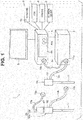
- the light source apparatus 3, the monitor 5, the VTR 7, the printer 8, and the network apparatus 9 form a plurality of peripheral apparatuses connected to the video processor 4 forming the signal processing apparatus.
- the endoscope 2A includes an elongated insertion section 11, an operation section 12 provided at a proximal end (a rear end) of the insertion section 11, and a cable 13a extended from the operation section 12.
- a connector 14a at an end portion of the cable 13a is detachably connected to the light source apparatus 3.
- a signal connector 16a at an end portion of a signal cable 15a extended from the connector 14a is detachably connected to the video processor 4.
- the endoscope 2B is a television camera-mounted endoscope configured by an optical endoscope 10a, which is configured by an fiberscope or the like, and a television camera 10b detachably connected to an eyepiece section 17 of the optical endoscope 10a.
- the optical endoscope 10a includes the insertion section 11, the operation section 12, the eyepiece section 17, and a light guide cable 13b extended from the operation section 12.
- a light guide connector 14b at an end portion of the light guide cable 13b is detachably connected to the light source apparatus 3.
- a signal connector 16b at an end portion of a signal cable 15b extended from the television camera 10b is detachably connected to the video processor 4.
- a state is shown in which the endoscope 2A is connected to the light source apparatus 3 and the video processor 4.
- the endoscope 2B can also be connected to the light source apparatus 3 and the video processor 4.
- a light guide 21 is inserted through both of the endoscopes 2A and 2B.
- the connector 14a or the light guide connector 14b is connected to the light source apparatus 3
- illumination light from the light source apparatus 3 is made incident on an end face of the light guide 21.
- the illumination light made incident on the end face is emitted from an illumination window, in which a distal end face of the light guide 21 is disposed, and illuminates an observation part or the like in the body into which the insertion section 11 is inserted.
- a not-shown objective lens is disposed in an observation window adjacent to the illumination window.
- an image pickup device 22a is disposed in an image forming position of the objective lens.
- a distal end face of an image guide 19 is disposed in an image forming position of an objective lens.
- An optical image formed on the distal end face is transmitted to a rear end face facing the eyepiece section 17 in the rear.
- the optical image transmitted to the rear end face is formed on an image pickup device 22b in the television camera 10b through the eyepiece section 17.
- the endoscope 2A includes a video interface (abbreviated as video I/F) 23a configured by a buffer circuit and the like connected to the image pickup device 22a, a nonvolatile memory 24a, and an endoscope-ID storing section (in Fig. 2 , simply described as endoscope ID) 25a in which endoscope identification information (endoscope ID) including endoscope type information is stored.
- video I/F video interface
- endoscope-ID storing section in Fig. 2 , simply described as endoscope ID
- endoscope ID endoscope identification information
- the endoscope type is the same meaning as an endoscope kind.
- the endoscope 2B includes, for example, the image pickup device 22b and a video I/F 23b provided on the television camera 10b side and a nonvolatile memory 24b and an endoscope-ID storing section (in Fig. 2 , briefly described as endoscope ID) 25b, in which endoscope identification information (endoscope ID) including endoscope type information is stored, provided on the optical endoscope 10a side.
- the nonvolatile memory 24b and the endoscope-ID storing section 24b are connected to a signal line on the television camera 10b side by a signal line.
- the signal connector 16b at the end portion of the signal cable 15b is connected to the video processor 4, whereby the nonvolatile memory 24b and the endoscope-ID storing section 24b are respectively connected to a memory I/F 41b and an endoscope-type detection circuit 41c, which detects an endoscope and a type, of the video processor 4 (as in the case of the endoscope 2A).
- the endoscope-ID storing section 25b indicated by a solid line provided on the optical endoscope 10a side in Fig. 2 may be provided on the television camera 10b side as indicated by a dotted line.
- the nonvolatile memory 24b may be provided on the television camera 10b side as indicated by a dotted line in Fig. 2 .
- endoscope identification information (endoscope ID) to be the endoscope type information may be stored in memory regions of the nonvolatile memories 24a and 24b.
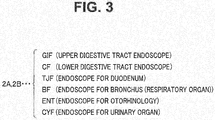
- the endoscopes 2A, 2B, ... are configured from, for example, as shown in Fig. 3 , a GIF (an upper digestive tract endoscope), a CF (a lower digestive tract endoscope), a TJF (an endoscope for duodenum), a BF (an endoscope for bronchus or respiratory organ), an ENT (an endoscope for otorhinology), and a CYF (an endoscope for urinary organ).
- GIF an upper digestive tract endoscope
- CF a lower digestive tract endoscope
- TJF an endoscope for duodenum
- a BF an endoscope for bronchus or respiratory organ
- an ENT an endoscope for otorhinology
- a CYF an endoscope for urinary organ
- the light source apparatus 3 includes three light sources, that is, a light emitting diode for wideband observation (abbreviated as WLI-LED) 31a, an LED for narrowband (NBI-LED) 31b, and an LED for fluorescence observation (AFI-LED) 31c, dichroic mirrors 32a and 32b, a condensing lens 33, and a light-source control circuit 34, which controls light emission of the three LEDs, to be capable of generating illumination lights corresponding to three observation modes, that is, a wideband observation mode (a WLI mode), a narrowband light observation mode (an NBI mode) and a fluorescence observation mode (an AFI mode), which form a special light observation mode.
- WLI-LED light emitting diode for wideband observation
- NBI mode narrowband light observation mode
- AFI-LED fluorescence observation
- a configuration example is shown in which the LEDs are used as the light source apparatus 3.
- a Xenon lamp selectively cause light of the Xenon lamp to pass through a filter for wideband observation, a filter for narrow band, and a filter for fluorescence observation disposed in a circumferential direction of a rotatable disk, and generate illumination lights corresponding to the three observation modes.
- the WLI-LED 31a generates, for example, white light that covers a visible wavelength band.
- the white light is transmitted through almost the entire dichroic mirror 32a, further transmitted through almost the entire dichroic mirror 32b, condensed by the condensing lens 33, and made incident on the light guide 21 as illumination light for WLI.
- the NBI-LED 31b generates, for example, one or two narrow band lights in a wavelength band of blue.
- the narrow band lights are selectively reflected on the dichroic mirror 32a, further selectively transmitted through the dichroic mirror 32b, condensed by the condensing lens 33, and made incident on the light guide 21 as illumination lights for NBI.
- the AFI-LED 31c generates excitation light in a specific wavelength band.
- the excitation light is selectively reflected on the dichroic mirror 32b, condensed by the condensing lens 33, and made incident on the light guide 21 as illumination light for AFI.
- the light-source control circuit 34 When selection of an observation mode is performed from the keyboard 6 or the like, a signal of the selection is transmitted from the video processor 4 to the light-source control circuit 34.
- the light-source control circuit 34 causes the LED corresponding to the selected observation mode to emit light. That is, the light-source control circuit 34 includes a function of an illumination-light-switching control section 34a that causes the LED corresponding to the selected observation mode to emit light.
- the light-source control circuit 34 includes a function of a light-amount control section 34b that performs control of light emission amounts of the LEDs.
- the light-amount control section 34b adjusts the light emission amounts of the LEDs and performs light amount control with a light adjustment signal generated by a light-adjusting circuit 42h explained below.
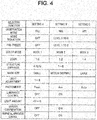
- Fig. 4 shows a plurality of selective functions to be selectively set (according to an endoscope type) in the endoscope system 1 of the present embodiment.
- a leftmost side in Fig. 4 indicates respective items of the selective functions.
- a right side of the leftmost side simply indicates, with settings A, B, and C, setting contents such as levels selectively set in the respective items.
- the number of the settings A, B, and C in Fig. 4 is simplified. For example, the number of settings that can selectively set changes depending on the items of the selective functions in Fig. 4 .
- a selective function in an item of luminance control is set from two functions of ON and OFF or selectively set from twenty-four functions of A1 to A8/B1 to B8/E1 to E8 in an item of structure emphasis.
- any observation mode can be selected from three observation modes.
- one of the three observation modes can be set. For example, concerning noise reduction by an NR circuit 42a explained below, one of nine in OFF and levels 1 to 8 can be set.
- a video I/F 41a configured by a preamplifier and a correlated double sampling processing circuit (abbreviated as CDS circuit) in the interface circuit 41 of the video processor 4 through a video I/F 23i, converted into a video signal (an image signal), and thereafter inputted to a video processing circuit 42.
- CDS circuit correlated double sampling processing circuit
- the video processing circuit 42 includes a noise reduction circuit (abbreviated as NR circuit) 42a that reduces noise in a video signal, a pre-freeze circuit 42b that performs pre-freeze processing before a freeze instruction when a still image frozen by the freeze instruction is displayed, a color-management-system processing circuit (a CMS circuit or a color correction circuit) 42c corresponding to a color mode or a color processing mode, a zoom circuit 42d that performs zoom processing, a structure emphasis circuit 42e that performs structure emphasis, an on-screen display circuit (an OSD circuit) 42f that performs processing for displaying a menu screen and the like, a combination circuit 42g that combines the menu screen and the like generated by the OSD circuit 42f with a structure-emphasized video (image), a light-adjusting circuit 42h that generates a light adjustment signal, and a parameter control circuit 42i that controls parameters of the NR circuit 42a, the pre-freeze circuit 42b, ..., and the light-adjusting circuit 42h.
- NR circuit noise
- the NR circuit 42a applies, using a video signal of an immediately preceding frame (or field) and a video signal of a present frame (or field), time average processing according to a value of a parameter to be set and performs noise reduction (NR) processing for reducing random noise in an image.
- NR noise reduction
- a parameter of processing of the NR circuit 42a can be set to any level from the level 1 to the level 8.
- the parameter control circuit 42i sets a function of the noise reduction of the NR circuit 42a to OFF according to a parameter for NR circuit PO and sets the levels 1 to 8 of the noise reduction according to parameters for NR circuit P1 to P8.
- the parameter control circuit 42i sets the other circuits described below in the same manner.
- a pre-freeze function can be set to OFF and the pre-freeze function can be set to any level from the level 1 to the level 8.
- the CMS circuit 42c As the color mode by the CMS circuit 42c, three modes 1, 2, and 3 for performing color correction corresponding to an observation part or a type of an endoscope are prepared. For example, when an upper digestive tract is observed, since an endoscopic image easily has a slightly greenish tone, the mode 1 for correcting a greenish color to a reddish color is prepared. When a lower digestive tract is observed, since an endoscopic image has a slightly reddish tone, the mode 3 for correcting a reddish color to a greenish color is prepared. The mode 3 is prepared to observe a duodenum and the like.
- magnification for enlarging an image through electronic zoom processing by the zoom circuit 42d 1.0 (zoom processing is OFF), 1.2, and 1.4 can be selectively set.
- a level can be selectively set from the levels 1 to 8 (i.e., A1 to A8/B1 to B8/E1 to E8) respectively having different processing levels (intensities) of structure emphasis.
- the mask circuit 42g1 of the combination circuit 42g can selectively set one of small, medium (Normal), and large as a mask size of an endoscopic image outputted to the monitor 5.
- the light-adjusting circuit 42h generates a light adjustment signal in order to set brightness of an endoscopic image to an appropriate level.
- the light-adjusting circuit 42h When generating the light adjustment signal, the light-adjusting circuit 42h generates light adjustment signals of the level 1 to the level 8 and outputs the light adjustment signals to the light-source control circuit 34 of the light source apparatus 3.
- the light-adjusting circuit 42h includes a photometry circuit 42h1 that detects brightness of an endoscopic image. As shown in Fig. 4 , the photometry circuit 42h1 can detect the brightness according to three photometry methods, that is, Peak (peak photometry), Ave (average photometry), and Auto (automatic photometry) and can select one photometry method from the three photometry methods.
- the peak photometry is a photometry method for detecting brightness at a peak value of a video signal.
- the average photometry is a photometry method for detecting brightness at an average of the video signal.
- the automatic photometry is an intermediate photometry method obtained by combining the peak photometry and the average photometry.
- the NR circuit 42a includes a luminance control circuit 42a1 that performs luminance control such that, for example, an endoscopic image can be displayed in a wide dynamic range in the GIF mode.
- the luminance control circuit 42a1 may be provided in, for example, the NR circuit 42a as shown in Fig. 2 or may be provided on an outside of the NR circuit 42a and in the video processing circuit 42.
- the luminance control processing by the luminance control circuit 42a1 can select to set the luminance control to OFF and set the luminance control to ON.
- Video related functions (or video related items) that can be selectively set are explained with reference to Fig. 4 .
- Illumination related functions are further prepared.
- the light-source control circuit 34 receives the light adjustment signal of the light-adjusting circuit 42h and variably controls, with driving power for driving the LEDs, a light amount of lights emitted by the LEDs in the observation mode in operation to -8 to +8. Note that a light amount of 0 is a standard light amount.
- the light adjustment and the photometry explained in the video related functions relate to illumination as well. Therefore, the light adjustment and the photometry may be changed to be included in the illumination related functions.
- the observation mode closely relates to the illumination related functions by the light source apparatus 3 as well.
- peripheral apparatus related functions there are a server corporation function and a peripheral apparatus control function.
- the server cooperation function When the server cooperation function is turned on, the endoscope system 1 operates in a state in which the endoscope system 1 can, for example, refer to data in a server 9a configuring the network apparatus 9 and write data.
- the server cooperation function When the server cooperation function is turned off, the endoscope system 1 operates irrespective of the server 9a.
- the endoscope system 1 controls, while monitoring states of peripheral apparatuses connected to the video processor 4, operation of the peripheral apparatuses.
- the peripheral apparatus control is turned off, the endoscope system 1 operates irrespective of the states of the peripheral apparatuses.
- ON and OFF of the peripheral apparatus control in Fig. 4 are ON and OFF of the VTR 7 and the printer 8 functioning as a part of the peripheral apparatuses connected via a peripheral-apparatus control circuit 46.
- the network apparatus 9 is connected to the video processor 4 via the peripheral-apparatus control circuit 46. However, the network apparatus 9 is controlled by a selective function of server cooperation.
- the monitor 5 always operates together with the video processor 4.
- the light source apparatus 3 always operates in cooperation with the video processor 4.
- the video processor 4 includes a central processing unit (abbreviated as CPU) 43 connected to the memory I/F 41b (in the interface circuit 41) that reads out memory contents of a nonvolatile memory 24i and the endoscope-type detection circuit 41c (in the interface circuit 41) that detects an endoscope type by reading out an endoscope ID, a front panel 44 that forms an input section in a user interface in conjunction with the keyboard 6, a user-I/F control circuit 45 that controls a user interface between the keyboard 6 and the front panel 44, a peripheral-apparatus control circuit 46 that controls the monitor 5, the VTR 7, the printer 8, and the network apparatus 9 that configure the peripheral apparatuses, and a memory 47 that stores various setting contents.
- CPU central processing unit
- the endoscope ID for example, information on a low-order bit side for specifying respective endoscopes is further added to information on a high-order bit side representing an endoscope type.
- the endoscope-type detection circuit 41c detects the endoscope type from information concerning a predetermined number of bits on the high-order bit side representing the endoscope type. Note that, when data is inputted from the keyboard 6 or the like forming the input section, the CPU 43 acquires the inputted data via the user-I/F control circuit 45 and, when display is necessary, generates characters or the like for display via the OSD circuit 42f and causes the monitor 5 to display the characters or the like.
- the CPU 43 controls operations of the respective sections of the video processor 4 and performs control of the entire endoscope system 1. Therefore, the CPU 43 is connected to the parameter control circuit 42i to be capable of performing transmission and reception of data such as parameters.
- the CPU 43 controls operations of the respective circuits of the video processing circuit 42 via the parameter control circuit 42i.
- the CPU 43 is connected to the user-I/F control circuit 45 to be capable of performing transmission and reception of data.
- data such as an instruction is inputted from the keyboard 6 or the front panel 44 forming the input section by a user
- the CPU 43 performs, via the user-I/F control circuit 45, control operation corresponding to content of data inputted by the user.
- the CPU 43 is connected to the peripheral-apparatus control circuit 46 to be capable of performing transmission and reception of data.
- the CPU 43 grasps states of the peripheral apparatuses connected to the peripheral-apparatus control circuit 46 and controls operations of the peripheral apparatuses via the peripheral-apparatus control circuit 46.
- the CPU 43 can access the server 9a of the network apparatus 9, refer to accumulated data accumulated in the server 9a, and perform writing, addition, and the like of data to the accumulated data in the server 9a on the basis of an instruction from the user.
- the parameter control circuit 42i is connected to the user-I/F control circuit 45 and the peripheral-apparatus control circuit 46. Operation of the parameter control circuit 42i is controlled under control by the CPU 43.
- the light source apparatus 3 functioning as the peripheral apparatus more often operates in close cooperation with the video processor 4 than the other peripheral apparatus. Therefore, the CPU 43 in the video processor 4 is electrically connected to the light-source control circuit 34 in the light source apparatus 3 not via the peripheral-apparatus control circuit 46.
- the CPU 43 includes a function of a function setting section (or a function setting circuit or a function setting device) 43a that sets a plurality of selective functions (simply referred to as functions as well) that can be selectively set in the endoscope system 1.
- the function setting section 43a of the CPU 43 includes a function of an automatic setting section 43b that automatically sets, with respect to the endoscope 21 connected to the video processor 4, according to information concerning a type of the endoscope 21 detected by the endoscope-type detection circuit 41c from an endoscope ID set in the endoscope 21, the respective items in the plurality of selective functions shown in Fig. 4 respectively to setting states optimum or appropriate for the type of the connected endoscope 21.
- a nonvolatile memory 47 in which data can be written and from which data can be readout by the CPU 43, has stored therein function setting data serving as association data for associating, according to the type of the endoscope 21, a plurality of setting items, which can be selectively set, in the respective selective functions of the plurality of selective functions shown in Fig. 4 such that one each of the setting items is appropriately set.
- the memory 47 includes a function-setting-data storing section 47a that stores function setting data (simply referred to as setting data as well) corresponding to the type of the endoscope 21.
- a function of setting the respective selective functions is referred to as a (endoscope) type mode as well according to the type of the endoscope 21.
- a setting mode for setting an endoscopic examination to be able to be easily performed (by automatically setting the plurality of selective functions in the endoscope system 1 respectively to appropriate setting states) is prepared.
- the respective functions in the plurality of (selective) functions in the endoscope system 1 can be respectively appropriately set according to the type of the endoscope 21 (used by being) actually connected to the video processor 4 as explained above.
- a (selective) function for smoothly performing an endoscopic examination not always depending on the type of the endoscope 21 is present. Therefore, in the present embodiment, a plurality of setting modes such as blood vessel detection besides the type mode are prepared together with the (endoscope) type mode for respectively appropriately setting the respective functions in the plurality of (selective) functions in the endoscope system 1 according to the type of the endoscope 21.
- Fig. 5 shows setting modes that can be selectively set in the endoscope system 1 of the present embodiment and overviews of the setting modes.
- the setting modes besides the (endoscope) type mode explained above, modes of blood vessel detection, GI (an endoscope for surgery)/SP (an endoscope for digestive organs) coordination, wide area, release, screening, and esophagus can be selected.
- the selection of the blood vessel detection and the like can be performed from the keyboard 6 or the front panel 44 forming the input section.
- the blood vessel detection is a mode for detecting a blood vessel and is used in increasing contrast of the blood vessel to more clearly display the blood vessel.
- the GI (an endoscope for surgery)/SP (an endoscope for digestive organs) coordination is used when a GI (an endoscope for surgery) and an SP (an endoscope for digestive organs) are simultaneously used.
- the wide area is used when it is desired to display, in a large size, an endoscopic image displayed on a screen of the monitor 5. The wide area is effective when it is desired to view the endoscopic image in a wide screen area.
- the release is used when a still image is saved. The release is used when it is desired to save an image with less blur.
- the screening is used when it is desired to carry out an endoscopic examination in a short time.
- the setting mode of the esophagus is used when it is desired to mainly perform observation of an esophagus.
- the function-setting-data storing section 47a of) the memory 47 has also stored therein, besides the function setting data associated with the type of the endoscope explained above, second function setting data respectively corresponding to the modes of the blood vessel detection, the GI (an endoscope for surgery)/SP (an endoscope for digestive organs) coordination, the wide area, the release, the screening, and the esophagus.
- the second function setting data may be stored in a memory region in the memory 47 on an outside of the function-setting-data storing section 47a or a storage device such as a memory separate from the memory 47.
- the automatic setting section 43b of the CPU 43 automatically sets, besides automatically setting, on the basis of a detection result of the type of the endoscope, the plurality of selective functions of the endoscope system 1 to appropriate setting states for the detected type of the endoscope, the plurality of selective functions of the endoscope system 1 to appropriate setting states according to selection of the modes of the blood vessel detection, the GI (an endoscope for surgery)/SP (an endoscope for digestive organs) coordination, the wide area, the release, the screening, and the esophagus.
- GI an endoscope for surgery
- SP an endoscope for digestive organs
- the function setting data and the second function setting data serving as association data for respectively appropriately setting the plurality of selective functions in the endoscope system 1 according to information such as the (endoscope) type are stored in the memory 47 explained above or the like in advance.
- Fig. 6 shows a part of the function setting data stored in the function-setting-data storing section 47a in advance.
- the function-setting-data storing section 47a has stored therein table data for respectively appropriately setting, for example, the setting values of the items of the respective selective functions such as the observation mode and the noise reduction shown in Fig. 4 according to GIF, TJF, ... (in Fig. 5 , described as a Gif mode, a TJF mode, ...) representing types of the endoscopes 21 as shown in Fig. 6 .
- the function-setting-data storing section 47a has stored therein function setting data for setting the observation mode to the WLI, setting the noise reduction to the level 2, setting the pre-freeze to the level 6, setting the color mode to a mode "a", ..., setting the light amount to 0 (a standard light amount level), setting the server cooperation to ON, and setting the peripheral apparatus control to ON according to the endoscope type of the GIF.
- the function-setting-data storing section 47a has stored therein function setting data for setting, when the endoscope 21 is the TJF, the observation mode to the WLI, setting the noise reduction to the level 2, setting the pre-freeze to the level 6, setting the color mode to the mode 3, ..., setting the light amount to +2, setting the server cooperation to ON, and setting the peripheral apparatus control to ON according to the endoscope type of the TJF.
- the automatic setting section 43b of the CPU 43 acquires, referring to the function setting data stored in the function-setting-data storing section 47a, function setting data corresponding to the endoscope type of the GIF (more specifically, function setting data in which the observation mode is the WLI, the noise reduction is the level 2, the pre-freeze is the level 6, the color mode is the mode 1, ..., the light amount is 0, the server cooperation is ON, and the peripheral apparatus control is ON) and automatically sets states of the plurality of selective functions of the endoscope system 1 to states of the acquired function setting data.
- the automatic setting section 43b of the CPU 43 automatically sets, according to a detection result of the endoscope type, the plurality of functions such as the noise reduction in the video processor 4 functioning as the signal processing apparatus configuring the endoscope system 1, for example, a light amount in the light source apparatus 3 forming the peripheral apparatus, and the like respectively to appropriate setting states.
- the plurality of selective functions of the endoscope system 1 can be automatically set to the appropriate setting states according to the detected type of the endoscope 21 and the like. Consequently, it is possible to make it unnecessary for a surgeon to consume labor and time for respectively manually selecting the plurality of selective functions and setting the selected selective functions respectively to appropriate setting states and improve operability.
- the automatic setting section 43b includes a function of appropriately automatically setting, according to the type of the endoscope 21, selective functions according to other setting modes as shown in Fig. 5 and Fig. 6 besides the function (endoscope) type mode for setting the selective functions of the endoscope system 1.
- Fig. 6 shows a specific example of function setting data in the case in which, for example, the mode of the blood vessel detection is selected.
- function setting data for blood vessel detection for setting a plurality of functions to make it easy to appropriately perform the blood vessel detection respectively is stored.
- the mode of the blood vessel detection is selected from the input section, the plurality of functions are automatically set as in the function setting data for blood vessel detection.
- the type of the endoscope 21 is not set (i.e., the mode of the blood vessel detection does not depend on the type of the endoscope 21). Note that, similarly, the release and the screening do not depend on the type of the endoscope 21.
- a specific function key 6a and a specific function button 44a are respectively set in advance in the keyboard 6 and the front panel 44.
- the specific function key 6a or the specific function button 44a By operating the specific function key 6a or the specific function button 44a, it is possible to collectively display, on the monitor 5, (a list of) setting contents of the plurality of selective functions currently set in the endoscope system 1.
- the monitor 5 forms a display section that displays, for example, a list of setting contents of a plurality of functions set by the function setting section 43a.
- the CPU 43 identifies the operation of the specific function key 6a or the specific function button 44a via the user-I/F control circuit 45 and performs control to display the selective functions in the setting state corresponding to the GIF mode shown in Fig. 5 on the monitor 5.
- the function setting contents in Fig. 5 it is possible to change the function setting contents in Fig. 5 according to a preference or the like of the user from the keyboard 6 and the front panel 44.
- the function setting data shown in Fig. 5 is optimally close to the type of the endoscope.
- the function setting data does not correspond to preferences of individual users. Therefore, the function setting contents can be changed.
- the keyboard 6 and the front panel 44 forming the input section includes a function of a function-setting changing section that can change the contents of the function setting set by the automatic setting section 43b or the function setting section 43a.
- the user can change the function setting contents in a state in which the setting contents of the selective functions are collectively displayed on the monitor 5 by the operation of the specific function key 6a or the specific function button 44a. Therefore, it is possible to easily set the function setting contents to setting states desired by the user.
- the user can display a function menu as shown in Fig. 7 on the monitor 5 and perform setting of changes of various functions including the selective functions from the displayed function menu and perform setting such as addition of separate selective functions anew.
- a video related function, an illumination related function, a peripheral apparatus related function, and an observation mode function are the functions explained with reference to Fig. 4 and Fig. 5 .
- an observation part (or a medical department) related function is added.
- otorhinology, urology, an upper digestive tract, a lower digestive tract, and a bronchus other than bile/pancreatic ducts respectively generally correspond to the cases of the ENT, the CYF, the GIF, the CF, and the BF corresponding to the otorhinology, the urology, the upper digestive tract, the lower digestive tract, and the bronchus in an endoscope type.
- the user such as the surgeon can perform setting of a check and a change of setting contents in the type mode of the endoscope and check and change similar setting contents from the observation part related function.
- the memory I/F circuit 41b in the video processor 4 includes a data read/write circuit 41ba including a function of reading out data of the nonvolatile memory 24i of the endoscope 21 and a function of writing data.
- a data read/write circuit 41ba including a function of reading out data of the nonvolatile memory 24i of the endoscope 21 and a function of writing data.
- the endoscope system 1 of the present embodiment includes a plurality of types of the endoscopes 21, the video processor 4 forming the signal processing apparatus to which one endoscope among the plurality of types of the endoscopes 21 is connected, the signal processing apparatus performing video processing for an output signal of the image pickup device 22i mounted on the connected endoscope, the light source apparatus 3, the monitor 5, the VTR 7, the printer 8, and the network apparatus 9 forming one or more peripheral apparatuses connected to the signal processing apparatus, the endoscope-type detection circuit 41c forming the endoscope-type detecting section that detects a type of the endoscope 21 when the endoscope 21 is connected to the signal processing apparatus, and the function setting section 43a that sets a plurality of functions in the endoscope system 1 including the signal processing apparatus, the endoscope 21 connected to the signal processing apparatus, and the peripheral apparatuses.
- the function setting section 43a automatically sets the plurality of functions respectively to appropriate setting states according to the type of the endoscope 21 detected by the endoscope-type detecting section.
- the user such as the surgeon connects the endoscope 21 such as the endoscope 2A of a type corresponding to an observation part to the video processor 4 and connects the light source apparatus 3, the monitor 5, the VTR 7, and the like functioning as the peripheral apparatuses to the video processor 4 to set the endoscope system 1 to an operation state.
- first step S1 when the endoscope 21 is connected to the video processor 4, the endoscope-type detection circuit 41c detects a type of the connected endoscope 21 and sends data of the detected type to the function setting section 43a of the CPU 43.
- step S2 (the function setting section 43a of) the CPU 43 reads out, using the data of the detected type, the setting data of the plurality of selective functions in the endoscope system 1 corresponding to the data of the type from the memory 47.
- the function setting section 43a reads out the setting data of the setting values and the like of the selective functions in a row of the GIF (mode) shown in Fig. 6 (the observation mode is the WLI, the noise reduction level is the level 2, ..., and the peripheral apparatus control is ON).
- step S3a (the function setting section 43a of) the CPU 43 determines whether a list of the read-out setting data such as the setting values of the selective functions is displayed on the monitor 5.
- step S3a after processing in step S2, when input operation for displaying the list of the allocated setting data is performed in the specific function key 6a or the specific function button 44a, (the function setting section 43a of) the CPU 43 performs control to display the list of the setting data on the monitor 5 as shown in step S3b and thereafter shifts to step 4.
- the function setting section 43a of the CPU 43 shifts to processing in step S4 without performing processing shown in step S3b. In the present embodiment, it is possible to select to display or not to display the list of the setting data.
- step S4 (the function setting section 43a of) the CPU 43 performs display for requesting the surgeon to determine whether the setting data does not have to be changed.
- step S5 the CPU 43 respectively controls the selective functions of the video processing circuit 42, the light source apparatus 3, and the peripheral apparatuses via the parameter control circuit 42i, the light-source control circuit 34, and the peripheral-apparatus control circuit 46 to operate the selective functions of the endoscope system 1 in the contents of the list of the setting data displayed on the monitor 5. That is, (the function setting section 43a of) the CPU 43 automatically sets the plurality of selective functions of the endoscope system 1 to appropriate operation states of the setting data corresponding to the data of the detected type.
- the function setting section 43a of) the CPU 43 automatically sets the plurality of selective functions in the endoscope system 1 respectively to appropriate setting values or the like according to the type of the endoscope 21 connected to the video processor 4 and sets the endoscope system 1 in a state in which an endoscopic examination is easily performed.
- step S6 the function setting section 43a of the CPU 43 determines whether input operation of designation of a setting mode such as the blood vessel detection other than the (endoscope) type mode is performed from the keyboard 6 or the front panel 44.
- step S7 the function setting section 43a of the CPU 43 sets the endoscope system 1 to a setting state corresponding to the setting mode.
- the endoscope system 1 is automatically set to a setting state of the setting data corresponding to the GIF mode in Fig. 6 .
- the CPU 43 automatically sets (changes) the endoscope system 1 to a setting state of the setting data corresponding to the blood vessel detection mode in Fig. 6 .
- step S7 As shown in step S8, the surgeon performs the endoscopic examination.
- the CPU 43 performs processing in step S8 without performing processing in step S7.
- the surgeon desires to change setting data, which is (normally) appropriate setting, to appropriate setting data corresponding to a preference or the like of the surgeon obtained by changing a part of the setting data
- the surgeon performs, from the keyboard 6 or the like, an input of NO (or change) in response to the determination in step S4 concerning whether the setting data does not have to be changed.
- step S9 (the function setting section 43a of) the CPU 43 performs control to perform display for urging designation of an item of a selective function desired to be changed.
- the surgeon operates a moving key or the like of the keyboard 6 and designates the item of the selective function desired to be changed.
- step S10 the function setting section 43a of the CPU 43 displays a list of setting contents that can be changed such as setting values that can be selected in the item.
- the surgeon designates a setting value or the like desired by the surgeon from the list, operates a decision key or the like in the keyboard 6 or the like, and decides the setting value or the like.
- the function setting section 43a of the CPU 43 receives a change of one item according to the operation of the decision key or the like and performs control to perform display concerning whether a change is further performed.
- the surgeon desires to further perform a change, the surgeon performs, from the keyboard 6 or the like, operation to the effect that a change is performed.
- the surgeon can change a setting value or the like of an item of a selective function that the surgeon further desires to change.
- the surgeon can change one or a plurality of items of selective functions that the surgeon desires to change.
- the surgeon performs, from the keyboard 6 or the like, operation to the effect that a change is not performed in response to the determination concerning whether a change is performed (or not) in step S11.
- step S12 as in the case of step S5, (the function setting section 43a of) the CPU 43 performs setting of the respective selective functions of the endoscope system 1 as shown in the list of the changed setting data of the selective functions.
- step S13 (the function setting section 43a of) the CPU 43 performs control to perform display for determining whether the changed setting data of the selective functions is saved as setting data for the user to be used by the surgeon.
- step S14 the function setting section 43a of the CPU 43 saves (stores), in the memory 47, the changed setting data as setting data to which a user name of the surgeon is added.
- setting data (association data) corresponding to the user name as shown in Fig. 9 is added and stored as the setting data (association data) as shown in Fig. 6 .
- Fig. 9 shows a part of setting data (association data) corresponding to the case in which the user name of the surgeon is a user A.
- setting data association data
- setting data in which the surgeon changes only a level of the noise reduction (changes the level 2 to the level 3) as a selective function using, for example, the endoscope 21 of the type of the GIF, is added and saved (stored).
- setting data (association data) without designation of user names is setting data used in common to all users and is the same as the setting data in Fig. 6 .
- step S15 after processing in step S14, (the function setting section 43a of) the CPU 43 uses, besides the type of the endoscope 21, the user name for the setting of the selective functions of the endoscope system 1.
- step S15 the function setting section 43a of the CPU 43 shifts to processing in step S6.
- step S6 the function setting section 43a of the CPU 43 also shifts to the processing in step S6.
- step S16 the CPU 43 determines whether operation for an examination end is performed from the keyboard 6 or the like. When the operation for the examination end is not performed, the CPU 43 continues the endoscopic examination in step S8. When the operation for the examination end is performed, the CPU 43 ends the processing in Fig. 8 .
- the CPU 43 When the setting data corresponding to the user name is saved as explained above, (the function setting section 43a of) the CPU 43 performs setting of the selective functions of the endoscope system 1 referring to the setting data corresponding to the user name besides the type of the endoscope 21.
- Setting data in which a user name is not set may be stored in the nonvolatile memory 24i such that all the users can use the setting data.
- setting data corresponding to the user name or the like is stored in the nonvolatile memory 24i of the endoscope 21, even when the endoscope system 1 is formed using a video processor (referred to as 4B) having a function different from the function of the video processor 4 in Fig. 2 , setting data for a plurality of types of video processors having different functions may be stored such that the setting data can be appropriately set in the same manner.
- a type of the video processor 4 in Fig. 2 is represented as D and a type of the video processor 4B having a function different from the function of the type D is represented as E.
- Fig. 10 shows a part of setting data in the case in which the setting data is stored in, for example, a data storing section of the nonvolatile memory 24i of the endoscope of the GIF.
- data storing sections formed by memory regions where the setting data as shown in Fig. 10 is stored in the nonvolatile memories 24a and 24b are respectively indicated by 24aa and 24ba.
- setting data for common use in which a user name is not set, is stored together with setting data in which user names of two users are respectively appropriately set to correspond to the users A and B.
- the data storing section of the nonvolatile memory 24i has stored therein, in association with the types D and E, setting data (for video processor types) corresponding to the types D and E of the video processor 4 forming the signal processing apparatus.
- the video processor is represented by being simplified as VP.
- setting data corresponding to the type D of the video processor 4 is stored in the nonvolatile memory 24i of the endoscope of the type of the GIF.
- setting data is stored in association with data of the type E of the video processor 4B such that the setting data can be automatically set to appropriate setting data and used. Note that, in the type E of the video processor 4B in Fig. 10 , since the type E is a type not including, for example, the function of the pre-freeze, setting data for setting the function of the pre-freeze is absent (- indicates that the setting data is absent).
- the memory 47 of the video processor 4 of the type D has saved (stored) therein setting data excluding setting data in the case of the type E different from the type D in Fig. 10 and further has stored therein, concerning the type of the endoscope 21 other than the GIF as well, setting data similar to the setting data in Fig. 10 .
- Fig. 10 When the setting data set as shown in Fig. 10 is used, the endoscope system 1 performs processing slightly different from the processing shown in Fig. 8 .
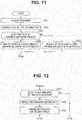
- Fig. 11 shows a part of the processing performed when the setting data as shown in Fig. 10 is used.
- the CPU 43 performs control to perform display for urging an input of a user name of the surgeon and acquires data of the user name inputted from the keyboard 6 or the like.
- step S22 (the function setting section 43a of) the CPU 43 acquires data of the type of the endoscope 21 connected to the video processor 4 detected by the endoscope-type detection circuit 41c. Further, in step S23, (the function setting section 43a of) the CPU 43 determines whether setting data of the user name acquired in step S21 is present.
- step S24 (the function setting section 43a of) the CPU 43 performs control to read out, from the memory 47, setting data in the case in which the user name is the user A and the video processor 4 is the type D in Fig. 10 and display a list of the setting data on the monitor 5.
- step S24 (the function setting section 43a of) the CPU 43 performs control to read out, from the memory 47, setting data corresponding to the type D of the video processor in the user name and display a list of the read-out setting data on the monitor 5.
- step S24 (the function setting section 43a of) the CPU 43 shifts to step S4 in Fig. 8 and perform the processing in steps S4 and subsequent steps in Fig. 8 .
- step S25 If the setting data saved together with the user name acquired in step S21 is absent in step S23, as shown in step S25, common data, in which a user name is not designated, is read out (substantially the same as step S3 in Fig. 8 . However, step S25 can also be applied in the case of the type E different from the type D of the video processor 4 in Fig. 2 ). A list of the setting data is displayed on the monitor 5. After processing in step S25, (the function setting section 43a of) the CPU 43 shifts to step S4 in Fig. 8 . When the setting data associated with the user name is present, the processing in steps S23 to S25 in Fig. 11 represents that the setting data associated with the user name is more preferentially used for the setting of the plurality of functions of the endoscope system 1 than the setting data not including the user name.
- the surgeon when the surgeon attempts to change the setting data with respect to the display of the list of the setting data in step S4, the surgeon designates an item of a selective function to be changed from the displayed list of the selective functions to perform the change.
- the surgeon may, for example, access the server 9a of the network apparatus 9, acquire recommended setting data recommended in the function setting accumulated in the server 9a, and change the setting data with the recommended setting data and use the setting data.
- Fig. 12 shows a part of processing in this case.
- step S4 in Fig. 8 When the selection to change (the input of NO in response to the determination concerning whether the setting data does not have to be changed) is performed in step S4 in Fig. 8 , as shown in step S31 in Fig. 12 , (the function setting section 43a of) the CPU 43 performs control to perform display concerning whether the recommended setting data to be recommended accumulated in the server 9a of the network apparatus 9 is referred to (or acquired).
- the surgeon When attempting to refer to the recommended setting data, the surgeon performs, from the keyboard 6 or the like, an input (selection) to the effect that the recommended setting data is referred to.
- the CPU 43 performs control to display the recommended setting data on the monitor 5, for example, beside the list of the setting data in step S3.
- step S33 the surgeon changes the setting data referring to the recommended setting data, decides change contents, and thereafter shifts to processing in step S12 in Fig. 8 .
- the surgeon when not referring to the recommended setting data, the surgeon performs, from the keyboard 6 or the like, an input (selection) to the effect that the recommended setting data is not referred to. In this case, the surgeon shifts to the processing in step S9 in Fig. 8 .
- the selective functions of the endoscope system 1 can be set to setting data reflecting the recommended setting data accumulated in the server 9a.
- the plurality of selective functions of the endoscope system 1 may be set to appropriate setting states.
- step S41 the surgeon inputs, from the keyboard 6 or the front panel 44 configuring the input section, a name of an observation part or a medical department of an endoscope connected to the video processor 4. Setting data recommended in the observation part or the medical department of the inputted name is stored in the memory 47.
- step S42 (the function setting section 43a of) the CPU 43 reads out the recommended setting data from the memory 47. After processing in step S42, (the function setting section 43a of) the CPU 43 proceeds to the processing in step S3 in Fig. 8 . In this way, (the function setting section 43a of) the CPU 43 sets the selective functions of the endoscope system 1 to appropriate setting states.
- processing shown in Fig. 13 is processing performed alternately with the type detection of the endoscope 21 in Fig. 8 .
- processing in steps S41 and S42 may be included.
- the CPU 43 monitors whether a detection result of the type of the endoscope 21 is inputted from the endoscope-type detection circuit 41c within a predetermined time.
- the function setting section 43a of the CPU 43 may proceed to the processing in step S2.
- the function setting section 43a of the CPU 43 may perform control to display to the effect that the detection result is not inputted, perform the processing in steps S41 and S42 in Fig. 13 , and thereafter proceed to the processing in step S3 in Fig. 8 .
- the function setting section 43a of) the CPU 43 may perform processing shown in Fig. 14 without performing the alternative processing.
- Fig. 14 shows processing in which only a part in Fig. 8 is changed.
- step S51 (the function setting section 43a of) the CPU 43 performs control to perform display for the surgeon to select whether setting data by an observation part or a medical department is referred to.
- the surgeon When attempting to refer to the setting data by the observation part or the medical department, the surgeon selects to refer to the setting data. When not desiring to refer to the setting data, the surgeon selects not to refer to the setting data. When selecting not to refer to the setting data, the surgeon shifts to the processing in step S4. In the case of this selection, processing is the same as the processing in Fig. 8 .
- step S52 (the function setting section 43a of) the CPU 43 performs control to perform display for urging the surgeon to input a name of the observation part or the medical department.
- the surgeon inputs the name of the observation part or the medical department.
- step S53 (the function setting section 43a of) the CPU 43 reads out setting data corresponding to the name. Further, in step S54, (the function setting section 43a of) the CPU 43 displays a list of the setting data read out in step S53, for example, to be adjacent to, for example, the list in step S3.
- step S55 (the function setting section 43a of) the CPU 43 prioritizes, in the list of the setting data in step S3 and the list of the setting data in step S53, the setting data of the latter (S53) (because of a reason described below) or selects (the list of) one setting data conforming to a selection instruction by the surgeon and thereafter shifts to the processing in step S4.
- the setting data based on the detection result of the type of the endoscope 21 and the setting data based on the name of the observation part or the medical department are often almost the same. However, the setting data based on the name of the observation part sometimes could be more limited contents.
- an esophagus and a stomach are observation targets (examination targets).
- observation targets examination targets
- the setting data based on the name of the observation part may be more preferentially adopted as setting data (to be used for setting of selective functions of the endoscope system 1) than the setting data based on the detection result of the type of the endoscope 21.
- the setting data is almost the same as the setting data based on the detection result of the type of the endoscope 21. Therefore, Fig. 14 shows processing for treating the name of the medical department in the same manner as the name of the observation part. However, only the case of the name of the observation part may be prioritized.
- steps S8 and S16 in Fig. 8 may be performed.
- steps S1 to S7 and S9 to S15 in Fig. 8 may be performed as preprocessing for performing the endoscopic examination, update processing for the setting data, processing for registration of new setting data, or the like.
- the present embodiment it is possible to automatically set the plurality of functions of the endoscope system 1 to appropriate setting states according to the endoscope type mode that depends on the type of the endoscope. It is possible to automatically set the plurality of functions of the endoscope system 1 to appropriate setting states according to the setting mode such as the blood vessel detection that does not depend on the type of the endoscope.
- setting data for setting the plurality of functions of the endoscope system 1 to appropriate setting states reflecting preferences of individual users together with setting data for setting the plurality of functions of the endoscope system 1 to appropriate setting states for common users without reflecting the preference of the users.
- After storing the setting data it is possible to preferentially use the setting data.
- the present embodiment it is possible to acquire the recommended data accumulated in the server 9a and use the recommended data as setting data for setting the plurality of functions of the endoscope system 1 to appropriate setting states.
- setting data explained below may be stored or the stored setting data may be registered to be capable of being used.
- Fig. 10 it is explained that the setting data for setting, in each of the plurality of types of the video processors 4 and 4B to which the endoscope 21 is connected to be used, the video processor to the appropriate setting state is stored in the nonvolatile memory 24i of the endoscope 21 and thereafter registered to be capable of being used.
- setting data in the case in which light source apparatuses of different types are used may be further stored.
- Fig. 15 further shows a part of setting data corresponding to light source apparatuses 3 and 3B of types G and H in Fig. 10 .
- Fig. 15 in the case of the same user A, even if the type D of the video processors is the same, since the types G and H of the light source apparatuses are different, setting values of light amounts set to different values 0 and +1.
- the setting data shown in Fig. 15 is used, even when the types of the endoscopes 21, the types of the video processors functioning as the signal processing apparatuses, or the types of the light source apparatuses are different, it is possible to automatically set the endoscopes 21, the video processors, or the light source apparatuses respectively to appropriate setting states and smoothly perform the endoscopic examination.
- Fig. 15 a part of setting data in the case in which the type of the endoscope 21 is the GIF is shown.
- setting data for respectively appropriately setting the plurality of functions in the endoscope system 1 according to the types of the endoscopes are stored.
- setting data corresponding to types of the light source apparatuses 3 and 3B connected to the video processors and used may be stored together with the types of the endoscopes 21 connected and used.
- setting states of the plurality of peripheral apparatuses connected to the video processor 4 are not illustrated.
- the setting states of the plurality of peripheral apparatuses may be illustrated according to operation of the specific function key 6a, the specific function button 44a explained above, or the like.
- the types and the setting items of the peripheral apparatuses acquired by the peripheral-apparatus control circuit 46 from the peripheral apparatuses through communication or the like as shown in Fig. 16 may be acquired by operation of a button for peripheral apparatuses set in advance in the keyboard 6 or the front panel 44 forming the input section to control the setting contents of the plurality of peripheral apparatuses connected to the video processor 4 to be set to appropriate setting conditions according to the type of the endoscope 21 connected to the video processor 4.
- the monitor, the VTR 7, the printer 8, and the network apparatus 9 are shown as the peripheral apparatuses connected to the peripheral-apparatus control circuit 46.
- the light source apparatus 3 functioning as the peripheral apparatus not connected to the peripheral-apparatus control circuit 46 and the keyboard 6 forming the input section may be included in the peripheral apparatuses and displayed.
- the video processor 4 may include a menu setting section that automatically displays, according to an input of information concerning a type of the peripheral apparatus F from the keyboard 6 or the like forming the input section to the video processor 4, in a wizard format, menu items for which setting is necessary according to the information concerning the type of the peripheral apparatus F.
- a menu setting section that automatically displays, according to an input of information concerning a type of the peripheral apparatus F from the keyboard 6 or the like forming the input section to the video processor 4, in a wizard format, menu items for which setting is necessary according to the information concerning the type of the peripheral apparatus F.
- the menu setting section automatically picks up setting items F1, F2, ... that need to be set in the peripheral apparatus F as shown in Fig. 18 and displays the setting items F1, F2, ... on a (peripheral apparatus) menu setting screen. Therefore, the user can easily perform setting of setting values and the like necessary for the peripheral apparatus F according to display contents of the menu setting screen.
Landscapes
- Health & Medical Sciences (AREA)
- Life Sciences & Earth Sciences (AREA)
- Surgery (AREA)
- Physics & Mathematics (AREA)
- Engineering & Computer Science (AREA)
- Optics & Photonics (AREA)
- Biophysics (AREA)
- Animal Behavior & Ethology (AREA)
- Pathology (AREA)
- Radiology & Medical Imaging (AREA)
- Veterinary Medicine (AREA)
- Biomedical Technology (AREA)
- Heart & Thoracic Surgery (AREA)
- Medical Informatics (AREA)
- Molecular Biology (AREA)
- Nuclear Medicine, Radiotherapy & Molecular Imaging (AREA)
- General Health & Medical Sciences (AREA)
- Public Health (AREA)
- Signal Processing (AREA)
- Astronomy & Astrophysics (AREA)
- General Physics & Mathematics (AREA)
- Multimedia (AREA)
- Endoscopes (AREA)
Applications Claiming Priority (2)
| Application Number | Priority Date | Filing Date | Title |
|---|---|---|---|
| JP2014230812 | 2014-11-13 | ||
| PCT/JP2015/081618 WO2016076314A1 (ja) | 2014-11-13 | 2015-11-10 | 内視鏡システム |
Publications (2)
| Publication Number | Publication Date |
|---|---|
| EP3141177A1 true EP3141177A1 (de) | 2017-03-15 |
| EP3141177A4 EP3141177A4 (de) | 2018-01-24 |
Family
ID=55954397
Family Applications (1)
| Application Number | Title | Priority Date | Filing Date |
|---|---|---|---|
| EP15858846.7A Withdrawn EP3141177A4 (de) | 2014-11-13 | 2015-11-10 | Endoskopsystem |
Country Status (5)
| Country | Link |
|---|---|
| US (1) | US9782059B2 (de) |
| EP (1) | EP3141177A4 (de) |
| JP (1) | JP6010258B1 (de) |
| CN (1) | CN106455927B (de) |
| WO (1) | WO2016076314A1 (de) |
Families Citing this family (22)
| Publication number | Priority date | Publication date | Assignee | Title |
|---|---|---|---|---|
| JP2017035376A (ja) * | 2015-08-12 | 2017-02-16 | Hoya株式会社 | 内視鏡システム |
| JP6301041B1 (ja) * | 2016-05-30 | 2018-03-28 | オリンパス株式会社 | 処理装置、設定方法およびプログラム |
| DE112017004861T5 (de) * | 2016-09-28 | 2019-07-04 | Olympus Corporation | Medizinisches Gerät und medizinisches Gerätesystem |
| JP6301046B1 (ja) * | 2016-09-29 | 2018-03-28 | オリンパス株式会社 | ワイヤレス内視鏡装置 |
| WO2018070246A1 (ja) * | 2016-10-14 | 2018-04-19 | オリンパス株式会社 | 画像処理装置 |
| JP6301049B1 (ja) * | 2016-10-14 | 2018-03-28 | オリンパス株式会社 | 画像処理装置 |
| WO2018105351A1 (ja) * | 2016-12-06 | 2018-06-14 | オリンパス株式会社 | 内視鏡装置、内視鏡システム及び検査支援方法 |
| EP3599983B1 (de) | 2017-03-24 | 2023-11-15 | Covidien LP | Endoskope |
| JP7016681B2 (ja) * | 2017-12-01 | 2022-02-07 | ソニー・オリンパスメディカルソリューションズ株式会社 | 内視鏡システム |
| JP2020005751A (ja) * | 2018-07-04 | 2020-01-16 | オリンパス株式会社 | 内視鏡システム |
| JP7091211B2 (ja) * | 2018-09-28 | 2022-06-27 | オリンパス株式会社 | 内視鏡装置、処理状態切替方法、ネットワーク装置、及び医療システム |
| WO2021073073A1 (zh) * | 2019-10-16 | 2021-04-22 | 深圳迈瑞生物医疗电子股份有限公司 | 内窥镜摄像主机、视频录制方法、成像系统及存储介质 |
| US12178389B2 (en) * | 2020-03-05 | 2024-12-31 | Stryker Corporation | Systems and methods for endoscope type detection |
| CN116075352A (zh) | 2020-07-16 | 2023-05-05 | 英瓦卡尔公司 | 用于浓缩气体的系统和方法 |
| WO2022015904A1 (en) | 2020-07-16 | 2022-01-20 | Invacare Corporation | System and methods for concentrating gas |
| CN116648278A (zh) | 2020-07-16 | 2023-08-25 | 英瓦卡尔公司 | 用于浓缩气体的系统和方法 |
| WO2022015907A1 (en) | 2020-07-16 | 2022-01-20 | Invacare Corporation | System and method for concentrating gas |
| JP7684048B2 (ja) * | 2021-01-15 | 2025-05-27 | Hoya株式会社 | 内視鏡、及び内視鏡システム |
| US12347555B2 (en) | 2021-07-15 | 2025-07-01 | Ventec Life Systems, Inc. | System and method for medical device communication |
| CN114300113A (zh) * | 2021-12-31 | 2022-04-08 | 厦门影诺医疗科技有限公司 | 一种自动识别内窥镜手术类型的方法 |
| CN119301692A (zh) * | 2022-04-27 | 2025-01-10 | 捷锐士阿希迈公司(以奥林巴斯美国外科技术名义) | 具有多序分类模块的系统 |
| TWI869079B (zh) * | 2023-11-29 | 2025-01-01 | 國立中正大學 | 內視鏡影像之窄頻影像轉換方法 |
Family Cites Families (14)
| Publication number | Priority date | Publication date | Assignee | Title |
|---|---|---|---|---|
| JPH06125871A (ja) * | 1992-10-20 | 1994-05-10 | Fuji Photo Optical Co Ltd | 電子内視鏡装置 |
| US5868666A (en) * | 1993-11-26 | 1999-02-09 | Olympus Optical Co., Ltd. | Endoscope apparatus using programmable integrated circuit to constitute internal structure thereof |
| JPH08123518A (ja) | 1994-10-26 | 1996-05-17 | Olympus Optical Co Ltd | 制御システム |
| US6322496B1 (en) * | 1998-11-06 | 2001-11-27 | Asahi Kogaku Kogyo Kabushiki Kaisha | Electronic endoscope system |
| JP2003334163A (ja) | 2002-03-14 | 2003-11-25 | Olympus Optical Co Ltd | 内視鏡画像処理装置 |
| JP4197879B2 (ja) * | 2002-03-15 | 2008-12-17 | オリンパス株式会社 | 内視鏡装置 |
| JP2004181231A (ja) * | 2002-11-20 | 2004-07-02 | Pentax Corp | 電子内視鏡 |
| JP2005000454A (ja) | 2003-06-12 | 2005-01-06 | Olympus Corp | 画像処理装置 |
| EP1752083A4 (de) | 2004-05-24 | 2013-10-16 | Olympus Corp | Lichtquellenvorrichtung für ein endoskop |
| JP4436736B2 (ja) * | 2004-09-07 | 2010-03-24 | オリンパス株式会社 | 内視鏡用光源装置 |
| JP2007313132A (ja) * | 2006-05-26 | 2007-12-06 | Pentax Corp | 電子内視鏡用プロセッサ |
| JP5231841B2 (ja) * | 2008-03-27 | 2013-07-10 | 富士フイルム株式会社 | 電子内視鏡装置 |
| EP2335560B1 (de) | 2008-10-17 | 2014-11-26 | Olympus Medical Systems Corp. | Endoskopsystem und apparat zur verarbeitung endoskopischer bilder |
| JP5913844B2 (ja) * | 2011-06-30 | 2016-04-27 | Hoya株式会社 | 内視鏡装置 |
-
2015
- 2015-11-10 WO PCT/JP2015/081618 patent/WO2016076314A1/ja not_active Ceased
- 2015-11-10 CN CN201580030607.7A patent/CN106455927B/zh not_active Expired - Fee Related
- 2015-11-10 JP JP2016524541A patent/JP6010258B1/ja not_active Expired - Fee Related
- 2015-11-10 EP EP15858846.7A patent/EP3141177A4/de not_active Withdrawn
-
2016
- 2016-12-21 US US15/386,272 patent/US9782059B2/en not_active Expired - Fee Related
Also Published As
| Publication number | Publication date |
|---|---|
| US9782059B2 (en) | 2017-10-10 |
| JPWO2016076314A1 (ja) | 2017-04-27 |
| WO2016076314A1 (ja) | 2016-05-19 |
| CN106455927A (zh) | 2017-02-22 |
| CN106455927B (zh) | 2018-09-28 |
| JP6010258B1 (ja) | 2016-10-19 |
| EP3141177A4 (de) | 2018-01-24 |
| US20170100018A1 (en) | 2017-04-13 |
Similar Documents
| Publication | Publication Date | Title |
|---|---|---|
| US9782059B2 (en) | Endoscope system | |
| US10335014B2 (en) | Endoscope system, processor device, and method for operating endoscope system | |
| US9872610B2 (en) | Image processing device, imaging device, computer-readable storage medium, and image processing method | |
| JP4761899B2 (ja) | 電子内視鏡システム | |
| EP2671498B1 (de) | Endoskopvorrichtung | |
| US20180325354A1 (en) | Setting changing apparatus for endoscope | |
| KR100972242B1 (ko) | 화상 처리 장치, 내시경 장치 및 컬러 밸런스 조정 방법 | |
| JP4745790B2 (ja) | 電子内視鏡装置 | |
| US11330971B2 (en) | Endoscope system and processor with light adjustment control | |
| AU2006305419B2 (en) | Organism imaging device and organism observing system | |
| JP2005124756A (ja) | 内視鏡用画像処理装置 | |
| JPWO2020178962A1 (ja) | 内視鏡システム、画像処理装置、総処理時間検出方法および処理装置 | |
| JP2005124823A (ja) | 内視鏡装置 | |
| JPH1132983A (ja) | 内視鏡撮像装置 | |
| EP1743568A2 (de) | Bildverarbeitungsvorrichtung | |
| JP2017035376A (ja) | 内視鏡システム | |
| CN115315210B (zh) | 图像处理装置、图像处理方法、导航方法以及内窥镜系统 | |
| JPWO2019244247A1 (ja) | 内視鏡装置、内視鏡装置の作動方法及びプログラム | |
| JP2005124755A (ja) | 内視鏡用画像処理装置 | |
| US12333727B2 (en) | Endoscope apparatus, information processing method, and storage medium | |
| JP6829926B2 (ja) | 内視鏡装置 | |
| JPWO2017002649A1 (ja) | 内視鏡システム |
Legal Events
| Date | Code | Title | Description |
|---|---|---|---|
| STAA | Information on the status of an ep patent application or granted ep patent |
Free format text: STATUS: THE INTERNATIONAL PUBLICATION HAS BEEN MADE |
|
| PUAI | Public reference made under article 153(3) epc to a published international application that has entered the european phase |
Free format text: ORIGINAL CODE: 0009012 |
|
| STAA | Information on the status of an ep patent application or granted ep patent |
Free format text: STATUS: REQUEST FOR EXAMINATION WAS MADE |
|
| 17P | Request for examination filed |
Effective date: 20161206 |
|
| AK | Designated contracting states |
Kind code of ref document: A1 Designated state(s): AL AT BE BG CH CY CZ DE DK EE ES FI FR GB GR HR HU IE IS IT LI LT LU LV MC MK MT NL NO PL PT RO RS SE SI SK SM TR |
|
| AX | Request for extension of the european patent |
Extension state: BA ME |
|
| A4 | Supplementary search report drawn up and despatched |
Effective date: 20180103 |
|
| RIC1 | Information provided on ipc code assigned before grant |
Ipc: G02B 23/24 20060101ALI20171220BHEP Ipc: A61B 1/00 20060101AFI20171220BHEP Ipc: A61B 1/045 20060101ALI20171220BHEP Ipc: A61B 1/04 20060101ALI20171220BHEP |
|
| DAV | Request for validation of the european patent (deleted) | ||
| DAX | Request for extension of the european patent (deleted) | ||
| STAA | Information on the status of an ep patent application or granted ep patent |
Free format text: STATUS: THE APPLICATION IS DEEMED TO BE WITHDRAWN |
|
| 18D | Application deemed to be withdrawn |
Effective date: 20180731 |