EP3142437B1 - Configuration pour coexistence de différentes longueurs de cp en communication d2d - Google Patents
Configuration pour coexistence de différentes longueurs de cp en communication d2d Download PDFInfo
- Publication number
- EP3142437B1 EP3142437B1 EP15789217.5A EP15789217A EP3142437B1 EP 3142437 B1 EP3142437 B1 EP 3142437B1 EP 15789217 A EP15789217 A EP 15789217A EP 3142437 B1 EP3142437 B1 EP 3142437B1
- Authority
- EP
- European Patent Office
- Prior art keywords
- subframe
- configuration
- format
- channel
- short
- Prior art date
- Legal status (The legal status is an assumption and is not a legal conclusion. Google has not performed a legal analysis and makes no representation as to the accuracy of the status listed.)
- Active
Links
Images




Classifications
-
- H—ELECTRICITY
- H04—ELECTRIC COMMUNICATION TECHNIQUE
- H04W—WIRELESS COMMUNICATION NETWORKS
- H04W72/00—Local resource management
- H04W72/50—Allocation or scheduling criteria for wireless resources
- H04W72/51—Allocation or scheduling criteria for wireless resources based on terminal or device properties
-
- H—ELECTRICITY
- H04—ELECTRIC COMMUNICATION TECHNIQUE
- H04L—TRANSMISSION OF DIGITAL INFORMATION, e.g. TELEGRAPHIC COMMUNICATION
- H04L5/00—Arrangements affording multiple use of the transmission path
- H04L5/003—Arrangements for allocating sub-channels of the transmission path
- H04L5/0053—Allocation of signalling, i.e. of overhead other than pilot signals
-
- H—ELECTRICITY
- H04—ELECTRIC COMMUNICATION TECHNIQUE
- H04L—TRANSMISSION OF DIGITAL INFORMATION, e.g. TELEGRAPHIC COMMUNICATION
- H04L5/00—Arrangements affording multiple use of the transmission path
- H04L5/003—Arrangements for allocating sub-channels of the transmission path
- H04L5/0058—Allocation criteria
- H04L5/0062—Avoidance of ingress interference, e.g. ham radio channels
-
- H—ELECTRICITY
- H04—ELECTRIC COMMUNICATION TECHNIQUE
- H04L—TRANSMISSION OF DIGITAL INFORMATION, e.g. TELEGRAPHIC COMMUNICATION
- H04L5/00—Arrangements affording multiple use of the transmission path
- H04L5/0091—Signalling for the administration of the divided path, e.g. signalling of configuration information
-
- H—ELECTRICITY
- H04—ELECTRIC COMMUNICATION TECHNIQUE
- H04W—WIRELESS COMMUNICATION NETWORKS
- H04W48/00—Access restriction; Network selection; Access point selection
- H04W48/08—Access restriction or access information delivery, e.g. discovery data delivery
- H04W48/12—Access restriction or access information delivery, e.g. discovery data delivery using downlink control channel
-
- H—ELECTRICITY
- H04—ELECTRIC COMMUNICATION TECHNIQUE
- H04W—WIRELESS COMMUNICATION NETWORKS
- H04W72/00—Local resource management
- H04W72/04—Wireless resource allocation
-
- H—ELECTRICITY
- H04—ELECTRIC COMMUNICATION TECHNIQUE
- H04W—WIRELESS COMMUNICATION NETWORKS
- H04W72/00—Local resource management
- H04W72/12—Wireless traffic scheduling
- H04W72/1215—Wireless traffic scheduling for collaboration of different radio technologies
-
- H—ELECTRICITY
- H04—ELECTRIC COMMUNICATION TECHNIQUE
- H04W—WIRELESS COMMUNICATION NETWORKS
- H04W72/00—Local resource management
- H04W72/20—Control channels or signalling for resource management
- H04W72/23—Control channels or signalling for resource management in the downlink direction of a wireless link, i.e. towards a terminal
-
- H—ELECTRICITY
- H04—ELECTRIC COMMUNICATION TECHNIQUE
- H04W—WIRELESS COMMUNICATION NETWORKS
- H04W8/00—Network data management
- H04W8/005—Discovery of network devices, e.g. terminals
-
- H—ELECTRICITY
- H04—ELECTRIC COMMUNICATION TECHNIQUE
- H04W—WIRELESS COMMUNICATION NETWORKS
- H04W84/00—Network topologies
- H04W84/18—Self-organising networks, e.g. ad-hoc networks or sensor networks
-
- H—ELECTRICITY
- H04—ELECTRIC COMMUNICATION TECHNIQUE
- H04W—WIRELESS COMMUNICATION NETWORKS
- H04W88/00—Devices specially adapted for wireless communication networks, e.g. terminals, base stations or access point devices
- H04W88/02—Terminal devices
- H04W88/06—Terminal devices adapted for operation in multiple networks or having at least two operational modes, e.g. multi-mode terminals
-
- H—ELECTRICITY
- H04—ELECTRIC COMMUNICATION TECHNIQUE
- H04W—WIRELESS COMMUNICATION NETWORKS
- H04W88/00—Devices specially adapted for wireless communication networks, e.g. terminals, base stations or access point devices
- H04W88/08—Access point devices
- H04W88/10—Access point devices adapted for operation in multiple networks, e.g. multi-mode access points
Definitions
- the present disclosure relates to the field of mobile communication, and in particular, to a configuration of coexistence of D2D signals with different CP (Cyclic Prefix) lengths in a D2D communication system, and a corresponding anti-interference scheme.
- CP Cyclic Prefix
- D2D (Device to Device) technology refers to a communication approach in which direct communication is performed between two peer-to-peer user nodes.
- Direct-connect communication technology is applied importantly in a lot of areas where 3GPP has not standardized yet currently, including P2P (Peer to Peer) in a non-cellular operation mode Ad hoc which has been studied by the academic world continuously in recent years, and M2M (Machine to Machine) in loT (Internet of Things) which is a killer application that has always had great potential business requirements.
- P2P Peer to Peer
- Ad hoc which has been studied by the academic world continuously in recent years
- M2M (Machine to Machine) in loT (Internet of Things) which is a killer application that has always had great potential business requirements.
- each user node can transmit and receive signals and may have a function of automatic routing (forwarding messages).
- Physical resources used for carrying communication may be configured by the network or may be obtained by competition between respective direct-communication communication terminals. It is a novel idea to enable UEs (user equipments) in a cellular system to communicate with each other directly without being switched over by a base station. Obviously, natural attenuation characteristics of a mobile propagation environment and lower transmission antennas of the user enable two UEs which directly communicate with each other to have a relatively small interference region. In this scenario, the users between which physical isolation (such as a degree of signal attenuation) reaches a certain degree can share the same resources (space, time, frequency, codeword, etc.), without causing severe interference with each other.
- physical isolation such as a degree of signal attenuation
- D2D services are carried out under the configuration of the network, which is not only effective supplement to the existing cellular system making more efficient use of air interface resources, but also can incorporate various physical devices into the connection system, so that services, such as loT, loV (Internet of Vehicles), may be possibly implemented in the 3GPP cellular network framework.
- the cellular service can only run in a coverage area of the cellular network, and in an area without network coverage, the D2D service can work independently without the help of the base station, this can provide powerful means of rescuing in a timely manner for a disaster area (such as complete network paralysis caused by e.g. earthquake, flood etc.), which is a very powerful supplement to the existing cellular service.
- a disaster area such as complete network paralysis caused by e.g. earthquake, flood etc.
- the 3GPP has been promoting standardization of the D2D communication.
- Shenzhen, China; 31 March to 04 April 2014 discusses CP length configuration for D2D communication and discovery, proposing using a different CP length for cellular and D2D.
- SAMSUNG "Discussion on CP length for D2D PUSCH", 3GPP DRAFT; R1-141300; vol. RAN WG1, no. Shenzhen, China31 March to 04 April 2014 , discusses setting CP length for D"D broadcast communication and discovery, proposing that both normal CP and extended CP should be swupported in D2D PUSCH, and that CP confuguration be controlled by eNB.
- WO 2014/058221 A2 describes a method and an apparatus for performing a device-to-device (D2D) communication service in a wireless communication system.
- D2D terminals supporting D2D communication are identified, discovery groups are formed for the D2D terminals using the same application, and a discovery timing is established depending on the discovery group, wherein the D2D terminals belonging to the same discovery group are shifted to an active state during the discovery timing so as to transreceive signals by using time and frequency resources designated for D2D discovery, wherein the discovery timing is set so as to have a variable value depending on the discovery group.
- NTT DOCOMO et al. "Views on D2D discovery resource allocation", 3GPP DRAFT; R1-140630; vol.
- RAN WG1 no. Prague, Czech Republic, 10 to 14 February 2014 , discusses resource allocation with different CP configurations, proposing that how to configure CP length should be investigated, and proposing that eNB should be able to configure and control the CP length configuration and that resources for different CP length configurations should be TDM.
- US 2015/264552 describes a user equipment (UE) capable of directly communicating with one or more other UEs using a 3rd Generation Partnership Project (3GPP) communication specification. The UE is configured to identify a gap size for a device-to-device communication.
- 3GPP 3rd Generation Partnership Project
- the UE is configured to identify a cyclic prefix length for the device-to-device communication and transmit the device-to-device communication comprising a subframe having a physical uplink shared channel (PUSCH) structure.
- the subframe has the identified cyclic prefix length, and one or more last symbols of the subframe include a gap having the identified gap size.
- Objects of the present disclosure is to provide anti-interference technology for coexistence of D2D signals with different CP lengths in the D2D communication system, and a whole set of mechanisms configured at a corresponding physical layer and upper layers, as well as effects on 3GPP standardization.
- the present disclosure lists several schemes of resisting interference caused by coexistence of different CP lengths, which are applicable to various scenarios of coexistence of signals with different CP lengths in the D2D communication.
- the present disclosure designs several mechanisms, and particularly discloses two configuration schemes for coexistence of the D2D signals with different CP lengths, each of the configuration schemes having two to four different sub-schemes possibly used.
- the present disclosure generally provides a base station and user equipment for performing CP configurations on resources of D2D communication.
- the method comprises: configuring, by a base station, CP formats for different resource subsets, the CP formats including a long CP signal format and a short CP signal format; and notifying, by the base station, the configuration to a D2D transmission device and a D2D reception device, wherein the configuration notified by the base station to the D2D transmission device and the D2D reception device comprises: a configuration of a CP format used by a resource pool of a D2D discovery channel of the D2D transmission device; and a configuration of a CP format used by a resource pool of a D2D communication channel of the D2D transmission device; and wherein the D2D transmission device and the D2D reception device perform transmission and reception in the resource subsets with the CP formats which comply with the configuration.
- the configuration is notified via high layer RRC signaling, a SIB message or DCI.
- the base station configuring by the CP formats for different resource subsets comprises: configuring, by the base station, resource pools occupied by respective D2D channels and the CP formats corresponding to the respective resource pools.
- Notifying by the base station the configuration to the D2D transmission device and the D2D reception device comprises: notifying, by the base station, time-frequency resources contained in the resource pools of the respective D2D channels and the CP formats corresponding to the respective resource pools.
- configuring by the base station the CP formats for different resource subsets comprises: configuring, by the base station, a short CP resource pool allocated for one of respective D2D channels and a long CP resource pool allocated for the D2D channel.
- Notifying by the base station the configuration to the D2D transmission device and the D2D reception device comprises: notifying by the base station to respective D2D terminals CP formats of the respective D2D channels and resource pools occupied by the D2D channels of the respective CP formats of the D2D terminal in the cell.
- configuring by the base station the CP formats for different resource subsets comprises: configuring, by the base station, two subframe sets and different CP formats used by the respective subframe sets.
- Notifying by the base station the configuration to the D2D transmission device and the D2D reception device comprises: notifying, by the base station, time-frequency resources contained in the two subframe sets and the different CP formats respectively corresponding to the two subframe sets.
- configuring by the base station the CP formats for different resource subsets comprises: configuring, by the base station, two subframe sets and one or two mixed subframes, different CP formats respectively used by the two subframe sets, and how the one or two mixed subframes use the different CP formats in a Time Division Multiplexing TDM way.
- notifying by the base station the configuration to the D2D transmission device and the D2D reception device comprises: notifying, by the base station, time-frequency resources contained in the two subframe sets, the different CP formats respectively corresponding to the two subframe sets, subframe numbers of the one or two mixed subframes, and a number of and positions of SC-FDMA or OFDM symbols corresponding to different CP formats in the one or two mixed subframes.
- configuring by the base station the CP formats for different resource subsets comprises: configuring, by the base station, two subframe sets and one or two mixed subframes, different CP formats respectively used by the two subframe sets, and how the one or two mixed subframes use the different CP formats in a Frequency Division Multiplexing FDM way.
- Notifying by the base station the configuration to the D2D transmission device and the D2D reception device comprises: notifying, by the base station, time-frequency resources contained in the two subframe sets, the different CP formats respectively corresponding to the two subframe sets, subframe numbers of the one or two mixed subframes, and a number of, positions of and power information of physical resource blocks corresponding to different CP formats in the one or two mixed subframes, and a number of and positions of physical resource blocks occupied by guard bands in the mixed subframes.
- configuring by the base station the CP formats for different resource subsets comprises: configuring, by the base station, two subframe sets and one or two mixed subframes, different CP formats respectively used by the two subframe sets, and how the one or two mixed subframes use the different CP formats in a Time Division Multiplexing TDM and Frequency Division Multiplexing FDM way.
- Notifying by the base station the configuration to the D2D transmission device and the D2D reception device comprises: notifying, by the base station, time-frequency resources contained in the two subframe sets, the different CP formats respectively corresponding to the two subframe sets, subframe numbers of the one or two mixed subframes, a number of SC-FDMA or OFDM symbol sets in the one or two mixed subframes, a number of, positions of and power information of SC-FDMA or OFDM symbols and sub-carriers corresponding to different CP formats in each SC-FDMA or OFDM symbol set, and a number of and positions of sub-carriers occupied by guard bands in one and the same SC-FDMA or OFDM symbol set of the mixed subframe.
- configuring by the base station the CP formats for different resource subsets comprises: configuring, by the base station, two time-frequency physical resource sets and different CP formats respectively used by the two time-frequency physical resource sets.
- Notifying by the base station the configuration to the D2D transmission device and the D2D reception device comprises: notifying, by the base station, time-frequency resources contained in the two time-frequency physical resource sets, and different CP formats, power information and corresponding positions of guard bands corresponding to the two time-frequency physical resource sets.
- the base station configures a resource pool and a CP format thereof semi-statically for each kind of specific D2D channel, which comprise:
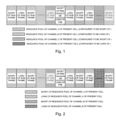
- the subframe structure of this scheme is shown in Fig. 1 , in which the base station allocates a resource pool of some specific CP format for some kind of D2D channel of all users in the cell.
- signaling for the subframe set configuration of the base station comprises:
- the base station will configure a uniform and unique CP format for each kind of D2D channel in this scheme.
- Signals on some D2D channel corresponding to different D2D terminals are invoked on the resource pool configured to the D2D channel of the present cell, and all of terminals of D2D mode 1 in coverage of the base station may use the CP format configured by the base station for the channel.
- a resource pool and a uniform and unique CP format of the resource pool are configured for a discovery channel of all D2D terminals in the cell; or a resource pool and a uniform and unique CP format of the resource pool are configured for a resource assignment channel (SA channel) of some D2D terminal in the cell.
- SA channel resource assignment channel
- the base station allocates a specific CP format to each kind of D2D channel, but the D2D channel is multiplexed by respective D2D users in the cell; and the resource pool allocated for the D2D channel and resource pools allocated for other D2D channels are multiplexed in a TDM way or in a FDM way or in a TDM&FDM way. Any of multiplexing ways falls into the protection scope of the present disclosure, as long as the base station determines a specific CP format for the resource pool of each kind of D2D channel.
- Implementation 1-1 may be implemented in two configuration schemes.
- a first configuration scheme is using a uniform CP format in the cell for the same kind of D2D channel in the same cell, as described previously.
- a second configuration scheme is containing two resource pool subsets in the resource pool of the same D2D channel in the same cell, these two resource pool subsets using different CP formats, the D2D channel for each user being carried on the resource pool subset of one of the CP formats, and some D2D channel for the same user being carried across the resource pool subsets of different CP formats being not allowed.
- Implementation 1-1 involves physical layer processes as follows:
- the network may configure the corresponding configurations, such as the resource pools of respective D2D channels in the cell, and the CP formats of respective kinds of D2D channels in the cell, as previously described via high layer RRC signaling or SIB message broadcast. Since the message is commonly used in the coverage of the whole cell, these configurations may be notified to a D2D transmission terminal and a D2D reception terminal in a broadcast way or other possible ways.
- the D2D transmission terminal associated with the configuration may use the CP format configured by the network for the D2D signal transmitted on the corresponding resource pool.
- the D2D reception terminal associated with the configuration may use the CP format obtained from the network notification for corresponding detection of the received signal.
- both the D2D transmission terminal and the D2D reception terminal must restrict their D2D transmission and reception behaviors according to the CP formats configured on the corresponding subframe or subframe set.
- the base station configures resource pools and CP formats thereof semi-statically for each kind of specific D2D channel, which comprise:
- the subframe structure of this scheme is shown in Fig. 2 , in which the base station allocates a resource pool of some specific CP format for some kind of D2D channel of some user in the cell.
- signaling for the subframe set configuration of the base station comprises:
- the base station will configure a specific CP format for each kind of D2D channel of each D2D terminal in this scheme. Signals on some D2D channel corresponding to different D2D terminals are invoked on the short CP resource pool or the long CP resource pool configured to the D2D channel of the present cell, and all of terminals of D2D mode 1 in coverage of the base station may use the CP format configured by the base station for the D2D channel of the D2D terminal.
- a discovery channel short CP resource pool and a discovery channel long CP resource pool are allocated for a discovery channel of all D2D terminals in the cell, and the discovery channel of some D2D terminal may be carried on one of the discovery channel short CP resource pool and the discovery channel long CP resource pool; or a SA channel short CP resource pool and a SA channel long CP resource pool are allocated for a SA channel of some D2D terminal, and the SA channel of some D2D terminal may be carried on one of the SA channel short CP resource pool and the SA channel long CP resource pool in the cell.
- the base station allocates a specific CP format to each kind of D2D channel of each D2D terminal, but the D2D channel short (or long) CP resource pool is multiplexed by respective D2D users of the channels of different CP formats in the cell; and the short (or long) CP resource pool allocated for the D2D channel is multiplexed with the long (or short) CP resource pool allocated for the D2D channel or with the resource pools allocated for other D2D channels in a TDM way or in a FDM way or in a TDM&FDM way. Any of multiplexing ways falls into the protection scope of the present disclosure, as long as the base station determines a specific CP format for the resource pool of each kind of D2D channel.
- Implementation 1-1 may be implemented in the following configuration schemes: a specific D2D channel of each user in the cell is configured with some set of CP format resource pools of the D2D channel in the cell (the short CP resource pool of the D2D channel or the long CP resource pool of the D2D channel), i.e., some channel of some user in the cell can only be allocated to one of subset 1 or subset 2 of the resource pool of the channel, and resource allocation for the same channel of the same user is not allowed to be performed across the resource pool subsets 1 and 2.
- Implementation 1-2 involves physical layer processes as follows:
- the network may configure the corresponding configurations, such as the resource pools of respective D2D channels in the cell, and the CP formats of respective kinds of D2D channels in the cell, as previously described via the high layer RRC signaling or SIB message broadcast. Since the message is commonly used in the coverage of the whole cell, these configurations may be notified to the D2D transmission terminal and the D2D reception terminal in a broadcast way or other possible ways.
- the D2D transmission terminal associated with the configuration may use the CP format configured by the network for the D2D signal transmitted on the corresponding resource pool.
- the D2D reception terminal associated with the configuration may use the CP format obtained from the network notification for corresponding detection of the received signal.
- both the D2D transmission terminal and the D2D reception terminal must restrict their D2D transmission and reception behaviors according to the CP formats configured on the corresponding subframe or subframe set.
- the base station configures subframe sets semi-statically for a D2D communication channel and a D2D discovery channel, which comprise:
- signaling for the subframe set configuration of the base station comprises:
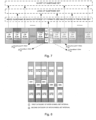
- the subframes in the subframe set of each CP format may be continuous as shown in Fig. 3 , or may be discontinuous as shown in Fig. 4 .
- the signaling for the subframe set configuration of the base station may be one of the above signaling 1 and 2 or both.
- the signaling may be transmitted to the D2D terminal by the base station in a form of dedicated RRC signaling, or may be broadcast in a form of SIB message. It is a good choice that a new SIB format is defined in D2D Specification for transmitting the information.
- a first configuration scheme is universally configuring all of D2D channels in the cell, i.e., each kind of channel can only be allocated to one of a time-frequency physical resource block set 1 and a time-frequency physical resource block set 2.
- a second configuration scheme is dedicatedly configuring respective D2D channels of all D2D terminals in the cell, e.g., configuring a subframe set and a CP format of the subframe set for the discovery channel of all the D2D terminals in the cell, or configuring a subframe set and a CP format of the subframe set for the SA channel of all the D2D terminals in the cell, or configuring a time-frequency physical resource block set and a CP format of the time-frequency physical resource block set for the D2D transmission channel of all the D2D terminals in the cell, etc.
- the third configuration scheme is dedicatedly configuring respective D2D channels of respective D2D terminals in the cell, e.g., configuring a subframe set and a CP format of the subframe set for the discovery channel of some D2D terminal in the cell, or configuring a subframe set and a CP format of the subframe set for the SA channel of some D2D terminal in the cell, or configuring a time-frequency physical resource block set and a CP format of the time-frequency physical resource block set for the D2D transmission channel of some D2D terminal in the cell.
- some D2D channel of some D2D terminal can only be configured in one of the resource pools of two different CP formats of the D2D channel in the cell, and some D2D channel of some D2D terminal is not allowed to be carried across resource pools of different CP formats.
- the resources for transmitting the signal are selected from the configured subframe set, and the CP format of the subframe set completely complies with such a configuration.
- the D2D transmission terminal associated with the configuration may use the CP format configured by the network for the D2D signal transmitted on the corresponding subframe set; and the D2D reception terminal associated with the configuration may use the CP format obtained from the network notification for corresponding detection of the received signal.
- the eNB should notify the D2D transmission terminal and the D2D reception terminal of these subframe sets and the CP format configuration information thereof, especially property of the subframe set of some critical channel, such as the SA channel and a D2D synchronization channel etc., in order to satisfy respective coverage requirements thereof as required.
- continuous subframes may be selected from the configured subframe set as shown in Fig. 3
- discontinuous subframes may be selected from the configured subframe set as shown in Fig. 4 .
- Implementation 2-1 involves physical layer processes as follows:
- the network may configure the corresponding configurations as previously described via the high layer RRC signaling, and these configurations may be notified to the D2D transmission terminal and the D2D reception terminal.
- the D2D transmission terminal associated with the configuration may use the CP format configured by the network for the D2D signal transmitted on the corresponding subframe set.
- the D2D reception terminal associated with the configuration may use the CP format obtained from the network notification for corresponding detection of the received signal.
- both the D2D transmission terminal and the D2D reception terminal must restrict their D2D transmission and reception behaviors according to the CP formats configured on the corresponding subframe or subframe set.
- Implementation 2-1 since D2D and a cellular network cannot coexist in the same subframe, both D2D data and cellular network data generally won't right completely occupy all subframes of the same data type in a full-load condition without wasting any resource. Implementations 2-1 to 2-5 may maximize resource utilization.
- the base station configures subframe sets semi-statically for the D2D communication channel and the D2D discovery channel, which comprise:
- N symbols MixedNormalCP represents the number of short CP symbols in a mixed subframe where signals of different CP formats coexist in the same subframe completely in the TDM way, and this parameter needs to be configured by the network to the D2D terminal for facilitating corresponding operations such as rate match of D2D transmitters.
- signaling for the subframe set configuration of the base station comprises:
- a time interval length between the short CP symbol and the long CP symbol should be (Duration of One Subframe -Time Lengths of All Long CP Symbols) mod One Short CP Time Length.
- the signaling of subframe set configuration of the base station may be any combination of the three subframe or subframe sets 1, 2 and 3 as described previously.
- such a configuration may be applicable to various scenarios in which the short CP signal and the long CP signal coexist in the same subframe, e.g., the cellular network data and the D2D data coexisting in different CP formats in the same subframe, or different D2D users enable their data to coexist in different CP formats in the same subframe.
- the signaling may be transmitted to the D2D terminal by the base station in a form of dedicated RRC signaling, or may be broadcasted in a form of SIB message.
- a first configuration scheme is universally configuring all of D2D channels in the cell, i.e., all of the channels in the cell can only be allocated to one of the subframe set 1 and the short CP resource in the mixed subframe, the subframe set 2 and the long CP resource in the mixed subframe.
- a second configuration scheme is dedicatedly configuring respective D2D channels, e.g., configuring a subframe set and a CP format of the subframe set for the discovery channel of some D2D terminal, or configuring a subframe set and a CP format of the subframe set for the SA channel of some D2D terminal.
- the third configuration scheme is configuring some set of CP formats for the specific D2D channel of each user in the cell, i.e., some channel of some user in the cell can only be allocated to one of the subframe set 1 of the channel resource pool and the short CP resource in the mixed subframe or the subframe set 2 and the long CP resource in the mixed subframe, and resource allocation for the same channel of the same user is not allowed to be performed across the resource pool subsets 1 and 2.
- the resources for transmitting the signal are selected from the configured subframe set, and the CP format of the subframe set completely complies with such a configuration.
- the D2D transmission terminal associated with the configuration may use the CP format configured by the network for the D2D signal transmitted on the corresponding subframe set; and the D2D reception terminal associated with the configuration may use the CP format obtained from the network notification for corresponding detection of the received signal.
- Implementation 2-2 involves physical layer processes as follows:
- the network may configure the corresponding configurations, such as the long CP subframe set, the short CP subframe set, the subframe number of the mixed subframe and the configuration information in the corresponding mixed subframe, including the long CP (or short CP) symbol set etc. (the information in the mixed subframe will be used for behaviors such as rate match of the D2D terminal transmitters), as previously described via the high layer RRC signaling (or a part of signaling being configured by DCI).
- the configuration information of the corresponding mixed subframe is notified by RRC or informed in the SA channel. These configurations may be notified to the D2D transmission terminal and the D2D reception terminal.
- the D2D transmission terminal associated with the configuration may use the CP format configured by the network for the D2D signal transmitted on the corresponding subframe set.
- the D2D reception terminal associated with the configuration may use the CP format obtained from the network notification for corresponding detection of the received signal.
- both the D2D transmission terminal and the D2D reception terminal must restrict their D2D transmission and reception behaviors according to the CP formats configured on the corresponding subframe or subframe set.
- the base station configures subframe sets semi-statically for the D2D communication channel and the D2D discovery channel, which comprise:
- N RB MixedNormalCP represents the number of PRBs of the short CP signal in the mixed subframe where signals of different CP formats coexist in the same subframe completely in the TDM way
- N RB GuardBand represents the number of PRBs occupied by a guard band between the long CP signal and the short CP signal in the mixed subframe where the signals of different CP formats coexist in the same subframe completely in the TDM way.
- the two parameters need to be configured by the network to the D2D terminal for facilitating corresponding operations such as rate match of D2D transmitters.
- signaling for the subframe set configuration of the base station comprises:
- the guard band signaling is transmitted to the D2D terminal by the base station in a form of dedicated RRC signaling, or is broadcast in a form of SIB message.
- respective requirements for dynamic ranges of received signals of the cellular network signal and the D2D signal may be up to 60dB or even higher, suppression capability of the above sub-carrier interval in the frequency domain for inter-interference between the cellular network signal and the D2D signal, or different users or different D2D channels due to coexistence of different CP formats in the same subframe may not be able to reach the requirements for the dynamic ranges of the cellular network received signal or the D2D received signal, even if a very broad sub-carrier interval is used for separation.
- a power control mechanism may be used as auxiliary means, i.e., power of signals of different CP formats which coexist in the same subframe may be configured according to priorities of signals of which different CP formats coexist in the same subframe, e.g., a priority of the cellular network signal being higher than that of the D2D signal.
- Such signaling is also transmitted to the D2D terminal by the base station in a form of dedicated RRC signaling, or is broadcast in a form of SIB message.
- a first configuration scheme is universally configuring all of D2D channels in the cell, i.e., all of the channels in the cell can only be allocated to one of the subframe set 1 and the short CP resource in the mixed subframe, the subframe set 2 and the long CP resource in the mixed subframe.
- a second configuration scheme is dedicatedly configuring respective D2D channels, e.g., configuring a subframe set and a CP format of the subframe set for the discovery channel of some D2D terminal, or configuring a subframe set and a CP format of the subframe set for the SA channel of some D2D terminal.
- the third configuration scheme is configuring some set of CP formats for the specific D2D channel of each user in the cell, i.e., some channel of some user in the cell can only be allocated to one of the subframe set 1 of the channel resource pool and the short CP resource in the mixed subframe or the subframe set 2 and the long CP resource in the mixed subframe, and resource allocation for the same channel of the same user is not allowed to be performed across the resource pool subsets 1 and 2.
- the resources for transmitting the signal are selected from the configured subframe set, and the CP format of the subframe set completely complies with such a configuration.
- the D2D transmission terminal associated with the configuration may use the CP format configured by the network for the D2D signal transmitted on the corresponding subframe set; and the D2D reception terminal associated with the configuration may use the CP format obtained from the network notification for corresponding detection of the received signal.
- Implementation 2-3 involves physical layer processes as follows:
- the network may configure the corresponding configurations, such as the long CP subframe set, the short CP subframe set, the subframe number of the mixed subframe and the configuration information in the corresponding mixed subframe, including the long CP (or short CP) PRB set, and the guard band PRB set, and power information of the short CP signal PRB set and the long CP signal PRB set, etc. as previously described via the high layer RRC signaling (or via the DCI).
- the configuration information of the corresponding mixed subframe is notified by RRC or informed in the SA channel. These configurations may be notified to the D2D transmission terminal and the D2D reception terminal.
- the D2D transmission terminal associated with the configuration may use the CP format configured by the network for the D2D signal transmitted on the corresponding subframe set.
- the D2D reception terminal associated with the configuration may use the CP format obtained from the network notification for corresponding detection of the received signal.
- both the D2D transmission terminal and the D2D reception terminal must restrict their D2D transmission and reception behaviors according to the CP formats configured on the corresponding subframe or subframe set.
- the base station configures subframe sets semi-statically for the D2D communication channel and the D2D discovery channel, which comprise:
- N RB MixedNormalCP ⁇ TDMI represents the number of PRBs of the short CP signal of a first set of TDM symbols in some mixed subframe where signals of different CP formats coexist in the same subframe completely in the TDM way
- N RB GuardBand ⁇ TDMI represents the number of PRBs occupied by a guard band between the long CP signal and the short CP signal of the first set of TDM symbols in some mixed subframe where the signals of different CP formats coexist in the same subframe completely in the TDM way
- N RB MixedNormalCP ⁇ TDMn represents the number of PRBs of the short CP signal of a n-th set of TDM symbols in the mixed subframe where signals of different CP formats coexist in the same subframe completely in the TDM way
- N RB GuardBand ⁇ TDMn represents the number of PRBs occupied by a guard band between the long CP signal and the short CP signal
- a format of the mixed subframe in which the short CP signal and the long CP signal coexist in the TDM&FDM way is defined in detail.
- the symbols multiplexed in the TDM way within each timeslot of the TDM&FDM mixed subframe are two to six sets, two adjacent sets are separated in the TDM way, and the signals of different CP formats within each set of symbols are multiplexed in the FDM way.
- inter-symbol gap occupies the whole frequency band in the frequency domain.
- the SC-FDMA/OFDM signals of two CP formats may be multiplexed in the FDM way in each of two to six TDM symbol sets within each timeslot if the symbol sets are divided per timeslot in the TDM&FDM mixed subframe, or in each of two to thirteen TDM symbol sets within each subframe if the symbol sets are divided per subframe in the mixed subframe.
- Such multiplexed SC-FDMA/OFDM signals of two CP formats in the FDM way may have different periods of sampling points in the time domain, i.e., within each SC-FDMA/OFDM symbol set separated in the TDM way, the SC-FDMA/OFDM signals of the two CP formats multiplexed in the FDM way may not be aligned in the time domain, i.e., in Fig. 7 , within the TDM&FDM mixed subframe as shown in Fig.
- the number of sampling points of Normal CP PRBs and that of Extended CP PRBs which are multiplexed in the FDM way are not consistent with each other.
- no signal may be transmitted on the time-frequency resources whose time interval is a period during which the signal of the longer one is normally transmitted while the signal of the shorter one is not transmitted, i.e., a difference between transmission of the signal of the longer one and transmission of the signal of the shorter one, in the time domain and whose frequency band is where the shorter one is located in the frequency domain.
- the gap occupies, in the frequency domain, the frequency band which is occupied by a shorter one of the TDM symbol set in the time domain.
- blank resources within the TDM&FDM mixed subframe on which no signal can be transmitted are constituted by both the time-frequency resources which are emptied due to unalignment within the TDM symbol set (the gap occupying, in the frequency domain, the frequency band which is occupied by the short one of the TDM symbol set in the time domain, as shown in 1 of Fig. 8 ) and the gaps which may be exist between the sets (the gap occupying the whole frequency band in the frequency domain, as shown in 2 of Fig. 8 ).
- signaling for the subframe set configuration of the base station comprises:
- the interval of several sub-carriers may be needed between the long CP sub-carrier set and the short CP sub-carrier set in the frequency domain, i.e., the guard band.
- Such signaling is transmitted to the D2D terminal by the base station in a form of dedicated RRC signaling, or is broadcast in a form of SIB message.
- respective requirements for dynamic ranges of received signals of the cellular network signal and the D2D signal may be up to 60dB or even higher, suppression capability of the above sub-carrier interval in the frequency domain for inter-interference between the cellular network signal and the D2D signal, or different users or different D2D channels due to coexistence of different CP formats in the same symbol set may not be able to reach the requirements for the dynamic ranges of the cellular network received signal or the D2D received signal, even if a very broad sub-carrier interval is used for separation.
- a power control mechanism may be used as auxiliary means, i.e., power of signals of different CP formats which coexist in the same symbol set may be configured according to priorities of signals of which different CP formats coexist in the same symbol set, e.g., a priority of the cellular network signal being higher than that of the D2D signal.
- Such signaling is also transmitted to the D2D terminal by the base station in a form of dedicated RRC signaling, or is broadcast in a form of SIB message.
- a first configuration scheme is universally configuring all of D2D channels in the cell, i.e., all of the channels in the cell can only be allocated to one of the subframe set 1 and the short CP resource in the mixed subframe, the subframe set 2 and the long CP resource in the mixed subframe.
- a second configuration scheme is dedicatedly configuring respective D2D channels, e.g., configuring a subframe set and a CP format of the subframe set for the discovery channel of some D2D terminal, or configuring a subframe set and a CP format of the subframe set for the SA channel of some D2D terminal.
- the third configuration scheme is configuring some set of CP formats for the specific D2D channel of each user in the cell, i.e., some channel of some user in the cell can only be allocated to one of the subframe set 1 of the channel resource pool and the short CP resource in the mixed subframe or the subframe set 2 and the long CP resource in the mixed subframe, and resource allocation for the same channel of the same user is not allowed to be performed across the resource pool subsets 1 and 2.
- the resources for transmitting the signal are selected from the configured subframe set, and the CP format of the subframe set completely complies with such a configuration.
- the D2D transmission terminal associated with the configuration may use the CP format configured by the network for the D2D signal transmitted on the corresponding subframe set; and the D2D reception terminal associated with the configuration may use the CP format obtained from the network notification for corresponding detection of the received signal.
- the network may configure the corresponding configurations, such as the long CP subframe set, the short CP subframe set, the subframe number of the mixed subframe and the configuration information in the corresponding mixed subframe, including the long CP (or short CP) PRB set, and the long CP (or the short CP) symbol set of the mixed symbol in the mixed subframe, and the short CP signal (or the long CP signal) PRB set of the mixed symbol in the mixed subframe, the time-frequency resource and power information of the guard band PRB set, etc. as previously described via the high layer RRC signaling (or a part of signaling is configured by the DCI).
- the configuration information of the corresponding mixed subframe is notified by RRC or informed in the SA channel. These configurations may be notified to the D2D transmission terminal and the D2D reception terminal.
- the D2D transmission terminal associated with the configuration may use the CP format configured by the network for the D2D signal transmitted on the corresponding subframe set.
- the D2D reception terminal associated with the configuration may use the CP format obtained from the network notification for corresponding detection of the received signal.
- both the D2D transmission terminal and the D2D reception terminal must restrict their D2D transmission and reception behaviors according to the CP formats configured on the corresponding subframe or subframe set.
- the base station configures time-frequency physical resource sets semi-statically for the D2D communication channel and the D2D discovery channel, which comprise:
- signaling for the time-frequency physical resource set configuration of the base station comprises:
- Fig. 9 is a subframe and PRB format diagram, in which CP formats are configured based on respective time-frequency physical resource sets; symbol sets which are multiplexed in the TDM way are grouped in each timeslot of the mixed subframe, or are grouped in each mixed subframe. If they are grouped in each timeslot of the mixed subframe, there are two to six sets of symbols multiplexed in the TDM way within each timeslot of the TDM&FDM mixed subframe (only two sets are shown in Fig. 9 for simplicity); if they are grouped in the mixed subframe, there are two to thirteen sets of symbols multiplexed in the TDM way in the TDM&FDM mixed subframe.
- the signals of different CP formats in each set of symbols may be multiplexed in the FDM way.
- the CP formats are configured according to the time-frequency physical resource sets
- there may be random PRB combination ways of coexistence of the long CP and the short CP i.e., the long CP and the short CP may coexist based on any of subframe configuration schemes 2-1, 2-2, 2-3 and 2-4. That is, the subframe where the short CP (or the long CP) time-frequency physical resource set is located in the time-frequency physical resource set may be any of subframes in Schemes 2-1, 2-2, 2-3 and 2-4.
- the short CP signal and the long CP signal may coexist in the TDM form, or the FDM form or the TDM&FDM form in each mixed subframe in which the short CP signal and the long CP signal coexist.
- the format of the mixed subframe in which the short CP signal and the long CP signal may coexist in the TDM&FDM form has been described in detail in Implementation 2-4.
- the symbols multiplexed in the TDM way within each timeslot of the TDM&FDM mixed subframe are two to six sets, two adjacent sets are separated in the TDM way, and the signals of different CP formats within each set of symbols are multiplexed in the FDM way.
- inter-symbol gap occupies the whole frequency band in the frequency domain.
- the SC-FDMA/OFDM signals of two CP formats may be multiplexed in the FDM way in each of two to six TDM symbol sets within each timeslot if the symbol sets are divided per timeslot in the TDM&FDM mixed subframe, or in each of two to thirteen TDM symbol sets within each subframe if the symbol sets are divided per subframe in the mixed subframe.
- Such multiplexed SC-FDMA/OFDM signals of two CP formats in the FDM way may have different periods of sampling points in the time domain, i.e., within each SC-FDMA/OFDM symbol set separated in the TDM way, the SC-FDMA/OFDM signals of the two CP formats multiplexed in the FDM way may not be aligned in the time domain, i.e., in Fig. 9 , within the TDM&FDM mixed subframe as shown in Fig.
- the number of sampling points of Normal CP PRBs and that of Extended CP PRBs which are multiplexed in the FDM way are not consistent with each other.
- no signal may be transmitted on the time-frequency resources whose time interval is a period during which the signal of the longer one is normally transmitted while the signal of the shorter one is not transmitted, i.e., a difference between transmission of the signal of the longer one and transmission of the signal of the shorter one, in the time domain and whose frequency band is where the shorter one is located in the frequency domain.
- the gap occupies, in the frequency domain, the frequency band which is occupied by a shorter one of the TDM symbol set in the time domain.
- blank resources within the TDM&FDM mixed subframe on which no signal can be transmitted are constituted by both the time-frequency resources which are emptied due to non-alignment within the TDM symbol set (the gap occupying, in the frequency domain, the frequency band which is occupied by the short one of the TDM symbol set in the time domain, as shown in 1 of Fig. 8 ) and the gaps which may be exist between the sets (the gap occupying the whole frequency band in the frequency domain, as shown in (2) of Fig. 8 ).
- the signaling for the time-frequency physical source set configuration of the base station may be one of the above signaling 1 and 2 or both.
- the signaling may be transmitted to the D2D terminal by the base station in a form of dedicated RRC signaling, or may be broadcast in a form of SIB message.
- the implementation will be standardized in the Standard, it is required to determine whether the signals of different CP formats which are multiplexed in the FDM way in each of the TDM symbol sets are left-aligned or right-aligned in time, and to specify in the Specification which of the signals of the long CP format and the short CP format is longer, in order to reduce signaling overhead. As such, for information in the time domain of this scheme, the signaling only needs to notify the number of symbols of the long CP signal (or the short CP signal) of each TDM symbol set.
- the signaling only needs to notify the bandwidth of the long CP signal (or the short CP signal) of each TDM symbol set, and the bandwidth of the guard band.
- a first configuration scheme is universally configuring all of D2D channels in the cell, i.e., each kind of channel can only be allocated to one of the time-frequency physical resource set 1 and the time-frequency physical resource set 2.
- a second configuration scheme is dedicatedly configuring respective D2D channels of all D2D terminals in the cell, e.g., configuring a time-frequency physical resource set and a CP format of the time-frequency physical resource set for the discovery channel of all the D2D terminals in the cell, or configuring a time-frequency physical resource set and a CP format of the time-frequency physical resource set for the SA channel of all the D2D terminals in the cell, or configuring a time-frequency physical resource set and a CP format of the time-frequency physical resource set for the D2D transmission channel of all the D2D terminals in the cell, etc.
- the third configuration scheme is dedicatedly configuring respective D2D channels of respective D2D terminals in the cell, e.g., configuring a subframe set and a CP format of the subframe set for the discovery channel of some D2D terminal in the cell, or configuring a subframe set and a CP format of the subframe set for the SA channel of some D2D terminal in the cell, or configuring a time-frequency physical resource set and a CP format of the time-frequency physical resource set for the D2D transmission channel of some D2D terminal in the cell.
- some D2D channel of some D2D terminal can only be configured in one of the resource pools of two different CP formats of the D2D channel in the cell, and some D2D channel of some D2D terminal is not allowed to be carried across resource pools of different CP formats.
- the resources for transmitting the signal are selected from the configured time-frequency physical resource set, and the CP format of the time-frequency physical resource set completely complies with such a configuration.
- the D2D transmission terminal associated with the configuration may use the CP format configured by the network for the D2D signal transmitted on the corresponding time-frequency physical resource block set; and the D2D reception terminal associated with the configuration may use the CP format obtained from the network notification for corresponding detection of the received signal.
- Implementation 2-5 involves physical layer processes as follows:
- the network may configure the corresponding configurations, such as the long CP subframe set, the short CP subframe set, the subframe number of the mixed subframe and the configuration information in the corresponding mixed subframe, including the long CP (or short CP) symbol set, and the long CP (or the short CP) symbol set of the mixed symbol in the mixed subframe, and the short CP signal PRB set, the long CP signal PRB set of the mixed symbol in the mixed subframe, the time-frequency resource and power information of the guard band PRB set, etc. as previously described via the high layer RRC signaling.
- the configuration information of the corresponding mixed subframe may be informed in the SA channel, besides being notified by RRC. These configurations may be notified to the D2D transmission terminal and the D2D reception terminal.
- the D2D transmission terminal associated with the configuration may use the CP format configured by the network for the D2D signal transmitted on the corresponding subframe set.
- the D2D reception terminal associated with the configuration may use the CP format obtained from the network notification for corresponding detection of the received signal.
- the present disclosure generally provides a base station and user equipment for performing CP configurations on resources of D2D communication, which comprises steps as shown in Fig. 10 .
- the base station configures CP formats for different resource subsets, the CP formats including a long CP signal format and a short CP signal format.
- step S920 the base station notifies the configuration to a D2D transmission device and a D2D reception device, wherein the configuration notified by the base station to the D2D transmission device and a D2D reception device comprises: a configuration of a CP format used by a resource pool of a D2D discovery channel of the D2D transmission device; and a configuration of a CP format used by a resource pool of a D2D communication channel of the D2D transmission device; and wherein the D2D transmission device and the D2D reception device perform transmission and reception in the resource subsets with the CP formats which comply with the configuration.
- Fig. 11 shows a block diagram of a base station 1000 according to the present disclosure.
- the base station 1000 comprises a transmission unit 1010, configured to transmit Cyclic Prefix CP formats of resource pools via high layer signaling, the resource pools including a resource pool of a Device to Device D2D discovery channel and/or a resource pool of a D2D communication channel.
- the CP formats may include a long CP signal format and a short CP signal format.
Landscapes
- Engineering & Computer Science (AREA)
- Signal Processing (AREA)
- Computer Networks & Wireless Communication (AREA)
- Databases & Information Systems (AREA)
- Computer Security & Cryptography (AREA)
- Mobile Radio Communication Systems (AREA)
Claims (2)
- Station de base (1000), comprenant :une unité de configuration qui configure (S910), de manière semi-statique, (i) une première longueur de CP [cyclic prefix - préfixe cyclique] et une deuxième longueur de CP pour un groupe de ressources pour un canal de communication D2D (Device to Device - dispositif à dispositif], et (ii) un premier ensemble de sous-trames correspondant à la première longueur de CP et un deuxième ensemble de sous-trames correspondant à la deuxième longueur de CP ; etune unité de transmission (1010), qui transmet conjointement (S920) des informations comportant (i) des ressources de temps et de fréquence de chacun du premier ensemble de sous-trames et du deuxième ensemble de sous-trames et (ii) une configuration de CP de chacun du premier ensemble de sous-trames et du deuxième ensemble de sous-trames.
- Equipement utilisateur UE comprenant :une unité de réception, qui reçoit conjointement des informations comportant (i) des ressources de temps et de fréquence de chacun d'un premier ensemble de sous-trames et d'un deuxième ensemble de sous-trames et (ii) une configuration de CP de chacun du premier ensemble de sous-trames et du deuxième ensemble de sous-trames ; etune unité de détermination qui détermine (i) une première longueur de CP et une deuxième longueur de CP pour un groupe de ressources pour un canal de communication D2D et (ii) le premier ensemble de sous-trames correspondant à la première longueur de CP et le deuxième ensemble de sous-trames correspondant à la deuxième longueur de CP sur la base des informations reçues.
Applications Claiming Priority (2)
| Application Number | Priority Date | Filing Date | Title |
|---|---|---|---|
| CN201410192888.3A CN105101458B (zh) | 2014-05-08 | 2014-05-08 | D2d通信中的不同cp长度共存的配置 |
| PCT/CN2015/077365 WO2015169156A1 (fr) | 2014-05-08 | 2015-04-24 | Configuration pour coexistence de différentes longueurs de cp en communication d2d |
Publications (3)
| Publication Number | Publication Date |
|---|---|
| EP3142437A1 EP3142437A1 (fr) | 2017-03-15 |
| EP3142437A4 EP3142437A4 (fr) | 2017-12-06 |
| EP3142437B1 true EP3142437B1 (fr) | 2024-07-31 |
Family
ID=54392118
Family Applications (1)
| Application Number | Title | Priority Date | Filing Date |
|---|---|---|---|
| EP15789217.5A Active EP3142437B1 (fr) | 2014-05-08 | 2015-04-24 | Configuration pour coexistence de différentes longueurs de cp en communication d2d |
Country Status (5)
| Country | Link |
|---|---|
| US (1) | US10285181B2 (fr) |
| EP (1) | EP3142437B1 (fr) |
| JP (1) | JP6527530B2 (fr) |
| CN (1) | CN105101458B (fr) |
| WO (1) | WO2015169156A1 (fr) |
Families Citing this family (22)
| Publication number | Priority date | Publication date | Assignee | Title |
|---|---|---|---|---|
| CN105338467B (zh) * | 2014-08-07 | 2019-04-02 | 电信科学技术研究院 | 一种设备到设备通信中数据接收方法、发送方法及设备 |
| CN114599119A (zh) * | 2014-10-31 | 2022-06-07 | 三菱电机株式会社 | 无线通信系统、基站及通信终端 |
| US20170048036A1 (en) * | 2015-08-10 | 2017-02-16 | Qualcomm Incorporated | Extending lte-d discovery for v2v |
| CN106303918B (zh) * | 2015-11-24 | 2020-06-02 | 北京智谷睿拓技术服务有限公司 | 设备间通信方法、设备间通信资源分配方法、及其装置 |
| US10985950B2 (en) * | 2016-01-26 | 2021-04-20 | Sony Corporaton | Apparatus and method for performing radio communication |
| WO2018021008A1 (fr) * | 2016-07-29 | 2018-02-01 | 日本電気株式会社 | Dispositif, procédé, système, programme et support d'enregistrement de communication |
| CN109716840A (zh) * | 2016-09-28 | 2019-05-03 | 华为技术有限公司 | 数据传输方法、基站及用户设备 |
| EP4012967A1 (fr) * | 2016-09-30 | 2022-06-15 | Motorola Mobility LLC | Affectation de ressources radio flexible |
| CN110140307B (zh) * | 2016-11-03 | 2023-05-26 | 弗劳恩霍夫应用研究促进协会 | 用户设备、基站和无线通信系统 |
| EP3358898B1 (fr) * | 2017-02-07 | 2021-04-28 | Volkswagen Aktiengesellschaft | Appareils, procédés et programmes informatiques pour allocation de ressources de transmission pour un transcepteur mobile |
| CN108811074B (zh) * | 2017-05-05 | 2021-01-29 | 华为技术有限公司 | 信息传输方法及装置 |
| CN109587659B (zh) * | 2017-09-29 | 2022-05-27 | 中兴通讯股份有限公司 | 一种信号的发送方法和系统 |
| WO2019093810A1 (fr) * | 2017-11-10 | 2019-05-16 | 엘지전자 주식회사 | Procédé et appareil pour le traitement d'un signal de liaison latérale retardé |
| WO2019093816A1 (fr) * | 2017-11-10 | 2019-05-16 | 엘지전자 주식회사 | Procédé et dispositif de commande de fenêtre de réception pour signal de liaison latérale |
| CN111279762B (zh) * | 2017-11-27 | 2021-12-28 | 华为技术有限公司 | 同步方法及装置 |
| US10750492B2 (en) * | 2017-12-20 | 2020-08-18 | Qualcomm Incorporated | Resource assignment in NR-SS |
| MX2020013999A (es) * | 2018-06-29 | 2021-03-25 | Guangdong Oppo Mobile Telecommunications Corp Ltd | Metodo de transmision de datos y dispositivo de terminal. |
| CN111263440B (zh) * | 2018-11-30 | 2024-06-04 | 华为技术有限公司 | 一种防护频带指示方法及装置 |
| US12063701B2 (en) * | 2019-05-13 | 2024-08-13 | Telefonaktiebolaget Lm Ericsson (Publ) | Handling of radio resource between terminal devices |
| US11102121B2 (en) | 2019-10-23 | 2021-08-24 | Cisco Technology, Inc. | Path signatures for data flows |
| US11706055B2 (en) * | 2020-04-16 | 2023-07-18 | Samsung Electronics Co., Ltd | Method and apparatus for transmitting and receiving uplink reference signal in wireless communication system |
| WO2022030113A1 (fr) * | 2020-08-07 | 2022-02-10 | パナソニック インテレクチュアル プロパティ コーポレーション オブ アメリカ | Station de base, terminal, et procédé de communication |
Citations (2)
| Publication number | Priority date | Publication date | Assignee | Title |
|---|---|---|---|---|
| US20150264552A1 (en) * | 2014-03-14 | 2015-09-17 | Gang Xiong | Systems, methods, and devices for device-to-device discovery and communication |
| EP3139559A1 (fr) * | 2014-04-30 | 2017-03-08 | LG Electronics Inc. | Procédé pour émettre un signal de dispositif à dispositif dans un système de communication sans fil et appareil correspondant |
Family Cites Families (9)
| Publication number | Priority date | Publication date | Assignee | Title |
|---|---|---|---|---|
| CN101286787A (zh) * | 2007-04-11 | 2008-10-15 | 北京三星通信技术研究有限公司 | 传输同步信道的设备和方法 |
| US9516653B2 (en) | 2012-06-22 | 2016-12-06 | Lg Electronics Inc. | Scheduling method for device-to-device communication and apparatus for same |
| EP2883330A4 (fr) * | 2012-08-09 | 2016-04-13 | Qualcomm Inc | Procédés et appareil pour communications de dispositif à dispositif |
| CN103686985B (zh) * | 2012-09-25 | 2019-03-12 | 中兴通讯股份有限公司 | 用于设备到设备通信的设备发现方法及装置 |
| WO2014058221A2 (fr) * | 2012-10-09 | 2014-04-17 | 엘지전자 주식회사 | Procédé et appareil permettant la mise en oeuvre d'une communication entre dispositifs dans un système de communication sans fil |
| US9756613B2 (en) * | 2012-12-06 | 2017-09-05 | Qualcomm Incorporated | Transmission and reception timing for device-to-device communication system embedded in a cellular system |
| US9143497B2 (en) * | 2013-07-19 | 2015-09-22 | Symantec Corporation | Systems and methods for securing email in mobile devices |
| US9838163B2 (en) * | 2013-08-06 | 2017-12-05 | Lg Electronics Inc. | Method for transmitting D2D signal and apparatus for same |
| JP6019005B2 (ja) | 2013-10-31 | 2016-11-02 | 株式会社Nttドコモ | 無線基地局、ユーザ端末及び無線通信方法 |
-
2014
- 2014-05-08 CN CN201410192888.3A patent/CN105101458B/zh active Active
-
2015
- 2015-04-24 JP JP2016566931A patent/JP6527530B2/ja active Active
- 2015-04-24 US US15/309,287 patent/US10285181B2/en active Active
- 2015-04-24 EP EP15789217.5A patent/EP3142437B1/fr active Active
- 2015-04-24 WO PCT/CN2015/077365 patent/WO2015169156A1/fr not_active Ceased
Patent Citations (2)
| Publication number | Priority date | Publication date | Assignee | Title |
|---|---|---|---|---|
| US20150264552A1 (en) * | 2014-03-14 | 2015-09-17 | Gang Xiong | Systems, methods, and devices for device-to-device discovery and communication |
| EP3139559A1 (fr) * | 2014-04-30 | 2017-03-08 | LG Electronics Inc. | Procédé pour émettre un signal de dispositif à dispositif dans un système de communication sans fil et appareil correspondant |
Non-Patent Citations (1)
| Title |
|---|
| NTT DOCOMO ET AL: "Views on D2D discovery resource allocation", vol. RAN WG1, no. Prague, Czech Republic; 20130210 - 20130214, 9 February 2014 (2014-02-09), XP050736155, Retrieved from the Internet <URL:http://www.3gpp.org/ftp/Meetings_3GPP_SYNC/RAN/RAN1/Docs/> [retrieved on 20140209] * |
Also Published As
| Publication number | Publication date |
|---|---|
| EP3142437A1 (fr) | 2017-03-15 |
| CN105101458A (zh) | 2015-11-25 |
| JP2017520148A (ja) | 2017-07-20 |
| CN105101458B (zh) | 2021-05-07 |
| US20170079026A1 (en) | 2017-03-16 |
| US10285181B2 (en) | 2019-05-07 |
| WO2015169156A1 (fr) | 2015-11-12 |
| JP6527530B2 (ja) | 2019-06-05 |
| EP3142437A4 (fr) | 2017-12-06 |
Similar Documents
| Publication | Publication Date | Title |
|---|---|---|
| EP3142437B1 (fr) | Configuration pour coexistence de différentes longueurs de cp en communication d2d | |
| US20220151012A1 (en) | Methods for resource configuration for transmission in inactive state | |
| KR102466107B1 (ko) | 사이드링크 자원 구성을 구현하는 방법, 장치 및 시스템 | |
| US11129153B2 (en) | Telecommunications systems and methods for machine type communication | |
| CN109479277B (zh) | 使用参数集的发送方法和装置以及调度方法和装置 | |
| EP2795823B1 (fr) | Station de base et procédé pour communication de type machine | |
| CN105992364B (zh) | 资源处理方法及装置 | |
| CN107534482B (zh) | 移动通信系统、通信终端和方法 | |
| CN103997788B (zh) | 用于设备到设备通信的设备发现方法及用户设备、网络侧设备 | |
| TWI683557B (zh) | 通訊裝置及方法 | |
| US9042326B2 (en) | Method and device for transmitting uplink data in wireless connection system | |
| JP6307522B2 (ja) | マシーンタイプコミュニケーションに対して仮想キャリアでシステム情報を割り当てるための移動通信機器および方法 | |
| JP6346197B2 (ja) | マシーンタイプコミュニケーションに対する仮想キャリアでシステム情報を割り当てるための移動通信デバイスおよび方法 | |
| JP6276768B2 (ja) | 通信デバイス及び方法 | |
| CN105101431B (zh) | 一种设备到设备通信方法、装置及系统 | |
| EP3544352A1 (fr) | Dispositif de communications | |
| EP3200533B1 (fr) | Dispositif utilisateur et procédé de sélection de ressources | |
| RU2646285C2 (ru) | Способы, системы и устройства для взаимного обнаружения устройств и межмашинной связи | |
| JP6257628B2 (ja) | モバイル通信のシステム、ネットワークエレメント及び方法 | |
| JP2018530238A (ja) | スペシャルサブフレーム中の増加されたアップリンクパイロットタイムスロット長 | |
| WO2012074326A2 (fr) | Procédé et appareil pour attribuer des ressources dans un système à nœuds multiples | |
| CN106464402A (zh) | 用户装置、干扰检测方法、基站以及资源分配方法 | |
| CN116527209A (zh) | 使用参数集的发送方法和装置以及使用参数集的调度方法和装置 | |
| CN109392117B (zh) | 一种正交频分复用系统中调度请求配置方法 | |
| WO2021013213A1 (fr) | Procédé exécuté par un équipement utilisateur et équipement utilisateur |
Legal Events
| Date | Code | Title | Description |
|---|---|---|---|
| STAA | Information on the status of an ep patent application or granted ep patent |
Free format text: STATUS: THE INTERNATIONAL PUBLICATION HAS BEEN MADE |
|
| PUAI | Public reference made under article 153(3) epc to a published international application that has entered the european phase |
Free format text: ORIGINAL CODE: 0009012 |
|
| STAA | Information on the status of an ep patent application or granted ep patent |
Free format text: STATUS: REQUEST FOR EXAMINATION WAS MADE |
|
| 17P | Request for examination filed |
Effective date: 20161117 |
|
| AK | Designated contracting states |
Kind code of ref document: A1 Designated state(s): AL AT BE BG CH CY CZ DE DK EE ES FI FR GB GR HR HU IE IS IT LI LT LU LV MC MK MT NL NO PL PT RO RS SE SI SK SM TR |
|
| AX | Request for extension of the european patent |
Extension state: BA ME |
|
| DAV | Request for validation of the european patent (deleted) | ||
| DAX | Request for extension of the european patent (deleted) | ||
| A4 | Supplementary search report drawn up and despatched |
Effective date: 20171106 |
|
| RIC1 | Information provided on ipc code assigned before grant |
Ipc: H04L 5/00 20060101AFI20171027BHEP |
|
| STAA | Information on the status of an ep patent application or granted ep patent |
Free format text: STATUS: EXAMINATION IS IN PROGRESS |
|
| 17Q | First examination report despatched |
Effective date: 20191122 |
|
| GRAP | Despatch of communication of intention to grant a patent |
Free format text: ORIGINAL CODE: EPIDOSNIGR1 |
|
| STAA | Information on the status of an ep patent application or granted ep patent |
Free format text: STATUS: GRANT OF PATENT IS INTENDED |
|
| INTG | Intention to grant announced |
Effective date: 20240222 |
|
| GRAS | Grant fee paid |
Free format text: ORIGINAL CODE: EPIDOSNIGR3 |
|
| GRAA | (expected) grant |
Free format text: ORIGINAL CODE: 0009210 |
|
| STAA | Information on the status of an ep patent application or granted ep patent |
Free format text: STATUS: THE PATENT HAS BEEN GRANTED |
|
| AK | Designated contracting states |
Kind code of ref document: B1 Designated state(s): AL AT BE BG CH CY CZ DE DK EE ES FI FR GB GR HR HU IE IS IT LI LT LU LV MC MK MT NL NO PL PT RO RS SE SI SK SM TR |
|
| REG | Reference to a national code |
Ref country code: CH Ref legal event code: EP Ref country code: GB Ref legal event code: FG4D |
|
| REG | Reference to a national code |
Ref country code: DE Ref legal event code: R096 Ref document number: 602015089383 Country of ref document: DE |
|
| REG | Reference to a national code |
Ref country code: IE Ref legal event code: FG4D |
|
| REG | Reference to a national code |
Ref country code: LT Ref legal event code: MG9D |
|
| REG | Reference to a national code |
Ref country code: NL Ref legal event code: MP Effective date: 20240731 |
|
| PG25 | Lapsed in a contracting state [announced via postgrant information from national office to epo] |
Ref country code: PT Free format text: LAPSE BECAUSE OF FAILURE TO SUBMIT A TRANSLATION OF THE DESCRIPTION OR TO PAY THE FEE WITHIN THE PRESCRIBED TIME-LIMIT Effective date: 20241202 |
|
| REG | Reference to a national code |
Ref country code: AT Ref legal event code: MK05 Ref document number: 1709530 Country of ref document: AT Kind code of ref document: T Effective date: 20240731 |
|
| PG25 | Lapsed in a contracting state [announced via postgrant information from national office to epo] |
Ref country code: PT Free format text: LAPSE BECAUSE OF FAILURE TO SUBMIT A TRANSLATION OF THE DESCRIPTION OR TO PAY THE FEE WITHIN THE PRESCRIBED TIME-LIMIT Effective date: 20241202 |
|
| PG25 | Lapsed in a contracting state [announced via postgrant information from national office to epo] |
Ref country code: NO Free format text: LAPSE BECAUSE OF FAILURE TO SUBMIT A TRANSLATION OF THE DESCRIPTION OR TO PAY THE FEE WITHIN THE PRESCRIBED TIME-LIMIT Effective date: 20241031 |
|
| PG25 | Lapsed in a contracting state [announced via postgrant information from national office to epo] |
Ref country code: PL Free format text: LAPSE BECAUSE OF FAILURE TO SUBMIT A TRANSLATION OF THE DESCRIPTION OR TO PAY THE FEE WITHIN THE PRESCRIBED TIME-LIMIT Effective date: 20240731 Ref country code: FI Free format text: LAPSE BECAUSE OF FAILURE TO SUBMIT A TRANSLATION OF THE DESCRIPTION OR TO PAY THE FEE WITHIN THE PRESCRIBED TIME-LIMIT Effective date: 20240731 Ref country code: NL Free format text: LAPSE BECAUSE OF FAILURE TO SUBMIT A TRANSLATION OF THE DESCRIPTION OR TO PAY THE FEE WITHIN THE PRESCRIBED TIME-LIMIT Effective date: 20240731 Ref country code: GR Free format text: LAPSE BECAUSE OF FAILURE TO SUBMIT A TRANSLATION OF THE DESCRIPTION OR TO PAY THE FEE WITHIN THE PRESCRIBED TIME-LIMIT Effective date: 20241101 |
|
| PG25 | Lapsed in a contracting state [announced via postgrant information from national office to epo] |
Ref country code: BG Free format text: LAPSE BECAUSE OF FAILURE TO SUBMIT A TRANSLATION OF THE DESCRIPTION OR TO PAY THE FEE WITHIN THE PRESCRIBED TIME-LIMIT Effective date: 20240731 |
|
| PG25 | Lapsed in a contracting state [announced via postgrant information from national office to epo] |
Ref country code: LV Free format text: LAPSE BECAUSE OF FAILURE TO SUBMIT A TRANSLATION OF THE DESCRIPTION OR TO PAY THE FEE WITHIN THE PRESCRIBED TIME-LIMIT Effective date: 20240731 |
|
| PG25 | Lapsed in a contracting state [announced via postgrant information from national office to epo] |
Ref country code: AT Free format text: LAPSE BECAUSE OF FAILURE TO SUBMIT A TRANSLATION OF THE DESCRIPTION OR TO PAY THE FEE WITHIN THE PRESCRIBED TIME-LIMIT Effective date: 20240731 Ref country code: IS Free format text: LAPSE BECAUSE OF FAILURE TO SUBMIT A TRANSLATION OF THE DESCRIPTION OR TO PAY THE FEE WITHIN THE PRESCRIBED TIME-LIMIT Effective date: 20241130 |
|
| PG25 | Lapsed in a contracting state [announced via postgrant information from national office to epo] |
Ref country code: HR Free format text: LAPSE BECAUSE OF FAILURE TO SUBMIT A TRANSLATION OF THE DESCRIPTION OR TO PAY THE FEE WITHIN THE PRESCRIBED TIME-LIMIT Effective date: 20240731 |
|
| PG25 | Lapsed in a contracting state [announced via postgrant information from national office to epo] |
Ref country code: RS Free format text: LAPSE BECAUSE OF FAILURE TO SUBMIT A TRANSLATION OF THE DESCRIPTION OR TO PAY THE FEE WITHIN THE PRESCRIBED TIME-LIMIT Effective date: 20241031 Ref country code: ES Free format text: LAPSE BECAUSE OF FAILURE TO SUBMIT A TRANSLATION OF THE DESCRIPTION OR TO PAY THE FEE WITHIN THE PRESCRIBED TIME-LIMIT Effective date: 20240731 |
|
| PG25 | Lapsed in a contracting state [announced via postgrant information from national office to epo] |
Ref country code: RS Free format text: LAPSE BECAUSE OF FAILURE TO SUBMIT A TRANSLATION OF THE DESCRIPTION OR TO PAY THE FEE WITHIN THE PRESCRIBED TIME-LIMIT Effective date: 20241031 Ref country code: PL Free format text: LAPSE BECAUSE OF FAILURE TO SUBMIT A TRANSLATION OF THE DESCRIPTION OR TO PAY THE FEE WITHIN THE PRESCRIBED TIME-LIMIT Effective date: 20240731 Ref country code: NO Free format text: LAPSE BECAUSE OF FAILURE TO SUBMIT A TRANSLATION OF THE DESCRIPTION OR TO PAY THE FEE WITHIN THE PRESCRIBED TIME-LIMIT Effective date: 20241031 Ref country code: NL Free format text: LAPSE BECAUSE OF FAILURE TO SUBMIT A TRANSLATION OF THE DESCRIPTION OR TO PAY THE FEE WITHIN THE PRESCRIBED TIME-LIMIT Effective date: 20240731 Ref country code: LV Free format text: LAPSE BECAUSE OF FAILURE TO SUBMIT A TRANSLATION OF THE DESCRIPTION OR TO PAY THE FEE WITHIN THE PRESCRIBED TIME-LIMIT Effective date: 20240731 Ref country code: IS Free format text: LAPSE BECAUSE OF FAILURE TO SUBMIT A TRANSLATION OF THE DESCRIPTION OR TO PAY THE FEE WITHIN THE PRESCRIBED TIME-LIMIT Effective date: 20241130 Ref country code: HR Free format text: LAPSE BECAUSE OF FAILURE TO SUBMIT A TRANSLATION OF THE DESCRIPTION OR TO PAY THE FEE WITHIN THE PRESCRIBED TIME-LIMIT Effective date: 20240731 Ref country code: GR Free format text: LAPSE BECAUSE OF FAILURE TO SUBMIT A TRANSLATION OF THE DESCRIPTION OR TO PAY THE FEE WITHIN THE PRESCRIBED TIME-LIMIT Effective date: 20241101 Ref country code: FI Free format text: LAPSE BECAUSE OF FAILURE TO SUBMIT A TRANSLATION OF THE DESCRIPTION OR TO PAY THE FEE WITHIN THE PRESCRIBED TIME-LIMIT Effective date: 20240731 Ref country code: ES Free format text: LAPSE BECAUSE OF FAILURE TO SUBMIT A TRANSLATION OF THE DESCRIPTION OR TO PAY THE FEE WITHIN THE PRESCRIBED TIME-LIMIT Effective date: 20240731 Ref country code: BG Free format text: LAPSE BECAUSE OF FAILURE TO SUBMIT A TRANSLATION OF THE DESCRIPTION OR TO PAY THE FEE WITHIN THE PRESCRIBED TIME-LIMIT Effective date: 20240731 Ref country code: AT Free format text: LAPSE BECAUSE OF FAILURE TO SUBMIT A TRANSLATION OF THE DESCRIPTION OR TO PAY THE FEE WITHIN THE PRESCRIBED TIME-LIMIT Effective date: 20240731 |
|
| PG25 | Lapsed in a contracting state [announced via postgrant information from national office to epo] |
Ref country code: DK Free format text: LAPSE BECAUSE OF FAILURE TO SUBMIT A TRANSLATION OF THE DESCRIPTION OR TO PAY THE FEE WITHIN THE PRESCRIBED TIME-LIMIT Effective date: 20240731 Ref country code: RO Free format text: LAPSE BECAUSE OF FAILURE TO SUBMIT A TRANSLATION OF THE DESCRIPTION OR TO PAY THE FEE WITHIN THE PRESCRIBED TIME-LIMIT Effective date: 20240731 Ref country code: SM Free format text: LAPSE BECAUSE OF FAILURE TO SUBMIT A TRANSLATION OF THE DESCRIPTION OR TO PAY THE FEE WITHIN THE PRESCRIBED TIME-LIMIT Effective date: 20240731 |
|
| PG25 | Lapsed in a contracting state [announced via postgrant information from national office to epo] |
Ref country code: EE Free format text: LAPSE BECAUSE OF FAILURE TO SUBMIT A TRANSLATION OF THE DESCRIPTION OR TO PAY THE FEE WITHIN THE PRESCRIBED TIME-LIMIT Effective date: 20240731 |
|
| PG25 | Lapsed in a contracting state [announced via postgrant information from national office to epo] |
Ref country code: CZ Free format text: LAPSE BECAUSE OF FAILURE TO SUBMIT A TRANSLATION OF THE DESCRIPTION OR TO PAY THE FEE WITHIN THE PRESCRIBED TIME-LIMIT Effective date: 20240731 |
|
| PG25 | Lapsed in a contracting state [announced via postgrant information from national office to epo] |
Ref country code: SK Free format text: LAPSE BECAUSE OF FAILURE TO SUBMIT A TRANSLATION OF THE DESCRIPTION OR TO PAY THE FEE WITHIN THE PRESCRIBED TIME-LIMIT Effective date: 20240731 Ref country code: IT Free format text: LAPSE BECAUSE OF FAILURE TO SUBMIT A TRANSLATION OF THE DESCRIPTION OR TO PAY THE FEE WITHIN THE PRESCRIBED TIME-LIMIT Effective date: 20240731 |
|
| REG | Reference to a national code |
Ref country code: DE Ref legal event code: R097 Ref document number: 602015089383 Country of ref document: DE |
|
| PLBE | No opposition filed within time limit |
Free format text: ORIGINAL CODE: 0009261 |
|
| STAA | Information on the status of an ep patent application or granted ep patent |
Free format text: STATUS: NO OPPOSITION FILED WITHIN TIME LIMIT |
|
| 26N | No opposition filed |
Effective date: 20250501 |
|
| PGFP | Annual fee paid to national office [announced via postgrant information from national office to epo] |
Ref country code: DE Payment date: 20250422 Year of fee payment: 11 |
|
| PGFP | Annual fee paid to national office [announced via postgrant information from national office to epo] |
Ref country code: FR Payment date: 20250425 Year of fee payment: 11 |
|
| PG25 | Lapsed in a contracting state [announced via postgrant information from national office to epo] |
Ref country code: SE Free format text: LAPSE BECAUSE OF FAILURE TO SUBMIT A TRANSLATION OF THE DESCRIPTION OR TO PAY THE FEE WITHIN THE PRESCRIBED TIME-LIMIT Effective date: 20240731 |
|
| REG | Reference to a national code |
Ref country code: CH Ref legal event code: H13 Free format text: ST27 STATUS EVENT CODE: U-0-0-H10-H13 (AS PROVIDED BY THE NATIONAL OFFICE) Effective date: 20251125 |
|
| PG25 | Lapsed in a contracting state [announced via postgrant information from national office to epo] |
Ref country code: LU Free format text: LAPSE BECAUSE OF NON-PAYMENT OF DUE FEES Effective date: 20250424 |
|
| PG25 | Lapsed in a contracting state [announced via postgrant information from national office to epo] |
Ref country code: MC Free format text: LAPSE BECAUSE OF FAILURE TO SUBMIT A TRANSLATION OF THE DESCRIPTION OR TO PAY THE FEE WITHIN THE PRESCRIBED TIME-LIMIT Effective date: 20240731 |
|
| REG | Reference to a national code |
Ref country code: BE Ref legal event code: MM Effective date: 20250430 |
|
| PG25 | Lapsed in a contracting state [announced via postgrant information from national office to epo] |
Ref country code: BE Free format text: LAPSE BECAUSE OF NON-PAYMENT OF DUE FEES Effective date: 20250430 |
|
| PG25 | Lapsed in a contracting state [announced via postgrant information from national office to epo] |
Ref country code: CH Free format text: LAPSE BECAUSE OF NON-PAYMENT OF DUE FEES Effective date: 20250430 |
|
| PGFP | Annual fee paid to national office [announced via postgrant information from national office to epo] |
Ref country code: GB Payment date: 20260306 Year of fee payment: 12 |
|
| PG25 | Lapsed in a contracting state [announced via postgrant information from national office to epo] |
Ref country code: IE Free format text: LAPSE BECAUSE OF NON-PAYMENT OF DUE FEES Effective date: 20250424 |