EP3142445A1 - Datenübertragungsverfahren, vorrichtung und -system - Google Patents
Datenübertragungsverfahren, vorrichtung und -system Download PDFInfo
- Publication number
- EP3142445A1 EP3142445A1 EP14893585.1A EP14893585A EP3142445A1 EP 3142445 A1 EP3142445 A1 EP 3142445A1 EP 14893585 A EP14893585 A EP 14893585A EP 3142445 A1 EP3142445 A1 EP 3142445A1
- Authority
- EP
- European Patent Office
- Prior art keywords
- tti
- spectrum resource
- preset
- scheduling
- data
- Prior art date
- Legal status (The legal status is an assumption and is not a legal conclusion. Google has not performed a legal analysis and makes no representation as to the accuracy of the status listed.)
- Granted
Links
Images




Classifications
-
- H—ELECTRICITY
- H04—ELECTRIC COMMUNICATION TECHNIQUE
- H04W—WIRELESS COMMUNICATION NETWORKS
- H04W72/00—Local resource management
- H04W72/12—Wireless traffic scheduling
-
- H—ELECTRICITY
- H04—ELECTRIC COMMUNICATION TECHNIQUE
- H04W—WIRELESS COMMUNICATION NETWORKS
- H04W72/00—Local resource management
- H04W72/12—Wireless traffic scheduling
- H04W72/1263—Mapping of traffic onto schedule, e.g. scheduled allocation or multiplexing of flows
-
- H—ELECTRICITY
- H04—ELECTRIC COMMUNICATION TECHNIQUE
- H04W—WIRELESS COMMUNICATION NETWORKS
- H04W24/00—Supervisory, monitoring or testing arrangements
- H04W24/08—Testing, supervising or monitoring using real traffic
-
- H—ELECTRICITY
- H04—ELECTRIC COMMUNICATION TECHNIQUE
- H04W—WIRELESS COMMUNICATION NETWORKS
- H04W72/00—Local resource management
- H04W72/04—Wireless resource allocation
- H04W72/044—Wireless resource allocation based on the type of the allocated resource
- H04W72/0446—Resources in time domain, e.g. slots or frames
-
- H—ELECTRICITY
- H04—ELECTRIC COMMUNICATION TECHNIQUE
- H04W—WIRELESS COMMUNICATION NETWORKS
- H04W72/00—Local resource management
- H04W72/04—Wireless resource allocation
- H04W72/044—Wireless resource allocation based on the type of the allocated resource
- H04W72/0453—Resources in frequency domain, e.g. a carrier in FDMA
-
- H—ELECTRICITY
- H04—ELECTRIC COMMUNICATION TECHNIQUE
- H04W—WIRELESS COMMUNICATION NETWORKS
- H04W72/00—Local resource management
- H04W72/04—Wireless resource allocation
- H04W72/044—Wireless resource allocation based on the type of the allocated resource
- H04W72/046—Wireless resource allocation based on the type of the allocated resource the resource being in the space domain, e.g. beams
-
- H—ELECTRICITY
- H04—ELECTRIC COMMUNICATION TECHNIQUE
- H04W—WIRELESS COMMUNICATION NETWORKS
- H04W72/00—Local resource management
- H04W72/04—Wireless resource allocation
- H04W72/044—Wireless resource allocation based on the type of the allocated resource
- H04W72/0466—Wireless resource allocation based on the type of the allocated resource the resource being a scrambling code
-
- H—ELECTRICITY
- H04—ELECTRIC COMMUNICATION TECHNIQUE
- H04W—WIRELESS COMMUNICATION NETWORKS
- H04W72/00—Local resource management
- H04W72/20—Control channels or signalling for resource management
- H04W72/23—Control channels or signalling for resource management in the downlink direction of a wireless link, i.e. towards a terminal
-
- H—ELECTRICITY
- H04—ELECTRIC COMMUNICATION TECHNIQUE
- H04W—WIRELESS COMMUNICATION NETWORKS
- H04W72/00—Local resource management
- H04W72/50—Allocation or scheduling criteria for wireless resources
- H04W72/54—Allocation or scheduling criteria for wireless resources based on quality criteria
- H04W72/542—Allocation or scheduling criteria for wireless resources based on quality criteria using measured or perceived quality
-
- H—ELECTRICITY
- H04—ELECTRIC COMMUNICATION TECHNIQUE
- H04W—WIRELESS COMMUNICATION NETWORKS
- H04W74/00—Wireless channel access
- H04W74/08—Non-scheduled access, e.g. ALOHA
- H04W74/0808—Non-scheduled access, e.g. ALOHA using carrier sensing, e.g. carrier sense multiple access [CSMA]
-
- Y—GENERAL TAGGING OF NEW TECHNOLOGICAL DEVELOPMENTS; GENERAL TAGGING OF CROSS-SECTIONAL TECHNOLOGIES SPANNING OVER SEVERAL SECTIONS OF THE IPC; TECHNICAL SUBJECTS COVERED BY FORMER USPC CROSS-REFERENCE ART COLLECTIONS [XRACs] AND DIGESTS
- Y02—TECHNOLOGIES OR APPLICATIONS FOR MITIGATION OR ADAPTATION AGAINST CLIMATE CHANGE
- Y02D—CLIMATE CHANGE MITIGATION TECHNOLOGIES IN INFORMATION AND COMMUNICATION TECHNOLOGIES [ICT], I.E. INFORMATION AND COMMUNICATION TECHNOLOGIES AIMING AT THE REDUCTION OF THEIR OWN ENERGY USE
- Y02D30/00—Reducing energy consumption in communication networks
- Y02D30/70—Reducing energy consumption in communication networks in wireless communication networks
Definitions
- the present invention relates to the field of communications technologies, and in particular, to a data transmission method, device and system.
- unlicensed spectrum resources are currently more than licensed spectrum resources, and the unlicensed spectrum resources are mainly applied to Wireless Fidelity (WiFi, Wireless Fidelity).
- WiFi has disadvantages in aspects such as mobility, security, quality of service (QoS, Quality of Service), and simultaneous processing on multi-user scheduling. Therefore, it may be considered that unlicensed spectrums are applied to wireless communications systems. In this way, not only the unlicensed spectrum resources may be effectively used, but also more effective wireless access may be provided, to satisfy ever-growing mobile broadband service requirements.
- Unlicensed spectrums used by wireless communications systems and operators are not constrained, and therefore, a case in which multiple operators of multiple communications systems intend to occupy a same spectrum resource exists on the unlicensed spectrums.
- a wireless communications system when performing communication by using an unlicensed spectrum a wireless communications system needs to follow the LBT rule, that is, before using a channel on an unlicensed spectrum, a node first listens to whether the channel is idle, and if the channel is idle, the node may use the channel on the unlicensed spectrum.
- a time for which the channel is occupied is limited, and after the time for which the channel is occupied reaches a maximum limitation, the channel needs to be released for a period of time.
- a longest time for which a wireless communications system occupies a channel on an unlicensed spectrum once is 13 ms. Before the channel needs to be occupied next time, the node needs to listen again to whether the channel is idle.
- LTE Long Term Evolution
- UE User Equipment
- a system resource is allocated in the LTE system in a dynamic shared resource scheduling manner.
- an occupied wireless communications resource, a data transmission coding scheme and the like are all indicated by an Evolved NodeB (eNodeB, Evolved NodeB) by using control signaling.
- eNodeB Evolved NodeB
- a relationship between any uplink data transmission and corresponding uplink data scheduling is predefined.
- FDD Frequency Division Dual
- UE detects, in a subframe (subframe) #n a PDCCH/EPDCCH that is sent by an eNodeB and that is used to schedule the UE to transmit uplink data
- PDCCH Physical Downlink Control Channel
- EPDCCH Enhanced Physical Downlink Control Channel
- PHICH Physical Hybrid ARQ Indicator Channel
- a PDCCH/EPDCCH that is sent by an eNodeB and that is used to schedule the UE to transmit uplink data
- the UE performs uplink data transmission in a subframe #n+k according to indications of the PDCCH/EPDCCH and a PHICH, where a value of k is related to a TDD uplink-downlink allocation configuration and n, as shown in Table 1: Table 1: value of k in a TD-LTE 0-6 timeslot allocation manner TDD timeslot allocation Subframe number 0 1 2 3 4 5 6 7 8 9 0 4 6 4 6 1 6 4 6 4 2 4 4 3 4 4 4 4 4 4 5 4 6 7 7 7 7 5
- the eNodeB saves or merges a receiving and demodulation result into a soft storage area, to obtain an erroneous data transmission result, reducing transmission efficiency of a wireless communications system.
- UE when detecting that a channel on an unlicensed spectrum is idle, UE occupies a resource of the channel in advance, and notifies an eNodeB of information that the channel on the unlicensed spectrum is available. After receiving a notification that the channel on the unlicensed spectrum is available, the eNodeB schedules the UE to perform uplink data transmission.
- the UE confirms in a subframe #n that uplink data may be sent on the channel on the unlicensed spectrum
- the UE sends random data on the channel starting from the subframe #n, so as to ensure that the UE may still use the channel in a subframe #n+x, and the UE notifies the eNodeB of a message that the UE may occupy the channel.
- the eNodeB may schedule the UE to transmit uplink data in the subframe #n+x of the channel on the unlicensed spectrum.
- Embodiments of the present invention provide a data transmission method, device and system, to resolve problems in the prior art that a power loss of a scheduled node is large, and a wireless communications resource is wasted.
- a data transmission method including:
- the second TTI and the first TTI have a preset fixed time sequence relationship; before the determining that the scheduled node can transmit data in a second TTI according to the scheduling indication by using the preset spectrum resource, the method further includes: receiving and pre-processing the data that is transmitted in the second TTI by using the preset spectrum resource; and the determining that the scheduled node can transmit data in a second TTI according to the scheduling indication by using the preset spectrum resource specifically includes: determining that a notification message sent by the scheduled node is received in a third TTI by using a designated spectrum resource, where the notification message is used to indicate that the scheduled node can occupy the preset spectrum resource in the second TTI, the designated spectrum resource is a spectrum resource allocated to and used by a wireless communications system at which the scheduled node is located, and the third TTI is a TTI whose time sequence is after the time sequence of the second TTI.
- the second TTI is any TTI of multiple TTIs of a preset first scheduling window; or the second TTI is any TTI of multiple TTIs of a first scheduling window indicated by the scheduling indication;
- the determining that the scheduled node can transmit data in a second TTI according to the scheduling indication by using the preset spectrum resource specifically includes: determining that a notification message sent by the scheduled node is received in any third TTI in a second scheduling window by using a designated spectrum resource, where the notification message is used to indicate that the scheduled node can occupy the preset spectrum resource in the second TTI, the designated spectrum resource is a spectrum resource allocated to and used by a wireless communications system at which the scheduled node is located, third TTIs in the second scheduling window and second TTIs in the first scheduling window are in a one-to-one correspondence, and a time sequence of each third TTI is not after the time sequence of a second TTI corresponding to the third TTI; and the determining that the data that is transmitted in
- the second TTI is any TTI of multiple TTIs of a preset first scheduling window; or the second TTI is any TTI of multiple TTIs of a first scheduling window indicated by the scheduling indication; before the determining that the scheduled node can transmit data in a second TTI according to the scheduling indication by using the preset spectrum resource, the method further includes: receiving and pre-processing the data that is transmitted in each second TTI of the first scheduling window by using the preset spectrum resource; and the determining that the scheduled node can transmit data in a second TTI according to the scheduling indication by using the preset spectrum resource specifically includes: determining that a notification message sent by the scheduled node is received in any third TTI in a second scheduling window by using a designated spectrum resource, where the notification message is used to indicate that the scheduled node can occupy the preset spectrum resource in the second TTI, the designated spectrum resource is a spectrum resource allocated to and used by a wireless communications system at which the scheduled node is located, third TTIs in
- the second TTI is any TTI of multiple TTIs of a preset first scheduling window; or the second TTI is any TTI of multiple TTIs of a first scheduling window indicated by the scheduling indication;
- the determining that the scheduled node can transmit data in a second TTI according to the scheduling indication by using the preset spectrum resource specifically includes: determining, according to information about a detected signal that is sent by the scheduled node in any second TTI in the first scheduling window by using the preset spectrum resource, that the scheduled node transmits the data in the second TTI according to the scheduling indication by using the preset spectrum resource.
- the determining, according to information about a detected signal that is sent by the scheduled node in the second TTI by using the preset spectrum resource, that the scheduled node transmits the data in the second TTI according to the scheduling indication by using the preset spectrum resource specifically includes: detecting energy of data sent by the scheduled node in the second TTI by using the preset spectrum resource; and when the detected energy is greater than a first threshold, determining that the scheduled node transmits data in the second TTI according to the scheduling indication by using the preset spectrum resource; or detecting, by means of sequence correlation, a preset reference sequence that is sent by the scheduled node in the second TTI by using the preset spectrum resource; and when it is detected that an amplitude of the received preset reference sequence is greater than a second threshold, determining that the scheduled node transmits data in the second TTI according to the scheduling indication by using the preset spectrum resource.
- first TTIs used to send scheduling indications for different scheduled nodes respectively correspond, in time sequences, to second TTIs that have a same time sequence and that are in the first scheduling window
- resource allocation is performed, by using different preset spectrum resources, for the first scheduling window whose second TTIs have the same time sequence
- resource allocation is performed, by using different designated spectrum resources, for the second scheduling window whose third TTIs have a same time sequence
- resource allocation is performed, by using different preset spectrum resources, for the first scheduling window whose second TTIs have the same time sequence
- a data transmission method including:
- the second TTI and the first TTI have a preset fixed time sequence relationship; and the when it is determined that data can be transmitted in the second TTI according to the scheduling indication by using the preset spectrum resource, transmitting data in the second TTI by using the preset spectrum resource specifically includes: when it is determined that the preset spectrum resource is available in the second TTI, sending a notification message in a third TTI by using a designated spectrum resource; and transmitting data in the second TTI by using the preset spectrum resource, where the notification message is used to indicate that the scheduled node can occupy the preset spectrum resource in the second TTI, the designated spectrum resource is a spectrum resource allocated to and used by a wireless communications system at which the scheduling node is located, and the third TTI is a TTI that has a preset time sequence relationship with the second TTI.
- the second TTI is any TTI of multiple TTIs of a preset first scheduling window; or the second TTI is any TTI of multiple TTIs of a first scheduling window indicated by the scheduling indication; the when it is determined that data can be transmitted in the second TTI according to the scheduling indication by using the preset spectrum resource, transmitting data in the second TTI by using the preset spectrum resource specifically includes: when it is determined that the preset spectrum resource is available in any second TTI existing among multiple second TTIs of the first scheduling window, transmitting data in the second TTI of the available preset spectrum resource by using the preset spectrum resource.
- the method further includes: sending a notification message in a third TTI by using a designated spectrum resource, where the third TTI corresponds to the second TTI of the available preset spectrum resource and that is of third TTIs of a second scheduling window, where the notification message is used to indicate that the scheduled node can occupy the preset spectrum resource in the second TTI, the designated spectrum resource is a spectrum resource allocated to and used by a wireless communications system at which the scheduling node is located, third TTIs in the second scheduling window, and second TTIs in the first scheduling window are in a one-to-one correspondence and each third TTI and a second TTI corresponding to the third TTI have a preset fixed time sequence relationship.
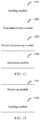
- a data transmission device including:
- the first determining module is specifically configured to determine that a notification message sent by the scheduled node is received in a third TTI by using a designated spectrum resource, where the notification message is used to indicate that the scheduled node can occupy the preset spectrum resource in the second TTI, the designated spectrum resource is a spectrum resource allocated to and used by a wireless communications system at which the scheduled node is located, the third TTI is a TTI whose time sequence is not after the time sequence of the second TTI, and the second TTI and the first TTI have a preset fixed time sequence relationship.
- the first determining module is further configured to: before it is determined that the scheduled node can transmit data in a second TTI according to the scheduling indication by using the preset spectrum resource, receive and pre-process the data that is transmitted in the second TTI by using the preset spectrum resource; and the first determining module is specifically configured to determine that a notification message sent by the scheduled node is received in a third TTI by using a designated spectrum resource, where the notification message is used to indicate that the scheduled node can occupy the preset spectrum resource in the second TTI, the designated spectrum resource is a spectrum resource allocated to and used by a wireless communications system at which the scheduled node is located, the third TTI is a TTI whose time sequence is after the time sequence of the second TTI, and the second TTI and the first TTI have a preset fixed time sequence relationship; and receive, in the third TTI by using the designated spectrum resource, the notification message sent by the scheduled node.
- the first determining module is specifically configured to determine, according to information about a detected signal that is sent by the scheduled node in the second TTI by using the preset spectrum resource, that the scheduled node can transmit the data in the second TTI according to the scheduling indication by using the preset spectrum resource, where the second TTI and the first TTI have a preset fixed time sequence relationship.
- the first determining module is specifically configured to determine that a notification message sent by the scheduled node is received in any third TTI in a second scheduling window by using a designated spectrum resource, where the notification message is used to indicate that the scheduled node can occupy the preset spectrum resource in the second TTI, the designated spectrum resource is a spectrum resource allocated to and used by a wireless communications system at which the scheduled node is located, third TTIs in the second scheduling window and second TTIs in the first scheduling window are in a one-to-one correspondence, and a time sequence of each third TTI is not after the time sequence of a second TTI corresponding to the third TTI; and the second TTI is any TTI of multiple TTIs of a preset first scheduling window, or the second TTI is any TTI of multiple TTIs of a first scheduling window indicated by the scheduling indication; and the second determining module is specifically configured to determine that data that is transmitted in a second TTI by using the preset spectrum resource, where the second T
- the first determining module is further configured to: before it is determined that the scheduled node can transmit data in a second TTI according to the scheduling indication by using the preset spectrum resource, receive and pre-process the data that is transmitted in each second TTI of the first scheduling window by using the preset spectrum resource; the first determining module is specifically configured to determine that a notification message sent by the scheduled node is received in any third TTI in a second scheduling window by using a designated spectrum resource, where the notification message is used to indicate that the scheduled node can occupy the preset spectrum resource in the second TTI, the designated spectrum resource is a spectrum resource allocated to and used by a wireless communications system at which the scheduled node is located, third TTIs in the second scheduling window and second TTIs in the first scheduling window are in a one-to-one correspondence, and a time sequence of each third TTI is after the time sequence of a second TTI corresponding to the third TTI; and the second TTI is any TTI of multiple TTIs of
- the first determining module is specifically configured to determine, according to information about a detected signal that is sent by the scheduled node in any second TTI in the first scheduling window by using the preset spectrum resource, that the scheduled node transmits the data in the second TTI according to the scheduling indication by using the preset spectrum resource, where the second TTI is any TTI of multiple TTIs of a preset first scheduling window, or the second TTI is any TTI of multiple TTIs of a first scheduling window indicated by the scheduling indication.
- the first determining module is specifically configured to detect energy of data sent by the scheduled node in the second TTI by using the preset spectrum resource; and when the detected energy is greater than a first threshold, determine that the scheduled node transmits data in the second TTI according to the scheduling indication by using the preset spectrum resource; or detect, by means of sequence correlation, a preset reference sequence that is sent by the scheduled node in the second TTI by using the preset spectrum resource; and when it is detected that an amplitude of the received preset reference sequence is greater than a second threshold, determine that the scheduled node transmits data in the second TTI according to the scheduling indication by using the preset spectrum resource.
- the data transmission device further includes: an allocation module, where the allocation module is configured to: when first TTIs used by the sending module to send scheduling indications for different scheduled nodes respectively correspond, in time sequences, to second TTIs that have a same time sequence and that are in the first scheduling window, perform, by using different preset spectrum resources, resource allocation for the first scheduling window whose second TTIs have the same time sequence; and perform, by using different designated spectrum resources, resource allocation for the second scheduling window whose third TTIs have a same time sequence; or when first TTIs used by the sending module to send different scheduling indications for a same scheduled node respectively correspond, in time sequences, to second TTIs that have a same time sequence and that are in the first scheduling window, perform, by using different preset spectrum resources, resource allocation for
- a data transmission device including:
- the sending module is specifically configured to: when it is determined that the preset spectrum resource is available in the second TTI, send a notification message in a third TTI by using a designated spectrum resource; and transmit data in the second TTI by using the preset spectrum resource, where the notification message is used to indicate that the scheduled node can occupy the preset spectrum resource in the second TTI, the designated spectrum resource is a spectrum resource allocated to and used by a wireless communications system at which the scheduling node is located, the third TTI is a TTI that has a preset time sequence relationship with the second TTI, and the second TTI and the first TTI have a preset fixed time sequence relationship.
- the sending module is specifically configured to: when it is determined that the preset spectrum resource is available in any second TTI existing among multiple second TTIs of the first scheduling window, transmit data in the second TTI of the available preset spectrum resource by using the preset spectrum resource, where the second TTI is any TTI of multiple TTIs of a preset first scheduling window; or the second TTI is any TTI of multiple TTIs of a first scheduling window indicated by the scheduling indication.
- the sending module is further configured to: when it is determined that data can be transmitted in the second TTI according to the scheduling indication by using the preset spectrum resource, send a notification message in a third TTI by using a designated spectrum resource, where the third TTI corresponds to the second TTI of the available preset spectrum resource and that is of third TTIs of a second scheduling window, where the notification message is used to indicate that the scheduled node can occupy the preset spectrum resource in the second TTI, the designated spectrum resource is a spectrum resource allocated to and used by a wireless communications system at which the scheduling node is located, third TTIs in the second scheduling window, and second TTIs in the first scheduling window are in a one-to-one correspondence and each third TTI and a second TTI corresponding to the third TTI have a preset fixed time sequence relationship.
- a data transmission system including: the data transmission device provided in the third aspect or with reference to any possible implementation manner of the third aspect, and the data transmission device provided in the fourth aspect or with reference to any possible implementation manner of the fourth aspect.
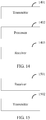
- a data transmission device including:
- the device further includes: a receiver, where the receiver is configured to receive, in the third TTI by using the designated spectrum resource, the notification message sent by the scheduled node; and the processor is specifically configured to determine that the receiver receives, in the third TTI by using the designated spectrum resource, the notification message sent by the scheduled node, where the notification message is used to indicate that the scheduled node can occupy the preset spectrum resource in the second TTI, the designated spectrum resource is a spectrum resource allocated to and used by a wireless communications system at which the scheduled node is located, the third TTI is a TTI whose time sequence is not after the time sequence of the second TTI, and the second TTI and the first TTI have a preset fixed time sequence relationship.
- the device further includes: a receiver, where the receiver is configured to: before the processor determines that the scheduled node can transmit data in a second TTI according to the scheduling indication by using the preset spectrum resource, receive and pre-process the data that is transmitted in the second TTI by using the preset spectrum resource; and receive, in the third TTI by using the designated spectrum resource, the notification message sent by the scheduled node; and the processor is specifically configured to determine that the receiver receives, in the third TTI by using the designated spectrum resource, the notification message sent by the scheduled node, where the notification message is used to indicate that the scheduled node can occupy the preset spectrum resource in the second TTI, the designated spectrum resource is a spectrum resource allocated to and used by a wireless communications system at which the scheduled node is located, the third TTI is a TTI whose time sequence is after the time sequence of the second TTI, and the second TTI and the first TTI have a preset fixed time sequence relationship; and receive, in the third TTI by
- the processor is specifically configured to determine, according to information about a detected signal that is sent by the scheduled node in the second TTI by using the preset spectrum resource, that the scheduled node can transmit the data in the second TTI according to the scheduling indication by using the preset spectrum resource, where the second TTI and the first TTI have a preset fixed time sequence relationship.
- the device further includes: a receiver, where the receiver is configured to receive, in any third TTI in the second scheduling window by using a designated spectrum resource, a notification message sent by the scheduled node; the processor is specifically configured to determine that the receiver receives, in the any third TTI in the second scheduling window by using the designated spectrum resource, the notification message sent by the scheduled node, where the notification message is used to indicate that the scheduled node can occupy the preset spectrum resource in the second TTI, the designated spectrum resource is a spectrum resource allocated to and used by a wireless communications system at which the scheduled node is located, third TTIs in the second scheduling window and second TTIs in the first scheduling window are in a one-to-one correspondence, and a time sequence of each third TTI is not after the time sequence of a second TTI corresponding to the third TTI; and the second TTI is any TTI of multiple TTIs of a preset first scheduling window, or the second TTI is any TTI of multiple TTIs of
- the device further includes: a receiver, where the receiver is configured to: before the processor determines that the scheduled node can transmit data in a second TTI according to the scheduling indication by using the preset spectrum resource, receive and pre-process the data that is transmitted in each second TTI of the first scheduling window by using the preset spectrum resource; the processor is specifically configured to determine that the receiver receives, in the any third TTI in the second scheduling window by using the designated spectrum resource, the notification message sent by the scheduled node, where the notification message is used to indicate that the scheduled node can occupy the preset spectrum resource in the second TTI, the designated spectrum resource is a spectrum resource allocated to and used by a wireless communications system at which the scheduled node is located, third TTIs in the second scheduling window and second TTIs in the first scheduling window are in a one-to-one correspondence, and a time sequence of each third TTI is after the time sequence of a second TTI corresponding to the third TTI; and the second TTI is any TTI
- the processor is specifically configured to determine, according to information about a detected signal that is sent by the scheduled node in any second TTI in the first scheduling window by using the preset spectrum resource, that the scheduled node transmits the data in the second TTI according to the scheduling indication by using the preset spectrum resource, where the second TTI is any TTI of multiple TTIs of a preset first scheduling window, or the second TTI is any TTI of multiple TTIs of a first scheduling window indicated by the scheduling indication.
- the processor is specifically configured to detect energy of data sent by the scheduled node in the second TTI by using the preset spectrum resource; and when the detected energy is greater than a first threshold, determine that the scheduled node transmits data in the second TTI according to the scheduling indication by using the preset spectrum resource; or detect, by means of sequence correlation, a preset reference sequence that is sent by the scheduled node in the second TTI by using the preset spectrum resource; and when it is detected that an amplitude of the received preset reference sequence is greater than a second threshold, determine that the scheduled node transmits data in the second TTI according to the scheduling indication by using the preset spectrum resource.
- the processor is further configured to: when first TTIs used by the transmitter to send scheduling indications for different scheduled nodes respectively correspond, in time sequences, to second TTIs that have a same time sequence and that are in the first scheduling window, perform, by using different preset spectrum resources, resource allocation for the first scheduling window whose second TTIs have the same time sequence; and perform, by using different designated spectrum resources, resource allocation for the second scheduling window whose third TTIs have a same time sequence; or when first TTIs used by the transmitter to send different scheduling indications for a same scheduled node respectively correspond, in time sequences, to second TTIs that have a same time sequence and that are in the first scheduling window, perform, by using different preset spectrum resources, resource allocation for the first scheduling window whose second TTIs have the same time
- a data transmission device including:
- the transmitter is specifically configured to: when it is determined that the preset spectrum resource is available in the second TTI, send a notification message in a third TTI by using a designated spectrum resource; and transmit data in the second TTI by using the preset spectrum resource, where the notification message is used to indicate that the scheduled node can occupy the preset spectrum resource in the second TTI, the designated spectrum resource is a spectrum resource allocated to and used by a wireless communications system at which the scheduling node is located, the third TTI is a TTI that has a preset time sequence relationship with the second TTI, and the second TTI and the first TTI have a preset fixed time sequence relationship.
- the transmitter is specifically configured to: when it is determined that the preset spectrum resource is available in any second TTI existing among multiple second TTIs of the first scheduling window, transmit data in the second TTI of the available preset spectrum resource by using the preset spectrum resource, where the second TTI is any TTI of multiple TTIs of a preset first scheduling window; or the second TTI is any TTI of multiple TTIs of a first scheduling window indicated by the scheduling indication.
- the transmitter is further configured to: when it is determined that data can be transmitted in the second TTI according to the scheduling indication by using the preset spectrum resource, send a notification message in a third TTI by using a designated spectrum resource, where the third TTI corresponds to the second TTI of the available preset spectrum resource and that is of third TTIs of a second scheduling window, where the notification message is used to indicate that the scheduled node can occupy the preset spectrum resource in the second TTI, the designated spectrum resource is a spectrum resource allocated to and used by a wireless communications system at which the scheduling node is located, third TTIs in the second scheduling window, and second TTIs in the first scheduling window are in a one-to-one correspondence and each third TTI and a second TTI corresponding to the third TTI have a preset fixed time sequence relationship.
- a data transmission system including: the data transmission device provided in the sixth aspect or any implementation manner of the sixth aspect, and the data transmission device provided in the seventh aspect or any implementation manner of the seventh aspect.
- a scheduling node sends, in a first TTI to a scheduled node, a scheduling indication of transmitting data by using a preset spectrum resource; after the scheduled node receives the scheduling indication, when it is determined that data can be transmitted in the second TTI according to the scheduling indication by using the preset spectrum resource, data is transmitted in the second TTI by using the preset spectrum resource; and when the scheduling node determines that the scheduled node can transmit data in the second TTI according to the scheduling indication by using the preset spectrum resource, it is determined that the data that is transmitted in the second TTI by using the preset spectrum resource is data sent by the scheduled node.
- a scheduled node after receiving a scheduling indication, a scheduled node needs to determine whether the scheduled node can transmit data according to the scheduling indication by using a second TTI of a channel of a preset spectrum resource.
- the scheduled node transmits data according to the scheduling indication in the second TTI by using the channel of the preset spectrum resource, instead of a case in the prior art in which when determining that the channel of the preset spectrum resource is idle, the scheduled node sends, to a scheduling node, a notification that the scheduled node can occupy the channel of the preset spectrum resource, and continuously occupies the channel by sending random data on the channel of the preset spectrum resource, until receiving the scheduling indication and completing formal data transmission, so as to reduce a power loss of the scheduled node, and save a wireless communications resource.
- a scheduling node After sending a scheduling indication to a scheduled node, and before determining that data transmitted in a second TTI by using a channel of a preset spectrum resource is data transmitted by the scheduled node, a scheduling node needs to determine that the scheduled node can occupy the channel of the preset spectrum resource according to the scheduling indication. Compared with the prior art in which data is received regardless of whether the scheduled node successfully occupies the channel, it may be avoided that in a case in which the scheduled node does not send data according to the scheduling indication, the scheduling node saves or merges data that is not sent by the scheduled node and that is mistakenly received or demodulated from the channel of the preset spectrum resource into a soft storage area, so as to improve transmission efficiency of a wireless communications system.
- Embodiments of the present invention provide a data transmission method, device and system. Exemplary embodiments of the present invention are described below with reference to accompanying drawings of the specification. It should be understood that the exemplary embodiments described herein are only used for describing and explaining the present invention but not intended to limit the present invention. Moreover, the embodiments in this application and characteristics in the embodiments may be combined with each other without conflict.
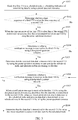
- S101 Send, in a first transmission time interval (TTI, Transmission Time Interval) to a scheduled node, a scheduling indication of transmitting data by using a preset spectrum resource, where the preset spectrum resource has the following characteristics: a use status of the preset spectrum resource needs to be sensed before the preset spectrum resource is occupied, and an occupation time for which the preset spectrum resource is occupied each time is limited.
- TTI Transmission Time Interval
- S102 Determine that the scheduled node can transmit data in a second TTI according to the scheduling indication by using a channel of the preset spectrum resource, where the second TTI is a TTI used to send the data that is transmitted by the scheduled node according to the scheduling indication, and the second TTI is a TTI that is after the first TTI in a time sequence and that has a preset time sequence relationship with the first TTI.
- the second TTI is a TTI used to send the data that is transmitted by the scheduled node according to the scheduling indication
- the second TTI is a TTI that is after the first TTI in a time sequence and that has a preset time sequence relationship with the first TTI.
- S103 Determine that the data that is transmitted in the second TTI by using the preset spectrum resource is data sent by the scheduled node.
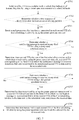
- an embodiment of the present invention further provides a data transmission method, which is applied to a scheduled node, and as shown in FIG. 2 , includes the following steps.
- S201 Receive, in a first TTI, a scheduling indication of transmitting data by using a preset spectrum resource, where the scheduling indication is sent by a scheduling node, where the preset spectrum resource has the following characteristics: a use status of the preset spectrum resource needs to be sensed before the preset spectrum resource is occupied, and an occupation time for which the preset spectrum resource is occupied each time is limited.
- S202 When it is determined that data can be transmitted in the second TTI according to the scheduling indication by using the preset spectrum resource, transmit data in the second TTI by using the preset spectrum resource, where the second TTI is a TTI used to send the data transmitted for the scheduling indication, and the second TTI is a TTI that is after the first TTI in a time sequence and that has a preset time sequence relationship with the first TTI.
- the second TTI is a TTI used to send the data transmitted for the scheduling indication
- the second TTI is a TTI that is after the first TTI in a time sequence and that has a preset time sequence relationship with the first TTI.
- a scheduling node is used to send a scheduling indication to a scheduled node, and the scheduled node performs data transmission with the scheduling node according to the scheduling indication.
- the scheduling node may be an eNodeB
- the scheduled node may be UE
- the UE sends uplink data to the eNodeB according to the scheduling indication.
- Embodiment 1 of the present invention a data transmission method is provided.
- a second TTI and a first TTI have a preset fixed time sequence relationship, and a first implementation manner is provided for step S102 described above.
- the method is applied to a scheduling node, and as shown in FIG. 3 , specifically include the following steps:
- the preset spectrum resource may be a spectrum resource that can be used by multiple wireless communications systems (for example, an LTE system, a Time Division-Code Division Multiple Access (TD-SCDMA, Time Division-Code Division Multiple Access) system, a Wideband Code Division Multiple Access (WCDMA, Wideband Code Division Multiple Access) system) or different types of devices.
- multiple wireless communications systems for example, an LTE system, a Time Division-Code Division Multiple Access (TD-SCDMA, Time Division-Code Division Multiple Access) system, a Wideband Code Division Multiple Access (WCDMA, Wideband Code Division Multiple Access) system
- WCDMA Wideband Code Division Multiple Access
- the use status of the preset spectrum resource may include characteristics about the use status of the channel, for example, whether the channel is idle, and when a particular system needs to occupy the channel, if the channel is not idle, whether an occupation priority of a system that currently occupies the channel is higher than that of the particular system.
- the scheduling node may send the scheduling indication to the scheduled node by using the channel of the preset spectrum resource, or may send the scheduling indication to the scheduled node by using a channel that is allocated to and used by a system at which the scheduling node is located.
- an eNodeB used as the scheduling node may send the scheduling indication to UE used as the scheduled node by using a PDCCH or an EPDCCH, and instruct the UE to transmit uplink data on a preset channel.
- step S302 to step S308 described below it is determined whether a notification message sent by the scheduled node is received in a third TTI by using a designated spectrum resource, where the notification message is used to indicate that the scheduled node can occupy the preset spectrum resource in the second TTI, the designated spectrum resource is a spectrum resource allocated to and used by a wireless communications system at which the scheduled node is located, and the third TTI is a TTI that has a preset time sequence relationship with the second TTI.
- the first TTI is a TTI in which the scheduling indication is sent
- the second TTI is a TTI in which the scheduled node transmits data to the scheduling node according to the scheduling indication.
- the first TTI and the second TTI may have a time sequence correspondence
- the second TTI is a preset TTI whose time sequence is after that of the first TTI.
- the correspondence is commonly known by both the scheduled node and the scheduling node. The scheduled node first determines, according to the first TTI, and the time sequence correspondence between the first TTI and the second TTI, the second TTI in which data needs to be transmitted, and then determines whether data can be transmitted in the second TTI according to the scheduling indication by using the channel of the preset spectrum resource.
- the scheduling node may determine, according to a time sequence of the first TTI in which the scheduling node sends the scheduling indication, the second TTI in which data sent by the scheduled node may be received, and before receiving the data, first determines whether the scheduled node completes data transmission in the second TTI by using the channel of the preset spectrum resource.
- the scheduling node does not perform determining but directly receives data in the second TTI, it may be avoided that in a case in which the scheduled node does not send data according to the scheduling indication, a receiving and demodulation result is saved or merged into a soft storage area, so as to improve data transmission efficiency.
- an LTE system for an FDD system, when UE used as a scheduled node detects, in a subframe #n, a PDCCH/EPDCCH that is sent by an eNodeB used as a scheduling node and that is used to schedule the UE to transmit uplink data, the UE performs uplink data transmission in a subframe #n+4 according to indications of the PDCCH/EPDCCH and a PHICH.
- the UE when UE detects, in a subframe #n, a PDCCH/EPDCCH that is sent by an eNodeB and that is used to schedule the UE to transmit uplink data, the UE performs uplink data transmission in a subframe #n+k according to indications of the PDCCH/EPDCCH and a PHICH, where a value of k is related to a TDD uplink-downlink allocation configuration and n, as shown in Table 1 in the background. That is, for the FDD system of LTE, when the first TTI is the subframe #n, the second TTI may be the subframe #n+4, that is, the second TTI is a fourth TTI after the first TTI in the time sequence. For the TDD system of LTE, when the first TTI is the subframe #n, the second TTI may be the subframe #n+k, that is, the second TTI is a k th TTI after the first TTI in the time sequence.
- a TTI is an independent decoding transmission length in a radio link, and a size of the TTI is determined according to a size of a TTI defined in a communications system for implementing this method.
- a TTI is a subframe.
- the second TTI and the third TTI also have a preset correspondence, that is, the third TTI is a TTI that has a preset time sequence relationship with the second TTI. That is, the time sequence of the third TTI may be before that of the second TTI, or may be after the time sequence of the second TTI, or may be the same as that of the second TTI.
- the designated spectrum resource is a spectrum resource allocated to a system at which the scheduled node and the scheduling node that implement this embodiment of the present invention are located, and the designated spectrum resource may also be a non-preset spectrum resource that the scheduling node and the scheduled node agree on in advance except the preset spectrum resource.
- a PDCCH, an EPDCCH or the like is a channel allocated to and used by the LTE system. Therefore, to enable the scheduling node to know whether the scheduled node successfully occupies the channel of the preset spectrum resource in the second TTI, the scheduling node may receive, in the third TTI by using the designated spectrum resource, a notification message sent by the scheduled node, the scheduling node determines, by using the notification message, or by means of whether the notification message is received, whether the scheduled node successfully occupies the channel of the preset spectrum resource in the second TTI.
- the scheduled node when the time sequence of the third TTI is after the time sequence of the second TTI, if the scheduled node can occupy the channel of the preset spectrum resource in the second TTI, because the second TTI arrives earlier than the third TTI, if the third TTI arrives, and the scheduled node sends a notification message in the third TTI by using the channel of the designated spectrum resource (a notification message representing whether the scheduled node successfully occupies the preset spectrum resource in the second TTI), and determines that the scheduled node sends data in the second TTI by using the channel of the preset spectrum resource.
- the scheduling node needs to receive data that is transmitted in the second TTI by using the preset spectrum resource, and may first pre-process the received data.
- the scheduling node may store and demodulate the received data, and store the data into a soft storage area or merge the data with data in a soft storage area according to demodulation correctness. That is, if the received data is new data, the scheduling node may demodulate the data and replace the data in the current soft storage area with the new data, or if the received data is retransmitted data, the scheduling node may merge the retransmitted data and the data in the current soft storage area, and attempt to decode merged data.
- the HARQ process receives one or two TBs and corresponding HARQ information from an HARQ entity. For the received TB, it is first determined whether the received uplink data is new uplink data or retransmitted uplink data. If the received uplink data is new uplink data, the data in the current soft storage area is replaced with the new uplink data; or if the received uplink data is retransmitted uplink data, the uplink data and the data in the soft storage area are merged, and then data in the current soft storage area attempts to be decoded.
- HARQ Hybrid Automatic Repeat request
- pre-processing may include storage, that is, data received by in the second TTI by using the preset spectrum resource is first saved.
- the third TTI arrives, according to the notification message sent in the third TTI by using the designated spectrum resource, when it is determined that the scheduled node successfully occupies the preset spectrum resource in the second TTI, the saved data is demodulated, or when it is determined that the scheduled node unsuccessfully occupies the preset spectrum resource in the second TTI, it is determined that the saved data is not sent by the scheduled node, and the data may not be demodulated.
- Pre-processing may also include storage and demodulation, that is, data received in the second TTI by using the preset spectrum resource is first saved, and the data is demodulated.
- the demodulated data is saved into the soft storage area or the demodulated data and the data in the soft storage area are merged according to an actual situation, or when it is determined that the scheduled node unsuccessfully occupies the preset spectrum resource in the second TTI, it is determined that the saved data is not sent by the scheduled node, and the data may not be saved into the soft storage area, or not be merged with the data in the soft storage area.
- a channel of the designated spectrum resource has a limited bandwidth resource, and therefore, notification information whose load is relatively small may be sent by using the channel of the designated spectrum resource, and data whose load is relatively large is sent by using the second TTI of the channel of the preset spectrum resource.
- S305 When it is determined that a notification message is received in the third TTI by using the designated spectrum resource, determine that the data that is transmitted in the second TTI by using the preset spectrum resource and that is received in S303 is data sent by the scheduled node and perform further processing on the data. This process ends.
- pre-processing is a storage operation
- further processing in this step may be demodulation and a subsequent operation, or if pre-processing is storage and demodulation, further processing in this step may be storage into the soft storage area or performing merging with the data in the soft storage area.
- an acknowledgment message may be further sent to the scheduled node.
- an HARQ ACK or NACK message may be sent to the scheduled node.
- step S306 When the time sequence of the third TTI is not after the time sequence of the second TTI, determine whether a notification message is received in the third TTI by using the designated spectrum resource, and if yes, enter step S307; or if no, enter step S308.
- the time sequence of the third TTI is not after the time sequence of the second TTI, that is, the time sequence of the third TTI is before that of the second TTI, or is the same as a time sequence of the second TTI. Because the third TTI arrives before the second TTI, or arrives at the same time as the second TTI does, it may be first determined whether a notification message is received in the third TTI by using the designated spectrum resource, and then determined whether the scheduled node successfully occupies the preset spectrum resource in the second TTI.
- a processing operation may be an operation such as storage, demodulation, saving into the soft memory or performing merging with the data in the soft storage area.
- the scheduling node determines, by means of whether a notification message is received, whether the scheduled node successfully occupies the preset spectrum resource in the second TTI. That is, when receiving, in the third TTI by using the designated spectrum resource, a notification message that is sent by the scheduled node and that is used to indicate that the scheduled node can occupy the preset spectrum resource in the second TTI, the scheduling node determines that the data that is transmitted in the second TTI by using the preset spectrum resource is sent by the scheduled node, or when receiving, in the third TTI not by using the designated spectrum resource, a notification message sent by the scheduled node, the scheduling node determines that the data that is transmitted in the second TTI by using the preset spectrum resource is not data sent by the scheduled node.
- the scheduled node determines, by using specific content of a notification message, whether the scheduled node successfully occupies the preset spectrum resource in the second TTI. Specifically, it may be implemented that regardless of whether the scheduled node successfully occupies the preset spectrum resource in the second TTI, the scheduled node sends a notification message to the scheduling node.
- the scheduling node when the scheduling node receives, in the third TTI by using the channel of the designated spectrum resource, a notification message that is sent by the scheduled node and that is used to represent that the scheduled node can occupy the preset spectrum resource in the second TTI, it is determined that the data that is transmitted in the second TTI by using the preset spectrum resource is data sent by the scheduled node, and when the scheduling node receives, in the third TTI by using the designated spectrum resource, a notification message that is sent by the scheduled node and that is used to represent that the scheduled node cannot occupy the preset spectrum resource in the second TTI, it is determined that the data that is transmitted in the second TTI by using the preset spectrum resource is not data sent by the scheduled node. It may also be implemented that only when successfully occupying the channel of the preset spectrum resource in the second TTI, the scheduled node sends a notification message to the scheduling node.
- a data transmission method is provided, applied to a scheduled node, and as shown in FIG. 4 , specifically includes the following steps:
- a notification manner of whether the preset spectrum resource is successfully occupied in the second TTI may be agreed on in advance with the scheduling node.
- a notification message representing that the scheduled node can occupy the preset spectrum resource in the second TTI may be sent in the third TTI by using the designated spectrum resource, or when it is determined that the preset spectrum resource is not idle in the second TTI, a notification message representing that the scheduled node cannot occupy the preset spectrum resource in the second TTI may be sent in the third TTI by using the designated spectrum resource.
- a notification message representing that the scheduled node can occupy the preset spectrum resource in the second TTI may be sent in the third TTI by using the designated spectrum resource, or when it is determined that the preset spectrum resource is not idle in the second TTI, no notification message may be sent in the third TTI by using the designated spectrum resource.
- S404 Transmit data in the second TTI by using the preset spectrum resource; and this process ends, where the notification message is used to indicate that the scheduled node can occupy the channel of the preset spectrum resource in the second TTI.
- sending, by using the designated spectrum resource, the notification message representing that the scheduled node can occupy the preset spectrum resource in the second TTI may be sending by using a preset channel of the designated spectrum resource.
- the preset channel refers to a channel that is preset between the scheduled node and the scheduled node and that is used to be sent by the scheduled node to represent that the scheduled node can occupy the preset spectrum resource.
- the preset channel may be a periodic channel.
- step S403 and step S404 are not performed in a strict sequence.
- S405 When it is determined that the preset spectrum resource is not available in the second TTI, send no notification message in the third TTI by using the designated spectrum resource, and send no data in the second TTI by using the preset spectrum resource.
- Embodiment 1 and Embodiment 2 are exemplified by using an example 1.
- a second TTI has a time sequence the same as that of a third TTI:
- the UE After receiving the UL grant-1 that is sent by the eNodeB in the zeroth TTI, the UE determines, according to a correspondence between a TTI in which the UL grant-1 is borne and a TTI in which uplink data is sent, that uplink data needs to be sent to the eNodeB in the fourth TTI.
- the UE determines that the channel on the unlicensed spectrum is idle in the fourth TTI, the UE sends, in the fourth TTI by using a channel of a licensed spectrum used by this system (a CC on a licensed spectrum), a notification message (for example, Valid transmission) that the UE can occupy the channel on the unlicensed spectrum in the fourth TTI, and sends uplink data to the eNodeB in the fourth TTI by using the channel on the unlicensed spectrum.
- a notification message for example, Valid transmission
- the UE After receiving the UL grant-2 that is sent by the eNodeB in the first TTI, the UE determines, according to a correspondence between a TTI in which the UL grant-2 is sent and a TTI in which uplink data is sent, that uplink data needs to be sent to the eNodeB in the fifth TTI.
- the UE determines that the channel on the unlicensed spectrum is not idle in the fifth TTI, the UE sends, in the fifth TTI by using a channel of a licensed spectrum used by this system (a CC on a licensed spectrum), a notification message (for example, Invalid transmission) that the UE cannot occupy the channel on the unlicensed spectrum in the fifth TTI, and does not send uplink data to the eNodeB in the fourth TTI by using the channel on the unlicensed spectrum.
- a notification message for example, Invalid transmission
- the eNodeB determines that the UE sends uplink data in the fourth TTI by using the channel on the unlicensed spectrum, the eNodeB receives the uplink data. If after receiving the Invalid transmission notification message that is sent by the UE in the fifth TTI, the eNodeB determines that the UE cannot occupy the channel on the unlicensed spectrum in the fifth TTI, the eNodeB does not receive or does not demodulate data that is transmitted in the fifth TTI by using the channel on the unlicensed spectrum.
- the eNodeB may further send, to the UE according to a preset time interval, a reply representing whether uplink data is received or whether uplink data is correctly received, for example, reply, in the eighth TTI, to the UE with that uplink data is received in the fourth TTI (for example, Valid physical uplink shared channel (PUSCH, Physical Uplink Shared Channel) received), and reply, in the ninth TTI, to the UE with that uplink data is not received in the fifth TTI (for example, Invalid PUSCH received).
- PUSCH Physical Uplink shared channel
- Embodiment 3 of the present invention a data transmission method is provided.
- a second TTI and a first TTI have a preset fixed time sequence relationship, and a second implementation manner is provided for step S102 described above.
- the method is applied to a scheduling node, and as shown in FIG. 6 , specifically include the following steps:
- the information about the signal sent by the scheduled node may be energy of the signal transmitted in the second TTI by using the preset spectrum resource, or a reference sequence that is sent by the scheduled node and that is agreed on in advance with the scheduling node, and therefore, the scheduling node may detect, in multiple manners, whether the scheduled node sends data in the second TTI by using the preset spectrum resource, and two detection manners are described below:
- S603 When it is determined, according to the information about the detected signal that is sent by the scheduled node in the second TTI by using the preset spectrum resource, that the scheduled node can transmit the data in the second TTI according to the scheduling indication by using the preset spectrum resource, receive or demodulate data sent in the second TTI by using the preset spectrum resource. This process ends.
- S604 When it is determined, according to the information about the detected signal that is sent by the scheduled node in the second TTI by using the preset spectrum resource, that the scheduled node cannot transmit the data in the second TTI according to the scheduling indication by using the preset spectrum resource, receive or demodulate no data sent in the second TTI by using the preset spectrum resource. This process ends.
- a data transmission method is provided.
- a second TTI is any TTI of multiple TTIs of a preset first scheduling window, or a second TTI is any TTI of multiple TTIs of a first scheduling window indicated by a scheduling indication.
- a third implementation manner is provided for step S102 described above, and the method is applied to a scheduling node, and as shown in FIG. 7 , specifically includes the following steps:
- step S702 to step S708 described below it is determined whether a notification message sent by the scheduled node is received in any third TTI in a second scheduling window by using a designated spectrum resource, where the notification message is used to indicate that the scheduled node can occupy the preset spectrum resource in the second TTI, the designated spectrum resource is a spectrum resource allocated to and used by a wireless communications system at which the scheduled node is located, third TTIs in the second scheduling window, and second TTIs in the first scheduling window are in a one-to-one correspondence and each third TTI and a second TTI corresponding to the third TTI have a preset fixed time sequence relationship.
- S702 Determine whether a time sequence of a third TTI is after the time sequence of a second TTI, and if yes, enter step S703; or if no, enter step S706.
- the time sequence correspondence between the first TTI and the second TTI may also be indicated by the scheduling indication.
- the start TTI of the first scheduling window and the length of the first scheduling window may be indicated in the scheduling indication sent by the scheduling node to the scheduled node.
- the second scheduling window includes multiple third TTIs, and the third TTIs and second TTIs in the first scheduling window are in a one-to-one correspondence and each third TTI and a second TTI corresponding to the third TTI have a preset fixed time sequence relationship.
- a time sequence of a third TTI may be after the time sequence of a second TTI corresponding to the third TTI, or may be before the time sequence of a second TTI corresponding to the third TTI, or may be the same as the time sequence of a second TTI corresponding to the third TTI.
- That a time sequence relationship between the second TTI and the third TTI is fixed may refer to that the scheduled node sends, in the third TTI by using the designated spectrum resource, a notification message representing that the scheduled node can occupy the preset spectrum resource, and the scheduling node can learn which second TTI the current notification message representing that the scheduled node can occupy the preset spectrum resource is applied to.
- the second scheduling window may include the subframe #n+4 to the subframe #n+10, or a subframe #n+2 to a subframe #n+8, or a subframe #n+7 to a subframe #n+13 forms.
- the scheduled node may know a correspondence between time sequences of first TTIs and time sequences of multiple second TTIs in the first scheduling window by means of presetting, may also know the correspondence between the time sequences of the first TTIs and the time sequences of the multiple second TTIs in the first scheduling window by using the received scheduling indication, determine, after receiving the scheduling indication, the start TTI of the first scheduling window and the length of the first scheduling window (that is, second TTIs), and may detect a second TTI, of the multiple second TTIs, in which the preset spectrum resource is idle and may be used to send data to the scheduling node.
- data may be transmitted in the detected second TTI, and a notification message is sent to the scheduling node according to a correspondence that is preset or indicated in the scheduling indication, that is commonly known by both the scheduled node and the scheduling node, and that is between the first scheduling window and the second scheduling window, and in a third TTI that is in the channel of the designated spectrum resource and that has a fixed time sequence relationship with the second TTI in which data is transmitted and that is in the channel of the preset spectrum resource.
- no second TTI of the available preset spectrum resource If no second TTI of the available preset spectrum resource is detected, no data is sent to the scheduling node, and no notification message is sent to the scheduling node; or no data is sent to the scheduling node, and a notification message that the preset channel is unsuccessfully occupied is sent to the scheduling node in a third TTI corresponding to each second TTI in the first scheduling window by using the designated spectrum resource.
- the scheduling node is enabled to receive, when the second TTI arrives, data transmitted in the second TTIs by using the preset spectrum resource, and first pre-processes the received data. For a specific process, refer to step S303 described above, and details are not described herein again.
- S704 Determine whether a notification message is received in any third TTI by using a designated spectrum resource, and if yes, enter step S705; or if no, enter step S708.
- S705 When a notification message is received in any third TTI in the second scheduling window by using the designated spectrum resource, determine, from second TTIs that are of the first scheduling window and in which data is received by using the preset spectrum resource, a second TTI corresponding to the third TTI in which the notification message is received, determine that data transmitted in the determined second TTI is data sent by the scheduled node and perform further processing on the data. This process ends.
- a subframe #n+5 to a subframe #n+11 form the second scheduling window and are in a one-to-one correspondence with the subframe #n+4 to the subframe #n+10
- data in the subframe #n+4 to the subframe #n+10 is received, and a message that the channel of the preset spectrum resource is occupied successfully is received in a subframe #n+6 of the designated spectrum resource
- it is determined that data in the subframe #n+5 (the second TTI) that corresponds to the subframe #n+6 (the third TTI) and that is on the preset spectrum resource is data sent by the scheduled node, further processing is performed on the data, and in other the second TTIs (data received in the subframe #n+4, and the subframe #n+6 to the subframe #n+10 on the channel of the preset spectrum resource may be discarded).
- S707 When a time sequence of each third TTI in the second scheduling window is not after the time sequence of a second TTI corresponding to the third TTI, and a notification message is received in any third TTI in the second scheduling window by using the designated spectrum resource, determine that data transmitted by using the preset spectrum resource and in a second TTI that corresponds to the third TTI in which the notification message is received and that is of the second TTIs of the first scheduling window is the data sent by the scheduled node, and process the received data.
- a notification message is received in any third TTI corresponding to each second TTI of the first scheduling window by using the designated spectrum resource
- a second TTI that corresponds to a third TTI and that is in the first scheduling window of the preset spectrum resource is first determined, and then data is received by using the determined second TTI.
- the eNodeB receives, in a subframe #n+6 of a PUSCH, a notification message that is sent by the scheduled node and that an unlicensed spectrum resource is occupied successfully, data sent by the scheduled node to the scheduling node may be received by using a subframe #n+4 of the unlicensed spectrum resource.
- Embodiment 5 of the present invention a data transmission method is provided, applied to a scheduled node side, and as shown in FIG. 8 , specifically includes the following steps:
- the first scheduling window may be used to limit a time range in which a scheduled node sends data to the scheduling node, and in some cases, it cannot be ensured that any second TTI in the first scheduling window can be used to transmit data to the scheduling node.
- LTE LTE
- a first TTI is a subframe #n
- a second TTI is any TTI of a subframe #n+4 to a subframe #n+10
- UE needs to determine, from the first scheduling window, a second TTI in which the preset spectrum resource is idle and a second TTI that can be used to transmit uplink data, if a subframe #n+7 is idle, but the subframe #n+7 is a downlink subframe, the UE cannot transmit uplink data to an eNodeB by using the subframe #n+7.
- S803 When it is determined that the preset spectrum resource is available in any second TTI existing among multiple second TTIs of the first scheduling window, transmit data in the second TTI of the available preset spectrum resource.
- S804 Send a notification message in a third TTI by using a designated spectrum resource, where the third TTI corresponds to the second TTI of the available preset spectrum resource and that is of third TTIs of a second scheduling window, where the notification message is used to indicate that the scheduled node can occupy the preset spectrum resource in the second TTI, the designated spectrum resource is a spectrum resource allocated to and used by a wireless communications system at which the scheduling node is located, third TTIs in the second scheduling window, and second TTIs in the first scheduling window are in a one-to-one correspondence and each third TTI and a second TTI corresponding to the third TTI have a preset fixed time sequence relationship.
- step S804 may be first performed, that is, a third TTI that has a fixed relationship with the second TTI of the available preset spectrum resource of the first window and that is of the third TTIs of the second scheduling window is determined, a notification message that the channel of the preset spectrum resource is occupied successfully is sent in the third TTI by using the designated spectrum resource, and then data is transmitted in the second TTI of the available preset spectrum resource.
- no data may be sent to the scheduling node, and no notification message may be sent to the scheduling node; or no data is sent to the scheduling node, and a notification message that the channel of the preset spectrum resource is unsuccessfully occupied is sent to the scheduling node in a third TTI corresponding to each second TTI, of the available preset spectrum resource, in the first scheduling window by using the designated spectrum resource.
- a data transmission method is provided.
- a second TTI is any TTI of multiple TTIs of a preset first scheduling window, or a second TTI is any TTI of multiple TTIs of a first scheduling window indicated by a scheduling indication.
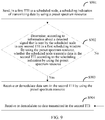
- a fourth implementation manner is provided for step S102 described above, and the method is applied to a scheduling node side, and as shown in FIG. 9 , specifically includes the following steps:
- whether service data is sent in any second TTI of the first scheduling window by using the channel of the preset spectrum resource may be detected by using the detection method provided in Embodiment 3 or another detection method in the prior art.
- first TTIs used to send scheduling indications for different scheduled nodes respectively correspond, in time sequences, to second TTIs that have a same time sequence and that are in the first scheduling window
- resource allocation is performed, by using different preset spectrum resources, for the first scheduling window whose second TTIs have the same time sequence, where the preset spectrum resource may include a frequency domain resource, a space domain resource, and a code domain resource.
- first TTIs in which scheduling indications of different scheduled nodes are sent or first TTIs in which different scheduling indications of a same scheduled node are sent correspond to multiple second TTIs, that is, a first scheduling window. If there are first scheduling windows that have an overlapping relationship, that is, an overlapping part in the first scheduling windows is substantially a same preset spectrum resource, when detecting that the preset spectrum resource is available, multiple scheduled nodes or a same scheduling node needs to preempt the preset spectrum resource for data of multiple scheduling indications, and even if detecting data transmitted in a first scheduling window, the scheduling node cannot identify a scheduled node which sends the data, or a scheduling indication for which a scheduled node sends the data.
- the scheduling node may avoid the foregoing preemption case by allocating different preset spectrum resources to the overlapping first scheduling windows.
- a first TTI is a subframe #n
- second TTIs are subframe #n+4 to subframe #n+10
- a first TTI is a subframe #n+1
- second TTIs are subframe #n+5 to subframe #n+11
- a first scheduling window of the first UE is the subframe #n+4 to the subframe #n+10
- a first scheduling window of the second UE is the subframe #n+5 to the subframe #n+11.
- second TTIs and third TTIs are in a one-to-one correspondence, and therefore when multiple first scheduling windows overlap, second scheduling windows respectively corresponding to the multiple first scheduling windows also overlap, and then resource allocation may also be performed for the overlapping second scheduling windows by using different designated spectrum resources.
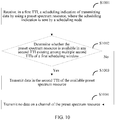
- a data transmission method is provided, applied to a scheduled node, and as shown in FIG. 10 , specifically includes the following steps:
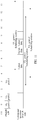
- Embodiment 6 and Embodiment 7 are exemplified by using an example 2:
- the UE After receiving the UL grant-1 that is sent by the eNodeB in the zeroth TTI, the UE detects, according to a correspondence between a TTI in which the UL grant-1 is sent and a TTI in which uplink data is sent (the first scheduling window of the UL grant-1), whether an idle uplink TTI exists among the third to the eleventh TTIs of the first scheduling window of the UL grant-1, and if an obtained detection result is that the fifth TTI is an idle uplink TTI, uplink data for the UL grant-1 is sent to the eNodeB in the fifth TTI by using the channel on the unlicensed spectrum.
- the UE After receiving the UL grant-2 that is sent by the eNodeB in the first TTI, the UE detects, according to a correspondence between a TTI in which the UL grant-1 is sent and a TTI in which uplink data is sent (the first scheduling window of the UL grant-2), whether an idle uplink TTI exists among the fourth to the twelfth TTIs of the first scheduling window of the UL grant-2, and if an obtained detection result is that the seventh TTI is an idle uplink TTI, uplink data for the UL grant-2 is sent to the eNodeB in the seventh TTI by using the channel on the unlicensed spectrum.
- the UE After receiving the UL grant-3 that is sent by the eNodeB in the second TTI, the UE detects, according to a correspondence between a TTI in which the UL grant-3 is sent and a TTI in which uplink data is sent (the first scheduling window of the UL grant-3), whether an idle uplink TTI exists among the fifth to the thirteenth TTIs of the first scheduling window of the UL grant-3, and if an obtained detection result is that the eighth TTI is an idle uplink TTI, uplink data for the UL grant-3 is sent to the eNodeB in the eighth TTI by using the channel on the unlicensed spectrum.
- the eNodeB After sending three scheduling indications, the eNodeB performs uplink signal detection in first scheduling windows respectively corresponding to the three scheduling indications, and determines whether the UE sends data in a scheduling window, and if detecting uplink data sent by the UE, the eNodeB receives the uplink data; otherwise, receives or demodulates no data transmitted in the first scheduling window.
- embodiments of the present invention further provide a data transmission device and system.
- a principle on which the device and system resolve a problem is similar to that of the foregoing data transmission method, and therefore, for implementation of the device and system, refer to implementation of the foregoing method, and repetitive descriptions are not made herein again.
- a data transmission device 1 provided in an embodiment of the present invention, as shown in FIG. 12 includes the following modules.
- a sending module 1201 configured to send, in a first transmission time interval TTI to a scheduled node, a scheduling indication of transmitting data by using a preset spectrum resource, where the preset spectrum resource has the following characteristics: a use status of the preset spectrum resource needs to be sensed before the preset spectrum resource is occupied, and an occupation time for which the preset spectrum resource is occupied each time is limited;
- a first determining module 1202 configured to determine that the scheduled node can transmit data in a second TTI according to the scheduling indication by using the preset spectrum resource, where the scheduling indication is sent by the sending module 1201, where the second TTI is a TTI used to send the data that is transmitted by the scheduled node according to the scheduling indication, and the second TTI is a TTI that is after the first TTI in a time sequence and that has a preset time sequence relationship with the first TTI; and a second determining module 1203, configured
- the first determining module 1202 is specifically configured to determine that a notification message sent by the scheduled node is received in a third TTI by using a designated spectrum resource, where the notification message is used to indicate that the scheduled node can occupy the preset spectrum resource in the second TTI, the designated spectrum resource is a spectrum resource allocated to and used by a wireless communications system at which the scheduled node is located, the third TTI is a TTI whose time sequence is not after the time sequence of the second TTI, and the second TTI and the first TTI have a preset fixed time sequence relationship.
- the first determining module 1202 is further configured to: before it is determined that the scheduled node can transmit data in a second TTI according to the scheduling indication by using the preset spectrum resource, receive and pre-process the data that is transmitted in the second TTI by using the preset spectrum resource; and the first determining module 1202 is specifically configured to determine that a notification message sent by the scheduled node is received in a third TTI by using a designated spectrum resource, where the notification message is used to indicate that the scheduled node can occupy the preset spectrum resource in the second TTI, the designated spectrum resource is a spectrum resource allocated to and used by a wireless communications system at which the scheduled node is located, the third TTI is a TTI whose time sequence is after the time sequence of the second TTI, and the second TTI and the first TTI have a preset fixed time sequence relationship; and receive, in the third TTI by using the designated spectrum resource, the notification message sent by the scheduled node.
- the first determining module 1202 is specifically configured to determine, according to information about a detected signal that is sent by the scheduled node in the second TTI by using the preset spectrum resource, that the scheduled node can transmit the data in the second TTI according to the scheduling indication by using the preset spectrum resource, where the second TTI and the first TTI have a preset fixed time sequence relationship.
- the first determining module 1202 is specifically configured to determine that a notification message sent by the scheduled node is received in any third TTI in a second scheduling window by using a designated spectrum resource, where the notification message is used to indicate that the scheduled node can occupy the preset spectrum resource in the second TTI, the designated spectrum resource is a spectrum resource allocated to and used by a wireless communications system at which the scheduled node is located, third TTIs in the second scheduling window and second TTIs in the first scheduling window are in a one-to-one correspondence, and a time sequence of each third TTI is not after the time sequence of a second TTI corresponding to the third TTI; and the second TTI is any TTI of multiple TTIs of a preset first scheduling window, or the second TTI is any TTI of multiple TTIs of a first scheduling window indicated by the scheduling indication; and the second determining module 1203 is specifically configured to determine that data that is transmitted in a second TTI by using the preset spectrum resource, where the second TTI corresponds to the third TTI in
- the first determining module 1202 is further configured to: before it is determined that the scheduled node can transmit data in a second TTI according to the scheduling indication by using the preset spectrum resource, receive and pre-process the data that is transmitted in each second TTI of the first scheduling window by using the preset spectrum resource; the first determining module 1202 is specifically configured to determine that a notification message sent by the scheduled node is received in any third TTI in a second scheduling window by using a designated spectrum resource, where the notification message is used to indicate that the scheduled node can occupy the preset spectrum resource in the second TTI, the designated spectrum resource is a spectrum resource allocated to and used by a wireless communications system at which the scheduled node is located, third TTIs in the second scheduling window and second TTIs in the first scheduling window are in a one-to-one correspondence, and a time sequence of each third TTI is after the time sequence of a second TTI corresponding to the third TTI; and the second TTI is any TTI of multiple TTIs of a preset first scheduling window, or
- the first determining module 1202 is specifically configured to determine, according to information about a detected signal that is sent by the scheduled node in any second TTI in the first scheduling window by using the preset spectrum resource, that the scheduled node transmits the data in the second TTI according to the scheduling indication by using the preset spectrum resource, where the second TTI is any TTI of multiple TTIs of a preset first scheduling window, or the second TTI is any TTI of multiple TTIs of a first scheduling window indicated by the scheduling indication.
- the first determining module 1202 is specifically configured to detect energy of data sent by the scheduled node in the second TTI by using the preset spectrum resource; and when the detected energy is greater than a first threshold, determine that the scheduled node transmits data in the second TTI according to the scheduling indication by using the preset spectrum resource; or detect, by means of sequence correlation, a preset reference sequence that is sent by the scheduled node in the second TTI by using the preset spectrum resource; and when it is detected that an amplitude of the received preset reference sequence is greater than a second threshold, determine that the scheduled node transmits data in the second TTI according to the scheduling indication by using the preset spectrum resource.
- the device further includes: an allocation module 1204, where the allocation module 1204 is configured to: when first TTIs used by the sending module 1201 to send scheduling indications for different scheduled nodes respectively correspond, in time sequences, to second TTIs that have a same time sequence and that are in the first scheduling window, perform, by using different preset spectrum resources, resource allocation for the first scheduling window whose second TTIs have the same time sequence; and perform, by using different designated spectrum resources, resource allocation for the second scheduling window whose third TTIs have a same time sequence; or when first TTIs used by the sending module 1201 to send different scheduling indications for a same scheduled node respectively correspond, in time sequences, to second TTIs that have a same time sequence and that are in the first scheduling window, perform, by using different preset spectrum resources, resource allocation for the first scheduling window whose second TTIs have the same time sequence; and perform, by using different designated spectrum resources, resource allocation for the second scheduling window whose third TTIs have a same time sequence, where the preset spectrum resource or designated spectrum
- a data transmission device 2 provided in an embodiment of the present invention, as shown in FIG. 13 , includes the following modules.
- a receiving module 1301 configured to receive, in a first transmission time interval TTI, a scheduling indication of transmitting data by using a preset spectrum resource, where the scheduling indication is sent by a scheduling node, where the preset spectrum resource has the following characteristics: a use status of the preset spectrum resource needs to be sensed before the preset spectrum resource is occupied, and an occupation time for which the preset spectrum resource is occupied each time is limited; and a sending module 1302, configured to: when it is determined that data can be transmitted in the second TTI according to the scheduling indication by using the preset spectrum resource, where the scheduling indication is received by the receiving module 1301, transmit data in the second TTI by using the preset spectrum resource, where the second TTI is a TTI used to send the data transmitted for the scheduling indication, and the second TTI is a TTI that is after the first TTI in a time sequence and that has a preset time sequence relationship with the first
- the sending module 1301 is specifically configured to: when it is determined that the preset spectrum resource is available in the second TTI, send a notification message in a third TTI by using a designated spectrum resource; and transmit data in the second TTI by using the preset spectrum resource, where the notification message is used to indicate that the scheduled node can occupy the preset spectrum resource in the second TTI, the designated spectrum resource is a spectrum resource allocated to and used by a wireless communications system at which the scheduling node is located, the third TTI is a TTI that has a preset time sequence relationship with the second TTI, and the second TTI and the first TTI have a preset fixed time sequence relationship.
- the sending module 1301 is specifically configured to: when it is determined that the preset spectrum resource is available in any second TTI existing among multiple second TTIs of the first scheduling window, transmit data in the second TTI of the available preset spectrum resource by using the preset spectrum resource, where the second TTI is any TTI of multiple TTIs of a preset first scheduling window; or the second TTI is any TTI of multiple TTIs of a first scheduling window indicated by the scheduling indication.
- the sending module 1301 is further configured to: when it is determined that data can be transmitted in the second TTI according to the scheduling indication by using the preset spectrum resource, send a notification message in a third TTI by using a designated spectrum resource, where the third TTI corresponds to the second TTI of the available preset spectrum resource and that is of third TTIs of a second scheduling window, where the notification message is used to indicate that the scheduled node can occupy the preset spectrum resource in the second TTI, the designated spectrum resource is a spectrum resource allocated to and used by a wireless communications system at which the scheduling node is located, third TTIs in the second scheduling window, and second TTIs in the first scheduling window are in a one-to-one correspondence and each third TTI and a second TTI corresponding to the third TTI have a preset fixed time sequence relationship.
- a data transmission system provided in an embodiment of the present invention includes: the foregoing data transmission device 1 and the foregoing data transmission device 2.
- embodiments of the present invention further provide a data transmission device and system.
- a principle on which the device and system resolve a problem is similar to that of the foregoing data transmission method, and therefore, for implementation of the device and system, refer to implementation of the foregoing method, and repetitive descriptions are not made herein again.
- a data transmission device 3 provided in an embodiment of the present invention, as shown in FIG. 14 includes the following components.
- a transmitter 1401 configured to send, in a first transmission time interval TTI to a scheduled node, a scheduling indication of transmitting data by using a preset spectrum resource, where the preset spectrum resource has the following characteristics: a use status of the preset spectrum resource needs to be sensed before the preset spectrum resource is occupied, and an occupation time for which the preset spectrum resource is occupied each time is limited;
- a processor 1402 configured to determine that the scheduled node can transmit data in a second TTI according to the scheduling indication, sent by the transmitter 1401, by using the preset spectrum resource; and determine that the data that is transmitted in the second TTI by using the preset spectrum resource is data sent by the scheduled node, where the second TTI is a TTI used to send the data that is transmitted by the scheduled node according to the scheduling indication, and the second TTI is a TTI that is after the first TTI in a time sequence and that has a prese
- the device further includes: a receiver 1403, where the receiver 1403 is configured to receive, in the third TTI by using the designated spectrum resource, the notification message sent by the scheduled node; and the processor 1402 is specifically configured to determine that the receiver 1403 receives, in the third TTI by using the designated spectrum resource, the notification message sent by the scheduled node, where the notification message is used to indicate that the scheduled node can occupy the preset spectrum resource in the second TTI, the designated spectrum resource is a spectrum resource allocated to and used by a wireless communications system at which the scheduled node is located, the third TTI is a TTI whose time sequence is not after the time sequence of the second TTI, and the second TTI and the first TTI have a preset fixed time sequence relationship.
- the device further includes: a receiver 1403, where the receiver 1403 is configured to: before the processor 1402 determines that the scheduled node can transmit data in a second TTI according to the scheduling indication by using the preset spectrum resource, receive and pre-process the data that is transmitted in the second TTI by using the preset spectrum resource; and receive, in the third TTI by using the designated spectrum resource, the notification message sent by the scheduled node; and the processor 1402 is specifically configured to determine that the receiver 1303 receives, in the third TTI by using the designated spectrum resource, the notification message sent by the scheduled node, where the notification message is used to indicate that the scheduled node can occupy the preset spectrum resource in the second TTI, the designated spectrum resource is a spectrum resource allocated to and used by a wireless communications system at which the scheduled node is located, the third TTI is a TTI whose time sequence is after the time sequence of the second TTI, and the second TTI and the first TTI have a preset fixed time sequence relationship; and receive, in the third TTI by using the designated spectrum
- the processor 1402 is specifically configured to determine, according to information about a detected signal that is sent by the scheduled node in the second TTI by using the preset spectrum resource, that the scheduled node can transmit the data in the second TTI according to the scheduling indication by using the preset spectrum resource, where the second TTI and the first TTI have a preset fixed time sequence relationship.
- the device further includes: a receiver 1403, where the receiver 1403 is configured to: before the processor 1402 determines that the scheduled node can transmit data in a second TTI according to the scheduling indication by using the preset spectrum resource, receive and pre-process the data that is transmitted in each second TTI of the first scheduling window by using the preset spectrum resource; the processor 1402 is specifically configured to determine that the receiver 1403 receives, in the any third TTI in the second scheduling window by using the designated spectrum resource, the notification message sent by the scheduled node, where the notification message is used to indicate that the scheduled node can occupy the preset spectrum resource in the second TTI, the designated spectrum resource is a spectrum resource allocated to and used by a wireless communications system at which the scheduled node is located, third TTIs in the second scheduling window and second TTIs in the first scheduling window are in a one-to-one correspondence, and a time sequence of each third TTI is after the time sequence of a second TTI corresponding to the third TTI; and the second TTI is any TTI of multiple TTI
- the processor 1402 is specifically configured to determine, according to information about a detected signal that is sent by the scheduled node in any second TTI in the first scheduling window by using the preset spectrum resource, that the scheduled node transmits the data in the second TTI according to the scheduling indication by using the preset spectrum resource, where the second TTI is any TTI of multiple TTIs of a preset first scheduling window, or the second TTI is any TTI of multiple TTIs of a first scheduling window indicated by the scheduling indication.
- the processor 1402 is specifically configured to detect energy of data sent by the scheduled node in the second TTI by using the preset spectrum resource; and when the detected energy is greater than a first threshold, determine that the scheduled node transmits data in the second TTI according to the scheduling indication by using the preset spectrum resource; or detect, by means of sequence correlation, a preset reference sequence that is sent by the scheduled node in the second TTI by using the preset spectrum resource; and when it is detected that an amplitude of the received preset reference sequence is greater than a second threshold, determine that the scheduled node transmits data in the second TTI according to the scheduling indication by using the preset spectrum resource.
- the processor 1402 is further configured to: when first TTIs used by the transmitter 1401 to send scheduling indications for different scheduled nodes respectively correspond, in time sequences, to second TTIs that have a same time sequence and that are in the first scheduling window, perform, by using different preset spectrum resources, resource allocation for the first scheduling window whose second TTIs have the same time sequence; and perform, by using different designated spectrum resources, resource allocation for the second scheduling window whose third TTIs have a same time sequence; or or when first TTIs used by the transmitter 1401 to send different scheduling indications for a same scheduled node respectively correspond, in time sequences, to second TTIs that have a same time sequence and that are in the first scheduling window, perform, by using different preset spectrum resources, resource allocation for the first scheduling window whose second TTIs have the same time sequence; and perform, by using different designated spectrum resources, resource allocation for the second scheduling window whose third TTIs have a same time sequence, where the preset spectrum resource or designated spectrum resource includes a frequency domain resource, a space domain resource
- a data transmission device 4 provided in an embodiment of the present invention, as shown in FIG. 15 includes the following components.
- a receiver 1501 configured to receive, in a first transmission time interval TTI, a scheduling indication of transmitting data by using a preset spectrum resource, where the scheduling indication is sent by a scheduling node, where the preset spectrum resource has the following characteristics: a use status of the preset spectrum resource needs to be sensed before the preset spectrum resource is occupied, and an occupation time for which the preset spectrum resource is occupied each time is limited; and a transmitter 1502, configured to: when it is determined that data can be transmitted in the second TTI according to the scheduling indication by using the preset spectrum resource, where the scheduling indication is received by the receiver 1501, transmit data in the second TTI by using the preset spectrum resource, where the second TTI is a TTI used to send the data transmitted for the scheduling indication, and the second TTI is a TTI that is after the first TTI in a time sequence and that has a preset time sequence relationship with the first TTI.
- the transmitter 1502 is specifically configured to: when it is determined that the preset spectrum resource is available in the second TTI, send a notification message in a third TTI by using a designated spectrum resource; and transmit data in the second TTI by using the preset spectrum resource, where the notification message is used to indicate that the scheduled node can occupy the preset spectrum resource in the second TTI, the designated spectrum resource is a spectrum resource allocated to and used by a wireless communications system at which the scheduling node is located, the third TTI is a TTI that has a preset time sequence relationship with the second TTI, and the second TTI and the first TTI have a preset fixed time sequence relationship.
- the transmitter 1502 is specifically configured to: when it is determined that the preset spectrum resource is available in any second TTI existing among multiple second TTIs of the first scheduling window, transmit data in the second TTI of the available preset spectrum resource by using the preset spectrum resource, where the second TTI is any TTI of multiple TTIs of a preset first scheduling window; or the second TTI is any TTI of multiple TTIs of a first scheduling window indicated by the scheduling indication.
- the transmitter 1502 is further configured to: when it is determined that data can be transmitted in the second TTI according to the scheduling indication by using the preset spectrum resource, send a notification message in a third TTI by using a designated spectrum resource, where the third TTI corresponds to the second TTI of the available preset spectrum resource and that is of third TTIs of a second scheduling window, where the notification message is used to indicate that the scheduled node can occupy the preset spectrum resource in the second TTI, the designated spectrum resource is a spectrum resource allocated to and used by a wireless communications system at which the scheduling node is located, third TTIs in the second scheduling window, and second TTIs in the first scheduling window are in a one-to-one correspondence and each third TTI and a second TTI corresponding to the third TTI have a preset fixed time sequence relationship.
- a data transmission system provided in an embodiment of the present invention includes: the foregoing data transmission device 3 and the foregoing data transmission device 4.
- Functions of the foregoing units of may correspond to corresponding processing steps in processes shown in FIG. 1 to FIG. 4 , and FIG. 6 to FIG. 10 , and details are not described herein again.
- a scheduling node sends, in a first TTI to a scheduled node, a scheduling indication of transmitting data by using a preset spectrum resource; after the scheduled node receives the scheduling indication, when it is determined that data can be transmitted in the second TTI according to the scheduling indication by using the preset spectrum resource, data is transmitted in the second TTI by using the preset spectrum resource; and when the scheduling node determines that the scheduled node can transmit data in the second TTI according to the scheduling indication by using the preset spectrum resource, it is determined that the data that is transmitted in the second TTI by using the preset spectrum resource is data sent by the scheduled node.
- a scheduled node after receiving a scheduling indication, a scheduled node needs to determine whether the scheduled node can transmit data according to the scheduling indication by using a second TTI of a channel of a preset spectrum resource.
- the scheduled node transmits data according to the scheduling indication in the second TTI by using the channel of the preset spectrum resource, instead of a case in the prior art in which when determining that the channel of the preset spectrum resource is idle, the scheduled node sends, to a scheduling node, a notification that the scheduled node can occupy the channel of the preset spectrum resource, and continuously occupies the channel by sending random data on the channel of the preset spectrum resource, until receiving the scheduling indication and completing formal data transmission, so as to reduce a power loss of the scheduled node, and save a wireless communications resource.
- a scheduling node After sending a scheduling indication to a scheduled node, and before determining that data transmitted in a second TTI by using a channel of a preset spectrum resource is data transmitted by the scheduled node, a scheduling node needs to determine that the scheduled node can occupy the channel of the preset spectrum resource according to the scheduling indication. Compared with the prior art in which data is received regardless of whether the scheduled node successfully occupies the channel, it may be avoided that in a case in which the scheduled node does not send data according to the scheduling indication, the scheduling node saves or merges data that is not sent by the scheduled node and that is mistakenly received or demodulated from the channel of the preset spectrum resource into a soft storage area, so as to improve transmission efficiency of a wireless communications system.
- the embodiments of the present invention may be provided as a method, a system, or a computer program product. Therefore, the present invention may use a form of hardware only embodiments, software only embodiments, or embodiments with a combination of software and hardware. Moreover, the present invention may use a form of a computer program product that is implemented on one or more computer-usable storage media (including but not limited to a disk memory, a CD-ROM, an optical memory, and the like) that include computer-usable program code.
- computer-usable storage media including but not limited to a disk memory, a CD-ROM, an optical memory, and the like
- These computer program instructions may be provided for a general-purpose computer, a dedicated computer, an embedded processor, or a processor of any other programmable data processing device to generate a machine, so that the instructions executed by a computer or a processor of any other programmable data processing device generate an apparatus for implementing a specific function in one or more processes in the flowcharts and/or in one or more blocks in the block diagrams.
- These computer program instructions may be stored in a computer readable memory that can instruct the computer or any other programmable data processing device to work in a specific manner, so that the instructions stored in the computer readable memory generate an artifact that includes an instruction apparatus.
- the instruction apparatus implements a specific function in one or more processes in the flowcharts and/or in one or more blocks in the block diagrams.
- These computer program instructions may be loaded onto a computer or another programmable data processing device, so that a series of operations and steps are performed on the computer or the another programmable device, thereby generating computer-implemented processing. Therefore, the instructions executed on the computer or the another programmable device provide steps for implementing a specific function in one or more processes in the flowcharts and/or in one or more blocks in the block diagrams.
Landscapes
- Engineering & Computer Science (AREA)
- Computer Networks & Wireless Communication (AREA)
- Signal Processing (AREA)
- Quality & Reliability (AREA)
- Mobile Radio Communication Systems (AREA)
Applications Claiming Priority (1)
| Application Number | Priority Date | Filing Date | Title |
|---|---|---|---|
| PCT/CN2014/078579 WO2015180045A1 (zh) | 2014-05-27 | 2014-05-27 | 一种数据传输方法、设备及系统 |
Publications (3)
| Publication Number | Publication Date |
|---|---|
| EP3142445A1 true EP3142445A1 (de) | 2017-03-15 |
| EP3142445A4 EP3142445A4 (de) | 2017-05-17 |
| EP3142445B1 EP3142445B1 (de) | 2019-05-15 |
Family
ID=54697830
Family Applications (1)
| Application Number | Title | Priority Date | Filing Date |
|---|---|---|---|
| EP14893585.1A Active EP3142445B1 (de) | 2014-05-27 | 2014-05-27 | Datenübertragungsverfahren, vorrichtung und -system |
Country Status (5)
| Country | Link |
|---|---|
| US (1) | US10334612B2 (de) |
| EP (1) | EP3142445B1 (de) |
| KR (1) | KR101913681B1 (de) |
| CN (1) | CN105814963B (de) |
| WO (1) | WO2015180045A1 (de) |
Cited By (1)
| Publication number | Priority date | Publication date | Assignee | Title |
|---|---|---|---|---|
| EP3264850A3 (de) * | 2016-06-30 | 2018-02-28 | HTC Corporation | Vorrichtung und verfahren zur handhabung von kanalzugriff in einem nichtlizenzierten band |
Families Citing this family (9)
| Publication number | Priority date | Publication date | Assignee | Title |
|---|---|---|---|---|
| US9936393B2 (en) * | 2015-02-08 | 2018-04-03 | Industrial Technology Research Institute | Method of radio resource scheduling in unlicensed spectrum and related apparatuses using the same |
| WO2017091940A1 (zh) * | 2015-11-30 | 2017-06-08 | 华为技术有限公司 | 调度设备、被调度设备、资源调度方法及装置 |
| EP3335505B1 (de) | 2016-02-02 | 2024-04-03 | Nec Corporation | Verfahren und vorrichtung zur kommunikation mit trägeraggregation |
| WO2018080366A1 (en) * | 2016-10-31 | 2018-05-03 | Telefonaktiebolaget Lm Ericsson (Publ) | License assisted listen-before-talk |
| US10531453B2 (en) * | 2017-02-06 | 2020-01-07 | Qualcomm Incorporated | Resource management for low latency wireless communications |
| CN108631953B (zh) * | 2017-03-24 | 2022-06-28 | 中兴通讯股份有限公司 | 一种数据发送、反馈方法及装置 |
| WO2018170915A1 (en) * | 2017-03-24 | 2018-09-27 | Motorola Mobility Llc | Indication for portion of time interval |
| CN110611934A (zh) * | 2018-06-15 | 2019-12-24 | 索尼公司 | 电子设备、通信方法和存储介质 |
| EP3902351B1 (de) * | 2019-02-11 | 2023-05-10 | Guangdong Oppo Mobile Telecommunications Corp., Ltd. | Ressourcenanzeigeverfahren, endgerätevorrichtung und netzwerkvorrichtung |
Family Cites Families (18)
| Publication number | Priority date | Publication date | Assignee | Title |
|---|---|---|---|---|
| JP4567628B2 (ja) * | 2005-06-14 | 2010-10-20 | 株式会社エヌ・ティ・ティ・ドコモ | 移動局、送信方法及び通信システム |
| ES2560417T3 (es) * | 2006-01-18 | 2016-02-18 | Ntt Docomo, Inc. | Estación base, terminal de comunicación, método de transmisión y método de recepción |
| JP4799202B2 (ja) * | 2006-02-08 | 2011-10-26 | 株式会社エヌ・ティ・ティ・ドコモ | 基地局 |
| KR101387499B1 (ko) * | 2007-01-09 | 2014-04-21 | 엘지전자 주식회사 | 주파수도약을 적용하는 데이터 송신 방법 및주파수도약방식용 부대역 결정 방법 |
| CN101272177B (zh) * | 2007-03-21 | 2012-12-19 | 电信科学技术研究院 | 调度用户设备的方法和装置 |
| KR100970003B1 (ko) * | 2007-05-02 | 2010-07-16 | 한국전자통신연구원 | 신호 송신 방법 및 장치 |
| CN101500311B (zh) * | 2008-01-31 | 2012-04-04 | 电信科学技术研究院 | 一种持续调度资源的分配方法、系统及装置 |
| US9172509B2 (en) * | 2008-04-11 | 2015-10-27 | Interdigital Patent Holdings, Inc. | Method for transmission time interval bundling in the uplink |
| CN101568155B (zh) * | 2008-04-25 | 2013-02-27 | 中兴通讯股份有限公司 | 无线资源分配方法 |
| US8417274B2 (en) * | 2008-08-19 | 2013-04-09 | Ntt Docomo, Inc. | Base station, radio communication system, and radio communication method |
| GB2463639B (en) * | 2008-09-05 | 2011-01-05 | Statoilhydro Asa | Method for quantitatively making a thickness estimate of thin geological layers based on seismic reflection signals in the frequency domain |
| KR20110122037A (ko) * | 2010-05-03 | 2011-11-09 | 주식회사 팬택 | 사운딩 기준 신호의 비주기적 송신 방법 및 장치 |
| CN102791029B (zh) * | 2011-05-19 | 2016-03-30 | 华为技术有限公司 | 资源调度与指示方法及装置 |
| US8830947B2 (en) | 2011-08-30 | 2014-09-09 | Broadcom Corporation | Channel sensing in uplink transmission |
| US20140036808A1 (en) * | 2012-08-01 | 2014-02-06 | Interdigital Patent Holdings, Inc. | Control of uplink transmission |
| CN104838715A (zh) * | 2012-10-05 | 2015-08-12 | 司亚乐无线通讯股份有限公司 | 用于无线电资源分配的方法和系统 |
| US9883404B2 (en) | 2013-06-11 | 2018-01-30 | Qualcomm Incorporated | LTE/LTE—A uplink carrier aggregation using unlicensed spectrum |
| JP6332442B2 (ja) * | 2014-05-09 | 2018-05-30 | 富士通株式会社 | 無線通信システム、基地局および端末 |
-
2014
- 2014-05-27 EP EP14893585.1A patent/EP3142445B1/de active Active
- 2014-05-27 KR KR1020167036237A patent/KR101913681B1/ko not_active Expired - Fee Related
- 2014-05-27 CN CN201480067884.0A patent/CN105814963B/zh active Active
- 2014-05-27 WO PCT/CN2014/078579 patent/WO2015180045A1/zh not_active Ceased
-
2016
- 2016-11-23 US US15/360,607 patent/US10334612B2/en active Active
Cited By (1)
| Publication number | Priority date | Publication date | Assignee | Title |
|---|---|---|---|---|
| EP3264850A3 (de) * | 2016-06-30 | 2018-02-28 | HTC Corporation | Vorrichtung und verfahren zur handhabung von kanalzugriff in einem nichtlizenzierten band |
Also Published As
| Publication number | Publication date |
|---|---|
| CN105814963B (zh) | 2019-09-20 |
| EP3142445A4 (de) | 2017-05-17 |
| CN105814963A (zh) | 2016-07-27 |
| EP3142445B1 (de) | 2019-05-15 |
| WO2015180045A1 (zh) | 2015-12-03 |
| KR101913681B1 (ko) | 2018-10-31 |
| KR20170009988A (ko) | 2017-01-25 |
| US10334612B2 (en) | 2019-06-25 |
| US20170079054A1 (en) | 2017-03-16 |
Similar Documents
| Publication | Publication Date | Title |
|---|---|---|
| EP3142445B1 (de) | Datenübertragungsverfahren, vorrichtung und -system | |
| US10616915B2 (en) | Downlink control information sending method and device, and downlink control information receiving method and device | |
| EP3078146B1 (de) | Verfahren für verbesserten harq-mechanismus | |
| JP6082121B2 (ja) | 情報送信方法、ユーザ装置及び基地局 | |
| EP3506705B1 (de) | System und verfahren zur übertragung in autorisierungsfreiem uplink-übertragungsschema | |
| CN114175563A (zh) | 用于在上行链路信道上传输信息的方法和装置 | |
| US10477572B2 (en) | Reiterated downlink grant design for multiple transmission time interval grant support in ECC | |
| JP2017536006A (ja) | アンライセンス共有媒体のチャネルを用いるハイブリッド自動再送要求送信を送信するための方法、装置及びシステム | |
| EP3306997B1 (de) | Datenpaketübertragungsverfahren und vorrichtung | |
| EP3012989B1 (de) | Datenübertragungsverfahren und system, basisstation und benutzervorrichtung | |
| CN108242970B (zh) | 基于资源单位的非许可传输的反馈方法及设备 | |
| EP3407652B1 (de) | Uplink-daten-übertragungsverfahren und zugehörige vorrichtung | |
| US11991697B2 (en) | Method and apparatus for subband based channel access on unlicensed spectrum | |
| CN113796032A (zh) | 用于半静态harq-ack码本确定的方法及设备 | |
| EP3225068B1 (de) | Vorbeugung von falschen planungsanfragen | |
| CN110958711A (zh) | 竞争窗的调整方法及装置、存储介质、电子装置 | |
| US9768936B2 (en) | Message transmission in an unlicensed spectrum |
Legal Events
| Date | Code | Title | Description |
|---|---|---|---|
| STAA | Information on the status of an ep patent application or granted ep patent |
Free format text: STATUS: THE INTERNATIONAL PUBLICATION HAS BEEN MADE |
|
| PUAI | Public reference made under article 153(3) epc to a published international application that has entered the european phase |
Free format text: ORIGINAL CODE: 0009012 |
|
| STAA | Information on the status of an ep patent application or granted ep patent |
Free format text: STATUS: REQUEST FOR EXAMINATION WAS MADE |
|
| 17P | Request for examination filed |
Effective date: 20161205 |
|
| AK | Designated contracting states |
Kind code of ref document: A1 Designated state(s): AL AT BE BG CH CY CZ DE DK EE ES FI FR GB GR HR HU IE IS IT LI LT LU LV MC MK MT NL NO PL PT RO RS SE SI SK SM TR |
|
| AX | Request for extension of the european patent |
Extension state: BA ME |
|
| A4 | Supplementary search report drawn up and despatched |
Effective date: 20170413 |
|
| RIC1 | Information provided on ipc code assigned before grant |
Ipc: H04W 72/14 20090101AFI20170408BHEP Ipc: H04W 74/08 20090101ALN20170408BHEP |
|
| DAX | Request for extension of the european patent (deleted) | ||
| STAA | Information on the status of an ep patent application or granted ep patent |
Free format text: STATUS: EXAMINATION IS IN PROGRESS |
|
| 17Q | First examination report despatched |
Effective date: 20180207 |
|
| REG | Reference to a national code |
Ref country code: DE Ref legal event code: R079 Ref document number: 602014047046 Country of ref document: DE Free format text: PREVIOUS MAIN CLASS: H04W0072120000 Ipc: H04W0072140000 |
|
| GRAP | Despatch of communication of intention to grant a patent |
Free format text: ORIGINAL CODE: EPIDOSNIGR1 |
|
| STAA | Information on the status of an ep patent application or granted ep patent |
Free format text: STATUS: GRANT OF PATENT IS INTENDED |
|
| RIC1 | Information provided on ipc code assigned before grant |
Ipc: H04W 72/14 20090101AFI20181105BHEP Ipc: H04W 74/08 20090101ALN20181105BHEP |
|
| RIC1 | Information provided on ipc code assigned before grant |
Ipc: H04W 74/08 20090101ALN20181112BHEP Ipc: H04W 72/14 20090101AFI20181112BHEP |
|
| INTG | Intention to grant announced |
Effective date: 20181126 |
|
| GRAS | Grant fee paid |
Free format text: ORIGINAL CODE: EPIDOSNIGR3 |
|
| GRAA | (expected) grant |
Free format text: ORIGINAL CODE: 0009210 |
|
| STAA | Information on the status of an ep patent application or granted ep patent |
Free format text: STATUS: THE PATENT HAS BEEN GRANTED |
|
| AK | Designated contracting states |
Kind code of ref document: B1 Designated state(s): AL AT BE BG CH CY CZ DE DK EE ES FI FR GB GR HR HU IE IS IT LI LT LU LV MC MK MT NL NO PL PT RO RS SE SI SK SM TR |
|
| REG | Reference to a national code |
Ref country code: CH Ref legal event code: EP |
|
| REG | Reference to a national code |
Ref country code: DE Ref legal event code: R096 Ref document number: 602014047046 Country of ref document: DE |
|
| REG | Reference to a national code |
Ref country code: IE Ref legal event code: FG4D |
|
| REG | Reference to a national code |
Ref country code: NL Ref legal event code: MP Effective date: 20190515 |
|
| REG | Reference to a national code |
Ref country code: LT Ref legal event code: MG4D |
|
| PG25 | Lapsed in a contracting state [announced via postgrant information from national office to epo] |
Ref country code: NO Free format text: LAPSE BECAUSE OF FAILURE TO SUBMIT A TRANSLATION OF THE DESCRIPTION OR TO PAY THE FEE WITHIN THE PRESCRIBED TIME-LIMIT Effective date: 20190815 Ref country code: FI Free format text: LAPSE BECAUSE OF FAILURE TO SUBMIT A TRANSLATION OF THE DESCRIPTION OR TO PAY THE FEE WITHIN THE PRESCRIBED TIME-LIMIT Effective date: 20190515 Ref country code: PT Free format text: LAPSE BECAUSE OF FAILURE TO SUBMIT A TRANSLATION OF THE DESCRIPTION OR TO PAY THE FEE WITHIN THE PRESCRIBED TIME-LIMIT Effective date: 20190915 Ref country code: ES Free format text: LAPSE BECAUSE OF FAILURE TO SUBMIT A TRANSLATION OF THE DESCRIPTION OR TO PAY THE FEE WITHIN THE PRESCRIBED TIME-LIMIT Effective date: 20190515 Ref country code: NL Free format text: LAPSE BECAUSE OF FAILURE TO SUBMIT A TRANSLATION OF THE DESCRIPTION OR TO PAY THE FEE WITHIN THE PRESCRIBED TIME-LIMIT Effective date: 20190515 Ref country code: SE Free format text: LAPSE BECAUSE OF FAILURE TO SUBMIT A TRANSLATION OF THE DESCRIPTION OR TO PAY THE FEE WITHIN THE PRESCRIBED TIME-LIMIT Effective date: 20190515 Ref country code: AL Free format text: LAPSE BECAUSE OF FAILURE TO SUBMIT A TRANSLATION OF THE DESCRIPTION OR TO PAY THE FEE WITHIN THE PRESCRIBED TIME-LIMIT Effective date: 20190515 Ref country code: HR Free format text: LAPSE BECAUSE OF FAILURE TO SUBMIT A TRANSLATION OF THE DESCRIPTION OR TO PAY THE FEE WITHIN THE PRESCRIBED TIME-LIMIT Effective date: 20190515 Ref country code: LT Free format text: LAPSE BECAUSE OF FAILURE TO SUBMIT A TRANSLATION OF THE DESCRIPTION OR TO PAY THE FEE WITHIN THE PRESCRIBED TIME-LIMIT Effective date: 20190515 |
|
| PG25 | Lapsed in a contracting state [announced via postgrant information from national office to epo] |
Ref country code: RS Free format text: LAPSE BECAUSE OF FAILURE TO SUBMIT A TRANSLATION OF THE DESCRIPTION OR TO PAY THE FEE WITHIN THE PRESCRIBED TIME-LIMIT Effective date: 20190515 Ref country code: BG Free format text: LAPSE BECAUSE OF FAILURE TO SUBMIT A TRANSLATION OF THE DESCRIPTION OR TO PAY THE FEE WITHIN THE PRESCRIBED TIME-LIMIT Effective date: 20190815 Ref country code: GR Free format text: LAPSE BECAUSE OF FAILURE TO SUBMIT A TRANSLATION OF THE DESCRIPTION OR TO PAY THE FEE WITHIN THE PRESCRIBED TIME-LIMIT Effective date: 20190816 Ref country code: LV Free format text: LAPSE BECAUSE OF FAILURE TO SUBMIT A TRANSLATION OF THE DESCRIPTION OR TO PAY THE FEE WITHIN THE PRESCRIBED TIME-LIMIT Effective date: 20190515 |
|
| REG | Reference to a national code |
Ref country code: AT Ref legal event code: MK05 Ref document number: 1134896 Country of ref document: AT Kind code of ref document: T Effective date: 20190515 |
|
| REG | Reference to a national code |
Ref country code: CH Ref legal event code: PL |
|
| PG25 | Lapsed in a contracting state [announced via postgrant information from national office to epo] |
Ref country code: SK Free format text: LAPSE BECAUSE OF FAILURE TO SUBMIT A TRANSLATION OF THE DESCRIPTION OR TO PAY THE FEE WITHIN THE PRESCRIBED TIME-LIMIT Effective date: 20190515 Ref country code: LI Free format text: LAPSE BECAUSE OF NON-PAYMENT OF DUE FEES Effective date: 20190531 Ref country code: CZ Free format text: LAPSE BECAUSE OF FAILURE TO SUBMIT A TRANSLATION OF THE DESCRIPTION OR TO PAY THE FEE WITHIN THE PRESCRIBED TIME-LIMIT Effective date: 20190515 Ref country code: EE Free format text: LAPSE BECAUSE OF FAILURE TO SUBMIT A TRANSLATION OF THE DESCRIPTION OR TO PAY THE FEE WITHIN THE PRESCRIBED TIME-LIMIT Effective date: 20190515 Ref country code: AT Free format text: LAPSE BECAUSE OF FAILURE TO SUBMIT A TRANSLATION OF THE DESCRIPTION OR TO PAY THE FEE WITHIN THE PRESCRIBED TIME-LIMIT Effective date: 20190515 Ref country code: RO Free format text: LAPSE BECAUSE OF FAILURE TO SUBMIT A TRANSLATION OF THE DESCRIPTION OR TO PAY THE FEE WITHIN THE PRESCRIBED TIME-LIMIT Effective date: 20190515 Ref country code: DK Free format text: LAPSE BECAUSE OF FAILURE TO SUBMIT A TRANSLATION OF THE DESCRIPTION OR TO PAY THE FEE WITHIN THE PRESCRIBED TIME-LIMIT Effective date: 20190515 Ref country code: CH Free format text: LAPSE BECAUSE OF NON-PAYMENT OF DUE FEES Effective date: 20190531 |
|
| REG | Reference to a national code |
Ref country code: BE Ref legal event code: MM Effective date: 20190531 |
|
| REG | Reference to a national code |
Ref country code: DE Ref legal event code: R097 Ref document number: 602014047046 Country of ref document: DE |
|
| PG25 | Lapsed in a contracting state [announced via postgrant information from national office to epo] |
Ref country code: SM Free format text: LAPSE BECAUSE OF FAILURE TO SUBMIT A TRANSLATION OF THE DESCRIPTION OR TO PAY THE FEE WITHIN THE PRESCRIBED TIME-LIMIT Effective date: 20190515 Ref country code: LU Free format text: LAPSE BECAUSE OF NON-PAYMENT OF DUE FEES Effective date: 20190527 Ref country code: MC Free format text: LAPSE BECAUSE OF FAILURE TO SUBMIT A TRANSLATION OF THE DESCRIPTION OR TO PAY THE FEE WITHIN THE PRESCRIBED TIME-LIMIT Effective date: 20190515 |
|
| PLBE | No opposition filed within time limit |
Free format text: ORIGINAL CODE: 0009261 |
|
| STAA | Information on the status of an ep patent application or granted ep patent |
Free format text: STATUS: NO OPPOSITION FILED WITHIN TIME LIMIT |
|
| PG25 | Lapsed in a contracting state [announced via postgrant information from national office to epo] |
Ref country code: TR Free format text: LAPSE BECAUSE OF FAILURE TO SUBMIT A TRANSLATION OF THE DESCRIPTION OR TO PAY THE FEE WITHIN THE PRESCRIBED TIME-LIMIT Effective date: 20190515 |
|
| 26N | No opposition filed |
Effective date: 20200218 |
|
| PG25 | Lapsed in a contracting state [announced via postgrant information from national office to epo] |
Ref country code: PL Free format text: LAPSE BECAUSE OF FAILURE TO SUBMIT A TRANSLATION OF THE DESCRIPTION OR TO PAY THE FEE WITHIN THE PRESCRIBED TIME-LIMIT Effective date: 20190515 Ref country code: IE Free format text: LAPSE BECAUSE OF NON-PAYMENT OF DUE FEES Effective date: 20190527 |
|
| PG25 | Lapsed in a contracting state [announced via postgrant information from national office to epo] |
Ref country code: SI Free format text: LAPSE BECAUSE OF FAILURE TO SUBMIT A TRANSLATION OF THE DESCRIPTION OR TO PAY THE FEE WITHIN THE PRESCRIBED TIME-LIMIT Effective date: 20190515 Ref country code: BE Free format text: LAPSE BECAUSE OF NON-PAYMENT OF DUE FEES Effective date: 20190531 |
|
| PG25 | Lapsed in a contracting state [announced via postgrant information from national office to epo] |
Ref country code: CY Free format text: LAPSE BECAUSE OF FAILURE TO SUBMIT A TRANSLATION OF THE DESCRIPTION OR TO PAY THE FEE WITHIN THE PRESCRIBED TIME-LIMIT Effective date: 20190515 |
|
| PG25 | Lapsed in a contracting state [announced via postgrant information from national office to epo] |
Ref country code: IS Free format text: LAPSE BECAUSE OF FAILURE TO SUBMIT A TRANSLATION OF THE DESCRIPTION OR TO PAY THE FEE WITHIN THE PRESCRIBED TIME-LIMIT Effective date: 20190915 |
|
| PG25 | Lapsed in a contracting state [announced via postgrant information from national office to epo] |
Ref country code: MT Free format text: LAPSE BECAUSE OF FAILURE TO SUBMIT A TRANSLATION OF THE DESCRIPTION OR TO PAY THE FEE WITHIN THE PRESCRIBED TIME-LIMIT Effective date: 20190515 Ref country code: HU Free format text: LAPSE BECAUSE OF FAILURE TO SUBMIT A TRANSLATION OF THE DESCRIPTION OR TO PAY THE FEE WITHIN THE PRESCRIBED TIME-LIMIT; INVALID AB INITIO Effective date: 20140527 |
|
| PG25 | Lapsed in a contracting state [announced via postgrant information from national office to epo] |
Ref country code: MK Free format text: LAPSE BECAUSE OF FAILURE TO SUBMIT A TRANSLATION OF THE DESCRIPTION OR TO PAY THE FEE WITHIN THE PRESCRIBED TIME-LIMIT Effective date: 20190515 |
|
| PGFP | Annual fee paid to national office [announced via postgrant information from national office to epo] |
Ref country code: IT Payment date: 20220412 Year of fee payment: 9 Ref country code: FR Payment date: 20220408 Year of fee payment: 9 |
|
| REG | Reference to a national code |
Ref country code: DE Ref legal event code: R079 Ref document number: 602014047046 Country of ref document: DE Free format text: PREVIOUS MAIN CLASS: H04W0072140000 Ipc: H04W0072200000 |
|
| PG25 | Lapsed in a contracting state [announced via postgrant information from national office to epo] |
Ref country code: IT Free format text: LAPSE BECAUSE OF NON-PAYMENT OF DUE FEES Effective date: 20230527 |
|
| PG25 | Lapsed in a contracting state [announced via postgrant information from national office to epo] |
Ref country code: FR Free format text: LAPSE BECAUSE OF NON-PAYMENT OF DUE FEES Effective date: 20230531 |
|
| PGFP | Annual fee paid to national office [announced via postgrant information from national office to epo] |
Ref country code: DE Payment date: 20250402 Year of fee payment: 12 |
|
| PGFP | Annual fee paid to national office [announced via postgrant information from national office to epo] |
Ref country code: GB Payment date: 20250401 Year of fee payment: 12 |