EP3144082A1 - Poröser aluminiumsinterkörper und verfahren zur herstellung eines porösen aluminiumsinterkörpers - Google Patents
Poröser aluminiumsinterkörper und verfahren zur herstellung eines porösen aluminiumsinterkörpers Download PDFInfo
- Publication number
- EP3144082A1 EP3144082A1 EP15791985.3A EP15791985A EP3144082A1 EP 3144082 A1 EP3144082 A1 EP 3144082A1 EP 15791985 A EP15791985 A EP 15791985A EP 3144082 A1 EP3144082 A1 EP 3144082A1
- Authority
- EP
- European Patent Office
- Prior art keywords
- aluminum
- powder
- sintering
- sintered compact
- raw material
- Prior art date
- Legal status (The legal status is an assumption and is not a legal conclusion. Google has not performed a legal analysis and makes no representation as to the accuracy of the status listed.)
- Withdrawn
Links
Images




Classifications
-
- B—PERFORMING OPERATIONS; TRANSPORTING
- B22—CASTING; POWDER METALLURGY
- B22F—WORKING METALLIC POWDER; MANUFACTURE OF ARTICLES FROM METALLIC POWDER; MAKING METALLIC POWDER; APPARATUS OR DEVICES SPECIALLY ADAPTED FOR METALLIC POWDER
- B22F3/00—Manufacture of workpieces or articles from metallic powder characterised by the manner of compacting or sintering; Apparatus specially adapted therefor ; Presses and furnaces
- B22F3/10—Sintering only
- B22F3/11—Making porous workpieces or articles
- B22F3/1103—Making porous workpieces or articles with particular physical characteristics
-
- B—PERFORMING OPERATIONS; TRANSPORTING
- B22—CASTING; POWDER METALLURGY
- B22F—WORKING METALLIC POWDER; MANUFACTURE OF ARTICLES FROM METALLIC POWDER; MAKING METALLIC POWDER; APPARATUS OR DEVICES SPECIALLY ADAPTED FOR METALLIC POWDER
- B22F1/00—Metallic powder; Treatment of metallic powder, e.g. to facilitate working or to improve properties
- B22F1/10—Metallic powder containing lubricating or binding agents; Metallic powder containing organic material
-
- B—PERFORMING OPERATIONS; TRANSPORTING
- B22—CASTING; POWDER METALLURGY
- B22F—WORKING METALLIC POWDER; MANUFACTURE OF ARTICLES FROM METALLIC POWDER; MAKING METALLIC POWDER; APPARATUS OR DEVICES SPECIALLY ADAPTED FOR METALLIC POWDER
- B22F1/00—Metallic powder; Treatment of metallic powder, e.g. to facilitate working or to improve properties
- B22F1/16—Metallic particles coated with a non-metal
-
- B—PERFORMING OPERATIONS; TRANSPORTING
- B22—CASTING; POWDER METALLURGY
- B22F—WORKING METALLIC POWDER; MANUFACTURE OF ARTICLES FROM METALLIC POWDER; MAKING METALLIC POWDER; APPARATUS OR DEVICES SPECIALLY ADAPTED FOR METALLIC POWDER
- B22F1/00—Metallic powder; Treatment of metallic powder, e.g. to facilitate working or to improve properties
- B22F1/17—Metallic particles coated with metal
-
- B—PERFORMING OPERATIONS; TRANSPORTING
- B22—CASTING; POWDER METALLURGY
- B22F—WORKING METALLIC POWDER; MANUFACTURE OF ARTICLES FROM METALLIC POWDER; MAKING METALLIC POWDER; APPARATUS OR DEVICES SPECIALLY ADAPTED FOR METALLIC POWDER
- B22F3/00—Manufacture of workpieces or articles from metallic powder characterised by the manner of compacting or sintering; Apparatus specially adapted therefor ; Presses and furnaces
- B22F3/10—Sintering only
- B22F3/11—Making porous workpieces or articles
-
- B—PERFORMING OPERATIONS; TRANSPORTING
- B22—CASTING; POWDER METALLURGY
- B22F—WORKING METALLIC POWDER; MANUFACTURE OF ARTICLES FROM METALLIC POWDER; MAKING METALLIC POWDER; APPARATUS OR DEVICES SPECIALLY ADAPTED FOR METALLIC POWDER
- B22F9/00—Making metallic powder or suspensions thereof
- B22F9/02—Making metallic powder or suspensions thereof using physical processes
- B22F9/04—Making metallic powder or suspensions thereof using physical processes starting from solid material, e.g. by crushing, grinding or milling
-
- C—CHEMISTRY; METALLURGY
- C22—METALLURGY; FERROUS OR NON-FERROUS ALLOYS; TREATMENT OF ALLOYS OR NON-FERROUS METALS
- C22C—ALLOYS
- C22C1/00—Making non-ferrous alloys
- C22C1/08—Alloys with open or closed pores
-
- C—CHEMISTRY; METALLURGY
- C22—METALLURGY; FERROUS OR NON-FERROUS ALLOYS; TREATMENT OF ALLOYS OR NON-FERROUS METALS
- C22C—ALLOYS
- C22C21/00—Alloys based on aluminium
-
- C—CHEMISTRY; METALLURGY
- C22—METALLURGY; FERROUS OR NON-FERROUS ALLOYS; TREATMENT OF ALLOYS OR NON-FERROUS METALS
- C22C—ALLOYS
- C22C21/00—Alloys based on aluminium
- C22C21/06—Alloys based on aluminium with magnesium as the next major constituent
-
- C—CHEMISTRY; METALLURGY
- C22—METALLURGY; FERROUS OR NON-FERROUS ALLOYS; TREATMENT OF ALLOYS OR NON-FERROUS METALS
- C22C—ALLOYS
- C22C32/00—Non-ferrous alloys containing at least 5% by weight but less than 50% by weight of oxides, carbides, borides, nitrides, silicides or other metal compounds, e.g. oxynitrides, sulfides, whether added as such or formed in situ
- C22C32/0089—Non-ferrous alloys containing at least 5% by weight but less than 50% by weight of oxides, carbides, borides, nitrides, silicides or other metal compounds, e.g. oxynitrides, sulfides, whether added as such or formed in situ with other, not previously mentioned inorganic compounds as the main non-metallic constituent, e.g. sulfides, glass
-
- C—CHEMISTRY; METALLURGY
- C22—METALLURGY; FERROUS OR NON-FERROUS ALLOYS; TREATMENT OF ALLOYS OR NON-FERROUS METALS
- C22C—ALLOYS
- C22C49/00—Alloys containing metallic or non-metallic fibres or filaments
- C22C49/02—Alloys containing metallic or non-metallic fibres or filaments characterised by the matrix material
- C22C49/04—Light metals
- C22C49/06—Aluminium
-
- B—PERFORMING OPERATIONS; TRANSPORTING
- B22—CASTING; POWDER METALLURGY
- B22F—WORKING METALLIC POWDER; MANUFACTURE OF ARTICLES FROM METALLIC POWDER; MAKING METALLIC POWDER; APPARATUS OR DEVICES SPECIALLY ADAPTED FOR METALLIC POWDER
- B22F1/00—Metallic powder; Treatment of metallic powder, e.g. to facilitate working or to improve properties
- B22F1/06—Metallic powder characterised by the shape of the particles
- B22F1/062—Fibrous particles
-
- B—PERFORMING OPERATIONS; TRANSPORTING
- B22—CASTING; POWDER METALLURGY
- B22F—WORKING METALLIC POWDER; MANUFACTURE OF ARTICLES FROM METALLIC POWDER; MAKING METALLIC POWDER; APPARATUS OR DEVICES SPECIALLY ADAPTED FOR METALLIC POWDER
- B22F2301/00—Metallic composition of the powder or its coating
- B22F2301/05—Light metals
- B22F2301/052—Aluminium
-
- B—PERFORMING OPERATIONS; TRANSPORTING
- B22—CASTING; POWDER METALLURGY
- B22F—WORKING METALLIC POWDER; MANUFACTURE OF ARTICLES FROM METALLIC POWDER; MAKING METALLIC POWDER; APPARATUS OR DEVICES SPECIALLY ADAPTED FOR METALLIC POWDER
- B22F2301/00—Metallic composition of the powder or its coating
- B22F2301/05—Light metals
- B22F2301/058—Magnesium
-
- B—PERFORMING OPERATIONS; TRANSPORTING
- B22—CASTING; POWDER METALLURGY
- B22F—WORKING METALLIC POWDER; MANUFACTURE OF ARTICLES FROM METALLIC POWDER; MAKING METALLIC POWDER; APPARATUS OR DEVICES SPECIALLY ADAPTED FOR METALLIC POWDER
- B22F2301/00—Metallic composition of the powder or its coating
- B22F2301/15—Nickel or cobalt
-
- B—PERFORMING OPERATIONS; TRANSPORTING
- B22—CASTING; POWDER METALLURGY
- B22F—WORKING METALLIC POWDER; MANUFACTURE OF ARTICLES FROM METALLIC POWDER; MAKING METALLIC POWDER; APPARATUS OR DEVICES SPECIALLY ADAPTED FOR METALLIC POWDER
- B22F2301/00—Metallic composition of the powder or its coating
- B22F2301/20—Refractory metals
- B22F2301/205—Titanium, zirconium or hafnium
-
- B—PERFORMING OPERATIONS; TRANSPORTING
- B22—CASTING; POWDER METALLURGY
- B22F—WORKING METALLIC POWDER; MANUFACTURE OF ARTICLES FROM METALLIC POWDER; MAKING METALLIC POWDER; APPARATUS OR DEVICES SPECIALLY ADAPTED FOR METALLIC POWDER
- B22F2302/00—Metal Compound, non-Metallic compound or non-metal composition of the powder or its coating
- B22F2302/45—Others, including non-metals
-
- B—PERFORMING OPERATIONS; TRANSPORTING
- B22—CASTING; POWDER METALLURGY
- B22F—WORKING METALLIC POWDER; MANUFACTURE OF ARTICLES FROM METALLIC POWDER; MAKING METALLIC POWDER; APPARATUS OR DEVICES SPECIALLY ADAPTED FOR METALLIC POWDER
- B22F2998/00—Supplementary information concerning processes or compositions relating to powder metallurgy
- B22F2998/10—Processes characterised by the sequence of their steps
-
- B—PERFORMING OPERATIONS; TRANSPORTING
- B22—CASTING; POWDER METALLURGY
- B22F—WORKING METALLIC POWDER; MANUFACTURE OF ARTICLES FROM METALLIC POWDER; MAKING METALLIC POWDER; APPARATUS OR DEVICES SPECIALLY ADAPTED FOR METALLIC POWDER
- B22F3/00—Manufacture of workpieces or articles from metallic powder characterised by the manner of compacting or sintering; Apparatus specially adapted therefor ; Presses and furnaces
- B22F3/10—Sintering only
- B22F3/11—Making porous workpieces or articles
- B22F3/1103—Making porous workpieces or articles with particular physical characteristics
- B22F3/1118—Making porous workpieces or articles with particular physical characteristics comprising internal reinforcements
-
- Y—GENERAL TAGGING OF NEW TECHNOLOGICAL DEVELOPMENTS; GENERAL TAGGING OF CROSS-SECTIONAL TECHNOLOGIES SPANNING OVER SEVERAL SECTIONS OF THE IPC; TECHNICAL SUBJECTS COVERED BY FORMER USPC CROSS-REFERENCE ART COLLECTIONS [XRACs] AND DIGESTS
- Y10—TECHNICAL SUBJECTS COVERED BY FORMER USPC
- Y10T—TECHNICAL SUBJECTS COVERED BY FORMER US CLASSIFICATION
- Y10T428/00—Stock material or miscellaneous articles
- Y10T428/12—All metal or with adjacent metals
- Y10T428/12479—Porous [e.g., foamed, spongy, cracked, etc.]
Definitions
- the present invention relates to a porous aluminum sintered compact, in which aluminum substrates are sintered each other, and a method of producing a porous aluminum sintered compact.
- porous aluminum sintered compact is used as electrodes and current collectors in various batteries; parts of heat exchangers; sound deadening parts; filters; shock-absorbing parts; and the like, for example.
- these porous aluminum sintered compacts are produced by methods disclosed in Patent Literatures 1 to 5 (PTLs 1 to 5), for example.
- a porous aluminum sintered compact is produced as explained below.
- a mixture formed by mixing an aluminum powder; paraffin wax grains; and a binder is shaped into a sheet-shaped form and then, subjected to natural drying.
- the wax grains are removed by dipping the dried sheet in an organic solvent.
- the sheet is subjected to drying, defatting, and sintering to obtain the porous aluminum sintered compact.
- porous aluminum sintered compacts are produced by forming viscous compositions by mixing aluminum powders, sintering additives including titanium, binders, plasticizers, and organic solvents; foaming after shaping the viscous compositions; and then heat-sintering under a non-oxidizing atmosphere.
- a porous aluminum sintered compact is produced by mixing a base powder made of aluminum, an Al alloy powder including a eutectic element for forming bridging, and the like; and heat-sintering the obtained mixture under a hydrogen atmosphere or in a mixed atmosphere of hydrogen and nitrogen.
- the porous aluminum sintered compact has a structure in which grains of the base powder made of aluminum are connected each other by bridge parts made of a hypereutectic organization.
- porous aluminum sintered compacts In the porous aluminum sintered compacts and the methods of producing the porous aluminum sintered compact described in PTLs 2-4, there is a problem that the porous aluminum sintered compacts cannot be produced efficiently since the viscous compositions are subjected to shaping and foaming. In addition, there are problems that it takes a long time for the binder removal process since the viscous compositions contain large amounts of binders; the shrinkage ratios of the compacts increase during sintering; and a porous aluminum sintered compact having excellent dimensional accuracy cannot be obtained.
- the porous aluminum sintered compact has the structure in which grains of the base powder made of aluminum are connected each other by bridge parts made of a hypereutectic organization.
- the low-melting temperature Al alloy powder having a eutectic composition is melted and a liquid phase is formed; and the bridge part is formed by this liquid phase being solidified between grains of the base powder. Therefore, it is hard to obtain one with high porosity.
- the present invention is made under the circumstances explained above.
- the purpose of the present invention is to provide a high-quality porous aluminum sintered compact, which can be produced efficiently at a low cost; has an excellent dimensional accuracy with a low shrinkage ratio during sintering; and has sufficient strength, and a method of producing a porous aluminum sintered compact.
- An aspect of the present invention is a porous aluminum sintered compact including a plurality of aluminum substrates sintered each other, wherein a junction, in which the plurality of aluminum substrates are bonded each other, includes a Ti-Al compound and a eutectic element compound including a eutectic element capable of eutectic reaction with Al.
- porous aluminum sintered compact configured as described above, which is an aspect of the present invention, diffusion migration of aluminum is suppressed since the junction of the aluminum substrates includes the Ti-Al compound. Therefore, voids can be maintained between the aluminum substrate; and a porous aluminum sintered compact having high porosity can be obtained.
- the junction in which the aluminum substrates are bonded each other, includes the eutectic element compound including a eutectic element capable of eutectic reaction with Al. It is understood that this eutectic element compound is formed by reaction between aluminum in the aluminum substrates and the eutectic element. By having the eutectic element interposing therebetween in this manner, locations having a lowered melting point appear locally in the aluminum substrates. In the locations having the lowered melting point, thick junctions between the aluminum substrates are likely to be formed. As a result, strength of the porous aluminum sintered compact can be improved.
- a plurality of pillar-shaped protrusions projecting toward an outside may be formed on outer surfaces of the aluminum substrates, and the pillar-shaped protrusions may include the junction.
- the porous aluminum sintered compact has a structure in which the aluminum substrates are bonded each other through the pillar-shaped protrusions formed on the outer surfaces of the aluminum substrates.
- a porous aluminum sintered compact having high porosity can be obtained without performing the step of foaming or the like separately. Therefore, the porous aluminum sintered compact can be produced efficiently at low cost.
- porous aluminum sintered compact which has an excellent dimensional accuracy with a low shrinkage ratio during sintering and sufficient strength, can be obtained, since there is a less amount of binders between the aluminum substrates unlike the viscous compositions.
- thick pillar-shaped protrusions are likely to be formed by having the interposing eutectic element to improve strength of the porous aluminum sintered compact significantly.
- the aluminum substrates may be made of any one of or both of aluminum fibers and an aluminum powder.
- the porosity of the porous aluminum sintered compact can be controlled by: using the aluminum fibers and the aluminum powder as the aluminum substrates; and adjusting their mixing ratios.
- a porosity of the porous aluminum sintered compact may be in a range of 30% or more and 90% or less.
- porous aluminum sintered compact configures as described above, it is possible to provide a porous aluminum sintered compact having an optimal porosity depending on the application since the porosity is controlled in the range of 30% or more and 90% or less.
- Other aspect of the present invention is a method of producing a porous aluminum sintered material including a plurality of aluminum substrates sintered each other, the method including the steps of: forming an aluminum raw material for sintering by adhering a titanium powder, which is made of any one of or both of a titanium metal powder and a titanium hydride powder, and a eutectic element powder made of a eutectic element capable of eutectic reaction with Al on outer surfaces of the aluminum substrates; spreading the aluminum raw material for sintering on a holder; and sintering the aluminum raw material held on the holder by heating, wherein the plurality of the aluminum substrates are bonded through a junction including a Ti-Al compound and a eutectic element compound including the eutectic element capable of eutectic reaction with Al.
- the porous aluminum sintered compact is produced by sintering the aluminum raw material for sintering in which a titanium powder, which is made of any one of or both of a titanium metal powder and a titanium hydride powder, and a eutectic element powder made of a eutectic element capable of eutectic reaction with Al are adhered on the outer surfaces of the aluminum substrates.
- the aluminum substrates are melted.
- oxide films are formed on the surfaces of the aluminum substrates; and the melted aluminum is held by the oxide films.
- the shapes of the aluminum substrates are maintained.
- diffusion migration of aluminum is suppressed since the aluminum substrates are bonded each other through the junctions including the Ti-Al compounds. Accordingly, voids between the aluminum substrates can be maintained; and a porous aluminum sintered compact having high porosity can be obtained.
- the melting point of the aluminum substrates is lowered locally on the part with the interposing grain of the eutectic element powder, since the grain of the eutectic element powder made of the eutectic element capable of eutectic reaction with Al is adhered between the aluminum substrates on the surfaces of the aluminum substrates. Accordingly, the pressure in spouting out of the melted aluminum in the oxide film is reduced due to destruction of the oxide film by reacting with titanium; and thick junctions between the aluminum substrates are likely to be formed. As a result, strength of the porous aluminum sintered compact can be improved.
- the junction may be formed on a plurality of pillar-shaped protrusions projecting toward an outside from outer surfaces of the aluminum substrates.
- the oxide files are destroyed by the reaction with titanium; the melted aluminum inside spouts out; and the spouted out melted aluminum forms a high-melting point compound by reacting with titanium to be solidified. Because of this, the pillar-shaped protrusions projecting toward the outside are formed on the outer surfaces of the aluminum substrates.
- porous aluminum sintered compact which has an excellent dimensional accuracy with a low shrinkage ratio during sintering and sufficient strength, can be obtained, since there is a less amount of binders between the aluminum substrates unlike the viscous compositions.
- a nickel powder may be used as the eutectic element powder in the step of forming an aluminum raw material for sintering; a content amount of the titanium powder in the aluminum raw material for sintering may be set in a range of 0.01 mass% or more and 20 mass% or less; and a content amount of the nickel powder in the aluminum raw material for sintering may be set in a range of 0.01 mass% or more and 5 mass% or less.
- the content amount of the titanium powder is set to 0.01 mass% or more and the content amount of the nickel powder as the eutectic element powder is set to 0.01 mass% or more, the aluminum substrates can be bonded each other reliably; and a porous aluminum sintered compact having sufficient strength can be obtained.
- the content amount of the titanium powder is set to 20 mass% or less, and the content amount of the nickel powder as the eutectic element powder is set to 5 mass% or less, the filling up of the voids between the aluminum substrates by the melted aluminum can be prevented; and a porous aluminum sintered compact having high porosity can be obtained.
- a magnesium powder may be used as the eutectic element powder in the step of forming an aluminum raw material for sintering; a content amount of the titanium powder in the aluminum raw material for sintering may be set in a range of 0.01 mass% or more and 20 mass% or less; and a content amount of the magnesium powder in the aluminum raw material for sintering may be set in a range of 0.01 mass% or more and 5 mass% or less.
- the content amount of the titanium powder is set to 0.01 mass% or more and the content amount of the magnesium powder as the eutectic element powder is set to 0.01 mass% or more, the aluminum substrates can be bonded each other reliably; and a porous aluminum sintered compact having sufficient strength can be obtained.
- the content amount of the titanium powder is set to 20 mass% or less, and the content amount of the magnesium powder as the eutectic element powder is set to 5 mass% or less, the filling up of the voids between the aluminum substrates by the melted aluminum can be prevented; and a porous aluminum sintered compact having high porosity can be obtained.
- a copper powder may be used as the eutectic element powder in the step of forming an aluminum raw material for sintering; a content amount of the titanium powder in the aluminum raw material for sintering may be set in a range of 0.01 mass% or more and 20 mass% or less; and a content amount of the copper powder in the aluminum raw material for sintering may be set in a range of 0.01 mass% or more and 5 mass% or less.
- the content amount of the titanium powder is set to 0.01 mass% or more and the content amount of the copper powder as the eutectic element powder is set to 0.01 mass% or more, the aluminum substrates can be bonded each other reliably; and a porous aluminum sintered compact having sufficient strength can be obtained.
- the content amount of the titanium powder is set to 20 mass% or less, and the content amount of the copper powder as the eutectic element powder is set to 5 mass% or less, the filling up of the voids between the aluminum substrates by the melted aluminum can be prevented; and a porous aluminum sintered compact having high porosity can be obtained.
- a silicon powder may be used as the eutectic element powder in the step of forming an aluminum raw material for sintering; a content amount of the titanium powder in the aluminum raw material for sintering may be set in a range of 0.01 mass% or more and 20 mass% or less; and a content amount of the silicon powder in the aluminum raw material for sintering may be set in a range of 0.01 mass% or more and 15 mass% or less.
- the content amount of the titanium powder is set to 0.01 mass% or more and the content amount of the silicon powder as the eutectic element powder is set to 0.01 mass% or more, the aluminum substrates can be bonded each other reliably; and a porous aluminum sintered compact having sufficient strength can be obtained.
- the content amount of the titanium powder is set to 20 mass% or less, and the content amount of the silicon powder as the eutectic element powder is set to 15 mass% or less, the filling up of the voids between the aluminum substrates by the melted aluminum can be prevented; and a porous aluminum sintered compact having high porosity can be obtained.
- the step of forming an aluminum raw material for sintering may include the step of: mixing the aluminum substrates; and the titanium powder and the eutectic element powder, in a presence of a binder; and drying a mixture obtained in the step of mixing.
- the step of forming an aluminum raw material for sintering includes the step of forming an aluminum raw material for sintering includes the steps of: mixing the aluminum substrates; and the titanium powder and the eutectic element powder, in a presence of a binder; and drying a mixture obtained in the step of mixing.
- the titanium powder and the eutectic element powder are dispersedly adhered on the surfaces of the aluminum substrates to produce the above-described aluminum raw material for sintering.
- a high-quality porous aluminum sintered compact which can be produced efficiently at a low cost; has an excellent dimensional accuracy with a low shrinkage ratio during sintering; and has sufficient strength, and a method of producing the porous aluminum sintered compact are provided.
- porous aluminum sintered compact 10 which is an embodiment of the present invention, is explained below in reference to the attached drawings.
- the porous aluminum sintered compact 10 which is an embodiment of the present invention, is shown in FIG. 1 .
- the porous aluminum sintered compact 10 of the present embodiment is what the aluminum substrates 11 are integrally combined by sintering; and the porosity of the porous aluminum sintered compact 10 is set to the range of 30% or more and 90% or less.
- the aluminum fibers 11a and the aluminum powder 11b are used as the aluminum substrates 11 as shown in FIG. 1 .
- the porous aluminum sintered compact 10 has the structure, in which the pillar-shaped protrusions 12 projecting toward the outside are formed on the outer surfaces of the aluminum substrates 11 (the aluminum fibers 11 a and the aluminum powder 11b); and the aluminum substrates 11 (the aluminum fibers 11a and the aluminum powder 11b) are bonded each other through the pillar-shaped protrusions 12.
- the junctions 15 between the aluminum substrates 11, 11 include: a part in which the pillar-shaped protrusions 12, 12 are bonded each other; a part in which the pillar-shaped protrusion 12 and the side surface of the aluminum substrate 11 are bonded each other; and a part in which the side surfaces of the aluminum substrates 11, 11 are bonded each other.
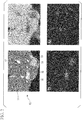
- the junction 15 of the aluminum substrates 11, 11 bonded each other through the pillar-shaped protrusion 12, includes the Ti-Al compound 16 and the eutectic element compound 17 including a eutectic element capable of eutectic reaction with Al as shown FIG. 2 .
- the Ti-Al compound 16 is a compound of Ti and Al in the present embodiment as shown in the analysis results of FIG. 2 . More specifically, it is Al 3 Ti intermetallic compound. In other words, the aluminum substrates 11, 11 are bonded each other in the part where the Ti-Al compound 16 exists in the present embodiment.
- eutectic element capable of eutectic reaction with Al, Ag, Au, Ba, Be, Bi, Ca, Cd, Ce, Co, Cu, Fe, Ga, Gd, Ge, In, La, Li, Mg, Mn, Nd, Ni, Pd, Pt, Ru, Sb, Si, Sm, Sn, Sr, Te, Y, Zn, and the like are named, for example.
- the eutectic element compound 17 includes Ni as the eutectic element as shown in the analysis results shown in FIG. 2 .
- Cu is solid soluted in Al; and the Ti-Al compound 16 and the eutectic element compound 17 capable of eutectic reaction with Al exist.
- Si is solid soluted in Al; and the Ti-Al compound 16 and the eutectic element compound 17 capable of eutectic reaction with Al exist.
- the aluminum raw material for sintering 20 which is the raw material of the porous aluminum sintered compact 10 of the present embodiment, is explained.
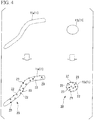
- the aluminum raw material for sintering 20 includes: the aluminum substrate 11; and the titanium powder grains 22 and the eutectic element powder grains 23 (the nickel powder grains, the magnesium powder grains, the copper powder grains, or the silicon powder grains), both of which are adhered on the outer surface of the aluminum substrate 11, as shown in FIG. 4 .
- the titanium powder grains 22 any one or both of the metal titanium powder grains and the titanium hydride powder grains can be used.
- the eutectic element powder grains 23 (the nickel powder grains, the magnesium powder grains, the copper powder grains, or the silicon powder grains), the metal nickel powder grains; the metal magnesium powder grains; the metal copper powder grains; the metal silicon powder grains; and grains made of alloys thereof can be used.
- the grain size of the titanium powder grains 22 is set to the range of 1 ⁇ m or more and 50 ⁇ m or less. Preferably, it is set to 5 ⁇ m or more and 30 ⁇ m or less.
- the titanium hydride powder grains can be set to a value finer than that of the metal titanium powder grains. Thus, in the case where the grain size of the titanium powder grains 22 adhered on the outer surface of the aluminum substrate 11 is set to a fine value, it is preferable that the titanium hydride powder grains are used.
- the distance between the titanium powder grains 22, 22 adhered on the outer surface of the aluminum substrate 11 is set to the range of 5 ⁇ m or more and 100 ⁇ m or less.
- the grain size of the eutectic element powder grains 23 is set: to the range of 1 ⁇ m or more and 20 ⁇ m or less, preferably, 2 ⁇ m or more and 10 ⁇ m or less in the nickel powder grains; to the range of 20 ⁇ m or more and 500 ⁇ m or less, preferably, 20 ⁇ m or more and 100 ⁇ m or less in the magnesium powder grains; to the range of 5 ⁇ m or more and 500 ⁇ m or less, preferably, 20 ⁇ m or more and 100 ⁇ m or less in the copper powder grains; and to the range of 5 ⁇ m or more and 200 ⁇ m or less, preferably, 10 ⁇ m or more and 100 ⁇ m or less in the silicon powder grains.
- the aluminum fibers 11a and the aluminum powder 11b are used as described above.
- the aluminum powder 11b an atomized powder can be used.
- the fiber diameter of the aluminum fiber 11 a is set to the range of 20 ⁇ m or more and 1000 ⁇ m or less. Preferably, it is set to the range of 50 ⁇ m or more and 500 ⁇ m or less.
- the fiber length of the aluminum fiber 11 a is set to the range of 0.2 mm or more and 100 mm or less. Preferably, it is set to the range of 1 mm or more and 50 mm or less.
- the aluminum fiber 11 a is made of pure aluminum or an aluminum alloy, for example; and the ratio L/R of the length L to the fiber diameter R may be set to the range of 4 or more and 2500 or less.
- the aluminum fiber 11a can be obtained by the step of forming the aluminum raw material for sintering, in which any one or both of the silicon powder and the silicon alloy powder are adhered on its outer surface and the aluminum raw material for sintering is formed, for example.
- the aluminum raw material for sintering can be sintered at the temperature range of 575°C to 665°C under an inert gas atmosphere depending on the kind and additive amount of the added eutectic element grains.
- the fiber diameter R of the aluminum fiber 11 a is less than 20 ⁇ m, sufficient sintered strength might not be obtained due to too small junction area of the aluminum fibers.
- the fiber diameter R of the aluminum fiber 11 a is more than 1000 ⁇ m, sufficient sintered strength might not be obtained due to lack of contact points of the aluminum fibers.
- the fiber diameter R of the aluminum fiber 11a is set to the range of 20 ⁇ m or more and 500 ⁇ m or less. In the case where more improved sintered strength is needed, it is preferable that the fiber diameter of the aluminum fiber 11 a is set to 50 ⁇ m or more; and the fiber diameter of the aluminum fiber 11 a is set to 500 ⁇ m or less.
- the ratio L/R of the length L of the aluminum fiber 11a to the fiber diameter R is less than 4, it becomes harder to keep the bulk density DP in a stacking arrangement at 50% of the true density DT of the aluminum fiber or less in the method of producing the porous aluminum sintered compact. Thus, obtaining the porous aluminum sintered compact 10 having high porosity could be difficult.
- the ratio L/R of the length L of the aluminum fiber 11 a to the fiber diameter R is more than 2500, it becomes impossible to disperse the aluminum fibers 11a evenly. Thus, obtaining the porous aluminum sintered compact 10 having uniform porosity could be difficult.
- the ratio L/R of the length L of the aluminum fiber 11 a to the fiber diameter R is set to the range of 4 or more and 2500 or less. In the case where more improved porosity is needed, it is preferable that the ratio L/R of the length L to the fiber diameter R is set to 10 or more. In addition, in order to obtain the porous aluminum sintered compact 10 having more uniform porosity, it is preferable that the ratio L/R of the length L to the fiber diameter R is set to 500 or more.
- the grain size of the aluminum powder 11b is set to the range of 5 ⁇ m or more and 500 ⁇ m or less. Preferably, it is set to the range of 20 ⁇ m or more and 200 ⁇ m or less.
- the porosity can be controlled by adjusting the mixing rate of the aluminum fibers 11a and the aluminum powder 11b. More specifically, the porosity of the porous aluminum sintered compact can be improved by increasing the ratio of the aluminum fiber 11a. Because of this, it is preferable that the aluminum fibers 11a are used as the aluminum substrates 11. In the case where the aluminum powder 11b is mixed in, it is preferable that the ratio of the aluminum powder 11b in the aluminum substrates is set to 15 mass% or less.
- the aluminum substrates 11 (the aluminum fibers 11a and the aluminum powder 11b), the aluminum substrates made of the standard aluminum alloy may be used.
- the aluminum substrates made of the A3003 alloy Al-0.6mass%Si-0.7mass%Fe-0.1mass%Cu-1.5mass%Mn-0.1mass%Zn alloy
- the A5052 alloy Al-0.25mass%Si-0.40mass%Fe-0.10mass%Cu-0.10mass%Mn-2.5mass%Mg-0.2mass% Cr-0.1mass%Zn alloy
- JIS JIS
- composition of the aluminum substrates 11 is not limited to a specific single kind composition. It can be appropriately adjusted depending on the purpose, for example, like using the mixture of fibers made of the pure aluminum and the powder made of JIS A3003 alloy.
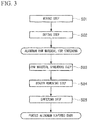
- the aluminum raw material for sintering 20 which is the raw material of the porous aluminum sintered compact 10 of the present embodiment, is produced as shown in FIG 3 .
- the above-described aluminum substrates 11, the titanium powder, and the eutectic element powder (for example, the nickel powder grains, the magnesium powder grains, the copper powder grains, the silicon powder grains) are mixed at room temperature (the mixing step S01).
- the binder solution is sprayed on.
- the binder what is burned and decomposed during heating at 500°C in the air is preferable. More specifically, using an acrylic resin or a cellulose-based polymer material is preferable.
- various solvents such as the water-based, alcohol-based, and organic-based solvents can be used as the solvent of the binder.
- the aluminum substrates 11, the titanium powder, and the eutectic element powder are mixed by various mixing machine, such as an automatic mortar, a pan type rolling granulator, a shaker mixer, a pot mill, a high-speed mixer, a V-shaped mixer, and the like, while they are fluidized.
- various mixing machine such as an automatic mortar, a pan type rolling granulator, a shaker mixer, a pot mill, a high-speed mixer, a V-shaped mixer, and the like, while they are fluidized.
- the mixture obtained in the mixing step S01 is dried (the drying step S02).
- the titanium powder grains 22 and the eutectic element powder grain 23 (for example, the nickel powder grains, the magnesium powder grains, the copper powder grains, the silicon powder grains) are dispersedly adhered on the surfaces of the aluminum substrates 11 as shown in FIG. 4 ; and the aluminum raw material for sintering 20 in the present embodiment is produced.
- the titanium powder grains 22 are dispersed in such a way that the distance between the titanium powder grains 22, 22 adhered on the outer surfaces of the aluminum substrates 11 is set to the range of 5 ⁇ m or more and 100 ⁇ m or less.
- porous aluminum sintered compact 10 is produced by using the aluminum raw material for sintering 20 obtained as described above.
- the porous aluminum sintered compact 10 in the long sheet shape of: 300 mm of width; 1-5 mm of thickness; and 20 m of length is produced, for example, by using the continuous sintering apparatus 30 shown in FIG. 5 .
- This continuous sintering apparatus 30 has: the raw material spreading device 31 spreading the aluminum raw material for sintering 20 evenly; the carbon sheet 32 holding the aluminum raw material for sintering 20 supplied from the raw material spreading device 31; the transport roller 33 driving the carbon sheet 32; the degreasing furnace 34 removing the binder by heating the aluminum raw material for sintering 20 transported with the carbon sheet 32; and the sintering furnace 35 sintering the binder-free aluminum raw material for sintering 20 by heating.
- the aluminum raw material for sintering 20 is spread toward the upper surface of the carbon sheet 32 from the raw material spreading device 31 (the raw material spreading step S03).
- the aluminum raw material for sintering 20 spread on the carbon sheet 32 spreads in the width direction of the carbon sheet 32 during moving toward the traveling direction F to be uniformed and formed into a sheet shape. At this time, load is not placed upon. Thus, voids are formed between the aluminum substrates 11 in the aluminum raw material for sintering 20.
- the aluminum raw material for sintering 20 which is shaped into a sheet-shape on the carbon sheet 32, is inserted in the degreasing furnace 34 with the carbon sheet 32; and the binder is removed by being heated at a predetermined temperature (the binder removing step S04).
- the aluminum raw material for sintering 20 is maintained at 350°C to 500°C for 0.5 to 5 minutes in the air atmosphere; and the binder in the aluminum raw material for sintering 20 is removed.
- the binder is used only for adhering the titanium powder grains 22 and the eutectic element powder grains 23 (for example, the nickel powder grains, the magnesium powder grains, the copper powder grains, the silicon powder grains) on the outer surfaces of the aluminum substrates 11 as described above.
- the content amount of the binder is extremely low compared to the viscous compositions; and the binder can be removed sufficiently in a short time.
- the aluminum raw material for sintering 20 free of the binder is inserted in the sintering furnace 35 with the carbon sheet 32 and sintered by being heated at a predetermined temperature (the sintering step S05).
- the sintering step S05 is performed by maintaining the aluminum raw material for sintering 20 at 575°C to 665°C for 0.5 to 60 minutes in an inert gas atmosphere depending on the kinds and amount of the added eutectic element grains.
- the aluminum substrates 11 in the aluminum raw material for sintering 20 are melted. Since the oxide films are formed on the surfaces of the aluminum substrates 11, the melted aluminum is held by the oxide film; and the shapes of the aluminum substrates 11 are maintained.
- the oxide files are destroyed by the reaction with titanium; and the melted aluminum inside spouts out.
- the spouted out melted aluminum forms a high-melting point compound by reacting with titanium to be solidified. Because of this, the pillar-shaped protrusions 12 projecting toward the outside are formed on the outer surfaces of the aluminum substrates 11 as shown in FIG. 6 .
- the Ti-Al compound 16 exists on the tip of the pillar-shaped protrusion 12. Growth of the pillar-shaped protrusion 12 is suppressed by the Ti-Al compound 16.
- titanium hydride is used as the titanium powder grains 22
- titanium hydride is decomposed near the temperature of 300°C to 400°C; and the produced titanium reacts with the oxide films on the surfaces of the aluminum substrates 11.
- locations having a lowered melting point are formed locally to the aluminum substrates 11 by the eutectic element powder 23 (for example, the nickel powder grains, the magnesium powder grains, the copper powder grains, the silicon powder grains) adhered on the outer surfaces of the aluminum substrates 11. Therefore, the pillar-shaped protrusions 12 are formed reliably even in the relatively low temperature condition such as 575°C to 665°C depending on the kind and the additive amount of the added eutectic element grains. In addition, thick pillar-shaped protrusions 12 are formed since the melted aluminum spouts out in the state where the internal pressure in the aluminum substrates 11 is low
- the adjacent the aluminum substrates 11, 11 are bonded each other by being combined integrally in a molten state or being sintered in a solid state through the pillar-shaped protrusions 12 of each. Accordingly, the porous aluminum sintered compact 10, in which the aluminum substrates 11, 11 are bonded each other through the pillar-shaped protrusions 12 as shown in FIG. 1 , is produced.
- the junction 15, in which the aluminum substrates 11, 11 are bonded each other through the pillar-shaped protrusion 12 includes the Ti-Al compound 16 (Al 3 Ti intermetallic compound in the present embodiment) and the eutectic element compound 17.
- the junction 15 of the aluminum substrates 11, 11 includes the Ti-Al compound 16.
- the oxide films formed on the surfaces of the aluminum substrates 11 are removed by the Ti-Al compound 16; and the aluminum substrates 11, 11 are bonded properly each other. Therefore, the high-quality porous aluminum sintered compact 10 having sufficient strength can be obtained.
- the growth of the pillar-shaped protrusions 12 is suppressed by the Ti-Al compound 16, spouting out of the melted aluminum into the voids between the aluminum substrates 11, 11 can be suppressed; and the porous aluminum sintered compact 10 having high porosity can be obtained.
- Al 3 Ti exists as the Ti-Al compound 16 in the junction 15 of the aluminum substrates 11, 11 in the present embodiment.
- the oxide films formed on the surfaces of the aluminum substrates 11 are removed reliably; and the aluminum substrates 11, 11 are bonded properly each other. Therefore, strength of the porous aluminum sintered compact 10 can be ensured.
- the junction 15 includes the eutectic element compound 17.
- the eutectic element compound 17 there are locations having a lowered melting point locally in the aluminum substrates 11; the thick pillar-shaped protrusions 12 are likely to be formed; and strength of the porous aluminum sintered compact 10 can be improved.
- the porous aluminum sintered compact 10 has the structure in which the aluminum substrates 11, 11 are bonded each other through the pillar-shaped protrusions 12 formed on the outer surfaces of the aluminum substrates 11.
- the porous aluminum sintered compact 10 having high porosity can be obtained without performing the step of foaming or the like separately. Therefore, the porous aluminum sintered compact 10 of the present embodiment can be produced efficiently at low cost.
- the continuous sintering apparatus 30 shown in FIG. 5 is used in the present embodiment.
- the sheet-shaped porous aluminum sintered compact 10 can be produced continuously; and the production efficiency can be improved significantly.
- the content amount of the binder is extremely low compared to the viscous compositions.
- the binder removing step S04 can be performed in a short time.
- the shrinkage rate during sintering becomes about 1 %, for example; and the porous aluminum sintered compact 10 having excellent dimensional accuracy can be obtained.
- the aluminum fibers 11a and the aluminum powder 11b are used as the aluminum substrates 11 in the present embodiment.
- the porosity of the porous aluminum sintered compact 10 can be controlled by adjusting the mixing rates.
- the porosity is set to the range of 30% or more and 90% or less in the porous aluminum sintered compact 10 of the present embodiment.
- the porous aluminum sintered compact 10 having an optimal porosity depending on the application.
- the content amount of the titanium powder grains 22 in the aluminum raw material for sintering 20 is set to 0.5 mass% or more and 20 mass% or less in the present embodiment.
- the pillar-shaped protrusions 12 can be formed with an appropriate distance therebetween on the outer surfaces of the aluminum substrates 11. Accordingly, the porous aluminum sintered compact 10 having sufficient strength and high porosity can be obtained.
- the distance between the titanium powder grains 22, 22 each other adhered on the outer surfaces of the aluminum substrates 11 is set to the range of 5 ⁇ m or more and 100 ⁇ m or less in the present embodiment.
- the distance between the pillar-shaped protrusions 12 is set appropriately. Accordingly, the porous aluminum sintered compact 10 having sufficient strength and high porosity can be obtained.
- the content amount of the eutectic element powder grains 23 in the aluminum raw material for sintering 20 is set: to 0.01 mass% or more and 5 mass% or less in the nickel powder grains; to 0.01 mass % or more and 5 mass% or less in the magnesium powder grains; to 0.01 mass % or more and 5 mass% or less in the copper powder grains; and to 0.01 mass % or more and 15 mass% or less in the silicon powder grains.
- locations with a lower melting point can be formed locally in the aluminum substrates 11 with an appropriate distance therebetween; and excessive overflow of the melted aluminum can be suppressed. Accordingly, the porous aluminum sintered compact 10 having sufficient strength and high porosity can be obtained.
- the pillar-shaped protrusions 12 are formed reliably even in the relatively low temperature condition, such as 575°C to 665°C, depending on the kind and the additive amount of the added eutectic element grains; and the temperature condition of the step of sintering can be set at a lower temperature.
- the fiber diameter of the aluminum fiber 11a which is the aluminum substrate 11, is set to the range of 20 ⁇ m or more and 1000 ⁇ m or less; and the grain size of the aluminum powder 11b is set to the range of 5 ⁇ m or more and 500 ⁇ m or less in the present embodiment.
- the grain size of the titanium powder grains 22 is set to the range of 1 ⁇ m or more and 50 ⁇ m or less; and the grain size of the eutectic element powder grains 23 is set: to the range of 1 ⁇ m or more and 20 ⁇ m or less in the nickel powder grains; to the range of 20 ⁇ m or more and 500 ⁇ m or less in the magnesium powder grains; to the range of 5 ⁇ m or more and 500 ⁇ m or less in the copper powder grains; and to the range of 5 ⁇ m or more and 200 ⁇ m or less in the silicon powder grains.
- the titanium powder grains 22 and the eutectic element powder grains 23 are dispersedly adhered on the outer surfaces of the aluminum substrates 11 (the aluminum fibers 11 a and the aluminum powder 11b) reliably.
- the aluminum fibers 11a and the aluminum powder 11b are used as the aluminum substrates 11; and the ratio of the aluminum powder 11b relative to the aluminum substrates 11 is set to 15 mass% or less in the present embodiment.
- the porous aluminum sintered compact 10 with high porosity can be obtained.
- porous aluminum sintered compact is continuously produced by using the continuous sintering apparatus shown in FIG. 5 .
- the present invention is not limited by the description, and the porous aluminum sintered compact may be produced by using other producing apparatus
- the sheet-shaped porous aluminum sintered compacts are explained in the present embodiment.
- the present invention is not particularly limited by the description, and it may be the bulk-shaped porous aluminum sintered compact produced by the production process shown in FIG. 7 , for example.
- the aluminum raw material for sintering 20 is spread to bulk fill (the raw material spreading step) on the carbon-made container 132 from the powder spreader 131 spreading the aluminum raw material for sintering 20. Then, the container 132 is inserted in the degreasing furnace 134; and the binder is removed by heating under air atmosphere (the binder removing step). Then, the container is inserted in the sintering furnace 135; and heated to and retained at 575°C to 665°C under an Ar atmosphere depending on the kind and the additive amount of the added eutectic element grains to obtain the bulk-shaped porous aluminum sintered compact 110.
- the bulk-shaped porous aluminum sintered compact 110 can be taken out from the carbon-made container 132 relatively easily, since a carbon-made container having excellent mold releasing characteristics is used as the carbon-made container 132; and the content is shrunk in the shrinkage rate about 1 % during sintering.
- Ni, Mg, Cu and Si are used as examples of the eutectic element in the present embodiment.
- the present invention is not limited by this explanation; and one or more selected from Ag, Au, Ba, Be, Bi, Ca, Cd, Ce, Co, Cu, Fe, Ga, Gd, Ge, In, La, Li, Mg, Mn, Nd, Ni, Pd, Pt, Ru, Sb, Si, Sm, Sn, Sr, Te, Y, and Zn may be used as the eutectic element capable of eutectic reaction with Al.
- porous aluminum sintered compact Another method of producing the porous aluminum sintered compact is described below.
- the aluminum fibers; and any one or both of the silicon powder and the silicon alloy powder, are mixed at room temperature.
- a binder solution is sprayed on.
- the binder what is burned and decomposed during heating at 500°C in the air is preferable. More specifically, using an acrylic resin or a cellulose-based polymer material is preferable.
- various solvents such as the water-based, alcohol-based, and organic-based solvents can be used as the solvent of the binder.
- the aluminum fibers 11a and the silicon powder are mixed by various mixing machine, such as an automatic mortar, a pan type rolling granulator, a shaker mixer, a pot mill, a high-speed mixer, a V-shaped mixer, and the like, while they are fluidized.
- various mixing machine such as an automatic mortar, a pan type rolling granulator, a shaker mixer, a pot mill, a high-speed mixer, a V-shaped mixer, and the like, while they are fluidized.
- the silicon powder and the silicon alloy powder are dispersedly adhered on the outer surfaces of the aluminum fibers; and the aluminum raw material for sintering in the present embodiment is produced.
- the porous aluminum sintered compact in the long sheet shape of: 300 mm of width; 1-5 mm of thickness; and 20 m of length is produced, for example, by using a continuous sintering apparatus or the like for example.
- the aluminum raw material for sintering is spread toward the upper surface of the carbon sheet from a raw material spreading apparatus; the aluminum raw material for sintering is stacked; and the aluminum raw material for sintering stacked on the carbon sheet is shaped into a sheet-shape. At this time, voids are formed between the aluminum fibers in the aluminum raw material for sintering without placing load.
- the aluminum fibers are stacked in such a way that the bulk density after filling becomes 50% of the true density of the aluminum fibers to maintain three-dimensional and isotropic voids between the aluminum fibers in stacking.
- the aluminum raw material for sintering which is shaped into the sheet-shape on the carbon sheet, is inserted in the degreasing furnace; and the binder is removed by being heated at a predetermined temperature.
- the aluminum raw material for sintering is maintained at 350°C to 500°C for 0.5 to 5 minutes in the air atmosphere; and the binder in the aluminum raw material for sintering is removed.
- the binder is used only for adhering the silicon powder and the silicon alloy powder on the outer surfaces of the aluminum fibers.
- the content amount of the binder is extremely low compared to the viscous compositions; and the binder can be removed sufficiently in a short time.
- the aluminum raw material for sintering free of the binder is inserted in the sintering furnace with the carbon sheet and sintered by being heated at a predetermined temperature.
- the sintering is performed by maintaining the aluminum raw material for sintering at 575°C to 665°C for 0.5 to 60 minutes in an inert gas atmosphere, for example.
- the optimum sintering temperature differs.
- the sintering temperature is set to 575°C, which is the eutectic temperature of Al-12.6mass%Si, or more.
- the retention time is set to 1 to 20 minutes.
- the melting point lowering effect is obtained locally in the vicinity of the adhering parts.
- the liquid phase is formed at an even lower temperature than the melting point of the pure aluminum fibers or the aluminum alloy fibers; and sintering is stimulated to improve strength compared to the case free of silicon addition.
- the aluminum raw materials for sintering were prepared.
- the porous aluminum sintered compacts having the dimension of: 30 mm of width; 200 mm of length; and 5 mm of thickness, were produced.
- the temperature conditions in the step of sintering are shown in Table 1. Sintering was performed with the sintering temperature retention time of 15 minutes.
- the true density (g/cm 3 ) was measured by the water method with the precision balance.
- the tensile strength of the obtained porous aluminum sintered compacts was measured by the pulling method.
- the aluminum substrates made of the pure aluminum is used.
- the present invention is not particularly limited by the description, and the aluminum substrates made of the standard aluminum alloy may be used.
- the aluminum substrates made of the A3003 alloy Al-0.6mass%Si-0.7mass%Fe-0.1mass%Cu-1.5mass%Mn-0.1mass%Zn alloy
- the A5052 alloy Al-0.25mass%Si-0.40mass%Fe-0.10mass%Cu-0.10mass%Mn-2.5mass%Mg-0.2mass% Cr-0.1mass%Zn alloy
- JIS JIS
- the composition of the aluminum substrates is not limited to a specific single kind composition. It can be appropriately adjusted depending on the purpose, for example, like using the mixture of fibers made of the pure aluminum and the powder made of JIS A3003 alloy.
- [Table 1] Aluminum substrate Titanium powder Eutectic element powder Sintering temperature (°C) Apparent porosity (%) Tensile strength (N/mm 2 ) Material Fiber (%) Powder (%) Material Grain size ( ⁇ m) Content amount (mass%) Material Grain size ( ⁇ m) Content amount (mass%) 1 A1070 94.0 - Titanium hydride 1.0 5.0 Ni 4.0 1.0 645 72.0 2.9 2 A1070 94.0 - Titanium hydride 5.0 5.0 Ni 4.0 1.0 645 71.6 3.0 3 A1070 94.0 - Metal titanium 30.0 5.0 Ni 4.0 1.0 645 70.5 2.8 4 A1070 94.0 - Metal titanium 50.0 5.0 Ni 4.0 1.0 645 72.3 2.7 5 A1070 98.5 - Titanium hydride 5.0
- Examples 1to 50 of the present invention in which the aluminum raw materials including the eutectic element powders were used, it was confirmed that strength was improved sufficiently even though they had apparent porosities equivalent to Comparative Examples 1 and 2, in which the aluminum raw materials free of the eutectic element powder were used.
Landscapes
- Chemical & Material Sciences (AREA)
- Engineering & Computer Science (AREA)
- Mechanical Engineering (AREA)
- Materials Engineering (AREA)
- Metallurgy (AREA)
- Organic Chemistry (AREA)
- Manufacturing & Machinery (AREA)
- Inorganic Chemistry (AREA)
- Powder Metallurgy (AREA)
- Manufacture Of Alloys Or Alloy Compounds (AREA)
Applications Claiming Priority (3)
| Application Number | Priority Date | Filing Date | Title |
|---|---|---|---|
| JP2014102778 | 2014-05-16 | ||
| JP2015099293A JP6488876B2 (ja) | 2014-05-16 | 2015-05-14 | 多孔質アルミニウム焼結体及び多孔質アルミニウム焼結体の製造方法 |
| PCT/JP2015/064180 WO2015174542A1 (ja) | 2014-05-16 | 2015-05-18 | 多孔質アルミニウム焼結体及び多孔質アルミニウム焼結体の製造方法 |
Publications (2)
| Publication Number | Publication Date |
|---|---|
| EP3144082A1 true EP3144082A1 (de) | 2017-03-22 |
| EP3144082A4 EP3144082A4 (de) | 2018-01-17 |
Family
ID=54480076
Family Applications (1)
| Application Number | Title | Priority Date | Filing Date |
|---|---|---|---|
| EP15791985.3A Withdrawn EP3144082A4 (de) | 2014-05-16 | 2015-05-18 | Poröser aluminiumsinterkörper und verfahren zur herstellung eines porösen aluminiumsinterkörpers |
Country Status (5)
| Country | Link |
|---|---|
| US (1) | US10478895B2 (de) |
| EP (1) | EP3144082A4 (de) |
| JP (1) | JP6488876B2 (de) |
| CN (1) | CN106102966B (de) |
| WO (1) | WO2015174542A1 (de) |
Cited By (4)
| Publication number | Priority date | Publication date | Assignee | Title |
|---|---|---|---|---|
| EP3144083A4 (de) * | 2014-05-16 | 2018-01-03 | Mitsubishi Materials Corporation | Poröser aluminiumsinterkörper und verfahren zur herstellung eines porösen aluminiumsinterkörpers |
| EP3213839A4 (de) * | 2014-10-30 | 2018-04-25 | Mitsubishi Materials Corporation | Poröser aluminiumsinterkörper und verfahren zur herstellung eines porösen aluminiumsinterkörpers |
| US10478895B2 (en) | 2014-05-16 | 2019-11-19 | Mitsubishi Materials Corporation | Porous aluminum sintered compact and method of producing porous aluminum sintered compact |
| US10981230B2 (en) | 2014-05-30 | 2021-04-20 | Mitsubishi Materials Corporation | Porous aluminum complex and method of producing porous aluminum complex |
Families Citing this family (5)
| Publication number | Priority date | Publication date | Assignee | Title |
|---|---|---|---|---|
| JP6237500B2 (ja) * | 2014-07-02 | 2017-11-29 | 三菱マテリアル株式会社 | 多孔質アルミニウム熱交換部材 |
| JP6459725B2 (ja) * | 2015-03-31 | 2019-01-30 | 三菱マテリアル株式会社 | 多孔質アルミニウム焼結体、多孔質アルミニウム複合部材、多孔質アルミニウム焼結体の製造方法、多孔質アルミニウム複合部材の製造方法 |
| CN110961636B (zh) * | 2019-12-23 | 2022-03-15 | 江苏恒科新材料有限公司 | 一种用于纺丝组件的烧结金属过滤芯及其制备方法 |
| EP3903965B1 (de) * | 2020-04-30 | 2023-11-29 | EPoS Technologies SA | Verfahren zur herstellung von gebundenen filtermaterialien |
| JP7848802B2 (ja) * | 2021-07-05 | 2026-04-21 | 住友電気工業株式会社 | 金属多孔体の製造方法及び金属多孔体 |
Family Cites Families (42)
| Publication number | Priority date | Publication date | Assignee | Title |
|---|---|---|---|---|
| US3301671A (en) * | 1964-03-03 | 1967-01-31 | Alloys Res & Mfg Corp | Aluminous sintered parts and techniques for fabricating same |
| BE788786A (fr) | 1971-09-13 | 1973-03-13 | Eastman Kodak Co | Procede de polymerisation en emulsion et compositions obtenues |
| JPS5677301A (en) * | 1979-11-27 | 1981-06-25 | N D C Kk | Sintering method of al or its alloy powder |
| JPS56149363A (en) * | 1980-04-15 | 1981-11-19 | Nippon Dia Clevite Co | Manufacture of porous sintered body such as aluminum |
| JPH03110045A (ja) | 1989-09-21 | 1991-05-10 | Toyobo Co Ltd | ふくらみ部を有する金属繊維およびその製造方法 |
| US5098469A (en) * | 1991-09-12 | 1992-03-24 | General Motors Corporation | Powder metal process for producing multiphase NI-AL-TI intermetallic alloys |
| JPH06330215A (ja) | 1993-05-25 | 1994-11-29 | Nippon Haiburitsudo Technol Kk | 低密度多孔質アルミニウム合金焼結体とその製造方法 |
| JP3568052B2 (ja) | 1994-12-15 | 2004-09-22 | 住友電気工業株式会社 | 金属多孔体、その製造方法及びそれを用いた電池用極板 |
| JPH08325662A (ja) | 1995-05-31 | 1996-12-10 | Ndc Co Ltd | 多孔質アルミニウム焼結材 |
| JPH08325660A (ja) | 1995-05-31 | 1996-12-10 | Ndc Co Ltd | 多孔質アルミニウム焼結材 |
| JPH08325661A (ja) * | 1995-05-31 | 1996-12-10 | Ndc Co Ltd | 多孔質アルミニウム焼結材 |
| CN1373233A (zh) | 2001-02-28 | 2002-10-09 | Ndc工程技术株式会社 | 多孔质a1烧结材料的制造方法 |
| US6823928B2 (en) * | 2002-09-27 | 2004-11-30 | University Of Queensland | Infiltrated aluminum preforms |
| JP4303649B2 (ja) | 2004-06-24 | 2009-07-29 | 日立粉末冶金株式会社 | 焼結アルミニウム部材の原料用粉末混合物 |
| JP2006028616A (ja) | 2004-07-20 | 2006-02-02 | Toho Titanium Co Ltd | 多孔質焼結体およびその製造方法 |
| JP2008020864A (ja) | 2006-07-14 | 2008-01-31 | Central Glass Co Ltd | 吸音性不織布シート |
| AU2007283448A1 (en) | 2006-08-07 | 2008-02-14 | The University Of Queensland | Metal injection moulding method |
| WO2009055452A2 (en) | 2007-10-24 | 2009-04-30 | Mott Corporation | Sintered fiber filter |
| JP5182648B2 (ja) | 2008-03-18 | 2013-04-17 | 日立金属株式会社 | 多孔質アルミニウム焼結体の製造方法 |
| JP2009228025A (ja) | 2008-03-19 | 2009-10-08 | Ykk Corp | 前駆体及び発泡金属成形体、並びにそれらの製造方法 |
| JP2010116623A (ja) | 2008-11-14 | 2010-05-27 | Toyota Industries Corp | 金属発泡体および金属発泡体の製造方法 |
| JP5402380B2 (ja) | 2009-03-30 | 2014-01-29 | 三菱マテリアル株式会社 | アルミニウム多孔質焼結体の製造方法 |
| CN102438778B (zh) * | 2009-03-30 | 2014-10-29 | 三菱综合材料株式会社 | 铝多孔烧结体的制造方法和铝多孔烧结体 |
| JP5428546B2 (ja) | 2009-06-04 | 2014-02-26 | 三菱マテリアル株式会社 | アルミニウム多孔質焼結体を有するアルミニウム複合体の製造方法 |
| JP5338533B2 (ja) | 2009-07-13 | 2013-11-13 | 三菱マテリアル株式会社 | 電気二重層型キャパシタ用電極およびその製造方法 |
| JP5407663B2 (ja) | 2009-08-27 | 2014-02-05 | 三菱マテリアル株式会社 | 非水電解質二次電池用電極およびその製造方法 |
| JP5310450B2 (ja) | 2009-09-30 | 2013-10-09 | 三菱マテリアル株式会社 | 非水系電気化学セルの集電体およびそれを用いた電極 |
| JP5526941B2 (ja) | 2010-03-31 | 2014-06-18 | 三菱マテリアル株式会社 | アルミニウム多孔質焼結体の製造方法 |
| JP5560492B2 (ja) | 2010-05-31 | 2014-07-30 | 三菱マテリアル株式会社 | 非水電解質二次電池用集電体およびこれを用いた電極 |
| JP5974424B2 (ja) | 2010-11-30 | 2016-08-23 | 三菱マテリアル株式会社 | 電気二重層キャパシタ用電極およびこれを用いた電気二重層キャパシタ |
| EP2670508B1 (de) * | 2011-02-04 | 2021-08-25 | Entegris, Inc. | Metallischer porösen körper aus gesinterten metallpulvern und metallfasern |
| CN102162052A (zh) | 2011-03-24 | 2011-08-24 | 中国兵器工业第五二研究所 | 一种高阻尼金属多孔材料及其制备方法 |
| CN102778418A (zh) | 2011-05-13 | 2012-11-14 | 中国石油天然气股份有限公司 | 原油管道初凝概率定量评价方法 |
| JP5673707B2 (ja) | 2012-12-27 | 2015-02-18 | 三菱マテリアル株式会社 | アルミニウム多孔体およびその製造方法 |
| JP5594445B1 (ja) | 2013-03-01 | 2014-09-24 | 三菱マテリアル株式会社 | 焼結用アルミニウム原料、焼結用アルミニウム原料の製造方法及び多孔質アルミニウム焼結体の製造方法 |
| JP5633658B2 (ja) | 2013-03-01 | 2014-12-03 | 三菱マテリアル株式会社 | 多孔質アルミニウム焼結体 |
| JP5825311B2 (ja) * | 2013-09-06 | 2015-12-02 | 三菱マテリアル株式会社 | アルミニウム多孔質焼結体 |
| CN103667762B (zh) | 2013-11-26 | 2016-09-14 | 西南科技大学 | 一种低密度多孔金属材料的制备方法 |
| JP6488876B2 (ja) | 2014-05-16 | 2019-03-27 | 三菱マテリアル株式会社 | 多孔質アルミニウム焼結体及び多孔質アルミニウム焼結体の製造方法 |
| JP6477254B2 (ja) * | 2014-05-30 | 2019-03-06 | 三菱マテリアル株式会社 | 多孔質アルミニウム複合体及び多孔質アルミニウム複合体の製造方法 |
| JP6237500B2 (ja) * | 2014-07-02 | 2017-11-29 | 三菱マテリアル株式会社 | 多孔質アルミニウム熱交換部材 |
| JP6405892B2 (ja) * | 2014-10-30 | 2018-10-17 | 三菱マテリアル株式会社 | 多孔質アルミニウム焼結体及び多孔質アルミニウム焼結体の製造方法 |
-
2015
- 2015-05-14 JP JP2015099293A patent/JP6488876B2/ja not_active Expired - Fee Related
- 2015-05-18 WO PCT/JP2015/064180 patent/WO2015174542A1/ja not_active Ceased
- 2015-05-18 CN CN201580015338.7A patent/CN106102966B/zh not_active Expired - Fee Related
- 2015-05-18 US US15/302,374 patent/US10478895B2/en active Active
- 2015-05-18 EP EP15791985.3A patent/EP3144082A4/de not_active Withdrawn
Cited By (6)
| Publication number | Priority date | Publication date | Assignee | Title |
|---|---|---|---|---|
| EP3144083A4 (de) * | 2014-05-16 | 2018-01-03 | Mitsubishi Materials Corporation | Poröser aluminiumsinterkörper und verfahren zur herstellung eines porösen aluminiumsinterkörpers |
| US10478895B2 (en) | 2014-05-16 | 2019-11-19 | Mitsubishi Materials Corporation | Porous aluminum sintered compact and method of producing porous aluminum sintered compact |
| US10981228B2 (en) | 2014-05-16 | 2021-04-20 | Mitsubishi Materials Corporation | Porous aluminum sintered compact and method of producing porous aluminum sintered compact |
| US10981230B2 (en) | 2014-05-30 | 2021-04-20 | Mitsubishi Materials Corporation | Porous aluminum complex and method of producing porous aluminum complex |
| EP3213839A4 (de) * | 2014-10-30 | 2018-04-25 | Mitsubishi Materials Corporation | Poröser aluminiumsinterkörper und verfahren zur herstellung eines porösen aluminiumsinterkörpers |
| US10543531B2 (en) | 2014-10-30 | 2020-01-28 | Mitsubishi Materials Corporation | Porous aluminum sintered material and method of producing porous aluminum sintered material |
Also Published As
| Publication number | Publication date |
|---|---|
| JP2015232174A (ja) | 2015-12-24 |
| CN106102966B (zh) | 2019-04-05 |
| WO2015174542A1 (ja) | 2015-11-19 |
| US10478895B2 (en) | 2019-11-19 |
| EP3144082A4 (de) | 2018-01-17 |
| CN106102966A (zh) | 2016-11-09 |
| US20170028473A1 (en) | 2017-02-02 |
| JP6488876B2 (ja) | 2019-03-27 |
Similar Documents
| Publication | Publication Date | Title |
|---|---|---|
| EP3144082A1 (de) | Poröser aluminiumsinterkörper und verfahren zur herstellung eines porösen aluminiumsinterkörpers | |
| EP3144083B1 (de) | Poröser aluminiumsinterkörper und verfahren zur herstellung eines porösen aluminiumsinterkörpers | |
| EP3150305B1 (de) | Poröser aluminiumverbundwerkstoff und verfahren zur herstellung des porösen aluminiumverbundwerkstoffs | |
| Kotadia et al. | Intermetallic compound growth suppression at high temperature in SAC solders with Zn addition on Cu and Ni–P substrates | |
| US9702028B2 (en) | Magnesium-based alloy powder and magnesium-based alloy molded article | |
| CN102256740A (zh) | 新的磨损保护膜及其生产和使用方法 | |
| US20140238191A1 (en) | Magnesium-based alloy powder and magnesium-based alloy molded article | |
| JP6459726B2 (ja) | 多孔質アルミニウム焼結体、多孔質アルミニウム複合部材、多孔質アルミニウム焼結体の製造方法、多孔質アルミニウム複合部材の製造方法 | |
| WO2021219564A1 (en) | Pre-alloyed powder for sinter-brazing, sinter-brazing material and sinter-brazing method | |
| EP3213839B1 (de) | Poröser aluminiumsinterkörper und verfahren zur herstellung eines porösen aluminiumsinterkörpers | |
| WO2021182086A1 (ja) | 熱交換用パイプ及びその製造方法 | |
| JP4401326B2 (ja) | 高強度耐摩耗性アルミニウム焼結合金の製造方法 | |
| JP4326417B2 (ja) | 高強度アルミニウム焼結鍛造部品の製造方法 | |
| JP6459725B2 (ja) | 多孔質アルミニウム焼結体、多孔質アルミニウム複合部材、多孔質アルミニウム焼結体の製造方法、多孔質アルミニウム複合部材の製造方法 | |
| JP6439550B2 (ja) | 多孔質アルミニウム焼結体、多孔質アルミニウム複合部材、多孔質アルミニウム焼結体の製造方法、多孔質アルミニウム複合部材の製造方法 | |
| HK1184746A (en) | Dispersion, method for producing same, and use thereof | |
| JP2006063415A (ja) | 高強度アルミニウム焼結鍛造部品の製造方法 |
Legal Events
| Date | Code | Title | Description |
|---|---|---|---|
| PUAI | Public reference made under article 153(3) epc to a published international application that has entered the european phase |
Free format text: ORIGINAL CODE: 0009012 |
|
| 17P | Request for examination filed |
Effective date: 20161013 |
|
| AK | Designated contracting states |
Kind code of ref document: A1 Designated state(s): AL AT BE BG CH CY CZ DE DK EE ES FI FR GB GR HR HU IE IS IT LI LT LU LV MC MK MT NL NO PL PT RO RS SE SI SK SM TR |
|
| AX | Request for extension of the european patent |
Extension state: BA ME |
|
| DAV | Request for validation of the european patent (deleted) | ||
| DAX | Request for extension of the european patent (deleted) | ||
| A4 | Supplementary search report drawn up and despatched |
Effective date: 20171215 |
|
| RIC1 | Information provided on ipc code assigned before grant |
Ipc: B22F 1/02 20060101ALI20171211BHEP Ipc: C22C 1/04 20060101ALI20171211BHEP Ipc: C22C 1/08 20060101ALI20171211BHEP Ipc: B22F 3/11 20060101AFI20171211BHEP Ipc: B22F 1/00 20060101ALI20171211BHEP Ipc: C22C 21/00 20060101ALI20171211BHEP |
|
| 17Q | First examination report despatched |
Effective date: 20180831 |
|
| RAP1 | Party data changed (applicant data changed or rights of an application transferred) |
Owner name: MITSUBISHI MATERIALS CORPORATION |
|
| STAA | Information on the status of an ep patent application or granted ep patent |
Free format text: STATUS: THE APPLICATION IS DEEMED TO BE WITHDRAWN |
|
| 18D | Application deemed to be withdrawn |
Effective date: 20191127 |