EP3144301A1 - Verbindung, organisches optoelektronisches element damit und anzeigevorrichtung davon - Google Patents
Verbindung, organisches optoelektronisches element damit und anzeigevorrichtung davon Download PDFInfo
- Publication number
- EP3144301A1 EP3144301A1 EP15791911.9A EP15791911A EP3144301A1 EP 3144301 A1 EP3144301 A1 EP 3144301A1 EP 15791911 A EP15791911 A EP 15791911A EP 3144301 A1 EP3144301 A1 EP 3144301A1
- Authority
- EP
- European Patent Office
- Prior art keywords
- group
- unsubstituted
- substituted
- compound
- mmol
- Prior art date
- Legal status (The legal status is an assumption and is not a legal conclusion. Google has not performed a legal analysis and makes no representation as to the accuracy of the status listed.)
- Granted
Links
- 0 C*(c1cccc-2c1*c1c-2cccc1)I* Chemical compound C*(c1cccc-2c1*c1c-2cccc1)I* 0.000 description 17
- PXYVPMQLRTUSEC-IUQJDUBZSA-N CC/C=C\C(\C(N)=N)=C/C Chemical compound CC/C=C\C(\C(N)=N)=C/C PXYVPMQLRTUSEC-IUQJDUBZSA-N 0.000 description 1
- GLAJVFVWRKTVLL-UHFFFAOYSA-N CC1C(C)C=CC(C)C1 Chemical compound CC1C(C)C=CC(C)C1 GLAJVFVWRKTVLL-UHFFFAOYSA-N 0.000 description 1
- KHTFLGXHDLKMFT-UHFFFAOYSA-N CC1C=CCC2C1B2 Chemical compound CC1C=CCC2C1B2 KHTFLGXHDLKMFT-UHFFFAOYSA-N 0.000 description 1
- WNVRVUKGONFAJW-UHFFFAOYSA-N CC1CC=CB1 Chemical compound CC1CC=CB1 WNVRVUKGONFAJW-UHFFFAOYSA-N 0.000 description 1
- JSPMKEIRVNVOTA-UHFFFAOYSA-N C[O](C1(c2ccccc2-c2ccccc12)c(cc1)ccc1I)=C Chemical compound C[O](C1(c2ccccc2-c2ccccc12)c(cc1)ccc1I)=C JSPMKEIRVNVOTA-UHFFFAOYSA-N 0.000 description 1
- NAFKMUWLIYQHHI-UHFFFAOYSA-N I[n]1c(cccc2)c2c2c1cccc2 Chemical compound I[n]1c(cccc2)c2c2c1cccc2 NAFKMUWLIYQHHI-UHFFFAOYSA-N 0.000 description 1
Images
Classifications
-
- H—ELECTRICITY
- H10—SEMICONDUCTOR DEVICES; ELECTRIC SOLID-STATE DEVICES NOT OTHERWISE PROVIDED FOR
- H10K—ORGANIC ELECTRIC SOLID-STATE DEVICES
- H10K85/00—Organic materials used in the body or electrodes of devices covered by this subclass
- H10K85/60—Organic compounds having low molecular weight
- H10K85/631—Amine compounds having at least two aryl rest on at least one amine-nitrogen atom, e.g. triphenylamine
- H10K85/633—Amine compounds having at least two aryl rest on at least one amine-nitrogen atom, e.g. triphenylamine comprising polycyclic condensed aromatic hydrocarbons as substituents on the nitrogen atom
-
- C—CHEMISTRY; METALLURGY
- C07—ORGANIC CHEMISTRY
- C07D—HETEROCYCLIC COMPOUNDS
- C07D209/00—Heterocyclic compounds containing five-membered rings, condensed with other rings, with one nitrogen atom as the only ring hetero atom
- C07D209/56—Ring systems containing three or more rings
- C07D209/80—[b, c]- or [b, d]-condensed
- C07D209/82—Carbazoles; Hydrogenated carbazoles
- C07D209/86—Carbazoles; Hydrogenated carbazoles with only hydrogen atoms, hydrocarbon or substituted hydrocarbon radicals, directly attached to carbon atoms of the ring system
-
- C—CHEMISTRY; METALLURGY
- C07—ORGANIC CHEMISTRY
- C07D—HETEROCYCLIC COMPOUNDS
- C07D307/00—Heterocyclic compounds containing five-membered rings having one oxygen atom as the only ring hetero atom
- C07D307/77—Heterocyclic compounds containing five-membered rings having one oxygen atom as the only ring hetero atom ortho- or peri-condensed with carbocyclic rings or ring systems
- C07D307/91—Dibenzofurans; Hydrogenated dibenzofurans
-
- C—CHEMISTRY; METALLURGY
- C07—ORGANIC CHEMISTRY
- C07D—HETEROCYCLIC COMPOUNDS
- C07D333/00—Heterocyclic compounds containing five-membered rings having one sulfur atom as the only ring hetero atom
- C07D333/50—Heterocyclic compounds containing five-membered rings having one sulfur atom as the only ring hetero atom condensed with carbocyclic rings or ring systems
- C07D333/76—Dibenzothiophenes
-
- C—CHEMISTRY; METALLURGY
- C07—ORGANIC CHEMISTRY
- C07D—HETEROCYCLIC COMPOUNDS
- C07D405/00—Heterocyclic compounds containing both one or more hetero rings having oxygen atoms as the only ring hetero atoms, and one or more rings having nitrogen as the only ring hetero atom
- C07D405/02—Heterocyclic compounds containing both one or more hetero rings having oxygen atoms as the only ring hetero atoms, and one or more rings having nitrogen as the only ring hetero atom containing two hetero rings
- C07D405/12—Heterocyclic compounds containing both one or more hetero rings having oxygen atoms as the only ring hetero atoms, and one or more rings having nitrogen as the only ring hetero atom containing two hetero rings linked by a chain containing hetero atoms as chain links
-
- C—CHEMISTRY; METALLURGY
- C07—ORGANIC CHEMISTRY
- C07D—HETEROCYCLIC COMPOUNDS
- C07D409/00—Heterocyclic compounds containing two or more hetero rings, at least one ring having sulfur atoms as the only ring hetero atoms
- C07D409/02—Heterocyclic compounds containing two or more hetero rings, at least one ring having sulfur atoms as the only ring hetero atoms containing two hetero rings
- C07D409/12—Heterocyclic compounds containing two or more hetero rings, at least one ring having sulfur atoms as the only ring hetero atoms containing two hetero rings linked by a chain containing hetero atoms as chain links
-
- C—CHEMISTRY; METALLURGY
- C09—DYES; PAINTS; POLISHES; NATURAL RESINS; ADHESIVES; COMPOSITIONS NOT OTHERWISE PROVIDED FOR; APPLICATIONS OF MATERIALS NOT OTHERWISE PROVIDED FOR
- C09K—MATERIALS FOR MISCELLANEOUS APPLICATIONS, NOT PROVIDED FOR ELSEWHERE
- C09K11/00—Luminescent materials, e.g. electroluminescent or chemiluminescent
- C09K11/06—Luminescent materials, e.g. electroluminescent or chemiluminescent containing organic luminescent materials
-
- H—ELECTRICITY
- H10—SEMICONDUCTOR DEVICES; ELECTRIC SOLID-STATE DEVICES NOT OTHERWISE PROVIDED FOR
- H10K—ORGANIC ELECTRIC SOLID-STATE DEVICES
- H10K85/00—Organic materials used in the body or electrodes of devices covered by this subclass
- H10K85/60—Organic compounds having low molecular weight
- H10K85/631—Amine compounds having at least two aryl rest on at least one amine-nitrogen atom, e.g. triphenylamine
-
- H—ELECTRICITY
- H10—SEMICONDUCTOR DEVICES; ELECTRIC SOLID-STATE DEVICES NOT OTHERWISE PROVIDED FOR
- H10K—ORGANIC ELECTRIC SOLID-STATE DEVICES
- H10K85/00—Organic materials used in the body or electrodes of devices covered by this subclass
- H10K85/60—Organic compounds having low molecular weight
- H10K85/631—Amine compounds having at least two aryl rest on at least one amine-nitrogen atom, e.g. triphenylamine
- H10K85/636—Amine compounds having at least two aryl rest on at least one amine-nitrogen atom, e.g. triphenylamine comprising heteroaromatic hydrocarbons as substituents on the nitrogen atom
-
- H—ELECTRICITY
- H10—SEMICONDUCTOR DEVICES; ELECTRIC SOLID-STATE DEVICES NOT OTHERWISE PROVIDED FOR
- H10K—ORGANIC ELECTRIC SOLID-STATE DEVICES
- H10K85/00—Organic materials used in the body or electrodes of devices covered by this subclass
- H10K85/60—Organic compounds having low molecular weight
- H10K85/649—Aromatic compounds comprising a hetero atom
- H10K85/654—Aromatic compounds comprising a hetero atom comprising only nitrogen as heteroatom
-
- H—ELECTRICITY
- H10—SEMICONDUCTOR DEVICES; ELECTRIC SOLID-STATE DEVICES NOT OTHERWISE PROVIDED FOR
- H10K—ORGANIC ELECTRIC SOLID-STATE DEVICES
- H10K85/00—Organic materials used in the body or electrodes of devices covered by this subclass
- H10K85/60—Organic compounds having low molecular weight
- H10K85/649—Aromatic compounds comprising a hetero atom
- H10K85/657—Polycyclic condensed heteroaromatic hydrocarbons
- H10K85/6572—Polycyclic condensed heteroaromatic hydrocarbons comprising only nitrogen in the heteroaromatic polycondensed ring system, e.g. phenanthroline or carbazole
-
- H—ELECTRICITY
- H10—SEMICONDUCTOR DEVICES; ELECTRIC SOLID-STATE DEVICES NOT OTHERWISE PROVIDED FOR
- H10K—ORGANIC ELECTRIC SOLID-STATE DEVICES
- H10K85/00—Organic materials used in the body or electrodes of devices covered by this subclass
- H10K85/60—Organic compounds having low molecular weight
- H10K85/649—Aromatic compounds comprising a hetero atom
- H10K85/657—Polycyclic condensed heteroaromatic hydrocarbons
- H10K85/6574—Polycyclic condensed heteroaromatic hydrocarbons comprising only oxygen in the heteroaromatic polycondensed ring system, e.g. cumarine dyes
-
- H—ELECTRICITY
- H10—SEMICONDUCTOR DEVICES; ELECTRIC SOLID-STATE DEVICES NOT OTHERWISE PROVIDED FOR
- H10K—ORGANIC ELECTRIC SOLID-STATE DEVICES
- H10K85/00—Organic materials used in the body or electrodes of devices covered by this subclass
- H10K85/60—Organic compounds having low molecular weight
- H10K85/649—Aromatic compounds comprising a hetero atom
- H10K85/657—Polycyclic condensed heteroaromatic hydrocarbons
- H10K85/6576—Polycyclic condensed heteroaromatic hydrocarbons comprising only sulfur in the heteroaromatic polycondensed ring system, e.g. benzothiophene
-
- C—CHEMISTRY; METALLURGY
- C09—DYES; PAINTS; POLISHES; NATURAL RESINS; ADHESIVES; COMPOSITIONS NOT OTHERWISE PROVIDED FOR; APPLICATIONS OF MATERIALS NOT OTHERWISE PROVIDED FOR
- C09K—MATERIALS FOR MISCELLANEOUS APPLICATIONS, NOT PROVIDED FOR ELSEWHERE
- C09K2211/00—Chemical nature of organic luminescent or tenebrescent compounds
- C09K2211/10—Non-macromolecular compounds
- C09K2211/1018—Heterocyclic compounds
- C09K2211/1022—Heterocyclic compounds bridged by heteroatoms, e.g. N, P, Si or B
-
- C—CHEMISTRY; METALLURGY
- C09—DYES; PAINTS; POLISHES; NATURAL RESINS; ADHESIVES; COMPOSITIONS NOT OTHERWISE PROVIDED FOR; APPLICATIONS OF MATERIALS NOT OTHERWISE PROVIDED FOR
- C09K—MATERIALS FOR MISCELLANEOUS APPLICATIONS, NOT PROVIDED FOR ELSEWHERE
- C09K2211/00—Chemical nature of organic luminescent or tenebrescent compounds
- C09K2211/10—Non-macromolecular compounds
- C09K2211/1018—Heterocyclic compounds
- C09K2211/1025—Heterocyclic compounds characterised by ligands
- C09K2211/1088—Heterocyclic compounds characterised by ligands containing oxygen as the only heteroatom
-
- C—CHEMISTRY; METALLURGY
- C09—DYES; PAINTS; POLISHES; NATURAL RESINS; ADHESIVES; COMPOSITIONS NOT OTHERWISE PROVIDED FOR; APPLICATIONS OF MATERIALS NOT OTHERWISE PROVIDED FOR
- C09K—MATERIALS FOR MISCELLANEOUS APPLICATIONS, NOT PROVIDED FOR ELSEWHERE
- C09K2211/00—Chemical nature of organic luminescent or tenebrescent compounds
- C09K2211/10—Non-macromolecular compounds
- C09K2211/1018—Heterocyclic compounds
- C09K2211/1025—Heterocyclic compounds characterised by ligands
- C09K2211/1092—Heterocyclic compounds characterised by ligands containing sulfur as the only heteroatom
-
- H—ELECTRICITY
- H10—SEMICONDUCTOR DEVICES; ELECTRIC SOLID-STATE DEVICES NOT OTHERWISE PROVIDED FOR
- H10K—ORGANIC ELECTRIC SOLID-STATE DEVICES
- H10K50/00—Organic light-emitting devices
- H10K50/10—OLEDs or polymer light-emitting diodes [PLED]
- H10K50/14—Carrier transporting layers
- H10K50/15—Hole transporting layers
-
- H—ELECTRICITY
- H10—SEMICONDUCTOR DEVICES; ELECTRIC SOLID-STATE DEVICES NOT OTHERWISE PROVIDED FOR
- H10K—ORGANIC ELECTRIC SOLID-STATE DEVICES
- H10K50/00—Organic light-emitting devices
- H10K50/10—OLEDs or polymer light-emitting diodes [PLED]
- H10K50/14—Carrier transporting layers
- H10K50/15—Hole transporting layers
- H10K50/156—Hole transporting layers comprising a multilayered structure
-
- H—ELECTRICITY
- H10—SEMICONDUCTOR DEVICES; ELECTRIC SOLID-STATE DEVICES NOT OTHERWISE PROVIDED FOR
- H10K—ORGANIC ELECTRIC SOLID-STATE DEVICES
- H10K85/00—Organic materials used in the body or electrodes of devices covered by this subclass
- H10K85/30—Coordination compounds
- H10K85/321—Metal complexes comprising a group IIIA element, e.g. Tris (8-hydroxyquinoline) gallium [Gaq3]
- H10K85/324—Metal complexes comprising a group IIIA element, e.g. Tris (8-hydroxyquinoline) gallium [Gaq3] comprising aluminium, e.g. Alq3
-
- Y—GENERAL TAGGING OF NEW TECHNOLOGICAL DEVELOPMENTS; GENERAL TAGGING OF CROSS-SECTIONAL TECHNOLOGIES SPANNING OVER SEVERAL SECTIONS OF THE IPC; TECHNICAL SUBJECTS COVERED BY FORMER USPC CROSS-REFERENCE ART COLLECTIONS [XRACs] AND DIGESTS
- Y02—TECHNOLOGIES OR APPLICATIONS FOR MITIGATION OR ADAPTATION AGAINST CLIMATE CHANGE
- Y02E—REDUCTION OF GREENHOUSE GAS [GHG] EMISSIONS, RELATED TO ENERGY GENERATION, TRANSMISSION OR DISTRIBUTION
- Y02E10/00—Energy generation through renewable energy sources
- Y02E10/50—Photovoltaic [PV] energy
- Y02E10/549—Organic PV cells
Definitions
- a compound, an organic optoelectric device, and a display device are disclosed.
- An organic optoelectric device is a device that converts electrical energy into photoenergy, and vice versa.
- An organic optoelectric device may be classified as follows in accordance with its driving principles.
- One is an optoelectric device where excitons are generated by photoenergy, separated into electrons and holes, and are transferred to different electrodes to generate electrical energy
- the other is a light emitting device where a voltage or a current is supplied to an electrode to generate photoenergy from electrical energy.
- Examples of an organic optoelectric device may be an organic photoelectric device, an organic light emitting diode, an organic solar cell and an organic photo conductor drum.
- an organic light emitting diode (OLED) has recently drawn attention due to an increase in demand for flat panel displays.
- Such an organic light emitting diode converts electrical energy into light by applying current to an organic light emitting material. It has a structure in which an organic layer is interposed between an anode and a cathode.
- an organic layer may include an emission layer and optionally an auxiliary layer, and the auxiliary layer may include, for example at least one selected from a hole injection layer, a hole transport layer, an electron blocking layer, an electron transport layer, an electron injection layer and a hole blocking layer in order increase efficiency and stability of an organic light emitting diode.
- Performance of an organic light emitting diode may be affected by characteristics of the organic layer, and among them, may be mainly affected by characteristics of an organic material of the organic layer.
- a compound being capable of realizing an organic optoelectric device having high efficiency and long life-span is provided.
- An organic optoelectric device including the compound and a display device including the organic optoelectric device are provided.
- the compound according to one embodiment of the present invention may be used for an organic optoelectric device.
- an organic optoelectric device in another embodiment, includes an anode and a cathode facing each other and at least one organic layer between the anode and the cathode, wherein the organic layer includes an emission layer and at least one auxiliary layer selected from a hole injection layer, a hole transport layer, an electron blocking layer, an electron transport layer, an electron injection layer, and a hole blocking layer, and the auxiliary layer includes the compound.
- a display device including the organic optoelectric device is provided.
- An organic optoelectric device having high efficiency long life-span may be realized.
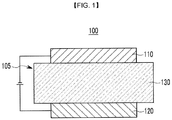
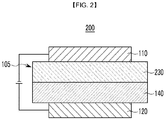
- organic light emitting diode 200 organic light emitting diode 105: organic layer 110: cathode 120: anode 130: emission layer 230: emission layer 140: hole auxiliary layer
- substituted refers to one substituted with a substituent selected from deuterium, a halogen, a hydroxy group, an amino group, a substituted or unsubstituted C1 to C30 amine group, a nitro group, a substituted or unsubstituted C1 to C40 silyl group, a C1 to C30 alkyl group, a C1 to C10 alkylsilyl group, a C3 to C30 cycloalkyl group, a C6 to C30 aryl group, a C1 to C20 alkoxy group, a fluoro group, a C1 to C10 trifluoroalkyl group such as a trifluoromethyl group, or a cyano group, instead of at least one hydrogen of a substituent or a compound.
- a substituent selected from deuterium, a halogen, a hydroxy group, an amino group, a substituted or unsubstituted C1 to C30 amine group,
- hetero refers to one including 1 to 3 hetero atoms selected from N, O, S, P, and Si, and remaining carbons in one functional group.
- alkyl group refers to an aliphatic hydrocarbon group.
- the alkyl group may be "a saturated alkyl group” without any double bond or triple bond.
- the alkyl group may be a C1 to C20 alkyl group. More specifically, the alkyl group may be a C1 to C10 alkyl group or a C1 to C5 alkyl group.
- a C1 to C4 alkyl group may have 1 to 4 carbon atoms in an alkyl chain which may be selected from methyl, ethyl, propyl, iso-propyl, n-butyl, iso-butyl, sec-butyl, and t-butyl.
- alkyl group may be a methyl group, an ethyl group, a propyl group, an isopropyl group, a butyl group, an isobutyl group, a t-butyl group, a pentyl group, a hexyl group, a cyclopropyl group, a cyclobutyl group, a cyclopentyl group, a cyclohexyl group, and the like.
- aryl group refers to a substituent including all element of the cycle having p-orbitals which form conjugation, and may be monocyclic, polycyclic or fused ring polycyclic (i.e., rings sharing adjacent pairs of carbon atoms) functional group.
- heterocyclic group refers to a cyclic compound such as an aryl group, a cycloalkyl group, a fused ring thereof, or a combination thereof including at least one heteroatoms selected from N, O, S, P, and Si, and remaining carbons.
- the heterocyclic group is a fused ring, the entire ring or each ring of the heterocyclic group may include one or more heteroatoms. Accordingly, the heterocyclic group is a general term including a heteroaryl group.
- the substituted or unsubstituted C6 to C30 aryl group and/or the substituted or unsubstituted C2 to C30 heterocyclic group may be a substituted or unsubstituted phenyl group, a substituted or unsubstituted naphthyl group, a substituted or unsubstituted anthracenyl group, a substituted or unsubstituted phenanthrylene group, a substituted or unsubstituted naphthacenyl group, a substituted or unsubstituted pyrenyl group, a substituted or unsubstituted biphenyl group, a substituted or unsubstituted p-terphenyl group, a substituted or unsubstituted m-terphenyl group, a substituted or unsubstituted chrysenyl group, a substituted or unsubstituted triphenylenyl group,
- the single bond may refer to direct linkage without carbon a hetero atom except carbon, and specifically when L is a single bond, a substituent linked to L directly links to core directly. That is to say, in the present specification, a single bond excludes methylene including carbon, and the like.
- hole characteristics refer to characteristics capable of donating an electron when an electric field is applied and that a hole formed in the anode is easily injected into the emission layer and transported in the emission layer due to conductive characteristics according to highest occupied molecular orbital (HOMO) level.
- HOMO highest occupied molecular orbital
- electron characteristics refer to characteristics capable of accepting an electron when an electric field is applied and that an electron formed in the cathode is easily injected into the emission layer and transported in the emission layer due to conductive characteristics according to lowest unoccupied molecular orbital (LUMO) level.
- LUMO lowest unoccupied molecular orbital
- L 1 to L 3 are independently a single bond, a substituted or unsubstituted C1 to C30 alkylene group, a substituted or unsubstituted C3 to C30 cycloalkylene group, a substituted or unsubstituted C6 to C30 arylene group, a substituted or unsubstituted C2 to C30 heteroarylene group, a substituted or unsubstituted C6 to C30 aryleneamine group, a substituted or unsubstituted C1 to C30 alkoxylene group, a substituted or unsubstituted C1 to C30 aryloxylene group, a substituted or unsubstituted C2 to C30 alkenylene group, a substituted or unsubstituted C2 to C30 alkynylene group, or a combination thereof, R 1 to R 7 are independently hydrogen, deuterium, a substituted or unsubstituted C1 to C30 alkyl group,
- the compound according to one embodiment of the present invention has at least either one of the R 2 and R 3 represented by Chemical Formula 2 or 3 and thus, may increase hole transporting properties of the molecule and thus, show excellent efficiency when applied to a hole transport layer and a hole transporting light emitting host for an organic optoelectric device.
- the compound may improve hole transporting properties and increase a glass transition temperature compared with a compound having an aryl group for the R 2 and the R 3 and thus, improve thermal stability and show long life-span and high efficiency characteristics when applied as a thin film for an organic optoelectric device, and has heat-resistant stability against a thermal decomposition compared with a compound having a fluorenyl group for at least either one of the R 2 and the R 3 and thus, may secure improved processibility and device stability when formed into a thin film in a thermal evaporation method.
- the Chemical Formula 1 may be specifically represented by one of Chemical Formula 4 to Chemical Formula 12.
- X, X 1 and X 2 are each independently O or S
- R 1 , R 2 , R 4 to R 7 , R a to R g and R a ' to R g ' are each independently hydrogen, deuterium, a substituted or unsubstituted C1 to C30 alkyl group, a substituted or unsubstituted C3 to C30 cycloalkyl group, a substituted or unsubstituted C2 to C30 heterocyclic group, a substituted or unsubstituted C6 to C30 aryl group, a substituted or unsubstituted C6 to C30 arylamine group, a substituted or unsubstituted C1 to C30 alkoxy group, a substituted or unsubstituted C2 to C30 alkoxycarbonyl group, a substituted or unsubstituted C2 to C30 alkoxycarbonylamino group, a substituted or unsubsti
- the R 2 and R 3 may be each independently selected from a substituted or unsubstituted C2 to C30 heterocyclic group or a substituted or unsubstituted C6 to C30 aryl group, and may be selected from a substituted or unsubstituted phenyl group, a substituted or unsubstituted naphthalene group, a substituted or unsubstituted biphenyl group, a substituted or unsubstituted terphenyl group, a substituted or unsubstituted triphenylenyl group, a substituted or unsubstituted anthracenyl group, a substituted or unsubstituted pyrenyl group, a substituted or unsubstituted dibenzofuranyl group, a substituted or unsubstituted dibenzothiophenyl group, a substituted or unsubstituted thiophenyl group, a substituted or unsubsti
- R 2 and R 3 may be each independently selected from the substituted or unsubstituted groups listed in Group I, and at least one of R 2 and R 3 may be selected from the substituted or unsubstituted groups in Group I -1.
- X and W are each independently O or S
- R and R' are independently hydrogen, deuterium, a substituted or unsubstituted C1 to C30 alkyl group, a substituted or unsubstituted C6 to C30 aryl group, a substituted or unsubstituted C3 to C30 heterocyclic group, or a combination thereof
- * is a linking point.
- the R 1 may be a substituted or unsubstituted C1 to C30 alkyl group, a substituted or unsubstituted C3 to C30 cycloalkyl group, a substituted or unsubstituted C2 to C30 heterocyclic group, a substituted or unsubstituted C6 to C30 aryl group, or a combination thereof.
- the R 1 may be a methyl group, an ethyl group, a substituted or unsubstituted cyclopentyl group, a substituted or unsubstituted cyclohexyl group, a substituted or unsubstituted phenyl group, a substituted or unsubstituted biphenyl group, a substituted or unsubstituted naphthyl group, a substituted or unsubstituted pyridyl group, a substituted or unsubstituted furanyl group, a substituted or unsubstituted thiophenyl group, a substituted or unsubstituted quinolinyl group, or a combination thereof, and may be, for example selected from a methyl group, an ethyl group, or groups listed in Group II.
- R 4 to R 7 , R a to R g and R a ' to R g ' of Chemical Formula 1 and Chemical Formulae 4 to 12 may be each independently hydrogen, deuterium, a substituted or unsubstituted C1 to C10 alkyl group, a substituted or unsubstituted C3 to C12 cycloalkyl group, a substituted or unsubstituted C2 to C12 heterocyclic group, or a substituted or unsubstituted C6 to C12 aryl group.
- R 4 to R 7 , R a to R g and R a ' to R g ' of Chemical Formula 1 and Chemical Formulae 4 to 12 may be each independently hydrogen, deuterium, a substituted or unsubstituted C1 to C10 alkyl group, or a substituted or unsubstituted C6 to C12 aryl group.
- L 1 to L 3 of Chemical Formula 1 and Chemical Formulae 4 to 12 may be independently a single bond, a substituted or unsubstituted C6 to C30 arylene group, or a substituted or unsubstituted C2 to C30 heteroarylene group.
- the L 1 to L 3 may be independently a single bond, a substituted or unsubstituted phenylene group, a substituted or unsubstituted biphenylene group, a substituted or unsubstituted naphthylene group, a substituted or unsubstituted pyridylene group, a substituted or unsubstituted pyrimidylene group, a substituted or unsubstituted benzofuranylene group, or a combination thereof, and may be, for example selected from a single bond, or the substituted or unsubstituted groups in Group III.
- the compound represented by Chemical Formula 1 may be, for example compounds listed below, but is not limited thereto.
- the compound may be used for an organic optoelectric device.
- an organic optoelectric device in another embodiment, includes an anode and a cathode facing each other and at least one organic layer between the anode and the cathode, wherein the organic layer includes an emission layer and at least one auxiliary layer selected from a hole injection layer, a hole transport layer, an electron blocking layer, electron transport layer, electron injection layer, and hole blocking layer, and the auxiliary layer includes the compound.
- the auxiliary layer may be a hole transport layer.
- the organic optoelectric device may be any device to convert electrical energy into photoenergy and vice versa without particular limitation, and may be, for example an organic photoelectric device, an organic light emitting diode, an organic solar cell, and an organic photo-conductor drum.
- FIGS. 1 and 2 are cross-sectional views of each organic light emitting diode according to one embodiment.
- an organic optoelectric device 100 includes an anode 120 and a cathode 110 facing each other and an organic layer 105 interposed between the anode 120 and cathode 110.
- the anode 120 may be made of a conductor having a large work function to help hole injection, and may be for example metal, metal oxide and/or a conductive polymer.
- the anode 120 may be, for example a metal such as nickel, platinum, vanadium, chromium, copper, zinc, gold, and the like or an alloy thereof; metal oxide such as zinc oxide, indium oxide, indium tin oxide (ITO), indium zinc oxide (IZO), and the like; a combination of a metal and an oxide such as ZnO and Al or SnO 2 and Sb; a conductive polymer such as poly(3-methylthiophene), poly(3,4-(ethylene-1,2-dioxy)thiophene) (PEDT), polypyrrole, and polyaniline, but is not limited thereto.
- the cathode 110 may be made of a conductor having a small work function to help electron injection, and may be for example metal, metal oxide and/or a conductive polymer.
- the cathode 110 may be for example a metal or an alloy thereof such as magnesium, calcium, sodium, potassium, titanium, indium, yttrium, lithium, gadolinium, aluminum, silver, tin, lead, cesium, barium, and the like; a multi-layer structure material such as LiF/Al, LiO 2 /Al, LiF/Ca, LiF/Al and BaF 2 /Ca, but is not limited thereto.
- the organic layer 105 includes an emission layer 130.
- the emission layer 130 may include, for example the organic compound at alone, or a mixture of at least two kinds. In the case of a mixture of at least two kinds, they may be, for example a host and a dopant.
- the host may be, for example a phosphorescent host or fluorescent host.
- the dopant may include an inorganic, organic, or organic/inorganic compound, and may be selected from known dopants.
- an organic light emitting diode 200 further includes a hole auxiliary layer 140 in addition to an emission layer 230.
- the hole auxiliary layer 140 may improve hole injection and/or hole mobility between the anode 120 and the emission layer 230 and may block electrons.
- the hole auxiliary layer 140 may include, for example at least one of a hole transport layer, a hole injection layer and/or an electron blocking layer. The compound may be included in the hole auxiliary layer 140.
- the organic layer 105 may further include an electron injection layer, an electron transport layer, an auxiliary electron transport layer, a hole transport layer, an auxiliary hole transport layer, a hole injection layer or a combination thereof.
- the compound may be included in the auxiliary hole transport layer.
- the emission layer 230 and the auxiliary hole transport layer may be positioned to be adjacent to each other.
- the compound of the present invention may be included in the organic layers.
- the organic light emitting diodes 100 and 200 may be manufactured by forming an anode or a cathode on a substrate, forming an organic layer in accordance with a dry coating method such as evaporation, sputtering, plasma plating, and ion plating or a wet coating method such as spin coating, dipping, and flow coating; and forming a cathode or an anode thereon.
- the compound may be included as a fluorescent material.
- the fluorescent material may have a maximum light emitting wavelength of less than or equal to 550 nm, and specifically 420 nm to 550 nm.
- the compound represented by Chemical Formula 1 may have a HOMO level of greater than or equal to 5.4eV and less than or equal to 5.8eV.
- the compound represented by Chemical Formula 1 may have a triplet excitation energy (T1) of greater than or equal to 2.4eV and less than or equal to 2.7eV.
- the organic light emitting diode may be applied to an organic light emitting diode (OLED) display.
- OLED organic light emitting diode
- a compound was synthesized through the following steps as specific examples of a compound according to the present invention.
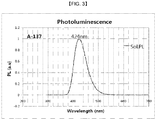
- Examples 1 to 4 were measured by dissolving each compound in THF and measuring its PL (photoluminescence) wavelength with HITACHI F-4500.
- the PL wavelength measurement result of the compound A-137 of Example 2 was provided in FIG. 3 .
- the synthesized compounds of Examples 1 to 4 showed a HOMO energy level of greater than or equal to 0.1 eV compared with the compound of Comparative Example and thus, may have an influence on device efficiency when used to form a hole transport layer for an organic optoelectric device.
- a glass substrate coated with ITO (indium tin oxide) to be 1500 A thick was ultrasonic wave-washed with a distilled water. Subsequently, the glass substrate was ultrasonic wave-washed with a solvent such as isopropyl alcohol, acetone, methanol, and the like, moved to a plasma cleaner, cleaned by using oxygen plasma for 10 minutes, and then, moved to a vacuum depositor.
- a solvent such as isopropyl alcohol, acetone, methanol, and the like
- ITO transparent electrode was used as an anode, and 4,4'-bis[N-[4- ⁇ N,N-bis(3-methylphenyl)amino ⁇ -phenyl]-N-phenylamino]biphenyl [DNTPD] was vacuum-deposited on the ITO substrate to form 600 ⁇ -thick hole injection layer. Then, HT-1 was vacuum-deposited thereon to form a 250 ⁇ -thick auxiliary hole transport layer. The compound prepared in Example 1 was vacuum-deposited to form a 50 ⁇ -thick auxiliary hole transport layer on the hole transport layer.
- a 250 ⁇ -thick emission layer was formed by vacuum-depositing 9,10-di-(2-naphthyl)anthracene (ADN) as a host doped with 3 wt% of 2,5,8,11-tetra(tert-butyl)perylene (TBPe) as a dopant.
- ADN 9,10-di-(2-naphthyl)anthracene
- TBPe 2,5,8,11-tetra(tert-butyl)perylene
- LiF 10 ⁇ and Al 1000 ⁇ were sequentially vacuum-deposited on the electron transport layer to form a cathode, manufacturing an organic light emitting diode.
- An organic light emitting diode was manufactured according to the same method as Example 5 except for using Example 2 instead of Example 1.
- An organic light emitting diode was manufactured according to the same method as Example 5 except for using Example 3 instead of Example 1.
- An organic light emitting diode was manufactured according to the same method as Example 5 except for using Example 4 instead of Example 1.
- Example 5 An organic light emitting diode was manufactured according to the same method as Example 5 except for using Example ad-3 instead of Example 1.
- Example 5 An organic light emitting diode was manufactured according to the same method as Example 5 except for using Example ad-6 instead of Example 1.
- An organic light emitting diode was manufactured according to the same method as Example 5 except for using HT-1 instead of the compound A-5 of Example 1.
- An organic light emitting diode was manufactured according to the same method as Example 5 except for using HT-2 instead of the compound A-5 of Example 1.
- the structures of the DNTPD, HT-1, HT-2, Alq 3 , ADN, and TBPe used for manufacturing the organic light emitting diode were as follows.
- the obtained organic light emitting diodes were measured for current value flowing in the unit device while increasing the voltage from 0 V to 10 V using a current-voltage meter (Keithley 2400), the measured current value was divided by area to provide the results.
- Luminance was measured by using a luminance meter (Minolta Cs-1000A), while the voltage of the organic light emitting diodes was increased from 0 V to 10 V.
- Life-spans of the organic light emitting diodes of Examples 5 to 8 and Comparative Examples 1 and 2 were measured as a time when their luminance decreased down to 1/2 relative to the initial luminance after emitting light with 1,000 nit as the initial luminance (cd/m 2 ) and measuring their luminance decrease depending on time with a Polanonix life-span measurement system.
- Examples 5 to 8 and Examples ad-9 and ad-10 showed largely improved luminous efficiency and the same or further improved life-span compared with Comparative Examples 1 and 2. Particularly, Examples 5 to 8 and Examples ad-9 and ad-10 showed at least greater than or equal to 13 % improved efficiency compared with Comparative Example 1 using no auxiliary HTL and at least greater than or equal to 20 % increased half-life life-span compared with Comparative Example 2 using HT-2 as the auxiliary HTL.
- Example ad-11 Manufacture of Green Organic Light Emitting Diode
- a glass substrate coated with ITO (indium tin oxide) to be 1500 ⁇ thick was ultrasonic wave-washed with a distilled water. Subsequently, the glass substrate was ultrasonic wave-washed with a solvent such as isopropyl alcohol, acetone, methanol, and the like, moved to a plasma cleaner, cleaned by using oxygen plasma for 10 minutes, and then, moved to a vacuum depositor.
- a solvent such as isopropyl alcohol, acetone, methanol, and the like
- This obtained ITO transparent electrode was used as an anode, and HT-1 was vacuum-deposited on the ITO substrate to form 700 ⁇ -thick hole injection and transport layer. Then, the compound of Example 1 was vacuum-deposited thereon to form a 100 ⁇ -thick auxiliary hole transport layer.
- a 300 ⁇ -thick emission layer was formed by vacuum-depositing (4,4'-N,N'-dicarbazole)biphenyl [CBP] as a host doped with 5 wt% of tris(2-phenylpyridine)iridium (III) [Ir(ppy) 3 ].
- biphenoxy-bis(8-hydroxyquinoline)aluminum [Balq] was vacuum-deposited on the emission layer to form a 50 ⁇ -thick hole blocking layer.
- hole blocking layer tris(8-hydroxyquinoline)aluminum [Alq 3 ] was vacuum-deposited to form a 250 ⁇ -thick electron transport layer and on the electron transport layer, LiF 10 ⁇ and Al 1000 ⁇ was vacuum-deposited to form a cathode, manufacturing an organic light emitting diode.
- An organic light emitting diode was manufactured according to the same method as Example ad-11 except for using Example 2 instead of Example 1.
- Example 3 An organic light emitting diode was manufactured according to the same method as Example ad-11 except for using Example 3 instead of Example 1.
- Example ad-11 An organic light emitting diode was manufactured according to the same method as Example ad-11 except for using Example ad-1 instead of Example 1.
- Example ad-11 An organic light emitting diode was manufactured according to the same method as Example ad-11 except for using Example ad-2 instead of Example 1.
- Example ad-11 An organic light emitting diode was manufactured according to the same method as Example ad-11 except for using Example ad-3 instead of Example 1.
- Example ad-11 An organic light emitting diode was manufactured according to the same method as Example ad-11 except for using Example ad-4 instead of Example 1.
- An organic light emitting diode was manufactured according to the same method as Example ad-11 except for using N,N'-di(1-naphthyl)-N,N'-diphenylbenzidine [NPB] instead of HT-1, and using N,N'-di(1-naphthyl)-N,N'-diphenylbenzidine[NPB] instead of Example 1.
- An organic light emitting diode was manufactured according to the same method as Example ad-11 except for using N,N'-di(1-naphthyl)-N,N'-diphenylbenzidine [NPB] instead of HT-1, and using tris (4,4',4"- (9-carbazolyl))-triphenylamine [TCTA] instead of Example 1.
- An organic light emitting diode was manufactured according to the same method as Example ad-11 except for using HT-1 instead of Example 1.
- the structures of the HT-1 and Alq3 used for manufacturing the organic light emitting diode were the same as above, and the structures of NPB, TCTA, CBP, Balq, Ir(ppy)3 were as follows.
- Life-spans of the organic light emitting diodes of Examples ad-11 to ad-17 and Comparative Examples 3 to 5 were measured as a time when their luminance decreased down to 1/2 relative to the initial luminance after emitting light with 3,000 nit as the initial luminance (cd/m 2 ) and measuring their luminance decrease depending on time with a Polanonix life-span measurement system.
- Examples ad-11 to ad-17 showed improved characteristics in terms of luminous efficiency, driving voltage and life-span compared with Comparative Examples 3 to 5. Particularly, Examples ad-11 to ad-17 showed at least greater than or equal to 70 % increased efficiency compared with Comparative Example 3 using no auxiliary HTL and at least greater than or equal to 20 % increased efficiency compared with Comparative Example 5. Examples ad-11 to ad-17 showed high efficiency and at least greater than or equal to 30 % increased half-life life-span compared with Comparative Example 4 using TCTA as the auxiliary HTL.
- Example ad-18 Manufacture of Red Organic Light Emitting Diode
- a glass substrate coated with ITO (indium tin oxide) to be 1500 ⁇ thick was ultrasonic wave-washed with a distilled water. Subsequently, the glass substrate was ultrasonic wave-washed with a solvent such as isopropyl alcohol, acetone, methanol, and the like, moved to a plasma cleaner, cleaned by using oxygen plasma for 10 minutes, and then, moved to a vacuum depositor.
- a solvent such as isopropyl alcohol, acetone, methanol, and the like
- ITO transparent electrode was used as an anode, and 4,4'-bis[N-[4- ⁇ N,N-bis(3-methylphenyl)amino ⁇ -phenyl]-N-phenylamino]biphenyl [DNTPD] was vacuum-deposited on the ITO substrate to form 600 ⁇ -thick hole injection layer. Then, HT-1 was vacuum-deposited thereon to form a 200 ⁇ -thick hole transport layer. Then, the compound of Example 1 was vacuum-deposited on the hole transport layer to form a 100 ⁇ -thick auxiliary hole transport layer.
- a 300 ⁇ -thick emission layer was formed by vacuum-depositing (4,4'-N,N'-dicarbazole)biphenyl[CBP] as a host doped with 5 wt% of bis(2-phenylquinoline) (acetylacetonate)iridium(III) [Ir (pq) 2 acac].
- biphenoxy-bis(8-hydroxyquinoline)aluminum [Balq] was vacuum-deposited on the emission layer to form a 50 ⁇ -thick hole blocking layer.
- tris (8-hydroxyquinoline)aluminum [Alq 3 ] was vacuum-deposited to form a 250 ⁇ -thick electron transport layer and on the electron transport layer, LiF 10 ⁇ and Al 1000 ⁇ was vacuum-deposited to form a cathode, manufacturing an organic light emitting diode.
- Example 2 An organic light emitting diode was manufactured according to the same method as Example ad-18 except for using Example 2 instead of Example 1.
- Example 4 An organic light emitting diode was manufactured according to the same method as Example ad-18 except for using Example 4 instead of Example 1.
- Example ad-18 An organic light emitting diode was manufactured according to the same method as Example ad-18 except for using Example ad-1 instead of Example 1.
- Example ad-18 An organic light emitting diode was manufactured according to the same method as Example ad-18 except for using Example ad-3 instead of Example 1.
- Example ad-18 An organic light emitting diode was manufactured according to the same method as Example ad-18 except for using Example ad-5 instead of Example 1.
- An organic light emitting diode was manufactured according to the same method as Example ad-18 except for using N,N'-di(1-naphthyl)-N,N'-diphenylbenzidine [NPB] instead of HT-1, and using N,N'-di(1-naphthyl)-N,N'-diphenylbenzidine[NPB] instead of Example 1.
- An organic light emitting diode was manufactured according to the same method as Example ad-18 except for using N,N'-di(1-naphthyl)-N,N'-diphenylbenzidine [NPB] instead of HT-1, and using tris (4,4',4"- (9-carbazolyl))-triphenylamine [TCTA] instead of Example 1.
- An organic light emitting diode was manufactured according to the same method as Example ad-18 except for using HT-1 instead of Example 1.
- the structures of the DNTPD, NPB, HT-1, TCTA, CBP, Balq and Alq3 used for manufacturing the organic light emitting diode were the same as above, and the structure of Ir(pq) 2 acac was as follows.
- T80 life-spans of the organic light emitting diodes of Examples ad-18 to ad-23 and Comparative Example 6 to 8 were measured as a time when their luminance decreased down to 80% relative to the initial luminance after emitting light with 1,000 nit as the initial luminance (cd/m 2 ) and measuring their luminance decrease depending on time with a Polanonix life-span measurement system.
- Examples ad-18 to ad-23 showed improved characteristics in terms of luminous efficiency, driving voltage and life-span compared with Comparative Examples 6 to 8. Particularly, Examples ad-18 to ad-23 showed at least greater than or equal to 19 % increased efficiency compared with Comparative Example 6 using no auxiliary HTL and at least greater than or equal to 8 % increased efficiency compared with Comparative Example 8. Examples ad-18 to ad-23 showed higher efficiency than Comparative Example 7 using TCTA as the auxiliary HTL and at least greater than or equal to 28 % increased T80 life-span.
Landscapes
- Chemical & Material Sciences (AREA)
- Organic Chemistry (AREA)
- Engineering & Computer Science (AREA)
- Materials Engineering (AREA)
- Physics & Mathematics (AREA)
- Spectroscopy & Molecular Physics (AREA)
- Electroluminescent Light Sources (AREA)
- Furan Compounds (AREA)
- Plural Heterocyclic Compounds (AREA)
- Indole Compounds (AREA)
Applications Claiming Priority (3)
| Application Number | Priority Date | Filing Date | Title |
|---|---|---|---|
| KR20140057324 | 2014-05-13 | ||
| KR1020150051095A KR101931250B1 (ko) | 2014-05-13 | 2015-04-10 | 화합물, 이를 포함하는 유기 광전자 소자 및 표시장치 |
| PCT/KR2015/003678 WO2015174640A1 (ko) | 2014-05-13 | 2015-04-13 | 화합물, 이를 포함하는 유기 광전자 소자 및 표시장치 |
Publications (3)
| Publication Number | Publication Date |
|---|---|
| EP3144301A1 true EP3144301A1 (de) | 2017-03-22 |
| EP3144301A4 EP3144301A4 (de) | 2017-10-25 |
| EP3144301B1 EP3144301B1 (de) | 2019-09-18 |
Family
ID=54844703
Family Applications (1)
| Application Number | Title | Priority Date | Filing Date |
|---|---|---|---|
| EP15791911.9A Active EP3144301B1 (de) | 2014-05-13 | 2015-04-13 | Verbindung, organisches optoelektronisches element damit und anzeigevorrichtung davon |
Country Status (6)
| Country | Link |
|---|---|
| US (1) | US11563179B2 (de) |
| EP (1) | EP3144301B1 (de) |
| JP (1) | JP6575969B2 (de) |
| KR (1) | KR101931250B1 (de) |
| CN (1) | CN106164061B (de) |
| TW (1) | TWI572595B (de) |
Cited By (1)
| Publication number | Priority date | Publication date | Assignee | Title |
|---|---|---|---|---|
| WO2026068426A1 (en) * | 2024-09-26 | 2026-04-02 | Merck Patent Gmbh | Materials for organic light emitting diodes |
Families Citing this family (27)
| Publication number | Priority date | Publication date | Assignee | Title |
|---|---|---|---|---|
| US10756275B2 (en) | 2014-07-11 | 2020-08-25 | Idemitsu Kosan Co., Ltd. | Compound, material for organic electroluminescence devices, organic electroluminescence device, and electronic equipment |
| JP6576631B2 (ja) * | 2014-12-15 | 2019-09-18 | 三星ディスプレイ株式會社Samsung Display Co.,Ltd. | アミン化合物、および有機電界発光素子 |
| JP6692126B2 (ja) * | 2015-06-03 | 2020-05-13 | 三星ディスプレイ株式會社Samsung Display Co.,Ltd. | 有機エレクトロルミネッセンス素子用材料及びそれを用いた有機エレクトロルミネッセンス素子 |
| KR102595922B1 (ko) * | 2015-12-22 | 2023-10-31 | 삼성디스플레이 주식회사 | 카바졸계 화합물 및 이를 포함한 유기 발광 소자 |
| KR102358032B1 (ko) * | 2017-05-23 | 2022-02-03 | 솔루스첨단소재 주식회사 | 유기 화합물 및 이를 포함하는 유기 전계 발광 소자 |
| US12089428B2 (en) * | 2017-07-03 | 2024-09-10 | Samsung Electronics Co., Ltd. | Organic light-emitting device |
| CN108033886A (zh) * | 2017-12-01 | 2018-05-15 | 吉林奥来德光电材料股份有限公司 | 一种芴化合物及其制备方法和有机电致发光器件 |
| KR102682125B1 (ko) | 2018-01-05 | 2024-07-08 | 삼성전자주식회사 | 유기금속 화합물 및 이를 포함한 유기 발광 소자 |
| JP7465062B2 (ja) | 2018-01-26 | 2024-04-10 | 三星ディスプレイ株式會社 | 有機電界発光素子及び有機電界発光素子用モノアミン化合物 |
| US11871656B2 (en) * | 2018-01-26 | 2024-01-09 | Samsung Display Co., Ltd. | Organic electroluminescence device and monoamine compound for organic electroluminescence device |
| KR101857632B1 (ko) | 2018-02-02 | 2018-05-14 | 덕산네오룩스 주식회사 | 유기전기소자용 화합물, 이를 이용한 유기전기소자 및 그 전자 장치 |
| KR102262471B1 (ko) * | 2018-04-02 | 2021-06-09 | 삼성에스디아이 주식회사 | 조성물, 유기 광전자 소자 및 표시 장치 |
| KR102316066B1 (ko) | 2018-07-27 | 2021-10-21 | 주식회사 엘지화학 | 잉크 조성물, 이를 이용한 유기 발광 소자 및 이의 제조방법 |
| CN109776334B (zh) * | 2018-12-29 | 2021-12-10 | 吉林奥来德光电材料股份有限公司 | 有机电致发光化合物及其制法和器件 |
| CN109748802A (zh) * | 2018-12-29 | 2019-05-14 | 吉林奥来德光电材料股份有限公司 | 一种有机电致发光化合物及制法和有机电致发光器件 |
| KR102867205B1 (ko) | 2019-03-20 | 2025-10-01 | 삼성디스플레이 주식회사 | 아민계 화합물 및 이를 포함한 유기 발광 소자 |
| CN110483370B (zh) * | 2019-08-23 | 2020-04-28 | 陕西莱特光电材料股份有限公司 | 含氮化合物、光电转化器件及电子装置 |
| KR20210031332A (ko) | 2019-09-11 | 2021-03-19 | 삼성에스디아이 주식회사 | 유기 광전자 소자용 화합물, 유기 광전자 소자 및 표시 장치 |
| KR102495274B1 (ko) * | 2019-10-01 | 2023-02-01 | 삼성에스디아이 주식회사 | 유기 광전자 소자 및 표시 장치 |
| CN111440156A (zh) * | 2020-05-07 | 2020-07-24 | 吉林奥来德光电材料股份有限公司 | 一种发光辅助材料、其制备方法及有机电致发光器件 |
| CN111793002A (zh) * | 2020-07-23 | 2020-10-20 | 吉林奥来德光电材料股份有限公司 | 一种有机发光化合物及其制备方法和有机电致发光器件 |
| KR20220086754A (ko) | 2020-12-16 | 2022-06-24 | 삼성디스플레이 주식회사 | 유기 전계 발광 소자 및 유기 전계 발광 소자용 아민 화합물 |
| CN116583514A (zh) * | 2021-02-24 | 2023-08-11 | 株式会社Lg化学 | 化合物及包含其的有机发光器件 |
| KR102922662B1 (ko) * | 2021-08-20 | 2026-02-04 | 주식회사 엘지화학 | 화합물 및 이를 포함하는 유기 발광 소자 |
| KR20240002033A (ko) | 2022-06-28 | 2024-01-04 | 삼성에스디아이 주식회사 | 유기 광전자 소자 및 표시 장치 |
| KR102739010B1 (ko) * | 2022-07-25 | 2024-12-06 | 덕산네오룩스 주식회사 | 유기전기 소자용 화합물, 이를 이용한 유기전기소자 및 그 전자 장치 |
| CN117384146A (zh) * | 2023-10-11 | 2024-01-12 | 长春海谱润斯科技股份有限公司 | 一种三芳胺类的化合物及其有机电致发光器件 |
Family Cites Families (40)
| Publication number | Priority date | Publication date | Assignee | Title |
|---|---|---|---|---|
| JP4581355B2 (ja) * | 2003-09-09 | 2010-11-17 | 東洋インキ製造株式会社 | 有機エレクトロルミネッセンス素子 |
| JP3983215B2 (ja) | 2003-10-17 | 2007-09-26 | 三井化学株式会社 | 9,9−ジフェニルフルオレン化合物、および該9,9−ジフェニルフルオレン化合物を含有する有機電界発光素子 |
| CN1769269A (zh) * | 2005-09-29 | 2006-05-10 | 复旦大学 | 封端的三芳基胺和咔唑类材料、处理方法及其应用 |
| JP4765589B2 (ja) | 2005-12-02 | 2011-09-07 | 東洋インキScホールディングス株式会社 | カルバゾリル基を有するフルオレン化合物およびその用途 |
| WO2008126393A1 (ja) | 2007-04-04 | 2008-10-23 | Mitsui Chemicals, Inc. | スルホ基含有高分子化合物とその中間体、および該化合物を含有する有機電界発光素子 |
| US8399108B2 (en) | 2007-05-28 | 2013-03-19 | Cheil Industries, Inc. | Material for organic electro-optical device having fluorene derivative compound and organic electro-optical device including the same |
| KR101002733B1 (ko) * | 2007-09-14 | 2010-12-21 | 제일모직주식회사 | 유기 화합물, 및 이를 포함하는 유기광전소자 |
| KR20090028346A (ko) | 2007-09-14 | 2009-03-18 | 제일모직주식회사 | 유기 화합물, 및 이를 포함하는 유기광전소자 |
| EP2202818B1 (de) * | 2007-09-28 | 2014-11-12 | Idemitsu Kosan Co., Ltd. | Organische el-vorrichtung |
| KR101597994B1 (ko) * | 2007-12-03 | 2016-02-26 | 가부시키가이샤 한도오따이 에네루기 켄큐쇼 | 카바졸 유도체, 및 카바졸 유도체를 사용하는 발광 소자, 발광 장치 및 전자기기 |
| JP2009170819A (ja) | 2008-01-18 | 2009-07-30 | Mitsui Chemicals Inc | フルオレン誘導体、およびそれを含む有機電界発光素子 |
| US10059725B2 (en) | 2008-11-07 | 2018-08-28 | Hodogaya Chemical Co., Ltd. | Compound having triphenylsilyl group and triarylamine structure, and organic electroluminescent device |
| CN102421868B (zh) | 2009-05-15 | 2015-05-20 | 第一毛织株式会社 | 有机光电装置用化合物和包括该化合物的有机光电装置 |
| CN103044269B (zh) | 2009-05-29 | 2014-05-07 | 株式会社半导体能源研究所 | 芴衍生物、发光元件、发光器件、电子器件和照明器件 |
| TWI467824B (zh) | 2009-06-11 | 2015-01-01 | Ind Tech Res Inst | 白光有機發光元件 |
| US10748447B2 (en) * | 2013-05-24 | 2020-08-18 | Lincoln Global, Inc. | Systems and methods providing a computerized eyewear device to aid in welding |
| KR101211091B1 (ko) * | 2009-09-16 | 2012-12-12 | 주식회사 진웅산업 | 유기 발광 화합물 및 이를 이용한 유기 전계발광 소자 |
| US8642190B2 (en) | 2009-10-22 | 2014-02-04 | Semiconductor Energy Laboratory Co., Ltd. | Fluorene derivative, light-emitting element, light-emitting device, electronic device, and lighting device |
| US10570113B2 (en) | 2010-04-09 | 2020-02-25 | Semiconductor Energy Laboratory Co., Ltd. | Aromatic amine derivative, light-emitting element, light-emitting device, electronic device, and lighting device |
| EP2421064B1 (de) * | 2010-08-18 | 2018-07-04 | Cheil Industries Inc. | Verbindung für organische optoelektronische Vorrichtungen, organische Leuchtdiode damit und Anzeige mit der Leuchtdiode |
| KR101453768B1 (ko) | 2010-08-18 | 2014-10-21 | 제일모직주식회사 | 유기광전소자용 화합물 및 이를 포함하는 유기광전소자 |
| TWI557113B (zh) | 2010-08-27 | 2016-11-11 | 半導體能源研究所股份有限公司 | 茀衍生物,有機化合物,以及利用此化合物的發光元件、發光裝置與電子裝置 |
| KR101531612B1 (ko) * | 2010-12-02 | 2015-06-25 | 제일모직 주식회사 | 유기광전소자용 화합물 및 이를 포함하는 유기광전소자 |
| KR101486562B1 (ko) * | 2011-04-15 | 2015-01-28 | 제일모직 주식회사 | 유기광전자소자용 화합물, 이를 포함하는 유기발광자소자 및 상기 유기발광소자를 포함하는 표시장치 |
| KR101701246B1 (ko) | 2011-08-05 | 2017-02-03 | 삼성디스플레이 주식회사 | 카바졸계 화합물 및 이를 포함한 유기 발광 소자 |
| US9403795B2 (en) | 2011-08-05 | 2016-08-02 | Samsung Display Co., Ltd. | Carbazole-based compound and organic light-emitting diode comprising the same |
| KR101497136B1 (ko) | 2011-12-30 | 2015-03-02 | 제일모직 주식회사 | 유기광전자소자용 화합물, 이를 포함하는 유기발광소자 및 상기 유기발광소자를 포함하는 표시장치 |
| EP3101088B1 (de) * | 2012-02-14 | 2017-11-29 | Merck Patent GmbH | Materialien für organische elektrolumineszenzvorrichtungen |
| JP6060530B2 (ja) * | 2012-06-12 | 2017-01-18 | ソニー株式会社 | 有機電界発光素子及び表示装置 |
| KR101401633B1 (ko) | 2012-07-27 | 2014-06-02 | (주)피엔에이치테크 | 새로운 유기전계발광소자용 화합물 및 그를 포함하는 유기전계발광소자 |
| KR101401639B1 (ko) * | 2012-07-27 | 2014-06-02 | (주)피엔에이치테크 | 새로운 유기전계발광소자용 화합물 및 그를 포함하는 유기전계발광소자 |
| KR102128702B1 (ko) * | 2012-08-21 | 2020-07-02 | 롬엔드하스전자재료코리아유한회사 | 신규한 유기 전계 발광 화합물 및 이를 포함하는 유기 전계 발광 소자 |
| KR20140039864A (ko) | 2012-09-25 | 2014-04-02 | 제일모직주식회사 | 유기광전자소자용 화합물, 이를 포함하는 유기발광소자 및 상기 유기발광소자를 포함하는 표시장치 |
| EP3378857B1 (de) * | 2012-11-12 | 2021-03-24 | Merck Patent GmbH | Materialien für elektronische vorrichtungen |
| TWI471308B (zh) | 2012-11-13 | 2015-02-01 | Ind Tech Res Inst | 有機化合物及包含其之有機電激發光裝置 |
| KR101684979B1 (ko) | 2012-12-31 | 2016-12-09 | 제일모직 주식회사 | 유기광전자소자 및 이를 포함하는 표시장치 |
| KR102075526B1 (ko) * | 2013-01-04 | 2020-02-11 | 삼성디스플레이 주식회사 | 플루오렌계 화합물 및 이를 포함한 유기 발광 소자 |
| WO2015058826A1 (de) | 2013-10-23 | 2015-04-30 | Merck Patent Gmbh | Materialien für elektronische vorrichtungen |
| KR101531614B1 (ko) | 2014-02-20 | 2015-07-02 | 제일모직주식회사 | 유기광전자소자용 화합물, 이를 포함하는 유기발광자소자 및 상기 유기발광소자를 포함하는 표시장치 |
| JP6576631B2 (ja) * | 2014-12-15 | 2019-09-18 | 三星ディスプレイ株式會社Samsung Display Co.,Ltd. | アミン化合物、および有機電界発光素子 |
-
2015
- 2015-04-10 KR KR1020150051095A patent/KR101931250B1/ko active Active
- 2015-04-13 JP JP2016566263A patent/JP6575969B2/ja active Active
- 2015-04-13 CN CN201580019167.5A patent/CN106164061B/zh active Active
- 2015-04-13 EP EP15791911.9A patent/EP3144301B1/de active Active
- 2015-04-13 US US15/117,753 patent/US11563179B2/en active Active
- 2015-05-12 TW TW104115044A patent/TWI572595B/zh active
Cited By (1)
| Publication number | Priority date | Publication date | Assignee | Title |
|---|---|---|---|---|
| WO2026068426A1 (en) * | 2024-09-26 | 2026-04-02 | Merck Patent Gmbh | Materials for organic light emitting diodes |
Also Published As
| Publication number | Publication date |
|---|---|
| EP3144301A4 (de) | 2017-10-25 |
| JP2017518279A (ja) | 2017-07-06 |
| US20160372666A1 (en) | 2016-12-22 |
| CN106164061A (zh) | 2016-11-23 |
| US11563179B2 (en) | 2023-01-24 |
| TWI572595B (zh) | 2017-03-01 |
| TW201544501A (zh) | 2015-12-01 |
| KR101931250B1 (ko) | 2018-12-20 |
| EP3144301B1 (de) | 2019-09-18 |
| JP6575969B2 (ja) | 2019-09-18 |
| CN106164061B (zh) | 2021-04-13 |
| KR20150130221A (ko) | 2015-11-23 |
Similar Documents
| Publication | Publication Date | Title |
|---|---|---|
| EP3144301B1 (de) | Verbindung, organisches optoelektronisches element damit und anzeigevorrichtung davon | |
| EP2940097B1 (de) | Organische optoelektronische vorrichtung und anzeigevorrichtung damit | |
| KR102720592B1 (ko) | 헤테로고리 화합물 및 해당 헤테로고리 화합물을 포함하는 유기 전계발광소자 | |
| EP2860783B1 (de) | Organische optoelektrische Vorrichtung und Anzeigevorrichtung | |
| EP3015527B1 (de) | Organische verbindung für optoelektrische vorrichtung und zusammensetzung für optoelektrische vorrichtung und organische optoelektrische vorrichtung und anzeigevorrichtung | |
| KR102261235B1 (ko) | 방향족 복소 고리 유도체, 유기 일렉트로루미네선스 소자용 재료 및 유기 일렉트로루미네선스 소자 | |
| EP2799515B1 (de) | Verbindung für eine organische optoelektronische vorrichtung, organische lichtemittierende diode damit und anzeigevorrichtung mit der organischen lichtemittierenden diode | |
| EP3006433B1 (de) | Verbindung, organisches lichtemittierendes element damit und anzeigevorrichtung mit dem organischen lichtemittierenden element | |
| EP3291323B1 (de) | Organisches elektrolumineszentes element | |
| EP2796529B1 (de) | Verbindung für eine organische optoelektronische vorrichtung, organisches lichtemittierendes element damit und anzeigevorrichtung mit dem organischen lichtemittierenden element | |
| EP2952511A1 (de) | Organische verbindung, organisches optoelektronisches bauelement und anzeigevorrichtung | |
| EP2889356A2 (de) | Organisches fotoelektrisches element und anzeigevorrichtung damit | |
| EP2876104B1 (de) | Polycyclische verbindung und organische elektronische vorrichtung damit | |
| CN113336771A (zh) | 一种稠环咔唑衍生物及其有机电致发光器件 | |
| TWI786124B (zh) | 有機分子,特別是用於光電子裝置 | |
| KR20190070300A (ko) | 광전자 장치에 사용하기 위한 유기 분자 | |
| CN116903603A (zh) | 一种含有三嗪的杂环化合物及其有机电致发光器件 | |
| EP3023425B1 (de) | Verbindung, organisches optoelektronisches element damit und anzeigevorrichtung | |
| CN111808127A (zh) | 化合物、显示面板以及显示装置 | |
| WO2015174640A1 (ko) | 화합물, 이를 포함하는 유기 광전자 소자 및 표시장치 | |
| CN114907217A (zh) | 一种三胺类化合物及其有机电致发光器件 | |
| CN112592333B (zh) | 用于有机光电装置的化合物、有机光电装置及显示装置 | |
| CN116804023A (zh) | 一种有机半导体发光化合物及其应用 | |
| CN117088899B (zh) | 一种杂环化合物及其有机电致发光器件 | |
| CN117143134A (zh) | 一种联咔唑类化合物及其有机电致发光器件 |
Legal Events
| Date | Code | Title | Description |
|---|---|---|---|
| STAA | Information on the status of an ep patent application or granted ep patent |
Free format text: STATUS: THE INTERNATIONAL PUBLICATION HAS BEEN MADE |
|
| PUAI | Public reference made under article 153(3) epc to a published international application that has entered the european phase |
Free format text: ORIGINAL CODE: 0009012 |
|
| STAA | Information on the status of an ep patent application or granted ep patent |
Free format text: STATUS: REQUEST FOR EXAMINATION WAS MADE |
|
| 17P | Request for examination filed |
Effective date: 20161031 |
|
| AK | Designated contracting states |
Kind code of ref document: A1 Designated state(s): AL AT BE BG CH CY CZ DE DK EE ES FI FR GB GR HR HU IE IS IT LI LT LU LV MC MK MT NL NO PL PT RO RS SE SI SK SM TR |
|
| AX | Request for extension of the european patent |
Extension state: BA ME |
|
| DAV | Request for validation of the european patent (deleted) | ||
| DAX | Request for extension of the european patent (deleted) | ||
| A4 | Supplementary search report drawn up and despatched |
Effective date: 20170926 |
|
| RIC1 | Information provided on ipc code assigned before grant |
Ipc: C07D 209/86 20060101ALI20170920BHEP Ipc: C07D 409/12 20060101ALI20170920BHEP Ipc: H01L 51/00 20060101ALI20170920BHEP Ipc: C07D 307/91 20060101AFI20170920BHEP Ipc: C09K 11/06 20060101ALI20170920BHEP Ipc: H01L 51/50 20060101ALI20170920BHEP Ipc: C07D 405/12 20060101ALI20170920BHEP Ipc: C07D 333/76 20060101ALI20170920BHEP |
|
| STAA | Information on the status of an ep patent application or granted ep patent |
Free format text: STATUS: EXAMINATION IS IN PROGRESS |
|
| 17Q | First examination report despatched |
Effective date: 20181011 |
|
| GRAP | Despatch of communication of intention to grant a patent |
Free format text: ORIGINAL CODE: EPIDOSNIGR1 |
|
| STAA | Information on the status of an ep patent application or granted ep patent |
Free format text: STATUS: GRANT OF PATENT IS INTENDED |
|
| INTG | Intention to grant announced |
Effective date: 20190416 |
|
| GRAS | Grant fee paid |
Free format text: ORIGINAL CODE: EPIDOSNIGR3 |
|
| GRAA | (expected) grant |
Free format text: ORIGINAL CODE: 0009210 |
|
| STAA | Information on the status of an ep patent application or granted ep patent |
Free format text: STATUS: THE PATENT HAS BEEN GRANTED |
|
| AK | Designated contracting states |
Kind code of ref document: B1 Designated state(s): AL AT BE BG CH CY CZ DE DK EE ES FI FR GB GR HR HU IE IS IT LI LT LU LV MC MK MT NL NO PL PT RO RS SE SI SK SM TR |
|
| RAP1 | Party data changed (applicant data changed or rights of an application transferred) |
Owner name: SAMSUNG SDI CO., LTD. |
|
| REG | Reference to a national code |
Ref country code: GB Ref legal event code: FG4D |
|
| REG | Reference to a national code |
Ref country code: CH Ref legal event code: EP |
|
| REG | Reference to a national code |
Ref country code: DE Ref legal event code: R096 Ref document number: 602015038334 Country of ref document: DE |
|
| REG | Reference to a national code |
Ref country code: AT Ref legal event code: REF Ref document number: 1181145 Country of ref document: AT Kind code of ref document: T Effective date: 20191015 |
|
| REG | Reference to a national code |
Ref country code: IE Ref legal event code: FG4D |
|
| REG | Reference to a national code |
Ref country code: NL Ref legal event code: MP Effective date: 20190918 |
|
| PG25 | Lapsed in a contracting state [announced via postgrant information from national office to epo] |
Ref country code: SE Free format text: LAPSE BECAUSE OF FAILURE TO SUBMIT A TRANSLATION OF THE DESCRIPTION OR TO PAY THE FEE WITHIN THE PRESCRIBED TIME-LIMIT Effective date: 20190918 Ref country code: HR Free format text: LAPSE BECAUSE OF FAILURE TO SUBMIT A TRANSLATION OF THE DESCRIPTION OR TO PAY THE FEE WITHIN THE PRESCRIBED TIME-LIMIT Effective date: 20190918 Ref country code: FI Free format text: LAPSE BECAUSE OF FAILURE TO SUBMIT A TRANSLATION OF THE DESCRIPTION OR TO PAY THE FEE WITHIN THE PRESCRIBED TIME-LIMIT Effective date: 20190918 Ref country code: LT Free format text: LAPSE BECAUSE OF FAILURE TO SUBMIT A TRANSLATION OF THE DESCRIPTION OR TO PAY THE FEE WITHIN THE PRESCRIBED TIME-LIMIT Effective date: 20190918 Ref country code: BG Free format text: LAPSE BECAUSE OF FAILURE TO SUBMIT A TRANSLATION OF THE DESCRIPTION OR TO PAY THE FEE WITHIN THE PRESCRIBED TIME-LIMIT Effective date: 20191218 Ref country code: NO Free format text: LAPSE BECAUSE OF FAILURE TO SUBMIT A TRANSLATION OF THE DESCRIPTION OR TO PAY THE FEE WITHIN THE PRESCRIBED TIME-LIMIT Effective date: 20191218 |
|
| REG | Reference to a national code |
Ref country code: LT Ref legal event code: MG4D |
|
| PG25 | Lapsed in a contracting state [announced via postgrant information from national office to epo] |
Ref country code: AL Free format text: LAPSE BECAUSE OF FAILURE TO SUBMIT A TRANSLATION OF THE DESCRIPTION OR TO PAY THE FEE WITHIN THE PRESCRIBED TIME-LIMIT Effective date: 20190918 Ref country code: LV Free format text: LAPSE BECAUSE OF FAILURE TO SUBMIT A TRANSLATION OF THE DESCRIPTION OR TO PAY THE FEE WITHIN THE PRESCRIBED TIME-LIMIT Effective date: 20190918 Ref country code: GR Free format text: LAPSE BECAUSE OF FAILURE TO SUBMIT A TRANSLATION OF THE DESCRIPTION OR TO PAY THE FEE WITHIN THE PRESCRIBED TIME-LIMIT Effective date: 20191219 Ref country code: RS Free format text: LAPSE BECAUSE OF FAILURE TO SUBMIT A TRANSLATION OF THE DESCRIPTION OR TO PAY THE FEE WITHIN THE PRESCRIBED TIME-LIMIT Effective date: 20190918 |
|
| REG | Reference to a national code |
Ref country code: AT Ref legal event code: MK05 Ref document number: 1181145 Country of ref document: AT Kind code of ref document: T Effective date: 20190918 |
|
| PG25 | Lapsed in a contracting state [announced via postgrant information from national office to epo] |
Ref country code: NL Free format text: LAPSE BECAUSE OF FAILURE TO SUBMIT A TRANSLATION OF THE DESCRIPTION OR TO PAY THE FEE WITHIN THE PRESCRIBED TIME-LIMIT Effective date: 20190918 Ref country code: PT Free format text: LAPSE BECAUSE OF FAILURE TO SUBMIT A TRANSLATION OF THE DESCRIPTION OR TO PAY THE FEE WITHIN THE PRESCRIBED TIME-LIMIT Effective date: 20200120 Ref country code: EE Free format text: LAPSE BECAUSE OF FAILURE TO SUBMIT A TRANSLATION OF THE DESCRIPTION OR TO PAY THE FEE WITHIN THE PRESCRIBED TIME-LIMIT Effective date: 20190918 Ref country code: PL Free format text: LAPSE BECAUSE OF FAILURE TO SUBMIT A TRANSLATION OF THE DESCRIPTION OR TO PAY THE FEE WITHIN THE PRESCRIBED TIME-LIMIT Effective date: 20190918 Ref country code: AT Free format text: LAPSE BECAUSE OF FAILURE TO SUBMIT A TRANSLATION OF THE DESCRIPTION OR TO PAY THE FEE WITHIN THE PRESCRIBED TIME-LIMIT Effective date: 20190918 Ref country code: IT Free format text: LAPSE BECAUSE OF FAILURE TO SUBMIT A TRANSLATION OF THE DESCRIPTION OR TO PAY THE FEE WITHIN THE PRESCRIBED TIME-LIMIT Effective date: 20190918 Ref country code: ES Free format text: LAPSE BECAUSE OF FAILURE TO SUBMIT A TRANSLATION OF THE DESCRIPTION OR TO PAY THE FEE WITHIN THE PRESCRIBED TIME-LIMIT Effective date: 20190918 Ref country code: RO Free format text: LAPSE BECAUSE OF FAILURE TO SUBMIT A TRANSLATION OF THE DESCRIPTION OR TO PAY THE FEE WITHIN THE PRESCRIBED TIME-LIMIT Effective date: 20190918 |
|
| PG25 | Lapsed in a contracting state [announced via postgrant information from national office to epo] |
Ref country code: CZ Free format text: LAPSE BECAUSE OF FAILURE TO SUBMIT A TRANSLATION OF THE DESCRIPTION OR TO PAY THE FEE WITHIN THE PRESCRIBED TIME-LIMIT Effective date: 20190918 Ref country code: IS Free format text: LAPSE BECAUSE OF FAILURE TO SUBMIT A TRANSLATION OF THE DESCRIPTION OR TO PAY THE FEE WITHIN THE PRESCRIBED TIME-LIMIT Effective date: 20200224 Ref country code: SM Free format text: LAPSE BECAUSE OF FAILURE TO SUBMIT A TRANSLATION OF THE DESCRIPTION OR TO PAY THE FEE WITHIN THE PRESCRIBED TIME-LIMIT Effective date: 20190918 Ref country code: SK Free format text: LAPSE BECAUSE OF FAILURE TO SUBMIT A TRANSLATION OF THE DESCRIPTION OR TO PAY THE FEE WITHIN THE PRESCRIBED TIME-LIMIT Effective date: 20190918 |
|
| REG | Reference to a national code |
Ref country code: DE Ref legal event code: R097 Ref document number: 602015038334 Country of ref document: DE |
|
| PLBE | No opposition filed within time limit |
Free format text: ORIGINAL CODE: 0009261 |
|
| STAA | Information on the status of an ep patent application or granted ep patent |
Free format text: STATUS: NO OPPOSITION FILED WITHIN TIME LIMIT |
|
| PG2D | Information on lapse in contracting state deleted |
Ref country code: IS |
|
| PG25 | Lapsed in a contracting state [announced via postgrant information from national office to epo] |
Ref country code: DK Free format text: LAPSE BECAUSE OF FAILURE TO SUBMIT A TRANSLATION OF THE DESCRIPTION OR TO PAY THE FEE WITHIN THE PRESCRIBED TIME-LIMIT Effective date: 20190918 Ref country code: IS Free format text: LAPSE BECAUSE OF FAILURE TO SUBMIT A TRANSLATION OF THE DESCRIPTION OR TO PAY THE FEE WITHIN THE PRESCRIBED TIME-LIMIT Effective date: 20200119 |
|
| 26N | No opposition filed |
Effective date: 20200619 |
|
| PG25 | Lapsed in a contracting state [announced via postgrant information from national office to epo] |
Ref country code: SI Free format text: LAPSE BECAUSE OF FAILURE TO SUBMIT A TRANSLATION OF THE DESCRIPTION OR TO PAY THE FEE WITHIN THE PRESCRIBED TIME-LIMIT Effective date: 20190918 |
|
| PG25 | Lapsed in a contracting state [announced via postgrant information from national office to epo] |
Ref country code: MC Free format text: LAPSE BECAUSE OF FAILURE TO SUBMIT A TRANSLATION OF THE DESCRIPTION OR TO PAY THE FEE WITHIN THE PRESCRIBED TIME-LIMIT Effective date: 20190918 |
|
| REG | Reference to a national code |
Ref country code: CH Ref legal event code: PL |
|
| PG25 | Lapsed in a contracting state [announced via postgrant information from national office to epo] |
Ref country code: LI Free format text: LAPSE BECAUSE OF NON-PAYMENT OF DUE FEES Effective date: 20200430 Ref country code: FR Free format text: LAPSE BECAUSE OF NON-PAYMENT OF DUE FEES Effective date: 20200430 Ref country code: CH Free format text: LAPSE BECAUSE OF NON-PAYMENT OF DUE FEES Effective date: 20200430 Ref country code: LU Free format text: LAPSE BECAUSE OF NON-PAYMENT OF DUE FEES Effective date: 20200413 |
|
| REG | Reference to a national code |
Ref country code: BE Ref legal event code: MM Effective date: 20200430 |
|
| PG25 | Lapsed in a contracting state [announced via postgrant information from national office to epo] |
Ref country code: BE Free format text: LAPSE BECAUSE OF NON-PAYMENT OF DUE FEES Effective date: 20200430 |
|
| GBPC | Gb: european patent ceased through non-payment of renewal fee |
Effective date: 20200413 |
|
| PG25 | Lapsed in a contracting state [announced via postgrant information from national office to epo] |
Ref country code: GB Free format text: LAPSE BECAUSE OF NON-PAYMENT OF DUE FEES Effective date: 20200413 Ref country code: IE Free format text: LAPSE BECAUSE OF NON-PAYMENT OF DUE FEES Effective date: 20200413 |
|
| PG25 | Lapsed in a contracting state [announced via postgrant information from national office to epo] |
Ref country code: TR Free format text: LAPSE BECAUSE OF FAILURE TO SUBMIT A TRANSLATION OF THE DESCRIPTION OR TO PAY THE FEE WITHIN THE PRESCRIBED TIME-LIMIT Effective date: 20190918 Ref country code: MT Free format text: LAPSE BECAUSE OF FAILURE TO SUBMIT A TRANSLATION OF THE DESCRIPTION OR TO PAY THE FEE WITHIN THE PRESCRIBED TIME-LIMIT Effective date: 20190918 Ref country code: CY Free format text: LAPSE BECAUSE OF FAILURE TO SUBMIT A TRANSLATION OF THE DESCRIPTION OR TO PAY THE FEE WITHIN THE PRESCRIBED TIME-LIMIT Effective date: 20190918 |
|
| PG25 | Lapsed in a contracting state [announced via postgrant information from national office to epo] |
Ref country code: MK Free format text: LAPSE BECAUSE OF FAILURE TO SUBMIT A TRANSLATION OF THE DESCRIPTION OR TO PAY THE FEE WITHIN THE PRESCRIBED TIME-LIMIT Effective date: 20190918 |
|
| P01 | Opt-out of the competence of the unified patent court (upc) registered |
Effective date: 20230528 |
|
| PGFP | Annual fee paid to national office [announced via postgrant information from national office to epo] |
Ref country code: DE Payment date: 20250408 Year of fee payment: 11 |