EP3144867A1 - Systeme de determination de donnees de position, dispositif de vehicule et procede de determination de donnees de position - Google Patents
Systeme de determination de donnees de position, dispositif de vehicule et procede de determination de donnees de position Download PDFInfo
- Publication number
- EP3144867A1 EP3144867A1 EP15002739.9A EP15002739A EP3144867A1 EP 3144867 A1 EP3144867 A1 EP 3144867A1 EP 15002739 A EP15002739 A EP 15002739A EP 3144867 A1 EP3144867 A1 EP 3144867A1
- Authority
- EP
- European Patent Office
- Prior art keywords
- central
- decentralized
- data
- processing device
- data processing
- Prior art date
- Legal status (The legal status is an assumption and is not a legal conclusion. Google has not performed a legal analysis and makes no representation as to the accuracy of the status listed.)
- Granted
Links
Images


Classifications
-
- G—PHYSICS
- G06—COMPUTING OR CALCULATING; COUNTING
- G06Q—INFORMATION AND COMMUNICATION TECHNOLOGY [ICT] SPECIALLY ADAPTED FOR ADMINISTRATIVE, COMMERCIAL, FINANCIAL, MANAGERIAL OR SUPERVISORY PURPOSES; SYSTEMS OR METHODS SPECIALLY ADAPTED FOR ADMINISTRATIVE, COMMERCIAL, FINANCIAL, MANAGERIAL OR SUPERVISORY PURPOSES, NOT OTHERWISE PROVIDED FOR
- G06Q30/00—Commerce
- G06Q30/02—Marketing; Price estimation or determination; Fundraising
- G06Q30/0283—Price estimation or determination
- G06Q30/0284—Time or distance, e.g. usage of parking meters or taximeters
-
- G—PHYSICS
- G07—CHECKING-DEVICES
- G07B—TICKET-ISSUING APPARATUS; FARE-REGISTERING APPARATUS; FRANKING APPARATUS
- G07B15/00—Arrangements or apparatus for collecting fares, tolls or entrance fees at one or more control points
- G07B15/06—Arrangements for road pricing or congestion charging of vehicles or vehicle users, e.g. automatic toll systems
- G07B15/063—Arrangements for road pricing or congestion charging of vehicles or vehicle users, e.g. automatic toll systems using wireless information transmission between the vehicle and a fixed station
Definitions
- the invention relates to a position data transmission system, a vehicle device, a central data processing device and a position data transmission method according to the preambles of the independent claims.
- Positional data transmission systems, vehicle devices, central data processing devices and positional data transmission methods according to the preambles of the independent claims are known, for example, from the published patent applications WO 2008 000 227 A1 . WO 2009 001 303 A1 .
- EP 2 320 386 A1 and EP 1 909 231 A1 at least partially known.
- DDOS Distributed Denial-Of-Service
- the object of the invention is to provide a position data transmission system, a vehicle device, a central data processing device and a position data transmission method with which such overload scenarios can be reliably avoided.
- this object is achieved by a position data transmission system, a vehicle device, a central data processing device and a position data transmission method according to the independent claims.
- Advantageous developments of the subjects of the invention are the subject of the dependent claims, wherein advantages and features of embodiments, examples and developments of the subject invention of an invention category apply as transferable to each subject of every other category of invention, as far as this is technically possible.
- the invention provides a method for transmitting position data in a position data transmission system having a plurality of vehicle devices and a central data processing device and a corresponding position data transmission system in which a vehicle device first sends a decentralized status information indicative of its decentralized memory utilization before it sends its position data to the central data processing device the central data processing device transmitted.
- the central data processing device determines the amount of position data to be sent by the vehicle device and sends this specific amount to the vehicle device, which then stores the position data in the certain extent sent to the central data processing device.
- a position data transmission system comprising a plurality of vehicle devices each carried by a vehicle, each having at least one remote processor for processing data, at least one remote data memory for at least temporary storage of data, and at least one remote communication device for the remote side Transmission and reception of data, and at least one central data processing device having at least one central processor for processing data, at least one central data memory for at least temporary storage of data and at least one central communication device for central side receiving and sending data, each vehicle device formed is, (a) position data of a plurality of temporally successively determined positions of their respective vehicle by means of the decentralized processor aufgr and to receive, generate and / or process from position-data-specific instructions stored in the vehicle device and at least temporarily store them in the decentralized data memory, and (b) send at least temporarily stored position data in the decentralized data memory to the central data processing device by means of the decentralized communication device , and the central data processing device is designed to (c) receive position data sent by a vehicle device centrally by means of
- decentralized status information indicative of the decentralized memory usage of their respective remote data store is decentralized status information that is dependent on the decentralized memory usage of its respective remote data store.
- decentralized status information indicative of the decentralized memory usage of its respective remote data store is a distributed status information representing an absolute value or a relative value of the decentralized memory usage of its respective remote data store.
- the decentralized memory utilization can be absolute, for example a quantity of position data stored in the decentralized data memory of the respective vehicle device for transmission to the central data processing device.
- the decentralized memory utilization may be relatively, for example a ratio of the amount of position data stored in the decentralized data memory of the respective in-vehicle device for shipment to the central data processing device to a reserved or available storage location in the decentralized for storing position data for shipment to the central data processing device Data storage of the respective vehicle device, be.
- each vehicle device is designed to send at least one decentralized status information to the central data processing device by means of the decentralized communication device, which is indicative of a decentralized memory utilization of its respective decentralized data memory with regard to the storage of position data intended for shipment to the central data processing device ,
- the decentralized status information can be dependent on the decentralized amount of position data stored in the decentralized data memory of the respective in-vehicle device for transmission to the central data processing device, which also means that the decentralized status information can correspond to this decentralized quantity.
- Examples of the content of a decentralized status information or this decentralized status information itself are (a) a number or dataset of the positions of position data temporarily stored in the decentralized data memory of the respective in-vehicle device for transmission to the central data processing device, (b) a number of in the decentralized data memory the respective vehicle device for temporary delivery to the central data processing device lane data files that include or do not exceed a predetermined amount of position data and / or (c) a memory utilization ratio of the amount of in the decentralized data memory of the respective vehicle device for dispatch to the central data processing device stored position data to a reserved for the storage of provided for shipment to the central data processing device position data or available the storage space in the decentralized data memory of the respective vehicle device.
- the decentralized status information can also depend on one or more of these variables.
- central status information indicative of the central utilization of the central data processing device is central status information, which is dependent on the central utilization of the central data processing device.
- central status information indicative of the central utilization of the central data processing device is central status information, which represents an absolute value or a relative value of the central utilization of the central data processing device.
- the central utilization may be absolute, for example a quantity per unit of time of position data received or processed in the central data processing device, an amount of position data stored in the central data processing device for processing, an amount of position data specific instructions to be sent by the central data processing device per unit time to each vehicle device the decentralized processors of the vehicle equipment for reception, production, processing and / or storing position data from the central data processing device, or an amount of communication channels (active sessions) existing simultaneously between the central data processing device and a plurality of vehicle devices.
- the central utilization may be relative, for example, a ratio of the amount per time unit to position data received or processed in the central data processing device to a maximum amount per unit time that can be received or processed for receiving or processing position data, a ratio of the amount to in the central data processing device Processing stored position data to a reserved or available for processing processing position data storage space in the central data processing device or a ratio of active sessions, ie simultaneously between the central data processing device and multiple vehicle facilities existing communication channels, the total number of for the Communication between the central data processing device and a plurality of communication devices available Kirunikationskanä len (ratio of occupied ports to the sum of free and busy ports).
- the central data processing device is designed to generate at least one central status information which is indicative of a central utilization of the central data processing device with regard to the reception, storage and / or processing of position data to be processed for generating said processing result and / or with regard to the shipment position data specific instructions for the decentralized processors of the in-vehicle devices for receiving, generating, processing, storing and / or dispatching position data from the central data processing device to each of the vehicle devices.
- the central status information can be dependent on (i) the central communication load of the at least one central communication device with respect to the amount of position data received or received per unit time by the central communication device, (ii) the central memory utilization of the at least one central data memory of the central data processing device with respect to centralized amount of position data stored in the central data store, (iii) the central processor utilization of the at least one central processor with respect to the amount of positional data the central processor processes per unit of time and / or (iv) the central dispatching capacity of the central data processing device with respect to the amount of a central communication direction of the central data processing device per unit time to the vehicle devices to be sent position data specific instructions.
- the central status information can also correspond to one or more of these quantities and / or quantities per time unit.
- Examples of the content of one of the central communication load of the at least one central communication device with respect to the amount by means of the central communication device per unit time received or to be received position data dependent central status information or this central status information itself are (a) a data stream of position data, by means of the central communication device (b) a number or a proportion of busy channels and / or maintained connections of the central communication device via which the position data is received and / or (c) a total amount of circumferences requested by a plurality of vehicle devices with the corresponding transmission instructions Position data that has not yet been partially or completely transmitted.
- the central status information regarding the central communication load of the central data processing device can also depend on one or more of these variables.
- Examples of the contents of a central status information or central status information itself dependent on the central memory utilization of the at least one central data memory of the central data processing device with regard to the central amount of position data stored in the central data memory are (a) a number or amount of data of the positions in the central data processing device (b) a number of lane files received in the central data processing device and stored for processing in the central data store, which include or do not exceed a predetermined amount of position data; and / or (c) a memory utilization degree of Ratio of the amount of position data stored in the central data processing device for processing to one for the storage of data for processing v or reserved position data reserved or available storage space in the central data memory of the central data processing device.
- the central status information regarding the central memory utilization of the central data processing device can also depend on one or more of these variables.
- Examples of the content of a central status information or central status information itself dependent on the central processor utilization of the at least one central processor with respect to the amount of positional data the central processor processes per unit of time are (a) a data stream of position data received from the central processor (b) a data stream of said processing results generated by the central processor and / or (c) a number of operations or instructions that the central processor executes per unit of time.
- the central status information regarding the central processor utilization of the central data processing device can also depend on one or more of these variables.
- Examples of the contents of a central status information or central status information itself dependent on the central position of the central data processing device per unit time to be sent to the vehicle devices by means of a central communication direction of the central data processing device per unit time are (a) a data stream of position-specific instructions, (b) a number or proportion of occupied channels and / or maintained connections of the central communication device of the central data processing device via which the position-data-specific instructions are sent to vehicle devices and / or (c ) a number or a portion of to receive the positive data specific instructions p ro time unit of certain vehicle facilities to which the shipment of the position data specific instructions intended for reception has not yet been partially or not completely done.
- the central status information regarding the central dispatching load of the central data processing device can also depend on one or more of these variables.
- the central status information relating to the central utilization of the central data processing device can also depend on one or more of the variables referred to the central communication utilization, the central memory utilization, the central processor utilization and / or the central dispatch utilization.
- the central data processing device may not make a possible decision about the prohibition or restriction of the transmission of position data without the corresponding memory utilization information of the vehicle device. Therefore, according to the invention, the central data processing device takes into account both its own, central utilization status and the decentralized utilization status of the vehicle facility, which offers its position data for shipment. In an advantageous manner, the central data processing device can request the transmission of all position data of a vehicle device or partially or completely reject the transmission depending on the central and individual decentralized load situation.
- a vehicle device requests the readiness of the central data processing device to receive its position data, with decentralized status information which only reflects a low memory utilization of the decentralized data memory with position data
- the central data processing device completely rejects the transmission of the position data if its central utilization currently exceeds a predetermined limit load, while in a case in which the decentralized status information reflects a high memory capacity of the decentralized data memory with position data, the transmission of at least a subset of decentrally stored position data requests, although their central load currently exceeds the predetermined limit load.
- the central data processing device remains, to a certain extent, able to receive, store and process positional data requiring transmission.
- the invention thus provides a highly flexible and reliable position data transmission system for the central-side reception, the central-side storage and the central-side processing of position data collected decentrally by a plurality of vehicle devices.
- the vehicle device preferably has a position-determining device with a GNSS receiver which receives signals from satellites of a GNSS (Global Navigation Satellite System, eg GPS, Glonass, Galileo), from which the position-determining device determines a position of the vehicle.
- GNSS Global Navigation Satellite System
- the determination of the position of the vehicle is preferably carried out periodically, for example, every second.
- the decentralized communication device is preferably a mobile radio communication module, for example a GSM, UMTS or LTE module, by means of which data can be transmitted to a mobile radio network and data can be received from a mobile radio network.
- a mobile radio communication module for example a GSM, UMTS or LTE module, by means of which data can be transmitted to a mobile radio network and data can be received from a mobile radio network.
- the central communication device is preferably a network interface card (network adapter), which is the interface between the public telephone network, the mobile radio network and / or the Internet and the central processor included in the central data processing device.
- the network card can be comprised of a central gateway (content switch) as the central communication device, which additionally performs a distribution function for distributing various types of data of the same vehicle device and / or for distributing similar data of different vehicle devices to a specific one of a plurality of central processors.
- the central communication device can be provided by a modem, for example a landline DSL modem, and a mobile GSM modem or a mobile LTE modem.
- One or more central communication devices and one or more processors of the central data processing device may be interposed with load balancers and / or routers which divide a stream of incoming communication data to various central data processing devices or various networks that may be included in the central data processing device Streams of outgoing communication data of these central data processing facilities can bundle into one stream.
- the central data processing device is (just as little as the vehicle device) limited to a single centralized (decentralized) communication device.
- the reception of the decentralized status information of the vehicle devices in the central data processing device can take place via a first central communication device of the central data processing device and the reception of position data of the vehicle devices in the central data processing device via a second central communication device of the central data processing device.
- each vehicle device can use, by means of its decentralized communication device, a first landline telephone number, a first mobile number or a first Internet address (URL) of the first central communication device for transmitting the decentralized status information to the central data processing device, and a second fixed network telephone number. a second mobile number or a second Internet address (URL) of the second central communication device for the transmission of the position data to the central data processing device use.
- a communication device capable of sending and receiving data there is also considered a multi-part communication device having a first communication device part for sending data and a second communication device part for receiving data.
- a data memory can be realized both as a single memory module and as an arrangement of a plurality of memory modules.
- a processor may store data in a first memory module and / or in a second, third or fourth memory component of the data memory.
- a processor can be realized both as a single processor unit (eg, CPU, central processing unit) and as an arrangement of a plurality of processor units communicatively coupled to one another via a network directly or indirectly.
- a processor may perform processing of data by means of a first processor unit and / or a second processor unit.
- Position data stored in the decentralized data memory of the vehicle device for transmission to the central data processing device can be present both as full data records which represent a specific position and as differential data records which represent a shift (direction-dependent distance) to a preceding full data record. They may be comprised of a single position data file stored in the vehicle device, also called a lane or trajectory file, or may be comprised of a plurality of position data files stored in the vehicle device. That is, the amount of position data representing one or more trajectories or lanes may be comprised of a single lane file or may be divided into a plurality of lane files that include or do not exceed a predetermined amount of position data.
- the central data processing device is characterized in particular in that it is arranged apart from those vehicles which each carry a vehicle device.
- the central data processing device is not carried by any vehicle which in each case carries a vehicle device.
- each vehicle device is arranged in each case in a vehicle, for example by being permanently or detachably inserted into a shaft in the vehicle, on the dashboard, the windshield or on the cabin roof within the driver's cab or, especially in the case of passenger cars, inside the vehicle interior is attached.
- the specified amount of position data to be transmitted may be zero (in this case, no position data of the position data stored in the vehicle device for shipment to the central data processing device is transmitted from the vehicle device to the central data processing device), it may constitute a partial extent (in this case, a it may transmit a full extent of the total amount of position data stored in the in-vehicle device for shipment to the central data processing device the vehicle device is transmitted to the central data processing device.
- the total amount of position data stored in the vehicle device for transmission to the central data processing device is to be understood as the amount of position data stored in the vehicle device that is actually to be sent in accordance with the position-data-specific instructions.
- position-data-specific instructions are to store position data in lane files in the form of a trajectory of multiple positions and send only complete lane files, that is, ferry lane files having a certain amount of position data or a certain amount of positions, to the central data processing device, then total amount of position data stored for shipment to the central data processing device only on such position data, which are covered by complete, prepared for shipment lane files, and not on position data of the one or more lane files that still need to be filled with position data to complete , In particular, during the transmission of the complete lane files, position data can be written in at least one incomplete lane file which does not count to the extent of position data to be transmitted.
- a transmission of a subset of the set of position data may mean that only a few and not all of the position data are transmitted to the central data processing device from a single lane file, or that only a few and not all lane files of several lane files are transmitted to the central data processing device.
- the transmission of position data on the principle of "first-in, first-out" that is, the first stored (oldest) position data is transmitted first, before the later stored (younger) position data are transmitted.
- the vehicle device preferably has at least one decentralized data memory.
- position data sent from the vehicle device to the central data processing device is deleted, for example after the vehicle device has received from the central data processing device a signal for the successful reception of all position data.
- the memory space in the decentralized data memory for recording position data is limited by the storage capacity of the data memory.
- the memory space in the data memory for recording position data may be limited by reserving only a portion of the memory capacity of the decentralized data memory for the storage of the position data.
- the vehicle facility can carry out a corresponding signaling, which means for toll road users that they must use a different toll collection method than that which is determined by the position data recording Vehicle equipment is supported - for example, the so-called manual method in which he names his toll route in advance and paid.
- the respective decentralized processor of each vehicle device is preferably designed to instruct the decentralized communication device of the vehicle device to transmit position data to the central data processing device.
- the respective decentralized processor of the vehicle device is designed to provide the decentralized communication device with position data to the extent specified by the central data processing device in the transmission instruction.
- the position data transmission system can be characterized in that each vehicle device is designed to send the decentralized status information to the central data processing device without position data of the amount of position data stored in the respective vehicle device for transmission to the central data processing device.
- each vehicle device is designed to send the decentralized status information to the central data processing device without position data of the amount of position data stored in the respective vehicle device for transmission to the central data processing device.
- the position data transmission system may be characterized in that each vehicle device is designed to send the decentralized status information together with position data of at least one selected position of the amount of position data stored for transmission to the central data processing device in the respective vehicle device to the central data processing device, and the central Data processing device is designed to determine the extent of to be transmitted from the vehicle device position data additionally based on the at least one transmitted from the vehicle device selected position.
- the central data processing device is a further criterion available, based on which it can classify the position data transmission of the respective vehicle device prioritized or subordinate.
- the central computing device may direct the in-vehicle device to communicate the full extent of its location data to the central data processing facility before the vehicle enters the toll area, for example, at leaves the foreign country where the vehicle can no longer be tracked by state authorities of the toll area. If the selected position is not in a region close to the border, but within the toll area, the central data processing device can, due to its lack of relevance, instruct the in-vehicle device not to transmit position data to the central data processing device.
- the central data processing device is designed to determine the extent of the position data to be transmitted from the respective vehicle device to the central data processing device, the smaller the central utilization of the central data processing device with respect to the reception, storage and / or processing of the position data and / or the greater the decentralized memory utilization of the respective decentralized data memory with respect to the storage of stored position data intended for shipment to the central data processing device.
- the utilization conditions of the respective vehicle device and the central data processing device can be adequately taken into account: the greater the amount of decentralized memory utilization of the respective vehicle device, the more position data is required for transmission; the greater the height of the central workload, the less position data is requested.
- Embodiments of the position transmission system according to the invention are characterized in that the central data processing device is designed to determine the extent to zero, if the central utilization of the central data processing device, for which the central status information is dependent indicative exceeds a predetermined central limit load and / or the decentralized memory utilization the respective decentralized data memory, for which the decentralized status information is indicative, does not exceed a predetermined decentralized memory limit utilization.
- the predetermined central limit utilization may mean that 50% of the available communication channels or 50% of a communication channel capacity have been exhausted, 50% of the space available for position data is occupied, and / or 50% of the position data processing data Time unit executable operations or instructions are executed.
- the status information can assume as flag the value 1, which represents an exhaustion of the central communication, memory and / or processor capacity.
- the status information can also assume the value 0 as a flag in order to indicate exhaustion of the central communication, storage and / or processor capacity.
- each vehicle device which has received a transmission instruction not to transmit position data is adapted for at least one further defined event at least one further one for the decentralized one Memory utilization of their respective decentralized data storage indicative decentralized status information by means of the decentralized communication device to the central data processing device to send, and the central data processing device trained to receive the further decentralized status information from the respective vehicle device, at least one indicative for the central utilization of the central data processing device further central status information generate, based on the received from a respective vehicle device further decentralized status information and the generated central St atusinformation to determine a non-zero amount of to be transmitted from the respective vehicle device to the central data processing device position data when the central utilization of the central data processing device for which the further central status information is indicative does not exceed a predetermined central limit load and / or the decentralized Memory utilization of each decentralized data memory, for which the further decentralized status information is indicative exceeds a predetermined decentralized memory limit utilization, and to send a transmission instruction with the
- a position data transmission system which includes a plurality of vehicle devices each carried by a vehicle, each having at least one decentralized processor for processing data, at least one decentralized data memory for at least temporary storage of data and at least one decentralized communication device for decentralized sending and receiving data and at least one central data processing device having at least one central processor for processing data, at least one central data memory for at least temporary storage of data and at least one central communication device for the centralized reception and dispatch of data, each vehicle device being configured, (a) Position data of a plurality of chronologically consecutively determined positions of their respective vehicle by means of the decentralized processor due to in the vehicle device g stored position data-specific instructions to receive, generate and / or process and at least temporarily store in the decentralized data memory, and (b) to send in the decentralized data memory at least temporarily stored position data by means of the decentralized communication device to the central data processing device, and the central data processing device is formed, (c) each sent from a vehicle device position data centrally by means of the central communication device (d) to process the received position
- the second decentralized status information is indicative of a decentralized memory utilization of the decentralized data memory of the respective vehicle device at a time which is temporally subordinate to the time of dispatch of the first decentralized status information of this vehicle device to the central data processing device.
- the second decentralized status information is indicative of a second decentralized memory utilization of the decentralized data memory of the respective in-vehicle device
- the first decentralized status information is indicative of a first decentralized memory utilization of the decentralized data memory of the respective in-vehicle device which precedes the second decentralized memory utilization in time.
- the second central status information is indicative of a central utilization of the central data processing device at a time which is temporally subordinate to the time of the generation of the first central status information of the central data processing device.
- the second central status information is indicative of a second central utilization of the central data processing device, while the first central status information is indicative of a first central utilization of the central data processing device which precedes the second central utilization in time.
- Embodiments of the position-transmitting system according to the invention are characterized in that the central data-processing device is designed to determine the extent to the total amount of position data stored in the vehicle device for transmission to the central data processing device, if the central utilization of the central data processing device on which the central status information depends , does not exceed a predetermined central limit utilization and / or the decentralized memory utilization of the respective decentralized data memory, on which the decentralized status information is dependent, exceeds a predetermined decentralized storage limit utilization.
- Examples of a defined cause for the dispatch of the decentralized status information are (i) the exceeding of a predetermined maximum number of repeated attempts of the respective driving device after expiration of a predetermined period of time since a previous unsuccessful attempt of the respective vehicle device, from the central data processing device a transmission instruction for transmitting a non-zero amount of the decentralized amount of position data stored in the respective vehicle device for transmission to the central data processing device to the central data processing device, (ii) a malfunction of the respective vehicle device detected by the respective vehicle device or the receipt of position-determining signals, iii) driving a predetermined area, wherein the driving of a predetermined area of the respective vehicle device by Vergl eich from position data of one or more specific positions of the vehicle with stored in the respective vehicle device geographical data that are relevant for detecting the passage of the predetermined area it is detected, (iv) the presence of a predetermined number of lane files stored in the decentralized data memory (v) exceeding a predetermined memory utilization maximum degree of a memory utilization degree, which is the ratio of
- Reserved or available storage space in the vehicle device corresponds to the position data provided to the central data processing device; th message in the respective Vehicle device (for example, receiving a message sent from the central data processing device via the mobile network to the vehicle device or receiving a signal from a DSRC roadside communication device via a vehicle DSRC communication device of the vehicle device), (vii) turning on or starting the respective vehicle device (viii) the reclosing or restarting of the respective vehicle device after a predetermined period of time has elapsed since the last shutdown or last decommissioning of the respective in-vehicle device or the lapse of a predetermined time since the last reconnection or the last restart, (ix) the exceeding of a predetermined speed or traveling a predetermined distance after the predetermined speed has not exceeded within a predetermined period of time or the predetermined distance has not been covered within a predetermined period of time; and (x) initiating a switch-off operation to decommission the vehicle device.
- Each of these occasions can in each case already taken alone or only in a basically arbitrary combination with one or more of these other events, ie the accumulated occurrence of multiple occasions, which in itself (still) do not require shipping the decentralized status information, trigger for the shipment be the decentralized status information.
- Embodiments of the position data transmission system provide that each vehicle device is designed to send to the defined occasion, in addition to the decentralized status information, a decentralized start information about the occasion for sending the decentralized status information by means of the decentralized communication device to the central data processing device, and the central data processing device is formed is, in addition to determine on the basis of the decentralized starting information received from the respective vehicle device, the amount of to be transmitted from the vehicle device position data.
- the central data processing can decide whether or not it omits a request for at least a subset of the decentrally stored position data quantity, despite the presence of decentralized status information representing the exceeding of a predetermined decentralized memory limit utilization.
- the central processing unit may decide, depending on the respective transmission occasion, whether or not it performs a request for at least a subset of the decentrally stored positional data set despite of a decentralized status information that does not exceed a predetermined decentralized memory limit utilization. This measure consequently increases the reliability of the central position data processing.
- Embodiments of the position data transmission system provide that each vehicle device is designed for the defined occasion in addition to the decentralized status information, a vehicle device information indicative of a reserved or available in the decentralized for storing position data to be sent to the central data processing device
- Data storage of the respective vehicle device is by means of the decentralized Communication device to the central data processing device to send, and the central data processing device is adapted to additionally determine on the basis of the vehicle device information received from the respective vehicle device, the amount of to be transmitted from the vehicle device position data.
- This measure also creates an additional degree of freedom for the central data processing device with regard to the determination of the amount of position data to be transmitted by the vehicle device, which in particular provides the flexibility of the central data processing on the issue of exhaustion of residual capacities up to full central utilization or a specified central limit utilization As.
- the central data processing device can thus use the vehicle device information to decide whether or not the position data quantity individually stored in a vehicle device for the respective vehicle device means a critical utilization of the individual storage capacity. Because it can be included in the fleet of vehicle facilities vehicle equipment of various technical generation, which have different storage capacities for storing position data.
- the central processing of otherwise identical size of positional data sets available for transmission to the central data processing device may request from those in-vehicle devices a larger amount of positional data whose memory is smaller than that of other in-vehicle devices from which the central data processing device would request a low level of positional data. This measure also increases the reliability of the central position data processing.
- the position data transmission system can be developed in such a way that the central data processing device is designed to determine the circumference to zero, if not an increase criterion determining the determination of a nonzero circumference is satisfied, which is indicative of the arrival of at least one predetermined decentralized starting information and / or at least one predetermined vehicle device information indicative of a reserved or available storage location in the decentralized data memory of the respective vehicle device for storing position data for shipment to the central data processing device , reads.
- the position data transmission system may be developed in such a way that the central data processing device is designed to determine the extent to the total amount of position data stored in the vehicle device for transmission to the central data processing device, if not a tee-off criterion satisfying the determination of a quantity different from the total quantity is fulfilled, which is based on the absence of at least one predetermined decentralized start information and / or at least one predetermined vehicle device information indicative of a position data intended for the storage of position data to be sent to the central data processing device or is available storage space in the decentralized data memory of the respective vehicle device is.
- the position data transmission system is comprised of a toll system in which each vehicle device and / or the central data processing device are formed by processing the position data of one or more specific positions of the vehicle comprising a comparison with geographical data relevant for the recognition of a toll section to generate at least one processing result that includes the identifier of a toll section subject to a traffic route and / or a toll charge for driving on a toll route section or several toll road sections.
- the position data transmission system is comprised of a toll system in which the central data processing device is designed, as processing result, the identifier of a toll section or several toll sections and / or a toll for driving on a toll section or several toll sections by a comparison with for the detection of the passage of a toll section requiring significant geographical data processing of the position data of one or more specific positions of the vehicle to produce.
- a vehicle device for entrainment in or on a vehicle having at least one decentralized processor for processing data, at least one decentralized data memory for at least temporarily storing data and at least one decentralized communication device for decentralized sending and receiving of data.
- the vehicle device is designed to (a) at least temporarily store position data of a plurality of temporally successively determined positions of its respective vehicle in the decentralized data memory by means of the decentralized processor, and (b) to at least temporarily store position data stored in the decentralized data memory by means of the decentralized communication device Central data processing device to send, and is characterized by their training (c) at least one defined cause at least one of the decentralized Speicherauslastunun (d) to receive a transmission instruction from the central data processing device by means of the decentralized communication device; and (e) from the decentralized quantity in its decentralized data memory to be sent to the central data processing device Central data processing device stored position data to send a specified in the received transmission instruction scope by means of the decentralized communication device to the central data processing device.
- a central data processing device is provided with at least one central processor for processing data, at least one central data memory for at least temporary storage of data and at least one central communication device for central reception and transmission of data, wherein the central data processing device is configured (a) to receive position data sent by a vehicle device centrally by means of the central communication device and at least save up to processing by the central processor in the central data memory and (b) to process the received position data by means of the central processor and at least one of the Processing the received position data resulting processing result, and is characterized by their training, (c) one of a decentralized memory utilization of a d (d) to generate at least one of the central utilization of the central data processing device dependent central status information, (e) based on the received from a respective vehicle device decentralized status information and the generated central status information a scope to determine position data to be transmitted from the respective vehicle device to the central data processing device, and (f) to send a transmission instruction of the specified scope to the vehicle device from which it has received the decentralized status
- the position data transmission system provides a central data processing device according to the third aspect of the invention and a plurality of vehicle devices according to the second aspect of the invention.
- a method for transmitting position data from a plurality of vehicle devices each carried by a vehicle each having at least one decentralized processor for processing data, at least one decentralized data memory for at least temporary storage of data and at least one decentralized communication device for the decentralized dispatch and reception of data, provided to at least one central data processing device with at least one central processor for processing data, at least one central data memory for at least temporary storage of data and at least one central communication device for the centralized reception and transmission of data, each Vehicle device (a) position data of several chronologically consecutively determined positions of their respective vehicle by means of the decentralized processor due to in de receives, generates and / or processes stored position data-specific instructions and at least temporarily stores them in the decentralized data memory, and (b) sends position data stored at least temporarily in the decentralized data memory to the central data processing device by means of the decentralized communication device, and the central data processing device (c) each transmitted from a vehicle device position data centrally received by the central communication device and stores at least until processing by the central processor
- the decentralized status information is preferably sent from the vehicle device to the central data processing device within the framework of an existing communication connection between the vehicle device and the central data processing device.
- the transmission of the transmission instruction from the central data processing device to the vehicle device takes place within the framework of an existing communication connection between the vehicle device and the central data processing device.
- the transmission of the position data from the vehicle device to the central data processing device preferably takes place within the framework of an existing communication connection between the vehicle device and the central data processing device.
- the communication connection established between the vehicle device and the central data processing device for transmission of the decentralized status information remains without interruption until the transmission of the position data from the vehicle device to the central data processing device has taken place.
- the transmission of the decentralized status information from the vehicle device to the central data processing device, the transmission of the transmission instruction from the central data processing device to the vehicle device and / or the transmission of the position data from the vehicle device to the central data processing device can be connectionless, for example as part of an SMS or MMS.
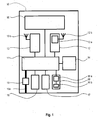
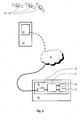
- a vehicle device designed as a vehicle device 10, which is supported by a vehicle 20 (see FIG Fig. 2 ) is carried along, is representative of each vehicle device of the plurality of vehicle devices of the position data transmission system according to the invention schematically in Fig. 1 shown. It has a remote processor 11 communicatively coupled to a GNSS position detector 12 which includes a GNSS receiver 12a having a GNSS receiver antenna 12b through which signals from multiple GNSS satellites 12c (in FIG Fig. 2 shown), from which the GNSS position determining means 12 continuously - preferably in the second cycle - calculates the position of the GNSS receiver at least approximately at the time of receiving the GNSS satellite signals.
- a GNSS position detector 12 which includes a GNSS receiver 12a having a GNSS receiver antenna 12b through which signals from multiple GNSS satellites 12c (in FIG Fig. 2 shown), from which the GNSS position determining means 12 continuously - preferably in the second cycle - calculates the position of the GNSS
- the GNSS position determining device 12 is communicatively coupled to other sensors (not shown), such as a speed sensor of a vehicle (eg, a tachometer) and a direction of motion change sensor (eg, a gyroscope). Measured values of these sensors can be processed by the GNSS position-determining device 12 in the so-called coupling-location method with the GNSS signals supplied by the GNSS receiver 12a to at least one coupling position position which is more accurate than the GNSS position. In particular, in the case of temporary z. B. by shading missing GNSS positions can thus be determined despite further movement over a limited distance / time a position in the course of the so-called “dead reckoning".
- sensors such as a speed sensor of a vehicle (eg, a tachometer) and a direction of motion change sensor (eg, a gyroscope). Measured values of these sensors can be processed by the GNSS position-determining device 12 in the so-called coupling-location
- the remote processor 11 may also be communicatively coupled to said sensors and / or other sensors of the same type as said sensors, and perform or improve the coupling location using the GNSS and / or snoop location positions provided by the GNSS position determiner 12 , Irrespective of their generating path, the GNSS and / or coupling location position data received or generated by the decentralized processor 11 are generally referred to as geographical position data of a geographical position (hereinafter referred to as "position" for short). This position is independent of any positioning errors as vehicle position, because the GNSS position determining means 12 whose position is determined, is carried by a vehicle.
- the position data includes at least one longitude value (length coordinate value) and one latitude value (width coordinate value) for each position.
- the geographic location of the GNSS receiver at least in the locally approximately two-dimensional plane of the earth's surface within the accuracy of the positioning method used is temporarily at least approximately fixed for the time at which the GNSS signals were received.
- This time can be specified by the time signal contained in the GNSS signal, or by the time signal of a clock 14 - such as a radio clock - which is coupled to the decentralized processor 11, as time with date ("timestamp") and under Formation of a position data set to be added to the geographical position data as supplementary information to each geographical position.
- a computer program is executed on the processor 11, which was previously stored in a data read / write memory 16 (for example an EEPROM or a flash EEPROM) and at least partially into the main memory by the operating system of the decentralized processor 11 17 (for example, an SDRAM) of the distributed processor 11 is loaded to be usable efficiently for the distributed processor 11.
- the decentralized processor 11 is configured and consequently the vehicle device is set up to carry out method steps according to the invention.
- Parts of the computer program contain position data-specific instructions for the decentralized processor 11 for receiving, or for generating, if necessary for processing, in any case for storing and sending the position data.
- the decentralized processor 11 is coupled to a security module 18 which is designed as a separate data processing unit (for example a chip card) which has at least one autonomous control module 18a and a memory area 18b, wherein the autonomous control module 18a is preferably configured to request for the issuing of Execute data from the memory area 18b and / or the modification or recording of data in the memory area 18b only against authentication.
- the authentication procedure can be carried out by analyzing a digital signature by means of a public key stored by the signer in the memory area 18b of the security module 18.
- a cryptographic data memory (not shown) may be provided, in which the processor 11 can store data encrypted only with appropriate authentication and can read out in a decrypting manner.
- the vehicle identifier of the vehicle 20 is stored in the memory area 18b of the security module 18 or cryptographic data memory in the form of the vehicle identifier, which is encompassed by at least one vehicle nameplate of the vehicle 20.
- the vehicle identifier may be stored in the data RAM.
- the encrypted storage of position data in the memory area 18b of the security module 18 or in the cryptographic data memory can be carried out by means of appropriate instructions by the decentralized processor 11. Alternatively or cumulatively, the storage of position data by the decentralized processor 11 can also take place in the working memory 17 and / or in the data read / write memory 16.
- certain positional data which the decentralized processor 11 receives from the position-determining device 13 are successively stored by the decentralized processor sequentially in the data-writing-and-reading memory 16 in the form of a flash disk until the amount of position data is sufficient. to complete a lane file.
- the lane file includes position data of a lane of a length of typically 10 km to 300 km.
- the lane file preferably includes a lane of 50 km in length, which constitutes about 50 kB of position data.
- the position data can be stored as full position data (absolute longitude and latitude values) or as differential position data (relative longitude and latitude values) starting from an absolute origin position.
- the second storage mode saves storage space.
- the decentralized processor 11 instructs the autonomous control module 18a of the security module 18 to store the complete lane file in the memory area 18b of the security module 18.
- the decentralized processor deletes the position data of the complete lane file, in particular the complete lane file itself, from the main memory 17.
- a display device 15 can display messages of the decentralized processor 11 in graphical or textual form.
- An unillustrated input device (which may or may be provided by the display device 15) is for receiving data and commands from a user to the remote processor.
- the vehicle device comprises a mobile radio transceiver 13, for example in the form of a GSM UMTS or LTE module, with a mobile radio antenna 13a.
- the mobile radio transceiver 13 is instructed by the decentralized processor 11 to send position data generated by the vehicle device 10 to a location specified by the decentralized processor 11.
- the central data processing device 50 with a central communication device 53 for receiving the position data, a central processor 51 for processing the received position data and for generating at least one processing result resulting from the processing of the received position data and as a working memory a first data memory 56 for at least temporarily recording the position data which the processor is currently processing, and for at least temporarily storing instructions for processing the position data and as data read / write memory a second data memory 57, for example in the form of a hard disk, in which the position data are stored as long as they are not yet from the central processor 51 for generating the at least one au s processing of the received position data resulting processing result are processed.
- the central processor 51 processes the received position data for at least one data processing result, for example with or without information of the vehicle identifier for an identifier of a route section, for a number of identifiers of several toll road sections, with information on toll-relevant parameters (eg, number of axles, permissible total weight, pollutant class ) of the vehicle 20 at a toll or a series of multiple tolls, and causes the storage of the data processing result associated with the vehicle identifier of the vehicle 20 or unallocated in the second data memory 57 or a third data memory, not shown.
- a rechargeable battery 19 supplies said components of the vehicle device 10 with electric current.
- a power supply connection 19a is provided, via which the rechargeable battery 19 can be recharged and / or the said components of the vehicle device 10 can be supplied with electric current from a power source of the vehicle 20 independently of the rechargeable battery 19.
- a supercapacitor 19 may be provided, which can still maintain the operation of the vehicle unit 10 for a while even if the power supply is lost via the power supply terminal 19a.
- the vehicle device 10 includes a DSRC communication device (not shown) for DSRC communication with dedicated short-range communication (DSRC) and / or short-range interfaces (eg, CAN, USB, bluetooth, W-LAN) Communication (also not shown) with other entrained in the vehicle components (also not shown), such as a mobile phone, an electronic identification card, a navigation system.
- DSRC dedicated short-range communication
- short-range interfaces eg, CAN, USB, bluetooth, W-LAN
- W-LAN wireless local area network
- the vehicle device 10 may also be provided a vehicle device distributed over the vehicle components of the vehicle device 10, which are at least temporarily communicate via communication interfaces at least for the transmission of data with at least the decentralized processor 11.
- the radio clock 14, the GNSS position determination device 12 and / or the mobile radio transceiver 13 outside the vehicle device 10 may be permanently installed in the vehicle 20, while the vehicle device 10 without the radio clock 14, the GNSS position determination device 12 and / or the mobile radio transceiver 13 to be fixed in the vehicle 20, detachably mounted in or on the vehicle 20 or may be arranged unattached in the vehicle 20.
- the vehicle device 10 on the one hand and the radio clock 14, the GNSS position determination device 12 and / or the mobile radio transceiver 13 on the other hand are coupled to each other via a communication link.
- the GNSS position determination device 12 can be switched on and off by the vehicle device 10 and / or be requested to transmit the detected position data to the vehicle device 10.
- the communication link can be provided by a cable connection (eg via the CAN bus of the vehicle 20) or wirelessly with corresponding transceiver devices in the vehicle device 10 and radio clock 14, GNSS position determination device 12 and / or mobile radio transceiver 13.
- the mobile radio transceiver 13 of the vehicle unit 10 also serves to receive position data specific instructions for the remote processor 11 of the vehicle apparatus 10 which, when executed by the remote processor 11, is the remote processor for receiving, generating, processing, storing and / or dispatching the position data, these position-data-specific instructions are sent from the central data processing device 50 to each vehicle device 10 - either by means of the central communication device 53 or with another, not shown, central communication device.
- the central data processing device 50 in FIG Fig. 2 is shown only simplified.
- the central data processing device may include a plurality of central communication devices and a plurality of central processors, each coupled to central data stores of said types of central data stores 56 and 57.
- the data random access memory 57 may be the main memory of a central server of the central data processing device 50, on which access multiple personal computers, each having a central processor 51 and a memory 56, in which case the parent server as Part of the central communication device 53 can be construed.
- the position data received from the vehicle devices 10 are stored in association with an identifier of the vehicle device 10 from which they originate, at least until their processing and for generating the processing result resulting from the processing of the received position data.
- the position data associated with the identifier of that vehicle device 10 are deleted from the first central data memory 56 in order to recover storage space for storing further position data, in particular from other vehicle devices.
- the position data in the first central data memory 56 can also be stored anonymously without a link to the identifier of a vehicle device 10, wherein only the processing result is linked to the identifier of the vehicle device.
- Such methods for anonymized processing of position data are known from the prior art.
- Components of central communication devices may be integrated and coupled together with a plurality of central processors in a network of central data processing, which has one or more interfaces to the mobile radio network 30.
- a gateway comprised by the central data processing device 50 as a content switch can divide a communication channel to the mobile radio network 30 into several content-specific communication channels in the network of the central data processing device 50, which in turn are coupled via a firewall to a router or load balancer, from there a plurality of central processors receive position data from a plurality of vehicle devices 10 simultaneously.
- Means for detecting the central utilization and the generation of the central utilization of the central data processing device 50 indicative central status information of the central data processing device 50 may be formed by the central processors of the type of the central processor 50, as far as the detection of the central memory utilization and / or the central processor utilization goes.
- a higher-level processor may be configured to receive the individual memory and / or processor loads detected by multiple central processors 51 and determine therefrom an average, median, or maximum value of the received individual memory and / or processor loads.
- Means for detecting a central communication load with respect to the reception of position data and / or the transmission of position-data-specific instructions may be formed by a processor of the central communication device 53 and / or a processor connected to the central communication device 53, for example the central processor 51.
- the vehicle device 10 is formed, which in Fig. 3a perform process steps shown.
- the vehicle device 10 operates according to step D01, for example, by the vehicle device 10 receives electric power from a power source of the vehicle 20 via the power supply terminal 19a by the vehicle unit 10 is turned on by a user, or by the vehicle unit 10 due to a predetermined event (For example, the detection of a vehicle movement) from a passive state into an active state, in which it can perform the further process steps.
- the processor 11 of the vehicle device 10 checks whether the storage area 18b of the security module has a complete lane file which was not transmitted to the toll center 60 during the preceding operating phase (step D02).
- step D03 If this is not the case, then there is no reason for the vehicle device 10 to contact the center for transmitting a lane file, and the vehicle device continues to acquire position data the goal is to complete the started lane file (step D03). If, in the presence of at least one complete lane file, there is a reason for sending the lane file (s) (step D04), then in step D05 a decentralized status information about the decentralized utilization of the memory area 18b with position data in the form of the number of items to be sent in the memory area 18b present lane files generated. Alternatively or cumulatively, the decentralized status information can also be provided in the form of fractions or multiples of a decentralized threshold utilization which, for example, corresponds to 80% occupied memory space in the memory area 18b.
- step D05 the method also ends when the query in step D02 is affirmative.
- the commissioning of the vehicle device 10 in step D01 is one of the occasions when a decentralized status information according to step D06 is sent to the central data processing device 50.
- the sending of the decentralized status information takes place in this step by means of the mobile radio transceiver 13 of the vehicle device 10 together with information about the shipping event and an identifier of the vehicle device after the decentralized processor has instructed the mobile transceiver 13, by selecting the central communication device 53 the Setup set up a communication connection with the central data processing device 50 and has provided her with the appropriate data.
- the mobile transceiver also receives the transmission instruction from the central data processing device 50 in step D07.
- the remote processor 11 checks in subsequent step D08 whether the amount specified in the transmission instruction is different from zero.
- the processor 11 of the vehicle device 10 instructs the mobile radio transceiver 13 of the vehicle device 10 to position data in the specified extent - in this case a specified number of lane files - to the central data processing device 50 with the result that the specified amount of lane files (and thus position data) is sent to the toll center (step D09) and the vehicle apparatus executes step D10 explained below.
- step D08 If the test in step D08 indicates that the specified amount to be transmitted is equal to zero, it is checked directly in step D10 whether the shipping event was a deactivation of the vehicle device 10 without switching to step D09, whereby switching off is the initiation of a process at the end of which the vehicle device 10 at least temporarily goes out of operation by at least temporarily ceasing to store position data for completing lane files. If the shipping event was actually the switching off of the vehicle device 10, then the method ends with the above-explained decommissioning of the vehicle device in step D11. Otherwise, the vehicle device 10 remains in operation and continues in step D03 with the detection and storage of detected position data for completing lane files.
- the decentralized method steps of the inventive method in the vehicle device 10 are coupled to central method steps of the inventive method in the central data processing device 50, which are described below:
- the toll center is trained, the in Fig. 3b perform process steps shown.
- the central data processing device 50 enters via its central communication device 53 a communication connection - for example, after a RADIUS server of the central data processing device 50, the establishment of a communication link between the vehicle unit 10 and the central processor 51 (for example via a GGSN of the mobile operator and a gateway 53 of the central data processing device 50) after authentication has been authorized (step Z01).
- the central processor 51 of the toll center 50 receives the decentralized status information in the form of the number of lane files available for shipment in the memory area 18b of the vehicle device 10.
- the central data processing device 50 (be it the central processor 51 or another central processor of the central data processing device 50) generates central status information about the central utilization of the central data processing device 50 (step Z03).
- the form in which this central status information can be provided has already been described in the general description section.
- the central status information can be determined independently of the receipt of the decentralized status information (in particular before the receipt of the decentralized status information), for example regularly in the cycle of one second to one hour.
- a central processor of the central data processing device 50 compares the value of the central utilization, which is contained in the central status information, with a threshold value of the central utilization, which, if exceeded, transmits position data only in exceptional cases and only to a limited extent.
- the threshold of central utilization may be 90% of the value of the full (100%) central workload.
- the values of the central utilization can also be determined in fractions or multiples of the central threshold utilization.
- the threshold value of the central utilization is dependent on the number of temporally parallel connections with vehicle devices to be supplied with software, via the respective position data-specific instructions for the decentralized processor 11 for reception, or for generation, if necessary for processing, in any case for storage and be transmitted to the shipping of the position data to the respective vehicle to be supplied with software.
- the central data processing device 50 determines the position data extent to be transmitted (step Z04). The results that can occur with regard to the specific scope depending on which decentralized and central status information can be found here Fig. 4 exemplified.
- step Z05 the determined amount is transmitted to the vehicle device 10. Thereafter, the central data processing device 50 checks whether the scope to be transmitted is different from zero, whereby values smaller than zero are excluded. If the result of this check is positive, the central data processing device 50 waits in step Z07 for the reception of the lane files corresponding to the specific scope of the vehicle device 10. After receiving the appropriate amount of lane files, the central data processing device 50 terminates the communication link with the vehicle device 10 (FIG. Step Z08). This step is performed by the central data processing device without the detour via step Z07 even if the test in step Z06 determines whether the determined amount of position data to be transmitted is equal to zero (excluding values less than zero).
- the vehicle device 10 ends the communication connection with the central data processing device 50 following step D08 (negative result) or following step D09 (positive result in step D08) if it is not to transmit position data or has received an acknowledgment of the receipt of the position data which is sent to the vehicle device 10 by the central data processing device 50 following step Z07.
- Fig. 4 gives an example of possible results of ranges of position data to be transmitted in dependence on central status information in the form of a central utilization as a fraction or multiple of a central threshold utilization and in dependence on a decentralized status information in the form of a decentralized storage utilization as a fraction or multiple of a decentralized threshold utilization.
- central status information in the form of a central utilization as a fraction or multiple of a central threshold utilization
- decentralized status information in the form of a decentralized storage utilization as a fraction or multiple of a decentralized threshold utilization.
- the number of in the memory area 18b of the vehicle unit 10 due to the transmitted identifier or other information about the vehicle unit 10 from the decentralized memory utilization can be determined if the decentralized threshold utilization in the form of a maximum number under the identifier or other information about the vehicle unit in lane files or in the form of a storage space quantity (eg in units of bytes) in a central data memory of the central data processing device 50.
- the level of central utilization increases the decentralized memory utilization required for transmitting all position data / lane data. The smaller the decentralized memory utilization, the lower the central utilization must be, so that a non-zero amount of position data to be transmitted is requested by the central data processing device. If the central utilization is greater than the central threshold utilization, only a non-zero volume is requested for a decentralized storage utilization of greater than 100%. If the decentralized memory utilization is greater than the central utilization, a nonzero volume is always requested.
- the central data processing device additionally analyzes the dispatching event of the decentralized status information: If the dispatching event is the restarting of the vehicle device 10, the central data processing device 50 can determine, depending on the time period which has elapsed from the last switch-off to the next switch-on, that the amount to be transmitted is zero (small time span of less than one day), 10 to 90% of the total amount (average period of 1 to 9 days) or 100% of the total amount (long period of 10 and more days) of lane files stored in the vehicle apparatus 10.
- central data processing device 50 can determine that in such a dispatch event the amount of position data to be transmitted is always "all".
Landscapes
- Business, Economics & Management (AREA)
- Engineering & Computer Science (AREA)
- Finance (AREA)
- Development Economics (AREA)
- Strategic Management (AREA)
- Physics & Mathematics (AREA)
- General Physics & Mathematics (AREA)
- Accounting & Taxation (AREA)
- Entrepreneurship & Innovation (AREA)
- Game Theory and Decision Science (AREA)
- Computer Networks & Wireless Communication (AREA)
- Economics (AREA)
- Marketing (AREA)
- General Business, Economics & Management (AREA)
- Theoretical Computer Science (AREA)
- Traffic Control Systems (AREA)
Priority Applications (1)
| Application Number | Priority Date | Filing Date | Title |
|---|---|---|---|
| EP15002739.9A EP3144867B1 (fr) | 2015-09-21 | 2015-09-21 | Systeme de determination de donnees de position, dispositif de vehicule et procede de determination de donnees de position |
Applications Claiming Priority (1)
| Application Number | Priority Date | Filing Date | Title |
|---|---|---|---|
| EP15002739.9A EP3144867B1 (fr) | 2015-09-21 | 2015-09-21 | Systeme de determination de donnees de position, dispositif de vehicule et procede de determination de donnees de position |
Publications (2)
| Publication Number | Publication Date |
|---|---|
| EP3144867A1 true EP3144867A1 (fr) | 2017-03-22 |
| EP3144867B1 EP3144867B1 (fr) | 2020-06-17 |
Family
ID=54251907
Family Applications (1)
| Application Number | Title | Priority Date | Filing Date |
|---|---|---|---|
| EP15002739.9A Active EP3144867B1 (fr) | 2015-09-21 | 2015-09-21 | Systeme de determination de donnees de position, dispositif de vehicule et procede de determination de donnees de position |
Country Status (1)
| Country | Link |
|---|---|
| EP (1) | EP3144867B1 (fr) |
Cited By (1)
| Publication number | Priority date | Publication date | Assignee | Title |
|---|---|---|---|---|
| US11635241B2 (en) | 2019-01-28 | 2023-04-25 | Emerson Climate Technologies, Inc. | Container refrigeration monitoring systems and methods |
Citations (6)
| Publication number | Priority date | Publication date | Assignee | Title |
|---|---|---|---|---|
| US20040054444A1 (en) * | 2002-09-16 | 2004-03-18 | Abeska Edward J. | Method of uploading data from a vehicle |
| WO2008000227A1 (fr) | 2006-06-27 | 2008-01-03 | Deutsche Telekom Ag | Procédé et dispositif pour garantir la protection des données lors de la détection de télépéage |
| EP1909231A1 (fr) | 2006-10-06 | 2008-04-09 | Deutsche Telekom AG | Enregistrement de péage routier |
| WO2009001303A1 (fr) | 2007-06-26 | 2008-12-31 | Nxp B.V. | Système de péage routier |
| EP2320386A1 (fr) | 2009-10-30 | 2011-05-11 | Kapsch TrafficCom AG | Procédé et dispositifs de production de données de péage à positions rendues anonymes |
| US20130345903A1 (en) * | 2011-05-25 | 2013-12-26 | Toyota Jidosha Kabushiki Kaisha | Vehicle information acquiring apparatus, vehicle information supplying apparatus, and information communicating system of vehicle having vehicle information acquiring apparatus and vehicle information supplying apparatus |
-
2015
- 2015-09-21 EP EP15002739.9A patent/EP3144867B1/fr active Active
Patent Citations (6)
| Publication number | Priority date | Publication date | Assignee | Title |
|---|---|---|---|---|
| US20040054444A1 (en) * | 2002-09-16 | 2004-03-18 | Abeska Edward J. | Method of uploading data from a vehicle |
| WO2008000227A1 (fr) | 2006-06-27 | 2008-01-03 | Deutsche Telekom Ag | Procédé et dispositif pour garantir la protection des données lors de la détection de télépéage |
| EP1909231A1 (fr) | 2006-10-06 | 2008-04-09 | Deutsche Telekom AG | Enregistrement de péage routier |
| WO2009001303A1 (fr) | 2007-06-26 | 2008-12-31 | Nxp B.V. | Système de péage routier |
| EP2320386A1 (fr) | 2009-10-30 | 2011-05-11 | Kapsch TrafficCom AG | Procédé et dispositifs de production de données de péage à positions rendues anonymes |
| US20130345903A1 (en) * | 2011-05-25 | 2013-12-26 | Toyota Jidosha Kabushiki Kaisha | Vehicle information acquiring apparatus, vehicle information supplying apparatus, and information communicating system of vehicle having vehicle information acquiring apparatus and vehicle information supplying apparatus |
Cited By (1)
| Publication number | Priority date | Publication date | Assignee | Title |
|---|---|---|---|---|
| US11635241B2 (en) | 2019-01-28 | 2023-04-25 | Emerson Climate Technologies, Inc. | Container refrigeration monitoring systems and methods |
Also Published As
| Publication number | Publication date |
|---|---|
| EP3144867B1 (fr) | 2020-06-17 |
Similar Documents
| Publication | Publication Date | Title |
|---|---|---|
| DE102011116245B4 (de) | Verfahren zur Ermittlung aktueller Streckeninformationen einer digitalen Karte | |
| DE112015005973B4 (de) | Fahrzeugeigene Einheit | |
| DE102009008959A1 (de) | Fahrzeugsystem zur Navigation und/oder Fahrerassistenz | |
| WO2019063491A1 (fr) | Procédé et système de mise à jour d'un modèle de commande pour une commande automatique d'au moins une unité mobile | |
| EP1512128B1 (fr) | Systeme de navigation pour vehicule | |
| DE102019209487A1 (de) | Verfahren zum Anonymisieren von Fahrzeugdaten | |
| DE102015012372B3 (de) | Positionsdatenübermittlungssystem, Fahrzeugeinrichtung und Positionsdatenübermittlungsverfahren | |
| EP3279870A1 (fr) | Dispositif de traitement de donnees, systeme et procede de controle de realisation de la fonction conforme d'un dispositif de determination de position | |
| DE112019003236T5 (de) | Fahrzeug-zu-Fahrzeug-Kommunikationssystem und Fahrzeugkommunikationsvorrichtung | |
| EP4014062B1 (fr) | Procédé pour fournir une carte d'état d'environnement locale instantanée pour un véhicule à moteur et véhicule à moteur pour mettre en oeuvre ledit procédé | |
| EP2195788B1 (fr) | Procédé et dispositif de détermination des données relatives aux performances d'un ou de plusieurs véhicules | |
| EP3144867B1 (fr) | Systeme de determination de donnees de position, dispositif de vehicule et procede de determination de donnees de position | |
| EP1866872A1 (fr) | Procede et dispositif d'enregistrement automatique de trajet | |
| DE112017007706T5 (de) | Informationskommunikationsvorrichtung und positionsmanagementsystem | |
| EP3376484B1 (fr) | Procédé et système destinés à compléter une carte numérique stockée sur un ordinateur central d'un réseau routier | |
| DE102005058033A1 (de) | Verfahren zur Überprüfung einer Benutzungsberechtigung | |
| DE10215887B4 (de) | Asynchrone Verkehrsdatenerfassung | |
| DE102017216936B4 (de) | Sicherheitssystem zur Fahrzeugkommunikation | |
| DE202016001371U1 (de) | Fahrzeugeinrichtung, System und straßenseitige Einrichtung zur Durchführung wenigstens einer Transaktion | |
| EP3174015B1 (fr) | Reconnaissance d'erreurs dans une unité embarquée à bord d'une véhicule d'un système de péage | |
| EP3211605A1 (fr) | Dispositif de vehicule, systeme, dispositif cote route et procede d'execution d'au moins une transaction | |
| EP2772886B1 (fr) | Système de tableau de bord électronique de véhicule et procédé de contrôle correspondant | |
| EP3279692A1 (fr) | Dispositif de traitement de donnees, systeme et procede de controle de realisation de la fonction conforme d'un dispositif de determination de position | |
| EP3242205A1 (fr) | Procede de mise a jour de la configuration d'un dispositif de vehicule, dispositif de vehicule, dispositif de traitement de donnees central et systeme de peage | |
| AT523584B1 (de) | Verfahren zum Übertragen von Daten |
Legal Events
| Date | Code | Title | Description |
|---|---|---|---|
| PUAI | Public reference made under article 153(3) epc to a published international application that has entered the european phase |
Free format text: ORIGINAL CODE: 0009012 |
|
| STAA | Information on the status of an ep patent application or granted ep patent |
Free format text: STATUS: THE APPLICATION HAS BEEN PUBLISHED |
|
| AK | Designated contracting states |
Kind code of ref document: A1 Designated state(s): AL AT BE BG CH CY CZ DE DK EE ES FI FR GB GR HR HU IE IS IT LI LT LU LV MC MK MT NL NO PL PT RO RS SE SI SK SM TR |
|
| AX | Request for extension of the european patent |
Extension state: BA ME |
|
| STAA | Information on the status of an ep patent application or granted ep patent |
Free format text: STATUS: REQUEST FOR EXAMINATION WAS MADE |
|
| 17P | Request for examination filed |
Effective date: 20170922 |
|
| RBV | Designated contracting states (corrected) |
Designated state(s): AL AT BE BG CH CY CZ DE DK EE ES FI FR GB GR HR HU IE IS IT LI LT LU LV MC MK MT NL NO PL PT RO RS SE SI SK SM TR |
|
| STAA | Information on the status of an ep patent application or granted ep patent |
Free format text: STATUS: EXAMINATION IS IN PROGRESS |
|
| 17Q | First examination report despatched |
Effective date: 20180528 |
|
| GRAP | Despatch of communication of intention to grant a patent |
Free format text: ORIGINAL CODE: EPIDOSNIGR1 |
|
| STAA | Information on the status of an ep patent application or granted ep patent |
Free format text: STATUS: GRANT OF PATENT IS INTENDED |
|
| INTG | Intention to grant announced |
Effective date: 20200211 |
|
| GRAS | Grant fee paid |
Free format text: ORIGINAL CODE: EPIDOSNIGR3 |
|
| GRAA | (expected) grant |
Free format text: ORIGINAL CODE: 0009210 |
|
| STAA | Information on the status of an ep patent application or granted ep patent |
Free format text: STATUS: THE PATENT HAS BEEN GRANTED |
|
| AK | Designated contracting states |
Kind code of ref document: B1 Designated state(s): AL AT BE BG CH CY CZ DE DK EE ES FI FR GB GR HR HU IE IS IT LI LT LU LV MC MK MT NL NO PL PT RO RS SE SI SK SM TR |
|
| REG | Reference to a national code |
Ref country code: GB Ref legal event code: FG4D Free format text: NOT ENGLISH |
|
| REG | Reference to a national code |
Ref country code: CH Ref legal event code: EP |
|
| REG | Reference to a national code |
Ref country code: IE Ref legal event code: FG4D Free format text: LANGUAGE OF EP DOCUMENT: GERMAN |
|
| REG | Reference to a national code |
Ref country code: DE Ref legal event code: R096 Ref document number: 502015012784 Country of ref document: DE |
|
| REG | Reference to a national code |
Ref country code: AT Ref legal event code: REF Ref document number: 1282253 Country of ref document: AT Kind code of ref document: T Effective date: 20200715 |
|
| PG25 | Lapsed in a contracting state [announced via postgrant information from national office to epo] |
Ref country code: SE Free format text: LAPSE BECAUSE OF FAILURE TO SUBMIT A TRANSLATION OF THE DESCRIPTION OR TO PAY THE FEE WITHIN THE PRESCRIBED TIME-LIMIT Effective date: 20200617 Ref country code: GR Free format text: LAPSE BECAUSE OF FAILURE TO SUBMIT A TRANSLATION OF THE DESCRIPTION OR TO PAY THE FEE WITHIN THE PRESCRIBED TIME-LIMIT Effective date: 20200918 Ref country code: NO Free format text: LAPSE BECAUSE OF FAILURE TO SUBMIT A TRANSLATION OF THE DESCRIPTION OR TO PAY THE FEE WITHIN THE PRESCRIBED TIME-LIMIT Effective date: 20200917 Ref country code: LT Free format text: LAPSE BECAUSE OF FAILURE TO SUBMIT A TRANSLATION OF THE DESCRIPTION OR TO PAY THE FEE WITHIN THE PRESCRIBED TIME-LIMIT Effective date: 20200617 Ref country code: FI Free format text: LAPSE BECAUSE OF FAILURE TO SUBMIT A TRANSLATION OF THE DESCRIPTION OR TO PAY THE FEE WITHIN THE PRESCRIBED TIME-LIMIT Effective date: 20200617 |
|
| REG | Reference to a national code |
Ref country code: LT Ref legal event code: MG4D |
|
| REG | Reference to a national code |
Ref country code: NL Ref legal event code: MP Effective date: 20200617 |
|
| PG25 | Lapsed in a contracting state [announced via postgrant information from national office to epo] |
Ref country code: LV Free format text: LAPSE BECAUSE OF FAILURE TO SUBMIT A TRANSLATION OF THE DESCRIPTION OR TO PAY THE FEE WITHIN THE PRESCRIBED TIME-LIMIT Effective date: 20200617 Ref country code: HR Free format text: LAPSE BECAUSE OF FAILURE TO SUBMIT A TRANSLATION OF THE DESCRIPTION OR TO PAY THE FEE WITHIN THE PRESCRIBED TIME-LIMIT Effective date: 20200617 Ref country code: RS Free format text: LAPSE BECAUSE OF FAILURE TO SUBMIT A TRANSLATION OF THE DESCRIPTION OR TO PAY THE FEE WITHIN THE PRESCRIBED TIME-LIMIT Effective date: 20200617 Ref country code: BG Free format text: LAPSE BECAUSE OF FAILURE TO SUBMIT A TRANSLATION OF THE DESCRIPTION OR TO PAY THE FEE WITHIN THE PRESCRIBED TIME-LIMIT Effective date: 20200917 |
|
| PG25 | Lapsed in a contracting state [announced via postgrant information from national office to epo] |
Ref country code: AL Free format text: LAPSE BECAUSE OF FAILURE TO SUBMIT A TRANSLATION OF THE DESCRIPTION OR TO PAY THE FEE WITHIN THE PRESCRIBED TIME-LIMIT Effective date: 20200617 Ref country code: NL Free format text: LAPSE BECAUSE OF FAILURE TO SUBMIT A TRANSLATION OF THE DESCRIPTION OR TO PAY THE FEE WITHIN THE PRESCRIBED TIME-LIMIT Effective date: 20200617 |
|
| PG25 | Lapsed in a contracting state [announced via postgrant information from national office to epo] |
Ref country code: CZ Free format text: LAPSE BECAUSE OF FAILURE TO SUBMIT A TRANSLATION OF THE DESCRIPTION OR TO PAY THE FEE WITHIN THE PRESCRIBED TIME-LIMIT Effective date: 20200617 Ref country code: RO Free format text: LAPSE BECAUSE OF FAILURE TO SUBMIT A TRANSLATION OF THE DESCRIPTION OR TO PAY THE FEE WITHIN THE PRESCRIBED TIME-LIMIT Effective date: 20200617 Ref country code: ES Free format text: LAPSE BECAUSE OF FAILURE TO SUBMIT A TRANSLATION OF THE DESCRIPTION OR TO PAY THE FEE WITHIN THE PRESCRIBED TIME-LIMIT Effective date: 20200617 Ref country code: PT Free format text: LAPSE BECAUSE OF FAILURE TO SUBMIT A TRANSLATION OF THE DESCRIPTION OR TO PAY THE FEE WITHIN THE PRESCRIBED TIME-LIMIT Effective date: 20201019 Ref country code: SM Free format text: LAPSE BECAUSE OF FAILURE TO SUBMIT A TRANSLATION OF THE DESCRIPTION OR TO PAY THE FEE WITHIN THE PRESCRIBED TIME-LIMIT Effective date: 20200617 Ref country code: EE Free format text: LAPSE BECAUSE OF FAILURE TO SUBMIT A TRANSLATION OF THE DESCRIPTION OR TO PAY THE FEE WITHIN THE PRESCRIBED TIME-LIMIT Effective date: 20200617 Ref country code: IT Free format text: LAPSE BECAUSE OF FAILURE TO SUBMIT A TRANSLATION OF THE DESCRIPTION OR TO PAY THE FEE WITHIN THE PRESCRIBED TIME-LIMIT Effective date: 20200617 |
|
| PG25 | Lapsed in a contracting state [announced via postgrant information from national office to epo] |
Ref country code: SK Free format text: LAPSE BECAUSE OF FAILURE TO SUBMIT A TRANSLATION OF THE DESCRIPTION OR TO PAY THE FEE WITHIN THE PRESCRIBED TIME-LIMIT Effective date: 20200617 Ref country code: PL Free format text: LAPSE BECAUSE OF FAILURE TO SUBMIT A TRANSLATION OF THE DESCRIPTION OR TO PAY THE FEE WITHIN THE PRESCRIBED TIME-LIMIT Effective date: 20200617 Ref country code: IS Free format text: LAPSE BECAUSE OF FAILURE TO SUBMIT A TRANSLATION OF THE DESCRIPTION OR TO PAY THE FEE WITHIN THE PRESCRIBED TIME-LIMIT Effective date: 20201017 |
|
| REG | Reference to a national code |
Ref country code: DE Ref legal event code: R097 Ref document number: 502015012784 Country of ref document: DE |
|
| REG | Reference to a national code |
Ref country code: DE Ref legal event code: R119 Ref document number: 502015012784 Country of ref document: DE |
|
| PLBE | No opposition filed within time limit |
Free format text: ORIGINAL CODE: 0009261 |
|
| STAA | Information on the status of an ep patent application or granted ep patent |
Free format text: STATUS: NO OPPOSITION FILED WITHIN TIME LIMIT |
|
| PG25 | Lapsed in a contracting state [announced via postgrant information from national office to epo] |
Ref country code: MC Free format text: LAPSE BECAUSE OF FAILURE TO SUBMIT A TRANSLATION OF THE DESCRIPTION OR TO PAY THE FEE WITHIN THE PRESCRIBED TIME-LIMIT Effective date: 20200617 Ref country code: DK Free format text: LAPSE BECAUSE OF FAILURE TO SUBMIT A TRANSLATION OF THE DESCRIPTION OR TO PAY THE FEE WITHIN THE PRESCRIBED TIME-LIMIT Effective date: 20200617 |
|
| 26N | No opposition filed |
Effective date: 20210318 |
|
| GBPC | Gb: european patent ceased through non-payment of renewal fee |
Effective date: 20200921 |
|
| PG25 | Lapsed in a contracting state [announced via postgrant information from national office to epo] |
Ref country code: SI Free format text: LAPSE BECAUSE OF FAILURE TO SUBMIT A TRANSLATION OF THE DESCRIPTION OR TO PAY THE FEE WITHIN THE PRESCRIBED TIME-LIMIT Effective date: 20200617 |
|
| PG25 | Lapsed in a contracting state [announced via postgrant information from national office to epo] |
Ref country code: LU Free format text: LAPSE BECAUSE OF NON-PAYMENT OF DUE FEES Effective date: 20200921 |
|
| PG25 | Lapsed in a contracting state [announced via postgrant information from national office to epo] |
Ref country code: DE Free format text: LAPSE BECAUSE OF NON-PAYMENT OF DUE FEES Effective date: 20210401 |
|
| PG25 | Lapsed in a contracting state [announced via postgrant information from national office to epo] |
Ref country code: GB Free format text: LAPSE BECAUSE OF NON-PAYMENT OF DUE FEES Effective date: 20200921 Ref country code: IE Free format text: LAPSE BECAUSE OF NON-PAYMENT OF DUE FEES Effective date: 20200921 |
|
| PG25 | Lapsed in a contracting state [announced via postgrant information from national office to epo] |
Ref country code: TR Free format text: LAPSE BECAUSE OF FAILURE TO SUBMIT A TRANSLATION OF THE DESCRIPTION OR TO PAY THE FEE WITHIN THE PRESCRIBED TIME-LIMIT Effective date: 20200617 Ref country code: MT Free format text: LAPSE BECAUSE OF FAILURE TO SUBMIT A TRANSLATION OF THE DESCRIPTION OR TO PAY THE FEE WITHIN THE PRESCRIBED TIME-LIMIT Effective date: 20200617 Ref country code: CY Free format text: LAPSE BECAUSE OF FAILURE TO SUBMIT A TRANSLATION OF THE DESCRIPTION OR TO PAY THE FEE WITHIN THE PRESCRIBED TIME-LIMIT Effective date: 20200617 |
|
| PG25 | Lapsed in a contracting state [announced via postgrant information from national office to epo] |
Ref country code: MK Free format text: LAPSE BECAUSE OF FAILURE TO SUBMIT A TRANSLATION OF THE DESCRIPTION OR TO PAY THE FEE WITHIN THE PRESCRIBED TIME-LIMIT Effective date: 20200617 |
|
| P01 | Opt-out of the competence of the unified patent court (upc) registered |
Effective date: 20231207 |
|
| REG | Reference to a national code |
Ref country code: CH Ref legal event code: U11 Free format text: ST27 STATUS EVENT CODE: U-0-0-U10-U11 (AS PROVIDED BY THE NATIONAL OFFICE) Effective date: 20251001 |
|
| PGFP | Annual fee paid to national office [announced via postgrant information from national office to epo] |
Ref country code: BE Payment date: 20250919 Year of fee payment: 11 |
|
| PGFP | Annual fee paid to national office [announced via postgrant information from national office to epo] |
Ref country code: AT Payment date: 20250918 Year of fee payment: 11 Ref country code: FR Payment date: 20250924 Year of fee payment: 11 |
|
| PGFP | Annual fee paid to national office [announced via postgrant information from national office to epo] |
Ref country code: CH Payment date: 20251001 Year of fee payment: 11 |