EP3145778B1 - Procédé et système pour adapter la vitesse d'un véhicule pendant la conduite du véhicule le long d'un itinéraire de déplacement - Google Patents
Procédé et système pour adapter la vitesse d'un véhicule pendant la conduite du véhicule le long d'un itinéraire de déplacement Download PDFInfo
- Publication number
- EP3145778B1 EP3145778B1 EP15795611.1A EP15795611A EP3145778B1 EP 3145778 B1 EP3145778 B1 EP 3145778B1 EP 15795611 A EP15795611 A EP 15795611A EP 3145778 B1 EP3145778 B1 EP 3145778B1
- Authority
- EP
- European Patent Office
- Prior art keywords
- velocity
- vehicle
- route
- travel
- along
- Prior art date
- Legal status (The legal status is an assumption and is not a legal conclusion. Google has not performed a legal analysis and makes no representation as to the accuracy of the status listed.)
- Active
Links
Images

Classifications
-
- B—PERFORMING OPERATIONS; TRANSPORTING
- B60—VEHICLES IN GENERAL
- B60K—ARRANGEMENT OR MOUNTING OF PROPULSION UNITS OR OF TRANSMISSIONS IN VEHICLES; ARRANGEMENT OR MOUNTING OF PLURAL DIVERSE PRIME-MOVERS IN VEHICLES; AUXILIARY DRIVES FOR VEHICLES; INSTRUMENTATION OR DASHBOARDS FOR VEHICLES; ARRANGEMENTS IN CONNECTION WITH COOLING, AIR INTAKE, GAS EXHAUST OR FUEL SUPPLY OF PROPULSION UNITS IN VEHICLES
- B60K31/00—Vehicle fittings, acting on a single sub-unit only, for automatically controlling vehicle speed, i.e. preventing speed from exceeding an arbitrarily established velocity or maintaining speed at a particular velocity, as selected by the vehicle operator
- B60K31/0066—Vehicle fittings, acting on a single sub-unit only, for automatically controlling vehicle speed, i.e. preventing speed from exceeding an arbitrarily established velocity or maintaining speed at a particular velocity, as selected by the vehicle operator responsive to vehicle path curvature
-
- B—PERFORMING OPERATIONS; TRANSPORTING
- B60—VEHICLES IN GENERAL
- B60W—CONJOINT CONTROL OF VEHICLE SUB-UNITS OF DIFFERENT TYPE OR DIFFERENT FUNCTION; CONTROL SYSTEMS SPECIALLY ADAPTED FOR HYBRID VEHICLES; ROAD VEHICLE DRIVE CONTROL SYSTEMS FOR PURPOSES NOT RELATED TO THE CONTROL OF A PARTICULAR SUB-UNIT
- B60W30/00—Purposes of road vehicle drive control systems not related to the control of a particular sub-unit, e.g. of systems using conjoint control of vehicle sub-units
- B60W30/14—Adaptive cruise control
- B60W30/143—Speed control
-
- B—PERFORMING OPERATIONS; TRANSPORTING
- B60—VEHICLES IN GENERAL
- B60W—CONJOINT CONTROL OF VEHICLE SUB-UNITS OF DIFFERENT TYPE OR DIFFERENT FUNCTION; CONTROL SYSTEMS SPECIALLY ADAPTED FOR HYBRID VEHICLES; ROAD VEHICLE DRIVE CONTROL SYSTEMS FOR PURPOSES NOT RELATED TO THE CONTROL OF A PARTICULAR SUB-UNIT
- B60W30/00—Purposes of road vehicle drive control systems not related to the control of a particular sub-unit, e.g. of systems using conjoint control of vehicle sub-units
- B60W30/14—Adaptive cruise control
- B60W30/143—Speed control
- B60W30/146—Speed limiting
-
- B—PERFORMING OPERATIONS; TRANSPORTING
- B60—VEHICLES IN GENERAL
- B60W—CONJOINT CONTROL OF VEHICLE SUB-UNITS OF DIFFERENT TYPE OR DIFFERENT FUNCTION; CONTROL SYSTEMS SPECIALLY ADAPTED FOR HYBRID VEHICLES; ROAD VEHICLE DRIVE CONTROL SYSTEMS FOR PURPOSES NOT RELATED TO THE CONTROL OF A PARTICULAR SUB-UNIT
- B60W30/00—Purposes of road vehicle drive control systems not related to the control of a particular sub-unit, e.g. of systems using conjoint control of vehicle sub-units
- B60W30/18—Propelling the vehicle
- B60W30/18009—Propelling the vehicle related to particular drive situations
- B60W30/18145—Cornering
-
- B—PERFORMING OPERATIONS; TRANSPORTING
- B60—VEHICLES IN GENERAL
- B60W—CONJOINT CONTROL OF VEHICLE SUB-UNITS OF DIFFERENT TYPE OR DIFFERENT FUNCTION; CONTROL SYSTEMS SPECIALLY ADAPTED FOR HYBRID VEHICLES; ROAD VEHICLE DRIVE CONTROL SYSTEMS FOR PURPOSES NOT RELATED TO THE CONTROL OF A PARTICULAR SUB-UNIT
- B60W40/00—Estimation or calculation of non-directly measurable driving parameters for road vehicle drive control systems not related to the control of a particular sub unit, e.g. by using mathematical models
- B60W40/02—Estimation or calculation of non-directly measurable driving parameters for road vehicle drive control systems not related to the control of a particular sub unit, e.g. by using mathematical models related to ambient conditions
- B60W40/06—Road conditions
- B60W40/072—Curvature of the road
-
- B—PERFORMING OPERATIONS; TRANSPORTING
- B60—VEHICLES IN GENERAL
- B60W—CONJOINT CONTROL OF VEHICLE SUB-UNITS OF DIFFERENT TYPE OR DIFFERENT FUNCTION; CONTROL SYSTEMS SPECIALLY ADAPTED FOR HYBRID VEHICLES; ROAD VEHICLE DRIVE CONTROL SYSTEMS FOR PURPOSES NOT RELATED TO THE CONTROL OF A PARTICULAR SUB-UNIT
- B60W40/00—Estimation or calculation of non-directly measurable driving parameters for road vehicle drive control systems not related to the control of a particular sub unit, e.g. by using mathematical models
- B60W40/10—Estimation or calculation of non-directly measurable driving parameters for road vehicle drive control systems not related to the control of a particular sub unit, e.g. by using mathematical models related to vehicle motion
- B60W40/105—Speed
-
- B—PERFORMING OPERATIONS; TRANSPORTING
- B60—VEHICLES IN GENERAL
- B60W—CONJOINT CONTROL OF VEHICLE SUB-UNITS OF DIFFERENT TYPE OR DIFFERENT FUNCTION; CONTROL SYSTEMS SPECIALLY ADAPTED FOR HYBRID VEHICLES; ROAD VEHICLE DRIVE CONTROL SYSTEMS FOR PURPOSES NOT RELATED TO THE CONTROL OF A PARTICULAR SUB-UNIT
- B60W50/00—Details of control systems for road vehicle drive control not related to the control of a particular sub-unit, e.g. process diagnostic or vehicle driver interfaces
- B60W50/0097—Predicting future conditions
-
- B—PERFORMING OPERATIONS; TRANSPORTING
- B60—VEHICLES IN GENERAL
- B60W—CONJOINT CONTROL OF VEHICLE SUB-UNITS OF DIFFERENT TYPE OR DIFFERENT FUNCTION; CONTROL SYSTEMS SPECIALLY ADAPTED FOR HYBRID VEHICLES; ROAD VEHICLE DRIVE CONTROL SYSTEMS FOR PURPOSES NOT RELATED TO THE CONTROL OF A PARTICULAR SUB-UNIT
- B60W2552/00—Input parameters relating to infrastructure
- B60W2552/30—Road curve radius
-
- B—PERFORMING OPERATIONS; TRANSPORTING
- B60—VEHICLES IN GENERAL
- B60W—CONJOINT CONTROL OF VEHICLE SUB-UNITS OF DIFFERENT TYPE OR DIFFERENT FUNCTION; CONTROL SYSTEMS SPECIALLY ADAPTED FOR HYBRID VEHICLES; ROAD VEHICLE DRIVE CONTROL SYSTEMS FOR PURPOSES NOT RELATED TO THE CONTROL OF A PARTICULAR SUB-UNIT
- B60W2555/00—Input parameters relating to exterior conditions, not covered by groups B60W2552/00, B60W2554/00
- B60W2555/60—Traffic rules, e.g. speed limits or right of way
-
- B—PERFORMING OPERATIONS; TRANSPORTING
- B60—VEHICLES IN GENERAL
- B60W—CONJOINT CONTROL OF VEHICLE SUB-UNITS OF DIFFERENT TYPE OR DIFFERENT FUNCTION; CONTROL SYSTEMS SPECIALLY ADAPTED FOR HYBRID VEHICLES; ROAD VEHICLE DRIVE CONTROL SYSTEMS FOR PURPOSES NOT RELATED TO THE CONTROL OF A PARTICULAR SUB-UNIT
- B60W2556/00—Input parameters relating to data
- B60W2556/45—External transmission of data to or from the vehicle
- B60W2556/50—External transmission of data to or from the vehicle of positioning data, e.g. GPS [Global Positioning System] data
-
- B—PERFORMING OPERATIONS; TRANSPORTING
- B60—VEHICLES IN GENERAL
- B60W—CONJOINT CONTROL OF VEHICLE SUB-UNITS OF DIFFERENT TYPE OR DIFFERENT FUNCTION; CONTROL SYSTEMS SPECIALLY ADAPTED FOR HYBRID VEHICLES; ROAD VEHICLE DRIVE CONTROL SYSTEMS FOR PURPOSES NOT RELATED TO THE CONTROL OF A PARTICULAR SUB-UNIT
- B60W2720/00—Output or target parameters relating to overall vehicle dynamics
- B60W2720/10—Longitudinal speed
- B60W2720/103—Speed profile
-
- B—PERFORMING OPERATIONS; TRANSPORTING
- B60—VEHICLES IN GENERAL
- B60Y—INDEXING SCHEME RELATING TO ASPECTS CROSS-CUTTING VEHICLE TECHNOLOGY
- B60Y2300/00—Purposes or special features of road vehicle drive control systems
- B60Y2300/14—Cruise control
- B60Y2300/143—Speed control
-
- B—PERFORMING OPERATIONS; TRANSPORTING
- B60—VEHICLES IN GENERAL
- B60Y—INDEXING SCHEME RELATING TO ASPECTS CROSS-CUTTING VEHICLE TECHNOLOGY
- B60Y2300/00—Purposes or special features of road vehicle drive control systems
- B60Y2300/14—Cruise control
- B60Y2300/143—Speed control
- B60Y2300/146—Speed limiting
-
- Y—GENERAL TAGGING OF NEW TECHNOLOGICAL DEVELOPMENTS; GENERAL TAGGING OF CROSS-SECTIONAL TECHNOLOGIES SPANNING OVER SEVERAL SECTIONS OF THE IPC; TECHNICAL SUBJECTS COVERED BY FORMER USPC CROSS-REFERENCE ART COLLECTIONS [XRACs] AND DIGESTS
- Y02—TECHNOLOGIES OR APPLICATIONS FOR MITIGATION OR ADAPTATION AGAINST CLIMATE CHANGE
- Y02T—CLIMATE CHANGE MITIGATION TECHNOLOGIES RELATED TO TRANSPORTATION
- Y02T10/00—Road transport of goods or passengers
- Y02T10/10—Internal combustion engine [ICE] based vehicles
- Y02T10/40—Engine management systems
Definitions
- the invention concerns a method for adapting the velocity of a vehicle during driving of the vehicle along a route of travel according to the preamble to claim 1.
- the invention concerns a system for adapting the velocity of a vehicle during driving of the vehicle along a route of travel.
- the invention also concerns a motor vehicle.
- the invention also concerns a computer program and a computer program product.
- WO2010139383 and WO03104014 describe driver assistance systems for regulating vehicle velocity when taking curves.
- WO2010139383 describes velocity control that takes into account the upcoming stretch of road, e.g. an upcoming curve, wherein a maximum velocity profile for the maximum safe velocity is determined based on cartographic data and a limit velocity profile, wherein the vehicle velocity is controlled toward the maximum velocity profile as long as the velocity is not less than the limit velocity.
- US2014067226 A1 describes a method and cruise control system for the safe driving of a vehicle along a road with velocity-limiting factors.
- a preset velocity is compared to the prevailing speed limit, and an offset is determined as the difference between these two velocities. Said offset is maintained even when the prevailing speed limit changes.
- the system continues to control towards a velocity that is 5 km/h higher than the prevailing speed limit, even when the speed limit is changed.
- One object of the present invention is to provide a method and a system for adapting the velocity of a vehicle during driving of the vehicle along a route of travel that enables safety and fuel-efficient driving of the vehicle in connection with velocity-limiting factors.
- a method for adapting the velocity of a vehicle during driving of the vehicle along a route of travel comprising the steps of: prescribing velocity in the form of a velocity profile comprising retardations along the route of travel of the vehicle based on the occurrence of velocity-limiting factors along the route of travel of the vehicle; and prescribing a target velocity associated with a velocity-limiting factor, comprising the step of steering the vehicle velocity so that a velocity associated with said target velocity is permitted to be higher than the target velocity by a given offset, wherein said offset is adapted so that a relatively larger offset is permitted in connection with a non-safety-critical velocity-limiting factor and a relatively smaller offset is permitted in connection with a safety-critical velocity-limiting factor.
- the acceleration required to achieve the prescribed target velocity at an occurring factor is appropriately determined.
- target velocities are prescribed for all factors, as well as the retardation required to achieve each respective target velocity.
- the required retardation based on occurring velocity-limiting factors preferably serves as the basis for the prescribed velocity in the form of a velocity profile.
- a prescribed velocity in the form of a velocity profile can thus be associated with the prescribed target velocity.
- An offset by which the vehicle velocity is permitted to exceed the target velocity is determined, and the vehicle velocity is controlled so that it is permitted to be higher than the target velocity by said offset.
- the vehicle velocity is thus controlled so that it is permitted to exceed the velocity profile associated with the prescribed target velocity.
- Said offset is suitably determined based on velocity-limiting factors from a safety perspective. Said offset can be determined based on vehicle characteristics.
- a flexible means of adapting the driving of the vehicle for fuel-efficient driving in connection with non-safety-critical velocity-limiting factors such as changes in velocity limitation along the route of travel of the vehicle and of ensuring safe driving in connection with safety-critical velocity-limiting factors, such as curvature, is enabled hereby.
- controlling the vehicle velocity provides for more comfortable driving of the vehicle, in that braking can be avoided at non-critical velocity-limiting factors.
- the driver can himself be permitted to set the desired offset in dependence upon, for example, the desired riding comfort and fuel economy when driving the vehicle.
- the vehicle velocity is thus permitted to vary relative to the target velocity within certain limits up to a velocity that exceeds the target velocity by said offset. This is particularly advantageous when driving in hilly terrain.
- a vehicle can be permitted to roll up to a higher velocity than the target velocity on a downhill stretch in order to save fuel.
- the limit i.e. said offset, is set in particular for the permissible variation, particularly the variation up toward a higher velocity, in dependence upon velocity-limiting factors.
- safety-critical velocity-limiting factors include speed limits when taking curves. This ensures that the vehicle is driven safely when taking curves.
- non-safety-critical velocity-limiting factors include changes in velocity limitation along the route of travel of the vehicle. This enables more fuel-efficient driving in connection with changes in velocity limitation along the route of travel of the vehicle while avoiding unnecessary braking.
- the method comprises the step of executing said velocity profile by continuously determining required retardations. This further increases the possibility of safe, fuel-efficient and comfortable driving of the vehicle in connection with velocity-limiting factors by controlling the vehicle velocity while taking into account the velocity profile thus executed.
- link refers herein to a communication link, which can be a physical line, such as an opto-electronic communication line, or a non-physical line, such as a wireless connection, for example a radio or microwave link.
- continuously determine refers herein, for example in connection with “continuously determining required retardations,” to non-incremental determination or incremental determination, i.e. where the determination occurs with at a repeated frequency that can be regular, and that can be time-based or distance-based.
- velocity-limiting factors refers herein to any arbitrary factors along the route of travel of the vehicle that entail that a velocity limitation of the vehicle is called for.
- Vehicle-limiting factors include the curvature along the route of travel of the vehicle.
- Vehicle-limiting factors include the speed limit along the route of travel of the vehicle.
- Vehicle-limiting factors could also include other factors such as a narrowing road, roadwork along the route of travel of the vehicle, obstacles such as speed bumps along the route of travel of the vehicle, a degraded road surface, increased traffic density/risk of congestion etc.
- safety-critical velocity-limiting factors refers herein to any safety-critical factors along the route of travel of the vehicle that entail that a velocity limitation of the vehicle is called for, and that would entail a potential safety risk if the velocity limitation were to be exceed to a given extent.
- Safety-critical velocity-limiting factors include the curvature along the route of travel of the vehicle.
- Safety-critical velocity-limiting factors could also include other factors such as a narrowing road, roadwork along the route of travel of the vehicle, obstacles such as speed bumps along the route of travel of the vehicle, a degraded road surface, increased traffic density/risk of congestion etc, but also, in relevant instances, a speed limit requiring a low velocity such as 30 km/h, depending upon the situation.
- non-safety-critical velocity-limiting factors refers herein to any factors along the route of travel of the vehicle that entail that a non-safety-critical velocity limitation of the vehicle is called for.
- Non-safety-critical velocity-limiting factors include speed limits along the route of travel of the vehicle, e.g. from 90 to 70 or 70 to 50 km/h.
- target velocity refers herein to a velocity associated with a velocity-limiting factor such as a safety-critical velocity-limiting factor, for example a curvature, or a non-safety-critical factor, for example a speed limit.
- offset refers herein to an upper limit for the extent to which the vehicle velocity is permitted to exceed a target velocity corresponding to a velocity-limiting factor.
- Said offset can be an arbitrary value.
- Said offset can be between 0.2-3 km/h for a safety-critical velocity-limiting factor, and preferably between 0.3-2 km/h.
- Said offset can be between 1-30 km/h for a non-safety-critical velocity-limiting factor.
- the term "to control the vehicle velocity so that a velocity associated with said target velocity is permitted to be higher than the target velocity by a given offset" refers herein to the velocity being permitting to vary relative to the target velocity within certain limits up to a velocity that exceeds the target velocity by said offset.
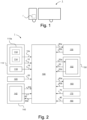
- Fig. 1 schematically illustrates a motor vehicle 1 according to one embodiment of the present invention.
- the exemplary vehicle 1 consists of a heavy vehicle in the form of a goods vehicle.
- the vehicle can alternatively consist of any arbitrary vehicle, such as a bus or a car.
- the vehicle contains a system I according to the present invention.
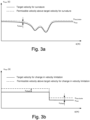
- Fig. 2 schematically illustrates a block diagram of a system I for adapting the velocity of a vehicle during driving of the vehicle along a route of travel according to one embodiment of the present invention.
- the system I comprises an electronic control unit 100.
- the system I comprises means 110 for determining the occurrence of velocity-limiting factors along the route of travel of the vehicle.
- the determination of the occurrence of velocity-limiting factors along the route of travel of the vehicle preferably occurs continuously by means of the means 110.
- Said velocity-limiting factors comprise safety-critical velocity-limiting factors including the curvature of the route of travel.
- Said velocity-limiting factors include the non-safety-critical velocity-limiting factors changes in velocity limitation along the route of travel of the vehicle.
- the means 110 for determining the occurrence of velocity-limiting factors along the route of travel of the vehicle comprise means for determining whether a determined velocity-limiting factor is safety-critical or non-safety-critical.
- the means 110 for determining the occurrence of velocity-limiting factors along the route of travel of the vehicle comprise a cartographic information unit 112 containing cartographic data including characteristics of the roadway along the route of travel of the vehicle, including velocity-limiting factors in the form of curvature and changes in velocity limitation along the route of travel of the vehicle.
- the means 110 for determining the occurrence of velocity-limiting factors along the route of travel of the vehicle comprise means 114 for determining the vehicle position.
- the means 114 for determining the vehicle position comprise a geographic positioning system for continuously determining the vehicle position along the route of travel.
- An example of a geographic positioning system can be GPS.
- the cartographic information unit 112 and the means 114 for determining the vehicle position are comprised in means 110a for determining the route of travel of the vehicle, wherein the means for determining the route of travel of the vehicle are arranged so as to provide predetermined characteristics of the roadway along the route of travel of the vehicle, including velocity-limiting factors in the form of curvature and changes in velocity limitation along the route of travel of the vehicle.
- Said cartographic data in the cartographic information unit 112 also include characteristics of the roadway along the route of travel of the vehicle, including topography.
- the cartographic information unit 112 and the means 114 for determining the vehicle position consequently make it possible to continuously identify the vehicle position and characteristics of the roadway, including velocity-limiting factors in the form of curvature and changes in velocity limitation along the route of travel of the vehicle.
- the means 110 for determining the occurrence of velocity-limiting factors along the route of travel of the vehicle comprise a camera element 116.
- the camera element 116 is arranged so as to detect characteristics of the roadway, including velocity-limiting factors in the form of curvature and changes in velocity limitation along the route of travel of the vehicle.
- the camera element 116 is arranged so as to detect the conformation of the widening of the road comprising bends in the roadway and/or road markings in order to thereby determine bends in the roadway along which the vehicle is traveling.
- the camera element 116 is arranged so as to detect road signs along the route of travel of the vehicle comprising speed limit signs, wherein the camera element 116 is arranged so as to determine changes in velocity limitation along the route of travel of the vehicle by sensing speed limit signs.
- the camera element can comprise one or more cameras for such detection.
- the means 110 for determining the occurrence of velocity-limiting factors along the route of travel of the vehicle comprise communication means for communication between the vehicle and other vehicles or between the vehicle and other entities in order to communicate velocity-limiting factors such as the start of congestion or the like.
- the means 110 for continuously determining the occurrence of velocity-limiting factors along the route of travel of the vehicle include means for performing said determination based on a predetermined distance- and/or time horizon ahead of the vehicle along the route of travel of the vehicle.
- the means 110 for continuously determining the occurrence of velocity-limiting factors along the route of travel of the vehicle comprise means for performing said determination based on a predetermined distance horizon ahead of the vehicle along the route of travel of the vehicle, wherein said distance horizon constitutes a suitable window in the form of a distance from the current vehicle position and forward along the route of travel of the vehicle.
- the magnitude of the distance horizon is on the order of several hundred meters, e.g. roughly 500 meters.
- the system I comprises means 120 for continuously determining the vehicle velocity.
- the means 120 for continuously determining the vehicle velocity comprise velocity-measuring elements.
- the system I comprises means 130 for prescribing a target velocity associated with a velocity-limiting factor.
- the system I comprises means 140 for determining, in connection with the determination of a velocity-limiting factor, the retardation required to achieve the prescribed target velocity at an occurring velocity-limiting factor.
- the means 140 for determining, in connection with the determination of a velocity-limiting factor, the retardation required to achieve the prescribed target velocity at an occurring velocity-limiting factor are arranged for continuous determination.
- v is the velocity that corresponds to the prescribed target velocity at an occurring velocity-limiting factor
- v 0 the current velocity
- a the required retardation
- s is the distance to the position of the velocity-limiting factor.
- the means 140 for determining the retardation required to achieve the prescribed velocity at an occurring velocity-limiting factor comprise means 142 for continuously determining driving resistance along the route of travel of the vehicle, wherein the driving resistance comprises one or more of the grade resistance, friction characteristics of the roadway, air resistance and rolling resistance.
- the positive part of the driving resistance is taken into account via the term max(0, a resavg ) in order to thus avoid braking on downhill stretches.
- the system I comprises means 150 for controlling the vehicle velocity so that a velocity associated with said target velocity is permitted to be higher than the target velocity by a given offset.
- the means 150 for controlling the vehicle velocity so that a velocity associated with said target velocity is permitted to be higher than the target velocity by a given offset comprise means 152 for adapting said offset so that a relatively larger offset is permitted in connection with a non-safety-critical velocity-limiting factor and a relatively smaller offset is permitted in connection with a safety-critical velocity-limiting factor.
- Safety-critical velocity-limiting factors include velocity limitations when taking curves.
- Non-safety-critical velocity-limiting factors include changes in velocity limitation along the route of travel of the vehicle.
- a non-safety-critical velocity-limiting factor comprising a change in velocity limitation along the route of travel of the vehicle
- the system I is configured so that the driver himself is permitted to set the offset to a desired level higher than the target velocity.
- safety-critical velocity-limiting factors also comprise other factors, such as a narrowing road, roadwork along the route of travel of the vehicle, obstacles such as speed bumps along the route of travel of the vehicle, a degraded road surface, increased traffic density/risk of congestion, etc.
- the system I comprises means 160 for prescribing velocity in the form of a velocity profile comprising retardations along the route of travel of the vehicle based on the occurrence of velocity-limiting factors along the route of travel of the vehicle.
- the velocity-limiting factors can include safety-critical velocity-limiting factors such as curvature/driving on curves and non-safety-critical velocity-limiting factors such as changes in velocity limitation along the route of travel of the vehicle.
- the system I further comprises means 170 for executing said velocity profile through continuous determination of required retardations.
- the system I comprises means 180 for determining a maximum permissible lateral acceleration.
- the means 180 for determining a maximum permissible lateral acceleration comprise the determination of a predetermined maximum permissible lateral acceleration, which is based on normal conditions with respect to vehicle characteristics, such as the length of the vehicle, width of the vehicle, carriage composition of the vehicle, load distribution of the vehicle, center of gravity of the vehicle, axle pressure of the vehicle and/or environmental characteristics such as the effective lane width, friction characteristics of the roadway, visibility conditions and the slope characteristics of the roadway.
- the predetermined maximum permissible lateral acceleration is on the order of 2 m/s 2 .
- the maximum permissible lateral acceleration here consists of a predetermined maximum permissible lateral acceleration.
- the electronic control unit 100 contains stored data concerning the maximum permissible lateral acceleration.
- v max a lat , max s / c s
- v max (s) is the maximum velocity for the stretch s ahead of the vehicle
- a lat,max (s) is the maximum permissible lateral acceleration on the stretch s ahead of the vehicle
- c(s) is the curvature of the stretch s ahead of the vehicle.
- v max thus constitutes the target velocity for a safety-critical velocity-limiting factor in the form of curvature along the route of travel of the vehicle.
- the speed limit for the road and thus a non-safety-critical velocity-limiting factor in the form of a change in velocity along the route of travel of the vehicle constitutes the maximum permissible velocity v max , and thus the target velocity.
- the means 150 are arranged so as to control the vehicle velocity so that a velocity v max,brake associated with said target velocity v max is permitted to be higher than the target velocity by a given v offset .
- the means 152 are thus arranged so as to adapt said offset v offser so that a relatively larger offset is permitted in connection with a non-safety-critical velocity-limiting factor and a relatively smaller offset is permitted in connection with a safety-critical velocity-limiting factor.
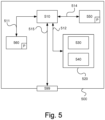
- Figs. 3a and 3b show examples of this.
- the means 152 are also arranged so as to adapt said offset v offsef so that a relatively larger offset is permitted in connection with a non-safety-critical velocity-limiting factor with a given higher velocity, and a relatively smaller offset is permitted in connection with a non-safety-critical velocity-limiting factor with a velocity that is lower relative to the higher velocity.
- the offset at 70 km/h could be on the order of 20 km/h, while the offset at 30 km/h could be on the order of 8 km/h.
- velocity limitation to 30 km/h could constitute a safety-critical velocity-limiting factor.
- the offset for a non-safety-critical velocity-limiting factor can be variable, so that the driver is permitted to set such an offset corresponding to a non-safety-critical velocity-limiting factor based on his desires and needs with respect to the driving of the vehicle.
- the electronic control unit 100 is in signal communication with the means 110 for determining the occurrence of velocity-limiting factors along the route of travel of the vehicle via a link 10.
- the electronic control unit 100 is arranged so as to receive, via the link 10, a signal from the means 110 representing data for velocity-limiting factors such as curvature and/or changes in velocity limitation.
- the electronic control unit 100 is in signal communication with the means 110a comprising the cartographic information unit 112 and the means 114 for determining the vehicle position via a link 10a.
- the electronic control unit 100 is arranged so as to receive, via the link 10a, a signal from the means 110a representing cartographic data for velocity-limiting factors in the form of curvature and changes in velocity limitation along the route of travel of the vehicle, and position data for the position of the curvature relative to the vehicle.
- the electronic control unit 100 is in signal communication with the camera element 116 via a link 16.
- the electronic control unit 100 is arranged so as to receive, via the link 16, a signal from the camera element 116 representing data for velocity-limiting factors comprising curvature data for the curvature of the roadway along the route of travel of the vehicle and data for changes in velocity limitation along the route of travel of the vehicle.
- the electronic control unit 100 is in signal communication with the means 120 for continuously determining the vehicle velocity via a link 20.
- the electronic control unit 100 is arranged so as to receive, via the link 20, a signal from the means 120 for continuously determining the vehicle velocity representing velocity data for the current vehicle velocity.
- the electronic control unit 100 is in signal communication with the means 130 for prescribing a target velocity associated with a velocity-limiting factor via a link 30a.
- the electronic control unit 100 is arranged so as to send, via the link 30a, a signal to the means 130 representing velocity data for a velocity corresponding to a velocity-limiting factor.
- the electronic control unit 100 is in signal communication with the means 130 for prescribing a target velocity associated with a velocity-limiting factor via a link 30b.
- the electronic control unit 100 is arranged so as to receive, via the link 30b, a signal from the means 130 representing velocity data for the prescribed target velocity associated with the velocity-limiting factor.
- the electronic control unit 100 is in signal communication with the means 140 for determining, in connection with the determination of a velocity-limiting factor, the acceleration required to achieve the prescribed target velocity at an occurring velocity-limiting factor via a link 40a.
- the electronic control unit 100 is arranged so as to receive, via the link 40a, a signal from the means 140 representing retardation data for the retardation data required to achieve the target velocity for the determined velocity-limiting factor at the velocity-limiting factor.
- the electronic control unit 100 is in signal communication with the means 142 for continuously determining driving resistance along the route of travel of the vehicle via a link 42.
- the electronic control unit 100 is arranged so as to receive, via the link 42, a signal from the means 142 representing driving resistance data.
- the electronic control unit 100 is in signal communication with the means 140 for determining, in connection with the determination of a velocity-limiting factor, the acceleration required to achieve the prescribed target velocity at an occurring velocity-limiting factor via a link 40b.
- the electronic control unit 100 is arranged so as to send, via the link 40b, a signal to the means 140 representing velocity data for the current vehicle velocity, data for the velocity-limiting factor, data concerning the distance to the velocity-limiting factor, and driving resistance data.
- the electronic control unit 100 is in signal communication with the means 150 for controlling the vehicle velocity so that a velocity associated with said target velocity is permitted to be higher than the target velocity by a given offset via a link 50.
- the electronic control unit 100 is arranged so as to receive, via the link 50, a signal from the means 150 representing velocity data for a velocity associated with the target velocity and higher than the target velocity by a given offset.
- the electronic control unit 100 is in signal communication with the means 152 for adapting said offset so that a relatively larger offset is permitted in connection with a non-safety-critical velocity-limiting factor and a relatively smaller offset is permitted in connection with a safety-critical velocity-limiting factor via a link 52a.
- the electronic control unit 100 is arranged so as to send, via the link 52a, a signal to the means 152 representing data for the type of velocity-limiting factor, i.e. safety-critical velocity-limiting factors such as curvature, or non-safety-critical velocity-limiting factors such as a change in velocity limitation along the route of travel of the vehicle.
- the electronic control unit 100 is in signal communication with the means 152 for adapting said offset so that a relatively larger offset is permitted in connection with a non-safety-critical velocity-limiting factor and a relatively smaller offset is permitted in connection with a safety-critical velocity-limiting factor via a link 52b.
- the electronic control unit 100 is arranged so as to receive, via the link 52b, a signal from the means 152 representing offset data concerning the offset for the vehicle velocity higher than the target velocity toward which the vehicle is to be controlled, based on whether the velocity-limiting factor is safety-critical or non-safety-critical.
- the electronic control unit 100 is in signal communication with the means 160 for prescribing velocity in the form of a velocity profile comprising retardations along the route of travel of the vehicle based on the occurrence of velocity-limiting factors along the route of travel of the vehicle via a link 60a.
- the electronic control unit 100 is arranged so as to send, via the link 60a, a signal to the means 160 representing retardation data for the required retardation.
- the electronic control unit 100 is in signal communication with the means 160 for prescribing velocity in the form of a velocity profile comprising retardations along the route of travel of the vehicle based on the occurrence of velocity-limiting factors along the route of travel of the vehicle via a link 60b.
- the electronic control unit 100 is arranged so as to receive, via the link 60b, a signal from the means 160 representing velocity data for a prescribed velocity corresponding to a velocity profile.
- the electronic control unit 100 is in signal communication with the means 170 for executing said velocity profile by continuously determining required retardations via a link 70.
- the electronic control unit 100 is arranged so as to receive, via the link 70, a signal from the means 170 representing execution data for executing the velocity profile.
- the electronic control unit 100 is in signal communication with the means 180 for determining a maximum permissible lateral acceleration via a link 80.
- the electronic control unit 100 is arranged so as to receive, via the link 80, a signal from the means 180 representing lateral acceleration data for the maximum permissible lateral acceleration.
- Fig. 3a schematically illustrates a velocity profile for taking a curve representing a target velocity v max and a permissible velocity v max,brake that exceeds the target velocity by a given offset v offset1 , according to one embodiment of the present invention.
- Fig. 3b schematically illustrates a velocity profile for a change in velocity limitation representing a target velocity v max and a permissible velocity v max,brake that exceeds the target velocity by a given offset v offset2 , according to one embodiment of the present invention.
- the means 150 for controlling the vehicle velocity so that a velocity associated with said target velocity is permitted to be higher than the target velocity by a given offset are thus arranged, by means of the means 152, so as to adapt said offset so that a relatively larger offset v offset2 , v offset3 is permitted in connection with the non-safety-critical velocity-limiting factor in Fig. 3b in the form of a change in velocity, and so that a relatively smaller offset v offset1 is permitted in connection with the safety-critical velocity-limiting factor in Fig. 3a in the form of a curvature, here an S curve.
- the means 150 for controlling the vehicle velocity so that a velocity associated with said target velocity is permitted to be higher than the target velocity by a given offset are thus arranged, by means of the means 152, so as to adapt said offset so that a relatively larger offset v offsef2 is permitted at a higher velocity in connection with the non-safety-critical velocity-limiting factor and a relatively smaller offset v offsef3 is permitted at a lower velocity in connection with the non-safety-critical velocity-limiting factor.
- the means 152 are arranged so as to adapt said offset so that a first offset is permitted at a given velocity in connection with the non-safety-critical velocity-limiting factor, and a second offset that differs from the first offset is permitted in connection with a velocity change to a different velocity in connection with the non-safety-critical velocity-limiting factor.
- said offset in connection with the non-safety-critical velocity-limiting factor is adjustable, so that the driver can have an offset consistent with the desired driving of the vehicle.
- Fig. 4 schematically illustrates a block diagram of a method for adapting the velocity of a vehicle during driving of the vehicle along a route of travel according to one embodiment of the present invention.
- the method for adapting the velocity of a vehicle during driving of the vehicle along a route of travel comprises a first step S1.
- a velocity is prescribed in the form of a velocity profile comprising retardations along the route of travel of the vehicle based on the occurrence of velocity-limiting factors along the route of travel of the vehicle
- the method for adapting the velocity of a vehicle during driving of the vehicle along a route of travel comprises a second step S2.
- a target velocity associated with a velocity-limiting factor is prescribed.
- the method for adapting the velocity of a vehicle during driving of the vehicle along a route of travel comprises a third step S3.
- the vehicle velocity is controlled so that a velocity associated with said target velocity is permitted to be higher than the target velocity by a given offset, wherein said offset is adapted so that a relatively larger offset is permitted in connection with a non-safety-critical velocity-limiting factor and a relatively smaller offset is permitted in connection with a safety-critical velocity-limiting factor.
- the control unit 100 that is described with reference to Fig. 2 can comprise the device 500.
- the device 500 comprises a non-volatile memory 520, a data-processing unit 510 and a read/write memory 550.
- the non-volatile memory 520 has a first memory part 530 in which a computer program, such as an operating system, is stored for controlling the function of the device 500.
- the device 500 further comprises a bus controller, a serial communication port, I/O elements, an A/D converter, a time and date input and transfer unit, an event counter and an interrupt controller (not shown).
- the non-volatile memory 520 also has a second memory part 540.
- a computer program P contains routines for adapting the velocity of a vehicle during driving of the vehicle along a route of travel according to the innovative method.
- the program P contains routines for prescribing velocity in the form of a velocity profile comprising retardations along the route of travel of the vehicle based on the occurrence of velocity-limiting factors along the route of travel of the vehicle.
- the program P contains routines for prescribing a target velocity associated with a velocity-limiting factor.
- the program P contains routines for controlling the vehicle velocity so that a velocity associated with said target velocity is permitted to be higher than the target velocity by a given offset, wherein said offset is adapted so that a relatively larger offset is permitted in connection with a non-safety-critical velocity-limiting factor and a relatively smaller offset is permitted in connect with a safety-critical velocity-limiting factor.
- the program P can be stored in executable fashion or compressed fashion in a memory 560 and/or in a read/write memory 550.
- the data-processing unit 510 executes a certain part of the program that is stored in the memory 560, or a certain part of the program that is stored in the read/write memory 550.
- the data-processing device 510 can communicate with a data port 599 via a data bus 515.
- the non-volatile memory 520 is intended for communication with the data-processing unit 510 via a data bus 512.
- the separate memory 560 is intended to communicate with the data-processing unit 510 via a data bus 511.
- the read/write memory 550 is arranged so as to communicate with the data-processing unit 510 via a data bus 514.
- the links connected to the control unit 100 can be connected to the data port 599.
- the data-processing unit 510 is arranged so as to carry out the execution of code in a manner as described above.
- the signals received at the data port 599 can be used by the device 500 to prescribe velocity in the form of a velocity profile comprising retardations along the route of travel of the vehicle based on the occurrence of velocity-limiting factors along the route of travel of the vehicle.
- the signals received at the data port 599 can be used by the device 500 to prescribe a target velocity associated with a velocity-limiting factor.
- the signals received at the data port 599 can be used by the device 500 to control the vehicle velocity so that a velocity associated with said target velocity is permitted to be higher than the target velocity by a given offset, wherein said offset is adapted so that a relatively larger offset is permitted in connection with a non-safety-critical velocity-limiting factor and a relatively smaller offset is permitted in connection with a safety-critical velocity-limiting factor.
- Parts of the methods described herein can be performed by the device 500 with the help of the data-processing unit 510 that runs the program stored in the memory 560 or the read/write memory 550.
- the method described herein is executed when the device 500 runs the program.
Landscapes
- Engineering & Computer Science (AREA)
- Transportation (AREA)
- Mechanical Engineering (AREA)
- Automation & Control Theory (AREA)
- Physics & Mathematics (AREA)
- Mathematical Physics (AREA)
- Human Computer Interaction (AREA)
- Chemical & Material Sciences (AREA)
- Combustion & Propulsion (AREA)
- Control Of Driving Devices And Active Controlling Of Vehicle (AREA)
- Electric Propulsion And Braking For Vehicles (AREA)
Claims (11)
- Procédé d'adaptation de la vitesse d'un véhicule (1) pendant la conduite du véhicule le long d'un itinéraire de déplacement, comprenant les étapes consistant à : imposer (S1) la vitesse sous la forme d'un profil de vitesse comprenant des retards le long de l'itinéraire de déplacement du véhicule sur la base de l'occurrence de facteurs de limitation de vitesse le long de l'itinéraire de déplacement du véhicule ; imposer (S2) une vitesse cible associée à un facteur de limitation de vitesse, et
commander (S3) la vitesse du véhicule de telle sorte qu'une vitesse associée à ladite vitesse cible est autorisée à être supérieure à la vitesse cible d'un décalage donné, caractérisé en ce que ledit décalage est adapté de telle sorte qu'un décalage relativement plus grand est autorisé en liaison avec un facteur de limitation de vitesse non critique pour la sécurité et qu'un décalage relativement plus petit est autorisé en liaison avec un facteur de limitation de vitesse critique pour la sécurité. - Procédé selon la revendication 1, dans lequel des facteurs de limitation de vitesse critiques pour la sécurité comportent des limitations de vitesse lors de la prise de virages.
- Procédé selon la revendication 1 ou 2, dans lequel des facteurs non critiques pour la sécurité comportent des changements dans la limitation de vitesse le long de l'itinéraire de déplacement du véhicule.
- Procédé selon l'une quelconque des revendications 1 à 3, comprenant l'étape consistant à exécuter ledit profil de vitesse en déterminant en continu les retards requis.
- Système (I) d'adaptation de la vitesse d'un véhicule (1) pendant la conduite du véhicule le long d'un itinéraire de déplacement, comprenant des moyens (160) pour imposer la vitesse sous la forme d'un profil de vitesse comprenant des retards le long de l'itinéraire de déplacement du véhicule sur la base de l'occurrence de facteurs de limitation de vitesse le long de l'itinéraire de déplacement du véhicule ; et des moyens (130) pour imposer une vitesse cible associée à un facteur de limitation de vitesse, et des moyens (150) pour commander la vitesse du véhicule de sorte qu'une vitesse associée à ladite vitesse cible est autorisée à être supérieure à la vitesse cible d'un décalage donné, caractérisé en ce qu'il comprend des moyens (152) pour adapter ledit décalage de sorte qu'un décalage relativement plus grand est autorisé en liaison avec un facteur de limitation de vitesse non critique pour la sécurité et qu'un décalage relativement plus petit est autorisé en liaison avec un facteur de limitation de vitesse critique pour la sécurité.
- Système selon la revendication 5, dans lequel des facteurs critiques pour la sécurité comportent des limitations de vitesse lors de la prise de virages.
- Système selon la revendication 5 ou 6, où des facteurs de limitation de vitesse non critiques pour la sécurité comportent des changements dans la limitation de vitesse le long de l'itinéraire de déplacement du véhicule.
- Système selon l'une quelconque des revendications 5 à 7, comprenant des moyens (170) pour exécuter ledit profil de vitesse en déterminant en continu les retards requis.
- Véhicule (1) contenant un système selon l'une quelconque des revendications 5 à 8.
- Programme d'ordinateur (P) pour l'adaptation de la vitesse d'un véhicule pendant la conduite du véhicule le long d'un itinéraire de déplacement, dans lequel ledit programme d'ordinateur (P) contient un code de programme qui, lorsqu'il est exécuté par une unité de commande électronique (100) ou un autre ordinateur (500) connecté à l'unité de commande électronique (100), permet à l'unité de commande électronique (100) de réaliser les étapes selon les revendications 1-4.
- Produit de programme d'ordinateur contenant un support de stockage numérique qui stocke le programme d'ordinateur selon la revendication 10.
Applications Claiming Priority (2)
| Application Number | Priority Date | Filing Date | Title |
|---|---|---|---|
| SE1450599A SE540524C2 (sv) | 2014-05-21 | 2014-05-21 | Förfarande och system för att anpassa ett fordons hastighet vid framförande av fordonet utmed en färdväg |
| PCT/SE2015/050571 WO2015178841A1 (fr) | 2014-05-21 | 2015-05-20 | Procédé et système pour adapter la vitesse d'un véhicule pendant la conduite du véhicule le long d'un itinéraire de déplacement |
Publications (3)
| Publication Number | Publication Date |
|---|---|
| EP3145778A1 EP3145778A1 (fr) | 2017-03-29 |
| EP3145778A4 EP3145778A4 (fr) | 2018-02-07 |
| EP3145778B1 true EP3145778B1 (fr) | 2024-08-07 |
Family
ID=54554382
Family Applications (1)
| Application Number | Title | Priority Date | Filing Date |
|---|---|---|---|
| EP15795611.1A Active EP3145778B1 (fr) | 2014-05-21 | 2015-05-20 | Procédé et système pour adapter la vitesse d'un véhicule pendant la conduite du véhicule le long d'un itinéraire de déplacement |
Country Status (5)
| Country | Link |
|---|---|
| EP (1) | EP3145778B1 (fr) |
| KR (1) | KR101899998B1 (fr) |
| BR (1) | BR112016024909A2 (fr) |
| SE (1) | SE540524C2 (fr) |
| WO (1) | WO2015178841A1 (fr) |
Families Citing this family (5)
| Publication number | Priority date | Publication date | Assignee | Title |
|---|---|---|---|---|
| GB2594720B (en) * | 2020-05-05 | 2023-02-01 | Jaguar Land Rover Ltd | Automatic speed control for a vehicle |
| KR20210154296A (ko) * | 2020-06-11 | 2021-12-21 | 주식회사 만도모빌리티솔루션즈 | 운전자 보조 시스템 |
| JP7517221B2 (ja) * | 2021-03-25 | 2024-07-17 | トヨタ自動車株式会社 | 自動速度制御装置、自動速度制御方法及び自動速度制御プログラム |
| GB2618344B (en) * | 2022-05-04 | 2024-09-11 | Jaguar Land Rover Ltd | Automatic speed control |
| GB2618345B (en) * | 2022-05-04 | 2024-08-21 | Jaguar Land Rover Ltd | Automatic speed control |
Citations (1)
| Publication number | Priority date | Publication date | Assignee | Title |
|---|---|---|---|---|
| DE102013221662A1 (de) * | 2012-10-31 | 2014-04-30 | GM Global Technology Operations LLC (n. d. Gesetzen des Staates Delaware) | Systeme und Verfahren zur Geschwindigkeitsregelung von Fahrzeugen |
Family Cites Families (5)
| Publication number | Priority date | Publication date | Assignee | Title |
|---|---|---|---|---|
| DE10225892A1 (de) * | 2002-06-11 | 2004-01-08 | Robert Bosch Gmbh | Verfahren und Vorrichtung zur Begrenzung der Kurvengeschwindigkeit |
| JP2007050794A (ja) * | 2005-08-18 | 2007-03-01 | Toyota Motor Corp | 車両の減速制御装置 |
| DE102007036794B4 (de) * | 2007-08-03 | 2014-05-28 | Dr. Ing. H.C. F. Porsche Aktiengesellschaft | Verfahren zur Festlegung der Fahrstrategie eines Fahrzeuges |
| DE102009023489A1 (de) * | 2009-05-30 | 2010-12-16 | Daimler Ag | Verfahren und Vorrichtung zur Geschwindigkeitsregelung eines Fahrzeugs |
| US8996273B2 (en) * | 2012-08-31 | 2015-03-31 | GM Global Technology Operations LLC | Anticipatory cruise control |
-
2014
- 2014-05-21 SE SE1450599A patent/SE540524C2/sv unknown
-
2015
- 2015-05-20 EP EP15795611.1A patent/EP3145778B1/fr active Active
- 2015-05-20 BR BR112016024909A patent/BR112016024909A2/pt not_active Application Discontinuation
- 2015-05-20 KR KR1020167034357A patent/KR101899998B1/ko active Active
- 2015-05-20 WO PCT/SE2015/050571 patent/WO2015178841A1/fr not_active Ceased
Patent Citations (1)
| Publication number | Priority date | Publication date | Assignee | Title |
|---|---|---|---|---|
| DE102013221662A1 (de) * | 2012-10-31 | 2014-04-30 | GM Global Technology Operations LLC (n. d. Gesetzen des Staates Delaware) | Systeme und Verfahren zur Geschwindigkeitsregelung von Fahrzeugen |
Also Published As
| Publication number | Publication date |
|---|---|
| KR101899998B1 (ko) | 2018-11-05 |
| EP3145778A4 (fr) | 2018-02-07 |
| SE1450599A1 (sv) | 2015-11-22 |
| EP3145778A1 (fr) | 2017-03-29 |
| WO2015178841A1 (fr) | 2015-11-26 |
| KR20170005067A (ko) | 2017-01-11 |
| BR112016024909A2 (pt) | 2017-08-15 |
| SE540524C2 (sv) | 2018-09-25 |
Similar Documents
| Publication | Publication Date | Title |
|---|---|---|
| CN102632888B (zh) | 用于警告车辆驾驶员的方法和警告装置以及车辆 | |
| EP2537727B1 (fr) | Procédé d'estimation du profil de vitesse pour un véhicule | |
| US9669664B2 (en) | Method, control device and system for determining a tread depth of a tread of a tire | |
| US9233692B2 (en) | Method to control a vehicle path during autonomous braking | |
| Chu et al. | Rollover speed prediction on curves for heavy vehicles using mobile smartphone | |
| EP3663153A1 (fr) | Dispositif de commande de véhicule | |
| EP3145778B1 (fr) | Procédé et système pour adapter la vitesse d'un véhicule pendant la conduite du véhicule le long d'un itinéraire de déplacement | |
| WO2015178838A1 (fr) | Procédé et système permettant d'améliorer l'efficacité de fonctionnement d'un véhicule pendant la conduite d'un véhicule le long d'un itinéraire de déplacement | |
| KR102608804B1 (ko) | 차량을 안전하게 하기 위한 방법 | |
| EP3666612A1 (fr) | Dispositif de commande de véhicule | |
| EP3145781A1 (fr) | Procédé et système conçus pour adapter l'accélération d'un véhicule pendant la conduite du véhicule le long d'un itinéraire de déplacement | |
| CN107128314A (zh) | 用于牵引车辆的增强的车辆横向控制(车道跟随/车道保持/车道变换控制) | |
| EP2712780A1 (fr) | Procédé et appareil permettant de mettre en oeuvre une aide à la conduite | |
| EP2470406B1 (fr) | Système et procédé de maintien des temps de conduite | |
| WO2015178845A1 (fr) | Procédé et système d'adaptation de la vitesse d'un véhicule lors de la prise d'une courbe | |
| WO2015178843A1 (fr) | Procédé et système permettant l'adaptation de la vitesse d'un véhicule lors de la prise d'un virage | |
| US12371018B2 (en) | Driver assistance method with virtual target for adaptive cruise control | |
| KR102255437B1 (ko) | 곡선로 주행과 관련하여 도로상에서의 차량 주행을 적합화 하기 위한 방법 및 시스템 | |
| JP6372964B2 (ja) | 車両の走行レーン監視方法および制御器 | |
| KR20170005077A (ko) | 곡선로 주행과 관련하여 도로에서의 차량 주행을 적합화 하기 위한 방법 및 시스템 | |
| KR20170005076A (ko) | 차량이 커브를 주행할 때 안전하게 주행하기 위한 시스템 및 방법 |
Legal Events
| Date | Code | Title | Description |
|---|---|---|---|
| STAA | Information on the status of an ep patent application or granted ep patent |
Free format text: STATUS: THE INTERNATIONAL PUBLICATION HAS BEEN MADE |
|
| PUAI | Public reference made under article 153(3) epc to a published international application that has entered the european phase |
Free format text: ORIGINAL CODE: 0009012 |
|
| STAA | Information on the status of an ep patent application or granted ep patent |
Free format text: STATUS: REQUEST FOR EXAMINATION WAS MADE |
|
| 17P | Request for examination filed |
Effective date: 20161221 |
|
| AK | Designated contracting states |
Kind code of ref document: A1 Designated state(s): AL AT BE BG CH CY CZ DE DK EE ES FI FR GB GR HR HU IE IS IT LI LT LU LV MC MK MT NL NO PL PT RO RS SE SI SK SM TR |
|
| AX | Request for extension of the european patent |
Extension state: BA ME |
|
| DAV | Request for validation of the european patent (deleted) | ||
| DAX | Request for extension of the european patent (deleted) | ||
| A4 | Supplementary search report drawn up and despatched |
Effective date: 20180110 |
|
| RIC1 | Information provided on ipc code assigned before grant |
Ipc: B60K 31/00 20060101ALI20180104BHEP Ipc: B60W 30/14 20060101AFI20180104BHEP Ipc: B60W 40/072 20120101ALI20180104BHEP Ipc: B60W 30/18 20120101ALI20180104BHEP Ipc: B60W 50/00 20060101ALI20180104BHEP |
|
| RAP3 | Party data changed (applicant data changed or rights of an application transferred) |
Owner name: SCANIA CV AB |
|
| STAA | Information on the status of an ep patent application or granted ep patent |
Free format text: STATUS: EXAMINATION IS IN PROGRESS |
|
| 17Q | First examination report despatched |
Effective date: 20211118 |
|
| P01 | Opt-out of the competence of the unified patent court (upc) registered |
Effective date: 20230518 |
|
| GRAP | Despatch of communication of intention to grant a patent |
Free format text: ORIGINAL CODE: EPIDOSNIGR1 |
|
| STAA | Information on the status of an ep patent application or granted ep patent |
Free format text: STATUS: GRANT OF PATENT IS INTENDED |
|
| INTG | Intention to grant announced |
Effective date: 20240326 |
|
| GRAS | Grant fee paid |
Free format text: ORIGINAL CODE: EPIDOSNIGR3 |
|
| GRAA | (expected) grant |
Free format text: ORIGINAL CODE: 0009210 |
|
| STAA | Information on the status of an ep patent application or granted ep patent |
Free format text: STATUS: THE PATENT HAS BEEN GRANTED |
|
| AK | Designated contracting states |
Kind code of ref document: B1 Designated state(s): AL AT BE BG CH CY CZ DE DK EE ES FI FR GB GR HR HU IE IS IT LI LT LU LV MC MK MT NL NO PL PT RO RS SE SI SK SM TR |
|
| REG | Reference to a national code |
Ref country code: GB Ref legal event code: FG4D |
|
| REG | Reference to a national code |
Ref country code: CH Ref legal event code: EP |
|
| REG | Reference to a national code |
Ref country code: IE Ref legal event code: FG4D |
|
| REG | Reference to a national code |
Ref country code: DE Ref legal event code: R096 Ref document number: 602015089461 Country of ref document: DE |
|
| REG | Reference to a national code |
Ref country code: LT Ref legal event code: MG9D |
|
| REG | Reference to a national code |
Ref country code: NL Ref legal event code: MP Effective date: 20240807 |
|
| PG25 | Lapsed in a contracting state [announced via postgrant information from national office to epo] |
Ref country code: NO Free format text: LAPSE BECAUSE OF FAILURE TO SUBMIT A TRANSLATION OF THE DESCRIPTION OR TO PAY THE FEE WITHIN THE PRESCRIBED TIME-LIMIT Effective date: 20241107 |
|
| REG | Reference to a national code |
Ref country code: AT Ref legal event code: MK05 Ref document number: 1710606 Country of ref document: AT Kind code of ref document: T Effective date: 20240807 |
|
| PG25 | Lapsed in a contracting state [announced via postgrant information from national office to epo] |
Ref country code: PL Free format text: LAPSE BECAUSE OF FAILURE TO SUBMIT A TRANSLATION OF THE DESCRIPTION OR TO PAY THE FEE WITHIN THE PRESCRIBED TIME-LIMIT Effective date: 20240807 Ref country code: FI Free format text: LAPSE BECAUSE OF FAILURE TO SUBMIT A TRANSLATION OF THE DESCRIPTION OR TO PAY THE FEE WITHIN THE PRESCRIBED TIME-LIMIT Effective date: 20240807 Ref country code: NL Free format text: LAPSE BECAUSE OF FAILURE TO SUBMIT A TRANSLATION OF THE DESCRIPTION OR TO PAY THE FEE WITHIN THE PRESCRIBED TIME-LIMIT Effective date: 20240807 Ref country code: PT Free format text: LAPSE BECAUSE OF FAILURE TO SUBMIT A TRANSLATION OF THE DESCRIPTION OR TO PAY THE FEE WITHIN THE PRESCRIBED TIME-LIMIT Effective date: 20241209 Ref country code: GR Free format text: LAPSE BECAUSE OF FAILURE TO SUBMIT A TRANSLATION OF THE DESCRIPTION OR TO PAY THE FEE WITHIN THE PRESCRIBED TIME-LIMIT Effective date: 20241108 |
|
| PG25 | Lapsed in a contracting state [announced via postgrant information from national office to epo] |
Ref country code: BG Free format text: LAPSE BECAUSE OF FAILURE TO SUBMIT A TRANSLATION OF THE DESCRIPTION OR TO PAY THE FEE WITHIN THE PRESCRIBED TIME-LIMIT Effective date: 20240807 |
|
| PG25 | Lapsed in a contracting state [announced via postgrant information from national office to epo] |
Ref country code: LV Free format text: LAPSE BECAUSE OF FAILURE TO SUBMIT A TRANSLATION OF THE DESCRIPTION OR TO PAY THE FEE WITHIN THE PRESCRIBED TIME-LIMIT Effective date: 20240807 |
|
| PG25 | Lapsed in a contracting state [announced via postgrant information from national office to epo] |
Ref country code: IS Free format text: LAPSE BECAUSE OF FAILURE TO SUBMIT A TRANSLATION OF THE DESCRIPTION OR TO PAY THE FEE WITHIN THE PRESCRIBED TIME-LIMIT Effective date: 20241207 Ref country code: AT Free format text: LAPSE BECAUSE OF FAILURE TO SUBMIT A TRANSLATION OF THE DESCRIPTION OR TO PAY THE FEE WITHIN THE PRESCRIBED TIME-LIMIT Effective date: 20240807 |
|
| PG25 | Lapsed in a contracting state [announced via postgrant information from national office to epo] |
Ref country code: HR Free format text: LAPSE BECAUSE OF FAILURE TO SUBMIT A TRANSLATION OF THE DESCRIPTION OR TO PAY THE FEE WITHIN THE PRESCRIBED TIME-LIMIT Effective date: 20240807 |
|
| PG25 | Lapsed in a contracting state [announced via postgrant information from national office to epo] |
Ref country code: RS Free format text: LAPSE BECAUSE OF FAILURE TO SUBMIT A TRANSLATION OF THE DESCRIPTION OR TO PAY THE FEE WITHIN THE PRESCRIBED TIME-LIMIT Effective date: 20241107 Ref country code: ES Free format text: LAPSE BECAUSE OF FAILURE TO SUBMIT A TRANSLATION OF THE DESCRIPTION OR TO PAY THE FEE WITHIN THE PRESCRIBED TIME-LIMIT Effective date: 20240807 |
|
| PG25 | Lapsed in a contracting state [announced via postgrant information from national office to epo] |
Ref country code: RS Free format text: LAPSE BECAUSE OF FAILURE TO SUBMIT A TRANSLATION OF THE DESCRIPTION OR TO PAY THE FEE WITHIN THE PRESCRIBED TIME-LIMIT Effective date: 20241107 Ref country code: PT Free format text: LAPSE BECAUSE OF FAILURE TO SUBMIT A TRANSLATION OF THE DESCRIPTION OR TO PAY THE FEE WITHIN THE PRESCRIBED TIME-LIMIT Effective date: 20241209 Ref country code: PL Free format text: LAPSE BECAUSE OF FAILURE TO SUBMIT A TRANSLATION OF THE DESCRIPTION OR TO PAY THE FEE WITHIN THE PRESCRIBED TIME-LIMIT Effective date: 20240807 Ref country code: NO Free format text: LAPSE BECAUSE OF FAILURE TO SUBMIT A TRANSLATION OF THE DESCRIPTION OR TO PAY THE FEE WITHIN THE PRESCRIBED TIME-LIMIT Effective date: 20241107 Ref country code: NL Free format text: LAPSE BECAUSE OF FAILURE TO SUBMIT A TRANSLATION OF THE DESCRIPTION OR TO PAY THE FEE WITHIN THE PRESCRIBED TIME-LIMIT Effective date: 20240807 Ref country code: LV Free format text: LAPSE BECAUSE OF FAILURE TO SUBMIT A TRANSLATION OF THE DESCRIPTION OR TO PAY THE FEE WITHIN THE PRESCRIBED TIME-LIMIT Effective date: 20240807 Ref country code: IS Free format text: LAPSE BECAUSE OF FAILURE TO SUBMIT A TRANSLATION OF THE DESCRIPTION OR TO PAY THE FEE WITHIN THE PRESCRIBED TIME-LIMIT Effective date: 20241207 Ref country code: HR Free format text: LAPSE BECAUSE OF FAILURE TO SUBMIT A TRANSLATION OF THE DESCRIPTION OR TO PAY THE FEE WITHIN THE PRESCRIBED TIME-LIMIT Effective date: 20240807 Ref country code: GR Free format text: LAPSE BECAUSE OF FAILURE TO SUBMIT A TRANSLATION OF THE DESCRIPTION OR TO PAY THE FEE WITHIN THE PRESCRIBED TIME-LIMIT Effective date: 20241108 Ref country code: FI Free format text: LAPSE BECAUSE OF FAILURE TO SUBMIT A TRANSLATION OF THE DESCRIPTION OR TO PAY THE FEE WITHIN THE PRESCRIBED TIME-LIMIT Effective date: 20240807 Ref country code: ES Free format text: LAPSE BECAUSE OF FAILURE TO SUBMIT A TRANSLATION OF THE DESCRIPTION OR TO PAY THE FEE WITHIN THE PRESCRIBED TIME-LIMIT Effective date: 20240807 Ref country code: BG Free format text: LAPSE BECAUSE OF FAILURE TO SUBMIT A TRANSLATION OF THE DESCRIPTION OR TO PAY THE FEE WITHIN THE PRESCRIBED TIME-LIMIT Effective date: 20240807 Ref country code: AT Free format text: LAPSE BECAUSE OF FAILURE TO SUBMIT A TRANSLATION OF THE DESCRIPTION OR TO PAY THE FEE WITHIN THE PRESCRIBED TIME-LIMIT Effective date: 20240807 |
|
| PG25 | Lapsed in a contracting state [announced via postgrant information from national office to epo] |
Ref country code: RO Free format text: LAPSE BECAUSE OF FAILURE TO SUBMIT A TRANSLATION OF THE DESCRIPTION OR TO PAY THE FEE WITHIN THE PRESCRIBED TIME-LIMIT Effective date: 20240807 Ref country code: DK Free format text: LAPSE BECAUSE OF FAILURE TO SUBMIT A TRANSLATION OF THE DESCRIPTION OR TO PAY THE FEE WITHIN THE PRESCRIBED TIME-LIMIT Effective date: 20240807 Ref country code: SM Free format text: LAPSE BECAUSE OF FAILURE TO SUBMIT A TRANSLATION OF THE DESCRIPTION OR TO PAY THE FEE WITHIN THE PRESCRIBED TIME-LIMIT Effective date: 20240807 |
|
| PG25 | Lapsed in a contracting state [announced via postgrant information from national office to epo] |
Ref country code: EE Free format text: LAPSE BECAUSE OF FAILURE TO SUBMIT A TRANSLATION OF THE DESCRIPTION OR TO PAY THE FEE WITHIN THE PRESCRIBED TIME-LIMIT Effective date: 20240807 |
|
| PG25 | Lapsed in a contracting state [announced via postgrant information from national office to epo] |
Ref country code: CZ Free format text: LAPSE BECAUSE OF FAILURE TO SUBMIT A TRANSLATION OF THE DESCRIPTION OR TO PAY THE FEE WITHIN THE PRESCRIBED TIME-LIMIT Effective date: 20240807 |
|
| PG25 | Lapsed in a contracting state [announced via postgrant information from national office to epo] |
Ref country code: SK Free format text: LAPSE BECAUSE OF FAILURE TO SUBMIT A TRANSLATION OF THE DESCRIPTION OR TO PAY THE FEE WITHIN THE PRESCRIBED TIME-LIMIT Effective date: 20240807 |
|
| REG | Reference to a national code |
Ref country code: DE Ref legal event code: R097 Ref document number: 602015089461 Country of ref document: DE |
|
| PLBE | No opposition filed within time limit |
Free format text: ORIGINAL CODE: 0009261 |
|
| STAA | Information on the status of an ep patent application or granted ep patent |
Free format text: STATUS: NO OPPOSITION FILED WITHIN TIME LIMIT |
|
| PGFP | Annual fee paid to national office [announced via postgrant information from national office to epo] |
Ref country code: DE Payment date: 20250402 Year of fee payment: 11 |
|
| PGFP | Annual fee paid to national office [announced via postgrant information from national office to epo] |
Ref country code: GB Payment date: 20250401 Year of fee payment: 11 |
|
| PGFP | Annual fee paid to national office [announced via postgrant information from national office to epo] |
Ref country code: BE Payment date: 20250410 Year of fee payment: 11 |
|
| 26N | No opposition filed |
Effective date: 20250508 |
|
| PGFP | Annual fee paid to national office [announced via postgrant information from national office to epo] |
Ref country code: FR Payment date: 20250401 Year of fee payment: 11 |
|
| PG25 | Lapsed in a contracting state [announced via postgrant information from national office to epo] |
Ref country code: SE Free format text: LAPSE BECAUSE OF FAILURE TO SUBMIT A TRANSLATION OF THE DESCRIPTION OR TO PAY THE FEE WITHIN THE PRESCRIBED TIME-LIMIT Effective date: 20240807 |
|
| REG | Reference to a national code |
Ref country code: CH Ref legal event code: H13 Free format text: ST27 STATUS EVENT CODE: U-0-0-H10-H13 (AS PROVIDED BY THE NATIONAL OFFICE) Effective date: 20251223 |
|
| PG25 | Lapsed in a contracting state [announced via postgrant information from national office to epo] |
Ref country code: LU Free format text: LAPSE BECAUSE OF NON-PAYMENT OF DUE FEES Effective date: 20250520 |
|
| PG25 | Lapsed in a contracting state [announced via postgrant information from national office to epo] |
Ref country code: CH Free format text: LAPSE BECAUSE OF NON-PAYMENT OF DUE FEES Effective date: 20250531 |
|
| PG25 | Lapsed in a contracting state [announced via postgrant information from national office to epo] |
Ref country code: IT Free format text: LAPSE BECAUSE OF FAILURE TO SUBMIT A TRANSLATION OF THE DESCRIPTION OR TO PAY THE FEE WITHIN THE PRESCRIBED TIME-LIMIT Effective date: 20240807 |
|
| PG25 | Lapsed in a contracting state [announced via postgrant information from national office to epo] |
Ref country code: MC Free format text: LAPSE BECAUSE OF FAILURE TO SUBMIT A TRANSLATION OF THE DESCRIPTION OR TO PAY THE FEE WITHIN THE PRESCRIBED TIME-LIMIT Effective date: 20240807 |
|
| PG25 | Lapsed in a contracting state [announced via postgrant information from national office to epo] |
Ref country code: IE Free format text: LAPSE BECAUSE OF NON-PAYMENT OF DUE FEES Effective date: 20250520 |