EP3146774B1 - Feine zeitmessungspositionierung und verbesserungen in drahtlosen lokalen netzwerken - Google Patents
Feine zeitmessungspositionierung und verbesserungen in drahtlosen lokalen netzwerken Download PDFInfo
- Publication number
- EP3146774B1 EP3146774B1 EP15809884.8A EP15809884A EP3146774B1 EP 3146774 B1 EP3146774 B1 EP 3146774B1 EP 15809884 A EP15809884 A EP 15809884A EP 3146774 B1 EP3146774 B1 EP 3146774B1
- Authority
- EP
- European Patent Office
- Prior art keywords
- ftm
- list
- station
- bssids
- frame
- Prior art date
- Legal status (The legal status is an assumption and is not a legal conclusion. Google has not performed a legal analysis and makes no representation as to the accuracy of the status listed.)
- Active
Links
Images



Classifications
-
- H—ELECTRICITY
- H04—ELECTRIC COMMUNICATION TECHNIQUE
- H04W—WIRELESS COMMUNICATION NETWORKS
- H04W64/00—Locating users or terminals or network equipment for network management purposes, e.g. mobility management
-
- H—ELECTRICITY
- H04—ELECTRIC COMMUNICATION TECHNIQUE
- H04W—WIRELESS COMMUNICATION NETWORKS
- H04W64/00—Locating users or terminals or network equipment for network management purposes, e.g. mobility management
- H04W64/006—Locating users or terminals or network equipment for network management purposes, e.g. mobility management with additional information processing, e.g. for direction or speed determination
-
- G—PHYSICS
- G01—MEASURING; TESTING
- G01S—RADIO DIRECTION-FINDING; RADIO NAVIGATION; DETERMINING DISTANCE OR VELOCITY BY USE OF RADIO WAVES; LOCATING OR PRESENCE-DETECTING BY USE OF THE REFLECTION OR RERADIATION OF RADIO WAVES; ANALOGOUS ARRANGEMENTS USING OTHER WAVES
- G01S13/00—Systems using the reflection or reradiation of radio waves, e.g. radar systems; Analogous systems using reflection or reradiation of waves whose nature or wavelength is irrelevant or unspecified
- G01S13/74—Systems using reradiation of radio waves, e.g. secondary radar systems; Analogous systems
- G01S13/76—Systems using reradiation of radio waves, e.g. secondary radar systems; Analogous systems wherein pulse-type signals are transmitted
- G01S13/767—Responders; Transponders
-
- G—PHYSICS
- G01—MEASURING; TESTING
- G01S—RADIO DIRECTION-FINDING; RADIO NAVIGATION; DETERMINING DISTANCE OR VELOCITY BY USE OF RADIO WAVES; LOCATING OR PRESENCE-DETECTING BY USE OF THE REFLECTION OR RERADIATION OF RADIO WAVES; ANALOGOUS ARRANGEMENTS USING OTHER WAVES
- G01S13/00—Systems using the reflection or reradiation of radio waves, e.g. radar systems; Analogous systems using reflection or reradiation of waves whose nature or wavelength is irrelevant or unspecified
- G01S13/87—Combinations of radar systems, e.g. primary radar and secondary radar
- G01S13/878—Combination of several spaced transmitters or receivers of known location for determining the position of a transponder or a reflector
-
- G—PHYSICS
- G01—MEASURING; TESTING
- G01S—RADIO DIRECTION-FINDING; RADIO NAVIGATION; DETERMINING DISTANCE OR VELOCITY BY USE OF RADIO WAVES; LOCATING OR PRESENCE-DETECTING BY USE OF THE REFLECTION OR RERADIATION OF RADIO WAVES; ANALOGOUS ARRANGEMENTS USING OTHER WAVES
- G01S5/00—Position-fixing by co-ordinating two or more direction or position line determinations; Position-fixing by co-ordinating two or more distance determinations
- G01S5/02—Position-fixing by co-ordinating two or more direction or position line determinations; Position-fixing by co-ordinating two or more distance determinations using radio waves
- G01S5/0205—Details
- G01S5/0236—Assistance data, e.g. base station almanac
-
- G—PHYSICS
- G01—MEASURING; TESTING
- G01S—RADIO DIRECTION-FINDING; RADIO NAVIGATION; DETERMINING DISTANCE OR VELOCITY BY USE OF RADIO WAVES; LOCATING OR PRESENCE-DETECTING BY USE OF THE REFLECTION OR RERADIATION OF RADIO WAVES; ANALOGOUS ARRANGEMENTS USING OTHER WAVES
- G01S5/00—Position-fixing by co-ordinating two or more direction or position line determinations; Position-fixing by co-ordinating two or more distance determinations
- G01S5/02—Position-fixing by co-ordinating two or more direction or position line determinations; Position-fixing by co-ordinating two or more distance determinations using radio waves
- G01S5/0205—Details
- G01S5/0244—Accuracy or reliability of position solution or of measurements contributing thereto
-
- G—PHYSICS
- G01—MEASURING; TESTING
- G01S—RADIO DIRECTION-FINDING; RADIO NAVIGATION; DETERMINING DISTANCE OR VELOCITY BY USE OF RADIO WAVES; LOCATING OR PRESENCE-DETECTING BY USE OF THE REFLECTION OR RERADIATION OF RADIO WAVES; ANALOGOUS ARRANGEMENTS USING OTHER WAVES
- G01S5/00—Position-fixing by co-ordinating two or more direction or position line determinations; Position-fixing by co-ordinating two or more distance determinations
- G01S5/02—Position-fixing by co-ordinating two or more direction or position line determinations; Position-fixing by co-ordinating two or more distance determinations using radio waves
- G01S5/14—Determining absolute distances from a plurality of spaced points of known location
-
- G—PHYSICS
- G01—MEASURING; TESTING
- G01S—RADIO DIRECTION-FINDING; RADIO NAVIGATION; DETERMINING DISTANCE OR VELOCITY BY USE OF RADIO WAVES; LOCATING OR PRESENCE-DETECTING BY USE OF THE REFLECTION OR RERADIATION OF RADIO WAVES; ANALOGOUS ARRANGEMENTS USING OTHER WAVES
- G01S2201/00—Indexing scheme relating to beacons or beacon systems transmitting signals capable of being detected by non-directional receivers and defining directions, positions, or position lines fixed relatively to the beacon transmitters
- G01S2201/01—Indexing scheme relating to beacons or beacon systems transmitting signals capable of being detected by non-directional receivers and defining directions, positions, or position lines fixed relatively to the beacon transmitters adapted for specific applications or environments
- G01S2201/02—Indoor positioning, e.g. in covered car-parks, mining facilities, warehouses
-
- H—ELECTRICITY
- H04—ELECTRIC COMMUNICATION TECHNIQUE
- H04W—WIRELESS COMMUNICATION NETWORKS
- H04W84/00—Network topologies
- H04W84/02—Hierarchically pre-organised networks, e.g. paging networks, cellular networks, WLAN [Wireless Local Area Network] or WLL [Wireless Local Loop]
- H04W84/10—Small scale networks; Flat hierarchical networks
- H04W84/12—WLAN [Wireless Local Area Networks]
Definitions
- the disclosed embodiments relate generally to wireless network communications, and, more particularly, to Fine Timing Measurement (FTM) positioning and improvements in wireless local area networks.
- FTM Fine Timing Measurement
- IEEE 802.11 is a set of media access control (MAC) and physical layer (PHY) specification for implementing wireless local area network (WLAN) communication, called Wi-Fi, in the unlicensed (2.4, 3.6, 5, and 60 GHz) frequency bands.
- the standards and amendments provide the basis for wireless network products using the Wi-Fi frequency bands.
- Wi-Fi plays an important role in the growing application of Indoor Location.
- the key applicable Wi-Fi technology is that of ranging using time-of-flight (TOF) ranging measurements defined in IEEE 802.11v. Once the distance between devices is measured, the information can be used to determine device location.
- TOF time-of-flight
- Fine Timing Measurement (FTM) protocol is proposed for Indoor Location.
- STA an initiating station
- STA exchanges FTM frames with a responding station (STA) to measure the time-of-flight (TOF) or the Round Trip Delay (RTD/2).
- the initiating station then computes its range to the responding station after receiving timing measurements (i.e., timestamps corresponding to the departure time and arrival time of the FTM frames) from the responding station.
- timing measurements i.e., timestamps corresponding to the departure time and arrival time of the FTM frames
- the STA performs ranging measurements with multiple access points (APs) via FTM frame exchange and obtains AP's positions.
- FTM positioning requires the initiating station to exchange FTM frames with multiple responding APs for TOF measurements in order to determine its absolute location. For 3D positioning, the station needs to exchange FTM frames with four APs in order to determine its absolute location.
- the STA positioning error is related to the geometry of the AP positions. This is typically describes by a parameter called PDOP (Position of Dilation).
- the PDOP is inversely proportional to the volume of tetrahedron formed by unit directional vectors between AP and STA positions.
- BSSs co-located basic service sets
- STA should know which BSSs are co-located to avoid initiating FTM with those APs managing the co-located BSSs. Configuring APs that share the same location with an mBSSID or LocationID element may not always be feasible. First, it requires an admin to manually configure these elements in the beacons of co-located BSSs. Second, it hardly works in a public environment with APs independently operated by different business entities. A solution for avoiding FTM with co-located BSSs is sought.
- US 2012/0063340 A1 discloses methods and apparatus for scanning for access points for wireless local area network positioning, according to which a AP scanner is configured to scan for AP transmissions on only the WLAN channels determined to be used by APs proximate to the wireless device.
- an AP obtains neighboring AP location information and determines a list of co-located BSSIDs.
- an STA first selects an AP and query for AP location and co-located BSSID information using ANQP (Access Network Query Protocol).
- ANQP Access Network Query Protocol
- the STA first selects an AP and initiates FTM protocol with the selected AP and thereby obtaining AP location and co-located BSSID information.
- the STA can initiates FTM protocol with additional non-co-located BSSs for determining an accurate STA position.
- a station selects a first access point (AP) for performing fine timing measurement (FTM) positioning in an indoor wireless local area network.
- the station obtains a list of co-located basic service set IDs (BSSIDs) of the first AP.
- the station exchanges FTM frames with the first AP.
- the station exchanges FTM frames with a plurality of APs that are configured with BSSIDs excluded from the list of co-located BSSIDs.
- the station obtains the list of co-located BSSIDs of the first AP via Access Network Query Protocol (ANQP).
- ANQP Access Network Query Protocol
- the station obtains the list of co-located BSSIDs via the FTM frame exchange with the first AP. For example, the station explicitly requests for the list of co-located BSSIDs in an FRM request frame when initiating the FTM positioning.
- an access point receives location information of neighboring APs in a wireless local area network.
- the AP determines a list of co-located basic service set IDs (BSSIDs) of the AP based on the location information.
- the AP transmits the list of co-located BSSIDs to a station for performing fine timing measurement (FTM) positioning.
- FTM fine timing measurement
- the AP exchanges FTM frames with the station.
- the AP receives neighboring APs location by exchanging Neighbor Report (NR) elements, or by querying each other for location using ANQP, or by requesting an FTM action frame with location from the other APs.
- NR Neighbor Report
- Two BSSs are co-located under FTM purpose if they are configured on the same physical device, are configured with the same location as neighboring BSSs, or are geographically close to each other substantially.
- FIG. 1 illustrates a wireless communication system 100 supporting FTM protocol avoiding co-located BSSs in accordance with one novel aspect.
- Wireless communication system 100 comprises a plurality of access points (APs) AP 101 to AP 104 and a non-AP station STA 105.
- AP 101 to AP 104 are used to provide positioning service for STA 105 in an indoor environment via Fine Timing Measurement (FTM) protocol.
- FTM Fine Timing Measurement
- an initiating station exchanges FTM frames with a responding station to measure the time-of-flight (TOF) or the Round Trip Delay (RTD/2).
- TOF time-of-flight
- RTD/2 Round Trip Delay
- the STA positioning error is related to the geometry of the AP positions. To achieve low positioning error, it is necessary that APs be deployed at strategically selected positions within a coverage area. Specifically, co-located basic service sets (BSSs) (e.g., BBSs on the same physical device or BSSs configured with the same location as a neighboring BSS) should not be used for FTM positioning. STA should know which BSSs are co-located to avoid initiating FTM with those APs managing the co-located BSSs. However, configuring APs that share the same location with an mBSSID or LocationID element may not always be feasible. It requires manual configuration of these elements in the beacons of co-located BSSs. Further, it hardly works in a public environment with APs independently operated by different business entities.
- BSSs basic service sets
- AP can let STAs know which BSS are co-located such that STAs can avoid performing FTM positioning using co-located BSSs.
- Each BSS is uniquely identified by a basic service set ID (BSSID).
- BSSID is the MAC address of the wireless access point (WAP) generated by combining the 24 bit Organization Unique Identifier (the manufacturer's identity) and the manufacturer's assigned 24-bit identifier for the radio chipset in the WAP.
- WAP wireless access point
- the BSSID is the formal name of the BSS and is always associated with only one BSS.
- an STA first selects an AP and query it for AP location and co-located BSSID information using ANQP (Access Network Query Protocol).
- ANQP Access Network Query Protocol
- the STA first selects an AP and initiates FTM protocol with the selected AP and thereby obtaining AP location and co-located BSSID information.
- the STA can initiates FTM protocol with non-co-located BSSs for determining an accurate STA location.
- STA 105 needs to exchange FTM frames with four non-co-located BSSs in order to determine its absolute location.
- STA 105 first selects AP 101 and obtains AP location and co-located BSSID list using ANQP.
- STA 105 can then initiate FTM protocol with four non-co-located BSSs (e.g., managed by AP 101, 102, 103, and 104) for FTM positioning.
- STA 105 first selects AP 101 and initiates FTM with AP 101 and obtains AP location and co-located BSSID list via the FTM frame exchange 111.
- STA 105 then initiates FTM with three other non-co-located BSSs (e.g., managed by AP 102, 103, and 104) to complete the FTM positioning.
- FIG. 2 is a simplified block diagram of an initiating wireless station 221 and a responding wireless station 231 in accordance with one novel aspect.
- the initiating device is referred to as an initiator, and the responding device is referred to as a responder. Both devices can be an AP station or a non-AP station.
- Initiating device 221 comprises memory 222, a processor 223, a control and configuration module 224, a positioning module 225, an FTM module 226, and a measurement module 227, and a transceiver 228 coupled to antenna 230.
- responding device 231 comprises memory 232, a processor 233, a control and configuration module 234, a positioning module 235, an FTM module 236, a measurement module 237, and a transceiver 238 coupled to antenna 240.
- the transceiver converts received baseband signals from the processor to RF signals and sends out to the antenna.
- the processor processes the received baseband signals from the transceiver and invoke different functional modules to perform various features and embodiments supported by the wireless devices.
- the different modules are functional modules that can be implemented and configured in software, firmware, hardware, or any combination thereof.
- the function modules when executed by processors 223 and 233 (via program instructions 229 and 239 contained in memory 222 and 232), interwork with each other to allow the wireless devices to perform enhanced channel access.
- the measurement module performs FTM measurement frame timing measurements.
- the FTM related timing measurements are the departure time of a specific reference point at the transmit frame and the arrival of time of a specific reference point at the receive frame.
- the FTM module establishes the FTM procedure involving setup phase, measurement phase, and tear down phase.
- the positioning module determines the absolute location of the wireless device based on the FTM measurement result.
- the control and configuration module configures FTM related parameters and controls the FTM procedure.
- the control and configuration module obtains AP location information and co-located BSSID list such that the FTM positioning procedure is performed without using APs managing co-located BSSs.
- FIG. 3 illustrates one embodiment of sending co-located BSSIDs from an AP to STAs using ANQP before FTM.
- AP 301 determines a list co-located BSSIDs.
- neighboring APs can learn about each other's location by exchanging Neighbor Report (NR) elements, or by querying each other for location using ANQP, or by requesting an FTM action frame with location from the other APs.
- NR Neighbor Report
- AP 301 examines the location of its neighbors and decide whether they are co-located or not. If multiple BSSs are configured on the same physical device, then the BSSs are considered co-located.
- BSSs are configured with the same location as a neighboring BSS
- the BSSs are also considered co-located.
- APs in the same conference room, APs near the same gate at an airport, APs in the same sector of a shopping mall, etc. can have the same civic address. Those APs are considered co-located for FTM purpose. Further, if APs are physically close to each other having substantially the same geographic location (e.g., GPS coordinates), then those APs are also considered co-located for FTM purpose.
- AP 301 then builds a list of co-located BSSIDs by adding the BSSID of the neighboring APs that are considered co-located to the co-located BSSID list.
- step 312 STA 302 queries AP 301 for location information via ANQP. As a result, STA 302 obtains AP location information with a list of co-located BSSIDs. The co-located BSSID list can be carried with the location of the AP within the location ANQP element. In step 313, STA 302 stores the AP location and co-located BSSID list since they do not change very frequently. Later, in step 314, STA 302 initiates an FTM positioning procedure with AP 301 as well as additional non-co-located BSSs to determine its location information.
- the FTM protocol itself can be used for STA to obtain AP location and co-located BSSID information.
- an STA can initiate FTM by sending an FTM request to an AP, which can have one bit set by the STA to request the list of BSSIDs.
- the AP will send an FTM frame containing the list of BSSIDs back to the STA.
- FIG. 4 is an example of a FTM request with indication requesting co-located BSSIDs.
- FTM request frame 410 comprises a 1-octet Category field, a 1-octet Public Action field, a 1-octet Trigger field, an optional LCI measurement request, an optional Location Civic Measurement Request field, and an optional FTM Parameter field.
- the category field is set to the value for Public.
- the Public Action filed is set to indicate a FTM request frame.
- the Trigger field set to "1" indicates that the initiating STA requests that the responding STA start or continue sending FTM measurement frames.
- the Trigger field set to "0" indicates that the initiating STA requests that the responding STA stop sending FTM measurement frames.
- the LCI Measurement Request field contains a Measurement Request element with Measurement Type equal to LCI request, which indicates a request for a Measurement Report element with Measurement Type equal to LCI.
- the Location Delivery Measurement Request field if present, contains a Measurement Request element with Measurement Type equal to Location® Request, which indicates a request for Measurement Report element with Measurement Type equal to Location Civic report.
- the FTM Parameter field is present in the initial FTM Request frame, and is not present in subsequent FTM Request trigger frames. If present, it contains a FTM parameter element. In one example, a one-bit indication requesting the list of co-located BSSID list can be added in the FTM parameter element.
- FIG. 5 is an example of a FTM action frame with a list of co-located BSSIDs.
- FTM action frame 510 comprises a 1-octet Category field, a 1-octet Public Action field, a 1-octet Dialog Token field, a 1-octet Follow Up Dialog Token field, a 6-octet TOD field, a 6-octet TOA field, a 2-octet TOD Error field, a 2-octet TOA Error field, an optional LCI Report field, an optional Location Civic Report field, and an optional FTM Parameter field.
- the category field is set to the value for Public.
- the Public Action filed is set to indicate a FTM frame.
- the Dialog Token field is a nonzero value chosen by the responding STA to identify the FTM frame as the first of a pair, with the second or follow-up FTM frame to be sent later.
- the Dialog Token field is set to "0" to indicate that the FTM frame will not be followed by a subsequent follow-up FTM frame.
- the Follow Up Dialog Token field is the nonzero value of the Dialog Token field of the last transmitted FTM frame to indicate that it is the follow up FTM frame and that the TOD, TOA, Max TOD Error and Max TOA Error fields contain the values of the timestamps captured with the first FTM frame of the pair.
- the Follow Up Dialog Token field is set to "0" to indicate that the FTM frame is not a follow up to a last transmitted FTM.
- the TOD, TOA, Max TOD Error, and Max TOA Error fields are expressed in units of 0.1 ns.
- the TOD field contains a timestamp that represents the time, with respect to a time base, at which the start of the preamble of the last transmitted FTM frame appeared at the transmit antenna connector.
- the TOA field contains a timestamp that represents the time, with respect to a time base, at which the start of the preamble of the ACK frame to the last transmitted FTM frame arrived at the receive antenna connector.
- the Max TOD Error field contains an upper bound for the error in the value specified in the TOD field.
- the Max TOA Error field contains an upper bound for the error in the value specified in the TOA field.
- the LCI Report field is optionally present. If present, it contains a Measurement Report element with Measurement Type equal to LCI report.
- the Location Civic Report field is optionally present. If present, it contains a Measurement Report element with Measurement Type equal to Location Civic report.
- the Fine Timing Measurement Parameter field is present in the initial Fine Timing Measurement Frame, and is not present in subsequent Fine Timing Measurement frames. If present, it contains a Fine Timing Measurement Parameter element. In one example, the list of co-located BSSIDs can be added in the FTM parameter element.
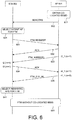
- FIG. 6 illustrates one embodiment of sending co-located BSSIDs from an AP to STAs during FTM.
- AP 601 determines a list co-located BSSIDs.
- AP 601 broadcasts beacon frames to STAs in the configured BSS.
- the beacon frame may have one-bit indication, which indicates that this BSS is co-located with other BSSs. Such indication also indicates the capability of the AP to provide the list of the co-located BSSIDs.
- STA 602 selects a first AP (e.g., AP 601) for performing FTM positioning procedure.
- a first AP e.g., AP 601
- STA 602 may have received beacons from multiple APs, some APs have the capability to provide co-located BSSID list, and some APs do not have such capability. As a result, STA 602 selects AP 601 and initiates FTM positioning procedure because the beacon from AP 601 indicates that AP 601 has the capability to provide co-located BSSID list.
- step 631 STA 602 sends an FTM request to AP 601.
- the FTM request contains one bit that is set by the STA to request for the list of co-located BSSIDs.
- step 632 AP 601 sends an acknowledgement back to STA 602.
- FTM_2 payload also includes the timestamps t1 and t4 of the first measurement session.
- STA 602 is able to compute the time-of-flight (TOF) or Round Trip Delay and its corresponding range/distance to AP 601.
- TOF time-of-flight
- Round Trip Delay Round Trip Delay
- STA 602 selects additional APs for FTM positioning. For example, in 3D positioning, STA 602 selects three additional APs that are not co-located with AP 601. In step 651, STA 602 initiates FTM with the additional APs and computes its range/distance to each of the AP. In three-dimensional (3D) positioning, if STA 602 knows the absolute location of the APs, and its relative range/distance to each AP, then STA 602 will be able to determine its own location.
- 3D positioning if STA 602 knows the absolute location of the APs, and its relative range/distance to each AP, then STA 602 will be able to determine its own location.
- FIG. 7 illustrates a complete FTM positioning procedure using non-co-located BSSs.
- Wireless local area network 700 is an indoor network and comprises four APs (AP1 to AP4) and a wireless non-AP station STA.
- STA is an initiating device that initiates an FTM positioning procedure, while the APs are responding devices that respond to the FTM positioning procedure.
- the STA initiates an FTM procedure with a first AP (AP1).
- AP1 first AP
- the STA selects AP1 because a beacon frame broadcasted from AP1 indicates that AP1 has the capability of providing co-located BSSIDs.
- the STA sends a FTM requests explicitly asking for a list of co-located BSSIDs of AP1, and in response receives an ACK from AP1.
- FTM_1 includes AP location information and the list of co-located BSSIDs of AP1 in response to the FTM request.
- AP1 transmits a second FTM measurement frame FTM_2.
- the FTM_2 payload also includes the timestamps t1_AP1 and t4_AP1 of the first measurement session.
- the STA initiates an FTM procedure with three additional APs (AP2, AP3, and AP4). Based on the received BSSID list, the STA can makes sure that no APs are co-located with each other. The STA sends FTM request to each AP and receives ACK from each AP. Note that this time the STA no longer needs to request for AP location and co-located BSSID list because the STA already knows which BSSs are co-located or not. In addition, the STA can use parallel operation, e.g., initiate FTM with non-co-located BSSs at the same time if desired.
- parallel operation e.g., initiate FTM with non-co-located BSSs at the same time if desired.
- AP2 transmits a second FTM measurement frame FTM_2.
- the FTM_2 payload also includes the timestamps t1_AP2 and t4_AP2 of the first measurement session.
- AP3 transmits a second FTM measurement frame FTM_2.
- the FTM_2 payload also includes the timestamps t1_AP3 and t4_AP3 of the first measurement session.
- AP4 transmits a second FTM measurement frame FTM_2.
- the FTM_2 payload also includes the timestamps t1_AP4 and t4_AP4 of the first measurement session.
- the STA In three-dimensional (3D) positioning, if the STA knows the absolute location of the APs, and its relative range/distance to each AP, then the STA is able to determine its own location.
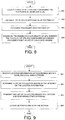
- FIG. 8 is a flow chart of a method of avoiding FTM with co-located BSSs from AP perspective in accordance with one novel aspect.
- a station selects a first access point (AP) for performing fine timing measurement (FTM) positioning in an indoor wireless local area network.
- the station obtains a list of co-located basic service set IDs (BSSIDs) of the first AP.
- BSSIDs basic service set IDs
- the station exchanges FTM frames with the first AP.
- the station exchanges FTM frames with a plurality of APs that are configured with BSSIDs excluded from the list of co-located BSSIDs.
- the station obtains the list of co-located BSSIDs of the first AP via Access Network Query Protocol (ANQP). In another embodiment, the station obtains the list of co-located BSSIDs via the FTM frame exchange with the first AP. For example, the station explicitly requests for the list of co-located BSSIDs in an FRM request frame when initiating the FTM positioning.
- ANQP Access Network Query Protocol
- FIG. 9 is a flow chart of a method of avoiding FTM with co-located BSSs from STA perspective in accordance with one novel aspect.
- an access point receives location information of neighboring APs in a wireless local area network.
- the AP determines a list of co-located basic service set IDs (BSSIDs) of the AP based on the location information.
- the AP transmits the list of co-located BSSIDs to a station for performing fine timing measurement (FTM) positioning.
- FTM fine timing measurement
- the AP exchanges FTM frames with the station.
- the AP receives neighboring APs location by exchanging Neighbor Report (NR) elements, or by querying each other for location using ANQP, or by requesting an FTM action frame with location from the other APs.
- NR Neighbor Report
- Two BSSs are co-located under FTM purpose if they are configured on the same physical device, are configured with the same location as neighboring BSSs, or are geographically close to each other substantially.
Landscapes
- Engineering & Computer Science (AREA)
- Radar, Positioning & Navigation (AREA)
- Remote Sensing (AREA)
- Physics & Mathematics (AREA)
- General Physics & Mathematics (AREA)
- Computer Networks & Wireless Communication (AREA)
- Signal Processing (AREA)
- Mobile Radio Communication Systems (AREA)
- Position Fixing By Use Of Radio Waves (AREA)
- Electromagnetism (AREA)
Claims (12)
- Verfahren, umfassend:Auswählen (801) eines ersten Zugangspunkts, AP, durch eine Station, um eine Positionierung in einem lokalen Innenraum-Funknetzwerk auszuführen, wobei der erste AP mit einer ersten Basisdienst-Dienst-ID, BSSID, konfiguriert ist; undErhalten (802) einer Liste von BSSIDs gleicher Position mit dem ersten AP;wobei der erste AP Standortinformationen von benachbarten APs in einem lokalen Funknetzwerk empfängt; undwobei die Liste von BSSIDs gleicher Position basierend auf den Standortinformationen von benachbarten APs des ersten APs bestimmt wird;dadurch gekennzeichnet, dassdie Positionierung eine Feinzeitmessungs-, FTM-, Positionierung ist, unddas Verfahren weiter umfasst:Austauschen (803) von FTM-Rahmen mit dem ersten AP;Austauschen (804) von FTM-Rahmen mit einer Mehrzahl von APs, wobei die Mehrzahl von APs mit BSSIDs konfiguriert ist, die von der Liste von BSSIDs gleicher Position ausgeschlossen sind;wobei ein erster BSS mit einem zweiten BSS gleich positioniert ist, wenn sie auf der gleichen physikalischen Vorrichtung konfiguriert sind, er mit dem gleichen Standort wie der zweite BSS konfiguriert ist, oder sie die gleichen GPS-Koordinaten aufweisen.
- Verfahren gemäß Anspruch 1, wobei die Station den ersten AP basierend auf einem Signalrahmen auswählt, der durch den ersten AP rundgesendet wird, und wobei der Signalrahmen eine Möglichkeit eines Bereitstellens der Liste von BSSIDs gleicher Position anzeigt.
- Verfahren gemäß Anspruch 1, wobei die Station die Liste von BSSIDs gleicher Position mit dem ersten AP über das Access Network Query Protocol, ANQP, erhält.
- Verfahren gemäß Anspruch 1, wobei die Station die Liste von BSSIDs gleicher Position über den FTM-Rahmenaustausch mit dem ersten AP erhält,
wobei bevorzugt die Station einen FTM-Anfragerahmen sendet, der eine explizite Anfrage für die Liste von BSSIDs gleicher Position aufweist, oder
wobei bevorzugt die Station einen FTM-Antwortrahmen empfängt, der die Liste von BSSIDs gleicher Position aufweist. - Funkstation, aufweisend:ein Steuerungs- und Konfigurationsmodul (224), welches einen ersten Zugangspunkt, AP, ausgewählt, um eine Positionierung in einem lokalen Innenraum-Funknetzwerk auszuführen, wobei der erste AP mit einer ersten Basisdienst-Dienst-ID, BSSID, konfiguriert ist; undeinen Empfänger (228), welcher eine Liste von BSSIDs gleicher Position mit dem ersten AP empfängt;wobei der erste AP Standortinformationen von benachbarten APs in einem lokalen Funknetzwerk empfängt; undwobei die Liste von BSSIDs gleicher Position basierend auf den Standortinformationen von benachbarten APs des ersten APs bestimmt wird;dadurch gekennzeichnet, dassdie Positionierung eine Feinzeitmessungs-, FTM-, Positionierung ist, unddie Funkstation weiter ein FTM-Modul (226) aufweist, welches FTM-Rahmen mit dem ersten AP austauscht, wobei das FTM-Modul auch FTM-Rahmen mit einer Mehrzahl von APs austauscht, und wobei die Mehrzahl von APs mit BSSIDs konfiguriert ist, die von der Liste von BSSIDs gleicher Position ausgeschlossen sind;wobei ein erster BSS mit einem zweiten BSS gleich positioniert ist, wenn sie auf der gleichen physikalischen Vorrichtung konfiguriert sind, er mit dem gleichen Standort wie der zweite BSS konfiguriert ist, oder sie die gleichen GPS-Koordinaten aufweisen.
- Station gemäß Anspruch 5, wobei die Station den ersten AP basierend auf einem Signalrahmen auswählt, der durch den ersten AP rundgesendet wird, und wobei der Signalrahmen eine Möglichkeit eines Bereitstellens der Liste von BSSIDs gleicher Position anzeigt.
- Station gemäß Anspruch 5, wobei die Station die Liste von BSSIDs gleicher Position mit dem ersten AP über das Access Network Query Protocol, ANQP, erhält.
- Station gemäß Anspruch 5, wobei die Station die Liste von BSSIDs gleicher Position über den FTM-Rahmenaustausch mit dem ersten AP erhält,
wobei bevorzugt die Station einen FTM-Anfragerahmen sendet, der eine explizite Anfrage für die Liste von BSSIDs gleicher Position aufweist, oder
wobei bevorzugt die Station einen FTM-Antwortrahmen empfängt, der die Liste von BSSIDs gleicher Position aufweist. - Verfahren, umfassend:Empfangen (901) durch einen Zugangspunkt, AP, von Standortinformationen von benachbarten APs in einem lokalen Funknetzwerk, wobei der AP mit einer ersten Basisdienst-Dienst-ID, BSSID, konfiguriert ist;Bestimmen (902) einer Liste von BSSIDs gleicher Position mit dem AP basierend auf den Standortinformationen; undSenden (903) der Liste von BSSIDs gleicher Position an eine Nicht-AP-Station,dadurch gekennzeichnet, dassdie Liste von BSSIDs gleicher Position an die Nicht-AP-Station zum Ausführen einer Feinzeitmessungs-, FTM-, Positionierung verwendet wird; unddas Verfahren weiter ein Austauschen (904) von FTM-Rahmen mit der Station umfasst;wobei ein erster BSS mit einem zweiten BSS gleich positioniert ist, wenn sie auf der gleichen physikalischen Vorrichtung konfiguriert sind, er mit dem gleichen Standort wie der zweite BSS konfiguriert ist, oder sie die gleichen GPS-Koordinaten aufweisen.
- Verfahren gemäß Anspruch 9, wobei der AP einen Signalrahmen rundsendet, welcher eine Möglichkeit eines Bereitstellens der Liste der BSSIDs gleicher Position anzeigt.
- Verfahren gemäß Anspruch 9, wobei der AP die Liste von BSSIDs gleicher Position über das Access Network Query Protocol, ANQP, sendet, oder
wobei der AP die Liste von BSSIDs gleicher Position über den FTM-Rahmenaustausch mit der Station sendet, wobei der AP einen FTM-Anfragerahmen empfängt, der eine explizite Anfrage für die Liste von BSSIDs gleicher Position aufweist. - Verfahren gemäß Anspruch 9, wobei der AP Standortinformationen der benachbarten APs durch ein Austauschen von Neighbor Report, NR, Elementen, durch ein Abfragen nach einem Standort unter Verwendung des Access Network Query Protocol, ANQP, oder durch Anfordern eines FTM-Aktionsrahmens mit einem Standort von dem benachbarten APs empfängt.
Applications Claiming Priority (2)
| Application Number | Priority Date | Filing Date | Title |
|---|---|---|---|
| US201462012517P | 2014-06-16 | 2014-06-16 | |
| PCT/SG2015/050161 WO2015195047A1 (en) | 2014-06-16 | 2015-06-16 | Fine timing measurement positioning and improvements in wireless local area networks |
Publications (3)
| Publication Number | Publication Date |
|---|---|
| EP3146774A1 EP3146774A1 (de) | 2017-03-29 |
| EP3146774A4 EP3146774A4 (de) | 2018-01-31 |
| EP3146774B1 true EP3146774B1 (de) | 2020-06-24 |
Family
ID=54837307
Family Applications (1)
| Application Number | Title | Priority Date | Filing Date |
|---|---|---|---|
| EP15809884.8A Active EP3146774B1 (de) | 2014-06-16 | 2015-06-16 | Feine zeitmessungspositionierung und verbesserungen in drahtlosen lokalen netzwerken |
Country Status (3)
| Country | Link |
|---|---|
| US (1) | US9769626B2 (de) |
| EP (1) | EP3146774B1 (de) |
| WO (1) | WO2015195047A1 (de) |
Families Citing this family (36)
| Publication number | Priority date | Publication date | Assignee | Title |
|---|---|---|---|---|
| US10264029B2 (en) | 2009-10-30 | 2019-04-16 | Time Warner Cable Enterprises Llc | Methods and apparatus for packetized content delivery over a content delivery network |
| US8862155B2 (en) | 2012-08-30 | 2014-10-14 | Time Warner Cable Enterprises Llc | Apparatus and methods for enabling location-based services within a premises |
| US10225338B1 (en) | 2014-04-15 | 2019-03-05 | Marvell International Ltd. | Peer to peer ranging exchange |
| US10194268B1 (en) * | 2015-02-11 | 2019-01-29 | Marvell International Ltd. | Methods and apparatus for range measurement |
| EP3755055A1 (de) * | 2015-03-20 | 2020-12-23 | Telefonaktiebolaget LM Ericsson (publ) | Verfahren und vorrichtung zur ermöglichung von netzwerkkoexistenz |
| US9872191B2 (en) * | 2015-06-11 | 2018-01-16 | Intel IP Corporation | Method, system, and apparatus of range measurement in a wireless network |
| US9906916B2 (en) | 2015-07-12 | 2018-02-27 | Intel IP Corporation | Apparatus, system and method of performing a fine time measurement (FTM) procedure with a responder station |
| US9668101B2 (en) * | 2015-08-10 | 2017-05-30 | Qualcomm Incorporated | Partial timing synchronization function (TSF) synchronization in fine timing measurement (FTM) protocol |
| US10009430B2 (en) * | 2015-08-27 | 2018-06-26 | Intel IP Corporation | Apparatus, system and method of fine timing measurement (FTM) |
| RU2684474C1 (ru) * | 2015-10-15 | 2019-04-09 | Телефонактиеболагет Лм Эрикссон (Пабл) | Точка доступа, поддерживающая по меньшей мере две виртуальные сети, и способ, осуществляемый посредством точки доступа, для обмена данными с беспроводным устройством |
| US20170118587A1 (en) * | 2015-10-26 | 2017-04-27 | Microsoft Technology Licensing, Llc | Location detection using bulk fine timing |
| US10237369B2 (en) * | 2015-12-23 | 2019-03-19 | Intel IP Corporation | Opportunistic backhauling of data for fine time measurement (FTM) responder systems |
| CN106936559B (zh) * | 2015-12-29 | 2020-01-31 | 华为技术有限公司 | 一种精细时间测量ftm方法和通信设备 |
| US10379196B2 (en) | 2016-02-28 | 2019-08-13 | Qualcomm Incorporated | Unicast and broadcast protocol for wireless local area network ranging and direction finding |
| US10104635B2 (en) | 2016-02-28 | 2018-10-16 | Qualcomm Incorporated | Unicast and broadcast protocol for wireless local area network ranging and direction finding |
| US10064057B2 (en) * | 2016-03-01 | 2018-08-28 | Qualcomm Incorporated | Secure fine timing measurement exchange |
| US10694499B2 (en) * | 2016-08-08 | 2020-06-23 | Intel IP Corporation | Location estimation using multi-user multiple input multiple output in a wireless local area network |
| CN107979877B (zh) * | 2016-10-25 | 2021-01-01 | 华为技术有限公司 | 关联无线局域网的方法、设备和中心接入点 |
| CN108024312B (zh) * | 2016-10-31 | 2020-09-08 | 华为技术有限公司 | 选择无线接入点以及ftm会话的方法、终端和服务器 |
| US10686782B2 (en) * | 2016-12-20 | 2020-06-16 | Arris Enterprises Llc | System and method for determining Wi-Fi client station location to avoid resale theft |
| WO2019027511A1 (en) * | 2017-07-31 | 2019-02-07 | Intel IP Corporation | POSITION MEASUREMENT REPORTING FEEDBACK PLANNING IN WIRELESS COMMUNICATIONS |
| US10477349B2 (en) | 2018-02-13 | 2019-11-12 | Charter Communications Operating, Llc | Apparatus and methods for device location determination |
| US11259285B2 (en) * | 2018-02-27 | 2022-02-22 | Qualcomm Incorporated | Co-located basic service sets |
| US10948593B2 (en) | 2018-06-22 | 2021-03-16 | Citrix Systems, Inc. | System for determining distance between fixed and mobile endpoints and related methods |
| US11588785B2 (en) * | 2018-07-05 | 2023-02-21 | Interdigital Patent Holdings, Inc. | Methods and procedures for the dynamic mac address distribution in IEEE 802.11 networks |
| US10652691B2 (en) * | 2018-07-20 | 2020-05-12 | Qualcomm Incorporated | Optimized positioning method for mobile devices |
| CN115460673B (zh) | 2018-08-07 | 2024-10-18 | 华为技术有限公司 | 信息指示方法及装置 |
| US11044160B2 (en) | 2019-03-22 | 2021-06-22 | Cisco Technology, Inc. | Location-aware policy exchange |
| US10904851B1 (en) | 2020-01-21 | 2021-01-26 | Cisco Technology, Inc. | Systems and methods for determining locations of access points |
| US10945231B1 (en) | 2020-03-05 | 2021-03-09 | Cisco Technology, Inc. | Regulation of airtime for fine timing measurement requests |
| US20230029233A1 (en) * | 2021-07-26 | 2023-01-26 | Joseph SEOK | Indoor localization using wlan |
| US11700590B1 (en) | 2021-12-20 | 2023-07-11 | Cisco Technology, Inc. | Mobile time-sync distribution |
| US20230375720A1 (en) * | 2022-05-20 | 2023-11-23 | Mediatek Inc. | Location tracking system and associated method |
| US20230408678A1 (en) * | 2022-06-16 | 2023-12-21 | Samsung Electronics Co., Ltd. | Method and apparatus for device-based indoor positioning using wi-fi fine timing measurements |
| US12517212B2 (en) | 2023-01-03 | 2026-01-06 | Cisco Technology, Inc. | Full mesh fine time measurement |
| US12526764B2 (en) | 2023-03-31 | 2026-01-13 | Cisco Technology, Inc. | Fine time measurement improvement for access point self-positioning |
Family Cites Families (13)
| Publication number | Priority date | Publication date | Assignee | Title |
|---|---|---|---|---|
| US8924155B2 (en) * | 2010-09-13 | 2014-12-30 | Texas Instruments Incorporated | System and method for access point based positioning |
| US20130252657A1 (en) | 2012-03-23 | 2013-09-26 | Nokia Corporation | Method, apparatus, and computer program product for transmit power management and location information estimation |
| US8837316B2 (en) | 2012-06-14 | 2014-09-16 | Qualcomm Incorporated | RTT based ranging system and method |
| US20140073352A1 (en) | 2012-09-11 | 2014-03-13 | Qualcomm Incorporated | Method for precise location determination |
| US9622156B2 (en) * | 2012-10-19 | 2017-04-11 | Futurewei Technologies, Inc. | System and method for efficient access network query protocol (ANQP) discovery of multiple access points (APs) |
| US9872230B2 (en) | 2012-10-19 | 2018-01-16 | Futurewei Technologies, Inc. | System and method for efficient communications system scanning |
| US9154971B2 (en) * | 2012-12-10 | 2015-10-06 | Qualcomm Incorporated | Methods and systems for enhanced round trip time (RTT) exchange |
| US10039073B2 (en) * | 2013-01-03 | 2018-07-31 | Qualcomm Incorporated | Method for determining location of wireless devices |
| US9459337B2 (en) * | 2013-05-30 | 2016-10-04 | Qualcomm Incorporated | Methods and systems for enhanced round trip time (RTT) exchange |
| US9661603B2 (en) * | 2013-08-30 | 2017-05-23 | Qualcomm Incorporated | Passive positioning utilizing beacon neighbor reports |
| US9220081B2 (en) * | 2014-03-05 | 2015-12-22 | Intel Corporation | Access point location discovery in unmanaged networks |
| US20150264530A1 (en) * | 2014-03-12 | 2015-09-17 | Gaby Prechner | Access point initiated time-of-flight positioning |
| US20150341892A1 (en) * | 2014-05-23 | 2015-11-26 | Qualcomm Incorporated | Positioning with access network query protocol neighbor reports |
-
2015
- 2015-06-15 US US14/739,115 patent/US9769626B2/en active Active
- 2015-06-16 EP EP15809884.8A patent/EP3146774B1/de active Active
- 2015-06-16 WO PCT/SG2015/050161 patent/WO2015195047A1/en not_active Ceased
Non-Patent Citations (1)
| Title |
|---|
| None * |
Also Published As
| Publication number | Publication date |
|---|---|
| EP3146774A1 (de) | 2017-03-29 |
| WO2015195047A1 (en) | 2015-12-23 |
| EP3146774A4 (de) | 2018-01-31 |
| US9769626B2 (en) | 2017-09-19 |
| US20150365805A1 (en) | 2015-12-17 |
Similar Documents
| Publication | Publication Date | Title |
|---|---|---|
| EP3146774B1 (de) | Feine zeitmessungspositionierung und verbesserungen in drahtlosen lokalen netzwerken | |
| EP3039925B1 (de) | Mehrantennen-ap-positionierung in drahtlosen lokalen netzwerken | |
| US11588538B2 (en) | Positioning beam information obtaining method and apparatus | |
| EP3039826B1 (de) | Entfernungsmessung und positionierung in wlans unter verwendung von zeitstempeln eines benachbarten zugangspunkts und einer schnüffelnden station | |
| US9949070B2 (en) | Method for positioning NAN terminal in wireless LAN system, and device using same | |
| EP3844524B1 (de) | Standortinformationsbestimmung basierend auf zeitmessungen in drahtlosen netzwerken | |
| WO2020125434A1 (zh) | 一种多站点的定位方法及装置 | |
| US20260075386A1 (en) | Sensing architecture and procedure in 3gpp-based cellular networks | |
| EP3469840B1 (de) | Verfahren system und vorrichtung zur erzielung von örtlicher information mithilfe einem nachbarschaftsbewussten netzwer, nan. | |
| US9775007B2 (en) | Group based location service in wireless local area networks | |
| CA2889144A1 (en) | Methods of positioning in a system comprising measuring nodes with multiple receiving points | |
| EP3138332B1 (de) | Verfahren zum verbinden von bss mit gleicher position | |
| WO2013044853A1 (zh) | 采用观察的到达时间差对移动台进行定位的方法及设备 | |
| US20260095881A1 (en) | Combined one-to-many and many-to-one sidelink positioning | |
| WO2024138889A1 (zh) | 定位方法及定位装置 | |
| US20250142525A1 (en) | Method and apparatus for positioning | |
| TWI914482B (zh) | 對用於無線定位的基於精度的發送/接收點選擇的幾何衰減 |
Legal Events
| Date | Code | Title | Description |
|---|---|---|---|
| STAA | Information on the status of an ep patent application or granted ep patent |
Free format text: STATUS: THE INTERNATIONAL PUBLICATION HAS BEEN MADE |
|
| PUAI | Public reference made under article 153(3) epc to a published international application that has entered the european phase |
Free format text: ORIGINAL CODE: 0009012 |
|
| STAA | Information on the status of an ep patent application or granted ep patent |
Free format text: STATUS: REQUEST FOR EXAMINATION WAS MADE |
|
| 17P | Request for examination filed |
Effective date: 20161219 |
|
| AK | Designated contracting states |
Kind code of ref document: A1 Designated state(s): AL AT BE BG CH CY CZ DE DK EE ES FI FR GB GR HR HU IE IS IT LI LT LU LV MC MK MT NL NO PL PT RO RS SE SI SK SM TR |
|
| AX | Request for extension of the european patent |
Extension state: BA ME |
|
| DAV | Request for validation of the european patent (deleted) | ||
| DAX | Request for extension of the european patent (deleted) | ||
| A4 | Supplementary search report drawn up and despatched |
Effective date: 20180105 |
|
| RIC1 | Information provided on ipc code assigned before grant |
Ipc: G01S 5/14 20060101ALI20171222BHEP Ipc: H04W 64/00 20090101ALN20171222BHEP Ipc: G01S 5/02 20100101AFI20171222BHEP |
|
| STAA | Information on the status of an ep patent application or granted ep patent |
Free format text: STATUS: EXAMINATION IS IN PROGRESS |
|
| 17Q | First examination report despatched |
Effective date: 20190313 |
|
| REG | Reference to a national code |
Ref country code: DE Ref legal event code: R079 Ref document number: 602015054809 Country of ref document: DE Free format text: PREVIOUS MAIN CLASS: H04W0064000000 Ipc: G01S0005020000 |
|
| GRAP | Despatch of communication of intention to grant a patent |
Free format text: ORIGINAL CODE: EPIDOSNIGR1 |
|
| STAA | Information on the status of an ep patent application or granted ep patent |
Free format text: STATUS: GRANT OF PATENT IS INTENDED |
|
| RIC1 | Information provided on ipc code assigned before grant |
Ipc: G01S 5/14 20060101ALI20200210BHEP Ipc: G01S 5/02 20100101AFI20200210BHEP Ipc: H04W 64/00 20090101ALN20200210BHEP |
|
| RIC1 | Information provided on ipc code assigned before grant |
Ipc: H04W 64/00 20090101ALN20200221BHEP Ipc: G01S 5/02 20100101AFI20200221BHEP Ipc: G01S 5/14 20060101ALI20200221BHEP |
|
| INTG | Intention to grant announced |
Effective date: 20200310 |
|
| GRAS | Grant fee paid |
Free format text: ORIGINAL CODE: EPIDOSNIGR3 |
|
| GRAA | (expected) grant |
Free format text: ORIGINAL CODE: 0009210 |
|
| STAA | Information on the status of an ep patent application or granted ep patent |
Free format text: STATUS: THE PATENT HAS BEEN GRANTED |
|
| AK | Designated contracting states |
Kind code of ref document: B1 Designated state(s): AL AT BE BG CH CY CZ DE DK EE ES FI FR GB GR HR HU IE IS IT LI LT LU LV MC MK MT NL NO PL PT RO RS SE SI SK SM TR |
|
| REG | Reference to a national code |
Ref country code: GB Ref legal event code: FG4D |
|
| REG | Reference to a national code |
Ref country code: CH Ref legal event code: EP |
|
| REG | Reference to a national code |
Ref country code: AT Ref legal event code: REF Ref document number: 1284421 Country of ref document: AT Kind code of ref document: T Effective date: 20200715 |
|
| REG | Reference to a national code |
Ref country code: DE Ref legal event code: R096 Ref document number: 602015054809 Country of ref document: DE |
|
| REG | Reference to a national code |
Ref country code: IE Ref legal event code: FG4D |
|
| PG25 | Lapsed in a contracting state [announced via postgrant information from national office to epo] |
Ref country code: SE Free format text: LAPSE BECAUSE OF FAILURE TO SUBMIT A TRANSLATION OF THE DESCRIPTION OR TO PAY THE FEE WITHIN THE PRESCRIBED TIME-LIMIT Effective date: 20200624 Ref country code: FI Free format text: LAPSE BECAUSE OF FAILURE TO SUBMIT A TRANSLATION OF THE DESCRIPTION OR TO PAY THE FEE WITHIN THE PRESCRIBED TIME-LIMIT Effective date: 20200624 Ref country code: NO Free format text: LAPSE BECAUSE OF FAILURE TO SUBMIT A TRANSLATION OF THE DESCRIPTION OR TO PAY THE FEE WITHIN THE PRESCRIBED TIME-LIMIT Effective date: 20200924 Ref country code: GR Free format text: LAPSE BECAUSE OF FAILURE TO SUBMIT A TRANSLATION OF THE DESCRIPTION OR TO PAY THE FEE WITHIN THE PRESCRIBED TIME-LIMIT Effective date: 20200925 Ref country code: LT Free format text: LAPSE BECAUSE OF FAILURE TO SUBMIT A TRANSLATION OF THE DESCRIPTION OR TO PAY THE FEE WITHIN THE PRESCRIBED TIME-LIMIT Effective date: 20200624 |
|
| REG | Reference to a national code |
Ref country code: LT Ref legal event code: MG4D |
|
| PG25 | Lapsed in a contracting state [announced via postgrant information from national office to epo] |
Ref country code: LV Free format text: LAPSE BECAUSE OF FAILURE TO SUBMIT A TRANSLATION OF THE DESCRIPTION OR TO PAY THE FEE WITHIN THE PRESCRIBED TIME-LIMIT Effective date: 20200624 Ref country code: BG Free format text: LAPSE BECAUSE OF FAILURE TO SUBMIT A TRANSLATION OF THE DESCRIPTION OR TO PAY THE FEE WITHIN THE PRESCRIBED TIME-LIMIT Effective date: 20200924 Ref country code: RS Free format text: LAPSE BECAUSE OF FAILURE TO SUBMIT A TRANSLATION OF THE DESCRIPTION OR TO PAY THE FEE WITHIN THE PRESCRIBED TIME-LIMIT Effective date: 20200624 Ref country code: HR Free format text: LAPSE BECAUSE OF FAILURE TO SUBMIT A TRANSLATION OF THE DESCRIPTION OR TO PAY THE FEE WITHIN THE PRESCRIBED TIME-LIMIT Effective date: 20200624 |
|
| REG | Reference to a national code |
Ref country code: NL Ref legal event code: MP Effective date: 20200624 |
|
| REG | Reference to a national code |
Ref country code: AT Ref legal event code: MK05 Ref document number: 1284421 Country of ref document: AT Kind code of ref document: T Effective date: 20200624 |
|
| PG25 | Lapsed in a contracting state [announced via postgrant information from national office to epo] |
Ref country code: NL Free format text: LAPSE BECAUSE OF FAILURE TO SUBMIT A TRANSLATION OF THE DESCRIPTION OR TO PAY THE FEE WITHIN THE PRESCRIBED TIME-LIMIT Effective date: 20200624 Ref country code: AL Free format text: LAPSE BECAUSE OF FAILURE TO SUBMIT A TRANSLATION OF THE DESCRIPTION OR TO PAY THE FEE WITHIN THE PRESCRIBED TIME-LIMIT Effective date: 20200624 |
|
| PG25 | Lapsed in a contracting state [announced via postgrant information from national office to epo] |
Ref country code: CZ Free format text: LAPSE BECAUSE OF FAILURE TO SUBMIT A TRANSLATION OF THE DESCRIPTION OR TO PAY THE FEE WITHIN THE PRESCRIBED TIME-LIMIT Effective date: 20200624 Ref country code: RO Free format text: LAPSE BECAUSE OF FAILURE TO SUBMIT A TRANSLATION OF THE DESCRIPTION OR TO PAY THE FEE WITHIN THE PRESCRIBED TIME-LIMIT Effective date: 20200624 Ref country code: EE Free format text: LAPSE BECAUSE OF FAILURE TO SUBMIT A TRANSLATION OF THE DESCRIPTION OR TO PAY THE FEE WITHIN THE PRESCRIBED TIME-LIMIT Effective date: 20200624 Ref country code: SM Free format text: LAPSE BECAUSE OF FAILURE TO SUBMIT A TRANSLATION OF THE DESCRIPTION OR TO PAY THE FEE WITHIN THE PRESCRIBED TIME-LIMIT Effective date: 20200624 Ref country code: IT Free format text: LAPSE BECAUSE OF FAILURE TO SUBMIT A TRANSLATION OF THE DESCRIPTION OR TO PAY THE FEE WITHIN THE PRESCRIBED TIME-LIMIT Effective date: 20200624 Ref country code: ES Free format text: LAPSE BECAUSE OF FAILURE TO SUBMIT A TRANSLATION OF THE DESCRIPTION OR TO PAY THE FEE WITHIN THE PRESCRIBED TIME-LIMIT Effective date: 20200624 Ref country code: AT Free format text: LAPSE BECAUSE OF FAILURE TO SUBMIT A TRANSLATION OF THE DESCRIPTION OR TO PAY THE FEE WITHIN THE PRESCRIBED TIME-LIMIT Effective date: 20200624 Ref country code: PT Free format text: LAPSE BECAUSE OF FAILURE TO SUBMIT A TRANSLATION OF THE DESCRIPTION OR TO PAY THE FEE WITHIN THE PRESCRIBED TIME-LIMIT Effective date: 20201026 |
|
| PG25 | Lapsed in a contracting state [announced via postgrant information from national office to epo] |
Ref country code: SK Free format text: LAPSE BECAUSE OF FAILURE TO SUBMIT A TRANSLATION OF THE DESCRIPTION OR TO PAY THE FEE WITHIN THE PRESCRIBED TIME-LIMIT Effective date: 20200624 Ref country code: PL Free format text: LAPSE BECAUSE OF FAILURE TO SUBMIT A TRANSLATION OF THE DESCRIPTION OR TO PAY THE FEE WITHIN THE PRESCRIBED TIME-LIMIT Effective date: 20200624 Ref country code: IS Free format text: LAPSE BECAUSE OF FAILURE TO SUBMIT A TRANSLATION OF THE DESCRIPTION OR TO PAY THE FEE WITHIN THE PRESCRIBED TIME-LIMIT Effective date: 20201024 |
|
| REG | Reference to a national code |
Ref country code: DE Ref legal event code: R097 Ref document number: 602015054809 Country of ref document: DE |
|
| PG25 | Lapsed in a contracting state [announced via postgrant information from national office to epo] |
Ref country code: DK Free format text: LAPSE BECAUSE OF FAILURE TO SUBMIT A TRANSLATION OF THE DESCRIPTION OR TO PAY THE FEE WITHIN THE PRESCRIBED TIME-LIMIT Effective date: 20200624 |
|
| PLBE | No opposition filed within time limit |
Free format text: ORIGINAL CODE: 0009261 |
|
| STAA | Information on the status of an ep patent application or granted ep patent |
Free format text: STATUS: NO OPPOSITION FILED WITHIN TIME LIMIT |
|
| 26N | No opposition filed |
Effective date: 20210325 |
|
| PG25 | Lapsed in a contracting state [announced via postgrant information from national office to epo] |
Ref country code: SI Free format text: LAPSE BECAUSE OF FAILURE TO SUBMIT A TRANSLATION OF THE DESCRIPTION OR TO PAY THE FEE WITHIN THE PRESCRIBED TIME-LIMIT Effective date: 20200624 |
|
| PG25 | Lapsed in a contracting state [announced via postgrant information from national office to epo] |
Ref country code: MC Free format text: LAPSE BECAUSE OF FAILURE TO SUBMIT A TRANSLATION OF THE DESCRIPTION OR TO PAY THE FEE WITHIN THE PRESCRIBED TIME-LIMIT Effective date: 20200624 |
|
| REG | Reference to a national code |
Ref country code: CH Ref legal event code: PL |
|
| REG | Reference to a national code |
Ref country code: BE Ref legal event code: MM Effective date: 20210630 |
|
| PG25 | Lapsed in a contracting state [announced via postgrant information from national office to epo] |
Ref country code: LU Free format text: LAPSE BECAUSE OF NON-PAYMENT OF DUE FEES Effective date: 20210616 |
|
| PG25 | Lapsed in a contracting state [announced via postgrant information from national office to epo] |
Ref country code: LI Free format text: LAPSE BECAUSE OF NON-PAYMENT OF DUE FEES Effective date: 20210630 Ref country code: IE Free format text: LAPSE BECAUSE OF NON-PAYMENT OF DUE FEES Effective date: 20210616 Ref country code: CH Free format text: LAPSE BECAUSE OF NON-PAYMENT OF DUE FEES Effective date: 20210630 |
|
| PG25 | Lapsed in a contracting state [announced via postgrant information from national office to epo] |
Ref country code: BE Free format text: LAPSE BECAUSE OF NON-PAYMENT OF DUE FEES Effective date: 20210630 |
|
| PG25 | Lapsed in a contracting state [announced via postgrant information from national office to epo] |
Ref country code: HU Free format text: LAPSE BECAUSE OF FAILURE TO SUBMIT A TRANSLATION OF THE DESCRIPTION OR TO PAY THE FEE WITHIN THE PRESCRIBED TIME-LIMIT; INVALID AB INITIO Effective date: 20150616 |
|
| PG25 | Lapsed in a contracting state [announced via postgrant information from national office to epo] |
Ref country code: CY Free format text: LAPSE BECAUSE OF FAILURE TO SUBMIT A TRANSLATION OF THE DESCRIPTION OR TO PAY THE FEE WITHIN THE PRESCRIBED TIME-LIMIT Effective date: 20200624 |
|
| P01 | Opt-out of the competence of the unified patent court (upc) registered |
Effective date: 20230627 |
|
| PG25 | Lapsed in a contracting state [announced via postgrant information from national office to epo] |
Ref country code: MK Free format text: LAPSE BECAUSE OF FAILURE TO SUBMIT A TRANSLATION OF THE DESCRIPTION OR TO PAY THE FEE WITHIN THE PRESCRIBED TIME-LIMIT Effective date: 20200624 |
|
| PG25 | Lapsed in a contracting state [announced via postgrant information from national office to epo] |
Ref country code: TR Free format text: LAPSE BECAUSE OF FAILURE TO SUBMIT A TRANSLATION OF THE DESCRIPTION OR TO PAY THE FEE WITHIN THE PRESCRIBED TIME-LIMIT Effective date: 20200624 |
|
| PG25 | Lapsed in a contracting state [announced via postgrant information from national office to epo] |
Ref country code: MT Free format text: LAPSE BECAUSE OF FAILURE TO SUBMIT A TRANSLATION OF THE DESCRIPTION OR TO PAY THE FEE WITHIN THE PRESCRIBED TIME-LIMIT Effective date: 20200624 |
|
| PGFP | Annual fee paid to national office [announced via postgrant information from national office to epo] |
Ref country code: DE Payment date: 20250429 Year of fee payment: 11 |
|
| PGFP | Annual fee paid to national office [announced via postgrant information from national office to epo] |
Ref country code: GB Payment date: 20250425 Year of fee payment: 11 |
|
| PGFP | Annual fee paid to national office [announced via postgrant information from national office to epo] |
Ref country code: FR Payment date: 20250508 Year of fee payment: 11 |