EP3146776B1 - System und verfahren zur d2d-übertragung - Google Patents
System und verfahren zur d2d-übertragung Download PDFInfo
- Publication number
- EP3146776B1 EP3146776B1 EP15795567.5A EP15795567A EP3146776B1 EP 3146776 B1 EP3146776 B1 EP 3146776B1 EP 15795567 A EP15795567 A EP 15795567A EP 3146776 B1 EP3146776 B1 EP 3146776B1
- Authority
- EP
- European Patent Office
- Prior art keywords
- resource pool
- transmission
- resource
- type
- communication
- Prior art date
- Legal status (The legal status is an assumption and is not a legal conclusion. Google has not performed a legal analysis and makes no representation as to the accuracy of the status listed.)
- Active
Links
Images





Classifications
-
- H—ELECTRICITY
- H04—ELECTRIC COMMUNICATION TECHNIQUE
- H04W—WIRELESS COMMUNICATION NETWORKS
- H04W72/00—Local resource management
- H04W72/02—Selection of wireless resources by user or terminal
-
- H—ELECTRICITY
- H04—ELECTRIC COMMUNICATION TECHNIQUE
- H04W—WIRELESS COMMUNICATION NETWORKS
- H04W72/00—Local resource management
- H04W72/50—Allocation or scheduling criteria for wireless resources
- H04W72/56—Allocation or scheduling criteria for wireless resources based on priority criteria
-
- H—ELECTRICITY
- H04—ELECTRIC COMMUNICATION TECHNIQUE
- H04W—WIRELESS COMMUNICATION NETWORKS
- H04W4/00—Services specially adapted for wireless communication networks; Facilities therefor
- H04W4/70—Services for machine-to-machine communication [M2M] or machine type communication [MTC]
-
- H—ELECTRICITY
- H04—ELECTRIC COMMUNICATION TECHNIQUE
- H04W—WIRELESS COMMUNICATION NETWORKS
- H04W74/00—Wireless channel access
- H04W74/08—Non-scheduled access, e.g. ALOHA
- H04W74/0808—Non-scheduled access, e.g. ALOHA using carrier sensing, e.g. carrier sense multiple access [CSMA]
-
- H—ELECTRICITY
- H04—ELECTRIC COMMUNICATION TECHNIQUE
- H04W—WIRELESS COMMUNICATION NETWORKS
- H04W76/00—Connection management
- H04W76/10—Connection setup
- H04W76/14—Direct-mode setup
Definitions
- Embodiments herein relate to a first device, a second device and methods therein. In particular they relate to relates to receiving and sending data in a Device-to-Device (D2D) transmission.
- D2D Device-to-Device
- Wireless devices or terminals for communication are also known as e.g. User Equipments (UE), mobile terminals, wireless terminals and/or mobile stations.
- Wireless devices are enabled to communicate wirelessly in a cellular communications network or wireless communication system, sometimes also referred to as a cellular radio system or cellular networks.
- the communication may be performed e.g. between two wireless devices, between a wireless device and a regular telephone and/or between a wireless device and a server, such as server providing video streaming service, via a Radio Access Network (RAN) and possibly one or more core networks, comprised within the cellular communications network.
- RAN Radio Access Network
- Wireless devices may further be referred to as mobile telephones, cellular telephones, computers, or surf plates with wireless capability, just to mention some further examples.
- the wireless devices in the present context may be, for example, portable, pocket-storable, hand-held, computer-comprised, or vehicle-mounted mobile devices, enabled to communicate voice and/or data, via the RAN, with another entity, such as another wireless device or a server.
- a cellular communications network covers a geographical area which is divided into cell areas, wherein each cell area is served by a base station, e.g. a Radio Base Station (RBS), which sometimes may be referred to as e.g. eNodeB (eNB), NodeB, B node, Base Transceiver Station (BTS), or AP (Access Point), depending on the technology and terminology used.
- the base stations may be of different classes such as e.g. macro eNodeB, home eNodeB or pico base station, based on transmission power and thereby also cell size.
- a cell is the geographical area where radio coverage is provided by the base station at a base station site.
- One base station, situated on the base station site may serve one or several cells.
- each base station may support one or several communication technologies.
- the base stations communicate over the air interface operating on radio frequencies with the wireless devices within range of the base stations.
- the base stations and wireless devices involved in communication may also be referred to as transmitter-receiver pairs, where the respective transmitter and receiver in a pair may refer to a base station or a wireless device, depending on the direction of the communication.
- Two wireless devices involved in D2D communication may also be referred to as a transmitter-receiver pair.
- the expression Downlink (DL) is used for the transmission path from the base station to a wireless device.
- the expression Uplink (UL) is used for the transmission path in the opposite direction i.e. from the wireless device to the base station.
- Universal Mobile Telecommunications System is a third generation mobile communication system, which evolved from the GSM, and is intended to provide improved mobile communication services based on Wideband Code Division Multiple Access (WCDMA) technology.
- UMTS Terrestrial Radio Access Network (UTRAN) is essentially a radio access network using wideband code division multiple access for communication with terminals. The 3GPP has undertaken to evolve further the UTRAN and GSM based radio access network technologies.
- base stations which may be referred to as eNodeBs or even eNBs, may be directly connected to one or more core networks.
- 3GPP LTE radio access standard has been written in order to support high bitrates and low latency both for uplink and downlink traffic. All data transmission is in LTE is controlled by the radio base station.
- D2D communication is a well-known and widely used component of many existing wireless technologies, including ad hoc and cellular networks. Examples include Bluetooth and several variants of the IEEE 802.11 standards suite such as WiFi Direct. These systems typically operate in unlicensed spectrum.
- D2D communications as an underlay to cellular networks have been proposed as a means to take advantage of the proximity of communicating devices and at the same time to allow devices to operate in a controlled interference environment.
- D2D communication shares the same spectrum as the cellular system, for example by reserving some of the cellular uplink resources for device-to-device purposes. Allocating dedicated spectrum for D2D purposes is a less likely alternative as spectrum is a scarce resource and dynamic sharing between the D2D services and cellular services is more flexible and provides higher spectrum efficiency.
- a transmission mode when sending data during D2D communication may e.g. be unicast wherein a specific UE is the receiver, multicast which also may be denoted groupcast wherein a group of UEs are receivers, and/or broadcast wherein all UEs are receivers.
- connectionless D2D communication data can be sent from one device to another device without prior arrangement, thereby reducing overhead and increasing communication capacity which is crucial in emergency situations.
- the source device transmits data to one other device in unicast, or more than one other devices, in multicast, groupcast, or broadcast, without first ensuring that the recipients are available and ready to receive the data.
- Connectionless communication may be used for one-to-one or one-to-many communication, but it is particularly effective for multicast and broadcast transmissions and thus well-suited for broadcast and group communication
- connectionless communication may be realized, e.g., via Physical layer (PHY) unicast transmissions, multicast transmissions, groupcast transmissions or broadcast transmissions.
- PHY Physical layer
- the transmissions may still be turned into unicast, groupcast, and/or multicast transmissions at higher layers.
- MAC Media Access Control
- multicast or even unicast addresses may be used.
- IP addresses may be used at the IP layer.
- the PHY also referred to as layer 1 is the first i.e. lowest layer.
- the physical layer comprises basic networking hardware transmission technologies of a network.
- MAC data communication protocol is a sublayer of the data link layer, also referred to as layer 2.
- the MAC sublayer provides addressing and channel access control mechanisms that make it possible for several terminals or network nodes to communicate within a multiple access network that incorporates a shared medium.
- SA Scheduling Assignment
- the transmitter and receiver need to be configured with e.g., resource pool information such as time and frequency configuration, to be used for data transmission.
- resource pool information such as time and frequency configuration
- the transmitter needs to transmit data to the receiver it typically first sends a synchronization signal, which is later used as a time reference by the receiver.
- the next step is to transmit a scheduling assignment, followed by the actual data.
- transmitter refers to a transmitting device and the term receiver refers to a receiving device in the text herein.
- SAs are control messages used for scheduling of D2D communication between devices.
- SAs are transmitted by a device such as a UE that intends to transmit D2D data and they are received by devices such as UEs that are potentially interested in such data.
- the SAs are transmitted on dedicated resources characterized by time and frequency, and is typically a sparse resource.
- SAs provide useful information that can be used by the receiver, e.g., to correctly decode a D2D data transmission associated to the SA, such as the resources for data transmission, the modulation and/or coding parameters, timing information, identities for the transmitter and/or receiver, etc.
- SAs are transmitted prior to the actual data transmission, so that a receiver is able to selectively receive data based on the content of the SAs.
- the data transmissions scheduled by a SA are referred to as a transmission pattern.
- DRX Discontinuous Reception
- the identity in the SA identifies the multicast group.
- a device such as a UE which is interested in receiving data of one or several multicast groups only need to check the SAs for the corresponding identities.
- the UE may decode the data pointed out by the other information carried in the SA.
- a method for providing redundancy in the scheduling assignments is known.
- the same content may be transmitted by multiple SAs, and the transmitter may transmit only a subset of the redundant SAs, based on autonomous decisions or based on predefined patterns. This is to allow the receiver to periodically monitor the SA resources.
- the transmitting UEs may need to select the transmission resources autonomously from a pool of available resources.
- the pool of available resources is shared by multiple potential transmitters that access it in a contention fashion.
- Different options are possible for the access algorithm including, e.g., random resource selection within the pool, energy-sensing, collision avoidance protocols, etc. It may be assumed that all UEs implement the same resource access algorithm.
- the SAs and communication data for D2D are each transmitted on a common, shared resource pool which may be a common scarce resource pool, e.g. in time and/or frequency, as shown in Figure 1 .
- UE-A, UE-B and UE-C in Figure 1 are transmitters.
- UE may select the resource(s) to transmit the SAs and data using some rules or protocols. In case of high amount of traffic, these resource pools may become full and collisions may occur.
- US 2013/114531 A1 discloses methods to efficiently manage resources for D2D communication by dividing the resources in to sub-bands based on a priority of the D2D communication.
- the object is achieved by a method performed by a first device, for sending data in a Device-to-Device, D2D, transmission to a second device.
- the first device After the first device has identified a priority level of the D2D transmission, it maps the identified priority level to a resource pool index.
- the priority level is a function of characteristics of the D2D transmission, which characteristics comprise at least a type of resource allocation.
- the resource pool index identifies a resource pool among a plurality of resource pools associated with different priority levels.
- the first device then sends the data in the D2D transmission to the second device, using the resources in the resource pool identified by the resource pool index.
- the object is achieved by a method performed by a second device, for receiving data in a Device-to-Device, D2D, transmission from a first device.
- the second device 122 determines a priority level of the D2D transmission.
- the second device receives the data in the D2D transmission from the first device, by using resources in a resource pool identified by a resource pool index.
- a priority level of the D2D transmission is mapped to the resource pool index, which resource pool index identifies a resource pool among a plurality of resource pools associated with different priority levels.
- the priority level is a function of characteristics of the D2D transmission, which characteristics comprise at least a type of resource allocation.
- the object is achieved by a first device for sending data in a Device-to-Device, D2D, transmission to a second device.
- the first device comprises a processor configured to identify a priority level of the D2D transmission and map the identified priority level to a resource pool index.
- the priority level is a function of characteristics of the D2D transmission, which characteristics comprise at least a type of resource allocation.
- the resource pool index identifies a resource pool among a plurality of resource pools associated with different priority levels.
- the processor is further configured to send the data in the D2D transmission to the second device, using the resources in the resource pool identified by the resource pool index.
- the object is achieved by a second device, for receiving data in a Device-to-Device, D2D, transmission from a first device.
- the second device comprises a processor configured to determine a priority level of the D2D transmission and receive the data in the D2D transmission from the first device, using resources in a resource pool identified by a resource pool index.
- the priority level of the D2D transmission is mapped to the resource pool index.
- the resource pool index identifies a resource pool among a plurality of resource pools associated with different priority levels.
- the priority level is a function of characteristics of the D2D transmission, which characteristics comprise at least a type of resource allocation.
- An advantage with embodiments herein is that they provide a way to manage different priorities between contention based transmissions without the need to modify the existing UE resource allocation procedure for selecting resources within a resource pool.
- a device such as a UE may select the resource(s) to transmit SAs and data using some rules or protocols.
- these resource pools may become full and collisions may occur.
- there is currently no way to prioritize between devices such as UEs.
- relational terms such as “first” and “second,” “top” and “bottom,” and the like, may be used solely to distinguish one entity or element from another entity or element without necessarily requiring or implying any physical or logical relationship or order between such entities or elements.
- FIG. 2 depicts a communications network 100 in which embodiments herein may be implemented.
- the wireless communications network 100 is a radio network such as a GSM, LTE, a WCDMA, Fifth Generation (5G), a Wimax, or any cellular network or system.
- the wireless communications network 100 e.g. comprises a core network and a radio access network.
- a number of devices operate in the communications network 100.
- a first device 121 and a second device 122 either or both of which may in some embodiments be served by a network node 130.
- the first device 121 and the second device 122 may e.g. each be a user equipment, a mobile wireless terminal, a mobile phone, a computer such as e.g. a laptop, or tablet computer, sometimes referred to as a surf plate, with wireless capabilities, or any other radio unit or device capable to communicate over a radio link in a wireless communications network.
- the first device 121 and the second device 122 are capable of communicating with each other and other devices using D2D communication.
- the network node 130 may e.g. be a base station, such as a eNB, eNodeB, NodeB, B node, or BTS (Base Transceiver Station), or any other network node.
- a base station such as a eNB, eNodeB, NodeB, B node, or BTS (Base Transceiver Station), or any other network node.
- Embodiments herein provide a way to manage different priorities between contention based transmissions without the need to modify the existing UE resource allocation procedure for selecting resources within a pattern. Additionally, embodiments herein allow managing different releases of D2D UEs or devices within a certain network.
- the multiple pools may be configured by the network in any way or pre-configured in the devices and/or in the network.
- the multiple pools may possibly be at least partly overlapping.
- the pools typically comprise time and/or frequency resources.
- D2D-capable UEs or devices such as the first device 121 may select resources for transmission within a pool for transmission of a certain D2D signal and/or channel.
- different pools may be created for SA transmission, data transmission, discovery messages transmission, reference signals transmission, including synchronization signals, etc.
- resource pools for data transmission could be transmission-mode specific pools. For each pool type, multiple pools may be defined.
- the communication system 100 provides multiple resource pools wherein each resource pool comprises resources.
- Each respective resource pool is related to a priority level according to a resource pool index.
- different pools such as the plurality of resource pools may be allocated for a certain transmission type, e.g., an SA resource pool, a mode-2 data resource pool, a mode-2 SAs resource pool, a type-1 discovery resource pool, etc., wherein the pools of different transmission types are associated to different indexes, or distinguishable in any other way.
- a first mode-2 data resource pool has index 1 and a second mode-2 data resource pool configured in the same network, e.g., by the same eNB, has index 2.
- the indexes may be assigned and/or signaled by the network, e.g. by the network node 130, or they may be pre-configured in the devices.
- the indexes may be mapped to different priority levels for the D2D transmissions.
- the plurality of resource pools may include an SA resource pool, a mode-2 data resource pool, a mode-2 SA resource pool and/or a type-1 discovery resource pool.
- the transmitting UEs may need to select the transmission resources autonomously from a pool of available resources.
- the different resource pools include a scheduling assignment, SA, resource pool, a mode-2 data resource pool, a mode 2 SA resource pool and a type-1 discovery resource pool.
- mode-2 and “type-1” terms relate to the way resources are assigned to a UE such as the first and second devices 121, 122, for communications and discovery, respectively.
- mode-2 means that transmission resources are selected autonomously by the device such as the first and second devices 121, 122, from a pool of resources.
- type-1 means that transmission resources are selected autonomously by the device, such as the first and second devices 121, 122, from a pool of resources.
- mode-1 means that transmission resources are assigned by the base station such as the network node 130
- type-1 means that transmission resources are assigned by the base station.
- the mode-2 data resource pool may for example be a resource pool as referred to in 3GPP TS 36.213 v 12.5.0 sections 14.1 and 14.1.3 where a UE procedure for determining resource block pool and subframe pool for sidelink transmission mode 2 is specified.
- the mode-2 SA resource pool may for example be a resource pool as referred to in 3GPP TS 36.213 v 12.5.0 sections 14.2 and 14.2.3 where a UE procedure for determining resource block pool and subframe pool for Physical Sidelink Control Channel (PSCCH) related procedures is specified.
- PSCCH Physical Sidelink Control Channel
- the type-1 discovery resource pool may for example be a resource pool as referred to in 3GPP TS 36.213 v 12.5.0 sections 14.3 and 14.3.3 where a UE procedure for determining resource block pool and subframe pool for sidelink discovery is specified.
- Example embodiments of a method performed by the first device 121, for sending data in a D2D transmission to the second device 122 will now be described with reference to a flowchart depicted in Figure 3 .
- the method comprises the following actions, which actions may be taken in any suitable order.
- the first device 121 has data to transmit to the second device 122 using D2D.
- the first device 121 needs to check a priority level of the upcoming D2D transmission.
- the first device 121 identifies a priority level of the D2D transmission. This may be performed based on mapping between characteristics of the D2D transmission and the priority level. The mapping may be provided by the network, prestored in the first device 121 or obtained from the application generating the D2D transmission.
- the priority level may be a function of different characteristics of the D2D transmission, which will be shortly discussed here and described more in detail further below.
- the first device 121 When the first device 121 has identified the priority level, it needs to find a resource pool, among the multiple resource pools, that is suitable for the D2D transmission. Thus the first device 121 maps the identified priority level to a resource pool index.
- the resource pool index identifies a resource pool among a plurality of resource pools associated with different priority levels. This means that the first wireless device 121 finds the relevant resource pool by selecting the resource pool associated with the resource pool index that the identified priority level maps to.
- the priority level may e.g. be a function of characteristics of the D2D transmission, which characteristics comprise at least one of: a type of communication, a type of device such as e.g. the type of the first device 121 and/or the type of the second device 122, and a type of resource allocation.
- the type of communication that affects priority level may be one or more of: an emergency type of communication, a commercial type of communication, a unicast type of communication, a multi-cast type of communication and a broadcast type of communication.
- the type of resource allocation that affects the priority level may be one or more of: random resource selection, Carrier Sense Multiple Access (CSMA) -based resource selection, energy-sensing based resource selection and contention-resolution based resource selection.
- CSMA Carrier Sense Multiple Access
- the type of device may be one of different respective device releases of a Third Generation Partnership Project (3GPP) standard, such as LTE and LTE Proximity Services-related Services and Capabilities, and different resource pools out of the plurality of resource pools may be associated with the different respective device releases of the 3GPP standard, such as LTE and LTE Proximity Services-related Services and Capabilities, and associated with different respective resource pool indexes.
- 3GPP Third Generation Partnership Project
- the type of device may be the type of the transmitting device, e.g. the first device 121. It is however also conceivable that the characteristics of the D2D transmission also comprises the type of the receiving device, e.g. the second device 122.
- the priority level may further be a function of other characteristics of the D2D transmission, which characteristics may comprise at least one of: a destination address of the D2D transmission, and properties of the destination address of the D2D transmission. Additionally or alternatively, the priority level may be application-based, i.e. it may be a function of the type of application generating the D2D transmission. In some embodiments, the application-based priority level may be assigned by the user.
- the priority level may be a function of the transmission type such that different resource pools out of the plurality of resource pools are associated with different respective transmission types and associated with different respective resource pool indexes.
- transmission types are: SA, mode-2 data transmission, mode-2 SAs, type-1 discovery transmission/signals, all suggested having specific resource pools above. These transmission types are used for forward/reverse link D2D transmission and further described in 3GPP TS 36.213.
- the plurality of resource pools may e.g. include an SA resource pool, a mode-2 data resource pool, a mode-2 SA resource pool and/or a type-1 discovery resource pool.
- Information about resource pool indexes identifying each respective resource pool comprised in the plurality of resource pools associated with different priority levels may be signaled to the first device 121 from the network node 130 or they may be pre-configured in the first device 121.
- the first wireless device 121 has found the relevant resource pool to use for the D2D transmission, by selecting the resource pool associated with the resource pool index according to Action 302.
- the first device 121 then sends or transmits the data in the D2D transmission to the second device 122, using the resources in the resource pool identified by the resource pool index.
- the first device 121 may send or transmit the data in the D2D transmission to the second device 122 using the resources in the resource pool identified by the resource pool index.
- Example embodiments of a method, here performed by the second device 122, for receiving data in a D2D transmission from the first device 121, will now be described with reference to a sequence diagram depicted in Figure 4 .
- the method comprises the following action.
- the second device 122 may determine the type of e.g. service, resource allocation, group ID, release, priority level, etc. that it is interested into.
- the first device 121 that had data to transmit to the second device 122 using D2D has sent the data according to Action 303 described above.
- the second device 122 determines a priority level of the D2D transmission.
- the second device 122 maps the determined priority level to the resource pool index, which resource pool index identifies the resource pool among a plurality of resource pools associated with different priority levels.
- the second device 122 may identifies the associated pool via the mapping and receives data on the identified associated pool as described below in action 403.
- the second device 122 receives the data in the D2D transmission from the first device 121, using resources in a resource pool identified by the resource pool index. For example, the second device 122 may receive the data in the D2D transmission from the first device 121 on the resources in the resource pool identified by the resource pool index.
- the priority level of the D2D transmission is mapped to the resource pool index.
- the resource pool index identifies a resource pool among a plurality of resource pools associated with different priority levels.
- the priority level may e.g. be a function of characteristics of the D2D transmission, which characteristics comprise at least one of: a type of communication, a type of device such as type of the first device 121 and/or the second device 122, and a type of resource allocation.
- the type of communication affecting priority level may be one or more of: an emergency type of communication, a commercial type of communication, a unicast type of communication, a multi-cast type of communication and a broadcast type of communication.
- the type of resource allocation affecting priority level may further be one or more of: random source selection, CSMA-based resource selection, energy-sensing based resource selection and contention-resolution based resource selection.
- the type of device may be one of different respective device releases of a Third Generation Partnership Project (3GPP) standard, such as LTE and LTE Proximity Services-related Services and Capabilities, and different resource pools out of the plurality of resource pools may be associated with the different respective device releases of the 3GPP standard, such as LTE and LTE Proximity Services-related Services and Capabilities, and associated with different respective resource pool indexes.
- 3GPP Third Generation Partnership Project
- the type of device may be the type of the receiving device, e.g. the second device 122. It is however also conceivable that the characteristics of the D2D transmission also comprises the type of the transmitting device, e.g. the first device 121.
- the priority level may further be a function of other characteristics of the D2D transmission, which characteristics may comprise at least one of: a destination address of the D2D transmission, and properties of the destination address of the D2D transmission. Additionally or alternatively, the priority level may be application-based, i.e. it may be a function of the type of application generating the D2D transmission. In some embodiments, the application-based priority level may be assigned by the user.
- the priority level is a function of the transmission type such that different resource pools out of the plurality of resource pools are associated with different respective transmission types and associated with different respective resource pool indexes.
- transmission types are: SA, mode-2 data transmission, mode-2 SAs, type-1 discovery transmission/signals, all suggested to have specific resource pools above. These transmission types are used for forward/reverse link D2D transmission and further described in 3GPP TS 36.213.
- the plurality of resource pools may e.g. include an SA resource pool, a mode-2 data resource pool, a mode-2 SA resource pool and/or a type-1 discovery resource pool.
- the first device 121 may be referred to a transmitter herein, and the second device 122 may be referred to a receiver herein.
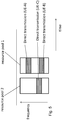
- Figure 5 depicts a diagram of resource pools multiplexed in time.
- Figure 5 shows that signals transmitted by two UEs, UE-A and UE-B are mapped to a first resource pool 1 and the signal from UE-C is mapped to a second resource pool 2.
- the resource pools are multiplexed in time and no collision occurs.
- UE-A, UE-B and UE-C in Figure 5 are transmitters such as the first wireless device 121.
- Figure 6 is a diagram of resource pools multiplexed in frequency.
- Figure 6 shows that signals transmitted by UEs UE-A and UE-B are mapped to resource pool 1 and the signal from UE-C is mapped to resource pool 2.
- the resource pools are multiplexed in frequency and no collision occurs.
- UE-A, UE-B and UE-C in Figure 6 are transmitters such as the first wireless device 121.
- a priority level may be interpreted as a function of UE properties e.g. relating to the properties of the first device 121 and/or the second device 122, such as e.g. the type of the first device 121 and/or the type of the second device 122.
- the type of device may be referred to as UE type.
- the UE type may for example be Public Safety UE, commercial UE, Public Safety Officer UE, high power UE, etc.
- the priority level may further be interpreted as a function of UE properties such as e.g. UE release and UE capabilities.
- UE properties such as e.g. UE release and UE capabilities.
- different resource pools are associated to different UE releases. For example, 3GPP Rel-12 LTE UEs may be mapped to pool 1, while 3GPP Rel-13 LTE UEs are mapped to pool 2.
- priority level may be interpreted as a function of the D2D transmission characteristics.
- the priority level may be interpreted as a function of the type of communication of the D2D transmission. It may e.g. be an emergency communication, a commercial communication, a unicast communication, a multicast communication, a broadcast communication, etc.
- the priority level may further be interpreted as a function of the D2D transmission characteristics such as properties of the destination address for the communication, the destination and/or source address of the transmission.
- the destination address may be a group address e.g. for a group of devices participating to a group communication type of transmission.
- the priority level may further be application-based priority level, including user-assigned priority level, etc.
- the priority level may be interpreted as a function of the D2D resource allocation protocol/algorithm, such as random resource selection, CSMA-based resource selection, energy-sensing based resource selection, contention-resolution based resource selection, etc.
- mapping from the D2D transmissions to specific pool(s) based on the priority level/priorities listed above may be pre-defined or assigned by the NW and/or applications in any way.
- Example mappings are provided in Figure 5 and Figure 6 above.
- the priority levels associated with the pools may be signaled from the network such as the network node 130 to the transmitters such as the first device 121 and/or the receivers such as the second device 122, or they may be pre-configured in the first and second devices.
- the transmitter such as the first device 121 selects the D2D transmission resources within the pool(s) based on any access algorithm, including random resource selection algorithm, contention avoidance-based selection algorithm, etc.
- a receiver such as the second device 122 prioritizes reception of certain D2D signals with respect to others based at least on the priority index of the resource pools for D2D.
- the prioritization rules at the receiver may be pre-defined, signaled by the network such as the network node 130, or be specified in a specification, such as a standard specification.
- Multiple resource pools that need to be monitored jointly may be defined e.g. by the network node 130 and allocated for the D2D transmission.
- the definition and/or allocation may for example be performed by the network node 130.
- Rules may be associated to different priority levels, such that a receiver such as the second device 122 may prioritize monitoring of certain pools against other reception resources, e.g. including other pools. For example, the receiver such as the second device 122 may prioritize monitoring of certain pools over monitoring of other reception resources, or vice versa.
- Rules may be defined for accessing the different pools in case of transmission, where at least some priority-related parameters may be taken into account in the selection of the available pool(s) for transmission of a certain signal.
- rules may be defined for accessing the different pools in case of transmission, where at least some UE capabilities-related parameter, e.g. including the release of the device, is taken into account in the selection of the available pool(s) for transmission of a certain signal.
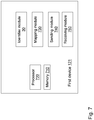
- the first device 121 may comprise the following arrangement depicted in Figure 7 .
- the first device 121 may comprise a memory 710 such as the memory module 22 described below.
- the memory 710 may be configured to store a priority level or different priority levels, and an index such as the resource pool index.
- the memory 710 is configured to store information about resource pool indexes identifying each respective resource pool comprised in the plurality of resource pools associated with different priority levels.
- the first device 121 comprises a processor 720 such as the processor 24 described below.
- the processor 720 is configured to, e.g. by means of an identifier module 30 being configured to, identify a priority level of the D2D transmission.
- the processor 720 is further configured to e.g. by means of a mapping module 730 or a resource pool selector 32 being configured to, map the identified priority level to a resource pool index.
- the resource pool index identifies a resource pool among a plurality of resource pools associated with different priority levels.
- the processor 720 is further configured to e.g. by means of a sending module 740 or a resource pool selector 32 being configured to, send or transmit the data in the D2D transmission to the second device 122, using the resources in the resource pool identified by the resource pool index.
- the processor 720 may be configured to, e.g. by means of the sending module 740 or a resource pool selector 32 being configured to, send or transmit the data in the D2D transmission to the second device 122, on the resources in the resource pool identified by the resource pool index.
- the priority level may be a function of characteristics of the D2D transmission.
- the characteristics may comprise at least one of: a type of communication, a type of device, and a type of resource allocation.
- the type of communication affecting priority level may be one or more of: an emergency type of communication, a commercial type of communication, a unicast type of communication, a multi-cast type of communication and a broadcast type of communication.
- the type of resource allocation affecting priority level may be one or more of: random source selection, CSMA -based resource selection, energy-sensing based resource selection and contention-resolution based resource selection.
- the type of device may be one of different respective device releases of a Third Generation Partnership Project (3GPP) standard, such as LTE and LTE Proximity Services-related Services and Capabilities, and different resource pools out of the plurality of resource pools may be associated with the different respective device releases of the 3GPP standard and associated with different respective resource pool indexes.
- 3GPP Third Generation Partnership Project
- the priority level may further be a function of other characteristics of the D2D transmission, which characteristics may comprise at least one of: a destination address of the D2D transmission, properties of the destination address of the D2D transmission and a type of application.
- the type of application may be the type of the application generating the D2D transmission.
- the priority level may be a function of the transmission type such that different resource pools out of the plurality of resource pools are associated with different respective transmission types and associated with different respective resource pool indexes.
- the plurality of resource pools may comprise an SA resource pool, a mode-2 data resource pool, a mode-2 SA resource pool and/or a type-1 discovery resource pool.
- the first device 121 may further be configured to, e.g. by means of a receiving module 750 being configured to, receive information about resource pool indexes identifying each respective resource pool comprised in the plurality of resource pools associated with different priority levels from a network node 130.
- the embodiments herein comprising the process of sending or transmitting data in a D2D transmission to a second device 122 may be implemented through one or more processors, such as the processor 720 in the first device 121 depicted in Figure 7 or the processor 24 in an alternative representation of the first device 121, depicted as device 20 in Figure 9 , together with computer program code for performing the functions and actions of the embodiments herein.
- the program code mentioned above may also be provided as a computer program product, for instance in the form of a data carrier carrying computer program code for performing the embodiments herein when being loaded into the first device 121.
- One such carrier may be in the form of a Compact Disk Read Only Memory (CD ROM) disc. It is however feasible with other data carriers such as a memory stick.
- the computer program code may furthermore be provided as program code on a server and downloaded to the first device 121.
- the memory 710 of the first device 121 may further comprise one or more memory units such as e.g. the memory module 22 depicted in Figure 9 .
- the memory 710 comprises instructions executable by the processor 720.
- the memory 710 is arranged to be used to store e.g. priority levels related to indices, data, configurations, and applications to perform the methods herein when being executed, i.e. when being run, by the processor 720 in the first device 121.
- the identifier module 30, the mapping module 730 and the sending module 740, receiving module 750, described above may refer to a combination of analog and digital circuits, and/or one or more processors configured with software and/or firmware, e.g. stored in the memory 710, that when executed by the one or more processors such as the processor 720 in the first device 121, the method actions are performed as described above.
- processors as well as the other digital hardware, may be included in a single Application-Specific Integrated Circuitry (ASIC), or several processors and various digital hardware may be distributed among several separate components, whether individually packaged or assembled into a system-on-a-chip (SoC).
- ASIC Application-Specific Integrated Circuitry
- SoC system-on-a-chip
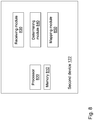
- the second device 122 may comprise the following arrangement as depicted in Figure 8 .
- the second device 122 comprises a memory 810 such as the memory module 22 described below.
- the memory 810 may be configured to store a priority level such as different priority levels and an index such as a resource pool index.
- the memory 810 may e.g. be configured to store information about resource pool indexes identifying each respective resource pool comprised in the plurality of resource pools associated with different priority levels?
- the second device 122 comprises a processor 820 such as the processor 24 described below.
- the processor 820 is configured to, e.g. by means of a receiving module 830 being configured to, receive the data in the D2D transmission from the first device 121, using resources in a resource pool identified by a resource pool index.
- the processor 820 may be configured to, e.g. by means of the receiving module 830 being configured to, receive the data in the D2D transmission from the first device 121, on the resources in the resource pool identified by the resource pool index.
- the priority level of the D2D transmission is mapped to the resource pool index, which resource pool index identifies a resource pool among a plurality of resource pools associated with different priority levels.
- the priority level may be a function of characteristics of the D2D transmission.
- the characteristics may comprise at least one of: a type of communication, a type of device, and a type of resource allocation.
- the type of communication affecting priority level may be one or more of: an emergency type of communication, a commercial type of communication, a unicast type of communication, a multi-cast type of communication and a broadcast type of communication.
- the type of resource allocation affecting the priority level may be one or more of: random source selection, CSMA-based resource selection, energy-sensing based resource selection and contention-resolution based resource selection.
- the type of device may be one of different respective device releases of a Third Generation Partnership Project (3GPP) standard, such as LTE and LTE Proximity Services-related Services and Capabilities, and different resource pools out of the plurality of resource pools may be associated with the different respective device releases of the 3GPP standard and associated with different respective resource pool indexes.
- 3GPP Third Generation Partnership Project
- the priority level may further be a function of other characteristics of the D2D transmission, which characteristics may comprise at least one of: a destination address of the D2D transmission, properties of the destination address of the D2D transmission and a type of application.
- the type of application may be the type of the application generating the D2D transmission.
- the priority level may be a function of the transmission type such that different resource pools out of the plurality of resource pools are associated with different respective transmission types and associated with different respective resource pool indexes.
- the plurality of resource pools may include an SA resource pool, a mode-2 data resource pool, a mode-2 SA resource pool and/or a type-1 discovery resource pool.
- the second device 122 may further be configured to, e.g. e.g. by means of a determining module 840 being configured to, determine a priority level of the D2D transmission.
- the second device 122 may further be configured to, e.g. e.g. by means of a mapping module 850 being configured to, map the determined priority level to the resource pool index, which resource pool index identifies the resource pool among a plurality of resource pools associated with different priority levels.
- a mapping module 850 being configured to, map the determined priority level to the resource pool index, which resource pool index identifies the resource pool among a plurality of resource pools associated with different priority levels.
- the embodiments herein comprising the process of receiving data in a D2D transmission from the first device 121, may be implemented through one or more processors, such as the processor 820 in the second device 122 depicted in Figure 8 or the processor 24 in an alternative representation of the second device 122, depicted as device 20 in Figure 9 , together with computer program code for performing the functions and actions of the embodiments herein.
- the program code mentioned above may also be provided as a computer program product, for instance in the form of a data carrier carrying computer program code for performing the embodiments herein when being loaded into the second device 122.
- One such carrier may be in the form of a CD ROM disc. It is however feasible with other data carriers such as a memory stick.
- the computer program code may furthermore be provided as program code on a server and downloaded to the second device 122.
- the memory 810 of the second device 122 may further comprise one or more memory units, such as such as e.g. the memory module 22, depicted in Figure 9 .
- the memory 810 comprises instructions executable by the processor 820.
- modules in the second device 122 described above may refer to a combination of analog and digital circuits, and/or one or more processors configured with software and/or firmware, e.g. stored in the memory 810, that when executed by the one or more processors such as the processor 820 in the second device 122, the method actions are performed as described above.
- processors as well as the other digital hardware, may be included in a single Application-Specific Integrated Circuitry (ASIC), or several processors and various digital hardware may be distributed among several separate components, whether individually packaged or assembled into a system-on-a-chip (SoC).
- ASIC Application-Specific Integrated Circuitry
- SoC system-on-a-chip
- FIG. 9 is a block diagram of an exemplary wireless device 20 capable of D2D communication.
- the wireless device 20 may be any one or more out of the first device 121 and the second device 122.
- the wireless device 20 is constructed in accordance with principles of some embodiments herein.
- the wireless device 20 may comprise the memory module 22 and a processor 24.
- the memory module 22 stores one or more priority level values 26 and one or more indices 28, where each index, also denoted resource pool index herein, corresponds to a different resource pool.
- the processor 24 includes an identifier module 30 configured to identify a plurality of resource pools.
- a resource pool selector module 32 is configured to select a resource pool associated with an index 28 based on a stored priority level value 26.
- the device 22 such as the first or second device 121, 122 may in some embodiments be a base station.
- Figure 10 is a flow chart of an exemplary process for identifying and selecting a resource pool for D2D communication by a device such as the device 20 shown in Figure 9 .
- the process includes identifying a plurality of resource pools, block S100.
- a resource pool is selected for D2D access based on a priority level, block S102.
- the priority level may be a function of at least one of a type of communication, a type of device and a type of resource allocation.
- a method and system for allocating resources to a device capable of D2D communication includes identifying a plurality of resource pools. The method further includes selecting a resource pool for D2D access based on a priority level, the priority level being a function of at least one of a type of communication, a type of the device, and a type of resource allocation.
- the type of device affecting priority level is one of a PS UE, commercial UE, office UE and a high power UE.
- the type of communication affecting priority level is one of emergency, commercial, unicast, multi-cast and broadcast.
- the type of resource allocation affecting priority level is one of random resource selection, CSMA-based resource selection, energy-sensing based resource selection and contention-resolution based resource selection.
- the different resource pools include an SA resource pool, a mode-2 data resource pool, a mode-2 SA resource pool and a type-1 discovery resource pool.
- a priority level associated with a resource pool is signaled to the device from a network node.
- a resource pool is selected based on a whether the UE is one of a 3GPP Rel-12 and Rel-13 device.
- embodiments include a device capable of device-to-device, D2D, communication.
- the device has a memory configured to store a priority level and an index.
- the device also has a processor.
- the processor is configured to identify a plurality of resource pools.
- the processor is also configured to select a resource pool associated with the index based on a stored priority level, the priority level being a function of at least one of a type of communication, a type of the device, and a type of resource allocation.
- the type of device affecting priority level is one of a PS UE, commercial UE, office UE and a high power UE.
- the type of communication affecting priority level is one of emergency, commercial, unicast, multi-cast and broadcast.
- the type of resource allocation affecting priority level is one of random resource selection, CSMA-based resource selection, energy-sensing based resource selection and contention-resolution based resource selection.
- embodiments include a device capable of device-to-device, D2D, communication.
- the device includes a memory module configured to store a priority level and an index.
- the device also includes an identifier module configured to identify a plurality of resource pools.
- the device further includes a resource pool selector configured to select a resource pool associated with the index based on a stored priority level, the priority level being a function of at least one of a type of communication, a type of the device, and a type of resource allocation.
- the type of device affecting priority level is one of a PS UE, commercial UE, office UE and a high power UE.
- the type of communication affecting priority level is one of emergency, commercial, unicast, multi-cast and broadcast.
- the type of resource allocation affecting priority level is one of random source selection, CSMA-based resource selection, energy-sensing based resource selection and contention-resolution based resource selection.
- Embodiments herein may be realized in hardware, or a combination of hardware and software. Any kind of computing system, or other apparatus adapted for carrying out the methods described herein, is suited to perform the functions described herein.
- a typical combination of hardware and software may be a specialized computer system, having one or more processing elements and a computer program stored on a storage medium that, when loaded and executed, controls the computer system such that it carries out the methods described herein.
- Embodiments herein may also be embedded in a computer program product, which comprises all the features enabling the implementation of the methods described herein, and which, when loaded in a computing system is able to carry out these methods.
- Storage medium may refer to any volatile or non-volatile storage device.
- Computer program or application in the present context means any expression, in any language, code or notation, of a set of instructions intended to cause a system having an information processing capability to perform a particular function either directly or after either or both of the following a) conversion to another language, code or notation; b) reproduction in a different material form.
Landscapes
- Engineering & Computer Science (AREA)
- Computer Networks & Wireless Communication (AREA)
- Signal Processing (AREA)
- Mobile Radio Communication Systems (AREA)
Claims (15)
- Verfahren, das von einem ersten Gerät (121) durchgeführt wird, zum Senden von Daten in einer Gerät-zu-Gerät-, D2D-, -Übertragung an ein zweites Gerät (122), wobei das Verfahren Folgendes umfasst:Identifizieren (301) einer Prioritätsstufe der D2D-Übertragung, dadurch gekennzeichnet, dass die Prioritätsstufe eine Funktion von Charakteristiken der D2D-Übertragung ist, wobei die Charakteristiken zumindest einen Typ der Ressourcenzuweisung umfassen,Zuordnen (302) der identifizierten Prioritätsstufe zu einem Ressourcenpoolindex, wobei der Ressourcenpoolindex einen Ressourcenpool aus einer Vielzahl an mit verschiedenen Prioritätsstufen assoziierten Ressourcenpools identifiziert,Senden (303) der Daten in der D2D-Übertragung an das zweite Gerät (122) unter Verwendung der Ressourcen in dem vom Ressourcenpoolindex identifizierten Ressourcenpool.
- Verfahren nach Anspruch 1, wobei die Charakteristiken ferner mindestens eines aus Folgendem umfassen: einen Typ der Kommunikation und einen Typ des Geräts.
- Verfahren nach Anspruch 2, wobei der Typ der Kommunikation eines aus Folgendem ist: eine Kommunikation vom Notfallstyp, eine Kommunikation vom kommerziellen Typ, eine Kommunikation vom Unicast-Typ, eine Kommunikation vom Multicast-Typ und eine Kommunikation vom Broadcast-Typ.
- Verfahren nach einem der Ansprüche 2-3, wobei der Typ der Ressourcenzuweisung eines aus Folgendem ist: zufällige Ressourcenauswahl, Ressourcenauswahl basierend auf Carrier Sense Multiple Access, CSMA, Ressourcenauswahl basierend auf Energieabgriff und Ressourcenauswahl basierend auf Konfliktlösung.
- Verfahren nach einem der Ansprüche 2-4, wobei der Typ des Geräts einer von jeweiligen unterschiedlichen Gerätefreigaben eines Third-Generation-Partnership-Project-, 3GPP-, -Standards ist, und wobei unterschiedliche Ressourcenpools der Vielzahl von Ressourcenpools mit den jeweiligen unterschiedlichen Gerätefreigaben des 3GPP-Standards assoziiert sind und mit jeweiligen unterschiedlichen Ressourcenpoolindexen assoziiert sind.
- Verfahren nach einem der Ansprüche 1 oder 2, wobei die Prioritätsstufe eine Funktion von Charakteristiken der D2D-Übertragung ist, wobei die Charakteristiken ferner zumindest eines aus Folgendem umfassen: eine Zieladresse der D2D-Übertragung, Eigenschaften der Zieladresse der D2D-Übertragung und einen Typ der Anwendung.
- Verfahren nach einem der Ansprüche 1-6, wobei die Prioritätsstufe auch eine Funktion des Übertragungstyps ist, sodass unterschiedliche Ressourcenpools der Vielzahl von Ressourcenpools mit jeweiligen unterschiedlichen Übertragungstypen assoziiert sind und mit jeweiligen unterschiedlichen Ressourcenpoolindizes assoziiert sind.
- Verfahren nach einem der Ansprüche 1-7, wobei die Vielzahl von Ressourcenpools einen Scheduling-Assignment-, SA-, -Ressourcenpool, einen Mode-2-Datenressourcenpool, einen Mode-2-SA-Ressourcenpool und/oder einen Typ-1-Discovery-Ressourcenpool umfassen.
- Verfahren nach einem der Ansprüche 1-8, wobei Information zu den Ressourcenpoolindizes, die jeden jeweiligen Ressourcenpool identifizieren, der in der Vielzahl von mit unterschiedlichen Prioritätsstufen assoziierten Ressourcenpools umfasst ist, von einem Netzwerkknoten (130) an das erste Gerät (121) signalisiert wird.
- Verfahren, das von einem zweiten Gerät (122) durchgeführt wird, zum Empfangen von Daten in einer Gerät-zu-Gerät-, D2D-, Übertragung eines ersten Geräts (121), wobei das Verfahren Folgendes umfasst:Bestimmen (401) einer Prioritätsstufe der D2D-Übertragung;Empfangen (403) der Daten in der D2D-Übertragung des ersten Geräts (121) unter Verwendung von Ressourcen in einem von einem Ressourcenpoolindex identifizierten Ressourcenpool,wobei die Prioritätsstufe der D2D-Übertragung dem Ressourcenpoolindex zugeordnet ist, wobei der Ressourcenpoolindex einen Ressourcenpool aus einer Vielzahl von mit unterschiedlichen Prioritätsstufen assoziierten Ressourcenpools identifiziert, und dadurch gekennzeichnet, dass die Prioritätsstufe eine Funktion von Charakteristiken der D2D-Übertragung ist, wobei die Charakteristiken zumindest einen Typ der Ressourcenzuweisung umfassen.
- Verfahren nach Anspruch 10, wobei die Charakteristiken ferner mindestens eines aus Folgendem umfassen: einen Typ der Kommunikation und einen Typ des Geräts.
- Verfahren nach Anspruch 11, wobei der Typ der Kommunikation eines aus Folgendem ist: eine Kommunikation vom Notfallstyp, eine Kommunikation vom kommerziellen Typ, eine Kommunikation vom Unicast-Typ, eine Kommunikation vom Multicast-Typ und eine Kommunikation vom Broadcast-Typ.
- Verfahren nach einem der Ansprüche 10-12, wobei die Vielzahl von Ressourcenpools einen Scheduling-Assignment-, SA-, -Ressourcenpool, einen Mode-2-Datenressourcenpool, einen Mode-2-SA-Ressourcenpool und/oder einen Typ-1-Discovery-Ressourcenpool umfassen.
- Erstes Gerät (121) zum Senden von Daten in einer Gerät-zu-Gerät-, D2D-, Übertragung an ein zweites Gerät (122), wobei das erste Gerät (121) Folgendes umfasst:einen Prozessor (720), der für Folgendes konfiguriert ist:Identifizieren einer Prioritätsstufe der D2D-Übertragung, dadurch gekennzeichnet, dass die Prioritätsstufe eine Funktion von Charakteristiken der D2D-Übertragung ist, wobei die Charakteristiken zumindest einen Typ der Ressourcenzuweisung umfassen,Zuordnen der identifizierten Prioritätsstufe zu einem Ressourcenpoolindex, wobei der Ressourcenpoolindex einen Ressourcenpool aus einer Vielzahl von mit verschiedenen Prioritätsstufen assoziierten Ressourcenpools identifiziert, undSenden der Daten in der D2D-Übertragung an das zweite Gerät (122) unter Verwendung der Ressourcen in dem vom Ressourcenpoolindex identifizierten Ressourcenpool.
- Zweites Gerät (122) zum Empfangen von Daten in einer Gerät-zu-Gerät-, D2D-, Übertragung eines ersten Geräts (121), wobei das zweite Gerät (122) Folgendes umfasst:einen Prozessor (820), der für Folgendes konfiguriert ist:Bestimmen einer Prioritätsstufe der D2D-Übertragung;Empfangen der Daten in der D2D-Übertragung des ersten Geräts (121) unter Verwendung von Ressourcen in einem von einem Ressourcenpoolindex identifizierten Ressourcenpool,wobei die Prioritätsstufe der D2D-Übertragung dem Ressourcenpoolindex zugeordnet ist, wobei der Ressourcenpoolindex einen Ressourcenpool aus einer Vielzahl von mit verschiedenen Prioritätsstufen assoziierten Ressourcenpools identifiziert, und dadurch gekennzeichnet, dass die Prioritätsstufe eine Funktion von Charakteristiken der D2D-Übertragung ist, wobei die Charakteristiken zumindest einen Typ der Ressourcenzuweisung umfassen.
Applications Claiming Priority (2)
| Application Number | Priority Date | Filing Date | Title |
|---|---|---|---|
| US201462002592P | 2014-05-23 | 2014-05-23 | |
| PCT/SE2015/050597 WO2015178851A1 (en) | 2014-05-23 | 2015-05-25 | Devices and methods for d2d transmission |
Publications (3)
| Publication Number | Publication Date |
|---|---|
| EP3146776A1 EP3146776A1 (de) | 2017-03-29 |
| EP3146776A4 EP3146776A4 (de) | 2017-03-29 |
| EP3146776B1 true EP3146776B1 (de) | 2017-11-15 |
Family
ID=54554392
Family Applications (1)
| Application Number | Title | Priority Date | Filing Date |
|---|---|---|---|
| EP15795567.5A Active EP3146776B1 (de) | 2014-05-23 | 2015-05-25 | System und verfahren zur d2d-übertragung |
Country Status (3)
| Country | Link |
|---|---|
| US (1) | US10039119B2 (de) |
| EP (1) | EP3146776B1 (de) |
| WO (1) | WO2015178851A1 (de) |
Families Citing this family (42)
| Publication number | Priority date | Publication date | Assignee | Title |
|---|---|---|---|---|
| WO2015194916A1 (ko) * | 2014-06-20 | 2015-12-23 | 엘지전자 주식회사 | 무선 통신 시스템에서 단말 간 직접 통신을 위한 자원을 결정하는 방법 및 이를 위한 장치 |
| WO2015200607A1 (en) * | 2014-06-27 | 2015-12-30 | Sharp Laboratories Of America, Inc. | Resource pool access for device to device communications |
| US10912100B2 (en) * | 2014-07-29 | 2021-02-02 | Lg Electronics Inc. | Method for transmitting control information for D2D communication in wireless communication system and device therefor |
| US10219301B2 (en) * | 2014-08-06 | 2019-02-26 | Nokia Solutions And Networks Oy | Inhibition mechanism for device-to-device (D2D) communication |
| WO2016028126A1 (ko) * | 2014-08-22 | 2016-02-25 | 엘지전자(주) | 무선 통신 시스템에서 단말 간 통신을 위한 방법 및 이를 위한 장치 |
| US9992652B2 (en) * | 2014-09-11 | 2018-06-05 | Qualcomm Incorporated | Group priority handling for wireless communication |
| CN110087312B (zh) * | 2014-09-25 | 2023-10-24 | 株式会社Ntt都科摩 | 终端以及通信方法 |
| WO2016060524A1 (ko) * | 2014-10-16 | 2016-04-21 | 엘지전자 주식회사 | 무선 통신 시스템에서 단말의 d2d(device-to-device) 데이터 전송 방법 및 상기 방법을 이용하는 단말 |
| CN107432024A (zh) * | 2015-03-31 | 2017-12-01 | 株式会社Ntt都科摩 | 用户装置和基站 |
| JP6517921B2 (ja) * | 2015-04-09 | 2019-05-22 | 株式会社Nttドコモ | ユーザ装置、移動通信システム及び通信制御方法 |
| US10098134B2 (en) * | 2015-05-15 | 2018-10-09 | Electronics And Telecommunications Research Institute | Method and apparatus for controlling priority in device to device communication |
| US10412754B2 (en) * | 2015-08-12 | 2019-09-10 | Intel Corporation | Resource access in device to device communication |
| CN108353420B (zh) * | 2015-11-05 | 2022-04-15 | 富士通株式会社 | 通信装置以及无线通信方法 |
| WO2017111565A1 (ko) * | 2015-12-24 | 2017-06-29 | 엘지전자 주식회사 | 무선 통신 시스템에서 v2x 단말의 데이터 송신 방법 및 장치 |
| JP6462179B2 (ja) * | 2016-02-23 | 2019-01-30 | 京セラ株式会社 | 無線端末、基地局、及び方法 |
| US11432263B2 (en) * | 2016-03-04 | 2022-08-30 | Lg Electronics Inc. | V2X transmission resource selecting method implemented by terminal in wireless communication system and terminal using same |
| US11147044B2 (en) | 2016-03-04 | 2021-10-12 | Lg Electronics Inc. | V2X transmission resource selecting method implemented by terminal in wireless communication system and terminal using same |
| JP2019512968A (ja) * | 2016-04-01 | 2019-05-16 | 富士通株式会社 | リソース割り当て方法、装置及び通信システム |
| US10142957B2 (en) | 2016-04-06 | 2018-11-27 | Sharp Kabushiki Kaisha | Resource selection for vehicle (V2X) communications |
| SG11201901069XA (en) | 2016-08-08 | 2019-03-28 | Sharp Kk | Power efficient resource utilization for v2x communications |
| CN107734551B (zh) * | 2016-08-10 | 2023-10-13 | 北京三星通信技术研究有限公司 | 一种v2x通信中的资源选择方法和设备 |
| KR102439564B1 (ko) | 2016-08-10 | 2022-09-02 | 삼성전자 주식회사 | V2x 통신에서 자원을 선택하는 방법 및 장치 |
| US9913311B1 (en) | 2016-08-23 | 2018-03-06 | Qualcomm Incorporated | Methods for TxPool selection for LTE-D code transmission |
| US11297600B2 (en) | 2016-09-30 | 2022-04-05 | Huawei Technologies Co., Ltd. | Resource selection method and apparatus |
| WO2018058594A1 (zh) | 2016-09-30 | 2018-04-05 | 华为技术有限公司 | 一种v2x通信的方法、设备及系统 |
| CN108347294B (zh) * | 2017-01-25 | 2021-03-19 | 电信科学技术研究院 | 一种数据检测方法及终端 |
| JP6480967B2 (ja) * | 2017-03-14 | 2019-03-13 | ファナック株式会社 | 伝送制御システム |
| EP3618522B1 (de) * | 2017-08-02 | 2021-05-19 | Guangdong Oppo Mobile Telecommunications Corp., Ltd. | Verfahren zur kommunikation von vorrichtung zu vorrichtung, endgerät und netzwerkvorrichtung |
| CN109428905B (zh) * | 2017-08-22 | 2022-02-08 | 中兴通讯股份有限公司 | 资源管理方法及装置 |
| US11044129B2 (en) | 2017-12-21 | 2021-06-22 | Qualcomm Incorporated | Hierarchical communication for device-to-device communications |
| EP4102903A1 (de) * | 2018-03-15 | 2022-12-14 | Guangdong Oppo Mobile Telecommunications Corp., Ltd. | Verfahren zur trägerauswahl in einem fahrzeug-zu-alles-system und endgerät |
| US11412570B2 (en) | 2018-06-14 | 2022-08-09 | Lg Electronics Inc. | Method and apparatus for reporting cast type by UE in NR V2X |
| US11382107B2 (en) | 2018-06-14 | 2022-07-05 | Lg Electronics Inc. | Method and apparatus for performing sidelink communication by UE in NR V2X |
| JP7442496B2 (ja) | 2018-08-02 | 2024-03-04 | オッポ広東移動通信有限公司 | 無線通信システムにおいて無線リソース選択および争奪指示を実行するための方法および装置 |
| WO2020029090A1 (zh) * | 2018-08-07 | 2020-02-13 | 北京小米移动软件有限公司 | 资源配置方法及装置 |
| CN110972304B (zh) * | 2018-09-28 | 2024-07-12 | 现代自动车株式会社 | 考虑通信系统中资源占用状态的副链路通信方法及其设备 |
| WO2020067782A1 (en) * | 2018-09-28 | 2020-04-02 | Samsung Electronics Co., Ltd. | Method and device for transmitting or receiving groupcast feedback in wireless cellular communication system |
| KR102819796B1 (ko) | 2018-10-08 | 2025-06-16 | 삼성전자 주식회사 | 무선 통신 시스템에서 단말 간 유니캐스트 전송을 지원하기 위한 장치 및 방법 |
| JP7382971B2 (ja) | 2018-10-08 | 2023-11-17 | サムスン エレクトロニクス カンパニー リミテッド | 無線通信システムにおける端末の間のユニキャスト送信をサポートするための装置及び方法 |
| US11071091B2 (en) * | 2019-01-10 | 2021-07-20 | At&T Intellectual Property I, L.P. | Contention level signaling for resource pools |
| EP3764725A1 (de) * | 2019-07-12 | 2021-01-13 | Panasonic Intellectual Property Corporation of America | Benutzergerät und basisstation |
| US20210250954A1 (en) * | 2020-02-11 | 2021-08-12 | Asustek Computer Inc. | Method and apparatus for scheduling device-to-device sidelink transmission in a wireless communication system |
Family Cites Families (8)
| Publication number | Priority date | Publication date | Assignee | Title |
|---|---|---|---|---|
| US9215693B2 (en) * | 2011-11-02 | 2015-12-15 | Electronics And Telecommunications Research Institute | Method for radio resource management in device-to-device communication |
| WO2013191360A1 (ko) * | 2012-06-20 | 2013-12-27 | 엘지전자 주식회사 | 신호 송수신 방법 및 이를 위한 장치 |
| KR20140059423A (ko) | 2012-11-08 | 2014-05-16 | 삼성전자주식회사 | 디바이스 간 직접 통신 시스템에서 비직교 커넥션 아이디를 이용한 스케쥴링 방법 및 장치 |
| WO2014157911A1 (ko) * | 2013-03-25 | 2014-10-02 | 엘지전자 주식회사 | 무선 통신 시스템에서 단말 간 직접 통신을 위한 자원을 할당하는 방법 및 이를 위한 장치 |
| WO2015143170A1 (en) | 2014-03-19 | 2015-09-24 | Interdigital Patent Holdings, Inc. | Device-to-device synchronization |
| US10660146B2 (en) * | 2014-03-21 | 2020-05-19 | Samsung Electronics Co., Ltd. | Methods and apparatus for device to device synchronization priority |
| US10462807B2 (en) | 2014-05-09 | 2019-10-29 | Telefonaktiebolaget Lm Ericsson (Publ) | Methods, apparatus, and systems for determining communication priority |
| EP3140980B1 (de) * | 2014-05-09 | 2020-08-19 | Sony Corporation | System, basisstation, und verfahren zur aktivierung der nutzung von ressourcen für eine d2d-entdeckung |
-
2015
- 2015-05-25 US US14/772,567 patent/US10039119B2/en active Active
- 2015-05-25 EP EP15795567.5A patent/EP3146776B1/de active Active
- 2015-05-25 WO PCT/SE2015/050597 patent/WO2015178851A1/en not_active Ceased
Non-Patent Citations (1)
| Title |
|---|
| None * |
Also Published As
| Publication number | Publication date |
|---|---|
| US10039119B2 (en) | 2018-07-31 |
| WO2015178851A1 (en) | 2015-11-26 |
| US20160302215A1 (en) | 2016-10-13 |
| EP3146776A1 (de) | 2017-03-29 |
| EP3146776A4 (de) | 2017-03-29 |
Similar Documents
| Publication | Publication Date | Title |
|---|---|---|
| US10039119B2 (en) | Devices and methods for D2D transmission | |
| US20210337557A1 (en) | Method and apparatus for processing priority in d2d communication system | |
| US11109390B2 (en) | Device-to-device priority pool configuration | |
| US20200107334A1 (en) | Management of device-to-device communication resources | |
| TWI661741B (zh) | 通訊系統,通訊裝置及方法 | |
| US9826522B2 (en) | Base station and device to device user equipment for a wireless communication system | |
| US10602554B2 (en) | Method and wireless device for managing resources for D2D communication | |
| CA2995551C (en) | Reducing collisions between communication and discovery resources | |
| EP2925076B1 (de) | Kurze identifikatoren für rundfunkkommunikation zwischen zwei geräten (d2d) | |
| US20160021526A1 (en) | Device to device communication with cluster coordinating | |
| US20180139599A1 (en) | User device and base station | |
| CN112997536A (zh) | 在无线通信系统中选择用于终端之间的直接通信的无线接入技术的装置和方法 | |
| WO2016202227A1 (zh) | 一种层2链路标识的选择、通知方法及装置 | |
| US11974317B2 (en) | Data transmission method and apparatus, computer device, and system | |
| JP7837364B2 (ja) | サイドリンク構成のためのシステムおよび方法 | |
| US10362580B2 (en) | Fair resource sharing in broadcast based D2D communications | |
| JP2023082193A (ja) | 自動車のネットワークにおけるキャリア選択方法及び端末機器 | |
| KR20150004256A (ko) | 무선 네트워크에서의 디바이스간 직접 통신에서 자원 할당 장치 및 방법 | |
| Tsolkas et al. | A device discovery scheme for proximity services in LTE networks | |
| WO2017078598A1 (en) | Network node, wireless device and methods therein for handling radio resources |
Legal Events
| Date | Code | Title | Description |
|---|---|---|---|
| PUAI | Public reference made under article 153(3) epc to a published international application that has entered the european phase |
Free format text: ORIGINAL CODE: 0009012 |
|
| 17P | Request for examination filed |
Effective date: 20161012 |
|
| A4 | Supplementary search report drawn up and despatched |
Effective date: 20170227 |
|
| AK | Designated contracting states |
Kind code of ref document: A1 Designated state(s): AL AT BE BG CH CY CZ DE DK EE ES FI FR GB GR HR HU IE IS IT LI LT LU LV MC MK MT NL NO PL PT RO RS SE SI SK SM TR |
|
| AX | Request for extension of the european patent |
Extension state: BA ME |
|
| 17Q | First examination report despatched |
Effective date: 20170405 |
|
| GRAP | Despatch of communication of intention to grant a patent |
Free format text: ORIGINAL CODE: EPIDOSNIGR1 |
|
| DAV | Request for validation of the european patent (deleted) | ||
| DAX | Request for extension of the european patent (deleted) | ||
| INTG | Intention to grant announced |
Effective date: 20170724 |
|
| GRAS | Grant fee paid |
Free format text: ORIGINAL CODE: EPIDOSNIGR3 |
|
| GRAA | (expected) grant |
Free format text: ORIGINAL CODE: 0009210 |
|
| AK | Designated contracting states |
Kind code of ref document: B1 Designated state(s): AL AT BE BG CH CY CZ DE DK EE ES FI FR GB GR HR HU IE IS IT LI LT LU LV MC MK MT NL NO PL PT RO RS SE SI SK SM TR |
|
| REG | Reference to a national code |
Ref country code: CH Ref legal event code: EP Ref country code: GB Ref legal event code: FG4D Ref country code: AT Ref legal event code: REF Ref document number: 947449 Country of ref document: AT Kind code of ref document: T Effective date: 20171115 |
|
| REG | Reference to a national code |
Ref country code: IE Ref legal event code: FG4D |
|
| REG | Reference to a national code |
Ref country code: DE Ref legal event code: R096 Ref document number: 602015006072 Country of ref document: DE |
|
| REG | Reference to a national code |
Ref country code: NL Ref legal event code: MP Effective date: 20171115 |
|
| REG | Reference to a national code |
Ref country code: LT Ref legal event code: MG4D |
|
| REG | Reference to a national code |
Ref country code: AT Ref legal event code: MK05 Ref document number: 947449 Country of ref document: AT Kind code of ref document: T Effective date: 20171115 |
|
| PG25 | Lapsed in a contracting state [announced via postgrant information from national office to epo] |
Ref country code: LT Free format text: LAPSE BECAUSE OF FAILURE TO SUBMIT A TRANSLATION OF THE DESCRIPTION OR TO PAY THE FEE WITHIN THE PRESCRIBED TIME-LIMIT Effective date: 20171115 Ref country code: ES Free format text: LAPSE BECAUSE OF FAILURE TO SUBMIT A TRANSLATION OF THE DESCRIPTION OR TO PAY THE FEE WITHIN THE PRESCRIBED TIME-LIMIT Effective date: 20171115 Ref country code: NO Free format text: LAPSE BECAUSE OF FAILURE TO SUBMIT A TRANSLATION OF THE DESCRIPTION OR TO PAY THE FEE WITHIN THE PRESCRIBED TIME-LIMIT Effective date: 20180215 Ref country code: SE Free format text: LAPSE BECAUSE OF FAILURE TO SUBMIT A TRANSLATION OF THE DESCRIPTION OR TO PAY THE FEE WITHIN THE PRESCRIBED TIME-LIMIT Effective date: 20171115 Ref country code: FI Free format text: LAPSE BECAUSE OF FAILURE TO SUBMIT A TRANSLATION OF THE DESCRIPTION OR TO PAY THE FEE WITHIN THE PRESCRIBED TIME-LIMIT Effective date: 20171115 Ref country code: NL Free format text: LAPSE BECAUSE OF FAILURE TO SUBMIT A TRANSLATION OF THE DESCRIPTION OR TO PAY THE FEE WITHIN THE PRESCRIBED TIME-LIMIT Effective date: 20171115 |
|
| REG | Reference to a national code |
Ref country code: FR Ref legal event code: PLFP Year of fee payment: 4 |
|
| PG25 | Lapsed in a contracting state [announced via postgrant information from national office to epo] |
Ref country code: LV Free format text: LAPSE BECAUSE OF FAILURE TO SUBMIT A TRANSLATION OF THE DESCRIPTION OR TO PAY THE FEE WITHIN THE PRESCRIBED TIME-LIMIT Effective date: 20171115 Ref country code: GR Free format text: LAPSE BECAUSE OF FAILURE TO SUBMIT A TRANSLATION OF THE DESCRIPTION OR TO PAY THE FEE WITHIN THE PRESCRIBED TIME-LIMIT Effective date: 20180216 Ref country code: HR Free format text: LAPSE BECAUSE OF FAILURE TO SUBMIT A TRANSLATION OF THE DESCRIPTION OR TO PAY THE FEE WITHIN THE PRESCRIBED TIME-LIMIT Effective date: 20171115 Ref country code: AT Free format text: LAPSE BECAUSE OF FAILURE TO SUBMIT A TRANSLATION OF THE DESCRIPTION OR TO PAY THE FEE WITHIN THE PRESCRIBED TIME-LIMIT Effective date: 20171115 Ref country code: RS Free format text: LAPSE BECAUSE OF FAILURE TO SUBMIT A TRANSLATION OF THE DESCRIPTION OR TO PAY THE FEE WITHIN THE PRESCRIBED TIME-LIMIT Effective date: 20171115 Ref country code: BG Free format text: LAPSE BECAUSE OF FAILURE TO SUBMIT A TRANSLATION OF THE DESCRIPTION OR TO PAY THE FEE WITHIN THE PRESCRIBED TIME-LIMIT Effective date: 20180215 |
|
| PG25 | Lapsed in a contracting state [announced via postgrant information from national office to epo] |
Ref country code: CZ Free format text: LAPSE BECAUSE OF FAILURE TO SUBMIT A TRANSLATION OF THE DESCRIPTION OR TO PAY THE FEE WITHIN THE PRESCRIBED TIME-LIMIT Effective date: 20171115 Ref country code: SK Free format text: LAPSE BECAUSE OF FAILURE TO SUBMIT A TRANSLATION OF THE DESCRIPTION OR TO PAY THE FEE WITHIN THE PRESCRIBED TIME-LIMIT Effective date: 20171115 Ref country code: CY Free format text: LAPSE BECAUSE OF FAILURE TO SUBMIT A TRANSLATION OF THE DESCRIPTION OR TO PAY THE FEE WITHIN THE PRESCRIBED TIME-LIMIT Effective date: 20171115 Ref country code: EE Free format text: LAPSE BECAUSE OF FAILURE TO SUBMIT A TRANSLATION OF THE DESCRIPTION OR TO PAY THE FEE WITHIN THE PRESCRIBED TIME-LIMIT Effective date: 20171115 Ref country code: DK Free format text: LAPSE BECAUSE OF FAILURE TO SUBMIT A TRANSLATION OF THE DESCRIPTION OR TO PAY THE FEE WITHIN THE PRESCRIBED TIME-LIMIT Effective date: 20171115 |
|
| REG | Reference to a national code |
Ref country code: DE Ref legal event code: R097 Ref document number: 602015006072 Country of ref document: DE |
|
| PG25 | Lapsed in a contracting state [announced via postgrant information from national office to epo] |
Ref country code: IT Free format text: LAPSE BECAUSE OF FAILURE TO SUBMIT A TRANSLATION OF THE DESCRIPTION OR TO PAY THE FEE WITHIN THE PRESCRIBED TIME-LIMIT Effective date: 20171115 Ref country code: PL Free format text: LAPSE BECAUSE OF FAILURE TO SUBMIT A TRANSLATION OF THE DESCRIPTION OR TO PAY THE FEE WITHIN THE PRESCRIBED TIME-LIMIT Effective date: 20171115 Ref country code: SM Free format text: LAPSE BECAUSE OF FAILURE TO SUBMIT A TRANSLATION OF THE DESCRIPTION OR TO PAY THE FEE WITHIN THE PRESCRIBED TIME-LIMIT Effective date: 20171115 |
|
| PLBE | No opposition filed within time limit |
Free format text: ORIGINAL CODE: 0009261 |
|
| STAA | Information on the status of an ep patent application or granted ep patent |
Free format text: STATUS: NO OPPOSITION FILED WITHIN TIME LIMIT |
|
| 26N | No opposition filed |
Effective date: 20180817 |
|
| REG | Reference to a national code |
Ref country code: CH Ref legal event code: PL |
|
| REG | Reference to a national code |
Ref country code: BE Ref legal event code: MM Effective date: 20180531 |
|
| PG25 | Lapsed in a contracting state [announced via postgrant information from national office to epo] |
Ref country code: MC Free format text: LAPSE BECAUSE OF FAILURE TO SUBMIT A TRANSLATION OF THE DESCRIPTION OR TO PAY THE FEE WITHIN THE PRESCRIBED TIME-LIMIT Effective date: 20171115 |
|
| REG | Reference to a national code |
Ref country code: IE Ref legal event code: MM4A |
|
| PG25 | Lapsed in a contracting state [announced via postgrant information from national office to epo] |
Ref country code: CH Free format text: LAPSE BECAUSE OF NON-PAYMENT OF DUE FEES Effective date: 20180531 Ref country code: LI Free format text: LAPSE BECAUSE OF NON-PAYMENT OF DUE FEES Effective date: 20180531 |
|
| PG25 | Lapsed in a contracting state [announced via postgrant information from national office to epo] |
Ref country code: LU Free format text: LAPSE BECAUSE OF NON-PAYMENT OF DUE FEES Effective date: 20180525 |
|
| PG25 | Lapsed in a contracting state [announced via postgrant information from national office to epo] |
Ref country code: IE Free format text: LAPSE BECAUSE OF NON-PAYMENT OF DUE FEES Effective date: 20180525 |
|
| PG25 | Lapsed in a contracting state [announced via postgrant information from national office to epo] |
Ref country code: BE Free format text: LAPSE BECAUSE OF NON-PAYMENT OF DUE FEES Effective date: 20180531 |
|
| PG25 | Lapsed in a contracting state [announced via postgrant information from national office to epo] |
Ref country code: MT Free format text: LAPSE BECAUSE OF NON-PAYMENT OF DUE FEES Effective date: 20180525 |
|
| PG25 | Lapsed in a contracting state [announced via postgrant information from national office to epo] |
Ref country code: TR Free format text: LAPSE BECAUSE OF FAILURE TO SUBMIT A TRANSLATION OF THE DESCRIPTION OR TO PAY THE FEE WITHIN THE PRESCRIBED TIME-LIMIT Effective date: 20171115 |
|
| PG25 | Lapsed in a contracting state [announced via postgrant information from national office to epo] |
Ref country code: PT Free format text: LAPSE BECAUSE OF FAILURE TO SUBMIT A TRANSLATION OF THE DESCRIPTION OR TO PAY THE FEE WITHIN THE PRESCRIBED TIME-LIMIT Effective date: 20171115 |
|
| PG25 | Lapsed in a contracting state [announced via postgrant information from national office to epo] |
Ref country code: RO Free format text: LAPSE BECAUSE OF FAILURE TO SUBMIT A TRANSLATION OF THE DESCRIPTION OR TO PAY THE FEE WITHIN THE PRESCRIBED TIME-LIMIT Effective date: 20171115 Ref country code: HU Free format text: LAPSE BECAUSE OF FAILURE TO SUBMIT A TRANSLATION OF THE DESCRIPTION OR TO PAY THE FEE WITHIN THE PRESCRIBED TIME-LIMIT; INVALID AB INITIO Effective date: 20150525 Ref country code: MK Free format text: LAPSE BECAUSE OF NON-PAYMENT OF DUE FEES Effective date: 20171115 |
|
| PG25 | Lapsed in a contracting state [announced via postgrant information from national office to epo] |
Ref country code: AL Free format text: LAPSE BECAUSE OF FAILURE TO SUBMIT A TRANSLATION OF THE DESCRIPTION OR TO PAY THE FEE WITHIN THE PRESCRIBED TIME-LIMIT Effective date: 20171115 Ref country code: IS Free format text: LAPSE BECAUSE OF FAILURE TO SUBMIT A TRANSLATION OF THE DESCRIPTION OR TO PAY THE FEE WITHIN THE PRESCRIBED TIME-LIMIT Effective date: 20180315 |
|
| PG25 | Lapsed in a contracting state [announced via postgrant information from national office to epo] |
Ref country code: SI Free format text: LAPSE BECAUSE OF NON-PAYMENT OF DUE FEES Effective date: 20180525 |
|
| PGFP | Annual fee paid to national office [announced via postgrant information from national office to epo] |
Ref country code: DE Payment date: 20250529 Year of fee payment: 11 |
|
| PGFP | Annual fee paid to national office [announced via postgrant information from national office to epo] |
Ref country code: GB Payment date: 20250527 Year of fee payment: 11 |
|
| PGFP | Annual fee paid to national office [announced via postgrant information from national office to epo] |
Ref country code: FR Payment date: 20250526 Year of fee payment: 11 |