EP3148935B1 - Verfahren zur herstellung von aluminiumoxid und carbonat aus al-reichen materialien mit integrierter co2-nutzung - Google Patents
Verfahren zur herstellung von aluminiumoxid und carbonat aus al-reichen materialien mit integrierter co2-nutzung Download PDFInfo
- Publication number
- EP3148935B1 EP3148935B1 EP15761748.1A EP15761748A EP3148935B1 EP 3148935 B1 EP3148935 B1 EP 3148935B1 EP 15761748 A EP15761748 A EP 15761748A EP 3148935 B1 EP3148935 B1 EP 3148935B1
- Authority
- EP
- European Patent Office
- Prior art keywords
- solution
- hci
- process according
- metal
- amine
- Prior art date
- Legal status (The legal status is an assumption and is not a legal conclusion. Google has not performed a legal analysis and makes no representation as to the accuracy of the status listed.)
- Active
Links
Images


Classifications
-
- C—CHEMISTRY; METALLURGY
- C01—INORGANIC CHEMISTRY
- C01F—COMPOUNDS OF THE METALS BERYLLIUM, MAGNESIUM, ALUMINIUM, CALCIUM, STRONTIUM, BARIUM, RADIUM, THORIUM, OR OF THE RARE-EARTH METALS
- C01F7/00—Compounds of aluminium
- C01F7/02—Aluminium oxide; Aluminium hydroxide; Aluminates
- C01F7/20—Preparation of aluminium oxide or hydroxide from aluminous ores using acids or salts
- C01F7/22—Preparation of aluminium oxide or hydroxide from aluminous ores using acids or salts with halides or halogen acids
-
- C—CHEMISTRY; METALLURGY
- C01—INORGANIC CHEMISTRY
- C01B—NON-METALLIC ELEMENTS; COMPOUNDS THEREOF; METALLOIDS OR COMPOUNDS THEREOF NOT COVERED BY SUBCLASS C01C
- C01B32/00—Carbon; Compounds thereof
- C01B32/60—Preparation of carbonates or bicarbonates in general
-
- C—CHEMISTRY; METALLURGY
- C01—INORGANIC CHEMISTRY
- C01D—COMPOUNDS OF ALKALI METALS, i.e. LITHIUM, SODIUM, POTASSIUM, RUBIDIUM, CAESIUM, OR FRANCIUM
- C01D7/00—Carbonates of sodium, potassium or alkali metals in general
- C01D7/16—Preparation from compounds of sodium or potassium with amines and carbon dioxide
-
- C—CHEMISTRY; METALLURGY
- C01—INORGANIC CHEMISTRY
- C01D—COMPOUNDS OF ALKALI METALS, i.e. LITHIUM, SODIUM, POTASSIUM, RUBIDIUM, CAESIUM, OR FRANCIUM
- C01D7/00—Carbonates of sodium, potassium or alkali metals in general
- C01D7/22—Purification
- C01D7/26—Purification by precipitation or adsorption
-
- C—CHEMISTRY; METALLURGY
- C01—INORGANIC CHEMISTRY
- C01F—COMPOUNDS OF THE METALS BERYLLIUM, MAGNESIUM, ALUMINIUM, CALCIUM, STRONTIUM, BARIUM, RADIUM, THORIUM, OR OF THE RARE-EARTH METALS
- C01F11/00—Compounds of calcium, strontium, or barium
- C01F11/18—Carbonates
-
- C—CHEMISTRY; METALLURGY
- C01—INORGANIC CHEMISTRY
- C01F—COMPOUNDS OF THE METALS BERYLLIUM, MAGNESIUM, ALUMINIUM, CALCIUM, STRONTIUM, BARIUM, RADIUM, THORIUM, OR OF THE RARE-EARTH METALS
- C01F5/00—Compounds of magnesium
- C01F5/24—Magnesium carbonates
-
- C—CHEMISTRY; METALLURGY
- C01—INORGANIC CHEMISTRY
- C01F—COMPOUNDS OF THE METALS BERYLLIUM, MAGNESIUM, ALUMINIUM, CALCIUM, STRONTIUM, BARIUM, RADIUM, THORIUM, OR OF THE RARE-EARTH METALS
- C01F7/00—Compounds of aluminium
- C01F7/02—Aluminium oxide; Aluminium hydroxide; Aluminates
- C01F7/30—Preparation of aluminium oxide or hydroxide by thermal decomposition or by hydrolysis or oxidation of aluminium compounds
- C01F7/306—Thermal decomposition of hydrated chlorides, e.g. of aluminium trichloride hexahydrate
-
- C—CHEMISTRY; METALLURGY
- C01—INORGANIC CHEMISTRY
- C01F—COMPOUNDS OF THE METALS BERYLLIUM, MAGNESIUM, ALUMINIUM, CALCIUM, STRONTIUM, BARIUM, RADIUM, THORIUM, OR OF THE RARE-EARTH METALS
- C01F7/00—Compounds of aluminium
- C01F7/48—Halides, with or without other cations besides aluminium
- C01F7/56—Chlorides
-
- C—CHEMISTRY; METALLURGY
- C01—INORGANIC CHEMISTRY
- C01G—COMPOUNDS CONTAINING METALS NOT COVERED BY SUBCLASSES C01D OR C01F
- C01G49/00—Compounds of iron
- C01G49/0009—Preparation involving a liquid-liquid extraction, an adsorption or an ion-exchange
-
- C—CHEMISTRY; METALLURGY
- C01—INORGANIC CHEMISTRY
- C01G—COMPOUNDS CONTAINING METALS NOT COVERED BY SUBCLASSES C01D OR C01F
- C01G49/00—Compounds of iron
- C01G49/02—Oxides; Hydroxides
- C01G49/06—Ferric oxide [Fe2O3]
-
- C—CHEMISTRY; METALLURGY
- C22—METALLURGY; FERROUS OR NON-FERROUS ALLOYS; TREATMENT OF ALLOYS OR NON-FERROUS METALS
- C22B—PRODUCTION AND REFINING OF METALS; PRETREATMENT OF RAW MATERIALS
- C22B3/00—Extraction of metal compounds from ores or concentrates by wet processes
- C22B3/04—Extraction of metal compounds from ores or concentrates by wet processes by leaching
- C22B3/06—Extraction of metal compounds from ores or concentrates by wet processes by leaching in inorganic acid solutions, e.g. with acids generated in situ; in inorganic salt solutions other than ammonium salt solutions
- C22B3/10—Hydrochloric acid, other halogenated acids or salts thereof
-
- C—CHEMISTRY; METALLURGY
- C22—METALLURGY; FERROUS OR NON-FERROUS ALLOYS; TREATMENT OF ALLOYS OR NON-FERROUS METALS
- C22B—PRODUCTION AND REFINING OF METALS; PRETREATMENT OF RAW MATERIALS
- C22B3/00—Extraction of metal compounds from ores or concentrates by wet processes
- C22B3/20—Treatment or purification of solutions, e.g. obtained by leaching
- C22B3/26—Treatment or purification of solutions, e.g. obtained by leaching by liquid-liquid extraction using organic compounds
- C22B3/28—Amines
- C22B3/282—Aliphatic amines
-
- Y—GENERAL TAGGING OF NEW TECHNOLOGICAL DEVELOPMENTS; GENERAL TAGGING OF CROSS-SECTIONAL TECHNOLOGIES SPANNING OVER SEVERAL SECTIONS OF THE IPC; TECHNICAL SUBJECTS COVERED BY FORMER USPC CROSS-REFERENCE ART COLLECTIONS [XRACs] AND DIGESTS
- Y02—TECHNOLOGIES OR APPLICATIONS FOR MITIGATION OR ADAPTATION AGAINST CLIMATE CHANGE
- Y02P—CLIMATE CHANGE MITIGATION TECHNOLOGIES IN THE PRODUCTION OR PROCESSING OF GOODS
- Y02P10/00—Technologies related to metal processing
- Y02P10/20—Recycling
-
- Y—GENERAL TAGGING OF NEW TECHNOLOGICAL DEVELOPMENTS; GENERAL TAGGING OF CROSS-SECTIONAL TECHNOLOGIES SPANNING OVER SEVERAL SECTIONS OF THE IPC; TECHNICAL SUBJECTS COVERED BY FORMER USPC CROSS-REFERENCE ART COLLECTIONS [XRACs] AND DIGESTS
- Y02—TECHNOLOGIES OR APPLICATIONS FOR MITIGATION OR ADAPTATION AGAINST CLIMATE CHANGE
- Y02P—CLIMATE CHANGE MITIGATION TECHNOLOGIES IN THE PRODUCTION OR PROCESSING OF GOODS
- Y02P20/00—Technologies relating to chemical industry
- Y02P20/141—Feedstock
-
- Y—GENERAL TAGGING OF NEW TECHNOLOGICAL DEVELOPMENTS; GENERAL TAGGING OF CROSS-SECTIONAL TECHNOLOGIES SPANNING OVER SEVERAL SECTIONS OF THE IPC; TECHNICAL SUBJECTS COVERED BY FORMER USPC CROSS-REFERENCE ART COLLECTIONS [XRACs] AND DIGESTS
- Y02—TECHNOLOGIES OR APPLICATIONS FOR MITIGATION OR ADAPTATION AGAINST CLIMATE CHANGE
- Y02P—CLIMATE CHANGE MITIGATION TECHNOLOGIES IN THE PRODUCTION OR PROCESSING OF GOODS
- Y02P20/00—Technologies relating to chemical industry
- Y02P20/151—Reduction of greenhouse gas [GHG] emissions, e.g. CO2
Definitions
- Alumina (Al 2 O 3 ) for production of aluminum is largely produced from bauxite (more than 95wt%).
- 'Anorthosite' is a collective term for igneous rocks characterized by a predominance of plagioclase feldspar (90-100%), and a minimal mafic component (0-10%).
- the plagioclase feldspar series contains a variety of Na-Ca-Al silicates between the two end members albite (NaAlSi 3 O 8 ) and anorthite (CaAl 2 Si 2 O 8 ). Norway has abundant occurrences of anorthosite, some with high anorthite content (70 to 80%) located at the western coast.
- US patent No. 4 110 399 shows a process for extraction of alumina from Al containing silicates involving leaching with sulphuric acid, extraction of iron into an organic phase while leaving Al ions in the aqueous phase, precipitation of Al as aluminium chloride hexahydrate and subsequent calcining.
- CA patent No. 2,711,013 A1 proposes an invention for the obtaining of Al from aluminous ores, by initial dissolution of the ore with acid, but focusing on the later separation of aluminium and iron ions to produce iron-rich concentrate and the later extraction of aluminium by organic extraction. Therefore, neither a sparging step for the initial aluminium separation, nor the CO 2 use for carbonates precipitation and nor the acid recovery by amines thermal treatment are considered in that process.
- US Patent application No.2009/022640A1 proposes a process where sulfuric acid is used for leaching the aluminium-containing solid and the later use of hydrochloric acid during the sparging step is done at a temperature under 20°C.
- US patent application No. 2012/0237418 A1 (Boudreault, Alex and Biasotto ) describes a process to obtain aluminium by leaching with hydrochloric acid (the pressure is not specified) and the later separation of iron from aluminium by several pH-controlled stages by using organic extractants, therefore focused in high iron content aluminium ores (e.g. argiilite, nepheline).
- the aluminium and iron separation follow different methods and the use of CO 2 and carbonate production nor the acid regeneration are mentioned.
- US patent No. 4,158,042 proposes the dissolution of the Al-rich mineral with a leaching liqueur containing chloride, calcium and fluoride ions, this last used as reaction catalyst (in the form of H 2 SiF 6 and in a quantity of 1-20gms/liter).
- reaction catalyst in the form of H 2 SiF 6 and in a quantity of 1-20gms/liter.
- Ca-rich rock anorthosite
- This sub-process for acid recovery is very energy demanding, with a highly negative impact on the possible profitability of the process.
- the present invention should not strain the environment by generating toxic solid or liquid waste materials
- the present invention is a.
- the present invention presents a new technology integrated in a unique way to accomplish today's environmental and economic targets by an innovative process for alumina production with integrated CO 2 utilization.
- This invention is a new method for production of alumina from aluminum rich materials, which in terms of cost efficiency and environmental impact can compete with bauxite.
- the invention has an added focus on the possibility of achieving environmentally benign CO 2 storage by precipitation of carbonates from aqueous metal-containing process streams, originating from the Al-rich material leaching or partial dissolution.
- the Al-rich material is crushed and milled to a size less than 20 mm and preferably to a size under 1 mm, more preferred equal or under 0.5 mm.
- Fe and Mg rich fractions may be removed after the crushing, at least in part, by magnetic separation, or preferably removed by optical sorting. It is thus possible to obtain a material powder with reduced content of iron and magnesium.
- the prepared material is then dissolved directly in a HCI solution, at a concentration in the range 1 to 13 M, at a temperature in the range 80°C to 180°C, and a pressure of up to 10 bars for 1 to 24h according to the reaction (1). More preferred the temperature is under 160 °C, the concentration is less than 11 M, the pressure is less than 5 bar and the leaching time is in the range 1 to 10 hours or even more preferred in the range 1 to 5 hours.
- a simplified leaching reaction for an ideal Al-rich material may be represented as an example by the anorthite theoretical composition, according to the following equation: CaAl 2 Si 2 O 8 (S) + 8H + (aq) ⁇ Ca 2+ (aq) + 2Al 3+ (aq) + H 8 Si 2 O 8 (aq) (1)
- the operating conditions defined above were chosen to optimize the dissolution of Al 3+ and other cations from a silicate (e.g. Ca 2+ , Mg 2+ , Na + ) while producing an amorphous SiO 2 residue with the required properties for commercialization or deposition.
- a silicate e.g. Ca 2+ , Mg 2+ , Na +
- the present invention also allows for production of amorphous precipitated silica, as the solid fraction remaining from the leaching.
- HCI ensures the formation of solubilized metal chlorides in the mother liquor which can be further separated by sparging of HCI gas, contrary to other inventions above mentioned that use different leaching solutions.
- solid residues for example unreacted particles and SiO 2
- Unreacted fractions may be separated by density or other differentiating properties, e.g, by using hydro-cyclones. After separation, unreacted fractions can be reintroduced to the acid leaching step.
- the acid leachate containing mainly Al 3+ and Ca 2+ is sent to a second process step:
- Aluminium can be precipitated from the leach liquor by sparging of an hydrogen chloride containing gas in the solution, utilizing the common ion effect, i.e. promoting the precipitation of hydrated aluminium chloride, AlCl 3 ⁇ 6H 2 O (ACH) by increasing the chloride ion concentration in the solution.
- Hydrogen chloride gas dissolves readily in the mother liquor, over a wide range of temperatures at atmospheric pressure. Due to its lower solubility limit, aluminium chloride (and, at some extent, sodium chloride if present) will precipitate as hydrated salt while Fe 2/3+ , Ca 2+ and Mg 2+ or other more soluble metal chlorides remain mainly in solution.
- AlCl 3 ⁇ 6H 2 O may also be crystallized from the Al-rich metal chloride solution by mixing with a concentrated HCI solution, filtered and washed with a solution such as water or an acidic solution. Precipitated AlCl 3 ⁇ 6H 2 O and impurities may be partially redissolved with a solution chosen among hydrochloric aqueous solution and water and then filtered and recycled to the crystallization step.
- the Al-lean metal chloride solution may, after the crystallization step, be treated by liquid/ liquid organic extraction to reduce the iron content. Furthermore, it may be treated by distillation, evaporation or other concentrating process, such as use of boilers thickeners etc., for recovery of the free acid and increase the of the metal chlorides concentration in the solution.
- the first preferred embodiment modifies steps 10, 20 and 30 from Deutchman ( Figure 3a )), by purging the calcium chloride rich liquid out of the sparging system (step 20), instead of recycling it to step 10.
- This purge solves the problem of impurities accumulation in the system that would affect Deutchman's configuration. Indeed, the increasing concentrations of Ca 2+ , Mg 2+ , Fe 2+ /Fe 3+ in the recycling loop would on the long term affect the ACH purity.
- Another advantage of the proposed embodiment 1 is the possibility to recover HCI from the Ca, Mg or other chloride-rich stream by production of the corresponding carbonates utilizing CO 2 , in addition to the HCI recovery from the AlCl3 calcination (step 70).
- Another modification proposed in the modified sparging process is the use of acidic solution to partially redissolve the NaCl/AlCl 3 solid, instead of using only pure water (step 30). This alternative is preferred based on the bigger solubility differences of AlCl 3 and NaCl in HCI, compared to water.
- Deutchman and Tahiani propose a total precipitation of ACH and NaCl by a first sparging of the leachates obtained from the solid mixture of ACH and NaCl, which they partially redissolve to eliminate most of the solid NaCl ( Figures 3a )and 4a )).
- Another alternative preferred embodiment is presented in the present invention where it is proposed to perform a fractional or multi-stage precipitation process ( Figure 4b ).
- the second proposed embodiment it is proposed a partial precipitation of ACH in the first sparging step (20).
- this first partial sparging step almost pure ACH is obtained until a certain limit of precipitate production, at a temperature between 40 and 90°C, preferably between 60 and 80°C.
- This first sparging step is stopped before NaCl starts precipitating quantitatively. This means that a quantitative fraction of almost pure ACH will precipitate in step 20, leaving most of the NaCl in the solution.
- the remaining liquid is sent to a second sparging step where the remaining ACH fraction and most of the NaCl can be precipitated and further treated (40) -by Deutchman and Tahiani method or similar - to eliminate the NaCl impurities of this second precipitate.
- the redissolved ACH can be sent to the first sparging step (20). Several consecutive NaCl redissolution and sparging steps may be needed to reach a suitable alumina grade depending on the application of the Al2O3.
- the solid NaCl separated can be used as feed for a chlor-alkali electrolysis cell for recovering HCI and producing NaOH, or can be sold as a byproduct.
- the product from step 20 will be send directly to the calcination (50) and, if needed, to the wash and drying steps (60, 70).
- the solid ACH is heated step-wise, first at a temperature between 400 and 600°C using an indirectly heated calciner, to decompose the ACH and produce a HCl-rich gas that can be recycled to the sparging step.
- the produced aluminium hydroxide is further sent to a second calcination step operating at higher temperature, over 600°C, preferably between 900 and 1100°C, to convert the hydroxide into the final aluminium oxide (Al 2 O 3 ).
- the remaining liquor is a concentrated HCI solution containing the remaining metal chlorides (e.g. Ca2+, Mg2+, Na+).
- This liquid stream is further processed to recover HCI with CO 2 utilization for carbonates production.
- the leachate may have a higher level of Fe 2+ /Fe 3+ than can be tolerated in the final carbonate product. If this is the case, iron can be removed by a similar liquid-liquid extraction process to that suggested in NO323417 and US 5,585,080 patents, by using an organic solution, not mixable with water, containing for example, bis (2-ethylhexyl) hydrogen phosphate ( Eriksen et al, 2007, Norwegian patent No. 323417 ) or as in the Anortal-process ( US Patent No. 4,110,399 ).
- TBP Tributyl phosphate
- HCI can be recovered from the concentrated solution of FeCl 3/ FeCl 2 by pyrolysis or hydrolytic distillation (as proposed in EP 2 310 323 B1 ), thus producing Fe 2 O 3 that can be commercialized depending on the purity.
- This solution is sent to a process step where free HCI is recovered by heating the solution above the boiling temperature of HCI/Steam.
- This process steps benefits from the high chloride salts concentration in the solution, as it acts as "azeotrope breaker" and reduce the energy penalty of the process step.
- a mixture of HCl/steam is recovered producing a hydrochloric acid solution which can be recirculated in the process.
- the remaining solution after acid recovery is a concentrated metal-chlorides solution with as low as possible free HCI concentration.
- the innovative process step proposed here aims at recovering HCI from a metal chloride rich solution with CO 2 immobilization by forming a carbonate.
- the technology based on amine extraction is applied to the remaining solution after distillation of the free acid.
- the solution with metal chlorides is contacted with an organic solution containing at least one amine diluted in a hydrocarbon solution.
- the mixture of the aqueous and the organic solution is mechanically mixed in a tight reactor which is pressurized with a CO 2 containing gas at a pressure of at least 2 bars. Under pressurized conditions the CO 2 dissolves in the aqueous phase and reacts with the metal chloride and the amine to produce the corresponding metal carbonate (that precipitates) and an ammonium chloride complex (that remains in the organic phase).
- the reaction for 2-valent metallic cations is the following: MCl 2 +2R 3 N+CO 2 +H 2 O ⁇ M(CO 3 ) + 2R 3 N ⁇ HCl (2)
- M represents the metal chloride in solution and R3N a tertiary amine complex where R3 is a carboxylic chain (C6-C12).
- Tertiary amines with more than 6-carbons are not soluble in water and are therefore prefered in this invention.
- Tertiary amines with less than 6C chains are partially soluble in water whilst their respective ammonium chloride salts are totally water soluble, thus not suitable for the application
- the solid precipitated carbonate remains in the aqueous phase and can easily be separated by filtration, while the amine loaded with HCI can be sent to a stripping step to regenerate the HCI and the amine solution.
- the solid precipitated carbonate, or metal carbonate is typically one of calcium carbonate, magnesium carbonate, sodium carbonate, sodium bicarbonate
- Multi-step counter-current configuration can be necessary to reach high recovery efficiencies.
- two or more consecutive reactors in counter-current mode might be considered to increase the overall acid recovery as calculated from experimental data shown in Example 3.
- the amine loaded with HCI must be regenerated.
- a preferred option would be to directly distillate the amine by heating the organic phase at a temperature between 50 and 300°C, most preferred between 50 and 150°C, if necessary with a carrier gas such as steam or inert gas, to produce an HCl-rich gas, as presented in EP2321218 A1 and US 4230681 .
- a carrier gas such as steam or inert gas
- Such technology has been previously proposed for regeneration of carboxylic acids in bioreactors for free HCI recovery in diluted acid streams [ PCT/IL2009/000392 ].
- the proposed embodiment herein is the first reported process for HCI regeneration from dissolved metallic chlorides solution produced by acid leaching of Al-rich materials.
- Direct distillation of the amine to recover HCI gas, pure or mixed with steam or other carrier gas, is the preferred technological path as the produced gas can be readily recirculated to the process or stripped in an absorption column to produce directly concentrated hydrochloric acid.
- One preferred option for the recovery of HCI is thermal treatment at temperature above 80°C to produce a HCI containing gas that can be recirculated in the process
- Another preferred alternative is to contact the HCl-loaded amine with a strong basic solution, like for example NaOH or KOH, to regenerate the amine which can be recirculated to the carbonate precipitation step and producing a concentrated NaCl solution which can fed to chlor-alkali electrolyser to produce concentrated solution of hydrochloric acid and NaOH.
- a strong basic solution like for example NaOH or KOH
- the aqueous phase can contain low concentration of other secondary metal chlorides.
- the aqueous phase can either be further treated to recover HCI from those metal chlorides or considered as waste water and deposited after appropriate treatment to match environment-friendly conditions.
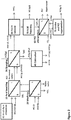
- FIG. 1 shows a simplified process scheme according to one preferred embodiment of the present invention.
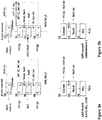
- FIG. 2 shows a simplified process scheme of the present invention according to the embodiment in claim 10, where the iron removal step (80) is included to avoid high iron content in the produced PCC.
- Such a process comprises various process steps that are explained below in detail with reference to Figure 1 .
- process may be seen to comprise at least the following stages.
- the Al rich source material for example anorthosite, can be selectively mined. Contaminating side fractions or layers/bands can be optically sorted.
- the physical preparation of the material includes;
- the crushed and pretreated material is dissolved in HCI acidic solution (1 to 13M) in a dissolution reactor at 80°C and 160°C at atmospheric pressure or pressurized conditions up to 10 bars.
- unreacted fractions and SiO 2 are separated from the leachate by centrifugation and/or filtration.
- unreacted fractions may be separated from the amorphous SiO 2 product, e.g. by density/ grain separation techniques using hydro-cyclones in series or parallel or any other suitable separation technique known in the art.
- unreacted fractions may be reintroduced to the acid leaching step. Also unreacted acid leaving the leaching reactor may be at least partially recovered by flash evaporation and recycled to the leaching step.
- SiO 2 product may be washed, in one or several repetitions, by use of diluted acid and water washing steps organized in a counter current manner to remove traces of dissolved cations and HCI and produce a commercial product.
- further chemical treatment of SiO 2 can be performed to reach higher purity in the product.
- the leaching step may be arranged in a number of different ways, ranging from single batch process- one or several leaching reactors operating in parallel, depending on the production rate necessities - to a multiple batch configuration using leaching reactors interconnected in series - depending on the material dissolution kinetics.
- the preferred configuration is the single batch process, that can be performed in parallel reactors if high volumes are processed. As described in Example 1, the one-batch configuration has been successfully proved at pilot scale using anorthosite.
- Leachate containing solubilized chloride metals is sparged with a dry gas containing HCI in a crystalizing reactor maintained at temperature between 50°C and 90°C until the concentration of HCI in the solution reaches 30wt%.
- the maximum solubility of Al 3+ is 3 g/L, thus excess Al 3+ present in the starting leachate precipitates as AlCl 3 ⁇ 6H 2 O, an hydrated salt that can be separated from the acid solution containing dissolved Ca 2+ , Mg 2+ and Fe 2/3+ among others.
- a preferred embodiments for the present process is to perform a fractional or multi-stage precipitation process ( Figures 1 and 2 ).
- ACH solid is heated in a two steps calcination process.
- ACH is decomposed at temperature between 400 and 550°C to produce HCI gas using indirect heating to avoid contamination of the HCI gas.
- the aluminium hydroxide is heated at temperature above 1000°C in a circulating fluidized bed system or in a rotating kiln in order to produce Al 2 O 3 with a low LOI and low alpha form.
- the aqueous solution contains at least 20wt% HCI, together with the remaining metal chlorides in solution.
- HCI is recovered from the leachate solution by evaporation or distillation.
- the process strongly benefit from the high chlorides metal concentrations in the feed stream as chlorides act as «azeotrop breaker» and allows for a recovery of concentrated HCI with less energy, The distillation is pursued until all the HCI are recovered.
- precipitated solids during pH increase such as Al(OH) 3 are filtrated from the aqueous phase and dissolved in the leaching reactor.
- the metal-chloride-rich aqueous solution is contacted with an organic solution containing a tertiary or a quaternary amine dissolved in at least one organic solvent, such as one or a mixture of hydrocarbon diluent. While mixing the organic and the aqueous phase, the reactor is pressurized with a CO 2 containing gas at a pressure of at least 10 bars and at ambient temperature. After a reaction time between 3 and 20 minutes, the reactor vessels is depressurized and the aqueous phase containing solid metal carbonate separates from the organic phase containing the HCI loaded amine. After separation of the two liquid phases, the carbonate-rich solution is pumped to the deposition site or filtered to recover the solid carbonate.
- an organic solution containing a tertiary or a quaternary amine dissolved in at least one organic solvent, such as one or a mixture of hydrocarbon diluent.
- the reactor is pressurized with a CO 2 containing gas at a pressure of at least 10
- the organic solution loaded with HCI (ammonium chloride salt/amine hydrochloride salt) is heated at temperature above 150°C, to decompose the amine ⁇ HCl complex and generate a HCl-containing gas that can be recirculated to the process.
- the distillation can be carried out using N 2 or any other inert carrying gas. After distillation, the regenerated amine is recirculated to the carbonate precipitation stage.
- the HCl-loaded amine can be regenerated by contacting the organic phase with a concentrated aqueous basic solution and recirculated to the PCC production step.
- the produced NaCl can be used as feed solution for in a chloro-alkali ectrolyser to produce HCI and NaOH.
- Example 2 HCl extraction and metal carbonate precipitation with different amines.
- the chemical properties of the amine function are related to the capacity of the free electron pair of the N atom to form hydrogen bonds.
- the strength of the amine is also determined by the availability of its unshared electron-pair to an electrophilic proton of the acid to extract. This availability is determined by the inductive effect of the atoms and chains bonded to the N atom (Eyal et al. (1991)). Due to the inductive effect of substituting H by an aliphatic chain, tertiary amines are expected to have a higher basic strength than primary and secondary amines. In addition, basicity is expected to increase with the length of the aliphatic chain.
- the basic strength of the amine is also expected to play an important role in its ability to react with CaCl 2 and HCO 3 2- to produce the ammonium hydrochloride salt and CaCO 3 .
- the basic strength of the amine function has to be sufficiently high to balance the acidification of the aqueous solution due to the dissolution of CO 2 and formation of carbonic acid and allow the formation of CaCO 3 .
- amine with an higher basic strength will form more stable amine hydrochloride complex that will require more energy to decompose or thermolyse in the regeneration step.
- R3N Tertiary amines with various carbon chain length, R from 4 to 12 carbons were here tested for the precipitation of CaCO 3 from a CaCl 2 solution.
- Tri-butyalmine TSA
- C6 Tri-hexylamine
- THA Trioctylamine
- TiOA Tri-iso-octylamine
- TDA Tri-docdecylamine
- TEHA Tri-2etyl-hexylamine
- Tests with TBA showed a close to 100% conversion of the amine into ammonium hydrochloride salt thanks to its low viscosity and very efficient PCC formation.
- the amine in its salt form, is soluble in water, rendering challenging the regeneration of the HCI and the TBA without evaporation or post-processing of a large quantity of water.
- TDA (12 C) is a more challenging organic amine to use in this process due to its higher viscosity.
- a lower PCC yield of 13% was obtained, due to the difficulty to properly contact the aqueous and organic phases in the laboratory vessels.
- additional tests in more diluted conditions should be evaluated.
- a particular example of potential modifier is the use of an organic acid in addition of the amine and the dilutent. When added to the extractant, those compounds were proved to increase the selectivity and reversibility of the amine (Eyal et al. (1982)).
- the organic phase was the Tri-iso-octylamine (TiOA) with an amine to organic dilutants ratio of 1:1 (vol) and decanol and asol as dilutants in a proportion of 2:1 vol.
- TiOA Tri-iso-octylamine
- the McCabe-Thiele method is widely used in metallurgy for pre-engineering and pilot design since it gives a good approximation of the volumes, stages, concentrations, etc. with relatively low complexity.
- the distribution curves or equilibrium isotherms are experimentally obtained under the process conditions, and represent the final concentration of a dissolved component in the two phases (aqueous and organic) when the mixture reaches the equilibrium.
- the proof-of-concept based on process solutions and the generation of accurate engineering data can only be done in a pilot plant, though its efficiency is calculated by comparison with laboratory curves and data.
- the method had to be adapted to the unique nature of the reaction, which is not a conventional liquid/liquid organic extraction, but a 4-phase extractive/chemical reaction.
- the calcium does not remain "dissolved” in the organic phase, but precipitates back to the aqueous phase as calcium carbonate, so the corresponding theoretical HCI in the aqueous solution has to be calculated from the chemical equation.
- the expected CaCl 2 concentration of the feed stream in the global process (coming from the sparging and evaporation step) was determined, corresponding to 0.09 kg (HCI)/kg (water). Considering an efficiency of 90% acid extraction, the number of counter current steps were estimated.
Landscapes
- Chemical & Material Sciences (AREA)
- Organic Chemistry (AREA)
- Inorganic Chemistry (AREA)
- Life Sciences & Earth Sciences (AREA)
- Geology (AREA)
- Engineering & Computer Science (AREA)
- Materials Engineering (AREA)
- Physics & Mathematics (AREA)
- Thermal Sciences (AREA)
- Geochemistry & Mineralogy (AREA)
- General Life Sciences & Earth Sciences (AREA)
- Chemical Kinetics & Catalysis (AREA)
- Environmental & Geological Engineering (AREA)
- Manufacturing & Machinery (AREA)
- Mechanical Engineering (AREA)
- Metallurgy (AREA)
- Manufacture And Refinement Of Metals (AREA)
- Compounds Of Alkaline-Earth Elements, Aluminum Or Rare-Earth Metals (AREA)
- Extraction Or Liquid Replacement (AREA)
Claims (15)
- Verfahren zur Herstellung von Aluminiumoxid und Carbonat aus aluminiumreichen Materialien mit integrierter CO2 -Verwendung, das die folgenden Schritte umfasst:I. Zerkleinern und Zermahlen der Al-reichen Materialien,II. Auslaugen der zerkleinerten Materialien in Säure zur Herstellung einer MetallchloridlösungIII. Abtrennen des nicht umgesetzten Feststoffs von der MetallchloridlösungIV. Abtrennen von Al3+ aus der Metallchloridlösung durch Kristallisation von AlCl3·6H20V. Herstellung von Al203 durch Kalzinierung von AlCl3·6H20 mit HCl-RückgewinnungVI. Verwendung von CO2 zur Ausfällung von Metallcarbonaten aus der Metallchloridlösung, die aus dem Al3+ -Trennschritt stammtVII Regenerierung von HCl und eines zur Extraktion verwendbaren Amins,
gekennzeichnet durch folgende Schritte:- Auslaugen des Materials in Schritt II mit einer konzentrierten Mineralsäure, die überwiegend aus HCl besteht,- Abtrennen des Al3+ in Schritt IV durch Ausfällen von AlCl3·6H20 durch Erhöhen der HCl-Konzentration in der Metallchloridlösung- Kalzinierung des AlCl3·6H20 aus Schritt V in zwei Teilschritten: Zuerst durch indirektes Erwärmen auf eine Temperatur zwischen 400 und 600°C, um ein HCl-reiches Gas zu erzeugen, gefolgt von einer zweiten Kalzinierung bei einer Temperatur über 600°C zur Herstellung von Al2O3- Mischen der aluminiumarmen Metallchloridlösung aus Schritt VI mit einer organischen Lösung, die ein ausgewähltes Amin enthält, und in Kontakt bringen dieser Mischung mit einem CO2 - haltigen Gas, um HCl durch Bildung eines Ammoniumchloridsalzkomplexes zu extrahieren und ein Metallkarbonat auszufällen- Trennung des Metallcarbonats aus Schritt VI, der wässrige Phase, welche die verbleibenden Metallchloride enthält und der organischen Lösung, die Ammoniumchlorid enthält- thermisches oder chemisches Verarbeiten der organischen Lösung aus Schritt VII, um das Amin zwecks Rückführung in das Verfahren zu regenerieren. - Verfahren nach Anspruch 1, wobei das Auslaugen vorzugsweise bei einer Temperatur im Bereich von 80 bis 180°C durchgeführt wird, die Säurekonzentration unter 13 M und der Druck unter 10 bar liegt, besonders bevorzugt bei einer Konzentration unter 11 M und einem Druck, der 5 bar nicht übersteigt.
- Verfahren nach Anspruch 1, wobei eine Auslaugungszeit angewendet wird, die vorzugsweise im Bereich von 0,5 bis 24 Stunden, besonders bevorzugt im Bereich von 1 bis 10 Stunden, und insbesondere im Bereich von 1 bis 5 Stunden liegt.
- Verfahren nach einem der vorhergehenden Ansprüche, bei dem das Zerkleinern und Mahlen vorzugsweise auf eine Teilchengröße von weniger als 20 mm, besonders bevorzugt auf eine Größe von 0,5 mm oder weniger, durchgeführt wird.
- Verfahren nach einem der vorhergehenden Ansprüche, bei dem eisenreiche Materialien vor Schritt II durch magnetische Trennung oder optische Sortierung entfernt werden.
- Verfahren nach einem der vorhergehenden Ansprüche, bei dem nicht umgesetzte Materialien nach dem Auslaugen durch Filtration abgetrennt und mit einer Lösung gewaschen wird, die aus saurer Lösung und Wasser ausgewählt ist, wobei der Waschprozess einmal oder mehrmals wiederholt wird, um Metallchloride und nicht umgesetzte Säure wiederzugewinnen und die Reinheit von Si02 zu erhöhen.
- Verfahren nach einem der vorhergehenden Ansprüche, bei dem AlCl3·6H20 aus der Al-reichen Metallchloridlösung durch Durchperlen eines HCl-haltigen Gases ausgefällt, filtriert und mit einer Lösung gewaschen wird, die aus saurer Lösung und Wasser ausgewählt wird.
- Verfahren nach einem der Ansprüche 1 bis 6, wobei AlCl3·6H20 aus der aluminiumreichen Metallchloridlösung durch Mischen mit einer konzentrierten HCl-Lösung kristallisiert, filtriert und mit einer Lösung gewaschen wird, die aus saurer Lösung und Wasser ausgewählt wird.
- Verfahren nach einem der vorhergehenden Ansprüche, bei dem das ausgefällte AlCl3·6H20 und die Verunreinigungen teilweise erneut in einer Lösung gelöst werden, die aus wässeriger Salzsäurelösung und Wasser ausgewählt wird, filtriert werden und in den Kristallisationsschritt IV zurückgeführt werden.
- Verfahren nach einem der vorhergehenden Ansprüche, bei dem die aluminiumarme Metallchloridlösung nach dem Kristallisationsschritt durch eine Flüssig-Flüssig-Extraktion behandelt wird, um den Eisengehalt zu verringern.
- Verfahren nach einem der vorhergehenden Ansprüche, bei dem die aluminiumarme Metallchloridlösung nach dem Kristallisationsschritt einer Destillation oder einem anderen bestehenden Konzentrierungsverfahren zum Beispiel im Kochkessel, Eindampfkessel usw. unterzogen wird, zwecks Rückgewinnung der freien Säure und zur Erhöhung der Konzentration der Metallchloride in der Lösung.
- Verfahren nach einem der vorhergehenden Ansprüche, bei dem dadurch Metallcarbonat ausgefällt wird, dass die aluminiumarme Lösung mit einem unter Druck stehenden CO2 -haltigen Gas und einer organischen Lösung, in Kontakt gebracht wird, wobei die organische Lösung ein tertiäres oder ein quaternäres Amin enthält, das in mindestens einem organischen Lösungsmittel verdünnt ist.
- Verfahren nach Anspruch 12, wobei der Chlorwasserstoff (HCl) aus der organischen Lösung durch thermische Behandlung bei einer Temperatur über 80°C regeneriert wird, um ein HCl enthaltendes Gas zu erzeugen, das dem Verfahren wieder zugeführt werden kann.
- Verfahren nach Anspruch 12, wobei alternativ das Amin durch in Kontakt bringen der organischen Phase mit einer konzentrierten basischen Lösung regeneriert und in den Ausfällungsschritt zurückgeführt wird.
- Verfahren nach Anspruch 12, wobei das ausgefällte Metallcarbonat Calciumcarbonat, Magnesiumcarbonat, Natriumcarbonat oder Natriumbicarbonat sein kann, um die Extraktion von HCl unter Verwendung der Flüssig-Flüssig-Extraktion zu voranzubringen.
Applications Claiming Priority (2)
| Application Number | Priority Date | Filing Date | Title |
|---|---|---|---|
| NO20140317A NO337196B1 (no) | 2014-03-12 | 2014-03-12 | En ny fremgangsmåte for fremstilling av alumina og karbonat fra aluminiumrike materialer med integrert CO2 utnyttelse |
| PCT/NO2015/050049 WO2015137823A1 (en) | 2014-03-12 | 2015-03-11 | Alumina and carbonate production method from al-rich materials with integrated co2 utilization |
Publications (3)
| Publication Number | Publication Date |
|---|---|
| EP3148935A1 EP3148935A1 (de) | 2017-04-05 |
| EP3148935A4 EP3148935A4 (de) | 2017-12-27 |
| EP3148935B1 true EP3148935B1 (de) | 2019-06-12 |
Family
ID=54072141
Family Applications (1)
| Application Number | Title | Priority Date | Filing Date |
|---|---|---|---|
| EP15761748.1A Active EP3148935B1 (de) | 2014-03-12 | 2015-03-11 | Verfahren zur herstellung von aluminiumoxid und carbonat aus al-reichen materialien mit integrierter co2-nutzung |
Country Status (8)
| Country | Link |
|---|---|
| US (1) | US9963352B2 (de) |
| EP (1) | EP3148935B1 (de) |
| CA (1) | CA2973558C (de) |
| DK (1) | DK179144B1 (de) |
| ES (1) | ES2744902T3 (de) |
| NO (1) | NO337196B1 (de) |
| RU (1) | RU2683754C2 (de) |
| WO (1) | WO2015137823A1 (de) |
Families Citing this family (12)
| Publication number | Priority date | Publication date | Assignee | Title |
|---|---|---|---|---|
| US11180860B2 (en) | 2018-05-18 | 2021-11-23 | California Institute Of Technology | Process to convert reduced sulfur species and water into hydrogen and sulfuric acid |
| AT521253B1 (de) * | 2018-07-27 | 2019-12-15 | Saubermacher Dienstleistungs Ag | Verfahren und Anlage zum nasschemischen Gewinnen einer Wertstofffraktion aus einem Schüttgut |
| WO2020035854A1 (en) * | 2018-08-17 | 2020-02-20 | Asher Vitner | Separation of a strong acid from its salts |
| CN109721055B (zh) * | 2018-12-25 | 2021-01-22 | 武汉工程大学 | 一种不溶于水的碳酸盐的制备方法 |
| TWI715998B (zh) * | 2019-01-28 | 2021-01-11 | 笙特科技股份有限公司 | 過濾材料及其製造方法 |
| WO2021030529A1 (en) | 2019-08-13 | 2021-02-18 | California Institute Of Technology | Process to make calcium oxide or ordinary portland cement from calcium bearing rocks and minerals |
| US20220340422A1 (en) | 2019-09-16 | 2022-10-27 | Recreo Pharmaceuticals Llc | Separation of a strong acid from its salts |
| WO2022059009A1 (en) | 2020-09-15 | 2022-03-24 | Asher Vitner | Beneficiation of ores, and solid waste materials |
| RU2752160C1 (ru) * | 2021-01-21 | 2021-07-23 | Общество с ограниченной ответственностью "Объединенная Компания РУСАЛ Инженерно-технологический центр" | Способ гидрохимического обогащения высококарбонатных бокситов для производства глинозёма |
| CN113292088B (zh) * | 2021-05-19 | 2023-04-14 | 神华准能资源综合开发有限公司 | 一种从结晶氯化铝生产低镁和低钙氧化铝的方法 |
| AU2023283677B2 (en) * | 2022-06-08 | 2025-12-11 | Lava Blue Ltd | A method for producing an aluminous material |
| CN116081621B (zh) * | 2023-02-21 | 2025-06-24 | 贵州师范大学 | 一种铝电解含碳废弃物中炭质材料的回收方法 |
Family Cites Families (14)
| Publication number | Priority date | Publication date | Assignee | Title |
|---|---|---|---|---|
| GB857245A (en) | 1956-10-22 | 1960-12-29 | Anaconda Co | Improvements in production of alumina |
| SE7703590L (sv) * | 1976-04-02 | 1977-10-03 | Inst Atomenergi | Sett att utvinna aluminiumoxid |
| US4158042A (en) * | 1977-10-07 | 1979-06-12 | Alcan Research And Development Limited | Recovery of alumina from siliceous minerals |
| DD147185A3 (de) * | 1978-04-24 | 1981-03-25 | Siegfried Ziegenbalg | Verfahren zur herstellung von reinem aluminiumoxid |
| NO790460L (no) * | 1979-02-13 | 1980-08-14 | Elkem Spigerverket As | Fremstilling av et rent aluminiumoksyd fra loesninger inneholdende opploeste aluminiumioner og jernioner |
| EP0027193B1 (de) * | 1979-10-06 | 1982-12-15 | Chemische Werke Hüls Ag | Verfahren zur Herstellung von Natriumhydrogencarbonat und Chlorwasserstoff |
| CA1191031A (en) * | 1981-05-28 | 1985-07-30 | John E. Deutschman | Method of recovering alumina values from a starting solid mixture comprising alcl.sub.3 and nacl |
| GB2205558A (en) | 1987-05-18 | 1988-12-14 | Lonhro Plc | Recovery of alumina from aluminosilicates |
| NO302863B1 (no) * | 1994-03-14 | 1998-05-04 | Inst Energiteknik | Fremgangsmåte for å kombinere immobilisering av CO2 med fremstilling av Al2O3 i et produksjonsanlegg |
| NO323417B1 (no) * | 2005-02-02 | 2007-04-30 | Inst Energiteknik | Fremgangsmate for a produsere alumina, PCC og silikat fra silikatbergarter |
| US8268269B2 (en) * | 2006-01-24 | 2012-09-18 | Clearvalue Technologies, Inc. | Manufacture of water chemistries |
| AU2008224486B2 (en) * | 2007-03-15 | 2011-10-20 | Hcl Cleantech Ltd. | A process for the recovery of HCl from a dilute solution thereof |
| WO2010041950A1 (en) * | 2008-09-09 | 2010-04-15 | Institutt For Energiteknikk | Method for energy-economical exploitation of aluminium containing rocks and minerals |
| CA2848751C (en) * | 2011-09-16 | 2020-04-21 | Orbite Aluminae Inc. | Processes for preparing alumina and various other products |
-
2014
- 2014-03-12 NO NO20140317A patent/NO337196B1/no unknown
-
2015
- 2015-03-11 US US15/124,487 patent/US9963352B2/en not_active Expired - Fee Related
- 2015-03-11 WO PCT/NO2015/050049 patent/WO2015137823A1/en not_active Ceased
- 2015-03-11 RU RU2016139466A patent/RU2683754C2/ru active
- 2015-03-11 EP EP15761748.1A patent/EP3148935B1/de active Active
- 2015-03-11 CA CA2973558A patent/CA2973558C/en active Active
- 2015-03-11 DK DKPA201570137A patent/DK179144B1/en active
- 2015-03-11 ES ES15761748T patent/ES2744902T3/es active Active
Non-Patent Citations (1)
| Title |
|---|
| None * |
Also Published As
| Publication number | Publication date |
|---|---|
| US9963352B2 (en) | 2018-05-08 |
| RU2016139466A (ru) | 2018-04-12 |
| DK201570137A1 (en) | 2016-10-03 |
| WO2015137823A1 (en) | 2015-09-17 |
| EP3148935A1 (de) | 2017-04-05 |
| RU2683754C2 (ru) | 2019-04-01 |
| US20170015564A1 (en) | 2017-01-19 |
| ES2744902T3 (es) | 2020-02-26 |
| CA2973558A1 (en) | 2015-09-17 |
| CA2973558C (en) | 2022-11-22 |
| NO20140317A1 (no) | 2015-09-14 |
| DK179144B1 (en) | 2017-12-04 |
| EP3148935A4 (de) | 2017-12-27 |
| RU2016139466A3 (de) | 2018-08-31 |
| NO337196B1 (no) | 2016-02-08 |
Similar Documents
| Publication | Publication Date | Title |
|---|---|---|
| US9963352B2 (en) | Alumina and carbonate production method from AI-rich materials with integrated CO2 utilization | |
| JP6025868B2 (ja) | 赤泥を処理するプロセス | |
| US10174402B2 (en) | Processes for preparing alumina and various other products | |
| US9290828B2 (en) | Processes for preparing titanium oxide and various other products | |
| US9181603B2 (en) | Processes for treating fly ashes | |
| US20160273070A1 (en) | Processes for preparing alumina and various other products | |
| CA2913682C (en) | Processes for preparing magnesium chloride by hci leaching of various materials | |
| JP2015535886A (ja) | 種々の材料のHCl浸出によるアルミナおよび塩化マグネシウムを調製するためのプロセス | |
| JP2015510483A5 (de) | ||
| CA2925170A1 (en) | Processes for preparing alumina and various other products | |
| US20170260062A1 (en) | Methods for purifying aluminium ions | |
| NO323417B1 (no) | Fremgangsmate for a produsere alumina, PCC og silikat fra silikatbergarter |
Legal Events
| Date | Code | Title | Description |
|---|---|---|---|
| STAA | Information on the status of an ep patent application or granted ep patent |
Free format text: STATUS: THE INTERNATIONAL PUBLICATION HAS BEEN MADE |
|
| PUAI | Public reference made under article 153(3) epc to a published international application that has entered the european phase |
Free format text: ORIGINAL CODE: 0009012 |
|
| STAA | Information on the status of an ep patent application or granted ep patent |
Free format text: STATUS: REQUEST FOR EXAMINATION WAS MADE |
|
| 17P | Request for examination filed |
Effective date: 20161010 |
|
| AK | Designated contracting states |
Kind code of ref document: A1 Designated state(s): AL AT BE BG CH CY CZ DE DK EE ES FI FR GB GR HR HU IE IS IT LI LT LU LV MC MK MT NL NO PL PT RO RS SE SI SK SM TR |
|
| AX | Request for extension of the european patent |
Extension state: BA ME |
|
| DAV | Request for validation of the european patent (deleted) | ||
| DAX | Request for extension of the european patent (deleted) | ||
| A4 | Supplementary search report drawn up and despatched |
Effective date: 20171124 |
|
| RIC1 | Information provided on ipc code assigned before grant |
Ipc: C01D 7/00 20060101ALI20171120BHEP Ipc: C01F 7/20 20060101AFI20171120BHEP Ipc: C01F 11/18 20060101ALI20171120BHEP Ipc: C01G 49/06 20060101ALI20171120BHEP Ipc: C01F 5/24 20060101ALI20171120BHEP Ipc: C01B 32/60 20170101ALI20171120BHEP |
|
| GRAP | Despatch of communication of intention to grant a patent |
Free format text: ORIGINAL CODE: EPIDOSNIGR1 |
|
| STAA | Information on the status of an ep patent application or granted ep patent |
Free format text: STATUS: GRANT OF PATENT IS INTENDED |
|
| RIC1 | Information provided on ipc code assigned before grant |
Ipc: C01F 7/22 20060101AFI20181219BHEP Ipc: C01G 49/06 20060101ALI20181219BHEP Ipc: C01F 11/18 20060101ALI20181219BHEP Ipc: C01F 5/24 20060101ALI20181219BHEP Ipc: C01F 7/56 20060101ALI20181219BHEP Ipc: C01D 7/16 20060101ALI20181219BHEP Ipc: C01B 32/60 20170101ALI20181219BHEP Ipc: C01F 7/30 20060101ALI20181219BHEP |
|
| INTG | Intention to grant announced |
Effective date: 20190117 |
|
| GRAS | Grant fee paid |
Free format text: ORIGINAL CODE: EPIDOSNIGR3 |
|
| GRAA | (expected) grant |
Free format text: ORIGINAL CODE: 0009210 |
|
| STAA | Information on the status of an ep patent application or granted ep patent |
Free format text: STATUS: THE PATENT HAS BEEN GRANTED |
|
| AK | Designated contracting states |
Kind code of ref document: B1 Designated state(s): AL AT BE BG CH CY CZ DE DK EE ES FI FR GB GR HR HU IE IS IT LI LT LU LV MC MK MT NL NO PL PT RO RS SE SI SK SM TR |
|
| REG | Reference to a national code |
Ref country code: GB Ref legal event code: FG4D |
|
| REG | Reference to a national code |
Ref country code: CH Ref legal event code: EP |
|
| REG | Reference to a national code |
Ref country code: AT Ref legal event code: REF Ref document number: 1142333 Country of ref document: AT Kind code of ref document: T Effective date: 20190615 |
|
| REG | Reference to a national code |
Ref country code: DE Ref legal event code: R096 Ref document number: 602015031868 Country of ref document: DE |
|
| REG | Reference to a national code |
Ref country code: IE Ref legal event code: FG4D |
|
| REG | Reference to a national code |
Ref country code: SE Ref legal event code: TRGR |
|
| REG | Reference to a national code |
Ref country code: NL Ref legal event code: MP Effective date: 20190612 |
|
| REG | Reference to a national code |
Ref country code: LT Ref legal event code: MG4D |
|
| PG25 | Lapsed in a contracting state [announced via postgrant information from national office to epo] |
Ref country code: NO Free format text: LAPSE BECAUSE OF FAILURE TO SUBMIT A TRANSLATION OF THE DESCRIPTION OR TO PAY THE FEE WITHIN THE PRESCRIBED TIME-LIMIT Effective date: 20190912 Ref country code: AL Free format text: LAPSE BECAUSE OF FAILURE TO SUBMIT A TRANSLATION OF THE DESCRIPTION OR TO PAY THE FEE WITHIN THE PRESCRIBED TIME-LIMIT Effective date: 20190612 Ref country code: HR Free format text: LAPSE BECAUSE OF FAILURE TO SUBMIT A TRANSLATION OF THE DESCRIPTION OR TO PAY THE FEE WITHIN THE PRESCRIBED TIME-LIMIT Effective date: 20190612 Ref country code: LT Free format text: LAPSE BECAUSE OF FAILURE TO SUBMIT A TRANSLATION OF THE DESCRIPTION OR TO PAY THE FEE WITHIN THE PRESCRIBED TIME-LIMIT Effective date: 20190612 |
|
| PG25 | Lapsed in a contracting state [announced via postgrant information from national office to epo] |
Ref country code: GR Free format text: LAPSE BECAUSE OF FAILURE TO SUBMIT A TRANSLATION OF THE DESCRIPTION OR TO PAY THE FEE WITHIN THE PRESCRIBED TIME-LIMIT Effective date: 20190913 Ref country code: BG Free format text: LAPSE BECAUSE OF FAILURE TO SUBMIT A TRANSLATION OF THE DESCRIPTION OR TO PAY THE FEE WITHIN THE PRESCRIBED TIME-LIMIT Effective date: 20190912 Ref country code: RS Free format text: LAPSE BECAUSE OF FAILURE TO SUBMIT A TRANSLATION OF THE DESCRIPTION OR TO PAY THE FEE WITHIN THE PRESCRIBED TIME-LIMIT Effective date: 20190612 Ref country code: LV Free format text: LAPSE BECAUSE OF FAILURE TO SUBMIT A TRANSLATION OF THE DESCRIPTION OR TO PAY THE FEE WITHIN THE PRESCRIBED TIME-LIMIT Effective date: 20190612 |
|
| REG | Reference to a national code |
Ref country code: AT Ref legal event code: MK05 Ref document number: 1142333 Country of ref document: AT Kind code of ref document: T Effective date: 20190612 |
|
| PG25 | Lapsed in a contracting state [announced via postgrant information from national office to epo] |
Ref country code: CZ Free format text: LAPSE BECAUSE OF FAILURE TO SUBMIT A TRANSLATION OF THE DESCRIPTION OR TO PAY THE FEE WITHIN THE PRESCRIBED TIME-LIMIT Effective date: 20190612 Ref country code: RO Free format text: LAPSE BECAUSE OF FAILURE TO SUBMIT A TRANSLATION OF THE DESCRIPTION OR TO PAY THE FEE WITHIN THE PRESCRIBED TIME-LIMIT Effective date: 20190612 Ref country code: EE Free format text: LAPSE BECAUSE OF FAILURE TO SUBMIT A TRANSLATION OF THE DESCRIPTION OR TO PAY THE FEE WITHIN THE PRESCRIBED TIME-LIMIT Effective date: 20190612 Ref country code: AT Free format text: LAPSE BECAUSE OF FAILURE TO SUBMIT A TRANSLATION OF THE DESCRIPTION OR TO PAY THE FEE WITHIN THE PRESCRIBED TIME-LIMIT Effective date: 20190612 Ref country code: NL Free format text: LAPSE BECAUSE OF FAILURE TO SUBMIT A TRANSLATION OF THE DESCRIPTION OR TO PAY THE FEE WITHIN THE PRESCRIBED TIME-LIMIT Effective date: 20190612 Ref country code: PT Free format text: LAPSE BECAUSE OF FAILURE TO SUBMIT A TRANSLATION OF THE DESCRIPTION OR TO PAY THE FEE WITHIN THE PRESCRIBED TIME-LIMIT Effective date: 20191014 Ref country code: SK Free format text: LAPSE BECAUSE OF FAILURE TO SUBMIT A TRANSLATION OF THE DESCRIPTION OR TO PAY THE FEE WITHIN THE PRESCRIBED TIME-LIMIT Effective date: 20190612 |
|
| REG | Reference to a national code |
Ref country code: ES Ref legal event code: FG2A Ref document number: 2744902 Country of ref document: ES Kind code of ref document: T3 Effective date: 20200226 |
|
| PG25 | Lapsed in a contracting state [announced via postgrant information from national office to epo] |
Ref country code: IT Free format text: LAPSE BECAUSE OF FAILURE TO SUBMIT A TRANSLATION OF THE DESCRIPTION OR TO PAY THE FEE WITHIN THE PRESCRIBED TIME-LIMIT Effective date: 20190612 Ref country code: SM Free format text: LAPSE BECAUSE OF FAILURE TO SUBMIT A TRANSLATION OF THE DESCRIPTION OR TO PAY THE FEE WITHIN THE PRESCRIBED TIME-LIMIT Effective date: 20190612 Ref country code: IS Free format text: LAPSE BECAUSE OF FAILURE TO SUBMIT A TRANSLATION OF THE DESCRIPTION OR TO PAY THE FEE WITHIN THE PRESCRIBED TIME-LIMIT Effective date: 20191012 |
|
| REG | Reference to a national code |
Ref country code: DE Ref legal event code: R097 Ref document number: 602015031868 Country of ref document: DE |
|
| PG25 | Lapsed in a contracting state [announced via postgrant information from national office to epo] |
Ref country code: TR Free format text: LAPSE BECAUSE OF FAILURE TO SUBMIT A TRANSLATION OF THE DESCRIPTION OR TO PAY THE FEE WITHIN THE PRESCRIBED TIME-LIMIT Effective date: 20190612 |
|
| PLBE | No opposition filed within time limit |
Free format text: ORIGINAL CODE: 0009261 |
|
| STAA | Information on the status of an ep patent application or granted ep patent |
Free format text: STATUS: NO OPPOSITION FILED WITHIN TIME LIMIT |
|
| PG25 | Lapsed in a contracting state [announced via postgrant information from national office to epo] |
Ref country code: DK Free format text: LAPSE BECAUSE OF FAILURE TO SUBMIT A TRANSLATION OF THE DESCRIPTION OR TO PAY THE FEE WITHIN THE PRESCRIBED TIME-LIMIT Effective date: 20190612 Ref country code: PL Free format text: LAPSE BECAUSE OF FAILURE TO SUBMIT A TRANSLATION OF THE DESCRIPTION OR TO PAY THE FEE WITHIN THE PRESCRIBED TIME-LIMIT Effective date: 20190612 |
|
| 26N | No opposition filed |
Effective date: 20200313 |
|
| PG25 | Lapsed in a contracting state [announced via postgrant information from national office to epo] |
Ref country code: SI Free format text: LAPSE BECAUSE OF FAILURE TO SUBMIT A TRANSLATION OF THE DESCRIPTION OR TO PAY THE FEE WITHIN THE PRESCRIBED TIME-LIMIT Effective date: 20190612 Ref country code: IS Free format text: LAPSE BECAUSE OF FAILURE TO SUBMIT A TRANSLATION OF THE DESCRIPTION OR TO PAY THE FEE WITHIN THE PRESCRIBED TIME-LIMIT Effective date: 20200224 |
|
| PG2D | Information on lapse in contracting state deleted |
Ref country code: IS |
|
| PG25 | Lapsed in a contracting state [announced via postgrant information from national office to epo] |
Ref country code: MC Free format text: LAPSE BECAUSE OF FAILURE TO SUBMIT A TRANSLATION OF THE DESCRIPTION OR TO PAY THE FEE WITHIN THE PRESCRIBED TIME-LIMIT Effective date: 20190612 |
|
| REG | Reference to a national code |
Ref country code: CH Ref legal event code: PL |
|
| REG | Reference to a national code |
Ref country code: BE Ref legal event code: MM Effective date: 20200331 |
|
| PG25 | Lapsed in a contracting state [announced via postgrant information from national office to epo] |
Ref country code: LU Free format text: LAPSE BECAUSE OF NON-PAYMENT OF DUE FEES Effective date: 20200311 |
|
| PG25 | Lapsed in a contracting state [announced via postgrant information from national office to epo] |
Ref country code: LI Free format text: LAPSE BECAUSE OF NON-PAYMENT OF DUE FEES Effective date: 20200331 Ref country code: IE Free format text: LAPSE BECAUSE OF NON-PAYMENT OF DUE FEES Effective date: 20200311 Ref country code: CH Free format text: LAPSE BECAUSE OF NON-PAYMENT OF DUE FEES Effective date: 20200331 |
|
| PG25 | Lapsed in a contracting state [announced via postgrant information from national office to epo] |
Ref country code: BE Free format text: LAPSE BECAUSE OF NON-PAYMENT OF DUE FEES Effective date: 20200331 |
|
| GBPC | Gb: european patent ceased through non-payment of renewal fee |
Effective date: 20200311 |
|
| PG25 | Lapsed in a contracting state [announced via postgrant information from national office to epo] |
Ref country code: GB Free format text: LAPSE BECAUSE OF NON-PAYMENT OF DUE FEES Effective date: 20200311 |
|
| PG25 | Lapsed in a contracting state [announced via postgrant information from national office to epo] |
Ref country code: MT Free format text: LAPSE BECAUSE OF FAILURE TO SUBMIT A TRANSLATION OF THE DESCRIPTION OR TO PAY THE FEE WITHIN THE PRESCRIBED TIME-LIMIT Effective date: 20190612 Ref country code: CY Free format text: LAPSE BECAUSE OF FAILURE TO SUBMIT A TRANSLATION OF THE DESCRIPTION OR TO PAY THE FEE WITHIN THE PRESCRIBED TIME-LIMIT Effective date: 20190612 |
|
| PG25 | Lapsed in a contracting state [announced via postgrant information from national office to epo] |
Ref country code: MK Free format text: LAPSE BECAUSE OF FAILURE TO SUBMIT A TRANSLATION OF THE DESCRIPTION OR TO PAY THE FEE WITHIN THE PRESCRIBED TIME-LIMIT Effective date: 20190612 |
|
| P01 | Opt-out of the competence of the unified patent court (upc) registered |
Effective date: 20230526 |
|
| PGFP | Annual fee paid to national office [announced via postgrant information from national office to epo] |
Ref country code: FI Payment date: 20240320 Year of fee payment: 10 Ref country code: DE Payment date: 20240320 Year of fee payment: 10 |
|
| PGFP | Annual fee paid to national office [announced via postgrant information from national office to epo] |
Ref country code: SE Payment date: 20240320 Year of fee payment: 10 Ref country code: FR Payment date: 20240328 Year of fee payment: 10 |
|
| PGFP | Annual fee paid to national office [announced via postgrant information from national office to epo] |
Ref country code: ES Payment date: 20240429 Year of fee payment: 10 |
|
| REG | Reference to a national code |
Ref country code: DE Ref legal event code: R119 Ref document number: 602015031868 Country of ref document: DE |
|
| PG25 | Lapsed in a contracting state [announced via postgrant information from national office to epo] |
Ref country code: FI Free format text: LAPSE BECAUSE OF NON-PAYMENT OF DUE FEES Effective date: 20250311 |
|
| REG | Reference to a national code |
Ref country code: SE Ref legal event code: EUG |
|
| PG25 | Lapsed in a contracting state [announced via postgrant information from national office to epo] |
Ref country code: DE Free format text: LAPSE BECAUSE OF NON-PAYMENT OF DUE FEES Effective date: 20251001 |
|
| PG25 | Lapsed in a contracting state [announced via postgrant information from national office to epo] |
Ref country code: FR Free format text: LAPSE BECAUSE OF NON-PAYMENT OF DUE FEES Effective date: 20250331 |
|
| PG25 | Lapsed in a contracting state [announced via postgrant information from national office to epo] |
Ref country code: SE Free format text: LAPSE BECAUSE OF NON-PAYMENT OF DUE FEES Effective date: 20250312 |
|
| REG | Reference to a national code |
Ref country code: ES Ref legal event code: FD2A Effective date: 20260429 |
|
| PG25 | Lapsed in a contracting state [announced via postgrant information from national office to epo] |
Ref country code: ES Free format text: LAPSE BECAUSE OF NON-PAYMENT OF DUE FEES Effective date: 20250312 |