EP3152193B1 - Tetrahydroisoquinolinon-derivate und deren verwendung in der inhibition des hsp70-proteins - Google Patents
Tetrahydroisoquinolinon-derivate und deren verwendung in der inhibition des hsp70-proteins Download PDFInfo
- Publication number
- EP3152193B1 EP3152193B1 EP14728177.8A EP14728177A EP3152193B1 EP 3152193 B1 EP3152193 B1 EP 3152193B1 EP 14728177 A EP14728177 A EP 14728177A EP 3152193 B1 EP3152193 B1 EP 3152193B1
- Authority
- EP
- European Patent Office
- Prior art keywords
- trans
- tetrahydroisoquinoline
- oxo
- carboxamide
- methoxyphenyl
- Prior art date
- Legal status (The legal status is an assumption and is not a legal conclusion. Google has not performed a legal analysis and makes no representation as to the accuracy of the status listed.)
- Active
Links
- 0 *C(C(C(*)=O)c1ccccc11)N(*)C1=O Chemical compound *C(C(C(*)=O)c1ccccc11)N(*)C1=O 0.000 description 6
- ZZJZYPNBSXHQQS-UHFFFAOYSA-N Cc1cc(NC)nc(C)c1 Chemical compound Cc1cc(NC)nc(C)c1 ZZJZYPNBSXHQQS-UHFFFAOYSA-N 0.000 description 1
Images


Classifications
-
- C—CHEMISTRY; METALLURGY
- C07—ORGANIC CHEMISTRY
- C07D—HETEROCYCLIC COMPOUNDS
- C07D217/00—Heterocyclic compounds containing isoquinoline or hydrogenated isoquinoline ring systems
- C07D217/22—Heterocyclic compounds containing isoquinoline or hydrogenated isoquinoline ring systems with hetero atoms or with carbon atoms having three bonds to hetero atoms with at the most one bond to halogen, e.g. ester or nitrile radicals, directly attached to carbon atoms of the nitrogen-containing ring
- C07D217/26—Carbon atoms having three bonds to hetero atoms with at the most one bond to halogen
-
- A—HUMAN NECESSITIES
- A61—MEDICAL OR VETERINARY SCIENCE; HYGIENE
- A61P—SPECIFIC THERAPEUTIC ACTIVITY OF CHEMICAL COMPOUNDS OR MEDICINAL PREPARATIONS
- A61P35/00—Antineoplastic agents
-
- C—CHEMISTRY; METALLURGY
- C07—ORGANIC CHEMISTRY
- C07D—HETEROCYCLIC COMPOUNDS
- C07D401/00—Heterocyclic compounds containing two or more hetero rings, having nitrogen atoms as the only ring hetero atoms, at least one ring being a six-membered ring with only one nitrogen atom
- C07D401/02—Heterocyclic compounds containing two or more hetero rings, having nitrogen atoms as the only ring hetero atoms, at least one ring being a six-membered ring with only one nitrogen atom containing two hetero rings
- C07D401/12—Heterocyclic compounds containing two or more hetero rings, having nitrogen atoms as the only ring hetero atoms, at least one ring being a six-membered ring with only one nitrogen atom containing two hetero rings linked by a chain containing hetero atoms as chain links
Definitions
- the present invention relates to tetrahydroisoquinolinone derivatives, a pharmaceutical composition comprising the same and the use of these derivatives in the inhibition of the Hsp70 protein.
- the compounds are useful in the treatment or inhibition of cancer, autoimmune disease, rheumatoid arthritis, inflammatory bowel disease and psoriasis.
- myeloma is a hematological B cell malignancy.
- the vast majority of the affected cells are localized within the bone marrow, where they promote bone destruction and impair normal hematopoiesis.
- Improved methods in stem cell therapies and novel drugs such as proteasome inhibitors and derivatives of thalidomide have lead to significant improvement in overall survival of myeloma patients, which currently stands at about five years. Nevertheless, multiple myeloma remains incurable and its clinical cause is usually characterized by good initial response to treatment followed after some time by relapse and an eventual development of general resistance to current therapies.
- Hsp70 heat shock protein 70
- US 2009/0068144 A1 discloses tetrahydroisoquinolin-1-one derivatives for the treatment of cancer.
- the exemplified compounds bear a 4-carboxylic acid substituent being present as free acid or for example as -CONH lower alkyl moiety.
- US 2005/0124614 A1 discloses 3,4-dihydroisoquinolin-1-ones that are said to be activators of caspases and inducers of apoptosis.
- Most of the exemplified compounds bear no or only small substituents, like methyl or propyl at position 2 of the tetrahydroisoquinolinone ring.
- the carboxamide substituent at position 4 may bear relatively small substituents like hydrogen and alkyl.
- US 2010/0227866 A1 discloses a broad variety of tetrathydroisoquinolin-1-one derivatives which are said to be useful as therapeutic agents for irritable bowel syndrome.
- the present inventors have found that certain tetrahydroisoquinolin-1-one derivatives bearing specific substituents exhibit high Hsp70 protein inhibition activity and therefore are useful in the treatment of cancer, in particular in the treatment of multiple myeloma.
- the present invention therefore relates to a compound represented by the following formula (I) or a pharmaceutically acceptable salt thereof wherein
- halogen includes fluoro, chloro, bromo and iodo, preferably fluoro and chloro.
- C 1-6 alkyl includes methyl, ethyl, n -propyl, iso-propyl, n -butyl, iso-butyl, tert- butyl, pentyl and hexyl, preferably methyl, ethyl, n-propyl and iso-propyl, more preferably methyl and ethyl.
- C 1-6 haloalkyl includes the above described C 1-6 alkyl groups being substituted with one or more halogen atoms which are defined as above.
- a suitable haloalkyl is, for example, trifluoromethyl.
- C 1-6 alkoxy includes alkoxy groups containing the above described C 1-6 alkyl residues, such as methoxy, ethoxy, n -propoxy and iso-propoxy, in particular methoxy and ethoxy.
- C 1-6 haloalkoxy includes a haloalkoxy group comprising a C 1-6 haloalkyl moiety as described above.
- C 1-4 alkyl defines methyl, ethyl, n -propyl, iso-propyl, n -butyl, iso-butyl and tert- butyl, preferably methyl and ethyl.
- the pyridinyl and pyrimidinyl residues represented by R 1 , R 2 and R 3 may be attached to the remaining molecule by any of their carbon atoms.
- these residues are pyridin-2-yl, pyrimidin-2-yl or pyrimidin-4-yl.
- R 1 preferably is phenyl.
- R 2 preferably is phenyl. Most preferably, both, R 1 and R 2 are phenyl.
- R 3 preferably is phenyl or pyridinyl, in particular pyridin-2-yl or pyridin-3-yl.
- R 1 , R 2 and R 3 may be substituted by one or more substituents which are independently selected from halogen, C 1-6 alkyl, C 1-6 haloalkyl, hydroxyl, C 1-6 alkoxy and C 1-6 haloalkoxy, preferably from halogen, C 1-6 alkyl and C 1-6 alkoxy.
- substituents Y and Y' in R 1 and R 2 halogen, methyl, ethyl, methoxy and ethoxy are preferred.
- Y" in R 3 methyl and ethyl are preferred.
- substituents Y, Y' and Y" are not particularly limited, however, for R 1 and R 2 each one substituent Y and Y', respectively, is preferred and for R 3 one or two substituents Y" are preferred.
- Y, Y' and Y" may be present at any carbon atom of the phenyl, pyridinyl or pyrimidinyl represented by R 1 , R 2 and R 3 , respectively.
- R 1 and R 2 if substituted, bear at least one substituent at ortho or para position to the position at which R 1 and R 2 are attached to the tetrahydroisoquinolin-1-one ring.
- R 1 and R 2 do not bear substituents only at one or both of their meta positions. Most preferably, R 1 and/or R 2 bear one substituent at para position.
- R 1 and/or R 2 bear one substituent selected from halogen, methoxy and ethoxy at para position to the position at which R 1 and R 2 are attached to the tetrahydrosioquinolin-1-one ring.
- R 1 and R 2 preferably are phenyl. More preferably R 1 and/or R 2 are phenyl or 4-methoxyphenyl. Most preferred R 1 is 4-methoxyphenyl and R 2 is phenyl.
- substituents Y" may be present at any carbon atom of the phenyl, pyridinyl and pyrimidinyl represented by R 3 .
- R 3 bears one substituent Y" in meta position to the position at which R 3 is attached to the carboxamide moiety or two substituents Y" both at meta position to the position at which R 3 is attached to the carboxamide moiety.
- preferred substituents R 3 are pyridin-2-yl, 6-methylpyridin-2-yl, m -tolyl and 3,5-dimethylphenyl.
- These preferred substituents R 3 are preferably further combined with the above described preferred substituents R 1 and R 2 , in particular with phenyl and 4-methoxyphenyl for R 1 and/or R 2 .
- the tetrahydroisoquinolin-1-one moiety in the compound of the present invention may bear up to three further substituents R 5 . If there are two or three substituents R 5 , these may be selected independently of each other. Those compounds which do not contain any substituent R 5 are preferred.
- the trans -enantiomers show higher binding activity, they are preferred over the cis -enantiomers.
- a cell-viability assay revealed that the trans -R,R enantiomer was more active than the trans-S,S enantiomer. Therefore, the trans -R,R enantiomer of the compound of the present invention is most preferred.
- the compounds of the present invention exhibit high inhibition of the Hsp70 protein. Therefore, they are suitable for the preparation of pharmaceutical compositions comprising these compounds.
- the choice of a pharmaceutical composition depends on various factors such as the mode of drug administration, such as oral, systemic or parenteral administration.
- the preferred manner of administration is oral or parenteral using a convenient daily dosage regimen, which can be adjusted according to the degree of affliction.
- Oral compositions can take the form of tablets, pills, capsules, semi-solids, powders, sustained release formulations, solutions, suspensions, elixirs, aerosols, or any other appropriate compositions.
- compositions are comprised of in general, a compound of formula (I) in combination with at least one pharmaceutically acceptable excipient.
- excipient may be any solid, liquid, semi-solid or, in the case of an aerosol composition, gaseous excipient that is generally available to one of skill in the art.
- a daily dose preferably from about 10 mg to about 10,000 mg, more preferably from about 20 mg to about 1,000 mg, should be appropriate, although the upper limit may be exceeded when indicated.
- the daily dosage can be administered as singly dose or in separate doses, or for parenteral administration, it may be given as continuous infusion.
- the compounds of this invention can be administered in combination with known anticancer agents or with other pharmaceutically active ingredients.
- Combinations of two or more pharmaceutically active ingredients may be administered in the form of a combination preparation containing a fixed dose of each of the pharmaceutically active ingredients or in the form of a combination of several pharmaceutical compositions each containing one of the pharmaceutically active ingredients.
- the present invention relates to the compound of formula (I) as defined above for use in the treatment of inhibition of a disease being susceptible to the inhibition of the Hsp70 protein.
- Specific diseases which can be treated or inhibited by administration of the compound of formula (I) are cancer, in particular multiple myeloma, autoimmune disease, rheumatoid arthritis, inflammatory bowel disease and psoriasis.
- the tetrahydroisoquinolin-1-one derivatives of the present invention can for example be synthesized via a reaction between homophthalic anhydride and imines as shown in Scheme 1 below.
- imines can be produced in the first step.
- a further procedure, using ethyl lactate as a solvent component can be applied.
- ethyl lactate By adding water to ethyl L-lactate the polarity of the resulting solvent can be adjusted for synthesizing aryl imines like 3d-h, which purely crystallize straight out of the solution in good yields.
- the sodium salts trans - 6b , cis - 6c and cis - 6d can be obtained via deprotonation with NaHCO 3 .
- the known epimerization after treatment with NaOH can be utilized for the syntheses of the sodium salts trans - 6c and trans - 6d .
- the corresponding carboxamides can be synthesized via mixed anhydrides using i -butyl chloroformiate and 2,2,2-trichloro-1,1-dimethylethyl chloroformiate (TCBoc-chloride), respectively, followed by the in situ reaction with corresponding amines.
- TCBoc-chloride avoids the formation of isoquinolone carboxylester side-product, as no alcohol or other nucleophilic species is eliminated.
- the phenol trans - 7o can be synthesized by cleaving both methoxy groups of trans- 7d by means of BBr 3 .
- the effect of pharmacological Hsp70 inhibition on cell viability was analyzed after 72 hours of treatment in both non-malignant (mononuclear cells from the peripheral blood) and malignant lymphocytes (multiple myeloma cells).
- the mononuclear cells were separated from the peripheral blood of healthy donors by Ficoll-Hypaque density gradient centrifugation.
- the human cell line INA-6 represents a well-established model for multiple myeloma.
- the percentage of viable and apoptotic cell fractions was assessed using an annexin V -FITC/propidium iodide (PI) staining kit (Bender MedSystems, Vienna, Austria) according to manufacturer's instructions.
- PI annexin V -FITC/propidium iodide
- cells were washed in PBS, incubated for 10 min in 100 ml binding buffer (10 mM HEPES/NaOH, pH 7.4, 140 mM NaCl, 2.5 mM CaCl 2 ) containing 2.5 ml annexin V-FITC mix and 1 mg/ml propidium iodide (PI), subsequently diluted with 100 ml binding buffer and analyzed by flow cytometry (FACSCalibur/CELLQuest; Becton Dickinson, Heidelberg, Germany).
- 100 ml binding buffer (10 mM HEPES/NaOH, pH 7.4, 140 mM NaCl, 2.5 mM CaCl 2 ) containing 2.5 ml annexin V-FITC mix and 1 mg/ml propidium iodide (PI)
- Apoptosis assays Hsp70-dependent prevention of apoptosis was investigated by analyses of the apoptosis-inducing factors (AIF) and of the caspases 9 and 3 in INA-6 cells.
- INA-6 cells were treated with 0.6 ⁇ M of compound trans- 7b for 8 hours prior to analyze nuclear translocation of AIF. Staining of the nuclear protein lamin A was used as a loading control.
- Upon treatment of INA-6 cells with 0.6 ⁇ M of compound trans - 7b for 24 hours cleavage and activation of the caspases 9 and 3 were analyzed by Western. Analysis of cleavage of the bona fide caspase substrate PARP served as a control for caspase activation.
- Co-treatment with the pan-caspase inhibitor Z-VAD-FMK 50 ⁇ M was employed as another specificity control.
- trans - 7b treatment decreases HSP72 and HSP73 but not HSP90 expression, and inhibits HSP70/HSP90 multi-chaperone activity leading to downregulation of constitutive expression levels of well-defined HSP70-dependent client proteins in myeloma cells.
- the heat shock proteins HSP72 and HSP73 critically interact with HSP90 in order to mediate an essential chaperone function for a multitude of proteins including various signaling intermediates.
- the proposed anti-HSP72/73 effect of trans - 7b in the INA-6 multiple myeloma (MM) cell line model was evaluated.
- INA-6 cells were incubated either with DMSO as a solvent control or with the compound trans - 7b (0.6 ⁇ M), and additionally incubated with the pan-caspase inhibitor Z-VAD-FMK (50 ⁇ M) prior to Western blot analyses of HSP72, HSP73 or HSP90 expression ( Figure 1A ), of the expression of several well-defined HSP70/HSP90 chaperon-dependent signaling intermediates or their substrates ( Figure 1B ), or of the HSP70-dependent nuclear translocation of the apoptosis-inducing factor (AIF) ( Figure 1C ).
- Figure 1A Western blot analyses of HSP72, HSP73 or HSP90 expression
- Figure 1B the expression of several well-defined HSP70/HSP90 chaperon-dependent signaling intermediates or their substrates
- AIF apoptosis-inducing factor
- HSP72, HSP73, HSP90 from Stressgen Bioreagents, Ann Arbor, USA
- AKT, C-Raf, RIP, IKK ⁇ , p-MEK, MEK, p-ERK, ERK, p-STAT3, STAT3, AIF from Cell Signaling Technology, Frankfurt a.Main, Germany
- Lamin A, ⁇ -actin from Sigma-Aldrich, Deisenhofen, Germany
- ⁇ -tubulin from Biozol Eching, Germany
- trans - 7b treatment leads to activation of the caspases 9 and 3, and induction of apoptosis in malignant INA-6 MM cells but not in non-malignant peripheral blood mononuclear cells (PBMCs).
- PBMCs peripheral blood mononuclear cells
- FIG 2A Western blot analyses of caspases 9 and 3, and the caspase substrate PARP (upper panel), and viability analyses (lower panel) of INA-6 MM cells upon treatment with trans- 7b for 24 hours are shown.
- INA-6 cells were either incubated with DMSO (as a solvent control) or with 0.6 ⁇ M of trans- 7b , and additionally incubated either with DMSO or the pan-caspase inhibitor Z-VAD-FMK prior to analyses by Western or viability assessment (without Z-VAD-FMK co-treatment) by Annexin V/propidum iodide double staining.
- INA-6 cell pellets were dissolved in lysis buffer (20 mM HEPES (pH 7.9), 350 mM NaCl, 1 mM MgCl 2 , 0.5 mM EDTA, 0.1 mM EGTA, 1% NP40, 0.5 mM dithiothreiol (DTT), 1 mM Na 3 VO 4 , 0.1 mM PMSF and 1 ⁇ g/ml aprotinin). Lysates were cleared by centrifugation, measured by quantitative protein assay (Bio-Rad, Ober, Germany) and subjected to SDS gel electrophoresis.
- lysis buffer 20 mM HEPES (pH 7.9), 350 mM NaCl, 1 mM MgCl 2 , 0.5 mM EDTA, 0.1 mM EGTA, 1% NP40, 0.5 mM dithiothreiol (DTT), 1 mM Na 3 VO 4 , 0.1 m
- Proteins were transferred onto nitrocellulose membranes (Schleicher & Schuell, Dassel, Germany), incubated with antibodies specific for caspase 9, caspase 3 or PARP (Cell Signaling Technology, Frankfurt a.Main, Germany) according to standard procedures and visualized with secondary anti-rabbit horseradish peroxidase (HRP)-conjugated antibodies using an enhanced chemoluminescence detection system (ECL, Amersham, Freiburg, Germany). Western analyses reveal sequential caspase 9 and 3 cleavage leading to their activation as indicated by specific PARP cleaveage.
- HRP horseradish peroxidase
- Annexin V / propidium iodide (PI) staining was performed using a fluorescein isothiocyanate (FITC) conjugated recombinant human annexin /propidium iodide kit (BenderMedSystems, Vienna, Austria) according to the manufacturer's instructions.
- FITC fluorescein isothiocyanate
- INA-6 cells were washed in PBS, incubated for 15 minutes in 100 ml binding buffer (10 mM HEPES/NaOH, pH 7.4, 140 mM NaCl, 2.5 mM CaCl 2 ) containing 2.5 mL annexin V-FITC mix and 1 mg/ml PI and analyzed by flow cytometry (FACSCalibur/CELLQuest; Becton Dickinson, Heidelberg, Germany).
- flow cytometry FACSCalibur/CELLQuest; Becton Dickinson, Heidelberg, Germany.
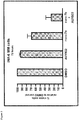
- INA-6 cells were incubated either with DMSO (as a solvent control), sublethal concentrations of AUY922 (7.5 nM) or trans - 7b (3.5 ⁇ M) or with a combination of both. Viability was measured by Annexin V-FITC/ propidium iodide double staining (BenderMedSystems, Vienna, Austria) according to the manufacturer's instructions.
- Method A To a solution of the aniline derivative (1 eq) in abs. ethanol the corresponding aldehyde (1 eq) was added and stirred for 3 h at room temperature. The solvent was evaporated and the crude product was purified by crystallization ( 3a-c ).
- Method B The aniline derivative (1 eq) was dissolved in a mixture of ethyl L-lactate and water, and the corresponding aldehyde (1 eq) was added. The solution was stirred till all compounds were dissolved. The immediately formed crystals were filtered, washed with cold water and dried in vacuo to give the product. ( 3d-h )
- trans -2,3-Diphenyl-1-oxo-1,2,3,4-tetrahydroisoquinoline-4-carboxylic acid ( trans - 5a ): Homophthalic anhydride (15 mmol, 2.4 g), N,N-diisopropylethylamine (15 mmol, 2.6 mL), titanium tetrachloride (15 mmol, 1.7 mL), 3a (22.5 mmol, 4.1 g); yield: 41 % (47 %), colorless solid; mp: 226-229°C.
- trans -3-(4-Methoxyphenyl)-1-oxo-2-phenyl-1,2,3,4-tetrahydroisoquinoline-4-carboxylic acid ( trans - 5b): Homophthalic anhydride (15 mmol, 2.4 g), N,N-diisopropylethylamine (15 mmol, 2.6 mL), titanium tetrachloride (15 mmol, 1.7 mL), 3b (22.5 mmol, 4.8 g); yield: 44 %; colorless solid; mp: 171-173°C.
- cis -2-(4-Methoxyphenyl)-1-oxo-3-phenyl-1,2,3,4-tetrahydroisoquinoline-4-carboxylic acid ( cis - 5c): Homophthalic anhydride (40 mmol, 6.5 g), 3c (60 mmol, 12.7 g); the crude product was purified by crystallization from ethyl acetate. Yield: 48 % (91 %); colorless solid; mp: 208-209°C.
- trans -2-(4-Methoxyphenyl)-1-oxo-3-phenyl-1,2,3,4-tetrahydroisoquinoline-4-carboxylic acid ( trans - 5c): Homophthalic anhydride (31 mmol, 5.0 g), N,N-diisopropylethylamine (31 mmol, 5.3 mL), titanium tetrachloride (31 mmol, 3.4 mL), 3c (46 mmol, 9.8 g); yield: 44 % (63 %); colorless amorphous solid; mp: 106-118°C.
- cis -2,3-Bis(4-methoxyphenyl)-1-oxo-1,2,3,4-tetrahydroisoquinoline-4-carboxylic acid ( cis - 5d): Homophthalic anhydride (30 mmol, 4.9 g), 3d (30 mmol, 7.2 g); the crude product was purified by crystallization from ethanol. Yield: 44%; colorless solid; mp: 232-233°C.
- trans -2,3-Bis(4-methoxyphenyl)-1-oxo-1,2,3,4-tetrahydroisoquinoline-4-carboxylic acid ( trans - 5d ): Homophthalic anhydride (19 mmol, 3.1 g), N,N-diisopropylethylamine (19 mmol, 3.2 mL), titanium tetrachloride (19 mmol, 2.1 mL), 3d (28 mmol, 6.8 g); yield: 47 %; colorless solid; mp: 201-203°C.
- trans-2,3 -Bis(4-fluorophenyl)-1-oxo-1,2,3,4-tetrahydroisoquinoline-4-carboxylic acid (trans- 5e) : Homophthalic anhydride (13 mmol, 2.2 g), N,N-diisopropylethylamine (13 mmol, 2.3 mL), titanium tetrachloride (13 mmol, 1.5 mL), 3e (16 mmol, 3.5 g); yield: 49%; colorless amorphous solid; mp: 116-118°C.
- trans-2,3 -Bis(4-chlorophenyl)-1-oxo-1,2,3,4-tetrahydroisoquinoline-4-carboxylic acid ( trans - 5f): Homophthalic anhydride (9 mmol, 1.5 g), N,N-diisopropylethylamine (9 mmol, 1.6 mL), titanium tetrachloride (9 mmol, 1.0 mL), 3f (11 mmol, 2.8 g); yield: 39 %; colorless amorphous solid; mp: 116-127°C.
- trans -2,3-Bis(3,5-dimethylphenyl)-1-oxo-1,2,3,4-tetrahydroisoquinoline-4-carboxylic acid ( trans - 5g): Homophthalic anhydride (11 mmol, 1.8 g), 3g (13.5 mmol, 3.2 g); the crude product was dissolved in acetonitrile and crystallization initiated by adding petroleum ether to give pure trans - 5g. Yield: 58%; colorless solid; mp: 269-271 °C.
- trans-3-(4-Methoxyphenyl)-1-oxo-2-(4-phenoxyphenyl)-1,2,3,4-tetrahydroisoquinoline-4-carboxylic acid ( trans - 5h): Homophthalic anhydride (8 mmol, 1.3 g), N,N-diisopropylethylamine (8 mmol, 1.4 mL), titanium tetrachloride (8 mmol, 0.9 mL), 3h (10 mmol, 3.0 g); yield: 46 %; colorless amorphous solid; mp: 109-115°C.
- trans -6b Sodium trans -3-(4-methoxyphenyl)-1-oxo-2-phenyl-1,2,3,4-tetrahydroisoquinoline-4-carboxylate ( trans -6b): Compound trans - 5b (0.4 mmol, 150 mg) was suspended in ethanol and a solution of NaHCO 3 (0.4 mmol, 400 ⁇ L, 1 M) was added. After stirring for 30 min at room temperature the solvent was evaporated to give pure trans -6b. Yield: 96 %; colorless solid; mp: 97-99°C.
- trans - 6c Sodium trans -2-(4-methoxyphenyl)-1-oxo-3-phenyl-1,2,3,4-tetrahydroisoquinoline-4-carboxylate ( trans - 6c): Compound cis - 5c (0.5 mmol, 200 mg) was suspended in ethanol and a solution of NaOH (0.5 mmol, 70 ⁇ L, 8M) was added. After stirring for 30 min at room temperature the solvent was evaporated to give pure trans - 6c . Yield: 97 %; colorless solid; mp: 207-209 °C.
- trans - 6d Sodium cis -2,3-bis(4-methoxyphenyl)-1-oxo-1,2,3,4-tetrahydroisoquinoline-4-carboxylate ( trans - 6d): Compound cis - 5d (1 mmol, 400 mg) was suspended in ethanol and a solution of NaOH (1 mmol, 125 ⁇ L, 8M) was added. After stirring for 30 min at room temperature the solvent was evaporated. The residue was dissolved in acetone and crystallization initiated by adding diethyl ether to give pure trans - 6d . Yield: 89 %; colorless solid; mp: 216-218°C.
- trans -7a trans -N-(6-Methylpyridin-2-yl)-1-oxo-2,3-diphenyl-1,2,3,4-tetrahydroisoquinoline-4-carboxamide
- trans -7a Quantities: trans - 5a (0.9 mmol, 300 mg), NaHCO 3 (0.9 mmol, 75 mg), 2,2,2-trichloro-1,1-dimethylethyl chloroformiate (1.3 mmol, 315 mg) and 2-amino-6-picoline (1.3 mmol, 135 ⁇ L).
- the precipitate was filtered, suspended in water and dried in vacuo. Yield: 82 %; colorless solid; mp: 265-266°C.
- trans - 7b trans -3-(4-Methoxyphenyl)-N-(6-methylpyridin-2-yl)-1-oxo-2-phenyl-1,2,3,4-tetrahydroisoquinoline-4-carboxamide
- trans - 7b Quantities: trans - 5b (1 mmol, 375 mg), NaHCO 3 (2 mmol, 170 mg), i -butyl chloroformiate (1.5 mmol, 195 ⁇ L) and 2-amino-6-picoline (1.5 mmol, 150 ⁇ L). The precipitate was filtered and extracted with CHCl 3 using a soxhlet extractor. The resulting organic phase was evaporated. Crystallization from ethyl acetate and toluene gave trans- 7b . Yield: 55 %; colorless solid; mp: 265-268°C.
- trans -7c trans -2-(4-Methoxyphenyl)-N-(6-methylpyridin-2-yl)-1-oxo-3-phenyl-1,2,3,4-tetrahydroisoquinoline-4-carboxamide
- trans -7c Quantities: trans - 5c (2 mmol, 750 mg), NaHCO 3 (4 mmol, 335 mg), i -butyl chloroformiate (3 mmol, 390 ⁇ L) and 2-amino-6-picoline (3 mmol, 305 ⁇ L). The precipitate was filtered and extracted with CHCl 3 using a soxhlet extractor. The obtained organic phase was evaporated. Crystallization from ethyl acetate gave trans - 7c . Yield: 54 %; colorless solid; mp: 284-286°C.
- trans- 7d trans -2,3-Bis(4-methoxyphenyl)-N-(6-methylpyridin-2-yl)-1-oxo-1,2,3,4-tetrahydroisoquinoline-4-carboxamide
- trans- 7d Quantities: trans - 5d (3.5 mmol, 1.4 g), NaHCO 3 (7 mmol, 585 mg), 2,2,2-trichloro-1,1-dimethylethyl chloroformiate (5.2 mmol, 1.25 g) and 2-amino-6-picoline (5.2 mmol, 525 ⁇ L).
- the precipitate was filtered and extracted with CHCl 3 using a soxhlet extractor. The obtained organic phase was evaporated. Crystallization from MeOH gave trans- 7d . Yield: 71 %; colorless solid; mp: 252-254°C.
- trans -2,3-Bis(4-methoxyphenyl)-1-oxo-N-(m-tolyl)-1,2,3,4-tetrahydroisoquinoline-4-carboxamide ( trans - 7e): Quantities: trans - 5d (2 mmol, 810 mg), NaHCO 3 (4 mmol, 335 mg), i -butyl chloroformiate (3 mmol, 390 ⁇ L) and m -toluidine (3 mmol, 320 ⁇ L). The reaction mixture was evaporated, dissolved in CHCl 3 and extracted with aqueous formic acid (5 %). The organic layer was dried over Na 2 SO 4 , concentrated in vacuo to a few mL and trans- 7e was precipitated by adding Et 2 O. Yield: 64 %; colorless solid; mp: 254-256°C.
- trans-7f trans -2,3-Bis(4-methoxyphenyl)-1-oxo-N-(pyridin-2-yl)-1,2,3,4-tetrahydroisoquinoline-4-carboxamide
- trans -7g trans -2,3-Bis(4-methoxyphenyl)-N-methyl-1-oxo-1,2,3,4-tetrahydroisoquinoline-4-carboxamide
- trans -7g Quantities: trans - 5d (1.2 mmol, 500 mg), NaHCO 3 (1.2 mmol, 105 mg), 2,2,2-trichloro-1,1-dimethylethyl chloroformiate (1.9 mmol, 445 mg) and methylamine (1.9 mmol, 0.9 ⁇ L, 2M in THF).
- trans -7h trans -2,3-Bis(4-methoxyphenyl)-N,N-dimethyl-1-oxo-1,2,3,4-tetrahydroisoquinoline-4-carboxamide
- trans -7h Quantities: trans - 5d (1.0 mmol, 400 mg), NEt 3 (1.0 mmol, 140 ⁇ L), 2,2,2-trichloro-1,1-dimethylethyl chloroformiate (1.5 mmol, 360 mg) and dimethylamine (2.0 mmol, 1.0 mL, 2M in THF).
- trans -7i trans -2,3-Bis(4-methoxyphenyl)-1-oxo-N-(5,6,7,8-tetrahydronaphthalen-1-yl)-1,2,3,4-tetrahydroisoquinoline-4 ⁇ carboxamide
- trans -7i Quantities: trans - 5d (1.2 mmol, 500 mg), NEt 3 (1.2 mmol, 175 ⁇ L), 2,2,2-trichloro-1,1-dimethylethyl chloroformiate (1.9 mmol, 445 mg) and 5,6,7,8-tetrahydro-1-naphthylamine (1.9 mmol, 260 ML).
- trans -7j trans -N-(3,5-Dimethylphenyl)-2,3-bis(4-methoxyphenyl)-1-oxo-1,2,3,4-tetrahydroisoquinoline-4-carboxamide
- trans -7j Quantities: trans - 5d (1.2 mmol, 500 mg), NEt 3 (1.2 mmol, 175 ⁇ L), 2,2,2-trichloro-1,1-dimethylethyl chloroformiate (1.9 mmol, 445 mg) and 3,5-dimethylaniline (1.9 mmol, 230 ⁇ L).
- the precipitate was filtered, dissolved in CHCl 3 and extracted with aqueous formic acid (5 %).
- the organic layer was dried over Na 2 SO 4 and evaporated to give trans - 7j . Yield: 91 %; colorless solid; mp: 286-288°C.
- trans -2,3-Bis(4-fluorophenyl)-N-(6-methylpyridin-2-yl)-1-oxo-1,2,3,4-tetrahydroisoquinoline-4-carboxamide ( trans - 7k): Quantities: trans - 5e (1.3 mmol, 500 mg), NEt 3 (1.3 mmol, 185 ⁇ L), 2,2,2-trichloro-1,1-dimethylethyl chloroformiate (2.0 mmol, 475 mg) and 2-amino-6-picoline (2.00 mmol, 200 ⁇ L). The precipitate was filtered and crystallized from CHCl 3 to give trans- 7k . Yield: 90 %; colorless crystals; mp: 275-277°C.
- trans -2,3-Bis(4-chlorophenyl)-N-(6-methylpyridin-2-yl)-1-oxo-1,2,3,4-tetrahydroisoquinoline-4-carboxamide ( trans - 7l): Quantities: trans -5f (1 mmol, 410 mg), NEt 3 (1 mmol, 140 ⁇ L), 2,2,2-trichloro-1,1-dimethylethyl chloroformiate (1.5 mmol, 360 mg) and 2-amino-6-picoline (1.5 mmol, 150 ⁇ L). The precipitate was filtered, dissolved in CHCl 3 and extracted with aqueous formic acid (5 %). The organic layer was dried over Na 2 SO 4 and evaporated. Crystallization from ethyl acetate gave trans - 7l . Yield: 77 %; colorless solid; mp: 241-242°C.
- trans -7m trans -2,3-Bis(3,5-dimethylphenyl)-N-(6-methylpyridin-2-yl)-1-oxo-1,2,3,4-tetrahydroisoquinoline-4-carboxamide
- trans -7m Quantities: trans - 5g (1 mmol, 400 mg), NEt 3 (1 mmol, 140 ⁇ L), 2,2,2-trichloro-1,1-dimethylethyl chloroformiate (1.5 mmol, 360 mg) and 2-amino-6-picoline (1.5 mmol, 150 ⁇ L).
- the precipitate was filtered, dissolved in CHCl 3 and extracted with aqueous formic acid (5 %).
- the organic layer was dried over Na 2 SO 4 and evaporated. Crystallization from ethyl acetate gave trans- 7m . Yield: 94 %; colorless solid; mp: 281-283°C.
- trans -7n trans -3-(4-Methoxyphenyl)-N-(6-methylpyridin-2-yl)-1-oxo-2-(4-phenoxyphenyl)-1,2,3,4-tetrahydroisoquinoline-4-carboxamide
- trans -7n Quantities: trans- 5h (1 mmol, 465 mg), NEt 3 (1 mmol, 140 ⁇ L), 2,2,2-trichloro-1,1-dimethylethyl chloroformiate (1.5 mmol, 360 mg) and 2-amino-6-picoline (1.5 mmol, 150 ⁇ L).
- the precipitate was filtered, dissolved in CHCl 3 and extracted with aqueous formic acid (5 %).
- the organic layer was dried over Na 2 SO 4 and evaporated. Crystallization from CHCl 3 gave trans- 7n . Yield: 83 %; colorless solid; mp: 240-242°C.
- trans -7o Compound trans - 7d (2 mmol, 1.0 g) was dissolved in abs. dichloromethane under Ar atmosphere and cooled to 0°C. Borone tribromide (24 mmol, 2.3 mL) was added dropwise to the stirred solution. After 2h the reaction was quenched with an excess of MeOH. The solvent evaporated and the residue was purified by column chromatography (silica gel 60, chloroform/ethanol 10:1) to give trans - 7o . Yield: 61 %; colorless solid; mp: 298-301°C (decompn.).
- trans -7p trans -3-(4-Methoxyphenyl)-1-oxo-2-phenyl-N-(pyrimidin-2-yl)-1,2,3,4-tetrahydroisoquinoline-4-carboxamide
- trans -7p Quantities: trans - 5b (0.7 mmol, 250 mg), N,N- diisopropylethylamine (0.7 mmol, 115 ⁇ L), 2,2,2-trichloro-1,1-dimethylethyl chloroformiate (1.0 mmol, 240 mg) and 2-aminopyrimidine (1.3 mmol, 130 mg).
- trans -3-(4-Methoxyphenyl)-1-oxo-2-phenyl-N-(pyridin-3-yl)-1,2,3,4-tetrahydroisoquinoline-4-carboxamide ( trans - 7q): Quantities: trans - 5b (1.3 mmol, 500 mg), NEt 3 (1.3 mmol, 180 ⁇ L), 2,2,2-trichloro-1,1-dimethylethyl chloroformiate (2.0 mmol, 480 mg) and 3-aminopyridine (2.7 mmol, 250 mg).
- trans -7r trans -N-(4,6-Dimethylpyridin-2-yl)-3-(4-methoxyphenyl)-1-oxo-2-phenyl-1,2,3,4-tetrahydroisoquinoline-4-carboxamide
- trans -7r Quantities: trans - 5b (0.8 mmol, 300 mg), NEt 3 (0.8 mmol, 110 ⁇ L), 2,2,2-trichloro-1,1-dimethylethyl chloroformiate (1.2 mmol, 290 mg) and 2-amino-4,6-dimethylpyridine (1.6 mmol, 195 mg).
- the precipitate was filtered and crystallized from ethyl acetate to give trans- 7r . Yield: 45 %; colorless solid; mp: 265-267°C.
Landscapes
- Chemical & Material Sciences (AREA)
- Organic Chemistry (AREA)
- Health & Medical Sciences (AREA)
- General Chemical & Material Sciences (AREA)
- Medicinal Chemistry (AREA)
- Nuclear Medicine, Radiotherapy & Molecular Imaging (AREA)
- Chemical Kinetics & Catalysis (AREA)
- Pharmacology & Pharmacy (AREA)
- Life Sciences & Earth Sciences (AREA)
- Animal Behavior & Ethology (AREA)
- General Health & Medical Sciences (AREA)
- Public Health (AREA)
- Veterinary Medicine (AREA)
- Pharmaceuticals Containing Other Organic And Inorganic Compounds (AREA)
- Plural Heterocyclic Compounds (AREA)
Claims (13)
- Verbindung, dargestellt durch die folgende Formel (I), oder ein pharmazeutisch akzeptables Salz davon
 R1 Phenyl, Pyridinyl oder Pyrimidinyl ist, die jeweils substituiert sein können durch einen oder mehrere Substituenten Y;R2 Phenyl, Pyridinyl oder Pyrimidinyl ist, die jeweils substituiert sein können durch einen oder mehrere Substituenten Y';R3 Phenyl, Pyridinyl oder Pyrimidinyl ist, die jeweils substituiert sein können durch einen oder mehrere Substituenten Y";Y, Y' und Y" unabhängig ausgewählt sind aus Halogen, C1-6-Alkyl, C1-6-Halogenalkyl, Hydroxy, C1-6-Alkoxy, C1-6-Halogenalkoxy, Nitro, -NR6R7, -CO-R8, -CO-NR6R7, -COOR6 und -CO-NR6-CO-R8;R4 Wasserstoff oder C1-4-Alkyl ist;R5 Halogen, Hydroxy, C1-6-Alkyl, C1-6-Alkoxy, C1-6-Halogenalkyl, C1-6-Halogenalkoxy, Nitro oder -NR6R7 ist;R6 und R7 unabhängig ausgewählt sind aus Wasserstoff und C1-6-Alkyl;R8 C1-6-Alkyl ist;
undm eine ganze Zahl von 0 bis 3 ist, wobei, wenn m 2 oder 3 ist, die Substituenten R5 unabhängig voneinander ausgewählt sein können;und die ein trans-Enantiomer ist,mit der Maßgabe, dass die Verbindung der Formel (I) nicht 2,3-Bis(4-methoxyphenyl)-N-(6-methylpyridin-2-yl)-1-oxo-1,2,3,4-tetrahydroisochinolin-4-carboxamid oder 2,3-Bis-(4-methoxyphenyl)-1-oxo-N-(pyridin-2-yl)-1,2,3,4-tetrahydroisochinolin-4-carboxamid ist. - Verbindung nach Anspruch 1, wobei R1 und R2 Phenyl sind.
- Verbindung nach Anspruch 1 order 2, wobei R3 Phenyl oder Pyridinyl ist.
- Verbindung nach einem der vorhergehenden Ansprüche, wobei Y und Y' unabhängig ausgewählt sind aus Halogen, Methyl, Ethyl, Methoxy und Ethoxy.
- Verbindung nach einem der vorhergehenden Ansprüche, wobei Y" Methyl oder Ethyl ist.
- Verbindung nach einem der vorhergehenden Ansprüche, wobei R1 und R2, sofern substituiert, mindestens einen Substituenten an ortho- oder para-Stellung zur Stellung, an der R1 und R2 an den Tetrahydroisochinolin-1-on-Ring gebunden sind, tragen.
- Verbindung nach einem der vorhergehenden Ansprüche, wobei R1 und/oder R2 einen Substituenten, ausgewählt aus Halogen, Methoxy und Ethoxy, an der para-Stellung zu der Stellung, an der R1 und R2 an den Tetrahydroisochinolin-1-on-Ring gebunden sind, tragen.
- Verbindung nach einem der vorhergehenden Ansprüche, wobei R3 Pyridin-2-yl, 6-Methyl-pyridin-2-yl, m-Tolyl oder 3,5-Dimethylphenyl ist.
- Verbindung nach einem der vorhergehenden Ansprüche, wobei m 0 ist.
- Verbindung nach einem der vorhergehenden Ansprüche, dietrans-N-(6-Methylpyridin-2-yl)-1-oxo-2,3-diphenyl-1,2,3,4-tetrahydroisochinolin-4-carbox-amid,trans-3-(4-Methoxyphenyl)-N-(6-methylpyridin-2-yl)-1-oxo-2-phenyl-1,2,3,4-tetrahydroisochinolin-4-carboxamid,trans-2-(4-Methoxyphenyl)-N-(6-methylpyridin-2-yl)-1-oxo-3-phenyl-1,2,3,4-tetrahydroisochinolin-4-carboxamid,trans-2,3-Bis(4-methoxyphenyl)-1-oxo-N-(m-tolyl)-1,2,3,4-tetrahydroisochinolin-4-carbox-amid,trans-N-(3,5-Dimethylphenyl)-2,3-bis(4-methoxyphenyl)-1-oxo-1,2,3,4-tetrahydroisochinolin-4-carboxamid,trans-2,3-Bis(4-fluorphenyl)-N-(6-methylpyridin-2-yl)-1-oxo-1,2,3,4-tetrahydroisochinolin-4-carboxamid,trans-2,3-Bis(4-chlorphenyl)-N-(6-methylpyridin-2-yl)-1-oxo-1,2,3,4-tetrahydroisochinolin-4-carboxamid,trans-3-(4-Methoxyphenyl)-1-oxo-2-phenyl-N-(pyrimidin-2-yl)-1,2,3,4-tetrahydroisochinolin-4-carboxamid,trans-3-(4-Methoxyphenyl)-1-oxo-2-phenyl-N-(pyridin-3-yl)-1,2,3,4-tetrahydroisochinolin-4-carboxamid odertrans-N-(4,6-Dimethylpyridin-2-yl)-3-(4-methoxyphenyl)-1-oxo-2-phenyl-1,2,3,4-tetrahydroisochinolin-4-carboxamidist.
- Pharmazeutische Zusammensetzung, umfassend eine Verbindung der Formel (I) oder ein pharmazeutisch akzeptables Salz davon, wie in einem der vorhergehenden Ansprüche definiert, mit der Maßgabe, dass die Verbindung der Formel (I) nicht 2,3-Bis(4-methoxyphenyl)-N-(6-methylpyridin-2-yl)-1-oxo-1,2,3,4-tetrahydroisochinolin-4-carboxamid oder 2,3-Bis-(4-methoxyphenyl)-N-pyridin-2-yl-1-oxo-1,2,3,4-tetrahydroisochinolin-4-carboxamid ist.
- Verbindung der Formel (I) oder ein pharmazeutisch akzeptables Salz davon, wie in einem der Ansprüche 1 bis 10 definiert, umfassend 2,3-Bis(4-methoxyphenyl)-N-(6-methylpyridin-2-yl)-1-oxo-1,2,3,4-tetrahydroisochinolin-4-carboxamid und 2,3-Bis(4-methoxyphenyl)-N-pyridin-2-yl-1-oxo-1,2,3,4-tetrahydroisochinolin-4-carboxamid, zur Verwendung bei der Behandlung oder Hemmung von Krebs, einer Autoimmunerkrankung, Rheumatoidarthritis, der entzündlichen Darmkrankheit oder Psoriasis.
- Verbindung zur Verwendung nach Anspruch 12 zur Verwendung bei der Behandlung oder Hemmung des multiplen Myeloms.
Priority Applications (5)
| Application Number | Priority Date | Filing Date | Title |
|---|---|---|---|
| PL14728177T PL3152193T3 (pl) | 2014-06-03 | 2014-06-03 | Pochodne tetrahydroizochinolinonu i ich zastosowanie do hamowania białka hsp70 |
| HRP20180935TT HRP20180935T1 (hr) | 2014-06-03 | 2014-06-03 | Derivati tetrahidroizokinolinona i njihova upotreba u inhibiranju proteina hsp70 |
| SI201430769T SI3152193T1 (en) | 2014-06-03 | 2014-06-03 | Tetrahydroisoquinolinone derivatives and their use in inhibiting the HSP70 protein |
| PT147281778T PT3152193T (pt) | 2014-06-03 | 2014-06-03 | Derivados de tetra-hidroisoquinolinona e sua utilização na inibição da proteína hsp70 |
| RS20180687A RS57398B1 (sr) | 2014-06-03 | 2014-06-03 | Derivati tetrahidroizohinolinona i njihova upotreba u inhibiciji hsp70 proteina |
Applications Claiming Priority (1)
| Application Number | Priority Date | Filing Date | Title |
|---|---|---|---|
| PCT/EP2014/061495 WO2015185114A1 (en) | 2014-06-03 | 2014-06-03 | Tetrahydroisoquinolinone derivatives and their use in the inhibition of the hsp70 protein |
Publications (2)
| Publication Number | Publication Date |
|---|---|
| EP3152193A1 EP3152193A1 (de) | 2017-04-12 |
| EP3152193B1 true EP3152193B1 (de) | 2018-03-28 |
Family
ID=50884916
Family Applications (1)
| Application Number | Title | Priority Date | Filing Date |
|---|---|---|---|
| EP14728177.8A Active EP3152193B1 (de) | 2014-06-03 | 2014-06-03 | Tetrahydroisoquinolinon-derivate und deren verwendung in der inhibition des hsp70-proteins |
Country Status (13)
| Country | Link |
|---|---|
| US (1) | US9975853B2 (de) |
| EP (1) | EP3152193B1 (de) |
| DK (1) | DK3152193T3 (de) |
| ES (1) | ES2674845T3 (de) |
| HR (1) | HRP20180935T1 (de) |
| HU (1) | HUE039216T2 (de) |
| LT (1) | LT3152193T (de) |
| PL (1) | PL3152193T3 (de) |
| PT (1) | PT3152193T (de) |
| RS (1) | RS57398B1 (de) |
| SI (1) | SI3152193T1 (de) |
| TR (1) | TR201808915T4 (de) |
| WO (1) | WO2015185114A1 (de) |
Family Cites Families (2)
| Publication number | Priority date | Publication date | Assignee | Title |
|---|---|---|---|---|
| US5916899A (en) * | 1996-10-18 | 1999-06-29 | Trega Biosciences, Inc. | Isoquinoline derivatives and isoquinoline combinatorial libraries |
| WO2004004727A1 (en) | 2002-07-03 | 2004-01-15 | Axys Pharmaceuticals, Inc. | 3,4-dihydroisoquinolin-1-one derivatives as inducers of apoptosis |
-
2014
- 2014-06-03 PL PL14728177T patent/PL3152193T3/pl unknown
- 2014-06-03 HU HUE14728177A patent/HUE039216T2/hu unknown
- 2014-06-03 WO PCT/EP2014/061495 patent/WO2015185114A1/en not_active Ceased
- 2014-06-03 SI SI201430769T patent/SI3152193T1/en unknown
- 2014-06-03 ES ES14728177.8T patent/ES2674845T3/es active Active
- 2014-06-03 DK DK14728177.8T patent/DK3152193T3/en active
- 2014-06-03 US US15/316,279 patent/US9975853B2/en active Active
- 2014-06-03 LT LTEP14728177.8T patent/LT3152193T/lt unknown
- 2014-06-03 PT PT147281778T patent/PT3152193T/pt unknown
- 2014-06-03 HR HRP20180935TT patent/HRP20180935T1/hr unknown
- 2014-06-03 EP EP14728177.8A patent/EP3152193B1/de active Active
- 2014-06-03 TR TR2018/08915T patent/TR201808915T4/tr unknown
- 2014-06-03 RS RS20180687A patent/RS57398B1/sr unknown
Also Published As
| Publication number | Publication date |
|---|---|
| WO2015185114A1 (en) | 2015-12-10 |
| US9975853B2 (en) | 2018-05-22 |
| TR201808915T4 (tr) | 2018-07-23 |
| PL3152193T3 (pl) | 2018-10-31 |
| HUE039216T2 (hu) | 2018-12-28 |
| US20170152229A1 (en) | 2017-06-01 |
| SI3152193T1 (en) | 2018-08-31 |
| ES2674845T3 (es) | 2018-07-04 |
| LT3152193T (lt) | 2018-08-10 |
| RS57398B1 (sr) | 2018-09-28 |
| PT3152193T (pt) | 2018-06-28 |
| EP3152193A1 (de) | 2017-04-12 |
| HRP20180935T1 (hr) | 2018-08-10 |
| DK3152193T3 (en) | 2018-07-16 |
Similar Documents
| Publication | Publication Date | Title |
|---|---|---|
| JP5583968B2 (ja) | オキソ置換イミダゾ[1,2b]ピリダジン、その調製方法、及び医薬としての使用 | |
| CN105636953B (zh) | 1,4‑二取代的哒嗪衍生物及其用于治疗与smn缺乏相关的病症的用途 | |
| EP1641805B1 (de) | Thiazolo-, oxazalo und imidazolo-chinazolinverbindungen, die dazu fähig sind, proteinkinasen zu hemmen | |
| EP4667055A2 (de) | Kat6-inhibitorverfahren und kombinationen zur krebsbehandlung | |
| JP6810426B2 (ja) | アリールスルホノヒドラジド | |
| US7572791B2 (en) | Therapeutic morpholino-substituted compounds | |
| TWI465437B (zh) | 適合作為jak及其它蛋白質激酶抑制劑之氮雜吲哚 | |
| EP4038063B1 (de) | Heterocyclische verbindungen zur hemmung von tk2-aktivitäten | |
| EP3115357B1 (de) | Benzylidenguanidinderivate und therapeutische verwendung davon zur behandlung von proteinfehlfaltungserkrankungen | |
| JP2009502970A (ja) | 複合疾患の予防および処置のための薬学的組成物および挿入可能な医療用デバイスによるその送達 | |
| KR20050115277A (ko) | 단백질 키나아제 저해제 | |
| US20220135567A1 (en) | Tyk2 pseudokinase ligands | |
| WO2012125603A1 (en) | Macrocyclic compounds as alk, fak and jak2 inhibitors | |
| JP2004538260A (ja) | 抗癌剤としてのサイクリン依存性キナーゼ阻害剤 | |
| JP2018508563A (ja) | Usp7阻害剤化合物及び使用方法 | |
| WO2002060386A2 (en) | METHODS OF TREATING INFLAMMATORY AND IMMUNE DISEASES USING INHIBITORS OF IλB KINASE (IKK) | |
| KR20200082248A (ko) | 신규한 피루브산 탈수소효소 키나아제 4 저해제 | |
| WO2021078227A1 (zh) | 稠合杂芳基类衍生物、其制备方法及其在医药上的应用 | |
| EP3854401A1 (de) | Cdc7-hemmende purinderivate und deren verwendung zur behandlung von neurologischen zuständen | |
| CN106459041B (zh) | 嘧啶并[4,5-b]喹啉-4,5(3H,10H)-二酮衍生物 | |
| CN113214230B (zh) | 2-取代吡唑氨基-4-取代氨基-5-嘧啶甲酰胺类化合物、组合物及其应用 | |
| CN104086562B (zh) | 含芳腙结构的杂环并嘧啶类化合物的制备及应用 | |
| JP2013500325A (ja) | プロテインキナーゼck2の強力阻害剤として有用な縮合ピリジン誘導体 | |
| HUT77130A (hu) | [1,2,4] Triazolo[1,5-b]piridazin-származékok, eljárás előállításukra, és a vegyületeket tartalmazó gyógyszerkészítmények | |
| US9975853B2 (en) | Tetrahydroisoquinolinone derivatives and their use in the inhibition of the HSP70 protein |
Legal Events
| Date | Code | Title | Description |
|---|---|---|---|
| PUAI | Public reference made under article 153(3) epc to a published international application that has entered the european phase |
Free format text: ORIGINAL CODE: 0009012 |
|
| 17P | Request for examination filed |
Effective date: 20161216 |
|
| AK | Designated contracting states |
Kind code of ref document: A1 Designated state(s): AL AT BE BG CH CY CZ DE DK EE ES FI FR GB GR HR HU IE IS IT LI LT LU LV MC MK MT NL NO PL PT RO RS SE SI SK SM TR |
|
| AX | Request for extension of the european patent |
Extension state: BA ME |
|
| DAX | Request for extension of the european patent (deleted) | ||
| GRAP | Despatch of communication of intention to grant a patent |
Free format text: ORIGINAL CODE: EPIDOSNIGR1 |
|
| RAP1 | Party data changed (applicant data changed or rights of an application transferred) |
Owner name: HOLZGRABE, ULRIKE Owner name: CHATTERJEE, MANIK Owner name: HARTUNG, ANDREAS Owner name: BEILHACK, ANDREAS |
|
| INTG | Intention to grant announced |
Effective date: 20171129 |
|
| GRAS | Grant fee paid |
Free format text: ORIGINAL CODE: EPIDOSNIGR3 |
|
| GRAA | (expected) grant |
Free format text: ORIGINAL CODE: 0009210 |
|
| AK | Designated contracting states |
Kind code of ref document: B1 Designated state(s): AL AT BE BG CH CY CZ DE DK EE ES FI FR GB GR HR HU IE IS IT LI LT LU LV MC MK MT NL NO PL PT RO RS SE SI SK SM TR |
|
| REG | Reference to a national code |
Ref country code: GB Ref legal event code: FG4D |
|
| RIN1 | Information on inventor provided before grant (corrected) |
Inventor name: MUELLER, ELISABETH Inventor name: PEINZ, ULRICH Inventor name: HOLZGRABE, ULRIKE Inventor name: ZILIAN, DAVID Inventor name: CHATTERJEE, MANIK Inventor name: HARTUNG, ANDREAS Inventor name: SOTRIFFER, CHRISTOPH |
|
| REG | Reference to a national code |
Ref country code: CH Ref legal event code: EP |
|
| REG | Reference to a national code |
Ref country code: AT Ref legal event code: REF Ref document number: 983287 Country of ref document: AT Kind code of ref document: T Effective date: 20180415 |
|
| REG | Reference to a national code |
Ref country code: IE Ref legal event code: FG4D |
|
| REG | Reference to a national code |
Ref country code: DE Ref legal event code: R096 Ref document number: 602014022968 Country of ref document: DE |
|
| REG | Reference to a national code |
Ref country code: HR Ref legal event code: TUEP Ref document number: P20180935 Country of ref document: HR |
|
| REG | Reference to a national code |
Ref country code: FR Ref legal event code: PLFP Year of fee payment: 5 Ref country code: RO Ref legal event code: EPE |
|
| REG | Reference to a national code |
Ref country code: PT Ref legal event code: SC4A Ref document number: 3152193 Country of ref document: PT Date of ref document: 20180628 Kind code of ref document: T Free format text: AVAILABILITY OF NATIONAL TRANSLATION Effective date: 20180622 |
|
| REG | Reference to a national code |
Ref country code: SE Ref legal event code: TRGR |
|
| REG | Reference to a national code |
Ref country code: NL Ref legal event code: FP Ref country code: ES Ref legal event code: FG2A Ref document number: 2674845 Country of ref document: ES Kind code of ref document: T3 Effective date: 20180704 |
|
| REG | Reference to a national code |
Ref country code: DK Ref legal event code: T3 Effective date: 20180711 |
|
| REG | Reference to a national code |
Ref country code: HR Ref legal event code: T1PR Ref document number: P20180935 Country of ref document: HR |
|
| REG | Reference to a national code |
Ref country code: NO Ref legal event code: T2 Effective date: 20180328 |
|
| REG | Reference to a national code |
Ref country code: EE Ref legal event code: FG4A Ref document number: 015798 Country of ref document: EE Effective date: 20180726 |
|
| REG | Reference to a national code |
Ref country code: SK Ref legal event code: T3 Ref document number: E 27735 Country of ref document: SK |
|
| PG25 | Lapsed in a contracting state [announced via postgrant information from national office to epo] |
Ref country code: AL Free format text: LAPSE BECAUSE OF FAILURE TO SUBMIT A TRANSLATION OF THE DESCRIPTION OR TO PAY THE FEE WITHIN THE PRESCRIBED TIME-LIMIT Effective date: 20180328 |
|
| PG25 | Lapsed in a contracting state [announced via postgrant information from national office to epo] |
Ref country code: SM Free format text: LAPSE BECAUSE OF FAILURE TO SUBMIT A TRANSLATION OF THE DESCRIPTION OR TO PAY THE FEE WITHIN THE PRESCRIBED TIME-LIMIT Effective date: 20180328 |
|
| REG | Reference to a national code |
Ref country code: HU Ref legal event code: AG4A Ref document number: E039216 Country of ref document: HU |
|
| REG | Reference to a national code |
Ref country code: DE Ref legal event code: R097 Ref document number: 602014022968 Country of ref document: DE |
|
| REG | Reference to a national code |
Ref country code: GR Ref legal event code: EP Ref document number: 20180401751 Country of ref document: GR Effective date: 20190109 |
|
| PLBE | No opposition filed within time limit |
Free format text: ORIGINAL CODE: 0009261 |
|
| STAA | Information on the status of an ep patent application or granted ep patent |
Free format text: STATUS: NO OPPOSITION FILED WITHIN TIME LIMIT |
|
| 26N | No opposition filed |
Effective date: 20190103 |
|
| REG | Reference to a national code |
Ref country code: HR Ref legal event code: ODRP Ref document number: P20180935 Country of ref document: HR Payment date: 20190523 Year of fee payment: 6 |
|
| PG25 | Lapsed in a contracting state [announced via postgrant information from national office to epo] |
Ref country code: MT Free format text: LAPSE BECAUSE OF NON-PAYMENT OF DUE FEES Effective date: 20180603 |
|
| REG | Reference to a national code |
Ref country code: HR Ref legal event code: ODRP Ref document number: P20180935 Country of ref document: HR Payment date: 20200526 Year of fee payment: 7 |
|
| PG25 | Lapsed in a contracting state [announced via postgrant information from national office to epo] |
Ref country code: CY Free format text: LAPSE BECAUSE OF FAILURE TO SUBMIT A TRANSLATION OF THE DESCRIPTION OR TO PAY THE FEE WITHIN THE PRESCRIBED TIME-LIMIT Effective date: 20180328 Ref country code: MK Free format text: LAPSE BECAUSE OF NON-PAYMENT OF DUE FEES Effective date: 20180328 |
|
| PG25 | Lapsed in a contracting state [announced via postgrant information from national office to epo] |
Ref country code: IS Free format text: LAPSE BECAUSE OF FAILURE TO SUBMIT A TRANSLATION OF THE DESCRIPTION OR TO PAY THE FEE WITHIN THE PRESCRIBED TIME-LIMIT Effective date: 20180728 |
|
| REG | Reference to a national code |
Ref country code: HR Ref legal event code: ODRP Ref document number: P20180935 Country of ref document: HR Payment date: 20210531 Year of fee payment: 8 |
|
| REG | Reference to a national code |
Ref country code: HR Ref legal event code: ODRP Ref document number: P20180935 Country of ref document: HR Payment date: 20220527 Year of fee payment: 9 |
|
| REG | Reference to a national code |
Ref country code: AT Ref legal event code: UEP Ref document number: 983287 Country of ref document: AT Kind code of ref document: T Effective date: 20180328 |
|
| REG | Reference to a national code |
Ref country code: HR Ref legal event code: ODRP Ref document number: P20180935 Country of ref document: HR Payment date: 20230519 Year of fee payment: 10 |
|
| REG | Reference to a national code |
Ref country code: DE Ref legal event code: R082 Ref document number: 602014022968 Country of ref document: DE Representative=s name: KRAUS & LEDERER PARTGMBB, DE |
|
| REG | Reference to a national code |
Ref country code: HR Ref legal event code: ODRP Ref document number: P20180935 Country of ref document: HR Payment date: 20240529 Year of fee payment: 11 |
|
| REG | Reference to a national code |
Ref country code: HR Ref legal event code: ODRP Ref document number: P20180935 Country of ref document: HR Payment date: 20250527 Year of fee payment: 12 |
|
| PGFP | Annual fee paid to national office [announced via postgrant information from national office to epo] |
Ref country code: HU Payment date: 20250626 Year of fee payment: 12 |
|
| PGFP | Annual fee paid to national office [announced via postgrant information from national office to epo] |
Ref country code: SE Payment date: 20250618 Year of fee payment: 12 |
|
| PGFP | Annual fee paid to national office [announced via postgrant information from national office to epo] |
Ref country code: ES Payment date: 20250718 Year of fee payment: 12 |
|
| PGFP | Annual fee paid to national office [announced via postgrant information from national office to epo] |
Ref country code: IT Payment date: 20250630 Year of fee payment: 12 |
|
| PGFP | Annual fee paid to national office [announced via postgrant information from national office to epo] |
Ref country code: CH Payment date: 20250701 Year of fee payment: 12 |
|
| REG | Reference to a national code |
Ref country code: HR Ref legal event code: ODRP Ref document number: P20180935 Country of ref document: HR Payment date: 20260529 Year of fee payment: 13 |
|
| REG | Reference to a national code |
Ref country code: CH Ref legal event code: U11 Free format text: ST27 STATUS EVENT CODE: U-0-0-U10-U11 (AS PROVIDED BY THE NATIONAL OFFICE) Effective date: 20260701 |
|
| PGFP | Annual fee paid to national office [announced via postgrant information from national office to epo] |
Ref country code: RS Payment date: 20260528 Year of fee payment: 13 Ref country code: GB Payment date: 20260623 Year of fee payment: 13 Ref country code: DK Payment date: 20260622 Year of fee payment: 13 Ref country code: PL Payment date: 20260601 Year of fee payment: 13 |
|
| PGFP | Annual fee paid to national office [announced via postgrant information from national office to epo] |
Ref country code: GR Payment date: 20260618 Year of fee payment: 13 Ref country code: MC Payment date: 20260619 Year of fee payment: 13 |
|
| PGFP | Annual fee paid to national office [announced via postgrant information from national office to epo] |
Ref country code: DE Payment date: 20260629 Year of fee payment: 13 Ref country code: LT Payment date: 20260527 Year of fee payment: 13 |
|
| PGFP | Annual fee paid to national office [announced via postgrant information from national office to epo] |
Ref country code: NO Payment date: 20260619 Year of fee payment: 13 |
|
| PGFP | Annual fee paid to national office [announced via postgrant information from national office to epo] |
Ref country code: AT Payment date: 20260618 Year of fee payment: 13 Ref country code: FI Payment date: 20260622 Year of fee payment: 13 |
|
| PGFP | Annual fee paid to national office [announced via postgrant information from national office to epo] |
Ref country code: RO Payment date: 20260603 Year of fee payment: 13 Ref country code: LU Payment date: 20260622 Year of fee payment: 13 Ref country code: IE Payment date: 20260629 Year of fee payment: 13 Ref country code: BE Payment date: 20260622 Year of fee payment: 13 |
|
| PGFP | Annual fee paid to national office [announced via postgrant information from national office to epo] |
Ref country code: EE Payment date: 20260625 Year of fee payment: 13 Ref country code: HR Payment date: 20260529 Year of fee payment: 13 |
|
| PGFP | Annual fee paid to national office [announced via postgrant information from national office to epo] |
Ref country code: PT Payment date: 20260527 Year of fee payment: 13 |
|
| PGFP | Annual fee paid to national office [announced via postgrant information from national office to epo] |
Ref country code: CZ Payment date: 20260528 Year of fee payment: 13 Ref country code: NL Payment date: 20260622 Year of fee payment: 13 Ref country code: TR Payment date: 20260601 Year of fee payment: 13 |
|
| PGFP | Annual fee paid to national office [announced via postgrant information from national office to epo] |
Ref country code: FR Payment date: 20260622 Year of fee payment: 13 |
|
| PGFP | Annual fee paid to national office [announced via postgrant information from national office to epo] |
Ref country code: LV Payment date: 20260618 Year of fee payment: 13 |
|
| PGFP | Annual fee paid to national office [announced via postgrant information from national office to epo] |
Ref country code: SK Payment date: 20260602 Year of fee payment: 13 |
|
| PGFP | Annual fee paid to national office [announced via postgrant information from national office to epo] |
Ref country code: BG Payment date: 20260617 Year of fee payment: 13 |
|
| PGFP | Annual fee paid to national office [announced via postgrant information from national office to epo] |
Ref country code: SI Payment date: 20260527 Year of fee payment: 13 |