EP3155145B1 - Verfahren zum abscheiden eines optoelektronischen bauelements mit einer einkristallinen si-ge-sn halbleiterschicht und derartiges optoelektronisches bauelement - Google Patents
Verfahren zum abscheiden eines optoelektronischen bauelements mit einer einkristallinen si-ge-sn halbleiterschicht und derartiges optoelektronisches bauelement Download PDFInfo
- Publication number
- EP3155145B1 EP3155145B1 EP15726035.7A EP15726035A EP3155145B1 EP 3155145 B1 EP3155145 B1 EP 3155145B1 EP 15726035 A EP15726035 A EP 15726035A EP 3155145 B1 EP3155145 B1 EP 3155145B1
- Authority
- EP
- European Patent Office
- Prior art keywords
- layer
- reaction
- substrate
- radicals
- process chamber
- Prior art date
- Legal status (The legal status is an assumption and is not a legal conclusion. Google has not performed a legal analysis and makes no representation as to the accuracy of the status listed.)
- Active
Links
Images



Classifications
-
- C—CHEMISTRY; METALLURGY
- C30—CRYSTAL GROWTH
- C30B—SINGLE-CRYSTAL GROWTH; UNIDIRECTIONAL SOLIDIFICATION OF EUTECTIC MATERIAL OR UNIDIRECTIONAL DEMIXING OF EUTECTOID MATERIAL; REFINING BY ZONE-MELTING OF MATERIAL; PRODUCTION OF A HOMOGENEOUS POLYCRYSTALLINE MATERIAL WITH DEFINED STRUCTURE; SINGLE CRYSTALS OR HOMOGENEOUS POLYCRYSTALLINE MATERIAL WITH DEFINED STRUCTURE; AFTER-TREATMENT OF SINGLE CRYSTALS OR A HOMOGENEOUS POLYCRYSTALLINE MATERIAL WITH DEFINED STRUCTURE; APPARATUS THEREFOR
- C30B29/00—Single crystals or homogeneous polycrystalline material with defined structure characterised by the material or by their shape
- C30B29/10—Inorganic compounds or compositions
- C30B29/46—Sulfur-, selenium- or tellurium-containing compounds
- C30B29/48—AIIBVI compounds wherein A is Zn, Cd or Hg, and B is S, Se or Te
-
- C—CHEMISTRY; METALLURGY
- C30—CRYSTAL GROWTH
- C30B—SINGLE-CRYSTAL GROWTH; UNIDIRECTIONAL SOLIDIFICATION OF EUTECTIC MATERIAL OR UNIDIRECTIONAL DEMIXING OF EUTECTOID MATERIAL; REFINING BY ZONE-MELTING OF MATERIAL; PRODUCTION OF A HOMOGENEOUS POLYCRYSTALLINE MATERIAL WITH DEFINED STRUCTURE; SINGLE CRYSTALS OR HOMOGENEOUS POLYCRYSTALLINE MATERIAL WITH DEFINED STRUCTURE; AFTER-TREATMENT OF SINGLE CRYSTALS OR A HOMOGENEOUS POLYCRYSTALLINE MATERIAL WITH DEFINED STRUCTURE; APPARATUS THEREFOR
- C30B25/00—Single-crystal growth by chemical reaction of reactive gases, e.g. chemical vapour-deposition growth
- C30B25/02—Epitaxial-layer growth
- C30B25/10—Heating of the reaction chamber or the substrate
-
- C—CHEMISTRY; METALLURGY
- C09—DYES; PAINTS; POLISHES; NATURAL RESINS; ADHESIVES; COMPOSITIONS NOT OTHERWISE PROVIDED FOR; APPLICATIONS OF MATERIALS NOT OTHERWISE PROVIDED FOR
- C09K—MATERIALS FOR MISCELLANEOUS APPLICATIONS, NOT PROVIDED FOR ELSEWHERE
- C09K11/00—Luminescent materials, e.g. electroluminescent or chemiluminescent
- C09K11/08—Luminescent materials, e.g. electroluminescent or chemiluminescent containing inorganic luminescent materials
- C09K11/66—Luminescent materials, e.g. electroluminescent or chemiluminescent containing inorganic luminescent materials containing germanium, tin or lead
-
- C—CHEMISTRY; METALLURGY
- C30—CRYSTAL GROWTH
- C30B—SINGLE-CRYSTAL GROWTH; UNIDIRECTIONAL SOLIDIFICATION OF EUTECTIC MATERIAL OR UNIDIRECTIONAL DEMIXING OF EUTECTOID MATERIAL; REFINING BY ZONE-MELTING OF MATERIAL; PRODUCTION OF A HOMOGENEOUS POLYCRYSTALLINE MATERIAL WITH DEFINED STRUCTURE; SINGLE CRYSTALS OR HOMOGENEOUS POLYCRYSTALLINE MATERIAL WITH DEFINED STRUCTURE; AFTER-TREATMENT OF SINGLE CRYSTALS OR A HOMOGENEOUS POLYCRYSTALLINE MATERIAL WITH DEFINED STRUCTURE; APPARATUS THEREFOR
- C30B25/00—Single-crystal growth by chemical reaction of reactive gases, e.g. chemical vapour-deposition growth
- C30B25/02—Epitaxial-layer growth
-
- C—CHEMISTRY; METALLURGY
- C30—CRYSTAL GROWTH
- C30B—SINGLE-CRYSTAL GROWTH; UNIDIRECTIONAL SOLIDIFICATION OF EUTECTIC MATERIAL OR UNIDIRECTIONAL DEMIXING OF EUTECTOID MATERIAL; REFINING BY ZONE-MELTING OF MATERIAL; PRODUCTION OF A HOMOGENEOUS POLYCRYSTALLINE MATERIAL WITH DEFINED STRUCTURE; SINGLE CRYSTALS OR HOMOGENEOUS POLYCRYSTALLINE MATERIAL WITH DEFINED STRUCTURE; AFTER-TREATMENT OF SINGLE CRYSTALS OR A HOMOGENEOUS POLYCRYSTALLINE MATERIAL WITH DEFINED STRUCTURE; APPARATUS THEREFOR
- C30B25/00—Single-crystal growth by chemical reaction of reactive gases, e.g. chemical vapour-deposition growth
- C30B25/02—Epitaxial-layer growth
- C30B25/18—Epitaxial-layer growth characterised by the substrate
- C30B25/183—Epitaxial-layer growth characterised by the substrate being provided with a buffer layer, e.g. a lattice matching layer
-
- C—CHEMISTRY; METALLURGY
- C30—CRYSTAL GROWTH
- C30B—SINGLE-CRYSTAL GROWTH; UNIDIRECTIONAL SOLIDIFICATION OF EUTECTIC MATERIAL OR UNIDIRECTIONAL DEMIXING OF EUTECTOID MATERIAL; REFINING BY ZONE-MELTING OF MATERIAL; PRODUCTION OF A HOMOGENEOUS POLYCRYSTALLINE MATERIAL WITH DEFINED STRUCTURE; SINGLE CRYSTALS OR HOMOGENEOUS POLYCRYSTALLINE MATERIAL WITH DEFINED STRUCTURE; AFTER-TREATMENT OF SINGLE CRYSTALS OR A HOMOGENEOUS POLYCRYSTALLINE MATERIAL WITH DEFINED STRUCTURE; APPARATUS THEREFOR
- C30B29/00—Single crystals or homogeneous polycrystalline material with defined structure characterised by the material or by their shape
- C30B29/10—Inorganic compounds or compositions
-
- C—CHEMISTRY; METALLURGY
- C30—CRYSTAL GROWTH
- C30B—SINGLE-CRYSTAL GROWTH; UNIDIRECTIONAL SOLIDIFICATION OF EUTECTIC MATERIAL OR UNIDIRECTIONAL DEMIXING OF EUTECTOID MATERIAL; REFINING BY ZONE-MELTING OF MATERIAL; PRODUCTION OF A HOMOGENEOUS POLYCRYSTALLINE MATERIAL WITH DEFINED STRUCTURE; SINGLE CRYSTALS OR HOMOGENEOUS POLYCRYSTALLINE MATERIAL WITH DEFINED STRUCTURE; AFTER-TREATMENT OF SINGLE CRYSTALS OR A HOMOGENEOUS POLYCRYSTALLINE MATERIAL WITH DEFINED STRUCTURE; APPARATUS THEREFOR
- C30B29/00—Single crystals or homogeneous polycrystalline material with defined structure characterised by the material or by their shape
- C30B29/10—Inorganic compounds or compositions
- C30B29/40—AIIIBV compounds wherein A is B, Al, Ga, In or Tl and B is N, P, As, Sb or Bi
-
- C—CHEMISTRY; METALLURGY
- C30—CRYSTAL GROWTH
- C30B—SINGLE-CRYSTAL GROWTH; UNIDIRECTIONAL SOLIDIFICATION OF EUTECTIC MATERIAL OR UNIDIRECTIONAL DEMIXING OF EUTECTOID MATERIAL; REFINING BY ZONE-MELTING OF MATERIAL; PRODUCTION OF A HOMOGENEOUS POLYCRYSTALLINE MATERIAL WITH DEFINED STRUCTURE; SINGLE CRYSTALS OR HOMOGENEOUS POLYCRYSTALLINE MATERIAL WITH DEFINED STRUCTURE; AFTER-TREATMENT OF SINGLE CRYSTALS OR A HOMOGENEOUS POLYCRYSTALLINE MATERIAL WITH DEFINED STRUCTURE; APPARATUS THEREFOR
- C30B29/00—Single crystals or homogeneous polycrystalline material with defined structure characterised by the material or by their shape
- C30B29/10—Inorganic compounds or compositions
- C30B29/52—Alloys
-
- H—ELECTRICITY
- H10—SEMICONDUCTOR DEVICES; ELECTRIC SOLID-STATE DEVICES NOT OTHERWISE PROVIDED FOR
- H10P—GENERIC PROCESSES OR APPARATUS FOR THE MANUFACTURE OR TREATMENT OF DEVICES COVERED BY CLASS H10
- H10P14/00—Formation of materials, e.g. in the shape of layers or pillars
- H10P14/20—Formation of materials, e.g. in the shape of layers or pillars of semiconductor materials
- H10P14/24—Formation of materials, e.g. in the shape of layers or pillars of semiconductor materials using chemical vapour deposition [CVD]
-
- H—ELECTRICITY
- H10—SEMICONDUCTOR DEVICES; ELECTRIC SOLID-STATE DEVICES NOT OTHERWISE PROVIDED FOR
- H10P—GENERIC PROCESSES OR APPARATUS FOR THE MANUFACTURE OR TREATMENT OF DEVICES COVERED BY CLASS H10
- H10P14/00—Formation of materials, e.g. in the shape of layers or pillars
- H10P14/20—Formation of materials, e.g. in the shape of layers or pillars of semiconductor materials
- H10P14/29—Formation of materials, e.g. in the shape of layers or pillars of semiconductor materials characterised by the substrates
- H10P14/2901—Materials
- H10P14/2902—Materials being Group IVA materials
- H10P14/2905—Silicon, silicon germanium or germanium
-
- H—ELECTRICITY
- H10—SEMICONDUCTOR DEVICES; ELECTRIC SOLID-STATE DEVICES NOT OTHERWISE PROVIDED FOR
- H10P—GENERIC PROCESSES OR APPARATUS FOR THE MANUFACTURE OR TREATMENT OF DEVICES COVERED BY CLASS H10
- H10P14/00—Formation of materials, e.g. in the shape of layers or pillars
- H10P14/20—Formation of materials, e.g. in the shape of layers or pillars of semiconductor materials
- H10P14/32—Formation of materials, e.g. in the shape of layers or pillars of semiconductor materials characterised by intermediate layers between substrates and deposited layers
- H10P14/3202—Materials thereof
- H10P14/3204—Materials thereof being Group IVA semiconducting materials
- H10P14/3211—Silicon, silicon germanium or germanium
-
- H—ELECTRICITY
- H10—SEMICONDUCTOR DEVICES; ELECTRIC SOLID-STATE DEVICES NOT OTHERWISE PROVIDED FOR
- H10P—GENERIC PROCESSES OR APPARATUS FOR THE MANUFACTURE OR TREATMENT OF DEVICES COVERED BY CLASS H10
- H10P14/00—Formation of materials, e.g. in the shape of layers or pillars
- H10P14/20—Formation of materials, e.g. in the shape of layers or pillars of semiconductor materials
- H10P14/32—Formation of materials, e.g. in the shape of layers or pillars of semiconductor materials characterised by intermediate layers between substrates and deposited layers
- H10P14/3202—Materials thereof
- H10P14/3204—Materials thereof being Group IVA semiconducting materials
- H10P14/3212—Materials thereof being Group IVA semiconducting materials including tin
-
- H—ELECTRICITY
- H10—SEMICONDUCTOR DEVICES; ELECTRIC SOLID-STATE DEVICES NOT OTHERWISE PROVIDED FOR
- H10P—GENERIC PROCESSES OR APPARATUS FOR THE MANUFACTURE OR TREATMENT OF DEVICES COVERED BY CLASS H10
- H10P14/00—Formation of materials, e.g. in the shape of layers or pillars
- H10P14/20—Formation of materials, e.g. in the shape of layers or pillars of semiconductor materials
- H10P14/32—Formation of materials, e.g. in the shape of layers or pillars of semiconductor materials characterised by intermediate layers between substrates and deposited layers
- H10P14/3242—Structure
- H10P14/3244—Layer structure
- H10P14/3251—Layer structure consisting of three or more layers
-
- H—ELECTRICITY
- H10—SEMICONDUCTOR DEVICES; ELECTRIC SOLID-STATE DEVICES NOT OTHERWISE PROVIDED FOR
- H10P—GENERIC PROCESSES OR APPARATUS FOR THE MANUFACTURE OR TREATMENT OF DEVICES COVERED BY CLASS H10
- H10P14/00—Formation of materials, e.g. in the shape of layers or pillars
- H10P14/20—Formation of materials, e.g. in the shape of layers or pillars of semiconductor materials
- H10P14/34—Deposited materials, e.g. layers
- H10P14/3402—Deposited materials, e.g. layers characterised by the chemical composition
- H10P14/3404—Deposited materials, e.g. layers characterised by the chemical composition being Group IVA materials
- H10P14/3411—Silicon, silicon germanium or germanium
-
- H—ELECTRICITY
- H10—SEMICONDUCTOR DEVICES; ELECTRIC SOLID-STATE DEVICES NOT OTHERWISE PROVIDED FOR
- H10P—GENERIC PROCESSES OR APPARATUS FOR THE MANUFACTURE OR TREATMENT OF DEVICES COVERED BY CLASS H10
- H10P14/00—Formation of materials, e.g. in the shape of layers or pillars
- H10P14/20—Formation of materials, e.g. in the shape of layers or pillars of semiconductor materials
- H10P14/34—Deposited materials, e.g. layers
- H10P14/3402—Deposited materials, e.g. layers characterised by the chemical composition
- H10P14/3404—Deposited materials, e.g. layers characterised by the chemical composition being Group IVA materials
- H10P14/3412—Deposited materials, e.g. layers characterised by the chemical composition being Group IVA materials including tin
Definitions
- the invention relates to a method for depositing a SiGeSn semiconductor crystal which glows as a result of a direct electronic band transition when excited, for example by applying a voltage or by coupling in light in the visible, infrared or ultraviolet light.
- the invention also relates to an optoelectronic component which has a layer consisting of such a crystal, and an integrated circuit which has such a component.
- Gallium arsenide layers are already known.
- Gallium is introduced into a process chamber in the form of a chloride and arsenic in the form of a hydride.
- the growth rate decreases with decreasing temperature and with decreasing total pressure.
- the dependency of the growth rate on the total pressure is approx 100 mbar and increases by more than a factor of 10 at lower total pressures of up to 10 mbar.
- thermodynamic equilibrium namely at tin concentrations of at least about 20%, could have a direct band transition.
- the equilibrium tin concentration in a germanium-tin alloy is less than 1%. It is hypothesized that an increase in tin concentration with the formation of a thermodynamically metastable crystal would result in a conduction band depression in the ⁇ valley region that is greater than the conduction band depression in the L valley. A direct band transition would then form in the ⁇ valley, which would give the crystal the desired optical properties.
- a device for depositing layers or layer sequences containing silicon and germanium is disclosed in DE 10 2004 034 103 A1 described.
- the use of radicals in a CVD process is from the U.S. 6,200,893 previously known.
- the object of the invention is to deposit crystals at low temperatures, in particular outside of their thermodynamic equilibrium, in particular to deposit optically active or activatable IV semiconductor layers in order to enable the monolithic integration of optically active components on silicon substrates.
- the invention relates to a method for depositing a crystalline semiconductor layer.
- the semiconductor layer should consist of at least one or more elements.
- the one or more elements are fed into a process chamber of a CVD reactor as components of gaseous starting materials together with an inert carrier gas.
- the first gaseous source can be a hydride, for example Si 2 H 6 .
- the second gaseous source is SnCl 4 .
- the carrier gas can be N 2 , Ar, He, but should not be H 2 .
- the device for carrying out the method preferably has a gas inlet element, for example in the form of a showerhead.
- the process gases can flow into the process chamber through the gas outlet openings.
- the gas inlet element is cooled in order to avoid a pre-decomposition of the starting materials there.
- the deposition process takes place in the low-pressure range, ie at pressures below 300 mbar, below 200 mbar, below 100 mbar or preferably at 60 mbar. Radicals are generated from the first starting material. This can be done in the manner described in the literature, for example by plasma, hot wire or radio frequency activation.
- the radicals are preferably generated in that the first process gas is expanded from a high pressure, which is above atmospheric pressure, to a low pressure when it enters the gas inlet element or the process chamber, with the low pressure corresponding to the total pressure in the process chamber , which is less than 300 mbar.
- Ge 2 H 6 or Si 2 H 6 can decompose into germane or silane radicals (GeH 3 * or SiH 3 *). Because of the low partial pressure in the process chamber, the reverse reaction rate is reduced, so that the carrier gas fed into the process chamber transports radicals to the surface of a semiconductor substrate that has been heated to a substrate temperature.
- the surface therefore has a temperature that is sufficient for the decomposition of the first Starting material and in particular the radical dissociated from it is sufficient.
- a gaseous reaction product is formed in the first reaction, which is removed with the carrier gas.
- the first and second elements remain at the surface as a non-gaseous reaction product.
- the radical breaks down into a volatile reaction product, which is transported away with the carrier gas, and into the first element.
- atoms of the first element and second element are adsorbed on the substrate surface.
- the substrate rests on a susceptor that is heated from below, for example by a lamp heater.
- the substrate temperature is below the aforementioned upper limit, so that the pure hydride or the pure radical cannot decompose on the surface, but is only broken down into its components by the aforementioned chain reaction.
- the substrate temperature is sufficiently high (it is preferably in the range between 300° C. and 450° C.) to ensure surface mobility of the non-volatile reaction products resulting from the two chemical reactions.
- the heat of reaction of the first reaction between the radicals and the halides makes a significant contribution to increasing the surface mobility.
- the atoms of the one or more elements adsorbed on the surface can thus move slightly over the surface for a short time and distance in order to find energetically favorable installation sites in the crystal lattice.
- the local surface temperature is so high that the atoms of the first element and the second element are incorporated into the surface in crystalline order. Since the surface of the layer is warmer than the substrate, ie the surface has a higher temperature than the substrate temperature, a surface roughness that would otherwise occur at the substrate temperature is suppressed. Amorphization does not take place.
- thin SiGeSn layers were deposited on Ge layers. Under the process conditions there, relatively thin layers (45 nm or 85 nm thick) were deposited on silicon substrates or germanium pseudo-substrates.
- the surface mobility of the molecules of the gaseous starting materials or their decomposition products adsorbed on the surface is greatly reduced, which leads to great roughness and ultimately to the observed amorphization.
- the otherwise expected "epitaxial breakdown" does not occur, particularly when using a Ge buffer layer.
- relaxation of the layer begins, which can increase by up to 80% or more and preferably increases by more than 80%.
- the density of thread dislocations is reduced to values of less than 10 6 cm -2 or less than 10 5 cm -2 .
- the lattice mismatch dislocations are localized to a small area (10 nm to 20 nm) near the interface. The otherwise expected thread dislocations or screw dislocations could not be detected. Significant lattice mismatch dislocations were only in the range up to 10 nm to 20 nm adjacent to the interface, dislocations in the Ge buffer layer immediately adjacent to the interface were also observed. The relaxation mechanism was observed in particular in the case of layers which have a layer thickness of at least 200 nm and which were deposited on a low-defect Ge buffer layer, the Ge buffer layer having been deposited on a Si(001) substrate.
- Both the deposition of the buffer layer and the deposition of the IV-IV layer can take place in an overall process in successive process steps in a process chamber of a CVD reactor without the process chamber being opened in between.
- the method according to the invention uses the reaction heat of a reactive gas source (radicals) for local heating of the layer surface. Crystal growth occurs in a non-equilibrium state. The non-equilibrium state is frozen, so to speak, since the local heat generated by the chemical reaction is dissipated in the crystal in a short time as a result of a high temperature gradient.
- One of the abovementioned hydrides of main group V can be used as the first gaseous starting material.
- main group III halides is preferably used as the second gaseous starting material. It is also envisaged to use hydrides of elements of main group VI and halides, in particular chlorides of elements of main group II. However, the method is particularly preferably used to deposit IV-IV layers on IV-IV substrates.
- the two gaseous starting materials preferably contain two different elements, for example Ge and Sn. Si 2 H 6 , optionally also SiH 4 or Ge 2 H 6 , optionally also GeH 4 , is then used as the first gaseous starting material.
- a halide of an element of main group IV for example a bromide, an iodide or a chloride, is used as the second starting material.
- SnCl 4 is preferably used.
- SnCl 4 and Ge 2 H 6 and Si 2 H 6 are introduced into a process chamber through a cooled gas inlet element.
- the total pressure in the process chamber has a value at which Ge 2 H 6 , but preferably also Si 2 H 6 , has predominantly decomposed into free radicals.
- These radicals are transported to the substrate surface together with the chloride by means of an inert carrier gas, in particular N 2 , preferably no H 2 .
- the molecules adsorb on the surface.
- An exothermic surface reaction between the radical and the chloride takes place, releasing HCl and energy.
- the energy activates further decomposition of the radical and local heating of the surface, so that the Ge atoms and Sn atoms have sufficient surface mobility to be incorporated into the crystal as a single crystal.
- photoluminescent layers form even with a Sn content of more than 8% if the prerequisites for the formation of radicals are present and a layer thickness above a critical thickness is deposited.
- the change in the band transition away from an indirect band transition to a direct band transition occurs with an Sn content in Ge or SiGe depending on the strain at more than 8%, in particular at more than 10%.
- the maximum required Sn content for unstrained GeSn is 14% or 20%.
- the hydride, in particular the Ge 2 H 6 has a partial pressure in the range between 60 Pa and 120 Pa in the process chamber.
- the halide in particular the SnCl 4 , is fed into the process chamber with such a flow that the partial pressure is between about 0.1% and 5% of the partial pressure of the hydride, in particular in the range between 0.03 Pa and 1.25 Pa.
- the optically active layer is preferably deposited on a relaxed Ge buffer layer. At growth rates between 10 nm/min and 50 nm/min.
- a first gaseous starting material is therefore a silicon hydride or a germanium hydride.
- the invention also relates to a component with a layer structure which has a layer deposited using the above-mentioned method, in particular a GeSn or SiGeSn layer.
- the Sn content is in a range from 10% to 14%.
- the layer thickness is greater than 200 nm, preferably greater than 300 nm.
- the dislocation density within the layer volume i.e. outside an area bordering 10 nm to 20 nm on the interface to the buffer layer, is less than 10 6 cm -2 or 10 -5 cm - 2 . Only in the area immediately adjacent to the buffer layer does the layer have a higher dislocation density.
- the layer has a direct band transition with an energy of about 450 meV and is capable of photoluminescence upon optical or electrical excitation.
- the invention also relates to an integrated circuit, in particular MOS circuits, with a monolithically constructed integrated circuit, in particular a Si substrate being used as the substrate.
- a layer sequence containing GeSn or GeSn is applied to the substrate or to a buffer layer applied to the substrate, it being provided in particular that the layer sequence has a GeSn layer which is arranged between two SiGeSn layers.
- Such an integrated circuit has a variety of known components, for example Transistors, capacitors and electrically conductive layers and electrically insulating layers.
- the integrated circuit has been supplemented with optically active components, which are deposited monolithically on the same substrate, so that not only electricity but also light can be used for information dissemination in such an integrated circuit.
- the figure 1 shows a roughly schematic cross section through a CVD reactor as used to carry out the method or to deposit the layers of the components according to the invention.
- an external gas supply for providing the process gases, namely Si 2 H 6 and Ge 2 H 6 and SnCl 4 and N 2 as the inert gas.
- the reactor has a gas-tightly sealed housing, the interior of which can be evacuated by means of a vacuum device or can be regulated to a total pressure in the range from 0 mbar to 1,000 mbar.
- a gas inlet element 1 in the form of a showerhead is located inside the reactor housing. This is a gas distribution chamber that is fed with the process gases and the inert gas.
- the figure 1 shows a gas inlet element 1 with only one gas distribution volume. However, it is also provided that the three process gases are introduced separately from each other through a respective gas distribution chamber into a process chamber 3 arranged below the gas inlet element 1 . This takes place through gas outlet openings 2 of a gas outlet surface of the gas in
- the bottom of the process chamber 3 is formed by a graphite susceptor 5, which is about 1 cm to 2 cm away from the gas outlet surface.
- One or more Si substrates 4 are located on the susceptor 5.
- a heater 6 for example a lamp heater, in order to heat the susceptor 5 to a process temperature of 300° C. to 400° C., for example.
- x_S n (at. %) total flow (sccm) reactor pressure (mbar) Temperature (°C) Ge 2 H 6 flow (scc m) SnCl 4 flow (sccm) SnCl 4 bubbler temperature (°C) Growth time (min) Vapor pressure SnCl 4 (mbar) A 8th 2000 60 390 400 25 20 3.75 25 B 9.6 2000 60 375 400 25 20 4.83 25 11.1 2000 60 375 400 25 20 6 25 D 12.6 2000 60 350 400 12 20 13.33 25
- N 2 was used as the carrier gas.
- the SnCl 4 bubblers were operated with H 2 as the carrier gas in order to feed gaseous SnCl 4 into the reactor. Layers A and C appear to have been made with the same growth parameters. However, it must be taken into account here that the actual SnCl 4 flows were different due to a drift in the CVD system, particularly in the SnCl 4 source.
- the dilution ratio of SnCl 4 in the H 2 carrier gas flow through the bubbler is around 10% and is subject to a drift which depends in particular on the fill level of the liquid starting material in the source container.
- a Ge buffer layer was first deposited on a Si(001) substrate.
- the Ge buffer layer has a high-quality surface. It is a low-defect Ge buffer layer with a surface roughness in the range of 0.25 nm.
- the Ge buffer layer was deposited by introducing Ge 2 H 6 into the process chamber.
- the Figures 2a and 2b show the band structure of a Ge 1-x Sn x crystal, where the Figure 2a the band structure of a crystal with a Sn content of 8% and the Figure 2b shows the band structure with a Sn content of 13%.
- the Figure 2a shows that the direct band gap ( ⁇ -Valley) has a larger energy than the indirect band gap (L-Valley).
- L valley the indirect band gap
- ⁇ valley the direct band gap
- the band transition changes from indirect to direct. Since the band structure depends not only on the Sn content but also on the lattice strain, a critical Sn content cannot be specified.
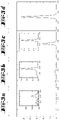
- the Figures 3a to 3d show the photoluminescence spectra of layers with different Sn contents. It can be seen that layer A with a Sn content of 8% only has a low photoluminescence, layer B with a Sn content of 9.6% already detectable photoluminescence, layer C with a Sn content of 11. 1% shows clear photoluminescence and layer D with a Sn content of 12.6% shows strong photoluminescence at 20° K in each case.
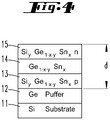
- the figure 4 shows the example of a light-emitting layer structure consisting of a layer sequence 13, 14, 15 with a layer thickness of at least 200 nm figure 4
- the layer sequence shown can be used, for example, to produce a laser component that can be monolithically integrated into a circuit that has been applied monolithically to a silicon substrate 11 .
- a Ge buffer layer 12 is first deposited on a silicon substrate 11 .
- the first layer SiGeSn 13 of the layer sequence, which is p-doped, is then deposited on the Ge buffer layer 12 .
- An active GeSn layer 14 is deposited thereon.
- an n-doped SiGeSn layer 15 is deposited on the active layer 14 .
- the Sn content (x value) is in the range between 0.1 and 0.14.
- the Si content (y value) is in the range between 0 and 0.2.
- Ge 2 H 6 is fed into the gas inlet element 1 from a storage container at a pressure of more than 1,000 mbar together with N 2 . According to the following equilibrium reaction, Ge 2 H 6 and Ge H 3 ⁇ are in thermodynamic equilibrium. Ge2H6 ⁇ 2GeH3 *
- SnCl 4 is introduced into the process chamber.
- N 2 as the carrier gas
- SnCl 4 and GeH 3 * are conveyed to the surface of the substrate 4, which lies on the heated susceptor 5 and has a surface temperature between 350° C. and 390° C.
- SnCl 4 and GeH 3 * adsorb on the surface and react exothermically with each other there.
- the HCl formed during this reaction is conveyed out of the process chamber 3 by the carrier gas.
- the released energy leads to a local heating of the surface.
- the Ge and Sn atoms remain adsorbed on the surface.
- the resulting hydrogen is carried away by the carrier gas.
- the surface is locally heated to such a temperature that the Ge and Sn atoms have sufficient surface mobility to form a monocrystalline crystal.
- the crystal deposited in this way has a crystal structure that is far beyond thermodynamic equilibrium (instead of a maximum Sn content of 1%, the Sn content can be up to 20%).
- Si 2 H 6 as the starting material, which is broken down into adsorbed Si atoms in a manner analogous to the mechanism described above.
- the layer 14 or layer sequence 13, 14, 15 should have a minimum layer thickness d of at least 200 nm, preferably at least 300 nm.
- the dislocation density in the layer volume i.e. above a boundary area to the buffer layer 12 with a thickness of 10 nm to 20 nm, is at most 10 5 cm - 2 to 10 6 cm -2 .
- the border area ie in the first 10 nm to 20 nm of the layer or layer sequence, the dislocation density can certainly assume higher values.
- helical or thread-like dislocations have a maximum density of 5 x 10 6 cm -2 .
- the radicals formed in the gas phase reaction reach the surface and only react with one another there.
Landscapes
- Chemical & Material Sciences (AREA)
- Engineering & Computer Science (AREA)
- Materials Engineering (AREA)
- Organic Chemistry (AREA)
- Crystallography & Structural Chemistry (AREA)
- Metallurgy (AREA)
- Inorganic Chemistry (AREA)
- General Chemical & Material Sciences (AREA)
- Chemical Kinetics & Catalysis (AREA)
- Physics & Mathematics (AREA)
- Chemical Vapour Deposition (AREA)
- General Physics & Mathematics (AREA)
- Optics & Photonics (AREA)
- Condensed Matter Physics & Semiconductors (AREA)
- Electromagnetism (AREA)
- Crystals, And After-Treatments Of Crystals (AREA)
- Recrystallisation Techniques (AREA)
- Semiconductor Lasers (AREA)
- Microelectronics & Electronic Packaging (AREA)
Description
- Die Erfindung betrifft ein Verfahren zum Abscheiden eines SiGeSn- Halbleiterkristalls, welcher als Folge eines direkten elektronischen Bandübergangs bei einer Anregung, beispielsweise durch Anlegen einer Spannung oder durch Einkoppeln von Licht im sichtbaren, infraroten oder ultravioletten Licht leuchtet.
- Die Erfindung betrifft darüber hinaus ein optoelektronisches Bauelement, welches eine aus einem derartigen Kristall bestehende Schicht aufweist, sowie einen integrierten Schaltkreis, der ein derartiges Bauelement aufweist.
- Aus "DEPOSITION OF HIGH QUALITY GaAs FILMS AT FAST RATES IN THE LP-CVD SYSTEM", Journal of crystal grows 94 (1989) 607-612 ist das Abscheiden von Galliumarsenid-Schichten vorbekannt. Gallium wird in Form eines Chlorides und Arsen in Form eines Hydrides in eine Prozesskammer eingeleitet. Die Wachstumsrate nimmt mit sinkender Temperatur und mit sinkendem Totaldruck ab. Die Abhängigkeit der Wachstumsrate vom Totaldruck hat bei etwa 100 mbar ein Minimum und steigt zu tieferen Totaldrücken bis 10 mbar um mehr als einen Faktor 10 an.
- Die Mehrzahl der technologisch verwendeten Halbleiterbauelemente und insbesondere integrierten Schaltkreise, insbesondere Logikschaltkreise oder in Mikroprozessoren verwendete Schaltkreise werden mit der Siliziumtechnologie hergestellt. Zur Verwendung kommt ein Siliziumsubstrat, auf dem dotierte oder undotierte Siliziumschichten bzw. Siliziumoxidschichten abgeschieden werden. Trotz der voneinander verschiedenen Gitterkonstanten ist es auch möglich, andere IV-IV Legierungen kristallin auf einem Siliziumkristall abzuscheiden, beispielsweise Germanium oder Germaniumzinn. Ein technologischer Nachteil bislang hergestellter IV-IV Kristalle ist das Fehlen eines direkten elektronischen Bandübergangs. Sowohl Silizium als auch Germanium, aber auch thermodynamisch stabiles Germaniumzinn oder Siliziumzinn besitzen keinen direkten Bandübergang, der zur Fertigung von optisch aktivierbaren Bauelementen, beispielsweise LEDs oder Laser, tauglich ist.
- Es wird vermutet, dass eine unverspannte Germaniumzinn-Legierung als Kristall außerhalb des thermodynamischen Gleichgewichtes, nämlich bei Zinnkonzentrationen von mindestens etwa 20 % einen direkten Bandübergang haben könnte. Die Gleichgewichtszinnkonzentration in einer Germaniumzinn-Legierung liegt aber bei weniger als 1 %. Es wird vermutet, dass eine Zunahme der Zinnkonzentration unter Bildung eines thermodynamisch metastabilen Kristalls zu einer Absenkung des Leitungsbandes im Bereich des Γ-Tals führen würde, die stärker ist als die Absenkung des Leitungsbandes im L-Tal. Im Γ-Tal würde sich dann ein direkter Bandübergang ausbilden, der dem Kristall die gewünschten optischen Eigenschaften verleihen würde.
- In "SiGeSn growth studies using reduced pressure chemical vapor deposition towards optoelectronic applications" in Thin Solid Films 2013 (S. Wirths, et al., Thin Solid Films (2013), http://dx.doi.org/10.1016/j.tsf.2013.10.078) wird das Abscheiden von Germaniumzinn- bzw. Siliziumgermaniumzinn-Schichten auf Siliziumsubstraten bzw. auf Germaniumbufferschichten beschrieben. Die dort abgeschiedenen, 45 nm bzw. 65/100 nm dicken Schichten mit einem Sn-Anteil von maximal 11 % zeigten keine Lumineszens. Es wurde ein pseudomorphes Wachstum gefunden. Die dort beschriebenen Experimente wurden bei Substrattemperaturen zwischen 350° C und 475° C durchgeführt. Als Prozessgase wurden Si2H6 (60 Pa), Ge2H6 (120 Pa) und SnCl4 (0,6 Pa) verwendet.
- In "Reduced Pressure CVD Growth of Ge and Ge1-xSnx Alloys" (ESC Journal of Solid State Science and Technology, 2(5) N99-N102 (2013)) wird der experimentelle Aufbau eines CVD-Reaktors beschrieben, mit dem Germaniumschichten auf Siliziumsubstraten bzw. Germaniumzinn-Schichten auf Siliziumsubstraten abgeschieden werden können.
- Zum Stand der Technik gehören darüber hinaus auch folgende Veröffentlichungen, die das Abscheiden nicht lumineszierender GeSn-Schichten beschreiben:
- "Band engineering and growth of tensile strained Ge/ (Si)GeSn heterostructures for tunnel field effect transistors" (Applied Physics Letters 102, 192103 (2013)),
- "Tensely strained GeSn alloys as optical gain media" (Applied Physics Letters 103, 192110 (2013)),
- "Low temperature RPCVD epitaxial growth of Si1-xGex using Si2H6 and Ge2H6" (Solid-State Electronics 83 (2013) 2-9),
- "Epitaxial Growth of Ge1-xSnx by Reduced Pressure CVD Using SnCl4 and Ge2H6" (ECS Transactins, 50 (9) 885-893 (2012) © The Electrochemical Society).
- Eine Vorrichtung zum Abscheiden von Silizium und Germanium enthaltenden Schichten bzw. Schichtenfolgen wird in der
DE 10 2004 034 103 A1 beschrieben. Die Verwendung von Radikalen in einem CVD-Prozess ist aus derUS 6,200,893 vorbekannt. - Der Erfindung liegt die Aufgabe zugrunde, Kristalle bei niedrigen Temperaturen, insbesondere außerhalb ihres thermodynamischen Gleichgewichtes abzuscheiden, insbesondere optisch aktive bzw. aktivierbare IV-Halbleiterschichten abzuscheiden, um die monolithische Integration optisch aktiver Bauelemente auf Siliziumsubstraten zu ermöglichen.
- Gelöst wird die Aufgabe durch die in den Ansprüchen angegebene Erfindung. Die Erfindung betrifft ein Verfahren zum Abscheiden einer kristallinen Halbleiterschicht. Die Halbleiterschicht soll zumindest aus einem oder mehreren Elementen bestehen. Die ein oder mehreren Elemente werden als Bestandteile gasförmiger Ausgangsstoffe zusammen mit einem inerten Trägergas in eine Prozesskammer eines CVD-Reaktors eingespeist. Der erste gasförmige Ausgangsstoff kann ein Hydrid sein, beispielsweise Si2H6, Der zweite gasförmige Ausgangsstoff ist SnCl4. Das Trägergas kann N2, Ar, He sein, sollte aber kein H2 sein. Die Vorrichtung zur Durchführung des Verfahrens besitzt bevorzugt ein Gaseinlassorgan, beispielsweise in Form eines Showerheads. Dieser besitzt eine oder mehrere Gasverteilkammern, die jeweils eine Vielzahl von Gasaustrittsöffnungen aufweisen, die in eine Prozesskammer münden. Durch die Gasaustrittsöffnungen können die Prozessgase in die Prozesskammer strömen. Das Gaseinlassorgan wird gekühlt um eine dortige Vorzerlegung der Ausgangsstoffe zu vermeiden. Der Abscheidungsprozess erfolgt im Niedrigdruckbereich, also bei Drucken niedriger als 300 mbar, niedriger als 200 mbar, niedriger als 100 mbar oder bevorzugt bei 60 mbar. Aus dem ersten Ausgangsstoff werden Radikale erzeugt. Dies kann in der in der Literatur beschriebenen Weise erfolgen, beispielsweise durch ein Plasma, einen Heißdraht oder eine Hochfrequenzaktivierung. Bevorzugt werden die Radikale aber dadurch erzeugt, dass das erste Prozessgas beim Eintritt in das Gaseinlassorgan bzw. in die Prozesskammer von einem hohen Druck, der oberhalb des Atmosphärendrucks liegt, zu einem niedrigen Druck entspannt wird, wobei der niedrige Druck dem Totaldruck in der Prozesskammer entspricht, der weniger als 300 mbar beträgt. Beispielsweise können Ge2H6 oder Si2H6 in German- oder Silanradikale (GeH3* oder SiH3*) zerfallen. Wegen des geringen Partialdrucks in der Prozesskammer reduziert sich die Rückreaktionsrate, so dass das in die Prozesskammer eingespeiste Trägergas Radikale zur Oberfläche eines auf eine Substrattemperatur aufgeheizten Halbleitersubstrats transportiert. Da kein H2 oder nur ein Minimum an H2 in der Gasphase vorhanden ist, fehlt der erforderliche Reaktionsparameter, um GeH4 bzw. SiH4 zu bilden. Es entstehen somit hochverdünnte Radikale in der Gasphase. Die Substrattemperatur ist niedriger als die Zerlegungstemperatur des reinen Radikals. Dies hat zur Folge, dass ohne die Beimischung des Chlorides nur ein verschwindend geringes Wachstum von 1 nm/h und weniger stattfinden würde. Erfindungsgemäß wird aber zusammen mit den Radikalen das Chlorid zur Substratoberfläche transportiert. Dort findet eine erste Reaktion zwischen den Radikalen und den Chloriden statt. Bei dieser exothermen Reaktion wird Reaktionswärme frei, die zu einer lokalen Temperaturerhöhung an der Oberfläche der Schicht bzw. des Substrates führt. Dort wo die erste Reaktion stattfindet, besitzt die Oberfläche somit eine Temperatur, die zur Zerlegung des ersten Ausgangsstoffes und insbesondere des daraus dissoziierten Radikals ausreicht. In der ersten Reaktion entsteht ein gasförmiges Reaktionsprodukt, das mit dem Trägergas abgeführt wird. Als nichtgasförmiges Reaktionsprodukt verbleiben die ersten und zweiten Elemente an der Oberfläche. Bei der zweiten Reaktion, die durch die Reaktionswärme der ersten Reaktion in Gang gesetzt wird, zerfällt das Radikal in ein flüchtiges Reaktionsprodukt, das mit dem Trägergas abtransportiert wird, und in das erste Element. Als Folge der beiden zeitgleich stattfindenden Reaktionen sind Atome des ersten Elementes und zweiten Elementes an der Substratoberfläche adsorbiert. Das Substrat liegt auf einem von unten, beispielsweise durch eine Lampenheizung beheizten Suszeptor auf. Dieser ist etwa 1 bis 2 cm von der Gasaustrittsfläche des Showerheads beabstandet. Die Substrattemperatur liegt unterhalb des zuvor genannten oberen Grenzwertes, so dass das reine Hydrid oder das reine Radikal an der Oberfläche nicht zerfallen kann, sondern nur durch die zuvor genannte Kettenreaktion in seine Bestandteile zerlegt wird. Die Substrattemperatur ist ausreichend hoch (sie liegt bevorzugt im Bereich zwischen 300° C und 450° C) um eine Oberflächenbeweglichkeit der aus den beiden chemischen Reaktionen hervorgegangenen nichtflüchtigen Reaktionsprodukte zu gewährleisten. Einen signifikanten Beitrag zur Steigerung der Oberflächenmobilität liefert die Reaktionswärme der ersten Reaktion zwischen den Radikalen und den Halogeniden. Die an der Oberfläche adsorbierten Atome der ein oder mehreren Elemente können sich somit für eine kurze Zeit und Strecke geringfügig über die Oberfläche bewegen, um energetisch günstige Einbauplätze in das Kristallgitter zu finden. Die lokale Oberflächentemperatur ist derart hoch, dass die Atome des ersten Elementes und des zweiten Elementes in kristalliner Ordnung in der Oberfläche eingebaut werden. Da die Oberfläche der Schicht wärmer ist als das Substrat, die Oberfläche also eine höhere Temperatur aufweist als die Substrattemperatur, wird eine ansonsten bei der Substrattemperatur auftretende Oberflächenrauhigkeit unterdrückt. Eine Amorphisierung findet nicht statt. Bei den Experimenten, über die in der eingangs zitierten Literatur berichtet wird, wurden dünne SiGeSn-Schichten auf Ge-Schichten abgeschieden. Unter den dortigen Prozessbedingungen wurden relativ dünne (45 nm bzw. 85 nm dicke) Schichten auf Silizium-Substraten bzw. Germanium-Pseudo-Substraten abgeschieden. Aufgrund des relativ großen Unterschiedes der Kristallgitterkonstante eines GeSn-Kristalls zu einem Ge-Kristall tritt bei der Abscheidung eine tetragonale Verzerrung des Kristalls des aufgewachsenen Materials auf. Die planare Gitterkonstante senkrecht zur Wachstumsrichtung passt sich der kubischen Gitterkonstante des Substrates an. Die senkrechte Gitterkonstante, die sich parallel zur Wachstumsrichtung erstreckt, vergrößert sich. Bei den eingangs genannten Voruntersuchungen wurde eine mit zunehmender Schichtdicke rauere Oberfläche beobachtet. Es wurde die Bildung von Gitterfehlanpassungsversetzungen an der Grenzfläche zum dort verwendeten Si-Substrat beobachtet sowie eine hohe Dichte von Fadenversetzungen, die sich durch die komplette 85 nm-Schicht bis zur Oberfläche ziehen. Bei den verwendeten niedrigen Wachstumstemperaturen für das GeSn-Wachstum ist die Oberflächenmobilität der auf der Oberfläche adsorbierten Moleküle der gasförmigen Ausgangsstoffe bzw. deren Zerlegungsprodukte stark reduziert, was zu einer großen Rauigkeit und letztendlich zu der beobachteten Amorphisierung führt. Überraschenderweise hat sich herausgestellt, dass mit Hilfe der erfindungsgemäßen Radikal-unterstützten Wachstumsmethode der ansonsten erwartete "epitaxial breakdown" insbesondere bei der Verwendung einer Ge-Bufferschicht nicht eintritt. Bei Schichtdicken oberhalb einer kritischen Schichtdicke beginnt eine Relaxation der Schicht, die bis zu 80 % oder mehr anwachsen kann und bevorzugt über 80 % anwächst. Die Dichte von Fadenversetzungen reduziert sich auf Werte von kleiner 106 cm-2 bzw. kleiner 105 cm-2. Die Gitterfehlanpassungsversetzungen sind auf einen kleinen Bereich (10 nm bis 20 nm) nahe der Grenzfläche lokalisiert. Die ansonsten erwarteten Fadenversetzungen oder Schraubenversetzungen konnten nicht festgestellt werden. Signifikante Gitterfehlanpassungsversetzungen wurden nur in dem Bereich bis zu 10 nm bis 20 nm angrenzend an die Grenzfläche beobachtet, wobei auch Versetzungen in der Ge-Bufferschicht unmittelbar angrenzend an die Grenzschicht beobachtet wurden. Der Relaxionsmechanismus wurde insbesondere bei Schichten, die mindestens eine Schichtdicke von 200 nm aufweisen beobachtet, die auf eine defektarme Ge-Bufferschicht abgeschieden wurden, wobei die Ge-Bufferschicht auf ein Si(001)-Substrat abgeschieden worden ist. Sowohl das Abscheiden der Bufferschicht als auch das Abscheiden der IV-IV-Schicht kann in einem Gesamtprozess in aufeinanderfolgenden Prozessschritten in einer Prozesskammer eines CVD-Reaktors ohne zwischenzeitiges Öffnen der Prozesskammer stattfinden. Wesentlich ist ein Schichtwachstum von mindestens 200 nm, bevorzugt von mind. 300 nm. Das erfindungsgemäße Verfahren benutzt zur lokalen Erwärmung der Schichtoberfläche die Reaktionswärme einer reaktiven Gasquelle (Radikale). Es findet ein Kristallwachstum im Nichtgleichgewichtszustand statt. Der Nichtgleichgewichtszustand wird gewissermaßen eingefroren, da als Folge eines hohen Temperaturgradienten die durch die chemische Reaktion erzeugte lokale Wärme in kurzer Zeit in dem Kristall abgeführt wird. Als erster gasförmiger Ausgangsstoff kann eines der oben genannten Hydride der V-Haupt-gruppe verwendet werden. Als zweiter gasförmiger Ausgangsstoff wird bevorzugt eines der oben genannten Halogenide der III-Hauptgruppe verwendet. Es ist auch vorgesehen, Hydride der Elemente der VI-Hauptgruppe und Halogenide, insbesondere Chloride von Elementen der II-Hauptgruppe zu verwenden. Besonders bevorzugt wird das Verfahren aber verwendet, um IV-IV Schichten auf IV-IV-Substraten abzuscheiden. Bevorzugt beinhalten die beiden gasförmigen Ausgangsstoffe zwei voneinander verschiedene Elemente, beispielsweise Ge und Sn. Als erster gasförmiger Ausgangsstoff wird dann Si2H6, gegebenenfalls auch SiH4 oder Ge2H6, gegebenenfalls auch GeH4 verwendet. Als zweiter Ausgangsstoff wird ein Halogenid eines Elementes der IV-Hauptgruppe verwendet, beispielsweise ein Bromid, ein Jodid oder ein Chlorid. Bevorzugt wird SnCl4 verwendet. SnCl4 und Ge2H6 bzw. Si2H6 werden durch ein gekühltes Gaseinlassorgan in eine Prozesskammer eingeleitet. Der Totaldruck in der Prozesskammer hat einen Wert, bei dem Ge2H6, bevorzugt aber auch Si2H6 überwiegend in Radikale zerfallen ist. Diese Radikale werden zusammen mit dem Chlorid mittels eines inerten Trägergases, insbesondere N2, bevorzugt kein H2, zur Substratoberfläche transportiert. Die Moleküle adsorbieren an der Oberfläche. Es findet eine exotherme Oberflächenreaktion zwischen dem Radikal und dem Chlorid statt, bei der HCl und Energie frei wird. Die Energie aktiviert weitere Zerfälle des Radikals und eine lokale Erwärmung der Oberfläche, so dass die Ge-Atome und Sn-Atome eine ausreichende Oberflächenmobilität besitzen, um einkristallin in das Kristall eingebaut zu werden. Es wurde beobachtet, dass bereits bei einem Sn-Anteil von mehr als 8 % photolumineszierende Schichten entstehen, wenn die Voraussetzung zur Bildung von Radikalen vorliegen und eine Schichtdicke oberhalb einer kritischen Dicke abgeschieden wird. Die Veränderung des Bandübergangs weg von einem indirekten Bandübergang hin zu einem direkten Bandübergang tritt bei einem Sn-Anteil in Ge bzw. SiGe abhängig von der Verspannung bei mehr als 8 %, insbesondere bei mehr als 10 % auf. Der maximal erforderliche Sn-Anteil für unverspanntes GeSn liegt bei 14 % bzw. bei 20 %. Das Hydrid, insbesondere das Ge2H6 besitzt in der Prozesskammer einen Partialdruck im Bereich zwischen 60 Pa und 120 Pa. Das Halogenid, insbesondere das SnCl4 wird mit einem derartigen Fluss in die Prozesskammer eingespeist, dass der Partialdruck etwa zwischen 0,1 % und 5 % des Partialdrucks des Hydrides liegt, insbesondere im Bereich zwischen 0,03 Pa und 1,25 Pa. Das Abscheiden der optisch aktiven Schicht erfolgt bevorzugt auf einer relaxierten Ge-Bufferschicht. Bei Wachstumsraten zwischen 10 nm/min und 50 nm/min. Ein erster gasförmiger Ausgangsstoff ist somit ein Siliziumwasserstoff oder ein Germaniumwasserstoff.
- Die Erfindung betrifft darüber hinaus ein Bauelement mit einer Schichtstruktur, die eine mit dem oben genannten Verfahren abgeschiedene Schicht, insbesondere GeSn- oder SiGeSn-Schicht aufweist. Der Sn-Anteil liegt in einem Bereich von 10 % bis 14 %. Die Schichtdicke ist größer als 200 nm, bevorzugt größer als 300 nm. Die Versetzungsdichte innerhalb des Schichtvolumens, also außerhalb eines 10 nm bis 20 nm an die Grenzfläche zur Bufferschicht angrenzenden Bereiches, bei kleiner 106 cm-2 bzw. 10-5 cm-2. Lediglich in dem unmittelbar an die Bufferschicht angrenzenden Bereich besitzt die Schicht eine höhere Versetzungsdichte. Im Bereich 10 nm bis 20 nm nahe der Grenzfläche befinden sich insbesondere stufenförmige Versetzungen, jedoch nur in geringem Umfang schraubenförmige oder fadenförmige Versetzungen. Die Schicht besitzt einen direkten Bandübergang mit einer Energie von etwa 450 meV und ist in der Lage, nach optischer oder elektrischer Anregung zu photolumineszieren.
- Die Erfindung betrifft darüber hinaus einen integrierten Schaltkreis, insbesondere MOS-Schaltkreise, mit einer monolithisch aufgebauten integrierten Schaltung, wobei als Substrat insbesondere ein Si-Substrat verwendet wird. Erfindungsgemäß ist auf das Substrat oder auf eine auf das Substrat aufgebrachte Bufferschicht eine GeSn- oder GeSn enthaltende Schichtenfolge aufgebracht, wobei insbesondere vorgesehen ist, dass die Schichtenfolge eine GeSn-Schicht aufweist, die zwischen zwei SiGeSn-Schichten angeordnet ist. Ein derartiger integrierter Schaltkreis besitzt eine Vielzahl von bekannten Bauelementen, beispielsweise Transistoren, Kondensatoren sowie elektrisch leitenden Schichten und elektrisch isolierenden Schichten. Erfindungsgemäß ist der integrierte Schaltkreis um optisch aktive Bauelemente ergänzt worden, die monolithisch auf demselben Substrat abgeschieden werden, so dass in einem derartigen integrierten Schaltkreis nicht nur Strom, sondern auch Licht zur Informationsverbreitung verwendet werden kann.
- Details der Erfindung werden nachfolgend anhand beigefügter Zeichnungen erläutert. Es zeigen:
- Fig.1
- den Querschnitt durch einen CVD-Reaktor, wie er zum Abscheiden der Schichten verwendet werden kann;
- Fig. 2a
- die elektrische Bandstruktur eines nicht erfindungsgemäßen GeSn-Halbleiters mit einem Sn-Anteil von 8 %;
- Fig. 2b
- die elektrische Bandstruktur eines GeSn-Halbleiters mit einem Sn-Anteil von 13 %;
- Fig. 3a
- das Photolumineszenzspektrum einer nicht erfindungsgemäßen GeSn-Halbleiterschicht mit einem Sn-Anteil von 8 %;
- Fig. 3b
- das Photolumineszenzspektrum einer nicht erfindungsgemäßen GeSn-Halbleiterschicht mit einem Sn-Anteil von 9, 6 %;
- Fig. 3c
- das Photolumineszenzspektrum einer GeSn-Halbleiterschicht mit einem Sn-Anteil von 11,1 %;
- Fig. 3d
- das Photolumineszenzspektrum einer GeSn-Halbleiterschicht mit einem Sn-Anteil von 12,6 %;
- Fig. 4
- das Beispiel einer erfindungsgemäßen Schichtenfolge;
- Fig. 5
- eine Darstellung gemäß
Figur 1 betreffend die nicht erfindungsgemäße Abscheidung von GaN. - Die
Figur 1 zeigt grob schematisch den Querschnitt durch einen CVD-Reaktor, wie er zur Durchführung des Verfahrens bzw. zum Abscheiden der Schichten der erfindungsgemäßen Bauelemente verwendet wird. Nicht dargestellt ist eine externe Gasversorgung zur Bereitstellung der Prozessgase, nämlich Si2H6 und Ge2H6 sowie SnCl4 und als Inertgas N2. Der Reaktor besitzt ein gasdicht nach außen verschlossenes Gehäuse, dessen Inneres mittels einer Vakuumeinrichtung evakuierbar bzw. auf einen Totaldruck im Bereich von 0 mbar bis 1.000 mbar regelbar ist. Innerhalb des Reaktorgehäuses befindet sich ein Gaseinlassorgan 1 in Form eines Showerheads. Es handelt sich dabei um eine Gasverteilkammer, die mit den Prozessgasen und dem Inertgas gespeist wird. DieFigur 1 zeigt ein Gaseinlassorgan 1 mit lediglich einem Gasverteilvolumen. Es ist aber auch vorgesehen, dass die drei Prozessgase getrennt voneinander durch jeweils eine Gasverteilkammer in eine unterhalb des Gaseinlassorgans 1 angeordnete Prozesskammer 3 eingeleitet werden. Dies erfolgt durch Gasaustrittsöffnungen 2 einer Gasaustrittsfläche des Gaseinlassorgans 1. - Der Boden der Prozesskammer 3 wird von einem Graphit-Suszeptor 5 ausgebildet, der etwa 1 cm bis 2 cm von der Gasaustrittsfläche entfernt ist. Auf dem Suszeptor 5 befinden sich ein oder mehrere Si-Substrate 4.
- Unterhalb des Suszeptors 5 befindet sich eine Heizung 6, beispielsweise eine Lampenheizung, um den Suszeptor 5 auf eine Prozesstemperatur von beispielsweise 300° C bis 400° C aufzuheizen.
- Es werden beispielshaft vier Experimente erläutert.
- Die Wachstumsparameter der vier Schichten A, B, C, D sind der nachfolgend eingeblendeten Tabelle zu entnehmen.
x_S n (at. %) Gesamtfluss (sccm) Reaktordruck (mbar) Temperatur (°C) Ge2 H6-F luss (scc m) SnCl4-Fluss (sccm) SnCl4 bubbler Temperatur (°C) Wachstumszeit (min) Dampf druck SnCl4 (mbar) A 8 2000 60 390 400 25 20 3.75 25 B 9.6 2000 60 375 400 25 20 4.83 25 11.1 2000 60 375 400 25 20 6 25 D 12.6 2000 60 350 400 12 20 13.33 25 - Als Trägergas wurde N2 verwendet. Die SnCl4 bubbler wurden allerdings mit H2 als Trägergas betrieben, um gasförmiges SnCl4 in den Reaktor zu leiten. Die Schichten A und C wurden scheinbar mit denselben Wachstumsparametern gefertigt. Zu berücksichtigen ist hier allerdings, dass aufgrund einer Drift in der CVD-Anlage, insbesondere in der SnCl4-Quelle die tatsächlichen SnCl4-Flüsse verschieden gewesen sind. Das Verdünnungsverhältnis von SnCl4 im H2-Trä-gergasfluss durch den bubbler liegt bei etwa 10 % und unterliegt einer Drift, die insbesondere vom Füllungsstand des flüssigen Ausgangsstoffes im Quellenbehälter abhängt.
- Auf einem Si(001)-Substrat wurde zunächst eine Ge-Bufferschicht abgeschieden. Die Ge-Bufferschicht besitzt eine hochqualitative Oberfläche. Es handelt sich um eine defektarme Ge-Bufferschicht mit einer Oberflächenrauigkeit im Bereich von 0.25 nm. Das Abscheiden der Ge-Bufferschicht erfolgte durch Einleiten von Ge2H6 in die Prozesskammer.
- Auf die Ge-Bufferschicht wurden bei einem Ge2H6-Fluss von 400 sccm und einem Gesamtfluss von 2.000 sccm bei einem Totaldruck von 60 mbar in vier verschiedenen Experimenten Schichten aus Ge1-xSnx abgeschieden, wobei der Sn-Anteil 8 %, 9,6 %, 11,1 % bzw. 12, 6% betrug. Das Abscheiden erfolgte bei verschiedenen Temperaturen, wobei die Wachstumstemperatur einen Einfluss auf den Sn-Einbau besitzt. Die Wachstumsraten variieren zwischen 17 nm/min und 49 nm/min. Es wurden Schichten in einer Dicke von etwa 200 nm abgeschieden.
- Die
Figuren 2a und 2b zeigen die Bandstruktur eines Ge1-xSnx-Kristalls, wobei dieFigur 2a die Bandstruktur eines Kristalls mit einem Sn-Anteil von 8 % und dieFigur 2b die Bandstruktur mit einem Sn-Anteil von 13 % zeigt. DieFigur 2a zeigt, dass die direkte Bandlücke (Γ-Valley) eine größere Energie besitzt als die indirekte Bandlücke (L-Valley). Mit zunehmender Steigerung des Sn-Anteils verschieben sich sowohl die indirekte Bandlücke (L-Valley) als auch die direkte Bandlücke (Γ-Valley) zu niedrigeren Energien, wobei die Energie der Bandlücke des direkten Bandübergangs stärker absinkt, so dass in einem Bereich zwischen 8 % Sn-Anteil und 13 % Sn-Anteil der Bandübergang vom indirekten zum direkten wechselt. Da die Bandstruktur nicht nur vom Sn-Anteil, sondern auch von den Gitterverspannungen abhängt, lässt sich ein kritischer Sn-Anteil nicht angeben. - Die
Figuren 3a bis 3d zeigen die Photolumineszenzspektren von Schichten mit voneinander verschiedenen Sn-Anteilen. Es ist erkennbar, dass die Schicht A mit einem Sn-Anteil von 8 % nur eine geringe Photolumineszenz, die Schicht B mit einem Sn-Anteil von 9, 6 % bereits eine erkennbare Photolumineszenz, die Schicht C mit einem Sn-Anteil von 11, 1 % eine deutliche Photolumineszenz und die Schicht D mit einem Sn-Anteil von 12,6 % eine starke Photolumineszenz jeweils bei 20° K zeigen. - Die
Figur 4 zeigt das Beispiel einer lichtemittierenden Schichtstruktur bestehend aus einer Schichtenfolge 13, 14, 15 mit einer Schichtdicke von mindestens 200 nm. Aus der inFigur 4 dargestellten Schichtenfolge kann beispielsweise ein Laser-Bauelement hergestellt werden, welches monolithisch in einen Schaltkreis integrierbar ist, der monolithisch auf ein Silizium-Substrat 11 aufgebracht worden ist. Auf ein Silizium-Substrat 11 wird zunächst eine Ge-Bufferschicht 12 abgeschieden. Auf die Ge-Bufferschicht 12 dann die erste Schicht SiGeSn 13 der Schichtenfolge, die p-dotiert ist, abgeschieden. Darauf wird eine aktive GeSn-Schicht 14 abgeschieden. Schließlich wird auf die aktive Schicht 14 eine n-dotierte SiGeSn-Schicht 15 abgeschieden. Der Sn-Anteil (x-Wert) liegt im Bereich zwischen 0,1 und 0,14. Der Si-Anteil (y-Wert) liegt im Bereich zwischen 0 und 0,2. - Bei dem Verfahren werden Ge2H6 aus einem Vorratsbehälter bei einem Druck über 1.000 mbar zusammen mit N2 in das Gaseinlassorgan 1 eingespeist. Ge2H6 und Ge H3 ∗ liegen gemäß folgender Gleichgewichtsreaktion im thermodynamischen Gleichgewicht.
Ge2H6 → 2GeH3*
- Während im Vorratsbehälter die linke Seite der Gleichgewichtsreaktion dominiert, wird das Verfahren so geführt, dass in der Prozesskammer die rechte Seite der Gleichgewichtsreaktion dominiert. Die Zerlegung von G2H6 in GeH3* erfolgt aufgrund einer pneumatischen Expansion des Gases von einem Druck oberhalb Atmosphärendruck zu einem Sub-Atmosphärendruck. Im Ausführungsbeispiel erfolgt die Expansion nach 60 mbar.
- Des Weiteren wird SnCl4 in die Prozesskammer eingeleitet. Mit N2 als Trägergas wird SnCl4 und GeH3* zur Oberfläche des Substrates 4 gefördert, welches auf dem beheizten Suszeptor 5 liegt und eine Oberflächentemperatur zwischen 350° C und 390° C besitzt. SnCl4 und GeH3* adsorbieren an der Oberfläche und reagieren dort exotherm miteinander.
4GeH3* + 3SnCl4 → 4Ge + 3Sn + 12HCl + Energie
- Das bei dieser Reaktion entstehende HCl wird vom Trägergas aus der Prozesskammer 3 gefördert. Die freiwerdende Energie führt zu einer lokalen Erwärmung der Oberfläche. Die Ge- und Sn-Atome bleiben an der Oberfläche adsorbiert.
- Zufolge der lokalen Erhöhung der Temperatur der Oberfläche kann die folgende endotherme Zerlegungsreaktion stattfinden.
2GeH3* + Energie → 2Ge + 3H2
- Parallel kann auch die folgende Zerlegungsreaktion von undissoziiertem Ge2H6 stattfinden.
Ge2H6 + Energie → 2Ge + 3H2
- Der dabei entstehende Wasserstoff wird vom Trägergas abtransportiert. Die Oberfläche wird lokal auf eine derartige Temperatur aufgeheizt, dass die Ge- und Sn-Atome eine ausreichende Oberflächenmobilität besitzen, um einkristallin einen Kristall aufzubauen. Bei der Prozesstemperatur (350° C bis 390° C) besitzt der so abgeschiedene Kristall eine Kristallstruktur, die weit jenseits des thermodynamischen Gleichgewichtes liegt (anstelle eines Sn-Anteils von maximal 1 % kann der Sn-Anteil bis zu 20 % betragen).
- Wird zusätzlich noch eine Si-Komponente mit in die Prozesskammer eingebracht, so erfolgt dies unter Verwendung von Si2H6 als Ausgangsstoff, der analog des zuvor beschriebenen Mechanismus in adsorbierte Si-Atome zerlegt wird.
- Es werden Schichten mit folgender Zusammensetzung abgeschieden
SiyGe1-x-ySnx


- Die Schicht 14 oder Schichtenfolge 13, 14, 15 soll erfindungsgemäß eine Mindestschichtdicke d von mindestens 200 nm, bevorzugt mindestens 300 nm besitzen. Bei einer derartigen Schichtdicke, die mit Wachstumsraten von 15 nm/min bis 50 nm/min abgeschieden worden ist, liegt die Versetzungsdichte im Schichtvolumen, also oberhalb eines Grenzbereiches zur Bufferschicht 12 von einer Dicke von 10 nm bis 20 nm bei maximal 105 cm-2 bis 106cm-2. Im Grenzbereich, also in den ersten 10 nm bis 20 nm der Schicht bzw. Schichtenfolge kann die Versetzungsdichte durchaus höhere Werte annehmen. Schraubenförmige oder fadenförmige Versetzungen besitzen dort jedoch eine Maximaldichte von 5 x 106 cm-2.
- Erfindungsgemäß erreichen die in der Gasphasenreaktion entstandenen Radikale die Oberfläche und reagieren erst dort miteinander.
-
- 1
- Gasseinlassorgan
- 2
- Gasaustrittsöffnung
- 3
- Prozesskammer
- 4
- Substrat
- 5
- Suszeptor
- 6
- Heizung
- 11
- Silizium-Substrat
- 12
- Ge-Bufferschicht
- 13
- Schichtenfolge
- 14
- Schichtenfolge
- 15
- Schichtenfolge
- d
- Schichtdicke
Claims (11)
- Verfahren zum Abscheiden eines optoelektronischen Bauelements mit einer einkristallinen, SiyGe1-x-ySnx Halbleiterschicht,wobei Si und Ge als Bestandteil eines ersten gasförmigen Ausgangsstoffs in Form eines Hydrids,und Sn als Bestandteil eines zweiten gasförmigen Ausgangsstoffs in Form des Halogenids, SnCl4 zusammen mit einem von einem Inertgas gebildeten Trägergas, in eine Prozesskammer (3) eines CVD-Reaktors eingespeist werden,wobei aus dem ersten Ausgangsstoff in einer Gasphasenreaktion Radikale, die in reiner Form eine Zerlegungstemperatur besitzen, erzeugt werden,die Radikale und der zweite Ausgangsstoff zusammen zur Oberfläche eines auf eine Substrattemperatur aufgeheizten Halbleitersubstrat gebracht werden, welche niedriger ist als die Zerlegungstemperatur des reinen Radikals,wobei die Radikale in einer ersten Reaktion exotherm mit dem SnCl4 an der Oberfläche reagieren, wobei als Reaktionsprodukte Si-, Ge-, und Sn Atome an der Oberfläche bleiben,und sich die Radikale in einer zweiten Reaktion gleichzeitig zur ersten Reaktion sich durch Aufnahme der bei der ersten Reaktion frei gewordenen Wärme endotherm zerlegen,wobei die in der Gasphasenreaktion entstandenen Radikale erst an der Oberfläche in der ersten Reaktion mit dem Halogenid reagieren,so dass die bei der exothermen Reaktion frei werdende Reaktionswärme die zweite Reaktion in Gang setzt und zu einer lokalen Temperaturerhöhung an der Oberfläche der Schicht oder des Substrates führt,bei der die Si-, Ge- und Sn-Atome in kristalliner Ordnung in der Oberfläche eingebaut werden,und dadurch charakterisiert, dass eine photolumineszierende Schicht entsteht, die einen Sn-Anteil x zwischen 0,1 und0,14 und einem Si-Anteil y zwischen 0 und 0,2 aufweist.
- Verfahren nach Anspruch 1, dadurch gekennzeichnet, dass die Radikale durch pneumatisches Entspannen des ersten gasförmigen Ausgangsstoffs beim Einspeisen in die Prozesskammer von einem Druck größer als 1.000 mbar in einen Prozesskammerdruck von weniger als 300 mbar erzeugt werden.
- Verfahren nach einem der Ansprüche 1 oder 2, dadurch gekennzeichnet, dass das Hydrid mit einem Partialdruck von 60 Pa bis 120 Pa in die Prozesskammer eingespeist wird.
- Verfahren nach einem der Ansprüche 1 bis 3, dadurch gekennzeichnet, dass das Halogenid mit einem Partialdruck von 0,1 % bis 5 % des Partialdrucks des Hydrids, insbesondere mit einem Partialdruck von 0,03 Pa bis 1,25 Pa in die Prozesskammer eingespeist wird.
- Verfahren nach einem der Ansprüche 1 bis 4, dadurch gekennzeichnet, dass die Schicht oder die Schichtenfolge auf eine auf einem Si-Substrat aufgebrachte Ge-Bufferschicht abgeschieden wird.
- Verfahren nach einem der Ansprüche 1 bis 5, dadurch gekennzeichnet, dass die Substrattemperatur in einem Bereich zwischen 350° C und 390° C liegt.
- Verfahren nach einem der Ansprüche 1 bis 6, dadurch gekennzeichnet, dass das Abscheiden der Schicht oder Schichtenfolge mit einer Wachstumsrate im Bereich zwischen 15 nm/min und 50 nm/ min erfolgt.
- Nach dem Verfahren nach einem der vorhergehenden Ansprüchen hergestelltes optoelektronisches Bauelement, beispielsweise Laser, Fotodiode, Fotosensor, Fotoelement, Lichtleiter oder dergleichen mit einer auf einer Ge-Bufferschicht eines Si-Substrats epitaktisch abgeschiedenen, einkristallinen, bei Anregung leuchtenden, SiyGe1-x-ySnx Halbleiterschicht mit einer Versetzungsdichte innerhalb des Schichtvolumens, dass heisst außerhalb eines 10 nm bis 20 nm an die Grenzfläche zur Bufferschicht angrenzenden Bereiches, von kleiner 106 cm-2,
- Verfahren nach einem der Ansprüche1 bis 7 oder optoelektronisches Bauelement nach Anspruch 8, dadurch gekennzeichnet, dass die Schicht einen Relaxationsgrad von größer 80 % besitzt und/oder die Versetzungsdichte kleiner als 105 cm2 ist und/oder dass sich die Gitterfehlstellen auf einen Bereich nahe der Grenzschicht zur Bufferschicht, insbesondere auf einen Bereich von 10 nm bis 20 nm angrenzend an die Grenzschicht, beschränken.
- Verfahren nach einem der Ansprüche 1-7 oder 9 oder optoelektronisches Bauelement nach einem der Ansprüche 8 oder 9, dadurch gekennzeichnet, dass die Schichtenfolge eine GeSn-Schicht ist, die zwischen zwei SiGeSn-Schichten angeordnet ist.
- Auf einem Substrat aufgebrachte integrierte Schaltung, insbesondere Mikroprozessor, gekennzeichnet durch ein auf eine im monolithischen Verbund mit dem Substrat stehende Bufferschicht aufgebrachtes optoelektronisches Bauelement gemäß einem der Ansprüche 9 bis 10.
Priority Applications (1)
| Application Number | Priority Date | Filing Date | Title |
|---|---|---|---|
| EP22166112.7A EP4043620A1 (de) | 2014-06-13 | 2015-05-18 | Verfahren zum abscheiden einer kristallschicht bei niedrigen temperaturen, insbesondere einer photolumineszierenden iv-iv-schicht auf einem iv-substrat, sowie ein eine derartige schicht aufweisendes optoelektronisches bauelement |
Applications Claiming Priority (2)
| Application Number | Priority Date | Filing Date | Title |
|---|---|---|---|
| DE102014108352.0A DE102014108352A1 (de) | 2014-06-13 | 2014-06-13 | Verfahren zum Abscheiden einer Kristallschicht bei niedrigen Temperaturen, insbesondere einer photolumineszierenden IV-IV-Schicht auf einem IV-Substrat, sowie ein eine derartige Schicht aufweisendes optoelektronisches Bauelement |
| PCT/EP2015/060881 WO2015189004A1 (de) | 2014-06-13 | 2015-05-18 | Verfahren zum abscheiden einer kristallschicht bei niedrigen temperaturen, insbesondere einer photolumineszierenden iv-iv-schicht auf einem iv-substrat, sowie ein eine derartige schicht aufweisendes optoelektronisches bauelement |
Related Child Applications (1)
| Application Number | Title | Priority Date | Filing Date |
|---|---|---|---|
| EP22166112.7A Division EP4043620A1 (de) | 2014-06-13 | 2015-05-18 | Verfahren zum abscheiden einer kristallschicht bei niedrigen temperaturen, insbesondere einer photolumineszierenden iv-iv-schicht auf einem iv-substrat, sowie ein eine derartige schicht aufweisendes optoelektronisches bauelement |
Publications (2)
| Publication Number | Publication Date |
|---|---|
| EP3155145A1 EP3155145A1 (de) | 2017-04-19 |
| EP3155145B1 true EP3155145B1 (de) | 2022-04-13 |
Family
ID=53276085
Family Applications (2)
| Application Number | Title | Priority Date | Filing Date |
|---|---|---|---|
| EP15726035.7A Active EP3155145B1 (de) | 2014-06-13 | 2015-05-18 | Verfahren zum abscheiden eines optoelektronischen bauelements mit einer einkristallinen si-ge-sn halbleiterschicht und derartiges optoelektronisches bauelement |
| EP22166112.7A Pending EP4043620A1 (de) | 2014-06-13 | 2015-05-18 | Verfahren zum abscheiden einer kristallschicht bei niedrigen temperaturen, insbesondere einer photolumineszierenden iv-iv-schicht auf einem iv-substrat, sowie ein eine derartige schicht aufweisendes optoelektronisches bauelement |
Family Applications After (1)
| Application Number | Title | Priority Date | Filing Date |
|---|---|---|---|
| EP22166112.7A Pending EP4043620A1 (de) | 2014-06-13 | 2015-05-18 | Verfahren zum abscheiden einer kristallschicht bei niedrigen temperaturen, insbesondere einer photolumineszierenden iv-iv-schicht auf einem iv-substrat, sowie ein eine derartige schicht aufweisendes optoelektronisches bauelement |
Country Status (6)
| Country | Link |
|---|---|
| US (1) | US10988858B2 (de) |
| EP (2) | EP3155145B1 (de) |
| JP (1) | JP6608438B2 (de) |
| CN (1) | CN106414816A (de) |
| DE (1) | DE102014108352A1 (de) |
| WO (1) | WO2015189004A1 (de) |
Families Citing this family (319)
| Publication number | Priority date | Publication date | Assignee | Title |
|---|---|---|---|---|
| US9394608B2 (en) | 2009-04-06 | 2016-07-19 | Asm America, Inc. | Semiconductor processing reactor and components thereof |
| US8802201B2 (en) | 2009-08-14 | 2014-08-12 | Asm America, Inc. | Systems and methods for thin-film deposition of metal oxides using excited nitrogen-oxygen species |
| US20130023129A1 (en) | 2011-07-20 | 2013-01-24 | Asm America, Inc. | Pressure transmitter for a semiconductor processing environment |
| US9017481B1 (en) | 2011-10-28 | 2015-04-28 | Asm America, Inc. | Process feed management for semiconductor substrate processing |
| US10714315B2 (en) | 2012-10-12 | 2020-07-14 | Asm Ip Holdings B.V. | Semiconductor reaction chamber showerhead |
| US20160376700A1 (en) | 2013-02-01 | 2016-12-29 | Asm Ip Holding B.V. | System for treatment of deposition reactor |
| US11015245B2 (en) | 2014-03-19 | 2021-05-25 | Asm Ip Holding B.V. | Gas-phase reactor and system having exhaust plenum and components thereof |
| US10858737B2 (en) | 2014-07-28 | 2020-12-08 | Asm Ip Holding B.V. | Showerhead assembly and components thereof |
| US9890456B2 (en) | 2014-08-21 | 2018-02-13 | Asm Ip Holding B.V. | Method and system for in situ formation of gas-phase compounds |
| US10941490B2 (en) | 2014-10-07 | 2021-03-09 | Asm Ip Holding B.V. | Multiple temperature range susceptor, assembly, reactor and system including the susceptor, and methods of using the same |
| US10276355B2 (en) | 2015-03-12 | 2019-04-30 | Asm Ip Holding B.V. | Multi-zone reactor, system including the reactor, and method of using the same |
| US10458018B2 (en) | 2015-06-26 | 2019-10-29 | Asm Ip Holding B.V. | Structures including metal carbide material, devices including the structures, and methods of forming same |
| US10211308B2 (en) | 2015-10-21 | 2019-02-19 | Asm Ip Holding B.V. | NbMC layers |
| US11139308B2 (en) | 2015-12-29 | 2021-10-05 | Asm Ip Holding B.V. | Atomic layer deposition of III-V compounds to form V-NAND devices |
| US10529554B2 (en) | 2016-02-19 | 2020-01-07 | Asm Ip Holding B.V. | Method for forming silicon nitride film selectively on sidewalls or flat surfaces of trenches |
| US10343920B2 (en) | 2016-03-18 | 2019-07-09 | Asm Ip Holding B.V. | Aligned carbon nanotubes |
| US10190213B2 (en) | 2016-04-21 | 2019-01-29 | Asm Ip Holding B.V. | Deposition of metal borides |
| US10865475B2 (en) | 2016-04-21 | 2020-12-15 | Asm Ip Holding B.V. | Deposition of metal borides and silicides |
| US10367080B2 (en) | 2016-05-02 | 2019-07-30 | Asm Ip Holding B.V. | Method of forming a germanium oxynitride film |
| US11453943B2 (en) | 2016-05-25 | 2022-09-27 | Asm Ip Holding B.V. | Method for forming carbon-containing silicon/metal oxide or nitride film by ALD using silicon precursor and hydrocarbon precursor |
| US10612137B2 (en) | 2016-07-08 | 2020-04-07 | Asm Ip Holdings B.V. | Organic reactants for atomic layer deposition |
| US9859151B1 (en) | 2016-07-08 | 2018-01-02 | Asm Ip Holding B.V. | Selective film deposition method to form air gaps |
| US10714385B2 (en) | 2016-07-19 | 2020-07-14 | Asm Ip Holding B.V. | Selective deposition of tungsten |
| US9887082B1 (en) | 2016-07-28 | 2018-02-06 | Asm Ip Holding B.V. | Method and apparatus for filling a gap |
| KR102532607B1 (ko) | 2016-07-28 | 2023-05-15 | 에이에스엠 아이피 홀딩 비.브이. | 기판 가공 장치 및 그 동작 방법 |
| US9812320B1 (en) | 2016-07-28 | 2017-11-07 | Asm Ip Holding B.V. | Method and apparatus for filling a gap |
| US10643826B2 (en) | 2016-10-26 | 2020-05-05 | Asm Ip Holdings B.V. | Methods for thermally calibrating reaction chambers |
| US11532757B2 (en) | 2016-10-27 | 2022-12-20 | Asm Ip Holding B.V. | Deposition of charge trapping layers |
| US10714350B2 (en) | 2016-11-01 | 2020-07-14 | ASM IP Holdings, B.V. | Methods for forming a transition metal niobium nitride film on a substrate by atomic layer deposition and related semiconductor device structures |
| US10229833B2 (en) | 2016-11-01 | 2019-03-12 | Asm Ip Holding B.V. | Methods for forming a transition metal nitride film on a substrate by atomic layer deposition and related semiconductor device structures |
| KR102546317B1 (ko) | 2016-11-15 | 2023-06-21 | 에이에스엠 아이피 홀딩 비.브이. | 기체 공급 유닛 및 이를 포함하는 기판 처리 장치 |
| KR102762543B1 (ko) | 2016-12-14 | 2025-02-05 | 에이에스엠 아이피 홀딩 비.브이. | 기판 처리 장치 |
| US11447861B2 (en) | 2016-12-15 | 2022-09-20 | Asm Ip Holding B.V. | Sequential infiltration synthesis apparatus and a method of forming a patterned structure |
| US11581186B2 (en) | 2016-12-15 | 2023-02-14 | Asm Ip Holding B.V. | Sequential infiltration synthesis apparatus |
| KR102700194B1 (ko) | 2016-12-19 | 2024-08-28 | 에이에스엠 아이피 홀딩 비.브이. | 기판 처리 장치 |
| US10269558B2 (en) | 2016-12-22 | 2019-04-23 | Asm Ip Holding B.V. | Method of forming a structure on a substrate |
| US10867788B2 (en) | 2016-12-28 | 2020-12-15 | Asm Ip Holding B.V. | Method of forming a structure on a substrate |
| US11390950B2 (en) | 2017-01-10 | 2022-07-19 | Asm Ip Holding B.V. | Reactor system and method to reduce residue buildup during a film deposition process |
| US10468261B2 (en) | 2017-02-15 | 2019-11-05 | Asm Ip Holding B.V. | Methods for forming a metallic film on a substrate by cyclical deposition and related semiconductor device structures |
| CN107871800B (zh) * | 2017-02-24 | 2019-06-14 | 西藏民族大学 | n+-GeSn/i-GeSn/p+-Ge结构光电探测器及其制备方法 |
| US10529563B2 (en) | 2017-03-29 | 2020-01-07 | Asm Ip Holdings B.V. | Method for forming doped metal oxide films on a substrate by cyclical deposition and related semiconductor device structures |
| KR102457289B1 (ko) | 2017-04-25 | 2022-10-21 | 에이에스엠 아이피 홀딩 비.브이. | 박막 증착 방법 및 반도체 장치의 제조 방법 |
| US10770286B2 (en) | 2017-05-08 | 2020-09-08 | Asm Ip Holdings B.V. | Methods for selectively forming a silicon nitride film on a substrate and related semiconductor device structures |
| US10892156B2 (en) | 2017-05-08 | 2021-01-12 | Asm Ip Holding B.V. | Methods for forming a silicon nitride film on a substrate and related semiconductor device structures |
| US10886123B2 (en) | 2017-06-02 | 2021-01-05 | Asm Ip Holding B.V. | Methods for forming low temperature semiconductor layers and related semiconductor device structures |
| US12040200B2 (en) | 2017-06-20 | 2024-07-16 | Asm Ip Holding B.V. | Semiconductor processing apparatus and methods for calibrating a semiconductor processing apparatus |
| US11306395B2 (en) | 2017-06-28 | 2022-04-19 | Asm Ip Holding B.V. | Methods for depositing a transition metal nitride film on a substrate by atomic layer deposition and related deposition apparatus |
| US10685834B2 (en) * | 2017-07-05 | 2020-06-16 | Asm Ip Holdings B.V. | Methods for forming a silicon germanium tin layer and related semiconductor device structures |
| TWI794238B (zh) | 2017-07-13 | 2023-03-01 | 荷蘭商Asm智慧財產控股公司 | 於單一加工腔室中自半導體膜移除氧化物及碳之裝置及方法 |
| KR20190009245A (ko) | 2017-07-18 | 2019-01-28 | 에이에스엠 아이피 홀딩 비.브이. | 반도체 소자 구조물 형성 방법 및 관련된 반도체 소자 구조물 |
| US11018002B2 (en) | 2017-07-19 | 2021-05-25 | Asm Ip Holding B.V. | Method for selectively depositing a Group IV semiconductor and related semiconductor device structures |
| US11374112B2 (en) | 2017-07-19 | 2022-06-28 | Asm Ip Holding B.V. | Method for depositing a group IV semiconductor and related semiconductor device structures |
| US10541333B2 (en) | 2017-07-19 | 2020-01-21 | Asm Ip Holding B.V. | Method for depositing a group IV semiconductor and related semiconductor device structures |
| US10590535B2 (en) | 2017-07-26 | 2020-03-17 | Asm Ip Holdings B.V. | Chemical treatment, deposition and/or infiltration apparatus and method for using the same |
| TWI815813B (zh) | 2017-08-04 | 2023-09-21 | 荷蘭商Asm智慧財產控股公司 | 用於分配反應腔內氣體的噴頭總成 |
| US10692741B2 (en) | 2017-08-08 | 2020-06-23 | Asm Ip Holdings B.V. | Radiation shield |
| US10770336B2 (en) | 2017-08-08 | 2020-09-08 | Asm Ip Holding B.V. | Substrate lift mechanism and reactor including same |
| US11139191B2 (en) | 2017-08-09 | 2021-10-05 | Asm Ip Holding B.V. | Storage apparatus for storing cassettes for substrates and processing apparatus equipped therewith |
| US11769682B2 (en) | 2017-08-09 | 2023-09-26 | Asm Ip Holding B.V. | Storage apparatus for storing cassettes for substrates and processing apparatus equipped therewith |
| CN107611192A (zh) * | 2017-08-11 | 2018-01-19 | 西安科锐盛创新科技有限公司 | GeSn光电探测器 |
| US11098402B2 (en) * | 2017-08-22 | 2021-08-24 | Praxair Technology, Inc. | Storage and delivery of antimony-containing materials to an ion implanter |
| US11830730B2 (en) | 2017-08-29 | 2023-11-28 | Asm Ip Holding B.V. | Layer forming method and apparatus |
| KR102491945B1 (ko) | 2017-08-30 | 2023-01-26 | 에이에스엠 아이피 홀딩 비.브이. | 기판 처리 장치 |
| US11295980B2 (en) | 2017-08-30 | 2022-04-05 | Asm Ip Holding B.V. | Methods for depositing a molybdenum metal film over a dielectric surface of a substrate by a cyclical deposition process and related semiconductor device structures |
| US11056344B2 (en) | 2017-08-30 | 2021-07-06 | Asm Ip Holding B.V. | Layer forming method |
| KR102401446B1 (ko) | 2017-08-31 | 2022-05-24 | 에이에스엠 아이피 홀딩 비.브이. | 기판 처리 장치 |
| KR102630301B1 (ko) | 2017-09-21 | 2024-01-29 | 에이에스엠 아이피 홀딩 비.브이. | 침투성 재료의 순차 침투 합성 방법 처리 및 이를 이용하여 형성된 구조물 및 장치 |
| US10844484B2 (en) | 2017-09-22 | 2020-11-24 | Asm Ip Holding B.V. | Apparatus for dispensing a vapor phase reactant to a reaction chamber and related methods |
| US10658205B2 (en) | 2017-09-28 | 2020-05-19 | Asm Ip Holdings B.V. | Chemical dispensing apparatus and methods for dispensing a chemical to a reaction chamber |
| US10403504B2 (en) | 2017-10-05 | 2019-09-03 | Asm Ip Holding B.V. | Method for selectively depositing a metallic film on a substrate |
| US10319588B2 (en) | 2017-10-10 | 2019-06-11 | Asm Ip Holding B.V. | Method for depositing a metal chalcogenide on a substrate by cyclical deposition |
| US10923344B2 (en) | 2017-10-30 | 2021-02-16 | Asm Ip Holding B.V. | Methods for forming a semiconductor structure and related semiconductor structures |
| US10910262B2 (en) | 2017-11-16 | 2021-02-02 | Asm Ip Holding B.V. | Method of selectively depositing a capping layer structure on a semiconductor device structure |
| US11022879B2 (en) | 2017-11-24 | 2021-06-01 | Asm Ip Holding B.V. | Method of forming an enhanced unexposed photoresist layer |
| TWI791689B (zh) | 2017-11-27 | 2023-02-11 | 荷蘭商Asm智慧財產控股私人有限公司 | 包括潔淨迷你環境之裝置 |
| WO2019103613A1 (en) | 2017-11-27 | 2019-05-31 | Asm Ip Holding B.V. | A storage device for storing wafer cassettes for use with a batch furnace |
| US10872771B2 (en) | 2018-01-16 | 2020-12-22 | Asm Ip Holding B. V. | Method for depositing a material film on a substrate within a reaction chamber by a cyclical deposition process and related device structures |
| TWI799494B (zh) | 2018-01-19 | 2023-04-21 | 荷蘭商Asm 智慧財產控股公司 | 沈積方法 |
| US11482412B2 (en) | 2018-01-19 | 2022-10-25 | Asm Ip Holding B.V. | Method for depositing a gap-fill layer by plasma-assisted deposition |
| US11018047B2 (en) | 2018-01-25 | 2021-05-25 | Asm Ip Holding B.V. | Hybrid lift pin |
| USD880437S1 (en) | 2018-02-01 | 2020-04-07 | Asm Ip Holding B.V. | Gas supply plate for semiconductor manufacturing apparatus |
| US11081345B2 (en) | 2018-02-06 | 2021-08-03 | Asm Ip Holding B.V. | Method of post-deposition treatment for silicon oxide film |
| US10896820B2 (en) | 2018-02-14 | 2021-01-19 | Asm Ip Holding B.V. | Method for depositing a ruthenium-containing film on a substrate by a cyclical deposition process |
| WO2019158960A1 (en) | 2018-02-14 | 2019-08-22 | Asm Ip Holding B.V. | A method for depositing a ruthenium-containing film on a substrate by a cyclical deposition process |
| US10731249B2 (en) | 2018-02-15 | 2020-08-04 | Asm Ip Holding B.V. | Method of forming a transition metal containing film on a substrate by a cyclical deposition process, a method for supplying a transition metal halide compound to a reaction chamber, and related vapor deposition apparatus |
| KR102636427B1 (ko) | 2018-02-20 | 2024-02-13 | 에이에스엠 아이피 홀딩 비.브이. | 기판 처리 방법 및 장치 |
| US10975470B2 (en) | 2018-02-23 | 2021-04-13 | Asm Ip Holding B.V. | Apparatus for detecting or monitoring for a chemical precursor in a high temperature environment |
| US11473195B2 (en) | 2018-03-01 | 2022-10-18 | Asm Ip Holding B.V. | Semiconductor processing apparatus and a method for processing a substrate |
| US11629406B2 (en) | 2018-03-09 | 2023-04-18 | Asm Ip Holding B.V. | Semiconductor processing apparatus comprising one or more pyrometers for measuring a temperature of a substrate during transfer of the substrate |
| US11114283B2 (en) | 2018-03-16 | 2021-09-07 | Asm Ip Holding B.V. | Reactor, system including the reactor, and methods of manufacturing and using same |
| KR102646467B1 (ko) | 2018-03-27 | 2024-03-11 | 에이에스엠 아이피 홀딩 비.브이. | 기판 상에 전극을 형성하는 방법 및 전극을 포함하는 반도체 소자 구조 |
| US11230766B2 (en) | 2018-03-29 | 2022-01-25 | Asm Ip Holding B.V. | Substrate processing apparatus and method |
| US11088002B2 (en) | 2018-03-29 | 2021-08-10 | Asm Ip Holding B.V. | Substrate rack and a substrate processing system and method |
| KR102501472B1 (ko) | 2018-03-30 | 2023-02-20 | 에이에스엠 아이피 홀딩 비.브이. | 기판 처리 방법 |
| KR102600229B1 (ko) | 2018-04-09 | 2023-11-10 | 에이에스엠 아이피 홀딩 비.브이. | 기판 지지 장치, 이를 포함하는 기판 처리 장치 및 기판 처리 방법 |
| TWI843623B (zh) | 2018-05-08 | 2024-05-21 | 荷蘭商Asm Ip私人控股有限公司 | 藉由循環沉積製程於基板上沉積氧化物膜之方法及相關裝置結構 |
| US12025484B2 (en) | 2018-05-08 | 2024-07-02 | Asm Ip Holding B.V. | Thin film forming method |
| US12272527B2 (en) | 2018-05-09 | 2025-04-08 | Asm Ip Holding B.V. | Apparatus for use with hydrogen radicals and method of using same |
| KR20190129718A (ko) | 2018-05-11 | 2019-11-20 | 에이에스엠 아이피 홀딩 비.브이. | 기판 상에 피도핑 금속 탄화물 막을 형성하는 방법 및 관련 반도체 소자 구조 |
| KR102596988B1 (ko) | 2018-05-28 | 2023-10-31 | 에이에스엠 아이피 홀딩 비.브이. | 기판 처리 방법 및 그에 의해 제조된 장치 |
| TWI840362B (zh) | 2018-06-04 | 2024-05-01 | 荷蘭商Asm Ip私人控股有限公司 | 水氣降低的晶圓處置腔室 |
| US11718913B2 (en) | 2018-06-04 | 2023-08-08 | Asm Ip Holding B.V. | Gas distribution system and reactor system including same |
| US11286562B2 (en) | 2018-06-08 | 2022-03-29 | Asm Ip Holding B.V. | Gas-phase chemical reactor and method of using same |
| KR102568797B1 (ko) | 2018-06-21 | 2023-08-21 | 에이에스엠 아이피 홀딩 비.브이. | 기판 처리 시스템 |
| US10797133B2 (en) | 2018-06-21 | 2020-10-06 | Asm Ip Holding B.V. | Method for depositing a phosphorus doped silicon arsenide film and related semiconductor device structures |
| WO2020003000A1 (en) | 2018-06-27 | 2020-01-02 | Asm Ip Holding B.V. | Cyclic deposition methods for forming metal-containing material and films and structures including the metal-containing material |
| KR20250134000A (ko) | 2018-06-27 | 2025-09-09 | 에이에스엠 아이피 홀딩 비.브이. | 금속 함유 재료를 형성하기 위한 주기적 증착 방법 및 금속 함유 재료를 포함하는 필름 및 구조체 |
| US10612136B2 (en) | 2018-06-29 | 2020-04-07 | ASM IP Holding, B.V. | Temperature-controlled flange and reactor system including same |
| KR102686758B1 (ko) | 2018-06-29 | 2024-07-18 | 에이에스엠 아이피 홀딩 비.브이. | 박막 증착 방법 및 반도체 장치의 제조 방법 |
| US10388513B1 (en) | 2018-07-03 | 2019-08-20 | Asm Ip Holding B.V. | Method for depositing silicon-free carbon-containing film as gap-fill layer by pulse plasma-assisted deposition |
| US10755922B2 (en) | 2018-07-03 | 2020-08-25 | Asm Ip Holding B.V. | Method for depositing silicon-free carbon-containing film as gap-fill layer by pulse plasma-assisted deposition |
| US10767789B2 (en) | 2018-07-16 | 2020-09-08 | Asm Ip Holding B.V. | Diaphragm valves, valve components, and methods for forming valve components |
| US11053591B2 (en) | 2018-08-06 | 2021-07-06 | Asm Ip Holding B.V. | Multi-port gas injection system and reactor system including same |
| US10883175B2 (en) | 2018-08-09 | 2021-01-05 | Asm Ip Holding B.V. | Vertical furnace for processing substrates and a liner for use therein |
| US10829852B2 (en) | 2018-08-16 | 2020-11-10 | Asm Ip Holding B.V. | Gas distribution device for a wafer processing apparatus |
| US11430674B2 (en) | 2018-08-22 | 2022-08-30 | Asm Ip Holding B.V. | Sensor array, apparatus for dispensing a vapor phase reactant to a reaction chamber and related methods |
| US11024523B2 (en) | 2018-09-11 | 2021-06-01 | Asm Ip Holding B.V. | Substrate processing apparatus and method |
| KR102707956B1 (ko) | 2018-09-11 | 2024-09-19 | 에이에스엠 아이피 홀딩 비.브이. | 박막 증착 방법 |
| US11049751B2 (en) | 2018-09-14 | 2021-06-29 | Asm Ip Holding B.V. | Cassette supply system to store and handle cassettes and processing apparatus equipped therewith |
| CN109244829B (zh) * | 2018-09-17 | 2020-02-14 | 西安电子科技大学 | Ge/GeSn异质结激光器及其制备方法 |
| CN110970344B (zh) | 2018-10-01 | 2024-10-25 | Asmip控股有限公司 | 衬底保持设备、包含所述设备的系统及其使用方法 |
| US11232963B2 (en) | 2018-10-03 | 2022-01-25 | Asm Ip Holding B.V. | Substrate processing apparatus and method |
| KR102592699B1 (ko) | 2018-10-08 | 2023-10-23 | 에이에스엠 아이피 홀딩 비.브이. | 기판 지지 유닛 및 이를 포함하는 박막 증착 장치와 기판 처리 장치 |
| US10847365B2 (en) | 2018-10-11 | 2020-11-24 | Asm Ip Holding B.V. | Method of forming conformal silicon carbide film by cyclic CVD |
| US10811256B2 (en) | 2018-10-16 | 2020-10-20 | Asm Ip Holding B.V. | Method for etching a carbon-containing feature |
| KR102605121B1 (ko) | 2018-10-19 | 2023-11-23 | 에이에스엠 아이피 홀딩 비.브이. | 기판 처리 장치 및 기판 처리 방법 |
| KR102546322B1 (ko) | 2018-10-19 | 2023-06-21 | 에이에스엠 아이피 홀딩 비.브이. | 기판 처리 장치 및 기판 처리 방법 |
| USD948463S1 (en) | 2018-10-24 | 2022-04-12 | Asm Ip Holding B.V. | Susceptor for semiconductor substrate supporting apparatus |
| US12378665B2 (en) | 2018-10-26 | 2025-08-05 | Asm Ip Holding B.V. | High temperature coatings for a preclean and etch apparatus and related methods |
| US11087997B2 (en) | 2018-10-31 | 2021-08-10 | Asm Ip Holding B.V. | Substrate processing apparatus for processing substrates |
| KR102748291B1 (ko) | 2018-11-02 | 2024-12-31 | 에이에스엠 아이피 홀딩 비.브이. | 기판 지지 유닛 및 이를 포함하는 기판 처리 장치 |
| US11572620B2 (en) | 2018-11-06 | 2023-02-07 | Asm Ip Holding B.V. | Methods for selectively depositing an amorphous silicon film on a substrate |
| US11031242B2 (en) | 2018-11-07 | 2021-06-08 | Asm Ip Holding B.V. | Methods for depositing a boron doped silicon germanium film |
| US10818758B2 (en) | 2018-11-16 | 2020-10-27 | Asm Ip Holding B.V. | Methods for forming a metal silicate film on a substrate in a reaction chamber and related semiconductor device structures |
| US10847366B2 (en) | 2018-11-16 | 2020-11-24 | Asm Ip Holding B.V. | Methods for depositing a transition metal chalcogenide film on a substrate by a cyclical deposition process |
| US12040199B2 (en) | 2018-11-28 | 2024-07-16 | Asm Ip Holding B.V. | Substrate processing apparatus for processing substrates |
| US11217444B2 (en) | 2018-11-30 | 2022-01-04 | Asm Ip Holding B.V. | Method for forming an ultraviolet radiation responsive metal oxide-containing film |
| KR102636428B1 (ko) | 2018-12-04 | 2024-02-13 | 에이에스엠 아이피 홀딩 비.브이. | 기판 처리 장치를 세정하는 방법 |
| US11158513B2 (en) | 2018-12-13 | 2021-10-26 | Asm Ip Holding B.V. | Methods for forming a rhenium-containing film on a substrate by a cyclical deposition process and related semiconductor device structures |
| JP7504584B2 (ja) | 2018-12-14 | 2024-06-24 | エーエスエム・アイピー・ホールディング・ベー・フェー | 窒化ガリウムの選択的堆積を用いてデバイス構造体を形成する方法及びそのためのシステム |
| TWI866480B (zh) | 2019-01-17 | 2024-12-11 | 荷蘭商Asm Ip 私人控股有限公司 | 藉由循環沈積製程於基板上形成含過渡金屬膜之方法 |
| KR102727227B1 (ko) | 2019-01-22 | 2024-11-07 | 에이에스엠 아이피 홀딩 비.브이. | 기판 처리 장치 |
| CN111524788B (zh) | 2019-02-01 | 2023-11-24 | Asm Ip私人控股有限公司 | 氧化硅的拓扑选择性膜形成的方法 |
| KR102638425B1 (ko) | 2019-02-20 | 2024-02-21 | 에이에스엠 아이피 홀딩 비.브이. | 기판 표면 내에 형성된 오목부를 충진하기 위한 방법 및 장치 |
| TWI838458B (zh) | 2019-02-20 | 2024-04-11 | 荷蘭商Asm Ip私人控股有限公司 | 用於3d nand應用中之插塞填充沉積之設備及方法 |
| KR102626263B1 (ko) | 2019-02-20 | 2024-01-16 | 에이에스엠 아이피 홀딩 비.브이. | 처리 단계를 포함하는 주기적 증착 방법 및 이를 위한 장치 |
| TWI845607B (zh) | 2019-02-20 | 2024-06-21 | 荷蘭商Asm Ip私人控股有限公司 | 用來填充形成於基材表面內之凹部的循環沉積方法及設備 |
| TWI842826B (zh) | 2019-02-22 | 2024-05-21 | 荷蘭商Asm Ip私人控股有限公司 | 基材處理設備及處理基材之方法 |
| US11742198B2 (en) | 2019-03-08 | 2023-08-29 | Asm Ip Holding B.V. | Structure including SiOCN layer and method of forming same |
| KR102782593B1 (ko) | 2019-03-08 | 2025-03-14 | 에이에스엠 아이피 홀딩 비.브이. | SiOC 층을 포함한 구조체 및 이의 형성 방법 |
| KR102858005B1 (ko) | 2019-03-08 | 2025-09-09 | 에이에스엠 아이피 홀딩 비.브이. | 실리콘 질화물 층을 선택적으로 증착하는 방법, 및 선택적으로 증착된 실리콘 질화물 층을 포함하는 구조체 |
| JP2020167398A (ja) | 2019-03-28 | 2020-10-08 | エーエスエム・アイピー・ホールディング・ベー・フェー | ドアオープナーおよびドアオープナーが提供される基材処理装置 |
| KR102809999B1 (ko) | 2019-04-01 | 2025-05-19 | 에이에스엠 아이피 홀딩 비.브이. | 반도체 소자를 제조하는 방법 |
| KR102897355B1 (ko) | 2019-04-19 | 2025-12-08 | 에이에스엠 아이피 홀딩 비.브이. | 층 형성 방법 및 장치 |
| KR20200125453A (ko) | 2019-04-24 | 2020-11-04 | 에이에스엠 아이피 홀딩 비.브이. | 기상 반응기 시스템 및 이를 사용하는 방법 |
| KR102929471B1 (ko) | 2019-05-07 | 2026-02-20 | 에이에스엠 아이피 홀딩 비.브이. | 딥 튜브가 있는 화학물질 공급원 용기 |
| KR102869364B1 (ko) | 2019-05-07 | 2025-10-10 | 에이에스엠 아이피 홀딩 비.브이. | 비정질 탄소 중합체 막을 개질하는 방법 |
| KR102929472B1 (ko) | 2019-05-10 | 2026-02-20 | 에이에스엠 아이피 홀딩 비.브이. | 표면 상에 재료를 증착하는 방법 및 본 방법에 따라 형성된 구조 |
| JP7598201B2 (ja) | 2019-05-16 | 2024-12-11 | エーエスエム・アイピー・ホールディング・ベー・フェー | ウェハボートハンドリング装置、縦型バッチ炉および方法 |
| JP7612342B2 (ja) | 2019-05-16 | 2025-01-14 | エーエスエム・アイピー・ホールディング・ベー・フェー | ウェハボートハンドリング装置、縦型バッチ炉および方法 |
| USD947913S1 (en) | 2019-05-17 | 2022-04-05 | Asm Ip Holding B.V. | Susceptor shaft |
| USD975665S1 (en) | 2019-05-17 | 2023-01-17 | Asm Ip Holding B.V. | Susceptor shaft |
| USD935572S1 (en) | 2019-05-24 | 2021-11-09 | Asm Ip Holding B.V. | Gas channel plate |
| USD922229S1 (en) | 2019-06-05 | 2021-06-15 | Asm Ip Holding B.V. | Device for controlling a temperature of a gas supply unit |
| KR20200141003A (ko) | 2019-06-06 | 2020-12-17 | 에이에스엠 아이피 홀딩 비.브이. | 가스 감지기를 포함하는 기상 반응기 시스템 |
| KR102918757B1 (ko) | 2019-06-10 | 2026-01-28 | 에이에스엠 아이피 홀딩 비.브이. | 석영 에피택셜 챔버를 세정하는 방법 |
| KR20200143254A (ko) | 2019-06-11 | 2020-12-23 | 에이에스엠 아이피 홀딩 비.브이. | 개질 가스를 사용하여 전자 구조를 형성하는 방법, 상기 방법을 수행하기 위한 시스템, 및 상기 방법을 사용하여 형성되는 구조 |
| USD944946S1 (en) | 2019-06-14 | 2022-03-01 | Asm Ip Holding B.V. | Shower plate |
| USD931978S1 (en) | 2019-06-27 | 2021-09-28 | Asm Ip Holding B.V. | Showerhead vacuum transport |
| KR102911421B1 (ko) | 2019-07-03 | 2026-01-12 | 에이에스엠 아이피 홀딩 비.브이. | 기판 처리 장치용 온도 제어 조립체 및 이를 사용하는 방법 |
| JP7499079B2 (ja) | 2019-07-09 | 2024-06-13 | エーエスエム・アイピー・ホールディング・ベー・フェー | 同軸導波管を用いたプラズマ装置、基板処理方法 |
| CN112216646B (zh) | 2019-07-10 | 2026-02-10 | Asmip私人控股有限公司 | 基板支撑组件及包括其的基板处理装置 |
| KR102895115B1 (ko) | 2019-07-16 | 2025-12-03 | 에이에스엠 아이피 홀딩 비.브이. | 기판 처리 장치 |
| KR102860110B1 (ko) | 2019-07-17 | 2025-09-16 | 에이에스엠 아이피 홀딩 비.브이. | 실리콘 게르마늄 구조를 형성하는 방법 |
| KR102955799B1 (ko) | 2019-07-17 | 2026-04-21 | 에이에스엠 아이피 홀딩 비.브이. | 라디칼 보조 점화 플라즈마 시스템 및 방법 |
| US11643724B2 (en) | 2019-07-18 | 2023-05-09 | Asm Ip Holding B.V. | Method of forming structures using a neutral beam |
| KR102903090B1 (ko) | 2019-07-19 | 2025-12-19 | 에이에스엠 아이피 홀딩 비.브이. | 토폴로지-제어된 비정질 탄소 중합체 막을 형성하는 방법 |
| TWI839544B (zh) | 2019-07-19 | 2024-04-21 | 荷蘭商Asm Ip私人控股有限公司 | 形成形貌受控的非晶碳聚合物膜之方法 |
| TWI851767B (zh) | 2019-07-29 | 2024-08-11 | 荷蘭商Asm Ip私人控股有限公司 | 用於利用n型摻雜物及/或替代摻雜物選擇性沉積以達成高摻雜物併入之方法 |
| KR102971074B1 (ko) | 2019-07-30 | 2026-05-29 | 에이에스엠 아이피 홀딩 비.브이. | 기판 처리 장치 및 방법 |
| US12000062B1 (en) | 2019-07-30 | 2024-06-04 | United States Of America As Represented By The Secretary Of The Air Force | Method for the deposition of monocrystalline or polycrystalline tin alloys on crystallographcially mis-matched or amorphous substrates |
| CN112309900B (zh) | 2019-07-30 | 2025-11-04 | Asmip私人控股有限公司 | 基板处理设备 |
| CN112309899B (zh) | 2019-07-30 | 2025-11-14 | Asmip私人控股有限公司 | 基板处理设备 |
| US12622218B2 (en) | 2019-07-31 | 2026-05-05 | Asm Ip Holding B.V. | Cassette lid opening device |
| US11587814B2 (en) | 2019-07-31 | 2023-02-21 | Asm Ip Holding B.V. | Vertical batch furnace assembly |
| US11587815B2 (en) | 2019-07-31 | 2023-02-21 | Asm Ip Holding B.V. | Vertical batch furnace assembly |
| US11227782B2 (en) | 2019-07-31 | 2022-01-18 | Asm Ip Holding B.V. | Vertical batch furnace assembly |
| CN112323048B (zh) | 2019-08-05 | 2024-02-09 | Asm Ip私人控股有限公司 | 用于化学源容器的液位传感器 |
| CN112342526A (zh) | 2019-08-09 | 2021-02-09 | Asm Ip私人控股有限公司 | 包括冷却装置的加热器组件及其使用方法 |
| USD965524S1 (en) | 2019-08-19 | 2022-10-04 | Asm Ip Holding B.V. | Susceptor support |
| USD965044S1 (en) | 2019-08-19 | 2022-09-27 | Asm Ip Holding B.V. | Susceptor shaft |
| JP7810514B2 (ja) | 2019-08-21 | 2026-02-03 | エーエスエム・アイピー・ホールディング・ベー・フェー | 成膜原料混合ガス生成装置及び成膜装置 |
| USD930782S1 (en) | 2019-08-22 | 2021-09-14 | Asm Ip Holding B.V. | Gas distributor |
| USD940837S1 (en) | 2019-08-22 | 2022-01-11 | Asm Ip Holding B.V. | Electrode |
| KR102983146B1 (ko) | 2019-08-22 | 2026-06-26 | 에이에스엠 아이피 홀딩 비.브이. | 홀을 구비한 구조체를 형성하기 위한 방법 |
| USD979506S1 (en) | 2019-08-22 | 2023-02-28 | Asm Ip Holding B.V. | Insulator |
| USD949319S1 (en) | 2019-08-22 | 2022-04-19 | Asm Ip Holding B.V. | Exhaust duct |
| KR102928101B1 (ko) | 2019-08-23 | 2026-02-13 | 에이에스엠 아이피 홀딩 비.브이. | 비스(디에틸아미노)실란을 사용하여 peald에 의해 개선된 품질을 갖는 실리콘 산화물 막을 증착하기 위한 방법 |
| US11286558B2 (en) | 2019-08-23 | 2022-03-29 | Asm Ip Holding B.V. | Methods for depositing a molybdenum nitride film on a surface of a substrate by a cyclical deposition process and related semiconductor device structures including a molybdenum nitride film |
| CN112442674A (zh) | 2019-09-03 | 2021-03-05 | Asm Ip私人控股有限公司 | 用于沉积硫族化物膜的方法和设备以及包括膜的结构 |
| KR102806450B1 (ko) | 2019-09-04 | 2025-05-12 | 에이에스엠 아이피 홀딩 비.브이. | 희생 캡핑 층을 이용한 선택적 증착 방법 |
| KR102733104B1 (ko) | 2019-09-05 | 2024-11-22 | 에이에스엠 아이피 홀딩 비.브이. | 기판 처리 장치 |
| US12469693B2 (en) | 2019-09-17 | 2025-11-11 | Asm Ip Holding B.V. | Method of forming a carbon-containing layer and structure including the layer |
| US11562901B2 (en) | 2019-09-25 | 2023-01-24 | Asm Ip Holding B.V. | Substrate processing method |
| CN112593212B (zh) | 2019-10-02 | 2023-12-22 | Asm Ip私人控股有限公司 | 通过循环等离子体增强沉积工艺形成拓扑选择性氧化硅膜的方法 |
| KR102948143B1 (ko) | 2019-10-08 | 2026-04-07 | 에이에스엠 아이피 홀딩 비.브이. | 활성 종을 이용하기 위한 가스 분배 어셈블리를 포함한 반응기 시스템 및 이를 사용하는 방법 |
| TWI846953B (zh) | 2019-10-08 | 2024-07-01 | 荷蘭商Asm Ip私人控股有限公司 | 基板處理裝置 |
| TWI925822B (zh) | 2019-10-08 | 2026-05-21 | 荷蘭商Asm Ip私人控股有限公司 | 氣體注入系統、及將材料沉積於反應室內之基板表面上的方法 |
| KR102879443B1 (ko) | 2019-10-10 | 2025-11-03 | 에이에스엠 아이피 홀딩 비.브이. | 포토레지스트 하부층을 형성하기 위한 방법 및 이를 포함한 구조체 |
| US12009241B2 (en) | 2019-10-14 | 2024-06-11 | Asm Ip Holding B.V. | Vertical batch furnace assembly with detector to detect cassette |
| TWI834919B (zh) | 2019-10-16 | 2024-03-11 | 荷蘭商Asm Ip私人控股有限公司 | 氧化矽之拓撲選擇性膜形成之方法 |
| US11637014B2 (en) | 2019-10-17 | 2023-04-25 | Asm Ip Holding B.V. | Methods for selective deposition of doped semiconductor material |
| KR102845724B1 (ko) | 2019-10-21 | 2025-08-13 | 에이에스엠 아이피 홀딩 비.브이. | 막을 선택적으로 에칭하기 위한 장치 및 방법 |
| KR102960940B1 (ko) | 2019-10-25 | 2026-05-04 | 에이에스엠 아이피 홀딩 비.브이. | 기판 표면 상의 갭 피처를 충진하는 방법 및 이와 관련된 반도체 소자 구조 |
| US11646205B2 (en) | 2019-10-29 | 2023-05-09 | Asm Ip Holding B.V. | Methods of selectively forming n-type doped material on a surface, systems for selectively forming n-type doped material, and structures formed using same |
| KR102890638B1 (ko) | 2019-11-05 | 2025-11-25 | 에이에스엠 아이피 홀딩 비.브이. | 도핑된 반도체 층을 갖는 구조체 및 이를 형성하기 위한 방법 및 시스템 |
| US11501968B2 (en) | 2019-11-15 | 2022-11-15 | Asm Ip Holding B.V. | Method for providing a semiconductor device with silicon filled gaps |
| KR102861314B1 (ko) | 2019-11-20 | 2025-09-17 | 에이에스엠 아이피 홀딩 비.브이. | 기판의 표면 상에 탄소 함유 물질을 증착하는 방법, 상기 방법을 사용하여 형성된 구조물, 및 상기 구조물을 형성하기 위한 시스템 |
| KR20210065848A (ko) | 2019-11-26 | 2021-06-04 | 에이에스엠 아이피 홀딩 비.브이. | 제1 유전체 표면과 제2 금속성 표면을 포함한 기판 상에 타겟 막을 선택적으로 형성하기 위한 방법 |
| CN112951697B (zh) | 2019-11-26 | 2025-07-29 | Asmip私人控股有限公司 | 基板处理设备 |
| CN120998766A (zh) | 2019-11-29 | 2025-11-21 | Asm Ip私人控股有限公司 | 基板处理设备 |
| CN120432376A (zh) | 2019-11-29 | 2025-08-05 | Asm Ip私人控股有限公司 | 基板处理设备 |
| JP7527928B2 (ja) | 2019-12-02 | 2024-08-05 | エーエスエム・アイピー・ホールディング・ベー・フェー | 基板処理装置、基板処理方法 |
| KR20210070898A (ko) | 2019-12-04 | 2021-06-15 | 에이에스엠 아이피 홀딩 비.브이. | 기판 처리 장치 |
| CN112992667A (zh) | 2019-12-17 | 2021-06-18 | Asm Ip私人控股有限公司 | 形成氮化钒层的方法和包括氮化钒层的结构 |
| KR102943768B1 (ko) | 2019-12-19 | 2026-03-26 | 에이에스엠 아이피 홀딩 비.브이. | 기판 상의 갭 피처를 충진하는 방법 및 이와 관련된 반도체 소자 구조 |
| KR102974179B1 (ko) | 2020-01-06 | 2026-06-05 | 에이에스엠 아이피 홀딩 비.브이. | 채널형 리프트 핀 |
| TWI901623B (zh) | 2020-01-06 | 2025-10-21 | 荷蘭商Asm Ip私人控股有限公司 | 氣體供應總成以及閥板總成 |
| US11993847B2 (en) | 2020-01-08 | 2024-05-28 | Asm Ip Holding B.V. | Injector |
| KR102882467B1 (ko) | 2020-01-16 | 2025-11-05 | 에이에스엠 아이피 홀딩 비.브이. | 고 종횡비 피처를 형성하는 방법 |
| KR102675856B1 (ko) | 2020-01-20 | 2024-06-17 | 에이에스엠 아이피 홀딩 비.브이. | 박막 형성 방법 및 박막 표면 개질 방법 |
| TWI889744B (zh) | 2020-01-29 | 2025-07-11 | 荷蘭商Asm Ip私人控股有限公司 | 污染物捕集系統、及擋板堆疊 |
| TWI871421B (zh) | 2020-02-03 | 2025-02-01 | 荷蘭商Asm Ip私人控股有限公司 | 包括釩或銦層的裝置、結構及其形成方法、系統 |
| KR20210100010A (ko) | 2020-02-04 | 2021-08-13 | 에이에스엠 아이피 홀딩 비.브이. | 대형 물품의 투과율 측정을 위한 방법 및 장치 |
| US11776846B2 (en) | 2020-02-07 | 2023-10-03 | Asm Ip Holding B.V. | Methods for depositing gap filling fluids and related systems and devices |
| KR102916725B1 (ko) | 2020-02-13 | 2026-01-23 | 에이에스엠 아이피 홀딩 비.브이. | 수광 장치를 포함하는 기판 처리 장치 및 수광 장치의 교정 방법 |
| TWI915339B (zh) | 2020-02-13 | 2026-02-21 | 荷蘭商Asm Ip私人控股有限公司 | 氣體分配總成、噴淋板總成、及調整至反應室之氣體的傳導率之方法 |
| TWI855223B (zh) | 2020-02-17 | 2024-09-11 | 荷蘭商Asm Ip私人控股有限公司 | 用於生長磷摻雜矽層之方法 |
| TWI895326B (zh) | 2020-02-28 | 2025-09-01 | 荷蘭商Asm Ip私人控股有限公司 | 專用於零件清潔的系統 |
| TWI914330B (zh) | 2020-03-04 | 2026-02-11 | 荷蘭商Asm Ip私人控股有限公司 | 反應器系統、及對準夾具 |
| US11876356B2 (en) | 2020-03-11 | 2024-01-16 | Asm Ip Holding B.V. | Lockout tagout assembly and system and method of using same |
| KR20210116240A (ko) | 2020-03-11 | 2021-09-27 | 에이에스엠 아이피 홀딩 비.브이. | 조절성 접합부를 갖는 기판 핸들링 장치 |
| KR102775390B1 (ko) | 2020-03-12 | 2025-02-28 | 에이에스엠 아이피 홀딩 비.브이. | 타겟 토폴로지 프로파일을 갖는 층 구조를 제조하기 위한 방법 |
| US12173404B2 (en) | 2020-03-17 | 2024-12-24 | Asm Ip Holding B.V. | Method of depositing epitaxial material, structure formed using the method, and system for performing the method |
| KR102755229B1 (ko) | 2020-04-02 | 2025-01-14 | 에이에스엠 아이피 홀딩 비.브이. | 박막 형성 방법 |
| TWI887376B (zh) | 2020-04-03 | 2025-06-21 | 荷蘭商Asm Ip私人控股有限公司 | 半導體裝置的製造方法 |
| TWI888525B (zh) | 2020-04-08 | 2025-07-01 | 荷蘭商Asm Ip私人控股有限公司 | 用於選擇性蝕刻氧化矽膜之設備及方法 |
| KR102970066B1 (ko) | 2020-04-15 | 2026-05-28 | 에이에스엠 아이피 홀딩 비.브이. | 크롬 나이트라이드 층을 형성하는 방법 및 크롬 나이트라이드 층을 포함하는 구조 |
| US11821078B2 (en) | 2020-04-15 | 2023-11-21 | Asm Ip Holding B.V. | Method for forming precoat film and method for forming silicon-containing film |
| US11996289B2 (en) | 2020-04-16 | 2024-05-28 | Asm Ip Holding B.V. | Methods of forming structures including silicon germanium and silicon layers, devices formed using the methods, and systems for performing the methods |
| TW202143328A (zh) | 2020-04-21 | 2021-11-16 | 荷蘭商Asm Ip私人控股有限公司 | 用於調整膜應力之方法 |
| TWI887400B (zh) | 2020-04-24 | 2025-06-21 | 荷蘭商Asm Ip私人控股有限公司 | 用於穩定釩化合物之方法及設備 |
| JP7816915B2 (ja) | 2020-04-24 | 2026-02-18 | エーエスエム・アイピー・ホールディング・ベー・フェー | 窒化バナジウム含有層を形成する方法および窒化バナジウム含有層を含む構造体 |
| TWI921332B (zh) | 2020-04-24 | 2026-04-11 | 荷蘭商Asm Ip私人控股有限公司 | 形成包括硼化釩及磷化釩層的結構之方法、所形成之結構與裝置、及用以製造所述裝置之系統 |
| KR20210132600A (ko) | 2020-04-24 | 2021-11-04 | 에이에스엠 아이피 홀딩 비.브이. | 바나듐, 질소 및 추가 원소를 포함한 층을 증착하기 위한 방법 및 시스템 |
| TWI913262B (zh) | 2020-04-24 | 2026-02-01 | 荷蘭商Asm Ip私人控股有限公司 | 垂直批式熔爐總成、及用於冷卻垂直批式熔爐之方法 |
| KR102783898B1 (ko) | 2020-04-29 | 2025-03-18 | 에이에스엠 아이피 홀딩 비.브이. | 고체 소스 전구체 용기 |
| KR20210134869A (ko) | 2020-05-01 | 2021-11-11 | 에이에스엠 아이피 홀딩 비.브이. | Foup 핸들러를 이용한 foup의 빠른 교환 |
| TWI907417B (zh) | 2020-05-04 | 2025-12-11 | 荷蘭商Asm Ip私人控股有限公司 | 半導體處理系統 |
| JP7736446B2 (ja) | 2020-05-07 | 2025-09-09 | エーエスエム・アイピー・ホールディング・ベー・フェー | 同調回路を備える反応器システム |
| KR102788543B1 (ko) | 2020-05-13 | 2025-03-27 | 에이에스엠 아이피 홀딩 비.브이. | 반응기 시스템용 레이저 정렬 고정구 |
| TWI915365B (zh) | 2020-05-15 | 2026-02-21 | 荷蘭商Asm Ip私人控股有限公司 | 形成矽鍺層之方法、半導體結構、半導體裝置、形成沉積層之方法、及沉積系統 |
| TW202614152A (zh) | 2020-05-19 | 2026-04-01 | 荷蘭商Asm Ip私人控股有限公司 | 基材處理設備 |
| KR102795476B1 (ko) | 2020-05-21 | 2025-04-11 | 에이에스엠 아이피 홀딩 비.브이. | 다수의 탄소 층을 포함한 구조체 및 이를 형성하고 사용하는 방법 |
| KR20210145079A (ko) | 2020-05-21 | 2021-12-01 | 에이에스엠 아이피 홀딩 비.브이. | 기판을 처리하기 위한 플랜지 및 장치 |
| TWI873343B (zh) | 2020-05-22 | 2025-02-21 | 荷蘭商Asm Ip私人控股有限公司 | 用於在基材上形成薄膜之反應系統 |
| KR20210146802A (ko) | 2020-05-26 | 2021-12-06 | 에이에스엠 아이피 홀딩 비.브이. | 붕소 및 갈륨을 함유한 실리콘 게르마늄 층을 증착하는 방법 |
| TWI876048B (zh) | 2020-05-29 | 2025-03-11 | 荷蘭商Asm Ip私人控股有限公司 | 基板處理方法 |
| TW202212620A (zh) | 2020-06-02 | 2022-04-01 | 荷蘭商Asm Ip私人控股有限公司 | 處理基板之設備、形成膜之方法、及控制用於處理基板之設備之方法 |
| TW202618032A (zh) | 2020-06-16 | 2026-05-01 | 荷蘭商Asm Ip私人控股有限公司 | 磊晶生長摻硼矽鍺層之方法和系統及包括摻硼矽鍺層之場效電晶體 |
| TWI908816B (zh) | 2020-06-24 | 2025-12-21 | 荷蘭商Asm Ip私人控股有限公司 | 形成含矽層之方法 |
| TWI873359B (zh) | 2020-06-30 | 2025-02-21 | 荷蘭商Asm Ip私人控股有限公司 | 基板處理方法 |
| US12431354B2 (en) | 2020-07-01 | 2025-09-30 | Asm Ip Holding B.V. | Silicon nitride and silicon oxide deposition methods using fluorine inhibitor |
| TW202202649A (zh) | 2020-07-08 | 2022-01-16 | 荷蘭商Asm Ip私人控股有限公司 | 基板處理方法 |
| KR20220010438A (ko) | 2020-07-17 | 2022-01-25 | 에이에스엠 아이피 홀딩 비.브이. | 포토리소그래피에 사용하기 위한 구조체 및 방법 |
| TWI878570B (zh) | 2020-07-20 | 2025-04-01 | 荷蘭商Asm Ip私人控股有限公司 | 用於沉積鉬層之方法及系統 |
| KR20220011092A (ko) | 2020-07-20 | 2022-01-27 | 에이에스엠 아이피 홀딩 비.브이. | 전이 금속층을 포함하는 구조체를 형성하기 위한 방법 및 시스템 |
| US12322591B2 (en) | 2020-07-27 | 2025-06-03 | Asm Ip Holding B.V. | Thin film deposition process |
| KR20220020210A (ko) | 2020-08-11 | 2022-02-18 | 에이에스엠 아이피 홀딩 비.브이. | 기판 상에 티타늄 알루미늄 카바이드 막 구조체 및 관련 반도체 구조체를 증착하는 방법 |
| KR102915124B1 (ko) | 2020-08-14 | 2026-01-19 | 에이에스엠 아이피 홀딩 비.브이. | 기판 처리 방법 |
| US12040177B2 (en) | 2020-08-18 | 2024-07-16 | Asm Ip Holding B.V. | Methods for forming a laminate film by cyclical plasma-enhanced deposition processes |
| TWI911263B (zh) | 2020-08-25 | 2026-01-11 | 荷蘭商Asm Ip私人控股有限公司 | 清潔基板的方法、選擇性沉積的方法、及反應器系統 |
| US11725280B2 (en) | 2020-08-26 | 2023-08-15 | Asm Ip Holding B.V. | Method for forming metal silicon oxide and metal silicon oxynitride layers |
| TWI911265B (zh) | 2020-08-27 | 2026-01-11 | 荷蘭商Asm Ip私人控股有限公司 | 形成圖案化結構的方法、操控機械特性的方法、及裝置結構 |
| TWI904232B (zh) | 2020-09-10 | 2025-11-11 | 荷蘭商Asm Ip私人控股有限公司 | 沉積間隙填充流體之方法及相關系統和裝置 |
| USD990534S1 (en) | 2020-09-11 | 2023-06-27 | Asm Ip Holding B.V. | Weighted lift pin |
| KR20220036866A (ko) | 2020-09-16 | 2022-03-23 | 에이에스엠 아이피 홀딩 비.브이. | 실리콘 산화물 증착 방법 |
| USD1012873S1 (en) | 2020-09-24 | 2024-01-30 | Asm Ip Holding B.V. | Electrode for semiconductor processing apparatus |
| TWI889903B (zh) | 2020-09-25 | 2025-07-11 | 荷蘭商Asm Ip私人控股有限公司 | 基板處理方法 |
| US12009224B2 (en) | 2020-09-29 | 2024-06-11 | Asm Ip Holding B.V. | Apparatus and method for etching metal nitrides |
| KR20220045900A (ko) | 2020-10-06 | 2022-04-13 | 에이에스엠 아이피 홀딩 비.브이. | 실리콘 함유 재료를 증착하기 위한 증착 방법 및 장치 |
| CN114388427A (zh) | 2020-10-06 | 2022-04-22 | Asm Ip私人控股有限公司 | 用于在特征的侧壁上形成氮化硅的方法和系统 |
| CN114293174A (zh) | 2020-10-07 | 2022-04-08 | Asm Ip私人控股有限公司 | 气体供应单元和包括气体供应单元的衬底处理设备 |
| TWI918732B (zh) | 2020-10-14 | 2026-03-21 | 荷蘭商Asm Ip私人控股有限公司 | 於階梯式結構上沉積材料的方法 |
| KR102873665B1 (ko) | 2020-10-15 | 2025-10-17 | 에이에스엠 아이피 홀딩 비.브이. | 반도체 소자의 제조 방법, 및 ether-cat을 사용하는 기판 처리 장치 |
| KR102943887B1 (ko) | 2020-10-16 | 2026-03-25 | 에이에스엠 아이피 홀딩 비.브이. | 임계 전압 제어용 구조체를 형성하는 방법 |
| KR20220053482A (ko) | 2020-10-22 | 2022-04-29 | 에이에스엠 아이피 홀딩 비.브이. | 바나듐 금속을 증착하는 방법, 구조체, 소자 및 증착 어셈블리 |
| TW202223136A (zh) | 2020-10-28 | 2022-06-16 | 荷蘭商Asm Ip私人控股有限公司 | 用於在基板上形成層之方法、及半導體處理系統 |
| TW202229620A (zh) | 2020-11-12 | 2022-08-01 | 特文特大學 | 沉積系統、用於控制反應條件之方法、沉積方法 |
| TW202229795A (zh) | 2020-11-23 | 2022-08-01 | 荷蘭商Asm Ip私人控股有限公司 | 具注入器之基板處理設備 |
| TW202235649A (zh) | 2020-11-24 | 2022-09-16 | 荷蘭商Asm Ip私人控股有限公司 | 填充間隙之方法與相關之系統及裝置 |
| KR20220076343A (ko) | 2020-11-30 | 2022-06-08 | 에이에스엠 아이피 홀딩 비.브이. | 기판 처리 장치의 반응 챔버 내에 배열되도록 구성된 인젝터 |
| KR20220077875A (ko) | 2020-12-02 | 2022-06-09 | 에이에스엠 아이피 홀딩 비.브이. | 샤워헤드 어셈블리용 세정 고정구 |
| US12255053B2 (en) | 2020-12-10 | 2025-03-18 | Asm Ip Holding B.V. | Methods and systems for depositing a layer |
| TWI916460B (zh) | 2020-12-14 | 2026-03-01 | 荷蘭商Asm Ip私人控股有限公司 | 形成臨限電壓控制用之結構的方法 |
| CN114639631A (zh) | 2020-12-16 | 2022-06-17 | Asm Ip私人控股有限公司 | 跳动和摆动测量固定装置 |
| CN114649247A (zh) | 2020-12-18 | 2022-06-21 | Asm Ip私人控股有限公司 | 具有可旋转工作台的晶片处理设备 |
| TWI922548B (zh) | 2020-12-22 | 2026-04-21 | 荷蘭商Asm Ip私人控股有限公司 | 前驅物膠囊、前驅物容器、氣相沉積總成、及將固態前驅物裝載至前驅物容器中之方法 |
| TW202226899A (zh) | 2020-12-22 | 2022-07-01 | 荷蘭商Asm Ip私人控股有限公司 | 具匹配器的電漿處理裝置 |
| TWI922546B (zh) | 2020-12-22 | 2026-04-21 | 荷蘭商Asm Ip私人控股有限公司 | 過渡金屬沉積方法、過渡金屬層、用於沉積過渡金屬於基板上的沉積總成 |
| KR20220097266A (ko) | 2020-12-30 | 2022-07-07 | 에이에스엠 아이피 홀딩 비.브이. | 재료 증착을 위한 조성물, 합성 방법 및 용도 |
| USD980814S1 (en) | 2021-05-11 | 2023-03-14 | Asm Ip Holding B.V. | Gas distributor for substrate processing apparatus |
| USD981973S1 (en) | 2021-05-11 | 2023-03-28 | Asm Ip Holding B.V. | Reactor wall for substrate processing apparatus |
| USD980813S1 (en) | 2021-05-11 | 2023-03-14 | Asm Ip Holding B.V. | Gas flow control plate for substrate processing apparatus |
| USD1023959S1 (en) | 2021-05-11 | 2024-04-23 | Asm Ip Holding B.V. | Electrode for substrate processing apparatus |
| USD990441S1 (en) | 2021-09-07 | 2023-06-27 | Asm Ip Holding B.V. | Gas flow control plate |
| USD1099184S1 (en) | 2021-11-29 | 2025-10-21 | Asm Ip Holding B.V. | Weighted lift pin |
| USD1060598S1 (en) | 2021-12-03 | 2025-02-04 | Asm Ip Holding B.V. | Split showerhead cover |
| US20240347561A1 (en) * | 2022-11-10 | 2024-10-17 | The Board Of Trustees Of The University Of Arkansas | Visible to longwave infrared photodetector on silicon |
Family Cites Families (16)
| Publication number | Priority date | Publication date | Assignee | Title |
|---|---|---|---|---|
| JPH02239184A (ja) * | 1989-03-14 | 1990-09-21 | Nippon Steel Corp | 光励起気相成長方法および装置 |
| CA2049673A1 (en) * | 1990-11-26 | 1992-05-27 | James F. Fleischer | Cvd diamond by alternating chemical reactions |
| KR100210261B1 (ko) * | 1997-03-13 | 1999-07-15 | 이서봉 | 발열반응을 이용한 다결정 실리콘의 제조 방법 |
| US6200893B1 (en) | 1999-03-11 | 2001-03-13 | Genus, Inc | Radical-assisted sequential CVD |
| DE102004021578A1 (de) | 2003-09-17 | 2005-04-21 | Aixtron Ag | Verfahren und Vorrichtung zur Abscheidung von ein-oder mehrkomponentigen Schichten und Schichtfolgen unter Verwendung von nicht-kontinuierlicher Injektion von flüssigen und gelösten Ausgangssubstanzen über eine Mehrkanalinjektionseinheit |
| KR100932821B1 (ko) * | 2005-03-11 | 2009-12-21 | 아리조나 보드 오브 리전트스, 아리조나주의 아리조나 주립대 대행법인 | 게르마늄규소주석계 화합물, 주형 및 반도체 구조물 |
| KR20080089403A (ko) * | 2005-12-22 | 2008-10-06 | 에이에스엠 아메리카, 인코포레이티드 | 도핑된 반도체 물질들의 에피택시 증착 |
| WO2010044978A1 (en) * | 2008-10-15 | 2010-04-22 | Arizona Board of Regents, a body corporate acting for and on behalf of Arizona State University | Hybrid group iv/iii-v semiconductor structures |
| US8138069B2 (en) * | 2009-04-24 | 2012-03-20 | Applied Materials, Inc. | Substrate pretreatment for subsequent high temperature group III depositions |
| JP2012525718A (ja) * | 2009-04-29 | 2012-10-22 | アプライド マテリアルズ インコーポレイテッド | HVPEにおいてその場プレ−GaN堆積層を形成する方法 |
| DE102010016471A1 (de) | 2010-04-16 | 2011-10-20 | Aixtron Ag | Vorrichtung und Verfahren zum gleichzeitigen Abscheiden mehrerer Halbleiterschichten in mehreren Prozesskammern |
| WO2012130933A1 (en) * | 2011-03-31 | 2012-10-04 | Imec | Method for growing a monocrystalline tin- containing semiconductor material |
| US20130183814A1 (en) * | 2012-01-13 | 2013-07-18 | Applied Materials, Inc. | Method of depositing a silicon germanium tin layer on a substrate |
| US20130280891A1 (en) * | 2012-04-20 | 2013-10-24 | Yihwan Kim | Method and apparatus for germanium tin alloy formation by thermal cvd |
| US8722526B2 (en) * | 2012-07-27 | 2014-05-13 | Veeco Ald Inc. | Growing of gallium-nitrade layer on silicon substrate |
| US20150087110A1 (en) * | 2013-09-21 | 2015-03-26 | Northwestern University | Low-Temperature Fabrication of Spray-Coated Metal Oxide Thin Film Transistors |
-
2014
- 2014-06-13 DE DE102014108352.0A patent/DE102014108352A1/de not_active Withdrawn
-
2015
- 2015-05-18 JP JP2017517187A patent/JP6608438B2/ja not_active Expired - Fee Related
- 2015-05-18 US US15/318,541 patent/US10988858B2/en active Active
- 2015-05-18 WO PCT/EP2015/060881 patent/WO2015189004A1/de not_active Ceased
- 2015-05-18 EP EP15726035.7A patent/EP3155145B1/de active Active
- 2015-05-18 EP EP22166112.7A patent/EP4043620A1/de active Pending
- 2015-05-18 CN CN201580031711.8A patent/CN106414816A/zh active Pending
Non-Patent Citations (3)
| Title |
|---|
| F. GENCARELLI ET AL: "Low-temperature Ge and GeSn Chemical Vapor Deposition using Ge2H6", THIN SOLID FILMS, vol. 520, no. 8, 1 February 2012 (2012-02-01), AMSTERDAM, NL, pages 3211 - 3215, XP055615436, ISSN: 0040-6090, [retrieved on 20190828], DOI: 10.1016/j.tsf.2011.10.119 * |
| SHARP J W ET AL: "In situ observation of surface-limited Ge growth processes by transient optical reflectometry", JOURNAL OF CRYSTAL GROWTH, ELSEVIER, AMSTERDAM, NL, vol. 125, no. 3-4, 1 December 1992 (1992-12-01), pages 553 - 567, XP024438561, ISSN: 0022-0248, [retrieved on 19921201], DOI: 10.1016/0022-0248(92)90296-U * |
| SOREF R ET AL: "Advances in SiGeSn technology", vol. 22, no. 12, 1 December 2007 (2007-12-01), pages 3281 - 3291, XP009127829, ISSN: 0884-2914, Retrieved from the Internet <URL:http://www.mrs.org/publications/jmr/> [retrieved on 20160518], DOI: 10.1557/JMR.2007.0415 * |
Also Published As
| Publication number | Publication date |
|---|---|
| DE102014108352A1 (de) | 2015-12-17 |
| JP6608438B2 (ja) | 2019-11-20 |
| CN106414816A (zh) | 2017-02-15 |
| EP3155145A1 (de) | 2017-04-19 |
| EP4043620A1 (de) | 2022-08-17 |
| JP2017526191A (ja) | 2017-09-07 |
| US10988858B2 (en) | 2021-04-27 |
| US20170121845A1 (en) | 2017-05-04 |
| WO2015189004A1 (de) | 2015-12-17 |
Similar Documents
| Publication | Publication Date | Title |
|---|---|---|
| EP4043620A1 (de) | Verfahren zum abscheiden einer kristallschicht bei niedrigen temperaturen, insbesondere einer photolumineszierenden iv-iv-schicht auf einem iv-substrat, sowie ein eine derartige schicht aufweisendes optoelektronisches bauelement | |
| DE69425328T2 (de) | Kristalline mehrschichtige struktur und verfahren zu ihrer herstellung | |
| DE69230260T2 (de) | Halbleiteranordnung auf nitridbasis und verfahren zu ihrer herstellung | |
| DE69331522T2 (de) | Mikrowellengespeistes abscheideverfahren mit regelung der substrattemperatur. | |
| DE69821780T2 (de) | Herstellungsverfahren für p- und n-leitende stickstoffhaltige aiii-bv-halbleiterverbindungen | |
| DE112016001675B4 (de) | Verfahren zur Erhöhung der Wachstumsrate für ein selektives Expitaxialwachstum | |
| DE3635279C2 (de) | Gasphasen-Epitaxieverfahren zur Herstellung eines Verbindungshalbleiter-Eiskristalls | |
| DE102011002145B4 (de) | Vorrichtung und Verfahren zum großflächigen Abscheiden von Halbleiterschichten mit gasgetrennter HCI-Einspeisung | |
| DE102011002146B4 (de) | Vorrichtung und Verfahren zum Abscheiden von Halbleiterschichten mit HCI-Zugabe zur Unterdrückung parasitären Wachstums | |
| EP3786321A2 (de) | Verfahren und vorrichtung zur herstellung einer schicht und damit versehenes substrat | |
| DE102015102592A1 (de) | Verfahren zum Wachsen eines Nitrid-Einkristalls und Verfahren zum Herstellen einer Nitridhalbleitervorrichtung | |
| DE102007010286A1 (de) | Verfahren und Vorrichtung zum Herstellen eines Verbindungshalbleitermaterials mittels Gasphasenepitaxie | |
| DE3526825A1 (de) | Verfahren zum bilden eines monokristallinen duennen films aus einem elementhalbleiter | |
| DE112014001272T5 (de) | Schichtbildungsverfahren, Verfahren zum Herstellen einer lichtemittierenden Halbleitereinrichtung,lichtemittierende Halbleitereinrichtung und Beleuchtungseinrichtung | |
| DE69830788T2 (de) | Ruckgewinnung von siliciumcarbidsubstraten mit nutzbarer oberfläche | |
| DE60128647T2 (de) | Sigec halbleiterkristall und seine herstellung | |
| EP3071725B1 (de) | Verfahren zur herstellung eines verbundkörpers mit zumindest einer funktionellen schicht oder zur weiteren herstellung elektronischer oder opto-elektronischer bauelemente | |
| DE10393964T5 (de) | Diamantbeschichtetes Silizium und Herstellungsverfahren dafür | |
| DE102016100009A1 (de) | Vorrichtung zur chemischen Aufdampfung und Verfahren zum Herstellen eines Halbleiter-Bauelements unter Verwendung der Vorrichtung | |
| DE102015218218B4 (de) | Verfahren zur Herstellung eines gebondeten SiC-Wafers | |
| DE3526824A1 (de) | Verfahren zum bilden eines monokristallinen duennen films aus einem verbindungshalbleiter | |
| EP2024991B1 (de) | Verfahren zur herstellung eines dotierten iii-n-kristalls | |
| DE2154386C3 (de) | Verfahren zum Herstellen einer epitaktischen Halbleiterschicht auf einem Halbleitersubstrat durch Abscheiden aus einem Reaktionsgas/Trägergas-Gemisch | |
| DE102019212821B4 (de) | Verfahren und Vorrichtung zur Herstellung einer Schicht, damit versehenes Substrat und dessen Verwendung | |
| DE3786364T2 (de) | Verfahren zur Herstellung einer niedergeschlagenen Schicht. |
Legal Events
| Date | Code | Title | Description |
|---|---|---|---|
| STAA | Information on the status of an ep patent application or granted ep patent |
Free format text: STATUS: THE INTERNATIONAL PUBLICATION HAS BEEN MADE |
|
| PUAI | Public reference made under article 153(3) epc to a published international application that has entered the european phase |
Free format text: ORIGINAL CODE: 0009012 |
|
| STAA | Information on the status of an ep patent application or granted ep patent |
Free format text: STATUS: REQUEST FOR EXAMINATION WAS MADE |
|
| 17P | Request for examination filed |
Effective date: 20161208 |
|
| AK | Designated contracting states |
Kind code of ref document: A1 Designated state(s): AL AT BE BG CH CY CZ DE DK EE ES FI FR GB GR HR HU IE IS IT LI LT LU LV MC MK MT NL NO PL PT RO RS SE SI SK SM TR |
|
| AX | Request for extension of the european patent |
Extension state: BA ME |
|
| DAV | Request for validation of the european patent (deleted) | ||
| DAX | Request for extension of the european patent (deleted) | ||
| STAA | Information on the status of an ep patent application or granted ep patent |
Free format text: STATUS: EXAMINATION IS IN PROGRESS |
|
| 17Q | First examination report despatched |
Effective date: 20190904 |
|
| RAP3 | Party data changed (applicant data changed or rights of an application transferred) |
Owner name: FORSCHUNGSZENTRUM JUELICH GMBH |
|
| GRAP | Despatch of communication of intention to grant a patent |
Free format text: ORIGINAL CODE: EPIDOSNIGR1 |
|
| STAA | Information on the status of an ep patent application or granted ep patent |
Free format text: STATUS: GRANT OF PATENT IS INTENDED |
|
| RIC1 | Information provided on ipc code assigned before grant |
Ipc: C09K 11/66 20060101ALI20211020BHEP Ipc: H01L 21/02 20060101ALI20211020BHEP Ipc: C30B 29/10 20060101ALI20211020BHEP Ipc: C30B 29/48 20060101ALI20211020BHEP Ipc: C30B 29/40 20060101ALI20211020BHEP Ipc: C30B 29/52 20060101ALI20211020BHEP Ipc: C30B 25/18 20060101ALI20211020BHEP Ipc: C30B 25/02 20060101AFI20211020BHEP |
|
| INTG | Intention to grant announced |
Effective date: 20211109 |
|
| GRAS | Grant fee paid |
Free format text: ORIGINAL CODE: EPIDOSNIGR3 |
|
| GRAA | (expected) grant |
Free format text: ORIGINAL CODE: 0009210 |
|
| STAA | Information on the status of an ep patent application or granted ep patent |
Free format text: STATUS: THE PATENT HAS BEEN GRANTED |
|
| AK | Designated contracting states |
Kind code of ref document: B1 Designated state(s): AL AT BE BG CH CY CZ DE DK EE ES FI FR GB GR HR HU IE IS IT LI LT LU LV MC MK MT NL NO PL PT RO RS SE SI SK SM TR |
|
| REG | Reference to a national code |
Ref country code: GB Ref legal event code: FG4D Free format text: NOT ENGLISH |
|
| REG | Reference to a national code |
Ref country code: CH Ref legal event code: EP |
|
| REG | Reference to a national code |
Ref country code: DE Ref legal event code: R096 Ref document number: 502015015761 Country of ref document: DE |
|
| REG | Reference to a national code |
Ref country code: IE Ref legal event code: FG4D Free format text: LANGUAGE OF EP DOCUMENT: GERMAN |
|
| REG | Reference to a national code |
Ref country code: AT Ref legal event code: REF Ref document number: 1483482 Country of ref document: AT Kind code of ref document: T Effective date: 20220515 |
|
| REG | Reference to a national code |
Ref country code: NL Ref legal event code: FP |
|
| REG | Reference to a national code |
Ref country code: LT Ref legal event code: MG9D |
|
| PG25 | Lapsed in a contracting state [announced via postgrant information from national office to epo] |
Ref country code: SE Free format text: LAPSE BECAUSE OF FAILURE TO SUBMIT A TRANSLATION OF THE DESCRIPTION OR TO PAY THE FEE WITHIN THE PRESCRIBED TIME-LIMIT Effective date: 20220413 Ref country code: PT Free format text: LAPSE BECAUSE OF FAILURE TO SUBMIT A TRANSLATION OF THE DESCRIPTION OR TO PAY THE FEE WITHIN THE PRESCRIBED TIME-LIMIT Effective date: 20220816 Ref country code: NO Free format text: LAPSE BECAUSE OF FAILURE TO SUBMIT A TRANSLATION OF THE DESCRIPTION OR TO PAY THE FEE WITHIN THE PRESCRIBED TIME-LIMIT Effective date: 20220713 Ref country code: LT Free format text: LAPSE BECAUSE OF FAILURE TO SUBMIT A TRANSLATION OF THE DESCRIPTION OR TO PAY THE FEE WITHIN THE PRESCRIBED TIME-LIMIT Effective date: 20220413 Ref country code: HR Free format text: LAPSE BECAUSE OF FAILURE TO SUBMIT A TRANSLATION OF THE DESCRIPTION OR TO PAY THE FEE WITHIN THE PRESCRIBED TIME-LIMIT Effective date: 20220413 Ref country code: GR Free format text: LAPSE BECAUSE OF FAILURE TO SUBMIT A TRANSLATION OF THE DESCRIPTION OR TO PAY THE FEE WITHIN THE PRESCRIBED TIME-LIMIT Effective date: 20220714 Ref country code: FI Free format text: LAPSE BECAUSE OF FAILURE TO SUBMIT A TRANSLATION OF THE DESCRIPTION OR TO PAY THE FEE WITHIN THE PRESCRIBED TIME-LIMIT Effective date: 20220413 Ref country code: ES Free format text: LAPSE BECAUSE OF FAILURE TO SUBMIT A TRANSLATION OF THE DESCRIPTION OR TO PAY THE FEE WITHIN THE PRESCRIBED TIME-LIMIT Effective date: 20220413 Ref country code: BG Free format text: LAPSE BECAUSE OF FAILURE TO SUBMIT A TRANSLATION OF THE DESCRIPTION OR TO PAY THE FEE WITHIN THE PRESCRIBED TIME-LIMIT Effective date: 20220713 |
|
| PG25 | Lapsed in a contracting state [announced via postgrant information from national office to epo] |
Ref country code: RS Free format text: LAPSE BECAUSE OF FAILURE TO SUBMIT A TRANSLATION OF THE DESCRIPTION OR TO PAY THE FEE WITHIN THE PRESCRIBED TIME-LIMIT Effective date: 20220413 Ref country code: PL Free format text: LAPSE BECAUSE OF FAILURE TO SUBMIT A TRANSLATION OF THE DESCRIPTION OR TO PAY THE FEE WITHIN THE PRESCRIBED TIME-LIMIT Effective date: 20220413 Ref country code: LV Free format text: LAPSE BECAUSE OF FAILURE TO SUBMIT A TRANSLATION OF THE DESCRIPTION OR TO PAY THE FEE WITHIN THE PRESCRIBED TIME-LIMIT Effective date: 20220413 Ref country code: IS Free format text: LAPSE BECAUSE OF FAILURE TO SUBMIT A TRANSLATION OF THE DESCRIPTION OR TO PAY THE FEE WITHIN THE PRESCRIBED TIME-LIMIT Effective date: 20220813 |
|
| REG | Reference to a national code |
Ref country code: DE Ref legal event code: R097 Ref document number: 502015015761 Country of ref document: DE |
|
| PG25 | Lapsed in a contracting state [announced via postgrant information from national office to epo] |
Ref country code: SM Free format text: LAPSE BECAUSE OF FAILURE TO SUBMIT A TRANSLATION OF THE DESCRIPTION OR TO PAY THE FEE WITHIN THE PRESCRIBED TIME-LIMIT Effective date: 20220413 Ref country code: SK Free format text: LAPSE BECAUSE OF FAILURE TO SUBMIT A TRANSLATION OF THE DESCRIPTION OR TO PAY THE FEE WITHIN THE PRESCRIBED TIME-LIMIT Effective date: 20220413 Ref country code: RO Free format text: LAPSE BECAUSE OF FAILURE TO SUBMIT A TRANSLATION OF THE DESCRIPTION OR TO PAY THE FEE WITHIN THE PRESCRIBED TIME-LIMIT Effective date: 20220413 Ref country code: MC Free format text: LAPSE BECAUSE OF FAILURE TO SUBMIT A TRANSLATION OF THE DESCRIPTION OR TO PAY THE FEE WITHIN THE PRESCRIBED TIME-LIMIT Effective date: 20220413 Ref country code: LU Free format text: LAPSE BECAUSE OF NON-PAYMENT OF DUE FEES Effective date: 20220518 Ref country code: EE Free format text: LAPSE BECAUSE OF FAILURE TO SUBMIT A TRANSLATION OF THE DESCRIPTION OR TO PAY THE FEE WITHIN THE PRESCRIBED TIME-LIMIT Effective date: 20220413 Ref country code: DK Free format text: LAPSE BECAUSE OF FAILURE TO SUBMIT A TRANSLATION OF THE DESCRIPTION OR TO PAY THE FEE WITHIN THE PRESCRIBED TIME-LIMIT Effective date: 20220413 Ref country code: CZ Free format text: LAPSE BECAUSE OF FAILURE TO SUBMIT A TRANSLATION OF THE DESCRIPTION OR TO PAY THE FEE WITHIN THE PRESCRIBED TIME-LIMIT Effective date: 20220413 |
|
| PLBE | No opposition filed within time limit |
Free format text: ORIGINAL CODE: 0009261 |
|
| STAA | Information on the status of an ep patent application or granted ep patent |
Free format text: STATUS: NO OPPOSITION FILED WITHIN TIME LIMIT |
|
| 26N | No opposition filed |
Effective date: 20230116 |
|
| PG25 | Lapsed in a contracting state [announced via postgrant information from national office to epo] |
Ref country code: AL Free format text: LAPSE BECAUSE OF FAILURE TO SUBMIT A TRANSLATION OF THE DESCRIPTION OR TO PAY THE FEE WITHIN THE PRESCRIBED TIME-LIMIT Effective date: 20220413 |
|
| PG25 | Lapsed in a contracting state [announced via postgrant information from national office to epo] |
Ref country code: IE Free format text: LAPSE BECAUSE OF NON-PAYMENT OF DUE FEES Effective date: 20220518 |
|
| PG25 | Lapsed in a contracting state [announced via postgrant information from national office to epo] |
Ref country code: SI Free format text: LAPSE BECAUSE OF FAILURE TO SUBMIT A TRANSLATION OF THE DESCRIPTION OR TO PAY THE FEE WITHIN THE PRESCRIBED TIME-LIMIT Effective date: 20220413 |
|
| P01 | Opt-out of the competence of the unified patent court (upc) registered |
Effective date: 20230509 |
|
| PG25 | Lapsed in a contracting state [announced via postgrant information from national office to epo] |
Ref country code: HU Free format text: LAPSE BECAUSE OF FAILURE TO SUBMIT A TRANSLATION OF THE DESCRIPTION OR TO PAY THE FEE WITHIN THE PRESCRIBED TIME-LIMIT; INVALID AB INITIO Effective date: 20150518 |
|
| PG25 | Lapsed in a contracting state [announced via postgrant information from national office to epo] |
Ref country code: MK Free format text: LAPSE BECAUSE OF FAILURE TO SUBMIT A TRANSLATION OF THE DESCRIPTION OR TO PAY THE FEE WITHIN THE PRESCRIBED TIME-LIMIT Effective date: 20220413 Ref country code: CY Free format text: LAPSE BECAUSE OF FAILURE TO SUBMIT A TRANSLATION OF THE DESCRIPTION OR TO PAY THE FEE WITHIN THE PRESCRIBED TIME-LIMIT Effective date: 20220413 |
|
| PG25 | Lapsed in a contracting state [announced via postgrant information from national office to epo] |
Ref country code: MT Free format text: LAPSE BECAUSE OF FAILURE TO SUBMIT A TRANSLATION OF THE DESCRIPTION OR TO PAY THE FEE WITHIN THE PRESCRIBED TIME-LIMIT Effective date: 20220413 |
|
| PG25 | Lapsed in a contracting state [announced via postgrant information from national office to epo] |
Ref country code: BG Free format text: LAPSE BECAUSE OF FAILURE TO SUBMIT A TRANSLATION OF THE DESCRIPTION OR TO PAY THE FEE WITHIN THE PRESCRIBED TIME-LIMIT Effective date: 20220413 |
|
| PG25 | Lapsed in a contracting state [announced via postgrant information from national office to epo] |
Ref country code: BG Free format text: LAPSE BECAUSE OF FAILURE TO SUBMIT A TRANSLATION OF THE DESCRIPTION OR TO PAY THE FEE WITHIN THE PRESCRIBED TIME-LIMIT Effective date: 20220413 |
|
| PGFP | Annual fee paid to national office [announced via postgrant information from national office to epo] |
Ref country code: NL Payment date: 20250516 Year of fee payment: 11 |
|
| PGFP | Annual fee paid to national office [announced via postgrant information from national office to epo] |
Ref country code: DE Payment date: 20250516 Year of fee payment: 11 |
|
| PGFP | Annual fee paid to national office [announced via postgrant information from national office to epo] |
Ref country code: GB Payment date: 20250516 Year of fee payment: 11 |
|
| PGFP | Annual fee paid to national office [announced via postgrant information from national office to epo] |
Ref country code: BE Payment date: 20250514 Year of fee payment: 11 Ref country code: IT Payment date: 20250527 Year of fee payment: 11 |
|
| PGFP | Annual fee paid to national office [announced via postgrant information from national office to epo] |
Ref country code: FR Payment date: 20250516 Year of fee payment: 11 |
|
| PGFP | Annual fee paid to national office [announced via postgrant information from national office to epo] |
Ref country code: CH Payment date: 20250601 Year of fee payment: 11 |
|
| PGFP | Annual fee paid to national office [announced via postgrant information from national office to epo] |
Ref country code: AT Payment date: 20250516 Year of fee payment: 11 |
|
| PG25 | Lapsed in a contracting state [announced via postgrant information from national office to epo] |
Ref country code: TR Free format text: LAPSE BECAUSE OF FAILURE TO SUBMIT A TRANSLATION OF THE DESCRIPTION OR TO PAY THE FEE WITHIN THE PRESCRIBED TIME-LIMIT Effective date: 20220413 |