EP3159407A1 - Arn de guidage, procédés et utilisations - Google Patents
Arn de guidage, procédés et utilisations Download PDFInfo
- Publication number
- EP3159407A1 EP3159407A1 EP15191344.9A EP15191344A EP3159407A1 EP 3159407 A1 EP3159407 A1 EP 3159407A1 EP 15191344 A EP15191344 A EP 15191344A EP 3159407 A1 EP3159407 A1 EP 3159407A1
- Authority
- EP
- European Patent Office
- Prior art keywords
- guide
- guide rna
- seq
- modified
- crispr
- Prior art date
- Legal status (The legal status is an assumption and is not a legal conclusion. Google has not performed a legal analysis and makes no representation as to the accuracy of the status listed.)
- Ceased
Links
Images





Classifications
-
- C—CHEMISTRY; METALLURGY
- C12—BIOCHEMISTRY; BEER; SPIRITS; WINE; VINEGAR; MICROBIOLOGY; ENZYMOLOGY; MUTATION OR GENETIC ENGINEERING
- C12N—MICROORGANISMS OR ENZYMES; COMPOSITIONS THEREOF; PROPAGATING, PRESERVING, OR MAINTAINING MICROORGANISMS; MUTATION OR GENETIC ENGINEERING; CULTURE MEDIA
- C12N15/00—Mutation or genetic engineering; DNA or RNA concerning genetic engineering, vectors, e.g. plasmids, or their isolation, preparation or purification; Use of hosts therefor
- C12N15/09—Recombinant DNA-technology
- C12N15/11—DNA or RNA fragments; Modified forms thereof; Non-coding nucleic acids having a biological activity
- C12N15/111—General methods applicable to biologically active non-coding nucleic acids
-
- C—CHEMISTRY; METALLURGY
- C12—BIOCHEMISTRY; BEER; SPIRITS; WINE; VINEGAR; MICROBIOLOGY; ENZYMOLOGY; MUTATION OR GENETIC ENGINEERING
- C12N—MICROORGANISMS OR ENZYMES; COMPOSITIONS THEREOF; PROPAGATING, PRESERVING, OR MAINTAINING MICROORGANISMS; MUTATION OR GENETIC ENGINEERING; CULTURE MEDIA
- C12N2310/00—Structure or type of the nucleic acid
- C12N2310/10—Type of nucleic acid
-
- C—CHEMISTRY; METALLURGY
- C12—BIOCHEMISTRY; BEER; SPIRITS; WINE; VINEGAR; MICROBIOLOGY; ENZYMOLOGY; MUTATION OR GENETIC ENGINEERING
- C12N—MICROORGANISMS OR ENZYMES; COMPOSITIONS THEREOF; PROPAGATING, PRESERVING, OR MAINTAINING MICROORGANISMS; MUTATION OR GENETIC ENGINEERING; CULTURE MEDIA
- C12N2310/00—Structure or type of the nucleic acid
- C12N2310/10—Type of nucleic acid
- C12N2310/20—Type of nucleic acid involving clustered regularly interspaced short palindromic repeats [CRISPR]
-
- C—CHEMISTRY; METALLURGY
- C12—BIOCHEMISTRY; BEER; SPIRITS; WINE; VINEGAR; MICROBIOLOGY; ENZYMOLOGY; MUTATION OR GENETIC ENGINEERING
- C12N—MICROORGANISMS OR ENZYMES; COMPOSITIONS THEREOF; PROPAGATING, PRESERVING, OR MAINTAINING MICROORGANISMS; MUTATION OR GENETIC ENGINEERING; CULTURE MEDIA
- C12N2310/00—Structure or type of the nucleic acid
- C12N2310/30—Chemical structure
- C12N2310/31—Chemical structure of the backbone
- C12N2310/315—Phosphorothioates
-
- C—CHEMISTRY; METALLURGY
- C12—BIOCHEMISTRY; BEER; SPIRITS; WINE; VINEGAR; MICROBIOLOGY; ENZYMOLOGY; MUTATION OR GENETIC ENGINEERING
- C12N—MICROORGANISMS OR ENZYMES; COMPOSITIONS THEREOF; PROPAGATING, PRESERVING, OR MAINTAINING MICROORGANISMS; MUTATION OR GENETIC ENGINEERING; CULTURE MEDIA
- C12N2310/00—Structure or type of the nucleic acid
- C12N2310/30—Chemical structure
- C12N2310/34—Spatial arrangement of the modifications
- C12N2310/346—Spatial arrangement of the modifications having a combination of backbone and sugar modifications
-
- C—CHEMISTRY; METALLURGY
- C12—BIOCHEMISTRY; BEER; SPIRITS; WINE; VINEGAR; MICROBIOLOGY; ENZYMOLOGY; MUTATION OR GENETIC ENGINEERING
- C12N—MICROORGANISMS OR ENZYMES; COMPOSITIONS THEREOF; PROPAGATING, PRESERVING, OR MAINTAINING MICROORGANISMS; MUTATION OR GENETIC ENGINEERING; CULTURE MEDIA
- C12N2310/00—Structure or type of the nucleic acid
- C12N2310/50—Physical structure
- C12N2310/51—Physical structure in polymeric form, e.g. multimers, concatemers
-
- C—CHEMISTRY; METALLURGY
- C12—BIOCHEMISTRY; BEER; SPIRITS; WINE; VINEGAR; MICROBIOLOGY; ENZYMOLOGY; MUTATION OR GENETIC ENGINEERING
- C12N—MICROORGANISMS OR ENZYMES; COMPOSITIONS THEREOF; PROPAGATING, PRESERVING, OR MAINTAINING MICROORGANISMS; MUTATION OR GENETIC ENGINEERING; CULTURE MEDIA
- C12N2320/00—Applications; Uses
- C12N2320/30—Special therapeutic applications
-
- C—CHEMISTRY; METALLURGY
- C12—BIOCHEMISTRY; BEER; SPIRITS; WINE; VINEGAR; MICROBIOLOGY; ENZYMOLOGY; MUTATION OR GENETIC ENGINEERING
- C12N—MICROORGANISMS OR ENZYMES; COMPOSITIONS THEREOF; PROPAGATING, PRESERVING, OR MAINTAINING MICROORGANISMS; MUTATION OR GENETIC ENGINEERING; CULTURE MEDIA
- C12N2320/00—Applications; Uses
- C12N2320/50—Methods for regulating/modulating their activity
- C12N2320/51—Methods for regulating/modulating their activity modulating the chemical stability, e.g. nuclease-resistance
Definitions
- the present invention relates to guide RNAs used in the control of gene expression by, for example, gene editing or gene disruption.
- the guide RNAs may be target gene-specific single guide RNAs. They may be used with the Clustered Regularly Interspaced Short Palindromic repeats (CRISPR) and the CRISPR associated protein (CAS) system for editing, altering, repair of genes in mammalian cells or tissues and for research, medical or therapeutic uses.
- CRISPR Clustered Regularly Interspaced Short Palindromic repeats
- CAS CRISPR associated protein
- the invention relates to S.pyogenese CAS9 guide RNAs amongst others.
- CRISPRs are segments of prokaryotic DNA containing short repetitions of base sequences. Each repetition is followed by short segments of "spacer DNA” from previous exposures to a bacterial virus or plasmid.
- a set of genes was found to be associated with CRISPR repeats, and was named the CAS, or CRISPR-associated, genes.
- the CAS genes encode putative nuclease or helicase proteins, which are enzymes that can cut DNA.
- Cas9 (gene 9) is an RNA-guided DNA endonuclease enzyme associated with the CRISPR adaptive immunity system in Streptococcus pyogenes, among other bacteria. S.
- pyogenes utilizes Cas9 to memorize and later interrogate and cleave foreign DNA, such as invading bacteriophage DNA or plasmid DNA.
- Cas9 performs this interrogation by unwinding foreign DNA and checking whether it is complementary to the "spacer region" of the guide RNA. If the DNA substrate is complementary to the guide RNA, Cas9 cleaves the invading DNA.
- the guide RNAs can be designed to recognise a specific target gene or DNA sequence. In this sense, the CRISPR-Cas9 mechanism has a number of parallels with the RNA interference (RNAi) mechanism in eukaryotes.
- RNAi RNA interference
- the CRISPR/Cas system has been used for gene editing (adding, disrupting or changing the sequence of specific genes) and gene regulation in many species.
- Cas9 protein and appropriate guide RNAs into a cell, the organism's genome can be relatively cheaply cut at any desired location.
- Cas9 potentially has the capability to cleave nearly any sequence complementary to the guide RNA because the target specificity of Cas9 stems from the guide RNA:DNA complementarity and not modifications to the protein itself as with like TALENs (Transcription activator-like effector nucleases) and Zinc-fingers.
- Cas9 targeting has been simplified through the engineering of a chimeric single guide RNA ( Jinek et al. (2012) Science 337: 816-821 ).
- CRISPR-Cas9 The CRISPR-Cas9 system has been adopted to induce targeted genetic changes in mammalian cells (Sternberg and Doudna, (2015) Mol Cell 58(4):568; Sampson and Weiss (2014), Bioassays 36(1):34; Zhang et al. (2014) Hum Mol Genet. 23(R1):R40).
- CRISPR-Cas9 consists of an RNA-guided nuclease (Cas9) and a short guide RNA (gRNA), which together generate site-specific breaks in the cellular DNA. These breaks are then imperfectly repaired by endogenous cellular mechanisms like non-homologous end-joining (NHEJ), creating insertions or deletions (indels) in the DNA sequence.
- NHEJ non-homologous end-joining
- Possible outcomes of this process are mutations at a specific site within the open reading frame of a given gene. This subsequently leads to a frame shift within the coding region, resulting in the creation of pre-mature translational STOP codons, preventing translation of the targeted specific protein.
- Naturally occurring guide RNA is composed of two RNAs termed CRISPR RNA (crRNA) and trans-activating crRNA, which can be combined into a chimeric single guide RNA (sgRNA).
- sgRNAs are typically about 100 nucleotides (nt) long. Twenty nucleotides at the 5' end hybridize to the targeted DNA sequence by Watson-Crick base pairing and guide the Cas endonuclease to cleave the target genomic DNA. The remaining double-stranded structure at the 3' end of the sgRNA is critical for Cas9 recognition.
- a CRISPR-Cas9 system has been described in WO 2014/093661 .
- Streptococcus pyogenes Cas9 mRNA or Cas9 protein has to be introduced into the cell along with a target gene-specific single guide RNA (sgRNA) using liposomal delivery vehicles.
- sgRNA single guide RNA
- These single-stranded RNAs like sgRNAs are rapidly degraded by intracellular RNases such as exonucleases (e.g. during the time Cas9 mRNA is translated into Cas9 protein), resulting in reduced CRISPR activity.
- GalNAc N-acetylgalactosamine
- RNA has been shown to activate undesirable cellular immune receptors (e.g. TLR, RIG-I) resulting in activation of cellular mechanisms that negatively affect mRNA translation (e.g. translation of co-delivered Cas9 mRNA) ( Diebold (2008) Adv Drug Deliv Rev. Apr 29;60(7):813-23 ).
- undesirable cellular immune receptors e.g. TLR, RIG-I
- mRNA translation e.g. translation of co-delivered Cas9 mRNA
- the present invention attempts to address the problems in the art by providing suitable guide RNAs.
- a modified guide RNA for use with the CRIPR/Cas system
- the guide RNA may be modified by a chemical modification of at least one nucleotide at the 2' position and/or backbone modification.
- the backbone modification may include modification of the thioates.
- the nucleotides that are modified are selected from a group of nucleotides which interact with the Cas amino acids in the Cas protein to effect binding of the guide RNA to Cas.
- the modification may be that the 2'-OH on the nucleotide is replaced with at least one of H, OR, R, halo, SH, SR, NH2, NHR, N(R)2or CN, wherein R is C1-C6 alkyl, alkenyl or alkynyl and halo is F, Cl, Br or I.
- the modifications are 2'-O-methyl and/or 2'F.
- the modified guide RNA can be applied with the S.pyogense CRISPR/Cas9 system, or any other CRISPER/Cas systems such as those in Staphylococcus aureus or Staphylococcus haemolyticus.
- the modification can also be made to guide RNAs for Cpf1 from Lachnospiraceae bacterium ND2006 or Cpf1 from Acidominococcus species BV3L6.
- the modified nucleotides have at least 100%, 99%, 98%, 96%, 95%, 90 %, 85%, 80%, 75%, or 70% correspondence to a target nucleotide selected from a gene or DNA.
- the modified guide RNAs according to the present invention may be used in medicine.
- the modified guide RNAs can be used for the preparation of a medicament for the treatment of any disease, disorder or condition relating to a gene where the gene may be altering, manipulated, edited, and modified by insertion or deletion of DNA.
- the modified guide RNA may be used for altering genes by deleting, substituting, repairing or inserting DNA. This can be done in animals, or microorganisms, in particular mammals and more particularly in humans. Human cells or tissue may be genetically altered or amended using the guide RNAs of the present invention and the CRISPR/Cas system known in the art in vitro and then inserted back into the patient in need thereof.
- a method of altering expression of one or more genes in a cells in vitro comprising introducing into a cell a modified guide RNA according to any one of claims 1 to 5 in a CRISPR-Cas system, wherein the guide RNA targets the gene and the Cas protein cleaves the genomic loci of the DNA molecules encoding the one or more gene products, whereby expression of the one or more gene products is altered
- the CRISPR-Cas system comprising a Cas protein and one or more modified guide RNAs according to the invention comprises where the guide RNA corresponds to a target a gene.
- a vector comprising a CRISPR-Cas system comprising a Cas protein and one or more modified guide RNAs according to the invention comprises where the guide RNA corresponds to a target a gene.
- a cell comprising a CRISPR-Cas system or a vector comprising a Cas protein and one or more modified guide RNAs according to the invention comprises where the guide RNA corresponds to a target a gene
- a pharmaceutical composition comprising a modified guide RNA according and a CRISPR-Cas system and a pharmaceutically acceptable carrier or excipient.
- the pharmaceutical composition may include a vector or a cell with the modified guide RNA of the invention.
- composition comprising a modified guide RNA and at least one delivery means selected from GalNAC, polymers, liposomes, peptides, aptameres, antibodies, viral vectors, folate or transferrin.
- the modified guide RNAs may be single guide RNAs.
- the guide RNAs may be synthetic or chemically modifies guide RNAs.
- the nucleotides in the guide RNA that are modified may be those corresponding to one or more nucleotides in the binding region of the guide RNA with Cas9 and/or the nucleotides in the binding region of the guide RNA with the target DNA. Remaining unmodified nucleotides of the guide RNA are those required to be identified for minimal binding of Cas9 to the 2'-OH location on the bases.
- the CAS protein may be selected from Cas protein type II CRISPR enzyme system or Cas9 protein of S.pyogenes. Any mutated Cas9 protein derived from other organisms are included.
- the nucleotides are modified at the 2' position of the sugar moiety of the nucleotide.
- the 2'-OH group of the sugar moiety is replaced by a group selected from H, OR, R, halo, SH, SR, NH2, NHR, N(R)2or CN, wherein R is C1-C6 alkyl, alkenyl or alkynyl and halo is F, Cl, Br or I.
- modifications may include, inverted (deoxy) abasics, amino, fluoro, chloro, bromo, CN, CF, methoxy, imidazole, caboxylate, thioate, C1 to C10 lower alkyl, substituted lower alkyl, alkaryl or aralkyl, OCF3, OCN, O-, S-, or N-alkyl; O-, S-, or N-alkenyl; SOCH3; SO2CH3; ONO2; NO2, N3; heterozycloalkyl; heterozycloalkaryl; aminoalkylamino; polyalkylamino or substituted silyl.
- inverted (deoxy) abasics amino, fluoro, chloro, bromo, CN, CF, methoxy, imidazole, caboxylate, thioate, C1 to C10 lower alkyl, substituted lower alkyl, alkaryl or aralkyl, OCF3, OCN, O-, S
- the 2'position modification is 2'-O-methly modification.
- the 2' modification is a 2'F modification, or a combination of modifications selected from the group 2'-O-methyl or 2'F.
- Synthetic RNA production yield is based on sequences and modifications. 2'-O-methyl modifications have been shown to increase coupling efficacy during RNA synthesis and therefore increase yield of chemically synthesized RNA.
- nucleotides may be modified by phosphorothioates.
- Phosphothioates (PS) bond substitutes a sulphur atom for a non-bridging oxygen in the phosphate backbone of an oligonucleotide.
- Exemplary nucleotides of the invention include, but are not limited to, ribonucleic acids (RNAs), deoxyribonucleic acids (DNAs), threose nucleic acids (TNAs), glycol nucleic acids (GNAs), peptide nucleic acids (PNAs), locked nucleic acids (LNAs, including LNA having a ⁇ - D-ribo configuration, a-LNA having an a-L-ribo configuration (a diastereomer of LNA), 2'-amino-LNA having a 2'-amino functionalization, and 2'-amino- a-LNA having a 2'-amino functionalization) or hybrids thereof.
- RNAs ribonucleic acids
- DNAs deoxyribonucleic acids
- TAAs threose nucleic acids
- GNAs glycol nucleic acids
- PNAs peptide nucleic acids
- LNAs locked nucleic acids
- Any CRISPR/CAS system can use the modified guide RNAs of the present invention.
- the guide RNAs may hybridise with target sequences in the genomic loci of DNA molecules encoding one or more gene products.
- the guide RNA may comprise a guide sequence fused to a tracr sequence.
- Two or more modified guides according to the present invention may be used in the same CRISPR/CAS system and so can knock out multiple genes in the same genome.
- the guide RNA sequences are usually up to a 100 nucleotides long. They are in a single stranded structure, or double stranded and can have hairpin loops.
- the guide RNA is a combination of the endogenous bacterial crRNA and tracrRNA into a single chimeric guide RNA (sgRNA) transcript.
- the sgRNA combines the targeting specificity of the crRNA with the scaffolding properties of the tracrRNA into a single transcript.
- the crRNA region is a 20-nucleotide sequence that can be designed to be homologous to a region in a gene of interest and will direct Cas9 nuclease activity.
- the 3' end of the DNA target sequence must have a proto-spacer adjacent motif (PAM) sequence (5'-NGG-3').
- PAM proto-spacer adjacent motif
- the 20 nucleotides upstream of the PAM sequence can be selected as targeting sequence (crRNA) and Cas9 nuclease will cleave approximately 3 bases upstream of the PAM.
- Crystal structures of sgRNA/DNA-bound Cas9 show that the spacer (guide) and stem-loop motifs at the 5' end of the sgRNA primarily contact the ⁇ -helical lobe where as two hairpins at the 3' end bind the outside face of the nuclease lobe.
- RNAs can be stabilized by modification of their 2'-hydroxy groups (e.g. 2'-O-methyl- or 2'-fluoro-modifications) or at the backbone phosphate group (e.g. phosphorothioate modification).
- 2'-hydroxy groups e.g. 2'-O-methyl- or 2'-fluoro-modifications
- backbone phosphate group e.g. phosphorothioate modification
- Modification of internal nucleotides can lead to non-functional guide RNAs (e.g. modification of nucleotides that are required for Cas9 binding).
- Modified sgRNAs may be delivered to cells and tissues using viral, polymeric and liposomal formulations. Further delivery vehicles may be cell-penetrating peptides, aptameres, conjugates (e.g. folate, transferrin, N-acetylgalactosamine (GalNAc) and antibody approaches.
- Further delivery vehicles may be cell-penetrating peptides, aptameres, conjugates (e.g. folate, transferrin, N-acetylgalactosamine (GalNAc) and antibody approaches.
- conjugates e.g. folate, transferrin, N-acetylgalactosamine (GalNAc) and antibody approaches.
- Cas9 may be delivered in the form of Cas9 encoding DNA, Cas9 encoding mRNA or as Cas9 protein using viral, polymeric and liposomal formulations. Further delivery vehicles may be cell-penetrating peptides, aptameres, conjugates (e.g. folate, transferrin, N-acetylgalactosamine (GalNAc) and antibody approaches.
- Further delivery vehicles may be cell-penetrating peptides, aptameres, conjugates (e.g. folate, transferrin, N-acetylgalactosamine (GalNAc) and antibody approaches.
- the present inventors have surprisingly found that distinct additional internal modifications of the Guide RNA prevents degradation by exo- and endonucleases and at the same time allows Cas9 binding.
- the inventors show for the first time that modification of Streptococcus pyogenes specific sgRNA at distinct 2'-hydroxy positions by 2'-O-methyl or 2'-fluoro modifications increases sgRNA integrity, secondary structure stability and reduces immune stimulatory activity of sgRNAs resulting in increased CRISPR activity.
- modifications of the invention can be applied to any guide RNAs, independent of the specific target gene sequence.
- the target gene can relate to any organism including plants, fungi, prokaryotes, animals.
- the invention can be used for gene modification of any mammals including, humans.
- the inventors for the first time describe a novel and universally applicable, i.e. target independent modification pattern for synthetic chimeric guide RNA for Streptococcus pyogenes Cas9.
- Guide RNAs may be modified using 2'-O-methyl-, 2'-fluoro and any other modifications located at the 2' position.
- the modified guide RNA may be used for in vivo and ex vivo gene editing/gene disruption applications in combination with Streptococcus pyogenes Cas9 protein, Streptococcus pyogenes Cas9 mRNA or Streptococcus pyogenes Cas9 encoding DNA plasmids.
- Gene disruption applications aim at disease-relevant genes and gene editing applications aim at mutated disease-relevant genes. Indications involve autosomal dominant and recessive mutations.
- modified sgRNA nucleotides was based on whether or not Cas9 amino acids bind these bases at their 2'-hydroxyl group.
- the Streptococcus pyogenes Cas9 mRNA modified guide RNAs may consist of a fully modified 96 nucleotides long guide RNA except for the following bases which remain unmodified at their 2'-hydroxl moieties:
- the Guide-2 modification pattern ( SEQ ID NO . 2 ) has the follwoing sequence:-
- Guide RNAs of other microorganisms can be similarly modified, for example, those of Staphylococcus aureus and Staphylococcus haemolyticus.
- Guide RNAs for Cpf1 from Lachnospiraceae bacterium ND2006 and Acidaminococcus species BV3L6 can be modified according to the present invention.
- the guide RNAs according to the present invention can be used for preventing or treating any gene related condition.
- the modified guide RNAs of the present invention can be used with the CRISPR system to knocking out genes, amplifying genes and repairing particular mutations associated with DNA repeat instability and neurological disorders, correcting defects associated with a wide range of genetic diseases.
- the modified guide RNAs of the present invention can be used with the CRISPR system to target any polynucleotide sequence of interest.
- the modified guide RNAs can be used in the CRISPR system to target genes in mammalian cells, organs, organisms.
- the guide RNAs of the present invention can be used to target genes related to a disease.
- the types of diseases or medical conditions and the associated genes with such diseases or medical conditions can be the gene targets for the CRISPR system using the modified guide RNAs of the present invention. Examples of such diseases or medical conditions include but are not limited to:-
- Genes associated with cellular functions and cell signalling can also be targeted.
- genes involved in various cellular pathway signalling, hormone signalling, metabolic functions, biosynthetic pathways, or receptor activation or de-activation such as PI3K/AKT, ERK/MAPK, PTEN, p53, SAPK/JNK, IGF-1, IL-6, IL-2, IL-4, PPAr/RXR, NF-KB, Wnt & Beta catenin, PPAR, PDGF, VEGF, FGF, GM-CSF, JAK/Stat, IL-10, VDR/RXR, p38 MAPK, neurotrophin/TRK, FXR/RXR, LPS/IL-1 glucocorticoid receptor, Cytochrome p450, axonal guidance, ephrin receptor, actin cytoskeleton, Huntington's Disease, Parkinson's disease, apoptosis, B-Cell receptor, leukocyte and integr
- Metabolic and biosynthetic pathways include but are not limited to any amino acid metabolism, purine, tryptophan, lysine degradation, nucleotide excision repair pathway, starch and sucrose, aminosugars, arachidonic acid, butanoate, glutathione, fatty acid, glycerophospholipid, histidine glycerolipid, linoleic acid, methionine, pyruvate, arginine and proline, pyrimidine, any sugar metabolism, coumarine and lignin biosynthesis, biosynthesis of steroids, bile acid biosynthesis citrate cycle, inositol, xenobiotics, methane, phenylalanine, propanoate, sphingolipid, aminophosphonate, androgen, estrogen, ascorbate, aldarate, cysteine, retinol, riboflavin, tyrosine, ubiquinone, valine, leucine, isoleucine
- modified guide RNAs in a CRISPR CAS system may be formulated using any suitalbe system or vehicle which woudl be well within teh knowledge of a person skilled in the art.
- Pharmacutical compositions of the invetions can include any pharmaceutically acceptable carrier or vehicle known in the.
- the pharmaceutical compositions may include a combination of other therapeutics.
- RNAs of the present invention that are effective for threapeutic or prophalactic applicaitons may be used.
- Formulations of the guide RNAs can include one or more excipients such as solvents, dispersion media, diluents, or other liquid vehicles, dispersion or suspension aids, surface active agents, isotonic agents, thickening or emulsifying agents, preservatives, lipidoids, liposomes, lipid nanoparticles, polymers, lipoplexes, core-shell nanoparticles, peptides, proteins, cells transfected with polynucleotide, primary construct, or mmRNA (e.g., for transplantation into a subject), hyaluronidase, nanoparticle mimics and combinations thereof.
- excipients such as solvents, dispersion media, diluents, or other liquid vehicles, dispersion or suspension aids, surface active agents, isotonic agents, thickening or emulsifying agents, preservatives, lipidoids, liposomes, lipid nanoparticles, polymers, lipoplexes, core-
- excipients for formulating pharmaceutical compositions and techniques for preparing the composition are known in the art.
- the use of a conventional excipient medium may be contemplated within the scope of the present disclosure, except insofar as any conventional excipient medium may be incompatible with a substance or its derivatives, such as by producing any undesirable biological effect or otherwise interacting in a deleterious manner with any other component(s) of the pharmaceutical composition.
- Formulations of the pharmaceutical compositions described herein may be prepared by any method known to a person skilled in the art.
- a pharmaceutical composition in accordance with the present invnetion may be prepared, packaged, and/or sold in bulk, as a single unit dose, and/or as a plurality of single unit doses.
- a "unit dose" refers to a discrete amount of the pharmaceutical composition comprising a predetermined amount of the active ingredient.
- the amount of the active ingredient may generally be equal to the dosage of the active ingredient which would be administered to a subject and/or a convenient fraction of such a dosage including, but not limited to, one-half or one-third of such a dosage.
- the composition may comprise between 0.1% and 99% (w/w) of the active ingredient.
- the formulations may contain at least one modified guide RNA. In other formulations two or more modified guide RNAs may be used to target multiple genes.
- the particle size of the lipid nanoparticle may be increased and/or decreased. The change in particle size may be able to help counter biological reaction such as, but not limited to, inflammation or may increase the biological effect of the modified mRNA delivered to mammals.
- compositions include, but are not limited to, inert diluents, surface active agents and/or emulsifiers, preservatives, buffering agents, lubricating agents, and/or oils. Such excipients may optionally be included in the pharmaceutical formulations of the invention.
- Liposomes may includes those formed from 1,2-dioleyloxy-N,N- dimethylaminopropane (DODMA) liposomes, DiLa2 liposomes from Marina Biotech (Bothell, WA), 1,2-dilinoleyloxy-3-dimethylaminopropane (DLin-DMA), 2,2-dilinoleyl- 4-(2-dimethylaminoethyl)-[1,3]-dioxolane (DLin-KC2-DMA), and liposomes which may deliver small molecule drugs such as, but not limited to, DOXIL® (from Janssen Biotech, Inc. (Horsham, PA).
- DOXIL® from Janssen Biotech, Inc. (Horsham, PA).
- the polynucleotides, primary constructs and/or mmRNA may be formulated in a lipid vesicle which may have crosslinks between functionalized lipid bilayers, or lipid-polycation complex.
- the liposome formulation may be influenced by, but not limited to, the selection of the cationic lipid component, the degree of cationic lipid saturation, the nature of the PEGylation, ratio of all components and biophysical parameters such as size, or polycationic composition.
- compositions described herein may include, without limitation, liposomes such as those formed from the synthesis of stabilized plasmid-lipid particles (SPLP) or stabilized nucleic acid lipid particle (SNALP) that have been previously described and shown to be suitable for oligonucleotide delivery in vitro and in vivo.
- SPLP stabilized plasmid-lipid particles
- SNALP stabilized nucleic acid lipid particle
- the lipid nanoparticles may be engineered to alter the surface properties of particles so the lipid nanoparticles may penetrate the mucosal barrier.
- Mucus is located on mucosal tissue such as, but not limited to, oral (e.g., the buccal and esophageal membranes and tonsil tissue), ophthalmic, gastrointestinal (e.g., stomach, small intestine, large intestine, colon, rectum), nasal, respiratory (e.g., nasal, pharyngeal, tracheal and bronchial membranes), genital (e.g., vaginal, cervical and urethral membranes).
- oral e.g., the buccal and esophageal membranes and tonsil tissue
- ophthalmic e.g., gastrointestinal (e.g., stomach, small intestine, large intestine, colon, rectum)
- nasal, respiratory e.g., nasal, pharyngeal, tracheal and bronchi
- the formulations may use nanoparticles larger than 10-200 nm which are preferred for higher drug encapsulation efficiency and the ability to provide the sustained delivery of a wide array of drugs have been thought to be too large to rapidly diffuse through mucosal barriers. fluorescence recovery after photobleaching (FRAP) and high resolution multiple particle tracking (MPT).
- FRAP fluorescence recovery after photobleaching
- MPT high resolution multiple particle tracking
- the formulations can be made for controlled release and/or targeted delivery.
- the lipid nanoparticle engineered to penetrate mucus may include surface altering agents such as, but not limited to, mmRNA, anionic protein (e.g., bovine serum albumin), surfactants (e.g., cationic surfactants such as for example dimethyldioctadecyl- ammonium bromide), sugars or sugar derivatives (e.g., cyclodextrin), nucleic acids, polymers (e.g., heparin, polyethylene glycol and poloxamer), mucolytic agents (e.g., N- acetylcysteine, mugwort, bromelain, papain, clerodendrum, acetylcysteine, bromhexine, carbocisteine, eprazinone, mesna, ambroxol, sobrerol, domiodol, letosteine, stepronin, tiopronin, gelsolin, thymosin ⁇ 4 do
- guide RNA of the present invention and the CRISPR system may be formulated as a lipoplex, such as, without limitation, the ATUPLEXTM system, the DACC system, the DBTC system and other siRNA-lipoplex technology.
- the liposomes, lipoplexes, or lipid nanoparticles may be used to improve the efficacy of the modified guide RNAs for example by increasing cell transfection, increase the translation of encoded protein or increase the stability.
- a cell penetrating peptide may be used with the pharmaceutical formulations of the present invention such as a cell-penetrating peptide sequence attached to polycations that facilitates delivery to the intracellular space, e.g., HIV-derived TAT peptide, penetratins, transportans, or hCT derived cell-penetrating peptides
- the lipid nanoparticle may be encapsulated into any polymer or hydrogel known in the art which may form a gel when injected into a subject.
- the lipid nanoparticle may be encapsulated into a polymer matrix which may be biodegradable.
- the pharmaceutical compositions may be sustained release formulations.
- the sustained release formulations may be for subcutaneous delivery.
- Sustained release formulations may include, but are not limited to, PLGA microspheres, ethylene vinyl acetate (EVAc), poloxamer, GELSITE® (Nanotherapeutics, Inc. Alachua, FL), HYLENEX® (Halozyme Therapeutics, San Diego CA), surgical sealants such as fibrinogen polymers (Ethicon Inc. Cornelia, GA), TISSELL® (Baxter International, Inc Deerfield, IL), PEG-based sealants, and COSEAL® (Baxter International, Inc Deerfield, IL).
- the GFP-specific guide RNA sequence (20nt) and sequence of single chimeric guide RNA specific for Streptococcus pyogenes Cas9 has been described ( Mali et al., Science. 2013 February 15; 339(6121): 823-826 and Jinek et al., Science. 2012 Aug 17;337(6096):816-21 , respectively) and the methods are incorporated herein by reference.
- GFP-specific chimeric guide RNAs were synthesized at Biospring GmbH (Germany). Human-codon-optimized version of the Streptococcus pyogenes Cas9 mRNA was purchased from TriLink Biotechnologies (USA).
- HeLa cells stably expressing the green fluorescent protein (GFP) were seeded on 6-well plates (250,000 cells/well) 24h before transfection.
- GFP green fluorescent protein
- Cells are co-transfected with Cas9 mRNA and differently modified guide RNAs targeting the GFP gene.
- Transfections were carried out using Lipofectamine MessengerMax (Life technologies, USA) according to the manufacturer's protocol. After 24h, cells were trypsinized and transferred to 100 mm cell culture dishes. After 96h cells were trypsinized, washed twice with PBS and analysed for GFP fluorescence using flow cytometry (LSRFortessa, BD Bioscences, USA).
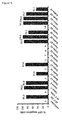
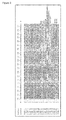
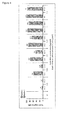
- Results are presented in Figures 1 - 4 .
- Figure 1B shows the GFP knockout efficacy of modified guide RNAs versus an unmodified guide RNA targeting the GFP gene stably integrated into the HeLa cell genome.
- Efficient CRISPR activity results in GFP gene disruption and loss of GFP fluoresence measured by flow cytometry.
- Modified guide RNAs 1, 2, 17, 37, 38, 39, 41, 42, and 43 are equally efficient or better in reducing GFP expression as shown by percentage of measured GFP-negative cells.
- the superiority of Guide-1 versus the unmodified guide RNA targeting GFP was further demonstrated by titration experiments ( Figure 3A and 3B ) showing increased CRISPR activity towards the GFP gene espiacially at low guide RNA concentrations.
- the need for increased nucleotide modification was also demonstrated by direct comparison of Guide-1 versus Guide-2 as shown by increased CRISPR activity of Guide-1 at low guide RNA concentrations.
- Example 3 Measurement of cytokine release by modified Guides in mammalian cells
- Cytokine release was measured using human peripheral blood mononuclear cells (PBMC).
- PBMC peripheral blood mononuclear cells
- PBMC Allcells, USA
- DOTAP 3 ⁇ g/ml DOTAP
- supernatant was removed and processed using the CBA Human Chemokine Kit (BD, USA) according to manufacturer's protocol and analysed for chemokine intensity using flow cytometry (LSRFortessa, BD Bioscences, USA). See Figure 5 for results.
- RNAs Transfection of human peripheral blood mononuclear cells with immune stimulatory RNAs leads to the release of proinflammatory cytokines (here shown by Rantes/CCL5 release as an example). Modifications of guide RNAs prevent the cytokine release after transfection of high concentrations of guide RNAs in comparison to an unmodified guide RNA.
- HeLa cells stably expressing the green fluorescent protein (GFP) will be seeded on 6-well plates (250,000 cells/well) 24h before transfection.
- GFP green fluorescent protein
- Cells will be co-transfected with Cas9 mRNA and differently 2'-Fluoro-modified guide RNAs targeting the GFP gene.
- Transfections will be carried out using Lipofectamine MessengerMax (Life technologies, USA) according to the manufacturer's protocol. After 24h, cells will be trypsinized and transferred to 100 mm cell culture dishes. After 96h cells will be trypsinized, washed twice with PBS and analysed for GFP fluorescence using flow cytometry (LSRFortessa, BD Bioscences, USA).
- Example 6 Modified guide RNAs for Staphylococcus aureus and Staphylococcus haemolyticus
- Example 7 Modified guide RNAs for Cpf1 from Lachnospiraceae bacterium ND2006
- Example 8 Modified guide RNAs for Cpf1 from Acidaminococcus sp. BV3L6
Landscapes
- Health & Medical Sciences (AREA)
- Engineering & Computer Science (AREA)
- Biomedical Technology (AREA)
- Life Sciences & Earth Sciences (AREA)
- Genetics & Genomics (AREA)
- Chemical & Material Sciences (AREA)
- Molecular Biology (AREA)
- Organic Chemistry (AREA)
- Biotechnology (AREA)
- General Engineering & Computer Science (AREA)
- Zoology (AREA)
- Bioinformatics & Cheminformatics (AREA)
- Wood Science & Technology (AREA)
- Microbiology (AREA)
- Plant Pathology (AREA)
- Physics & Mathematics (AREA)
- Biochemistry (AREA)
- General Health & Medical Sciences (AREA)
- Biophysics (AREA)
- Pharmaceuticals Containing Other Organic And Inorganic Compounds (AREA)
- Medicines That Contain Protein Lipid Enzymes And Other Medicines (AREA)
Priority Applications (4)
| Application Number | Priority Date | Filing Date | Title |
|---|---|---|---|
| EP15191344.9A EP3159407A1 (fr) | 2015-10-23 | 2015-10-23 | Arn de guidage, procédés et utilisations |
| EP16788186.1A EP3356527A1 (fr) | 2015-10-23 | 2016-10-24 | Arn guides modifiés, méthodes et utilisations |
| PCT/GB2016/053312 WO2017068377A1 (fr) | 2015-10-23 | 2016-10-24 | Arn guides modifiés, méthodes et utilisations |
| US15/770,185 US20190390195A1 (en) | 2015-10-23 | 2016-10-24 | Modified guide rnas, methods and uses |
Applications Claiming Priority (1)
| Application Number | Priority Date | Filing Date | Title |
|---|---|---|---|
| EP15191344.9A EP3159407A1 (fr) | 2015-10-23 | 2015-10-23 | Arn de guidage, procédés et utilisations |
Publications (1)
| Publication Number | Publication Date |
|---|---|
| EP3159407A1 true EP3159407A1 (fr) | 2017-04-26 |
Family
ID=54396726
Family Applications (2)
| Application Number | Title | Priority Date | Filing Date |
|---|---|---|---|
| EP15191344.9A Ceased EP3159407A1 (fr) | 2015-10-23 | 2015-10-23 | Arn de guidage, procédés et utilisations |
| EP16788186.1A Withdrawn EP3356527A1 (fr) | 2015-10-23 | 2016-10-24 | Arn guides modifiés, méthodes et utilisations |
Family Applications After (1)
| Application Number | Title | Priority Date | Filing Date |
|---|---|---|---|
| EP16788186.1A Withdrawn EP3356527A1 (fr) | 2015-10-23 | 2016-10-24 | Arn guides modifiés, méthodes et utilisations |
Country Status (3)
| Country | Link |
|---|---|
| US (1) | US20190390195A1 (fr) |
| EP (2) | EP3159407A1 (fr) |
| WO (1) | WO2017068377A1 (fr) |
Cited By (2)
| Publication number | Priority date | Publication date | Assignee | Title |
|---|---|---|---|---|
| CN110201187A (zh) * | 2011-12-16 | 2019-09-06 | 现代泰克斯公司 | 经修饰的核苷、核苷酸和核酸组合物 |
| US12390538B2 (en) | 2023-05-15 | 2025-08-19 | Nchroma Bio, Inc. | Compositions and methods for epigenetic regulation of HBV gene expression |
Families Citing this family (63)
| Publication number | Priority date | Publication date | Assignee | Title |
|---|---|---|---|---|
| WO2013066438A2 (fr) | 2011-07-22 | 2013-05-10 | President And Fellows Of Harvard College | Évaluation et amélioration de la spécificité de clivage des nucléases |
| US20150044192A1 (en) | 2013-08-09 | 2015-02-12 | President And Fellows Of Harvard College | Methods for identifying a target site of a cas9 nuclease |
| US9359599B2 (en) | 2013-08-22 | 2016-06-07 | President And Fellows Of Harvard College | Engineered transcription activator-like effector (TALE) domains and uses thereof |
| US9388430B2 (en) | 2013-09-06 | 2016-07-12 | President And Fellows Of Harvard College | Cas9-recombinase fusion proteins and uses thereof |
| US9340799B2 (en) | 2013-09-06 | 2016-05-17 | President And Fellows Of Harvard College | MRNA-sensing switchable gRNAs |
| US9526784B2 (en) | 2013-09-06 | 2016-12-27 | President And Fellows Of Harvard College | Delivery system for functional nucleases |
| US20150166984A1 (en) | 2013-12-12 | 2015-06-18 | President And Fellows Of Harvard College | Methods for correcting alpha-antitrypsin point mutations |
| WO2016022363A2 (fr) | 2014-07-30 | 2016-02-11 | President And Fellows Of Harvard College | Protéines cas9 comprenant des intéines dépendant de ligands |
| WO2017004279A2 (fr) | 2015-06-29 | 2017-01-05 | Massachusetts Institute Of Technology | Compositions comprenant des acides nucléiques et leurs méthodes d'utilisation |
| SG10202104041PA (en) | 2015-10-23 | 2021-06-29 | Harvard College | Nucleobase editors and uses thereof |
| US11845933B2 (en) | 2016-02-03 | 2023-12-19 | Massachusetts Institute Of Technology | Structure-guided chemical modification of guide RNA and its applications |
| US10767175B2 (en) * | 2016-06-08 | 2020-09-08 | Agilent Technologies, Inc. | High specificity genome editing using chemically modified guide RNAs |
| KR20250103795A (ko) | 2016-08-03 | 2025-07-07 | 프레지던트 앤드 펠로우즈 오브 하바드 칼리지 | 아데노신 핵염기 편집제 및 그의 용도 |
| US11661590B2 (en) | 2016-08-09 | 2023-05-30 | President And Fellows Of Harvard College | Programmable CAS9-recombinase fusion proteins and uses thereof |
| WO2018039438A1 (fr) | 2016-08-24 | 2018-03-01 | President And Fellows Of Harvard College | Incorporation d'acides aminés non naturels dans des protéines au moyen de l'édition de bases |
| SG11201903089RA (en) | 2016-10-14 | 2019-05-30 | Harvard College | Aav delivery of nucleobase editors |
| MY206324A (en) * | 2016-12-08 | 2024-12-10 | Intellia Therapeutics Inc | Modified guide rnas |
| WO2018119359A1 (fr) | 2016-12-23 | 2018-06-28 | President And Fellows Of Harvard College | Édition du gène récepteur ccr5 pour protéger contre l'infection par le vih |
| SG11201906735RA (en) | 2017-01-23 | 2019-08-27 | Regeneron Pharma | Hydroxysteroid 17-beta dehydrogenase 13 (hsd17b13) variants and uses thereof |
| EP3592381A1 (fr) | 2017-03-09 | 2020-01-15 | President and Fellows of Harvard College | Vaccin contre le cancer |
| US11898179B2 (en) | 2017-03-09 | 2024-02-13 | President And Fellows Of Harvard College | Suppression of pain by gene editing |
| WO2018165629A1 (fr) | 2017-03-10 | 2018-09-13 | President And Fellows Of Harvard College | Éditeur de base cytosine à guanine |
| WO2018176009A1 (fr) | 2017-03-23 | 2018-09-27 | President And Fellows Of Harvard College | Éditeurs de nucléobase comprenant des protéines de liaison à l'adn programmable par acides nucléiques |
| JP2020516283A (ja) | 2017-04-11 | 2020-06-11 | リジェネロン・ファーマシューティカルズ・インコーポレイテッドRegeneron Pharmaceuticals, Inc. | ヒドロキシステロイド(17−ベータ)デヒドロゲナーゼ(hsd17b)ファミリーのメンバーのモジュレーターの活性をスクリーニングするためのアッセイ |
| WO2018209320A1 (fr) | 2017-05-12 | 2018-11-15 | President And Fellows Of Harvard College | Arn guides incorporés par aptazyme pour une utilisation avec crispr-cas9 dans l'édition du génome et l'activation transcriptionnelle |
| WO2019014564A1 (fr) | 2017-07-14 | 2019-01-17 | Editas Medicine, Inc. | Systèmes et procédés d'intégration ciblée et d'édition du génome et détection de celle-ci à l'aide de sites d'amorçage intégrés |
| CN111801345A (zh) | 2017-07-28 | 2020-10-20 | 哈佛大学的校长及成员们 | 使用噬菌体辅助连续进化(pace)的进化碱基编辑器的方法和组合物 |
| CN110891420B (zh) | 2017-07-31 | 2022-06-03 | 瑞泽恩制药公司 | Cas转基因小鼠胚胎干细胞和小鼠及其应用 |
| CA3068072A1 (fr) | 2017-07-31 | 2019-02-07 | Regeneron Pharmaceuticals, Inc. | Procedes et compositions pour evaluer une disruption ou une excision mediee par crispr/cas et une recombinaison induite par crispr/cas a l'aide d'un acide nucleique donneur exogene in vivo |
| EP3676376B1 (fr) | 2017-08-30 | 2025-01-15 | President and Fellows of Harvard College | Éditeurs de bases à haut rendement comprenant une gam |
| JP7139419B2 (ja) | 2017-09-29 | 2022-09-20 | リジェネロン・ファーマシューティカルズ・インコーポレイテッド | ヒト化ttr遺伝子座を含む非ヒト動物および使用方法 |
| KR20240125690A (ko) | 2017-10-11 | 2024-08-19 | 리제너론 파마슈티칼스 인코포레이티드 | Pnpla3 i148m 변이를 발현하는 환자의 간 질환의 치료에서의 hsd17b13의 저해 |
| US11795443B2 (en) | 2017-10-16 | 2023-10-24 | The Broad Institute, Inc. | Uses of adenosine base editors |
| WO2019118949A1 (fr) | 2017-12-15 | 2019-06-20 | The Broad Institute, Inc. | Systèmes et procédés de prédiction des résultats de la réparation en ingénierie génétique |
| WO2019147743A1 (fr) * | 2018-01-26 | 2019-08-01 | Massachusetts Institute Of Technology | Modification chimique guidée par la structure d'un arn guide et ses applications |
| WO2019183000A1 (fr) * | 2018-03-19 | 2019-09-26 | University Of Massachusetts | Arn guides modifiés pour l'édition de génome au moyen de crispr |
| KR20240038811A (ko) | 2018-03-19 | 2024-03-25 | 리제너론 파마슈티칼스 인코포레이티드 | CRISPR/Cas 시스템을 사용한 동물에서의 전사 조절 |
| CN112020556A (zh) | 2018-03-21 | 2020-12-01 | 瑞泽恩制药公司 | 第13型17β羟基类固醇脱氢酶(HSD17B13)iRNA组成物及其使用方法 |
| EP3794130A4 (fr) | 2018-05-16 | 2022-07-27 | Synthego Corporation | Méthodes et systèmes de conception et d'utilisation d'arn guide |
| US12157760B2 (en) | 2018-05-23 | 2024-12-03 | The Broad Institute, Inc. | Base editors and uses thereof |
| BR112020024731A2 (pt) * | 2018-06-08 | 2021-03-23 | Intellia Therapeutics, Inc. | rnas guias modificados para edição de gene |
| AU2019291918B2 (en) | 2018-06-29 | 2025-06-12 | Editas Medicine, Inc. | Synthetic guide molecules, compositions and methods relating thereto |
| EP3820495A4 (fr) | 2018-07-09 | 2022-07-20 | The Broad Institute Inc. | Modificateurs d'arn épigénétiques programmables par arn et leurs utilisations |
| BR112021007301A2 (pt) | 2018-10-18 | 2021-07-27 | Intellia Therapeutics, Inc. | composições e métodos para expressar fator ix |
| WO2020092453A1 (fr) | 2018-10-29 | 2020-05-07 | The Broad Institute, Inc. | Éditeurs de nucléobases comprenant geocas9 et utilisations associées |
| US12351837B2 (en) | 2019-01-23 | 2025-07-08 | The Broad Institute, Inc. | Supernegatively charged proteins and uses thereof |
| EP3942043A2 (fr) | 2019-03-19 | 2022-01-26 | The Broad Institute, Inc. | Procédés et compositions pour l'édition de séquences nucléotidiques |
| WO2020214842A1 (fr) | 2019-04-17 | 2020-10-22 | The Broad Institute, Inc. | Éditeurs de base d'adénine présentant des effets hors cible réduits |
| US11891618B2 (en) | 2019-06-04 | 2024-02-06 | Regeneron Pharmaceuticals, Inc. | Mouse comprising a humanized TTR locus with a beta-slip mutation and methods of use |
| CA3137764A1 (fr) | 2019-06-07 | 2020-12-10 | Regeneron Pharmaceuticals, Inc. | Animaux non humains comprenant un locus d'albumine humanise |
| KR20220024053A (ko) | 2019-06-14 | 2022-03-03 | 리제너론 파마슈티칼스 인코포레이티드 | 타우병증의 모델 |
| US12435330B2 (en) | 2019-10-10 | 2025-10-07 | The Broad Institute, Inc. | Methods and compositions for prime editing RNA |
| JP7756639B2 (ja) | 2019-11-08 | 2025-10-20 | リジェネロン・ファーマシューティカルズ・インコーポレイテッド | X連鎖性若年網膜分離療法のためのcrisprおよびaav戦略 |
| GB2627644B (en) * | 2020-03-04 | 2024-11-20 | Verve Therapeutics Inc | Method for the preparation of GalNAc-lipid nanoparticle |
| US20230192755A1 (en) | 2020-04-14 | 2023-06-22 | Sumitomo Chemical Company, Limited | Composition containing nucleic acid oligomer |
| EP4137500B1 (fr) | 2020-04-14 | 2026-03-11 | Sumitomo Chemical Company, Limited | Procédé permettant de produire un oligomère d'acide nucléique |
| BR112022022603A2 (pt) | 2020-05-08 | 2023-01-17 | Broad Inst Inc | Métodos e composições para edição simultânea de ambas as fitas de sequência alvo de nucleotídeos de fita dupla |
| US20240300993A1 (en) | 2021-07-06 | 2024-09-12 | Sumitomo Chemical Company, Limited | Composition containing nucleic acid oligomer |
| IL309505A (en) | 2021-09-03 | 2024-02-01 | CureVac SE | Novel lipid nanoparticles for delivery of nucleic acids |
| CA3236001A1 (fr) * | 2021-11-03 | 2023-05-11 | Intellia Therapeutics, Inc. | Arn guides modifies pour l'edition genique |
| US12582104B2 (en) | 2021-12-08 | 2026-03-24 | Regeneron Pharmaceuticals, Inc. | Mutant myocilin disease model and uses thereof |
| JP2026509258A (ja) | 2023-03-08 | 2026-03-17 | キュアバック エスイー | 核酸送達のための新規な脂質ナノ粒子製剤 |
| CN121079412A (zh) * | 2023-04-28 | 2025-12-05 | 比姆医疗股份有限公司 | 经修饰的指导rna |
Citations (4)
| Publication number | Priority date | Publication date | Assignee | Title |
|---|---|---|---|---|
| WO2014093661A2 (fr) | 2012-12-12 | 2014-06-19 | The Broad Institute, Inc. | Systèmes crispr-cas et procédés pour modifier l'expression de produits de gène |
| WO2015026885A1 (fr) * | 2013-08-22 | 2015-02-26 | Pioneer Hi-Bred International, Inc. | Modification du génome en utilisant des systèmes de polynucléotide de guidage/endonucléase cas et méthodes d'utilisation |
| WO2015138510A1 (fr) * | 2014-03-10 | 2015-09-17 | Editas Medicine., Inc. | Méthodes et compositions associées aux crispr/cas, utilisées dans le traitement de l'amaurose congénitale de leber 10 (lca10) |
| WO2015191693A2 (fr) * | 2014-06-10 | 2015-12-17 | Massachusetts Institute Of Technology | Procédé d'édition génique |
Family Cites Families (3)
| Publication number | Priority date | Publication date | Assignee | Title |
|---|---|---|---|---|
| WO2016089433A1 (fr) * | 2014-12-03 | 2016-06-09 | Agilent Technologies, Inc. | Arn guide comportant des modifications chimiques |
| WO2016100951A2 (fr) * | 2014-12-18 | 2016-06-23 | Integrated Dna Technologies, Inc. | Compositions à base de crispr et leurs procédés d'utilisation |
| KR102888521B1 (ko) * | 2015-04-06 | 2025-11-19 | 더 보드 어브 트러스티스 어브 더 리랜드 스탠포드 주니어 유니버시티 | Crispr/cas-매개 유전자 조절을 위한 화학적으로 변형된 가이드 rna |
-
2015
- 2015-10-23 EP EP15191344.9A patent/EP3159407A1/fr not_active Ceased
-
2016
- 2016-10-24 WO PCT/GB2016/053312 patent/WO2017068377A1/fr not_active Ceased
- 2016-10-24 US US15/770,185 patent/US20190390195A1/en not_active Abandoned
- 2016-10-24 EP EP16788186.1A patent/EP3356527A1/fr not_active Withdrawn
Patent Citations (4)
| Publication number | Priority date | Publication date | Assignee | Title |
|---|---|---|---|---|
| WO2014093661A2 (fr) | 2012-12-12 | 2014-06-19 | The Broad Institute, Inc. | Systèmes crispr-cas et procédés pour modifier l'expression de produits de gène |
| WO2015026885A1 (fr) * | 2013-08-22 | 2015-02-26 | Pioneer Hi-Bred International, Inc. | Modification du génome en utilisant des systèmes de polynucléotide de guidage/endonucléase cas et méthodes d'utilisation |
| WO2015138510A1 (fr) * | 2014-03-10 | 2015-09-17 | Editas Medicine., Inc. | Méthodes et compositions associées aux crispr/cas, utilisées dans le traitement de l'amaurose congénitale de leber 10 (lca10) |
| WO2015191693A2 (fr) * | 2014-06-10 | 2015-12-17 | Massachusetts Institute Of Technology | Procédé d'édition génique |
Non-Patent Citations (13)
| Title |
|---|
| AYAL HENDEL ET AL: "Chemically modified guide RNAs enhance CRISPR-Cas genome editing in human primary cells", NATURE BIOTECHNOLOGY, vol. 33, no. 9, 29 June 2015 (2015-06-29), US, pages 985 - 989, XP055233915, ISSN: 1087-0156, DOI: 10.1038/nbt.3290 * |
| DIEBOLD, ADV DRUG DELIV REV., vol. 60, no. 7, 29 April 2008 (2008-04-29), pages 813 - 23 |
| DIEBOLD, ADV DRUG DELIV, vol. 60, no. 7, 29 April 2008 (2008-04-29), pages 813 - 23 |
| JINEK ET AL., SCIENCE, vol. 337, 2012, pages 816 - 821 |
| JINEK ET AL., SCIENCE, vol. 337, no. 6096, 17 August 2012 (2012-08-17), pages 816 - 21 |
| MALI ET AL., SCIENCE, vol. 339, no. 6121, 15 February 2013 (2013-02-15), pages 823 - 826 |
| MEGHDAD RAHDAR ET AL: "Synthetic CRISPR RNA-Cas9-guided genome editing in human cells", PROCEEDINGS OF THE NATIONAL ACADEMY OF SCIENCES, 16 November 2015 (2015-11-16), US, XP055264777, ISSN: 0027-8424, DOI: 10.1073/pnas.1520883112 * |
| SAMPSON; WEISS, BIOASSAYS, vol. 36, no. 1, 2014, pages 34 |
| SORRENTINO, CELL MOL LIFE SCI, vol. 54, no. 8, 1998, pages 785 - 94 |
| SORRENTINO, CELL MOL LIFE SCI., vol. 54, no. 8, August 1998 (1998-08-01), pages 785 - 94 |
| STERNBERG; DOUDNA, MOL CELL, vol. 58, no. 4, 2015, pages 568 |
| ZHANG ET AL., HUM MOL GENET, vol. 23, no. RL, 2014, pages R40 |
| ZHANG ET AL., HUM MOL GENET., vol. 23, no. RL, 2014, pages R40 |
Cited By (2)
| Publication number | Priority date | Publication date | Assignee | Title |
|---|---|---|---|---|
| CN110201187A (zh) * | 2011-12-16 | 2019-09-06 | 现代泰克斯公司 | 经修饰的核苷、核苷酸和核酸组合物 |
| US12390538B2 (en) | 2023-05-15 | 2025-08-19 | Nchroma Bio, Inc. | Compositions and methods for epigenetic regulation of HBV gene expression |
Also Published As
| Publication number | Publication date |
|---|---|
| EP3356527A1 (fr) | 2018-08-08 |
| US20190390195A1 (en) | 2019-12-26 |
| WO2017068377A1 (fr) | 2017-04-27 |
Similar Documents
| Publication | Publication Date | Title |
|---|---|---|
| US20190390195A1 (en) | Modified guide rnas, methods and uses | |
| US12203072B2 (en) | Chemically modified single-stranded rna-editing oligonucleotides | |
| US12018257B2 (en) | Single-stranded RNA-editing oligonucleotides | |
| AU2018338967B2 (en) | In vitro method of mRNA delivery using lipid nanoparticles | |
| JP6872560B2 (ja) | プログラム可能ヌクレアーゼのあるゲノム編集及びプログラム可能ヌクレアーゼのないゲノム編集のための改善された方法 | |
| CN116209770A (zh) | 用于调控基因组的改善的方法和组合物 | |
| RS65493B1 (sr) | Formulacije | |
| CN120283052A (zh) | 用于表观遗传调控hbv基因表达的组合物和方法 | |
| EP4689107A1 (fr) | Oligonucléotides antisens chimiquement modifiés destinés à être utilisés dans l'édition d'arn | |
| JP2023527464A (ja) | SARM1の両対立k遺伝子ノックアウト | |
| Grünweller et al. | Chemical modification of nucleic acids as a key technology for the development of RNA-based therapeutics | |
| KR20240135608A (ko) | 조작된 고활성 omni-79 뉴클레아제 변이체 | |
| HK40033100A (en) | In vitro method of mrna delivery using lipid nanoparticles | |
| CN117916367A (zh) | 新型omni 117、140、150-158、160-165、167-177、180-188、191-198、200、201、203、205-209、211-217、219、220、222、223、226、227、229、231-236、238-245、247、250、254、256、257、260和262 crispr核酸酶 | |
| HK40025136B (en) | In vitro method of mrna delivery using lipid nanoparticles | |
| HK40025136A (en) | In vitro method of mrna delivery using lipid nanoparticles |
Legal Events
| Date | Code | Title | Description |
|---|---|---|---|
| PUAI | Public reference made under article 153(3) epc to a published international application that has entered the european phase |
Free format text: ORIGINAL CODE: 0009012 |
|
| AK | Designated contracting states |
Kind code of ref document: A1 Designated state(s): AL AT BE BG CH CY CZ DE DK EE ES FI FR GB GR HR HU IE IS IT LI LT LU LV MC MK MT NL NO PL PT RO RS SE SI SK SM TR |
|
| AX | Request for extension of the european patent |
Extension state: BA ME |
|
| 18R | Application refused |
Effective date: 20170527 |