EP3160246B1 - Emulsion mit lupinenprotein, deren verwendung und herstellung - Google Patents
Emulsion mit lupinenprotein, deren verwendung und herstellung Download PDFInfo
- Publication number
- EP3160246B1 EP3160246B1 EP15729810.0A EP15729810A EP3160246B1 EP 3160246 B1 EP3160246 B1 EP 3160246B1 EP 15729810 A EP15729810 A EP 15729810A EP 3160246 B1 EP3160246 B1 EP 3160246B1
- Authority
- EP
- European Patent Office
- Prior art keywords
- emulsion
- lupin
- protein
- fat
- mass fraction
- Prior art date
- Legal status (The legal status is an assumption and is not a legal conclusion. Google has not performed a legal analysis and makes no representation as to the accuracy of the status listed.)
- Active
Links
Images

Classifications
-
- A—HUMAN NECESSITIES
- A23—FOODS OR FOODSTUFFS; TREATMENT THEREOF, NOT COVERED BY OTHER CLASSES
- A23L—FOODS, FOODSTUFFS OR NON-ALCOHOLIC BEVERAGES, NOT OTHERWISE PROVIDED FOR; PREPARATION OR TREATMENT THEREOF
- A23L29/00—Foods or foodstuffs containing additives; Preparation or treatment thereof
- A23L29/10—Foods or foodstuffs containing additives; Preparation or treatment thereof containing emulsifiers
-
- A—HUMAN NECESSITIES
- A23—FOODS OR FOODSTUFFS; TREATMENT THEREOF, NOT COVERED BY OTHER CLASSES
- A23C—DAIRY PRODUCTS, e.g. MILK, BUTTER OR CHEESE; MILK OR CHEESE SUBSTITUTES; PREPARATION THEREOF
- A23C11/00—Milk substitutes, e.g. coffee whitener compositions
- A23C11/02—Milk substitutes, e.g. coffee whitener compositions containing at least one non-milk component as source of fats or proteins
- A23C11/10—Milk substitutes, e.g. coffee whitener compositions containing at least one non-milk component as source of fats or proteins containing or not lactose but no other milk components as source of fats, carbohydrates or proteins
- A23C11/103—Milk substitutes, e.g. coffee whitener compositions containing at least one non-milk component as source of fats or proteins containing or not lactose but no other milk components as source of fats, carbohydrates or proteins containing only proteins from pulses, oilseeds or nuts, e.g. nut milk
- A23C11/106—Addition of, or treatment with, microorganisms
-
- A—HUMAN NECESSITIES
- A23—FOODS OR FOODSTUFFS; TREATMENT THEREOF, NOT COVERED BY OTHER CLASSES
- A23C—DAIRY PRODUCTS, e.g. MILK, BUTTER OR CHEESE; MILK OR CHEESE SUBSTITUTES; PREPARATION THEREOF
- A23C20/00—Cheese substitutes
- A23C20/02—Cheese substitutes containing neither milk components, nor caseinate, nor lactose, as sources of fats, proteins or carbohydrates
- A23C20/025—Cheese substitutes containing neither milk components, nor caseinate, nor lactose, as sources of fats, proteins or carbohydrates mainly containing proteins from pulses or oilseeds
-
- A—HUMAN NECESSITIES
- A23—FOODS OR FOODSTUFFS; TREATMENT THEREOF, NOT COVERED BY OTHER CLASSES
- A23C—DAIRY PRODUCTS, e.g. MILK, BUTTER OR CHEESE; MILK OR CHEESE SUBSTITUTES; PREPARATION THEREOF
- A23C23/00—Other dairy products
-
- A—HUMAN NECESSITIES
- A23—FOODS OR FOODSTUFFS; TREATMENT THEREOF, NOT COVERED BY OTHER CLASSES
- A23L—FOODS, FOODSTUFFS OR NON-ALCOHOLIC BEVERAGES, NOT OTHERWISE PROVIDED FOR; PREPARATION OR TREATMENT THEREOF
- A23L11/00—Pulses, i.e. fruits of leguminous plants, for production of food; Products from legumes; Preparation or treatment thereof
- A23L11/50—Fermented pulses or legumes; Fermentation of pulses or legumes based on the addition of microorganisms
-
- A—HUMAN NECESSITIES
- A23—FOODS OR FOODSTUFFS; TREATMENT THEREOF, NOT COVERED BY OTHER CLASSES
- A23L—FOODS, FOODSTUFFS OR NON-ALCOHOLIC BEVERAGES, NOT OTHERWISE PROVIDED FOR; PREPARATION OR TREATMENT THEREOF
- A23L11/00—Pulses, i.e. fruits of leguminous plants, for production of food; Products from legumes; Preparation or treatment thereof
- A23L11/60—Drinks from legumes, e.g. lupine drinks
-
- A—HUMAN NECESSITIES
- A23—FOODS OR FOODSTUFFS; TREATMENT THEREOF, NOT COVERED BY OTHER CLASSES
- A23L—FOODS, FOODSTUFFS OR NON-ALCOHOLIC BEVERAGES, NOT OTHERWISE PROVIDED FOR; PREPARATION OR TREATMENT THEREOF
- A23L33/00—Modifying nutritive qualities of foods; Dietetic products; Preparation or treatment thereof
- A23L33/10—Modifying nutritive qualities of foods; Dietetic products; Preparation or treatment thereof using additives
- A23L33/17—Amino acids, peptides or proteins
- A23L33/185—Vegetable proteins
-
- A—HUMAN NECESSITIES
- A23—FOODS OR FOODSTUFFS; TREATMENT THEREOF, NOT COVERED BY OTHER CLASSES
- A23L—FOODS, FOODSTUFFS OR NON-ALCOHOLIC BEVERAGES, NOT OTHERWISE PROVIDED FOR; PREPARATION OR TREATMENT THEREOF
- A23L9/00—Puddings; Cream substitutes; Preparation or treatment thereof
- A23L9/10—Puddings; Dry powder puddings
- A23L9/12—Ready-to-eat liquid or semi-liquid desserts, e.g. puddings, not to be mixed with liquids, e.g. water, milk
-
- A—HUMAN NECESSITIES
- A23—FOODS OR FOODSTUFFS; TREATMENT THEREOF, NOT COVERED BY OTHER CLASSES
- A23V—INDEXING SCHEME RELATING TO FOODS, FOODSTUFFS OR NON-ALCOHOLIC BEVERAGES AND LACTIC OR PROPIONIC ACID BACTERIA USED IN FOODSTUFFS OR FOOD PREPARATION
- A23V2002/00—Food compositions, function of food ingredients or processes for food or foodstuffs
Definitions
- the present invention relates to an emulsion which contains at least lupin protein and vegetable fat emulsified in water, and to a process for producing the emulsion.
- Such an emulsion can be further processed into food products such as lupin pudding, lupin yoghurt or lupin cream cheese.
- emulsions such as soy and oat milk, which are made from whole seeds or raw materials.
- soybeans are ground in water and the fat they contain is emulsified with the proteins. Insoluble components are then separated by centrifugation. The resulting emulsion can be used as a milk substitute.
- WO 2008/118129 A1 A basic ingredient for beverages made from lupine seeds is described.
- a heating step of the suspension at 85°C for 20 minutes and subsequent high-temperature heating by means of steam injection at 140°C for 2 seconds is carried out in order to reduce bean-like "off-flavours" and to increase the shelf life. Due to the fact that this process contains the seed's own fat, which contains a high proportion of unsaturated fatty acids, this is thermally damaged by the heating step. This creates fat oxidation products and trans fatty acids, which can again lead to significantly negative aroma impressions. In addition, tests in which the process of WO 2008/118129 A1 that lupin proteins precipitate out of solution when the temperature is raised above 90°C.
- WO 2004/093560 A1 describes the production of a protein-enriched base mixture of lupin seeds, which is obtained from non-deoiled lupin flour by extraction in alkaline, subsequent precipitation and solubilization of the protein. By diluting and adding additives such as fat, sugar and coloring ingredients, a type of lupin milk is produced, from which further products can be developed. Tests using this process show that the "lupin milk” obtained in this way has a yellowish color and, when assessed sensorially, intense "beany” and "grassy” aroma impressions are perceived. The products obtained from this have hardly any similarity to conventional milk products, both visually and in terms of taste.
- full-fat and untreated lupin seeds are used as raw materials for the production of milk or a corresponding basis for further food production.
- these have the disadvantage that anti-nutritional water-soluble ingredients inherent in the seeds (such as oligosaccharides, bitter substances) and fat-soluble and/or amphiphilic components of the lupin seeds adhering to the fat phase pass into the products made from them.
- the object of the present invention is to provide a stable emulsion with lupin proteins (lupin milk) and a process for its production, which can produce an impression comparable to cow's milk in terms of rheological properties, colour and smell and taste and on the basis of which it is possible to provide various sensory-neutral milk substitute products.
- the emulsion according to the invention is characterized by a significantly reduced protein content (mass fraction) of less than 3% compared to conventional milk substitute products. Despite the low protein content, the emulsion according to the invention can have a fat content (mass fraction) comparable to or higher than conventional milk substitute products. It is greater than 3%. This increased fat content, which can be easily adjusted by adding vegetable fat, also improves the mouthfeel of the emulsion and increases the viscosity to a range between 1 and 10 mPas at 20 °C. No lupin fat is used as the vegetable fat.
- vegetable fat includes both solid and liquid fats (fatty oils).
- the liquid vegetable fats are also referred to as vegetable oils in some places below.
- the emulsion is particularly suitable for use as a base for milk substitute products.
- the emulsion according to the invention can be provided with a white color, a milk-like viscosity and a neutral taste and aroma.
- the emulsion remains stable even after heating to over 95 °C. It can be heated to temperatures above 120 °C with particular advantage and its homogeneous physical properties do not change or only change slightly during storage.
- the ratio of fat mass to protein mass in the emulsion according to the invention is greater than 2.
- the fat is very finely dispersed in the emulsion according to the invention after appropriate comminution.
- the emulsion is obtainable by comminution of the fat particles at temperatures above 30°C using a homogenizer and pressures > 200*10 3 hPa.
- the fat particles in the emulsion have a D90 particle size (90% of the number of fat particles have a smaller diameter than the specified size) of less than 5 ⁇ m.
- the emulsion remains stable in relation to the large surface area of the fat particles available at this particle size and does not change its stability even after thermal treatment.
- the inventors have also found that the emulsion has a relatively neutral aroma and taste profile even without thermal pretreatment of the protein after the fat particles have been crushed.
- amphiphilic disruptive aromas from the lupin proteins can easily attach themselves to the fat particles/droplets with this large surface area and are no longer released to the same extent for retronasal sensory perception as with coarser particles or higher protein contents.
- the D90 particle size of ⁇ 5 ⁇ m is obtainable by comminution of the fat particles at temperatures above 30 °C using a homogenizer at pressures above 200*10 3 hPa.
- the emulsion is preferably heated to a temperature above 95 °C, advantageously above 110 °C, particularly advantageously above 120 °C. This heating leads to a further positive change in the taste and aroma impression of the lupin protein, which is desired in most applications and contributes to a milk-like sensory impression of the emulsion.
- the emulsion according to the invention remains stable after heating and subsequent cooling, even if, unlike in other applications, no homogenization step takes place after heating.
- the emulsion according to the invention for example as a drink or as a base material for products such as yoghurt, pudding or cream cheese, further ingredients are added, such as sugar and/or flavourings and/or viscosity-influencing carbohydrates and/or acid-regulating phosphates and/or minerals and/or vitamins.
- further ingredients are added, such as sugar and/or flavourings and/or viscosity-influencing carbohydrates and/or acid-regulating phosphates and/or minerals and/or vitamins.
- the emulsion remains stable for a particularly long time when a quantity of less than 3% by mass of lupin protein is used in the emulsion, the proportion of alpha- and beta-conglutin in the added protein is particularly high and the proportion of gamma-conglutin is correspondingly low.
- This can be achieved in terms of process technology when extracting the lupin protein, for example by precipitating the alpha- and beta-conglutin from a protein solution obtained in neutral or slightly alkaline conditions.
- the acid pre-extraction is particularly advantageously carried out close to the isoelectric point of the lupin globulins, which varies between pH 4.3 and pH 4.7 in different lupin species.
- the content of alpha- and beta-conglutin can be increased even further if the acid pre-extraction is carried out more than once and after the extraction the extracts are separated from the raffinates by solid-liquid separation processes.
- DE 19640992 A1 It is described by way of example how such a combined acidic and alkaline extraction can be advantageously carried out according to the state of the art.
- Another way to increase the proportion of alpha- and beta-conglutin and to reduce the gamma-conglutin in lupine protein is to use a double protein extraction in countercurrent.
- the raffinate from the protein extraction is subjected to a further extraction at a pH value between 6.5 and 8.0 at the same or a similar pH value.
- the extract from the second extraction of the raffinate is then used in the first protein extraction of the next raw material. Only after the second extraction is the extract removed from the system and the protein concentrated, e.g. by precipitation. This countercurrent flow also increases the proportion of alpha- and beta-conglutin in the precipitated protein.
- the focus of the processing can be on the sensory properties or the technofunctionality of the emulsion produced.
- an emulsion that is even more sensorially neutral is obtained if the lupin protein is dried before processing into the emulsion according to the invention. This step removes many volatile aromas from the protein with the water phase. separated.
- lupin proteins show a higher functionality when the protein is not dried before use in the emulsion according to the invention and is processed in a moist form.
- the moist protein from the extraction and precipitation dissolved or suspended in water can therefore be advantageous to use the moist protein from the extraction and precipitation dissolved or suspended in water to produce the emulsion, because this allows the protein content to be reduced even further with the same emulsifying effect in the emulsion according to the invention.
- the protein-water suspension can be in liquid-pasty form or as a solid in a frozen state.
- a further sensory improvement of the emulsion according to the invention can be achieved if the lupin seeds are subjected to a treatment with supercritical CO 2 or ethanol before the protein is separated. In this process, considerable amounts of carotenoids are separated from the raw material, so that a tendency towards yellowing of the emulsion according to the invention is suppressed and a milk-like color is obtained.
- a color comparison of the emulsion according to the invention (lupin milk) obtained from lupin protein that was subjected to a CO 2 treatment before extraction compared to a lupin milk after WO 2004/093560 A1 , which was extracted from full-fat lupin raw materials, clearly shows the milk-like white colour of the emulsion according to the invention compared to the yellow comparison emulsion.
- the emulsion according to the invention it is particularly advantageous for the emulsion according to the invention to have a pH value greater than 6.5 and particularly advantageously greater than 7.5. This and the simultaneous presence of phosphates or other stabilizers in the emulsion make it possible to avoid flocculation of the lupin protein even when the emulsion is added to hot and acidic drinks (e.g. coffee) and to achieve a full-bodied aroma profile.
- hot and acidic drinks e.g. coffee
- lupin protein extracted from lupin seeds and then spray-dried is first mixed with maltodextrin, dipotassium phosphate and water.
- the amount of sodium hydroxide is chosen so that a pH of the mixture of 6.8 to 7.0 is achieved.
- lupin protein and fat added are chosen so that in the present example a mass fraction of protein in the emulsion of 1.8% and a mass fraction of fat of 4% are achieved.
- pure lupin protein i.e. protein without any lupin fat
- Palm fat or coconut fat for example, are added as fats.
- the emulsion produced consists of carotenoid-containing lupin proteins, it is almost white in colour. Its L* value (see L*a*b* colour space for definition) is greater than or equal to 88, in comparison to cow's milk, which has an L* value of around 90. Inconspicuous ⁇ E colour differences of 1-2 are achieved compared to cow's milk. For example, ⁇ E colour differences between soy milk (L* values between 50 and 80) and cow's milk are often above 5, although a colour difference of this magnitude is not known in the literature for milk. is assessed as a deviating colour (cf. Popov-Ralji ⁇ et al., 2008 Color Changes of UHT Milk During Storage. Sensors Vol: 8(9)).
- the emulsion according to the invention has a fat to protein ratio of 2 after heating to > 110 °C and during subsequent storage for many days despite the low viscosity of less than 10 mPas. Surprisingly, no or only very small amounts of solids separate from the emulsion after storage for 10 days to 8 weeks, even when only lupin proteins are used as emulsifiers. Tests with this emulsion showed that even after heating to a temperature of 140 °C, hardly any separation of fat or protein was noticeable during storage for 10 days. The proportion of separated solids from the emulsion according to the invention was less than 10% of the solids contained in the emulsion. In some cases, the separated solids were less than 2% after storage for 10 days at 4 °C. Comparable results were also obtained after storage for 8 weeks.
- the emulsion or lupin milk was boiled, then removed from the heat and the starch mixture was stirred in. The mixture was then boiled for another minute while stirring and then bottled.
- Another variant for making lupin pudding was using the individual ingredients contained in the lupin milk together with the other ingredients that are also used in the pudding. But here too it was necessary to heat the mixture to a temperature of over 95°C and to break down the fat particles by stirring intensively in order to achieve the desired sensory effects.
- the emulsion according to the invention can be used to produce yogurt-like products.
- the sugar, fat and protein content of the milk can be adjusted accordingly (dry matter: 10 - 18%).
- the milk can be heated again to add further ingredients if the components are more soluble in hot water.
- the lupine milk (20 - 45 °C) is then inoculated with lactic acid bacteria and fermented at 30 - 40 °C until pH 4.3 ⁇ 0.2 is reached. This is followed by a cooling phase of 24 hours at 1-4 °C.
- the yogurt is stored as still as possible. Both set and stirred yogurts can be produced in this way.
- the yogurt is additionally stirred after the cooling phase and, if necessary, fruit preparations or flavors are added.
- the emulsion according to the invention can also be used for the production of cream cheese-like products.
- the dry matter content of the milk can be advantageously increased by adding fat or protein.
- thickeners or viscosity-increasing substances e.g. citrus fibers
- minerals can be added to improve the mouthfeel and sensory properties of the cream cheese.
- the lupine milk according to the invention is inoculated with lactic acid cultures at 20-45°C and fermented at 30°C-40°C until ⁇ pH 4.5 is reached.
- the resulting whey is then separated from the so-called curd (coagulated emulsion).
- the resulting cream cheese-like product is bottled, possibly mixed with flavourings and spices or other stabilisers, heat-treated again if necessary and then stored at temperatures between 1 and 6 °C.
- the cream cheese-like product can also be mixed with other cultures (e.g. molds) and matured for several days to weeks.
- the ripening process can be used to produce products similar to sliced, soft or hard cheese.
Landscapes
- Life Sciences & Earth Sciences (AREA)
- Chemical & Material Sciences (AREA)
- Engineering & Computer Science (AREA)
- Food Science & Technology (AREA)
- Polymers & Plastics (AREA)
- Health & Medical Sciences (AREA)
- Nutrition Science (AREA)
- Botany (AREA)
- Agronomy & Crop Science (AREA)
- Mycology (AREA)
- Proteomics, Peptides & Aminoacids (AREA)
- Microbiology (AREA)
- Oil, Petroleum & Natural Gas (AREA)
- Biotechnology (AREA)
- Dairy Products (AREA)
- Grain Derivatives (AREA)
- Edible Oils And Fats (AREA)
Description
- Die vorliegende Erfindung betrifft eine Emulsion, die wenigstens Lupinenprotein und in Wasser emulgiertes pflanzliches Fett enthält, sowie ein Verfahren zur Herstellung der Emulsion. Eine derartige Emulsion lässt sich zu Lebensmittelprodukten wie beispielsweise Lupinenpudding, Lupinenjoghurt oder Lupinenfrischkäse weiterverarbeiten.
- Bekannt sind beispielsweise Emulsionen wie Soja- und Hafermilch, die aus ganzen Samen bzw. Rohstoff hergestellt wurden. Hierfür werden beispielsweise Sojabohnen in Wasser vermahlen und das enthaltene Fett mit den Proteinen emulgiert. Anschließend werden unlösliche Bestandteile durch Zentrifugation abgetrennt. Die dabei entstehende Emulsion kann als Milchersatzprodukt zum Einsatz kommen.
- Für Lupinensamen ist ein ähnliches Verfahren in der
EP 0449396 A1 beschrieben. Hierbei werden die Lupinensamen vorgequollen und die entstehende evtl. mit weiterem Wasser versetzte "Slurry" bei Raumtemperatur abgepresst, um eine Emulsion aus Lupinenprotein und -fett zu erhalten. Aufgrund der in den Saaten enthaltenen sekundären Pflanzenstoffe und Fettoxidationsprodukte weisen diese Emulsionen einen typisch pflanzlichen Aroma-und Geschmackseindruck auf und werden daher von vielen Konsumenten abgelehnt. Auch besitzen diese Emulsionen eine sehr gelbe und stark von Kuhmilch abweichende Farbe, die durch das in den Lupinen enthaltene Fett hervorgerufen wird. - In der
WO 2008/118129 A1 wird ein Grundstoff für Getränke aus Lupinensaat beschrieben. Zusätzlich zu den zuvor erwähnten Schritten wird dabei in einer der beschriebenen Ausgestaltungen noch ein Erhitzungsschritt der Suspension bei 85°C für 20 min und anschließender Hocherhitzung mittels Dampfinjektion bei 140°C für 2 Sekunden durchgeführt, um bohnige "Off-flavours" zu reduzieren und die Haltbarkeit zu erhöhen. Aufgrund der Tatsache, dass bei diesem Verfahren das saateigene Fett enthalten ist, welches einen erhöhten Anteil an ungesättigten Fettsäuren enthält, wird dieses durch den Erhitzungsschritt thermisch geschädigt. Hierdurch entstehen Fettoxidationsprodukte und Transfettsäuren, welche erneut zu deutlichen negativen Aromaeindrücken führen können. Zudem zeigt sich in Versuchen, bei denen das Verfahren derWO 2008/118129 A1 eingesetzt wurde, dass Lupinenproteine aus der Lösung ausfallen, wenn die Temperatur über 90°C angehoben wird. - In der
WO 2004/093560 A1 wird die Herstellung einer protein-angereicherten Grundmischung aus Lupinensamen beschrieben, die aus nicht entöltem Lupinenmehl durch Extraktion im alkalischen, anschließende Fällung und Solubilisieren des Proteins gewonnen wird. Durch Verdünnen und Zusätze wie Fett, Zucker und färbende Ingredienzien wird eine Art Lupinenmilch hergestellt, aus der wiederum weitere Produkte entwickelt werden können. In Versuchen mit diesem Verfahren zeigt sich, dass die so gewonnene "Lupinenmilch" eine gelbliche Farbe aufweist und bei einer sensorischen Bewertung intensive "bohnige" und "grasige" Aromaeindrücke wahrgenommen werden. Die daraus gewonnenen Produkte haben mit konventionellen Milchprodukten sowohl optisch als auch geschmacklich kaum eine Ähnlichkeit. - In der
WO 2010/124870 wird ein Verfahren zur Herstellung einer ÖI-in-Ware-Emulsion beschrieben, die Lupinenprotein, Polysaccharid, Öl bzw. Fett und ggf. Wasser enthält. - Bei den bislang angeführten Verfahren werden vollfette und nicht vorbehandelte Lupinensamen als Rohstoff zur Herstellung von Milch bzw. einer entsprechenden Basis zur weiteren Lebensmittelherstellung eingesetzt. Diese haben neben dem erwähnten negativen sensorischen Eintrag weiterhin den Nachteil, dass saateigene antinutritive wasserlösliche Inhaltsstoffe (wie z.B. Oligosaccharide, Bitterstoffe) und an der Fettphase anhaftende fettlösliche und/oder amphiphile Komponenten der Lupinensamen in die entsprechend daraus hergestellten Produkte übergehen.
- Zur Reduktion der störenden Aroma- und Geschmacksnoten in Lupinenproteinprodukten, die keine Lupinenöle enthalten, sind weitere Verfahren beschrieben. Neben der Fermentation, wie z.B. in der
WO 2004/034806 A1 , sind dies thermische Verfahren zur Verbesserung des Geschmacks von Lupinenproteinen, vielfach in Kombination mit dem Zusatz von Zuckern, wie dies beispielsweise in derWO 2008/089734 A1 beschrieben ist. Allerdings denaturieren die Proteine bei Temperaturen über 95 °C zumindest teilweise und verlieren dabei einen Teil ihrer funktionellen Eigenschaften. Gerade die sehr gut emulgierenden Globuline der Lupine sind empfindlich gegenüber hohen Temperaturen und verlieren nach der thermischen Behandlung ihre guten emulgierenden Eigenschaften. Sie agglomerieren in wässrigen Suspensionen oder Lösungen bei Temperaturen über 95 °C, werden als Partikel abgeschieden und stehen damit als Emulgatoren nicht mehr zur Verfügung. - In Folge dessen können anspruchsvolle Emulsionen wie Milch, Pudding, Joghurt und Käse mit thermisch vorbehandelten Lupinenproteinen nicht mehr stabil hergestellt werden.
- Somit ist es bislang nicht möglich, aus Lupinenproteinen stabile Emulsionen zu erzeugen, die Kuhmilch sensorisch ähneln und auf deren Grundlage es möglich wird, Milchersatzprodukte herzustellen.
- Die Aufgabe der vorliegenden Erfindung besteht darin, eine stabile Emulsion mit Lupinenproteinen (Lupinenmilch) sowie ein Verfahren zur Herstellung anzugeben, die hinsichtlich der rheologischen Eigenschaften, der Farbe und hinsichtlich Geruch und Geschmack einen mit Kuhmilch vergleichbaren Eindruck hervorrufen kann und auf deren Grundlage es gelingt, diverse sensorisch neutrale Milchersatzprodukte bereit zu stellen.
- Die Aufgabe wird mit der Emulsion und dem Verfahren gemäß den Patentansprüchen 1 und 11 gelöst. Vorteilhafte Ausgestaltungen der Emulsion und des Verfahrens sind
- Gegenstand der abhängigen Patentansprüche oder lassen sich der nachfolgenden Beschreibung sowie den Ausführungsbeispielen entnehmen.
- Die erfindungsgemäße Emulsion zeichnet sich durch einen im Vergleich zu konventionellen Milchersatzprodukten deutlich reduzierten Proteingehalt (Massenanteil) kleiner 3% aus. Trotz des niedrigen Proteingehalts kann die erfindungsgemäße Emulsion einen mit konventionellen Milchersatzprodukten vergleichbaren oder höheren Fettgehalt (Massenanteil) aufweisen. Er ist größer als 3%. Durch diesen erhöhten Fettgehalt, der einfach durch Zusatz von pflanzlichem Fett eingestellt werden kann, wird auch das Mundgefühl der Emulsion verbessert und die Viskosität in einen Bereich zwischen 1 bis 10 mPas bei 20 °C angehoben. Als pflanzliches Fett wird dabei kein Lupinenfett eingesetzt.
- Der Begriff des pflanzlichen Fettes umfasst in der vorliegenden Patentanmeldung sowohl feste als auch flüssige Fette (fette Öle). Die flüssigen pflanzlichen Fette werden im Folgenden stellenweise auch als Pflanzenöle bezeichnet.
- Die Emulsion eignet sich besonders zur Verwendung als Basis für Milchersatzprodukte.
- Bei Verzicht auf den Einsatz von Lupinenfetten und durch den geringen Anteil an Lupinenprotein kann die erfindungsgemäße Emulsion mit einer weißen Farbe, einer milchähnlichen Viskosität und einem neutralen Geschmack und Aroma bereitgestellt werden. Die Emulsion bleibt auch nach einer Erhitzung auf über 95 °C stabil. Besonders vorteilhaft kann sie auf Temperaturen über 120 °C erhitzt werden und verändert ihre homogenen physikalischen Eigenschaften während der Lagerung nicht oder nur geringfügig.
- Das Verhältnis an Fettmasse zu Proteinmasse ist in der erfindungsgemäßen Emulsion größer als 2. Darüber hinaus liegt das Fett nach einer entsprechenden Zerkleinerung in der erfindungsgemäßen Emulsion sehr fein dispergiert vor. Die Emulsion ist durch Zerkleinerung der Fettpartikel bei Temperaturen über 30°C mittels eines Homogenisators und Drücken > 200*103 hPa erhältlich. Die Fettpartikel in der Emulsion weisen eine D90-Partikelgröße (90% der Anzahl der Fettpartikel haben einen kleineren Durchmesser als die angegebene Größe) kleiner 5 µm auf. Überraschenderweise bleibt die Emulsion trotz des geringen Proteingehalts bezogen auf die bei dieser Partikelgröße zur Verfügung stehende große Oberfläche der Fettpartikel stabil und verändert ihre Stabilität auch nach einer thermischen Behandlung nicht. Ebenso haben die Erfinder gefunden, dass die Emulsion bereits ohne thermische Vorbehandlung des Proteins nach der Zerkleinerung der Fettpartikel ein relativ neutrales Aroma-und Geschmacksprofil aufweist. Offensichtlich können sich amphiphile Störaromen aus den Lupinenproteinen bei dieser großen Oberfläche gut an die Fettpartikel / -tröpfchen anlagern und werden für eine retronasale sensorische Wahrnehmung nicht mehr im gleichen Maße freigesetzt wie bei gröberen Partikeln oder höheren Proteingehalten.
- Bei der vorgeschlagenen Emulsion ist die D90-Partikelgröße von < 5µm durch die Zerkleinerung der Fettpartikel bei Temperaturen über 30°C mittels Homogenisator bei Drücken über 200*103 hPa erhältlich. Im Anschluss an die Zerkleinerung wird die Emulsion vorzugsweise auf eine Temperatur über 95 °C erhitzt, vorteilhaft über 110 °C, besonders vorteilhaft über 120 °C. Diese Erhitzung führt zu einer weiteren positiven Veränderung des Geschmacks und Aromaeindrucks des Lupinenproteins, die in den meisten Applikationen erwünscht ist und zu einem milchähnlichen sensorischen Eindruck der Emulsion beiträgt. Trotz der hohen Temperaturen bleibt die erfindungsgemäße Emulsion nach der Erhitzung und der folgenden Abkühlung stabil, auch wenn nach der Erhitzung, anders als in anderen Anwendungen, kein Homogenisierungsschritt mehr erfolgt.
- Für den Verzehr der erfindungsgemäßen Emulsion zum Beispiel als Getränk oder als Grundstoff für Produkte wie Joghurt, Pudding oder Frischkäse werden weitere Zutaten zugesetzt wie zum Beispiel Zucker und/oder Aromastoffe und/oder viskositätsbeeinflussende Kohlenhydrate und/oder säureregulierende Phosphate und/oder Mineralstoffe und/oder Vitamine. Zur Vereinfachung der technologischen Abläufe ist es vorteilhaft, die genannten Zutaten der Emulsion zuzusetzen bevor die Homogenisierung und Erhitzung erfolgt.
- Es zeigt sich, dass die Emulsion besonders lange stabil bleibt, wenn bei Einsatz einer Menge von kleiner 3 Mass-% Lupinenprotein in der Emulsion der Anteil an alpha- und beta-Conglutin im zugesetzten Protein besonders hoch und der Anteil an gamma-Conglutin entsprechend niedrig ist. Dies kann verfahrenstechnisch bei der Extrahierung des Lupinenproteins zum Beispiel durch Ausfällen der alpha- und beta-Conglutine aus einer im Neutralen oder leicht Alkalischen gewonnenen Proteinlösung erreicht werden.
- Dabei verbleiben allerdings zunächst noch 5 bis 10-Mass% an gamma-Conglutin im gefällten Protein. Zur Abreicherung des gamma-Conglutins ist es besonders vorteilhaft, der Proteinextraktion eine saure Vorextraktion des Lupinenrohstoffs (Flakes, Grieß oder Mehl) vorzuschalten, bei der gamma-Conglutin abgetrennt wird. Damit gelingt es, den Anteil an gamma-Conglutin im Lupinenprotein um mehr als die Hälfte auf 2,5 Mass-% oder weniger zu reduzieren und damit den prozentualen Anteil an alpha- und beta-Conglutin in der Emulsion zu erhöhen.
- Die saure Vorextraktion wird besonders vorteilhaft nahe dem isoelektrischen Punkt der Lupinenglobuline durchgeführt, der bei verschiedenen Lupinenspezies zwischen pH 4,3 und pH 4,7 variiert. Der Gehalt an alpha- und beta-Conglutin kann noch weiter erhöht werden, wenn die saure Vorextraktion mehr als einmal durchgeführt wird und nach der Extraktion die Extrakte von den Raffinaten durch Fest-Flüssig-Trennverfahren abgetrennt werden. In der
DE 19640992 A1 ist beispielhaft beschrieben, wie eine derartig kombinierte saure und alkalische Extraktion nach dem Stand der Technik vorteilhaft durchgeführt werden kann. - Eine weitere Möglichkeit zur Steigerung des Anteils von alpha- und beta-Conglutin und zur Reduktion des Gamma-Conglutins im Lupinenprotein kann durch eine zweifache Proteinextraktion im Gegenstrom erreicht werden. Hierbei wird das Raffinat aus der Proteinextraktion bei einem pH-Wert zwischen 6,5 und 8,0 einer erneuten Extraktion bei gleichem oder ähnlichem pH-Wert unterzogen. Der Extrakt der zweiten Extraktion des Raffinats kommt dann in der ersten Proteinextraktion des nächsten Rohstoffs zum Einsatz. Erst nach der zweiten Extraktion wird der Extrakt aus dem System ausgetragen und das Protein z.B. durch Ausfällen aufkon-zentriert. Auch durch diese Gegenstromführung wird der Anteil an alpha- und beta-Conglutin im gefällten Protein erhöht.
- Je nach Applikation und Weiterverarbeitung der Emulsion kann der Schwerpunkt der Aufarbeitung auf die Sensorik oder die Technofunktionalität der hergestellten Emulsion gelegt werden. So wird eine sensorisch noch neutralere Emulsion erhalten, wenn das Lupinenprotein vor dem Verarbeiten zu der erfindungsgemäßen Emulsion getrocknet wird. Durch diesen Schritt werden viele flüchtige Aromen mit der Wasserphase vom Protein abgetrennt. Eine höhere Funktionalität der Lupinen-proteine zeigt sich allerdings, wenn das Protein vor dem Einsatz in der erfindungsgemäßen Emulsion nicht getrocknet wird und in feuchter Form verarbeitet wird. Somit kann es vorteilhaft sein, das feuchte Protein aus der Extraktion und Fällung gelöst oder suspendiert in Wasser für die Herstellung der Emulsion zu verwenden, weil damit der Proteingehalt bei gleicher Emulgierwirkung in der erfindungsgemäßen Emulsion noch weiter gesenkt werden kann. Die Protein-WasserSuspension kann dabei sowohl in flüssig-pastöser Form vorliegen oder als Feststoff in gefrorenem Zustand.
- Eine weitere sensorische Verbesserung der erfindungsgemäßen Emulsion kann erzielt werden, wenn die Lupinensamen vor der Abtrennung des Proteins einer Behandlung mit überkritischem CO2 oder Ethanol ausgesetzt werden. Dabei werden erhebliche Mengen an Carotinoiden aus dem Rohstoff abgetrennt, so dass eine tendenzielle Gelbfärbung der erfindungsgemäßen Emulsion unterdrückt und eine milchähnliche Farbe erhalten wird. Ein Farbvergleich der erfindungsgemäßen Emulsion (Lupinenmilch), die aus Lupinenprotein gewonnen wurde, das vor der Extraktion einer CO2-Behandlung ausgesetzt war, im Vergleich zu einer Lupinenmilch nach der
WO 2004/093560 A1 , die aus vollfetten Lupinenrohstoffen extrahiert wurde, zeigt deutlich die milchähnliche weiße Farbe der erfindungsgemäßen Emulsion gegenüber der gelben Vergleichsemulsion. - Besonders vorteilhaft weist die erfindungsgemäße Emulsion einen pH-Wert größer 6,5 und besonders vorteilhaft größer 7,5 auf. Dabei und bei gleichzeitiger Anwesenheit von Phosphaten oder anderen Stabilisatoren in der Emulsion gelingt es, ein Ausflocken des Lupinenproteins auch bei Zusatz der Emulsion in heiße und saure Getränke (z.B. Kaffee) zu vermeiden und ein vollmundiges Aromaprofil zu erzielen.
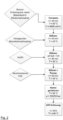
- Im Folgenden werden die erfindungsgemäße Emulsion sowie das zugehörige Verfahren beispielhaft anhand von Ausführungsbeispielen in Verbindung mit den Zeichnungen nochmals erläutert. Hierbei zeigen:
- Fig. 1
- ein erstes Beispiel für den Verfahrensablauf bei dem vorgeschlagenen Verfahren; und
- Fig. 2
- ein zweites Beispiel für den Verfahrensablauf bei dem vorgeschlagenen Verfahren.
- Im Beispiel der
Figur 1 wird zur Herstellung der erfindungsgemäßen Emulsion zunächst aus Lupinensamen extrahiertes und anschließend sprühgetrocknetes Lupinenprotein mit Maltodextrin, Dikaliumphosphat und Wasser vermischt. Die Vermischung erfolgt mit einer Dispergiereinheit, beispielsweise mit einem Turrax® mit V = 6000 u/min, bei einer Temperatur von T = 50°C für t = 10 min. Anschließend werden Flüssigzucker und Monokaliumphosphat der Mischung zugegeben und für t = 10 min bei T = 50°C verrührt. Im nächsten Schritt erfolgt die Zugabe von geschmolzenem Fett, das ebenfalls bei T = 50°C für t = 10 min verrührt und mit Hilfe der Dispergiereinheit gut mit der bestehenden Mischung vermischt wird. Es folgt ein Homogenisierungsschritt bei T = 50°C und einem Druck p von p = 250/50*103 hPa (250/50 bar). Abschließend wird die Emulsion für t = 10s auf eine Temperatur T = 140°C ultrahocherhitzt. - Im Beispiel der
Figur 2 wird zur Herstellung der erfindungsgemäßen Emulsion ein aus Lupinensamen extrahiertes Lupinenprotein in noch feuchter Form, d.h. als saurer Proteinquark, mit Maltodextrin, Dikaliumphosphat und Wasser vermischt. Die Vermischung erfolgt auch hier mit einem Turrax® mit V = 6000 u/min bei einer Temperatur von T = 50°C für t = 10 min. Anschließend werden Flüssigzucker und Monokaliumphosphat der Mischung zugegeben und für t = 10 min bei T = 50°C verrührt. Zur Neutralisierung des durch den sauren Proteinquark verursachten sauren pH-Wertes der Mischung wird als nächstes Natronlauge zugegeben und für t = 30 min bei T = 50° C verrührt. Die Menge an Natronlauge wird so gewählt, dass ein pH-Wert der Mischung von 6,8 bis 7,0 erreicht wird. Im nächsten Schritt erfolgt dann die Zugabe von geschmolzenem Fett, das ebenfalls bei T = 50°C für t = 10 min verrührt und mit Hilfe des Turrax gut mit der bestehenden Mischung vermischt wird. Es folgt ein Homogenisierungsschritt bei T = 50°C und einem Druck p von p = 250/50*103 hPa (250/50 bar). Abschließend wird die Emulsion für t = 10s auf eine Temperatur T = 140°C ultrahocherhitzt. - Die zugegebenen Mengen an Lupinenprotein und Fett werden so gewählt, dass im vorliegenden Beispiel ein Massenanteil des Proteins in der Emulsion von 1,8 % und ein Massenanteil des Fettes von 4 % erreicht werden. Bei dem vorgeschlagenen Verfahren wird dabei jeweils reines Lupinenprotein, d.h. Protein ohne Anteile von Lupinenfett, zur Herstellung der Emulsion genutzt. Als Fette werden beispielsweise Palmfett oder Kokosfett zugegeben.
- Folgende Tabelle zeigt eine beispielhafte Zusammensetzung der erfindungsgemäßen Emulsion:
Zutat Anteil Mass-% Protein 1,8 Fett 4 Zucker 1 Maltodextrin 4,5 Mineralstoffe 1 Wasser >87 - Obwohl die hergestellte Emulsion aus Carotinonid-haltigen Lupinenproteinen besteht, weist sie eine fast weiße Farbe auf. Ihr L*-Wert (Definition siehe L*a*b*-Farbraum) ist größer gleich 88, im Vergleich dazu hat Kuhmilch einen L*-Wert von etwa 90. Es werden gegenüber Kuhmilch unmerkliche Δ E Farbabstände von 1-2 erreicht. So liegen Δ E Farbabstände von Sojamilch (L*-Werte zwischen 50 bis zu 80) zu Kuhmilch häufig oberhalb von 5, wobei ein Farbabstand in dieser Größenordnung in der Literatur bei Milch als abweichende Farbe bewertet wird (vgl. Popov-Raljić et al., 2008 Color Changes of UHT Milk During Storage. Sensors Vol: 8(9)).
- Die erfindungsgemäße Emulsion weist mit einem Fett zu Protein Verhältnis von 2 nach der Erhitzung auf > 110 °C und während der anschließenden Lagerung trotz der geringen Viskosität von kleiner 10 mPas über viele Tage eine erstaunliche Stabilität auf. Überraschenderweise trennen sich bei der Emulsion nach einer Lagerung von 10 Tagen bis 8 Wochen keine oder nur sehr geringe Feststoffanteile ab, selbst wenn als Emulgatoren ausschließlich Lupinenproteine zum Einsatz kommen. In Versuchen mit dieser Emulsion zeigte sich, dass auch nach der Erhitzung auf eine Temperatur von 140 °C kaum ein Abtrennen von Fett oder Protein während der Lagerung von 10 Tagen zu erkennen war. So lag der Anteil an abgeschiedenen Feststoffen aus der erfindungsgemäßem Emulsion bei weniger als 10% des in der Emulsion enthaltenen Feststoffs. In einigen Fällen lag der abgeschiedene Feststoff unter 2% nach einer Lagerdauer von 10 Tagen bei 4 °C. Auch bei einer Lagerung von 8 Wochen wurden vergleichbare Resultate erhalten.
- Neben der beschriebenen Lupinenmilch als Ausführung der erfindungsgemäßen Emulsion gelingt es durch weitere Verarbeitung, eine Vielzahl von wohlschmeckenden Milchersatzprodukten aus der Emulsion zu gewinnen. Im Folgenden werden einige Beispiele angeführt.
-
Zutat [%] Lupinenmilch 87 Stärke 6 Zucker 7 - Für die Herstellung eines Puddings aus Lupinenmilch wurde Speisestärke und Zucker vermischt. Zur Erzielung einer bestimmten Geschmacksrichtung können zusätzlich beispielsweise Kakaopulver oder Aromen zugesetzt werden. Zur Erzielung einer noch cremigeren Textur, zur Erzielung einer gelblicheren Farbe oder zur Erhöhung des Proteingehalts kann der trockenen Mischung aus Speisestärke und Zucker zusätzlich Lupinenproteinisolat zugemischt werden.
- Die Emulsion bzw. Lupinenmilch wurde aufgekocht, anschließend von der Kochstelle genommen und die Stärkemischung eingerührt. Anschließend wurde die Masse unter Rühren weiterhin 1 Minute gekocht und abgefüllt. Eine weitere Variante zur Herstellung von Lupinenpudding erfolgte direkt mit den einzelnen Zutaten, die in der Lupinenmilch enthalten sind, zusammen mit den weiteren Zutaten, die zusätzlich im Pudding zum Einsatz kommen. Aber auch hier war es erforderlich, die Mischung auf eine Temperatur von über 95°C zu erhitzen und die Fettpartikel durch intensives Rühren zu zerkleinern, um die gewünschten sensorischen Effekte zu erzielen.
- Die erfindungsgemäße Emulsion kann für die Herstellung von joghurtähnlichen Produkten eingesetzt werden. Der Zucker-, Fett- und Proteingehalt der Milch kann dafür entsprechend angepasst werden (Trockensubstanz: 10 - 18 %). Für den Zusatz weiterer Zutaten kann die Milch erneut erhitzt werden, falls es sich um im Heißen besser lösliche Komponenten handelt. Die Lupinenmilch (20 - 45 °C) wird anschließend mit Milchsäurebakterien inokuliert und bis zum Erreichen von pH 4,3 ± 0,2 bei 30 - 40 °C fermentiert. Anschließend erfolgt eine Kühlphase von 24 h bei 1-4 °C. Während der Fermentation und der Kühlphase wird der Joghurt möglichst bewegungsfrei gelagert. Sowohl stichfeste, als auch gerührte Joghurts können so hergestellt werden. Für gerührte Joghurts wird der Joghurt nach der Kühlphase zusätzlich gerührt und ggf. mit Fruchtzubereitungen oder Aromen versetzt.
- Die erfindungsgemäße Emulsion kann ebenfalls für die Herstellung von frischkäseähnlichen Produkten verwendet werden. Dabei kann der Trockensubstanzgehalt der Milch vorteilhaft durch Zugabe von Fett oder Protein erhöht werden. Darüber hinaus können Verdickungsmittel oder viskositätserhöhende Substanzen (z.B. Citrusfasern) sowie Mineralstoffe zugesetzt werden, um das Mundgefühl und die Sensorik des Frischkäses zu verbessern. Für die Herstellung von Frischkäse wird die erfindungsgemäße Lupinenmilch bei 20-45°C mit Milchsäurekulturen inokuliert und bis zum Erreichen von < pH 4,5 bei 30 °C-40 °C fermentiert. Anschließend wird die entstandene Molke vom sogenannten Bruch (koagulierte Emulsion) getrennt. Das erhaltene frischkäseähnliche Produkt wird abgefüllt, evtl. mit Aromen und Gewürzen bzw. weiteren Stabilisatoren versetzt, falls benötigt nochmals wärmebehandelt und anschließend bei Temperaturen zwischen 1 und 6 °C gelagert.
- Das frischkäseähnliche Produkt kann darüber hinaus mit weiteren Kulturen (z.B. Schimmelpilzen) versetzt werden und über mehrere Tage bis Wochen gereift werden. Durch die Reifung können Schnitt-, Weich- oder Hartkäse-ähnliche Produkte hergestellt werden.
Claims (14)
- Emulsion mit Lupinenprotein, die wenigstens Lupinenprotein und in Wasser emulgiertes pflanzliches Fett enthält,wobei das Lupinenprotein einen Massenanteil in der Emulsion aufweist, der < 3 % beträgt, das pflanzliche Fett einen Massenanteil in der Emulsion aufweist, der > 3 % beträgt, und ein Verhältnis von Fettmasse zu Proteinmasse in der Emulsion > 2 beträgt,dadurch gekennzeichnet,dass ein Massenanteil von Lupinenfetten in der Emulsion unter 0,2 % beträgt, unddass die Emulsion durch Zerkleinerung der Fettpartikel bei Temperaturen über 30°C mittels eines Homogenisators und Drücken > 200*103 hPa erhältlich ist
- Emulsion nach Anspruch 1,
dadurch gekennzeichnet,
dass ein Massenanteil von alpha- und beta-Conglutin ≥ 80 % und ein Massenanteil an gamma-Conglutin im Lupinenprotein zwischen 1 und 10 % beträgt. - Emulsion nach Anspruch 1 oder 2,
dadurch gekennzeichnet,
dass ein Massenanteil von gamma-Conglutin im Lupinenprotein ≤ 2,5 % beträgt. - Emulsion nach einem der Ansprüche 1 bis 3,
dadurch gekennzeichnet,
dass die Emulsion keine Lupinenfette enthält, wobei vorzugsweise das pflanzliche Fett ein raffiniertes Fett, insbesondere Palmfett und/oder Kokosfett, ist. - Emulsion nach einem der Ansprüche 1 bis 4,
dadurch gekennzeichnet,
dass die Emulsion eine Viskosität aufweist, die bei einer Temperatur von 20° C zwischen 1 mPas und 10 mPas beträgt. - Emulsion nach einem der Ansprüche 1 bis 5,
dadurch gekennzeichnet,
dass die Emulsion einen pH-Wert von > 6,5, besonders bevorzugt von > 7,5, aufweist. - Emulsion nach einem der Ansprüche 1 bis 6,
dadurch gekennzeichnet,
dass die Emulsion einen Massenanteil von > 87 % an Wasser aufweist. - Emulsion nach einem der Ansprüche 1 bis 7,
dadurch gekennzeichnet,
dass die Emulsion zusätzlich Zucker und/oder Aromastoffe und/oder viskositätsbeeinflussende Kohlenhydrate und/oder säureregulierende Phosphate und/oder Mineralstoffe und/oder Vitamine enthält. - Verwendung der Emulsion nach einem der Ansprüche 1 bis 8 zur Herstellung eines Produktes, insbesondere eines Lebensmittelproduktes.
- Verwendung nach Anspruch 9, wobei das Produkt ausgewählt ist aus der Gruppe bestehend aus: Joghurt, Pudding und Frischkäse.
- Verfahren zur Herstellung einer Emulsion nach einem oder mehreren der Patentansprüche 1 bis 8, bei dem Lupinenprotein mit Wasser und pflanzlichem Fett vermischt wird,wobei das pflanzliche Fett bei dem Mischvorgang durch mechanischen Energieeintrag zerkleinert wird, um die Emulsion zu bilden,wobei ein Massenanteil des Lupinenproteins in der Emulsion < 3 % gewählt wird, dadurch gekennzeichnet,dass pflanzliches Fett für die Herstellung der Emulsion verwendet wird, das kein Fett aus Lupinensaaten enthält, wobeidas Wasser für den Mischvorgang auf Temperaturen > 30°C, vorzugsweise > 45°C, aufgeheizt wird, und der Mischvorgang mit einem Homogenisator bei Drücken > 200*103 hPa, vorzugsweise > 300*103 hPa, erfolgt.
- Verfahren nach Anspruch 11,
dadurch gekennzeichnet,
dass die Emulsion nach dem Mischvorgang auf eine Temperatur > 95°C, vorzugsweise > 119°C, weiter vorzugsweise > 120°C, erhitzt und anschließend abgekühlt wird. - Verfahren nach einem der Ansprüche 10 bis 12,
dadurch gekennzeichnet,
dass Lupinenprotein mit einem Massenanteil von gamma-Conglutin im Lupinenprotein von ≤ 2,5 % und einem Massenanteil von alpha- und beta-Conglutin im Lupinenprotein von ≥ 80 % für die Herstellung der Emulsion verwendet wird. - Verfahren nach einem der Ansprüche 10 bis 13,
dadurch gekennzeichnet,
dass Lupinenprotein für die Herstellung der Emulsion verwendet wird, das aus Lupinensamen extrahiert wurde, die vor Abtrennung des Proteins einer Behandlung mit überkritischem CO2 oder mit Ethanol unterzogen wurden.
Applications Claiming Priority (2)
| Application Number | Priority Date | Filing Date | Title |
|---|---|---|---|
| DE102014009676 | 2014-06-30 | ||
| PCT/EP2015/063273 WO2016000939A1 (de) | 2014-06-30 | 2015-06-15 | Emulsion mit lupinenprotein |
Publications (3)
| Publication Number | Publication Date |
|---|---|
| EP3160246A1 EP3160246A1 (de) | 2017-05-03 |
| EP3160246C0 EP3160246C0 (de) | 2024-08-28 |
| EP3160246B1 true EP3160246B1 (de) | 2024-08-28 |
Family
ID=53433188
Family Applications (1)
| Application Number | Title | Priority Date | Filing Date |
|---|---|---|---|
| EP15729810.0A Active EP3160246B1 (de) | 2014-06-30 | 2015-06-15 | Emulsion mit lupinenprotein, deren verwendung und herstellung |
Country Status (8)
| Country | Link |
|---|---|
| US (2) | US11730182B2 (de) |
| EP (1) | EP3160246B1 (de) |
| JP (1) | JP6898102B2 (de) |
| CN (1) | CN106714579B (de) |
| BR (1) | BR112016030807B1 (de) |
| CA (1) | CA2953644C (de) |
| ES (1) | ES2989360T3 (de) |
| WO (1) | WO2016000939A1 (de) |
Families Citing this family (6)
| Publication number | Priority date | Publication date | Assignee | Title |
|---|---|---|---|---|
| WO2020210194A1 (en) * | 2019-04-08 | 2020-10-15 | Corn Products Development, Inc. | Improved plant-protein based analog dairy compositions |
| CN110256547A (zh) * | 2019-07-04 | 2019-09-20 | 天津科技大学 | 一种从澳大利亚甜羽扇豆粉中提取β-conglutin的方法 |
| CN112515107B (zh) * | 2019-09-03 | 2024-01-19 | 丰益(上海)生物技术研发中心有限公司 | 豆制品及其制备方法 |
| WO2021209985A1 (en) | 2020-04-13 | 2021-10-21 | Technion Research & Development Foundation Ltd. | Process for the manufacturing of fermented dairy product substitutes |
| US12035723B1 (en) | 2020-07-22 | 2024-07-16 | Chobani Llc | Oat flour based food composition and method of manufacture |
| EP4736658A1 (de) * | 2024-10-31 | 2026-05-06 | New Roots AG | Käse und/oder käseersatz und verfahren zu dessen herstellung |
Family Cites Families (14)
| Publication number | Priority date | Publication date | Assignee | Title |
|---|---|---|---|---|
| DE348755C (de) * | 1919-05-31 | 1922-02-14 | Julius Pohl Dr | Verfahren zur Gewinnung von Eiweisskoerpern aus Leguminosensamen |
| DE4013894A1 (de) | 1990-02-26 | 1991-08-29 | Eckhard Bremer | Verfahren zur herstellung einer proteinhaltigen lupinenmilch, danach herstellbares produkt, verfahren zu dessen weiterverarbeitung sowie danach herstellbares tofuaehnliches lebensmittel |
| WO1997012524A2 (de) * | 1995-10-05 | 1997-04-10 | Mittex Anlagenbau Gmbh | Verfahren zur verarbeitung proteinhaltiger pflanzen |
| GB9718520D0 (en) * | 1997-09-01 | 1997-11-05 | Dalgety Plc | Functional protein concentrates and isolates |
| EP1405572A1 (de) * | 2002-10-04 | 2004-04-07 | Fraunhofer-Gesellschaft zur Förderung der angewandten Forschung e.V. | Modifizierte Lupinproteine zur Herstellung einer wasser-dispergierbaren Produktform fettlöslicher Stoffe |
| EP1410719A1 (de) | 2002-10-16 | 2004-04-21 | Fraunhofer-Gesellschaft zur Förderung der angewandten Forschung e.V. | Biotechnologisch erzeugbares proteinhaltiges Präparat, Verfahren zu seiner Herstellung und seine Verwendung als Lebensmittelzutat |
| ITMI20030237A1 (it) * | 2003-02-11 | 2004-08-12 | Indena Spa | Uso della conglutina di lupino per il trattamento del |
| AU2003901942A0 (en) * | 2003-04-24 | 2003-05-15 | The State Of Western Australia Through Its Department Of Agriculture | Lupin protein-based dairy substitute production |
| ITMI20041308A1 (it) * | 2004-06-29 | 2004-09-29 | Fraunhofer Ges Zur Foerderung... | Processo per la purificazione da seme di lupiom di frazioni proteiche attive sul metabolismo lipidico |
| BRPI0606635A2 (pt) | 2005-01-18 | 2017-06-27 | Fraunhofer Ges Forschung | processo para a produção de um ingrediente de proteína vegetal para sorvete, e, sorvete com um ingrediente de proteína |
| DE112008000924A5 (de) | 2007-01-23 | 2010-01-07 | Fraunhofer-Gesellschaft zur Förderung der angewandten Forschung e.V. | Verfahren zur Veränderung des Aromaprofils eines pflanzlichen Proteinpräparats |
| US20080241343A1 (en) | 2007-03-28 | 2008-10-02 | California Natural Products | Lupin food product base and processes |
| DE202010017314U1 (de) * | 2009-04-30 | 2011-09-21 | Optisens Gmbh | Sensorisch und ernährungsphysiologisch verbesserte Nahrungsmittel auf Basis einer Öl-in-Wasser-Emulsion |
| WO2010127414A1 (en) * | 2009-05-08 | 2010-11-11 | George Weston Foods Limited | Oil-in-water emulsifier |
-
2015
- 2015-06-15 WO PCT/EP2015/063273 patent/WO2016000939A1/de not_active Ceased
- 2015-06-15 JP JP2016576051A patent/JP6898102B2/ja not_active Expired - Fee Related
- 2015-06-15 CA CA2953644A patent/CA2953644C/en active Active
- 2015-06-15 EP EP15729810.0A patent/EP3160246B1/de active Active
- 2015-06-15 ES ES15729810T patent/ES2989360T3/es active Active
- 2015-06-15 CN CN201580036259.4A patent/CN106714579B/zh active Active
- 2015-06-15 BR BR112016030807-7A patent/BR112016030807B1/pt active IP Right Grant
-
2016
- 2016-12-23 US US15/389,635 patent/US11730182B2/en active Active
-
2023
- 2023-06-27 US US18/214,738 patent/US20230337709A1/en not_active Abandoned
Non-Patent Citations (2)
| Title |
|---|
| DATABASE GNPD [online] MINTEL; 15 January 2007 (2007-01-15), ANONYMOUS: "Lemon and Quark Pudding", XP055634818, retrieved from www.gnpd.com Database accession no. 636431 * |
| DATABASE GNPD [online] MINTEL; 5 December 2013 (2013-12-05), ANONYMOUS: "Almond Speculoos Flavoured Yoghurt", XP055634807, retrieved from www.gnpd.com Database accession no. 2237966 * |
Also Published As
| Publication number | Publication date |
|---|---|
| CN106714579B (zh) | 2021-07-27 |
| WO2016000939A1 (de) | 2016-01-07 |
| US20230337709A1 (en) | 2023-10-26 |
| ES2989360T3 (es) | 2024-11-26 |
| EP3160246A1 (de) | 2017-05-03 |
| EP3160246C0 (de) | 2024-08-28 |
| BR112016030807B1 (pt) | 2022-03-03 |
| CA2953644A1 (en) | 2016-01-07 |
| BR112016030807A2 (de) | 2017-08-22 |
| US11730182B2 (en) | 2023-08-22 |
| CA2953644C (en) | 2020-08-11 |
| CN106714579A (zh) | 2017-05-24 |
| JP6898102B2 (ja) | 2021-07-07 |
| JP2017519513A (ja) | 2017-07-20 |
| US20170105441A1 (en) | 2017-04-20 |
Similar Documents
| Publication | Publication Date | Title |
|---|---|---|
| WO2016000939A1 (de) | Emulsion mit lupinenprotein | |
| EP3620059B2 (de) | Verfahren zum herstellen eines, bevorzugt veganen, lebensmittelpartikulates auf mandelmehlbasis | |
| EP1679981B1 (de) | Proteinpulver und daraus erhaltenes proteinhaltiges getränk | |
| WO2007082507A2 (de) | Verfahren zur gewinnung einer pflanzlichen proteinfraktion, insbesondere zur herstellung von pflanzlichem speiseeis | |
| DE102012216990A1 (de) | Verfahren zur Mikropartikulierung von Molkeneiweiß | |
| EP2040563B1 (de) | Hochkonzentriertes pflanzliches proteinpräparat und verfahren zur herstellung desselben | |
| EP4356755A1 (de) | Fermentierte pflanzenproteine | |
| DE19640992A1 (de) | Verfahren zur Verarbeitung proteinhaltiger Pflanzen | |
| EP1560501B1 (de) | Biotechnologisch erzeugbares proteinhaltiges präparat, verfahren zu seiner herstellung und seine verwendung als lebensmittelzutat | |
| EP1838161B1 (de) | Verfahren zur herstellung einer pflanzlichen proteinzutat für ein speiseeis sowie speiseeis mit dieser proteinzutat | |
| EP4003040A1 (de) | Verfahren zum herstellen von milchprodukten aus buttermilch und mit solchen verfahren hergestellte milchprodukte | |
| DE60021551T2 (de) | Getreideprodukt | |
| AT414206B (de) | Verfahren zur herstellung von hanfmilch | |
| EP3047732B1 (de) | Kontinuierliches Verfahren zur Herstellung einer Weisskäsezubereitung | |
| EP2209387B1 (de) | Verfahren zur gewinnung einer proteinhaltigen lebensmittelzutat aus leinschrot | |
| CH665090A5 (en) | Dry milled soya powder - made using pressure and friction to break down cell walls, is dispersed in water to form soya milk | |
| EP4537668A1 (de) | Nahrungsmittelzusammensetzungen und verfahren zum verarbeiten nahrungsmittelzusammensetzungen | |
| DE10325797A1 (de) | Cocktail und Verfahren zur Sojaproteinkonzentratherstellung | |
| EP2285233B1 (de) | Verfahren zur herstellung einer feuchten proteinmasse und deren anwendung | |
| AT313038B (de) | Verfahren zum kontinuierlichen Entbittern von isoliertem Sojaprotein | |
| EP3981257A1 (de) | Verfahren zur herstellung einer für lebensmittelprodukte nutzbaren emulsion aus linsensamen sowie damit erhaltene emulsion |
Legal Events
| Date | Code | Title | Description |
|---|---|---|---|
| STAA | Information on the status of an ep patent application or granted ep patent |
Free format text: STATUS: THE INTERNATIONAL PUBLICATION HAS BEEN MADE |
|
| PUAI | Public reference made under article 153(3) epc to a published international application that has entered the european phase |
Free format text: ORIGINAL CODE: 0009012 |
|
| STAA | Information on the status of an ep patent application or granted ep patent |
Free format text: STATUS: REQUEST FOR EXAMINATION WAS MADE |
|
| 17P | Request for examination filed |
Effective date: 20161125 |
|
| AK | Designated contracting states |
Kind code of ref document: A1 Designated state(s): AL AT BE BG CH CY CZ DE DK EE ES FI FR GB GR HR HU IE IS IT LI LT LU LV MC MK MT NL NO PL PT RO RS SE SI SK SM TR |
|
| AX | Request for extension of the european patent |
Extension state: BA ME |
|
| DAV | Request for validation of the european patent (deleted) | ||
| DAX | Request for extension of the european patent (deleted) | ||
| STAA | Information on the status of an ep patent application or granted ep patent |
Free format text: STATUS: EXAMINATION IS IN PROGRESS |
|
| 17Q | First examination report despatched |
Effective date: 20180425 |
|
| REG | Reference to a national code |
Ref country code: DE Free format text: PREVIOUS MAIN CLASS: A23C0011100000 Ipc: A23L0011500000 Ref country code: DE Ref legal event code: R079 Ref document number: 502015016936 Country of ref document: DE Free format text: PREVIOUS MAIN CLASS: A23C0011100000 Ipc: A23L0011500000 |
|
| GRAP | Despatch of communication of intention to grant a patent |
Free format text: ORIGINAL CODE: EPIDOSNIGR1 |
|
| STAA | Information on the status of an ep patent application or granted ep patent |
Free format text: STATUS: GRANT OF PATENT IS INTENDED |
|
| RIC1 | Information provided on ipc code assigned before grant |
Ipc: A23L 33/185 20160101ALI20240215BHEP Ipc: A23L 29/10 20160101ALI20240215BHEP Ipc: A23C 20/02 20060101ALI20240215BHEP Ipc: A23L 9/10 20160101ALI20240215BHEP Ipc: A23L 11/60 20210101ALI20240215BHEP Ipc: A23L 11/50 20210101AFI20240215BHEP |
|
| INTG | Intention to grant announced |
Effective date: 20240307 |
|
| GRAS | Grant fee paid |
Free format text: ORIGINAL CODE: EPIDOSNIGR3 |
|
| GRAA | (expected) grant |
Free format text: ORIGINAL CODE: 0009210 |
|
| STAA | Information on the status of an ep patent application or granted ep patent |
Free format text: STATUS: THE PATENT HAS BEEN GRANTED |
|
| AK | Designated contracting states |
Kind code of ref document: B1 Designated state(s): AL AT BE BG CH CY CZ DE DK EE ES FI FR GB GR HR HU IE IS IT LI LT LU LV MC MK MT NL NO PL PT RO RS SE SI SK SM TR |
|
| REG | Reference to a national code |
Ref country code: GB Ref legal event code: FG4D Free format text: NOT ENGLISH |
|
| REG | Reference to a national code |
Ref country code: CH Ref legal event code: EP |
|
| REG | Reference to a national code |
Ref country code: DE Ref legal event code: R096 Ref document number: 502015016936 Country of ref document: DE |
|
| REG | Reference to a national code |
Ref country code: IE Ref legal event code: FG4D Free format text: LANGUAGE OF EP DOCUMENT: GERMAN |
|
| U01 | Request for unitary effect filed |
Effective date: 20240924 |
|
| U07 | Unitary effect registered |
Designated state(s): AT BE BG DE DK EE FI FR IT LT LU LV MT NL PT RO SE SI Effective date: 20241016 |
|
| REG | Reference to a national code |
Ref country code: ES Ref legal event code: FG2A Ref document number: 2989360 Country of ref document: ES Kind code of ref document: T3 Effective date: 20241126 |
|
| PG25 | Lapsed in a contracting state [announced via postgrant information from national office to epo] |
Ref country code: NO Free format text: LAPSE BECAUSE OF FAILURE TO SUBMIT A TRANSLATION OF THE DESCRIPTION OR TO PAY THE FEE WITHIN THE PRESCRIBED TIME-LIMIT Effective date: 20241128 |
|
| PG25 | Lapsed in a contracting state [announced via postgrant information from national office to epo] |
Ref country code: GR Free format text: LAPSE BECAUSE OF FAILURE TO SUBMIT A TRANSLATION OF THE DESCRIPTION OR TO PAY THE FEE WITHIN THE PRESCRIBED TIME-LIMIT Effective date: 20241129 Ref country code: PL Free format text: LAPSE BECAUSE OF FAILURE TO SUBMIT A TRANSLATION OF THE DESCRIPTION OR TO PAY THE FEE WITHIN THE PRESCRIBED TIME-LIMIT Effective date: 20240828 |
|
| PG25 | Lapsed in a contracting state [announced via postgrant information from national office to epo] |
Ref country code: IS Free format text: LAPSE BECAUSE OF FAILURE TO SUBMIT A TRANSLATION OF THE DESCRIPTION OR TO PAY THE FEE WITHIN THE PRESCRIBED TIME-LIMIT Effective date: 20241228 |
|
| PG25 | Lapsed in a contracting state [announced via postgrant information from national office to epo] |
Ref country code: HR Free format text: LAPSE BECAUSE OF FAILURE TO SUBMIT A TRANSLATION OF THE DESCRIPTION OR TO PAY THE FEE WITHIN THE PRESCRIBED TIME-LIMIT Effective date: 20240828 |
|
| PG25 | Lapsed in a contracting state [announced via postgrant information from national office to epo] |
Ref country code: RS Free format text: LAPSE BECAUSE OF FAILURE TO SUBMIT A TRANSLATION OF THE DESCRIPTION OR TO PAY THE FEE WITHIN THE PRESCRIBED TIME-LIMIT Effective date: 20241128 |
|
| PG25 | Lapsed in a contracting state [announced via postgrant information from national office to epo] |
Ref country code: RS Free format text: LAPSE BECAUSE OF FAILURE TO SUBMIT A TRANSLATION OF THE DESCRIPTION OR TO PAY THE FEE WITHIN THE PRESCRIBED TIME-LIMIT Effective date: 20241128 Ref country code: PL Free format text: LAPSE BECAUSE OF FAILURE TO SUBMIT A TRANSLATION OF THE DESCRIPTION OR TO PAY THE FEE WITHIN THE PRESCRIBED TIME-LIMIT Effective date: 20240828 Ref country code: NO Free format text: LAPSE BECAUSE OF FAILURE TO SUBMIT A TRANSLATION OF THE DESCRIPTION OR TO PAY THE FEE WITHIN THE PRESCRIBED TIME-LIMIT Effective date: 20241128 Ref country code: IS Free format text: LAPSE BECAUSE OF FAILURE TO SUBMIT A TRANSLATION OF THE DESCRIPTION OR TO PAY THE FEE WITHIN THE PRESCRIBED TIME-LIMIT Effective date: 20241228 Ref country code: HR Free format text: LAPSE BECAUSE OF FAILURE TO SUBMIT A TRANSLATION OF THE DESCRIPTION OR TO PAY THE FEE WITHIN THE PRESCRIBED TIME-LIMIT Effective date: 20240828 Ref country code: GR Free format text: LAPSE BECAUSE OF FAILURE TO SUBMIT A TRANSLATION OF THE DESCRIPTION OR TO PAY THE FEE WITHIN THE PRESCRIBED TIME-LIMIT Effective date: 20241129 |
|
| PG25 | Lapsed in a contracting state [announced via postgrant information from national office to epo] |
Ref country code: SM Free format text: LAPSE BECAUSE OF FAILURE TO SUBMIT A TRANSLATION OF THE DESCRIPTION OR TO PAY THE FEE WITHIN THE PRESCRIBED TIME-LIMIT Effective date: 20240828 |
|
| PG25 | Lapsed in a contracting state [announced via postgrant information from national office to epo] |
Ref country code: CZ Free format text: LAPSE BECAUSE OF FAILURE TO SUBMIT A TRANSLATION OF THE DESCRIPTION OR TO PAY THE FEE WITHIN THE PRESCRIBED TIME-LIMIT Effective date: 20240828 |
|
| PG25 | Lapsed in a contracting state [announced via postgrant information from national office to epo] |
Ref country code: SK Free format text: LAPSE BECAUSE OF FAILURE TO SUBMIT A TRANSLATION OF THE DESCRIPTION OR TO PAY THE FEE WITHIN THE PRESCRIBED TIME-LIMIT Effective date: 20240828 |
|
| PLBE | No opposition filed within time limit |
Free format text: ORIGINAL CODE: 0009261 |
|
| STAA | Information on the status of an ep patent application or granted ep patent |
Free format text: STATUS: NO OPPOSITION FILED WITHIN TIME LIMIT |
|
| 26N | No opposition filed |
Effective date: 20250530 |
|
| PGFP | Annual fee paid to national office [announced via postgrant information from national office to epo] |
Ref country code: ES Payment date: 20250728 Year of fee payment: 11 |
|
| PGFP | Annual fee paid to national office [announced via postgrant information from national office to epo] |
Ref country code: CH Payment date: 20250701 Year of fee payment: 11 |
|
| PG25 | Lapsed in a contracting state [announced via postgrant information from national office to epo] |
Ref country code: MC Free format text: LAPSE BECAUSE OF FAILURE TO SUBMIT A TRANSLATION OF THE DESCRIPTION OR TO PAY THE FEE WITHIN THE PRESCRIBED TIME-LIMIT Effective date: 20240828 |
|
| U90 | Renewal fees not paid: noting of loss of rights |
Free format text: RENEWAL FEE NOT PAID FOR YEAR 11 Effective date: 20260120 |
|
| GBPC | Gb: european patent ceased through non-payment of renewal fee |
Effective date: 20250615 |
|
| PG25 | Lapsed in a contracting state [announced via postgrant information from national office to epo] |
Ref country code: GB Free format text: LAPSE BECAUSE OF NON-PAYMENT OF DUE FEES Effective date: 20250615 |
|
| PG25 | Lapsed in a contracting state [announced via postgrant information from national office to epo] |
Ref country code: IE Free format text: LAPSE BECAUSE OF NON-PAYMENT OF DUE FEES Effective date: 20250615 |
|
| U93 | Unitary patent lapsed |
Free format text: RENEWAL FEE NOT PAID Effective date: 20250630 |
|
| REG | Reference to a national code |
Ref country code: CH Ref legal event code: U11 Free format text: ST27 STATUS EVENT CODE: U-0-0-U10-U11 (AS PROVIDED BY THE NATIONAL OFFICE) Effective date: 20260701 |
|
| PG25 | Lapsed in a contracting state [announced via postgrant information from national office to epo] |
Ref country code: CY Free format text: LAPSE BECAUSE OF FAILURE TO SUBMIT A TRANSLATION OF THE DESCRIPTION OR TO PAY THE FEE WITHIN THE PRESCRIBED TIME-LIMIT Effective date: 20240828 |